Advertiser

Arthritis Support Community

auniva.coMeta Ad Library

11
Running ads
2 new in 30 days
Sep 2026
Advertising since
longest ad 2 months
—
Reach
running ads, summed
0% video
Formats
0 video · 9 image
7
Products advertised
1 shop

Feel Like Yourself Again

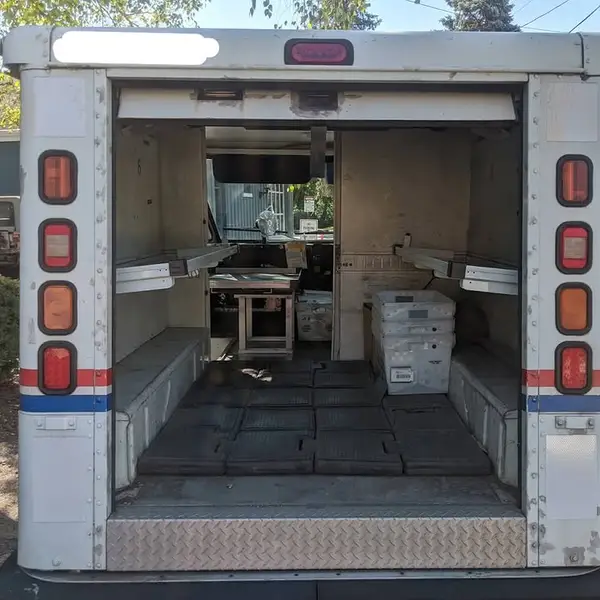
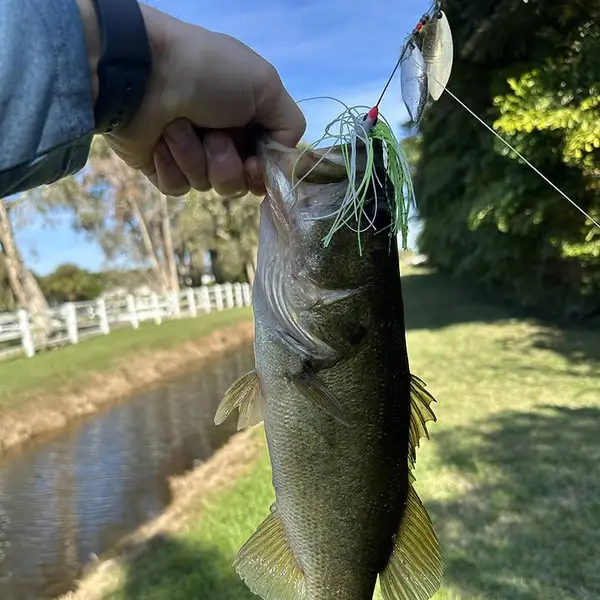
My brother-in-law told me on the drive home that I'd been switching hands on my fishing rod all day. He waited until we were back on Highway 84, about 20 minutes outside of Valdosta, when the sun was starting to go orange over the pines and there was nowhere else for the conversation to go. He just said it. Quiet. Eyes on the road. "You been switching hands all day, Earl. You know that, right?" And I just sat there with my hand on the door handle and watched the trees go by. I didn't know what to say. Because I had been switching hands. And I knew I had been switching hands. I'd just been pretending he hadn't noticed, the way you pretend a man doesn't notice the gray in your beard or the way you take the stairs slower than you used to. We've fished the Withlacoochee River every April for 38 years. Same stretch of water. Same little put-in off the dirt road past the cypress stand. Same coffee in a steel thermos. We started when we were both 23 years old, before he married my sister Joyce, before either of us had kids, when the rods were cheap and the boat was a 14-foot aluminum thing we paid 400 dollars for off a guy in Quitman. 38 years. And this was the first one I'd had to put the rod down twice before lunch. My name is Earl Massey. I'm 61 years old. I was a journeyman electrician for 39 years, mostly residential and light commercial, all over south Georgia and north Florida. I retired 2 years ago. My wife Diane and I live in the same brick ranch on the south side of Valdosta we bought in 1988. Two kids, both grown, both out of state. A grandson in Tallahassee I see about every other month. I'm telling you about the rod because the rod is where it became real. The truth is I'd been feeling it for years. The slow stiffness in the mornings. The way my right shoulder would lock up if I slept on it wrong. The way my hands felt heavy and full of sand around 4 in the afternoon, even on days when I hadn't done anything to deserve it. I blamed it on the trade. You bend conduit for 39 years, you crawl through attics in Lowndes County in July, you fish wires through walls with one arm above your head for an hour straight, and your body keeps a ledger of all of it. I told myself this was the bill. I told myself this is what a man my age pays for the work he did. And to be honest with you, I don't think I'm entirely wrong about that. The trade took something. Anybody who's done it for that long would tell you the same. But I think I've been hiding behind that explanation for longer than was fair, and the rod was the moment I had to admit it. Wayne, my brother-in-law, is 64. He's a retired logistics manager from a tile distribution warehouse in Lake Park. He's a quiet man. He doesn't make a thing out of things. He'll let you stew in your own nonsense for years without saying a word, and then one day he'll pick a moment and say one sentence and that one sentence will land in your chest like a small stone. That afternoon in the truck was one of those moments. He didn't follow it up. He didn't lecture me. He just said it and then we drove the rest of the way home with the radio on low, and when we pulled into my driveway he just said, "I'll see you next Saturday, brother," and drove off. I sat in my own truck for about 5 minutes before I went inside. Diane was on the porch reading a paperback. She looked up and said, "How was the fishing." And I said, "Fishing was fine." And she looked at me a little longer than she usually does and then went back to her book without saying anything else. She knew. She'd been knowing for a while. I want to back up and tell you about the years before the rod, because the years before the rod are the actual story. The rod is just the place I finally stopped lying to myself. The first time I really noticed my hands was in the spring of 2021. I was on a job down in Lake City rewiring an old farmhouse the new owners wanted brought up to code, and I was working a pair of needle-nose pliers up inside a junction box, doing a little maneuver I'd done 10,000 times before, and I just couldn't get my fingers to do what they always had. My grip was off. The pliers slipped twice. I had to step down off the ladder and shake my hand out for a minute. I remember thinking, "huh." Just that. Just "huh." And then I went back up the ladder and finished the job. But you start noticing things once you've noticed them once. Suddenly I noticed it everywhere. The way I struggled to open the spaghetti sauce jar Diane handed me at dinner. The way I'd flex my fingers in the truck at red lights without meaning to. The way I started reaching for things with my left hand when I'd been right-handed for 6 decades. I went to my regular doctor about a year later. Dr. Cleveland. Been seeing him for 16 years. He's a fine man. He listened. He had me move my hands around. He pressed on my shoulder. He said, "Earl, this is wear and tear from your line of work. We're going to see some of this. There's not much we can do about it." He told me to take ibuprofen if it got bad. He told me to consider seeing a physical therapist if it kept getting worse. He told me, "You're 60 years old. You did 39 years of trade work. This is what we'd expect." I left that appointment and I sat in the parking lot for a while. Same way I sat in my driveway after the fishing trip. I wasn't angry at him. I knew he wasn't wrong. But there was something about the conversation that didn't sit right, and it took me a long time to figure out what it was. It was this. He told me what I had. He didn't tell me what was actually happening. And there's a difference. I let it ride for a while after that. I tried to be honest with myself about what I could and couldn't do. I stopped doing some of the things I used to do. I stopped helping my buddy Ronnie haul gravel for his driveway projects. I let Diane open the jars. I sold the recliner with the manual lever because I couldn't yank it back the way I used to, and I bought one with a remote. And the rod kept getting heavier every April. The day after Wayne called me out in the truck, my sister Joyce called me. That was no coincidence. Joyce and Wayne talk about everything, and I know that, and they know I know that. Joyce is 57. She and Wayne live in Hahira, about 20 minutes north of me. She's the kind of sister who has been keeping tabs on me my whole life and is not going to stop now just because I'm in my 60s. She called around 10 in the morning on a Sunday. I was in the garage trying to organize a drawer of fittings. I picked up. She said, "Wayne told me about the fishing trip." I said, "Yeah." She said, "Earl." That's all she said. Just my name. The way only an older sister can say it. Where the entire conversation is contained in one word. I didn't say anything for a minute. Then I said, "I know, Joyce." She let that sit for a minute, and then she said, "I want to talk to you about something. Not now. Come over for dinner Tuesday. I'll feed you." I went over Tuesday. Joyce makes a roast that has been the same roast since our mother died in 2007. She made it for me that night. We sat at her kitchen table with the same tablecloth our mother used to use, and Wayne sat across from us not saying much, and Joyce told me about something she'd been doing for the last 4 months. She'd been having issues of her own. Different from mine, but the same family. She said her hands would ache in the mornings to where she couldn't grip her toothbrush properly. Her knees were starting to talk to her on the stairs. Her right hip had been bothering her for over a year. Her doctor had told her some version of the same thing mine told me. Aging. Wear. Take an Advil. Consider PT. She'd started reading. She'd gone down a road I hadn't gone down yet. She'd been reading about inflammation, and oxidative stress, and what actually happens to the body's tissues year after year that nobody at the regular doctor's office really wants to slow down and explain to you. I want to tell you what she told me at her kitchen table, because it was the first time anybody had explained to me what was actually going on. She said, "Earl. Think of your joints like the wiring on an old house." That got my attention right there. She said, "When wiring goes bad, it's usually not because of one big thing. It's because of years of small things. Heat. Moisture. Friction. Little bits of corrosion building up at the connections." I nodded. She said, "Your body works the same way. Your joints, your shoulders, your hands. They're connections that have to keep working smoothly. And year after year, your body is dealing with all this oxidative stress. Stress, processed food, environmental stuff, just living. It builds up. It's like rust forming inside your body. Slowly. Quietly. At the connections." She said the word "rust" and I felt something in my chest tighten up. Because I've been pulling rusted wire out of old houses for 39 years. I've spent my whole life seeing what corrosion does to a connection. The way it makes everything stiff. The way the conductor gets brittle. The way the signal doesn't move through it the way it's supposed to. She said, "Your body is making inflammation in those places to try to deal with the oxidative stress. But when there's more rust than your body can handle, the inflammation just becomes a constant. That's what stiffness is. That's what soreness is. That's what 'my hands hurt by 4 PM' is. It's not just wear. It's a system that's been overloaded with oxidative stress for years, and your body is doing its best to manage it but it can't keep up." I sat there with my fork in my hand. I said, "So what are you doing about it." She said, "I started taking a pomegranate supplement." Now I'll be honest. The first thing I thought was, "pomegranate." Like the juice. Like the stuff at the grocery store that's 7 dollars a bottle and has more sugar in it than a Coke. I said something to that effect, probably not as polite as I'm putting it now, and Joyce just smiled at me and said, "Earl, that's not what this is." She got up and walked over to the kitchen counter and came back with a small brown bottle. She set it down in front of me. It said Auniva. Organic Pomegranate Extract. She said, "It's a concentrated extract. From the peel and the rind. The peel has more of the active compounds than the juice does. The juice is mostly sugar. The extract is the part that actually has the science behind it." She told me she'd been taking 2 capsules a day for about 4 months at that point. I asked her if she thought it was doing anything. She thought about it for a few seconds before she answered, which is one of the things I love about my sister. She doesn't oversell anything. She said, "It took about 5 weeks before I felt anything I could put my finger on. But the mornings are different now, Earl. The hands aren't gripping the toothbrush the same way they used to. The stairs aren't a conversation anymore. I went on a 2 mile walk with Wayne last Saturday and didn't have to sit down halfway through it. I'm not going to tell you it's a miracle, because I don't talk like that. But something has shifted, and I've been watching what I do and what I eat for years and the only new thing I've added is this." I looked at the bottle. I looked at Wayne, who hadn't said anything in about 20 minutes. Wayne said, "She's right, Earl. Something's different with her. I see it." That carried weight, coming from Wayne. Wayne does not say things he hasn't thought about. I went home that night with a bottle of Auniva in my passenger seat. Diane was already in bed. I sat at the kitchen table and I read the back of the bottle. Then I went into my office and I sat at my computer for about 2 hours and read about pomegranate, the same way I'd watched Joyce read for 4 months. I won't pretend I followed every bit of the science. I'm an electrician, not a chemist. But the pattern was clear enough to follow. Pomegranate, and specifically the concentrated extract from the peel, contains compounds called punicalagins. They are some of the most studied antioxidant compounds in the natural world. Researchers have looked at them in human trials going back decades. The thing they keep coming back to is that punicalagins seem to have a unique ability to help the body manage oxidative stress in tissues that have been worn down by it. That's the rust Joyce was talking about. There's been clinical research looking at pomegranate in people with joint discomfort, specifically. In one trial of 60 women dealing with knee issues, a pomegranate peel extract taken twice a day for 8 weeks was associated with reductions in pain markers and improvements in symptoms. In another study of patients dealing with joint inflammation, pomegranate extract was associated with improvements in disease activity scores and reductions in multiple inflammation markers in the blood. The way the researchers describe it is that pomegranate's punicalagins help quiet down some of the inflammatory signaling pathways that have been running at a high level for years. They also support the body's own antioxidant defenses, which are what's supposed to be neutralizing the oxidative stress in the first place but get overwhelmed over the decades. When I read that, I thought about Dr. Cleveland telling me, "This is what we'd expect at your age." I thought, no. This is what we expect because nobody is doing anything about the underlying load. Not because the body can't be supported. The body has been doing what it's always done. The support system just got buried under decades of oxidative load. I started taking 2 capsules of Auniva Pomegranate every morning with my coffee. Joyce was right that it took a while. The first 2 weeks I didn't notice anything I could put my finger on. I'm a skeptical man by nature. I'm an electrician. I don't believe a thing is doing something until I can measure it. So I waited. Around week 4, I started to notice my mornings. That's the only place I can pinpoint it starting. The way my hands felt when I first got out of bed and walked to the bathroom. They felt looser. Not like a 23-year-old's hands. I'm not going to lie to you and say they felt like a 23-year-old's hands. But they felt like hands that weren't already mad at me before I'd done anything to upset them. By week 6, the 4 PM heavy feeling was different. I'd been so used to it I'd built my day around avoiding it. I'd schedule the things I wanted to do for the morning and just kind of let the afternoon be a wash. But around week 6 I noticed I was still moving around at 5, 6 in the evening. I went out and worked on the garage drawer organizing for an hour after dinner one Tuesday and I sat down on the porch afterward and Diane looked at me funny. She said, "You feel okay, Earl?" I said, "Yeah. Yeah, I feel okay." I didn't tell her about the Auniva yet. I wanted to give it more time. By week 8, I went fishing. Wayne and I went out on a Friday morning on the same stretch of the Withlacoochee. Same put-in. Same coffee in the same steel thermos. Same boat. Different month, but the same everything else. I held the rod in one hand all morning. I didn't switch once. I didn't have to. We caught about 6 spotted bass between us, which is a good morning by our standards. Around 11 we pulled up under a stand of cypress and ate the sandwiches Diane had packed. Wayne looked over at me halfway through his sandwich, and he didn't say anything at first. He just looked at me. Then he said, "Earl." I said, "Yeah." He said, "I've been watching you all morning." I said, "I know you have." He said, "You haven't switched hands once." I said, "I know I haven't." He nodded a couple times. Took another bite of his sandwich. Then he said, "Whatever you're doing, brother, keep doing it." We didn't say anything else about it. We didn't have to. Wayne and I have known each other for 38 years and there are some things you don't have to talk about. I'm 4 months in on Auniva Pomegranate now. I want to be clear about what I'm saying and what I'm not saying. I'm not saying this fixed me. I'm 61 years old and I did 39 years of electrical work and there are some things about my body that aren't going back to where they were. My right shoulder is still not what it was at 35. I still take the stairs the way a 61-year-old man takes the stairs. But the daily cost of being in this body is different than it was 6 months ago. The mornings are not a negotiation anymore. The afternoons are not a wall I have to crash through. The rod stays in my right hand the whole morning. I went out to the garage last Sunday and rewired the lights in the back room. Just a small job. Took me about 2 hours. I haven't done a job like that since I retired because I didn't want to find out I couldn't do it anymore. I finished it and I sat down on my workbench stool and I drank a beer and I thought about all the years I'd been telling myself this was just the bill. The bill was real. The trade did take something. I'm not going to be 30 again. But there was more in the tank than I knew. Diane could see it. Joyce could see it. Wayne saw it from across a boat on the river. The body had been doing its best the whole time, with a load it had been carrying for too long. Some of that load, it turns out, you can help it carry. If anything in this rings any bells for you, or for somebody you love, I'd just say take a look at it. Auniva Pomegranate is 2 capsules a day. Made in the USA. The active compounds are from the peel of the fruit, which is where the punicalagins actually are. It comes with a 90-day money-back guarantee, which means if you give it an honest run and it's not the right fit for you, you ship the bottle back to them and they refund every penny. Joyce had told me about the guarantee that first night at her kitchen table, and Wayne had nodded across the table when she said it, and I think that was part of why I didn't argue with her as hard as I could have. A man my age has been sold a lot of nothing over the years. The guarantee was the part that made it feel like the people behind the product were actually betting on it, instead of just betting on me. I'm betting on it too now. The rod stayed in my right hand. 👉 https://auniva.co/pom/5 P.S. I went back to Dr. Cleveland for a regular checkup last month. He asked me how I was doing. I told him about the pomegranate. I told him about my sister. He listened. He didn't argue with me. He wrote the name of the product down on a little pad of paper he keeps in his pocket. He didn't say it was a cure. He didn't say it was anything. He just wrote it down. And then he said, "Earl, you look like you're moving better than the last time I saw you." That's the closest thing to a high five I've ever gotten from a doctor. P.P.S. Wayne started taking it about a month after I did. He'd been quiet about why for a while but I finally got it out of him last Saturday. His left knee had been getting worse for about 3 years and his doctor had been talking about an injection. Wayne has not let anybody inject anything into his knee yet, and now he says he doesn't think he's going to need to. He told me that on the boat, in the same voice he uses to tell me about the weather. Wayne does not exaggerate. P.P.P.S. About that 90-day guarantee. It's not a marketing line. It's a real return policy. If it doesn't work for you, you ship the bottle back to Auniva and they refund you the full price. Every penny. No fight. I lost count of the things I've bought over the years from companies that wouldn't take back a stick of gum once you opened the wrapper. Auniva stands behind theirs. That meant something to me. It should mean something to you. P.P.P.P.S. The other thing I'd say is don't wait. I waited too long. I waited through 2021. I waited through 2022. I waited through a doctor's appointment that I left sitting in a parking lot. I waited through 38 years of fishing trips until I got called out on the drive home from one of them. The body doesn't ask you to wait. The body just keeps carrying the load. Give it some help carrying it before you've waited so long you've forgotten what it felt like not to have to. 👉 https://auniva.co/pom/5

Loading the ad's image
Arthritis Support Community — Feel Like Yourself Again
PromisingImage

Feel Like Yourself Again

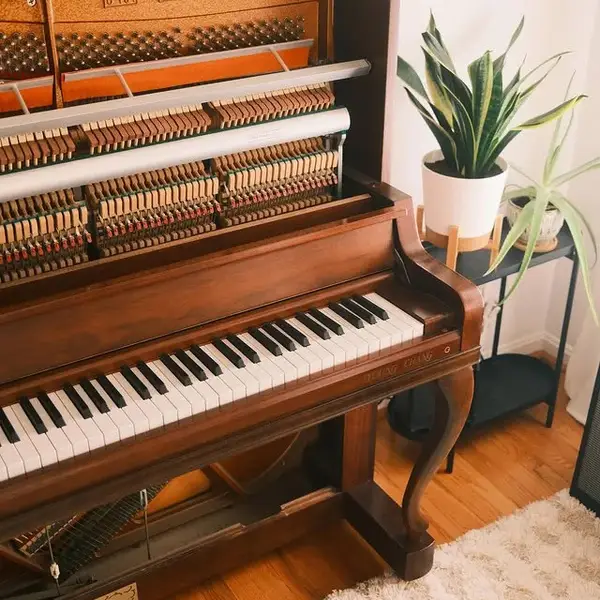
My granddaughter rescued me from my own bathroom on a Saturday afternoon and I haven't told a single person in my family the real reason. Not my husband. Not my daughter. Not my sister who calls me every Sunday at 4 PM like clockwork. The reason is that I couldn't turn the doorknob. Not jammed. Not locked. Not stuck. The knob worked fine. My hand didn't. Six years old. That's how old Maddie was when she pushed the spare key through the gap under the door and I knelt down on the bath mat in my own house and used the side of my palm to slide it toward me because I couldn't make my fingers close around it. I want to tell you the rest of this story because I think there are women reading this who are going to recognize themselves in it. Not the bathroom part. The other part. The part where you stop telling people things. The part where you start doing math about what you can still do and what you can't. My name is Brenda. I'm 57 years old. I live in Chattanooga, Tennessee, on the side of Signal Mountain where the road gets steep and the deer eat my hostas every spring. I taught second grade in Hamilton County for 28 years. I retired in 2022 because my hands stopped letting me write on the whiteboard for longer than 5 minutes at a stretch and I couldn't open the markers anymore without asking a 7 year old to do it for me. My husband Dale is a retired electrician. He still does small jobs for our church and for the neighbors on our street. He's 61 and he could replace a ceiling fan in his sleep. We have one daughter, Carrie. She lives in East Ridge with her husband Jason and our granddaughter Madeline, who everyone calls Maddie. Maddie was born in July of 2018, which makes her the kind of fearless half pint who climbs trees in church dresses and will eat anything you put in front of her. Maddie spends Saturdays with me when Carrie has her real estate showings. Has since she was old enough to walk. That's important. Because the day my hands betrayed me, she was the only person in the house. Let me back up. This didn't start on a Saturday. It started about 4 years ago, slow, the way things start when you're not paying attention. I noticed it first in the kitchen. I couldn't open jars. I'd hand them to Dale without saying anything because we have one of those marriages where you don't have to explain. Pickles. Pasta sauce. Mayonnaise. The lid of the maple syrup I bought at the farmer's market every fall from a man with a beard down to his belt buckle. Dale never said anything about it either. He just opened them. Then it was buttons. I have a navy blouse I've owned since 2014. There's a small pearl button at the very top of the collar. One morning I was getting ready for church and I stood in front of the mirror and worked at that button for almost a full minute before I gave up and wore a scarf. I told myself it was the button. The button was small. The button was old. The button was the problem. Then it was the steering wheel. I drive a 2015 Honda CR-V. The wheel is a normal size. But there's a moment when you're turning into a tight parking spot, the kind where you have to hand-over-hand the wheel quickly, where I started losing my grip in the middle of the turn. My hand would slide off the leather instead of pulling through. I started parking further away in the Publix lot so I wouldn't have to do tight turns. I'm 57. You don't think 57 is old. Not when you're 57. You think 57 is the age your mother was when she was still planting bulbs and going to the beach in Destin with her girlfriends and complaining about your father's golf shoes. 57 is supposed to be the age you finally take that trip to Italy that you've been talking about since 2011. It isn't supposed to be the age your fingers stop closing. I went to my doctor in February of 2024. Her name is Dr. Elizabeth Sheppard. She's a good woman. She's been my primary care for 11 years. She looked at my hands, asked me to make a fist, asked me to grip her two fingers and squeeze. I squeezed. She said "yeah, there's some weakness there." I said "is that normal?" She said "for your age, some grip loss is pretty common. Probably some osteoarthritis starting up in the smaller joints. We'll keep an eye on it. Try some glucosamine, see if it helps. Lots of water. Try not to grip things so hard." I drove home from that appointment and sat in my driveway for 14 minutes before I went inside. Try not to grip things so hard. She didn't mean it the way it landed. I know she didn't. She's a good woman. She's tired. She has 8 minutes per patient and a waiting room full of people who all want her to fix something she can't fix. But the way it landed, sitting in that driveway looking at the dogwood Dale planted the year Carrie graduated, was this. She thinks I'm done. She thinks this is just what 57 looks like. She thinks the rest of my life is going to be small jars I can't open and small buttons I can't button and small girls' hair I can't braid and small hands I can't hold the way I want to hold them. I went inside and I didn't tell Dale about the appointment. I told him she said everything looked fine. That was a lie. I started taking the glucosamine. I bought the kind with chondroitin in it because the bottle said it was stronger. I took it every morning with my coffee for 7 months. I bought a grip strengthener at the Sports Authority that closed down 2 weeks later, like the universe was telling me something. I squeezed it while I watched Wheel of Fortune. Nothing changed. I bought a different brand. I bought turmeric. I bought collagen powder I mixed into my coffee and pretended I couldn't taste. I bought CBD cream Carrie's hairdresser swore by. I bought magnetic bracelets from a woman at the Chattanooga Market who told me they helped her husband. I bought a paraffin wax machine for my hands that I used for 3 weeks and then put in the back of the bathroom closet. By November I had a shelf in the pantry that looked like a CVS aisle and hands that still couldn't open a jar of marinara. I stopped telling Dale what I was trying. He'd see the new bottle on the counter and not say anything. Sometimes he'd ask "anything helping?" and I'd say "I don't know yet, too soon to tell." Always too soon to tell. Then came the Saturday. It was September 7th of last year. A clear afternoon, 78 degrees, the kind of day where you have the back door cracked open so the dog can come in and out as he pleases. Our dog is a 13 year old yellow lab named Banjo who mostly sleeps under the kitchen table. Maddie was in the living room watching a cartoon about a family of horses that lived in a barn shaped like a guitar. She had her little legs stretched out across the ottoman and her socks were the kind with cats on them and one of the cats had a tear in its eye from where I'd accidentally caught it in the dryer. I went to the bathroom around 2:15. It's the half bath off the kitchen. The one with the white pedestal sink and the embroidered hand towel that says HOME SWEET HOME that my mother in law made me in 2009 and that I will never replace because she died 3 months after she gave it to me. I closed the door behind me, the way you do. When I went to leave I couldn't open it. I want to be precise about this because the precision is the part that wrecked me. I could put my hand on the knob. I could feel the cool metal under my palm. I could feel the smooth porcelain of the knob's surface. I knew exactly what I needed to do. My fingers wouldn't close. It was like trying to make a fist underwater. Like the signal from my brain was leaving on time and getting lost somewhere between my wrist and the second knuckle. I tried the other hand. Same thing. Worse, actually, because my right has always been my better hand. I tried with both hands together, palms pressed against the knob like I was praying. My hands slid right off the metal. The door was not locked. The mechanism worked. The knob turned freely. I just couldn't make my hands turn it. I stood in that half bath for what felt like a long time but was probably 30 seconds. Then I heard Maddie call out from the living room. "GiGi, the show ended." I'm called GiGi because when she was 2 she couldn't say grandma. It stuck. I called back through the door, as casual as I could make it, "GiGi's stuck in the bathroom, baby. The door's being silly." She said "are you stuck stuck?" I said "kind of." There was a pause. Then I heard her little feet on the kitchen tile coming toward me. She tried the knob from her side. It turned but the door didn't open because there's a quirk in the latch that you have to pull at the same time as you turn. We've meant to fix it for years. She said "the magic door." I'd called it that to her once. The magic door. Because you have to know the trick. She said "GiGi, do you want me to get the key?" There's a spare key on top of the door frame because that lock has been a problem for 9 years and Dale put one up there a long time ago for exactly this reason. But Maddie can't reach the top of the door frame. She's 3 and a half feet tall. I said "Maddie. Listen to me. Go to the kitchen drawer next to the silverware. The one with the rubber bands and the take out menus. There's an extra key in that drawer. It's silver. It has a little blue dot on it." I heard her say "okay" and her feet went toward the kitchen. I leaned my forehead against the door. I was crying. Not loud. Quiet. The kind of crying you do when you don't want a child to know. She came back. I could hear her breathing on the other side of the door. She said "I got it." I said "good girl. Now I need you to push it under the door to me. Slide it on the floor." She slid the key under. It came across the tile and stopped about 6 inches from my foot. I knelt down on the bath mat. I tried to pick the key up with my fingers and my fingers wouldn't close on something that small. I used the side of my hand and slid the key toward my chest until it hit the toe of my slipper. I pressed it against the slipper and slid both my hand and the key up the side of the door until I could get it into the lock with both palms cupped around it like I was carrying a hummingbird. The key went in. I turned it with the heel of my palm. The door opened. Maddie was standing there in her cat socks. She was holding her favorite stuffed animal, a fox named Phillip, and she had the most serious look on her face I'd ever seen on a 6 year old. She said "the magic door is broken, GiGi." I said "I know, baby." She said "do you want a hug?" I sat right down on the kitchen floor and I let her crawl into my lap and I held her with the only part of my arms that still worked properly, the crook of my elbows, and I cried into the top of her head while Banjo padded over and put his nose on my knee. I have not told Dale. I have not told Carrie. I have not told Dr. Sheppard. I have not told my sister. For exactly one reason. If I tell anybody, they will start watching me. Carrie will start hovering. Dale will start opening things before I can try. Dr. Sheppard will refer me to a specialist who will tell me what she already told me, which is that this is "just what 57 looks like." And the version of me that retired from teaching after 28 years is not ready to be the version of me that gets watched. I have a granddaughter who climbs trees in church dresses. I have a husband who I can still beat at gin rummy if he lets me. I have a list of trips I haven't taken yet and a piano in the front room that I learned to play in 1978 and that I have not been able to play for almost 2 years. I am not done. That night, after Carrie picked up Maddie at 6, after Dale fell asleep in his recliner watching the Vols lose to Florida, I sat at the kitchen table with my laptop and I opened a new browser window and I typed in the search bar: why do my fingers stop working Then I deleted it. I typed: stiff fingers grip strength loss 50s I scrolled through 6 pages of WebMD pages and forums full of women who sounded exactly like me. Then I clicked on a forum thread that had a different kind of comment buried 14 posts deep. It was a woman in Asheville who said something I'd never heard before. She said this wasn't really about her hands. It was about her cells. She said she'd been told for 8 years that her hands and her knees were just aging, and then she found out that the actual issue was something called mitochondrial function. Her cells weren't making enough energy to maintain the tissue in her joints. Everything she'd been taking was treating the inflammation or the cartilage or the pain, but nothing was supporting the part of her cells that actually does the maintenance work. That word stopped me. Maintenance. That's what I'd been doing my whole life. Maintenance. Lunches packed. Lesson plans written. Birthdays remembered. Anniversaries celebrated. Doctor appointments scheduled. Christmas cards mailed. What if my body had been doing the same thing all this time? Maintenance. Quiet, daily maintenance, on the parts of me I never thought about. The cartilage in my knuckles. The fluid in my finger joints. The tendons that close my hand around a coffee mug. And what if the maintenance crew had just stopped showing up? I read for 4 hours that night. Until 1:36 AM. Dale snored on the couch and Banjo snored on the rug and I sat at the kitchen table with the under cabinet lights on and I learned things nobody ever told me. Every cell in your body needs energy to do its job. That energy is made by your mitochondria. Mitochondria are the little engines inside every cell. They're not metaphor. They're real. You learned about them in 8th grade biology and forgot. The cells in your joints are some of the busiest cells in your body. They have to constantly maintain cartilage, regulate inflammation, keep the joint lubricated, signal when something is wrong, repair small damages from daily use. They need a lot of energy to do all that. When your mitochondria are working well, those cells get the energy they need to keep up with their job. When your mitochondria start to slow down, which they do with age, with stress, with processed food, with environmental load, with everything modern life dumps on us, those cells start running on fumes. They can't keep up with maintenance. The cartilage starts thinning. The inflammation signaling goes haywire. The lubrication production drops off. The joint starts to feel it. The pain isn't the start of the problem. The pain is the bill coming due for years of unpaid maintenance. Nobody had ever explained any of it to me that way. Dr. Sheppard didn't. My pharmacist didn't. The bottles in my pantry didn't. The glucosamine was trying to give the joint more building material. Like dropping off lumber at a construction site. But what good is lumber if the construction crew has been laid off? The CBD was trying to dial down the pain signal. Useful for the noise. Did nothing for the source. The collagen powder was the same as the glucosamine. More raw material. No workers. I'd been delivering lumber to a construction site with no power. For 4 years. That's the line that broke me open at 1:36 in the morning. Lumber to a construction site with no power. I kept reading. I read about something called AMPK. It's a pathway in your cells. Think of it like the master switch on the wall in a factory. When AMPK is active, the whole place lights up. The engines fire. The crew gets to work. When AMPK is sluggish, the lights are dim and the crew is half asleep at their stations. There's a fruit called amla. Indian gooseberry. I'd never heard of it. In Ayurvedic medicine in India they call it "the nurse." For thousands of years. The nurse. The thing that quietly takes care of everything else. It's been studied. In real studies. Not perfect ones, because nothing is perfect, but real ones. Researchers have found that amla helps activate AMPK. It helps turn that master switch back on. When AMPK is on, your mitochondria can start making energy more efficiently. The way they did when you were 32 and the marinara jar opened on the first twist. The cells in your joints can finally get the energy they need to do their maintenance work. The crew comes back. The amla also has one of the highest antioxidant profiles ever measured in a food. So while it's helping turn the lights back on at the factory, it's also protecting the workers from the wear and tear that was breaking them down in the first place. I read until my eyes hurt. I ordered a bottle that night from a company called Auniva. They made a standardized extract. The bottle had 30 servings. It came from a US facility. They had a 90 day money back guarantee, which I noticed but didn't think much about at the time. It came in 4 days. I started taking 2 capsules with my coffee on a Wednesday morning. I marked the day on my kitchen calendar with a small star drawn in pencil. Here is what I am going to tell you about the next 7 weeks. And I want you to understand that I am telling you what happened to my body, in my house, in my life. I am not telling you what will happen to yours. Every body is different. But I am telling you the truth about mine. The first 2 weeks I didn't feel anything I could put my finger on. I kept taking the capsules every morning. I drank more water than I had been. I went for a 20 minute walk every day in the cul de sac because the forum lady in Asheville said movement helped support the same systems. Week 3 I noticed I was sleeping different. Deeper, I think. I'd wake up at 6:20 instead of at 4:45 staring at the ceiling. Week 4 I picked up the maple syrup jar from the farmer's market and opened it without thinking about it. I didn't realize what I'd done until 10 minutes later. I was making pancakes for Dale. I'd poured the syrup. I'd capped the jar. I'd put it back in the cabinet. I stood there holding a spatula looking at the cabinet and I started laughing. Dale said "what?" I said "nothing." Week 5 I sat down at the piano. I want to tell you what I played but I don't actually remember. It wasn't a song. It was just my hands on the keys, the way they used to be. Both hands. Right hand carrying the melody, left hand finding the chord shapes underneath. The G sharp my pinky used to flinch away from sat right under my finger the way it used to sit there in 1979 when I was learning Pachelbel for my high school graduation. I cried at the piano for about 20 minutes. Banjo came in from the kitchen and put his head on my foot. Week 6 Maddie was over on a Saturday and we were in the kitchen and she was telling me a long, complicated story about a girl in her class who had brought a rock to show and tell and the rock had broken into pieces in the show and tell box. While she was talking I braided her hair. I hadn't braided her hair in over a year. She didn't notice. She was busy with her story. She finished her story and turned around and saw her braid in the mirror by the back door and she said "you did one," and I said "I did," and she went back to telling me about the rock. Week 7 I went back to Dr. Sheppard for a different reason. Annual blood draw, routine, nothing dramatic. She had me make a fist again. She had me grip her fingers. She watched me do it. She said "huh." I said "what?" She said "your grip is a lot better than last time. What did you change?" I said "I started a supplement." She said "which one?" I said "Indian gooseberry extract. A company called Auniva." She wrote it down on the back of her chart. I'm not telling you Dr. Sheppard is going to recommend this to her other patients. I don't know what she does with the notes she writes on charts. I'm telling you she wrote it down. That was 8 months ago. I've been on Auniva's Amla every morning since. 2 capsules with my coffee. I keep the bottle on the counter next to the toaster. I told Dale about the bathroom 5 months in. I waited until I knew the story had a different ending than the one I was scared of. We were sitting on the back porch in the dark and the crickets were going and I just told him. The button on the blouse. The steering wheel. The half bath. Maddie and the silver key with the blue dot. He was quiet for a long time. Then he reached over and took my hand the way he used to when we were 24 and just married and we'd sit on the back porch of our first apartment off Brainerd Road and he'd hold my hand because he thought it was the prettiest thing he'd ever seen. He said "your hand feels different." I said "I know." I am not 32 again. I'm not pretending to be. I'm 57 and my knees still talk to me on the steep part of my driveway and I'm not going to climb the dogwood with Maddie even though she asks me to every time. But I can hold a marinara jar. I can braid a 6 year old's hair on the first try. I can play Pachelbel. I can open my own bathroom door. If you're reading this and you've been quietly hiding what's happening to your hands, or your knees, or your shoulder when you reach for the coffee filters on the top shelf, if you have a shelf in your pantry that looks like a CVS aisle and a doctor who keeps telling you it's just your age, I'm not telling you what to do. I'm telling you what I did. Auniva's Amla is a standardized extract of Indian gooseberry. 2 capsules a day. 30 servings per bottle. Made in the US. Their guarantee is 90 days. Which means you take it for 3 months, and if your body doesn't respond, you mail it back and they refund you. No phone calls. No conversations. No making your case to a customer service person who can't help you. 3 months is a longer trial than most of the bottles in my CVS pantry ever gave me. P.S. The pearl button on the navy blouse, the small one at the top of the collar that I gave up on in 2023, I buttoned it last week without thinking about it. I was getting ready for church and I stood in front of the mirror and my fingers did what they used to do. I almost called Dale into the room to show him. Then I didn't. Some things are just for you. P.P.S. If your husband has been quietly opening jars for you for the last few years without saying anything, he knows. He's not pretending. He's just being kind. The kind of man who's been married to you long enough to know when not to ask. That's love too. But you don't have to make him keep doing it. You can let your hands do their own work again. P.P.P.S. Auniva's Amla has a 90 day money back guarantee. 3 full months. If your hands don't change, if your knees don't loosen, if you don't notice something giving way in the corners of your day that used to be hard, you send it back. The bottles on my CVS pantry shelf didn't come with that. The CBD cream didn't. The magnetic bracelet didn't. Think about who's confident enough in their product to stand behind it for 90 days and who's just collecting your $34.99 hoping you forget to cancel. P.P.P.P.S. Maddie came over yesterday. She's 7 now. She brought a coloring book with a kitten on the cover and we sat at the kitchen table and colored together for almost an hour. She picked the green crayon for the kitten's grass and the orange for the kitten and she handed me the purple one for the sky because she said "GiGi, you do the sky, you do skies the best." I held that purple crayon in my hand like it was nothing. Like it had always been nothing. The way it should be. Don't wait for a 6 year old to slide a key under a door. 👉 https://auniva.co/amla/33

Loading the ad's image
Arthritis Support Community — Feel Like Yourself Again
PromisingImage

Feel Like Yourself Again

I had to hire a 19-year-old college kid to walk my own dog last March, and I'm still not over it. His name is Brendan. He's a sophomore at Duquesne. Lives in an apartment above the deli on the corner of Bellefonte and Walnut. Charges 15 dollars a walk. Has a Venmo handle that's just his first name and three random numbers. I found him on a flyer thumbtacked to the corkboard at the coffee shop on Murray Avenue, between an ad for a guitar teacher and a lost cat poster that had been up so long the tape was yellow. I took the flyer down. Walked it home in my coat pocket like it was contraband. Stood in my kitchen for 20 minutes before I made myself dial the number. Because the dog on the other end of the leash, the one Brendan was going to be walking, was Murph. And Murph is mine. I retired from the post office four years ago after 31 years carrying mail in Squirrel Hill. Same route. Same houses. Same dogs barking at me from the same porches. I walked an average of 11 miles a day in all weather for 31 years. My knees were the joke of the breakroom. People used to say I had the knees of a 30 year old at 50. I had the knees of a 50 year old at 60. And then somewhere in there, something changed, and the joke stopped being funny, and the knees stopped being mine. I'm Maureen, by the way. I'm 61. I live in a row house on a steep street in Pittsburgh that my husband Bill and I bought in 1989 for 47,000 dollars and a handshake. Bill died in 2018. Pancreatic. Eleven weeks from the diagnosis. He didn't suffer long and I'm grateful for that even when I'm not. Murph is a tri-color beagle I got six months after Bill died because the silence in this house was going to kill me before grief did. He was a year old when I got him from a rescue out in Beaver County. He'd been found wandering on a country road with a notched ear and a limp that healed on its own. He's eight now. Sixty pounds of stubborn nose and good intentions. For the first four years I had him, Murph and I walked the loop. The loop is what I call the route around the neighborhood that goes down Bellefonte, across the bridge, up the hill past the synagogue, and back along Wightman. It's about a mile and a quarter. It takes 25 minutes if Murph doesn't find anything interesting and 45 minutes if he does. We did the loop twice a day. Morning and evening. 7:30 in the morning, the streetlights still humming. 6:15 in the evening, the lights coming back on. For four years. That's around 2,920 walks, if you want to count it that way, which I do, because I have a lot of time on my hands now and counting is one of the things I do. I want you to understand what the loop meant to me, because the loop is the whole story. When Bill died, the loop was the thing that got me out of the bed every morning. Murph needed to go. So I went. Some mornings I'd cry the whole way around and Murph would just trot along like nothing was happening, which was the right thing for him to do. The loop was where I figured out what to do with the rest of my life. Where I made friends with my new neighbors. Where I learned which dogs on the block were friendly and which ones to cross the street for. Where I had a 20 minute conversation with a man named Howard who turned out to be the principal of the high school I'd graduated from in 1982 and didn't remember me. Where I watched four seasons turn into each other twice a year, every year, for four years. The loop was my life. It was the only part of my retirement that felt like something. And then about two and a half years ago, the loop started getting harder. It wasn't sudden. That's the part I want you to hear. Nothing about this was sudden. It started with the hill on Wightman. There's a stretch about three-quarters of the way through the loop where the sidewalk pitches up for maybe 200 feet. Steep enough to make you breathe through your nose. Not steep enough to call a hill, really. One morning, around two and a half years ago, I got to the bottom of that stretch and my knees said no. Not pain, exactly. Just no. A heavy, mechanical no. Like a door that won't open past a certain point. I stopped. Murph looked back at me. I told myself I was just having an off morning. Probably slept funny. Probably need to drink more water. I turned around. Did the loop the other way. Skipped the hill. The next morning I went the regular way again. The knees said no again. I turned around again. Within about six weeks I'd stopped doing the hill at all. Just looped the bottom half of the loop. Down Bellefonte, across the bridge, back along the flat part of Wightman. About 30 minutes less walking. Murph didn't seem to mind. I told myself he didn't mind because that's what I needed to tell myself. The knees kept getting worse. It wasn't always the same knee. It wasn't always the same kind of bad. Sometimes it was a deep ache that lived in the cap and didn't move. Sometimes it was a hot, sharp thing on the inside of the joint that made me wince when I stepped down off a curb. Sometimes it was a stiffness when I stood up from the couch that took 14 or 15 steps to walk off. I went to my doctor. She's a nice woman. Younger than me. Smart. She listened to me describe my knees and she nodded and she said the word I knew was coming. "Maureen, some of this is just wear and tear." Wear and tear. That's the phrase, isn't it. That's the phrase they reach for when they don't have anything else to offer you. As if your knees are a pair of shoes. As if you've worn them down with all that unreasonable walking. As if walking, the thing humans were specifically designed to do, was the problem. She gave me a prescription for an anti-inflammatory and told me to ice them at night and to consider losing 12 pounds. I left her office in the rain and sat in my car in the parking lot and I thought, "I am going to lose Murph." Not lose him. I knew he wasn't going anywhere. He was eight years old and healthy as a horse. But I was going to lose what I had with him. The loop. The walks. The mornings and evenings. The only structure my retirement had. I tried everything. I want you to know I tried everything. Glucosamine. Chondroitin. Turmeric capsules from the Whole Foods on Centre. A pair of compression sleeves I ordered off Amazon that looked like sock puppets. A heating pad. An ice pack. A neoprene knee brace that smelled like rubber and made my skin itch. I tried a thing called collagen powder that I put in my coffee for two months and tasted like the inside of a tackle box. I tried physical therapy at the place over by the dental school. The therapist was a nice young man named Anthony who had me do squats holding onto a railing and clamshells lying on a mat. After eight sessions my knees felt about the same as they did before, and the co-pay was 35 dollars a visit, and I stopped going. I tried a cortisone shot in the left knee in October of 2023. It worked for about five weeks. Then it didn't. Then I was right back where I started, plus 740 dollars poorer. By Christmas of that year, I was doing about a quarter of the loop. Just down to the bridge and back. By March of 2024, I wasn't doing the loop at all. I was opening the back door, letting Murph into the yard, and standing on the porch with a coffee while he sniffed around the chain link fence for ten minutes and then came back inside. That's not a walk. That's a urine break. Murph knew the difference. He'd look at me with those long brown beagle eyes from the bottom of the porch steps, and I would feel something I cannot describe to you in any way that does it justice. I felt like I was failing him. That sounds dramatic. I know. He's a dog. He doesn't keep score. But I knew. I knew what I'd promised him when I picked him up from that rescue six months after Bill died. I'd promised him I would walk him. I'd promised him a life. I had walked through three decades of Pittsburgh weather for strangers' mail and I could not walk my own dog around a single block. That's when I called the flyer. Brendan came over on a Tuesday. He was tall and skinny and had the kind of polite hesitancy that 19 year olds have around women old enough to be their grandmother. He shook my hand. Said he'd been walking dogs since high school. Loved beagles especially. Had a Lab back home in Erie. I gave him Murph's leash. The good leather one with the brass clip that I'd bought five years ago from a leather shop in Sewickley. I handed it to a teenager. And then I stood at my own front window with my hand on the curtain and I watched a college sophomore walk my dog around my block. That was March 4th. I cried for an hour after they came back. Brendan didn't know. He'd already left. Took his Venmo payment and walked back up the street toward his apartment with his earbuds in. I sat on the bottom step of my staircase and I cried until I'd given myself a headache, and then I called my sister Bernadette in Erie and I told her what had just happened. Bernie is 64. Three years older than me. She's a retired ER nurse. She does not put up with self-pity from anyone, including herself. She listened to the whole thing. She let me cry. She didn't interrupt. And when I was done, she said, "Maureen. Can I tell you about something I started taking nine months ago that I think you should look into." That was the turn. I want to tell you what Bernie told me because this is the part where the whole story changed, and I want to give you the same chance I got. Bernie had been having problems with her hands. Specifically her right thumb and her index finger. She's a nurse. She'd spent 38 years jamming IV's into people and writing chart notes and doing the thousand small motions of nursing, and her hands by 62 were paying the bill. She told me she'd tried everything I'd tried. Glucosamine. Turmeric. The shots. The braces. The whole drugstore aisle. She'd been told it was wear and tear by three different doctors. And then her hairdresser, a woman named Jeena who'd been doing Bernie's hair for 11 years, mentioned a fruit her grandmother had used in India for joint pain. Bernie laughed when she told me she laughed when Jeena said it. A fruit. For 38 years of nursing damage. But Bernie is a nurse. She doesn't dismiss things. She goes home and reads. And what she read about amla changed how she thought about her hands. Here's what she told me, and here's what I went home and read for myself that night, and here's what I think might be the most important thing you read this week if you're in any version of my story. The cells in your joints, the ones that maintain cartilage, the ones that keep the joint lubricated, the ones that manage inflammation when things flare up, those cells need cellular energy to do their job. Cellular energy is made by your mitochondria. Your mitochondria are little power plants inside every cell in your body. When you're young, your mitochondria work great. The cells in your joints get all the cellular energy they need. They keep your cartilage healthy. They keep the inflammation managed. The joint stays the joint. But over decades, modern life wears mitochondria down. Processed food. Stress. Pollution. Bad sleep. The plain old grinding of aging. Mitochondria don't work as well at 60 as they did at 30. They produce less cellular energy. And the cells in your joints start running on a deficit. When the cells in your joints can't keep up, the cartilage starts to thin. The lubrication drops. The inflammation that should resolve in 48 hours starts to linger for weeks. The joint starts breaking down. That's not wear and tear. That's an energy problem. And every single thing I'd tried, every single supplement and brace and powder, was addressing the joint from the outside. Trying to patch the cartilage. Trying to numb the inflammation. Trying to wrap the knee. None of them did anything for the mitochondria. Bernie said it to me like this. "Maureen, you spent 31 years delivering mail to houses. Imagine you were trying to deliver mail to a house with no electricity. You can keep showing up. You can keep dropping off envelopes. But nothing inside the house is going to work, because the power is out." That hit me in the chest. The power was out in my knees. Amla, Bernie told me, supports a pathway in your body called AMPK. AMPK is one of the master switches your body uses to support mitochondrial function. When AMPK is active, mitochondria can produce cellular energy more efficiently. The way they used to. The way they did when I was 30 and walking 11 miles a day in the snow. And when the mitochondria are working better, the cells in your joints get the cellular energy they need to do their job. They can work on maintaining cartilage. They can manage inflammation the way they used to. They can keep the joint lubricated. The joint isn't being "fixed." That's not the word. The joint is being supported by cells that finally have the power to do what they're built to do. That was the moment something cracked open in my head. I'd been treating my knees like they were the problem. The knees weren't the problem. The knees were the symptom. The cells inside the knees were running on empty. Bernie told me about Auniva. She'd been taking Auniva's Amla for about six months at that point. She told me, in her flat ER-nurse voice, that her thumb had stopped clicking. That she'd started knitting again, which she hadn't done since 2019. That she'd done a 14-hour drive down to Charleston in October without her right wrist seizing up at the wheel. She told me to go to auniva.co/amla/33 and order it. I did. I ordered two bottles. Bernie told me to order two because shipping was free past a certain amount and because I was going to want a backup. The bottles came on a Thursday. I started taking it Friday morning. Two capsules with my coffee. Week one, I didn't notice anything. Bernie had warned me. She said the mitochondria don't turn back on overnight. They have to be supported into doing it. Week two, I noticed I was getting up from the couch without doing that little brace-against-the-armrest thing I'd been doing for two years. Just standing up. Week three was the first time I made it to the bridge and back without stopping. About a quarter of the loop. The first walk I'd done with Murph in nine months. Murph knew. He knew before I knew. He started bringing me the leash again every morning around 7. He'd stopped doing that two years ago, around the same time I stopped being able to do the loop. He just knew. Week five was the first time I went up the Wightman hill in 22 months. I stopped at the top. Not because my knees stopped me. Because I needed to cry for a minute and I didn't want to cry while I was walking. Murph sat down next to me. Looked up at me with those long brown beagle eyes. Like, "took you long enough." I'm 14 weeks in now. I do the full loop twice a day. I haven't called Brendan since April. He sent me a friendly text in May asking if I needed him to start back up for the summer, and I told him no, that I was doing better, that I hoped his finals had gone well. He sent back a thumbs up and a beagle emoji. I want to tell you something now that I want you to think hard about, because I think this is the part most women like me need to hear. If you are watching yourself shrink, if you've gotten used to the smaller version of your life, if you've quietly stopped doing things you used to love because the body that used to do them stopped cooperating, please listen to me. Your body is not broken. Your cells are running out of power. That's a different problem than "wear and tear." A very different problem. Because wear and tear sounds permanent, and that's the lie we've been sold for 40 years by doctors who don't know what to tell us at the end of a 12 minute appointment. The cells in your joints can still do what they were designed to do. They just need the power back. They need the mitochondria to come back online. And mitochondria can come back online when you support them properly. That's what Auniva's Amla does. It supports AMPK. AMPK supports mitochondria. Mitochondria support the cells. The cells support the joints. The joints support you. It's a chain. And every link in that chain is something your body already knows how to do. You just had to start the chain again. You're not too old. I was 61 and walking down the steps sideways like a crab. I'm 61 now and I do 2.5 miles a day with a beagle who forgives me for the 14 months I let him down. If you've got a Murph, if you've got a loop, if you've got something you've quietly given up on because your knees or your hips or your hands stopped showing up for you, please. Go read about Auniva. auniva.co/amla/33 They have a 90 day money-back guarantee. Take it for 90 days. If your body doesn't come back online, send it back and get every penny back. Every one. No questions. Think about what that says. Nobody offered me a refund on the cortisone shot. Nobody offered me a refund on physical therapy. Nobody offered me a refund on the 22 months I lost with my dog. Auniva does refunds. That tells you who's standing behind their product and who's just standing behind their copay. You're risking nothing. Murph is sleeping on the rug behind me as I type this. He's snoring like a small lawnmower. We did the loop this morning. We're going to do it again at 6:15. Don't lose your loop. 👉 auniva.co/amla/33 P.S. With me, it was small things first. Standing up from the couch without the brace. Going down the steps without sideways crab walking. Squatting to clip the leash without the deep ache. Then bigger things. The bridge. The hill. The full loop. You won't notice it all at once. You'll notice it the way you notice the days getting longer in February. Not the change itself. The fact that the change has been happening, and you didn't realize until you stopped to look. P.P.S. Auniva's Amla has a 90 day money-back guarantee. 90 days. Three months. That's longer than most of us made it with glucosamine before giving up. If your hands or your knees or your hips haven't started coming back online in 90 days, every penny back. The cortisone shot didn't come with a guarantee. The physical therapy didn't come with a guarantee. The brace from Amazon didn't come with a guarantee. Auniva does. Confidence shows up in policies. P.P.P.S. Auniva is a small American company and they sell out. Bernie told me this and I didn't believe her until I went to reorder my second bottle and there was a note on the page saying their last batch had moved faster than expected. I keep two in the cabinet now. One open, one waiting. Because I'm not going back to standing on my porch watching a 19 year old walk my dog. I'm not going back to the smaller version of my life. If you've been considering this for any length of time, go now. They currently have a buy 3 get 2 free deal that I used to stock up. The cells in your joints have been running on a deficit for years. Every week you wait is another week the deficit gets deeper. P.P.P.P.S. Do not forget about the 90 day money-back guarantee. You're risking nothing. I was risking the rest of my life with my dog. 👉 auniva.co/amla/33

Loading the ad's image
Arthritis Support Community — Feel Like Yourself Again
PromisingImage

Feel Like Yourself Again

I burned my grandson's hand on a Saturday morning in February and I have not told anyone the truth about how it happened until right now. Theo is 6. He was staying with me for the weekend because my son Kyle and his wife Jess were doing a 25th anniversary trip to Galena, which they'd been planning for 8 months. They asked me in October. I said yes the way you say yes when you'd cut off your own arm to be asked. My only grandchild. Two whole nights. Just me and him. I planned the weekend like a wedding. I bought the kind of cereal he likes, the one with the marshmallow shapes that I'd never let Kyle have when he was little. I rented two movies from the library because Theo's mom doesn't believe in tablets. I made a list of activities. The Cedar Rapids Public Library has a Saturday story time at 10:30. The science center on First Avenue has a kids' floor. I had three backup ideas for if the weather got bad. I'm 61. I retired from bookkeeping at Knutson Construction 2 years ago after 28 years there. My husband Don passed in 2019 from a stroke. So this house has been quiet for a long time. The thought of having a 6 year old running around in it for 48 hours felt like Christmas. Kyle dropped him off Friday at 5:15. Theo had his Spider Man backpack and a stuffed rabbit named Carrots and a juice box he was already drinking. Kyle said "Mom, his asthma inhaler is in the front pocket, don't forget, just in case." I said "I won't forget, Kyle, go enjoy your wife." Jess hugged me twice. They were on the road by 5:22. Friday night was perfect. We had spaghetti. Theo ate most of his and a slice of garlic bread. We watched a movie about a dog and we both fell asleep on the couch before the end of it. I carried him to the guest room around 9, which I was proud of, because at 61 carrying 47 pounds of sleeping kid up half a flight of stairs is not nothing. Saturday morning was the morning. He woke up at 6:42 and came padding into my room in his dinosaur pajamas and said "Grandma, can we make pancakes." Like he'd been thinking about it since Friday. I said of course we can. I have made pancakes maybe 4,000 times in my life. I started making them for Kyle when he was 3. I made them for my husband every Sunday for 31 years. I have a cast iron pan I bought in 1987 that I have used so many times the bottom is black and slick like glass. I don't measure. I don't need a recipe. I crack the eggs into the bowl with one hand. Pancakes are a thing I can do in my sleep. That morning I could not crack an egg. I want to explain what was happening with my hands so you understand. This wasn't new. This had been creeping up on me for about 3 years. It started in my right hand, the index and middle finger especially, with a stiffness in the morning that took an hour to work out. Then it was both hands. Then it was the base of both thumbs, that little muscle where the thumb meets the wrist, and the joints would just lock up if I held something too long. I'd been to my doctor about it. She'd said "this is normal at your age, Beverly, especially with your bookkeeping history, you've been doing fine motor work with those hands for almost 40 years." She wrote me a prescription for an anti inflammatory. I took it for a while. It bothered my stomach. I stopped. I tried other things. Glucosamine. A topical cream that smelled like menthol. One of those paraffin wax dip things they sell at Bed Bath and Beyond before it closed. None of it really did anything. I'd kind of accepted that this was just what my hands were going to be from here on out. But I'd never had Theo for a whole weekend. I cracked the first egg fine. Beat the batter fine. Poured it onto the pan. The first three pancakes I made were beautiful. Theo was sitting on a kitchen stool in his pajamas watching me with his chin on his hand like a little man and I felt like I was 35 years old. I went to flip the fourth pancake and my right hand seized. It's hard to describe if you haven't had it happen. The pan is in your hand and you know it's heavy, and you know your fingers are supposed to grip it, and they're just not. It's like the wires got cut. The pan tipped. I tried to grab it with my left hand. My left hand was holding the spatula. The pan went sideways. The hot grease and a half cooked pancake came out of the pan and ran down the side, and a stripe of it landed on the back of Theo's wrist, which was resting on the counter about 18 inches away. He screamed. I have never heard a noise like that in my life. Not from Kyle when he was small. Not from anybody. The pan landed on the floor with a sound like a gunshot and bounced under the kitchen table. Theo was off the stool, holding his wrist, screaming, looking at me with eyes that were asking me what just happened. I want to tell you I moved fast. I want to tell you I scooped him up and ran cold water and held him and was a grandmother. What I actually did was stand there with my mouth open for about 4 seconds because my hands were still curled and shaking and I couldn't make them open back up. Then I moved. I got him to the sink. Cold water. I held his little wrist under it. He kept crying but the crying changed, got softer, became the cry that means it hurts but I'm okay. I told him I was so sorry. I told him grandma was so sorry. He said "it's okay, Grandma." He was the one comforting me. The burn was a red stripe about an inch and a half long across the back of his wrist. Not blistered. Not deep. The kind of burn a kid gets and forgets about by Tuesday. I knew, even then, that it was going to be fine. He was going to be fine. But I could not stop shaking. I dried his arm. I put the burn cream from my medicine cabinet on it, the one with the lidocaine. I gave him a juice box and turned on the TV and put cartoons on. He calmed down. Within 10 minutes he was laughing at a cartoon raccoon. I went into the bathroom and I called my son Kyle and I lied. I told him Theo had bumped his wrist on a hot pan but everything was fine and we were all good. I made it sound like Theo had reached for something. I made it sound like an accident a 6 year old caused. I didn't tell him I had dropped a pan of hot oil because my hands gave out. I asked him if he could come back early because I didn't think I was up for two more days. I said I had a migraine. Kyle was quiet on the phone for a beat. Then he said "Mom, are you sure you're okay." I said I was sure. They cut the trip short. They got home at 4:15 that afternoon. Jess hugged Theo for a long time and looked at his little wrist and said "oh sweetheart, I'm sure Grandma felt terrible." Kyle gave me a look I couldn't read and they took him home. I closed the front door and I stood in my kitchen alone and I did not cry because I was past crying. I just sat at my kitchen table for about an hour and looked at my hands and thought about what I had done. Here is the part that ate at me for the next 11 weeks. It wasn't the burn. The burn healed in 6 days. Theo doesn't remember it. He talks about that weekend like it was the best thing ever, the spaghetti and the movie and the marshmallow cereal, and the burn doesn't come up. It was that I had lied to my son. And it was that I did not trust myself to be alone with my grandson. I started turning down babysitting. Kyle would call and say "Mom, can you watch Theo Thursday after school for a couple hours" and I would invent a thing. A doctor's appointment. A church meeting. I have not been to church in a year. I lied to my son so many times in those 11 weeks that I started losing track of which lies I'd told. I stopped cooking for myself. If I couldn't trust my hands to hold a pan around my grandson, I sure didn't trust them when nobody was watching. I started eating cereal for dinner. Or sandwiches. Or those frozen meals you stick in the microwave. My weight went up 7 pounds in 2 months because all I was eating was carbs and salt. I stopped knitting. I'd been making Theo a blanket since November. It sat in my basket by the couch with the needles still stuck in it. I stopped a lot of things. The thing that finally broke it was bunco. I have a bunco group. We've been playing the second Tuesday of every month for 14 years. Eight women. We rotate houses. There's wine. There's a vegetable tray nobody eats. The dice get thrown and the lying gets started. It's the closest thing I have to therapy. It was Eileen's house in April. Eileen Boudreau. I've known Eileen since 1987 when our boys were in T ball together. Her son Marcus is the same age as Kyle. Eileen is 63. She is the kind of woman who tells the truth even when nobody asked her to. I was at Eileen's kitchen counter pouring myself a second glass of wine and trying to open a jar of olives for the appetizer plate. I could not get the lid to turn. I was using both hands. I was leaning my whole body into it. The lid was not moving. Eileen came up behind me and watched for about 4 seconds and then she said "Bev. Honey. How long has that been going on." I said "what." She said "your hands. The trembling. The way you're holding that jar. How long." I started crying right there at her kitchen counter with a jar of olives in my hands. The other six women were in the dining room laughing about something. Eileen took the jar from me, set it down, and walked me into her front sitting room, which is a room nobody ever sits in, and she closed the door. She said "tell me." I told her. All of it. The pan. The burn. The lie to Kyle. The 11 weeks of canceling. The blanket I hadn't finished. The cereal for dinner. Eileen listened. She didn't interrupt. When I was done she sat there for a minute with her hands on her knees. Then she said "Bev. I want to tell you something. And you are going to listen because I am your friend and I love you. I went through some of this 4 years ago. Not exactly the same. But the hands thing. The locking up thing. The being scared of dropping things. I know what that fear looks like because I had it." I said "you never told me." She said "I know I didn't. Because I was embarrassed. Same as you. We are women of a generation that thinks if our body is failing it's our fault for not being tougher. It's not." She got up. Walked into her kitchen. Came back with a small dark green bottle and set it on the coffee table between us. She said "this isn't a miracle. I'm not going to sit here and tell you to start taking a supplement and your problems are over. That's not what this is. But I started taking this almost 3 years ago and the locking up thing got better. Slowly. Over months. And the reason I'm telling you about it tonight, instead of going back to bunco and pretending you didn't just cry on me, is that you're at the part where you stopped trusting yourself. And that part is the worst part. And I want you out of it." I picked up the bottle. Auniva. Amla. I had never heard either word in my life. She said "amla. It's a fruit. From India. They call it the Indian gooseberry. People have been taking it for thousands of years. There's actually research on it. I'm not a sciencey person, you know that, but I read enough of it to feel comfortable trying it. And the reason I tried it specifically for my hands is that the research has a lot to say about cartilage. The thing that wears down at the joints. The thing nobody can really fix once it's worn out, but turns out you can support." I said "support how." She said "your joints are not just bone on bone. There are enzymes that break down the cushion in there over time. There are inflammatory signals that make the joints worse than they have to be. There's oxidative stress, which is just a fancy way of saying the wear and tear at the cellular level." She said "amla has been studied for its effects on those things. The enzymes that chew up cartilage. The inflammatory signals. The cellular stress. It's not a painkiller. It doesn't numb anything. What it does, from what I read, is help create a better internal environment for the joints to function in." I sat there holding her bottle. She said "I'll be honest with you. The first month I took it, I didn't notice anything. The second month, I started noticing I could open jars again. By the third month, I was knitting at night without my hands aching by 9 pm. I'm not telling you it's going to do exactly that for you. I'm telling you I haven't stopped taking it in almost 3 years and I never will." I went home that night and I sat at my kitchen table and I read everything I could find about amla. I am a bookkeeper. I read for a living. I read research papers like other people read magazines. So I went deep. What I learned was this. Amla is the fruit of a tree called Phyllanthus emblica. It's native to India and Southeast Asia. It's one of the most studied botanicals in Ayurvedic medicine, but more importantly, it has been picked up by modern researchers in the last 20 years and put through actual clinical trials. The thing that interested me most, given my situation, was the joint research. There are studies looking at amla's effect on cartilage. Specifically, on enzymes called hyaluronidase and collagenase, which are the enzymes responsible for breaking down the cushion at your joints. Amla contains compounds, hydrolyzable tannins and polyphenols, that have been shown to inhibit those enzymes. Translation, because I had to translate it for myself. The cartilage in your joints is constantly under attack from enzymes that wear it down. Amla appears to slow down those enzymes. Which means the cushion lasts longer. Which means the joints have a better environment to function in. There's also a 12 week clinical study, on humans, where amla supplementation was associated with reductions in pain and stiffness scores in people with joint complaints. I'm not making medical claims. I'm telling you what's published. And there's the inflammation piece. Amla has been associated, repeatedly, with reductions in inflammatory markers in the body. Including the kind of low grade, chronic, background inflammation that is the real culprit behind joint stiffness in people my age. It's not the dramatic kind of inflammation, the swollen ankle kind. It's the slow, steady, every joint at the same time kind. The kind that creeps up on you over years. Which is exactly what had been happening to my hands. I sat at my kitchen table at 11:30 pm with my reading glasses on and I made the decision. I ordered a bottle of Auniva Amla that night. The version Eileen had on her coffee table. Same brand. Same bottle. It came in 4 days. I started on a Wednesday. Two capsules. With breakfast. Same time as my coffee and my morning paper. Like Eileen said, the first month I didn't notice much. Some mornings my hands felt a little less locked when I woke up, but I told myself I was imagining it because I wanted it to be working. Around week 5, something happened that wasn't imagined. I was unloading the dishwasher and I picked up a stack of plates, 4 of them, with one hand, and walked them to the cabinet without thinking. I had not been able to do that in over a year. I had been doing one plate at a time for months because I didn't trust my grip. I stood in my kitchen holding 4 dinner plates in one hand and I just started crying. By week 8, I was knitting again. By week 10, I finished the blanket I'd been making for Theo. By week 12, I called Kyle and asked if I could have Theo for a weekend. He said "Mom, are you sure." I said "I'm sure." That weekend was a month ago. We made pancakes. I cracked the eggs one handed. I flipped them with the same cast iron pan. Theo sat on the same stool. Nothing went wrong. Everything just worked. After he ate, I sat down across from him at the table. I told him I needed to tell him something. I said "Theo, do you remember when I burned your wrist." He said "yeah, but it doesn't hurt anymore." I said "I lied to your dad about how it happened. Grandma's hands weren't working that day. The pan slipped because I couldn't hold it. I want you to know that. I want you to know I'm sorry. And I want you to know that grandma is doing better now." He looked at me. He's 6. He doesn't have the words for what I was telling him. He said "okay, Grandma. Are we going to the library today." I laughed. I told him yes. That afternoon when Kyle came to pick him up, I told Kyle the truth too. Standing in my driveway in May with the lilacs blooming. The whole story. The pan. The lie. The 11 weeks of canceling. Bunco. Eileen. The bottle. The 12 weeks. All of it. He hugged me for a long time. He's a grown man. He hugged me like he was 8. I am writing this for the women out there who lied to their kids the way I lied to mine. The grandmothers who started canceling. The women who put down their knitting needles and never picked them back up. The women whose hands stopped doing what they used to do, and who told themselves the lie that this was just what 60 was. It doesn't have to be. I am not telling you Auniva Amla is going to do for you what it did for me. I don't know your body. I don't know your joints. I'm just a 61 year old retired bookkeeper from Cedar Rapids, Iowa, who learned about a fruit from a friend at bunco and decided to try it. But if you've got a grandchild you've stopped picking up, or a jar you can't open, or a pan you don't trust yourself with, I'd say it's worth a look. The bottle is called Auniva Amla. It's made here in the United States. The capsules are easy to swallow. One bottle is a month's supply. And the company has a 90 day money back guarantee, which Eileen made me look up before I ordered, because she's careful that way. You take it for 90 days. If you don't feel a difference, you send the bottle back, even if it's empty, and they refund you. No fight. No fine print. So there's nothing to lose. You can find it here. P.S. The blanket I made Theo is purple and grey because those are his favorite colors. He sleeps with it every night. Jess sent me a picture last week. He had it pulled up to his chin and Carrots the rabbit was tucked under it. I keep that picture on my fridge. I look at it every morning when I take my two capsules with my coffee. P.P.S. About the guarantee. I will tell you what Eileen told me. A company that lets you send back an empty bottle and get your money back is a company that knows what's in the bottle. That's the part that mattered to me. 90 days is a long enough time for a body my age to actually feel a difference. If you're going to try anything, give it the full 90 before you decide. P.P.P.S. If you are a grandmother who has been canceling on her grandkids because she doesn't trust her own hands, please. Please. Don't spend another 11 weeks the way I spent mine. Read the research yourself. Talk to your doctor if you need to. But don't sit at your kitchen table eating cereal for dinner because you're scared of yourself. There's another way to live in this body. I found it. You can too. 👉 https://auniva.co/amla/33

Loading the ad's image
Arthritis Support Community — Feel Like Yourself Again
PromisingImage

Feel Like Yourself Again

I pulled my hand off the pickleball paddle on a Tuesday night in October and couldn't make a fist. Not "it was sore." Not "it ached." I couldn't close my fingers around the handle of my own truck door 20 minutes later in the church parking lot. I had to use my left hand to open it. And my left hand has never opened a truck door in 62 years of my life. My grandson was in the passenger seat. Eli. He's 11. He saw me do it. He didn't say anything. He just looked at me the way kids look at you when they've seen something they aren't supposed to see. That's the moment that started everything. Let me back up. My name is Wade. I'm 62 years old, retired three years from the United States Postal Service after 34 years walking a route in Asheville, North Carolina. Same route the last 19 of those years. East Asheville, up around Haw Creek, the houses with the porches and the dogs that knew me by smell. I delivered mail in the rain, in the snow, in the August heat that bakes the asphalt soft. My knees took a beating. My back took a beating. But my hands. My hands were the one thing that always worked. You don't think about your hands until they stop working. A mailman's hands sort 600 pieces of mail before sunrise. They flick rubber bands. They tuck magazines into mailboxes the right way so they don't get wet. They scratch behind the ears of every dog on the route because that's how you don't get bit. My hands were tools. I was proud of them the way some men are proud of their cars. My wife Linda used to say I had "piano hands." I never played a note in my life. But she'd hold my hand in church and trace the veins on the back of it with her thumb. We've been married 38 years this past June. So when I retired, I figured I'd finally do all the things my hands had been waiting to do. Build a porch swing. Re-finish the dining table her mother left us. Teach Eli how to tie a clinch knot on a fishing line. Instead I sat in the recliner. For three years. It snuck up on me. That's how it does. You take a week off because your back's tight. Then a month because the weather's been bad. Then you realize it's October and you haven't been outside for more than to get the mail in six weeks. And the mail you're collecting is the mail somebody else delivered. Linda noticed before I did. She didn't nag. She just started saying little things at dinner. "Pastor Mike's wife saw you at Ingles. She said you look tired." "Your son called. He wanted to know if you were okay." "Eli asked me why Pop never wants to do anything anymore." That last one is the one that stuck. Eli is my daughter Sarah's boy. Sarah lives 14 minutes away in Weaverville. Eli's been spending Saturdays at our house since he could walk. He used to come over and we'd build things in the garage. Birdhouses. A wooden train. One time a slingshot that Linda confiscated within 4 hours. The last 18 months, when he came over, I'd be in the chair. I'd ask him about school. He'd say "good." I'd ask him about baseball. He'd say "good." Then he'd go in the kitchen and help Linda make cookies, and I'd hear them laughing through the wall, and I'd think, that used to be me. So when our church started a Wednesday night pickleball league at the rec center, and Pastor Mike's wife sent the email, and Linda forwarded it to me with no message, just the email, I knew what she was doing. I signed up. I signed Eli up too. Grandparent-grandchild doubles. 6:30 PM Wednesdays. 8 weeks. Eli was so excited he called me twice the day I told him. The first Wednesday was September 24th. I remember because Linda wrote it on the kitchen calendar with a little smiley face next to it like I was a 6 year old going to his first day of kindergarten. We won our first match. Eli was a natural. Quick feet. Knew where to be. And I, somehow, found a rhythm I hadn't felt in years. The paddle was light. The ball was slow enough that even my creaky shoulders could keep up. We laughed. I high-fived him so hard his hat fell off. Pastor Mike's wife took a picture of us on the court. Linda had it on the fridge by Thursday morning. I went to bed that night feeling something I hadn't felt in three years. I felt like a grandfather. Then I woke up Thursday and my hands were swollen. Not a little. Both of them. The knuckles on my right hand were so puffy I couldn't get my wedding ring past the second joint. I could see the indentation where it had been the night before. Linda saw it at the breakfast table and didn't say anything. She just slid me the coffee with the handle turned the right way. Tuesday came around again. I'd been telling myself for 6 days that I'd play. By Tuesday morning I was telling myself that I'd play if it didn't rain. By Tuesday afternoon I was telling myself I'd play if my hands felt better. By Tuesday evening I was sitting in the recliner googling "tendonitis recovery time." I called Eli at 8:14 PM. I told him my hands weren't up to it this week. I told him next Wednesday, maybe. There was a long pause. He said, "It's okay Pop. I'll just play with Mom." He didn't say it in a mean way. He said it the way an 11 year old says something when he's already learned not to expect things. That was the part that wrecked me. Because I realized he'd already learned. He was 11 and he'd already learned that Pop says he'll do things and then doesn't. He'd learned it from me. I taught him that. I sat in the recliner after Linda went to bed. I stared at my hands. The right one was still swollen. The left one was starting to. I made a fist as hard as I could and felt the joints grind like there was sand in there. I'd worn these hands for 62 years. Walked 19 years of one route. Caught a baseball Mickey Mantle's last full season. Built a crib for my daughter. Held my wife's hand at her father's funeral. Tied a tourniquet on my buddy Doc in 1981 when a piece of steel let go off the loading dock and opened his thigh up to the bone. And now I couldn't pick up a pickleball paddle for an 11 year old boy. I cried in that recliner. I won't lie to you. A grown 62 year old man cried in a brown recliner at 11:47 on a Tuesday night because his hands didn't work the way he needed them to. The next morning, I went to the VA for my regular checkup. I'd been putting it off for 4 months. That's where I met Doc again. Not my Doc from 1981. A different Doc. Same nickname. He was in the waiting room two chairs down, reading a Field and Stream from 2022. Wade Garrison, 64, Marine, lived three streets over from me growing up in West Asheville. We hadn't seen each other in maybe 7 years. Last time I'd seen Doc, he was using a cane. This time he wasn't. I noticed it before he saw me. He was sitting there with his legs crossed, ankle on his knee like a teenager, and he flipped through that magazine using both hands like a man who'd never thought about his hands in his life. He saw me, slapped the magazine on the chair next to him, stood up, and crossed the room in 4 steps to shake my hand. His grip was firm. Mine wasn't. He noticed. "Wade. You're gripping like a wet sock." I laughed. Then I told him. Right there in the VA waiting room. About the pickleball. About Eli. About the recliner. Doc listened. Then he said the thing that started everything. "Wade, my hands were worse than yours a year ago. I dropped my keys 14 times in one week. Counted them. My daughter-in-law thought I was having strokes. Now look." He held both hands up and wiggled all 10 fingers like he was waving at a baby. "What'd you do?" I asked. "Cortisone?" He shook his head. "Tried it. Three rounds. The relief lasted maybe 8 days each time and the doctor said I couldn't keep getting them or my cartilage would dissolve." "Glucosamine?" "Took it for two years. Nothing. My wife took it too. Nothing for her either." "Then what?" "My sister sent me an article. About an Indian fruit. Amla. It's a gooseberry. They've been using it in India for 2,000 years for the kind of stuff we just call aging." I looked at him sideways. Because here's the truth. I'm 62 years old, retired postal, lifelong Methodist, grew up in a house where my mother put yellow mustard on a bee sting and called it medicine. I am not a man who reads articles about Indian fruits. But Doc was standing in front of me holding a magazine with both hands. He told me his daughter-in-law had ordered him a bottle. He said the brand was called Auniva. He said he took it for three weeks before he noticed anything. Then he said one morning he reached for the coffee pot and just lifted it, the way he used to, and didn't realize until he was pouring it that he'd lifted it without thinking about whether his hand would let him. He said it wasn't a thunderbolt. He said it was more like the volume getting turned back up on something he hadn't realized had gone quiet. He pulled out his phone and showed me the bottle. Green label. Said it was made in the USA. Said they had a 90 day money back guarantee, which Doc, being a Marine, said was the only reason he tried it in the first place. "If it didn't work, I'd send it back and call them every name in the book until they refunded me. They refunded me before I had to call them anything. Because it worked." I wrote the name down on the back of my VA appointment slip. I didn't order it that day. I went home. I told Linda. She listened the way Linda listens, which is with her whole face, and then she said "Wade, you've been in that chair for three years. What do you have to lose?" So I ordered it that night. From a website. auniva.co/amla/33. I remember because the 33 is what my brother wore in high school football and I took it as a sign. The bottle came in 4 days. Green. Same as Doc's. 60 capsules. 30 servings. Take 2 a day with food. Now here's where I want to slow down. Because if you're like me, you've been burned before. You've bought the magnesium. You've bought the turmeric. You've bought the green powder that tasted like a lawn and did nothing. You've stood in the GNC at the mall and let some 24 year old explain joint health to you and walked out $80 lighter and no different in your hands. So I went home and I did what 62 year old retired postal workers do when they want to feel smart about a decision. I sat at the kitchen table with my laptop and I read. I read about amla for two nights. Here's what I figured out, in language a mailman can understand. The cells in your joints, the ones that keep your cartilage healthy and your fingers moving, need energy to do their job. Not the kind of energy that comes from a cup of coffee. The kind of energy that gets made inside every cell in your body, by these little things called mitochondria. Mitochondria are basically the power plants in your cells. When they're young and humming, your joints get the fuel they need to maintain themselves. When they get worn down, by decades of stress, processed food, all the things modern life does to a body, your joint cells start running on fumes. That's when joints break down. Not because of "aging" as a vague thing. Because the cells maintaining them don't have the power they need. And here's the kicker. Most of what people take for joints, glucosamine, chondroitin, the rest, doesn't touch the mitochondria. It tries to deliver building blocks to a construction site that has no electricity. The materials show up but nothing gets built. Amla works differently. It supports a pathway in your body called AMPK. Think of AMPK as the foreman that tells your mitochondria to get back to work. When AMPK is active, your mitochondria can start producing cellular energy more efficiently, the way they did when you were younger. That energy flows back to the cells in your joints. And when those cells have power, they can do what they were designed to do. Maintain cartilage. Manage inflammation. Keep things moving. On top of that, amla has one of the highest antioxidant profiles ever measured in a food. Higher than blueberries. Higher than acai. Higher than any of the stuff they put on the front of expensive juice bottles. Those antioxidants help protect your mitochondria from the oxidative stress that wore them down in the first place. That made sense to me. That was the first thing I'd read in three years of looking that actually made sense. A mailman can understand a power plant. A mailman can understand a foreman. A mailman cannot understand "proprietary blend of joint actives" with a sticker on the bottle. I started taking it October 12th. A Sunday. Two capsules with my eggs. The first week, I felt nothing. I want to be honest about that. I read online that some people feel something fast. I didn't. I almost emailed the company on day 6 to ask if I'd gotten a bad bottle. Day 9 I went to take the trash out and noticed I'd grabbed the bag with my right hand without wincing. I'd been using my left for 4 months. Day 12 I unscrewed the lid on a peanut butter jar. Linda watched me do it from across the kitchen. She didn't say anything. She just set down her tea. Day 16 I picked up my coffee mug by the handle instead of cradling it. Day 21 I called Eli and asked him if he wanted to come over Saturday and finish the porch swing we'd started in 2022 and abandoned. He said yes so fast he tripped over the word. He came over that Saturday. We worked in the garage from 9 in the morning until 1 in the afternoon. I used a screwdriver. A drill. A hammer. I held boards while he sanded. My hands were tired at the end of the day. But the kind of tired hands are supposed to be after work. Not the kind of tired they'd been for three years, which was the tired of nothing. We finished the porch swing on November 8th. It's hanging on the back porch right now. Linda sits in it every morning with her coffee. I sit in it every afternoon. The next Wednesday, October 29th, I went back to pickleball. Eli didn't know I was coming. Linda had been driving him. I walked in carrying my paddle and his face. I can't describe his face to you. You'd have to have a grandkid to know. We played. We lost. I didn't care. I high-fived him so hard his hat fell off, same as the first night. Pastor Mike's wife took another picture. It's on the fridge next to the first one. Two pictures, taken 5 weeks apart, of the same man and the same boy. But the man in the second picture looks 10 years younger than the man in the first. That's not me being dramatic. Linda said it. She said it last Tuesday, looking at the fridge with a cup of coffee in her hand. "Wade. You look 10 years younger than you did last month." I've been on Auniva Amla for 7 months now. I keep two bottles in the medicine cabinet. Linda started taking it too around Christmas, after her hands started bothering her with the cold weather. Her sister in Tennessee started taking it after Linda told her about it on Thanksgiving. Doc and his wife both take it. Last week at church, Pastor Mike pulled me aside in the parking lot and asked me the name of "that stuff Linda's been telling people about." I wrote it down on the back of the bulletin. I'm not saying it's a miracle. I'm not a doctor. I'm a retired mailman from Asheville. I'm saying my hands work again. I'm saying I built a porch swing with my grandson. I'm saying when Eli calls and says "Pop, can we go to the Tuckaseegee on Saturday and try for trout," I say yes, and I mean it, and I tie his clinch knots for him with hands that close around 8 pound test line like they remember how. If you're sitting in a recliner right now reading this and you've been telling yourself it's just age, I want you to think about who's waiting on the other side of that chair. A grandkid. A wife. A porch swing you started in 2022 and never finished. A pickleball league at the church on Wednesdays at 6:30. Somebody. You don't get those years back. But you don't have to lose any more of them either. Auniva has a 90 day money back guarantee, same one Doc told me about in the VA waiting room. You take it for 90 days. If your hands don't start feeling like your hands again, you send the bottle back and they refund you. Every penny. No phone call where they try to talk you out of it. No fine print. Just a refund. Think about that for a second. The cortisone shots I got didn't come with a money back guarantee. The glucosamine I took for 18 months didn't come with a money back guarantee. The recliner I sat in for three years sure didn't come with a refund on the time it took from me. This one does. P.S. You'll know it's working before you can prove it. For me it was the peanut butter jar on day 12. For Doc it was the coffee pot. For Linda it was a button on her cardigan she'd been asking me to do for her for two years and one morning she just buttoned it herself and stood in the kitchen staring at her own hand. It's not a thunderbolt. It's the volume turning back up. You won't realize how quiet things had gotten until you hear them again. P.P.S. About that guarantee. 90 days is longer than most companies will give you. Most "money back guarantees" are 30 days, which is barely long enough to know if something's working for a body that's been running on empty for a decade. Auniva gives you 90. That's three full bottles. That's enough time to know for sure. The only reason a company offers a guarantee like that is because they already know what you're going to find out. P.P.P.S. Auniva is a smaller company and they ship from the USA. They sell out. I learned this in February when Linda's sister tried to reorder and there was a 6 day wait. I keep two bottles in the cabinet now. One for me, one for Linda. If your hands have been talking to you lately, if you've been gripping the truck door with your left hand or asking your wife to open the jar, don't wait until the chair becomes the place you live. Eli is 11. He's going to be 12 in February. I lost three of his years to that recliner. I'm not losing another one. 👉 auniva.co/amla/33

Loading the ad's image
Arthritis Support Community — Feel Like Yourself Again
PromisingImage

Feel Like Yourself Again

I almost didn't make it through my son's rehearsal dinner. Not because of nerves. Not because of cold feet, his or mine. Not because of the open bar or the speech I'd been writing in my head for 6 weeks on every long drive between Birmingham and the job sites my crew was working over in Tuscaloosa. I almost didn't make it because at 2:47 PM that Friday afternoon, 4 hours and 13 minutes before I was supposed to walk into the Iron City Grill in downtown Birmingham and stand up in front of 60 people and toast my only son's marriage, my back went out so hard in the parking lot of a Publix on Highway 280 that I had to crawl, and I mean crawl, on my hands and knees from the back of my truck to the driver's side door while a woman pushing a cart full of grocery bags pretended not to see me. I want to tell you what happened that night. Because what happened at the dinner that night, and the conversation I had at 11:30 PM with a woman I'd never met before, the mother of the girl my son was about to marry, is the reason I can sit here at my kitchen table at 6:08 in the morning and write this with both hands working and a back that doesn't feel like it's full of broken glass. My name is Curt. I'm 62 years old. I've lived in the same little town outside Birmingham my whole life, a place called Helena, which is far enough out that you can still hear coyotes at night but close enough that I can be at a job site downtown in 35 minutes if traffic is decent, which it never is. I run a small framing crew. Have for 31 years. We do residential framing, mostly custom homes up in the Highland Lakes area and the Greystone neighborhoods. 4 guys including me. We've been the same 4 guys for 14 years now, with one rotation when my old foreman Hank retired and his nephew Bobby took his spot. We've framed maybe 700 houses in 3 decades. I can walk through any of them, even ones I haven't seen since 1998, and tell you exactly where the load bearing walls are. I have one son. His name is Rhett. He's 28. He's an architect, of all things, which still cracks me up because I spent his whole childhood telling him to put down the Legos and come help me hang sheetrock and he'd just stare at me with the same look his mother used to give me when she was disappointed and go back to his Legos. He went to Auburn. Got his degree. Now he draws the houses I would have framed, except he's working at a firm in Atlanta and I'm slowing down and the houses he draws are getting framed by guys 25 years younger than me. He was getting married to a girl named Ainsley. Sweet girl. From Mountain Brook, which if you don't know Birmingham is one of the wealthier zip codes in the state. Her father was a cardiologist. Her mother, Patty, ran a small interior design firm out of the front rooms of the house they'd lived in for 30 years. The rehearsal dinner was at the Iron City Grill. 7:00 PM that Friday. I had a navy blazer pressed and hanging on the back of my closet door. I had a speech printed on three index cards in 14 point font because my reading glasses were getting harder to deal with. I had a pair of dress shoes I'd bought at a Belk in 2009 that I'd polished the night before with a tin of Kiwi polish I found under the bathroom sink. I had everything ready. What I did not have ready was my back. My back had been a problem for 6 years. Started right around the time I turned 56. Lower back, mostly, but it would creep up between my shoulder blades on bad days and one time it went all the way down into my left leg and I lost feeling in my big toe for almost a week. The kind of back that makes you sit on the edge of the bed for 20 minutes in the morning before you can stand up. The kind that makes you decline coffee with the guys at the diner because the booth is too low and you can't get out of it without putting both hands on the table and grunting like an old man. My doctor, Dr. Whitfield, had run an MRI on it back in 2022. Showed me pictures of my own spine on a screen. Said the words "degenerative disc" and "facet arthropathy" and "consistent with your age and the kind of work you've done for 30 years." Gave me a prescription for muscle relaxers I didn't take because they made me too foggy to operate a saw. Gave me a referral to a physical therapist I went to twice and quit. Gave me the most useless advice I've ever heard out of a doctor's mouth, which was, and I'm quoting him, "Curt, at your age and in your line of work, this is just how it's gonna be. Manage it." Manage it. I'd been managing it for 6 years. I'd been managing it with ibuprofen at the level where my pharmacist had quietly mentioned my kidneys to me twice. I'd been managing it with a heating pad I plugged in next to the couch and forgot about so often my wife Karen kept it in a drawer where I couldn't find it without asking her. I'd been managing it by paying my guys an extra 4 dollars an hour so they'd handle the loads I used to handle. I'd been managing it by becoming smaller. By saying no to things. By skipping my niece's wedding 2 years ago because the thought of a 4 hour reception in a folding chair made me feel sick. By not picking up my granddaughter, Rhett's daughter from a previous relationship, who is 5 and weighs 41 pounds and who I have not lifted off the ground in 18 months. So that Friday afternoon, 4 hours before the rehearsal dinner, I went to Publix to pick up a bouquet of flowers for Patty. Karen had told me twice. Yellow roses. Patty's favorite. I had it on a sticky note on the dashboard. I went into the store. Picked out the flowers. Paid. Walked back to my truck. Opened the back to set the flowers on the bench seat. And as I leaned in, something in my lower back popped. I want to be clear about what kind of pop. This wasn't a twinge. This wasn't the usual morning stiffness. This was the kind of pop that sounds like a tree branch breaking inside your body. I went down. Right there, in the parking lot of a Publix, between my Ford F-250 and a silver Honda Pilot. I was on the asphalt for I don't know how long. Could have been 30 seconds. Could have been 5 minutes. The flowers had landed on the ground next to me and a yellow petal blew under the truck. A woman with a cart full of grocery bags walked past about 10 feet away. Slowed down. Looked at me. I made eye contact with her. She looked away and kept pushing her cart. I'll never forget that. I don't blame her. People don't know what to do anymore. I crawled. On my hands and knees, around the back of the truck, to the driver's side door. Pulled myself up using the door handle. Got in. Sat in the driver's seat sweating through my shirt. Looked at the clock. 2:47 PM. I drove home. I will not tell you how I drove home because I don't want to think about it. I drove home. Karen took one look at me coming through the door and said, "Curt, what happened?" I told her. She said, "We're calling Patty. We'll have to send Rhett alone." I said no. I said, "Get me the heating pad and the ibuprofen and a glass of bourbon. I'm going to that dinner if I have to be carried in." She started crying. I wasn't expecting that. Karen doesn't cry. She's a retired ICU nurse, 35 years at UAB, she's seen things you wouldn't sleep again if you knew about. She doesn't cry. But she stood there in the kitchen and she said, "I'm so tired of watching you disappear, Curt." That stopped me. I didn't have anything to say back to her. So I just went into the bedroom and I laid on my back on the floor with the heating pad under me and I stared at the ceiling for an hour and tried to do the breathing exercise the physical therapist had taught me 4 years ago that I'd quit on after 2 sessions. At 5:30 PM I stood up. It took 4 minutes. I put on the navy blazer. The dress shoes from Belk. I took 4 ibuprofen and one of the muscle relaxers I'd been hoarding for emergencies. I drank a finger of Maker's Mark from the bottle Karen kept above the fridge. I drove to the Iron City Grill. Karen drove behind me in her own car so she could watch in case I had to pull over. I made it through the dinner. I will not pretend I made it gracefully. I gripped the back of my chair through the entire toast like it was the railing on a fishing boat in rough water. My voice was steady but my legs were not. I sweated through the navy blazer. I made eye contact with my son and I read the words off my index cards and I told him about the day he was born and the day he hit a home run in Little League and the day he showed me his college acceptance letter and the kind of man I knew he was already and the kind of husband I knew he'd be. I sat down before my legs gave out. The room clapped. Rhett came over and hugged me and I tried not to flinch. After dinner, Karen helped me out to the back patio of the Iron City Grill. There's a little stone wall there where they let smokers go and I'm not a smoker but I needed to sit on something low and not move. It was 11:30 at night. Birmingham in late October. The kind of warm that hangs in the air after the sun's been gone for hours. Patty came out about 10 minutes later. Sat down on the wall next to me. Karen had quietly gone back inside. Patty was 64. I knew that because Karen had told me. She had grey hair she didn't dye, cut short, and the kind of warm tan that women in Mountain Brook seem to keep year round. She'd spent the whole evening floating around her own party making everyone feel welcome, the kind of host I wouldn't know how to be if you held a gun to my head. She sat down. She didn't say anything for a long time. She just looked out at the parking lot. Then she said, "Curt, can I ask you a question that's gonna sound nosy?" I said, "Sure." She said, "How long has your back been like this?" I told her. The truth, not the polite version. 6 years. The MRI. The doctor. The "manage it." The crawling in the Publix parking lot at 2:47 that afternoon. She nodded slowly. Looked at her hands. Then she said, "My husband, Tom, was a cardiologist for 38 years. He retired last year. And the last 5 years of his career, he was in pain every single day. His shoulders, mostly. From standing over patients, from the way cardiologists hold their bodies during procedures. He was on the same path you're on. The pain pills, the muscle relaxers, the 'just manage it.' I watched the man I married disappear into a recliner." She turned and looked at me. "I want to tell you what happened. I'm not selling anything. I'm not in a pyramid scheme. I'm a 64 year old woman whose husband got his life back, and I notice when somebody else is on the same road we were on, and it's my son in law's father, and I'm gonna tell you about it whether you want to hear it or not." I almost laughed. Almost. My back wouldn't let me. I said, "Tell me." She told me about a friend of hers, a woman named Beverly, who'd been a research librarian at UAB. Beverly had a younger sister who'd married into an Indian family in Houston, and the family kept feeding her this fruit Beverly had never heard of. After a few years the sister, who had been a frail kind of person her whole life, started showing up to family events looking different. More color in her face. Walking faster. Sleeping better. Beverly asked her about it. The sister told her it was a fruit called amla. Indian gooseberry. They'd been using it in Ayurvedic medicine for thousands of years. The sister had started taking a standardized extract a friend had recommended. Beverly, being a research librarian, did what research librarians do. She spent 6 months reading the actual studies. The real ones, not the marketing copy. What she found, Patty told me, was that amla wasn't a magic pill. It wasn't a painkiller. It wasn't replacing anything. What it was, was a fruit that seemed to do something quietly useful at the cellular level for the kind of slow, grinding, low grade inflammation that builds up in a body over decades of work and stress and living. Patty had started giving it to Tom about 18 months before that night. She said, "He's 67 now. He woke up this morning at 5:45 and went for a 3 mile walk before the rehearsal. He's inside laughing right now at a joke my brother told. 18 months ago he was a man I was watching turn into a piece of furniture." I didn't say anything for a while. She said, "I'm gonna text you the name of it. The brand we use. Look it up tomorrow. Don't take my word for anything. Just look it up." She did. My phone buzzed in my blazer pocket. I drove home that night feeling more wrung out than I'd ever felt in my life. Karen and I didn't talk on the drive. I lay on the floor again when I got home with the heating pad. I fell asleep there. The next morning, the morning of the wedding, I read about amla for 2 hours before Karen even woke up. Here is what I came to understand, and I want to explain it the way I'd explain framing a wall to a new guy on the crew, because that's how I think. When you've got chronic pain like I had, especially the kind that gets worse over years and that doctors shrug at and call "wear and tear," what's actually happening inside you is a long, slow story about inflammation. Not the acute kind, like when you smash your thumb with a hammer and it swells up. The slow kind. The kind where your body's inflammatory signals never quite turn off. They stay on at a low level. Year after year after year. That low level inflammation does damage to your joints, your tendons, the soft tissue in your spine, and the blood vessels that feed all of those things. It also does damage at the cellular level, to the little engines inside your cells that produce energy, called mitochondria. When those engines get sluggish, you don't just feel pain. You feel tired. You feel old. You feel like you're moving through molasses. Most things you're handed for chronic pain go after the symptom. Painkillers numb the signal. Muscle relaxers loosen the spasm. Steroids shut down the inflammation acutely but with consequences. None of those things address what's actually going on at the level that matters, which is the cellular environment your tissues live in every day. Amla is interesting because the research on it suggests it works on that environment. It's been associated with reductions in inflammatory markers like hs-CRP. It's a powerful antioxidant, partly because of its naturally high vitamin C content but also because of compounds called polyphenols and tannins that show up in good standardized extracts. And it appears to support healthy mitochondrial function, which is the cellular energy piece. In plain English: it doesn't numb the pain. It works on the soil the pain is growing in. That distinction matters because it explains why ibuprofen had been doing less and less for me over the years. Ibuprofen is a Band-Aid on a wound. The wound was getting worse underneath the Band-Aid. Amla, from what I read, was something more like working on the wound itself. Slowly. Quietly. Over weeks and months. I ordered it that morning. I took my first 2 capsules with breakfast on the day of my son's wedding. I got through that wedding. I want to be clear, I got through it on muscle relaxers and ibuprofen and willpower. The amla didn't save the wedding. The amla hadn't even started working yet. But I had something I hadn't had at 2:47 PM the day before. I had a direction. I had a thing to try that wasn't "manage it." Week 1, I felt nothing. Week 2, I noticed I was getting out of bed in the morning in 6 minutes instead of 20. Week 3, I picked up my granddaughter. I want to tell you about that one because it's the moment I knew. It was a Saturday afternoon. Rhett and Ainsley had brought her over for lunch. She came running across the kitchen at me the way 5 year olds do, full speed, no concept of physics, and I caught her under the arms and lifted her up and put her on my hip the way I'd done a hundred times when she was 2 and 3 and the way I'd stopped doing when she got to 4. I didn't even think about it. I just did it. She put her arms around my neck and she said, "Pop Pop, I missed your big arms." Karen was watching from the sink. I caught her eye. She turned around so I couldn't see her face. Week 6, I was carrying lumber on the job site again. Not the way I had at 35. I'm not crazy. But I was carrying 2x6s and not just pointing at where I wanted them put. Week 9, I called Patty. I called her on a Tuesday afternoon and she picked up on the second ring and I said, "Patty. It's Curt. I just wanted to say thank you." She said, "Curt. Is it working?" I said, "I haven't taken an ibuprofen in 17 days." She was quiet. Then she said, "I'm gonna tell Tom. He's gonna be glad to hear that." I'm 9 months in now. I'm not pain free. I want to be straight with you. I'm 62 years old and I've been swinging hammers for 31 years. There are mornings my back tells me what the weather is gonna do before the news does. But the floor of my pain has come up. The bottom isn't where it used to be. The crawling in the Publix parking lot, that's not who I am anymore. I picked up my granddaughter at the wedding reception last weekend, the 1 year anniversary party Rhett and Ainsley threw at their house in Atlanta, and I held her on my hip for the entire 4 minute song they played for the first dance. Karen took a picture of it. It's on the fridge. If you've been managing it for years, I see you. If you've been told it's just your age, I see you. If your wife has cried in the kitchen because she's tired of watching you disappear, I see you. There's a fruit called amla. The brand I take is called Auniva. The product is Auniva Amla. It's made in the United States. It's 2 capsules a day. It's not a painkiller. It's not replacing anything your doctor has you on. It's not a miracle. It's just a quiet, well researched, gentle thing from the other side of the world that decided to be kind to my body when not much else was being kind to it. They have a 90 day money back guarantee. You take it for 3 months. If you feel nothing, you mail the bottle back, you get your money. That's the whole arrangement. I almost didn't believe it when I read it, but Patty told me she'd never had to use it because Tom had been on it for 18 months and so had she by then. P.S. The most expensive thing chronic pain takes from you isn't your money. It's the moments. The wedding you almost missed. The granddaughter you stopped picking up. The booth at the diner you stopped sliding into. Those moments don't come back. But the ability to be present for the next ones, that's the thing that's worth showing up for. That's what Patty gave me on a stone wall at 11:30 at night behind a steakhouse. P.P.S. I want to say this for any guy who's reading this and rolling his eyes. I rolled my eyes too. I rolled them so hard at the words "supplement" and "Indian fruit" that Karen mentioned it to me the next morning. The 90 day guarantee is the only reason I tried it. If you're rolling your eyes, that's fine. The guarantee doesn't care if you rolled your eyes. It just refunds you if it doesn't work. P.P.P.S. Patty called me last week. Tom had a check up. His inflammation markers were the lowest they'd been in a decade. She wasn't bragging. She was just telling me. The way one person tells another. Across a stone wall behind a steakhouse, or across a phone line in Helena, Alabama. 👉 https://auniva.co/amla/33

Loading the ad's image
Arthritis Support Community — Feel Like Yourself Again
PromisingImage

Feel Like Yourself Again

My son in law tried to buy me a battery powered chain saw for my 61st birthday. He didn't come out and say that's what he was doing. He showed up at the house with a box from Home Depot in the back of his Tacoma, all sheepish, and said he'd been reading about how much easier the new ones are, no gas, no pull cord, just push a button and it runs. He said it like a man selling something to a stranger. I've known Ben for 12 years. He married my daughter Rachel when she was 24. He teaches 4th grade over in Johnson City. Good man. Patient man. The kind of man who reads instruction manuals cover to cover before he opens a box. He wasn't reading up on chain saws because he wanted one. He was reading up on chain saws because he'd been watching me not use mine. There's half a cord of white oak sitting seasoned in my side yard. Been there since October. Rachel's brother Danny cut it and dropped it off before deer season because he thought he was doing me a favor. Big rounds, most of them, 18 inches across, some bigger. It's beautiful wood. Tight grain. The kind of oak that burns for hours and puts out heat that fills a house. And it's been sitting under a blue tarp for going on 8 months because I can't grip the pull cord on my Stihl anymore. The saw is a 271. Bought it new in 2004. Started every time for 20 years. I could have that thing running in 3 pulls in 12 degree weather. Cut cord after cord for our house, for my daughter's house, for my mother in law when she was still alive. Now I stand over it in the yard and I can't pull hard enough to catch the compression. My right hand gives out at the wrist before the cord even hits the resistance. My left hand can't grip the front handle steady enough to keep the saw down while I pull. I've stood in the yard on 4 separate Saturdays and tried, and 4 separate Saturdays I've walked back inside and put a heating pad on my forearm and told my wife the choke was flooded. She knows it's not the choke. My name is Cal. I'm 61 years old. I live in Elizabethton, Tennessee, which is up in Carter County, near the Watauga River, about 20 minutes from where the mountains start turning into North Carolina. I was a pipefitter for 34 years. Union man. Local 718. Worked out of Kingsport mostly, some Bristol jobs, a couple of long stretches over in Knoxville when they were building out the hospital additions. Retired 3 years ago because my knees gave out and my hands weren't far behind. That's what I told myself. Knees and hands gave out. Age. Nothing to do about it. That's what my doctor said too. Dr. Petree over in Johnson City has been my primary since 2011. Nice enough. Doesn't rush you. Looks at you when he talks. But every time I've gone in about my hands or my knees or the ache that lives in my hips now, he says the same thing. "Cal, you were a pipefitter for 34 years. You crawled under sinks. You worked overhead. You carried water heaters up staircases. Your body's been through a lot. This is what happens." He's prescribed me the anti inflammatories. Told me to lose 15 pounds. Told me to try swimming, which is the funniest advice anybody has ever given me because I don't swim and I'm not about to start at 61. The anti inflammatories help for about 4 hours at a time. Then they wear off and my hands go back to what they were. The 15 pounds I've been trying to lose since 2019. Down 6, up 8, down 3, up 4. The cycle every man knows. Swimming I'm not doing. So I do what most men my age do. I work around it. I don't reach for the top shelf anymore. I don't twist off the tight jar lids. I let my wife open the pickle jar because it hurts less to hand it to her than to feel my thumb slip on the glass. I've traded my leather work gloves for the softer canvas ones because leather requires grip strength I don't have. I've stopped mowing my own lawn on the push mower and use the rider even when the yard's dry. Little accommodations. Everybody makes them. That's what I told myself. But the chain saw was different. The chain saw was the thing I couldn't work around. Because that oak is in my yard. My daughter cut it for me. My son burned oak in his stove all winter and I gave him a face cord out of last year's pile. This year I've got nothing to give and nothing to burn myself, and my woodstove has been sitting cold since Christmas because I've been burning propane out of the tank behind the house at $3.19 a gallon. I've got 3 tons of firewood sitting in my side yard and I've been paying to heat my house. That's the sentence I couldn't stop rolling around in my head. Which brings me back to Ben and his Tacoma. He'd been calling Rachel about it, apparently. Asking her what he could get me. Rachel told him about the wood pile. She told him I'd tried to start the Stihl 3 times in April and given up. She told him she was worried. She told him what she wasn't telling me, which was that she thought her father was getting weaker faster than her father was willing to admit. Ben decided a battery saw was the answer. No pull cord. No compression. Push a button. Cut wood. Problem solved. He came over on a Saturday in early May. Sat on the porch with me. Drank a beer. Made small talk about the Cardinals. And then he said, "Cal, I got you something for your birthday. It's early. I know your birthday's not till June. But I wanted to bring it now because I thought maybe you'd want it for the oak." He walked out to his truck and pulled the box out of the bed. I saw the picture on the side. DeWalt 60 volt. 16 inch bar. Brushless motor. And I sat on that porch and I felt something I hadn't felt in a long time. I felt embarrassed. Not at Ben. Ben's a good man. He was doing what a good son in law does. He saw a problem and he tried to fix it. I was embarrassed at myself. Because the saw wasn't the problem. The saw was fine. My saw was fine. The saw I bought in 2004 that had started 4,000 times without a hiccup was fine. What wasn't fine was me. And instead of me getting fixed, Ben was buying me an easier saw. Ben was buying me a saw for a weaker man. And I was going to have to accept it, and every time I used it going forward I was going to think about the fact that my son in law bought it for me because he'd been watching me fail. I sat there with the box between us and I didn't know what to say. Then Ben said, "Cal, my dad's driving up next Sunday. He's coming through on his way to Boone. He wanted to know if he could stop by." Ben's dad is a man named Hollis Barrett. Retired agriculture extension officer for the state of Tennessee. Spent 38 years driving from farm to farm in the eastern half of the state helping people figure out what was wrong with their soil, their cattle, their hay crops, their pond fish. Salt of the earth type. Grew up in Greeneville. Retired to a little house on 12 acres outside Erwin about 5 years ago. Hollis is 66. I've known him since Ben and Rachel got engaged, so about 13 years. We've hunted deer together maybe 8 times. Had Thanksgiving at the same table 7 or 8 times. I know his wife. I know his other kids. He's family in the way in laws' families become family. I hadn't seen him since Christmas. I said, "Yeah, tell him to come by. I'll be around." Ben said, "I told him about the wood pile." I looked at him. "He said he wanted to talk to you about it." The following Sunday, at about 2 in the afternoon, Hollis Barrett pulled his Silverado into my driveway with a cooler in the back and a plastic bag from the pharmacy on the seat next to him. He walked up to the porch and he didn't look like the man I'd had Thanksgiving with 5 months ago. He looked like the man he was 10 years ago. I want to be careful how I describe this because I don't want it to sound bigger than it was. He wasn't a different person. He wasn't glowing. He wasn't 30 years younger. He just looked like Hollis from before. Standing straighter. Moving easier through the porch steps. Reaching down to shake my hand without that little wince he'd started doing sometime around 2022 when his shoulder started giving him trouble. I noticed it in his hand when he shook mine. Firm grip. Squeezed hard. Held it a second longer than he needed to. Six months ago Hollis had shaken my hand at a family dinner and I'd felt his fingers not quite close. Not weakness exactly. Just that thing where the last knuckle doesn't want to bend the whole way. I'd noticed it because I have it too. It's the thing a man notices in another man his age. Now his hand closed around mine like a wrench. He said, "Cal, I brought us beer. Let's sit." We sat on the porch for 20 minutes talking about nothing. His new tractor. My daughter. The bear that broke into his neighbor's chicken coop. Regular Sunday afternoon talk. Then he said, "Ben told me about your wood pile." I looked at the trees across the road. "It's been a hard spring." "He told me you can't pull the cord." "I could pull it if I had to." "Cal." I looked at him. "Cal, I couldn't lift a 5 gallon bucket of feed by myself last October. Julie was carrying them for me. My own wife. To my own chickens. On my own farm." I stopped drinking my beer. "By January I couldn't turn a doorknob without wrapping my hand in a rag first because the cold hurt my fingers so bad. I couldn't hold a coffee cup without switching hands halfway through. My knees clicked on every step. I was taking 800 milligrams of ibuprofen 3 times a day and it was barely touching it." I said, "Hollis." "I retired 5 years ago because I couldn't get in and out of the state truck anymore. I told everybody it was time. What it really was is I couldn't climb up into the cab without pulling on the door frame with both hands. And by year 2 of retirement I couldn't shake somebody's hand without them noticing." He set his beer down. "Cal, my knees don't click anymore. My hands work. I chopped 4 cords of hickory in April. Just me. My saw. Two afternoons. I hadn't done that in 6 years." I looked at him. "What are you telling me?" "I'm telling you my son wants to buy you a saw because he thinks that's the problem you have. It's not the problem you have. I know because I had it. I still had it in November." He picked up the pharmacy bag from beside his chair and set it on the little table between us. "Cal, I'm going to talk for about 15 minutes. If at the end of it you want me to leave, I'll leave. But I'd like you to listen." I nodded. And Hollis Barrett, retired agriculture extension officer, spent the next 15 minutes telling me about my joints. He said the thing nobody had said to me in 6 years of doctor visits. He said, "Cal, your joints aren't wearing out because you got old. Your joints are wearing out because there's something building up inside them that shouldn't be there. And every year it's built up a little more. And nobody's told you that because nobody's looking at that." He said, "Inside every joint in your body, there's a signaling pathway. A little switch. That switch controls how much inflammation gets sent to the joint. When your body's working right, that switch is calm. It only flips on when there's an injury or something that actually needs healing, and then it flips off when the job is done." He said, "But over the years, that switch gets stuck on." "Stress flips it on. Processed food flips it on. The environment we're in flips it on. And most of all, oxidative stress, the rust that builds up in your body as you age, flips it on. And once it flips on and stays on, your joints get flooded with inflammatory signals every day, all day, whether you need them or not. It's like your body's got a fire alarm going off in every joint at the same time. All the time. Even when there's no fire." "That's why it doesn't matter how much you rest. That's why it doesn't matter how much ibuprofen you take. Ibuprofen just quiets the signal for 4 hours. The switch is still flipped. As soon as the pill wears off, the noise comes back." "And every year the switch stays flipped, more damage gets done. The cartilage in your joints starts breaking down faster than your body can maintain it. The tissue around the joint gets stiffer. The fluid inside dries out. Your hands get weaker. Your knees get louder. And your doctor tells you it's aging." He tapped the pharmacy bag. "It's not aging. It's a switch that's stuck on." I sat there. "How do you turn it off?" He said, "You don't turn it off. Your body knows how to turn it off. It's been turning it off since the day you were born. You just have to give it what it needs to do that again." He reached into the bag and pulled out a white bottle. "This is what I've been taking since November." The label said Auniva Pomegranate. I laughed. I didn't mean to. It just came out. "Fruit juice, Hollis?" He didn't laugh back. "It's not juice. It's the peel." "The peel of a pomegranate?" "Cal, the compound they put in this stuff is called punicalagins. It's only in the peel. It's not in the juice. It's not in the seeds. It's not in the fruit part. It's in the leathery part of the peel that nobody eats. And it's one of the most studied antioxidant compounds in nature. That's what neutralizes the oxidative stress that's flipping your switch." He turned the bottle in his hand. "When the rust in your body gets neutralized, the signal that keeps your inflammation pathway flipped on starts to quiet down. The switch settles. Your joints stop getting flooded with inflammatory signals 24 hours a day. And then your body does what it's always known how to do. It starts maintaining the tissue. It starts protecting the cartilage. The fluid comes back to the joint. The grip comes back to the hand. Not because something forced it. Because the fire alarm finally stopped ringing and your body could hear itself think." He set the bottle on the table. "Cal, I've been to 100 farmers with sick cattle. I know what a real ingredient looks like versus a marketing story. This is a real ingredient. The compound is real. The pathway is real. And I've felt what it did to me." I picked up the bottle. "Why did you tell me?" "Because Ben told me you were going to accept his gift and pretend it was fine, and then next Christmas your son is going to buy you a stair lift. And the Christmas after that, your daughter is going to help you sell your house because you can't handle the stairs anymore. And you and Denise are going to move into one of those places out by Milligan College with the assisted units. And you're going to sit in a chair for the rest of your life and tell everybody you had a good run." He looked at me straight. "You don't have to have a good run yet. You're 61 years old. You've got 25 good years in you if you take care of what's stuck. I'm sitting here proving it." I turned the bottle in my hand. "How long till I'd know?" "3 weeks before I felt anything. 6 weeks before I trusted it. 3 months before I chopped that hickory. It's not fast. It's not a drug. It's a body pulling itself back to where it used to be. That takes some time." He finished his beer. "There's a website on the back of the bottle. There's a guarantee. If it doesn't do anything for you in 90 days, send it back and get your money back. That's what talked me into trying it. I figured I had 90 days to lose and 25 years to gain." He stood up. "I'm not going to bring it up again. You do what you want to do." He went back to his truck and he drove to Boone. I sat on the porch and I looked at the bottle. Then I looked at the tarp over the wood pile. Then I looked at Ben's box, still sitting inside the front door where I'd set it a week earlier, unopened. I went inside and I ordered a bottle from the website Hollis showed me. It came 4 days later. Auniva's Pomegranate. Organic concentrated pomegranate peel extract. Standardized to punicalagins. Made in the USA. 30 servings per bottle. 2 capsules a day. That's it. That's the whole product. I started the next morning with my coffee. I want to tell you what happened, and I want to tell you honestly, because I'm 61 years old and I don't have time to lie about what a supplement did. Week 1 I felt nothing. If anything I felt a little frustrated because I'd built it up in my head and my hands still hurt the same when I woke up. Week 2 I felt nothing. Week 3 I noticed I'd opened the pickle jar without thinking about it. It sounds small. I know it sounds small. But I hadn't opened a pickle jar with my right hand in probably 2 years. I'd handed it to Denise or run it under hot water. That Wednesday I'd made a sandwich for lunch and reached for the pickle jar on the counter and twisted it and it opened. And then I stood in the kitchen holding the lid, looking at my hand. Week 4 I picked up a 40 pound bag of dog food out of the trunk of Denise's car with one hand. Not thinking about it. Just did it the way you do it when you've done it for 40 years. And when I set it on the porch, I realized I'd used my right wrist to swing it up and my right wrist hadn't complained. Week 5 Denise noticed I was going up the stairs differently. I'd been taking the stairs one at a time for the past 2 years. Right foot up. Left foot up to meet it. Right foot again. Left foot to meet it. Like a kid learning stairs. Because my knees couldn't handle bearing weight through a full step. Week 5 I climbed the stairs to the second floor to grab a hat out of the closet, and I climbed them the way I used to climb them. Left, right, left, right. I got to the top and I stopped and I said out loud, "Oh." I said "oh" to an empty hallway. Week 6 I walked out to the side yard on a Saturday morning and I pulled the tarp off the oak pile. I pulled the Stihl out of the shed. I filled it. Checked the chain. Set it down. Set my left hand on the front handle and pressed. Grabbed the pull cord with my right and pulled. It caught on the second pull. I want you to picture this. I stood in my side yard with my saw running for the first time in 8 months and I sat down in the grass and I cried like I hadn't cried since my mother died. I cried because I'd thought I was done. I cried because Ben had been ready to buy me an easier life and I'd almost taken it. I cried because Hollis Barrett had driven 45 minutes off his route to a cabin in Boone to sit on my porch and tell me the truth. I cried because my hands worked. That was 6 weeks ago. I've cut the whole pile. 4 face cords stacked against the shed. Denise brings me coffee in the morning and I split kindling on the block by the porch and my hands hold the axe steady. My knees carry me up and down the stairs. My wrists open jars. I've started walking with my grandson on Sundays down to the river bridge and back, which is about a mile round trip, and the last time I did that walk was 2022. I'm not going to sit here and tell you I'm 25 again. I'm 61. My hair's grey and my back still gets stiff on cold mornings and I don't run anywhere. But I'm doing my life again. I'm using my saw. I'm heating my house with the wood in my yard. I'm the man my son in law knew before he started reading about battery models. Ben came over 2 weeks ago and saw the split pile and asked what happened. I told him about Hollis. He said his dad had mentioned something a few months ago but hadn't wanted to push it. I told him I was grateful for the chain saw box in the corner, which is still unopened, and that I planned on keeping it in case a day comes when I really do need it. But that day's not this year. He laughed and hugged me and told me he was going to call his dad. If you're a man reading this and you've been quietly accommodating what your body used to do without thinking, if you've been telling your wife the choke is flooded when you both know it isn't, if there's a saw in your shed or a project in your garage or a hike your grandkids ask you to do that you keep saying maybe next time to, I want to tell you what Hollis told me on that porch. You don't have to have had your good run yet. The pathway is real. The compound is real. Auniva's Pomegranate is the organic concentrated peel extract standardized to punicalagins. 2 capsules a day. Made in the USA. It comes in a bottle with 30 servings and a 90 day money back guarantee, meaning if it doesn't do anything for you inside those 90 days, you send the bottle back and every dollar goes back on your card. That was the part that made Hollis try it. That was the part that made me try it. 90 days to lose. Years to gain. 👉 auniva.co/pom/5 P.S. I want to be clear about the peel thing because Hollis was clear about it with me and it matters. Most pomegranate products you see on shelves are made from the juice or standardized to ellagic acid. That's not the same thing. The compound that does the work on the inflammation pathway is called punicalagins, and it lives almost entirely in the peel, which is the part nobody eats. Auniva's is a concentrated peel extract standardized to those punicalagins. If you go grab a bottle of pomegranate juice at Kroger thinking it's the same thing, it won't be. Hollis explained that to me twice because he'd made the same mistake his first month looking for something like this. 👉 auniva.co/pom/5 P.P.S. The 90 day guarantee is real and it's simple. You order the bottle. You take 2 capsules a day. If at the end of 90 days your hands aren't opening jars any easier, your knees aren't climbing stairs any better, or you just don't feel any different than you did the day you started, you send the bottle back and Auniva refunds you every penny. That's the whole deal. No paperwork. No arguing. No calling 4 different phone numbers. Just send back the bottle. Hollis said that was the part that made him pull the trigger. I agreed. I'm 61 years old. I don't have time to gamble, but I've got 90 days to test. 👉 auniva.co/pom/5 P.P.P.S. I'm going to tell you one more thing and then I'll leave you alone. That box from Ben is still sitting inside my front door. I haven't opened it. I keep it there on purpose. Every morning when I walk past it on the way to the coffee pot, I remember what almost happened. I almost let my son in law buy me a smaller life. I almost accepted, at 61 years old, that my good run was over. And a man I'd known for 12 years drove up my driveway with a bottle in a pharmacy bag and told me a truth my doctor had never told me. That the switch that's flooding your joints with inflammation can quiet back down when the oxidative stress that's holding it open gets neutralized. That your body still knows what to do. That it's just been trying to be heard over an alarm nobody could turn off. Hollis's alarm is off. Mine is off. I've got 3 face cords of oak by the shed and a running saw and a grandson who thinks his grandpa's back to normal, and if there's a bottle sitting on Auniva's website that got me to this porch on this Sunday morning writing this to you, then I owe it 5 minutes of my time to tell you where to find it. 👉 auniva.co/pom/5

Loading the ad's image
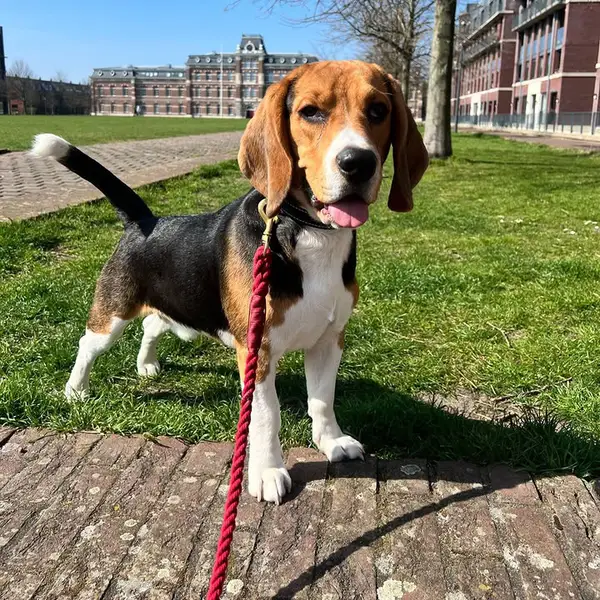
Arthritis Support Community — Feel Like Yourself Again
PromisingImage

Feel Like Yourself Again

I found a note in my dead aunt's kitchen drawer last March that I have not been able to stop thinking about. It was a regular kitchen drawer. The kind with the silverware tray on top and the random stuff underneath. Twist ties. A measuring tape. Two AA batteries that might or might not still work. A church bulletin from Easter 1998. The kind of drawer every aunt in America has. We were running her estate sale. Me and my mom and my sister Carol. My aunt Joyce had passed in February at 81 and the family had decided the cleanest thing to do was sell what we could and split the rest. So there I was on a Saturday in Davenport, Iowa, in the kitchen of the little blue house Joyce had lived in for 47 years, pulling drawers and trying to decide what was a $2 item and what was a $50 item. I pulled the drawer out to dump it. And tucked underneath the silverware tray, folded in half and held down with a refrigerator magnet shaped like a sunflower, was a piece of yellow legal pad paper. I almost threw it away. I'm so glad I didn't. I unfolded it standing right there in the kitchen with my mother in the living room arguing with my sister about a credenza, and I read what my aunt Joyce had written to herself in her shaky cursive. It said: Started feeling like me again. Day 41. That's it. That was the whole note. One line of handwriting on a piece of yellow legal pad. Taped to the back of the paper with a strip of Scotch tape was an empty supplement bottle. I'm Howard. I'm 57. I live in Davenport with my wife Patty in a split-level we bought in 2003 when our youngest was still in elementary school. I'm a regional sales manager for a company that sells equipment to commercial kitchens. I drive a lot. I sit in a lot of cars and a lot of motel rooms and a lot of breakfast meetings at Hampton Inns. And I have been tired for 7 years. Not the kind of tired you fix with a weekend. Not the kind of tired you fix with a vacation. The kind of tired where you wake up at 6:30 in the morning after 8 solid hours and you look at the ceiling and you think, well, I guess that's going to have to be enough, because that's all I've got. I'd been like that since 2018. I'd told a doctor about it twice. Both times I got the same speech. You're in your fifties. You travel for work. You should lose 15 pounds. You should sleep more. You should drink less coffee. You should drink more water. You should exercise. I exercised. I drank more water. I lost the 15 pounds. I lost 17 pounds, actually, the first time, and 12 pounds the second time when I gained the first 15 back plus 4 more. It didn't matter. I was still tired. I was tired at the airport in Cedar Rapids at 5:40 in the morning. I was tired in the Hampton Inn breakfast room in Omaha at 7:15. I was tired sitting across from a client at a Cracker Barrel in Council Bluffs at 11:30, drinking my third coffee, trying to nod at the right places while the man across from me told me about his daughter's volleyball season. Patty noticed it the most. She said one night in 2023, about a year before Joyce passed, that she felt like she was married to someone who wasn't actually in the room. That was a hard thing to hear. She didn't say it mean. She said it the way Patty says things, which is gently and after a lot of thought, when she's already tried 4 other ways to bring it up. She said, "Howard, you come home and you sit on the couch and your body is here but you're not. I don't know where you are. I don't think you know where you are either." I told her I'd try to be more present. I meant it. But you can't be present when the lights inside are dim. You can show up. You can be in the room. You can make the right faces and answer the right questions. But there's a difference between showing up and being there, and Patty knew the difference, and so did I. I want to back up and tell you about Joyce, because Joyce is the whole reason this story exists. My aunt Joyce was my mother's older sister. She never married. She worked as a bookkeeper at a John Deere dealership in Moline for 38 years. She lived in the same little blue house on East 38th Street the entire time I knew her. She had two cats and a Pontiac Bonneville she drove until it died and then a Buick Century she drove until she did. Joyce was the family weirdo. I say that with love. She read 4 books a week. She watched Wheel of Fortune at 6:30 every night. She had opinions about herbal tea and was the only person I knew who composted before composting was a thing. She used to send my kids articles she'd clipped out of the newspaper about things she thought they should know. She was also tired. For most of my adult life, Joyce was tired. She'd come to Christmas at our house and sit in the corner armchair and fall asleep at 8 in the evening with a glass of wine still in her hand. My mom used to joke about it. "There goes Joyce, lights out at 8." For the last 4 years of her life she barely left her house. She stopped coming to the holidays. She'd call my mom and say her energy wasn't right today. She'd say it that way, "my energy." She'd say her head felt like there were curtains in it. My mom and Carol thought she was depressed. I thought she was depressed too. That's how we'd all decided to explain Joyce. Joyce is depressed. Joyce always has been. Joyce is the family member you check on and worry about and eventually stop expecting things from, because Joyce is just Joyce, and Joyce is tired, and Joyce reads her books and watches her Wheel of Fortune and that's the size of her life. Then she died. And we went to clean out her house. And I found that note. I want to slow down here because the moment I read that note, something happened to me that I didn't have words for at the time. I was standing in Joyce's kitchen holding a yellow piece of paper that said Started feeling like me again. Day 41 and an empty bottle taped to the back of it, and I realized 2 things at once. The first was that Joyce had not been depressed at the end. Or at least, not only depressed. Joyce had been suffering from something she'd figured out before any of us had even noticed. The second was that whatever she'd figured out, it had worked. She'd written Day 41. That meant she'd been counting. That meant whatever she was taking, she was on it long enough to feel something change. She had felt like her again. Joyce. The actual Joyce. The Joyce who read 4 books a week and clipped articles and had opinions about composting. I turned the bottle over in my hand. It was a small dark green bottle with a clean white label. The label said Auniva Amla. I had never heard of it. I put the note in my pocket. I put the empty bottle in my pocket. I finished the drawer. I did not tell my mother or my sister. I don't know why. Maybe because Joyce had hidden it. Maybe because the note had been written to herself, not to us. Maybe because in that moment it felt private. Like she'd left a message in a bottle, and I'd been the one to pull it out of the drawer, and it was on me to listen to it first before I decided what to do with it. When I got home Sunday night, I sat at our kitchen table after Patty had gone to bed. I opened my laptop. I typed Auniva Amla into the search bar. What I learned over the next 3 nights changed my whole life. I'm not a science guy. I sell ovens to truck stops. But I'm a guy who can read, and what I read started to make sense of a thing I'd never been able to make sense of, which was why nothing the doctors said had ever made me feel better. Here's what I learned, in plain English. Every cell in my body needs energy to do its job. That energy gets made in the mitochondria. The mitochondria are tiny little engines inside every cell. They take in what you eat, what you breathe, and they turn it into the cellular energy that lets the cell function. When the mitochondria are running well, you feel like you. You wake up rested. You think clearly. Your skin has color. Your mood holds steady. Your body does what you ask it to do. When the mitochondria slow down, all of that starts to dim. It doesn't fail. It dims. Like a dimmer switch in a dining room, the kind you slide down inch by inch and you don't notice the room is darker until somebody walks in from outside and says, "Why are you sitting in the dark?" That's what had happened to me. The mitochondria had been turning down for years. Decades, probably. Decades of stress and travel and gas station food and motel sleep and skipped breakfasts and forgotten waters and chronic tension I'd never managed to put down. The engines hadn't broken. They'd just been getting tired. And every year I'd been adjusting to slightly less light, and every year I'd been blaming it on my age, my weight, my coffee, my job. The doctors had been treating my behavior. They'd been telling me to fix what I was doing. None of them had ever said to me, "Howard, your engine room is running on fumes. You don't need more discipline. You need to support your mitochondria." That sentence didn't exist for me until I read it on a website at 1 in the morning in my own kitchen 3 weeks after my aunt's funeral. Amla, as I learned, is a small green fruit that grows mostly in India. It has been used in traditional medicine for thousands of years and is sometimes called Indian gooseberry. The thing modern research has been looking at is what it does to a pathway called AMPK. AMPK is basically your body's switch for waking up the mitochondria. When AMPK is active, your mitochondria get the signal to work harder, work better, work more like they used to when you were younger. That cellular energy starts flowing back to your cells. And because every cell in your body uses that energy, you start to feel it everywhere. The skin. The mood. The mornings. The mental fog. The weight that hasn't responded. The fatigue that sleep doesn't fix. Amla helps support AMPK. That's the simple version. The other thing Amla has is one of the highest antioxidant profiles ever measured in a food. The kind of damage that wore the engines down in the first place, the oxidative stress from decades of stress and food and air and just being alive, gets cooled off. The engines stop getting beaten up and start getting protected. I read all of this and I sat at my kitchen table and I cried. Not because of what it said. Because of what it meant about Joyce. Joyce had figured this out. Joyce, in her little blue house on East 38th Street, with her two cats and her Wheel of Fortune and her articles from the newspaper, had figured out what had been wrong with her, and she'd done something about it, and on Day 41 she had picked up a yellow legal pad and written down that she was finally feeling like herself again. And then she'd taped the empty bottle to the back of the note. And then she'd put it in her kitchen drawer where she'd see it when she opened it for a fork or a magnet or a measuring tape, so she would remember. And none of us had known. None of us had known she'd been figuring it out. None of us had known she'd been counting. None of us had known she was Joyce again at the end. I ordered a bottle that night. 1:14 in the morning. I remember the time because Patty came down to use the bathroom and saw me at the table with my laptop open and the empty bottle sitting next to it. She said, "What is that?" I said, "Aunt Joyce's." She said, "Okay," and went back to bed. She knew. Wives know. The bottle came on Wednesday in a small brown box from a U.S. address. 30 servings. Two capsules a day. I took two with my coffee on a Thursday morning at the Hampton Inn in Bettendorf. I was on the road for a client meeting in Moline. I want to be honest with you about what the next few weeks looked like, because the temptation in this kind of story is to say "and the next morning I woke up and the curtains lifted" and I don't want to do that to you. Week one, nothing. Week two, I was eating breakfast in Council Bluffs at a Hampton Inn and I realized I'd just finished my eggs and I hadn't reached for the coffee yet. I always reached for the coffee first. Always. Before I'd even taste the eggs. That morning I'd just eaten breakfast like a person, and the coffee was sitting there cooling off, and I hadn't even noticed. Patty noticed week three. She didn't say anything. She just stopped saying the things she'd been saying. The "where are you" stopped. The "you seem far away" stopped. She didn't say "you seem closer" because that's not how Patty talks. She just stopped saying I was far. Week four, I drove home from Sioux City on a Friday night, 4 hours in the car, and I walked into my own kitchen at 8:45 in the evening and Patty was at the counter making a salad. And I walked up behind her and put my hands on her shoulders and said, "Hey." And she turned around and looked at me and her eyes got wet. She said, "There you are." She said it like she'd been waiting at the door for me for 7 years. That was 11 months ago. I'm still on Auniva Amla. I take two every morning with my coffee. I keep an extra bottle in the kitchen drawer where Joyce kept hers, with the yellow note from her drawer folded next to it. Patty started taking it 5 months ago because she said if it was good enough to bring me home it was good enough for her. I'm not going to make you a list of promises. I don't know your kitchen drawer. I don't know what's been dim for you. I don't know how many years it's been or what you've already tried or what you've already given up on. But I know what it's like to read a one-line note from a dead aunt and realize she'd figured out something that everybody in your family had given up on her for, and she'd done it alone, and she'd been counting the days because she wanted to remember. And I know what it's like to walk into your own kitchen 11 months later and hear your wife say there you are. If you've been tired for a long time and nobody can tell you why, if your mornings have been dim and your nights have been dim and the room you're sitting in feels darker than the rooms other people are sitting in, please understand that there is a possibility nobody has explained to you yet. It might not be your discipline. It might not be your age. It might not be your weight. It might be that the engines that power every cell in your body have been turning down for years, and nobody ever told you they could be supported, and there is a small green berry that has been studied for what it does to that exact pathway. Auniva Amla is a small company. They ship from the U.S. The capsules are made here too. You take two a day with your coffee or your eggs and that's the whole regimen. There's no powder, no protocol, no tea you have to make, no morning ritual you have to learn. It comes with a 90-day money-back guarantee. You send the bottle back, you get your money back. No paperwork, no arguing, no hoops. You have 3 months to find out whether your engines come back on. If they don't, you've lost nothing but the cost of the postage. I lost 7 years before Joyce's note pulled me out of the drawer. If I could have those 7 years back, I'd pay a lot more than what a bottle of Auniva Amla costs. But I can't have those years back. What I can have is the years ahead. And so can you. 👉 auniva.co/amla/33 P.S. I want to say one more thing about Joyce. The night I found her note, I called my mother and I read it to her over the phone. My mother got quiet on the other end. She said, "Howard, you know what she said to me on the phone the last time we talked?" I said no. She said, "She said, 'Pam, I finally feel like myself again.' I thought she was talking about her mood. I told her I was glad she'd been seeing somebody." My mother started crying. She said, "She wasn't seeing anybody, was she." I said no, Mom. I don't think she was. I think she'd figured something out. And she was trying to tell us. And we didn't hear her. P.P.S. You'll know it's working before anyone else does. The mornings change first. Then the focus. Then the mood. Then the people around you start to look at you a little differently. Patty noticed before I did. The people in your life who have been watching the lights go down will be the ones who notice them come back up. Don't quit at week 2. Week 2 is the engines warming up. Weeks 3 and 4 are when the room starts getting bright again. P.P.P.S. Auniva Amla has that 90-day money-back guarantee I mentioned. Just send the bottle back. Full refund. No arguing. Think about what that says about a company. The doctors who told me to lose 15 pounds didn't offer me a refund when it didn't help. The two doctors who took my copay didn't offer me a refund either. Auniva gives you 3 months to find out, with nothing on the line. That's a different kind of company. P.P.P.P.S. Auniva is small. They sell out. I learned this in October when I tried to reorder for Patty and they were 9 days behind. I keep two bottles in the drawer now, the same drawer where I keep Joyce's note. If something in this story has felt like somebody finally describing what you've been living, don't decide to think about it. Don't decide to look into it later. Order one bottle. Take two with your coffee tomorrow. Find out by Father's Day whether the room can get bright again. P.P.P.P.P.S. Joyce wrote Day 41 on a yellow piece of paper because she wanted to remember. The thing she didn't know is that someone else was going to read it 4 years later and have their whole life change because of it. You never know who's going to find your note. Be Joyce. Start counting. 👉 auniva.co/amla/33

Loading the ad's image
Arthritis Support Community — Feel Like Yourself Again
PromisingImage

Feel Like Yourself Again

I sat down 90 seconds into my daughter's first dance song. In front of 140 people. In the middle of the floor. My knees just gave out and I dropped onto the chair that the DJ had put out for the grandmothers, and I sat there with my hand over my mouth pretending I was crying happy tears while my daughter Brooke kept dancing with her father like nothing had happened, because my husband Tom had seen me go down and he just kept her spinning so she wouldn't notice. That was the moment I knew something had to change. Not someday. Now. My name is Patricia, but everyone calls me Patty. I'm 54 years old and I drive a school bus in Beaver Dam, Wisconsin. Have for 21 years. Route 4, the one that goes out past the Walmart and curves around toward the lake before it doubles back to the elementary school. I know every pothole on that road. Every kid's name. Every house where I have to honk twice because the mom is always running late. I'm telling you all this because I want you to understand the kind of body I had before that wedding. It wasn't an athlete's body. I'm not going to lie about that. I've never been a runner. Never been one of those women in the spin classes at the Y. But it was a working body. A capable body. A body that climbed in and out of that bus 18 times a day. That helped third graders with car seats. That stood in the cold at 6:15 AM scraping ice off the windshield while my coffee got cold in the cupholder. A body that worked. Until it didn't. I want to tell you when it started but I can't, really. That's the thing about it. There's no day on the calendar I can circle. It just kind of... crept in. A twinge in my right knee getting out of the driver's seat. That was probably 2 years ago. I thought I'd slept on it wrong. Then both knees, when I went up the bus stairs in the morning. I started doing that thing where you grip the rail and basically pull yourself up. Just to take the load off. Then it was the grocery store parking lot. Walking from my car to the entrance at the Pick 'n Save and my left hip would catch. Like there was a little hook in it and somebody was tugging on the line. I'd stop. Pretend to look at my phone. Wait for it to settle. Then the stairs at home. We have a split-level. Six stairs up from the front door to the kitchen, then six more from the kitchen to the bedrooms. When we bought it in 1997 I used to run up those stairs two at a time carrying a laundry basket. By the end of last year I was taking them one at a time, holding the rail, leading with my good leg. The way you watch your grandma do it. I'm 54. Not 84. I went to the doctor. Of course I went to the doctor. I'm not one of those women who refuses. I went to Dr. Hennessey, who I've been going to for 15 years, and I sat on the crinkly paper and I told him exactly what was happening. He did the thing where he moves your knee around. Bent it. Straightened it. Pressed on the sides. Asked me if it hurt. It hurt. He sat back on his little wheely stool and he did the half-smile thing doctors do when they're about to tell you something you don't want to hear. "Patty," he said. "You're 54. You drive a school bus. You're carrying a little extra weight. This is what 54 looks like." I sat there. "It's wear and tear. We can talk about anti-inflammatories. We can talk about physical therapy. But honestly, the best thing for you is to lose 20 pounds and accept that you're not 30 anymore." I left the office that day and I sat in my car in the parking lot and I cried. Not because he said I needed to lose weight. I know I need to lose weight. I've known that for 10 years. I cried because he made it sound like a sentence. Like this was just my life now. Like the only road forward was a slower, smaller, more careful version of who I used to be. And I thought about my mother. My mother, Eileen, who is 81 years old and lives in a one-story rambler now because she can't do stairs anymore. Who hasn't planted her tomatoes in 4 years because she can't get up and down off her knees. Who used to make me laugh so hard at the kitchen sink that I'd have to put down the dish I was drying. I love my mother. But I do not want her body. And what scared me, sitting in that parking lot, was that I was already on her road. I was 27 years younger and I was already on her road. I tried things. I tried the glucosamine that my sister-in-law swore by. Took it for 4 months. Nothing. I tried turmeric capsules from the GNC at the mall. Took those for 3 months. Maybe a little less stiffness in the mornings, maybe not, hard to tell. I tried collagen powder in my coffee. The girl at the supplement store told me it was for "joint support." It tasted like cardboard mixed with sand. I stuck with it for 6 weeks. I tried CBD cream on my knees at night. I tried a heating pad. I tried ice packs. I tried Tylenol Arthritis. I tried that Voltaren gel from the commercials. Some of it took the edge off. None of it changed anything underneath. I was managing pain. I wasn't fixing anything. And then Brooke set the wedding date. My only daughter. Getting married in May at the country club in Fond du Lac to a sweet kid named Eric who works for John Deere. They'd been engaged for 14 months and the date had been on my fridge calendar for so long I'd stopped really seeing it. But now suddenly it was 3 months out. And the mother of the bride dances with her father, and the mother of the bride does the receiving line, and the mother of the bride stands and walks and turns and smiles for 6 hours straight in heels. I cannot tell you what that thought did to me. I started practicing. I'm not joking. I started wearing my dress shoes around the house to break them in. I'd stand at the kitchen counter chopping vegetables for an hour just to see how long my hips could take it. I'd do the stairs over and over telling myself, you can do this, you can do this, it's one day, one day. The week before the wedding I went to Dr. Hennessey and I asked him for something. Anything. Could he give me a cortisone shot? Could he give me real pain pills, just for the day? He gave me a cortisone shot in my right knee. Told me it would take the edge off. He looked at me, kind of sad, and said "Patty, just sit when you need to sit. Nobody expects you to be on your feet the whole time." I told him I wasn't going to sit at my own daughter's wedding. I lied. The wedding day was beautiful. May 10th. Brooke was a vision. Eric cried during his vows, the kind of crying where his shoulders shook, and I loved him more in that moment than I'd loved him in 14 months of engagement. I held it together through the ceremony. I held it together through the receiving line, even though by the end my left hip was doing that thing where it felt like the joint was full of broken glass. I held it together through dinner. And then they called Brooke and Tom up for the father-daughter dance, and the DJ played "My Girl" because that was the song Tom used to sing to her when she was little, and Brooke held out her arm to me to come up first for the photo, and I stood up from my chair and I walked across that dance floor and I stood next to my daughter in front of 140 people while a photographer snapped pictures. And 90 seconds into the song, my knees gave out. Just gave out. No warning. No pain spike. Just, gone. Like someone had cut the cables. I went down sideways and the only reason I didn't hit the floor is because Tom caught my elbow and the DJ, bless him, saw it happen and slid that grandmother chair under me in one motion. I sat there in the middle of the dance floor at my only daughter's wedding while my husband finished the dance without me. I want you to feel that with me for a minute. Because that's where I want to live in your head for the rest of this. It was 12 minutes later, in the coatroom, that Brooke's college roommate Mallory found me. Mallory is 28 years old. Brooke met her at UW Madison. She's a pharmacy technician now, works at a Walgreens in Milwaukee. She'd been a bridesmaid that day and her dress was lavender and she came into the coatroom looking for her clutch and she found me sitting on a folding chair with my heels off and mascara on my hands. She didn't say anything at first. Just sat down next to me. Then she said "Pat, how long has it been this bad?" And I started crying for real. I told her everything. The doctor. The supplements. The stairs at home. My mother. The cortisone shot. All of it just came pouring out because I was tired and I'd held it in for 3 years and a 28 year old in a lavender dress had looked at me with kind eyes and asked a real question. Mallory listened. When I was done she said something I'll never forget. She said "Pat, none of those things you tried were going to work. You were treating the joint. The problem isn't really the joint." I looked at her. "It's underneath." I asked her what she meant. And she told me about something I'd never heard of before. She told me about your mitochondria. Now, I'm going to do my best to repeat what Mallory told me, because she had a way of explaining things that made sense to a school bus driver. I went home that night and looked it up to make sure I had it right, and the more I read the more it made sense. The cells in your joints, she said, they need cellular energy to do their job. To maintain the cartilage. To stay lubricated. To manage inflammation. All of that takes energy, and that energy is made by these tiny power plants inside every one of your cells called mitochondria. That's where your body makes the fuel that runs everything. And when you get older, and you eat the processed foods we all eat, and you breathe in the things we all breathe in, and you live the stressed-out lives we all live, those little power plants start to wear down. They don't make as much energy as they used to. The cells in your joints don't get the energy they need. And they can't do their job. So your cartilage thins. Your inflammation goes unmanaged. Your lubrication dries up. And your knees give out on a dance floor at 54. Mallory said, "Pat, it's like you're trying to deliver lumber to a job site that has no power. Doesn't matter how much lumber shows up. Nothing's getting built." I sat there in that coatroom and I thought about every supplement I'd ever taken. Every cream I'd ever rubbed on. Every Tylenol. Lumber. To a job site with no power. I asked her what you do about it. She said her aunt up in Eau Claire had been dealing with the same thing for years. And about 8 months ago her aunt had started taking something her sister had told her about. Standardized amla extract. Indian gooseberry. And her aunt was a different person now. I'd never heard of it. But I sat in that coatroom and I asked Mallory how to spell it, and I typed it into the notes app on my phone, and the next morning, while Tom was making coffee, I sat at our kitchen table in my bathrobe and I started reading. Here's what I learned, sitting at that table in my bathrobe on the Sunday after my daughter's wedding. Amla is the fruit of the Indian gooseberry tree. In traditional medicine, they call it "the nurse," because it's been used for thousands of years for general healing. But the modern research on it is what made me sit up. The active compounds in amla, the ones they call emblicanins, have been shown to help activate something called AMPK. AMPK is the pathway your body uses to support mitochondrial function. It's like the master switch for your cellular power plants. When AMPK gets activated, your mitochondria can start producing cellular energy more efficiently. The way they did when you were younger. And that energy can flow back to the cells that need it most. Including the cells in your joints. And when those cells get the energy they need, they can start doing what they're supposed to do. Maintain cartilage. Manage inflammation. Stay lubricated. That's not the joint working harder. That's the body finally getting the support it's been missing. The other thing about amla, and this is the part that floored me, is that it has one of the highest antioxidant profiles ever measured in a food. Which matters because the same oxidative stress that wore down your mitochondria in the first place is still doing it every day. Amla helps protect those little power plants from getting worn down further. I read for 4 hours that Sunday. Tom made me lunch and I ate it at the table and kept reading. By the end of the day I'd ordered a bottle of Auniva Amla. I want to tell you what happened next, and I want to be honest with you, because I know how this kind of story goes and I don't want to be one of those people who tells you everything fixed itself overnight. It didn't. The first week, I didn't feel anything. I was honestly a little disappointed. I'd built this thing up in my head. I took 2 capsules every morning with my coffee, like the bottle said, and I went about my life and I felt the same. Week 2 was when something shifted. It wasn't dramatic. I just noticed that on Wednesday morning, when I climbed into the bus, I didn't grip the handrail. I just stepped up. I'd done it three times before I realized I'd done it. I sat in the driver's seat for a minute with my hand on the wheel. Just sat there. Week 3, I was at the Pick 'n Save and I walked from the car to the entrance and my hip didn't catch. It just didn't catch. I waited for it. The whole walk across the parking lot I was waiting for it. And it didn't come. I bought a bag of apples I didn't need just to give myself an excuse to walk back to the car and then back inside again. Week 4, I took the stairs at home two at a time. Just once. Just to see. I stood at the top of the stairs in the kitchen and I looked down at the landing and I cried like a baby. Tom heard me and came around the corner and asked what happened and I just shook my head and said "Nothing. Nothing happened." Which was true. Nothing happened. I just walked up the stairs the way I used to walk up the stairs. Week 6, I was at work in the morning and one of the kids on my route, a little boy named Brody, missed a step getting on the bus and fell forward. I caught him under the arms and lifted him up onto the first step and sat him in the seat behind me. I didn't think about it. I picked him up. I'm 54 and I picked a kindergartner up off the ground without thinking about it. In the rearview mirror I watched the next kid get on, and I realized I was smiling. Week 8 was Brooke's housewarming. She and Eric had closed on a little house in Fond du Lac and they were having both families over. There are 4 steps up to their front porch. I walked up them carrying a casserole dish in one hand and a bouquet of flowers in the other and I didn't even register the steps were there. I rang the doorbell and Brooke opened the door and she looked at me kind of funny and said "Mom, you look different." I said "Different how?" She said "I don't know. Lighter. Like something's lifted off you." I went into her kitchen and I set the casserole down and Tom came up behind me and put his hand on my back and didn't say anything. He didn't have to. That night, after dinner, Brooke and I were in her kitchen washing dishes and she said "Mom, what happened?" And I told her. I told her about Mallory in the coatroom. About the mitochondria. About the lumber to a job site with no power. About the bottle on my counter. She was quiet for a minute. Then she said "Mom. I'm so sorry about the wedding." I told her not to be sorry. Because if it hadn't happened at the wedding, I'd still be limping up those stairs at home telling myself this was just what 54 looked like. The wedding wasn't the worst day. It was the day everything started to change. Now, here's what I want to say to you, if you're reading this and you're somewhere on the road I was on. Maybe you're not at the wedding moment yet. Maybe you're still in the parking lot. Maybe you're at the stage where you grip the rail going up the bus stairs. Or where your hip catches in the grocery store. Or where the stairs at home have started to feel longer than they used to. I want to tell you something that nobody told me. This isn't just what aging looks like. It might be what aging looks like for a lot of people, but it doesn't have to be what aging looks like for you. Your joints aren't broken. They're just being run on empty. The cells that maintain them have been starving for years and nobody told you, because nobody asked the right question. The question isn't "what's wrong with my joints?" The question is "what's wrong underneath my joints?" And for me, the answer was the energy. The power plants. The mitochondria. I take Auniva Amla every morning with my coffee. Two capsules. That's it. I don't do anything else differently. I haven't lost the 20 pounds yet. I'm still a school bus driver in Beaver Dam, Wisconsin, with a husband who snores and a daughter who's married and a mother in a rambler who refuses to use a walker. But I climbed the stairs at her house last weekend two at a time, carrying her laundry basket, and she looked at me from her chair and said "Patty, when did you get so spry?" I just laughed. If you want to try what I tried, you can find it at auniva.co/amla/33. It's a 30-day bottle, made in the USA, and it comes with free shipping. The thing that mattered most to me, because I'd been burned so many times before, is that they have a 90-day money-back guarantee. If it doesn't do anything for you, you send back what's left and they refund you. No questions. No hoops. I don't think you'll need to send it back. But that guarantee is what let me click the order button at 6 PM on a Sunday in my bathrobe. P.S. I want to come back to the wedding for a second. There's a picture from that day that Brooke had framed and put in her hallway. It's me and her on the dance floor. The chair is in the picture. I'm sitting in it. She's leaning down with her arms around my neck and she's laughing. When I first saw it I told her to take it down. She didn't. Last week I was at her house and I stopped in the hallway and I looked at that picture and I thought, that woman in the chair didn't know yet. She didn't know that 90 seconds was the bottom and the only direction left was up. If you're sitting in a chair right now thinking you're at your bottom, I hope you'll let that be the day everything starts to change. P.P.S. They keep selling out. I don't know what the supply situation is right now but the last time I went to reorder there was a wait list, so if you go to the site and they have it in stock, that's the moment to grab it. I learned the hard way that "I'll do it next week" was how I lost 3 years of my life to a problem I could have been solving. P.P.P.S. The 90-day guarantee is the part I keep coming back to in my head. They give you 3 full months to decide. That's longer than I gave any other supplement I tried. By 3 months, you'll know. Either it did something or it didn't. And if it didn't, you didn't lose a dollar. I lost 3 years. I'm not getting those back. But I'm getting everything after. 👉 https://auniva.co/amla/33

Loading the ad's image
Arthritis Support Community — Feel Like Yourself Again
PromisingImage

Feel Like Yourself Again

A jar of pickles exploded in aisle 7 of the Kroger on Watson Boulevard last Tuesday and the woman who dropped it just stood there. She didn't jump back. She didn't apologize. She didn't do that little laugh you're supposed to do when you drop something in a grocery store and half a dozen strangers pretend not to look. She just stood there with her hand still curled the way it had been when the jar was in it. Staring down at the mess like she was trying to figure out how it got there. I was two carts down grabbing buttermilk for a pound cake I'd promised my daughter in law for Sunday. And I could see from where I was standing that this woman was not going to be able to bend down and pick up that broken glass. Not because she didn't want to. Because her body wasn't going to let her. I know that look. I've been giving myself that look in the mirror for about four years now. That look where you're trying to decide if you can do a thing you used to do without even thinking about it. I set my buttermilk down on top of a display of hamburger buns and walked over. I'm going to tell you what happened next because it changed my life. And I don't say that the way people on Facebook say it. I mean it. I mean my knees don't crack going down the porch steps anymore. I mean I carried a laundry basket up from the basement last week without setting it down halfway. I mean my husband caught me squatting down in the yard to pull crabgrass and he stood in the kitchen window watching me for so long I finally looked up and asked him what was wrong. He said, "I haven't seen you do that in three years, Barb." I hadn't either. But I'm getting ahead of myself. Let me back up. My name is Barbara. I'm 63. I've lived in Warner Robins, Georgia for 37 years, ever since my husband Ronnie got hired on at the base as a hydraulics mechanic on the C-130s. I ran the cafeteria at Northside Elementary for 22 years before I retired. Two of my grandkids went through my line. I put extra tater tots on their trays and pretended I didn't. Ronnie's still working part time at the base, mostly because he doesn't know what to do with himself if he isn't. I've got three grown kids, six grandkids, a beagle named Ruby who thinks she's a person, and a garden in the back that I stopped taking care of about two summers ago because I couldn't stand up out of the kneeling position without holding onto the fence. That's the part I hadn't told anybody. Not even Ronnie. I would kneel down to pull a weed and then I'd have to think about how to get back up. I'd put one hand on the raised bed. Then the other hand on the fence. Then I'd sort of rock forward until my weight was on my knees, and then I'd push up in stages. Half up. Adjust. Half up more. Straighten. The first time I did it that way I laughed at myself. The second time I got quiet. By the tenth time I was making sure nobody was watching me. That's a specific kind of shame nobody talks about. The shame of your own body doing something clumsy and slow when nobody used to have to help you do anything. My knees started going about four years ago. First it was just going down stairs. That crackling feeling, like there was gravel in there. Then getting up from the couch. Then getting in and out of the car if I'd been sitting too long. Then it was in my hips. Then my hands. My thumbs, mostly, and the base of my right index finger. It got so I'd drop things. A coffee cup. A pair of scissors. A jar of applesauce that shattered on the tile in front of Ruby and she wouldn't come in the kitchen for two days after. I went to my doctor. Dr. Patel. Nice man. He pressed on my knees, moved them around, ordered an x ray. Told me it was osteoarthritis. Told me it's what happens. Told me I could take Aleve when it flared up and try to stay active and keep my weight down. That was it. That was the whole appointment. I sat in the parking lot afterward and cried a little. Not because he'd said anything cruel. Because he hadn't said anything at all. He'd looked at a woman who used to walk 4 miles a day on the Wellston Trail with her sister and told her she should keep her weight down. I already knew I should keep my weight down. What I wanted was for my body to stop feeling like it had somebody else's parts in it. I tried everything after that. Fish oil. Turmeric capsules from the CVS on Russell Parkway. That copper cream you rub on your knees that smells like a Vicks factory. A collagen powder my daughter mailed me from Colorado. Glucosamine chondroitin, both the pills and the chewables because I thought maybe absorption was the issue. Epsom salt baths so hot Ronnie had to open a window. Some of it took the edge off for a week or two. None of it did what I needed it to do, which was let me pull crabgrass without a plan. Which brings me back to aisle 7. I walked over to the woman with the broken pickle jar. She still hadn't moved. There was a puddle of brine spreading toward her sneakers and a piece of a dill just sitting there on the linoleum like it was catching its breath. I said, "Honey, don't you move. I've got it." She looked up at me. And I saw it right then. She wasn't embarrassed. She wasn't in pain, exactly. She was defeated. That was the word. Her face had that flat, tired quality of a person who has been let down by their own body one too many times and doesn't have the energy to be surprised by it anymore. I went and got one of the young men in the green Kroger vests and he came over with a roll of paper towels and a mop and told us not to worry about it. But the woman wouldn't leave. She stood there with her hand on her cart and watched him clean it up like she was making sure he did it right. Then she said, real quiet, "I used to run marathons." I said, "Ma'am?" She looked at me. Her eyes were wet. "I used to run marathons. I ran Boston in 2004. I couldn't pick up a pickle jar." And then she started crying right there in the middle of the pickle aisle. I've raised three kids and I ran a school cafeteria for two decades. I know how to handle a person coming apart in public. I put my hand on her elbow and I said, "Come on. There's a Starbucks up front. Let me buy you a coffee." She let me steer her cart up to the customer service desk. We left both of our carts there. I told the girl behind the counter we'd be back in a bit. The Starbucks in that Kroger is tucked in a little corner by the flower cooler. There's four small tables and a counter along the window. We sat at the counter. I bought her a decaf with cream and I got a hot tea for myself because I already had coffee at breakfast and Ronnie says any more than one makes me talk faster. Her name was Carla. She was 66. She'd moved to Warner Robins from Marietta about six years back to be closer to her daughter, who works in Macon. She'd retired from Delta, where she'd been a flight attendant for 31 years. She used to run marathons. She'd run Boston twice, New York once, and Chicago four times. She'd stopped running when she was 58. Her knees, first. Then her hip. Then her back. She said it was like watching a house fall in slow motion, one wall at a time. First you stop running. Then you stop walking on the treadmill. Then you stop taking the stairs. Then you stop bending down to tie your shoes and you start buying the slip on kind. Then you drop a pickle jar in a Kroger and can't clean it up. She said, "I don't recognize my own body anymore. And I miss it. I miss it like it's a person who died." I sat there and I just listened. Because I understood her all the way down. Everything she was saying was something I hadn't been able to put into words about myself. We sat there for I don't know how long. Long enough that our drinks got cold. Long enough that a woman I know from church, June Weatherington, walked by and waved and I waved back and Carla and I just kept talking. And then, sort of out of nowhere, Carla said, "You know what, though. My daughter got me on something two months ago." I said, "Yeah?" She said, "It's a fruit. From India. It's supposed to be good for. I don't know. Cell energy or something. She works over at that physical therapy clinic in Macon, off Zebulon Road, and one of the therapists there had been taking it and told her about it. My daughter's the assistant there. The, what do you call it, the PTA." She kept going. "I was skeptical. You'd have to be an idiot not to be at this point. I've spent so much money on stuff that didn't work I could have taken a cruise. But she brought me a bottle. Told me to just take it for a month. See if anything shifted." I asked her if anything had. She got quiet for a second. Then she said, "I didn't drop the jar because my hand hurt. I dropped it because I was reaching too high and I lost my balance for a second. Do you understand what I'm telling you? Two months ago I couldn't have reached that high shelf at all. That jar wasn't in my life. Today I can reach it. I just haven't learned how to reach it yet without falling over." She laughed. First time she'd laughed since I sat down with her. She said, "I'm relearning my body. It's like being 20 again except I already know what I'm doing." I asked her what it was called. She said, "Auniva. It's Amla. A M L A. Indian gooseberry. My daughter said the girl at the clinic explained it to her and she tried to explain it to me but I got lost in the middle. Something about the little energy factories in your cells. She kept using the word mitochondria." I wrote it down on the back of my Kroger receipt with a Bic pen I keep in my purse for coupons. Auniva Amla. Mitochondria. We hugged in the parking lot. I don't do that. I don't hug strangers. But I hugged her. When I got home I sat down at the computer in the office where Ronnie keeps his Sudoku books and I looked it up. I'm going to try to explain to you what I figured out because I want you to understand the way I understood it. In plain English. The way Carla's daughter tried to explain it to her. Every cell in your body needs energy to do its job. And your joints, the cartilage, the fluid, the tissue that keeps everything gliding, all of that is made of cells too. And those cells need energy to maintain themselves. To repair themselves. To keep the cartilage smooth. To keep the inflammation in check. That energy comes from little structures inside every cell called mitochondria. They're the power plants. Everything your body does depends on those little power plants working right. Here's the part that stopped me cold. As we get older, and after decades of stress and processed food and just the wear and tear of life, those little power plants start to slow down. They don't produce as much energy as they used to. And the cells all over your body start to feel it. But the cells that feel it the most are the ones that were working the hardest to begin with. Your joints. Your nerves. Your heart. The parts of you that were doing the most work every single day for 60 years. So the cartilage cells in your knees are running on half power. They can't keep up with the maintenance. The cushioning starts to go. The inflammation starts to build. The pain starts to show up. And here's what got me. Everything I'd been trying, the fish oil and the turmeric and the glucosamine, none of it was doing anything about the power plants. It was like ordering more lumber for a construction site when the real problem was that the power was out. Doesn't matter how much lumber you deliver. Nobody can build with it. Amla, according to what I read, helps support a pathway in your body called AMPK. AMPK is like a switch that tells your mitochondria to work more efficiently. When AMPK is turned on, your little power plants can start generating energy the way they used to. And when the cells in your joints have energy again, they can get back to the maintenance work they've been too tired to do. That was the piece nobody had ever told me. That was the piece Dr. Patel didn't have time for in a 12 minute appointment. That's why the Aleve wasn't doing anything real. Aleve was just numbing the alarm. Auniva was, from what I could tell, helping the power come back on. I ordered a bottle that night. I didn't tell Ronnie because I was tired of him asking me how much money I'd spent on stuff that didn't work. It came in the mail four days later. Two capsules a day. That was the whole thing. The first two weeks, if I'm being honest with you, I didn't feel much. I took them with my coffee every morning and I waited. I've been burned enough times to know not to trust the first two weeks of anything. Week 3, I noticed I got up off the couch without thinking about it. That was it. I stood up to go answer the door because the UPS man was there, and I got to the door before I realized I'd stood up without gripping the armrest. I stopped in the middle of the living room and thought about that for a minute. Then Ruby barked at me and I let the UPS man in. Week 4, I walked to the mailbox without my knees complaining. That doesn't sound like much. My mailbox is 60 feet from my front door. But those 60 feet had been a whole event for a long time. Week 5, I got down on the floor to play Legos with my grandson Cade. He's 4. He builds these tall crooked towers and he wants you on the floor with him. I hadn't been on the floor with him since he was 2. I got down there and stayed for 40 minutes and when I stood up, I stood up in one motion. Not in stages. Not with a hand on the coffee table. One motion. Cade didn't notice. Ronnie did. He was standing in the hallway with his coffee cup halfway to his mouth watching me and he had the strangest look on his face. He said, "Barb, what have you been doing?" I told him about Carla. About the pickle jar. About the mitochondria. He listened all the way through. Then he said, "Get me a bottle too." I ordered him one that afternoon. By week 6 I was in the garden again. Kneeling. Pulling crabgrass out of the tomato bed. Standing back up without a plan. I was there for probably an hour and a half. When I came inside my hands were dirty and my knees were dirty and I felt like I'd been given something back that I didn't even fully realize I'd lost. Because it isn't just the pain. It's the whole life around the pain. It's the trips to the grandkids' soccer games you started skipping because the bleachers are murder. It's the family reunion photo at Lake Sinclair where you volunteered to be the photographer because you couldn't sit on the dock. It's the pot of chili you didn't make because you didn't want to stand at the stove that long. It's every small choice you started making without noticing you were making them, until the sum of them added up to a smaller life than the one you used to have. I got the smaller life back. I'm not saying I'm 30. I'm 63 and I'm never going to run Boston. I don't want to run Boston. I want to kneel in my garden and carry a laundry basket up the basement stairs and get down on the floor with my grandson and stand back up. That's my Boston. And I've got it back. Ronnie's on his second bottle. He started for his shoulder, which he wrecked climbing off a C-130 in 1998. Says it's the loosest it's felt in 20 years. He tries to play it cool about it but I've caught him rolling his arm around like a teenager who just discovered his own body. I called Carla last week. She'd given me her number in the Kroger parking lot. I told her about the garden. She told me she'd gone on a 2 mile walk on the Wellston Trail the day before with her daughter. She cried a little on the phone and then I cried a little and we both laughed at ourselves and hung up. If you're reading this and you're where I was 4 months ago, I want to tell you a few things. You are not lazy. You are not old before your time. You are not "just aging." Your body is not broken beyond repair. The power plants inside your cells got tired, and the maintenance backed up, and everything that hurts and everything that's stiff and everything you've stopped doing is downstream of that. It isn't your fault. And it isn't final. The thing that helped me is called Auniva Amla. It's a supplement made from that Indian gooseberry Carla's daughter told her about. Two capsules a day. That's the whole routine. You can find it at the link at the bottom of this post. They've got a 90 day money back guarantee. If you take it for 90 days and nothing changes, you send back what's left and they give you your money back. That's the whole deal. I've bought a lot of things in my life that didn't come with that kind of promise. This one does. If you've been standing in your kitchen at 5 AM trying to work up the nerve to squat down and get the pan out of the bottom cabinet. If you've stopped kneeling in your garden. If you've been the photographer at the family photo for three years running because you can't get down on the dock. If you dropped a jar of pickles in a Kroger and stood there because you couldn't figure out how to bend down and get it. Try this. Give it a month. Give it two. Then tell me what your body starts doing again. I hugged a stranger in a parking lot on Watson Boulevard because she gave this to me. I'm telling you now the same way she told me. In plain English. Because somebody has to. 👉 https://auniva.co/amla/33 P.S. I want to be honest with you about the guarantee because it matters. Auniva gives you a full 90 days. Not 30. Not 60. Ninety days to actually try it, because that's about how long it takes for your body to really start doing the maintenance work again. If nothing changes in 90 days, you get your money back. Every penny. I've never once in my life gotten my money back from a pharmacy for a prescription that didn't work. Ronnie hasn't either. Think about who is willing to stand behind what they sell and who isn't. P.P.S. Order the 3 bottle option if you can. I say this because I ran out at the end of month 2 and had to wait a week for the next bottle to come in and I could feel the difference in that week. It was like the power flickering. I keep 2 bottles in the cabinet now at all times. And Ronnie's on his own supply so we don't share anymore, which is fair because he was going through mine faster than I was. P.P.P.S. If your husband is like Ronnie, don't try to explain the mitochondria thing to him. Just leave a bottle on the counter and tell him you got him a shoulder thing. He'll take it and he'll be too proud to ask questions and in 6 weeks he'll be swinging his arm around like a teenager and you can smile at yourself in the mirror. P.P.P.P.S. Carla is doing great. She sent me a picture last Sunday from the Wellston Trail. She was smiling in a way I hadn't seen her smile in the Kroger. She looked like a person again. That's what I want for you. Not a marathon. Not a miracle. Just a body that lets you do the small things that make up a good day. 👉 https://auniva.co/amla/33

Loading the ad's image
Testing

From the ads Sniped has collected from this page (11 so far, first seen Nov 2026). Reach is what Meta reports; no spend or sales estimates.