Advertiser

Wellness Insider

auniva.coMeta Ad Library

6
Running ads
1 new in 30 days
Sep 2026
Advertising since
longest ad 2 months
—
Reach
running ads, summed
0% video
Formats
0 video · 5 image
1
Products advertised
1 shop

Feel Like Yourself Again

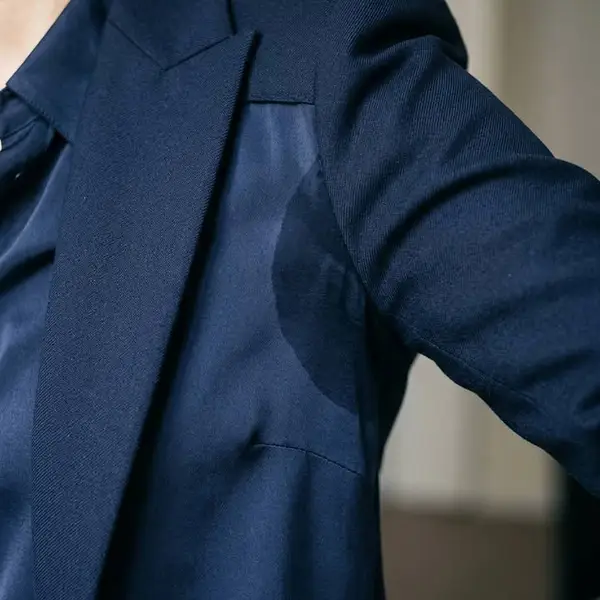
I keep 3 paper fans in the top drawer of my desk at Parkview Magnet High School and I have used every last one of them in the past 2 years to hide something my body will not stop doing to me in front of teenagers. They're the kind of fans they hand out at Baptist funerals in the summer. Cardboard. A wooden stick stapled to the back. A picture of Jesus on one side and the name of the funeral home on the other. Mount Pleasant Baptist. Superior Funeral Chapel. My cousin's home going in 2021. My auntie's home going in 2023. I have been to too many funerals in the past 5 years and I have kept every single fan. They live in my drawer under the pack of Post-its and the little bag of jolly ranchers I keep for the students. I use one about 4 times a day. Not to be cute. Not because I like the picture of Jesus. Because if I don't get air on my face and neck the moment I feel the wave come up my chest, I will sweat through whatever I'm wearing in 90 seconds and every parent standing at the counter in the front office will see it happen. The move is quick. I open the drawer, pull out the fan, hold it low near my collarbone, flick my wrist 5 or 6 times, breathe through my mouth, put it back. Nobody who isn't looking for it sees it. I have gotten so good at the church fan trick that I could probably teach a class on it. I never wanted to be an expert at this. My name is Alma. I'm 54 years old. I have been the executive secretary at Parkview Magnet High School in Little Rock, Arkansas for 19 years. Before that I was 5 years at Little Rock Central. Before that I was 8 years at a law office on Main Street doing intake. I run the front office. I know where every teacher is at every hour of every day. I know which kids in the freshman class have older siblings who came through here. I know which parents are going through divorces and which ones are not to be seated together at open house. I know the alarm codes for 4 different rooms and the combination of the safe in the finance closet and the direct cell number of every school board member in Pulaski County. I am the woman who knows. That was the identity I built. That was who I was. I was not supposed to be the woman who has to duck into a supply closet at 10:47 AM to press a damp paper towel to the back of her neck. My husband Reggie is 57. He retired from the post office 2 years ago after 32 years on the same route in Southwest Little Rock. Now he fixes small engines out of our garage on Arch Street for cash and drives our daughter Camille's kids to karate on Wednesdays. Camille is 32. She teaches 5th grade in North Little Rock. Her twins are 8. I have been going to First Missionary Baptist since I was 6 years old. I have sung in that choir. I have taught Sunday school in the basement. I have served lemonade at 4 vacation Bible schools. I know every deacon's wife by name and every deacon's wife knows what I take in my coffee. I have never in my life been the kind of woman who hides. The flashes started when I was 51. They started small. A little wave. A little warmth. Nothing worth mentioning. My doctor said it was normal for a woman my age and told me to dress in layers and gave me a pamphlet. By the time I was 52 they were bigger. I was waking up at 2:30 in the morning with the sheets soaked through and I was changing my nightgown in the dark so I wouldn't wake Reggie. I bought a little battery fan for my nightstand. I bought sheets with the moisture wicking. I bought a cooling pillow that cost 68 dollars off Amazon and didn't work. By the time I was 53 they were bigger during the day than at night. I was sitting at my desk at Parkview one morning in September, back to school night was in 4 hours, I had a stack of enrollment forms to file. It was 9:15 AM. The building was cool. My blouse was navy silk. And out of nowhere the wave came up my chest and hit my throat and my whole face went hot like someone had opened an oven in front of me. I sat there gripping the arms of my chair. By the time it passed I had sweat clean through my blouse under both arms and down the middle of my back. I could feel my bra clinging to my skin. I could feel my hair damp at the nape of my neck. Miss Cheryl, the assistant principal, was walking by on her way to the copier. She said "Alma, honey, you okay." I said I was fine. I smiled. I went into the supply closet after she passed and I closed the door and I pressed my forehead against the cool metal of the shelving unit and I stood there for 4 minutes until I could breathe again. That was the day I started buying blazers a size too big. You would not believe the things I bought in the year after that. A little pack of blotting papers for makeup that I used on my chest. A silk scarf that I told myself was for style. A stick of clear antiperspirant I put on my chest and shoulders and the back of my neck every morning. A folding cardboard fan I ordered from Etsy because the church fan was starting to look worn out. Then a second one from a different Etsy shop that folded like a Chinese fan and lived in my purse. I ordered a spray bottle of "cooling mist" for 34 dollars that turned out to be water. I made an appointment with my doctor. She was young. She was kind. She had a poster on the wall of a smiling older woman doing yoga. She told me my hormones were in the range for a woman my age. She told me I could try hormone therapy if the symptoms became disruptive. I asked her what disruptive meant. She said if I couldn't function. I was functioning. I was doing the church fan trick 20 times a day and I was functioning. I thanked her and I left. I want to tell you about one specific day because I think about it a lot. Camille's oldest, Marcus, had his 3rd grade Christmas program in December of last year. Camille had asked me weeks in advance to come. I sat in the second row of the school gym with Reggie on my left and Camille and her husband on my right and Marcus's twin sister Micah on my lap. The program started. The lights dimmed. The kids came out singing. And I felt it start. Not a small one. A big one. The kind that starts in the middle of your chest and moves up your throat and then it's in your face and you know you have about 20 seconds before your neck starts to shine. I didn't have my fan. I had left my purse in the car. Micah was sitting on my lap. I could not get up without making a scene. I could not open my little program and fan myself with it because everyone would see. I sat there and I felt the wave hit my face and I felt my collar go damp and I felt Micah's little arms slide down my forearm because my skin was too slick for her to hold on. She said "Grandma, you're wet." She said it out loud. The woman in front of me turned around. I stared straight ahead at the stage with tears in my eyes and I sang "away in a manger" with the second graders and I did not move for the rest of the program. Reggie didn't know what to do. Camille didn't know what to do. Micah went back to her mother's lap 5 minutes later without saying anything else because 3 year old girls are actually much more careful with grown women than we give them credit for. I went home that night and I sat on the edge of the tub in our bathroom and I cried for a long time. I told Reggie the next morning I wanted to skip Easter. He said "you don't skip Easter." I said "I don't want to sit in the church in a good dress and have this happen in front of every person we know." He said "Alma, you have been going to Easter service since you were 6." I did go to Easter service. I wore a linen dress in a light color that would show sweat less. I sat in the back pew instead of my usual place near the deacons' bench. I did not raise my hands during praise. I want to tell you about June. My cousin Everett passed on a Sunday in early June. Everett was 63. He'd had a stroke in his sleep in his apartment in Pine Bluff and his daughter had found him the next morning. It was sudden. It was the kind of loss that comes without warning and knocks a whole family sideways for a while. The funeral was at Mount Pleasant Baptist here in Little Rock the following Saturday because that was Everett's mother's church and she wanted him buried near her. June in Arkansas. The forecast was 91 degrees. The church did not have great air conditioning. The service was at 11 AM. I wore a navy dress with 3 quarter length sleeves and a pair of low heels and I brought 2 fans in my purse. I sat with Reggie in the fifth pew from the back on the aisle. I could see the whole church. The service started. By the time we were 20 minutes in I had used 1 fan and I was on the second and my navy dress was showing wet where my back was against the pew. The woman two rows in front of me had a battery operated hand fan going the whole time. The man behind me was mopping his face with a handkerchief every 90 seconds. Everyone in Mount Pleasant Baptist that morning was sweating. Except one woman. She was sitting in the pew directly in front of me. I hadn't noticed her when I sat down. Older woman. Maybe 63 or 64. Salt and pepper hair pulled back into a low neat bun with a pearl clip. Straight back. Small pearl earrings. A wide brim black hat that she'd taken off and set beside her on the pew. She was wearing a wool suit. A full 3 piece wool suit in navy blue. Skirt to just below the knee. Fitted jacket. Silk blouse buttoned to the throat with a little pearl pin. Stockings. Closed toe pumps. I stared at the back of her neck for the whole 50 minute service. She did not sweat. Not a drop. Not a shine. Not the little glisten at the hairline that even the coolest people had going by that point. The little curl of hair at the back of her neck where the bun didn't cover was completely dry. I could not stop looking. The service ended. The pallbearers came forward. We stood and we sang. My dress was ruined. Her wool suit sat on her shoulders like it had been pressed that morning. We filed out into the fellowship hall for the repast. I told Reggie to fix me a plate. I walked across the room with my purse in my hand and I found her standing near the sweet tea station holding a small plate with 2 deviled eggs and a piece of pound cake. I said "excuse me ma'am, I don't mean to bother you." She smiled at me. Kind eyes. Deep laugh lines. A small gap between her front teeth. She said "you're not bothering me, baby. Sit down." We sat at one of the round tables in the corner near the coat rack. I did not know how to ask what I was about to ask. I fumbled with the strap of my purse. I looked down at my dress. She said "you want to know how I'm not sweating." I looked up at her. She laughed. She said "sugar, I have been getting that look at every funeral I've been to for the past 8 months. You are the first one to actually come over and ask me." Her name was Odessa Fields. She was 63. She lived in Pine Bluff. She had known my cousin Everett since they were both in high school at Merrill 45 years ago and that's why she had made the drive up that morning. Her husband Nathaniel had passed 6 years earlier. She had raised 3 children and was a retired guidance counselor from a middle school in Pine Bluff. She had been having the flashes since she was 51. She had had them worse than I did. She said hers used to come in twos. Back to back. The kind where you'd finish one and start another before your dress was dry from the first one. She said she had tried everything. She had tried the herbs from the natural food store on Main Street. She had tried a soy powder her sister sent her. She had tried the hormone patch her doctor prescribed and had come off it after 4 months because it gave her migraines. She had tried the little battery fans and the cooling mist and the wicking clothes. She had gone to Everett's cousin's 60th birthday party 9 months earlier and had gotten so hot in the middle of the toast that she had walked out of the restaurant and sat on the curb in her Sunday dress. That was the night she'd made up her mind to do something different. Her sister-in-law, a woman she'd known for 40 years who lived in Monroe, Louisiana, had told her about something months earlier and she'd brushed it off because it sounded like every other thing she'd tried. But that night on the curb she called her sister-in-law from her car and said "tell me about that thing again." I asked her what it was. She said pomegranate. I laughed a small laugh. She waited for me to be done and then she said "I know what it sounds like. Let me tell you what it actually is, because it's not what you're thinking." She took a sip of her sweet tea and she set the cup down. She said your body has a whole set of blood vessels whose job is to control your temperature. She said when you get warm, those vessels are supposed to open up in a certain way to release the heat. When you get cool, they're supposed to tighten in a certain way to keep the heat in. The whole system runs on a signal your body makes called nitric oxide. Nitric oxide tells the vessels when to relax and when to constrict. It's the switch. She said when the switch is working right, your body handles temperature the way it always has. When it's not working right, the vessels can't respond the way they're supposed to. They flush all at once. They can't get their signal to calm down. And that's what you feel when a flash comes. That's not just your hormones being crazy. That's your vessels not getting the signal to settle. I sat forward. She said the reason the switch stops working right is oxidative stress. She said the same word gets used for what happens to metal when it rusts. Rust. Your body does the same thing on the inside. It rusts. And the little signal molecule that tells your vessels when to open and close, that nitric oxide, gets attacked by the rust the moment your body makes it. The signal doesn't reach the vessels. The vessels don't get the message. And they flush without warning. She said menopause makes it worse because your hormones change and put more stress on the whole system, but the flashes themselves are your vessels not being able to talk to the switch anymore. She said what she'd been taking supported the switch. She said it was an extract of pomegranate. Not the juice. Not the seeds. The peel. She said the peel of a pomegranate has compounds in it called punicalagins. She said the word slow so I could catch it. Pyoo-nih-kah-lah-gins. She said they don't exist in the juice or the fruit. They exist in the peel, which nobody eats and which most companies throw away. She said the punicalagins support the nitric oxide signal by quieting the oxidative stress that had been destroying it. When the rust eases, the signal survives. When the signal survives, the vessels can respond to it the way they used to. When the vessels can respond, they don't flush all at once. They handle the heat the way they used to handle it. Small waves. Small adjustments. Not the tsunami that had been running my body since I was 51. She said her flashes had gotten small first. Not gone. Small. Then further apart. Then further apart still. She said she had put on her wool suit that morning at 7 AM in her house in Pine Bluff and she had driven 2 hours to Little Rock and she had sat through a 50 minute service in a hot Baptist church and she had not felt a wave one time. She said 8 months. Then she said one more thing before she told me what to look for. She said most of the pomegranate supplements you'll find at the drugstore or online are standardized to something called ellagic acid. She said ellagic acid is one of the things your body makes when the punicalagins in the peel break down. So it's downstream. It's the leftover, not the source. She said companies use it because it's cheaper to standardize to. It sounds fancy on a label. But it's not the same as taking in the actual peel extract with the actual punicalagins in it, because the peel gives your body the whole raw material to work with, not just one downstream piece. She said "if you're going to try something, try the thing that's actually the peel." She said the one she took was called Auniva. She said it was 2 capsules in the morning with her coffee. That was the whole routine. She'd been taking it every morning for close to 8 months at that point. She reached in her purse. She pulled out an orange bottle with a dark green cap and she set it on the table between the deviled egg plate and my sweet tea. She said "I carry a spare. In case a woman like you comes over at a funeral and asks." She slid it across the table. She said "you take that home. If it works for you, order your own next month. If it doesn't, throw it away and forget I said anything." I sat there with my hands in my lap. I said thank you. I said it 3 times. She said "sugar, don't thank me. Just don't hide anymore. I hid for 12 years and I'm not doing it another day." I want to tell you what happened and I want to tell you the way it actually happened. Week 1: Nothing. I mean nothing. I took 2 capsules with my coffee at 6:15 in the morning at my kitchen table. I still had the flashes. Same as before. I almost stopped because I thought Miss Odessa had given me a placebo. Week 2: Still nothing on the flashes. But I noticed I was sleeping through the night on a Tuesday and I couldn't remember the last time that had happened. I hadn't woken up soaked. I hadn't changed my nightgown in the dark. Week 3: The daytime flashes were the same size but I was having fewer of them. I counted them one Thursday. Six for the whole day. I usually had 12 to 15. Week 4: The waves started coming shorter. They still came. But instead of lasting the full 90 seconds they were 30 seconds and gone. My blouse stayed dry more often than not. Week 5: I sat through a 3 hour staff meeting at Parkview and I did not open my desk drawer once for the fan. Week 6: My daughter Camille called me on a Sunday and said "mama, you look different in the photos from Micah's birthday. Are you sleeping better." Week 8: I wore silk to church. A pink silk blouse under a white linen blazer. I sat in my regular pew near the deacons' bench. I raised my hands during praise. I did not have a fan in my hand. The pastor called the greeting time and I hugged 4 women I hadn't hugged in months. Week 10: Miss Cheryl at Parkview walked past my desk on a Wednesday and said "Alma, what have you been doing, you're glowing." I laughed. I said "sleep." Week 12: My grandson Marcus had his end of school program on the last Thursday in May. I sat in the second row of the gym with Reggie on my left and Micah on my lap. Micah's little arm rested on my forearm the whole 40 minutes. My skin was dry. She kept it there. And when the program was over she looked up at me and she said "Grandma, you smell like flowers." I want to say something to the women who might be reading this. You are not vain for wanting your body back. You are not weak for having tried a lot of things. You are not making it up. What you are feeling is real. Your doctor's shrug is not the last word. There is a switch inside you that has been getting worn down for a long time. The switch controls how your body handles heat. When the switch works right, you feel like yourself. When the switch is worn down, your body ambushes you in public and you spend all day hiding it. The switch can be supported. It's not gone. It's not broken. It just needed something that no shampoo or spray bottle or hormone patch was ever going to give it. Auniva is what Miss Odessa gave me at Mount Pleasant Baptist in June. Auniva is what I take now. It is the actual peel extract with the actual punicalagins in it, not the cheaper ellagic acid stand-in that most companies use. Two capsules with your coffee. That's the whole routine. They have a 90-day money-back guarantee. If you try it for the full 3 months and you don't see a difference, you send the bottle back and they refund every penny. Miss Odessa told me about the guarantee before she told me anything else and I want to do the same for you. Give it 90 days. Give the switch time to catch up. If it does nothing, you send the bottle back and you are out nothing. If it does what it did for Miss Odessa and what it did for me, you are going to know before the 90 days are up. The first thing you will notice is your sleep. The second thing will be the fan in your drawer. You will realize one afternoon that you haven't opened the drawer in a week. 👉 https://auniva.co/pom/5 P.S. About the peel. When you look at other pomegranate supplements online or at the drugstore, they'll put pomegranate on the front of the bottle and then somewhere on the back they'll list ellagic acid. That's the tell. A company that gives you the whole peel extract will tell you about the punicalagins on the front because they know what they've got. A company that's cutting corners will hide the ellagic acid on the back and put a pretty red fruit on the label. Look for the peel. Look for the punicalagins. If the front of the bottle doesn't say punicalagins, put it back on the shelf. P.P.S. I did not change anything else. I did not start hormone therapy. I did not go on a diet. I did not add a new supplement stack. I did not buy a different pillow. All I did was take the 2 capsules in the morning with my coffee. I want to say that clearly because I know a lot of us have tried a lot of things and are tired of adding more things to the routine. This is one thing in the morning. That is the whole ask. P.P.P.S. Auniva has a 90-day money-back guarantee. If you try it for the full 3 months and nothing changes, you send the bottle back and they refund your money. That's it. There is no fine print I could find. Miss Odessa carried a spare bottle in her purse to hand to women like me because she believed in it enough to put it in someone else's hand. I don't carry a spare in my purse yet but I keep an extra in the kitchen cabinet in case one of the women at Parkview asks me what I've been doing. And they do. They do ask. I've had 4 conversations in the past month standing over the copier that ended with me writing this same website down on the back of a Post-it. Let the guarantee do what it's supposed to do. Let it be the thing that lets you say yes. 👉 https://auniva.co/pom/5

Loading the ad's image
Wellness Insider — Feel Like Yourself Again
PromisingImage

Feel Like Yourself Again

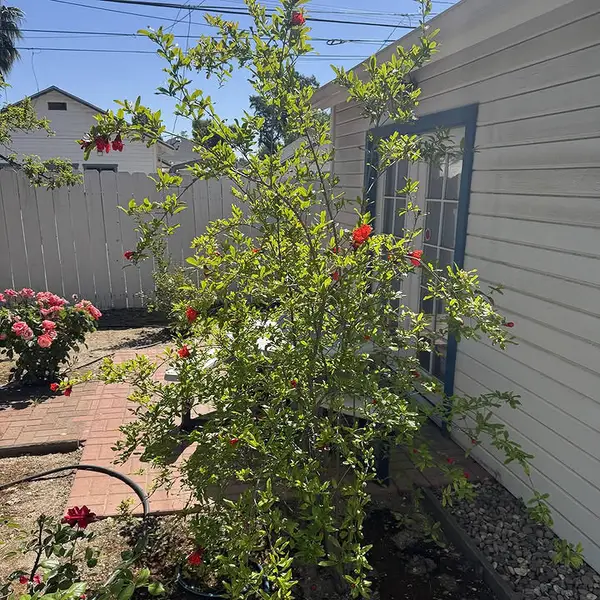
I lay awake next to my wife of 34 years at 2:14 in the morning last November and tried to remember the last time I'd touched her hand. Not her arm. Not the small of her back when I'd come up behind her at the sink. Her hand. The way I used to. Driving home from her sister's place in Santa Fe in 1992. My right hand on the gearshift. Her left hand on top of mine. We'd ride that way the whole 4 hours. I couldn't remember the last time. I lay there in the dark and listened to her breathing and I tried to count back. Spring? Last Christmas? Her birthday in February? I gave up at 2:31. I rolled onto my back and stared at the ceiling fan and felt a kind of grief I didn't have a word for. I'm 62 years old. My name is Gilbert. Everybody calls me Gil. I've lived in Albuquerque, New Mexico for 41 years. My wife is named Imelda. She goes by Mel. We met at a wedding in Las Cruces in October of 1989. She was the bride's cousin. I was the groom's college roommate from UNM. She had on a green dress. I asked her to dance to a Linda Ronstadt song. We've been married since June of 1992. I worked for the city of Albuquerque for 31 years in the water department. Started as a meter reader. Retired 4 years ago as a supervisor. Mel is a retired second grade teacher. 28 years at Lavaland Elementary on the west side. We have two grown kids. Eli, who's 30, and his wife Camila, who live in El Paso. And Naomi, who's 27, and lives 11 blocks from us with her boyfriend Trevor who I like more than I expected to. No grandchildren yet. Our house is a small adobe on the south valley. Three bedrooms. A pomegranate tree in the back yard that Mel's father planted in 1994. The fruit comes in October every year. We don't pick it. Birds get most of it. Some falls and rots in the dirt. I'm telling you this because the pomegranate tree comes back in this story and I want you to know it was already there. It was always already there. Mel and I had what I would have told anyone was a good marriage. Not a perfect one. We argued. We'd had our years. The hard ones were 2003 to 2006 when our son Eli was a teenager and getting into things and I worked nights and she worked days and we passed each other in the kitchen like roommates. We got through it. We always got through it. By the time I retired in 2021 we had what I thought of as the dessert years. Mel had retired in 2020. We'd planned to travel. We'd planned to garden. We'd planned to drive out to Eli's place once a month and to spoil him and Camila as soon as they gave us a grandchild. We did some of those things. But something started going wrong with me in the spring of 2022 and by November of 2024, the night I'm telling you about, when I lay awake at 2:14 and couldn't remember the last time I'd held my wife's hand, the marriage I would have called good had gone quiet in a way I'd been hiding from myself for almost 2 years. It started slow. Spring of 2022. I was 60 years old. Mel and I had been intimate maybe once every couple of weeks for most of our marriage. After menopause, less. Maybe every three or four. But it was good when it was. We'd been a couple who'd never stopped wanting each other. I'd come up behind her at the sink and she'd lean back into me and that was a whole conversation. We knew the language. The first time it didn't work was a Friday night in May of 2022. We'd had a nice dinner. She'd made green chile chicken enchiladas. We'd watched something on the TV. I'd been thinking about it all evening, the way a man does, and when we got to the bedroom I kissed her and she kissed me back and we lay down and it just wasn't happening. She was patient. She always was. I said "I think I'm just tired." She said "that's okay honey." She kissed me on the forehead and rolled over and went to sleep. I lay awake for 3 hours. I told myself it was the wine. I'd had two glasses. I told myself it was stress. I'd had a long week before I retired, paperwork wise. I told myself it was 60. Sixty was when it happened to a lot of men. I had buddies who'd been on the little blue pill since they were 55. But it kept happening. A month later. Then two weeks after that. Then there was a stretch in August of 2022 where we tried 4 times in 3 weeks and only once worked, and that once felt like an accident. By the fall of 2022 we'd stopped trying. Not in a conversation. We never had a conversation. We just stopped. We'd kiss at night. She'd kiss the side of my mouth. She'd touch my arm. She'd say "love you Gil" and I'd say "love you Mel" and she'd roll over and go to sleep. And I'd lie there for an hour staring at the ceiling fan. I went to my doctor in January of 2023. Dr. Iversen. White guy. Late 50s. Been my doctor for 9 years. Good man. Honest. I told him. I told him everything. Not in the language of the kitchen. In medical words. ED. Difficulty maintaining. Reduced frequency. The clinical vocabulary that lets men talk about this without dying inside. He listened. He ran labs. Testosterone. Cholesterol. Blood sugar. The whole panel. Three days later he called. "Gil. Your testosterone is on the low end of normal. 312. We could supplement, but I'd want to address some other things first. Your blood pressure has been creeping. 142 over 91 last week. Your cholesterol is on the line. Your fasting glucose is 108, which is pre diabetic territory. There's a lot going on." He said "I'm going to give you a prescription for sildenafil. Generic Viagra. Try it. If it works, great. We'll keep working on the underlying stuff. If it doesn't, we'll come back and talk about other options." I filled the prescription at a Walgreens I drove 20 minutes out of my way to get to so I wouldn't run into anyone I knew. I tried it for the first time on a Friday night in February of 2023. It worked. Not the way it used to work between Mel and me. Not naturally. Not from a kiss in the kitchen. It worked the way a tool works when you pick it up and use it. It worked enough. She didn't ask. I think she knew. Or maybe she thought I'd figured something out on my own. Maybe she thought we were back. We tried again a month later. It worked again. But here's the thing nobody tells you about the pill. It works on the mechanical part. It doesn't work on the thing that comes before the mechanical part. The wanting. The walking up behind her at the sink. The way you used to feel when she walked across a room in a green dress. The pill is downstream of the feeling. It doesn't give you the feeling back. The feeling was gone. I'd lie there next to Mel after, on those nights when the pill worked, and I'd feel a kind of distance I didn't know how to close. We'd just done something married people do and I felt further from her than I had before we'd started. I started avoiding the bedroom. I'd stay up late watching TV. I'd come to bed at 12:30, 1 AM. I'd hear her breathing in the dark. I'd lie there with my back to her. She started staying up too. Reading in the living room until I came to bed. Maybe she was waiting up. Maybe she'd given up. I didn't know how to ask. By the spring of 2024 we hadn't been intimate in 19 months. 19 months. And the closeness around it, the kitchen kisses, the hand holding, the way she'd lean back against me when I'd come up behind her, all of that had thinned out too. We were polite. We were kind. We talked about the kids. We talked about the yard. We didn't talk about us. She started touching my arm instead of my hand. That's the thing I noticed first. It became a tell. We'd be sitting on the couch watching something and her hand would come over and land on my forearm. Not on my hand. Not threading her fingers through mine. On my arm. Like a friend. I'd say "love you Mel" at night and she'd say "love you Gil" and she'd touch my shoulder and I'd lie awake and try to remember the last time she'd reached for my hand. That brings us to November. Tuesday November 12th. I had a urology appointment. Dr. Iversen had referred me 3 months earlier because the sildenafil had stopped working as reliably and he wanted to rule a few things out. The urologist's office was up in the heights. Sandia Heights Urology. New building. Glass front. Pleasant. The urologist himself was a younger man named Dr. Whittaker who I didn't connect with. He was a fine doctor. He just wasn't a talker. He did the exam. He did the questions. He said the testosterone supplementation might be worth considering. He said we could also try a different class of medication. He said we'd schedule a follow up. I was getting dressed in the exam room afterward when there was a knock and the door opened and a woman came in. She was probably 50, 51 years old. Filipino American. She had on light blue scrubs and a stethoscope around her neck. Her name tag said Mirasol. PA. She said "Mr. Gallegos. I'm Mirasol. I'm Dr. Whittaker's PA. He had to take a call. He asked me to come in and go over your follow up schedule with you." I was still buttoning my shirt. She sat down on the rolling stool and put a folder on her lap. She didn't open the folder. She looked at me for a second. She said "Mr. Gallegos. Before we do the schedule, I want to talk to you about something. May I?" I said "okay." She said "I read through your chart before I came in. I see you've been on sildenafil for 21 months. I see your testosterone is on the low end. I see the blood pressure and the glucose. I see Dr. Whittaker is talking about testosterone supplementation." She said "I want to tell you something that's not in my official scope to tell you. So I'll preface it that way. This is one woman talking to one man for a minute. Okay?" I sat down on the edge of the exam table. I said "okay." She said "my husband is 58. He went through what you're going through starting about 4 years ago. He saw 3 different doctors. He was on the pill. He went on testosterone. Nothing got at the thing that was actually going wrong." She said "I'm a PA. I read everything. I've sat in on probably 1,400 of these consultations in the last 9 years. And I started reading the research literature on what's actually happening upstream of erectile dysfunction in men over 50. And I'll tell you something I've come to believe." She said "ED in men over 50 is rarely a sex problem. It is a circulation problem. It is a nitric oxide problem. It is an oxidative stress problem. The drugs we hand out, the sildenafil and the testosterone, they manage the symptom. They don't address the system that's been wearing down for 20 years to get a man to this exam room." She said "the system underneath, it's the same system that's making your blood pressure climb. The same system that's making your glucose climb. The same system that's making you tired in the afternoon. Erectile dysfunction in your age range is almost always the canary in the coal mine for a wider vascular and oxidative pattern that's been progressing for 2 decades." She said "and when you understand that, the question changes. It stops being how do we get this guy harder. It starts being how do we support the system underneath so that the body can come back online." I sat there and listened to a woman I'd met 4 minutes earlier explain my life to me. She said "the way the system works, you have a molecule your body produces called nitric oxide. That molecule is the master switch for blood flow. It tells your blood vessels to relax and open. When it's working, blood flows where it needs to go, including everywhere it needs to go in a 62 year old man. When it's not working, the signal gets destroyed before it can reach the vessels. Vessels stay tight. Blood doesn't get where it needs to go." She said "what destroys the nitric oxide is oxidative stress. The same oxidative stress that's been wearing down every other vascular system in your body. It's a kind of rust that's been forming inside you for decades. The Viagra doesn't do anything about the rust. It bypasses one mechanism by pushing on a different mechanism. It works around the problem. It doesn't address the problem." She said "I gave my husband a 90 day trial of something 18 months ago. He didn't tell me he was going to take it. I just left a bottle on the kitchen counter with a sticky note and I said try this for me. He took it. He's been taking it since." She said "the difference, Mr. Gallegos, isn't just the obvious thing. That came back too. The difference is he reaches for my hand again. He sleeps next to me with his hand on my hip. He kisses me in the kitchen. He's the man I married 30 years ago. The Viagra never gave me that. The pill gave me a mechanical husband. The thing that addresses the system underneath gave me back the man." I felt something break loose in my chest. I said "what is it." She said "it's a pomegranate extract. Specifically a brand called Auniva. Pomegranate has compounds called punicalagins. Some of the most studied antioxidant compounds in nature. There's solid mechanism research on what they do for the very oxidative stress that's been destroying your nitric oxide. There's tissue level research on what they do in penile tissue specifically. There's a 24 percent salivary testosterone bump in one study. There's blood pressure data. Blood sugar data. The same system pomegranate supports is the system that's wearing down across all those areas." She said "it's not a magic bullet. It's not faster than the pill. It took my husband about 7 weeks before he felt anything. But what it does is different. It doesn't bypass the problem. It supports the system underneath. So when the body does what bodies do, it does it because the body is working, not because a drug is forcing it." She wrote something on a yellow sticky note and handed it to me. She'd written auniva.co slash pom slash 5. She said "90 day money back guarantee. You take it for up to 90 days. If you feel nothing, you ship the bottle back, you get your money back. No risk to try." She stood up. She picked up the folder. She put her hand on my shoulder. She said "Mr. Gallegos. The pomegranate tree my mother had in her back yard in Manila when I was a child. She used to break the fruit open with her hands at the kitchen table and tell us it was the fruit of life. I didn't know what she meant. I'm starting to figure it out." She walked out of the exam room. I sat there for probably 10 minutes. I drove home with the yellow sticky note in my shirt pocket. When I got home, Mel was in the back yard. She had a basket. She was picking up fallen pomegranates from the ground under her father's tree. The tree was loaded that year. There were probably 30 fruits on the ground, some split open, some intact. I stood in the kitchen and watched her through the window. She was kneeling. She had on jeans and one of my old work shirts tied at the waist. Her hair was pulled back. She looked the way she'd looked at 36, kneeling in the same yard with our kids. I felt something I hadn't felt in 19 months. It wasn't sexual. It was earlier than that. It was the feeling I used to have at the sink. The feeling that came before the kitchen kiss. The feeling that meant I wanted to walk across a room and touch the person I'd built a life with. I walked outside. She looked up. She said "Gil. Look at all these. The tree went crazy this year." I knelt down next to her. I picked up a pomegranate. I said "Mel. I want to tell you something." She stopped what she was doing. I told her about the appointment. About Mirasol. About the sticky note in my pocket. About 19 months. About the hand holding. About the fact that I'd been hiding from her for 2 years because I didn't know how to come back. I cried in the dirt under her father's pomegranate tree. A 62 year old man crying in the dirt. She got down on her knees in front of me and she put her hands on my face. She said "Gil. I knew." She said "I knew. I just didn't know how to ask either. I thought you didn't want me anymore. I thought I was the problem." We cried in the dirt for a long time. There were ants going around us. A neighbor's dog was barking through the fence. A delivery truck went by on the street. That night I ordered the pomegranate. It came on a Thursday. I took the first one Friday morning with my coffee. I didn't feel anything for the first 8 days. But on day 9 I held Mel's hand in the parking lot of the Smith's grocery store on Coors. She was loading bags into the back of the Subaru. I came up beside her and I took her hand. She looked at me. She didn't say anything. She held my hand all the way to the cart return. Day 16 I slept with my hand on her hip. I hadn't done that in I don't know how long. Day 23 I came up behind her at the sink while she was washing breakfast dishes. I put my arms around her waist. She leaned back against me. We stood there for a long time. Not doing anything. Just standing. Week 6 I noticed my morning blood pressure readings, which I'd been taking every other day at the kitchen counter, had dropped. 142 over 91 had become 131 over 84. Week 8 my pants were looser. I hadn't been trying to lose weight. I'd lost 6 pounds. Week 10 was a Tuesday night in late January. Mel and I were in the bedroom. We hadn't planned anything. We hadn't said anything. We were just there, in our bedroom, like a married couple. And it happened the way it used to happen. Without a pill. Without thinking about it. Without me lying there afterward feeling further away than I'd felt before. After, Mel cried. Not sad crying. The other kind. She said "Gil. I thought we were done. I thought we were done with that part of our life." I said "we're not done." She said "I know." She put her head on my chest and she put her hand on my hand and we lay there until I fell asleep. I saw Dr. Iversen 6 weeks after that. My blood pressure was 128 over 80. My fasting glucose was 97. My testosterone, which I'd had retested on a hunch, had come back at 367. Up from 312. He looked at the chart. He said "Gil. Whatever you're doing, keep doing it. I don't need to know what it is. I just need you to keep doing it." I told him anyway. He wrote it down. He said "I'm seeing more and more of this. The men who get to the underneath are doing better than the men I have on testosterone supplementation. I'm not supposed to say that. I just said it." I'm telling you this story because there's a man reading this who's lying awake at 2:14 in the morning next to a wife he hasn't held the hand of in months. There's a woman reading this who's married to that man and who's stopped reaching for his hand because she thought he didn't want her anymore. It's not what you think. It's not that the love is gone. It's not that you've gotten old and this is just what happens. The system underneath has been wearing down for 20 years and the body is asking for support. Not for a workaround. Not for a pill that pushes on a different mechanism. For support of the system that's actually struggling. Auniva Pomegranate is what Mirasol the PA wrote on a sticky note for me. Standardized to the punicalagins, which is the part of the fruit that actually does the work. She told me most other brands skip that part because it's expensive to standardize for. I checked. She was right. You can order it at auniva.co/pom/5. They have a 90 day guarantee. You take it for up to 90 days. If your body responds the way mine did, you keep going. If you take it and you feel nothing, you ship the bottle back in the box and they refund every penny. That's the deal. That's the only kind of deal worth taking on something like this. I'm 62. I have a wife of 34 years. I held her hand at the grocery store yesterday. P.S. Mel started taking it in December. She didn't have a reason. She just watched what was happening with me and she ordered her own bottle. Her sleep is better. Her hands are warmer at night. She said this morning her hot flashes are less intense than they used to be, which I didn't even know was something pomegranate did. Apparently it's something pomegranate does. P.P.S. The 90 day guarantee is real. I called and asked because I am the kind of man who calls and asks. You take it for up to 90 days, and if it's not for you, you ship the bottle back and they refund you. No fight. Mirasol said "you have nothing to lose." She was right. P.P.P.S. Mel and I drove out to Eli and Camila's place in El Paso last weekend. I drove. Mel sat in the passenger seat. About an hour into the drive she put her left hand on top of my right hand on the gearshift. Just like 1992. Just like Linda Ronstadt on the radio. She didn't say anything. She just left her hand there for 3 hours. I didn't say anything either. I just drove. That's what this stuff is. It's not a number on a chart. It's the things you get back. The hand on the gearshift. The kitchen kiss. The wife you came back to. 👉 auniva.co/pom/5

Loading the ad's image

Wellness Insider — Feel Like Yourself Again
PromisingImage

Feel Like Yourself Again

I left a half-tuned Baldwin in a stranger's living room last October and drove home with my hazards on. I'd never left a piano half-tuned in 38 years of doing this work. Not once. Not the time I had the flu in 1999 and finished a Kawai grand with a fever of 102. Not the time my father died in the middle of a job in Warwick and I came back the next morning to finish the last octave because I'd told the family I would. You finish what you start. That's the whole religion of this trade. But that Tuesday in October, in a stranger's living room in Cranston, I closed my case and stood up and the whole room went with me. Not spinning. Sliding. Like the wall behind the piano was on a track and someone was quietly pushing it left. I put my hand flat on the top of the Baldwin. Waited for it to settle. It didn't settle. The woman was in the kitchen making coffee. I could hear the machine going. I called out to her that I wasn't feeling well and I'd need to come back Thursday. She was very kind about it. Told me not to worry. Asked if I needed to sit down before I drove. I said no. I sat in my car in her driveway for 24 minutes before I could put it in reverse. My name is Vincent. I'm 63. I've been a piano tuner in Providence, Rhode Island since I was 25 years old. My father was a piano tuner. His father worked in the mills in Woonsocket and told my father to find something to do with his hands that wouldn't kill him. Piano tuning was what my father found. He taught me from the time I was 11. I could hear the beats between two out-of-tune strings before I could ride a bike properly. I have a route. That's what we call it. About 340 pianos in southern New England that I service on rotation. Some of them once a year. Some of them twice. A few of the concert instruments, four times. I know which house has the little dog that hides under the sofa when I come in. I know which family always forgets to close the front door behind me and lets the mosquitoes in. I know which piano bench has the loose leg and which one to put my case on instead. I know these houses the way you know your cousins' houses. Not intimately. But well enough that you can find the bathroom without asking. And for the last two years, the houses had started to move. Not all at once. It came in slowly. The first time it happened I was tuning a Yamaha upright for a family in East Greenwich, and I stood up after finishing the bass strings, and the room did a little half turn and then came back. I thought I'd stood up too fast. I've been kneeling in front of pianos for four decades. Your knees get to be a whole geopolitical situation. So I chalked it up to that. Blood rushing around because I'd been down too long. But then it started happening more. Not just when I stood up. Sometimes when I turned my head to look at the tuning pin. Sometimes when I bent down to pick up my hammer off the rug. Little slides. Little half-turns. The room would take a small step to the left and then step back. By last summer I was gripping doorframes on my way in and out of client's houses. Just for a second. Just to let the world catch up. I didn't tell my wife. Angela worries. She's always worried, since we lost our second son 22 years ago to a car accident on Route 95, and I've spent the years since then trying to give her fewer things to worry about, not more. I didn't tell my doctor either, if I'm honest. I saw him last spring for the physical I do every year and he asked me how I was doing and I said fine. He took my blood pressure. Said it was fine. Listened to my heart. Said it was fine. Told me for my age I was doing great and to keep doing what I was doing. Whatever I was doing. Nobody tells a piano tuner what he's doing. But after the Baldwin in Cranston, I started to think maybe I couldn't keep doing this. Whatever this was. I called the woman on Thursday and rescheduled for the following Tuesday. Then I called her the following Monday and rescheduled for the Tuesday after that. Then I called her and asked if she'd mind if I referred her to a colleague of mine in Warwick because I was having some scheduling issues. She was gracious. She said of course. She said please take care of yourself. I hung up the phone and sat at my kitchen table for a long time. My little book of appointments was open in front of me. There were 47 more pianos on the calendar between then and Christmas. I did not know how I was going to tune 47 pianos. Angela came in from the back porch and asked me why I was sitting there. I told her I was just planning my week. She kissed the top of my head the way she does. She's been kissing the top of my head like that since 1984. I finished my coffee and I went and did the next job. A Baldwin in Barrington. I gripped the doorframe on the way in and I gripped the doorframe on the way out and the family didn't notice because families rarely notice anything about the tuner. I got through it. But I knew I wouldn't get through all of them. Then June came. And June meant Marguerite. Dr. Marguerite Ashworth is one of my longest clients. She has a 1962 Steinway B in the front room of a house on the East Side of Providence that her grandfather bought in 1948. I have tuned that piano twice a year for 22 years. Once in December, once in June. She's an otolaryngologist. Ear, nose, throat. She's 67 years old and she cut back to two mornings a week at the practice a couple of years ago, but she hasn't retired. She says she'll retire when they cut the badge off her lab coat with scissors. I've known Marguerite through 22 Junes. She always makes me a glass of iced tea. She always leaves it on the coaster on the little end table next to the Steinway. She always waits until I'm done with the tenor section to come in and sit on the couch and talk to me while I finish. That's just how we do it. I got to her house that Tuesday morning. I rang the bell. She opened the door. I don't know what my face was doing. I hadn't slept the night before because I'd been up thinking about the four pianos I had scheduled for that week and how I was going to get through them. But something about my face must have told her something, because Marguerite is a doctor, and doctors read faces the way tuners read strings. She looked at me for a second longer than usual. Then she said, "Vincent, come in and sit down before you do anything else." I stepped inside. And the entryway did the thing. The small half-turn. I put my hand on the doorframe. Marguerite saw it. Of course she saw it. She's spent 40 years watching people's balance in exam rooms. She put a hand on my elbow and walked me to her kitchen and sat me down at the table and poured me a glass of water. She sat across from me. She didn't say anything for a minute. She just looked at me the way a doctor looks at a patient. Not the way a client looks at a tradesman. Then she said, "How long has this been going on?" And I told her. Everything. The Baldwin in Cranston. The doorframes. The mornings I sat in the car for 20 minutes before I could drive. The 47 pianos I didn't know how I was going to tune. My father dying with his tuning hammer in his hand at 74 and me being 63 with maybe not enough years left in this trade to see it through. She listened. She didn't interrupt. When I was done, she said, "Vincent, I don't want you to panic. I want you to listen. Because this is my field. This is what I've done my whole life." She got up and got herself a glass of water and sat back down. "There's a system in your inner ear," she said, "that controls your balance. It's called the vestibular system. It's tiny. Smaller than a nickel. And the way it works is, it needs a very steady supply of blood and oxygen to do its job. It's fed by some of the smallest blood vessels in your entire body. Vessels that are thinner than a hair." She held up two fingers and made a tiny gap. "Those vessels are delicate," she said. "They're the first ones in the body to have trouble as we get older. And when they have trouble, the balance system doesn't get what it needs. And when the balance system doesn't get what it needs, the world starts to slide." I asked her if that was what was happening to me. She said she couldn't diagnose me at her kitchen table. But she said the pattern I was describing sounded very familiar to her, and it sounded like something she'd been reading about for the last couple of years. "The problem isn't the balance system itself," she said. "The problem is the plumbing that feeds it. The small vessels. And most of the things we try to do for people with balance issues, we're aiming at the wrong target. We're trying to strengthen the muscles, or do the exercises, or manage the symptoms. Nobody's paying attention to the vessels." I asked her why. She smiled a little. "Because small vessels are boring, Vincent. They don't show up on the scans that get the grants. They're too small to bypass. They're too small to stent. So the whole field of medicine kind of shrugs at them. But they're the ones that matter for the balance system. And for the memory. And for the fingertips. And for a lot of things that people over 60 start to notice." She sat back in her chair. "There's something I started taking about 14 months ago," she said. "For a different reason, honestly. I wasn't having balance issues. I was having cold hands during winter clinic hours. But my colleague in Boston, an ENT surgeon I trained with 30 years ago, told me about it. And I've been on it since April of last year. And I want to tell you what happens with it, because I think it might matter for what you're describing." She got up and went into the front room and came back with a bottle in her hand. Small. White label. She set it on the table between us. Auniva Pomegranate. I looked at her. I said, "Marguerite, pomegranate is a fruit. I've eaten pomegranate. I've had the juice at Whole Foods. It's a nice fruit. It doesn't do anything." She laughed. She said, "That's exactly what I said to my colleague. Word for word." Then she told me why I was wrong. "The active compounds in pomegranate," she said, "are called punicalagins. They're antioxidants. They're some of the strongest antioxidants in the plant world, actually. And here's the thing nobody tells you. Punicalagins aren't in the juice. And they're not in the seeds. They're in the peel. The tough leathery outer skin that nobody eats and nobody juices. That's where the whole medicinal history of pomegranate lives. In the part everyone throws away." She turned the bottle around and pointed to the label. "Most pomegranate supplements on the shelf are standardized to something called ellagic acid. Ellagic acid is a downstream metabolite. It's what your body eventually makes from other compounds. It's a fine molecule. But it's not the punch. The punch is the punicalagins. And the punicalagins are only in the peel. And most companies don't use the peel because it's harder to source and harder to extract. So they use the juice or the seed and standardize to ellagic acid and call it pomegranate. And it's technically pomegranate. But it's not what the research is about." I asked her what the research was about. "The research is about oxidative stress in the small vessels," she said. "Oxidative stress is what happens when your body's cleanup crew can't keep up with the damage. It's what ages tissue. It's what stiffens vessels. It's what makes the little capillaries that feed your balance system start to lose their flexibility. Punicalagins are one of the few compounds we know of that support the body's antioxidant activity in exactly those small vessels. They support nitric oxide, which is what keeps small vessels flexible and responsive. They help the plumbing work the way it used to." She tapped the bottle. "I take two of these every morning with my coffee. I've been on them 14 months. My hands warmed up in about 6 weeks. That was the first thing I noticed. Then somewhere around month 3, I realized I hadn't had one of my little dizzy spells in a while. I didn't even know I'd been having them until they stopped. That was a strange feeling." She looked at me across the table. "I'm not telling you this is going to fix what's happening to you. I don't know what's happening to you. You should see a specialist and get properly evaluated. But I'm telling you what I know from being a doctor for 40 years. The small vessels feeding your balance system are the most likely culprit, statistically. And this is one of the few things I've come across that seems to actually support them in a way that matters. And there's very little downside to trying it while you get evaluated." She wrote something down on a Post-It note. Slid it across the table. It said auniva dot com slash pom slash 5. "That's where I ordered mine," she said. "You can get them there. The 90-day guarantee is real. I checked before I bought it because I'm a suspicious person. If you try it and it does nothing for you, ship the bottle back and they refund every penny. You have three months to decide." I put the Post-It in my wallet. I tuned her Steinway. I gripped the doorframe on the way out and Marguerite pretended not to notice, which was a kindness. I ordered a bottle that night. I want to tell you what happened. I want to tell you honestly. Week one, nothing. I took two capsules with my coffee every morning. I felt exactly the same. I gripped exactly the same number of doorframes. Week two, nothing. I was already talking myself into being disappointed. That's how I am about things. My father was the same way. Expect nothing, and if something happens, it's a bonus. Week three, I stood up from a Chickering upright in a house in Pawtucket and I didn't grab anything. I didn't even think about grabbing anything. It was two seconds before I realized what I'd just done. I stood there in the client's living room for a moment, holding my tuning hammer, waiting to see if the room would remember to move. It didn't move. I got in the car afterward and I sat in the driveway and I put my forehead down on the steering wheel and I cried for about a minute. Then I drove home. Week four, I had a full tuning morning. Two pianos back to back. A Baldwin in Providence and a Yamaha in East Providence. I did both of them without leaving the house of either. I didn't grip anything on the way out. Week five, Angela asked me what was different about me. She said I looked like I was standing up straighter. I told her I felt like I was standing up straighter, which was true, though I couldn't have told you why. Week six, I called the woman in Cranston with the Baldwin. The one I'd left half-tuned in October. I told her I'd been ill last fall and I wanted to come back and finish the job at no charge. She was surprised to hear from me. She'd assumed I'd retired. I drove out on a Tuesday morning. Same route I'd driven that October day, only this time in reverse. I pulled up in her driveway. I sat in my car for maybe 30 seconds. Not because I needed to. Because I remembered what it had felt like to sit there for 24 minutes not being able to drive. I went in. I finished her Baldwin. I stood up from it and the room was where I left it. She gave me a check and a hug and told me not to be a stranger. I'm 63 years old. I've been tuning pianos in southern New England for 38 years. I have about 340 pianos on my route. I have every intention of tuning most of them until I'm 74, which is how old my father was when he died with his hammer in his hand. I'm not going to tell you Auniva Pomegranate is why. I'm going to tell you what I know. Which is that I stopped gripping doorframes about three weeks after I started taking it, and I haven't gripped one since. Which is that the woman in Cranston has a fully tuned Baldwin in her front room, when she almost had a piano tuner's abandoned mess. Which is that Angela stopped worrying about me for the first time in a very long time. Which is that I ordered my second bottle in April and my third bottle in June and I don't intend to stop ordering. If you're reading this and something about it sounds like you, or like your husband, or like your father, I'll say what Marguerite said to me. There's very little downside to trying it. It comes with a 90-day guarantee. You take it for up to three months, and if you don't feel any different, you ship the bottle back and they refund every penny. You have nothing to lose except a little time. The link Marguerite wrote on the Post-It is 👉 auniva.co/pom/5 P.S. The thing that mattered most about what Marguerite told me, and the thing I want you to hear if you don't hear anything else, is that the punicalagins are only in the peel. Not the juice. Not the seeds. The peel. And most pomegranate supplements on the shelf are standardized to ellagic acid, which is a downstream metabolite, not the actual punicalagins. Auniva standardizes to the punicalagins from the peel. That's the whole reason it does what it does. If you buy a pomegranate supplement and it doesn't say punicalagins on the label, it's a different product from a different part of the fruit doing a different thing. P.P.S. If you're a skeptic like I was, please know I understand. I sat at Marguerite's kitchen table and told a woman with 40 years of medical training that pomegranate was just a fruit. I was wrong. But I didn't feel wrong until about week 3 or 4. Give it that long. The research on these small vessels doesn't work in a week. Nothing that changes the plumbing of your body works in a week. It's a slow build. And then one day you stand up from a piano and the room stays where it's supposed to be. P.P.P.S. The 90-day guarantee is a real return-for-refund guarantee. Take it for up to 90 days, and if you don't feel any different, ship the bottle back and Auniva refunds every penny you paid. That's what Marguerite told me and that's what I checked before I ordered. There's no fine print. There's no runaround. You try it, you decide, and if it's not for you, you send it back. That is the whole story. 👉 auniva.co/pom/5

Loading the ad's image
Wellness Insider — Feel Like Yourself Again
PromisingImage

Feel Like Yourself Again

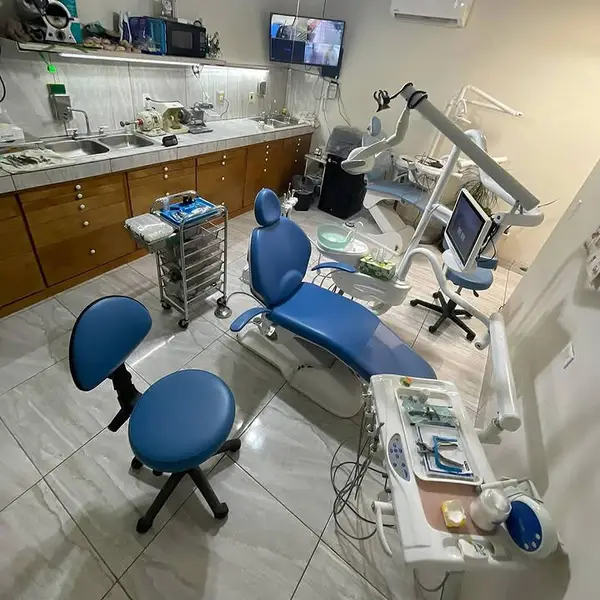
I told myself the blood in the sink was from brushing too hard. Seven years I told myself that. Seven years of turning on the faucet after brushing and watching the water run pink down the drain. I'd put the toothbrush back in the cup, rinse my hands, and tell myself I needed to be more gentle. I bought soft bristles. Then extra-soft. Then I found an electric toothbrush on Amazon that said "sensitive" on the box and had a little pressure sensor that beeped if you pushed too hard. The water still ran pink. My name is Marcus Holloway. I'm 56 years old. I live in Natchitoches, Louisiana, and for 31 years I was the vice principal at J.S. Clark Middle School. I was the one at the front door every morning at 7:15 when the first buses pulled up. I shook hands, said names, watched faces. I knew which kid had slept at a grandparent's house by how their shirt was tucked. I knew which parent was having a hard week by how long they sat in the car before they drove off. I learned more about the families in my building by watching people arrive in the morning than I ever learned at a conference table. I retired 2 years ago. Still press my shirts. Still shine my shoes. My wife Carolyn says I dress like I have somewhere to be. I tell her that's not the worst way to live. For 31 years, showing up and looking the part were the same thing. Your presence communicated before you opened your mouth. A clean shirt. Direct eye contact. A real smile at a real person. I believed in all of that. I still do. Which is why the thing I couldn't figure out how to talk about, for seven years, was the thing I hid every time I smiled. I developed a controlled smile without deciding to. It came on gradually, like a habit that forms before you know you have it. Not pulling back too far. Keeping the lips in. I got good enough at it that Carolyn didn't notice for a while. But she's sharp, my wife. She started making comments about photographs around year four or five of whatever was going on with my mouth. Just quiet little observations. "You're not smiling in this one." "Your face looks tight in that one." I'd look at the photo and know she was right. And not have an answer. I'd been seeing my hygienist Cheryl for 12 years. She's professional and thorough and has never once made me feel judged in that chair. She just says what she sees. What she kept seeing, every six months, year after year, was inflammation along the gum line. Sensitivity. Pocket measurements that ran a little deeper on my left side than they ought to. She'd recommend the same prescription rinse, walk me through the same flossing technique, print out the same instruction sheet and hand it to me at the end of the visit. I'd fold it into my coat pocket with every intention of reading it. I found a lot of those folded papers in the laundry. I wasn't ignoring it. I genuinely believed I was handling it. Water flosser for four months before it permanently relocated to the back of the bathroom shelf. Cut back on coffee because some corner of the internet suggested that helped. Switched sides when eating anything particularly cold or hot. A whole private system of accommodations I'd built up around one thing I never talked about. My daughter Keisha graduated from Grambling State University in May. She walked across that stage in front of about 3,000 people and I stood up in the bleachers and clapped until my palms were hot and my wife was crying next to me, and I thought about the day we moved her into that dorm three and a half years ago, when she was nervous and wouldn't let it show and barely said goodbye because saying goodbye meant making it real. We had dinner afterward at a place called Yolanda's that her aunt reserved for the whole family. Long table, too many chairs, a centerpiece of gold and purple balloons that kept drifting into people's faces. My brother Terrence came up from Houston. Carolyn's sister drove in from Monroe. Keisha's grandfather made the trip from Shreveport at 81 years old, which was itself the story of the evening. And sitting at the far end of that long table, next to his wife April, was Darnell Price. Darnell and I met in September of 1988. We lived on the same floor of Jones Hall at Grambling, two doors apart. He was from Shreveport, I was from Mansfield, and neither one of us knew a soul on that campus the first week. He knocked on my door to borrow a phone charger and stayed for two hours because we got into an argument about whether Spike Lee's best movie was Do the Right Thing or Malcolm X and we've been having that same argument, and about thirty others, ever since. He teaches history at a high school in Pineville now. Three kids. He got reading glasses around 51 and hated them for about six weeks and then made them his whole personality. He calls me on my birthday before I call him, every year, without exception. I've watched Darnell change over 37 years. The grey that came in at his temples. The way he walks a little more carefully than he did at 25. Normal things. Time things. But sitting at that table at Yolanda's, watching him laugh at something my brother said, I kept looking at his mouth. I couldn't have put into words exactly what I was seeing. Just that something was different. Open. Easy. The kind of smile that doesn't have a system behind it. I looked at him for a long time. He didn't notice. We didn't get a chance to really talk during dinner. Too much going on, Keisha making rounds, Carolyn holding the grandmother situation together at one end of the table. It wasn't until the parking lot, when the family had mostly cleared out and April had gone to get the car, that Darnell and I stood by a light post the way we've stood a hundred times and talked until someone's wife came back. We talked about Keisha. About his son who just made corporal in the Army. About how retirement is treating me, which is honestly a longer answer than I usually give. Then, standing in that parking lot with the restaurant lights behind us and nobody else nearby, I don't know exactly what got into me, but I brought it up. I said, "I need to ask you something and I need you not to make it into a thing." He said, "Marcus. I make everything into a thing. You know this about me." I told him about the gums. All of it. The seven years of pink in the sink. Cheryl and her measurements and the same prescription rinse that came and went without doing much. The soft toothbrushes. The water flosser that didn't last the winter. The photographs I'd started avoiding and the ones I didn't avoid where my face looked like a man keeping a secret. I told him all of it, standing in a parking lot in Grambling, Louisiana. He let me finish. Then he said, "I had that for years." I looked at him. Because I'd been watching him smile all evening. Easy and open, the way he's always smiled when something is actually funny. If he'd had what I was describing, there was no evidence of it at that table. "What did you do about it?" I asked. "April put me on something," he said. "About 7 months ago." "What kind of something?" He pulled his phone out, found the name, turned the screen toward me. "Pomegranate peel extract. She did the research. I just took what she handed me." I looked at the screen. "And?" He shrugged in that way Darnell shrugs when he doesn't want to oversell something. "In March, I had my regular cleaning. She did her measurements, read them out, and then went quiet for a second. Then she said, 'Darnell, whatever you've been doing differently the last few months, keep doing it.'" I stood there in the parking lot for a long moment. "What's in it?" I asked. "What does it actually do?" "April knows more than me. But she made me listen to the summary version when she was trying to get me to take it." He leaned against the light post. "You know how your gums have an immune response? Like the same way your joints do, or any other tissue in your body? There's a pathway that regulates how much inflammatory activity is happening in the tissue. When it's calibrated right, it responds when it needs to and settles down when it doesn't. But when it gets worn down, over years, from stress and aging and just living long enough, that response can get stuck running higher than it should." I thought about Cheryl using the word "inflammation" every six months for twelve years. "So the gums just stay fired up," I said. "Stuck. And it's not a technique problem. You can floss perfectly and still have a system underneath that's running hot. The outside stuff doesn't reach the inside system." He told me what April had found about pomegranate. Specifically the peel. There are compounds in the peel, he said, called punicalagins. And those compounds had been studied in the context of oral health. Not in a vague antioxidant-fruit sort of way, but in trials that specifically looked at gum inflammation markers, the substances the body produces when that inflammatory signaling is running high. Clinical comparisons with the kind of antimicrobial rinses dentists have been recommending for decades. The research didn't say pomegranate fixed everything. It said it was associated with changes in the markers. That when those compounds were in the system, the inflammatory activity in the tissue looked different. And the reason the peel mattered, he said, was because punicalagins are concentrated there. The juice doesn't have them in the same way. Most supplements at the pharmacy are standardized to something called ellagic acid, which shows up in a lot of fruits and isn't specific to pomegranate. Punicalagins are what makes pomegranate pomegranate. And you only find them in real concentration in the peel. April had been specific about that. Peel extract, standardized to punicalagins, not just ellagic acid. She wouldn't let him buy anything that didn't say exactly that. I took a photo of his phone screen and texted it to myself. We stood there a while longer. April came back with the car. We said our goodbyes the way we always do, with a handshake that turns into something closer. I drove home with the name on my phone. Carolyn was already in bed. I sat at the kitchen table with a glass of water and looked up everything I could find. I stayed there until past midnight, reading. The research was more specific than I expected. Multiple clinical trials looking at pomegranate extract in oral health settings. One comparison study against chlorhexidine, which is the gold-standard antimicrobial rinse Cheryl had offered me more than once. The results weren't unfavorable for the pomegranate. Other studies measuring the specific inflammatory markers in gum tissue before and after. The compounds that indicate whether the body's alarm system in the oral tissue is running proportionate or running high. The picture that came together made sense in a way the previous seven years of instruction sheets hadn't. I ordered Auniva Pomegranate from the kitchen table at 11:38 PM. Organic pomegranate peel extract, standardized to punicalagins. Made in the USA. 2 capsules a day. They had a 90-day guarantee, and for a man who'd been doing this for seven years without much to show for it, 90 days felt like enough runway to honestly find out. Week one: nothing specific to report. I wasn't expecting anything. Week two: I was in the faculty parking lot of my old school, dropping off some boxes for a former colleague, and someone handed me an iced coffee. I drank it without rearranging how I held it in my mouth. I was halfway through before I noticed I hadn't done the thing I always do. Week three: Tuesday evening, Carolyn made soup and I ate it at normal temperature straight from the bowl. No waiting for it to cool to a certain point. No testing it on the safe side first. I just ate. Week four: Carolyn asked me if I'd been to the dentist. I told her my cleaning wasn't until June. She said, "Oh. You just seem more relaxed." Week five: I was rinsing after brushing and I looked at the water in the sink. Clear. I ran the faucet again. Still clear. I stood at that bathroom sink for a minute longer than I needed to. Week eight: I sat in Cheryl's chair for my regular cleaning. Arms folded, which is how I always sit. She went through the probe measurement. She calls the numbers out loud for her assistant to chart, and I know what my numbers sound like when she reads them. I've been hearing them for twelve years. She got through the sequence and paused at the end. Not long. Just a breath. "Mr. Holloway," she said. "Things look different than they did in December." I said, "Different how?" She said, "Better. The inflammation response. It's quieted down." She asked if I'd changed anything in my home care routine. I told her about the pomegranate peel extract. About Darnell in the parking lot after my daughter's graduation. About the rabbit hole I'd gone down at my kitchen table at midnight. She asked me to write the name down. I drove home and sat in the driveway for a few minutes, the same way I've sat in driveways at significant moments my whole adult life. I thought about Darnell at that table, smiling at something my brother said, and me staring at him from across the room not knowing why something looked different. We have a photo from that graduation dinner framed on our living room wall. Keisha in her cap and gown. Carolyn on one side, me on the other. I'm smiling in that photo. Open. Not controlled. The way I used to smile before I stopped thinking of smiling as something to manage. Carolyn pointed it out when we hung it. She said: "You look like yourself." She didn't know what had changed. I hadn't told her yet. I looked at that photo for a long time that evening. And I thought about what it had cost me, over seven years, to manage something rather than understand it. All the photos I'd avoided. All the soup I'd waited on. All the small quiet accommodations I'd built into my daily life without anyone else knowing they were there. You get used to working around a problem. It starts small, and you adjust, and then the adjustment becomes normal, and then the next adjustment does too, and eventually you've built a whole private architecture around something you never really addressed. The thing I'd never understood, until Darnell explained what April had explained to him, was that no amount of technique gets to the system underneath. The alarm system in the gum tissue that had been running too high for too long. That's not a brushing problem. That's a different kind of problem, and it needed a different kind of support. If you've been dealing with this quietly the way I dealt with it, the sensitivity, the bleeding, the hygienist who keeps saying the same things and offering the same rinse, I want to tell you that there's a chance you're managing the outside of a problem that has a more specific inside cause. Auniva Pomegranate is organic peel extract, standardized to punicalagins. 2 capsules a day. Made in the USA. If you take it for 90 days and your Cheryl doesn't say anything different, send the bottle back and they'll refund every dollar. That's their guarantee and that's how it works. I started because a man I've known since 1988 told me his hygienist noticed something she hadn't noticed before. That was enough for me. 👉 auniva.co/pom/5 P.S. — April's specific point, and the one I kept coming back to in my late-night reading, is the peel. Not the juice, and not a supplement standardized to ellagic acid. The peel extract, specifically, standardized to punicalagins. Ellagic acid is in strawberries, raspberries, walnuts, and a dozen other things. It's not the compound that makes pomegranate specific in the oral health research. Punicalagins are. Look for those words on the label before you buy anything calling itself a pomegranate supplement. P.P.S. — Week one I didn't feel anything worth reporting. Week two was the first time I drank something cold without thinking about it first. Week eight was when Cheryl paused after my measurements. Give it real time. The 90-day guarantee is there specifically so you can find out honestly rather than guessing after two weeks. P.P.P.S. — The guarantee is a return and refund. You try it, you send it back if it doesn't work, you get your money back. I say that plainly because I've read a lot of fine print over 31 years of paperwork in a school building, and I want you to understand exactly what this one says. For me, knowing I could get my money back if nothing changed was the only nudge I needed. Seven years of the same answer from the same rinse. I had 90 days to find out if there was a different one.

Loading the ad's image
Wellness Insider — Feel Like Yourself Again
PromisingImage

Feel Like Yourself Again

I stood in front of the bathroom mirror on a Tuesday in July trying to figure out how much concealer it was going to take to cover a bruise the size of a coffee mug bottom on the inside of my left forearm. I hadn't hit it on anything. I hadn't lifted anything. I had gone to bed the night before with skin the color of skin, and I had woken up with a purple spot the shape of the state of Nevada. I sat down on the edge of the tub and I stared at my own arm like it belonged to someone else. Then I did what I had been doing since April. I pulled a long sleeve cardigan out of the closet even though it was 84 degrees outside and the humidity in Grand Forks that week was the kind of humidity that makes your glasses fog when you open the freezer. I put on the cardigan. I buttoned it to the second button from the top. I went to work. And when my coworker Denise looked at me at the front desk and said, "Rita, aren't you dying in that?" I said what I had been saying for 4 months. I said, "I'm always cold in the air conditioning." She said, "Since when." I said, "Since a while now." And I walked back to my chair. My name is Rita. I'm 63. I've been a dental hygienist for 38 years, 31 of them at the same practice in Grand Forks, North Dakota, and I still work Tuesdays and Thursdays because I like the people and because retirement so far has mostly meant reorganizing the same cabinets over and over. I have 3 grown kids and 5 grandkids. I've been married to my husband Wendell for 41 years. He was a lineman for the co-op for most of that time. He's been fully retired since 2022. I grew up in a farming family outside of Larimore. My mother had strong hands until the day she died at 84. My grandmother the same. The women in my family don't fall apart quietly. We keep going. We fix things. And that's why what started happening to my arms last spring hit me the way it did. The first bruise showed up in April. I had been carrying a laundry basket into the basement and I noticed a spot on my forearm right where the plastic edge had been resting. It was a small oval. Yellow around the edges. I looked at it and I thought, huh, I must have banged it on the door frame. I forgot about it. Three days later there was another one. This one on the back of my right hand, near the base of my thumb. I hadn't banged that on anything. Then one on my shin. Then two on the inside of my other forearm. By the middle of May I had 6 bruises on my body that I could not explain, and I had started doing something I am not proud of. I had started to make up small stories in my head about where each one might have come from. Maybe I hit that against the corner of the counter when I was reaching for the salt. Maybe I bumped that on the seatbelt buckle. Maybe I did that when I was lifting a bag of soil at Menards. The stories were getting thin. By the end of May I had stopped wearing short sleeves in public. Now I want to tell you something that I have never told anybody, including Wendell, and it might be the most honest thing I say in this whole letter. I was not scared. I was ashamed. There is a specific kind of ashamed that comes from feeling like your body is starting to look old in a way you weren't ready for. A way you always thought was going to happen to other women. To the ones who let themselves go. To the ones who didn't take care of themselves. Not to you. You were the one who wore sunscreen and drank her water and ate a salad at lunch. And here you are, at 63, and your arms are showing you every time you look in the mirror that whatever line you thought you had drawn between yourself and getting old, your body had drawn a different one, and it had drawn it a while ago. I could not stand to look at my arms. I stopped wearing my rings some days because the veins on the backs of my hands looked papery to me in a way they hadn't the year before. I quit going to water aerobics because I did not want the other ladies to see my legs. I skipped my niece's baby shower in June and told everyone I had a summer cold. The truth was I could not think of what I could wear that would cover everything. Wendell noticed I was quieter. He asked me twice if something was going on. I said I was tired. He didn't push. He is not a pushing kind of man. The Sunday I want to tell you about was the second Sunday in July. My middle daughter Marcy had driven up from Fargo. She works as a nurse at the VA down there. Has for 14 years. Trauma unit for a long stretch, and now she's been moved into a role that's part case management and part triage supervision, which is her way of saying she got promoted and doesn't want to brag about it. She had come up to help me hang new curtains in the guest room. Wendell was out fishing with our son in law. The house was quiet the way houses get quiet when it's just the two of you and the cat. I was standing on a step stool with my arms up over my head trying to line up the rod bracket on the second window. Marcy was down below me handing me the drill. I had rolled my sleeves up when I got on the stool. I had forgotten to think about my arms because I was thinking about the bracket. I looked down at her. She had gone completely still. She was looking at the inside of my forearm, at the bruise from that Tuesday that had faded from purple into yellow and was now sitting there on my arm like a stain that hadn't come out. She said, "Mom. When did that happen." I said, "I don't know. A few weeks ago." She said, "How many of these do you have." I said, "A few." She said, "Come down off the stool." I want to be clear about something. My daughter Marcy is not a dramatic woman. She is the calmest person in most rooms she is in. She is the woman that the other nurses go to on the worst nights of their careers. When she said, "Come down off the stool," she said it the way she says everything. Even. Steady. Like a person who has already decided what she is going to do next. I came down. She rolled up both my sleeves. She looked at the bruises on my forearms. She lifted the leg of my capris and looked at my shins. She did not gasp. She did not react. She just looked. Then she said, "Mom. How long." I said, "Since April." She said, "Have you seen anyone." I said, "No." She said, "Are you scared." And I said the thing that surprised even me. I said, "No. I'm embarrassed." She sat down on the guest bed. She patted the spot next to her. I sat down. She said, "Mom. Listen to me. This isn't what you think it is. And it isn't what I first thought it was either when I saw it. I want to come back next Sunday. Don't do anything, don't Google anything, don't make yourself sick over this. I'm going to look into something. I'll be back next weekend. Okay?" I said, "Okay." She hugged me before she left. She held onto me longer than she usually does. When she pulled back she said, "You should have called me in April." I said, "I know." She came back the following Sunday. She brought a folder. She brought a small orange bottle that had already been opened. And she brought a look on her face that told me she had spent the whole week thinking about this. She sat down at my kitchen table. She poured herself a cup of coffee. And she started at the beginning. She said, "Mom. When we get older, one of the things that happens is that the tiny blood vessels closest to the surface of our skin get more fragile. And when they get more fragile, they leak easier. That's what a bruise is. It's not damage from the outside. It's a tiny vessel underneath the skin that gave way and let a little bit of blood out where it wasn't supposed to go. Most of the time when we're younger, we don't see it because we didn't do anything to it. And even if we did, the vessels were strong enough to handle it." She said, "The vessels get less strong for a very specific reason. And once you understand the reason, everything about what's happening to you makes sense." She opened the folder. She had printed out a couple of articles. She had highlighted them. She said, "Your whole body runs on a balance. On one side, you've got what's called oxidative stress. That's a fancy name for a real thing. Your body produces something like internal rust every day just by being alive. Metabolism makes some. Stress makes some. Processed food makes some. Sun exposure makes some. Getting older makes more." She said, "On the other side of the balance, you've got your body's own antioxidant reserves. That's what neutralizes the rust. When we're younger, the reserves are big and the rust is small, so we don't feel any of it. But as we get older, the reserves get smaller and the rust gets bigger. And eventually the rust gets ahead." She said, "One of the first places the rust starts to show is in the smallest, thinnest blood vessels. The ones right under your skin. Because those vessels have the least amount of protection to start with. When the rust starts wearing at their walls, they get thin. Fragile. They can't hold up to the normal daily stuff anymore. And they start to leak." She tapped the article. She said, "Mom. The bruises aren't a sign that something is wrong with you. They're a sign that your body needs help clearing the rust. And your body has always known how to clear the rust. It just needs some help doing it." I looked at the bottle sitting on the table between us. She said, "This is what I'm going to tell you about. And I want to be honest with you. I found out about this because a patient's wife was talking about it in the hallway at the VA a couple of months ago, and I wrote it down and I didn't do anything with it until last Sunday when I looked at your arms. Then I read every study I could find. And then I ordered a bottle for myself first, because I'm not about to give my mother something I haven't tried." She said, "It's called Auniva's Pomegranate." I said, "Pomegranate. Like the fruit." She said, "Not the fruit. The peel." She said, "The part of the pomegranate you throw away is where all the studied compounds actually are. There are 2 compounds specifically. They're called punicalagins. They're only found in the peel of pomegranates. Nowhere else on earth. Not in the juice. Not in the seeds. Not in any other fruit." She said, "Those 2 compounds have been studied more than most of the antioxidants at the vitamin store. And what the studies keep finding is that they support your body's own antioxidant defenses. Not by force. By support. They give your body more of what it uses to clear the rust." She said, "There is one thing you should know. Most pomegranate products on the shelf at Walmart are made from the juice or from the whole fruit. And those get standardized to something called ellagic acid, which is fine but it's in a lot of fruits. Strawberries. Raspberries. Walnuts. It's not what makes pomegranate special." She said, "Auniva's is made from the peel specifically. And it's standardized to the punicalagins. That's the whole point. That's what the studies were actually about. Any other pomegranate product doesn't match what the studies were looking at." I picked up the bottle. It was small. Two tone label. It said Organic Pomegranate on the front. It said Made in the USA on the side. She said, "Two capsules a day. Just in the morning with your coffee. That's it." She said, "One more thing. My friend at work, the one whose wife told me about it in the hallway. She said her mother in law had been getting the exact same bruises you're getting. Same forearm spots. Same shin spots. That her mother in law had stopped wearing short sleeves too." She said, "The bruising didn't stop right away. It took her most of 2 months. But it stopped." She said, "Try it for 90 days. That's how long the guarantee is. If it doesn't do anything you send the bottle back and you get every dollar back. There's no risk here except the time." I took the bottle upstairs and I put it on my nightstand. I took 2 the next morning with my coffee. I want to tell you what the next 10 weeks looked like. Because I don't want to lie to you and say it was fast. Week 1. I got a new bruise on my left ankle. I stared at it in the shower and I thought about calling Marcy and telling her nothing was changing. Week 2. Nothing new appeared for 4 days in a row. I noticed that streak because I had been counting. Week 3. The Nevada bruise on my forearm faded all the way. Gone. Which I know can happen anyway. But something felt different about the way the skin around it looked. Less papery. I couldn't have proved it in a courtroom, but I could feel it. Week 4. Still nothing new. I wore a 3 quarter sleeve to church for the first time since March. Week 5. Got hit by the corner of the freezer door when I was reaching for the ice cream. Would have expected an ugly one. Got a small pink mark that faded by the next day. Week 6. I was helping Wendell move a piece of firewood and it slipped and rolled over my forearm. That is exactly the kind of thing that would have left me with a spot the size of a plate for 3 weeks. I got a mark that was gone by Sunday. Week 7. Marcy called and asked, and I sent her a picture of my forearms. She called me back 20 minutes later and I could tell she had been crying. She said, "Mom. You have your arms back." Week 8. I put on a short sleeved dress for my grandson's little league championship game and I stood in the parking lot for 5 minutes before I got out of the car, and then I made myself get out of the car and walk over to the bleachers. Nobody looked at my arms. Nobody was looking at me. Nobody had ever been looking at me the way I thought they were. I sat next to my other daughter and I watched my grandson strike out looking in the 4th inning and I clapped when he came off the field. Week 9. I went back to water aerobics. Week 10. I put my rings back on. Both of them. Including the one Wendell gave me on our 25th anniversary. We're in November now. I've been on Auniva's Pomegranate for a little over 4 months. I take 2 capsules every morning with my coffee. That is the whole routine. I have not gone back to counting bruises because I do not need to. I do not have to make up little stories in my head about doorframes and countertops. The last time I saw a bruise on my arm was in the middle of September, and it was because I actually did hit my elbow on the corner of the china cabinet trying to catch the cat. I want to tell you the thing I have thought about the most since this happened, because I think if there is one thing worth saying to another woman reading this, it's this. I did not tell anyone I was struggling. Not my daughter. Not my husband. Not my sister. Not my closest friend. For 4 months I hid it, and the reason I hid it was not because I thought it was dangerous. It was because I was embarrassed that my body was showing me getting old in a way I was not ready to accept. The whole time, my daughter was 90 minutes away in Fargo, and she would have driven up the same day if I had picked up the phone. If you are hiding something from someone who loves you because you are embarrassed by your own body, please. Call them. Whether you try Auniva or you go see a doctor or you do something else entirely. The hiding is worse than the thing you are hiding. I promise you that. And if what's showing up on your arms or your hands or your shins looks anything like what was showing up on mine, and you're a woman in her 60s who is quietly starting to cover herself up, I want you to know that the reason my daughter told me about this was because it made sense on paper and it worked for a woman whose situation sounded a lot like mine. Auniva's Pomegranate is standardized to the punicalagins in the peel. Not the ellagic acid. That's the whole difference. It's made in the USA. It's 2 capsules a day. The bottle is a month's supply. You can try it for 90 days. If it isn't the right fit, you ship the bottle back to Auniva and they refund every penny you paid for it. That's it. That is the whole guarantee. The only thing you're really risking is the 6 or 8 weeks of taking 2 capsules with your coffee. If you want to try it, here's where to go. 👉 https://auniva.co/pom/5 P.S. About the peel specifically. This is the part that took me a while to understand and I want to be clear about it because it's important. The pomegranate you buy at the grocery store, the arils you eat with a spoon, that's the part almost every pomegranate product on the market is made from. The peel gets thrown away. But the punicalagins, which are the compounds that have actually been studied the most, are found only in the peel. Which means if you're buying a pomegranate juice or a whole fruit powder, you're not getting the compound the studies are about. Auniva's is made from a peel extract standardized to the punicalagins specifically. That is the reason to try this one over any other pomegranate product you might see. P.P.S. About the guarantee. From the day the bottle arrives at your door, you have 90 days. If it does not do what you were hoping it would do, you ship the bottle back to Auniva at the address they include with your order and they refund every dollar you paid. There is no argument about it. There is no fine print about how much you took or when you took it. Send it back, get your money back, that's the deal. Which means the only thing you're really out is the time it takes to give it a fair 6 to 8 week trial. P.P.P.S. Marcy called me last week and told me she'd started taking a bottle herself even though she doesn't have any of the bruising I had. She said if it was going to help her body clear the internal rust that gets ahead of us all as we get older, she'd rather start at 38 than at 63. She said the way I said it to her when she was here for Thanksgiving was, "Marcy, don't wait until you can see it on your arms." I don't remember saying it that way but she does, and she wrote it in her phone. If you are a woman in your 40s or 50s reading this, and none of this has started for you yet, I'm going to say to you what my daughter apparently heard me say to her. Don't wait until you can see it on your arms. 👉 https://auniva.co/pom/5

Loading the ad's image
Testing

From the ads Sniped has collected from this page (6 so far, first seen Nov 2026). Reach is what Meta reports; no spend or sales estimates.