SHOP THE RESTOCK SALE — UP TO 70% OFF
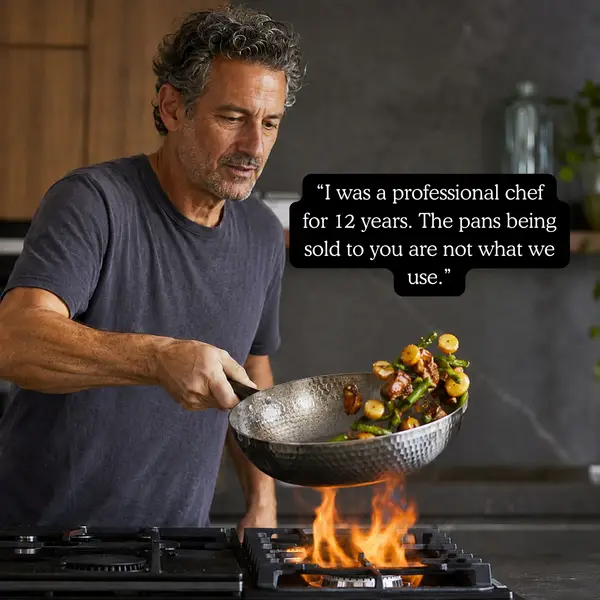
My grandmother cooked on the same pan for forty-three years. When she died, we fought over who got to keep it. The pan was a cast iron skillet. Black, heavy, seasoned by decades of use. She'd gotten it as a wedding gift. She made cornbread in it every Sunday. She made it last. I was the one who ended up with it. I still have it. It lives on the back burner of my stove, too precious to actually use very often, and slightly impractical for everyday cooking because of the weight. But I have always wanted that relationship with a pan. You know what I mean. Not a piece of equipment. A piece of the kitchen. Something that gets better with use, not worse. Something you hand down instead of throw away. For years I couldn't find it. I went through the same cycle most people do. New non-stick pan — works beautifully for a year. Gets scratched. Starts to look wrong. Eggs start sticking. Buy another one. Repeat every two years, forever, spending $40–$80 each time, throwing away more plastic-coated metal. My husband used to joke that we'd had more pans than cars. He wasn't wrong. Last year I visited my college roommate Diane in Vermont. She's a former chef — worked in restaurant kitchens for eight years before she left to teach cooking classes. She knows more about cookware than anyone I've met. Her kitchen was minimal. Almost startlingly so. One pot. One wok. Two pans. That was it. "Diane," I said. "You ran a restaurant kitchen. Where is everything?" She smiled. "I got rid of it. Two years ago." "Why?" "Because I spent twenty years buying things that didn't last, and I decided to stop." She picked up one of the pans from the rack. Handed it to me. It was lighter than I expected. The surface was hammered — a texture almost like the face of a golf ball, but finer. Beautiful, actually. "Titanium," she said. "Pure titanium. No coating. This is Taiko — they're a small brand, they do a restock sale a few times a year. I got mine during one of those." "It's beautiful." "It cooks better. Nothing sticks if you know what you're doing. And it will still look exactly like this in twenty years." She paused. "Maybe thirty." I held it for a moment. Something about the weight of it — substantial but not heavy — felt right. "My grandmother had a cast iron skillet she used for forty years," I said. "That's what this is," Diane said. "The modern version of that. Metal that doesn't degrade. No coating to scratch off. You treat it right, it outlasts you." I ordered my first Taiko pan that night. There was a restock sale running — up to 70% off — and Diane told me these don't stay in stock long when the price drops. It arrived six days later. The weight. The hammered surface. The way it sat on the stove. I made scrambled eggs the first morning. Low heat. A small amount of butter. The eggs moved like they'd never thought about sticking. Three months later, it looks identical. No scratches. No dullness. No change. I've started cooking everything in it. My daughter came home from college last month. Watched me make dinner. Looked at the pan. "That's cool," she said. "What is it made of?" "Titanium." "How long have you had it?" "Since last summer." "How long will it last?" I thought about my grandmother. About the skillet that's still on my back burner forty years after her hands last touched it. "A very long time," I said. There's something we've all lost in the era of disposable non-stick. The idea that a pan is an investment, not a purchase. That good cookware doesn't wear out — it seasons in, it improves, it becomes part of the kitchen. The chemical coating that makes modern pans non-stick is also what destroys them. It scratches, it degrades, it flakes into food. The pan that worked perfectly in year one is a liability in year three. You replace it. Spend more money. Start again. Taiko is pure titanium. No coating. The surface is the hammered metal itself — a texture that, with proper use, becomes more non-stick over time, not less. Like cast iron but lighter and without the rust. There is nothing to scratch off. There is nothing to replace. There is a 25-year warranty — because when the pan is just metal, it doesn't degrade. My grandmother's cast iron is still cooking. Taiko is the pan you buy once and keep for the rest of your life. Right now, during the restock sale, you can get up to 70% off the regular price. The last few restocks sold out within days. Full price is significantly higher. If you've been replacing pans every two years and wondering why cookware feels so disposable now — It's because it is. This isn't.
Loading the ad's image