“Okay, Boomer," He Said In My Kitchen.
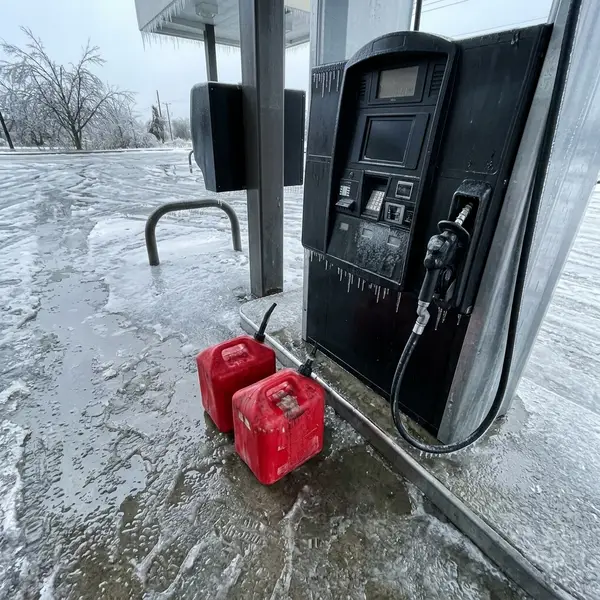
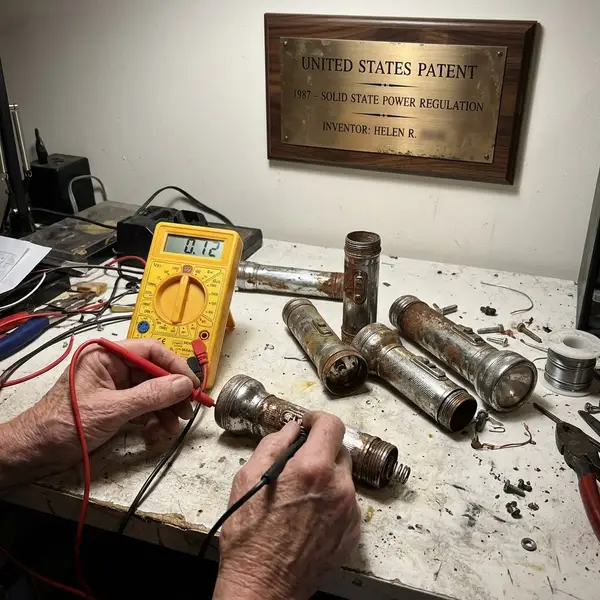
Four times in the past month, my thirty two year old son in law has taken something out of my hands to "help" me with it while speaking to me in the slow, loud voice you use on a deaf golden retriever. Last Sunday at family dinner, he took my kitchen flashlight out of my hand, rolled his eyes at his friends, and said, "Okay, Boomer, let me explain how modern lithium batteries work before you sit in the dark all winter." The whole table laughed. Not a big, cruel laugh. Just that light, indulgent chuckle thirty year olds give when an older woman with silver hair says something they assume is adorable and slightly confused. My daughter Claire laughed over her wine glass. Austin's thirty one year old coworker Jared and his wife Kelsey laughed from across the butcher block island. The only person in my kitchen who did not laugh was my fifteen year old granddaughter Maya, who was standing by the refrigerator holding a bowl of green beans and staring at her stepfather like she wanted to dump them over his head. I stood perfectly still by the utility drawer with my hands empty in front of my apron. Let me tell you a quick secret about turning sixty five and letting your natural gray hair grow out. For thirty eight years, I worked as a senior industrial power supply and hardware design engineer for a defense and utility contractor upstate. Before Austin was even born, I was designing solid state voltage regulators, uninterruptible power arrays, and emergency fault transfer circuit boards for municipal water plants and hospital surgical wings. Throughout my forties, fifties, and early sixties, I dyed my hair dark chestnut brown every four weeks. Back then, when I walked into a hardware store, an auto repair bay, or an electronics supply house, people spoke to me like an adult. Then, four years ago when I retired at sixty five, I decided I was done sitting in a salon chair inhaling ammonia for two hours a month. I let my natural silver grow in. Almost overnight, it was as if somebody had erased sixty IQ points and four decades of engineering credentials right off my forehead. Suddenly, twenty five year old clerks at the home center started calling me "Sweetie" and "Young lady." Auto mechanics started leaning on the counter, calling me "Dear" four times in five minutes, and explaining alternator voltage to me by comparing it to "how your knees get stiff and ache when it rains outside." And my thirty two year old son in law Austin, who works in digital app marketing and does not know the difference between an ohm and a coulomb, started snatching objects right out of my fingers whenever he visited my house. Two weeks ago, he took a Phillips screwdriver out of my hand while I was tightening the hinge on my pantry door and said, loudly and slowly, "Let me do that for you, Helen, lefty loosey, righty tighty, we don't want you stripping the wood!" The week before that, he took my own television remote out of my palm because I paused for three seconds to read the input menu. And now, on Sunday evening after eating two helpings of my pot roast, he had walked into my kitchen while I was checking the silver flashlight in my utility drawer before the December storm season, plucked the aluminum barrel straight out of my hand, and delivered his "Okay, Boomer" line for the entertainment of his dinner guests. "What did you just say to me, Austin?" I asked. My voice was calm. Thirty eight years of being the only woman in a room full of utility plant contractors teaches you never to raise your pitch when a man is showing off. Austin didn't even notice the edge in my tone. He was too busy holding my silver D cell flashlight up like a prop in a comedy routine. "Now, Dear, don't get prickly," Austin said, winking at Jared across the island before turning back to me with that slow, booming golden retriever cadence. "I am just trying to save you from yourself. Look at this thing. You are still keeping an old alkaline flashlight in your kitchen drawer like it is nineteen eighty five. Do you remember what happened during the windstorm back in March?" I glanced at my daughter Claire. She had stopped laughing, set her wine glass down on the coaster, and exchanged that look with Austin. The look where the younger couple has been talking about you in the car on the way over. "Actually," Claire said, stepping around the island and putting on a warm, syrupy voice that made my stomach drop, "Austin and I were going to bring this up with you after dessert anyway, Mom. Jared and Kelsey are family friends, so they understand. With all the winter grid warnings on the news this week, we are really worried about you staying out here on the ridge road by yourself." "Worried about what?" I asked. "About how much harder it is getting for you to keep track of household systems since you retired," Claire said softly. "Think about the March windstorm, Mom. When the transformer blew at the bottom of the ridge, that exact flashlight died after twenty minutes and leaked white battery acid all over your granite countertop. Your cell phone dropped to three percent because you forgot to charge a backup bank, and Austin had to drive all the way out here at eleven o'clock at night in the rain to bring you AA batteries." "And then in October," Austin chimed in, holding up two fingers like a prosecutor presenting exhibits to a jury, "when the autumn freeze snapped that pine limb across your line, you left your reading glasses upstairs in the dark and tripped over the hallway runner because your plug in rechargeable garage lamp was sitting at zero percent. Claire had to miss a whole morning of work driving out here to check on you." He had dates. He had timestamps. He had been keeping a dossier on me. "Every house on Ridge Road lost power both of those nights," I said evenly. "The alkaline cells in that flashlight had high internal resistance from humidity in the drawer, and the cheap wall trickle charger on the garage lamp overplated the anode and killed the cell capacity. I told you that in October, Austin. You rolled your eyes at me." Austin chuckled and shook his head at his friend Jared, as if I had just recited a recipe for meatloaf in Latin. "See what I mean?" Austin said to Jared. "She still uses all those adorable old textbook words from the eighties, and then she forgets to plug the lamp in. Listen, Helen, young lady, nobody is blaming you. You are sixty nine. When you retire and live alone in the woods, the brain doesn't get the same daily stimulation. Things slip. You forget to check the battery drawer. That isn't an insult. That is just aging." I stood there on my kitchen tile and thought to myself: I am getting older, not stupider. Many of us in my generation literally designed, etched, and tested the physical hardware these thirty year olds depend on every single second of their lives. They think they are technological geniuses because they know how to swipe their thumb across a piece of Gorilla Glass and order a burrito with an app, and they do not have the faintest clue what happens inside a step down transformer or a rectifier bridge when the municipal grid drops behind their wall outlet. Fifteen feet down the front hallway from where Austin was standing, hanging on the wainscoting above the oak desk in my study, was a solid brass plate mounted on walnut wood. United States Patent Number Four Million Six Hundred Eighty Two Thousand, issued in nineteen eighty seven to Helen M. Novak for a Solid State Emergency Load Transfer and Fault Regulation Circuit. I earned every single wrinkle around my eyes and every silver hair on my head the hard way, buster. My fifteen year old granddaughter Maya took a step forward from the refrigerator, her knuckles white on the green bean bowl. "Austin," Maya said sharply, "Grandma literally holds a federal patent on emergency power circuits. It is hanging on the wall ten feet behind you. She taught me how to build our high school robotics voltage board last month." "Maya," Claire snapped. Just one word. Maya looked from her mother to me. Her face was hot with embarrassment on my behalf. Because she is fifteen and Claire is her mother, she bit her lip, set the bowl on the counter, and leaned back against the pantry door with her arms folded tight. Austin smiled forgivingly at me, set my old flashlight down on the island, and patted the granite twice. "Here is the reality, Helen," Austin said. "The Department of Energy and the news stations are warning about severe multi day winter blackouts starting with the ice storm forecast for Wednesday night. Yesterday I spent twenty four hundred dollars on a commercial gas generator for our garage in the subdivision. It even has a Bluetooth module that connects straight to an app on my smartphone so I can monitor fuel load from the couch. Plus I bought six heavy duty tactical aluminum flashlights and a giant brick of industrial batteries at the warehouse club." He puffed his chest out slightly in front of Jared and Kelsey. "Our house is completely winter proof," Austin said. "Whereas out here on the ridge, if the lines go down on Wednesday, you are a liability in the dark and somebody has to drive out and rescue you. So Claire and I talked it over. We are moving our traditional Saturday winter family dinners and Maya's weekend robotics study sessions permanently to our house in the subdivision. And we want you to pack an overnight bag and stay in our downstairs guest room from Wednesday until the December freezes pass." Then Claire reached into her oversized tote bag on the barstool and slid two things across the butcher block island toward me. The first was a printed receipt for the one hundred and eighty dollar prime rib and winter groceries order she had placed for next weekend's family dinner at her house, with my half circled in red ink at the bottom. The second was a glossy, full color brochure for Silver Birches Active Senior Living, a fifty five and older apartment building out by the highway strip mall. The family dinner I was too confused and elderly to host in my own home, I was still mentally competent enough to pay half the grocery bill for. I looked down at the Silver Birches brochure. On the cover was a stock photograph of a white haired woman in a pastel sweater playing bingo with a plastic chip. For about three seconds, I considered walking down the hallway, pulling my nineteen eighty seven patent plaque off the wall, walking back into the kitchen, and schooling Austin and his smug friend Jared on internal cell impedance, Peukert's law of battery discharge, and three phase substation failures until their ears bled. Then I looked at Austin's face. And I realized something every woman over sixty five eventually figures out. When people under forty look at your silver hair and decide you are a confused old lady, lecturing them at the dinner table never works. The louder you explain your credentials, the more they exchange sad little glances and whisper that Grandma is getting agitated in her old age. I thought of something a retired judge on my women's engineering alumni board once wrote to me after she stopped dyeing her hair: Personally, I treasure my invisibility, because it has intensified my invincibility. Nobody sees you coming when they think you are a harmless little old lady. And people do not disregard you once they are standing in the cold knocking on your front door to ask for your help. I picked up my checkbook from the desk nook, wrote Claire a check for ninety dollars to cover half of her prime rib receipt, and set it neatly on top of the Silver Birches brochure without opening it. "I hope your dinner goes wonderfully next Saturday," I said pleasantly. "And I am fine right here in my own house for Wednesday's storm. Now, if you all will excuse me, it is eight thirty, and the fog is freezing on the ridge road. You should head down the hill before it gets slick." Twenty minutes later, after their taillights wound down the ridge toward town, I stood in my quiet front hallway looking at the brass patent plaque on the walnut board. The next morning at ten o'clock, I drove into town to have coffee at the Cornerstone Diner with my best friend Ruth and her husband, Chief Miller. Ruth and I have known each other for twenty eight years. Her husband, Chief Miller, is seventy six. He spent twenty years in the United States military as a base power and grid resilience engineer keeping forward operating zones and field hospitals running through total blackouts, before retiring to run our county's Emergency Operations Supply Bay. Ten years ago, before I retired, Chief Miller and I had actually sat on the county committee that audited the backup generators for the regional water treatment plant. He was one of the few men in the county who still called me by my professional title when he teased me. When I sat down in their booth and told them about Austin snatching the flashlight out of my hand, calling me "Okay, Boomer" in front of his thirty year old friends, comparing battery chemistry to aching knees, and sliding the Silver Birches Senior Living brochure across my counter, Ruth set her coffee cup down so hard the spoon jumped on the saucer. "He called you 'young lady' and tried to explain batteries to Helen Novak?" Chief Miller asked, staring at me in disbelief. "The woman who wrote the fault transfer spec for the county pump station?" "He did," I said. "Right in front of Maya." Ruth was quiet for a long moment. Then she leaned forward across the table. "Helen," Ruth said, "do you know what is actually going on here?" "Austin is a pompous thirty two year old who likes showing off in front of his friends," I said. "No, that is the small thing," Ruth said, shaking her head. "Listen to me. Since you retired and let your silver hair grow out, Claire and Austin have built a whole story about who you are now. In their heads, sixty nine means obsolete. Obsolete means confused. Confused means helpless. And worse than that, they are performing that story right in front of your fifteen year old granddaughter." I thought of Maya standing by the refrigerator with her arms crossed, watching her mother cut her off with a single word. "Right now, Maya looks up to you more than anyone in that family," Ruth said, putting her hand over mine. "She wants to study electrical engineering at state university because of the afternoons she spends at your desk in that hallway. Every time Austin takes a tool out of your hand or says 'Okay, Boomer' at the dinner table, he is chipping away at how that girl sees her grandmother. And if you argue with him across the table, you play right into his hands." "That is why I didn't argue with him last night," I said. "Good," Ruth said fiercely. "Because when a table full of thirty year olds thinks you are confused, it is not bragging or lecturing if they have to come ask you how you did it. Make them ask, Helen." Chief Miller leaned his broad elbows onto the diner table and laced his fingers together. "Tell me again what Austin bought to make his subdivision house 'winter proof' for Wednesday night's ice storm," Chief Miller said. "A twenty four hundred dollar commercial gas generator with a Bluetooth smartphone app," I said. "Plus six heavy duty tactical aluminum flashlights and a giant brick of alkaline batteries from the warehouse club." Chief Miller let out a low, quiet laugh that crinkled the corners of his eyes. "A Bluetooth app on a portable gas generator," Chief Miller said. "Lord help us. Listen to me, Helen. When that ice front hits the valley on Wednesday afternoon, Austin and Claire's house is going to be stone cold dark before suppertime, and by eight thirty Wednesday night that boy is going to be eating every word he said at your island." "Tell me what you have been seeing at the supply bay, Chief," I said. "Three weeks ago," Chief Miller said, "the civics teacher from the prep school brought thirty eight high school juniors out to my county emergency supply bay. One of the fathers tagged along. Thirty four years old, worked in tech sales, wore a smartwatch on both wrists, talked just like your son in law Austin. He brought a duffel bag of emergency gear from his garage to show the kids. He pulled out a heavy tactical aluminum flashlight and a giant forty eight pack brick of AA alkaline batteries and reached out to put them on my display table." Chief Miller held out his weathered right hand. "I caught that dad by the wrist before his flashlight touched my table," Chief Miller said. "And I looked him in the eye and told him three words. Not past Tuesday." He tapped the tabletop with one knuckle. "You know the electrochemistry as well as I do, Helen," Chief Miller said. "A high output LED flashlight running on disposable alkaline cells draws high current that drops terminal voltage below cutoff in two to four hours flat under Peukert's curve. Worse, half the alkaline batteries sitting in American kitchen drawers right now have already suffered zinc corrosion from humidity, built up internal hydrogen gas, ruptured their seals, and leaked white potassium hydroxide acid across the battery springs. Just like the flashlight in your drawer last March." "I tried to tell him that," I said. "To prove it to those thirty eight teenagers," Chief Miller continued, "I gave them a homework assignment that Friday night. I told every kid to go home, take the primary emergency flashlight their parents were counting on out of the kitchen drawer or hall closet, bring all thirty eight flashlights back to the classroom floor at eight o'clock Friday night, turn them all on at the same time, and leave them over the weekend." "How many were still lit on Monday morning?" I asked. "Four," Chief Miller said. "Thirty four out of thirty eight were stone cold dead before Saturday morning. Eleven of them leaked white alkaline battery acid onto the tile without even turning on. And every single plug in rechargeable garage lamp was sitting at zero percent because cheap trickle chargers cook their own lithium anodes, and the second the substation blows, the wall outlets are dead anyway. That wasn't your memory slipping in March or October, Helen. That wasn't biology. That is chemistry." He took a sip of coffee and leaned closer. "And now look at Austin's twenty four hundred dollar Bluetooth generator," Chief Miller said. "When the Pentagon and federal energy officials warn us to prepare for a ninety day grid collapse from cascading transformer failures, they are talking about zero resupply. Austin's generator is going to drink his two five gallon gas cans dry in less than two days, assuming the ethanol fuel doesn't freeze in the carburetor bowl first. And when he drives his car down to the highway gas station to refill his cans, he is going to discover what every thirty year old with an app forgets: underground gas station pumps run on three phase municipal electricity. When the grid is dead, zero fuel comes out of the ground." He looked across the booth at me. "Mainland Americans buy four hours of rotting battery life and a noisy lawnmower engine for a ninety day blackout," Chief Miller said. "Batteries are for tourists, Helen. And you never fight a blackout with something that runs out." "So what are you keeping on the windowsill at your house, Chief?" I asked. "The exact same thing every seventy year old grandmother in Fajardo, Puerto Rico kept on her kitchen windowsill after Hurricane Maria knocked out the island grid for five straight months," Chief Miller said. "While the mainland millionaires with whole house generators ran out of fuel on Day Four, those grandmothers in Fajardo still had their houses lit up like high noon on Day Ninety. No gas cans. No disposable batteries. No extension cords. And no Bluetooth apps." Chief Miller pulled his phone out of his pocket and showed me a photo of Ruth's kitchen windowsill above the sink. Sitting in a neat row right behind the bottle of dish soap were three compact matte black cylinders, each one about the size of a soup can. "It is called the 3 in 1 Collapsible Solar LED Lantern," Chief Miller said. "Every volunteer fire captain and lineman in our county keeps a set on their windowsill. And as an electrical engineer, Helen, you will appreciate why this works when every ten dollar hardware store solar light fails." He zoomed in on the top cap of the black cylinder. I put my reading glasses on and leaned forward. The moment I saw the top surface of the casing, I recognized the photovoltaic architecture immediately. "That is a flush bonded single crystal monocrystalline array," I said, looking up at Chief Miller in surprise. "Not a polycrystalline strip." "Bingo," Chief Miller grinned. "See, Ruth? Try getting Austin to spot that across a table. Nine out of ten solar camping lights at the hardware store use a tiny decorative strip of cheap polycrystalline glass that captures less than four percent of diffused indoor window light and dies in twenty minutes. This lantern has a High Density Flush Monocrystalline Solar Panel bonded across the entire top cap. It captures up to ninety percent of cloudy winter daylight wavelengths right through a double pane kitchen window. Twenty two times more charge efficiency. It sits right behind your dish soap in a warm kitchen and tops its internal reserve back to one hundred percent automatically every day." "What is the discharge runtime and load capacity?" I asked, my old engineer's brain lighting right up. "Twenty five straight hours of full room illumination on a single charge," Chief Miller said. "There isn't even a mechanical switch contact to oxidize or fumble for in the dark. You pull the two stainless steel handles straight up, and the internal magnetic reed switch ignites thirty surface mount LEDs at three hundred and sixty degrees, flooding a twenty foot room from corner to corner. You fold the handles forward and use the base button for a long range directional spotlight. And look at the side port." He pointed to the recessed USB output port on the side of the black casing. "Built in five volt regulated USB power bank output," Chief Miller said. "When the substation blows and Austin's cell phone drops to two percent looking for his dead Wi Fi router, you plug your phone cord straight into the side of the lantern on your kitchen counter and keep your phone at one hundred percent even if the grid stays dead for ninety days." I looked at the three matte black cylinders on Chief Miller's phone screen, and a slow, warm calm spread all the way through my chest. "And here is the best part for you, Helen," Ruth said, leaning across the table with a glint in her eye. "When that ice storm hits on Wednesday night, Austin is going to be out in his garage in the sleet staring at a Bluetooth error screen on a dying smartphone, smelling like raw gasoline, and shaking six dead warehouse club flashlights while Claire shivers under a blanket. Every dead battery in that house is going to show Maya how much her stepfather actually knows about power systems." Ruth patted the back of my hand. "And you," Ruth said, "are going to walk over to your kitchen sink, pull three stainless steel handles up in ten seconds, flood your whole house and that patent plaque in your hallway with twenty five hours of white light, and wait for them to call you." "And when they get to my house?" I asked. "You don't say 'I told you so,'" Ruth said. "You don't lecture him. You serve them hot soup under your bright lights and you wait. Because by Friday night, he is going to have to walk into your kitchen and ask you how they work." Chief Miller pulled a pen from his pocket and wrote the direct website address down on a clean paper napkin. "Order them today, Helen," Chief Miller said, sliding the napkin across the formica. "Right now they have a Buy 2, Get 1 Free Blackout Deal running on their site, so you get three lanterns for the price of two, backed by a full 30 Day Money Back Guarantee. Because of the winter grid warnings from the Department of Energy, my county emergency supply group chat has been ordering them by the case. They build these with real high density flush monocrystalline panels, not the cheap four percent hardware store strips, so once this batch sells out there is a four to six week wait for the next shipment." I folded the napkin into my coat pocket, drove home up the ridge, and sat down at the oak desk in my hallway study directly beneath my nineteen eighty seven patent plaque. I ordered two sets of the Buy 2, Get 1 Free Blackout Deal right then and there. Six lanterns total. The shipping carton arrived on my front porch on Tuesday morning at eleven o'clock, thirty hours before the freezing rain was forecast to hit the valley. Before I opened the shipping box, I decided to run Chief Miller's Friday night high school homework test in my own laundry room, with one small engineer's addition. I walked down to my workshop bench and got my yellow Fluke digital multimeter. Then I gathered every battery powered and rechargeable light I had in the house. Five heavy metal flashlights from the kitchen drawer, the hall closet, and the nightstand, including the silver D cell flashlight Austin had snatched out of my hand on Sunday night. Plus the bulky plug in rechargeable garage lamp that had tripped me up in October. Six lights total. I lined all six of them up on the white ceramic tile of my laundry room floor at eleven thirty Tuesday morning, probed their initial terminal voltages, and flipped every switch on. The plug in rechargeable garage lamp dropped from twelve volts to three volts under load in forty five seconds and went completely black before noon. Just as Chief Miller and I had diagnosed, sitting on a cheap unregulated wall trickle charger for two years had plated metallic lithium across the anode and spiked internal impedance through the roof. By one o'clock, three of the metal alkaline flashlights had sagged below one point zero volts per cell, dimming to a pitiful yellow glow that couldn't illuminate the laundry basket three feet away. By two fifteen in the afternoon, less than three hours into the test, five of the six lights were stone cold dead. And when I unscrewed the tail cap on the sixth flashlight to check the cells, a crusty white ring of potassium hydroxide battery acid flaked off the spring right onto my laundry room tile. That wasn't sixty nine year old cognitive decline. That wasn't "forgetting to check the drawer." That was disposable alkaline electrochemistry failing under load exactly the way every textbook says it will. I swept all six dead flashlights and every loose alkaline battery in my house into a heavy contractor bag and dropped the whole load into the outdoor trash bin. Then I came back inside and unpacked my six new 3 in 1 Collapsible Solar LED Lanterns. As an engineer who spent nearly four decades inspecting military and industrial hardware enclosures, the first thing I noticed when I picked one up was the build tolerances. Collapsed down, it was a compact, matte black cylinder no larger than a can of soup, weighing less than a pound. The two stainless steel bail handles folded flush against the ribs. Across the entire top cap sat the deep blue black single crystal monocrystalline silicon array, sealed flush beneath impact resistant optical resin with zero seams for moisture to creep in. I hooked my fingers under the two steel handles and pulled straight up. Click. Without touching a single button, the internal reed switch closed and thirty high efficiency surface mount LEDs flooded my kitchen with crisp, pure, three hundred and sixty degree daylight white illumination. There was no pulse width modulation flicker, no transformer whine, and no dark center spot. I pushed the cylinder shut, walked over to the double pane window above my kitchen sink, and placed three of the lanterns in a neat row right behind my bottle of dish soap. Then I carried the second unopened box of three lanterns down the front hallway into my study and set it on the oak bookshelf directly underneath my framed nineteen eighty seven United States Patent Plaque. Wednesday afternoon arrived gray and biting cold. By two thirty, the temperature on my porch thermometer hovered at twenty nine degrees as heavy freezing rain began sheeting across the ridge. By four forty five, every pine needle, maple branch, and high voltage transmission wire between my house and town was encased in nearly an inch of solid, clear glaze ice. I built a steady oak fire in my living room wood stove, checked the thermometer on the hallway wall, and set my heavy Dutch oven on the propane stove burner with a big batch of white chicken chili, green chilies, navy beans, and cumin simmering gently under the lid. At five forty two PM, three blinding blue white arc flashes lit up the low clouds toward the valley substation, followed seconds later by the deep, vibrating thump of a high voltage oil circuit breaker exploding. The refrigerator hum stopped. The digital clock on the microwave vanished. Every house along Ridge Road and down in the valley subdivision dropped into pitch darkness. I stood on my kitchen mat by the sink. I didn't open a single drawer. I didn't grope for a switch or trip over a hall runner. I simply reached behind my dish soap, picked up the three 3 in 1 Collapsible Solar LED Lanterns off the windowsill, and pulled their stainless steel handles straight up. In less than ten seconds, my kitchen, my dining room, and my front hallway study were glowing like noon on a summer day. I set the third lantern on the corner of my oak desk in the hallway so its warm, three hundred and sixty degree white light shone directly up onto the brass plate of my nineteen eighty seven emergency power transfer patent. Then I plugged my cell phone charging cord into the regulated five volt USB port on the side of the kitchen counter lantern. The green charging icon chimed on immediately at one hundred percent. I poured myself a mug of hot cider, ladled a small bowl of white chicken chili, and sat down in my leather armchair by the wood stove with my engineering journal. At six fifteen PM, the family group chat dinged on my phone. Austin had posted a screenshot from his smartphone showing a flashy black and green app interface with a spinning Bluetooth icon. Austin: "Substation blew across the whole south side of the county. Going out to the garage right now to fire up the twenty four hundred dollar beast via the Bluetooth app. Hang in there out on the ridge Helen, we tried to warn you about this storm." I didn't type a single word back. I just took another spoonful of hot chili. At seven ten PM, my phone buzzed again. This time it was a direct text message from my fifteen year old granddaughter Maya. Maya: "Grandma are you okay? Austin's twenty four hundred dollar generator started for four minutes, sputtered out, and now the recoil cord is jammed and his Bluetooth app just says Connection Failed Error 404. He is out in the sleet trying to download the troubleshooting PDF on his phone but the cell tower data and our house Wi Fi are completely dead." I smiled into my cider mug. It is amazing how fast thirty year olds discover that poking an image on a glass screen does not magically produce sixty hertz alternating current when the grid behind the screen disappears. At eight oh five PM, two more texts came in from Maya in rapid succession. Maya: "Grandma it is freezing in here. Four of the six heavy duty tactical flashlights Austin bought at the warehouse club already died after an hour and a half, and when he banged the fifth one against his palm to make it work, white battery gunk leaked out of the seam onto his fleece sleeve." Maya: "Now the carbon monoxide alarm in the mudroom is screaming because he ran the generator too close to the open garage door before the carburetor froze up. Mom and Austin are arguing in the dark." At eight fifteen PM, my phone rang. It was Maya calling from Claire's phone. In the background, I could hear the shrill chirp of a low battery warning on their mudroom detector and Austin's voice snapping that somebody needed to find the candle box in the basement. "Grandma?" Maya said, her teeth practically chattering through the speaker. "Are you okay up there in the dark? Mom's phone is down to three percent, Austin's phone is at two percent from refreshing the Bluetooth app, and the thermostat in our hallway says fifty one degrees." I looked up at the brass thermometer on my living room wall. Seventy two degrees. I looked down the hallway, where my study and my patent plaque were glowing in crisp, shadowless white light. "My phone is sitting at one hundred percent, Maya," I said warmly. "The wood stove has the house at seventy two degrees, every room downstairs is lit up like daytime, and I have a full pot of hot white chicken chili simmering on the burner. Tell your mother and Austin to pack an overnight bag right now and drive up the hill." "Wait, your power came back on?" Maya asked. "No, sweetie," I said. "The grid is dead here too. Just tell Austin to drive slowly on the turn by the creek." At eight forty five PM, headlights crept up my ice glazed driveway and parked behind my garage. I watched from the front window as the doors of Austin's SUV flew open in the freezing sleet. Austin climbed out first, his hair plastered to his forehead with wet sleet, clutching three dead oversized tactical flashlights against his chest and dragging a frozen orange heavy duty generator cord that he hadn't been able to coil back into the trunk. Claire hurried up the walk behind him carrying two overnight duffel bags, holding her cell phone at three percent brightness six inches from her nose just to see the icy porch steps. Four days after lecturing me across my own kitchen island about how sixty nine year old Boomers forget to maintain their household systems and become a burden in the dark, the man with the twenty four hundred dollar Bluetooth generator was evacuating his freezing subdivision to take refuge in my house. Maya ran up the porch steps first and turned the doorknob. She stepped into my front hall and stopped dead in her tracks. "WHOA." Claire and Austin stepped onto the doormat right behind her, snow and sleet dripping off their coats, and froze. The entire living room, the dining room, the kitchen, and the front hallway study were bathed in brilliant, steady, three hundred and sixty degree white light. And right there on the hallway wall ten feet in front of Austin's nose, lit up like an exhibit in the Smithsonian by the lantern on my desk, gleamed the brass plate of my nineteen eighty seven United States Patent for Solid State Emergency Load Transfer and Fault Regulation. Claire blinked hard, looking up at the ceiling light fixtures. "Mom?" Claire said, her voice totally bewildered. "How is your electricity on? The county emergency radio said the main transmission substation burned to the ground!" "My electricity is not on, Claire," I said, stepping out of the kitchen with a dish towel in my hand. "The ceiling fixtures are off. Same outage as yours." Austin stared around the glowing rooms, his arms still full of three dead warehouse flashlights and stiff orange extension cord loops. "Then where is the power coming from?" Austin asked, looking toward the back window. "Did you have a whole house standby generator installed without telling us?" "I don't own a generator, Austin," I said calmly, gesturing toward the dining table. "That is it right there." Austin's eyes dropped to the center of the oak dining table. Sitting beside the salt and pepper shakers was a single matte black cylinder the size of a soup can, its stainless steel handles pulled up, quietly pouring crisp white daylight into every corner of the twenty foot room. Austin stared at it for five full seconds. Then he let out a tight, nervous laugh that sounded a lot less confident than the one he had used on Sunday night. "That little black soup can?" Austin said. "Come on, Helen. That is a battery lantern. Those batteries are going to drop off a cliff and die before midnight just like mine did." Before I could even open my mouth, fifteen year old Maya stepped out of her wet boots, looked straight at her stepfather, and smiled from ear to ear. "Okay, Millennial," Maya said brightly, "let Grandma explain how a high density flush monocrystalline silicon array works before your phone dies at two percent." Claire clapped a hand over her mouth to keep from gasping. Austin's ears turned crimson from the lobes to the tips. I remembered Ruth's rule from the diner booth: It is not lecturing if they ask. Make them ask. So I didn't add a single jab. "There are no disposable batteries inside it, Austin," I said pleasantly. "It sits on my kitchen windowsill behind the dish soap and drinks the winter daylight through the glass. Claire, Maya told me your cell phone is down to three percent, and Austin's is at two. There are two more lanterns sitting on the kitchen counter and my study desk, and each one has a regulated five volt USB power bank port built into the side. Go ahead and plug your phones in so you don't lose touch with your office tomorrow." Austin didn't say a word. He walked slowly into the kitchen, set his three dead tactical flashlights on the floor by the mudroom door, and plugged his dead iPhone into the side of the soup can sized lantern sitting beside my stove. When the charging bolt lit up on his screen, he stood there staring at the flush black solar cap on top of the cylinder for a long time without speaking. We sat down at the dining table under the steady white glow of the lantern and ate steaming bowls of white chicken chili with warm cornbread from my cast iron skillet. Nobody called me "Dear." Nobody called me "Young lady." Nobody took a single spoon, bowl, or flashlight out of my hands to "help" me with it. The county grid stayed completely dead for seventy six hours, all the way until Saturday morning at ten o'clock. On Thursday morning at seven thirty, while Austin and Claire were still asleep in the guest room, Maya came downstairs in her flannel pajamas and watched me push the steel handles of the three lanterns down until they clicked shut and set them in a neat row on the sunny windowsill behind my dish soap. Outside, the storm clouds had blown east, leaving a blinding winter sun reflecting off miles of ice covered branches straight through my double pane kitchen window. I got my yellow Fluke multimeter off the counter and let Maya probe the solar charging bus on the first lantern while it sat behind the dish soap in the seventy two degree kitchen. "Look at the current reading, Grandma," Maya whispered in awe. "It is pulling ninety percent efficiency right through two panes of window glass in December. Why don't hardware store solar lights do that?" "Because hardware store solar lights use a cheap four percent polycrystalline strip the size of a stick of gum," I told her, pouring her a cup of hot cocoa. "When you build something with real single crystal monocrystalline silicon across the whole top cap, you get twenty two times the charge density." At nine o'clock that morning, Austin came downstairs dressed in his winter coat and announced he was driving down to the highway to buy carburetor de icer spray, two fresh cans of unleaded gas, and a brick of D cell batteries so he could get his twenty four hundred dollar generator running and take everyone back to their own house before dark. He returned at ten forty five empty handed, looking like a man who had just walked ten miles through a sleet storm. "Well?" Claire asked from the sofa. "The gas stations are completely dead," Austin said quietly, unzipping his coat. "There are thirty cars sitting outside the Marathon and the Sunoco stations on the highway, and the attendants locked the doors because the underground fuel pumps run on municipal electricity. Not a drop of gas in the county. And when I walked into the hardware store, the shelves were stripped down to the bare pegboard. They sold out of every battery and flashlight by eight o'clock Wednesday night." Meanwhile, sitting quietly behind my bottle of green dish soap on the sunny windowsill, my three 3 in 1 Collapsible Solar LED Lanterns had already topped their internal reserves back to one hundred percent capacity. Twenty five more hours of room filling white light per lantern. Full USB charging for three smartphones and Maya's graphing calculator. Zero gasoline. Zero Bluetooth error codes. Zero dollars spent. At four o'clock on Thursday afternoon, while Maya and I were sitting at my oak desk in the hallway study soldering a voltage regulator onto her high school robotics competition board under the bright white glow of the desk lantern, heavy boots stomped up the front porch steps. Somebody knocked three times on the front door. When I opened the door, Captain Dan Brooks from the county volunteer fire department was standing on the porch in his heavy yellow turnout coat, with his young lieutenant standing beside him holding a clipboard. Captain Brooks looked past me into the glowing foyer, saw the lantern on the dining table and the second lantern lighting my hallway study underneath my brass patent plaque, and took his helmet off with a broad grin. "Afternoon, Mrs. Novak," Captain Brooks said. "We are doing welfare checks on all the houses along Ridge Road while the utility crews wait for the new substation transformers to come in from out of state. Though I probably should have known better than to worry about the engineer who wrote the backup power specs for the county water plant. Are those the 3 in 1 flush panel solar lanterns from Chief Miller's supply bay?" "They are indeed, Captain Brooks," I said, stepping back so Austin and Claire in the living room could hear every word. "Chief Miller and Ruth told me to put three of them on my windowsill behind the dish soap on Monday." Captain Brooks looked past me at Austin and Claire sitting on the sofa and shook his head in admiration. "You folks are lucky to be staying with Mrs. Novak," Captain Brooks told them. "She has the smartest setup on this whole ridge. Every fire station in the county has been ordering extra sets of these flush monocrystalline lanterns before they go on winter backorder. My crew has pulled eleven families out of forty degree houses since sunrise whose gas generators froze up or whose flashlights rotted and leaked battery acid in the drawer, and Mrs. Novak has this house lit up like an operating room." The young lieutenant on the porch leaned in to look at the compact black cylinder on my study desk. "Cap, is that the 3 in 1 Collapsible Solar Lantern my wife's hospital floor has been raving about?" the lieutenant asked. "She works on the surgical floor at Memorial, and she said they were running a Buy 2, Get 1 Free deal online this week. Her whole nursing shift bought them before the freeze so their families wouldn't get caught in the dark." "That is the exact one," Captain Brooks said. "Stay warm, Mrs. Novak. You clearly don't need a thing from us." Austin sat on my sofa staring straight ahead at the coffee table while I closed the door. The fire captain. The young lieutenant. My nineteen eighty seven patent plaque gleaming on the hallway wall. His own smartphone sitting on my kitchen counter charged to one hundred percent off a soup can sized cylinder that cost a fraction of his dead twenty four hundred dollar generator. He didn't say another word about Silver Birches Active Senior Living the rest of the week. Friday night. The final night of the seventy six hour blackout. At ten o'clock at night, after Maya had gone upstairs to bed, I was standing at the kitchen sink rinsing the dessert plates in warm water under the crisp white glow of the counter lantern. Soft footsteps came down the hallway and paused by the study door. I glanced over my shoulder. Austin and Claire were standing in the hallway just outside the kitchen. Austin was looking up at the brass patent plaque above my oak desk. He read every line engraved in the metal, from the patent number at the top to my name at the bottom. Then he and Claire walked quietly into the kitchen and stood by the island. The exact spot where, five nights earlier, he had snatched my flashlight out of my hand and said "Okay, Boomer" in front of his friends. For a long moment, neither of them said anything. "We drove down to the subdivision this afternoon to check the pipes in our basement," Claire said softly. "Austin looked at the generator in the garage." "What happened to it?" I asked, drying a plate with my dish towel. "Moisture condensed in the fuel line on Wednesday night and froze solid," Austin said. His voice was quiet, completely stripped of the loud, slow golden retriever cadence. "It cracked the cast aluminum carburetor bowl in half, and when the alternator surged before stalling, it fried the Bluetooth circuit board. The dealer says replacement parts are backordered until February. And when I opened my desk drawer in the den, one of the tactical flashlights had leaked white battery acid all over my keyboard." "That happens when alkaline cells sit under high load in the cold," I said evenly. "It is Peukert's law and potassium hydroxide outgassing." Austin nodded slowly. He didn't roll his eyes. He didn't chuckle. "And the utility company sent an email to our homeowners association saying the temporary transformer bypass they are putting in tomorrow is only rated for seventy percent load," Claire added quietly. "If we get another ice storm next month, our whole subdivision is going dark again." Claire looked at me, her eyes bright with unshed tears. "Mom, I am sorry," she whispered. "I slid a senior apartment brochure across your island because I let myself believe that turning sixty nine and living alone meant you couldn't keep up with your house anymore. And you ended up taking care of all three of us for four straight days." Then Austin looked at the three matte black cylinders sitting by the windowsill. He swallowed hard and looked me straight in the eyes. "Helen," Austin said quietly, "I made a complete fool of myself in your kitchen on Sunday night. You were designing industrial power systems fifteen years before I was born, and I stood here trying to lecture you about batteries while the twenty four hundred dollars of gear I bought couldn't even last until nine o'clock on the first night." He paused, then gestured respectfully toward the lantern above the sink. "Would you mind explaining to me how a cylinder that compact actually stores twenty five hours of load off a winter window without cooking its own lithium cell, and where Claire and I can order a set for our house?" I stood there by the sink for one quiet second. Ruth had called it to the letter. It is not lecturing if they ask. And he had just asked. I dried my hands on the towel, walked down the front hallway into my study, reached up onto the shelf directly beneath my nineteen eighty seven patent plaque, and took down the second unopened carton of three 3 in 1 Collapsible Solar LED Lanterns I had ordered on Monday morning. I walked back into the kitchen and set the box squarely on the butcher block island in front of Austin and Claire. "They use a solid state overcharge protection circuit paired with a high density flush monocrystalline silicon array that captures ninety percent of diffused short wave daylight right through double pane window glass," I explained calmly. "They are called the 3 in 1 Collapsible Solar LED Lantern. Take that box home tomorrow morning. Put all three of them on your kitchen windowsill right behind your dish soap. You don't need gas cans, you don't need AA batteries, you don't need a Bluetooth app, and you don't even have to remember to plug them in." Austin picked up the box with both hands as if I had just handed him a bar of gold. "Thank you, Helen," he said quietly. "Seriously. Thank you." "Goodnight, you two," I said, and walked upstairs to bed. Here is what I learned from those four days. When I turned sixty five and let my hair go silver, a whole lot of people under forty decided that silver hair meant an empty head. My thirty two year old son in law started taking screwdrivers and flashlights out of my hands, speaking to me in a slow, loud dog voice, calling me "Dear" and "Okay, Boomer" in front of his friends, and keeping score on a corroded battery from March so he and my daughter could push me toward a fifty five and older apartment complex by the strip mall. So when the worst ice storm in a decade blew the county substation at five forty two on Wednesday evening and knocked out twenty two thousand homes for seventy six hours, I had two choices. I could sit in a freezing dark house with a drawer full of rotted alkaline batteries, let my phone die at three percent, wait for my son in law to come rescue me, and prove his whole narrative right in front of my fifteen year old granddaughter. Or I could put three self replenishing flush monocrystalline solar lanterns on my windowsill behind the dish soap and let the laws of physics do the talking for me. Those lanterns didn't give me my brain back. I never lost it. They just forced everyone else in the room to finally see it. Look at the engineering scorecard from that seventy six hour blackout: Austin and Claire spent twenty four hundred dollars on a commercial Bluetooth gas generator and six heavy duty warehouse flashlights. I put three 3 in 1 Collapsible Solar LED Lanterns on my kitchen windowsill behind the dish soap. Austin spent Wednesday night in the sleet yanking on a jammed recoil cord with a cracked carburetor bowl, staring at a dead Bluetooth app, and listening to his mudroom carbon monoxide alarm scream. I spent Wednesday night in a seventy two degree living room eating hot white chicken chili by the wood stove. Five of his six tactical flashlights died or leaked white battery acid inside of two hours. My three lanterns delivered twenty five straight hours of crisp, three hundred and sixty degree room light per charge and recharged themselves to one hundred percent on my sunny windowsill every morning for free through double pane glass. Their cell phones dropped to two and three percent before eight fifteen on the first night. My lanterns kept every phone and tablet in my house charged at one hundred percent for four straight days off their built in five volt USB ports. They planned to move our family dinners out of my house because they thought I was a helpless Boomer in the dark. They ended up sleeping under my roof until Saturday morning and asking me to explain how my lanterns worked. And the real win wasn't watching Austin turn red when Fire Captain Dan Brooks praised my house, or hearing Austin apologize at the kitchen island. The real win happened the following Wednesday afternoon after school. My fifteen year old granddaughter Maya didn't just come over by herself for our weekly electronics study session. She brought three of her high school robotics teammates up the ridge with her, marched them straight into my front hallway, pointed up at my nineteen eighty seven brass patent plaque and the black solar lantern sitting on my oak desk, and said, "This is my Grandma Helen. She is going to show us how real power systems work." Now, a quick word of advice from a retired power systems engineer about these lanterns. When Chief Miller first showed me the photo of the three black cylinders on Ruth's windowsill, I ran the numbers in my head and tested my own six flashlights on my laundry room floor with a Fluke multimeter the next morning. Five died in under three hours and one leaked corrosive potassium hydroxide right onto the tile. And by Thursday morning, not a single gas station in our county could pump fuel because gas station pumps run on municipal electricity. The Buy 2, Get 1 Free Blackout Deal pays for itself the very first night the grid goes down on your street. You don't waste twenty five dollars every four hours on disposable batteries that rot in the drawer, you don't lose a freezer full of food evacuating to a hotel, and you never have to depend on a noisy gas engine in the freezing rain. Everything after that first night is free daylight off your kitchen windowsill. But here is the supply constraint you need to know about. With the Pentagon and federal energy officials warning families to prepare for prolonged winter grid failures and transformer backorders, Chief Miller's emergency supply group and hospital nursing shifts have been ordering these sets by the case. Because the 3 in 1 Collapsible Solar LED Lantern uses a genuine High Density Flush Monocrystalline Solar Panel that captures ninety percent of cloudy indoor window light rather than the cheap four percent hardware store strips, each production run is strictly limited. Once this warehouse batch sells out, there is a four to six week wait for the next shipment. If you have ever had someone half your age talk to you in that slow, loud voice, call you "Dear," or snatch something out of your hands as if growing silver hair erased forty years of experience and common sense. If someone in your family has started keeping score on every small household hiccup to suggest you can't handle your own house in a winter storm anymore. If you never want to trust your independence to a drawer full of rotting alkaline batteries or a dead wall outlet when the grid drops. Do what the grandmothers in Fajardo, Puerto Rico did, and do what I did. Put three of these on your kitchen windowsill behind your dish soap. Not because you need to lecture anyone at the dinner table. Because when they walk up your icy porch steps carrying three dead flashlights into your noon bright house with their phones at two percent, you won't have to say a word. They will ask you. Three compact lanterns on the windowsill. Twenty five hours of bright three hundred and sixty degree room light per charge. Built in bottom directional spotlight. Regulated side USB phone charger. Zero disposable batteries. Zero gas cans. Zero help needed from anyone. And every order is backed by a full 30 Day Money Back Guarantee, so you can test them on your own windowsill and run Chief Miller's flashlight test in your own laundry room completely risk free. Tap Learn More below right now to claim the Buy 2, Get 1 Free Blackout Deal on the 3 in 1 Collapsible Solar LED Lantern while this winter batch is still in stock.
Loading the ad's image