41
Running ads
21 new in 30 days
Oct 2026
Advertising since
longest ad 1 month
—
Reach
running ads, summed
0% video
Formats
0 video · 41 image
10
Products advertised
1 shop

Her New Husband Brought Me Flashlights. Then The Grid Died.

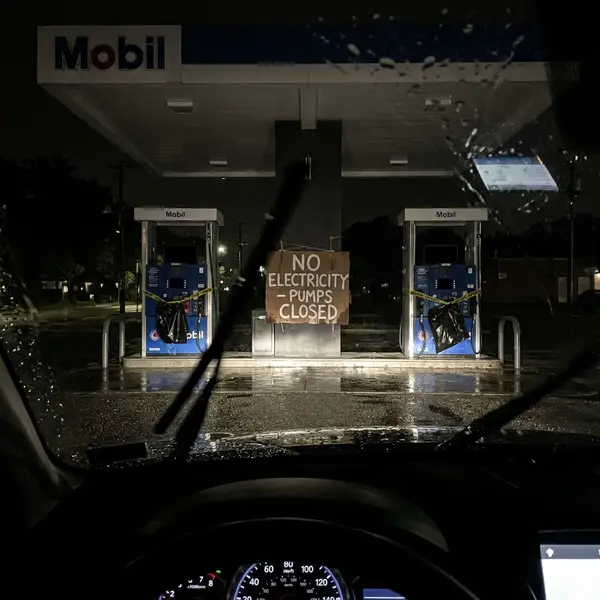
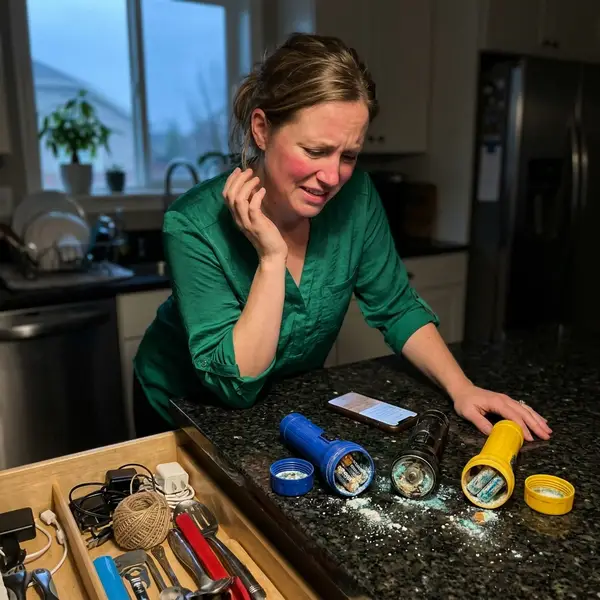
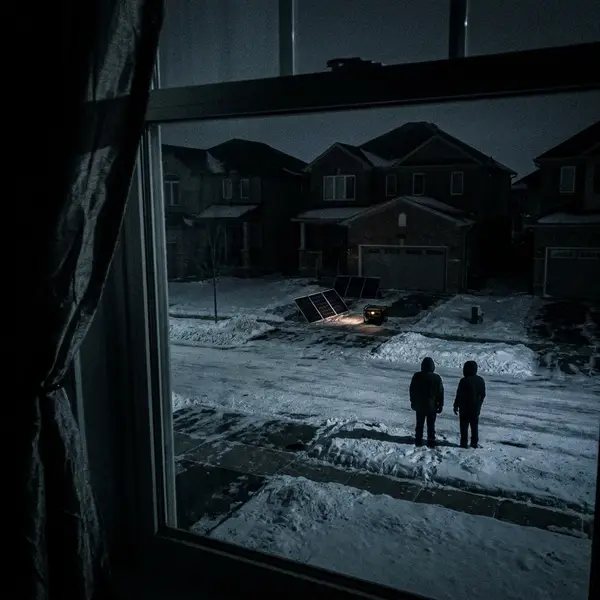
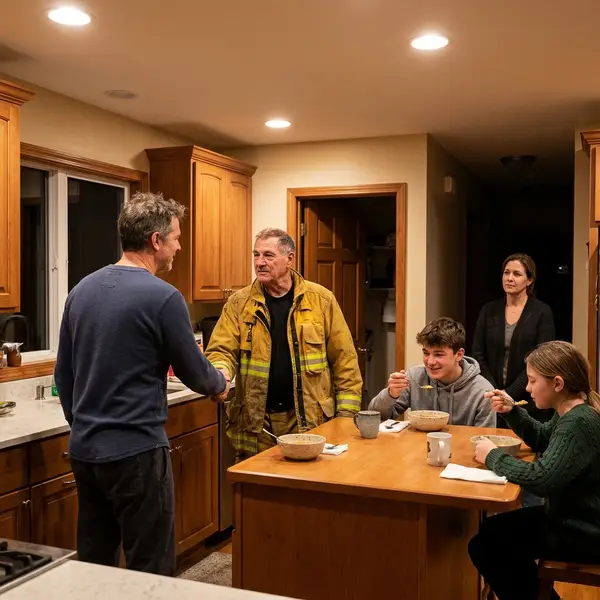
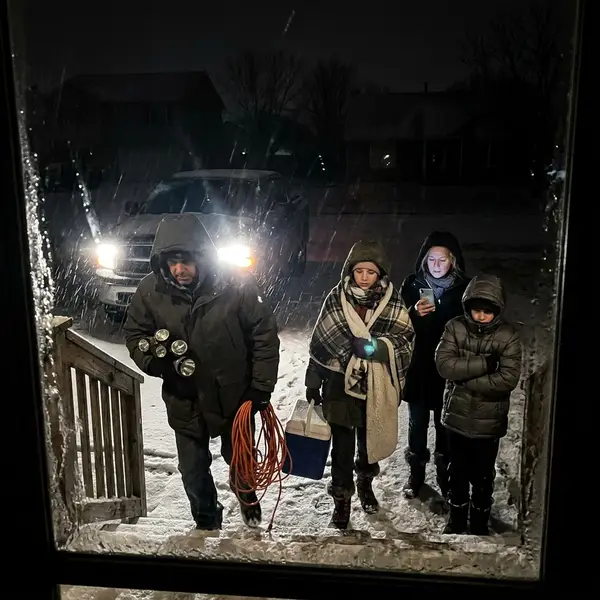
My ex wife brought her new husband into my driveway on my Thanksgiving week with our kids. My holiday. Her idea. "Do not make this weird," she said. I did not make it weird. I made sure my kids remembered exactly whose house never goes dark. Let me go back a bit. I am 54. I have spent twenty eight years working on my feet as a tool and die machinist. When Diane and I got divorced two years ago, she moved into a brand new four bedroom house in the Sycamore Ridge subdivision with her new husband, and I kept our little three bedroom brick ranch on Oak Street. It is not a fancy house. It does not have marble counters or a three car garage. But I built the cedar back deck on that house with my own two hands. I wired the garage shop, hung every solid core door down the hallway, and paid off the mortgage note three months ago. Right inside my back door, screwed into the oak studs beside the coat hooks, hangs a cedar key rack and birdhouse shelf my sixteen year old son Sam and my thirteen year old daughter Lily built with me in my garage shop when Sam was nine. Across the top board, in crooked letters burned with my soldering iron, it says Dad's Workshop. Under our court custody agreement, we alternate Thanksgiving week every year. This year was my turn. Sunday evening at five o'clock all the way through Saturday afternoon. My holiday. The one I had been counting down to on my machine shop calendar since August. I had ordered a twenty pound fresh turkey from Miller's butcher shop, stacked seasoned hickory cordwood for our Wednesday night backyard fire pit, bought the blueberry pancake mix Lily likes for Thursday morning, and got three tickets on the forty yard line for Sam's Friday night regional playoff game. On the Sunday afternoon before Thanksgiving, I was upstairs in Sam's bedroom putting clean flannel sheets on his mattress when Diane shouted up from the front driveway that she had a surprise. I walked down the stairs and looked through the front screen door. The surprise was standing on my front porch steps. Brad. Thirty six years old. Fresh razor fade haircut, spotless tan contractor jacket that had never seen a drop of machine oil, white teeth, an eighty thousand dollar lifted crew cab pickup truck idling in my driveway, and a yellow plastic hardware store tool tote slung over one shoulder as though he had come to inspect a rental unit. Sam and Lily were standing behind him on the front walk with their duffel bags, looking at the concrete. "Brad had to run out to the west side of town anyway, so he rode over with us to drop the kids off," Diane said brightly, stepping onto my porch without waiting to be invited. "I knew you would not mind. With the severe ice storm warnings on the news for Wednesday and Thursday, Brad brought his voltage tester to check your garage breaker panel and leave you two of his flashlights." She set two big plastic hardware store flashlights down on my porch railing. "And if the power grid goes down this week," Diane added smoothly, "we are bringing Sam and Lily straight back to our house in Sycamore Ridge, because Brad just put a twenty four hundred dollar commercial gas generator in our garage." He can check MY breaker panel and leave ME flashlights for MY holiday week. Our custody Thanksgiving week. In the house where I taught Sam how to read a steel micrometer and taught Lily how to ride a bicycle without training wheels. And she brought him onto my front porch in front of both of my children. I looked straight at Diane. "Diane," I said quietly, "this is my Thanksgiving week with Sam and Lily. And I built the electrical panel in that garage myself." "Mark, come on," Diane said, letting out a little sigh in front of the kids. "He is just trying to help out. Do not make this weird." Then she shifted into that voice. The one that sounds like motherly concern in front of the teenagers and lands like a verdict. "Mark, I am going to be honest with you because the kids' safety comes first," Diane said, folding her arms across her coat. "Do you remember the windstorm back in March when you had Sam and Lily for the weekend? And the October squall last month?" "What about March?" I asked. "In March, when the transformer blew on Oak Street, your heavy metal flashlight in the kitchen drawer died in fifteen minutes and leaked white battery acid all over your counter," Diane said clearly enough for Sam and Lily to hear every word on the walk. "Your rechargeable garage work lamp was sitting at zero percent because you forgot to check it, and Sam's cell phone dropped to three percent before you had to drive both kids back to our house at ten o'clock at night so they could do their schoolwork." She had dates. She had details. She had been keeping score on every outage on my street for two years. "Every house on Oak Street lost power in March, Diane," I said. "And batteries go bad in the drawer." "They do not go bad when somebody stays on top of the house, Mark," she said, softening her tone the way you talk to an old dog that cannot climb the porch steps anymore. "You are 54 now. You work ten hour shifts on your feet at the machine shop, and you live here by yourself. Things slip when you get tired. You forget to test the battery drawer. You forget to keep the garage lamps charged. With the news talking about multi day winter blackouts across the county this week, we are not having Sam and Lily sit in a cold dark house eating cold food." Brad smiled at me. That smile. The one thirty six year old men with eighty thousand dollar trucks give fifty four year old divorced fathers when they think they have already won your family. "It is really good of you to be alright with this, Mark," Brad said, tapping the two plastic flashlights he had left on my railing like he was leaving a twenty dollar tip for the lawn guy. "Diane talks about how hard you work down at the shop all the time. If the lines come down Wednesday night, do not try to tough it out in the dark. Just text me and I will bring the four wheel drive over and pick the kids up." I am sure she does. Sixteen year old Sam shifted his duffel bag on his shoulder and stared down at his sneakers so he would not have to watch his father take that on his own front porch. "Kids, bring your bags inside," I said evenly. "See you Saturday afternoon, Diane." After Brad's eighty thousand dollar truck backed out of my driveway and Sam and Lily went down the hall to unpack their clothes, I walked into my laundry room and stood in front of the utility shelf for ten minutes without moving. Two cheap plastic flashlights Brad had left on my porch sitting next to the washer. My own utility drawer pulled open beside the sink, full of four heavy black metal flashlights I hardly trusted anymore. Too dim. Corroded around the tail cap. Dead within twenty minutes. And my big yellow rechargeable work lamp plugged into the garage wall, which went stone cold dark ten minutes after you unplugged it. The things a fifty four year old father looks at when his ex wife brings a thirty six year old man onto his porch to tell his children their dad cannot keep the house running. And then I got angry. Not the loud kind. The quiet kind, where something clicks behind your eyes and you think clearly for the first time in two years. I picked up my phone and called my older sister Sandra. Sandra has been an emergency room charge nurse and triage coordinator at County General for twenty two years. She has worked through four ice storms, two tornadoes, and enough stories about ex wives and second husbands behaving badly to fill an encyclopedia. And her husband is Chief Miller. Chief Miller is 76. He spent twenty years in the United States military as a base power grid engineer keeping forward operating bases and field hospitals running through total grid blackouts before retiring to run our county emergency operations supply bay. I put the phone on speaker at my workbench in the garage and told Sandra and Chief Miller the whole lot. The eighty thousand dollar truck in my driveway. The voltage tester. The two plastic flashlights left on my railing. "He is just trying to help out. Do not make this weird." Sandra was dead quiet on the line for five full seconds. "She brought her thirty six year old husband onto your porch to leave you flashlights on YOUR Thanksgiving week with your kids?" Sandra asked. "Yes." Sandra laughed once. It was not a kind laugh. "Right, here is what happens, little brother," Sandra said. "Diane and that boy in the clean contractor jacket have built a whole story about you, and they are performing it right in front of Sam and Lily. Fifty four and working in a machine shop means outdated. One corroded flashlight in March means Dad is slipping and cannot protect us when a storm hits. When that ice storm blows the substation on Wednesday night, you are going to walk into your kitchen looking like the calmest, most capable father in this county. And little Brad with his voltage tester and his new truck is going to work out very quickly that he is not the main character in your kids' lives." "Sandra, every flashlight I buy at the hardware store rots in the drawer before the next storm even gets here," I said. Then Chief Miller's deep voice came over the speakerphone. "That is because you keep buying flashlights made to sit in a hardware store blister pack, Mark, not to survive a blackout," Chief Miller said. "Tell me again what Brad bragged about putting in his garage over in Sycamore Ridge." "A two thousand four hundred dollar commercial gas generator and half a dozen heavy duty warehouse flashlights," I said. Chief Miller chuckled softly. "Good," Chief Miller said. "Because when that freezing rain hits the transmission lines on Wednesday afternoon, Brad's house over in Sycamore Ridge is going to be cold, dark, and smelling like raw gasoline before eight o'clock at night." "How do you know that, Chief?" "Because three weeks ago," Chief Miller said, "a civics teacher from Sam's high school brought thirty eight juniors out to my county emergency supply bay. One of the fathers came along as a chaperone, a cocky young guy in a brand new pickup truck just like Brad, and he brought a duffel bag of emergency gear from his garage to show the kids. He pulled out a heavy aluminum flashlight and a giant brick of alkaline batteries and reached for my display table. I caught his wrist before it got there and told him three words. Not past Tuesday." Chief Miller paused for a beat. "Mark, Diane stood on your porch today and told your kids you were letting things slip because your metal flashlight leaked white acid in March and your rechargeable garage lamp was at zero percent," Chief Miller said. "Let me tell you what actually happened in your drawer. Standard alkaline batteries are filled with corrosive potassium hydroxide paste. When they sit in a dark kitchen drawer through summer humidity, the inner seal swells up, bleeds its charge, and pushes white acid crystals straight out across the springs. And when you do get a heavy flashlight to turn on, it eats fresh batteries in two to four hours flat. As for your yellow rechargeable garage lamp? Cheap hardware store lithium and lead acid lamps have a parasitic circuit drain in the switch that bleeds eighty percent of the battery into thin air within sixty days. That was not you getting old or tired after a ten hour shift, Mark. That is cheap battery chemistry." I let out a breath I did not realize I had been holding since five o'clock. "To prove it to those thirty eight high school kids," Chief Miller continued, "I gave them a weekend homework assignment that Friday night. I told every kid to go home, open their parents' kitchen drawer or garage shelf, pull out the primary emergency flashlight their father was counting on for a winter storm, turn all thirty eight of them on across the school gym floor at eight o'clock Friday night, and leave them until Monday morning." "What happened on Monday?" "Thirty four out of thirty eight were stone cold dead on the hardwood," Chief Miller said. "Eleven of them leaked white battery acid onto the floor without ever turning on once. Every plug in rechargeable work lamp was sitting at zero percent because the moment the substation blows, wall outlets are dead iron. And when the Pentagon and federal energy officials warn families to prepare for a ninety day grid collapse from aging transformer failures, they are talking about zero resupply." "What about Brad's two thousand four hundred dollar gas generator?" I asked. "A portable gas generator drinks two red five gallon gas cans dry in forty eight hours," Chief Miller said. "And nine out of ten guys in those new subdivisions leave untreated summer ethanol gas sitting in the carburetor bowl until the first November freeze. The ethanol separates, gums up the needle jet, floods the cylinder, and sets off the carbon monoxide detector inside the mudroom within an hour. And when Brad jumps in his eighty thousand dollar truck to drive down to the highway gas station for fresh fuel, he is going to find out that underground gas station pumps run on three phase municipal electricity too. When the grid is down, not a single drop of gas comes out of the ground." He let that sink in. "Mainland Americans buy four hours of battery life for a ninety day blackout," Chief Miller said. "Batteries are for tourists, Mark. And you never fight a blackout with something that runs out." "Then what do I put in my house before Wednesday?" I asked. "You put in what every seventy year old grandmother in Fajardo, Puerto Rico used after Hurricane Maria knocked out the island power grid for five straight months," Chief Miller said. "When my military engineering unit went house to house in Fajardo, the big houses with three thousand dollar gas generators were pitch black by Day Four. The houses still glowing warm and bright on Day Ninety belonged to grandmothers who kept three soup can sized matte black cylinders sitting on their kitchen windowsill behind the dish soap." "Sandra has three of them sitting on our kitchen windowsill right now, and half the nurses in her ER carry one in their car," Chief Miller said. "It is called the 3 in 1 Collapsible Solar LED Lantern. Now listen carefully, Mark, because if you buy a solar lantern at a big box store, you will get burned." "Why is that?" "Because nine out of ten solar camping lanterns use a tiny green decorative polycrystalline strip glued to the top cap," Chief Miller explained. "Polycrystalline glass needs blazing desert sunlight just to trickle charge, and behind a double pane house window in November it captures less than four percent of indoor window light. It dies in twenty minutes. The 3 in 1 Collapsible Solar LED Lantern is built with a high density flush monocrystalline solar panel bonded directly into the top casing. Monocrystalline silicon reads and absorbs up to ninety percent of ambient daylight straight through a double pane kitchen window, even on a grey, overcast November day. Twenty two times more charge. It tops itself back up to one hundred percent every single morning while sitting behind your dish soap." "And how long does it run at night?" I asked. "Twenty five hours straight on a single charge," Chief Miller said. "There is no button to fumble with in the dark. You grab the two stainless steel handles and pull the cylinder open, and 360 degrees of bright, warm white LED light floods a twenty foot room from corner to corner. It has a focused spotlight on the bottom if you need a beam out by the woodpile, folds down to the size of a soup can, and has a built in USB power bank port on the side so your phone and Sam's and Lily's phones stay at one hundred percent even if the county grid is dead for ninety days." "Trust us, Mark," Sandra jumped back in on the line. "Order two sets of their Buy 2, Get 1 Free blackout deal tonight. Put three on your kitchen windowsill and keep the extra box of three in your hall closet. It is backed by a 30 Day Money Back Guarantee, and our hospital staff has been buying them out before the Wednesday storm hits." I ordered two sets of the Buy 2, Get 1 Free deal that night from my workbench without blinking. Six lanterns total. By Tuesday morning at ten o'clock, the shipping box was sitting on my front porch. The universe occasionally cooperates. While Sam and Lily were at school Tuesday morning, I walked into my laundry room and did Chief Miller's Friday night test. I took my four old metal flashlights out of the drawer, unplugged my big yellow rechargeable garage work lamp, and brought in the two plastic flashlights Brad had left on my porch railing. I lined all seven of them up on the laundry room tile and switched them on. Two of my metal flashlights never even blinked. When I unscrewed the caps, the alkaline batteries were fused together with crusty white acid. My yellow garage work lamp died in eleven minutes flat. Within two hours, the remaining two metal flashlights were stone cold dead, and Brad's two plastic hardware store flashlights had faded to a pathetic orange dot that could not light a shoebox. I swept my four old metal flashlights and the dead garage lamp into a heavy trash bag and dropped them into the alley bin. Then I clicked Brad's two cheap plastic flashlights off, wiped them clean, and placed them neatly in a brown paper grocery sack beside my front door to hand back to him. Then I carried the first box of 3 in 1 Collapsible Solar LED Lanterns into my dark hallway and pulled the stainless steel handles up on the first cylinder. For half a second, nothing. Then 360 degrees of pure, daylight bright warm white light came up across the entire hallway, living room, and kitchen. Not yellow. Not flickering. Not the weak orange tunnel I had spent years shaking a metal tube to get. It lit my house the way a house is supposed to be lit. I smiled at my reflection in the hallway mirror. I did not look like a man whose ex wife needed to bring her thirty six year old husband over to check his breaker panel. I looked like a father who did not need help keeping his house running. I set three of the compact matte black cylinders in a neat row on the sunny windowsill above my kitchen sink, right behind the bottle of green dish soap, and put the second unopened box of three on the top shelf of the hall closet. When Sam and Lily walked in the back door after school at three thirty and hung their coats under the cedar Dad's Workshop sign, Sam spotted the three matte black cylinders sitting on the kitchen windowsill. He picked one up, turned it over in his hands, and pulled the steel handles open. The bright white glow washed right across the kitchen counters even with the afternoon sun outside. "Whoa," Sam said. "Dad, what kind of batteries are in this thing?" "It does not use disposable batteries, Sam," I said, pouring him a glass of milk. "Look at the top cap. That is a flush monocrystalline solar panel. It drinks the daylight straight through the kitchen window and runs for twenty five hours. And see that USB port on the side? If the ice storm takes the grid out tomorrow night, you and Lily can plug your phones right into the lantern." Sam looked at the flush black panel on top, then looked over toward the front door where Brad had stood on Sunday afternoon. A slow grin spread across my sixteen year old son's face. "So we do not have to go back to Mom and Brad's house if the power goes out," Sam said. "We are not going anywhere, bud," I said. "This is our Thanksgiving week." Wednesday morning. Day four of our week. Before the freezing rain moved in, I took Sam and Lily down to the local hardware store at eleven o'clock to pick up a bundle of fatwood kindling for our fireplace and a bag of birdseed. When we walked up to the front registers, Brad and Diane were standing at the service counter. Brad was arguing with the teenage clerk because they were sold out of thirty amp generator twist lock adapters, and Diane was crouched beside a shopping cart holding four plastic bricks of D batteries and two more cheap plastic camping lanterns because she could not remember which size batteries Brad's garage flashlights took. I walked right past the pair of them with a six dollar bundle of cedar kindling under my arm. Diane looked up and saw us. "Mark," she said, glancing down at my hands. "Are you not buying batteries or gas cans? The weather channel says the ice storm is going to knock the lines down by suppertime." "I am all set, Diane," I said. Brad looked at my bundle of kindling, then looked at Sam and Lily. "You sure you do not want to grab a couple packs of D cells, Mark?" Brad asked, with that little half smile again. "Those two flashlights I left on your porch go through batteries pretty quick if the grid stays down all night." "I put your two flashlights in a paper bag by the front door for you, Brad," I said pleasantly. "Sam can run them out to your truck on Saturday." Brad frowned as though I had answered the wrong question. Sam pulled out his phone and showed his mother a picture he had taken of the three compact matte black cylinders sitting on our kitchen windowsill behind the dish soap. "Dad got military spec solar lanterns from Uncle Chief Miller," Sam said proudly. "They charge right through the kitchen window glass without any batteries." Brad leaned in, squinted at Sam's screen, and scoffed slightly. "Aren't you worried about solar lights going dead inside a house on a cloudy day?" Brad asked me. "Not really," I said. We were through the register and sitting at the diner counter eating cheeseburgers and shakes before Brad had finished repacking his battery bricks at the service desk. Diane texted me twenty minutes later: "Where did you guys go?? Brad found two extra packs of AA batteries if you still need them." I texted back: "At the diner. We are good." Wednesday afternoon. Thanksgiving Eve. The freezing rain started hitting Oak Street at three o'clock. By five fifteen, the maple branches outside my living room window and the high voltage lines feeding both my neighborhood and Sycamore Ridge were encased in a solid inch of black ice. At 5:42 PM, the main transmission substation on the highway blew three times in a row. The sky flashed blue white behind the trees, the furnace fan spun down, and every house on Oak Street went pitch black. Sam and Lily looked at me from the living room couch. I did not hurry. I did not open a single drawer. I walked over to the kitchen sink, picked up the three matte black cylinders from behind the dish soap, and pulled the stainless steel handles up. One on the kitchen counter. One on the living room coffee table. One on the hallway bookshelf. In less than ten seconds, our entire house was flooded with warm, steady, 360 degree white light from corner to corner. Sam and Lily plugged their cell phone cords straight into the built in USB ports on the sides of the kitchen and coffee table lanterns, and both screens lit up at 100 percent charging. I lit the seasoned hickory logs in our brick fireplace, turned the gas oven on to bake our homemade pepperoni pizzas, and within twenty minutes the thermometer on the dining room wall was sitting at a cozy seventy two degrees. At 6:15 PM, Sam's phone buzzed on the coffee table. It was a text from Diane in the family chat: "Power just went out over here in Sycamore Ridge too. Brad is heading out to the garage to start the twenty four hundred dollar commercial generator now. Let me know when it gets dark and cold over there and Brad will come get you guys." Sam did not even ask me. He snapped a quick photo of Lily sitting by the roaring fireplace doing a crossword puzzle in a room lit up like noon day with hot pizza on the plate, and sent it back with the caption: "72 degrees in here and Dad's lanterns have the whole house lit up." Diane's typing bubbles appeared, stopped, appeared again, and disappeared. At 7:10 PM, Lily's phone chimed. It was Diane again: "Brad is having trouble getting the generator to stay running in the sleet. He says the summer gas gummed up the carburetor valve and the garage smells like gasoline." At 7:55 PM, Sam's phone rang. Diane had called him by mistake while her phone was in her coat pocket by the garage door, and before she hung up, all three of us heard Brad and Diane through the speaker: "Brad, why is that light flickering orange already? You just put those batteries in an hour ago." "It is fine, Diane, the cold drains them." "Fine is not an answer when it is fifty two degrees in this kitchen and the carbon monoxide alarm is chirping by the door." "Diane, I said I am working on the choke valve." "Mark's living room looked brighter than daylight in the picture Sam sent." Dead silence on their end before the line clicked off. Sam and Lily looked at each other across the coffee table and tried not to laugh out loud. I picked up another slice of pizza and turned the page of my magazine. At 8:20 PM, my cell phone rang. It was Diane. Her voice was completely stripped of the breezy confidence she had carried onto my porch on Sunday afternoon. "Mark?" she said over the sound of sleet pelting a windshield. "Brad's generator flooded completely and locked up, the gas stations on the highway have no electricity to run the pumps, four of our flashlights died or leaked in the box, and the carbon monoxide detector went off in the hallway so we had to open the garage. Our house is down to forty nine degrees and we have Sam's extra varsity jacket and asthma inhaler here anyway. Can we drive over there just until the utility crew gets our street back on?" I looked at Sam and Lily sitting warm and bright on the couch. "The back driveway is salted and the door is unlocked, Diane," I said calmly. "Come on over." At 8:45 PM, the headlights of Brad's eighty thousand dollar pickup truck turned into my driveway. When I opened the front door, Brad walked up the icy steps first. His spotless tan contractor jacket had a big dark stain of unburned gasoline down the front zipper and grease smudges across both cuffs from tearing into a frozen carburetor in the sleet. Under his arm he was carrying three dead heavy metal flashlights, and Diane was right behind him wrapped in a wool blanket, holding her dead cell phone in her gloved hand. They stepped into my seventy two degree living room and stopped dead on the doormat. Every corner of the living room, the kitchen, and the hallway was glowing with clear, warm, 360 degree white light from the three compact matte black cylinders. Brad stared up at the ceiling light fixture, then looked at the wall switch, then looked at me. "Your street got power back already?" Brad asked. "Nope," sixteen year old Sam said from the couch, where his phone was plugged into the side USB port of the coffee table lantern at one hundred percent. "The whole town is still blacked out. That is just Dad's three solar lanterns." Brad walked slowly over to the coffee table and stared down at the soup can sized matte black cylinder flooding the whole twenty foot room with light. "That little thing is running the whole room?" Brad asked. "Twenty five hours on a charge," I said, hanging Diane's wet coat on the rack. "And if you two need to charge your dead phones, there is an open USB port on the side of the kitchen counter lantern and another one on the hallway lantern." Diane walked into the kitchen, plugged her dead phone into the side of the matte black cylinder beside the dish soap, and watched the charging screen come to life immediately. She stood there warming her hands by the stove and looked around my kitchen, properly looked at it, for the first time in years. At 9:15 PM, while I was pouring hot coffee into four mugs, heavy boots stomped the sleet off on my front porch and knocked twice on the door. When I opened it, Captain Dan Brooks from the volunteer fire department and his young lieutenant were standing on the porch in their yellow turnout coats and helmets, doing door to door welfare checks down Oak Street. Captain Brooks looked past me into the warm, brightly lit living room, saw the matte black cylinder glowing on the coffee table and the one on the kitchen counter, and broke into a wide grin. "Evening, Mark," Captain Brooks said, tipping his helmet back. "I see Chief Miller and your sister Sandra put you onto the 3 in 1 flush panel solar lanterns." "They did, Captain," I said. "Put them on my windowsill behind the dish soap on Tuesday morning." Captain Brooks looked past me at Brad standing by the fireplace in his gas stained contractor jacket. "You folks picked the right house to ride out this ice storm," Captain Brooks said loud enough for everyone in the room to hear. "We just came over from the Sycamore Ridge subdivision. Half the guys over there have two thousand four hundred dollar gas generators sitting dead in their driveways with gummed up carburetors and carbon monoxide alarms going off in the mudrooms, and the rest are sitting in forty eight degree houses because their hardware store flashlights rotted in the drawer. Meanwhile Mark has this place lit up like a five star hotel." The young lieutenant on the porch steps leaned in and pointed at the lantern on the hallway shelf. "Sorry, I have to ask, Mark, is that the collapsible solar lantern with the flush monocrystalline top panel?" the lieutenant asked. "My mom and my wife over at County General have been going on about that lantern for two weeks. They ordered the Buy 2, Get 1 Free deal before the freeze and said it charges right through a double pane window without a single battery." "That is the one," I said. "Smartest setup in the county," Captain Brooks said, tapping the doorframe. "You clearly do not need a thing from us tonight, Mark. Enjoy your Thanksgiving with your kids." When I closed the front door, the living room was completely quiet except for the crackle of the hickory logs in the fireplace. Brad looked at the door where the fire captain had just stood. Then at the glowing matte black cylinder on the coffee table. Then over at the brown paper grocery bag beside the door where his two cheap plastic flashlights were sitting. Diane sat down at the kitchen table and wrapped both hands around her coffee mug without looking up. The county grid did not come back on that night. It stayed down all through Thursday afternoon. Diane took the spare guest room at the end of the hall, and Brad slept on the living room sofa. At seven o'clock on Thursday morning, Thanksgiving Day, while everyone else was still asleep, I walked through the house, pushed the stainless steel handles down on the three lanterns, and set them back in a neat row on the sunny kitchen windowsill behind the dish soap so the morning sun reflecting off the ice outside could top them right back up to one hundred percent. At eight thirty, I was standing out on my covered back deck by myself with a mug of black coffee, checking the hickory smoke on the twenty pound turkey in my outdoor smoker. The back door clicked open behind me. Brad stepped out onto the deck in his sweater. No Diane. No Sam and Lily. No audience. Just the two of us and the sound of ice dripping off the cedar roof. He walked over and stood beside me at the deck railing, looking in through the double pane kitchen window at the three matte black cylinders sitting behind the dish soap. "Mark, can I ask you something?" Brad said quietly. "Sure." He looked down at his hands on the cedar rail. He still had black carburetor grease around his thumbnails from the night before. "Those lanterns on your windowsill," he said. "Where did you get them?" There it was. The thirty six year old man who had walked onto my front porch on Sunday afternoon with a voltage tester and two cheap flashlights to show my kids he was taking over was asking me where I got my gear. "They are called the 3 in 1 Collapsible Solar LED Lantern," I said, taking a sip of coffee. "Do they really charge all the way back up through a kitchen window like that in the winter?" "Ninety percent high density flush monocrystalline panel bonded into the top cap," I said. "Not the cheap four percent green strip they put on hardware store lanterns. Runs twenty five hours a charge and keeps the kids' phones at one hundred percent." "Diane told me you always used to forget to check the flashlight drawer and let the batteries rot," Brad said quietly. "Diane says a lot of things about me that stopped being true years ago," I said. Brad went quiet for a long moment. Then he said, "I did not know she had not asked you before she brought me onto your porch on Sunday afternoon." "Maybe not," I said, looking him straight in the eye. "But you knew it was my Thanksgiving week with my kids before you got out of the truck with those two flashlights." He did not answer. He could not even hold my gaze. I turned around, walked inside to the hall closet, took down the second unopened box of three lanterns I had ordered on Sunday night, walked back out to the deck door, and set it on the table beside him. "Put those three on your kitchen windowsill behind your dish soap over in Sycamore Ridge," I said. "You do not have to remember to plug them in, and they do not take gas or batteries. That way the next time the grid goes down on Diane's week with Sam and Lily, I do not have to worry about my kids sitting in a forty nine degree house in the dark." I walked back inside to make Lily's blueberry pancakes and left him standing on the deck. When the utility crews finally got the Sycamore Ridge substation repaired on Thursday evening and Diane was loading her coat into Brad's truck in my driveway, she stopped by the front fender while Sam and Lily were inside by the fire. She looked at the house, then at me. "Mark," she said softly. "I messed up on Sunday. I should never have said those things in front of Sam and Lily." "I know," I said. "You kept all five of us warm and fed for two days when our whole street froze out," she said, looking back at the glowing kitchen window. "Sam has not stopped talking about how you had the whole house ready." "Have a safe drive home, Diane," I said. "I will bring the kids back Saturday afternoon at five, just like the paper says." Half an hour after they pulled out of the driveway, my phone buzzed with a text from Brad's number. "Mark, thanks again for the box. Is that Buy 2, Get 1 Free deal still running on their site? My dad lives out in the country and I want to order a set for his house." "It was when I ordered," I texted back. That night after Sam and Lily went to bed, I called my sister Sandra and Chief Miller from the kitchen table, because they had earned the whole story. I told them about running into Brad and Diane at the hardware store counter on Wednesday morning. I told them about the photo Sam texted his mother when the substation blew. I told them about the accidental pocket dial from their freezing garage. I told them about Captain Dan Brooks and his lieutenant praising our lanterns at the front door in front of Brad, and I told them about thirty six year old Brad standing on my back deck Thursday morning asking me where my lanterns came from. Sandra was quiet for two seconds on the phone. "What did you tell him?" she asked. "I gave him the extra box of three from the closet so Sam and Lily have light at their house too," I said. "You are a better man than he deserves, little brother," Sandra said. Here is what I learned this Thanksgiving. My ex wife brought her thirty six year old husband onto my porch on my holiday week with our kids, set two cheap flashlights on my railing, bragged about his twenty four hundred dollar generator, and told me not to make it weird. I did not. He arrived in an eighty thousand dollar pickup truck with a spotless contractor jacket, a voltage tester, and the confidence of a younger man who thought money and a new house made a father replaceable. I met the storm with three soup can sized solar lanterns sitting on my kitchen windowsill behind the dish soap. Those lanterns did not build the cedar Dad's Workshop rack by my back door or teach my kids who their father is. They just made the truth impossible to miss. For me. For my kids. For her. And for him. If someone in your family has ever talked down to you in your own driveway or acted like you cannot keep your house running when things get hard. If you are tired of opening the kitchen drawer during a storm only to find heavy flashlights with rotted alkaline batteries and white acid crust on the springs. If you never want to stand in freezing sleet yanking on a flooded generator cord while every gas station pump on the highway sits dead without electricity. You need three of these on your windowsill. Not because a lantern can fix how somebody else acts. But because standing in a seventy two degree living room lit up like noon day with your kids' phones at 100 percent, while the people who looked down on you walk up your steps carrying three dead flashlights in the freezing rain? That is not about proving a point. That is about being the rock of your house when the lights go out. Three compact matte black cylinders on the windowsill. One high density flush monocrystalline solar panel on top that captures ninety percent of cloudy daylight right through a double pane window. Twenty five hours of warm 360 degree room light per charge. Built in USB phone charger on the side. Zero batteries to buy. Zero gas cans to haul. Sandra and Chief Miller keep three on their windowsill. Captain Dan Brooks and the hospital nurses ordered theirs by the case. Brad just ordered a set for his father. And my kids already asked if we can do Christmas week at my house too. Right now they are running the Buy 2, Get 1 Free Blackout Deal on their official page, backed by a full 30 Day Money Back Guarantee. Put them on your windowsill, test them in your darkest room, and if they do not outperform every flashlight in your drawer, you get every penny back with no questions asked. Just make sure you order from the official page below so you get the real 3 in 1 Collapsible Solar LED Lantern with the ninety percent flush monocrystalline panel before this winter batch goes on four to six week backorder. Tap Learn More below to claim the Buy 2, Get 1 Free Blackout Deal with a 30 Day Money Back Guarantee while this batch is still in stock.

Loading the ad's image
Michael L — Her New Husband Brought Me Flashlights. Then The Grid Died.
PromisingImage

My Son In Law Called Me a Liability in a Storm. Then the Grid Died for Four Days.

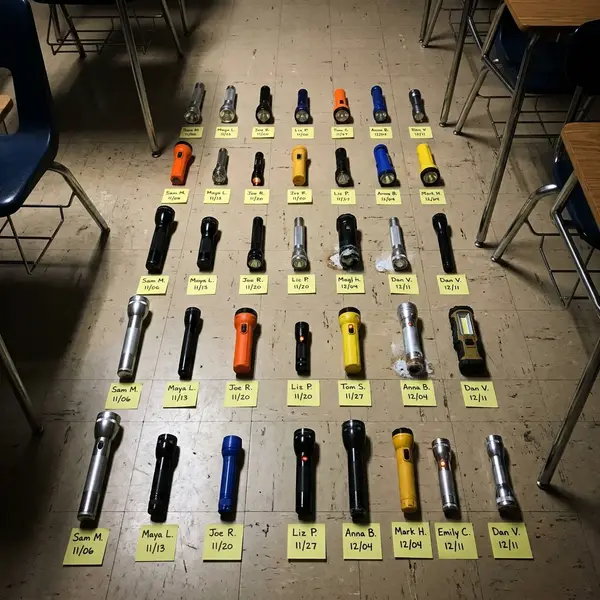
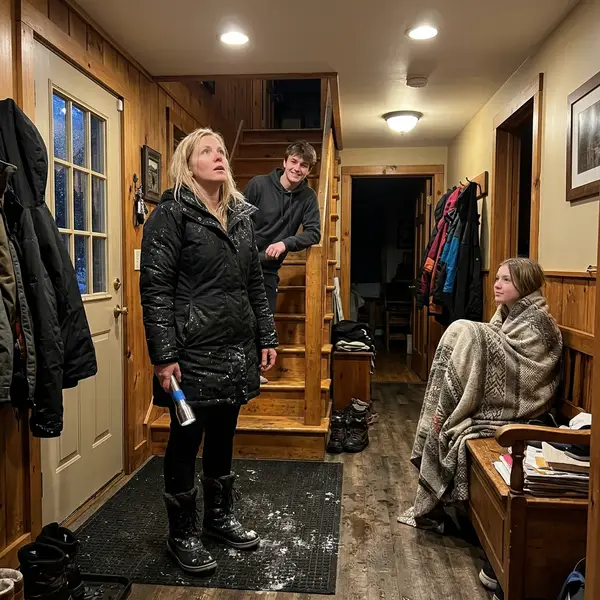
Three months after I retired, I was invited to a family dinner only to find out my son in law told my grandson they couldn't have Thanksgiving at my house anymore. "Grandpa's slipping now that he's out there alone. If a winter storm knocks the power out, he's a liability. You have to understand." I smiled. I understand. My grandson Jake turned eighteen in October. When Jake was six years old, he drew a crayon picture of my house on the county road during Thanksgiving snow. Big yellow windows. Smoke coming out of the chimney. All of us around the table. He wrote "Grandpa's House Forever" across the top in crooked green letters and taped it to the inside of my pantry door. He is a senior in high school now, six foot one, heading off to state college next fall. That drawing is still taped inside my pantry door, corners curled, right above the coffee canister. So when October came around, I didn't have to think about Thanksgiving week. I called him and said, "This year we are doing the whole week out here. Wednesday through Sunday. I already reserved the twenty two pound heritage turkey at Miller's Farm." He cheered so loud I had to hold the phone away from my ear. My daughter Megan and my son in law Kevin offered to coordinate the side dishes and the driving schedule. I let them. One phone call later, Kevin was in charge of everything. I would learn what that meant soon enough. Two weeks later was Jake's senior night football game. I was in the second row on the fifty yard line. I have been in the second row his whole life. After the game, we were standing outside the stadium fence under the lights. Jake had his arm around my shoulder in his jersey, showing me the photos on his phone. A text popped up at the top of his screen. From "Dad." The preview read: "Don't tell Grandpa yet, bud. But we're moving Thanksgiving to our house. He's gotten pretty forgetful since retiring and living out there alone. With the ice storm warnings next week, we can't deal with that liability if the power goes out." Jake grabbed the phone. But it was too late. He looked at me. His face went red under the stadium lights. "Grandpa. He didn't mean it like that." I looked at this boy I had held the day he was born. And I watched him try to protect his father and me at the exact same time. "Let's talk about it later," I said. Liability. I am 67. I raised two kids after my wife Helen passed. I taught high school shop and drafting for thirty four years and ran that house on three acres by myself. Every roof leak. Every well pump. Every winter freeze. Every holiday for three decades, planned and cooked and cleaned up by me. If something needed to be handled in our family, I was the one who handled it. Nobody ever called that a liability. They called it "Dad's got it." But I said none of that. Because whatever was going on, I wasn't going to have it out in a high school parking lot. I found out the next Saturday. Kevin and Megan invited me to dinner at their house in the subdivision. "Just family," Megan said. "Nothing fancy." I showed up at six. The good china was out. Candles lit. My daughter Megan was already seated. Kevin sat at the head of the table. Jake and his fifteen year old sister Emma were there too. Everyone was exchanging looks when I walked in. The kind where everyone in the room knows something you don't. Jake wouldn't meet my eyes. After dinner, Kevin cleared his throat. "Arthur, we need to talk about Thanksgiving week." My stomach dropped. "We have all been talking, and with the winter grid warnings on the news, we think it would be much safer if we hosted Thanksgiving here at our house, and you packed a bag and stayed in our downstairs guest room until the December freezes pass." I looked around the table. Megan was studying her fork. Emma was picking at her napkin. Jake opened his mouth. Kevin put his hand on his arm. "Bud, we discussed this." That is when I knew. He hadn't just texted him. He had been working on him for weeks. "Arthur, I am going to be straight with you, because we love you." That smooth corporate manager voice. The one that sounds like concern but lands like a verdict. "Do you remember the windstorm in March? And the freeze two winters ago?" "What about March?" "When the transformer blew on your road, your big metal flashlight died in twenty minutes and leaked white battery acid all over your workbench and counter. Jake had to drive out at eleven at night to bring you AA batteries because your cell phone dropped to three percent. And last fall, you left your reading glasses upstairs in the dark and tripped over the hall runner because your rechargeable garage lamp wouldn't turn on. Megan missed a whole morning of work driving out to check on you." He had dates. He had details. He had been keeping score. "Every house on my road lost power that night," I said. "And batteries die." "They didn't used to die on you." Kevin leaned in. Lowered his voice. "Arthur, you have been retired for three months. The mind needs structure to stay sharp. Without work, things slip. You forget to check the battery drawer. You forget to plug things in. That isn't an insult. That is just biology." Biology. "The news is talking about multi day blackouts this winter. I just spent 2,400 dollars on a commercial gas generator for our garage and six heavy duty metal flashlights from the warehouse club. Out at your house, someone would have to watch you and manage your lights the whole time. And this is Jake's last Thanksgiving before college. He shouldn't have to spend it worrying about his grandfather sitting in the dark." There it was. Jake pushed his chair back from the table. "Dad, I never said that." "Jake." One word. That is all it took. He looked at me for a long second. Then down at his plate. He is eighteen. Kevin is his father. He sat back down. Kevin gave me a sympathetic nod across the table and patted my forearm. "You understand, right? It is for your own good." Then he slid a folded piece of paper across the tablecloth. The receipt for the 180 dollar catering deposit and the farm turkey transfer he had already put on his card, with my half circled at the bottom. Right next to a printed brochure for a fifty five and older apartment complex by the highway. The holiday I was too far gone to host. I was still sharp enough to pay for. I looked at the receipt. Then at Kevin. I picked up my water glass. Took a sip. "I understand," I said. I drove home to my quiet house and sat at my kitchen table with the lights off for a long time. The next morning, I mailed Kevin a check for his deposit. Then I called Miller's Farm and told them I was still picking up my twenty two pound turkey on Tuesday morning. I told no one. That Sunday afternoon, I met my longtime teaching friend Ruth and her husband Chief Miller for coffee at the diner in town. Ruth and I taught in the same school district for thirty years. Chief Miller is 76. He spent twenty years in the US military keeping base grids and forward operating zones running in total blackouts before retiring to run our county emergency operations supply bay. He has kept field hospitals lit through hurricanes and ice storms that would make Kevin's subdivision disappear. And nobody has ever called either of them a liability. I told them the whole thing, start to finish. When I got to the part where Kevin slid the catering receipt and the senior apartment brochure across the tablecloth, Ruth put her coffee mug down so hard it clinked. She was quiet for a moment. Then she said, "Do you know what actually happened at that dinner?" "He moved Thanksgiving to his house." "No. That is the small thing." Ruth leaned forward. "Arthur, he has decided who you are now. Retired means declining. Declining means helpless. He has built a whole story about you, and he is telling it to your grandson." I didn't say anything. "That boy has spent every Thanksgiving of his life in your kitchen. And now every time the sky turns grey, Kevin's story is sitting in his head right next to yours." That one landed. "So where you eat turkey isn't really the question," Ruth said. "The question is whose story Jake believes when the next storm hits. His or yours." Then Chief Miller leaned his elbows on the table. "Tell me again what Kevin bought to keep his house running when the lines come down," he said. "A 2,400 dollar gas generator in the garage," I said. "And six heavy duty metal flashlights with a giant brick of alkaline batteries." Chief Miller smiled for the first time. "Good," he said. "Then listen carefully, Arthur, because when that ice storm hits on Wednesday night, Kevin and Megan's house is going to be pitch black before Thursday supper." "How do you know that?" "Because three weeks ago," Chief Miller said, "a civics teacher from the Christian prep school brought 38 high school juniors out to my county supply bay. One of the dads, a proud guy just like Kevin, brought a duffel bag of emergency gear from his garage to show the kids. He pulled out a heavy metal flashlight and a giant pack of AA batteries and reached for my display table. I caught his wrist before it got there and told him three words. Not past Tuesday." He tapped the table with one finger. "A standard flashlight eats fresh batteries in two to four hours. And half the alkaline batteries sitting in an American kitchen or workbench drawer right now have already lost their charge or swollen up from the humidity and leaked white acid across the springs, just like the one on your workbench last March. That wasn't your memory slipping, Arthur. That is chemistry." "To prove it to those 38 teenagers, I gave them a homework assignment that Friday night. I told them to go home, take every emergency flashlight their parents were counting on out of the hall closet, turn them all on at eight o'clock Friday night on the classroom floor, and leave them over the weekend." "What happened on Monday?" "Thirty four out of thirty eight were stone cold dead," Chief Miller said. "Eleven of them leaked white acid on the floor without even turning on. Every plug in rechargeable work lamp was sitting at zero percent because once the substation dies, the wall outlets are dead. And when the Pentagon and federal energy officials warn us to prepare for a 90 day grid collapse from transformer failures, they are talking about zero resupply. Kevin's 2,400 dollar generator is going to drink his gas cans dry in two days, and when he drives to the gas station on the highway, he is going to find out gas station pumps run on electricity too." He looked at me across the booth. "Mainland Americans buy four hours of battery life for a ninety day blackout. Batteries are for tourists, Arthur. And you never fight a blackout with something that runs out." "Then what do I put in my house?" "You do what every grandmother in Fajardo, Puerto Rico did after Hurricane Maria," Chief Miller said. "You keep three self replenishing lanterns on your kitchen windowsill. No gas cans. No disposable batteries. No extension cords." He pulled out his phone and showed me a photo of his own kitchen windowsill. Three compact matte black cylinders, each about the size of a soup can, sitting in a neat row behind Ruth's dish soap where the morning sun hit the glass. "It is the 3 in 1 Collapsible Solar LED Lantern," Chief Miller said. "Half the fire captains and linemen in our county keep them on their windowsills. Not the cheap green plastic solar camping lights from the hardware store. Those cheap ones use a tiny decorative polycrystalline strip that only captures four percent of indoor window light and dies in twenty minutes. This one has a high density flush monocrystalline solar panel bonded into the top casing that captures ninety percent of cloudy daylight right through a double pane kitchen window, twenty two times more charge." "That little cylinder lights up a whole room?" "For 25 hours straight on a single charge," he said. "There isn't even a switch to fumble for in the dark. You just pull the two steel handles up and 360 degrees of bright white LED light floods the entire room. It has a directional spotlight on the bottom, and a built in USB power bank port on the side so your cell phone stays at 100 percent even if the grid is dead for ninety days." I looked at the photo. "And here is what matters for you," Ruth said, putting her hand across the booth onto my sleeve. "When that ice storm hits this week, Kevin and Megan are going to be out in their driveway in the freezing rain fighting a noisy generator, smelling like gasoline, and rationing dying flashlights while their phones die. Every battery they burn tells Jake that an outage is a crisis. And you are going to walk over to your kitchen sink, pull three handles up in ten seconds, and light up your whole house like you have done it your whole life." "What if their power goes out in the subdivision?" Ruth didn't hesitate. "That is the point, Arthur." Chief Miller wrote the website down on a napkin before I left. "One more thing," he said. "Don't sit on it. Right now they have a Buy 2, Get 1 Free blackout deal on their page, so you get three lanterns for the price of two, backed by a 30 day money back guarantee. Because of the winter grid warnings, my county supply group chat has been ordering them by the case. Once this batch sells out, it is a four to six week wait for the next shipment." I ordered two sets of the Buy 2, Get 1 Free deal that night from my kitchen table. Six lanterns total. The box arrived on Tuesday morning, the day before Thanksgiving Eve. Before I even opened the shipping box, I walked over to my workbench and utility drawer and did Chief Miller's Friday night test. I took out all six of my old metal flashlights and my plug in garage lamp, lined them up on the laundry room tile, and flipped them on. Within three hours, five were stone cold dead and one was oozing white battery crust onto the tile. I swept the whole pile into a garbage bag and set it in the bin outside. Then I carried the new 3 in 1 Solar Lanterns into the kitchen. I set three of them in a neat row on the sunny windowsill above the sink, right behind my dish soap, and put the other box of three on the shelf in the hall closet. And one more thing. I opened the pantry door and looked at the crayon drawing I had kept for twelve years. Jake at six years old, yellow windows glowing in the snow, "Grandpa's House Forever" across the top. I smoothed the curled corner down with my thumb. Then I put the twenty two pound turkey in the refrigerator to brine. Wednesday afternoon. Thanksgiving Eve. The freezing rain started at three o'clock. By five o'clock, the oak branches along the highway were coated in an inch of solid ice. At 5:42 PM, the main transmission substation supplying both my road and Kevin's subdivision blew three times in a row. Every light on my road went black. I didn't rush. I didn't open a single drawer. I walked over to the kitchen sink, picked up the three lanterns off the windowsill, and pulled the steel handles up. My kitchen, my dining room, and my front living room lit up like noon day. I plugged my cell phone into the USB port on the side of the kitchen lantern. The green charging bolt came right on. I lit the gas burner under my kettle, built a fire in the wood stove, and sat down in my armchair with my book. At 6:15, the family group chat started dinging on my phone. Megan: "Power is out here too. Kevin is getting the generator out now." At 7:10, another text from Emma: "Dad can't get the generator to stay running. It smells like gas in the garage and it's freezing in here." At 8:05, a text from Jake: "Dad's Costco flashlights already died and the carbon monoxide alarm went off in the mudroom. Dad is mad." At 8:15, my phone rang. It was Jake. "Grandpa, are you okay out there? Mom's phone is on four percent and our house is down to fifty two degrees." "My phone is at a hundred percent, bud," I said. "The wood stove is at seventy two degrees, the whole house is lit up, and I have a pot of beef stew on the stove. Tell your father to pack everybody in the car and come out here." At 8:45 PM, headlights turned into my driveway through the sleet. I watched them from the porch window before they saw me. Kevin was carrying two dead heavy metal flashlights under his arm and dragging a frozen orange extension cord he hadn't been able to wind back up. Emma was wrapped in two blankets carrying a cooler of side dishes. Megan had two overnight bags over her shoulder and was holding her dying phone up like a candle to see the icy steps. Four people, shivering in the dark, evacuating the house with the 2,400 dollar generator. Jake came up the porch steps first and opened my front door. He stopped dead in the doorway. The entire living room, dining room, and kitchen were glowing with warm, bright white 360 degree light. "GRANDPA?" The whole family stepped into the foyer behind him. Kevin froze on the doormat, snow melting on his coat, holding a dead silver flashlight with a piece of masking tape on the barrel. "Arthur?" He looked up at the ceiling fixtures, then at the walls. "How is your electricity on? The county map says the whole grid is down." "My electricity isn't on," I said. "Same outage as yours." "Then how..." He looked at Megan. Megan looked at her wet boots. "You said he couldn't handle a blackout by himself," Emma said quietly. Nobody answered that. Kevin's eyes went to the compact black lantern sitting on the dining room table, lighting up the whole room from corner to corner. "Where is your generator?" "I don't have one," I said. "This is it." "That little soup can on the table? For the whole house?" He actually let out a short laugh, a little tight in his throat. "Arthur, those batteries will be dead before midnight." "There aren't any disposable batteries in it, Kevin. It drinks the daylight off my windowsill. Go plug your phone into the one on the kitchen counter so it doesn't die." Jake was grinning so hard he had to look down at the floor. "Well," Kevin cleared his throat and brushed the melted sleet off his sleeve. "We should probably bring the cooler in. Until our street comes back on." "Take your time," I said. "Beef stew is on the stove." They didn't go home that night. The county grid stayed down for seventy six hours, all the way through Saturday morning. Thursday morning. Thanksgiving Day. At seven o'clock, while everyone was still asleep upstairs, I clicked the three lanterns shut and set them back on the sunny windowsill behind my dish soap while I made coffee. At nine o'clock, Kevin drove back into town to try to buy carburetor cleaner and D batteries for his flashlights. He came back at ten thirty empty handed. The Marathon station had no electricity to pump gas, and the hardware store had sold out of every battery and lantern on the shelf within two hours of the substation blowing. Meanwhile, by two in the afternoon, my three lanterns had soaked up the bright November sun reflecting off the ice outside my window and were sitting at full twenty five hour capacity again. Zero noise. Zero gasoline. Zero dollars spent. I cooked the twenty two pound turkey in my propane oven while Jake sat on the stool at the kitchen island, his phone plugged into the side of the counter lantern, chopping celery for the stuffing. "Dad is still out in the driveway looking at the generator manual on his phone," Jake said. "He is still mad at the hardware store." I walked over to the pantry, opened the door, and pointed to the crayon drawing above the coffee canister. Jake at six years old. Big yellow windows in the snow. "Grandpa's House Forever." He looked at the drawing. Then at the bright kitchen around us. Then at me. He didn't say anything for a while. Then he put his arm around my shoulder, the exact same way he did outside the football stadium. "You kept that up there for twelve years?" "Forever means forever," I said. Kevin was standing in the dining room doorway ten feet away. He watched the whole thing. He didn't come over. Thursday afternoon. Four o'clock. Thanksgiving dinner. We had just sat down at the dining room table, with one lantern in the center of the table and one on the sideboard flooding the room with steady white light, when somebody knocked on the front porch door. It was Captain Dan Brooks from the county volunteer fire department, doing welfare checks down our road in his heavy yellow turnout coat. When I opened the door, he looked past me into the brightly lit dining room and took his helmet off. "Mr. Ward, I am sorry to interrupt your Thanksgiving," he said. "Are those the 3 in 1 flush panel solar lanterns from Chief Miller's supply bay?" "They are," I said. "Chief Miller and Ruth told me to put them on my windowsill last week." Captain Brooks shook his head and smiled at Kevin and Megan at the table. "You folks are the smartest house on this road. Every station in the county has been trying to get extra sets of these before they go on winter backorder. We have pulled eleven families out of forty degree houses today whose gas generators quit or whose flashlights rotted in the drawer, and Mr. Ward has this place lit up like a hotel." His young lieutenant standing on the porch steps leaned in to look at the lantern on the table. "Cap, is that the solar lantern my wife's hospital floor has been ordering? She said they're doing a Buy 2, Get 1 Free deal and her whole shift bought them before the storm." "That's the one," Captain Brooks said. "Hang on to those, Mr. Ward. You don't need a thing from us." Kevin watched all of it from his chair at the table. The fire captain. The lieutenant. His own cell phone sitting on my counter charged to 100 percent off a lantern the size of a soup can. He picked up his water glass, took a long sip, and looked straight ahead at his plate. He didn't say another word about senior apartments the rest of the weekend. Friday night. The last night of the outage. After everyone else went to bed, I was standing at the kitchen sink rinsing the pie plates under the white glow of the lantern. Kevin walked into the kitchen in his sweater. He leaned against the counter next to the refrigerator. For a minute, neither of us said anything. "I tried to start the generator again this afternoon when Megan and I went back to check the pipes," he said quietly. "The fuel bowl cracked in the freeze. And one of my heavy flashlights leaked white acid all over the hall table." "That is a shame," I said. "And the power company told our HOA the transformer parts are backordered until next month if another storm hits." "I heard that on the radio." He was quiet again. Then he said, "Jake showed me the drawing inside your pantry door. The one from when he was six." I didn't say anything. "Twelve years." He shook his head slowly. "I tried to move Thanksgiving to our house because I thought you couldn't handle a storm on your own, and you ended up keeping my whole family warm and lit for four days." He looked at the three black lanterns sitting by the windowsill. "Even the fire captain knew what they were," he said. "He did." Silence. "Where did you get them?" I dried my hands on the dish towel, walked out to the hall closet, took down the second unopened box of three lanterns I had ordered on Sunday night, and set it on the counter in front of him. "They are called the 3 in 1 Collapsible Solar LED Lantern," I said. "Put them on your kitchen windowsill behind your dish soap. You don't even have to remember to plug them in." He looked down at the box, swallowed once, and nodded. "Goodnight, Kevin," I said. I walked upstairs to my bedroom without looking back. Here is what I learned. Three months after I retired, my son in law decided I was slipping. He told my grandson I was a liability in a storm. He said someone would have to watch me if the grid went down. Then he slid me the receipt and a brochure for a senior apartment. He had dates. March. The leaky flashlight battery. "That is just biology." So when the worst November ice storm in ten years knocked out twenty two thousand homes on Thanksgiving Eve, I had two choices. Sit in a freezing dark house with a drawer full of rotted AA batteries, let my phone die at three percent, wait for my son in law to come rescue me, and prove him right. Or put three self replenishing solar lanterns on my windowsill and prove there was never anything wrong with me or my house. The lanterns didn't make me capable. They just proved I always was. Here is how the four days actually went. Kevin and Megan spent 2,400 dollars on a gas generator and six warehouse flashlights. I put three solar lanterns on my windowsill. They spent Wednesday night in the sleet yanking on a dead starter cord and listening to their carbon monoxide alarm. I spent it reading by the wood stove with hot beef stew on the burner. Their six flashlights burned out in three hours and leaked white acid. Mine ran for 25 hours a charge and filled themselves back up on the sunny windowsill every morning for free. Their phones died at four percent. Mine kept five phones at 100 percent for four straight days. They came out to manage the grandfather they called a liability. They ended up eating my turkey and sleeping under my roof until Saturday afternoon. And that was the real win. Not the 2,400 dollar generator. Not the fire captain at the door. Jake saw everything. The dark subdivision. The bright kitchen. The drawing I had kept on my pantry door for twelve years. He calls me every Sunday. He always has. But the first Sunday after the power came back on, he didn't just call. He drove his truck out to my house with his toolbox and asked me to show him how to rebuild the tractor carburetor and winterize the shop. Now, about the lanterns. When Chief Miller first wrote the link down for me, I almost waited. I already had a drawer full of flashlights I had paid good money for. Then I watched six of my own flashlights die on my laundry room tile in three hours, and I watched my son in law spend 2,400 dollars on an engine he couldn't even refuel when the gas station pumps lost power. The Buy 2, Get 1 Free set pays for itself the first night a transformer blows and you don't have to burn a twenty dollar pack of batteries or throw out a refrigerator full of food because you had to flee to a motel. Everything after that is free daylight off your windowsill. But here is the part I would take seriously. With the Pentagon and federal energy officials warning families to prepare for 90 day grid outages this winter, Chief Miller's supply group has been ordering these by the case. They make them with the real flush monocrystalline solar panels, not the cheap four percent camping strips, which means once this batch sells out, there is a four to six week wait for the next shipment. If someone in your family has decided you can't handle your own house anymore because you are retired or living alone. If you are tired of wondering whether the batteries in your kitchen or shop drawer have rotted since last winter. If you never want to depend on a heavy gas generator or a dead wall outlet when the grid goes down. You need three of these on your windowsill. Not because they are clever. Though they are. But because standing in a brightly lit doorway with your phone at 100 percent, while the people who called you a liability walk up your porch steps carrying dead flashlights in the freezing rain? That isn't petty. That is just prepared. Three lanterns on the windowsill. Twenty five hours of light per charge. Built in USB phone charger. Zero batteries to buy. Zero help from anyone. Tap Learn More below to claim the Buy 2, Get 1 Free Blackout Deal with a 30 Day Money Back Guarantee while this batch is still in stock.

Loading the ad's image
Michael L — My Son In Law Called Me a Liability in a Storm. Then the Grid Died for Four Days.
PromisingImage

Grandma's Basically Senile. She's A Burden In A Storm.

Three months after I retired, I was invited to a family dinner only to find out my daughter in law told my grandson they couldn't have Thanksgiving at my house anymore. "Grandma's basically senile now. If a winter storm knocks the power out, she's a burden. You have to understand." I smiled. I understand. My grandson Jake turned eighteen in October. When Jake was six years old, he drew a crayon picture of my house on the county road during Thanksgiving snow. Big yellow windows. Smoke coming out of the chimney. All of us around the table. He wrote "Grandma's House Forever" across the top in crooked green letters and taped it to the inside of my pantry door. He is a senior in high school now, six foot one, heading off to state college next fall. That drawing is still taped inside my pantry door, corners curled, right above the flour canister. So when October came around, I didn't have to think about Thanksgiving week. I called him and said, "This year we are doing the whole week out here. Wednesday through Sunday. I already reserved the twenty two pound heritage turkey at Miller's Farm." He cheered so loud I had to hold the phone away from my ear. His mom Sarah offered to coordinate the side dishes and the driving schedule. I let her. One phone call later, she was in charge of everything. I would learn what that meant soon enough. Two weeks later was Jake's senior night football game. I was in the second row on the fifty yard line. I have been in the second row his whole life. After the game, we were standing outside the stadium fence under the lights. Jake had his arm around my shoulder in his jersey, showing me the photos on his phone. A text popped up at the top of his screen. From "Mom." The preview read: "Don't tell Grandma yet, sweetie. But we're moving Thanksgiving to our house. She's gotten a bit senile since retiring and living out there alone. With the ice storm warnings next week, we can't deal with that burden if the power goes out." Jake grabbed the phone. But it was too late. He looked at me. His face went red under the stadium lights. "Grandma. She didn't mean it like that." I looked at this boy I had held the day he was born. And I watched him try to protect his mother and me at the exact same time. "Let's talk about it later," I said. Senile. I am 64. I raised two kids after my husband passed. I taught fifth grade for thirty two years and ran that house on three acres by myself. Every roof leak. Every winter freeze. Every holiday for three decades, planned and cooked and cleaned up by me. If something needed to be handled in our family, I was the one who handled it. Nobody ever called that senile. They called it "Mom's got it." But I said none of that. Because whatever was going on, I wasn't going to have it out in a high school parking lot. I found out the next Saturday. Sarah invited me to dinner at her house in the subdivision. "Just family," she said. "Nothing fancy." I showed up at six. The good china was out. Candles lit. My son Brian was already seated. Jake and his sister Emma too. Everyone was exchanging looks when I walked in. The kind where everyone in the room knows something you don't. Jake wouldn't meet my eyes. After dinner, Sarah cleared her throat. "Linda, we need to talk about Thanksgiving week." My stomach dropped. "We have all been talking, and with the winter grid warnings on the news, we think it would be much safer if we hosted Thanksgiving here at our house, and you packed a bag and stayed in our downstairs guest room until the December freezes pass." I looked around the table. Brian was studying his fork. Emma was picking at her napkin. Jake opened his mouth. Sarah put her hand on his arm. "Honey, we discussed this." That is when I knew. She hadn't just texted him. She had been working on him for weeks. "Linda, I am going to be honest with you, because I love you." That voice. The one that sounds like warmth but lands like a verdict. "Do you remember the windstorm in March? And the freeze two winters ago?" "What about March?" "When the transformer blew on your road, your big metal flashlight died in twenty minutes and leaked white battery acid all over your counter. Jake had to drive out at eleven at night to bring you AA batteries because your cell phone dropped to three percent. And last fall, you left your reading glasses upstairs in the dark and knocked over the hall table because your rechargeable garage lamp wouldn't turn on. Brian missed a whole morning of work driving out to check on you." She had dates. She had details. She had been keeping score. "Every house on my road lost power that night," I said. "And batteries die." "They didn't used to die on you." She leaned in. Softened her voice. "Linda, you have been retired for three months. The mind needs structure to stay sharp. Without work, things slip. You forget to check the battery drawer. You forget to plug things in. That isn't an insult. That is just biology." Biology. "The news is talking about multi day blackouts this winter. Brian just spent $2,400 on a commercial gas generator for our garage and six heavy duty metal flashlights from the warehouse club. Out at your house, someone would have to watch you and manage your lights the whole time. And this is Jake's last Thanksgiving before college. He shouldn't have to spend it worrying about his grandmother sitting in the dark." There it was. Jake pushed his chair back from the table. "Mom, I never said that." "Jake." One word. That is all it took. He looked at me for a long second. Then down at his plate. He is eighteen. She is his mother. He sat back down. Sarah smiled at me. Reached across the table and squeezed my hand. "You understand, right? It is for your own good." Then she slid a folded piece of paper across the tablecloth. The receipt for the $180 catering deposit and the farm turkey transfer she had already put on her card, with my half circled at the bottom. Right next to a printed brochure for a fifty five and older apartment complex by the highway. The holiday I was too senile to host. I was still sharp enough to pay for. I looked at the receipt. Then at Sarah. I picked up my water glass. Took a sip. "I understand," I said. I drove home to my quiet house and sat at my kitchen table with the lights off for a long time. The next morning, I mailed Sarah a check for her deposit. Then I called Miller's Farm and told them I was still picking up my twenty two pound turkey on Tuesday morning. I told no one. That Sunday afternoon, I met my friend Ruth and her husband Ray for coffee at the diner in town. Ruth and I taught at the same elementary school for thirty years. Ray is 67. He spent twenty eight years as a high voltage storm lineman climbing icy poles to replace blown substation transformers before moving up to run our regional utility storm yard. He has worked seventy two hour shifts restoring dead transmission lines through hurricanes and ice storms that would make Sarah's subdivision disappear. And nobody has ever called either of them senile. I told them the whole thing, start to finish. When I got to the part where Sarah slid the catering receipt and the senior apartment brochure across the tablecloth, Ruth put her coffee mug down so hard it clinked. She was quiet for a moment. Then she said, "Do you know what actually happened at that dinner?" "She moved Thanksgiving to her house." "No. That is the small thing." Ruth leaned forward. "Linda, she has decided who you are now. Retired means declining. Declining means helpless. She has built a whole story about you, and she is telling it to your grandson." I didn't say anything. "That boy has spent every Thanksgiving of his life in your kitchen. And now every time the sky turns grey, her story is sitting in his head right next to yours." That one landed. "So where you eat turkey isn't really the question," Ruth said. "The question is whose story Jake believes when the next storm hits. Hers or yours." Then Ray leaned his elbows on the table. "Tell me again what Brian bought to keep Sarah's house running when the lines come down," he said. "A $2,400 gas generator in the garage," I said. "And six heavy duty metal flashlights with a giant brick of alkaline batteries." Ray smiled for the first time. "Good," he said. "Then listen carefully, Linda, because when that ice storm hits on Wednesday night, Brian and Sarah's house is going to be pitch black before Thursday supper." "How do you know that?" "Because three weeks ago," Ray said, "a civics teacher from the Christian prep school brought 38 high school juniors out to my utility storm yard. One of the dads, a proud guy just like Brian, brought a duffel bag of emergency gear from his garage to show the kids. He pulled out a heavy metal flashlight and a giant pack of AA batteries and reached for my display table. I caught his wrist before it got there and told him three words. Not past Tuesday." He tapped the table with one finger. "A standard flashlight eats fresh batteries in two to four hours. And half the alkaline batteries sitting in an American kitchen drawer right now have already lost their charge or swollen up from the humidity and leaked white acid across the springs, just like the one in your drawer last March. That wasn't your memory slipping, Linda. That is chemistry." "To prove it to those 38 teenagers, I gave them a homework assignment that Friday night. I told them to go home, take every emergency flashlight their parents were counting on out of the hall closet, turn them all on at eight o'clock Friday night on the classroom floor, and leave them over the weekend." "What happened on Monday?" "Thirty four out of thirty eight were stone cold dead," Ray said. "Eleven of them leaked white acid on the floor without even turning on. Every plug in rechargeable work lamp was sitting at zero percent because once the substation dies, the wall outlets are dead. And when the Pentagon and federal energy officials warn us to prepare for a 90 day grid collapse from transformer failures, they are talking about zero resupply. Brian's $2,400 generator is going to drink his gas cans dry in two days, and when he drives to the gas station on the highway, he is going to find out gas station pumps run on electricity too." He looked at me across the booth. "Mainland Americans buy four hours of battery life for a ninety day blackout. Batteries are for tourists, Linda. And you never fight a blackout with something that runs out." "Then what do I put in my house?" "You do what every grandmother in Fajardo, Puerto Rico did after Hurricane Maria," Ray said. "You keep three self replenishing lanterns on your kitchen windowsill. No gas cans. No disposable batteries. No extension cords." He pulled out his phone and showed me a photo of his own kitchen windowsill. Three compact matte black cylinders, each about the size of a soup can, sitting in a neat row behind Ruth's dish soap where the morning sun hit the glass. "It is the 3 in 1 Collapsible Solar LED Lantern," Ray said. "Half the fire captains and linemen in our county keep them on their windowsills. Not the cheap green plastic solar camping lights from the hardware store. Those cheap ones use a tiny decorative polycrystalline strip that only captures four percent of indoor window light and dies in twenty minutes. This one has a high density flush monocrystalline solar panel bonded into the top casing that captures ninety percent of cloudy daylight right through a double pane kitchen window, twenty two times more charge." "That little cylinder lights up a whole room?" "For 25 hours straight on a single charge," he said. "There isn't even a switch to fumble for in the dark. You just pull the two steel handles up and 360 degrees of bright white LED light floods the entire room. It has a directional spotlight on the bottom, and a built in USB power bank port on the side so your cell phone stays at 100 percent even if the grid is dead for ninety days." I looked at the photo. "And here is what matters for you," Ruth said, putting her hand over mine. "When that ice storm hits this week, Sarah and Brian are going to be out in their driveway in the freezing rain fighting a noisy generator, smelling like gasoline, and rationing dying flashlights while their phones die. Every battery they burn tells Jake that an outage is a crisis. And you are going to walk over to your kitchen sink, pull three handles up in ten seconds, and light up your whole house like you have done it your whole life." "What if their power goes out in the subdivision?" Ruth didn't hesitate. "That is the point, Linda." Ray wrote the website down on a napkin before I left. "One more thing," he said. "Don't sit on it. Right now they have a Buy 2, Get 1 Free blackout deal on their page, so you get three lanterns for the price of two, backed by a 30 day money back guarantee. Because of the winter grid warnings, my storm lineman group chat has been ordering them by the case. Once this batch sells out, it is a four to six week wait for the next shipment." I ordered two sets of the Buy 2, Get 1 Free deal that night from my kitchen table. Six lanterns total. The box arrived on Tuesday morning, the day before Thanksgiving Eve. Before I even opened the shipping box, I walked over to my utility drawer and did Ray's Friday night test. I took out all six of my old metal flashlights and my plug in garage lamp, lined them up on the laundry room tile, and flipped them on. Within three hours, five were stone cold dead and one was oozing white battery crust onto the tile. I swept the whole pile into a garbage bag and set it in the bin outside. Then I carried the new 3 in 1 Solar Lanterns into the kitchen. I set three of them in a neat row on the sunny windowsill above the sink, right behind my dish soap, and put the other box of three on the shelf in the hall closet. And one more thing. I opened the pantry door and looked at the crayon drawing I had kept for twelve years. Jake at six years old, yellow windows glowing in the snow, "Grandma's House Forever" across the top. I smoothed the curled corner down with my thumb. Then I put the twenty two pound turkey in the refrigerator to brine. Wednesday afternoon. Thanksgiving Eve. The freezing rain started at three o'clock. By five o'clock, the oak branches along the highway were coated in an inch of solid ice. At 5:42 PM, the main transmission substation supplying both my road and Sarah's subdivision blew three times in a row. Every light on my road went black. I didn't rush. I didn't open a single drawer. I walked over to the kitchen sink, picked up the three lanterns off the windowsill, and pulled the steel handles up. My kitchen, my dining room, and my front living room lit up like noon day. I plugged my cell phone into the USB port on the side of the kitchen lantern. The green charging bolt came right on. I lit the gas burner under my kettle, built a fire in the wood stove, and sat down in my armchair with my book. At 6:15, the family group chat started dinging on my phone. Sarah: "Power is out here too. Brian is getting the generator out now." At 7:10, another text from Emma: "Dad can't get the generator to stay running. It smells like gas in the garage and it's freezing in here." At 8:05, a text from Jake: "Mom's Costco flashlights already died and the carbon monoxide alarm went off in the mudroom. Dad is mad." At 8:15, my phone rang. It was Jake. "Grandma, are you okay out there? Mom's phone is on four percent and our house is down to fifty two degrees." "My phone is at a hundred percent, sweetie," I said. "The wood stove is at seventy two degrees, the whole house is lit up, and I have a pot of chicken noodle soup on the stove. Tell your father to pack everybody in the car and come out here." At 8:45 PM, headlights turned into my driveway through the sleet. I watched them from the porch window before they saw me. Brian was carrying three dead heavy metal flashlights under his arm and dragging a frozen orange extension cord he hadn't been able to wind back up. Emma was wrapped in two blankets carrying a cooler of side dishes. Sarah had two overnight bags over her shoulder and was holding her dying phone up like a candle to see the icy steps. Four people, shivering in the dark, evacuating the house with the $2,400 generator. Jake came up the porch steps first and opened my front door. He stopped dead in the doorway. The entire living room, dining room, and kitchen were glowing with warm, bright white 360 degree light. "GRANDMA?" The whole family stepped into the foyer behind him. Sarah froze on the doormat, snow melting on her coat, holding a dead silver flashlight with a piece of masking tape on the barrel. "Linda?" She looked up at the ceiling fixtures, then at the walls. "How is your electricity on? The county map says the whole grid is down." "My electricity isn't on," I said. "Same outage as yours." "Then how..." She looked at Brian. Brian looked at his wet boots. "You said she couldn't handle a blackout by herself," Emma said quietly. Nobody answered that. Sarah's eyes went to the compact black lantern sitting on the dining room table, lighting up the whole room from corner to corner. "Where is your generator?" "I don't have one," I said. "This is it." "That little soup can on the table? For the whole house?" She actually laughed, a little high in her throat. "Linda, those batteries will be dead before midnight." "There aren't any disposable batteries in it, Sarah. It drinks the daylight off my windowsill. Go plug your phone into the one on the kitchen counter so it doesn't die." Jake was grinning so hard he had to look down at the floor. "Well," Sarah smoothed her wet hair back. "We should probably bring the cooler in. Until our street comes back on." "Take your time," I said. "Soup is on the stove." They didn't go home that night. The county grid stayed down for seventy six hours, all the way through Saturday morning. Thursday morning. Thanksgiving Day. At seven o'clock, while everyone was still asleep upstairs, I clicked the three lanterns shut and set them back on the sunny windowsill behind my dish soap while I made coffee. At nine o'clock, Brian drove back into town to try to buy carburetor cleaner and D batteries for his flashlights. He came back at ten thirty empty handed. The Marathon station had no electricity to pump gas, and the hardware store had sold out of every battery and lantern on the shelf within two hours of the substation blowing. Meanwhile, by two in the afternoon, my three lanterns had soaked up the bright November sun reflecting off the ice outside my window and were sitting at full twenty five hour capacity again. Zero noise. Zero gasoline. Zero dollars spent. I cooked the twenty two pound turkey in my propane oven while Jake sat on the stool at the kitchen island, his phone plugged into the side of the counter lantern, chopping celery for the stuffing. "Dad is still out in the driveway looking at the generator manual on his phone," Jake said. "Mom's mad at the hardware store." I walked over to the pantry, opened the door, and pointed to the crayon drawing above the flour canister. Jake at six years old. Big yellow windows in the snow. "Grandma's House Forever." He looked at the drawing. Then at the bright kitchen around us. Then at me. He didn't say anything for a while. Then he put his arm around my shoulder, the exact same way he did outside the football stadium. "You kept that up there for twelve years?" "Forever means forever," I said. Sarah was standing in the dining room doorway ten feet away. She watched the whole thing. She didn't come over. Thursday afternoon. Four o'clock. Thanksgiving dinner. We had just sat down at the dining room table, with one lantern in the center of the table and one on the buffet flooding the room with steady white light, when somebody knocked on the front porch door. It was Captain Dan Brooks from the county volunteer fire department, doing welfare checks down our road in his heavy yellow turnout coat. When I opened the door, he looked past me into the brightly lit dining room and took his helmet off. "Mrs. Miller, I am sorry to interrupt your Thanksgiving," he said. "Are those the 3 in 1 flush panel solar lanterns from Ray Carter's storm yard?" "They are," I said. "Ray and Ruth told me to put them on my windowsill last week." Captain Brooks shook his head and smiled at Brian and Sarah at the table. "You folks are the smartest house on this road. Every station in the county has been trying to get extra sets of these before they go on winter backorder. We have pulled eleven families out of forty degree houses today whose gas generators quit or whose flashlights rotted in the drawer, and Mrs. Miller has this place lit up like a hotel." His young lieutenant standing on the porch steps leaned in to look at the lantern on the table. "Cap, is that the solar lantern my wife's hospital floor has been ordering? She said they're doing a Buy 2, Get 1 Free deal and her whole shift bought them before the storm." "That's the one," Captain Brooks said. "Hang on to those, Mrs. Miller. You don't need a thing from us." Sarah watched all of it from her chair at the table. The fire captain. The lieutenant. Her own cell phone sitting on my counter charged to 100 percent off a lantern the size of a soup can. She picked up her water glass, took a long sip, and looked straight ahead at her plate. She didn't say another word about senior apartments the rest of the weekend. Friday night. The last night of the outage. After everyone else went to bed, I was standing at the kitchen sink rinsing the pie plates under the white glow of the lantern. Sarah walked into the kitchen in her sweater. She leaned against the counter next to the refrigerator. For a minute, neither of us said anything. "Brian tried to start the generator again this afternoon when we went back to check the pipes," she said quietly. "The fuel bowl cracked in the freeze. And one of his heavy flashlights leaked white acid all over the hall table." "That is a shame," I said. "And the power company told our HOA the transformer parts are backordered until next month if another storm hits." "I heard that on the radio." She was quiet again. Then she said, "Jake showed me the drawing inside your pantry door. The one from when he was six." I didn't say anything. "Twelve years." She shook her head slowly. "I tried to move Thanksgiving to our house because I thought you couldn't handle a storm, and you ended up keeping my whole family warm and lit for four days." She looked at the three black lanterns sitting by the windowsill. "Even the fire captain knew what they were," she said. "He did." Silence. "Where did you get them?" I dried my hands on the dish towel, walked out to the hall closet, took down the second unopened box of three lanterns I had ordered on Sunday night, and set it on the counter in front of her. "They are called the 3 in 1 Collapsible Solar LED Lantern," I said. "Put them on your kitchen windowsill behind your dish soap. You don't even have to remember to plug them in." She looked down at the box, then up at me, and her eyes got bright. "Goodnight, Sarah," I said. I walked upstairs to my bedroom without looking back. Here is what I learned. Three months after I retired, my daughter in law decided my mind was going. She told my grandson I was a burden in a storm. She said someone would have to watch me if the grid went down. Then she slid me the receipt and a brochure for a senior apartment. She had dates. March. The leaky flashlight battery. "That is just biology." So when the worst November ice storm in ten years knocked out twenty two thousand homes on Thanksgiving Eve, I had two choices. Sit in a freezing dark house with a drawer full of rotted AA batteries, let my phone die at three percent, wait for my son to come rescue me, and prove her right. Or put three self replenishing solar lanterns on my windowsill and prove there was never anything wrong with me or my house. The lanterns didn't make me capable. They just proved I always was. Here is how the four days actually went. Brian and Sarah spent $2,400 on a gas generator and six warehouse flashlights. I put three solar lanterns on my windowsill. They spent Wednesday night in the sleet yanking on a dead starter cord and listening to their carbon monoxide alarm. I spent it reading by the wood stove with hot soup on the burner. Their six flashlights burned out in three hours and leaked white acid. Mine ran for 25 hours a charge and filled themselves back up on the sunny windowsill every morning for free. Their phones died at four percent. Mine kept five phones at 100 percent for four straight days. They came out to manage the grandmother they called a burden. They ended up eating my turkey and sleeping under my roof until Saturday afternoon. And that was the real win. Not the $2,400 generator. Not the fire captain at the door. Jake saw everything. The dark subdivision. The bright kitchen. The drawing I had kept on my pantry door for twelve years. He calls me every Sunday. He always has. But the first Sunday after the power came back on, he didn't just call. He drove his truck out to my house with his toolbox and asked me to show him how to winterize the tractor. Now, about the lanterns. When Ray first wrote the link down for me, I almost waited. I already had a drawer full of flashlights I had paid good money for. Then I watched six of my own flashlights die on my laundry room tile in three hours, and I watched my son spend $2,400 on an engine he couldn't even refuel when the gas station pumps lost power. The Buy 2, Get 1 Free set pays for itself the first night a transformer blows and you don't have to burn a twenty dollar pack of batteries or throw out a refrigerator full of food because you had to flee to a motel. Everything after that is free daylight off your windowsill. But here is the part I would take seriously. With the Pentagon and federal energy officials warning families to prepare for 90 day grid outages this winter, Ray's storm line crews have been ordering these by the case. They make them with the real flush monocrystalline solar panels, not the cheap four percent camping strips, which means once this batch sells out, there is a four to six week wait for the next shipment. If someone in your family has decided you can't handle your own house anymore because you are retired or living alone. If you are tired of wondering whether the batteries in your kitchen drawer have rotted since last winter. If you never want to depend on a heavy gas generator or a dead wall outlet when the grid goes down. You need three of these on your windowsill. Not because they are clever. Though they are. But because standing in a brightly lit doorway with your phone at 100 percent, while the people who called you helpless walk up your porch steps carrying three dead flashlights in the freezing rain? That isn't petty. That is just prepared. Three lanterns on the windowsill. Twenty five hours of light per charge. Built in USB phone charger. Zero batteries to buy. Zero help from anyone. Tap Learn More below to claim the Buy 2, Get 1 Free Blackout Deal with a 30 Day Money Back Guarantee while this batch is still in stock.

Loading the ad's image
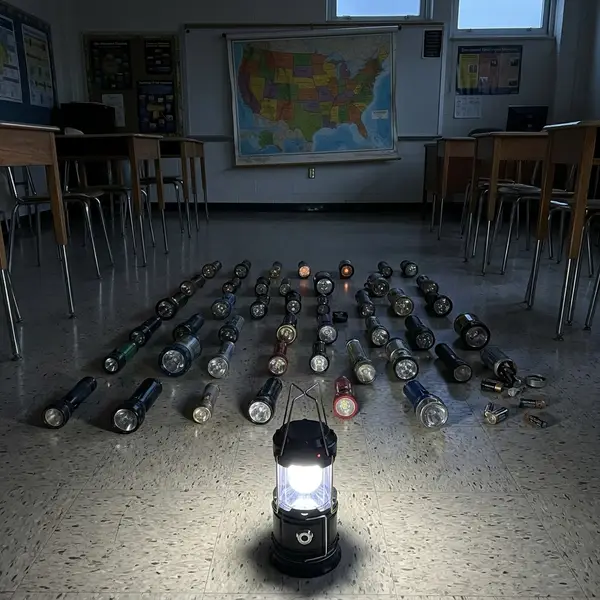
Michael L — Grandma's Basically Senile. She's A Burden In A Storm.
PromisingImage

If the GRID goes down. Are you prepared?

Three weeks ago, 38 high school juniors turned every emergency flashlight from their families' hall closets on at 8:00 PM and left them on my classroom floor over the weekend. By Monday morning, thirty four of them were stone cold dead. One of the dead ones was mine. I have taught American history and civics at the same small Christian college prep school for 27 years. Every fall, I take the junior class on the same civic preparedness field trip to our county emergency operations center, and every year I think I know exactly how it's going to go. This year, I didn't. Three weeks ago, I loaded 38 juniors and four parent chaperones onto a bus and drove two hours to the regional disaster training facility we've visited every fall for over a decade. We toured the dispatch floor, the radio room, and the backup bunker. Then we gathered in the supply bay, run by the retired high-voltage utility linemen who volunteer there. The director in charge is always Chief Miller. He is 76. He spent twenty eight years as a high-voltage substation foreman rebuilding blown transformers and downed grid lines after catastrophic ice storms and hurricanes before retiring to lead county disaster response, and he runs that bay like a line boss who loves you. I teach history, so I know infrastructure is more fragile than most families like to talk about at the dinner table. That afternoon, Chief Miller had forty teenagers sitting on supply crates while he talked about winter storm outages. One of our chaperones, a very nice dad who prides himself on being prepared, wanted to help demonstrate. He had brought a canvas duffel bag of emergency gear from his own garage to show the kids what a family blackout kit looks like. He reached into his bag, pulled out a heavy metal flashlight and a giant pack of AA batteries, and reached for the display table. Chief Miller caught his wrist before it got there. "Not past Tuesday." The whole room went quiet. Thirty eight teenagers, and not one of them was looking at a phone. He took the flashlight from the dad, held it up so the kids could see it, and said, "You came here to learn something. I'll teach you something the electric company and hardware stores won't." Then he took the rest of the gear out of the dad's emergency bag, one piece at a time. The heavy metal flashlight and pack of AA batteries: "Americans buy four hours of battery life for a multi week blackout, then wonder why their family ends up trapped in the dark. A standard flashlight eats fresh batteries in two to four hours, and half the batteries sitting in your kitchen drawer right now have already lost their charge or leaked acid from the humidity. Batteries are for tourists, and you never fight a blackout with something that runs out." A photo on the dad's phone of the brand new $2,400 gas generator in his garage: "Everyone thinks a generator in the shed is the secret. My younger brother down in Miami had that exact generator and two toolboxes of flashlights when a hurricane knocked out power. By Night 3, the generator ran out of gas, every Exxon station in the county had no electricity to run their pumps, and his family had to flee to a hotel two hours north just to have light and charge their phones." "Plus you can't bring a generator inside at night without killing your family with carbon monoxide." A fancy rechargeable lithium work lamp: "In a real blackout, there is no resupply. A battery that needs a wall outlet is just a plastic brick once the substation dies. After it runs out on Night 1, what exactly are you plugging that cord into?" And a standard plastic camping lantern: "That can't charge a cell phone. Once your phone hits zero percent on Day 1, you have no way to call family, check road closures, or get emergency broadcasts. You are completely cut off." Then Chief Miller walked over to his metal workbench and picked up his own light. It was a compact, heavy duty black lantern with folded metal handles on top and a solar panel built flush into the rugged casing, soaking up the afternoon sun right through the bay window glass. He set it on the table between us and pulled the metal handles up. Instantly, the entire supply bay flooded with crisp, 360 degree white LED light. "When I was running high-voltage line crews during three-week ice storm blackouts, our emergency restoration teams used this exact style of off grid solar lighting," Chief Miller said. "Every utility lineman knows a dirty secret the power company won't put on your bill: when a major grid failure hits, hospitals, police stations, and government buildings are Priority 1. Suburban neighborhoods and country roads are marked Priority 4 on the dispatch board—meaning your street gets left in the dark for weeks while we rebuild the main trunk lines first." "That's why my crew lived by three rules: never trust the power grid, never depend on fuel you have to line up to buy, and never use a light that eats batteries. Every morning, I set this on my windowsill so it drinks the sun for free all day. When the grid goes down at night, I pull the handles up and it floods the whole room with bright light for 25 hours straight while charging my phone off the side. I haven't bought a single AA battery or waited in a gas line in twelve years." Then he looked out at my students. "Here's your homework," Chief Miller said. "Tonight is Friday, so take every flashlight your parents are counting on in their kitchen drawer, bring them in, and turn them on until Monday. The disposable batteries will tell on themselves before Saturday morning, and the plug in rechargeables won't have a way to wake back up, which is worse." Caleb, who sits in the back row of my third period and has never once asked a question in my class, raised his hand. "Where do we get one like yours?" Chief Miller laughed. "You don't get it in the checkout aisle at Home Depot, I can tell you that." Then he said, "When I went down to help utility crews in places where the power grid collapses for weeks at a time, nobody panicked and nobody fought over D batteries in store aisles. In South Africa, where rolling blackouts cut power for twelve hours every day, families keep these collapsible solar lanterns on their kitchen counters so dinner and kids' homework never stop. In Lebanon, where the grid runs less than two hours a day, shopkeepers line them up in the front window every morning." "And when our line crews worked outside Fajardo, Puerto Rico, where US citizens live through two week blackouts without blinking, every grandmother on the street kept three of these on her windowsill. While mainland Americans panic after 24 hours, those families read in brightly lit living rooms at 9:00 PM on Day 14 with their phones plugged right into the side of the lantern. Because batteries are for tourists, and the sun is for surviving." Abigail, front row, raised her hand. "Wait, didn't the Pentagon just warn that the US mainland grid could go down like that too?" Chief Miller looked at me over his glasses. "What are you teaching these kids in current events?" "The Pentagon 90 day directive," I said. Abigail recited the numbers from memory, because we had just covered the defense and federal energy briefings in class that week. Pentagon officials have warned that our aging electrical grid is vulnerable to a 90 day collapse from severe winter weather, transformer failures, or grid attacks. And as Chief Miller leaned across the table, he dropped a number none of us forgot. "With the Pentagon now warning about a 90 day grid blackout on the US mainland, 91 percent of American families on Priority 4 residential streets are going to be sitting in complete darkness within 48 hours," Chief Miller said. "Because they think if a substation blows and there's an eighteen-month backlog on replacement transformers, they will just drive to the store for batteries or pump five gallons of gas." "How does a gas pump work when the grid is dead? It doesn't. And how long do store shelves stay full when a million people panic at once? About two hours." I assumed the homework assignment would last until the bus ride home. On Friday afternoon, there were 38 flashlights and camping lanterns lined up on my classroom floor. Every single kid did it. Some of them brought two. One girl brought five, because her dad had five different kinds of heavy metal flashlights in his garage and she wanted a fair trial, so we flipped every switch on, locked the classroom door for the weekend, and went home. On Monday morning, thirty four of the lights on my classroom floor were completely dead. Eleven of them hadn't even turned on because the batteries inside had corroded and leaked acid in storage. The rest burned out in less than four hours. And the expensive plug in rechargeable lanterns and phone power banks were sitting at zero percent. Every one. "Mainland Americans buy four hours of battery life for a ninety day blackout." Mr. Hollis, our physics teacher, wandered in to see what all the dead flashlights were about and stayed through two class periods. By Wednesday he had made it a lab. He had the kids break down the four fatal flaws built into what 91 percent of Americans keep in their garage. First, standard flashlights eat batteries alive in two to four hours, meaning a 90 day blackout would require hundreds of dollars in disposable batteries just to light one room. Second, alkaline batteries rot and leak acid in storage before a storm ever hits. Third, generators starve for fuel after 48 hours when gas station pumps lose power, and cannot be brought inside at night. Fourth, regular flashlights cannot charge a dead phone, leaving families completely cut off on Day 1. Meanwhile, every population on earth that actually lives through constant grid failures arrived at the exact same solution independently: 100 percent solar charging, 25 hours of 360 degree room light, a built in USB phone charger, and zero disposable batteries. At the end of the lab, Caleb said, "So Chief Miller was right about all four." I will tell you which dead flashlight I was most embarrassed by. Mine. I did the homework too. The acid crusted silver flashlight on the end of my desk was the exact one I have kept in my hall closet for ten years, thinking it would protect my family and my grandkids if the grid went down. That night, I looked up the exact 3 in 1 lineman-grade collapsible solar lantern Chief Miller had on his workbench. It bypasses all four fatal flaws at once. Because the solar panel is built directly into the top of the heavy duty casing, it charges itself 100 percent for free sitting on any sunny windowsill or porch. You never need an outlet, and you never buy a single battery. When you pull the metal handles up, the high efficiency LED array floods an entire room with 360 degrees of bright white light for 25 hours straight on a single charge. That is two full nights of room filling light from one afternoon in the sun. And built right into the side is an emergency USB power bank port so you can plug your phone cord straight into the lantern to keep your phone alive when every wall outlet in your neighborhood is dead. They were running a special Buy 2, Get 1 Free blackout deal on their official page. I ordered a set for my own house that night, plus an extra set for my parents. When they arrived, I set them right on my kitchen windowsill and forgot about them. Two weeks later, a severe windstorm knocked out three substations in our county. The power went out at 7:00 PM on a Thursday and didn't come back on until Sunday afternoon. Every house on my street went pitch black. By Friday night, my neighbor was out in his driveway in the rain cursing at a generator that wouldn't turn over, and our neighborhood group chat was full of people asking if any stores two towns over still had D batteries. Inside my house, it didn't even feel like an emergency. I pulled open one lantern on the kitchen island and another on the living room table, and both rooms flooded with bright white light. My husband and I plugged our phones into the USB ports on the sides, kept them charged the whole weekend, and set the lanterns out on the back patio and windowsill each morning while we drank coffee so the sun could top them right back up to 25 hours. We didn't spend a single dollar on batteries, we didn't smell gasoline, and we didn't sit in the dark for a single minute. For the first time in my life, a multi day blackout happened and we treated it like nothing happened at all. On Monday morning, three of my juniors came in before first period to tell me their houses were the only ones on their street with bright rooms and charged phones all weekend. By Friday I had emails from nine parents. One mom wrote, "My son made my husband throw out our whole drawer of corroded batteries. I'm not sure whether to thank you or not." Another sent a picture of three lanterns lined up on her kitchen windowsill with a single line: "Thank Chief Miller for us." My father in law asked why I had thrown out "perfectly good flashlights." I put my corroded silver flashlight on his kitchen counter and told him about my neighbor in the driveway in the rain. He hasn't asked again, and he's getting a set for Thanksgiving. So is my sister. And so are the two teachers in our lounge who keep borrowing mine. This Thanksgiving, twenty two people will sit down at my table. My husband will read the same verse he reads every year, Psalm 107:1: "O give thanks unto the LORD, for he is good: for his mercy endureth for ever." And for the first time in twenty years, I know that if the grid goes down for three days or ninety days, my family won't be trapped in the dark. Here is why I am writing this now, and not after Thanksgiving. Right now, the company that makes these heavy duty 3 in 1 solar lanterns is still running their special Buy 2, Get 1 Free blackout deal on the page below. That gives you three full lanterns for the price of two, so you can keep one in the kitchen, one in the living room, and one in your bedroom or car glovebox staying charged 24/7. Every order is also backed by a 30 day money back guarantee. Set them on your windowsill for an afternoon, turn off the lights in your kitchen, and pull the handles up. If you aren't amazed by how bright they light up the whole room and how easily they charge your phone, send them back for a full refund. But they sell out constantly whenever severe winter storms or grid warnings hit the news. When I went back this morning to order two more sets for Christmas, the page said most of this batch was already gone. If you live in an area where storms knock out the power lines, or if you have seen the recent Pentagon warnings about a 90 day grid blackout and realized that a drawer of old AA batteries and two cans of stale gas won't get your family past the first weekend, stop relying on backups that run out. And if you are a parent wondering what to get your kid's teacher or your own aging parents for Christmas, I'm not saying. I'm just saying. P.S. Here is the exact 3 in 1 solar lantern Chief Miller showed us. The Buy 2, Get 1 Free blackout deal was still active when I checked. P.P.S. Chief Miller's homework is still the best assignment I have ever seen. Take every flashlight out of your kitchen drawer tonight and turn them on over the weekend. They will tell on themselves by morning.

Loading the ad's image
Michael L — If the GRID goes down. Are you prepared?
PromisingImage

If the GRID goes down. Are you prepared?

Three weeks ago, 38 high school juniors turned every emergency flashlight from their families' hall closets on at 8:00 PM and left them on my classroom floor over the weekend. By Monday morning, thirty four of them were stone cold dead. One of the dead ones was mine. I have taught American history and civics at the same small Christian college prep school for 27 years. Every fall, I take the junior class on the same civic preparedness field trip to our county emergency operations center, and every year I think I know exactly how it's going to go. This year, I didn't. Three weeks ago, I loaded 38 juniors and four parent chaperones onto a bus and drove two hours to the regional disaster training facility we've visited every fall for over a decade. We toured the dispatch floor, the radio room, and the backup bunker. Then we gathered in the supply bay, run by the retired military grid engineers who volunteer there. The director in charge is always Chief Miller. He is 76. He spent twenty years in the US military keeping base grids and forward operating zones running in total blackouts before retiring to lead county disaster response, and he runs that bay like a drill sergeant who loves you. I teach history, so I know infrastructure is more fragile than most families like to talk about at the dinner table. That afternoon, Chief Miller had forty teenagers sitting on supply crates while he talked about winter storm outages. One of our chaperones, a very nice dad who prides himself on being prepared, wanted to help demonstrate. He had brought a canvas duffel bag of emergency gear from his own garage to show the kids what a family blackout kit looks like. He reached into his bag, pulled out a heavy metal flashlight and a giant pack of AA batteries, and reached for the display table. Chief Miller caught his wrist before it got there. "Not past Tuesday." The whole room went quiet. Thirty eight teenagers, and not one of them was looking at a phone. He took the flashlight from the dad, held it up so the kids could see it, and said, "You came here to learn something. I'll teach you something the hardware stores and preparedness blogs won't." Then he took the rest of the gear out of the dad's emergency bag, one piece at a time. The heavy metal flashlight and pack of AA batteries: "Americans buy four hours of battery life for a multi week blackout, then wonder why their family ends up trapped in the dark. A standard flashlight eats fresh batteries in two to four hours, and half the batteries sitting in your kitchen drawer right now have already lost their charge or leaked acid from the humidity. Batteries are for tourists, and you never fight a blackout with something that runs out." A photo on the dad's phone of the brand new $2,400 gas generator in his garage: "Everyone thinks a generator in the shed is the secret. My younger brother down in Miami had that exact generator and two toolboxes of flashlights when a hurricane knocked out power. By Night 3, the generator ran out of gas, every Exxon station in the county had no electricity to run their pumps, and his family had to flee to a hotel two hours north just to have light and charge their phones." "Plus you can't bring a generator inside at night without killing your family with carbon monoxide." A fancy rechargeable lithium work lamp: "In a real blackout, there is no resupply. A battery that needs a wall outlet is just a plastic brick once the substation dies. After it runs out on Night 1, what exactly are you plugging that cord into?" And a standard plastic camping lantern: "That can't charge a cell phone. Once your phone hits zero percent on Day 1, you have no way to call family, check road closures, or get emergency broadcasts. You are completely cut off." Then Chief Miller walked over to his metal workbench and picked up his own light. It was a compact, heavy duty black lantern with folded metal handles on top and a solar panel built flush into the rugged casing, soaking up the afternoon sun right through the bay window glass. He set it on the table between us and pulled the metal handles up. Instantly, the entire supply bay flooded with crisp, 360 degree white LED light. "When I was still in the military, our field units used this exact style of off grid solar lighting when operating in total blackout zones," Chief Miller said. "A supply officer taught me three rules I never forgot: never trust the power grid, never depend on fuel you have to line up to buy, and never use a light that eats batteries." "Every morning, I set this on my windowsill so it drinks the sun for free all day. When the grid goes down at night, I pull the handles up and it floods the whole room with bright light for 25 hours straight while charging my phone off the side. I haven't bought a single AA battery or waited in a gas line in twelve years." Then he looked out at my students. "Here's your homework," Chief Miller said. "Tonight is Friday, so take every flashlight your parents are counting on in their kitchen drawer, bring them in, and turn them on until Monday. The disposable batteries will tell on themselves before Saturday morning, and the plug in rechargeables won't have a way to wake back up, which is worse." Caleb, who sits in the back row of my third period and has never once asked a question in my class, raised his hand. "Where do we get one like yours?" Chief Miller laughed. "You don't get it in the checkout aisle at Home Depot, I can tell you that." Then he said, "When I deployed to places where the power grid collapses every single week, nobody panicked and nobody fought over D batteries in store aisles. In South Africa, where rolling blackouts cut power for twelve hours every day, families keep these collapsible solar lanterns on their kitchen counters so dinner and kids' homework never stop. In Lebanon, where the grid runs less than two hours a day, shopkeepers line them up in the front window every morning." "And in coastal towns outside Fajardo, Puerto Rico, where US citizens live through two week blackouts without blinking, every grandmother on the street keeps three of these on her windowsill. While mainland Americans panic after 24 hours, those families read in brightly lit living rooms at 9:00 PM on Day 14 with their phones plugged right into the side of the lantern. Because batteries are for tourists, and the sun is for surviving." Abigail, front row, raised her hand. "Wait, didn't the Pentagon just warn that the US mainland grid could go down like that too?" Chief Miller looked at me over his glasses. "What are you teaching these kids in current events?" "The Pentagon 90 day directive," I said. Abigail recited the numbers from memory, because we had just covered the defense and federal energy briefings in class that week. Pentagon officials have warned that our aging electrical grid is vulnerable to a 90 day collapse from severe winter weather, transformer failures, or grid attacks. And as Chief Miller leaned across the table, he dropped a number none of us forgot. "With the Pentagon now warning about a 90 day grid blackout on the US mainland, 91 percent of American families are going to be sitting in complete darkness within 48 hours," Chief Miller said. "Because they think if the power goes out for 90 days, they will just drive to the store for batteries or pump five gallons of gas." "How does a gas pump work when the grid is dead? It doesn't. And how long do store shelves stay full when a million people panic at once? About two hours." I assumed the homework assignment would last until the bus ride home. On Friday afternoon, there were 38 flashlights and camping lanterns lined up on my classroom floor. Every single kid did it. Some of them brought two. One girl brought five, because her dad had five different kinds of heavy metal flashlights in his garage and she wanted a fair trial, so we flipped every switch on, locked the classroom door for the weekend, and went home. On Monday morning, thirty four of the lights on my classroom floor were completely dead. Eleven of them hadn't even turned on because the batteries inside had corroded and leaked acid in storage. The rest burned out in less than four hours. And the expensive plug in rechargeable lanterns and phone power banks were sitting at zero percent. Every one. "Mainland Americans buy four hours of battery life for a ninety day blackout." Mr. Hollis, our physics teacher, wandered in to see what all the dead flashlights were about and stayed through two class periods. By Wednesday he had made it a lab. He had the kids break down the four fatal flaws built into what 91 percent of Americans keep in their garage. First, standard flashlights eat batteries alive in two to four hours, meaning a 90 day blackout would require hundreds of dollars in disposable batteries just to light one room. Second, alkaline batteries rot and leak acid in storage before a storm ever hits. Third, generators starve for fuel after 48 hours when gas station pumps lose power, and cannot be brought inside at night. Fourth, regular flashlights cannot charge a dead phone, leaving families completely cut off on Day 1. Meanwhile, every population on earth that actually lives through constant grid failures arrived at the exact same solution independently: 100 percent solar charging, 25 hours of 360 degree room light, a built in USB phone charger, and zero disposable batteries. At the end of the lab, Caleb said, "So Chief Miller was right about all four." I will tell you which dead flashlight I was most embarrassed by. Mine. I did the homework too. The acid crusted silver flashlight on the end of my desk was the exact one I have kept in my hall closet for ten years, thinking it would protect my family and my grandkids if the grid went down. That night, I looked up the exact 3 in 1 military style collapsible solar lantern Chief Miller had on his workbench. It bypasses all four fatal flaws at once. Because the solar panel is built directly into the top of the heavy duty casing, it charges itself 100 percent for free sitting on any sunny windowsill or porch. You never need an outlet, and you never buy a single battery. When you pull the metal handles up, the high efficiency LED array floods an entire room with 360 degrees of bright white light for 25 hours straight on a single charge. That is two full nights of room filling light from one afternoon in the sun. And built right into the side is an emergency USB power bank port so you can plug your phone cord straight into the lantern to keep your phone alive when every wall outlet in your neighborhood is dead. They were running a special Buy 2, Get 1 Free blackout deal on their official page. I ordered a set for my own house that night, plus an extra set for my parents. When they arrived, I set them right on my kitchen windowsill and forgot about them. Two weeks later, a severe windstorm knocked out three substations in our county. The power went out at 7:00 PM on a Thursday and didn't come back on until Sunday afternoon. Every house on my street went pitch black. By Friday night, my neighbor was out in his driveway in the rain cursing at a generator that wouldn't turn over, and our neighborhood group chat was full of people asking if any stores two towns over still had D batteries. Inside my house, it didn't even feel like an emergency. I pulled open one lantern on the kitchen island and another on the living room table, and both rooms flooded with bright white light. My husband and I plugged our phones into the USB ports on the sides, kept them charged the whole weekend, and set the lanterns out on the back patio and windowsill each morning while we drank coffee so the sun could top them right back up to 25 hours. We didn't spend a single dollar on batteries, we didn't smell gasoline, and we didn't sit in the dark for a single minute. For the first time in my life, a multi day blackout happened and we treated it like nothing happened at all. On Monday morning, three of my juniors came in before first period to tell me their houses were the only ones on their street with bright rooms and charged phones all weekend. By Friday I had emails from nine parents. One mom wrote, "My son made my husband throw out our whole drawer of corroded batteries. I'm not sure whether to thank you or not." Another sent a picture of three lanterns lined up on her kitchen windowsill with a single line: "Thank Chief Miller for us." My father in law asked why I had thrown out "perfectly good flashlights." I put my corroded silver flashlight on his kitchen counter and told him about my neighbor in the driveway in the rain. He hasn't asked again, and he's getting a set for Thanksgiving. So is my sister. And so are the two teachers in our lounge who keep borrowing mine. This Thanksgiving, twenty two people will sit down at my table. My husband will read the same verse he reads every year, Psalm 107:1: "O give thanks unto the LORD, for he is good: for his mercy endureth for ever." And for the first time in twenty years, I know that if the grid goes down for three days or ninety days, my family won't be trapped in the dark. Here is why I am writing this now, and not after Thanksgiving. Right now, the company that makes these heavy duty 3 in 1 solar lanterns is still running their special Buy 2, Get 1 Free blackout deal on the page below. That gives you three full lanterns for the price of two, so you can keep one in the kitchen, one in the living room, and one in your bedroom or car glovebox staying charged 24/7. Every order is also backed by a 30 day money back guarantee. Set them on your windowsill for an afternoon, turn off the lights in your kitchen, and pull the handles up. If you aren't amazed by how bright they light up the whole room and how easily they charge your phone, send them back for a full refund. But they sell out constantly whenever severe winter storms or grid warnings hit the news. When I went back this morning to order two more sets for Christmas, the page said most of this batch was already gone. If you live in an area where storms knock out the power lines, or if you have seen the recent Pentagon warnings about a 90 day grid blackout and realized that a drawer of old AA batteries and two cans of stale gas won't get your family past the first weekend, stop relying on backups that run out. And if you are a parent wondering what to get your kid's teacher or your own aging parents for Christmas, I'm not saying. I'm just saying. P.S. Here is the exact 3 in 1 solar lantern Chief Miller showed us. The Buy 2, Get 1 Free blackout deal was still active when I checked. P.P.S. Chief Miller's homework is still the best assignment I have ever seen. Take every flashlight out of your kitchen drawer tonight and turn them on over the weekend. They will tell on themselves by morning.

Loading the ad's image
Michael L — If the GRID goes down. Are you prepared?
PromisingImage

If the GRID goes down. Are you prepared?

Three weeks ago, 38 high school juniors turned every emergency flashlight from their families' hall closets on at 8:00 PM and left them on my classroom floor over the weekend. By Monday morning, thirty four of them were stone cold dead. One of the dead ones was mine. I have taught American history and civics at the same small Christian college prep school for 27 years. Every fall, I take the junior class on the same civic preparedness field trip to our county emergency operations center, and every year I think I know exactly how it's going to go. This year, I didn't. Three weeks ago, I loaded 38 juniors and four parent chaperones onto a bus and drove two hours to the regional disaster training facility we've visited every fall for over a decade. We toured the dispatch floor, the radio room, and the backup bunker. Then we gathered in the supply bay, run by the retired military grid engineers who volunteer there. The director in charge is always Chief Miller. He is 76. He spent twenty years in the US military keeping base grids and forward operating zones running in total blackouts before retiring to lead county disaster response, and he runs that bay like a drill sergeant who loves you. I teach history, so I know infrastructure is more fragile than most families like to talk about at the dinner table. That afternoon, Chief Miller had forty teenagers sitting on supply crates while he talked about winter storm outages. One of our chaperones, a very nice dad who prides himself on being prepared, wanted to help demonstrate. He had brought a canvas duffel bag of emergency gear from his own garage to show the kids what a family blackout kit looks like. He reached into his bag, pulled out a heavy metal flashlight and a giant pack of AA batteries, and reached for the display table. Chief Miller caught his wrist before it got there. "Not past Tuesday." The whole room went quiet. Thirty eight teenagers, and not one of them was looking at a phone. He took the flashlight from the dad, held it up so the kids could see it, and said, "You came here to learn something. I'll teach you something the hardware stores and preparedness blogs won't." Then he took the rest of the gear out of the dad's emergency bag, one piece at a time. The heavy metal flashlight and pack of AA batteries: "Americans buy four hours of battery life for a multi week blackout, then wonder why their family ends up trapped in the dark. A standard flashlight eats fresh batteries in two to four hours, and half the batteries sitting in your kitchen drawer right now have already lost their charge or leaked acid from the humidity. Batteries are for tourists, and you never fight a blackout with something that runs out." A photo on the dad's phone of the brand new $2,400 gas generator in his garage: "Everyone thinks a generator in the shed is the secret. My younger brother down in Miami had that exact generator and two toolboxes of flashlights when a hurricane knocked out power. By Night 3, the generator ran out of gas, and every Exxon station in the county had no electricity to run their pumps." "Plus you can't bring a generator inside at night without killing your family with carbon monoxide." A fancy rechargeable lithium work lamp: "In a real blackout, there is no resupply. A battery that needs a wall outlet is just a plastic brick once the substation dies. After it runs out on Night 1, what exactly are you plugging that cord into?" And a standard plastic camping lantern: "That can't charge a cell phone. And in our dispatch room, a dead phone on Night 2 is what turns a power outage into a family tragedy. Cell towers have backup generators that stay live for days, so 911 and text messages still work—until your phone battery hits zero percent." "Last winter, my 79 year old sister lived twenty minutes across town when an ice storm snapped the lines," Chief Miller said quietly. "Her flashlight died on the second night, and her cell phone hit zero percent at 8:30 PM. With trees down across the roads, we went forty-eight hours not knowing if she was warm, if she had fallen down the stairs in the pitch dark, or if she needed an ambulance and had no way to dial 911. When your phone dies on Day 1, your kids and your aging parents are completely cut off when they need you most." Then Chief Miller walked over to his metal workbench and picked up his own light. It was a compact, heavy duty black lantern with folded metal handles on top and a solar panel built flush into the rugged casing, soaking up the afternoon sun right through the bay window glass. He set it on the table between us and pulled the metal handles up. Instantly, the entire supply bay flooded with crisp, 360 degree white LED light. "When I was still in the military, our field units used this exact style of off grid solar lighting when operating in total blackout zones," Chief Miller said. "A supply officer taught me three rules I never forgot: never trust the power grid, never depend on fuel you have to line up to buy, and never use a light that eats batteries." "Every morning, I set this on my windowsill so it drinks the sun for free all day. When the grid goes down at night, I pull the handles up and it floods the whole room with bright light for 25 hours straight while charging my phone right off the side. I haven't bought a single AA battery or worried about my sister's phone dying in twelve years." Then he looked out at my students. "Here's your homework," Chief Miller said. "Tonight is Friday, so take every flashlight your parents are counting on in their kitchen drawer, bring them in, and turn them on until Monday. The disposable batteries will tell on themselves before Saturday morning, and the plug in rechargeables won't have a way to wake back up, which is worse." Caleb, who sits in the back row of my third period and has never once asked a question in my class, raised his hand. "Where do we get one like yours?" Chief Miller laughed. "You don't get it in the checkout aisle at Home Depot, I can tell you that." Then he said, "When I deployed to places where the power grid collapses every single week, nobody panicked and nobody fought over D batteries in store aisles. In South Africa, where rolling blackouts cut power for twelve hours every day, families keep these collapsible solar lanterns on their kitchen counters so dinner and kids' homework never stop. In Lebanon, where the grid runs less than two hours a day, shopkeepers line them up in the front window every morning." "And in coastal towns outside Fajardo, Puerto Rico, where US citizens live through two week blackouts without blinking, every grandmother on the street keeps three of these on her windowsill. While mainland Americans panic after 24 hours, those families read in brightly lit living rooms at 9:00 PM on Day 14 with their phones plugged right into the side of the lantern so their kids can call them every night. Because batteries are for tourists, and the sun is for surviving." Abigail, front row, raised her hand. "Wait, didn't the Pentagon just warn that the US mainland grid could go down like that too?" Chief Miller looked at me over his glasses. "What are you teaching these kids in current events?" "The Pentagon 90 day directive," I said. Abigail recited the numbers from memory, because we had just covered the defense and federal energy briefings in class that week. Pentagon officials have warned that our aging electrical grid is vulnerable to a 90 day collapse from severe winter weather, transformer failures, or grid attacks. And as Chief Miller leaned across the table, he dropped a number none of us forgot. "With the Pentagon now warning about a 90 day grid blackout on the US mainland, 91 percent of American families are going to be sitting in complete darkness with dead phones within 48 hours," Chief Miller said. "Because they think if the power goes out for 90 days, they will just drive to the store for batteries or pump five gallons of gas." "How does a gas pump work when the grid is dead? It doesn't. And how long do store shelves stay full when a million people panic at once? About two hours." I assumed the homework assignment would last until the bus ride home. On Friday afternoon, there were 38 flashlights and camping lanterns lined up on my classroom floor. Every single kid did it. Some of them brought two. One girl brought five, because her dad had five different kinds of heavy metal flashlights in his garage and she wanted a fair trial, so we flipped every switch on, locked the classroom door for the weekend, and went home. On Monday morning, thirty four of the lights on my classroom floor were completely dead. Eleven of them hadn't even turned on because the batteries inside had corroded and leaked acid in storage. The rest burned out in less than four hours. And the expensive plug in rechargeable lanterns and phone power banks were sitting at zero percent. Every one. "Mainland Americans buy four hours of battery life for a ninety day blackout." Mr. Hollis, our physics teacher, wandered in to see what all the dead flashlights were about and stayed through two class periods. By Wednesday he had made it a lab. He had the kids break down the four fatal flaws built into what 91 percent of Americans keep in their garage. First, standard flashlights eat batteries alive in two to four hours, meaning a 90 day blackout would require hundreds of dollars in disposable batteries just to light one room so an older parent doesn't fall in the dark. Second, alkaline batteries rot and leak acid in storage before a storm ever hits. Third, generators starve for fuel after 48 hours when gas station pumps lose power, and cannot be brought inside at night. Fourth, regular flashlights cannot charge a dead phone, leaving parents and grandparents completely cut off from 911 and their families when their battery hits zero percent on Night 2. Meanwhile, every population on earth that actually lives through constant grid failures arrived at the exact same solution independently: 100 percent solar charging, 25 hours of 360 degree room light, a built in USB phone charger, and zero disposable batteries. At the end of the lab, Caleb said, "So Chief Miller was right about all four." I will tell you which dead flashlight I was most embarrassed by. Mine. I did the homework too. The acid crusted silver flashlight on the end of my desk was the exact one I have kept in my hall closet for ten years, thinking it would protect my family and my grandkids if the grid went down. That night, I looked up the exact 3 in 1 military style collapsible solar lantern Chief Miller had on his workbench. It bypasses all four fatal flaws at once. Because the solar panel is built directly into the top of the heavy duty casing, it charges itself 100 percent for free sitting on any sunny windowsill or porch. You never need an outlet, and you never buy a single battery. When you pull the metal handles up, the high efficiency LED array floods an entire room with 360 degrees of bright white light for 25 hours straight on a single charge. That is two full nights of room filling light from one afternoon in the sun. And built right into the side is an emergency USB power bank port so you can plug your phone cord straight into the lantern to keep your phone alive for 911 and family calls when every wall outlet in your neighborhood is dead. They were running a special Buy 2, Get 1 Free blackout deal on their official page. I ordered a set for my own house that night, plus an extra set for my 78 year old parents across town so their phones would never go dead in a storm. When they arrived, I set them right on my kitchen windowsill and forgot about them. Two weeks later, a severe windstorm knocked out three substations in our county. The power went out at 7:00 PM on a Thursday and didn't come back on until Sunday afternoon. Every house on my street went pitch black. By Friday night, my neighbor was out in his driveway in the rain cursing at a generator that wouldn't turn over, and our neighborhood group chat was full of people panicking because their phones were down to 4 percent and stores two towns over were out of D batteries. Inside my house, it didn't even feel like an emergency. I pulled open one lantern on the kitchen island and another on the living room table, and both rooms flooded with bright white light. My husband and I plugged our phones into the USB ports on the sides, called my parents across town—who were sitting in a brightly lit kitchen with their own phones at 90 percent plugged into the lantern I'd given them—and set the lanterns on the windowsill each morning while we drank coffee so the sun could top them right back up to 25 hours. We didn't spend a single dollar on batteries, we didn't smell gasoline, and we never lost contact with my parents for a single minute. For the first time in my life, a multi day blackout happened and we treated it like nothing happened at all. On Monday morning, three of my juniors came in before first period to tell me their houses were the only ones on their street with bright rooms and charged phones all weekend. By Friday I had emails from nine parents. One mom wrote, "My son made my husband throw out our whole drawer of corroded batteries. I'm not sure whether to thank you or not." Another sent a picture of three lanterns lined up on her kitchen windowsill with a single line: "Thank Chief Miller for us." My father in law asked why I had thrown out "perfectly good flashlights." I put my corroded silver flashlight on his kitchen counter and told him about my neighbor in the driveway in the rain. He hasn't asked again, and he's getting a set for Thanksgiving. So is my sister. And so are the two teachers in our lounge who keep borrowing mine. This Thanksgiving, twenty two people will sit down at my table. My husband will read the same verse he reads every year, Psalm 107:1: "O give thanks unto the LORD, for he is good: for his mercy endureth for ever." And for the first time in twenty years, I know that if the grid goes down for three days or ninety days, my family won't be trapped in the dark or cut off from each other with dead phones. Here is why I am writing this now, and not after Thanksgiving. Right now, the company that makes these heavy duty 3 in 1 solar lanterns is still running their special Buy 2, Get 1 Free blackout deal on the page below. That gives you three full lanterns for the price of two, so you can keep one in the kitchen, one in the living room, and one in your bedroom or at an aging parent's house staying charged 24/7. Every order is also backed by a 30 day money back guarantee. Set them on your windowsill for an afternoon, turn off the lights in your kitchen, and pull the handles up. If you aren't amazed by how bright they light up the whole room and how easily they charge your phone, send them back for a full refund. But they sell out constantly whenever severe winter storms or grid warnings hit the news. When I went back this morning to order two more sets for Christmas, the page said most of this batch was already gone. If you live in an area where storms knock out the power lines, or if you have seen the recent Pentagon warnings about a 90 day grid blackout and realized that a drawer of old AA batteries won't keep your family safe or your phones alive past the first weekend, stop relying on backups that run out. And if you are a parent wondering what to get your kid's teacher or your own aging parents for Christmas so their phone never hits zero percent in a blackout, I'm not saying. I'm just saying. P.S. Here is the exact 3 in 1 solar lantern Chief Miller showed us. The Buy 2, Get 1 Free blackout deal was still active when I checked. P.P.S. Chief Miller's homework is still the best assignment I have ever seen. Take every flashlight out of your kitchen drawer tonight and turn them on over the weekend. They will tell on themselves by morning.

Loading the ad's image
Michael L — If the GRID goes down. Are you prepared?
PromisingImage

Three Small Cylinders on My Kitchen Windowsill

I am 62 and I Still Go Up to the Blue Ridge Mountains Alone. Last Month, a Lodge Full of 20 Year Olds Thought I Was Lost. My Late Husband Kept Military Grids Running for 30 Years. Three Little Black Cylinders on My Table Told Them Why Nobody Knew. It was a Tuesday evening at a timber lodge and cabin camp high up in the North Carolina mountains. I had just driven five hours up the switchbacks in my twelve year old Subaru. My canvas duffel bag is older than most of the people who were staying there. I unlocked Cabin Four at the end of the gravel path and set my bag by the door. Then I walked up to the covered cedar deck outside the main lodge, where everyone sits at night. There were about twelve of them around a long picnic table. All young. All in their twenties and early thirties. All wearing brand new merino wool pullovers and talking at once. They saw gray hair. A woman their grandmother's age in a faded fleece cardigan carrying a tin mug of peppermint tea. Nobody was rude. They just looked through me. The way you look at a chair you do not plan to sit in. One young man from Austin had just bought a lifted truck with an overland rack and a massive portable gas generator bolted into the bed. A girl from Atlanta was showing off a sleek aluminum tactical flashlight her boyfriend had ordered from a wilderness catalog. Another couple had two heavy lithium power bank bricks sitting next to their laptops on the cedar planks. I sat at the far end of the long table with my tea and listened. A tall twenty something boy in a quilted vest looked down the table at me. He smiled, very kindly. "Are you lost, ma'am?" he asked. "The heated resort hotel with the elevator is three miles down the valley road." Everyone laughed softly. I laughed too. I told him no, I was staying in Cabin Four. "Oh, cool," he said. Then he turned right back to the boy with the overland truck. I am used to it. Since my husband David passed away four years ago, I walk into a mountain lodge or step out onto my suburban cul de sac at home, and I can see what the younger couples are thinking. What is this fragile old woman doing here by herself? Who is checking on her? At nine forty that night, the spring rain turned to freezing rain. We heard the first white oak snap up on the ridge like a rifle shot. Ten minutes later, a three hundred year old hemlock came down across the high voltage valley transmission lines and blew two county substations at once. Every light in the lodge, the cabins, and the valley below vanished in the same heartbeat. The silence that followed was heavy and complete. On Night One, the twenty year olds thought it was an adventure. They laughed in the dark, clicked on their expensive aluminum flashlights, set out four plastic battery lanterns from their trunks, and plugged their phones into their pocket power banks. The tall boy in the vest walked over to my end of the deck with a spare tea light candle in a little glass jar. "Here you go, ma'am," he said gently, like he was handing a warm blanket to a child. "In case you get scared in your cabin tonight. We have plenty of gear if you need anything." I thanked him politely and walked back to Cabin Four without turning on a flashlight. Because my three little matte black cylinders were already sitting on my cabin windowsill where I had placed them at three o'clock that afternoon. By Wednesday afternoon, the county sheriff's radio broadcast announced that glaze ice had closed the mountain pass and utility crews could not rebuild the valley substation until Saturday. And by Thursday evening, forty eight hours into the blackout, the adventure was over. If you have never watched a group of modern households test their emergency gear across forty eight hours of real darkness, let me tell you how fast the illusion falls apart. On Thursday afternoon, all twelve of those young people gathered around the long cedar table in the freezing lodge common room and piled every flashlight, camping lantern, and power bank from their seven vehicles and the lodge supply closet onto the wood to see what still worked. There were eighteen flashlights and battery lanterns on that table. Fourteen of them were stone cold dead. Seven of the flashlights from their gloveboxes and hall closets at home had never even turned on because the alkaline AA and D batteries inside had rotted from humidity and leaked a thick white crust of potassium hydroxide acid over the metal springs. The other seven had burned through every fresh battery in the camp in less than four hours on Tuesday and Wednesday nights. One couple had lit three glass jar candles on their cabin nightstand on Wednesday night until their dog bumped the table in the pitch dark, shattering the glass and catching a wool blanket on fire before they stamped it out with their boots. David used to tell me that open candles during power outages cause more than one thousand five hundred house fires every single year. And what about the boy with the lifted truck and the gas generator that cost thousands of dollars? He had fired it up on Wednesday morning. For eight hours, that ninety decibel engine roared so loud it echoed off the mountain walls and gave everyone in the camp a splitting headache. Then the tank ran dry at dusk. He drove down to the crossroads gas station at the bottom of the mountain to buy five gallons of fuel, only to sit in front of dark pumps because gas stations need electricity to pump fuel out of the underground tanks. When he tried to run the generator on the last pint of stale fuel close to the cabin porch out of the freezing rain, the lodge caretaker shut it off immediately because lethal carbon monoxide exhaust was drifting straight through the cabin window frames. Worst of all were their phones. Every sleek lithium power bank on that table was blinking zero percent. Once a power bank gives your phone one or two charges, it turns into a dead plastic brick unless you have a live wall outlet to plug it into. By Thursday at dark, eleven of the twelve young people had dead black phones in their hands. No way to call their parents. No way to check road closures. No way to dial 911 if someone slipped on the ice. At seven o'clock on Thursday night, the common room was pitch black and forty four degrees. Nobody was talking about volcanos or overland trucks anymore. I walked up the steps from Cabin Four carrying my tin mug of tea and the three compact matte black cylinders from my windowsill. Each one was about five and a half inches tall when closed, no bigger than a standard coffee mug, with two thin silver wire handles folded flush down the ribbed sides. I set them down in the middle of the long cedar table. Then I reached out, gripped the twin silver wire handles on the first cylinder, and pulled straight up. The top slid open to about eight inches tall, and a clear inner cylinder flooded the entire thirty foot timber room with warm, crisp 360 degree white LED light. I pulled the second one open. Then the third. Then I took my white phone charging cord, plugged it into the built in USB port on the side of the first black cylinder, and set my phone down on the wood. The screen lit up bright green at ninety eight percent battery. The tall boy in the quilted vest stared at the table like I had just performed a magic trick. "Wait," he said. "How do you still have battery? Where did you charge those?" "I did not plug them in anywhere," I said. "They sat on my cabin windowsill all day." That was it. Every single person in the room turned to my end of the table. A twenty four year old girl named Maya with a wool beanie and a dead phone in her hand sat down across from me. "Wait a second," she said, pointing at the square solar collector recessed flush into the top cap of my lantern. "Are those solar? Look how bright they are. How long do they stay on?" "Twenty five hours on a single charge," I said. "And if you push the top halfway down and click the side button, the bottom beam works as a long range directional flashlight." "Where did you even learn about something like that?" the boy with the dead generator asked. "Oh, from my late husband," I said. Maya leaned her elbows on the table. "What did your husband do?" So I told them. For thirty years, my husband David was a senior electrical grid engineer for United States military bases and a high voltage disaster response lineman. In the nineties, he kept forward operating zones lit in total blackout zones where waiting on a fuel convoy got men killed. In 2017, after Hurricane Maria tore the entire power grid off the island of Puerto Rico, he spent four months in the coastal towns outside Fajardo working alongside local utility crews. The whole table went dead quiet. The boy with the tactical flashlight put his dead phone down on the wood. "David came home from Fajardo and threw every alkaline battery flashlight and gas can out of our garage," I told them. "He told me that while mainland Americans panic after twenty four hours in the dark, every grandmother in Fajardo keeps three of these collapsible solar lanterns lined up on her kitchen windowsill. On Day Fourteen of a total grid blackout, while mainlanders would be fighting over empty battery shelves, those families were reading books in brightly lit living rooms at nine o'clock at night with their phones plugged straight into the side of the lantern." I looked down at my tea mug. "David always said the Pentagon and Department of Energy assessments were crystal clear. The mainland United States electrical grid is vulnerable to a ninety day collapse from severe winter ice storms, transformer failures, or cyber attacks. If you rely on a standard flashlight that eats batteries in four hours, you would need five hundred and forty D batteries just to survive a ninety day blackout. Mainland Americans buy four hours of battery life for a ninety day blackout. David had a saying he repeated until the day he died. Batteries are for tourists, and in a real blackout, there is no resupply." And then I stopped. I felt my face go warm. I could hear myself talking in the quiet lodge, and I worried I sounded like an old woman lecturing a room full of kids. "Anyway," I said softly, pushing the second and third lanterns down the table toward them. "You can plug your phones into the USB ports on the sides if you need to call your families." Nobody left the table. Four of them plugged their dead phones in rotation over the next two hours so everyone could text their parents that they were safe. When the others finally went to their bunks around eleven, Maya stayed behind at the table with me. "Why did you stop earlier?" she asked. "I do not like to brag or lecture," I said. "Nobody wants to hear a sixty two year old widow go on about power grids and her late husband." She laughed. "Charlotte, those guys were bragging all Tuesday night about gear that died before Thursday morning. You did not say a single word. You just listened." Then she pointed at the three glowing lanterns on the cedar table. "You never had to bring it up," she said. "You just set these down in the dark, and everyone had to ask." Then she said the thing I have been thinking about ever since. "It is not bragging if they ask." I smiled. And then my throat got a little tight. For four years since David died, I had kept his rules quietly to myself while younger neighbors on my street treated me like a helpless widow who needed someone to check her smoke detectors. Nobody ever asked what David taught me. Why would they? They saw gray hair and a cardigan. They saw the cover. Nobody opened the book. Maya pulled a notebook out of her jacket pocket and asked me where the lanterns came from so she could write it down for everyone before morning. I told her it is called the 3 in 1 LED Lantern. "David taught me the rule of three," I told her. "You never buy just one. You keep three on your sunny kitchen windowsill all year round. When a storm knocks out the substation, one stays in the kitchen, one goes in the living room or bedroom, and one stays by the front door or in your car glovebox." The next morning before the sun even cleared the pines, six of the twenty year olds were standing on the deck asking me to spell the exact name so they could order the Buy 2, Get 1 Free set the second they got cell service at the bottom of the mountain. Maya knocked on my cabin door on Saturday morning when the snowplow finally cleared the road. "Make them ask, Charlotte," she whispered, grinning. I drove home to my suburban cul de sac that afternoon. The first thing I did when I walked into my kitchen was set my three 3 in 1 LED Lanterns back in their spot on the sunny windowsill above my sink. Kitchen. Master bedroom. Front hallway. I stood there for a long time looking at them. Four years since David left, and he was still taking care of everyone in the room. I got a little teary. The first person at home to ask was my fourteen year old grandson, Lucas, when he came over for Sunday dinner four days later. He walked over to the kitchen sink, picked up one of the compact black cylinders off the windowsill, and turned it over in his hands. "Grandma, what are these three black cylinders on your window?" "Pull the silver handles up," I told him. He pulled them up, and the kitchen flooded with bright white LED light. His eyes went wide. Then I showed him how the top solar panel charges it for free from the sun, how the bottom button turns it into a long range flashlight, and how the USB port on the side kept twelve stranded campers' phones alive for four days in the Blue Ridge mountains. "Grandpa David used these in Puerto Rico?" Lucas asked. "Why did you never tell me about the ninety day grid test?" "You never asked," I said. He sat at my kitchen island and asked questions about his grandfather until ten o'clock that night. Before he went home, I handed him a brand new set of three from the Buy 3, Get 2 Free bundle I had ordered for his mother's house. Two weeks ago, a severe spring thunderstorm blew the transformer at the end of our suburban cul de sac at eight thirty at night. Every two story house on our street went pitch black. Within twenty minutes, my thirty something neighbor Brad across the street was out in his driveway pulling the cord on a gas generator that would not start, and our neighborhood group chat was full of young parents asking whose flashlights still had working D batteries. At nine o'clock, there was a knock on my front door. It was Brad and his wife, holding their toddler and two phones at four percent battery, staring through my front window at my brightly lit living room. "Mrs. Garcia," Brad asked, looking bewildered. "How are all your lights on? Do you have a whole house battery wall we do not know about?" By nine thirty, four of the young couples from our cul de sac were sitting around my kitchen table drinking coffee in the bright 360 degree light of my windowsill lanterns with their phone cords plugged into the USB ports. Nobody asked if I needed someone to check on me. Nobody looked through me like an empty chair. Maya was right. It is not bragging if they ask. And when every house on the street goes dark, they always ask. I am 62, and my house is never going dark. P.S. Do not wait for the next ice storm or substation failure to find out what has happened to the batteries inside your kitchen drawer. Go to your hall closet tonight and turn every flashlight you own on for four hours. Eight out of ten household flashlights either have white acid crust on the springs right now or will die before midnight. P.P.S. The lantern David and I keep on our windowsill is the 3 in 1 LED Lantern. It is about the size of a coffee mug when closed, charges itself automatically from sunlight on any windowsill via the built in top solar panel, pulls open for twenty five hours of 360 degree room light, folds down into a directional flashlight, and has an emergency USB port on the side to charge your phone when every wall outlet is dead. P.P.P.S. Every order is backed by a full 30 day money back guarantee starting the day your package arrives at your door. Put them on your windowsill, test them in a dark room, and plug your phone into the side. If they do not outperform every flashlight in your house, send them back for a full refund. P.P.P.P.S. Right now on their official website, they are running a special Buy 2, Get 1 Free bundle (three lanterns total, the exact windowsill rule of three from Fajardo) and a Buy 3, Get 2 Free family bundle so you can keep three at home and give a set to your kids or aging parents. They sell out fast whenever grid warnings or storms hit, so check the link below while the bundle is still active.

Loading the ad's image
Michael L — Three Small Cylinders on My Kitchen Windowsill
TestingImage

If the GRID goes down are you prepared?

In the last six weeks, three different husbands from my wife's office have asked me to type the same website into their phones. I want to flag how unusual that is. I am fifty four years old. The last time anyone at one of my wife's Friday night dinner parties paid attention to anything I bought with my monthly fun money was only to laugh at it in the group chat. I do not exist in a social bracket where corporate vice presidents ask me for household preparedness advice. The husbands I sit across from when my wife Rachel hosts her firm's quarterly dinners, guys like Brad from corporate finance, Marcus from legal, and Kevin from consulting, are men who lease German SUVs every twenty four months, compare airport lounges between courses, and treat electricity like a permanent property of drywall. These are men who could be wearing each other's cashmere sweaters on alternate Fridays without any of us noticing. So when all three of them, independently, in the space of thirty six hours after a November ice storm took out our county substation, looked down at my kitchen counter and asked me to type the exact same website into their phones before they drove home, I started paying attention. I should name what was sitting on my counter right up front, because I am tired of typing the website into other husbands' phones in my driveway, and I will in a minute. But to understand why three grown men who spent the first hour of dinner making fun of preppers ended up begging me for a link in the dark, you have to understand what happened two winters ago when my wife's sister Darlene came over to our house. Rachel and I have been married for twenty two years. For the first nineteen of those years, neither of us thought twice about the power grid. You flipped a plastic switch on the wall and the ceiling glowed. You plugged a white cord into the baseboard and your phone woke up at one hundred percent. Then we lived through that brutal February freeze three years ago when a friend of ours across town lost heat, power, and water for four days straight and had to sleep on our living room sofa with his family because the pipes in his ceiling burst and brought down the living room plaster. For about a month after our friend went home, Rachel was okay with prepping intermittently. We bought extra cases of water at the grocery store. I bought a couple of plastic battery lanterns and two bricks of alkaline batteries. Rachel's family grew up buying rice in bulk sacks, so she didn't blink when I bought a big bag of white rice for the pantry. Then I made the mistake of sealing sixty pounds of rice and sixty pounds of dry pinto beans into heavy food grade buckets in the laundry room on a Saturday afternoon when Rachel's sister Darlene dropped by unannounced. Darlene stood in the laundry room doorway with her iced latte, stared at my white plastic buckets, and pulled out her phone to take a picture. By the time Darlene got back to her car at the end of our driveway, that picture was already in the family group chat with the caption: "We get a lot of these, mostly older guys. David is building a bunker in Rachel's laundry room, somebody call the television networks." Then at Sunday dinner the next day, Darlene told the whole story all over again, doing a gravelly survivalist voice for me while the whole table howled. After that, it came out every single time anybody in the family had a barbecue or a birthday. Every holiday. Every anniversary. Our niece got married in August, and Darlene told the bucket story at the reception, right at our round table, to eight people I had just met twenty minutes earlier. The groom's uncle laughed so hard he had to take his glasses off and wipe his face with his napkin. When we got home from that wedding reception, Rachel and I had a very quiet, honest conversation in the kitchen. She told me she loved me, she knew my heart was in the right place, and she knew I only wanted to protect our family, but seeing survival buckets in the laundry room stressed her out and made her feel like we were waiting for the world to end. If you are married to someone who doesn't want to think about unpleasant things, you know that exact crossroads. You feel judged and embarrassed in your own home, like you are the only adult trying to protect the house, yet you also know in your gut that the electrical grid and municipal systems are getting more brittle every single year. After some discussion that night, Rachel and I came to a simple conclusion: I was just going to keep preparing quietly for realistic emergencies, and I was not going to tell her about it or leave bulky buckets where she had to look at them. We each have separate monthly fun money budgets that our paychecks automatically drop a set amount into on the first of every month. Our marriage rule since our thirties has been that neither person is allowed to audit or mock what the other spends their fun money on. Rachel spends hers on dinner parties, theater tickets with Darlene, and pots for her sunporch plants. I decided that a quarter of my fun money was going into quiet, invisible disaster readiness, and whenever Rachel went out with her friends on a Thursday night, I was going to use that time to set our house up properly without saying a word. At first, I thought invisible readiness meant buying better flashlights and keeping extra packs of AA and D batteries tucked in the back of my workbench drawer. Then, in early October, my nephew Ethan needed a parent chaperone to drive him and three of his buddies to the county emergency operations center for their high school civics field trip. His mom had a dental appointment, I had a floating Friday vacation day, and I figured I would stand in the back of a county garage drinking bad coffee for two hours. Instead, I walked into a supply bay run by a seventy six year old retired military base grid engineer named Chief Miller, and within twenty minutes he demolished every single thing I thought I knew about blackouts. Chief Miller had spent twenty years in the United States military keeping forward operating bases and remote field grids running under total blackout conditions before retiring to run county disaster logistics. He had thirty eight high school juniors sitting on wooden supply crates in front of his steel workbench, and four of us parent drivers standing along the cinderblock wall. One of the other dads, a contractor named Greg who prided himself on having the best gear on his block, had brought a heavy canvas duffel bag from his pickup truck to show the class what a prepared homeowner's blackout kit looked like. Greg unzipped that bag with a big proud grin, pulled out a heavy anodized aluminum tactical flashlight and a thirty six pack of name brand AA alkaline batteries, and reached out to set them on Chief Miller's workbench. Chief Miller reached across the steel table and caught Greg gently by the wrist before the flashlight touched metal. "Not past Tuesday," Chief Miller said. Thirty eight teenagers went dead silent at once. Not a single kid was looking at a phone. Chief Miller took the heavy aluminum flashlight in his left hand, held the brick of AA batteries in his right hand, and looked out over the crates. "You came here to learn how real emergency logistics work," Chief Miller told the room. "So I am going to teach you something the big box hardware stores and battery commercials pray you never sit down and calculate." Then he emptied the rest of Greg's canvas bag onto the workbench and walked us through the four item household backup teardown that leaves ninety one percent of American families sitting in pitch darkness within forty eight hours. First, he tapped the heavy metal flashlight against the plastic pack of AA batteries. "Mainland Americans buy four hours of battery life for a multi week blackout, and then they wonder why their family ends up trapped in a dark house by Night 2," Chief Miller said. "A modern high lumen flashlight eats a fresh set of alkaline batteries in two to four hours. Even a plastic D cell lantern burns through its cells in a single winter night. Both the Pentagon and the Department of Energy have published warnings that our aging national power grid is vulnerable to a ninety day collapse from severe winter ice storms, cascading high voltage transformer failures, or cyber attacks on regional substations. If the grid goes down for ninety days and you want just two lights running in your house for eight hours a night, you will burn through five hundred and forty disposable batteries. Nobody has five hundred batteries sitting in their pantry." Then he unscrewed the tail cap of an older flashlight sitting in the corner of the bay and tapped a flake of crusty white powder onto the steel table. "And that assumes the batteries in your drawer even turn on when the transformer blows," Chief Miller continued. "Every disposable alkaline battery is packed with potassium hydroxide, a liquid caustic chemical paste. When you leave batteries inside a flashlight in a humid kitchen drawer or a cold garage, microscopic parasitic drain causes that chemical paste to outgas, split the bottom crimp seal, and coat the metal contact spring in flaky white potassium hydroxide corrosion. Half the emergency flashlights in your parents' drawers right now are cemented shut with white acid and will not even blink when you push the switch." Greg shifted uncomfortably in his boots, pulled out his phone, and showed Chief Miller a photo of the shiny portable gas generator sitting in his garage next to two red five gallon gas cans. "That is what the generator is for, Chief," Greg said. Chief Miller looked at the screen and shook his head slowly. "My younger brother down in Miami had that exact generator and two toolboxes of flashlights when a hurricane knocked out the transmission lines," Chief Miller said. "For the first thirty six hours, he thought he had it beat. By 3:00 AM on Night 3, he poured the last drop of his second red gas can into the tank. When the sun came up, he drove to six different gas stations with his empty cans. Every station had ten thousand gallons of fuel sitting in the underground tanks, and not a single drop could be pumped. Why? Because gas station pumps run on municipal electricity. When the grid is dead, the gas pumps are dead. In a real blackout, there is no resupply." He let that sentence settle across the cold concrete floor. "And while that generator is running in your driveway," Chief Miller added, "it is roaring at ninety decibels across a silent, pitch black neighborhood, announcing to every desperate stranger within eight blocks that your house is the only one with power. You cannot bring it inside a garage or basement without killing your family with odorless carbon monoxide. And if you leave modern ethanol gas sitting in the carburetor over the summer, the fuel turns to sticky varnish so the engine will not even fire when a winter freeze hits." Next, Chief Miller held up Greg's sleek gray lithium USB phone power bank and his plug in rechargeable garage work lamp. "In a grid collapse, anything that needs a live wall outlet to wake back up is a one time use toy," Chief Miller said. "You get one phone charge out of this little gray brick on the first afternoon while everyone is texting family and checking outage maps. Once it hits zero percent on Night 1, what are you plugging the charging cord into? Dead drywall? A battery that needs the utility company to refill it is just a paperweight by Wednesday." Finally, he pushed aside a box of white household wax candles. "And open flames in a dark house with kids, pets, and tired adults walking around at midnight are the leading cause of fatal house fires during every winter blackout in America, right when icy roads and downed lines keep fire trucks from reaching your street." Then Chief Miller looked out at the thirty eight high school juniors and gave them a Friday homework assignment. "Tonight is Friday," Chief Miller said. "Go home, open your parents' kitchen junk drawer, hall closet, and garage toolbox, and bring every emergency flashlight and battery lantern your family is counting on back to your classroom before 8:00 PM. Turn every switch on, lock the classroom door for the weekend, and check them Monday morning. The disposable batteries will tell on themselves before Saturday breakfast." My nephew Ethan and his classmates actually did it. One girl brought five flashlights from her dad's garage because he swore his heavy metal lights would run all week. And I quietly slipped the heavy black flashlight from my own workbench drawer into Ethan's backpack so it could take the test too. At 8:00 PM that Friday, thirty eight household flashlights and lanterns were switched on across the linoleum floor of the civics classroom. When the teacher unlocked the door at 7:30 AM on Monday morning, thirty four of the thirty eight lights were stone cold dead. Eleven of them had never even turned on Friday evening because their battery springs were choked with flaky white potassium hydroxide corrosion. Twenty three more had burned through their alkaline cells in less than four hours on Friday night. And the expensive plug in rechargeable lights and USB power banks were sitting at zero percent with no way to wake back up. One of the thirty four dead lights on that classroom floor was mine. During the field trip, right after he gave the kids their assignment, Chief Miller had walked over to the sunny steel windowsill of his supply bay and picked up the only light he actually keeps in his house. Sitting closed on the windowsill, it was a compact, matte black ribbed cylinder about five and a half inches tall, roughly the size of a standard coffee mug, with two thin silver wire handles folded flush down its sides and a recessed square solar panel built cleanly into the notched top cap, quietly drinking in the afternoon sunlight through the window glass. Chief Miller set it on the workbench and pulled the twin silver handles straight up. Instantly, the upper housing slid open to reveal a clear inner cylinder that flooded the entire concrete bay with crisp, shadowless 360 degree white LED light. "When I was in the military, an old supply officer taught me three rules I never forgot," Chief Miller said. "Never trust the municipal power grid, never depend on fuel you have to stand in line to buy, and never use a light that eats disposable batteries. Batteries are for tourists, and the sun is for surviving." He told us that when he deployed or consulted in places where the power grid collapses every week, nobody hoarded buckets of D batteries and nobody fought at gas stations. In South Africa, where rolling blackouts cut power for twelve hours every day, families keep these collapsible solar units on the kitchen counter so supper and homework never stop. In Lebanon, where the municipal grid runs less than two hours a day, shopkeepers line them up in the front window every morning. And in coastal towns outside Fajardo, Puerto Rico, where American citizens live through two week blackouts after tropical storms without blinking, every grandmother on the street keeps three of these sitting on her sunny kitchen windowsill. While mainland Americans panic in pitch black houses after twenty four hours, those families in Fajardo read in brightly lit living rooms at 9:00 PM on Day 14 with their cell phones plugged straight into the side of the lantern. That Monday evening, after Ethan texted me the photo of the thirty four dead flashlights on his classroom floor, I sat at my desk and looked up the exact collapsible solar unit Chief Miller had shown us on his workbench. Every piece of its design made immediate, practical sense. First, it eliminates disposable batteries and fuel completely. Because the solar panel is recessed directly into the top cap, it charges its internal lithium cell automatically for free whenever you leave it sitting on a sunny windowsill, sunporch table, or car dashboard. It also includes a rapid USB charging port so you can top it to one hundred percent from the wall during normal times, and because there are zero alkaline batteries inside, it can never leak white potassium hydroxide acid onto a spring. Second, a single charge delivers up to 25 hours of continuous high efficiency LED illumination. That is more than three full eight hour nights of bright, room filling 360 degree light from one charge, and because you simply set it back on the windowsill during the day to drink the sun for free, your light supply never runs out whether an outage lasts two days or ninety days. Third, it packs three essential tools into one coffee mug sized cylinder: pull the twin metal handles open and it is a 360 degree room lantern that lights up a whole kitchen or dining room; fold it closed and click the side button and the bottom lens fires a focused directional flashlight beam down dark stairs or across an icy driveway; and built right into the side is an emergency USB output port that lets you plug your phone cord straight into the lantern to charge your phone when every wall socket in town is dead. Best of all, it did not look like scary survivalist clutter. Closed up, it was smaller than a jar of peanut butter. The official website was running a special bundle where you could get the **Buy 2, Get 1 Free** set, which gives you three complete lanterns, or the larger **Buy 3, Get 2 Free** package. I pulled out my separate fun money debit card, ordered the **Buy 2, Get 1 Free** set of the **3 in 1 LED Lantern**, and had the box delivered to my office. That Thursday night, Rachel went out to dinner with Darlene and two friends from work. While the house was empty, I unboxed all three lanterns, walked out to our enclosed sunporch, and set them in a neat row on the sunny south windowsill right behind Rachel's big terracotta jade plant pots. For five weeks, nobody in my house knew they were there. Every day they sat behind those terracotta pots soaking up the sun for free, staying at one hundred percent charge. Then came the Friday night before Thanksgiving week. Rachel used her monthly fun money that month to host a sit down dinner party for the three senior couples from her firm: Brad and Chloe, Marcus and Jenna, and Kevin and Priya. She spent all Friday afternoon polishing the wine glasses, setting out linen napkins, and roasting a prime beef tenderloin. By 8:00 PM, everyone was on their second glass of Pinot Noir under our dining room chandelier, and the conversation turned to winter storm forecasts and the news reports about aging power transformers. Brad leaned back in his chair, swirled his wine glass, and laughed about a guy in his finance department who had just bought backup solar generators for his house. "It is wild how easily people fall for internet paranoia," Brad said, grinning around the table. "We live fifteen minutes from a major metropolitan financial district. What do these preppers think is going to happen, we are all going to churn our own butter in the dark?" Everyone laughed. And then Rachel looked down the table at me, smiled that teasing wife smile, and went right for the easy laugh. "Oh, do not get David started, Brad," Rachel said, gesturing toward me with her wine glass. "Did Darlene ever tell you guys about the sixty pounds of rice and beans in my laundry room? David still secretly thinks the power grid is held together with duct tape." All six of her colleagues burst out laughing. Brad raised his glass toward me and winked. "Good to know, David. If the grid collapses before dessert, we will all trade you our watches for a cup of dry pinto beans." I didn't argue. I didn't bring up Chief Miller, or the thirty four dead flashlights on Ethan's classroom floor, or the Pentagon ninety day grid report. I just smiled, stood up to clear the salad plates, and walked into the kitchen to slice the pecan pie. At 8:42 PM, right as I was setting the coffee carafe down on the dining room table, the sky outside our front window flashed bright blue twice as the primary high voltage substation three miles away suffered a cascading transformer failure in the sleet. Half a second later, our chandelier hummed once and went pitch black. The kitchen lights cut out. The refrigerator stopped humming. The furnace blower died mid breath. Outside our bay window, every streetlamp, porch light, and illuminated window across our entire subdivision disappeared into total darkness at the exact same instant. For ten seconds, nobody at the table made a sound. "Just a local line," Brad said confidently in the dark. "The automatic grid switches will kick back on in twenty seconds." We sat there in the dark for two minutes. Then five minutes. Six smartphones came out of pockets and purses, shining harsh, narrow blue camera LEDs across the tablecloth. "Wait," Chloe said, staring at her phone screen. "Our Wi Fi is dead, and my cellular signal just dropped to one bar. The utility outage page won't even load." Then Brad looked down at his phone, and the humor drained right out of his voice. "Chloe, do you have a charging cord in your bag?" Brad asked, his voice tight. "My phone is at four percent, and our sixteen year old babysitter just tried to call me twice before the tower overloaded. She never calls unless something is wrong with the kids." "I have a cord, Brad, but the wall outlets are dead," Chloe said, her voice rising. "Don't panic," Rachel said quickly, standing up from the head of the table. "David and I have three flashlights in the kitchen utility drawer and a USB battery bank in the office desk. Come into the kitchen." I stood beside my chair in the dark and didn't say a word. Rachel walked into the dark kitchen with Brad and Chloe right behind her and pulled open the utility drawer next to the refrigerator. She pulled out our heavy silver aluminum flashlight, our red plastic household flashlight, and the black camp lantern we had bought three years ago. She clicked the switch on the silver flashlight. Dead. She shook it and clicked it five times. Nothing. She tried the red flashlight. The bulb gave one dim orange flicker and went black. Brad took the heavy silver flashlight from her hand and unscrewed the tail cap under the glare of Chloe's phone. Even from the doorway, you could see the thick, crusty white powder of leaked potassium hydroxide battery acid caked all over the metal spring and cementing the dead battery inside the barrel. "These batteries have leaked white acid everywhere, Rachel," Brad said, wiping the chemical dust off his fingers onto a paper towel as his phone dropped to three percent. "Where is that USB battery bank?" Rachel hurried into the office and came back with the gray USB power bank from the desk drawer. She pushed the power button on the side. Not a single indicator light came on. It had drained itself flat in the drawer months ago. Six guests were standing in our freezing, pitch black kitchen. Brad's phone was ninety seconds from dying while his babysitter was trying to reach him, every flashlight in our drawer had corroded shut in storage, and my wife stood by the island looking completely helpless. "David," Rachel said quietly in the dark. "Do we have anything in the garage that actually works?" I didn't say a single word. I walked through the French doors onto the dark sunporch, reached behind Rachel's terracotta jade pots on the windowsill, and picked up all three of my matte black cylinders. I walked back into the dark kitchen, set the first **3 in 1 LED Lantern** right in the center of the granite island, gripped the twin silver handles, and pulled it straight up. Instantly, a brilliant, warm 360 degree glow of shadowless white LED light flooded the entire kitchen from wall to wall. Then I set the second lantern on the dining room table and pulled the handles open, lighting up the whole dining room brighter than the chandelier. At dinner on Friday night in November, Brad asked to see where the light was coming from, he wanted to show his wife. So I walked to the sunporch windowsill, lifted the third compact black cylinder out from behind the terracotta jade pots, pulled the twin silver handles open, and handed it across the table. He looked at it, said huh, plugged his dead phone into the side USB port, and stopped talking about his stocks for the rest of the night. Within eight minutes, the green battery icon with the lightning bolt on Brad's screen had climbed to sixteen percent, just in time for a text from their babysitter to come through on the backup cell tower: the kids were fine, she was just calling to ask where they kept flashlights because their neighborhood had gone pitch black too and every flashlight in Brad's kitchen drawer was dead. Brad stared at that text message on his screen for a long five seconds. Then he looked up at me across the brightly lit kitchen island. "How long have you had these sitting on your windowsill, David?" he asked quietly. "Five weeks," I said, pouring hot coffee into eight mugs. "I bought them with my monthly fun money. They charge themselves off the sun through the window glass every day, run for 25 hours straight on a single charge, and have an emergency USB phone charger built into the side." When the dinner party ended at 11:30 PM, I folded the third lantern closed, clicked on the directional bottom flashlight beam, and handed it to Brad so he and Chloe could take it home to their kids and babysitter for the weekend. After the last car backed down our dark driveway, Rachel stood in the middle of our brightly lit kitchen looking at the three corroded, acid crusted flashlights lying by the trash can, and then looked at the **3 in 1 LED Lantern** glowing warmly on the granite counter. She walked over, put her hand on my chest, and let out a long, quiet breath. "I owe you an apology," she said softly. "And the next time Darlene brings up your laundry room buckets at Sunday dinner, I am telling the whole table what happened tonight." She didn't even have to wait until Sunday dinner. That county substation outage lasted forty one hours. By Saturday afternoon, Darlene's house three miles away was freezing, her phone was at six percent, and she actually drove over to our house to sit in our lit kitchen and charge her phone off our second lantern. And before the power finally came back on Sunday afternoon, Brad, Marcus, and Kevin had all asked me to type the exact website into their phones. Brad ordered two of the **Buy 3, Get 2 Free** bundles so he could keep three on his kitchen windowsill, put one in each SUV, and send the rest to his parents. Marcus and Kevin both ordered the **Buy 2, Get 1 Free** set from my driveway before they even pulled out onto the street. If you are the one person in your marriage or your family who sees how fragile our power grid is, and you are tired of being teased at dinner parties or in the family group chat, stop arguing with people who think electricity lives inside the drywall. Use a tiny fraction of your own pocket money, pick up a set of the **3 in 1 LED Lantern**, and set them quietly on a sunny windowsill behind a plant pot or a curtain. Right now, the official website is still running their special bundle offers where you can order the **Buy 2, Get 1 Free** set, giving you three full lanterns for the kitchen, living room, and master bedroom, or the **Buy 3, Get 2 Free** family bundle, giving you five complete lanterns so you can keep extras in your car gloveboxes or gift them to your parents and grown kids. Every order is backed by a **30 day money back guarantee** starting from the day your box arrives. Set them on your windowsill for an afternoon, turn off your kitchen lights after dark, pull the metal handles open, and plug your phone into the side USB port. If you aren't amazed by how bright they light up the whole room and how effortless it feels to have real zero resupply backup sitting on your windowsill, send them back within thirty days for a full refund. You can check current availability on the official page below while this winter batch is still in stock. EDIT: A few people in the comments asked which bundle gives you enough lanterns for both the house and the cars. The **Buy 2, Get 1 Free** set gives you three complete lanterns, and the **Buy 3, Get 2 Free** bundle gives you five lanterns at the deepest per unit savings on the website. P.S. Remember that every order comes with a **30 day money back guarantee**. You either feel the difference the moment you pull those silver handles open in a dark room, or you get every penny back. P.P.S. I sent the link to my sister in law Darlene on Sunday night after she borrowed one of mine. She texted Rachel on Tuesday morning with a photo of three lanterns lined up on her kitchen windowsill: "Okay, tell David I am officially retiring the bucket joke forever."

Loading the ad's image
Michael L — If the GRID goes down are you prepared?
TestingImage

Preppers Hate Hearing This: Your Generator And Battery Stash Will Be Dead By Day 3

I am going to say something that nobody in the prepper community wants to hear and I don't give a f*ck if it upsets you. Buying a bigger gas generator or hoarding another tub of Duracells is not going to stop your house from going pitch black with dead phones by Day Three of a real grid collapse. Not the Honda or Generac sitting in your garage. Not the fifteen hundred dollar Jackery or EcoFlow brick in your closet. Not the Costco brick of AA batteries. Not the thousand lumen tactical flashlights in your nightstand. Not the cheap green solar camping lights everyone in your preparedness group swears by. NONE OF IT IS GOING TO WORK. I know because I bought ALL of it. Every generator upgrade. Every storage tote of batteries. Every "must have blackout tool" the prepper forums pushed at me. For four years. And when an ice storm finally knocked out three substations in our county for six days last winter, my house STILL dropped to thirty eight degrees in pitch darkness with dead phones by Thursday night anyway. Heading straight for a cot in a county high school gym. Because for four years I was treating a grid collapse problem like a weekend camping trip. And the worst part? Every survival checklist and prepper forum moderator looked at my garage and told me I was "more ready than ninety nine percent of the country." I'm done being polite about this. If you call yourself prepared and you're sitting in a Facebook group right now asking which dual fuel generator or lithium power station to buy next, you are burning money on dead weight your family cannot survive on when the grid actually goes down. Read this entire post. Every word. Because the answer is in here and it is NOT another generator, battery brick, or five gallon gas can. My name is Ray Callahan. I'm 63. I live outside Cleveland. Four years ago, a summer windstorm knocked our power out for thirty six hours and spoiled two freezers of food. That week I swore my wife and I would never sit helpless in the dark again. I did everything by the prepper playbook. Started with six heavy aluminum tactical flashlights and bulk bricks of AA and D batteries sealed in a black garage tote. When the forums said that wasn't serious enough, I spent two thousand dollars on a commercial wheeled gas generator and four red five gallon cans treated with stabilizer. Eventually I added a heavy twelve hundred watt lithium power station brick, the big orange and black one every survival channel pulls out when nothing else is enough. Headlamps and backup flashlights in every room of the house. For three years, I felt "ready." That was everyone's favorite word in the groups. Ready. As if stacking heavy hardware in my garage meant the rotting American power grid couldn't touch us. Then last January, the grid actually broke. Six days of freezing rain. High voltage lines snapped across four counties at once. And every single thing I spent four years bragging about collapsed inside sixty four hours. My generator drank all twenty gallons of stored gas in less than two days just trying to cycle our fridge and keep one room above freezing. Thursday morning at six thirty, I threw my four empty red cans in the truck and drove to the highway gas station. Pitch black. Every pump screen dead. Six other guys in pickups standing in freezing slush staring at cardboard taped over the nozzles. Gas station pumps run on grid electricity. When regional substations blow, nobody pumps a drop of fuel for thirty miles. That afternoon, burning the bottom of my last can near the garage door so nobody on the street would steal my generator, the hallway carbon monoxide alarm started screaming. Then the carburetor bowl iced solid at nineteen degrees and the engine died for good. So I dragged out Plan B. My twelve hundred watt lithium power station. Here is what nobody tells you until fifty thousand homes lose WiFi at the exact same second. Every phone in town slams onto cellular data at once. Cell towers only carry a few hours of backup battery before dropping to emergency power. Your phone hunts ten times harder just to hold one bar of signal, draining its battery twice as fast while roads are iced shut and ambulances are backed up for hours. Between keeping our phones alive, running two rechargeable lamps, and checking emergency weather alerts, my thousand dollar lithium brick hit zero percent Friday afternoon. And once a lithium power station hits zero percent when wall outlets are dead, do you know what you own? A thirty pound plastic brick. I carried the folding solar panels outside onto my snowy driveway. Under grey winter clouds it added two percent in two hours. Worse, two men walking down our dark unplowed road stopped dead at the end of my driveway and stared right at the panels and cords running under my garage door. I yanked everything inside in thirty seconds flat because having the loudest generator or flashiest panels on a desperate pitch black street doesn't make you safe. It makes your house a target. That left Plan C. My black prepper tote of tactical flashlights and bulk batteries. I popped the lid in the dark kitchen. Clicked the first heavy metal flashlight. Dead. Unscrewed the tailcap and crusty white battery acid spilled onto my palm. Clicked the second one. Dead. Swollen AA cells fused inside the aluminum barrel. The two high lumen tactical lights that actually turned on? Thousand lumen beams chew through fresh batteries in two and a half hours flat. By midnight we were down to holding one dying yellow beam in our teeth just to walk up our own stairs without breaking a hip. At four o'clock Saturday morning, our house hit thirty eight degrees. My phone was at three percent. My wife's phone was dead. We packed a bag in the pitch dark and drove to the county warming shelter at the high school gymnasium. I sat in my truck in that icy parking lot for twenty minutes with both hands white knuckled on the steering wheel while my 62 year old wife sat shivering under a crinkly foil blanket in the passenger seat. Because I was the man who spent thousands "preparing." And I had just marched my wife straight onto the exact disaster slide every unprepared family on our street was on. I was NOT letting my family end up in the dark on a shelter cot ever again. I stopped sleeping when we got back home. Started tearing through prepper forums and survival groups at 2am with the screen brightness turned down. That's when I saw how broken the entire preparedness echo chamber really is. Every forum. Every Facebook group. Guys parroting the exact same gear lists like gospel. "Just store fifty gallons of Pri G treated gas in your shed." "Buy rechargeable 18650 tactical cells." "Grab those green solar camp lanterns and hand crank survival radios off Amazon." Same comments repeated ten thousand times by people who have never lived through Day Four of an ice storm. Like an idiot, I listened one more time. Ordered the top rated green folding solar camp lanterns. Ordered the heavy duty hand crank survival light radio. Ordered specialty lithium disposables. Four hundred and eighty dollars wasted on top of the twenty two hundred already rotting in my garage. Plus a tactical "survival plasma kit" off Amazon I'm embarrassed I ever clicked buy on. I tested all of it in my dark basement before the next storm hit. Left the green solar camp lights in my window all day. Flipped them on at eight PM. Dead in nineteen minutes. Plugged my phone at twenty percent into the hand crank survival radio. Cranked until my wrist cramped for twelve straight minutes. My phone didn't move one single percent before the cheap plastic gear inside snapped clean off. I posted my exact test numbers in the biggest preparedness group I belonged to. Told them about the dead highway gas pumps, the leaked battery acid, the bricked power station, and the nineteen minute camp lights. Three guys with tactical avatars mocked me before my coffee got cold. "Sounds like you need a whole house Generac and a buried five hundred gallon propane tank, bro." They made me feel stupid for pointing out that regular people don't have twelve thousand dollars and an excavator sitting in the yard. I shut my laptop and sat in my driveway for twenty minutes. Because the big box flashlights rotted in storage. The generator died the hour gas pumps lost electricity. The power station bricked the day wall outlets died. And the loudest voices in preparedness were telling people to buy bigger versions of the exact things that fail. That night I opened the laptop again. Except I quit reading prepper forum gear flexes and started reading actual federal grid failure reports and military disaster engineering logs. Pentagon and federal energy transformer collapse assessments. Field recovery manuals from Hurricane Maria's eighty one day blackout in Puerto Rico and Hurricane Helene's thirty seven day mountain blackout. That's where I found a field brief by a retired military prime power engineer named Thomas Halvorsen. 24 years keeping forward operating bases and disaster medical tents lit where no power grid existed at all. It was so brutally simple it made my blood boil that nobody in the prepper world ever says it. He explained that civilian preparedness setups fail inside 72 hours because almost everything sold to preppers is secretly built for a six hour thunderstorm blink, while America's aging transformer grid is breaking in multi week zero resupply blackouts. There are two kinds of blackouts. The top level outage is a tree branch on a neighborhood wire. Gas stations two exits down still have electricity. Hardware stores are open. Your generator and AA drawer look like heroes for one night. Underneath that is the outage federal energy officials are actually warning us about. Regional substation failure. Ice, wind, hurricane, or grid overload knocking out whole corridors for weeks or up to ninety days. Zero working gas pumps. Stripped hardware shelves inside two hours. Zero resupply. And here is the math that shattered four years of prepper lies for me in ten seconds. Running just ONE standard flashlight twelve hours a night through a ninety day blackout eats 540 batteries. For one single room. Before you light a kitchen, walk down dark stairs, or put one percent of charge into a dying cell phone. Alkaline batteries rot from the inside out before the storm even arrives, leaking white potassium hydroxide crust across the springs while sitting in your drawer. High lumen tactical flashlights incinerate fresh cells in under three hours. Gas generators guzzle five to eight gallons a day while screaming your location to every desperate stranger within half a mile. Hoarding AA batteries and five gallon gas cans for a real grid collapse is like bringing a squirt gun to a house fire and wondering why your roof caved in. It can't hold. It was never going to hold. Every gas can, every battery brick, every pre charged power station is working on borrowed hours while the grid sits dead outside. And those cheap green "solar camping lights" the forums love? Halvorsen ripped those apart too. They slap a tiny decorative polycrystalline strip on the lid that captures barely 4 percent of blazing July noon desert sun. Behind a double pane house window under grey winter clouds, it captures virtually nothing. Halvorsen wrote that the only way a household stays lit and reachable past Day Three without fuel deliveries is direct indoor solar replenishment locked to ultra efficient military grade LEDs. Not fed from gas stations. Not fed from battery aisles. Replenished straight through your own locked window glass every single day for free. Then it hit me. Every 81 day blackout survivor in Puerto Rico. Every isolated mountain family cut off for five weeks after Helene. Every forward military outpost beyond fuel convoys. What kept their rooms lit and their phones alive when every generator on the road ran dry? Self replenishing solar units sitting quietly on indoor windowsills. That's how real zero resupply zones survive. That's how they've always survived. So why the hell were we filling garages with rotting AA tubes and noisy gas engines? Halvorsen's brief listed the exact four variables a real grid down light has to lock together to work when everything else quits. A high density flush monocrystalline solar top panel that pulls real charge right through a cloudy winter kitchen window instead of needing desert sun. Military grade lighting efficiency engineered to run a full 25 hours on one charge instead of dying in three hours. Dual 360 degree collapsible room lantern plus directional bottom spotlight beam so you pull two steel handles up in one second and flood a whole room hands free with zero tiny switches to fumble for in pitch darkness. And a built in emergency USB phone charging port plus USB wall pre charge capability so your family's phones never hit zero percent even if the grid stays dead for ninety days. Then he named a unit built around those exact specs: the 3 in 1 Compact LED Lantern. I won't pretend I bought the hype. I'd already lit twenty six hundred dollars on fire listening to survival experts. But the physics couldn't be argued with. No fuel to hunt for at dead gas stations. No alkaline acid eating through springs in a dark bin. Small as a soup can so three of them sit unseen behind your dish soap on a sunny indoor windowsill instead of painting a target on your driveway. And they backed it with a 30 day money back guarantee, plus Buy 2, Get 1 Free and Buy 3, Get 2 Free blackout bundles so you can cover your whole house. Put it through hell for a month. Send it back for every penny if it doesn't outlast everything in your garage. That guarantee was the only reason I ordered. Worst case, I send them back. The day the box landed on my porch, I didn't wait for a storm. I ran a death match on my basement concrete floor at 8pm. Lined up five of my heavy metal "prepper" flashlights with fresh batteries right beside one 3 in 1 Compact LED Lantern pulled open. 10:30pm, the first two flashlights dimmed to a weak yellow ring. 1:45am, all five flashlights on the concrete were stone cold dead. 7:00am the next morning, eleven hours in, I walked down the stairs and that single soup can lantern was still lighting my entire basement wall to wall like noon. It didn't finally shut off until 9:05pm the next night. Twenty five hours straight on a single charge. Not three. Not six. Twenty five. Next morning I pushed the handles down, set it on my cloudy Ohio kitchen windowsill behind the dish soap, and refused to touch a wall outlet. Two evenings later I plugged my phone at 14 percent into the side USB port. The green charging lightning bolt fired right up on my screen while the lantern lit the whole kitchen. Nine weeks later, 65mph straight line winds snapped seven utility poles down our road. Four days. Zero grid power. Night One, five gas generators roared down our block. Night Three, four of them were dead silent. Local gas pumps had two mile lines or dark screens. The hardware store battery aisle was picked down to bare metal pegs before noon on Day One. Inside my house? Zero gasoline smell. Zero noise outside. Zero panic. One lantern on the kitchen counter. One in the living room. One by the stairs. Two rotating on the sunny south windowsill every morning like clockwork. Twenty five hours of military grade light per charge, topping back up off free daylight behind locked doors. Both our phones sitting above 90 percent on Day Four. Afternoon of Day Four, heavy boots came up my back steps. It was my neighbor Mark. Former Marine. Lifted truck. Three racks of MREs in his basement. The guy who laughed two years ago when I didn't have a transfer switch. He stood at my back door in the freezing wind holding an iPhone at 2 percent. His dual fuel generator regulator had frozen solid at 3am, his backup battery station was at 00%, and his wife was panicking trying to reach her elderly parents across the county. He stepped into my bright kitchen, looked around, and froze. "How the hell do you still have lights? I haven't heard your generator run once." I didn't lecture him. I just pointed to the compact black lantern lighting the counter with my white phone cord plugged into its side, and the two closed black cylinders sitting quietly in the sun behind the dish soap. He picked one up. Pulled the steel handles open. Stared at the blinding white LED core and the flush solar panel on top. He got dead quiet. I could tell it hurt his pride to admit five thousand dollars of garage gear just got outlasted by something the size of a coffee mug. "Send me the link as soon as my phone hits ten percent," he muttered. I stood at my kitchen window after he walked home just shaking my head. How close I'd come to dragging my wife back to a cold gym cot. How thousands of good guys think their family is protected right now because they own a heavy machine in the garage and a plastic tub of batteries they haven't tested in two years. And it pisses me off. That I had to learn this at 4am in a shelter parking lot. That nobody in any preparedness group tells you gas pumps die with the grid, cell towers drain dead WiFi phones twice as fast, and standard flashlights eat 540 batteries in a ninety day outage. When the real answer takes ten seconds to understand. Your blackout gear has to make its own power indoors. Not burn through a stash that runs out. That's it. I'm posting this because every time a major storm hits, I watch hundreds of people write the exact words I lived through. "Generator ran dry at 2am and none of the gas stations within twenty miles have electricity to pump." "Opened our emergency bin and half the Duracells leaked white crust all over the flashlights." "Jackery hit 0% on Day Two keeping our phones alive and now we have nothing left." "Bought Amazon solar camp lights and they died in twenty minutes." "Thought we were prepared for anything and we didn't even make it to Day Four." You didn't fail your family because you didn't care. You were sold six hour camping gear for a multi week grid collapse problem. The American power grid is older, weaker, and failing longer every single year. Consumable fuel and disposable batteries are guaranteed to lose any outage where resupply shuts down. And if you leave that gap open, the exact chain reaction that broke my setup will break yours. First the grid drops and cell towers overload, ripping through your phone batteries twice as fast. Night One burns your best flashlights. Day Two drains your power banks. Day Three empties your gas cans in front of dark highway pumps while hardware shelves sit stripped bare. And by Night Three, all that expensive gear in your garage is silent dead metal in a freezing pitch black house. Get the 3 in 1 Compact LED Lantern on your windowsill before the next storm warning hits your county. Right now they are running Buy 2, Get 1 Free and Buy 3, Get 2 Free blackout bundles so you can put multiple units on your windowsill and keep one in every truck, backed by a 30 day money back guarantee. Worst case, you test them in your dark basement against every flashlight you own, decide you don't want them, and get every cent back. Best case, when the grid collapses around your town and every generator on your street chokes out, your rooms stay lit like noon and your family's phones stay alive for weeks without burning a single battery or drop of gas. I almost learned that lesson one storm too late. That's all I came here to say. Tap Learn More below to claim the Buy 2, Get 1 Free or Buy 3, Get 2 Free Blackout Deal while this batch is still in stock. P.S. Go open your flashlight drawer or garage prep bin tonight and unscrew three tailcaps. Look at the metal spring with your phone light. That white chalky crust sitting on the contacts is potassium hydroxide leaking out of "unused" alkaline batteries. If you see it on even one light, or if your main flashlight can't survive one single 12 hour night on your basement floor, your family actually has zero backup right now. P.P.S. The silent killer nobody in prepper groups warns you about isn't even the dark. It's the phone crash. On a normal day your phone sits on WiFi at 85%. Ten minutes into a regional blackout, dead WiFi dumps every phone in town onto dying cell towers at once and your battery plummets while 911 wait times skyrocket. A 25 hour military grade solar lantern with a built in emergency USB phone charger sitting on your windowsill means you never sit in the dark staring at a dead black screen when your family needs you most.

Loading the ad's image
Michael L — Preppers Hate Hearing This: Your Generator And Battery Stash Will Be Dead By Day 3
TestingImage

Showing 9 of 41 · all in Meta's Ad Library

From the ads Sniped has collected from this page (41 so far, first seen Nov 2026). Reach is what Meta reports; no spend or sales estimates.