Advertiser

Everyday Wellness

elvarim.comMeta Ad Library

55
Running ads
53 new in 30 days
Oct 2026
Advertising since
longest ad 1 month
—
Reach
running ads, summed
36% video
Formats
20 video · 9 image
2
Products advertised
1 shop

7 reasons why cholestrol uk

I was an NHS heart consultant for 35 years. My wife died of a heart attack at 62, eating exactly the way I told her to and taking exactly what I told her to. My wife started taking atorvastatin on the 11th of March 2025. Took her 20mg tablet every morning at 7 AM without fail. Threw out the butter dish that had been on our kitchen counter for 38 years. Cut out cheese entirely. Gave up red meat. Went on the Mediterranean diet — the strict version, not the magazine version. Walked four miles a day along the canal path behind our house. Catherine did everything I would have told any patient to do. I know, because I spent thirty-five years as a senior consultant cardiologist in the NHS telling patients to do exactly that. She died nineteen days after a massive heart attack. It was the 14th of November at 4:11 in the morning. She was 62 years old. Her pill organiser is still on the shelf above the bathroom sink. I can’t empty it. The Sunday slot is still full — her rosuvastatin, the stronger statin they’d just switched her to, her omega-3, her plant sterols. The heart attack came at 3 AM, before the 7 AM tablet that was supposed to save her. Monday through Saturday are empty. If I empty it, she’s really gone. I need to tell you what happened to Catherine. Because I’m seeing the same posts on Facebook that I would have answered with a prescription just months before she died — “GP wants to put me on statins, anyone know how to bring cholesterol down naturally?” — and it makes me physically ill. If you’re over 50 and your cholesterol is elevated, or someone you love’s is, please read this entire thing. I know it’s long. I know you’re scrolling. I know you’ve got things to do. Fifteen months ago I would have given anything — everything — for someone to tell me what I’m about to tell you. Because here’s the thing I understand now that I didn’t understand then. Catherine thought she had two choices. Take the tablets and endure what they do to your body. Or refuse them and wait for the number to climb until something gave. She never knew there was a third door. Nobody ever showed it to her. Including me. The cardiologist. Her husband of 38 years. The man who spent thirty-five years standing in consulting rooms offering patients exactly those two doors. Holding them open. Watching people walk through. Let me tell you how I found the third door. Too late for her. Not too late for you. Catherine went in for a routine blood test on the 4th of March, 2025. She felt fine. Better than fine. She’d turn 62 that September. She still did Pilates three mornings a week. She still tended the garden beds along the back wall in every season. She still outwalked me on every holiday we took. She thought she was invincible and honestly so did I. The results came back four days later. Total cholesterol: 7.8 mmol/L. LDL: 4.9. Her GP rang that afternoon. “Catherine, your cholesterol is significantly elevated. Your LDL is nearly five. We need to get this under control. I’m putting you on atorvastatin today.” “How much saturated fat are you eating?” “I don’t know. Normal food. Cheese on toast. A roast on Sundays. Butter on everything. Nothing mad.” “That’s got to change. I want you on the Mediterranean diet — properly. No butter, no cream, no processed meat, no full-fat dairy. I’m prescribing 20mg of atorvastatin. One tablet every morning. We’ll recheck in three months.” She put down the phone and sat at the kitchen table for a long time without saying anything. I know now what she was doing at that table. She was standing in front of two doors and deciding which one to walk through. Door one: take the tablets. Do everything they said. And she’d already heard from the women at Helen’s book club what that road looked like — the aching muscles, the brain fog, Janet’s mother who “went downhill” after they put her on hers. Become a patient. Become someone managed. Door two: don’t. Refuse it. And watch the number climb until, some morning, something gave. That was the whole choice, as far as she knew. As far as anyone had ever told her. I want you to understand something. I sat across from her at that table and I told her to take the tablets. I told her the same thing I’d told two thousand patients over thirty-five years. I believed it. Every word. I believed the tablets would protect her. She picked door one. Because her GP said to. Because I said to. Because what else do you do. Then she stood up, walked into the kitchen, picked the butter dish off the counter — the pale blue ceramic one her mother gave us the year we married — and put it in the cupboard. Then she opened the fridge. Cheddar. Brie. Double cream. Bacon. Pork sausages. Everything with saturated fat on the label went into a bin bag. The whole fridge, stripped in under an hour. “That’s it,” she said. “I’m done.” And she was. She collected the atorvastatin from Boots on the high street that afternoon. Took the first tablet at 7 AM the next morning with a glass of water. Set the box on the bathroom shelf where she’d see it every day. I bought her a Monday-through-Sunday pill organiser and started filling it every weekend. Two weeks in, Helen mentioned at book club that her nutritionist had her on omega-3 and plant sterols. Catherine ordered both from Holland & Barrett that evening. Added them to the organiser the next Sunday. For 229 days, she didn’t touch a gram of butter. She didn’t eat a piece of cheese. She didn’t miss a single tablet. No roast potatoes cooked in dripping. No cream teas on holiday. Not at her niece’s wedding in June where the dessert table was piled with éclairs and she ate the fruit salad. Not at our grandson’s christening in August where everyone had the cheese board and Catherine ate the crudités. Not at her own 62nd birthday dinner in September where her sister ordered the steak with béarnaise right in front of her and Catherine had the grilled sea bass with steamed greens. I threw out 38 years of recipes. I learnt to cook things I’d never made in my life — chickpea tagines, grilled fish with herbs, lentil soups without a drop of cream. I’d stand at the hob at 6 PM watching her push the food around her plate and pretend it was fine. I ate the same dinners she did. If she had to give up everything she loved, I wasn’t going to sit across from her eating the food she was mourning. She stopped going to Helen’s Friday kitchen suppers because she couldn’t sit there eating dry salad whilst everyone else had lasagne and garlic bread. I stopped going too. I gave up my Thursday evenings at the pub with the old registrars, because I couldn’t stand the look on her face when I came home full and she’d been eating steamed vegetables alone. She lost her Saturday morning coffee-and-pastry tradition with her sister — every Saturday for eleven years at the same café on the high street. Her sister said “one croissant won’t kill you” and Catherine left the table. They didn’t speak for three weeks. She lost something she’d been carrying her whole adult life. The pleasure of sitting down to eat without calculating what it would cost her. And she did it anyway. Because the GP said to. Because I said to. She walked through door one all the way. As far as it would take her. Four weeks into the medication, the muscle pain started. Not a normal ache. A deep, grinding pain in her thighs and calves that woke her at 3 AM. That made her wince getting out of a chair. That made her grip the banister with both hands going down the stairs every morning like she was eighty, not sixty-one. Her energy? Gone. The woman who used to be in the garden by 7 AM couldn’t get out of bed before 9. I’d find her asleep on the sofa at 2 in the afternoon. Mid-sentence sometimes. Just — gone. The brain fog started around week six. She’d stop mid-conversation and stare at me. “What’s the word?” she’d say. “You know the word. The thing.” She forgot our grandson’s name at dinner and went very quiet for the rest of the evening. She started writing things down — lists everywhere, stuck to every surface — because she didn’t trust her own mind anymore. Her joints seized up. Knees, hips, fingers. The woman who’d been doing Pilates three times a week couldn’t kneel in the garden without help getting back up. She stopped Pilates. Said she felt like she’d aged fifteen years in two months. The GP said it was a common side effect. Said her body would adjust. Said the benefits outweigh the risks. The follow-up was the 17th of October. The blood results came back. Total cholesterol: 6.9 mmol/L. LDL: 4.3. I read the numbers twice because I thought the lab had made a mistake. She’d been on the medication AND cut saturated fat entirely for over seven months and the numbers had barely shifted. The GP said, “Some patients don’t respond well to atorvastatin at this dose. I’m switching you to rosuvastatin, 20mg. It’s more potent. We’ll consider adding ezetimibe if it doesn’t come down in six months. Keep doing what you’re doing.” Catherine came home that evening and sat at the same kitchen table. The same one. She didn’t say anything for a long time. Then she said: “I gave up the butter. I gave up the cheese. I’m taking the tablets. I’m walking every day. The numbers won’t budge.” I told her to give it time. I told her to trust the process. I told her what I’d told two thousand patients. She nodded. She started the rosuvastatin. It’s the one that’s still in the Sunday slot. Nine days later — nine days — she woke at 3 AM on the Sunday clutching her chest. She reached across the bed and grabbed my arm and said, “Something’s wrong.” Not panicked. Quiet. Like she was reporting a fact. I knew what it was before I turned the light on. Thirty-five years, you know the sound. You know what it sounds like when someone is trying to breathe through a heart that’s failing. I drove her to A&E doing 80 in a 30, one hand on the wheel and the other on her wrist counting the pulse — thready, irregular, fading. By the time they got her through triage at 3:52 AM, her lips were grey. Not pale. Grey. Like wet ash. I sat in the waiting area for an hour and twenty minutes. I rang our daughter at 4:15 AM and couldn’t get the words out. I just kept saying “it’s your mum, it’s your mum.” The fluorescent light above me buzzed the entire time. The interventional cardiologist on call — a young man, couldn’t have been 40 — looked at the angiogram and his face did this thing. I’ve seen that face. I’ve made that face. A thousand times. I never knew what it felt like from this side. “Mr Ashworth — Dr Ashworth — your wife has suffered a massive ST-elevation myocardial infarction. Her left anterior descending artery is completely occluded. There’s extensive damage to the left ventricle. Her LDL cholesterol at intake was 5.8 — a significant lipid event despite her medication history.” “But she’s been doing everything,” I said. I heard the words come out of my mouth and I recognised them. I’d heard them a thousand times from the other side of the desk. Wives. Husbands. Daughters. “But he was doing everything.” “But she was taking the tablets.” “But we changed the whole diet.” He looked at me. “I know, Dr Ashworth. I’m sorry.” They moved her to the cardiac ICU. She stayed there nineteen days. I learnt things about a dying heart I thought I already knew. The textbook version is clean. The real version is your wife looking at you on day 3 and asking you to call her mother. Her mother died in 2006. She couldn’t remember. The muscle damage was so severe her body was shutting down system by system, and the confusion that comes with it strips a person away from themselves piece by piece, and there is no chapter in any textbook that prepares you for watching it happen to the woman you love. By day 5 her hands were cold and mottled — the peripheral shutdown that means the heart can’t push blood to the extremities anymore. Those hands had planted every rose along the back wall. Had held our children. Had threaded a needle to mend a tear in my old coat last Christmas because she said it still had years left in it. Now they were blue at the fingertips and she couldn’t feel me holding them. The consultant told me the walls of Catherine’s coronary arteries had been narrowing for years. That plaque had been building silently behind a lining that was breaking down long before any blood test caught it. He said it like he was reading a weather report. I wanted to grab him. I wanted to say, “I know. I spent thirty-five years saying the same thing in the same tone to the same chairs.” Day 7, the fluid backed up into her lungs. They put her on a ventilator. The machine breathed for her in a rhythm that sounded nothing like breathing. Day 10, the kidneys started failing. They talked about dialysis. Then they talked about her not being a candidate. Then they stopped talking about interventions altogether. Day 19, they asked me to step out while they repositioned her. There was a cardigan she’d brought from home draped over the arm of the chair. Pale blue. The same colour as the butter dish. I remember thinking I should fold it. At 3:58 AM on the 14th of November I heard the long tone. I sat there listening to it not stop. Thirteen minutes. I counted them on the wall clock. You’d think a cardiologist would stop counting. I couldn’t stop. At 4:11 AM, a registrar I’d never met walked into the family room. “I’m so sorry. We did everything we could.” I drove home at 6 AM. Her walking shoes were by the back door. The pill organiser on the bathroom shelf. Her reading glasses folded on the bedside table, still open to the page she’d been reading. Her garden gloves on the windowsill, still holding the shape of her hands. Her pill organiser on the shelf. Sunday full. Monday through Saturday empty. Where it sits today. I sat in her chair in the kitchen and didn’t move for seven hours. The house was so quiet I could hear the boiler click on and off. 38 years, and now the only sound in my house was the boiler. The funeral was the 21st of November. My four-year-old granddaughter tugged my sleeve during the service and whispered, “Grandad, when is Nana coming home?” I told her Nana was in heaven now. She said, “Can we ring her there?” I had to leave the room. After the funeral I tried to go back to normal. I couldn’t. Because every time I opened my phone I saw women Catherine’s age, men my age, posting “GP wants to put me on statins, total cholesterol 7.2, anyone tried bringing it down naturally?” or “annual bloods, LDL 4.5, no big deal.” And I knew — I KNEW — some of them were standing at the same two doors Catherine stood at. The same two doors I held open for patients for thirty-five years. Take the tablets and become someone managed. Or refuse and wait. Both of those doors lead somewhere bad. That’s what nobody tells you. And I was the one who spent his career not telling them. I couldn’t just sit there and watch people walk through the doors I built. So I started researching. Not the way I researched as a clinician — skimming abstracts to confirm what I already believed. The way a widower researches. The way a man who buried his wife researches. With the kind of desperation that strips away every assumption you’ve built your career on. I read for weeks. I read papers I’d have dismissed five years ago. I went back to the physiology I’d learnt in medical school and hadn’t truly thought about in decades. And one thing kept coming up, over and over, that I’d spent thirty-five years looking straight past. You know what a blood vessel actually is on the inside? It’s not a dead pipe. It’s alive. The whole inner surface is a living lining — a single layer of cells, thinner than a soap bubble — and that lining is what does the real work. When it’s healthy, it keeps cholesterol from penetrating the vessel wall. It produces the signal — nitric oxide — that keeps the vessel relaxed and open. It neutralises the damaged particles before they can do harm. Your body does it by itself, quietly, a thousand times a day, and you never think about it. That lining is the thing that breaks. Not because of anything Catherine did. Not the butter, not the cheese, not the roast dinners, not the croissants on Saturday morning. It breaks the way skin wrinkles and eyes weaken — it’s what happens to a body that’s been alive for sixty-two years. Especially after menopause, when the oestrogen that was helping keep that lining healthy and her LDL receptors active starts to fall away. Damage builds up in that lining, slow, year after year, and it’s invisible. It doesn’t show up on any blood test she was ever given. The cholesterol number can’t see it. Her GP couldn’t see it. She looked fine on paper right up until the morning she didn’t. And when that lining is damaged, it can’t protect the vessel wall anymore. Cholesterol — specifically the oxidised form, the damaged form — gets through. Burrows in. Builds up underneath. Plaque forms. Hardens. Narrows the artery year after year — a slow strangulation that no blood test ever caught — until one day the plaque ruptures and a clot forms and the artery closes and the heart muscle dies. That’s what killed Catherine. Not the number on her blood test. A worn-out lining that stopped doing its one job. And here’s the part I read at 2 AM at the kitchen table and had to put my head in my hands. I already knew it. I’d known it since medical school. Endothelial dysfunction. It’s in every cardiology textbook. I’d lectured on it. I’d written about it. But I’d never — not once in thirty-five years — connected it to what I was actually doing in my consulting room. The tablet she took every morning didn’t touch that lining. It couldn’t. Atorvastatin works by blocking an enzyme in the liver so it produces less cholesterol. Rosuvastatin does the same thing harder. These are blunt instruments. They reduce the amount of LDL in the blood. They never repair the lining that’s supposed to keep LDL out of the vessel wall in the first place. They lower the number on the blood test. They never stop the oxidation that makes cholesterol dangerous. They never restore the lining’s ability to protect itself. You can’t protect a vessel by lowering a number. You can only protect it by healing the wall. And the price of the lowering — that’s the muscle pain, the brain fog, the fatigue, the joint stiffness, the memory lapses. They call those side effects. They’re not side effects. They’re what blocking a fundamental liver enzyme costs. That’s the tablet doing exactly what it’s built to do — suppressing production of something the body makes for a reason — while the real damage keeps building underneath, right where nobody is looking. Catherine walked through door one. The suppression door. It hollowed her out and the damage kept building the whole time, right behind a lining nobody was repairing. Door two — refusing — just lets the lining keep failing with no help at all. There was a third door. A door where you repair the lining instead of suppressing the number. Where the vessel learns to protect itself again because the thing that protects it got healthy again. Catherine never knew that door existed. I never showed it to her. I never showed it to anyone. Read that again, because it’s the whole thing. Her heart attack wasn’t caused by a number. It was caused by a lining that nobody was repairing — because the two doors she was offered don’t repair anything. One suppresses. One waits. Neither heals. I sat with that for four days. Then I did something I would have mocked five years ago. I went to Holland & Barrett and bought a bottle of garlic capsules. Because the research kept pointing to a compound in garlic — and I was scared and 64 and my own last reading showed total cholesterol of 6.1 with an LDL of 3.8. Garlic. The cardiologist buying garlic capsules from a health food shop. If my old registrars could have seen me. I took them for three weeks. My numbers didn’t move. Not a point. Then I went to Amazon and ordered the one with 5,000 five-star reviews and “maximum strength” on the label. Took those for another month. Nothing. I was furious. I’d finally found the third door and it was as fake as the other two. Then I went back to the primary literature — the actual trial data, not the marketing — and I stopped being furious at the garlic and got furious at what they do to it. The compound that does the work is called S-allyl cysteine. SAC. I knew of it. I’d seen it referenced in papers I’d never read carefully because it wasn’t a pharmaceutical and therefore wasn’t something I prescribed. That sentence alone should tell you everything about how broken the system is. SAC only forms during a prolonged ageing process. Months of it. The clinical trials — four randomised controlled trials led by a colleague of mine, Dr. Matthew Budoff at UCLA — used garlic that had been aged for close to two years. Two years. No shortcuts. SAC is water-soluble. Stable. Survives stomach acid intact. That’s the part that matters — most things you swallow never reach the endothelium. SAC does. It gets into the lining and does three things: it neutralises the oxidative damage that’s been wearing it out, it restores the lining’s ability to produce nitric oxide so the vessel can protect itself again, and it reduces the oxidised LDL — the damaged cholesterol — that keeps attacking the wall from the inside. Take the damage away and the lining recovers. A recovered lining starts doing its job again. The vessel is protected because it’s healthy enough to protect itself. No suppression. No brute force. It just heals and does its job. That’s the third door. The one I never prescribed. And almost every garlic supplement you can buy has never been aged at all. Most of what’s on the shelves — Boots, Holland & Barrett, Amazon — is raw garlic powder in a capsule. Dried fast, ground to dust, pressed into tablets. No ageing process. No SAC. They print “high potency” on the label because the marketing sounds good. They measure “allicin yield” — a compound that’s unstable, breaks down in your stomach, and never reaches the lining — because it lets them print a big number. It’s the supplement equivalent of mopping the floor while the pipe underneath keeps leaking. By the time it reaches your gut, you’re swallowing garlic dust. Expensive garlic dust with a glossy label and no active compound in it. That’s the Holland & Barrett capsule. That’s the Amazon bestseller. Dead garlic with nothing left that matters. I’d been doing the right thing in the wrong form. Worse than the wrong form — the empty form. And here’s the part that made me sit up straight. I started contacting the companies. I asked every one of them the same simple question: how much S-allyl cysteine is in your supplement? Most of them never wrote back. A few wrote back and admitted, in plain words, that they didn’t know. They’d never measured it. Because nobody buying garlic capsules from the chemist ever asks. Not one label I looked at — not one — had a number on it. Not a single measured figure for SAC. Nothing. Just “high potency.” Just “allicin yield.” Marketing language without a single measured number for the compound that actually does the work. About a week later I was reading through a heart health forum. People whose spouses were on statins, or who were on them themselves. “Just got the high reading” people. “GP wants to put me on atorvastatin” people. Standing at the same two doors. A woman posted something that stopped me cold. Her mother had been on atorvastatin at 64 for three years. The number looked acceptable on the blood test — total 4.9, LDL 2.8 — but the muscle pain was so bad she couldn’t climb the stairs, her energy was gone, and her GP wanted to increase the dose. Sound familiar? She said she’d finally found an aged garlic extract that wasn’t the dead chemist kind. Properly aged — a full 24 months, no shortcuts. A proper dose — 7,500mg of aged garlic per serving, from a concentrated 15:1 extract, not the garlic powder capsules lining the Holland & Barrett shelf. And it came with the actual SAC content printed on the pack. Measured. Printed. Right there on the back of the pouch where anyone could see it. She added it to her mother’s routine. Two softgels, once a day. Odourless — no garlic breath, no taste, no stomach upset. At her next check, her total cholesterol had gone from 4.9 to 4.2 in nine weeks. Her LDL dropped from 2.8 to 2.3. The muscle pain that had crippled her for three years started easing in the second week. Her energy came back. I read that post six times. So I started looking into what she’d found. And what I learnt is that there are five things a real aged garlic extract has to do at the same time, or it’s just garlic dust in a capsule: One — it has to contain a proper dose of aged garlic. Not a sprinkle of garlic powder. Most supplements on the shelf give you a fraction of what you need and hope you don’t check. Two — it has to be properly aged. SAC builds up during the ageing. Brands that rush or skip the ageing have little of it. They’re selling you a shortcut that skipped the part that matters. Three — it has to have the SAC content verified and printed on the label. Not “proprietary blend.” Not “allicin yield.” The amount of S-allyl cysteine, measured and stated, so you know exactly what’s in each serving. If the number isn’t on the label, there’s a reason they’re hiding it. Four — it has to be something you’ll actually take every day. No smell. No garlic breath. No burps. If it repeats on you, it ends up in the back of a drawer. Five — it has to be third-party tested with a Certificate of Analysis you can actually see. Not “trust us.” A number, verified by an independent lab with no reason to lie. Five things. All five. At the same time. From one supplement. I went back through every garlic capsule I’d bought. Not one did all five. Most did none. Every one was the same raw garlic powder, never aged, sold with marketing slogans where the SAC content should have been. So I messaged the woman. She sent me the name. That’s when I found Elvarim. It was the only one I could find that hit all five. 7,500mg of aged garlic per serving, from 500mg of concentrated 15:1 extract. Aged a full 24 months — no shortcuts. 900 micrograms of SAC, verified and printed right on the pouch. Third-party tested. Certificate of Analysis available if you want to see it. Two odourless softgels, once a day. No garlic taste. No garlic smell. No burps. That’s the whole regimen. After contacting a dozen companies that either ignored me or admitted they had no idea how much SAC was in their product, I sat there staring at a company that put the number on the label. 30-day money-back guarantee — on how you feel or on your numbers, no questions asked. Which I’ll come back to, because no pharmaceutical company on earth gives you your money back if the drug doesn’t work. I almost didn’t order it. After the Holland & Barrett shelf. After the Amazon capsules. After thirty-five years of believing the only answer came from a prescription pad. After Catherine. But I had a sister in Cheltenham whose GP wanted to put her on atorvastatin. I had a daughter in Bath with “borderline” LDL at 3.6. I had myself. I ordered it. My sister Margaret came back from a routine appointment with total cholesterol of 7.4, LDL of 4.6. Her GP wanted to put her on atorvastatin. She refused. Said she’d watched Catherine take statins for eight months and end up in a coffin, and she wasn’t walking through that door. Didn’t know what else to do. I sent her the Elvarim. I didn’t ask. I just posted it, with a note that said, “If you don’t take these every day I will drive to Cheltenham and stand over you, Margaret. I mean it.” She took them. She kept eating normally — didn’t go on some extreme low-fat diet, she’s stubborn the way Catherine was stubborn. She just took her two softgels every morning. She went back to her GP six weeks ago. Total cholesterol: 5.6. LDL: 3.4. Down from 7.4 and 4.6. In eleven weeks. She hadn’t cut her saturated fat. She hadn’t started medication. She hadn’t changed her diet or started exercising. The only thing she changed was two softgels in the morning. She told me she’d had more energy in those eleven weeks than in the previous three years. The brain fog she’d been blaming on her age — gone by week four. The stiffness in her knees she’d accepted as arthritis — gone. She rang me and said she’d planted her entire autumn border in one afternoon and wasn’t even tired. She rang me crying. My sister. 66 years old, crying on the phone like a child. She said, “James, I think Catherine died because nobody showed her this door.” I had to hang up. Then there’s my daughter Sophie. 36, two children, borderline LDL at 3.6, total at 5.8. Her GP said “we’ll keep an eye on it.” Started eight weeks ago. Her afternoon energy is back. The cold hands and feet her GP called “probably just poor circulation” — gone. Her fingers are warm again. My former colleague Alan. His wife died of a heart attack three months before Catherine. Two widowers playing golf on Wednesdays, neither of us able to finish a sentence about it. He started taking it two days after I told him. He said the joint pain he’d blamed on ageing stopped in the first week, and for the first time since she died he’s stopped lying awake at night waiting for his own heart to do the same thing. He threw out his home cholesterol test. Said he was done checking it every three days. I’m not selling anything and I don’t get a penny from any of this. I’m a 64-year-old retired cardiologist sitting in my dead wife’s chair at 2 in the morning because I can’t sleep, and I can’t stop thinking about my sister Margaret — 66, stubborn, who was about to walk through the same door that destroyed Catherine’s quality of life and didn’t save her. Here’s what I know because I lived it — on both sides of the desk: The medication suppressed the number on the blood test. It never repaired the lining underneath. And the suppression — the muscle pain, the brain fog, the fatigue, the joint stiffness — stripped her life away while the real damage kept building. Cutting saturated fat reduced the day-to-day intake. It didn’t repair a worn-out lining. Omega-3 and plant sterols sit on the surface. They never reach it. Most garlic supplements are dead before you open the bottle. The one compound that repairs the lining was never formed — because the garlic was never aged long enough for SAC to exist. Catherine gave up everything she loved for 229 days and it didn’t save her because she only ever knew about two doors — and both of them lead here. I spent thirty-five years holding those doors open for patients. I held them open for my own wife. And I watched her walk through. I wish someone had shown us the third door before the 4th of March 2025. Before the butter dish in the cupboard. Before the 14th of November at 4:11 AM. I can’t go back. Catherine can’t come back. Her pill organiser is still on the bathroom shelf and it’s going to stay there. But you can still go forward. Here’s where I got it: **https://elvarim.com/pages/7-reasons-why-cholestrol-uk...** I want you to go order it. Not for me. For whoever you’d leave behind. Catherine used to say: You can’t undo damage that’s already done. But you can stop more from happening. You can stop the next one from rupturing. — Dr. James Ashworth, age 64 Retired Consultant Cardiologist, NHS Harrogate, North Yorkshire P.S. The pill organiser is still on the bathroom shelf. Sunday full — the tablets she never got to. Monday through Saturday empty. Every morning I walk past it and for one second I forget. For one second I think she’s about to come downstairs and put the kettle on the way she always did. She’s not. Nineteen days in intensive care. £7,200 for the funeral. 229 days of her giving up everything she loved for nothing. And a supplement with the one compound that could have changed everything if I’d known — if I’d looked past the prescription pad I spent my whole career holding. Please. Don’t end up here. Don’t let someone you love end up here. https://elvarim.com/pages/7-reasons-why-cholestrol-uk... P.P.S. I don’t work for Elvarim. I don’t get a penny from this. I’m writing this at 2:14 AM because I can’t sleep and Catherine’s side of the bed is cold and my sister Margaret is 66 and stubborn and was about to walk through the same door that killed my wife, and I’m terrified every time the phone rings. Share this with anyone you love whose cholesterol is elevated. Even a little. Even if their GP says “borderline.” Even if they’re already on statins. Please. P.P.P.S. If your wife is already on statins and her numbers look fine on paper, please don’t close this page. Catherine’s LDL was 4.3 at her last check — her GP would have called that “making progress on medication.” The number was never the threat. The worn-out lining underneath was. Elvarim works on the lining. It works alongside the medication. It works after it. Alan told me his joint pain was gone in the first week — before anything showed up on a blood test. You haven’t missed the window. The window opens the day you start. https://elvarim.com/pages/7-reasons-why-cholestrol-uk P.P.P.P.S. If you’re reading this and thinking “she’d never go for it” — hear me. I didn’t argue with Margaret. I posted her the Elvarim with a note saying if she didn’t take it I’d drive to Cheltenham and stand over her, and she took it because she loved me. She didn’t believe a word of it on day one. She believed it eleven weeks later when the blood test said 5.6. You don’t have to win the argument. You just have to put the softgels in her hand. P.P.P.P.P.S. One last thing, because I know what it is to be afraid to hope again. There’s a 30-day money-back guarantee — on how you feel or on your numbers, no questions asked. Think about that for a second. No pharmaceutical company on earth offers you your money back if the drug doesn’t work. Catherine’s tablets came with no guarantee at all. This comes with 30 days, which is enough time to feel the difference before your next blood test even arrives. That’s all I’m asking. One round. Don’t let a month go by without it in the house. https://elvarim.com/pages/7-reasons-why-cholestrol-uk P.P.P.P.P.P.S. One more thing. It’s not from Holland & Barrett. It’s not on Amazon. The Amazon garlic is exactly the dead powder capsules I threw out — that’s the whole problem. Elvarim only ships through the one website. Order it from the link above or you’re right back in the garlic-dust aisle. https://elvarim.com/pages/7-reasons-why-cholestrol-uk

Loading the ad's image

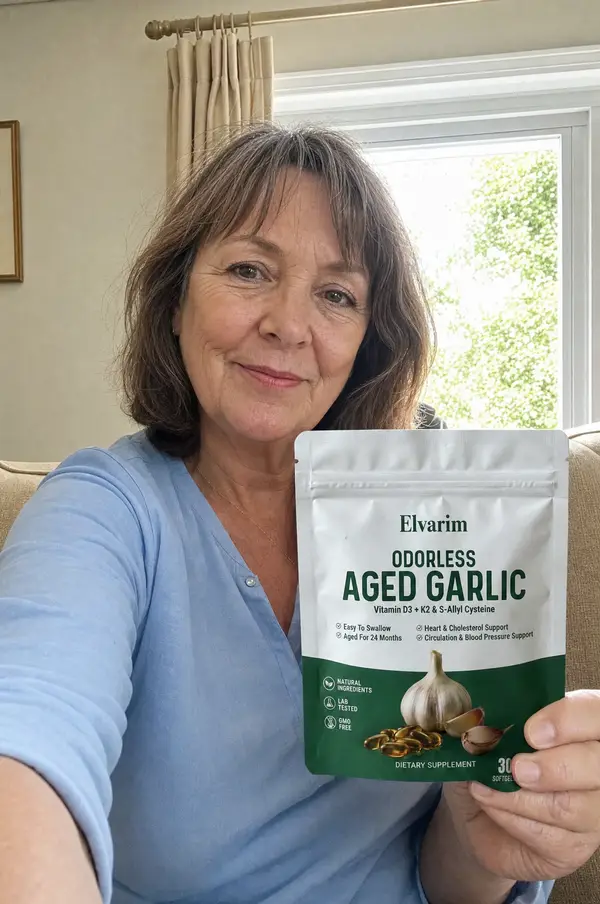
Everyday Wellness — 7 reasons why cholestrol uk
TestingImage

If you’ve got high blood pressure, you’re waking up to foamy urine, you’re exhausted before noon, and you’re praying you don’t end up on dialysis like your mum or dad — this is for you. And if you don’t believe me, I’m a Finnish cardiologist who’s spent 19 years watching what high blood pressure does to people’s kidneys. I’ve seen what works. I’ve seen what doesn’t. And I’m tired of watching people waste years on rubbish that never had a chance. Here’s the truth nobody’s telling you. Your blood pressure is quietly wearing your kidneys down right now. Every filter in your kidneys is fed by tiny blood vessels. High blood pressure pounds them day and night and sets off a flood of free radicals that tear into those vessels and the filters they feed. That foam in your urine? That’s protein leaking through damaged filters. That exhaustion that hits you by 2pm, no matter how much you slept? That’s waste building up in your blood because your kidneys can’t clear it like they used to. Those swollen ankles every evening? That’s your kidneys struggling to keep up. And what does your GP tell you? “Drink more water. Cut the salt. We’ll keep an eye on it.” Keep an eye on it? That’s not a plan. That’s a countdown. 58. 52. 47. 41. And those filters don’t grow back. Once they’re gone, they’re gone for good. And those supplements you’re taking? The cranberry capsules? The “kidney support” blends? The multivitamins? They do nothing about the pressure pounding those vessels. They float around in your bloodstream while your filters keep taking a beating. Expensive wee. That’s all they are. There’s one compound that goes after both the pressure and the free radicals. It’s called S-allyl cysteine. SAC. It builds up when garlic is cold-aged for a full 24 months. It switches on your body’s own antioxidant defences. Calms the inflammation. Helps your blood vessels make nitric oxide again, so they relax and the pressure on your filters eases. Protecting the filters that are keeping you off that machine. But here’s what most people get wrong. Most garlic supplements are raw garlic powder that was never aged at all. Barely any SAC inside. The ones that are aged? Most are aged six months, if that. And most won’t even print how much SAC you’re getting. If the number isn’t on the label, it’s a waste of money. The only one I recommend is Elvarim. Aged the full 24 months. 7,500mg of aged garlic. 900mcg of verified SAC printed right on the pouch. Odourless softgels, so it actually absorbs. UK manufactured. Third-party tested. Under £15 a pouch when you bundle. 30-day money-back guarantee. Your dad ended up on dialysis. Your auntie. Your uncle. You’ve watched it happen. You don’t have to be next. Link below. Grab it while there’s still stock. https://elvarim.com/pages/7-reasons-why-bp-kidney-uk?_ab=0&key=1787653876749

Loading the ad's image
Everyday Wellness — If you’ve got high blood pressure, you’re waking up to foamy urine, you’re exhausted before noon, and you’re praying you don’t end up on dialysis like your mum or dad — this is for you
TestingVideo

7 reasons why cholestrol uk

I moved to England two years ago. Within my first month working as a cardiologist in London, I called my old professor in Helsinki and told him what I was seeing. He went quiet for ten seconds. Then he said: "They're still doing that?" Because what British doctors call heart disease treatment, Finnish doctors stopped using decades ago. My name is Aino Korhonen. I'm 54 years old. I spent seventeen years as a cardiologist at Helsinki University Hospital—one of the leading cardiovascular centres in Northern Europe. I trained under professors who pioneered preventive cardiology in Finland, a country with one of the most successful heart disease reduction programmes in the world. In the 1970s, Finland had the highest rate of heart disease deaths in Europe. By the time I qualified, we'd cut that rate by over 80%. Not with more statins. Not with more medication. By understanding what actually causes a heart attack and addressing it directly. Two years ago, my husband accepted a research post at King's College London. We packed up our flat in Helsinki, pulled our daughter out of school mid-term, and moved to South London in January. Grey skies, no sauna, and a healthcare system I was about to discover had learnt almost nothing from what Finland figured out forty years ago. I joined a cardiology group here—brilliant doctors, fantastic team—and within my first week I reviewed eleven patient files. Every single one was on a statin. Every one had been told the same thing: "Your LDL is high. This is your only option." Muscle aches. Fatigue. Brain fog so thick one woman told me she'd stopped driving because she couldn't trust her own reactions at roundabouts. And not one of them—not one—had ever been told whether their arteries were actually protected from a heart attack. That's when I realised something that made my stomach turn. The UK doesn't prevent heart attacks. It manages a number on a blood test. And those are two completely different things. If you're over 50, your cholesterol is climbing, and your GP has already mentioned statins—or worse, you're already on one and your numbers still won't behave—then what I'm about to tell you is going to make you furious. Because there are three things happening inside your arteries right now that your GP has never explained to you. Three things that statins cannot touch. And one of them is the actual mechanism that triggers a heart attack. I'll get to all three. But first, I need to tell you what happened with a patient named Graham. Because his story is probably your story too. And if nothing changes, his story ends the same way yours will. Graham was 63. Retired headteacher. Walked his dog twice a day, ate well, barely drank. He'd been on atorvastatin for five years. His LDL on paper? Looked fine. His GP was satisfied. Repeat prescription, annual review, off you go. But when I actually examined him properly—not just the lipid panel, not just the number—I found something his GP had never once looked for. Something that, left unchecked, would have given Graham a heart attack within years. Maybe sooner. His cholesterol was oxidising. Not high. Not out of control. Under attack. And the statin he'd been taking for five years had done absolutely nothing to stop it. He was a heart attack waiting to happen, and his GP had signed off on his bloods with a smile. Let me explain why this matters more than any number on a blood test. Because this is the thing they don't teach in British medical schools, and it's the reason people in this country have heart attacks with "normal" cholesterol every single day. Cholesterol doesn't cause heart attacks. Oxidised cholesterol does. Your body needs cholesterol. Every cell membrane, every hormone, every nerve signal depends on it. It isn't the enemy. The danger starts when free radicals attack your LDL particles and oxidise them. That oxidation turns them sticky and inflamed. That's what clings to your vessel walls. That's what builds into plaque. That's what ruptures. That's the heart attack. Statins lower the number on the blood test. The number goes down, your GP is happy, and you walk out thinking you're safe. But the oxidation—the thing that actually triggers the heart attack—carries on unchecked. Every single day. It's like watching a pipe burst under your kitchen floor and deciding the best treatment is to keep mopping. The puddle gets smaller for a while. But the pipe is still broken. And eventually, the floor collapses. That's what a statin does. It mops. It doesn't fix the pipe. And when the floor collapses, that's your heart attack. But it gets worse. Because it's not just the cholesterol that's under attack—it's the arteries themselves. The inside of your arteries is lined with a single layer of cells called the endothelium. When it's healthy, it produces nitric oxide—a gas that keeps your vessels flexible, relaxed, and smooth. Blood flows freely. Plaque has nothing to grip onto. But after years of oxidative stress, poor diet, high blood pressure, and ageing, that endothelial lining gets damaged. It stops producing enough nitric oxide. Your arteries stiffen. The walls become rough and inflamed. And now oxidised LDL has something to stick to. That's where the plaque forms. That's where the blockage builds. And that's where the heart attack starts—not in your blood, but in your artery wall. Statins don't touch endothelial function. They don't restore nitric oxide. They don't repair the damaged lining. They lower a number and leave the damaged wall exactly as it was—waiting for the next chunk of oxidised cholesterol to land and build. People on statins have heart attacks every day. Not because the drug failed. Because the drug was never designed to fix the thing that actually causes the heart attack. Now here's the third thing—the one that made me furious when I arrived in England. There is a compound that does exactly what statins can't. It's been studied in four randomised clinical trials. And the British medical system has completely ignored it for over a decade. The compound is called S-allyl cysteine. SAC. It's produced only when raw garlic is cold-aged for a full 24 months. Not cooked. Not dried. Not turned into a powder and pressed into a capsule. Aged. Slowly. In controlled conditions. For two full years. During that process, a chemical transformation happens. The harsh, unstable compounds in raw garlic—the ones that give you the smell and the burn—break down. And in their place, SAC forms. It's water-soluble. It's stable. It survives your stomach acid completely intact. And it does something no statin on the market can do. SAC travels with your LDL particles through your bloodstream. It doesn't lower their number. It shields them. When free radicals come to attack and oxidise your cholesterol, SAC intercepts them. No oxidation means no sticky, inflamed LDL. No plaque forming. No rupture. No heart attack. The actual process that kills people gets interrupted before it starts. But SAC does something else that statins can't even pretend to do. It restores endothelial function. It helps your artery walls produce nitric oxide again—the compound that keeps your vessels flexible and smooth. It doesn't just protect the cholesterol. It repairs the surface the cholesterol would stick to. Dr. Matthew Budoff, a cardiologist at UCLA, ran four randomised controlled trials on aged garlic extract standardised for SAC. Reduced arterial plaque. Improved endothelial function. Lowered oxidised LDL. Real structural changes inside the arteries—the kind that actually prevent heart attacks, not just lower a number on a screen. Dr. Karin Ried in Australia showed significant blood pressure reductions. Not by forcing your vessels open the way amlodipine does—by restoring your body's own nitric oxide production so the vessels relax naturally. The research is there. It's published. It's peer-reviewed. And in Finland, we used it. In England, your GP prescribes atorvastatin, books your next annual review, and sends you home to wait for the heart attack that the statin was never designed to prevent. Now, I know some of you have already tried to take matters into your own hands. Maybe you haven't tried garlic—maybe you went the "heart-healthy supplement" route instead. Plant sterols. Red yeast rice. Omega-3 capsules. CoQ10. Maybe you spent months on Benecol spreads and cholesterol-lowering yoghurt drinks because the advert said they were "clinically proven." Let me tell you what none of those products do. Plant sterols block cholesterol absorption in your gut. That's it. They slightly reduce how much cholesterol enters your bloodstream from food. They do absolutely nothing about the cholesterol your liver produces—which is 80% of your total cholesterol. And they do nothing—zero—to stop that cholesterol from oxidising once it's in your blood. You can eat Benecol at every meal for the rest of your life and the oxidation inside your arteries won't slow down by a single day. The heart attack risk doesn't change. Red yeast rice is literally a natural statin. It contains monacolin K—the same active compound as lovastatin. So if you're taking red yeast rice to avoid statins, you're taking a statin. You're just taking an unregulated one with no quality control, no standardised dose, and no GP monitoring your liver. You get the same side effects, the same mechanism, and the same fundamental problem: it lowers a number. It doesn't stop oxidation. It doesn't repair your artery walls. It doesn't prevent the heart attack. Omega-3 fish oil is good for inflammation. It's useful. But it doesn't travel with your LDL particles. It doesn't shield them from free radicals. It doesn't address oxidised cholesterol at all. It's treating a different part of the problem and leaving the most dangerous part—the part that actually builds plaque and triggers heart attacks—completely untouched. CoQ10 supports mitochondrial energy production and it can help with statin side effects. But it's not an antioxidant that reaches your LDL particles in the bloodstream. It doesn't intercept free radicals at the point of oxidation. It doesn't restore endothelial function. It doesn't do what SAC does. Every single one of these supplements addresses a footnote while ignoring the headline. The headline is oxidised LDL building into plaque on damaged artery walls. That is the heart attack. And none of those products touch it. And if you have tried garlic—a jar of odourless capsules from Holland & Barrett, the "high-potency" one from Boots, the "allicin yield" capsule your friend recommended—of course nothing happened. None of those products contain SAC. They can't. SAC only forms during 24 months of cold ageing, and those companies age their garlic for six months at most—some don't age it at all. They dry it, grind it, stuff it in a capsule, and slap "1,000% garlic" on the label. It's marketing. There's no therapeutic value. And while you're swallowing something that does nothing, the oxidation inside your arteries carries on building toward the heart attack that cheap garlic will never prevent. The research that Dr. Budoff used—the research that actually reduced plaque in real patients' arteries—used aged garlic extract standardised for verified SAC content. A clinically relevant dose. Proper ageing duration. SAC content printed on the label so you know exactly what you're getting. That's three criteria. Proper ageing. Verified SAC. Clinical dose. Every garlic supplement and every cholesterol supplement I found in England failed at least two. Then I found Elvarim. 7,500 mg of aged garlic extract per serving. Cold-aged for a full 24 months—730 days—until the SAC content is verified and standardised. Two odourless softgels with your evening meal. Added vitamin K2 and D3 for arterial flexibility and calcium regulation. Third-party lab tested. GMP certified. Certificate of Analysis available. The only formula I'd found in Britain that met all three standards. The only one I'd trust to actually protect someone from a heart attack. I didn't discover it through a medical journal. I found it because I was looking for something I could take myself. My own cholesterol was climbing. And I was not about to take a statin for a problem a statin cannot fix. I started Graham on two Elvarim softgels a day alongside his existing protocol. Within a few weeks, his follow-up markers showed real improvement. Not just the number. The markers that actually tell you whether cholesterol is being protected from oxidation—the markers that tell you whether someone is heading toward a heart attack or away from one. He sat across from me and said something I've now heard from dozens of patients: "Why didn't anyone tell me about this before?" Because you can't patent garlic. No pharmaceutical company will fund a massive awareness campaign for a compound they can't own. The system isn't designed to prevent your heart attack. It's designed to manage your number. And every repeat prescription is another year of revenue. Graham told his wife. She started. She told her sister. Her sister told two friends from her walking group. I started hearing from colleagues: "My patient asked me about SAC. What is it?" And suddenly I was the cardiologist from Helsinki explaining Finnish medicine to British doctors who'd never been taught the most basic principle of heart attack prevention. If your cholesterol is climbing and you feel like you've tried everything—the diet, the exercise, the porridge, the plant sterols, the fish oil, the red yeast rice—and the numbers still won't shift, you haven't failed. You've been fighting the wrong battle. You've been trying to lower a number when the real threat is oxidation. And nothing you've tried so far has done a single thing to stop the process that actually causes a heart attack. If your GP has mentioned statins and something in your gut says "that's not the answer," trust that instinct. Because statins lower a number. They don't protect a particle. They don't repair an artery wall. And it's the particle and the wall that kill you. Elvarim is £24.95 right now—50% off their normal price. Two softgels a day. No smell, no taste, no garlic burps. A 30-day money-back guarantee if you don't feel the difference. You've watched your mum or your dad or your aunt spend years on medication that managed a number while the real damage carried on underneath. You've sat in that GP waiting room knowing something wasn't right but not having the words to explain it. Now you have the words. And you have the compound that actually addresses the cause. The only risk is doing nothing—letting oxidation quietly build inside your arteries, day after day, while your GP watches a number on a screen and tells you everything is fine. Until the day it isn't. Until the heart attack that everyone said couldn't happen because your cholesterol was "under control." [Try Elvarim today — 50% off while current stock lasts → https://elvarim.com/pages/7-reasons-why-cholestrol-uk?_ab=0&key=1787653698593] P.S. — Every day you wait is another day oxidised cholesterol is silently building inside your artery walls. Not high cholesterol. Not the number on your blood test. The damaged, oxidised kind that statins don't touch—the kind that causes heart attacks. Elvarim is the only formula in Britain with a full 24-month aged garlic extract standardised for verified SAC content at a clinically relevant 7,500 mg dose. This is what we use in Finland. This is what Dr. Budoff used in four clinical trials at UCLA. And right now it's 50% off at just £24.95. You won't find this in Holland & Barrett. You won't find it in Boots. You'll only find it at https://elvarim.com/pages/7-reasons-why-cholestrol-uk?_ab=0&key=1787653698593 P.P.S. — If you've already tried garlic supplements, plant sterols, red yeast rice, omega-3, or CoQ10 and nothing moved the needle—now you know why. None of them stop cholesterol from oxidising. None of them repair your endothelial lining. None of them do what SAC does. Elvarim does. And it comes with a 30-day money-back guarantee, so if you don't see a difference, you pay nothing. There is no risk in trying. There is enormous risk in doing nothing. P.P.P.S. — Elvarim is a small, independent British company. They refuse to shorten the ageing process or cut the dose to save money, which means they can't mass-produce it. When current stock runs out, it takes another full 24 months to produce the next batch. If this page is still live, it's still available. If you come back tomorrow and it's not—that's why.

Loading the ad's image
Everyday Wellness — 7 reasons why cholestrol uk
TestingImage

7 reasons why bs UK

My wife took her 500mg of metformin twice a day for over a year without missing a single dose. Her GP said she was the best patient she’d ever had. I’m an endocrinologist, and even I didn’t realise there was a piece missing. That’s the part I can’t forgive. Susan did everything I would have told any patient to do. I know, because I spent thirty-two years as a senior consultant endocrinologist in the NHS telling patients to do exactly that. Eight months later, at 4:11 AM on the 14th of November, a blood vessel in her brain closed completely. She passed away in the stroke unit nine days later. She was 61 years old. Her pill organiser is still on the shelf above the bathroom sink. I can't empty it. The Sunday slot is still full — two metformin tablets plus the higher dose they'd just switched her to. Monday through Saturday are empty. If I empty it, she's really gone. I need to tell you what happened to Susan. Because I'm seeing the same posts on Facebook that I would have answered with a prescription just months before — "Been on metformin for several months and my blood sugar still won't come down, anyone found anything that actually works?" — and it makes me physically ill. If you're over 50 and you have type 2 diabetes, or someone you love does, please read this entire thing. I know it's long. I know you're scrolling. I know you've got things to do. Fifteen months ago I would have given anything — everything — for someone to tell me what I'm about to tell you. Because here's the thing I understand now that I didn't understand then. Susan thought she had two choices. Take the tablets and endure what they do to your body. Or refuse them and watch the number climb until something gave. She never knew there was a third door. Nobody ever showed it to her. Including me. The endocrinologist. Her husband of 36 years. The man who spent thirty-two years standing in consulting rooms offering patients exactly those two doors. Holding them open. Watching people walk through. Let me tell you how I found the third door. Too late for her. Not too late for you. Susan went in for a routine blood test on the 4th of March, 2024. She felt fine. Better than fine. She'd just turned 61. She still swam three mornings a week at the leisure centre. She still tended the allotment plot we'd had for fifteen years. She still outwalked me on every holiday we took. She thought she was invincible and honestly so did I. The results came back four days later. HbA1c: 58 mmol/mol. Fasting glucose: 8.2. Her GP rang that afternoon. "Susan, your HbA1c has come back at 58. That's a diabetes diagnosis. Your fasting glucose is 8.2 — it should be under 6. We need to get this under control. I'm putting you on metformin today." "But I don't feel diabetic. I don't even know what that means." "It means your body isn't processing sugar properly. How much sugar and starch are you eating?" "I don't know. Normal food. Toast in the morning. Pasta a few times a week. A biscuit with my tea. Rice with dinner. Nothing mad." "That's got to change. I want you cutting the refined carbohydrates — no white bread, no white pasta, no white rice, no biscuits, no fruit juice, no sugary drinks. I'm prescribing 500mg of metformin. One tablet twice a day with meals. We'll recheck in three months." She put down the phone and sat at the kitchen table for a long time without saying anything. I know now what she was doing at that table. She was standing in front of two doors and deciding which one to walk through. Door one: take the tablets. Do everything they said. And she'd already heard from the women at Susan's book club what that road looked like — the stomach cramps, the nausea, Barbara's mother who "was never the same" after they put her on hers. Become a patient. Become someone managed. Door two: don't. Refuse it. And watch the number climb until, some morning, something gave. That was the whole choice, as far as she knew. As far as anyone had ever told her. I want you to understand something. I sat across from her at that table and I told her to take the tablets. I told her the same thing I'd told two thousand patients over thirty-two years. I believed it. Every word. I believed the tablets would protect her. She picked door one. Because her GP said to. Because I said to. Because what else do you do. Then she stood up, walked into the kitchen, picked the biscuit tin off the counter — the old round tin with the roses on the lid that her mother had given us the year we married, always full, always open — and put it in the cupboard. Then she opened the cupboards. Digestives. Hobnobs. Pasta. White rice. Bread. Cereal. Fruit juice. Everything with sugar or refined starch on the label went into a bin bag. The whole kitchen, stripped in under an hour. "That's it," she said. "I'm done." And she was. She collected the metformin from Boots on the high street that afternoon. Took the first tablet with her dinner that evening. Set the box on the kitchen counter where she'd see it every day. I bought her a blood glucose monitor and started testing with her every morning. Fasting. Before meals. After meals. Two, sometimes three times a day. She'd prick the same fingers over and over until the tips were bruised and swollen — dark little marks on the pads of her index and middle fingers that never fully healed before the next test. She'd wince pressing the lancet and squeeze too hard trying to get enough blood, and the bruising just got worse. She paid for the strips herself — fifty at a time from the chemist — because the surgery said she didn't need them. She tested before the walk and after the walk and the number after was the same as the number before. She'd stand in the hallway holding the meter and I could see the whole of the effort go out of her. Two weeks in, Susan mentioned at book club that her nutritionist had her on chromium and cinnamon capsules. Susan ordered both from Holland & Barrett that evening. For 274 days, she didn't eat a biscuit. She didn't touch a slice of white bread. She didn't miss a single tablet. No toast with marmalade. No pasta bake on a Thursday. Not at her niece's wedding in June where the dessert table was piled with profiteroles and she ate the cheese plate. Not at our grandson's christening in August where everyone had the Victoria sponge and Susan ate the strawberries without cream. Not at her own 61st birthday dinner in September where her sister ordered the sticky toffee pudding right in front of her and Susan had the fruit salad with no syrup. I threw out 38 years of recipes. I learnt to cook things I'd never made in my life — cauliflower rice stir-fries, courgette pasta, lentil curries without the naan. I'd stand at the hob at 6 PM watching her push the food around her plate and pretend it was fine. I ate the same dinners she did. If she had to give up everything she loved, I wasn't going to sit across from her eating the food she was mourning. She stopped going to Eleanor's Friday kitchen suppers because she couldn't sit there eating plain chicken and salad whilst everyone else had shepherd's pie and garlic bread. I stopped going too. I gave up my Thursday evenings at the pub with the old registrars because I couldn't stand the look on her face when I came home having had two pints and chips and she'd been eating steamed vegetables alone. She lost her Saturday morning coffee-and-cake tradition with her sister — every Saturday for fourteen years at the same café on the high street. Her sister said "one slice of carrot cake won't kill you" and Susan left the table. They didn't speak for three weeks. She lost something she'd been carrying her whole adult life. The pleasure of sitting down to eat without calculating what it would cost her. The simple comfort of a biscuit and a cup of tea at 3 in the afternoon. And she did it anyway. Because the GP said to. Because I said to. She walked through door one all the way. As far as it would take her. Three weeks into the metformin, the stomach cramps started. Not a mild discomfort. A deep, twisting pain in her gut that hit twenty minutes after every meal. She'd sit at the table, put her fork down, press both hands against her stomach, and wait for it to pass. Some nights it didn't pass. Some nights she was in the bathroom until midnight. She learnt where every toilet was between the surgery and the shops. She stopped going anywhere she couldn't plan her way out of. The nausea came with it. The woman who'd always loved cooking — who'd made a roast every Sunday for thirty years — started flinching at the smell of food. She'd open the fridge and turn away. She'd sit at the table and stare at the plate and I could see her calculating whether the pain of eating was worth the pain of not. The metallic taste started around week four. "Everything tastes like I'm sucking on a coin," she said. She stopped drinking tea because she couldn't taste it properly. Thirty-six years of marriage and I'd never once seen her refuse a cup of tea. The mug sat on the counter untouched. Her energy? Gone. The woman who used to be at the allotment by 7 AM couldn't get out of bed before 9. I'd find her asleep on the sofa at 2 in the afternoon. Mid-sentence sometimes. Just — gone. Her GP said it was likely B12 depletion from the metformin. Prescribed a supplement. Told her to keep going. Her feet started tingling at week eight. A pins-and-needles feeling in her toes that wouldn't stop. She'd lie in bed at night pressing her feet against mine and saying, "Can you feel that? Am I imagining it?" She wasn't imagining it. I knew what it was. I'd seen it a thousand times from the other side of the desk. The GP said it was a common concern. Said her body would adjust. Said the benefits outweigh the risks. The follow-up was the 17th of September. The blood results came back. HbA1c: 54 mmol/mol. Fasting glucose: 7.6. I read the numbers twice because I thought the lab had made a mistake. She'd been on the medication AND cut refined carbohydrates entirely for over six months and the numbers had barely shifted. Still diabetic. Still above target. After everything she'd given up. The GP said, "Some patients don't respond well to metformin at this dose. I'm doubling you to 1,000mg twice daily. We'll consider adding gliclazide or even insulin if it doesn't come down in six months. Keep doing what you're doing." Susan came home that evening and sat at the same kitchen table. The same one. She didn't say anything for a long time. Then she said: "I gave up the biscuits. I gave up the bread. I gave up the pasta. I'm taking the tablets. I'm walking every day. The numbers won't budge." I told her to give it time. I told her to trust the process. I told her what I'd told two thousand patients. She nodded and started taking the higher dose consistently. Eleven days later — eleven days — she woke at 3 AM gripping my arm. "Something's wrong," she said. Not panicked. Quiet. Like she was reporting a fact. Her speech was slurred. Just slightly. Just enough. I knew what was happening before I turned the light on. Thirty-two years of endocrinology — you see the vascular damage. You know what elevated blood sugar does to the vessels over time. The speech. The one-sided weakness. The confusion. I drove her to A&E doing 80 in a 30, one hand on the wheel and the other holding hers. By the time they got her through triage at 3:52 AM, the right side of her face was drooping. She couldn't lift her right arm. I sat in the waiting area for an hour and twenty minutes. I rang our daughter at 4:15 AM and couldn't get the words out. I just kept saying "it's your mum, it's your mum." The fluorescent light above me buzzed the entire time. The stroke consultant on call looked at the CT scan and I watched his expression shift. I've seen that face. On other specialists, in other corridors. I never knew what it felt like from this side. "Mr Hale — Dr Hale — your wife has suffered a major ischaemic stroke. A blood vessel supplying the left hemisphere is completely occluded. There's significant tissue damage. Her fasting glucose at intake was 16.4 — her blood sugar has been doing severe damage to her blood vessels for longer than the diagnosis has been catching it." "But she's been doing everything," I said. I heard the words come out of my mouth and I recognised them. I'd heard them a thousand times from the other side of the desk. Wives. Husbands. Daughters. "But he was doing everything." "But she was taking the tablets." "But we changed the whole diet." Susan spent nine days in the stroke unit. I learnt things about a failing body I thought I already knew. The textbook version is clean. The real version is your wife looking at you on day 2 and trying to say your name and not being able to form the word. The frustration in her eyes. She knew what she wanted to say. Her mouth wouldn't do it. She squeezed my hand with her left — the side that still worked — and I could feel her trying to tell me something through the pressure of her fingers. By day 4 her right hand was completely still. Those hands had kneaded bread every Sunday morning for thirty years. Had held our children. Had threaded a needle to mend a tear in my old coat last Christmas because she said it still had years left in it. Now she couldn't feel me holding the right one. The attending consultant told me the blood vessels in Susan's brain had been narrowing for years. That chronically elevated blood sugar had been silently damaging the vessel walls — glycating the proteins, generating oxidative stress — long before any blood test caught the full picture. He said it like he was reading a weather report. I wanted to grab him. I wanted to say, "I know. I spent thirty-two years saying the same thing in the same tone to the same chairs." Day 5, the swelling in her brain worsened. They talked about surgical intervention. Then they talked about the risks outweighing the benefits. Then they stopped talking about interventions altogether. Day 7, she developed aspiration pneumonia. The swallowing reflex was gone. They put her on IV fluids and antibiotics. The machine dripped into her arm in a rhythm that sounded nothing like living. Day 8, they asked me to step out while they repositioned her. There was a cardigan she'd brought from home draped over the arm of the chair. Pale green. The same colour as the biscuit tin lid. I remember thinking I should fold it. At 3:58 AM on the 14th of November the monitors flatlined. I sat there listening to the sound not stop. Nine minutes. I counted them on the wall clock. You'd think an endocrinologist would stop counting. I couldn't stop. At 4:11 AM, a registrar I'd never met walked into the family room. "I'm so sorry. We did everything we could." I drove home at 6 AM. Her walking shoes were by the back door. The pill organiser on the bathroom shelf. Her reading glasses folded on the bedside table, still open to the page she'd been reading. Her gardening gloves on the windowsill, still holding the shape of her hands. Her pill organiser on the shelf. Sunday full. Monday through Saturday empty. Where it sits today. I sat in her chair in the kitchen and didn't move for seven hours. The house was so quiet I could hear the boiler click on and off. 36 years, and now the only sound in my house was the boiler. After the funeral I tried to go back to normal. I couldn't. Because every time I opened my phone I saw women Susan's age, men my age, posting "Been on metformin six months, HbA1c still 52, GP wants to double the dose, is this normal?" or "just been put on metformin, is it really that bad?" And I knew — I KNEW — some of them were standing at the same two doors Susan stood at. The same two doors I held open for patients for thirty-two years. Take the tablets and become someone managed. Or refuse and wait. Both of those doors lead somewhere you don't want to be. That's what nobody tells you. And I was the one who spent his career not telling them. I couldn't just sit there and watch people walk through the doors I built. So I started researching. Not the way I researched as a clinician — skimming abstracts to confirm what I already believed. The way a man who lost his wife researches. With the kind of desperation that strips away every assumption you've built your career on. I read for weeks. I read papers I'd have dismissed five years ago. I went back to the physiology I'd learnt in medical school and hadn't truly thought about in decades. And one thing kept coming up, over and over, that I'd spent thirty-two years looking straight past. You know what actually happens inside your blood vessels when blood sugar stays elevated? It's not just a number on a screen. Every time your blood sugar spikes, the excess glucose attaches itself to the proteins inside your blood vessel walls. It's called glycation. It's like rust forming on the inside of a pipe — except the pipe is alive. That glycation triggers a cascade of oxidative damage. And the thing it damages most is the living lining of every blood vessel in your body — a single layer of cells, thinner than a soap bubble, that does all the real work. When that lining is healthy, it produces nitric oxide — the signal that keeps your vessels relaxed, flexible, and open. It regulates blood flow to every organ. Your eyes. Your kidneys. Your brain. Your heart. Your feet. Every part of you that diabetic complications eventually reach. That lining is the thing that breaks down. Not because of anything Susan did. Not the biscuits, not the bread, not the pasta, not the slice of cake at a birthday party. It wears down the way all tissue wears down — but chronically elevated blood sugar accelerates the damage enormously. Especially after 50, when the body's ability to repair that oxidative damage slows down and the lining takes more hits than it can recover from. Damage builds up, slow, year after year, and it's invisible. It doesn't show up on any blood test she was ever given. The HbA1c can't see it. Her GP couldn't see it. She looked fine on paper right up until the morning she didn't. And when that lining is worn down, it can't protect the vessel wall anymore. The vessels stiffen. Narrow. Lose their ability to regulate blood flow. The organs they feed start starving — slowly, silently — and by the time it shows up as tingling feet, or blurry vision, or a blood vessel in the brain that can't hold, the damage has been building for years. That's what happened to Susan. Not the number on her blood test. A worn-out lining that stopped doing its one job. And here's the part I read at 2 AM at the kitchen table and had to put my head in my hands. I already knew it. I'd known it since medical school. Endothelial dysfunction. Glycation-induced oxidative stress. It's in every endocrinology textbook. I'd lectured on it. I'd written about it. But I'd never — not once in thirty-two years — connected it to what I was actually doing in my consulting room. The tablet she took every morning didn't touch that lining. It couldn't. Metformin works by reducing the amount of glucose the liver releases into the blood and improving insulin sensitivity at the cellular level. It's a blunt instrument. It reduces the number. It never repairs the lining that elevated blood sugar has been silently destroying. It lowers the number on the blood test. It never addresses the oxidative damage that's been accumulating in every vessel wall. It never restores the lining's ability to protect itself. You can't protect a vessel by lowering a number. You can only protect it by supporting the wall. And the toll of the lowering — that's the stomach cramps, the nausea, the diarrhoea, the metallic taste, the B12 depletion, the exhaustion. They call those side effects. They're not side effects. They're what forcing the liver to behave differently costs. That's the tablet doing exactly what it's built to do — overriding the body's glucose production — while the real issue keeps building underneath, right where nobody is looking. Susan walked through door one. The suppression door. It took its toll on her body and the underlying issue kept progressing the whole time, right behind a lining nobody was supporting. Door two — refusing — just lets the lining keep weakening with no help at all. There was a third door. A door where you support the lining instead of suppressing the number. Where the vessels can start protecting themselves again because the thing that protects them is getting the help it needs. Susan never knew that door existed. I never showed it to her. I never showed it to anyone. Read that again, because it's the whole thing. What happened to Susan wasn't caused by a number. It was caused by a lining that nobody was supporting — because the two doors she was offered don't support anything. One suppresses. One waits. Neither helps the lining heal. I sat with that for four days. Then I did something I would have mocked five years ago. I went to Holland & Barrett and bought a bottle of garlic capsules. Because the research kept pointing to a compound in garlic — and I was scared and 63 and my own last HbA1c had come back at 46 mmol/mol. Pre-diabetic. The endocrinologist, pre-diabetic. Garlic. The endocrinologist buying garlic capsules from a health food shop. If my old registrars could have seen me. I took them for three weeks. My numbers didn't move. Not a point. Then I went to Amazon and ordered the one with 5,000 five-star reviews and "maximum strength" on the label. Took those for another month. Nothing. I was furious. I'd finally found the third door and it was as fake as the other two. Then I went back to the primary literature — the actual trial data, not the marketing — and I stopped being furious at the garlic and got furious at what they do to it. The compound that does the work is called S-allyl cysteine. SAC. I knew of it. I'd seen it referenced in papers I'd never read carefully because it wasn't a pharmaceutical and therefore wasn't something I prescribed. That sentence alone should tell you everything about how broken the system is. SAC only forms during a prolonged cold ageing process. Months of it. The clinical trials — four randomised controlled trials led by Dr. Matthew Budoff at UCLA — used garlic that had been aged for close to two years. Two years. In a controlled environment. No heat. No shortcuts. SAC is water-soluble. Stable. Survives stomach acid intact. That's the part that matters — most things you swallow never reach the endothelium. SAC does. It gets into the lining and does three things: it neutralises the oxidative damage that elevated blood sugar has been inflicting on the vessel walls, it restores the lining's ability to produce nitric oxide so the vessels can protect themselves again, and it reduces the glycation-driven damage that keeps wearing down the wall from the inside. Address the damage and the lining recovers. A recovered lining starts doing its job again. The vessels are protected because they're healthy enough to protect themselves. No suppression. No brute force. They just heal and do their job. That's the third door. The one I never prescribed. And almost every garlic supplement you can buy has never been aged at all. Most of what's on the shelves — Boots, Holland & Barrett, Amazon — is raw garlic powder in a capsule. Dried fast, ground to dust, pressed into tablets. No ageing process. No SAC. They print "high potency" on the label because the marketing sounds good. They measure "allicin yield" — a compound that's unstable, breaks down in your stomach, and never reaches the lining — because it lets them print a big number. It's the supplement equivalent of mopping the floor while the pipe underneath keeps leaking. By the time it reaches your gut, you're swallowing garlic dust. Expensive garlic dust with a glossy label and no active compound in it. That's the Holland & Barrett capsule. That's the Amazon bestseller. Dead garlic with nothing left that matters. I'd been doing the right thing in the wrong form. Worse than the wrong form — the empty form. And here's the part that made me sit up straight. I started contacting the companies. I asked every one of them the same simple question: how many milligrams of S-allyl cysteine are in your supplement? Most of them never wrote back. A few wrote back and admitted, in plain words, that they didn't know. They'd never measured it. Because nobody buying garlic capsules from the chemist ever asks. Not one label I looked at — not one — had a number on it. Not a milligram of SAC. Nothing. Just "high potency." Just "allicin yield." Marketing language without a single measured number for the compound that actually does the work. About a week later I was reading through a blood sugar forum. People whose spouses were on metformin, or who were on it themselves. "Just got the HbA1c results" people. "GP wants to put me on metformin" people. Standing at the same two doors. A woman posted something that stopped me cold. Her mother had been on metformin at 63 for four years. The HbA1c was stuck at 48 no matter what she did — but the stomach cramps were so bad she dreaded every meal, her energy was gone, the tingling in her feet was getting worse, and her GP was talking about adding gliclazide. Sound familiar? She said she'd finally found an aged garlic extract that wasn't the dead chemist kind. Properly aged — the full 24 months in a cold environment, no heat, no shortcuts. A clinically relevant dose — 7,500 milligrams per serving, not the 500mg capsules lining the Holland & Barrett shelf. And it came with the actual SAC content printed on the label. Milligrams. Measured. Right there on the back of the bottle where anyone could see it. She added it to her mother's routine. Two softgels a day. Odourless — no garlic breath, no taste, no stomach upset. Her HbA1c went from 56 to 41 in ten weeks. Her fasting glucose dropped from 8.1 to 5.4. The stomach cramps that had been ruining every meal for four years eased in the second week. The tingling in her feet — the thing her GP had called "early peripheral neuropathy" and said was "something to monitor" — started fading. Her energy came back. I read that post six times. So I started looking into what she'd found. And what I learnt is that there are five things a real aged garlic extract has to do at the same time, or it's just garlic dust in a capsule: One — it has to contain a clinically relevant dose. Not 500 milligrams. Not 1,000 milligrams. The trials that move the needle use 7,500 milligrams of aged garlic extract per serving. Most supplements on the shelf give you a fraction of that and hope you don't check. Two — it has to be aged for the full 24 months. That's how long it takes for SAC to form at therapeutic levels. Brands cutting the ageing to six months have almost none of the active compound. They're selling you a shortcut that skipped the part that matters. Three — it has to have the SAC content verified and printed on the label. Not "proprietary blend." Not "allicin yield." Milligrams of S-allyl cysteine, measured and stated, so you know exactly what's in each serving. If the number isn't on the label, there's a reason they're hiding it. Four — it has to be cold-aged the entire time. Any heat in the process destroys SAC before it ever reaches you. Cheap manufacturing uses heat to speed the process. Speed is what destroys the compound. Five — it has to be third-party tested with a Certificate of Analysis you can actually see. Not "trust us." A number, verified by an independent lab with no reason to lie. Five things. All five. At the same time. From one supplement. I went back through every garlic capsule I'd bought. Not one did all five. Most did none. Every one was the same raw garlic powder, never aged, sold with marketing slogans where the SAC content should have been. So I messaged the woman. She sent me the name. That's when I found Elvarim. It was the only one I could find that hit all five. 7,500 milligrams of aged garlic extract per serving — the full clinical dose, not a token amount. Cold-aged for the full 24 months — no heat, no shortcuts, the complete transformation that SAC requires. The SAC content verified and printed right on the label — milligrams, measured, visible. Third-party tested. GMP certified. Certificate of Analysis available if you want to see it. Two odourless softgels a day. No garlic taste. No garlic smell. No burps. That's the whole regimen. After contacting a dozen companies that either ignored me or admitted they had no idea how much SAC was in their product, I sat there staring at a company that put the number on the label. 30-day money-back guarantee — So if you change your mind, you get every penny back, no questions asked. Which I'll come back to, because no pharmaceutical company on earth gives you offers you that. I almost didn't order it. After the Holland & Barrett shelf. After the Amazon capsules. After thirty-two years of believing the only answer came from a prescription pad. After Susan. But I had a sister in York who'd just been told her HbA1c was 52. Her GP wanted to put her on metformin. I had a daughter in Bristol with "borderline" fasting glucose at 6.4. I had myself. I ordered it. My sister Margaret came back from a routine appointment with an HbA1c of 52, fasting glucose of 7.8. Her GP wanted to put her on metformin. She refused. Said she'd watched Susan go through eight months of stomach cramps and nausea with numbers that barely moved, and she wasn't walking through that door. Didn't know what else to do. I sent her the Elvarim. I didn't ask. I just posted it, with a note that said, "If you don't take these every day I will drive to York and stand over you, Margaret. I mean it." She took them. She kept eating normally — didn't go on some extreme low-carb diet, she's stubborn the way Susan was stubborn. She just took her two softgels every morning. She went back to her GP six weeks ago. HbA1c: 40. Fasting glucose: 5.2. Down from 52 and 7.8. In eleven weeks. She hadn't cut her carbohydrates. She hadn't started medication. She hadn't changed her diet or started exercising. The only thing she changed was two softgels in the morning. She told me she'd had more energy in those eleven weeks than in the previous three years. The brain fog she'd been blaming on her age — gone by week four. The tingling in her toes she'd accepted as "getting older" — gone. She rang me and said she'd planted her entire autumn border in one afternoon and wasn't even tired. She rang me crying. My sister. 65 years old, crying on the phone like a child. She said, "Richard, I think Susan would still be here if someone had shown her this door." I had to hang up. Then there's my daughter Sophie. 38, two children, borderline fasting glucose at 6.4. Her GP said "we'll keep an eye on it." Started eight weeks ago. Her afternoon energy is back. The 3 PM crashes where she'd fall asleep on the sofa while the children watched telly — gone. The cold hands and feet her GP called "probably just poor circulation" — gone. Her fingers are warm again. My former colleague Alan. His wife went through the same thing three months before Susan. Two widowers playing golf on Wednesdays, neither of us able to finish a sentence about it. He started taking it two days after I told him. He said the stomach bloating he'd blamed on ageing stopped in the first week, and for the first time since he lost her he's stopped lying awake at night worrying about his own numbers. He threw out his home glucose monitor. Said he was done pricking his finger every morning like a man waiting for a verdict. I'm not selling anything and I don't get a penny from any of this. I'm a 63-year-old retired endocrinologist sitting in my wife's chair at 2 in the morning because I can't sleep, and I can't stop thinking about my sister Margaret — 65, stubborn, who was about to walk through the same door that took so much from Susan without giving anything back. Here's what I know because I lived it — on both sides of the desk: The medication suppressed the number on the blood test. It never supported the lining underneath. And the suppression — the stomach cramps, the nausea, the diarrhoea, the metallic taste, the exhaustion — took its toll on her quality of life while the real issue kept progressing. Cutting carbohydrates reduced the day-to-day sugar intake. It didn't support a vessel lining that was already worn out from years of oxidative damage. Chromium and cinnamon capsules sit on the surface. They never reach it. Most garlic supplements are dead before you open the bottle. The one compound that supports the lining was never formed — because the garlic was never aged long enough for SAC to exist. Susan gave up everything she loved for 274 days and it wasn't enough because she only ever knew about two doors — and both of them lead to the same place. I spent thirty-two years holding those doors open for patients. I held them open for my own wife. And I watched her walk through. I wish someone had shown us the third door before the 4th of March 2024. Before the biscuit tin in the cupboard. Before November. I can't go back. Susan can't come back. Her pill organiser is still on the bathroom shelf and it's going to stay there. But you can still go forward. Here's where I got it: https://elvarim.com/pages/7-reasons-why-bs-uk I want you to go order it. Not for me. For whoever you'd miss at the breakfast table. Susan used to say: You can't undo damage that's already done. But you can stop more from happening. Every year past 50, that lining takes more hits than it can recover from. Every year you wait, the window gets a little narrower. You haven't missed it yet. — Dr. Richard Hale, age 63 Retired Consultant Endocrinologist, NHS Cambridge, Cambridgeshire P.S. The pill organiser is still on the bathroom shelf. Sunday full. Monday through Saturday empty. Every morning I walk past it and for one second I forget. For one second I think she's about to come downstairs and put the kettle on the way she always did. 274 days of her giving up everything she loved — and the lining nobody was looking after kept wearing down the whole time. A supplement with the one compound that could have supported that lining, if I'd known. If I'd looked past the prescription pad I spent my whole career holding. Please. Don't end up here. Don't let someone you love end up here. https://elvarim.com/pages/7-reasons-why-bs-uk P.P.S. I don't work for Elvarim. I don't get a penny from this. I'm writing this at 2:14 AM because I can't sleep and Susan's side of the bed is cold and my sister Margaret is 65 and stubborn and was about to walk through the same door — and I'm terrified of losing anyone else. Share this with anyone you love who has type 2 diabetes. Even if their GP says the numbers are "manageable." Even if they're already on metformin. Please. P.P.P.S. If your wife is already on metformin and her numbers look fine on paper, please don't close this page. Susan's HbA1c was 54 at her last check — her GP would have called that "making progress on medication." The number was never the issue. The worn-out lining underneath was. Elvarim supports the lining. It works alongside the medication. It works after it. Alan told me the bloating was gone in the first week — before anything showed up on a blood test. You haven't missed the window. The window opens the day you start. https://elvarim.com/pages/7-reasons-why-bs-uk P.P.P.P.S. If you're reading this and thinking "she'd never go for it" — hear me. I didn't argue with Margaret. I posted her the Elvarim with a note saying if she didn't take it I'd drive to York and stand over her, and she took it because she loved me. She didn't believe a word of it on day one. She believed it eleven weeks later when the blood test said 40. You don't have to win the argument. You just have to put the softgels in her hand. P.P.P.P.P.S. One last thing, because I know what it is to be afraid to hope again. There's a 30-day money-back guarantee — if you change your mind, you get every penny back, no questions asked. Think about that for a second. No pharmaceutical company on earth offers you a money-back guarantee. Susan's tablets came with no guarantee at all. This comes with 30 days, which is enough time to feel the difference before your next blood test even arrives. That's all I'm asking. One round. Don't let a month go by without it in the house. https://elvarim.com/pages/7-reasons-why-bs-uk P.P.P.P.P.P.S. One more thing. It's not from Holland & Barrett. It's not on Amazon. The Amazon garlic is exactly the dead powder capsules I threw out — that's the whole problem. Elvarim only ships through the one website, and there are already cheap imitations riding the name. Order it from the link above or you're right back in the garlic-dust aisle. https://elvarim.com/pages/7-reasons-why-bs-uk

Loading the ad's image
Everyday Wellness — 7 reasons why bs UK
TestingImage

7 reasons why BP UK

My wife started taking amlodipine on the 11th of March 2024. Took her 5mg tablet every morning at 7 AM without fail. Threw out the salt cellar that had been on our kitchen counter for 38 years. Cut out crisps entirely. Gave up takeaways. Went on the DASH diet — the strict version, not the magazine version. Walked four miles a day along the canal path behind our house. Catherine did everything I would have told any patient to do. I know, because I spent thirty-five years as a senior consultant cardiologist in the NHS telling patients to do exactly that. She died of a massive stroke on the 14th of November at 4:11 in the morning. She was 62 years old. Her pill organiser is still on the shelf above the bathroom sink. I can't empty it. The Sunday slot is still full — two amlodipine tablets plus the ramipril they'd just added on top. She died at 4:11 AM, before the 7 AM tablet that was supposed to save her. Monday through Saturday are empty. If I empty it, she's really gone. I need to tell you what happened to Catherine. Because I'm seeing the same posts on Facebook that I would have answered with a prescription just months before she died — "GP wants to put me on blood pressure tablets, reading was 156 over 94, anyone know how to bring it down naturally?" — and it makes me physically ill. If you're over 50 and your blood pressure is elevated, or someone you love's is, please read this entire thing. I know it's long. I know you're scrolling. I know you've got things to do. Fifteen months ago I would have given anything — everything — for someone to tell me what I'm about to tell you. Because here's the thing I understand now that I didn't understand then. Catherine thought she had two choices. Take the tablets and endure what they do to your body. Or refuse them and wait for the number to climb until something gave. She never knew there was a third door. Nobody ever showed it to her. Including me. The cardiologist. Her husband of 34 years. The man who spent thirty-five years standing in consulting rooms offering patients exactly those two doors. Holding them open. Watching people walk through. Let me tell you how I found the third door. Too late for her. Not too late for you. Catherine went in for a routine check-up on the 4th of March, 2024. She felt fine. Better than fine. She'd just turned 62. She still did Pilates three mornings a week. She still tended the garden beds along the back wall in every season. She still outwalked me on every holiday we took. She thought she was invincible and honestly so did I. The nurse wrapped the cuff around her arm, waited, frowned, and took it again. The results: 162/98. Her GP rang that afternoon. "Catherine, your blood pressure is significantly elevated. Systolic 162, diastolic 98. That's stage two hypertension. We need to get this under control. I'm putting you on amlodipine today." "How much salt are you eating?" "I don't know. Normal food. Crisps in the evening. A roast on Sundays. Ready meals when I can't be bothered. Nothing mad." "That's got to change. I want you on the DASH diet — properly. No added salt, no processed food, no cured meats, no white bread. I'm prescribing 5mg of amlodipine. One tablet every morning. We'll recheck in three months." She put down the phone and sat at the kitchen table for a long time without saying anything. I know now what she was doing at that table. She was standing in front of two doors and deciding which one to walk through. Door one: take the tablets. Do everything they said. And she'd already heard from the women at Helen's book club what that road looked like — the swollen ankles, the dizziness, Janet's mother who "couldn't get out of a chair without seeing stars" after they put her on hers. Become a patient. Become someone managed. Door two: don't. Refuse it. And watch the number climb until, some morning, something gave. That was the whole choice, as far as she knew. As far as anyone had ever told her. I want you to understand something. I sat across from her at that table and I told her to take the tablets. I told her the same thing I'd told two thousand patients over thirty-five years. I believed it. Every word. I believed the tablets would protect her. She picked door one. Because her GP said to. Because I said to. Because what else do you do. Then she stood up, walked into the kitchen, picked the salt cellar off the counter — the pale blue ceramic one her mother gave us the year we married — and put it in the cupboard. Then she opened the fridge and the pantry. Crisps. Bacon. Ready meals. Tinned soups. Soy sauce. Stock cubes. Everything with sodium on the label went into a bin bag. The whole kitchen, stripped in under an hour. "That's it," she said. "I'm done." And she was. She collected the amlodipine from Boots on the high street that afternoon. Took the first tablet at 7 AM the next morning with a glass of water. Set the box on the bathroom shelf where she'd see it every day. I bought her a Monday-through-Sunday pill organiser and started filling it every weekend. Two weeks in, Helen mentioned at book club that her nutritionist had her on magnesium and CoQ10 for blood pressure. Catherine ordered both from Holland & Barrett that evening. Added them to the organiser the next Sunday. For 249 days, she didn't add a pinch of salt to anything she ate. She didn't touch a crisp. She didn't miss a single tablet. No fish and chips on Friday. No roast potatoes with sea salt on Sunday. Not at her niece's wedding in June where the canapés were all cured meats and she ate the fruit. Not at our grandson's christening in August where everyone had the cheese board and Catherine ate the crudités. Not at her own 62nd birthday dinner in September where her sister ordered the steak with chips right in front of her and Catherine had the grilled sea bass with steamed greens and asked them not to season it. I threw out 38 years of recipes. I learnt to cook things I'd never made in my life — chickpea tagines with no salt, grilled fish with lemon and herbs, lentil soups seasoned with nothing but garlic and cumin. I'd stand at the hob at 6 PM watching her push the food around her plate and pretend it was fine. I ate the same dinners she did. If she had to give up everything she loved, I wasn't going to sit across from her eating the food she was mourning. She stopped going to Helen's Friday kitchen suppers because she couldn't sit there eating unseasoned salad whilst everyone else had lasagne and garlic bread. I stopped going too. I gave up my Thursday evenings at the pub with the old registrars, because I couldn't stand the look on her face when I came home full and she'd been eating steamed vegetables alone. She lost her Saturday morning coffee-and-pastry tradition with her sister — every Saturday for eleven years at the same café on the high street. Her sister said "one pastry won't kill you" and Catherine left the table. They didn't speak for three weeks. She lost something she'd been carrying her whole adult life. The pleasure of sitting down to eat without calculating what it would cost her. And she did it anyway. Because the GP said to. Because I said to. She walked through door one all the way. As far as it would take her. Four weeks into the medication, the ankle swelling started. Not a slight puffiness. Her feet ballooned so badly she couldn't get her shoes on. She'd sit on the edge of the bed in the morning pressing her thumb into her ankle and watching the indent stay there like putty. She bought two pairs of wide-fit shoes from Marks & Spencer because none of her old ones would zip. Her energy? Gone. The woman who used to be in the garden by 7 AM couldn't get out of bed before 9. I'd find her asleep on the sofa at 2 in the afternoon. Mid-sentence sometimes. Just — gone. The flushing started around week six. Her face would turn bright red without warning — at the shop, at dinner, in the middle of a conversation. She said it felt like someone had lit a match under her skin. She stopped wanting to go out because she never knew when it would happen. She'd catch her reflection and not recognise herself. The dizziness came next. Standing up from a chair and grabbing the doorframe. Getting out of bed and waiting for the room to stop spinning before she could walk to the bathroom. The woman who'd been doing Pilates three times a week stopped going because she was afraid she'd fall. Said she felt like she'd aged fifteen years in two months. The GP said it was a common side effect. Said her body would adjust. Said the benefits outweigh the risks. The follow-up was the 17th of September. The nurse wrapped the cuff. Waited. Wrote the number down. 158/92. I read the numbers twice because I thought the nurse had made a mistake. She'd been on the medication AND cut sodium entirely for over six months and the numbers had barely shifted. The GP said, "Some patients don't respond well to amlodipine alone at this dose. I'm adding ramipril, 5mg. It works differently — targets a different pathway. We'll consider increasing the dose if it doesn't come down in six months. Keep doing what you're doing." Catherine came home that evening and sat at the same kitchen table. The same one. She didn't say anything for a long time. Then she said: "I gave up the salt. I gave up the crisps. I'm taking the tablets. I'm walking every day. The numbers won't budge." I told her to give it time. I told her to trust the process. I told her what I'd told two thousand patients. She nodded. She started the ramipril. It's the one that's still in the Sunday slot. Nine days later — nine days — she woke at 3 AM. She reached across the bed and grabbed my arm. Not panicked. Quiet. She tried to say "something's wrong" but the words came out garbled. Half a sentence. The right side of her mouth didn't move. I turned the light on and her right arm was lying on the blanket like it didn't belong to her. I knew what it was before she tried to speak again. Thirty-five years, you know the signs. You know what it looks like when the blood stops reaching the brain. I drove her to A&E doing 80 in a 30, one hand on the wheel and the other holding her left hand because she couldn't squeeze back with the right. She kept trying to say my name. It came out as sounds, not words. By the time they got her through triage at 3:52 AM, the right side of her face had dropped entirely. Not sagging. Dropped. Like someone had cut the strings. I sat in the waiting area for an hour and twenty minutes. I rang our daughter at 4:15 AM and couldn't get the words out. I just kept saying "it's your mum, it's your mum." The fluorescent light above me buzzed the entire time. The stroke consultant on call — a young man, couldn't have been 40 — looked at the CT scan and his face did this thing. I've seen that face. I've made that face. A thousand times. I never knew what it felt like from this side. "Mr Ashworth — Dr Ashworth — your wife has suffered a massive ischaemic stroke. Her middle cerebral artery is completely occluded. There's extensive damage to the left hemisphere. Her blood pressure at intake was 204/118 — a hypertensive crisis despite her medication history." "But she's been doing everything," I said. I heard the words come out of my mouth and I recognised them. I'd heard them a thousand times from the other side of the desk. Wives. Husbands. Daughters. "But he was doing everything." "But she was taking the tablets." "But we changed the whole diet." He looked at me. "I know, Dr Ashworth. I'm sorry." They moved her to the stroke unit. She stayed there fourteen days. I learnt things about a dying brain I thought I already knew. The textbook version is clean. The real version is your wife looking at you on day 3 and trying to say your name and nothing comes out but a sound that lives somewhere between a word and a cry, and the confusion that comes with a brain that's been starved of blood strips a person away from themselves piece by piece, and there is no chapter in any textbook that prepares you for watching it happen to the woman you love. By day 5 the swelling in her brain had worsened — the pressure building inside a skull that can't expand, crushing the tissue that was trying to survive. She stopped trying to speak. She stopped looking at me. Her eyes were open but she wasn't behind them anymore. Those eyes had watched every sunset from the garden bench. Had read every bedtime story to our children. Had looked at me across a kitchen table for 34 years. Now they were pointed at the ceiling and they weren't seeing anything. The attending consultant told me the walls of Catherine's arteries had been stiffening for years. That the lining inside her blood vessels had been breaking down long before any reading caught it — quietly losing its ability to keep the vessels flexible and open. He said it like he was reading a weather report. I wanted to grab him. I wanted to say, "I know. I spent thirty-five years saying the same thing in the same tone to the same chairs." Day 7, the second stroke hit. A bleed this time — a vessel already weakened by years of pressure it was never meant to carry finally gave way. They put her on a ventilator. The machine breathed for her in a rhythm that sounded nothing like breathing. Day 10, the kidneys started failing. They talked about intervention. Then they talked about her not being a candidate. Then they stopped talking about interventions altogether. Day 12, they asked me to step out while they repositioned her. There was a cardigan she'd brought from home draped over the arm of the chair. Pale blue. The same colour as the salt cellar. I remember thinking I should fold it. At 3:58 AM on the 14th of November I heard the long tone. I sat there listening to it not stop. Thirteen minutes. I counted them on the wall clock. You'd think a cardiologist would stop counting. I couldn't stop. At 4:11 AM, a registrar I'd never met walked into the family room. "I'm so sorry. We did everything we could." I drove home at 6 AM. Her walking shoes were by the back door. The pill organiser on the bathroom shelf. Her reading glasses folded on the bedside table, still open to the page she'd been reading. Her garden gloves on the windowsill, still holding the shape of her hands. Her pill organiser on the shelf. Sunday full. Monday through Saturday empty. Where it sits today. I sat in her chair in the kitchen and didn't move for seven hours. The house was so quiet I could hear the boiler click on and off. 34 years, and now the only sound in my house was the boiler. The funeral was the 21st of November. My four-year-old granddaughter tugged my sleeve during the service and whispered, "Grandad, when is Nana coming home?" I told her Nana was in heaven now. She said, "Can we ring her there?" I had to leave the room. After the funeral I tried to go back to normal. I couldn't. Because every time I opened my phone I saw women Catherine's age, men my age, posting "GP wants to put me on blood pressure tablets, reading was 156/94, anyone tried bringing it down naturally?" or "annual check-up, 148/90, no big deal." And I knew — I KNEW — some of them were standing at the same two doors Catherine stood at. The same two doors I held open for patients for thirty-five years. Take the tablets and become someone managed. Or refuse and wait. Both of those doors lead somewhere bad. That's what nobody tells you. And I was the one who spent his career not telling them. I couldn't just sit there and watch people walk through the doors I built. So I started researching. Not the way I researched as a clinician — skimming abstracts to confirm what I already believed. The way a widower researches. The way a man who buried his wife researches. With the kind of desperation that strips away every assumption you've built your career on. I read for weeks. I read papers I'd have dismissed five years ago. I went back to the physiology I'd learnt in medical school and hadn't truly thought about in decades. And one thing kept coming up, over and over, that I'd spent thirty-five years looking straight past. You know what a blood vessel actually is on the inside? It's not a dead pipe. It's alive. The whole inner surface is a living lining — a single layer of cells, thinner than a soap bubble — and that lining is what does the real work. When it's healthy, it produces the signal — nitric oxide — that tells the muscle around the vessel to relax. That's how blood pressure stays normal. Not because something is forcing the vessel open. Because the lining sends a signal and the vessel opens on its own. Your body does it by itself, quietly, a thousand times a day, and you never think about it. That lining is the thing that breaks. Not because of anything Catherine did. Not the salt, not the crisps, not the ready meals, not the roast potatoes on Sunday. It breaks the way skin wrinkles and eyes weaken — it's what happens to a body that's been alive for sixty-two years. Especially after menopause, when the oestrogen that was helping keep that lining healthy and its nitric oxide production active starts to fall away. Damage builds up in that lining, slow, year after year, and it's invisible. It doesn't show up on any blood pressure reading she was ever given. The number on the cuff can't see it. Her GP couldn't see it. She looked fine on paper right up until the morning she didn't. And when that lining is damaged, it stops producing nitric oxide. Without that signal, the muscle around the vessel has nothing telling it to relax. So it tightens. And stays tight. The vessel narrows, stiffens, loses the flexibility it was born with — a slow strangulation that no blood pressure reading ever caught — and the pressure inside climbs and climbs, month after month, year after year, battering the walls of every artery in the body until one day a vessel in the brain can't take it anymore and it closes or it bursts. That's what killed Catherine. Not the number on her blood pressure cuff. A worn-out lining that stopped producing the one signal that keeps arteries open. And here's the part I read at 2 AM at the kitchen table and had to put my head in my hands. I already knew it. I'd known it since medical school. Endothelial dysfunction. It's in every cardiology textbook. I'd lectured on it. I'd written about it. But I'd never — not once in thirty-five years — connected it to what I was actually doing in my consulting room. The tablet she took every morning didn't touch that lining. It couldn't. Amlodipine works by blocking calcium channels in the vessel wall so the muscle relaxes by force. Ramipril blocks an enzyme that tightens vessels. These are blunt instruments. They force the vessel open from the outside. They never repair the lining that's supposed to keep the vessel open from the inside. They lower the number on the blood pressure cuff. They never restore the lining's ability to produce nitric oxide so the vessel can relax on its own. You can't fix blood pressure by forcing a vessel open. You can only fix it by healing the wall so it opens itself. And the price of the forcing — that's the swollen ankles, the dizziness, the flushing, the fatigue, the palpitations. They call those side effects. They're not side effects. They're what overriding the body's vascular control system costs. That's the tablet doing exactly what it's built to do — forcing open vessels that the body is tightening for a reason — while the real damage keeps building underneath, right where nobody is looking. Catherine walked through door one. The forcing door. It hollowed her out and the damage kept building the whole time, right behind a lining nobody was repairing. Door two — refusing — just lets the lining keep failing with no help at all. There was a third door. A door where you repair the lining instead of forcing the number down. Where the vessel learns to relax on its own again because the thing that produces the signal got healthy again. Catherine never knew that door existed. I never showed it to her. I never showed it to anyone. Read that again, because it's the whole thing. Her stroke wasn't caused by a number. It was caused by a lining that nobody was repairing — because the two doors she was offered don't repair anything. One forces. One waits. Neither heals. I sat with that for four days. Then I did something I would have mocked five years ago. I went to Holland & Barrett and bought a bottle of garlic capsules. Because the research kept pointing to a compound in garlic — and I was scared and 64 and my own last reading showed blood pressure of 148/92. Garlic. The cardiologist buying garlic capsules from a health food shop. If my old registrars could have seen me. I took them for three weeks. My numbers didn't move. Not a point. Then I went to Amazon and ordered the one with 5,000 five-star reviews and "maximum strength" on the label. Took those for another month. Nothing. I was furious. I'd finally found the third door and it was as fake as the other two. Then I went back to the primary literature — the actual trial data, not the marketing — and I stopped being furious at the garlic and got furious at what they do to it. The compound that does the work is called S-allyl cysteine. SAC. I knew of it. I'd seen it referenced in papers I'd never read carefully because it wasn't a pharmaceutical and therefore wasn't something I prescribed. That sentence alone should tell you everything about how broken the system is. SAC only forms during a prolonged cold ageing process. Months of it. The clinical trials — four randomised controlled trials led by a colleague of mine, Dr. Matthew Budoff at UCLA — used garlic that had been aged for close to two years. Two years. In a controlled environment. No heat. No shortcuts. SAC is water-soluble. Stable. Survives stomach acid intact. That's the part that matters — most things you swallow never reach the endothelium. SAC does. It gets into the lining and does three things: it neutralises the oxidative damage that's been wearing the lining out, it restores the lining's ability to produce nitric oxide so the vessel can relax on its own again, and it brings back the natural flexibility the artery was born with — the kind of flexibility that lets a vessel expand and contract the way it's supposed to, a thousand times a day, without being forced. Heal the lining and it starts producing nitric oxide again. Nitric oxide tells the vessel to relax. A relaxed vessel doesn't need force to stay open. Blood pressure comes down because the body is doing what it always knew how to do — it just needed the lining repaired so the signal could get through. That's the third door. The one I never prescribed. And almost every garlic supplement you can buy has never been aged at all. Most of what's on the shelves — Boots, Holland & Barrett, Amazon — is raw garlic powder in a capsule. Dried fast, ground to dust, pressed into tablets. No ageing process. No SAC. They print "high potency" on the label because the marketing sounds good. They measure "allicin yield" — a compound that's unstable, breaks down in your stomach, and never reaches the lining — because it lets them print a big number. It's the supplement equivalent of mopping the floor while the pipe underneath keeps leaking. By the time it reaches your gut, you're swallowing garlic dust. Expensive garlic dust with a glossy label and no active compound in it. That's the Holland & Barrett capsule. That's the Amazon bestseller. Dead garlic with nothing left that matters. I'd been doing the right thing in the wrong form. Worse than the wrong form — the empty form. And here's the part that made me sit up straight. I started contacting the companies. I asked every one of them the same simple question: how many micrograms of S-allyl cysteine are in your supplement? Most of them never wrote back. A few wrote back and admitted, in plain words, that they didn't know. They'd never measured it. Because nobody buying garlic capsules from the chemist ever asks. Not one label I looked at — not one — had a number on it. Not a microgram of SAC. Nothing. Just "high potency." Just "allicin yield." Marketing language without a single measured number for the compound that actually does the work. About a week later I was reading through a heart health forum. People whose spouses were on blood pressure tablets, or who were on them themselves. "Just got the high reading" people. "GP wants to put me on amlodipine" people. Standing at the same two doors. A woman posted something that stopped me cold. Her mother had been on amlodipine at 64 for three years. The number looked acceptable on the cuff — 136/84 — but the ankle swelling was so bad she couldn't wear her shoes, her energy was gone, and her GP wanted to add a second medication on top. Sound familiar? She said she'd finally found an aged garlic extract that wasn't the dead chemist kind. Properly aged — the full 24 months in a cold environment, no heat, no shortcuts. A clinically relevant dose — 7,500 milligrams per serving, not the 500mg capsules lining the Holland & Barrett shelf. And it came with the actual SAC content printed on the label. Micrograms. Measured. Right there on the back of the pouch where anyone could see it. She added it to her mother's routine. Two softgels a day. Odourless — no garlic breath, no taste, no stomach upset. Her blood pressure went from 158/96 to 126/78 in nine weeks. The ankle swelling that had crippled her for three years started easing in the second week. Her energy came back. I read that post six times. So I started looking into what she'd found. And what I learnt is that there are five things a real aged garlic extract has to do at the same time, or it's just garlic dust in a capsule: One — it has to contain a clinically relevant dose. Not 500 milligrams. Not 1,000 milligrams. The trials that move blood pressure use 7,500 milligrams of aged garlic extract per serving. Most supplements on the shelf give you a fraction of that and hope you don't check. Two — it has to be aged for the full 24 months. That's how long it takes for SAC to form at therapeutic levels. Brands cutting the ageing to six months have almost none of the active compound. They're selling you a shortcut that skipped the part that matters. Three — it has to have the SAC content verified and printed on the label. Not "proprietary blend." Not "allicin yield." Micrograms of S-allyl cysteine, measured and stated, so you know exactly what's in each serving. If the number isn't on the label, there's a reason they're hiding it. Four — it has to be cold-aged the entire time. Any heat in the process destroys SAC before it ever reaches you. Cheap manufacturing uses heat to speed the process. Speed is what kills the compound. Five — it has to be third-party tested with a Certificate of Analysis you can actually see. Not "trust us." A number, verified by an independent lab with no reason to lie. Five things. All five. At the same time. From one supplement. I went back through every garlic capsule I'd bought. Not one did all five. Most did none. Every one was the same raw garlic powder, never aged, sold with marketing slogans where the SAC content should have been. So I messaged the woman. She sent me the name. That's when I found Elvarim. It was the only one I could find that hit all five. 7,500 milligrams of aged garlic extract per serving — the full clinical dose, not a token amount. Cold-aged for the full 24 months — no heat, no shortcuts, the complete transformation that SAC requires. The SAC content verified and printed right on the label — micrograms, measured, visible. Third-party tested. GMP certified. Certificate of Analysis available if you want to see it. Two odourless softgels a day. No garlic taste. No garlic smell. No burps. That's the whole regimen. After contacting a dozen companies that either ignored me or admitted they had no idea how much SAC was in their product, I sat there staring at a company that put the number on the label. 30-day money-back guarantee. Which I'll come back to, because no pharmaceutical company on earth gives you your money back if the drug doesn't work. I almost didn't order it. After the Holland & Barrett shelf. After the Amazon capsules. After thirty-five years of believing the only answer came from a prescription pad. After Catherine. But I had a sister in Cheltenham who'd just been told her blood pressure was 164/96. Her GP wanted to put her on amlodipine. I had a daughter in Bath with "borderline" readings at 138/86. I had myself. I ordered it. My sister Margaret came back from a routine appointment with blood pressure of 164/96. Her GP wanted to put her on amlodipine. She refused. Said she'd watched Catherine take blood pressure tablets for eight months and end up in a coffin, and she wasn't walking through that door. Didn't know what else to do. I sent her the Elvarim. I didn't ask. I just posted it, with a note that said, "If you don't take these every day I will drive to Cheltenham and stand over you, Margaret. I mean it." She took them. She kept eating normally — didn't go on some extreme low-sodium diet, she's stubborn the way Catherine was stubborn. She just took her two softgels every morning. She went back to her GP six weeks ago. Blood pressure: 126/78. Down from 164/96. In eleven weeks. She hadn't cut her sodium. She hadn't started medication. She hadn't changed her diet or started exercising. The only thing she changed was two softgels in the morning. She told me she'd had more energy in those eleven weeks than in the previous three years. The brain fog she'd been blaming on her age — gone by week four. The stiffness in her knees she'd accepted as arthritis — gone. She rang me and said she'd planted her entire autumn border in one afternoon and wasn't even tired. She rang me crying. My sister. 66 years old, crying on the phone like a child. She said, "James, I think Catherine died because nobody showed her this door." I had to hang up. Then there's my daughter Sophie. 39, two children, borderline readings at 138/86, total stress from working and raising two kids. Her GP said "we'll keep an eye on it." Started eight weeks ago. Her afternoon energy is back. The cold hands and feet her GP called "probably just poor circulation" — gone. Her fingers are warm again. My former colleague Alan. His wife died of a stroke three months before Catherine. Two widowers playing golf on Wednesdays, neither of us able to finish a sentence about it. He started taking it two days after I told him. He said the joint pain he'd blamed on ageing stopped in the first week, and for the first time since she died he's stopped lying awake at night waiting for his own heart to do the same thing. He threw out his home blood pressure monitor. Said he was done checking it every three days. I'm not selling anything and I don't get a penny from any of this. I'm a 64-year-old retired cardiologist sitting in my dead wife's chair at 2 in the morning because I can't sleep, and I can't stop thinking about my sister Margaret — 66, stubborn, who was about to walk through the same door that destroyed Catherine's quality of life and didn't save her. Here's what I know because I lived it — on both sides of the desk: The medication forced her vessels open. It never repaired the lining underneath. And the forcing — the swollen ankles, the dizziness, the flushing, the fatigue, the palpitations — stripped her life away while the real damage kept building. Cutting sodium reduced the day-to-day intake. It didn't repair a worn-out lining. Magnesium and CoQ10 sit on the surface. They never reach it. Most garlic supplements are dead before you open the bottle. The one compound that repairs the lining was never formed — because the garlic was never aged long enough for SAC to exist. Catherine gave up everything she loved for 249 days and it didn't save her because she only ever knew about two doors — and both of them lead here. I spent thirty-five years holding those doors open for patients. I held them open for my own wife. And I watched her walk through. I wish someone had shown us the third door before the 4th of March 2024. Before the salt cellar in the cupboard. Before the 14th of November at 4:11 AM. I can't go back. Catherine can't come back. Her pill organiser is still on the bathroom shelf and it's going to stay there. But you can still go forward. Here's where I got it: https://elvarim.com/pages/7-reasons-why-bp-uk I want you to go order it. Not for me. For whoever you'd leave behind. Catherine used to say: You can't undo damage that's already done. But you can stop more from happening. You can stop the next vessel from giving way. — Dr. James Ashworth, age 64 Retired Consultant Cardiologist, NHS Harrogate, North Yorkshire P.S. The pill organiser is still on the bathroom shelf. Sunday full — two tablets she never got to. Monday through Saturday empty. Every morning I walk past it and for one second I forget. For one second I think she's about to come downstairs and put the kettle on the way she always did. She's not. Fourteen days in the stroke unit. £7,200 for the funeral. 249 days of her giving up everything she loved for nothing. And a supplement with the one compound that could have changed everything if I'd known — if I'd looked past the prescription pad I spent my whole career holding. Please. Don't end up here. Don't let someone you love end up here. https://elvarim.com/pages/7-reasons-why-bp-uk P.P.S. I don't work for Elvarim. I don't get a penny from this. I'm writing this at 2:14 AM because I can't sleep and Catherine's side of the bed is cold and my sister Margaret is 66 and stubborn and was about to walk through the same door that killed my wife, and I'm terrified every time the phone rings. Share this with anyone you love whose blood pressure is elevated. Even a little. Even if their GP says "borderline." Even if they're already on tablets. Please. P.P.P.S. If your wife is already on blood pressure medication and her numbers look fine on the cuff, please don't close this page. Catherine's reading was 158/92 at her last check — her GP would have called that "coming down nicely on medication." The number was never the threat. The worn-out lining underneath was. Elvarim works on the lining. It works alongside the medication. It works after it. Alan told me his joint pain was gone in the first week — before anything showed up on a blood pressure reading. You haven't missed the window. The window opens the day you start. https://elvarim.com/pages/7-reasons-why-bp-uk P.P.P.P.S. If you're reading this and thinking "she'd never go for it" — hear me. I didn't argue with Margaret. I posted her the Elvarim with a note saying if she didn't take it I'd drive to Cheltenham and stand over her, and she took it because she loved me. She didn't believe a word of it on day one. She believed it eleven weeks later when the reading said 126/78. You don't have to win the argument. You just have to put the softgels in her hand. P.P.P.P.P.S. One last thing, because I know what it is to be afraid to hope again. There's a 30-day money-back guarantee. Think about that for a second. No pharmaceutical company on earth offers you your money back if the drug doesn't work. Catherine's tablets came with no guarantee at all. This comes with 30 days, which is enough time to feel the difference before your next check-up even arrives. That's all I'm asking. One round. Don't let a month go by without it in the house. https://elvarim.com/pages/7-reasons-why-bp-uk P.P.P.P.P.P.S. One more thing. It's not from Holland & Barrett. It's not on Amazon. The Amazon garlic is exactly the dead powder capsules I threw out — that's the whole problem. Elvarim only ships through the one website, and there are already cheap imitations riding the name. Order it from the link above or you're right back in the garlic-dust aisle. https://elvarim.com/pages/7-reasons-why-bp-uk

Loading the ad's image
Everyday Wellness — 7 reasons why BP UK
TestingImage

7 reasons why cholestrol uk

My husband started taking atorvastatin on the 11th of March 2024. Took his 20mg tablet every morning at 7 AM without fail. Threw out the butter dish that had been on our kitchen counter for 38 years. Cut out cheese entirely. Gave up red meat. Went on the Mediterranean diet — the strict version, not the magazine version. Walked four miles a day along the canal path behind our house. David did everything I would have told any patient to do. I know, because I spent thirty-five years as a senior consultant cardiologist in the NHS telling patients to do exactly that. He died of a massive heart attack on the 14th of November at 4:11 in the morning. He was 62 years old. His pill organiser is still on the shelf above the bathroom sink. I can’t empty it. The Sunday slot is still full — two atorvastatin tablets plus the rosuvastatin they’d just switched him to. He died at 4:11 AM, before the 7 AM tablet that was supposed to save him. Monday through Saturday are empty. If I empty it, he’s really gone. I need to tell you what happened to David. Because I’m seeing the same posts on Facebook that I would have answered with a prescription just months before he died — “GP wants to put me on statins, anyone know how to bring cholesterol down naturally?” — and it makes me physically ill. If you’re over 50 and your cholesterol is elevated, or someone you love’s is, please read this entire thing. I know it’s long. I know you’re scrolling. I know you’ve got things to do. Fifteen months ago I would have given anything — everything — for someone to tell me what I’m about to tell you. Because here’s the thing I understand now that I didn’t understand then. David thought he had two choices. Take the tablets and endure what they do to your body. Or refuse them and wait for the number to climb until something gave. He never knew there was a third door. Nobody ever showed it to him. Including me. The cardiologist. His wife of 34 years. The woman who spent thirty-five years standing in consulting rooms offering patients exactly those two doors. Holding them open. Watching people walk through. Let me tell you how I found the third door. Too late for him. Not too late for you. David went in for a routine blood test on the 4th of March, 2024. He felt fine. Better than fine. He’d just turned 62. He still played five-a-side football every Saturday morning. He still maintained the garden beds along the back wall in every season. He still outwalked me on every holiday we took. He thought he was invincible and honestly so did I. The results came back four days later. Total cholesterol: 7.8 mmol/L. LDL: 4.9. His GP rang that afternoon. “David, your cholesterol is significantly elevated. Your LDL is nearly five. We need to get this under control. I’m putting you on atorvastatin today.” “How much saturated fat are you eating?” “I don’t know. Normal food. Cheese on toast. A roast on Sundays. Butter on everything. Nothing mad.” “That’s got to change. I want you on the Mediterranean diet — properly. No butter, no cream, no processed meat, no full-fat dairy. I’m prescribing 20mg of atorvastatin. One tablet every morning. We’ll recheck in three months.” He put down the phone and sat at the kitchen table for a long time without saying anything. I know now what he was doing at that table. He was standing in front of two doors and deciding which one to walk through. Door one: take the tablets. Do everything they said. And he’d already heard from the men at Brian’s poker nights what that road looked like — the aching muscles, the brain fog, Colin’s father who “went downhill” after they put him on his. Become a patient. Become someone managed. Door two: don’t. Refuse it. And watch the number climb until, some morning, something gave. That was the whole choice, as far as he knew. As far as anyone had ever told him. I want you to understand something. I sat across from him at that table and I told him to take the tablets. I told him the same thing I’d told two thousand patients over thirty-five years. I believed it. Every word. I believed the tablets would protect him. He picked door one. Because his GP said to. Because I said to. Because what else do you do. Then he stood up, walked into the kitchen, picked the butter dish off the counter — the pale blue ceramic one his mother gave us the year we married — and put it in the cupboard. Then he opened the fridge. Cheddar. Brie. Double cream. Bacon. Pork sausages. Everything with saturated fat on the label went into a bin bag. The whole fridge, stripped in under an hour. “That’s it,” he said. “I’m done.” And he was. He collected the atorvastatin from Boots on the high street that afternoon. Took the first tablet at 7 AM the next morning with a glass of water. Set the box on the bathroom shelf where he’d see it every day. I bought him a Monday-through-Sunday pill organiser and started filling it every weekend. Two weeks in, Brian mentioned at poker night that his nutritionist had him on omega-3 and plant sterols. David ordered both from Holland & Barrett that evening. Added them to the organiser the next Sunday. For 249 days, he didn’t touch a gram of butter. He didn’t eat a piece of cheese. He didn’t miss a single tablet. No roast potatoes cooked in dripping. No cream teas on holiday. Not at his niece’s wedding in June where the dessert table was piled with éclairs and he ate the fruit salad. Not at our grandson’s christening in August where everyone had the cheese board and David ate the crudités. Not at his own 62nd birthday dinner in September where his brother ordered the steak with béarnaise right in front of him and David had the grilled sea bass with steamed greens. I threw out 38 years of recipes. I learnt to cook things I’d never made in my life — chickpea tagines, grilled fish with herbs, lentil soups without a drop of cream. I’d stand at the hob at 6 PM watching him push the food around his plate and pretend it was fine. I ate the same dinners he did. If he had to give up everything he loved, I wasn’t going to sit across from him eating the food he was mourning. He stopped going to Brian’s Friday poker nights because he couldn’t sit there eating dry salad whilst everyone else had lasagne and garlic bread. I stopped going out too. I gave up my Thursday evenings at the wine bar with the old registrars, because I couldn’t stand the look on his face when I came home full and he’d been eating steamed vegetables alone. He lost his Saturday morning coffee-and-pastry tradition with his brother — every Saturday for eleven years at the same café on the high street. His brother said “one croissant won’t kill you” and David left the table. They didn’t speak for three weeks. He lost something he’d been carrying his whole adult life. The pleasure of sitting down to eat without calculating what it would cost him. And he did it anyway. Because the GP said to. Because I said to. He walked through door one all the way. As far as it would take him. Four weeks into the medication, the muscle pain started. Not a normal ache. A deep, grinding pain in his thighs and calves that woke him at 3 AM. That made him wince getting out of a chair. That made him grip the banister with both hands going down the stairs every morning like he was eighty, not sixty-two. His energy? Gone. The man who used to be in the garden by 7 AM couldn’t get out of bed before 9. I’d find him asleep on the sofa at 2 in the afternoon. Mid-sentence sometimes. Just — gone. The brain fog started around week six. He’d stop mid-conversation and stare at me. “What’s the word?” he’d say. “You know the word. The thing.” He forgot our grandson’s name at dinner and went very quiet for the rest of the evening. He started writing things down — lists everywhere, stuck to every surface — because he didn’t trust his own mind anymore. His joints seized up. Knees, hips, fingers. The man who’d been playing five-a-side every Saturday couldn’t kneel in the garden without help getting back up. He stopped football. Said he felt like he’d aged fifteen years in two months. The GP said it was a common side effect. Said his body would adjust. Said the benefits outweigh the risks. The follow-up was the 17th of September. The blood results came back. Total cholesterol: 6.9 mmol/L. LDL: 4.3. I read the numbers twice because I thought the lab had made a mistake. He’d been on the medication AND cut saturated fat entirely for over six months and the numbers had barely shifted. The GP said, “Some patients don’t respond well to atorvastatin at this dose. I’m switching you to rosuvastatin, 20mg. It’s more potent. We’ll consider adding ezetimibe if it doesn’t come down in six months. Keep doing what you’re doing.” David came home that evening and sat at the same kitchen table. The same one. He didn’t say anything for a long time. Then he said: “I gave up the butter. I gave up the cheese. I’m taking the tablets. I’m walking every day. The numbers won’t budge.” I told him to give it time. I told him to trust the process. I told him what I’d told two thousand patients. He nodded. He started the rosuvastatin. It’s the one that’s still in the Sunday slot. Nine days later — nine days — he woke at 3 AM clutching his chest. He reached across the bed and grabbed my arm and said, “Something’s wrong.” Not panicked. Quiet. Like he was reporting a fact. I knew what it was before I turned the light on. Thirty-five years, you know the sound. You know what it sounds like when someone is trying to breathe through a heart that’s failing. I drove him to A&E doing 80 in a 30, one hand on the wheel and the other on his wrist counting the pulse — thready, irregular, fading. By the time they got him through triage at 3:52 AM, his lips were grey. Not pale. Grey. Like wet ash. I sat in the waiting area for an hour and twenty minutes. I rang our daughter at 4:15 AM and couldn’t get the words out. I just kept saying “it’s your dad, it’s your dad.” The fluorescent light above me buzzed the entire time. The interventional cardiologist on call — a young woman, couldn’t have been 40 — looked at the angiogram and her face did this thing. I’ve seen that face. I’ve made that face. A thousand times. I never knew what it felt like from this side. “Mrs Ashworth — Dr Ashworth — your husband has suffered a massive ST-elevation myocardial infarction. His left anterior descending artery is completely occluded. There’s extensive damage to the left ventricle. His LDL cholesterol at intake was 5.8 — a significant lipid event despite his medication history.” “But he’s been doing everything,” I said. I heard the words come out of my mouth and I recognised them. I’d heard them a thousand times from the other side of the desk. Wives. Husbands. Daughters. “But he was doing everything.” “But she was taking the tablets.” “But we changed the whole diet.” She looked at me. “I know, Dr Ashworth. I’m sorry.” They moved him to the cardiac ICU. He stayed there fourteen days. I learnt things about a dying heart I thought I already knew. The textbook version is clean. The real version is your husband looking at you on day 3 and asking you to call his mother. His mother died in 2006. He couldn’t remember. The muscle damage was so severe his body was shutting down system by system, and the confusion that comes with it strips a person away from themselves piece by piece, and there is no chapter in any textbook that prepares you for watching it happen to the man you love. By day 5 his hands were cold and mottled — the peripheral shutdown that means the heart can’t push blood to the extremities anymore. Those hands had planted every rose along the back wall. Had held our children. Had fixed a broken hinge on the garden gate last Christmas because he said it still had years left in it. Now they were blue at the fingertips and he couldn’t feel me holding them. The attending consultant told me the walls of David’s coronary arteries had been narrowing for years. That plaque had been building silently behind a lining that was breaking down long before any blood test caught it. He said it like he was reading a weather report. I wanted to grab him. I wanted to say, “I know. I spent thirty-five years saying the same thing in the same tone to the same chairs.” Day 7, the fluid backed up into his lungs. They put him on a ventilator. The machine breathed for him in a rhythm that sounded nothing like breathing. Day 10, the kidneys started failing. They talked about dialysis. Then they talked about him not being a candidate. Then they stopped talking about interventions altogether. Day 12, they asked me to step out while they repositioned him. There was a jumper he’d brought from home draped over the arm of the chair. Pale blue. The same colour as the butter dish. I remember thinking I should fold it. At 3:58 AM on the 14th of November I heard the long tone. I sat there listening to it not stop. Thirteen minutes. I counted them on the wall clock. You’d think a cardiologist would stop counting. I couldn’t stop. At 4:11 AM, a registrar I’d never met walked into the family room. “I’m so sorry. We did everything we could.” I drove home at 6 AM. His walking shoes were by the back door. The pill organiser on the bathroom shelf. His reading glasses folded on the bedside table, still open to the page he’d been reading. His gardening gloves on the windowsill, still holding the shape of his hands. His pill organiser on the shelf. Sunday full. Monday through Saturday empty. Where it sits today. I sat in his chair in the kitchen and didn’t move for seven hours. The house was so quiet I could hear the boiler click on and off. 34 years, and now the only sound in my house was the boiler. The funeral was the 21st of November. My four-year-old granddaughter tugged my sleeve during the service and whispered, “Grandma, when is Grandad coming home?” I told her Grandad was in heaven now. She said, “Can we ring him there?” I had to leave the room. After the funeral I tried to go back to normal. I couldn’t. Because every time I opened my phone I saw men David’s age, women my age, posting “GP wants to put me on statins, total cholesterol 7.2, anyone tried bringing it down naturally?” or “annual bloods, LDL 4.5, no big deal.” And I knew — I KNEW — some of them were standing at the same two doors David stood at. The same two doors I held open for patients for thirty-five years. Take the tablets and become someone managed. Or refuse and wait. Both of those doors lead somewhere bad. That’s what nobody tells you. And I was the one who spent her career not telling them. I couldn’t just sit there and watch people walk through the doors I built. So I started researching. Not the way I researched as a clinician — skimming abstracts to confirm what I already believed. The way a widow researches. The way a woman who buried her husband researches. With the kind of desperation that strips away every assumption you’ve built your career on. I read for weeks. I read papers I’d have dismissed five years ago. I went back to the physiology I’d learnt in medical school and hadn’t truly thought about in decades. And one thing kept coming up, over and over, that I’d spent thirty-five years looking straight past. You know what a blood vessel actually is on the inside? It’s not a dead pipe. It’s alive. The whole inner surface is a living lining — a single layer of cells, thinner than a soap bubble — and that lining is what does the real work. When it’s healthy, it keeps cholesterol from penetrating the vessel wall. It produces the signal — nitric oxide — that keeps the vessel relaxed and open. It neutralises the damaged particles before they can do harm. Your body does it by itself, quietly, a thousand times a day, and you never think about it. That lining is the thing that breaks. Not because of anything David did. Not the butter, not the cheese, not the roast dinners, not the croissants on Saturday morning. It breaks the way skin wrinkles and eyes weaken — it’s what happens to a body that’s been alive for sixty-two years. Damage builds up in that lining, slow, year after year, and it’s invisible. It doesn’t show up on any blood test he was ever given. The cholesterol number can’t see it. His GP couldn’t see it. He looked fine on paper right up until the morning he didn’t. And when that lining is damaged, it can’t protect the vessel wall anymore. Cholesterol — specifically the oxidised form, the damaged form — gets through. Burrows in. Builds up underneath. Plaque forms. Hardens. Narrows the artery year after year — a slow strangulation that no blood test ever caught — until one day the plaque ruptures and a clot forms and the artery closes and the heart muscle dies. That’s what killed David. Not the number on his blood test. A worn-out lining that stopped doing its one job. And here’s the part I read at 2 AM at the kitchen table and had to put my head in my hands. I already knew it. I’d known it since medical school. Endothelial dysfunction. It’s in every cardiology textbook. I’d lectured on it. I’d written about it. But I’d never — not once in thirty-five years — connected it to what I was actually doing in my consulting room. The tablet he took every morning didn’t touch that lining. It couldn’t. Atorvastatin works by blocking an enzyme in the liver so it produces less cholesterol. Rosuvastatin does the same thing harder. These are blunt instruments. They reduce the amount of LDL in the blood. They never repair the lining that’s supposed to keep LDL out of the vessel wall in the first place. They lower the number on the blood test. They never stop the oxidation that makes cholesterol dangerous. They never restore the lining’s ability to protect itself. You can’t protect a vessel by lowering a number. You can only protect it by healing the wall. And the price of the lowering — that’s the muscle pain, the brain fog, the fatigue, the joint stiffness, the memory lapses. They call those side effects. They’re not side effects. They’re what blocking a fundamental liver enzyme costs. That’s the tablet doing exactly what it’s built to do — suppressing production of something the body makes for a reason — while the real damage keeps building underneath, right where nobody is looking. David walked through door one. The suppression door. It hollowed him out and the damage kept building the whole time, right behind a lining nobody was repairing. Door two — refusing — just lets the lining keep failing with no help at all. There was a third door. A door where you repair the lining instead of suppressing the number. Where the vessel learns to protect itself again because the thing that protects it got healthy again. David never knew that door existed. I never showed it to him. I never showed it to anyone. Read that again, because it’s the whole thing. His heart attack wasn’t caused by a number. It was caused by a lining that nobody was repairing — because the two doors he was offered don’t repair anything. One suppresses. One waits. Neither heals. I sat with that for four days. Then I did something I would have mocked five years ago. I went to Holland & Barrett and bought a bottle of garlic capsules. Because the research kept pointing to a compound in garlic — and I was scared and 64 and my own last reading showed total cholesterol of 6.1 with an LDL of 3.8. Garlic. The cardiologist buying garlic capsules from a health food shop. If my old registrars could have seen me. I took them for three weeks. My numbers didn’t move. Not a point. Then I went to Amazon and ordered the one with 5,000 five-star reviews and “maximum strength” on the label. Took those for another month. Nothing. I was furious. I’d finally found the third door and it was as fake as the other two. Then I went back to the primary literature — the actual trial data, not the marketing — and I stopped being furious at the garlic and got furious at what they do to it. The compound that does the work is called S-allyl cysteine. SAC. I knew of it. I’d seen it referenced in papers I’d never read carefully because it wasn’t a pharmaceutical and therefore wasn’t something I prescribed. That sentence alone should tell you everything about how broken the system is. SAC only forms during a prolonged cold ageing process. Months of it. The clinical trials — four randomised controlled trials led by a colleague of mine, Dr. Matthew Budoff at UCLA — used garlic that had been aged for close to two years. Two years. In a controlled environment. No heat. No shortcuts. SAC is water-soluble. Stable. Survives stomach acid intact. That’s the part that matters — most things you swallow never reach the endothelium. SAC does. It gets into the lining and does three things: it neutralises the oxidative damage that’s been wearing it out, it restores the lining’s ability to produce nitric oxide so the vessel can protect itself again, and it reduces the oxidised LDL — the damaged cholesterol — that keeps attacking the wall from the inside. Take the damage away and the lining recovers. A recovered lining starts doing its job again. The vessel is protected because it’s healthy enough to protect itself. No suppression. No brute force. It just heals and does its job. That’s the third door. The one I never prescribed. And almost every garlic supplement you can buy has never been aged at all. Most of what’s on the shelves — Boots, Holland & Barrett, Amazon — is raw garlic powder in a capsule. Dried fast, ground to dust, pressed into tablets. No ageing process. No SAC. They print “high potency” on the label because the marketing sounds good. They measure “allicin yield” — a compound that’s unstable, breaks down in your stomach, and never reaches the lining — because it lets them print a big number. It’s the supplement equivalent of mopping the floor while the pipe underneath keeps leaking. By the time it reaches your gut, you’re swallowing garlic dust. Expensive garlic dust with a glossy label and no active compound in it. That’s the Holland & Barrett capsule. That’s the Amazon bestseller. Dead garlic with nothing left that matters. I’d been doing the right thing in the wrong form. Worse than the wrong form — the empty form. And here’s the part that made me sit up straight. I started contacting the companies. I asked every one of them the same simple question: how many milligrams of S-allyl cysteine are in your supplement? Most of them never wrote back. A few wrote back and admitted, in plain words, that they didn’t know. They’d never measured it. Because nobody buying garlic capsules from the chemist ever asks. Not one label I looked at — not one — had a number on it. Not a milligram of SAC. Nothing. Just “high potency.” Just “allicin yield.” Marketing language without a single measured number for the compound that actually does the work. About a week later I was reading through a heart health forum. People whose spouses were on statins, or who were on them themselves. “Just got the high reading” people. “GP wants to put me on atorvastatin” people. Standing at the same two doors. A woman posted something that stopped me cold. Her mother had been on atorvastatin at 64 for three years. The number looked acceptable on the blood test — total 4.9, LDL 2.8 — but the muscle pain was so bad she couldn’t climb the stairs, her energy was gone, and her GP wanted to increase the dose. Sound familiar? She said she’d finally found an aged garlic extract that wasn’t the dead chemist kind. Properly aged — the full 24 months in a cold environment, no heat, no shortcuts. A clinically relevant dose — 7,500 milligrams per serving, not the 500mg capsules lining the Holland & Barrett shelf. And it came with the actual SAC content printed on the label. Milligrams. Measured. Right there on the back of the bottle where anyone could see it. She added it to her mother’s routine. Two softgels a day. Odourless — no garlic breath, no taste, no stomach upset. Her total cholesterol went from 6.8 to 4.6 in nine weeks. Her LDL dropped from 4.4 to 2.7. The muscle pain that had crippled her for three years started easing in the second week. Her energy came back. I read that post six times. So I started looking into what she’d found. And what I learnt is that there are five things a real aged garlic extract has to do at the same time, or it’s just garlic dust in a capsule: One — it has to contain a clinically relevant dose. Not 500 milligrams. Not 1,000 milligrams. The trials that move cholesterol use 7,500 milligrams of aged garlic extract per serving. Most supplements on the shelf give you a fraction of that and hope you don’t check. Two — it has to be aged for the full 24 months. That’s how long it takes for SAC to form at therapeutic levels. Brands cutting the ageing to six months have almost none of the active compound. They’re selling you a shortcut that skipped the part that matters. Three — it has to have the SAC content verified and printed on the label. Not “proprietary blend.” Not “allicin yield.” Milligrams of S-allyl cysteine, measured and stated, so you know exactly what’s in each serving. If the number isn’t on the label, there’s a reason they’re hiding it. Four — it has to be cold-aged the entire time. Any heat in the process destroys SAC before it ever reaches you. Cheap manufacturing uses heat to speed the process. Speed is what kills the compound. Five — it has to be third-party tested with a Certificate of Analysis you can actually see. Not “trust us.” A number, verified by an independent lab with no reason to lie. Five things. All five. At the same time. From one supplement. I went back through every garlic capsule I’d bought. Not one did all five. Most did none. Every one was the same raw garlic powder, never aged, sold with marketing slogans where the SAC content should have been. So I messaged the woman. She sent me the name. That’s when I found Elvarim. It was the only one I could find that hit all five. 7,500 milligrams of aged garlic extract per serving — the full clinical dose, not a token amount. Cold-aged for the full 24 months — no heat, no shortcuts, the complete transformation that SAC requires. The SAC content verified and printed right on the label — milligrams, measured, visible. Third-party tested. GMP certified. Certificate of Analysis available if you want to see it. Two odourless softgels a day. No garlic taste. No garlic smell. No burps. That’s the whole regimen. After contacting a dozen companies that either ignored me or admitted they had no idea how much SAC was in their product, I sat there staring at a company that put the number on the label. 30-day money-back guarantee — on how you feel or on your numbers, no questions asked. Which I’ll come back to, because no pharmaceutical company on earth gives you your money back if the drug doesn’t work. I almost didn’t order it. After the Holland & Barrett shelf. After the Amazon capsules. After thirty-five years of believing the only answer came from a prescription pad. After David. But I had a brother in Cheltenham who’d just been told his total cholesterol was 7.4. His GP wanted to put him on atorvastatin. I had a daughter in Bath with “borderline” LDL at 3.6. I had myself. I ordered it. My brother Robert came back from a routine appointment with total cholesterol of 7.4, LDL of 4.6. His GP wanted to put him on atorvastatin. He refused. Said he’d watched David take statins for eight months and end up in a coffin, and he wasn’t walking through that door. Didn’t know what else to do. I sent him the Elvarim. I didn’t ask. I just posted it, with a note that said, “If you don’t take these every day I will drive to Cheltenham and stand over you, Robert. I mean it.” He took them. He kept eating normally — didn’t go on some extreme low-fat diet, he’s stubborn the way David was stubborn. He just took his two softgels every morning. He went back to his GP six weeks ago. Total cholesterol: 4.9. LDL: 2.8. Down from 7.4 and 4.6. In eleven weeks. He hadn’t cut his saturated fat. He hadn’t started medication. He hadn’t changed his diet or started exercising. The only thing he changed was two softgels in the morning. He told me he’d had more energy in those eleven weeks than in the previous three years. The brain fog he’d been blaming on his age — gone by week four. The stiffness in his knees he’d accepted as arthritis — gone. He rang me and said he’d done the entire autumn border in one afternoon and wasn’t even tired. He rang me crying. My brother. 66 years old, crying on the phone like a child. He said, “Eleanor, I think David died because nobody showed him this door.” I had to hang up. Then there’s my daughter Sophie. 39, two children, borderline LDL at 3.6, total at 5.8. Her GP said “we’ll keep an eye on it.” Started eight weeks ago. Her afternoon energy is back. The cold hands and feet her GP called “probably just poor circulation” — gone. Her fingers are warm again. My former colleague Helen. Her husband died of a heart attack three months before David. Two of us who’d lost everything, walking the grounds on Wednesdays, neither of us able to finish a sentence about it. She started taking it two days after I told her. She said the joint pain she’d blamed on ageing stopped in the first week, and for the first time since he died she’s stopped lying awake at night waiting for her own heart to do the same thing. She threw out her home cholesterol test. Said she was done checking it every three days. I’m not selling anything and I don’t get a penny from any of this. I’m a 64-year-old retired cardiologist sitting in my dead husband’s chair at 2 in the morning because I can’t sleep, and I can’t stop thinking about my brother Robert — 66, stubborn, who was about to walk through the same door that destroyed David’s quality of life and didn’t save him. Here’s what I know because I lived it — on both sides of the desk: The medication suppressed the number on the blood test. It never repaired the lining underneath. And the suppression — the muscle pain, the brain fog, the fatigue, the joint stiffness — stripped his life away while the real damage kept building. Cutting saturated fat reduced the day-to-day intake. It didn’t repair a worn-out lining. Omega-3 and plant sterols sit on the surface. They never reach it. Most garlic supplements are dead before you open the bottle. The one compound that repairs the lining was never formed — because the garlic was never aged long enough for SAC to exist. David gave up everything he loved for 249 days and it didn’t save him because he only ever knew about two doors — and both of them lead here. I spent thirty-five years holding those doors open for patients. I held them open for my own husband. And I watched him walk through. I wish someone had shown us the third door before the 4th of March 2024. Before the butter dish in the cupboard. Before the 14th of November at 4:11 AM. I can’t go back. David can’t come back. His pill organiser is still on the bathroom shelf and it’s going to stay there. But you can still go forward. Here’s where I got it: https://elvarim.com/pages/7-reasons-why-cholestrol-uk... I want you to go order it. Not for me. For whoever you’d leave behind. David used to say: You can’t undo damage that’s already done. But you can stop more from happening. You can stop the next one from rupturing. — Dr. Eleanor Ashworth, age 64 Retired Consultant Cardiologist, NHS Harrogate, North Yorkshire P.S. The pill organiser is still on the bathroom shelf. Sunday full — two tablets he never got to. Monday through Saturday empty. Every morning I walk past it and for one second I forget. For one second I think he’s about to come downstairs and put the kettle on the way he always did. He’s not. Fourteen days in intensive care. £7,200 for the funeral. 249 days of him giving up everything he loved for nothing. And a supplement with the one compound that could have changed everything if I’d known — if I’d looked past the prescription pad I spent my whole career holding. Please. Don’t end up here. Don’t let someone you love end up here. https://elvarim.com/pages/7-reasons-why-cholestrol-uk... P.P.S. I don’t work for Elvarim. I don’t get a penny from this. I’m writing this at 2:14 AM because I can’t sleep and David’s side of the bed is cold and my brother Robert is 66 and stubborn and was about to walk through the same door that killed my husband, and I’m terrified every time the phone rings. Share this with anyone you love whose cholesterol is elevated. Even a little. Even if their GP says “borderline.” Even if they’re already on statins. Please. P.P.P.S. If your husband is already on statins and his numbers look fine on paper, please don’t close this page. David’s LDL was 4.3 at his last check — his GP would have called that “making progress on medication.” The number was never the threat. The worn-out lining underneath was. Elvarim works on the lining. It works alongside the medication. It works after it. Helen told me her joint pain was gone in the first week — before anything showed up on a blood test. You haven’t missed the window. The window opens the day you start. https://elvarim.com/pages/7-reasons-why-cholestrol-uk... P.P.P.P.S. If you’re reading this and thinking “he’d never go for it” — hear me. I didn’t argue with Robert. I posted him the Elvarim with a note saying if he didn’t take it I’d drive to Cheltenham and stand over him, and he took it because he loved me. He didn’t believe a word of it on day one. He believed it eleven weeks later when the blood test said 4.9. You don’t have to win the argument. You just have to put the softgels in his hand. P.P.P.P.P.S. One last thing, because I know what it is to be afraid to hope again. There’s a 30-day money-back guarantee — If you change your mind, you get every penny back, no questions asked. Think about that for a second. No pharmaceutical company on earth offers you your money back if the drug doesn’t work. David’s tablets came with no guarantee at all. This comes with 30 days, which is enough time to feel the difference before your next blood test even arrives. That’s all I’m asking. One round. Don’t let a month go by without it in the house. https://elvarim.com/pages/7-reasons-why-cholestrol-uk... P.P.P.P.P.P.S. One more thing. It’s not from Holland & Barrett. It’s not on Amazon. The Amazon garlic is exactly the dead powder capsules I threw out — that’s the whole problem. Elvarim only ships through the one website, and there are already cheap imitations riding the name. Order it from the link above or you’re right back in the garlic-dust aisle. https://elvarim.com/pages/7-reasons-why-cholestrol-uk...

Loading the ad's image
Everyday Wellness — 7 reasons why cholestrol uk
TestingImage

Elvarim® Aged Garlic Extract - 7500mg Odorless Softgels!

Do not buy Elvarim Aged Garlic for your cholesterol unless you’ve read what happened when we gave it to my mother. I’m James. Co-founder of Elvarim. And before you stop reading, I need to tell you why I started this company, because it wasn’t to sell supplements. It was because I watched my father die of a heart attack at sixty-one, and then I watched my mother walk straight into the same road he was on. My father had high cholesterol for years. He took his atorvastatin every morning. Never missed it. His GP said they were managing it. Every appointment, the same phrase. ‘We’re managing it.’ His numbers never came down properly. The GP kept increasing the dose. His muscles ached so badly he stopped walking the canal path he’d done every morning for twenty years. He couldn’t grip a jar. He couldn’t get out of a chair without holding the armrest with both hands. And they kept saying they were managing it. He had the heart attack on a Wednesday morning in November. He was buttering toast. My mother found him on the kitchen floor when she came back from hanging washing in the garden. He never came home. And the thing I could not get out of my head — long after the funeral, long after the cards stopped coming — was not the grief. It was the phrase. Managing it. They were managing it right up until they weren’t. Then my mother’s numbers started creeping up. She was sixty-four. Her GP said her LDL was 4.8. He put her straight on atorvastatin — the same tablet my father had taken. She didn’t argue. She took it every morning with her tea, the same way he had. Six weeks later her LDL was 4.6. It had barely shifted. The GP doubled the dose. The muscle pain started in her legs first. A deep, grinding ache that wouldn’t lift. She stopped walking to the post office because her thighs seized up halfway down the road. Then the fog came. She’d stop mid-sentence and the word would be gone. Not a hard word. Ordinary words. She couldn’t find the word kettle one morning, stood in the kitchen staring at it. She started writing lists. On the fridge. On the bedside table. On the shelf above the sink. Because she didn’t trust her own head anymore. And I stood in her kitchen watching it happen, and it was like watching a film I’d already seen. The muscle pain. The fatigue that never lifts. The brain fog nobody believes. The GP increasing the dose and saying ‘we’re managing it.’ The exact words. The exact trajectory. I could not watch it happen twice. I started reading. Not blogs. Not Facebook groups. Published clinical research. I spent eight months going through studies on what actually drives heart disease, and on every natural compound anyone had ever tested against cholesterol. Red yeast rice. Plant sterols. Fish oil. Omega-3. Niacin. I read hundreds of papers. And they all had the same problem. They were chasing the number on the blood test. The mechanism was wrong for what my mother needed. Then I found garlic. Not the garlic in your supermarket. Not the capsules at Holland & Barrett. A specific form that only exists after a transformation most of the world doesn’t know about. The research showed that when raw garlic is cold-aged for a full twenty-four months, the unstable compounds break down and a new one forms — S-allyl cysteine, or SAC. Water-soluble. Stable. Survives stomach acid completely intact and reaches the artery wall in full concentration. And what SAC does there is the thing that changed everything I understood about my mother’s cholesterol. Your cholesterol is not the enemy. Your body makes it on purpose. Every cell in your body needs it. The problem is what happens to it once it’s in your bloodstream. Free radicals — from stress, from age, from inflammation — attack your cholesterol and oxidise it. Once it’s oxidised, it turns sticky and inflamed. That’s the cholesterol that burrows into your artery walls. That’s the kind that builds into plaque. Not the number on your blood test. The damaged, oxidised kind that nobody measures at your GP appointment. And while that oxidised cholesterol is embedding itself in the wall, it’s damaging the artery lining on the way in. The lining breaks down. More cholesterol gets through. More plaque builds up. The cycle accelerates and nobody tells you it’s happening because the number on the blood test might look fine the entire time. The number was never the thing that kills people. The oxidation is. SAC neutralises the free radical damage that turns ordinary cholesterol into the dangerous kind — it protects your cholesterol from oxidising in the first place. And it restores the function of the artery lining itself, so the wall can do what it was always supposed to do: keep cholesterol on the right side. The studies were published. Peer-reviewed. Real. Meta-analyses showing aged garlic extract reduced total cholesterol. A UCLA cardiologist — Dr. Matthew Budoff — ran four randomised controlled trials and showed that it slowed the calcification building inside the arteries themselves. And buried in the same research was the reason my mother’s muscles had wasted and her mind had fogged: the statin works by blocking the enzyme your liver uses to make cholesterol. It forces the number down by telling your body to produce less. But your body needs cholesterol to function. Your muscles need it. Your brain needs it. Every cell membrane in your body is built from it. That’s why her legs gave out. That’s why the fog came. That’s why she couldn’t find the word kettle. The tablet was shutting down the very thing her body needed to work — and it never once touched the oxidation that was turning her cholesterol dangerous in the first place. She was suppressing the number. Nobody was stopping the damage. I bought every garlic supplement I could find. Holland & Barrett. Boots. Amazon. I tried them on myself first. Nothing happened. I read the labels. Almost all of them were raw garlic powder — allicin-based, which sounds potent until you learn it’s destroyed by stomach acid before it ever reaches the bloodstream. The rest screamed “high-potency” and “allicin yield” across the front — marketing language designed to sound clinical, with no therapeutic value underneath it. A handful claimed to be aged. I checked. Six months. Some less. You cannot form meaningful SAC in six months. The chemistry doesn’t work that way. It takes twenty-four months of cold ageing, and nothing can rush it. I turned over every bottle. Not one of them printed a verified SAC content anywhere on the label. Because they couldn’t. I realised the science was real but every product on the market was built wrong. So I went to Derbyshire. I’d been speaking with a man who ran a small ageing operation out of a converted barn on the edge of the Peak District. Not a factory. Not a warehouse with a logo on it. A stone barn with climate-controlled rooms he’d built himself, where raw garlic sat in silence for two full years. I drove up on a Tuesday in November. Mist on the hills. A cattle grid and a dirt track before you even reached the building. Inside, rows of garlic in temperature-controlled stillness. No machines running. No production line. Just time doing the one thing no shortcut can replace. He showed me the difference between garlic at six months and garlic at twenty-four. Pulled samples from both. The six-month batch still smelled raw. The twenty-four-month batch had turned dark, almost amber. Odourless. Completely transformed. He had them independently tested side by side — the SAC content at six months was a fraction of what it was at twenty-four. Not even close. I stood in that barn and understood why nobody else does this properly. It’s expensive. It ties up capital for two full years before a single pouch ships. Every month a brand ages beyond six is a month their accountant is telling them to stop. And I understood something else. The industry doesn’t sell garlic that doesn’t work because they’re evil. They sell it because doing it properly is slow, and slow doesn’t scale, and the market rewards the product that ships fastest, not the one that actually contains what it claims. I had every batch tested independently for the actual SAC concentration, because a label claim means nothing without proof. We built Elvarim around three things every other garlic product gets wrong. Ageing. Ours is cold-aged for the full twenty-four months — the minimum required for SAC to form at clinically meaningful levels. Most brands age for six months or less. Some don’t age at all. They just grind raw garlic into a capsule and call it a supplement. Dose. 7,500 milligrams per serving — the clinical range the trials actually used. Most products are a fraction of that. There’s no point taking a supplement at a dose too low to do anything. Verification. We print the verified SAC content on every pouch and publish a Certificate of Analysis before you order. We test because most companies don’t — and that’s how a raw garlic capsule dressed in clinical language ends up promising what it can’t deliver. Third-party tested. GMP certified. Every batch verified before it ships. I gave it to my mother. She started in January. By March her LDL had dropped from 4.8 to 2.9 — the number no medication had moved in years. She was still on all her tablets. She didn’t change anything else. She added two softgels with her morning tea. Her GP pulled up her record and looked at it twice. He said ‘whatever you’ve changed, keep doing it.’ The muscle pain eased. The fog lifted. She stopped writing lists. She could find the word for everything again and it was only because I noticed the notes were gone from the fridge that I even realised it had cleared, because she’d forgotten it used to be hard. She cooks again. That’s all I care about. She made a full roast last Sunday for the whole family and stood in the kitchen for two hours and didn’t sit down once. A year ago she couldn’t grip a knife long enough to chop an onion. That’s why I started this company. Not to sell supplements. To fix the product that should have existed and didn’t. And to make sure what happened to my father didn’t happen to her. Thousands of people take Elvarim now. Most are over sixty. Most are on medication. Most had tried other garlic supplements that did nothing and given up on the whole category before they found ours. Here’s what they tell us. Jean W., 64, Dorset, was on atorvastatin for an LDL of 4.9. Her GP kept increasing the dose. She hated the side effects — muscle pain that never left, a fatigue so heavy she stopped meeting her sister for coffee on Saturdays because she couldn’t face the drive. She started Elvarim alongside her medication. Ten weeks later her LDL was 3.4, and her GP lowered her statin dose for the first time in three years. The muscle pain went. She told us, ‘For three years the answer was always a bigger dose. This is the first time anyone’s moved it the other way.’ Patricia L., 61, Lancashire, couldn’t sleep. Her husband had a heart attack two years before and she lay awake every night calculating her own numbers. Her total cholesterol was stuck and nothing she tried would shift it. She started Elvarim for her cholesterol. Three months later her numbers had dropped eighteen points. Her GP was pleased. She told us, ‘I still think about it. But the dread is quieter now. I sleep through most nights. I hadn’t done that in two years.’ Malcolm R., 62, Nottingham, had tried everything. Strict diet. Cut out cheese, biscuits, the Saturday fry-up he’d had for thirty years. His cholesterol barely moved. He bought garlic capsules from Holland & Barrett — took them for three weeks, numbers didn’t shift, put the bottle behind the Paracetamol in the bathroom cabinet where nobody would see it. He started Elvarim because his wife asked him to. Eight weeks later his total cholesterol had come down from 7.2 to 5.4. His GP said keep doing what you’re doing. He wrote to us: ‘I’d given up on the whole category. I thought garlic was garlic. It isn’t.’ Susan S., 66, Kent, had been on statins for years and her doctor told her the numbers were ‘fine.’ She didn’t feel fine. The brain fog. The tiredness. The feeling that something was being managed but nothing was getting better. She started Elvarim alongside her prescription. At her next check-up her doctor said her numbers looked like someone twenty years younger. Her golf buddies started asking what her secret was. She told us, ‘I didn’t expect anything. I’ve spent enough money on bottles that did nothing. This one was different and I knew it within a month.’ This is what I built the company for. Not for marketing. Not for sales. For people like my mother who did everything right and still got worse because every product available to them was built wrong. I know you’ve been burnt before. I know you’ve spent money on supplements that did nothing. I know you don’t trust supplement companies, because most of them have earned it. They take raw garlic, grind it into a capsule, slap “high-potency” on the label, skip the testing, and sell it on Amazon for six quid. That’s the industry. I came from outside it, because I watched it fail my father and nearly take my mother. If you’ve read this far, you’re not casually scrolling. You’re looking for something that actually works. So I want to do something for you specifically. Order three pouches, and I’ll send you two more free. This isn’t a fake countdown. This isn’t a price I inflated so the discount looks bigger. This is me putting the real thing in your hands at a price that makes it impossible to say no, because I know what happens when people actually try it. They come back. You still get the full 30-day money-back guarantee. Take it every morning. Get your bloods done. If your numbers aren’t improving, send it back for a full refund. No questions. The offer doesn’t change the guarantee. You’re protected either way. It started because one man lost his father to a heart attack and refused to watch his mother walk the same road. She’s doing better now. A lot better. She’d want you to try it. Take two with your tea tomorrow morning. ~ James, Co-Founder, Elvarim

Loading the ad's image
Everyday Wellness — Elvarim® Aged Garlic Extract - 7500mg Odorless Softgels!
TestingImage

Things that would get me fired if I said them on hospital grounds. Kidney edition. If you’ve got high blood pressure and you don’t want to end up in a dialysis chair three days a week, you need to hear this, because the thing quietly destroying your kidneys isn’t what your GP told you. Your kidneys filter every drop of blood in your body around forty times a day. You were born with about a million tiny filters in each one to do it. But unlike your liver, your kidneys can’t grow new ones. Once a filter dies, it’s gone for good. So why are yours wearing out faster every year? Why does your blood pressure keep creeping up at every GP check? Why are you up three times a night for the loo, but your ankles still swell up every evening? Because your kidneys aren’t broken. They’re rusting. Every one of those filters is fed by tiny blood vessels, and when your blood pressure runs high, it pounds those vessels day and night. That pressure sets off something called oxidative stress, and the easiest way to picture it is rust. Tiny free radicals, made by high blood pressure, stress, processed food and just getting older, building up and attacking the lining of those vessels. That rust stiffens them, scars them and narrows them a little more every day. The lining stops making nitric oxide, the signal that tells your blood vessels to relax. So the pressure climbs, the filters take more of a beating, and the cycle keeps going. Your kidneys aren’t failing. They’re corroding from the inside. And drinking more water won’t fix that, because you can’t rinse rust away. It just pushes more fluid through filters that are already under pressure. So here’s what actually helps. There’s a food that healers have used for heart and blood health for thousands of years, from ancient Egypt to China: garlic. But not the garlic in your kitchen. Garlic that’s been cold-aged for a full 24 months. And science has finally figured out why it works. Properly aged garlic is loaded with a compound called S-allyl cysteine, or SAC. It survives your stomach acid and goes straight after the rust. It switches on your body’s own antioxidant defences, so the free radicals get neutralised before they can keep damaging those tiny vessels. It calms the inflammation. And it helps the lining make nitric oxide again, so your blood vessels can relax and the pressure on your filters eases. So the attack slows down, and your kidneys get the support they’ve been missing. And it doesn’t force your body like a tablet does. It just tackles the rust and helps your blood vessels do what they’ve always known how to do. But not all garlic is the same. The garlic tablets at the chemist, the cheap powders on Amazon: most of it is heat-dried and never aged at all, and without the full ageing, there’s barely any SAC. You’re basically paying for garlic dust. So what you want is garlic that’s been cold-aged for the full 24 months, with the SAC content measured and printed on the label, so you know it’s actually there. That’s Elvarim. Aged the full 24 months. 7,500mg of aged garlic and 900mcg of verified SAC in every serving, printed right on the pouch. Plus Vitamin K2 and D3. Third-party tested, GMP certified, odourless. Just two softgels every morning with your breakfast. Here’s what to expect. In the first couple of weeks, your hands and feet feel warmer and that 2pm slump starts to lift. Your readings on your home monitor start moving in the right direction, and your ankles aren’t as swollen by the evening. Give it a month or two and you’ll feel more like yourself again, and your next bloods at the GP might finally show it. Elvarim’s got a 30-day money-back guarantee, so you’ve got nothing to lose. Right now, they’re running up to 70% off, but they’re a small company, and every batch takes two full years to age, so they sell out fast. So if the shop button’s still there below, grab it. Comment “yes” if this helped, and share it with someone you love. Link below.

Loading the ad's image
Everyday Wellness — Things that would get me fired if I said them on hospital grounds
TestingVideo

If you’ve started staying downstairs until your wife’s asleep, this is for you. 💔 Maybe things just stopped working, and you can’t say it out loud. You’ve stopped kissing her in the kitchen. Stopped holding her hand in the car. And there’s a prescription sitting in your bedside drawer that you’ve never collected. Here’s what most men are never told: “The bedroom is the canary. The heart is the coal mine.” The tiniest blood vessels in a man’s body are the first to show damage, often years before the heart does. And if your GP’s told you your blood pressure is “a bit high” That’s the same warning, just in bigger letters. Every year, thousands of men have a heart attack that seems to come out of nowhere. For many of them, the warning came years earlier, in the bedroom. Nobody joined the dots. The tablets force blood through for one night. L-arginine and beetroot shots pour more into a bucket with a hole in the bottom. None of them fix the lining underneath. Properly aged garlic is different. It contains S-allyl cysteine (SAC), which helps the lining of your blood vessels make its own nitric oxide again. But not the cheap capsules from Amazon. The real thing: ✅ Garlic cold-aged for a full 24 months ✅ 900mcg of verified SAC printed on every pouch ✅ 7,500mg aged garlic per serving, plus Vitamin K2 & D3 ✅ Third-party tested ✅ Two odourless softgels a day Many men notice better sleep, more energy, and home blood pressure readings moving in the right direction. And for a lot of couples, the closeness comes back too. Your body isn’t broken. It’s trying to tell you something. Watch the video. 30-day money-back guarantee. 👇 https://elvarim.com/products/aged-garlic-extract-7500mg-odorless-softgels-new-packaging

Loading the ad's image
Everyday Wellness — If you’ve started staying downstairs until your wife’s asleep, this is for you
TestingVideo

Looking to Support Healthy Blood Sugar Naturally? 🌿 Experience the Power of Elvarim Aged Garlic Extract! ✅ Helps support healthy blood sugar levels ✅ Supports steady daily energy without crashes ✅ Helps reduce blood sugar spikes after meals ✅ Naturally aged for 24 full months for maximum S-allylcysteine (SAC) concentration ✅ 40+ Clinical studies on aged garlic and metabolic health ✅ Vitamin K2 & D3 for arterial and bone support Support healthier glucose metabolism naturally with research-backed ingredients in odourless yellow soft gels designed for daily stability.

Loading the ad's image
Everyday Wellness — Looking to Support Healthy Blood Sugar Naturally
TestingVideo

If your cholesterol won’t budge no matter what you sacrifice, watch this.

I'm walking to my car right now and I can barely get the words out. 3 months ago my GP told me she's doubling my dose if my numbers don't come down. I just walked out of that same office and she REDUCED them. No extreme diet. No gym. Let me get in the car and tell you what I changed.

Loading the ad's image
Everyday Wellness — If your cholesterol won’t budge no matter what you sacrifice, watch this.
TestingVideo

Elvarim® Aged Garlic Extract - 7500mg Odorless Softgels -

I ran a 60-day experiment on myself with aged garlic to see if it could bring my own blood pressure down and protect my kidneys without Ramipril. Here are the actual results. I grew up watching high blood pressure destroy my family from the inside. My father was on tablets for it most of my adult life. Ramipril first, then Amlodipine on top. My mother was on Ramipril too, plus a water tablet that had her running to the bathroom every forty minutes. Between them they must have swallowed every blood pressure pill the GP could hand out. The dry cough that kept my dad awake half the night. That scratchy, hacking cough that never went away, never got better, never responded to a single thing the GP tried. He’d cough through dinner. Cough through the news. Cough himself awake at three in the morning and sit on the edge of the bed wheezing while my mum lay beside him staring at the ceiling. The swollen ankles my mum lived with for years. By two in the afternoon her feet looked like they belonged to someone else. She stopped wearing shoes that laced up because she couldn’t get them on after midday. She wore sandals in January because nothing else fit. The marks from her socks were still pressed into her skin when she got into bed at night. I watched both my parents go through all of it. Year after year after year. Four years ago, it started happening to me. My reading came back high at a routine check. 148 over 92. My GP said it was borderline and told me to watch my salt and come back in three months. Then I went back. 156 over 96. Then 162 over 98. I couldn’t get it to come down whatever I did. Then came the fear. Not the number itself. What the number was doing while it sat there. I’d watched what high blood pressure did to my father over fifteen years. It didn’t stop at headaches and dizziness. It went after his kidneys. First the blood tests that came back slightly off. eGFR 68. The GP said it was nothing to worry about. Then 58. Then 49. Then the protein started showing up in his urine. Then the foam in the toilet that wouldn’t go away. Then the conversation where his kidney specialist said the word “dialysis” and the whole room went quiet. Then the surgery to put the fistula in his arm. The lump under the skin at his wrist where they’d joined the artery to the vein so the machine could do what his kidneys no longer could. Then the unit. Three times a week. Four hours a session. Hooked up to a machine while his blood ran through a filter his own body couldn’t provide anymore. He went in at half seven in the morning and came out at lunchtime so exhausted he’d sleep until the following day. The man who used to drive us to Cornwall every summer couldn’t go further than an hour from the hospital. The man who ran a joinery workshop six days a week sat in his armchair watching the clock until his next session. Dialysis didn’t save his life. It managed the ending. He died at 71. He’d been on every blood pressure tablet the GP could prescribe for almost sixteen years. He trusted the system completely. Took what they gave him, went to every appointment, never questioned it once. And his kidneys still failed. I wasn’t going to make his mistake. I wasn’t going to hand my body over to tablets and hope for the best. I’d sit in my bathroom at six in the morning wrapping the cuff around my arm the way I’d watched my dad do every morning for twenty years. If it was 150, I was on edge. If it was 165, I was frightened. If it spiked after a stressful day at work, I’d sit there doing the maths in my head — how much damage did that just do to my kidneys? How much closer am I now? My GP ran a full set of bloods. My eGFR came back at 54. She circled the number on the printout, looked at me and said, “Your kidneys are showing early signs of strain. We should start you on Ramipril. 5mg once a day.” But I knew I wasn’t going to take it. I’d spent my whole life watching what those tablets do to people. My own parents. The Ramipril cough that turned my dad into someone who couldn’t get through a sentence without clearing his throat. He stopped going to the cinema because he was embarrassing my mum. A man who used to love a Friday night picture, sitting at home because he couldn’t stop coughing in public. The Amlodipine that puffed my mum’s ankles up like balloons every afternoon. She said she hadn’t worn a pair of proper shoes in three years. She’d stare down at her feet in the evening and say they didn’t look like hers. The water tablets that had her planning every trip to Tesco around where the nearest toilet was. She stopped going on the coach trips she loved because she couldn’t sit for two hours without needing to go. The dizziness. Both of them. My dad grabbed the bannister every time he stood up. My mum fell in the garden once because the room spun when she bent down to pull a weed. And the worst part? Both my parents were on TWO of these, sometimes THREE, and my dad’s kidneys STILL failed. He was taking Ramipril with Amlodipine and bendroflumethiazide on top for almost sixteen years. His blood pressure came down on paper. The machine said 134 over 82. And his kidneys still fell apart underneath it. I wasn’t going to sit there watching the same numbers drop the same way. So I went the other way. I did what the GP tells you to try before the tablets. I cut my salt down to almost nothing, lost half a stone, walked every single day, stopped drinking, and followed the NHS guidelines to the letter. My blood pressure dropped from 162 over 98 to 155 over 94. My eGFR stayed at 54. Three months of living like a monk, and the numbers barely moved. I tried supplements too. CoQ10, magnesium, omega-3, potassium, beetroot capsules, hawthorn berry, half the blood pressure shelf at Holland & Barrett. Every day for six weeks. Barely a flicker. I tried garlic too. I’d read about garlic and blood pressure online. The research seemed solid. I bought the garlic capsules from Boots, the “high allicin” ones with all the good reviews on Amazon. Every morning for six weeks. Numbers didn’t move. The garlic burps, on the other hand, were unforgettable. So were the looks from my colleagues at work. I tried eating raw cloves. Same result, worse breath. I figured it was too far gone to make a difference. Then about two months ago, I was having coffee with a friend of mine. Her name is Pauline. 63, retired dental receptionist from Macclesfield, the kind of woman who always has a tin of shortbread in her bag for the grandchildren — though her GP had been telling her to watch her diet for years. She’d been on Ramipril for years and her blood pressure was still sitting high. Her eGFR had dropped to 48 and her GP had started talking about adding a second tablet. We used to talk about it. We were both in the same boat. But this time she looked different. Brighter. More energy than I’d seen from her in years. I asked her what was going on. She went a bit sheepish and said, “I’ve been taking something. I didn’t want to say anything until I was sure.” I asked her what it was. She took a pouch of softgels out of her handbag and said it was the only thing that had ever shifted her numbers. She’d gone from a blood pressure of 158 over 96 down to 124 over 78. Her eGFR had climbed from 48 back up to 67 at her last GP check. Then she said something I still can’t shake. “I told my friend Jean about it, but she went and bought the cheap stuff from the chemist. That doesn’t work. You have to get the right one.” I’ll be honest. I was very sceptical. I’d tried supplements for months and none of them had done a thing. But Pauline wasn’t making it up. I’d known her for years. She wouldn’t sit there and lie to my face. That night I sat at the kitchen table, wrapped the cuff around my arm and watched it read 161 over 97. I felt beaten. So I opened my laptop and went deeper into the research than I ever had before. What I found kept me up until nearly 3am. Here it is, in plain English. The compound in garlic that does the real work on your blood pressure and kidneys is called S-allylcysteine. SAC for short. Now picture your blood vessels as a network of pipes. Every pipe has a smooth inner lining called the endothelium. That lining does one job above all others: it produces a chemical called nitric oxide. Nitric oxide is the signal that tells your blood vessels to relax and open. When the lining is healthy, it pumps out nitric oxide all day long. Your vessels stay soft, flexible, wide open. Blood flows through without force. That’s how a healthy 30-year-old sits at 118 over 72 without giving it a second thought. Here’s what nobody had ever explained to me in a way that properly landed. Every year of stress, every ready meal, every broken night’s sleep throws off free radicals inside your blood vessels. Those free radicals batter the endothelial lining day after day. That constant battering is called oxidative stress. And a battered lining stops making nitric oxide. Read that again if you need to. Because it changes everything. The lining is still there. The vessels are still there. But the signal to relax has gone quiet. Without nitric oxide, your blood vessels tighten. They stiffen. They narrow. And the blood still has to get through. That’s high blood pressure. Vessels that stopped producing the one chemical designed to keep them open. And here’s the part that makes it worse. While that pressure is pounding through your body with nowhere to ease off, it’s doing damage. Every one of the million filters in each kidney is fed by its own tiny cluster of blood vessels. Those vessels are some of the smallest and most delicate in your body. When pressure runs high, it pounds those filters day and night. That’s why the protein starts leaking through. That’s why the eGFR drops. That’s why the foam appears in the toilet. That’s why the swelling starts in your ankles. Every filter that gets destroyed is gone for good. They don’t grow back. Your tablets don’t fix either problem. Ramipril blocks the hormone that tightens your vessels. It forces the pressure down. The number on the cuff looks better. But the lining is still battered, still not making nitric oxide, and the free radicals are still tearing into it. Turning the pressure gauge down while the pipes keep corroding from the inside. SAC works on both. It calms the oxidative stress that damaged the lining in the first place, so the endothelium starts producing nitric oxide again. Vessels relax. They soften. They open. Blood pressure comes down because your vessels are actually doing what they were designed to do. And with the pressure eased, the pounding on your kidney filters stops. The filters that are left get to do their job without being hammered every second of every day. That’s the mechanism. And that’s why nothing I’d tried had touched it. So I looked at what the studies had actually used. Dr Karin Ried’s clinical trials in Australia. Dr Matthew Budoff’s four randomised trials at UCLA. Every one that got real results used the same thing. Not garlic powder. Not garlic oil. Aged garlic extract, standardised for SAC. Then I looked at what I’d been swallowing for six weeks. Dried garlic powder. No SAC standardisation at all. The “high allicin” on the front of the box? Allicin is unstable. It breaks down within minutes and much of it never survives your stomach. That’s where the burps come from. It’s a marketing number, not a therapeutic one. No wonder nobody was seeing results. And then I kept reading, and found the part that made me put my tea down. The bigger problem isn’t even the dose. It’s the ageing. SAC barely exists in fresh garlic. It only forms slowly, as garlic is cold-aged over many months. The long-aged extracts used in the research develop high, stable levels of it. SAC survives stomach acid, it’s absorbed properly, and it goes where it’s needed. But proper ageing takes the best part of two years. And time is money. So most brands that do bother to age their garlic stop at around six months to cut costs, well before the SAC has fully developed. I’d been reading about garlic for months and never once checked the ageing time or the SAC content on the brands I was buying. None of them were getting close to what the studies used. None of us were. So I started looking for an aged garlic extract that actually was. It came down to three things. The first was proper ageing. A full 24 months, so the SAC has actually had time to form. The second was verified SAC content. Standardised, with the figure printed on the pack, and third-party lab tested so an outside lab confirms what’s really inside. The third was the one almost nobody bothers with. A clinically relevant dose, not a token sprinkle. The same brand kept coming up. Elvarim. The same pouch in Pauline’s handbag. I ordered it. It cost more than the Boots capsules and the Amazon bargains I’d tried. By that point I didn’t care. Elvarim is 7,500mg of aged garlic extract per serving, cold-aged for 24 months, with the SAC content verified and printed right on the pouch. 900 micrograms of SAC per serving. Third-party lab tested, GMP certified, with a Certificate of Analysis available. It comes in an MCT oil softgel for absorption, plus vitamin K2 and D3, and it’s completely odourless. No garlic taste, no smell, no burps. Which, when you sit in an office all day, matters more than you’d think. Two softgels with breakfast that Monday morning. The first week, I noticed something I hadn’t expected. The headaches I’d been getting behind my eyes most afternoons — that dull, pressing ache I’d put down to screen time — were softer. Not gone. Softer. And the puffiness around my ankles that usually showed up by evening was less. I didn’t trust it. I assumed it was in my head. It was week two that made me stop doubting. By week two my morning reading dropped to 144 over 88. I checked it three times. The heaviness I used to feel going up the stairs at work had eased. I wasn’t out of breath by the first landing anymore. And for the first time in months, I got through a whole afternoon without reaching for paracetamol for my head. By day 30, my morning reading was sitting at 132 over 82. The puffiness in my ankles was nearly gone. I could wear my brown boots again — the ones I hadn’t been able to zip up since the previous winter. I’d gone from checking my blood pressure five times a day to twice, because I wasn’t dreading the number anymore. On day 60, I checked three times in a row to be sure. 124 over 78. I booked a blood test. eGFR: 66. For the first time in four years, the number had gone up instead of down. I sat at the kitchen table and cried. I’d spent my whole life watching my parents fight this. Both of them on tablets. Both of them getting worse. My dad still ended up on dialysis after sixteen years of taking every pill the GP gave him. And nothing I’d done in four years had moved my own numbers like this. The cuff dread that used to set the tone for my whole morning? Gone. The post-appointment anxiety, sitting in the car park reading the blood test printout with shaking hands? Mostly gone. I book the test. I go. I open the results. Like a normal person. I sleep through the night without lying there wondering if the protein in my urine has got worse since last month. When I went back to my GP at the three-month mark, she pulled up my results, looked at me and said we didn’t need to talk about Ramipril anymore. She actually asked what I was taking so she could mention it to a few of her own patients. I started telling friends and family about Elvarim as well. One of them was a woman from my walking group called Val. 65, from Cheadle. She’d been on Ramipril and Amlodipine for eight years and her eGFR had been dropping every year. Her kidney specialist was starting to use the word “prepare.” She told me she hadn’t walked past a dialysis unit without feeling sick in over three years. She came to meet me three months later and the first thing she said was, “My eGFR went up for the first time in six years.” Her blood pressure had dropped from 160 over 94 to 128 over 80. Her eGFR had climbed from 44 to 56. Her GP was reviewing her medication. She said the cough cleared in the first fortnight. The swelling in her ankles went down. She could wear boots again. Then she said the thing I keep coming back to. “I woke up last Thursday and realised I hadn’t thought about my kidneys all week.” That’s what recovery actually sounds like. Not fireworks. Just the quiet return of a life you thought you’d lost. Look. For nearly four years I thought I had two options. Take the tablets I watched my parents take every day of their lives and put up with the side effects. Or watch my numbers creep down until I ended up in a dialysis unit three times a week like my father. I’d seen exactly where the second road ended. I watched it happen. I was wrong that the first was my only alternative. And here’s something I wish I’d understood sooner. Not all garlic is the same. Remember what Pauline said over coffee. The cheap stuff doesn’t work. This is what she meant, and I didn’t understand it until I read the research myself. I wasted six weeks on garlic that could never touch my real problem. If I’d grabbed another box from the chemist, it would have been the same story for six weeks after that. Elvarim’s 24-month aged, SAC-verified, third-party tested extract is the only kind that actually moved my numbers. They offer a 30-day money-back guarantee. If your numbers don’t move, you get a full refund. No questions asked. In my whole life, I have never once seen a pharmaceutical company offer your money back if their drug doesn’t work. Think about that for a second. If Pauline hadn’t taken that pouch out of her handbag, I’d still be wrapping the cuff around my arm five times a day, dreading every blood test, putting off the Ramipril conversation with my GP. I’m sharing this because I hope it helps someone else. After a lifetime of watching my father lose his kidneys to high blood pressure despite every pill the GP gave him, I thought I knew how this story ended. Turns out, my friend knew something I didn’t. Here’s where I got mine: https://elvarim.com/products/aged-garlic-extract-7500mg-odorless-softgels-new-packaging ~ Margaret Baker P.S. I still think about my dad. About the tablets that couldn’t save his kidneys. About watching the eGFR drop year after year until there was nothing left for the doctors to monitor. About the fistula in his arm and the machine that ran his blood three days a week. I couldn’t stop what happened to him. I did get to stop the road I was on. If someone in your life is watching their numbers drop the way I was, don’t wait the way I waited. Filters that get help now can start recovering. Filters that keep getting pounded don’t grow back. P.P.S. If you want to know what the goal actually feels like, it’s this. Wrapping the cuff around your arm without bracing yourself for the number. Opening a blood test result without your hands shaking. Seeing the eGFR go UP for the first time in years. Not fireworks. Just your life quietly coming back. P.P.P.S. The 30-day guarantee is the part I keep coming back to. My parents took blood pressure tablets for decades. Not one came with “if this doesn’t work, we’ll give you your money back.” Whatever you decide, that detail is worth thinking about. P.P.P.P.S. Elvarim is a small company. The ageing alone takes 24 months, so they can’t simply make more when demand spikes, and they sell out regularly. If you’ve got a blood test in the next 30 to 60 days and want to give your kidneys a proper chance before those results come back, check availability now. Every day those filters keep getting pounded is another day closer to the conversation your kidney specialist is already planning to have. P.P.P.P.P.S. If you take one thing from all of this, take Pauline’s line. The cheap stuff doesn’t work. I wasted six weeks proving her right. Please don’t waste yours. https://elvarim.com/products/aged-garlic-extract-7500mg-odorless-softgels-new-packaging

Loading the ad's image
Everyday Wellness — Elvarim® Aged Garlic Extract - 7500mg Odorless Softgels -
TestingImage

Showing 14 of 55 · all in Meta's Ad Library

From the ads Sniped has collected from this page (62 so far, first seen Nov 2026). Reach is what Meta reports; no spend or sales estimates.