Advertiser

Solva UK

Meta Ad Library

16
Running ads
9 new in 30 days
Oct 2026
Advertising since
longest ad 1 month
—
Reach
running ads, summed
0% video
Formats
0 video · 0 image
9
Products advertised

The Hip Fix Nobody Told Me About

If you're over 50 and feel a deep, stabbing ache in your hip and groin, what I'm about to tell you will change EVERYTHING! The deep, gnawing pain that burns down the front of your thigh? The sharp throbbing that keeps you awake all night? The morning stiffness that makes you feel like you're 80? It's not "just your age." It's not the bone. It's something called inhibition… and if you're thinking "what the fk is that??" you're not alone. It's actually something not one of my doctors ever mentioned to me 🤦‍♀️ They wrote it off as "something that happens when you get older" without asking: "What if this pain can actually ease?" This leaves thousands of women over 50 wondering: "Is there no solution to my hip pain?" I was one of those women… thinking I would have to live the REST OF MY LIFE with this pain. The pain started gradually in my early fifties: A dull ache in my right hip that I blamed on my mattress. Some mornings I'd wake up so stiff I could barely move, like someone had poured concrete in my joints overnight. Other days it was sharp, catching pains that would shoot down the front of my thigh without warning. But within months, out of nowhere, I felt like I'd aged 15 YEARS! 😭😭 Simple tasks like getting dressed became incredibly difficult. The pain would shift from a deep ache in my groin to sharp, knife-like stabs that made me gasp. Putting on socks became this whole performance… I had to sit on the bed and use this awkward twist to get my foot up high enough. My world started getting smaller! I used to love my Saturday morning walks with my neighbour Janet. We'd cover three miles easily, solving all the world's problems along the way. But I started making excuses. The truth was, I was terrified… terrified of that stabbing feeling when I tried to pick up the pace. The unpredictability was almost worse than the pain itself! Getting out of the car became a nightmare. Standing up from a pub booth felt impossible. I started avoiding social plans because I was embarrassed about moving like an old woman 😓 I tried everything. Ibuprofen until my stomach couldn't take it. Paracetamol that did absolutely nothing. I bought a foam roller — twenty minutes of pure TORTURE, and the pain always came back. Even tried those weird hip supports. Another expensive drawer-filler. After talking to doctors, I tried cortisone shots, which I thought might finally be the answer. But after a few weeks, the pain always came creeping back, SOONER every time. And those doctors were… well… let's just say they weren't particularly interested in digging deeper. "It's probably some arthritis," one said, barely looking up. "You're at that age where these things start happening." Another prescribed stronger anti-inflammatories and suggested I "take it easy." Take it easy 🙄 Like I was asking to run a marathon, not just sleep through the night. The third doctor sent me for an X-ray. "Some wear and tear," he announced. "A bit of degeneration, but that's normal for your age. You might just have to learn to live with this." Learn to live with it. At 51… Then came the nail in the coffin: My husband started sleeping on the SOFA! He told me "I love you, but I can't sleep with you tossing and turning all night from the pain!" I was now sleeping alone, in pain, wondering if this was just my life now. I tried sleeping with a pillow between my knees, even changed mattresses… Nothing helped. The idea that pain might dictate the rest of my life made me feel hollow inside. Then something happened… I will forever be grateful for 🙏🙏 My sister rang one evening with what felt like divine intervention. "You know that specialist I'm seeing for my knee?" she said. "Well, she asked me about my hips too. Apparently, hip pain is all about the muscles around the joint, in ways nobody tells you about." Instead of seeing another GP, I finally saw a specialist hip physiotherapist — someone who looks at the muscles, not just the joint. Her name is Helen Ashworth, and I owe her EVERYTHING! Walking into her clinic felt different. The first thing she said was, "Tell me about your pain. Start from the beginning, and don't leave anything out." For the first time in months, someone actually listened. She asked all the right questions: "Do you notice an ache that starts deep in your hip and spreads into your groin and the front of your thigh?" "....yes" I replied, sitting up straighter. "Have you noticed the pain lingering even after you rest? Getting worse when you've been sitting?" "Yes, exactly!" I finally felt heard. "Does it hurt more in the morning when you first get up, like your hip is frozen?" "Are you reading my MIND?" After she'd examined me, Helen said: "Just as I suspected… It's called inhibition." "In… what??" I replied, and Helen smiled. "Inhibition means the muscles around your hip have switched off. When the joint starts to ache, your nervous system 'protects' it by turning those muscles OFF. Pain in, muscle out. "Doctors see it constantly. But hardly anyone connects a hip that hurts to the muscles around it." It all clicked: "So THAT'S why nothing worked! The pain pills and shots were just muting the alarm, not waking up what had actually switched off." Helen nodded. "Exactly. Pills mute the alarm. Cortisone rents you a few weeks. Neither wakes the muscles back up. While you're not feeling pain, those muscles are still starving underneath." "In hip arthritis, the muscles shut down long before the joint gives out. And they don't wake back up on their own. They need help — release, blood and energy, all at once," she explained. I was almost scared to ask: "So… is there a way to actually wake them up?" Helen's face lit up. "I love when patients ask me this!" She pulled something from her desk. "THIS is what I've been recommending to my patients with inhibition." My curiosity turned to confusion: "Help me out, Helen, what am I looking at?" "This is the Solva Hip Restore. It doesn't just mask the pain… It works on the muscles that switched off: it releases the clamp, refeeds the starved tissue and recharges the muscle cells." Without me finishing my question, Helen pressed the one button on the device. The wrap started to glow RED. "This red light, at 660 and 850 nanometres, switches the muscle cells' energy factories back on. And the heat reaches up to 8 centimetres deep — right where those muscles are starving." I was still sceptical after so many disappointments. "Here, you can take this home for a month. I like to have my patients test it out first." The first week, I used it religiously. Fifteen minutes every evening while I watched the news. Just gentle warmth. No dramatic effects. I wondered if it was actually doing anything. Ladies. Let me tell you, I wasn't surprised because it worked… I was surprised because it worked SO FAST! Within 2 weeks, I couldn't believe it, but I had noticeably less sharp pain. The constant gnawing ache was still there, but those knife-like stabs were happening less often. By week 3, my nights were so much easier. No more tossing and turning all night! And you know what that meant? My husband finally came back to bed with me 😍😍 "I haven't seen you sleep this peacefully in months," he said. And he was right. Week 4: I walked to the postbox without thinking about it. For someone who'd been calculating every step for months, it was HUGE. Week 6: Back to Saturday walks with Janet. Two miles without that stabbing fear. "You're moving differently," she said. "More like your old self." Week 8: I sat for three hours at dinner and got out of that booth like a NORMAL human being. It's been four months now. The morning stiffness barely registers. The sharp stabs are rare. I sleep on my side again without fear. The biggest change is mental. I'm not afraid of movement anymore. I'm not calculating the cost of every activity. I'm just… LIVING! If this sounds exactly like what you're going through, don't wait as long as I did. Don't let anyone tell you this pain is just something you have to "live with." 🚨The Solva Hip Restore delivers a Triple-Action Reset that reaches up to 8 centimetres deep into your hip, to the switched-off muscles causing your pain🚨 The advanced technology includes: 🔴RELEASE The Compression — Deep, rhythmic compression over the glutes and deep rotators, so the stranglehold on your nerves finally lets go. 🔴🔴REFEED The Heat — Deep therapeutic heat reopens blood vessels squeezed shut for years, flooding the starved muscles with oxygen and nutrients. 🔴🔴🔴RECHARGE The Light — Medical-grade red light at 660nm + 850nm switches the muscle cells' energy factories back on, so the crew stays awake. While other treatments focus on temporary relief, the Hip Restore is the only home device that reaches those deep hip muscles 3 ways at once — built to break the hip pain cycle at the source. ⭐⭐⭐⭐⭐Carol M., 56 "Three years of shots, private fees and 'come back when it's worse.' Bone on bone, right hip. Two weeks of 15 minutes a night with this and I woke up at 6am — on my bad side. I'd forgotten what that felt like." ⭐⭐⭐⭐⭐Susan T., 61 "Diagnosed bone-on-bone three years ago. Told to wait until it got 'bad enough.' Last weekend I got down on the floor to play with my granddaughter — and got back up by myself. My daughter stared at me. I stared at my hands. My only regret is the two years I spent waiting." Get your independence back with the Solva Hip Restore today: https://solvabrand.co.uk/products/solva-hip-restore Use your Solva Hip Restore every day for a full 90 days. If you don't experience: ✅ Easier nights within the first 2-3 weeks ✅ Steadier walking and stairs by week 6 to 8 ✅ Walking to the kitchen without limping Simply email [email protected] and we refund every penny!

Loading the ad's image
Solva UK — The Hip Fix Nobody Told Me About
Promising

Why Your Hip Undoes Your Day Overnight

I set my running club's 10K record at 49. By 52, my hips wouldn't let me finish my normal 5-mile walk, and the woman who finally explained why is 64 and still runs a 10K every other week. I've always been fit and active. At 48 I was fitter than most of the 30-year-olds at my club. For twenty years I've run before work five or six mornings a week, 40 miles in a good week. Monday is my rest day, every week, no matter what. I stretch, I eat properly, I'm in bed by ten. I teach full time, I've got two teenagers, and on Thursday nights I run the beginners' group at the club. People say "I don't know how you do it" to me a lot. If I'm honest, I always liked hearing it. And I really thought all of that would count for something when I hit 50. Everything I read said staying active keeps you young, and I'd done more of it than anyone I knew, so I assumed I'd be one of the ones who sail through their fifties. It started at 50 with a deep ache in my groin on the right side, about seven miles into my Sunday long run. I cut the long run to six miles and called it a niggle. Within a year it was both hips and it was hitting me at mile three. By this spring my hips were killing me on my walk. The walk is nothing to me. 5 miles round the reservoir with the dog, every morning, for years. One morning in April I got to the far end and my hip just stopped. Every step felt like someone driving a nail into the front of it. I stood by the bench with the dog pulling at her lead and people jogging past, and rang my 17-year-old to come and pick me up. Me. The one with my name on the record board. She didn't say much when she pulled up. She just looked at me, and I knew she'd never seen me like that before. Then it got into the nights. I'd go to bed tired, wake at 2am with a throbbing hip, roll over, and an hour later roll back. My watch, which I wear for everything, went from counting 6 or 7 restless moments a night to 30. Some nights the burn ran all the way down the front of my thigh, and a couple of nights a week I couldn't get comfortable on either side. I was fairly sure it was arthritis. I just couldn't believe it was happening to me. My GP sent me for an X-ray. "A bit of wear and tear," she said. "Come back when it's bad enough." And that was that. So I did what I've always done and fought it like an injury. I went back to the GP twice more until she referred me to a physio, and I did every exercise I was given, every morning, ticked off on a sheet on the fridge. I booked a sports massage every fortnight. I joined a hip mobility yoga class on Wednesdays. I foam rolled in front of the telly every night and bought new trainers, then another pair. I put a pillow between my knees and spent half of every night fishing for it under the duvet. And I started taking ibuprofen before bed, which I'd never done in my life. I was doing more for my hips than I'd ever done for anything, and they were getting worse. The worst bit wasn't even the pain. It was a Wednesday in yoga when I couldn't get down into pigeon pose, which I'd done without thinking for ten years. The teacher came over with a foam block and slid it under my hip, really kindly, the way you'd help someone's nan. I drove home and sat outside the house for ten minutes so the kids wouldn't see I'd been crying. I started doing the maths I didn't want to do. 40 miles a week had become 12, and everything I read said it grinds deeper every year it's left alone. I could see exactly where it was heading. My name still up on the record board at the club, and me stood underneath it in jeans, holding the stopwatch for everyone else. "She used to run, you know." I still went on Thursdays. I still smiled when the beginners said they didn't know how I did it. None of them knew I'd taken two ibuprofen in the car park to get round. Pauline coached me to my record. She's 64 now, she has a shoebox full of age group medals, and she still runs a 10K every other week, faster than half the club. She caught me after a Thursday session, watching me walk back to the car. "Since when do you limp?" I meant to say I was fine. Instead I told her all of it, leaning on her car in the dark. The walk, the block, the watch, the ibuprofen. My voice went at the end, which it never does. She didn't tell me it was my age. She asked me what my recovery looked like. I almost laughed, because recovery is the bit I'm best at. Monday off, foam roller, protein within half an hour, compression socks after anything long. "And at night?" she said. "What about it?" "How do you sleep?" "Badly. On my side, when I can." She nodded like she'd known that was coming. "Then your hips haven't had a proper recovery in about two years." She'd been through the same thing at 58. Her physio had shown her that when a hip starts to ache, your body protects it by switching the deep muscles around it off. They starve, shorten and clamp down on the nerves that run to your groin and thigh. A massage or a foam roller loosens them for an hour. For an hour that's nothing. Over eight hours lying still, every single night, nothing wakes them back up, so they clamp right back down by morning. "You give your legs Monday off," she said. "Your hips get loosened on the foam roller, then go straight into eight hours of clamping back down, then back out the door at six. Nothing ever recharges them." And after 50, she said, those muscles don't wake back up on their own, so the night counts for more now, not less. She takes painkillers on the bad days and they take the edge off, but they don't change what happens to those muscles over eight hours. I'd never once thought about it, because I'm asleep for it. And you can't foam roll your way out of something that happens while you're unconscious. I sat in the car afterwards thinking about two years of doing everything right all day and then lying down every night and undoing it. Being fit hadn't let me down. My hips had just found the one part of my day I wasn't in charge of. Pauline said the pillow between the knees wasn't enough, she'd tried that too. Her physio had told her those muscles need three things at the same time. Without the first, they stay clamped round the nerves all night. Without the second, they stay starved of blood and oxygen. And without the third, their energy stays switched off, so whatever you loosened in the day clamps right back down overnight. A massage only does the first one, and only for an hour. That night at 11:40, sitting up in bed with a heat pack on my hip, I went looking for something that did all three. Most of what came up were massage guns. I'd bought one the year before, so I knew exactly what happens. It thumps away on the surface, never gets near muscles that sit up to 8 centimetres deep, and by midnight your hip's clamped right back down. Then I found the Solva Hip Restore. It looks like a black wrap round your hip and the top of your thigh, and what happens inside it is the whole point. First, deep compression works the muscles where your hip meets your pelvis, so the clamp lets go. Then deep therapeutic heat refeeds the starved tissue. Then medical-grade red light at 660 and 850 nanometres recharges the muscle cells, so they stay awake instead of clamping right back down overnight. All three in one session, and it switches itself off after exactly 15 minutes. And it's cordless with one button, so I could do my 15 minutes in bed before the light went out. That sold me on its own. I wanted to hear from people like me before I bought anything. I found the comments under an article about it, where someone had asked, "Has anyone bought one? How long does shipping take? Want to get one for my wife." ⭐ Patty Hughes ⭐ "Day 12. Put on my socks this morning standing up and THEN realised what I'd just done. Stood there in my bedroom and cried a little. If you know, you know." ⭐ Susan Wright ⭐ "Mine turned up right when the tracking said it would. Tell your wife to give it two weeks, not two days. The first week feels nice, the second week is when things start changing. She's going to love you for this." ⭐ Greg Turner ⭐ "My wife doesn't use Facebook, so I'm writing this. After 4 years of listening to her get up three times a night to walk off the pain… she's sleeping on her left side again. Third week with the Solva Hip Restore. The whole house sounds different at night." I ordered it before I put the light out. It turned up nine working days later, tracked the whole way. My son saw the box in the hall. "Is that another heat pad? There's literally one in the cupboard." "That one warms my skin and I'm still awake at two," I said. "This one goes deeper." "Fair enough," he said, and went back to his phone. I'm a runner. I don't believe anything until I've seen it on a graph, so that first night I expected nothing. I strapped it round my right hip, pressed the button and read while it worked. Inside the first minute I felt the grip in my groin start to loosen. When it switched itself off, I lay down on my right side, the one I'd been avoiding since the spring, and switched the light off. I still woke at 2am. But the hip was warm and loose in a way it hadn't been since April, and I was back asleep before I'd finished noticing. My watch said 24 restless moments, after a whole summer of 30. Not much. I went downstairs and showed my daughter anyway, like a kid with a school report. Night 4: I kept waiting for that deep groin ache to wake me at 2am. It woke me at four instead, and softer. Week 3: I woke up at 6:10, still on my right side, the side I'd given up on months ago. I lay there without moving, waiting for the ache to start. It didn't. My watch said I'd turned over 9 times. My daughter said it before I'd even looked: "Mum, you didn't get up once last night." Week 5: The full 5 miles round the reservoir, slower than I used to. I walked straight past the bench where I'd stood waiting for my daughter in April, and that night I slept right through. Week 8: One of the new beginners, early 50s, two kids, asked me after a session how I do it. For the first time in two years I told her the honest answer. I give my hips their 15 minutes. Every night. Pauline was at the finish of our club's 5 mile fun run last Sunday. I walked it. When I came in, she gave me a hug and said, "There she is. I wondered where you'd got to." If you're over 50 and you've always been the fit one… If your hips have started deciding how far you go… If you've done the physio, the stretches and the knee pillow and you're still awake at 2am rolling from one side to the other… If people still tell you they don't know how you do it, and lately you're not sure you do either… Please don't spend two years fighting it like an injury the way I did. Being fit didn't let you down. Your hips just found the eight hours you weren't in charge of. 👉 The Solva Hip Restore, risk-free today 💕 90-Day Money-Back Guarantee: not walking to the kitchen without limping? Every penny back 🌙 Triple-Action Reset: release, refeed and recharge, in 15 minutes before bed 📦 Free UK shipping, tracked door to door ⭐ One button, cordless, and the same wrap fits either hip Because your hips work hard all day… they deserve a proper recovery at night. 👉 Order yours: the link is below. P.S. It's been 8 weeks now. 8 weeks of falling asleep on my right side. 8 weeks of 15 minutes before bed. 8 weeks of my hips getting their recovery. And for the first time in two years, I'm the one deciding how far I go again.

Loading the ad's image
Solva UK — Why Your Hip Undoes Your Day Overnight
Promising

What the Pills and Physio Never Reached

I ordered it fully expecting to ask for my money back. I already had a microwave wheat bag, a foam roller and a massage gun gathering dust in the wardrobe. So a wrap that squeezes, heats up and glows red — let's say I wasn't sold. What I did differently this time was write it down. A notebook on the kitchen table. Every evening, two things: how many minutes I'd worn it, and out of 10, how the first step out of bed felt the next morning. Days 1 to 4 — 15 minutes, in the armchair after tea. The first step stayed at 7 out of 10. Nothing changed. Honestly, I nearly stopped there. Day 5 — first thing worth writing down. Not less pain, but the hip stayed warm a good 40 minutes after I took it off. First time anything had lasted longer than the device itself. Day 9 — 5 out of 10 in the morning. I read my notes back three times to be sure I wasn't making it up. Day 14 — I drove Leeds to Newcastle up the A1 without stopping at the services. For two years I'd always stopped at the same services to stretch my legs. Day 21 — 3 out of 10. It's not zero. I'm not saying it's zero. What I can say is that it's the first thing I've tried that moved the number instead of just numbing it for an hour. My other half noticed before I did, in passing: "You've been getting up from the table without leaning on it for a while now." I hadn't even noticed. Three things I wish I'd known before I started: • 15 minutes really is 15 minutes. It runs all three, then shuts itself off. Nothing to time, nothing to add. • It's one button, nothing to set. Strap it on, press it, sit back. I wasted four evenings hunting for a setting that isn't there. • The crew takes a few days to wake up. Give it the two weeks, not two days. Stop before that and you'll never get your answer. The full product page, with what's inside and the guarantee 👇 The link is below.

Loading the ad's image
Solva UK — What the Pills and Physio Never Reached
Promising

The most overlooked cause of hip pain after 50 is starving the muscles around your hip — and your doctor is calling it "wear and tear"

WARNING: The most overlooked cause of hip pain after 50 is slowly starving the muscles around your hip — and most doctors are calling it "wear and tear" 😱 The arthritis is real. But the bone isn't what hurts. It's inhibition: your nervous system switching off the muscles around a sore hip — and it's the hidden driver behind most arthritic hip pain. The quickest way to see it is WHERE the pain comes from: 🔴 The bone on your X-ray: No nerve endings. It cannot feel pain. Not a twinge. 🔴 The muscles around it: Switched off, starved and clamped on the nerves that run to your groin and the front of your thigh. If yours aches deep in the groin or burns down the front of your thigh — that's the muscles. Not the bone. And here's what makes it worse every single day you don't address it: Your hip needs those muscles — its crew — to catch the load before it reaches the joint. But once they switch off: They shrink. They starve. They stiffen. They clamp down. Every step lands on the joint unprotected. So it hurts more. Pain → muscles off → starvation → more pain. That's why the painkillers don't work. That's why the cortisone wore off sooner every time. That's why the creams and heat packs did nothing. ❌ Painkillers — mute the alarm, the crew stays asleep ❌ Cortisone shots — relief that wears off sooner every time ❌ Stretching / Chiro / Massage — loosens the muscle for an hour, then it clamps right back down ❌ Creams / Gels / Heat packs — stop at the skin None of them reach the real cause: muscles up to 8 centimetres deep, switched off and starving. Thankfully, there's hope 🙏 🥳 Introducing the Solva Hip Restore: The "Triple-Action Reset" For Arthritic Hip Pain 🥳 The Solva Hip Restore is a hip wrap designed to wake up the deep muscles that are supposed to protect your joint. Here's how it works in 3 steps: Step 1: RELEASE — Targeted Compression Unlocks The Clamp Deep, rhythmic compression over the glutes and deep rotators that clamp your hip's nerves — the muscles no thumb, foam roller or massage gun has ever truly reached. Years of guarding, finally letting go. Step 2: REFEED — Deep Therapeutic Heat Feeds The Starved Tissue Calibrated warmth that penetrates almost 8 centimetres deep, reopening blood vessels squeezed shut for years. The crew can't work on an empty stomach. Step 3: RECHARGE — 660 + 850nm Red Light Keeps Them Awake Medical-grade red light that switches the muscle cells' energy factories back on — so the crew stays awake instead of clamping right back down overnight. All three, synchronised, is when the pain cycle actually breaks. With just 15 minutes a day and one button, people are sleeping on their bad side again: ⭐ Geoffrey R., 66, York ⭐ "Retired engineer, burned before, so I checked the specs first: 660nm and 850nm light, calibrated heat, real compression — three mechanisms, not one." ⭐ Carol M., 56, Norwich ⭐ "Two weeks of 15 minutes a night with this and I woke up at 6am — on my bad side. I'd forgotten what that felt like." ⭐ Joan C., 66, Brighton ⭐ "Hip pain for nine years and a cocktail of painkillers that left me with chronic gastritis. Two months in and I'm off the daily Nurofen." Solva Hip Restore vs. Traditional Arthritis Treatments: ✅ Hip Restore — Reaches the deep hip muscles, up to 8cm down ❌ Traditional — Works through your stomach, or stops at the skin ✅ Hip Restore — No side effects: no stomach, no liver ❌ Traditional — Meds & shots. Side effects included. ✅ Hip Restore — Relief that survives the night ❌ Traditional — Relief that wears off sooner every time ✅ Hip Restore — £74.99 GBP, one time — less than ONE cortisone injection ❌ Traditional — Relief you rent every 6 weeks "How Quickly Will I Feel A Difference?" While every hip responds differently, most people report: First session: The warmth, and the first loosening Weeks 2 to 3: Easier nights Weeks 6 to 8: Steadier walking and stairs ⭐ Carol T., 59, Chester ⭐ "Read the article about the muscles nobody treats. Decided to try this first. Cancelled the surgery date." ⭐ Jan Mitchell ⭐ "This cost less than ONE shot and has outlasted all of them." ⭐ Susan T., 61, Cheltenham ⭐ "Last weekend I got down on the floor to play with my granddaughter — and got back up by myself." ⭐ Donna R., 54, Stoke-on-Trent ⭐ "Honest review: week one, I was sure I'd been scammed again. Day 9, I walked to the letterbox and realised halfway there that I wasn't limping." ============ 🚨🚨 What happens if you DON'T wake those muscles back up? 🚨🚨 Every month you wait: You limp a little. You sit more. You avoid the stairs without deciding to. Every year you wait: It grinds deeper. The muscles shrink, starve and clamp down harder. Then: "Come back when it's bad enough" turns into a surgery date, and you wish you'd acted sooner. Or… First session: The warmth, and the grip starting to loosen. 2 to 3 weeks: Easier nights. Sleeping on your bad side again. 6 to 8 weeks: Steadier walking. Stairs without the quiet negotiation. Which future do you want? 💰 Walk To The Kitchen Without Limping In 90 Days… Or Your Money Back! 💰 Use it every single day. If you don't catch yourself walking to the kitchen without limping, simply email [email protected] and we refund every penny. No forms. No friction. No credit notes. Take advantage of the 90-day Hip Restore guarantee today… Before the muscles around your hip spend another night switched off and starving. 🇬🇧 Free Tracked Shipping Anywhere In The UK 🩺 Approved By Physiotherapists ⭐ Loved By 15,000+ Customers 🔬 Clinically Tested 🚚 Processed Within 24–48 Hours ❌ No subscription: a one-time cost, not relief you rent every 6 weeks 💵 90-Day Money-Back Guarantee

Loading the ad's image
Solva UK — The most overlooked cause of hip pain after 50 is starving the muscles around your hip — and your doctor is calling it "wear and tear"
Promising

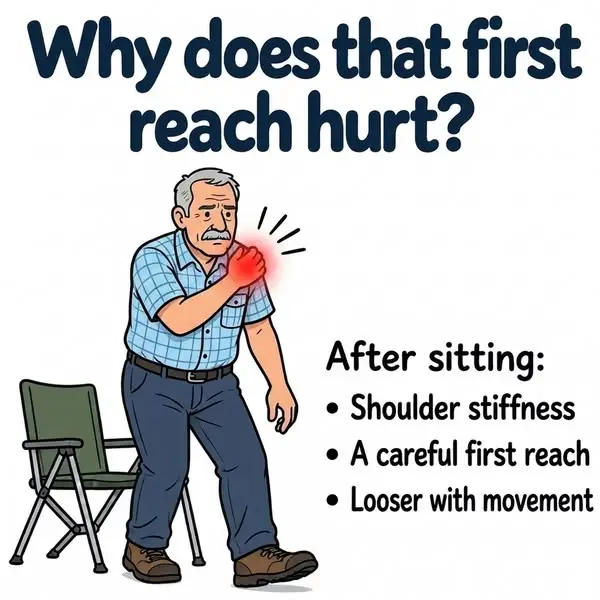
Why does that first reach catch?

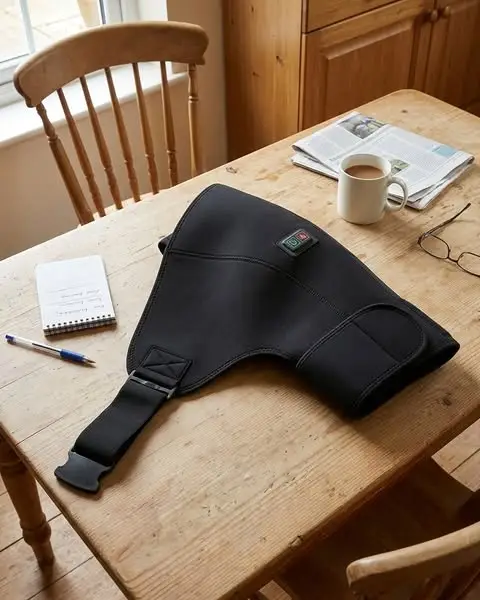
You sat down in the camping chair comfortably enough. Then you reached for your drink. The shoulder catches. You brace your arm and move it slowly. A few careful movements later, it feels a little looser. That pattern deserves an explanation. Chronic rotator cuff tissue can lose the blood supply it needs to repair itself. So everyday reaching becomes something you plan. Even on a quiet afternoon outside. Solva Shoulder combines heat, compression and vibration over the sore shoulder, for 12 minutes daily at home. Tap below to see the three therapies working together.

Loading the ad's image
Solva UK — Why does that first reach catch?
Promising

Six things your hip muscles are missing.

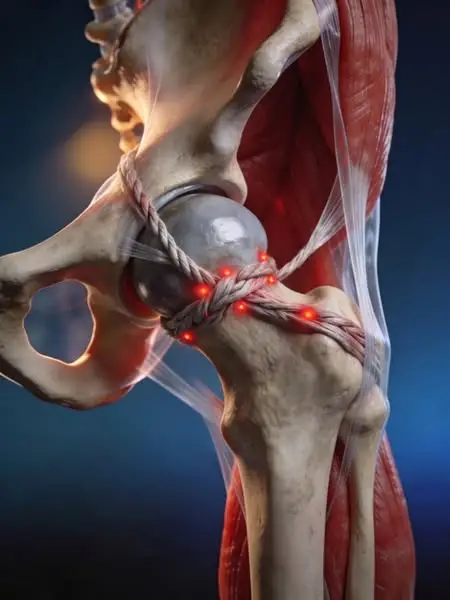
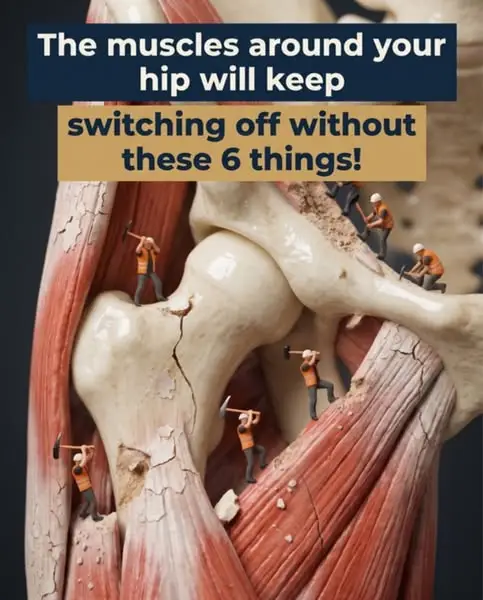
The muscles around your hip need six things to wake back up. And if you're like most people with an arthritic hip, you're missing all six. Look at the tiny workers in this image, chipping away at the hip. That's what every year of "wait until it's bad enough" does. Your hip isn't worn out. It's rusting, and it rusts faster every year it's left alone. If you're dealing with a deep groin ache, a burn down the front of your thigh, or stiffness that's got worse every year you've been told to wait, this isn't bad luck or "getting older". It's muscle starvation. When your hip starts to ache, the muscles around it switch off. They stop protecting the joint. They shrink, stiffen and clamp down on the nerves. That's why so many people wake up feeling like the Tin Man. And here's the problem: even when your body sends blood to your hip, most of it never reaches those muscles, because the clamped muscles squeeze shut the vessels that are supposed to feed them. No blood equals weak, clamped, switched-off muscles. To wake them up properly, your hip needs six things: 1. Blood flow back to the muscles Without it, nothing wakes up. Deep therapeutic heat reaches almost 8 centimetres down and reopens the squeezed vessels, so fresh blood and oxygen get in. 2. Energy for the muscle cells Medical-grade red light at 660 and 850nm switches the muscle cells' energy factories back on, so they stay awake instead of clamping right back down overnight. 3. Release of the clamp Deep, rhythmic compression over the exact muscles clamping your hip's nerves. Not a massage gun from the shops. 4. Depth Creams stop at the skin. The glutes and deep rotators sit up to 8 centimetres down, where no thumb, foam roller or cream has ever truly reached. 5. The right order Release, refeed, recharge. All three at the same time. That's the framework that holds the whole reset together. 6. Consistency Fifteen minutes, every single day. Miss days and the cycle wins. Most people are told to try one thing. A heat pack alone. Massage alone. Painkillers. Injections. None of those wake the muscles up, because none of them reach the muscles three ways at once. That's why the Solva Hip Restore exists. It's the only device built specifically for the hip that delivers all three steps of the Triple-Action Reset, all at once, in 15 minutes a day. One button. No app, no Bluetooth, no setup. Everything is medical-grade, with the specs printed right on the page. There's no billing code for waking muscles back up. That's why nobody tells you about it. Right now it's 60% off during the Early Black Friday Sale: 1× Hip Restore: £74.99 GBP (normally £189 GBP) 2× Hip Restore: £129.99 GBP, one for each hip 3× Hip Restore: £179.99 GBP, best value Every order comes with three free gifts: the eBook The Hip Recovery Blueprint (£20 GBP value), the 90-Day Progress Tracker (£10 GBP value) and the Pain-Free Sleep Positions Guide. Free UK shipping, tracked door to door and insured. Orders typically arrive in 7–14 business days. And it's backed by a 90-day money-back guarantee that starts the day it arrives. Use it every single day. If you don't catch yourself walking to the kitchen without limping, email Solva at [email protected] and they refund every penny. No forms, no questions asked. Click below before the sale ends 👇 solvabrand.co.uk/products/solva-hip-restore

Loading the ad's image
Solva UK — Six things your hip muscles are missing.
Promising

It's deeper than surface tension 👇

For the longest time I kept saying my shoulder muscles hurt. Which sounds reasonable, because that's where I felt it. Deep around the shoulder, sometimes achy, sometimes sharp, sometimes sending that horrible little stab through me when I reached up or rolled over. So I treated it like surface muscle tension. Foam roller, massage gun, stretching, strength work, all the usual suspects. And some of that felt good in the moment. But it never really got to the centre of it. That was the frustrating part. I was clearly on top of it. I was clearly trying. And still the same pain kept showing back up like it paid rent there. The article explained why. The rotator cuff tissue that needs help sits deeper than the layers a basic heat pack warms. Beyond that comforting warmth on the surface. With a blood supply that dwindles with age, so the tiny damage from ordinary reaching and lifting can accumulate instead of repairing. Once I read that, a bunch of failed attempts suddenly made sense. I wasn't lazy. I wasn't doing nothing. I was just missing the supply problem underneath it. That distinction matters when you've spent months feeling like your body is ignoring all your effort. If you've been rubbing your shoulder and warming your shoulder and still feeling that same deep stubborn pain, read it. There may be a reason the surface work never fully lands. 👉 https://solvabrand.co.uk/pages/s04-solva

Loading the ad's image
Solva UK — It's deeper than surface tension 👇
Promising

🚨 60% Off (Black Friday)

This is our Black Friday price — and it ends with the sale. Every other hip gadget you've paid full price for did one job on its own. The Hip Restore runs compression, heat and red light at once, 15 minutes a day. When the sale ends it goes back to £189 GBP. Grab yours at 60% off now, at £74.99 GBP, or pay full price later. Your call. 🎁 Try it now and get FREE shipping + 3 free gifts, including the eBook "The Hip Recovery Blueprint".

Loading the ad's image
Testing

Is the red light hip wrap a scam?

Is the red light hip wrap from the ads a scam? Plenty of our own customers thought it might be. They told us so, right along with the five things they wanted to know first. Here are all five, answered. And the last one matters most. 1. Is it complicated to use? No. Those are a pair of hands in this photo, pressing the button. That's the whole setup. If you can use a heating pad, you can use this. 1 button, no app, no Bluetooth, no setup. Many of our customers are in their 70s and 80s and run it on their own from the first day. You wrap it around your hip, press the button, and sit for 15 minutes. Each session treats one hip. 2. Will it work for my kind of hip pain? Maybe not. It's built for one kind. Press where your hip meets your pelvis. If that's the spot, and it burns down the front of your thigh, and it's worse when you lie on that side, that's the one. It was designed for the most common causes of chronic hip pain after 50: osteoarthritis, "bone on bone", degeneration, bursitis-type aches and that burn down the front of the thigh. If you only just had your hip operated on, check with your surgeon first. 3. I've tried everything. Why would this be different? Because everything you tried was aimed at the wrong thing. The pills, the shot, the physio. They chase the joint and the pain. The muscles around a hip like yours usually aren't worn out. They're starving. They switched off when the joint started to ache, and they stopped getting the blood they need. They sit up to 8 centimetres deep. Pills work through your stomach. Creams stop at the skin. Cortisone rents you six weeks of relief. Physio asks strength from muscles too starved to deliver it. The Hip Restore uses compression, deep therapeutic heat and medical-grade red light at 660 and 850 nanometres on those muscles, to switch them back on. Different target. 4. How long until I feel something? It's not instant. Most people feel the warmth and the first loosening in the first session. The nights usually take 2 to 3 weeks. Steadier walking and stairs, 6 to 8 weeks. Patricia, 58, from Exeter put it like this: "I ordered one for myself and within three weeks my husband was 'borrowing' it every night. We now have two. I can get downstairs in the morning without holding both rails." 5. What if it doesn't work for me? Then it costs you nothing. You get 90 days. Use it every single day, and if you don't catch yourself walking to the kitchen without limping, email us at [email protected] and we refund every penny. No forms to fight, no questions asked. Your 90 days start the day it arrives, not the day you order. That's how sure we are about question 2. And because it's Black Friday, here's what it costs right now: 60% off + free gifts. 1 Hip Restore: £74.99 GBP (normally £189 GBP) 2 Hip Restores, one for each hip or one for your partner: £129.99 GBP (normally £378 GBP) 3 Hip Restores: £179.99 GBP (normally £567 GBP) All 3 gifts come free with every order placed today: The Hip Recovery Blueprint eBook (£20 GBP value), the 90-Day Progress Tracker (£10 GBP value) and the Pain-Free Sleep Positions Guide (PDF). Shipping is free, anywhere in the UK. Orders typically arrive in 7–14 business days, tracked door to door. When the Black Friday sale ends, pricing returns to £189 GBP. Five questions. That's everything. Tap Shop Now: https://solvabrand.co.uk/pages/fastest-way-to-stop-arthritic-hip-pain

Loading the ad's image
Testing

Ease Shoulder Pain Without Pills

I was told at 47 that my shoulder was wear and tear and I'd have to manage it. I'm 61 now. Turns out everything my shoulder needed to repair itself, my own blood had been carrying for years. It just never reached it. For fourteen years, I "managed" a shoulder nobody ever actually explained to me. Fourteen years of heat packs that felt lovely for an hour in the evening and did absolutely nothing when the stab woke me at 4 a.m. Fourteen years of Voltarol gel that went cool on the skin for twenty minutes and wore off before I'd finished my first cup of tea. Fourteen years of paracetamol, then co-codamol on the bad days, swallowed faithfully every single morning with no change to what was going on underneath. Fourteen years of straps and supports pulled over my right shoulder for months at a time, that I couldn't even do up by myself. Fourteen years of a massage gun that felt nice for exactly as long as I used it and did nothing the moment I put it down. Fourteen years of kind, busy people who moved my arm about, pressed on the joint, nodded slowly, and handed me printed sheets of exercises that had nothing to do with what was actually happening inside my shoulder. I did everything they asked. I did the band exercises every single morning. Two full years without missing a day, because every sheet I was given said to keep it moving. I paid for private physio at around £50 GBP a session. I kept swimming twice a week, even when every stroke felt like someone twisting a screwdriver into the joint. I spent a small fortune on things that promised to help. Turmeric capsules. Glucosamine. Fish oil capsules I choked down every morning because someone on a forum swore by them. Joint formulas with fancy labels and long ingredient lists that added up to nothing. When that didn't stop it getting worse, my GP referred me to a consultant. She sent me for a scan. Afterwards she sat down across from me and said the wear was real, it was getting worse, and it was consistent with everything I'd been describing for years. More appointments after that. Degenerative changes in the rotator cuff, they told me. Which sounded serious but still explained nothing about what to actually do about it. The blood tests ruled out the obvious things. "We don't always find a clear reason for this," my consultant said. "Sometimes the tendons just wear. Very common after 45." She mentioned another cortisone injection. Said it was the usual next step. And that if it didn't hold this time, we'd need to have the conversation about surgery. I told her I'd think about it. I'd done my reading. I'd had two injections already, and each one worked beautifully for about six weeks and then faded. I'd read that cortisone weakens tendon tissue with repeated use. And I'd read what a rotator cuff repair really means. The sling. The weeks of not being able to lift a kettle, dress yourself or drive. Four to six months of rehabilitation afterwards. I'd read it over and over in people's own words on the forums. The nights sleeping upright in a chair. The long, slow climb back. And nothing about the surgery changing why the tissue broke down in the first place. I wasn't ready for that. Not yet. Not if there was anything else. So I kept trying. I bought a TENS machine. Used it twice a day for six weeks. The buzzing took my mind off the ache while the pads were on. The moment I took them off, everything came back. I tried acupuncture. Eight sessions. My practitioner was kind and clearly believed in what she was doing. The ache was unchanged. I ordered a posture brace that pulled my shoulders back. Wore it every day for three months. It now lives at the bottom of my wardrobe with the rest of them. I tried ice for the inflammation. Bags of frozen peas, actually. Every morning. The cold would quiet the ache for a bit. Then the peas would thaw and within twenty minutes that deep, dull throb would be back, angrier than before. Nothing stopped it getting worse. That's the part that broke me, more than the pain itself. The 4 a.m. stab, the dull ache that sat in the joint all evening, the sharp catch that shot down my arm without warning, those were bad enough. But I could have lived with a steady level of bad. What I couldn't live with was watching my reach shrink. It had started with the top shelf. A catch when I reached for the big serving dish, which my first GP put down to a strain. By year three, I couldn't get anything off the top shelf at all. By year six, I couldn't do my bra up behind my back. By year ten, I couldn't lift my right arm above shoulder height to hang out the washing. And I couldn't trust that arm anymore. Not reliably. A full kettle that should have been nothing would wobble halfway to the mug. I had to be careful at the hob, careful with a pan of hot water, because I couldn't trust my shoulder not to give out when it mattered. I stopped wearing anything that did up at the back. Front-fastening bras, zip-up jumpers, nothing I had to reach behind me for. I hadn't worn my good wool coat in four years, because getting my right arm into the sleeve took a routine I didn't want anyone to watch. The seatbelt had become something I thought about before I got in the car. I reached across with my left hand every time. I planned every trip to the shops around what I could carry on one side, because I couldn't fully trust what my right shoulder would let me lift. I stopped fell walking. I'd loved it, the Lakes, the Dales, real paths, with rocks to scramble up and stiles to haul yourself over. That was over. I couldn't grip a rock above my head or plant a walking pole on the steep bits without that stab. The risk of losing my hold on anything that wasn't flat and easy was too high. I stopped driving long distances because holding the wheel for an hour made the ache so loud I couldn't think about the road. My husband watched all of this and didn't say much, because what was there to say. He just quietly started doing things I used to do. Putting the bins out on icy mornings. Carrying the shopping in from the car. Standing close enough in the kitchen that he could catch the casserole dish if my arm gave way. I hated that. I hated needing that. I hated becoming someone who needed to be caught. And my next appointment with the consultant was in eight weeks. And I knew what was going to happen. The shoulder would be worse. The reach would have slipped further. And the injection would be offered again, then the surgery waiting list, and this time I wasn't going to have a good argument against it. I had stopped believing anything would help. I had started doing the maths on the surgery, on what "managed but not fixed" looked like for the next thirty years. On whether that was just my life now. Then I ran into a woman I used to know from my walking group. We'd drifted apart over the years. She'd had shoulder trouble too, told it was wear and tear around the same time as me, which was how we'd first got talking. We ran into each other at the farmers' market in Harrogate on a Saturday morning, and she was moving differently than I remembered. Loose. Easy. She reached right up and took a jar of honey off the top of the stall without a second thought. I asked her how she was doing. She looked at me for a second and said, "Honestly? Better than I've been in years. I was going to ring you." We sat down at one of the tables outside the café. She got straight to it. "I know you've been struggling," she said. "I know because I was exactly where you are. Awake at 4 a.m., every night. Running out of things to try. Looking at the letter about surgery and wondering if I was out of options." "What happened?" I asked. "I found out why none of it was working. Not the exercises. The reason all those heat packs and gels and injections never made a lasting dent, even when I was doing everything right." She paused. "Has anyone ever explained to you where the blood to your shoulder actually goes?" I looked at her blankly. "Your rotator cuff, the four muscles and tendons that hold your shoulder together, repairs itself all day long. Every time you reach or lift, you make tiny tears, and at 30 your body fixes them within hours. That part you probably know. Here's the part nobody told me. It can only repair with what the blood brings it. The oxygen, the nutrients, the machinery that flushes out inflammation and rebuilds the fibres. And the rotator cuff is one of the most poorly supplied tissues in the entire body. Even at 25, it sits right at the edge of its blood supply. After 40, the tiny vessels feeding it start to disappear." I was listening. "So by the time you're our age, the repair crew barely turns up. It's not that your shoulder doesn't know how to heal. It's that what it needs never gets there. You're doing all the work, and your rotator cuff is getting the last few drops at the bottom of the pipe." "Okay," I said. "But why does it hit the shoulder so hard?" "Because the rotator cuff was always last in line. Always has been. So when the supply starts drying up, it's the first place to come up short. It feels it before anywhere else." She leaned forward. "And here's the flip side. Get the blood back into it, and the tissue can do what it was built to do. Repair itself." She let that sit. "That's why it starts with a catch on the top shelf. Then the ache at night. Then the reach shrinking. Not because your shoulder is uniquely worn out. Because it's standing at the end of a line that was already running dry." I stared at her. "You're telling me the physio wasn't the wrong idea?" "The physio was the right idea done on its own. It strengthens the muscles around the shoulder. That's real. The heat packs were the right idea too, warmth does help. That's real. The cortisone calms the inflammation for about six weeks. That's real. But none of it brings the blood supply back. The physio can't rebuild the vessels you've lost. The heat pack only warms the skin. And the rotator cuff sits much deeper than any of that." "But I've been doing all of that for years," I said. "The exercises. The heat. The injections. All of it." She nodded like she'd been waiting for me to say that. "I know. I did the same thing. For years. And here's what took me forever to understand." She paused. "It's like watering the pavement next to the pot and wondering why the plant won't grow. The water was never the problem. It just never reached the roots." That hit me harder than anything anyone had ever said about my shoulder. "That's why none of it lasted. It was never that your body is different, or that you're unlucky. It was a supply problem. Everything you tried was working on the surface, or masking the pain, while the tissue underneath went on starving." "So all those years," I said. "All those heat packs. All those appointments. All that effort." "You weren't failing the treatment. The treatment was never reaching you. Not once did any of it get blood back to the place that actually needed it. Every one of those boxes said 'deep relief' on the front while almost none of it ever got past your skin." I sat there for a long time. "So what actually gets it there?" I asked. "If not a heat pack?" "You stop warming the surface. You bring the blood back to the tissue itself." "How?" "You live in Harrogate. For centuries people came here for the baths, and went to Bath for the hot springs, to soak their aching joints. They didn't have a word for why it helped. They just knew they went home moving easier. What they were actually doing was sitting in deep, steady warmth for long enough that it got past the skin. They didn't understand it. They just watched it work, over and over, for generations." "And now?" "Now we understand exactly why. Sustained heat at around 42°C, not a hot water bottle, goes past the skin into the muscle and tendon and opens the vessels that have been closed for years. Rhythmic compression pushes the inflammation out and draws fresh blood in. Vibration at around 60Hz reaches deeper still and loosens the stiff, stuck tissue. So instead of a heat pack warming your skin and hoping some of it reaches the joint, you get the blood moving right where it hurts, every day, exactly where it's needed. But only if all three happen at once." She pulled out her phone. "This is the article that explained it to me. Look. By 50, blood flow to the rotator cuff has typically dropped by 30 to 50 per cent. By 60, it can be down by 70 per cent. That's not your shoulder failing. That's the supply failing." I looked at the screen. Then I looked at her. I was 61. "So this isn't just another gadget that claims to help shoulders." "No. This is the thing that finally gets back what your shoulder has been missing for years, to the place it was always supposed to go. It doesn't mask the ache. It doesn't wear off like the gel. It brings the blood back to the tissue that's been starving. That's why everything else fell short. And that's why this felt different when nothing else did." I left that conversation and couldn't think about anything else. That night I read everything I could find on the subject. Why shoulder pain after 45 hangs on even when you're doing all the right things. Why heat packs and injections so often fall short. The article kept pointing back to the same thing. The rotator cuff is poorly supplied to begin with, the supply shrinks with age, and without it the tiny tears never repair and the inflammation never clears. Heat alone opens the vessels but doesn't flush anything out. Compression alone moves fluid but can't open vessels that have been closed for years. Vibration alone reaches deep, but the tissue isn't ready for it with no blood flow. All three together, in one session, sidesteps the entire problem. I found people online who sounded exactly like me. Years of heat packs and physio. Awake at 4 a.m. Watching their reach shrink. Then they started getting the blood back into the shoulder instead, and for the first time something landed. I texted her that night: "Okay. I believe you. Which one do I actually get?" She rang me the next morning. "Most of the gadgets out there only do one thing. A heat pad that only heats. A massage gun that only vibrates. A TENS machine that only masks the pain signal. So you strap on something that was never going to do the whole job in the first place." One device kept coming up in everything I read. The Solva Shoulder Triple Therapy Recovery System. 42°C heat, rhythmic compression and 60Hz vibration, all three at once. Three heat levels, three vibration modes and adjustable compression. One button, a 12-minute session, and it switches itself off. Cordless, rechargeable by USB-C, works on either shoulder. A UK brand, dispatched within 24 hours. A 90-day money-back guarantee. After fourteen years of things that didn't work, one more try wasn't going to break me. I started the morning after the parcel arrived. Put the wrap over my right shoulder, fastened the strap under my chest, which took about twenty seconds, and pressed the button. I expected nothing. I had trained myself to expect nothing. The warmth went deep, not the surface kind a heat pack gives you. By the end of those first 12 minutes, the shoulder felt loosened. By the second night, I noticed the ache was slightly different going into sleep. Not gone. But quieter somehow. I fell asleep before midnight instead of lying there fighting it like I had for years. I'd fooled myself before. I didn't let myself think about it. I kept using it. Every morning, 12 minutes, with a cup of tea and the news on. One week: The ache that had been waking me three and four times a night woke me once. I woke at 6:40 naturally, in the same position I'd fallen asleep in, after close to seven hours. I lay there for a moment before I moved, just taking that in. I hadn't slept through the night in over three years. Two weeks: My husband said something over breakfast. "You're moving differently." He wasn't trying to be kind. He looked almost confused. "You didn't brace when you picked up the kettle." The evenings that used to sit at an 8 out of 10 were landing closer to a 5. Not gone. But undeniably less. Three weeks: I stood in the shower and washed my hair with both hands. Both arms up. Not perfectly, not the way I used to, but my right arm went up with my left in a way it hadn't for years. That same afternoon I reached into the top cupboard for the big serving dish, the one that started all this, without thinking about it first. I stood there in the kitchen holding that dish, lifting it up and down, just feeling my shoulder do what I asked. I started crying and I couldn't have told you exactly why. It was just such a small thing. Such an ordinary thing. Six weeks: My consultant appointment. She asked me to raise my arms, the way they always do. Out to the side. Up in front. Behind my back. She started with my left. Then my right. She stopped. Checked her notes. Asked me to do the right one again. "When did this change?" she asked. "About a month ago," I said. "Maybe five weeks." I did it again, slower. Last visit my right arm had stopped at shoulder height. This time it went up above my head. Slowly, but all the way. Then she sat back and looked at me with an expression I hadn't seen on a consultant's face before. Not concern. Something closer to genuine puzzlement. "That's moving a lot better than last time," she said. "Not perfect. But a lot better." I told her about the device. About the blood supply, and how the rotator cuff is one of the worst-supplied tissues in the body, and how after 40 the vessels feeding it start to disappear. About how heat, compression and vibration together bring the blood back, where a heat pack only warms the skin. About the 42°C and the 60Hz and the 12 minutes a day. She typed while I talked. Asked me to spell the name twice. Asked which one. That was eight months ago. Most mornings now I have to remind myself I ever spent my nights awake at all. And the reach isn't slipping anymore. I check every week. I stand at the kitchen door frame, reach up with my right hand and make a little pencil mark where my fingertips get to. For eight months, that mark hasn't slipped down once. For eight months, the reach that had been shrinking steadily for fourteen years has simply held, and crept back up a little. I've been back on the fells. Not the scrambles yet. But real paths, with real rocks, with a walking pole in my right hand and my husband walking next to me instead of behind me with his hands ready. I sleep six, seven hours most nights, some of them on my right side. I walk four, sometimes five miles without planning which hand to use for every gate. Last month I wore my good wool coat. Just for an evening. To a dinner, nothing special. But I put it on myself, right arm first, and it wasn't agony, and I drove home without thinking about my shoulder the entire way. Here's what I need you to understand. If you've tried physio and heat packs and injections and they didn't last, it wasn't that they were done badly. It wasn't that your body is different, or that you're unlucky, or that you just have to accept your reach getting smaller. It was that the tissue was already starving, and none of them fed it. And because your rotator cuff was always last in line for blood, it kept coming up short no matter how hard you worked. You weren't failing the treatment. The treatment was never reaching you. It never once got the blood your shoulder needed to the place that actually needed it. Solva Shoulder does it differently. Not by masking anything. Not by warming the surface. By running deep heat, rhythmic compression and vibration together, for 12 minutes a day, right on the shoulder that hurts. When the blood finally gets back in, the tissue gets the chance to do what it was built to do. But only if all three run at once. And only if the heat actually goes deep. Solva Shoulder is the one I found that got both right. 42°C heat with three levels. Rhythmic, adjustable compression. 60Hz vibration with three modes. One button, 12 minutes, switches itself off. Cordless, USB-C rechargeable, either shoulder. No pills, no gels, no appointments. One session a day. Right now it's Black Friday: up to 83% off, FREE gifts and savings of up to £600 GBP on the bigger packs. 90 days to try it. If your shoulder isn't moving better, sleeping better and reaching better, every penny back. No forms. No store credit. No fuss. But if it works? If by the end of the first 12 minutes your shoulder feels loosened, and by the second night you fall asleep before midnight instead of lying there fighting it? If in a week or two the 4 a.m. stab stops waking you three and four times, and you sleep close to seven hours straight? If three weeks in you wash your hair with both arms up, and reach the top cupboard without bracing? If six weeks from now your consultant is asking you to lift your arm twice because it goes all the way up? If eight months from now you're back on the fells, putting your own coat on, sleeping through the night instead of marking how far your reach has slipped every single week? You'll wish you started fourteen years ago. I know I do. 👉 See the Black Friday offer below. You don't have to keep rubbing gel into skin your rotator cuff will never feel while the surgery conversation gets closer. 👉 See the Black Friday offer below.

Loading the ad's image
Testing

Black Friday Sale — 60% OFF + FREE Gifts + Free Shipping!

✨ Black Friday Sale — For a Limited Time Only! ✨ Introducing the Solva Hip Restore — a Triple-Action device designed for arthritic hip pain, 15 minutes a day, at home. ✅ Release locked muscles — deep rhythmic compression massage over the muscles around your hip ✅ Refeed starved tissue — calibrated therapeutic heat ✅ Recharge muscle cells — red light at 660 and 850 nanometres ✅ Keep it simple — one button, no app, no Bluetooth ✅ Take it anywhere — cordless, USB-charged, shuts itself off ✨ 60% off, plus FREE gifts and free shipping, anywhere in the UK. 👉 Try the Hip Restore today, with 90 days to decide.

Loading the ad's image
Testing

Your Shoulder Has Stolen Enough Nights

Your shoulder doesn't get a night off. Neither do you. You get into bed. Find the one position that doesn't hurt. Fall asleep. Then you roll over. 4 a.m. Again. By morning you're already exhausted. Getting dressed is a negotiation. The top shelf is a problem. Even putting the kettle on comes with that little pause: is this going to hurt? That isn't a small inconvenience. It's your shoulder deciding how much of your own life you get to use. And you are tired of organising everything around it. The heat pack. The gel. The cupboard full of things you bought because, for one moment, you thought: maybe this one. Something feels good for a while. Then the evening comes round and you're back to the same routine. Solva Shoulder puts heat, compression and vibration together in one cordless wrap. Not a strap you tighten and forget about. Not a heat pack you have to keep warming up. Three therapies. At the same time. Twelve minutes. 🔥 42°C heat for deep, steady warmth. 〰️ Rhythmic compression around the shoulder. 📳 60Hz vibration to work on that stiff, tight feeling. Fasten it over either shoulder. Press one button. Sit down with a cup of tea, put the news on, and let the session run. No app to figure out. No lead tying you to a wall socket. No complicated routine to abandon after three days. It switches itself off after 12 minutes. Twelve minutes aimed at the shoulder that's making everyday things harder than they should be. Because what you want isn't another gadget. You want to put your coat on without bracing first. Reach for something without calculating the cost. Get into bed thinking about sleep, instead of your shoulder. Over 14,000 UK customers have already chosen Solva Shoulder. Put it to work on your own shoulder. Every day. And use the 90-day money-back guarantee if it doesn't help. And right now, Black Friday makes this the moment to do it: • Up to 83% off. • FREE gifts. • FREE UK tracked delivery. • A 90-day money-back guarantee. The wrap works on the left or right shoulder, with an extension strap for larger frames. Your shoulder has taken enough nights, enough easy mornings, enough ordinary things you used to do without thinking. Take back your evenings. Put heat, compression and vibration where you need them. Get the Black Friday offer below.

Loading the ad's image
Testing

Read This If Shoulder Pain Is Stealing Your Life 👆 [Black Friday]

🎉 Black Friday: up to 83% off + FREE gifts + free UK delivery. That deep, burning ache under my husband's shoulder blade stole his life, piece by piece. £2,400 wasted on physio, painkillers, massage… all of it. I broke every rule and fixed him myself. Here's how. I want you to picture a bloke in his early fifties. Good bloke. Worked as a carpenter his whole life. Built his own kitchen with his bare hands. Never asked for anything. Never complained. That's my Derek. Every morning he wakes up and that deep ache under the shoulder blade is already there. Not a dull twinge. A deep, grinding pain, like a nail driven under the joint. He used to joke that was fitting, for a carpenter. Nobody laughed. He presses it. He gets me to press it. He's rolled on tennis balls, foam rollers, that massage gun I bought him for Christmas. For a few blessed hours, it eases. Then it's back. You could set your watch by it. By ten in the morning he's knackered. By midday he's wincing when he reaches for a cup of tea. By three he can't lift anything heavier than the kettle. It's like he's carrying a bag of cement on that shoulder from the minute he opens his eyes. And the worst part? Watching him with our granddaughter. She runs to him with her arms up, “Grandad, up!”, and he has to say “not today, love.” He can't pick her up. He can't give her a piggyback. He just stands there, grey-faced, while she looks at him like he's a stranger. I've watched big strong men shuffle around with wasted shoulders and arms they can barely lift. Men who'd ignored that ache for years because “it's just tension, innit?” Men who'd had the surgery and come out no better. So when Derek started, I didn't muck about. I marched him straight to the GP. “It's muscular,” they said. “Do these exercises.” They gave him co-codamol and a photocopied sheet. He did the exercises. Three times a day for six weeks. The ache never budged. I pushed harder. Got him a referral for NHS physio. Waited eight months. Eight months, while that shoulder was being starved every single day. Finally gets seen. Fifteen minutes, if that. The poor girl was lovely but run off her feet. She gives him an elastic band and six sessions. “Keep up with the exercises,” she says. Private physio next. £70 a session. Twenty sessions. £1,400 gone. “It's deep tension,” they say. “Keep coming back.” He keeps coming back. The ache keeps coming back. The stronger painkillers start. The fog descends. He gains two stone. Deep down, he knows something is seriously wrong. But nobody's listening. At 3 a.m. the pain wakes him. That deep, grinding ache under the shoulder blade. He lies there, staring at the ceiling. I hear him whisper: “I just want to be pain free. I just want my life back.” I put the phone down after the last physio appointment and I looked at him. Nodding off in his armchair at half seven in the evening. Grey-faced. The man who built our kitchen with his bare hands. Broken. And I thought: they're going to let him fade away while he waits. Not on my watch. I'm not a doctor. I'm his wife. I've seen treatments prescribed because they're “standard care” even when they don't touch the real problem. So I went digging. And then I got lucky. Last autumn I came across an article. It explained why chronic shoulders after 45 don't heal on their own. I filled four pages of notes. It's blood flow, the article said. The rotator cuff has one of the worst blood supplies of any tissue in the body, and after 45 it can drop by up to 70%. Starved of blood, the tissue can't repair the tiny tears we all get from reaching and lifting. So it stays inflamed and raw. That was Derek. That deep ache wasn't tension. It was a shoulder that had been quietly starving for years. Derek and I read it at the kitchen table. Twice. To feed the tissue, it explained, three things have to happen at the same time. Deep heat at 42°C to open the vessels that have been shut for years. Rhythmic compression to pump fresh, oxygen-rich blood into the starved tissue and flush the old inflammation out. And targeted vibration at 60Hz to loosen the deep tissue and the adhesions locking the shoulder up. Three mechanisms. One device. Twelve minutes. It's called Solva Shoulder. Derek was sceptical. Can't blame him. After £2,400 wasted, he'd decided nothing was going to work. “Just try it for a week,” I said. “If it's rubbish, I'll send it back. 90-day money-back guarantee. Nothing to lose.” He ordered it that afternoon. Night one. He wraps it over the shoulder. Presses one button. Twelve minutes. “Weird,” he says. “Not bad weird. Just… warm. Deep. Different from a heat pad.” Goes to bed. I lay there, waiting. Listening. Normally he's awake at 3 a.m., gasping. That night he woke once, around four, and went straight back off. First time in months I didn't hear him pace the landing. By the end of the first week, he's getting out of bed without wincing, and the morning stiffness is gone before his second cuppa instead of hanging about all morning. Week two. He comes home carrying two bags of shopping. Hasn't done that in eighteen months. I nearly cry in the kitchen. Week three. The deep ache we'd both pressed a thousand times, the one that outlasted every massage and every pill, is half what it was. The pins and needles in his fingers, gone. He's sleeping through every night. Week four. Our granddaughter runs to him with her arms up. “Grandad, up!” And he picks her up. He actually picks her up. Spins her round. She squeals. He looks at me with tears in his eyes and says: “I'm back.” He's walking again, proper walks, a couple of miles. Says he has energy he hasn't felt in years. Here's what makes me furious. The NHS spent months assessing him. Prescribed treatments he couldn't tolerate. Put him on waiting lists that stole months of his life. All while that shoulder was starving. And the thing that actually fixed him — not masked it, fed the tissue so it could repair — arrived with a 90-day money-back guarantee. I don't blame the individual doctors and nurses. They're drowning. I blame the system. Since then, three of my former colleagues have tried it. Two friends rang me and asked what I'd found. I pointed them to the same article. The ones who stuck with it came back with the same story. The deep ache shrinks. The sleep returns. The life comes back. If you're lying awake at 3 a.m. with that deep, burning ache under the shoulder blade, staring at the ceiling, thinking “I just want my life back”, the article Derek and I read at our kitchen table is linked below. Black Friday: from £40.56 GBP each. 👉 https://solvabrand.co.uk/pages/shoulder-sleeve-before-bed Derek's ache was never really about tension. Maybe yours isn't either.

Loading the ad's image
Testing

Black Friday: Why Your Hip Keeps Locking Back Up

"I was the biggest sceptic in this family. Told my daughter it was another gadget for the cupboard. She bought it for me anyway. Two weeks in, I walked the dog around the ENTIRE block. First time since 2023. I owe my daughter an apology and this thing a review." — Denise Walker Most hips don't wear out overnight. They get rested into weakness. The Hip Restore wakes the hip back up: 🔥 Deep heat for starved muscles 💪 Compression that releases the clamp 〰️ Reaches up to 8cm deep 🔴 660 + 850nm red light 15 minutes in your chair. Every day. Black Friday: 60% OFF + FREE gifts today. Free UK shipping. 90-day money-back guarantee.

Loading the ad's image
Testing

FREE UK Shipping & 90-Day Results or Refund Guarantee

Forgot to check out? Up to 83% OFF + FREE gifts — Black Friday. ⭐️⭐️⭐️⭐️⭐️ "I was sceptical — years of physio and cortisone made an at-home gadget sound too easy. After a fortnight the constant ache stopped being constant. … First thing that's properly worked." — Dave J. Get yours now >> link below ✅ FREE UK Shipping & 90-Day Results or Full Refund Guarantee

Loading the ad's image
Testing

7 Years Of Shoulder Pain Gone In 8 Weeks [Black Friday]

🎉 Black Friday: up to 83% off + FREE gifts + free UK delivery. I was told I had a frozen shoulder at 52. I'm 59 now. 7 years. And it turns out "frozen shoulder" never told anybody what was wrong with me. Least of all me. They said it would thaw on its own. 18 months, maybe 2 years. I've had 7. Not once in 7 years did anyone tell me what was actually holding it. 7 years of paracetamol, then ibuprofen, then naproxen that gave me a stomach like a furnace, then co codamol that bunged me up and made the room tilt. 7 years of Voltarol on the bedside table, Deep Heat under my cardigan on every shift, and a heat patch on my neck that I'd forget to peel off till bedtime. 7 years of cortisone jabs. The first one bought me 6 good weeks, then the countdown started again. The second one did nothing at all. And they'll only give you 2 a year. 7 years of leaflets. A frozen shoulder leaflet off the printer, 4 stretches with stick men on it, a lovely orange elastic band from the NHS physio, and "keep at them, it'll thaw. No follow up needed." 7 years of that massage gun everybody's selling, a shoulder brace that dug into my armpit, and a £199 pillow that promised me my side back. 7 years of being told it's wear and tear, it's common in women your age, keep it moving, be patient. I was patient. God, I was patient. I did the wall walks with my fingers every morning for 3 years. I did the pendulum thing over the back of a chair. I bought the front fastening bras. I had my hair cut short because I couldn't get my arm up to dry it. Bit about me so you know who's talking. Janet Holroyd, 59, Keighley. School cook for 27 years. 220 dinners a day, trays in and out of an oven at shoulder height, pans that weigh more than my grandson. It started small. A catch in my right shoulder reaching for the big colander on the top hook. A dull ache after a shift that a hot water bottle sorted. 3 months later it wasn't small. It was a deep, grinding ache from the top of my shoulder right down into the arm. Lifting a tray to the hatch made me gasp out loud. Some nights the arm went dead just holding the remote. And here's the bit I could never make sense of. Some weeks it screamed. Some weeks it went quiet. Last May I had 11 days where I put my own coat on without thinking about it. Then it slammed shut again, worse than before. Nobody could explain that to me. Hold that. It matters later. I rang the surgery. Waited 3 weeks. Got 8 minutes with a GP who'd never met me. "Frozen shoulder. Very common in women your age. It'll thaw on its own, 18 months to 2 years. Paracetamol, keep it moving." Then she asked if I'd been feeling a bit low lately. I was in agony, not low. Out the door with a leaflet. The chemist sold me Voltarol. For a fortnight it was almost a miracle. Then it stopped. And when the pain came back, it came back meaner. Deeper. Somewhere no gel could reach, because it wasn't coming from the surface. Then I got the scan everybody waits for. 19 weeks for an ultrasound. And that's when I stopped arguing with any of them. "Thickened capsule," the consultant said, turning the screen round and tapping it with his pen. "Bit of a tear in the cuff as well. Classic frozen shoulder. The tear's normal at your age, we all get them." I felt something close to relief. Proof. I wasn't soft. I wasn't making it up. There was a picture. He put me on the physio list. 17 weeks. And he said the sentence I built the next 7 years on. "Treat it or don't treat it, it takes about 2 years either way. We'll manage the pain while it thaws." Manage it. While it thaws. So I waited for it to thaw. I was a number on a list, and the list wasn't moving, and neither was my arm. Every morning my right arm was set like concrete. I'd wash under my left arm with my left hand, and the right side got a flannel on a wooden spoon. I'd put deodorant on with my hand flat against the bathroom wall to get the arm high enough. By 10 on a shift the ache would start, and by the lunch rush I'd be sliding trays along the counter with my hip and smiling at the kids over the hatch while my arm screamed. I dreaded going to bed. Because I've slept on my right side for 59 years, and every time I rolled onto it in the night it was like a knife going in under the shoulder. Some nights it woke me 4 times. I'd get up and stand in the kitchen with my arm hanging, then get back in and lie flat on my back like a corpse, doing the maths on how many hours till the alarm. From March I slept in the armchair. Propped up, arm on a cushion. My husband Keith slept in our bed on his own for 8 months. The tiredness was killing me more than the pain was. I stopped reaching into the back seat for my bag. I stopped doing my own seatbelt with that hand. I stopped going to the big Tesco because the top shelves were out and I hated asking. I dropped to 3 days a week. Then a supply cook started covering my Fridays. 27 years feeding that school, and I was watching somebody else hoist my trays. And I stopped picking up Alfie, my grandson. He'd run at me with his arms up after nursery and I'd crouch down and hug him instead, because I was frightened my arm would give way with him in it. He's 3. After a while he stopped putting his arms up. I was 56 and I felt 85. I thought this was just getting old. It wasn't. That was wrong too. Then I chased it. Properly chased it. I paid for private physio because 17 weeks was a joke. £50 a session. What I got was the same 4 stick men on a printout and "keep at them, give it more time." More time. 7 years I'd been giving it time. And here's what nobody warned me about. The stretches made it worse. Every time. I'd do the wall walk exactly as shown, and by teatime my shoulder would be clamped tighter than when I started. I thought I was doing it wrong. I was doing it perfectly. I went back for the cortisone. It took the doctor 3 goes to find the spot. 6 golden weeks and then it wore off like a spell at midnight. The second one, 5 months later, did nothing at all. Absolutely zilch. And they told me that was my 2 for the year. I had the hydrodilatation, where they pump the joint full of saline to stretch the capsule. It was the most painful 20 minutes of my life and for 6 weeks I thought I was cured. Then one Saturday, hanging a bedsheet out, it grabbed me again. By then I'd joined one of those Facebook frozen shoulder groups. 70,000 of us. All awake at 3 in the morning. All with a tip. So I bought the tips. A gel at £22 a tube, twice a day, which is £44 a month to "take the edge off." A TENS machine, £39.99, that was a distraction and nothing more. A massage gun, £49, that made the whole shoulder angrier. A brace off Amazon, £18. The £199 pillow. A microwave wheat bag that was lovely for 10 minutes. Turmeric capsules for 2 years, no difference. A CBD balm at £68 a jar that smelled of cut grass. A book called The Frozen Shoulder Workout that I couldn't do half of. £2,317 over 7 years. I went through my bank statements one night, sat on the edge of the bath at 4 in the morning, and added it up on the back of a school menu. Some of it worked for an hour. Some for a month, and then it just stopped. Nothing ever held. And the pills didn't fix anything, they just covered it. I knew that. I took them anyway. What else was there. Then it hit me like cold water one night. I was doing exactly what my mum did. Same gels. Same pills. Same injections. Same "be patient." She walked that road for 11 years, and it ended with a big shoulder operation that was meant to fix it all, and her arm went in a sling and never really came out. She couldn't do her own hair. Couldn't dress herself. It put her in a chair. I knew where the road went. I was already on it. I was 57 years old, sat up at 2 in the morning, googling "can a frozen shoulder last forever." Then a physio asked me a question nobody had asked me in 7 years. She wasn't like the others. Maureen, 61, a little practice above a bakery 2 streets from the school. And the first thing I noticed wasn't what she said. It was how she moved. She reached up to the top shelf for my file with her right arm, straight up, without looking, without thinking, and pulled it down. Nobody her age moves like that. Not around me. I'd been jealous of every woman in every advert lifting her arm over her head for 7 years. We were 3 sessions in, doing another round of the same band exercises that weren't working. She watched me try to get my cardigan on. Watched me put my hand flat on the wall to reach. Then she stopped. "Can I tell you something," she said. "I see myself stood there. The dead arm at 2 in the morning. The armchair. The good weeks that make you think you're going mad. I had every bit of it. Same diagnosis. I was 47 when they turned the screen round and showed me my capsule." I stared at her. She didn't move like a woman who'd ever had it. "What happened?" She sat down on the plinth. "I was off work 16 months. I couldn't demonstrate a shoulder exercise, which is the whole job. I was on the tablets, sat in the armchair, sat on a pain clinic list." "So what did you do?" "Everything you've already done," she said. "Every stretch. Every gel. 2 injections. The lot. Then I found out what was actually doing it. And once I sorted that, it went." "What was it?" She leaned forward. "Let me ask you something first. In 7 years, has anybody once told you WHY your shoulder's locked?" I looked at her. "Because it's frozen." She leaned back. "That's not a diagnosis. That's a weather report." She let it sit. "Frozen shoulder just means a shoulder that's stiff and painful and won't go up. It tells you what it's doing. It has never once told you what's holding it. And every single thing you've been given for 7 years was aimed at the what." "Then what's holding it?" "Your shoulder is starving," she said. "Starving of what?" "Blood. I know how that sounds. Give me 2 minutes." Stood there in her flat shoes on the lino, she told me the thing that 7 years of appointments never had. "The rotator cuff, the 4 muscles and tendons that hold your shoulder together, is one of the worst-supplied bits of tissue in your whole body. Even at 25 it's living right at the edge of its blood supply. And from your mid 40s on, the little vessels that feed it start disappearing. By 50 the blood flow's down 30 to 50 per cent. By 60 it can be down 70. The tissue's still there. The supply line that feeds it isn't. "Now here's what nobody tells you. You tear that tissue dozens of times a day. We all do. Reaching. Lifting. Hoisting a tray to a hatch. At 30 the blood turns up, the repair happens, and you never know a thing about it. At 56 the blood doesn't turn up. So the repair doesn't happen. The little tears stack up. The inflammation sits there, because there's no flow to flush it out. And the deep grinding ache you've got is tissue that's been starving for years. The capsule they showed you on the screen is what stiffens up because the arm's been held still for so long. It's the result. It was never the cause." "And the good weeks?" I said. "The 11 days in May?" "That's your proof," she said. "A capsule can't do that. A capsule doesn't thaw on a Tuesday and freeze back up on the Thursday. It certainly doesn't take 11 days off in May. Blood flow can. A warm fortnight, a week you were on your feet more, and that tissue got a bit more of what it needed. Then it shut back down. Whatever's been doing this to you can open and close, because it's circulation. Your capsule was never the thing that was moving." I put my hand over my mouth. 7 years, and not one person had explained the good weeks. "But it's on the scan," I said. "He showed me the tear." "He did," Maureen said. "And plenty of people your age have a tear on the scan and no pain at all. Not a twinge. And plenty have your pain with a clean scan, and get asked if they're feeling a bit low. A scan doesn't mean nothing's wrong and it doesn't mean they've found it. It shows them the nearest suspect. It can't show them blood that isn't arriving. They looked at your capsule. They looked at your tendon. In 7 years, nobody asked what was feeding it." "So the frozen shoulder…" "The frozen shoulder everyone keeps treating is just what leaks out," she said. "Get blood back into that tissue, and it finally does what it's built to do. It repairs itself. Then the inflammation clears, and the arm starts going up." Then she did the thing that broke me. She went through my 7 years, item by item. "The stretches," she said. "You said they made it worse. They did. You cannot stretch tissue that's starving. It's got nothing to rebuild with. Every wall walk was another little tear it couldn't repair. And I handed out that stick man printout for years before I understood that, so I'm not judging anybody. "The gels. Voltarol, Deep Heat, the patches. They sit in the top layer of your skin and fade. They were never built to reach tissue that deep. It's watering the leaves of a plant while the roots are dry. "The tablets. Paracetamol, naproxen, the co codamol. They turn the volume down on the pain. They don't send one drop of blood to the shoulder. That's why it comes back the minute they wear off. "The jabs quiet the inflammation for a few weeks. They never open a single vessel. And cortisone weakens the tendon the more of it you have. That's why the second one did nothing. The hydrodilatation stretches the capsule, which is the result, not the cause, so it clamps straight back down. The gun, the brace, the TENS, the pillow, the wheat bag, the turmeric, the balm. Not 1 of them ever fed that tissue." And there it was. 7 years. £2,317. And every single thing I'd bought had been working on the surface of something that was starving underneath. Not 1 of them ever fed it. "So why has nobody said this to me?" I said. "In 7 years?" She shrugged, and she didn't make it a conspiracy, which is the only reason I believed her. "Because your GP has 8 minutes and a leaflet," she said. "She's not lying to you. She's doing what she's got time for. The system's built to manage you while you wait. Not to feed a shoulder. And nobody anywhere gets paid to tell a school cook in Keighley her shoulder's starving." The system's hands are tied. Mine weren't. "So how do I feed it?" I said. "Blood flow. Deep, sustained, every day. Not a hot water bottle on the skin. The rotator cuff sits much deeper than that." I went home and ordered a heated shoulder wrap that night. £29.99. Thousands of 5 star reviews. Week 1, nothing. Week 2, nothing. Week 3, still in the armchair with my arm on a cushion. I nearly wrote the whole thing off as another bit of tat in the airing cupboard. I told Maureen at the next session, half embarrassed. She laughed, kindly. "Course it did nothing," she said. "I went through 3 of those before I worked it out. A heated wrap warms the skin. The rotator cuff's an inch and a half under that." So I went looking for one that's built to get down there. It's called Solva Shoulder. A wrap, not a pill. It does 3 things in one 12-minute session. Heat at 42°C, the top of the safe range, hotter than any wheat bag. That's what gets deep enough to open the vessels that have been closed for years. Rhythmic compression. Squeeze and release, squeeze and release, for the full 12 minutes. That's the part the heated wraps haven't got. It pushes the inflammation out and pulls fresh, oxygen-rich blood in behind it, the way a good sports masseur does with her hands, except it doesn't get tired after 10 minutes. And vibration at 60 hertz, which gets deeper than heat alone, and loosens the stuff that's set hard round the joint after years of not moving. That last bit matters, so I'll be blunt. There are 2 speeds, and they are not the same thing. The warmth is tonight. You feel it within 90 seconds of pressing the button, and most people feel the shoulder loosen by the end of the first 12 minutes. The tissue is weeks. Feeding starved tissue until it can repair itself again, and keep repairing itself, is slow work. It's a wrap, not a drug. If you do one session, feel the warmth, and expect your arm over your head by Friday, you'll put it in the cupboard with everything else. That's the mistake. The warmth gets you through the nights while the blood flow does the part that lasts. You strap it on once a day. 12 minutes. One button. It runs all 3 at once and switches itself off. I did mine with a cup of tea before bed. Nothing to swallow. Nothing to fog your head. Nothing to clash with my thyroid tablets, which was the first thing I asked. And a 90 day money back promise, which after 7 years and £2,317 was the easiest decision I'd made in a decade. I looked the 3 therapies up before I ordered, because by then I didn't believe anybody. Heat, compression and vibration are standard kit in any sports medicine clinic in the country. What was new was doing all 3 at once, at home, every day. I'd learnt one more thing the hard way. Get the real one, from Solva direct. There are £25 heated wraps all over Amazon that only warm the skin, and I'd already bought one of those. So I started. Session 1: the warmth got down in there within a minute or two, and by the end the shoulder felt loosened. I slept 4 hours in a row, which was 2 more than usual. Night 5: I woke once. Once. I lay there in the dark trying to work out whether I'd genuinely slept through till 4. Night 12: I went back to our bed. Keith didn't say anything. He just moved his pillow over. Day 23: I put my deodorant on standing in the middle of the bathroom, no hand on the wall. Then I stood there and stared at the mirror like an idiot for a full minute, because I hadn't done that since Alfie was born. Week 4: I rolled onto my right side in my sleep and woke up in the same position. In the morning. No knife. Week 6: Keith caught me pegging a bedsheet out with both arms up. He stood at the back door with his tea going cold. "When did you last do that?" I couldn't tell him. Years. Week 8: Alfie ran at me after nursery with his arms up, the way he'd stopped doing. And I bent down, and I picked him up, and I lifted him over my head, and he shrieked. That's the one I'd been waiting for. Not the pain. The lifting. Maureen checked me over at week 9. Pressed her thumbs along the shoulder the way she had at the start. "It's let go," she said. "There's give in it. And it's warm. First time I felt this, it was cold and tight as a fan belt." I went back to the consultant at the end of the year. Same man. Same screen. The capsule still looks thick on the picture. The tear's still there. It'll be on every scan I ever have, and it was never the thing hurting me. He asked what I'd been doing differently. I told him. The starved tissue. The blood flow. The wrap, 12 minutes a day, heat and compression and vibration all at once. He was quiet for a second. He took me off the pain clinic list. For the first time in 7 years I walked out of that building without a prescription, without a leaflet, and without a waiting list. Now here's the part I have to be straight with you about. I did have a frozen shoulder. The words were right. They were always right. But frozen shoulder isn't a diagnosis. It's a description of what your arm's doing. And in 7 years, not 1 person told me what was doing it. They looked at my capsule, because a capsule shows up on a picture. Nobody looked at the blood that wasn't getting there, because that doesn't. So I spent 7 years treating a photograph, and waiting for a photograph to thaw. And when I think about what that cost me, it makes me feel sick. £2,317 on gels and braces and pillows and turmeric and a jar of balm that smelled of cut grass. 3 years of wall walks that were tearing starved tissue every time I did them properly. £50 a session for another stick man. 6 weeks from a jab and then worse than before. 6 weeks from having my joint pumped full of salt water. 27 years feeding that school, and I let a shoulder take it down to 3 days and a supply cook. And the rest of it. 7 years of front fastening bras. 7 years of short hair I never wanted. 7 years of a flannel on a wooden spoon. 8 months in an armchair while my husband slept alone. He stopped putting his arms up. That's the one I can't get back. I want to say the last thing plainly, because I wish somebody had said it to me at 52. "It'll thaw on its own" is the most expensive sentence I've ever been told. I waited 7 years for it to thaw. It doesn't. The good weeks get shorter. The tablets get stronger. And that waiting list you're on will sit there and watch your arm get worse. Every month you spend waiting for it to thaw is another month that tissue stays starved. It doesn't feed itself. It heals when the blood gets back in. Solva is a small UK company. They dispatch from the UK, and it's up to 83% off for Black Friday, so they do sell out. I told myself to order it before I'd talked myself out of it, and for once I did as I was told. There's the 90 days, so the worst that happens is you post it back and get every penny. I think about Day 23 a lot. Stood in my own bathroom, both arms up, staring at the mirror. 7 years I waited for that morning. You don't have to wait that long. Black Friday: from £40.56 GBP each. 👉 Link below. Stop treating what it's called. Feed the thing that's holding it. Janet Holroyd, Keighley P.S. If your shoulder wakes you when you roll onto it, or your arm goes dead at 2 in the morning for no reason, that's your sign. That was me. Give it 8 weeks. Full 90 days, every penny back if the arm isn't going up: 👉 Link below. P.P.S. 1 thing, if you take nothing else. It isn't a capsule. It isn't wear and tear. It's tissue that's been starving of blood since your mid 40s. Feed it, 12 minutes a day, with heat, compression and vibration all at once. That's why 7 years of gels, 2 jabs and a joint full of salt water did nothing, and this did: 👉 Link below.

Loading the ad's image
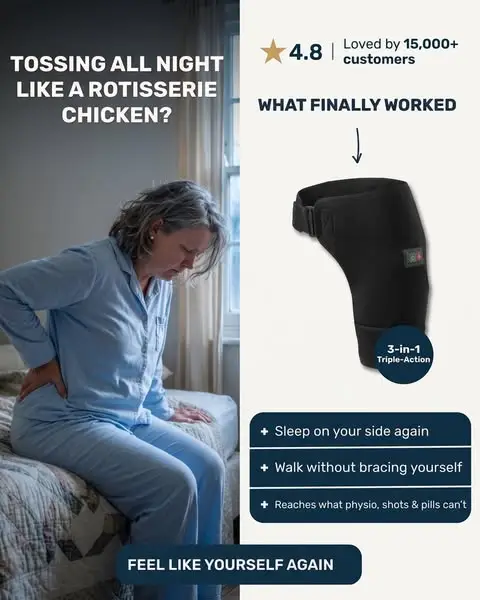
Testing

From the ads Sniped has collected from this page (17 so far, first seen Nov 2026). Reach is what Meta reports; no spend or sales estimates.