Advertiser

The Blood Sugar Journal

auniva.coMeta Ad Library

3
Running ads
none new in 30 days
Sep 2026
Advertising since
longest ad 2 months
—
Reach
running ads, summed
0% video
Formats
0 video · 3 image
1
Products advertised
1 shop

Feel Like Yourself Again

There's a canvas beach bag on the top shelf of my hall closet that hasn't been unpacked since the 4th of July, 2019. I know exactly what's in it. A pink and white striped towel from Target. A tube of sunscreen that expired 3 years ago. A pair of black flip flops with the arch worn down to a shadow. A paperback I never finished, a mystery set in Charleston that my daughter gave me for Mother's Day. And a green tankini with a ruffle at the waist that I bought on sale at Belk in Bowling Green in June of 2019 and wore exactly one time. I know it's on the top shelf because I put it there myself. Reached up, shoved it back behind the extra pillows, closed the door. It's been up there for 6 years and 4 months, and every time somebody's invited me somewhere with a pool or a beach or a lake, that beach bag on that top shelf is the first thing I think about, and it's the reason I've said no. Last month my daughter Whitney called and told me my granddaughter Aubrey is being baptized at a beach house in Gulf Shores the second Saturday of July. She said, "Mom, we rented the whole thing. 6 bedrooms. You get one. Everybody's coming. Ray. Trish and them. The cousins from Alabama. Aubrey wants you there. Please." I said yes because I couldn't say no. Then I hung up the phone, and I walked back to the hall closet, and I opened the door, and I looked at the top shelf. And I stood there for probably 15 minutes. My name is Marla. I'm 56 years old. I've lived in Bowling Green, Kentucky, my whole life, in the same little brick ranch off Nashville Road that my late husband Doug and I bought when I was pregnant with Whitney in 1993. Doug passed in 2016. Heart attack in the driveway on a Tuesday morning at 6:20am. He was 54. I've been the dispatcher at Sinclair Freight over on the industrial park for 22 years. I know every driver in a 200 mile radius. I know their kids' names. I know their birthdays. I know which ones haul reefer and which ones won't, which ones will pull double trailers to Louisville on a Sunday and which ones need Sundays off no matter what. I sit at that desk 5 days a week and I run 40 trucks and I do it well. I sit is the part that matters. I've been sitting for 22 years. When Doug was alive I moved. He liked to walk. He liked to go to Lost River Cave and take the trolley and get out and hike the little trails. He liked driving over to Barren River Lake on Saturdays and putting our folding chairs by the water. He'd cook out on the deck 3 nights a week in the summer. He kept me on my feet without me realizing he was doing it. When he died I stopped moving. Nobody made me stop. I just stopped. I went to work. I sat. I came home. I sat. I ordered supper from the Chinese place on 31W or picked up something from Cracker Barrel or ate a sandwich standing at the counter over the sink and then I sat on the couch and watched TV until I fell asleep. Weekends I sat and read. Sundays I sat at church and sat at Sunday dinner at Whitney's and sat at home in the evening. For 9 years I have mostly sat. I gained 34 pounds in the first 3 years after Doug died. My doctor, Dr. Kimble over at Graves Gilbert Clinic, told me at my physical in 2019 that my numbers were "creeping." She said my A1C was up. She said my triglycerides were up. She said my weight was up. She said "we need to think about this." She sent me home with a printout about the Mediterranean diet and a pamphlet for a nutrition class the hospital offers on Wednesday nights. I bought the tankini that week at Belk. I told myself I was going to lose the weight. I was going to walk. I was going to eat fish and vegetables like the pamphlet said. I was going to go on the annual family trip to Gulf Shores that summer and I was going to be different. I went to Gulf Shores that year and I wore the tankini exactly one time, on the second day, on the beach at 8am when everybody else was still asleep, and I sat in a rented chair with a towel across my lap the entire hour I was down there, and I got up and walked back to the house before anybody could come find me. I've refused to go back for 6 years. I told Whitney the flight was too expensive. I told her the drive was too long. I told her work was too busy. I told her I didn't want to leave the neighbor's cat that I feed while she's at her daughter's on weekends. I told her a different lie every year and Whitney, who is 32 years old and has a job as a physical therapist and 2 little girls of her own, didn't believe me any of the 6 years. She was patient with me until this year. This year she said Aubrey wants me there. Aubrey is 4. She calls me Grandmaw. She thinks I hung the moon. She's being baptized in the ocean by Whitney's pastor from her church in Louisville, and she wants her Grandmaw there. There's no lie I can tell that's bigger than that. So I said yes. And I stood in front of the hall closet for 15 minutes. And then I did what I always do when I'm scared, which is I called Delma. Delma is my first cousin. Her mom was my mom's older sister. We were born 4 months apart. We were raised in and out of each other's houses in Warren County until Aunt Rose moved the family to Alabama when we were 11, and even after that we saw each other every summer for 2 weeks at my grandma's farm in Franklin, and we've been on the phone every 2 or 3 weeks for 45 years. Delma is 58 now. She lives in Muscle Shoals, Alabama. She's a hairdresser at a salon on Woodward Avenue and she's been cutting hair for 36 years. Her second husband Cliff is a retired railroad man and they've got 4 grandkids and a bass boat and a little house on a corner lot with hydrangeas. Delma has always been the bigger cousin. I want to be plain about that because it matters to the story. When we were kids I was skinny and she was chubby. When we were teenagers I was chubby and she was heavier. When we were in our 30s we were both big women. Through our 40s and into our 50s we compared notes over the phone about our diets and our doctors and our numbers and our clothes not fitting. Delma had a bigger frame than me, always, but she'd carried more weight than me most of our lives, and we'd talked about it the way cousins talk about things, with love and honesty and no judgment. The last time I'd seen Delma in person was Aunt Rose's funeral in Muscle Shoals in September of last year. She'd looked the same as she'd looked for years. Big woman. Kind face. Struggled to get out of the pew. I called her that night in April after I got off the phone with Whitney. She answered on the second ring like she always does. I said, "Del, Whitney's making me go to Gulf Shores in July." She laughed. I said, "It's not funny." She said, "Baby, I know it's not funny. I'm sorry. Tell me about it." I told her about the baptism. About the beach house. About Aubrey. About the tankini in the beach bag in the closet. I told her I'd stood in front of that closet for 15 minutes. And Delma, who has been my cousin for 56 years, was quiet on the phone for a long minute. Then she said, "Marla, I've been meaning to tell you something." I said, "What." She said, "I've lost 18 pounds since Aunt Rose's funeral." I sat down at my kitchen table. She said, "I haven't told you because I didn't want to make you feel bad. And I didn't tell you at Christmas because I wasn't sure yet if it was going to stick. But it's stuck. 18 pounds. And I haven't changed my diet." I said, "Delma." She said, "I know how that sounds." I said, "You haven't changed your diet." She said, "Marla, I am eating the same things I've eaten since 1995. I ate biscuits and gravy at the Waffle House this morning. I had a Coke with lunch. I had Cliff's mama's pound cake on Sunday. I have not cut anything out. And I have lost 18 pounds since October." I said, "How." And Delma spent the next 40 minutes on the phone telling me something I had never heard before in 56 years of doctor visits and diet books and magazine articles and morning talk shows. She said, "Marla, you know Miss Hazel? Comes in every Tuesday at 9:30 for her hair?" I did know Miss Hazel. I'd met her at Aunt Rose's funeral. She was a retired home ec teacher who'd taught at the high school in Sheffield for 38 years. Little woman. Sharp. Always dressed nice. Delma said, "Miss Hazel's daughter is a pharmacist over at the hospital in Florence. She's been on this thing for about 8 months and she'd been telling her mama about it. Miss Hazel told me about it in October, the week after Aunt Rose's funeral, and she said, 'Delma, I'm going to say something to you as a friend and you can throw me out if you want to. But my daughter has been reading the research on this thing and I think you ought to try it. I've been on it 3 weeks and my clothes are already fitting different.'" Delma said, "I almost cried on her, Marla. Because in 36 years of cutting hair, nobody has ever said something to me like that. And I could tell she loved me. And her clothes really were fitting different. So I ordered it that Tuesday afternoon and I've been on it every day since." I said, "Del, what is it. Just tell me what it is." She said, "It's a supplement. Made out of the peel of a pomegranate." I laughed. I couldn't help it. She said, "I know. I laughed too. Miss Hazel didn't get mad. She said her daughter told her to keep an open mind. And she explained to me what it does, which is the part that mattered to me." She said, "Marla, listen. You know how when we were kids we could eat a whole bag of Doritos and a Coke and a piece of cake and not put on a pound? Remember that?" I did. She said, "Our bodies were doing something back then that they're not doing now. There's a system inside you that controls how fast the food you eat turns into sugar in your blood. When it's working right, food comes in and sugar trickles in slow, and your body keeps up easy. Your body burns what it needs, and it doesn't have to store anything extra." She said, "But that system wears down. Years and years, it wears down. Stress wears on it. Processed food wears on it. All the environmental stuff wears on it. Just plain aging wears on it. And every year it wears down a little more." She said, "By the time you're in your 50s, that system isn't controlling the speed the way it used to. So the same biscuits and gravy you ate at 25 turn into sugar 4 or 5 times faster than they used to. Sugar floods your blood. Your body panics and stores it. Some of it gets stored as fat. And the rest turns into a spike, and then a crash, and then a craving 2 hours later that sends you back to the fridge." She said, "It's not the food. It's the pathway." I want to tell you something. When Delma said that phrase, "it's not the food, it's the pathway," I felt something in my chest let go. Because for 6 years I have been standing in my kitchen at 8pm eating cheese and crackers straight out of the bag over the sink and hating myself for it. I have been counting calories on my phone and reading labels at Kroger and buying celery I never ate and Halo Top I only ate half of. I have been trying and failing and trying and failing. And Dr. Kimble had told me it was because I couldn't control myself. She'd told me to think about my choices. She'd told me to be intentional. She'd said all the things they say. And Delma, my cousin, was telling me that a system inside me had worn down over years without me knowing it, and that the whole time it had been worn down my body had been storing sugar as fat instead of using it, and that the cravings that pulled me to the cheese and crackers were not because I was weak. They were because that system was broken and my body was crashing and reaching for whatever would spike it back up. I sat at my kitchen table and I cried and Delma stayed on the phone with me. She said, "Baby, I know." I said, "How does the pomegranate thing help." She said, "The compound in the peel, it's called punicalagins, and it has been studied for supporting that pathway that controls the speed. The pathway is worn down partly because of oxidative stress, which is basically like rust that builds up in your body over the years. The punicalagins help clear that rust out. And when the rust starts easing up, the pathway can start doing what it's always known how to do. Sugar starts trickling in slow again, like it did when we were 25. The spikes ease. The crashes soften. The cravings settle." She said, "Marla, I do not crave sugar at night anymore. I do not stand at my counter at 9pm eating fudge stripes out of the pack. I do not sit at the salon at 2 in the afternoon dying for a Coke. I eat the same things. I just don't want them the way I did. And my body is doing something different with them. That's the only way I can describe it." She said, "And it's not just the weight. My energy is different. I did a full 8 hour Saturday at the salon last weekend and I came home and I cleaned my kitchen instead of collapsing on the couch. That hasn't happened since Cliff and I bought this house." She said, "It's the peel, Marla. Not the juice. Miss Hazel's daughter had to look at 3 or 4 different brands before she found one that was actually made from the peel and standardized to the punicalagins. Most pomegranate stuff on the shelves at CVS is just juice, or it's standardized to something called ellagic acid, which is related but it's not the same compound. The brand her daughter found is called Auniva. It's organic pomegranate peel extract, made in the USA, 2 capsules a day. That's the whole thing." I said, "Where do you get it." She said, "Their website. auniva.co. There's a 90 day money back guarantee. If it doesn't do anything for you in 90 days, you send the bottle back and they put every penny back on your card. That's what let me try it. I had 90 days to lose and Miss Hazel sitting in my chair every Tuesday morning showing me it worked on her." I ordered a bottle that night. I want to tell you about the next 3 months honestly, because I'm 56 years old and I've been sold to enough times to know how these things go, and I want to be plain about what happened. The bottle came in 4 days. Auniva's Pomegranate. Organic concentrated pomegranate peel extract. Standardized to punicalagins. Made in the USA. 30 servings per bottle. 2 capsules a day with breakfast. That's the whole product. Week 1, I didn't feel anything. Week 2, I didn't feel anything. Week 3 was a Thursday afternoon and I was at my desk at Sinclair and I realized at 4:30pm that I hadn't been to the vending machine. That sounds like a small thing. I want you to understand it wasn't. I have been to the vending machine in the hallway outside dispatch every single afternoon between 2:15 and 3pm for 22 years. I get a Diet Coke and a bag of Cheez Its most days. Sometimes a Snickers. It is the middle of my day. It has been the middle of my day since Whitney was in the 5th grade. Week 3, Thursday, 4:30pm, I looked up from my screen and I realized I'd forgotten. I hadn't decided to skip it. I hadn't fought a craving. I'd just forgotten it existed. I didn't tell anybody. I went home. I ate supper. I went to bed. Week 4 I dropped 3 pounds. Not on purpose. I noticed it on my scale in the bathroom on a Saturday morning. I stood on the scale and looked at the number and stood on it again to make sure. Week 5 I skipped the vending machine 4 days out of 5. Week 6 I went to Cracker Barrel with the ladies from work on a Wednesday night and I ordered the meatloaf plate the way I always do, and I ate about two thirds of it and pushed the plate away because I was full. I have not pushed a Cracker Barrel plate away in 20 years. Debbie Ann across the table said, "Marla, you feeling okay?" I said I was just full. She looked at me like I'd said something in French. Week 7 my pants were loose in the waist. Week 8 I stopped needing a nap on Sundays. Week 9 I went to Belk on a Saturday morning in June. I walked back to the swimsuit section, which is on the second floor next to the shoes, and I stood in front of the rack for 20 minutes. I picked up 4 suits. I took them to the fitting room. I tried on a navy tankini with a wrap style top and a swim skirt. I looked in the mirror in that fitting room and I did not hate what I saw. I want to be careful how I say that. I did not love it. I am 56 years old and I've been a bigger woman for 25 years and I do not have the body I had at 30. But what I saw in the mirror at Belk was a woman who looked like herself again. Like Marla. Like the Marla Doug used to know. Like a person, not a shame. I bought the suit. I drove home. I put the Belk bag on the kitchen table. I called Delma. She was in the middle of a color at the salon and she picked up on the third ring anyway. I said, "Del." She said, "Yeah baby." I said, "I bought a swimsuit." She got quiet. Then she said, "Aw, honey." Then she said, "Aw, honey." And she stayed on the phone with me while I sat at my kitchen table and cried. I went to Gulf Shores the second Saturday of July. I drove down with Whitney and the girls in her Pilot. 8 hours. We stopped at a Cracker Barrel in Birmingham for lunch. I got a salad. Not because I was making myself. Because I wanted one. Aubrey was baptized in the surf by Whitney's pastor on Saturday morning at 9am. She wore a little white dress that Whitney's mother in law had sewn. She stood in the water with the waves at her knees and her preacher put his hand on her head and she looked up at me on the beach and she waved. I waved back. I was wearing the navy tankini and a pair of denim shorts and a straw hat and I was standing in the sand with my toes buried and I was there. All the way there. Not sitting in a rented chair with a towel across my lap. Not planning my escape route back to the house. Just there. Watching my granddaughter get baptized. Later that afternoon, after lunch, when everybody else was napping, I walked down to the water by myself. I took the tankini top off my shoulders enough that the sun hit my collarbone for the first time in probably 10 years. I stood at the edge of the ocean with the water washing over my feet. And I stood there for maybe 20 minutes and I let myself be a woman on a beach. That was 3 months ago. I've been on Auniva's Pomegranate 6 months total now. I've lost 22 pounds. I've not changed what I eat, which is the part that still surprises me. I still go to Cracker Barrel with the ladies. I still eat my mama's biscuit recipe on Sunday mornings. I don't do the vending machine at 2:30 anymore because I don't want to. I've started walking after supper the way Doug used to. Just around the block at first. Now 2 miles most nights. I take my phone. I listen to podcasts about history. I come back and I sit on the porch for a while before I go in. I have felt like myself for the first time since I was 47 years old. Auniva's Pomegranate is the organic concentrated pomegranate peel extract, standardized to the punicalagins that Miss Hazel's daughter looked for and Delma looked for and I looked for. It's made in the USA. 2 capsules a day with breakfast. It comes with a 90 day money back guarantee, which means if you order a bottle and take it every day for 90 days and you feel exactly the same at the end of it as you did at the beginning, you send the bottle back and Auniva refunds every dollar you spent. Every penny. If you're a woman reading this and there's a swimsuit in the back of your closet from 5 years ago or 6 years ago or 8 years ago, and there's an invitation on your kitchen counter you've been trying to figure out how to turn down, and you have been told by every person around you that you just need to try harder, I want you to know what Delma told me on that phone call. It isn't you. It's a system inside you that wore down over years without you knowing it. And there's a compound in the peel of a pomegranate that has been studied for supporting that system so your body can start doing what it did when you were 25 again. You don't need a diet. You need what your body has been asking for. 👉 auniva.co/pom/5 P.S. I want to be clear about the peel thing because Miss Hazel's daughter was clear about it with Delma and Delma was clear about it with me. Almost every pomegranate product on the shelves at CVS or Walgreens or the vitamin aisle at Walmart is made from the juice, or standardized to something called ellagic acid. That's a related compound but it's not the one the research keeps pointing at. Punicalagins are what live in the peel, the leathery part of the fruit that nobody eats. They're what the studies keep coming back to. Auniva's Pomegranate is the concentrated peel extract standardized to those punicalagins. If you go grab a bottle of pomegranate juice at Kroger tomorrow thinking it's the same thing, it won't be. Miss Hazel's daughter looked at 4 different brands before she found one that was made right. That part matters more than I understood when Delma first told me. 👉 auniva.co/pom/5 P.P.S. The 90 day guarantee is what let me hit the button. I am 56 years old and I have bought 40 different diet books and 30 different supplements and 20 different meal plans in my life and every single one of them was on me if it didn't work. This one isn't. You order the bottle. You take it every day for 90 days. If you don't feel a thing, you send the bottle back and Auniva refunds every penny. No paperwork. No customer service maze. No arguing. Just send the bottle back. That's the whole deal. It's the reason Delma tried it. It's the reason I tried it. And I would not have hit the button without it. 👉 auniva.co/pom/5 P.P.P.S. I want to tell you one last thing about that beach bag on the top shelf of my hall closet. I took it down 2 weeks after I got back from Gulf Shores. I opened it up on the kitchen table. Pulled out the pink and white striped Target towel, still folded the way I'd folded it in 2019. Pulled out the 3 year old sunscreen. Pulled out the flip flops. Pulled out the paperback I never finished. Pulled out the green tankini with the ruffle at the waist. I set the tankini on the table and I looked at it for a long time. Then I dropped it in the trash. The bag itself I washed and put back on the shelf, empty, because I'm going to fill it again next summer for the next trip. Aubrey turns 5 in June. Whitney's already talking about Destin. If you're reading this and you've got a beach bag on a shelf somewhere gathering dust, or a dress in a closet you haven't zipped up in 4 years, or an invitation on your fridge you've been dreading, I want you to know what I know now. The pathway that's been keeping you where you are can be supported. Your body still remembers what it did when you were 25. It's just been waiting for somebody to clear out what's been in the way. 👉 auniva.co/pom/5

Loading the ad's image


The Blood Sugar Journal — Feel Like Yourself Again
PromisingImage

Feel Like Yourself Again

Yolanda was eating a breakfast burrito in the passenger seat of my Peterbilt when she told me I'd been describing the wrong problem for about 4 years. She said it real easy, the way she says most things. Not mean. Just matter of fact. Like she was reading off a manifest. We were parked at the Flying J outside of Lubbock. I'd picked her up from her office because she needed to ride along on an inspection run and her car was in the shop. She had a breakfast burrito from the gas station and a large coffee and she was eating the burrito like it was the first meal she'd had since Wednesday, which knowing Yolanda it may have been. I'd been telling her about the wall. That's what I'd been calling it for 4 years. The wall. The thing that happened to me somewhere between mile 30 and mile 60 after any meal. I'd eat at a truck stop, get back in the cab, and somewhere around Childress or Clarendon or wherever I happened to be, I'd start to go. Not tired like sleepy. Tired like hollow. Like someone had pulled the batteries out of me from the inside. Heavy arms. Head like a waterlogged sponge. Eyes that didn't want to stay fully open. I'd been blaming the food for 4 years. Truck stop food will get the blame for everything and it deserves some of it. I'd cut the biscuits and gravy. I'd switched to eggs and turkey sausage. I'd started keeping almonds and protein bars in the cab and skipping the hot food entirely some days. And the wall was still there. Maybe a little lower some days but always there. Around mile 40 or so, somewhere between the last town and the next one, the cab would get quiet and the road would go long and flat and my body would just start draining. I'm 64 years old. I've been driving trucks in one form or another since I was 22. I run regional routes out of Amarillo now, mostly west Texas and eastern New Mexico. I'm semi-retired, which means I pick the loads I want and leave the long overnight hauls to younger drivers, but I still go out 3 or 4 days a week because I like it out there. I like the quiet of the cab. I like the way the light looks coming off the highway in the morning. I like being in a moving thing with a purpose. My name is Wayne. I'm 64 years old and I've driven somewhere north of 2 million miles and for the last 4 years I've been fighting something in my own body for roughly the last 40 miles of every run. I told Yolanda all of this somewhere around the Lubbock city limits. She finished the burrito. She crumpled the foil wrapper and put it in her cup holder like she always does so she can throw it away at the destination. She thought for a minute. Then she said, "Wayne. That's not a food problem." Yolanda is 51. She dispatches out of a terminal in Lubbock and she drives up to the Amarillo yard about once a month to do inspections and handle paperwork that she doesn't trust to the phone. She's been in trucking logistics for 26 years and she knows more about the mechanical operation of a Class 8 than most drivers I've met, which is a thing I respect because I came up through an era when the people who moved paper didn't always understand what was happening in the cab. I've known her for 11 years. She's been my dispatcher for 7 of them. We're not close in the way that people who see each other every day are close, but we're the kind of close that comes from a long working relationship where you've had to trust each other in situations that mattered. She said, "That wall you're describing. The drain. The hollow feeling after you eat. How long after?" I said usually 40 to 50 minutes. Sometimes less. She said, "Does it get worse after some meals than others?" I thought about it. Yes. Worse after anything starchy. The plates of hash browns and toast. The big pasta bowls at the Italian place in Midland I liked. Better after eggs. Better after just meat and vegetables. She nodded like I'd confirmed something she already suspected. She said, "I had the exact same thing for about 3 years. Before I figured out what was actually happening." I looked at her. She said, "It's not the food, exactly. Well, it's the food and something else. The food is just triggering a process that's not working the way it should anymore. And the process is the real issue." She looked out at the highway and thought about how to say it. She explained it to me in the language she uses for everything, which is logistics language. She said, think of it like a delivery system. Food comes in. Your digestive system breaks the carbohydrates down into sugar. That sugar gets delivered into your bloodstream. When the delivery system is running right, it paces itself. The sugar comes in gradually. Your body can handle the volume because it's spread out over time. You don't even feel it. You eat, you digest, you go about your day. But that delivery system isn't mechanical. It's biological. And biological systems can wear down. Year by year, the enzymes that control how fast carbohydrates break down take stress from the same things that stress everything else. Processed food. Environmental exposure. Years of irregular sleep and irregular meals and the particular kind of oxidative stress that comes from sitting in a cab for 10 hours a day with diesel exhaust and road noise and the kind of sustained low-grade alertness that never fully relaxes. A little erosion at a time. Year after year. And then one day the pacing is off. Carbohydrates hit your system and they break down faster than they used to. More sugar enters your blood at once. Your body scrambles to deal with the volume. And then it overshoots. The sugar spikes and drops. And that drop is the wall. That hollow, empty, drained-out feeling around mile 40 is your body on the other side of a sugar crash it can't fully manage anymore. The food didn't change. The road didn't change. The pacing system changed. She let that sit for a minute. Then she said, "I got my numbers checked about 3 years ago. Elevated fasting glucose. Nothing dramatic, but elevated. My doctor did the thing they do where they hand you a pamphlet about diet and tell you to reduce simple carbohydrates and come back in 6 months." I said, "I know exactly what pamphlet you're talking about." She said, "Everybody does. I changed the diet. Cut the simple carbs. And I still had the wall. Because the food wasn't the whole problem. The delivery system was." I asked her what she did about the delivery system. She said she fell down a research hole one night and didn't come up for about 5 hours. She found something about pomegranate. Not the juice. She was specific about that when she told me, in the way that she's specific about everything operationally. Not the juice. The peel extract. She said the peel of the pomegranate, which gets discarded when you make juice, is where the highest concentration of a compound called punicalagins is found. And punicalagins have been studied specifically for their effect on the enzymes that control how fast carbohydrates break down into sugar in the digestive system. There's research suggesting that when those enzymes have support from punicalagins, the breakdown can slow down. The sugar can enter the blood more gradually. More like it did when the pacing system was younger and running clean. She also said pomegranate has one of the highest antioxidant readings of anything measured in food, and that the antioxidant activity may help address some of the oxidative stress that wore the pacing system down in the first place. So it's two things at once. Supporting the current function and potentially easing some of what's been eroding it. She'd found a product called Auniva Pomegranate. Concentrated peel extract, standardized to punicalagins specifically, not just ellagic acid, which she said was a common shortcut that a lot of supplement makers use because ellagic acid is easier to source. She showed me the bottle when she pulled it out of her bag. She keeps it in the outside pocket of the laptop bag she carries, same spot every time, which is very Yolanda. She said she'd been taking it for about 8 months. I said, "Does it work?" She looked at me and then out at the highway. She said, "I drove from Lubbock to Amarillo this morning and I had a breakfast burrito at the Flying J. Wayne, when's the last time you rode 120 miles with me and I didn't need to stop for coffee somewhere around Canyon?" I thought about it. She never stopped. I want to be honest about where I was before I tried it, because I think it matters. I'd been skeptical of supplements my whole driving career. When you spend enough years in truck stops you develop a certain attitude toward products that make big promises on small bottles. I'd seen the whole wall of them. The energy boosters and the focus pills and the metabolism things. I'd tried a couple in my 40s and felt nothing and moved on. I also had a particular resistance to the idea that my body was something I needed to manage with capsules. I'd driven 2 million miles. I'd eaten questionable food at 4 in the morning in places that weren't on any map. I'd slept in my cab in January in Dalhart when the hotel was full. My body had been through a lot and it had always delivered. The idea that I now needed something to help my digestive enzymes pace themselves correctly was not a comfortable idea. But the wall was getting worse. Not dramatically worse. Just reliably worse. More days. More miles affected. I'd started timing my return legs so I could do the hard driving in the first hour and coast the last stretch, which is not how I've ever run a route in my life. I'd started declining the loads that required extended hauls because I didn't trust myself in the last stretch of a long day. A truck driver who doesn't trust himself in the cab is a driver who needs to figure something out. I ordered a bottle from auniva.co/pom/5 two days after Yolanda showed me hers. I started taking 2 capsules with breakfast. I didn't tell anyone I was doing it. I didn't set any expectations for myself. I just ran routes and paid attention. The first week I didn't notice much. Maybe slightly less severe on one run on Thursday but I couldn't have sworn to it and I don't believe in counting things that might be wishful thinking. The second week I had a Thursday run down to Midland and back. Full day. Stopped for lunch at a diner outside of Big Spring, the kind of meal I would normally have blamed, plates of everything. Drove the 90 miles back to Amarillo. Around mile 50 I checked myself. Nothing. Not nothing like I was fine and ignoring it. Nothing like the thing I'd been bracing for wasn't there. I drove through the stretch where I usually start to feel the drain and I just drove. Both hands on the wheel. Eyes tracking the horizon. Thinking about the radio station. Thinking about what I was going to do that evening. Not fighting anything. I didn't make a phone call. I didn't stop. I drove back to the yard in Amarillo and unloaded and did the paperwork and drove home. I sat in my driveway for a minute after I turned the truck off. I thought: that's the first time in 4 years I drove that route and didn't feel it in the last third. I kept taking it. Kept running routes. Kept paying attention. By week 4 the wall was something I thought about in the past tense. Not every run was perfect. There were still days where I ate something heavy and felt the edge of it. But the drain was different. Shallower. Shorter. Like the floor had come up. Like my body was handling the same meal differently than it was handling it a month ago. I called Yolanda on a Friday afternoon. I said, "That thing you gave me." She said, "Yeah?" I said, "I think it's doing something." She said, "I know." I said, "You could have said so more forcefully back there on the Lubbock highway." She said, "Wayne. I told you it worked." I said, "You said you didn't have to stop for coffee in Canyon." She said, "That's the same thing." I had a DOT physical about 6 weeks after I started taking it. Routine. I've had them every 2 years for 40 years. My examiner, a PA named Cortez who I've seen 4 times now, looked at my fasting glucose number and compared it to the one from 2 years prior. He said the number was down. Not dramatically. Down in a direction. He asked if I'd changed anything. I told him about the pomegranate peel extract. He looked at me for a second. He said he wasn't familiar with that specific product but he knew pomegranate had a research profile in the metabolic space and that he'd keep an eye on it. He was matter-of-fact about it the way good PAs are. Not dismissive. Not overly enthusiastic. Just noted. That was enough for me. I'm not asking for a celebration. I'm 64 years old and I've been driving trucks for 42 of those years and I know the difference between a road that's working and a road that's fighting you. My body's been fighting me for 4 years in the last 40 miles of every run. And now it isn't, mostly. And I know what changed and what didn't change. I still eat at truck stops. I still eat food that a nutritionist would look at sideways. I still drive old highways in the middle of Texas where there's nothing between you and the horizon but the road and whatever you brought with you in the cab. I just drive the whole route now. All of it. Not just the first 80 percent. If you're reading this and you know what I mean about the wall, whether it shows up in a truck cab or in your living room after dinner or in the middle of your workday when you've eaten right and done everything they told you and the energy still drains out of you anyway, then I'd tell you what Yolanda told me in the cab outside of Lubbock. It might not be the food. It might be the process. The food is just triggering something that isn't pacing the way it used to. And that process responds to support, the kind that comes from specific compounds in pomegranate peel, not the juice, the peel, standardized to punicalagins. That distinction matters. Most pomegranate products use ellagic acid as the marker instead, and ellagic acid shows up in a lot of fruits. Punicalagins are specific to pomegranate. That's what the research on carbohydrate metabolism is actually built around. The product is Auniva Pomegranate. Made in the USA. 2 capsules a day. They have a 90-day money-back guarantee, which means you try it for up to 90 days, and if it doesn't do anything for you, you send it back and they refund you. Full refund. You're not betting much on the outcome. I took a chance on it because Yolanda didn't stop for coffee in Canyon. That's a small thing. But when you've been driving as long as I have, you learn that small things in the cab are the ones that matter. 👉 https://auniva.co/pom/5 P.S. I told my wife about it. She drives about 45 minutes to work and back every day and she'd been complaining for 2 years about the early afternoon hitting her like a wall around 2:30. I didn't push her. I just left the bottle on the counter next to the coffee maker. She started taking it about 3 weeks after I did. Last week she said the 2:30 thing hadn't happened in over a month. She didn't make a big announcement about it. She just said it the way you say something that's already become normal. I think that's the best way for something to work. When it stops being something you notice and starts being just how things are. P.P.S. A word about what Auniva Pomegranate actually is, because I know some of you are going to ask. It's not pomegranate juice in a capsule. It's concentrated peel extract, which is a different part of the fruit with a different compound profile. The peel is where the punicalagins are concentrated, and punicalagins are what the research on blood sugar and carbohydrate metabolism is looking at specifically. Most commercial pomegranate supplements standardize to ellagic acid because it's simpler to produce, but ellagic acid is found in raspberries and strawberries and walnuts and doesn't tell you much about whether you're getting a true pomegranate-specific compound. Punicalagins on the label means something different. That's the thing to look for. That's what Yolanda looked for, and she knows how to read a specification sheet, so I'm inclined to trust her on it. P.P.P.S. Yolanda is still eating gas station breakfast burritos. I asked her if she thought the product was working despite the burritos or because of the burritos. She said Wayne that is not how biochemistry works. I said I knew that. She said she wasn't sure I did. She's probably right.

Loading the ad's image
The Blood Sugar Journal — Feel Like Yourself Again
PromisingImage

Feel Like Yourself Again

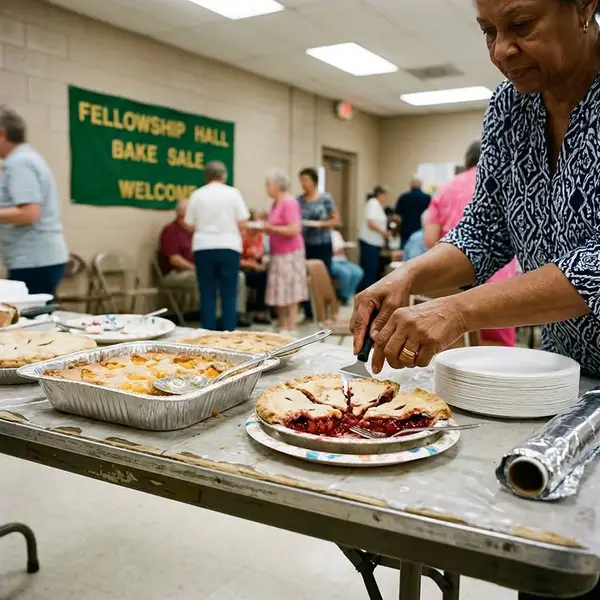
My granddaughter asked me why I wasn't eating my own pie. She's 7. So she just said it, the way 7-year-olds do. Standing there at the table, holding a paper plate with a slice of my sweet potato pie on it, looking up at me like she'd caught me doing something wrong. "Grandma. How come you're not having any?" And I just stood there. I've been running the bake sale table at Second Baptist in Meridian, Mississippi, every October for 22 years. Twenty-two years of sweet potato pies, seven-layer chocolate cakes, peach cobblers in aluminum foil pans. I know the layout of that fellowship hall better than I know my own kitchen. I know which card table wobbles on the left leg. I know to put the red velvet near the entrance because the smell pulls people in from the parking lot. And this October I was standing behind my own table and I had not eaten a single thing on it. My granddaughter, Destiny, she was looking at me with those big eyes, and I said, "Grandma's just watching her sugar, baby." And she tilted her head a little the way kids do when they know you're not telling them the whole truth, and then she went back to her pie. I watched her walk away. And something about that moment just broke me open a little. Because here's the thing nobody tells you about getting to 63. You don't get old all at once. You get old one small thing at a time. One food at a time. One morning at a time. One granddaughter looking at you sideways at a time. My name is Gloria Watkins. I'm 63 years old. I live in Meridian, Mississippi, about 20 minutes outside of town, in the same house my late husband Raymond and I bought in 1991. Green shutters. Magnolia tree in the front yard that Raymond planted from a sapling. The kind of house that gets warm by 9 AM in the summer and takes a ceiling fan all night to cool down. I worked 31 years as a school secretary at Longview Elementary. I retired 4 years ago. Most people expect retirement to feel like a vacation and I understand that, but for me it mostly just meant more time to notice things I used to be too busy to notice. Like how tired I was all the time. Like how my hands felt stiff in the mornings before I'd been moving for an hour. Like how I'd eat breakfast and feel just fine, and then two hours later feel like something was wrong. Not sick exactly. Just off. Foggy. Like a lamp turned down on a dimmer. I chalked it up to getting older. That's what you do. The doctor chalks it up too. "You're 63, Gloria. This is normal." I heard that so many times. And for a while, I believed it. But then my numbers started moving in a direction nobody was happy about. My doctor is a kind man. He's been my doctor for 11 years. At my last annual, he sat across from me with my labs and used the words "we need to keep an eye on this." He talked about diet. He talked about cutting back on sugar and white bread and "foods that spike." He told me to "watch my sweets." Watch my sweets. I've been making sweet potato pie since I was 8 years old learning at my mother's knee. I make 6 pies every October for the bake sale alone. I've been bringing something to this fellowship hall every single year since 1988, when Brother Simmons asked if anyone could bring desserts for the founders' day dinner and my hand went up before I even thought about it. And now I was watching other people eat my pie while Destiny looked at me wondering why grandma had gone quiet. That's when I started paying attention. Really paying attention. I want to be clear about something. I am not a doctor. I'm a retired school secretary from Meridian who knows how to make a pie that grown men cry over. I don't have any medical training whatsoever. But I can read. And I can listen. And I started doing a lot of both. My sister Vonda, who is 58 and lives over in Hattiesburg, had been through something similar a couple of years earlier. Her doctor said the same things mine did. Watch what you eat. Get more exercise. "We'll keep an eye on it." Vonda does water aerobics at the Y three times a week. She switched from white rice to brown rice, which she told me tasted like eating a damp paper bag but she adjusted. And her numbers got better. Not dramatically, but better. I called her the week after the bake sale. We talked for almost two hours. And at the end of it, she said something that stuck with me. She said, "Gloria, the problem isn't that you're eating sugar. The problem is that your body's relationship with sugar has changed. And that's different from just cutting it out." I turned that over in my mind for a few days. Your body's relationship with sugar. Because that was exactly it. That was exactly what I had been trying to find words for. It wasn't that I was eating different from how I'd always eaten. I ate the same things. My grandmother ate the same things at my age and never had this conversation with her doctor. Something had changed in how my body was handling what came in. And nobody was addressing that part. They were just telling me to eat less of the things I loved and wait for the numbers to get better. That didn't sit right with me. So I started looking. I want to tell you about the next three months, because they're important. I read a lot of things on the internet. Some of them were not useful. Some of them were selling things I didn't trust. I went down a lot of roads that went nowhere. But I also called my cousin Lenora, who is a retired nurse, and she pointed me toward some things worth reading. And one evening I was on the phone with Vonda again, and she mentioned something she'd read about. She said, "You know what I've been reading about? Pomegranate. Not the juice at the grocery store. A concentrated extract. Something different." I said, "Pomegranate? Like the fruit?" She said, "That's what I thought too. But apparently the science on it is more involved than you'd expect." Vonda is not someone who recommends things casually. She spent two years on the water aerobics before she saw any change in her numbers. She is patient and methodical and she doesn't get excited about things easily. So when she mentioned it, I listened. I started reading about pomegranate that same night. And I want to tell you what I actually found, not the flashy version, but the real version, because the real version is interesting enough on its own. Here's what the research I found said about what happens when your body processes sugar. Your body has a system for controlling how fast the food you eat breaks down into sugar in your bloodstream. Food comes in. Your digestive system breaks it down. Sugar enters your blood. When that system is running the way it's supposed to, the sugar comes in gradually, like water through a filter, and your body handles it easily. But that system is not invincible. Years of stress wear it down. Processed food wears it down. Aging itself wears it down. A little at a time, year after year, until the pathway that's supposed to control the speed starts slowing down, getting less responsive. And then one day the sugar is coming in faster than your body is built to handle. The spikes get higher. The crashes get lower. The cravings get louder. And you can change your diet all you want, but if the underlying pathway isn't working the way it used to, you're just managing the symptoms. That's what my doctor was asking me to do. Manage the symptoms. Cut the sugar. Watch the sweets. None of which addressed why my body was handling sugar differently now than it did 15 years ago. What the research on pomegranate extract is focused on is different. Pomegranate, and specifically the concentrated extract from the peel and rind, contains compounds called punicalagins. These aren't just antioxidants in the general sense. Researchers have been studying their role in supporting the pathway that controls how fast carbohydrates break down into sugar. There's been a meaningful amount of clinical research on this. A significant analysis published in 2025 looking at 34 separate clinical trials and about 1,500 people found that pomegranate supplementation was associated with statistically significant improvements in fasting blood sugar, in insulin levels, and in insulin resistance markers. Not miracle numbers. Not dramatic language. Just consistent signal across a large amount of data. And the way it seemed to work made sense to me when I understood it. Pomegranate's punicalagins appear to support the body's own mechanism for slowing down how fast carbohydrates convert to sugar. When that pathway is better supported, the sugar comes in more gradually. The spikes can ease. The crashes can soften. The cravings can settle. Same meals. Same food. Your body starts handling them more like it used to. Pomegranate also has one of the highest antioxidant profiles of any food studied. And that matters because a lot of what wears down the blood sugar pathway in the first place is oxidative stress. The same forces that age everything else. If you're supporting the pathway and also reducing the oxidative pressure that was damaging it, you're doing something that a dietary change alone doesn't address. I called Vonda back. I said, "Where are you getting yours?" She said, "I'll send you a link." The product she was using was from a company called Auniva. Their Pomegranate extract. 2 capsules a day. She'd been taking it for about 6 weeks at that point. I ordered a bottle. I didn't tell my doctor. I want to be honest about that. I know he would have probably said something like "well, we don't have enough evidence" or "just focus on the diet" and I'd heard that enough. I was going to see for myself. I kept doing everything he'd asked. I kept going to my morning walks. I kept with the brown rice that tastes like damp paper, like Vonda says. I just also started taking 2 capsules of Auniva Pomegranate every morning with my breakfast. The first couple of weeks, I didn't notice much. I won't pretend I did. I wasn't going to be the woman who says she noticed a change in 3 days. That's not how I'm built. But around the 3rd week, something shifted. The afternoons got easier. That's the only way I know how to put it. That foggy, dimmer-switch feeling I'd been having a few hours after eating, where I'd want to sit down and couldn't really explain why, started being less noticeable. I was getting through to 4 PM without that familiar drag. I was cooking dinner without having to sit on the stool by the counter to rest. By week 5, I was sleeping through the night more consistently than I had in over a year. I didn't connect it right away. But looking back, I think the way I was feeling in the afternoons had been affecting how I slept, and when one settled down, the other followed. I noticed my cravings were quieter. I don't want to make too much of that because I can't say exactly why. But the urgency I'd feel around mid-morning, that "I need something" feeling, was softer. Easier to just let pass. My next appointment with my doctor was about 8 weeks after I started. He looked at my numbers. He looked at me. He said, "Whatever you're doing, keep doing it." I said, "I'm taking a pomegranate supplement. And I kept doing my walks." He wrote something in the chart. He didn't argue with me. I've been taking Auniva Pomegranate every day for just over 4 months now. My mornings feel different. I don't mean dramatically different. I mean the kind of different that's hard to describe until you haven't had it for a while and then you get it back. The difference between waking up in debt and waking up even. You don't even realize how much energy you were spending just managing the imbalance until the imbalance starts to ease. I'm going to the Y now. Vonda finally convinced me. I'm not doing water aerobics, I'm doing a chair yoga class on Tuesday and Thursday mornings and I walk the indoor track for about 30 minutes after. It's not much. But I'm doing it, which I wasn't a year ago. Last month, I signed up to run the bake sale table again. This time, I had a slice of my own sweet potato pie. It's a small thing. I know it's a small thing. But Destiny was there, watching, and she didn't have to ask me why I wasn't eating. She just handed me a fork and went back to running around with the other kids, which is exactly what 7-year-olds are supposed to do. I stood at that table and I thought about the conversation I'd had with my doctor 11 months ago. "Watch your sweets." Like sweets were the whole problem. Like 22 years of sweet potato pie was the thing that needed addressing, and not the system that had gotten worn down without anyone taking a good look at it. I'm not saying pomegranate is magic. I am not that kind of person and I am not going to start now. What I am saying is that something in my body had changed, and then something else helped it start working more the way it was supposed to. And when it did, a lot of other things followed. The energy. The sleep. The quieter cravings. The ability to be present at a bake sale table without standing apart from my own life. That slice of pie tasted like November in Mississippi and my mother's kitchen and 22 years of community and I ate every bite of it. If any of this sounds like what you or someone you love has been walking through, I'd just encourage you to look into it. Auniva Pomegranate is 2 capsules a day. It's made in the USA. It has a 90-day money-back guarantee, which means you can try it for up to 90 days, and if it's not right for you, return the bottle and get your money back. I started because my sister mentioned it on a long phone call. I stayed because of how I felt at the bake sale table with Destiny handing me a fork. Sometimes the thing your body needs isn't another thing crossed off the list. It's support for the system that's been quietly worn down. Give it that, and it might just start doing what it's always known how to do. 👉 https://auniva.co/pom/5 P.S. I told my doctor about Auniva Pomegranate at my most recent appointment. He actually asked me to write down the name. I nearly fell out of the chair. But I wrote it down, and I slid it across the desk, and he said, "I've had two other patients mention pomegranate extract in the last few months." The world is changing slowly, is what I think. The information is getting out. And sometimes a retired school secretary from Meridian is just the one carrying it. P.P.S. Vonda is still doing water aerobics. She's been at it almost 3 years now. She called me last Tuesday and said her doctor asked her what she'd done differently because her numbers had moved in a direction nobody expected. She said she told him about the water aerobics. Then she paused. Then she said, "And the pomegranate." He wrote that down too. Whatever they're writing in those charts, something is changing. And I'd rather be on the right side of that change than still standing at a bake sale table wondering why I can't eat my own pie. P.P.P.S. The 90-day return policy is real. If it's not for you, ship the bottle back and Auniva refunds every penny. No argument. No runaround. I thought about the years I spent just "watching my sweets" and "keeping an eye on it" with no one offering anything. Auniva offers a real guarantee on a real product. That means something to me. It should mean something to you too. 👉 https://auniva.co/pom/5

Loading the ad's image
The Blood Sugar Journal — Feel Like Yourself Again
PromisingImage

From the ads Sniped has collected from this page (3 so far, first seen Nov 2026). Reach is what Meta reports; no spend or sales estimates.