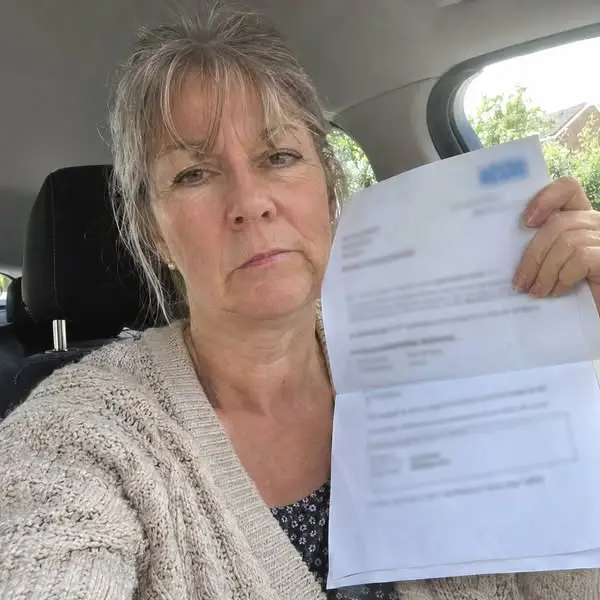
Advertiser

Sarah Mitchell

us.nuracalm.comMeta Ad Library

9
Running ads
5 new in 30 days
Oct 2026
Advertising since
longest ad 1 month
—
Reach
running ads, summed
0% video
Formats
0 video · 2 image
3
Products advertised
2 shops

9 years of sciatica pain. Gone in 6 weeks.

Rest it. Stretch it. Buy a better mattress. Take the tablets. Rub something on it. Those are the 5 bullsh*t things I was told to do for my sciatica, by people who meant every word. And not one of them was ever aimed at what was actually squeezing the nerve in my leg, or why it wouldn't let go. The woman who finally told me lives on the other side of my kitchen wall. She'd known the whole time. She just never said. My name is Sarah Mitchell. I'm 67, I live in Northampton, and for 21 years I drove buses, 8 and a half hours a day on a sprung seat over every pothole in the county. I retired in the spring of 2021 and the sciatica started that June. It felt like a lightning bolt shooting down my leg. Top of the right buttock, down the back of the thigh, down the calf and into the foot. 4 years and 2 months of it. I'd tried everything available to me, and spent a lot of my own money doing it. By the end I couldn't remember the last time I'd sat without thinking about my sciatica. Some days I couldn't sit at all, even for seconds, and could only stand for a few minutes. If you're reading this at your wit's end with your sciatica, you're doing at least one of these 5 right now. Give me 7 minutes. What's at the end isn't another treatment, and that's the whole point. Alongside all of it came the advice. You can't argue with advice, because the people giving it mean well. Here are the 5. See how many you've done. 1. "Just rest it. It's your disc." That was the GP, the first time. "Painkillers and keep active," he said. When that did nothing it was "Rest it, Mrs Mitchell. Take a fortnight, keep off it, and let the inflammation settle," and the strong painkillers for the fortnight, which bunged me up for the best part of a week. So I rested it. I'm good at doing what I'm told, 21 years of timetables will do that. And every morning it was worse. "It is at its worst in the mornings," I told him at the next appointment, and he wrote it down as if it were a funny thing for sciatica to do. The leg would wake me at about 3:52. I'd get out of bed like a woman of 90, one leg first, holding the radiator, and the longer I'd been still, the tighter the thing in my buttock felt. Nobody explained that. If it was inflamed and rest calmed it, the mornings should have been the best part of my day. They were the worst. And it was never the same two days running. Some Mondays I couldn't even get my socks on by myself. Some Wednesdays I walked round the supermarket. Nobody could tell me why. At month 7 I got an MRI. 23 minutes in the tube with the banging, and then the letter. "A bulging disc at L4/L5, degenerative changes, normal for your age." So that was that. It's your disc. I know now what that letter was. It photographed my disc. Nobody photographed what was gripping. That machine is built to take pictures of bone and disc, and it did its job. It just can't take a picture of a muscle that's clenched. And in 7 months of appointments, nobody had ever pressed on my buttock, not once. They looked at a picture of my back and sent me home with it. A driver I'd shared a canteen with for 17 years got the same letter as me, near enough word for word. Same disc, same age. He still walks his dog round Abington Park every morning. I couldn't sit through Songs of Praise. Whatever the difference was between his leg and mine, it wasn't on the film. The consultant said surgery wasn't worth the risk yet and to come back when it was worse. Then a cortisone jab in my spine, an epidural, after 6 months and 3 weeks on a waiting list. 5 weeks of quiet, then a leg worse than before. The relief was only ever really temporary. A few days, a few weeks at most, and it never held. It took me years to see what was wrong with that. A disc can't slip out on a Monday and back in by Wednesday. Whatever switches my leg on and off can tighten and let go. Rest is right for a thing that's torn. It does nothing at all for a thing that's holding on. I didn't know there was a difference. I do now. I've since read that a group at the University of East Anglia went back through the research on this and found the same thing: a good share of what gets called a disc problem is really a muscle in the buttock gripping the nerve, and it gets missed all the time. It's not a secret. It just never made it as far as my GP. 2. "Do the piriformis stretch. It's all on YouTube." It's a muscle, I was told, so stretch it. The physio gave me a sheet of 4 stretches, and when I said they weren't working, the GP told me, more or less word for word, to just stretch more. My nephew said get a heating pad and get on YouTube. So I did both. I've watched 43 videos of men in running tights lying on a mat pulling one knee across their chest. I did them every morning on the bedroom floor and every night before bed. I'd get a good fortnight, and then a fortnight worse than where I'd started. I paid for 9 sessions of private physio on top, £55 a time, and she gave me the same 4 stretches on nicer paper. Then I bought the kit. A foam roller off Amazon, £24.99, that I lay on across the landing carpet until my eyes watered. An inversion table, £86.49, that's still in the garage. A shiatsu massage cushion, £36.99. A TENS machine from the chemist that buzzed away on my lower back while I watched Pointless. Every one of them felt like it was doing something while I was doing it. That's the trick, isn't it. You feel the pull, so you think the pull is working. A quarter of an hour later the leg was exactly where it had been. I wasn't slacking. I was pulling from the outside on something that only ever opens from the inside. I'll tell you how I found that out. 3. "You need a better mattress. And a proper chair." This one came from everybody. You can't sleep, fix the bed. You can't sit, fix the chair. The memory foam one felt perfect in the shop. £1,149. When it came home it was too firm, then inside 5 months it went soft in the middle like a hammock. So I bought a 3-inch topper for £89. Then the chair, £389 out of a catalogue, orthopaedic, with a lever for the backrest. Then a foam doughnut from the chemist, £17.99, and a wedge for the car. And I still couldn't get comfortable in any position. None of it let me sit. I could hardly sit for more than a few minutes before the burn started, and in the end even the thought of sitting made me want to cry. Pain in my right cheek that travels down my leg, that's how I put it to anyone who asked. I stopped going to the Thursday quiz at the Wheatsheaf. I missed my friend Denise's 71st because the restaurant was 54 minutes away in Leicester and I knew I wouldn't last the car. Some nights I gave up and slept on the sofa with millions of cushions, and I might get a few hours. Not one person ever asked what it was I was sitting on. 4. "Take the tablets. And try magnesium." The GP said the first half. One nerve tablet, which put a stone on my waistline and fog in my head, then another, which made me a zombie by teatime. A nerve tablet turns the volume down on the nerve. That's its whole job. It doesn't ask why the nerve is screaming. So I got a quieter leg and a foggier head, and whatever was squeezing the nerve carried on squeezing, and the dose went up in the spring. The pharmacist said the second half, and a woman at church who swears by it. So I did. Tablets from the health shop every morning for 5 months. Epsom salt baths, which meant getting in and out of a bath on one good leg. A £6.99 spray off Amazon. Nothing. Not a flicker. And this is the strange one, because whoever said magnesium got closer than anybody else ever did. Ros, who you'll meet in a minute, called it right material, wrong address. A magnesium oxide tablet, which is what most of the cheap ones are, goes down your throat into your gut, and your gut passes most of it straight through. What little gets in is shared round your whole body, heart, hands, calves, everywhere. What arrives where you actually hurt is next to nothing. An Epsom bath sits on the surface of your skin and is gone when you pull the plug. The spray is mostly water and dries off in a minute. That cortisone jab I'd waited 6 months and 3 weeks for? Steroids make your kidneys flush magnesium out. So the jab bought me 5 weeks of quiet and left me emptier than before. I didn't get worse in spite of the injection. I got worse partly because of it. 5. "Rub something on it." That one never stopped. The chemist, my sister, the woman behind me in the Post Office queue. So I rubbed. The gel the GP gave me and two more from the chemist, and a magnesium cream off the market that smelt of nothing, all on my lower back, because that's where the scan pointed. Morning and night, for the best part of 3 years. I kept a basket of them by the bed. One that smelt like a hospital corridor. One that went so hot my eyes ran. One that left grease on the sheets and on every chair arm in the house. They take the edge off for an hour, the chemist told me, and that's all a cream can do. I believed her. Why wouldn't I. Every one of them warmed the skin or cooled it, and for an hour the leg would go a bit quieter, and then it came back exactly as it was. "It never holds and will act up again," I told my sister, more times than she wanted to hear it. And the chemist was right about the tubes I'd bought. A painkiller gel is a painkiller you rub on instead of swallowing. It quiets an angry patch for an hour or two, and it doesn't pretend to do more. The heat rub warmed the skin over my lower back. And that magnesium cream off the market? Half the "magnesium" tubs put in just enough to write the word on the front, with nothing in them to carry it through the skin, so it just sits on top. Mine did. So you try a cream, get an hour, and write off the whole idea of the skin. I did. I thought creams were creams, and I'd tried creams. I never tested the idea. I tested a tube of painkiller, on the wrong spot, and called it the idea. That's 5. Every one of them told to me by someone who meant well. I'd tried everything available to me, spent a lot of my own money on private physio and chiropractors, and nothing was working. Then, one Sunday in August, Ros saw me get out of my sister's car, passenger side. Ros Kemp is 74 and has lived next door for 11 years. What I didn't know was that she'd been an NHS physiotherapist for 31 years, the last 16 of them in a clinic full of legs like mine, and that she'd been watching me get out of that car for 4 years and biting her tongue. "You had a GP, love," she told me later. "It wasn't my place." She watched me do it the way I'd learned to. Swing both legs out together. Hand on the door. Stand up crooked. Wait 3 seconds for the leg to decide, and make the noise. "Sarah," she said, over the fence. "Come in for a cup of tea. I want to try something." In her kitchen she stood me against the worktop and pressed her thumb into the top of my right buttock, deep, just under where your back pocket sits. I gasped so loud her dog left the room. "There it is," she said. "Hard as a cricket ball. It's been hard as a cricket ball every time you've got out of that car for 4 years. Nobody's ever pressed on it, have they." Nobody had. Not the GP, not the physio, not the MRI. Ros had gone 6 inches lower in 3 seconds. "That's a fist," she said. "A muscle that's clenched itself shut on your nerve and forgotten how to let go. And a fist doesn't open from the outside, love. You can stretch it, sit on it, lie on it, rub gel on top of it. It opens from the inside. When it's told to." Then she said what an old patient once told her, a woman with no letters after her name. "It's magnesium, love. But it's got to go on your backside. Not down your neck." Here's what Ros explained over 2 cups of tea, the part no 8-minute appointment has room for. Deep in the buttock sits a muscle about the size of your palm, the piriformis. The sciatic nerve runs directly underneath it. In 1 person in 6, it runs straight through it. Its whole job is to grip, then let go. Grip, let go, every step you take, every time you stand up from a chair. And that muscle only lets go when the nerve tells it to. To send that message, the nerve needs magnesium. After 50, your body holds far less of it than it used to. Think of a phone, Ros said. It needs charge to make a call. No charge, no call. No magnesium, no message. So the muscle is never told to release. It just holds on. And it sits on your sciatic nerve like a foot on a hosepipe. Which means every lightning bolt down my leg, every burn in the calf, every 3:52 in the morning, was that muscle squeezing the nerve. Sitting was worse because I was sitting on the fist. And mornings were worst of all, because I'd lain still all night while it clenched, and nothing had told it to let go. It's also why some Mondays I couldn't get my socks on and some Wednesdays I walked round the supermarket. My scan doesn't change from Monday to Wednesday. The clamp does. Now look back at the 5 with me, because they fall like dominoes. The MRI photographed the disc, not the fist. Rest kept the fist still, and a fist held still is still a fist. The stretches pulled on it from the outside, and a fist doesn't open from the outside. The mattress and the chair changed what I lay and sat on, and the thing I was lying and sitting on was the fist itself. The nerve tablets turned the volume down while the fist stayed shut. The magnesium tablets were the right material at the wrong address. And the creams went on my lower back, 6 inches from the fist, with nothing to carry them in. That's the whole 4 years, in 5 lines. Get the magnesium back into that muscle, through the skin, on the buttock, and the nerve can send its message again, the hand opens, and the nerve stops being crushed every time you sit down. She went to her bathroom cabinet and came back with a jar, and put it down on her kitchen table. I'll be honest, I laughed. I said, "Ros, I've got a shoebox upstairs. £2,815 and 48p of receipts." I'd kept every one, because I'm like that. The strong gel from the chemist. A second gel. The heat rub until the front room smelt like a changing room. The heating pad. The £39 lumbar belt. The anti-inflammatories, which my stomach still hasn't forgiven. The inversion table, £86.49, and the massage cushion, £36.99. The mattress, £1,149, and the topper, £89. The chair, £389. 9 sessions of private physio at £55. 3 goes at a chiropractor in Market Harborough, £45 a time. And £396 more in gels, tablets, sprays and cushions, a fiver and a tenner at a time. "And I've done creams, Ros," I said. "Half that box is creams." Ros just shrugged. And that's the part that frightens me now. I was one shrug from never finding out. "I can't sell you anything," Ros said. "Never could, 31 years. But I can tell you what I'd have put on my patients if I'd ever been allowed." She turned the jar round so I could read it. NuraCalm Total Relief. A cream, not a pill. She said this one clears the 3 hurdles the others never did. The right type of magnesium. Enough of it to matter. And something to carry it through the skin instead of drying on top. Magnesium chloride, the form that soaks through skin and reaches muscle, which a tablet can't do at any dose. MSM, which carries it through the skin and down to a muscle that deep. Vitamin B6 to help the nerve send its "let go" signal, so the muscle keeps releasing instead of clenching again. Arnica for the soreness. Aloe vera so it's kind on the skin. And menthol, so the leg goes quiet in minutes. You rub it into the buttock on the bad side, under the back pocket, and down the back of the thigh. Never the lower back. Nothing goes down your throat. A thumb's worth each time, rubbed in slowly, in circles, until the skin has drunk it, and then you leave it alone. Ros made me do the first one in front of her, at the kitchen table, so she could see I had the right spot. "Twice a day," she said. "6 weeks. Don't you dare give up at 9 days." There are two things going on in that jar, and they work at two different speeds. The menthol and the arnica work tonight. The first night you feel the cool go in, the leg goes quiet, and you might actually sleep. That's real. I cannot explain the relief I felt to wake up in the morning like a normal person again. But Ros said that's the surface, not the job. The magnesium is the job. Getting enough magnesium back into that muscle for it to remember how to let go of a nerve takes weeks, about 6 of them. "Nights first," she said. "Walking next. Sitting last." It's a cream, not a drug. Nothing to swallow, nothing to fog your head, nothing to argue with my blood pressure tablets. And there's a 90-day money back promise, which is what settled it for me when I came to order my own. Worst case, I'd have had 6 more weeks of exactly what I already had. And then she said something about my GP that I've not stopped thinking about. He isn't hiding this. He genuinely hasn't got it. There's a code for an MRI. There's a code for a physio appointment, a code for a steroid injection, and a code for an operation. There is no code, anywhere, for getting the muscle that's clamping a retired bus driver's sciatic nerve to let go. Nobody bills it, so nobody's taught to press on it. So he hands over what he's allowed and puts you on a list. And the list isn't treatment. It's a room where you sit and get worse. Their hands are tied, Ros said. Yours aren't. I started that Sunday, 14 months ago now. I rubbed it in where Ros had pressed, felt the cool go deep into the buttock, and I slept until 6:12. The first full night's sleep in months. Week 1 I got out of bed without the radiator. Week 2 I slept through every night, and I rang Ros at 8 in the morning to tell her, which I'd never done in 11 years. Week 3 I got out of my sister's car one leg at a time, like a normal person, and didn't wait for the leg to decide. Week 4 I put my own socks on, sat on the edge of the bed, both feet, and I'll be honest, I had a little cry about it. When Ros's jar ran low I ordered my own, Buy 2 Get 1 Free, and it came after 7 days. Week 6 I sat down on the bus into town, all 26 minutes, on the seat I'd been standing beside for 4 years. I didn't notice until I was getting off. I texted Ros from the bus station, and it's the only text I've ever saved: "Sat all the way in. Forgot to check." In October I went back to the Wheatsheaf quiz and sat through all 6 rounds. We came 4th. I didn't care. For Denise's 72nd I drove to Leicester, 54 minutes, and didn't stop once. In November Ros pressed her thumb into the same spot again, the top of my right buttock, under the pocket. The muscle her thumb had found hard as a cricket ball, the one no scan ever caught, had give in it. Soft. She pressed right in and I didn't flinch. My scan, by the way, still says "normal for your age." Same scan. Different woman. That's how I know it was never just my spine. Not one 3:52 since. This isn't 5 good weeks that wear off, that's what the jab was. It held, and it's still holding. My sister's husband Clive, 69, spent a year calling it snake oil to my face. I gave him a jar. He's not said a word about it, but at Christmas he sat through dinner, the King, and the whole film without getting up once. My sister says he's on his second jar. He still calls it snake oil. He just says it more quietly now, and he says it with his hand on his backside. Ros has put it into the hands of 14 of her old patients since. 11 settled. 3 didn't, and she won't pretend otherwise. One gave it 9 days, which is the menthol and nothing more. One rubbed it into her lower back for a month because that's where the scan pointed, and never once put it on the buttock. And one had a spine that genuinely belonged in an operating theatre. 11 out of 14, after everything those people had already tried, is a number Ros says she never saw once in 31 years. So. 5 things I was told to do, and not one of them was ever aimed at the fist. And we were late to it, it turns out. When I looked the cream up, 12,183 people had already left it a review, 4.8 stars on average, most of them, from what they wrote, people who'd done their own version of the 5. There were two roads for me in that kitchen. Another cushion and another letter from the hospital, or one evening and 90 days to change my mind. I'll not tell you what to do. I only know where I'd still be. This is the one Ros put on her kitchen table. It's £24.95 a jar, and at the moment they're doing Buy 2 Get 1 Free, which is what I did. It's dispatched within 24 hours and arrives in 7 to 10 days. And if it does nothing for you, you've got 90 days to send it back: https://try.nuracalm.com/sciatica-dont-buy If I can say one thing, as someone who sat where you're sitting: it's worth knowing what you're sitting on before you buy one more cushion. I wish somebody had told me 4 years sooner. I only know any of this because the woman next door finally said something over a fence. I'm not a physio. I'm a retired bus driver who sat on the wrong thing for 4 years. Ros is the one who knew. I just listened, in the end. Look after that leg. Sarah Mitchell Edit: 2 people messaged to say they bought it and got nothing. One bought it off Amazon. Please don't, there are knock-offs on there with barely any magnesium in them, and the real one is only sold on their own site. The other had rubbed it into his lower back for a fortnight. It goes on the buttock, under the back pocket, where the fist is. Mine took the best part of 6 weeks on the right spot, and if it's still nothing you've got the 90 days. Direct link: https://try.nuracalm.com/sciatica-dont-buy P.S. If you take one thing from all of this: it isn't your mattress, it isn't your chair, and it isn't down your throat. It has to get through the skin and into the muscle that's clamping the nerve, on the buttock, twice a day. That's the whole reason my £1,149 mattress, my doughnut cushion and my 5 months of magnesium tablets did nothing, and this didn't: https://try.nuracalm.com/sciatica-dont-buy P.P.S. You can check it yourself, tonight, sat where you are. Press your thumb deep into the top of your buttock on the bad side, just under the back pocket. If you gasp, that's not your disc and it's not your mattress. That's the fist Ros found on me, hard as a cricket ball, and it's been sitting on your nerve the whole time. Sarah

Loading the ad's image
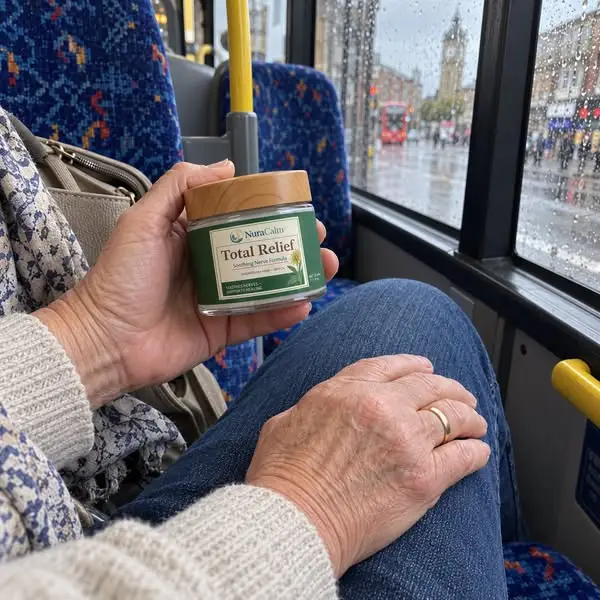
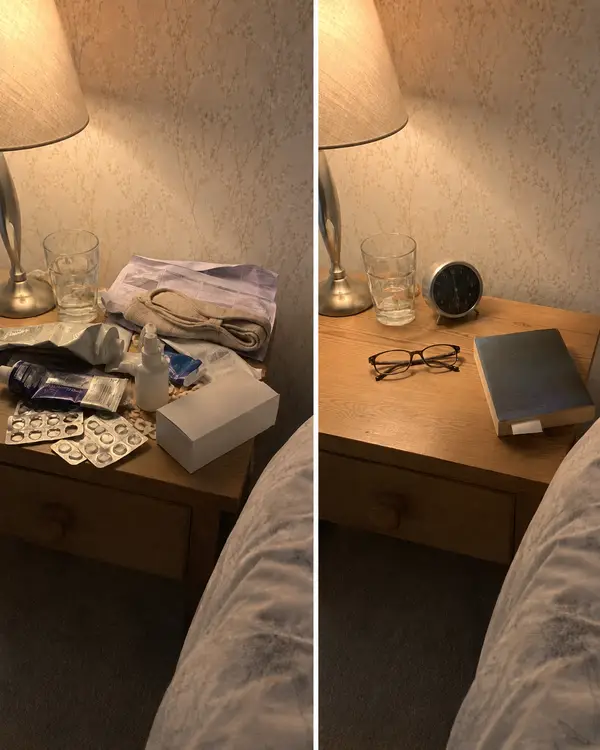
Sarah Mitchell — 9 years of sciatica pain. Gone in 6 weeks.
Promising

8 Years of Sciatica gone in 8 weeks

I was diagnosed with sciatica at 51. I'm 59 now. Turns out I never had sciatica at all. For 8 years I "managed" a word. Not once did anybody tell me what was actually doing it to me. 8 years of acetaminophen, then diclofenac gel, then naproxen, then codeine pills that plugged me up for a week and made the ceiling swim. 8 years of a menthol rub on the bedside table and a rice sock I've microwaved so often it smells like burnt toast. 8 years of printouts. 3 stretches on a sheet of paper, and "keep at them, give it more time." 8 years of being told it's wear and tear, it's common at your age, keep moving, lose a little weight. I did everything they asked. I did the stretches morning and night for 2 years straight. I lost 21 pounds. I bought the $419 mattress. I bought the better chair. I bought new shoes. A bit about me so you know who's talking. Sarah, 59, Youngstown. Store floor for 31 years, on my feet all day, up and down the aisles, lifting stock. It started small. A twinge getting up off the couch after Wheel of Fortune. A little ache down the back of my left leg. Nothing a heating pad wouldn't sort. 2 months later it wasn't small. It was bright streaks of electrical fire running from my hip to my heel. Standing up made me gasp out loud. And here's the bit I could never work out. Some weeks it screamed. Some weeks it went almost quiet. Last June I had 9 days with barely anything in it, then it came back worse than it had ever been. I thought I was going mad. Nobody could explain it. Hold that. It matters later. I called my doctor's office. Waited 2 weeks. Got 9 minutes with a doctor who'd never met me. "Sciatica. Wear and tear. Common at your age. Take some acetaminophen, keep moving, lose a little weight." Out the door. The pharmacist sold me diclofenac gel. For 2 weeks it was almost a miracle. Then it stopped. And when the pain came back, it came back meaner. Deeper. The kind no gel could reach, because it wasn't coming from the surface. Then I got the MRI everybody waits for. And that's when I stopped arguing with any of them, because there it was in black and white. A bulging disc at L4-L5. The orthopedist turned the screen around and pointed at it with a pen. "There it is," he said. "That's your sciatica. Classic. Bit of wear and tear as well, but that's normal for your age." I felt something close to relief. Proof. I wasn't soft. I wasn't imagining it. There was a picture of the thing that was ruining my life. His scheduler put me on the waiting list for physical therapy. 16 weeks. And mentioned the pain clinic, which where I live is a 14-month wait. Then he said the sentence I built the next 8 years on. "There's no set path for sciatica. We'll manage the pain as best we can." Manage it. I was a number on a list. And the list was not moving. Every morning my left leg was locked. I'd swing it out of bed with both hands like it belonged to somebody else and stand there holding the radiator until it agreed to take my weight. By 11 the fire would start. By the afternoon I'd be leaning on the end of an aisle between customers, smiling at somebody over the register while my leg screamed. I got to where I dreaded going to bed, because I knew the ache down my leg would wake me. Some nights it woke me 4 times. I'd get up and walk the hallway for 10 minutes to take the edge off, then get back in and lie there doing the math on how many hours I had left before my shift. The exhaustion was killing me more than the pain was. I started wearing slip-on shoes because I couldn't reach my laces. I bought pants with elastic in the waist because bending to do a zipper took my breath. I started leaning on the cart doing the big grocery run and telling myself it was because the cart was there. I cut my hours. Then I cut them again. 31 years on that store floor, down to 3 mornings a week and dreading every one of them. If I'd taken time off for every flare-up I'd have been unemployable. I stopped going to the community garden. I stopped picking up Ivy, my granddaughter, because I was frightened my leg would go from under me while she was in my arms. I could only watch her play in the backyard instead of playing with her. She's 4. She stopped asking. I was 55 and I felt 90. And I thought that was it now. I thought I was just getting old. I wasn't. That was wrong too. Then I chased it. God, I chased it. I paid for private physical therapy because I couldn't wait 16 weeks. $68 a session. What I got was 3 stretches off a printout and "keep at them, give it more time." About as much use as a screen door on a submarine. More time, while the fire ate my leg every damn night. And here's what nobody warned me about. The stretches made it worse. Every single time. I did them properly, exactly as shown, and by the evening my leg would be tighter than when I started. I thought I was doing them wrong. I had the cortisone shot. It bought me 7 golden weeks and then it wore off like a spell at midnight, and the pain came back worse than it had been before it. By then I'd joined 1 of those Facebook sciatica groups. Thousands of us. All awake at 3 in the morning. All with a tip. So I bought the tips. A memory foam topper. An inversion table that's still in the garage. That shiatsu massage cushion everyone's selling, $44.97. A "sciatica belt" off Amazon for $47.96. Turmeric. A CBD balm that cost me $89 a jar and smelled like a hedge. Ibuprofen gel. Stronger pills when the last lot stopped touching it. $2,487 over 8 years. I went through my bank statements one night and counted it, sitting on the edge of the tub at 4 in the morning. Some of it worked for an hour. Some for a month, and then all of a sudden it just stopped working. The relief was only ever temporary. None of it ever held. And the pills didn't fix anything, they just masked it. I knew that. I took them anyway, because what else was there. I'd have told you I'd tried every damned thing. Then it hit me like cold water one night. I was doing exactly what my mom did. Same gels. Same pills. Same injections. Same "give it time." She walked that road for 10 years and it ended with a big back operation that was meant to fix everything, and it put her in a chair. I knew where the road went. I was already on it. And I started to believe that was just my life now. Planning my days around a leg. Asking Martin to reach the bottom shelf. Watching a 4-year-old through a kitchen window. I was 57 years old, sitting up at 2 in the morning, googling stairlifts. Then a physical therapist asked me a question nobody had asked me in 8 years. He wasn't like the others. Colin, 54, a clinic 2 blocks from the store. And the first thing I noticed wasn't what he said, it was how he moved. He got down on the floor to look at how my hip was sitting, and then he got back up like it was nothing. No hand on the table. No breath held. Nobody his age moves like that. Not around me. We were 3 sessions in, doing another round of the same band exercises that weren't helping. He watched me try to stand off the mat. Watched me put my hand out for the wall. Then he stopped. "Can I tell you something," he said. "I see myself sitting there. The fire from the hip to the heel. The mornings. The good weeks that make you think you're going mad. I had every bit of it. Same diagnosis. I was 39 when they turned the screen around and showed me my scan." I stared at him. He didn't move like a man who'd ever had it. "What happened?" He sat down on the mat. "I stopped working. 14 months. I couldn't demonstrate an exercise, which is the whole job. I was on the pills, foggy as anything, stuck on a pain clinic waiting list." "So what did you do?" "Everything you've already done," he said. "Every stretch. Every gel. The injection. The lot. Then I found out what was actually causing it. And once I sorted that, it went." "What was it?" He leaned forward. "Let me ask you something first. In 8 years, has anybody once told you WHY your leg burns?" I looked at him. "Because I have sciatica." He leaned back. "That's not a diagnosis. That's a description." He let it sit there. "Sciatica just means pain running down the sciatic nerve. It tells you where it hurts. It has never once told you why. And every single thing you've been given for 8 years was aimed at the where." "Then what's the why?" "Your nerve is starving," he said. "Starving of what?" "Magnesium. I know how that sounds. Give me 2 minutes." Standing there in his socks on that mat, he told me the thing that 8 years of appointments never had. "From your 40s on, your body holds less and less magnesium. By 50 most people are running on empty. And here's what no one tells you. Your nerve runs on it. "There's a deep muscle wrapped right around your sciatic nerve. That muscle only lets go when the nerve tells it to. And the nerve needs magnesium to send that message. Think of it like a phone. A phone needs charge to make a call. No charge, no call. No magnesium, no message. "So the muscle never gets told to let go. It just holds on. It grips that nerve like a fist. That fire down your leg? That's the nerve, being crushed in a fist that won't open." "And the good weeks?" I said. "The 9 days in June?" "That's your proof," he said. "A disc can't do that. A disc doesn't change from a Monday to a Tuesday. It certainly doesn't take 9 days off in June. Whatever's been doing this to you can tighten and ease, because it's a muscle. That's what a muscle does. Your disc was never the thing that was moving." I put my hand over my mouth. 8 years, and not one person had ever explained the good weeks. "But it's on the scan," I said. "He showed me the picture." "He did," Colin said. "And plenty of women your age have a disc that looks exactly like yours on a scan and no pain at all. And plenty have your pain with a scan that's completely clean, and get told it's in their head. A scan doesn't mean nothing's wrong and it doesn't mean they've found it. It shows them the nearest suspect. It doesn't show them the fist. They looked at your bones. They looked at your disc. In 8 years, nobody looked at the muscle." "So the sciatica..." "The sciatica everyone keeps treating is just what leaks out," he said. "Feed the nerve the magnesium it's missing, and it finally tells the muscle to open its hand. Then the nerve stops screaming." Then he did the thing that broke me. He went through my 8 years, item by item. "The stretches," he said. "You said they made it worse. They did. You cannot stretch a muscle that's in spasm. It's a knot in a rope. You pull both ends and it grips tighter. And I handed those printouts out for years before I understood that, so I'm not standing here judging anybody. "The gels. The diclofenac gel, the menthol rub, the ibuprofen gel. They're built for a pulled muscle. They sit in the top layer of your skin and they fade. They were never built to reach a nerve that's 3 inches down. It's watering the leaves of a plant while the roots are dry. "The pills. You swallow magnesium and your gut takes almost none of it. The cheap kind in most pills, your body absorbs about 4%. And what does get in goes everywhere at once. It isn't aimed at anything. Same with the painkillers, except those don't even pretend to fix it. They mask it, and you already knew that. "The injection quiets the nerve for a few weeks. It never opens the hand. The topper, the inversion table, the cushion, the belt, the turmeric, the CBD. Not 1 of them ever asked that muscle to let go." And there it was. 8 years. $2,487. And every single thing I'd bought had been pulling at a fist from the outside. Not 1 of them ever asked the hand to open. "So why has nobody said this to me?" I said. "In 8 years?" He shrugged, and he didn't make it a conspiracy, which is the only reason I believed him. "Because the rules now stop your doctor from giving you almost anything that actually works for sciatica," he said. "Not acetaminophen on its own. Not the nerve pills for long. Barely even the anti-inflammatory ones. So he gives you the little he's allowed and puts you on a list. The system's built to manage you while you wait. Not to fix the cause. And nobody anywhere gets paid to tell a woman in Youngstown to rub magnesium on the right spot." The system's hands are tied. Mine weren't. "So how do I feed it?" I said. "Through the skin. Straight down onto the spot. Not down your throat, where hardly any of it arrives and none of it is aimed. It has to actually get down to the nerve, not sit on top of you." I went home and ordered a magnesium spray that night. $9.47. Thousands of 5-star reviews. Week 1, nothing. Week 2, nothing. Week 3, still hanging off the end of an aisle by 2 o'clock. I nearly wrote the whole thing off as another piece of junk in the bathroom cabinet. I told Colin at the next session, half embarrassed. He laughed, kindly. "Of course it did nothing," he said. "I went through 9 of those before I worked it out. Magnesium on its own is too big to get through your skin. It sits on the surface and washes off in the shower. That's why every woman I've ever treated says 'I found no benefit from rubs and gels.' They're right. It did nothing. It never got in." "Then what did you use?" "There's one that's built to get through," he said. "It's the only reason any of this worked for me. It's what I'd have put my patients on, if we'd ever been allowed to sell anything." It's called NuraCalm. A cream, not a pill. It uses magnesium chloride, the 1 type that soaks through the skin and gets down to the nerve. It gives the nerve what it needs to send that "let go" message. The MSM is the part the cheap sprays haven't got. It breaks the magnesium into pieces small enough to slip through the skin and actually reach the nerve, instead of sitting on top of it. The vitamin B6 switches the nerve's signal back on, so the muscle keeps letting go instead of gripping again. There's arnica for the soreness. And there's menthol, which does its own separate job. It shuts the pain signal down tonight, while the slow part gets on with the real work underneath. That last bit matters, and Colin was blunt about it, so I'll be blunt about it too. There are 2 speeds, and they are not the same thing. The cold is tonight. You feel that the first time you rub it in, and it takes the edge off within minutes. The muscle is 8 weeks. Feeding a starved nerve until it can send that message again, and keep sending it, is slow work. It's a cream, not a drug. If you rub it on once, feel the cold, and expect your leg back by Friday, you'll put it in the drawer with everything else. That's the mistake. The cold is just what gets you through the nights while the magnesium does the part that lasts. You rub it in twice a day. Morning before you're on your feet, and last thing at night. Right on the spot where it burns. Nothing to swallow. Nothing to fog your head. Drug-free, so nothing to clash with my blood pressure pills, which is the first question I asked. And a 90-day money-back promise, which after 8 years and $2,487 was the easiest decision I'd made in a decade. I looked the magnesium part up before I ordered, because by then I didn't believe anybody. There was a trial. Magnesium chloride on the skin, 12 weeks. Magnesium inside the cells went up 59.5% in 89% of the people. On the skin. Not swallowed. Colin told me one more thing before I went. Buy it from them direct. He said there are cheap copies floating around with barely any magnesium in them, and every person he'd ever had come back saying it did nothing had bought one of those. So I started. Night 1: the cold hit and the edge came off, and I slept 4 hours in a row, which was 2 more than usual. Night 6: I woke once. Once. I lay there in the dark trying to work out whether I'd genuinely just slept through until 4. Day 19: I bent down in the kitchen and did my own laces. Both shoes. Then I stood up and stared at the wall like an idiot for about a minute, because I hadn't tied a lace since the year Ivy was born. Week 4: I did a full morning on the sales floor and never once went looking for the end of an aisle to lean on. Week 6: Martin caught me carrying the laundry basket down the stairs. Down the stairs. He didn't say anything, he just stood at the bottom with his eyes going. "When did you last do that?" he said. I couldn't tell him. Years. Week 8: I got down at the community garden and knelt in the dirt and planted a whole row of beans. And when I was done, I got up off the ground without holding on to anything. That's the one I'd been waiting for. Not the pain. The getting up. Colin checked me over at week 9. Pressed his thumbs along the muscle the way he had at the start. "It's let go," he said. "There's give in it. First time I felt this, it was tight as a guitar string. In 20 years I've hardly ever seen a leg this angry settle this well without somebody cutting into it." I went back to the orthopedist at the end of the year. Same man. Same screen. The disc is still there. It hasn't moved. It'll be on every scan I ever have, and it was never the thing hurting me. He asked me what I was doing differently. I told him. The muscle wrapped around the nerve. The magnesium. The cream, twice a day, on the spot. He was quiet for a second. Then he said, "Well. Whatever it is, don't stop." He took me off the pain clinic list. For the first time in 8 years I walked out of that building without a prescription and without a waiting list. Now here's the part I have to be straight with you about. I did have sciatica. The word was right. It was always right. But sciatica isn't a diagnosis. It's a description of where it hurts. And in 8 years, not 1 person ever told me why. They looked at my disc, because a disc shows up on a picture. Nobody looked at the muscle wrapped around the nerve, because that doesn't. So I spent 8 years treating a photograph. And when I think about what that cost me, it makes me feel sick. $2,487 on gels and belts and cushions and turmeric and a jar of CBD that smelled like a hedge. 2 years of stretches that were tightening the knot every time I did them properly. $68 a session for another printout. 7 weeks of relief from an injection and then worse than before. 31 years on that store floor, and I let a leg take it down to 3 mornings a week. And the rest of it. 8 years of slip-on shoes. 8 years of elastic waistbands. 8 years of leaning on a cart and pretending it was there anyway. 8 years of watching a little girl play in a yard through a window. She stopped asking me to pick her up. That's the one I can't get back. I want to say the last thing plainly, because I wish somebody had said it to me at 51. This does not sort itself out. I waited 8 years for it to sort itself out. It doesn't. The good weeks get shorter. The pills get stronger. And that waiting list you're on will sit there and watch your leg get worse. Every month you spend managing where it hurts is another month that fist stays shut around the nerve. It doesn't open on its own. It opens when the nerve can finally tell it to. NuraCalm is made by a small US company. They make it in small batches, which is the only way the magnesium chloride stays where it needs to be, and it means they do sell out. Colin told me to always keep a spare jar and I ignored him, and then I ran out in week 5 and waited 11 days, and I won't do that again. There's the 90 days, so the worst that happens is you mail it back. Shipping is free. I think about Day 19 a lot. Standing in my own kitchen, laces done, staring at a wall. 8 years I waited for that morning. You don't have to wait that long. 👉 https://us.nuracalm.com/sciatica-dont-buy Stop treating where it hurts. Feed the thing that's causing it. Sarah Mitchell, Allentown, PA

Loading the ad's image
Sarah Mitchell — 8 Years of Sciatica gone in 8 weeks
PromisingImage

Shoulder Pain At 3am? It's Not The Joint

I'm going to say something that nobody sitting on the NHS waiting list for their shoulder wants to hear, and I genuinely don't give a f*ck if it upsets you. Waiting for the letter is not going to fix your shoulder. Not the leaflet the GP printed off. Not the 6 exercises on it. Not "you'll just have to manage the pain." None of it is going to fix this. I've waited 61 weeks. I clean houses for a living. Some mornings I can't reach the back of my own bra. My mum got her letter in 2019. She had the op. She never got her arm past her shoulder again. Now mine is doing the exact same thing, and I'm 9 weeks from my own appointment. Read this to the end. Every word. Before you sign anything. I know because I tried ALL of it. Every jab. Every gel from the chemist. Every stretch on that printed sheet. Every gadget a woman on a shoulder group swore by. 3 years of it. And at the end of it my GP looked at me over her glasses and said the exact words I'd heard my mum hear: "You'll just have to manage the pain until the surgeon sees you." And the worst part? My left shoulder has started doing the same thing. Same pinch. Same spot. Same reach. And I almost let the whole thing happen again, because I was still doing what I'd been told. I'm done being polite about this. If you're sitting on hold to the hospital, or staring at a letter on the fridge, or counting weeks on a calendar, you are wasting time you don't have. I wasted 3 years. My mum has spent every year since her op with one arm. I'm 58. I live in Stockport with my husband Pete, and I've cleaned other people's houses for 19 years. My right arm was my working arm. Hoover, mop, windows, the tops of shower screens. It did the lot. My left arm was the lazy one. Carried the bucket. Held the door open. Two arms. Same woman. Then the right one stopped working. It started after a long morning on Mrs Akhtar's conservatory windows. A pinch at the top of the shoulder when I reached up. Then a nagging toothache in there that wouldn't go. Then the nights. At night I'd roll onto it and wake up thinking someone had put a hot knife in my shoulder. 2am. Every night. I'd sit on the edge of the bed holding my own elbow so Pete could sleep. I went to the GP. "Wear and tear. Very common at your age. Let's give it a jab." And it worked. For 11 weeks it was a miracle. I did the windows. I put my hair up. I slept on my right side. I thought we were done. Then it started coming back. Not all at once. Slowly. Like someone turning a dial one notch at a time. A twinge on the hoover. A catch putting my coat on. A wince reaching for the seatbelt. Then the 2am knife again. I went back. "Let's do a second jab." We did. Nothing. Not 11 weeks. Not 11 days. Nothing at all. "Let's refer you to physio." 26 week wait, so I paid. £55 a session. 3 stretches on a printed sheet and a rubber band to pull on in the kitchen. The stretches made it angrier. Then the GP printed off a leaflet with 6 exercises on it, told me I just had to manage the pain, and put me on the list for the surgeon. The months I was paying for physio, my shoulder cost me £247 a month, on a cleaner's wages. And I still couldn't reach the back of my own bra. I posted on a shoulder group on Facebook. "2 jabs, physio, still can't lift my arm past my chest. On the list. Has anyone found anything?" Everyone had suggestions. "Get a massage gun. Breaks up the knots." "TENS machine. Changed my life." "Heat rub before bed, every night." "Sleep on a foam wedge." "Posture corrector. It's your shoulders rounding." So I tried. I tried everything they told me to try. Massage gun. £69.99. Lovely for an advert break. Worse the next morning. TENS machine. £34.99. It buzzed on top while the pain carried on underneath. Heat rub. Warm skin, same shoulder, still awake at 2am. Foam wedge. £42. Pete called it the ski slope. Posture corrector. £24.99. Shoulders back, pain exactly where it was. Strong tablets from the GP. They took the edge off the pain and the rest of me with it. I hoovered a client's stairs like a zombie and couldn't have told you whose house I'd just done. I stopped adding up the total because the number made me feel sick. And the shoulder was getting worse. I couldn't put my hair up for work, so I cut it all off. I'd had long hair since I was 12. I got stuck in a sports bra in a client's downstairs loo and had to wriggle out of it while she knocked to ask if I was alright. After that I only wore the ones I could step into. I stopped doing the tops of anything and prayed nobody looked up. And one morning I caught myself in a client's hallway mirror. Shoulder hitched up by my ear, arm held tight to my side. I looked exactly like my mum did the year after her op. That look is what broke me. I looked into giving up my clients. I'm not proud of that. I sat in my car outside my 3 o'clock and scrolled cleaning jobs that don't need reaching. Office hoovering. Folding in a laundry. I saw myself in every single one. I typed a text to Mrs Akhtar. "I'm so sorry, I can't do your windows anymore." I didn't send it. I'd already let 3 regulars go that year. The ones with the high windows. I drove home and sobbed on the kitchen floor. My grandson Alfie was round for his tea. He's 6. He sat down on the lino next to me and patted my shoulder, ever so gently, the bad one, and said "Is it your poorly arm again, Nanna?" My grandson was comforting me. And I hadn't been able to lift him since he was 3. I wanted to scream. That was a Tuesday. I remember because on the Wednesday 2 things happened. The letter came. Pre-op assessment. Then the surgeon. And that afternoon, doing a client's shower screen with my LEFT arm, because the right one won't go up there anymore, I felt it. The pinch. Top of the shoulder. Same spot. I recognised it straight away. I knew what was coming. I'd watched it with my mum. I'd lived it with my right. The jab that works and then fades. The jab that does nothing. The stretches. The leaflet. The list. The op. And an arm that never goes past the shoulder again. I could not do it again. I could not do another 3 years. I could not lose another client. I could not watch my left arm go the way my right one went. And I could not sign that consent form knowing my mum signed the exact same one in 2019. I needed to understand WHY. Not "what to try next." WHY. Why did the first jab give me 11 weeks and the second give me nothing? Why did my shoulder have good days and bad days if it was "wear and tear"? Why did my mum have the op and still never lift her arm? 2 GPs. A private physio. A consultant's letter. Not one of them answered WHY. They all answered WHAT. What to try next. Not one of them told me why everything kept failing. I spent a fortnight researching. Every night after Pete went to sleep. Forums. Facebook groups. Patient websites. And at 2am on a Tuesday, I found a long post on one of the shoulder groups from a woman called Gillian. Retired NHS physio. 31 years in hospital outpatients. She'd written it for a woman whose second jab had just failed. It explained something nobody in 3 years had ever told me. And when I read it I felt the floor go out from under me. Because it explained everything. Why the jab fades. Why the second one does nothing. Why the stretches made it angrier. Why the massage gun made it worse. Why my mum's op didn't give her the arm back. And it was so simple. So obvious once somebody says it. That I wanted to throw my phone at the bedroom wall. Here's what nobody told me for 3 years: It's not the joint. Worn bone doesn't change from a Tuesday to a Thursday. My shoulder had good days and bad days. Bone doesn't. There's a deep muscle wrapped over the top of your shoulder, right where the nerve runs down into your arm. Its job is to clench, then let go. Mine had stopped letting go. Like a fist clamped round your shoulder, right on the nerve. That's the pinch when you reach up. That's the toothache. That's the 2am knife. That's the bra you can't reach. That fist only lets go when the nerve sends it one message: release. And the nerve can only send it if it has what it needs. Think of a phone. No charge, no call. Nothing to send, no message. And after 50, your body holds on to far less of what the nerve needs. Every year a little less. So the message gets weaker and the fist stays shut. And here's the part that made me feel physically ill: The jab switches off the alarm. That's ALL it does. It quietens the pain signal. It doesn't open the fist. The fist is still clenched under there while you feel better for a few weeks. That's why it works for a while and then fades. The jab didn't stop working. The fist was never touched. Gillian had put a study in her post. The GRASP trial, in The Lancet in 2021: steroid injections for shoulder pain only helped in the short term, at 8 weeks. 8 weeks. I got 11 and thought I was lucky. And it gets worse. Steroids make the body lose more of what the nerve needs to send that message. So the jab isn't just losing a race against the fist. It drains the very thing the nerve was already running low on. That's why my second jab did nothing. My nerve was flatter after the first one than before it. And the op? A surgeon can tidy up a joint. He can't feed a nerve. My mum got a tidy joint with the same clenched fist sitting on top of it. That's why her arm never went past her shoulder again. And the stretches? You can't stretch a fist open. Pull on a muscle that's clamped and it clamps harder. The massage gun's the same. Pummel a fist and it tightens. Gillian had another one from The Lancet. The CSAW trial, 2018: a common shoulder operation did no better than placebo surgery. 3 years. 3 years. 2 jabs. Physio. Massage gun. TENS. Heat rub. Wedge. Strong tablets. A place on the list. And the fist got tighter through all of it. Because not ONE person told me about the fist. Not once in 3 years did anyone mention the nerve, or what it needs. They told me WHAT to try. They never told me WHY it wouldn't work. The why is the fist. I messaged Gillian the next morning. She lives 37 minutes from me, out past Macclesfield. She said come round for a cuppa. She was the first person in 3 years who didn't book me in for anything. She said she's retired. No jabs to give. No list to manage. No clinic to fill. Nothing to sell me. She sat me down in her conservatory and pressed her thumb into the top of my right shoulder, just in from the bone. I nearly came off the chair. "There it is," she said. "That's your fist. And it's been clenched a long time." She confirmed everything I'd read at 2am. The fist. The nerve. The message. The jab that only switches off the alarm. All of it. And then she said the thing that made everything click. "The nerve needs feeding. Give it back what it needs to send the release message, right where the fist is, and the muscle lets go on its own. No needle. No knife." "So I just rub any cream on it?" "Not that simple. Most of what you've bought sits on the skin. A cooling gel cools the skin. A heat rub warms the skin. Neither of them goes anywhere near the nerve. What the nerve needs has to be carried in, through the skin, down to where the fist is. That's what MSM does. It's the carrier. Without it you're feeding your skin, not your nerve." "What about the creams on the big shopping sites?" Her face changed. "Patients used to bring me everything they'd bought. I kept them." She pulled a shoebox out from under the conservatory table. 6 jars and tubes. She'd read every label, and she'd tried every one on her own shoulder, because at 71 she's got the same fist starting. "Number 1. The gel from the chemist. Cools the skin for an hour. Stops there." "Number 2. The extra strong heat rub. Warms the skin. Stops there." "Number 3. The same gel off the big shopping sites. Nicer box, twice the price." "Number 4. A gel that says 'deep' on the front. Nothing in it to carry anything deep. Sits on the skin and comes off in the shower." "Number 5. A heat rub in a new box. Burned my skin red." "Number 6. The carrier, MSM. What the nerve needs to send the message. Menthol and arnica, so you feel it tonight. Vitamin B6. Aloe, for the skin." "One out of 6 passed." She wrote the name on the back of my hospital appointment letter. "That's the only one I tell people about. I don't sell it. I don't get a penny from it. I just got tired of watching women get jabbed for a fist nobody's looking at." I ordered it that night. 3 jars, because Gillian said one jar won't get you there. I started the same night. Rubbed it over the top of my right shoulder, round the back and up the side of my neck, exactly where her thumb had been. Alongside everything else. I didn't cancel the appointment. I didn't stop a thing the GP had me on. And I rubbed it on the left one too. The pinch there had only just started. For my right shoulder, 3 years in: The first night. The menthol went cool, then warm, right down into the top of the shoulder. I rolled onto it at 2am and didn't wake up. I woke at 5:40 lying on my bad side. I lay there not moving in case it was a fluke. First 2 weeks. Still sore on the hoover. But the 2am knife came less. I kept waiting for it. Week 3. I put my hair up for work. It's short now, so it was barely a stub. But it was up. With both hands. First time in over a year. Week 4. I did Mrs Akhtar's conservatory windows. The ones that started it. Top panes and all. I sat in the car afterwards and held the steering wheel and didn't drive off for ages. Week 6. I reached up to the top of the bedroom wardrobe for the spare duvet. Pete was in the doorway. "Did you just do that with your right arm?" He looked at me like I'd grown a second head. Week 8. I reached behind my back and touched my own bra strap. Didn't do it up. Just touched it. I'd have cried if I hadn't been late for my 10 o'clock. Month 3. I came off the strong tablets, with my GP, slowly. I didn't need them to sleep anymore. Month 4. Just the cream at night. And one Monday morning, standing in the bedroom, I did my bra up behind my back. First go. No wriggling. No stepping into it. No help. Not every morning yet. But most. I sat on the end of the bed in my bra and cried for 17 minutes. For my left shoulder, the one that was just starting: Week 3. The pinch on the shower screens stopped. Just stopped. Month 2. Nothing. No toothache. No 2am. Nothing ever developed. It never got a jab. Never needed physio. Never got a leaflet or a place on a list. Because I caught it at the pinch. Before the fist set in. Before the nerve went flat. I sat down one night and added up what my right shoulder cost me over 3 years. Physio: £385. Gel from the chemist: £147. Heat rub, TENS, massage gun: £163. Foam wedge and pillows: £71. Posture corrector: £24.99. Prescriptions: £118. Taxis to the hospital and days off for jabs: £212. £1,120.99. £1,120.99 on things that all did the same job. Quiet the pain. Cool the skin. Warm the skin. Prop me up. And £6,843 in wages I'll never get back. Not one penny went to the fist. Not one. 3 jars of the cream cost me less than one month of physio did. Every pound was aimed at the wrong target. The joint. The skin. The pain signal. And the cause was always the fist. My left shoulder will never go through what my right one did. I will never get stuck in a bra in a stranger's loo again. And I won't sign the form my mum signed without knowing what I know now. Because I started on the pinch. Before the list. Before the knife. It's called NuraCalm Total Relief. MSM to carry it in, what the nerve needs to send the release message, menthol and arnica for tonight, vitamin B6 and aloe. It's only on their official site. It takes about 6 weeks for the fist to really let go, so one jar won't get you there. That's why if you buy 2, the 3rd one's free. UK tracked delivery is free. And there's a 90 day guarantee, so if your shoulder doesn't feel the difference you get your money back. Gillian's rule was simple. Start it alongside whatever you're on now. Cancel nothing. Over the top of the shoulder, round the back, up the side of the neck, at night. And if you press your thumb into the top of your shoulder, just in from the bone, and it feels like a fan belt, that's the fist. You'll feel it before you see it. The quiet at 2am. When you roll over and don't wake up. When the knife isn't there. When your arm comes up to your hair. When you can wash your hair, blow dry it and do your bra up on your own. That quiet is what a fed nerve feels like. I wish I'd felt it 3 years and 2 jabs ago. They've moved my appointment twice since. The new letter's on the fridge. 9 weeks. I haven't signed anything. EDIT: People keep messaging me to ask where to get it. Only from the official NuraCalm site. I looked on the big shopping sites and what's on there isn't the same thing. I wasted enough money on the wrong things for both of us. https://try.nuracalm.com/shoulder-dont-buy P.S. My right shoulder hurt for 3 years while I spent £1,120.99 on things that quietened the pain and never touched the cause. Nobody did it on purpose. They look at the joint because that's what they're trained to look at. Gillian had nothing to sell me, so she told me. P.P.S. If your shoulder only started this year, or you've just been put on the list, you're where my left shoulder was. That's the best place to be. Before the fist sets in.

Loading the ad's image
Sarah Mitchell — Shoulder Pain At 3am? It's Not The Joint
Promising

Dizzy? This Could Be The Real Cause

If you've got dizziness that's always constant. And you've downloaded every meditation app in existence, popped melatonin every single night because someone on TikTok promised it would help, bought every "stress relief" supplement at the drugstore, sat through therapy sessions where they told you to "just observe the thoughts"... And it's STILL there, and honestly, getting worse... I'm going to explain exactly why nothing has worked, what's really going on inside your body that no one ever bothers to explain, and why the one thing that finally gave my mom her peace back after YEARS of struggling cost less than a trip to Starbucks. And by the time you finish reading this, you're going to be pissed off. Because three things are happening right now: ONE. Your neck is lying to your brain. Your body keeps you balanced using three systems. Your eyes, your inner ear, and the muscles in your neck. Those neck muscles are packed with tiny sensors that tell your brain where your head is in space. Think of them like GPS coordinates for your skull. They work together with your eyes and your inner ear to keep you upright. When your neck muscles are chronically tight, and if you've been stressed, hunched over your phone, bracing against the dizziness, or carrying tension in your shoulders you don't even notice anymore, they probably are. Those sensors start sending the wrong information. They tell your brain your head is moving when it's not. They say you're tilting when you're standing perfectly straight. So now your eyes are saying one thing. Your inner ear is saying another. And your neck is saying something completely different. Your brain can't make sense of it. So it panics. And you feel dizzy. That's not anxiety. That's not "all in your head." That's a mechanical failure in the information your brain is receiving. And not one of the six doctors my mum saw over five years ever explained that to her. But it gets worse. Because those tight neck muscles don't just send bad signals. They also squeeze the blood vessels running through your neck to the base of your brain. And they compress the nerves. So now you've got reduced blood flow AND scrambled nerve signals, and your brain is trying to keep you balanced with half the information it needs. No wonder the ground feels like it's moving. TWO. Everything you've been putting in your body is going to the wrong place. Every tablet, every supplement, every capsule you swallow goes into your stomach first. Gets broken down. Diluted. Absorbed into your bloodstream and spread across your entire body. By the time any of it actually reaches the muscles in your neck, the ones causing the problem, there's almost nothing left. That's why the dizziness tablets didn't work. That's why the magnesium tablets didn't work. That's why the ginkgo biloba, the vitamin D, the B12, the Vertigon, the whatever-someone-on-Facebook-recommended didn't work. None of it was reaching the muscles that mattered. My mum spent five years swallowing things that were landing everywhere except where the problem actually was. And nobody once said, "Maybe we should try getting something directly to the muscle." Not once. THREE. The dizziness is quietly destroying your body while you're busy "managing" it. This is the part that made me angry enough to write this. When you're dizzy, you get scared. Obviously. But the fear triggers anxiety. The anxiety tightens your muscles. Especially your neck and shoulders. Which sends worse signals to your brain. Which makes you dizzier. Which makes you more anxious. It's a loop. And it never stops on its own. But here's what nobody tells you about living in that loop for months or years. Your body stays in fight-or-flight. Constantly. Your blood pressure climbs. Your cortisol stays elevated. Your resting heart rate sits higher than it should. Your body starts responding the same way it would if you were drinking heavily or smoking a pack a day. Except you're not. You're eating well. You're trying to stay active. You're doing everything right. But none of it matters because the cycle is still running underneath. Doctors call it psychosomatic. And that word does not mean imaginary. It means your stress is producing real, measurable damage. Raised blood pressure. Increased stroke risk. Higher chance of developing type 2 diabetes. The same long-term consequences as someone with an addiction or someone who's completely neglecting their health. Except you're trying harder than anyone you know. You can eat perfectly. Sleep eight hours. Take every supplement on the shelf. But if your neck is still tight and the cycle is still spinning, it's all being cancelled out. You're fighting a fire in the wrong room. Those are the three things. And not one doctor, not one specialist, not one well-meaning person who told my mum to "just breathe" or "try yoga" ever bothered to explain any of them. Now let me tell you about my mum. She's 58. The dizziness started five years ago. Nobody knows why. It just showed up one morning and decided to stay. At first it was manageable. A wobble when she got up too quickly. The room not quite settling when she turned her head. She thought it would pass. It didn't. Within a year she'd stopped doing almost everything she used to love. The garden went untouched because she couldn't kneel and stand back up without the ground swaying under her. She stopped walking the dog because slopes and grassy paths felt like standing on a boat deck. She gave up her weekly exercise class because bending forward made the room spin. Stairs became her worst enemy. She'd grip the banister with both hands. My dad put a second rail on the other side. She needed both. My dad needed help fixing the back fence last spring. Mum used to be the one holding the posts while he drilled. Now she couldn't stand on uneven ground without the world tilting sideways. He did it alone and didn't mention it. She stopped going out on her own. Stopped driving. Stopped saying yes to things. Not because she didn't want to. Because she was terrified of falling in front of people. And honestly? I think she was terrified of becoming a burden more than anything. And through all of it, she was doing "the right things." She downloaded Headspace. She tried Calm. She popped melatonin every night because somebody told her better sleep would fix everything. She bought ashwagandha, magnesium tablets, B12, turmeric, something called Vertigon that she saw on Facebook. She sat through CBT sessions where someone told her to "just observe the sensation." She did vestibular rehab exercises twice a week until she felt sick. Nothing. Worked. The GP gave her dizziness tablets. Didn't help. The ENT said her ears were fine. The neurologist said the MRI was clear. The cardiologist said her heart was normal. Everything was normal. Except my mum, who couldn't walk to the letterbox without gripping a wall. Then last year she fell. Lost her balance in the kitchen. Hit the back of her head on the edge of the worktop on the way down. My dad heard it from upstairs. She was conscious but couldn't get up. The room was spinning so badly she couldn't even lift her head. They kept her in overnight. CT scan. Nothing broken. Nothing bleeding. "Just a fall." Sent her home with painkillers. But something changed after that. She stopped pretending. She stopped saying "I'm fine." She looked at me and said, "I don't think I can do this much longer." That sentence broke something in me. I couldn't sleep that night. I spent the next two weeks reading everything I could find. Not about dizziness. About the neck. About how chronic tension in the muscles around the cervical spine disrupts the signals your brain depends on for balance. About how tight muscles squeeze blood vessels. Compress nerves. Send garbled information to a brain that's trying its best to keep you upright with half the data it needs. About how every single thing my mum had tried for five years went into her stomach and got diluted before it ever reached the muscles that were actually causing the problem. It was so obvious. And so infuriating that nobody had ever mentioned it. I found NuraCalm at two in the morning on a Tuesday. I almost didn't order it. By that point I didn't trust anything. But the logic was different from everything she'd tried. Everything else went IN. This goes ON. Directly where the problem is. NuraCalm is a cream. You apply it to the neck and shoulders. It absorbs through the skin and goes straight into the muscle tissue underneath. No stomach. No dilution. No detour. It contains magnesium chloride, which relaxes tight, knotted muscles. Arnica, which brings down the inflammation. MSM, which helps damaged tissue actually recover. Menthol, which calms the pain the moment it touches your skin. Plus vitamin B6 and aloe vera to support the whole area. I ordered it for her. Then I had to wait. Five days. They emailed saying stock was running low and delivery might take a bit longer than usual. After five years of watching my mum shrink into someone I barely recognised, five more days nearly broke me. But it came. She used it that first evening. Rubbed it across the back of her neck and along the tops of her shoulders. She said the menthol was the first thing she noticed. Cool. Spreading. Calm. And then something she hadn't felt in years. The muscles at the base of her skull actually let go. She slept through the night for the first time in months. By the end of week one, she could turn her head to talk to my dad at dinner without flinching. By week three, she walked to the end of the garden and back. On her own. No rail. No wall. No one standing behind her. Last month she walked the dog. The full loop around the park. On the grass. Down the slope. She rang me afterwards and just said, "I did it." I cried in my kitchen. She's not cured. She's not a hundred percent. But she can walk down the stairs with one hand on the rail instead of two. She can go to the supermarket on her own. She helped my dad in the garden last Sunday, kneeling down and getting back up without grabbing the fence. She went to her friend's birthday last weekend. First time she's said yes to an invitation in over a year. She's not managing anymore. She's living. So if you're reading this and you've been doing everything right and nothing's changing and you're starting to wonder if this is just your life now. It's not. The problem might be your neck. And everything you've been swallowing has been going to the wrong place. NuraCalm is available at https://try.nuracalm.com/neck-adv It comes with a 90-day money-back guarantee. If it doesn't work, you get every penny back. No risk. No questions. They're also running a buy 2, get 1 free deal right now, which is how I got one for my aunt who's been dealing with the same thing since last winter. But don't wait on this. Not because of the deal. Because every day that cycle keeps running, your body is paying for it. The blood pressure. The cortisol. The quiet damage building while you're busy managing. Stop fighting the fire in the wrong room. P.S. If you're about to search for NuraCalm on the big shopping sites, please don't. The listings on there are from third-party sellers and you have no idea what you're actually getting. My aunt ordered from one of the big shopping sites first. Waited twelve days, got something that looked nothing like the real product, and had to start all over again. The 90-day guarantee and the buy 2, get 1 free only apply through the official website. Go to try.nuracalm.com/neck-adv. That's where I got my mum's.

Loading the ad's image
Sarah Mitchell — Dizzy? This Could Be The Real Cause
Testing

Why does sciatica make you so tired?

Sciatica is not just the hurting, every day. It's how tired it makes you, and nobody who hasn't lived it understands that part. They see you limping and they think the limp is the problem. They see you wince when you stand up and they think the wince is the problem. They ask how you're doing and you say tired and they say yeah me too and you want to scream because their tired and your tired are not the same thing and they will never know that and you will never be able to explain it. Let me try to explain it anyway. Because something changed for me and I think the explanation matters as much as the solution. My name is Sarah Mitchell. I am 52 years old. I live in Leicester. I was an office manager at a veterinary clinic for 11 years. I say was because 8 months ago I had to go part time because my body could no longer sustain a full day. Not because of the pain. Because of the tired. The sciatica started about 14 months ago. A burning that settled into my right butt cheek and slowly ran down the back of my thigh into my calf. The usual story that everyone on this page knows. Disc bulge. Nerve compression. Painkillers. Heating pad. Physio. Injections that worked for a week and then didn't. I am not going to spend a lot of time on the pain itself because you already know what it feels like. You're living it right now. That is why you stopped scrolling. What I want to talk about is what nobody talks about. The exhaustion. Chronic pain is expensive. Not financially, although it is that too. It is expensive metabolically. Your body runs on a budget of energy every day and pain takes most of it before you even get out of bed. Here is what a morning looked like for me during the worst of it. Alarm goes off at 6:15. I am already awake because the nerve woke me at 4:30 and I have been lying still trying not to move because every shift sends a jolt from my hip to my ankle. I swing my legs over the side of the bed. Both feet on the floor. I wait. The right leg is already burning. I stand up. The nerve fires. I hold the nightstand and breathe through it. I shuffle to the bathroom. That takes energy. Not just physical energy. Mental energy. Deciding to move when moving hurts requires a decision and that decision costs something. I shower. Standing in the shower with hot water on my lower back is one of the only things that gives me temporary relief so I stay in there too long and now I am behind schedule. I get dressed. Bending to put on socks is a production. I cannot reach my right foot without the nerve screaming so I sit on the bed and cross my right leg over my left knee and put the sock on sideways and it takes three times longer than it should. I go downstairs. Every step is a negotiation. I make coffee. I stand at the counter and drink it because sitting at the kitchen table hurts within two minutes. It is 7:15 in the morning and I am already tired. Not sleepy. Depleted. Like I ran a mile before breakfast except I didn't run a mile. I got out of bed and got dressed and walked down the stairs. That is all I did. And my body is already running a deficit because every one of those tasks required me to fight through pain and the fighting is what drains you. By 10AM at the clinic I was operating on fumes. I was scheduling appointments and filing records and answering the phone and smiling at clients bringing in their dogs and cats and every single task required me to override the pain signal that was firing in my leg constantly. The override is what exhausts you. Your brain is running two programs at the same time. One program is doing your job. The other program is managing the pain. Both require processing power and there is not enough for both so everything you do is slower and harder and by early afternoon you are running on empty. By 2PM I was making mistakes. Putting files in the wrong folders. Typing the wrong client name into the system. Zoning out during conversations. The vet I work for is a kind man and he noticed and he said Sarah you look wiped and I said I'm fine and I was not fine. I was so tired that my eyes were burning and my thoughts were moving through mud and my body felt like it weighed twice what it actually weighs. I stopped going out after work. I used to meet friends for dinner on Thursdays. I stopped because by 5PM I had nothing left. I went home and I sat in my recliner and I did not move until I went to bed and even going to bed required energy I didn't have. Some nights I slept in the recliner because the walk to the bedroom felt like too much. I stopped cooking. I used to love cooking. My daughter would come over on Sundays and we would make dinner together. I stopped because standing at the stove for 30 minutes sent the nerve into a frenzy and I couldn't do it anymore. She started bringing a takeaway. She didn't say anything about it but I could see it in her face. She was watching her mother shrink. That is what sciatica does that nobody talks about. It doesn't just hurt you. It drains you. It takes the energy you need to be a person and it spends it on managing pain that never stops. You wake up in debt and you go further into debt every hour and by the end of the day you have nothing left for the people you love or the life you used to live. My daughter is the one who found the answer. She is 28. She works in physio as an assistant. She came over one Sunday with Thai food and she sat on the sofa and she said Mum I want to press on something. She put her thumb into my right hip, deep into the muscle where the butt cheek meets the top of the thigh. I grabbed the armrest. She said that muscle is locked solid. She said it's called the piriformis and it sits directly on the sciatic nerve. She said the nerve is being choked by the muscle. Not just by the disc. By the muscle. And the muscle is locked because of magnesium. When magnesium runs low muscles cannot release after they contract. Calcium triggers the tightening. Magnesium triggers the release. Without enough magnesium the muscle grips and stays gripped. The piriformis clamps down on the sciatic nerve. The nerve pain causes more tightening. The tightening increases the compression. A loop. Running constantly. Burning energy. Draining you. Not just hurting you. Draining you. She said the exhaustion was not weakness. It was my body burning through its entire energy budget fighting a muscle that would not let go because it did not have the mineral it needed to release. Every hour of every day my nervous system was in fight or flight. Elevated heart rate. Elevated blood pressure. Elevated cortisol. My body was running at emergency levels nonstop and it was exhausting me from the inside. Between 50 and 60 percent of the body's magnesium is stored in muscles and bones. Only 1 percent in the blood. My bloodwork was normal. But the muscle crushing my nerve was empty. Fourteen months at a desk in pain. Clenching. Bracing. Compensating. The magnesium draining out faster than my diet could replace it. My daughter told me about NuraCalm. Magnesium chloride combined with MSM. The MSM breaks the magnesium into particles small enough to pass through the skin and reach the muscle tissue underneath. Without the MSM it sits on the surface like every cream I had already tried. With the MSM it penetrates into the piriformis, into the deep hip, into the locked muscle that was choking the nerve and burning through my energy every second of every day. It also contains arnica for inflammation, menthol for immediate relief, vitamin B6 and aloe vera. Six ingredients. The MSM is the reason it reaches the muscle. I went to order it and the checkout said sold out. I put my phone down on the armrest of the recliner and I closed my eyes. Fourteen months. The pain. The exhaustion. The Thursdays I cancelled. The Sundays I couldn't cook. Sold out. I checked every day. Five days later it was back. I ordered two. First night I rubbed it into my right hip and lower back. The menthol was cool and immediate. Fifteen minutes later the piriformis softened. The grip loosened. The burning down my leg dimmed. But that is not what I noticed first. What I noticed first was my shoulders dropping. I did not realise how high I had been holding them. For months my whole body had been braced against the pain and I didn't know it until the muscle released and the tension let go and my shoulders dropped two inches and I took a breath that went all the way to the bottom of my lungs. By week one the nerve was quieter. But more importantly I was less tired. Not energised. Less depleted. The difference between running on empty and running on a quarter tank. I got through a full day at the clinic without zoning out at 2PM. By week two I drove home from work and I was not immediately done. I had something left. I stood in my kitchen and I cooked dinner. Pasta with garlic and olive oil. Nothing complicated. But I stood at the stove and I stirred the pan and the nerve didn't scream and my body had enough energy to do something other than collapse. By week three I went to Thursday dinner with my friends. I sat in a restaurant booth for an hour and a half and I talked and I laughed and I was present. Not performing presence through exhaustion. Actually present. My friend Donna looked at me across the table and said you seem different. I said I feel different. By week five my daughter came over on Sunday and I said don't bring a takeaway. She watched me stand at the counter and chop vegetables and she didn't say anything but she stood next to me and chopped with me and we cooked together for the first time in almost a year. Now listen to me because this is the part that matters. A woman from my sciatica support group online, Patricia, was 56. She had the same exhaustion I had. The same draining. The same invisible collapse that nobody around her understood. She was so tired from the pain that she stopped paying attention to other symptoms. Her blood pressure had been climbing for months and she didn't notice because she attributed every bad feeling to the sciatica. She was exhausted. She was dizzy. She felt pressure in her chest. She thought it was all the pain. It was not all the pain. It was her heart. The chronic fight or flight from untreated nerve pain had kept her cardiovascular system under siege. She had a heart attack in her living room at 56. Her husband found her on the floor. She survived. But she has damage to her heart muscle that cannot be repaired. She is on medication for the rest of her life. She tires even more easily now. And the sciatica that exhausted her into ignoring the warning signs is still there. The exhaustion is not just discomfort. It is your body telling you it is running at a level it cannot sustain. The pain is burning through your reserves and your heart and your blood pressure and your nervous system are paying the price. Every day the muscle stays locked is a day your body runs in emergency mode. Stop the emergency. Release the muscle. Get your energy back before your body runs out of what it's spending. NuraCalm is available at try.nuracalm.com/sciatica-dont-buy 97-Day Life Back Guarantee. Every penny back if it doesn't work. Buy 2, get 1 free right now. I got two. One for me. One for my colleague at the clinic who yawns through every afternoon and calls it getting old. It's not getting old. It's the muscle. P.S. Don't order NuraCalm from Amazon. The third party sellers are not the genuine product. A woman from my support group ordered from Amazon, waited 10 days, and what arrived didn't match the real product. The 97-Day Life Back Guarantee and the buy 2 get 1 free only apply through the official website. Go to try.nuracalm.com/sciatica-dont-buy

Loading the ad's image
Testing

Crying in your car over foot pain?

Having a panic attack. This foot pain is making me sick. I work 8 hours a day 6 days a week. I just did 1 shockwave therapy last week. I am wearing the boot and working. I can not do this. I tried everything. This is not fair. I was sitting in my car in the car park at work during my break crying so hard I could not breathe. My foot was throbbing inside the boot. I had four more hours left on my shift. I did not know how I was going to stand up and walk back in there. My name is Sarah Mitchell. I am 44. I live outside Wolverhampton. I work at a warehouse distribution centre. Packing and shipping. Eight hours a day. Six days a week. Concrete floors. Steel toe cap boots. I stand, I walk, I lift, I bend, I do it for forty eight hours a week because I am a single mum and my son Marcus is twelve and the rent and the food shop and his trainers and the electricity bill do not care that my feet are on fire. I do not have the option to rest. I need people to understand that. When the doctor said stay off your feet as much as possible I almost laughed. Stay off my feet. I am on my feet eight hours a day on concrete in steel toe cap boots six days a week. There is no staying off my feet. There is only getting through it. The PF started about a year and a half ago. Right heel. Sharp stabbing pain the second my foot touched the floor in the morning. Like stepping on a piece of broken glass. It would ease after a few minutes into a heavy ache that sat there all day. Then it moved to both feet. Both heels. Both arches burning by lunch. By the end of every shift I was limping to my car and sitting with my shoes off pressing my thumbs into the bottoms of my feet trying to get the pain to stop so I could drive home and cook dinner for my son. I tried stretching. I tried icing. I tried compression socks. I tried orthotics from the chemist and then custom orthotics from the podiatrist for £269 that I put on a credit card I could not afford. I tried cortisone injections twice. Each one helped for about ten days and then the glass came back like it had never left. I tried a night splint. I tried taping my arches every morning with kinesiology tape before I put my boots on. None of it worked. Then I tried shockwave therapy because someone in the PF group said it was the only thing that finally helped her. That was £153 a session, paid privately. I did one session. It hurt badly. And a week later I was in the car park having a panic attack because the pain was exactly the same and I had just spent £153 I did not have. The boot. I wore the boot to work. I walked the warehouse floor in a medical boot packing boxes for eight hours and my coworkers looked at me and nobody said anything because what do you say to someone limping around a warehouse in a boot who clearly can not stop working. That car park breakdown was the lowest I have been. I could not stop crying. I was texting my sister telling her I can not do this anymore. Not the job. The pain. I was telling her the pain was going to break me. I was 44 years old sitting in a car park in a boot with mascara running down my face and I thought this is what my life is now. Standing on concrete until my feet give out. And then what. Two days after that breakdown something happened at the warehouse that answered the "and then what." My supervisor Linda is 51. She had PF in both feet for almost four years. Same warehouse. Same concrete. Same boots. She pushed through it every single day because Linda is tough and Linda does not complain and Linda has bills just like me. One afternoon Linda was stepping down from a loading bay. It is a three foot drop. She has done it a thousand times. This time there was a pop in her right foot. Loud enough that the guy on the forklift heard it. The plantar fascia had torn completely. Her foot collapsed. She missed the step and fell off the edge of the bay onto the concrete floor below. Linda broke her ankle in three places. Compound fracture. Two surgeries. Metal plates and screws. During recovery she developed nerve damage in the ankle from the fracture and the swelling. Linda has permanent chronic pain in her right ankle now. She can not stand for more than fifteen minutes. She can not work the warehouse floor. She is on long-term sick leave at 51 and her doctor told her the nerve damage is likely permanent. She will probably never come back to the floor. The fascia rupture did not break her ankle. The fall broke her ankle. But the rupture caused the fall. And the rupture happened because the tissue had been inflamed and overloaded for four years on concrete in steel toe cap boots and nobody addressed the real reason it stayed inflamed. The day after Linda's accident I was in the staff room and I was not okay. I was sitting at the table staring at the wall. A woman named Val from the packing line sat down next to me. She said I know what you are going through. I had it for two years. Val told me something nobody had told me in a year and a half. She said the plantar fascia stays inflamed because the muscles around it are chronically tight. The calf muscles. The arch muscles. The small muscles in the foot. When those muscles are locked up tight they pull on the fascia constantly, keeping it under tension, never letting it heal. And the reason the muscles stay locked is because they do not have enough magnesium to release. Inside every muscle fiber, calcium triggers contraction. Magnesium triggers release. It is the off switch. Without enough magnesium the muscles contract and they stay contracted. They grip. The tight calves pull on the Achilles tendon. The Achilles pulls on the heel bone. The fascia gets stretched with every step. Every morning. Every hour on concrete. Between 50 and 60 percent of the body's magnesium is stored in muscles and bones. Only about 1 percent is in the blood. My bloodwork was fine. But the muscles in my calves and feet were depleted and no blood test would show it. Val said she had tried magnesium creams before and they did nothing. But then she found one with MSM. She said the MSM breaks the magnesium into particles small enough to pass through the skin and actually reach the muscle tissue underneath. Without the MSM the magnesium sits on the surface of the skin. The particles are too large to penetrate. They do nothing. The product is called NuraCalm. Magnesium chloride plus MSM. Also arnica for inflammation, menthol for immediate cooling, vitamin B6 and aloe vera. Six ingredients. The MSM is what gets the magnesium past the skin and into the tight muscles that are pulling on the fascia. I went home and tried to order that night after Marcus went to bed. I got to checkout and it said sold out. I sat on my sofa in my boot and I cried again because I thought of course. Of course it is sold out. I checked every day. Five days later it came back in stock. I ordered two jars with the credit card I already could not afford and I did not care because I was not going to be Linda on the loading bay. First night I rubbed it into both calves, both arches, around both heels. The menthol was cool and immediate. Within about ten minutes my calves started to soften. The tightness that had been there so long I forgot it was not normal started to loosen. The ache in both heels dropped. I went to bed and I slept without the boot for the first time in weeks. By the end of week one the morning glass was less. Not gone but less. I could walk to the bathroom without holding the wall. By week two I took the boot off at work. I wore my regular boots for the full eight hour shift. I was sore by the end but I was not limping. My coworkers noticed. Val looked at me across the packing line and smiled. By week three the morning stabbing was gone. I put my feet on the floor and they held me. I stood up and I walked to the kitchen and I made Marcus breakfast and I did not think about my feet until I was in the car driving to work and I realised I had not thought about my feet. By week five I worked six days straight and on Sunday I took Marcus to the park and I stood at the basketball court and I watched him play and I did not sit down. I stood on tarmac in the sun for forty five minutes and my feet were tired but they did not scream. They did not stab. They held me. I am not the same person who wrote that post in the car park. I still work eight hours a day six days a week on concrete. But I am not crying in my car anymore. I am not wearing the boot. I am not having panic attacks. I use NuraCalm every night on both calves and both feet and it takes three minutes and I sleep and I get up and the glass is gone and I go to work and I come home and I cook dinner and I am okay. If you are where I was, sitting in your car wondering how you are going to make it through, please try this before the tissue does what Linda's tissue did. You do not get a warning. You just hear the pop. NuraCalm is available at try.nuracalm.com/listcicle-plantar 97-Day Life Back Guarantee. Every penny back if it does not work. Buy 2, get 1 free right now. I ordered two. One for me. One for Val, because she is the reason I can still stand on the warehouse floor and I owed her more than I could say. P.S. Do not order NuraCalm from Amazon. The third-party sellers there are not shipping the real product. A girl on our shift ordered from Amazon because it was faster and what she got was not the same thing. Different consistency, different smell, zero results. The 97-Day Life Back Guarantee and the buy 2 get 1 free only apply through the official website. Go to try.nuracalm.com/listcicle-plantar

Loading the ad's image
Testing

Why didn't the chiropractor fix my sciatica?

I started experiencing what I and my new chiropractor think is sciatica pain. I am cabin crew, and this is truly the worst pain I've ever had in my life. It's been 5 days. My pain shoots from my left butt cheek down my IT band through my shin to the top of my foot. My foot and shin are both numb while also in pain. I can barely move, walk or sit without crying. The chiropractor did not help at all. I'm taking painkillers around the clock, using a heating pad, praying (and I'm not even religious!!). I wrote that at 1AM sitting in a hotel room in Aberdeen between flights because I could not lie down and I could not sit and I could not stand and I had to be in uniform in 6 hours pushing a drinks trolley down a narrow aisle at 35,000 feet pretending everything was fine. Let me tell you how it started and how it ended because the ending is the part you need. My name is Sarah Mitchell. I am 34 years old. I have been cabin crew for 9 years. Based out of Manchester. I fly short haul routes, mostly UK and Europe, 4 to 5 legs a day, 16 to 18 days a month. I am on my feet for 10 hours in pressurised recycled air wearing heels on a moving floor. I lift 40 pound bags into overhead bins for people who could absolutely do it themselves. I bend. I twist. I crouch in galleys designed for someone six inches shorter than me. My body has been absorbing turbulence in every sense of the word for almost a decade. About four months ago I was reaching up to close a stubborn overhead bin and I felt something shift in my lower back. Not dramatic. A click. By the time we landed back in Manchester two hours later a burning pain had settled deep in my left butt cheek and was creeping down the outside of my thigh. I figured I tweaked something. Took some painkillers. Went home. Slept on it. Woke up and the pain had travelled. It was now running from my hip down the outside of my thigh through my shin and into the top of my foot. My foot felt like it was half asleep and half on fire at the same time. Numb and burning. Both. How is that even possible. How can something be numb and in pain simultaneously. But if you have sciatica you know exactly what I mean. I went to a chiropractor. He cracked my back and my hip and told me to ice it and come back in three days. I came back in three days. He cracked it again. I left feeling the same. I came back a third time. Same. The chiropractor did not help at all and I was out £288 for three visits that accomplished nothing. The painkillers were barely keeping me upright. I was taking 600mg every 4 hours which I know is too much but when your options are take too many painkillers or call in sick and lose your flight hours, you take the painkillers. Cabin crew don't get paid when we're not flying. No flight, no pay. I couldn't afford to be grounded. So I flew. In pain. For weeks. Do you know what sciatica feels like on an airplane? The pressurised cabin makes everything swell. Whatever is pressing on that nerve swells too. The pain that was a 6 on the ground became an 8 at cruising altitude. I pushed the drinks trolley with my right arm because every time I put weight on my left leg the nerve fired from my hip to my toes like someone was running a current through it. I smiled at passengers and said "coffee, tea, or water" while my left foot was completely numb inside my shoe and my shin was burning and my butt cheek felt like someone had shoved a hot coal into it. I cried in the lavatory. More than once. I locked myself in that tiny bathroom at the back of a 737 and cried as quietly as I could because the pain was that bad and I had three more legs to fly that day. The worst was the hotel rooms. After a 10 hour day I would get to whatever Premier Inn or Holiday Inn the airline put us in and I could not find a single position that didn't hurt. Lying flat made the nerve scream. Sitting on the bed made the butt cheek burn. Standing made the leg throb. I would end up on the floor. The actual hotel room floor. Lying on the carpet at 11PM in a Premier Inn in Aberdeen trying to find one position where the pain would stop yelling long enough for me to sleep for two hours before my alarm went off at 4:30AM. That hotel room in Aberdeen was where I wrote that post. Five days in. Desperate. Taking painkillers like sweets. Using a heating pad I had to buy at a Boots near the hotel because I couldn't bring one in my crew bag. Praying, and I don't pray. That is how bad it was. I was bargaining with a God I don't believe in because I had run out of everything else. One of the girls on my crew, Anika, saw me limping at the gate the next morning. She didn't say anything in front of the passengers. She waited until we were in the galley and she said what is going on with your leg. I told her. She said she had gone through the exact same thing two years earlier. She said the chiropractor didn't fix hers either. She said the issue wasn't the spine. It was the muscle. She explained it to me in that galley while we were doing beverage prep at 35,000 feet and it was the first thing in five days that made sense. When magnesium runs low in the body the deep muscles lose the ability to release after they contract. Calcium triggers the tightening. Magnesium triggers the release. Without enough magnesium the muscle grips and stays gripped. The piriformis muscle, which sits deep in the hip directly on top of the sciatic nerve, clamps down like a fist around a wire. Then the nerve pain makes the muscle tighten more. The tighter muscle crushes the nerve harder. More pain. More tightening. A feedback loop running constantly. That is why the chiropractor couldn't fix it. He was adjusting the spine. The muscle was the one choking the nerve. Between 50 and 60 percent of the body's magnesium is stored in muscles and bones. Only about 1 percent is in the blood. Every blood panel measures the 1 percent. Normal. Always normal. But the muscles can be completely depleted and no standard test will show it. Nine years of flying. Dehydration from pressurised cabins. Physical stress. Irregular sleep. Irregular meals. The magnesium had been draining out of my muscles for years and I had no idea. Anika told me about NuraCalm. She said it contains magnesium chloride and MSM. The MSM breaks the magnesium into particles small enough to actually pass through the skin and reach the muscle tissue underneath. Without the MSM, topical magnesium sits on the surface like every cream she had tried before it. With the MSM it penetrates into the piriformis, into the deep hip, into the locked muscle that was strangling the nerve. It also has arnica for inflammation, menthol for immediate relief, vitamin B6 and aloe vera. Six ingredients. The MSM is the reason it works when everything else sits on top and does nothing. I went to order it on my phone between flights. Got to checkout. Sold out. I almost laughed. Almost. I was sitting in an airport gate chair in Belfast with my leg propped on my crew bag trying to keep the nerve from firing and the one thing that might help was unavailable. I checked every day between flights. Five days later it was back in stock. I ordered two from the air bridge while passengers were still boarding. The package was waiting at my flat when I got back to Manchester three days later. First night I rubbed it deep into my left hip, over the piriformis, into my lower back, down the outside of my thigh where the pain ran. The menthol hit first. Cool and immediate. It was the first sensation in weeks that wasn't pain and I almost cried just from that. About fifteen minutes later the muscle in my hip softened. The grip loosened. The burning down my leg dropped from a constant fire to something I could breathe through. I slept four hours that night. I had not slept four hours straight in over a month. By week one the numbness in my foot was lifting. The burning in my shin had reduced. I flew a four leg day and I pushed the trolley with both arms. By week two I walked through Manchester Airport without limping. A pilot I fly with regularly looked at me and said you look different. I said I feel different. By week three the shooting pain was gone. The nerve was still there, quiet, a low hum I could feel if I paid attention. But the fire was out. I bent down in the galley to grab a case of water from the lower trolley and I didn't brace. I just bent and grabbed and stood up and it was the most normal thing in the world and I wanted to scream because normal had never felt so good. By week five I did a full long haul rotation. Manchester to New York. 8 hours on my feet in the aisle. I landed at JFK and I walked through the terminal to the crew hotel and my legs worked and my hip held and my foot was alive and I stood in the hotel lift and thought about that night on the floor of the Premier Inn in Aberdeen and it felt like a different life. Now I need to tell you something serious. A cabin crew member at another airline, someone Anika knew from training, had the same sciatica and tried to fly through it for almost a year. The constant pain kept her body in fight or flight. Elevated blood pressure. Elevated heart rate. Cortisol running nonstop. She was 42. She had a pulmonary embolism on a layover in Malaga. A blood clot that travelled to her lungs. The doctors said the chronic pain and immobility from compensating for the nerve had contributed to clot formation in her leg. She survived but she was in intensive care for a week. She has permanent lung damage. She cannot fly anymore. She lost her career at 42 because the muscle that nobody checked kept her body under siege until it broke. That could have been me. Sitting in those pressurised cabins for 10 hours at a time with a nerve on fire and blood pooling in legs that weren't moving properly because the pain made every step a negotiation. Don't fly through it. Don't push through it. Don't take painkillers like sweets and pretend you're fine. The muscle is choking the nerve and the nerve is putting your whole body under stress. Fix the muscle now. NuraCalm is available at try.nuracalm.com/sciatica-dont-buy 97-Day Life Back Guarantee. Every penny back if it doesn't work. Buy 2, get 1 free right now. I bought two. One for me. One for Anika, because even though her sciatica resolved two years ago she still uses it after long haul flights and she deserves a free one for saving me in that galley. P.S. Don't order NuraCalm from Amazon. The third party sellers are not the genuine product. A girl from my crew ordered from Amazon, waited 10 days, and what showed up looked nothing like what I received from the official site. The 97-Day Life Back Guarantee and the buy 2 get 1 free only apply through the official website. Go to try.nuracalm.com/sciatica-dont-buy

Loading the ad's image
Testing

9 years of sciatica pain. Gone in 6 weeks.

Nine years of sciatica, and on Sunday, at 57, I finished the Great North Run. 26 years driving buses. I tried the lot: gel, wedge cushion, back belt, physio, an osteopath every week, two injections. £4,000 in four years. By the fourth winter I slept in the armchair. Then a retired team doctor in Lanzarote pressed her thumb deep into my bum. "That isn't a disc. That's a muscle clenched shut for nine years." After 45 we hold far less magnesium, the thing that lets a muscle go, so it sits on the sciatic nerve like a foot on a hosepipe. NuraCalm Complete Relief takes magnesium chloride through the skin straight to that muscle. Week three, I walked down the stairs with no rail. It's 62% off right now with the 97-Day Life Back Guarantee: https://try.nuracalm.com/sciatica-dont-buy

Loading the ad's image
Testing

From the ads Sniped has collected from this page (9 so far, first seen Nov 2026). Reach is what Meta reports; no spend or sales estimates.