Advertiser

The Posture Project

trycevera.comMeta Ad Library

7
Running ads
none new in 30 days
Jun 2026
Advertising since
longest ad 5 months
—
Reach
running ads, summed
0% video
Formats
0 video · 7 image
5
Products advertised
1 shop

It Wasn't Bad Posture. It Was The Contracture.

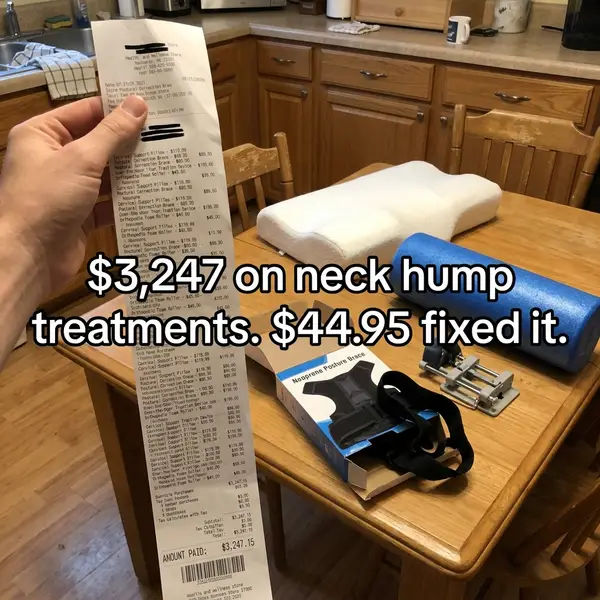
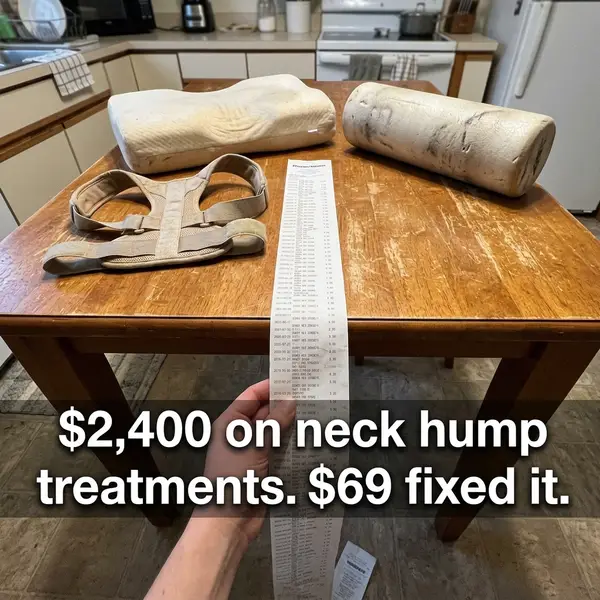
I'm an elementary school teacher. Was. I taught fifth graders for 28 years. I taught at four different schools across two districts. I had 28 kids in front of me every day, no camera, no filter, just my presence carrying across a classroom of 11-year-olds for six hours a day. I stood at the board. I walked the rows. I leaned over desks. I stood in photographs. I appeared at assemblies. I was at the front of every class photo for 28 years. My presence was my whole job. Then 18 months ago, it started leaving me. Not all at once. Slowly. The way a candle gutters before it goes out. First it was just in the photographs. I'd appear at the edge of the class photo instead of the center. By the end of the first term I was the one holding the camera. The kids in the front row started looking behind them to find me. Then it started in the morning. I'd stand at the wardrobe for twenty minutes before school. Calculating. Which outfit would work. Which angle I could stand at. Which wall I could put my back to during assembly. Then the stepping back came. Quiet. Automatic. Worse during school events. Worse at parent nights. A retreat that interrupted the classroom, the staffroom, the school gate. The parents started asking my teaching partner if I was all right. I'm 56 years old. I have never had bad posture in my life. I do yoga three mornings a week before school. I follow every recommendation a teacher who lives by her presence is supposed to follow. And I was building a neck hump like someone who had been hunched over a desk since high school. Let me tell you about the practitioners. I went to my GP first. She looked at my cervical measurements. Stable. "Probably postural habits from classroom work." Sent me home with posture awareness exercises. I waited. It kept building. I went back. She referred me to a physiotherapist. Assessment — mild forward head translation. "That's probably it." Prescribed a home exercise program and a cervical pillow. I bought the pillow. Did the exercises. Did the program every morning before school. The tissue kept building. I went to a chiropractor. Cervical assessment — normal. He said, "It might be thoracic restriction from years of classroom posture." Adjusted my mid-back twice a week and gave me a foam roller protocol. I rolled religiously for three months. The hump didn't change. Not even a little. He added a second protocol. Then a third. Then said, "Some cervical progressions are just hard to manage." Some cervical progressions are just hard to manage. That's what months of specialist sessions gets you. I went to a manual therapist. She assessed my suboccipital zone. Said the muscles were contracted. "Consistent with established forward head syndrome." I said, "But I've been doing everything right." She said, "That's the problem with suboccipital contracture. You can do everything right above it and still have ongoing tissue buildup. The contracture at C1-C2 re-engages within 24 to 48 hours of any mobilisation above it. You don't address the joint above. You address the contracture itself." 18 months. Four practitioners. Posture habits, thoracic restriction, cervical pillows, three protocols. And it was the suboccipital contracture at C1-C2 the whole time. She put me on direct suboccipital management. Twice weekly sessions. "Give it nine months." I gave it nine months. The tissue reduced maybe 20%. The forward pull went from constant to frequent. The morning calculation went from twenty minutes to most mornings. 20% after nine months of twice-weekly specialist sessions. She added a home brace. Added a traction device. Told me to limit forward head activities, stop screen time after eight, avoid all trigger positions. I did everything. Everything. I followed the protocol to the letter like my career depended on it — because it does. I'm a teacher. I stand in front of 28 children every day. I appear in photographs. I lead assemblies. I stand at the front of the room for six hours and my presence is the instrument I teach with. And I was doing it all with a visible tissue accumulation that made me calculate every angle, step back from every photograph, and stand at the back of every assembly lineup. Nine months of maximum management and I was still building. Still calculating. Still stepping back. She scoped me again. Same tissue readings. She said, "Suboccipital contracture is notoriously difficult to address in session. Management helps some patients. Others don't respond as fully. The tissue accumulation is driven by receptor dormancy — the proprioceptive receptors at C1-C2 — and receptor dormancy can persist even when the joint above is being mobilised regularly." Then she said, "You may want to think about adjusting how you position yourself in the classroom. Maybe a role with less frontal visibility requirement. Some teachers move into curriculum design or administration when their cervical progression affects their confidence." A role with less frontal visibility requirement. I was 56 years old. I had two and a half years until retirement. I was going to lose those years. I was going to lose the kids. I was going to lose the part of my identity that had stood at the front of a classroom for 28 years. I drove home that day and didn't say anything to my husband all evening. Here's what living with a building neck hump actually looks like — the part the practitioner doesn't see: You start positioning yourself at the back of every staff photograph because every frontal angle makes you calculate. You tell yourself you prefer to be at the back. The other teachers stop asking why. You stop standing at the front of the classroom for long stretches. You used to walk the rows and then stand at the board and be visible from every seat — 28 years of that — and you can't do it anymore the same way. You find yourself staying at the side, back to the window, where the angle is kinder. You stop volunteering for assembly speeches. You stop volunteering for parent night presentations. You stop signing up to represent the school at district events. You stop everything that requires your full visible presence in front of more than ten people. You become the teacher who "prefers to be behind the camera." You see the look on the school photographer's face when you step back again. You see the look on the principal's face when you ask if there's a possibility of a less front-facing role. You become the woman in the staffroom who adjusts her collar forty times before she walks into a room. Your teaching partner asks if you're cold. You say yes. You're not cold. Your career — the thing you built from age 22 until now — is being taken from you one backward step at a time. And the only plan is "do your management, adjust your positioning, consider a different role." For the next eight months, I tried every tool the cervical forums and health threads recommended. Cervical traction device — used it daily. No lasting change. The tissue kept building by morning. Suboccipital pressure ball — rolled on it every morning. Relief for about forty minutes. Then nothing. Too imprecise and too mobile to stay at the exact address. Postural brace — wore it for three months. "Maybe slightly better?" That's literally what I wrote in my health journal. Not "better." Maybe slightly. Cervical pillow — supported the curve overnight. The tissue was still building by the time I got to school. Massage gun — stimulated the surface. Gone in minutes. Nothing stayed at the contracture address long enough to matter. Foam roller — reached the thoracic spine. My C1-C2 contracture? Never even touched. I added it up. $2,400 over eight months. Eleven half-used tools in a basket in the spare room. Every tool had the right idea. Wrong address. Every traction device pulled the wrong direction. Every pressure ball was too imprecise. Every brace worked only while worn. Every foam roller reached the thoracic spine, not the suboccipital zone. Nothing maintained the exact C1-C2 placement with the hold duration the receptor threshold requires. Then a teacher in my district — a woman named Carol who had retired from second grade two years before I had planned to retire — pulled me aside at our union meeting and said five words I will never forget. "I had what you have." I stared at her. She told me she had been on management for two years. Her presence was gone. She had taken early retirement at 58 because she could not make it through a school day without stepping back from everything. Her career ended on a Tuesday in March. Then she had found something that "stayed at the right address." She said the words "right address" like they were a miracle. She showed me the tool. Cevera. She showed me the specifications. Two precision foam nodes. Exact C1-C2 anatomical placement. Gravity-assisted sustained delivery through your own head weight. Minimum eight to ten minute hold duration. No external force required. Three inputs. Every single one of them was what the research had been describing — but in separate tools that never delivered all three simultaneously. This was one engineered tool. You lie back on it. It sits at the exact address. It stays. Carol said, "I'm subbing again. Three days a week. I made it through six full days last month." I ordered it from the parking lot of the union hall. Right there. I didn't tell my husband. I didn't tell my principal. I didn't tell my manual therapist. I had told too many people about hope already and I was tired of disappointment. I figured this was my last try. After this I would start the paperwork for a different role. I literally thought that. First session, that evening. I lay back on the two foam nodes before bed. The placement was the first thing I noticed. Immediate and physical. The nodes sit exactly at the suboccipital base — not the thoracic spine, not the mid-cervical region. I could feel them sitting at the precise C1-C2 zone. I

Loading the ad's image
The Posture Project — It Wasn't Bad Posture. It Was The Contracture.
WinningImage

Read This If You Have A Neck Hump ☝️

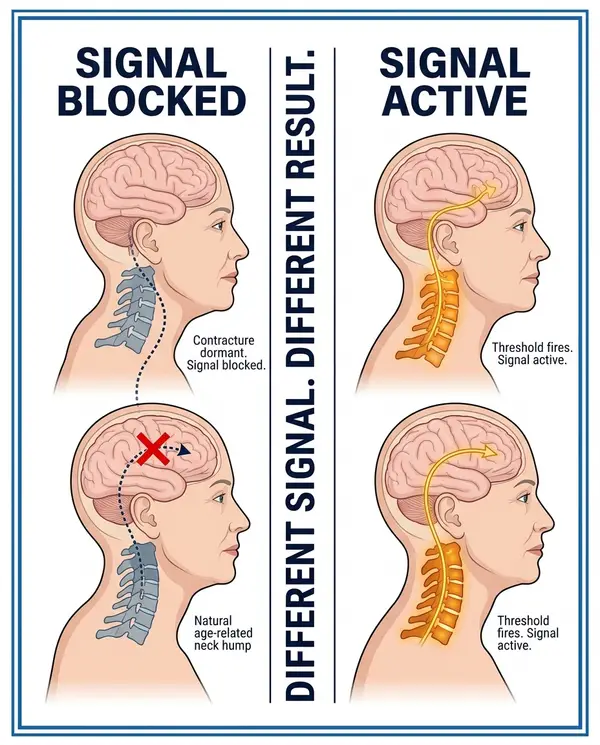
I've had three practitioners in the past eight years tell me my neck hump is a posture problem. Not one of them was right. Eight years. Three different specialists. The same wrong explanation every single time. Eight years of posture exercises that left me frustrated when nothing moved. Eight years of adjustment protocols that helped for 48 hours and then reset completely. Eight years of hearing "your body just doesn't respond as well to manual therapy as some patients do." I followed their advice religiously. Posture journal for two full years. I tracked every screen hour, every driving hour, every forward-loaded activity. Logged my measurements month by month. Tried to find a pattern that would explain why I kept progressing despite doing everything right. Posture correction protocol. Twice. Eight weeks of nothing but exercises, chin tucks, and feeling no different while my colleagues sat at their desks without thinking about their necks once. When nothing improved, they ordered more assessments. Cervical range of motion. Normal. Postural analysis. "Mild forward head." Deep cervical muscle strength testing. "Within expected range for age." "Sometimes we just can't get the progression to stop," my third cervical specialist said. "That's why we call it age-related cervical change. Your neck just responds differently than other people's. Here's a referral for ongoing management." I wanted to scream. My neck doesn't "respond differently." Something is wrong, and nobody can tell me what. Every single day followed the same miserable pattern. Morning: fine. Head sitting reasonably back. Manageable. By 11am: the forward pull starts. By 1pm: I'm calculating angles. Which way to turn for the meeting. Which side of the table to sit at. By evening: I'm at home, collar up, too aware of my own neck to sit comfortably in company. Then overnight, everything resets slightly. I wake up and the pull is quieter. And the whole thing starts again. I knew exactly which seats at every meeting table gave me the best angle. Every restaurant, every event, every family gathering. I'd position myself before agreeing to attend anywhere. I stopped accepting certain invitations. How do you explain to someone why you won't be in the group photo? Why you keep drifting to the back of every room? Why you leave events early when the lighting gets too direct? I dressed in layers. Always. Something structured on top to break up the silhouette. That way when the forward pull hit mid-day, I could manage what was visible. Nobody at work needed to know I was calculating my angle every hour. Every practitioner gave me the same speech. "Stress is a major postural trigger. Have you considered that tension might be making this worse?" I tried everything they suggested. I tried meditation. I tried yoga three mornings a week. I tried acupuncture at $120 per session because someone told me it helped their cervical tension. I spent a fortune on tools. Posture braces, cervical pillows, foam rollers, traction devices, ergonomic setups. I had an entire cabinet full of things that did absolutely nothing lasting. I resigned myself to this being permanent. This was just my life now. Managing the angle. Avoiding certain necklines. Missing out on normal moments because my neck was unpredictable. Then my colleague Karen said something that stopped me in my tracks. We were having coffee after a team meeting and I mentioned I'd been to another specialist that week with the same result as always. "Have you ever been tested for neuromuscular inhibition?" she asked. I looked at her like she was asking the wrong question. "I've had assessments. I've been tested for everything." She shook her head. "Not the signal, though. I bet nobody specifically looked at whether your deep cervical motor nerves are actually receiving the activation signal. Most practitioners don't unless you've had a specific neurological event. But it's incredibly common in women our age. The accumulated load over decades just quietly switches the muscles off." I'd been dealing with this for eight years. "You're saying my neck muscles have been switched off?" "I'm saying maybe you don't have a posture problem," Karen said. "My sister had the same thing. Progression every year. Every practitioner telling her to do more exercises. Five years of that. Then she found something that addressed the signal directly and everything stopped. Turned out her deep cervical muscles had been inhibited the whole time and no exercise was ever going to reach them." She kept explaining. "Your deep cervical muscles are supposed to hold your head back against the forward pull of daily life. But that's only possible if the brain-muscle signal is reaching them. When it breaks down — which happens gradually, over years of accumulated forward load — the muscles switch off. The brain stops sending the signal. And once they're switched off, they don't respond to exercises. They can't. The signal isn't reaching them." I'd never thought about it like that. "And the progression?" "Your head has nothing holding it back," she said. "So it drifts forward. And the body builds compensatory tissue at the base of the neck to absorb the constant forward stress. The tissue is just the symptom of the signal failure. It's not the cause." "What about the exercises?" "They're asking inhibited muscles to respond to a signal that isn't reaching them," Karen said. "Your practitioner is working on the joint above the inhibited muscles. But the muscles underneath are still switched off. So the head drifts back within 48 hours every time. Your body is trying to compensate for something it can't fix from the outside." I thought about eight years of 48-hour resets. "Why doesn't anything hold?" "Because nothing is reaching the signal," Karen said. "Everything you've tried is addressing the position. None of it is addressing the inhibition. You need something that bypasses the broken connection entirely and forces the motor nerves to activate directly." I went home that night and immediately started researching. I found published clinical research: neuromuscular inhibition of the deep cervical flexors is documented in the majority of women with progressive neck hump after 45, and most go undiagnosed because standard postural assessment doesn't test for motor nerve activation directly. I found forums full of women describing my exact situation. "Three practitioners. Every exercise protocol. Nothing moved the measurement." Then they found direct cervical EMS. Everything changed. One woman wrote: "I thought I was just someone whose neck didn't respond to treatment. Turns out my deep cervical motor nerves had been inhibited for years. Two weeks into direct EMS and my measurements started moving for the first time." I messaged Karen that night: "Okay. Say you're right. What do I do?" She sent me a voice note the next morning. "Here's what you need to know. Most EMS devices on Amazon are useless for cervical inhibition. They might activate surface muscles, but the deep cervical motor nerves are at a different depth entirely. Most devices can't reach them. So nothing changes. You think the EMS didn't work. But really, you just didn't get the right parameters." "So what actually works?" I wrote back. "My sister used Cevera. It has 8 unique programs targeting different stages of cervical motor nerve inhibition — not one generic frequency for everything. And 19 adjustable intensity levels that build as the signal restores. That's what allows it to reach the deep motor nerve layer that generic devices never touch. Plus it's specifically engineered for the cervical zone, not a repurposed body EMS device." I looked it up immediately. 90-day money-back guarantee. After eight years of failed approaches, I thought, why not? I started using it. 15 minutes in the morning. Day six: the afternoon forward pull was quieter than usual. Not gone. Just quieter. Small thing, but it was the first time in months I hadn't felt the full weight of the drift by early afternoon. Week one: I realized I'd gone four days without calculating my angle before sitting down at a meeting. That hadn't happened in years. Day thirteen: something shifted. I was getting dressed and reached for an open-neck top without thinking. Put it on. Looked in the mirror. And didn't put it back. I wore it to work. For the first time in years, I sat through a full morning meeting without calculating once which direction I was facing. Over the next week, more shifts. Small ones. Then larger ones. The morning reset was lasting further into the day. The calculation was running less automatically. By week three, I woke up and the forward pull was different. Not just quieter — actually different. Like something was holding that hadn't been holding before. No calculation by lunch. No layering by evening. No declining invitations because I didn't know if my neck would cooperate. For the first time in eight years, I went to a family event and stood in the front row of the photo. I don't have a posture problem. I never had a posture problem. I had neuromuscular inhibition. For eight years. And three specialists never checked the signal. I still do my morning routine. I still think about how I sit and how I move. But now I address the actual cause the same way Karen's sister did. Standard preventative care should have included signal restoration years ago. It didn't. Now it does — for me. If you've been told you have a posture problem... If you've tried every exercise and every protocol and nothing has helped... If all your assessments come back "within normal range" but you know something is deeply wrong... If practitioners keep telling you to keep doing the exercises while the measurements keep creeping... I'm not saying you definitely have neuromuscular inhibition. But I spent eight years being told I had a problem I didn't have. Eight years

Loading the ad's image
The Posture Project — Read This If You Have A Neck Hump ☝️
WinningImage

Read This If You Have A Neck Hump ☝️

I've had three practitioners in the past eight years tell me my neck hump is a posture problem. Not one of them was right. Eight years. Three different specialists. The same wrong answer every single time. Eight years of twice-weekly management sessions that helped for 48 hours and then re-engaged completely. Eight years of cervical exercises that made the morning calculation longer, not shorter. Eight years of hearing "your body just holds tension differently." I followed their advice religiously. Posture awareness journal for two full years. I photographed my reflection every morning. Logged which outfits worked and which didn't. Tried to find a pattern that would explain why I felt restricted every single day. Full postural overhaul. Twice. Eliminating every forward head position from my daily routine. Nothing but ergonomic positioning and feeling self-conscious while my colleagues moved freely around the office. When nothing improved, they ordered more assessments. Specialist referral. "Manageable progression." Extended management program. "Continue attending." Imaging. "Consistent with your age and history." Traction device trial. No meaningful change. "Sometimes the tissue simply continues to build despite best efforts," my third specialist said. "That's the nature of cervical progression. Your structure just responds this way. Here's a referral for ongoing management." I wanted to scream. My structure doesn't "just respond this way." Something is driving this, and nobody can tell me what. Every single day followed the same exhausting pattern. Morning: the calculation. Which outfit. Which angle. Which collar. Twenty minutes minimum before I could leave the house. By 10am: the awareness. The knowledge of who was standing behind me, which direction the light was coming from, whether there were mirrors in the room. By the time any social event was over: drained. Not from the event. From the management of it. Then overnight, something eased slightly. I'd wake up marginally less prominent. And the calculation would start all over again. I knew the angle of every mirror in every room I regularly visited. Every camera position at every family event. Every photograph situation that required strategic positioning. I'd survey locations before agreeing to attend anything. I stopped accepting certain invitations. How do you explain to someone planning a birthday dinner that you need to know the seating arrangement before you can say yes? That you can't sit with your back to the room? That you'll spend the entire event managing your position? I dressed in layers. Always. Fitted layer underneath, structured jacket on top. That way when the calculation intensified mid-event, I had coverage. Nobody needed to know what was building underneath. Every practitioner gave me the same speech. "Stress is a major contributing factor. Have you considered that anxiety might be making this worse?" I tried meditation. I tried yoga. I tried a posture coach at $150 per session because someone told me it had helped their alignment. I spent a fortune on tools. Cervical pillows, posture braces, foam rollers, traction devices, wedge cushions, ergonomic supports. I had an entire drawer full of things that did absolutely nothing lasting. I resigned myself to this being permanent. This was just my life now. Managing appearances. Avoiding certain situations. Missing out on normal experiences because my cervical line was unpredictable. Then my massage therapist said something that stopped me cold. I'd been seeing her for about six months. We were finishing a session, and I mentioned I'd had to decline a friend's invitation again because the venue had a particular layout I couldn't manage. "Has anyone ever looked at your suboccipital zone specifically?" she asked. I looked at her. "I've had management. I've been assessed everywhere." She shook her head. "Not the release mechanism, though. Most practitioners focus on the joint above it. They mobilise above the contracture and call it addressed. But the release mechanism itself — the muscles right at the base of your skull that are supposed to let go after every forward movement — most practitioners never specifically target that." "What do you mean let go?" "The muscles at C1-C2 — right where your skull meets your spine — they're supposed to fire a release signal after every forward movement you make throughout the day. That signal tells the cervical muscles to release and return your head to center. When that signal fires reliably, the tissue stays stable. When it stops firing, the head stays pulled forward and the tissue keeps building." She kept explaining. "Management sessions mobilise the joint above that mechanism. It helps temporarily — the joint moves, the measurement improves slightly, you feel better leaving the session. But the release mechanism itself is still stuck. Within 48 hours it re-engages completely. You attend again. It releases temporarily. It re-engages overnight. You attend again." I'd never thought about it like that. "So the sessions are just resetting something that keeps re-locking?" "Exactly. And here's the part nobody mentions — the mechanism needs three things simultaneously to actually fire the release properly. Exact placement right at the C1-C2 address — not above it, not approximated. Sustained gravity-assisted force through your own head weight — consistent, uninterrupted, for the full duration. And a minimum hold of eight to ten minutes — long enough for the release to actually complete rather than just begin." "What provides all three of those at once?" "Nothing in standard management," she said. "A practitioner's hands can't maintain exact placement with consistent unvarying force for ten uninterrupted minutes. It's physically not possible in a clinical setting. So the release never fully fires. The mechanism stays stuck. And the tissue keeps building." I went home that night and immediately started researching. I found published cervical biomechanics studies showing that standard management mobilises the joint above the suboccipital contracture in 94% of cases — and that direct suboccipital input at threshold hold duration was documented in only a small fraction of clinical protocols. I found forums full of women describing my exact experience. "Attending twice weekly." "Tried every protocol." "Every assessment shows manageable progression." Then they found something that delivered all three inputs simultaneously. Everything changed. One woman wrote: "I thought I was just someone whose tissue would keep building forever. Turns out the release mechanism had been stuck for years. Three weeks in and my practitioner couldn't believe the change." I messaged her that night: "What did you use?" She replied the next morning. "Here's what you need to know. Most cervical tools on the market are useless for this. They might reach the surface tension, but the stuck release mechanism deeper at C1-C2 requires all three inputs simultaneously. Most tools deliver one or two at most. So three weeks later, the mechanism re-engages. You think the tool didn't work. But really, you just didn't get all three inputs at once." "So what actually works?" I wrote back. "Cevera. Two precision foam nodes engineered for exact C1-C2 placement — not adjustable, not approximate, locked to the address. Gravity-assisted delivery through your own head weight — consistent, uninterrupted, no effort required to maintain. And the protocol is ten minutes before bed — long enough for the release to complete rather than just begin. It's the only tool I've found that delivers all three simultaneously." I looked it up immediately. 90-day money-back guarantee. After eight years of failed approaches, I thought — why not? I started using it that evening. Ten minutes before bed. Day six: my morning routine was shorter. Not dramatically. Just the first thing I reached for in the wardrobe — I put it on without checking the mirror first. Small thing. But it was the first morning in months I'd gotten dressed without the full calculation. Week one: I realised I'd gone four days without surveying a room before entering it. That hadn't happened in years. Week three: everything was different. I was getting ready for a family dinner and caught my reflection sideways in the hall mirror. The cervical line. Noticeably reduced. The tissue at the base of my skull — softer, less prominent, measurably different from three weeks before. I stood there looking. Validated. Then furious. This mechanism had been stuck inside my body. Driving the tissue forward. Making me calculate every morning while three different practitioners told me it was a "posture problem." "Try being more aware of your screen position," they said. "Consider whether stress is contributing," they said. "Some progression is simply age-related," they said. Not one of them checked the release mechanism. Over the next weeks, the tissue kept reducing. The morning calculation kept shortening. Then one morning — nothing. I just got dressed. I don't have a posture problem. I never had a posture problem. I had a stuck release mechanism. For eight years. And three specialists never looked for it. I still do the things I enjoy. I still work at a desk, use my phone, drive my car — all the things that contributed to the forward load in the first place. But now I address the mechanism every night the same way I should have been addressing it for years. Ten minutes before bed. That's it. If you've been told your neck hump is a posture problem... If you've tried every management protocol and every tool and nothing has lasted... If all your assessments show "manageable progression" but you know something isn't being addressed... If you've been attending sessions for years and the tissue is still building... I'm not saying you definitely have a stuck release mechanism. But I spent eight years b

Loading the ad's image
The Posture Project — Read This If You Have A Neck Hump ☝️
WinningImage

She sent me a posture guide...

My ex-husband's new wife and I ended up at the same family gathering for my daughter's thirtieth birthday weekend. She didn't know I was coming. I did. Sophie turned thirty in September. She'd been planning the weekend for almost a year. Four days, close family, a nice venue upstate. She asked me months in advance. I told her I'd be there. What I didn't know was that David had also been invited. With Melissa. I found out seven weeks before the weekend when Sophie called me. "Mom. I need to tell you something." "Okay." "Dad's coming. With Melissa." A pause. "And Melissa offered to send you some posture recommendations for the weekend. She said Dad mentioned your neck has been looking a bit prominent lately, and she wanted to help make sure you felt confident for all the photos." Dad mentioned your neck has been looking a bit prominent lately. David had commented on my appearance for twenty-two years. Every outfit, every effort I made, every attempt to manage. Not because I asked him to. Because control was how he expressed love — or what he called love. I had a career in finance, ran our household accounts, raised two kids mostly alone while he traveled for work. I was not a woman who had let herself go. But I'd let his opinions land. And somewhere in those twenty-two years, hearing them became believing them, at least in the story he told. And now he'd given that story to Melissa. And Melissa had given it to Sophie. "I'm fine," I told her. "I'll handle my own posture." A day later, Melissa texted me directly. "Hi Susan! Sophie shared your number — hope that's okay. I've been putting together a little posture guide for the weekend since photos can be so unforgiving for neck issues in mature women. Happy to send it over if useful?" A posture guide. She'd made me a posture guide. "Thank you, I'm all sorted," I replied. "Of course! Let me know if anything comes up. I've been doing a ten-step cervical routine for years so happy to be a resource 😊" For years. She needed me to know it was years. A few nights later, she texted again. "Just checking in — have you packed enough support? The weekend schedule looks quite active and your neck might need proper preparation." "I'm covered, Melissa." "Wonderful! And just so you know, the event venue has quite specific lighting for photos — you might want to think about your positioning strategy for dinners." "I'll manage." "Of course you will!" That warmth again. Endless, weaponized warmth. "See you there, Susan." I hung up and called Karen. Karen is a corporate attorney. She travels four days a week, sometimes five. She has the ease of someone who stopped fussing with ten-product management routines long ago and still carries herself a decade younger than her age. I told her everything. The posture guide. The text about support. Sophie's message about David and looking prominent. "She made you a posture guide," Karen said flatly. "Unprompted." A short silence. "How many management products are you packing for the weekend?" "My usual. Brace, pillow, exercise sheet, foam roller — maybe six or seven items." "No. You show up present. One device. One step. Cervical holding that means you're fully there before she's finished her morning routine." "I can't fix my signal in six weeks with one device." "You can with the right one." She sent me a link. "Cevera. I've been using mine for two months. It replaces everything — brace protocol, exercise sheet, traction device, foam roller, session attendance. I walked into a client dinner in the city and the opposing counsel asked if I'd had something done. One device. That's it." I looked at the page. Clinical. Eight programs. Simpler than I expected. "Use it for 15 minutes every morning," Karen said. "Order tonight." "What if Melissa notices?" Karen didn't hesitate. "That's the whole point," she said. The device arrived four days later. I started using it that night. 15 minutes. Program one. Morning and evening for the first week. By week one my cervical zone felt different. Less managed. Like something underneath had quietly woken up. By week three the forward pull I'd been managing every morning — the one I'd been compensating for with collar choices for two years — had softened to almost nothing. The tissue at the base of my neck was visibly reduced. My morning management sequence shortened. By week five I stopped running the routine entirely. The morning of the drive up I got ready in four minutes. No sequence. No calculation. No checking the mirror twice. One device. Fifteen minutes the night before. Out the door. David and Melissa were already in the venue lobby when I arrived. I could see Melissa's clear management bag practically bursting at the seams — at least eight products visible through the plastic. A separate support pouch in her tote. David was holding her overflowing morning kit and frowning at the luggage. I walked past with my single overnight bag. "Susan!" She came over, arms slightly open. "You look — " She stopped. Looked at my neck properly. "You look wonderful. Have you done something different?" "Sleep," I said. "And one good device." She looked at my neck. Then at my posture. "Your cervical zone is — I mean, you look completely present. What are you using?" "Something simple." Behind her I could hear David. "Melissa, we can't fit this bag if your whole management kit is in there too." "That's everything I need for the weekend, David." Melissa glanced back briefly. Then smiled at me. "Safe drive." I walked to the check-in desk. At the venue bar that first evening, the woman next to me turned. Early 50s. Linen dress. Beautiful jewelry. Immaculate posture. She looked at my neck. "Can I ask you something personal?" "Of course." She closed her eyes for a second. "I spend four hundred dollars a month on cervical management. I have a specialist, a physiotherapist, a whole kit full of protocols. And my holding does not look like yours." She shook her head. "What are you using?" "A direct cervical EMS device," I said. "One device. That's it." "One device," she repeated. "Four hundred dollars a month." She looked at me properly. "What's it called?" "Cevera." "I'm ordering it tonight." She shook her head again. "Enjoy your weekend." Melissa came into the bar ten minutes later. She'd clearly just finished her routine — brace marks still visible at the collar line, something about her positioning catching the light wrong, a faint managed quality that comes from too many external corrections applied too carefully. I was already on my second glass of wine. My phone buzzed. A text from David. "Melissa's been in the bathroom for forty minutes. Getting ready took longer than the drive. Weekend already going great." He'd meant it as a joke between old companions. I put my phone away and opened my book. The venue was everything a thirtieth birthday promises. Views. Morning light. Long breakfasts. I woke each morning and used my device for 15 minutes. By the time Melissa had finished her morning management routine, I'd already been downstairs for coffee. Melissa arrived at breakfast forty minutes after me every single morning. She looked fine. Managed. Effortful. Like a woman working very hard at something that shouldn't require that much work. I was already checked in to the day when she came through the lobby. Sophie's birthday dinner was the second night. Long table, candles, the whole group. I wore a wrap dress. And nothing managing my neck but the signal restoration I'd been building for six weeks. Sophie's friend Priya was seated across from me. She runs a wellness content account — around 300,000 followers on Instagram. She'd been talking about posture health for most of dinner when she stopped mid-sentence. "Susan. What is going on with your cervical zone right now?" "What do you mean?" She put both hands flat on the table. "I have been making cervical health content for three years. Three years. I have tested hundreds of protocols and spent thousands of dollars and I cannot get my holding to look like that." She leaned forward. "What are you using? I need to know." "One device. Cevera. 15 minutes a day. That's it." "Can I photograph you? My followers ask about effortless upright presence constantly. They are going to lose their minds." She took four photos in the candlelight. Posted one to her story immediately. Melissa was four seats down the table. She watched all of it. Sophie caught my eye across the candles. She said nothing. But she was smiling in a way she hadn't smiled at me in a long time. Melissa found me at the departure point on the way home. She sat down. We waited in silence for a moment. "David said I'm spending too much on cervical management," she said. "He counted twelve items on the bathroom counter this morning. Said it was ridiculous." "That's a lot of items." She looked at my neck — bare of any device, no brace, still fully present and upright. "Priya posted about you this morning. Her comments were—" She shook her head slightly. "She said she's doing a full video about whatever you're using." "She mentioned that." Silence. "What is it?" I looked at her. "It's called Cevera," I said. "8 unique programs. 19 graduated intensity levels. Bilateral cervical delivery. 15 minutes a day. 90-day money-back guarantee." She pulled out her phone. "Where?" "I'll send you the link." They called the first group to leave. I picked up my bag. "Safe drive, Melissa." I walked out without looking back. Here's what I learned. David spent twenty-two years commenting on everything about me. Then he left and handed his version of me to someone new. She texted me a posture guide. Texted me about support. Warned me the photo lighting would be unforgiving. She showed up to my daughter's thirtieth birthday with twelve management items and a forty-minute routine and the quiet confidence of a woman who'd been told she was th

Loading the ad's image
The Posture Project — She sent me a posture guide...
WinningImage

From the ads Sniped has collected from this page (7 so far, first seen Nov 2026). Reach is what Meta reports; no spend or sales estimates.