Advertiser

Midwest Appliance Institute

uprootclean.comMeta Ad Library

4
Running ads
none new in 30 days
Aug 2026
Advertising since
longest ad 3 months
—
Reach
running ads, summed
0% video
Formats
0 video · 4 image
1
Products advertised
2 shops

Laundry still smells? This is why

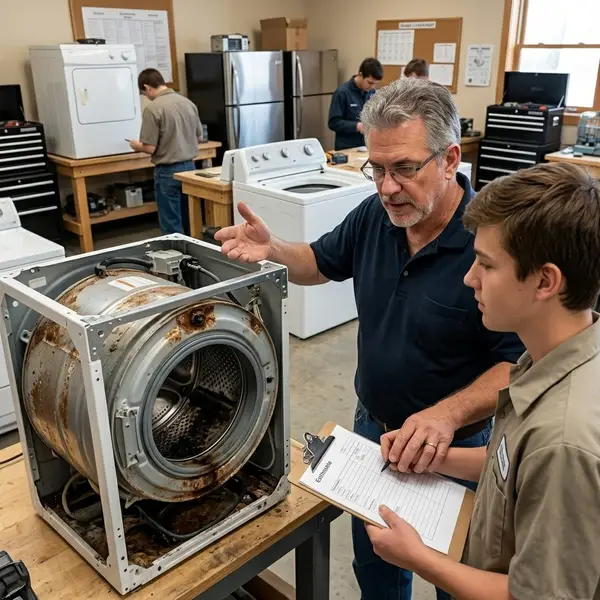
The first question taught at an appliance-repair school is not, “What brand is the washer?” It is: “What has been building up inside it?” That question changes the diagnosis for pet owners who have already tried Affresh, bleach, baking soda, hot cycles, gasket wiping, and self-clean routines. Because a washer can look clean at the door while the internal water path is still carrying old pet residue. My name is Michael R. Hensley. I am the Director of Technical Training at Midwest Appliance Service Institute in Columbus, Ohio. Our students learn how to diagnose and repair refrigerators, dishwashers, dryers, ranges, and washing machines. They learn how to read service manuals, test components, trace drain problems, and figure out why an appliance is failing before anyone starts replacing expensive parts. There is one lesson I make them learn before they touch a front-load washer. Do not begin with the part the homeowner can see. The visible gasket is often just the evidence. The real problem may be farther inside the machine. I learned that lesson years ago, but students usually understand it in about thirty seconds... right after the first front-loader is opened on the training table. The washer sits on a steel workbench. The front panel is removed. The rubber door seal is folded back. A student points to the dark residue around the gasket and says, “Mold.” Sometimes it is mold. But that answer is incomplete. Because behind that visible seal, the washer has a whole set of spaces that most owners never see. The sump. The drain path. The pump area. The outer tub. The folds and channels where water, detergent, hair, and oils pass through load after load. Those spaces can hold the material that keeps bringing the odor back. And this is where many homeowners get trapped. They see the gasket. They scrub the gasket. They run a cleaner. The machine smells better for a few days. Then another load of household laundry goes through. The washer gets warm and wet again. The odor returns. The owner assumes the cleaning failed, the detergent failed, or the washer itself has reached the end of its useful life. The repair industry sees another possibility. The routine reached the visible symptom, but the material causing the recurring odor remained inside the machine. That distinction matters even more in homes with pets. A front-loader does not only process the items that obviously belong to the pet. It processes shirts, towels, blankets, jackets, sheets, cleaning cloths, and every other piece of laundry that has been in the pet household. Pet hair contributes keratin protein. Dander and skin residue contribute oils. Detergent and fabric softener leave their own residue. Moisture keeps all of it in contact with the machine’s internal surfaces. Hair and dander transfer onto ordinary clothing, towels, sheets, and blankets. Skin oils travel with them. Detergent and fabric softener add their own residue. Every load can add another layer. One of the most common service conversations sounds like this: “The washer smells after I clean it.” “What did you use?” “Affresh. Vinegar. Bleach. Baking soda. I leave the door open. I wiped the seal. I even ran the clean-washer cycle twice.” “And the smell comes back?” “After several regular loads.” That last sentence is usually the clue. Regular laundry is not creating a completely new problem. It is adding the material that exposes the old one. This is why a homeowner can feel as if the washer is personally refusing to cooperate. The routine produces enough short-term improvement to encourage another attempt, but the next run of household laundry brings the same issue back. It becomes a loop. Clean the visible part. Run another laundry load. Notice the smell. Clean the visible part again. After enough rounds, the owner starts looking at replacement machines. That is the point where a repair instructor needs to slow the process down. Before pricing a new appliance, the internal material needs to be identified. This is where the emotional part of the service call usually appears. The homeowner has already spent money on cleaners. The machine is not old enough to replace without a second thought. The dog is part of the family, so the household laundry still has to be washed. And every failed attempt creates another pile of laundry waiting for a second wash. By the time the owner starts asking about a new washer, the problem is no longer just an odor. It is the feeling that nothing in the house can be trusted to stay clean. That is why a student’s first instinct matters. A new technician sees a dark gasket and wants to replace the seal. A more careful technician asks what the seal is telling them. What passed through this machine? How often did it happen? Where would that material go after the visible part was wiped? Those questions lead to a better diagnosis than “front-loaders smell.” One of our classroom exercises starts with a simple inspection sheet. Students record the washer type, the loads it handles, the cleaning products already used, and the moment the odor returns. The timing tells a story. If the smell improves after a hot empty cycle but returns after several regular loads, the laundry is adding something the empty cycle never removed. If a gasket wipe helps for a weekend but the odor returns after several loads, the visible seal was only one part of the issue. If three different cleaning products produce the same short-lived result, the question changes from “Which brand should be tried next?” to “What are all three products failing to reach or break down?” That is a much more useful question. It also gives the homeowner something better than another guess. The machine is not being judged by a single bad smell. The entire pattern is being examined: the washer type, the household laundry, the cleaning history, the location of the residue, and the time it takes to return. This is how a repair student learns to separate a part failure from a buildup problem. The distinction matters because a replacement part only helps when that part caused the failure. A new gasket does not remove residue from the sump. A new washer does not prevent the same pet hair and oils from entering the next machine. A stronger scent does not change what the old residue is made of. And that is how people end up paying for the same problem twice. First, they pay to treat the surface. Then they pay to replace the appliance when the hidden cause keeps returning. The students remember the lesson because the machine on the table makes it hard to argue with. The visible seal can be wiped clean while the water path still carries old material. A washer can look respectable from the front and still have a very different story inside. Here is what students see during the teardown. The gasket is the part a homeowner can reach. It catches hair and residue, so it gets most of the attention. The next layer sits behind the seal and around the moving water path. This is where detergent film, softener residue, pet hair, skin oils, and moisture can collect together. The machine does not need a visible mountain of grime for the odor to keep returning. A thin layer in the right place can hold enough material to affect later loads. Water moves through those spaces every time the washer runs. That is the important detail. The hidden area is not sealed away from the wash system. It is part of the route the water takes. So old residue gets wet again. Small particles loosen. Odor compounds move through the same system that is supposed to leave the laundry clean. This is why wiping the gasket cannot finish the job. The gasket is one doorway into the problem, not the entire room. The low-water, sealed-door design made this pattern more common across the category. Less water improved efficiency, but it also left less rinse volume moving residue out between loads. The sealed door kept moisture inside the machine between cycles. That helps explain why owners of different front-load brands recognize the same mold, mildew, and recurring-odor pattern. But the design history is only half the diagnosis. The more useful question is what the residue is made of, because that determines what kind of cleaning formula can break it down. Vinegar works on certain mineral deposits and surface odors. It does not break apart the keratin protein in pet hair or remove the oily residue from dander and skin. Baking soda deodorizes some compounds. It does not digest a mature residue layer. Bleach affects surface mold and bacteria. It does not remove every embedded layer from porous seals or hidden internal areas. Leaving the door open dries the part of the machine exposed to the room. It does not dry the hidden path behind the drum. And a general washer-cleaning tablets like Affresh can handle general residue without being formulated for the combination of protein, oils, hair, detergent, and softener film found throughout a pet household’s regular laundry. This is the part students need to understand. A cleaning product can work exactly as designed and still fail to solve the material causing a particular washer’s odor. That is why the ingredient list matters. Affresh’s published ingredients center on sodium percarbonate, sodium carbonate, and supporting ingredients. That is oxygen-bleach and builder chemistry for general machine residue and odor-causing grime. Uproot Washing Machine Cleaner Pro contains sodium percarbonate too, then adds alkali protease, protease, lipase, and alpha-amylase. The three enzymes address three different parts of the residue: Alpha-amylase loosens detergent and softener film. Protease breaks down the keratin protein in pet hair. Lipase strips the oily layer from dander and skin residue. The point is not to make one ingredient sound magical. The point is that the washer is holding several kinds of material, and the formula is built to work through th

Loading the ad's image
Midwest Appliance Institute — Laundry still smells? This is why
WinningImage

Laundry still smells? This is why.

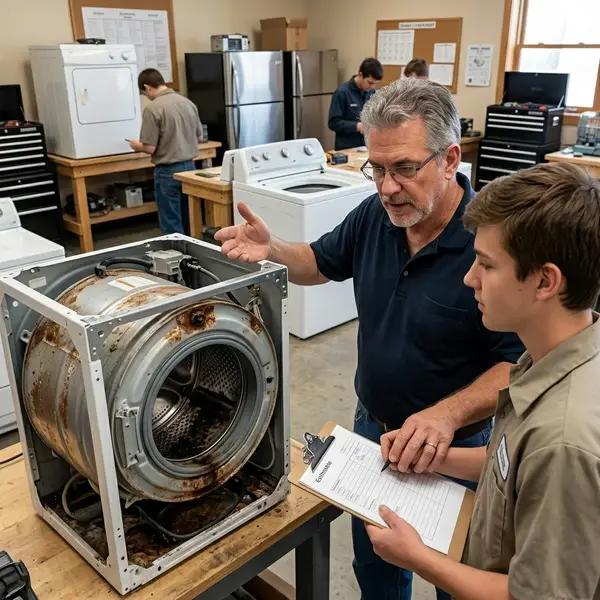
The first question taught at an appliance-repair school is not, “What brand is the washer?” It is: “What has been building up inside it?” That question changes the diagnosis for pet owners who have already tried Affresh, bleach, baking soda, hot cycles, gasket wiping, and self-clean routines. Because a washer can look clean at the door while the internal water path is still carrying old pet residue. My name is Michael R. Hensley. I am the Director of Technical Training at Midwest Appliance Service Institute in Columbus, Ohio. Our students learn how to diagnose and repair refrigerators, dishwashers, dryers, ranges, and washing machines. They learn how to read service manuals, test components, trace drain problems, and figure out why an appliance is failing before anyone starts replacing expensive parts. There is one lesson I make them learn before they touch a front-load washer. Do not begin with the part the homeowner can see. The visible gasket is often just the evidence. The real problem may be farther inside the machine. I learned that lesson years ago, but students usually understand it in about thirty seconds... right after the first front-loader is opened on the training table. The washer sits on a steel workbench. The front panel is removed. The rubber door seal is folded back. A student points to the dark residue around the gasket and says, “Mold.” Sometimes it is mold. But that answer is incomplete. Because behind that visible seal, the washer has a whole set of spaces that most owners never see. The sump. The drain path. The pump area. The outer tub. The folds and channels where water, detergent, hair, and oils pass through load after load. Those spaces can hold the material that keeps bringing the odor back. And this is where many homeowners get trapped. They see the gasket. They scrub the gasket. They run a cleaner. The machine smells better for a few days. Then another load of household laundry goes through. The washer gets warm and wet again. The odor returns. The owner assumes the cleaning failed, the detergent failed, or the washer itself has reached the end of its useful life. The repair industry sees another possibility. The routine reached the visible symptom, but the material causing the recurring odor remained inside the machine. That distinction matters even more in homes with pets. A front-loader does not only process the items that obviously belong to the pet. It processes shirts, towels, blankets, jackets, sheets, cleaning cloths, and every other piece of laundry that has been in the pet household. Pet hair contributes keratin protein. Dander and skin residue contribute oils. Detergent and fabric softener leave their own residue. Moisture keeps all of it in contact with the machine’s internal surfaces. Hair and dander transfer onto ordinary clothing, towels, sheets, and blankets. Skin oils travel with them. Detergent and fabric softener add their own residue. Every load can add another layer. One of the most common service conversations sounds like this: “The washer smells after I clean it.” “What did you use?” “Affresh. Vinegar. Bleach. Baking soda. I leave the door open. I wiped the seal. I even ran the clean-washer cycle twice.” “And the smell comes back?” “After several regular loads.” That last sentence is usually the clue. Regular laundry is not creating a completely new problem. It is adding the material that exposes the old one. This is why a homeowner can feel as if the washer is personally refusing to cooperate. The routine produces enough short-term improvement to encourage another attempt, but the next run of household laundry brings the same issue back. It becomes a loop. Clean the visible part. Run another laundry load. Notice the smell. Clean the visible part again. After enough rounds, the owner starts looking at replacement machines. That is the point where a repair instructor needs to slow the process down. Before pricing a new appliance, the internal material needs to be identified. This is where the emotional part of the service call usually appears. The homeowner has already spent money on cleaners. The machine is not old enough to replace without a second thought. The dog is part of the family, so the household laundry still has to be washed. And every failed attempt creates another pile of laundry waiting for a second wash. By the time the owner starts asking about a new washer, the problem is no longer just an odor. It is the feeling that nothing in the house can be trusted to stay clean. That is why a student’s first instinct matters. A new technician sees a dark gasket and wants to replace the seal. A more careful technician asks what the seal is telling them. What passed through this machine? How often did it happen? Where would that material go after the visible part was wiped? Those questions lead to a better diagnosis than “front-loaders smell.” One of our classroom exercises starts with a simple inspection sheet. Students record the washer type, the loads it handles, the cleaning products already used, and the moment the odor returns. The timing tells a story. If the smell improves after a hot empty cycle but returns after several regular loads, the laundry is adding something the empty cycle never removed. If a gasket wipe helps for a weekend but the odor returns after several loads, the visible seal was only one part of the issue. If three different cleaning products produce the same short-lived result, the question changes from “Which brand should be tried next?” to “What are all three products failing to reach or break down?” That is a much more useful question. It also gives the homeowner something better than another guess. The machine is not being judged by a single bad smell. The entire pattern is being examined: the washer type, the household laundry, the cleaning history, the location of the residue, and the time it takes to return. This is how a repair student learns to separate a part failure from a buildup problem. The distinction matters because a replacement part only helps when that part caused the failure. A new gasket does not remove residue from the sump. A new washer does not prevent the same pet hair and oils from entering the next machine. A stronger scent does not change what the old residue is made of. And that is how people end up paying for the same problem twice. First, they pay to treat the surface. Then they pay to replace the appliance when the hidden cause keeps returning. The students remember the lesson because the machine on the table makes it hard to argue with. The visible seal can be wiped clean while the water path still carries old material. A washer can look respectable from the front and still have a very different story inside. Here is what students see during the teardown. The gasket is the part a homeowner can reach. It catches hair and residue, so it gets most of the attention. The next layer sits behind the seal and around the moving water path. This is where detergent film, softener residue, pet hair, skin oils, and moisture can collect together. The machine does not need a visible mountain of grime for the odor to keep returning. A thin layer in the right place can hold enough material to affect later loads. Water moves through those spaces every time the washer runs. That is the important detail. The hidden area is not sealed away from the wash system. It is part of the route the water takes. So old residue gets wet again. Small particles loosen. Odor compounds move through the same system that is supposed to leave the laundry clean. This is why wiping the gasket cannot finish the job. The gasket is one doorway into the problem, not the entire room. The low-water, sealed-door design made this pattern more common across the category. Less water improved efficiency, but it also left less rinse volume moving residue out between loads. The sealed door kept moisture inside the machine between cycles. That helps explain why owners of different front-load brands recognize the same mold, mildew, and recurring-odor pattern. But the design history is only half the diagnosis. The more useful question is what the residue is made of, because that determines what kind of cleaning formula can break it down. Vinegar works on certain mineral deposits and surface odors. It does not break apart the keratin protein in pet hair or remove the oily residue from dander and skin. Baking soda deodorizes some compounds. It does not digest a mature residue layer. Bleach affects surface mold and bacteria. It does not remove every embedded layer from porous seals or hidden internal areas. Leaving the door open dries the part of the machine exposed to the room. It does not dry the hidden path behind the drum. And a general washer-cleaning tablets like Affresh can handle general residue without being formulated for the combination of protein, oils, hair, detergent, and softener film found throughout a pet household’s regular laundry. This is the part students need to understand. A cleaning product can work exactly as designed and still fail to solve the material causing a particular washer’s odor. That is why the ingredient list matters. Affresh’s published ingredients center on sodium percarbonate, sodium carbonate, and supporting ingredients. That is oxygen-bleach and builder chemistry for general machine residue and odor-causing grime. Uproot Washing Machine Cleaner Pro contains sodium percarbonate too, then adds alkali protease, protease, lipase, and alpha-amylase. The three enzymes address three different parts of the residue: Alpha-amylase loosens detergent and softener film. Protease breaks down the keratin protein in pet hair. Lipase strips the oily layer from dander and skin residue. The point is not to make one ingredient sound magical. The point is that the washer is holding several kinds of material, and the formula is built to work through those lay

Loading the ad's image
Midwest Appliance Institute — Laundry still smells? This is why.
PromisingImage

Laundry still smells? This is why

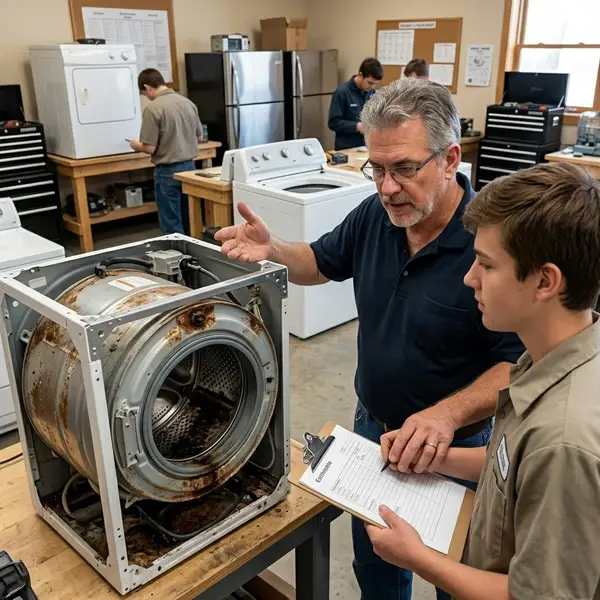
The first question taught at an appliance-repair school is not, “What brand is the washer?” It is: “What has been building up inside it?” That question changes the diagnosis for pet owners who have already tried Affresh, bleach, baking soda, hot cycles, gasket wiping, and self-clean routines. Because a washer can look clean at the door while the internal water path is still carrying old pet residue. My name is Michael R. Hensley. I am the Director of Technical Training at Midwest Appliance Service Institute in Columbus, Ohio. Our students learn how to diagnose and repair refrigerators, dishwashers, dryers, ranges, and washing machines. They learn how to read service manuals, test components, trace drain problems, and figure out why an appliance is failing before anyone starts replacing expensive parts. There is one lesson I make them learn before they touch a front-load washer. Do not begin with the part the homeowner can see. The visible gasket is often just the evidence. The real problem may be farther inside the machine. I learned that lesson years ago, but students usually understand it in about thirty seconds... right after the first front-loader is opened on the training table. The washer sits on a steel workbench. The front panel is removed. The rubber door seal is folded back. A student points to the dark residue around the gasket and says, “Mold.” Sometimes it is mold. But that answer is incomplete. Because behind that visible seal, the washer has a whole set of spaces that most owners never see. The sump. The drain path. The pump area. The outer tub. The folds and channels where water, detergent, hair, and oils pass through load after load. Those spaces can hold the material that keeps bringing the odor back. And this is where many homeowners get trapped. They see the gasket. They scrub the gasket. They run a cleaner. The machine smells better for a few days. Then another load of household laundry goes through. The washer gets warm and wet again. The odor returns. The owner assumes the cleaning failed, the detergent failed, or the washer itself has reached the end of its useful life. The repair industry sees another possibility. The routine reached the visible symptom, but the material causing the recurring odor remained inside the machine. That distinction matters even more in homes with pets. A front-loader does not only process the items that obviously belong to the pet. It processes shirts, towels, blankets, jackets, sheets, cleaning cloths, and every other piece of laundry that has been in the pet household. Pet hair contributes keratin protein. Dander and skin residue contribute oils. Detergent and fabric softener leave their own residue. Moisture keeps all of it in contact with the machine’s internal surfaces. Hair and dander transfer onto ordinary clothing, towels, sheets, and blankets. Skin oils travel with them. Detergent and fabric softener add their own residue. Every load can add another layer. One of the most common service conversations sounds like this: “The washer smells after I clean it.” “What did you use?” “Affresh. Vinegar. Bleach. Baking soda. I leave the door open. I wiped the seal. I even ran the clean-washer cycle twice.” “And the smell comes back?” “After several regular loads.” That last sentence is usually the clue. Regular laundry is not creating a completely new problem. It is adding the material that exposes the old one. This is why a homeowner can feel as if the washer is personally refusing to cooperate. The routine produces enough short-term improvement to encourage another attempt, but the next run of household laundry brings the same issue back. It becomes a loop. Clean the visible part. Run another laundry load. Notice the smell. Clean the visible part again. After enough rounds, the owner starts looking at replacement machines. That is the point where a repair instructor needs to slow the process down. Before pricing a new appliance, the internal material needs to be identified. This is where the emotional part of the service call usually appears. The homeowner has already spent money on cleaners. The machine is not old enough to replace without a second thought. The dog is part of the family, so the household laundry still has to be washed. And every failed attempt creates another pile of laundry waiting for a second wash. By the time the owner starts asking about a new washer, the problem is no longer just an odor. It is the feeling that nothing in the house can be trusted to stay clean. That is why a student’s first instinct matters. A new technician sees a dark gasket and wants to replace the seal. A more careful technician asks what the seal is telling them. What passed through this machine? How often did it happen? Where would that material go after the visible part was wiped? Those questions lead to a better diagnosis than “front-loaders smell.” One of our classroom exercises starts with a simple inspection sheet. Students record the washer type, the loads it handles, the cleaning products already used, and the moment the odor returns. The timing tells a story. If the smell improves after a hot empty cycle but returns after several regular loads, the laundry is adding something the empty cycle never removed. If a gasket wipe helps for a weekend but the odor returns after several loads, the visible seal was only one part of the issue. If three different cleaning products produce the same short-lived result, the question changes from “Which brand should be tried next?” to “What are all three products failing to reach or break down?” That is a much more useful question. It also gives the homeowner something better than another guess. The machine is not being judged by a single bad smell. The entire pattern is being examined: the washer type, the household laundry, the cleaning history, the location of the residue, and the time it takes to return. This is how a repair student learns to separate a part failure from a buildup problem. The distinction matters because a replacement part only helps when that part caused the failure. A new gasket does not remove residue from the sump. A new washer does not prevent the same pet hair and oils from entering the next machine. A stronger scent does not change what the old residue is made of. And that is how people end up paying for the same problem twice. First, they pay to treat the surface. Then they pay to replace the appliance when the hidden cause keeps returning. The students remember the lesson because the machine on the table makes it hard to argue with. The visible seal can be wiped clean while the water path still carries old material. A washer can look respectable from the front and still have a very different story inside. Here is what students see during the teardown. The gasket is the part a homeowner can reach. It catches hair and residue, so it gets most of the attention. The next layer sits behind the seal and around the moving water path. This is where detergent film, softener residue, pet hair, skin oils, and moisture can collect together. The machine does not need a visible mountain of grime for the odor to keep returning. A thin layer in the right place can hold enough material to affect later loads. Water moves through those spaces every time the washer runs. That is the important detail. The hidden area is not sealed away from the wash system. It is part of the route the water takes. So old residue gets wet again. Small particles loosen. Odor compounds move through the same system that is supposed to leave the laundry clean. This is why wiping the gasket cannot finish the job. The gasket is one doorway into the problem, not the entire room. The low-water, sealed-door design made this pattern more common across the category. Less water improved efficiency, but it also left less rinse volume moving residue out between loads. The sealed door kept moisture inside the machine between cycles. That helps explain why owners of different front-load brands recognize the same mold, mildew, and recurring-odor pattern. But the design history is only half the diagnosis. The more useful question is what the residue is made of, because that determines what kind of cleaning formula can break it down. Vinegar works on certain mineral deposits and surface odors. It does not break apart the keratin protein in pet hair or remove the oily residue from dander and skin. Baking soda deodorizes some compounds. It does not digest a mature residue layer. Bleach affects surface mold and bacteria. It does not remove every embedded layer from porous seals or hidden internal areas. Leaving the door open dries the part of the machine exposed to the room. It does not dry the hidden path behind the drum. And a general washer-cleaning tablets like Affresh can handle general residue without being formulated for the combination of protein, oils, hair, detergent, and softener film found throughout a pet household’s regular laundry. This is the part students need to understand. A cleaning product can work exactly as designed and still fail to solve the material causing a particular washer’s odor. That is why the ingredient list matters. Affresh’s published ingredients center on sodium percarbonate, sodium carbonate, and supporting ingredients. That is oxygen-bleach and builder chemistry for general machine residue and odor-causing grime. Uproot Washing Machine Cleaner Pro contains sodium percarbonate too, then adds alkali protease, protease, lipase, and alpha-amylase. The three enzymes address three different parts of the residue: Alpha-amylase loosens detergent and softener film. Protease breaks down the keratin protein in pet hair. Lipase strips the oily layer from dander and skin residue. The point is not to make one ingredient sound magical. The point is that the washer is holding several kinds of material, and the formula is built to work

Loading the ad's image
Midwest Appliance Institute — Laundry still smells? This is why
PromisingImage

Laundry still smells? This is why.

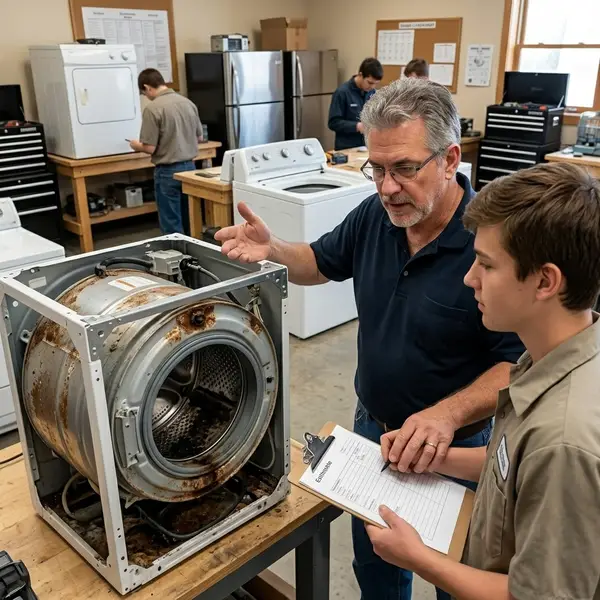
The first question taught at an appliance-repair school is not, “What brand is the washer?” It is: “What has been building up inside it?” That question changes the diagnosis for pet owners who have already tried Affresh, bleach, baking soda, hot cycles, gasket wiping, and self-clean routines. Because a washer can look clean at the door while the internal water path is still carrying old pet residue. My name is Michael R. Hensley. I am the Director of Technical Training at Midwest Appliance Service Institute in Columbus, Ohio. Our students learn how to diagnose and repair refrigerators, dishwashers, dryers, ranges, and washing machines. They learn how to read service manuals, test components, trace drain problems, and figure out why an appliance is failing before anyone starts replacing expensive parts. There is one lesson I make them learn before they touch a front-load washer. Do not begin with the part the homeowner can see. The visible gasket is often just the evidence. The real problem may be farther inside the machine. I learned that lesson years ago, but students usually understand it in about thirty seconds... right after the first front-loader is opened on the training table. The washer sits on a steel workbench. The front panel is removed. The rubber door seal is folded back. A student points to the dark residue around the gasket and says, “Mold.” Sometimes it is mold. But that answer is incomplete. Because behind that visible seal, the washer has a whole set of spaces that most owners never see. The sump. The drain path. The pump area. The outer tub. The folds and channels where water, detergent, hair, and oils pass through load after load. Those spaces can hold the material that keeps bringing the odor back. And this is where many homeowners get trapped. They see the gasket. They scrub the gasket. They run a cleaner. The machine smells better for a few days. Then another load of household laundry goes through. The washer gets warm and wet again. The odor returns. The owner assumes the cleaning failed, the detergent failed, or the washer itself has reached the end of its useful life. The repair industry sees another possibility. The routine reached the visible symptom, but the material causing the recurring odor remained inside the machine. That distinction matters even more in homes with pets. A front-loader does not only process the items that obviously belong to the pet. It processes shirts, towels, blankets, jackets, sheets, cleaning cloths, and every other piece of laundry that has been in the pet household. Pet hair contributes keratin protein. Dander and skin residue contribute oils. Detergent and fabric softener leave their own residue. Moisture keeps all of it in contact with the machine’s internal surfaces. Hair and dander transfer onto ordinary clothing, towels, sheets, and blankets. Skin oils travel with them. Detergent and fabric softener add their own residue. Every load can add another layer. One of the most common service conversations sounds like this: “The washer smells after I clean it.” “What did you use?” “Affresh. Vinegar. Bleach. Baking soda. I leave the door open. I wiped the seal. I even ran the clean-washer cycle twice.” “And the smell comes back?” “After several regular loads.” That last sentence is usually the clue. Regular laundry is not creating a completely new problem. It is adding the material that exposes the old one. This is why a homeowner can feel as if the washer is personally refusing to cooperate. The routine produces enough short-term improvement to encourage another attempt, but the next run of household laundry brings the same issue back. It becomes a loop. Clean the visible part. Run another laundry load. Notice the smell. Clean the visible part again. After enough rounds, the owner starts looking at replacement machines. That is the point where a repair instructor needs to slow the process down. Before pricing a new appliance, the internal material needs to be identified. This is where the emotional part of the service call usually appears. The homeowner has already spent money on cleaners. The machine is not old enough to replace without a second thought. The dog is part of the family, so the household laundry still has to be washed. And every failed attempt creates another pile of laundry waiting for a second wash. By the time the owner starts asking about a new washer, the problem is no longer just an odor. It is the feeling that nothing in the house can be trusted to stay clean. That is why a student’s first instinct matters. A new technician sees a dark gasket and wants to replace the seal. A more careful technician asks what the seal is telling them. What passed through this machine? How often did it happen? Where would that material go after the visible part was wiped? Those questions lead to a better diagnosis than “front-loaders smell.” One of our classroom exercises starts with a simple inspection sheet. Students record the washer type, the loads it handles, the cleaning products already used, and the moment the odor returns. The timing tells a story. If the smell improves after a hot empty cycle but returns after several regular loads, the laundry is adding something the empty cycle never removed. If a gasket wipe helps for a weekend but the odor returns after several loads, the visible seal was only one part of the issue. If three different cleaning products produce the same short-lived result, the question changes from “Which brand should be tried next?” to “What are all three products failing to reach or break down?” That is a much more useful question. It also gives the homeowner something better than another guess. The machine is not being judged by a single bad smell. The entire pattern is being examined: the washer type, the household laundry, the cleaning history, the location of the residue, and the time it takes to return. This is how a repair student learns to separate a part failure from a buildup problem. The distinction matters because a replacement part only helps when that part caused the failure. A new gasket does not remove residue from the sump. A new washer does not prevent the same pet hair and oils from entering the next machine. A stronger scent does not change what the old residue is made of. And that is how people end up paying for the same problem twice. First, they pay to treat the surface. Then they pay to replace the appliance when the hidden cause keeps returning. The students remember the lesson because the machine on the table makes it hard to argue with. The visible seal can be wiped clean while the water path still carries old material. A washer can look respectable from the front and still have a very different story inside. Here is what students see during the teardown. The gasket is the part a homeowner can reach. It catches hair and residue, so it gets most of the attention. The next layer sits behind the seal and around the moving water path. This is where detergent film, softener residue, pet hair, skin oils, and moisture can collect together. The machine does not need a visible mountain of grime for the odor to keep returning. A thin layer in the right place can hold enough material to affect later loads. Water moves through those spaces every time the washer runs. That is the important detail. The hidden area is not sealed away from the wash system. It is part of the route the water takes. So old residue gets wet again. Small particles loosen. Odor compounds move through the same system that is supposed to leave the laundry clean. This is why wiping the gasket cannot finish the job. The gasket is one doorway into the problem, not the entire room. The low-water, sealed-door design made this pattern more common across the category. Less water improved efficiency, but it also left less rinse volume moving residue out between loads. The sealed door kept moisture inside the machine between cycles. That helps explain why owners of different front-load brands recognize the same mold, mildew, and recurring-odor pattern. But the design history is only half the diagnosis. The more useful question is what the residue is made of, because that determines what kind of cleaning formula can break it down. Vinegar works on certain mineral deposits and surface odors. It does not break apart the keratin protein in pet hair or remove the oily residue from dander and skin. Baking soda deodorizes some compounds. It does not digest a mature residue layer. Bleach affects surface mold and bacteria. It does not remove every embedded layer from porous seals or hidden internal areas. Leaving the door open dries the part of the machine exposed to the room. It does not dry the hidden path behind the drum. And a general washer-cleaning tablets like Affresh can handle general residue without being formulated for the combination of protein, oils, hair, detergent, and softener film found throughout a pet household’s regular laundry. This is the part students need to understand. A cleaning product can work exactly as designed and still fail to solve the material causing a particular washer’s odor. That is why the ingredient list matters. Affresh’s published ingredients center on sodium percarbonate, sodium carbonate, and supporting ingredients. That is oxygen-bleach and builder chemistry for general machine residue and odor-causing grime. Uproot Washing Machine Cleaner Pro contains sodium percarbonate too, then adds alkali protease, protease, lipase, and alpha-amylase. The three enzymes address three different parts of the residue: Alpha-amylase loosens detergent and softener film. Protease breaks down the keratin protein in pet hair. Lipase strips the oily layer from dander and skin residue. The point is not to make one ingredient sound magical. The point is that the washer is holding several kinds of material, and the formula is built to work through those layers

Loading the ad's image
Midwest Appliance Institute — Laundry still smells? This is why.
PromisingImage

From the ads Sniped has collected from this page (4 so far, first seen Nov 2026). Reach is what Meta reports; no spend or sales estimates.