Most Cinnamon Supplements Are Useless
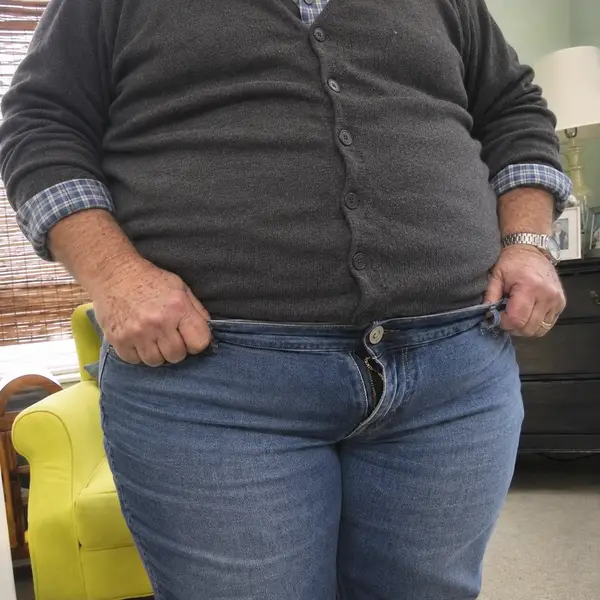
I wore my favorite blue jeans every single day for 3 years straight until my waistline kept expanding and I couldn't button them anymore. If your body keeps storing fat no matter what you eat or how much you move, please read this before it gets worse. Because the fat isn't the problem. It's a symptom. And nobody told me what was actually causing it. I hadn't recognized the person in my mirror in four years. I told my colleagues it was just getting older. I tried on those blue jeans every few months just to see. And every few months, I had to put them back on the shelf. The waistline had grown again. Another inch. Another reminder. It wasn't like I was eating badly. I had been eating salads for lunch and walking every morning and cutting out dessert for over three years. And my body kept storing fat anyway. Around my belly. Around my hips. Wrapped around my middle like a belt I never put on and could not take off. I stopped wearing fitted clothes. I started dressing to hide. Dark colors, loose fabric, anything that covered the parts of me I had stopped recognizing. I stopped going to my granddaughter's school events because I was embarrassed by how I looked in photographs. I declined dinner invitations because I dreaded squeezing into restaurant booths. I bought a new swimsuit and wore it exactly once before folding it back into the drawer. It had started slowly. Around 61 or 62. Just a little extra softness around my middle. Normal, I told myself. Part of getting older. But by 63, my pants were two sizes larger. By 64, I had given up on dresses entirely. And by 65, I had quietly stopped doing half the things I loved because I was ashamed of a body that kept growing no matter how hard I tried to shrink it. The worst part was not the fat itself. It was the helplessness. I was doing everything right. And my body kept storing fat like it had its own plan and I was not part of it. That is when I finally told my husband Robert what had really been going on. Not the version I had been telling everyone. The real version. The jeans I had hidden in the back of the closet. The mirror I had started avoiding. The fact that I hadn't felt comfortable in my own body in years. The fact that the harder I tried, the more my body seemed to store. He looked at me like I had been carrying something heavy for a long time and never asked for help. Because I had been. And I am writing this tonight because if you are a woman over 55 who has watched her body accumulate fat year after year despite eating carefully, exercising consistently, and doing every single thing she was told to do... Please read this all the way through. What I am about to share with you is the same information that turned my life around in less than eight weeks. And it could do the same for you. My name is Dr. Theodore Bennett. I am 65 years old. I am a board-certified endocrinologist with over two decades of practice. And like a lot of people my age, I had been silently watching my own body store fat in a way that made no logical sense. Eating less made no difference. Moving more made no difference. The fat stayed. I had tried everything. Cutting carbohydrates until I had brain fog and headaches. Calorie counting so obsessively that I dreaded every meal. Intermittent fasting until I was shaking by noon. Fat-burning supplements that gave me a racing heart. A medically supervised low-calorie program that left me so depleted I had to nap twice a day and still didn't lose the belly fat. I consulted colleagues. I reviewed the literature. And still my body kept storing fat. Specifically around my middle. Specifically in ways that felt completely disconnected from what I was eating. My fasting glucose had crept up to 118. I knew exactly what that number meant. My A1C sat at 6.1. My energy crashed every afternoon. My brain was foggy. My joints ached every morning. As an endocrinologist, I understood the mechanisms. What I could not understand was why none of the standard interventions were working on my own body. And then came the morning that broke me. It was my granddaughter Sofia's seventh birthday party. A Saturday in October. She ran up to me in the backyard in her little party dress and grabbed my hand and wanted me to run with her to the other side of the yard where they had set up games. I ran. For about fifteen seconds. Then I stopped. Out of breath. My waistline straining against the waistband of my slacks. I looked down at my own body and felt a wave of grief so sudden and so sharp that I had to look away. Sofia looked up at me and said, Grandpa, are you okay? I told her I was fine. I smiled until she ran off to play. Then I walked to my car, sat down in the driver's seat, and sat in silence for twenty minutes. Not because I was tired. Not because I was out of breath. Because my seven-year-old granddaughter had noticed something was wrong with her grandfather's body. And she was right. Something was wrong. And I, an endocrinologist of twenty-three years, did not yet have the full answer. That evening, I sat at the kitchen table and told my wife everything. How long the fat accumulation had really been going on. How hard I had been trying. How many things I had stopped doing because I was ashamed of a body that kept storing fat no matter what I did. How I had moved those blue jeans to the back of the closet and started telling myself I would donate them someday. She put her hand on mine and said: We are going to figure this out, Theo. Whatever it takes. The next Monday morning I was on the phone with a colleague I deeply respect. A metabolic researcher whose work I had been following for years. Dr. Patricia Osei. And what Dr. Osei told me in that conversation changed everything I thought I understood about my own body — and frankly, filled in a gap I had not fully appreciated in my own clinical approach. She said something that stopped me cold. Theo, the fat isn't your real problem. It's what your body is doing in response to a real problem. And until you address what's actually causing your body to store fat the way it is, nothing you do at the surface level is going to stop it. She took a breath and started from the beginning. I want you to think about fat storage differently than you've been trained to think about it. Most physicians frame it as excess caloric intake. But that's the downstream effect. The upstream cause is what tells the body whether to burn the food it eats or store it as fat. And that signal is heavily influenced by one thing. Insulin. Here is how it works in a healthy metabolic state. When you eat, your blood sugar rises. Your pancreas releases insulin. Insulin activates a protein cascade inside your muscle cells that moves glucose transporters, called GLUT4, to the surface of those cells. Those transporters absorb glucose from your blood and bring it into the cell, where it gets used for energy. When that system is working well, your cells are absorbing and burning glucose efficiently. Blood sugar stays in a healthy range. She leaned into her point. But when your cells stop responding properly to insulin, those GLUT4 transporters don't move to the surface the way they should. Glucose absorption into muscle slows down. Blood sugar stays elevated. Your liver, which monitors blood glucose and insulin levels, reads the situation as poor glucose regulation and continues producing and releasing glucose into the bloodstream to try to compensate. The cycle becomes self-reinforcing. Here is where body fat enters the picture. The liver can convert some of that excess circulating glucose into fatty acids through a process called lipogenesis. Those fatty acids get transported through the bloodstream and can be taken up and stored in fat tissue, particularly the visceral fat around the abdomen. This is one of the reasons why disrupted glucose regulation can contribute to belly fat accumulation over time. It is not the only factor, but for many people over 55, it is a significant one. I knew all of this. What I did not yet see was how it applied to me personally in a way I had been missing. The clinical term is insulin resistance, she continued. It describes what happens when cells become less responsive to insulin's signals. Diet and exercise can still support metabolic health, and I would never tell you to stop moving. But when insulin signaling is already significantly impaired, lifestyle changes alone often don't address the cellular environment driving fat storage. That is why so many people do everything right and still can't move the belly fat. The signaling problem is still running underneath. I asked her what was driving the impaired signaling. Chronic inflammation, she said. Specifically, low-grade inflammation that disrupts the insulin signaling pathway inside the cell. When inflammatory molecules are chronically elevated, they can interfere with the protein cascade that normally moves GLUT4 to the cell surface. The insulin arrives, but the internal signaling that should respond to it gets blocked partway through. The transporters don't reach the surface reliably. Glucose absorption into muscle stays impaired. This creates a situation where blood sugar stays elevated even when insulin is present, and over time, some of that excess circulating glucose gets converted and stored as fat. As a result, the metabolic environment stays biased toward fat storage even when you are eating carefully. She paused. Your fasting glucose of 118 is not a minor number. It is a window into this process running right now. Every day the signaling stays disrupted, the conditions for fat storage persist. I sat there in complete silence. Because even with twenty-three years of training in endocrinology, I had been treating the downstream effects in my own life while the upstream signaling problem kept running. I asked Dr. Osei the only question that mattered. So how do I support the signaling? She said there is a way. But it is not a stricter diet. It is not more exercise. And it is not necessarily a prescription. The inflammation disrupting your insulin signaling can be addressed, she said. And there is a compound that researchers have been studying specifically for its effects on two parts of this problem. I want to be clear about something upfront. Most of the research is in animals and cell studies, with some human trials on cinnamon extract more broadly. I am not telling you this is a guaranteed fix. But the mechanism is compelling, the human evidence is promising, and I have seen it work consistently. The first pathway involves GLUT4. When insulin signaling is impaired, there is a separate way to support glucose transporter activity. Exercise activates an enzyme called AMPK, which can move GLUT4 to the cell surface through a pathway that doesn't depend on insulin. Research in animal and cell models has shown that cinnamaldehyde, the active compound in real Ceylon cinnamon, activates this same AMPK pathway. Human studies on Ceylon cinnamon extract have shown improvements in fasting glucose and insulin sensitivity, which suggests some of this mechanism may translate, though the research is still developing. The second pathway involves inflammation. The chronic low-grade inflammation that disrupts insulin signaling activates through a cellular mechanism called the NLRP3 inflammasome. Research has shown that cinnamaldehyde inhibits NLRP3 activation in cell and animal studies, which may help reduce the inflammatory interference that impairs insulin signaling. Again, the human evidence is promising but not definitive. Together, these two pathways represent a meaningful area of research. Supporting glucose absorption through the alternative pathway while reducing the inflammatory interference on insulin signaling. When both shift in a positive direction, the metabolic environment may become less biased toward fat storage. I told her I would just start adding cinnamon to my oatmeal. She shook her head. That will not get you to the levels studied in this research. Please don't rely on that. She explained why. Culinary cinnamon is almost always Cassia. A completely different species grown primarily in China. Cassia contains high levels of coumarin, a compound that stresses the liver with daily use. Even if you found real Ceylon cinnamon in spice form, the concentration of active compounds is too low, and the bioavailability is poor in that format. Cinnamaldehyde is fat-soluble. It needs a fat carrier to dissolve, absorb, and reach the tissues where it does its work. Sprinkled on food, most of it passes through unused. What you need is a concentrated extract, she said. The human studies that showed improvements in fasting glucose and insulin sensitivity used multi-gram daily doses of Ceylon cinnamon. A 12:1 concentrated extract means one softgel can deliver the equivalent of 7,200mg of raw Ceylon bark in a much smaller, more concentrated form. And it needs to be suspended in MCT oil, because that fat carrier allows cinnamaldehyde to absorb much more effectively than dry powder. Research on lipid-based delivery confirms this type of formulation significantly improves absorption of fat-soluble compounds compared to powder capsules. Most cinnamon supplements on the shelf are ground powder packed into a hard capsule. No extraction. No carrier oil. Poor absorption. And many of those products are not even real Ceylon. A large number of cinnamon supplements sold online, including on Amazon and at big-box retailers, use Cassia cinnamon from China and label it ambiguously. You have no way of knowing what species you are actually buying or whether any active compound reached your bloodstream in meaningful amounts. She wrote a name on her notepad and slid it across the desk. Metabolae. She told me it was the only Ceylon cinnamon softgel she had found that uses genuine Cinnamomum verum, sourced from Sri Lanka, in a 12:1 concentrated extract suspended in MCT oil. No fillers. No powder. No Cassia hiding behind a vague label. Every bag third-party tested for purity, potency, and coumarin levels. DNA-verified species. GMP-certified manufacturing. I take it myself, she said. I recommended it to my own mother, who is 68 and had been accumulating belly fat for years despite eating carefully. And I recommend it to patients who come to me with the same pattern you have: stubborn abdominal fat, rising fasting glucose, and a body that stopped responding to diet and exercise. She paused, and her voice dropped slightly. One more thing. It is not sold in stores. Not on Amazon, not at Walmart, not through any third-party retailer. If you find something claiming to be Metabolae anywhere other than their official website, I cannot vouch for what you are getting. The only way to verify you are getting the real formula, the correct species, the stated dose, and the MCT oil delivery is to go directly to them. She wrote the brand name again, underlined it, and handed me the note. That afternoon I didn't even sit down when I got home. I stood at the kitchen counter and ordered a bag from the official Metabolae website right then and there. The bag arrived four days later. I started taking one softgel that morning with breakfast. Here is exactly what happened over the next eight weeks. Week one: One softgel with breakfast every morning. By day four, something had shifted at dinner. I was not reaching for more food after finishing my plate. The relentless low-grade hunger that had lived in the back of my stomach for years was quieter. I ate a normal portion. Stopped. And didn't go back. By day six, my fasting glucose was 109. It had been sitting at 118 for three months without moving. Week two: The afternoon crash I had lived with for years was softening. I was awake at 3 PM. Functional. Clear. I could think without pushing through fog. My fasting glucose dropped to 104. And something else was happening. The puffiness around my midsection, that tight, inflamed feeling I had grown so used to that I had stopped noticing it, was beginning to ease. Week three: I pulled on a pair of pants I had stopped wearing eight months earlier because the waistband had become too tight. They fit. Not loosely. But they fit. I stood in the bathroom and looked at the waistline in the mirror for a long time. The belly fat that had sat hard and swollen against every waistband for four years was visibly smaller. Not gone. But smaller. For the first time in four years, something was moving. Week four: I tried on the blue jeans. I pulled them up. Fastened the button. Looked in the mirror. They closed. I walked into the living room and showed my wife. She stood up and looked at me and said nothing for a moment. Then she said, There you are. I started laughing. She held me. And I just kept saying: Four years. Four years of trying and nothing moved. And now something is actually moving. Week five: My barber ran his fingers through my hair and said my texture looked different. Fuller. I had been losing more hair than usual for two years and had assumed it was age. The same chronic inflammation affecting my metabolic signaling had been disrupting other systems downstream as well. Week six: I wore the blue jeans to my granddaughter Sofia's weekend soccer game. I sat in a folding chair on the sideline. When she scored her first goal, I jumped up with the other parents and cheered until my throat hurt. She ran to me after the game and hugged me the way she did when she was small. I felt like myself again. I went back to see Dr. Osei seven months after I had started. She pulled up my numbers from the full metabolic panel she ordered at my six-month mark. Fasting glucose: 97. Down from 118. Inflammatory markers were measurably lower. Insulin sensitivity had improved on the labs. And the number on the scale had moved nearly twelve pounds over those first eight weeks, without changing my diet and without increasing my exercise beyond the morning walking I had already been doing. The fat loss had continued gradually in the months since. She looked at me for a moment. Your signaling is recovering, Theo. The inflammatory interference is reduced. Your cells are responding again. The belly fat that had not moved in four years had been moving for seven months. You didn't just slow the fat accumulation, she said. You reversed the direction. My fasting glucose is consistently between 95 and 101 now. My A1C came back at 5.7. My energy holds through the entire day. The brain fog is gone. My joints feel better in the morning than they have in years. The belly fat has continued to decrease with every passing month. And the blue jeans fit. I wear them every week now, the way I used to. I have told three people in my life about Metabolae since then. All three reported back within the first month that the belly fat was beginning to shift and their fasting glucose had dropped. I cannot speak to their full lab results at six months. But what they described in the first month matched exactly what I experienced in the first month. One of them called me when she pulled out a pair of jeans she had not worn in three years and they had buttoned. Another told me her doctor had reduced her blood sugar medication for the first time since she had been prescribed it. But here is what I need you to understand. Not all Ceylon cinnamon is the same. And most of what is sold online is not what it claims to be. Most cinnamon supplements fail for the same reasons, and failing means the fat storage continues: They are not real Ceylon. What is labeled cinnamon in the majority of supplements is Cassia, a completely different species most often grown in China. Cassia contains up to 250 times more coumarin than true Ceylon. Coumarin is linked to liver stress with daily use. The research on cinnamaldehyde and the AMPK and NLRP3 pathways involved in metabolic signaling was conducted using Cinnamomum verum, not Cassia. Many products online obscure this distinction behind vague labeling. They are underdosed. Human studies showing improvements in fasting glucose and insulin sensitivity used multi-gram daily doses of Ceylon cinnamon. A 12:1 concentrated extract delivers the equivalent of 7,200mg of raw Ceylon bark in a single softgel. Most capsules and powders on the shelf contain a small fraction of that in a form the body cannot properly absorb. They use the wrong delivery format. Cinnamaldehyde is fat-soluble. It requires a fat carrier to dissolve and absorb properly. Dry powder capsules have poor bioavailability. The active compound passes through before it reaches meaningful concentrations in the bloodstream. The right format is a softgel suspended in MCT oil, which allows cinnamaldehyde to absorb and reach the tissues where it supports glucose uptake and reduces inflammatory signaling. They are not tested or verified. Most supplements have no published third-party lab results. You have no way of knowing whether you are getting real Ceylon or mislabeled Cassia, and no way of knowing what coumarin level you are consuming every day. Metabolae is not sold on Amazon. It is not sold at Walmart. It is not available through any third-party marketplace or retailer. If you encounter something claiming to be Metabolae in any of those places, it is not authentic. The only way to verify you are getting the real formula, the correct species confirmed by DNA testing, the stated dose, and the MCT oil delivery system is to order directly from the official Metabolae website. What Dr. Osei recommended to me was the authentic product. True Cinnamomum verum, sourced from Sri Lanka. 12:1 concentrated extract. Suspended in MCT oil. Third-party tested. GMP-certified. Every bag verified for purity, potency, and coumarin levels before it ships. One softgel daily. That is it. I am not anti-medication. If what you are doing is working and your body feels like yours again, keep going. But if you are like me. If your waistline has been expanding for years despite everything you have tried. If your belly fat sits in the same place no matter how little you eat or how much you move. If your fasting glucose keeps creeping upward and your body keeps storing instead of burning. If you have quietly started hiding yourself in loose clothing and declining the invitations and moving the jeans to the back of the closet. This is worth trying. Dr. Osei told me about it. I tried it. It worked. I told three people in my life. All three reported the same early results. That is not a coincidence. That is a pattern. I am sharing this because I hope it reaches someone who is sitting where I was sitting. P.S. A few things I wish I had known before ordering: Metabolae backs every bag with a 90-day money-back guarantee. If the belly fat does not begin to shift, if your fasting glucose does not drop, if your body does not begin burning instead of storing, you pay nothing. You have a full 90 days to try it. If it does not work for you, send back what is left and you get every dollar back. Take one softgel daily with breakfast. Each delivers 7,200mg equivalent of concentrated Ceylon extract in MCT oil. Timeline: Most people notice reduced hunger and steadier energy within the first week. Fasting glucose typically begins dropping between days five and ten. Visible belly fat reduction begins around weeks three to five. The fuller metabolic shift, sustained fat burning, improved A1C, lasting change, takes eight to twelve weeks of consistent daily use. They sell out regularly. Small company. Authentic sourcing from Sri Lanka. If it is in stock, do not wait. If you are dealing with: Belly fat and waistline growth that will not stop no matter what you eat A body that stores fat even when you are eating carefully and exercising Fasting glucose above 100 that keeps creeping up Clothes that stopped fitting years ago and have stayed that way A metabolism that feels completely broken and unresponsive A fat-storage pattern you have been told is just age Try this. Give it 90 days. Watch what happens to your belly. Watch what happens to your fasting glucose. Watch what happens when the inflammatory interference eases and your body's metabolic environment begins to shift. If it does not work, you get your money back. But if it works like it did for me... You will wonder why you spent four years fighting the fat instead of addressing what was causing your body to store it. I went from a fasting glucose of 118 to consistently in the 90s. From a belly that kept growing no matter what I did to a waistline that is smaller every month. From blue jeans in the back of my closet to wearing them every single week. From a body that felt like it was working against me to one that is finally working with me again. From four years of trying everything and nothing moving, to being told by my colleague: Your signaling is recovering. Your cells are responding again. If there is even a chance this could work for you, it is worth trying. ~ Dr. Theodore Bennett, 65, Endocrinologist P.P.S. The fat your body stores today is the metabolic environment you are building toward tomorrow. Every day that the signaling stays disrupted, the conditions for fat accumulation persist a little longer. This is not a cosmetic problem. It is a warning. And it is not inevitable. The signaling can recover. I know because mine did. I am wearing my blue jeans right now.
Loading the ad's image