Advertiser

Kylie Mappe

tryneralle.comMeta Ad Library

27
Running ads
1 new in 30 days
Oct 2026
Advertising since
longest ad 1 month
—
Reach
running ads, summed
0% video
Formats
0 video · 27 image
10
Products advertised
1 shop

“Thank you. This saved our Saturdays.”

My grandkids aren't allowed to eat at my house anymore. My son didn't put it that way. Mike would never put it that way. But I raised him, and I know what "for a while" means. He sat at my kitchen table on a Saturday in October with his jacket still zipped, turning his coffee cup around and around. "Jess would rather the kids eat before they come over," he said. "Just for a while. It's not about you, Mom." I was drying a plate I'd already dried, just to have something in my hands. "For a while," I said. "Just for a while." By Christmas, the woman who kept them away was asking me for my pancake recipe. I'm writing this for whoever just got told "for a while." I know that feeling in your stomach. I know how it ends now. Nobody told me. That's the part nobody warns you about, being a grandmother. Nobody takes the kids away. They just start sending them over full. My name is Barbara. I'm 67. I've made Saturday pancakes in this kitchen since 1983. First for Mike and his sister. For the last eleven years, for Mike's two, Ellie and Sam. It started with a jar. Every Saturday for eleven years I sent the kids home with a quart jar of Grandma's pancake mix. The kids called it Grandma's mix because it came out of Grandma's jar, and I let them. I'd pour the box into a mason jar, write PANCAKES on a strip of masking tape, and send it home in a grocery bag. I never told anyone it was Bisquick. Nobody ever asked. In September the jar came back empty, with a note taped to the lid. "Please don't refill this. We're trying to keep the kids off boxed stuff." She wasn't wrong. Before I say anything else: Jess is a good mother. She reads every label in the grocery store. I've watched her put a box of crackers back on the shelf over one word she didn't like. She's raising those kids on less sleep than I ever got by on. Here's the part I'm not proud of. I tried to fix it with a better box. I drove to the fancy grocery store and bought the organic pancake mix. $6.99 a box. It had a red barn on the front. Jess turned it around and read the back. It was still a box. I tried the "protein" kind. The gluten-free kind. The one with a chef on the front. Four boxes in four weeks. Four for four. Then came Mike's birthday lunch. I brought a plate of pancakes for the kids, the way I always do. Jess steered them over to the fruit tray. Ellie asked why she couldn't have Grandma's pancakes. "Because Grandma's come from a box, honey." She said it gently. Nine people heard it. Ellie looked at me like I'd been caught at something. I suppose I had. Two weeks later, Mike was sitting at my kitchen table with his jacket zipped. After he left, I sat down in Ellie's chair. The one with the booster cushion she's too old for and won't give up. No more Saturday pancakes. Not the Mickey Mouse ones. Not the chocolate chip smiley faces. Not the ones Sam eats with his fingers because he says forks slow him down. Eleven years of Saturdays, and I'd been told, very kindly, to stop. Then I got up, opened my pantry, and counted. Pancake mix. Biscuit mix. Two boxes of cornbread. Brownie mix. Six taco seasoning packets. Two packets of ranch. Eleven boxes and packets. The same eleven I've been buying since my kids were in grade school. I'm not a bad cook. I've fed this family through forty-four Thanksgivings. I can roast a turkey without a thermometer. And I couldn't make a pancake without a picture of a barn on the front. If you're a grandmother, you know the jar I'm talking about. Maybe yours is the cookie tin. Maybe it's the Saturday pancakes. It's the thing that makes your house Grandma's house. And somebody just called it "boxed stuff." I didn't tell anybody about any of it. But the next Tuesday at church, Ruth asked me what was wrong before I'd even taken my coat off. Ruth is 71. She has run our Shrove Tuesday pancake supper for twenty-two years. Two hundred people in one night, and she's the one at the griddle. If anybody in this town knows pancakes, it's Ruth. So I told her. The jar. The note. The four boxes. "Because Grandma's come from a box." The jacket zipped. Ruth didn't laugh. She thought about it for a second. "Barb. It's not the pancakes she minds." "Then what is it?" "It's that you can't tell her what's in them." I opened my mouth, and I shut it again. Because I couldn't. "Nobody at that supper has eaten a boxed pancake in ages," Ruth said. I figured she was pulling my leg. She wasn't. She mixes her own now, out of a spiral book her sister sent her. The Dry Mix Pantry. "You make the dry part once," she said. "It keeps in the pantry. Saturday morning you add the milk and eggs, same as the box. The box was only ever doing the measuring, Barb. You've been paying them to hold a measuring cup." I told her I was sixty-seven and not about to start a homestead. "Nobody's asking you to. It's flour and a measuring cup. The book just tells you how much of each." "I could look it up on my phone." "And stand there every Saturday with flour on your phone, scrolling past a stranger's vacation pictures to get to the baking powder? I did that for a month. Never again." Then she said the thing that stopped me. It isn't only pancakes. It's the biscuits, the cornbread, the brownies, the taco seasoning, the ranch. More than a hundred and fifty of them, and how long each one keeps. My whole pantry, basically. She had a second copy in her car. It had been buy one, get one when she ordered, and she'd never worked out who to give the other one to. "Take it," she said. "Just do the pancakes first." I made the mix that Thursday. It took me longer to find my good measuring cups than to mix it. Flour, a little sugar, baking powder, salt, and the rest of what the page said, stirred together in my big yellow bowl and poured into the same quart jar. Jess's note was still on the lid. I peeled it off and put it in the drawer by the phone. On a fresh strip of masking tape I wrote PANCAKES, and under that, every single thing that was in it. I knew why every one of them was there. I called Mike that night. "Bring them hungry on Saturday. Show Jess the lid first." He took a picture of the lid and sent it to her. Thursday night went by. All of Friday went by. At 9:40 Friday night my phone buzzed. One word. "OK." Saturday the kids came at eight. I didn't say a word. I made pancakes out of the jar, the way I always have. Sam ate four, with his fingers. Ellie had three and asked for the syrup twice. Nobody asked where they came from. By Thanksgiving I'd made the biscuit mix and the cornbread. The taco packets were gone from my pantry before Christmas. Mike noticed on taco night. He asked if I'd changed something, because it wasn't as salty. I had. I'd used less salt. When you make the mix yourself, you get to decide that. Christmas morning was at Mike and Jess's this year. I brought the jar. Jess saw it on the counter and got a look on her face, and I could see her deciding whether to say something. Instead she picked it up and read the lid. She read it twice. "You made this?" "In October." "What's in it?" "It's all on the lid." She stood at her stove holding my jar and didn't say anything for a while. Then she said, "Could you write it down for me? The kids keep asking why ours never taste like yours." I didn't have to write anything down. I went out to the car and got the present I'd already wrapped for her. I'd ordered in November, when it was buy one, get one again. One went to Mike's sister in Ohio. The other one was for Jess. She opened it at the kitchen island. Ellie climbed up on the stool next to her and started pointing at pages. In January, the jar came back. Full. Jess's handwriting on the tape. A cookbook didn't fix my family. Nothing was broken. Jess was right to read the labels. She was only wrong that my pancakes had to come from a box. What the book gave me back was the one part I'd been paying a box to do for forty years. So if you just got told "for a while," here's what I wish somebody had told me. It isn't about you. It's about the box. And you can fix the box. If your grandkids call it Grandma's recipe and you know it came out of a box. If someone in your own family has made your cooking sound like "boxed stuff." If you've been buying the same boxes since your kids were small and nobody ever showed you what goes inside them. The Dry Mix Pantry is buy one, get one free right now. Two spiral-bound books for $29.95, with a 90-day money-back guarantee. Keep one for your kitchen. The second one is for whoever in your family reads the labels. Start with the jar you refill most. https://tryneralle.com/products/dry-mix-pantry-mix-recipes-cookbook

Loading the ad's image
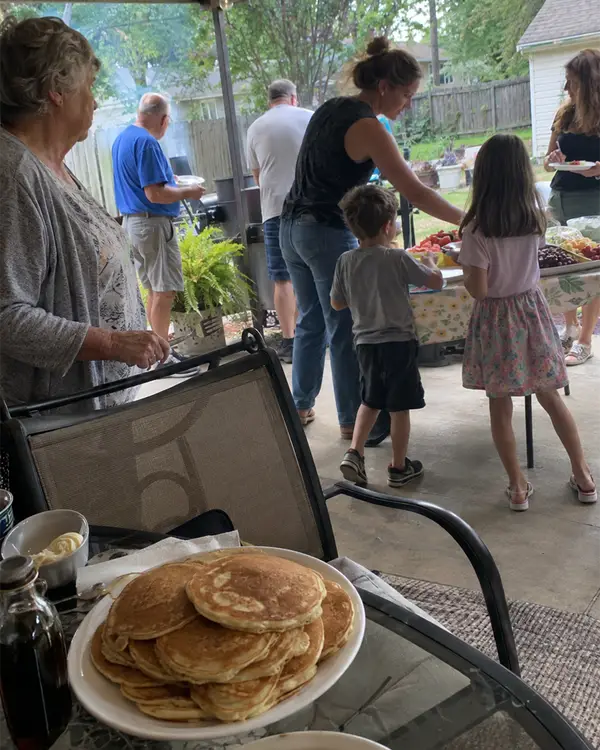
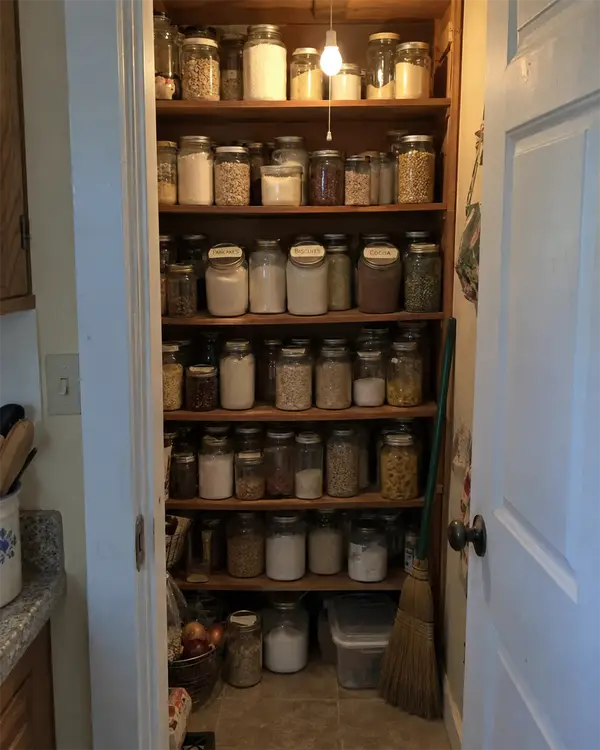
Kylie Mappe — “Thank you. This saved our Saturdays.”
PromisingImage

“She threw my pancake mix away.”

My daughter-in-law's grandmother is eighty-four years old. The first morning I ever cooked for my grandchildren in their own house, she took the box of pancake mix out of my hand, read the side of it out loud to the whole table, and dropped it in the trash. My son didn't say a word. I'm Carol. I'm 66. I kept the books for a feed company for thirty years, and I have made pancakes every Saturday of my adult life. Grandma Carol's pancakes. My own children grew up on them. I drove nine hours to make them for Ellie, who is six, and Sam, who is four, and I carried the box in my overnight bag so I wouldn't have to hunt for a store. It was the third week of October. Mark and Jenna had been in the new house since June. Jenna's grandmother, Opal, has the house next door. She was born in it. She lets herself in their back door every morning like the place is hers. I had met her twice. I had the griddle hot. I had the box open. And Opal put down her coffee, walked over, and held out her hand for it, the way you'd take scissors from a child. Then she read it. All of it. It took her a while. Enriched this. Modified that. There was one word she had to try twice. Near the bottom she got to "contains a bioengineered food ingredient," and she stopped, and she looked at my grandchildren, and she looked at me. "We don't feed these children out of a box, dear." She stepped on the pedal of the trash can and let go. Nobody moved. Mark looked into his coffee. Jenna said, "Gran," very quietly. Ellie asked if we were still having pancakes. I have fed a family for forty years. I stood in my son's kitchen with an empty hand, in front of a six-year-old, and felt like I'd been caught at something. Opal went to a narrow door off the kitchen that I had taken for a broom closet. She came back with a quart jar. There was a strip of masking tape across the lid, and on it, in pencil: PANCAKES. 1 cup, 1 egg, 3/4 cup milk. She had them on the griddle before I'd found my voice. Ellie ate five. That was worse. I didn't say ten words to that woman for two days. On the third morning she came over early, before the house was up, and sat down across from me. "I was rude," she said. "I'm eighty-four and I've quit apologizing for most things. I'll apologize for that. Now come see what I should have shown you in the first place." She opened the narrow door. It was a pantry. A second one. Cool, on the north wall, shelves all the way up, and every shelf full of jars. Quart jars, half gallons, old pickle jars. Every lid had tape on it. PANCAKES. BISCUITS. COCOA. CORN MUFFINS. BROWNIES. TACO. CHILI. "I filled Jenna's the week they moved in," Opal said. "I've got the same closet next door. So did my mother." Then she told me the thing I have not stopped thinking about. "Every recipe is two jobs, Carol. There's the measuring, and there's the making. The measuring is the flour and the baking powder and the salt and the sugar, all the dry things, in the right amounts. The making is the egg and the milk and the heat. "The making has to be fresh. The measuring doesn't. It keeps for months. "So I do the measuring once. One afternoon in the fall, flour to my elbows. Then all winter the only job left is the making, and that takes five minutes." I picked up the pancake jar. "So it's a box mix," I said. I'll admit I enjoyed saying it. "It's a box mix," she said. "It's just mine. Six things went in that jar and I can say every one of them. You heard me read yours. Additives. Preservatives. None of that is in there for the pancakes. It's in there so the box can ride a truck and sit on a shelf for a year. "And you pay extra for it. Flour is about eighty cents a pound. They put it in a box with a little baking powder and sell it back to you for better than twice that. "Somebody has to do the measuring. Either you do it once, with your own flour, or a company does it their way and you pay them again every Saturday for forty years." Forty years. She had done the arithmetic on me, and I'm the bookkeeper. I asked how she kept track of it all. A hundred jars, what goes in each one, what to write on the lid. She pulled a spiral book off the shelf. There was flour in the wire. "I don't," she said. "My mother did it out of her head. I haven't got her head. I've got this." The Dry Mix Pantry. I stood in that closet and turned pages. Pancakes. Biscuits. Corn muffins. Brownies. Cake mixes. Cocoa. Taco seasoning. Soups and suppers that wait in a jar. Over a hundred of them, and every page set up the same way: the mix, what to add when you make it, and how to store it. The pancake page was six ingredients. Flour, two sugars, baking powder, baking soda, salt. Whisk it, jar it, and it keeps in a cool, dry place for up to six months. One cup of it, one egg, three-quarters of a cup of milk and a little melted butter is breakfast. A jar is about seven breakfasts. Seven Saturdays out of one bowl. I did my own books right there in the closet. The pancake box. The biscuit box. The corn muffin box. The brownies. The taco packets, the gravy packets, the cocoa canister. Every one of them was the measuring, done by a stranger, with whatever else they needed to put in it, and bought again every time it ran out. I didn't buy that box for forty years because I was lazy. I bought it because scratch, in my kitchen, only came one way, from nothing, and nobody starts from nothing at six-thirty in the morning. So I bought the first half and called the pancakes mine. I ordered the book from Opal's kitchen table that afternoon. It was buy one, get one, and Opal told me exactly where the second one was going. "Leave it here. Jenna has had mine for three years." I went back for Thanksgiving with four jars in the trunk. Pancakes, biscuits, cocoa, corn muffins. My flour. My handwriting on the tape. Saturday morning I was at their griddle at seven. Ellie read the lid out loud, slowly, the way a six-year-old reads. "Grandma. This is your writing." Mark ate six. "These are better than your old ones, Mom. What did you change?" "Nothing," I said. "It's a box mix. It's just mine now." Opal ate two and didn't say a word, which I have learned is as good as it gets. On her way out the back door she tapped the lid. "Write it bigger next time. I can't read that without my glasses." I'll take it. If you've been making your famous anything out of a box for so long you forgot it was a box. If someone has ever read a label out loud in front of your family. If you're the one the grandchildren expect to find at the stove. The Dry Mix Pantry is a spiral-bound book of over a hundred dry mixes. Right now it's buy one, get one free, with a 90-day money-back guarantee. Keep one. Leave the other in the kitchen where your grandchildren eat. P.S. If you'd like to try Opal's closet before you buy anything, here is the whole idea. The next time you make pancakes from scratch, measure the dry things four times instead of once. Use one. Put the other three in jars and write on the lid what to add. Then see how the next three Saturdays feel. https://tryneralle.com/products/dry-mix-pantry-mix-recipes-cookbook

Loading the ad's image
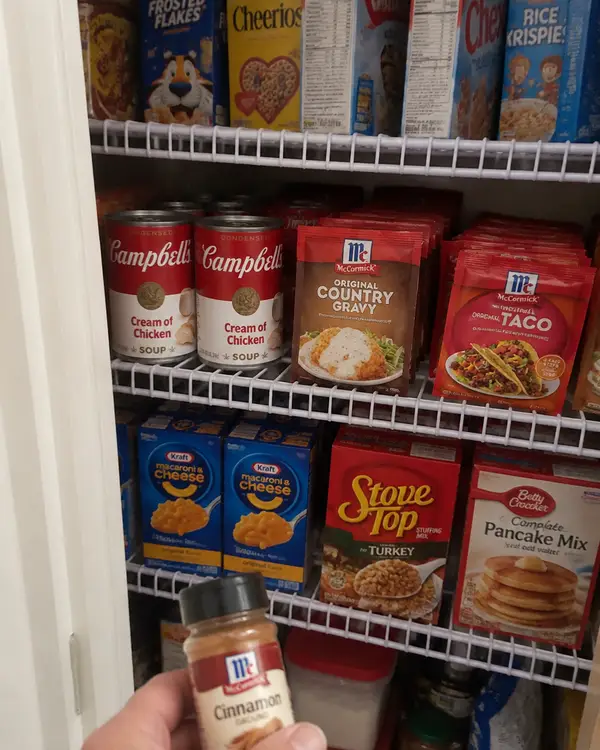
Kylie Mappe — “She threw my pancake mix away.”
PromisingImage

“Scooped, stirred, done before the bus.”

I spent 34 years cooking in a school cafeteria. I served somewhere close to a million lunches with these two hands. And I'm about to tell you something I should have said out loud a long time ago. My daughter told me to leave it alone. "Mom, you're retired. Nobody's asking." She's right. Nobody is. I'm 64. I don't work for the county anymore. There's nobody left to get in trouble. So here it is. When I started, in 1990, we cooked. I mean we really cooked. Rolls from scratch at five in the morning. Gravy from the drippings. Chili that sat on the back burner all morning. Mrs. Odom ran our kitchen. She kept a flour sack on a hook by the back door, and she'd tell you she could make anything in the building out of that sack, a tub of shortening and a can of baking powder. She wasn't bragging. She could. By the late nineties, the cases started coming off the truck instead. Pancakes in a box. Gravy in a pouch you cut open with scissors. Potatoes in flakes. Cheese sauce in a bag. "Just add water." I was the one who signed for the truck. So I was the one who read the cases. I'm not going to make it sound worse than it was. It doesn't need help. The pancake mix had more ingredients on it than I had cooks. The gravy had corn syrup in it. In gravy. The potato flakes had a longer list than the potatoes Mrs. Odom used to peel. And every one of them said the same thing on the front: "Just add water." Nobody told us to stop cooking. Nobody had to. The cases were cheaper on paper, faster on the line, and the district had a contract. Mrs. Odom retired in 1999. Her flour sack went in the dumpster the week she left. I kept her recipes. I wrote them in the back of a spiral notebook I carried in my apron pocket. In the front of that notebook, I started writing down what came off the truck. The date. The case. What was on the back. Not for anybody. Just so somebody had. By the time I retired I had eleven of those notebooks. I want to tell you about the first time I almost said something. It was 2004. A third grader named Tyler came through the line, looked at his tray, and asked me why our rolls didn't taste like his grandma's anymore. I told him the truth. "Because your grandma still makes hers, honey." I almost said more. I didn't. I had a mortgage and a husband with a bad back and a job I was good at. A lunch lady doesn't stand up at the school board and tell them what's in the gravy. So I handed Tyler his tray and wrote his question in the notebook. Here's where it stopped being something I carried. Last Christmas morning I was at my daughter's. Jenna. She's 38, she works twelve-hour shifts at the hospital, and she has two boys who eat like it's a sport. I went into her pantry looking for the cinnamon. I counted thirty-one boxes and packets on those shelves. Pancake mix. Taco packets. Gravy packets. The blue box. Two cans of cream of chicken. A box of stuffing for a holiday that was already over. The same names I'd signed for. The same backs I'd read for twenty years. I came out holding the pancake box, and before I could say a word, Jenna said it. "Just make those, Mom. The boys like them better than yours." My grandson Caleb, who's seven, looked up from the table and asked if I could make "the school pancakes." I made them. I stood at my daughter's stove and made the school pancakes for my grandson on Christmas morning, and I didn't say a thing. Again. I want to be fair to Jenna. She's not lazy and she's not careless. She's a nurse who works nights and still gets a hot breakfast on that table. That box is the reason she can. That's exactly why it got to me. So I did what I thought would help. I copied out Mrs. Odom's recipes for her. The rolls. The biscuits. The gravy. Jenna called me two weeks later, laughing. "Mom. Your biscuit recipe starts with twenty-five pounds of flour." Of course it did. It fed four hundred children. She tried cutting it down twice. Neither time came out right, and nobody is going to divide a recipe by forty on a Tuesday at six in the morning. Then I called the one person who'd understand. Bernice ran the kitchen at the high school across town for 31 years. She signed for the same trucks I did. We used to trade notebooks. I told her about Christmas. About the pantry. About the twenty-five pounds of flour. She was quiet for a second. Then she said, "Your daughter doesn't need your recipes. She needs the box, without the box." "What does that mean?" "You mix the dry part once, in a jar. It keeps in the pantry. On the morning, she scoops it and adds the milk and the egg. It's as fast as the box. It's just yours." "Where do you get the measures? Not for four hundred." "There's a book. The Dry Mix Pantry. Somebody finally wrote every one of them down for a family-size jar. Pancakes, biscuits, gravy, the taco seasoning, the cream soup, the macaroni. Over a hundred." "How long have you been doing this?" "Nine years. My son's house too." "You never told me." "You'd have told me you could do it from memory." She was right. I would have. Then she said, "It was buy one, get one. I already ordered you the second copy. Give it to Jenna." I drove it over myself on a Sunday. Jenna and I made the pancake mix at her counter. Six cups of flour, a third of a cup of sugar, a quarter cup of baking powder and two teaspoons of salt. Four things. Into a big jar, shake it, done. It took eleven minutes. I timed it, because Jenna bet me it'd take an hour. Thursday morning at 6:40, my phone buzzed. A picture of a stack of pancakes, and the jar beside the stove, and one line from my daughter: "Scooped, stirred, done before the bus." Caleb didn't ask for the school pancakes. He asked for seconds. The next weekend Jenna asked me to help her make the gravy one, and the taco seasoning, because she was out of packets and didn't want to buy more. Then my son-in-law, who told me last Easter I was "living in the stone age," asked me where she got the book. I'm not going to tell you a book made my daughter a cook. She always was one. It gave her back the part the boxes took from all of us. The measures. I don't sign for trucks anymore. I don't read the backs of cases at five in the morning. But I still have eleven notebooks in a shoebox in my closet. And I still think about Tyler and his grandma's rolls. That's why I'm telling you now. Because I finally can. If you've got a pantry full of boxes you never really chose. If you've got your mother's recipes in your head and nowhere on paper. If you've got a grandbaby asking for the school pancakes. It's buy one, get one right now, with a 90-day guarantee. Get two. Keep one. Give one to the daughter who's doing her best at six in the morning. Your move.

Loading the ad's image
Kylie Mappe — “Scooped, stirred, done before the bus.”
PromisingImage

“214 comments about my brownie box.”

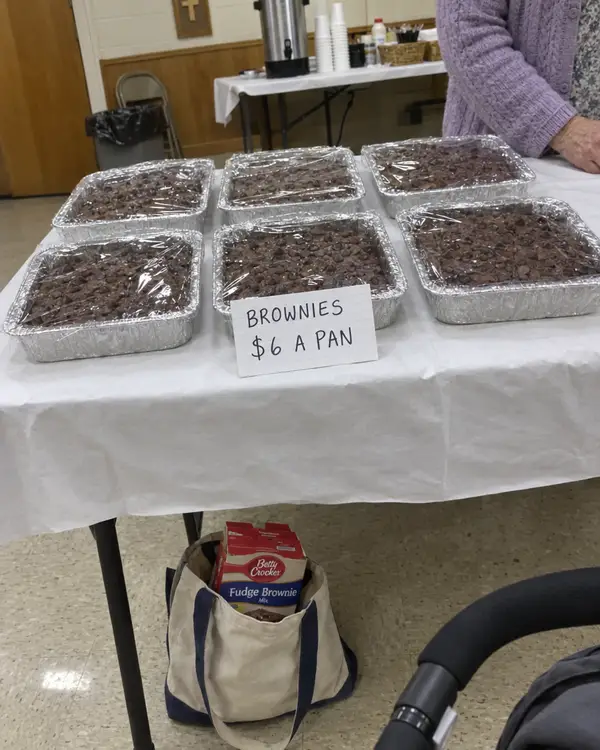
A young mother I didn't recognize took a picture of my brownies at the church bake sale, with the empty box sticking out of the tote bag under my table, and posted it to our town's Facebook group: "Box mix. $6 a pan." By supper there were 214 comments under it, and I knew most of the people who wrote them by their first-grade school pictures. My daughter left a laughing face. I want to tell you what Hazel Voss wrote at the bottom of that thread, at ninety years old. It didn't save my brownies. It gave me back my mother's kitchen. The price card from that picture is still on my refrigerator. There's a reason I never took it down. If you're the one in your family who signs up to bring something every single time, please read this all the way through. I know it's long. I'm Joan. I'm 69. I was the secretary at our elementary school for twenty-eight years. If you were in grade school in our town after 1994, I have called your mother. For twenty-three falls I brought six pans of brownies to the bake sale at St. Paul's. First table to sell out. I did everything right. The family-size box. Oil, water, eggs, fifty strokes with a wooden spoon, chocolate chips on top because that was my touch. My mother's dented 8-by-8 pan. A price card in my school-office printing: BROWNIES $6 A PAN. And I never left an empty box where anybody could see it. They went out to the garage can the night before. That year one rode along in my tote bag, folded in half, red end up. I still don't know how. Around ten that Saturday, a young woman with a stroller stopped at my table, took one picture and walked off without buying anything. At four-thirty my sister-in-law called. "Joan. Don't look at Facebook." So I looked. My six pans. My price card. And sticking out of my tote bag like a flag, the red box. "LOL the box is RIGHT THERE." "Six dollars for a box I can get on sale." "Bet she can't make them without it." People I'd handed lunch tickets to when they were six. I called Kim. "Mom, it's funny. Everybody uses the box. Buy the organic one next year if it bothers you." It bothered me. One thing would have ended it: bake a pan from scratch and post the picture right under theirs. I couldn't. I hadn't made a brownie without a box since 1989. My mother made them every week of my childhood and never once looked at a card. When she died that spring, I had a full-time job and a four-year-old. I bought my first red box and told myself it was for one year. Thirty-six years. Somebody wrote, "If you can't bake, don't sign up for the bake sale." Every reply I started, I deleted. I have lived in that town my whole life, and I never felt so alone in it. My mother could have answered every one of them with one pan. I didn't have her recipe. She never wrote it down, and I never asked. At 9:52 that night, Hazel Voss commented. Hazel was born in the parsonage of that church in 1935. She taught Sunday school to half the people in that thread and to the mothers of the other half. She had never commented on anything in her life. Her comment was two lines. After it, nobody wrote another word. By Sunday morning the count was down to sixty-one, because people were going back and deleting their own. At seven the next morning Hazel was on my porch in her church coat, with an old blue glass jar under one arm, a half-gallon with a zinc lid, and her grandson waiting in the truck. She walked past me into the kitchen. "Where's your mother's pan?" She set the jar on the counter and turned it so I could read the lid. Across the zinc was a strip of masking tape, in pencil: BROWNIES. 2 cups. 1/2 cup oil. 2 eggs. 1/4 cup water. 350. Then she took two eggs out of her coat pocket. Hazel's hands shake. She was ninety. It took her eleven minutes to get from my front door to my oven door. Two cups out of the jar, my oil, her eggs, water from my tap, one bowl. She greased my mother's pan with the butter wrapper. At 7:40 she took them out. The top had cracked like thin paper, the way my mother's always did. Mine never had. My husband Ron ate two for breakfast and went back for a third. I ate one. It was better than mine. Then Hazel opened the cupboard by my stove and stood looking in. "How long have you been buying the box, Joan?" "Since Mama died." "I know. I brought a ham to that funeral. I watched it happen to you, and to half that church." She shut the cupboard. "Come out to my place Thursday. Bring one of your boxes." On her way out she said something to Ron on the porch that I didn't hear. That night I turned the price card over to write down everything I had baked without a box since 1989. The back of the card stayed empty. Then the number that never moved. In thirty-six years, not one person had asked me for my brownie recipe. I used to think that was because they knew it was mine. It was because they knew it was the box. My granddaughter Addie is nine. She quit asking to bake with me when she was six. Sitting there, I understood why. There was nothing for her to do. You pour, you stir, you wait. Thursday, at her kitchen table out on the county road, Hazel poured coffee and asked me one thing first. "When you can't do the sale anymore, what does Addie bring?" "The box, I guess. Like me." "Then there's nothing of yours to bring," Hazel said. "Or your mother's." I thought of the box tops. Every fall for twenty years I counted the school's in the front office, sandwich bags of them from every family in town, and mine went in the same envelope as everybody else's. Thirty-six years of baking, and all I had saved was cardboard. Hazel took my box out of my hands and set it on the table. "Tell me what you did the morning of the sale. All of it." "Greased the pans. Cracked the eggs, measured the oil and the water, stirred, baked, cut, wrapped. Wrote the card." "And what did the box do?" I opened my mouth and shut it again. "Somebody at a factory scooped flour, sugar and cocoa into a bag," Hazel said. "Every step that needed a person, you did. Thirty-six years, and you gave the box the credit." My face went hot. The part I'd been paying for was the part a child could do. "Now read me the side." I did. Two of the words I had to try twice. "A brownie is five things," Hazel said. "Everything after the salt is so that box can sit." I lived by a school calendar for twenty-eight years. That box could sit from one fall sale to the next and come out the same. An egg wouldn't make it to Thanksgiving. "And sitting costs money," Hazel said. "What do you give for that box?" "Two seventy-nine." "The flour, sugar and cocoa for one of my pans come to about seventy cents, the way I figure it. So two dollars of every box is somebody measuring for you. Every pan you ever sold, you paid somebody to do what my mother did with a coffee mug on a Monday." I'd had the price card in my purse all week. I did the sum right there on its empty side. Six pans at six dollars made the church thirty-six. Six boxes at two dollars of measuring made a factory twelve. A third of my table, every fall, for twenty-three falls. "I'm not here to clean out your cupboard," she said. "That red box got you through a full-time job and a four-year-old. It did what you needed." "You tried it yourself this week, didn't you." I had. Tuesday night, a recipe online called The Best Fudgy Brownies. Eleven ingredients, a double boiler I don't own and every bowl in the house. At twenty to midnight I scraped the whole pan into the trash. "Of course," Hazel said. "You did both halves at once, at ten at night, out of a stranger's recipe. My mother never did both halves at once." I told her about Kim's organic box, the fancy one in brown paper. "Same trade. Somebody else's flour, somebody else's measuring. Twice the price for a nicer picture." She held up four fingers. "If you want to stand behind that table again, there are four things a jar has to be. Your own flour and cocoa, so you can read every word in it. Amounts written down that come out the same every time, so it isn't luck. It keeps for months, so the night before the sale is ten minutes. And the wet half on the lid in plain words, so your granddaughter can make it without you. "You won't find that in a box. What else is in that cupboard by your stove?" I told her. She answered each one without looking up. "The brownie box." "Flour and cocoa." "Two cake mixes." "Flour and sugar." "The frosting cans." "Sugar and oil." "The pancake box. The biscuit box." "Flour. Flour with shortening." "Corn muffin pouches." "Cornmeal and flour." "Taco packets. Gravy packets." "Chili powder and salt. Flour and salt." "The cocoa canister." "Sugar and cocoa." "That's not a pantry, Joan. That's the same sack of flour and sugar bought nine times." Then she sent me down to her cellar for the cake jar and came down behind me, one step at a time. Along the north wall were three shelves of old blue glass jars with zinc lids, the big half-gallons on the bottom and quarts above. Every lid had a strip of masking tape. BROWNIES. CAKE. FROSTING. PANCAKES. BISCUITS. CORN BREAD. COCOA. GRAVY. TACO. "My mother called it the makings," Hazel said. Her mother ran the church kitchen through the war, when sugar was rationed. Out on that road in those years, you no more went without your makings than without a coat in January. The dry half of everything, measured and waiting. "When a baby came on this road, the mother didn't cook for a month. Six women fed that house, and not one of them started from nothing with a newborn crying in the next room. They went to their jars." I asked how she kept the amounts straight for forty jars. "Fifty years in my head and on the backs of envelopes. Then I lost the cake envelope and served my grandson a wedding cake that fell in the middle. My head is ninety, Joan. My granddaughter got me this." She took a spiral book off the top shelf, with a grocery receipt marking the brownie page. The Dry Mix Pa

Loading the ad's image
Kylie Mappe — “214 comments about my brownie box.”
PromisingImage

“Then the judge asked which box.”

The county fair judge held up my blueberry muffins in front of the whole pavilion and asked which box they came from. My late husband's sister stood up in the front row, took my empty muffin box out of her purse, and held it up over her head. My granddaughter let go of my hand. I kept the judge's comment card. It's in my recipe box, next to the one she wrote me this July. The second card is why I'm writing this. My name is Wanda Hupp. I'm sixty-eight, and I live outside Concordia, Kansas. I drove a bread route out of the depot in Concordia for thirty years. If you bought a loaf of bread at a little grocery between here and Belleville from 1983 to 2013, I put it on the shelf. And if you've been to a funeral lunch, a bake sale or a graduation party around here, you've had my blueberry muffins. Big sugar tops, berries all the way through. Wanda's muffins. I took the blue ribbon with them at the county fair nine times. My husband's little sister, Glenda Varney, took it eight. We've traded it back and forth since before either of us went gray. She sits across from me every Christmas and asks how the muffins are coming. The fair is the last week of July. Open-class baking is judged Saturday morning in the exhibit pavilion, a long metal building with the big doors rolled up, box fans going, and tables covered in white butcher paper. Every entry sits on a paper plate under plastic wrap with a number tag. For twenty-six years the judge was Mrs. Albers, who never said a word out loud. She wrote on a little card and went home. She retired that spring. The new judge was a young woman who'd opened a bakery downtown the year before, Miss Hensley, maybe thirty, with a clipboard and a microphone, because she does what they call open judging. She talks through every plate so the people in the folding chairs can learn something. There were about forty people in those chairs. My son and his wife. Half my quilt club. My granddaughter Hattie, twelve, who had carried my plate in from the truck with both hands like it was a wedding cake. I'd baked at five that morning, the way I always do. One box, an extra cup of blueberries, and a handful of coarse sugar on top. I never told a soul they were from scratch. Our fair never had a rule against mixes in the open class, and half the plates on that table had started in a box or a tub. Nobody had ever made it their business. Glenda came by at six to borrow my big cooler. She stood in my kitchen and drank a cup of my coffee while I wrapped the plate. Miss Hensley worked her way down the table. Somebody's zucchini bread, a little dry. Somebody's banana nut, very nice. Then mine. She unwrapped it, broke one open, smelled it, and held it up so the room could see the inside. "Now, these are lovely," she said into the microphone. "Very even crumb. Which box did they come from?" People laughed. They thought she was teasing. That's when Glenda stood up, opened her purse and took out my box. The blue one with the berries on the front, folded flat, a smear of batter still on the flap. I had thrown it in my trash can at six o'clock. She'd fished it out while I was in the other room. "This one," she said. "I bought it for twenty years myself. I can tell you what's on the side of it." And she did. Out loud. In front of my son. "Enriched flour. Sugar. Then a whole line of words nobody in this building can pronounce. Something to keep it soft, and something so it'll sit on a store shelf till next fair. And a little can of berries tucked in the box." She laid the box on the judging table next to my plate and sat back down. "The ribbon's for baking, Wanda," she said. "Not for opening." Miss Hensley turned pink and wrote something on her card. I want to tell you I said something sharp back. I didn't. I stood at that table with my face burning and forty people behind me, and I couldn't think of one word. Thirty years of "Wanda's muffins," and my own family had just stood up and told the county where they came from. Hattie heard every word of it. Then Miss Hensley got to the next plate. Muffin tops, big as saucers, cracked across the top and golden at the edges. Glenda's. "And what's in these?" "Flour, sugar, baking powder, a little soda, salt, some dry milk," Glenda said. "Out of a jar in my basement. The amounts are written on the lid." Blue ribbon, Glenda. Honorable mention, me. On the way to the truck Hattie said, "Grandma, hers did look really good." She meant it kindly. It hurt more than anything Glenda said. I skipped the evening rodeo. I sat on my porch with the plate of muffins in my lap and that box beside me, and didn't eat one. About seven o'clock Glenda's old pickup came up my lane. She stood at the bottom of my porch steps with her purse on her arm like she was selling something. "I was ugly in there," she said. "I dug that box out of your trash like a raccoon, and I've been sick about it since noon. Thirty years of losing to it got the better of me." I didn't say anything. "I bought that same blue box for twenty years, Wanda. Every year I lost to you, I lost with the same box you had. I'd still be buying it if Arnie's mother hadn't moved in with us at the end. Come out to the house Saturday. I'll show you what I should have shown you a long time ago." I almost didn't go. I went. She took me down to her basement. Along the cool wall, where most people keep canned tomatoes, there were three shelves of quart jars, and every lid had a strip of masking tape across it. MUFFIN. MUFFIN TOP. CORN MUFFIN. BISCUIT. PANCAKE. BROWNIE. COCOA. On every strip of tape, in pencil, what to add. The MUFFIN jar said 2 cups, 1 cup milk, 1/2 cup oil, 2 eggs. "Verna's shelf," Glenda said. "Arnie's mother. She cooked for a wheat harvest crew every summer of her married life. Fourteen men, three meals a day, and no store for twenty miles." She took down the MUFFIN jar and set it on the dryer. "Wanda, how do you make a muffin?" "Out of a box, apparently." She didn't laugh. "Every muffin there ever was is two bowls. Dry things in one, wet things in the other, put them together at the last minute and don't overmix. That's all a muffin is." "I know that." "Then you know which bowl is the work. The wet bowl has to be that morning. Eggs, milk, oil. But flour and sugar and baking powder can be stirred up any time. Verna stirred every dry bowl for the whole harvest in March, at her kitchen table, into jars. In July all she had to do was crack eggs." She tapped the lid. "That box of yours is a dry bowl. Somebody else's. You've been paying a stranger to stir your dry bowl for thirty years." I thought about my bread truck. Every morning for thirty years I loaded it at the depot before sunup, eleven stores, every store's order on its own rack, in the order I'd get to them. Out on the highway I never counted a loaf. I just reached. Verna had loaded her truck in March. "So it's a box mix with a lid on it," I said. "It's what's in the box," Glenda said. "Minus about three dollars and a lot of words." "Read the side of yours sometime. Flour and sugar, and then all those words. Not one of them is there for the muffin. They're there so that box can sit in a warehouse, and then on the grocery shelf most of a year, and still pour out like the day it was packed." I knew that shelf. For thirty years I pulled my bread off it when it turned four days old. The muffin boxes one aisle over sat there from one fair to the next. "And I figured it once on the back of a feed bill," Glenda said. "A jar of Verna's muffin mix makes three pans, and the whole jar runs me about two dollars. That blue box is three and a half for one pan, and you still crack the eggs and pour the milk yourself." I did the arithmetic standing in her basement, the way I used to figure a store's bread order. Every box for the potlucks and the bake sales and the grandkids, back to when my son was in diapers. By Glenda's figures, better than four thousand dollars, to have somebody in a factory measure my flour. "I didn't buy those boxes because I was lazy," I said. It came out louder than I meant. "I know you didn't," Glenda said. "Neither did I. Nobody stirs a dry bowl at five in the morning with fourteen men coming. Verna did hers in March." She pointed at the shelf. "She had four rules for these jars, and she'd tell them to anybody who came down the stairs. Her own flour, out of her own sack, so she knew what was in it. Amounts she'd already baked a hundred times, because you don't waste a pan on a harvest crew. Mix it ahead and know how to store it. And write the lid so plain a hired girl could bake from it with Verna out in the field." "My blue box only does the last one." "That's why it sells." She tried to send a jar home with me. I left it on her dryer. I was still too proud to bake out of Glenda Varney's basement, and I figured if Verna could do it out of her head, so could I. I looked up homemade muffin mix on my phone and found about thirty of them. No two agreed on the baking powder. One said a tablespoon, one said a quarter cup. Not one told me how much to make up at a time or how to store it. I mixed eight cups by the one with the prettiest picture. The first pan rose and fell flat in the middle. The second tasted like I'd licked a nickel. Too much soda. The rest of the eight cups went in the trash. So the morning of the quilt club potluck I got up at four-thirty to do it the old way, from nothing, one bowl at a time. By six I'd knocked the baking powder into the sink and burned the first pan. At seven I was standing at the door of the grocery store in town when they unlocked it, buying a blue box. Hattie told Glenda. Of course she did. Glenda is her great-aunt, and Hattie tells her everything. Saturday morning Glenda was on my porch again, holding a spiral book with flour caught in the wire and the corners gone soft. "You tried to do it out of your head," she said. "So did I, after Verna passed. I

Loading the ad's image
Kylie Mappe — “Then the judge asked which box.”
PromisingImage

“Stop paying four dollars for flour.”

My daughter read her grocery receipt out loud at her kitchen table, every box and packet on it, and when she got to the bottom she looked straight at me and said, "I buy what you bought, Mom." I cooked from scratch in a school cafeteria for thirty-two years, and she was right. There's a flour sieve the size of a hubcap on a nail by my stove. It came out of that cafeteria. What it's doing there is the part of this I'm least proud of. If you're the one who does the cooking and the shopping in your family, or you raised the one who does, stay with me. I know it's long. I've had thirty-two years of things to say and nobody to say them to but six hundred children who mostly wanted the chocolate milk. I'm Brenda. I'm 68. From 1984 to 2016 I cooked at our county school, about six hundred and forty lunches a day, and for the last twenty-three years I ran the kitchen. Flour came on a pallet in fifty-pound sacks. I ordered it myself, so I can tell you what a pound of flour costs the way some women can tell you their grandchildren's birthdays. If you went to school around here, you ate my yeast rolls. Grown men still stop me in the Dollar General to tell me about those rolls. It was the second Saturday in August. I was at Shannon's watching the kids so she could shop without three of them hanging off the cart. Kaylee is eleven, Mason eight, Brody five. Travis was home for once. He drives a propane truck. Shannon came in at noon with twelve bags and handed Travis the receipt without a word, the way you hand somebody a bill you know they'll say something about. He said something about it. "Two thirty-one eighty-six. Shan, we were at one-ninety in the spring." "I know where we were." So she showed him. She read it to him out loud at the counter, with the kids at the table eating the grilled cheese I'd made and me at the stove with the spatula in my hand. "Pancake mix, four forty-nine. Biscuit mix, five twenty-nine. Brownie mix, two of them. Taco seasoning, three packets. Gravy, four packets. Hot cocoa, the big canister, because Brody wants it every morning, August or not." I said, and I wish I hadn't, "Honey, half of that is just flour." She stopped and looked at me. "Then why did you buy it, Mom? Every week of my life. You made rolls for six hundred kids every morning and came home and opened a can of biscuits." She put the receipt down. "I buy what you bought." Travis didn't say a word. He stuck the receipt to the refrigerator under the magnet from their insurance man and went outside to look at the truck. Kaylee said, "Grandma made the rolls at school?" like it was news. It was news. I had never once made them in that house. That's how Kaylee found out, over a grilled cheese I'd made her, that her grandmother fed everybody's children from scratch except her own. I didn't have one word to say for myself. Before I left, I took a picture of the boxes on her counter with the receipt across them. I think I needed proof it happened. I want to be fair to Shannon, because she'll read this. She works forty hours at the front counter of a tire shop, and she does everything the money articles say. She makes a list. She plans suppers on Sunday night. She clips the coupons on the store's app, buys the store brand, and drives across town to the second store to save five dollars and change. She did everything right. And the receipt climbed anyway. One-ninety in the spring. Two-ten in July. Two thirty-one that Saturday. She thinks she's bad with money. She isn't. She buys the boxes I taught her to buy. She didn't learn that from a commercial. She learned it from me. Let me tell you what I knew, and never once brought home. In thirty-two years, I never measured a biscuit on the morning I baked it. Nobody in a school kitchen measures flour at six in the morning. You would never get six hundred and forty trays out by the first lunch bell. We measured on Mondays. The woman who taught me was Mrs. Pruitt. She ran that kitchen from 1961 until she handed it to me, and before that she worked nights at the truck stop out on the highway, three hundred eggs before sunup. Every woman in that kitchen had cooked somewhere before, and they brought the same rule with them. You never measure the same thing twice. So on Monday, after the last lunch period, the dry went in. Flour through the big sieve, a whole sack at a time, then the baking powder and salt and sugar, in a mixer with a bowl you could bathe a child in. Into the tubs. Masking tape across every lid, black marker: BISCUIT. ROLL. CORNBREAD. COBBLER. Every morning that week, the only job left was milk and fat and heat. The hard half was done before the week started. At home I did the opposite for thirty-eight years. I got home at four with two kids, a husband on second shift, and nothing measured. Every supper started from zero, so I reached for the box. I never once put the two together. It took an eighty-nine-year-old woman to do that for me, and I waited two weeks to go see her. First I tried to fix it myself. I knew the school biscuit by heart, but I knew it in pounds. I sat at my table with a calculator and cut it down to one pan. You cannot measure a fortieth of a pound of baking powder with a teaspoon. The first pan was so bitter I spat it in the sink. The second never got up off the sheet. I could feed six hundred and forty. It turned out I could not feed five. Shannon tried her phone. Fourteen recipes for homemade pancake mix, and no two agreed on the baking powder. Not one said how long it keeps in a jar, which is the only question that matters. Two of them started with a box of cake mix. Then she tried the box from the natural aisle with the barn on the front, six forty-nine. Fewer words on the side, I'll give it that. It was still a box somebody else filled, for two dollars more. Everything we tried either fell flat in the pan or ended at a cash register. By then I could have written down what we needed, the way I used to write the flour bid for the district. Our own flour, out of our own sack. Cups and spoons, sized for a family, amounts that work the first time. It keeps in a jar for months, so the measuring gets done once. The morning part is as quick as the box, or Shannon's back to the box by Halloween. Written plain enough that she can do it without me standing over her. Nothing on that grocery shelf was all five. So I did what I should have done the first day. I drove out to see Mrs. Pruitt. She's 89 and lives by herself nine miles out of town, and she'll tell you that's because nobody else could stand her. I brought the picture of Shannon's receipt. In thirty-two years I had never told her I bought boxes at home. She looked at it a long time with her glasses down her nose. "You ran my kitchen for twenty-three years," she said, "and went home and paid somebody to do Monday?" "Every week." She laughed until she had to hold onto the table. Then she opened the door to her back porch. It was the school, sized down. Shelves on both walls, quart jars and pint jars, masking tape across every lid, block letters in black marker, the same hand I'd read on a thousand tubs. PANCAKE. BISCUIT. GRAVY. BROWNIE. TACO. COCOA. CORNBREAD. I took a picture of it for Shannon. "My mother kept a shelf like this," she said. "She ran a boardinghouse for the men building the highway, twelve at her table every night, out of jars like these. The school didn't invent Mondays. We carried them in the back door." Then she took my phone, found the picture of Shannon's counter, and went down it with one finger, like a delivery she didn't trust. "That pancake box is flour, sugar, baking powder and salt. That's Monday. "That yellow biscuit box is flour and shortening and baking powder and salt. Monday. "The brownies are flour and sugar and cocoa. Monday. "Those taco packets are chili powder and cumin and salt you've already got in your cupboard, two tablespoons of it, for more than a dollar. "The gravy's flour and starch and pepper and some powder that's supposed to taste like broth. That cocoa's sugar and cocoa and dry milk. "A box of mix is Monday, done by a stranger, and you pay him again every time you run out." She handed my phone back. "I'm not telling you to throw out your pantry. Keep a box up there for the night everything goes wrong. I'd never tell a woman how to get through a bad Tuesday. But you don't buy Monday every week from somebody who charges you for it. And read the side of one of those sometime. Every word on it you can't say out loud is there so that box can sit in a hot trailer, then a warehouse, then a store shelf until next fall, and still pour like it was mixed on Tuesday." Then she did my old job on me. "What'd Shannon pay for that pancake box?" "Four forty-nine. It's two pounds." "And a five-pound sack of flour runs her what, three dollars?" "About that." "So she's paying better than two dollars a pound for flour with a spoon of baking powder in it, and the flour's sixty cents. You ordered flour for this county for twenty-three years. You'd have sent that truck back." I asked how she ever got it small. "I didn't," she said. "I spent two winters trying to write down how we did it, in cups, so the great-grandbabies would have it. My granddaughter got tired of watching me ruin flour. She brought me this." She took a spiral book off the shelf between the cornbread and the cocoa. It had a rubber band around it and an old grocery receipt for a bookmark. "It was already written down. And better spelled than I'd have done it." The Dry Mix Pantry. I sat at her table and turned every page. Over a hundred dry mixes. Pancakes, biscuits, muffins, cakes, brownies, cocoa, gravy, taco seasoning, soups and suppers that wait in a jar. Every page the same way: the mix, what to add when you make it, and how to store it. Cups and spoons. I didn't have to divide a thing. The pancake page was six cups of flour, three-quarters of

Loading the ad's image
Kylie Mappe — “Stop paying four dollars for flour.”
PromisingImage

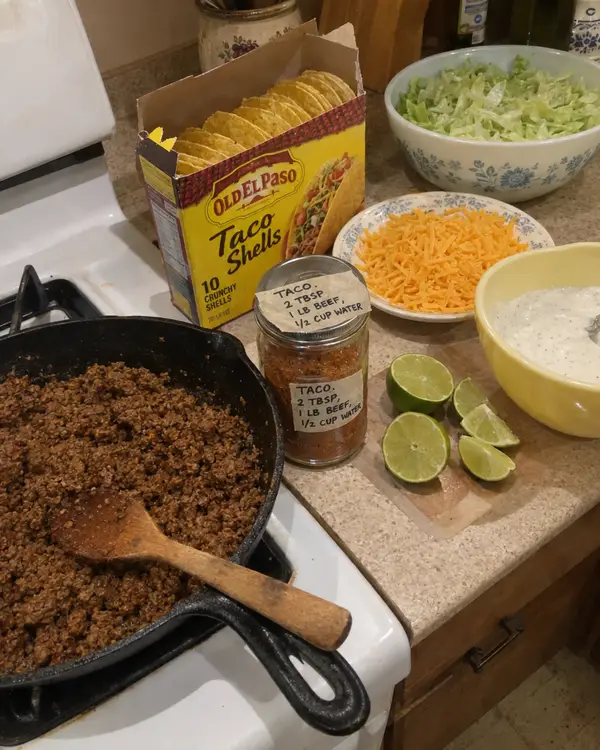
“She did the math on my tacos.”

At Tuesday taco night my grandson's new girlfriend picked the seasoning packet up off my counter and read the back of it out loud to the whole kitchen. Then she asked me how long I'd been doing Tuesdays, took out her phone, and did the math right there at my stove: one packet a week since 1994. "One thousand six hundred and sixty-four," she said, and turned the screen around so I could see it. My daughter laughed. It wasn't a mean laugh. It was the laugh you give when somebody's right. I'm Lorna. I'm 66. I ran the front register at the hardware store in town for twenty-seven years, so I know what people will pay for something small when it's hanging right in front of them. And I have made tacos every Tuesday since my daughter was eleven. Grandma Lorna's tacos. My grandson Austin used to stand on a kitchen chair and stir the meat with a wooden spoon longer than his arm. Tuesday started because of Virgil. In 1994 I went back to work full time, and Tuesday was the one night of the week my husband was home by four. He'd come in the back door, smell the meat and say, "Is it Tuesday?" like it was a surprise. He said it almost thirty years. Virgil died two winters ago. I kept Tuesdays. Shelby and Scott come, and Austin comes when he isn't working, and for a long time that was the only night of the week my house sounded the way it used to. This was the first Tuesday Austin brought Kelsey. They'd been together since spring. She's 25. She does the payroll at a lumber yard, and she came in with a bag of limes and a pan of brownies she'd made herself, which I noticed. She asked if she could help. I liked her for that. I handed her the cheese and the grater and went back to my skillet. I had a pound of beef going. I keep a second pound in the refrigerator on Tuesdays in case Austin brings somebody, and he had. The packet was on the counter by the stove, the yellow one, the same one I bought the first Tuesday in 1994. Beside it was the ranch packet for the dip, because Virgil put ranch on his tacos, and nobody in this family has been able to stop since. Kelsey finished the cheese and picked up the taco packet. I thought she was going to hand it to me. She turned it over instead. "Can I read this?" She didn't wait. She read it the way you'd read a contract, every line, out loud, with her finger under it. Salt. Then the long words, which she took one syllable at a time. Something for color. Something to keep it from caking. She looked up at that one. "What's it caking from?" Nobody answered her. Scott laughed. Austin said, "Babe," the way men say it when they don't plan on saying anything else. Then she asked me how long we'd been doing Tuesdays, and I told her, because I was proud of it. She already had the phone out. "Fifty-two a year. Thirty-two years." Tap, tap. "One thousand six hundred and sixty-four packets." Tap. "What are these, a dollar and a quarter now? That's over two thousand dollars." Austin took a picture of her holding the packet up next to the phone, grinning, like she'd caught a fish. Kelsey set the packet down on the counter, very neatly. "So it was never really your taco night, Mrs. Strickland. It was theirs." Virgil's been gone two winters, and that girl had just added up every Tuesday he ever sat down to and come out short. I turned the burner down so I'd have something to do with my hands. "I've got some taco seasoning in the car," she said. "The kind I grew up on. Do you mind?" I did mind. I said, "Help yourself." She came back with a half-pint jar. There was masking tape across the lid with old handwriting on it in blue ink. TACO. 2 TBSP. She asked if she could do the second pound. I gave her the other skillet. She browned the beef, spooned that red powder in, poured in a little water, and in about a minute my kitchen smelled different. Darker. Toasted, almost. Austin went to her skillet three times. I counted. "She makes it at my place now, Grandma," he said, with his mouth full. "I can't really do the packet ones anymore." Shelby had seconds out of Kelsey's pan too. I cleaned that kitchen by myself after they left. I threw the empty packet away, and then I took it back out of the trash and read it at the table. She'd read it right. Every word. I'm not proud of what I did next. I tried to beat a twenty-five-year-old at her own game. Wednesday morning I drove to the store and bought chili powder, cumin, paprika, garlic powder, onion powder and oregano. Six little jars, twenty-two dollars. Then I got on my phone, the way Kelsey had. There were a dozen copycat recipes for taco seasoning. The salt ran anywhere from a pinch to a tablespoon, and one said cornstarch, one said flour, one said sugar. None of them said how to store it. I picked the one with the most stars and made a pound Thursday night, just for me. It tasted like the chili powder jar. Hot and flat and a little dusty. Friday I made it again with less chili powder, and it tasted like salt. Saturday Austin stopped by for leftovers. He took one bite of Friday's, chewed a long time, and asked me if I'd changed brands. So I knew what I didn't have. I didn't have amounts that worked the first time, written down so I'd never guess again. I didn't have anything I could make once and spoon out for a month. I didn't have whoever taught that girl. I had six jars of spice and a packet. That Sunday Kelsey texted me. Austin had given her my number. "Mrs. Strickland, I was rude on Tuesday and I have felt awful all week. Could I pick you up Saturday? The woman who taught me is moving, and I'd like you to see her pantry before it's packed." She picked me up in her little car and drove forty minutes south to a brick house with a FOR SALE sign in the yard. "Thelma's," she said. "She's going to an apartment in town. They close in three weeks." Thelma met us at the door. She's 83 and about five feet tall, in a fire department sweatshirt older than Kelsey. She looked me up and down and said, "So you're the packet lady." The house was mostly boxes. The kitchen wasn't. Thelma opened a narrow door by the refrigerator and pulled the light chain. It was a pantry closet, floor to ceiling, and every shelf was jars. Pints, half-pints, old jelly jars, a big pickle jar full of something white. Masking tape across every lid, in the same blue ink as the jar in Kelsey's car. TACO. CHILI. RANCH. TACO SOUP. SLOPPY JOE. GRAVY. CORNBREAD. "I can't make myself pack it," Thelma said. I took a picture of it before she pulled the chain again. Thelma ran the kitchen for the volunteer fire department auxiliary for thirty-seven years. Kelsey's dad was on the department, and Tuesday was training night, so Kelsey did her homework at the fire hall's kitchen table from the time she was six. When a barn went up at two in the morning, the auxiliary had coffee and sandwiches and a pot of chili out to the men inside an hour. "A barn doesn't burn at a convenient hour," Thelma said. "You can't be measuring cumin at two in the morning. So you don't. You measured it in September." I asked Kelsey what she meant at my stove. Not the math. The other thing. Theirs. Thelma answered for her. She took down the TACO jar, unscrewed it and held it under my nose. "Go look in your spice cabinet when you get home. Chili powder, cumin, garlic, onion, salt. You already own everything in that packet. All they did was take your own cabinet, put two tablespoons of it in an envelope, and sell it back to you. Every Tuesday. For the rest of your life. "I fill this every six weeks or so. Fifteen minutes. After that it's six Tuesdays where you don't measure anything, and you don't go to the store for it. You just open the jar." Then she said something I hadn't said out loud to anybody. "Kelsey told me about your husband. You had a man coming home hungry at four and one night a week to get right. Of course you bought the envelope. It was Tuesday. I'd have bought it too, if I hadn't had a fire hall and a shelf of jars." "So it's a packet in a jar," I said. I wanted to win something that day. Thelma laughed. "Sure it is. A packet with nine things in it, and you can say every one of them out loud." Then she got serious. "Kelsey read yours to you. Half that list isn't there for the taste. Look at the date on the end of that packet sometime. It's planning to outlast my new lease. Those long words are what it takes to keep a spoonful of chili powder on a rack that long and have it come out loose. And you pay for every bit of that. Kelsey says better than two thousand dollars, for two tablespoons of your own cabinet at a time." She didn't know she was telling a hardware clerk about markup. Twenty-seven years I rang up screws. A box of a hundred wood screws ran about six dollars. The same screw came four to a little bag on the pegboard by the register for a dollar nineteen, and men who'd built their own barns paid it every Saturday because the bag was right there. I watched that from behind the counter for twenty-seven years, and then I went home and bought my cumin by the little bag. I asked Thelma how she kept all of it straight. "In my head, for fifty years," she said. "Then the chief's wife bought one of these for every woman in the auxiliary, so they'd quit calling me at supper to ask how much cumin." She took it off the shelf, between the chili and the ranch. A spiral book, with a little red dust down in the wire. "Turned out I liked it better than my head." The Dry Mix Pantry. I sat down on a moving box in that closet and turned every page. Over a hundred dry mixes. Biscuits, pancakes, corn muffins, brownies, cocoa. Gravy. Chili, sloppy joes and taco seasoning. Soups and suppers that go in a jar and wait. Every page gives you the mix, what to add on the night you make it, and how to store it. There was a pencil check by the taco seasoning, and beside it, in blue ink: "Kelsey. Double." That page was four tablespoons of chili powder, two and a half of cum

Loading the ad's image
Kylie Mappe — “She did the math on my tacos.”
PromisingImage

“The most considerate thief I have ever met.”

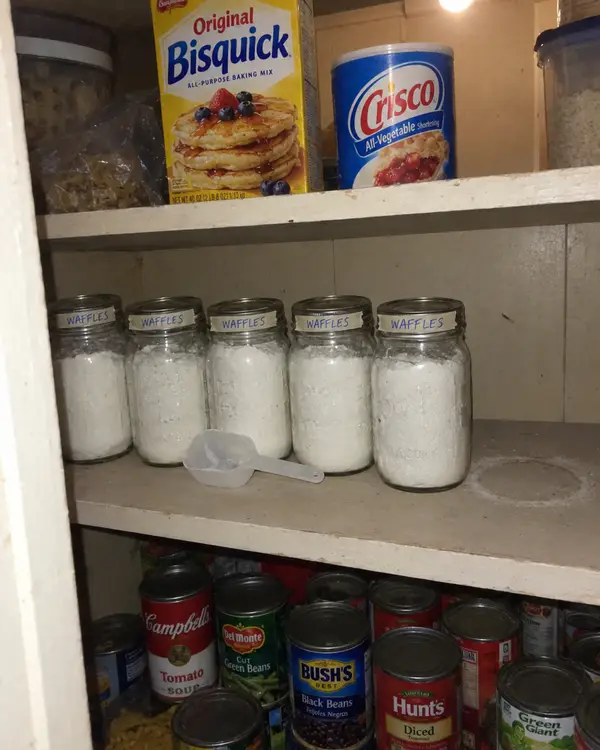
Whoever keeps taking jars of white powder out of my pantry is the most considerate thief I have ever met. She slides the other jars down to close the gap, so I won't feel bad. I'm Shirley. I'm 66. I ran housekeeping at a hotel for thirty-one years, so I've walked into plenty of rooms after something walked off with a guest. Nobody ever tidied up after. There are six quart jars on the second shelf, labels out. After a family supper there are five, scooted down neat as you please, the scoop set back facing the same way. My son, Vince, has never scooted anything in his life. My grandson, Wes, is nine and would have taken the cookies. Ruby is six and can't reach the second shelf. That leaves my daughter-in-law, Tori. I've known for a year. I haven't said one word. Here's what's in those jars. A soft white powder, a little sweet, with a warm smell when you open the lid, because I put the cinnamon in. A strip of masking tape across every lid, in my writing: WAFFLES. 2 cups of this. 1 1/2 cups milk. 1/3 cup oil. 2 eggs. Hot iron. That's all anybody at my stove has to know. The grandkids stay with me every other Saturday night, and Sunday morning is waffles. They call them Grandma waffles. Wes eats four. Ruby eats one and wears the syrup. I can have the iron hot and the first one out before the coffee finishes. Now, Tori is the sweetest girl my son ever brought home, and the quietest. Eleven years in this family, and I don't believe she has asked me for one thing. Not a recipe, not a ride, not the salt. If she wanted a jar, all she had to do was say so. That's what bothered me. Not the jar. The not saying. It happened again in March. Then May. Then twice in the summer. Always after a visit, always one jar, always the gap closed up. A good housekeeper doesn't accuse a guest without the facts, so I waited for the facts. I'll tell you how they came. But first you need to know where those jars came from, because three years ago, Grandma waffles came out of a yellow box. Bisquick, for years. The box, the eggs, the milk, and the waffle iron my mother gave me in 1979. The kids didn't know any different, and I didn't think about it. Then, the Christmas Ruby was three, I decided Christmas morning ought to be from scratch. My mother's card. Flour, sugar, baking powder, baking soda, salt, cinnamon. Every canister down, measured at seven in the morning, with paper and ribbon flying in the next room. By the time I had a stack worth carrying out, the presents were all open. I missed Ruby's whole Christmas morning standing at a waffle iron. Vince brought me a cup of coffee and a picture on his phone of her in her new boots. They were good waffles. I'd have traded every one of them for those ten minutes. That January my friend Sylvia came by. We pushed carts down the same hallways for twenty years. She's seventy, and the most organized woman I know. She set a jar on my counter with tape across the lid. WAFFLES. 2 cups. 1 1/2 cups milk. 1/3 cup oil. 2 eggs. "For the next time you're about to miss a Christmas," she said. When I walked her out, there was a spiral book on her passenger seat with sticky notes on every edge, and one sticking out the top that said WAFFLES. I noticed it the way I notice everything. I didn't ask. I made them that Sunday. Two cups out of the jar, the milk, the oil, the eggs, one whisk. The first waffle came off the iron in the time it took to set the table. They were my mother's waffles. Crisp outside, soft in the middle, the cinnamon right there. Thirty-one years of hotel rooms teaches you to look for why a thing went wrong, not just that it did. So I looked. It wasn't the waffles. It was when I was doing the measuring. My mother's card had two jobs on it, and I'd been doing both in the one hour of the year I wanted most. The measuring doesn't care when it gets done. The grandkids do. Sylvia did her measuring on a Tuesday afternoon when nobody needed her. On Christmas, all she had to do was crack two eggs. And that yellow box had been doing my measuring for years, at a price. I'd read the label on every bottle on my cart for thirty-one years, and never the side of a Bisquick box. So I read it like a supply sheet. Flour first. Then a list of words I'd have looked up twice before I let one of my girls put it on her cart, there so a box can sit in a warehouse for a year, not for anybody's Christmas. And mostly I was paying box prices for flour and sugar, which cost next to nothing by the sack. I asked Sylvia for her amounts. She went out to her car and came back with that spiral book. "Don't give me the credit. I'm organized, not clever. It's all in here." The Dry Mix Pantry. Over a hundred dry mixes, in three sections: baking and breakfast, meals, and seasonings. Each page gives the mix, what you add when you make it, and how to store it. The waffle page is page 8. Four cups of flour, half a cup of sugar, four teaspoons of baking powder, a teaspoon of baking soda, a teaspoon of salt. Two teaspoons of cinnamon and half a cup of dry milk if you want them, and in my house we want them. Mix it well and keep it airtight. To make waffles: two cups of the mix, a cup and a half of milk, a third of a cup of oil or melted butter, two large eggs, and a teaspoon of vanilla if you like. Don't overmix. A little lumpy is fine. One bowl makes two and a half big Sunday breakfasts. I ordered my own copy that night. It was buy one, get one free, and the second copy went in my desk drawer, because I didn't know yet whose it was. Then I filled jars. Waffles. Pancakes. Biscuits. Cocoa. Six waffle jars on the second shelf, labels out, so I'd never miss another Christmas. That's the shelf Tori has been visiting. The facts came in October, from the most reliable witness in the family. Wes was at my counter on his fourth waffle, and he said, with his mouth full, "Mom makes these at our house now." I said, does she. "On Saturdays. She says they're your recipe and we're not supposed to tell you. Can I have another one?" I gave him another one. The next Sunday I drove to their house with a jar under my arm and the second copy in my purse. Tori opened the door, saw it, and went red to her ears. "Shirley, I'm so sorry. I should have asked." I asked her why she didn't. She sat down on the stairs. "It's your family's recipe," she said. "The kids talk about Grandma waffles like it's a holiday. I didn't think it was mine to ask for. I just wanted them to have it on the Saturdays they're home with me." Eleven years in this family, and she still thought there were things in it that weren't hers. I sat down on the stairs beside her and told her the truth. It isn't my recipe either. It's page 8. Then I took out the other thing I'd brought. The second copy, out of my desk drawer. Inside the cover I'd written: Tori. Page 8 is yours too. Love, Shirley. There's a row of jars in her pantry now, and a row in mine. Mine still comes up one short after a visit now and then. I don't count anymore. If your grandkids ask for your breakfast by name. If there's a quiet one in your family who would never ask you for a thing. If you've ever spent a holiday morning at the stove instead of on the floor with the babies. The Dry Mix Pantry is a spiral-bound book of over a hundred dry mixes. Right now it's buy one, get one free, with a 90-day money-back guarantee. Keep one. Give the other to the one who'd never ask. P.S. Put the syrup in a jar too. It's on page 50: sugar, brown sugar, dry corn syrup, a little dry milk and maple flavoring. A cup of it and a cup of water, simmered two or three minutes, and it's syrup. https://tryneralle.com/products/dry-mix-pantry-mix-recipes-cookbook

Loading the ad's image
Kylie Mappe — “The most considerate thief I have ever met.”
PromisingImage

“They called my cake the box one.”

Thirty years on my family's Thanksgiving committee and its dessert table, and last fall my cousins took me off both, and somebody under a picture called my spice cake "the box one." Nobody told me. Marcella posted a picture from their lunch, and I scrolled past it in the deli break room with half a ham sandwich in my hand. By the Saturday after Thanksgiving, I was number nine. I'll get to that. My name is Trudy. I'm 69. I've stood behind the deli counter at a big grocery in Ashwaubenon, outside Green Bay, for twenty-two years. My mother's side does Thanksgiving the Saturday after, in my cousin Elroy's heated machine shed outside Denmark, Wisconsin. Forty-some of us between the combine and the parts washer, since 1987. And the dessert table is blind. A plain white plate, a numbered card, no name. Every kid twelve and under drops a paper slip in the coffee can behind the one they liked best, and at four my cousin Butch writes the count in blue pen in a notebook he's kept since that first year. My spice cake was on that table for thirty years. I was on the committee thirty years too. Deli trays, table rules, plates, the urn. Then Norb died, in March of 2024. Forty-four years married. At the visitation, with Norb ten feet away, my cousin Jolene took both my hands and said, "Will you still do the trays?" She meant for the funeral lunch. I did the trays. After that the calls got shorter. Then they only came on Sundays. Then in August the committee's group text went quiet. I figured everybody was busy. Here's the picture. Four women in the big booth at Hickory Lanes: Jolene, Marcella, LuAnn, and Jolene's daughter-in-law, Taylor. Brandy old fashioneds. The caption: "The committee 🦃" The committee. Under it LuAnn asked who had desserts this year. Marcella answered: "Taylor!! From scratch this time. Not the box one, lol." Not the box one. Without me. Jolene called that night. She'd seen I liked it. I still don't know why I liked it. She used the voice. Like a warm hand on your back, steering you toward the door. "Hon. After everything with Norb, we just want you to come and enjoy it. Let the young ones carry the dessert table. You've earned a rest." Earned a rest. "And Taylor's going to do your mother's cake. The real way." The real way. "Oh, and Trudy. You'll still do the trays? With your discount? Nobody does them like you." There it was. Not good enough to BAKE for that table. Good enough to SLICE for it. By the time she hung up, I had a name for myself. I was the discount. I sat out in the car with the engine off for forty minutes, so the neighbors wouldn't see me crying in the kitchen window. They'd settled it at a lunch I wasn't at, and then let me know. And they still wanted three things. The trays, at my employee discount? The table rules again, laminated, like always? Mom's spice cake card, for Taylor? So I gave them all three, and I gave them my best. Wedding trays. Ham and turkey roll-ups, cheddar fingers, curds from the factory that morning so they'd squeak. The rules, laminated on our deli-sign machine. Plain white plates. No names, no tins, no carriers. Bakers keep back from the table. And Mom's card, copied out neat, the way she wrote it: "2 c. from the drawer, 1 c. milk, 1/2 c. oil, 3 eggs. 350. 30-35 min." Taylor texted back: "what's 'from the drawer'? lol" I wrote: "Flour." Which was mostly true. Jolene wrote: "TRUDY what would we do without you 💕💕" Then I called Kinsley. Kinsley is Elroy's granddaughter, twelve, the oldest judge. She keeps the numbers, and nobody takes it more seriously. "Put me down for nine," I said. "In pencil. No name till four o'clock." "Pinky swear, Aunt Trudy." That stayed between me and a twelve-year-old. In the middle of October, Jolene asked me to the Friday fish fry. "Just the committee, hon. We miss you." Taylor sat at Jolene's right, where I used to sit. She's thirty-three, with a cake business on Facebook. Everyone was very nice to me. Then Butch came over from the bar with his notebook. He opened the slip book next to the tartar sauce and licked his thumb. "Now Trudy. Nobody wants to make this a thing." Then he read it to me. "2019, your cake, first. 2020, first. 2021, fifth. 2022, ninth. 2023, eleventh." "Last year. Fourteenth of fourteen. Two slips." Two slips. "Both from your grandsons." Kade and Logan. My son Randy had walked them over to my coffee can. I'd seen him do it. I'd let myself think I hadn't. "You came in at one-forty. Table closed at one. Elroy put yours on the end so you wouldn't feel bad." One-forty. "Frosting out of a tub. You could see the knife marks." The knife marks. "Elroy found you asleep in your car at two-thirty. He had to knock on the glass." He had the book. He had the clock. He had the knife marks. "And you left at ten after three. Before the count." Ten after three. "Everybody knew it was the box, Trudy," Marcella said, soft, like she was helping. Taylor looked at her perch. Jolene put her hand on mine. "We're not saying anything bad. We're saying it's a lot. After everything with Norb." After everything with Norb. Translation: they'd all known for four years, they'd all eaten it, and nobody said one word to me until they had somebody to put in my place. I thought of the wedding trays I'd done at cost for both of Jolene's girls. I took one sip of my old fashioned. Too sweet. It's always too sweet. "Okay, Jolene," I said. That's all I said. At home I kept my coat on at the kitchen table, the stove clock the only thing lit. I had no crying left. The driveway got all of it. None of them knew Kinsley already had me in pencil. Number nine, since September. Or that I'd asked Kurt, my manager, for Black Friday off, my first in twenty-two years at that counter. So it was going to be proof. To them, and to me. Because I have to tell you something. They weren't entirely wrong. Thanksgiving had been beating me for years. I just had better places to hide it. At a grocery deli, Thanksgiving week is the week. We put out eighty party trays on Wednesday. I'd clock in at five that morning and out at seven at night, and never sit down. Thursday I'd smile through dinner at Randy's. Friday I'd work Black Friday, then stand in my kitchen at ten that night in my work shoes, stirring up a cake mix. I frosted it warm, because I couldn't stay awake for it to cool. That's what the knife marks were. Tub frosting slides on a warm cake, so you keep going back over it. In 2024 I slept through two alarms. That's why I was late. The empty boxes went in my neighbor's recycling, so Jolene wouldn't see them in mine. Back when I still had Mom's cake can, I was the cake to beat. In 2024 I was asleep in a parking spot. Not old. Tired. Twenty-two years of a Thanksgiving week with no room left in it. The box was supposed to help with that. Mom kept a flour drawer. I never learned what went in it. She passed in the spring of 2019, at ninety-six, and I made the last of her cake can stretch through Thanksgiving 2020. From 2021 on, it was the box. "Ma, it's a cake, not a contest," Randy said. Norb said, "Tastes fine to me, Tru," and Norb would've said that about a shoe. It wasn't fine. It was sweet and flat, like the cake had only heard about cinnamon. And by then it wasn't just the cake. My pantry looked like the back room at work. The spice cake box. The tub of cream cheese frosting. Two red stuffing boxes and cream soup in cans for Randy's Thursday. A stack of gravy envelopes. Every one promised to save me time, and I was still asleep in my car. I kept that week's receipt on the fridge. Seventy-four dollars of boxes and cans, so I could be too tired to taste them. Five weeks till the Saturday. The answer came from my nephew Garrett. Garrett is my sister Ardella's boy, twenty-eight, with a beard that's mostly an argument. He's the galley cook on an ore boat out of Two Harbors, Minnesota. Three meals a day for twenty men, March to January. He came by for coffee the week after the fish fry, home on his time off. Out it all came, down to the knife marks. When I was done he asked me one question. "What time do you bake that cake?" "Friday. Ten at night. After work." "Quit baking it the night before." "Garrett, it has to get baked sometime." "You were done in before you cracked an egg, Aunt Trudy. Where'd Grandma keep her flour?" "In the drawer." The deep bottom drawer, lined with tin. Five coffee cans, each lid taped and lettered. CAKE. BISCUIT. PANCAKE. Every October she sat at the table with the big bowl and filled them. "That was just a farm thing," I said. "It's a galley thing. Bernadette did it on my first boat. Every old cook on the lakes does." "It's flour in a coffee can, Garrett." "It's a cake that's waiting on eggs." Then he asked what they do before the boat leaves the dock. "Load the groceries?" "We provision. Everything for the whole trip goes on at the dock. Out on Superior there's no store." "So when should you measure your flour?" he asked me, like a test. "When I bake?" "At the dock. In flat water. Nobody levels a teaspoon of baking powder in a November gale." He put two fingers on the table. "Measuring takes a clear head. Baking's eggs and an oven. Grandma filled her cans in October, so November was nothing but cracking eggs." "You've been provisioning and sailing on the same night. At ten. After eighty trays." I didn't say anything. "The box is somebody else's provisioning," he said. "That's all it is." "It's a cake mix." "A factory measured it. Then it rides a semi and waits in a warehouse till next fall, and still has to come out a cake. Read me the side." I read labels for a living. Customers ask what's in the potato salad, and I read them the whole tub. So I got a box down and read it to him. Flour, sugar, and then a long line of words I couldn't say, and I say "mortadella" forty times a shift. "Those are for the truck," Garrett

Loading the ad's image
Kylie Mappe — “They called my cake the box one.”
PromisingImage

“They wrote me down for rolls.”

The fall after we buried our mother, my three younger sisters planned Thanksgiving at her house without me. After thirty years of cooking it, I was down for a can of rolls. None of them called me. I found out because my niece posted a picture of their lunch, and on the legal pad in the middle of the table, next to my name, it said: rolls (the can kind is fine). My husband says about forty words a day. He's the one who fixed it. I'm Shirley. I'm 68. For thirty-one years I've run the alterations counter at a dry cleaner's on Far Hills Avenue in Dayton, Ohio. Wedding work is Saturdays, so my Saturdays belonged to somebody else's daughter. There are four of us girls. I'm the oldest, then Phyllis, Cheryl and Debbie, the baby, who lives in the homeplace now, Mother's farmhouse west of Tipp City. Mother handed me Thanksgiving in 1995 and took a chair at her own table. Twenty-two of us, counting the little ones. I did the turkey, Mother's dressing, the gravy, the sweet potatoes. Lyle carved. He has never spent more than forty words a day: forty-one years in a machine shop too loud to talk in. He spends them like they cost a dollar apiece and prints the rest on the whiteboard by our salt and pepper. In April of last year we buried Mother. After that, the calls came every day, then on Sundays, then when something needed hemming. Then, the first Sunday in October, my phone lights up with a post from my niece Darcy. All three of my sisters at the tea room in Tipp City, with their iced teas and chicken salad. The caption says: "Menu lunch with Mom and the aunts! Thanksgiving at the homeplace is officially planned 🦃📝" Officially planned. Without the cook. In the middle of the table is a legal pad in Phyllis's writing. I spread the picture with two fingers until I could read it. Turkey, Trent. Dressing, Trent. Gravy, Trent. Potatoes, Debbie. Green beans, Cheryl. Pies, Darcy. And at the bottom: "Shirley, rolls (the can kind is fine)." I called Phyllis that afternoon. "Oh, Shirl." That voice. Satin on the outside, pins on the inside. "It was just a little lunch. We didn't want to drag you out, with Mother gone and all. And honestly, Thanksgiving is a lot. Every fall you come in off those weddings gray in the face, honey. Just come and sit for once. Bring the rolls. It's for you." Two days later she called again. "Shirl, I need a favor. Debbie bought a new linen cloth for Mother's table, and it hangs four inches too long. Nobody hems like you. And Trent wants to make Mother's dressing the real way. Would you write it out for him? And how Mother ran the day, the times and all? He's never cooked on that old range." Trent is Darcy's husband of a year. He owns a smoker and watches the cooking shows, and Darcy says he "cooks from scratch." Too worn out to COOK Thanksgiving in Mother's kitchen. Not too worn out to HEM the cloth they'll eat it on. The free seamstress, for the sisters who wrote me down for a can. "Sure, Phyl," I said. "Bring it by." Then I sat at my sewing machine for an hour and didn't sew a stitch. They hadn't just left me out of a lunch. They'd decided over chicken salad that I was used up. But my hemming? Mother's dressing, out of my head? Mother's whole day, by the clock? Those they still wanted. I did the work anyway. I don't know another way to do it. I hemmed the cloth by hand and sewed a little lead drapery weight into each corner. Mother's table sits over the furnace register, and for thirty years that cloth has lifted every time the heat comes on. I wrote Mother's dressing on a card in my best hand, and across the top I put what she said every November of my life: "Bread dried the Saturday before. Never the morning of." And I wrote out her day, two pages, by the hour. Turkey in at six-thirty. The back left burner is the only one that simmers. Rolls go in when the bird comes out. Phyllis texted that night: "Shirl!!! This is PERFECT. Trent says you're a genius ❤️" I texted back: "I'll bring the rolls." Rolls. The can kind is fine. And under the rolls, in my trunk, I'd bring Mother's dressing made right and set it down next to his. Nobody knew. Two weeks later Phyllis asked me to supper. "Just the sisters and the kids. We'll go over the day." I brought the cloth in tissue paper. Phyllis had Mother's wheat-rim dishes out, and candles. Everybody was seated when I came in, trading looks. After pie, Phyllis folded her napkin. "Shirl, it's about Thursday. We think it's best if Trent does the whole dinner. All of it. You just come and enjoy yourself." Trent smiled at me. "From scratch," he said. "Every bit of it." From scratch. "He reads Grandma's card every night," Darcy said. Grandma's card. In my handwriting. Then Phyllis's husband Roger leaned back. Roger was a quality inspector at the brake plant for thirty-four years. "Shirley, somebody ought to put it on paper." On paper. "Dinner last year was called for one. We sat down at 4:15. I looked at my watch. The rolls were the can kind, and they were in so long the smoke alarm went off during the blessing. The gravy came out of envelopes. Four of them. I carried out the trash, and they were in there with four of those red stuffing boxes. That was Mother's dressing, Shirley. And you were asleep in Dad's recliner before anybody cut a pie. Twenty-two people tiptoed around you." He had times. He had counts. He'd been writing me up for a year. Phyllis laid two fingers on Roger's sleeve, the way you'd pin a hem. She wasn't stopping him. She was next. Satin on the outside, pins on the inside. "Shirl, nobody loves you like this table does. It's just been too much for a long time. And now, with Mother gone. It's for the best." She glanced down the table. They nodded. For the best. I've said that across a fitting table. It means the bride's mother already decided, and the bride is the last to hear it. I picked up Mother's water glass and took a sip. "All right," I said. Driving home on 75, I kept my eyes dry. Tears spot satin. I sat at my cutting table with the lamp off. Lyle was asleep in his chair. They didn't know I'd already started. Bread heels drying in Mother's old pillowcase on my back porch. And it had already cost me. I'd turned down the Henley wedding, fourteen bridesmaids, to keep Thanksgiving week clear. Eleven hundred dollars. After that supper it wasn't hurt anymore. It was a ticket, and every one of them had initialed it. If I walked into the homeplace the way I'd walked in every year, I'd only prove Roger's watch right. Because Phyllis had a point. I hated that. Thanksgiving had me licked years before we lost Mother. Fall is the busy season at the cleaner's: brides, homecoming, and every winter coat in Montgomery County needing a sleeve let down. I'd come off five straight Saturdays of weddings and be at Mother's counter at four-thirty Thursday morning, cubing bread by the stove light, because I'd never had a free Saturday to dry it. By two o'clock I'd stop being a person. I'd lean on the counter with both hands. I snapped at the grandkids for opening the oven door. One year I made Debbie's littlest one cry, and I can still see her face. In 2019 I started buying the red stuffing boxes. I carried them into Mother's kitchen under a dish towel. Aunt Iola, Mother's baby sister, is ninety. Every year since, she's said, "Your mother's was wetter." Thirty years I'd blamed the fabric. It was the way the day was cut. The boxes were supposed to save me. "It's like a store-bought hem, Shirl," Phyllis said. "Nobody turns it over to look." Aunt Iola turned it over every year. So I bought more. The red boxes for the dressing. Cream of mushroom by the can. Envelopes for the gravy. Rolls out of a can that pops, every year since 1995, because I never had Mother's hands for yeast. The receipt from Thanksgiving 2024 was still in my junk drawer. Sixty-one dollars of red boxes, envelopes and cans for one Thursday, and the Thursday still beat me. So I shrank. I let Debbie carry the turkey out. I told myself it was my age. Then I told myself it was grief. Five Saturdays to Thanksgiving. The next night I sat down across from Lyle. He'd heard every call through the wall. He slid the whiteboard over. WHAT HAPPENED I told him. The legal pad. The tablecloth. Roger's watch. "For the best." He wiped the board with his sleeve. HOW MANY BOXES "Four red ones. Four gravy. The rolls. The soup." STOP "Lyle." He wiped it again and wrote one word. YEARS He'd watched it for years, carving knife in hand. Nobody ever asked what was wrong with the day. Only what was wrong with me. The next night he wrote: MOM. OCT. His mother Inez raised nine on a farm outside Jamestown, in Greene County. The second Saturday of every October she filled the flour bin in her kitchen cabinet, then filled her jars off it. Biscuit flour. Cornbread mix. Dressing bread drying on a window screen. On Thanksgiving she cooked for twenty-six and sat down at noon. "I'd put that down to the farm," I said. NOT FARM. SMART. That Friday a bride I was pinning told me her mother keeps all her mixes in jars, and so do half her friends. That night I said, "Lyle, that's flour in a canning jar." He wrote: SO IS BOX He tapped it twice. It took four more evenings. Lyle wasn't going to waste a word. That Tuesday he slid a red box across the table and tapped the side. Lyle doesn't read out loud for anybody, so I did. Bread crumbs, fine. Then the long words. I got stuck on the third one. WHY "So it keeps?" TRUCK. WAREHOUSE. 1 YR Those long words aren't for the dressing. They're for the trip, and the year it waits. Like the sizing on a bolt of fabric, it's for how long it sits in the store. The dress never needed it. Wednesday was money. Forty-one years a machinist, and Lyle still thinks in thousandths. He circled the rolls on the 2024 receipt. Two dollars and change. Beside it he wrote: FLOUR 25¢ "Ten times?" He nodded and wrote: 4 A Y

Loading the ad's image
Kylie Mappe — “They wrote me down for rolls.”
PromisingImage

“My name wasn't on the sign-up sheet.”

Eighteen months after I buried my husband, I found out my neighbors had moved Thanksgiving out of my garage and given my banana pudding and my dressing to a woman who'd lived on our street one summer. Next to her name somebody had typed, "homemade, not the box." Not because one neighbor picked up the phone. Because Vicki posted the sign-up sheet in the neighborhood group on a Sunday night, and I read it in bed. On Thanksgiving night, Vicki came across the circle in her house shoes and asked me something. I'll tell you what I said back. My name is Norma. I'm 67. I was head teller at a savings bank in Knoxville for thirty years, and I still work the window two days a week. Holly Court is nine houses on a dead-end circle. Leland and I bought No. 4 in the spring of 2005. For twenty years, Holly Court ate Thanksgiving in our garage. Forty-one people, the last few years. I made the sign-up sheet. Ironed the cloths. Did the turkey, the dressing, the rolls, and the banana pudding in the big glass bowl, which is what people crossed the circle for. Leland brought the six folding tables down from the rafters, lit the heaters and carved. The winter before he died, he stuck a strip of masking tape on each heater. HOLD IT 30 SECONDS, NORMA. "In case," he said. He died that March. After the funeral, the food came. Vicki brought a ham. Everybody said, "Anything you need, Norma." By May it was a wave from the mailbox. By August it wasn't that. I did the twentieth Court Thanksgiving by myself that November. Somebody kept notes. You'll hear about those. Then on a Sunday night the next September, I open the neighborhood group on my phone. There it is. "HOLLY COURT THANKSGIVING!! This year at Kendra and Trey's, No. 9! 🦃" Under it, the sheet. Turkey, Trey. Dressing, Kendra. Green beans, the Ogles. Rolls, Vicki. Tea and ice, Gil. And at the bottom: "Banana pudding, Kendra (homemade, not the box!!)" Homemade. Not the box. Forty-one names, near enough. Not a one of them said Norma. I called Vicki the next morning. "Oh, Norma." She used her bedtime voice. The one that sounds like she's tucking you in and means you're being sent to bed. "We didn't want you to feel like you had to do a thing. Thanksgiving is a lot, honey. Forty-one people. You looked so tired last year. We didn't think you could do it by yourself anymore." By yourself. "We're looking out for you, Norma." Nine days later, my phone rings. Vicki again. "Norma, I need a favor. Well, three. Could Kendra borrow your folding tables? And Leland's heaters? And would you do the sheet the way you always do, with the oven times? Nobody does it like you." I ran it back twice, like a drawer that won't balance. I don't qualify to SIGN the sheet. But I qualify to WRITE it. I was Holly Court's free party rental. Tables, heat and paperwork, delivered. I said, "Sure, Vicki. Happy to." Then I put the phone face down and sat at my kitchen table till the streetlight came on. They hadn't moved Thanksgiving because Kendra has a double oven. They'd ruled on it without me: without Leland, I was a widow to work around. But my tables? Leland's heaters? My sign-up sheet? Those, they still had a use for. So I did it right. I made the best sign-up sheet Holly Court ever had, with an oven schedule to the quarter hour, because nine houses share four good ovens on Thanksgiving. Turkey out by 12:15 to rest. Rolls in the Ogles' oven at 12:30. Eat at one. I taped RETURN TO NO. 4 under each table. Five tables. I kept the sixth. I couldn't have told you why yet. I had the heaters serviced and the tanks filled. I left Leland's tape right where he put it. Vicki texted that night. "Norma you're a saint, honestly. Best one yet ❤️" That Saturday I bought a white tablecloth, big enough for one folding table. On my kitchen calendar, on the fourth Thursday in November, I wrote: DRIVEWAY. 1:00. Same day. Same hour. Across the circle. Nobody knew but me. In the middle of October, Vicki asked me to supper at Kendra's. "Just the court. We'll go over the sheet." Gold-rim plates, candles, every couple on Holly Court already sitting down. They traded a look when I came in, the way a branch does when the auditors show up. After the pot roast, Vicki set her napkin down. "Norma, honey. We need to talk about Thanksgiving." My hands went cold. "We think it'd be easier on you if you went to Robin's this year. In Charlotte." Robin is my daughter. She hasn't asked me since Leland died. Vicki knows that. "Kendra's people are coming up from Chattanooga," Vicki said. "We're at forty-nine. The tables are full." The tables. My tables. Gil, Vicki's husband, kept the books at a lumber yard for thirty-five years and still writes everything down. "Norma, I'm going to read you the figures." He took a little spiral notebook out of his shirt pocket. "Last Thanksgiving you said one o'clock. The turkey came out at ten after four. We sat down at four-thirty in a garage that was forty-six degrees, because the heaters ran out at three and nobody could find the spare tank." He turned a page. "The banana pudding was soup. You'd sliced those bananas at six in the morning, and by four they were brown as a grocery sack. Four yellow pudding boxes and three red stuffing boxes in your trash. I know, I carried the bag out. And you were asleep in a lawn chair before the pie went around." He had the clock times. He had the temperature. He'd been keeping a ledger on me for a year. Vicki laid her hand on Gil's sleeve. Not to hush him. So she'd get her turn. The bedtime voice again. Tucking me in, sending me to bed. "Norma, this is coming from love. Since Leland, Thanksgiving's just a lot on you anymore. You're give out before the turkey's even in. We think it's better this way. You understand." They all nodded. Even Dwight Ogle looked down at his plate. You understand. In bank words: my account was closed, and a new one opened for a younger woman with a double oven. I looked at Vicki, whose Christmas Club I kept for nineteen years, five dollars a week, and carried out to her car every November. I picked up my sweet tea. Had a swallow. "I understand," I said. It's sixty-one steps across the circle. I've counted them carrying pudding. Crying, I'd done in March. I sat at my kitchen table in my coat, like a customer waiting on a loan officer who isn't coming. They didn't know about the sixth table, or the white cloth, or my calendar. Leland bought that sixth table at a yard sale in Fountain City for four dollars, for our first Thanksgiving on the court, when it was just us and the Ogles. That one was ours. At first that table was for Leland. Now I was proving something. To every one of them, and to Leland, who taped my name on two heaters, in case. But if I set that table the shape I was in, they'd be right. And the awful part was, Gil's figures balanced. Thanksgiving had been getting away from me for years. Leland just carried enough of it that nobody saw. Every year I got up at four, and everything came out of one kitchen on one morning, the oven door going like a screen door in July. By two I was done. I'd sit down in a lawn chair "for a minute" and wake up with a grandchild in my lap. I got short. One year I snapped at Lindsey for opening the oven, and she cried in my bathroom. I hid the boxes. I'd carry the empties out to my trunk before anybody came and drop them in the dumpster behind the bank on Friday. And people could taste it. The spoonfuls of pudding just got smaller. I was a teller thirty years. I notice when a stack comes up short. At the bank we have a word for it. Overdrawn. The fix everybody had for me was the box. "Mom, nobody's grading your pudding," Robin said. Somebody was. Gil had the figures. So every year there were more. Yellow pudding boxes. The red stuffing box that tasted like the box. Cream soup in cans. Gravy envelopes. Rolls out of a tube that pops. My pantry looked like the end of a grocery aisle. Last year's receipt was $212, before the turkey. I keep receipts. Some small part of me had started agreeing with Gil. Thirty-eight days until Thanksgiving. I'd counted. The next morning I called my granddaughter. Lindsey is 26. She works the counter at a bakery café off Kingston Pike, up at four-thirty, and likes it. I told her the whole thing. The sheet. "Homemade, not the box." The tables. Gil's notebook. Vicki's voice. She let it sit a minute. "Grandma. How many boxes were in last Thanksgiving?" I counted. "Fourteen." "Close that account." "Lindsey." "You were in the red before Papaw died. I watched it from the kids' table. Since the funeral, they call it grief. Nobody ever looked at how you were doing it." "Tell me about your Granny's pudding again," she said. "The jar." My grandmother Etta lived on a hillside out past Strawberry Plains, and her banana pudding stood up on the spoon every Sunday. By the cookstove she kept a big jar she called her pudding makings: sugar, flour and a little salt, mixed in the fall. Sunday she stirred in the milk and eggs and cooked it. "I'd always put that down to her being poor and a long way from town," I said. "Grandma, nobody at the café makes Tuesday's scones on Tuesday. Rafael weighs the week's dry on Monday." "Honey, Granny's jar was a crock of sugar on a hillside." "It was savings. Same as your Christmas Club." I waited. "Every dish has a dry part and a wet part," she said. "The dry part's the deposit. Sugar, cornstarch, dry milk, the sage for the dressing. It keeps. The wet part's the withdrawal. The milk and the stove. That's the day." "So Granny..." "Made her deposit in the fall and drew on it Sunday. You make the deposit and the withdrawal on the same Thursday, for forty-one people, starting at four. Nobody can." "And the boxes?" "When the morning runs out, you borrow somebody else's measuring. At their rate." "What rate?" "Read the side of that pudding box. Sugar and

Loading the ad's image
Kylie Mappe — “My name wasn't on the sign-up sheet.”
PromisingImage

“I’ll admit it looked bad.”

I've carried a little jar of white powder in my purse for two years, and last month it got the manager of a steakhouse sent to my table. I'll admit it looked bad. A grandmother in a red booth, shaking white powder out of her purse onto a baked potato. I'm Vivian. I'm 67. I was a flight attendant for thirty-three years. People asked me for a manager about once a week. I had never once been the reason somebody went for one. It was our forty-first anniversary. Russ and I go to the same steakhouse out on the highway every year, and the rolls come out warm in a basket with a little dish of whipped butter. I take my jar out at every table now, because I am done eating food that tastes like nothing. I shook a good pinch over the butter, then over my potato. The waiter, maybe twenty, looked at the jar, looked at my potato, and walked straight back to the kitchen. Russ put his menu up in front of his face. Here's what was in the jar. A little four-ounce jelly jar of fine white powder, flecked green, that smells like a summer garden the second you open it. A strip of masking tape across the lid, in my writing: RANCH. 3 Tbsp of this. 1 cup mayo. 3/4 cup milk. Cold 30 minutes. Or just shake it on. That's my ranch seasoning. It has ridden in my purse for two years, everywhere I go. It goes on potatoes, on eggs, on a sad salad, on the rolls. The manager came out of the kitchen with the waiter behind him. A tall young man in a tie, with the face of a man walking over to a problem. His name tag said TRAVIS. "Ma'am," he said. "May I ask what that is?" I'll tell you what he asked me next. But first you need to know why a grandmother carries seasoning in her purse, because two years ago I'd have thought it was strange too. Thirty-three years of airplane food. Chicken or pasta, and both of them tasted like the tray. Then hotel food. I spent half my life eating meals that were made for a truck. When I retired I thought I'd finally eat food that tasted like something. Then Russ and I started eating out more, and it turned out a lot of restaurant food comes off a truck too. Ranch out of a squeeze bottle. A baked potato with nothing on it but the foil. So I carried packets. Hidden Valley, the little envelopes, two in my purse at all times. One split open in the heat one August, and I was finding dust in my wallet till Christmas. But packet ranch tastes like a packet. So I tried making ranch the long way. A recipe off the television. Fresh dill, fresh chives, fresh parsley, garlic, buttermilk. Eleven dollars of herbs and a whole afternoon of chopping. It was beautiful. It had gone off in the refrigerator by Thursday. And you can't carry a bowl of it in your purse. Then I met Winnie. Winnie lives across the hall in our building. She's eighty-one, and her purse rattles like a maraca. At our building's summer potluck she reached over and shook a little jar over my potato salad without asking. I tasted it, and I put my fork down. Ranch. Real ranch, the kind from a family supper when I was a girl. Dill and garlic and that sour tang of buttermilk, and nothing tasting like a factory. I asked her what it was. She held up her purse and shook it. "Taco. Lemon pepper. Ranch. Seasoned salt," she said. "I haven't eaten a sad potato in three years. It's all out of one book." I thought about my eleven dollars of dill all the way home. The herbs had never been the problem. Fresh was the problem. Fresh herbs spoil in a week. Dried ones, measured once, keep for months in a jar that rides in a purse. I'd had the right idea in the wrong form. Winnie had made hers once, dry, and it went everywhere she did. That night I finally read the back of one of my packets. I read the ingredients on every snack I ever handed a passenger with an allergy, so I know how to read a label. This one was a run of words that take a breath to say, the kind I'd have checked twice before I handed it to a child in row 14. A paragraph like that is for the warehouse and the shelf. It was never for the potato. Winnie's jar, I found out the next day, has eight things in it, and I can say every one. The next day I knocked on her door and asked to see that book. She went to her kitchen and came back with it. A spiral book, the corners soft from use. "Honey, I'm not a cook. I'm a copier. It's all in here." The Dry Mix Pantry. Over a hundred dry mixes, in three sections: baking and breakfast, meals, and seasonings. Each page gives the mix, what to add when you make it, and how to store it. The ranch page is page 102. Half a cup of dry buttermilk powder, two tablespoons of dried parsley, a tablespoon each of dried dill, onion powder and garlic powder, a teaspoon of salt, half a teaspoon of black pepper and half a teaspoon of dried chives. Combine it in a small jar and shake it before you use it. For dressing: three tablespoons of the mix, a cup of mayonnaise and three quarters of a cup of milk or buttermilk. Refrigerate it at least thirty minutes so the flavor comes up. One batch of the mix is about four batches of dressing, or most of a summer of potatoes. It fills my purse jar nearly twice. The front of the book says most mixes keep for months, some up to a year, in an airtight jar in a cool, dry place. I ordered my own copy that night. It was buy one, get one free, and the second copy went in the trunk of my car, just in case. Now my purse rattles too. Ranch. Taco. Lemon pepper. And steak seasoning for Russ, who will not admit he likes it. So. Back to the steakhouse. "It's ranch," I told Travis. "I make it." He looked at me a long second. Then he asked, "May I?" He tore a roll in half, dragged it through my butter, and ate it standing at our booth with the waiter watching. He looked at the ceiling while he chewed. "Ours comes in a five-gallon tub," he said, quietly, like a confession. "Would you tell me what's in that?" Russ lowered his menu. "It isn't my recipe," I said. "But I can tell you where it is." I went out to the car and came back with the second copy from the trunk, and I opened it to page 102 on the table between the steak sauce and the rolls. He sat down in our booth to read it. Russ moved over to make room. We went back in January for Russ's birthday. The rolls came out warm, in a basket, with a little dish of whipped butter. It was flecked green. Travis set it down himself. He didn't say a thing. He just winked. If you've ever salted a restaurant potato and still tasted nothing. If your purse already has a little bit of everything in it. If you've read the back of a packet and put it back on the shelf. The Dry Mix Pantry is a spiral-bound book of over a hundred dry mixes. Right now it's buy one, get one free, with a 90-day money-back guarantee. Keep one. Give the other to the next person who asks what's in your jar. P.S. Here's the steakhouse butter for nothing. A stick of soft butter and about a tablespoon of the ranch mix, stirred together and chilled an hour. Put it out with warm rolls and don't say a word. https://tryneralle.com/products/dry-mix-pantry-mix-recipes-cookbook

Loading the ad's image
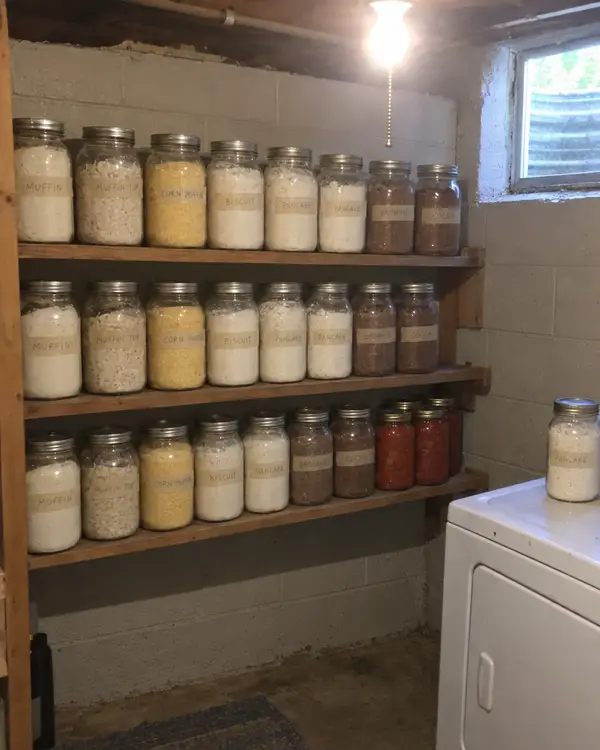
Kylie Mappe — “I’ll admit it looked bad.”
PromisingImage

“Nobody has ever gone and got a manager on me.”

The waiter at the steakhouse saw the little jar of powder I pulled out of my purse and went and got his manager. I'm sixty-seven years old. Nobody has ever gone and got a manager on me in my life. I'm Vivian. I was a flight attendant for thirty-three years. People asked me for a manager about once a week. I was never the reason. It was our forty-first anniversary, at the steakhouse out on the highway that Russ and I go to every year. The rolls came out warm, with a little dish of whipped butter. I took my jar out of my purse, the way I do at every table now, because I am done eating food that tastes like nothing. I shook a good pinch of white powder over the butter. Then over my baked potato. The waiter, maybe twenty, was setting down our tea. He looked at the jar. He looked at my potato. Then he walked straight back to the kitchen. Russ put his menu up in front of his face. Here's what was in the jar. A little four-ounce jelly jar of fine white powder, flecked green, that smells like a summer garden the second you open it. A strip of masking tape across the lid, in my writing: RANCH. 3 Tbsp of this. 1 cup mayo. 3/4 cup milk. Cold 30 minutes. Or just shake it on. That's my ranch seasoning. It has ridden in my purse for two years, everywhere I go. It goes on potatoes, on eggs, on a sad salad, on the rolls. The manager came out of the kitchen with the waiter behind him. A tall young man in a tie, with the face of a man walking over to a problem. His name tag said TRAVIS. "Ma'am," he said. "May I ask what that is?" I'll tell you what he asked me next. But first you need to know why a grandmother carries seasoning in her purse, because two years ago I'd have thought it was strange too. Thirty-three years of airplane food. Chicken or pasta, and both of them tasted like the tray. Then hotel food. I spent half my life eating meals that were made for a truck. When I retired I thought I'd finally eat food that tasted like something. Then Russ and I started eating out more, and it turned out a lot of restaurant food comes off a truck too. Ranch out of a squeeze bottle. A baked potato with nothing on it but the foil. So I carried packets. Hidden Valley, the little envelopes, two in my purse at all times. One split open in the heat one August, and I was finding dust in my wallet till Christmas. But packet ranch tastes like a packet. So I tried making ranch the long way. A recipe off the television. Fresh dill, fresh chives, fresh parsley, garlic, buttermilk. Eleven dollars of herbs and a whole afternoon of chopping. It was beautiful. It had gone off in the refrigerator by Thursday. And you can't carry a bowl of it in your purse. Then I met Winnie. Winnie lives across the hall in our building. She's eighty-one, and her purse rattles like a maraca. At our building's summer potluck she reached over and shook a little jar over my potato salad without asking. I tasted it, and I put my fork down. Ranch. Real ranch, the kind from a family supper when I was a girl. Dill and garlic and that sour tang of buttermilk, and nothing tasting like a factory. I asked her what it was. She held up her purse and shook it. "Taco. Lemon pepper. Ranch. Seasoned salt," she said. "I haven't eaten a sad potato in three years. It's all out of one book." I thought about my eleven dollars of dill all the way home. The herbs had never been the problem. Fresh was the problem. Fresh herbs spoil in a week. Dried ones, measured once, keep for months in a jar that rides in a purse. I'd had the right idea in the wrong form. Winnie had made hers once, dry, and it went everywhere she did. That night I finally read the back of one of my packets. I read the ingredients on every snack I ever handed a passenger with an allergy, so I know how to read a label. This one was a run of words that take a breath to say, the kind I'd have checked twice before I handed it to a child in row 14. A paragraph like that is for the warehouse and the shelf. It was never for the potato. Winnie's jar, I found out the next day, has eight things in it, and I can say every one. The next day I knocked on her door and asked to see that book. She went to her kitchen and came back with it. A spiral book, the corners soft from use. "Honey, I'm not a cook. I'm a copier. It's all in here." The Dry Mix Pantry. Over a hundred dry mixes, in three sections: baking and breakfast, meals, and seasonings. Each page gives the mix, what to add when you make it, and how to store it. The ranch page is page 102. Half a cup of dry buttermilk powder, two tablespoons of dried parsley, a tablespoon each of dried dill, onion powder and garlic powder, a teaspoon of salt, half a teaspoon of black pepper and half a teaspoon of dried chives. Combine it in a small jar and shake it before you use it. For dressing: three tablespoons of the mix, a cup of mayonnaise and three quarters of a cup of milk or buttermilk. Refrigerate it at least thirty minutes so the flavor comes up. One batch of the mix is about four batches of dressing, or most of a summer of potatoes. It fills my purse jar nearly twice. The front of the book says most mixes keep for months, some up to a year, in an airtight jar in a cool, dry place. I ordered my own copy that night. It was buy one, get one free, and the second copy went in the trunk of my car, just in case. Now my purse rattles too. Ranch. Taco. Lemon pepper. And steak seasoning for Russ, who will not admit he likes it. So. Back to the steakhouse. "It's ranch," I told Travis. "I make it." He looked at me a long second. Then he asked, "May I?" He tore a roll in half, dragged it through my butter, and ate it standing at our booth with the waiter watching. He looked at the ceiling while he chewed. "Ours comes in a five-gallon tub," he said, quietly, like a confession. "Would you tell me what's in that?" Russ lowered his menu. "It isn't my recipe," I said. "But I can tell you where it is." I went out to the car and came back with the second copy from the trunk, and I opened it to page 102 on the table between the steak sauce and the rolls. He sat down in our booth to read it. Russ moved over to make room. We went back in January for Russ's birthday. The rolls came out warm, in a basket, with a little dish of whipped butter. It was flecked green. Travis set it down himself. He didn't say a thing. He just winked. If you've ever salted a restaurant potato and still tasted nothing. If your purse already has a little bit of everything in it. If you've read the back of a packet and put it back on the shelf. The Dry Mix Pantry is a spiral-bound book of over a hundred dry mixes. Right now it's buy one, get one free, with a 90-day money-back guarantee. Keep one. Give the other to the next person who asks what's in your jar. P.S. Here's the steakhouse butter for nothing. A stick of soft butter and about a tablespoon of the ranch mix, stirred together and chilled an hour. Put it out with warm rolls and don't say a word. https://tryneralle.com/products/dry-mix-pantry-mix-recipes-cookbook

Loading the ad's image
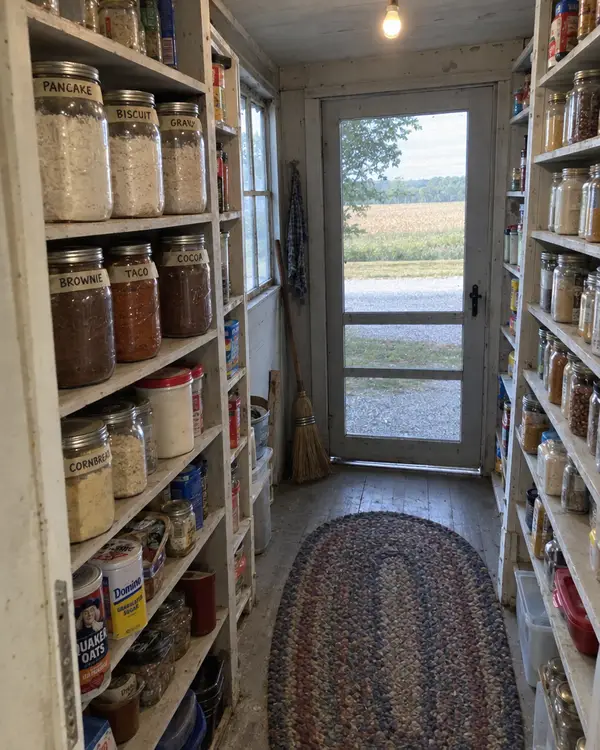
Kylie Mappe — “Nobody has ever gone and got a manager on me.”
PromisingImage

Showing 13 of 27 · all in Meta's Ad Library

From the ads Sniped has collected from this page (27 so far, first seen Nov 2026). Reach is what Meta reports; no spend or sales estimates.