Support healthy hair and bladder control every day
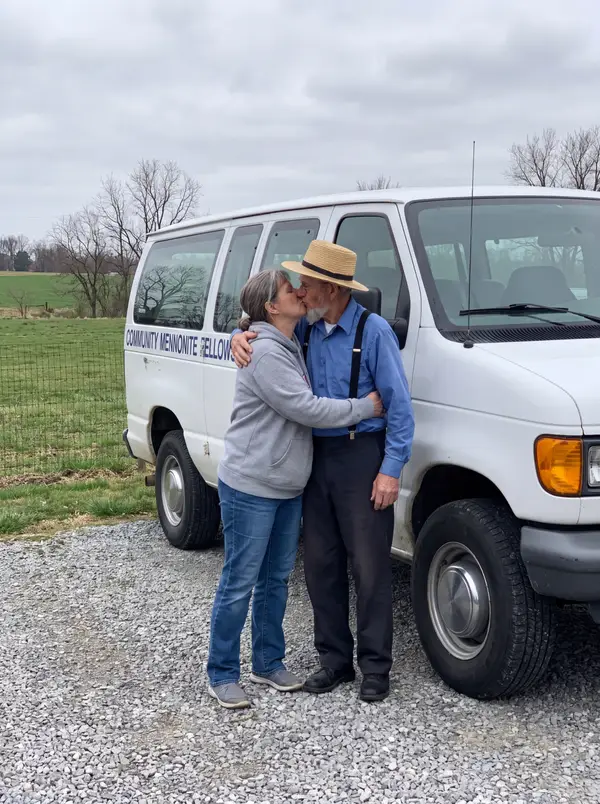
My wife left me for An Amish man. Nine months later I drove back to his farm in Mt. Vernon, knocked on his door, and hugged him. My urologist still can't explain what happened in between. The farm sits at the end of a dirt road off Route 229 in Knox County, Ohio — Amish country, the kind of road where you pass a buggy every quarter mile and nobody honks. I pulled the truck over where the road dead-ends at his property line. A rooster was screaming at nothing. I sat there a minute. I want you to understand what my hands knew gripping that steering wheel: the last time I was on this road, I was doing eighty-five with tears running sideways off my face and a loaded .38 in the console I had no real plan for, only rage. That's not a story I tell. But this whole thing only works if I tell the truth, so there it is. Nine months ago I was a man who hadn't slept through the night since Obama's second term. Nine months ago my wife, Karen, looked at me across our kitchen table in Mansfield and said the sentence that ends a marriage — not "I don't love you," not "there's someone else," but worse. Quieter. "I can't do this anymore, Dale. I can't watch you disappear into that bathroom one more night." Let me back up all the way, because the bathroom is the real story, and the Amish man is the twist I never saw coming, and if you're a man over fifty reading this at 2 AM because you're already up anyway — the reason I'm writing this is you. My name is Dale Messer. I'm fifty-six. I've run Messer Electric out of Mansfield, Ohio, for twenty-two years — commercial jobs, strip malls, the hospital annex, three crews. I'm the kind of man who shows up first and leaves last, and I built everything Karen and I had with my own two hands and a license I got at twenty-four. For twenty-eight years, that was enough. We raised two boys. We built the house on Trimble Road. There were years I look back on now like they belong to a different man — years where I slept like a stone and woke up before the alarm, ready. I want you to hold that word, ready, because what happened to that word is what this story is about. Sometime around forty-seven, I started getting up at night. Once. Just once. Around 2 AM. A pressure in my lower belly that felt like a full tank, and then — standing there in the dark bathroom — barely anything. A trickle. A false alarm that took five minutes to finish. I'd stand there with one hand on the wall and think: that's it? THAT'S what woke me up? I told nobody. You don't tell people about your bathroom. Not your wife, not your crew, not your buddies at the VFW on Thursday. A man does not announce that his plumbing is acting up at forty-seven. You flush, you go back to bed, you file it under getting older. Then once became twice. Twice became three. And three, by the time I was fifty-one, became the number that changed everything about my life without me ever making a single decision: Five. Times. A. Night. Every night. 11 PM, 1 AM, 2:30, 4, 5:15 — I could have set a watch by it, and in a way my body did, because what used to be sleep became a series of ninety-minute naps between trips to a toilet where almost nothing happened. I'd stand there in the dark, exhausted, waiting for a stream that came out like a garden hose somebody's standing on — starts, stops, dribbles, goes sideways, takes two minutes to produce what used to take ten seconds. And then the drip. The after-drip. The one that waits until you've zipped up and taken two steps and then lets go, just enough to remind you who's in charge. I bought dark underwear. That's a sentence I never thought I'd write, but there it is — a fifty-one-year-old man buying navy boxer briefs in bulk because the white ones told a story he couldn't look at in the hamper. Hold on to that detail. It matters later. Here's what nobody tells you about not sleeping: it doesn't just take your energy. It takes your personality. By fifty-two I was a man I didn't recognize. Short with the crew. Short with my boys. Sitting in the truck at job sites at 2 PM with my eyes closed, telling myself I was thinking about the bid, and waking up with the clipboard on my chest. The brain fog came on like weather — by afternoon every day went thick, and I'd read the same paragraph of a contract three times and still not hold it. But here's what REALLY happened, the thing I couldn't see from inside it: I stopped being a husband. Not all at once. In inches. Because when you get up five times a night, you stop going to bed at the same time as your wife. You start waiting until she's asleep so you don't wake her when you get up the first time. Then you start sleeping in the guest room "so she can rest." Then the guest room becomes your room. Then the bedroom becomes hers. And one morning you look up and realize you haven't fallen asleep next to the woman you love in two years, and you can't point to the night it stopped, because it didn't stop. It leaked away, slow, the way everything in your life has started to leak. Karen asked me to see a doctor. For years, she asked. Every Saturday morning: Dale, just make the appointment. And for years I gave the answer every man gives: it's nothing. I'm fine. It's just age. "It's not age," she'd say. "My father didn't get up five times a night at fifty-two." And I'd say: "Your father wasn't working sixty-hour weeks." And she'd go quiet, and I'd mistake the quiet for agreement, because that's what men do with quiet — we call it winning. She stopped asking. I remember noticing she'd stopped, the same way you notice a sound you'd been ignoring isn't there anymore. And I remember — this is the part that lives in my chest like a stone — I remember being relieved. The day she told me, she was standing at the kitchen island, not sitting. I've thought about that a hundred times. She stood because she'd already made the decision, and sitting is for discussions, and this wasn't a discussion. She'd met someone. Through her cousin's family, of all things — her cousin had married into a Mennonite family in Knox County, and at a barn-raising the previous spring, Karen had been introduced to a man named Eli Yoder. Widower. Sixty-one years old. Plain clothes, plain life, a sixty-acre farm and a furniture shop behind the barn. The details don't matter as much as the one detail that ate me alive, the one my buddies at the VFW couldn't even process, the one that still makes my jaw tighten when I say it out loud: She didn't leave me for a younger man. She left me for a man five years OLDER. A sixty-one-year-old Amish farmer. No electricity. No running water in the barn. A man who gets up at 4 AM by choice and works until dark and sleeps — SLEEPS, Karen told me, the way she told me everything that day, carefully, like handing someone a knife handle-first — he sleeps like a stone, Dale. Seven hours straight. He lies down and he's gone until morning, and he wakes up and he's THERE. She didn't say the rest. She didn't have to. The rest was in our guest room, in the dark underwear, in the five trips and the trickle and the drip and the two years of empty sheets on her side of a bed I couldn't get to. I lost my wife to a man who sleeps through the night. And what did I do? I did the American thing. I made the appointment I should have made five years earlier — not because my wife asked me, because my wife was GONE and the asking was over, and humiliation turns out to be the only alarm clock a stubborn man hears. Dr. Ramirez, Mansfield Urology Associates. First time in that office. The waiting room had a waterfall fountain and magazines from 2019 and four other men over fifty who all looked at the floor, because we all knew why we were there, and none of us were going to say it. The exam was what you'd expect. Glove, gel, the thing they don't warn you about. Two minutes that felt like twenty. And then blood work, and a week of waiting, and a phone call to come in and "discuss the results in person," and every man over fifty knows what in person means. "Your PSA is 4.8," Dr. Ramirez said. "It's borderline. Not alarming, but elevated. And your prostate is enlarged — what we call BPH, benign prostatic hyperplasia. Basically, the gland has swollen to roughly twice its normal size, and it's compressing your urethra, which is why your flow has deteriorated and why you're experiencing nocturia — the nighttime frequency." Then he pulled up the ultrasound image, and I looked at the shape of my own prostate on that screen, and what I saw was a walnut that had become a lemon. A smooth, swollen lemon, wrapped around a tube it was slowly strangling. "So what do we do?" I asked. The American question. And here's what modern medicine offered me — the whole menu, start to finish: Option one: Flomax. A pill. Relaxes the muscles around the prostate. Might reduce trips from five to three. Side effects include dizziness, retrograde ejaculation — look that one up on your own — and the pill doesn't shrink anything. It just loosens the grip. "You'll still have the enlargement," he said. "We're managing symptoms." Option two: Finasteride. A different pill. Actually shrinks the prostate over six to twelve months. Side effects include loss of libido, erectile dysfunction, depression, and a small but documented risk of a more aggressive form of the cancer the PSA is supposed to screen for. "Some men tolerate it well," he said, which is doctor for "some don't." Option three: surgery. TURP — they go in through the same tube the prostate is strangling and ream it out like a plumber with a roto-rooter. Recovery time: weeks. Risk of permanent incontinence. Risk of retrograde ejaculation — permanent. He said the word "permanent" three times. Option four: wait. Come back in a year. Four doors. Behind every one of them, a version of me I didn't want to be — medicated, altered, cut open, or waiting. And behind none of them, not one, was the word FIX. Not one of those options addressed WHY a walnut had become a lemon. They all started with the lemon and worked around it, like building scaffolding around a house with a cracked foundation and calling it renovation. I left that office with a Flomax prescription and a follow-up in six months, and I filled the prescription and took the first pill that night, and at 2 AM I got up to pee, and the stream was marginally better, and when I stood up from the toilet the dizziness hit me so hard I caught the towel rack and ripped it clean out of the drywall and went down on one knee on the bathroom tile, in the dark, in the empty house my wife used to fill. A fifty-six-year-old man on his knees on a bathroom floor at 2 AM, alone, holding a towel rack. That's the picture. That's the one I keep. It's the one that got me to the farm. Because three weeks after that fall, my older boy, Nathan — who has his mother's way of telling you things sideways, bless him — Nathan came over for Sunday dinner and mentioned, carefully, that he'd been out to the farm with his mom. That Karen was happy. That Eli was a good man. And then, almost as an afterthought, the way you'd mention the weather: "He's sixty-one, Dad. He works fourteen-hour days. He doesn't take a single pill. And Mom says he's never once gotten up in the night. Not once." I didn't say anything. Nathan left. And I sat in my kitchen, Flomax on the counter, towel rack still not fixed, and that one fact — not once — burrowed into me like a splinter I couldn't reach. Sixty-one years old. Fourteen-hour days. Manual labor. Eats like a horse — Nathan mentioned that too, almost laughing, like he couldn't believe a man that lean could put away that much food. And his prostate apparently never got the memo that it was supposed to become a lemon. I drove out there on a Tuesday. I'm not going to tell you I went with wisdom. I went with rage so old it had fermented into something I couldn't name, and the .38 was in the console because I was a man who'd been carrying a weapon in his truck for thirty years and I'd stopped thinking about it as a decision. What happened at the end of that road is the rest of this story, so hold on. I got out of the truck. Walked up the gravel path past the furniture shop, past the buggy, past a garden that could've fed a neighborhood. The door was open — screen door, wood frame, no lock. I could hear someone working inside, the rhythm of a hand plane. Eli Yoder appeared in the doorway the way a man appears who has nothing to hurry from and nothing to hurry toward. Sixty-one. Lean. The beard, no mustache, the suspenders, the plain shirt. Forearms like twisted rope. And the thing that hit me, standing there with my fists clenched: he looked rested. Not young — rested. His eyes were clear the way mine hadn't been in years. "You are Dale," he said. Not a question. "I am." He looked at me a long time. Long enough for the rooster to crow twice. Then he stepped aside and held the screen door open. "Karen said you might come. She said you were a proud man. Come eat." And God help me, I followed him inside, because my fists were clenched but my body was so exhausted from five hours of broken sleep that I couldn't have thrown a punch at a bag of feed, let alone at a sixty-one-year-old man who looked like he'd been built out of the same wood he was planing. We ate at his table. Chicken, green beans, coleslaw, bread that his sister-in-law had baked that morning. And thick pumpkin soup, dark orange, in a bowl he put in front of me like it was medicine. "Eat the soup," he said. "You'll understand later." I ate the soup. It was the best thing I'd tasted in a year, which probably had more to do with the year than the soup. And then, with both hands flat on the table, Eli Yoder — a man with an eighth-grade education and sixty years of farming behind him — told me something about my own body that three doctors and a urologist never thought to mention. He started with a question, the way plain men always do. "Dale. How many Amish men do you know who take a pill for their bathroom?" I thought about it. Every barn-raising I'd wired near. Every auction. Every church district I'd driven past for twenty-two years of living in Mansfield, sixty miles from the densest Amish population in the world. Lean old men, every one. I said none. "None," he repeated. "And our men eat. We eat pork and bread and pie and butter, and we sit in buggies for hours, and plenty of our men past sixty are not doing the hard labor anymore — the harness makers, the clock men, the bishops. Not thin from work. Just thin. And not one of them owns a pill for the bathroom." He tapped the table once. "It is not the work. It is not even the food. It is one thing your people stopped eating, and our people never did." He got up and went to the pantry. Came back with a mason jar — dark green, almost black. Seeds. Pumpkin seeds. Hulled, naked, emerald green, the kind you never see in an American grocery store because ours are white and salted and roasted until everything alive in them is dead. "Kürbiskernöl," he said. "Pumpkin seed oil. My grandmother made it, her mother made it, and the mothers before her made it, all the way back to the old country. Styrian pumpkin seeds — that is the strain, the one with no hull, the green one, bred for the oil. Every plain family in this county keeps a jar of these seeds or a bottle of the oil in the pantry the way you keep salt. It never left our kitchens. It left yours fifty years ago, when your grocery stores replaced the real seed with the white roasted one and your men stopped getting the compound that keeps the gland quiet." "What compound?" I asked. "Your scientists have three names for it. I have one. It is the thing in the seed that tells your body: do not turn your good hormone into the bad one. Your men make testosterone — every man does, that is not the problem. The problem is an enzyme — an enzyme your doctors know about, they have a Latin name for it — that CONVERTS the testosterone into a different form. A stronger form. And that stronger form is what tells the prostate to grow." He pressed his hand flat on the table, slow. "A walnut does not become a lemon because a man gets old, Dale. It becomes a lemon because the enzyme runs unchecked. And the enzyme runs unchecked because your men stopped eating the one food that checks it. A plain man who eats pumpkin seeds his whole life has the enzyme held level from the time he is a young man. The gland never gets the signal to swell. That is why we don't carry pills and you do. We never lost the oil. You lost it and replaced it with a roasted snack at a baseball game." He looked at me, level. "Your walnut became a lemon because nobody fed it the oil that keeps it a walnut. And now your doctor wants to drug the lemon or cut the lemon or watch the lemon grow. Nobody wants to take the signal away." Then he told me about the diet trap, and this is where the Flomax and the Finasteride and the surgery all made sudden, furious sense: every pharmaceutical option Dr. Ramirez had offered me was downstream of the enzyme. Every single one. Flomax relaxes the muscles the lemon is pressing on. Finasteride blocks the enzyme directly, but it blocks it by shutting down the hormone pathway so hard that a man loses his drive, his mood, his function — it's a sledgehammer for a screw. Surgery removes the excess tissue the enzyme ALREADY grew, but the enzyme is still there, still converting, still sending the grow signal, and the tissue grows back in thirty percent of cases within ten years. "Your medicine fights the fire after the house is burning," Eli said. "My grandmother's jar puts the match out before it strikes." I looked at the mason jar of seeds and I thought about my father. Hank Messer. Same build as me — lean everywhere, strong from the work, could wire a building in his fifties faster than men half his age. And in his sixties, the trips started. My mother mentioned it the way wives mention things they've been noticing for years: your father's up again. Every night. Three, four, five times. He went to the doctor. They gave him pills. The pills made him dizzy. He stopped taking the pills. The trips continued. By sixty-eight he was wearing a pad. By seventy he was wearing it all day. By seventy-two he couldn't sit through a church service without leaving twice, and he'd stopped going, and my mother would go alone and make excuses, and the last three years of my father's life — a man who'd wired half of Richland County — the last three years were lived inside a radius measured by how far he could get from a bathroom. He died at seventy-five. Not from the prostate. From the fall. Because he got up at 3 AM and his legs were so stiff from the medication and the lack of sleep and the years of broken nights that he caught his foot on the hallway runner and went down and broke his hip, and the hip led to surgery, and the surgery led to pneumonia, and the pneumonia led to a room at MedCentral where I held his hand and felt the strength go out of it, and nobody in the room said the word prostate because the death certificate said pneumonia and the fall said carpet and everybody filed it under "he was seventy-five, Dale, these things happen." These things happen. Three words I'd accepted my whole adult life. Three words I was now hearing about my own body, in my own doctor's office, at fifty-six. Come back in a year. Eli watched me think about my father. I hadn't told him about Hank, but plain people read silences the way electricians read circuits, and he knew where I'd gone. "How many men like your father are in this country right now?" he asked. Not rhetorical. He wanted me to feel the number. "How many are getting up tonight, five times, and telling themselves it is age? How many are sleeping in the other room? How many have stopped going to church, stopped driving long distances, stopped living outside the radius? And how many of their wives are lying awake listening to them get up, and asking them to see a doctor, and hearing 'I'm fine' until the day the asking stops?" He slid the mason jar toward me. "I am not your enemy, Dale. I loved your wife because she is easy to love, and you know that better than anyone alive. But I am also the man who sleeps seven hours straight at sixty-one, and you are the man who bought dark underwear at fifty-one, and the difference between us is this jar." That sentence. That one. Dark underwear. Karen had told him. The detail I thought I'd hidden from everyone. She'd told the man she loved the thing I couldn't say to anyone, and he said it to me without cruelty, without pity, with the same level gaze he'd had at the door. He said it because the truth was the only thing that could cut through my pride, and he knew it, and he handed it to me the way he'd handed me the bowl of soup: here. Eat this. You'll understand later. So I did the next thing. Not out of wisdom — out of defeat. Out of a broken towel rack and dark underwear and a father I couldn't save and a bathroom I couldn't leave. I went home and ordered pumpkin seed oil capsules off Amazon. $12.99. Two days. Four and a half stars. Because that's what American men do — we hear "pumpkin seed oil" and we grab the first thing with a label and a Prime badge and we call it done. Four weeks. I felt a little something — a little less urgency during the day, maybe. A slightly better stream on some mornings. I started telling myself it was working. Then I counted the trips one Wednesday night: 11 PM, 1:15, 3, 4:45. Four. Down from five on a good night. Four trips is not sleeping through the night. Four trips is still dark underwear. Four trips is still the guest room. I drove back to the farm with the bottle. Set it on Eli's table like a man returning a broken tool. He read the label. Sighed — a specific sigh I've now heard from him many times, the sigh of a man who has watched the English be English his entire life. He went to the pantry. Came back with a handful of his own pumpkin seeds — the Styrian ones, hull-less, so green they looked alive — and my capsule, which he twisted open onto a white plate. His side of the plate: dark, emerald green oil, almost black at the edges, and when he smeared it with his thumb it left a streak that looked like wet paint. You could SMELL it — rich, nutty, deep, the smell of something that was alive an hour ago. My side: pale yellow oil. Thin. Odorless. The color of cooking spray. "The color is the compound, Dale. Dark green, almost black — that is the oil from the real seed, the Styrian seed, the one bred for a thousand years for what is INSIDE it. Pale yellow — that is the oil from the white seed, the one your grocery stores sell for snacking, bred for the hull, for the salt, for the shell that cracks between your teeth at a baseball game. The snacking seed has almost none of the compound. And even if it did — your bottle was heated during extraction. High heat, because heat is fast and fast is cheap, and heat destroys the sterols and the fatty acids that do the work. You bought baseball-game oil cooked dead, and you felt the little whisper of a benefit that even dead oil gives, and the whisper is exactly how they fool you. Four trips instead of five. Enough hope to keep buying. Not enough to sleep through the night." Then he told me what to look for — because I asked him straight, Eli, I'm not moving to your farm, what do I BUY — and he gave me the checklist I'm about to give you. The right seed, first. Styrian pumpkin seeds — Cucurbita pepo var. styriaca — the hull-less heirloom strain from central Europe. Not the white American snacking seed. Not a blend. Not "pumpkin seed powder." The oil from the actual Styrian seed, cold-pressed, never heated. Dark green on a plate or it's cooking spray. Second: the dose. Not 500 milligrams hiding behind a proprietary blend. A real dose — the dose the European studies used when they tested this oil on men with enlarged prostates and measured the results. Printed on the label where a man can read it. Third: no fillers, no blends, no twelve-ingredient "prostate complex" where the pumpkin seed oil is ingredient number seven and you're getting a pinch of it behind a wall of saw palmetto and zinc and seventeen things you can't pronounce. Just the oil. The whole oil. The way his grandmother kept it — one ingredient, one source, the full compound profile. Fourth: a company that would answer the question — where are your seeds from? — and the answer wouldn't be "proprietary" or "various sources" or silence. Paper, not handshake. Traceability, not trust-me. "I know one," Eli said. "My cousin's family buys from them. They are the only English company I have seen sell the real oil, from the right seed, cold-pressed, at the right dose, without hiding it behind a circus of other ingredients. I do not sell things and I do not endorse things, but I will tell you the name because you came to my table and ate my soup and you have earned one honest answer." He wrote it on the back of a seed envelope in pencil, the way he writes everything. Square letters. One word. Everly. I drove home with that envelope on my dashboard. Spent that night checking — the way I check a materials invoice before I sign it. The Amazon capsules: white seed, heat-extracted, 500 mg, blended with six other ingredients. Every other brand on the first three pages of Google: same story, different label. Saw palmetto complexes with 200 mg of pumpkin seed oil buried at the bottom. Powders. Concentrates. Heat-extracted, every one that would answer the question, and most wouldn't answer. Everly: Styrian pumpkin seed oil. Cold-pressed. 1,000 mg per softgel. One ingredient. The oil and the softgel. Sourced from the actual hull-less Styrian seed — the one Eli's family has eaten for four generations. I ordered that night. The bottles came. Plate test first — I'd earned that lesson. Twisted one open: oil so dark green it was almost black. Thick. When I smeared it on the white plate it left a streak that looked like Eli's pantry jar. The smell hit me before the streak dried — rich, nutty, alive. The same oil, in a softgel. Two softgels. Tall glass of water. That first morning. Now I'm going to tell you the truth the way two men at a plain table told me the truth, because if I oversell the first morning you'll buy for the wrong reason and quit for the wrong reason and end up in the same cycle as every four-and-a-half-star bottle on Amazon. The first morning, I didn't feel anything dramatic. No lightning bolt. No miracle stream. What I noticed, around mid-afternoon, was that the fog lifted about two hours earlier than usual. I read a contract at 3 PM and the numbers stayed put on the page. That's not your prostate — that's the oil's other job, the fatty acids feeding your brain, the part that works fast because the blood carries it there first. Note it and move on. The prostate proves itself in weeks, on the clock, in the dark — nowhere else. Then the weeks went to work. And I logged them like a foreman logging a job. Week two: I woke up at 3:45 AM and realized I hadn't been up at 1. That's not a miracle — it's one trip dropped. But I lay there in the dark and I felt the absence of it, the way you'd feel a noise that stopped, and something behind my ribs loosened for the first time in years. Week three: the stream changed. Not all the way — but the hesitation shortened. I'd stand there and it would START, within ten seconds, where it used to take thirty or forty. And the force was different. Not firehose — but not garden-hose-with-a-foot-on-it either. Somewhere in between. Moving in the right direction. Week five: three trips. Down from five. And the three were different — faster, less urgent, more volume each time, like the pipe was actually open. I stood in my bathroom at 2 AM and I peed a real stream, a stream with force behind it, for the first time in years. I'm not ashamed to tell you I laughed. A fifty-six-year-old man laughing alone in a bathroom at 2 AM. The crew would've had me committed. Week seven: twice. Two trips. 1 AM and 4:30 AM. And the 4:30 felt optional — I could've held it. I got up out of habit, not urgency. That's a difference you can't understand until you've lived on the other side of it. Week ten: I slept from 11:15 PM to 5:40 AM without getting up. Six hours and twenty-five minutes. Straight. No alarm. No pressure. No trickle. No drip. I woke up and lay there and waited for the signal — the one that had been yanking me out of sleep five times a night for five years — and it didn't come. And I lay there in my bed, in the room that used to be Karen's and mine, and I watched the ceiling get light, and I cried. A man does not cry about peeing. A man cries about everything that peeing took from him. Month four: Dr. Ramirez. Follow-up. I told him I'd stopped the Flomax — he wasn't happy — and I told him what I was taking instead, and he did the face doctors do when patients bring them supplements, and then he did the exam, and then he did the ultrasound. He looked at the screen. Then at the previous scan on the other screen. Then back. Then he scrolled. Then he took his glasses off and set them on the desk and looked at me. "Your prostate has decreased in volume by roughly thirty percent," he said. "Your PSA has dropped from 4.8 to 2.1. Your flow rate has essentially normalized." He put his glasses back on. "What did you say you were taking?" I told him again. Everly Pumpkin Seed Oil. Two softgels, every morning, tall glass of water. Nine months. No Flomax. No Finasteride. No surgery. "Mr. Messer." He said it slow. "If these measurements weren't on my own screen, from my own ultrasound machine, I would ask you if you were confusing your records with someone else's." That's a direct quote. Hand to God. So now you know why I drove back to the farm. Why I knocked on the door. Why Eli opened it the way he opens everything — unhurried, like it was already planning to open. And why, instead of the fists I'd driven there with nine months earlier, I put my arms around a sixty-one-year-old Amish man in suspenders and a straw hat and held on, and he let me, and neither of us said a word, because the word had already been said nine months ago across a kitchen table with a bowl of pumpkin soup between us: Eat the soup. You'll understand later. We eat at that table most Tuesdays now, Eli and me. I know how that sounds. I've stopped caring how things sound. He's teaching me to keep bees; I rewired his furniture shop so it runs off a generator when he needs the big tools. Two men, one table, and somewhere in the kitchen there's always a jar of those seeds, which neither of us has ever remarked on out loud, because some things are better left in the field. Karen and I are civil. She's happy. I can see it when I pick up the boys, the way she moves through that kitchen — light, present, the way she used to move through ours before the bathroom years took something from both of us. People ask me if I've forgiven her. Wrong question. The man my wife left me for is the reason I sleep seven hours straight. Some debts don't settle. You carry them open. I can live a long time carrying this one — that's rather the point. The Flomax went in the trash the same week as the follow-up. The dark underwear went to Goodwill. I bought white boxer briefs for the first time in five years. That's a small sentence. It is not a small thing. Now. You've stayed with me a long time, so let me talk to you straight, whoever you are, wherever you're reading this, whatever time it is. If you're the man who's up right now — 2 AM, 3 AM, standing in a dark bathroom, waiting for a stream that won't come, reading this on your phone with one hand because the other hand is on the wall for balance — I'm not going to lecture you. I was you so completely that my towel rack could've testified against me. I'll only hand you what a kitchen table in Amish country handed me: the gland that's waking you up is not failing because you're old. It's swelling because an enzyme is running unchecked, and it's running unchecked because your body lost the one food that checks it, and you can drug the swelling or cut the swelling or watch the swelling grow, or you can take the signal away. Your father probably carried this. His father before him. Everyone called it getting older. Nobody called it a missing nutrient, because the nutrient left so quietly — one generation, one grocery aisle, one roasted white seed replacing the green one — that nobody noticed the absence until the bathrooms started filling up with men at 2 AM, five times a night, holding walls and buying dark underwear and telling their wives "I'm fine." And if you're the woman reading this — the one lying awake right now, listening to him get up again, counting the trips the way you count the years, asking him to see the doctor and getting "next week" — hear me: he's not ignoring you because he doesn't care. He's a man whose body is sending a signal he doesn't understand, and he's decided this is just how it is, because every other man his age seems to have the same problem, and nobody has ever told him it doesn't have to be this way. You might be the only person who can make him read this far. Everly Pumpkin Seed Oil Softgels. Two softgels, one tall glass of water, every morning. Cold-pressed Styrian pumpkin seed oil — the real hull-less heirloom seed, the green one, the one with the full sterol and fatty acid profile that keeps the enzyme in check. 1,000 mg per softgel, printed on the label, one ingredient, no blends, no complexes, no fillers. The oil your great-grandmother's garden grew and your grocery store replaced with a baseball-game snack. You'll know you got the real thing the first time you twist one open — dark green, almost black, thick, and the smell of something alive. If it's pale yellow and odorless, it's not the right seed and it's not cold-pressed, and you can stop right there. The plate never lies. https://get.shopeverly.shop/pumpkin-seed-oil/subtxt/mm-sht-ps — Dale Messer, Mansfield, OH. Messer Electric. The man who finally sleeps through the night. P.S. — Eli said something at that kitchen table I think about every time I stand in a supplement aisle, and I'll hand it to you the way he handed it to me, jar of seeds between us: "You cannot drug a gland into shrinking, Dale. You cannot cut it into behaving. You can only stop feeding it the signal to grow." Every option my urologist offered was fighting the fire after the house was burning. Two softgels a day put the match out. My father took pills for twelve years and wore a pad for three and died from a fall at 3 AM on his way to a bathroom. He never got offered a jar of seeds. He got offered a pill and a shrug. And Everly's 90-day money-back guarantee means the whole trial runs on their dime: if your trips don't drop and your stream doesn't improve, send the bottles back and get every dollar returned. My father never got offered a deal like that. He got a prescription and a "these things happen." P.P.S. — What to expect, so nobody fools you again, including your own hopeful heart: the first few days, you might notice the fog lifts earlier in the afternoon and your energy holds steadier past 2 PM — that's the fatty acids in the oil feeding your brain and your blood, NOT your prostate. The prostate is a gland, and glands change slow: two to three weeks for the urgency to ease, four to six for the stream to strengthen, eight to twelve for the overnight trips to drop to the number that tells you it's working. I took dead yellow oil for four weeks and felt a little whisper of improvement — just enough hope to keep buying, not enough to sleep through the night. That whisper is exactly how the wrong bottles get away with it. Do the plate test the day yours arrives. Dark green, almost black, or it's the wrong seed. Ten seconds, no opinions involved. P.P.P.S. — If you've already got the diagnosis — the PSA number, the BPH letters, the ultrasound showing a lemon where a walnut should be, the come-back-in-six-months — do this WITH your doctor, the way I did. Bring the bottle. Keep the appointments. Retest the PSA at 90 days so the improvement lands on paper where it counts. My urologist went from the supplement face to "if these measurements weren't on my own screen" in four months. I didn't convince him. The ultrasound convinced him. Paper will convince yours. P.P.P.P.S. — For the women. This isn't only a man's story. Karen takes it now — I know because Eli buys it, six bottles at a time. Pumpkin seed oil supports the bladder in women the same way it supports the prostate in men — the same compound, the same mechanism, different plumbing. If you've been crossing your legs when you sneeze, if you've been mapping every bathroom in every store, if you've been wearing a liner "just in case" since your forties — the oil doesn't know your gender. It knows the signal. The signal is the same. P.P.P.P.P.S. — The supply note, because I've learned this the hard way: cold-pressed Styrian pumpkin seed oil from the real hull-less seed is not something you can rush. The seeds come once a year, after harvest. The pressing is slow because cold-press means low heat and low heat means time, and time is the price of keeping the compound alive. When Everly sells out of a batch, it's gone until the next press. I reorder the day I open my last bottle, same as any contractor who's ever run out of wire mid-job. They run a buy 3 get 3 free deal — three months for you, three months for whoever walked into your head the first time I said "dark underwear." Somebody walked in. If he's got a physical or a PSA test in the next 60 days, that's his deadline. Every week without the oil is another week the enzyme runs the gland and the gland runs the nights. 90-day guarantee either way. The trial's free. My father's twelve years of pills weren't. https://get.shopeverly.shop/pumpkin-seed-oil/subtxt/mm-sht-ps
Loading the ad's image