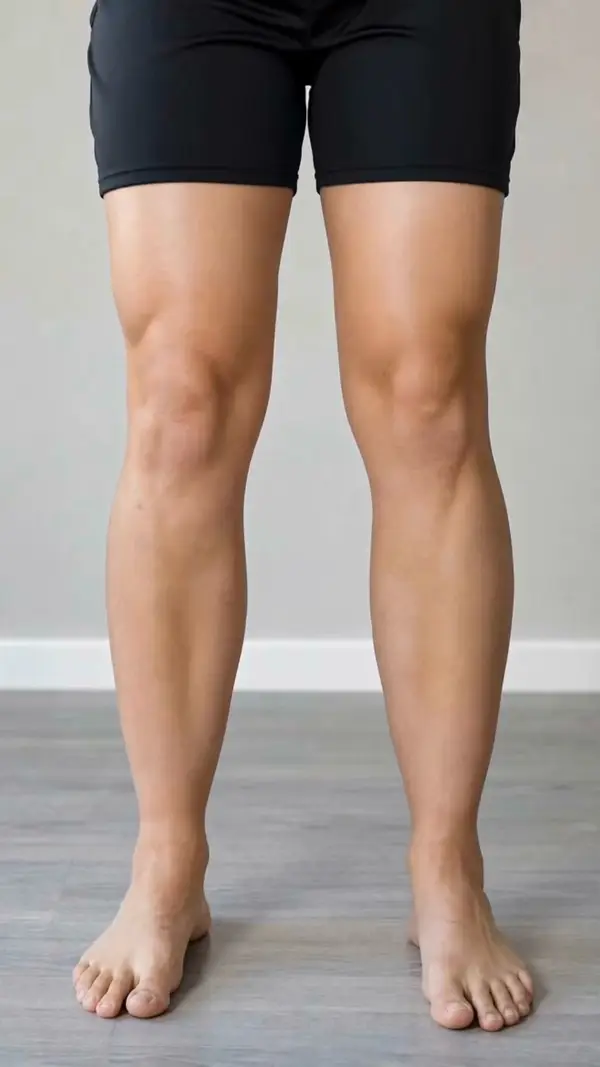
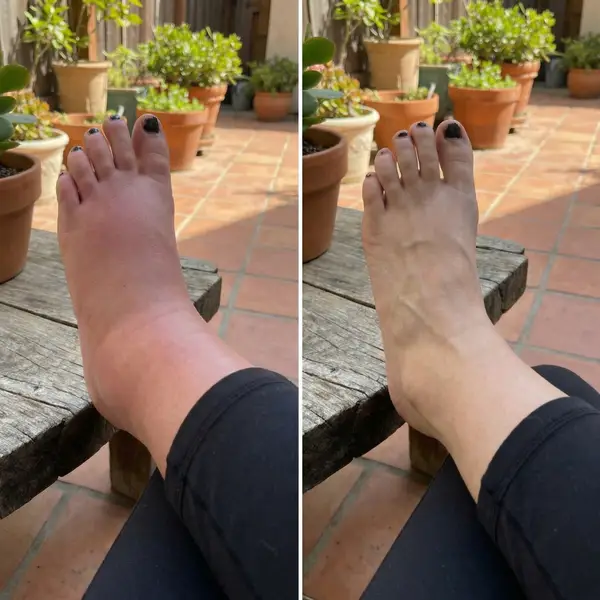
“Finally, Relief for Heavy, Aching Legs
This is going to p*ss off every compression brand in America. She has fitted these garments for 18 years and she is done being quiet. Her name is Grace. She is a lymphedema therapist in the Midwest and she has measured, ordered and adjusted more compression than most doctors will see in a career. She asked us not to use her clinic's name, which tells you something on its own. What she wanted said is this. Most of what is sold to women with lipedema is not a bad product. It is a correct product sold without the one instruction that makes it work, by companies that know the instruction and leave it off the box because it is inconvenient. Here is the instruction. Pressure shifts fluid only when it is strongest at the ankle and weakens as it climbs the leg. That is it. That is the whole thing. A gradient is a direction, and a direction is the only reason fluid travels anywhere. Pressure that is the same from ankle to thigh is not a treatment. It is a hold. It feels firm and supportive and it keeps the fluid precisely where it already was. Grace says you can audit everything you own in ten seconds a piece. Pinch the fabric at the ankle. Pinch it at the thigh. Same, or different. Then she walked us through what that audit usually finds, and this is the part the industry does not enjoy. The knee-high compression sock is graduated and then it stops at the knee, which is halfway along the route the fluid has to travel. The band at the top sits across the exact place it needs to pass. Women over fifty are sold these by the millions for swollen legs. The shaping legging in the shop window is even from waist to ankle. It is engineered to change an outline under a dress for one evening. It is not engineered to move anything, and it will roll at the thigh and cut a groove by lunchtime. The flat-knit garment from the clinic is correct. Grace prescribes it. She also knows what happens to it, because her patients tell her. Twenty minutes to get on. Two hands. Sometimes a husband. Hot. Thick. Beige. Off by lunch in summer and not on at all between May and September in a warm state. And that is where she gets angry. Because a garment that is perfect for two hours a day is a garment that is perfect for two hours a day. The fluid returns within about an hour of taking it off. So a woman doing everything she was told, spending real money, is getting two hours of correct pressure against twenty two hours of nothing, and then she is written down as a compliant patient whose legs did not respond. They did respond. Nobody gave them the hours. Grace says the number she cares about is not millimetres of mercury. It is hours on the leg. Twelve beats two, every single time, even if the two is technically stronger. So she built a list. Four jobs, and a garment has to do all four, because three out of four is not most of a result. It is no result. Graduated, firmest at the ankle and easing as it rises. Without that, the other three do not matter. Full leg, with no band cutting across the knee for the fluid to stack behind. Breathable, so it does not itch or overheat, because comfort is not a luxury here. Comfort is what buys the hours. Opaque, so it can be worn out of the house to work and the shops, because hours only exist if the garment leaves the bedroom. She has been reading that list to patients for years and watching them come back with something that fails at least one of the four. The reason she agreed to talk to us is that one of her patients turned up last spring wearing a single pair that did all four, and Grace could not fault it. It is a Japanese 4D graduated knit called Sira Sculpt. The extra D is direction, gripping hardest at the ankle and loosening the whole way up. Fifteen to twenty one millimetres of mercury, which is comfort grade rather than prescription. Ankle to waist, no knee band. Breathable. Fully opaque. Grace did her own pinch test in the clinic before she said a word about it to anybody. Ankle and thigh were different. What she now tells women to watch for is deliberately unglamorous. Day one, you go to the bathroom more. That is fluid that left the leg, went back into circulation and got cleared by your kidneys. It is the only honest evidence you get inside twenty four hours, and almost every woman reports it before she reports anything else. Day four or so, the heaviness that usually lands at four in the afternoon lands later, or lands smaller. End of week one, there is no ring printed above your ankle when you undress. Week four, you measure one calf at the same point and at the same hour, and you compare it to the number you wrote down on day one. She is blunt about the limits, which is why we trust her. It will not change the shape of your legs. The tissue underneath is not going anywhere and no garment reshapes it. It is not a prescription garment and it does not replace flat-knit. If you have been fitted, keep that for flare days. This is the layer for the other sixteen hours. If you are late stage, she wants you in front of a specialist, not shopping. What she is actually angry about is that none of this is secret. It is in every guideline. It is the first line of treatment. And it is being sold to women one component at a time, by companies that never once mention that a garment you cannot stand to wear is a garment that does nothing. They sell them buy one get one free, which is the only arrangement that makes daily wear possible. One pair on, one in the wash. Sizes small through 5XL. Free size exchange. Ninety days, money back. Grace's actual instruction, word for word. Put them on in the morning like socks. Take them off at night. Do it every day, not just the bad days, and give it a week before you decide anything. We are not associated with her clinic and we are not a medical service. We publish what the women in these groups wish someone had told them a decade earlier. https://feedtested.com/5-reasons-women-with-lipedema-choose-4d-compression-leggings/
Loading the ad's image