Advertiser

Southern Ready Families

tryzenlivo.comMeta Ad Library

4
Running ads
none new in 30 days
Sep 2026
Advertising since
longest ad 2 months
—
Reach
running ads, summed
0% video
Formats
0 video · 2 image
3
Products advertised
1 shop

If you have a hurricane plan, please read this 👆

I spent thirty-six years as a CPA, and when Hurricane Beryl hit Houston, I had the best-prepared house on my street. I had a spreadsheet. Seven tabs. Two hundred and fourteen line items. Fourteen days of water for six people, a generator, fifteen gallons of fuel, cash in small bills, and a laminated copy taped inside the pantry door. On the fourth night of Beryl, my eight-year-old grandsons ate dinner at the house next door, cooked by a thirty-two-year-old refinery worker who told me with a straight face that he had never made a plan for anything in his life. What he had on his kitchen counter was the one thing my two hundred and fourteen lines had missed. I went home that night and did what I've done my whole career after something goes wrong. I ran an audit. What I found was sitting in one cell of my spreadsheet, and I'd bet my license it's sitting in yours too. My name is Gary. I'm sixty-eight. I live outside Conroe, north of Houston, with my wife Carol. We've been married forty-one years. I was a CPA for thirty-six years. Small businesses, mostly. Audits, taxes, cleanup when somebody's books got away from them. I retired three years ago. I'm telling you that so you understand what kind of man I am. I reconcile my checkbook to the penny. I have a spreadsheet for our vacations. I have a spreadsheet for the spreadsheet. And after Hurricane Harvey in 2017, I built a spreadsheet for storms. I called it the Household Emergency Plan. Carol called it "Gary's Bible." It had seven tabs. Water. One gallon per person per day, fourteen days, for up to six people, because our daughter and her twin boys stay with us most of the summer. Eighty-four gallons. Rotated every March. Logged. Food. Fourteen days. Canned, dry, boxed. Every can with its expiration date in column F, conditionally formatted to turn yellow at ninety days and red at thirty. Power. One 7,500-watt portable generator, serviced every spring. Four five-gallon fuel cans, stabilized, rotated. Extension cords, labeled by length. Medical. Prescriptions, first aid kit, Carol's blood pressure cuff with spare batteries. Communications. Battery radio. Two power banks. Phone numbers printed, because phones die. Cash. Small bills, in a fireproof box. Contacts and checklists. Who to call. What to do at seventy-two hours out, forty-eight, twenty-four. I printed it every June. Laminated the summary page and taped it inside the pantry door. My neighbors used to tease me about it. Then every hurricane season, three or four of them would knock on my door and ask if they could see "the list." I'm not bragging. I'm telling you how sure I was. Then came Beryl. Monday, July 8th, 2024. Beryl came ashore early that morning as a Category 1, and by the time it got up to us it was mostly a long, mean windstorm. Trees down everywhere. Lines down everywhere. More than two million homes and businesses lost power across the Houston area. On the second day, more than a million of them were still dark. In July. In Houston. With a heat index over a hundred. Our power went out at 6:40 that morning. I'll be honest with you. Part of me was ready for it. Part of me had been waiting seven years to use the plan. I started the generator at seven. Plugged in the refrigerator, the chest freezer, two box fans, and a charging strip. Exactly per tab three. Carol made coffee in the microwave, plugged into the generator by extension cord. Exactly per tab three, row nineteen: "Cooking: microwave (generator)." The twins thought it was an adventure. We played cards by the window. I felt, I'm a little embarrassed to say, kind of proud. Day two was hot. Really hot. The box fans ran around the clock, which meant the generator ran around the clock. Our water system put out a boil-water notice that afternoon. When the power goes out at a water plant, pressure can drop in the lines, and they tell you to boil water before you drink it or cook with it, because whatever's in the ground around the pipes can get pulled in. Fine. Tab one. I had eighty-four gallons of bottled water. We didn't need to boil anything. I checked that box with real satisfaction. Day three is where it started to go sideways. I'd planned fifteen gallons of fuel for three days of generator time, at my estimated burn rate. But my estimate assumed we'd run it twelve hours a day. Nobody runs a generator twelve hours a day in a Houston July with two eight-year-olds in the house. We ran it twenty-four. By the afternoon of day three, I was down to my last can. No problem, I thought. I'll go fill up. I drove to four gas stations. Two were dark, because a gas pump needs electricity to pump. One had a line down the feeder road that I estimated, standing there with my clipboard brain going, at somewhere around two and a half hours, in hundred-degree heat. One had a hand-written sign taped to the pump: OUT. I came home with no gas. So I made a decision. I'd ration. Generator for the refrigerator and freezer only, a few hours on and a few hours off. Fans off. No microwave. That's when I looked at my laminated sheet on the pantry door, at row nineteen. "Cooking: microwave (generator)." And I realized that every hot meal in my entire plan depended on one machine and fifteen gallons of gasoline. We have an electric range. Most houses out here do. It's hardwired, 240 volts. You can't plug it into an extension cord from a portable generator. I knew that. It's why row nineteen said microwave. But when the gasoline ran low, there was no row twenty. Day three dinner was cold. Day four breakfast was cold. Cereal with shelf-stable milk. Peanut butter on crackers. Cold cans of chili, because we had fourteen days of food in tab two, and almost all of it was meant to be heated. Fourteen days of food. Color-coded. Expiration dates in column F. And we were eating it cold. The twins stopped thinking it was an adventure on day four. Caleb asked me at lunch, "Papa, when can we have real food again?" I'm sixty-eight years old. I've audited companies with forty million dollars in revenue. And I didn't have an answer for an eight-year-old. That evening, around six, there was a knock on our door. It was Danny from next door. Danny Tran is thirty-two. He works rotating shifts at a plant over in Baytown. His wife Mai teaches second grade. They've got a little girl, about four. Nice young family. Danny mows his lawn on no particular schedule. I'll be honest with you: I had him down as the least prepared man on our street. "Hey, Mr. Gary," he said. "Mai made way too much rice. You guys want some? The boys can come over. We've got noodles too." I could smell it from my porch. Hot rice. I said thank you, we're okay, we've got plenty. Because I'm a stubborn old accountant and I had two hundred and fourteen line items. Caleb and Connor were standing right behind me. Carol put her hand on my shoulder and said, "Gary." So we went over. Their house was dark like ours. No generator. I knew that, because I'd been half-listening for one for three days and hadn't heard it. But on their kitchen counter, sitting on a sheet pan, was a little round metal stove about the size of a coffee mug, with some copper on it and a small pot on top. And there was steam coming off the pot. Mai was making a second pot of instant noodles. Danny's little girl was at the table eating rice with a spoon. My grandsons sat down, and Mai put a bowl of hot rice and noodles in front of each of them, and they ate like they hadn't eaten in a week. Which, in a way, they hadn't. I sat at Danny's kitchen table, the man with the plan, eating hot rice cooked by the man without one. "Danny," I said. "What is that thing?" He laughed. "It's an alcohol stove. Paint alcohol. My mom always had one. Every Vietnamese family I grew up with had a little burner like this, for hot pot, for when the power went out. In Vietnam the power went out all the time. My mom wouldn't let me move out of the house without one." "You don't have a generator." "No sir." "Fuel?" "Got two quarts of denatured alcohol under the sink. Bought them at the hardware store, paint aisle, a year ago. Still have most of one." "What did you do on day one? Day two?" "Same thing," he said. "Coffee in the morning, rice at night. Mai made soup yesterday." Three days. Hot coffee. Hot rice. Hot soup. And I'd been eating cold chili out of the can with fourteen gallons of gasoline-shaped hope sitting empty in my garage. I asked him how it worked. "There's a copper tube in it," he said. "The flame heats the copper, the copper heats the alcohol, the alcohol turns to vapor and burns hot. That's why it boils so fast for something so small. Pot of water's about eight minutes. A fill goes about twenty minutes. That's a pot of rice. Fill it again, do the noodles." "You've been cooking on that inside?" "Right here on the counter. Every night." He shrugged. "No noise. No smoke. No smell. It's quieter than your generator, Mr. Gary." It was. I hadn't noticed until he said it. Danny's kitchen was quiet. Mine had been roaring for three days. Our power came back on day six. Some of our friends across Houston waited more than a week. The day after, I sat down at my desk, opened the Household Emergency Plan, and did what I've done my whole career when something goes wrong. I ran an audit. In accounting, there's a concept called a single point of failure. It's the one place in a system where, if that one thing breaks, everything downstream breaks with it. The one employee who signs every check. The one account every payment runs through. Find the single point of failure, and you've found where the fraud is, or where the disaster is going to come from. I went through my two hundred and fourteen lines, one by one, and for every line I asked: what does this depend on? Light. Flashlights and batteries. Independent. Fine. Water. Eighty-four gallons, stored. Independent. Fine. Communications. Battery radio, power banks. Fine for a week. Cooling. Generator. Refrigeration. Generator. Cooking. Generator. And the generator depended on one thing: gasoline. Which depended on gas stations. Which depended on the grid. Every hot meal in my plan, every single one, ran through one point of failure. I had built a seven-tab emergency plan for when the grid goes down, and the cooking line depended on the grid. Any auditor worth his license would have flagged that in ten minutes. It took me seven years and a hurricane. Then I did what I always do. I went looking for more numbers. I wanted to know whether Beryl was a once-in-a-lifetime thing, or whether I'd need row twenty again. I found a report from the U.S. Department of Energy, July of last year. It said that if power plants keep closing on the current schedule while demand keeps climbing, the risk of outages in this country could be a hundred times higher by 2030. Their models showed the hours people spend without power could go from a handful a year to more than eight hundred. Eight hundred hours is thirty-three days. Then I found the North American Electric Reliability Corporation's winter assessment. That's the grid's own watchdog. They flagged Texas specifically. All the new data centers and big industrial plants coming online here are pushing demand up faster than new power is being added. A big cold snap could leave the state short. Texas. My state. The same grid that failed in the 2021 freeze. And then I remembered Winter Storm Fern last January. The second-deadliest winter storm in American history. At least a hundred and seventy-two people died, most of them in the days after. I'm a numbers man. I don't panic. But I know a trend line when I see one. So I did the analysis I'd have done for any client. Options. Cost. Dependencies. Option one: a bigger generator, or a whole-house standby unit. Ten to fifteen thousand dollars installed. Still depends on fuel. If it's natural gas, still depends on the gas supply, which during the 2021 freeze was exactly what failed. Option two: more gasoline storage. Fuel goes stale. It's dangerous to keep a lot of it. And it still runs out. I proved that. Option three: a propane camp stove. I asked around. Every storm, those little green canisters vanish from the shelves two days before landfall. You can't buy them when you need them. Option four: what Danny had. No fuel that goes stale. Denatured alcohol keeps for years in a sealed container, and it's in the paint aisle of every hardware store in America. Nobody panic-buys it. Nothing to plug in. Nothing to pull-start. No single point of failure, because it doesn't depend on anything except a match. I asked Danny what brand his was. "Zenlivo," he said. "My mom sent it when Lily was born. She said, 'Now you have a daughter. You need your own fire.'" I looked it up. The stove, a pot stand, an anti-slip pad, a linen carry bag and a fuel bottle. Three and a half ounces. That's about what it costs me to fill my four gas cans one time. One time. And that fill lasted two and a half days. I opened my spreadsheet. Tab three, row twenty. New line. "Cooking, independent of grid and generator: Zenlivo alcohol stove x 3. Denatured alcohol, 2 qt. Location: kitchen drawer." Then I ordered three. One for our kitchen. One for our daughter Megan in Katy, the twins' mom. All-electric house. No generator. She'd spent Beryl at her in-laws'. One for our son Brian in Austin, because after 2021, nobody in Austin should be without one. They came that Friday. All packed in their little linen bags, neat as a gift. Saturday morning I drove to the hardware store, walked to the paint aisle, and bought two quarts of denatured alcohol. The young man at the register asked if I was refinishing something. "Yes," I said. "My hurricane plan." Then I went home and tested it, because you don't put anything in an audited plan that you haven't tested. Kitchen counter. A little alcohol. A match. A soft blue flame. No smoke. No smell. No noise. I set a pot of water on it, started my stopwatch out of habit, and leaned on the counter to wait. Boiling a little before the eight-minute mark. I made Carol a cup of coffee, and I made myself one, and we drank them standing in our kitchen with the power on, looking at that little thing. "Forty-one years," Carol said. "And this is the first time I've seen you buy something without a three-week analysis." "I did the analysis," I said. "It took me seven years." Megan called me a week after I mailed hers. "Dad. I tried it. I made the boys mac and cheese on it in about fifteen minutes." "How'd you know how to use it?" "Dad. You pour, you light, you cook. It's not complicated." That might be the nicest thing anybody has ever said about a line item of mine. Then in June of this year, a line of thunderstorms came through and took our street down for a night. The twins were staying with us again. I didn't even start the generator. Didn't need to. The fridge would be fine for a night. At six-thirty the next morning, the house dark and quiet, I got the little stove out of the kitchen drawer, set it on the counter, and made pancakes. Well. I boiled water for coffee and oatmeal, and Carol made the pancakes on a skillet over it while I supervised. She'd want me to tell you that. Caleb came down the stairs, smelled the coffee, saw the oatmeal, and stopped. "Papa. Is the power back?" "No sir." "Then how'd you make it hot?" I showed him. He looked at the little stove for a long minute, the way you look at a magic trick. "Is that the thing Mr. Danny had?" "That's the thing Mr. Danny had." He thought about that. "So now you have a plan, Papa." Eight years old. He'd seen me with my laminated sheets and my spreadsheet his whole life. And he'd figured out, the night we ate at Danny's, that none of it had counted. At seven, I walked next door with a cup of coffee and knocked. Danny opened the door in his work clothes, about to leave for a shift. He looked at the coffee. He looked at me. "Mr. Gary. Power's out." "I know." He took the cup and grinned. "Look at you," he said. "You've got your own fire now." I'm not writing this because I think the sky is falling. I'm writing this because I was the most prepared man on my street, and I was wrong about the one thing that mattered most to two eight-year-old boys. If you have a plan, whether it's a spreadsheet, a binder, a list on the fridge or just a closet full of cases and cans, do one thing for me tonight. Find the line that says how you'll cook. Then ask what that line depends on. If the answer is the grid, a generator, or a tank of fuel you'll have to go find in the middle of a storm, you have a single point of failure. And it's sitting right in the middle of your plan. Mine was row nineteen. It's row twenty now. 👉 tryzenlivo.com/products/mini-alcohol-stove UPDATE, October 2026: Since I started writing this, a few things have happened that I've added to my notes. On September 20th, storm outages knocked a water plant in Bloomington, Indiana, below normal production, and by midnight the whole county was under a boil-water advisory. This week, a power outage at one water filtration plant in Maryland had the utility asking 1.9 million people to use water only when they absolutely had to. In June, a storm took out power at the main water plant in Bossier Parish, Louisiana. Pressure dropped. Boil advisory for every customer. Not one of those was a hurricane. They were ordinary storms on ordinary weeks. And every one of them put somebody's cooking line to the test. 👉 tryzenlivo.com/products/mini-alcohol-stove P.S. I now teach a little "storm plan audit" at our church every May. The first thing I have everybody do is find their cooking line and write down what it depends on. Last May, fourteen of eighteen people wrote "electricity" or "generator." The other four wrote "I don't have a cooking line." Every one of them has a row twenty now. P.P.S. What comes in the box: the stove, a pot stand, an anti-slip pad, a linen carry bag and a fuel bottle. The manufacturer lists it at just 3.51 ounces, with about 20 minutes of cooking per fill and 500 ml of water boiled in about 8 minutes. It runs on denatured alcohol, the paint alcohol on the shelf of every hardware store in America, and it keeps for years in a sealed container. P.P.P.S. Nothing to plug in. Nothing to pull-start. Nothing to fuel up at a gas station. No tank to check. Pour, light, cook. My daughter called it "not complicated." From an auditor, there is no higher praise. P.P.P.P.S. The Department of Energy's own model says the hours Americans spend without power could go from a handful a year to more than eight hundred if nothing changes. That's thirty-three days. My generator's fuel lasted two and a half. If your plan is a good one, and I bet it is, it deserves a cooking line that doesn't run through the same single point of failure as everything else. 👉 tryzenlivo.com/products/mini-alcohol-stove

Loading the ad's image
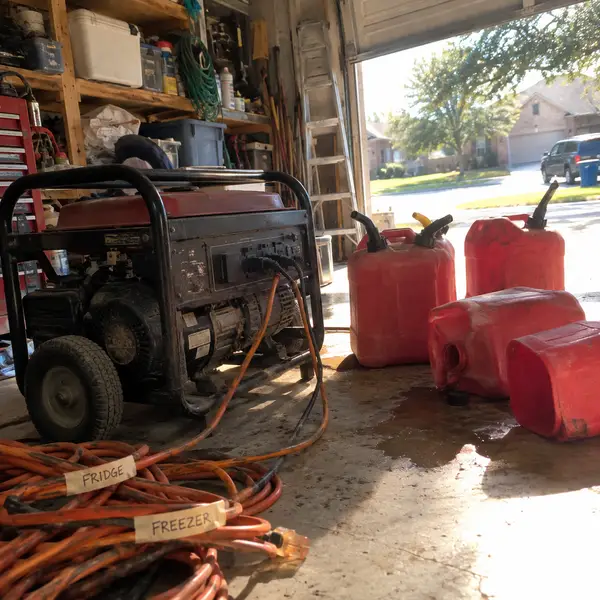
Southern Ready Families — If you have a hurricane plan, please read this 👆
Promising

If you're a parent or grandparent, please read this 👆

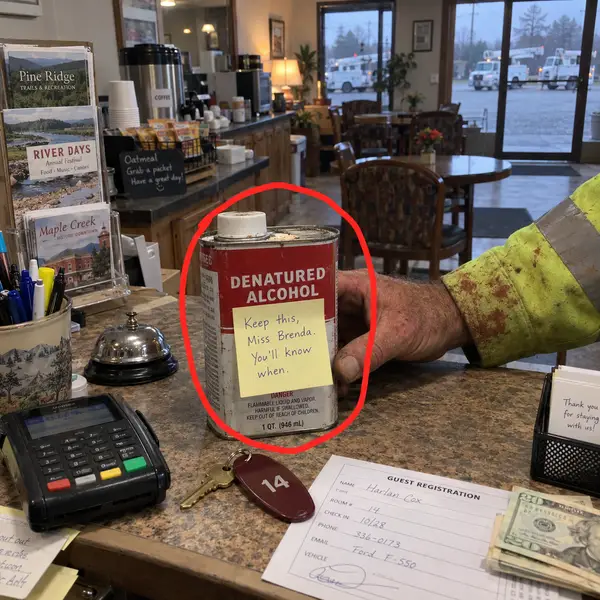
For three years, every time a storm crew checked out of my motel, the foreman left one quart of paint alcohol on my front desk with a yellow sticky note that said, "Keep this, Miss Brenda. You'll know when." He paid cash. He never painted a thing. I put the cans under the counter and never opened one. On the fourth night of Winter Storm Fern, with my motel dark, fourteen stranded people wrapped in blankets in my lobby, a baby who needed a warm bottle and my eighty-six-year-old mother asking me for a cup of coffee, I finally found out what he meant. He walked in out of the ice at 9:40 that night, looked at the cans, and told me something about storms that I have repeated to every guest who has stood at my desk since. Then he pulled up a report from the U.S. Department of Energy on his phone and showed me why he'd been leaving those cans in motels all over the South. I've read it myself. It's real. And I think a lot of you are standing where I was standing. I'm Brenda. I'm sixty-three. My husband Wade and I have owned a twenty-two-room motel off the highway in a little town in north Mississippi for thirty-one years. It's not fancy. Two stories, outside doors, an ice machine that hums like a tractor, and a breakfast counter in the lobby with a waffle maker, a coffee urn and a basket of instant oatmeal. Wade does the maintenance. I do the desk, the books and everything else. Our daughter Amy lives fifteen minutes away with her husband and our two grandbabies. My mother, Jean, is eighty-six. After her knee surgery three years ago she moved into Room 1, right next to the office, so I could keep an eye on her. She says she's the only permanent guest who's never paid a bill, and she's right. I'm telling you all that so you know who I am. I'm not one of those people with a bunker. I don't watch those videos. I make up rooms and answer the phone and know which truckers like the end unit. But thirty-one years at a front desk teaches you something. You learn people by what they leave behind. Truckers leave energy drink cans and a TV on the weather channel. Families leave Cheerios in the carpet and one sock. Wedding parties leave hairspray and bobby pins. Contractors leave receipts and mud. Housekeeping tells me everything, and after a while you can tell who stayed in a room before you ever see the register. And then there are the storm crews. If you live where we live, you know them. When a hurricane or an ice storm takes the power down, the utility companies send line crews from all over the country. They drive toward the storm when everybody else is driving away from it. They need somewhere to sleep, and a lot of the time, it's places like mine. They're the best guests I've ever had. Polite. Tired. In bed by nine, gone by five. They leave red clay in the tub and wet boots by the door and a tip for housekeeping every single time. And one of them left paint alcohol. The first time was three years ago, after a hurricane down on the coast sent a lot of crews up our way. A crew of six took the whole back row for nine nights. The foreman checked them in. Gray beard. Hands like oven mitts. Paid cash for all six rooms, counted out on my counter. He asked for Room 14. Said he liked being by the stairs. The morning they left, he came to the desk to drop the keys. And next to the keys he set down a quart can of denatured alcohol. The kind they sell in the paint aisle, next to the mineral spirits. There was a yellow sticky note on the can. "Keep this, Miss Brenda. You'll know when." I laughed and said, "Are you leaving me a paint job?" He smiled and said, "No ma'am." And he walked out to his truck. I looked in Room 14 when housekeeping was done. There was no paint anywhere. No brushes. No furniture he'd been working on. Nothing. The man had been working sixteen-hour days on power poles. He had no business with paint alcohol. I put the can under the front desk, behind the spare key cards, and forgot about it. The next fall, a tropical storm came through, and the same crew came back. Same foreman. Same cash. Same Room 14. The morning they left, same thing. The keys, and a quart of denatured alcohol, and a yellow sticky note. "Keep this. You'll know when." Now I had two. The year after that, a line of storms tore through Arkansas and Mississippi and they were back for a week. On the last morning, he set down a third quart, and this time he didn't leave right away. "You still got the other two?" "Under the counter." "Good," he said. "Don't move them." And he left. I'll be honest with you. I wondered. Wade wondered. Our housekeeper Lupe had a theory that he was a little bit touched in the head, but in a nice way. I didn't ask. In this business you don't ask. People's business is people's business, and a man who pays cash and leaves a tip for housekeeping can leave whatever he wants on my desk. Three quarts of paint alcohol under my counter. Three sticky notes. And no idea why. Then Fern came. I want to tell you about Fern, because a lot of you were in it too. It wasn't wind. It was ice. It started on a Saturday, the twenty-fourth of January, with freezing rain that didn't stop. By that night every pine tree behind the motel was bowed over, and you could hear them going down in the dark, one after another, like rifle shots. The power went out at 11:20 Saturday night. The whole town. The whole county. By Sunday morning the highway was a sheet of glass, and people started pulling off. A young couple from Memphis with a four-month-old. A retired trucker named Otis who'd been trying to get home to Jackson. A family of five whose house up the road had lost power and was already getting cold. A nurse who couldn't get to her hospital. By Sunday afternoon I had fourteen people in my motel, and every one of them was in my lobby, because the lobby has the big windows and the most daylight, and nobody wanted to sit alone in a dark room. This is what I do. I take care of people who come in off the road. Thirty-one years. Hurricanes, tornadoes, a bus breakdown once with forty-two church kids. I always have something. So I went to make coffee. The coffee urn on the breakfast counter is electric. So is the waffle maker. So is the microwave. So is the hot water dispenser for the oatmeal. Fine. I went back to our apartment behind the office to use my own stove. My stove is gas. Wade put it in four years ago, and I picked gas on purpose. I'd told people more than once, "If the power goes out, I can still cook for the whole motel." I turned the knob. Nothing. No click. No hiss. No smell of gas. I struck a kitchen match and held it right to the burner and turned the knob again. Nothing came out. It took Wade a day to figure out why. Our range is the newer kind. It needs electricity to open the gas valve and let the gas through to the burner. No power, no valve. No valve, no gas. I walked back out to the lobby. Fourteen people looked up at me. And behind me, on the breakfast counter, I had three hundred packets of instant oatmeal. Two cases of instant coffee. A box of hot chocolate packets. Cup-of-noodles in the vending area. Grits in my own pantry. Enough breakfast to feed a church bus for a week. Every single bit of it needed hot water. I couldn't make one cup. That first day we ate what was in the vending machine. Wade broke it open with a screwdriver and I wrote everybody's name on a legal pad so I'd remember who took what, as if anybody cared. Cheese crackers. Honey buns. Peanuts. Otis the trucker had a bag of beef jerky that he passed around the lobby like it was communion. The baby was the one that kept me up. The young mother, Kayla, had formula powder and a case of bottled water. But that little boy would only take his bottle warm. Cold, he'd scream and push it away. So she held the bottle inside her coat, against her skin, for half an hour at a time to take the chill off. All night long. Every three hours. I sat at the front desk under a quilt with a flashlight and listened to that baby cry and thought, I have a building full of food and I cannot warm a baby's bottle. On the second morning, my mother came out of Room 1 in her housecoat and her winter coat on top of it, sat down at the breakfast counter, and said what she has said every morning for the last three years. "Morning, Brenda. Is the coffee on?" My mother has had a cup of coffee at six-thirty every morning since she was fifteen years old. "No, Mama. The power's out." She nodded. "Well, that's alright." Then she sat there. At the empty breakfast counter, with her hands folded, next to a coffee urn that didn't work, while fourteen strangers ate cold honey buns around her. She didn't complain once. That was the worst part. On the third day, the town sent out a boil-water notice. The pressure had dropped in the lines when the pumps lost power. When that happens they tell you to boil your water before you drink it or cook with it or mix a baby's formula with it. Boil your water. I read that notice out loud in my lobby by flashlight, and Otis the trucker laughed. Not a mean laugh. Just tired. "With what, Miss Brenda?" I didn't have an answer. That night was the coldest. It was about forty degrees in the lobby. The family of five had all five kids in one king bed in Room 6 under every blanket I own. The nurse was helping Kayla with the baby. Wade had gone out three times to check on the neighbors on our road. My mother was asleep in her chair in the lobby, because she said it was too lonesome in Room 1. And I sat at the front desk thinking about thirty-one years of always having something. At 9:40 on the fourth night, headlights came across the parking lot. Three white bucket trucks. Then three more. The lobby door opened and the cold came in and a man stomped the ice off his boots on my mat. Gray beard. Hands like oven mitts. He looked around my lobby. Fourteen people in blankets. A baby. An old woman asleep in a chair. Candles on the breakfast counter. A broken-open vending machine. Then he looked at me. "Evening, Miss Brenda," Curtis said. "You still got my cans?" I couldn't say anything. I just reached under the counter and set them out on the desk. Three quarts. Three yellow sticky notes. He nodded. "Now you know when," he said. Then he went back out to his truck. When he came back in, he had a little cloth bag in his hand. The kind of linen drawstring bag you'd put a nice bar of soap in. He walked right past the front desk to my breakfast counter, moved the dead coffee urn out of the way, set the bag down, and took out a stove. I'd been picturing a camp stove. It wasn't. It was shorter than a can of soup. Round. Metal, with a band of copper around it. It sat in his big hand with room to spare. There was a little metal stand that went over it to hold a pot, and a small bottle for the fuel. "That's it?" I said. "That's it." He unscrewed one of my quarts, filled the little bottle, poured a little into the stove, struck a match and lit it. A soft blue flame came up. No smoke. No smell. And quiet. That's what I remember most. Fourteen people in that lobby, and for a second nobody said a word, because we'd all been listening to trees break for four days, and this little thing on my breakfast counter didn't make a sound. He took the steel pitcher off the coffee urn, filled it halfway with bottled water, and set it on the stand. Then he turned around and said to the whole lobby, "Give it about eight minutes." Nobody moved. Otis got up out of his chair and came and stood at the counter like he was watching a ball game. While we waited, I finally asked. "Curtis. Three years. Why paint alcohol? Why my desk?" He leaned on the counter. "I've been a lineman twenty-eight years," he said. "Foreman for eleven. When a big one hits, they send us. Florida. The Carolinas. Texas. Louisiana. Up here. We go toward it." "I know." "And you know where we sleep?" "Places like mine." "Places like yours. And I'll tell you what I learned in about my third year. When the storm comes back through, the motel I stayed at is dark too. Every time. And the lobby is full of people just like this." He nodded at the room. "Folks who pulled off the road. Folks whose houses got cold. Old people. Babies. And the lady at the desk is standing there with a building full of food and no way to cook a bite of it." I didn't say anything. He'd just described my last four days. "I can't haul a stove to every motel in the South," he said. "But I can leave fuel where I know I'll be back. Nobody bothers a can of paint alcohol. It sits under the counter for years and it's just as good as the day you bought it. So when I come back through in the bad one, the fuel's already there." Then he said the thing I have thought about every day since. "Everybody stocks food, Miss Brenda. Nobody stocks fire." The pitcher started to rumble. Then it was boiling. He poured the first cup himself, stirred in a spoon of my instant coffee, and carried it across the lobby to the chair where my mother was asleep. He touched her shoulder. "Ma'am. Your coffee." My mother opened her eyes and saw the steam coming off the cup, and she took it in both hands, and she said, "Oh. Oh, thank you, son." I had to go stand in the office for a minute. When I came back out, Curtis was filling the pitcher again. The second one went into Kayla's baby bottle. She held the bottle against her wrist the way mothers do, and then she gave it to her son, and he took the whole thing and fell asleep on her shoulder for the first time in four days. The third pitcher, I made oatmeal. Fourteen packets in fourteen paper bowls. Brown sugar and cinnamon, apple and cinnamon, maple. The five kids from Room 6 came down in their blankets and ate theirs sitting on the floor in front of the breakfast counter. Then hot chocolate. Then cup-of-noodles for Otis and the nurse. Then coffee for everybody. Curtis just kept filling that little stove and boiling that pitcher. About twenty minutes on a fill, he said. A pot of water, a pot of oatmeal, a pot of soup. Fill it again, cook the next thing. I asked him how something that small could do it. "Copper tube inside," he said. "The flame heats the copper. The copper heats the alcohol. The alcohol turns to vapor and burns hot. That's why it puts out so much heat for its size. Hikers have cooked on little alcohol stoves forever. This one just fits in your hand." Around midnight, the lobby was warm. Not warm from heat. Warm from people. Fourteen people who had eaten something hot for the first time in four days, talking to each other, laughing a little. Otis was telling Curtis's crew about driving a truck through the 1994 ice storm. The baby was asleep. My mother was on her second cup of coffee and had told the nurse her entire life story. I sat down next to Curtis at the breakfast counter. "I've got a gas stove," I said. "Back in our apartment. I picked gas so I could cook if the power went out." "Let me guess. It needs power to open the valve." "How did you know?" "Half the people who walk up to my truck in a storm tell me the same thing," he said. "When we're out on a job, folks come out of their houses. First thing, they ask when the power's coming back. Everybody asks that. Second thing they ask is if we've got any way to heat water. A lady with a baby. An old man who needs something warm to take his pills. Somebody who just wants a cup of coffee. You'd be surprised how many people walk up to a stranger in a hard hat and ask for hot water." I wasn't surprised. I'd had fourteen of them in my lobby for four days. "Most people in an outage don't have a food problem," he said. "They have a fire problem." Then he took out his phone. "Let me show you something. This isn't me talking." It was a report from the U.S. Department of Energy. July of last year. He scrolled to a line and turned the phone around. It said that if power plants keep closing on schedule while demand keeps climbing, the risk of outages in this country could be a hundred times higher by 2030. "A hundred times," he said. "Look at the next part." The next part said that right now, most people spend just a handful of hours a year without power. Their models showed it could go to more than eight hundred hours a year. I've done the books at this motel for thirty-one years. I did that math sitting right there at my breakfast counter. Eight hundred hours is thirty-three days. A month. A month a year with no stove. A month a year with a lobby full of people and no way to feed them. "Why's it getting worse?" I asked. "Demand. Data centers, mostly. Everything's plugging in, and they're building it faster than anybody's building power plants. The grid's own watchdog put out its winter report and said it plain. A big cold snap over a wide area, and some regions could come up short. Texas was on that list. So were parts of the Southeast." He looked around the lobby. "That's here," he said. Then, quieter: "You know how many people Fern's killed so far?" I didn't. "Hundred and seventy-some. Second-deadliest winter storm in this country's history, after the Texas freeze. And it's not the trees that get most of them. It's the days after. The cold. Going days with nothing hot. Old folks by themselves." I looked at my mother. Everybody stocks food. Nobody stocks fire. The next morning, before his crew went out, I asked him the questions Wade would have asked. "What about a generator?" "Can you lift one?" "No." "Can you pull-start one in the ice?" "Probably not." "Where are you getting gas? You see a gas station open between here and the interstate?" I hadn't. Every one we passed was dark. The pumps need electricity too. "What about a grill? Wade's got a propane grill out back." "Go look at it." I didn't have to. It had been under an inch of ice since Saturday. "Camping stove, then. With the little green bottles." He almost laughed. "Miss Brenda, I've been in hardware stores in six states the day before a storm. You know what goes first? Those little green bottles. Then the camp stoves. Then the batteries. People buy them by the armload, two days before, and the truck with more can't get there before the storm does." "And the paint alcohol?" "Sitting right there in the paint aisle," he said. "Same as any other week. Nobody's ever fought anybody over paint alcohol. That's why I use it. I can buy it in any hardware store in any town they send me to. Before the storm, after the storm." He picked up his hard hat. "Like I said. Everybody stocks food. Nobody stocks fire." I asked him what the stove was called. "Zenlivo," he said. "My wife orders them. One in my truck. One at our house. One at her mother's. Her mother's about your mama's age. Lives alone. Won't touch a generator. But she'll use that, because there's nothing to pull and nothing to plug in. Pour, light, cook." Then he left the stove on my breakfast counter. "I'll pick it up when we pull out," he said. "Y'all need it more than I do this week." His crew worked our county for six days. Every morning at five, Curtis came through the lobby, and every morning I had a pot of coffee going on his little stove, and I handed his whole crew a cup on the way out the door. It's the only thing I've ever been able to give a lineman. Our power came back on the tenth day. Some places in north Mississippi went close to two weeks. Curtis's crew pulled out on the eleventh. He came to the desk with the keys and took his stove back in its little bag. He didn't leave a can that time. He said, "You've still got two and a half." I'd like to tell you I ordered one that night. I didn't. I looked it up. I found it. The stove, the pot stand, an anti-slip pad, the linen bag and a fuel bottle. Runs on the same paint alcohol that had been sitting under my front desk for three years. And I closed the laptop. I'm not proud of why. The ice melted. The power came on. The coffee urn worked. Spring came, and the motel filled up with fishermen and softball teams, and I told myself storms like Fern come once in thirty years. And if one came, well, Curtis would come back through. He always did. That's what I told myself. That a stranger in a bucket truck was my plan. Then August came. A line of thunderstorms came through on a Tuesday evening. Nothing with a name. Lightning hit something down the road, and at 6:15 the whole motel went dark. The power company's map said four hours. Four hours. That's nothing. But it was supper time, and I had a full house. Eleven rooms. And Amy had brought the grandbabies over to swim that afternoon, and they were still there, wet and hungry. And my mother came out of Room 1 and sat down at the breakfast counter, where she always sits now, and said, "Brenda, I'd love a cup of tea while we wait." I got up. I went to the counter. I reached under the front desk. Two and a half quarts of paint alcohol. Three yellow sticky notes. And no stove. Curtis was in Texas. I know, because his crew had been sent to a hurricane down there the week before. He wasn't coming through the door. I stood there with a can of fuel in my hand and nothing to put it in, and my mother waiting for her tea, and my grandbabies asking for macaroni, and I heard Curtis's voice as plain as if he'd been standing at the desk. Everybody stocks food. Nobody stocks fire. I'd stocked the fire. He'd stocked it for me. Three years running. And I still couldn't make my mother a cup of tea. The power came back at ten. My mother never got her tea. She said that was alright. It was not alright. That night I sat in the office after everybody went to bed and did what I do with every decision at this motel. I did the books. The Department of Energy said thirty-three days a year could be coming. I've got twenty-two rooms. On a storm night, every one of them is full, and so is the lobby. That little stove costs less than one night in Room 14. I opened the laptop and ordered three. One for the breakfast counter in the lobby. Right next to the coffee urn, where it belongs. One for my mother's room, in the nightstand drawer by her Bible, so she can make her own tea at six-thirty in the morning no matter what the power company's map says. One for Amy and the grandbabies. They came the next week, each in its own little linen bag, packed so neat you'd think somebody had wrapped them for Christmas. I set one up on the breakfast counter that same afternoon. I took down one of Curtis's cans, peeled off the sticky note and put it in my desk drawer. Then I filled the stove, struck a match and made my mother a cup of tea. With the power on. Just so she'd see it. She watched the whole thing. Then she drank the tea and said, "Well. Now you've got what that nice man had." "Now I've got what that nice man had." I showed her how to do it herself in her room. Pour, light, set the pot on. She did it on the first try and then made a second cup to prove it to me. Amy tried hers at her kitchen counter with the baby on her hip and said, "Mama, that's it? That's the whole thing?" That's the whole thing. And I put a little sign on the breakfast counter that I printed in the office. Guests ask about it every week now. Linemen ask about it. Truckers ask about it. A retired couple from Ohio took a picture of it. It says: EVERYBODY STOCKS FOOD. WE STOCK FIRE. Three weeks ago, in September, a storm went up the Gulf and the crews came through again. Six white bucket trucks pulled into the lot. Six rooms on the back row. Cash on the counter. Curtis asked for Room 14. The next morning he came out at five and stopped dead in the middle of my lobby, because there was a pot of coffee going on the breakfast counter on a little blue flame, and my mother was sitting next to it in her housecoat with her cup. He looked at the stove. He looked at me. "Morning, son," my mother said. "Coffee's on." Curtis laughed out loud. I've never heard him laugh like that. When his crew pulled out a week later, he came to the desk with the keys. And a quart of denatured alcohol. And a yellow sticky note. "Now you know when." That one's in my desk drawer with the other three. I don't know who's reading this. I don't know if you live where the hurricanes come, or where the ice comes, or where the power just goes out on a Tuesday for no reason anybody can tell you. I don't know if you've got a mother who lives with you, or grandbabies who come to swim, or a whole lobby of people who count on you. But I know what I didn't know for three years, with those cans sitting under my desk. You can have two weeks of food in your pantry and a gas line running into your kitchen. You can have a building full of oatmeal and coffee and soup. If your stove needs the power company, you do not have a plan for the day the power goes out. You have a pantry. Everybody stocks food. Nobody stocks fire. Be the one who does. 👉 tryzenlivo.com/products/mini-alcohol-stove UPDATE, October 2026: Since I started writing this, a few things happened that I keep talking about at the desk. On September 20th, storms knocked out power overnight in Bloomington, Indiana, and the water plant couldn't keep up. By midnight the whole county was under a boil-water advisory. Boil your water. With what, if your stove needs the same power the water plant does? Last week, a power outage at one water filtration plant in Maryland had the utility asking 1.9 million people to use water only when they absolutely had to. One plant. One outage. Almost two million people. And in June, it was Bossier Parish, Louisiana. A storm took out the power at the main water plant, the pressure dropped, and every customer was told to boil. None of those were hurricanes. Ordinary storms on ordinary weeks. Curtis says the worst time to stock fire is the day before a storm, when everybody in the hardware store is buying everything at once. Do it on a quiet afternoon in October, with the lights on. 👉 tryzenlivo.com/products/mini-alcohol-stove P.S. Otis the trucker called the motel in March to say thank you. He told me he'd bought one for his truck and one for his wife. He said, "Tell that lineman he fed me better than any truck stop in Mississippi." I told Curtis. Curtis said, "That was all you, Miss Brenda. I just brought the fire." P.P.S. What comes in the box: the stove, a pot stand, an anti-slip pad, a linen carry bag and a fuel bottle. The manufacturer lists it at just 3.51 ounces, with about 20 minutes of cooking per fill and 500 ml of water boiled in about 8 minutes. It runs on denatured alcohol, the paint alcohol on the shelf of every hardware store in America. It'll sit under a counter for years, and it's there the day you need it. P.P.P.S. Nothing to plug in. Nothing to pull-start. Nothing to charge. No tank to check. Pour, light, cook. My mother is eighty-six and did it herself on the first try. Then she made a second cup to prove it. P.P.P.P.S. The Department of Energy's own model says the hours Americans spend without power could go from a handful a year to more than eight hundred if nothing changes. Eight hundred hours is thirty-three days. Ask yourself what you'll cook on for those days. Mine was a vending machine I broke open with a screwdriver. My mother's was nothing at all. Keep your grill. Get a camp stove if you want one. But ask yourself if you'll go out on a sheet of ice three times a day to use them, and whether those little green bottles will still be on the shelf the week the storm shows up. They won't be. The paint alcohol will. And this fits in a nightstand drawer, next to the Bible, where your mother can find it. 👉 tryzenlivo.com/products/mini-alcohol-stove

Loading the ad's image
Southern Ready Families — If you're a parent or grandparent, please read this 👆
PromisingImage

From the ads Sniped has collected from this page (4 so far, first seen Nov 2026). Reach is what Meta reports; no spend or sales estimates.