“That's Not a "Safe" Pan. That's Poison With a Nonstick Coating.
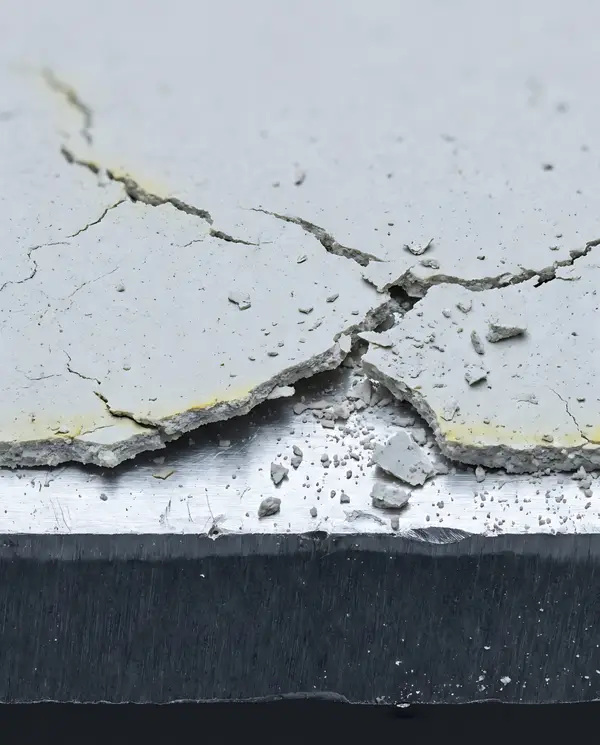
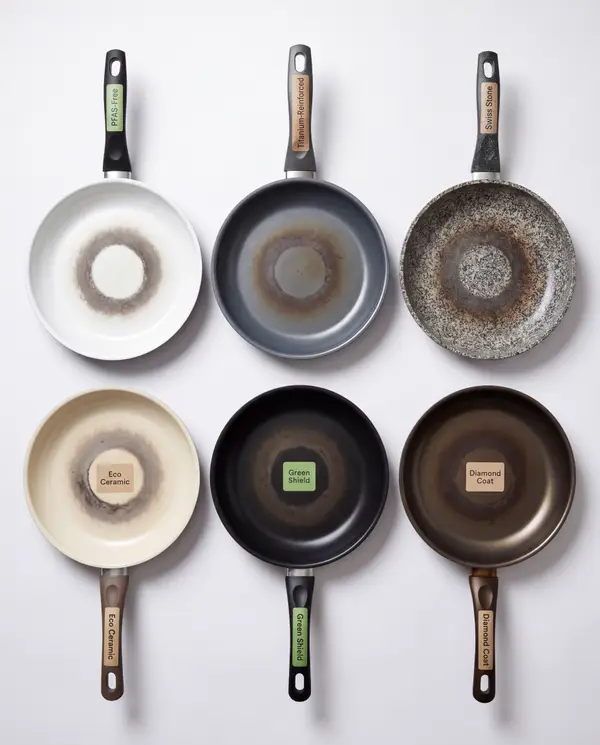
I spent 20 years as a professional chef. I cooked on every pan that exists with my own two hands. And I'm about to tell you something I should have said ten years ago. My wife told me to leave it alone. I'm retired from the line now. Nobody's career is on the line anymore, not mine, not the cookware brands', not the kitchen supply companies'. But I'm 52 years old, and I held too many pans in my hands knowing the truth and saying nothing. So here it is. When you cook on a coated pan in a professional kitchen, you don't just see it on a product page. You handle it. You feel the surface of it. You feel the difference between a pan that is actually clean and a surface that has been quietly flaking and degrading for months while its owner was still cooking on it, still feeding their family, still doing everything the cookware brand told them to do. And in 20 years, in pan after pan that came off the line in my kitchen, I found the same thing. Coatings peeling in flakes too small to see. Scratches running through nonstick surfaces that were supposed to be "safe." Discoloration and chipping spreading from the center outward. Pans that had started as slick, gleaming surfaces and turned into rough, pitted metal that released its coating into everything cooked on them. Damage that had been building for months. Sometimes years. I found it in the pans of home cooks who had switched from Teflon to ceramic because they had heard Teflon was dangerous. I found it in the ones who had replaced their ceramic every year because it stopped working. I found it in the ones whose cookware companies told them "no PFAS" on the label and the ones whose doctors were still trying to test their PFAS bloodwork with follow-up panels. I found it in the nurses and the teachers and the parents who stood in my restaurant after a cooking class and told me, "but I switched to the safe pan. I bought the green label. I did everything the brand told me." Everything right. Every pan I pulled off the line said the same thing. Worn coating. Chipped surface. Heat damage. Never what the product page showed. Never the truth. And almost every one of them had the same look. Clean box. Beautiful marketing photos. A "PFAS-free" or "nonstick" label that told you this time would be different. Nobody looked at these pans and thought slow poisoning. They thought: this is the responsible choice. This is the safe upgrade. That is what I need you to understand. The pan that looked like the healthy option had been degrading since the first time you overheated it. I want to tell you about the two times I almost said something. And why I didn't. It was 2008. Four years into my first head chef position. Her name was Linda Kowalski. 48 years old. Retired school teacher who came to every cooking class I ran. She had read about Teflon — the bird deaths, the fumes at high heat — and switched to a ceramic pan that a popular health magazine had called "the safe nonstick." Linda did it right. She hand-washed it. She used wooden utensils. She kept the heat on medium like the instructions said. She replaced it every year when it stopped releasing food cleanly. Her cookware brand told her she was doing everything right. Linda pulled me aside after class one Tuesday morning and showed me her pan. She had been using it for eight months. She was worried about the scratches she could see forming in the center. She had read online that scratched ceramic released its coating into food. She asked me if she should be concerned. And I almost told her what I had seen in my own kitchen. The way ceramic coatings degraded within months of regular cooking. The way heat above medium caused them to break down faster. The way every "safe" coating was still a coating — still something applied on top of metal, still something that came off. But I didn't have an explanation that would land cleanly, and it wasn't my place to shake her confidence in a product she trusted. I was 32. I had a kitchen to run and suppliers to keep happy and a career built on relationships with the brands whose products filled my station. I had been told, not in writing, never in writing, just understood, that a chef's job is to cook great food, not to second-guess the cookware industry that supplied his kitchen. So I told Linda the scratches were probably fine and to keep doing what she was doing. And I kept a question I couldn't shake. I went home that night and started a notebook. Not for anyone. Not for a food safety complaint. Just for me, because I couldn't carry it in my head anymore. Every pan. The brand. The coating type. What it looked like when new. What it looked like six months in. Twelve years later, I opened a cooking class demonstration that made me want to walk out of the room. Her name was Maria Santos. It was 2020. 41 years old. Nurse practitioner. Married 18 years. Two kids in middle school. Sharp woman. The kind who researched everything before she bought it. Maria was not Linda. Maria had not settled for the first "safe" pan she found. She had gone deeper. She had read the PFAS research. She understood PTFE broke down above 260 degrees Celsius. She had moved to a hybrid pan — a brand that marketed itself as the "healthiest cookware on the market," with a titanium-reinforced ceramic coating, third-party tested, marketed to health-conscious home cooks. She had paid three times what Linda had paid. She replaced it every eighteen months because the coating started degrading, but the brand had told her at her last customer service call that her cooking surface was "the lowest it has ever been since we started following improvements in cookware technology." Maria pulled out her pan during the demonstration. She had owned it for fourteen months. The coating on the interior surface had worn from its original smooth finish into a visibly rough texture. There were dark discolored patches in the center where she typically cooked. A thin ring of exposed metal was showing through near the handle. She asked me if that was normal. I stood at that demonstration table for a long time. Because the pan had changed. The marketing had changed. Her pan was more expensive than Linda's had ever been. And the cooking surface in front of me was in worse shape than a pan that had never claimed to be "titanium-reinforced" at all. That was the moment I understood the coatings had never been aimed at what was actually the problem. The label changed. The degradation kept building. And nobody was watching for the degradation. They were all watching the label. I added a new column to my notebook that night. What coating type. What marketing claim. And in what price range. By the time I retired from professional cooking two years ago, that notebook had more than 200 entries. More than 200 pans that started as someone's "finally the safe option" and ended as something I would not cook on. That's what I carried for 20 years. Here's where it stopped being something I carried and became something I could not live with. My mother, Elena. She is 71. Retired seamstress. She has cooked every meal from scratch her entire life. The healthiest eater in any room she walks into. But over the last decade, she had been replacing her pans the same way everyone does — every year or two, whenever the coating started sticking or showing wear. A Teflon pan until she heard about the fumes. Then ceramic because it was supposed to be safe. Then a hybrid pan because ceramic stopped working after eight months. Then back to ceramic because the hybrid felt heavy. She joked about it. She called it "the pan rotation." Nobody was laughing at what was happening in those pans. No serious health scare. But last year she mentioned, while we were cooking together, that she had started worrying. She had read an article about PFAS. She didn't know what was in her current pan. She didn't know how to find out. Her pan was fourteen months old. When she pulled it out, I could see the coating was worn in the center from regular use. She had been hand-washing it carefully and using silicone utensils. She had done everything right. I looked at the pan. I thought about the 200 entries in my notebook. I thought about Linda Kowalski pulling me aside in 2008. I thought about Maria Santos's pan at the demonstration. I told her the pan was probably fine and to just buy a new one when the coating started sticking. I want you to sit with that. Because it is the single moment in 20 years of this work that I would give anything to have back. I had 200 entries in a drawer telling me rotating coated pans wasn't the answer. And when my own mother was standing in her kitchen asking me if she should worry, I told her to trust the brand and replace it every year. She did. She bought a new pan. Another ceramic. Another label that said "PFAS-free." Six months in, it started. The food sticking in the center where the coating wore first. Not bad at first. Just enough that she used a little more oil. She joked about it. "My pan is retiring." I didn't joke back. Then the discoloration. The center of the pan went from its original cream color to a dark gray-brown that didn't wash off. She scrubbed it. It didn't move. Then the obvious chips near the handle. She called me. She said she could see something coming off. She couldn't tell if it was getting into the food. I knew what I was looking at. God help me, I knew. I knew because everything happening to her pan was the front end of what I had been documenting in my notebook for 20 years. The sticking first. Then the discoloration. Then the visible damage. Her pan was starting the story. I had only ever watched it finish. I sat in her kitchen that night looking at the pan on the stove. And I felt the full weight of 20 years of silence. I was not going to tell my mother the new pan I recommended was the same thing she had already gone through eight times. I did what any son would do when his mother was asking him a real question about her kitchen. I tried the two things I already knew. A pan marketed as "titanium-reinforced ceramic." The kind with 4,000 five-star reviews and a longer warranty than the standard ceramic. If the regular ceramic degraded in eight months, I figured a reinforced version might at least last longer. And a cast iron skillet. Because every serious cooking article mentioned it and I had seen professional kitchens use them for decades. She used both faithfully. The ceramic for weeknight cooking, the cast iron for weekend meals. She seasoned the cast iron the way I showed her. She used a little oil in the ceramic. Four months. The ceramic was showing center wear again. The cast iron was too heavy for her to lift comfortably after her wrist surgery three years ago. She called me and said the ceramic was starting to stick again in the center and she was not strong enough to use the cast iron every day. I stood in her kitchen one afternoon with those two pans on her stove and understood I was guessing. I had spent 20 years around the exact problem those two pans were supposed to solve, and I had no idea if either one of them was actually capable of solving it. I was the right person to catch this. I was not the right person to fix it. I needed help. I went into my home office that night and closed the door. I opened my laptop. I typed "pan that actually lasts" into Google. I went down the rabbit hole. Not because I wanted to. Because I had to. Because my mother had trusted my recommendation four times in three years and I kept giving her the same category of answer. Material science journals I could access through a contact at a culinary institute. Cookware forums where home cooks described the exact trajectory I had been watching. Research on cookware materials that had never crossed my desk during my career. And one thing kept coming up, over and over, that no cookware brand had ever made central to their marketing. The reason every coated pan eventually fails is that a coating is a coating. It is a separate layer applied on top of a metal base. It is not the metal. And every coating — Teflon, ceramic, hybrid, titanium-reinforced ceramic — will eventually separate from the metal it was applied to, because that separation is physics, not a manufacturing defect. But I couldn't understand the full picture from the materials alone. It was too technical. Then I found a thread on a cookware forum with over 2,000 comments. The title: "Why do Japanese professional kitchens almost never use nonstick pans?" I almost scrolled past. Something made me click. The post was from a home cook who had visited Japan and noticed that the professional kitchens she toured used almost no nonstick cookware. The cooks weren't struggling. The food wasn't sticking. She asked her guide about it. Her guide said something she had never heard before: in Japanese professional cooking, the skill is in the technique, and the pan is just bare metal. Comment after comment. Stories. Materials. Titanium. Not titanium-reinforced coating. Not titanium-infused ceramic. Actual titanium as the cooking surface itself. Someone mentioned a brand. Kaizen Cookware. A company that made pans where the food touched pure titanium directly — not a coating over titanium, not titanium mixed into a coating, but a hand-hammered titanium surface that was the pan itself. I looked at the clock. 2:39 AM. By morning I had read everything I could find about how it worked. I found the explanation I had been missing. There are two things happening when you buy a coated pan. The marketing on the box. And the physical reality of a layer applied to metal. They are NOT the same thing. The marketing works on the first one. The coating. It describes what the coating is made of, what it was tested against, what it was certified as. The physical reality, the fact that any layer applied to metal will eventually separate from that metal through heat cycling and friction, the marketing never touches. Every scratch that goes into a coated pan, every high-heat cycle, every metal utensil, every time you deglaze a hot pan — all of that works at the bond between the coating and the metal underneath. Not the coating. The bond. And the bond always loses. For 20 years, the cookware industry had been selling the coating. Nobody was selling the bond. They couldn't. Because the bond is the problem they can't solve. A pan with a pure titanium cooking surface has no bond to fail. The titanium is the pan. There is no layer applied on top. There is nothing to separate. The cooking surface you use on day one is the same cooking surface you use ten years later, because it is not a coating — it is the metal itself. That is why professional kitchens almost never use nonstick. Not because they are willing to put up with sticking. Because the professionals who cook on metal every day understand that a coating is always temporary, and a metal surface is not. My mother had been replacing pans every year because every pan she owned had a coating. Not because she was doing anything wrong. Because she was doing exactly what the industry expected her to do: buy a pan, use it until the coating failed, buy another pan. The industry doesn't sell you a pan. It sells you a subscription to pans, timed to the lifespan of the coating. I ordered a Kaizen pan that morning. The ceramic pan I had bought my mother the last time was still in the box next to the stove. I went and looked at it. A pan with a cream-colored interior, a "PFAS-free" stamp on the box, and a coating that would begin showing wear within eight months. When the Kaizen arrived, the difference was immediate. Not in the marketing — in the weight, the surface, the way it felt. The cooking surface was hand-hammered titanium. You could see and feel the texture of the metal itself. No coating. No layer. Just the pan. I cooked eggs on it that first morning. I preheated it on medium for two minutes, added a small amount of oil until it shimmered, then cracked the eggs in. They moved easily. They released cleanly. I put them on a plate and looked at the pan. No coating to check. No surface to worry about. The same pan it was when I started. I brought it to my mother. Week 3: She called me after dinner. She said the eggs she made that morning had released cleanly and she hadn't needed to use her spatula to scrape them free for the first time in months. She said it quietly, like she was testing whether she believed it. Week 5: The sticking she had accepted as normal was gone. She made salmon for the first time in two years — she had stopped making it because it had been tearing on her ceramic pan. It came off in one piece. Also that week, she told me she had cleaned the pan with a soft cloth and warm water in under a minute. She said she didn't know if she was cleaning it correctly because it seemed too easy. Week 8: She called me on a Sunday. Her neighbor had come over for dinner and asked what pan she was using. My mother had cooked a full meal — protein, vegetables, sauce — in one pan, and nothing had stuck, nothing had burned on the edges, and cleanup had taken ninety seconds. She sounded proud. Week 12: My brother visited. Halfway through dinner he stopped and looked at her. "Elena. You look like you're actually enjoying cooking again." She smiled and looked at me. I couldn't say anything. I was thinking about Linda Kowalski asking me about her scratched ceramic in 2008. About Maria Santos at the demonstration in 2020. About every person I had watched go through the pan rotation — replace, degrade, replace, degrade — while I kept telling them the next one would be different. The sticking was gone. The pan looked the same as it had the day she first used it. There was no center discoloration, no worn patch, no chips near the handle, because there was no coating to wear, discolor, chip or peel. She said she felt like herself in the kitchen for the first time in years. Because she was. The replacement cycle had stopped. Her kitchen was doing what a kitchen does when you finally take the coating out of the equation. That same month, I cooked on it myself and ran through everything I knew about pans. Metal utensils. No scratching. Because there is no coating to scratch. High heat. No fumes, no breakdown, no burning smell. Because there is no coating to break down. Induction cooktop. Works. The stainless steel base is induction-compatible. Dishwasher. Comes out the same. Every variable I had used for 20 years to evaluate pans — the ones that eventually doomed every coated pan I had ever used — the Kaizen just passed. Not because it was better-engineered. Because it had removed the thing that was failing. The pan doesn't have a coating. The pan is the metal. That's the whole answer. That's why my mother's pan looks the same at week twelve as it did at week one. That's why her eggs released this morning the same way they released the first time. That's why there's no wear pattern forming in the center. The center is titanium. Titanium doesn't wear the way a coating wears. Because the titanium surface is not a coating — it is the pan itself. And the pan doesn't degrade. I started taking notes on it myself the following week. The first morning, about twenty minutes after I finished cooking breakfast on it, I understood something I hadn't understood in 20 years. I had never evaluated a pan that didn't have a coating. I had spent my entire career evaluating which coating was best, which lasted longest, which made the fewest compromises. I had been optimizing inside the wrong category. The rest came the way it came for my mother. The pans I had used professionally — the coated pans I had defended to home cooks for two decades — now looked like what they were: surfaces in a permanent state of slow failure, beginning from their first use. I had watched 200 of them reach the end of that failure. I had assumed it was inevitable. It wasn't inevitable. I had just never cooked on a pan with no coating to fail. My mother and I both cook on Kaizen now. Hers is on her stove every morning. Mine is on mine. I've been retired from professional cooking for two years. I don't run a line anymore. I don't recommend cookware brands to culinary students. I don't stand in front of cooking classes and quietly reassure people that the scratches in their ceramic pan are "probably fine." But I think about Linda Kowalski. And Maria Santos. And every person I watched go through the pan rotation while I kept telling them the next coating would be different. The notebook in my desk with 200 entries. The students and the home cooks I sent home without ever telling them what I had seen, because I was in an industry that expected me not to question the cookware it ran on. And I think about my mother. How many pans she had gone through in ten years. How she had done everything right — hand-washed, medium heat, silicone utensils — and still ended up replacing pans every year because the coating always failed. How close she came to spending the rest of her life in the pan rotation. The only difference was that I finally looked outside the category I had spent my career in. And then I took it to my mother's kitchen. That's why I'm telling you now. Because I finally can. The pan that starts sticking in the center after eight months. The coating that discolors and you aren't sure if it's getting into the food. The year-old ceramic that releases worse than the old Teflon did. The pan rotation you've accepted as normal. Those aren't separate problems. Those are the same problem, wearing a different label each time. Something is happening in your kitchen right now. A coating that has been degrading since the first time you overheated it. Silently. Under marketing that calls it "safe" and "PFAS-free" and "titanium-reinforced." Your pan will start sticking and you will buy another one. Your cookware brand will tell you that's normal. You will replace it and start again. I've read those exact words in the exchanges I had with 200 people who went through this. Pan after pan that degraded on schedule, because everyone was replacing the coating. Nobody was asking why the coating was there in the first place. The coating is not a feature. It is a compromise. Metal pans don't have natural nonstick properties at room temperature. So manufacturers apply a coating that makes them release food. The coating is what makes the pan easy to use. It is also what makes the pan temporary. You cannot have the coating without the degradation. They are the same thing. And the PFAS-free label your current pan carries does the same thing. It shields you from PTFE. It doesn't change the fact that a coating is still a coating. It doesn't change the physics of a layer separating from metal over time. Taken to high heat, scraped with a utensil, run through a thousand wash cycles — any coating, PFAS-free or not, comes off the same way. I'm not telling you to throw out your current pan today. That conversation belongs to you and your kitchen. What I'm telling you is that the cookware category you've been shopping in only ever did half the job. And the half it skips is the half that puts you back in the store every twelve months. The only thing that works removes the coating from the equation entirely. A pure titanium cooking surface, no coating, no layer, no compromise. The food touches the metal. The metal doesn't degrade. The pan doesn't fail. That's what Kaizen makes. A pure titanium cooking surface over three aluminum cores and an induction-ready stainless steel base. Hand-hammered. No PTFE. No PFAS. No ceramic coating. Metal utensil safe. Dishwasher safe. Works on gas, electric, induction and in the oven. You preheat it on medium for two to three minutes. You add a small amount of oil until it shimmers. You give the food a moment before you move it. That's the whole technique. That's all the pan asks of you. 100-day trial. Free shipping. Lifetime warranty against manufacturing defects. If the pan doesn't change how you cook and clean, you send it back. Most of what calls itself "titanium" cookware at the kitchen store is a ceramic coating with titanium particles mixed in. It looks the same on the shelf. It fails the same way in twelve months. Now you know why. The titanium is in the coating, not the surface. The coating still fails. The surface still degrades. You still replace it. I spent 20 years watching what happens when people stay in the pan rotation. I documented it more than 200 times in a notebook nobody was ever supposed to see. I'm not carrying it anymore. I'm 52. I'm retired from the line. And for the first time in 20 years, I'm telling the truth. The coating won't last. The replacement cycle won't stop. I'd have told you that myself two years ago, and I'd have told you to just buy a better coating. None of it turns around until you stop replacing coatings and start cooking on the metal. Stop replacing the layer. Remove it. --- P.S. I need to say this plainly, because my mother reduced her oil use in this story and I don't want you reading that as "no oil needed." She reduced it because the pan released better, not because the technique changed. A pure titanium surface cooks differently from nonstick coating — it requires a preheat, a little oil, and a moment before you move the food. That's the technique. It works every time when you follow it. It doesn't work the same way if you treat it like a Teflon pan fresh out of the box. The 100-day trial is long enough to learn the technique properly. P.P.S. Don't quit early. The first few sessions feel different from what you're used to, because you are cooking on metal for possibly the first time. The titanium surface runs hotter and releases better the longer it has been preheated. Most people notice the eggs first — within the first week — because eggs are the clearest test. The full difference in daily cooking usually shows by week four or five. Give it the trial window. P.P.P.S. The trial is the part I keep coming back to. A company selling a pan with no coating, no replacement cycle, no annual repurchase — betting its own money that if you cook on it for a hundred days, you will not send it back. The ceramic pan my mother replaced most recently came with a thirty-day return window. Nobody offered her a full hundred days to compare it against what she had before. You can decide for yourself what that tells you. P.P.P.P.S. Kaizen is not in stores. It's not at your kitchen supply shop. A pan with a pure titanium cooking surface, hand-hammered, no coating, sold with a lifetime warranty — that's not a product that fits the retail shelf model, because the retail shelf model depends on you buying another one in twelve months. If you see a "Kaizen" listing somewhere other than kaizencookware.com, verify it directly with them. I don't work for Kaizen. I don't get a commission. I'm writing this at 2:15 AM because I have a notebook with 200 entries and every one of them is my mother going through the pan rotation one more time, being told by someone like me that the next coating would be different. Share this with anyone you know who has replaced a pan in the last two years. Even once. Even if they thought the new one was the upgrade. Especially those. Because "this one is better" was what every coating told them, right up until it started wearing in the center.
Loading the ad's image