The Day I Heard My Husband Again
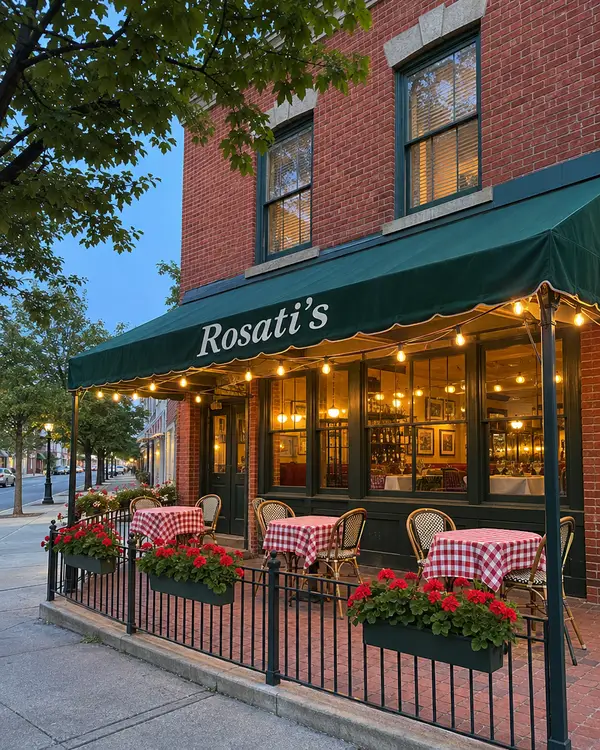
My husband has been dead for fourteen months, and every Sunday I still save him a spoonful of cookie dough. He went from "a little run down" to gone in two days. There was no time for goodbyes, and no time for anything else either. This spring my daughter walked into my kitchen and caught me laughing over that spoonful of dough. She stood frozen in the doorway and asked me, very carefully, "Mom, who are you talking to?" So I told her. I'd been talking to her father. And after months of silence, I'd heard him answer. Last winter I couldn't fall asleep unless the TV was running in the den. I'd spent months doing everything people told me to do to hold on to him, and every bit of it pushed him further away. What brought him back wasn't a trip or a photo album or a grief group. It was the most ordinary thing he ever said to me, and a secret his mother had been keeping for years. If you've lost someone recently, fourteen months probably sounds like nothing. It is nothing, and I'm not over him, and I never will be. Tom and I were married thirty-three years. He laughed at his own jokes before he ever reached the punchline, so hard his nose scrunched up, and I don't think I heard the end of a single one. He'd been tired for a couple of weeks and blamed it on work. On a Thursday he drove himself to the doctor and didn't tell me, because Tom never wanted anybody fussing over him, not even me. At four o'clock that afternoon a doctor said the word cancer. By Saturday morning I was a widow. I spent those two days in a plastic chair, signing forms and holding a phone to my ear. Thirty-three years together, and I can't remember one thing either of us said that mattered. The Wednesday before, I'd baked his chocolate chip cookies and saved him a spoonful of dough, like always. He said he'd have it later. It was still in the fridge under plastic wrap when I came home without him. Everyone told me the same thing. Hold on to the good times. So I went looking for him in every one of them. On our anniversary I drove six hours to the cottage in Maine where we honeymooned in 1991, and sat on the same porch. I waited all afternoon to feel him there, and felt nothing but cold. I went to Rosati's, our Friday place for twenty years, and ordered his veal. The waiter brought two menus out of habit, saw my face, and quietly took one away. Every night I watched the funeral slideshow in bed. Same four minutes, same song, until I could tell you which photo came next with my eyes shut. And the harder I chased the big moments, the further away he got. He wasn't on that porch, and he wasn't at Rosati's. He wasn't in that slideshow either, no matter how many times I pressed play. So I stopped going anywhere. I left the TV running in the den all night, because a silent house meant nobody was in the other room, and I couldn't stand knowing that. I stopped baking. I let calls ring out, missed my grandson's ball games, and scrolled through photos of Tom until my thumb went numb. Then one night around three in the morning, something hit me so hard I felt sick. I was staring at his face on the same phone I used to stare at while he sat right next to me, trying to tell me about his day. How many of those days had I missed? I put the phone face down and cried until the windows went gray. The person who finally got through to me was the one who should have had the least left to give. Tom's mother. June is 83. She buried her husband fifteen years ago, now she'd buried her son, and somehow she was the one driving across town to check on me. She let herself in, the way she always has. She walked past the slideshow on my laptop, switched off the TV in the den, and sat at my kitchen table, turning a thin gold chain at her neck the way she does when she's deciding something. "Do you want to know what I miss about Walter?" she asked me. "It isn't Paris." Paris was the trip she'd talked about every Christmas for twenty years. I said so. "It was wonderful," she said. "And I don't miss it one bit." "I miss him whistling through his teeth at the sink while he did the dishes. Every night I told him to leave them, and every night he said the same four words back." "What did he say?" "Leave them for who?" Then she took my hand and said the thing I've thought about every day since. "You keep looking for him in the places you two went," she said. "He was never there, honey, he was at the sink." When she left, I opened the fridge. The spoonful of dough was still there under its plastic wrap, five months old, and I stood holding the door until the fridge started beeping at me. June was right. I'd been searching in all the wrong places. He was in the bathroom, humming the same three notes while he brushed his teeth with the water running, no matter how many times I asked him to turn it off. He was in the heartbeat I felt through his T-shirt when he hugged me, and in the smell of his neck after a shower. He was in the little trail of tea he dripped across my clean counter every morning for thirty years. I complained about that trail every single day, and I'd give anything to wipe it up once more without a word. And he was in the den. Every time he smelled the oven going, he'd call out the same three words. "Save me some!" Thirty-three years of that, and most days I didn't even answer. So I set out to hold on to the little things. I kept his toothbrush in the cup by the sink. I slept in the T-shirt he wore the last morning he was home, and I started baking again so the house would smell the way it used to. For a few weeks, it almost worked. Then the shirt stopped smelling like him. And one afternoon I pulled a tray of cookies out of the oven, stood very still, and waited for him to call from the den. I couldn't hear it. I knew the words, but I couldn't hear his voice saying them anymore. That scared me more than the funeral did. I went through every video on my phone, looking for his voice. There was exactly one with Tom in it, laughing in the back of our grandson's birthday party, and the sound was off. I panicked. I started wearing his wedding band on my thumb so I'd have some piece of him on me, and a week later it slid off into the sink while I washed a mixing bowl. I got it out of the drain with a bent coat hanger, on my knees, shaking. It's been in my jewelry box ever since. My sister gave me a locket with his picture inside. The women at church asked to see it, and every time I opened it, their faces fell and I ended up comforting them. I didn't want people to see Tom. I wanted to hear him. A few weeks later I was back at June's table, telling her about the ring in the drain. And while I talked, her fingers kept finding that thin gold chain. I'd seen it on her for years and never looked twice. Tiny gold beads, some round and some long, in little clusters along the chain. "Did Walter give you that?" I asked. "In a way," she said. "It's Morse code." "The round beads are dots, the long ones are dashes, and each little group is a letter," she said, turning it toward the light. "What does it say?" She smiled the way she used to smile at Tom when he finally caught on. "Leave them for who." "Everybody knew Walter's name," she said. "But I'm the only one who ever heard him say that, and I'm the only one who can read it." In all those years, not one person at church had asked her about it. To the whole world, it was just a pretty chain. I asked her, carefully, where she had gotten hers. She told me the name. Tulas. It's a small company. They hand-code any name, any word, any date or any phrase, up to 22 characters, into Morse code along a fine gold chain. From the outside it looks like an ordinary necklace. Nobody in the world can read it but the person wearing it. I looked them up that night, and I had braced myself for the kind of number Tom paid for that band he couldn't afford. Four figures at least. It cost less than a full tank of gas. It's 14K gold-filled and waterproof, and it doesn't tarnish or fade. The clasp is tight, and the chain adjusts while it's on. You put it on once and never take it off. Over 101,000 orders filled. On their site you type in the words you want, and it shows you the dots and dashes right there on the screen. I started to type TOM. Then I stopped. Tom is on the mailbox. He's on the headstone and every form I've signed since September, and nobody was ever going to let me forget his name. What I was losing was a voice from the den. So I typed SAVE ME SOME and watched the dots and dashes appear. I nearly closed the page. My jewelry box was already a graveyard of every try that failed, the locket, the ring, the shirt that smelled like nothing now. But June's voice kept coming back to me. "Leave them for who." I ordered it. It arrived in a small box two weeks later. I unwrapped it at the counter, right where I used to set the cookie sheets. It was so small and plain I was almost disappointed. Then I put it on and traced the beads with my finger, S-A-V-E, M-E, S-O-M-E. That Sunday I baked his cookies again. Without thinking, I scraped a spoonful of dough into a little bowl and set it aside. Then I put my hand on the beads, and from the den, clear as day, I heard him. "Save me some!" Loud and happy and a little impatient, exactly the way he used to say it. I laughed out loud, standing alone in my kitchen. That's when my daughter walked in. I told her everything that afternoon, the cottage, the slideshow, June, the beads. She cried, then she laughed, and then she picked up the spoon and ate her father's dough. That was in the spring. The TV in the den goes off at night now, and I sleep straight through. I'm back in the bleachers at my grandson's games, and my phone stays in my purse, which Tom would have liked more than anything. My daughter ordered one the week after. Hers says HEY KIDDO, what he called out every time she came through the door, from th
Loading the ad's image