This is why nothing is working
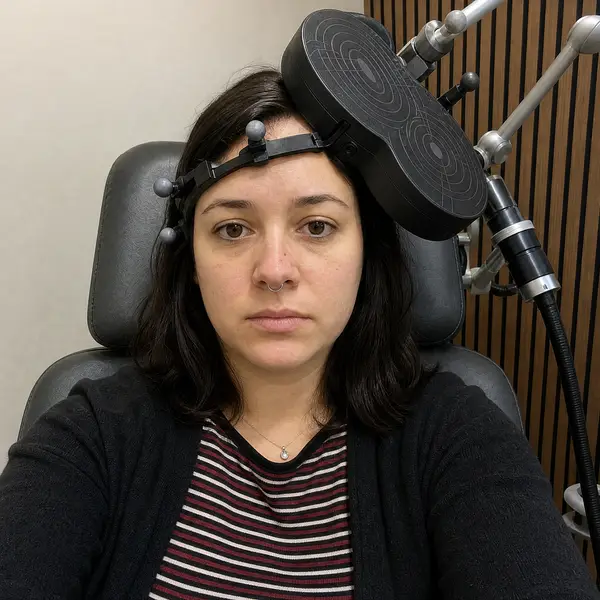
I came across a statistic that made my stomach turn. Adults living with treatment-resistant depression are 200-400% more likely to die prematurely, from suicide, from heart disease, from causes their doctors never trace back to the depression itself. Not slightly more likely. 200-400% as much. I didn't believe it the first time I read it. My sister had been diagnosed with depression at 23 and not a single psychiatrist had ever explained to her why the medication kept losing its effectiveness. But here's the reality. Your psychiatrist monitors your mood. Your GP monitors your bloodwork. The thing that's actually fueling treatment-resistant depression sits between all of them... and nobody gets paid to examine it. That's why most of us were never told. That's why my mother was never told either. My sister Jamie was part of that statistic. 14 years on antidepressants. Prozac, then Lexapro, then Zoloft, then Wellbutrin stacked on top, then Effexor when nothing else did anything anymore. Then ketamine troches twice daily for 4 months. Then TMS, 36 sessions with a device clamped to her skull 3 days a week. She went through all of it. She stopped leaving her bed at 31. Stopped picking up the phone at 32. I found her on a Tuesday morning. She was 34. I'm 41. Last year my own psychiatrist informed me I was displaying the same treatment-resistant pattern Jamie had. Wanted to attempt a new combination. I said no. And what I discovered instead, in an article buried 3 pages deep in a Google search at 2 AM, brought me from a person who hadn't experienced anything genuine in 4 years to someone who wept at a sunset last month and wasn't frightened by it. No Effexor. Nothing Jamie ever took. But to understand why I was desperate enough to spend 6 weeks obsessively investigating what I'd been missing, you need to know what I watched antidepressants do to my sister. And what I didn't realize they were quietly doing to me as well. ======== For 14 YEARS... more than a decade... my sister Jamie was stuck on a treadmill nobody would let her step off. It started following her first year of college. She couldn't feel anything. The heaviness she'd been carrying since high school had become something deeper. The campus psychiatrist labeled it major depressive disorder. Wrote the initial prescription. Prozac, 10mg. Jamie was 23. Those first 6 months, my mother finally relaxed. Jamie was phoning home again. Sitting down for dinner. Attending her classes. By year 2, the dose was 20mg. She'd gone numb to everything. Not just the depression, but the joy too. Told me the medication had made her feel like she was observing her own life from behind a window. "Flat," she described it. "Just flat." By year 4 she was at 40mg and the psychiatrist had layered on Wellbutrin for the exhaustion. She gained 20 pounds with no explanation. Sleeping 11 hours a night and still never rested. She pulled away from friends. Said being around people felt like labor she couldn't afford. By year 7 the Prozac wasn't doing anything for her anymore. They rotated her to Lexapro. Then Zoloft. "We just need to land on the right combination," the psychiatrist repeated each visit. My mother drove her to every appointment. Picked up every prescription. Believed each time that this one would be the one. By year 11 they put her on ketamine. Troches twice daily. $450 a month out of pocket. It gave her 4 decent months and then the relief vanished. By year 12 they moved to TMS. 36 sessions. 3 days a week. A device strapped to her head in a clinic that reeked of rubbing alcohol. She drove herself there and back each time because she couldn't bear anyone seeing her walk through those doors. By year 13, Jamie phoned me late one evening and said something I wrote down because I knew I had to hold onto it. "David, I don't feel depressed anymore. I don't feel anything. Is that better? I honestly can't tell if this counts as better." And each time my mother brought her to a new doctor, they repeated the same words. "She's stable, Mrs. Harmon. The depression is real. We just have to keep fine-tuning." For 14 YEARS they kept "fine-tuning." 14 years of dosage increases. 14 years of fresh prescriptions piled on top of old ones. 14 years of visits where they'd rotate the antidepressant or stack another medication on... but never once... not ONE TIME... did anyone say, "Maybe there's something wrong that this medication isn't capable of fixing." And then she was gone regardless. 34 years old. 34. At her memorial my mother clasped my hand and said something I will carry with me forever. "For 14 years they told us the medication was working, David. They were wrong the entire time." ======== So fast forward to roughly a year ago. I'm 41. Diagnosed with depression at 26. 15 years on various SSRIs. 2 relationships I couldn't feel present in. The kind of "functional" that means I finish tasks and smile at the appropriate moments and feel nothing beneath any of it. I go to my psychiatrist for my quarterly appointment. She opens my chart. Reviews my PHQ-9 responses. Looks at me. "David, you're still scoring in the moderate-severe range. What you're dealing with is classic treatment-resistant depression. I'd like to try augmenting with lithium. Or we could explore ketamine infusions. There's a clinic I partner with." My chest went tight. 14 years of watching my sister Jamie rotate through every combination, every augmentation strategy, every "we just need to find the right combination." 14 years of dosage increases. 14 years of "fine-tuning." And then she was gone regardless. "No," I said. She paused. "Excuse me?" "I'm not going through another augmentation. My sister took antidepressants for 14 years. I saw what they did to her. And I watched her die anyway." She gave me that look. "David, untreated depression carries significant risk. Treatment-resistant depression has a mortality rate that rivals many cancers when you account for suicide, cardiovascular complications, and accelerated aging. We have to keep trying." "I'm aware of all that," I said. "My sister was every one of those statistics. The medication didn't save her. It kept her functioning just enough to stay trapped." She had no response to that. I told her to give me 3 months. She wasn't pleased. Wrote something in my chart. I didn't care. For 3 months I did everything by the book. Consistent sleep schedule. Daily walks. Cold water exposure. I cycled through every supplement stack on the functional medicine subreddits. Magnesium threonate. Lion's mane. High-dose omega-3. SAMe. I read every book I could get my hands on. 3 months later I returned. The numbness was identical. The flatness was identical. The sensation of watching my life from outside it. Unchanged. My psychiatrist reached for her prescription pad. "David, it's time to try a different approach." "Give me 3 more months." "David..." "3 more months." She sighed. I didn't care what she documented. That night sleep wouldn't come. I sat on my kitchen floor at 2 AM, staring at the notes from my appointment, thinking about Jamie. Same trajectory she had at year 5. Same "we just need to try something different." Same path. At 2:47 AM I abandoned any attempt at sleep. Went to my laptop. I started searching. What genuinely causes treatment-resistant depression. Why SSRIs work for some people and lose effectiveness for others. What the difference is, at a biological level, between someone who responds long-term and someone who rotates through every combination and never stabilizes. Every website repeated the same advice. Talk to your doctor. CBT combined with medication. Exercise helps. Be patient with the process. I'd done every bit of it. So had Jamie. So I dug deeper. Searching for people who had actually resolved this. Not managed it. Resolved it. That's when I stumbled onto the thread. A research forum post with thousands of responses. The title: "Why does gut-directed therapy outperform SSRIs in treatment-resistant cases?" I nearly scrolled past. But something pulled me in. Study after study. Peer-reviewed. Published in journals I recognized: Gut, Frontiers in Psychiatry, Cell. Demonstrating that patients with treatment-resistant depression had measurably different gut microbiomes than people who responded to SSRIs. That the gut-brain axis, the direct communication pathway between the intestinal environment and the brain, was compromised in nearly every treatment-resistant case examined. That bacterial overgrowth in the small intestine appeared at significantly higher rates in people who had failed multiple antidepressants. I kept reading. At 4 AM I found the mechanism. I didn't go anywhere. I was already on my kitchen floor. But I found the researcher. A gastroenterologist who'd transitioned into neuroscience. 2 decades of published work on the gut-brain axis. An interview she'd given 3 years prior that nobody in mainstream psychiatry seemed to have encountered. I read it 4 times over. "The fundamental mistake in treating depression as a brain-first condition," she said, "is that we're treating the symptom rather than the origin. 90 to 95% of the body's serotonin is manufactured in the gut, specifically in enterochromaffin cells embedded in the intestinal lining. When that lining sustains damage, when the bacterial environment is thrown off, serotonin production at its origin collapses. No SSRI addresses that. An SSRI operates on the serotonin that already exists in synaptic clefts in the brain. It does nothing to rebuild the gut's capacity to generate serotonin in the first place." I sat there reading that passage again and again. 90 to 95% of the body's serotonin is manufactured in the gut. Not the brain. The gut. She continued: "When harmful bacteria proliferate out of control in the small intestine, which occurs following antibiotic use, chronic stress, processed food diets, and other disruptions to the microbiome, they ferment the carbohydrates you consume before your body can properly break them down. That fermentation generates hydrogen gas higher up in the digestive tract than it's supposed to be. That gas draws water into the intestines, disrupts intestinal motility, and sets off an inflammatory response that doesn't remain localized. The inflammation enters the bloodstream. It reaches the brain. It locks the entire system in a state of low-grade neurological emergency. That inflammatory signaling directly interferes with neurotransmitter production. The brain cannot synthesize serotonin and dopamine properly when it's flooded with inflammatory signals." I felt something in my chest that I hadn't experienced in 4 years. Not joy. Not yet. Something sharper. Recognition. "That's why the SSRIs lose their effectiveness," she said. "The medication is operating on the brain while the gut, where the serotonin gets manufactured, keeps declining. The dose increases. It helps for a while. The gut keeps deteriorating. It stops helping again. The psychiatrist rotates medications. The new one works for a while. The gut keeps deteriorating. Eventually there is no SSRI left to try because you're not running out of medications. You're running out of serotonin capacity at the source." My eyes started to burn. I was 41 years old. 15 years of antidepressants. And I was reading, for the very first time, an explanation of why none of them had ever held. I kept reading until 6 AM. By 6 AM I had found the research on what actually restores the gut's serotonin production. And it wasn't what I anticipated. The further I went into the gut-brain literature, the more I kept encountering the same finding. The gut lining doesn't simply break down and sit there waiting for repair. The damage compounds. Harmful bacteria generate a protective shield. A film that coats the surface of the intestinal lining. Beneath that shield, the lining itself calcifies. Hardens into a crust. 2 layers of damage. Stacked one over the other. And that's why nothing I'd ever tried had worked. Probiotics can't penetrate the shield. They pool on top. Fiber can't get through the shield. Slippery elm, L-glutamine, collagen peptides, every gut-repair supplement available. They all accumulate on top of that shield and never make contact with the lining underneath. The enterochromaffin cells, the ones that produce your serotonin, are embedded in that lining. Walled off. Starving. And no quantity of gut-health products pooling on the outside of a shield they can't breach is going to change that. That's what nobody told me. That's what nobody told Jamie. So I started looking for something that could get through both layers. Not sit on top. Get through. At 5:30 AM I found a study that had been circulated over 14,000 times across a gut-health research community I'd never come across before that night. Published in the Journal of Medicinal Food. And it had been available for nearly 20 years while mainstream psychiatry never once cited it. The researchers tested an extract from something I'd walked past in every grocery store my entire life without giving it a second thought. Papaya seeds. Within that seed are 2 enzymes that only become active when the seed gets crushed. The first, myrosinase, ruptures the shield. Breaks through the film that nothing else can penetrate. The second, papain, is a proteolytic enzyme. It breaks apart the calcified crust beneath. The layer that's been entombing the gut lining for years. A single seed. 2 enzymes that rupture the shield and dissolve what's underneath. I needed something that delivered both enzymes from the whole seed, crushed and sealed before they could degrade. Not dried papaya powder sitting in a jar for months with the first enzyme already gone. Not a generic "papaya enzyme" tablet with only the papain and none of the myrosinase. The complete seed. Both enzymes intact. Sealed in oil right after crushing so they arrive alive. That's what I found at Teazys. Organic papaya seed extract sourced from the tropics, where the most potent papaya grows, harvested once a year. Whole seeds crushed and encased in an MCT oil capsule within hours of processing. The oil carries both enzymes through stomach acid so they activate in the gut. I placed the order at 6:14 AM from my kitchen floor. The package arrived 2 days later. I was scared to take it. After 15 years of things that helped for a while and faded, I'd stopped allowing myself to feel hope about anything I put in my body. But I took the first capsule that morning with a glass of water. 10 seconds. Done. I waited for something to happen. A switch. A shift. Nothing happened that evening. Nothing dramatic the next morning either. I nearly quit by day 4. I'd convinced myself I'd been desperate enough to spend a night on my kitchen floor reading research at 4 AM and come up empty. Then on day 5, I noticed something I almost overlooked. I woke up ahead of my alarm. Not anxious. Just awake. I lay there for a few minutes before I understood what was different. I wasn't immediately strategizing how to survive the day. I didn't mention it to anyone. I was afraid to. By the end of week 1, the concrete heaviness I carried from the moment I opened my eyes each morning... was lighter. Not gone. Lighter. Week 2. I made dinner on a Wednesday. Not out of obligation. Because I wanted to try a new recipe I'd spotted. I stood in my kitchen cooking and didn't feel like I was performing the activity of a person who makes dinner. Thursday I called a friend I hadn't spoken to in 8 months. We talked for an hour. When I hung up I realized I hadn't once been watching the conversation from outside it. Week 3. I went on a walk I hadn't planned. Ended up at the park near my apartment. Sat on a bench. Watched a little girl feed ducks with her father. Something stirred in my chest. Not the heavy sensation. Something else. Something I recognized from a long time ago. Week 4 and 5 came and went. Small things kept shifting: sleeping through the night without the 3 AM jolt my body had locked into for years. Eating food because it actually tasted like something. Having a thought and completing it without it dissolving. I was afraid to tally the changes. I'd been let down too many times. Week 6. Sunday afternoon I was on the phone with my mother. She brought up a trip she was thinking about taking. And I said, without any forethought, "I'd like to come along." She went quiet. "David." "Yeah?" "You haven't wanted to go anywhere in 6 years." I understand how this sounds. But I sat there in my apartment recognizing she was right. 6 years. I hadn't wanted to travel anywhere. And the thought of the trip hadn't filled me with the administrative dread of pretending to feel things in front of people. It had just sounded... nice. Week 8. I went for an evening walk. Late September. The light was low and orange and the leaves were beginning to turn. I stood there looking at it and something happened that I did not anticipate. I started crying. Not from sadness. Not from the familiar nothing-turning-to-tears that depression produces when it occasionally breaks through. From the light. From the leaves. From the fact that I was standing there and feeling it rather than observing it from somewhere far away. I sat down on the curb and cried for 10 minutes. Nothing was wrong. My follow-up was at the end of month 3. My psychiatrist reviewed my PHQ-9 score. Reviewed it a second time. "David, you've scored a 6. You were at 19 during our last visit. What happened?" I walked her through everything. The research. The gut-brain axis. The 2 layers sealing off the gut lining. The 2 enzymes from a single seed that penetrated both. The capsule I'd been taking every morning for 90 days. She typed slowly. Nodded. "I'm not familiar with this approach as a primary intervention," she said. "But your results are in the chart. Whatever you're doing, don't stop. We can shelve the lithium conversation indefinitely." I left her office and called my mother from the parking garage. "She told me to keep going, Mom. The score dropped from 19 to 6." Long silence. "Jamie never had this, did she," my mother said. "No, Mom. She didn't." "Your sister would be so proud of you, sweetheart. You found another way." ======== If you're reading this, you probably recognize yourself in my story. You've been diagnosed. Or you're watching someone you love go through what Jamie went through. Or you're already medicated and the medication helped for a while and now it doesn't and the psychiatrist wants to try something new and something inside you knows that new isn't going to be any different. You've tried therapy. Exercise. Meditation apps. Every supplement the internet suggested. The elimination diet. The sleep hygiene protocol. None of it shifted the needle. But now you understand why. You weren't addressing the problem. You were treating the brain while the gut lining, the tissue where 90-95% of your serotonin is manufactured, kept deteriorating underneath a shield nothing could breach. And no antidepressant on earth puts serotonin back into a gut that's stopped producing it. Teazys Organic Papaya Seed Extract is different. Whole papaya seeds sourced from the tropics, where the most potent papaya grows, harvested once a year. Crushed and encased in an MCT oil capsule within hours of processing so both enzymes arrive intact. Myrosinase to rupture the shield. Papain to dissolve the calcified crust beneath. The oil carries both through stomach acid so they activate in the gut, where the enterochromaffin cells are walled off. Where serotonin production collapsed. 1 capsule. Every morning before food or coffee. 10 seconds. Teazys is a small operation. They process in small batches from a single annual harvest. When a batch runs out, it's unavailable until the following season. They refuse to swap suppliers. They offer a 90-day guarantee. Take 1 capsule every morning for 90 consecutive days. Keep everything your doctor prescribed. If the flatness hasn't budged, if the heaviness you carry from the moment you open your eyes hasn't lightened, if your body tells you nothing has changed. Full refund. No return required. No questions asked. You're standing at a fork. One direction. Try the next combination. Lithium augmentation. Ketamine infusions. The new SNRI the pharmaceutical rep pitched to your psychiatrist last month. Hope this one is the answer. Hope the side effects are tolerable. Hope the flatness eventually cracks. Hope you don't exhaust every combination the way Jamie did. Spend the next decade adjusting doses while the real problem, the gut lining sealed beneath a shield that no antidepressant can reach, never gets touched. Another direction. Try what I tried. Address the gut lining. Let the source begin recovering. Keep taking everything your doctor prescribed. Track what shifts over 90 days. See for yourself. I chose the second direction. It gave me back the ability to cry at a sunset without it scaring me. The medical system isn't coming to find this for you. Your psychiatrist isn't trained to examine the gut. Your neurologist isn't trained to examine the gut. Nobody is looking at the tissue where 90-95% of your serotonin gets manufactured and asking whether it's functioning. Every month you wait is another month the shield remains. Another month the calcified crust keeps the lining walled off. Another month further from the version of yourself you remember or the version you've never been able to reach. My sister became the statistic. I don't have to be. You don't either. David J. teazys.store/products/teazys-papaya-extract-capsules I stumbled on a number that made me physically ill. Adults dealing with treatment-resistant depression have a 200-400% greater chance of dying early — from suicide, from cardiovascular disease, from complications no physician ever connects back to the depression. Not a little more likely. 200-400% more. The first time I saw it, I refused to accept it. My sister received her depression diagnosis at 23, and across all those years, not one psychiatrist ever broke down for her why her medications kept failing. But here’s what’s actually happening. Your psychiatrist tracks your mood. Your primary care doctor tracks your labs. The thing that’s truly driving treatment-resistant depression falls right between them... and no one is compensated to look at it. That’s the reason nobody ever explained it to us. That’s the reason nobody explained it to my mother, either. My sister Jamie lived inside that statistic. 14 years of antidepressants. Prozac first, then Lexapro, Zoloft after that, Wellbutrin layered on top, Effexor when nothing else made a dent. Then ketamine troches twice a day for 4 months. Then TMS — 36 sessions, a machine pressed against her skull 3 days every week. She endured every single one. She stopped getting out of bed at 31. Stopped answering calls at 32. I was the one who found her on a Tuesday morning. She was 34 years old. I’m 41 now. A year ago, my own psychiatrist told me I was following the exact treatment-resistant trajectory Jamie had. She wanted to try a new drug combination. I refused. And what I uncovered instead — in an article buried on page 3 of a late-night Google search at 2 AM — took me from someone who hadn’t felt anything real in 4 years to a person who broke down crying at a sunset last month and wasn’t terrified by it. No Effexor. None of the drugs Jamie ever took. But to grasp why I was desperate enough to spend 6 weeks tearing apart everything I thought I knew, you have to understand what I witnessed antidepressants do to my sister. And what I hadn’t realized they were silently doing to me. ======== For 14 YEARS... over a full decade... my sister Jamie was trapped on a carousel no one allowed her to get off. It began after her freshman year of college. She’d gone numb. The weight she’d been dragging around since high school had transformed into something heavier. The university psychiatrist classified it as major depressive disorder. Scrawled the first prescription. Prozac, 10mg. Jamie was 23 years old. For the first 6 months, my mother could finally breathe. Jamie was calling home. Showing up for meals. Going to class. By year 2, they’d bumped her to 20mg. Everything had gone flat. Not only the sadness — the happiness too. She told me the pills had turned her into a spectator of her own existence. “Blank,” is the word she used. “Just blank.” By year 4 she’d hit 40mg and the psychiatrist had stacked Wellbutrin on for the fatigue. She put on 20 pounds with zero explanation. Sleeping 11 hours every night and still waking up exhausted. She withdrew from everyone. Told me that socializing felt like a job she didn’t have the energy for. By year 7 the Prozac had completely stopped working. They switched her to Lexapro. Then Zoloft. “We just have to find the right match,” the psychiatrist said every single visit. My mother was in the car for every appointment. At the pharmacy for every refill. Convinced every time that this prescription would finally be the one. By year 11 they introduced ketamine. Troches twice daily. $450 monthly, none of it covered. It bought her 4 okay months before the benefit disappeared. By year 12 they pivoted to TMS. 36 sessions. 3 appointments a week. A device fastened to her skull inside a clinic that stank of rubbing alcohol. She made the drive alone every time because she couldn’t stand the thought of someone watching her walk through those doors. By year 13, Jamie called me one night and said something I immediately wrote down because I sensed I’d need to remember it. “David, I’m not depressed anymore. I’m not anything. Is that an improvement? I genuinely don’t know if this qualifies as improvement.” And every time my mother took her to a different doctor, the refrain was identical. “She’s stabilized, Mrs. Harmon. The depression is real. We just need to keep adjusting.” For 14 YEARS they kept “adjusting.” 14 years of higher doses. 14 years of new prescriptions stacked onto old ones. 14 years of appointments where they’d swap out one antidepressant or pile another one on... but not once... not a single time... did anyone say, “Maybe there’s a problem here that medication is incapable of solving.” And then she was gone anyway. 34 years old. 34. At the funeral, my mother gripped my hand and said something I’ll carry for the rest of my life. “They spent 14 years telling us the pills were working, David. They were wrong every single time.” Now jump ahead to roughly a year ago. I’m 41. Got my depression diagnosis at 26. 15 years cycling through SSRIs. 2 relationships where I was never truly present. The kind of “functioning” where you check boxes, produce the right facial expressions at the right moments, and feel absolutely nothing underneath. I show up at my psychiatrist’s office for the quarterly check-in. She pulls up my file. Goes through my PHQ-9 answers. Looks up at me. “David, you’re still landing in the moderate-to-severe range. What we’re looking at is textbook treatment-resistant depression. I want to try adding lithium. Or we could go the ketamine infusion route. There’s a clinic I refer to.” My entire chest seized up. 14 years of watching my sister Jamie get shuffled through every drug combination, every augmentation protocol, every “we just have to dial in the right mix.” 14 years of climbing doses. 14 years of “adjusting.” And then she was gone anyway. “No,” I told her. She paused. “I’m sorry?” “I won’t do another augmentation. My sister was on antidepressants for 14 years. I saw what they did. And I watched her die in spite of all of it.” She gave me that clinical stare. “David, leaving depression untreated carries enormous risk. Treatment-resistant depression has a fatality rate comparable to many cancers once you factor in suicide, cardiovascular damage, and accelerated biological aging. We can’t just stop.” “I know all of that,” I said. “My sister was every last one of those statistics. The drugs didn’t save her. They kept her just functional enough to remain stuck.” She didn’t have an answer for that. I asked for 3 months. She wasn’t happy about it. Made a note in my chart. I didn’t care. For 3 months I followed every rule. Disciplined sleep schedule. Daily walks. Cold exposure. I worked through every supplement regimen the functional medicine corners of Reddit recommended. Magnesium threonate. Lion’s mane. High-dose omega-3. SAMe. I devoured every book I could find. 3 months later I went back. The numbness was the same. The flatness was the same. The feeling of being a spectator to my own life. Unchanged. My psychiatrist picked up her prescription pad. “David, we need to try a different direction.” “Give me 3 more months.” “David...” “3 more months.” She exhaled. I didn’t care what she wrote down. Sleep didn’t come that night. I was on my kitchen floor at 2 AM, going over my appointment notes, my mind circling back to Jamie. Identical trajectory to her year 5. Identical “let’s try something else.” Identical road. At 2:47 AM I gave up on sleeping entirely. Grabbed my laptop. I started digging. What truly causes treatment-resistant depression. Why SSRIs help certain people and then fade for others. What separates, on a biological level, someone who stabilizes long-term from someone who exhausts every combination and never finds steady ground. Every site echoed the same talking points. Talk to your doctor. Cognitive behavioral therapy paired with medication. Exercise is beneficial. Give it time. I’d done every single thing. Jamie had too. So I went further. Hunting for individuals who had actually broken through. Not learned to cope. Broken through. That’s how I landed on the thread. A post on a research forum with thousands of replies. The headline: “Why does gut-focused therapy outperform SSRIs in treatment-resistant cases?” I almost kept scrolling. But something held me there. Study after study. Peer-reviewed. Published in journals I knew by name: Gut, Frontiers in Psychiatry, Cell. Showing that individuals with treatment-resistant depression exhibited measurably different gut microbiomes compared to people who responded well to SSRIs. That the gut-brain axis — the direct line of communication between the intestinal environment and the brain — was disrupted in virtually every treatment-resistant case studied. That small intestinal bacterial overgrowth showed up at dramatically higher rates in people who had cycled through multiple antidepressants without success. I kept going. At 4 AM I hit the mechanism. I didn’t move. Still on my kitchen floor. But I found the scientist. A gastroenterologist who had pivoted to neuroscience. 2 decades’ worth of published research on the gut-brain axis. An interview from 3 years earlier that the psychiatric mainstream seemed to have completely missed. I went through it 4 times. “The core error in approaching depression as a brain-first disorder,” she explained, “is that we’re addressing the symptom instead of the source. 90 to 95% of the body’s serotonin is produced in the gut — specifically within enterochromaffin cells that line the intestinal wall. When that wall sustains damage, when the microbial ecosystem falls out of balance, serotonin production at its origin breaks down. No SSRI fixes that. An SSRI works with whatever serotonin already exists in the brain’s synaptic gaps. It does nothing to restore the gut’s ability to generate serotonin in the first place.” I sat there rereading that section over and over. 90 to 95% of the body’s serotonin is produced in the gut. Not in the brain. In the gut. She went on: “When pathogenic bacteria take over the small intestine — which happens in the wake of antibiotic courses, sustained stress, diets dominated by processed food, and other disruptions to microbial balance — they ferment the carbohydrates you eat before your digestive system can properly process them. That fermentation creates hydrogen gas further up in the digestive tract than it belongs. That gas pulls water into the intestines, disrupts gut motility, and triggers an inflammatory cascade that doesn’t stay contained. The inflammation crosses into the bloodstream. It reaches the brain. It traps the entire system in a state of chronic low-grade neurological alarm. Those inflammatory signals directly impair neurotransmitter synthesis. The brain simply cannot produce serotonin and dopamine efficiently when it’s under constant inflammatory bombardment.” Something hit me in the chest that I hadn’t felt in 4 years. Not happiness. Not yet. Something more raw. Recognition. “That’s the reason SSRIs stop working,” she explained. “The drug is targeting the brain while the gut — the place where serotonin is actually made — continues to decline. They raise the dose. It works for a stretch. The gut keeps eroding. It stops working again. The psychiatrist rotates to a different medication. That one helps temporarily. The gut keeps eroding. Eventually there’s no SSRI left to prescribe because the issue was never running out of medications. It was running out of serotonin production at the source.” My eyes burned. I was 41. 15 years of antidepressants. And I was reading, for the first time in my life, a coherent explanation of why not one of them had ever lasted. I read straight through until 6 AM. By 6 AM I’d found the research on what genuinely rebuilds the gut’s serotonin-producing capacity. And it wasn’t anything I would have predicted. The deeper I ventured into the gut-brain literature, the more one finding kept repeating itself. The intestinal lining doesn’t just sustain damage and wait passively for repair. The damage escalates. Pathogenic bacteria construct a defensive layer. A film that blankets the surface of the intestinal wall. Underneath that film, the lining hardens. Solidifies into a crust. 2 layers of damage. One on top of the other. And that’s the reason nothing I’d ever tried had made a difference. Probiotics can’t break through the film. They collect on the surface. Fiber can’t penetrate it either. Slippery elm, L-glutamine, collagen peptides — every popular gut-repair supplement out there. They all gather on top of that barrier and never reach the tissue beneath. The enterochromaffin cells — the ones responsible for producing your serotonin — are embedded in that tissue. Sealed off. Starved. And no amount of gut-health products pooling on the exterior of a barrier they can’t breach will change that. Nobody ever told me that. Nobody ever told Jamie that. So I went looking for something capable of reaching both layers. Not resting on the surface. Actually getting through. At 5:30 AM I came across a study that had been shared over 14,000 times within a gut-health research network I’d never encountered before that night. Published in the Journal of Medicinal Food. And it had been sitting there for close to 20 years while mainstream psychiatry never once referenced it. The researchers examined an extract from something I’d walked right past in every grocery store my entire life and never thought twice about. Papaya seeds. Inside that seed are 2 enzymes that only activate once the seed is crushed. The first — myrosinase — tears through the biofilm. Breaks apart the barrier that nothing else can get past. The second — papain — is a proteolytic enzyme. It dissolves the hardened crust underneath. The layer that has been entombing the gut lining for years. One seed. 2 enzymes that breach the barrier and dissolve what lies beneath. What I needed was something that delivered both enzymes from the intact seed, crushed and sealed before they could break down. Not dried papaya powder that’s been sitting in a container for months with the first enzyme already degraded. Not some generic “papaya enzyme” pill containing only the papain and zero myrosinase. The whole seed. Both enzymes preserved. Encased in oil immediately after crushing so they arrive active. That’s what I discovered at Teazys. Organic papaya seed extract harvested from tropical regions where the most potent papaya is grown, picked once per year. Whole seeds crushed and sealed inside an MCT oil capsule within hours of extraction. The oil delivers both enzymes past stomach acid so they activate where they’re needed — in the gut. I hit the order button at 6:14 AM from my kitchen floor. The box showed up 2 days later. I was nervous to start. After 15 years of approaches that showed promise and then fizzled, I’d stopped permitting myself to get hopeful about anything I put in my body. But I swallowed the first capsule that morning with a glass of water. 10 seconds. Done. I waited for something. A flip. A change. Nothing that evening. Nothing remarkable the following morning either. I very nearly stopped on day 4. I’d convinced myself that I’d been just desperate enough to spend a night on my kitchen floor poring over studies at 4 AM and come away with nothing. Then on day 5, I caught something I nearly dismissed. I woke up before my alarm went off. Not panicked. Just awake. I laid there for a couple of minutes before it clicked. I wasn’t immediately plotting how to endure the day. I kept it to myself. I was too afraid to say it out loud. By the end of week 1, the cement-block heaviness I woke up to every single morning... had eased. Not vanished. Eased. Week 2. I cooked on a Wednesday night. Not because I needed to eat. Because a recipe I’d seen caught my eye. I stood in my kitchen making food and for once it didn’t feel like I was performing a simulation of a person who cooks dinner. Thursday I reached out to a friend I hadn’t talked to in 8 months. We spoke for an hour. After I hung up, it dawned on me that I hadn’t spent the conversation observing it from the outside. Week 3. An unplanned walk. Found myself at the park by my building. Sat on a bench. Watched a small girl toss bread to ducks alongside her father. Something moved in my chest. Not the heaviness. Something else. Something I hadn’t felt in a very long time. Weeks 4 and 5 passed. Small things continued to shift: sleeping clean through the night without the 3 AM adrenaline spike my body had been locked into for years. Tasting food again. Starting a thought and actually finishing it instead of watching it evaporate. I was afraid to add it all up. I’d been disappointed too many times. Week 6. Sunday afternoon, talking to my mother. She mentioned a trip she’d been considering. And without thinking, I said, “I’d like to join you.” She stopped talking. “David.” “Yeah?” “You haven’t wanted to go anywhere in 6 years.” I know how this reads. But I was sitting in my apartment understanding that she was absolutely right. 6 years. I hadn’t had the desire to travel anywhere. And the idea of the trip didn’t fill me with the familiar exhaustion of pretending to feel things around other people. It just sounded... nice. Week 8. An evening walk. Late September. The light was fading and golden, and the leaves had started turning. I stood there staring at it and something I didn’t see coming happened. I began to cry. Not from pain. Not from the familiar emptiness occasionally cracking the surface in the form of tears. From the light itself. From the leaves. From the simple fact that I was standing there experiencing it rather than watching it from some unreachable distance. I lowered myself onto the curb and wept for 10 minutes. Nothing was wrong. My follow-up appointment fell at the end of month 3. My psychiatrist looked at my PHQ-9 score. Looked at it again. “David, you scored a 6. Last visit you were at 19. What changed?” I laid out the entire thing. The research. The gut-brain axis. The 2 layers locking down the intestinal lining. The 2 enzymes from a single seed that got past both. The capsule I’d been taking every morning for 90 straight days. She typed carefully. Nodded. “This isn’t an approach I’m familiar with as a frontline treatment,” she said. “But your numbers are in the file. Whatever you’re doing, keep doing it. We can take lithium off the table for good.” I walked out and called my mother from the parking garage. “She said to keep going, Mom. My score went from 19 down to 6.” Silence. “Jamie never had this, did she,” my mother said. “No, Mom. She never did.” “Your sister would be so proud of you, baby. You found a different way.” ======== If you’re reading this, chances are you see yourself somewhere in my story. You’ve received the diagnosis. Or you’re watching someone you love walk the same road Jamie walked. Or you’re already on medication that worked for a while and doesn’t anymore, and the psychiatrist is proposing a new attempt, and something deep down tells you the next attempt won’t be any different. You’ve done therapy. You’ve exercised. You’ve downloaded the meditation apps. You’ve tried every supplement the internet put in front of you. The elimination diet. The sleep optimization routine. None of it made a real difference. But now you see why. You weren’t reaching the actual problem. You were treating the brain while the gut lining — the tissue where 90-95% of your serotonin is generated — kept breaking down beneath a barrier nothing could penetrate. And no antidepressant ever manufactured can put serotonin back into a gut that’s stopped making it. Teazys Organic Papaya Seed Extract is built differently. Whole papaya seeds harvested from the tropics, where the most potent papaya grows, gathered once a year. Crushed and sealed inside an MCT oil capsule within hours of processing so both enzymes reach you intact. Myrosinase to tear through the biofilm. Papain to dissolve the hardened crust underneath. The oil delivers both past stomach acid so they activate in the gut — right where the enterochromaffin cells are sealed off. Right where serotonin production shut down. 1 capsule. Every morning before food or coffee. 10 seconds. Teazys runs a small operation. They work in small batches from one annual harvest. Once a batch is gone, it’s unavailable until the next season. They won’t compromise on sourcing. They stand behind a 90-day guarantee. Take 1 capsule every morning for 90 consecutive days. Stay on everything your doctor has prescribed. If the flatness hasn’t shifted, if the weight you carry from the second you open your eyes hasn’t lifted, if your body says nothing is different — full refund. No return shipping. No questions. You’re at a crossroads. One path. Go with the next drug combination. Lithium add-on. Ketamine drips. The latest SNRI the pharma rep handed your psychiatrist last month. Hope this is the answer. Hope the side effects are manageable. Hope the numbness eventually breaks. Hope you don’t burn through every option the way Jamie did. Spend the next decade tweaking doses while the root issue — the gut lining entombed beneath a barrier no antidepressant can penetrate — is never addressed. The other path. Do what I did. Go after the gut lining. Let the source begin to heal. Stay on everything your doctor has prescribed. Track what changes over 90 days. Judge for yourself. I took the second path. It returned to me the ability to weep at a sunset and not be afraid of it. The healthcare system isn’t going to bring this to your doorstep. Your psychiatrist isn’t trained to evaluate the gut. Your neurologist isn’t trained to evaluate the gut. Nobody is examining the tissue where 90-95% of your serotonin gets generated and asking whether it’s actually working. Every month you put off is another month that barrier stays intact. Another month the hardened crust keeps the lining sealed away. Another month farther from the person you used to be or the person you’ve never been able to become. My sister became that statistic. I don’t have to. Neither do you. David J. teazys.store/products/teazys-papaya-extract-capsules P.S. Day 5, mornings became bearable. Week 2, I was cooking because I felt like it. Week 8, I wept at a sunset and it didn’t frighten me. Because it wasn’t numbness breaking through the surface. It was just feeling. My psychiatrist shelved lithium at month 3. Your timeline may look different. But you’ll never find out unless you start. P.P.S. I got my mother started on Teazys 6 weeks into my own experience. She’s 68. She’d been taking antidepressants since my sister’s diagnosis — 14 years of muted grief her psychiatrist categorized as a brain chemistry imbalance. 8 weeks in, she rang me on a Sunday morning. “David, I was out in the garden yesterday. 4 solid hours. I haven’t had any desire to touch that garden since Jamie passed.” I didn’t know how to respond. I just listened. After a stretch of silence she said, “I think I’m coming back.” That was it. I think I’m coming back. Jamie never got the chance to say those words. My mother did. teazys.store/products/teazys-papaya-extract-capsules P.S. By day 5, mornings got easier. By week 2, I was making dinner because I wanted to. By week 8, I wept at the sunset and wasn't frightened by it. Because it wasn't emptiness breaking through. It was simply feeling something. The psychiatrist took lithium off the table at month 3. Your timeline might look different. But you won't know until you try. P.P.S. I started my mother on Teazys 6 weeks after I began. She's 68. She'd been on antidepressants since my sister's diagnosis, 14 years of low-grade managed grief her psychiatrist treated as a brain chemistry problem. 8 weeks later she phoned me on a Sunday morning. "David, I spent yesterday in the garden. 4 hours. I haven't wanted to touch that garden since Jamie died." I didn't know what to say. I just listened. When she stopped talking there was a long pause and then she said, "I think I'm coming back." That's all she said. I think I'm coming back. Jamie never got to say that. My mother does. teazys.store/products/teazys-papaya-extract-capsules
Loading the ad's image