Advertiser

Lisa Thompson

renvoir.comMeta Ad Library

4
Running ads
4 new in 30 days
Nov 2026
Advertising since
longest ad under a month
—
Reach
running ads, summed
0% video
Formats
0 video · 4 image
1
Products advertised
1 shop

Read this before your next shot.

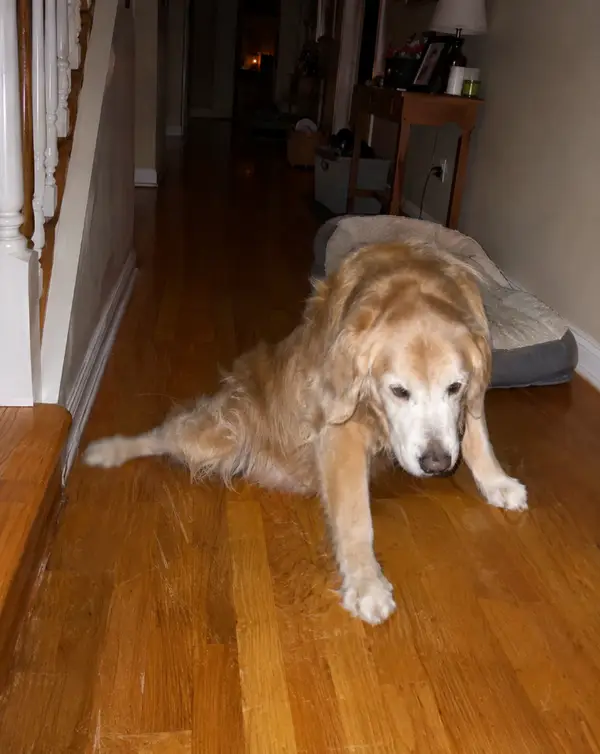
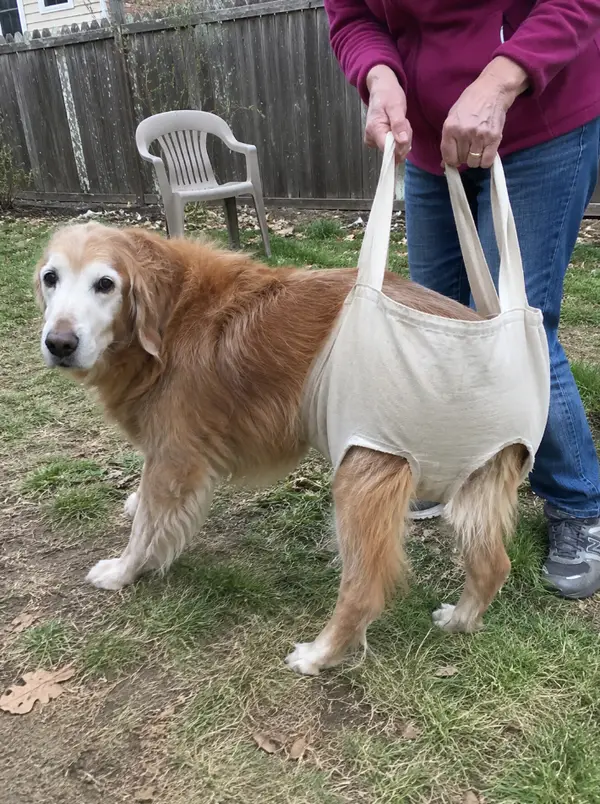
At 1 AM on a Thursday, I found out why my dog kept getting weaker on Librela. It wasn't in a Facebook group. It wasn't from my vet. It was in Librela's own label information. One line. And I'd been paying for that shot every month for two years. Librela is not fixing your dog. It was never built to. It's right there in the label. Not Librela. Not Galliprant. Not the joint chews. Not the $40 supplement everyone in your Facebook group swears by. NONE OF IT IS DOING WHAT YOU THINK IT'S DOING. I know because I tried all of it. Every shot. Every chew. Every mat. For two years. Almost $7,000. And my dog got so bad that my vet sat me down and used the words "quality of life." Because I spent two years turning down a pain signal, and nobody ever explained what was happening underneath it. And the worst part? My younger dog started doing the exact same thing. Same breeder. Same bloodline. Same little hop in the back legs. And I almost walked him straight down the same road, because I was already asking about his first shot. I'm done being polite about this. If your dog just had her first Librela shot, or you're sitting in the vet parking lot deciding whether to book the next one, you are spending time your dog does not have. Read this whole post. Every word. Because the answer is in here, and it is NOT another shot. My name is Lisa Thompson. I'm 54. I live in Columbus, Ohio, with my husband Rick and our two Golden Retrievers. Maple is 11. My shadow. The kind of dog who leans her whole body against your legs while you do the dishes and just stays there. Bodie is 6. Same breeder. Same bloodline. Completely different dog. Loud. Goofy. Steals dish towels off the oven handle and parades them around the yard. Two very different dogs. Same back legs. For Maple, it started at 9. A little bunny hop on our evening walk, both back legs moving together when she got tired. I googled it. Read something about joints. She was fine the next morning, so I let it go. Then she started slipping on the kitchen floor. Then she needed two or three tries to get up off her bed. Then every time she stood, her back legs slid out on the hardwood like a newborn foal. At night I'd hear it from upstairs. Scrape. Scrape. Thud. Her nails clawing at the boards, then her hip hitting the floor. Over and over. Some nights for an hour. I took her in. "Arthritis. Very common at her age. Let's start her on Librela." My vet said it was the newest, best option. No daily pills. $150 a shot. Every month. And for a while it worked. I'm not going to lie to you about that. After the second shot she trotted to the mailbox with me. I cried in the driveway. Then it started fading. Around week three she'd stiffen up again. By week four she was back on the hardwood. Scrape. Scrape. Thud. So we'd book the next shot. And the next. Every month she got a little better for a little less time. I asked about side effects. I was told there was nothing to worry about. Later I found out the FDA had added a list of side effects owners had reported to Librela's label. Nobody mentioned that in the exam room. "Let's add Galliprant." $89 a month, on top of the Librela. Maple threw up on the living room rug at 3 AM four nights in one week. We stopped. "Let's try gabapentin." She walked like she'd had too much wine and fell into the coffee table. We stopped that too. I posted in a Golden Retriever group on Facebook. "Maple is on Librela and still slipping every night. Has anyone dealt with this?" Everybody had an answer. "Joint chews." "Rugs on every floor." "Toe grips." "Grippy socks." "Give the shots time." So I did all of it. Joint chews. $40 a month for a year and a half. Maple ate them every morning with her tail going. Still slipping every night. The chews tasted good. That's all they did. Grippy socks. She twisted them sideways in four steps. Toe grips. Fell off in a week. A ramp for the bed. She stood at the bottom and looked at me like I'd lost my mind. Rugs and yoga mats down every hallway. Runners taped across the kitchen. My house looked like a gym. And she still hurled herself from rug to rug, because she was scared of the gaps in between. Hydrotherapy. $140 a session. She shook in the back seat the whole 35-minute drive there and the whole drive back. She'd be looser for an afternoon. Then nothing. I stopped adding it up because the number made me feel sick. And Maple kept getting worse. Her back end changed shape. Her hips went from round and solid to bony. You could see the muscle going from across the room. My vet said older dogs just lose muscle. Like it was nothing. Like it was weather. She stopped meeting me at the door. Stopped following me from room to room. She'd lie on the cool hardwood in the hallway and wait for me to come to her. All day. I had to slide a towel under her belly and lift her back end so she could get up to pee. Rick started calling it "the sling." My lower back hurt every single day. And her eyes changed. Not pain exactly. Just tired. Like she'd decided this was her life now. Like she'd stopped expecting to feel good. That look is what broke me. At her next checkup my vet said it. "We should start thinking about her quality of life." I knew what that meant. Every dog owner knows what that means. That night I sat on the kitchen floor and filled out one of those quality-of-life scales on my phone. I scored her honestly. I didn't like the number. I put the phone face down and sobbed. And Maple dragged herself across the hardwood, scrape, scrape, and put her head in my lap. She didn't know why I was crying. She just knew I was sad. My dog was comforting me while her back legs failed underneath her. That was a Tuesday. On Wednesday morning, Bodie got up off his bed and did a little hop with both back legs. Then he slipped on the kitchen floor. He was 6. Three years younger than Maple was when hers started. I knew that hop. I knew exactly what came next. The slipping. The scrambling. The shots that work and then fade. The chews. The mats. The sling. The scale on my phone. I could not do it again. I could not spend another $7,000 aiming at the wrong thing. I could not listen to two dogs scraping across the same floor every morning. I could not sit on that kitchen floor and cry again. I needed to understand WHY. Not what to buy next. WHY. Why did Librela work and then fade? Why did she keep getting weaker even on her medication? Why did nothing we added make a real difference? Why was her muscle disappearing when the pain was supposed to be handled? Two years of vet visits. Everyone told me WHAT. Not one person told me WHY. So I started reading. Every night after Rick went to bed. Reddit. Facebook groups. Veterinary websites. Research papers I had to read three times. And at 1 AM on a Thursday, I found a veterinary review on arthritis in dogs. One paragraph described Maple's last two years so exactly that I had to put my phone down. It called it a vicious cycle. Here's what nobody told me: Arthritis hurts. So your dog moves less. She skips the stairs. She shortens the walk. She favors the sore leg. She lies on the cool floor all day instead of following you around. And muscles that don't get used get weaker. Think about the last time your knee hurt. You favored it. You took the elevator. A few weeks later the whole leg felt weak and wobbly. Same thing. Those muscles around her hips are what hold her joints steady. Think of a tent. Her joint is the tent pole. Her muscles are the ropes. When the ropes go slack, the pole wobbles and the whole tent sags. Weaker muscles, less support. Less support, more pain. More pain, even less movement. Round and round. That's the slipping. That's the scrambling to stand. That's the legs splaying on the hardwood. That's her hips going bony. That's her lying in the hallway all day. All of it. One cycle, turning a little faster every month. And here's the part that made me want to throw my phone across the room. Librela blocks a pain signal called NGF. That's what it does. It does that one job, and for some dogs it does it well. But it's one link in a cycle with four. It doesn't touch the muscle. It doesn't do anything for the tired tissue around the joint. And the drug's own label information says it plainly: Librela does not slow or reverse arthritis. So the pain gets turned down for a few weeks. Meanwhile she's still lying down most of the day. The muscle is still going. The ropes are still going slack. And when the shot wears off around week four, the pain comes back to a dog with even less holding her up. That's why it worked and then faded. The shot didn't stop working. The cycle underneath it kept turning. So you book the next shot. Helps for a bit. You add Galliprant. Helps for a bit. Then the chews. The mats. The socks. Every single thing I bought was aimed at the pain or the floor. Not one thing was aimed at the cycle. Two years. Almost $7,000. Not one vet visit, not one Facebook group, not one pet store employee ever drew me that circle. They told me WHAT to buy. They never told me WHY it kept failing. The why was the cycle. The next morning I called every canine rehab vet within an hour of our house. Found one with an opening. Drove 50 minutes with Maple shaking in the back seat. Didn't care. She was the first vet in two years who didn't start by writing a prescription. She watched Maple get up off the floor. She put her hands on her hips. And she said, "Her muscles have been switched off for a long time." I told her about the paper. The cycle. She nodded the whole way through. She said that's exactly how they think about it in rehab: you can't only turn down the pain. You have to keep the dog moving and keep the tissue around the joint working, every day. Then I asked what they actually use. She said one of the main tools in her clinic is light therapy. Red and near-infrared light on the sore area. She said the American Animal Hospital Association's pain guidelines list it among the non-drug options vets can use, and small studies in arthritic dogs have shown less pain and better movement after a course of sessions. "The light helps calm the inflammation in the joint," she said. "It helps boost blood flow to the tired muscles around it. And it helps the cells there make energy, the fuel they need to keep working." "What about warmth?" I asked. I told her the one thing I'd noticed in two years. Ten minutes on a heating pad and Maple got up easier for an hour. "Warmth loosens tight, guarding muscles," she said. "That helps in the moment. The light is what builds over sessions." Then she told me how it works at the clinic. Laser sessions two or three times a week to start, each one its own bill. I looked at Maple. Still shaking from the drive. Three car rides a week was never going to happen. "Can I do this at home?" She was honest with me. She said she doesn't recommend brands. But she gave me two rules. "One. The light has to actually reach her. Hold a flashlight against your fingers and they glow red. Hold it across the room and nothing happens. Same light, different result. Waved above her fur for a few minutes while she wriggles, most of it never gets there." "Two. It has to be every day. The cycle turns every day. Whatever you do has to happen every day too." I went home and did what I'd done with everything else. I researched. Except this time I knew exactly what I was looking for. Option one: clinic laser sessions. The best equipment. Also three car rides a week Maple couldn't handle, and a bill I couldn't keep up. Option two: a handheld light wand. $300 to $450. You hold it over each sore spot for minutes at a time while she wriggles. Maple won't sit still for a nail trim. Not happening every day. Option three: a red light belt made for people. Didn't come close to fitting around a 70-pound Golden. Option four: the heating pad I already had. Warmth, yes. Light, none. And it slid off the second she moved. Option five: a pad that didn't list its wavelengths anywhere. If a company won't tell me what's in it, I'm not strapping it to my dog. Option six: a pad that straps flat against her, right over the sore spot. Red and near-infrared light plus gentle warmth in the same pad. 16.5 by 8.7 inches, with a 36.6-inch strap that went around Maple's hips with room to spare. No cords. Nothing to hold. Fifteen minutes and it switches itself off. Six options. One passed both of her rules. It was called Renvoir. Before I ordered, I went through the safety page line by line. Three warmth settings, and you start on the lowest. It shuts off on its own after 15 minutes. Check her skin under the pad after every session. Don't put it over open wounds. Ask your vet first if she has other conditions. I liked that they told me exactly what to watch for, instead of telling me nothing could ever go wrong. And I didn't stop anything. Maple stayed on her vet's plan. This went alongside it. $89.99. Once. Free shipping. It came a little over a week later. I started Maple that night. Strapped it over her hips on the couch while we watched TV. Lowest warmth setting. Fifteen minutes. She sighed, put her chin on my knee and fell asleep. Maple, who won't sit still for a nail trim, fell asleep. Bodie went next. Same pad, right after her. He snored. For Maple, the dog who'd been struggling for two years: The first week, I didn't see anything. I just made it part of our day. After breakfast. Then the couch at night. Fifteen minutes each. Around week three, I came downstairs on a Saturday and realized I hadn't heard it. No scrape. No thud. She got up off her bed on the first try and walked into the kitchen. Slowly. But clean. I stood there holding my coffee and didn't say a word, because I thought I'd jinx it. Week five: she was waiting at the door when I got home from work. Walking, not running. She's 11. But she was THERE. Tail going. Leaning her whole body against my legs again. Week six: our evening walk went from the end of the driveway to the corner of our street. Then past it. Month two: she started following me from room to room again. The sling went in the closet. My back stopped hurting. And one morning she walked across the kitchen with her old rope toy, dropped it on my foot and wagged her whole back end at me. She hadn't brought me a toy in over a year. I sat down on that kitchen floor, the same floor, and held her and cried for twenty minutes. She's still 11. She still has arthritis. She takes the stairs one at a time, and she always will. I'm not going to pretend she's a puppy. But the look is gone. The tired, given-up look. She's Maple again. For Bodie, the dog who was just starting: He gets his fifteen minutes right after Maple. Same pad. He thinks it's a spa. The morning hop faded over the first few weeks. He's still bombing around the yard with a dish towel in his mouth. Still getting up off his bed like a 6-year-old. Will it stop what happened to Maple from happening to him? I can't promise you that. Nobody honestly can. But I know the cycle now. When moving hurts less, he keeps moving. And moving is what keeps his muscles working. I'm not waiting for the kitchen floor this time. Maple is more comfortable on a pad I paid for once than she ever was on $190 a month. Because $190 a month was aimed at one link. The problem was always the cycle. I finally sat down one night and added up the two years. Librela: $3,300. Galliprant: $356. Joint chews: $720. Hydrotherapy: $1,120. Rugs, mats, socks, toe grips and a ramp she never used: $340. Vet visits and X-rays: $1,100. $6,936. Not one dollar of it was aimed at the cycle. Not one. Renvoir: $89.99. Once. For both dogs. A shot every four weeks is a bill every four weeks. $150 a month, for the rest of her life. That's how it's built. Nobody builds a business on a pad you buy once and use at home on your own couch. She's not done. Her muscles have just been switched off. You'll see it before you believe it. The morning she gets up off the kitchen floor clean. No slip. No scrape. No thud. That silence is what $89.99 sounds like. I wish I'd heard it two years and $6,936 ago. — Lisa T., 54, Columbus, OH EDIT: So many messages asking which one. It's the Renvoir Red Light Pad, from renvoir.com. Please get it from their site. I've seen people buy random "red light" pads with no wavelength listed anywhere, then say red light doesn't work. Make sure it says 660 nm red and 850 nm near-infrared. I didn't even notice until after I'd ordered, but they have a 60-day money-back guarantee. Use it for two months. If it's not right for your dog, you get your money back. P.S. Maple spent two years on a monthly shot that was only ever built to do one job, while the cycle underneath it kept turning. Every dollar I spent went at the pain or the floor. Nothing went at the cycle. Fifteen minutes a day on the couch did what $190 a month couldn't do for her. And it cost less than one month of what I was spending. P.P.S. If your dog is 6 or 7 and you've just seen the first hop, or the first slip on the kitchen floor, you're in the best spot you'll ever be in. The muscles are still there. Keep them working. Before the splaying. Before the scraping. Before the first shot and the first $190 month. Bodie is why I'm telling you this. Same breeder as Maple. Same bloodline. Same house. One got two years of shots and chews first. One got fifteen minutes a day from the very first hop. I know which start I'd want for my dog. Don't wait.

Loading the ad's image
Lisa Thompson — Read this before your next shot.
TestingImage

Read this before your next shot.

I'm going to say something nobody whose dog is on Librela wants to hear, and honestly I don't care if it upsets you. Librela is not fixing your dog. It was never built to. It's right there in the label. Not Librela. Not Galliprant. Not the joint chews. Not the $40 supplement everyone in your Facebook group swears by. NONE OF IT IS DOING WHAT YOU THINK IT'S DOING. I know because I tried all of it. Every shot. Every chew. Every mat. For two years. Almost $7,000. And my dog got so bad that my vet sat me down and used the words "quality of life." Because I spent two years turning down a pain signal, and nobody ever explained what was happening underneath it. And the worst part? My younger dog started doing the exact same thing. Same breeder. Same bloodline. Same little hop in the back legs. And I almost walked him straight down the same road, because I was already asking about his first shot. I'm done being polite about this. If your dog just had her first Librela shot, or you're sitting in the vet parking lot deciding whether to book the next one, you are spending time your dog does not have. Read this whole post. Every word. Because the answer is in here, and it is NOT another shot. My name is Lisa Thompson. I'm 54. I live in Columbus, Ohio, with my husband Rick and our two Golden Retrievers. Maple is 11. My shadow. The kind of dog who leans her whole body against your legs while you do the dishes and just stays there. Bodie is 6. Same breeder. Same bloodline. Completely different dog. Loud. Goofy. Steals dish towels off the oven handle and parades them around the yard. Two very different dogs. Same back legs. For Maple, it started at 9. A little bunny hop on our evening walk, both back legs moving together when she got tired. I googled it. Read something about joints. She was fine the next morning, so I let it go. Then she started slipping on the kitchen floor. Then she needed two or three tries to get up off her bed. Then every time she stood, her back legs slid out on the hardwood like a newborn foal. At night I'd hear it from upstairs. Scrape. Scrape. Thud. Her nails clawing at the boards, then her hip hitting the floor. Over and over. Some nights for an hour. I took her in. "Arthritis. Very common at her age. Let's start her on Librela." My vet said it was the newest, best option. No daily pills. $150 a shot. Every month. And for a while it worked. I'm not going to lie to you about that. After the second shot she trotted to the mailbox with me. I cried in the driveway. Then it started fading. Around week three she'd stiffen up again. By week four she was back on the hardwood. Scrape. Scrape. Thud. So we'd book the next shot. And the next. Every month she got a little better for a little less time. I asked about side effects. I was told there was nothing to worry about. Later I found out the FDA had added a list of side effects owners had reported to Librela's label. Nobody mentioned that in the exam room. "Let's add Galliprant." $89 a month, on top of the Librela. Maple threw up on the living room rug at 3 AM four nights in one week. We stopped. "Let's try gabapentin." She walked like she'd had too much wine and fell into the coffee table. We stopped that too. I posted in a Golden Retriever group on Facebook. "Maple is on Librela and still slipping every night. Has anyone dealt with this?" Everybody had an answer. "Joint chews." "Rugs on every floor." "Toe grips." "Grippy socks." "Give the shots time." So I did all of it. Joint chews. $40 a month for a year and a half. Maple ate them every morning with her tail going. Still slipping every night. The chews tasted good. That's all they did. Grippy socks. She twisted them sideways in four steps. Toe grips. Fell off in a week. A ramp for the bed. She stood at the bottom and looked at me like I'd lost my mind. Rugs and yoga mats down every hallway. Runners taped across the kitchen. My house looked like a gym. And she still hurled herself from rug to rug, because she was scared of the gaps in between. Hydrotherapy. $140 a session. She shook in the back seat the whole 35-minute drive there and the whole drive back. She'd be looser for an afternoon. Then nothing. I stopped adding it up because the number made me feel sick. And Maple kept getting worse. Her back end changed shape. Her hips went from round and solid to bony. You could see the muscle going from across the room. My vet said older dogs just lose muscle. Like it was nothing. Like it was weather. She stopped meeting me at the door. Stopped following me from room to room. She'd lie on the cool hardwood in the hallway and wait for me to come to her. All day. I had to slide a towel under her belly and lift her back end so she could get up to pee. Rick started calling it "the sling." My lower back hurt every single day. And her eyes changed. Not pain exactly. Just tired. Like she'd decided this was her life now. Like she'd stopped expecting to feel good. That look is what broke me. At her next checkup my vet said it. "We should start thinking about her quality of life." I knew what that meant. Every dog owner knows what that means. That night I sat on the kitchen floor and filled out one of those quality-of-life scales on my phone. I scored her honestly. I didn't like the number. I put the phone face down and sobbed. And Maple dragged herself across the hardwood, scrape, scrape, and put her head in my lap. She didn't know why I was crying. She just knew I was sad. My dog was comforting me while her back legs failed underneath her. That was a Tuesday. On Wednesday morning, Bodie got up off his bed and did a little hop with both back legs. Then he slipped on the kitchen floor. He was 6. Three years younger than Maple was when hers started. I knew that hop. I knew exactly what came next. The slipping. The scrambling. The shots that work and then fade. The chews. The mats. The sling. The scale on my phone. I could not do it again. I could not spend another $7,000 aiming at the wrong thing. I could not listen to two dogs scraping across the same floor every morning. I could not sit on that kitchen floor and cry again. I needed to understand WHY. Not what to buy next. WHY. Why did Librela work and then fade? Why did she keep getting weaker even on her medication? Why did nothing we added make a real difference? Why was her muscle disappearing when the pain was supposed to be handled? Two years of vet visits. Everyone told me WHAT. Not one person told me WHY. So I started reading. Every night after Rick went to bed. Reddit. Facebook groups. Veterinary websites. Research papers I had to read three times. And at 1 AM on a Thursday, I found a veterinary review on arthritis in dogs. One paragraph described Maple's last two years so exactly that I had to put my phone down. It called it a vicious cycle. Here's what nobody told me: Arthritis hurts. So your dog moves less. She skips the stairs. She shortens the walk. She favors the sore leg. She lies on the cool floor all day instead of following you around. And muscles that don't get used get weaker. Think about the last time your knee hurt. You favored it. You took the elevator. A few weeks later the whole leg felt weak and wobbly. Same thing. Those muscles around her hips are what hold her joints steady. Think of a tent. Her joint is the tent pole. Her muscles are the ropes. When the ropes go slack, the pole wobbles and the whole tent sags. Weaker muscles, less support. Less support, more pain. More pain, even less movement. Round and round. That's the slipping. That's the scrambling to stand. That's the legs splaying on the hardwood. That's her hips going bony. That's her lying in the hallway all day. All of it. One cycle, turning a little faster every month. And here's the part that made me want to throw my phone across the room. Librela blocks a pain signal called NGF. That's what it does. It does that one job, and for some dogs it does it well. But it's one link in a cycle with four. It doesn't touch the muscle. It doesn't do anything for the tired tissue around the joint. And the drug's own label information says it plainly: Librela does not slow or reverse arthritis. So the pain gets turned down for a few weeks. Meanwhile she's still lying down most of the day. The muscle is still going. The ropes are still going slack. And when the shot wears off around week four, the pain comes back to a dog with even less holding her up. That's why it worked and then faded. The shot didn't stop working. The cycle underneath it kept turning. So you book the next shot. Helps for a bit. You add Galliprant. Helps for a bit. Then the chews. The mats. The socks. Every single thing I bought was aimed at the pain or the floor. Not one thing was aimed at the cycle. Two years. Almost $7,000. Not one vet visit, not one Facebook group, not one pet store employee ever drew me that circle. They told me WHAT to buy. They never told me WHY it kept failing. The why was the cycle. The next morning I called every canine rehab vet within an hour of our house. Found one with an opening. Drove 50 minutes with Maple shaking in the back seat. Didn't care. She was the first vet in two years who didn't start by writing a prescription. She watched Maple get up off the floor. She put her hands on her hips. And she said, "Her muscles have been switched off for a long time." I told her about the paper. The cycle. She nodded the whole way through. She said that's exactly how they think about it in rehab: you can't only turn down the pain. You have to keep the dog moving and keep the tissue around the joint working, every day. Then I asked what they actually use. She said one of the main tools in her clinic is light therapy. Red and near-infrared light on the sore area. She said the American Animal Hospital Association's pain guidelines list it among the non-drug options vets can use, and small studies in arthritic dogs have shown less pain and better movement after a course of sessions. "The light helps calm the inflammation in the joint," she said. "It helps boost blood flow to the tired muscles around it. And it helps the cells there make energy, the fuel they need to keep working." "What about warmth?" I asked. I told her the one thing I'd noticed in two years. Ten minutes on a heating pad and Maple got up easier for an hour. "Warmth loosens tight, guarding muscles," she said. "That helps in the moment. The light is what builds over sessions." Then she told me how it works at the clinic. Laser sessions two or three times a week to start, each one its own bill. I looked at Maple. Still shaking from the drive. Three car rides a week was never going to happen. "Can I do this at home?" She was honest with me. She said she doesn't recommend brands. But she gave me two rules. "One. The light has to actually reach her. Hold a flashlight against your fingers and they glow red. Hold it across the room and nothing happens. Same light, different result. Waved above her fur for a few minutes while she wriggles, most of it never gets there." "Two. It has to be every day. The cycle turns every day. Whatever you do has to happen every day too." I went home and did what I'd done with everything else. I researched. Except this time I knew exactly what I was looking for. Option one: clinic laser sessions. The best equipment. Also three car rides a week Maple couldn't handle, and a bill I couldn't keep up. Option two: a handheld light wand. $300 to $450. You hold it over each sore spot for minutes at a time while she wriggles. Maple won't sit still for a nail trim. Not happening every day. Option three: a red light belt made for people. Didn't come close to fitting around a 70-pound Golden. Option four: the heating pad I already had. Warmth, yes. Light, none. And it slid off the second she moved. Option five: a pad that didn't list its wavelengths anywhere. If a company won't tell me what's in it, I'm not strapping it to my dog. Option six: a pad that straps flat against her, right over the sore spot. Red and near-infrared light plus gentle warmth in the same pad. 16.5 by 8.7 inches, with a 36.6-inch strap that went around Maple's hips with room to spare. No cords. Nothing to hold. Fifteen minutes and it switches itself off. Six options. One passed both of her rules. It was called Renvoir. Before I ordered, I went through the safety page line by line. Three warmth settings, and you start on the lowest. It shuts off on its own after 15 minutes. Check her skin under the pad after every session. Don't put it over open wounds. Ask your vet first if she has other conditions. I liked that they told me exactly what to watch for, instead of telling me nothing could ever go wrong. And I didn't stop anything. Maple stayed on her vet's plan. This went alongside it. $89.99. Once. Free shipping. It came a little over a week later. I started Maple that night. Strapped it over her hips on the couch while we watched TV. Lowest warmth setting. Fifteen minutes. She sighed, put her chin on my knee and fell asleep. Maple, who won't sit still for a nail trim, fell asleep. Bodie went next. Same pad, right after her. He snored. For Maple, the dog who'd been struggling for two years: The first week, I didn't see anything. I just made it part of our day. After breakfast. Then the couch at night. Fifteen minutes each. Around week three, I came downstairs on a Saturday and realized I hadn't heard it. No scrape. No thud. She got up off her bed on the first try and walked into the kitchen. Slowly. But clean. I stood there holding my coffee and didn't say a word, because I thought I'd jinx it. Week five: she was waiting at the door when I got home from work. Walking, not running. She's 11. But she was THERE. Tail going. Leaning her whole body against my legs again. Week six: our evening walk went from the end of the driveway to the corner of our street. Then past it. Month two: she started following me from room to room again. The sling went in the closet. My back stopped hurting. And one morning she walked across the kitchen with her old rope toy, dropped it on my foot and wagged her whole back end at me. She hadn't brought me a toy in over a year. I sat down on that kitchen floor, the same floor, and held her and cried for twenty minutes. She's still 11. She still has arthritis. She takes the stairs one at a time, and she always will. I'm not going to pretend she's a puppy. But the look is gone. The tired, given-up look. She's Maple again. For Bodie, the dog who was just starting: He gets his fifteen minutes right after Maple. Same pad. He thinks it's a spa. The morning hop faded over the first few weeks. He's still bombing around the yard with a dish towel in his mouth. Still getting up off his bed like a 6-year-old. Will it stop what happened to Maple from happening to him? I can't promise you that. Nobody honestly can. But I know the cycle now. When moving hurts less, he keeps moving. And moving is what keeps his muscles working. I'm not waiting for the kitchen floor this time. Maple is more comfortable on a pad I paid for once than she ever was on $190 a month. Because $190 a month was aimed at one link. The problem was always the cycle. I finally sat down one night and added up the two years. Librela: $3,300. Galliprant: $356. Joint chews: $720. Hydrotherapy: $1,120. Rugs, mats, socks, toe grips and a ramp she never used: $340. Vet visits and X-rays: $1,100. $6,936. Not one dollar of it was aimed at the cycle. Not one. Renvoir: $89.99. Once. For both dogs. A shot every four weeks is a bill every four weeks. $150 a month, for the rest of her life. That's how it's built. Nobody builds a business on a pad you buy once and use at home on your own couch. She's not done. Her muscles have just been switched off. You'll see it before you believe it. The morning she gets up off the kitchen floor clean. No slip. No scrape. No thud. That silence is what $89.99 sounds like. I wish I'd heard it two years and $6,936 ago. — Lisa T., 54, Columbus, OH EDIT: So many messages asking which one. It's the Renvoir Red Light Pad, from renvoir.com. Please get it from their site. I've seen people buy random "red light" pads with no wavelength listed anywhere, then say red light doesn't work. Make sure it says 660 nm red and 850 nm near-infrared. I didn't even notice until after I'd ordered, but they have a 60-day money-back guarantee. Use it for two months. If it's not right for your dog, you get your money back. P.S. Maple spent two years on a monthly shot that was only ever built to do one job, while the cycle underneath it kept turning. Every dollar I spent went at the pain or the floor. Nothing went at the cycle. Fifteen minutes a day on the couch did what $190 a month couldn't do for her. And it cost less than one month of what I was spending. P.P.S. If your dog is 6 or 7 and you've just seen the first hop, or the first slip on the kitchen floor, you're in the best spot you'll ever be in. The muscles are still there. Keep them working. Before the splaying. Before the scraping. Before the first shot and the first $190 month. Bodie is why I'm telling you this. Same breeder as Maple. Same bloodline. Same house. One got two years of shots and chews first. One got fifteen minutes a day from the very first hop. I know which start I'd want for my dog. Don't wait.

Loading the ad's image
Lisa Thompson — Read this before your next shot.
TestingImage

From the ads Sniped has collected from this page (4 so far, first seen Nov 2026). Reach is what Meta reports; no spend or sales estimates.