Advertiser

Kristin Hoover

veras-copper.comMeta Ad Library

25
Running ads
20 new in 30 days
Sep 2026
Advertising since
longest ad 2 months
—
Reach
running ads, summed
0% video
Formats
0 video · 2 image
1
Products advertised
1 shop

I made the biggest mistake of my marriage. I found a diamond ring hidden in my husband’s desk, and I sold it before he could give it to her. For thirty-one years, the first thing Richard said to me every morning was, “Morning, beautiful.” He said it when I had morning sickness with Beth. He said it the week my mother died, when I hadn’t washed my hair in five days. He said it with a mouthful of toothpaste, and once, memorably, from a hospital bed with his wrist in a cast. About a year and a half ago, he stopped. I could tell you the exact week, because it was the same week he moved into the guest room. Nights had been bad for me for a while by then. I’d wake up around two with my hips aching like somebody had tightened every bolt in my body while I slept. My knees throbbed. My hands would be curled up so stiff I couldn’t make a fist. I’d turn left, then right, then left again, trying to find one position that didn’t hurt, until I gave up and got out of bed. Most nights I ended up sitting on the edge of the bathtub running my hands under hot water until my fingers would open, crying quietly so I wouldn’t wake him. One morning he came downstairs with his pillow under his arm and said, “Jo, I’m going to sleep down the hall for a bit. So you can get some rest.” I said okay. I even smiled. Then I stood at the sink afterward, thinking, Well. That’s that, then. I was fifty-six. I wore my hair up in a claw clip every single day because my hands couldn’t hold a brush and a hair dryer long enough to do anything else. I’d stopped wearing mascara because I’d been up half the night and my eyes were too puffy for it. I hadn’t worn heels since our daughter’s wedding, because my knees couldn’t take them. By eight o’clock at night, I was too tired to do anything but sit in front of the TV with a heating pad, and I slept in our son Danny’s old T-shirts because I couldn’t manage the buttons on my nightgowns. Some mornings I’d catch myself in the hallway mirror, gripping the banister on the way down, and not recognize the tired woman looking back at me. So when my husband stopped telling me I was beautiful and moved his pillow down the hall, I didn’t argue. I figured he’d finally seen what I’d been seeing for two years. Then, a couple of months ago, the Tuesdays and Thursdays started. “Rotary board meeting,” he’d say, putting on his good jacket. He’d come home around nine, smelling like the cold, and go straight down the hall. His phone started living face-down on the kitchen counter. One night I walked into his study at midnight, and he shut his laptop so fast I jumped. I didn’t say anything. I think part of me didn’t want to know. Then, on a Sunday night a little after two in the morning, I went into his study looking for a phone charger, because I was up anyway, walking off my hip. I opened the second drawer of his desk and moved a few folders aside, and there was a small navy velvet box. I knew what it was before I opened it. You don’t get to fifty-six without knowing what a ring box looks like. It was the most beautiful ring I’d ever seen. An oval diamond sat on a thin platinum band with tiny stones set all the way around, and it caught the light from the hallway like it was lit from inside. Underneath it was a receipt from Hartwell Jewelers. Custom design. Paid in full. $18,400. I was still staring at the number when his phone lit up on the charger beside me. It was a text from a woman named Clara, with a photo. In the photo, a woman in her forties smiled at the camera and held up her left hand. She was wearing the ring. Underneath it, she’d written: Fits perfectly! I read it about twenty times. Fits perfectly. On her hand, and not mine. I looked down at my own hand. My knuckles were so swollen I hadn’t been able to get my wedding band off in a year. I didn’t wake him. I put the ring back exactly where I’d found it, turned off the lamp, and sat in his chair in the dark until the sun came up. At six that morning, Richard left for six weeks in Denver. The company had been sending him out there on a project, and it had been on the calendar for months. He came into the kitchen with his suitcase and bent down to kiss the top of my head, and I turned my face away. He stood there for a second. Then he said, “I’ll call you tonight, Jo,” and left. My sister Denise came over that afternoon. I showed her the photo I’d taken of the text. She looked at it for a long time, then looked at me and said, “Sell it.” “Denise…” “Sell it before he gets back and puts it on her finger. Thirty-one years, Jo. You are not going to stand in your own kitchen and watch that woman wear your money.” Richard called that night. I let it ring. He texted a few minutes later. Landed safe. Miss you already. I turned the phone face-down on the counter, the way he always did. On Tuesday I drove forty minutes to a gold and diamond buyer in a strip mall on the other side of the county, where nobody knew us. The man behind the counter looked at the ring under a little magnifier for a long time and offered me $8,900. That was less than half of what Richard had paid. I didn’t care. I wanted it gone. I took the check and deposited every dollar of it into Danny’s college fund on the way home, and I put the empty box back in the drawer. Richard left a voicemail that night. “Hey, Jo. Just wanted to hear your voice. Call me back when you can, okay? Love you.” I didn’t call back. On Wednesday a small package arrived, addressed to me. Postmarked from Arizona. The packing slip inside had a short gift note printed at the bottom. For Jo. For the mornings. R. I opened it standing in the hallway. A little cream box with a drawer, and inside it, on brown suede, a copper bracelet. Hand-hammered, with a feather engraved down the length of it. I laughed out loud in the empty hallway, and it wasn’t a nice laugh. Of course. Eighteen thousand dollars of diamonds for her, and a copper bracelet for his wife. I shoved it in the kitchen junk drawer with the takeout menus and decided I’d drop it in the donation bin at the end of the week. He texted that afternoon. Did the package come? I wrote back one word. Yes. That night I woke up at 2:10 with my hips on fire. I sat on the edge of the bathtub with my hands under the hot tap and cried harder than I had in years. I thought about Clara in her photo, rested and smiling with her hand in the air, her fingers straight and slim. I thought about my own hand under the water, swollen and curled. Around three, I went downstairs for my pills and couldn’t get the cap off the bottle. I stood in the kitchen trying with both hands, and when I finally gave up, I opened the junk drawer looking for a pair of pliers. The cream box was sitting right on top. I was too tired to be proud. I took the bracelet out. It was heavier than I expected. Warm, honey-colored, with tiny hammer marks all over it like somebody had made it by hand and taken their time. It reminded me of Richard’s grandmother. She wore a copper band on her wrist every day I knew her. She was still beating all of us at horseshoes at the family reunion when she was eighty-five, and she used to wink at me and tap it and say, “This is my secret, honey. Don’t tell the doctors.” I put it on and went back to bed, expecting nothing. And for the first week, nothing is exactly what happened. 2am, same as always. The tub. The hot water. I almost took it off a dozen times. Something about Grandma Palmer’s wink stopped me. On the ninth night, I woke up at 7:40. I didn’t jolt awake the way I had for two years, already hurting, already bracing for the first step out of bed. I just surfaced slowly, like coming up from the bottom of a warm pool. For a few seconds I didn’t remember anything. Not the ring, not the photo, not Denver. I just lay there with sunlight on the ceiling, listening to a bird outside the window. Then I made a fist under the blanket. It closed all the way. I lay there for a long time trying to remember when I’d last woken up after seven o’clock. It had been at least two years. Even on vacations, even on Christmas morning, I was always up by four, walking it off. That night I slept straight through again, until 8:05. I sat up in bed and actually laughed, alone in my bedroom, because I didn’t know what to do with a morning that big. A few nights later, I woke at 2:30 and felt the old ache start in my hip. I lay still and waited for the whole ordeal to begin. It just faded, like a wave passing under a boat, and I was asleep again before I’d even decided whether to get up. Richard texted that morning. Wish you could see these mountains, Jo. Thinking about you. I didn’t answer. But I read it twice. By the third week, I was a different woman, and I could see it. I came down the stairs without touching the banister, and I didn’t notice until I was standing in the kitchen. My eyes had cleared up. The puffiness I’d been hiding for two years was gone, and my skin had some color in it again. I took my hair out of the claw clip, picked up the round brush and the hair dryer, and did it myself. My hands didn’t give out halfway through. It fell soft and full around my face. I stood in front of the bathroom mirror for a long time, turning my head one way and then the other. That night I looked up what was on my wrist. Vera’s Copper. A woman in Sedona named Vera, sixty-nine years old, hand-hammering them since 1984. The page explained it in plain words. Your skin takes in trace copper ions all day long. Copper is what your body builds blood vessels with. So the circulation opens back up, and when the blood moves properly again, everything downstream comes with it. You stop waking up stiff. Your energy holds through the afternoon. You sleep the way you used to. The research goes back to the seventies. But you can’t patent a metal. At the bottom it said: Don’t buy copper on Amazon. Most of it is steel with a coating thinner than a hair. Hold a magnet to it. If it sticks, it isn’t copper. I went to the fridge and took off the magnet holding Danny’s tuition bill. I held it to the bracelet. It slid right off. Then I made a decision. If Richard was going to leave me for a woman who looked rested, he was going to come home and find out the woman he was leaving looked better. I went to the salon that week and got a real cut, the first in over a year, and let the girl talk me into some soft golden color. I went to the mall and bought a silk blouse with tiny pearl buttons, something I hadn’t been able to wear in two years, and I did up every single button myself in the fitting room. I bought a dress in a soft faded blue, the exact color of the dress I was wearing the night I met Richard at my cousin’s wedding, the one he spilled red punch all down the front of. I dug the nude heels out of the back of the closet, the ones I’d worn for exactly four hours at Beth’s wedding, and I wore them to the grocery store just because I could stand in them now. I put on mascara, and it stayed. I put on lipstick for the first time in two years. Denise came over on Saturday, stopped dead in the kitchen doorway, and said, “What happened to your face?” “I’m sleeping,” I said. “You look ten years younger, Jo. I’m not kidding. What are you doing?” So I pushed up my sleeve. I told her about the junk drawer and the pill bottle and Grandma Palmer. She took the magnet off my fridge and tried it herself, twice. “I’m ordering one tonight,” she said. On Sunday I went to church with my hair down and my heels on. I knelt for the prayers and got back up without holding the pew, and three women stopped me in the parking lot afterward. One of them, Marlene, who has had arthritis in both knees since the Clinton administration, grabbed my arm and asked, “Okay, what is it? Cortisone? New knees? Tell me.” When I showed her my wrist, she ordered one right there on her phone in the parking lot. By Monday, both of the other two women had texted me that the feather cuff was sold out. Marlene found out the woman who makes them is sixty-nine and closing her workshop. What’s left was 80% off, and when this last collection is gone, there won’t be another. Richard called every single day. I didn’t pick up once. He left a voicemail on Sunday night that I didn’t listen to. In the fifth week, I did something I hadn’t done in fifteen years. I walked into a lingerie store at the mall. I stood in the middle of it for a full minute feeling ridiculous. Then a saleswoman about my age came over and asked what the occasion was. “My husband comes home in two weeks,” I said. “I want him to see exactly what he’s losing.” She raised an eyebrow, didn’t ask anything else, and found me something beautiful. That evening I finally went to throw out the packaging from the bracelet. I’d tossed it in the recycling bin by the garage the night I put it on. When I pulled the little cream box apart, an envelope fell out of the bottom of the drawer, folded under the suede where I’d never looked. My name was on the front in Richard’s handwriting. Jo, I found this on a forum for women with bad joints. I’ve been reading it at 3am in the guest room for months, trying to figure out how to help you. Woman after woman said this was the only thing that let her sleep through the night again. It’s real copper, from a woman in Sedona. My grandmother wore one just like it for forty years, remember? The feather one sold out twice, so it took five weeks to get here. I miss sleeping next to you. I’m sorry I left you alone in that bed. There’s one more surprise coming in October, and I hope you’ll say yes. R. I read it standing in the garage. Then I sat down on the cold floor with it in my lap. My phone buzzed. It was an email to our family account from a resort in Maui. Aloha, Mr. and Mrs. Palmer! We’re so excited to confirm your Vow Renewal Package for October 14th, in celebration of your 32nd anniversary. Your beachside ceremony is booked for sunset. My hands started shaking so badly I dropped the phone. I called Hartwell Jewelers. A woman answered. “Hartwell’s, this is Clara.” For a moment I couldn’t speak. “Hello?” “This is Joanne Palmer,” I said. “Richard Palmer’s wife.” “Oh my goodness!” Her whole voice lit up. “Mrs. Palmer! I’ve been dying to meet you. Did he give it to you already? He wasn’t supposed to until Maui. Oh, he’s going to be so mad he couldn’t wait.” I held onto the garage door frame. “Clara,” I said. “Why were you wearing it?” She laughed. “Oh, the photo! He told me your hands were about the same size as mine, so I tried it on for him before we finished the sizing. “He came in every Tuesday and Thursday for two months to design it with me. He wanted it to look like the ring he couldn’t afford when you two got married. “He told me the one you’ve been wearing for thirty-one years came from a pawn shop in Knoxville, and you’ve never once complained about it. He made me size it a little bigger. He said your knuckles have been bothering you, and he didn’t want it to ever hurt going on.” She paused. “Mrs. Palmer? Are you there?” I was on the garage floor by then. “I sold it,” I said. “Clara, I sold it.” She was quiet for a long time. Then she said, very gently, “Where?” I told her. She said the center stone had a tiny laser inscription, a serial number you can only read under magnification, and that she’d call the store first thing in the morning. I sat on that floor and listened to every voicemail Richard had left me in five weeks. “Just wanted to hear your voice.” “Did the package come? Are you wearing it?” “Jo, I know things have been hard. I know I’ve been bad at showing it. When I get home, I’m going to fix that, I promise.” The last one was from Sunday night. “I miss you. That’s all. I just miss you.” I cried until the garage went dark. Clara called the next morning at nine. “I found it,” she said. “It was still in their back case. They hadn’t broken it down yet.” “Oh, thank God. How much? I’ll take the money out of Danny’s fund, I’ll…” “Mrs. Palmer,” she said carefully. “I’m so sorry. I had to call Richard. It’s his ring, and I couldn’t buy it back without him.” I closed my eyes. “What did he say?” “He said, ‘Is she okay?’” Clara told me. “That was the first thing he asked.” That afternoon, for the first time in five weeks, I texted my husband first. Come home safe. I love you. He answered in under a minute. I love you too, Jo. Always. He came home on a Wednesday afternoon. I’d been ready since noon. I was wearing the blue dress, the new lingerie underneath it, the heels, the lipstick. My hair was soft and down around my shoulders, and I’d slept nine and a half hours the night before. I stood in the kitchen with my hands shaking, rehearsing what I was going to say. He came through the front door with his suitcase and stopped. He just looked at me for a long, long time. “Jo,” he said. “Look at you.” And then, very quietly, “Morning, beautiful.” It was four in the afternoon. I don’t think he even noticed. I started crying before I could say a single word of what I’d rehearsed. “I sold it,” I said. “Richard, I found it, and I saw the picture, and I thought… I thought it was for her. I sold your ring. I’m so sorry. I’m so sorry.” He set down his suitcase. “I know,” he said. “Clara told me.” “You stopped saying it. You moved down the hall. You were gone every Tuesday and Thursday, and your phone…” “Jo.” He crossed the kitchen and took my face in his hands. “I moved down the hall because I heard you crying in the bathroom at two in the morning. “You’d sit on the edge of the tub with your hands under the hot water, waiting for them to open, and I’d stand outside the door not knowing how to help you. I thought if I got out of your way, at least you’d stop worrying about waking me.” His voice broke. “It was the stupidest thing I ever did. I stopped saying it because every time I did, you’d look at me like you knew I was lying. So I figured I’d stop saying it and start showing you.” Then he reached into his jacket and took out the navy velvet box. “I drove to that store straight from the airport,” he said. “Most expensive ring I ever bought twice.” I laughed, and cried, and laughed again, and he got down on one knee in the middle of our kitchen with his bad knee cracking on the way down. “Joanne Palmer,” he said. “Will you marry me again?” I held out my hand. My knuckles hadn’t been swollen in weeks. The ring slid on in one go. It fit perfectly. He moved back into our bedroom that night. When he saw the copper on my wrist, he took my hand and turned it over and ran his thumb over the feather with a grin I hadn’t seen in two years. “You’re wearing it,” he said. “Every day since the junk drawer,” I said. “I haven’t slept like this in years.” I’ll keep the rest of that night to myself. I’ll just say that the lingerie was worth fifteen years of waiting. We flew to Maui in October. The resort had set up white chairs on the sand, facing the water. Beth flew in with her husband. Danny wore a tie without complaining, which is its own kind of miracle. Denise came, and so did Richard’s mother, who’s eighty-one and cried from the moment she sat down. And in the third row, in a yellow sundress, sat Clara. Richard had insisted. I walked down the sand in heels, on my own, without anyone’s arm. I wore the ring and the copper cuff on the same hand. Richard cried harder than I did, and he’ll deny it if you ask him. I was crying before Richard even took my hands. He held them for a long moment before he spoke. “Joanne, the night I met you, I ruined your dress, and you let me follow you around for four hours with a club soda anyway. I’ve been trying to deserve that ever since. “Thirty-two years ago I promised to take care of you. “For a while I forgot that taking care of you meant staying close, even when I didn’t know how to help. I’ll never make that mistake again. Every night I have left, I want to spend on my side of our bed, reaching over in the dark to make sure you’re still there. “If I got to live my whole life over, I’d go back to that wedding in Knoxville, find the girl in the blue dress, and spill the punch on purpose. I’d choose you in this life, Jo, and in every one after it.” I had to wait until I could breathe again. “Richard, I spent two years believing you’d stopped seeing me. The truth is I’d stopped seeing myself. “I hurt so much and I was so tired I thought the woman you married was gone, and while I was grieving her, you were sitting in the guest room at three in the morning reading about joint pain on the internet, trying to find her for me.” Everyone laughed, and Richard put his head down and laughed with them. “You found her. It turns out she was just worn out. The first morning I woke up after seven, I made a fist under the blanket, and for a few seconds I didn’t remember being sad. “I didn’t know getting my body back could give a woman back so much of herself. “So here’s my promise. I will never again mistake your quiet for leaving. When I’m hurting, I’ll come find you instead of sitting alone on the edge of the tub. And every morning you tell me I’m beautiful, I’m going to believe you. “I chose you when I was twenty-two with punch all down the front of my dress. In this lifetime and the next, and every one after that, it’s you.” He kissed me before the officiant had a chance to tell him he could. At the reception afterward, I danced with Richard, then Danny, then Richard’s mother, then Richard again, barefoot in the sand until midnight. Four different women found me to ask about the bracelet. One of them was the resort’s event coordinator, who told me she hadn’t been able to kneel to garden since she turned fifty. Denise pulled the website up on her phone right there by the cake table, and they all checked a magnet against it to be sure, then ordered before the last of them were gone. That night the sun went down over the water, and my husband held me on the beach in front of everyone we love. The next morning, before I’d even opened my eyes, I heard it. “Morning, beautiful.” The cuff is still on my wrist, right next to my ring, and Richard is back on his side of the bed where he belongs. I know now how lucky I was to get it at all. Vera is closing her workshop, and one of the women from church only got hers because she ordered the hour I told her. Her friend who waited a week got the sold-out page. So if you’re the woman sitting on the edge of the bathtub at two in the morning, waiting for your hands to open, give yourself your mornings back. And if you’re the man standing outside that bathroom door not knowing how to help, don’t wait until they’re gone. Get her the one thing that would finally let her sleep, and be the first voice she hears when she wakes up rested. [https://veras-copper.com/collections/limited-sale](https://veras-copper.com/collections/limited-sale)

Loading the ad's image
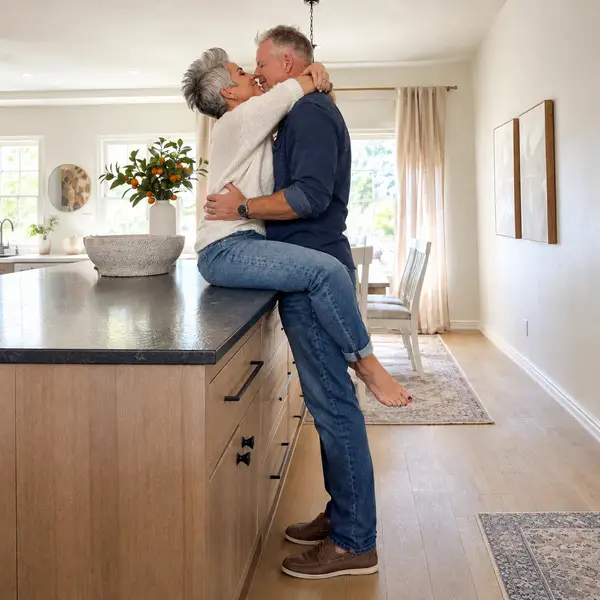
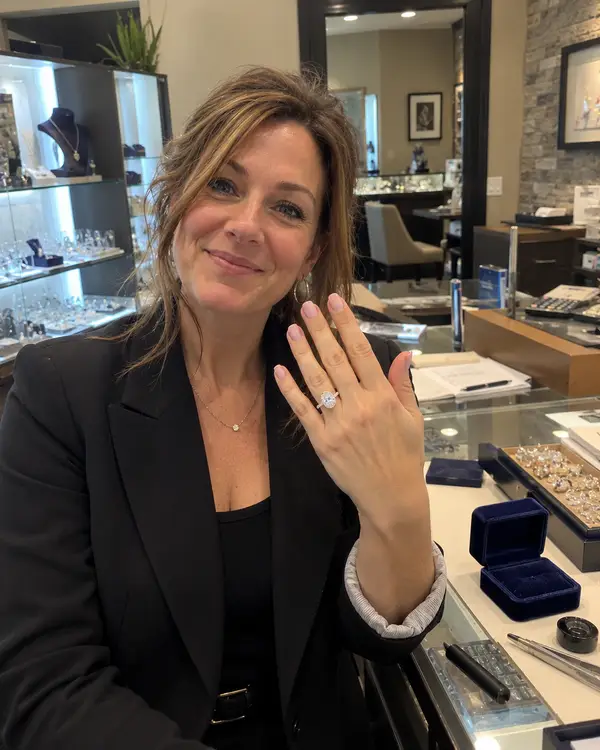
Kristin Hoover — I made the biggest mistake of my marriage
PromisingImage

I'm f*ing angry writing this. But my mom said, "Sarah, if our story saves even one senior, it's worth it." So here we are. Nine weeks ago my phone rang at ten past seven in the evening. It was my mother. She was halfway up her own garden slope and she could not go any further. She is 79. She lives across the road from me. I am in that house every single day. It started last Christmas, with the end of her driveway. She used to walk down for the post and keep going. Round the block, down to the shops, back the long way. She did that for thirty years. Then it was down for the post and back. "I can get as far as the mailbox now," she told me. "I used to pick up the mail and keep walking for several blocks." She said it the way you'd mention the weather. I did what I thought you were supposed to do. Bought the ibuprofen in the big box. Carried the shopping in for her. Started parking closer to the door. And that Christmas I bought her a copper bracelet. Thirty-two dollars, four and a half stars, hundreds of reviews using the words joint pain. I remember putting it on her wrist and feeling like I had handled it. By June I thought she was doing better. She had stopped asking me to carry things in. She had stopped mentioning the hip. When I offered to drive she said she was fine. I took all of that as fine. Then the evening in the garden. When I got to her the shopping bags were already sitting on the grass beside her and the ice cream in them had gone soft. She hadn't called me straight away. She had stood out there in the dark long enough to work out whether it was worth the phone call. That is the part I can't get out of my head. Not the slope. That she stood there first, doing the sums on whether to bother me. Her doctor sent us to a physiotherapist that Thursday. She watched my mother walk the length of the room and back, and asked me how long she had been like this. Since Christmas, I said. "No. That's when you noticed." Then she explained something I did not know. I am a nurse. Twenty-two years. I have turned patients, chased referrals, sat with families at three in the morning. I stood in that room and had no answer for her. "A joint doesn't have much of a blood supply of its own," she said. "It isn't fed like a muscle is. It lives on what gets pushed through the tissue around it, and the thing that does the pushing is movement." I asked what happens if there's less of it. "Less gets in. And a joint that's getting less aches more. And a joint that aches more is one she moves less." She let that sit. "That's the whole thing. It doesn't need anything to start it off. It only needs her to stop." Then she asked me if I'd ever been outside in the cold without gloves. Of course, I said. "What does that feel like in your knuckles? Not the skin. Underneath." Stiff, I said. Seized up. Deep. "That isn't damage. That's your body pulling the supply back from the edges, and that ache is what less of it feels like. You go indoors, it warms through, and it's gone in ten minutes, because the supply came back." "Now imagine it dropping a little, and not coming back. Nine months of shorter and shorter walks will do more to a woman her age than nine months of almost anything else." "But I keep her walking," I said. "I take her out. I do do that." "I believe you. And it matters, so don't stop. But walking doesn't put the supply back. It interrupts. You get her up, blood moves, and the minute she sits down it goes back to where it was." Then she asked me what I'd been giving her. Ibuprofen, I said. Two in the morning, two more on a bad afternoon. I said it the way you say something you're confident about. "That's fine, keep giving them to her if she needs them. But you know what they are. A painkiller works on the message, not on the supply. How long does a dose last?" Four hours, I said. Maybe five. "So that's four hours of cover out of twenty-four." I stood there doing the arithmetic. "So what's happening in between?" "Whatever is actually on her. That's the whole answer." Nobody ever taught me that. Twenty-two years of looking after other people's parents, and nobody ever taught me what happens to a joint that simply stops getting moved. I sat up until three that morning looking for something that works on the supply. What I found is that copper is not a wellness fad. It is a mineral the body cannot function without. It uses copper to build and hold together connective tissue and blood vessels, which is the plumbing all of this runs on, and skin takes up a small amount of it through direct contact. People have worn it against the wrist for three thousand years for that reason. And the reason it had never once come up in my training is boring rather than sinister. You can't patent a metal. Nobody on earth can own copper, so there is nobody with a reason to fund a trial on it or pay someone to come and talk to us about it. Then I remembered what was already on her wrist. I turned it over, and in letters I needed my glasses for, it said copper plated. Plated is a coat. Underneath it is brass. Once that coat wears through at the two points where it actually touches her, there is nothing there at all. And it never looks any different from the outside. That is the whole problem. It doesn't change when it fails. It just stops. She had worn that thing every single day for nine months because I gave it to her. Every review I had trusted was written in the first fortnight. Nobody goes back at month nine to say it stopped being copper. What I was actually looking for was solid copper. Not plated, not infused, not copper coloured. Most of what came up was jewellery. Three hundred dollars, sold on how it photographs. Then I found Vera's Copper. Ninety nine point nine percent pure the whole way through, hand forged, with nothing to wear off because there is nothing underneath it. But the part that decided it was where it sits. It is an open cuff, not a chain and not a bangle. A chain swings. A bangle rides up and down her forearm all day. This one you press to fit, and the ends close on the inside of the wrist, which is where I have taken a thousand pulses and the one place on the arm with almost nothing between the blood and the outside. Contact is the entire point. A thing that isn't touching her isn't doing anything. It arrived and it looked like nothing. Heavy, dull orange brown, hammer marks all over it and no two of them the same. No box with a window in it. I had bought her pretty once already. This time I wanted the one that was actually made of the thing. The first week, nothing. Of course there was nothing. It was a week. Somewhere in the third week I realised I had stopped walking behind her. Months of it without knowing. Half a step back on the way to the car, hands free, watching her feet. I can't tell you when I started or the day I stopped. I caught myself walking next to her one afternoon and had to work out what was different. Her neighbour noticed before I let myself say it out loud. She rang to ask whether something had happened, because she had seen Mum out on the road twice that week. She gets out of the car differently now, too. She used to put both hands on the doorframe and make this small sound on the way up, a sharp little breath she didn't know she was making, and then stand still for a second before she'd walk. She doesn't do either of those things anymore. She is back out in the front beds as well. Two weekends ago she was down on her knees in them most of a Saturday, and complained about her back that evening like a normal person. Two Sundays ago all of us went out to the lake. Both her sons, the grandkids, the lot of us. It is a third of a mile down from where you park. For three years she has been the last one to the spot, with one of us holding her arm on the path. I was halfway down when I realised none of us had turned around to check on her. That is the bit I would tell you about if you asked. Not that she walked it. That nobody turned around. And she got down on the grass with the little ones when we got there, and she stayed down there. Here is what I wish somebody had told me last Christmas. It does not happen all at once, and there is no day she gives anything up. She subtracts one small thing at a time and she never announces a single one of them. She doesn't tell you she has stopped. She tells you she doesn't fancy it. She said to me in that waiting room, "I haven't given anything up. I just grin through it." Months before that she told me she wasn't coming to the fair because she didn't want to hold everybody up. I thought at the time that was thoughtful of her. It wasn't thoughtful. It was the first step of her staying home. And if she seems to be doing better and asking you for less help, go and check which of those two it actually is. They look identical from where you are standing and only one of them is good news. Keep her walking. That never stops mattering. But you cannot walk her every hour of every day, and you were never going to be able to. It is the hours in between, when she has settled in her chair and you have finally sat down yourself, that decide this. So please go and do this tonight. Ask her when she last walked past the end of her own road. Not to the post box. Past it. If she has to stop and think about it, it happened a long while ago, and she was never going to be the one to tell you. Click the link below to get the one she wears. It is called Vera's Copper. Vera makes them herself by hand and has done for forty years. Thirty days, money back, so if it does nothing for her you send it back. I don't get anything from sharing this. I am not selling anything. I look after other people's parents for a living and I still missed it in my own mother for nine months, until a physiotherapist bothered to say it plainly. Don't wait until you find out the way I did. And if you know anyone looking after a parent, or anyone whose walks have quietly been getting shorter, send this to them. Most people have no idea. I had no idea, and I was across the road. Whoever you are looking after is lucky to have someone who would read all the way to the end of this and actually take it seriously. ❤️ Sarah, nurse and daughter.

Loading the ad's image
Kristin Hoover — I'm f*ing angry writing this
Promising

Why Copper Vanished from Medicine 🔶 Most people think copper jewelry is a folk remedy. Something grandmothers believed in. Something without real science behind it. They're wrong. In the 1800s, physicians across America and Europe were prescribing copper bracelets to their patients as standard practice — not as an alternative treatment, but as medicine. The reason was simple. Copper destroys bacteria, fungi and pathogens on contact. Scientists called it the oligodynamic effect. Hospitals knew it. Physicians relied on it. Patients wore copper daily. But the benefits went deeper than anyone expected. 🧬 The human body runs on electricity. Every heartbeat is a frequency. Every nerve impulse is a signal. When copper sits directly against skin, something remarkable happens — the body begins to absorb its charge. Oxidative stress neutralizes. Internal systems recalibrate. Circulation responds. Patients who wore copper recovered faster than those who didn't. Doctors had no explanation. They just knew it worked. ⚡️ So why did it disappear? The answer is exactly what you'd expect. As pharmaceutical interests took over medical education in the early 1900s, the entire model of medicine shifted — from prevention and passive healing, to perpetual treatment. A patient who heals themselves is not a customer. Copper had no patent. No profit margin. No place in the new system. So it was quietly removed. Replaced. Forgotten. 👀 But not entirely. Because one woman kept making it. Her name is Vera. She's 69, she lives in Sedona, and she's been hammering copper by hand since 1984 — long before any of this became a trend. She's not a brand. She's just been doing this her whole life. If you’re interested, link’s below. 🔶 [https://veras-copper.com/collections/limited-sale](https://veras-copper.com/collections/limited-sale)

Loading the ad's image
Kristin Hoover — Why Copper Vanished from Medicine 🔶
Promising

Three days after I retired, my daughter-in-law called to drop her three kids on me. "You don't do anything anymore, Pat. You can watch them." I smiled, hung up, and spent the summer teaching her exactly what "doing nothing" looks like. I taught second grade at Lincoln Elementary for 34 years. On my last day the kids lined the hallway and clapped me out the front doors, and I cried the whole way to my car. ⠀ That afternoon the staff gave me a retirement present. A walking stick, the fancy kind people take hiking, with three words burned into the handle. ⠀ Now go, Pat. ⠀ I put it in the umbrella stand by my front door. Remember that it's there. ⠀ Three days later I was at my kitchen table with a coffee and a library book when my phone lit up with my daughter-in-law's name. ⠀ In twelve years of being married to my son, Brittany has never once called me Mom. She calls me Pat, and she only ever calls when she needs something. ⠀ She didn't say hello. ⠀ "Pat, my company's doing a retreat in Maui the first week of September. I'm not dragging three kids to a resort, so I'll drop them at your place that Saturday. For the week." ⠀ Then, before I could answer: ⠀ "You don't do anything anymore. You can watch them." ⠀ I told her I'd have to think about it, because I'd been thinking about doing some things of my own. ⠀ She laughed. Not a mean laugh, exactly. Worse. The kind of laugh you'd give a child who says she's going to be an astronaut. ⠀ "Things? Pat. You couldn't make it around Disney with us. You sat on a bench all afternoon holding everybody's bags." ⠀ I said I'd help her find a sitter. She said sitters cost money. ⠀ So I smiled, which she couldn't see, and I said, I'm sorry, Brittany, I'll be busy that week. And I hung up. ⠀ I had never hung up on anyone in my life. ⠀ I need to tell you about that bench. ⠀ Two summers ago we all went to Disney World. My son Mike, Brittany, the three grandkids and me. I paid for everybody's park tickets as my birthday present to the family. ⠀ By eleven in the morning on the first day, my knees were done. My back was locked, my feet were on fire, and I was so tired I could have lain down on the pavement. So I found a bench near the castle and told everybody to go ahead without me. ⠀ I sat on that bench for five hours. Strollers, backpacks, a diaper bag and everybody's water bottles piled up around me like I was the coat check. ⠀ My grandkids rode everything. I have one picture from that whole trip, and I'm holding a churro and a diaper bag. ⠀ An hour after I hung up on Brittany, my phone started buzzing with the family group chat. Twenty-three people. My son, my sister, the cousins, half the family I've cooked Thanksgiving for since 1991. ⠀ Brittany had posted a picture of the resort. Palm trees, blue pools. "Retreat week 🌺 Mike's got the kids. Some of us still work." ⠀ Then a second picture. ⠀ It was me, on that bench at Disney. Shoes off, mouth open, sound asleep, with a stroller and four backpacks piled up around me. ⠀ Underneath it she'd written: "Grandma's got PLANS 😂" ⠀ Three people laughed at it. ⠀ My son hearted it. ⠀ I'm not proud of what I did next. I went into my account and changed the Netflix password she'd been using for six years. ⠀ It felt wonderful for about four minutes. ⠀ Then I sat at my kitchen table and looked at that photo for a long, long time. The woman asleep on the bench. Her shoes off. Everybody's bags piled around her like she was part of the furniture. ⠀ Because the part I'd never said out loud was that Brittany wasn't wrong. ⠀ I'm 63, and somewhere in the last few years I'd slowed down so much I barely recognized myself. I was stiff the second I swung my legs out of bed. Everything took me longer. My long walks had turned into ten-minute walks, and then into no walks, because I couldn't get through my own neighborhood without stopping. ⠀ I was wiped out by two in the afternoon and wide awake at three in the morning. I'd put on 25 pounds since I turned 55, and I couldn't tell you how. When my grandson wanted me down on the floor with his Legos, I'd say not today, honey, because I knew I'd need help getting back up. ⠀ I'd started using Instacart so I didn't have to walk the grocery store. I'd started saying "you all go ahead" so often that people stopped waiting. ⠀ And I was doing everything right. Magnesium, vitamin D, fish oil, collagen, turmeric twice a day, and a glucosamine pill the size of a horse tablet. My doctor gave me about ninety seconds. "It's your age, Pat. Try to lose some weight." ⠀ So maybe Brittany had it right. Maybe this was who I was now. The woman who doesn't do anything anymore. ⠀ Then I looked over at the umbrella stand by the door. ⠀ Now go, Pat. ⠀ I opened Brittany's photo of the resort again. She'd tagged it. ⠀ I booked a room for the same week. ⠀ Then I sat back in my chair and my hands started shaking, because I'd just booked a week in Maui, twelve weeks away, and I couldn't make it around a theme park without a bench. ⠀ That Sunday was Dottie Kessler's 79th birthday party. Dottie ran the front office at Lincoln for 31 years before I ever got there, and she still knows every child's name and every teacher's secret. ⠀ I almost didn't go. I'm glad I did. ⠀ Dottie wasn't sitting down at her own party. She was carrying a tray of deviled eggs around the backyard. Then she was down on the grass with her great-grandkids, looking for a lost ball under the hedge. Then she was back up again, without putting a hand on anything, and I watched her do it like I was watching a magic trick. ⠀ She's sixteen years older than me. If I'd gone down on that grass, somebody would have had to help me up. ⠀ So when she finally sat down next to me, I asked her straight out. Dottie, how on earth are you doing that at 79? ⠀ She laughed so hard she had to put her plate down. ⠀ "Honey, at 70 I couldn't get off my own couch without rocking three times. My daughter was pricing walk-in bathtubs. I was about this close to letting her." ⠀ Then she pushed up the sleeve of her cardigan. A plain copper bracelet, worn dark and a little bent on one side. ⠀ "My sister put this on me. She's 84 and still drives herself to Florida every winter. I wore it to shut her up." ⠀ I told her I'd confiscated better jewelry than that from seven-year-olds. ⠀ "So did I," she said. "So I took it off for a week to prove her wrong. By Thursday I was back on that couch, rocking." ⠀ Then she explained it the way Dottie explains everything, like you're a substitute who's about to be late for homeroom. ⠀ "Your blood vessels are built with copper, Pat. Your body can't make it on its own. After 50, most of us run low, and nobody ever tests you for it. So your blood slows down, and everything it feeds goes stiff and heavy and tired." ⠀ "You remember the master clock in my office? The one that rang every bell in the building? When that clock ran slow, the whole school went haywire. Kids late for lunch, recess running long, buses sitting in the lot, and every teacher in the building blaming every other teacher. It was never the teachers. It was one clock." ⠀ "Your knees, your back, your sleep, the weight, the two o'clock wall. You don't have five problems, honey. You've got one clock." ⠀ I thought about my kitchen cabinet. All those bottles. Every one of them for a different teacher. ⠀ I asked why I couldn't just take copper as a pill. ⠀ "Your stomach breaks most of it down before it does you any good. On your wrist, your skin takes in a little, all day long." ⠀ Then why had no doctor ever said a single word about it? ⠀ "Because nobody can patent a metal. Who's going to pay to tell you?" ⠀ And then the question I was actually scared to ask. Is this going to get me through a week in Maui? ⠀ "No," she said. "Your legs are. This just gets the blood back to them." ⠀ I already had my phone out, looking at the $15 ones online. She took it right out of my hand. ⠀ "Not those. Most of them are brass with copper paint. They do nothing, and that's why everybody thinks this is a gimmick." ⠀ Then she reached into her purse, took out a pad of old Lincoln Elementary hall passes that she apparently still carries, and wrote a name on the back of one. ⠀ Vera's Copper. ⠀ "A woman named Vera. She's hammered them by hand for forty years. When's your trip?" ⠀ The first week of September. Twelve weeks. ⠀ "Then order it tonight. And Pat? Don't you dare tell that girl you're coming." ⠀ I ordered it in Dottie's driveway. ⠀ Week 1. Nothing at all. I texted Dottie that I wanted my hall pass back. ⠀ Week 2. I slept through the night. I woke up at seven and checked the clock twice. ⠀ Week 3. I got out of bed, walked to the kitchen, and I was pouring my coffee before I noticed nothing hurt. ⠀ Week 5. I took it off to prove Dottie wrong, the same way she had. By day four I was stiff again and back on the couch by two. I put it back on, and it hasn't left my wrist since. ⠀ Week 6. Two o'clock came and went, and I didn't sit down. I didn't even notice until dinner. ⠀ Week 7. I got down on the floor with my grandson's Legos, and I got back up by myself. ⠀ Week 8. I took the walking stick out of the umbrella stand and walked the three-mile loop around the reservoir. The next morning, I did it again. ⠀ Week 10. My sister met me for lunch and stopped dead in the doorway of the restaurant. "Patty. What are you taking?" ⠀ Week 12. I packed my suitcase. My good jeans needed a belt. Fourteen pounds. ⠀ The bracelet didn't walk those fourteen pounds off me. I did. It just gave me back a body that wanted to move. ⠀ That's what doing nothing looks like, by the way. ⠀ On the first Saturday of September, I took a cab to the airport by myself. ⠀ Brittany had no idea I was coming. ⠀ She found out at the resort pool on Sunday afternoon. She was walking past with two women from her office, and she stopped so fast one of them walked into her. ⠀ "Pat? What are you doing here?" ⠀ Doing nothing, I said. Like you told me. ⠀ On Tuesday the whole retreat went on a team day to the Road to Hāna. Nobody had invited me. I'd signed up at the front desk the day I arrived, and I was the first one on the bus. ⠀ The last stop was the Pipiwai Trail. Two miles uphill through a bamboo forest to a waterfall, roots and rocks and mud the whole way. ⠀ At the trailhead, the guide asked if anybody wanted to stay down at the bottom and watch the bags. ⠀ I picked up my walking stick and started up the trail. ⠀ Now go, Pat. ⠀ I was standing in the spray at the bottom of a 400-foot waterfall when the group caught up. A young man from Brittany's office came over with his hands on his knees, out of breath. ⠀ "Ma'am, I'm sorry. How old are you?" ⠀ 63, I said. ⠀ "My mom's 58 and she can't do her own stairs. What are you on?" ⠀ Brittany was right behind him. She heard every word. ⠀ And when we got back down to the trailhead, there was one person sitting on the bench by the parking lot, holding everybody's bags. ⠀ Brittany. She'd turned her ankle on a root halfway up and come back down to wait, with a bag of ice from the cooler on her foot. ⠀ I took one picture. Just one. ⠀ I've never posted it. ⠀ On Friday night the company threw a luau. When the dancers pulled people up onto the stage, they pulled me, in front of Brittany's entire office, and I danced the whole song. ⠀ When I sat back down, a woman about my age leaned over from the next table. ⠀ "I'm sorry, I have to ask. I've watched you all week. What is your secret?" ⠀ I held up my wrist. I told her about Dottie and the hall pass, and about a woman named Vera who makes these by hand. I told her Vera's 69 now, and this is the last collection she'll ever make. ⠀ Brittany was three seats down. She put her fork down and didn't pick it up again. ⠀ That night she knocked on my door. ⠀ No makeup. Hair in a clip. Her ankle wrapped in a dish towel full of ice from the bar. ⠀ She sat down in the other chair on my balcony, and for a long time she didn't say anything. ⠀ "I put that picture in the family chat," she said finally. ⠀ You did. ⠀ "I've been telling everyone for two years that you can't keep up. That you just sit." She looked at her ankle. "And this week I'm the one who sat on a bench holding everybody's bags." ⠀ I let that sit. ⠀ "Everybody always talks about how you raised Mike by yourself. How you did everything. I've got three kids and a full-time job and I'm drowning, Pat. It was easier if you were the one who couldn't." ⠀ "I said you don't do anything anymore. That was a horrible thing to say." ⠀ It was the first thing she'd ever said to me that didn't have a smile on top of it. ⠀ Then she looked at my wrist. ⠀ "Where do I get one? Not for me. For my mom. She's 61, and I haven't invited her anywhere in three years because I thought she'd slow us down." ⠀ I told her to leave her mother to me. ⠀ And then I told her something I hadn't planned to say. If she ever needed me to take the kids for a weekend, I would. Not because I don't do anything anymore. Because I want to. ⠀ She cried. A real cry, the first I'd ever seen from her. ⠀ I changed the Netflix password back the next morning. ⠀ My son called that afternoon. She'd told him everything. ⠀ "Mom. That picture. I'm so sorry. I should have said something years ago." ⠀ I know, honey. ⠀ Brittany called me again last week, to ask what time she should drop the kids off. Right before she hung up, she said, "Thanks, Mom." ⠀ Twelve years. First time. ⠀ Somewhere on the flight home I worked out what that summer had really been about. ⠀ For 34 years I took care of everybody. Then my body slowed down, and the people I'd taken care of decided I was the one who needed taking care of. ⠀ And the worst part is, I half believed them. ⠀ I wasn't old. My blood had slowed down, and in 63 years nobody had ever told me why. ⠀ When I got home I went back to Vera's site and ordered four more, because everything she has left is 80% off, and every piece I added made the next one cheaper. ⠀ 1 for my sister. ⠀ 1 for the woman at the luau, who wrote her email on a cocktail napkin. ⠀ 1 for the young man from the trail, for his mom who can't do her stairs. ⠀ And 1 for Brittany's mother. Brittany drove it over to her herself. ⠀ Over 100,000 women wear Vera's copper. You get 30 days, and if you feel nothing, you send it back for every penny. My first week did nothing, so don't judge yours on the first week. Give it the month. ⠀ Maybe nobody has called you free childcare. ⠀ But maybe you've become the one who holds the bags. Maybe your long walks have turned into short ones, and then into none. Maybe someone has decided you don't do anything anymore, and the worst part is that you've started to agree with them. ⠀ It may not be your age. It may be one thing, running low, that nobody has ever bothered to check. ⠀ I didn't go to Maui to embarrass her. I wrapped her ankle, and I'm keeping her kids next month. ⠀ I went because I'd spent five hours asleep on a bench at Disney World, and I wasn't going to spend the rest of my life on it. ⠀ Somebody has already decided you're the one who watches the bags. ⠀ Put them down, and go. ⠀ 👉 https://veras-copper.com/collections/limited-sale

Loading the ad's image
Kristin Hoover — Three days after I retired, my daughter-in-law called to drop her three kids on me
Promising

Why Copper Vanished from Medicine 🔶 Most people think copper jewelry is a folk remedy. Something grandmothers believed in. Something without real science behind it. They're wrong. In the 1800s, physicians across America and Europe were prescribing copper bracelets to their patients as standard practice — not as an alternative treatment, but as medicine. The reason was simple. Copper destroys bacteria, fungi and pathogens on contact. Scientists called it the oligodynamic effect. Hospitals knew it. Physicians relied on it. Patients wore copper daily. But the benefits went deeper than anyone expected. 🧬 The human body runs on electricity. Every heartbeat is a frequency. Every nerve impulse is a signal. When copper sits directly against skin, something remarkable happens — the body begins to absorb its charge. Oxidative stress neutralizes. Internal systems recalibrate. Circulation responds. Patients who wore copper recovered faster than those who didn't. Doctors had no explanation. They just knew it worked. ⚡️ So why did it disappear? The answer is exactly what you'd expect. As pharmaceutical interests took over medical education in the early 1900s, the entire model of medicine shifted — from prevention and passive healing, to perpetual treatment. A patient who heals themselves is not a customer. Copper had no patent. No profit margin. No place in the new system. So it was quietly removed. Replaced. Forgotten. 👀 But not entirely. Because one woman kept making it. Her name is Vera. She's 69, she lives in Sedona, and she's been hammering copper by hand since 1984 — long before any of this became a trend. She's not a brand. She's just been doing this her whole life. If you’re interested, link’s below. 🔶 https://veras-copper.com/collections/limited-sale

Loading the ad's image
Promising

My husband thinks he’s cheating on me with a woman named Rachel. Tonight he’s meeting her at an Airbnb two towns over. I know, because I’m Rachel. It’s 6:40 on a Friday, and I’m sitting in my car outside a little blue cottage on Crestview Drive with my heart going so hard I can feel it in my teeth. Doug is supposed to be here at 7. Let me back up. My best friend Tammy got divorced three years ago, and she has been living like it’s spring break ever since. Lash extensions. Pickleball four days a week. A red Mini Cooper she named “Alimony.” “Dating at 56 is a contact sport,” she likes to say. “Half of them lie about their height, and the other half lie about their wives.” I used to laugh at that. Because I had Doug. Then, on a Tuesday in September, she called me at 10:12pm. “Neecy. Are you sitting down? I’m on Bumble. Doug just popped up in my matches.” “Doug who?” “YOUR Doug, Denise. ‘Separated. Just looking for someone to talk to.’ His picture is from your cruise.” She sent me the screenshot. It was our 2019 cruise to Cozumel. He’d cropped me out. You could still see my hand on his shoulder. I looked over. Doug was asleep right next to me, snoring like a leaf blower. I went into the bathroom and sat on the edge of the tub in the dark. When I finally turned on the light, I looked in the mirror. Gray skin. Dark circles. A woman who gripped the sink to stand up from the tub. The next morning, he brought me my coffee and kissed my forehead. “You look tired, babe,” he said, and left. I made a plan. First I screenshotted his profile and emailed it to myself. Then I made a folder on my phone called “Pot Roast Recipes,” because Doug has never once looked at anything with the word “recipe” on it. Then I made Rachel. Rachel was 54. Retired dental hygienist. Divorced six years. From Springfield, Missouri, in town helping her sister after knee surgery. I pulled photos off the internet: a sunset over a lake, a coffee on a porch rail, and a scruffy little mutt from a rescue website. I named him Biscuit. I swiped right at 1:48am, lying next to my husband while he slept. He matched with Rachel at 6:14 the next morning. At 6:16, with him downstairs making my coffee, Rachel texted. Rachel: Hi Doug: Well good morning. Your dog looks like he’s got some opinions. The first week, he was charming. Funnier and sweeter than he’d been to me in years. Doug: Thinking about you, gorgeous. How was your day? Doug: You’ve got me checking my phone like a teenager. I had to go into the bathroom to answer my own husband. Every photo he sent went into “Pot Roast Recipes.” The gym selfie with his stomach sucked in. The one in a towel. Day 6. Rachel: Seriously. Are you married? Doug: How’s Biscuit? Day 9. Rachel: I’m not walking into anybody’s mess. Doug: Okay. Fair. I’m separated. It’s just paperwork now. Day 20, at 11:58pm, he was lying next to me while I pretended to sleep, my phone screen turned all the way down. Rachel: So what happened? You and your wife? That’s when he wrote the worst list I’ve ever seen about myself. Doug: She’s not the woman I married. Four years ago her knees started going, and it’s like it ate her alive. Doug: She used to be the first one on the dance floor. Now she grips the railing like she’s 85. Takes the stairs one at a time, sighing. Doug: Can’t open a jar. Hands so stiff in the morning she runs them under hot water just to make a fist. Doug: Exhausted by 2pm every day. Sits down in the grocery store parking lot for twenty minutes before she goes in. Doug: At our grandson’s recital she fell asleep sitting up. Head back, mouth open. I wanted to crawl under the bleachers. Doug: Our grandson asked her to get on the floor and play. She said “Grandma’s knees are tired.” He’s four. He won’t ask twice. Doug: She’s 55 and she moves like she’s 80. Honestly, Rachel? I can’t stand watching it. I married a woman who couldn’t wait to go, and now she’s the one who stays home. Doug: I don’t love her. Haven’t in a long time. My lawyer’s working on the papers. Soon as my daughter’s wedding is done, I’m out. I was lying right there. Eighteen inches away. In his old Bengals shirt. With my knee aching under the sheet so badly I’d had to rest it on a pillow. I got up, went to the bathroom, and ran cold water over my wrists until my hands stopped shaking. I knew I was tired. I knew my knees hurt. I’d tried everything. The ibuprofen. The creams. The braces. Months of physical therapy. I just thought it was mine to carry. I didn’t know my husband was lying next to me every night keeping score. When I came back, there was one more message. Doug: I’m glad I have you, Rachel. You’re the first thing I’ve looked forward to in years. He rolled over and kissed my shoulder. “Night, babe,” he whispered. Day 22. Doug: I want to take you away. Anywhere you want. I’ll fly you in. Just us. Leave everything to me. Rachel: Let me think about it. I let him wait two days. Rachel: Yes. That afternoon I called my mom in Sarasota. “Mom? Can I come stay with you for a bit?” She didn’t ask anything. She just said, “Your room’s ready.” At dinner I told Doug and the kids I was going to help Grandma for a while. My daughter put her fork down. “Mom. The wedding.” “I’ll be back in plenty of time. Dress fittings, cake tasting, all of it. I promise.” Doug drove me to the airport and hugged me at the curb. “I’ll miss you, babe. Call me when you land.” Mom picked me up in her Buick. She watched me lower myself into the seat with both hands on the door. “Honey,” she said. “When’s the last time you felt good?” I fell apart in the parking garage. I told her everything. Tammy. The cruise picture. Rachel. The recital. The lawyer. “Oh, baby. Why didn’t you tell me? I went through the same thing.” “And your father never once made me feel small about it. He drove me to the doctor himself. That’s what a husband is supposed to do, Denise.” I cried so hard I wiped my face on her seatbelt. That night, she sat on the edge of the guest bed and pushed up her sleeve. A thick copper band. Worn smooth. “I’ve had this on for six years,” she said. “I haven’t taken it off once.” I almost laughed. “Mom. A bracelet?” “I thought the same thing. Then I started waking up without planning my morning around my knees.” “It’s copper, honey. Ninety-nine point nine percent pure. Not plated.” “And that does what, exactly?” “Your skin takes in trace copper ions all day long. And copper is what your body builds blood vessels with.” “So?” “So the circulation opens back up. And when the blood moves properly again, everything downstream comes with it. You stop waking up stiff. Your energy holds through the afternoon. You sleep the way you used to.” “Then why has nobody ever told me?” “The research goes back to the seventies. But you can’t patent a metal.” She took my hand. “But don’t buy one on Amazon. Most are steel with a coating thinner than a hair. Your skin never touches real copper. Mine’s from a woman named Vera, who’s been hand-hammering it since 1984. Hold a magnet to it. If it sticks, it’s fake.” I ordered one that night, on her laptop, with a magnet from her refrigerator ready on the nightstand. It arrived four days later. Heavier than I expected. I held the magnet to it. It slid right off. I put it on. That was the entire routine. Week one, honestly, nothing. I almost took it off. Mom told me not to quit early. Doug called every day. “How’s your mom?” “Good. Her physical therapy’s going slow.” “The house is quiet, Neecy. When are you coming home?” At 11:20 that night, to Rachel: “Counting the days. When can I fly you in?” Rachel: I want to. But money’s tight since the divorce. A flight’s just not in the budget. Doug: Let me get it. Send me your account info. I couldn’t use my own account. So I called Mom’s friend Gloria and asked to borrow hers for a couple of weeks. There was a pause. Then she said, “Honey, I’ve been waiting my whole life for somebody to ask me that.” Doug didn’t ask one single question. $480 for the flight. Week two, I got out of bed and didn’t reach for the nightstand to steady myself. I’d been bracing on that thing for two years without noticing. Rachel had car trouble. Doug sent $900 for the transmission. Week three, Mom and I walked to the end of her street, and I didn’t stop at the top of the hill. I didn’t think about it until we were home. Biscuit needed surgery. Doug sent $1,200 before I finished typing the word. Week four, I opened a jar of pickles on the first try. Mom cheered like I’d won something. Rachel was short on rent. Doug sent $1,500 and said, “Don’t you ever worry about money again, sweetheart.” Week five, I got down on the floor with my neighbor’s grandbaby and got back up on my own. I went into the bathroom afterward and cried. Doug sent $950 for “something pretty for our weekend.” That’s $5,030. Gloria brought every dollar over in cash, in a church envelope with “BISCUIT” written on the front. That night I sat on Mom’s porch and counted it, and my hands were shaking again. In 2022, we argued for a whole month over a $300 dishwasher. And he’d just sent a stranger $1,200 for a dog he’d never met. Week six, I didn’t hit a wall at 2pm. I did Mom’s crossword in pen, walked two miles, and went to the grocery store without sitting in the parking lot first. With Doug’s money I bought a green wrap dress and a pair of heels. I got my first real haircut in four years. I bought a tube of red lipstick, the exact shade. The Bengals shirt went in the trash. That night my daughter FaceTimed me about centerpieces. She stopped in the middle of a sentence. “Mom? You look like you did in my high school pictures.” “I’m moving again, baby.” Mom’s neighbor Diane, a retired paralegal, gave me the name of the meanest divorce attorney in Ohio. At the gate, the agent checked my ID and looked back at me. “Ma’am, this says you’re 55. I’d have guessed 45.” I flew home on the ticket my husband bought. Which brings us back to Crestview Drive, 6:40pm, and me in my car with my heart in my teeth. At 6:55, I let myself in with the code he’d sent Rachel. I set an envelope on the kitchen island next to the welcome basket. Then I stood by the window. At 7:02, I heard his car door. Then I heard him fix his hair in the reflection of the window. I’ve heard that sound for 34 years. The door opened. “Rachel?” I turned around. Green dress. Heels. Hair down. Red lipstick. He stopped in the doorway. “Neecy?” “Hi, Doug.” His face went white. He was holding a bottle of wine and a bouquet of grocery store roses. “I’m Rachel. Springfield, Missouri. Retired dental hygienist. Loves Madea.” I tilted my head. “Neecy, I can explain...” “The railing. The jar. The recital. Our grandson.” I kept my voice even. “You told a stranger all of that. While I was lying right next to you.” He couldn’t look at me. “‘I can’t stand watching it.’ That one’s my favorite.” He set the roses down on the counter like they’d burned him. “You look...” He swallowed. “You look like you did when I met you.” “I know. You paid for it.” I smiled. “The dress was $212. The haircut was $185. The flight was $480. Biscuit’s surgery went great, by the way. Gloria says thank you.” “Who’s Gloria?” “She’s in my mother’s book club.” He sat down on the barstool like his legs gave out. “What happened to you?” “I went to my mother’s. And I put something on my wrist.” “That’s it?” “Six weeks. Every day. You should try it.” I slid the envelope across the island. “You said your lawyer was working on papers. Mine works faster.” He opened it. His hands were shaking. Thirty-four years, and I’d never once seen Doug’s hands shake. “I’m divorcing you, Doug. And I’m taking half of everything. Half the house. Half the boat. Half your pension.” “Neecy, please. We can fix this.” “There’s a folder on my phone called ‘Pot Roast Recipes.’ Every message. Every receipt. And a picture of you in a towel that my attorney says I’ll never have to show the judge, as long as you sign.” He put his head in his hands. Then he looked up and said, very quietly, “Whatever’s on your wrist. Where do I get one?” I looked at him for a long moment. “It’s for women,” I said. “And it’s almost gone.” Then I walked out to my car in heels. He called eleven times before I got to the highway. I let it ring. The next morning, Gloria called. “Hold on, baby, I’m putting you on speaker. Your mama’s got the whole book club here.” I could hear eight women and a plate of lemon bars. “Denise, your mama showed us your picture from the airport. We’ve been passing her phone around for twenty minutes.” “I thought it was your cousin,” somebody said. “I got mine a year ago,” a woman named Pat said. “I couldn’t kneel to pray. Now I garden four mornings a week. Gene says he got his wife back.” “I used to be in bed by 7 and still wake up tired,” said Bev. “Now I’m playing pickleball. My grandkids can’t keep up with me.” “I climbed the church stairs without the railing,” said Keisha. “I cried in the vestibule. Nobody asked why.” “And I don’t dread the grocery store anymore,” Gloria said. “I used to sit in the car first.” Then a quieter voice. “Denise, it’s Carol. Where do I get one?” “Right now it’s 80% off with free shipping,” I said. “But the woman who makes them is 69, and she’s closing her workshop for good to be with her family. She isn’t restocking. When this collection is gone, it’s gone.” “Mine’s from her,” Mom said. “Real copper. 99.9% pure. Hold a magnet to it. And she gives you 30 days to send it back if it isn’t for you.” “I’m ordering right now,” said Carol. “Me too.” “Me three.” Gloria came back on. “Baby, you started a stampede.” I pulled into my own driveway at 9:15. The porch light was off. Doug’s truck was still two towns over. I walked down the hall, climbed the stairs without touching the railing, and went to bed. I slept right through. Tammy called the next day. “Well? Did you do it?” “Filed Monday.” “Neecy. Half of everything?” “Half of everything. Plus $5,030 for myself and Biscuit.” She laughed so hard she started coughing. Then she said, “You look like you’re in your 40s, you know that? Tell me what you’re doing before I hang up.” “It’s called Vera’s Copper. I’ll send you the link. If it’s still available, order today. When it’s gone, it’s gone.” Your move. **EDIT:** Almost forgot to drop the link. Here it is: https://veras-copper.com/collections/limited-sale

Loading the ad's image
Promising

71-year-old nun saved my joints from failing…

I made the biggest mistake of my marriage. I found a diamond ring hidden in my husband’s desk, and I sold it before he could give it to her. For thirty-one years, the first thing Richard said to me every morning was, “Morning, beautiful.” He said it when I had morning sickness with Beth. He said it the week my mother died, when I hadn’t washed my hair in five days. He said it with a mouthful of toothpaste, and once, memorably, from a hospital bed with his wrist in a cast. About a year and a half ago, he stopped. I could tell you the exact week, because it was the same week he moved into the guest room. Nights had been bad for me for a while by then. I’d wake up around two with my hips aching like somebody had tightened every bolt in my body while I slept. My knees throbbed. My hands would be curled up so stiff I couldn’t make a fist. I’d turn left, then right, then left again, trying to find one position that didn’t hurt, until I gave up and got out of bed. Most nights I ended up sitting on the edge of the bathtub running my hands under hot water until my fingers would open, crying quietly so I wouldn’t wake him. One morning he came downstairs with his pillow under his arm and said, “Jo, I’m going to sleep down the hall for a bit. So you can get some rest.” I said okay. I even smiled. Then I stood at the sink afterward, thinking, Well. That’s that, then. I was fifty-six. I wore my hair up in a claw clip every single day because my hands couldn’t hold a brush and a hair dryer long enough to do anything else. I’d stopped wearing mascara because I’d been up half the night and my eyes were too puffy for it. I hadn’t worn heels since our daughter’s wedding, because my knees couldn’t take them. By eight o’clock at night, I was too tired to do anything but sit in front of the TV with a heating pad, and I slept in our son Danny’s old T-shirts because I couldn’t manage the buttons on my nightgowns. Some mornings I’d catch myself in the hallway mirror, gripping the banister on the way down, and not recognize the tired woman looking back at me. So when my husband stopped telling me I was beautiful and moved his pillow down the hall, I didn’t argue. I figured he’d finally seen what I’d been seeing for two years. Then, a couple of months ago, the Tuesdays and Thursdays started. “Rotary board meeting,” he’d say, putting on his good jacket. He’d come home around nine, smelling like the cold, and go straight down the hall. His phone started living face-down on the kitchen counter. One night I walked into his study at midnight, and he shut his laptop so fast I jumped. I didn’t say anything. I think part of me didn’t want to know. Then, on a Sunday night a little after two in the morning, I went into his study looking for a phone charger, because I was up anyway, walking off my hip. I opened the second drawer of his desk and moved a few folders aside, and there was a small navy velvet box. I knew what it was before I opened it. You don’t get to fifty-six without knowing what a ring box looks like. It was the most beautiful ring I’d ever seen. An oval diamond sat on a thin platinum band with tiny stones set all the way around, and it caught the light from the hallway like it was lit from inside. Underneath it was a receipt from Hartwell Jewelers. Custom design. Paid in full. $18,400. I was still staring at the number when his phone lit up on the charger beside me. It was a text from a woman named Clara, with a photo. In the photo, a woman in her forties smiled at the camera and held up her left hand. She was wearing the ring. Underneath it, she’d written: Fits perfectly! I read it about twenty times. Fits perfectly. On her hand, and not mine. I looked down at my own hand. My knuckles were so swollen I hadn’t been able to get my wedding band off in a year. I didn’t wake him. I put the ring back exactly where I’d found it, turned off the lamp, and sat in his chair in the dark until the sun came up. At six that morning, Richard left for six weeks in Denver. The company had been sending him out there on a project, and it had been on the calendar for months. He came into the kitchen with his suitcase and bent down to kiss the top of my head, and I turned my face away. He stood there for a second. Then he said, “I’ll call you tonight, Jo,” and left. My sister Denise came over that afternoon. I showed her the photo I’d taken of the text. She looked at it for a long time, then looked at me and said, “Sell it.” “Denise…” “Sell it before he gets back and puts it on her finger. Thirty-one years, Jo. You are not going to stand in your own kitchen and watch that woman wear your money.” Richard called that night. I let it ring. He texted a few minutes later. Landed safe. Miss you already. I turned the phone face-down on the counter, the way he always did. On Tuesday I drove forty minutes to a gold and diamond buyer in a strip mall on the other side of the county, where nobody knew us. The man behind the counter looked at the ring under a little magnifier for a long time and offered me $8,900. That was less than half of what Richard had paid. I didn’t care. I wanted it gone. I took the check and deposited every dollar of it into Danny’s college fund on the way home, and I put the empty box back in the drawer. Richard left a voicemail that night. “Hey, Jo. Just wanted to hear your voice. Call me back when you can, okay? Love you.” I didn’t call back. On Wednesday a small package arrived, addressed to me. Postmarked from Arizona. The packing slip inside had a short gift note printed at the bottom. For Jo. For the mornings. R. I opened it standing in the hallway. A little cream box with a drawer, and inside it, on brown suede, a copper bracelet. Hand-hammered, with a feather engraved down the length of it. I laughed out loud in the empty hallway, and it wasn’t a nice laugh. Of course. Eighteen thousand dollars of diamonds for her, and a copper bracelet for his wife. I shoved it in the kitchen junk drawer with the takeout menus and decided I’d drop it in the donation bin at the end of the week. He texted that afternoon. Did the package come? I wrote back one word. Yes. That night I woke up at 2:10 with my hips on fire. I sat on the edge of the bathtub with my hands under the hot tap and cried harder than I had in years. I thought about Clara in her photo, rested and smiling with her hand in the air, her fingers straight and slim. I thought about my own hand under the water, swollen and curled. Around three, I went downstairs for my pills and couldn’t get the cap off the bottle. I stood in the kitchen trying with both hands, and when I finally gave up, I opened the junk drawer looking for a pair of pliers. The cream box was sitting right on top. I was too tired to be proud. I took the bracelet out. It was heavier than I expected. Warm, honey-colored, with tiny hammer marks all over it like somebody had made it by hand and taken their time. It reminded me of Richard’s grandmother. She wore a copper band on her wrist every day I knew her. She was still beating all of us at horseshoes at the family reunion when she was eighty-five, and she used to wink at me and tap it and say, “This is my secret, honey. Don’t tell the doctors.” I put it on and went back to bed, expecting nothing. And for the first week, nothing is exactly what happened. 2am, same as always. The tub. The hot water. I almost took it off a dozen times. Something about Grandma Palmer’s wink stopped me. On the ninth night, I woke up at 7:40. I didn’t jolt awake the way I had for two years, already hurting, already bracing for the first step out of bed. I just surfaced slowly, like coming up from the bottom of a warm pool. For a few seconds I didn’t remember anything. Not the ring, not the photo, not Denver. I just lay there with sunlight on the ceiling, listening to a bird outside the window. Then I made a fist under the blanket. It closed all the way. I lay there for a long time trying to remember when I’d last woken up after seven o’clock. It had been at least two years. Even on vacations, even on Christmas morning, I was always up by four, walking it off. That night I slept straight through again, until 8:05. I sat up in bed and actually laughed, alone in my bedroom, because I didn’t know what to do with a morning that big. A few nights later, I woke at 2:30 and felt the old ache start in my hip. I lay still and waited for the whole ordeal to begin. It just faded, like a wave passing under a boat, and I was asleep again before I’d even decided whether to get up. Richard texted that morning. Wish you could see these mountains, Jo. Thinking about you. I didn’t answer. But I read it twice. By the third week, I was a different woman, and I could see it. I came down the stairs without touching the banister, and I didn’t notice until I was standing in the kitchen. My eyes had cleared up. The puffiness I’d been hiding for two years was gone, and my skin had some color in it again. I took my hair out of the claw clip, picked up the round brush and the hair dryer, and did it myself. My hands didn’t give out halfway through. It fell soft and full around my face. I stood in front of the bathroom mirror for a long time, turning my head one way and then the other. That night I looked up what was on my wrist. Vera’s Copper. A woman in Sedona named Vera, sixty-nine years old, hand-hammering them since 1984. The page explained it in plain words. Your skin takes in trace copper ions all day long. Copper is what your body builds blood vessels with. So the circulation opens back up, and when the blood moves properly again, everything downstream comes with it. You stop waking up stiff. Your energy holds through the afternoon. You sleep the way you used to. The research goes back to the seventies. But you can’t patent a metal. At the bottom it said: Don’t buy copper on Amazon. Most of it is steel with a coating thinner than

Loading the ad's image
Kristin Hoover — 71-year-old nun saved my joints from failing…
TestingImage

Santa's reply was underlined twice…

My 6-year-old granddaughter read her letter to Santa at Sunday dinner. One wish: "A new Grandma who can play." The whole table laughed. My daughter-in-law handed her a red crayon. "Underline it twice, baby." I smiled, helped her mail it, and made sure Santa wrote back. Here's the part nobody at that table knew. I'd been waiting for that letter for two years. Not that exact letter. But I knew it was coming. You can feel it, when a child starts giving up on you. When Ava was 4, she'd drag me by the hand to every swing and every slide in the park. When she was 5, she started asking her mother to push her instead. Grandma would hold the snacks. By 6, she'd stopped asking me for anything at all. When she built a fort in my living room, I said, "Grandma will hold the blankets." When she got a sled for her birthday, I stood at the top of the hill in my good boots and clapped. When she wanted to dance in the kitchen, I said, "Grandma's going to sit this one out, sweetheart." I sat out every one. I'm 63. Somewhere after menopause, I had turned into the Grandma who watches. I couldn't get down on the floor without planning how I'd get back up. I was dragging by noon and dozing in my chair by 2, then wide awake at 3 in the morning staring at the ceiling. I'd put on 23 pounds I couldn't explain. I'd tried everything they tell you to try. Glucosamine. Fish oil. Turmeric. Magnesium. My doctor gave me two minutes and the same answer every time. "It's your age, Diane." So when Ava read that line at Sunday dinner, I wasn't surprised. What I wasn't ready for was the crayon. Brittany didn't mean it to be cruel. That's what made it worse. She laughed the way you laugh at something that's just obviously true. And Ava pressed so hard on that crayon, it went through the paper. A new Grandma who can play. Twice. I smiled through dessert. I even drove Ava to the post office the next morning to mail it, because she asked me to, and because I'd rather have died than let her see my face. That's where I met Dolores. Dolores has worked the counter at our little post office for 31 years. She's 68. Every December she handles the Santa letters herself, because she doesn't trust anybody else to do it right. Ava stood on her tiptoes and handed the envelope over the counter. Dolores read the front. Then she held it up to the light, the way she does with all of them, and I watched her eyes stop on the red line. She looked at Ava. Then she looked at me, for a long time. "Santa answers every letter," she told Ava. "Every single one." When Ava ran off to look at the stamps, Dolores leaned over the counter and lowered her voice. "You're going to write the answer yourself, aren't you?" I didn't say anything. I didn't have to. "Good," she said. "Then you'd better be able to back it up. Come see me tomorrow. Before 8." I went home and wrote Santa's reply that night, at my kitchen table, in red ink. "Dear Ava. I got your letter. I saw you underlined it twice. I'm sorry, but I can't bring you a new Grandma. They're all taken. I'm going to do something better. I'm going to fix the one you have. Look out your window on Christmas morning, and wear your snow boots. Love, Santa." And I underlined it twice. Then I put down the pen and felt sick. Because I had just promised a 6-year-old something I had no idea how to deliver. If I showed up on Christmas morning as the same Grandma who holds the blankets, I wouldn't just be the Grandma who can't play. I'd be the Grandma who killed Santa. I had 51 days. At 7:45 the next morning, I was back at the post office with the letter in my purse. Dolores was unloading the mail truck. Forty-pound bins, one after another, onto a cart, then up two steps into the back room. No grunting. No hand on her back. She's five years older than me. "Three years ago I couldn't lift a bin of birthday cards," she said, before I could even ask. "I was going to retire early. My granddaughter called me 'slow Grandma' and thought it was a nickname." Then she pushed up the sleeve of her uniform. A plain bracelet. Worn dark. Not pretty, exactly. It was copper. I actually laughed. I told her I thought those were for people who buy crystals at the county fair. "That's what I said," Dolores told me. "Then my sister-in-law, a retired nurse, asked me a question no doctor ever had. When did anyone last check your copper?" She explained it like she explains postage. Short, and slowly, like you might be a little dense. Your blood vessels are built with copper. Your body can't make it on its own. After menopause, most women run low, and nobody ever tests for it. So every doctor tells you it's your age. When your blood slows down, everything it feeds slows down with it. You get tired, so you sit. You sit, so you stiffen and the weight comes on. Then you stop sleeping. Then you stop playing. "Swallow it, and your stomach keeps most of it," she said. "Wear it, and your skin takes in a little all day long. Nobody tells you, because nobody can patent a metal." Then she warned me off the cheap ones. Most copper bracelets online are brass with a thin copper coating. They do nothing, and they turn your wrist green. That's why everybody thinks the whole thing is a joke. Hers came from a woman named Vera. She's 69, she has hammered every piece by hand for 40 years, and this is the last collection she'll ever make. Dolores took Santa's letter out of my hand, stamped it, and dropped it in the outgoing bin. "There," she said. "Now you have to." I ordered mine in her parking lot. 47 days left. It came in a little cloth pouch. I put it on and felt absolutely nothing. 42 days left. Ava came running out of her house waving an envelope. "SANTA WROTE BACK!" Brittany read it over her shoulder. She looked at me. I looked at the sky. 40 days left. Still nothing. I told Dolores I'd been had. She didn't even look up from the scale. "Give it the month, Diane." 36 days left. I woke up and the room was light. I had slept straight through to 6:30 for the first time in years. I checked the clock twice because I thought it was broken. 33 days left. Ava came over after school and walked straight past me to the TV, like always. So I got down on the living room rug, pulled every blanket out of the hall closet, and started building a fort by myself. She stood in the doorway and stared. "Grandma. You're on the floor." We stayed in that fort for two hours. 28 days left. Thanksgiving. When I got up from the table and started stacking plates, Brittany put her hand on my arm. "Sit, Diane. I've got it." Then she suggested we do Christmas at their house. "It'll be easier for you." I smiled and said that sounded perfect. 21 days left. I took the bracelet off for a week, to prove to myself it was all in my head. By day four I was stiff again and asleep in my chair by 8. It went back on, and it hasn't left my wrist since. 14 days left. Dolores and I walked two miles in the snow before the post office opened. She made me carry a bin. 7 days left. I'd lost 14 pounds without going on a single diet. I just stopped sitting. The bracelet didn't walk those miles. My legs did. It just gave me back a body that wanted to use them. 1 day left. I bought a sled. The big wooden kind, built for two. On Christmas morning at 8:15, I pulled into my son's driveway in snow pants, with that sled tied to the roof of my car. I heard Ava before I saw her. She came flying out the front door in her pajamas and snow boots, holding Santa's letter over her head. "SANTA DID IT! SANTA DID IT!" The hill behind their house is the steepest one on the street. For three winters, I had watched it from the top. That morning I pulled Ava up it 14 times, and I rode down with her every single time. On the last run we tipped over into a snowbank, and she laughed so hard she got the hiccups. Brittany watched from the kitchen window with her coffee. Around ten, she decided to come out. She made it up the hill twice. Halfway up the third time, she stopped with her hands on her knees, red-faced and gasping. She's 34. "I need a minute," she said. "You two go." Ava looked down the hill at her mother and said, very kindly, the way you'd tell someone something obvious: "That's okay, Mommy. You can hold the blankets." Brittany didn't laugh. Neither did I. I just pulled the sled back up the hill. At Christmas dinner, Ava stood on her chair and read Santa's letter out loud to the whole table. The same table. The same people who'd laughed in November. "I'm going to fix the one you have." She held it up so everyone could see the red line under it. Twice. Nobody laughed this time. Two days later, Brittany called me. Not to apologize. To ask for the link. "It's for my mom," she said. Then, after a long pause, "And maybe one for me." I sent it. I'm not a monster. That same week I ordered five more. Vera's whole collection is 80% off right now, and every piece you add makes the next one cheaper. 1 for my sister, who laughed loudest at that dinner. 1 for my neighbor, who has been "watching from the porch" for four years. 1 for Brittany's mother. 1 for my best friend from church, who sits out every dance at every wedding. And 1 for Dolores's daughter, who is 44 and already sits out the sledding. Dolores says some things skip a generation, and some things you fix before they do. Vera gives you 30 days. If you don't feel the difference, send it back and she refunds every penny. My first ten days did nothing, so don't judge yours on the first week. Maybe nobody has handed your grandbaby a red crayon. But maybe you've become the one holding the blankets. Maybe you clap from the top of the hill. Maybe your grandkids have quietly stopped asking. That may not be your age. It may be the one thing nobody ever bothered to check. This year, Ava's letter to Santa asked for one thing. A sled big enough for three. She underlined it twice. 👉 [https://veras-copper.com/collections/limited-sale](https://veras-copper.com/collections/limited-sale)

Loading the ad's image
Testing

Limited Sale

For my mother’s 70th, I booked her a seat on the Grand Canyon rim shuttle so she wouldn’t “slow us down.” She heard me say it. I’m the one who ended up needing the bus. I need to tell you what kind of daughter I was this year, because some of you might be that daughter right now. My mom, Carol, raised four of us on a school librarian’s salary. She drove every carpool, sewed every Halloween costume, and took us camping every August because it was the only vacation we could afford. Her favorite place on earth is the Grand Canyon. She hiked down to Phantom Ranch with my dad when they were 30. Dad passed away three years ago. Sometime after that, Mom got slow. She held the banister with both hands. She was ready to leave Sunday dinner by 2. She was up at 3 every morning “listening to the house.” She’d put on weight, and she’d stopped walking the neighborhood loop she’d done every morning for 25 years. At my son’s graduation in May, she made it halfway up the stadium ramp and had to sit on the rail. We missed the procession. I didn’t speak to her the whole drive to the restaurant. I’m not proud of that. So I planned her 70th like a manager. The lodge on the South Rim. A sunrise family hike down South Kaibab to Cedar Ridge. And for Mom, a seat on the rim shuttle. With a nice lunch. By herself. I was on speakerphone with my brother, and I said it. “She’ll be happier on the bus. If she comes on the trail, the whole day is about waiting for Mom.” She had let herself in the back door. She was standing in the hallway. “That sounds lovely, honey,” she said. “I’ll bring a book.” Then she hugged me and left. That night she sat in Dad’s chair and said out loud, to nobody, “She’s not wrong.” She told me all of this later. The next week, at her library volunteer shift, Joan Pruitt came in to return a stack of books. Joan is 82. She’d just come back from eleven days on the Camino in Spain. Mom asked her straight out. “Joan, I can’t make it up a stadium ramp. How are you walking across Spain?” Joan laughed. “Carol, at 72 I couldn’t get to my mailbox without stopping.” Then she pushed up her sleeve. A copper bracelet. Dark, a little bent, like she’d had it forever. Mom said they sell those at the flea market next to the mood rings. “I said worse,” Joan told her. “Here’s how I think about it. You think you’ve got five problems. The stairs, the aches, worn out by two, up at three, the weight. I think you’ve got one. It’s circulation. Copper is part of how your body keeps that going, and a lot of women our age run low without anyone checking.” Then she put it in library terms. “You know when the book return chute jams? The books are fine. The shelves are fine. Everything just piles up at the bottom. You don’t need five new librarians. You clear one chute.” Mom asked why not just take a pill. “I tried pills. This is the one thing that ever felt different to me. You wear it all day, you forget it’s there.” And is a bracelet really going to get me into the Grand Canyon? “No,” Joan said. “Your legs are. You just have to start using them again.” Then she warned her. Most copper bracelets are brass with a copper coating, which is why people buy a cheap one and decide it’s all a gimmick. Hers came from a woman named Vera, who has hammered every piece by hand from solid copper since 1984. Joan wrote it on a library due-date slip. Vera’s Copper. The trip was 14 weeks away. Mom ordered that night and didn’t tell any of us. She kept a log in the back of a library notebook. I’m copying it exactly. Week 1. Nothing. Joan owes me $5 for the late fee on my patience. Week 2. Slept until 6:15. Didn’t hear the house once. Week 3. Came down the stairs with one hand on the rail. Didn’t notice until the bottom. Week 7. Walked the neighborhood loop. First time since Bill died. Stopped at his bench and told him about it. Week 10. Walked the loop twice. Bought trail shoes. Did not tell Laura. Week 13. Slacks are loose. 13 pounds. The bracelet didn’t do that. I did, by walking again. That’s me. I’m Laura. “Did not tell Laura.” The morning of the hike we met in the lobby at 5:30. Mom was supposed to sleep in and catch the 10 o’clock bus. She wasn’t in her room. We started down South Kaibab in the dark. Steep switchbacks, loose rock. By the first mile my legs were shaking. I’m 52. I sit at a desk. At Ooh Aah Point I had to sit on a rock. I told my family, “You all go ahead. I’ll wait here.” I heard myself say it. Mom’s words. Exactly. When I finally made it to Cedar Ridge, the canyon was red and gold. And my mother was sitting on the ledge in trail shoes, eating a granola bar. She’d started at 4:45. In the dark. With a headlamp she bought online. “Morning, honey. You look like you need to sit down.” I sat next to her and cried. My son came around the corner and yelled so loud a tour group turned around. “GRANDMA?” A woman from that group walked over. “I watched you pass me on the switchbacks. How old are you?” “Seventy today.” The woman looked at her wrist and asked her to spell the name. On the way back up, I was the one stopping at every switchback. Mom waited for me every time. She never once sighed. At dinner I tried to apologize, and it came out wrong. She put her hand on mine. “You weren’t cruel, Laura. You were tired. It was easier to plan around me than to ask what was wrong.” I said I should have asked. “Yes,” she said. “You should have.” Then she pushed a small box across the table. A Vera’s bracelet. “I saw you on that rock. You’re 52. It starts sooner than you think.” My mother spent 40 years carrying us. When she slowed down, we planned around her and called it kindness. She wasn’t done. We just never asked. When I went to Vera’s site to order one for my mother-in-law, I found out Vera is 69 and this is the last collection she’ll ever make. When a piece is gone, it’s gone. Everything left is up to 80% off. So I bought four. One for my mother-in-law, who stopped coming to the kids’ games and blamed the weather. One for my best friend, who’s 54 and already says “you all go ahead.” One for my aunt. And one for the woman from the tour group. Over 30,000 women wear Vera’s copper. You get 30 days, and if you don’t love it, send it back for every penny. Mom’s first week did nothing. Give it the month. If you’ve started planning around your mother, get her one. If you’ve started saying “you all go ahead” yourself, get two. Finding your mother at the edge of the Grand Canyon, on the birthday you booked her a bus seat for, isn’t a lesson you want to learn the hard way. Call your mom. Then go get her one. 👉 [https://veras-copper.com/collections/limited-sale](https://veras-copper.com/collections/limited-sale)

Loading the ad's image
Testing
Kristin Hoover

Limited Sale

Started 27 days ago

My three kids held a “family meeting” to divide up my house while I was still living in it. They didn’t know I was in the next room. I heard who wanted the good china. So I put the house on the market. Here’s what happened. My mother had one set of good china. Blue and white, twelve place settings, a gold rim, a wedding present in 1952. In 52 years of marriage she used it maybe ten times. Easter. Two weddings. My father’s funeral. The rest of the time it sat in the hutch, behind glass. The week before she died, she pulled me close in the hospital bed and said the last real thing she ever said to me. “Use the good dishes, Margie. Nobody’s saving them for you.” I took the china home. I put it in my own hutch, behind glass. I never used it once. Remember that. I’m 68. I live in Mansfield, Ohio, in the two-story house Dan and I bought in 1981. Four bedrooms. 17 stairs up to the bedrooms. 12 down to the laundry. I know, because I counted them every single day for the last two years. Dan passed four years ago. The kids come home for Sunday dinner once a month. Diane, my oldest, is 44. Kevin is 41. Amy, my baby, is 37. That Sunday in October, I’d made pot roast. After dinner the three of them went into the living room and closed the French doors. I went upstairs to lie down. Except I didn’t make it upstairs. I got to the fourth stair and my knee locked. So I sat down on the step, the way I’d been doing for months, and waited for it to let go. The stairs are right on the other side of the living room wall. Diane started. “Okay. We need to talk about Mom.” “She can’t do the stairs anymore,” Kevin said. “I watched her take twenty minutes to do the laundry last time.” “She’s sleeping in Dad’s recliner downstairs,” Diane said. “Did you know that? She doesn’t even go up to her bedroom.” “So what are we saying,” Amy said quietly. “We’re saying it’s time,” Diane said. “Assisted living by spring. And then we figure out the house.” “The house goes on the market,” Kevin said. “It needs a roof, but the lot’s worth something. Split three ways.” “I want the hutch,” Diane said. “And Grandma’s china. I’m the oldest. I’ve always wanted it.” “You can have the china,” Kevin said. “I want Dad’s truck.” “Can we not do this?” Amy said. “She’s not dead.” “Amy,” Diane said. “She can’t get up the stairs. Look at her. She’s not living. She’s waiting.” She’s waiting. I sat on the fourth stair with my hand over my mouth. Then I heard my own daughter say something worse. “Honestly? I give her a year in this house. Maybe less.” Kevin laughed. Not mean. Just tired. “The roof might go first.” They opened the French doors twenty minutes later. I was in the recliner by then. Eyes closed. Pretending to sleep. Diane put a blanket over my legs on her way out. She kissed my forehead. “Night, Mom.” I didn’t open my eyes until I heard her car leave. And here’s the part I’d never said out loud. Diane wasn’t wrong. I’d been sleeping in Dan’s recliner for eight months, because I couldn’t face 17 stairs at night. I’d wake up at 2 with my hips on fire anyway. My knees were stiff the second I stood up. My hands ached so badly I’d started buying the jars with the flip-top lids. I’d stopped going to church because of the steps. I’d stopped having my book club over because I couldn’t carry the coffee tray. I’d stopped saying yes to anything. And I was doing everything right. Glucosamine. Turmeric. Fish oil. Two knee braces, one for each. My doctor gave me about ninety seconds. “You’re 68, Marjorie. It’s your age. Have you thought about a one-floor living situation?” So maybe Diane was right. Maybe I wasn’t living. Maybe I was waiting. I got up out of that recliner. It took me three tries. I walked into the dining room and stood in front of the hutch. Twelve place settings. Blue and white. Gold rim. Behind glass. Use the good dishes, Margie. Nobody’s saving them for you. They were saving them for Diane. I took down one plate. Then I took down a cup and a saucer. I made myself a cup of tea in my mother’s good china at 11 o’clock at night, and I sat at my dining room table and drank it. Then I took out my phone and searched “realtor near me.” The first name that came up was Bunny Hale. Hale Realty. 46 years in business. I called her at 9 the next morning. Bunny Hale was at my front door at 10. She was 78 years old. Silver bob, red lipstick, a camel coat, and sneakers. White sneakers. She had a clipboard, a tape measure and a magnetic sign on her car door that said HALE REALTY in big red letters. She walked my whole house in eleven minutes. Up the 17 stairs. Down the 12 to the basement. Up again to look at the attic. She didn’t touch a handrail once. I watched her from the bottom of the staircase. I didn’t go up. She came down and sat at my dining room table. She saw the teacup still sitting there from the night before. Blue and white. Gold rim. “Pretty cup,” she said. “Now. Why are you really selling, honey? Your kids pushing you?” So I told her. The French doors. The fourth stair. “She’s waiting.” The china. Bunny listened to the whole thing without interrupting, which I would learn is a thing Bunny never does. Then she said, “Well, we’re going to sell this house, Marjorie. But not so you can go to assisted living.” “Then where am I going?” “Wherever you want to go. Where do you want to go?” Nobody had asked me that in four years. “Dan and I used to rent a cottage on Lake Erie. Lakeside. Every summer when the kids were little. I always said I’d live there someday.” “Then that’s where you’re going.” “Bunny, I can’t even get up my own stairs.” That’s when she pushed up the sleeve of her camel coat. A copper cuff. Hand-hammered, a little feather down the length of it, dark in the grooves and worn bright on the edges. “At 70 I was going to sell my own business,” she said. “Couldn’t do the stairs at the listings. I had a younger agent do my showings while I sat in the car. 25 years I’d built Hale Realty, and I was sitting in the car.” “What changed?” “My sister put this on me. She’s 84. Still drives herself to bingo three nights a week. I wore it to shut her up.” I told her I’d been on this earth 68 years and had a cabinet full of things that were supposed to help. “Good,” Bunny said. “Then you’ll know a lemon when you see one. I’ve sold a lot of lemons, honey. This isn’t one.” Then she explained it the way only a woman who’s sold houses for 46 years could. Straight, and fast, like she had another showing at 11. “Your skin takes in trace copper all day long,” she said. “And copper is what your body builds blood vessels with. So the circulation opens back up. And when the blood moves properly again, everything downstream comes with it. You stop waking up stiff. Your energy holds through the afternoon. You sleep the way you used to.” “You know what happens in a house when the main water line’s half blocked?” “Every faucet runs slow.” “Every faucet runs slow. You can replace every faucet in the house. Won’t fix a thing. You clear the main line.” I thought about my kitchen cabinet. Seven bottles. Seven new faucets. I asked her why no doctor had ever said a single word about it. “Because nobody can patent a metal, honey. Who’s going to pay to tell you?” I told her I’d bought a copper bracelet at the drugstore once. It did nothing. Bunny got up, went out to her car, peeled the HALE REALTY sign right off her car door and came back in holding it. “Where’s yours?” It was in my jewelry box, upstairs. Bunny went up and got it. Seventeen stairs, in sneakers, at 78. She held the car sign to my drugstore bracelet. CLICK. It stuck like glue. “Steel, with copper paint,” she said. Then she held it to her own cuff. It slid right off. “That’s the difference.” “Where do I get a real one?” “A woman named Vera. Out in Sedona. Been hammering them by hand for forty years. She’s 69 and closing her workshop. So don’t sit on it.” Then she tapped my table. “I’ll list this house this week. It’ll take me about twelve weeks to sell it and close. I’ll find you something in Lakeside in the meantime. You order that bracelet tonight. And on closing day, you’re going to walk up those 17 stairs and say goodbye to your bedroom yourself.” I ordered it before she was out of the driveway. The house went on the market the next Monday. I didn’t tell the kids. Week 1. Nothing. I called Bunny and told her she owed me a refund on her advice. “Give it the month, honey,” she said. “I’ve got an open house Sunday. Wear something nice.” Week 2. I slept through the night. In the recliner, still, but through the night. I woke up at 6:40 and checked the clock twice. Week 3. I got out of the recliner in one try. I was halfway to the kitchen before I noticed. Week 4. Bunny called. “Full price offer. Young couple. Two kids. She cried in your kitchen.” I sat down in the recliner. Then I got right back up and went and looked at my kitchen. Week 5. I took the bracelet off to prove Bunny wrong. By day four I was stiff again and back to three tries out of the chair. I put it back on that night, and it hasn’t left my wrist since. Week 6. Bunny drove me up to Lakeside. She’d found a little yellow cottage up on the bluff, looking out over the lake. One problem. It sits on top of a hill, and you get to the front door by 40 wooden steps up from the road. I stood at the bottom and looked up. Bunny went up first. At the top she turned around and waited. I made it to step 12 and stopped. “Next time,” Bunny called down. “We close in six weeks. You’ll do it on closing day.” I bought it anyway. I don’t know what came over me. Week 7. I went up to my own bedroom. 17 stairs. With a hand on the rail, and two stops. But I went up. I slept in my own bed for the first time in eight months. I cried into Dan’s pillow. Week 8. 17 stairs. No stops. Week 9. I went to church. All the way up the front steps. Mrs. Kowalski dropped her hymnal. Week 10. I packed. Thirty years of a house, by myself, in boxes. I wrapped every one of my mother’s twelve place settings in newspaper, one by one. Week 12. Closing day. I walked up those 17 stairs one last time, by myself, and said goodbye to my bedroom. I sat on the floor where Dan’s side of the bed used to be. Then I got up off that floor without a hand. Bunny was waiting at the bottom of the stairs with two coffees. “Told you,” she said. That’s what a woman who’s waiting looks like, by the way. Bunny handed me the SOLD sign from my front yard. I took a picture of myself holding it, in front of my house, and I sent it to the family group chat. “House is sold. Moving to Lakeside. Christmas is at my new place this year. Bring your appetites.” Then I turned my phone off. When I turned it back on, I had 31 messages. “MOM WHAT” “You SOLD THE HOUSE??” “Who’s moving you? Do you need help? Mom call me.” “Mom, what about the hutch??” That last one was Diane. I texted back one line. “The hutch is coming with me. So is the china.” I moved into the little yellow cottage on December 3rd. Bunny’s nephew drove the truck. The first morning I went down the 40 steps to the road to get my mail. Then I came back up. On step 20 I stopped and turned around and looked at the lake. Gray and wide and freezing, with the sun just coming up over it. I didn’t stop because I had to. I stopped because I wanted to look. Christmas Day was gray and cold off the lake. The kids drove up together in Kevin’s truck. Dan’s truck. With their spouses, and Diane’s two boys. I watched them from my front window when they pulled up at the bottom of the hill. Kevin looked up. Diane looked up. Amy started up the stairs first, two at a time, laughing. Diane came behind her with a casserole dish and her purse. She made it to step 15 and stopped. Hand on the railing. Breathing hard. She was 44. She made it to step 25 and stopped again. I opened the front door and stood at the top of the 40 steps, in my green Christmas sweater, with a dish towel over my shoulder. “Come on up, honey,” I called down. “Dinner’s on the table.” Diane looked up at me. She didn’t say anything for a long time. When she got to the top, she was red in the face and out of breath, and she stood in my doorway and stared at me. “Mom,” she said. “You did those stairs?” “Twice a day,” I said. “Mail.” Then she looked past me into my little dining room. The table was set for eleven. Blue and white. Gold rim. Every plate. Every cup. Every saucer. “You’re using Grandma’s china?” “Every day,” I said. “It’s my china.” We ate Christmas dinner on my mother’s good dishes, looking out at Lake Erie. Kevin said grace and his voice cracked in the middle, and nobody said anything about it. After dinner Diane came and stood next to me at the sink while I washed. She picked up a dish towel and dried a plate. Front and back. Very carefully. “You heard us,” she said finally. “In October. Didn’t you.” “I was on the fourth stair.” She put the plate down. “I said you were waiting.” “You did.” She cried then. Real crying. The first time since her father’s funeral. “I was so scared, Mom. You stopped going upstairs. You stopped coming to things. I thought, that’s how it starts. I watched it happen to Dad’s mother. I didn’t want to watch it happen to you. So I started planning, because planning was easier than watching.” “I know, honey.” “I didn’t really want the china,” she said. “I wanted you to still be using it.” I handed her a saucer to dry. Then she looked at my wrist. “What is that, Mom? Amy said you’ve been wearing it since October.” So I told her. Bunny. The car sign. The 40 steps. “Can I get one?” she said. “For me. Honestly. I’m 44, and I couldn’t make it up your stairs without stopping twice. My knees have been killing me for a year, and I keep telling myself it’s the running.” I told her I’d already ordered one. When everybody left, I went back to Vera’s site and ordered four more, because everything she has left is 80% off, and every piece I added made the next one cheaper. One for Diane, who asked. One for Bunny’s sister, the 84-year-old, so she’d have a spare. One for Mrs. Kowalski, who dropped her hymnal. And one for the young woman who bought my house in Mansfield, who wrote me a card to say she’d found my pencil marks on the pantry door, the kids’ heights, and painted around them. She said her mother has bad knees. You get 30 days. If you feel nothing, you send it back for every penny. And if a magnet ever sticks to one of Vera’s, every cent back too. My first week did nothing, so don’t judge yours on the first week. Give it the month. Maybe your kids haven’t divided up your house yet. But maybe you’ve started sleeping downstairs. Maybe you count the steps before you go anywhere. Maybe somebody has decided you’re waiting, and the worst part is, you’ve started to wait. It may not be your age. It may be one line, running slow, that nobody has ever checked. My mother said it best, in a hospital bed in 1997. Use the good dishes. Nobody’s saving them for you. 👉 [https://veras-copper.com/collections/limited-sale](https://veras-copper.com/collections/limited-sale)

Loading the ad's image
Testing

His new wife wanted to kick me out of the wedding…

My ex-husband invited me to his wedding. His new wife is 49 and runs marathons. On the RSVP card, she wrote: “There’s a chair for you near the exit, in case you need to leave early.” I checked “Yes.” And under “Number attending,” I wrote: 2. Here’s what happened. Phil and I were married for 34 years. We met at a dance at the Elks Lodge in Canton, Ohio, in 1981. He asked me to jitterbug, and I said yes before he finished the sentence. Two years later we won the Elks jitterbug contest. There’s a photo of it on my dresser. Me in a red dress and red shoes, upside down over his shoulder, laughing so hard you can see my fillings. Every time a good song came on, at every wedding, every New Year’s, every Fourth of July, Phil would hold out his hand and say the same thing. “Don’t sit this one out, Donnie.” For 30 years, I never did. Then my knees went. It started with stairs. Then it was getting out of the car

Loading the ad's image
Testing

Why did they stop teaching this in school?!

Why Copper Vanished from Medicine 🔶 Most people think copper jewelry is a folk remedy. Something grandmothers believed in. Something without real science behind it. They're wrong. In the 1800s, physicians across America and Europe were prescribing copper bracelets to their patients as standard practice — not as an alternative treatment, but as medicine. The reason was simple. Copper destroys bacteria, fungi and pathogens on contact. Scientists called it the oligodynamic effect. Hospitals knew it. Physicians relied on it. Patients wore copper daily. But the benefits went deeper than anyone expected. 🧬 The human body runs on electricity. Every heartbeat is a frequency. Every nerve impulse is a signal. When copper sits directly against skin, something remarkable happens — the body begins to absorb its charge. Oxidative stress neutralizes. Internal systems recalibrate. Circulation responds. Patients who wore copper recovered faster than those who didn't. Doctors had no explanation. They just knew it worked. ⚡️ So why did it disappear? The answer is exactly what you'd expect. As pharmaceutical interests took over medical education in the early 1900s, the entire model of medicine shifted — from prevention and passive healing, to perpetual treatment. A patient who heals themselves is not a customer. Copper had no patent. No profit margin. No place in the new system. So it was quietly removed. Replaced. Forgotten. 👀 But not entirely. Because one woman kept making it. Her name is Vera. She's 69, she lives in Sedona, and she's been hammering copper by hand since 1984 — long before any of this became a trend. She's not a brand. She's just been doing this her whole life. If you’re interested, link’s below. 🔶

Loading the ad's image
Testing

The fountain of youth in a bracelet…

I found my husband’s second phone in the pocket of his deer-hunting jacket. The first text on it said: “Did the cow go to bed yet?” I was the cow. I knew it before I scrolled up, the way you know a pan is hot before you touch it. It was the Sunday before Thanksgiving. Wayne had come in from the woods at dark, dropped his orange jacket on the dryer, and gone up to shower. I picked it up to throw it in the wash, because that’s what I’ve done with that jacket every November for thirty-six years. Something hard was in the inside pocket. A cheap black phone. Not his. It lit up in my hand. “Did the cow go to bed yet?” And under it, his answer from the Thursday before: “Out cold in the recliner by 8. Coast is clear.” And under that, a photo. Me. Asleep in our recliner in my pink robe, mouth open, reading glasses crooked on my nose, the TV light on my face. Grey. Puffy. A double chin pushed up against my chest. He’d stood over me in our own living room and taken it. Her answer was one word. “Moo.” With a laughing face. I heard the shower turn off upstairs. I put the phone back in the pocket, exactly the way I found it. I hung the jacket back on the dryer. I went to the kitchen and finished peeling potatoes. I didn’t say one word that night. I want to tell you why. And I want to tell you what I did with that phone for the next twelve weeks. Because that’s the reason I’m writing this. My name is Donna. I’m 59. I’ve been married to Wayne since I was 23. He sells farm equipment out of a lot on Route 30, and for thirty years I kept his books. Every invoice, every payroll, every tax return. I’m the reason that business is still standing, and everybody in this town knows it except Wayne. I used to be the woman who ran the church bake sale. Sixty pies in two days. I used to drive the grandkids to swim lessons and stay in the water with them. I used to dance with Wayne at every wedding in the county until they turned the lights on. That was me. Then somewhere around 53, the weight started coming. I couldn’t tell you from where. Same meals I’d cooked for thirty years. It just showed up, a little more every Christmas, until nothing in my closet buttoned and I bought everything with elastic. And I was tired. Not the regular kind. I was done by 10 in the morning, like somebody pulled a plug out of the bottom of me. Then wide awake at 3, every night, staring at the ceiling fan over nothing. By 8 o’clock I was in that recliner, and that’s where Wayne found me most nights. That’s where he took the picture. I tried everything a woman’s supposed to try. I gave up bread. I did keto until I cried over my own grandson’s birthday cake. I did the meetings and the points. I put collagen in my coffee every morning because a woman at church swore it gave her face back. I paid a trainer at the Y forty dollars a week to tell me I was doing great. Last spring my doctor put me on the shots. I was sick to my stomach for six months. The scale moved a little and then froze, and my face stayed grey and puffy, and I was still in that recliner by 8. So I quit swim lessons with the grandkids. I told the church somebody younger should run the bake sale. At my niece’s wedding in June, I sat at the table with my purse in my lap while Wayne danced with everybody else. I didn’t think it was anybody’s fault. I thought it was 59. And I thought Wayne loved me anyway. That’s what that phone took from me in one second. That night I lay in bed next to him until I heard him snoring. Then I went down to the laundry room in the dark and read every message on that phone, sitting on the floor with my back against the dryer. Three years of them. Her name is Shelby. She’s 44. She runs the register at the feed store. I’ve bought chicken scratch from her every month since she started. She knows my name. She asks about my grandkids. And in those messages she called me the cow, the couch, Grandma, and “your roommate.” And Wayne laughed along with every one of them. The worst one was from last Fourth of July. “Are you bringing her to the fireworks?” “God no. She can’t make it past 9 anymore.” I read until 4 in the morning. Then I put the phone back in his jacket and went upstairs and lay down next to my husband. And at 3:12 that Tuesday afternoon, my phone rang. A number I didn’t know. “Is this Donna? You don’t know me. My name’s Marge Kline. I’m Shelby’s ex-mother-in-law.” I almost dropped the phone in the sink. “Honey, I’m going to say this fast, before you hang up on me. I know about Wayne. Half the county knows about Wayne. Shelby did this exact thing to my son for two years before he caught her. And I’ve been sick about you for months.” I didn’t say anything. I couldn’t. “And Donna. I know what they call you. Because forty years ago my own husband called me worse. In front of my own kids.” “Why are you calling me?” “Because I was you. And nobody ever called me.” Marge is 71. She’s run a two-hundred-acre dairy farm outside of Hanover by herself since her husband passed. I met her at a diner off the highway that Thursday. I walked in looking for a 71-year-old farm widow. I walked right past her. She looked fifty-five. Silver hair cut short and sharp, a waist, color in her cheeks like she’d just come in from the cold. She stood up and hugged me like she’d known me my whole life. “Six years ago,” she said, before I’d even sat down, “I was the cow too. Sixty pounds I couldn’t explain. Grey in the face. Done by 10 in the morning. I fell asleep at my own granddaughter’s graduation, sitting up in the bleachers.” “That’s me,” I said. “That’s every word of it.” “I know, honey. I saw you at the feed store last month. I watched you hold onto the cart.” I asked her what she did. Because I’d done everything. She ticked it off on her fingers. “Diets. A trainer. The shots, which made me sick as a dog. Those face creams that cost more than a calf. I was fixing pieces of me. And none of it fixed me.” “Then how?” She held up her left wrist. A copper cuff. Hammered by hand, warm and rosy in the diner light. I laughed at her. I couldn’t help it. “A bracelet, Marge? Come on. A bracelet didn’t do all that.” “The bracelet didn’t,” she said. “Copper did. Real copper.” She pushed her coffee cup aside. “Donna, you’ve lived on a farm. When the back field starts dying in August, what do you check first?” “The irrigation line.” “Why?” “Because the well’s full,” I said. “But if the line’s clogged, the water never makes it to the back field. Doesn’t matter how much you pump.” “That’s you,” Marge said. “That’s your face. That’s your 10 in the morning. Your well is full. Your line is clogged. Everything your body needs, everything that gives your face its color, everything that gets you out of that recliner, it all rides in your blood. And when your circulation closes up, it never gets where it’s going. Your back field dies.” I had my hand flat on my chest. “Your skin takes in a little copper all day long,” she said. “And copper is what your body builds blood vessels with. So the circulation opens back up. And when the blood moves properly again, everything downstream comes with it. The puffiness goes down. Your color comes back. You sleep through the night. You’ve got something left at 3 in the afternoon. And at 9 at night, for the fireworks.” “And the weight?” “Honey. When you’re that tired, you stop moving. You quit the swim lessons. You quit dancing. You sit at the table with your purse in your lap. And the less you move, the more you gain. Right?” I couldn’t say anything. I just nodded. “When I had my energy back, I moved. All day long. Two hundred acres. I never went on another diet. The weight just followed.” “Then why has nobody ever told me this? Not one doctor. Not in six years.” “Because nobody can patent a metal, honey. There’s no money in telling you.” “My mother wore copper her whole life. So did her mother, back in the old country. Nobody sold it to them. Their mothers just put it on their wrists. Somewhere along the line we forgot.” “Maybe that was just you,” I said. “I said the same thing. So last spring I took it off for two weeks to prove it. By the fourth day my face was puffy again and I was dragging by noon. My farmhand asked me if I was coming down with the flu. It went back on that night. It hasn’t come off since.” I already had my phone out. Amazon. “Copper bracelet.” A thousand of them at twelve dollars. Marge put her hand flat over my screen. “Don’t. Most of those are steel painted to look like copper. Nothing ever touches your skin.” She dug in her purse and came out with a little seed-company magnet, the kind they give away at the co-op, and held it to her cuff. It slid right off and clattered on the table. “Real copper doesn’t stick. Never has. Mine’s from a woman named Vera. She’s 69, she hammers every one by hand, and she only sells on her own website. And she’s closing her workshop. So don’t you sit on it.” I ordered it in that booth before the pie came. And then I made a decision. I wasn’t going to say a word to Wayne. Not yet. I was going to keep reading that phone. It came on a Tuesday, in a little cream box with a suede drawer. One plain band of hammered copper. I held the magnet off my fridge to it first. It slid right off. Then I put it on my left wrist. Week one, nothing. I texted Marge at 6am: “nothing’s happening.” She wrote back: “give it a few weeks. don’t you dare take it off.” Wayne went hunting Saturday. His jacket came home on the dryer. “Cow’s in the recliner. Coast is clear.” I put it back. Week two, I opened my eyes and the alarm was going off. No 3am. No ceiling fan. I’d slept straight through for the first time in six years. I touched my face in the bathroom mirror. It was less puffy. Not a lot. But my jaw was there again. Week three, I wasn’t in the recliner at 8. I was in the kitchen making pies for the church Christmas sale. At 10:30 at night. I didn’t want to sit down. The jacket came home. Wayne: “Can’t come tonight. She’s up.” Shelby: “Up?? At 10?” I put it back. Week five, Marge and I started walking her farm road at 6 in the morning, a mile out to the mailbox and back. I didn’t decide to. I just woke up and wanted to move. Week six, I pulled on the jeans I’d shoved to the back of the closet two Christmases ago. The button closed without a fight. I sat on the bed and laughed out loud by myself. The jacket came home. Wayne: “She went walking at 6am. In the snow.” Shelby: “Since when does the cow walk anywhere??” Wayne: “No idea. She looks different.” I read that one three times. Then I put it back. Week eight, I took the grandkids to swim lessons, and I got in the water. My daughter came to pick them up and stood at the edge of the pool and just looked at me. “Mom,” she said. “You look like you.” And the weight did exactly what Marge said it would. It followed. Week ten, the jacket came home. Wayne: “I think she’s seeing somebody.” Shelby: “Who would want her?” Wayne didn’t answer that one. Week twelve was Valentine’s Day. Wayne had told me he had a dealer dinner in Harrisburg. The jacket was on the dryer. The phone was in the pocket. Shelby: “Are you coming over or what?” Wayne: “Can’t. Donna wants to go out to dinner.” Shelby: “Since when does the cow go anywhere?” I put on a fitted red dress I’d bought that afternoon. I did my hair. I put on the good lipstick and the copper cuff. I made his favorite. Pot roast. I set the table with the wedding china. Wayne came downstairs in his dealer-dinner shirt and stopped dead on the bottom step. He looked at me for a long time. “Donna,” he said. “You look... What did you do?” I took the black phone out of my apron pocket and set it next to his plate. Screen up. Shelby’s last message still glowing on it. “Since when does the cow go anywhere?” “Since now,” I said. “I’m going to the lake for the weekend with Marge Kline. You’re going to Shelby’s. Take the recliner. You both like it so much.” His face went white. He started to say something about it not being what it looked like. I held up my hand. The cuff caught the candlelight. “Thirty-six years I washed that jacket, Wayne. You should have done your own laundry.” Shelby broke it off with him six weeks later. Marge told me Shelby told the girls at the feed store he was “a lot older than she thought.” In June, my phone lit up at 7am. A number I knew by heart now. The black phone. “Good morning beautiful.” I was sitting on Marge’s dock at the lake in a black swimsuit, a cup of coffee in one hand, the copper on my wrist, the sun coming up over the water. I took a picture of myself, just like that. And I sent it back. “The cow went to bed early. Slept great.” Then I blocked the number. There’s a man named Earl now. He sells hay, he’s 63, and the first time he saw me at the co-op he dropped a fifty-pound bag of feed on his own foot. Earl never met the woman in the recliner. He only knows this one. I gave my sister everything. The irrigation line. The magnet. Vera. She called me crying in week three because she slept through the night. That’s how this goes around. Woman to woman. A phone call from a stranger at 3:12 on a Tuesday. So this is for every woman who’s done by 10 in the morning and wide awake at 3. Who falls asleep in the recliner before the news is over. Who’s tried the diets and the shots and the collagen and the trainer, and the scale froze and the face stayed grey. Who sits at the wedding with her purse in her lap. And who, maybe, has a husband who’s stopped looking at her the way he used to. It isn’t your age. Your well is full. Your line is clogged. If you’re on anything already, keep it exactly the way your doctor has you on it. That’s between you and your doctor. This just goes on your wrist. Here’s what you need to know before you click. Vera is 69, and she’s closing her workshop. What she has left is her last collection, and she’s letting it go at 80% off. When it’s gone, it’s gone. It’s one woman and a hammer. Here’s where I got mine: [https://veras-copper.com/collections/limited-sale](https://veras-copper.com/collections/limited-sale) When it comes, take a magnet off your fridge and hold it to the cuff. If it sticks, it isn’t Vera’s. Wear it 30 days. If you don’t feel it, you get every penny back. Give it a week or two. Sleep comes first. The mirror comes after. Somebody in your life is going to stop and ask, “What did you do?” Make sure you’re wearing the good lipstick when they do. Donna, 59 [https://veras-copper.com/collections/limited-sale](https://veras-copper.com/collections/limited-sale) P.S. If you’re reading this in your recliner at 8 o’clock at night, I’m not laughing at you. I was you, every single night, for six years. Take the magnet test tonight on whatever “copper” you already own. If it sticks, that’s your answer. P.P.S. Marge says the first thing to come back is the sleep and the last thing is the jealousy from everyone at church. She was right on both. P.P.P.S. Vera’s last collection is 80% off until it’s gone. If you’ve got a sister or a friend who’s started missing the fireworks, get her one too. Somebody should have called you. Be the Marge. [https://veras-copper.com/collections/limited-sale](https://veras-copper.com/collections/limited-sale)

Loading the ad's image
Testing

My daughter stole my boyfriend. So I married his son…

My daughter walked out of my 70th birthday dinner holding my boyfriend's hand. "He wants a woman with a future, Mom. Not a past." I wished them luck. 8 months later, he got down on one knee in front of her and begged me to take him back. I said no. Because I was already engaged to his son. For 31 years, I owned the driving school in our town. A white Buick with a STUDENT DRIVER sign on the roof and a second brake pedal on my side of the car. If you grew up around here, I probably taught you to merge onto the interstate. I sat next to about 3,000 terrified 16-year-olds and never once grabbed the wheel. I sold the school at 64. By 70, my neck wouldn't turn far enough to check my own blind spot. I stayed off the interstate. I met Wes Grady 3 years ago in the waiting room at the eye doctor. He's 74, a retired airline captain with a tan in February and a laugh you can hear across a parking lot. He read the whole eye chart out loud just to make me smile, and it worked. Wes always had a trip planned. Alaska. Key West. Some river in Germany he wanted to see before he died. The September before my 70th birthday, he booked us 2 weeks in Positano, on the coast of Italy. I'd wanted to see it since I was 19 and had a poster of it over my bed. Positano is a town built straight up the side of a cliff. Every hotel, every restaurant, every beach is up or down a stone staircase. Thousands of steps. By then, I needed the railing to get down my own porch. I spent 3 nights looking at pictures of those stairs. Then I did the thing I'm still ashamed of. I told Wes I couldn't go, and I gave my ticket to my daughter. Dana is 47. She'd been divorced 2 years, rented a condo out by the highway and had never been to Europe. "Take Dana," I told him. "You'll get along." Dana took the ticket before I finished the sentence. "Thanks, Mom. Somebody should use it." They got along. They came home tan, with a private joke about a waiter that neither of them ever explained to me. After that, Wes kept calling Dana to help him with his phone. Dana started wearing lipstick to Sunday dinner. I didn't see it. Or I didn't want to. At the end of March, for my 70th birthday, Wes reserved the long table in the back at Rizzo's. 12 of us. My sister Rosemary, my bridge club, 2 neighbors, Dana, and Wes at the head of the table in his good blue blazer. Right before the cake, Wes stood up and tapped his glass. I thought it was a toast. Dana stood up next to him. "Mom, we didn't plan this," she said. "It just happened. In Italy." Then she took his hand. My sister put her fork down. Nobody at that table breathed. "Dana," I said. "He's my boyfriend." And my daughter looked at me, in front of a table full of people who'd known her since she was in diapers, and said it. "He wants a woman with a future, Mom. Not a past." Wes didn't say a word. He just held her coat open for her. I didn't throw anything. I didn't cry in front of my bridge club. I raised my glass and wished them luck. They walked out of Rizzo's holding hands. A minute later, the waiter came out with my cake. 70 candles, all lit. He just stood there holding it. I blew them out myself. I drove home on the back roads, because I didn't do the interstate anymore, and I sat at my kitchen table with my good earrings still on. It wasn't "it just happened" that kept me up. It was "not a past." Because she wasn't wrong. Somewhere after menopause, I'd stopped making plans. That's all a future is, when you think about it. Plans. I hadn't made one in 5 years. I'd stopped buying green bananas. Half my sentences started with "I used to." My knees hurt when I stood up and hurt worse when I sat down. Every morning I had to walk off the first 10 steps holding on to the dresser. I slept in 2-hour pieces. I'd put on 26 pounds I couldn't explain, and my rings had been sitting in a dish on the windowsill since they stopped fitting. I had a whole cabinet of things that were supposed to help. Glucosamine. Turmeric. A $60 tub of collagen. A knee brace. A shot in each knee that bought me about 6 weeks at a time. My doctor's whole answer was, "Nancy, you're 70." So when Positano came along, I didn't fight for it. I gave it away. To her. She stole my boyfriend. But my future? I handed her that myself, with a boarding pass. By Sunday, half the town had heard. I'd taught most of them to drive. That afternoon, a pickup with mud up to the door handles pulled into my driveway. Wes's son, Daniel. I'd met Daniel twice. At Wes's 72nd birthday, where he stayed 1 hour and was the only person there who asked me anything about myself. And once in line at the hardware store. "Dad's telling people he traded up," he said, standing on my porch. "I'm so sorry. He did the exact same thing to my mother." Then he said, "She'd like to meet you. She told me to bring you today, before you start believing it." He drove me 20 minutes out of town to his mother's orchard. 40 acres of apple trees on a hill. Her father planted most of them. When Wes left her, it was the only thing she asked for. Wes always called it "her dirt." When we pulled in, a woman was standing 12 feet up a ladder at the end of a row, in a canvas jacket, with pruning shears in one hand and a saw on her belt. "That's my mother," Daniel said. "Verna. She's 77." She came down that ladder without touching the rails, walked across the wet grass, and opened my door for me. "So," she said. "I hear you're the past." Then she laughed, and so did I, for the first time since my birthday. Daniel made coffee in the barn. Verna and I sat on 2 apple crates, and she told me her side. 15 years ago, Wes came home from a golf trip, sat down at her kitchen table and told her he needed "a woman who still wants to live." She was 62. "He wasn't wrong," Verna said. "That's what made it hurt." That year, she couldn't get through the grocery store without leaning on the cart. She fell asleep in her chair at 7 with her shoes on. She couldn't climb a ladder or kneel to graft a tree, and she'd lost 3 whole rows of her best trees to something nobody could name. She figured she and the orchard were going out together. That fall, a soil man from the state university came out to look at those 3 rows. He found the problem in an afternoon. Copper. The ground under those trees had run out of it. Then he watched her push herself up out of a lawn chair with both arms, and he told her his own mother had looked just like that at 60. Until somebody put copper on her wrist. She's worn it for 30 years. Verna stood up, reached into the nearest tree and pulled a branch down to show me. "When an apple tree runs short on copper, it doesn't fall over," she said. "It dies back from the tips. The ends of the branches go first, the parts farthest from the trunk. Then a little more every year. A grower who doesn't know any better looks at that tree and says it's old. Cuts it down. Plants a young one." She let the branch go. "Wes has been cutting down good trees his whole life." Then she gave me the rest, the way the soil man had laid it out for her. Copper is what holds the walls of your blood vessels together and keeps them open. You can't make your own. Food is the only place it comes from, and after menopause most of us quietly run short. Nobody tests for it. Run short, and your blood slows down. And it shows up exactly like it does in the trees. At the tips first. The places your blood has to travel farthest. Your knees, your feet, your hands. Then your sleep goes, the weight comes, you sit more, and the sitting makes all of it worse. And everybody around you, your doctor, your daughter, the man across the table, looks at you and calls it old. "You're not the past, Nancy," Verna said. "You're running short." Then she pushed up the sleeve of her jacket. A plain copper cuff, nicked all over and worn to the color of an old saddle. Verna ordered hers the same week the soil man came. It hasn't been off her wrist in 15 years. Why not just take it as a pill? Because your stomach lets most of it go before it ever reaches your blood, she said. Against your skin, a little soaks in all day long, the way rain gets down to a root. I asked why my doctor had never once mentioned it. "Copper comes out of the ground, honey. Nobody owns it. Nobody makes a dime telling you about it." And don't buy the cheap ones online, she said. Most are brass or steel with a copper coat sprayed on. They're worthless, and they're why people laugh at copper. Real copper has some weight to it, and it darkens the longer you wear it. She gets hers from Vera, a 69-year-old who has hammered every piece by hand for 40 years. Vera says this collection is her last. I ordered mine on my phone, sitting on an apple crate. "Come back Tuesday," Verna said. "The trees bloom in 5 weeks, and I'm short a pair of hands." I came back Tuesday. Then every Tuesday and Thursday. I could have driven myself. Daniel came to get me anyway. The first 2 weeks, nothing. I sorted grafting wood on a crate, went home and fell asleep in my chair. By the time the blossoms opened in May, I was sleeping 7 hours straight. I'd wake at 6:15 with sun on the bedspread and lie there waiting for my knees to start in. They didn't. By June, I was walking the rows with Verna twice a day, up and down that hill. She set the pace. By the end of the month, I was keeping it. In July, I lost the bracelet. It slid off my wrist somewhere in the north rows, and for 3 days nobody could find it. On the third day, I was in my recliner by 2 in the afternoon with my knees throbbing, wondering if I'd made the whole thing up. That night, Daniel walked every row of that orchard with a flashlight until he found it in the grass. He put it back on my wrist himself, in the headlights of his truck. That was the first time I wondered about him. In August, I went up the ladder. 8 feet. Then 10. I picked a whole bin of early apples by myself and came down without holding on. In September, I ran Verna's stand at the Saturday farmers market. Wes walked past it twice. The second time, he stopped. He looked at my face, then at the stack of apple crates I'd just carried in from the truck, and he walked off without buying anything. The next Saturday, he came back and bought a bag of apples he didn't want, just to stand there. That same month, my rings came out of the dish on the windowsill. 22 pounds, gone. You can't sit down in an orchard. I didn't try. In October, I took the interstate to the feed store and checked my blind spot without turning my whole body. First time in 4 years. I'm going to say this part plainly, because everybody asks. Daniel is 55. A widower. He lost his wife 6 years ago, and he'd spent every day since running the orchard with his mother and eating supper standing up at the kitchen counter. He's 15 years younger than me. I know. He's also the one who showed up in my driveway that Sunday. The one who drove 40 minutes round trip twice a week, then every day. The one who found my bracelet in the dark. Somewhere around the Honeycrisp harvest, I stopped going home for supper. At the end of October, Daniel got down on one knee under the oldest tree on the hill. A 90-year-old Northern Spy that Wes had wanted cut down for firewood. He didn't ask if I was sure. He asked if I was free on a Saturday in January. Verna watched the whole thing from the porch and didn't pretend not to. In the middle of November, Dana called me for the first time in 8 months. "It's my birthday Friday. Wes is taking me to Rizzo's," she said. "You should come, Mom. I think something big is happening. I want you there." She'd found a ring box in his sock drawer. She wanted me to watch. I told her I wouldn't miss it. Daniel drove me. He wouldn't sit at a table with his father, so he took a stool at the bar with his back to the room. "If he so much as raises his voice," he said, "I'm right here." Same restaurant. Same long table in the back. Dana had her hair done. She kept touching her left hand. Wes stared at me from the moment I walked in. He forgot to order. Dana had to order for him. Right before the cake, he pushed his chair back. Dana put her hand over her mouth. Wes got down on one knee on the floor of Rizzo's, in front of my daughter, on her birthday, and turned to me. "Nancy, please. I made a mistake. I'm begging you. Take me back." He opened the box. It was the ring Dana had found in his sock drawer. My daughter didn't make a sound. I'd never seen her face do what it did. "No, Wes," I said. I held up my left hand. "I'm already engaged." He stared at the ring on my finger. "To who?" Daniel was already standing behind him. "Hi, Dad." Dana got her voice back first. "Mom. He's 15 years younger than you." "And Wes is 27 years older than you, honey," I said. "I thought we all wanted a future." Then I wished her a happy birthday, and I drove us home. On the interstate. We were married on the second Saturday of January, in the barn at the orchard, with snow on every branch of that hill. Dana wasn't invited. Wes was. Daniel insisted. "He's going to sit through every word of it." Verna walked me down the aisle. His first wife, walking his last girlfriend to his only son. Wes sat in the second row by himself. Dana had ironed his shirt. Afterward, he had to stand in the receiving line, right next to me. His jaw was working the whole time. Half that line had learned to drive in my Buick. Every one of them asked him the same thing. "So what is she to you now?" And every time, he had to say it. "My daughter-in-law." I didn't marry Daniel to get back at his father. I married him because he found my bracelet in the dark and has never once talked to me like I was finished. Getting back at his father was just a wedding present. That night at Rizzo's, my daughter looked at a woman who'd stopped making plans and called her a past. Neither of us knew there was a reason. If the people you love say "Mom used to" a lot more than "Mom's going to," it may not be your age at all. It may be something running short at the tips that nobody ever looked for. Vera says this is her final collection, and she's marked what's left down 80%. The more pieces you add, the less each one costs. Wear it for 30 days, and if you don't feel a thing, she'll give back every penny. 100,000 women and counting have said yes to that deal. I ordered 6. 1 for my sister Rosemary, who was at that first dinner and hasn't been on the interstate in 3 years. 1 for the waiter at Rizzo's, for his mother. He carried the cake out both nights. 2 for my bridge club. 1 for Verna's sister in Ohio, who cornered me at the wedding. And 1 for Wes's sister, who called me the day after the wedding to say she'd always liked me better. I didn't order one for Dana. She and Wes are still together. Neither of them has anywhere else to go. She's still waiting on her ring. If she ever gets it, she'll be my mother-in-law. 👉 [https://veras-copper.com/collections/limited-sale](https://veras-copper.com/collections/limited-sale)

Loading the ad's image
Testing

She's 74. My legs were still shaking…

The morning after our Bumble date, my legs were shaking so bad I had to hold her porch railing. She leaned in the doorway in her robe and asked, "Leaving already?" She's 74. ⠀ I'm 63, and I've worked the pharmacy counter at the same grocery store in Grand Rapids for 26 years. ⠀ I know which women in this town buy Advil in the 300-count bottle and which ones slide the "personal" stuff across my counter face down. ⠀ I was married to Diane for 31 years. The last 12, the bedroom was a dentist appointment. Every few months, lights off, over fast, and neither of us looked forward to it. ⠀ I honestly thought that's how it went at our age. You reach for her, she sighs, you stop reaching. ⠀ I figured I just wasn't the kind of man who made a woman feel anything anymore. ⠀ Diane figured the same. In mediation she told both lawyers I'd "never really known what I was doing in that department." ⠀ Her lawyer didn't even look up. She just wrote it down. ⠀ When the divorce went through last spring, I downloaded Bumble, put up a picture of me with my granddaughter at her graduation and wrote something about cooking. ⠀ 41 dates in 10 months. ⠀ You want to know what I learned? ⠀ Women my age have f*cking given up. ⠀ They all did the same thing. 2 glasses of pinot to loosen up. Cardigan stays on. "Can you turn off the lamp?" ⠀ Then halfway through she'd wince, grab her hip, and ask if we could just lie here a minute. ⠀ And every single one of them said sorry. For her hip. For her stomach. For being "out of practice." ⠀ Not one of them was mean about it. They were just tired. Worn out by 8, up at 3 a.m. kicking the covers off, and asleep before I'd turned the lamp back on. ⠀ Linda was one of them. ⠀ Sweet woman. Divorced school secretary, 61, with a laugh you could hear across the restaurant. ⠀ Back at my place she kept her cardigan buttoned, shook 2 Advil out of her purse and asked me to turn off the lamp. ⠀ 20 minutes later she winced and said she was sorry. It was her hip, it was the wine, it had been a while. ⠀ I walked her to her car, said it was no big deal, and deleted her number before she'd pulled out of the lot. ⠀ That Thursday I told the guys at Duffy's. I've been drinking with the same 4 guys at that bar since the Clinton years. ⠀ Rick had a nickname for her before I finished my first beer. Heating Pad. ⠀ Everybody laughed. I laughed too. ⠀ She was the 13th woman to give me that speech. I didn't stick up for her. I laughed loudest. ⠀ Then I matched with Bev. ⠀ Bev is 74, a widow, retired after 30 years at the post office. Her profile picture was her on a pontoon boat in a red swimsuit. No cover-up. At 74. ⠀ Her first message said, "Hello Gary. You have a kind face. Sincerely, Bev." ⠀ She signed a Bumble message. ⠀ We met at a diner on 28th Street, and she ordered a cheeseburger with fries and didn't say one word about being bad. ⠀ She didn't mention her knees. She didn't touch her phone. She asked about my granddaughter and actually listened to the answers. ⠀ At the register she looked at me and said, "Well? Are you coming over or not?" ⠀ I went. ⠀ She didn't need the wine. She didn't ask for the lamp. She didn't pull the sheet up once. ⠀ The first time outlasted my whole honeymoon. ⠀ The second time I pulled something in my lower back and kept my mouth shut. ⠀ The third time, she woke ME up. At 2 a.m. This time I was the one saying sorry. ⠀ In the morning I had to hold her porch railing to get down the steps. My legs were Jell-O. Bev leaned in the doorway in her robe with her coffee. "Leaving already?" ⠀ I worked a 9-hour shift at the pharmacy sitting on a step stool. ⠀ Mrs. Kowalski came in for her blood pressure pills, looked me up and down and said, "Rough night, Gary?" ⠀ I told her I'd slipped on the ice. It was 50 degrees out. ⠀ That night I went to bed with a heating pad on my lower back. ⠀ Yes. Me. The heating pad. ⠀ Lying there, it hit me. ⠀ For 12 years I'd believed the problem was me. That I wasn't enough of a man anymore. That Diane was right. ⠀ And a 74-year-old widow in a red swimsuit had just proved her wrong, 3 times in one night. ⠀ The next morning I called her. "Bev, what the hell are you on?" ⠀ She laughed so loud I had to hold the phone away. ⠀ "Nothing, honey. My Walt put a bracelet on my wrist the year I turned 58. I'd stopped letting him touch me. Not because I didn't love him. Because everything ached, I was soaking the sheets 3 times a night, and I couldn't stand the sight of myself. I never took it off." ⠀ A bracelet. ⠀ So I called my sister Donna. ⠀ Donna has worked in an OB-GYN office for 30 years. Women tell her things they've never told their husbands. ⠀ I brought a bottle of wine over and told her all of it. She didn't even flinch. ⠀ "Lemme guess. They all brought wine and an excuse, and the 74-year-old brought an appetite." ⠀ I told her women my age had given up. ⠀ "They didn't give up, Gary. Nobody ever told them." ⠀ "It's not her hormones. It's her blood." ⠀ "You know how in an old house the kitchen's always warm, but the back bedroom is freezing? You pile on blankets, you plug in a space heater, and nobody ever checks the vents." ⠀ "Her blood carries the heat, and her blood vessels are the vents. When they get stiff and narrow, the heat ends up in all the wrong places. She's soaking the sheets at 3 a.m., and the rooms farthest away go cold. Her feet. Her knees. And the bedroom." ⠀ I knew exactly what she meant, because I ring it up every day. Advil. Melatonin. Heating pads. The stuff they slide across face down. ⠀ Every one of those is another blanket on the bed. ⠀ "Every blood vessel in her body needs copper to stay strong and open," Donna said. "Her body doesn't make any on its own. It only comes in with food, and after menopause most women slowly fall short without ever knowing it." ⠀ "So she aches, she's worn out by 8, and the weight creeps on." ⠀ "When everything aches all day and she sleeps in pieces at night, Gary, the last thing she wants is a hand on her." ⠀ "She blames her age. The man blames himself." ⠀ I asked her why the pinot never helped. ⠀ "Wine relaxes her and then knocks her out. It doesn't warm a single cold room." ⠀ "And the stuff they slide across your counter covers it up for a night. It doesn't touch the reason." ⠀ I asked her why, in 12 years, not one doctor had said a word about any of this to Diane. ⠀ "Nobody checks a woman's copper. No drug company owns a metal, so nobody's paid to bring it up." ⠀ 12 years of dentist appointments. The problem was never me. ⠀ It was a woman whose blood had slowed to a crawl after menopause, and not one person ever explained it to either of us. ⠀ I asked her about Bev's bracelet. ⠀ "Copper," she said. "If it's real." ⠀ I nearly spat my wine across her kitchen. A copper bracelet. The thing my grandpa wore for his back while my grandma rolled her eyes. ⠀ "And it has to be worn. Swallow copper in a pill and most of it passes right through you. Wear it on your wrist and your skin takes in a little, every hour of the day and night." ⠀ "And it has to be real," Donna said. "Most of what's sold online is brass with a thin copper skin. Looks right for a month, then does nothing." ⠀ I called Bev back. Walt bought hers from a woman named Vera, who hammers every piece by hand out of pure copper. Vera is 69 now, and she's said this is the last batch she'll ever make. ⠀ I drove home thinking about Linda. ⠀ Her number was gone, but Bumble still had our chat. ⠀ "Linda, it's Gary. I owe you a steak dinner and an apology." ⠀ She answered in under a minute. ⠀ At dinner she told me everything she'd tried since the night I'd let her drive home. ⠀ Turmeric. Collagen in her coffee. Melatonin. A hot-flash pill from Walmart. Black cohosh tea that tasted like a lawn. A yoga video she quit after 2 days. ⠀ Her doctor patted her hand and said, "What do you expect at 61?" She hadn't been on a date since me. ⠀ I didn't tell her about Bev. I told her about my sister. ⠀ I ordered her a bracelet from Vera that night. ⠀ "Why a bracelet?" she asked. ⠀ "Because your purse sounds like a maraca." ⠀ When the box came, she turned it over in her hand at my kitchen table. "This is it?" ⠀ Hammered copper, a little heavier than it looks, and prettier than anything in her jewelry box. I warned her the first week wouldn't change a thing in the bedroom. ⠀ BUT Bev has worn the same one for 16 years. And Donna bought 3 after our talk, one for herself and two for the women at her front desk. ⠀ I told Linda to put it on and leave it on, day and night, for 2 weeks. ⠀ Week 1, in the bedroom, nothing. ⠀ But she slept. On day 5 she called me on my lunch break. "I slept 8 hours, Gary. I didn't wake up soaked once." ⠀ Week 2, she called me at 6:40 on a Tuesday morning. "Are you up? Come over before work." ⠀ I opened the pharmacy 40 minutes late, grinning behind the counter like a teenager. ⠀ Week 3, she invited me over for dinner. We never made it to dinner. ⠀ She left the lamp on. No cardigan. No hip. No "sorry." ⠀ Afterward I stared at her ceiling fan and thought, 12 years, and THIS is what I was missing? ⠀ Week 4, her jeans were loose. 9 pounds gone without trying. She threw the Advil in the trash and bought a red dress, her first in 10 years. ⠀ Week 5, I told her all of it. Bev. Duffy's. The nickname. ⠀ She went quiet. Then, "How many times?" ⠀ "3." ⠀ "In one night?" ⠀ "At 74." ⠀ She set her wine down. "Call in sick tomorrow." ⠀ She beat Bev's record. I barely survived it. ⠀ By 2 a.m. I was flat on her kitchen floor with a bag of frozen corn under my lower back, and she was at her stove in my shirt frying eggs, humming, asking if I needed a nap. ⠀ Lying on that floor, I decided I was going to marry this woman. ⠀ The next night was Thursday. Linda walked into Duffy's in the red dress. ⠀ Every man at the bar turned around. ⠀ She walked straight up to the 4 of them. "Which one of you named me Heating Pad?" ⠀ Rick went red to his ears. Mike knocked his beer over. ⠀ "Keep it, Rick. Gary's the one who needs it now." ⠀ Then she took my hand and walked me out. My legs were still shaking. ⠀ In the parking lot, Mike caught up and asked me if she has a sister. ⠀ Last week Linda deleted Bumble. I asked her why. ⠀ "Because I finally found a man who can almost keep up with me. I'm keeping him." ⠀ I wear one too now. My back hasn't felt this good since my 40s, and believe me, I need it. ⠀ If you already take something, keep taking it and talk to your doctor. A bracelet doesn't replace anything. ⠀ This one's for every woman who keeps her cardigan on, asks for the lamp off and says sorry for her own body. And every wife who's said "not tonight" so many times she's started to believe it. ⠀ Men talk. We sit at bars and compare notes, and we think we know which women have given up. ⠀ Most of you haven't. The heat just stopped reaching the back rooms, and nobody ever told you why. ⠀ Don't watch the bedroom first. Watch your sleep. Linda called me about hers on day 5. ⠀ And if there's a date on your calendar, or a husband down the hall who stopped asking, start tonight. ⠀ Over 100,000 women are wearing Vera's copper. Vera is putting her hammer down when this collection is gone, so every piece she has left is marked 80% off, and every extra piece you add drops the price of the next. ⠀ Wear it 30 days. If you feel nothing, mail it back and Vera returns every cent. ⠀ Sleep shows up first. Everything else follows. ⠀ Somebody is going to tell a story about you someday. ⠀ Make it the one I tell about Linda. ⠀ P.S. To every woman who kept her cardigan on and said sorry halfway through. Right now some man at a bar has a nickname for you. It doesn't have to stick. ⠀ P.P.S. To the guys at Duffy's. She's taken. ⠀ 👉 https://veras-copper.com/collections/limited-sale

Loading the ad's image
Testing

I babysat my boss's mother. She fired him…

2 years before retirement, my boss let me go and, in the same breath, offered me cash to babysit his 81-year-old mother. "You're too slow for the office, Debbie. But for Mom? You're perfect." I smiled, took his money, and showed her the books. In September, she walked into his Monday meeting, fired her own son, and gave me his desk. Because it was never his company. It was hers. ⠀ Vivian Galloway and her husband Walt started Galloway's in 1971 with a card table by the side of Route 31 in Holland, Michigan. Tomatoes, mums, and a coffee can for the money. ⠀ By the time I came along in 1995, it was 3 garden centers, a wholesale yard, and 60 people on the payroll. I ran the office for 31 years. Payroll, invoices, phones, orders. Every landscaper in 4 counties knew my voice. ⠀ In the ice storm of 2013, the power was out for 6 days. I did payroll for 63 people by hand, by flashlight, at my kitchen table, so nobody missed a check. ⠀ Walt had one rule, and he repeated it at every company picnic for 40 years. Anybody who gives Galloway's 30 years and makes it to 65 gets a check every month for the rest of their life. ⠀ I was 63. I'd given them 31 years. I was 2 years from Walt's check. ⠀ Walt died in 2019. Vivian stepped back, and their son Brett took over. Brett is 46, and he calls every woman in the building "kiddo." Including his mother. ⠀ Last spring he hired a 29-year-old consultant named Logan to make us "lean." The first thing Logan did was replace the phone line our landscapers had called since 1980 with an app. ⠀ In May, the week after our spring rush, Brett called me into Walt's old office. Logan was sitting on the windowsill, eating a yogurt from the office fridge. Mine. It had my name on the lid. ⠀ "Kiddo, we're restructuring. Your position's been sunset." ⠀ I told him I was 2 years from his father's pension. ⠀ "Dad's not here, Debbie." ⠀ Then he leaned back in his father's chair and smiled like he was doing me a favor. His mother was slipping, he said. She was alone in that big house all day, and she kept trying to come into the office. ⠀ He'd pay me cash, $600 a week, to keep her company, keep her off the road, and keep her out of his hair. ⠀ And then he said it. ⠀ "Honestly? You're too slow for the office, Debbie. But for Mom? You're perfect." ⠀ Logan laughed into my yogurt. "Hey, you'll finally get to sit down all day. Everybody can see you need it." ⠀ I smiled at them both. "When do I start?" ⠀ Then I walked out to my car, in the space with my name painted on the curb, and sat there until the sprinklers came on. ⠀ The worst part wasn't what Brett said. It was that I'd been thinking it about myself for 2 years. ⠀ Since menopause, I'd been running at half speed and pretending I wasn't. I woke up every morning feeling like somebody had poured wet sand into my joints overnight. I was spent by lunch and up at 3 a.m. watching the ceiling fan. 22 pounds had moved in and wouldn't leave. ⠀ My knees and my back ached all day, and my feet were done before noon. My Thursday walks with my sister turned into Thursday phone calls. Then those stopped too. ⠀ I'd bought every bottle at Meijer that promised energy or better joints. Turmeric. Glucosamine. Magnesium. Fish oil. My doctor patted my hand. "It's your age, Debbie." ⠀ On the first Monday in June, I drove out to the white farmhouse behind the original greenhouses with a folder Brett had given me. On the front, in Sharpie, it said MOM. No driving. No bank. No office. Pills at 8 and 8. "Gets confused after lunch." ⠀ Vivian wasn't in the house. ⠀ I found her in Greenhouse 1 at 8 in the morning, on her knees under a bench, fixing a drip line with a pocketknife. 81 years old. Hair done. Lipstick on. Walt's old flannel shirt. ⠀ She stood up in one motion, the way I hadn't in years, and wiped the knife on her jeans. ⠀ "You must be my babysitter." ⠀ She read Brett's folder, laughed once, tore it in half, and dropped it in the compost bin. ⠀ "Honey, I'm not slipping. I'm being slipped." ⠀ She asked what her son had said to me, so I told her, word for word. Then I told her what I'd been typing up for 2 years. ⠀ Every person Galloway's let go since 2024 had crossed my desk. Earl from the yard, 38 years. Rosa from the Zeeland store, 29 years. 7 people in all, and every one of them was let go within 2 years of Walt's pension. ⠀ I'd typed every letter myself and never said a word. I was 2 years from mine. ⠀ The 8th letter had my name on it. ⠀ In those same 2 years, Brett's salary had doubled, and Galloway's had bought a 32-foot boat. $96,000, booked as "client entertainment." No client had ever set foot on it. ⠀ Vivian didn't cry. She went and got her coat, and she drove us to the bank herself. ⠀ By that night, 2 years of statements were spread across her kitchen table, and Vivian was reading them with her glasses on top of her head and a pencil behind her ear. ⠀ That's when I understood what Brett had really done. He'd paid the one person who knew where every dollar went to sit all day with the one person who could fire him. ⠀ Vivian still owned 51% of Galloway's. She always had. ⠀ Her accountant needed the summer to trace every dollar, so she picked her day. The first Monday after Labor Day. Brett holds his managers' meeting at 9, and she hadn't been invited to one since Walt died. ⠀ She was going anyway, and she wanted me next to her. Somebody would have to run that office, she said, and she was 81. ⠀ I put down the statement I was holding. ⠀ "Vivian, I can't run anything. Your son was right about me." ⠀ She looked at me over her glasses for a long time. ⠀ "How long have you felt like this, honey?" ⠀ I told her. The wet sand. The ceiling fan at 3 a.m. The walks I'd quit. Somewhere in the middle I started crying, at the kitchen table of the woman whose name was on every paycheck I'd ever printed. ⠀ Vivian waited until I was done. Then she unbuttoned the cuff of Walt's flannel and rolled it back. ⠀ Copper, gone the color of an old penny. ⠀ I almost laughed. "They sell those at the county fair, Vivian. Next to the fudge." ⠀ "They sell tomatoes there too, honey." ⠀ At 68, she told me, she'd been right where I was. Tired by noon. Stiff by supper. For the first time in 40 years, she left the spring flower show early. ⠀ Hendrik Visser, the old Dutch grower who'd sold the Galloways tulip bulbs since 1973, walked her out to her truck. Then he took the bracelet off his own wrist and closed it around hers. ⠀ "The old growers in Holland never take these off, Vivian." ⠀ She never did. Not until the week Walt died, when she took off everything. Her rings, her watch, that. 4 days later Brett found her still in bed at noon, and that was the day he decided his mother was slipping. ⠀ It went back on that night. But Brett kept the story, and the keys, and the checkbook. ⠀ Then she walked me out to Greenhouse 1, because Vivian doesn't explain anything sitting down. ⠀ Your blood vessels need copper to hold together. Your body can't make a speck of it. It comes in on your fork or not at all, and after menopause most women quietly run short. No doctor checks, so they call it your age. ⠀ And when your blood slows down, the farthest places get shorted first. Your knees. Your feet. You ache, so you sit. Sitting packs on the weight. Then your sleep goes, and your head goes cloudy. ⠀ Then she pointed down the long aisle. ⠀ "Every bench in here runs off 1 drip line. When that line gets old and the pressure drops, the plants at the far end of the row go yellow first." ⠀ "People come in and buy plant food. Then bug spray. Then a bigger pot. Then they blame themselves. In 55 years, I've never once seen one of them check the line." ⠀ She tapped my knee with the handle of the knife. ⠀ "This is the end of your row. And that cabinet full of bottles? That's plant food." ⠀ I asked if they made it in a pill. Swallow it, she said, and most of it goes right through you. Wear it, and your skin soaks up a little, hour after hour. ⠀ I asked why my doctor had never said a word. ⠀ "Same reason nobody sells you rain, honey. Nobody owns it." ⠀ Then she waved the knife at me. ⠀ "And don't you go buying one off the internet. Half of what's online is brass under a copper coat. Looks right. Does nothing." ⠀ Hendrik had bought his from a woman named Vera. Vera is 69 now, still hammering every piece herself, and she's told her customers this collection will be her last. ⠀ Vivian wrote VERA'S COPPER on a plastic plant tag with a grease pencil and stuck it in my purse, like I was a tomato plant. ⠀ I ordered it that night from her kitchen table. ⠀ Week 1, nothing. I told Vivian so. She said, "You don't dig up a bulb a week after you plant it." ⠀ Every Friday at 4, Brett pulled up to the farmhouse for exactly 5 minutes. Vivian would put on a cardigan, sit in Walt's recliner with the Weather Channel on, and play slow for her son. ⠀ She was very good at it. ⠀ On the porch, Brett handed me an envelope of cash. "How's she doing?" ⠀ "Slow," I said. ⠀ Week 2, I slept from 10 to 6 without once looking at the clock. ⠀ Week 3, I hauled flats of mums all morning and forgot to sit down. ⠀ Week 5, the bookkeeper in me wanted proof. I left it in the soap dish. By the third day, the wet sand was back in my knees, and I was asleep on my couch at 2 in the afternoon. It was back on my wrist before the 6 o'clock news. ⠀ By August, Logan's app had lost half our landscapers' orders, and 2 of them had taken their business across the highway. Brett called me. ⠀ "Kiddo, quick one. Where's the login for the state sales tax? Logan's locked out." ⠀ "I'm sorry, Brett," I said. "I'm too slow to remember." ⠀ Week 9, Brett looked at me on the porch for the first time all summer. "Did you lose weight, kiddo? What are you on, Ozempic?" ⠀ Inside, in the recliner, Vivian coughed into her coffee. ⠀ Week 11, 18 pounds were gone, and I'd eaten Vivian's pie all summer. My good navy suit zipped all the way up. ⠀ On the first Monday after Labor Day, Vivian and I got to the office at 7. Brett had never changed the locks. He never thought she'd come back. ⠀ She sat down at the head of the conference table, in Walt's chair. The managers came in one by one, and every one of them saw her and stood up a little straighter. ⠀ At 8:45, my phone rang. Brett had swung by the farmhouse on his way in. ⠀ "Debbie! Where's my mother? Her truck's gone. She can't drive!" ⠀ "She's fine, Brett," I said. "She's sitting in your chair." ⠀ He walked in at 9 with a smoothie in his hand and Logan right behind him. ⠀ Vivian slid a folder down the table. 7 names. 7 pensions. 1 boat. ⠀ "Mom. You're 81. You don't understand how a business works anymore." ⠀ "I was here at 7, Brett. Where were you?" ⠀ Nobody in that room breathed. ⠀ Then she gave him his own words back, nice and slow, so he'd be sure to catch them. ⠀ "You're too slow for this office, honey. But for that boat? You're perfect. Take it. It's your severance." ⠀ Logan said, "Wait. Is this even legal?" ⠀ Vivian didn't look at him. "Young man, I own 51% of this company and every brick of the building you're sitting in." ⠀ Then she pointed through the glass at Walt's old desk. ⠀ "That's yours now, Debbie. Starting this morning." ⠀ Brett stopped at the door with his box. "That's what you did with my money?" ⠀ "You paid me to keep an eye on your mother, Brett. I kept both of them on her." ⠀ Earl came back that week. So did Rosa, and the other 5. Every one of them got Walt's pension in writing, signed by Vivian at that same table. ⠀ Logan stayed. I put him on the old phone line he'd swapped for an app. He finally gets to sit down all day. ⠀ Brett lives on the boat now. It's docked at a marina on Lake Macatawa. His wife kept the house. ⠀ It's November in Michigan. I hear it's very cold. ⠀ Brett was right that I'd gotten slow. He was just wrong about why. ⠀ The night of that meeting, I ordered 5 more pieces. Everything Vera has left is 80% off, because she won't be making more, and each piece you add knocks a little off the next. ⠀ My sister got one, so we can walk on Thursdays again. So did Rosa, and Earl's wife Bonnie, and Marcy at the bank, who believed Vivian when her own son wouldn't. ⠀ And I got Vivian a spare. She's worn the same one for 13 years, and Hendrik would have wanted her to have one. ⠀ More than 100,000 women wear Vera's copper now. If it does nothing for you in 30 days, send it back, and Vera refunds you down to the penny. Just don't dig it up after a week. ⠀ Somebody may have already decided what you're perfect for now. Sitting with the grandkids. Sitting with somebody's mother. Just sitting. ⠀ Before you agree with them, check the line. ⠀ 👉 https://veras-copper.com/collections/limited-sale

Loading the ad's image
Testing

Why did they stop teaching this in school?!

I stole a copper bracelet from a 74-year-old woman at a $6,000 retreat in Sedona last spring. I’m not proud of it. Three weeks later, the retreat director wrote me a letter. It was the fifth morning. My sister and I had been at the retreat for nearly a week, with another week to go, and every morning the same woman served breakfast on the terrace. Her name was Marian. She was small, silver-haired and moved faster than anyone else working there. That morning, I watched her carry six plates at once—three balanced along one arm—then bend to pick up a dropped napkin without making the little sound I had started making whenever I stood up. I assumed she was in her late fifties. She was 74. I know because I asked. “You’re not 74.” “I’ve been 74 since February.” “No chance.” She laughed and reached across the table to refill my coffee. That was when I noticed the bracelet. A wide copper cuff wrapped around her right wrist. It had been hammered by hand, with a pattern that looked like roots spreading out from a tree. It wasn’t shiny. The copper had darkened in certain places and warmed in others, as though the metal had spent years learning the shape of her skin. I couldn’t stop looking at it. Partly because it was beautiful. Mostly because it was sitting on the wrist holding six breakfast plates without complaint. At home, I was 62. And somewhere between fifty-seven and sixty, my right hand had begun quietly negotiating the terms of my life. Jar lids required a dish towel and both hands. Gardening lasted forty minutes before my wrist started reminding me it was there. I had begun carrying grocery bags in the crook of my arm instead of gripping the handles. When my grandson grabbed my hand and squeezed, I smiled until he looked away. Then I rubbed my wrist beneath the table. I had seen a specialist. He looked at my chart before he looked at me. “At your age,” he said, “some stiffness is normal.” At your age. Three words that can make a woman disappear while she is still sitting directly in front of you. He recommended over-the-counter medication, gentle exercise and coming back if it became worse. I had already been doing all three. The medication helped for a few hours and upset my stomach. The exercises helped when I remembered them. “Come back when it gets worse” felt less like a plan and more like a prediction. So when I watched a 74-year-old woman carry six plates with a copper bracelet around her wrist, I noticed. Of course I noticed. That afternoon, Marian was arranging chairs beside the dining room. I asked about it. “My bracelet?” She turned her wrist beneath the light. “Yes. Where did you get it?” She ran her thumb over the engraved roots. “A woman named Vera made it.” “Is she local?” “I don’t think so.” “Does she have a shop?” “She had a little workshop. I don’t know if she still does.” Then Marian said something I remembered word for word. “My mother wore copper every day of her adult life. She lived to 96. When she died, I started wearing it too.” “For your wrist?” “For myself.” That answer annoyed me. “What does that mean?” “It means I’m not promising you anything.” She stacked two chairs and lifted them together. “I only know I notice my wrist when I stop wearing it. When I put it back on, eventually I stop thinking about my wrist again.” “That could be in your head.” “It could.” “And you still wear it?” She held up her arm. “Every day.” I told her I had tried copper before. Years earlier, I had ordered a bracelet online after a friend insisted it had helped her hands. It arrived in a plastic envelope. It was bright orange, strangely light and turned the inside of my wrist green within a week. I wore it for perhaps ten days, noticed nothing and put it in a bathroom drawer beside the supplements I had also stopped taking. Marian asked whether I still had it. “I think so.” “When you get home, hold a magnet against it.” “A magnet?” “Pure copper isn’t magnetic.” She tapped her bracelet. “If the magnet sticks, you weren’t wearing solid copper. You were wearing steel or brass with copper painted over it.” I had never heard this before. I asked if I could try hers. She studied me for a moment, then pulled the open cuff from her wrist and placed it in my hand. It was heavier than the cheap bracelet at home. Not uncomfortably heavy. Real heavy. Like the difference between a metal spoon and one made for a child’s tea set. She opened the cuff slightly, fitted it around my wrist and pressed the ends inward. “Wear it until you leave.” “What if I lose it?” “Then I’ll know it found somewhere else to be.” This is the kind of sentence women at expensive retreats say. At the time, I assumed she was joking. For the first two days, nothing happened. I was aware of the bracelet every minute because I had never worn anything that wide on my wrist. I wore it to breakfast. I wore it during the morning walks. I wore it in the shower because Marian told me she never removed hers. At night, the copper was the last thing I saw before turning off the lamp. By the fourth day, I had stopped noticing the weight. By the sixth, the metal had become warmer and slightly darker where it touched my skin. On the eighth morning, I opened the stubborn window in our casita without calling my sister. I didn’t think anything of it until she said, “You normally make me do that.” Two days later, I spent an entire afternoon on a guided pottery class. Rolling clay. Pressing it. Holding the bowl steady while I shaped the rim. My wrist was not perfect. I was still 62. But I finished the class before I thought about it. That was unusual enough that I wrote it down. On the eleventh night, I took the bracelet off and placed it beside the bed. I wanted to know whether I had been imagining the entire thing. The next morning, I noticed my wrist while brushing my teeth. Later, I noticed it carrying my bag. By lunchtime, I was rubbing it beneath the table again. That proves nothing scientifically. I knew that then and I know it now. But that evening, I put the bracelet back on. And over the next couple of days, I stopped conducting an hourly inventory of my right hand. Maybe the ritual changed how I moved. Maybe the warm weight reminded me not to grip things too tightly. Maybe it was expectation. Maybe it was something I cannot explain. I only knew I wanted to keep wearing it. On our final morning, Marian was not at breakfast. I asked the front desk where she was. “She doesn’t work Tuesdays.” “I need to return something.” “You can leave it here. We’ll give it to her.” I looked down at the bracelet. The receptionist held out her hand. I should have removed it. Instead, I said, “I’ll mail it back.” My sister stared at me all the way to the parking lot. “You are stealing that woman’s bracelet.” “I’m borrowing it for slightly longer than agreed.” “You live three states away.” “I need to find out where she got it.” “You could have left her a note.” “I did.” “You wrote ‘I’m sorry’ on a breakfast receipt. That is not a note. That is evidence.” I wore the bracelet through the Phoenix airport. I wore it on the flight home. I wore it while unpacking. And somewhere in Sedona, a 74-year-old woman returned to work and discovered that the woman from Casita 14 had flown home wearing her copper cuff. For the next three weeks, the bracelet stayed on my wrist. I showered in it. I slept in it. I wore it while cooking and gardening. The copper continued changing. The recessed parts of the root pattern grew darker, while the raised edges became smooth and warm. It no longer looked borrowed. It looked like mine. That made the guilt worse. Then the letter arrived. Cream-colored paper. The retreat’s name embossed at the top. It was from the director. “Dear Margaret, Marian showed us the note you left following your departure. She asked that we contact you because she is concerned you may be feeling guilty about taking the copper bracelet home. She wishes you to know that she placed it on your wrist intending for you to keep it. She also asked me to include the following message: ‘Wear it for thirty days before you decide what you think. Do not wear it for two days and call that an answer. And do not send me money. The bracelet came to me when I needed it. Perhaps this is how it moves to the next woman.’ With warm regards…” I cried at the kitchen table. Not because of the bracelet. Because someone had understood exactly what I had not said. I wasn’t frightened only of an aching wrist. I was frightened it was the beginning of a long series of small surrenders. First the jar lids. Then the garden. Then fastening my own necklace. Then one day, perhaps, my daughter taking things out of my hands before I had admitted I couldn’t manage them. I did not want to become a patient in my own family. And this woman, who barely knew me, had placed something around my wrist that looked like jewelry rather than medical equipment. Something beautiful enough to show instead of hide. I wrote back. I thanked her. I asked again where it came from. Two weeks later, the retreat forwarded a handwritten postcard from Marian. It contained only three words: “Find Vera’s Copper.” So I did. I found a website selling a bracelet called Vera’s Root Copper Bracelet. The photographs showed the same hammered copper. The same spreading root design. The same open cuff that could be adjusted by hand. Then I read the product description. Ninety-nine-point-nine percent pure copper. Never plated. Never coated. Made for daily wear. Hand-shaped and engraved one piece at a time. The page also explained the magnet test Marian had described. I went to the refrigerator and removed a small souvenir magnet. First, I held it against the old “copper” bracelet from my bathroom drawer. It stuck. Not strongly, but unmistakably. Then I held it against Marian’s bracelet. Nothing. The magnet fell directly into the sink. My old bracelet had not proved copper was useless. It had proved that inexpensive jewelry listings do not always tell the truth. Then I reached the part of Vera’s website that finally convinced me. It did not promise a cure. It did not claim copper could replace a doctor, medication or proper treatment. It said formal studies had produced mixed results. After everything I had read online, that sentence felt almost shockingly honest. The claim Vera could prove was the bracelet itself. Real copper. Handmade. No hidden base metal. No coating that would eventually flake away. A bracelet you could test with a magnet the moment it arrived. What happened after that belonged to the woman wearing it. I ordered two. One for me. One for my sister, who had spent the flight home calling me a jewel thief and then asked approximately fourteen questions about my wrist. The package arrived the following week. I opened mine first. The bracelet had the same substantial weight. The same small irregularities from being shaped by hand. The same engraved roots. I performed the magnet test immediately. Nothing. Then I placed it beside Marian’s bracelet. They were not perfectly identical. That was the point. One had deeper marks along the roots. One curved slightly more at the ends. Marian’s had years of darkened patina; mine was still bright and new. They looked related rather than manufactured. Like two women from the same family. I returned Marian’s bracelet by insured mail with a letter. Two weeks later, it came back. Inside was another note. “I gave it to you. Stop trying to return it.” So now I have two. The bracelet Marian gave me lives in a small wooden box beside my wedding jewelry. Vera’s Root Bracelet is the one I wear every day. I am not going to tell you that a copper bracelet regenerated anything, cured arthritis or transformed me into a 30-year-old. It didn’t. I still have mornings when my hands feel older than I would like. I still listen to my doctor. But I garden again without setting a timer. I open most jars myself. And there are days when evening arrives and I realize I have not thought about my wrist since breakfast. For me, that is enough to keep wearing it. There is something else I did not expect. People notice the bracelet. My daughter noticed it at dinner. My sister-in-law noticed it at Christmas. A woman behind me at the grocery store asked where it came from. For years, I had positioned my hands to keep people from looking at them. Now I find myself extending my wrist when someone asks. The thing I once tried to hide has become the beginning of a conversation. If you have tried a cheap copper bracelet before, find it. Put a magnet against it. If the magnet sticks—even slightly—you were not wearing solid copper. Then test Vera’s when it arrives. You do not have to trust an advertisement. You can test the material yourself. Wear it every day for the full thirty days. Let it warm against your skin. Let the copper begin developing its own patina. Continue whatever treatment or medical advice is appropriate for you. Then decide based on your own experience. At the time I found it, Vera’s Root Copper Bracelet was listed for $44.99 and covered by a 30-day guarantee. If it is not right for you, return it. But order through the official Vera’s Copper website. There are countless plated bracelets online that look convincing in photographs. The difference is what remains beneath the surface after the shine wears away. I learned that from a magnet. And from a 74-year-old woman who could carry six breakfast plates without asking anyone to make a fuss about it. Margaret, 62 Connecticut P.S. The bracelet is adjustable. Open it gradually, place it around the narrowest part of your wrist and press the ends inward until it feels secure but comfortable. P.P.S. Real copper naturally changes with wear. The darkening is not the coating coming off—there is no coating. It is the metal developing a patina unique to your skin and daily life. P.P.P.S. My sister now wears hers every day. She still maintains that I stole Marian’s bracelet. Marian maintains that she gave it to me. I have learned not to involve myself in this dispute.

Loading the ad's image
Testing

Limited Sale

I stole a copper bracelet from a 74-year-old woman at a $6,000 retreat in Sedona last spring. I’m not proud of it. Three weeks later, the retreat director wrote me a letter. It was the fifth morning. My sister and I had been at the retreat for nearly a week, with another week to go, and every morning the same woman served breakfast on the terrace. Her name was Marian. She was small, silver-haired and moved faster than anyone else working there. That morning, I watched her carry six plates at once—three balanced along one arm—then bend to pick up a dropped napkin without making the little sound I had started making whenever I stood up. I assumed she was in her late fifties. She was 74. I know because I asked. “You’re not 74.” “I’ve been 74 since February.” “No chance.” She laughed and reached across the table to refill my coffee. That was when I noticed the bracelet. A wide copper cuff wrapped around her right wrist. It had been hammered by hand, with a pattern that looked like roots spreading out from a tree. It wasn’t shiny. The copper had darkened in certain places and warmed in others, as though the metal had spent years learning the shape of her skin. I couldn’t stop looking at it. Partly because it was beautiful. Mostly because it was sitting on the wrist holding six breakfast plates without complaint. At home, I was 62. And somewhere between fifty-seven and sixty, my right hand had begun quietly negotiating the terms of my life. Jar lids required a dish towel and both hands. Gardening lasted forty minutes before my wrist started reminding me it was there. I had begun carrying grocery bags in the crook of my arm instead of gripping the handles. When my grandson grabbed my hand and squeezed, I smiled until he looked away. Then I rubbed my wrist beneath the table. I had seen a specialist. He looked at my chart before he looked at me. “At your age,” he said, “some stiffness is normal.” At your age. Three words that can make a woman disappear while she is still sitting directly in front of you. He recommended over-the-counter medication, gentle exercise and coming back if it became worse. I had already been doing all three. The medication helped for a few hours and upset my stomach. The exercises helped when I remembered them. “Come back when it gets worse” felt less like a plan and more like a prediction. So when I watched a 74-year-old woman carry six plates with a copper bracelet around her wrist, I noticed. Of course I noticed. That afternoon, Marian was arranging chairs beside the dining room. I asked about it. “My bracelet?” She turned her wrist beneath the light. “Yes. Where did you get it?” She ran her thumb over the engraved roots. “A woman named Vera made it.” “Is she local?” “I don’t think so.” “Does she have a shop?” “She had a little workshop. I don’t know if she still does.” Then Marian said something I remembered word for word. “My mother wore copper every day of her adult life. She lived to 96. When she died, I started wearing it too.” “For your wrist?” “For myself.” That answer annoyed me. “What does that mean?” “It means I’m not promising you anything.” She stacked two chairs and lifted them together. “I only know I notice my wrist when I stop wearing it. When I put it back on, eventually I stop thinking about my wrist again.” “That could be in your head.” “It could.” “And you still wear it?” She held up her arm. “Every day.” I told her I had tried copper before. Years earlier, I had ordered a bracelet online after a friend insisted it had helped her hands. It arrived in a plastic envelope. It was bright orange, strangely light and turned the inside of my wrist green within a week. I wore it for perhaps ten days, noticed nothing and put it in a bathroom drawer beside the supplements I had also stopped taking. Marian asked whether I still had it. “I think so.” “When you get home, hold a magnet against it.” “A magnet?” “Pure copper isn’t magnetic.” She tapped her bracelet. “If the magnet sticks, you weren’t wearing solid copper. You were wearing steel or brass with copper painted over it.” I had never heard this before. I asked if I could try hers. She studied me for a moment, then pulled the open cuff from her wrist and placed it in my hand. It was heavier than the cheap bracelet at home. Not uncomfortably heavy. Real heavy. Like the difference between a metal spoon and one made for a child’s tea set. She opened the cuff slightly, fitted it around my wrist and pressed the ends inward. “Wear it until you leave.” “What if I lose it?” “Then I’ll know it found somewhere else to be.” This is the kind of sentence women at expensive retreats say. At the time, I assumed she was joking. For the first two days, nothing happened. I was aware of the bracelet every minute because I had never worn anything that wide on my wrist. I wore it to breakfast. I wore it during the morning walks. I wore it in the shower because Marian told me she never removed hers. At night, the copper was the last thing I saw before turning off the lamp. By the fourth day, I had stopped noticing the weight. By the sixth, the metal had become warmer and slightly darker where it touched my skin. On the eighth morning, I opened the stubborn window in our casita without calling my sister. I didn’t think anything of it until she said, “You normally make me do that.” Two days later, I spent an entire afternoon on a guided pottery class. Rolling clay. Pressing it. Holding the bowl steady while I shaped the rim. My wrist was not perfect. I was still 62. But I finished the class before I thought about it. That was unusual enough that I wrote it down. On the eleventh night, I took the bracelet off and placed it beside the bed. I wanted to know whether I had been imagining the entire thing. The next morning, I noticed my wrist while brushing my teeth. Later, I noticed it carrying my bag. By lunchtime, I was rubbing it beneath the table again. That proves nothing scientifically. I knew that then and I know it now. But that evening, I put the bracelet back on. And over the next couple of days, I stopped conducting an hourly inventory of my right hand. Maybe the ritual changed how I moved. Maybe the warm weight reminded me not to grip things too tightly. Maybe it was expectation. Maybe it was something I cannot explain. I only knew I wanted to keep wearing it. On our final morning, Marian was not at breakfast. I asked the front desk where she was. “She doesn’t work Tuesdays.” “I need to return something.” “You can leave it here. We’ll give it to her.” I looked down at the bracelet. The receptionist held out her hand. I should have removed it. Instead, I said, “I’ll mail it back.” My sister stared at me all the way to the parking lot. “You are stealing that woman’s bracelet.” “I’m borrowing it for slightly longer than agreed.” “You live three states away.” “I need to find out where she got it.” “You could have left her a note.” “I did.” “You wrote ‘I’m sorry’ on a breakfast receipt. That is not a note. That is evidence.” I wore the bracelet through the Phoenix airport. I wore it on the flight home. I wore it while unpacking. And somewhere in Sedona, a 74-year-old woman returned to work and discovered that the woman from Casita 14 had flown home wearing her copper cuff. For the next three weeks, the bracelet stayed on my wrist. I showered in it. I slept in it. I wore it while cooking and gardening. The copper continued changing. The recessed parts of the root pattern grew darker, while the raised edges became smooth and warm. It no longer looked borrowed. It looked like mine. That made the guilt worse. Then the letter arrived. Cream-colored paper. The retreat’s name embossed at the top. It was from the director. “Dear Margaret, Marian showed us the note you left following your departure. She asked that we contact you because she is concerned you may be feeling guilty about taking the copper bracelet home. She wishes you to know that she placed it on your wrist intending for you to keep it. She also asked me to include the following message: ‘Wear it for thirty days before you decide what you think. Do not wear it for two days and call that an answer. And do not send me money. The bracelet came to me when I needed it. Perhaps this is how it moves to the next woman.’ With warm regards…” I cried at the kitchen table. Not because of the bracelet. Because someone had understood exactly what I had not said. I wasn’t frightened only of an aching wrist. I was frightened it was the beginning of a long series of small surrenders. First the jar lids. Then the garden. Then fastening my own necklace. Then one day, perhaps, my daughter taking things out of my hands before I had admitted I couldn’t manage them. I did not want to become a patient in my own family. And this woman, who barely knew me, had placed something around my wrist that looked like jewelry rather than medical equipment. Something beautiful enough to show instead of hide. I wrote back. I thanked her. I asked again where it came from. Two weeks later, the retreat forwarded a handwritten postcard from Marian. It contained only three words: “Find Vera’s Copper.” So I did. I found a website selling a bracelet called Vera’s Root Copper Bracelet. The photographs showed the same hammered copper. The same spreading root design. The same open cuff that could be adjusted by hand. Then I read the product description. Ninety-nine-point-nine percent pure copper. Never plated. Never coated. Made for daily wear. Hand-shaped and engraved one piece at a time. The page also explained the magnet test Marian had described. I went to the refrigerator and removed a small souvenir magnet. First, I held it against the old “copper” bracelet from my bathroom drawer. It stuck. Not strongly, but unmistakably. Then I held it against Marian’s bracelet. Nothing. The magnet fell directly into the sink. My old bracelet had not proved copper was useless. It had proved that inexpensive jewelry listings do not always tell the truth. Then I reached the part of Vera’s website that finally convinced me. It did not promise a cure. It did not claim copper could replace a doctor, medication or proper treatment. It said formal studies had produced mixed results. After everything I had read online, that sentence felt almost shockingly honest. The claim Vera could prove was the bracelet itself. Real copper. Handmade. No hidden base metal. No coating that would eventually flake away. A bracelet you could test with a magnet the moment it arrived. What happened after that belonged to the woman wearing it. I ordered two. One for me. One for my sister, who had spent the flight home calling me a jewel thief and then asked approximately fourteen questions about my wrist. The package arrived the following week. I opened mine first. The bracelet had the same substantial weight. The same small irregularities from being shaped by hand. The same engraved roots. I performed the magnet test immediately. Nothing. Then I placed it beside Marian’s bracelet. They were not perfectly identical. That was the point. One had deeper marks along the roots. One curved slightly more at the ends. Marian’s had years of darkened patina; mine was still bright and new. They looked related rather than manufactured. Like two women from the same family. I returned Marian’s bracelet by insured mail with a letter. Two weeks later, it came back. Inside was another note. “I gave it to you. Stop trying to return it.” So now I have two. The bracelet Marian gave me lives in a small wooden box beside my wedding jewelry. Vera’s Root Bracelet is the one I wear every day. I am not going to tell you that a copper bracelet regenerated anything, cured arthritis or transformed me into a 30-year-old. It didn’t. I still have mornings when my hands feel older than I would like. I still listen to my doctor. But I garden again without setting a timer. I open most jars myself. And there are days when evening arrives and I realize I have not thought about my wrist since breakfast. For me, that is enough to keep wearing it. There is something else I did not expect. People notice the bracelet. My daughter noticed it at dinner. My sister-in-law noticed it at Christmas. A woman behind me at the grocery store asked where it came from. For years, I had positioned my hands to keep people from looking at them. Now I find myself extending my wrist when someone asks. The thing I once tried to hide has become the beginning of a conversation. If you have tried a cheap copper bracelet before, find it. Put a magnet against it. If the magnet sticks—even slightly—you were not wearing solid copper. Then test Vera’s when it arrives. You do not have to trust an advertisement. You can test the material yourself. Wear it every day for the full thirty days. Let it warm against your skin. Let the copper begin developing its own patina. Continue whatever treatment or medical advice is appropriate for you. Then decide based on your own experience. At the time I found it, Vera’s Root Copper Bracelet was listed for $44.99 and covered by a 30-day guarantee. If it is not right for you, return it. But order through the official Vera’s Copper website. There are countless plated bracelets online that look convincing in photographs. The difference is what remains beneath the surface after the shine wears away. I learned that from a magnet. And from a 74-year-old woman who could carry six breakfast plates without asking anyone to make a fuss about it. Margaret, 62 Connecticut P.S. The bracelet is adjustable. Open it gradually, place it around the narrowest part of your wrist and press the ends inward until it feels secure but comfortable. P.P.S. Real copper naturally changes with wear. The darkening is not the coating coming off—there is no coating. It is the metal developing a patina unique to your skin and daily life. P.P.P.S. My sister now wears hers every day. She still maintains that I stole Marian’s bracelet. Marian maintains that she gave it to me. I have learned not to involve myself in this dispute.

Loading the ad's image
Testing

My granddaughter told me I'm "the tired grandma"…

My granddaughter told me why she can't sleep over at my house anymore: "Mommy says you can't keep up." She's six. She said it like she was telling me the weather. I didn't have an answer. Two weeks later, the "fun grandma" sat down next to me at the school play and told me she'd been the tired one too. My name is Barbara. I'm 66. I have one son, Kevin, his wife Brittany, and two grandbabies who are the whole reason I get out of bed: Lily, who's six, and Owen, who's nine. When Lily was born, I was the grandma. I was there the day they came home from the hospital. I did the night feedings so Brittany could sleep. I kept a drawer of crayons and a stack of pancake mix in my pantry just for them. Every Friday was a sleepover at Grandma Barbara's. That was the rule. Then, slowly, it wasn't. First Brittany started saying they had "plans" on Fridays. Then it was every other Friday. Then they stopped coming at all. One Saturday I went to pick up Owen's soccer jersey, and I saw the calendar on their fridge. A big magnetic sleepover calendar with stickers. Every single weekend for three months was the same name in purple marker. "Grandma Linda." Linda is Brittany's mother. She's 67, a year older than me. I didn't say anything. I'm not that kind of mother-in-law. But Lily saw me looking, climbed into my lap and whispered, like it was a secret: "Grandma, I can't sleep over at your house anymore. Mommy says you can't keep up." She's six. She didn't mean anything by it. She was just repeating what she'd heard. Later that day I asked Kevin about it in the driveway, quietly, so Brittany wouldn't hear. My own son looked at his shoes. "Mom. Grandma Linda takes them to the zoo. To the pool. She rides bikes with them. Last time they were at your house, you fell asleep on the couch at four in the afternoon and Owen made his own dinner. Brittany just thinks... you're the tired one." The tired one. I drove home and sat in my car in my own garage for an hour. Because here's the part that hurt the most. They weren't wrong. I was done by ten in the morning most days. I woke up at 3 a.m. and couldn't get back to sleep, so by four in the afternoon I was gone. My face was puffy and grey in the mirror. Every year there was a little more weight I couldn't explain. I'd stopped going to the pool with the kids because I couldn't stand anyone seeing me in a swimsuit. My doctor said my numbers were fine and it was just my age. But Linda was older than me. So it couldn't just be my age, could it? Two weeks later was Lily's school play. She was a sunflower. I went alone and sat in the back row so I wouldn't have to talk to anyone. Linda sat down right next to me. I wanted to disappear. She looked wonderful. She was bright, slim, standing straight, with color in her cheeks, and she'd biked to the school. She leaned over and said, very quietly: "Barbara. I heard what Lily said to you. Brittany told me. I'm so sorry. I want you to know that she got that from her mother, not from me." I didn't know what to say. Then she said the thing that changed everything. "Five years ago, I was the tired one." I actually laughed. She didn't. "I mean it. When Owen was born, I couldn't hold him for more than ten minutes before I had to sit down. I was asleep in my chair by seven. I gained weight every year, no matter what I ate. Brittany used to call me 'Couch Grandma.' Don't you remember Owen's christening? I sat through the whole reception." I did remember. I'd felt sorry for her. Then she pulled back the sleeve of her sweater. On her wrist was a dark, hammered copper cuff, worn smooth at the edges. "This was my grandmother's. She raised seven kids on a farm in Iowa and was still hanging laundry on the line at 92. She wore this every day of her life. When Brittany started calling me Couch Grandma, I dug it out of my jewelry box and finally put it on." Up on the stage, a row of sunflowers was singing. I whispered, "Linda. A bracelet? Come on." "The bracelet didn't, honey. Copper did. Real copper." After the play, we sat on a bench outside while the kids ran around, and she explained it to me using the sprinkler on the school lawn. "You know when you hook the sprinkler up for the grandkids in the summer? The water's on full at the tap. But if the hose has a kink in it, the sprinkler barely dribbles at the end. The tap's fine. It's the hose. That's us, Barbara. Your doctor checks the tap. That's your numbers, perfect. Nobody checks the hose." She told me the hose is our blood vessels. As we get older they narrow, and the blood doesn't get all the way out. That's the tired. That's the puffy, water sitting where the blood isn't moving. That's the grey in the face. "Your skin takes in a little copper all day long. And copper is what your body builds blood vessels with. So the circulation opens back up. And when the blood moves properly again, everything downstream comes with it." Then she said the part that made me tear up on that bench. "You didn't gain weight because you ate too much, Barbara. You gained because you were done by ten. When you're done by ten, you sit. When you sit, you gain. And the weight follows you everywhere. I never went on a diet. I just couldn't sit still anymore." I asked why my doctor never told me any of this. "Nobody can patent a metal. Nobody makes a dime off it. My grandmother wore copper her whole life, and nobody ever sold it to her either." I asked how she knew it wasn't in her head. "Because I took it off once. On purpose. By day four I was puffy again and asleep on the couch by seven. Owen asked me if I was sick. I put it back on that night and I've never taken it off since." Then she warned me about one thing. "Don't get one off Amazon. Brittany bought one off there for herself. It's painted steel. Most of them are. Hold a magnet to it. If it sticks, it's junk." Then she told me where she gets hers. There's one woman left who still makes them the real way. Her name is Vera. She's 69, and she hammers every single piece by hand in her little workshop in Sedona. It's solid copper, all the way through, and she only sells on her own website. I ordered mine in the school parking lot, before Linda had even unlocked her bike. Three weeks after I put the cuff on, I slept through the night for the first time in years. By spring I was walking every morning. By June I bought my first swimsuit in eight years and took Lily and Owen to the pool myself. I got in the water. Owen nearly fell off the diving board. In July, Lily asked if she could sleep over at Grandma Barbara's. Then she asked again the next weekend. Then Owen started asking. Last month I stopped by to drop off cookies and looked at the sleepover calendar on the fridge. Half the weekends said "Grandma Linda." The other half said "Grandma Barbara," in Lily's handwriting, with a sunflower sticker. And Brittany? Brittany came to pick the kids up last Sunday, wearing that shiny Amazon "copper" bracelet. Lily grabbed a fridge magnet off my fridge, a little ladybug, and stuck it on her mother's wrist. It snapped right on and stayed there. "Mommy, yours is fake!" Lily shouted. Then she put the ladybug on mine. It slid right off and dropped onto the floor. Linda and I laughed so hard we had to hold onto the counter. Brittany asked me for Vera's website that same night. If you've been calling it your age because that's what everybody told you it was, please read this part. Vera is closing her workshop. This is her last collection, and it's 80% off right now. The more you take, the less each one costs, so I got one for my sister, and Linda got one for her daughter. Yes, Brittany. When yours arrives, hold a magnet to it. If it sticks even a little, Vera gives you every penny back. Wear it for 30 days. If you don't feel the difference, every penny back too. When they're gone, they're gone. There won't be another collection. [https://veras-copper.com/collections/limited-sale](https://veras-copper.com/collections/limited-sale)

Loading the ad's image
Testing

Showing 19 of 25 · all in Meta's Ad Library

From the ads Sniped has collected from this page (26 so far, first seen Nov 2026). Reach is what Meta reports; no spend or sales estimates.