Advertiser

The Black Hair Care Journal

montosero.comMeta Ad Library

53
Running ads
51 new in 30 days
Oct 2026
Advertising since
longest ad 1 month
—
Reach
running ads, summed
0% video
Formats
0 video · 27 image
9
Products advertised
1 shop

The Real Solution for a Healthy Scalp

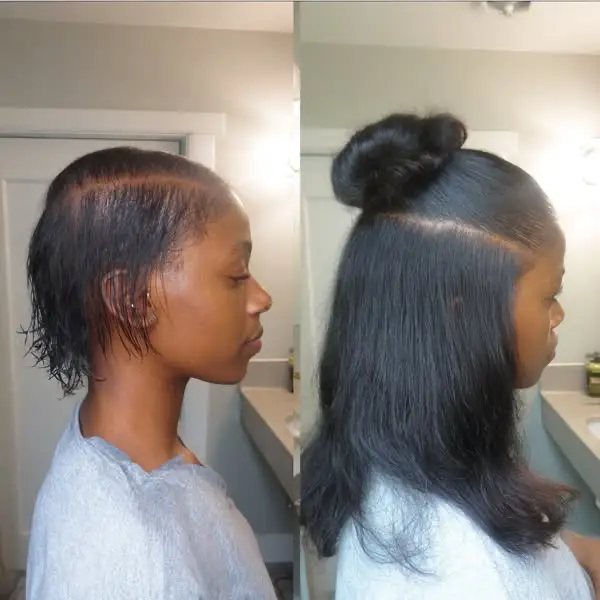
My 13-year-old's acne doctor explained my CCCA better than my own dermatologist had in 4 years. She wasn't even talking about me. She was telling Malik why his breakouts kept coming back in the same spots, and the 2 things he'd need to stop it, and I sat in the corner chair with my hand on my crown, because my hair had grown back and fallen out in the same 3 spots 4 times, and my scalp had only ever been given 1 of them. I'm writing down what she said, and what I did with it, because I know some of you are sitting where I was that afternoon. You have the diagnosis. You had the biopsy. You've done everything your dermatologist put you on, and your scalp is still itching and burning, and the hair you fought to get back is coming out again. I'm Kendra. I'm 41, and I work in accounts payable for a delivery company, which means I spend 8 hours a day at a desk matching invoices to orders. I was diagnosed with CCCA at 37, after a biopsy from the middle of my crown left me with 2 stitches and a name for the thing that had been burning up there for a year. This is what 4 years of treating it looked like. I've had 23 steroid shots in my scalp, given in rounds. I put clobetasol on every night. I took doxycycline twice a day for 5 months, until I broke out in a rash across both arms and my dermatologist took me off it. I've used minoxidil every night and ketoconazole shampoo twice a week. And it worked. That's the part that made me crazy. Every round of shots, the burning would calm down, and a few months later I'd have hair again in the 3 spots at my crown, short and soft at first, then long enough to twist. 4 times I got it back. And 4 times, about 6 weeks after a round of shots ended, the itch would start up again, and within a month the new hair would come out in the same 3 places. The 4th time it came out in my hands. It was wash day, I was bent over the bathroom sink working conditioner through, and when I pulled my fingers out there was a soft little nest of hair across my palm. I didn't need a mirror to know where it came from, because I'd been watching those 3 spots fill in for 4 months. Malik heard me from the hallway. He knocked and asked if I was okay, and I told him I'd dropped something. I wear my hair in flat twists most days. I part it in 4 sections, but I leave the center sectioned out on its own so nothing pulls on it, and I wear a wig over all of it for work. In a flare I get 3 or 4 itch attacks a day at my desk. I can't scratch, because scratching through a wig in an open office looks exactly like what it is. So I dig my nails into my palm until something else hurts more than my head does, and I wait for it to pass. I've left little half-moon marks in my own hand in the middle of a call with a supplier. During the last flare it got so bad at 1 in the morning that I ran an Epsom salt bath, lay back and put my whole head under the water, because I'd read that it helped and I had nothing left to try. I stayed under as long as I could hold my breath. It didn't help. I sat on the side of the tub with a towel around my head and cried quietly so I wouldn't wake Malik. At my next appointment I said all of it to my dermatologist, Dr. Hale, in one breath. "I washed it less and it flared. I washed it more and it flared. I stopped every product, I cut out sugar for 6 months, I sleep on silk, and it flares." He listened, he looked, and he said, "Let's do another round of injections." I also waited 7 months for an appointment at the hair clinic of a university hospital, because I wanted to ask somebody who saw CCCA all day one question: what's new? The specialist looked at my crown for about a minute and said, "Honestly, at this point we'd be talking about a transplant." I asked what that would cost. She told me, and I said thank you and went home. So that was where I was. Every treatment worked for a while, and none of them kept working. The best idea from the best clinic in my state was moving hair from the back of my head to the top and hoping it stayed. I'd stopped asking what would fix it. I was asking how many more times I could stand to grow it back. Malik's acne got bad around his 13th birthday: red bumps along his jaw and forehead that he kept picking at, and a hoodie he wouldn't take off in class. His pediatrician sent us to a children's dermatologist, Dr. Nwosu, and at the first visit she gave him a cream. It worked for 3 weeks. Then the bumps came back, in the same places. At the second visit she rolled her stool right up to him and explained it the way you'd explain anything to a boy who doesn't want to be there. "The cream calms down the angry ones," she said. "That's the red and the sore. But every one of those bumps starts with a pore that's plugged, dead skin and oil packed into the opening. If we only calm the red, the plug's still sitting there, and the minute you stop the cream it flares right back up. Same spot. So you need 2 things. The cream for the angry ones, and this wash every night to keep the pores clear underneath." She handed him a bottle, and Malik read the label out loud in the voice he uses when he thinks something is dumb. "Salicylic acid." "It dissolves in oil," she told him, "so it gets down inside the pore where the plug is. Water can't." I hadn't noticed my hand going up to my crown. Calm the red, and the plug is still there. Stop the cream, and it comes back in the same spot. She had just explained my last 4 years to my son in about 90 seconds. Sitting there, I went through everything I'd ever been given. The shots, the clobetasol and the doxycycline were all for the angry ones. The minoxidil was for growing hair. The ketoconazole sat on my head for 3 minutes twice a week and then went down the drain. Nothing on my list had ever been aimed at the other thing. On the way out I stopped in the doorway with my bag on my shoulder and asked her, "Does that work on a scalp? The plug part?" She looked at my head for a second. I had a scarf on. "The scalp is skin," she said. "Same follicles, just a lot more of them. Don't use his face wash on it. But ask whoever's treating your scalp what's keeping the follicles clear." 2 weeks later I asked Dr. Hale exactly that. He said, "That's what the ketoconazole is for," and then he asked when I wanted to book the next round. That night I sat at the kitchen table after Malik went to bed and read everything I could find about what goes on inside a follicle with CCCA. I'm not a scientist. But reading the same 20 pages until they make sense is basically my job. I already knew CCCA was inflammation. What I hadn't understood was that 3 different things keep that inflammation going, and each one needs its own fix. The first is the plug. Dead skin, your scalp's own oil and leftover product build up inside the opening of the follicle, the same as in Malik's pores. Shampoo runs over the top of it like rain over a gutter packed with leaves, and the leaves stay put. That buildup traps the inflammation right against the follicle, so it keeps going underneath even after a shot calms things down. Ketoconazole doesn't clear it, because ketoconazole is made for a fungus. I don't have a fungal problem. I have an inflammatory one. The second is the barrier, the protective layer of skin around each follicle. When it's damaged, irritants get in and moisture gets out, like chapped lips in winter: everything stings going in, and they dry out faster the more they crack. And this is the line that made me put my phone face down on the table for a minute: inflammation wears that layer down, and so do years of steroid use. The medicine calming my scalp was also thinning it. The third is the heat, the inflammation itself under the skin. It's the burning, the soreness and the itch attacks. That's the part the shots, the clobetasol and the doxycycline go after, and to be fair to every one of them, they did calm it. That's why my hair kept coming back. They were only treating 1 of the 3, though. Every time a round ended, the plug was still there and the barrier was still thin, and the heat came right back up through them. It was like the pothole on the corner of my street. Every spring the city patches it and it looks perfect for a couple of months, and then the water that's been sitting underneath all along cracks it open again, in the same place. Then I got to the part about oil. Once the hair started coming back after a round of shots, I'd rub Jamaican black castor oil into those 3 spots every night, because that's what you do to help new hair along. But heavy oil on a scalp that's plugged and inflamed is like putting a lid on a pot that's already boiling. It doesn't cool anything. It holds the heat in and seals the buildup in with it. I thought about the itch coming back 6 weeks after every round, and how many of those weeks I'd spent oiling it. And the minoxidil I'd put on every night was made for a different kind of hair loss altogether. That kind is driven by hormones, and it's the most common kind in white women. Minoxidil grows hair. It does nothing about what's inflaming the follicle that hair has to grow out of. It's like giving plant food to a plant whose roots are sitting in water: it perks up for a few weeks, and then it droops again. I spent 4 years believing it was me. I didn't fail those treatments. I did every one of them, on time, for years. They just weren't all aimed at what was actually happening on my head. My mother still says, "That's from those box braids you wore in college." Maybe that's where it started and maybe it isn't, but braids I took out 20 years ago weren't what kept it going through 4 rounds of shots. The same goes for the sugar I cut out. Maybe some foods do set it off for me. Whatever sets it off, though, the inflammation happens in the follicles on my scalp, and that's where it has to be treated, every day. Then I read the part that made me sit up straight. A follicle with CCCA doesn't go straight from healthy to scarred. Before it scars, it often goes dormant, which just means asleep. It can stay that way for a long time. It's like a houseplant that has dropped every leaf but still has green in the stem. If the root underneath hasn't been scarred, that follicle can still answer once whatever is keeping it asleep gets cleared away. A scarred follicle can't. Once it scars, it's smooth skin for good. I already knew the center of each of my 3 spots was scarred. Dr. Hale had told me, and I could feel it, smooth and shiny under my fingertip. I'm not going to pretend that part is coming back. But I kept growing back the hair around the centers. Those follicles had answered every single time the heat went down. They weren't dead. They were asleep, and they kept getting woken up and knocked back down. They wouldn't keep answering forever, either. Every flare was another chance for some of them to cross over into scar. So I knew what I needed, and I could have written it out like an order form. Something that clears the plug from inside the follicle every day, instead of sitting on top for 3 minutes and rinsing away. Something that rebuilds the barrier instead of thinning it more. Something that calms the heat without me swallowing another pill. No oil in it at all. And it had to be something I could put on myself every night. It had to get through my twists and cover my whole crown, because the itch had never stayed inside the 3 spots a needle could reach. All 3 things at once, because fixing 1 of them is what I'd already been doing all along. That's where I got stuck. I tried Malik's face wash first, even though Dr. Nwosu told me not to, and I know. One night in the shower I worked some into my crown. It stung the 3 spots like lemon juice on a paper cut, and 30 seconds later it was running down my back into the drain. It's a face wash, so it's made to come off. It never had a chance to get down into anything. At my next visit I asked Dr. Hale what would help the barrier, and he said, "We can move you to a stronger steroid." The thing that thins the barrier, to fix the barrier. And I wasn't going to take another pill for the heat. The doxycycline rash had stayed on my arms for 3 weeks after I stopped it. I'm not against medicine, and I'm still on what Dr. Hale gives me, but my body had paid enough for this already. On my lunch break I went to the beauty supply and stood in the scalp aisle. Every bottle was an oil, or a growth serum with oil in it: rosemary, castor, peppermint in castor. They were all for growing hair. There was nothing for the plug and nothing for the barrier, and most of it was heavy oil, the exact thing I'd just learned holds the heat in. Honestly, knowing why it kept coming back and having nothing to put on it felt lower than the day the specialist said transplant. I found it the way I find most things now, in the comments under a YouTube video. A woman with CCCA, in flat twists like mine, was answering someone who'd asked what finally stopped her itching. She wrote, "It's the first thing that's made my scalp feel calm instead of just numb," and she named a scalp serum with salicylic acid in it. I almost scrolled past, but salicylic acid was the word Malik had read off his bottle, so I looked it up. It was called Montosero Restore. It's a liquid scalp treatment made for the kind of hair loss that comes from inflammation, and it has 3 active ingredients, 1 for each of the 3 things. The first is salicylic acid, the same ingredient as in Malik's wash. Because it dissolves in oil, it gets inside the follicle and breaks up the buildup that shampoo and water can't reach. And Restore doesn't rinse off. It stays on the scalp all night and keeps working where the plug is. The second is dexpanthenol. That's vitamin B5, and it's used in wound healing. It rebuilds that cracked barrier around each follicle, the way new skin closes over a scraped knee. The third is L-menthol, which switches on the cooling receptors in your scalp and calms the burning and tenderness underneath on contact. Nothing to swallow. On their page, 85% of people said their scalp felt relief in the first week. There's no oil in it. No grease, nothing heavy to sit on top and trap the heat. It comes in a slim tube with a metal rollerball on the end, so I run it straight down each part line between my twists and over the spots, which covers my whole crown. It takes about 30 seconds at night and there's nothing to rinse. And it all goes on at once, every night. It doesn't replace what Dr. Hale prescribes, either. It works alongside clobetasol and minoxidil, and under a wig or a protective style, so I didn't have to choose between my dermatologist's plan and my scalp. I ordered it that night. The first night, I rolled it along every part and over the 3 spots. It went on cool, like breathing in right after a mint, and the burning backed off. When my alarm went off in the morning, I realized I hadn't woken up once. By the end of the second week I noticed I hadn't dug my nails into my palm at work once since I'd started. The half-moon marks were gone. My last round of shots had ended about 6 weeks before I started Restore, and right on schedule the itch had come back. Every other time, that was the start of the month my hair came out. This time the itch was gone within days, and that month came and went, and so did the one after it. About 5 weeks in, Malik was standing behind my chair while I was taking my twists down, and he said, "Mom, you've got little ones coming in around your spots." He'd watched his own face clear up by then, so he knew what it looked like when something actually worked. I've had hair come back in those spots before, so new hair wasn't what got me. What got me was that none of it left. I'm about 11 weeks in now. The hair around my 3 spots is still there, thicker than it's been since before the 4th time, and nothing has come out in my hands on wash day. The very centers are still smooth, like Dr. Hale said they'd be. I can live with that, because everything around them is holding. At my last appointment Dr. Hale looked for a long time. Then he said, "Let's hold off on booking another round and see where this goes." I still have CCCA. I still see Dr. Hale, and I'm still on what he prescribes. Nobody has promised me a cure, and I'm not promising you one. But I'm not losing hair in my own hands at the sink anymore, and for the first time since my biopsy I'm not just waiting for the next flare. It turned out my scalp needed 3 things, not 2. It had only ever gotten help with the heat, and it took my son's acne appointment for me to find the other 2. If any of your hair has ever grown back during treatment, even once, the follicles it came from were still alive. They don't stay that way forever, and every flare is a chance for a few more to scar over for good. I don't know how many more regrowths mine had left in them, and I'm glad I didn't have to find out. If it doesn't work for you, Restore comes with a 60-day money-back guarantee and you get every penny back, no questions asked. But if your hair keeps coming back and leaving the way mine did, I'd try it before the next flare instead of after it. Click below to try Montosero Restore and finally treat the parts of your scalp the shots never reach. https://montosero.com/products/restore

Loading the ad's image
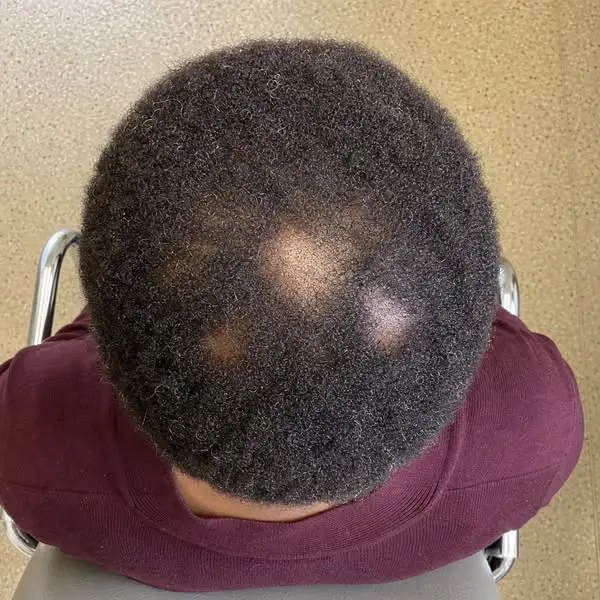
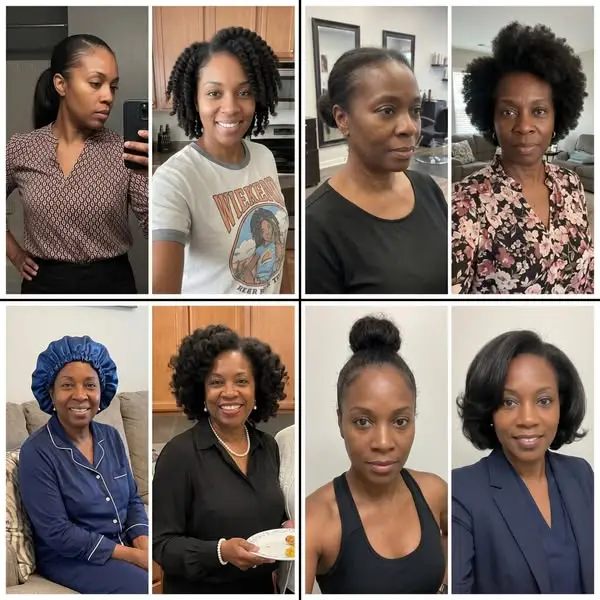
The Black Hair Care Journal — The Real Solution for a Healthy Scalp
Promising

The Real Solution for a Healthy Scalp

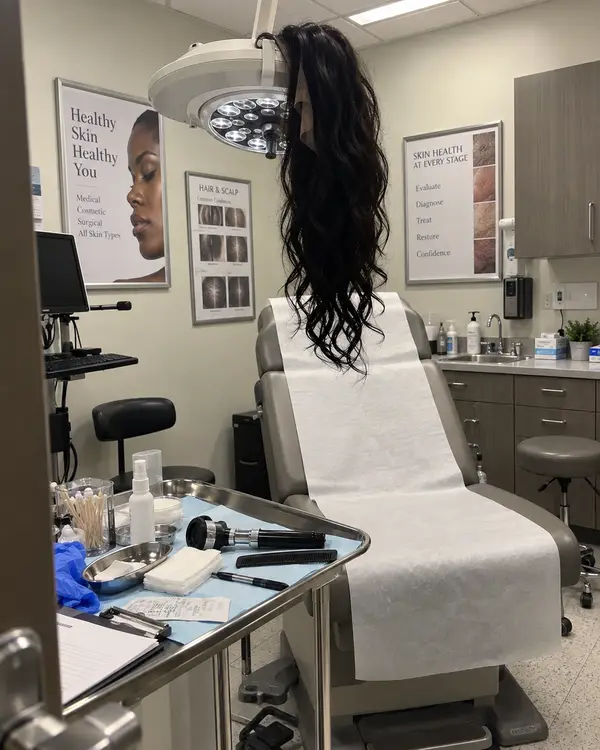
Oral minoxidil put 10 pounds of water in my legs and a heart monitor on my chest for 2 weeks, and I kept taking it, because my dermatologist said it was what was left after the shots, the clobetasol and the doxycycline. I have CCCA. My feet swelled out of my work heels. My scalp still burned every night. What I didn't know, until a medical assistant shut a door and told me, was that all 4 of those prescriptions leave the same 2 things untouched. The 2 things that keep it burning. I'm writing this for the women in the comments under every CCCA video I've watched at 2am. I was one of you for 3 years, and I would have given anything for somebody to just say it plainly. My name is Sharon. I'm 49 and I've sold houses for 16 years. My face is on "For Sale" signs all over my side of town. The photo is 7 years old, and in it I have a full twist-out I don't have anymore. The itch at my crown started a long time before anyone gave it a name. My dermatologist is Dr. Albrecht. By the time he took a biopsy, I had a smooth patch on top about the size of a coaster. He came back in with the results and said, "It's central centrifugal cicatricial alopecia. CCCA. It's a scarring alopecia, and it's very common in Black women." Then he told me the plan. Steroid shots into the patch every 6 weeks. Clobetasol solution on it every night. Doxycycline pills every day. I did every bit of it. I'm the kind of person who sets phone alarms for pills and never misses a refill. A year in, my scalp was still flaring up and tender to the touch. At every visit he'd look at the top of my head for maybe 4 minutes and say the same 3 words: "Still some inflammation." I'd nod. Then I'd drive to a showing asking myself the same thing every time. If it's still inflamed after a year of things that are supposed to stop inflammation, why isn't anybody asking why? Out loud, I said "okay" and booked the next shot. The doxycycline wrecked my stomach. I kept a pack of crackers in my car's cup holder so I wouldn't throw up in a client's driveway. The clobetasol started making my whole scalp tingle, which was new, on top of the burn I already had. And the burn. Some evenings it was so bad I could feel it just sitting on the couch with the TV on. Other nights I didn't notice it until I went to scratch, and then the pain made me yell loud enough that my husband, Ray, came in from the garage with a hammer still in his hand to see who'd broken in. Every wash day there was a clump of hair in the drain cover. I picked it out with a tissue before Ray could see it. I wore my hair in 8 or 9 flat twists under a wig. My stylist kept them flat and loose so nothing pulled on the spot. I tried to fix it myself, too. I cut sugar for 2 months. Some days the burning was a little lower. It was still burning. It flared every closing week, when I was on the phone with lenders until 10pm. So I told myself it was stress. That was true. It was also no help, because I can't stop selling houses. Every night before bed I rubbed in castor oil mixed with peppermint oil from a little bottle on my bedside table, because a stylist swore by it and half of YouTube did too. It felt cool for about 10 minutes. Then it itched and burned worse than before I put it on. Then came a Sunday open house. A young couple was walking through a 3-bedroom I had listed. I was talking about the kitchen when I scratched my head without thinking. The husband leaned over to his wife and whispered, not nearly quietly enough, "Does she have lice?" She elbowed him. I smiled and kept talking about the new cabinets. I sold that house, and afterward I sat in my car in the driveway for 20 minutes before I could drive. A few weeks later my broker called me into her office and said, as kindly as she could, that a couple of clients had mentioned I didn't look much like my sign. She meant the wig. I said I'd book new headshots. That was 2 years ago, and I still haven't. At about the 2 and a half year mark, Dr. Albrecht leaned back on his stool and told me the truth as he saw it. "The center is scarred. That hair isn't coming back. What we can do is try to hold onto what's around it. CCCA is something we manage, Sharon. For life." So he added oral minoxidil. "It's what we have left," he said. Within 3 weeks my ankles had disappeared, and every pound I gained was water. By lunch my feet were bulging over my heels, and one Saturday I showed a 4-bedroom house in a pair of Ray's flip-flops. My family doctor listened to my chest, didn't like what she heard, and taped the monitor on me. I did showings with the wires under my blouse. And I kept taking it. That's the part I'm least proud of. I kept swallowing a pill that was filling my body with water, because I was scared that if I stopped, I'd lose whatever the shots had managed to hold onto. If you've ever kept taking something that was hurting you because it was the last thing on the list, you're not stupid. You were scared, and nobody gave you anything else. So that's where I was: 4 prescriptions, the castor oil bottle, a heart monitor, and a scalp that burned anyway. The day it changed was a shot day. Dr. Albrecht's medical assistant is a woman named Ms. Bev. She's worked in that office for 17 years. She's the one who checks you in, takes your blood pressure, and gets the needle tray ready before he comes in. She's also the one who sprays the cold numbing spray on your scalp. And every single visit, she asks the same question while she types. "What are you putting on it at home?" That day my blood pressure was up, and my ankles were puffed over the tops of my shoes. Ms. Bev looked at my ankles, then at the screen with my medication list on it. She sprayed my scalp. Then she walked over and shut the exam room door. "Can I tell you something?" she said. "And you didn't hear it from me." I said yes. "I've been typing what women put on their heads at home since before you ever had this. And I see who comes back better and who doesn't. Look at your list. The shots, the clobetasol and the doxycycline are all for the burn. The minoxidil is for the hair. Nothing on there cleans out your follicles, and nothing on there fixes your skin. And that clobetasol thins it." I asked her what she meant by cleaning out my follicles. She said, "The women who finally stopped burning, almost every one of them stopped greasing their scalp. And they found something to put on it every night that kept it clean. That's all I know, baby. I'm not the doctor." Then there was a knock, she opened the door, and Dr. Albrecht came in and gave me my shots like nothing had happened. I went home and threw the castor and peppermint bottle away. Then I sat at the kitchen table with my laptop and looked up the 2 things Ms. Bev said nothing on my list touched: my follicles and my skin. The burning in CCCA comes from inflammation around the hair follicles, and 3 different things keep it going. The first is the follicle opening itself. Dead skin, the scalp's own oil and leftover product build up inside the opening and plug it. That plug holds the inflammation right up against the follicle. It works like the lint trap in a dryer that nobody has emptied in months. The dryer still runs, but the heat has nowhere to go, so the whole machine just keeps getting hotter. The second is the skin barrier. Healthy scalp skin is supposed to keep irritants out and moisture in. Inflamed skin loses that seal, and steroids thin it more over time. I got the clobetasol box out of the bathroom and unfolded the paper insert I'd never really read. Right there, under side effects: thinning of the skin. It's like a pair of rubber dish gloves you've worn so many times they've got pinholes. Your hands get wet anyway, no matter how careful you are. The third is the heat underneath, the burning and soreness itself. I went down my list in my head. The shots: heat. The clobetasol: heat, and it was wearing the gloves thinner. The doxycycline: heat. The minoxidil: none of the 3. It was there to grow hair on a scalp that was still on fire. Ms. Bev had been right about all 4. That's why it always came back. Every round of shots was like rubbing numbing gel on a toothache. It quiets the pain for a while, but the cavity is still there, and when the gel wears off you're right back where you started. The heat came down for a few weeks, the plug and the thin skin were still there, and the burn was back before my next appointment. And every single night, I had been sealing all of it in with castor oil. Oil on an inflamed scalp works like a sheet of foil over a hot casserole dish. It keeps the heat in. That's why the peppermint felt good at first and then burned worse. I had been doing it to myself with the best intentions in the world. Then I looked up what Dr. Albrecht meant by holding onto what's around the scar. A follicle around a scarred patch often goes dormant for a long time before it scars for good. So the bald middle was gone, exactly like he'd said. The thin hair around it was different. Those follicles were dormant, and a dormant follicle can still grow once the plug and the heat come off it. It's like a houseplant you forgot to water. It looks dead, but as long as the roots haven't rotted, it comes back once you start looking after it. So for the first time since the biopsy, I knew exactly what I needed: one thing, every night, that would do 3 jobs. It had to get down inside the follicle opening and dissolve what was plugging it. It had to rebuild the skin instead of thinning it. And it had to cool the burn on contact, without a steroid. With no oil in it at all. Then I went looking, and it fell apart. The scalp aisle at the beauty supply was oil from one end to the other. Castor oil, rosemary oil, peppermint oil, growth oils, scalp butters, pomades. Every one of them would have sealed the heat in, the same as the castor oil had. The pharmacy had shampoos. But a shampoo is on your head for 3 minutes and then it's down the drain. Nothing that rinses off is going to sit inside a plugged follicle all night. The stuff I knew could dissolve a plug inside a pore was all made for faces, and I was not about to put a face toner on a scalp that already burned when the wind blew. And the only thing that had ever cooled that burn for longer than 10 minutes came out of a steroid bottle. Nothing on any shelf, anywhere, said it rebuilt anything. And whatever I found, I wasn't adding one more pill or one more needle to what I was already on. At my next visit I asked Dr. Albrecht straight out about the follicles being plugged. He looked at my scalp and said, "Your scalp looks stable. Let's stay the course." Then he offered to raise the minoxidil. I drove home with the new prescription on the passenger seat. I never filled it. I sat in my own driveway and cried, because I finally knew what was wrong, and it felt like the thing that would fix it didn't exist. I didn't give up, though. Ray says I'm the most stubborn woman on our street, and that night I was. If I couldn't find a product, I'd find the ingredient for each job first. For the plug, I kept reading the same name: salicylic acid. It dissolves in oil, which is the whole point. Rinse a greasy pan with plain water and the grease just sits there. Water and shampoo do the same thing to a plug made of oil and dead skin. Salicylic acid mixes into it and breaks it up. For the skin, dexpanthenol, which is vitamin B5. It's used in wound healing because it helps skin rebuild its protective layer, the way new skin grows back over a scrape. For the heat, menthol. It sets off the skin's cold receptors, the same cold you feel from a mint on your tongue. Then I typed all 3 names into a search bar with the word scalp, and one thing came up that had all 3 and no oil. It's called Montosero Restore. It comes in a slim tube with a metal rollerball on the end, and you roll it onto the thin spots once a day, at night. It takes about 30 seconds. I almost didn't believe it. I'd been burned, literally, by things that promised a lot. But it was rated 4.7 out of 5 from over 1,400 reviews, mostly from women describing my exact scalp. And it came with a 60-day money-back guarantee. After the heart monitor and the flip-flops, that was the easiest decision I'd made in a long time. When the box came, I opened it at the kitchen counter and squeezed a drop onto my fingertip before I did anything else. It was thin and clear, like water, and it didn't smell like oil or leave anything slick when I rubbed my fingers together. There was nothing in it to seal the heat in. The box said to leave it on, no rinse. So the salicylic acid wasn't going to wash away. It was going to sit there all night, working down into the openings while I slept. I was still scared it would sting. I rolled it onto the patch and the thin hair around it, and within a few seconds my whole crown went cold instead. That's the menthol. It felt like somebody had opened a window on top of my head. The next thing I knew, my alarm was going off. At breakfast Ray told me I hadn't gotten up once in the night, and asked if I was feeling all right. Every night after that, the dexpanthenol was doing the slow part you can't feel, rebuilding the skin the clobetasol had been wearing thin. And there was nothing to swallow and no needle. It was a rollerball I ran over my scalp while Ray brushed his teeth. In the first week the burning dropped every day. By week 2 I was going whole evenings without thinking about my scalp at all. The company says 85% of women felt scalp relief in their first week. I believe it, because I was one of them. During week 2 I was walking a family through a house with a pool, and when I got back in my car I realized I hadn't touched my head once in the whole hour. Around week 5, the rollerball started catching on something at the edge of the patch, where there had only been smooth skin and broken ends for as long as I'd had it. I ran my fingertip over it, and it was fuzz, short and soft and new. By month 3 I could feel the edge getting thicker under my fingers. The middle is scar, and it's going to stay that way. I knew that going in. The hair around it was what I was fighting for, and it's thickening. At my visit that month, Ms. Bev set up the tray and the cold spray like always. Dr. Albrecht took one look at my scalp and told her she could put the tray away. I asked if we could stop the oral minoxidil too. He said we could try. Within a month my ankles came back, and my work heels fit again. On my way out, Ms. Bev was at the front desk. She didn't look up from her screen. "What are you putting on it at home?" I told her. She typed it in, nodded once, and said, "Mm-hm." But she was smiling. Dr. Albrecht still says CCCA is for life, and I'm not going to tell you he's wrong. I still have it. What I don't have anymore is a scalp that wakes me up at night, or a pill filling my legs with water. If you're on everything they've got and your scalp still burns, I'd put money on your list having the same 2 gaps mine had. And don't wait on this. The sooner the plug and the heat come off those dormant follicles, the more of them you get to keep. The ones that scar while you wait for the next round don't get another chance. Some of mine scarred while I was oiling my scalp and waiting on the next shot. And if it doesn't work for you, you get every penny back. No questions. Click below to try Montosero Restore and see what your scalp does when all 3 things are finally treated. https://montosero.com/products/restore P.S. I still haven't booked those new headshots. But I've stopped dreading it.

Loading the ad's image
The Black Hair Care Journal — The Real Solution for a Healthy Scalp
Promising

The Real Solution for a Healthy Scalp

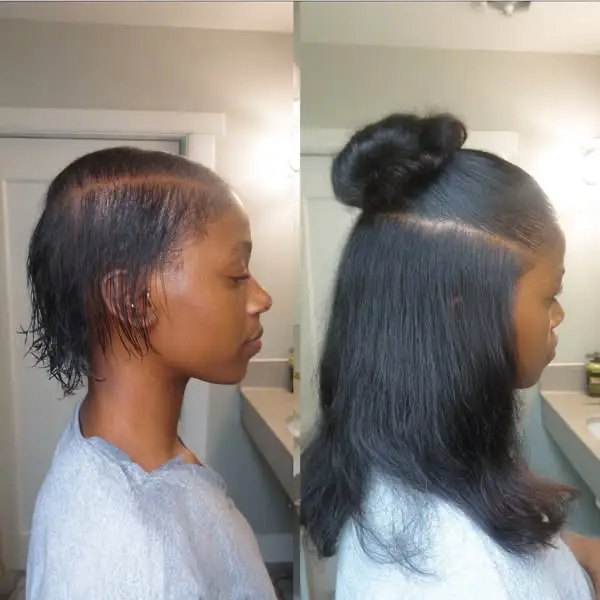
My mother greased my scalp every Sunday night of my childhood, and she wore a wig for the last 15 years of her life because the middle of hers was gone. I've greased my own crown every night for 3 years, on a spot that itches, burns and keeps getting bigger. Last week my 13-year-old started scratching the top of her head and handed me the jar. I put it back in the cabinet, because I finally know what it was doing to the 2 of us. I mean my mother and me. My daughter Amara has never had a single Sunday night of it, and after last week she never will. If you grew up like I did, you know the Sunday night I'm talking about. Mama did it at the dining table with a towel around my neck, under the ceiling light, while the Sunday movie played in the next room. She'd part off a section, run grease down it with 2 fingers, and move on to the next one. She bought the biggest jar they sold, and I'm 41 and I'm not sure I've ever seen the bottom of one. Mama's own hair went from the middle out. She blamed her perms. "That's 30 years of relaxer for you," she used to say. "You keep yours natural and you won't end up like me." By 52 she had a wig on a foam head in her bedroom, and from then on nobody outside the family saw the top of her head. When she was in the hospital at the very end, she had me bring the wig in and put it on her before her sister came to visit. So I stayed natural. I did everything she told me to. About 3 months after we buried her, a spot at my crown started getting tender. Just tender at first, like a bruise you forget about until you press on it. Then it was sore all the time, and after that it started to burn, mostly at night, mostly once I'd laid down. I did what she taught me. I greased it every night, with a little extra on the sore part, because sore meant dry and dry meant it needed more. And every night I noticed the same thing and ignored it: that part of my head couldn't take oil. About an hour after the grease went on, it got itchy and sore, every single time. I just figured I wasn't using enough. I'd slept in a loose bun right on top of my head since college, so I started to wonder if that was it. I moved the bun lower. Then I quit the bun and slept in a puff, and then I quit that too and left my hair alone for a while. The middle of my head kept burning anyway, and the 2 inches at my crown stopped growing completely. Everything else on my head grew. That part just sat there. By then the very top had gone slightly numb. I could press my thumb on it and feel the pressure but not my thumb. I knew my scalp was sore for some reason, but I didn't realize the hair was gone until one night 8 months ago. I was sitting on the edge of the tub doing my own parts, and my fingers went down a row and there was no hair left to part. I held my phone over my head, took a picture and sat there on the tub looking at it. It was Mama's head. Same place, same shape, a patch about as wide as a bottle cap, with thin broken bits all around the edge like it was spreading outward. I didn't handle it well. I cried in the bathroom with the water running so Andre wouldn't hear, then went out to the living room and told him I'd found something on my head. He looked and said "Babe, that's barely anything," in the voice you use on a toddler who fell down. I went to my family doctor the next week. He asked how long, and whether anyone in my family had hair loss. I said my mother. Then he asked to see the picture. He zoomed in on my phone with 2 fingers, nodded, and handed it back. That was the whole exam. My actual head was right there in the room with him. "Hair loss runs in families," he said. "If your mother had it, you may have the genes for it. You can try minoxidil." I asked him about the burning. He said "Some itching is normal with a dry scalp," and that was the end of that. So that was my answer: Mama's genes. I didn't even buy the minoxidil. If it was in my blood, I figured it was already decided, and I'd just be paying $40 a month to watch it happen slower. For the next 3 months I wore my puff high and tight over the spot every single day. At work I sat with my back to the wall in every meeting. I was afraid to cut my hair, because I had a bald spot in the middle of my head that got bigger every month, and I knew exactly what it would look like with nothing around it to hide it. And I started looking at wigs on my phone at night, the way Mama must have once. One Saturday I drove to Odessa's, the little wig shop next to a laundromat where Mama bought every unit she ever owned. I told myself I was only going to look. That wasn't true. I had a picture of Mama's last wig saved on my phone so I could ask for the same one. Odessa has been fitting wigs in that shop for 26 years. She hugged me, said she was sorry about Mama all over again, and sat me in the chair by the mirror. Then she lifted my puff to put the cap on, and she stopped. She wiped her fingers on a towel. "You greasing it like your mama did?" I said every night. "It itch?" "Every day." "It burn?" "At night," I said. "Mostly at night." She pulled a stool over and sat down in front of me, and she was quiet long enough that I got nervous. "Your mama sat in that same chair and told me the same thing," she said. "Itching for years. Burning at night. She kept telling me it was the perm. Baby, I've had my hands on a lot of heads. When it starts with the itch and the burn like that, it is not the perm and it is not dry. Something's angry under there." Then she put 2 fingers on the spot, very lightly, and moved them in a little circle. "And you've still got fuzz in there. I can feel it. Your mama didn't have a thing left in hers by the time she let me measure her." She put the cap down. "I'm not selling you a wig today. Go find out what's burning first. If you still want one after that, I'll be right here." I have never been turned away from a store and cried that hard in my car afterwards. That night I typed what Odessa said into my phone almost word for word: itching and burning at the crown, bald spot spreading, Black women. I didn't have to scroll far. There's a kind of hair loss that is extremely common in Black women. It starts at the crown and spreads outward, and it very often starts with exactly what Odessa asked me about: the itch, the soreness, the burning. It has a name, central centrifugal cicatricial alopecia, CCCA for short. What drives it isn't dryness. The scalp itself is inflamed, and that inflammation is what's killing off the hair. The part that made me put my phone down was a survey of more than 5,500 Black women. About 41% of them had signs of it. Fewer than 9% had ever been diagnosed. That was Mama. Nobody ever put a name on her head. She went from the itch to the wig in about 10 years, and the whole time she thought she'd done it to herself with a relaxer. Then I read the part about families. Researchers found a gene that some women carry which makes the scalp answer pulling and tension with inflammation, where another woman's scalp would just be sore for a day and settle down. It runs in families. It's why your friend can wear the same braids as you for 10 years and keep every hair, and you can't. So it was in Mama's blood, like the doctor said. He was just wrong about what was in there. What she passed down to me wasn't a bald spot. It was a scalp that gets inflamed more easily than most, and inflammation is something you can treat. The perms probably didn't help her, and my bun probably didn't help me. But a relaxer doesn't explain a scalp that burns at night, and quitting the bun hadn't stopped mine. In one of the threads that search turned up, a Black dermatologist had answered a woman asking why her scalp itched worse after she oiled it. When the scalp is inflamed, it's hot and it's clogged. Dead skin, your own scalp oil and old product build up inside the little openings the hairs grow out of, and the inflammation gets trapped down there with it. Heavy oil on top of that is like putting a lid on a pot that's already boiling. The heat has nowhere to go and everything underneath stays sealed in, so it boils harder. That's why my spot itched worse an hour after I greased it. It never needed more moisture. The grease was holding the heat in and making the inflammation worse. I thought about all those Sunday nights. Every Sunday of my childhood, Mama's 2 fingers went down every part of my head with that grease, and for 30 years they did the same to her own crown. That's what the jar was doing to the 2 of us. I read everything else that dermatologist had written that night. Once I knew what it was, what it needed turned out to be almost simple. An inflamed, clogged scalp needs 3 things done, and it needs all 3, because each one keeps the others going. The openings have to be cleared, so the buildup stops holding the inflammation in. It's like a sink that won't drain: you can run water into it all day, and nothing moves until the clog comes out. The skin's barrier has to be repaired. Inflamed skin cracks, and once it's cracked, everything you put on it stings and gets in where it shouldn't. It's the reason lemon juice is nothing on your hand and torture on a paper cut. And the heat has to come out. That burning I felt every night was the inflammation itself, and the heat is what does the damage. Then I read the part that explained what Odessa felt with her fingers. An inflamed follicle doesn't die all at once. For a long time it goes quiet first. It's still there, it has just stopped making hair, like a lamp on a dimmer turned all the way down. Take away what's holding it down and it can come back, and the first thing that comes back is fuzz. If the inflammation goes on long enough, though, the follicle scars over, and a scarred follicle never makes hair again. It's like an ear piercing you left empty too long. The hole closes, and no amount of pushing will get the earring back through. Mama

Loading the ad's image
The Black Hair Care Journal — The Real Solution for a Healthy Scalp
PromisingImage

Calm the itch and burn every night

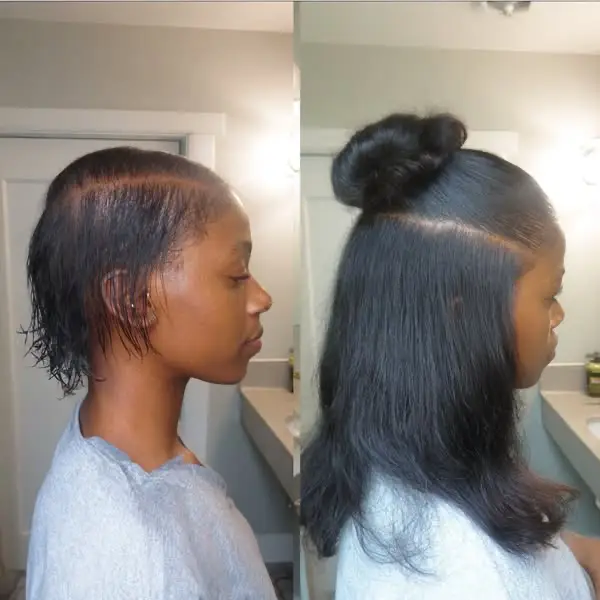
My husband's been bugging me to post this. I said it was nobody's business. He said, "It could save someone's marriage." So I finally gave in. Three months ago, I was two signatures away from divorce papers. Not because of infidelity. Not because we fell out of love. Because I was going bald from CCCA, the treatment had stopped working, and the shame was destroying us both. It started about a year ago. We'd start getting intimate, and halfway through, my scalp would start burning under my wig, and I'd just... shut down. The first time it happened, I laughed it off. "Just sore from my steroid shots." The second time, I felt the first stab of panic. By the fifth time, I couldn't even look at him. I started making excuses to avoid intimacy entirely. "Long day at work." "Not feeling great." "Let's just watch a movie tonight." He knew I was lying. I could see the hurt in his face every time I turned away from him. But the shame was too heavy. I couldn't talk about it. I couldn't admit that four years of treatment hadn't worked. At 47 years old, the bald spot under my wig was bigger than ever. So I just... withdrew. We stopped touching. Stopped kissing. Stopped talking about anything real. We became roommates. The Fight That Almost Ended Everything It was a Tuesday night. He'd made my favorite dinner. Opened a bottle of wine. Put on the blue shirt I'd always loved. I knew what he was hoping for. And I felt the familiar wave of dread wash over me. After dinner, he took my hand and led me to the bedroom. My heart was pounding. Not with desire. With fear. We started kissing. He was trying so hard to connect with me. And I felt nothing. Worse than nothing. I felt panic. His fingers found the edge of my wig, and I grabbed his wrist. I pulled away. "I'm sorry," I said. "I'm just not in the mood tonight." That's when he broke. "You're NEVER in the mood!" he shouted. "It's been three months since you've even let me touch you. Three months!" "I'm tired—" "Don't lie to me!" His eyes were wet. "Do you not want me anymore? Is there someone else?" "No, of course not—" "Then what is it? WHAT IS WRONG?" I couldn't answer. The shame was choking me. He sat on the edge of the bed and put his face in his hands. "I feel like a stranger in my own house," he said quietly. "Like you can't even stand to have me near you." That's when I realized: My shame had become his shame. My problem had convinced him I didn't want him. And I'd been so obsessed with hiding my f*cked-up scalp that I hadn't seen what it was doing to him. "It's not you," I finally said. "It's me. It's my scalp. The treatment isn't working. It hasn't been for months. It burns all the time, and the spot is spreading." He looked up at me. "Why didn't you tell me?" "Because I'm humiliated," I said. "I'm 47 years old, I'm going bald under a wig, and I can't let my own husband touch my head." We sat there in silence for what felt like an hour. Finally, he said: "We need to fix this. Or we're not going to make it." He was right. I Was Already on the Steroids (And They Weren't Working) Here's what you need to know: I'd already done everything my dermatologist told me. She diagnosed me with CCCA by biopsy, after I finally worked up the courage to show her "a little thin spot at the crown." The first thing she gave me was clobetasol. The first month I used it, it worked. Sort of. The itching calmed down, but it felt... forced. The day I skipped it, the burning came right back. The second year, she added Kenalog shots in my crown every six weeks, and minoxidil every other day. The shots left my crown sore for days, and the quiet lasted a month at most. By year three, I was on clobetasol every night and still burning by midnight. My dermatologist's advice? "Let's add doxycycline." So I did. Same story. My hair kept getting thinner. And the side effects were getting worse. Nausea that lasted all morning. Stomach cramps so bad I had to walk out of a meeting. The skin on my crown going thin and shiny from all the steroid, like the inside of my wrist. I spent six weeks eating nothing but chicken, rice and greens. With my eczema and my IBS, I was sure it was coming from inside me. Maybe some of it was. But my scalp still burned every night, whatever I ate. I felt like a smoke alarm somebody kept pulling the battery out of. The noise stopped. The fire didn't. But here's what really bothered me: None of it fixed anything. It just pushed the inflammation down for a while. The thing underneath was getting worse. And I could feel it. What My Dermatologist Didn't Tell Me (And Why She Probably Doesn't Know) After that fight with my husband, I went back to the doctor. Not my regular dermatologist. A CCCA specialist at a university hospital this time. I'd been on her waiting list for eight months, and it came up that same week. I told her everything. The creams weren't working anymore. The doxy was wrecking my stomach. The spot was spreading. She nodded sympathetically and started talking about more shots. And Plaquenil. More needles. Into my scalp. Every six weeks. Plus a pill I'd be on for years. I couldn't believe what I was hearing. "Isn't there something that actually FIXES the problem?" I asked. "Instead of just covering it up?" She looked at me like I'd asked her to perform magic. "CCCA is very common in Black women," she said. "It's inflammatory. The steroids are first line. If those stop working, we move to injections, then oral medication." "But why is it still burning?" I pressed. "Can't we stop that?" She shrugged. "It's chronic. Flares come and go. We can manage the inflammation, but the scarred areas won't grow back. That damage is irreversible." That's when it hit me. She didn't have a solution. She had symptom management. A lifetime of creams that work less and less. Then needles. Then pills. A slow decline the medical system was built to manage, not fix. I left that appointment feeling more hopeless than ever. I wanted to crawl into a corner and never come out. The Conversation That Changed Everything A week later, I was having lunch with an old friend I've known since I was 19. We'll call her Yvette. Yvette is 55. Wears her hair in a short, full natural cut. Energetic. Sharp. Confident. We were catching up, and I don't know what came over me, but I just started venting. I told her about the CCCA. The failing creams. The specialist's needles. I expected her to squirm. Change the subject. Instead, she laughed. "Girl, I went through the exact same thing four years ago," she said. I stared at her. "You? But your hair..." "I'm fine now," she said. "Better than fine, actually. My scalp hasn't burned in three years. There's a spot in the middle that's scar, and it's not coming back. I won't lie to you about that. But everything around it was going the same way. And it didn't." "How? What did you do?" She leaned in. "You're going to think this sounds insane, but hear me out. The problem isn't your hair. It's your scalp." "Yeah, the specialist said it's inflammatory—" "Right. And it's everywhere. In one big survey of Black women, 40.9% had signs of it. But did she tell you WHY it keeps burning even on the steroids?" I shook my head. "It's called the inflammation cycle," Yvette said. "That itch and that burn aren't dryness. They're the inflammation. Three things keep it going. First, your follicle openings get packed with dead skin, sebum and product residue. That plug traps the inflammation right up against the follicle. Second, your scalp barrier's damaged, so irritants get in and moisture gets out. Third, there's heat under the skin. That's the burning you feel at midnight." "That's why the steroids stop working. They turn the heat down for a while. But they don't clear the plug or fix the barrier. The minute you ease off, the fire's right back." "And everything in the hair aisle? The rosemary, the biotin, even the minoxidil? That's made for a different kind of hair loss. The hormone kind. Different problem. Different solution." "And if you're putting oil on it, that's a lid on a boiling pot. It traps the heat and seals in all the buildup." This was the first explanation that actually made sense. "So how do you stop it?" I asked. "Three ingredients. One for each." I waited for the punchline. "I'm serious," she said. "Salicylic acid dissolves the plug inside the follicle. It's oil-soluble, so it gets in where shampoo and water can't. Dexpanthenol, that's vitamin B5, rebuilds the barrier. It's a wound-healing ingredient. And L-menthol cools the heat on contact. It switches on your scalp's cooling receptors. You're not forcing anything. You're clearing what's blocked, healing what's broken and cooling what's burning." "And here's the part nobody tells you. A lot of the follicles around your spot aren't dead. They're asleep. Take away what's keeping them asleep and they can come back. Baby hairs first. But every month that fire keeps burning, more of them scar over for good." "I've been rolling all three on every night since. The burning stopped. The itch stopped. And the ring around my spot? Filled back in." I wanted to believe her. But it sounded too simple. "If this works, why isn't every dermatologist prescribing it?" I asked. Yvette smiled. "Because there's nothing to prescribe. Nobody writes a script for vitamin B5. There's no money in telling women to calm their scalp at home. But there's plenty in shots forever." The Research I Found That Night I went home and started digging. And what I found shocked me. Every word Yvette said checked out. Plus one thing she hadn't told me: repeated steroid use weakens the same barrier dexpanthenol rebuilds. All that clobetasol had been wearing down the very thing I needed. Three ingredients. Three jobs. One result: a scalp that finally stops burning, so the follicles that are still alive can wake up. This wasn't fringe science. These were clinically studied ingredients. And no one had told me about it. Not my dermatologist. Not the specialist with the eight-month waiting list. I felt angry. And betrayed. Then I went shopping for those three. Everything that came up had one of the three, never all three. Half of it was sitting in castor oil, the exact thing Yvette said seals the fire in. The rest were shampoos that rinse off before anything gets near the follicle, or droppers that drip onto your hair. The answer existed, and I couldn't buy it. Then I remembered the name Yvette had mentioned on her way out of the restaurant, the one I hadn't even bothered to write down. I typed it in. And for the first time in a year, I felt hope. I ordered it that night. All three ingredients together. In a liquid with no oil in it at all. With a little metal roller tip that puts it on your scalp, right on the thin spots. The box came a week later. I rolled it on that night, before bed. What Happened Over the Next 8 Weeks Week 1: Cold, the second it went on. That was it, at first. I was starting to think I'd paid for fancy peppermint. Week 2: I slept through the night for the first time in months. No standing in the dark bathroom at 2 with a cold cloth on my head. I just lay there in the morning for a few minutes, smiling. Week 3: The itch attacks were down to once or twice a week. I sat through my nephew's whole birthday dinner without once slipping off to the bathroom to scratch. Week 4: My confidence was coming back. I put my hand on my husband's back while he was doing the dishes. He froze for a second. Then he smiled. We didn't say anything. We didn't need to. Week 6: By the bedroom window, I let him see my scalp. Bare. He bent down and looked for a long time. "Babe," he said. "There's hair there." Fine little baby hairs all around the edge of my spot. The middle's still smooth, still scar. But the ring around it wasn't empty anymore. Week 8: My husband and I made love on a Tuesday afternoon, with my wig in the closet and his hands in my hair, without me needing to psych myself up for an hour. It just... worked. When we finished, he just looked at me with tears in his eyes. "I thought you didn't want me anymore." I pulled him close and told him the truth. That I'd thought I was broken. That I'd been too ashamed to tell him. That I'd been avoiding him because I thought I was the problem. He cried. I cried. The Specialist's Reaction I went back to the specialist for a follow-up right after week 8. She asked if I'd scheduled the injections. "I didn't need them," I said. "My scalp stopped burning." She looked skeptical. "Stopped how?" "Salicylic acid, dexpanthenol and L-menthol. They clear the plug, rebuild the barrier and cool the heat." She leaned in with her little light and looked at the edge of my spot for a long time. She nodded slowly. Said nothing. I could tell she knew those ingredients. But she wasn't going to recommend them. Because if every woman with CCCA calmed her own scalp at home in 30 seconds a night, a lot of those injection appointments would disappear. That's when I realized: The system isn't designed to fix you. It's designed to manage you. Why Most "Hair Growth" Products Do Nothing for CCCA (And How to Know If You're Buying Garbage) After my experience, I started telling other women about this. At least six of them tried something after hearing my story. Only two saw results. The other four bought cheap stuff off Amazon and saw nothing. Here's why most scalp products fail: Oil in the bottle. Castor, rosemary, whatever's trending. On an inflamed scalp, oil is that lid on the boiling pot. Missing jobs. They'll put in one ingredient for one problem and ignore the others. You need all three working together: clear the plug, rebuild the barrier, cool the heat. One without the others doesn't work. Made for the wrong hair loss. Biotin and growth serums are for hormone thinning, not inflammation. Wrong delivery format. Shampoos that rinse down the drain in two minutes. Droppers that drip onto your hair instead of your scalp. They slap "growth" on the label with a picture of a woman with hair to her waist and hope you don't read the ingredients. It's the hair-aisle playbook. Big promises. Cut corners. Cash checks. The women who saw results? They used the same thing I use. Salicylic acid, dexpanthenol and L-menthol, together in one oil-free liquid. Made for inflammation, not hormones. The metal roller tip puts it right on the thin spots of your scalp in about 30 seconds. No oils. No grease. No residue. Just three ingredients, in a form your scalp can actually use. What You Need to Know Before You Try This If you're dealing with CCCA, there are two paths in front of you. Path 1: The medical system. Creams that work less and less over time. Then needles every six weeks. Then pills that wreck your stomach. A lifetime of managing it, and a crown that keeps creeping wider. Path 2: Calm what's keeping it going. Clear the plug trapping the inflammation. Rebuild the barrier the steroids wore down. Cool the heat underneath. Let the follicles that are still alive wake up the way they're supposed to. No needles. No pills. No forcing. Just a calm scalp. I'm not a doctor. I'm just a woman who was two signatures away from divorce and found something that worked when nothing else did. My husband is the one who convinced me to share this story. "If this could help even one other couple avoid what we went through," he said, "you have to tell people." So here it is. What I use is called Montosero Restore. Three clinically studied ingredients in an oil-free liquid: salicylic acid, dexpanthenol and L-menthol. One roll every night. About 30 seconds. No rinse. Hits all three at once: clears the plug, rebuilds the barrier and cools the heat. No needles. No prescription. No grease on your pillowcase. It works under a wig, and right alongside prescriptions like clobetasol or minoxidil. Just your own scalp working the way it's supposed to again. Here's the Deal Right now, they're running buy one, get one free, and shipping is free. And they have a 60-day money-back guarantee. No questions asked. If it doesn't work, you're out nothing. But if it works the way it worked for me? You get your nights back. Your confidence back. Your marriage back. P.S. – Restore comes with a 60-day money-back guarantee. If the burning doesn't quiet down, if you don't see baby hairs around the edges of your spot, if your partner doesn't notice the difference... send it back for a full refund, no questions asked. You have nothing to lose. P.P.S. – Fair warning: the follicles around your spot won't wait forever. The ones that are asleep can still wake up. The ones that scar over don't. Every month that fire keeps burning, a few more go from asleep to scarred. If you can still see hair in the ring around your spot, it's not too late for that hair. https://montosero.com/products/restore

Loading the ad's image
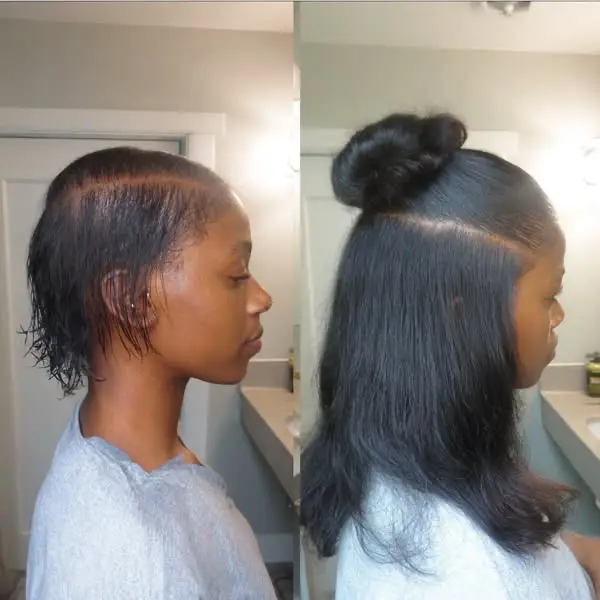
The Black Hair Care Journal — Calm the itch and burn every night
Testing

My scalp kept getting worse. Here's why.

I'm going to say something your dermatologist probably won't. 😤🤬 Clobetasol is not going to fix the burning in your scalp. Not the Kenalog shots. Not doxycycline. Not minoxidil. Not the keto shampoo or the castor oil. NONE OF IT IS GOING TO FIX THIS. I know because I tried all of it. For 3 years. And my CCCA kept getting worse through every single one. Read this whole post. Because the answer is in here and it is NOT another prescription. ======== I'm 49. I run the front desk at a dental office, which means I smile at people for 8 hours a day with a wig on. The itching started when I was around 45. Not dramatic. Not sudden. Just - one evening my crown was tender when I took my twists down. Then the itch started waking me up at night. Then a bald patch in the middle of it started getting wider. I went to a dermatologist, Dr. Feld. She did a biopsy. "CCCA. Central centrifugal cicatricial alopecia. Very common in Black women your age. Let's start you on clobetasol." It worked. For about 4 months it honestly worked. The itch calmed down. I was sleeping through the night. I thought we'd found the answer. Then it started slipping. The burning crept back in the evenings. The tenderness came back on wash day. That feeling when I took the wig off at night, like my whole crown had been sitting under a heat lamp. I told Dr. Feld. "Let's add Kenalog injections." Shots straight into my scalp every 6 weeks. Better for a few weeks. Then back to where we were. "Let's add doxycycline. Some patients stay on and off it for years." Doxy twice a day. On top of the clobetasol. On top of the shots. On top of the minoxidil I'd been rubbing in every night for a year. 2 months on doxy and my scalp was the calmest it had been in ages. Then I broke out in hives and had to stop. Within a week the itch was back worse. The minoxidil made my heart race at night, so that went too. And my scalp was still itching every afternoon. Still burning under the wig. Still had nights where the tenderness was so bad I couldn't lay my head down on the left side. When I told Dr. Feld the patch was spreading, she looked at my crown for about 10 seconds and said, "You still have a lot of hair." I caught my face in the mirror on the way out. I didn't look upset. Just... resigned. Like I'd accepted this was my life now. That look broke me. I posted in a CCCA group on Facebook. "Clobetasol, Kenalog shots, keto shampoo twice a week, I tried doxy and minoxidil, and my scalp still burns every single day. I don't want support. I want answers. Anyone else dealing with this?" The responses came fast. "Jamaican black castor oil. Changed everything for me." "Apple cider vinegar rinse after you wash. Kills whatever's making it itch." "Monistat 7 on the scalp. I'm serious." "It's autoimmune. Go see a rheumatologist." So I tried. I tried most of them. Castor oil every night for 3 months. My scalp itched worse than before I started. Vinegar rinse after every wash for 2 months. My head smelled like a salad and it still itched. Monistat on my scalp for a week. I'm not proud of it. Still itched. One appointment with a rheumatologist. She looked at my bloodwork and said, "Keep an eye on the autoimmune side." My scalp still burned every afternoon. I stopped adding up what I was spending because the number made me feel sick. And my scalp was still on fire. The patch at my crown was big enough to see in the bathroom mirror now. I stopped walking with my neighbor Carol, because most nights the itch had me up till 3 and I couldn't drag myself out of bed at 6. For 10 years we'd walked the reservoir by our street together 5 mornings a week. It's 3 miles with a hill at the end. Some nights I lay down on the kitchen floor at midnight with my scarf off and the side of my head on the tile, because it was the only cool thing in the house. And I thought: I've done everything anyone told me to do. Every prescription. Every oil. Every rinse. And it keeps getting worse. I needed to understand WHY. Not what to try next. WHY. Why did the clobetasol work and then stop? Why did the shots only buy me a few weeks? Why did the castor oil make the itching worse? Why was I worse now than when Dr. Feld wrote that first prescription 3 years ago? 3 years. One dermatologist. Not once did anyone explain WHY everything kept failing. I spent 2 weeks reading every night after dinner. Medical journals I could barely follow. Every CCCA video on YouTube, and the comments under them from Black women watching the same thing happen. And I found something that made me feel like the floor opened up underneath me. Because it explained everything. Here's what nobody told me in 3 years of appointments: CCCA isn't just hair falling out. It's inflammation at the follicle, the tiny opening each hair grows out of. And 3 things keep that inflammation going. The follicle openings get plugged. Dead skin, oil and old product pack into them and trap the inflammation inside, like a cork in a bottle. The skin barrier on your scalp gets worn down. Irritants get in. Moisture gets out. That's why it stings when you wash. And underneath it all there's heat. That's the burning and the tenderness you feel. That's what's actually attacking the follicles. All 3 run at once, every day, and each one feeds the rest. And here's the part that made me physically angry: The steroids - the clobetasol, the shots - turn the heat down. That's ALL they do. They don't unplug a single follicle. They don't repair the barrier. And steroids used for a long time thin the skin, so the barrier gets weaker the longer you're on them. That's why the clobetasol works and then stops working. It's not that the medicine failed. It's that the plugs and the barrier kept getting worse while the medicine only turned down the heat. More plugging. More irritation. The steroid has to hold down a bigger and bigger fire. It loses the race. So you add shots. It helps. Then the fire catches up again. So you add doxy. It helps. Then the fire catches up again. More fire extinguishers. Bigger fire. Fire extinguishers can't win. They were never designed to win. They were designed to manage. And everything else I'd tried was aimed at a different problem. Minoxidil is made for a different kind of thinning, the hormone kind. Keto shampoo is for fungus, and nobody ever found fungus on my scalp. And the oil? Oil on an inflamed scalp is like putting Vaseline on a burn. It seals the heat in. That's why my itching got worse every time I greased it. Nobody told me this. Not in 3 years. One woman in those comments said a trichologist was the first person who ever explained it to her. I found one 40 minutes away. Ms. Okafor. She's been treating Black women's scalps for 20 years. I drove there and asked if she had time. She did. The first thing I noticed: she didn't reach for a needle. She looked at my scalp by the window for a long time and confirmed everything I'd read. And then she said something that clicked everything into place. "Your scalp needs all 3 done at once, every single night. Dissolve what's plugging the follicles. Rebuild the barrier the steroids wore down. Cool the heat. And nothing greasy on top. Do one and skip the rest, and the fire comes back. The middle of your patch has scarred, and scarred follicles don't come back. But the ones around the edge are asleep, not dead. Every month the fire keeps burning, more of the edge goes the same way." I asked why Dr. Feld hadn't mentioned it. She was quiet for a moment. "A shot every 6 weeks is a standing appointment. A tube you roll on at home doesn't bring you back in." She leaned forward. "I don't sell Restore. I don't make anything from recommending it. I recommend it because it's the only thing I've found that does all 3 jobs in one step, with no oil in it." She wrote the name on a card and handed it to me. I ordered it that night. The tube arrived 4 days later. I read the box twice. Salicylic acid to dissolve what's plugging the follicles. Dexpanthenol to rebuild the barrier. That's vitamin B5, the one they use on wounds. L-menthol to cool the heat. No oil in it at all. I parted my hair along the edge of the patch and rolled it on. 30 seconds. The cold came up through my whole crown. I closed my eyes and let out a long slow breath. Week one - still itchy in the afternoons. But I slept in my bed every night. I kept going. Week two - I laid my head down on the left side of the pillow for the first time in a year. Week three - I threw out the Monistat. Week five - tiny baby hairs along the edge of the patch. Week seven - I knocked on Carol's door at 6 in the morning. She cried a little. Then she made me do the hill twice. Month three - Dr. Feld saw me for my checkup. She pressed on my crown where it used to hurt to touch. Then she pressed again. "Your scalp is calmer than I've ever seen it. What changed?" I told her about Restore. About the plugs and the barrier. About what Ms. Okafor had explained. She was quiet for a moment. "Salicylic acid and dexpanthenol both make sense on an inflamed scalp. I just haven't had something I felt confident sending patients home with. If it's working this well - keep going." "I want to push your next shot out and see how you do. Come back in 6 weeks." 6 weeks later: shots every 12 weeks instead of 6. Clobetasol down to twice a week. 6 weeks after that: no shot at all. I have CCCA. The middle of my crown is still smooth, and it's staying that way. But the hair around it is holding, and filling in. And I am not resigned to it anymore. I walk with Carol 5 mornings a week. I sleep through the night. I wear my own hair out to the grocery store and I feel good in it. 3 years of prescriptions that turned the heat down while everything underneath kept getting worse. 30 seconds a night of something that actually went after what was underneath. The heat was never the only problem. The plugged follicles and the worn-out barrier were feeding it the whole time. And nothing on my prescription list ever touched them. If you've been diagnosed with CCCA and your treatment keeps needing adjusting - if you've done the shots and the clobetasol and the oils and you're still watching that patch spread - this is what went after the cause instead of managing the symptom. It comes with a 60-day money-back guarantee. So if it doesn't work for you, you get every penny back. No questions. I got it here: https://montosero.com/products/restore

Loading the ad's image
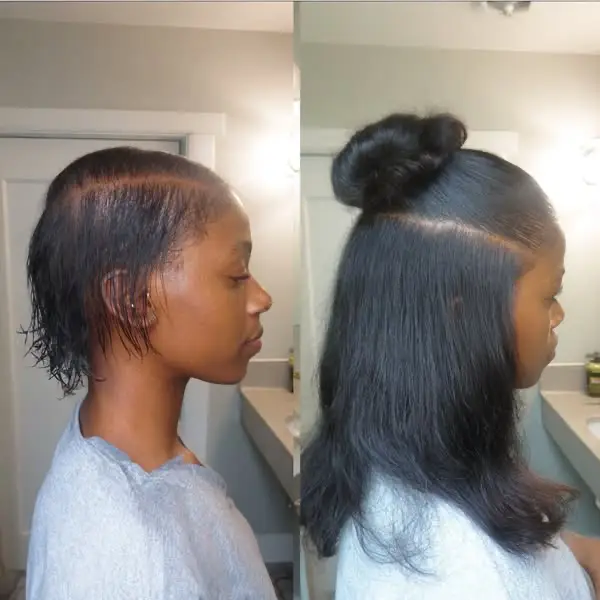
The Black Hair Care Journal — My scalp kept getting worse. Here's why.
TestingImage

The Real Solution for a Healthy Scalp

My sister and I were diagnosed with CCCA by the same dermatologist 8 months apart and put on the exact same shots, clobetasol and doxycycline. She's still up at 2am with her fingers in her scalp. I haven't had a night like that in 5 months, and the one thing I added, she won't try because it didn't come from a doctor. I love my sister. I'm writing this partly for her, because she won't hear it from me, and partly for any woman reading this whose prescriptions haven't stopped the burning either. Charmaine is 3 years older than me. She found her spot first. It was a smooth patch at her crown about the size of a bottle cap, and Dr. Harlan biopsied it and told her it was CCCA. When my crown started itching and a thin patch showed up in the same spot as hers, she drove me to his office herself. Same doctor, same biopsy, same word. Then the same plan. A Kenalog shot into the patch every 6 weeks. Clobetasol solution on the crown every night. Doxycycline twice a day. When that wasn't enough, Dr. Harlan added a fluocinonide ointment for Mondays, Wednesdays and Fridays, and minoxidil for "whatever hair we can save." Charmaine and I did all of it, and we did it right. We called each other every Sunday night and compared notes like 2 women on the same diet: who'd had a shot that week, who'd thrown up the doxy, whose crown was worse. I run the kitchen at a school. That means I'm in a hairnet from 6:15 in the morning until the last tray is washed, and under that hairnet my scalp was riddled with sores. The itch never gave me any warning. Most times I didn't know until I felt the need to scratch, and then I'd end up screaming in pain, because my nails had found an open sore before my brain caught up. On a serving line you cannot touch your hair. I know that better than anybody, because I'm the one who trains the new girls. I did it anyway, because the other choice was standing there with my eyes watering over a pan of chicken. One afternoon Mr. Whitfield, who runs the school, waited until the kids had cleared out and said, "Ms. Theresa, a parent mentioned you were scratching your head on the line. I need you to stop that." I said "yes sir" like I was 12 years old. Then I went into the stockroom and cried into a case of napkins. So many days I did not even want to go to work because my scalp hurt. I went anyway, because I'm the one with the keys. My worst weeks were always the stressful ones: inspection week, the week my mother-in-law was in the hospital. There was nothing I could do about those weeks. I just had to get through them with my head on fire. Nights were worse. More than once I've climbed into the bath at 1am, poured in Epsom salt and dunked my whole head under, because it was the only thing that stopped the burning for 10 minutes. My husband, Curtis, would knock and ask if I was alright, and I'd tell him to go back to bed. Charmaine had it worse in her own way. She decided the fire started in her stomach, so she cut sugar, then gluten, then anything fried. She had more energy than she'd had in years, and her scalp burned exactly the same. Then one Sunday she told me she'd shaved it all off, because shaving when it burns gave her some relief. She sent me a picture. She looked beautiful, and she had a smooth, shiny circle the size of a coaster at her crown, with little red bumps all around the edge of it. Every time we asked Dr. Harlan how long this would go on, he gave the same answer. "CCCA is something we manage. We don't cure it." And every time the itch came back, Charmaine said the same thing on the phone: "I will need to go back on an antibiotic just to deal with the itching." That was our life for 3 years. We got shots that hurt going in and put a steroid on every night. We went on and off the pills, and on Sunday nights 2 grown women compared scabs on the phone. What changed it for me was a sunburn. Doxycycline makes your skin burn in the sun. It says so on the bottle, and I'd ignored it the whole time because I work indoors. Then I got put on outdoor duty for the school's fun run, 5 hours on the field handing out water. By that night both my forearms were blistered. That was the end of me and the doxy. I stopped it that night, and I didn't go back. Itching was better than blistering. On Monday the school nurse, Mrs. Odom, saw my arms and pulled me into her office to put something on them. She's been the nurse at our school for 22 years. She asked what I was taking, and I told her all of it, down to the clobetasol every night. She stopped with the tube in her hand. "Every night? For how long?" "I've been on it 3 years." She looked at me over her glasses. "Theresa, I'm not allowed to put a steroid that strong on a child for more than a couple of weeks." Then she said the thing I couldn't stop thinking about. "Everything you just listed is for the fire. What's anybody doing for your skin?" I didn't have an answer. When I called Charmaine that night, she did. "Dr. Harlan's handling my skin," she said. "That's what the clobetasol is for." By the end of that week the itch was back and crawling down the back of my head, which is exactly what Dr. Harlan had always said would happen if I came off the doxy. So I did what I tell the kids at school not to do and stayed up on my phone past midnight. I typed in Mrs. Odom's question, more or less: what heals the actual skin on a scalp with CCCA? Most of what came up was oil. Charmaine swears by castor oil, and I won't argue with what she feels on her own head. On my crown it made the burning worse inside an hour, like putting Vaseline on a burn. It holds the heat in. Then I found a long write-up from a trichologist who works on Black women's scalps, and she laid out what Mrs. Odom had only started to say. A scalp that has been inflamed for years has 3 things going wrong at the same time. The first is that the follicle openings get plugged. Dead skin, oil and old product pack down into each opening like a cork and hold the inflammation in against the root. The second is the barrier, the thin top layer of skin that keeps irritants out and moisture in. Years of inflammation wear it through, and years of steroid wear it thinner. So Charmaine had it backwards: the clobetasol wasn't handling our skin. It was part of what was wearing it out. It's like chapped lips that split again every time you lick them, because the thing you do for relief is part of what's cracking them. The third is the heat underneath. That's the burning and the soreness, and that's the part doing the damage to the follicle. The shots, the clobetasol, the fluocinonide and the doxy all went after the heat, and only while we were using them. Stop and it comes right back, which both of us had watched happen more times than I can count. It's like pointing a fan at yourself in a room with a heater running. You feel better while the fan is on, and the heater never gets switched off. The minoxidil wasn't even aimed at that. The write-up said minoxidil, biotin and most of the oils on the shelf were made for the kind of thinning that's driven by hormones, the most common kind in white women. That kind needs a push to grow. Ours is a scalp on fire, and pushing hair to grow through it is like shoving harder on a door that's still locked. Then came the part that made me sit up in bed. The smooth, shiny middle of a CCCA patch is scar, and nothing brings scar back. I'd been told that, and I believe it, because I can see it. But the follicles around the edge are often asleep, not dead. That's the ring where the hair is thin and the bumps are. Take away what's keeping those follicles asleep and some of them can wake back up. Leave the fire going and they scar over too. So what my scalp needed, if it existed, was something that did all 3 jobs on the skin itself. It had to clear out the plugged openings, help that worn-through layer rebuild and cool the heat. It had to do that every single night, and it couldn't add a drop of oil. I lay there in the dark and realized that in all those appointments, nobody had ever offered either of us anything for the first 2. The next morning I sent Dr. Harlan a message through the patient portal. I asked if there was anything for the skin itself, for the plugged follicles and the barrier. The answer came back 4 days later, from his nurse: "Dr. Harlan advises there is no over-the-counter treatment for CCCA. Please continue clobetasol as directed." He isn't a bad doctor. He's a busy one, and in all that time he had never once asked me how my scalp felt, only how it looked. So I tried to work it out myself, and I kept running into the same 4 problems. Whatever it was, it couldn't be greasy. The fluocinonide ointment was the closest thing to a skin cream anybody had given me, and on those days it left my hair slick and my hairnet smelling like a pharmacy. Those were always my worst itch days. Then there was my hair. It's thin at the crown, but I have twists all around it, and anything I put on landed on the hair instead of the skin. Half of every dose of clobetasol was going on my twists. Even if I found one thing for each job, that was 3 more bottles every night on top of 4 prescriptions, for a woman who gets up at 5:15. And I was not taking another drug. I still had blisters healing on my arms from the last one. But I wasn't quitting the rest of Dr. Harlan's plan either. Charmaine would have driven over and fought me. That night I couldn't sleep. At 2am I was sitting in the dark on the closed toilet lid, reading that portal message over and over like it might say something different. Charmaine does this every night, I thought. So I did something I'd never done with any doctor. I went back to the trichologist's write-up, found the contact form at the bottom, typed out my whole plan and asked her what she would do. Her answer was in my inbox at 5:40 the next morning, before I'd even left for work. She said most of her clients with CCCA keep their prescriptions and add one thing at night for the other 2 jobs. She uses one called Montosero Restore. She said it's the only one she's found that does all 3 without oil. Dr. Harlan's office had taken days to tell me nothing. She'd taken about 3 hours. That afternoon I printed the product page and showed Mrs. Odom. She ran her finger down the ingredients and said, "Well. That's your 3." The first thing I checked was the grease. It's a liquid with no grease at all, so there's nothing to leave in my hair or soak into my hairnet. The first night it went on, soaked in, and my twists were dry. It comes in a slim white tube with a metal roller tip. I part my twists and roll it right along the skin, across the crown and around the edge of the patch. All 3 jobs are in the one tube. Salicylic acid works down inside the follicle openings and dissolves the buildup that shampoo and water can't reach, so the cork comes out. Dexpanthenol, which is vitamin B5 and a wound-healing ingredient, goes to work on the barrier. L-menthol cools the heat the second it touches you. It takes about 30 seconds at night and you don't rinse it. It isn't a drug. Montosero's page said it works alongside prescriptions like minoxidil and clobetasol, so I didn't have to choose between it and Dr. Harlan. I added it to what he still had me on. And it came with a 60-day money-back guarantee, which is more than any prescription ever offered me. The first night, the cold came on so fast I gasped. Curtis asked what was wrong and I said, "Nothing. Absolutely nothing." I didn't go anywhere near the bath that night. The first week, the itch got quieter. It was still there, but it stopped grabbing me out of nowhere. About 2 weeks in, Mr. Whitfield came through my line for a tray, the same man who'd asked me to stop scratching. He looked at me a second longer than usual and said, "Ms. Theresa, are you humming?" I was. That was a fluocinonide day, too. It was the first one in a long time that wasn't one of my worst itch days. The itch never came back hard enough to make me think about the doxy again. On the Sunday calls I started running out of things to report, and Charmaine noticed. "What's going on with you?" she said. I told her. I read her the ingredients. There was a long quiet on the phone, and then she said, "If it was any good, Dr. Harlan would've given it to us." Dr. Harlan's medical assistant has handed me tissues through every one of those shots. At my next appointment she held the box out like always. I didn't need it. My scalp wasn't raw anymore, and the needle went into skin that wasn't already sore. "No tissues today?" she said. Around week 5, I took my hairnet off in the car after a shift and tipped my head toward the mirror. There were short, soft little hairs standing up around the edge of the patch. I sat in the car and cried, which is a better reason to cry than a case of napkins. The middle is still smooth. It's always going to be. That part is scar, and I've made my peace with it. But the ring around it is fuller than it's been since before any of this started. That's the part that was thin and bumpy and on fire. I still have CCCA. Dr. Harlan is right that nobody's curing it. But inspection week came around again, and I worked it with a hairnet on and my hands at my sides. I haven't had a 2am night since the night I first rolled it on. Charmaine had her appointment 2 weeks ago. Her patch measured bigger again. The bumps at the edge have spread toward the back, and Dr. Harlan put her back on the doxy. I bought her a tube. It's in her bathroom drawer, still in the box. I checked. I can't make my sister use it. But I keep thinking about what that trichologist wrote about the follicles around the edge. Every month the fire stays lit, more of them scar over for good, and Charmaine is losing them while she waits for Dr. Harlan to hand her something. If you're where she is, I'm not telling you to stop anything your doctor has you on. I'm telling you that the steroids and the pills were only ever working on the heat, and nobody has been doing anything about the other 2. It goes on alongside your prescriptions, and if it doesn't work for you, you get every penny back. No questions. Click below to try Montosero Restore and finally give your scalp what it's been asking for. https://montosero.com/products/restore

Loading the ad's image
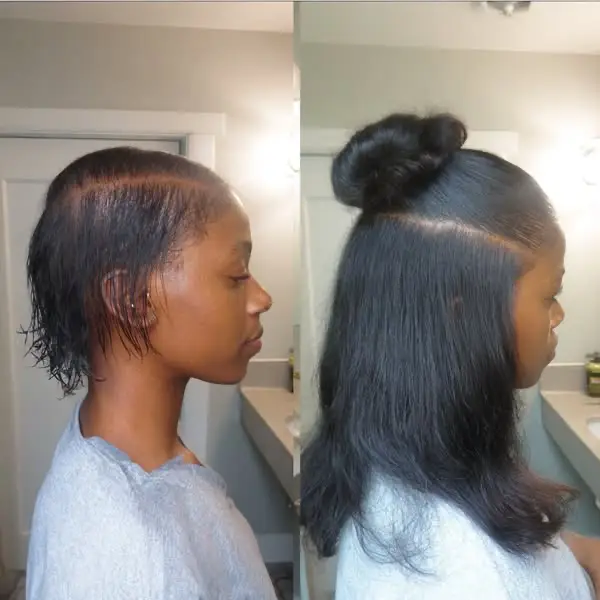
The Black Hair Care Journal — The Real Solution for a Healthy Scalp
TestingImage

Calm an itchy crown and support fuller-looking hair every night

My husband's been bugging me to post this. I said it was nobody's business. He said, "It could save someone's marriage." So I finally gave in. Five months ago, I was two signatures away from divorce papers. Not because of infidelity. Not because we fell out of love. Because I was going bald at the crown, and the shame was destroying us both. It started about a year and a half ago. My husband would reach over in bed and run his fingers through my hair, and halfway to the top of my head, I'd just... flinch. The first time it happened, I laughed it off. "Just tender-headed." The second time, I felt the first stab of panic. My whole scalp was sore where he touched it, and right in the middle there was less hair than there should have been. By the fifth time, I couldn't even look at him. I started making excuses to avoid intimacy entirely. "Long day at work." "My head hurts." "Let's just watch a movie tonight." The head part was true. It itched all day and burned at night. But he knew I was lying. I could see the hurt in his face every time I turned away from him. I started putting on a satin bonnet before he came to bed and taking it off after he left for work. For a while I told myself my comb wasn't narrow enough, and that's why my part looked so wide. But the shame was too heavy. I couldn't talk about it. I couldn't admit that at 52 years old, my own hair had betrayed me. So I just... withdrew. We stopped touching. Stopped kissing. Stopped talking about anything real. We became roommates. The Fight That Almost Ended Everything It was a Tuesday night. He'd made my favorite dinner. Opened a bottle of wine. Put on the shirt I'd always loved. I knew what he was hoping for. And I felt the familiar wave of dread wash over me. After dinner, he took my hand and led me to the bedroom. My heart was pounding. Not with desire. With fear. We started kissing. He was trying so hard to connect with me. Then his hand went to my bonnet. I pulled away. "I'm sorry," I said. "I'm just not in the mood tonight." That's when he broke. "You're NEVER in the mood!" he shouted. "It's been three months since you've even let me touch you. Three months!" "I'm tired—" "Don't lie to me!" His voice cracked. "Do you not want me anymore? Is there someone else?" "No, of course not—" "Then what is it? WHAT IS WRONG?" I couldn't answer. The shame was choking me. He sat on the edge of the bed with his head in his hands. "I feel like a stranger in my own bed," he said quietly. "Like you can't even stand for me to touch you." That's when I realized: My shame had become his shame. My problem had convinced him I didn't want him. And I'd been so obsessed with hiding my bald spot that I hadn't seen what it was doing to him. "It's not you," I finally said. "It's me. I'm going bald. Right on top. It's been getting worse for months." I turned on the lamp and pulled off the bonnet. He looked at the spot for a long time. "Why didn't you tell me?" "Because I'm humiliated," I said. "I'm 52 years old and I've never felt so ugly in my life." We sat there in silence for what felt like an hour. Finally, he said: "We need to fix this. Or we're not going to make it." He was right. I Was Already on the Shampoo (And It Wasn't Working) Here's what you need to know: I'd already tried the dandruff shampoo. My doctor prescribed ketoconazole six months earlier, after I finally worked up the courage to mention "a little dandruff and some thinning." The first time I used it, it worked. Sort of. The itch calmed down, but my scalp felt... stripped. Tight. And it only lasted about a day before the itching started again. So I washed with it twice a week. Then every other day. It worked less and less each time. By the third month, my scalp was flaking worse than before I started, and I was scratching the flakes off with a basic brush until it bled. My stylist's advice? "Rosemary mint oil. Every night." So I did. Same story. Except worse. That rosemary mint oil absolutely irritated my scalp. The itch turned into burning. The soreness spread. And there was more hair in the brush every morning. I felt like I was throwing water on a grease fire. But here's what really bothered me: None of it fixed anything. The shampoo just forced the itch quiet for a night. The underlying problem was getting worse. And I could feel it. I blamed myself for a while. All those years of sew-ins, braided tight underneath. But I'd stopped them years ago, and the spot kept spreading anyway. What My Doctor Didn't Tell Me (And Why She Probably Doesn't Know) After that fight with my husband, I went to a dermatologist. Not my regular doctor. A specialist this time. I waited three weeks for the appointment. I told her everything. The shampoo wasn't working anymore. The oil made it worse. The spot was getting bigger. She looked at the top of my head for less time than it took me to sit down. She never touched it. Then she started talking about minoxidil. Twice a day. For the rest of my life. And if that stopped working, steroid shots. Shots. Into my scalp. I couldn't believe what I was hearing. She was giving me all this medication and still hadn't told me what was wrong. "Isn't there something that actually FIXES it?" I asked. "Instead of just forcing hair to grow?" She looked at me like I'd asked her to perform magic. "Thinning at your age is very common," she said. "It's usually hormonal. The change. Stress. And your scalp is dry. Minoxidil is the first line of treatment. If that stops working, we move to injections." "But why does it burn?" I pressed. "Why is it sore when I touch it? Can't we fix that?" She shrugged. "Dry scalp. Get a good oil. At your age, we focus on keeping what you have." That's when it hit me. She didn't have a solution. She had a prescription. A lifetime of minoxidil that works less and less. Then shots. Then wigs. A slow decline that the whole system was built to manage, not cure. I left that appointment feeling more hopeless than ever. The Conversation That Changed Everything Two weeks later, I was having lunch with an old friend from college. We'll call her Gail. Gail is 58, with a short natural cut that hides nothing and a crown thicker than mine was at 40. We were catching up, and I don't know what came over me, but I just started venting. I told her about the itching. The shampoo. The oil. The dermatologist's useless advice. I expected her to squirm. Change the subject. Instead, she grabbed my wrist across the table. "Girl, I went through the exact same thing," she said. I stared at her. "You? But your hair..." "It's fine now," she said. "Better than fine, actually. Better than it was at 50." "How? What did you do?" She leaned in. "You're going to think this sounds crazy, but hear me out. The problem isn't your hair. It's your scalp." "Yeah, the dermatologist said it's dry—" "Right. But did she tell you WHY a dry scalp would burn?" I shook my head. "Because it's not dry. It's inflamed," Gail said. "The rosemary, the minoxidil? Almost all of it is made for the other kind. The hormone kind, the one most white women get. Minoxidil just forces hair out of a scalp that's still on fire. When your crown itches and burns and the spot keeps spreading, that's a different kind. Stress can play a part. So can the change. But neither one itches. That's inflammation. Different problem. Different solution." "That's why the shampoo didn't work. Ketoconazole treats fungus. You don't have a fungus. And the oil? Grease on an inflamed scalp is like rolling up the windows on a car parked in the sun. It traps the heat and seals in the dead skin and the buildup. That's why your itch got worse the minute you started oiling." "And the braids?" I asked. "Braids can start it. They don't keep it going. That's why you stopped them years ago and it kept spreading." This was the first explanation that actually made sense. "So how do you put it out?" I asked. "Three things keep it going," she said. "The follicles get clogged, packed with dead skin and buildup, like the tip of a glue bottle that's dried shut. The skin barrier gets damaged, like a cracked bucket, so irritants get in and moisture gets out. And underneath it all there's heat, like a burner somebody forgot to turn off. That's the burning." "Three specific ingredients," she said. "One for each." I waited for the punchline. "I'm serious," she said. "Salicylic acid dissolves the gunk packed inside the follicle. It dissolves in oil, so it gets in where shampoo and water can't reach. Dexpanthenol, that's vitamin B5, rebuilds the barrier. It's what they put in wound-healing creams. And L-menthol cools the heat the second it touches your scalp. You're not forcing anything. You're just taking away what's keeping your follicles asleep." "Asleep?" "Asleep. Like a pilot light turned way down, but still lit. As long as they haven't scarred over, they can come back. Scarred ones don't. That's the part nobody tells you." "I roll all three on every night. The itch went first. Then the soreness. Then the hair came back in, right where you're looking." I wanted to believe her. But it sounded too simple. "If this works, why isn't every dermatologist telling women?" I asked. Gail smiled. "Because most of them were trained on the other kind. Only about 3% of dermatologists in this country are Black. And there's no money in telling a woman to stop greasing her scalp. The money is in keeping her coming back." The Research I Found That Night I went home and started digging. And what I found shocked me. A survey of more than 5,500 Black women from the Black Women's Health Study. 40.9% had signs of something called CCCA, a kind of scarring hair loss that starts exactly like mine: the itching, the soreness, a spot at the crown that keeps spreading. Only 8.8% had ever been diagnosed. Then I looked up the three ingredients. Salicylic acid is oil-soluble, so it gets inside a clogged follicle. Dexpanthenol is used in wound healing. L-menthol switches on the skin's cooling receptors. Three ingredients. Three jobs. One result: a scalp calm enough for sleeping follicles to wake up. This wasn't fringe science. These were clinically studied ingredients. And no one had told me about it. Not my doctor. Not the dermatologist. Not my stylist. Because there's no prescription for it. No follow-up appointments. I felt angry. And betrayed. But mostly, I felt hope for the first time in a year. I texted Gail for the name and ordered it that night. All three ingredients in one oil-free serum with a metal roller tip you roll right onto the spot before bed. Not three separate bottles. Not another jar of grease from the hair aisle. The tube arrived a week later. I rolled it on that night, right before I put my bonnet on. What Happened Over the Next 8 Weeks Week 1: Nothing I could see. Just a cold tingle when I rolled it on. I was starting to think I'd wasted my money on internet nonsense. Week 2: I slept the whole night without scratching for the first time in months. I just laid there in the morning, smiling. Week 3: The soreness was gone. I pulled my hair up into a puff for the first time in a year, and nothing hurt. No flakes on my shoulders. No blood on the brush. Week 4: My confidence was coming back. I put my hand on his back while he was doing the dishes. He froze for a second. Then he smiled. We didn't say anything. We didn't need to. Week 6: Rolling it on, I felt the tip bump over something. New hair, short and coarse, all along the edge of the spot. I sent Gail a picture with no words, just eleven exclamation points. Week 8: On a Tuesday night, I went to bed without the bonnet for the first time in a year. I left the lamp on. We made love for the first time in longer than I want to admit. And I didn't think about my head once. When it was over, he just looked at me with tears in his eyes. "I thought you didn't want me anymore." I pulled him close and told him the truth. That I'd thought I'd ruined myself. That I'd been too ashamed to tell him. That I'd been avoiding him because I thought I was the problem. He cried. I cried. The Dermatologist's Reaction I went back to the dermatologist for my follow-up a few weeks later. She asked how the minoxidil was going. "I didn't start the minoxidil," I said. "I fixed it." She looked skeptical. "Fixed it how?" "Three ingredients that calm the inflammation in my scalp. Salicylic acid, dexpanthenol and L-menthol. They clear what's clogging the follicles, rebuild the barrier and cool the heat. My scalp doesn't itch. It doesn't burn. And there's new hair coming in." She nodded slowly. Said nothing. Typed something into her computer. I could tell she knew the research. But she wasn't going to recommend it. Because if every woman with an itchy, sore crown just calmed her scalp down, a whole lot of prescriptions would never get written. That's when I realized: The system isn't designed to cure you. It's designed to manage you. Why Most Hair Growth Products Are Worthless for Us (And How to Know If You're Buying Garbage) After my experience, I started telling other women about this. Six of them tried something after hearing my story. Only two saw results. The other four bought cheap "growth" serums and scalp oils online and saw nothing. Here's why most hair growth products fail: Wrong target. They're built for the hormone kind of thinning. Rosemary, biotin, pumpkin seed, minoxidil. None of it was made for a scalp that's inflamed. Oil and grease. Half the "scalp serums" in the hair aisle are oil in a dropper bottle. On an inflamed scalp, that's the car with the windows rolled up. Missing pieces. They'll do one job and ignore the others. A dandruff shampoo for the flakes. An itch cream for the itch. You need all three working together: clear the clog, rebuild the barrier, cool the heat. One without the others doesn't work. Wrong format. If it washes out in the shower, it was never on your scalp long enough to matter. They slap "growth" on the label with a picture of long, flowing hair and hope you don't read the ingredient panel. It's the hair aisle playbook. Big promises. Cut corners. Cash checks. The women who saw results? They used the same thing I use. Made for the inflamed kind, not the hormone kind. Oil-free, so nothing traps the heat. All three ingredients together in one serum. And it stays on overnight, rolled onto the scalp instead of rinsing down the drain. No oils. No grease. No residue. Just three ingredients, one job each, in a form your scalp can actually use. What You Need to Know Before You Try This If your crown itches, burns or is sore, and the hair there is getting thinner, there are two paths in front of you. Path 1: The hair aisle and the prescription pad. Oils that make the itch worse. Shampoos for a fungus you don't have. Minoxidil for life. Then shots. Then wigs. A lifetime of managing it and a bald spot that keeps spreading. Path 2: Calm what's actually wrong. Clear the buildup trapping the inflammation. Rebuild the barrier. Cool the heat underneath. Let the follicles that are only asleep wake up while they still can. No forcing. No grease. Just a calm scalp. I'm not a doctor. I'm just a woman who was two signatures away from divorce and found something that worked when nothing else did. My husband is the one who convinced me to share this story. "If this could help even one other couple avoid what we went through," he said, "you have to tell people." So here it is. What I use is called Montosero Restore. Three clinically studied ingredients in an oil-free serum: salicylic acid, dexpanthenol and L-menthol. 30 seconds a night, rolled right onto the spot. No rinse. Hits all three at once: clears what's clogging the follicles, rebuilds the barrier, and cools the heat. No shots. No prescriptions. No grease on your pillowcase. Just your own scalp working the way it's supposed to again. Here's the Deal Right now, they're running buy one, get one free + free shipping. And they have a 60-day money-back guarantee. No questions asked. If it doesn't work, you're out nothing. But if it works the way it worked for me? You get your scalp back. Your confidence back. Your marriage back. P.S. – Restore comes with a 60-day money-back guarantee. If the itching doesn't calm down, if the soreness doesn't let up, if you don't see new hairs coming in... send it back for a full refund, no questions asked. You have nothing to lose. P.P.S. – Fair warning: Restore won't bring back a follicle that's already scarred over. Nothing will. If your crown still itches and it's still sore, those follicles are still fighting, and each week on the wrong treatment, a few more of them seal over for good. I hid mine for over a year because I was too ashamed to say it out loud. If your crown itched today, start tonight. https://montosero.com/products/restore

Loading the ad's image
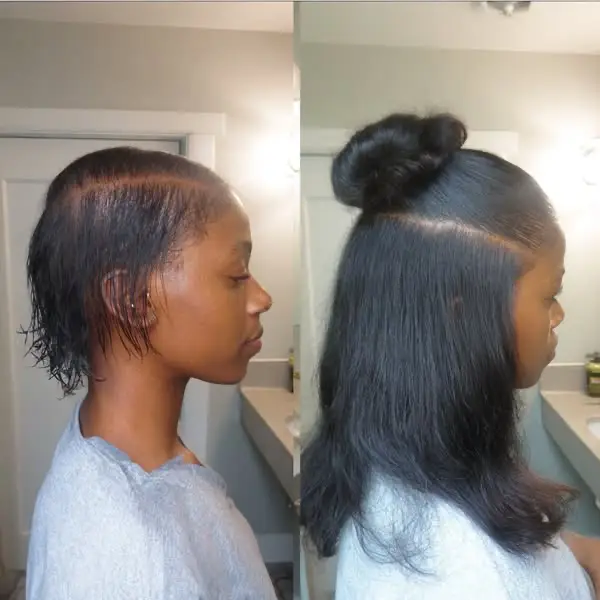
The Black Hair Care Journal — Calm an itchy crown and support fuller-looking hair every night
TestingImage

The Real Solution for a Healthy Scalp

For 3 years I told everyone the top of my head was dry scalp. The person who finally told me it wasn't was an esthetician doing a facial my sister had booked for me. At the end she started massaging my scalp, hit the sore spot in the middle, and lifted her hands off like she'd touched a stove. "How long has it been hot like this?" Nobody had ever asked me that. Not my doctor, not my braider. What she said next about the castor oil I'd been rubbing into it every night is why I'm writing this. I'm 44. I work the front counter at a credit union, I have a 12-year-old daughter named Nadia, and until my scalp started acting up, the only thing I ever thought about my hair was which style I was getting next. It started after a set of Marley twists. I'd had them put in back to back, 2 installs with barely a week between, and when the second set came out the very top of my head was sore. Just one spot, about as wide as 3 fingers. The edges were fine. I figured I'd done it to myself. What did I expect? I told myself it would settle down once my scalp had a break. It didn't settle down. It got tight, then itchy, then tender, the kind of tender where a brush going over it felt like somebody pressing on a bruise. I'd be at my counter counting out a customer's cash and catch my own hand creeping up to scratch the top of my head. For a long time I called it my stress spot. I used to tell my sister Rochelle, "That's where my job lives." By the second year it burned. Mostly in the evenings, after a full day under the lights at work, it felt like you could cook an egg on the top of my head. I slept with my head half off the pillow so nothing would touch it. And the hair there changed. The rest of my head stayed thick, the way it's always been. But the middle went short and fuzzy and thin. One morning I held a hand mirror up behind me in the bathroom and saw what my sister had been too kind to say. It looked like a sunflower in the middle of my head: a ring of short hair, and in the center, scalp. I'd known it was sore for 2 years. I didn't know the hair was gone until I saw it gone. So I went to my doctor. Dr. Whitfield has been my family doctor since before Nadia was born, and I like him. I bent my head down so he could see it from his stool, and he said, "That's dry scalp. And stress. You're a working mother. Put some oil on it every night and get more sleep." I asked if it could be anything else. He said, "Dry scalp can get pretty angry. Try a dandruff shampoo too." So I did both. I bought the Nizoral. And I went back to what my mother and my braider had always told me. Carla has braided my hair for 11 years. When I sat in her chair and showed her the spot, she touched it and I jumped out of my seat. "It's thirsty up there," she said. "You gotta grease it every night. And quit scratching it." So every night for over a year, I parted my hair down the middle of that spot and rubbed Jamaican black castor oil into it. A big glob, worked in with my fingertips, then a satin scarf over the top. I didn't let myself think about it, but that spot was already itchier than the rest of my head, and oiling it made it itch more. About 20 minutes after the castor oil went on, the itching would start up, and I'd be digging at it through the scarf in front of the TV. I told myself that meant it was working, that my scalp was drinking it in. Then the very center went numb. I was at a red light on the way home, and I reached up without thinking and pulled at a hair right on the edge of the bare middle. It came out and I didn't feel it. So I pulled another one, and I didn't feel that either. I sat there holding 2 hairs between my fingers until the man behind me leaned on his horn. There was so much hair coming out that I started vacuuming the bathroom every morning before Nadia got up, so she wouldn't see it. She caught me anyway one Saturday, standing in the doorway in her pajamas. "Mom, why are you vacuuming at 6 in the morning?" I said I liked a clean floor. She looked at the vacuum, then at my scarf, and didn't say anything, which was worse. Nadia has a habit of coming up behind me on the couch and resting her chin on top of my head while she talks. She's done it since she got tall enough. Around that time I started ducking out from under her, because her chin landed right on the sore part, and I didn't know how to tell my own child it hurt when she touched me. After a while she stopped doing it. I noticed the week she stopped. That's where I was when Rochelle booked me the facial. It was her thank-you for 6 weeks of picking her boys up from practice, and I think it was also her way of getting me out of the house. The place was a little skin studio near where she lives, run by a woman named Odessa who has been doing faces for 19 years. Rochelle swears by her. The facial itself was lovely. I was lying back on her table with a warm towel around my neck. Odessa talked the whole time about what she was seeing on my face. There were clogged pores on my chin and a dry patch by my nose, and there was a red spot on my cheek she called "angry" and told me to leave alone. At the end she said, "I'm going to do your scalp now, just relax," and worked her fingers back from my forehead. It felt wonderful, right up until she got to the middle, pulled her hands off my head, and asked me how long it had been hot. I told her since the twists. She asked what I put on it. I said castor oil, every night, and she winced. "Baby," she said, "if a woman came in here with her face this hot, castor oil is the last thing I'd let her put on it." Then she pointed at the angry spot on my cheek. "When a client's skin looks like that and it's hot to the touch, the first thing I tell her is stop putting heavy oil on it. Oil sits on angry skin and holds everything in. The heat, the gunk in the pores, all of it. It gets worse every time she puts more on." "Your scalp is skin," she said. "Same skin as your face, just with hair growing out of it. Dry skin is tight and flaky. It doesn't burn like that. That spot is inflamed. And you've been putting a lid on it every night." She told me she wasn't a doctor and couldn't tell me what it was. "But I've had my hands on a lot of scalps, and I've felt that heat on a few women before. Go home tonight and look up scalp inflammation in Black women. And don't put that oil on it." Part of me was relieved. The other part was angry, mostly at myself, because I'd noticed every single night that the oil made it itch worse. I just hadn't trusted my own head over my doctor and my braider and my mother. I didn't oil it that night. I sat up in bed with my phone and typed in almost exactly what Odessa had said. What came back was a name I'd never seen before: central centrifugal cicatricial alopecia, or CCCA. It's a long name for what was happening on top of my head. It starts in the middle of the crown and spreads outward from there. It often itches, burns or goes tender before anyone notices the hair is thinning. And it's driven by inflammation around the hair follicles, the tiny openings each hair grows out of. Then I found a survey of more than 5,500 Black women. 40.9% of them had signs of it, and only 8.8% had ever been told they had it. I thought about how many women I know who keep a wig on all the time. After that I went looking for women who'd had it, and found them on a few forums. Women who said it started as a sore spot. Women whose doctors had told them, "It's just dry scalp." And one woman who wrote, "Don't wait. I did and wound up with scarring." I read that line 4 times. That was the part that scared me. Inflammation like this, left going long enough, scars the follicle shut. A scarred follicle never grows hair again. That's how some women end up with a patch that's smooth and shiny. But the same pages said something else, and it was the first good news I'd had in a long time. A follicle doesn't scar the day the inflammation starts. Before that, it goes dormant. It stops pushing out hair, but it's still there under the skin, and if whatever is keeping it asleep gets cleared away, it can wake back up. I thought about the numb spot in the very center and felt sick, because some of that might already be gone. But the fuzzy ring around it was still growing something. The ring was asleep, not dead. And then there were the twists. I'd blamed myself for those installs the whole time. It turns out researchers have found a gene, PADI3, that makes some women's scalps react to pulling with inflammation. A friend can wear the exact same braids and keep every hair. So maybe the twists did start it. But taking them out didn't stop it, because by then the inflammation was keeping itself going. It's like a sunburn: you can go inside, but the skin keeps burning for days. The next morning I called Odessa and asked her what you're supposed to do about inflammation on a part of you that you can't even see. She thought about it. "If it was a face, I'd do 3 things. I'd clear out the pores, because when they're packed with oil and dead skin, the inflammation's trapped in there. I'd help the skin rebuild, because angry skin has cracks in it and everything that touches it stings. And I'd calm the heat. All 3, every day. You can't do one and skip the others. And nothing greasy on top, ever." She told me what she uses on faces for each job. For the pores, salicylic acid. It's in half the blackhead washes at the pharmacy. It dissolves in oil, so it can get down inside a pore and break up what's packed in there, which water can't do. For the skin, dexpanthenol, which is vitamin B5. She puts it on clients after a peel, when their skin is raw, and it's used on wounds for the same reason. For the heat, menthol. It sets off the same cold feeling you get from a mint on your tongue, and it takes the burn down on contact. "So put those on your scalp," she said. "Every night. And leave them on." Now I knew what the top of my head needed. Something that cleared those openings, rebuilt the skin and cooled the burn, all at once. No oil anywhere in it. And it had to stay on all night instead of rinsing down the drain. That Saturday I went to the beauty supply, then a pharmacy, then a second pharmacy, and by the third store I'd stopped expecting to find anything. I read the back of every bottle in the scalp section. The bottles were castor, peppermint, coconut and tea tree, and anything that wasn't an oil was something thicker. I must have picked up 30 bottles that day, and I didn't find one Odessa would have let near my face. The shampoos were on the next shelf down, and one of them had salicylic acid on the back. Odessa had told me to put salicylic acid on every night and leave it on. If I washed twice a week, that shampoo would touch my scalp for about 4 minutes out of every 7 days. So I went to the face aisle and bought a salicylic acid toner, a B5 cream for after a peel and a menthol cooling gel. That came to $46, and none of it was made to go anywhere near a head of hair. That night I tried, and the first problem was that one hand was holding a mirror up behind me, which left one for the top of my head. The toner on a cotton pad just soaked my hair, then ran down my forehead and into my eye, and it stung for 10 minutes. The B5 cream was thick and white and sat on my hair like mayonnaise. What little of it reached my scalp was one more heavy layer over the very spot I was trying to let breathe. I never even opened the gel. I stood at the sink with one eye watering and cream in my hair, and I thought about the ring. Every week I spent figuring this out was a week some of those sleeping follicles could scar over for good. Odessa could do all 3 jobs on my face in an hour on her table. Nobody was going to do them on the top of my head every night, and I couldn't do them myself. What I kept coming back to was that the 3 things existed. I'd held them in my hands that afternoon. Surely somebody had put them in one bottle for a scalp. So I typed all 3 names into my phone together with the word scalp. That's how I found Montosero Restore. It's a scalp serum, made for the exact thing I had: an itchy, sore, inflamed crown on a Black woman's head. I read the page sitting on the closed toilet lid, and it answered every problem I'd run into that week, in order. There's no oil in it, and no grease of any kind. It stays on. You put it on at night and go to bed, and you don't rinse it out. It has all 3 in the one tube: salicylic acid to clear the openings, dexpanthenol to rebuild the skin, and L-menthol to cool the burn. It's made to get past the hair. It's a slim tube with a metal roller tip on the end. You part your hair, put the roller on your scalp and roll it along the spot, so it goes on the skin and not the hair. It takes about 30 seconds, and you can do it by feel without ever seeing the top of your head. And it's a thin liquid, not a cream, so there's no residue sitting on top of the spot afterward. Nothing to hold the heat in. It came with a 60-day money-back guarantee, so the most I could lose was a few weeks of waiting. I ordered it that night. The first night I rolled it on, it went cold. It was a clean, minty cold right on the spot, and it stayed that way while I brushed my teeth and got into bed. I put my head all the way down on the pillow. For the first time in 3 years, the top of my head didn't feel like you could cook an egg on it. Within the first week, the itching backed off. I stopped catching my hand on the way up to my head at work. About 10 days in, I'd just rolled it on when Nadia came up behind the couch. Without thinking, she rested her chin on top of my head. I didn't duck. It didn't hurt. She kept talking about some girl in her class, and then stopped halfway through a sentence. "Mom. Your head's cold." I told her it was my new stuff. She said, "It smells like gum," and kept on talking. I sat very still so she wouldn't move. I still vacuumed the bathroom every morning, out of habit. By week 3 there were a few hairs on the floor instead of a handful. I'd stopped scratching, so I'd stopped pulling them out. At week 5, I held the hand mirror up behind me and saw tiny hairs standing up in the ring, short and soft, in places that had been bare scalp the month before. I counted them like an idiot. Then I went and showed Rochelle. At 3 months, Rochelle booked me another facial, and I didn't tell Odessa anything beforehand. At the end she did my scalp again. When she got to the middle she slowed down, went over it twice, and left her hands there. "There's hair under my fingers here now," she said. I'm not going to pretend it's all back. The numb spot in the very center is still smooth, about the size of my fingertip. Those follicles were gone before I ever got to them, and nothing was going to change that. But everything around it is filling in, and it's thick enough now to cover it. I wore my hair out to Nadia's school concert, and nobody looked twice at the top of my head. If the middle of your head is sore to the touch, I know what you've been told it is, because I was told the same thing. But dry skin doesn't hurt when somebody touches it, and it doesn't go numb. That soreness is inflammation, and if you're oiling it, the oil is holding it in. And it doesn't wait for you. Every month that spot stays angry, a few more of the sleeping follicles tip over into scarred ones, and nobody can bring those back. Mine are under my fingertip right now, smooth as the inside of a cup. I'd give a lot to have found this before that red light. Click below to try Montosero Restore and finally give your scalp what it's been asking for. https://montosero.com/products/restore

Loading the ad's image
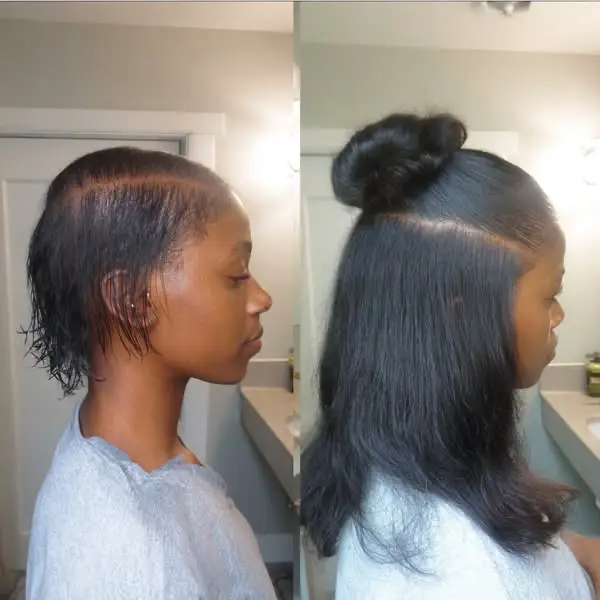
The Black Hair Care Journal — The Real Solution for a Healthy Scalp
Testing

Read this if you have CCCA and oil your scalp daily ☝️

I was diagnosed with CCCA at 29. I'm 41 now. Turns out the reason my scalp kept burning had nothing to do with the CCCA. For twelve years, I "managed" a problem that I was actually making worse every single day. Twelve years of working Jamaican black castor oil into my scalp, row by row, every single night. Twelve years of steroid shots in my crown that hurt like hell and only slowed it down. Twelve years of being handed doxycycline and told "this is lifelong, we manage it." I did everything they asked. I took Metformin for three years. My stomach never adjusted. I tried spironolactone at increasing doses until my potassium got dangerously high. I went on minoxidil. Three different kinds. The foam did nothing. The liquid made my scalp itch worse. The pills grew hair everywhere except where I needed it. When that didn't work, they sent me for PRP. Three sessions. Thousands of dollars. The burning came back the same week. They biopsied my crown. Scarring alopecia. They ran blood work. Low iron. Low vitamin D. A second biopsy. CCCA confirmed. "It's the CCCA," my dermatologist said. "Some women just keep losing hair with it. Keep your scalp moisturized between shots." She wrote me another doxycycline refill and said, "Try cutting out sugar." I felt like my body was broken. The tests all confirmed it. Inflammation. CCCA. Permanent. But every single day, my scalp told me it was getting worse. By noon, the sores on my crown would start itching under my wig. By 3pm, I'd be out in my car on my break, sliding a rattail comb under the lace to get at them. By bedtime, I was on the edge of the bed with an applicator bottle of castor oil, parting and greasing row by row while my husband waited with the lamp on. "Just five more minutes," I'd say. Fifteen minutes later, I was still there. Then I'd wake up at 6am and do it all over again. An hour every single day, between the oil at night and the wig in the morning. I mapped out every bathroom with a lock on the door. Every restaurant. Every friend's house. I needed to know where I could get to my scalp without anyone seeing. I stopped going to my book club. I couldn't sit on somebody's couch for two hours without my hand drifting up to my wig. I wore a wig every single day. Even in summer. Even on the hottest days, with my scalp on fire under the lace. And every doctor just nodded. "That's CCCA. The inflammation causes it. There's no cure. Just management." I tried a trichologist. She said, "Oil it every night, and come see me every month." Forever. I tried a ketoconazole shampoo. Twice a week for a year. It did nothing. I tried cutting sugar, cutting gluten, turmeric, Listerine on a cotton ball. My fridge door was a list of foods I couldn't eat. Nothing stopped the burning. I started to believe this was just my life now. That I'd spend the rest of my life with oil on my pillowcase, turning down plans, sweating under a wig all summer, checking my crown in every car window. My husband stopped reaching for my head. He learned to kiss my forehead and stop there. We stopped having sex with the lights on. I couldn't. Not unless the wig stayed on. I felt like I was living a double life. The version people saw, "put together," and the real me, who spent 7 hours a week hiding her own scalp. Then my sister asked me one question. She's a loctician with her own shop. She was retwisting a client with me on speaker, and I was crying about my scalp. "Have you ever thought about why it keeps getting worse?" I laughed. "Because I have CCCA. Because my scalp is inflamed." "No," she said. "I mean why is it worse now than at 29? You had CCCA then too. Why does it burn more now?" I didn't have an answer. "I see this in my chair all the time. Women with CCCA come in every few weeks. And I watch their scalps get worse. Redder. Shinier. More of it gone." "Because it's CCCA." "That's what everyone thinks. But here's what I've learned: it's not just the CCCA. It's what you're putting on it." She paused. "Every night, you grease an inflamed scalp. That oil sits on top like a lid on a boiling pot. It traps the heat. It seals in the dead skin and the buildup. So it burns hotter. You grease it again. It burns hotter again. You've been making your own scalp worse for twelve years." My stomach dropped. "The sores on your crown? That's your scalp barrier, broken. Irritants getting in, moisture getting out. And every round of steroids thins it a little more." "What about the shots?" "The shots calm the fire for a few weeks. But nothing's clearing what's packed inside the follicle openings, the dead skin and the oil. So the heat builds right back up underneath. That's why it comes back every time a shot wears off." I was sitting on the edge of the bed, holding that applicator bottle. "You're not managing a CCCA problem," she said. "You're stuck in a grease cycle. The CCCA started it. But the oil and the buildup have been making it worse every day for twelve years." I Googled the moment we hung up. "Does oil make CCCA worse." Page after page said it. Oil on an inflamed scalp traps the heat. The ketoconazole shampoo treats fungus, and CCCA isn't fungus. And follicles that aren't scarred yet aren't dead. They're dormant, and a dormant follicle can grow again. I found Reddit threads from women with CCCA whose stories were exactly like mine. Oiling for years. One woman's hair had grown back and fallen out 4 times. Nothing worked. Then they stopped the grease. One wrote that the oil had clogged her scalp and "stopped it from breathing." They started clearing the scalp instead of coating it. The burning started to calm. Not hotter. Calmer. So that was it. Clear out what's packed in the follicles. Heal the barrier. Cool the heat. And stop putting oil on it. At 1am I texted my sister: "Okay. So what do I do?" She called me the next morning. "You can't just stop your treatment. The inflammation's still there. Whatever you use has to work alongside your treatment. And most scalp products are made for a different kind of hair loss. Thinning from hormones. Dryness. Breakage. Shampoo rinses off before it gets inside the follicle. Nothing on a pharmacy shelf mends a barrier that's been broken for years. Nothing there touches the heat. And nearly every scalp serum out there is oil." I looked at that bottle. Twelve years, and every serum I'd ever bought listed an oil first. "So what does?" "There's one I recommend to every CCCA client. Montosero Restore. You use it right alongside your prescriptions. It's made for inflammation, with clinically studied ingredients. Salicylic acid gets inside the follicle and dissolves what's packed in there. Vitamin B5 rebuilds the barrier. Menthol cools the heat the second it touches you. And there's no oil in it." I found it online that night. One slim tube, a metal roller tip. Designed for inflamed scalps. I ordered it. The first night, I rolled it on and stopped. It was cool. Not burning. Cool. I ran my fingers across my crown. No heat. No throbbing. For the first time in years, I didn't reach for the oil. By week two, I realized I'd only taken that comb out in the car once that week. I'd barely touched my scalp. That hadn't happened since I was 29. Week five, I finally sat in my sister's chair. She parted my hair under her ring light and went quiet. "Look," she said, and handed me her mirror. Hairs along the edge of my bald spot. So fine I almost missed them. Not on the smooth part in the middle. That's scar, and I know it's gone. But all around it, where it had been thinning for years. Where the follicles had only been dormant. I cried. For twelve years, doctors told me it was the CCCA. That I needed stronger shots or another antibiotic or to "try cutting out sugar." Nobody told me I was making it worse. "Keep it moisturized," they said. "Oil it every night," they said. "This is lifelong, you can't change it," they said. Nobody explained that I was feeding the fire every night. Over the next two months, everything continued improving. The sores healed. The redness calmed. The new hairs kept filling in around the edge. By month three, I took my wig off after work and left it off all evening, for the first time in 8 years. I went back to book club and sat on that couch for two hours without once reaching under my wig. My husband kissed the top of my head on his way out the door, and I let him. I still have CCCA. The middle of my crown is still smooth. I still see my dermatologist. But my scalp is calm now. Not burning. Because I'm not feeding it anymore. I use Restore every night. Thirty seconds. No more hour a day. No more rattail comb in the car. No more oil on the pillowcases. If you've been diagnosed with CCCA… If your scalp has kept burning for years despite treatment… If you've spent thousands on shots and PRP and it came back anyway… If you've been oiling your scalp for years and nobody told you that you might be making it worse… I'm not saying the CCCA isn't part of it. But I spent twelve years treating the CCCA while making it worse every single day. While feeding the fire. Montosero makes Restore specifically for inflamed scalps that oils and pharmacy products can't handle. Right now it's buy one, get one free. And every month that fire keeps burning, more follicles go from dormant to scarred. Scarred ones don't come back. Sixty day guarantee. If it doesn't work, you get every penny back. No questions asked. But if it does? If you roll it on tonight and it's cool instead of burning? If five weeks from now there are new hairs along the edge of your bald spot? If two months from now you're sitting with your friends and not thinking about your crown once? You'll wish you'd stopped the cycle twelve years ago. I know I do. https://montosero.com/products/restore You don't have to keep making it worse while trying to make it better.

Loading the ad's image
The Black Hair Care Journal — Read this if you have CCCA and oil your scalp daily ☝️
Testing

I Was Diagnosed With CCCA At 44. I'm 53 Now. My Dermatologist Never Asked Me About The Bumps.

I was diagnosed with CCCA at 44. I'm 53 now. Turns out the shots and the creams were never going to be enough on their own. What was keeping my scalp on fire was hiding in plain sight, in the little white bumps I picked out from around my bald spot every wash day. For nine years, I "managed" a condition nobody was fully treating. Nine years of Kenalog shots in my scalp every six weeks, which left two small dents in my crown and never grew back a single hair in the middle. One round made it itch so badly for two weeks afterward that I almost never went back. I went back. Nine years of clobetasol propionate solution, 0.05%, dripped onto my crown every night before bed, which calmed the burning for a few hours and then let it come right back. Nine years of pills: doxycycline first, which kept my stomach in knots for most of a year, then minocycline, then minoxidil, which grew fine dark hair on my cheeks and almost nothing where I needed it. None of them stopped the burning. All of them cost me something. Nine years of tacrolimus ointment, a ketoconazole shampoo my dermatologist prescribed "for the build-up," and itching pills for the nights I could not sleep. Nine years of one more prescription and "give it time." I did everything they asked. I did the anti-inflammatory diet. Then gluten-free. Then sugar-free, because anything sweet set my scalp burning within the hour. Then the autoimmune protocol. I put aloe gel on it. When aloe was not enough, I put castor oil on it. When castor oil made the itching worse, I tried pumpkin seed oil, then nothing at all. I paid $1,600 out of pocket at a hair-loss clinic for blood work and a scalp scan. Everything came back "within range," and they put me on a $310-a-month supplement plan. I stayed on that plan for ten months. My crown did not look any different. I did twelve laser sessions at a skin clinic at $150 each. When my dermatologist ran out of ideas, she referred me to a dermatologist in Philadelphia who was supposedly the best on the East Coast for scarring hair loss. I took a day off work and drove two hours. She saw me for forty minutes. She measured the patch and called it "stable." She told me, "CCCA is lifelong. There is no cure. The goal is to keep it from spreading." She gave me a printout on "living with scarring alopecia" and told me to come back in six months. "Stable." That word stayed with me for years. I felt like I was crazy. The patch was "stable." The doctors were not worried. But every single day, my scalp burned like somebody had held a match to it. By the time my alarm went off, my fingers were already under my bonnet. I would lie there for ten minutes with the heel of my hand pushed into my crown before I could get up. Getting in the shower was a production. Water on the patch felt like a sunburn. I turned the showerhead away from it. Then I turned the pressure down. Then I bought a handheld sprayer so I could wash around it. By 10 a.m. the itch would start up under my wig. Just from sitting at my desk in the payroll office. By 2 p.m. it would move. Some days it was the crown. Some days it was along my part. Some days it was a spot behind my left ear I could not reach without lifting the wig. It was never in the same place two days in a row, which was the thing that made every dermatologist nod and say "yes, that's the CCCA." By 4 p.m. I would be counting the minutes until I could take the wig off. Every night at 8 p.m. for nine years, I bent over the kitchen sink and ran cold water over my crown. My husband started dinner without me. And the math never stopped. If I go to my line-dancing class, I will sweat under my wig and burn for two days. If we go to his cousin's anniversary dinner in a hot banquet hall, I will be leaving before the cake. If my grandson climbs up behind me on the couch and grabs the back of my head, the burn will go white-hot for an hour. I stopped saying yes to anything that made me sweat. Barbecues. Beach trips with my sister's family, because the sun on a wig is an oven. In class I always took the back row, so nobody could see the edge of my wig lift when I sweated. I also had what I called my "wash-day bumps" every week or two. Little white bumps around the edge of my patch. A crust along my part. They usually showed up after my worst burning days. I would stand at the bathroom mirror, work them loose with my fingernails, scrub with the ketoconazole shampoo, and push through. Nobody ever asked me about those bumps in nine years. I never thought to bring them up with my dermatologist. I had been told I had CCCA. The bumps felt like a separate thing. Probably my edge control. Probably the hard water. Probably just something that comes with wearing a wig. I looked fine with the wig on. Under it, a patch the size of my palm burned every day, and nobody had a reason for why it never stopped. And every dermatologist just nodded. "That's the CCCA. It's stable. Keep up with the clobetasol." I kept up with the clobetasol. I paid for it with a scalp that stung every time sweat touched it. I started to believe this was just my life now. That I would spend the rest of my life getting shots in my head every six weeks, and bending over the kitchen sink at 8 p.m. because cold water was the only thing that worked. Then a woman at my line-dancing class, the Thursday class at the community center I kept going to even though I paid for it afterward, said something no dermatologist ever had. Her name is Pearl. She is 64. She teaches the class. Retired esthetician, thirty-one years of facials. Went back and got certified in scalp care four years ago, after her own daughter was diagnosed with CCCA at 29. I stayed after class one Thursday night to help her stack the chairs. I had a finger under the edge of my wig, working at a sore bump along my part. She noticed. She stopped stacking. "Lorraine. Do you get bumps?" I laughed. "Every week or two. But that's not the problem. The problem is the CCCA." She sat down on one of the folding chairs and patted the one next to her. "What kind of bumps?" I told her. Little white bumps around the edge of the patch. A crust along my part. They usually showed up after my worst burning days. I figured it was my edge control. She was quiet for a moment. "Lorraine. Those aren't from your edge control. Those are plugged follicles. And the burning isn't just your CCCA being stubborn. Plugged follicles hold the inflammation right against the root, and nothing you've told me about is clearing them." I stared at her. She walked me through it in the empty multipurpose room for the next hour. A follicle is an opening in your skin, the same as a pore on your face. When dead skin, oil and product build up inside the opening, it plugs. On a face, a plugged pore turns red and sore and stays that way until somebody clears it. On a scalp with CCCA, the plug traps the inflammation right up against the follicle, where it cannot cool down. It just sits there and burns. Which is exactly what I had been feeling every day under the wig. She said three things keep the fire going in a scalp like mine, and each one needs its own fix. Thing 1: the plug. The bumps I had been picking loose every wash day. What I had been calling my edge control. Thing 2: the barrier. The skin's protective layer, worn thin, so sweat and shampoo get in and moisture gets out. Why the patch stung in the shower and flared every time I sweated in class. What I had been calling "just sensitive." Thing 3: the heat. The inflammation underneath, the burning and the soreness. The only one of the three anybody had ever treated. I sat there with my hands in my lap. She kept going. "'Stable' only means the patch hasn't grown, Lorraine. It doesn't mean the fire is out. The shot turns the heat down for a few weeks. The clobetasol turns it down while you're using it. And I watched women use steroid cream on their faces for years and end up with skin like tissue paper, so it's wearing your barrier thinner while it works. Nobody is clearing the plugs. So every time the shot wears off, the fire has everything it needs to come right back. It never gets a chance to settle." "You don't have CCCA that isn't responding. You have CCCA with three things feeding it, and for nine years you've been handed water for one." She told me minoxidil is built for the hormone kind of hair loss, the most common kind in white women. So are biotin and rosemary and most of the hair aisle. Mine was inflammation. Different problem. Different solution. And the ketoconazole shampoo is an antifungal. I did not have a fungal problem. I had an inflammatory one. Which is exactly why nine years of it had never touched the bumps. Sugar can stir a fire up, she said, but no diet reaches the inside of a plugged follicle. And oil sits on an inflamed scalp like a lid on a boiling pot, trapping the heat and sealing the build-up in. "I can't use oil because it makes me itch." I had said those exact words to my sister a hundred times and never once asked why. I drove home in silence. I sat in my driveway for twenty minutes. Nine years. Four dermatologists. One specialist two hours away. Every visit ending on "stable." And nobody had ever asked me whether the bumps I picked out every week might have anything to do with the fire I had been paying to have "managed." I texted Pearl the next morning. "Okay. If you're right. What do I actually do?" She called me on her lunch break. "You have to treat the scalp, not just the hair. Clear the plugs. Rebuild the barrier. Cool the heat. All three, every night, with nothing oily sitting on top. Take away what's feeding the fire, and it finally has a chance to settle." That night I went looking on my own. Everything in my bathroom cabinet was an oil or a butter. Everything online that said "scalp relief" did one thing: cool, or moisturize, or scrub. Never all three. The only salicylic acid I could find for a scalp was in a dandruff shampoo, and that was on my head for two minutes before it went down the drain. The creams for a damaged skin barrier were made for faces and hands, and thick enough to glue a wig to my head. And the only thing that had ever cooled the heat was cold water, and I could not stand at a sink at work. All of it had to happen every night, under a wig, on top of the clobetasol and the minoxidil. I sat on the edge of the tub at midnight with the cabinet open and thought, so this is it. I finally know what is wrong, and there is still nothing to put on it. Thursday after class I told Pearl what I had found. Nothing. She told me about an oil-free scalp serum in a slim tube with a metal roller tip. No oil. No butter. Three active ingredients, one for each of the three. Salicylic acid for the plugs, the same thing that clears a clogged pore on a face. It is oil-soluble, so it gets inside the follicle opening where shampoo and water cannot reach. It dissolves what is packed in there. Dexpanthenol, which is vitamin B5, for the barrier. It is a wound-healing ingredient that rebuilds the protective layer that inflammation and years of steroids wear down. And it comes in a thin liquid, not a cream. L-menthol for the heat. It switches on the scalp's cooling receptors, so you feel the cool on contact, wherever you are. Rolled onto the thinning areas once a night. The crown. Along the part. Around the edges of the patch. About thirty seconds. No rinse. No grease under the wig. Nothing that gets in the way of the clobetasol or the minoxidil. It was called Montosero Restore. "Everything you've been given turns the fire down for a while. Nothing you've been given takes away what's feeding it. The hair is downstream, Lorraine. The scalp is upstream." Most of the women she saw with a CCCA diagnosis had the same bumps I did, and nobody had ever asked them about it. She said a follicle that is dormant, not scarred, can come back once whatever is keeping it asleep is cleared. The smooth middle of my patch was scar, and she was not going to tell me it would grow. But the hair in the ring around it was still trying. That was what I was fighting for now, and every week on a plan that left the plugs alone cost me some of it for good. I sat with that for two days. Then I ordered the tube. First time I felt the burn starting to build was a Thursday night, after class. By 8 p.m. my crown was on fire and the spot behind my left ear was going too. Nine years of habit said bend over the sink and turn on the cold water. I rolled Restore across my crown, along my part, around the edges of the patch and behind my ear instead. Thirty seconds. The cool hit on contact. Not on top of the skin, like the water. Down in it. I stood at the counter and I waited. The spot behind my ear quieted first. Then the edges of the patch. Then the crown. By 9 p.m. I was sitting on the couch next to my husband with nothing on my head. No wig. No towel. No water. He asked if I was okay. I said I was fine, and then I started crying, because I could not remember the last night I had not needed the sink. Week 1: three nights I never turned on the cold water. The itching at my desk was down to something I could ignore. Week 2: I did the whole Thursday class in the front row. I did not pay for it the next two days. Week 3: wash day. I found two bumps around the patch instead of the usual crop. The shower water on my crown just felt like water. Week 4: payroll close week, the week that always set it off. It itched. It did not burn. That Saturday I stayed at his cousin's anniversary dinner for the cake. Week 5: baby hairs. Fine little ones, a ring of them along the edge of the patch. The middle was still smooth. I knew it would be. I counted them anyway. Week 8: my grandson climbed up behind me on the couch and grabbed the back of my head, and I laughed. I noticed I had not run cold water on my head in eleven days. Week 12: I went back to my dermatologist. She parted my hair with the end of a comb, all the way around the patch. She asked what changed. I told her about my line-dancing teacher. The plugged follicles. The barrier. The heat. What "stable" had been hiding. The oil-free tube with the roller. She listened. She was quiet for a long time. Then she said, "I'm going to start asking my CCCA patients about the bumps. I should have been asking all along." Six months in: I did the whole Saturday line-dance social at the community center. Two hours. On a day so hot they propped every door open. In my own hair, a short little natural. The smooth spot in the middle was still there, and the ring around it was thicker than it had been in years. I did not pay for it the next day. My sister found me by the door when it was over. She said, "Lorraine. You did all of it." I had to go outside and sit in my car for a few minutes because I could not stop crying. I still have CCCA. I always will. The middle of that patch is scar, and it is not coming back. But I spent nine years with three things feeding the fire in my scalp. The shots and the creams turned one of them down for a few weeks or a few hours at a time, and the plugs and the worn-thin barrier kept lighting it right back up. Everyone, including me, had been calling that "stable." And not one person in a white coat had ever asked me about the bumps. If you have been diagnosed with CCCA. If you have done the shots and the clobetasol and the doxycycline and the minoxidil, and your scalp still burns. If your dermatologist has told you the patch is "stable," that it is lifelong, and that the goal is to keep it from spreading. If you run cold water over your crown, or press something cold against it, because nothing else helps. If you have stopped going anywhere you will sweat under a wig or a hat. If you also get little bumps or a crust around your patch every week or two, and you have never connected them to the burning. I am not saying your dermatologist is wrong about the CCCA. I am not your doctor. I am saying I spent nine years treating one of the three things keeping my scalp on fire, while my follicles sat plugged shut and nobody, not a single dermatologist, ever asked me about the bumps. Montosero Restore is built for all three. Oil-free. Three active ingredients, one for each. Thirty seconds a night, no rinse. The full breakdown is at the link below. 4.7 stars from over 1,400 reviews. It comes with a 60-day money-back guarantee. So if it doesn't work for you, you get every penny back. No questions. After nine years of shots and prescriptions, what is two more months? 👉 Every treatment you've been given turns the fire down. Here is what clears what's feeding it: https://montosero.com/products/restore You don't have to keep managing a scalp nobody has fully treated. P.S. I bought Pearl a bouquet of flowers the month after I started feeling better. She refused a bigger gift. She said the only payment she wanted was for me to tell other women. So I am telling you. If you have been diagnosed with CCCA and it has been years and it still burns, please consider the possibility that your follicles are plugged and your barrier is worn thin, and that nothing you are using reaches either one. P.P.S. There are cheap scalp rollers on Amazon that look almost identical to Restore. Most of them are a carrier oil with just enough menthol to tingle. No salicylic acid. No dexpanthenol. A woman in my CCCA support group tried one for six weeks and her itching got worse. Get the real Montosero Restore from the official site. P.P.P.S. I have not had a shot in four months. My dermatologist is the one who suggested we hold off on the next round. At our last visit she said, "Whatever you're doing, keep doing it." I keep doing it.

Loading the ad's image
The Black Hair Care Journal — I Was Diagnosed With CCCA At 44. I'm 53 Now. My Dermatologist Never Asked Me About The Bumps.
TestingImage

My crown kept getting worse. Here's why.

I'm going to say something your dermatologist probably won't. 😤🤬 Nizoral is not going to fix your crown. Not the dandruff shampoo your doctor prescribed. Not Head & Shoulders. Not the growth oils. Not the castor oil or the biotin. NONE OF IT IS GOING TO FIX THIS. I know because I tried all of it. For three years. And my crown kept getting worse through every single one. Read this whole post. Because the answer is in here and it is NOT another oil. ======== I live with my husband, Curtis. My hair has always been my thing. Thick. The kind of hair church aunties reached out to touch. The itching started when I was around forty. Not dramatic. Not sudden. Just - one spot at my crown that was tender when I parted it. Then it turned into a steady soreness. Then it started to burn. Then my braider took down a set of goddess braids and laid my hand flat on the top of my head. It was smooth. A bald spot about the size of a bottle cap, right where it hurt. I took myself to a dermatologist, Dr. Whitfield. He read my chart, glanced up, and was typing before I'd finished telling him about the burning. "Seborrheic dermatitis. Very common. Let's start you on ketoconazole shampoo." It worked. For about four months it genuinely worked. The itch backed off. The flakes slowed down. I thought we'd found the answer. Then it started slipping. The itch crept back in at night. The soreness when I parted it. That burning on the drive home from work - like a hot iron on top of my head. I went back. "Let's use it more often." Three times a week instead of two. Better for six weeks. Then back to where we were. "Let's add a steroid solution for the itch." On top of the shampoo. On top of the hair vitamins I'd been taking for a year. The pharmacy bills were adding up. And my crown was still sore every morning. Still burning on the drive home. Still had nights where I'd lie there scratching until I felt something wet under my nails. My face started looking different in pictures. Not sad exactly. Just... resigned. Like I'd accepted this was my head now. That look broke me. I posted in a natural hair group on Facebook. "Ketoconazole AND a steroid and my crown is still sore and itchy. Anyone else dealing with this?" The responses came fast. "Jamaican black castor oil. Changed everything for my edges." "Stop the braids. Let it rest." "Rosemary oil every night. Give it six months." "Wash weekly with Nizoral and oil your scalp." So I tried most of them. Castor oil for four months. The itch got worse every single week. I stopped braiding for half a year to let it rest. The spot didn't fill in. The itch didn't stop. I stopped adding up what I was spending because the number made me feel sick. And my crown was still burning. The spot wasn't a bottle cap anymore. It was creeping toward my part. There was hair in my scarf every morning. I stopped wearing my hair out. I stopped letting Curtis play in my hair while we watched TV. He'd been doing that for twelve years. One night I sat on the bottom stair after the house went quiet. Curtis came and sat one step above me. He put his hand on the back of my neck. Just rested it there. Below the spot, where he knew it didn't hurt. And I thought: I've been doing everything anyone told me to do. Every shampoo. Every oil. Every vitamin. Every style change. And it keeps getting worse. I needed to understand WHY. Not what to try next. WHY. Why did the shampoo work and then stop? Why did every oil make the itch worse? Why did the steroid need to go on more and more nights? Why was my crown worse now than when I started treating it three years ago? Three years. One dermatologist. Not once did anyone explain WHY everything kept failing. I spent two weeks reading. Every night after dinner. YouTube comments. Reddit threads from women watching the same spot spread. And I found something that made me feel like the floor opened up underneath me. Because it explained everything. Here's what nobody told me in three years of appointments: Hair loss isn't all the same kind. Almost everything on the shelf - the oils, the biotin, the growth serums - is made for hormone thinning, or for dryness and breakage. Mine was the other kind. An itchy, sore, burning crown with a spot that keeps spreading isn't dry scalp. And it isn't fungus. It's inflammation. Under an inflamed scalp, three things keep it going. The openings of the follicles get plugged with dead skin, sebum and product. The scalp's barrier breaks down, so irritants get in and moisture gets out. And underneath it all there's heat - the burning and soreness you feel. And here's the part that made me physically angry: The dandruff shampoo goes after fungus. I didn't have a fungal problem. The steroid works on the heat. That's ALL it does. It doesn't unplug the follicles. It doesn't rebuild the barrier. And the oils? Heavy oil on an inflamed scalp is a lid on a pot of boiling water. It traps the heat and seals the buildup in. That's why my itch got worse every time I oiled it. That's why the shampoo helped for four months and then stopped. It washed the flakes off the top. It never touched what was underneath. More buildup. More heat. The steroid had to cool a bigger and bigger flare. So you use the shampoo more often. It helps. Then the buildup catches up again. So you add a steroid. It helps. Then the buildup catches up again. More fire extinguishers. Bigger fire. Fire extinguishers can't win. They were never designed to win. They were designed to manage. Nobody told me this. Not in three years. Half the threads said the same thing: find a trichologist. I found one forty minutes away, a woman named Adrienne. I drove there on a Saturday and asked if she had time. She did. The first thing I noticed: she parted my hair with both hands and looked for a long time. She confirmed everything I'd read. The plugs. The barrier. The heat. And then she said something that clicked everything into place. "You need one thing for each of the three. Salicylic acid dissolves the plug inside the follicle. Dexpanthenol, that's vitamin B5, rebuilds the barrier. It's what they put in wound-healing creams. And menthol cools the heat on contact. All three, on your scalp, every night. The follicles that have only gone to sleep can come back once that's done. The scarred ones can't. So you don't wait." I asked where I'd even get that. "That's the hard part." My stomach dropped. She counted it off. Salicylic acid mostly comes in face washes and shampoos, things you rinse off. Has to stay on. B5 in a conditioner coats the hair, not the scalp. Has to go on the scalp. Menthol mostly comes in peppermint oil, and oil was feeding the fire. No oil. And one at a time does nothing. All three, together. I wrote the three words on the back of my hand on the way out, and I couldn't think of one bottle I owned that had them right. I called her that week and asked why Dr. Whitfield hadn't mentioned any of it. She was quiet for a moment. "He's got a full waiting room and ten minutes for you. He saw flakes and wrote what you write for flakes." I heard her sigh. "I don't sell Montosero. I don't make anything from recommending it. I recommend it because it's the only one I've found that does all of it. You leave it on. It rolls onto the scalp, not the hair. There's no oil in it. And all three are in the one tube." She texted me the name. I ordered it that night. It came a week later. A slim tube with a metal roller tip. I parted my hair at the crown and rolled it on. Thirty seconds. No rinse. It went cold, like peppermint gum, right where it had burned for three years. I closed my eyes. Let out a long slow breath. Week one - still sore when I pressed it. But I wasn't scratching in my sleep. I kept going. Week two - the burning on the drive home didn't come. Just didn't come. Week three - I parted my hair in the mirror and didn't flinch. I sat down on the bottom stair and didn't say anything for a long time. Week five - soft little hairs along the edge of the spot. Baby hairs. Where there'd been shine. Week seven - Curtis had his hand in my hair in front of the TV. I didn't move it. Month three - Dr. Whitfield saw me for my follow-up. This time he put the laptop down. Parted my hair. Actually looked. "Your scalp looks much calmer. There's new growth along this edge. What changed?" I told him about the roller and what Adrienne had explained. He was quiet for a moment. "Salicylic acid and panthenol on the scalp make sense. I just never had a leave-on I felt confident recommending. If it's working this well - keep going." "Let's stop the steroid and see how you do. Come back in six weeks." Six weeks later: ketoconazole once a week instead of three. Six weeks after that: he took me off it entirely. I'm forty-three. There's still a smooth patch right in the middle. It probably always will. But I am not resigned to it anymore. Curtis plays in my hair in front of the TV. No hair in my scarf in the morning. I wear it out. At my last appointment, my braider laid my hand on the top of my head again. Soft new hair, all around the edges of the spot. Three years of shampoos and oils that managed the itch while the fire kept growing underneath. Eight weeks of thirty seconds a night that actually reached it. The flakes were never the problem. The inflammation underneath them was the problem. And nothing I'd bought was ever made to reach it. If your crown itches, burns or is sore to the touch - if you've tried the shampoos and the oils and you're still watching that spot spread - this is what actually calmed the cause instead of managing the symptom. It comes with a 60-day money-back guarantee. So if it doesn't work for you, you get every penny back. No questions. I got it here: https://montosero.com/products/restore

Loading the ad's image
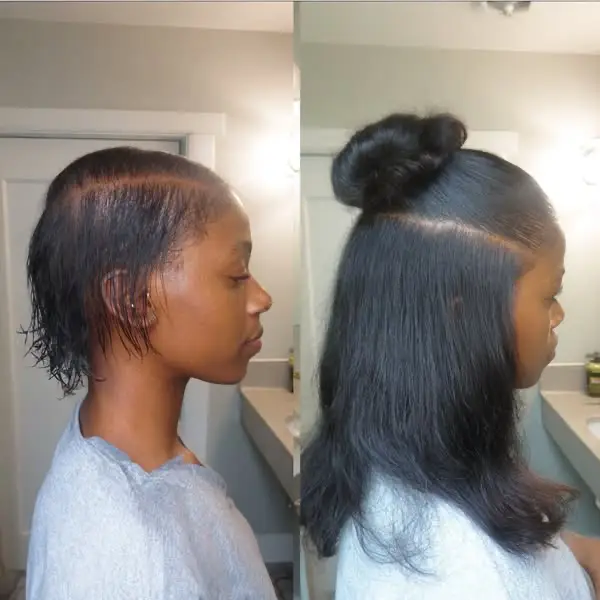
The Black Hair Care Journal — My crown kept getting worse. Here's why.
TestingImage

How I discovered why my CCCA treatment wasn't working...

I've had CCCA for 3 years and my crown is STILL burning every single night. And I'm not even sure how it got this bad because I've done every single thing the dermatologist told me to do. Other women in my CCCA group are posting their regrowth updates and mine's been stuck at 1cm for over a year. I keep telling myself the next round of shots will be the one but honestly I have no idea what I'm doing anymore… ☝☝☝ That's what was running through my head 4 months ago. Not giving up yet, but definitely confused about what was even left to try at this point… — So the whole time my dermatologist kept telling me "let's wait and see." And every few months she'd add something new and nothing would change. I did the clobetasol, I did the steroid shots, I did the keto shampoo, I took 100mg of doxycycline 2x a day until it had me throwing up every morning. I even tried castor oil and rosemary because everyone swore by it, but my scalp itches when I put oil or grease on it. So I'd go back in, pay $500 for the appointment, and walk out with another refill and another "wait and see." And people would say "just keep doing what the doctor says, at least you still have some hair" and I believed them. I thought I was being a good patient by not questioning anything. So my sister who's 4 years younger still has the same thick hair we both had as kids. And at every family birthday it's just obvious that I'm the only one doing a comb over with fibers sprinkled on top. So my stylist started noticing too and asked me if the medicine was even doing anything. And I didn't really know what to tell her because honestly I didn't know why it wasn't working either. So one day I was in line at a work lunch and the woman behind me said "girl, is that your scalp?" And I just laughed and didn't say anything but I could feel my face burning the rest of the afternoon. Like I have a patch that's impossible to conceal now. So my mom called and gently asked if the doctor had said anything new. And I had to admit I'd done everything they gave me but it never stuck and I didn't know what to do differently. Like the worry in her voice made me realize this isn't just going to solve itself. So that's when I realized I can't keep waiting and seeing and hoping this magically fixes itself. And I started looking for help specifically for women who already have the CCCA diagnosis and are still flaring. Like not advice for regular thinning, but for women who've done the shots and the creams and still burn every night. Someone who understands I'm not doing it wrong, I'm just genuinely out of options at this point. So I found this trichologist on Instagram who posted about "when your CCCA treatment stops working." And she had content specifically about women already on steroids that most hair advice doesn't really address. So I sent her a DM explaining my situation and that I'd been waiting for the treatment to kick in. So she asked me what I'd tried so far. And I told her the shots, the clobetasol, the doxycycline, the keto shampoo, the oils, cutting out sugar, and that it calms down for a while and then comes right back. Like I didn't want to go on even more meds after what the doxycycline did to my stomach. So she said "I'm going to tell you something that might be hard to hear and possibly controversial". And I'm thinking oh no, what did I do wrong? But then she said something that completely changed how I was thinking about this. And it made me realize I wasn't "managing my CCCA" - I was just waiting for the next flare. So she explained that an inflamed scalp doesn't just "settle down" and stay settled on its own. Like she said imagine if your kitchen sink was dripping and you just kept mopping the floor every day. So you wouldn't do that because you'd know to fix the leak instead of mopping forever. And my scalp is the same - the cream and the shots mop up the inflammation, but nothing was fixing what keeps feeding it. So by "waiting and seeing," I was actually giving it more time to do damage. Because on a scalp like mine, 3 things keep the inflammation going at the same time. The follicle openings get packed with dead skin and buildup, trapping the heat inside them. The scalp's barrier gets worn down, so irritants get in and moisture gets out. And underneath is the heat itself, the burning and soreness I feel every night. So the steroid turns the heat down, but the packed follicles and the worn barrier are still there. That's why it works while you're using it, but when you stop, the pain comes back. Which makes sense right? Even a scraped knee won't heal if your jeans keep rubbing on it. And the minoxidil and rosemary and biotin everyone pushes are made for hormone thinning, a different problem altogether. And keto shampoo is for fungus, and CCCA isn't fungus, it's inflammation. She said cutting sugar isn't wrong, but nobody was treating the packed follicles or the worn barrier. And the longer the inflammation keeps going, the more follicles go from asleep to scarred. So this is why "wait and see" can backfire with CCCA — every month it keeps burning costs you follicles you don't get back. So she explained that a scalp like mine needs all 3 handled at once, every night, not just when it flares. And the key is doing it without piling anything heavy on top. But you can't use oils because oil sits on an inflamed scalp like a lid on a boiling pot, holding the heat and the buildup in. That's why my scalp itched worse every time I put grease on it. So the solution is something that unclogs the follicles, rebuilds the barrier and cools the heat, with no oil in it at all. Like you feel the burning go cool when it goes on (that's the heat calming down) but nothing heavy is left sitting on your scalp. And when the follicles aren't packed and the barrier's holding, the inflammation doesn't have as much to feed on. But she said, most scalp products don't work for CCCA because they're either oils that make it worse or they only do 1 of the 3 things. You need one that's easy enough to use every single night, even under a wig. And I'm sitting there thinking... so I've been "waiting and seeing" but really I just needed to treat my actual scalp? I thought I was being patient but I was just letting it burn? "So what do I do now when I've already lost the middle of my crown?" And she said honestly, the smooth spot in the middle is scar, and that part isn't coming back. But the good news is the thin ring around it can still be asleep, not dead, and a sleeping follicle can wake back up once what's keeping it down is gone. So she recommended Montosero Restore. And it's oil-free, so there's no lid trapping everything in. It has salicylic acid to clear out what's packed inside the follicles, dexpanthenol (vitamin B5) to rebuild the barrier, and menthol that cools the burning the second it touches. And it rolls on with a little metal roller in about 30 seconds at night, no rinse, even under a wig. She said it's the best one she's ever recommended to her clients, and I believe her as shes the expert. Like regular hair growth stuff might be fine for regular thinning, but a scalp that's been burning for years needs the inflammation dealt with first. So I ordered it thinking okay, this is the last thing I'm trying, no more waiting and seeing. And I told my husband "no more oils, no more grease, just this every night." Like I didn't wait for the next flare to start, I just made it the new routine. So the first 2 nights were a little strange because my scalp felt almost too light and clean with nothing sitting on it. Like I'd been putting something heavy on my scalp every night for years and now suddenly there was nothing. And I almost questioned if I should've just stuck with what I knew because change is hard for me. But day 3 something shifted and I sat through a 2 hour meeting at work without digging at my crown once. So I still had 3 itchy evenings that first week, but every time I rolled it on, the burn went cool the second it touched. And I realized I didn't have to wait for my next appointment to get relief - I could do something about it myself. But I was still cautious because it had only been a few days. Like what if it flares right back up the next time work gets stressful? But week two I had a crazy week at work and for once my scalp didn't flare with it. And one morning I pressed on my crown in the mirror and it didn't hurt. So this was the first time in a long time my scalp felt calm between shots, not just the week after one. And week five my stylist washed my hair and asked what I'd changed, because there wasn't one sore spot for her to work around. She seemed genuinely surprised because she'd seen first hand how bad it had gotten. I could tell she thought this was just another treatment that wouldn't last. And last weekend at my cousin's birthday dinner I left the fibers at home for the first time, and my auntie said "oh wow, your hair's filling in!" And I said "yeah it is" with this big proud grin on my face. The middle is still smooth, and I know that's not coming back, but there are baby hairs coming in all around it, and the rest is finally growing past 1cm. Like I actually feel good about my hair now instead of hiding it. My husband said "I honestly didn't think we'd ever get here." And I told him "I just needed to stop waiting and start treating my scalp instead of just my hair." Also!!! A woman from my CCCA group messaged me after I posted an update picture. She said she's been on shots and clobetasol for 2 years and her dermatologist keeps telling her "let's wait and see" too. I sent her the link and told her "you have to stop putting oil on it and treat the scalp, not just the hair." Three weeks later she texted me saying her scalp was finally calm at night. She said she wished she'd found it back when she was first diagnosed instead of waiting and seeing. So if you've been diagnosed and you're doing everything they tell you and your scalp is still burning and you're not sure what else to even try... Give this a go. Because I am usually very skeptical about products that claim to work but all it took me was to stop waiting and actually treat my scalp. I hope my story helps someone out here! 🚨📢 EDIT: My bad I didn't even mention the brand, so my DMs are full of questions. Here's their link: https://montosero.com/products/restore This page should answer all the questions you have about it too. It comes with a 60-day money-back guarantee, so if it doesn't work for you, you get every penny back. No questions.

Loading the ad's image
The Black Hair Care Journal — How I discovered why my CCCA treatment wasn't working...
TestingImage

The Real Solution for a Healthy Scalp

I've done hair at a funeral home for 16 years. More than 900 women have been on my table, and I can tell you something about Black women's crowns that no hair aisle will. A lot of them have the same smooth, shiny spot right in the middle of the top of the head, and the family almost always says the same thing: "She always said it was just dry scalp." 8 months ago my own crown started to itch, and I finally found out what those women were never told. None of those women died of their hair, in case you're wondering. They died of hearts and sugar and cancer and being 88. But every one of them carried that spot to the end, hidden under a hat or a wig, and by the time they got to me nobody was asking about it anymore. This is how it usually goes. The family brings me a photo and a bag. The photo is her at somebody's wedding with her hair laid. The bag has her wig or her Sunday hat in it, and nearly always a jar of grease and a comb with a few teeth missing. I wash her hair, I part it, and there it is, with a ring of thin hair around it still trying to hold on. I pin the wig over it, and I'm good at it, so the family never sees. But they tell me anyway. A daughter will stand in the doorway holding that bag and say, "She always said it was just dry scalp." Or, "Mama greased that spot every night of my life." Or, "Her doctor told her, 'That's just your age.'" One son told me his mother wore a church hat every Sunday for 22 years and he never once saw the top of her head. I used to just nod. You hear a thing enough times and you stop hearing it. It started on a Saturday. I was driving home after a service when I reached up at a red light and scratched the top of my head. I did it again at the next light, and the one after that. By the time I pulled into my driveway the spot was sore to the touch, like a bruise. I'm 49. In my 20s I relaxed my own hair in my bathroom and burned my crown so bad it scabbed, and it stayed a wound for most of 3 years because I kept relaxing right over it. I didn't know any better. I went natural at 30, the spot calmed down, and for almost 20 years it left me alone. Now it was back, and it was worse. It itched all day. At night it burned, a hot, tight feeling right in the middle, like somebody had set a warm coin on my head. I'd pick at it while I watched TV. When I looked down at my nails there were white flakes under them, and in the flakes was the ripped-out end of a hair. So I did what every woman on my table had done. I went to the grease. I used the same grease I'd seen in a hundred of those bags, every night, worked right into my part. When that didn't help, I tried a hot oil treatment, then a growth oil from an ad that kept following me around my phone, then the yellow sulfur grease my grandmother kept on her dresser. Every one of them felt good going on. By morning the itch was angrier, and there were more flakes on my pillowcase than the night before. I told myself it was dry scalp, and my scalp WAS dry. It flaked, it felt tight, and my part looked dusty no matter what I put on it. Everything I could see said dry. What I couldn't explain was why something dry would burn. The closest dermatologist I could see in person had nothing for 4 months, so I took a video appointment. I spent the whole appointment holding my phone over my own head like I was trying to find a signal. He looked for maybe 10 seconds and didn't ask me one thing about the burning. "That's dandruff," he said. "I'm sending a medicated shampoo to your pharmacy. Use it twice a week." It was ketoconazole. I used it for 5 weeks exactly how he said. The first wash stung so bad my eyes watered, and the itch stayed right where it was. The spot didn't get any smaller. If anything, the soreness spread out toward the front. By then I'd started tying a scarf on before work, and then at home too. My son Jalen is 13, and he asked me if we were going to church on a Wednesday. Then they brought in Mrs. Lorraine Dupree. She was 61, which is young on my table. Her daughter looked about 40 and had a scarf tied on the same way I did. She handed me the bag and said, "She always said it was just dry scalp. It itched her something terrible the last few years." I parted Mrs. Dupree's hair under the big lamp in our hair room, and there it was again. And standing over her, my own crown itched harder than it had all week. The next morning I asked Paulette, who does the makeup at work, to look at the top of my head under that same lamp. She parted it with the end of a brush and didn't say anything for a second. Then she said, "Girl. It's the same thing." It wasn't bald yet. It was a thin place about the size of a cotton ball, with scalp showing through and short broken hairs around the edge. It looked exactly like the ring I'd been pinning wigs over all those years, just earlier. I thought about cutting it all off. I'd take short hair and a healthy scalp over a bald spot any day. But I've done enough heads to know the spot doesn't care how long the rest of your hair is. Then I thought about the woman who'll do my hair someday. I pictured Jalen grown, standing in a doorway with my wig in a bag, telling a stranger, "She always said it was just dry scalp." I hoped it wasn't scarring. I didn't even know what scarring would look like on a living head. 2 weeks later they brought in Miss Odessa Lyle. She was 79 and had run the kitchen at a school for 30 years, and her daughter Carla brought her things in a purple Crown Royal bag. Inside was a wig, a jar of grease, a rattail comb, and a sheet of paper folded so many times it had gone soft. Carla saw me looking at it. "That's from her skin doctor," she said. "Mama didn't find that one until she was 66. The first one she saw, years before, sent a nurse in with a note that said, 'Buy Frizz Ease at the pharmacy.' The new one told her, 'Once they're too damaged, it's too late.' She kept that paper in her bag for 13 years. I don't know why." I unfolded it on my lunch break. It was a patient handout from a dermatology office, and somebody had circled 4 words across the top in blue pen: central centrifugal cicatricial alopecia. Underneath was a list of signs: itching at the crown, tenderness, burning, and a patch that starts in the middle and spreads outward. I stood in the prep room in my apron and read every one of my own symptoms off a dead woman's paper. That night I looked it up. CCCA, they call it for short, and it's mostly Black women who get it. It's inflammation under the skin of the crown, around the roots. The hair falls out because the inflammation is choking the follicles, like a rubber band left too long around a finger. The itching, the soreness and the burning are that inflammation, the part you can feel. My grandmother used to put butter on a burn, and so did everybody's. It felt like you were doing something, and all it really did was hold the heat in. That's what grease does on an inflamed scalp. It sits on top, keeps the heat in, and seals the dead skin and buildup down into the openings where the hair comes out. The flakes were real. But inflamed skin flakes too, and when it does, it isn't asking for oil. The shampoo made sense now too. Ketoconazole kills fungus, and I didn't have a fungus. I had a fire, and he'd handed me something for a different problem. Then I found a study that made me put my phone face down on the bed. Researchers surveyed more than 5,500 Black women, and 40.9% of them had signs of this. Only 8.8% had ever been told they had it. 4 out of 10. I'd been looking at it on my table all that time and thinking it was just how older women's hair went. That left the question I couldn't put down. If my old relaxer burns started this, why did it come back now, after all those quiet years? And why did my sister, who relaxed for 20 years and greases every night, still have a full crown? The answer was a gene called PADI3. Some women carry a version of it that keeps the scalp inflamed long after whatever set it off is gone. It's like a smoke alarm that keeps screaming after you've thrown the burnt toast out. My sister doesn't have that alarm, and I probably do. That meant I couldn't just wait for it to settle down on its own like it did before. Something had to calm it. It wasn't just my age, either. Age thins hair slowly, all over, and it doesn't burn. That same week I found a Facebook group of Black women with hair loss, and the women posting about this were 25 and 30 and 34, with the same sore spot in the same place. What I needed to know most was whether it was too late. Miss Odessa's doctor had told her it was. While the inflammation is choking a follicle, it goes quiet, the way a tulip bulb sits in the ground all January doing nothing. It's alive, and when the conditions change, it comes back up. But if the inflammation goes on long enough, the follicle scars over, and that's the shine I'd been seeing on my table. A scarred follicle is a bulb somebody poured concrete over. Nothing is coming up through that. Miss Odessa's crown was concrete by the time a doctor named it. Mine still had those short broken hairs around the edge, so something in there was still alive. It also meant that every month I waited, more of them could scar. So what would actually fix it? I read until 2 in the morning, and it came down to 3 things that keep this kind of inflammation going. You have to deal with all 3 at once, because each one feeds the others. The first is the openings. Dead skin, oil and buildup pack into the opening of each follicle and trap the inflammation inside, like dried glue in the tip of a glue bottle. Nothing gets through until something dissolves it. Salicylic acid does that. It's the same thing that's in acne face wash, and it can get inside the opening where water and shampoo can't. The second is the skin itself. Inflammation cracks the scalp's outer layer the way a day of washing dishes with no gloves cracks your hands, so everything you put on it stings and nothing stays in. That needs rebuilding. Dexpanthenol, which is vitamin B5, is what they put in wound creams for exactly that. The third is the heat. That burning is the inflammation itself, like a burn from the oven rack that keeps throbbing an hour after you've run it under the tap. You need something that cools it, and menthol does that on contact, through the skin's own cold sensors. And all of it has to happen with no oil, and it has to stay on the scalp long enough to work. It had to be something I could put on every night, tie my scarf over and go to sleep. I thought the hard part was over. It wasn't. The obvious answer was a dermatologist who would actually look. I called 3 offices, and the soonest any of them could see me in person was still months away. Every month I waited was another month of that ring getting thinner. So I went to the hair shop on my day off. I found one bottle that said "COOLING SCALP RELIEF" across the front in big letters, and I almost cried right there in the aisle. I turned it over. The second ingredient was castor oil. That was exactly what I'd just learned I had to stop putting on my head. That night I dabbed one of Jalen's acne pads on the spot, because I knew those had salicylic acid in them. It burned so bad I had to grab the edge of the sink. Even if I pieced the right 3 things together, I'd be guessing how much of each to put on a raw spot every night, and now I knew what a wrong guess felt like. That week I pinned a wig over another woman's spot. Her granddaughter told me, "She tried everything." I believed her. I'd been trying everything for 5 months myself. One night at the kitchen table I typed all 3 into my phone with the words "scalp" and "no oil." I did it mostly out of spite. The first thing that came up was a product called Montosero Restore. I found their page and read it twice looking for the catch. I didn't need an appointment or a prescription for it, so I could start in days instead of months. It's a liquid made for the scalp that you roll straight onto the spot through a metal rollerball and leave on overnight. There's no oil in it, no grease, and nothing left sitting on top. And all 3 are in the one tube, one for each of those 3 jobs. Somebody had already worked out how much of each to use, so I didn't have to guess on a raw spot. It came with a 60-day money-back guarantee, so I ordered it that night. It came on a Thursday. I parted my hair at the bathroom sink and rolled it across the spot, and it didn't sting at all. The cold came on right away. It felt like opening the freezer on a hot day, right on the spot that had been burning. I tied my scarf on and went to bed, and for the first time in months I didn't pick at it before I fell asleep. The first week, my hand stayed on the steering wheel at red lights. By the second week, I could press on the spot and it didn't hurt. There was nothing under my nails when I checked, and by the end of that week I'd stopped checking. At week 5 it was wash day, and when I ran my comb through the crown, it caught on something that hadn't been there in months. It was new growth, soft as cotton, coming in all across that thin ring where the broken hairs had been. It's been 3 months now. The ring has filled in, and the thin place is about half what it was. There's one spot in the very center where I can't feel anything coming in yet. I don't know if that part will come back, and I'm not going to pretend I do. But it doesn't itch, it doesn't burn, and it isn't spreading. I stopped wearing the scarf to work in week 8. Jalen noticed before my husband did. He came up behind me in the kitchen, looked at the top of my head and said, "Oh, so we're NOT going to church." Work is different now too. When a daughter stands in my doorway and says, "She always said it was just dry scalp," I don't just nod anymore. I ask her if her own crown ever itches. A lot of them get quiet. Some of them touch the top of their head without meaning to. More than one has been standing there in a scarf tied on just the way mine was. I tell them what Miss Odessa's paper told me. I tell them it isn't dry scalp and it isn't their age, that the grease is holding the heat in, and that there's a window while those roots are still alive. And I tell them what I use. Miss Odessa carried that paper around all those years. I think she wanted somebody to read it. I made a copy before I gave the bag back to Carla, and it's taped inside the lid of my supply case. Maybe the middle of your head itches and it's sore when you part it. Maybe you've been putting oil or grease on it because everybody said, "That's just dry scalp." Please don't wait the way the women on my table waited. Follicles that are only asleep will wait for you, but not forever. Every month the inflammation keeps going, more of them scar over. Once they're concrete, nothing on any shelf brings them back. Miss Odessa found out too late. I found out with broken hairs still around the edge. You can find out today. Montosero Restore goes on in about 30 seconds at night, no rinse, and you can tie your scarf right over it. If it doesn't work for you, the guarantee gets you every penny back. Click below to try Montosero Restore. https://montosero.com/products/restore

Loading the ad's image
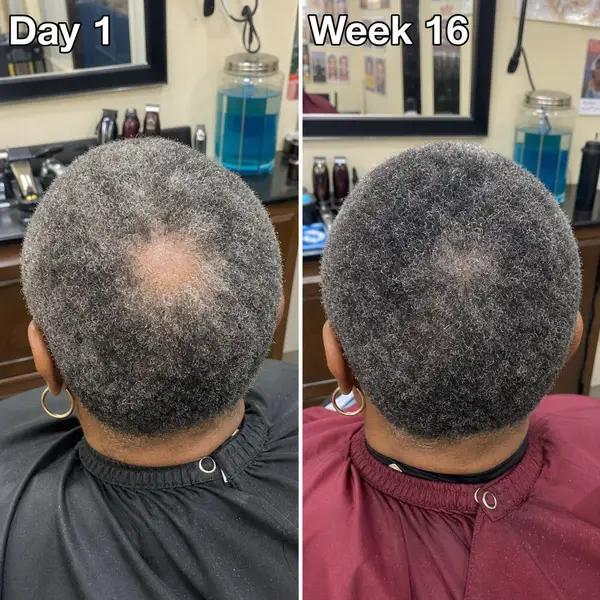
The Black Hair Care Journal — The Real Solution for a Healthy Scalp
TestingImage

I Was Diagnosed With Female Pattern Hair Loss At 40. I'm 51 Now. My Dermatologist Never Asked If My Scalp Itched.

I was diagnosed with female pattern hair loss at 40. I'm 51 now. Turns out I never had female pattern hair loss at all. I had something nobody checked me for, hiding in plain sight in the "dry scalp" I'd been scratching every single day. For eleven years, I fought a kind of hair loss I didn't actually have. Eleven years on the minoxidil foam that stung the top of my head twice a day and grew fine dark hair on my cheeks, and nowhere I actually wanted it. Eleven years on the spironolactone pills my dermatologist added when the foam stopped doing anything, which made me so dizzy I had to hold the dresser every time I stood up. Eleven years of supplements: biotin first, then saw palmetto, then pumpkin seed oil capsules, then iron, then the $79-a-month hair vitamin every woman on Instagram swears by. None of them made a real difference. All of them made me hopeful for about 6 weeks. Eleven years of treatments. PRP at a private hair-loss clinic, $650 a session. A $300 laser cap I wore for 25 minutes every other night. Eleven years of being handed one more thing to try and told to "just stay consistent." I did every single thing they told me to. I stopped relaxing my hair. Then I stopped braids. When braids were too much, I went to loose twists. When the twists still pulled at my crown, I cut it all off into a short natural. When the short natural showed everything, I bought my first wig. I went to a natural-hair stylist every 2 weeks. For 4 years. She was kind. She said my hair was healthy everywhere except the crown. I paid $1,150 for a workup at an integrative clinic that included a hair mineral analysis, a food-sensitivity panel and a gut test. Every result came back "off" for something, and the naturopath put me on a $240-a-month supplement stack to "address the root cause." I stayed on that stack for eleven months. My crown did not change. I tried rosemary oil. Jamaican black castor oil. Rice water rinses. Pumpkin seed oil straight on my scalp. Every time I oiled my crown, it itched worse. I figured that meant it was working. When my regular dermatologist ran out of ideas, she referred me to a dermatologist in Atlanta, supposedly one of the best hair-loss specialists in the South. He saw me for 12 minutes. He confirmed the diagnosis. He told me female pattern hair loss is hormonal and genetic, and the goal is to slow it down, not get it back. He begrudgingly wrote me a stronger minoxidil. "If it's still not growing, keep it short or wear a wig." He gave me a pamphlet called "Understanding Hair Loss in Women" and told me to come back in 6 months. "Hormonal." That word stayed in my head for eleven years. I felt like I was crazy. My bloodwork was normal. The doctors were not worried. But every year the spot on top of my head got a little wider, and nothing anybody gave me slowed it down. By the time my alarm went off, there would be short, broken hairs from my crown on the pillow. Getting ready was a production. The minoxidil foam stung the thin spot, so I'd stand at the mirror blowing on it. Then a little grease to calm the sting. Then the wig, laid on as gently as I could, because the cap pressed right on the sore part. By 10 a.m. I would have caught my reflection in my dark computer screen twice, checking that the wig was sitting straight. Just to be sure nothing showed. By 2 p.m. it would burn under the wig. Some days a hot spot dead in the middle. Some days toward the front, where my part had started to widen. The widening was the thing dermatologists nodded at. "Yes, that's typical of female pattern." By 4 p.m. I'd be counting the hours until I could get the wig off. I took the wig off the second I walked in the door at 6 p.m. every night for eleven years, and pressed the ice pack left over from my knee surgery onto the spot until the burn let go. My granddaughter Kiara stopped asking to play beauty shop in my hair, because the answer was always no. And the math never stopped. If I wear the wig more than 8 hours, the spot will burn all night. If I let my stylist blow-dry my hair, I will be sore for 3 days. If I sleep on my back, I will wake up scratching. I stopped saying yes to anything where someone might see the top of my head. Sleepovers with the grandkids, because they'd see me in the morning before the wig went on. Hugs from my 6-foot nephew. The low front bench at Kiara's dance recital, with a whole row of grown-ups behind me looking down. I would be mid-conversation and 2 of my fingers would be pressing the itch through the wig, because I couldn't scratch in public. I did it so often I wore the lace thin at the crown of every wig I owned. My wig maker mentioned it. I also had what I called my "dry scalp." An itch right at the crown. I'd wake up scratching, with white flakes on the collar of my black nightshirt and sometimes a fleck of dried scab in my comb. A spot that felt sore when I pressed it, like a bruise. Some nights it burned. It was always worst in what I called my bad scalp weeks, the same weeks the thinning looked worst. I couldn't get rid of the itchy scalp, so I'd put grease on it, take an ibuprofen, and push through. Nobody ever asked me about the itch in eleven years. I never thought to mention it to my dermatologist. I had been told I had female pattern hair loss. The itch felt like a separate thing. Probably dryness. Probably the minoxidil. Probably just something our scalps do. I looked fine in my wig. Underneath, the top of my head itched and burned every day and none of it had a reason. And every dermatologist said the same thing. "That's female pattern. It's hormonal. Stay consistent with the minoxidil." I stayed consistent with the minoxidil. I paid for it with a sting every morning and a spot that kept getting wider. I started to accept that this was how the rest of my life would go. On pills that made me dizzy and a foam that burned, holding an ice pack to my head at 6 p.m. because I could not stand it one more minute. Then a woman at my Thursday morning line-dancing class at the rec center said something no dermatologist ever had. Her name is Loretta. She is 64. She teaches the class. Retired cosmetology instructor, 30 years at a beauty school. Now a certified trichologist, which is a hair and scalp specialist. She trained for it 5 years ago after her own daughter lost the crown of her head at 33. I stayed after class one Thursday to help her stack the chairs. I had 2 fingers pressed into the top of my wig because the itch was starting up again. She noticed. She stopped stacking. "Gwen. How long has your head been bothering you like that?" I laughed. "Years. But that's not the problem. The problem is my hair. It's female pattern." She sat down on one of the chairs and patted the one next to her. "What does it feel like?" I told her. An itch right at the crown that gets worse every time I oil it. Flakes. A spot that's sore when I press it. Burning some nights. Worst in the weeks the thinning looks worst. She was quiet for a moment. "Gwen. That's not dry scalp. That's inflammation. And your hair loss may not be hormonal at all. A crown that has been inflamed for years thins out in a way that can look just like female pattern hair loss to a dermatologist who never asks you if it itches." I stared at her. She walked me through it in the empty rec room for the next hour. Most hair loss products are built for thinning that comes from hormones. Minoxidil. Spironolactone. Biotin. Rosemary. Laser caps. Mine wasn't that. With mine, the skin around the follicles at the crown gets inflamed and stays inflamed, and the follicles under it slowly stop growing hair. Thinning at the crown. Slowly widening. No obvious cause. Which is exactly what I had been told was female pattern hair loss. The itching, the soreness, the burning. Those are not dryness, and they are not fungus. Those are the signs. Every itch and every burn was coming from inflamed skin, right where my hair was thinning. Three things keep it going, she said, and I had been living with all three. One: blocked follicles. Dead skin, oil and product residue pack into the opening of each follicle and hold the inflammation in. The flakes I had been calling dry scalp. Two: a damaged scalp barrier. Irritants get in, moisture gets out. Why the foam stung every morning. Why my scalp felt dry no matter how much grease I put on it. Three: heat underneath the skin. The 2 p.m. burn. The soreness under the wig cap. The ice pack at 6. What I had been calling "a bad scalp week." I sat there with my hands in my lap. She kept going. "And the grease, Gwen. Every night you put oil on an inflamed scalp, you put a lid on a pot that's already boiling. It holds the heat in and seals the buildup into the follicles. That's why it itched worse every time you oiled it." I told her about the braids and the relaxer, all the things I had done to myself. She shook her head. Some women carry a gene, PADI3, that makes their scalp answer tension with inflammation. That's why a friend can wear the same braids for 20 years and keep her crown. And it's why taking the braids out never fixed it. "You took away the match. The fire was already going." "You've spent eleven years treating hormones. Different problem, different solution. You don't have female pattern hair loss. You have a crown that has been inflamed for eleven years, and everything anybody gave you was made for something else." I asked her how two dermatologists could miss something like that. She told me about a survey of more than 5,500 Black women. 40.9% had signs of this kind of hair loss at the crown. It has a name, CCCA. Only 8.8% had ever been diagnosed. That's how it goes on for years when nobody asks. I drove home in silence. I sat in my driveway for 20 minutes. Eleven years. Two dermatologists. One integrative clinic. And nobody had ever asked me whether the itch on top of my head might be connected to the eleven years of thinning I had been paying to have "treated." I texted Loretta the next morning. "Okay. Say you're right. Then what do I do?" She called me between clients. "You have to calm the inflammation at the scalp itself. Not your hormones. Not the hair. The skin the hair grows out of. The follicles around the edge of your spot aren't dead, Gwen. They're asleep. Calm the scalp and the asleep ones have a chance to wake up. But the very middle, if it's gone smooth and shiny, may already be scarred, and scarred follicles don't grow back. Every year on the wrong treatment costs you more of them." I thought about the basket under my sink. Every bottle in it was made to grow hair or to moisturize. Nothing in it touched the three things she'd named. My one dandruff shampoo went down the drain with the rinse. Everything else was oil. And whatever I used had to sit under a wig all day and not fight the minoxidil. "Then I don't even know what I'd use," I told her. "That's why nobody fixes it," she said. "It has to do all three at once. It has to be left on overnight, not rinsed off. And there can't be a drop of oil in it." She told me about a scalp serum made for exactly this kind of hair loss. Three active ingredients, one for each of the three things. Salicylic acid to clear the buildup. It works its way through the skin's own oils and down inside the follicle opening, where shampoo and water can't reach. Dexpanthenol to rebuild the barrier. It's vitamin B5, a wound-healing ingredient. L-menthol, which switches on the scalp's cooling receptors and calms the heat on contact. Rolled straight onto the thinning spot through a metal rollerball. Once a night. 30 seconds. No rinse. It stays on. There's no oil in it, and it leaves nothing behind. It wouldn't interfere with the minoxidil I was still on. It wouldn't interfere with my wig. It was called Montosero Restore. "You've been treating an inflamed scalp with products made for hormones. If you calm the scalp, you give the ones that are only asleep a chance. The thinning is downstream. The scalp is upstream." She had been seeing women with thinning crowns for almost 5 years. Most who came to her with a "hormonal" diagnosis had an itchy or sore crown nobody had asked about. She said the ones who caught it before the middle went smooth often saw baby hairs within a few weeks. I sat with that for 2 days. Then I ordered the tube. It came on a Monday. That night the burn had been going since 2 p.m. I walked in at 6, pulled the wig off, and eleven years of habit put the ice pack in my hand. I rolled Restore across the spot instead. 30 seconds. Right away the top of my head went cold, like stepping out of a hot car into air conditioning. I sat down at the kitchen table and I waited. The burn faded first. Then the itch. By 8 p.m. I had watched a whole episode of my show with both hands in my lap. I started crying, because I had not gone one evening without scratching in eleven years. Week 1: I slept through the night 5 nights out of 7. Fewer flakes on my nightshirt every morning. No new scabs in my comb. Week 2: The soreness had faded to almost nothing. I let my stylist blow-dry my hair. I was not sore the next day. Week 3: The minoxidil foam stopped stinging. I didn't stand at the mirror blowing on my head once. I wore my wig through a full 10-hour workday and came home with no burn. Week 5: Loretta parted my hair under the light after class. "Baby hairs," she said. Little ones, no longer than an eyelash, coming in around the edge of the spot. Week 8: I went looking for the ice pack and realized it had been sitting in the freezer since week 3. Week 12: I went back to my regular dermatologist. She pulled her magnifier lamp down over my crown. She asked what I had changed. I told her about my line-dancing teacher. The inflammation. The three things. The grease. The roll-on with one ingredient for each. She listened. She was quiet for a long time. Then she said, "I'm going to start asking every woman with a thin crown whether it itches. I should have been asking for years." Six months in: Kiara and her little brother slept over for the first time. In the morning I made pancakes with no wig on, my own hair pulled up in a little puff. Kiara, who is 7, climbed onto the stool behind me to look at the top of my head. She said, "Grandma. You have hair there now." Then she asked if we could play beauty shop. I said yes. I had to put the spatula down and go sit on the back steps for a few minutes because I could not stop crying. The next Sunday my 6-foot nephew came by for dinner, and I hugged him first. It isn't all back. The very middle, about the size of a dime, is still smooth. Loretta says those follicles scarred over years ago. But everything around it filled in. Enough for a puff. Enough for a 7-year-old to notice. I do not have female pattern hair loss. I never had female pattern hair loss. I had eleven years of an inflamed crown that itched and burned every single day, producing thinning that everyone, including me, had been calling hormonal. And not one person in a white coat had thought to ask me if my scalp itched. If you have been told your thinning is hormonal. Or genetic. Or your age, or stress, or your braids. If you have tried the minoxidil and the vitamins and the oils and the laser caps, and nothing has held. If a dermatologist has told you the goal is to slow it down, not get it back. If you take your wig off the second you get home because you can't stand it one more minute. If you have stopped saying yes to sleepovers, to hugs from tall people, to anything where somebody might see the top of your head. If you also have what you call "dry scalp" or "dandruff" or "just an itchy spot," and you have never connected it to the thinning. I am not saying you definitely have what I had. I am not your doctor. I am saying I spent eleven years being treated for the wrong kind of hair loss, while the real cause burned on top of my head every day, and nobody, not one dermatologist, ever asked me if it itched. Montosero Restore is built for the inflammation itself. Three active ingredients for the three things that keep it going. Oil-free. 30 seconds a night. Clinically studied ingredients. The full breakdown is on the page below. Rated 4.7 out of 5 from more than 1,400 reviews. 60-day money-back guarantee. Two full months. If it doesn't work for you, you get every penny back. No questions. After eleven years of staying consistent with things made for the wrong kind of hair loss, what is two more months? 👉 Every hair growth product you've tried works on your hormones. Here is what works on the inflammation: https://montosero.com/products/restore You don't have to keep treating a kind of hair loss you might not actually have. P.S. I bought Loretta a new pair of dance boots the month after I started feeling better. She wouldn't take anything bigger. She said the only payment she wanted was for me to tell other women. So I am telling you. If you've been told it's hormonal and nothing has held, and the top of your head itches, please consider that it may be inflammation nobody ever looked for. P.P.S. There are knock-offs on Amazon that look almost the same. They are a carrier oil with just enough menthol to tingle. Oil on an inflamed scalp is the lid on the pot all over again. A woman in Loretta's Thursday class used one for 6 weeks. Her spot got wider. Restore has no oil in it at all. P.P.P.S. I have been off the spironolactone for 4 months. My dermatologist signed off on it. At our last visit she asked if she could take a picture of the tube. I am still rolling it on every night.

Loading the ad's image
The Black Hair Care Journal — I Was Diagnosed With Female Pattern Hair Loss At 40. I'm 51 Now. My Dermatologist Never Asked If My Scalp Itched.
TestingImage

The Real Solution for a Healthy Scalp

For 4 years the same nurse put steroid shots into my scalp every 6 weeks for my CCCA. On her last day before retiring, she shut the door, pulled her stool up to my chair and said, "I've done your shots 31 times. Can I tell you why it keeps coming back?" I knew exactly what she meant by "it." She meant the burning in my scalp. Her name is Ms. Ruth, and she had been a nurse at my dermatologist's office for 26 years. She was the one who held my head steady and talked about her grandbabies while she went around my crown with the needle, 12 or 13 little sticks in a ring around my bald patch. Shots in a scalp that's already sore are no fun at all. But they worked for a while, and that was the deal I'd made. This is what "coming back" looked like for me, after every single shot. For about 2 weeks after a shot my scalp was calm. By the 3rd week, wash day would give it away. I'd be at the sink working the shampoo through, and my center would feel tender under my fingers, like a bruise I didn't remember getting. By the 4th week it was burning again, a real burn, like somebody had set a hot plate on top of my head and walked off. I'd lie in bed with my fingertips pressed flat on my crown, because pressing hurt less than not pressing. Then I'd get up, walk the hall to the kitchen, look at the calendar where I circled shot days in red, and count how many days were left. I drive a city bus. I've driven one for 14 years, mostly the early route, which means I'm up at 4:15 and in a wig by 5. Wearing a wig over a scalp that's on fire is bad enough. On a bus with the heat blasting, it's about as close to being cooked as I ever want to get. For months I drove with my window down and the heat off, even when it was freezing. My regulars sat there in their coats and scarves. One older man who rides with me every morning finally leaned over the fare box and said, "Ma'am, I can see my breath." At red lights I'd push my palm flat on top of the wig and hold it there. A little boy once asked his mother, loud enough for the whole front of the bus to hear, if the bus lady had a headache. And that was with all of it: the shots, clobetasol every night, and minoxidil, which as far as I could tell grew nothing but a bill. I tried doxycycline for 11 days. I couldn't keep it down with food or without it, and after I threw up in the depot bathroom between runs 3 days in a row, I just stopped. When I told Dr. Albrecht, he said, "Some patients don't tolerate it," typed something into my chart, and that was that. The clobetasol was the strange one. It worked while I used it. Then Dr. Albrecht would say, "Let's give the skin a break so we don't thin it out," and within a week of stopping, the burn was right back where it started. I asked him once what we were working toward. He said, "This is a long game. Our goal is to hold on to what you've got." I stopped hoping for much after that. The patch in the middle of my crown was smooth and shiny by then, about as wide as the bottom of a coffee mug. He'd told me straight out, "That shiny area isn't going to grow back." The hair in a ring around it was what we were holding on to. And if I was honest, every year that ring was a little thinner. My flares were worst when life was worst. The month they put me on split shifts and my son moved back in with his 2 kids, my scalp was raw a week after the shot instead of 3. Dr. Albrecht said, "Stress can trigger a flare." I believe him. I also can't quit my son, or my mortgage, or the early route. My pastor's wife swore by a turmeric shot every morning, so I drank one every morning for 3 months, holding my nose. Maybe the fire does start somewhere inside me. I'll never know for sure. But I could put my hand right on the place it was burning. And every night between shots, I did what my grandmother taught me. I parted my hair down to the patch and worked castor oil into it, slow, the way you'd rub something sore. It felt like the one thing I could do for myself. My daughter Kiana is 13. For about a year she asked me the same question every single morning over her cereal: "Is it bad today?" Some mornings I lied. She always knew. So when Ms. Ruth pulled her stool up and asked if she could tell me why it kept coming back, I said, "Please." "This shot turns the fire down," she said. "That's all it does. It turns it down for a few weeks. It doesn't do a thing about what keeps lighting it." She held up 3 fingers, the way she used to when she counted down to a stick. "Number 1. Every hair comes out of a little opening in your skin. On a scalp like yours, those openings get packed with dead skin and oil and product, and all that buildup holds the inflammation right up against the root. It's like a drain clogged with hair and soap. You can pour bleach down there for the smell all day long, and the clog is still sitting in the pipe." "Number 2. Your skin up there is worn thin. Some of that is the inflammation, and some of it is years of that cream. I would never tell you to stop it, but it does thin the skin. Thin skin lets the irritating stuff in and lets the moisture out. It's like a paper cup that's held coffee too long. It goes soft and starts to leak." "Number 3 is the heat. The burning you feel at night. That's the part the shot works on, and the cream, and those pills you couldn't keep down." She put her hand down. "So your doctor is working on number 3. The cream helps number 3 and makes number 2 worse. And nobody in this building is touching number 1." Then she asked what I put on it between visits. When I said castor oil, she closed her eyes for a second. "Baby," she said. "You've got a pot boiling on the stove, and every night you're putting a lid on it." She explained that the oil sits on top of everything packed in those openings. It holds the heat in and seals the buildup underneath. Over all those years in that chair, she had noticed that the women who oiled the most were the ones who came back hottest. I sat there with my wig in my lap, thinking about all those nights of my grandmother's remedy. I told her about the minoxidil too, and the biotin gummies my cousin kept sending me. She shook her head. "That's for the other kind of hair loss. Minoxidil, biotin, rosemary, that's for women who are thinning from hormones. Yours is thinning because it's inflamed. Different problem." I threw the gummies out that week. Then I asked her the question I'd been too scared to ask Dr. Albrecht. Was it too late? She touched the shiny patch, very lightly. "This middle part, I'm not going to lie to you, that's scar. It's done." Then she ran one finger around the edge of it, through the thin ring. "These aren't dead. They're asleep, and they'll stay asleep as long as that fire is lit. Every year it stays lit, the shiny part gets a little wider. I've watched women do this for 10 years, and they get a little quieter every visit." I asked her why Dr. Albrecht had never said any of this. "Baby, when all you've got is a needle, everything looks like a shot," she said. "There's no needle for number 1 or number 2." "So what do I use?" She made a face. "I can't recommend you anything. I'll lose my pension 2 weeks before I get it." Then she leaned in close. "But if I were you, I'd want something every night that clears those openings out, helps that skin heal, and cools that burn down. All 3, every night, between shots. And no grease." She wrote her number on the back of an appointment card, hugged me, picked up her stool and left. That was the last time I saw Ms. Ruth. I sat in my car outside for a long time after that. All that time, the answer to "why does it keep coming back" had been "it's a long game." That was the first time anybody had given me an answer with parts to it: a clog, a thin skin and a fire, and something every night that handles all 3 instead of turning 1 of them down at each visit. It didn't sound like a miracle. It sounded like plumbing, and that's what made me believe it. I stopped the castor oil that same night. I won't pretend the first night without it felt any better, because it burned the same. But I finally understood why, and I went looking for those 3 things. There was an ingredient for every one of them. They just never came together, and they almost always came in something that was no good on a scalp. The ingredient that clears out those openings is salicylic acid. I knew it from Kiana's acne pads, so I tried them first. A little round pad does not reach your crown through a head of hair at 4:30 in the morning. Most of it ended up on my hair and almost none of it on my skin. When I searched for what helps thin, damaged skin heal, the name that kept coming up was dexpanthenol. It's vitamin B5, and they use it to help wounds heal. The only place I could find it was a rash ointment for babies. It was as thick as butter, which put me right back to greasing my scalp. For the burn, the only cooling thing I could find was menthol, in a muscle rub from the first-aid kit at the depot. It was cold, and it was also more grease sitting on my scalp under the wig. So if I wanted all 3, I'd need 3 different products, and 2 of them were grease. I'd have to work them all into my crown before I put my wig on and drove 60 people to work. I'm not a chemist. I didn't even know what order you'd put them on in. At my next shot appointment there was a new nurse, young and nice and quick. I asked Dr. Albrecht about the openings and the thin skin, and whether there was anything I could use in between. He listened. Then he said, "The injections address the inflammation. If you're flaring between visits, we could add a pill. Spironolactone works for some women." So the answer to the pill I couldn't keep down was a different pill. I told him I'd think about it. That same week my car broke down, I was on split shifts again, and my scalp burned from Tuesday on. At 2 in the morning that Thursday, I was standing at the bathroom sink with my fingers pressed flat on my crown, and I caught myself reaching for the castor oil out of pure habit. I put it back. I went and sat on the bottom step of the stairs in the dark, and when I looked up, Kiana was at the top in her bonnet. She didn't ask if it was bad. She could see that it was. I knew exactly what I needed now. I just didn't believe it came in one bottle. I sent Kiana back to bed, and then, still sitting on that step, I typed all 3 names into my phone together with the word scalp: salicylic acid, dexpanthenol, menthol. What came up was a scalp serum called Montosero Restore. It's made for hair loss that's driven by inflammation, and CCCA is that kind. It comes in a slim white tube with a blue cap and a metal roller on the end, and it has 3 active ingredients, one for each of the things Ms. Ruth had counted on her fingers. I read the whole page sitting on that step, checking it against her list. Her number 1 was there: salicylic acid, to dissolve the buildup inside the openings. The page said it's oil-soluble, which is how it gets into a clogged opening where shampoo and water can't reach. And it goes on with a roller, right down onto the skin along your part, instead of on a face pad you're dragging through your hair. Her number 2 was there too: dexpanthenol. That's the same thing I'd found in that baby ointment, and it rebuilds the skin barrier that inflammation and years of steroid cream wear down. Only here it comes in an oil-free liquid. No butter, no grease, no lid. And her number 3 was L-menthol, to cool the heat on contact. It works on the cold receptors in your scalp, the same ones that go off when you step outside on a freezing morning. It's in that same oil-free liquid, so there's nothing greasy left sitting under the wig. And all 3 come in one step, so there was no order to figure out. You roll it over the thinning area at night, it takes about 30 seconds, and you don't rinse it out. It works under a wig, so I could do it before bed and still be on my bus at 5. The page also said it won't interfere with prescriptions like clobetasol or minoxidil, so I didn't have to choose between it and Dr. Albrecht. I could keep my shots and finally have something for in between. It was rated 4.7 out of 5 from more than 1,400 reviews, and it came with a money-back guarantee. I figured if Ms. Ruth was wrong, all I'd lose was a couple of months. I ordered it at 2:40 in the morning. It came on a Tuesday. That night I parted my hair at the crown and rolled it along the edge of the patch and around the ring. The cold came up in about a second, like holding a can from the fridge against the back of your neck on a hot day. I lay down braced for the burn and fell asleep waiting for it. That first week I still felt it some nights, but it was smaller, the kind of thing you notice instead of the kind of thing that keeps you up. My first wash day came 11 days in, right in the week my center always turned tender. I worked the shampoo through at the sink like always. I was towel-drying before I realized I had never once flinched. The 4th week after my last shot, the week the burn always came back, came and went without it. So did the 5th. Somewhere in there I was on the early route, and somebody behind me said, "Lord, she's got the heat on." It was the older man from the fare box. I had rolled my window up and turned the heater on, and I hadn't even noticed I'd done it. At my next appointment, Dr. Albrecht looked at my crown for a long time. He had the needle ready. Then he said, "Let's just do the edge today," and I got 5 sticks instead of 12. I didn't tell him about the castor oil. I didn't tell him about Ms. Ruth either. About 5 weeks in, I wanted to send Ms. Ruth a picture, so I held my phone over my head and took one of my crown with the flash on. When I zoomed in to make sure it wasn't blurry, I saw them. There were baby hairs along the inside edge of the ring around my patch. They were short and fine, a whole little row of them where there had only been skin. The shiny middle was still shiny, exactly like Ms. Ruth said it would be. But the ring was growing hair again. I texted the picture to the number on the back of that appointment card. She wrote back in about a minute: "Those are the sleepy ones waking up. Keep that lid off." Kiana said it before I did. One morning over her cereal she said, out of nowhere, "You don't walk around at night anymore." I hadn't known she could hear me. She'd been lying awake listening to me pace the hall every night for a year. It's been 4 months now. I still have CCCA, and I'm not going to tell you it's cured, because nobody honest will, and Ms. Ruth never said it would be. I still get my shots, with fewer sticks now. But I sleep. I drive with the heat on. I roll that tube over my crown every night before bed while the water runs warm for my face, and that's my whole routine. I haven't circled a day on that calendar in a long time. The only thing that keeps me up now is all the years I spent putting a lid on that pot and waiting on a needle. Every one of those years, the shiny part got a little wider, and nothing brings a scarred one back. If your scalp still starts burning a few weeks after every shot, the fire is still lit, and the hair in that ring around your patch is still worth saving. Restore comes with a 60-day money-back guarantee. So if it doesn't work for you, you get every penny back. No questions. Click below to try Montosero Restore and finally give your scalp something for in between. https://montosero.com/products/restore P.S. Ms. Ruth, if this ever ends up in front of you on your porch somewhere: the castor oil is long gone. You were right about the lid.

Loading the ad's image
The Black Hair Care Journal — The Real Solution for a Healthy Scalp
TestingImage

The truth about hair loss for black women…

I don't give a f*ck if this upsets you. I'm going to say something that no black woman with hair loss wants to hear. I sent 100 black women on hair transplant because there was nothing else we could do. Six weeks later, I stood in my own bathroom, took off my wig, and cried, because everything I'd prescribed myself for the last five years hadn't done a thing. I'm a board-certified dermatologist. Fourteen years of practice, specializing in Black women's hair and scalp conditions. I've built an entire career telling other women what to do about their hair loss. I'm writing this because I know exactly what some of my colleagues will say when they see it. I don't care. If you're a Black woman dealing with hair loss, or someone you love is, please read the whole thing. I know it's long. I know you're scrolling. I know you have things to do. Two years ago I would have given anything for someone with my credentials to sit me down and tell me what I'm about to tell you. Nobody did. I noticed my own edges thinning at 41. Some crown thinning too, nothing dramatic at first. The diagnosis, if you could call it that, surprised me and it didn't. My mother wore a wig every single day for the last twenty years of her life. Protective styles, weaves, anything to avoid people seeing what was underneath. She never got it properly treated, her doctors kept telling her it was just genetics, just age, nothing to be done. She stopped going to church in her sixties because the overhead lights showed too much scalp. She stopped taking photos with her grandchildren. I watched that pattern in my own family for thirty years. I'd built my entire practice trying to prevent it in other people's mothers. I did what any dermatologist would prescribe herself. Minoxidil, twice daily, from the day I noticed it. Biotin supplements, religiously, for over a year. I recommended myself the same anti-inflammatory scalp routine I hand my own patients. I switched to sulfate-free shampoos. I cut back on tight protective styles. I checked every box on my own protocol. By last year, I was, by every note I would have written for a patient, managed. My hairline hadn't dramatically progressed. My shedding was "within normal range." That phrase again. Managed. I want to tell you what managed actually looked like. It looked like waking up an hour early every single morning to arrange my hair before my husband saw me. It looked like skipping every single family photo for three years, not because I didn't want to be there, but because I couldn't stand the thought of a permanent record of what was happening to my crown. It looked like avoiding the overhead lights in my own exam rooms, the same lights I stood under all day treating other women's hair loss. I told myself I had time. I told myself I was the exception, the one who'd caught it early enough, done everything right enough, to be different from my mother. Three weeks ago, my husband walked into the bathroom while I was changing and saw me without my wig for the first time in over a year. He didn't say anything cruel. He just went quiet, and that silence told me everything. I sat on the edge of the tub and actually looked at my own scalp instead of a patient's chart. My crown was visibly wider than it had been the year before. My edges hadn't moved an inch in twelve months of "treatment." I understood, sitting there, that everything I'd prescribed myself traced back to the same gap in my own training. I did something that night I hadn't done since my own residency. I stopped reading the standard dermatology literature I read every month for my practice, and I started reading inflammation and trichology research I hadn't opened in years. I found what my training had covered lightly, and never in the depth it deserved. Most dermatologists, myself included, are trained to think of hair loss as a genetics-or-hormones problem. Prescribe minoxidil, recommend biotin, manage expectations. It's not wrong. It's half the story. Deep in the scalp, surrounding each follicle, there's a support system of blood vessels the follicle depends on to stay active and keep producing hair. For a lot of Black women, and I know this better than almost anyone, because I've examined thousands of scalps myself, chronic inflammation, built up over years from tight styling, chemical processing, stress, hormone shifts, chokes off that blood supply. The follicle doesn't die. It shuts down. It goes into a kind of lockout. And it does not wake back up on its own. Not with rest. Not with the exact routine I'd been prescribing patients for over a decade. I had spent my entire career treating the surface. I had never once, in thousands of consultations, treated the follicle itself. That was the piece none of my training had ever put in front of me with any real weight. Two weeks after that night in my bathroom, I saw a follow-up patient who had no business looking as good as she did. Her name was Renee. Crown thinning for six years, edges that had receded past what most topical treatments could touch. Her chart at intake had looked like a hundred others I'd seen, slow, incomplete progress despite consistent treatment. She walked in with a full, healthy crown. I asked her what she'd done differently. She was quiet for a moment. Then she told me her sister had flown in from Arizona and shown her something no dermatologist had ever explained to her. She wrote a name down for me. Dr. Lorraine Hayes, a Black trichologist. I called her myself the following week. We spoke for close to two hours. She told me something I've now said a version of to a dozen colleagues myself. "You're treating the strands and ignoring the follicle underneath. Every routine you've ever prescribed strengthens the hair your patients can still see. The inflammation sits underneath all of it, completely untouched, and none of that work ever reaches it." She explained that the only thing that actually clears follicle-level inflammation and restores circulation is a targeted formula that works inside the follicle, not another oil. She told me why this wasn't already standard. Specialist consultations that actually address inflammation properly can run hundreds of dollars, out of reach for most patients on a recurring basis. She told me about a formula from a haircare brand called Montosero, specifically built to clear the inflammation and restore circulation right at the follicle. Restore. Thirty seconds. Once a day. I was skeptical. I'd been managing my own hair for over a year, I was still standing in front of a mirror avoiding my own reflection, and the idea that a little tube could reach something years of prescriptions never had was hard to sit with. But it came with a 60-day money-back guarantee. I had, genuinely, nothing left to lose. I started using it that same week. Week two, my pillow wasn't covered in shed hair every morning. My husband asked why I looked so surprised. Week four, I noticed something along my crown I hadn't seen in years. Fine, new baby hairs. Week six, I stood in front of the bathroom mirror and actually leaned in instead of looking away. Week eight, my daughter said, "Mom, your hair looks different," without me saying a word to her about it. Week twelve, I walked into our bedroom, took off my wig in front of my husband, and let him actually look. He didn't say anything at first. Then he just said, "There you are." I sat on our porch that evening and understood I was looking at growth I hadn't seen in my own hair in years, and hadn't reliably seen in a patient's chart in over a decade. I brought my own before-and-after photos to my practice partner. I didn't say anything. I just put them side by side and let her look. She looked up and asked what I'd done. I told her all of it. Renee. Dr. Hayes. The inflammation. The formula. She's been recommending it to her own patients for the last six weeks. She called me last week. Nine of the twelve she's tracking have reported meaningful new growth. I don't grip my wig cap every morning anymore. I don't avoid overhead lighting. I take family photos again. I diagnosed thousands of patients before I understood what I'm telling you now. I don't know how many of my own patients are still "managed," the way my mother was managed, the way I was managed, with the actual cause of their hair loss never once addressed. If you're a Black woman dealing with hair loss, or you've been told it's just genetics, or you're watching your own mother lose more ground every year, please hear this. The strands are not the only thing keeping your hair from coming back. There's inflammation underneath that almost nobody checks, and it does not fix itself. Restore is formulated to clear that inflammation and restore the circulation your follicles need, built specifically for Black women's hair biology, now available for a fraction of what specialist treatment would cost. Thousands of women are already using it. 60-day money-back guarantee. If you don't see real results, you send it back, full refund, no argument. Right now it's up to 60% off, with free shipping and a free second tube included. The system that trained me didn't hand this to me when I needed it. I'm handing it to you now. https://montosero.com/pages/restore-a1 P.S. My mother wore a wig every single day for the last twenty years of her life. She never got real treatment, her doctors kept telling her it was just genetics, and by the time anyone took it seriously, there wasn't much left to work with. I built my entire career trying to prevent that outcome for other people's mothers. I ended up walking the same road myself. The difference is I caught it at 42, in time to actually reverse it. Please don't let your own hair loss go as long as hers did. P.P.S. I'm sharing this because a patient of mine six weeks ago showed me regrowth that looked, honestly, better than my own three-month mark. She'd found Restore after her own sister sent her a similar story. This is the second time in two months I've recognized my own recovery in a patient's chart. If you love someone dealing with hair loss, please pass this along. I promise you, "managed" is not the same thing as better.

Loading the ad's image
The Black Hair Care Journal — The truth about hair loss for black women…
TestingImage

Women on dandruff shampoo: your crown is not getting better

WARNING for women with an itchy, sore crown and a spot that keeps getting bigger: Dandruff shampoo is temporary. Oil makes it worse. Steroid shots are a last resort. Here is what actually calms a burning, itchy crown so the hair can come back (I am a dermatologist). Dandruff shampoo does not heal your scalp. It is your one-way ticket to a needle in your crown and a smooth spot that never grows back (proof below). I am a dermatologist. I have been in practice for 25 years, and I still inject steroids straight into women's scalps — but ONLY when it is truly necessary. Biopsy-confirmed necessary. The problem is that most of the time, it is NOT necessary. Not yet. And I need to tell you something that may well save you from the needle, or from the smooth patch you are already being walked toward. The pharmaceutical industry conditioned an entire generation of dermatologists — myself included — to treat 2% ketoconazole shampoo and its cousins (coal tar, Head & Shoulders) as the standard "treatments" for an itchy, flaky crown before the injections. That is the toolbox we are given. Not because anyone is lying to you — the system simply trains us to look for a few seconds, say "dandruff" and write the prescription. I have watched the same pattern hundreds of times in my own practice. The patient starts the shampoo. The itch eases for a while. Then she is back, and the shampoo goes from twice a week to every day. And yes — it works for most women at first. The flakes and the nighttime scratching genuinely ease. But that is all it does. Underneath, the spot keeps spreading like a ticking clock — until one day she holds a hand mirror over her crown at the bathroom sink, the middle is smooth and shiny, panic sets in, and the needle is the only option left. Understand me: I give these injections. I know exactly what they involve. So let me be honest with you about the part most appointments do not fully explain before the needle goes in. They are necessary when a biopsy has confirmed the scarring kind of hair loss and the spot is spreading month by month. That typically describes women whose crowns have burned untreated for years. Here is what gets me: most of the women in their 30s, 40s and 50s being booked for scalp injections are nowhere near that. Their scalp is inflamed, yes. The shampoo has stopped working for most of them, yes. But their follicles are asleep, not scarred. Far from gone. They have simply run out of shampoo options. So the needle becomes "the next logical step." And the downsides? I will be straight with you — they are real. The needle goes straight into the part of your scalp that already hurts. One small injection after another, across the whole spot. The skin can thin where the steroid goes in, and leave a soft dent in your scalp you can feel with your fingertip. It can lighten the skin, and leave pale patches that show through your part on dark skin. And the shots calm the inflammation for a while. They do not clear what is blocking the follicle. So you go back. 3 or 4 times a year, for as long as it keeps working. And it is not the "quick little pinch" most women picture. Many tell me the crown stays too tender for a pillow for days. "No more steroid shots for me," one woman told me, after her fourth round. When the injections are TRULY necessary — confirmed scarring, spreading fast — they save hair. I give them and I am glad they exist. But the great majority of women I see? They are not there yet. Their scalp is inflamed, but their follicles are still savable. They do not need a needle. They need the inflammation to calm down before it reaches that point. And this is the part that makes me angry: a study of more than 5,500 Black women found that 40.9 percent had signs of the scarring kind of hair loss that starts at the crown. Only 8.8 percent had ever been diagnosed. Four in ten. And fewer than one in ten told. The rest are left with a dandruff shampoo, or nothing at all. The shampoo does not stop the spot — it quiets the itch while the spot keeps spreading, and the bottles keep selling. Meanwhile your follicles keep scarring, until the needle becomes "unavoidable." You may not notice it, but this is happening to YOU right now. Every bottle you finish brings you closer to that point. Not because the shampoo is failing. Because it was never designed to calm an inflamed scalp or stop the spread — only to kill the yeast that causes dandruff. And you do not have a yeast problem. I have watched the same arc for 25 years. The first bottle works beautifully — maybe a full year of less itching and fewer flakes. Twice a week becomes every other day? Perhaps six months of relief. Every day, with a steroid oil added? Three to four months. Every cycle shorter. The itch returning faster and worse. The side effects stacking: a scalp that feels dry as paper, flakes that come back thicker, a burn after every wash, so itchy at night you cannot sleep. Then one day, even every day does nothing. At the next visit, the spot is bigger and smoother. And I have to say the words every dermatologist hates saying: "The shampoo is not working for you anymore. We need to talk about injections." Because you have been managed, not treated. And now it is too late. But it does not have to be too late for you. Not yet. After years of watching this pattern take the crowns of women in my own practice, I went to war with everything I thought I knew about itchy scalps. I canceled my clinic. Spent six weeks buried in the medical journals. Called researchers. Flew to conferences. Spent a painful share of our savings on paywalled research reports. And I found something that made me want to put my fist through a wall. Biotin, rosemary oil, castor oil, minoxidil: almost everything women are sold for thinning hair is made for the hormone-driven kind, the most common kind in white women. An itchy, sore, burning crown that keeps spreading is a different kind. It is inflammation, not dryness and not fungus. Different problem. Different solution. And the researchers I studied identified three specific root causes that keep that inflammation going. The first is blocked follicles. Dead skin, sebum and product residue build up inside the opening of each follicle and trap the inflammation against it, the way dust clogs a vacuum filter until no air gets through. It is why washing more never fixes it. The second is inflammatory heat under the skin — the burning, the soreness. Heat makes you scratch, scratching tears the skin, and torn skin flares hotter, like a sunburn you keep rubbing. A vicious circle that keeps the crown in flare mode. I call it Crown Burn: the trapped buildup keeps the fire lit, the scalp stays hot, and the follicles under it stop pushing out hair. The spot thins. Gets smoother. Spreads from the middle outward. The third is a damaged scalp barrier. The thin protective layer on top of your scalp is broken, so irritants get in and moisture gets out, like chapped lips in winter. That is the dry, tight feeling that makes everyone call it dry scalp. The dryness is real. It is just not the cause. And if you blame your braids: tight styles can start it. But taking the braids out does not calm a scalp that is already inflamed. And this is happening to you right now. The shampoo — or whatever else you may have tried? It fixes none of these. Zero. Ketoconazole kills yeast on the surface of your scalp for the few minutes it sits there, then it rinses down the drain. That is it. The blockage? Still trapping the heat. The heat? Still burning. The barrier? Still broken. All three root causes keep working on your crown while the shampoo buys you a few quieter days at a time. So what would actually work? Something that clears the follicle opening, cools the heat and rebuilds the barrier, all at once, on the spot, with no oil and nothing that rinses away. So I spent the better part of two years looking for a formula that does that. It was not easy — because most "solutions" on the market miss all three root causes, and the best of them hit one. Oil feels like it should help — but on an inflamed scalp it sits on top like a lid on a boiling pot, trapping the heat and sealing the buildup in. Most women have tried it and can confirm: it does very little. For many, the itch got worse. A steroid foam calms the heat for a few weeks — while the blockage and the broken barrier keep working. You are managing symptoms while the spot spreads. Ketoconazole clears yeast — but does nothing for the blockage, the heat or the barrier. And as one of my patients put it: "After the second wash my scalp was on fire. Give me the itch back." For a long time, nothing I found targeted all three at once. The few that carried one right ingredient put it in a shampoo that rinses off, or in an oil. I was close to telling my patients there was nothing to do but wait for the needle. Some days I believed it myself. Then a patient handed me a tube of Montosero Restore: the first formula I had seen go after all three. That is why I recommend it. It has three clinically studied active ingredients, one for each root cause, in an oil-free serum. There is no oil to trap the heat or seal the buildup in. All three root causes, every night, not one for a few weeks while the other two keep working. To clear the blocked follicles: Salicylic acid. It is oil-soluble, so it gets inside the follicle opening and dissolves the dead skin, sebum and residue that shampoo and water cannot reach, the way soap cuts the grease on a pan that plain water slides over. To cool the heat: L-menthol. It switches on the cooling receptors in your scalp, so the burning and soreness ease on contact. Where the shampoo burned, this cools. When the heat comes down, the scratching stops. The skin can close. The tightness eases. To rebuild the barrier: Dexpanthenol, vitamin B5 — an ingredient used in wound healing. It rebuilds the protective layer, so irritants stop getting in and moisture stops getting out. And nothing to rinse off: you roll it onto the spot once a night, about 30 seconds, through a metal roller tip. I began recommending it to women on the shampoo treadmill and heading for the needle: patients in my practice, and women who wrote to me. Sharon was one of the women who wrote. 47 years old. She had used every shampoo her doctors gave her for three years — ketoconazole twice a week, then every day, a steroid oil added — and still scratched through the night. It ended the way it ends: a Sunday morning, her wig lifting off with the cap stuck to her crown, where the spot had wept through it in the night. That week her dermatologist measured the thin spot: 2 inches across, the hair in it short and broken. The injections were the next conversation. She had found an article I had written. I laid it out for her plainly: "You have two months before the first injection. Try this for 60 days — and keep the appointment on the calendar. If it does not work, the needle is still there. But if there is a chance you can avoid what we have just discussed, is it not worth the attempt?" Day five: longer stretches of sleep — she woke at 5:43 one morning because of birdsong, not her own nails on her scalp. Week three: the wig cap came off clean. And around the edge of the spot, the first soft baby hairs she had seen in years. Month two: the spot now measured 1½ inches across, and its edges were covered in short new hair. Her own dermatologist — the one who had booked the injections — measured it twice and told her spots do not shrink like that without a needle. The injections were canceled. In 25 years of practice, I had rarely seen results like that without a needle in my hand. And since then, I have watched the same story repeat. Tracey, 52: a hair transplant consultation booked and the deposit paid. $10,000 to $15,000 to move follicles onto the same inflamed scalp. Her sister found the serum. Two weeks: a quieter itch, nothing to see. Week five, baby hairs at the edge of the patch. By week ten it was filling in from the edges. She called and canceled the consultation. Pam, 44: her dermatologist laughed when he heard she was trying a scalp serum. She was using ketoconazole every day and a steroid foam, and still itched so badly she could not sleep. Six weeks later the burning had stopped and there were baby hairs across the spot. Her dermatologist asked her to write down what she was using. Carmen, 58: six years on steroid foam. The burning had hollowed out her intimate life; she would not let her husband touch her head. She worked with her dermatologist to cut the foam back slowly — under supervision, never on her own — while on the serum. Now she barely thinks about her scalp, some days not at all. "I got that part of my life back," she told me. "That is not nothing at 58." If you are using a dandruff shampoo or a steroid foam right now, you are on the same road these women were on. The shampoo treadmill, moving toward the needle and a smooth patch that will not grow back. The good news is that you are reading this now — which means there is still time. If your spot still has hair in it, even thin, even broken, your follicles are asleep, not scarred. Your situation is not a lost cause. But understand the clock. Every week your scalp stays inflamed, more of those sleeping follicles scar over, and a scarred follicle never grows hair again. Eventually — and it happens faster than you think — the shampoo stops working entirely. The spot turns smooth. And that is when a dermatologist has to say: "We have done everything we could. Injections are now your only option." It is not your only option. Not yet. You have a choice right now that you will not have later. You can keep using the shampoo, paying for a quieter itch week after week while your spot spreads toward the needle. Or you can address all three root causes and pull your crown back from that point — the way Sharon did. Montosero Restore comes with a 60-day money-back guarantee. So if it does not work for you, you get every penny back. No questions. No shampoo, foam or injection has ever offered you that. Before you decide anything, look at the page below: the three ingredients, how it goes on under any style, and what women notice in the first weeks. Your crown is worth saving. Your quality of life is worth saving. Please do not wait until the shampoo stops working entirely. Do not wait until you are standing at the bathroom sink with a hand mirror over your crown, frightened of what is not there anymore. And whatever you do, do not change or stop any prescription on your own — do it the way my patients do, with your doctor watching. See it for yourself at the link below. https://montosero.com/products/restore — The author is a board-certified dermatologist with 25 years in clinical practice. At her request, her name is withheld here; what she recommends is on the page below. P.S. Measure the spot tonight, or ask your dermatologist to, and measure it again after 8 weeks. See the difference for yourself, in numbers — the same way Sharon did. You have nothing to lose except eight weeks. What you stand to avoid is a scarred patch that permanently changes how you wear your hair. P.P.S. You are not too late. If there is still hair in that spot — even thin, even broken — your follicles have not scarred over completely yet. Address all three root causes now, before the spot turns smooth and the needle becomes your only option.

Loading the ad's image
The Black Hair Care Journal — Women on dandruff shampoo: your crown is not getting better
Testing

Calm Your Scalp Overnight

If you've been diagnosed with CCCA, your crown is getting wider every month and nothing stops it, your scalp burns like it's on fire no matter what you put on it, your flares are getting worse every year, and your dermatologist's only answer is steroid shots, another prescription, or "let's wait and see"... I'm about to tell you exactly why nothing has worked and what the medical system will never tell you about what's actually feeding the fire. And by the end of this, you're going to be angry. Because there are three things happening right now: One. Your scalp is telling you the inflammation is winning. Two. The medical system is giving you three options that don't address why it keeps burning in the first place. Three. There's an entire industry that profits every single month you stay stuck in the inject-suppress-wait cycle. So let me tell you what happened with my sister, because her story is going to show you how broken this really is. For THREE YEARS my sister was miserable. Her crown was getting wider every month. Not breakage. Not her edges. A smooth, shiny patch right in the middle that didn't care how gentle she was, how long she went without braids, what she put on it. It just kept spreading. She's 38 years old and a woman from her church pulled her aside after Sunday service and pressed a bottle of rosemary oil into her hand. Her scalp? It went from itchy to unbearable. We're talking a burning so deep she'd stand at the open freezer with her head tipped in just to numb it. Sores she could feel through her hair. She stopped going to things when it flared because she couldn't trust her own head to sit through a meeting without her hand going up to it. The nights were something else entirely. She started sleeping in cotton gloves so her nails couldn't get to her scalp overnight. Woke up with them on the floor anyway. Then a full day at work on four hours of sleep. Every day. And the burning. Some days a low hum. Some days a hot stove. She never knew which one she'd wake up to. Didn't matter if she wore her hair out or tied it up. So she goes to doctors. Multiple dermatologists. We're talking thousands of dollars in appointments, a biopsy, blood tests, referrals. They find it. CCCA. Central centrifugal cicatricial alopecia. Great. She finally has a name for it. And you know what they offer her? Steroid shots. In her scalp. Three months of needles across her crown. Into a scalp that was already on fire. "We could add doxycycline." An antibiotic. Twice a day, for months. A stomach that never settled, and for her, a scalp that burned worse, not better. For a woman already running on four hours of sleep. "Or we keep you on clobetasol and minoxidil and see how it goes." A steroid that calmed the itch only for as long as she used it. And minoxidil, which gave her a mustache and sideburns she now shaves every morning. Then we wait and see. That's it. That's everything the medical system had for her. Three options. None of them address why her scalp keeps burning. None of them address why the patch keeps spreading. None of them touch what's feeding the fire. Inject. Suppress. Wait. She got all three. But here's where it gets worse. And this is the part that made me start digging. She tried the oils. She tried everything the CCCA groups online told her to try. Castor oil. Pumpkin seed oil. Rosemary. Tea tree. Dandruff shampoo. Changed her entire diet. No sugar. No gluten. Anti-inflammatory everything. $90 a month in oils alone. On top of what the dermatologist visits cost. First two weeks? She felt a little better. The itch went down slightly. The burning eased a notch. Week three? Everything flared. Itch came back. Burning came back. All of it. Like the oil just stopped working overnight. She tried a different oil. Same thing. Two good weeks. Then the flare. Four different oils over eight months. Same pattern every single time. Two weeks calm. Then everything catches fire again. So at this point I'm watching my sister spend money she doesn't have, try everything she's told to try, do everything right, and get WORSE. Not better. Worse. Patch still spreading. Scalp still burning. Dermatologist reaching for the needle tray every visit. And that's when I started asking the questions nobody wants you to ask. Why does the oil always flare at week three? Why does the itch come back the minute the steroid wears off? Why does nobody ever address what's actually FEEDING the fire? So I went down a rabbit hole. A deep one. I started researching why CCCA keeps burning. Not what it is. Why it KEEPS GOING. What keeps the inflammation lit. Why some women's scalps keep flaring no matter how many shots they get or what oil they use. And every mainstream medical site gave me the same surface-level answers. Genetics. Autoimmune. Stress. "The exact cause is not fully understood." But then I found something that changed everything. Her scalp needed skin care, not hair care. You know what's insane? Every woman I know has a cabinet full of products for her hair. But nobody ever told us to care for the scalp under all of it the way we care for our faces. It has pores that clog. It has a barrier that breaks. And that silence is not an accident. Because once you understand the scalp is skin, you realize why the patch keeps spreading, why the oils keep flaring, and why the shots don't hold. Here's what's going on in an inflamed scalp. Three things. The follicle openings get packed. Dead skin, sebum and old product get pressed inside each opening, like a clogged pore. They trap the inflammation against the root. The barrier wears through. Irritants get in. Moisture gets out. And there's heat underneath. That burning she cooled at the freezer? That's not dryness. It's not dandruff either, which is why the dandruff shampoo never touched it. It's active inflammation, attacking the follicles. When the scalp is healthy, it sheds what it needs to shed. It keeps irritants out. It stays cool. Everything clears. But when it's been inflamed for years? Everything locks in. All that dead skin, all that sebum, all that old product. It just sits there. Inside the openings. Holding the heat against the follicles. Getting denser every month. And here's the part that connects everything. The packed openings hold the heat in. The worn barrier lets irritants in to feed it. And the heat keeps attacking the follicles at the edge of the patch. And follicles under attack stop growing hair. Every flare takes a few more. That's why the patch keeps spreading. The openings are packed. The barrier is worn through. The heat keeps burning. And the follicles around the edge give out, month after month. That's why the oil flares at week three. It feels like relief at first. But oil doesn't go in. It sits on top like a lid on a pot of boiling water. It traps the heat. It seals in the dead skin and the buildup. Two weeks of feeling slightly calmer, then the pressure underneath wins. Every single time. That's why the steroids don't hold. A shot or a cream, the steroid turns the heat down. For a while. But it doesn't clear the packed openings. It doesn't rebuild the barrier. Repeated steroid use actually wears it thinner. Same packed openings. Same worn barrier. Same soil. And when the steroid wears off, it flares right back in the same place. You can't fix this by adding more oil to an inflamed scalp. You can't fix it with minoxidil or biotin or rosemary, which all target a different kind of hair loss. Hers is the inflammation kind. You can't fix it from her plate either. She was right that it's inflammation. But it's her scalp that burns. And you can't fix it by turning the heat down for a few weeks and leaving the rest untouched. You have to put out all three. And here's the part that made me angry. The dermatologists KNOW CCCA is inflammation. They know steroids thin the skin. But past turning the heat down with another round of shots, they don't touch the openings or the barrier. Why? Because there's no prescription for unclogging a follicle. There's no shot that rebuilds a barrier. There's no monthly billing code for a calmer scalp. There IS money in steroid shots every few weeks. There IS money in antibiotics you go on and off for years. There IS money in keeping you in the inject-suppress-wait cycle for years. See how that works? So I kept digging. And I found something that stopped me cold. Three ingredients. Not an oil. Not a pill. Not a shot. Left on the scalp itself. Overnight. Salicylic acid is oil-soluble. It's the ingredient that gets inside a packed follicle opening and dissolves what's in there, the dead skin and buildup that shampoo and water can't reach. But here's the catch. You can't lather it in and rinse it off and expect results. It has to stay on. Dexpanthenol, vitamin B5, is a wound-healing ingredient. It rebuilds the barrier that years of inflammation and steroid use wore thin. And the menthol does something no shot can do. Your scalp has its own cooling receptors. Menthol switches them on. It cools the heat on contact. You feel it the first night. The acid clears the openings. The B5 rebuilds the barrier. The menthol cools the heat. All three happening together. Overnight. While she sleeps. Once a night. That's the protocol. On before bed. Nothing to rinse. None of this is new. Salicylic acid is what dermatologists use on clogged pores. B5 is in wound creams. Menthol is in every cooling rub. The hair aisle forgot her scalp is skin. Her scalp didn't. So my sister tries it. But here's the problem. The only salicylic acid she can find for her scalp is in a shampoo, so she buys that. She rubs a menthol chest rub into her crown for the cooling. She sprays a panthenol leave-in through her hair. Disaster. The shampoo is on her scalp for about as long as it takes to rinse. The chest rub is petroleum jelly underneath, and by week three her scalp is on fire again. The panthenol lands on her hair, not her scalp. Nothing stays where it needs to be. She tries for a month. Three products. Three disasters. And she's ready to give up. She's spent three years spending money on things that don't work. She doesn't have it in her to try again. That's when I found a company called Montosero. I almost didn't click. Four oils and three bottles had already let her down. I was ready to be disappointed. But I looked at what they'd built and I almost fell out of my chair. They'd made the proper version of what my sister had been trying to mix out of three bottles. They call it Restore. Salicylic acid, dexpanthenol and L-menthol, in one liquid that stays on all night. No oil or petroleum to trap the heat. A metal roller tip that puts it on the scalp itself, not the hair. It works under braids, under a wig, alongside the clobetasol she was still using. No grease. No residue. No stained pillowcase. Thirty seconds, once a night. On before bed. Nothing to rinse. And when I looked into how it was made? This wasn't some random hair brand slapping "growth" on a bottle of oil. The ingredients are clinically studied, and the whole thing was built for the kind of hair loss oils and supplements were never designed to address. The clearing, the repair and the cooling my sister couldn't get out of three bottles, this thing was literally designed to do in one. I sent it to her that night. She rolled it on the night it arrived. Week one. Subtle. She felt the cold every time she rolled it on. She slept through the night twice. The sores on her crown started closing. She didn't realize how much damage her nails had been doing overnight until it stopped. Week two. The burning broke. She got through a whole workday without the hum. For the first time in over a year she went to bed without it. She called me at 9pm. "It didn't come tonight. My head isn't burning." I could hear it in her voice. She was scared to believe it. Week three. This is the week I was watching. Because every oil she'd tried flared at week three. Two weeks of calm, then everything catches fire. Nothing caught fire. The itch stayed down. The sores stayed closed. The cotton gloves went in a drawer. Week three held. And there it was, everything I'd read, happening on her scalp. The openings were actually clearing. The barrier was actually rebuilding. The heat was actually going down. There was nothing building up to flare back. Because for the first time, all three were being addressed. Week four. I went to visit her. I walked in and stopped in the doorway. She was at the kitchen table with her hair out, nowhere near the freezer. Her hands nowhere near her head. She looked like she did before all of this started. Once a night. That's all she'd changed. Week six. She FaceTimed me from her bathroom at 7am, phone held up over her head. "Look at the edge. Tell me you see it." I saw it. Something she hadn't seen in three years. Baby hairs. Fine, new, standing up along the ring around the smooth spot. Follicles that had been asleep, not dead, finally had room to come back. The smooth middle is still smooth. That part is scar, and nothing grows on scar. But the ring around it never was. She's been using it for four months now. The burning is gone. The itch is gone. The ring is filling in. She sleeps. Her last dermatologist visit showed no spreading for the first time since her diagnosis. No spreading. Once a night. This is the protocol nobody in the medical system will tell you about. Because the second you clear the openings, rebuild the barrier and cool the heat those follicles have been choking under, you're not waiting on the next shot to rescue you. It isn't a cure. Nobody honest will promise you one. But you step out of the inject-suppress-wait cycle entirely. And nobody makes money when you do that. Now here's the thing. The follicles in the ring around your own patch don't wait. A follicle goes dormant before it dies. Dormant can come back. Scarred can't. Every week the fire keeps burning, more of that ring goes from asleep to scarred. For good. So if you're dealing with ANY of this. The crown that won't stop spreading. The burning. The itch that wakes you up at night. The shots that don't hold. The CCCA your dermatologist has no real answer for. This is the time. Not next month when more of that ring has scarred over and you're still sitting in the same cycle waiting for your next shot. Right now. 60-day money-back guarantee. If nothing changes, every penny back. No questions asked. You're not risking anything except staying exactly where you are. Once a night. On before bed. Nothing to rinse. That's the whole commitment. I put the link below. Even if you're skeptical, try it. See if your scalp responds the way my sister's did. Because the medical system isn't coming to save you. They profit too much from keeping you in the cycle. You have to save yourself. EDIT: Almost forgot the link. Here it is: https://montosero.com/products/restore

Loading the ad's image
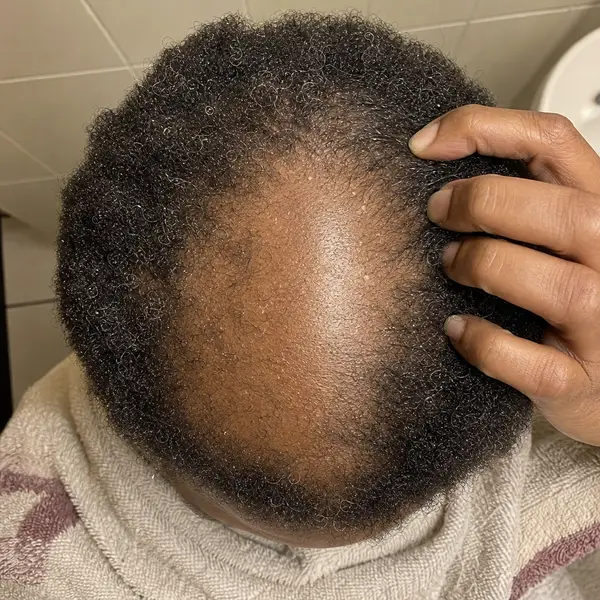
The Black Hair Care Journal — Calm Your Scalp Overnight
TestingImage

🖤 BLACK FRIDAY IS LIVE 🖤

🖤 BLACK FRIDAY: 𝗕𝘂𝘆 𝟭, 𝗚𝗲𝘁 𝟭 𝗙𝗿𝗲𝗲 This Black Friday - Start the hair growth routine Black women over 40 are obsessed with. ✨ Feel your hair get thicker and stronger 💫 See your edges and thin spots fill in 🌟 Wear your natural hair out again with confidence 👉Learn how Restore can naturally revive your follicles and regrow your hair. https://montosero.com/pages/restore-a1

Loading the ad's image
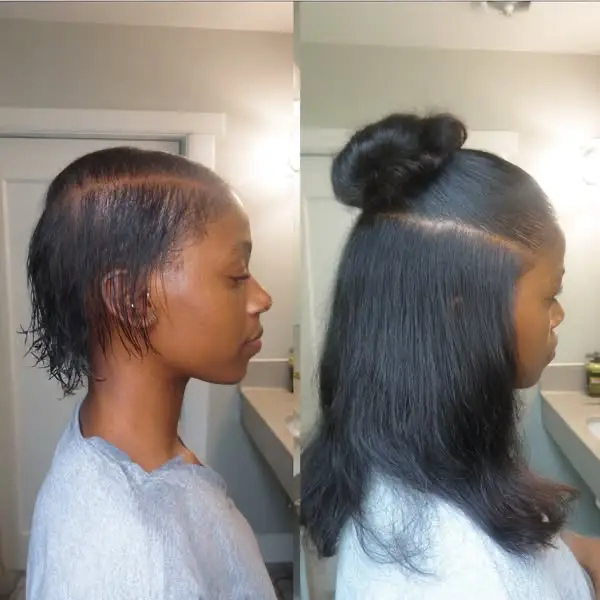
The Black Hair Care Journal — 🖤 BLACK FRIDAY IS LIVE 🖤
TestingImage

Showing 19 of 53 · all in Meta's Ad Library

From the ads Sniped has collected from this page (53 so far, first seen Nov 2026). Reach is what Meta reports; no spend or sales estimates.