Advertiser

Claire Mitchell

canbloomstore.comMeta Ad Library

28
Running ads
2 new in 30 days
Oct 2026
Advertising since
longest ad 1 month
—
Reach
running ads, summed
0% video
Formats
0 video · 0 image
9
Products advertised
1 shop

For Doodle Owners Only

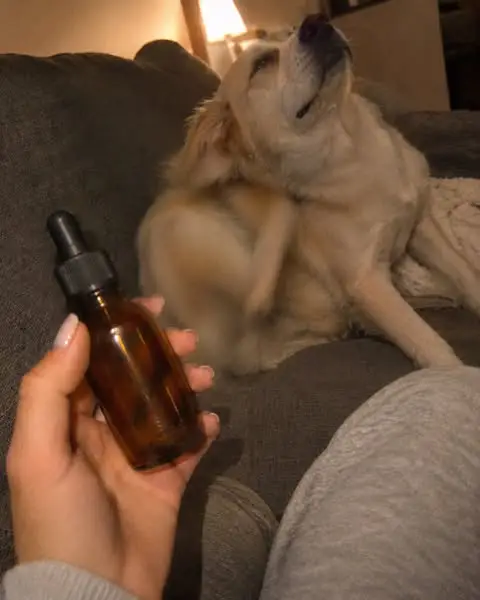
If your doodle keeps licking her paws and won't stop shaking her head, I'm going to say something nobody in your doodle group wants to hear, and honestly, I don't care if it upsets them. Apoquel is not going to fix your dog. Not Apoquel. Not Cytopoint. Not prescription food. Not the $42 probiotic chews everyone in your doodle group swears by. NONE OF IT IS GOING TO FIX THIS. I know because I tried EVERYTHING. Every medication. Every food. Every supplement. For three years. And my dog got so bad that my vet started using the words "quality of life." Because I spent three years covering up the symptoms of a problem nobody bothered to explain to me. And the worst part? My second dog started showing the exact same signs. Same age. Same licking. And I almost let the nightmare happen all over again, because I was following the same advice that destroyed my first dog's skin. I'm done being polite about this. If your dog is licking her paws and you're here asking whether to raise the Apoquel dose, switch to Cytopoint or change her food again, you're wasting time and money your dog doesn't have. Read this entire post. Every word. Because the answer is in here and it is NOT another prescription. I live in Charlotte with my husband, David, and our two goldendoodles. Same mother. Different litters. Millie is 6. My shadow. The kind who follows you to the bathroom and lies on the bath mat waiting for you. Ruby is 2 and a half. Same mother. Same line. Completely different personality. Wild. Goofy. Steals socks. Two completely different dogs. But the same problem. They both licked and scratched. All day. All night. Every day. With Millie, it started when she was about 2 and a half. First she licked her paws. Then she started shaking her head. Then her ears, with a smell. Then her belly. Then everywhere. She shook her head so hard her ears flapped like a wet rag. Flap, flap. Twenty times a day. At night I'd hear her licking. That wet sound, in the dark. And her ears flapping. Over and over. For hours. I took her to the vet. "Allergies. Very common in doodles. Let's start her on Apoquel." $110 a month. But it worked. The first 5 months were a miracle. The licking almost completely stopped. Her ears cleared up. She slept through the night. I slept through the night. I thought we were done. Then it started coming back. Not all at once. Little by little. Like someone turning up the volume one notch at a time. A little licking after walks. Some head shaking in the afternoon. Then that wet sound again at 1 a.m. Faint at first. Then every night. I told my vet. "Let's raise the dose." We raised it. It helped for about 6 weeks. Then the licking crept back in. "Let's add Cytopoint injections." $180 every 6 weeks. On top of the Apoquel. On top of the prescription food she'd put her on two months earlier. On top of the groomer every 6 weeks, with ear hair plucking, $110 a visit. Monthly spend: $395. And Millie was still licking her paws. Still shaking her head. Still chewing her paws until they were rust-colored. Still waking me up at 1 a.m. $395 a month for a dog who was still miserable. I posted in a doodle Facebook group. "Millie is on Apoquel AND Cytopoint and she's still licking her paws. Has this happened to anyone?" Everyone had a suggestion. "Switch to raw. Kibble is inflammatory." "Grain-free. The grains are triggering her." "Cut the chicken. All doodles are allergic to chicken." "Pluck the hair inside her ears." "Oatmeal baths twice a week." "Probiotic chews. They help the gut-skin axis." "Fish oil. Coconut oil. Salmon oil." So I tried it. I tried everything they told me. Raw. $240 a month. No change in the licking. Grain-free. Three different brands. No change. No chicken. Salmon only. No change. Ear plucking at every grooming. The ear infections came back two weeks later. Probiotic chews. $42 a month for 8 months. $336 total. Millie ate them every morning wagging her tail. She still licked her paws every night. The chews tasted good. That's all they did. Fish oil. Coconut oil. I put so much oil on her food it looked like soup. Oatmeal baths twice a week. She smelled nice for about 4 hours. Then the scratching came back and the yeast smell came back, and there I was bathing a 55-pound dog in my bathtub twice a week for absolutely nothing. I stopped adding up the total because the number made me sick. And Millie kept getting worse. Her soft curls turned coarse and thin. You could see her skin through the fur on her belly. And the skin underneath was dark. Almost black in some places. My vet called it hyperpigmentation. Chronic inflammation changing the color of her skin for good. Her ears were infected more weeks than they were clean. Brown gunk. Yeast smell. She'd pull her head away when I tried to clean them and then go sit in a corner, shaking. The hot spots started chaining together. One would scab over and another would open somewhere else. Her neck. Her hip. Behind her left ear. I spent my days bandaging, medicating and cleaning. She stopped playing. Stopped leaning on my legs. Stopped following me around the house. She'd lie on the cold tiles and lick. All day. Lick, sleep and lick. Her eyes looked different. Not pain exactly. Just… exhausted. Like she'd accepted that this was her life. Like she'd stopped trying to be comfortable. That look is what broke me. One night I sat on the floor next to her and held her while she scratched against my arm. And I thought: I'm watching my dog disappear. Little by little. Week by week. Month by month. And I can't stop it. I looked up how to rehome her. I'm not proud of it. I went on Petfinder and read profiles of dogs people had given up. "Can't afford the vet bills." "Allergies impossible to manage." "For her quality of life." I saw myself in every single one. I closed the laptop and cried on the kitchen floor. Millie came over and put her head in my lap. She didn't understand why I was crying. She just knew I was sad. My dog was comforting me. With her skin on fire. I wanted to scream. That was a Tuesday. I remember because the next day, Wednesday, Ruby started licking her paws. She was 2 and a half. The same age Millie was when hers started. First her paws. Then the head shaking. Then her ears. I recognized it immediately. The same progression. The same timeline. I knew what was coming. I'd watched the entire three-year nightmare with Millie. I knew exactly what the next three years were going to look like for Ruby. Three years of medications that work and then fade. Three years of baths and food changes that change nothing. Three years of supplements aimed at the wrong target. Three years of vet bills stacking up while the problem gets worse underneath everything. I couldn't do it again. I couldn't spend another $17,000. I couldn't clean another hot spot. I couldn't listen to two dogs licking all night every night. I couldn't sit and cry on the kitchen floor again. I needed to understand WHY. Not "what to try next." WHY. Why did Apoquel work and then stop? Why did the Cytopoint injections have to keep getting closer together? Why did plucking her ears do nothing? Why did no food change change anything? Why did the probiotics do nothing? Why did the problem get worse every year, no matter what I did? Four vets in three years. Not one of them answered WHY. They all answered WHAT. What to prescribe. What to feed her. What to try next. Not one of them told me why everything kept failing. I spent two weeks researching. Every night, after David went to sleep. Reddit. Facebook groups. Veterinary dermatology papers. I read everything I could find. And at 2 a.m. on a Tuesday, I found a post from a woman who had taken her dog to a holistic vet. The holistic vet had explained something to her that no conventional vet had ever told her. And when I read it, I felt the floor open up beneath me. Because it explained everything. Why Apoquel fades. Why Cytopoint has to be given closer and closer together. Why plucking doesn't prevent ear infections. Why food changes don't work. Why probiotics do nothing for this. Why the problem gets worse every year no matter what you do. And it was so simple. So obvious once someone explains it. That I wanted to throw my phone at the wall, because four vets had charged me $395 a month for three years without ever mentioning it. Here's what nobody told me in three years: After age 2, dogs lose collagen from their skin barrier. The skin barrier is a wall. A physical wall made of collagen, types I and III. That wall is what keeps allergens out. Pollen. Dust mites. Grass proteins. Mold. All of it. The barrier keeps them on the surface, where they don't cause any problems. After age 2, that wall starts to thin. The body breaks down collagen faster than it replaces it. Every year the wall gets thinner. Gaps form. Small at first. Bigger every year. The allergens that used to bounce off the barrier now slip through those gaps straight into the tissue underneath. The immune system detects invaders in living tissue and does what an immune system does: attack. That's the paw licking. That's the ears. That's the scratching. That's the hot spots. That's the bumps on the belly. That's the yeast. All of it. Every symptom. One single barrier failing in different places at different speeds. And that's why "hypoallergenic" never meant anything. That word is about the coat, about whether it gives people allergies. It says nothing about the dog's skin. And my dog's skin was losing its barrier like any other dog's. And here's the part that turned my stomach: Apoquel blocks the immune signal that causes the itch. That's ALL it does. It doesn't touch the barrier. The barrier keeps thinning while Apoquel covers up the symptoms. Every month more gaps form. More allergens get in. So Apoquel has to cover up a bigger and bigger reaction. That's why it works for 5 months and then fades. It's not that the medication stops working. It's that the damage underneath grows faster than the medication can cover it. The medication is losing a race against a wall that's falling down. So you raise the dose. It helps a little. The wall gets worse. So you add Cytopoint. It helps a little. The wall gets worse. So the Cytopoint injections get closer together. Every 6 weeks. Then 5. Then 4. More fire extinguishers. Bigger hole in the wall. The hole keeps growing. The extinguishers can't keep up. They never will. And there's something worse. That woman's holistic vet said that long-term use of medications that turn down the immune system, like Apoquel and steroids, can SPEED UP the breakdown of the barrier. The immune system doesn't just fight allergens: it also maintains and repairs tissue. Including the skin barrier. Keep it turned down long enough, and repair stops. The barrier falls apart faster. So the medication I was spending $395 a month on wasn't just losing the race against Millie's barrier. It may have been making it fall apart faster. For three years. Three years. Four vets. Apoquel. Cytopoint. Prescription food. Raw. Ear plucking. Probiotics. Fish oil. Coconut oil. Ear drops. Over $17,000. And the barrier got worse through all of it. Because NOBODY told me about the barrier. Not once in three years did anyone say the word "collagen." Not one vet. Not one Facebook group. Not one pet store employee. Nobody. They told me WHAT to buy. They never told me WHY it wouldn't work. The why is the barrier. The next morning I called every holistic vet within 50 miles. I found one. I drove 40 minutes with Millie in the back seat. I didn't care. She was the first vet in three years who didn't write me a prescription. She told me she doesn't make anything off Apoquel or Cytopoint. That she doesn't stock them in her practice because that profit model creates a conflict she's not comfortable with. That she'd rather explain the problem and let each owner decide. She confirmed everything I'd read at 2 a.m. The barrier. The collagen loss. The gaps. The allergens getting in. The immune reaction. The medication race. The acceleration from turning down the immune system. All of it. And then she said the thing that made it all click. "The barrier needs its materials to repair itself. Collagen. The protein it's made of. You can't rebuild a collagen wall with antihistamines. You can't rebuild it with drugs that turn down the immune system. You can't rebuild it with probiotics or fish oil. None of that is collagen. You need collagen." "So I just buy her collagen and that's it?" "It's not that simple. It has to be liquid. Liquid absorbs at 98%: it goes straight into the bloodstream and reaches the skin barrier tissue. Chews and powders absorb at 20-30% because stomach acid destroys most of it before it reaches anything. Most of what you give in a chew never reaches the barrier." "What about the collagen supplements on Amazon?" Her face changed. "I've tested them. I've sent them to independent labs. Most of them are garbage. Wrong collagen types. Lower doses than the label says. Fillers that get in the way of absorption. One had a contaminant that shouldn't be in a pet product." She pulled out a folder. "I've tested 6 collagen supplements over the last 3 years. All 6 at an independent lab." She opened the folder. "Brand 1: claimed types I and III. The lab only found type I. 40% underdosed. It had maltodextrin as filler." "Brand 2: claimed 500 mg per serving. The lab found 180 mg. 64% underdosed." "Brand 3: correct types. But in powder, with 22% bioavailability. The dog's body was getting about 110 mg of the 500 it promised." "Brand 4: liquid. But only type I. No type II, no type III. Incomplete formula." "Brand 5: contaminated. They found trace heavy metals. I reported it." "Brand 6: types I and III, plus UC-II. Liquid. 98% absorption. 900 mg of hydrolyzed collagen peptides per serving. UC-II at 40 mg. MSM. Hyaluronic acid. Vitamin C. Every ingredient verified. Every batch tested. Zero contamination. Zero fillers." "One out of six passed." She wrote the name on the back of her prescription pad. "It's the only one I recommend. The only one I trust. I don't sell it. I don't make anything from it. I just know it works because I've tested it and I've seen what it does in more than 200 allergy patients. A lot of them doodles." "How long does it take?" I asked. "The barrier doesn't rebuild overnight. Give it 8 weeks before you judge it. One bottle won't tell you." I bought it that night. I got the 3-bottle pack, because that was the 8 weeks she told me to give it. $49.99 for all three, with free shipping. About $17 a bottle. I started Millie the next morning. One serving on her food, alongside everything else. She told me not to take her off any medication. Just add the collagen and let the barrier rebuild underneath. I started Ruby the same day. Hers had only just begun. She was 2 and a half. In time. Before the cascade. For Millie, the dog who'd been suffering for 3 years: The first 2 weeks: I kept watching. Kept listening at night. Kept waiting. Week 3: the nighttime licking went down. It didn't disappear. But less. That wet sound was shorter. Quieter. I'd lie in bed holding my breath, listening. Longer pauses in between. Week 4: Millie slept through the night. The whole night. The first time in more than two years. I woke up at 5 a.m. scared because I hadn't heard anything. I ran downstairs. She was asleep on the couch. Breathing calmly. Not licking. Not shaking her head. I stood there for ten minutes watching her sleep. Week 6: her ears were clean. I checked them every morning, out of habit after three years of infections. I was expecting the brown gunk. The yeast smell. Nothing. Pink. Clean. I checked them the next day. Clean. And the next. Clean. I called David into the bathroom. "Look at her ears." He looked. "Are they… normal?" "They're normal." Week 7: my sister-in-law, who has another doodle from the same breeder, couldn't stop staring at her. "What are you giving her? Mine's still the same." Week 8: she stopped licking her paws completely. The rust-colored stains on her paws, the ones that had been there for two years, started growing out with the new curls. I took a photo every week. You could see the barrier healing through the fur. Month 3: I tapered the Apoquel with my vet. Half dose for two weeks. A quarter for another two. Then we stopped. The licking didn't increase. Then we spaced out the Cytopoint. From every 4 weeks to every 6. Then 8. Then we skipped it entirely. Month 4: Millie was only on one serving of collagen on her food. Nothing else. About $17 a month. Her curls were softer and thicker than they'd been since she was a puppy. The skin on her belly was lightening, from black toward pink. The hot spot cycle was broken: not one new one in 8 weeks. She was playing again. Leaning on my legs again. Following me around the house again. The first morning after we stopped the Cytopoint, she brought me a sock. She carried it across the whole kitchen, dropped it at my feet and wiggled her whole body. I sat on the floor, held her and cried for twenty minutes. For Ruby, the dog who was just starting: Week 3: the paw licking stopped. Just like that. Month 2: No ear infections. No head shaking. No bumps. Nothing developed. Her barrier was rebuilding before it could break down enough for the cascade to start. She never took Apoquel. She never needed Cytopoint. She never ate prescription food. She never cost me $395 a month. She never cost me a single sleepless night. Because I caught her at 2 and a half. Before the gaps got big. Before the allergens got in. Before the cascade. $17 a month. Before the nightmare. One night I sat down and added up what I'd spent on Millie in 3 years. Apoquel: $3,960. Cytopoint: $4,500. Prescription food: $1,800. Raw food trial: $1,040. Probiotic chews: $336. Vet visits and tests: $2,400. Grooming with ear plucking: $2,700. Ear drops and cleaners: $700. $17,436. $17,436 on medications and treatments that all did the same thing: turn down the immune reaction while the barrier fell apart underneath. Not one dollar went toward rebuilding the barrier. Not one. 4 months of collagen: about $67. Millie is more comfortable on $17 a month than she ever was on $395 a month. Because the $395 a month was aimed at the wrong target. Every dollar covered the symptom. None of it fixed the cause. And the cause was always the barrier. Ruby is never going to go through what Millie went through. I'll never spend $17,000 on her allergies. I'll never hear her licking at 1 a.m. I'll never look up how to rehome her. I'll never sit and cry over her on the kitchen floor. Because I started her on collagen, at $17 a month, before her barrier broke down. And it never will. The product is Canbloom liquid collagen. Types I and III, plus UC-II. Liquid. 98% absorption. Independently tested. canbloomstore.com/products/canbloom-premium-liquid-collagen The 3-bottle pack is $49.99 with free shipping: about $17 a bottle. That's the full 8 weeks the vet told me about. And the guarantee is honestly impressive: the brand is so sure of what it does that if you don't notice anything in 60 days, you can simply ask for a refund. Start it alongside whatever your dog is taking right now. Don't take her off any medication. Just add one serving to her food. Let the barrier rebuild underneath, and you can thank me another time. 4 to 8 weeks. That's how long it took Millie after 3 years of everything else failing. You'll hear it before you see it. The silence at 1 a.m. When your dog isn't licking anymore. When her ears stop flapping. When that wet sound stops. That silence is what $17 a month sounds like. I wish I'd heard it three years and $17,436 ago. EDIT: I keep getting messages asking where to buy it. Buy it directly from their website. I've seen people say they bought "collagen for dogs" on Amazon and it didn't work; I have no idea what's in those bottles. The holistic vet tested 6 brands and 5 failed. The one she recommends is only sold on their website: canbloomstore.com/products/canbloom-premium-liquid-collagen P.S. Millie licked her paws for 3 years while I spent $17,436 on medications that covered up the reaction and may have made the barrier worse. 4 months of collagen at $17 a month did what 3 years of all that couldn't. The barrier was the problem the whole time. Every vet treated the immune reaction. Nobody treated the barrier. Because there's no recurring revenue in fixing the barrier. There is in monthly Apoquel refills and Cytopoint injections forever. $395 a month forever. That's the business model. $17 a month that fixes the cause and removes the need for medication. That's not a business model the pharmaceutical industry wants you to know about. P.P.S. If your doodle is under 3 and just started licking her paws, you're in the best position possible. The barrier hasn't fully broken down yet. The gaps are small. Start the collagen NOW. Before the ears. Before the stains on her paws. Before the hot spots. Before the first Apoquel prescription. Before the first $395 month. Ruby is the proof. Same mother. Same house. One got collagen early. The other didn't. The difference is $17,436 and three years of suffering. Don't wait. Start now: canbloomstore.com/products/canbloom-premium-liquid-collagen

Loading the ad's image
Claire Mitchell — For Doodle Owners Only
Promising

She Wasn't Hypoallergenic

If your doodle keeps licking her paws and won't stop shaking her head, I'm going to say something nobody in your doodle group wants to hear, and honestly, I don't care if it upsets them. Apoquel is not going to fix your dog. Not Apoquel. Not Cytopoint. Not prescription food. Not the $42 probiotic chews everyone in your doodle group swears by. NONE OF IT IS GOING TO FIX THIS. I know because I tried EVERYTHING. Every medication. Every food. Every supplement. For three years. And my dog got so bad that my vet started using the words "quality of life." Because I spent three years covering up the symptoms of a problem nobody bothered to explain to me. And the worst part? My second dog started showing the exact same signs. Same age. Same licking. And I almost let the nightmare happen all over again, because I was following the same advice that destroyed my first dog's skin. I'm done being polite about this. If your dog is licking her paws and you're here asking whether to raise the Apoquel dose, switch to Cytopoint or change her food again, you're wasting time and money your dog doesn't have. Read this entire post. Every word. Because the answer is in here and it is NOT another prescription. I live in Charlotte with my husband, David, and our two goldendoodles. Same mother. Different litters. Millie is 6. My shadow. The kind who follows you to the bathroom and lies on the bath mat waiting for you. Ruby is 2 and a half. Same mother. Same line. Completely different personality. Wild. Goofy. Steals socks. Two completely different dogs. But the same problem. They both licked and scratched. All day. All night. Every day. With Millie, it started when she was about 2 and a half. First she licked her paws. Then she started shaking her head. Then her ears, with a smell. Then her belly. Then everywhere. She shook her head so hard her ears flapped like a wet rag. Flap, flap. Twenty times a day. At night I'd hear her licking. That wet sound, in the dark. And her ears flapping. Over and over. For hours. I took her to the vet. "Allergies. Very common in doodles. Let's start her on Apoquel." $110 a month. But it worked. The first 5 months were a miracle. The licking almost completely stopped. Her ears cleared up. She slept through the night. I slept through the night. I thought we were done. Then it started coming back. Not all at once. Little by little. Like someone turning up the volume one notch at a time. A little licking after walks. Some head shaking in the afternoon. Then that wet sound again at 1 a.m. Faint at first. Then every night. I told my vet. "Let's raise the dose." We raised it. It helped for about 6 weeks. Then the licking crept back in. "Let's add Cytopoint injections." $180 every 6 weeks. On top of the Apoquel. On top of the prescription food she'd put her on two months earlier. On top of the groomer every 6 weeks, with ear hair plucking, $110 a visit. Monthly spend: $395. And Millie was still licking her paws. Still shaking her head. Still chewing her paws until they were rust-colored. Still waking me up at 1 a.m. $395 a month for a dog who was still miserable. I posted in a doodle Facebook group. "Millie is on Apoquel AND Cytopoint and she's still licking her paws. Has this happened to anyone?" Everyone had a suggestion. "Switch to raw. Kibble is inflammatory." "Grain-free. The grains are triggering her." "Cut the chicken. All doodles are allergic to chicken." "Pluck the hair inside her ears." "Oatmeal baths twice a week." "Probiotic chews. They help the gut-skin axis." "Fish oil. Coconut oil. Salmon oil." So I tried it. I tried everything they told me. Raw. $240 a month. No change in the licking. Grain-free. Three different brands. No change. No chicken. Salmon only. No change. Ear plucking at every grooming. The ear infections came back two weeks later. Probiotic chews. $42 a month for 8 months. $336 total. Millie ate them every morning wagging her tail. She still licked her paws every night. The chews tasted good. That's all they did. Fish oil. Coconut oil. I put so much oil on her food it looked like soup. Oatmeal baths twice a week. She smelled nice for about 4 hours. Then the scratching came back and the yeast smell came back, and there I was bathing a 55-pound dog in my bathtub twice a week for absolutely nothing. I stopped adding up the total because the number made me sick. And Millie kept getting worse. Her soft curls turned coarse and thin. You could see her skin through the fur on her belly. And the skin underneath was dark. Almost black in some places. My vet called it hyperpigmentation. Chronic inflammation changing the color of her skin for good. Her ears were infected more weeks than they were clean. Brown gunk. Yeast smell. She'd pull her head away when I tried to clean them and then go sit in a corner, shaking. The hot spots started chaining together. One would scab over and another would open somewhere else. Her neck. Her hip. Behind her left ear. I spent my days bandaging, medicating and cleaning. She stopped playing. Stopped leaning on my legs. Stopped following me around the house. She'd lie on the cold tiles and lick. All day. Lick, sleep and lick. Her eyes looked different. Not pain exactly. Just… exhausted. Like she'd accepted that this was her life. Like she'd stopped trying to be comfortable. That look is what broke me. One night I sat on the floor next to her and held her while she scratched against my arm. And I thought: I'm watching my dog disappear. Little by little. Week by week. Month by month. And I can't stop it. I looked up how to rehome her. I'm not proud of it. I went on Petfinder and read profiles of dogs people had given up. "Can't afford the vet bills." "Allergies impossible to manage." "For her quality of life." I saw myself in every single one. I closed the laptop and cried on the kitchen floor. Millie came over and put her head in my lap. She didn't understand why I was crying. She just knew I was sad. My dog was comforting me. With her skin on fire. I wanted to scream. That was a Tuesday. I remember because the next day, Wednesday, Ruby started licking her paws. She was 2 and a half. The same age Millie was when hers started. First her paws. Then the head shaking. Then her ears. I recognized it immediately. The same progression. The same timeline. I knew what was coming. I'd watched the entire three-year nightmare with Millie. I knew exactly what the next three years were going to look like for Ruby. Three years of medications that work and then fade. Three years of baths and food changes that change nothing. Three years of supplements aimed at the wrong target. Three years of vet bills stacking up while the problem gets worse underneath everything. I couldn't do it again. I couldn't spend another $17,000. I couldn't clean another hot spot. I couldn't listen to two dogs licking all night every night. I couldn't sit and cry on the kitchen floor again. I needed to understand WHY. Not "what to try next." WHY. Why did Apoquel work and then stop? Why did the Cytopoint injections have to keep getting closer together? Why did plucking her ears do nothing? Why did no food change change anything? Why did the probiotics do nothing? Why did the problem get worse every year, no matter what I did? Four vets in three years. Not one of them answered WHY. They all answered WHAT. What to prescribe. What to feed her. What to try next. Not one of them told me why everything kept failing. I spent two weeks researching. Every night, after David went to sleep. Reddit. Facebook groups. Veterinary dermatology papers. I read everything I could find. And at 2 a.m. on a Tuesday, I found a post from a woman who had taken her dog to a holistic vet. The holistic vet had explained something to her that no conventional vet had ever told her. And when I read it, I felt the floor open up beneath me. Because it explained everything. Why Apoquel fades. Why Cytopoint has to be given closer and closer together. Why plucking doesn't prevent ear infections. Why food changes don't work. Why probiotics do nothing for this. Why the problem gets worse every year no matter what you do. And it was so simple. So obvious once someone explains it. That I wanted to throw my phone at the wall, because four vets had charged me $395 a month for three years without ever mentioning it. Here's what nobody told me in three years: After age 2, dogs lose collagen from their skin barrier. The skin barrier is a wall. A physical wall made of collagen, types I and III. That wall is what keeps allergens out. Pollen. Dust mites. Grass proteins. Mold. All of it. The barrier keeps them on the surface, where they don't cause any problems. After age 2, that wall starts to thin. The body breaks down collagen faster than it replaces it. Every year the wall gets thinner. Gaps form. Small at first. Bigger every year. The allergens that used to bounce off the barrier now slip through those gaps straight into the tissue underneath. The immune system detects invaders in living tissue and does what an immune system does: attack. That's the paw licking. That's the ears. That's the scratching. That's the hot spots. That's the bumps on the belly. That's the yeast. All of it. Every symptom. One single barrier failing in different places at different speeds. And that's why "hypoallergenic" never meant anything. That word is about the coat, about whether it gives people allergies. It says nothing about the dog's skin. And my dog's skin was losing its barrier like any other dog's. And here's the part that turned my stomach: Apoquel blocks the immune signal that causes the itch. That's ALL it does. It doesn't touch the barrier. The barrier keeps thinning while Apoquel covers up the symptoms. Every month more gaps form. More allergens get in. So Apoquel has to cover up a bigger and bigger reaction. That's why it works for 5 months and then fades. It's not that the medication stops working. It's that the damage underneath grows faster than the medication can cover it. The medication is losing a race against a wall that's falling down. So you raise the dose. It helps a little. The wall gets worse. So you add Cytopoint. It helps a little. The wall gets worse. So the Cytopoint injections get closer together. Every 6 weeks. Then 5. Then 4. More fire extinguishers. Bigger hole in the wall. The hole keeps growing. The extinguishers can't keep up. They never will. And there's something worse. That woman's holistic vet said that long-term use of medications that turn down the immune system, like Apoquel and steroids, can SPEED UP the breakdown of the barrier. The immune system doesn't just fight allergens: it also maintains and repairs tissue. Including the skin barrier. Keep it turned down long enough, and repair stops. The barrier falls apart faster. So the medication I was spending $395 a month on wasn't just losing the race against Millie's barrier. It may have been making it fall apart faster. For three years. Three years. Four vets. Apoquel. Cytopoint. Prescription food. Raw. Ear plucking. Probiotics. Fish oil. Coconut oil. Ear drops. Over $17,000. And the barrier got worse through all of it. Because NOBODY told me about the barrier. Not once in three years did anyone say the word "collagen." Not one vet. Not one Facebook group. Not one pet store employee. Nobody. They told me WHAT to buy. They never told me WHY it wouldn't work. The why is the barrier. The next morning I called every holistic vet within 50 miles. I found one. I drove 40 minutes with Millie in the back seat. I didn't care. She was the first vet in three years who didn't write me a prescription. She told me she doesn't make anything off Apoquel or Cytopoint. That she doesn't stock them in her practice because that profit model creates a conflict she's not comfortable with. That she'd rather explain the problem and let each owner decide. She confirmed everything I'd read at 2 a.m. The barrier. The collagen loss. The gaps. The allergens getting in. The immune reaction. The medication race. The acceleration from turning down the immune system. All of it. And then she said the thing that made it all click. "The barrier needs its materials to repair itself. Collagen. The protein it's made of. You can't rebuild a collagen wall with antihistamines. You can't rebuild it with drugs that turn down the immune system. You can't rebuild it with probiotics or fish oil. None of that is collagen. You need collagen." "So I just buy her collagen and that's it?" "It's not that simple. It has to be liquid. Liquid absorbs at 98%: it goes straight into the bloodstream and reaches the skin barrier tissue. Chews and powders absorb at 20-30% because stomach acid destroys most of it before it reaches anything. Most of what you give in a chew never reaches the barrier." "What about the collagen supplements on Amazon?" Her face changed. "I've tested them. I've sent them to independent labs. Most of them are garbage. Wrong collagen types. Lower doses than the label says. Fillers that get in the way of absorption. One had a contaminant that shouldn't be in a pet product." She pulled out a folder. "I've tested 6 collagen supplements over the last 3 years. All 6 at an independent lab." She opened the folder. "Brand 1: claimed types I and III. The lab only found type I. 40% underdosed. It had maltodextrin as filler." "Brand 2: claimed 500 mg per serving. The lab found 180 mg. 64% underdosed." "Brand 3: correct types. But in powder, with 22% bioavailability. The dog's body was getting about 110 mg of the 500 it promised." "Brand 4: liquid. But only type I. No type II, no type III. Incomplete formula." "Brand 5: contaminated. They found trace heavy metals. I reported it." "Brand 6: types I and III, plus UC-II. Liquid. 98% absorption. 900 mg of hydrolyzed collagen peptides per serving. UC-II at 40 mg. MSM. Hyaluronic acid. Vitamin C. Every ingredient verified. Every batch tested. Zero contamination. Zero fillers." "One out of six passed." She wrote the name on the back of her prescription pad. "It's the only one I recommend. The only one I trust. I don't sell it. I don't make anything from it. I just know it works because I've tested it and I've seen what it does in more than 200 allergy patients. A lot of them doodles." "How long does it take?" I asked. "The barrier doesn't rebuild overnight. Give it 8 weeks before you judge it. One bottle won't tell you." I bought it that night. I got the 3-bottle pack, because that was the 8 weeks she told me to give it. $49.99 for all three, with free shipping. About $17 a bottle. I started Millie the next morning. One serving on her food, alongside everything else. She told me not to take her off any medication. Just add the collagen and let the barrier rebuild underneath. I started Ruby the same day. Hers had only just begun. She was 2 and a half. In time. Before the cascade. For Millie, the dog who'd been suffering for 3 years: The first 2 weeks: I kept watching. Kept listening at night. Kept waiting. Week 3: the nighttime licking went down. It didn't disappear. But less. That wet sound was shorter. Quieter. I'd lie in bed holding my breath, listening. Longer pauses in between. Week 4: Millie slept through the night. The whole night. The first time in more than two years. I woke up at 5 a.m. scared because I hadn't heard anything. I ran downstairs. She was asleep on the couch. Breathing calmly. Not licking. Not shaking her head. I stood there for ten minutes watching her sleep. Week 6: her ears were clean. I checked them every morning, out of habit after three years of infections. I was expecting the brown gunk. The yeast smell. Nothing. Pink. Clean. I checked them the next day. Clean. And the next. Clean. I called David into the bathroom. "Look at her ears." He looked. "Are they… normal?" "They're normal." Week 7: my sister-in-law, who has another doodle from the same breeder, couldn't stop staring at her. "What are you giving her? Mine's still the same." Week 8: she stopped licking her paws completely. The rust-colored stains on her paws, the ones that had been there for two years, started growing out with the new curls. I took a photo every week. You could see the barrier healing through the fur. Month 3: I tapered the Apoquel with my vet. Half dose for two weeks. A quarter for another two. Then we stopped. The licking didn't increase. Then we spaced out the Cytopoint. From every 4 weeks to every 6. Then 8. Then we skipped it entirely. Month 4: Millie was only on one serving of collagen on her food. Nothing else. About $17 a month. Her curls were softer and thicker than they'd been since she was a puppy. The skin on her belly was lightening, from black toward pink. The hot spot cycle was broken: not one new one in 8 weeks. She was playing again. Leaning on my legs again. Following me around the house again. The first morning after we stopped the Cytopoint, she brought me a sock. She carried it across the whole kitchen, dropped it at my feet and wiggled her whole body. I sat on the floor, held her and cried for twenty minutes. For Ruby, the dog who was just starting: Week 3: the paw licking stopped. Just like that. Month 2: No ear infections. No head shaking. No bumps. Nothing developed. Her barrier was rebuilding before it could break down enough for the cascade to start. She never took Apoquel. She never needed Cytopoint. She never ate prescription food. She never cost me $395 a month. She never cost me a single sleepless night. Because I caught her at 2 and a half. Before the gaps got big. Before the allergens got in. Before the cascade. $17 a month. Before the nightmare. One night I sat down and added up what I'd spent on Millie in 3 years. Apoquel: $3,960. Cytopoint: $4,500. Prescription food: $1,800. Raw food trial: $1,040. Probiotic chews: $336. Vet visits and tests: $2,400. Grooming with ear plucking: $2,700. Ear drops and cleaners: $700. $17,436. $17,436 on medications and treatments that all did the same thing: turn down the immune reaction while the barrier fell apart underneath. Not one dollar went toward rebuilding the barrier. Not one. 4 months of collagen: about $67. Millie is more comfortable on $17 a month than she ever was on $395 a month. Because the $395 a month was aimed at the wrong target. Every dollar covered the symptom. None of it fixed the cause. And the cause was always the barrier. Ruby is never going to go through what Millie went through. I'll never spend $17,000 on her allergies. I'll never hear her licking at 1 a.m. I'll never look up how to rehome her. I'll never sit and cry over her on the kitchen floor. Because I started her on collagen, at $17 a month, before her barrier broke down. And it never will. The product is Canbloom liquid collagen. Types I and III, plus UC-II. Liquid. 98% absorption. Independently tested. canbloomstore.com/products/canbloom-premium-liquid-collagen The 3-bottle pack is $49.99 with free shipping: about $17 a bottle. That's the full 8 weeks the vet told me about. And the guarantee is honestly impressive: the brand is so sure of what it does that if you don't notice anything in 60 days, you can simply ask for a refund. Start it alongside whatever your dog is taking right now. Don't take her off any medication. Just add one serving to her food. Let the barrier rebuild underneath, and you can thank me another time. 4 to 8 weeks. That's how long it took Millie after 3 years of everything else failing. You'll hear it before you see it. The silence at 1 a.m. When your dog isn't licking anymore. When her ears stop flapping. When that wet sound stops. That silence is what $17 a month sounds like. I wish I'd heard it three years and $17,436 ago. EDIT: I keep getting messages asking where to buy it. Buy it directly from their website. I've seen people say they bought "collagen for dogs" on Amazon and it didn't work; I have no idea what's in those bottles. The holistic vet tested 6 brands and 5 failed. The one she recommends is only sold on their website: canbloomstore.com/products/canbloom-premium-liquid-collagen P.S. Millie licked her paws for 3 years while I spent $17,436 on medications that covered up the reaction and may have made the barrier worse. 4 months of collagen at $17 a month did what 3 years of all that couldn't. The barrier was the problem the whole time. Every vet treated the immune reaction. Nobody treated the barrier. Because there's no recurring revenue in fixing the barrier. There is in monthly Apoquel refills and Cytopoint injections forever. $395 a month forever. That's the business model. $17 a month that fixes the cause and removes the need for medication. That's not a business model the pharmaceutical industry wants you to know about. P.P.S. If your doodle is under 3 and just started licking her paws, you're in the best position possible. The barrier hasn't fully broken down yet. The gaps are small. Start the collagen NOW. Before the ears. Before the stains on her paws. Before the hot spots. Before the first Apoquel prescription. Before the first $395 month. Ruby is the proof. Same mother. Same house. One got collagen early. The other didn't. The difference is $17,436 and three years of suffering. Don't wait. Start now: canbloomstore.com/products/canbloom-premium-liquid-collagen

Loading the ad's image
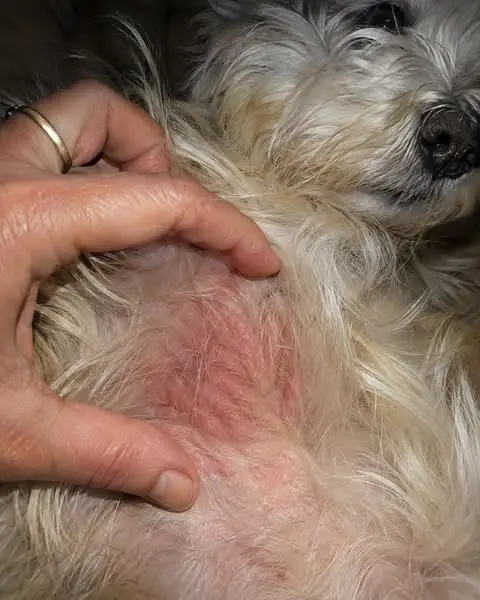
Claire Mitchell — She Wasn't Hypoallergenic
Promising

For Westie Owners Only

If your Westie has red skin under that white coat, I'm going to say something nobody in your Westie group wants to hear, and honestly, I don't care if it upsets them. Apoquel is not going to fix your dog. Not Apoquel. Not Cytopoint. Not the kangaroo diet. Not the dermatologist's shampoo. Not the $42 probiotic chews everyone in your Westie group swears by. NONE OF IT IS GOING TO FIX THIS. I know because I tried EVERYTHING. Every medication. Every food. Every supplement. For three years. And my dog got so bad that my vet started using the words "quality of life." Because I spent three years covering up the symptoms of a problem nobody bothered to explain to me. And the worst part? My second dog started showing the exact same signs. Same age. Same scratching. And I almost let the nightmare happen all over again, because I was following the same advice that destroyed my first dog's skin. I'm done being polite about this. If your dog is scratching and you're here asking whether to raise the Apoquel dose, book another dermatologist or switch her food again, you're wasting time and money your dog doesn't have. Read this entire post. Every word. Because the answer is in here and it is NOT another prescription. I live in Denver with my husband, David, and our two Westies. Same mother. Different litters. Maisie is 6. My shadow. The kind who waits for you sitting at the door and barks hello, tail going a mile a minute. Poppy is 2 and a half. Same mother. Same line. Completely different personality. Wild. Goofy. Steals socks. Two completely different dogs. But the same problem. They both scratched. All day. All night. Every day. With Maisie, it started when she was about 2 and a half. First she chewed her paws. Then the skin went pink under her white coat. Then red. Then her belly. Then everywhere. She'd scratch so hard against the door frame that I'd find tufts of fur stuck to the wood. At night I'd hear her collar jingling. Thump, thump, thump. Her back leg hitting the floor. Over and over. For hours. I took her to the vet. "Allergies. Very common in Westies. Let's start her on Apoquel." $75 a month. But it worked. The first 5 months were a miracle. The scratching almost completely stopped. Her ears cleared up. She slept through the night. I slept through the night. I thought we were done. Then it started coming back. Not all at once. Little by little. Like someone turning up the volume one notch at a time. A little scratching after walks. Some head shaking in the afternoon. Then the collar jingling again at 1 a.m. Faint at first. Then every night. I told my vet. "Let's raise the dose." We raised it. It helped for about 6 weeks. Then the scratching crept back in. "Let's add Cytopoint injections." $120 every 6 weeks. On top of the Apoquel. On top of the prescription food she'd put her on two months earlier. On top of the dermatologist and the kangaroo food, $110 a month. Monthly spend: $290. And Maisie was still scratching. Still shaking her head. Still chewing her paws until they were rust-colored. Still waking me up at 1 a.m. $290 a month for a dog who was still miserable. I posted in a Westie Facebook group. "Maisie is on Apoquel AND Cytopoint and she's still scratching. Has this happened to anyone?" Everyone had a suggestion. "Switch to raw. Kibble is inflammatory." "Grain-free. The grains are triggering her." "Cut the chicken. All Westies are allergic to chicken." "Take her to a veterinary dermatologist." "Kangaroo food. It's the only protein they haven't tried." "Oatmeal baths twice a week." "Probiotic chews. They help the gut-skin axis." "Fish oil. Coconut oil. Salmon oil." So I tried it. I tried everything they told me. Raw. $160 a month. No change in the scratching. Grain-free. Three different brands. No change. No chicken. Salmon only. No change. Veterinary dermatologist. Allergy testing. Kangaroo food, $110 a month. No change. Probiotic chews. $42 a month for 8 months. $336 total. Maisie ate them every morning wagging her tail. She still scratched every night. The chews tasted good. That's all they did. Fish oil. Coconut oil. I put so much oil on her food it looked like soup. Oatmeal baths twice a week. She smelled nice for about 4 hours. Then the scratching came back and the yeast smell came back, and there I was bathing an 18-pound dog in my kitchen sink twice a week for absolutely nothing. I stopped adding up the total because the number made me sick. And Maisie kept getting worse. Her white coat turned yellowish and thin. You could see her skin through the fur on her belly: thick, wrinkled, like elephant skin. And the skin underneath was dark. Almost black in some places. My vet called it hyperpigmentation. Chronic inflammation changing the color of her skin for good. Her ears were infected more weeks than they were clean. Brown gunk. Yeast smell. She'd pull her head away when I tried to clean them and then go sit in a corner, shaking. The hot spots started chaining together. One would scab over and another would open somewhere else. Her neck. Her hip. Behind her left ear. I spent my days bandaging, medicating and cleaning. She stopped playing. Stopped leaning on my legs. Stopped following me around the house. She'd lie on the cold tiles and scratch. All day. Scratch, sleep and scratch. Her eyes looked different. Not pain exactly. Just… exhausted. Like she'd accepted that this was her life. Like she'd stopped trying to be comfortable. That look is what broke me. One night I sat on the floor next to her and held her while she scratched against my arm. And I thought: I'm watching my dog disappear. Little by little. Week by week. Month by month. And I can't stop it. I looked up how to rehome her. I'm not proud of it. I went on Petfinder and read profiles of dogs people had given up. "Can't afford the vet bills." "Allergies impossible to manage." "For her quality of life." I saw myself in every single one. I closed the laptop and cried on the kitchen floor. Maisie came over and put her head in my lap. She didn't understand why I was crying. She just knew I was sad. My dog was comforting me. With her skin on fire. I wanted to scream. That was a Tuesday. I remember because the next day, Wednesday, Poppy started scratching. She was 2 and a half. The same age Maisie was when hers started. First her paws. Then the pink skin under her coat. Then her belly. I recognized it immediately. The same progression. The same timeline. I knew what was coming. I'd watched the entire three-year nightmare with Maisie. I knew exactly what the next three years were going to look like for Poppy. Three years of medications that work and then fade. Three years of dermatologists and food changes that change nothing. Three years of supplements aimed at the wrong target. Three years of vet bills stacking up while the problem gets worse underneath everything. I couldn't do it again. I couldn't spend another $13,000. I couldn't clean another hot spot. I couldn't listen to two dogs scratching all night every night. I couldn't sit and cry on the kitchen floor again. I needed to understand WHY. Not "what to try next." WHY. Why did Apoquel work and then stop? Why did the Cytopoint injections have to keep getting closer together? Why did neither the dermatologist nor the kangaroo do anything? Why did no food change change anything? Why did the probiotics do nothing? Why did the problem get worse every year, no matter what I did? Four vets in three years. Not one of them answered WHY. They all answered WHAT. What to prescribe. What to feed her. What to try next. Not one of them told me why everything kept failing. I spent two weeks researching. Every night, after David went to sleep. Reddit. Facebook groups. Veterinary dermatology papers. I read everything I could find. And at 2 a.m. on a Tuesday, I found a post from a woman who had taken her dog to a holistic vet. The holistic vet had explained something to her that no conventional vet had ever told her. And when I read it, I felt the floor open up beneath me. Because it explained everything. Why Apoquel fades. Why Cytopoint has to be given closer and closer together. Why dermatology doesn't fix it. Why food changes don't work. Why probiotics do nothing for this. Why the problem gets worse every year no matter what you do. And it was so simple. So obvious once someone explains it. That I wanted to throw my phone at the wall, because four vets had charged me $290 a month for three years without ever mentioning it. Here's what nobody told me in three years: After age 2, dogs lose collagen from their skin barrier. The skin barrier is a wall. A physical wall made of collagen, types I and III. That wall is what keeps allergens out. Pollen. Dust mites. Grass proteins. Mold. All of it. The barrier keeps them on the surface, where they don't cause any problems. After age 2, that wall starts to thin. The body breaks down collagen faster than it replaces it. Every year the wall gets thinner. Gaps form. Small at first. Bigger every year. The allergens that used to bounce off the barrier now slip through those gaps straight into the tissue underneath. The immune system detects invaders in living tissue and does what an immune system does: attack. That's the scratching. That's the red skin under the white coat. That's the ears. That's the paws. That's the bumps on the belly. That's the yeast. All of it. Every symptom. One single barrier failing in different places at different speeds. And that's why the kangaroo diet was never going to fix it. You swap one meat for another. The barrier stays just as broken. You can find the rarest protein in the world. You won't find one that plugs the gaps. And here's the part that turned my stomach: Apoquel blocks the immune signal that causes the itch. That's ALL it does. It doesn't touch the barrier. The barrier keeps thinning while Apoquel covers up the symptoms. Every month more gaps form. More allergens get in. So Apoquel has to cover up a bigger and bigger reaction. That's why it works for 5 months and then fades. It's not that the medication stops working. It's that the damage underneath grows faster than the medication can cover it. The medication is losing a race against a wall that's falling down. So you raise the dose. It helps a little. The wall gets worse. So you add Cytopoint. It helps a little. The wall gets worse. So the Cytopoint injections get closer together. Every 6 weeks. Then 5. Then 4. More fire extinguishers. Bigger hole in the wall. The hole keeps growing. The extinguishers can't keep up. They never will. And there's something worse. That woman's holistic vet said that long-term use of medications that turn down the immune system, like Apoquel and steroids, can SPEED UP the breakdown of the barrier. The immune system doesn't just fight allergens: it also maintains and repairs tissue. Including the skin barrier. Keep it turned down long enough, and repair stops. The barrier falls apart faster. So the medication I was spending $290 a month on wasn't just losing the race against Maisie's barrier. It may have been making it fall apart faster. For three years. Three years. Four vets. Apoquel. Cytopoint. Prescription food. Raw. Dermatologist. Kangaroo. Probiotics. Fish oil. Coconut oil. Ear drops. Over $13,000. And the barrier got worse through all of it. Because NOBODY told me about the barrier. Not once in three years did anyone say the word "collagen." Not one vet. Not one Facebook group. Not one pet store employee. Nobody. They told me WHAT to buy. They never told me WHY it wouldn't work. The why is the barrier. The next morning I called every holistic vet within 50 miles. I found one. I drove 40 minutes with Maisie in the back seat. I didn't care. She was the first vet in three years who didn't write me a prescription. She told me she doesn't make anything off Apoquel or Cytopoint. That she doesn't stock them in her practice because that profit model creates a conflict she's not comfortable with. That she'd rather explain the problem and let each owner decide. She confirmed everything I'd read at 2 a.m. The barrier. The collagen loss. The gaps. The allergens getting in. The immune reaction. The medication race. The acceleration from turning down the immune system. All of it. And then she said the thing that made it all click. "The barrier needs its materials to repair itself. Collagen. The protein it's made of. You can't rebuild a collagen wall with antihistamines. You can't rebuild it with drugs that turn down the immune system. You can't rebuild it with probiotics or fish oil. None of that is collagen. You need collagen." "So I just buy her collagen and that's it?" "It's not that simple. It has to be liquid. Liquid absorbs at 98%: it goes straight into the bloodstream and reaches the skin barrier tissue. Chews and powders absorb at 20-30% because stomach acid destroys most of it before it reaches anything. Most of what you give in a chew never reaches the barrier." "What about the collagen supplements on Amazon?" Her face changed. "I've tested them. I've sent them to independent labs. Most of them are garbage. Wrong collagen types. Lower doses than the label says. Fillers that get in the way of absorption. One had a contaminant that shouldn't be in a pet product." She pulled out a folder. "I've tested 6 collagen supplements over the last 3 years. All 6 at an independent lab." She opened the folder. "Brand 1: claimed types I and III. The lab only found type I. 40% underdosed. It had maltodextrin as filler." "Brand 2: claimed 500 mg per serving. The lab found 180 mg. 64% underdosed." "Brand 3: correct types. But in powder, with 22% bioavailability. The dog's body was getting about 110 mg of the 500 it promised." "Brand 4: liquid. But only type I. No type II, no type III. Incomplete formula." "Brand 5: contaminated. They found trace heavy metals. I reported it." "Brand 6: types I and III, plus UC-II. Liquid. 98% absorption. 900 mg of hydrolyzed collagen peptides per serving. UC-II at 40 mg. MSM. Hyaluronic acid. Vitamin C. Every ingredient verified. Every batch tested. Zero contamination. Zero fillers." "One out of six passed." She wrote the name on the back of her prescription pad. "It's the only one I recommend. The only one I trust. I don't sell it. I don't make anything from it. I just know it works because I've tested it and I've seen what it does in more than 200 allergy patients. A lot of them Westies." "How long does it take?" I asked. "The barrier doesn't rebuild overnight. Give it 8 weeks before you judge it. One bottle won't tell you." I bought it that night. I got the 3-bottle pack, because that was the 8 weeks she told me to give it. $49.99 for all three, with free shipping. About $17 a bottle. I started Maisie the next morning. One serving on her food, alongside everything else. She told me not to take her off any medication. Just add the collagen and let the barrier rebuild underneath. I started Poppy the same day. Hers had only just begun. She was 2 and a half. In time. Before the cascade. For Maisie, the dog who'd been suffering for 3 years: The first 2 weeks: I kept watching. Kept listening at night. Kept waiting. Week 3: the nighttime scratching went down. It didn't disappear. But less. The collar jingle was shorter. Softer. I'd lie in bed holding my breath, listening. Fewer thumps. Longer pauses between them. Week 4: Maisie slept through the night. The whole night. The first time in more than two years. I woke up at 5 a.m. scared because I hadn't heard anything. I ran downstairs. She was asleep on the couch. Breathing calmly. Not scratching. No jingle. I stood there for ten minutes watching her sleep. Week 6: her ears were clean. I checked them every morning, out of habit after three years of infections. I was expecting the brown gunk. The yeast smell. Nothing. Pink. Clean. I checked them the next day. Clean. And the next. Clean. I called David into the bathroom. "Look at her ears." He looked. "Are they… normal?" "They're normal." Week 7: the groomer, who's known her since she was a puppy, parted the fur on her belly and looked at me. "What did you change? She's pink. Normal pink." Week 8: she stopped chewing her paws completely. The rust-colored stains on her paws, the ones that had been there for two years, started growing out with the new fur. I took a photo every week. You could see the barrier healing through the fur. Month 3: I tapered the Apoquel with my vet. Half dose for two weeks. A quarter for another two. Then we stopped. The scratching didn't increase. Then we spaced out the Cytopoint. From every 4 weeks to every 6. Then 8. Then we skipped it entirely. Month 4: Maisie was only on one serving of collagen on her food. Nothing else. About $17 a month. Her coat was white, truly white, and thicker than it had been since she was a puppy. The skin on her belly was lightening, from black toward pink. The hot spot cycle was broken: not one new one in 8 weeks. She was playing again. Leaning on my legs again. Following me around the house again. The first morning after we stopped the Cytopoint, she brought me a sock. She carried it across the whole kitchen, dropped it at my feet and wiggled her whole body. I sat on the floor, held her and cried for twenty minutes. For Poppy, the dog who was just starting: Week 3: the scratching behind her ears stopped. Just like that. Month 2: No red skin. No chewed paws. No ear infections. Nothing developed. Her barrier was rebuilding before it could break down enough for the cascade to start. She never took Apoquel. She never needed Cytopoint. She never ate prescription food. She never cost me $290 a month. She never cost me a single sleepless night. Because I caught her at 2 and a half. Before the gaps got big. Before the allergens got in. Before the cascade. $17 a month. Before the nightmare. One night I sat down and added up what I'd spent on Maisie in 3 years. Apoquel: $2,700. Cytopoint: $2,600. Dermatologist and allergy testing: $2,900. Kangaroo food: $2,200. Probiotic chews: $336. Grooming with medicated baths: $1,800. Shampoos, ear drops and everything else: $600. $13,136. $13,136 on medications and treatments that all did the same thing: turn down the immune reaction while the barrier fell apart underneath. Not one dollar went toward rebuilding the barrier. Not one. 4 months of collagen: about $67. Maisie is more comfortable on $17 a month than she ever was on $290 a month. Because the $290 a month was aimed at the wrong target. Every dollar covered the symptom. None of it fixed the cause. And the cause was always the barrier. Poppy is never going to go through what Maisie went through. I'll never spend $13,000 on her allergies. I'll never hear her scratching at 1 a.m. I'll never look up how to rehome her. I'll never sit and cry over her on the kitchen floor. Because I started her on collagen, at $17 a month, before her barrier broke down. And it never will. The product is Canbloom liquid collagen. Types I and III, plus UC-II. Liquid. 98% absorption. Independently tested. canbloomstore.com/products/canbloom-premium-liquid-collagen The 3-bottle pack is $49.99 with free shipping: about $17 a bottle. That's the full 8 weeks the vet told me about. And the guarantee is honestly impressive: the brand is so sure of what it does that if you don't notice anything in 60 days, you can simply ask for a refund. Start it alongside whatever your dog is taking right now. Don't take her off any medication. Just add one serving to her food. Let the barrier rebuild underneath, and you can thank me another time. 4 to 8 weeks. That's how long it took Maisie after 3 years of everything else failing. You'll hear it before you see it. The silence at 1 a.m. When your dog isn't scratching anymore. When the collar stops jingling. When the thumping stops. That silence is what $17 a month sounds like. I wish I'd heard it three years and $13,136 ago. EDIT: I keep getting messages asking where to buy it. Buy it directly from their website. I've seen people say they bought "collagen for dogs" on Amazon and it didn't work; I have no idea what's in those bottles. The holistic vet tested 6 brands and 5 failed. The one she recommends is only sold on their website: canbloomstore.com/products/canbloom-premium-liquid-collagen P.S. Maisie scratched for 3 years while I spent $13,136 on medications that covered up the reaction and may have made the barrier worse. 4 months of collagen at $17 a month did what 3 years of all that couldn't. The barrier was the problem the whole time. Every vet treated the immune reaction. Nobody treated the barrier. Because there's no recurring revenue in fixing the barrier. There is in monthly Apoquel refills and Cytopoint injections forever. $290 a month forever. That's the business model. $17 a month that fixes the cause and removes the need for medication. That's not a business model the pharmaceutical industry wants you to know about. P.P.S. If your Westie is under 3 and just started scratching, you're in the best position possible. The barrier hasn't fully broken down yet. The gaps are small. Start the collagen NOW. Before the red skin. Before the dermatologist. Before the hot spots. Before the first Apoquel prescription. Before the first $290 month. Poppy is the proof. Same mother. Same house. One got collagen early. The other didn't. The difference is $13,136 and three years of suffering. Don't wait. Start now: canbloomstore.com/products/canbloom-premium-liquid-collagen

Loading the ad's image
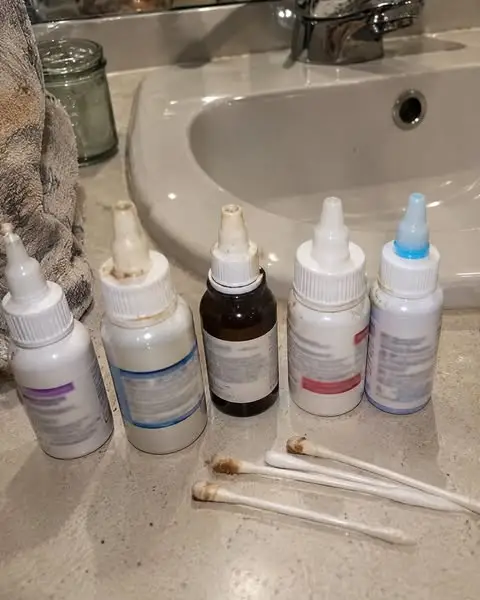
Claire Mitchell — For Westie Owners Only
Promising

For Cocker Owners Only

If your cocker is on her umpteenth ear infection, I'm going to say something nobody in your cocker group wants to hear, and honestly, I don't care if it upsets them. Apoquel is not going to fix your dog. Not Apoquel. Not Cytopoint. Not the ear drops. Not the antibiotics. Not the $42 probiotic chews everyone in your cocker group swears by. NONE OF IT IS GOING TO FIX THIS. I know because I tried EVERYTHING. Every medication. Every food. Every supplement. For three years. And my dog got so bad that my vet started using the words "quality of life." Because I spent three years covering up the symptoms of a problem nobody bothered to explain to me. And the worst part? My second dog started showing the exact same signs. Same age. Same scratching. And I almost let the nightmare happen all over again, because I was following the same advice that destroyed my first dog's skin. I'm done being polite about this. If your dog is scratching and you're here asking whether to raise the Apoquel dose, try different drops or switch her food again, you're wasting time and money your dog doesn't have. Read this entire post. Every word. Because the answer is in here and it is NOT another bottle of drops. I live in Indianapolis with my husband, David, and our two cockers. Same mother. Different litters. Lola is 6. My shadow. The kind who rests her chin on your knee and looks up at you with those droopy eyes until you give her whatever you're eating. Bonnie is 2 and a half. Same mother. Same line. Completely different personality. Wild. Goofy. Steals socks. Two completely different dogs. But the same problem. They both scratched. All day. All night. Every day. With Lola, it started when she was about 2 and a half. First her ears. The smell. The head shaking. Then her paws. Then her belly. Then everywhere. She'd scratch her ear with her back leg so hard she'd whimper. She was hurting herself and couldn't stop. At night I'd hear her collar jingling. Thump, thump, thump. Her back leg hitting the floor. Over and over. For hours. I took her to the vet. "Allergies. Very common in cockers. Let's start her on Apoquel." $85 a month. But it worked. The first 5 months were a miracle. The scratching almost completely stopped. Her ears cleared up. She slept through the night. I slept through the night. I thought we were done. Then it started coming back. Not all at once. Little by little. Like someone turning up the volume one notch at a time. A little scratching after walks. Some head shaking in the afternoon. Then the collar jingling again at 1 a.m. Faint at first. Then every night. I told my vet. "Let's raise the dose." We raised it. It helped for about 6 weeks. Then the scratching crept back in. "Let's add Cytopoint injections." $140 every 6 weeks. On top of the Apoquel. On top of the prescription food she'd put her on two months earlier. On top of the drops and antibiotics for every ear infection, $60 a month on average. Monthly spend: $310. And Lola was still scratching. Still shaking her head. Still chewing her paws until they were rust-colored. Still waking me up at 1 a.m. $310 a month for a dog who was still miserable. I posted in a cocker spaniel Facebook group. "Lola is on Apoquel AND Cytopoint and she's still scratching. Has this happened to anyone?" Everyone had a suggestion. "Switch to raw. Kibble is inflammatory." "Grain-free. The grains are triggering her." "Cut the chicken. All cockers are allergic to chicken." "Clean her ears every day with an ear cleaner." "Dry her ears really well after every bath." "Probiotic chews. They help the gut-skin axis." "Fish oil. Coconut oil. Salmon oil." So I tried it. I tried everything they told me. Raw. $200 a month. No change in the scratching. Grain-free. Three different brands. No change. No chicken. Salmon only. No change. Drops. Antibiotics. Ear cultures. Cleaner every day. The infection came back three weeks later. Always three weeks later. The last vet brought up ear surgery. Probiotic chews. $42 a month for 8 months. $336 total. Lola ate them every morning wagging her tail. She still scratched every night. The chews tasted good. That's all they did. Fish oil. Coconut oil. I put so much oil on her food it looked like soup. I cleaned her ears every night. She pulled away. She trembled. She looked at me like I was betraying her. And three weeks later, the smell again. I stopped adding up the total because the number made me sick. And Lola kept getting worse. The long fur on her ears got matted and coarse. You could see her skin through the fur on her belly. And the skin underneath was dark. Almost black in some places. My vet called it hyperpigmentation. Chronic inflammation changing the color of her skin for good. Her ears were infected more weeks than they were clean. Brown gunk. Yeast smell. She'd pull her head away when I tried to clean them and then go sit in a corner, shaking. The hot spots started chaining together. One would scab over and another would open somewhere else. Her neck. Her hip. Behind her left ear. I spent my days bandaging, medicating and cleaning. She stopped playing. Stopped leaning on my legs. Stopped following me around the house. She'd lie on the cold tiles and scratch. All day. Scratch, sleep and scratch. Her eyes looked different. Not pain exactly. Just… exhausted. Like she'd accepted that this was her life. Like she'd stopped trying to be comfortable. That look is what broke me. One night I sat on the floor next to her and held her while she scratched against my arm. And I thought: I'm watching my dog disappear. Little by little. Week by week. Month by month. And I can't stop it. I looked up how to rehome her. I'm not proud of it. I went on Petfinder and read profiles of dogs people had given up. "Can't afford the vet bills." "Allergies impossible to manage." "For her quality of life." I saw myself in every single one. I closed the laptop and cried on the kitchen floor. Lola came over and put her head in my lap. She didn't understand why I was crying. She just knew I was sad. My dog was comforting me. With her skin on fire. I wanted to scream. That was a Tuesday. I remember because the next day, Wednesday, Bonnie started scratching. She was 2 and a half. The same age Lola was when hers started. First her ears. The smell. The head shaking. I recognized it immediately. The same progression. The same timeline. I knew what was coming. I'd watched the entire three-year nightmare with Lola. I knew exactly what the next three years were going to look like for Bonnie. Three years of medications that work and then fade. Three years of drops, antibiotics and food changes that change nothing. Three years of supplements aimed at the wrong target. Three years of vet bills stacking up while the problem gets worse underneath everything. I couldn't do it again. I couldn't spend another $14,000. I couldn't clean another hot spot. I couldn't listen to two dogs scratching all night every night. I couldn't sit and cry on the kitchen floor again. I needed to understand WHY. Not "what to try next." WHY. Why did Apoquel work and then stop? Why did the Cytopoint injections have to keep getting closer together? Why did the ear infections always come back after three weeks? Why did no food change change anything? Why did the probiotics do nothing? Why did the problem get worse every year, no matter what I did? Four vets in three years. Not one of them answered WHY. They all answered WHAT. What to prescribe. What to feed her. What to try next. Not one of them told me why everything kept failing. I spent two weeks researching. Every night, after David went to sleep. Reddit. Facebook groups. Veterinary dermatology papers. I read everything I could find. And at 2 a.m. on a Tuesday, I found a post from a woman who had taken her dog to a holistic vet. The holistic vet had explained something to her that no conventional vet had ever told her. And when I read it, I felt the floor open up beneath me. Because it explained everything. Why Apoquel fades. Why Cytopoint has to be given closer and closer together. Why ear infections always come back. Why food changes don't work. Why probiotics do nothing for this. Why the problem gets worse every year no matter what you do. And it was so simple. So obvious once someone explains it. That I wanted to throw my phone at the wall, because four vets had charged me $310 a month for three years without ever mentioning it. Here's what nobody told me in three years: After age 2, dogs lose collagen from their skin barrier. The skin barrier is a wall. A physical wall made of collagen, types I and III. That wall is what keeps allergens out. Pollen. Dust mites. Grass proteins. Mold. All of it. The barrier keeps them on the surface, where they don't cause any problems. After age 2, that wall starts to thin. The body breaks down collagen faster than it replaces it. Every year the wall gets thinner. Gaps form. Small at first. Bigger every year. The allergens that used to bounce off the barrier now slip through those gaps straight into the tissue underneath. The immune system detects invaders in living tissue and does what an immune system does: attack. That's the ears. That's the scratching. That's the paws. That's the hot spots. That's the bumps on the belly. That's the yeast. All of it. Every symptom. One single barrier failing in different places at different speeds. And that's why the drops were never going to fix it. The ear is skin too. The ear canal is lined with the same barrier. If the barrier has gaps, yeast and bacteria get in. The drops kill today's. They don't close the gaps. That's why three weeks later, it's back. And here's the part that turned my stomach: Apoquel blocks the immune signal that causes the itch. That's ALL it does. It doesn't touch the barrier. The barrier keeps thinning while Apoquel covers up the symptoms. Every month more gaps form. More allergens get in. So Apoquel has to cover up a bigger and bigger reaction. That's why it works for 5 months and then fades. It's not that the medication stops working. It's that the damage underneath grows faster than the medication can cover it. The medication is losing a race against a wall that's falling down. So you raise the dose. It helps a little. The wall gets worse. So you add Cytopoint. It helps a little. The wall gets worse. So the Cytopoint injections get closer together. Every 6 weeks. Then 5. Then 4. More fire extinguishers. Bigger hole in the wall. The hole keeps growing. The extinguishers can't keep up. They never will. And there's something worse. That woman's holistic vet said that long-term use of medications that turn down the immune system, like Apoquel and steroids, can SPEED UP the breakdown of the barrier. The immune system doesn't just fight allergens: it also maintains and repairs tissue. Including the skin barrier. Keep it turned down long enough, and repair stops. The barrier falls apart faster. So the medication I was spending $310 a month on wasn't just losing the race against Lola's barrier. It may have been making it fall apart faster. For three years. Three years. Four vets. Apoquel. Cytopoint. Prescription food. Raw. Drops. Antibiotics. Cultures. Probiotics. Fish oil. Coconut oil. Ear cleaners. Over $14,000. And the barrier got worse through all of it. Because NOBODY told me about the barrier. Not once in three years did anyone say the word "collagen." Not one vet. Not one Facebook group. Not one pet store employee. Nobody. They told me WHAT to buy. They never told me WHY it wouldn't work. The why is the barrier. The next morning I called every holistic vet within 50 miles. I found one. I drove 40 minutes with Lola in the back seat. I didn't care. She was the first vet in three years who didn't write me a prescription. She told me she doesn't make anything off Apoquel or Cytopoint. That she doesn't stock them in her practice because that profit model creates a conflict she's not comfortable with. That she'd rather explain the problem and let each owner decide. She confirmed everything I'd read at 2 a.m. The barrier. The collagen loss. The gaps. The allergens getting in. The immune reaction. The medication race. The acceleration from turning down the immune system. All of it. And then she said the thing that made it all click. "The barrier needs its materials to repair itself. Collagen. The protein it's made of. You can't rebuild a collagen wall with antihistamines. You can't rebuild it with drugs that turn down the immune system. You can't rebuild it with probiotics or fish oil. None of that is collagen. You need collagen." "So I just buy her collagen and that's it?" "It's not that simple. It has to be liquid. Liquid absorbs at 98%: it goes straight into the bloodstream and reaches the skin barrier tissue. Chews and powders absorb at 20-30% because stomach acid destroys most of it before it reaches anything. Most of what you give in a chew never reaches the barrier." "What about the collagen supplements on Amazon?" Her face changed. "I've tested them. I've sent them to independent labs. Most of them are garbage. Wrong collagen types. Lower doses than the label says. Fillers that get in the way of absorption. One had a contaminant that shouldn't be in a pet product." She pulled out a folder. "I've tested 6 collagen supplements over the last 3 years. All 6 at an independent lab." She opened the folder. "Brand 1: claimed types I and III. The lab only found type I. 40% underdosed. It had maltodextrin as filler." "Brand 2: claimed 500 mg per serving. The lab found 180 mg. 64% underdosed." "Brand 3: correct types. But in powder, with 22% bioavailability. The dog's body was getting about 110 mg of the 500 it promised." "Brand 4: liquid. But only type I. No type II, no type III. Incomplete formula." "Brand 5: contaminated. They found trace heavy metals. I reported it." "Brand 6: types I and III, plus UC-II. Liquid. 98% absorption. 900 mg of hydrolyzed collagen peptides per serving. UC-II at 40 mg. MSM. Hyaluronic acid. Vitamin C. Every ingredient verified. Every batch tested. Zero contamination. Zero fillers." "One out of six passed." She wrote the name on the back of her prescription pad. "It's the only one I recommend. The only one I trust. I don't sell it. I don't make anything from it. I just know it works because I've tested it and I've seen what it does in more than 200 allergy patients. A lot of them cockers." "How long does it take?" I asked. "The barrier doesn't rebuild overnight. Give it 8 weeks before you judge it. One bottle won't tell you." I bought it that night. I got the 3-bottle pack, because that was the 8 weeks she told me to give it. $49.99 for all three, with free shipping. About $17 a bottle. I started Lola the next morning. One serving on her food, alongside everything else. She told me not to take her off any medication. Just add the collagen and let the barrier rebuild underneath. I started Bonnie the same day. Hers had only just begun. She was 2 and a half. In time. Before the cascade. For Lola, the dog who'd been suffering for 3 years: The first 2 weeks: I kept watching. Kept listening at night. Kept waiting. Week 3: the nighttime scratching went down. It didn't disappear. But less. The collar jingle was shorter. Softer. I'd lie in bed holding my breath, listening. Fewer thumps. Longer pauses between them. Week 4: Lola slept through the night. The whole night. The first time in more than two years. I woke up at 5 a.m. scared because I hadn't heard anything. I ran downstairs. She was asleep on the couch. Breathing calmly. Not scratching. No jingle. I stood there for ten minutes watching her sleep. Week 6: her ears were clean. I checked them every morning, out of habit after three years of infections. I was expecting the brown gunk. The yeast smell. Nothing. Pink. Clean. I checked them the next day. Clean. And the next. Clean. I called David into the bathroom. "Look at her ears." He looked. "Are they… normal?" "They're normal." Week 7: ear check with our usual vet. She looked in one ear with the little light. Then the other. "What are you giving her?" Week 8: she stopped chewing her paws completely. The rust-colored stains on her paws, the ones that had been there for two years, started growing out with the new fur. I took a photo every week. You could see the barrier healing through the fur. Month 3: I tapered the Apoquel with my vet. Half dose for two weeks. A quarter for another two. Then we stopped. The scratching didn't increase. Then we spaced out the Cytopoint. From every 4 weeks to every 6. Then 8. Then we skipped it entirely. Month 4: Lola was only on one serving of collagen on her food. Nothing else. About $17 a month. Her coat was thicker than it had been since she was a puppy. The skin on her belly was lightening, from black toward pink. The hot spot cycle was broken: not one new one in 8 weeks. She was playing again. Leaning on my legs again. Following me around the house again. The first morning after we stopped the Cytopoint, she brought me a sock. She carried it across the whole kitchen, dropped it at my feet and wiggled her whole body. I sat on the floor, held her and cried for twenty minutes. For Bonnie, the dog who was just starting: Week 3: the ear scratching stopped. Just like that. Month 2: Not a single ear infection. No head shaking. No smell. Nothing developed. Her barrier was rebuilding before it could break down enough for the cascade to start. She never took Apoquel. She never needed Cytopoint. She never ate prescription food. She never cost me $310 a month. She never cost me a single sleepless night. Because I caught her at 2 and a half. Before the gaps got big. Before the allergens got in. Before the cascade. $17 a month. Before the nightmare. One night I sat down and added up what I'd spent on Lola in 3 years. Apoquel: $3,060. Cytopoint: $3,200. Ear drops, antibiotics and cultures: $2,900. Prescription food: $1,500. Raw food trial: $800. Probiotic chews: $336. Vet visits and tests: $2,400. Cleaners and everything else: $400. $14,596. $14,596 on medications and treatments that all did the same thing: turn down the immune reaction while the barrier fell apart underneath. Not one dollar went toward rebuilding the barrier. Not one. 4 months of collagen: about $67. Lola is more comfortable on $17 a month than she ever was on $310 a month. Because the $310 a month was aimed at the wrong target. Every dollar covered the symptom. None of it fixed the cause. And the cause was always the barrier. Bonnie is never going to go through what Lola went through. I'll never spend $14,000 on her allergies. I'll never hear her scratching at 1 a.m. I'll never look up how to rehome her. I'll never sit and cry over her on the kitchen floor. Because I started her on collagen, at $17 a month, before her barrier broke down. And it never will. The product is Canbloom liquid collagen. Types I and III, plus UC-II. Liquid. 98% absorption. Independently tested. canbloomstore.com/products/canbloom-premium-liquid-collagen The 3-bottle pack is $49.99 with free shipping: about $17 a bottle. That's the full 8 weeks the vet told me about. And the guarantee is honestly impressive: the brand is so sure of what it does that if you don't notice anything in 60 days, you can simply ask for a refund. Start it alongside whatever your dog is taking right now. Don't take her off any medication. Just add one serving to her food. Let the barrier rebuild underneath, and you can thank me another time. 4 to 8 weeks. That's how long it took Lola after 3 years of everything else failing. You'll hear it before you see it. The silence at 1 a.m. When your dog isn't scratching anymore. When the collar stops jingling. When the thumping stops. That silence is what $17 a month sounds like. I wish I'd heard it three years and $14,596 ago. EDIT: I keep getting messages asking where to buy it. Buy it directly from their website. I've seen people say they bought "collagen for dogs" on Amazon and it didn't work; I have no idea what's in those bottles. The holistic vet tested 6 brands and 5 failed. The one she recommends is only sold on their website: canbloomstore.com/products/canbloom-premium-liquid-collagen P.S. Lola scratched for 3 years while I spent $14,596 on medications that covered up the reaction and may have made the barrier worse. 4 months of collagen at $17 a month did what 3 years of all that couldn't. The barrier was the problem the whole time. Every vet treated the immune reaction. Nobody treated the barrier. Because there's no recurring revenue in fixing the barrier. There is in monthly Apoquel refills and Cytopoint injections forever. $310 a month forever. That's the business model. $17 a month that fixes the cause and removes the need for medication. That's not a business model the pharmaceutical industry wants you to know about. P.P.S. If your cocker is under 3 and just started scratching, you're in the best position possible. The barrier hasn't fully broken down yet. The gaps are small. Start the collagen NOW. Before the first ear infection. Before the paws. Before the hot spots. Before the first Apoquel prescription. Before the first $310 month. Bonnie is the proof. Same mother. Same house. One got collagen early. The other didn't. The difference is $14,596 and three years of suffering. Don't wait. Start now: canbloomstore.com/products/canbloom-premium-liquid-collagen

Loading the ad's image
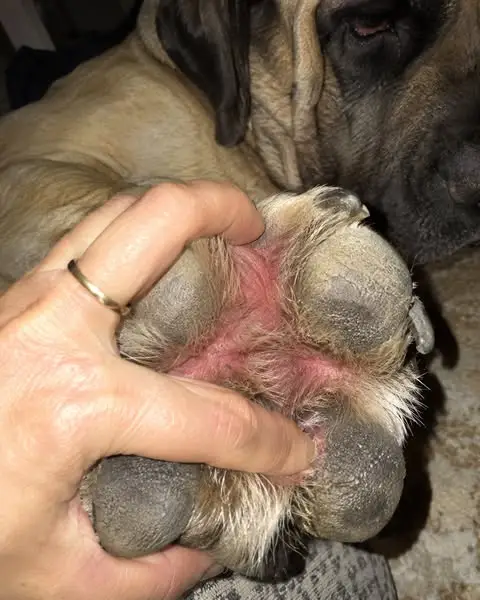
Claire Mitchell — For Cocker Owners Only
Promising

For Mastiff Owners Only

If your Mastiff scratches at night and the whole house can hear it, I'm going to say something nobody in your Mastiff group wants to hear, and honestly, I don't care if it upsets them. Apoquel is not going to fix your dog. Not Apoquel. Not Cytopoint. Not prescription food. Not the $42 probiotic chews everyone in your Mastiff group swears by. NONE OF IT IS GOING TO FIX THIS. I know because I tried EVERYTHING. Every medication. Every food. Every supplement. For three years. And my dog got so bad that my vet started using the words "quality of life." Because I spent three years covering up the symptoms of a problem nobody bothered to explain to me. And the worst part? My second dog started showing the exact same signs. Same age. Same scratching. And I almost let the nightmare happen all over again, because I was following the same advice that destroyed my first dog's skin. I'm done being polite about this. If your dog is scratching and you're here asking whether to raise the Apoquel dose, pay for another giant-dog-priced Cytopoint shot or switch her food again, you're wasting time and money your dog doesn't have. Read this entire post. Every word. Because the answer is in here and it is NOT another prescription. I live in Knoxville with my husband, David, and our two Mastiffs. Same mother. Different litters. Olive is 6. My shadow. 155 pounds who thinks she's a lap dog. She sits on you on the couch and you lose all feeling in your legs. Pearl is 2 and a half. Same mother. Same line. Completely different personality. Wild. Goofy. Steals socks. Two completely different dogs. But the same problem. They both scratched. All day. All night. Every day. With Olive, it started when she was about 2 and a half. First the folds on her neck. Then her paws, huge and red. Then her belly. Then everywhere. She'd scratch against the hallway wall and the picture frames would move. At night, the whole house could hear it. Her back leg hitting the hardwood floor. Thump, thump, thump. Like someone knocking at the door. For hours. I took her to the vet. "Allergies. Very common in Mastiffs. Let's start her on Apoquel." $190 a month. But it worked. The first 5 months were a miracle. The scratching almost completely stopped. Her ears cleared up. She slept through the night. I slept through the night. I thought we were done. Then it started coming back. Not all at once. Little by little. Like someone turning up the volume one notch at a time. A little scratching after walks. Some head shaking in the afternoon. Then the thumping on the floor again at 1 a.m. Faint at first. Then every night. I told my vet. "Let's raise the dose." We raised it. It helped for about 6 weeks. Then the scratching crept back in. "Let's add Cytopoint injections." $350 every 6 weeks. On top of the Apoquel. On top of the prescription food she'd put her on two months earlier. Monthly spend: $585. Because with a giant dog, everything is priced by weight. And Olive was still scratching. Still shaking her head. Still chewing her paws until they were rust-colored. Still waking me up at 1 a.m. $585 a month for a dog who was still miserable. I posted in a Mastiff Facebook group. "Olive is on Apoquel AND Cytopoint and she's still scratching. Has this happened to anyone?" Everyone had a suggestion. "Switch to raw. Kibble is inflammatory." "Grain-free. The grains are triggering her." "Cut the chicken. All Mastiffs are allergic to chicken." "Oatmeal baths twice a week." "Probiotic chews. They help the gut-skin axis." "Fish oil. Coconut oil. Salmon oil." So I tried it. I tried everything they told me. Raw. $420 a month. No change in the scratching. Grain-free. Three different brands. No change. No chicken. Salmon only. No change. Probiotic chews. $42 a month for 8 months. $336 total. Olive ate them every morning wagging her tail. She still scratched every night. The chews tasted good. That's all they did. Fish oil. Coconut oil. I put so much oil on her food it looked like soup. Oatmeal baths twice a week. She smelled nice for about 4 hours. Then the scratching came back and the yeast smell came back, and there I was bathing a 155-pound dog in the backyard with a hose twice a week for absolutely nothing. I stopped adding up the total because the number made me sick. And Olive kept getting worse. Her coat went from thick and shiny to thin and coarse. You could see her skin through the fur on her belly and sides. And the skin underneath was dark. Almost black in some places. My vet called it hyperpigmentation. Chronic inflammation changing the color of her skin for good. The folds on her neck were red and smelled sour no matter how much I cleaned them. Her ears were infected more weeks than they were clean. Brown gunk. Yeast smell. She'd pull her head away when I tried to clean them and then go sit in a corner, shaking. The hot spots started chaining together. One would scab over and another would open somewhere else. Her neck. Her hip. Behind her left ear. I spent my days bandaging, medicating and cleaning. She stopped playing. Stopped leaning on my legs. Stopped following me around the house. She'd lie on the cold tiles and scratch. All day. Scratch, sleep and scratch. Her eyes looked different. Not pain exactly. Just… exhausted. Like she'd accepted that this was her life. Like she'd stopped trying to be comfortable. That look is what broke me. One night I sat on the floor next to her and held her while she scratched against my arm. And I thought: I'm watching my dog disappear. Little by little. Week by week. Month by month. And I can't stop it. I looked up how to rehome her. I'm not proud of it. I went on Petfinder and read profiles of dogs people had given up. "Can't afford the vet bills." "Allergies impossible to manage." "For her quality of life." I saw myself in every single one. I closed the laptop and cried on the kitchen floor. Olive came over and put her head in my lap. She didn't understand why I was crying. She just knew I was sad. My dog was comforting me. With her skin on fire. I wanted to scream. That was a Tuesday. I remember because the next day, Wednesday, Pearl started scratching. She was 2 and a half. The same age Olive was when hers started. First the folds on her neck. Then her paws. Then her belly. I recognized it immediately. The same progression. The same timeline. I knew what was coming. I'd watched the entire three-year nightmare with Olive. I knew exactly what the next three years were going to look like for Pearl. Three years of medications that work and then fade. Three years of baths and food changes that change nothing. Three years of supplements aimed at the wrong target. Three years of vet bills stacking up while the problem gets worse underneath everything. I couldn't do it again. I couldn't spend another $23,000. I couldn't clean another hot spot. I couldn't listen to two dogs scratching all night every night. I couldn't sit and cry on the kitchen floor again. I needed to understand WHY. Not "what to try next." WHY. Why did Apoquel work and then stop? Why did the Cytopoint injections have to keep getting closer together? Why did no food change change anything? Why did the probiotics do nothing? Why did the problem get worse every year, no matter what I did? Four vets in three years. Not one of them answered WHY. They all answered WHAT. What to prescribe. What to feed her. What to try next. Not one of them told me why everything kept failing. I spent two weeks researching. Every night, after David went to sleep. Reddit. Facebook groups. Veterinary dermatology papers. I read everything I could find. And at 2 a.m. on a Tuesday, I found a post from a woman who had taken her dog to a holistic vet. The holistic vet had explained something to her that no conventional vet had ever told her. And when I read it, I felt the floor open up beneath me. Because it explained everything. Why Apoquel fades. Why Cytopoint has to be given closer and closer together. Why food changes don't work. Why probiotics do nothing for this. Why the problem gets worse every year no matter what you do. And it was so simple. So obvious once someone explains it. That I wanted to throw my phone at the wall, because four vets had charged me $585 a month for three years without ever mentioning it. Here's what nobody told me in three years: After age 2, dogs lose collagen from their skin barrier. The skin barrier is a wall. A physical wall made of collagen, types I and III. That wall is what keeps allergens out. Pollen. Dust mites. Grass proteins. Mold. All of it. The barrier keeps them on the surface, where they don't cause any problems. After age 2, that wall starts to thin. The body breaks down collagen faster than it replaces it. Every year the wall gets thinner. Gaps form. Small at first. Bigger every year. The allergens that used to bounce off the barrier now slip through those gaps straight into the tissue underneath. The immune system detects invaders in living tissue and does what an immune system does: attack. That's the scratching. That's the ears. That's the paws. That's the hot spots. That's the bumps on the belly. That's the yeast. All of it. Every symptom. One single barrier failing in different places at different speeds. And that's why the bigger the dog, the more the mistake shows. Medications are priced by weight. The barrier isn't. The collagen missing from a 155-pound dog is the same piece missing from an 11-pound one. And here's the part that turned my stomach: Apoquel blocks the immune signal that causes the itch. That's ALL it does. It doesn't touch the barrier. The barrier keeps thinning while Apoquel covers up the symptoms. Every month more gaps form. More allergens get in. So Apoquel has to cover up a bigger and bigger reaction. That's why it works for 5 months and then fades. It's not that the medication stops working. It's that the damage underneath grows faster than the medication can cover it. The medication is losing a race against a wall that's falling down. So you raise the dose. It helps a little. The wall gets worse. So you add Cytopoint. It helps a little. The wall gets worse. So the Cytopoint injections get closer together. Every 6 weeks. Then 5. Then 4. More fire extinguishers. Bigger hole in the wall. The hole keeps growing. The extinguishers can't keep up. They never will. And there's something worse. That woman's holistic vet said that long-term use of medications that turn down the immune system, like Apoquel and steroids, can SPEED UP the breakdown of the barrier. The immune system doesn't just fight allergens: it also maintains and repairs tissue. Including the skin barrier. Keep it turned down long enough, and repair stops. The barrier falls apart faster. So the medication I was spending $585 a month on wasn't just losing the race against Olive's barrier. It may have been making it fall apart faster. For three years. Three years. Four vets. Apoquel. Cytopoint. Prescription food. Raw. Probiotics. Fish oil. Coconut oil. Ear drops. Over $23,000. And the barrier got worse through all of it. Because NOBODY told me about the barrier. Not once in three years did anyone say the word "collagen." Not one vet. Not one Facebook group. Not one pet store employee. Nobody. They told me WHAT to buy. They never told me WHY it wouldn't work. The why is the barrier. The next morning I called every holistic vet within 50 miles. I found one. I drove 40 minutes with Olive in the back seat. I didn't care. She was the first vet in three years who didn't write me a prescription. She told me she doesn't make anything off Apoquel or Cytopoint. That she doesn't stock them in her practice because that profit model creates a conflict she's not comfortable with. That she'd rather explain the problem and let each owner decide. She confirmed everything I'd read at 2 a.m. The barrier. The collagen loss. The gaps. The allergens getting in. The immune reaction. The medication race. The acceleration from turning down the immune system. All of it. And then she said the thing that made it all click. "The barrier needs its materials to repair itself. Collagen. The protein it's made of. You can't rebuild a collagen wall with antihistamines. You can't rebuild it with drugs that turn down the immune system. You can't rebuild it with probiotics or fish oil. None of that is collagen. You need collagen." "So I just buy her collagen and that's it?" "It's not that simple. It has to be liquid. Liquid absorbs at 98%: it goes straight into the bloodstream and reaches the skin barrier tissue. Chews and powders absorb at 20-30% because stomach acid destroys most of it before it reaches anything. Most of what you give in a chew never reaches the barrier." "What about the collagen supplements on Amazon?" Her face changed. "I've tested them. I've sent them to independent labs. Most of them are garbage. Wrong collagen types. Lower doses than the label says. Fillers that get in the way of absorption. One had a contaminant that shouldn't be in a pet product." She pulled out a folder. "I've tested 6 collagen supplements over the last 3 years. All 6 at an independent lab." She opened the folder. "Brand 1: claimed types I and III. The lab only found type I. 40% underdosed. It had maltodextrin as filler." "Brand 2: claimed 500 mg per serving. The lab found 180 mg. 64% underdosed." "Brand 3: correct types. But in powder, with 22% bioavailability. The dog's body was getting about 110 mg of the 500 it promised." "Brand 4: liquid. But only type I. No type II, no type III. Incomplete formula." "Brand 5: contaminated. They found trace heavy metals. I reported it." "Brand 6: types I and III, plus UC-II. Liquid. 98% absorption. 900 mg of hydrolyzed collagen peptides per serving. UC-II at 40 mg. MSM. Hyaluronic acid. Vitamin C. Every ingredient verified. Every batch tested. Zero contamination. Zero fillers." "One out of six passed." She wrote the name on the back of her prescription pad. "It's the only one I recommend. The only one I trust. I don't sell it. I don't make anything from it. I just know it works because I've tested it and I've seen what it does in more than 200 allergy patients. A lot of them Mastiffs." "How long does it take?" I asked. "The barrier doesn't rebuild overnight. Give it 8 weeks before you judge it. One bottle won't tell you." I bought it that night. I got the 3-bottle pack, because that was the 8 weeks she told me to give it. $49.99 for all three, with free shipping. About $17 a bottle. I started Olive the next morning. One serving on her food, alongside everything else. She told me not to take her off any medication. Just add the collagen and let the barrier rebuild underneath. I started Pearl the same day. Hers had only just begun. She was 2 and a half. In time. Before the cascade. For Olive, the dog who'd been suffering for 3 years: The first 2 weeks: I kept watching. Kept listening at night. Kept waiting. Week 3: the nighttime scratching went down. It didn't disappear. But less. The thumping on the floor was shorter. Softer. I'd lie in bed holding my breath, listening. Longer pauses in between. Week 4: Olive slept through the night. The whole night. The first time in more than two years. I woke up at 5 a.m. scared because I hadn't heard anything. I ran downstairs. She was asleep on her mattress in the living room, taking up the whole thing. Breathing calmly. Not scratching. No thumping. I stood there for ten minutes watching her sleep. Week 6: her ears were clean. I checked them every morning, out of habit after three years of infections. I was expecting the brown gunk. The yeast smell. Nothing. Pink. Clean. I checked them the next day. Clean. And the next. Clean. I called David into the bathroom. "Look at her ears." He looked. "Are they… normal?" "They're normal." Week 7: our next-door neighbor stopped me in the driveway. "She doesn't scratch anymore? We used to hear her from our house." Week 8: she stopped chewing her paws completely. The rust-colored stains on her paws, the ones that had been there for two years, started growing out with the new fur. I took a photo every week. You could see the barrier healing through the fur. Month 3: I tapered the Apoquel with my vet. Half dose for two weeks. A quarter for another two. Then we stopped. The scratching didn't increase. Then we spaced out the Cytopoint. From every 4 weeks to every 6. Then 8. Then we skipped it entirely. Month 4: Olive was only on one serving of collagen on her food. Nothing else. About $17 a month. Her coat was thicker than it had been since she was a puppy. The skin on her belly was lightening, from black toward pink. The hot spot cycle was broken: not one new one in 8 weeks. She was playing again. Leaning on my legs again. Following me around the house again. The first morning after we stopped the Cytopoint, she brought me a sock. She carried it across the whole kitchen, dropped it at my feet and wiggled her whole body. I sat on the floor, held her and cried for twenty minutes. For Pearl, the dog who was just starting: Week 3: the scratching behind her ears stopped. Just like that. Month 2: No red folds. No red paws. No ear infections. Nothing developed. Her barrier was rebuilding before it could break down enough for the cascade to start. She never took Apoquel. She never needed Cytopoint. She never ate prescription food. She never cost me $585 a month. She never cost me a single sleepless night. Because I caught her at 2 and a half. Before the gaps got big. Before the allergens got in. Before the cascade. $17 a month. Before the nightmare. One night I sat down and added up what I'd spent on Olive in 3 years. Apoquel: $6,840. Cytopoint: $8,100. Prescription food: $3,000. Raw food trial: $2,000. Probiotic chews: $336. Vet visits and tests: $2,800. Baths, ear drops and everything else: $900. $23,976. $23,976 on medications and treatments that all did the same thing: turn down the immune reaction while the barrier fell apart underneath. Not one dollar went toward rebuilding the barrier. Not one. 4 months of collagen: about $67. Olive is more comfortable on $17 a month than she ever was on $585 a month. Because the $585 a month was aimed at the wrong target. Every dollar covered the symptom. None of it fixed the cause. And the cause was always the barrier. Pearl is never going to go through what Olive went through. I'll never spend $23,000 on her allergies. I'll never hear her scratching at 1 a.m. I'll never look up how to rehome her. I'll never sit and cry over her on the kitchen floor. Because I started her on collagen, at $17 a month, before her barrier broke down. And it never will. The product is Canbloom liquid collagen. Types I and III, plus UC-II. Liquid. 98% absorption. Independently tested. canbloomstore.com/products/canbloom-premium-liquid-collagen The 3-bottle pack is $49.99 with free shipping: about $17 a bottle. That's the full 8 weeks the vet told me about. And the guarantee is honestly impressive: the brand is so sure of what it does that if you don't notice anything in 60 days, you can simply ask for a refund. Start it alongside whatever your dog is taking right now. Don't take her off any medication. Just add one serving to her food. Let the barrier rebuild underneath, and you can thank me another time. 4 to 8 weeks. That's how long it took Olive after 3 years of everything else failing. You'll hear it before you see it. The silence at 1 a.m. When your dog isn't scratching anymore. When the floor stops shaking. When the thumping stops. That silence is what $17 a month sounds like. I wish I'd heard it three years and $23,976 ago. EDIT: I keep getting messages asking where to buy it. Buy it directly from their website. I've seen people say they bought "collagen for dogs" on Amazon and it didn't work; I have no idea what's in those bottles. The holistic vet tested 6 brands and 5 failed. The one she recommends is only sold on their website: canbloomstore.com/products/canbloom-premium-liquid-collagen P.S. Olive scratched for 3 years while I spent $23,976 on medications that covered up the reaction and may have made the barrier worse. 4 months of collagen at $17 a month did what 3 years of all that couldn't. The barrier was the problem the whole time. Every vet treated the immune reaction. Nobody treated the barrier. Because there's no recurring revenue in fixing the barrier. There is in monthly Apoquel refills and Cytopoint injections forever. $585 a month forever. That's the business model. $17 a month that fixes the cause and removes the need for medication. That's not a business model the pharmaceutical industry wants you to know about. P.P.S. If your Mastiff is under 3 and just started scratching, you're in the best position possible. The barrier hasn't fully broken down yet. The gaps are small. Start the collagen NOW. Before the ears. Before the paws. Before the hot spots. Before the first Apoquel prescription. Before the first $585 month. Pearl is the proof. Same mother. Same house. One got collagen early. The other didn't. The difference is $23,976 and three years of suffering. Don't wait. Start now: canbloomstore.com/products/canbloom-premium-liquid-collagen

Loading the ad's image
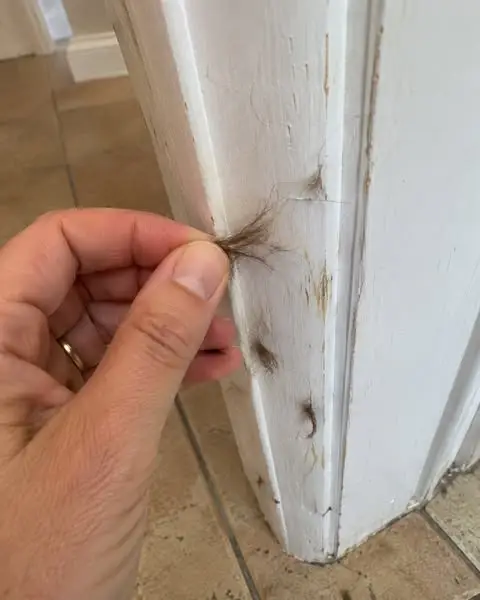
Claire Mitchell — For Mastiff Owners Only
Promising

For Lab Owners Only

If your Lab is scratching and you're already giving her Benadryl every night, I'm going to say something nobody in your Lab group wants to hear, and honestly, I don't care if it upsets them. Apoquel is not going to fix your dog. Not Apoquel. Not Cytopoint. Not Benadryl. Not Claritin. Not prescription food. Not the $42 probiotic chews everyone in your Lab group swears by. NONE OF IT IS GOING TO FIX THIS. I know because I tried EVERYTHING. Every medication. Every food. Every supplement. For three years. And my dog got so bad that my vet started using the words "quality of life." Because I spent three years covering up the symptoms of a problem nobody bothered to explain to me. And the worst part? My second dog started showing the exact same signs. Same age. Same scratching. And I almost let the nightmare happen all over again, because I was following the same advice that destroyed my first dog's skin. I'm done being polite about this. If your dog is scratching and you're here asking whether to raise the Apoquel dose, add another pill or switch her food again, you're wasting time and money your dog doesn't have. Read this entire post. Every word. Because the answer is in here and it is NOT another pill. I live in Columbus with my husband, David, and our two Labs. Same mother. Different litters. Maggie is 6. My shadow. A 70-pound Lab who brings you a shoe every time you get home and wags her tail so hard she knocks everything off the coffee table. Hazel is 2 and a half. Same mother. Same line. Completely different personality. Wild. Goofy. Steals socks. Two completely different dogs. But the same problem. They both scratched. All day. All night. Every day. With Maggie, it started when she was about 2 and a half. First she licked her paws. Then her ears. Then her belly. Then everywhere. She'd scratch so hard against the door frame that I'd find tufts of fur stuck to the wood. At night I'd hear her collar jingling. Thump, thump, thump. Her back leg hitting the floor. Over and over. For hours. I took her to the vet. "Allergies. Very common in Labs. Let's start her on Apoquel." $120 a month. But it worked. The first 5 months were a miracle. The scratching almost completely stopped. Her ears cleared up. She slept through the night. I slept through the night. I thought we were done. Then it started coming back. Not all at once. Little by little. Like someone turning up the volume one notch at a time. A little scratching after walks. Some head shaking in the afternoon. Then the collar jingling again at 1 a.m. Faint at first. Then every night. I told my vet. "Let's raise the dose." We raised it. It helped for about 6 weeks. Then the scratching crept back in. "Let's add Cytopoint injections." $200 every 6 weeks. On top of the Apoquel. On top of the prescription food she'd put her on two months earlier. On top of the 4 Benadryl every night and the 2 Claritin every morning. Monthly spend: $380. And Maggie was still scratching. Still shaking her head. Still chewing her paws until they were rust-colored. Still waking me up at 1 a.m. $380 a month for a dog who was still miserable. I posted in a Lab Facebook group. "Maggie is on Apoquel AND Cytopoint and she's still scratching. Has this happened to anyone?" Everyone had a suggestion. "Switch to raw. Kibble is inflammatory." "Grain-free. The grains are triggering her." "Cut the chicken. All Labs are allergic to chicken." "Benadryl. One for every 25 pounds. Mine takes 4 every night." "And Claritin in the morning." "Oatmeal baths twice a week." "Probiotic chews. They help the gut-skin axis." "Fish oil. Coconut oil. Salmon oil." So I tried it. I tried everything they told me. Raw. $260 a month. No change in the scratching. Grain-free. Three different brands. No change. No chicken. Salmon only. No change. 4 Benadryl every night. 2 Claritin every morning. They left her groggy. And she kept scratching. Probiotic chews. $42 a month for 8 months. $336 total. Maggie ate them every morning wagging her tail. She still scratched every night. The chews tasted good. That's all they did. Fish oil. Coconut oil. I put so much oil on her food it looked like soup. Oatmeal baths twice a week. She smelled nice for about 4 hours. Then the scratching came back and the yeast smell came back, and there I was bathing a 70-pound dog in my bathtub twice a week for absolutely nothing. I stopped adding up the total because the number made me sick. And Maggie kept getting worse. Her coat went from thick and shiny to thin and coarse. You could see her skin through the fur on her belly and sides. And the skin underneath was dark. Almost black in some places. My vet called it hyperpigmentation. Chronic inflammation changing the color of her skin for good. Her ears were infected more weeks than they were clean. Brown gunk. Yeast smell. She'd pull her head away when I tried to clean them and then go sit in a corner, shaking. The hot spots started chaining together. One would scab over and another would open somewhere else. Her neck. Her hip. Behind her left ear. I spent my days bandaging, medicating and cleaning. She stopped playing. Stopped leaning on my legs. Stopped following me around the house. She'd lie on the cold tiles and scratch. All day. Scratch, sleep and scratch. Her eyes looked different. Not pain exactly. Just… exhausted. Like she'd accepted that this was her life. Like she'd stopped trying to be comfortable. That look is what broke me. One night I sat on the floor next to her and held her while she scratched against my arm. And I thought: I'm watching my dog disappear. Little by little. Week by week. Month by month. And I can't stop it. I looked up how to rehome her. I'm not proud of it. I went on Petfinder and read profiles of dogs people had given up. "Can't afford the vet bills." "Allergies impossible to manage." "For her quality of life." I saw myself in every single one. I closed the laptop and cried on the kitchen floor. Maggie came over and put her head in my lap. She didn't understand why I was crying. She just knew I was sad. My dog was comforting me. With her skin on fire. I wanted to scream. That was a Tuesday. I remember because the next day, Wednesday, Hazel started scratching. She was 2 and a half. The same age Maggie was when hers started. First behind the ears. Then her belly. Then her paws. I recognized it immediately. The same progression. The same timeline. I knew what was coming. I'd watched the entire three-year nightmare with Maggie. I knew exactly what the next three years were going to look like for Hazel. Three years of medications that work and then fade. Three years of pills and food changes that change nothing. Three years of supplements aimed at the wrong target. Three years of vet bills stacking up while the problem gets worse underneath everything. I couldn't do it again. I couldn't spend another $16,000. I couldn't clean another hot spot. I couldn't listen to two dogs scratching all night every night. I couldn't sit and cry on the kitchen floor again. I needed to understand WHY. Not "what to try next." WHY. Why did Apoquel work and then stop? Why did the Cytopoint injections have to keep getting closer together? Why did neither the Benadryl nor the Claritin do anything? Why did no food change change anything? Why did the probiotics do nothing? Why did the problem get worse every year, no matter what I did? Four vets in three years. Not one of them answered WHY. They all answered WHAT. What to prescribe. What to feed her. What to try next. Not one of them told me why everything kept failing. I spent two weeks researching. Every night, after David went to sleep. Reddit. Facebook groups. Veterinary dermatology papers. I read everything I could find. And at 2 a.m. on a Tuesday, I found a post from a woman who had taken her dog to a holistic vet. The holistic vet had explained something to her that no conventional vet had ever told her. And when I read it, I felt the floor open up beneath me. Because it explained everything. Why Apoquel fades. Why Cytopoint has to be given closer and closer together. Why antihistamines don't work. Why food changes don't work. Why probiotics do nothing for this. Why the problem gets worse every year no matter what you do. And it was so simple. So obvious once someone explains it. That I wanted to throw my phone at the wall, because four vets had charged me $380 a month for three years without ever mentioning it. Here's what nobody told me in three years: After age 2, dogs lose collagen from their skin barrier. The skin barrier is a wall. A physical wall made of collagen, types I and III. That wall is what keeps allergens out. Pollen. Dust mites. Grass proteins. Mold. All of it. The barrier keeps them on the surface, where they don't cause any problems. After age 2, that wall starts to thin. The body breaks down collagen faster than it replaces it. Every year the wall gets thinner. Gaps form. Small at first. Bigger every year. The allergens that used to bounce off the barrier now slip through those gaps straight into the tissue underneath. The immune system detects invaders in living tissue and does what an immune system does: attack. That's the scratching. That's the ears. That's the paws. That's the hot spots. That's the bumps on the belly. That's the yeast. All of it. Every symptom. One single barrier failing in different places at different speeds. And that's why no food was ever going to fix it. My Lab eats anything and nothing upsets her stomach. Her gut was perfect. What was failing was her skin. And that's why the pills didn't work either: Benadryl and Claritin switch off the itch signal for a few hours. The barrier stays just as broken. And here's the part that turned my stomach: Apoquel blocks the immune signal that causes the itch. That's ALL it does. It doesn't touch the barrier. The barrier keeps thinning while Apoquel covers up the symptoms. Every month more gaps form. More allergens get in. So Apoquel has to cover up a bigger and bigger reaction. That's why it works for 5 months and then fades. It's not that the medication stops working. It's that the damage underneath grows faster than the medication can cover it. The medication is losing a race against a wall that's falling down. So you raise the dose. It helps a little. The wall gets worse. So you add Cytopoint. It helps a little. The wall gets worse. So the Cytopoint injections get closer together. Every 6 weeks. Then 5. Then 4. More fire extinguishers. Bigger hole in the wall. The hole keeps growing. The extinguishers can't keep up. They never will. And there's something worse. That woman's holistic vet said that long-term use of medications that turn down the immune system, like Apoquel and steroids, can SPEED UP the breakdown of the barrier. The immune system doesn't just fight allergens: it also maintains and repairs tissue. Including the skin barrier. Keep it turned down long enough, and repair stops. The barrier falls apart faster. So the medication I was spending $380 a month on wasn't just losing the race against Maggie's barrier. It may have been making it fall apart faster. For three years. Three years. Four vets. Apoquel. Cytopoint. Prescription food. Raw. Benadryl. Claritin. Probiotics. Fish oil. Coconut oil. Ear drops. Over $16,000. And the barrier got worse through all of it. Because NOBODY told me about the barrier. Not once in three years did anyone say the word "collagen." Not one vet. Not one Facebook group. Not one pet store employee. Nobody. They told me WHAT to buy. They never told me WHY it wouldn't work. The why is the barrier. The next morning I called every holistic vet within 50 miles. I found one. I drove 40 minutes with Maggie in the back seat. I didn't care. She was the first vet in three years who didn't write me a prescription. She told me she doesn't make anything off Apoquel or Cytopoint. That she doesn't stock them in her practice because that profit model creates a conflict she's not comfortable with. That she'd rather explain the problem and let each owner decide. She confirmed everything I'd read at 2 a.m. The barrier. The collagen loss. The gaps. The allergens getting in. The immune reaction. The medication race. The acceleration from turning down the immune system. All of it. And then she said the thing that made it all click. "The barrier needs its materials to repair itself. Collagen. The protein it's made of. You can't rebuild a collagen wall with antihistamines. You can't rebuild it with drugs that turn down the immune system. You can't rebuild it with Benadryl, or probiotics, or fish oil. None of that is collagen. You need collagen." "So I just buy her collagen and that's it?" "It's not that simple. It has to be liquid. Liquid absorbs at 98%: it goes straight into the bloodstream and reaches the skin barrier tissue. Chews and powders absorb at 20-30% because stomach acid destroys most of it before it reaches anything. Most of what you give in a chew never reaches the barrier." "What about the collagen supplements on Amazon?" Her face changed. "I've tested them. I've sent them to independent labs. Most of them are garbage. Wrong collagen types. Lower doses than the label says. Fillers that get in the way of absorption. One had a contaminant that shouldn't be in a pet product." She pulled out a folder. "I've tested 6 collagen supplements over the last 3 years. All 6 at an independent lab." She opened the folder. "Brand 1: claimed types I and III. The lab only found type I. 40% underdosed. It had maltodextrin as filler." "Brand 2: claimed 500 mg per serving. The lab found 180 mg. 64% underdosed." "Brand 3: correct types. But in powder, with 22% bioavailability. The dog's body was getting about 110 mg of the 500 it promised." "Brand 4: liquid. But only type I. No type II, no type III. Incomplete formula." "Brand 5: contaminated. They found trace heavy metals. I reported it." "Brand 6: types I and III, plus UC-II. Liquid. 98% absorption. 900 mg of hydrolyzed collagen peptides per serving. UC-II at 40 mg. MSM. Hyaluronic acid. Vitamin C. Every ingredient verified. Every batch tested. Zero contamination. Zero fillers." "One out of six passed." She wrote the name on the back of her prescription pad. "It's the only one I recommend. The only one I trust. I don't sell it. I don't make anything from it. I just know it works because I've tested it and I've seen what it does in more than 200 allergy patients. A lot of them Labs." "How long does it take?" I asked. "The barrier doesn't rebuild overnight. Give it 8 weeks before you judge it. One bottle won't tell you." I bought it that night. I got the 3-bottle pack, because that was the 8 weeks she told me to give it. $49.99 for all three, with free shipping. About $17 a bottle. I started Maggie the next morning. One serving on her food, alongside everything else. She told me not to take her off any medication. Just add the collagen and let the barrier rebuild underneath. I started Hazel the same day. Hers had only just begun. She was 2 and a half. In time. Before the cascade. For Maggie, the dog who'd been suffering for 3 years: The first 2 weeks: I kept watching. Kept listening at night. Kept waiting. Week 3: the nighttime scratching went down. It didn't disappear. But less. The collar jingle was shorter. Softer. I'd lie in bed holding my breath, listening. Fewer thumps. Longer pauses between them. Week 4: Maggie slept through the night. The whole night. The first time in more than two years. I woke up at 5 a.m. scared because I hadn't heard anything. I ran downstairs. She was asleep on the couch. Breathing calmly. Not scratching. No jingle. I stood there for ten minutes watching her sleep. Week 6: her ears were clean. I checked them every morning, out of habit after three years of infections. I was expecting the brown gunk. The yeast smell. Nothing. Pink. Clean. I checked them the next day. Clean. And the next. Clean. I called David into the bathroom. "Look at her ears." He looked. "Are they… normal?" "They're normal." Week 7: my son came home from college for the long weekend. He got down on the floor with her and ran his hand over her belly. "Mom, what happened to her? She has fur." Week 8: she stopped chewing her paws completely. The rust-colored stains on her paws, the ones that had been there for two years, started growing out with the new fur. I took a photo every week. You could see the barrier healing through the fur. Month 3: I tapered the Apoquel with my vet. Half dose for two weeks. A quarter for another two. Then we stopped. The scratching didn't increase. Then we spaced out the Cytopoint. From every 4 weeks to every 6. Then 8. Then we skipped it entirely. Month 4: Maggie was only on one serving of collagen on her food. Nothing else. No Benadryl. No Claritin. About $17 a month. Her coat was thicker than it had been since she was a puppy. The skin on her belly was lightening, from black toward pink. The hot spot cycle was broken: not one new one in 8 weeks. She was playing again. Leaning on my legs again. Following me around the house again. The first morning after we stopped the Cytopoint, she brought me a sock. She carried it across the whole kitchen, dropped it at my feet and wiggled her whole body. I sat on the floor, held her and cried for twenty minutes. For Hazel, the dog who was just starting: Week 3: the scratching behind her ears stopped. Just like that. Month 2: No ear infections. No paw licking. No bumps on her belly. Nothing developed. Her barrier was rebuilding before it could break down enough for the cascade to start. She never took Apoquel. She never needed Cytopoint. She never ate prescription food. She never cost me $380 a month. She never cost me a single sleepless night. Because I caught her at 2 and a half. Before the gaps got big. Before the allergens got in. Before the cascade. $17 a month. Before the nightmare. One night I sat down and added up what I'd spent on Maggie in 3 years. Apoquel: $4,320. Cytopoint: $5,200. Prescription food: $1,900. Raw food trial: $1,040. Benadryl and Claritin: $900. Probiotic chews: $336. Vet visits and tests: $2,400. Baths, ear drops and everything else: $800. $16,896. $16,896 on medications and treatments that all did the same thing: turn down the immune reaction while the barrier fell apart underneath. Not one dollar went toward rebuilding the barrier. Not one. 4 months of collagen: about $67. Maggie is more comfortable on $17 a month than she ever was on $380 a month. Because the $380 a month was aimed at the wrong target. Every dollar covered the symptom. None of it fixed the cause. And the cause was always the barrier. Hazel is never going to go through what Maggie went through. I'll never spend $16,000 on her allergies. I'll never hear her scratching at 1 a.m. I'll never look up how to rehome her. I'll never sit and cry over her on the kitchen floor. Because I started her on collagen, at $17 a month, before her barrier broke down. And it never will. The product is Canbloom liquid collagen. Types I and III, plus UC-II. Liquid. 98% absorption. Independently tested. canbloomstore.com/products/canbloom-premium-liquid-collagen The 3-bottle pack is $49.99 with free shipping: about $17 a bottle. That's the full 8 weeks the vet told me about. And the guarantee is honestly impressive: the brand is so sure of what it does that if you don't notice anything in 60 days, you can simply ask for a refund. Start it alongside whatever your dog is taking right now. Don't take her off any medication. Just add one serving to her food. Let the barrier rebuild underneath, and you can thank me another time. 4 to 8 weeks. That's how long it took Maggie after 3 years of everything else failing. You'll hear it before you see it. The silence at 1 a.m. When your dog isn't scratching anymore. When the collar stops jingling. When the thumping stops. That silence is what $17 a month sounds like. I wish I'd heard it three years and $16,896 ago. EDIT: I keep getting messages asking where to buy it. Buy it directly from their website. I've seen people say they bought "collagen for dogs" on Amazon and it didn't work; I have no idea what's in those bottles. The holistic vet tested 6 brands and 5 failed. The one she recommends is only sold on their website: canbloomstore.com/products/canbloom-premium-liquid-collagen P.S. Maggie scratched for 3 years while I spent $16,896 on medications that covered up the reaction and may have made the barrier worse. 4 months of collagen at $17 a month did what 3 years of all that couldn't. The barrier was the problem the whole time. Every vet treated the immune reaction. Nobody treated the barrier. Because there's no recurring revenue in fixing the barrier. There is in monthly Apoquel refills and Cytopoint injections forever. $380 a month forever. That's the business model. $17 a month that fixes the cause and removes the need for medication. That's not a business model the pharmaceutical industry wants you to know about. P.P.S. If your Lab is under 3 and just started scratching, you're in the best position possible. The barrier hasn't fully broken down yet. The gaps are small. Start the collagen NOW. Before the ears. Before the paws. Before the hot spots. Before the first Apoquel prescription. Before the first $380 month. Hazel is the proof. Same mother. Same house. One got collagen early. The other didn't. The difference is $16,896 and three years of suffering. Don't wait. Start now: canbloomstore.com/products/canbloom-premium-liquid-collagen

Loading the ad's image
Claire Mitchell — For Lab Owners Only
Promising

For Frenchie Owners Only

My Frenchie has slept in a T-shirt for two years. Not because it's cute. Because without it, he scratches his belly until it bleeds. And the T-shirt was the only thing that worked. If you have a French Bulldog with allergies, I'm going to say something nobody in your Frenchie group wants to hear, and honestly, I don't care if it upsets you. Apoquel is not going to fix your dog. Not Apoquel. Not Cytopoint. Not prescription food. Not the $42 probiotic chews everyone in your Frenchie group swears by. NONE OF IT IS GOING TO FIX THIS. I know because I tried EVERYTHING. Every medication. Every food. Every supplement. For three years. And my dog got so bad that my vet started using the words "quality of life." Because I spent three years covering up the symptoms of a problem nobody bothered to explain to me. And the worst part? My second dog started showing the exact same signs. Same age. Same scratching. And I almost let the nightmare happen all over again, because I was following the same advice that destroyed my first dog's skin. I'm done being polite about this. If your dog is scratching and you're here asking whether to raise the Apoquel dose, switch to Cytopoint or try another elimination diet, you're wasting time and money your dog doesn't have. Read this entire post. Every word. Because the answer is in here and it is NOT another prescription. I live in Scottsdale with my husband, David, and our two French Bulldogs. Same breeder. Cooper is 6. My shadow. The kind who leans his whole weight against your legs and just stays there, letting you hug him. Buddy is 2 and a half. Same breeder. Same line. Completely different personality. Wild. Goofy. Steals socks. Two completely different dogs. But the same problem. They both scratched. All day. All night. Every day. With Cooper, it started when he was about 2 and a half. First behind the ears. Then red bumps on his belly. Then between his skin folds. Then the paws. Then everywhere. He'd scratch so hard against the door frame that I'd find tufts of fur stuck to the wood. At night I'd hear his collar jingling. Thump, thump, thump. His back leg hitting the floor. Over and over. For hours. I took him to the vet. "Allergies. Very common in Frenchies. Let's start him on Apoquel." $120 a month. But it worked. The first 5 months were a miracle. The scratching almost completely stopped. His ears cleared up. He slept through the night. I slept through the night. I thought we were done. Then it started coming back. Not all at once. Little by little. Like someone turning up the volume one notch at a time. A little scratching after walks. Some head shaking in the afternoon. Then the collar jingling again at 1 a.m. Faint at first. Then every night. I told my vet. "Let's raise the dose." We raised it. It helped for about 6 weeks. Then the scratching crept back in. "Let's add Cytopoint injections." $200 every 6 weeks. On top of the Apoquel. On top of the prescription food she'd put him on two months earlier. Monthly spend: $380. And Cooper was still scratching. Still shaking his head. Still chewing his paws until they were rust-colored. Still waking me up at 1 a.m. $380 a month for a dog who was still miserable. I posted in a French Bulldog Facebook group. "Cooper is on Apoquel AND Cytopoint and he's still scratching. Has this happened to anyone?" Everyone had a suggestion. "Switch to raw. Kibble is inflammatory." "Grain-free. The grains are triggering him." "Cut the chicken. All Frenchies are allergic to chicken." "Probiotic chews. They help the gut-skin axis." "Fish oil. Coconut oil. Salmon oil." "Oatmeal baths twice a week." So I tried it. I tried everything they told me. Raw. $260 a month. No change in the scratching. Grain-free. Three different brands. No change. Chicken-free. Salmon only. No change. Probiotic chews. $42 a month for 8 months. $336 total. Cooper ate them every morning wagging his tail. He still scratched every night. The chews tasted good. That's all they did. Fish oil. Coconut oil. I put so much oil on his food it looked like soup. Oatmeal baths twice a week. He smelled nice for about 4 hours. Then the scratching came back and the yeast smell came back, and there I was bathing a 26-pound Frenchie in my bathtub twice a week for absolutely nothing. I stopped adding up the total because the number made me sick. And Cooper kept getting worse. His coat went from thick and shiny to thin and coarse. You could see his skin through the fur on his belly and sides. The skin underneath was dark. Almost black in some places. My vet called it hyperpigmentation. Chronic inflammation changing the color of his skin for good. His folds were red and smelled sour no matter how much I cleaned them. His ears were infected more weeks than they were clean. Brown gunk. Yeast smell. He'd pull his head away when I tried to clean them and then go sit in a corner, shaking. The hot spots started chaining together. One would scab over and another would open somewhere else. His neck. His hip. Behind his left ear. I spent my days bandaging, medicating and cleaning. At night I put him in one of David's old T-shirts so he couldn't reach his belly. It was the only thing that stopped the bleeding. He stopped playing. Stopped leaning on my legs. Stopped following me around the house. He'd lie on the cold tiles and scratch. All day. Scratch, sleep and scratch. His eyes looked different. Not pain exactly. Just… exhausted. Like he'd accepted that this was his life. Like he'd stopped trying to be comfortable. That look is what broke me. One night I sat on the floor next to him and held him while he scratched against my arm. And I thought: I'm watching my dog disappear. Little by little. Week by week. Month by month. And I can't stop it. I looked up how to rehome him. I'm not proud of it. I went on Petfinder and read profiles of dogs people had given up. "Can't afford the vet bills." "Allergies impossible to manage." "For his quality of life." I saw myself in every single one. I closed the laptop and cried on the kitchen floor. Cooper came over and put his head in my lap. He didn't understand why I was crying. He just knew I was sad. My dog was comforting me. With his skin on fire. I wanted to scream. That was a Tuesday. I remember because the next day, Wednesday, Buddy started scratching. He was 2 and a half. The same age Cooper was when his started. First behind the ears. Then the belly. Then the paws. I recognized it immediately. The same progression. The same timeline. I knew what was coming. I'd watched the entire three-year nightmare with Cooper. I knew exactly what the next three years were going to look like for Buddy. Three years of medications that work and then fade. Three years of food changes that change nothing. Three years of supplements aimed at the wrong target. Three years of vet bills stacking up while the problem gets worse underneath everything. I couldn't do it again. I couldn't spend another $15,000. I couldn't clean another hot spot. I couldn't listen to two dogs scratching all night every night. I couldn't sit and cry on the kitchen floor again. I needed to understand WHY. Not "what to try next." WHY. Why did Apoquel work and then stop? Why did the Cytopoint injections have to keep getting closer together? Why did no food change change anything? Why did the probiotics do nothing? Why did the problem get worse every year, no matter what I did? Four vets in three years. Not one of them answered WHY. They all answered WHAT. What to prescribe. What to feed him. What to try next. Not one of them told me why everything kept failing. I spent two weeks researching. Every night, after David went to sleep. Reddit. Facebook groups. Veterinary dermatology papers. I read everything I could find. And at 2 a.m. on a Tuesday, I found a post from a woman who had taken her dog to a holistic vet. The holistic vet had explained something to her that no conventional vet had ever told her. And when I read it, I felt the floor open up beneath me. Because it explained everything. Why Apoquel fades. Why Cytopoint has to be given closer and closer together. Why food changes don't work. Why probiotics do nothing for this. Why the problem gets worse every year no matter what you do. And it was so simple. So obvious once someone explains it. That I wanted to throw my phone at the wall, because four vets had charged me $380 a month for three years without ever mentioning it. Here's what nobody told me in three years: After age 2, dogs lose collagen from their skin barrier. The skin barrier is a wall. A physical wall made of collagen, types I and III. That wall is what keeps allergens out. Pollen. Dust mites. Grass proteins. Mold. All of it. The barrier keeps them on the surface, where they don't cause any problems. After age 2, that wall starts to thin. The body breaks down collagen faster than it replaces it. Every year the wall gets thinner. Gaps form. Small at first. Bigger every year. The allergens that used to bounce off the barrier now slip through those gaps straight into the tissue underneath. The immune system detects invaders in living tissue and does what an immune system does: attack. That's the scratching. That's the ears. That's the paws. That's the hot spots. That's the bumps on the belly. That's the irritated folds. That's the yeast. All of it. Every symptom. One single barrier failing in different places at different speeds. And here's the part that turned my stomach: Apoquel blocks the immune signal that causes the itch. That's ALL it does. It doesn't touch the barrier. The barrier keeps thinning while Apoquel covers up the symptoms. Every month more gaps form. More allergens get in. So Apoquel has to cover up a bigger and bigger reaction. That's why it works for 5 months and then fades. It's not that the medication stops working. It's that the damage underneath grows faster than the medication can cover it. The medication is losing a race against a wall that's falling down. So you raise the dose. It helps a little. The wall gets worse. So you add Cytopoint. It helps a little. The wall gets worse. So the Cytopoint injections get closer together. Every 6 weeks. Then 5. Then 4. More fire extinguishers. Bigger hole in the wall. The hole keeps growing. The extinguishers can't keep up. They never will. And cutting the chicken? It was never going to fix it. Chicken, salmon, lamb: it's all muscle meat. Almost no collagen. Switching from chicken to salmon is switching from muscle to muscle. You can cut ingredients all day. None of it gives the barrier back its materials. And there's something worse. That woman's holistic vet said that long-term use of medications that turn down the immune system, like Apoquel and steroids, can SPEED UP the breakdown of the barrier. The immune system doesn't just fight allergens: it also maintains and repairs tissue. Including the skin barrier. Keep it turned down long enough, and repair stops. The barrier falls apart faster. So the medication I was spending $380 a month on wasn't just losing the race against Cooper's barrier. It may have been making it fall apart faster. For three years. Three years. Four vets. Apoquel. Cytopoint. Prescription food. Raw. Probiotics. Fish oil. Coconut oil. Oatmeal baths. Ear drops. Over $15,000. And the barrier got worse through all of it. Because NOBODY told me about the barrier. Not once in three years did anyone say the word "collagen." Not one vet. Not one Facebook group. Not one pet store employee. Nobody. They told me WHAT to buy. They never told me WHY it wouldn't work. The why is the barrier. The next morning I called every holistic vet within 50 miles. I found one. I drove 40 minutes. I didn't care. She was the first vet in three years who didn't write me a prescription. She told me she doesn't make anything off Apoquel or Cytopoint. That she doesn't stock them in her practice because that profit model creates a conflict she's not comfortable with. That she'd rather explain the problem and let each owner decide. She confirmed everything I'd read at 2 a.m. The barrier. The collagen loss. The gaps. The allergens getting in. The immune reaction. The medication race. The acceleration from turning down the immune system. All of it. And then she said the thing that made it all click. "The barrier needs its materials to repair itself. Collagen. The protein it's made of. You can't rebuild a collagen wall with antihistamines. You can't rebuild it with drugs that turn down the immune system. You can't rebuild it with probiotics or fish oil. None of that is collagen. You need collagen." "So I just buy him collagen and that's it?" "It's not that simple. It has to be liquid. Liquid absorbs at 98%: it goes straight into the bloodstream and reaches the skin barrier tissue. Chews and powders absorb at 20-30% because stomach acid destroys most of it before it reaches anything. Most of what you give in a chew never reaches the barrier." "What about the collagen supplements on Amazon?" Her face changed. "I've tested them. I've sent them to independent labs. Most of them are garbage. Wrong collagen types. Lower doses than the label says. Fillers that get in the way of absorption. One had a contaminant that shouldn't be in a pet product." She pulled out a folder. "I've tested 6 collagen supplements over the last 3 years. All 6 at an independent lab." She opened the folder. "Brand 1: claimed types I and III. The lab only found type I. 40% underdosed. It had maltodextrin as filler." "Brand 2: claimed 500 mg per serving. The lab found 180 mg. 64% underdosed." "Brand 3: correct types. But in powder, with 22% bioavailability. The dog's body was getting about 110 mg of the 500 it promised." "Brand 4: liquid. But only type I. No type II, no type III. Incomplete formula." "Brand 5: contaminated. They found trace heavy metals. I reported it." "Brand 6: types I and III, plus UC-II. Liquid. 98% absorption. 900 mg of hydrolyzed collagen peptides per serving. UC-II at 40 mg. MSM. Hyaluronic acid. Vitamin C. Every ingredient verified. Every batch tested. Zero contamination. Zero fillers." "One out of six passed." She wrote the name on the back of her prescription pad. "It's the only one I recommend. The only one I trust. I don't sell it. I don't make anything from it. I just know it works because I've tested it and I've seen what it does in more than 200 allergy patients." "How long does it take?" I asked. "The barrier doesn't rebuild overnight. Give it 8 weeks before you judge it." I bought it that night. I got the 3-bottle pack. $49.99 for all three, with free shipping. About $17 a bottle. I started Cooper the next morning. One serving on his food, alongside everything else. She told me not to take him off any medication. Just add the collagen and let the barrier rebuild underneath. I started Buddy the same day. His had only just begun. He was 2 and a half. In time. Before the cascade. For Cooper, the dog who'd been suffering for 3 years: The first 2 weeks: I kept watching. Kept listening at night. Kept waiting. Week 3: the nighttime scratching went down. It didn't disappear. But less. The collar jingle was shorter. Softer. I'd lie in bed holding my breath, listening. Fewer thumps. Longer pauses between them. Week 4: Cooper slept through the night. The whole night. The first time in more than two years. I woke up at 5 a.m. scared because I hadn't heard anything. I ran downstairs. He was asleep on the couch. Breathing calmly. Not scratching. No jingle. I stood there for ten minutes watching him sleep. Week 6: his ears were clean. I checked them every morning, out of habit after three years of infections. I was expecting the brown gunk. The yeast smell. Nothing. Pink. Clean. I checked them the next day. Clean. And the next. Clean. I called David into the bathroom. "Look at his ears." He looked. "Are they… normal?" "They're normal." Week 8: he stopped chewing his paws completely. The rust-colored stains on his front paws, the ones that had been there for two years, started growing out with the new fur. New white fur coming in from the nail. Clean. I took a photo every week. You could see the barrier healing through the fur. Month 3: I tapered the Apoquel with my vet. Half dose for two weeks. A quarter for another two. Then we stopped. The scratching didn't increase. Then we spaced out the Cytopoint. From every 4 weeks to every 6. Then 8. Then we skipped it entirely. Month 4: Cooper was only on one serving of collagen on his food. Nothing else. About $17 a month. His coat was thicker than it had been since he was a puppy. The skin on his belly was lightening, from black toward pink. The hot spot cycle was broken: not one new one in 8 weeks. He was playing again. Leaning on my legs again. Following me around the house again. The first morning after we stopped the Cytopoint, he brought me a sock. He carried it across the whole kitchen, dropped it at my feet and wiggled his whole body. I sat on the floor, held him and cried for twenty minutes. With Buddy, the dog who was just starting: Week 3: the scratching behind his ears stopped. Just like that. Month 2: No ear infections. No paw licking. No bumps. No red folds. Nothing developed. His barrier was rebuilding before it could break down enough for the cascade to start. He never took Apoquel. He never needed Cytopoint. He never ate prescription food. He never cost me $380 a month. He never cost me a single sleepless night. Because I caught him at 2 and a half. Before the gaps got big. Before the allergens got in. Before the cascade. $17 a month. Before the nightmare. One night I sat down and added up what I'd spent on Cooper in 3 years. Apoquel: $4,320. Cytopoint: $5,200. Prescription food: $1,900. Raw food trial: $1,040. Probiotic chews: $336. Vet visits and tests: $2,400. Baths, ear drops, supplements and everything else: $800. $15,996. $15,996 on medications and treatments that all did the same thing: turn down the immune reaction while the barrier fell apart underneath. Not one dollar went toward rebuilding the barrier. Not one. 4 months of collagen: about $67. Cooper is more comfortable on $17 a month than he ever was on $380 a month. Because the $380 a month was aimed at the wrong target. Every dollar covered the symptom. None of it fixed the cause. And the cause was always the barrier. Buddy is never going to go through what Cooper went through. I'll never spend $15,000 on his allergies. I'll never hear him scratching at 1 a.m. I'll never look up how to rehome him. I'll never sit and cry over him on the kitchen floor. Because I started him on collagen, at $17 a month, before his barrier broke down. And it never will. The product is Canbloom liquid collagen. Types I and III, plus UC-II. Liquid. 98% absorption. Independently tested. canbloomstore.com/products/canbloom-premium-liquid-collagen The 3-bottle pack is $49.99 with free shipping: about $17 a bottle. 60-day money-back guarantee: if your dog isn't dramatically better in 60 days, you get it all back. Start it alongside whatever your dog is taking right now. Don't take them off any medication. Just add one serving to their food. Let the barrier rebuild underneath. 4 to 8 weeks. That's how long it took Cooper after 3 years of everything else failing. You'll hear it before you see it. The silence at 1 a.m. When your dog isn't scratching anymore. When the collar stops jingling. When the thumping stops. That silence is what $17 a month sounds like. I wish I'd heard it three years and $15,996 ago. EDIT: I keep getting messages asking where to buy it. Buy it directly from their website. I've seen people say they bought "collagen for dogs" on Amazon and it didn't work; I have no idea what's in those bottles. The holistic vet tested 6 brands and 5 failed. The one she recommends is only sold on their website: canbloomstore.com/products/canbloom-premium-liquid-collagen P.S. Cooper scratched for 3 years while I spent $15,996 on medications that covered up the reaction and may have made the barrier worse. 4 months of collagen at $17 a month did what 3 years of medications at $380 a month couldn't. The barrier was the problem the whole time. Every vet treated the immune reaction. Nobody treated the barrier. Because there's no recurring revenue in fixing the barrier. There is in monthly Apoquel refills and Cytopoint injections forever. $380 a month forever. That's the business model. $17 a month that fixes the cause and removes the need for medication. That's not a business model the pharmaceutical industry wants you to know about. P.P.S. If your dog is under 3 and just started scratching, you're in the best position possible. The barrier hasn't fully broken down yet. The gaps are small. Start the collagen NOW. Before the ears. Before the paws. Before the hot spots. Before the first Apoquel prescription. Before the first $380 month. Buddy is the proof. Same house. One got collagen early. The other didn't. The difference is $15,996 and three years of suffering. Don't wait. Start now: canbloomstore.com/products/canbloom-premium-liquid-collagen

Loading the ad's image
Claire Mitchell — For Frenchie Owners Only
Promising

For Anyone Who Adopted a Dog With "Bad Skin"

If you adopted a dog who came with "bad skin," nobody told you this part. And I'm going to say something nobody in your rescue dog group wants to hear, and honestly, I don't care if it upsets them. Apoquel is not going to fix your dog. Not Apoquel. Not Cytopoint. Not prescription food. Not the $42 probiotic chews everyone in your rescue dog group swears by. NONE OF IT IS GOING TO FIX THIS. I know because I tried EVERYTHING. Every medication. Every food. Every supplement. For three years. And my dog got so bad that my vet started using the words "quality of life." Because I spent three years covering up the symptoms of a problem nobody bothered to explain to me. And the worst part? My second dog started showing the exact same signs. Same age. Same scratching. And I almost let the nightmare happen all over again, because I was following the same advice that destroyed my first dog's skin. I'm done being polite about this. If your dog is scratching and you're here asking whether to raise the Apoquel dose, switch to Cytopoint or change her food again, you're wasting time and money your dog doesn't have. Read this entire post. Every word. Because the answer is in here and it is NOT another prescription. I live in Tucson with my husband, David, and our two dogs. Both from the same rescue. Rosie is 6. She came to us at 2 and a half. My shadow. The kind who follows you from room to room, like she's afraid you'll leave. I guess, after everything, she was. Bea is 2 and a half. We adopted her last year, from the same rescue. Completely different personality. Wild. Goofy. Steals socks. Two completely different dogs. But the same problem. They both scratched. All day. All night. Every day. Rosie already came like this. She was about 2 and a half. Her adoption sheet said: "sensitive skin." At the rescue they told me it was shelter stress. That with a home and good food it would go away. I believed them. I gave her a home. I gave her the best food. It didn't go away. Her coat was like the head of a scrub brush: coarse, patchy. Her ears always dirty. Then red bumps on her belly. Then her paws. Then everywhere. And I thought: it's what they did to her before. Whatever happened before she came to me. And no amount of love can fix that. At night I'd hear her collar jingling. Thump, thump, thump. Her back leg hitting the floor. Over and over. For hours. I took her to the vet. "Allergies. Very common in rescue dogs. Let's start her on Apoquel." $90 a month. But it worked. The first 5 months were a miracle. The scratching almost completely stopped. Her ears cleared up. She slept through the night. I slept through the night. I thought we were done. Then it started coming back. Not all at once. Little by little. Like someone turning up the volume one notch at a time. A little scratching after walks. Some head shaking in the afternoon. Then the collar jingling again at 1 a.m. Faint at first. Then every night. I told my vet. "Let's raise the dose." We raised it. It helped for about 6 weeks. Then the scratching crept back in. "Let's add Cytopoint injections." $160 every 6 weeks. On top of the Apoquel. On top of the prescription food she'd put her on two months earlier. Monthly spend: $320. And Rosie was still scratching. Still shaking her head. Still chewing her paws until they were rust-colored. Still waking me up at 1 a.m. $320 a month for a dog who was still miserable. I posted in a rescue dog Facebook group. "Rosie is on Apoquel AND Cytopoint and she's still scratching. Has this happened to anyone?" Everyone had a suggestion. "Switch to raw. Kibble is inflammatory." "Grain-free. The grains are triggering her." "Cut the chicken. I bet the shelter fed her chicken kibble." "Oatmeal baths twice a week." "Probiotic chews. They help the gut-skin axis." "Fish oil. Coconut oil. Salmon oil." So I tried it. I tried everything they told me. Raw. $240 a month. No change in the scratching. Grain-free. Three different brands. No change. No chicken. Salmon only. No change. Probiotic chews. $42 a month for 8 months. $336 total. Rosie ate them every morning wagging her tail. She still scratched every night. The chews tasted good. That's all they did. Fish oil. Coconut oil. I put so much oil on her food it looked like soup. Oatmeal baths twice a week. She smelled nice for about 4 hours. Then the scratching came back and the yeast smell came back, and there I was bathing a 40-pound dog in my bathtub twice a week for absolutely nothing. I stopped adding up the total because the number made me sick. And Rosie kept getting worse. Her coat went from thick and shiny to thin and coarse. You could see her skin through the fur on her belly and sides. And the skin underneath was dark. Almost black in some places. My vet called it hyperpigmentation. Chronic inflammation changing the color of her skin for good. Her ears were infected more weeks than they were clean. Brown gunk. Yeast smell. She'd pull her head away when I tried to clean them and then go sit in a corner, shaking. The hot spots started chaining together. One would scab over and another would open somewhere else. Her neck. Her hip. Behind her left ear. I spent my days bandaging, medicating and cleaning. She stopped playing. Stopped leaning on my legs. Stopped following me around the house. She'd lie on the cold tiles and scratch. All day. Scratch, sleep and scratch. Her eyes looked different. Not pain exactly. Just… exhausted. Like she'd accepted that this was her life. Like she'd stopped trying to be comfortable. That look is what broke me. One night I sat on the floor next to her and held her while she scratched against my arm. And I thought: I'm watching my dog disappear. Little by little. Week by week. Month by month. And I can't stop it. I looked up how to rehome her. I'm not proud of it. I went on Petfinder and read profiles of dogs people had given up. "Can't afford the vet bills." "Allergies impossible to manage." "For her quality of life." I saw myself in every single one. I closed the laptop and cried on the kitchen floor. Rosie came over and put her head in my lap. She didn't understand why I was crying. She just knew I was sad. My dog was comforting me. With her skin on fire. I wanted to scream. That was a Tuesday. I remember because the next day, Wednesday, Bea started scratching. She was 2 and a half. The same age Rosie was when hers started. First behind the ears. Then her belly. Then her paws. I recognized it immediately. The same progression. The same timeline. I knew what was coming. I'd watched the entire three-year nightmare with Rosie. I knew exactly what the next three years were going to look like for Bea. Three years of medications that work and then fade. Three years of baths and food changes that change nothing. Three years of supplements aimed at the wrong target. Three years of vet bills stacking up while the problem gets worse underneath everything. I couldn't do it again. I couldn't spend another $13,000. I couldn't clean another hot spot. I couldn't listen to two dogs scratching all night every night. I couldn't sit and cry on the kitchen floor again. I needed to understand WHY. Not "what to try next." WHY. Why did Apoquel work and then stop? Why did the Cytopoint injections have to keep getting closer together? Why did no food change change anything? Why did the probiotics do nothing? Why did the problem get worse every year, no matter what I did? Four vets in three years. Not one of them answered WHY. They all answered WHAT. What to prescribe. What to feed her. What to try next. Not one of them told me why everything kept failing. I spent two weeks researching. Every night, after David went to sleep. Reddit. Facebook groups. Veterinary dermatology papers. I read everything I could find. And at 2 a.m. on a Tuesday, I found a post from a woman who had taken her dog to a holistic vet. The holistic vet had explained something to her that no conventional vet had ever told her. And when I read it, I felt the floor open up beneath me. Because it explained everything. Why Apoquel fades. Why Cytopoint has to be given closer and closer together. Why food changes don't work. Why probiotics do nothing for this. Why the problem gets worse every year no matter what you do. And it was so simple. So obvious once someone explains it. That I wanted to throw my phone at the wall, because four vets had charged me $320 a month for three years without ever mentioning it. Here's what nobody told me in three years: After age 2, dogs lose collagen from their skin barrier. The skin barrier is a wall. A physical wall made of collagen, types I and III. That wall is what keeps allergens out. Pollen. Dust mites. Grass proteins. Mold. All of it. The barrier keeps them on the surface, where they don't cause any problems. After age 2, that wall starts to thin. The body breaks down collagen faster than it replaces it. Every year the wall gets thinner. Gaps form. Small at first. Bigger every year. The allergens that used to bounce off the barrier now slip through those gaps straight into the tissue underneath. The immune system detects invaders in living tissue and does what an immune system does: attack. That's the scratching. That's the ears. That's the paws. That's the hot spots. That's the bumps on the belly. That's the yeast. All of it. Every symptom. One single barrier failing in different places at different speeds. And that's why it wasn't her past. It wasn't what they did to her before, or shelter stress. It was a barrier running out of collagen, like any dog's after age 2. That's why a home, love and the best food couldn't fix it. None of that is collagen. And here's the part that turned my stomach: Apoquel blocks the immune signal that causes the itch. That's ALL it does. It doesn't touch the barrier. The barrier keeps thinning while Apoquel covers up the symptoms. Every month more gaps form. More allergens get in. So Apoquel has to cover up a bigger and bigger reaction. That's why it works for 5 months and then fades. It's not that the medication stops working. It's that the damage underneath grows faster than the medication can cover it. The medication is losing a race against a wall that's falling down. So you raise the dose. It helps a little. The wall gets worse. So you add Cytopoint. It helps a little. The wall gets worse. So the Cytopoint injections get closer together. Every 6 weeks. Then 5. Then 4. More fire extinguishers. Bigger hole in the wall. The hole keeps growing. The extinguishers can't keep up. They never will. And there's something worse. That woman's holistic vet said that long-term use of medications that turn down the immune system, like Apoquel and steroids, can SPEED UP the breakdown of the barrier. The immune system doesn't just fight allergens: it also maintains and repairs tissue. Including the skin barrier. Keep it turned down long enough, and repair stops. The barrier falls apart faster. So the medication I was spending $320 a month on wasn't just losing the race against Rosie's barrier. It may have been making it fall apart faster. For three years. Three years. Four vets. Apoquel. Cytopoint. Prescription food. Raw. Probiotics. Fish oil. Coconut oil. Ear drops. Over $13,000. And the barrier got worse through all of it. Because NOBODY told me about the barrier. Not once in three years did anyone say the word "collagen." Not one vet. Not one Facebook group. Not one pet store employee. Nobody. They told me WHAT to buy. They never told me WHY it wouldn't work. The why is the barrier. The next morning I called every holistic vet within 50 miles. I found one. I drove 40 minutes with Rosie in the back seat. I didn't care. She was the first vet in three years who didn't write me a prescription. She told me she doesn't make anything off Apoquel or Cytopoint. That she doesn't stock them in her practice because that profit model creates a conflict she's not comfortable with. That she'd rather explain the problem and let each owner decide. She confirmed everything I'd read at 2 a.m. The barrier. The collagen loss. The gaps. The allergens getting in. The immune reaction. The medication race. The acceleration from turning down the immune system. All of it. And then she said the thing that made it all click. "The barrier needs its materials to repair itself. Collagen. The protein it's made of. You can't rebuild a collagen wall with antihistamines. You can't rebuild it with drugs that turn down the immune system. You can't rebuild it with probiotics or fish oil. None of that is collagen. You need collagen." "So I just buy her collagen and that's it?" "It's not that simple. It has to be liquid. Liquid absorbs at 98%: it goes straight into the bloodstream and reaches the skin barrier tissue. Chews and powders absorb at 20-30% because stomach acid destroys most of it before it reaches anything. Most of what you give in a chew never reaches the barrier." "I thought it was because of whatever happened to her before she came to me." "It's not her past. It's her skin. And skin can be rebuilt." "What about the collagen supplements on Amazon?" Her face changed. "I've tested them. I've sent them to independent labs. Most of them are garbage. Wrong collagen types. Lower doses than the label says. Fillers that get in the way of absorption. One had a contaminant that shouldn't be in a pet product." She pulled out a folder. "I've tested 6 collagen supplements over the last 3 years. All 6 at an independent lab." She opened the folder. "Brand 1: claimed types I and III. The lab only found type I. 40% underdosed. It had maltodextrin as filler." "Brand 2: claimed 500 mg per serving. The lab found 180 mg. 64% underdosed." "Brand 3: correct types. But in powder, with 22% bioavailability. The dog's body was getting about 110 mg of the 500 it promised." "Brand 4: liquid. But only type I. No type II, no type III. Incomplete formula." "Brand 5: contaminated. They found trace heavy metals. I reported it." "Brand 6: types I and III, plus UC-II. Liquid. 98% absorption. 900 mg of hydrolyzed collagen peptides per serving. UC-II at 40 mg. MSM. Hyaluronic acid. Vitamin C. Every ingredient verified. Every batch tested. Zero contamination. Zero fillers." "One out of six passed." She wrote the name on the back of her prescription pad. "It's the only one I recommend. The only one I trust. I don't sell it. I don't make anything from it. I just know it works because I've tested it and I've seen what it does in more than 200 allergy patients. A lot of them rescue dogs." "How long does it take?" I asked. "The barrier doesn't rebuild overnight. Give it 8 weeks before you judge it. One bottle won't tell you." I bought it that night. I got the 3-bottle pack, because that was the 8 weeks she told me to give it. $49.99 for all three, with free shipping. About $17 a bottle. I started Rosie the next morning. One serving on her food, alongside everything else. She told me not to take her off any medication. Just add the collagen and let the barrier rebuild underneath. I started Bea the same day. Hers had only just begun. She was 2 and a half. In time. Before the cascade. For Rosie, the dog who'd been suffering for 3 years: The first 2 weeks: I kept watching. Kept listening at night. Kept waiting. Week 3: the nighttime scratching went down. It didn't disappear. But less. The collar jingle was shorter. Softer. I'd lie in bed holding my breath, listening. Fewer thumps. Longer pauses between them. Week 4: Rosie slept through the night. The whole night. The first time in more than two years. I woke up at 5 a.m. scared because I hadn't heard anything. I ran downstairs. She was asleep on the couch. Breathing calmly. Not scratching. No jingle. I stood there for ten minutes watching her sleep. Week 6: her ears were clean. I checked them every morning, out of habit after three years of infections. I was expecting the brown gunk. The yeast smell. Nothing. Pink. Clean. I checked them the next day. Clean. And the next. Clean. I called David into the bathroom. "Look at her ears." He looked. "Are they… normal?" "They're normal." Week 7: I took her to the rescue to see the volunteer who looked after her when she first arrived. She stared at her for a long time. "Is that the same dog?" Week 8: she stopped chewing her paws completely. The rust-colored stains on her paws, the ones that had been there for two years, started growing out with the new fur. I took a photo every week. You could see the barrier healing through the fur. Month 3: I tapered the Apoquel with my vet. Half dose for two weeks. A quarter for another two. Then we stopped. The scratching didn't increase. Then we spaced out the Cytopoint. From every 4 weeks to every 6. Then 8. Then we skipped it entirely. Month 4: Rosie was only on one serving of collagen on her food. Nothing else. About $17 a month. Her coat was thick and soft for the first time since I've known her. No more scrub brush. The skin on her belly was lightening, from black toward pink. The hot spot cycle was broken: not one new one in 8 weeks. She was playing again. Leaning on my legs again. Following me around the house again. The first morning after we stopped the Cytopoint, she brought me a sock. She carried it across the whole kitchen, dropped it at my feet and wiggled her whole body. I sat on the floor, held her and cried for twenty minutes. For Bea, the dog who was just starting: Week 3: the scratching behind her ears stopped. Just like that. Month 2: No ear infections. No paw licking. No bumps on her belly. Nothing developed. Her barrier was rebuilding before it could break down enough for the cascade to start. She never took Apoquel. She never needed Cytopoint. She never ate prescription food. She never cost me $320 a month. She never cost me a single sleepless night. Because I caught her at 2 and a half. Before the gaps got big. Before the allergens got in. Before the cascade. $17 a month. Before the nightmare. One night I sat down and added up what I'd spent on Rosie in 3 years. Apoquel: $3,240. Cytopoint: $3,900. Prescription food: $1,700. Raw food trial: $960. Probiotic chews: $336. Vet visits and tests: $2,400. Baths, ear drops and everything else: $800. $13,336. $13,336 on medications and treatments that all did the same thing: turn down the immune reaction while the barrier fell apart underneath. Not one dollar went toward rebuilding the barrier. Not one. 4 months of collagen: about $67. Rosie is more comfortable on $17 a month than she ever was on $320 a month. Because the $320 a month was aimed at the wrong target. Every dollar covered the symptom. None of it fixed the cause. And the cause was always the barrier. Bea is never going to go through what Rosie went through. I'll never spend $13,000 on her allergies. I'll never hear her scratching at 1 a.m. I'll never look up how to rehome her. I'll never sit and cry over her on the kitchen floor. Because I started her on collagen, at $17 a month, before her barrier broke down. And it never will. The product is Canbloom liquid collagen. Types I and III, plus UC-II. Liquid. 98% absorption. Independently tested. canbloomstore.com/products/canbloom-premium-liquid-collagen The 3-bottle pack is $49.99 with free shipping: about $17 a bottle. That's the full 8 weeks the vet told me about. And the guarantee is honestly impressive: the brand is so sure of what it does that if you don't notice anything in 60 days, you can simply ask for a refund. Start it alongside whatever your dog is taking right now. Don't take her off any medication. Just add one serving to her food. Let the barrier rebuild underneath, and you can thank me another time. 4 to 8 weeks. That's how long it took Rosie after 3 years of everything else failing. You'll hear it before you see it. The silence at 1 a.m. When your dog isn't scratching anymore. When the collar stops jingling. When the thumping stops. That silence is what $17 a month sounds like. I wish I'd heard it three years and $13,336 ago. EDIT: I keep getting messages asking where to buy it. Buy it directly from their website. I've seen people say they bought "collagen for dogs" on Amazon and it didn't work; I have no idea what's in those bottles. The holistic vet tested 6 brands and 5 failed. The one she recommends is only sold on their website: canbloomstore.com/products/canbloom-premium-liquid-collagen P.S. Rosie scratched for 3 years while I spent $13,336 on medications that covered up the reaction and may have made the barrier worse. 4 months of collagen at $17 a month did what 3 years of all that couldn't. The barrier was the problem the whole time. Every vet treated the immune reaction. Nobody treated the barrier. Because there's no recurring revenue in fixing the barrier. There is in monthly Apoquel refills and Cytopoint injections forever. $320 a month forever. That's the business model. $17 a month that fixes the cause and removes the need for medication. That's not a business model the pharmaceutical industry wants you to know about. P.P.S. If you've just adopted a dog with "bad skin," or yours is under 3 and just started scratching, you're in the best position possible. The barrier hasn't fully broken down yet. The gaps are small. Start the collagen NOW. Before the ears. Before the paws. Before the hot spots. Before the first Apoquel prescription. Before the first $320 month. Bea is the proof. Same rescue. Same house. One got collagen early. The other didn't. The difference is $13,336 and three years of suffering. Don't wait. Start now: canbloomstore.com/products/canbloom-premium-liquid-collagen

Loading the ad's image
Claire Mitchell — For Anyone Who Adopted a Dog With "Bad Skin"
Promising

It's Not the Dose

She weighs 6 pounds. The vet split her pill into quarters. And I was still scared of giving her too much. And she kept scratching. If your Yorkie weighs 6 pounds and won't stop scratching, I'm going to say something nobody in your Yorkie group wants to hear, and honestly, I don't care if it upsets them. Apoquel is not going to fix your dog. Not Apoquel. Not Cytopoint. Not Zenrelia. Not prescription food. Not the $42 probiotic chews everyone in your Yorkie group swears by. NONE OF IT IS GOING TO FIX THIS. I know because I tried EVERYTHING. Every medication. Every food. Every supplement. For three years. And my dog got so bad that my vet started using the words "quality of life." Because I spent three years covering up the symptoms of a problem nobody bothered to explain to me. And the worst part? My second dog started showing the exact same signs. Same age. Same scratching. And I almost let the nightmare happen all over again, because I was following the same advice that destroyed my first dog's skin. I'm done being polite about this. If your dog is scratching and you're here asking whether to raise the Apoquel dose, split another pill or switch her food again, you're wasting time and money your dog doesn't have. Read this entire post. Every word. Because the answer is in here and it is NOT another prescription. I live in Sacramento with my husband, David, and our two Yorkies. Same mother. Different litters. Coco is 6. My shadow. The kind who fits in one arm and spends all day in your lap, trembling with joy when you scratch her chin. Pepper is 2 and a half. Same mother. Same line. Completely different personality. Wild. Goofy. Steals socks. Two completely different dogs. But the same problem. They both scratched. All day. All night. Every day. With Coco, it started when she was about 2 and a half. First behind the ears. Then her paws. Then her belly. Then everywhere. She scratched so hard she'd lose her balance. A 6-pound dog toppling over sideways in the middle of the living room from scratching. At night, in bed, I'd hear her scratching. Her collar jingling right next to my ear. Over and over. For hours. I took her to the vet. "Allergies. Very common in Yorkies. Let's start her on Apoquel." $60 a month. But it worked. The first 5 months were a miracle. The scratching almost completely stopped. Her ears cleared up. She slept through the night. I slept through the night. I thought we were done. Then it started coming back. Not all at once. Little by little. Like someone turning up the volume one notch at a time. A little scratching after walks. Some head shaking in the afternoon. Then the collar jingling again at 1 a.m. Faint at first. Then every night. I told my vet. "Let's raise the dose." We raised it. It helped for about 6 weeks. Then the scratching crept back in. "Let's add Cytopoint injections." $95 every 6 weeks. On top of the Apoquel. On top of the prescription food she'd put her on two months earlier. On top of the groomer every 4 weeks, $60 a visit. Monthly spend: $225. For a 6-pound dog. And Coco was still scratching. Still shaking her head. Still chewing her paws until they were rust-colored. Still waking me up at 1 a.m. $225 a month for a dog who was still miserable. I posted in a Yorkie Facebook group. "Coco is on Apoquel AND Cytopoint and she's still scratching. Has this happened to anyone?" Everyone had a suggestion. "Switch to raw. Kibble is inflammatory." "Grain-free. The grains are triggering her." "Cut the chicken. All Yorkies are allergic to chicken." "Try Zenrelia. It's the new pill." "Oatmeal baths twice a week." "Probiotic chews. They help the gut-skin axis." "Fish oil. Coconut oil. Salmon oil." So I tried it. I tried everything they told me. Raw. $150 a month. No change in the scratching. Grain-free. Three different brands. No change. No chicken. Salmon only. No change. Zenrelia. Expensive, but it worked. Six weeks. Then one day I forgot a dose and everything came undone. Probiotic chews. $42 a month for 8 months. $336 total. Coco ate them every morning wagging her tail. She still scratched every night. The chews tasted good. That's all they did. Fish oil. Coconut oil. I put so much oil on her food it looked like soup. Oatmeal baths twice a week. She smelled nice for about 4 hours. Then the scratching came back and the yeast smell came back, and there I was bathing a 6-pound dog in the bathroom sink twice a week for absolutely nothing. I stopped adding up the total because the number made me sick. And Coco kept getting worse. Her fine, silky coat turned thin and coarse. You could see her skin through the fur on her belly. And the skin underneath was dark. Almost black in some places. My vet called it hyperpigmentation. Chronic inflammation changing the color of her skin for good. Her ears were infected more weeks than they were clean. Brown gunk. Yeast smell. She'd pull her head away when I tried to clean them and then crawl under the bed, shaking. The hot spots started chaining together. One would scab over and another would open somewhere else. Her neck. Her hip. Behind her left ear. I spent my days bandaging, medicating and cleaning. She stopped playing. Stopped climbing into my lap. Stopped following me around the house. She'd lie on the cold tiles and scratch. All day. Scratch, sleep and scratch. Her eyes looked different. Not pain exactly. Just… exhausted. Like she'd accepted that this was her life. Like she'd stopped trying to be comfortable. That look is what broke me. One night I picked her up while she was scratching. She weighed about as much as a bag of flour. And I thought: I'm watching my dog disappear. Little by little. Week by week. Month by month. And I can't stop it. I looked up how to rehome her. I'm not proud of it. I went on Petfinder and read profiles of dogs people had given up. "Can't afford the vet bills." "Allergies impossible to manage." "For her quality of life." I saw myself in every single one. I closed the laptop and cried on the kitchen floor. Coco came over and put her head in my lap. She didn't understand why I was crying. She just knew I was sad. My dog was comforting me. With her skin on fire. I wanted to scream. That was a Tuesday. I remember because the next day, Wednesday, Pepper started scratching. She was 2 and a half. The same age Coco was when hers started. First behind the ears. Then her belly. Then her paws. I recognized it immediately. The same progression. The same timeline. I knew what was coming. I'd watched the entire three-year nightmare with Coco. I knew exactly what the next three years were going to look like for Pepper. Three years of medications that work and then fade. Three years of split pills and food changes that change nothing. Three years of supplements aimed at the wrong target. Three years of vet bills stacking up while the problem gets worse underneath everything. I couldn't do it again. I couldn't spend another $12,000. I couldn't clean another hot spot. I couldn't listen to two dogs scratching all night every night. I couldn't sit and cry on the kitchen floor again. I needed to understand WHY. Not "what to try next." WHY. Why did Apoquel work and then stop? Why did the Cytopoint injections have to keep getting closer together? Why did Zenrelia work for six weeks and then nothing? Why did no food change change anything? Why did the probiotics do nothing? Why did the problem get worse every year, no matter what I did? Four vets in three years. Not one of them answered WHY. They all answered WHAT. What to prescribe. What to feed her. What to try next. Not one of them told me why everything kept failing. I spent two weeks researching. Every night, after David went to sleep. Reddit. Facebook groups. Veterinary dermatology papers. I read everything I could find. And at 2 a.m. on a Tuesday, I found a post from a woman who had taken her dog to a holistic vet. The holistic vet had explained something to her that no conventional vet had ever told her. And when I read it, I felt the floor open up beneath me. Because it explained everything. Why Apoquel fades. Why Cytopoint has to be given closer and closer together. Why Zenrelia fades the same way. Why food changes don't work. Why probiotics do nothing for this. Why the problem gets worse every year no matter what you do. And it was so simple. So obvious once someone explains it. That I wanted to throw my phone at the wall, because four vets had charged me $225 a month for three years without ever mentioning it. Here's what nobody told me in three years: After age 2, dogs lose collagen from their skin barrier. The skin barrier is a wall. A physical wall made of collagen, types I and III. That wall is what keeps allergens out. Pollen. Dust mites. Grass proteins. Mold. All of it. The barrier keeps them on the surface, where they don't cause any problems. After age 2, that wall starts to thin. The body breaks down collagen faster than it replaces it. Every year the wall gets thinner. Gaps form. Small at first. Bigger every year. The allergens that used to bounce off the barrier now slip through those gaps straight into the tissue underneath. The immune system detects invaders in living tissue and does what an immune system does: attack. That's the scratching. That's the ears. That's the paws. That's the hot spots. That's the bumps on the belly. That's the yeast. All of it. Every symptom. One single barrier failing in different places at different speeds. And that's why splitting pills was never going to fix it. A quarter of an Apoquel. Half a Zenrelia. It doesn't matter how you split it: it switches off the itch signal. The barrier stays just as broken. And in a 6-pound dog, every pill you get wrong counts double. And here's the part that turned my stomach: Apoquel blocks the immune signal that causes the itch. That's ALL it does. It doesn't touch the barrier. The barrier keeps thinning while Apoquel covers up the symptoms. Every month more gaps form. More allergens get in. So Apoquel has to cover up a bigger and bigger reaction. That's why it works for 5 months and then fades. It's not that the medication stops working. It's that the damage underneath grows faster than the medication can cover it. The medication is losing a race against a wall that's falling down. So you raise the dose. It helps a little. The wall gets worse. So you add Cytopoint. It helps a little. The wall gets worse. So the Cytopoint injections get closer together. Every 6 weeks. Then 5. Then 4. More fire extinguishers. Bigger hole in the wall. The hole keeps growing. The extinguishers can't keep up. They never will. And there's something worse. That woman's holistic vet said that long-term use of medications that turn down the immune system, like Apoquel and steroids, can SPEED UP the breakdown of the barrier. The immune system doesn't just fight allergens: it also maintains and repairs tissue. Including the skin barrier. Keep it turned down long enough, and repair stops. The barrier falls apart faster. So the medication I was spending $225 a month on wasn't just losing the race against Coco's barrier. It may have been making it fall apart faster. For three years. Three years. Four vets. Apoquel. Cytopoint. Prescription food. Raw. Zenrelia. Probiotics. Fish oil. Coconut oil. Ear drops. Over $12,000. And the barrier got worse through all of it. Because NOBODY told me about the barrier. Not once in three years did anyone say the word "collagen." Not one vet. Not one Facebook group. Not one pet store employee. Nobody. They told me WHAT to buy. They never told me WHY it wouldn't work. The why is the barrier. The next morning I called every holistic vet within 50 miles. I found one. I drove 40 minutes with Coco in my lap. I didn't care. She was the first vet in three years who didn't write me a prescription. She told me she doesn't make anything off Apoquel or Cytopoint. That she doesn't stock them in her practice because that profit model creates a conflict she's not comfortable with. That she'd rather explain the problem and let each owner decide. She confirmed everything I'd read at 2 a.m. The barrier. The collagen loss. The gaps. The allergens getting in. The immune reaction. The medication race. The acceleration from turning down the immune system. All of it. And then she said the thing that made it all click. "The barrier needs its materials to repair itself. Collagen. The protein it's made of. You can't rebuild a collagen wall with antihistamines. You can't rebuild it with drugs that turn down the immune system. You can't rebuild it with probiotics or fish oil. None of that is collagen. You need collagen." "So I just buy her collagen and that's it?" "It's not that simple. It has to be liquid. Liquid absorbs at 98%: it goes straight into the bloodstream and reaches the skin barrier tissue. Chews and powders absorb at 20-30% because stomach acid destroys most of it before it reaches anything. Most of what you give in a chew never reaches the barrier." "She weighs 6 pounds. Can she take it?" "It's exactly what her skin is losing. It works the same for a 6-pound dog as for a 90-pound one." "What about the collagen supplements on Amazon?" Her face changed. "I've tested them. I've sent them to independent labs. Most of them are garbage. Wrong collagen types. Lower doses than the label says. Fillers that get in the way of absorption. One had a contaminant that shouldn't be in a pet product." She pulled out a folder. "I've tested 6 collagen supplements over the last 3 years. All 6 at an independent lab." She opened the folder. "Brand 1: claimed types I and III. The lab only found type I. 40% underdosed. It had maltodextrin as filler." "Brand 2: claimed 500 mg per serving. The lab found 180 mg. 64% underdosed." "Brand 3: correct types. But in powder, with 22% bioavailability. The dog's body was getting about 110 mg of the 500 it promised." "Brand 4: liquid. But only type I. No type II, no type III. Incomplete formula." "Brand 5: contaminated. They found trace heavy metals. I reported it." "Brand 6: types I and III, plus UC-II. Liquid. 98% absorption. 900 mg of hydrolyzed collagen peptides per serving. UC-II at 40 mg. MSM. Hyaluronic acid. Vitamin C. Every ingredient verified. Every batch tested. Zero contamination. Zero fillers." "One out of six passed." She wrote the name on the back of her prescription pad. "It's the only one I recommend. The only one I trust. I don't sell it. I don't make anything from it. I just know it works because I've tested it and I've seen what it does in more than 200 allergy patients. A lot of them Yorkies." "How long does it take?" I asked. "The barrier doesn't rebuild overnight. Give it 8 weeks before you judge it. One bottle won't tell you." I bought it that night. I got the 3-bottle pack, because that was the 8 weeks she told me to give it. $49.99 for all three, with free shipping. About $17 a bottle. I started Coco the next morning. One serving on her food, alongside everything else. She told me not to take her off any medication. Just add the collagen and let the barrier rebuild underneath. I started Pepper the same day. Hers had only just begun. She was 2 and a half. In time. Before the cascade. For Coco, the dog who'd been suffering for 3 years: The first 2 weeks: I kept watching. Kept listening at night. Kept waiting. Week 3: the nighttime scratching went down. It didn't disappear. But less. The collar jingle was shorter. Softer. I'd lie in bed holding my breath, listening. Fewer thumps. Longer pauses between them. Week 4: Coco slept through the night. In my bed. The first time in more than two years. I woke up at 5 a.m. scared because I hadn't heard anything. I turned on my phone's light. She was asleep, curled up against my arm. Breathing calmly. Not scratching. No jingle. I stood there for ten minutes watching her sleep. Week 6: her ears were clean. I checked them every morning, out of habit after three years of infections. I was expecting the brown gunk. The yeast smell. Nothing. Pink. Clean. I checked them the next day. Clean. And the next. Clean. I called David into the bathroom. "Look at her ears." He looked. "Are they… normal?" "They're normal." Week 7: my sister came over for dinner. She picked her up like always and ran her hand over her belly. "What did you change? Her skin is soft." Week 8: she stopped chewing her paws completely. The rust-colored stains on her paws, the ones that had been there for two years, started growing out with the new fur. I took a photo every week. You could see the barrier healing through the fur. Month 3: I tapered the Apoquel with my vet. Half dose for two weeks. A quarter for another two. Then we stopped. The scratching didn't increase. Then we spaced out the Cytopoint. From every 4 weeks to every 6. Then 8. Then we skipped it entirely. Month 4: Coco was only on one serving of collagen on her food. Nothing else. About $17 a month. Her coat was silky again, like when she was a puppy. The skin on her belly was lightening, from black toward pink. The hot spot cycle was broken: not one new one in 8 weeks. She was playing again. Climbing into my lap again. Following me around the house again. The first morning after we stopped the Cytopoint, she brought me a sock. She carried it across the whole kitchen, dropped it at my feet and wiggled her whole body. I sat on the floor, picked her up and cried for twenty minutes. For Pepper, the dog who was just starting: Week 3: the scratching behind her ears stopped. Just like that. Month 2: No ear infections. No paw licking. No bumps on her belly. Nothing developed. Her barrier was rebuilding before it could break down enough for the cascade to start. She never took Apoquel. She never needed Cytopoint. She never ate prescription food. She never cost me $225 a month. She never cost me a single sleepless night. Because I caught her at 2 and a half. Before the gaps got big. Before the allergens got in. Before the cascade. $17 a month. Before the nightmare. One night I sat down and added up what I'd spent on Coco in 3 years. Apoquel: $2,160. Zenrelia: $900. Cytopoint: $1,950. Prescription food: $1,100. Raw food trial: $600. Probiotic chews: $336. Vet visits and tests: $2,400. Grooming: $2,100. Shampoos, ear drops and everything else: $500. $12,046. For a 6-pound dog. $12,046 on medications and treatments that all did the same thing: turn down the immune reaction while the barrier fell apart underneath. Not one dollar went toward rebuilding the barrier. Not one. 4 months of collagen: about $67. Coco is more comfortable on $17 a month than she ever was on $225 a month. Because the $225 a month was aimed at the wrong target. Every dollar covered the symptom. None of it fixed the cause. And the cause was always the barrier. Pepper is never going to go through what Coco went through. I'll never spend $12,000 on her allergies. I'll never hear her scratching in my bed at 1 a.m. I'll never look up how to rehome her. I'll never sit and cry over her on the kitchen floor. Because I started her on collagen, at $17 a month, before her barrier broke down. And it never will. The product is Canbloom liquid collagen. Types I and III, plus UC-II. Liquid. 98% absorption. Independently tested. canbloomstore.com/products/canbloom-premium-liquid-collagen The 3-bottle pack is $49.99 with free shipping: about $17 a bottle. That's the full 8 weeks the vet told me about. And the guarantee is honestly impressive: the brand is so sure of what it does that if you don't notice anything in 60 days, you can simply ask for a refund. Start it alongside whatever your dog is taking right now. Don't take her off any medication. Just add one serving to her food. Let the barrier rebuild underneath, and you can thank me another time. 4 to 8 weeks. That's how long it took Coco after 3 years of everything else failing. You'll hear it before you see it. The silence at 1 a.m. When your dog isn't scratching anymore. When the collar stops jingling. When the thumping stops. That silence is what $17 a month sounds like. I wish I'd heard it three years and $12,046 ago. EDIT: I keep getting messages asking where to buy it. Buy it directly from their website. I've seen people say they bought "collagen for dogs" on Amazon and it didn't work; I have no idea what's in those bottles. The holistic vet tested 6 brands and 5 failed. The one she recommends is only sold on their website: canbloomstore.com/products/canbloom-premium-liquid-collagen P.S. Coco scratched for 3 years while I spent $12,046 on medications that covered up the reaction and may have made the barrier worse. 4 months of collagen at $17 a month did what 3 years of all that couldn't. The barrier was the problem the whole time. Every vet treated the immune reaction. Nobody treated the barrier. Because there's no recurring revenue in fixing the barrier. There is in monthly Apoquel refills and Cytopoint injections forever. $225 a month forever. That's the business model. $17 a month that fixes the cause and removes the need for medication. That's not a business model the pharmaceutical industry wants you to know about. P.P.S. If your Yorkie is under 3 and just started scratching, you're in the best position possible. The barrier hasn't fully broken down yet. The gaps are small. Start the collagen NOW. Before the ears. Before the paws. Before the hot spots. Before the first Apoquel prescription. Before the first $225 month. Pepper is the proof. Same mother. Same house. One got collagen early. The other didn't. The difference is $12,046 and three years of suffering. Don't wait. Start now: canbloomstore.com/products/canbloom-premium-liquid-collagen

Loading the ad's image
Claire Mitchell — It's Not the Dose
Promising

For Pit Bull Owners Only

If your pit bull has scabs on her belly and you've already tried everything, I'm going to say something nobody in your pit bull group wants to hear, and honestly, I don't care if it upsets them. Apoquel is not going to fix your dog. Not Apoquel. Not Cytopoint. Not the Benadryl every night. Not prescription food. Not the $42 probiotic chews everyone in your pit bull group swears by. NONE OF IT IS GOING TO FIX THIS. I know because I tried EVERYTHING. Every medication. Every food. Every supplement. For three years. And my dog got so bad that my vet started using the words "quality of life." Because I spent three years covering up the symptoms of a problem nobody bothered to explain to me. And the worst part? My second dog started showing the exact same signs. Same age. Same scratching. And I almost let the nightmare happen all over again, because I was following the same advice that destroyed my first dog's skin. I'm done being polite about this. If your dog is scratching and you're here asking whether to raise the Apoquel dose, give her another Benadryl or switch her food again, you're wasting time and money your dog doesn't have. Read this entire post. Every word. Because the answer is in here and it is NOT another pill. I live in Phoenix with my husband, David, and our two pit bulls. Same mother. Different litters. Luna is 6. My shadow. A 60-pound pit bull who thinks she's a lap dog. She climbs on top of you, leans her whole weight into you and just stays there, letting you hug her. Nala is 2 and a half. Same mother. Same line. Completely different personality. Wild. Goofy. Steals socks. Two completely different dogs. But the same problem. They both scratched. All day. All night. Every day. With Luna, it started when she was about 2 and a half. First behind the ears. Then red welts on her belly. Then scabs. Then her paws, rubbed raw. Then everywhere. With that short coat you could see everything. The welts. The scabs. The bald patches. At the park, people pulled their dogs away. A woman asked me if she had mange. At night I'd hear her collar jingling. Thump, thump, thump. Her back leg hitting the floor. Over and over. For hours. I took her to the vet. "Allergies. Very common in pit bulls. Let's start her on Apoquel." $110 a month. But it worked. The first 5 months were a miracle. The scratching almost completely stopped. Her ears cleared up. She slept through the night. I slept through the night. I thought we were done. Then it started coming back. Not all at once. Little by little. Like someone turning up the volume one notch at a time. A little scratching after walks. Some head shaking in the afternoon. Then the collar jingling again at 1 a.m. Faint at first. Then every night. I told my vet. "Let's raise the dose." We raised it. It helped for about 6 weeks. Then the scratching crept back in. "Let's add Cytopoint injections." $190 every 6 weeks. On top of the Apoquel. On top of the prescription food she'd put her on two months earlier. On top of the Benadryl every night, "one pill for every 25 pounds, for life." Monthly spend: $345. And Luna was still scratching. Still had scabs on her belly. Still chewing her paws raw. Still waking me up at 1 a.m. $345 a month for a dog who was still miserable. I posted in a pit bull Facebook group. "Luna is on Apoquel AND Cytopoint and she's still scratching. Has this happened to anyone?" Everyone had a suggestion. "Switch to raw. Kibble is inflammatory." "Grain-free. The grains are triggering her." "Cut the chicken. All pit bulls are allergic to chicken." "Benadryl. One for every 25 pounds. I give mine 3 a day." "Oatmeal baths twice a week." "Probiotic chews. They help the gut-skin axis." "Fish oil. Coconut oil. Salmon oil." So I tried it. I tried everything they told me. Raw. $260 a month. No change in the scratching. Grain-free. Three different brands. No change. No chicken. Salmon only. No change. Benadryl. Three pills a day. It knocked her out all afternoon. And she woke up scratching. Probiotic chews. $42 a month for 8 months. $336 total. Luna ate them every morning wagging her tail. She still scratched every night. The chews tasted good. That's all they did. Fish oil. Coconut oil. I put so much oil on her food it looked like soup. Oatmeal baths twice a week. She smelled nice for about 4 hours. Then the scratching came back and the yeast smell came back, and there I was bathing a 60-pound dog in my bathtub twice a week for absolutely nothing. I stopped adding up the total because the number made me sick. And Luna kept getting worse. Her short, shiny coat got thin. You could see her skin everywhere. Bald patches on her elbows, her belly, around her eyes. And the skin underneath was dark. Almost black in some places. My vet called it hyperpigmentation. Chronic inflammation changing the color of her skin for good. Her ears were infected more weeks than they were clean. Brown gunk. Yeast smell. She'd pull her head away when I tried to clean them and then go sit in a corner, shaking. The hot spots started chaining together. One would scab over and another would open somewhere else. Her neck. Her hip. Behind her left ear. I spent my days bandaging, medicating and cleaning. She stopped playing. Stopped leaning on my legs. Stopped following me around the house. She'd lie on the cold tiles and scratch. All day. Scratch, sleep and scratch. Her eyes looked different. Not pain exactly. Just… exhausted. Like she'd accepted that this was her life. Like she'd stopped trying to be comfortable. That look is what broke me. One night I sat on the floor next to her and held her while she scratched against my arm. And I thought: I'm watching my dog disappear. Little by little. Week by week. Month by month. And I can't stop it. I looked up how to rehome her. I'm not proud of it. I went on Petfinder and read profiles of dogs people had given up. "Can't afford the vet bills." "Allergies impossible to manage." "For her quality of life." I saw myself in every single one. I closed the laptop and cried on the kitchen floor. Luna came over and put her head in my lap. She didn't understand why I was crying. She just knew I was sad. My dog was comforting me. With her skin on fire. I wanted to scream. That was a Tuesday. I remember because the next day, Wednesday, Nala started scratching. She was 2 and a half. The same age Luna was when hers started. First behind the ears. Then welts on her belly. Then her paws. I recognized it immediately. The same progression. The same timeline. I knew what was coming. I'd watched the entire three-year nightmare with Luna. I knew exactly what the next three years were going to look like for Nala. Three years of medications that work and then fade. Three years of Benadryl and food changes that change nothing. Three years of supplements aimed at the wrong target. Three years of vet bills stacking up while the problem gets worse underneath everything. I couldn't do it again. I couldn't spend another $14,000. I couldn't clean another hot spot. I couldn't listen to two dogs scratching all night every night. I couldn't sit and cry on the kitchen floor again. I needed to understand WHY. Not "what to try next." WHY. Why did Apoquel work and then stop? Why did the Cytopoint injections have to keep getting closer together? Why did the Benadryl only knock her out? Why did no food change change anything? Why did the probiotics do nothing? Why did the problem get worse every year, no matter what I did? Four vets in three years. Not one of them answered WHY. They all answered WHAT. What to prescribe. What to feed her. What to try next. Not one of them told me why everything kept failing. I spent two weeks researching. Every night, after David went to sleep. Reddit. Facebook groups. Veterinary dermatology papers. I read everything I could find. And at 2 a.m. on a Tuesday, I found a post from a woman who had taken her dog to a holistic vet. The holistic vet had explained something to her that no conventional vet had ever told her. And when I read it, I felt the floor open up beneath me. Because it explained everything. Why Apoquel fades. Why Cytopoint has to be given closer and closer together. Why Benadryl only lasts a few hours. Why food changes don't work. Why probiotics do nothing for this. Why the problem gets worse every year no matter what you do. And it was so simple. So obvious once someone explains it. That I wanted to throw my phone at the wall, because four vets had charged me $345 a month for three years without ever mentioning it. Here's what nobody told me in three years: After age 2, dogs lose collagen from their skin barrier. The skin barrier is a wall. A physical wall made of collagen, types I and III. That wall is what keeps allergens out. Pollen. Dust mites. Grass proteins. Mold. All of it. The barrier keeps them on the surface, where they don't cause any problems. After age 2, that wall starts to thin. The body breaks down collagen faster than it replaces it. Every year the wall gets thinner. Gaps form. Small at first. Bigger every year. The allergens that used to bounce off the barrier now slip through those gaps straight into the tissue underneath. The immune system detects invaders in living tissue and does what an immune system does: attack. That's the scratching. That's the scabs on the belly. That's the raw paws. That's the bald patches. That's the ears. That's the yeast. All of it. Every symptom. One single barrier failing in different places at different speeds. And that's why Benadryl was never going to fix it. It switches off the itch signal for a few hours. The barrier stays just as broken. The next day, another pill. And another. For life. To cover up a wall full of holes. And here's the part that turned my stomach: Apoquel blocks the immune signal that causes the itch. That's ALL it does. It doesn't touch the barrier. The barrier keeps thinning while Apoquel covers up the symptoms. Every month more gaps form. More allergens get in. So Apoquel has to cover up a bigger and bigger reaction. That's why it works for 5 months and then fades. It's not that the medication stops working. It's that the damage underneath grows faster than the medication can cover it. The medication is losing a race against a wall that's falling down. So you raise the dose. It helps a little. The wall gets worse. So you add Cytopoint. It helps a little. The wall gets worse. So the Cytopoint injections get closer together. Every 6 weeks. Then 5. Then 4. More fire extinguishers. Bigger hole in the wall. The hole keeps growing. The extinguishers can't keep up. They never will. And there's something worse. That woman's holistic vet said that long-term use of medications that turn down the immune system, like Apoquel and steroids, can SPEED UP the breakdown of the barrier. The immune system doesn't just fight allergens: it also maintains and repairs tissue. Including the skin barrier. Keep it turned down long enough, and repair stops. The barrier falls apart faster. So the medication I was spending $345 a month on wasn't just losing the race against Luna's barrier. It may have been making it fall apart faster. For three years. Three years. Four vets. Apoquel. Cytopoint. Prescription food. Raw. Benadryl every night. Probiotics. Fish oil. Coconut oil. Ear drops. Over $14,000. And the barrier got worse through all of it. Because NOBODY told me about the barrier. Not once in three years did anyone say the word "collagen." Not one vet. Not one Facebook group. Not one pet store employee. Nobody. They told me WHAT to buy. They never told me WHY it wouldn't work. The why is the barrier. The next morning I called every holistic vet within 50 miles. I found one. I drove 40 minutes with Luna in the back seat. I didn't care. She was the first vet in three years who didn't write me a prescription. She told me she doesn't make anything off Apoquel or Cytopoint. That she doesn't stock them in her practice because that profit model creates a conflict she's not comfortable with. That she'd rather explain the problem and let each owner decide. She confirmed everything I'd read at 2 a.m. The barrier. The collagen loss. The gaps. The allergens getting in. The immune reaction. The medication race. The acceleration from turning down the immune system. All of it. And then she said the thing that made it all click. "The barrier needs its materials to repair itself. Collagen. The protein it's made of. You can't rebuild a collagen wall with antihistamines. You can't rebuild it with drugs that turn down the immune system. You can't rebuild it with Benadryl, or probiotics, or fish oil. None of that is collagen. You need collagen." "So I just buy her collagen and that's it?" "It's not that simple. It has to be liquid. Liquid absorbs at 98%: it goes straight into the bloodstream and reaches the skin barrier tissue. Chews and powders absorb at 20-30% because stomach acid destroys most of it before it reaches anything. Most of what you give in a chew never reaches the barrier." "And the Benadryl? My vet said for life." "Benadryl switches off the alarm. It doesn't fix the wall. That's why it's for life." "What about the collagen supplements on Amazon?" Her face changed. "I've tested them. I've sent them to independent labs. Most of them are garbage. Wrong collagen types. Lower doses than the label says. Fillers that get in the way of absorption. One had a contaminant that shouldn't be in a pet product." She pulled out a folder. "I've tested 6 collagen supplements over the last 3 years. All 6 at an independent lab." She opened the folder. "Brand 1: claimed types I and III. The lab only found type I. 40% underdosed. It had maltodextrin as filler." "Brand 2: claimed 500 mg per serving. The lab found 180 mg. 64% underdosed." "Brand 3: correct types. But in powder, with 22% bioavailability. The dog's body was getting about 110 mg of the 500 it promised." "Brand 4: liquid. But only type I. No type II, no type III. Incomplete formula." "Brand 5: contaminated. They found trace heavy metals. I reported it." "Brand 6: types I and III, plus UC-II. Liquid. 98% absorption. 900 mg of hydrolyzed collagen peptides per serving. UC-II at 40 mg. MSM. Hyaluronic acid. Vitamin C. Every ingredient verified. Every batch tested. Zero contamination. Zero fillers." "One out of six passed." She wrote the name on the back of her prescription pad. "It's the only one I recommend. The only one I trust. I don't sell it. I don't make anything from it. I just know it works because I've tested it and I've seen what it does in more than 200 allergy patients. A lot of them pit bulls." "How long does it take?" I asked. "The barrier doesn't rebuild overnight. Give it 8 weeks before you judge it. One bottle won't tell you." I bought it that night. I got the 3-bottle pack, because that was the 8 weeks she told me to give it. $49.99 for all three, with free shipping. About $17 a bottle. I started Luna the next morning. One serving on her food, alongside everything else. She told me not to take her off any medication. Just add the collagen and let the barrier rebuild underneath. I started Nala the same day. Hers had only just begun. She was 2 and a half. In time. Before the cascade. For Luna, the dog who'd been suffering for 3 years: The first 2 weeks: I kept watching. Kept listening at night. Kept waiting. Week 3: the nighttime scratching went down. It didn't disappear. But less. The collar jingle was shorter. Softer. I'd lie in bed holding my breath, listening. Fewer thumps. Longer pauses between them. Week 4: Luna slept through the night. The whole night. The first time in more than two years. I woke up at 5 a.m. scared because I hadn't heard anything. I ran downstairs. She was asleep on the couch. Breathing calmly. Not scratching. No jingle. I stood there for ten minutes watching her sleep. Week 6: her ears were clean. I checked them every morning, out of habit after three years of infections. I was expecting the brown gunk. The yeast smell. Nothing. Pink. Clean. I checked them the next day. Clean. And the next. Clean. I called David into the bathroom. "Look at her ears." He looked. "Are they… normal?" "They're normal." Week 7: at the park, the same man who used to pull his dog away came over. "Is that the same dog?" Week 8: the scabs on her belly were gone. Smooth skin. Not one new one. Her paws, which had been raw for two years, had closed up. I took a photo every week. You could see the barrier healing. Month 3: I tapered the Apoquel with my vet. Half dose for two weeks. A quarter for another two. Then we stopped. The scratching didn't increase. Then we spaced out the Cytopoint. From every 4 weeks to every 6. Then 8. Then we skipped it entirely. Month 4: Luna was only on one serving of collagen on her food. Nothing else. No Benadryl. About $17 a month. Her short coat was shiny again, like when she was a puppy. No bald patches. The skin on her belly was lightening, from black toward pink. The hot spot cycle was broken: not one new one in 8 weeks. She was playing again. Leaning on my legs again. Following me around the house again. The first morning after we stopped the Cytopoint, she brought me a sock. She carried it across the whole kitchen, dropped it at my feet and wiggled her whole body. I sat on the floor, held her and cried for twenty minutes. For Nala, the dog who was just starting: Week 3: the scratching behind her ears stopped. Just like that. Month 2: No scabs. No welts. No raw paws. Nothing developed. Her barrier was rebuilding before it could break down enough for the cascade to start. She never took Apoquel. She never needed Cytopoint. She never ate prescription food. She never cost me $345 a month. She never cost me a single sleepless night. Because I caught her at 2 and a half. Before the gaps got big. Before the allergens got in. Before the cascade. $17 a month. Before the nightmare. One night I sat down and added up what I'd spent on Luna in 3 years. Apoquel: $3,960. Cytopoint: $4,200. Prescription food: $1,800. Raw food trial: $1,040. Benadryl: $540. Probiotic chews: $336. Vet visits and tests: $2,400. Baths, creams and everything else: $700. $14,976. $14,976 on medications and treatments that all did the same thing: turn down the immune reaction while the barrier fell apart underneath. Not one dollar went toward rebuilding the barrier. Not one. 4 months of collagen: about $67. Luna is more comfortable on $17 a month than she ever was on $345 a month. Because the $345 a month was aimed at the wrong target. Every dollar covered the symptom. None of it fixed the cause. And the cause was always the barrier. Nala is never going to go through what Luna went through. I'll never spend $14,000 on her allergies. I'll never hear her scratching at 1 a.m. I'll never look up how to rehome her. I'll never sit and cry over her on the kitchen floor. Because I started her on collagen, at $17 a month, before her barrier broke down. And it never will. The product is Canbloom liquid collagen. Types I and III, plus UC-II. Liquid. 98% absorption. Independently tested. canbloomstore.com/products/canbloom-premium-liquid-collagen The 3-bottle pack is $49.99 with free shipping: about $17 a bottle. That's the full 8 weeks the vet told me about. And the guarantee is honestly impressive: the brand is so sure of what it does that if you don't notice anything in 60 days, you can simply ask for a refund. Start it alongside whatever your dog is taking right now. Don't take her off any medication. Just add one serving to her food. Let the barrier rebuild underneath, and you can thank me another time. 4 to 8 weeks. That's how long it took Luna after 3 years of everything else failing. You'll hear it before you see it. The silence at 1 a.m. When your dog isn't scratching anymore. When the collar stops jingling. When the thumping stops. That silence is what $17 a month sounds like. I wish I'd heard it three years and $14,976 ago. EDIT: I keep getting messages asking where to buy it. Buy it directly from their website. I've seen people say they bought "collagen for dogs" on Amazon and it didn't work; I have no idea what's in those bottles. The holistic vet tested 6 brands and 5 failed. The one she recommends is only sold on their website: canbloomstore.com/products/canbloom-premium-liquid-collagen P.S. Luna scratched for 3 years while I spent $14,976 on medications that covered up the reaction and may have made the barrier worse. 4 months of collagen at $17 a month did what 3 years of all that couldn't. The barrier was the problem the whole time. Every vet treated the immune reaction. Nobody treated the barrier. Because there's no recurring revenue in fixing the barrier. There is in monthly Apoquel refills and Cytopoint injections forever. $345 a month forever. That's the business model. $17 a month that fixes the cause and removes the need for medication. That's not a business model the pharmaceutical industry wants you to know about. P.P.S. If your pit bull is under 3 and just started scratching, you're in the best position possible. The barrier hasn't fully broken down yet. The gaps are small. Start the collagen NOW. Before the scabs. Before the raw paws. Before the hot spots. Before the first Apoquel prescription. Before the first $345 month. Nala is the proof. Same mother. Same house. One got collagen early. The other didn't. The difference is $14,976 and three years of suffering. Don't wait. Start now: canbloomstore.com/products/canbloom-premium-liquid-collagen

Loading the ad's image
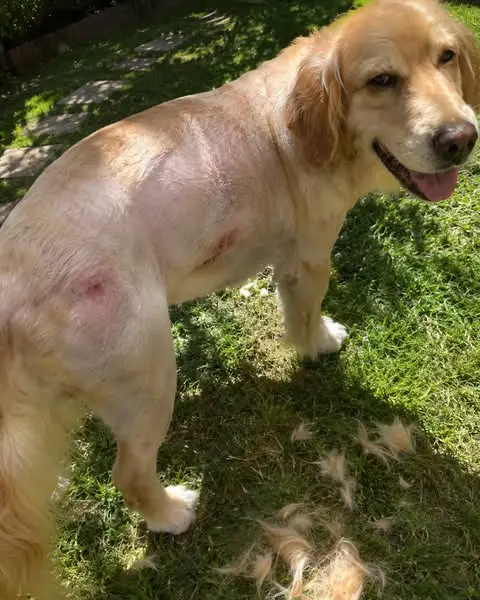
Claire Mitchell — For Pit Bull Owners Only
Promising

For Golden Owners Only

If your golden has hot spots that keep opening up one after another, I'm going to say something nobody in your golden group wants to hear, and honestly, I don't care if it upsets them. Apoquel is not going to fix your dog. Not Apoquel. Not Cytopoint. Not prescription food. Not the $42 probiotic chews everyone in your golden group swears by. NONE OF IT IS GOING TO FIX THIS. I know because I tried EVERYTHING. Every medication. Every food. Every supplement. For three years. And my dog got so bad that my vet started using the words "quality of life." Because I spent three years covering up the symptoms of a problem nobody bothered to explain to me. And the worst part? My second dog started showing the exact same signs. Same age. Same scratching. And I almost let the nightmare happen all over again, because I was following the same advice that destroyed my first dog's skin. I'm done being polite about this. If your dog is scratching and you're here asking whether to raise the Apoquel dose, shave her again or switch her food again, you're wasting time and money your dog doesn't have. Read this entire post. Every word. Because the answer is in here and it is NOT another food or another prescription. I live in Raleigh with my husband, David, and our two goldens. Same mother. Different litters. Honey is 6. My shadow. The kind who sits on your feet, looks up at you and won't leave until you scratch behind her ears. Willow is 2 and a half. Same mother. Same line. Completely different personality. Wild. Goofy. Steals socks. Two completely different dogs. But the same problem. They both scratched. All day. All night. Every day. With Honey, it started when she was about 2 and a half. First a hot spot on her neck. Then another on her hip. Then her ears. Then her paws. Then everywhere. She'd chew at her hip until she left a raw circle, red and wet, the size of a cookie. Overnight. At night I'd hear her collar jingling. Thump, thump, thump. Her back leg hitting the floor. Over and over. For hours. I took her to the vet. "Allergies. Very common in goldens. Let's start her on Apoquel." $120 a month. But it worked. The first 5 months were a miracle. The scratching almost completely stopped. Her ears cleared up. She slept through the night. I slept through the night. I thought we were done. Then it started coming back. Not all at once. Little by little. Like someone turning up the volume one notch at a time. A little scratching after walks. Some head shaking in the afternoon. Then the collar jingling again at 1 a.m. Faint at first. Then every night. I told my vet. "Let's raise the dose." We raised it. It helped for about 6 weeks. Then the scratching crept back in. "Let's add Cytopoint injections." $200 every 6 weeks. On top of the Apoquel. On top of the prescription food she'd put her on two months earlier. On top of the groomer to shave her every summer. Monthly spend: $380. And Honey was still scratching. Still shaking her head. Still chewing her paws until they were rust-colored. Still waking me up at 1 a.m. $380 a month for a dog who was still miserable. I posted in a golden retriever Facebook group. "Honey is on Apoquel AND Cytopoint and she's still scratching. Has this happened to anyone?" Everyone had a suggestion. "Switch to raw. Kibble is inflammatory." "Grain-free. The grains are triggering her." "Cut the chicken. All goldens are allergic to chicken." "Shave her in the summer. Hot spots come from the heat." "Oatmeal baths twice a week." "Probiotic chews. They help the gut-skin axis." "Fish oil. Coconut oil. Salmon oil." So I tried it. I tried everything they told me. Raw. $260 a month. No change in the scratching. Grain-free. Three different brands. No change. No chicken. Salmon only. No change. Shaved every summer. The hot spots came anyway. With her skin exposed, you could see them even more. Probiotic chews. $42 a month for 8 months. $336 total. Honey ate them every morning wagging her tail. She still scratched every night. The chews tasted good. That's all they did. Fish oil. Coconut oil. I put so much oil on her food it looked like soup. Oatmeal baths twice a week. She smelled nice for about 4 hours. Then the scratching came back and the yeast smell came back, and there I was bathing a 65-pound dog in my bathtub twice a week for absolutely nothing. I stopped adding up the total because the number made me sick. And Honey kept getting worse. Her long golden coat turned thin and dull. You could see her skin through the fur on her belly and sides. And the skin underneath was dark. Almost black in some places. My vet called it hyperpigmentation. Chronic inflammation changing the color of her skin for good. Her ears were infected more weeks than they were clean. Brown gunk. Yeast smell. She'd pull her head away when I tried to clean them and then go sit in a corner, shaking. The hot spots started chaining together. One would scab over and another would open somewhere else. Her neck. Her hip. Behind her left ear. I spent my days bandaging, medicating and cleaning. She stopped playing. Stopped leaning on my legs. Stopped following me around the house. She'd lie on the cold tiles and scratch. All day. Scratch, sleep and scratch. Her eyes looked different. Not pain exactly. Just… exhausted. Like she'd accepted that this was her life. Like she'd stopped trying to be comfortable. That look is what broke me. One night I sat on the floor next to her and held her while she scratched against my arm. And I thought: I'm watching my dog disappear. Little by little. Week by week. Month by month. And I can't stop it. I looked up how to rehome her. I'm not proud of it. I went on Petfinder and read profiles of dogs people had given up. "Can't afford the vet bills." "Allergies impossible to manage." "For her quality of life." I saw myself in every single one. I closed the laptop and cried on the kitchen floor. Honey came over and put her head in my lap. She didn't understand why I was crying. She just knew I was sad. My dog was comforting me. With her skin on fire. I wanted to scream. That was a Tuesday. I remember because the next day, Wednesday, Willow started scratching. She was 2 and a half. The same age Honey was when hers started. First a hot spot on her neck. Then her ears. Then her paws. I recognized it immediately. The same progression. The same timeline. I knew what was coming. I'd watched the entire three-year nightmare with Honey. I knew exactly what the next three years were going to look like for Willow. Three years of medications that work and then fade. Three years of baths and food changes that change nothing. Three years of supplements aimed at the wrong target. Three years of vet bills stacking up while the problem gets worse underneath everything. I couldn't do it again. I couldn't spend another $16,000. I couldn't clean another hot spot. I couldn't listen to two dogs scratching all night every night. I couldn't sit and cry on the kitchen floor again. I needed to understand WHY. Not "what to try next." WHY. Why did Apoquel work and then stop? Why did the Cytopoint injections have to keep getting closer together? Why did the hot spots keep coming even when I shaved her? Why did no food change change anything? Why did the probiotics do nothing? Why did the problem get worse every year, no matter what I did? Four vets in three years. Not one of them answered WHY. They all answered WHAT. What to prescribe. What to feed her. What to try next. Not one of them told me why everything kept failing. I spent two weeks researching. Every night, after David went to sleep. Reddit. Facebook groups. Veterinary dermatology papers. I read everything I could find. And at 2 a.m. on a Tuesday, I found a post from a woman who had taken her dog to a holistic vet. The holistic vet had explained something to her that no conventional vet had ever told her. And when I read it, I felt the floor open up beneath me. Because it explained everything. Why Apoquel fades. Why Cytopoint has to be given closer and closer together. Why shaving doesn't help. Why food changes don't work. Why probiotics do nothing for this. Why the problem gets worse every year no matter what you do. And it was so simple. So obvious once someone explains it. That I wanted to throw my phone at the wall, because four vets had charged me $380 a month for three years without ever mentioning it. Here's what nobody told me in three years: After age 2, dogs lose collagen from their skin barrier. The skin barrier is a wall. A physical wall made of collagen, types I and III. That wall is what keeps allergens out. Pollen. Dust mites. Grass proteins. Mold. All of it. The barrier keeps them on the surface, where they don't cause any problems. After age 2, that wall starts to thin. The body breaks down collagen faster than it replaces it. Every year the wall gets thinner. Gaps form. Small at first. Bigger every year. The allergens that used to bounce off the barrier now slip through those gaps straight into the tissue underneath. The immune system detects invaders in living tissue and does what an immune system does: attack. That's the hot spots. That's the scratching. That's the ears. That's the paws. That's the bumps on the belly. That's the yeast. All of it. Every symptom. One single barrier failing in different places at different speeds. And that's why shaving her was never going to fix it. A hot spot doesn't come from the heat. It shows up where the barrier already has a gap. You can take off all her fur. You don't take away the gaps. And here's the part that turned my stomach: Apoquel blocks the immune signal that causes the itch. That's ALL it does. It doesn't touch the barrier. The barrier keeps thinning while Apoquel covers up the symptoms. Every month more gaps form. More allergens get in. So Apoquel has to cover up a bigger and bigger reaction. That's why it works for 5 months and then fades. It's not that the medication stops working. It's that the damage underneath grows faster than the medication can cover it. The medication is losing a race against a wall that's falling down. So you raise the dose. It helps a little. The wall gets worse. So you add Cytopoint. It helps a little. The wall gets worse. So the Cytopoint injections get closer together. Every 6 weeks. Then 5. Then 4. More fire extinguishers. Bigger hole in the wall. The hole keeps growing. The extinguishers can't keep up. They never will. And there's something worse. That woman's holistic vet said that long-term use of medications that turn down the immune system, like Apoquel and steroids, can SPEED UP the breakdown of the barrier. The immune system doesn't just fight allergens: it also maintains and repairs tissue. Including the skin barrier. Keep it turned down long enough, and repair stops. The barrier falls apart faster. So the medication I was spending $380 a month on wasn't just losing the race against Honey's barrier. It may have been making it fall apart faster. For three years. Three years. Four vets. Apoquel. Cytopoint. Prescription food. Raw. Shaves. Probiotics. Fish oil. Coconut oil. Ear drops. Over $16,000. And the barrier got worse through all of it. Because NOBODY told me about the barrier. Not once in three years did anyone say the word "collagen." Not one vet. Not one Facebook group. Not one pet store employee. Nobody. They told me WHAT to buy. They never told me WHY it wouldn't work. The why is the barrier. The next morning I called every holistic vet within 50 miles. I found one. I drove 40 minutes with Honey in the back seat. I didn't care. She was the first vet in three years who didn't write me a prescription. She told me she doesn't make anything off Apoquel or Cytopoint. That she doesn't stock them in her practice because that profit model creates a conflict she's not comfortable with. That she'd rather explain the problem and let each owner decide. She confirmed everything I'd read at 2 a.m. The barrier. The collagen loss. The gaps. The allergens getting in. The immune reaction. The medication race. The acceleration from turning down the immune system. All of it. And then she said the thing that made it all click. "The barrier needs its materials to repair itself. Collagen. The protein it's made of. You can't rebuild a collagen wall with antihistamines. You can't rebuild it with drugs that turn down the immune system. You can't rebuild it with probiotics or fish oil. None of that is collagen. You need collagen." "So I just buy her collagen and that's it?" "It's not that simple. It has to be liquid. Liquid absorbs at 98%: it goes straight into the bloodstream and reaches the skin barrier tissue. Chews and powders absorb at 20-30% because stomach acid destroys most of it before it reaches anything. Most of what you give in a chew never reaches the barrier." "What about the collagen supplements on Amazon?" Her face changed. "I've tested them. I've sent them to independent labs. Most of them are garbage. Wrong collagen types. Lower doses than the label says. Fillers that get in the way of absorption. One had a contaminant that shouldn't be in a pet product." She pulled out a folder. "I've tested 6 collagen supplements over the last 3 years. All 6 at an independent lab." She opened the folder. "Brand 1: claimed types I and III. The lab only found type I. 40% underdosed. It had maltodextrin as filler." "Brand 2: claimed 500 mg per serving. The lab found 180 mg. 64% underdosed." "Brand 3: correct types. But in powder, with 22% bioavailability. The dog's body was getting about 110 mg of the 500 it promised." "Brand 4: liquid. But only type I. No type II, no type III. Incomplete formula." "Brand 5: contaminated. They found trace heavy metals. I reported it." "Brand 6: types I and III, plus UC-II. Liquid. 98% absorption. 900 mg of hydrolyzed collagen peptides per serving. UC-II at 40 mg. MSM. Hyaluronic acid. Vitamin C. Every ingredient verified. Every batch tested. Zero contamination. Zero fillers." "One out of six passed." She wrote the name on the back of her prescription pad. "It's the only one I recommend. The only one I trust. I don't sell it. I don't make anything from it. I just know it works because I've tested it and I've seen what it does in more than 200 allergy patients. A lot of them goldens." "How long does it take?" I asked. "The barrier doesn't rebuild overnight. Give it 8 weeks before you judge it. One bottle won't tell you." I bought it that night. I got the 3-bottle pack, because that was the 8 weeks she told me to give it. $49.99 for all three, with free shipping. About $17 a bottle. I started Honey the next morning. One serving on her food, alongside everything else. She told me not to take her off any medication. Just add the collagen and let the barrier rebuild underneath. I started Willow the same day. Hers had only just begun. She was 2 and a half. In time. Before the cascade. For Honey, the dog who'd been suffering for 3 years: The first 2 weeks: I kept watching. Kept listening at night. Kept waiting. Week 3: the nighttime scratching went down. It didn't disappear. But less. The collar jingle was shorter. Softer. I'd lie in bed holding my breath, listening. Fewer thumps. Longer pauses between them. Week 4: Honey slept through the night. The whole night. The first time in more than two years. I woke up at 5 a.m. scared because I hadn't heard anything. I ran downstairs. She was asleep on the couch. Breathing calmly. Not scratching. No jingle. I stood there for ten minutes watching her sleep. Week 6: her ears were clean. I checked them every morning, out of habit after three years of infections. I was expecting the brown gunk. The yeast smell. Nothing. Pink. Clean. I checked them the next day. Clean. And the next. Clean. I called David into the bathroom. "Look at her ears." He looked. "Are they… normal?" "They're normal." Week 7: our neighbor, who's known her since she was a puppy, ran her hand over her neck, where she always had a hot spot. "What are you giving her?" Week 8: she stopped chewing her paws completely. The rust-colored stains on her paws, the ones that had been there for two years, started growing out with the new fur. I took a photo every week. You could see the barrier healing through the fur. Month 3: I tapered the Apoquel with my vet. Half dose for two weeks. A quarter for another two. Then we stopped. The scratching didn't increase. Then we spaced out the Cytopoint. From every 4 weeks to every 6. Then 8. Then we skipped it entirely. Month 4: Honey was only on one serving of collagen on her food. Nothing else. About $17 a month. Her golden coat was thicker and shinier than it had been since she was a puppy. The skin on her belly was lightening, from black toward pink. The hot spot cycle was broken: not one new one in 8 weeks. She was playing again. Leaning on my legs again. Following me around the house again. The first morning after we stopped the Cytopoint, she brought me a sock. She carried it across the whole kitchen, dropped it at my feet and wiggled her whole body. I sat on the floor, held her and cried for twenty minutes. For Willow, the dog who was just starting: Week 3: the scratching behind her ears stopped. Just like that. Month 2: No hot spots. No ear infections. No paw licking. Nothing developed. Her barrier was rebuilding before it could break down enough for the cascade to start. She never took Apoquel. She never needed Cytopoint. She never ate prescription food. She never cost me $380 a month. She never cost me a single sleepless night. Because I caught her at 2 and a half. Before the gaps got big. Before the allergens got in. Before the cascade. $17 a month. Before the nightmare. One night I sat down and added up what I'd spent on Honey in 3 years. Apoquel: $4,320. Cytopoint: $5,200. Prescription food: $1,900. Raw food trial: $1,040. Probiotic chews: $336. Vet visits and tests: $2,400. Grooming and shaves: $750. Baths, ear drops, sprays and everything else: $800. $16,746. $16,746 on medications and treatments that all did the same thing: turn down the immune reaction while the barrier fell apart underneath. Not one dollar went toward rebuilding the barrier. Not one. 4 months of collagen: about $67. Honey is more comfortable on $17 a month than she ever was on $380 a month. Because the $380 a month was aimed at the wrong target. Every dollar covered the symptom. None of it fixed the cause. And the cause was always the barrier. Willow is never going to go through what Honey went through. I'll never spend $16,000 on her allergies. I'll never hear her scratching at 1 a.m. I'll never look up how to rehome her. I'll never sit and cry over her on the kitchen floor. Because I started her on collagen, at $17 a month, before her barrier broke down. And it never will. The product is Canbloom liquid collagen. Types I and III, plus UC-II. Liquid. 98% absorption. Independently tested. canbloomstore.com/products/canbloom-premium-liquid-collagen The 3-bottle pack is $49.99 with free shipping: about $17 a bottle. That's the full 8 weeks the vet told me about. And the guarantee is honestly impressive: the brand is so sure of what it does that if you don't notice anything in 60 days, you can simply ask for a refund. Start it alongside whatever your dog is taking right now. Don't take her off any medication. Just add one serving to her food. Let the barrier rebuild underneath, and you can thank me another time. 4 to 8 weeks. That's how long it took Honey after 3 years of everything else failing. You'll hear it before you see it. The silence at 1 a.m. When your dog isn't scratching anymore. When the collar stops jingling. When the thumping stops. That silence is what $17 a month sounds like. I wish I'd heard it three years and $16,746 ago. EDIT: I keep getting messages asking where to buy it. Buy it directly from their website. I've seen people say they bought "collagen for dogs" on Amazon and it didn't work; I have no idea what's in those bottles. The holistic vet tested 6 brands and 5 failed. The one she recommends is only sold on their website: canbloomstore.com/products/canbloom-premium-liquid-collagen P.S. Honey scratched for 3 years while I spent $16,746 on medications that covered up the reaction and may have made the barrier worse. 4 months of collagen at $17 a month did what 3 years of all that couldn't. The barrier was the problem the whole time. Every vet treated the immune reaction. Nobody treated the barrier. Because there's no recurring revenue in fixing the barrier. There is in monthly Apoquel refills and Cytopoint injections forever. $380 a month forever. That's the business model. $17 a month that fixes the cause and removes the need for medication. That's not a business model the pharmaceutical industry wants you to know about. P.P.S. If your golden is under 3 and just started scratching, you're in the best position possible. The barrier hasn't fully broken down yet. The gaps are small. Start the collagen NOW. Before the first hot spot. Before the ears. Before the paws. Before the first Apoquel prescription. Before the first $380 month. Willow is the proof. Same mother. Same house. One got collagen early. The other didn't. The difference is $16,746 and three years of suffering. Don't wait. Start now: canbloomstore.com/products/canbloom-premium-liquid-collagen

Loading the ad's image
Claire Mitchell — For Golden Owners Only
Promising

For Owners of an Older Dog Who Scratches

My little one (who's not so little anymore) is 11. She's been scratching since the day she came home. I thought it was too late. And I'm going to say something nobody with an older dog wants to hear, and honestly, I don't care if it upsets them. Apoquel is not going to fix your dog. Not Apoquel. Not Cytopoint. Not prescription food. Not the $42 probiotic chews everyone in your allergy dog group swears by. NONE OF IT IS GOING TO FIX THIS. I know because I tried EVERYTHING. Every medication. Every food. Every supplement. For three years. And my dog got so bad that my vet started using the words "quality of life." Because I spent three years covering up the symptoms of a problem nobody bothered to explain to me. And the worst part? My second dog started showing the exact same signs. Same age. Same scratching. And I almost let the nightmare happen all over again, because I was following the same advice that destroyed my first dog's skin. I'm done being polite about this. If your dog is scratching and you're here asking whether to raise the Apoquel dose, switch to Cytopoint or change her food again, you're wasting time and money your dog doesn't have. Read this entire post. Every word. Because the answer is in here and it is NOT another prescription. I live in Tulsa with my husband, David, and our two dogs. Molly is 11. My shadow. The kind who leans her whole weight against your legs and just stays there, letting you hug her. Daisy is 2 and a half. Completely different personality. Wild. Goofy. Steals socks. Two completely different dogs. But the same problem. They both scratched. All day. All night. Every day. With Molly, it started when she was 2. A little scratching. Normal, I thought. All dogs scratch. For years that's all it was. A little. Then, at 8, it got worse. Much worse. First behind the ears. Then her belly. Then her paws. Then everywhere. She'd scratch so hard against the door frame that I'd find tufts of fur stuck to the wood. At night I'd hear her collar jingling. Thump, thump, thump. Her back leg hitting the floor. Over and over. For hours. I took her to the vet. "Allergies. At her age, that's just how it is. Let's start her on Apoquel." $100 a month. But it worked. The first 5 months were a miracle. The scratching almost completely stopped. Her ears cleared up. She slept through the night. I slept through the night. I thought we were done. Then it started coming back. Not all at once. Little by little. Like someone turning up the volume one notch at a time. A little scratching after walks. Some head shaking in the afternoon. Then the collar jingling again at 1 a.m. Faint at first. Then every night. I told my vet. "Let's raise the dose." We raised it. It helped for about 6 weeks. Then the scratching crept back in. "Let's add Cytopoint injections." $170 every 6 weeks. On top of the Apoquel. On top of the prescription food she'd put her on two months earlier. Monthly spend: $350. And Molly was still scratching. Still shaking her head. Still chewing her paws until they were rust-colored. Still waking me up at 1 a.m. $350 a month for a dog who was still miserable. I posted in an allergy dog Facebook group. "Molly is on Apoquel AND Cytopoint and she's still scratching. Has this happened to anyone?" Everyone had a suggestion. "Switch to raw. Kibble is inflammatory." "Grain-free. The grains are triggering her." "Cut the chicken. At her age another protein will sit better." "Oatmeal baths twice a week." "Probiotic chews. They help the gut-skin axis." "Fish oil. Coconut oil. Salmon oil." So I tried it. I tried everything they told me. Raw. $240 a month. No change in the scratching. Grain-free. Three different brands. No change. No chicken. Salmon only. No change. Probiotic chews. $42 a month for 8 months. $336 total. Molly ate them every morning wagging her tail. She still scratched every night. The chews tasted good. That's all they did. Fish oil. Coconut oil. I put so much oil on her food it looked like soup. Oatmeal baths twice a week. She smelled nice for about 4 hours. Then the scratching came back and the yeast smell came back, and there I was bathing a 45-pound dog in my bathtub twice a week for absolutely nothing. I stopped adding up the total because the number made me sick. And Molly kept getting worse. Her coat went from thick and shiny to thin and coarse. You could see her skin through the fur on her belly and sides. And the skin underneath was dark. Almost black in some places. My vet called it hyperpigmentation. Chronic inflammation changing the color of her skin for good. Her ears were infected more weeks than they were clean. Brown gunk. Yeast smell. She'd pull her head away when I tried to clean them and then go sit in a corner, shaking. The hot spots started chaining together. One would scab over and another would open somewhere else. Her neck. Her hip. Behind her left ear. I spent my days bandaging, medicating and cleaning. She stopped playing. Stopped leaning on my legs. Stopped following me around the house. She'd lie on the cold tiles and scratch. All day. Scratch, sleep and scratch. Her eyes looked different. Not pain exactly. Just… exhausted. Like she'd accepted that this was her life. Like she'd stopped trying to be comfortable. That look is what broke me. One night I sat on the floor next to her and held her while she scratched against my arm. And I thought: I'm watching my dog disappear. Little by little. Week by week. Month by month. And I can't stop it. I looked up how to rehome her. I'm not proud of it. I went on Petfinder and read profiles of dogs people had given up. "Can't afford the vet bills." "Allergies impossible to manage." "For her quality of life." I saw myself in every single one. I closed the laptop and cried on the kitchen floor. Molly came over and put her head in my lap. She didn't understand why I was crying. She just knew I was sad. My dog was comforting me. With her skin on fire. I wanted to scream. That was a Tuesday. I remember because the next day, Wednesday, Daisy started scratching. She was 2 and a half. The same age Molly was when hers started. First behind the ears. Then her belly. Then her paws. I recognized it immediately. The same progression. The same timeline. I knew what was coming. I'd watched the entire three-year nightmare with Molly. I knew exactly what the next three years were going to look like for Daisy. Three years of medications that work and then fade. Three years of baths and food changes that change nothing. Three years of supplements aimed at the wrong target. Three years of vet bills stacking up while the problem gets worse underneath everything. I couldn't do it again. I couldn't spend another $16,000. I couldn't clean another hot spot. I couldn't listen to two dogs scratching all night every night. I couldn't sit and cry on the kitchen floor again. I needed to understand WHY. Not "what to try next." WHY. Why did Apoquel work and then stop? Why did the Cytopoint injections have to keep getting closer together? Why did no food change change anything? Why did the probiotics do nothing? Why did the problem get worse every year, no matter what I did? Four vets in three years. Not one of them answered WHY. They all answered WHAT. What to prescribe. What to feed her. What to try next. Not one of them told me why everything kept failing. I spent two weeks researching. Every night, after David went to sleep. Reddit. Facebook groups. Veterinary dermatology papers. I read everything I could find. And at 2 a.m. on a Tuesday, I found a post from a woman who had taken her dog to a holistic vet. The holistic vet had explained something to her that no conventional vet had ever told her. And when I read it, I felt the floor open up beneath me. Because it explained everything. Why Apoquel fades. Why Cytopoint has to be given closer and closer together. Why food changes don't work. Why probiotics do nothing for this. Why the problem gets worse every year no matter what you do. And it was so simple. So obvious once someone explains it. That I wanted to throw my phone at the wall, because four vets had charged me $350 a month for three years without ever mentioning it. Here's what nobody told me in three years: After age 2, dogs lose collagen from their skin barrier. The skin barrier is a wall. A physical wall made of collagen, types I and III. That wall is what keeps allergens out. Pollen. Dust mites. Grass proteins. Mold. All of it. The barrier keeps them on the surface, where they don't cause any problems. After age 2, that wall starts to thin. The body breaks down collagen faster than it replaces it. Every year the wall gets thinner. Gaps form. Small at first. Bigger every year. The allergens that used to bounce off the barrier now slip through those gaps straight into the tissue underneath. The immune system detects invaders in living tissue and does what an immune system does: attack. That's the scratching. That's the ears. That's the paws. That's the hot spots. That's the bumps on the belly. That's the yeast. All of it. Every symptom. One single barrier failing in different places at different speeds. And that's why she'd always scratched. She'd been losing collagen since she was 2. Nine years of a wall getting thinner. That's why every year was worse than the last. It wasn't age. It was the barrier, which nobody had ever repaired. And here's the part that turned my stomach: Apoquel blocks the immune signal that causes the itch. That's ALL it does. It doesn't touch the barrier. The barrier keeps thinning while Apoquel covers up the symptoms. Every month more gaps form. More allergens get in. So Apoquel has to cover up a bigger and bigger reaction. That's why it works for 5 months and then fades. It's not that the medication stops working. It's that the damage underneath grows faster than the medication can cover it. The medication is losing a race against a wall that's falling down. So you raise the dose. It helps a little. The wall gets worse. So you add Cytopoint. It helps a little. The wall gets worse. So the Cytopoint injections get closer together. Every 6 weeks. Then 5. Then 4. More fire extinguishers. Bigger hole in the wall. The hole keeps growing. The extinguishers can't keep up. They never will. And there's something worse. That woman's holistic vet said that long-term use of medications that turn down the immune system, like Apoquel and steroids, can SPEED UP the breakdown of the barrier. The immune system doesn't just fight allergens: it also maintains and repairs tissue. Including the skin barrier. Keep it turned down long enough, and repair stops. The barrier falls apart faster. So the medication I was spending $350 a month on wasn't just losing the race against Molly's barrier. It may have been making it fall apart faster. For three years. Three years. Four vets. Apoquel. Cytopoint. Prescription food. Raw. Probiotics. Fish oil. Coconut oil. Ear drops. Over $16,000. And the barrier got worse through all of it. Because NOBODY told me about the barrier. Not once in three years did anyone say the word "collagen." Not one vet. Not one Facebook group. Not one pet store employee. Nobody. They told me WHAT to buy. They never told me WHY it wouldn't work. The why is the barrier. The next morning I called every holistic vet within 50 miles. I found one. I drove 40 minutes with Molly in the back seat. I didn't care. She was the first vet in three years who didn't write me a prescription. She told me she doesn't make anything off Apoquel or Cytopoint. That she doesn't stock them in her practice because that profit model creates a conflict she's not comfortable with. That she'd rather explain the problem and let each owner decide. She confirmed everything I'd read at 2 a.m. The barrier. The collagen loss. The gaps. The allergens getting in. The immune reaction. The medication race. The acceleration from turning down the immune system. All of it. And then she said the thing that made it all click. "The barrier needs its materials to repair itself. Collagen. The protein it's made of. You can't rebuild a collagen wall with antihistamines. You can't rebuild it with drugs that turn down the immune system. You can't rebuild it with probiotics or fish oil. None of that is collagen. You need collagen." "So I just buy her collagen and that's it?" "It's not that simple. It has to be liquid. Liquid absorbs at 98%: it goes straight into the bloodstream and reaches the skin barrier tissue. Chews and powders absorb at 20-30% because stomach acid destroys most of it before it reaches anything. Most of what you give in a chew never reaches the barrier." "She's 11. Is it worth it at her age?" "The barrier can be rebuilt at any age. What changes is how long it takes. Give it time." "What about the collagen supplements on Amazon?" Her face changed. "I've tested them. I've sent them to independent labs. Most of them are garbage. Wrong collagen types. Lower doses than the label says. Fillers that get in the way of absorption. One had a contaminant that shouldn't be in a pet product." She pulled out a folder. "I've tested 6 collagen supplements over the last 3 years. All 6 at an independent lab." She opened the folder. "Brand 1: claimed types I and III. The lab only found type I. 40% underdosed. It had maltodextrin as filler." "Brand 2: claimed 500 mg per serving. The lab found 180 mg. 64% underdosed." "Brand 3: correct types. But in powder, with 22% bioavailability. The dog's body was getting about 110 mg of the 500 it promised." "Brand 4: liquid. But only type I. No type II, no type III. Incomplete formula." "Brand 5: contaminated. They found trace heavy metals. I reported it." "Brand 6: types I and III, plus UC-II. Liquid. 98% absorption. 900 mg of hydrolyzed collagen peptides per serving. UC-II at 40 mg. MSM. Hyaluronic acid. Vitamin C. Every ingredient verified. Every batch tested. Zero contamination. Zero fillers." "One out of six passed." She wrote the name on the back of her prescription pad. "It's the only one I recommend. The only one I trust. I don't sell it. I don't make anything from it. I just know it works because I've tested it and I've seen what it does in more than 200 allergy patients. A lot of them senior dogs." "How long does it take?" I asked. "The barrier doesn't rebuild overnight. Give it 8 weeks before you judge it. One bottle won't tell you." I bought it that night. I got the 3-bottle pack, because that was the 8 weeks she told me to give it. $49.99 for all three, with free shipping. About $17 a bottle. I started Molly the next morning. One serving on her food, alongside everything else. She told me not to take her off any medication. Just add the collagen and let the barrier rebuild underneath. I started Daisy the same day. Hers had only just begun. She was 2 and a half. In time. Before the cascade. For Molly, the dog who'd been suffering for 3 years: The first 2 weeks: I kept watching. Kept listening at night. Kept waiting. Week 3: still nothing. I told myself: she's 11, I knew it. But the vet had told me to give it time. I kept going. Week 5: the nighttime scratching went down. And one night, Molly slept through the night. The whole night. The first time in more than two years. I woke up at 5 a.m. scared because I hadn't heard anything. I ran downstairs. She was asleep on the couch. Breathing calmly. Not scratching. No jingle. I stood there for ten minutes watching her sleep. Week 6: her ears were clean. I checked them every morning, out of habit after three years of infections. I was expecting the brown gunk. The yeast smell. Nothing. Pink. Clean. I checked them the next day. Clean. And the next. Clean. I called David into the bathroom. "Look at her ears." He looked. "Are they… normal?" "They're normal." Week 7: our regular vet, the one who told me we just had to keep her comfortable, ran his hand down her back. "What are you giving her?" Week 8: she stopped chewing her paws completely. The rust-colored stains on her paws, the ones that had been there for two years, started growing out with the new fur. I took a photo every week. You could see the barrier healing through the fur. Month 3: I tapered the Apoquel with my vet. Half dose for two weeks. A quarter for another two. Then we stopped. The scratching didn't increase. Then we spaced out the Cytopoint. From every 4 weeks to every 6. Then 8. Then we skipped it entirely. Month 4: Molly was only on one serving of collagen on her food. Nothing else. About $17 a month. At 11, her coat was thicker than it had been in her whole life with me. The skin on her belly was lightening, from black toward pink. The hot spot cycle was broken: not one new one in 8 weeks. She was playing again. Leaning on my legs again. Following me around the house again. The first morning after we stopped the Cytopoint, she brought me a sock. She carried it across the whole kitchen, dropped it at my feet and wiggled her whole body. I sat on the floor, held her, thought that she had her best years ahead of her and not her worst, and cried for twenty minutes. For Daisy, the dog who was just starting: Week 3: the scratching behind her ears stopped. Just like that. Month 2: No ear infections. No paw licking. No bumps on her belly. Nothing developed. Her barrier was rebuilding before it could break down enough for the cascade to start. She never took Apoquel. She never needed Cytopoint. She never ate prescription food. She never cost me $350 a month. She never cost me a single sleepless night. Because I caught her at 2 and a half. Before the gaps got big. Before the allergens got in. Before the cascade. $17 a month. Before the nightmare. One night I sat down and added up what I'd spent on Molly in 3 years. Years of shampoos, creams and pills before all this: $2,400. Apoquel: $3,600. Cytopoint: $4,100. Prescription food: $1,800. Raw food trial: $960. Probiotic chews: $336. Vet visits and tests: $2,800. Baths, ear drops and everything else: $800. $16,796. $16,796 on medications and treatments that all did the same thing: turn down the immune reaction while the barrier fell apart underneath. Not one dollar went toward rebuilding the barrier. Not one. 4 months of collagen: about $67. Molly is more comfortable on $17 a month than she ever was on $350 a month. Because the $350 a month was aimed at the wrong target. Every dollar covered the symptom. None of it fixed the cause. And the cause was always the barrier. Daisy is never going to go through what Molly went through. I'll never spend $16,000 on her allergies. I'll never hear her scratching at 1 a.m. I'll never look up how to rehome her. I'll never sit and cry over her on the kitchen floor. Because I started her on collagen, at $17 a month, before her barrier broke down. And it never will. The product is Canbloom liquid collagen. Types I and III, plus UC-II. Liquid. 98% absorption. Independently tested. canbloomstore.com/products/canbloom-premium-liquid-collagen The 3-bottle pack is $49.99 with free shipping: about $17 a bottle. That's the full 8 weeks the vet told me about. And the guarantee is honestly impressive: the brand is so sure of what it does that if you don't notice anything in 60 days, you can simply ask for a refund. Start it alongside whatever your dog is taking right now. Don't take her off any medication. Just add one serving to her food. Let the barrier rebuild underneath, and you can thank me another time. 4 to 8 weeks. That's how long it took Molly after 3 years of everything else failing. You'll hear it before you see it. The silence at 1 a.m. When your dog isn't scratching anymore. When the collar stops jingling. When the thumping stops. That silence is what $17 a month sounds like. I wish I'd heard it three years and $16,796 ago. EDIT: I keep getting messages asking where to buy it. Buy it directly from their website. I've seen people say they bought "collagen for dogs" on Amazon and it didn't work; I have no idea what's in those bottles. The holistic vet tested 6 brands and 5 failed. The one she recommends is only sold on their website: canbloomstore.com/products/canbloom-premium-liquid-collagen P.S. Molly scratched for 3 years while I spent $16,796 on medications that covered up the reaction and may have made the barrier worse. 4 months of collagen at $17 a month did what 3 years of all that couldn't. The barrier was the problem the whole time. Every vet treated the immune reaction. Nobody treated the barrier. Because there's no recurring revenue in fixing the barrier. There is in monthly Apoquel refills and Cytopoint injections forever. $350 a month forever. That's the business model. $17 a month that fixes the cause and removes the need for medication. That's not a business model the pharmaceutical industry wants you to know about. P.P.S. If your dog is older, it's not too late: Molly is the proof. And if you also have one under 3 who just started scratching, you're in the best position possible. The barrier hasn't fully broken down yet. The gaps are small. Start the collagen NOW. Before the ears. Before the paws. Before the hot spots. Before the first Apoquel prescription. Before the first $350 month. Daisy is the proof. Same house. One got collagen early. The other didn't. The difference is $16,796 and three years of suffering. Don't wait. Start now: canbloomstore.com/products/canbloom-premium-liquid-collagen

Loading the ad's image

Claire Mitchell — For Owners of an Older Dog Who Scratches
Promising

For Bulldog Owners Only

If your bulldog's folds are red and smell sour no matter how much you clean them, I'm going to say something nobody in your bulldog group wants to hear, and honestly, I don't care if it upsets them. Apoquel is not going to fix your dog. Not Apoquel. Not Cytopoint. Not prescription food. Not the fold wipes. Not the $42 probiotic chews everyone in your bulldog group swears by. NONE OF IT IS GOING TO FIX THIS. I know because I tried EVERYTHING. Every medication. Every food. Every supplement. For three years. And my dog got so bad that my vet started using the words "quality of life." Because I spent three years covering up the symptoms of a problem nobody bothered to explain to me. And the worst part? My second dog started showing the exact same signs. Same age. Same scratching. And I almost let the nightmare happen all over again, because I was following the same advice that destroyed my first dog's skin. I'm done being polite about this. If your dog is scratching and you're here asking whether to raise the Apoquel dose, try another fold cream or switch her food again, you're wasting time and money your dog doesn't have. Read this entire post. Every word. Because the answer is in here and it is NOT another cream or another prescription. I live in Nashville with my husband, David, and our two bulldogs. Same mother. Different litters. Bella is 6. My shadow. The kind who snores next to you on the couch with her head on your leg and doesn't move all afternoon. Mabel is 2 and a half. Same mother. Same line. Completely different personality. Wild. Goofy. Steals socks. Two completely different dogs. But the same problem. They both scratched. All day. All night. Every day. With Bella, it started when she was about 2 and a half. First her face folds, red. Then the sour smell. Then little bumps on her belly. Then her paws. Then everywhere. She'd rub her face against the couch, side to side, until the fabric was damp and smelled like yeast. At night I'd hear her collar jingling. Thump, thump, thump. Her back leg hitting the floor. Over and over. For hours. I took her to the vet. "Allergies. Very common in bulldogs. Let's start her on Apoquel." $95 a month. But it worked. The first 5 months were a miracle. The scratching almost completely stopped. Her ears cleared up. She slept through the night. I slept through the night. I thought we were done. Then it started coming back. Not all at once. Little by little. Like someone turning up the volume one notch at a time. A little scratching after walks. Some head shaking in the afternoon. Then the collar jingling again at 1 a.m. Faint at first. Then every night. I told my vet. "Let's raise the dose." We raised it. It helped for about 6 weeks. Then the scratching crept back in. "Let's add Cytopoint injections." $170 every 6 weeks. On top of the Apoquel. On top of the prescription food she'd put her on two months earlier. On top of the fold wipes and creams, $40 a month. Monthly spend: $335. And Bella was still scratching. Still shaking her head. Still chewing her paws until they were rust-colored. Still waking me up at 1 a.m. $335 a month for a dog who was still miserable. I posted in a bulldog Facebook group. "Bella is on Apoquel AND Cytopoint and she's still scratching. Has this happened to anyone?" Everyone had a suggestion. "Switch to raw. Kibble is inflammatory." "Grain-free. The grains are triggering her." "Cut the chicken. All bulldogs are allergic to chicken." "Clean her folds twice a day. Chlorhexidine wipes." "Oatmeal baths twice a week." "Probiotic chews. They help the gut-skin axis." "Fish oil. Coconut oil. Salmon oil." So I tried it. I tried everything they told me. Raw. $240 a month. No change in the scratching. Grain-free. Three different brands. No change. No chicken. Salmon only. No change. Fold wipes twice a day. Cream. Powder. The folds were red again before dinner. Probiotic chews. $42 a month for 8 months. $336 total. Bella ate them every morning wagging her tail. She still scratched every night. The chews tasted good. That's all they did. Fish oil. Coconut oil. I put so much oil on her food it looked like soup. Oatmeal baths twice a week. She smelled nice for about 4 hours. Then the scratching came back and the yeast smell came back, and there I was bathing a 50-pound dog in my bathtub twice a week for absolutely nothing. I stopped adding up the total because the number made me sick. And Bella kept getting worse. Her coat went from thick and shiny to thin and coarse. You could see her skin through the fur on her belly and sides. And the skin underneath was dark. Almost black in some places. My vet called it hyperpigmentation. Chronic inflammation changing the color of her skin for good. Her folds were red and smelled sour no matter how much I cleaned them. Her ears were infected more weeks than they were clean. Brown gunk. Yeast smell. She'd pull her head away when I tried to clean them and then go sit in a corner, shaking. The hot spots started chaining together. One would scab over and another would open somewhere else. Her neck. Her hip. Behind her left ear. I spent my days bandaging, medicating and cleaning. She stopped playing. Stopped leaning on my legs. Stopped following me around the house. She'd lie on the cold tiles and scratch. All day. Scratch, sleep and scratch. Her eyes looked different. Not pain exactly. Just… exhausted. Like she'd accepted that this was her life. Like she'd stopped trying to be comfortable. That look is what broke me. One night I sat on the floor next to her and held her while she scratched against my arm. And I thought: I'm watching my dog disappear. Little by little. Week by week. Month by month. And I can't stop it. I looked up how to rehome her. I'm not proud of it. I went on Petfinder and read profiles of dogs people had given up. "Can't afford the vet bills." "Allergies impossible to manage." "For her quality of life." I saw myself in every single one. I closed the laptop and cried on the kitchen floor. Bella came over and put her head in my lap. She didn't understand why I was crying. She just knew I was sad. My dog was comforting me. With her skin on fire. I wanted to scream. That was a Tuesday. I remember because the next day, Wednesday, Mabel started scratching. She was 2 and a half. The same age Bella was when hers started. First her face folds. Then her belly. Then her paws. I recognized it immediately. The same progression. The same timeline. I knew what was coming. I'd watched the entire three-year nightmare with Bella. I knew exactly what the next three years were going to look like for Mabel. Three years of medications that work and then fade. Three years of wipes, creams and food changes that change nothing. Three years of supplements aimed at the wrong target. Three years of vet bills stacking up while the problem gets worse underneath everything. I couldn't do it again. I couldn't spend another $13,000. I couldn't clean another hot spot. I couldn't listen to two dogs scratching all night every night. I couldn't sit and cry on the kitchen floor again. I needed to understand WHY. Not "what to try next." WHY. Why did Apoquel work and then stop? Why did the Cytopoint injections have to keep getting closer together? Why did her folds keep turning red even though I cleaned them twice a day? Why did no food change change anything? Why did the probiotics do nothing? Why did the problem get worse every year, no matter what I did? Four vets in three years. Not one of them answered WHY. They all answered WHAT. What to prescribe. What to feed her. What to try next. Not one of them told me why everything kept failing. I spent two weeks researching. Every night, after David went to sleep. Reddit. Facebook groups. Veterinary dermatology papers. I read everything I could find. And at 2 a.m. on a Tuesday, I found a post from a woman who had taken her dog to a holistic vet. The holistic vet had explained something to her that no conventional vet had ever told her. And when I read it, I felt the floor open up beneath me. Because it explained everything. Why Apoquel fades. Why Cytopoint has to be given closer and closer together. Why wipes don't heal the folds. Why food changes don't work. Why probiotics do nothing for this. Why the problem gets worse every year no matter what you do. And it was so simple. So obvious once someone explains it. That I wanted to throw my phone at the wall, because four vets had charged me $335 a month for three years without ever mentioning it. Here's what nobody told me in three years: After age 2, dogs lose collagen from their skin barrier. The skin barrier is a wall. A physical wall made of collagen, types I and III. That wall is what keeps allergens out. Pollen. Dust mites. Grass proteins. Mold. All of it. The barrier keeps them on the surface, where they don't cause any problems. After age 2, that wall starts to thin. The body breaks down collagen faster than it replaces it. Every year the wall gets thinner. Gaps form. Small at first. Bigger every year. The allergens that used to bounce off the barrier now slip through those gaps straight into the tissue underneath. The immune system detects invaders in living tissue and does what an immune system does: attack. That's the scratching. That's the red folds. That's the sour smell. That's the ears. That's the paws. That's the bumps on the belly. That's the yeast. All of it. Every symptom. One single barrier failing in different places at different speeds. And that's why cleaning the folds was never going to fix it. You clean the surface. But the fold turns red because the skin underneath doesn't have a barrier anymore. You can clean a fold ten times a day. You can't clean a wall full of holes. And here's the part that turned my stomach: Apoquel blocks the immune signal that causes the itch. That's ALL it does. It doesn't touch the barrier. The barrier keeps thinning while Apoquel covers up the symptoms. Every month more gaps form. More allergens get in. So Apoquel has to cover up a bigger and bigger reaction. That's why it works for 5 months and then fades. It's not that the medication stops working. It's that the damage underneath grows faster than the medication can cover it. The medication is losing a race against a wall that's falling down. So you raise the dose. It helps a little. The wall gets worse. So you add Cytopoint. It helps a little. The wall gets worse. So the Cytopoint injections get closer together. Every 6 weeks. Then 5. Then 4. More fire extinguishers. Bigger hole in the wall. The hole keeps growing. The extinguishers can't keep up. They never will. And there's something worse. That woman's holistic vet said that long-term use of medications that turn down the immune system, like Apoquel and steroids, can SPEED UP the breakdown of the barrier. The immune system doesn't just fight allergens: it also maintains and repairs tissue. Including the skin barrier. Keep it turned down long enough, and repair stops. The barrier falls apart faster. So the medication I was spending $335 a month on wasn't just losing the race against Bella's barrier. It may have been making it fall apart faster. For three years. Three years. Four vets. Apoquel. Cytopoint. Prescription food. Raw. Wipes. Creams. Powder. Probiotics. Fish oil. Coconut oil. Ear drops. Over $13,000. And the barrier got worse through all of it. Because NOBODY told me about the barrier. Not once in three years did anyone say the word "collagen." Not one vet. Not one Facebook group. Not one pet store employee. Nobody. They told me WHAT to buy. They never told me WHY it wouldn't work. The why is the barrier. The next morning I called every holistic vet within 50 miles. I found one. I drove 40 minutes with Bella in the back seat. I didn't care. She was the first vet in three years who didn't write me a prescription. She told me she doesn't make anything off Apoquel or Cytopoint. That she doesn't stock them in her practice because that profit model creates a conflict she's not comfortable with. That she'd rather explain the problem and let each owner decide. She confirmed everything I'd read at 2 a.m. The barrier. The collagen loss. The gaps. The allergens getting in. The immune reaction. The medication race. The acceleration from turning down the immune system. All of it. And then she said the thing that made it all click. "The barrier needs its materials to repair itself. Collagen. The protein it's made of. You can't rebuild a collagen wall with antihistamines. You can't rebuild it with drugs that turn down the immune system. You can't rebuild it with wipes, or probiotics, or fish oil. None of that is collagen. You need collagen." "So I just buy her collagen and that's it?" "It's not that simple. It has to be liquid. Liquid absorbs at 98%: it goes straight into the bloodstream and reaches the skin barrier tissue. Chews and powders absorb at 20-30% because stomach acid destroys most of it before it reaches anything. Most of what you give in a chew never reaches the barrier." "What about the collagen supplements on Amazon?" Her face changed. "I've tested them. I've sent them to independent labs. Most of them are garbage. Wrong collagen types. Lower doses than the label says. Fillers that get in the way of absorption. One had a contaminant that shouldn't be in a pet product." She pulled out a folder. "I've tested 6 collagen supplements over the last 3 years. All 6 at an independent lab." She opened the folder. "Brand 1: claimed types I and III. The lab only found type I. 40% underdosed. It had maltodextrin as filler." "Brand 2: claimed 500 mg per serving. The lab found 180 mg. 64% underdosed." "Brand 3: correct types. But in powder, with 22% bioavailability. The dog's body was getting about 110 mg of the 500 it promised." "Brand 4: liquid. But only type I. No type II, no type III. Incomplete formula." "Brand 5: contaminated. They found trace heavy metals. I reported it." "Brand 6: types I and III, plus UC-II. Liquid. 98% absorption. 900 mg of hydrolyzed collagen peptides per serving. UC-II at 40 mg. MSM. Hyaluronic acid. Vitamin C. Every ingredient verified. Every batch tested. Zero contamination. Zero fillers." "One out of six passed." She wrote the name on the back of her prescription pad. "It's the only one I recommend. The only one I trust. I don't sell it. I don't make anything from it. I just know it works because I've tested it and I've seen what it does in more than 200 allergy patients. A lot of them bulldogs." "How long does it take?" I asked. "The barrier doesn't rebuild overnight. Give it 8 weeks before you judge it. One bottle won't tell you." I bought it that night. I got the 3-bottle pack, because that was the 8 weeks she told me to give it. $49.99 for all three, with free shipping. About $17 a bottle. I started Bella the next morning. One serving on her food, alongside everything else. She told me not to take her off any medication. Just add the collagen and let the barrier rebuild underneath. I started Mabel the same day. Hers had only just begun. She was 2 and a half. In time. Before the cascade. For Bella, the dog who'd been suffering for 3 years: The first 2 weeks: I kept watching. Kept listening at night. Kept waiting. Week 3: the nighttime scratching went down. It didn't disappear. But less. The collar jingle was shorter. Softer. I'd lie in bed holding my breath, listening. Fewer thumps. Longer pauses between them. Week 4: Bella slept through the night. The whole night. The first time in more than two years. I woke up at 5 a.m. scared because I hadn't heard anything. I ran downstairs. She was asleep on the couch. Breathing calmly. Not scratching. No jingle. I stood there for ten minutes watching her sleep. Week 5: I cleaned her folds in the morning, like every day. Pink. No smell. I checked them again at night. The same. Week 6: her ears were clean. I checked them every morning, out of habit after three years of infections. I was expecting the brown gunk. The yeast smell. Nothing. Pink. Clean. I checked them the next day. Clean. And the next. Clean. I called David into the bathroom. "Look at her ears." He looked. "Are they… normal?" "They're normal." Week 7: my mom came over; she hadn't seen her since Christmas. She took her face in both hands. "What have you done to her? She doesn't smell anymore." Week 8: she stopped chewing her paws completely. The rust-colored stains on her paws, the ones that had been there for two years, started growing out with the new fur. I took a photo every week. You could see the barrier healing through the fur. Month 3: I tapered the Apoquel with my vet. Half dose for two weeks. A quarter for another two. Then we stopped. The scratching didn't increase. Then we spaced out the Cytopoint. From every 4 weeks to every 6. Then 8. Then we skipped it entirely. Month 4: Bella was only on one serving of collagen on her food. Nothing else. No more wipes twice a day. About $17 a month. Her coat was thicker than it had been since she was a puppy. The skin on her belly was lightening, from black toward pink. The hot spot cycle was broken: not one new one in 8 weeks. She was playing again. Leaning on my legs again. Following me around the house again. The first morning after we stopped the Cytopoint, she brought me a sock. She carried it across the whole kitchen, dropped it at my feet and wiggled her whole body. I sat on the floor, held her and cried for twenty minutes. For Mabel, the dog who was just starting: Week 3: the scratching behind her ears stopped. Just like that. Month 2: No red folds. No smell. No bumps. No ear infections. Nothing developed. Her barrier was rebuilding before it could break down enough for the cascade to start. She never took Apoquel. She never needed Cytopoint. She never ate prescription food. She never cost me $335 a month. She never cost me a single sleepless night. Because I caught her at 2 and a half. Before the gaps got big. Before the allergens got in. Before the cascade. $17 a month. Before the nightmare. One night I sat down and added up what I'd spent on Bella in 3 years. Apoquel: $3,420. Cytopoint: $3,700. Prescription food: $1,700. Raw food trial: $960. Probiotic chews: $336. Vet visits and tests: $2,400. Wipes, fold creams and ear drops: $1,200. $13,716. $13,716 on medications and treatments that all did the same thing: turn down the immune reaction while the barrier fell apart underneath. Not one dollar went toward rebuilding the barrier. Not one. 4 months of collagen: about $67. Bella is more comfortable on $17 a month than she ever was on $335 a month. Because the $335 a month was aimed at the wrong target. Every dollar covered the symptom. None of it fixed the cause. And the cause was always the barrier. Mabel is never going to go through what Bella went through. I'll never spend $13,000 on her allergies. I'll never hear her scratching at 1 a.m. I'll never look up how to rehome her. I'll never sit and cry over her on the kitchen floor. Because I started her on collagen, at $17 a month, before her barrier broke down. And it never will. The product is Canbloom liquid collagen. Types I and III, plus UC-II. Liquid. 98% absorption. Independently tested. canbloomstore.com/products/canbloom-premium-liquid-collagen The 3-bottle pack is $49.99 with free shipping: about $17 a bottle. That's the full 8 weeks the vet told me about. And the guarantee is honestly impressive: the brand is so sure of what it does that if you don't notice anything in 60 days, you can simply ask for a refund. Start it alongside whatever your dog is taking right now. Don't take her off any medication. Just add one serving to her food. Let the barrier rebuild underneath, and you can thank me another time. 4 to 8 weeks. That's how long it took Bella after 3 years of everything else failing. You'll hear it before you see it. The silence at 1 a.m. When your dog isn't scratching anymore. When the collar stops jingling. When the thumping stops. That silence is what $17 a month sounds like. I wish I'd heard it three years and $13,716 ago. EDIT: I keep getting messages asking where to buy it. Buy it directly from their website. I've seen people say they bought "collagen for dogs" on Amazon and it didn't work; I have no idea what's in those bottles. The holistic vet tested 6 brands and 5 failed. The one she recommends is only sold on their website: canbloomstore.com/products/canbloom-premium-liquid-collagen P.S. Bella scratched for 3 years while I spent $13,716 on medications that covered up the reaction and may have made the barrier worse. 4 months of collagen at $17 a month did what 3 years of all that couldn't. The barrier was the problem the whole time. Every vet treated the immune reaction. Nobody treated the barrier. Because there's no recurring revenue in fixing the barrier. There is in monthly Apoquel refills and Cytopoint injections forever. $335 a month forever. That's the business model. $17 a month that fixes the cause and removes the need for medication. That's not a business model the pharmaceutical industry wants you to know about. P.P.S. If your bulldog is under 3 and just started scratching, you're in the best position possible. The barrier hasn't fully broken down yet. The gaps are small. Start the collagen NOW. Before the red folds. Before the ears. Before the hot spots. Before the first Apoquel prescription. Before the first $335 month. Mabel is the proof. Same mother. Same house. One got collagen early. The other didn't. The difference is $13,716 and three years of suffering. Don't wait. Start now: canbloomstore.com/products/canbloom-premium-liquid-collagen

Loading the ad's image

Claire Mitchell — For Bulldog Owners Only
Promising

For Dachshund Owners Only

If your Dachshund scratches her belly until it bleeds, I'm going to say something nobody in your Dachshund group wants to hear, and honestly, I don't care if it upsets them. Apoquel is not going to fix your dog. Not Apoquel. Not Cytopoint. Not Zenrelia. Not the T-shirt. Not the $42 probiotic chews everyone in your Dachshund group swears by. NONE OF IT IS GOING TO FIX THIS. I know because I tried EVERYTHING. Every medication. Every food. Every supplement. For three years. And my dog got so bad that my vet started using the words "quality of life." Because I spent three years covering up the symptoms of a problem nobody bothered to explain to me. And the worst part? My second dog started showing the exact same signs. Same age. Same scratching. And I almost let the nightmare happen all over again, because I was following the same advice that destroyed my first dog's skin. I'm done being polite about this. If your dog is scratching and you're here asking whether to raise the Apoquel dose, switch to Zenrelia or change her food again, you're wasting time and money your dog doesn't have. Read this entire post. Every word. Because the answer is in here and it is NOT another prescription. I live in San Antonio with my husband, David, and our two Dachshunds. Same mother. Different litters. Frida is 6. My shadow. The kind who burrows under the blanket on the couch with only her nose sticking out. Greta is 2 and a half. Same mother. Same line. Completely different personality. Wild. Goofy. Steals socks. Two completely different dogs. But the same problem. They both scratched. All day. All night. Every day. With Frida, it started when she was about 2 and a half. First her belly, red. Then her armpits, dark. Then sores from scratching so much. Then her paws. Then everywhere. She'd drag herself on her belly across the rug, from one end of the living room to the other, to scratch where her leg couldn't reach. At night I'd hear her collar jingling. Thump, thump, thump. Her back leg hitting the floor. Over and over. For hours. I took her to the vet. "Allergies. Very common in Dachshunds. Let's start her on Apoquel." $70 a month. But it worked. The first 5 months were a miracle. The scratching almost completely stopped. Her ears cleared up. She slept through the night. I slept through the night. I thought we were done. Then it started coming back. Not all at once. Little by little. Like someone turning up the volume one notch at a time. A little scratching after walks. Some head shaking in the afternoon. Then the collar jingling again at 1 a.m. Faint at first. Then every night. I told my vet. "Let's raise the dose." We raised it. It helped for about 6 weeks. Then the scratching crept back in. "Let's add Cytopoint injections." $110 every 6 weeks. On top of the Apoquel. On top of the prescription food she'd put her on two months earlier. On top of the belly creams, $30 a month. Monthly spend: $220. And Frida was still scratching. Still shaking her head. Still chewing her paws until they were rust-colored. Still waking me up at 1 a.m. $220 a month for a dog who was still miserable. I posted in a Dachshund Facebook group. "Frida is on Apoquel AND Cytopoint and she's still scratching. Has this happened to anyone?" Everyone had a suggestion. "Switch to raw. Kibble is inflammatory." "Grain-free. The grains are triggering her." "Cut the chicken. All Dachshunds are allergic to chicken." "Put a T-shirt on her so she can't scratch." "Try Zenrelia. It's the new pill." "Probiotic chews. They help the gut-skin axis." "Fish oil. Coconut oil. Salmon oil." So I tried it. I tried everything they told me. Raw. $150 a month. No change in the scratching. Grain-free. Three different brands. No change. No chicken. Salmon only. No change. T-shirt. She scratched underneath it. Cone. She scratched with her back legs. Zenrelia. It worked for six weeks. Then I forgot one dose and everything came undone. Probiotic chews. $42 a month for 8 months. $336 total. Frida ate them every morning wagging her tail. She still scratched every night. The chews tasted good. That's all they did. Fish oil. Coconut oil. I put so much oil on her food it looked like soup. Oatmeal baths twice a week. She smelled nice for about 4 hours. Then the scratching came back and the yeast smell came back, and there I was bathing a 15-pound dog in my kitchen sink twice a week for absolutely nothing. I stopped adding up the total because the number made me sick. And Frida kept getting worse. Her short, shiny coat got thin. You could see the skin on her whole belly, and her armpits. And the skin underneath was dark. Almost black in some places. My vet called it hyperpigmentation. Chronic inflammation changing the color of her skin for good. Her ears were infected more weeks than they were clean. Brown gunk. Yeast smell. She'd pull her head away when I tried to clean them and then crawl under the blanket, shaking. The hot spots started chaining together. One would scab over and another would open somewhere else. Her neck. Her hip. Behind her left ear. I spent my days bandaging, medicating and cleaning. She stopped playing. Stopped burrowing under the blanket with me. Stopped following me around the house. She'd lie on the cold tiles and scratch. All day. Scratch, sleep and scratch. Her eyes looked different. Not pain exactly. Just… exhausted. Like she'd accepted that this was her life. Like she'd stopped trying to be comfortable. That look is what broke me. One night I sat on the floor next to her and held her while she scratched against my arm. And I thought: I'm watching my dog disappear. Little by little. Week by week. Month by month. And I can't stop it. I looked up how to rehome her. I'm not proud of it. I went on Petfinder and read profiles of dogs people had given up. "Can't afford the vet bills." "Allergies impossible to manage." "For her quality of life." I saw myself in every single one. I closed the laptop and cried on the kitchen floor. Frida came over and put her head in my lap. She didn't understand why I was crying. She just knew I was sad. My dog was comforting me. With her skin on fire. I wanted to scream. That was a Tuesday. I remember because the next day, Wednesday, Greta started scratching. She was 2 and a half. The same age Frida was when hers started. First her belly. Then her armpits. Then her paws. I recognized it immediately. The same progression. The same timeline. I knew what was coming. I'd watched the entire three-year nightmare with Frida. I knew exactly what the next three years were going to look like for Greta. Three years of medications that work and then fade. Three years of T-shirts, cones and food changes that change nothing. Three years of supplements aimed at the wrong target. Three years of vet bills stacking up while the problem gets worse underneath everything. I couldn't do it again. I couldn't spend another $11,000. I couldn't clean another hot spot. I couldn't listen to two dogs scratching all night every night. I couldn't sit and cry on the kitchen floor again. I needed to understand WHY. Not "what to try next." WHY. Why did Apoquel work and then stop? Why did the Cytopoint injections have to keep getting closer together? Why did Zenrelia work for six weeks and then nothing? Why did no food change change anything? Why did the probiotics do nothing? Why did the problem get worse every year, no matter what I did? Four vets in three years. Not one of them answered WHY. They all answered WHAT. What to prescribe. What to feed her. What to try next. Not one of them told me why everything kept failing. I spent two weeks researching. Every night, after David went to sleep. Reddit. Facebook groups. Veterinary dermatology papers. I read everything I could find. And at 2 a.m. on a Tuesday, I found a post from a woman who had taken her dog to a holistic vet. The holistic vet had explained something to her that no conventional vet had ever told her. And when I read it, I felt the floor open up beneath me. Because it explained everything. Why Apoquel fades. Why Cytopoint has to be given closer and closer together. Why Zenrelia fades the same way. Why food changes don't work. Why probiotics do nothing for this. Why the problem gets worse every year no matter what you do. And it was so simple. So obvious once someone explains it. That I wanted to throw my phone at the wall, because four vets had charged me $220 a month for three years without ever mentioning it. Here's what nobody told me in three years: After age 2, dogs lose collagen from their skin barrier. The skin barrier is a wall. A physical wall made of collagen, types I and III. That wall is what keeps allergens out. Pollen. Dust mites. Grass proteins. Mold. All of it. The barrier keeps them on the surface, where they don't cause any problems. After age 2, that wall starts to thin. The body breaks down collagen faster than it replaces it. Every year the wall gets thinner. Gaps form. Small at first. Bigger every year. The allergens that used to bounce off the barrier now slip through those gaps straight into the tissue underneath. The immune system detects invaders in living tissue and does what an immune system does: attack. That's the scratching. That's the red belly. That's the dark armpits. That's the sores. That's the ears. That's the yeast. All of it. Every symptom. One single barrier failing in different places at different speeds. And that's why the belly went first. A Dachshund walks with her belly a few inches off the ground, brushing every blade of grass, every bit of pollen, every dust mite in the rug. It's the barrier that works hardest. And the first to fall. A T-shirt covers the belly. It doesn't cover the gaps. And here's the part that turned my stomach: Apoquel blocks the immune signal that causes the itch. That's ALL it does. It doesn't touch the barrier. The barrier keeps thinning while Apoquel covers up the symptoms. Every month more gaps form. More allergens get in. So Apoquel has to cover up a bigger and bigger reaction. That's why it works for 5 months and then fades. It's not that the medication stops working. It's that the damage underneath grows faster than the medication can cover it. The medication is losing a race against a wall that's falling down. So you raise the dose. It helps a little. The wall gets worse. So you add Cytopoint. It helps a little. The wall gets worse. So the Cytopoint injections get closer together. Every 6 weeks. Then 5. Then 4. More fire extinguishers. Bigger hole in the wall. The hole keeps growing. The extinguishers can't keep up. They never will. And there's something worse. That woman's holistic vet said that long-term use of medications that turn down the immune system, like Apoquel and steroids, can SPEED UP the breakdown of the barrier. The immune system doesn't just fight allergens: it also maintains and repairs tissue. Including the skin barrier. Keep it turned down long enough, and repair stops. The barrier falls apart faster. So the medication I was spending $220 a month on wasn't just losing the race against Frida's barrier. It may have been making it fall apart faster. For three years. Three years. Four vets. Apoquel. Cytopoint. Prescription food. Raw. Zenrelia. T-shirts. Cones. Probiotics. Fish oil. Coconut oil. Ear drops. Over $11,000. And the barrier got worse through all of it. Because NOBODY told me about the barrier. Not once in three years did anyone say the word "collagen." Not one vet. Not one Facebook group. Not one pet store employee. Nobody. They told me WHAT to buy. They never told me WHY it wouldn't work. The why is the barrier. The next morning I called every holistic vet within 50 miles. I found one. I drove 40 minutes with Frida in my lap. I didn't care. She was the first vet in three years who didn't write me a prescription. She told me she doesn't make anything off Apoquel or Cytopoint. That she doesn't stock them in her practice because that profit model creates a conflict she's not comfortable with. That she'd rather explain the problem and let each owner decide. She confirmed everything I'd read at 2 a.m. The barrier. The collagen loss. The gaps. The allergens getting in. The immune reaction. The medication race. The acceleration from turning down the immune system. All of it. And then she said the thing that made it all click. "The barrier needs its materials to repair itself. Collagen. The protein it's made of. You can't rebuild a collagen wall with antihistamines. You can't rebuild it with drugs that turn down the immune system. You can't rebuild it with probiotics or fish oil. None of that is collagen. You need collagen." "So I just buy her collagen and that's it?" "It's not that simple. It has to be liquid. Liquid absorbs at 98%: it goes straight into the bloodstream and reaches the skin barrier tissue. Chews and powders absorb at 20-30% because stomach acid destroys most of it before it reaches anything. Most of what you give in a chew never reaches the barrier." "What about the collagen supplements on Amazon?" Her face changed. "I've tested them. I've sent them to independent labs. Most of them are garbage. Wrong collagen types. Lower doses than the label says. Fillers that get in the way of absorption. One had a contaminant that shouldn't be in a pet product." She pulled out a folder. "I've tested 6 collagen supplements over the last 3 years. All 6 at an independent lab." She opened the folder. "Brand 1: claimed types I and III. The lab only found type I. 40% underdosed. It had maltodextrin as filler." "Brand 2: claimed 500 mg per serving. The lab found 180 mg. 64% underdosed." "Brand 3: correct types. But in powder, with 22% bioavailability. The dog's body was getting about 110 mg of the 500 it promised." "Brand 4: liquid. But only type I. No type II, no type III. Incomplete formula." "Brand 5: contaminated. They found trace heavy metals. I reported it." "Brand 6: types I and III, plus UC-II. Liquid. 98% absorption. 900 mg of hydrolyzed collagen peptides per serving. UC-II at 40 mg. MSM. Hyaluronic acid. Vitamin C. Every ingredient verified. Every batch tested. Zero contamination. Zero fillers." "One out of six passed." She wrote the name on the back of her prescription pad. "It's the only one I recommend. The only one I trust. I don't sell it. I don't make anything from it. I just know it works because I've tested it and I've seen what it does in more than 200 allergy patients. A lot of them Dachshunds." "How long does it take?" I asked. "The barrier doesn't rebuild overnight. Give it 8 weeks before you judge it. One bottle won't tell you." I bought it that night. I got the 3-bottle pack, because that was the 8 weeks she told me to give it. $49.99 for all three, with free shipping. About $17 a bottle. I started Frida the next morning. One serving on her food, alongside everything else. She told me not to take her off any medication. Just add the collagen and let the barrier rebuild underneath. I started Greta the same day. Hers had only just begun. She was 2 and a half. In time. Before the cascade. For Frida, the dog who'd been suffering for 3 years: The first 2 weeks: I kept watching. Kept listening at night. Kept waiting. Week 3: the nighttime scratching went down. It didn't disappear. But less. The collar jingle was shorter. Softer. I'd lie in bed holding my breath, listening. Fewer thumps. Longer pauses between them. Week 4: Frida slept through the night. The whole night. The first time in more than two years. I woke up at 5 a.m. scared because I hadn't heard anything. I ran downstairs. She was asleep on the couch. Breathing calmly. Not scratching. No jingle. I stood there for ten minutes watching her sleep. Week 6: her ears were clean. I checked them every morning, out of habit after three years of infections. I was expecting the brown gunk. The yeast smell. Nothing. Pink. Clean. I checked them the next day. Clean. And the next. Clean. I called David into the bathroom. "Look at her ears." He looked. "Are they… normal?" "They're normal." Week 7: our neighbor, who sees her go by every morning, bent down to pet her. "She's not wearing the T-shirt anymore?" She didn't need it anymore. Week 8: she stopped chewing her paws completely. The rust-colored stains on her paws, the ones that had been there for two years, started growing out with the new fur. I took a photo every week. You could see the barrier healing through the fur. Month 3: I tapered the Apoquel with my vet. Half dose for two weeks. A quarter for another two. Then we stopped. The scratching didn't increase. Then we spaced out the Cytopoint. From every 4 weeks to every 6. Then 8. Then we skipped it entirely. Month 4: Frida was only on one serving of collagen on her food. Nothing else. No T-shirt. No cone. About $17 a month. Her coat was thicker than it had been since she was a puppy. The skin on her belly was lightening, from black toward pink. The hot spot cycle was broken: not one new one in 8 weeks. She was playing again. Burrowing under the blanket with me again. Following me around the house again. The first morning after we stopped the Cytopoint, she brought me a sock. She carried it across the whole kitchen, dropped it at my feet and wiggled her whole body. I sat on the floor, held her and cried for twenty minutes. For Greta, the dog who was just starting: Week 3: the scratching behind her ears stopped. Just like that. Month 2: No red belly. No sores. No ear infections. Nothing developed. Her barrier was rebuilding before it could break down enough for the cascade to start. She never took Apoquel. She never needed Cytopoint. She never ate prescription food. She never cost me $220 a month. She never cost me a single sleepless night. Because I caught her at 2 and a half. Before the gaps got big. Before the allergens got in. Before the cascade. $17 a month. Before the nightmare. One night I sat down and added up what I'd spent on Frida in 3 years. Apoquel: $2,520. Cytopoint: $2,250. Zenrelia: $600. Prescription food: $1,300. Raw food trial: $720. Probiotic chews: $336. Vet visits and tests: $2,400. Creams, cones, T-shirts and baths: $900. $11,026. $11,026 on medications and treatments that all did the same thing: turn down the immune reaction while the barrier fell apart underneath. Not one dollar went toward rebuilding the barrier. Not one. 4 months of collagen: about $67. Frida is more comfortable on $17 a month than she ever was on $220 a month. Because the $220 a month was aimed at the wrong target. Every dollar covered the symptom. None of it fixed the cause. And the cause was always the barrier. Greta is never going to go through what Frida went through. I'll never spend $11,000 on her allergies. I'll never hear her scratching at 1 a.m. I'll never look up how to rehome her. I'll never sit and cry over her on the kitchen floor. Because I started her on collagen, at $17 a month, before her barrier broke down. And it never will. The product is Canbloom liquid collagen. Types I and III, plus UC-II. Liquid. 98% absorption. Independently tested. canbloomstore.com/products/canbloom-premium-liquid-collagen The 3-bottle pack is $49.99 with free shipping: about $17 a bottle. That's the full 8 weeks the vet told me about. And the guarantee is honestly impressive: the brand is so sure of what it does that if you don't notice anything in 60 days, you can simply ask for a refund. Start it alongside whatever your dog is taking right now. Don't take her off any medication. Just add one serving to her food. Let the barrier rebuild underneath, and you can thank me another time. 4 to 8 weeks. That's how long it took Frida after 3 years of everything else failing. You'll hear it before you see it. The silence at 1 a.m. When your dog isn't scratching anymore. When the collar stops jingling. When the thumping stops. That silence is what $17 a month sounds like. I wish I'd heard it three years and $11,026 ago. EDIT: I keep getting messages asking where to buy it. Buy it directly from their website. I've seen people say they bought "collagen for dogs" on Amazon and it didn't work; I have no idea what's in those bottles. The holistic vet tested 6 brands and 5 failed. The one she recommends is only sold on their website: canbloomstore.com/products/canbloom-premium-liquid-collagen P.S. Frida scratched for 3 years while I spent $11,026 on medications that covered up the reaction and may have made the barrier worse. 4 months of collagen at $17 a month did what 3 years of all that couldn't. The barrier was the problem the whole time. Every vet treated the immune reaction. Nobody treated the barrier. Because there's no recurring revenue in fixing the barrier. There is in monthly Apoquel refills and Cytopoint injections forever. $220 a month forever. That's the business model. $17 a month that fixes the cause and removes the need for medication. That's not a business model the pharmaceutical industry wants you to know about. P.P.S. If your Dachshund is under 3 and just started scratching, you're in the best position possible. The barrier hasn't fully broken down yet. The gaps are small. Start the collagen NOW. Before the sores on her belly. Before the ears. Before the hot spots. Before the first Apoquel prescription. Before the first $220 month. Greta is the proof. Same mother. Same house. One got collagen early. The other didn't. The difference is $11,026 and three years of suffering. Don't wait. Start now: canbloomstore.com/products/canbloom-premium-liquid-collagen

Loading the ad's image
Claire Mitchell — For Dachshund Owners Only
Promising

It Worked For 6 Weeks. One Missed Dose Undid Everything

"Zenrelia. It's the new pill. One a day and the itching is over." That's what my vet told me, with an excitement that was contagious. And for six weeks, it was true. Until one day I forgot a dose. Just one. And everything came undone. Look, I'm going to tell you something nobody who gives their dog Zenrelia wants to hear. And I'm telling you from the heart, one owner to another, even if it stings. Zenrelia is not going to fix your dog. And it's not just Zenrelia. Apoquel isn't going to fix her either, or Cytopoint, or prescription food, or those $42 probiotic chews everyone in the Facebook groups swears by. NONE OF THAT IS GOING TO FIX WHAT'S WRONG WITH YOUR DOG. I know because I was exactly where you are. I tried absolutely EVERYTHING. Every medication, every food and every supplement anyone recommended, for three years. And my dog still got so bad that one day my vet brought up her "quality of life." I spent three years covering up the symptoms of a problem nobody bothered to explain to me. And the worst part is that my second dog started with exactly the same thing, at the same age, scratching the same way. I almost let the nightmare repeat itself, because I was following the same advice that had wrecked my first dog's skin. So forgive me, but today I'm not going to be polite. If your dog is scratching and you're here wondering whether to raise the Zenrelia dose, go back to Apoquel or switch her food again, honestly, you're wasting time and money your dog doesn't have. I'm only asking one thing: read this to the end. I know it's long, but the answer is here, and I promise you it is NOT another pill. I live in San Diego with my husband, David, and our two dogs. Same mother, different litters. Stella is 6 and she's my shadow, my baby girl. She's the kind of dog who leans her whole weight against your legs and just stays there, still, looking at you, waiting for you to hug her. If I go to the bathroom, she waits by the door. That's just who she is. Mia is 2 and a half and she's the exact opposite: a tornado on four legs. She's a clown, she never stops for a second, and the minute I look away she steals my socks and carries them out to the yard like a trophy. Two dogs who are nothing alike. But who ended up with the same problem. They both scratched all day, all night, every single day. With Stella it started when she was about 2 and a half. First she scratched behind her ears, then her belly, then her paws… and in the end, everywhere. She'd rub so hard against the door frame that I'd find tufts of fur stuck to the wood. And the nights… the nights were the worst. I'd lie in bed listening to her collar jingle, and that thump, thump, thump of her back leg hitting the floor, over and over, for hours. David was already sleeping with earplugs. I couldn't. I swear, even today, if I hear a collar at night, my stomach knots up. I took her to the vet and he told me: "It's allergies. Let's start her on Apoquel. That's what we always do." He said it so calmly… like he was telling me to trim her nails. And I nodded like a fool. I thought: well, if he says so, it must be normal. It was $100 a month, and I have to admit that at first it worked. Stella slept, and finally so did I. I remember thinking, "All that drama for this?" How naive I was. The first five months were a miracle. She almost completely stopped scratching, her ears cleared up and she slept through the night. So did I. I thought it was finally over. I even told my mom on the phone, "That's it, Mom, it's under control." And then it started coming back. Not all at once, but little by little, like someone turning the volume up one notch at a time. First she'd scratch a little after walks. Then she started shaking her head in the afternoons. And one day, at 1 a.m., I heard the collar again. Softly at first. Then every night. I told my vet and she said we should raise the dose. We raised it and it helped for about six weeks. After that, the itch crept back in. "Let's add Cytopoint injections," she told me. It was $170 every six weeks, on top of the Apoquel and on top of the prescription food she'd put her on two months earlier. All in, I was spending $340 a month. And Stella was still scratching. Still shaking her head, still chewing her paws until they were rust-colored, and still waking me up at 1 a.m. $340 a month for a dog who was still miserable. My heart sank every time I swiped my card at the clinic, and the receptionist was already greeting me by name. Desperate, I posted in an allergy dog Facebook group: "Stella is on Apoquel AND Cytopoint and she's still scratching. Has this happened to anyone else?" Everyone had something to tell me. "Switch to a raw diet, kibble is inflammatory." "Cut out the grains, I bet it's the grains." "It's got to be the chicken." "Ask your vet about Zenrelia. It's the new pill. It's working great for mine." "Give her probiotic chews, they help the gut and it shows in the skin." "Fish oil, coconut oil, salmon oil…" And I, who by that point would have grabbed onto anything, tried it all. The raw diet cost me $240 a month and changed nothing. I tried three different brands of grain-free food, and nothing. I cut out the chicken and fed her only salmon, and nothing again. And Zenrelia. My vet told me it was the new pill, and we took her off Apoquel to try it: $130 a month. The first six weeks were a miracle. And then one Friday, in the chaos of work, I forgot to give her the pill. Just one. By Saturday night she was scratching like at the very beginning, as if those six weeks had never happened. And it never worked the same way again. I bought the probiotic chews: $42 a month for eight months, $336 total. Stella ate them every morning wagging her tail, but every night she was still scratching. They tasted good, I'll give them that. That's all they did. I poured so much fish oil and coconut oil on her food it looked like soup. And the oatmeal baths, twice a week. She smelled nice for about four hours. Then the itch and the yeast smell came back, and there I was again, bathing a 55-pound dog in my bathtub twice a week for absolutely nothing. At some point I stopped adding up what I'd spent. Just thinking about the number made me nauseous, and I didn't want David to see it either. And Stella kept getting worse. Her coat, which used to be thick and shiny, turned thin and coarse. You could see her skin through the fur on her belly and sides, and that skin had gone dark, almost black in some places. My vet called it "hyperpigmentation": months and months of inflammation were changing the color of her skin for good. Her ears were infected more weeks than they were clean, with that brown gunk and that yeast smell. When I tried to clean them, she'd pull her head away and then go shake in a corner. The hot spots started coming one after another. One would heal and another would open somewhere else: her neck, her hip, behind her left ear… I spent my days bandaging her, putting creams on her and cleaning her. She stopped playing. She stopped leaning on my legs. She stopped following me around the house. She'd lie on the cold tiles and spend the day scratching, sleeping and scratching again. Even the look in her eyes changed. It wasn't pain exactly, it was… exhaustion. Like she'd accepted that this was what her life was going to be. Like she wasn't even trying to get comfortable anymore. That look is what broke me inside. My girl, who was pure joy, had given up. One night I sat on the floor next to her and held her while she scratched against my arm. And I thought: I'm watching my dog fade away little by little, week by week, and there's nothing I can do to stop it. That night I looked up how to rehome her. This is incredibly hard for me to write. I'm not proud of it at all, but I promised to be honest with you, and it's the truth. I went on Petfinder and started reading the profiles of dogs people had had to give up. "Can't afford the vet." "Allergies impossible to control." "For her quality of life." I saw myself in every one of them. I closed the laptop and broke down crying on the kitchen floor. Stella came over and rested her head in my lap. She didn't understand why I was crying. She just knew I was sad. My dog, with her skin on fire, was comforting me. I wanted to scream. To tell her I was sorry. Everything at once. That was a Tuesday. I remember it perfectly, because the next day, Wednesday, Mia started scratching. She was 2 and a half, the same age Stella was when hers started. First behind the ears, then her belly, then her paws. I recognized it instantly, and my blood ran cold. It was exactly the same thing, at the same pace. I sat down on the stairs and told David, "Not again. I can't go through this again." I knew what was coming, because I'd already lived through all of it with Stella. I knew exactly what the next three years would look like for Mia: medications that work for a while and then stop, food changes that change nothing, supplements that don't do what you need, and vet bills piling up while the problem gets worse underneath. I couldn't go through that again. I couldn't spend another $14,000. I couldn't treat another hot spot. I couldn't spend my nights listening to two dogs scratch. And I couldn't sit down and cry on the kitchen floor again. But this time something inside me dug in its heels. I needed to understand WHY all of this was happening. Not what to try next. WHY. Why did Zenrelia work for six weeks and then a single missed dose undo everything? Why did Apoquel work and then stop working? Why did the Cytopoint injections have to keep getting closer together? Why did no food change do anything? Why did the probiotics do nothing? And why did everything get worse every year, no matter what I did? In three years I saw four vets, and not one of them answered WHY. They all told me WHAT: what to prescribe, what to feed her or what to try next. None of them explained why nothing was working. So I spent two weeks researching on my own, every night, on the couch, with the laptop on my knees and Stella scratching beside me, after David had gone to bed. Reddit, Facebook groups, veterinary dermatology articles… I read everything I could find. And one night, at 2 a.m., I found a post from a woman who had taken her dog to a holistic vet. That vet had explained something to her that no conventional vet had ever told her. When I read it, I felt the floor open up under my feet. I read it three times in a row. I promise you, three times. Because it explained everything: why with Zenrelia a single missed dose sends you back to square one, why Apoquel stops working, why Cytopoint has to be given closer and closer together, why food changes don't work, why probiotics do nothing for this, and why the problem gets worse every year no matter what you do. And it was so simple, so obvious once someone explains it, that I wanted to throw my phone at the wall. Four vets had charged me $340 a month for three years and not one of them had mentioned it. And now I'm telling you, which is what nobody did for me in three years: After age 2, dogs start losing collagen from their skin barrier. Picture the skin barrier as a wall. A real wall, made of type I and III collagen. That wall is what keeps allergens out: pollen, dust mites, grass proteins, mold… It keeps them on the surface, where they can't do any harm. But after age 2 that wall starts getting thinner, because the body breaks collagen down faster than it can replace it. Every year the wall is a little thinner and gaps start to appear, small at first and bigger and bigger over time. The allergens that used to bounce off the barrier now slip through those gaps and reach the tissue underneath. And the immune system, when it finds invaders in living tissue, does what it's supposed to do: attack. That's the itching. That's the ears, the paws, the hot spots, the bumps on the belly and the yeast. Every symptom is the same thing: one single barrier failing in different places at different speeds. And that's why Zenrelia was never going to fix it. It's like Apoquel, just newer: it turns off the itch signal while the pill is in the bloodstream. The moment a dose is missing, the alarm goes off again, because the wall is just as broken as it was on day one. It never fixed anything. It only covered it up, and the moment it stopped covering it up, there it all was again. And now comes the part that, honestly, turned my stomach. Apoquel blocks the signal that causes the itch, and that's ALL it does. It doesn't touch the barrier. While Apoquel covers up the symptoms, the barrier keeps getting thinner: every month there are more gaps, more allergens get in, and Apoquel has to cover up a bigger and bigger reaction. That's why it works for five months and then stops. It's not that the medication stops working, it's that the damage underneath grows faster than the medication can cover it up. It's a race against a wall that's falling down, and the medication is losing. So you raise the dose, and it helps a little, but the wall keeps getting worse. You add Cytopoint, it helps a little more, and the wall keeps getting worse. And the Cytopoint injections keep getting closer together: every six weeks, then every five, then every four. It's like adding more fire extinguishers while the hole in the wall keeps growing. The extinguishers can't keep up, and they never will. And there's something even worse. According to that holistic vet, long-term use of medications that lower the immune response, like Apoquel or steroids, can SPEED UP the breakdown of the barrier. Because the immune system doesn't just fight allergens: it's also in charge of maintaining and repairing tissue, including the skin barrier. If you keep it turned down for too long, the repair stops and the barrier falls apart even faster. In other words, the medication I was spending $340 a month on wasn't just losing the race against Stella's barrier. It might have been making it fall apart faster on top of that. For three years. And there I was, thinking I was taking care of her. Three years, four vets, Apoquel, Cytopoint, prescription food, a raw diet, Zenrelia, probiotics, fish oil, coconut oil, oatmeal baths and ear drops. Over $14,000. And the barrier got worse in spite of all of it. Because NOBODY ever talked to me about the barrier. In three years, nobody said the word "collagen." Not one vet, not one Facebook group, not one pet store employee. Nobody. They all told me WHAT to buy. Nobody explained WHY it wasn't going to work. And the why was the barrier. I didn't sleep a wink. First thing the next morning I called every holistic vet within 50 miles. I found one, and I drove 40 minutes with Stella in the back seat. I didn't care how far it was. Stella rode with her head resting against the window and I watched her in the rearview mirror thinking, "Please, let this be the time." She was the first vet in three years who didn't write me a prescription. The first thing she did was crouch down and pet Stella, unhurried, like we had all the time in the world. She told me she doesn't make anything off Apoquel or Cytopoint, and that she doesn't even carry them in her practice because that business model creates a conflict she isn't comfortable with. That she'd rather explain the problem and let each owner decide. And she confirmed everything I'd read that night: the barrier, the collagen loss, the gaps, the allergens slipping through, the immune reaction, the losing race of the medications and what happens when you turn down the immune system for years. All of it. And then she said the line that made everything click: "The barrier needs its material to repair itself, and that material is collagen, the protein it's made of. You can't rebuild a collagen wall with antihistamines, or with drugs that lower the immune system, or with the new pill, or with probiotics, or with fish oil. None of that is collagen. What it needs is collagen." "What about Zenrelia?" I asked her. "It worked for six weeks, and one missed dose brought it all crashing down." She nodded slowly, like someone who's heard that story many times. "Because it wasn't fixing anything, honey. It was covering it up. If one missed dose undoes everything, nothing underneath had changed." "So I just buy her collagen and that's it?" "It's not that simple," she said. "It has to be liquid. Liquid collagen is 98% absorbed: it goes straight into the bloodstream and reaches the tissue of the skin barrier. Chews and powders are only 20 to 30% absorbed, because stomach acid destroys almost all of it before it gets anywhere. Most of what you give her in a chew never reaches the barrier." "What about the collagen supplements on Amazon?" Her face changed. "I've tested them. I've sent them to independent labs, and most of them are garbage: the wrong collagen types, lower doses than the label says, fillers that get in the way of absorption… One even had a contaminant that shouldn't be in any pet product." She pulled out a folder. "Over the last three years I've tested six collagen supplements, all six at an independent lab." And she opened it in front of me. "Brand 1 claimed type I and III collagen, but the lab only found type I. It had a 40% lower dose and used maltodextrin as filler. Brand 2 claimed 500 mg per serving and the lab found 180 mg. 64% less. Brand 3 had the right types, but as a powder, with 22% bioavailability. Of the 500 mg it promised, about 110 actually reached the dog. Brand 4 was liquid, but it only had type I. No type II and no type III. An incomplete formula. Brand 5 was contaminated: they found traces of heavy metals. I reported it. And Brand 6 has type I and III collagen, plus UC-II. It's liquid, with 98% absorption: 900 mg of hydrolyzed collagen peptides per serving, 40 mg of UC-II, MSM, hyaluronic acid and vitamin C. Every ingredient verified, every batch tested, no contaminants and no fillers." "Only one out of six passed." She wrote the name on the back of her prescription pad. "It's the only one I recommend and the only one I trust. I don't sell it and I don't make anything from it. I know it works because I've tested it and because I've seen what it does in more than 200 allergy patients. A lot of them came in after trying the new pill." "And how long does it take to notice?" I asked her. "The barrier doesn't rebuild overnight. Give it 8 weeks before you judge it. One bottle isn't going to tell you." I bought it that same night, in the car, before I even started the engine. I didn't want to give myself time to second-guess it. I ordered the 3-bottle pack, because that was the 8 weeks she'd told me to give it. It was $49.99 for all three, with free shipping: about $17 a bottle. The next morning I started Stella: one serving on her food, alongside everything else. The vet had told me not to take her off any medication, just to add the collagen and let the barrier rebuild underneath. That same day I started Mia too. Hers had only just begun. She was 2 and a half and there was still time, before the whole thing took off. With Stella, who'd been suffering for three years, I spent the first two weeks watching her and listening at night, waiting to see if anything changed. In week three, the nighttime itching started to go down. It didn't disappear, but there was less of it. The jingle of the collar lasted less and sounded softer. I'd lie in bed holding my breath, listening, and I could tell there were fewer thumps and more silence between them. In week four, Stella slept through the night. The first time in more than two years. I woke up at 5 a.m. scared, because I hadn't heard anything, and ran downstairs. She was asleep on the couch, breathing calmly, not scratching, not a single jingle. I stood there for ten minutes watching her sleep, in my pajamas, in the middle of the living room, with a lump in my throat. In week five I went away for a weekend and David forgot to give her the collagen on Saturday. I came home with my heart in my throat, expecting to find her like that other time. She was perfect. She hadn't even noticed. Because this time we weren't covering anything up: we were rebuilding. In week six her ears were clean. I checked them every morning, out of pure habit after three years of infections, expecting to find the brown gunk and the yeast smell. Nothing. Pink and clean. Clean the next day. And the day after that, too. I called David into the bathroom. "Look at her ears," I said. He looked and asked me, "Are they… normal?" "They're normal." In week seven my mom came over for lunch. She sat on the couch with Stella, ran her hand over her belly and just stared at her. "Are you still giving her that expensive pill?" "Not anymore, Mom. She doesn't need it." In week eight she stopped chewing her paws completely. The rust-colored stains she'd had on her paws for two years started growing out with the new fur. I took a photo every week, and you could see the barrier healing through the fur. In month three, with my vet, we tapered the Apoquel: half a dose for two weeks, a quarter for another two, and then we stopped. The itch didn't come back. Then we spaced out the Cytopoint: from every four weeks to every six, then every eight, and in the end she didn't need it anymore. By month four, Stella was only on her collagen over her food. Nothing else. No Zenrelia, no phone alarms so I wouldn't forget the pill, no rushing to the clinic. About $17 a month. Her coat was thicker than it had been since she was a puppy. The skin on her belly was getting lighter, from black toward pink. She hadn't had a single new hot spot in eight weeks. And she went back to playing, leaning on my legs and following me all over the house. The first morning after we stopped the Cytopoint, she brought me a sock. She carried it all the way across the kitchen, dropped it at my feet and started wiggling her whole body with joy. I sat down on the floor, held her and cried for twenty minutes. But this time it was happy tears. David found me like that and I didn't have to explain a thing. And Mia, the little one, the one who'd just started: by week three she'd stopped scratching behind her ears. Just like that. By month two she hadn't had a single ear infection, she wasn't licking her paws and she hadn't gotten any bumps. Nothing developed. Her barrier was rebuilding before it could break down enough for the whole thing to take off. Mia has never taken Apoquel, never needed Cytopoint, never eaten prescription food and never cost me $340 a month. Not a single sleepless night. Because I caught it in time, at 2 and a half, before the gaps got big and the allergens started slipping through. $17 a month, before the nightmare started. One night, once things were calm, I worked up the courage to sit down and add up everything I'd spent on Stella in those three years: Zenrelia: $1,040. Apoquel: $3,600. Cytopoint: $4,200. Prescription food: $1,700. Raw diet: $960. Probiotic chews: $336. Vet visits and tests: $2,400. Baths, ear drops and everything else: $700. $14,936. I sat there staring at that number for a long time. $14,936 on medications and treatments that all did the same thing: turn down the reaction while the barrier fell apart underneath. Not a single dollar went to rebuilding the barrier. Not one. Four months of collagen cost me about $67. And today Stella is more comfortable on $17 a month than she ever was on $340. Because that $340 a month was aimed at the wrong target. Every dollar covered up the symptom, but not one fixed the cause. And the cause was always the barrier. Mia is never going to go through what Stella went through. I'm never going to spend $14,000 on her allergies, I'm never going to hear her scratching at 1 a.m., I'm never going to look up how to rehome her and I'm never going to sit and cry over her on the kitchen floor. Because I started her on collagen, for $17 a month, before her barrier broke down. The product is Canbloom's liquid collagen: type I and III collagen, plus UC-II, in liquid form, with 98% absorption and independently tested. canbloomstore.com/products/canbloom-premium-liquid-collagen The 3-bottle pack is $49.99 with free shipping, about $17 a bottle, and it's exactly the 8 weeks the vet told me to give it. And the guarantee is honestly impressive: the brand is so sure of what it does that if you don't notice anything in 60 days, you can simply ask for a refund. Start giving it alongside whatever your dog is taking right now. Don't take her off any medication: just add one serving to her food and let the barrier rebuild underneath. You can thank me later. 4 to 8 weeks. That's how long it took Stella, after three years of everything else failing. You'll notice it before you see it. It'll be the silence at 1 a.m., with no pill involved. Your dog sleeping without scratching, without the collar jingling. That silence is what $17 a month sounds like. I wish I'd heard it three years and $14,936 ago. EDIT: I keep getting messages asking where to buy it. Buy it directly from their website. I've seen people who bought "dog collagen" on Amazon and it didn't work for them, and I have no idea what's in those bottles. The holistic vet tested six brands and five failed. The one she recommends is only sold on their website: canbloomstore.com/products/canbloom-premium-liquid-collagen P.S. Stella spent three years scratching while I spent $14,936 on medications that covered up the reaction and may have made the barrier worse on top of that. Four months of collagen, at $17 a month, did what three years of everything else couldn't. The problem was always the barrier. Every vet treated the reaction and none of them treated the barrier, because fixing the barrier doesn't bring in money every month. Apoquel prescriptions and Cytopoint injections forever do. $340 a month forever: that's the business. And $17 a month that fixes the cause and gets her off medication is not a business the pharmaceutical industry wants you to know about. P.P.S. If your dog is under 3 and she's already on Zenrelia or Apoquel, you're in the best position possible. Her barrier hasn't fully broken down yet and the gaps are small. Start the collagen NOW, before the next missed dose, before the ears, before the hot spots and before the first Apoquel prescription. Mia is the proof: same mother, same house. One started collagen in time and the other didn't, and the difference is $14,936 and three years of suffering. Don't wait any longer, start today: canbloomstore.com/products/canbloom-premium-liquid-collagen

Loading the ad's image
Claire Mitchell — It Worked For 6 Weeks. One Missed Dose Undid Everything
Promising

Why Your Dog's Collagen Isn't Working

I gave my dog my own collagen powder every day for four weeks. It didn't work. She kept scratching. She kept losing weight. And when a vet with 30 years in practice looked at the tub, she said something that turned my stomach: "Oh, love. This is rubbish." If your dog is on collagen, chews or liquid, and still scratching, read this. Collagen isn't the problem. The problem is that the one you're giving isn't reaching the skin. I understood that too late for my first dog. And now I'm going to say something no owner of an allergic dog wants to hear, and I don't give a sh*t if it upsets you. Apoquel isn't going to save your dog. Cytopoint isn't going to save your dog. Steroids aren't going to save your dog. None of it is going to work. I know because I tried all of it. Every drug. Every injection. Every medication. For two years. And my dog died anyway. At six years old. Licking his paws. Because I spent two years treating an allergy problem that was never an allergy problem. And the worst part? My other dog started doing the same thing. The same itch. The same licked paws. The same slow decline. And I almost let it happen again, because I was still listening to the same nonsense that killed my first dog. I'm done being polite about this. If your dog is scratching and you're here asking which treatment to try next, you're wasting time your dog doesn't have. Read this entire post. Every word. Because the answer is in here, and it is NOT another treatment. My name is Margaret. I'm 44. I live just outside Columbus with my husband, David, and our two dogs. Well. We had two dogs. Max was a six-year-old Labrador. Energetic. Demanding. The kind who'd eat ten times a day if you let him. Lily is a three-year-old French Bulldog. Sweet. Stubborn. She follows me from room to room like a silent shadow. Two completely different dogs. But the same problem. They both scratched. Every single day. With Max, it started about two years ago. He'd eat his breakfast, dry kibble, and ten minutes later he'd be scratching himself raw. His ears. His backside. Like his skin had caught fire and was telling him "now." I mentioned it to the vet. "Seasonal allergies. Very common in Labradors. Let's start him on Apoquel. It works fast and most dogs do really well on it." So we started the Apoquel. The first two weeks were a miracle. Max stopped scratching. He slept through the night. He'd come in from the garden and just... lie down. I thought: finally. Sorted. Then the scratching came back. But this time it was different. Instead of scratching after walks, he scratched all the time. In the morning. At night. At 3 in the morning, when I'd hear that wet sound of him licking his paws, and I'd just lie there in the dark, too tired to get up. I posted in a dog allergy Facebook group. "My dog was great on Apoquel for a few weeks. Now the scratching is back. Same dose. What do I do?" Everyone had a suggestion. "Ask your vet to raise the dose." "Try Cytopoint injections. They work differently." "Switch to a raw diet. Kibble is the problem." So I tried it. I tried a higher dose of Apoquel. Cytopoint injections at $75 each. Raw diet. Hypoallergenic diet. Salmon. Kangaroo. I spent over $600 in four months trying to figure out what Max was reacting to. Max kept scratching. And then Lily started too. She'd been fine on her dry food. No scratching. No problems. But I'd switched her food to match Max's, thinking that if he needed it, maybe she did too. Within two weeks, Lily was scratching too. Not like Max. But she was chewing her paws three or four times a day. Waking up at 2 in the morning to scratch her ears. I checked her ears every day. In the morning, before taking my own pills. When I got home. In the middle of the night, when I heard that horrible sound and jumped out of bed to make sure she wasn't tearing her ear apart. I was exhausted. But more than anything, I was terrified. Because Max was getting worse. His coat started to look dull. Old. Like he'd aged years in a matter of weeks. He started to smell different too. Like corn chips. He lost weight. I could feel his ribs when I stroked him. He stopped playing. Stopped running to the door. He even stopped begging me for food. He just spent all day... sleeping. My boy was fading right in front of my eyes. I took him to the vet. "Has anything changed recently?" "He's been on Apoquel for four months. It worked at first. Now he's scratching just as much as before." The vet nodded. "Sometimes the dose needs adjusting with the seasons. Let's add Cytopoint alongside the Apoquel. It works through a different pathway." He started that same day. Week one: still scratching. Week two: still scratching. Week three: I called the vet in tears. "The Cytopoint isn't working. He won't stop scratching. His skin is worse. What do I do?" "Bring him in. Let's run some tests." I took him in the next day. They did a full allergy panel. Skin test. Blood work to look for food and environmental triggers. The results came back a week later. The vet called me at work. "Margaret, we've looked at everything. The results say it could be anything: dust mites, grass, mould, something in his food. We can't pin down anything specific." I felt the floor drop out from under me. "What? How am I supposed to help him if I don't know what's wrong?" "Unfortunately, that's how allergies are in dogs. We can't always find the source. What we can do is control the response. Let's put him on an immunotherapy programme. Monthly injections. It won't cure the allergy, but it should reduce how strongly his body reacts." "How long until we see results?" "Two or three months. Sometimes longer." I went home, and that month he started the immunotherapy injections. $180 a month. Month one: still scratching. Month two: still scratching. Month three: I called the vet in tears. "The injections aren't working. He's still scratching and his skin is red. What do I do?" "Give it more time. These things take time." More time? I was sitting on the bathroom floor at 11 at night, trying to bandage a hot spot on his thigh that had been bleeding for three days. He kept pulling away. "Please, Max. Please let me help you." He turned his head away. Over the next two weeks, Max got worse. He stopped eating. He lost another pound. You could see his ribs. His eyes were sunken. I was watching my boy waste away. And then one night I came home from work and found him lying in a corner of our bedroom. He'd opened up a hot spot on his backside from scratching so much. There was blood on the bed. On the carpet. He was unconscious, but alive. I grabbed my keys and drove to the emergency vet. They took him straight in. Forty-five minutes later, the vet came out. "The infection has spread. He has sepsis. His body is shutting down trying to fight what started as a skin infection." I couldn't breathe. "Can you save him?" "We can try. IV antibiotics. But I have to be honest: at this point, the outlook isn't good. And even if he pulls through, his quality of life from here on..." She stopped. I knew what she wasn't saying. I went home and sat on the bathroom floor where I'd spent three months changing his bandages. I couldn't sleep. At 6:47 in the morning, the phone rang. "Margaret, I'm so sorry. Max passed away about twenty minutes ago. We did everything we could." I don't remember much of what happened after that. David drove me to the clinic. I paid the bill. $2,400. We drove home in silence. I couldn't stop thinking: I saw it. I SAW it. For TWO YEARS I watched Max scratch. First on Apoquel. Then on Cytopoint. Then on immunotherapy injections that did nothing. Then on the bathroom floor, bleeding through his bandages. And everyone told me it was normal. That it was allergies. "Some dogs just don't respond as well." "Give it more time." But it wasn't a matter of time. His body was screaming for help. And by the time I understood what that meant, the infection had already taken him. The worst part? Lily was doing exactly the same thing. Licking her paws three or four times a day. A hot spot forming on her shoulder. Her coat getting duller and duller. That same corn-chip smell. And she was losing weight: I could already feel her ribs. I knew what was coming. Lily was going to die the same way Max did. And I couldn't let that happen. So first I tried everything else. I changed her bed. Still scratching. I put a calming collar on her. Still scratching. I sprayed the house with antifungal spray. Still scratching. It wasn't the house. It wasn't stress. It was something inside her that nothing I was doing was fixing. I spent the next two weeks researching obsessively. I joined every dog allergy Facebook group. I read every Reddit thread about itching and skin infections. I watched YouTube videos from holistic vets. And I kept seeing the same terrifying pattern. Dog scratches → gets prescribed Apoquel → seems to work → stops working → dose goes up → scratching comes back → coat goes dull and falls out → hot spots appear → infections set in → the infection spreads → the dog dies. The scratching wasn't just scratching. It was the first warning sign. And I'd watched it happen for two years without understanding what it meant. Then, lost in a Reddit thread at 1 in the morning, I found a comment that stopped me cold. Someone had written: "My dog scratched for four years. We tried every medication. Every steroid. In the end we tried liquid collagen. The scratching stopped in four weeks." Liquid collagen? I'd tried collagen chews with Max, and they'd done nothing. But I'd never seen anyone talk about the liquid. I googled: "liquid collagen dog itching." There were articles. Studies. Forum threads. They all said the same thing: a lack of collagen can cause chronic itching in dogs. I didn't understand the science. I didn't know how it worked. All I knew was that other dogs had stopped scratching with liquid collagen. That was enough for me. That same night I took the tub of collagen powder I put in my own coffee every morning, and I started adding a scoop to Lily's food. Yes: the tub I told you about at the start. $40. The bestselling one. "Supports healthy skin, hair and nails." I figured if it worked for me, it would work for her. I started giving it to Lily every day, mixed into her food. Week one: still scratching. Week two: still scratching. Week three: still scratching. Week four: I was sitting on the front step crying, watching Lily sleep in the shade. She'd lost another half pound. Her coat was worse. I was watching the same thing happen all over again. My neighbour, Mrs Adams, came out to water her plants. Mrs Adams is 73. She's a retired vet. She ran a small animal practice for 30 years, until she retired five years ago. She's lived next door to us since we moved in, two years ago. She saw me crying and came over. "Margaret? Love, what's wrong?" I told her everything. About Max. About the scratching. About the hot spots that kept coming back. That Lily was doing the same thing, and how scared I was of losing her too. "I found something online about liquid collagen for itching," I told her, showing her the tub. "I've been giving it to her for four weeks, but it isn't working. She's still scratching. I don't know what to do." Mrs Adams took the tub out of my hand and read the label. Her face changed. "Oh, love. This is rubbish. No wonder it isn't working." She sat down next to me on the step. "Can I tell you something? Something I learned in 30 years of practice." I nodded, wiping my eyes. "You were right. The itching comes from a lack of collagen. But this supplement..." She held up the tub. "This is made for you, not for her. It's the wrong form, and almost none of it is reaching her skin." "What do you mean?" She settled in. "Let me explain what's really going on. Around two or three years old, dogs start producing less collagen. Some lose more than others. And without enough collagen, the skin gets thin. Irritants slip through. The body has nothing to defend itself with, so it sends the itch signal. That's why Lily is scratching. Not because she's broken. Because her skin has stopped getting what it needs to stay strong." "So allergies aren't the problem?" "Allergies are just what slips through. Fix the collagen and you fix the skin. Fix the skin and the itching stops." I thought about all those vet visits. All those Apoquel prescriptions. Not once had anyone told me he was missing collagen. "But I gave Max collagen chews, and I gave Lily my own collagen. Neither one worked." Mrs Adams sighed. "That's the lie the whole industry is built on. Yes, the big supplement brands put collagen in. But what they don't tell you is that chews are made by hot extrusion: they're pressed at very high temperatures to give them their shape. Those temperatures destroy exactly the peptides that make collagen work. Real collagen has to be cold-pressed to stay intact. The label says collagen, technically. But by the time it reaches your dog's mouth, its structure is already destroyed." "So it's not enough?" "Not even close. And a powder made for people is even worse for a dog than you'd think. And most liquid collagens don't work either. They don't have the hyaluronic acid the liquid needs as a carrier to actually reach the skin. Without it, it's no better than the chews." My stomach dropped. "So Lily was getting collagen every day, but..." "But nothing was reaching her skin. And then, and this is what makes me furious, those liquids with hyaluronic acid that everyone recommends are even worse than you think." "Why?" "Because they use hyaluronic acid from cheap sources, with heavy metals and toxic fillers. The industry isn't regulated. Everyone sells whatever they want." I felt sick. "So the collagen was making her worse. Every single day." "Every single day. Just like Max with the chews: you were giving him collagen and his skin kept breaking down underneath. I'm sorry, love. I know that's hard to hear." "But I tried to do it right. It's a good brand. I take it every day." She looked at the tub again. "These powders are fine for you. But they're made for a person and dosed for a person, and a dog's gut absorbs a fraction of a dry powder. When I still had the practice, we looked at what actually reached the skin when owners gave their dogs their own collagen." She paused. "You'd rather not know." "What?" "And the amount that actually reached the skin was practically zero. So Lily isn't getting pharmaceutical-grade collagen to her skin. At most, she's getting a fraction. That's why it isn't working. And every day you give it to her, her skin gets thinner. Just like what happened to Max." Mrs Adams stood up. "Wait here." She went into her house and came back a minute later with a bottle. "This is what we used at the practice. Canbloom. In my years in practice I tried dozens of brands. I sent them off for testing. Most were contaminated, didn't contain the dose they claimed, or had cheap hyaluronic acid that did nothing. This is the only one that passed." I took the bottle. "What makes it different?" "203 mg of real collagen in every dropper. The label says 200 mg, so they give you more than they promise. 95 to 98% bioavailability. No contamination. No fillers. And cold-pressed. Pure hyaluronic acid, tested before every batch goes out. You can trust them." "And this will stop the scratching?" "If we're not too late, if her skin isn't too damaged, yes. One dropper a day, mixed into her food. In four to six weeks, her skin barrier should rebuild. The scratching should stop. And her skin should start to heal. But don't judge it before eight weeks: that's how long it takes the barrier to get fully strong." "And if we're too late?" Mrs Adams looked at me sadly. "Then at least you'll know you tried. But, Margaret, you can't overdose on collagen. It isn't a drug. If she takes more than she needs, her body uses what it can. No risk of toxicity. No side effects. No danger." "So it can't hurt her?" "Not at all. Zero." She handed me the bottle. "Start today. And, Margaret... don't blame yourself for Max. The vets should have known. The supplement brands should be honest. I had a private practice for 30 years, so I'm telling you this from the inside: a shelter can't afford to treat symptoms for life, so they go to the root. In a private practice, treating symptoms is the business model. Same training. Different incentives." I started giving it to Lily that same day. For the first few days, nothing changed. She kept scratching. I was terrified it wouldn't work. That I'd been too late. That Lily's skin was already too damaged, like Max's. But then, around the sixth day, I noticed something. That day she only scratched twice, instead of her usual three or four times. Week two: she scratched once. Week three: no scratching at all. I couldn't believe it. I kept waiting for it to come back. But it didn't. By week four, Lily still hadn't scratched once. And I started noticing other things. Her ears were clean. No scratch wounds, no smell. The hot spot on her shoulder started to close. She put on weight. Not much, but enough that I couldn't feel her ribs anymore. She started playing again. Chasing her toys. Running to the door when I picked up the lead. The corn-chip smell disappeared. The paw licking that kept me awake at night: gone. I couldn't believe it. My girl was coming back. I took her to the vet six weeks later. I was scared to death. What if her skin was already too damaged? What if I'd been too late? The vet called me two days later with the results. "Margaret, I've got good news. The inflammation markers in Lily's skin have improved a lot." I burst into tears right there on the phone. "They've improved?" "Yes. Whatever you're doing, it's working." "It's collagen. Real pharmaceutical-grade liquid collagen, with pure hyaluronic acid." There was a silence. "Well, keep going with it. I've never seen a dog with this history improve like this." That was four months ago. Lily hasn't scratched since week three. Her skin is clear. Her coat is beautiful. Her eyes are bright. She plays. She's happy. She's healthy. And I think about Max every day. Don't let that be your story. Don't watch your dog fade for months while you try medications that aren't going to work. Don't wait until it's too late. I always buy the 3-bottle pack, with free shipping, so she never misses a single day. And here's what made it easy to say yes: Canbloom is so sure it works that they give you a 60-day guarantee. It works, or you don't pay. You've already paid enough for things that didn't. Start today with pharmaceutical-grade liquid collagen: https://canbloomstore.com/products/canbloom-premium-liquid-collagen EDIT: A lot of people have messaged me saying they bought Canbloom and their dog didn't improve like Lily did. I asked them where they'd bought it, and they said "on Amazon" or one of the big online pet stores. I always buy it directly from their website. They have a warning about counterfeits and they ONLY sell through their own website. Sorry, I forgot to add the link. Here it is: https://canbloomstore.com/products/canbloom-premium-liquid-collagen P.S. The collagen powder I gave Lily for four weeks was made for people. Almost none of it reached her skin. Her skin kept breaking down while I was giving it to her. The scratching continued. Her body kept failing. Four weeks on Canbloom and the scratching stopped completely. Six weeks and her inflammation markers improved for the first time. Don't waste time on supplements that don't work. Your dog's skin can't wait: https://canbloomstore.com/products/canbloom-premium-liquid-collagen P.P.S. Max scratched for two years before his skin gave out. The scratching wasn't "just allergies": it was the first sign that he was running out of collagen and his skin barrier was breaking down under constant pressure. I thought I had time. I didn't. If your dog scratches more than once a day, start today with pharmaceutical-grade liquid collagen: https://canbloomstore.com/products/canbloom-premium-liquid-collagen — Margaret Holloway, Columbus

Loading the ad's image
Claire Mitchell — Why Your Dog's Collagen Isn't Working
Promising

Why Your Dog's Collagen Chews Aren't Working

I gave my dog collagen chews every day for four weeks. It didn't work. She kept scratching. She kept losing weight. And when a vet with 30 years in practice looked at the bag, she said something that turned my stomach: "Oh, love. This is rubbish." If your dog is on collagen, chews or liquid, and still scratching, read this. Collagen isn't the problem. The problem is that the one you're giving isn't reaching the skin. I understood that too late for my first dog. And now I'm going to say something no owner of an allergic dog wants to hear, and I don't give a sh*t if it upsets you. Apoquel isn't going to save your dog. Cytopoint isn't going to save your dog. Steroids aren't going to save your dog. None of it is going to work. I know because I tried all of it. Every drug. Every injection. Every medication. For two years. And my dog died anyway. At six years old. Licking his paws. Because I spent two years treating an allergy problem that was never an allergy problem. And the worst part? My other dog started doing the same thing. The same itch. The same licked paws. The same slow decline. And I almost let it happen again, because I was still listening to the same nonsense that killed my first dog. I'm done being polite about this. If your dog is scratching and you're here asking which treatment to try next, you're wasting time your dog doesn't have. Read this entire post. Every word. Because the answer is in here, and it is NOT another treatment. My name is Margaret. I'm 44. I live just outside Columbus with my husband, David, and our two dogs. Well. We had two dogs. Max was a six-year-old Labrador. Energetic. Demanding. The kind who'd eat ten times a day if you let him. Lily is a three-year-old French Bulldog. Sweet. Stubborn. She follows me from room to room like a silent shadow. Two completely different dogs. But the same problem. They both scratched. Every single day. With Max, it started about two years ago. He'd eat his breakfast, dry kibble, and ten minutes later he'd be scratching himself raw. His ears. His backside. Like his skin had caught fire and was telling him "now." I mentioned it to the vet. "Seasonal allergies. Very common in Labradors. Let's start him on Apoquel. It works fast and most dogs do really well on it." So we started the Apoquel. The first two weeks were a miracle. Max stopped scratching. He slept through the night. He'd come in from the garden and just... lie down. I thought: finally. Sorted. Then the scratching came back. But this time it was different. Instead of scratching after walks, he scratched all the time. In the morning. At night. At 3 in the morning, when I'd hear that wet sound of him licking his paws, and I'd just lie there in the dark, too tired to get up. I posted in a dog allergy Facebook group. "My dog was great on Apoquel for a few weeks. Now the scratching is back. Same dose. What do I do?" Everyone had a suggestion. "Ask your vet to raise the dose." "Try Cytopoint injections. They work differently." "Switch to a raw diet. Kibble is the problem." So I tried it. I tried a higher dose of Apoquel. Cytopoint injections at $75 each. Raw diet. Hypoallergenic diet. Salmon. Kangaroo. I spent over $600 in four months trying to figure out what Max was reacting to. Max kept scratching. And then Lily started too. She'd been fine on her dry food. No scratching. No problems. But I'd switched her food to match Max's, thinking that if he needed it, maybe she did too. Within two weeks, Lily was scratching too. Not like Max. But she was chewing her paws three or four times a day. Waking up at 2 in the morning to scratch her ears. I checked her ears every day. In the morning, before taking my own pills. When I got home. In the middle of the night, when I heard that horrible sound and jumped out of bed to make sure she wasn't tearing her ear apart. I was exhausted. But more than anything, I was terrified. Because Max was getting worse. His coat started to look dull. Old. Like he'd aged years in a matter of weeks. He started to smell different too. Like corn chips. He lost weight. I could feel his ribs when I stroked him. He stopped playing. Stopped running to the door. He even stopped begging me for food. He just spent all day... sleeping. My boy was fading right in front of my eyes. I took him to the vet. "Has anything changed recently?" "He's been on Apoquel for four months. It worked at first. Now he's scratching just as much as before." The vet nodded. "Sometimes the dose needs adjusting with the seasons. Let's add Cytopoint alongside the Apoquel. It works through a different pathway." He started that same day. Week one: still scratching. Week two: still scratching. Week three: I called the vet in tears. "The Cytopoint isn't working. He won't stop scratching. His skin is worse. What do I do?" "Bring him in. Let's run some tests." I took him in the next day. They did a full allergy panel. Skin test. Blood work to look for food and environmental triggers. The results came back a week later. The vet called me at work. "Margaret, we've looked at everything. The results say it could be anything: dust mites, grass, mould, something in his food. We can't pin down anything specific." I felt the floor drop out from under me. "What? How am I supposed to help him if I don't know what's wrong?" "Unfortunately, that's how allergies are in dogs. We can't always find the source. What we can do is control the response. Let's put him on an immunotherapy programme. Monthly injections. It won't cure the allergy, but it should reduce how strongly his body reacts." "How long until we see results?" "Two or three months. Sometimes longer." I went home, and that month he started the immunotherapy injections. $180 a month. Month one: still scratching. Month two: still scratching. Month three: I called the vet in tears. "The injections aren't working. He's still scratching and his skin is red. What do I do?" "Give it more time. These things take time." More time? I was sitting on the bathroom floor at 11 at night, trying to bandage a hot spot on his thigh that had been bleeding for three days. He kept pulling away. "Please, Max. Please let me help you." He turned his head away. Over the next two weeks, Max got worse. He stopped eating. He lost another pound. You could see his ribs. His eyes were sunken. I was watching my boy waste away. And then one night I came home from work and found him lying in a corner of our bedroom. He'd opened up a hot spot on his backside from scratching so much. There was blood on the bed. On the carpet. He was unconscious, but alive. I grabbed my keys and drove to the emergency vet. They took him straight in. Forty-five minutes later, the vet came out. "The infection has spread. He has sepsis. His body is shutting down trying to fight what started as a skin infection." I couldn't breathe. "Can you save him?" "We can try. IV antibiotics. But I have to be honest: at this point, the outlook isn't good. And even if he pulls through, his quality of life from here on..." She stopped. I knew what she wasn't saying. I went home and sat on the bathroom floor where I'd spent three months changing his bandages. I couldn't sleep. At 6:47 in the morning, the phone rang. "Margaret, I'm so sorry. Max passed away about twenty minutes ago. We did everything we could." I don't remember much of what happened after that. David drove me to the clinic. I paid the bill. $2,400. We drove home in silence. I couldn't stop thinking: I saw it. I SAW it. For TWO YEARS I watched Max scratch. First on Apoquel. Then on Cytopoint. Then on immunotherapy injections that did nothing. Then on the bathroom floor, bleeding through his bandages. And everyone told me it was normal. That it was allergies. "Some dogs just don't respond as well." "Give it more time." But it wasn't a matter of time. His body was screaming for help. And by the time I understood what that meant, the infection had already taken him. The worst part? Lily was doing exactly the same thing. Licking her paws three or four times a day. A hot spot forming on her shoulder. Her coat getting duller and duller. That same corn-chip smell. And she was losing weight: I could already feel her ribs. I knew what was coming. Lily was going to die the same way Max did. And I couldn't let that happen. So first I tried everything else. I changed her bed. Still scratching. I put a calming collar on her. Still scratching. I sprayed the house with antifungal spray. Still scratching. It wasn't the house. It wasn't stress. It was something inside her that nothing I was doing was fixing. I spent the next two weeks researching obsessively. I joined every dog allergy Facebook group. I read every Reddit thread about itching and skin infections. I watched YouTube videos from holistic vets. And I kept seeing the same terrifying pattern. Dog scratches → gets prescribed Apoquel → seems to work → stops working → dose goes up → scratching comes back → coat goes dull and falls out → hot spots appear → infections set in → the infection spreads → the dog dies. The scratching wasn't just scratching. It was the first warning sign. And I'd watched it happen for two years without understanding what it meant. Then, lost in a Reddit thread at 1 in the morning, I found a comment that stopped me cold. Someone had written: "My dog scratched for four years. We tried every medication. Every steroid. In the end we tried liquid collagen. The scratching stopped in four weeks." Liquid collagen? I'd never even heard of collagen for dogs. Max's chews had been for allergies, not collagen. I googled: "liquid collagen dog itching." There were articles. Studies. Forum threads. They all said the same thing: a lack of collagen can cause chronic itching in dogs. I didn't understand the science. I didn't know how it worked. All I knew was that other dogs had stopped scratching with liquid collagen. That was enough for me. The liquid looked complicated, so that same night I ordered collagen chews for dogs on Amazon instead. Yes: the bag I told you about at the start. $29. Thousands of reviews. "Supports healthy skin and coat." They arrived two days later. I started giving it to Lily every day, mixed into her food. Week one: still scratching. Week two: still scratching. Week three: still scratching. Week four: I was sitting on the front step crying, watching Lily sleep in the shade. She'd lost another half pound. Her coat was worse. I was watching the same thing happen all over again. My neighbour, Mrs Adams, came out to water her plants. Mrs Adams is 73. She's a retired vet. She ran a small animal practice for 30 years, until she retired five years ago. She's lived next door to us since we moved in, two years ago. She saw me crying and came over. "Margaret? Love, what's wrong?" I told her everything. About Max. About the scratching. About the hot spots that kept coming back. That Lily was doing the same thing, and how scared I was of losing her too. "I found something online about liquid collagen for itching," I told her, showing her the bag. "I've been giving it to her for four weeks, but it isn't working. She's still scratching. I don't know what to do." Mrs Adams took the bag out of my hand and turned it over to read the back. Her face changed. "Oh, love. This is rubbish. No wonder it isn't working." She sat down next to me on the step. "Can I tell you something? Something I learned in 30 years of practice." I nodded, wiping my eyes. "You were right. The itching comes from a lack of collagen. But this supplement..." She held up the bag. "This is baked. Whatever collagen went into it, the oven destroyed it." "What do you mean?" She settled in. "Let me explain what's really going on. Around two or three years old, dogs start producing less collagen. Some lose more than others. And without enough collagen, the skin gets thin. Irritants slip through. The body has nothing to defend itself with, so it sends the itch signal. That's why Lily is scratching. Not because she's broken. Because her skin has stopped getting what it needs to stay strong." "So allergies aren't the problem?" "Allergies are just what slips through. Fix the collagen and you fix the skin. Fix the skin and the itching stops." I thought about all those vet visits. All those Apoquel prescriptions. Not once had anyone told me he was missing collagen. "But these are collagen chews. It says it right on the bag." Mrs Adams sighed. "That's the lie the whole industry is built on. Yes, the big supplement brands put collagen in. But what they don't tell you is that chews are made by hot extrusion: they're pressed at very high temperatures to give them their shape. Those temperatures destroy exactly the peptides that make collagen work. Real collagen has to be cold-pressed to stay intact. The label says collagen, technically. But by the time it reaches your dog's mouth, its structure is already destroyed." "So it's not enough?" "Not even close. And most liquid collagens don't work either. They don't have the hyaluronic acid the liquid needs as a carrier to actually reach the skin. Without it, it's no better than the chews." My stomach dropped. "So Lily was getting collagen every day, but..." "But nothing was reaching her skin. And then, and this is what makes me furious, those liquids with hyaluronic acid that everyone recommends are even worse than you think." "Why?" "Because they use hyaluronic acid from cheap sources, with heavy metals and toxic fillers. The industry isn't regulated. Everyone sells whatever they want." I felt sick. "So the collagen was making her worse. Every single day." "Every single day. Just like Max with the chews: you were giving him collagen and his skin kept breaking down underneath. I'm sorry, love. I know that's hard to hear." "But I tried to do it right. These had thousands of reviews." She looked at the bag again. "I know this brand. When I still had the practice, I sent bags like this to a lab. Do you know what we found? After the oven, the collagen in them was practically gone. Starches. Glycerin. Flavoring. The label says collagen. What's actually left in it?" She paused. "You'd rather not know." "What?" "And the amount that actually reached the skin was practically zero. So Lily isn't getting pharmaceutical-grade collagen to her skin. At most, she's getting a fraction. That's why it isn't working. And every day you give it to her, her skin gets thinner. Just like what happened to Max." Mrs Adams stood up. "Wait here." She went into her house and came back a minute later with a bottle. "This is what we used at the practice. Canbloom. In my years in practice I tried dozens of brands. I sent them off for testing. Most were contaminated, didn't contain the dose they claimed, or had cheap hyaluronic acid that did nothing. This is the only one that passed." I took the bottle. "What makes it different?" "203 mg of real collagen in every dropper. The label says 200 mg, so they give you more than they promise. 95 to 98% bioavailability. No contamination. No fillers. And cold-pressed. Pure hyaluronic acid, tested before every batch goes out. You can trust them." "And this will stop the scratching?" "If we're not too late, if her skin isn't too damaged, yes. One dropper a day, mixed into her food. In four to six weeks, her skin barrier should rebuild. The scratching should stop. And her skin should start to heal. But don't judge it before eight weeks: that's how long it takes the barrier to get fully strong." "And if we're too late?" Mrs Adams looked at me sadly. "Then at least you'll know you tried. But, Margaret, you can't overdose on collagen. It isn't a drug. If she takes more than she needs, her body uses what it can. No risk of toxicity. No side effects. No danger." "So it can't hurt her?" "Not at all. Zero." She handed me the bottle. "Start today. And, Margaret... don't blame yourself for Max. The vets should have known. The supplement brands should be honest. I had a private practice for 30 years, so I'm telling you this from the inside: a shelter can't afford to treat symptoms for life, so they go to the root. In a private practice, treating symptoms is the business model. Same training. Different incentives." I started giving it to Lily that same day. For the first few days, nothing changed. She kept scratching. I was terrified it wouldn't work. That I'd been too late. That Lily's skin was already too damaged, like Max's. But then, around the sixth day, I noticed something. That day she only scratched twice, instead of her usual three or four times. Week two: she scratched once. Week three: no scratching at all. I couldn't believe it. I kept waiting for it to come back. But it didn't. By week four, Lily still hadn't scratched once. And I started noticing other things. Her ears were clean. No scratch wounds, no smell. The hot spot on her shoulder started to close. She put on weight. Not much, but enough that I couldn't feel her ribs anymore. She started playing again. Chasing her toys. Running to the door when I picked up the lead. The corn-chip smell disappeared. The paw licking that kept me awake at night: gone. I couldn't believe it. My girl was coming back. I took her to the vet six weeks later. I was scared to death. What if her skin was already too damaged? What if I'd been too late? The vet called me two days later with the results. "Margaret, I've got good news. The inflammation markers in Lily's skin have improved a lot." I burst into tears right there on the phone. "They've improved?" "Yes. Whatever you're doing, it's working." "It's collagen. Real pharmaceutical-grade liquid collagen, with pure hyaluronic acid." There was a silence. "Well, keep going with it. I've never seen a dog with this history improve like this." That was four months ago. Lily hasn't scratched since week three. Her skin is clear. Her coat is beautiful. Her eyes are bright. She plays. She's happy. She's healthy. And I think about Max every day. Don't let that be your story. Don't watch your dog fade for months while you try medications that aren't going to work. Don't wait until it's too late. I always buy the 3-bottle pack, with free shipping, so she never misses a single day. And here's what made it easy to say yes: Canbloom is so sure it works that they give you a 60-day guarantee. It works, or you don't pay. You've already paid enough for things that didn't. Start today with pharmaceutical-grade liquid collagen: https://canbloomstore.com/products/canbloom-premium-liquid-collagen EDIT: A lot of people have messaged me saying they bought Canbloom and their dog didn't improve like Lily did. I asked them where they'd bought it, and they said "on Amazon" or one of the big online pet stores. I always buy it directly from their website. They have a warning about counterfeits and they ONLY sell through their own website. Sorry, I forgot to add the link. Here it is: https://canbloomstore.com/products/canbloom-premium-liquid-collagen P.S. The Amazon collagen chews I gave Lily for four weeks were baked at temperatures that destroy collagen. Practically nothing reached her skin. Her skin kept breaking down while I was giving it to her. The scratching continued. Her body kept failing. Four weeks on Canbloom and the scratching stopped completely. Six weeks and her inflammation markers improved for the first time. Don't waste time on supplements that don't work. Your dog's skin can't wait: https://canbloomstore.com/products/canbloom-premium-liquid-collagen P.P.S. Max scratched for two years before his skin gave out. The scratching wasn't "just allergies": it was the first sign that he was running out of collagen and his skin barrier was breaking down under constant pressure. I thought I had time. I didn't. If your dog scratches more than once a day, start today with pharmaceutical-grade liquid collagen: https://canbloomstore.com/products/canbloom-premium-liquid-collagen — Margaret Holloway, Columbus

Loading the ad's image
Claire Mitchell — Why Your Dog's Collagen Chews Aren't Working
Promising

The Sardine Trick Works. Until It Doesn't

"Put sardines on her food. And bone broth. My dog's itching went away." That's what a lady wrote to me in a Facebook group when I didn't know what else to do. And I'll be honest with you: it worked. A little. For a while. And then it stopped working. And it took me months to understand why. Look, I'm going to tell you why the sardine trick works, and why it stops working. I'm telling you from the heart, one owner to another, because nobody ever explained it to me. Sardines aren't going to fix your dog. And neither is bone broth. And it's not just the sardines. Apoquel isn't going to fix her either, or Cytopoint, or prescription food, or those $42 probiotic chews everyone in the Facebook groups swears by. NONE OF THAT IS GOING TO FIX WHAT'S WRONG WITH YOUR DOG. I know because I was exactly where you are. I tried absolutely EVERYTHING. Every medication, every food and every supplement anyone recommended, for three years. And my dog still got so bad that one day my vet brought up her "quality of life." I spent three years covering up the symptoms of a problem nobody bothered to explain to me. And the worst part is that my second dog started with exactly the same thing, at the same age, scratching the same way. I almost let the nightmare repeat itself, because I was following the same advice that had wrecked my first dog's skin. So forgive me, but today I'm not going to be polite. If your dog is scratching and you're here wondering whether to add more sardines, raise the Apoquel or switch her food again, honestly, you're wasting time and money your dog doesn't have. I'm only asking one thing: read this to the end. I know it's long, but the answer is here, and I promise you it is NOT another recipe. I live in Portland with my husband, David, and our two dogs. Same mother, different litters. Maggie is 6 and she's my shadow, my baby girl. She's the kind of dog who leans her whole weight against your legs and just stays there, still, looking at you, waiting for you to hug her. If I go to the bathroom, she waits by the door. That's just who she is. Lucy is 2 and a half and she's the exact opposite: a tornado on four legs. She's a clown, she never stops for a second, and the minute I look away she steals my socks and carries them out to the yard like a trophy. Two dogs who are nothing alike. But who ended up with the same problem. They both scratched all day, all night, every single day. With Maggie it started when she was about 2 and a half. First she scratched behind her ears, then her belly, then her paws… and in the end, everywhere. She'd rub so hard against the door frame that I'd find tufts of fur stuck to the wood. And the nights… the nights were the worst. I'd lie in bed listening to her collar jingle, and that thump, thump, thump of her back leg hitting the floor, over and over, for hours. David was already sleeping with earplugs. I couldn't. I swear, even today, if I hear a collar at night, my stomach knots up. I took her to the vet and he told me: "It's allergies. Let's start her on Apoquel. That's what we always do." He said it so calmly… like he was telling me to trim her nails. And I nodded like a fool. I thought: well, if he says so, it must be normal. It was $100 a month, and I have to admit that at first it worked. Maggie slept, and finally so did I. I remember thinking, "All that drama for this?" How naive I was. The first five months were a miracle. She almost completely stopped scratching, her ears cleared up and she slept through the night. So did I. I thought it was finally over. I even told my mom on the phone, "That's it, Mom, it's under control." And then it started coming back. Not all at once, but little by little, like someone turning the volume up one notch at a time. First she'd scratch a little after walks. Then she started shaking her head in the afternoons. And one day, at 1 a.m., I heard the collar again. Softly at first. Then every night. I told my vet and she said we should raise the dose. We raised it and it helped for about six weeks. After that, the itch crept back in. "Let's add Cytopoint injections," she told me. It was $170 every six weeks, on top of the Apoquel and on top of the prescription food she'd put her on two months earlier. All in, I was spending $340 a month. And Maggie was still scratching. Still shaking her head, still chewing her paws until they were rust-colored, and still waking me up at 1 a.m. $340 a month for a dog who was still miserable. My heart sank every time I swiped my card at the clinic, and the receptionist was already greeting me by name. Desperate, I posted in an allergy dog Facebook group: "Maggie is on Apoquel AND Cytopoint and she's still scratching. Has this happened to anyone else?" Everyone had something to tell me. "Switch to a raw diet, kibble is inflammatory." "Cut out the grains, I bet it's the grains." "It's got to be the chicken." "Sardines on her food and bone broth. My dog's itching went away." "Give her probiotic chews, they help the gut and it shows in the skin." "Fish oil, coconut oil, salmon oil…" And I, who by that point would have grabbed onto anything, tried it all. The raw diet cost me $240 a month and changed nothing. I tried three different brands of grain-free food, and nothing. I cut out the chicken and fed her only salmon, and nothing again. And the sardines with the bone broth. And here's the strange part: that actually did something. The first few weeks she scratched a little less and her coat was shinier. I spent my Sundays simmering bones for eight hours, the whole house smelled like broth, and I thought I'd finally cracked it. But two months later she was right back where she started. And I couldn't take one more pot. I bought the probiotic chews: $42 a month for eight months, $336 total. Maggie ate them every morning wagging her tail, but every night she was still scratching. They tasted good, I'll give them that. That's all they did. I poured so much fish oil and coconut oil on her food it looked like soup. And the oatmeal baths, twice a week. She smelled nice for about four hours. Then the itch and the yeast smell came back, and there I was again, bathing a 55-pound dog in my bathtub twice a week for absolutely nothing. At some point I stopped adding up what I'd spent. Just thinking about the number made me nauseous, and I didn't want David to see it either. And Maggie kept getting worse. Her coat, which used to be thick and shiny, turned thin and coarse. You could see her skin through the fur on her belly and sides, and that skin had gone dark, almost black in some places. My vet called it "hyperpigmentation": months and months of inflammation were changing the color of her skin for good. Her ears were infected more weeks than they were clean, with that brown gunk and that yeast smell. When I tried to clean them, she'd pull her head away and then go shake in a corner. The hot spots started coming one after another. One would heal and another would open somewhere else: her neck, her hip, behind her left ear… I spent my days bandaging her, putting creams on her and cleaning her. She stopped playing. She stopped leaning on my legs. She stopped following me around the house. She'd lie on the cold tiles and spend the day scratching, sleeping and scratching again. Even the look in her eyes changed. It wasn't pain exactly, it was… exhaustion. Like she'd accepted that this was what her life was going to be. Like she wasn't even trying to get comfortable anymore. That look is what broke me inside. My girl, who was pure joy, had given up. One night I sat on the floor next to her and held her while she scratched against my arm. And I thought: I'm watching my dog fade away little by little, week by week, and there's nothing I can do to stop it. That night I looked up how to rehome her. This is incredibly hard for me to write. I'm not proud of it at all, but I promised to be honest with you, and it's the truth. I went on Petfinder and started reading the profiles of dogs people had had to give up. "Can't afford the vet." "Allergies impossible to control." "For her quality of life." I saw myself in every one of them. I closed the laptop and broke down crying on the kitchen floor. Maggie came over and rested her head in my lap. She didn't understand why I was crying. She just knew I was sad. My dog, with her skin on fire, was comforting me. I wanted to scream. To tell her I was sorry. Everything at once. That was a Tuesday. I remember it perfectly, because the next day, Wednesday, Lucy started scratching. She was 2 and a half, the same age Maggie was when hers started. First behind the ears, then her belly, then her paws. I recognized it instantly, and my blood ran cold. It was exactly the same thing, at the same pace. I sat down on the stairs and told David, "Not again. I can't go through this again." I knew what was coming, because I'd already lived through all of it with Maggie. I knew exactly what the next three years would look like for Lucy: medications that work for a while and then stop, food changes that change nothing, supplements that don't do what you need, and vet bills piling up while the problem gets worse underneath. I couldn't go through that again. I couldn't spend another $14,000. I couldn't treat another hot spot. I couldn't spend my nights listening to two dogs scratch. And I couldn't sit down and cry on the kitchen floor again. But this time something inside me dug in its heels. I needed to understand WHY all of this was happening. Not what to try next. WHY. Why did the sardines and the broth help a little and then stop? Why did Apoquel work and then stop working? Why did the Cytopoint injections have to keep getting closer together? Why did no food change do anything? Why did the probiotics do nothing? And why did everything get worse every year, no matter what I did? In three years I saw four vets, and not one of them answered WHY. They all told me WHAT: what to prescribe, what to feed her or what to try next. None of them explained why nothing was working. So I spent two weeks researching on my own, every night, on the couch, with the laptop on my knees and Maggie scratching beside me, after David had gone to bed. Reddit, Facebook groups, veterinary dermatology articles… I read everything I could find. And one night, at 2 a.m., I found a post from a woman who had taken her dog to a holistic vet. That vet had explained something to her that no conventional vet had ever told her. When I read it, I felt the floor open up under my feet. I read it three times in a row. I promise you, three times. Because it explained everything: why the sardines and the broth helped a little at first, why Apoquel stops working, why Cytopoint has to be given closer and closer together, why food changes don't work, why probiotics do nothing for this, and why the problem gets worse every year no matter what you do. And it was so simple, so obvious once someone explains it, that I wanted to throw my phone at the wall. Four vets had charged me $340 a month for three years and not one of them had mentioned it. And now I'm telling you, which is what nobody did for me in three years: After age 2, dogs start losing collagen from their skin barrier. Picture the skin barrier as a wall. A real wall, made of type I and III collagen. That wall is what keeps allergens out: pollen, dust mites, grass proteins, mold… It keeps them on the surface, where they can't do any harm. But after age 2 that wall starts getting thinner, because the body breaks collagen down faster than it can replace it. Every year the wall is a little thinner and gaps start to appear, small at first and bigger and bigger over time. The allergens that used to bounce off the barrier now slip through those gaps and reach the tissue underneath. And the immune system, when it finds invaders in living tissue, does what it's supposed to do: attack. That's the itching. That's the ears, the paws, the hot spots, the bumps on the belly and the yeast. Every symptom is the same thing: one single barrier failing in different places at different speeds. And that's when the sardines made sense. Sardines, with their bones and skin, and bone broth contain collagen. That's why they helped a little: without knowing it, for the first time I was giving her some of the material her skin was missing. But it was very little, a different amount every day, and most of it broke down in her stomach before it got anywhere. It was like trying to patch the gaps in a wall with a handful of sand. Her own home remedy was proof that what she was missing was collagen. She just never got enough of it. And now comes the part that, honestly, turned my stomach. Apoquel blocks the signal that causes the itch, and that's ALL it does. It doesn't touch the barrier. While Apoquel covers up the symptoms, the barrier keeps getting thinner: every month there are more gaps, more allergens get in, and Apoquel has to cover up a bigger and bigger reaction. That's why it works for five months and then stops. It's not that the medication stops working, it's that the damage underneath grows faster than the medication can cover it up. It's a race against a wall that's falling down, and the medication is losing. So you raise the dose, and it helps a little, but the wall keeps getting worse. You add Cytopoint, it helps a little more, and the wall keeps getting worse. And the Cytopoint injections keep getting closer together: every six weeks, then every five, then every four. It's like adding more fire extinguishers while the hole in the wall keeps growing. The extinguishers can't keep up, and they never will. And there's something even worse. According to that holistic vet, long-term use of medications that lower the immune response, like Apoquel or steroids, can SPEED UP the breakdown of the barrier. Because the immune system doesn't just fight allergens: it's also in charge of maintaining and repairing tissue, including the skin barrier. If you keep it turned down for too long, the repair stops and the barrier falls apart even faster. In other words, the medication I was spending $340 a month on wasn't just losing the race against Maggie's barrier. It might have been making it fall apart faster on top of that. For three years. And there I was, thinking I was taking care of her. Three years, four vets, Apoquel, Cytopoint, prescription food, a raw diet, sardines, bone broth, probiotics, fish oil, coconut oil, oatmeal baths and ear drops. Over $14,000. And the barrier got worse in spite of all of it. Because NOBODY ever talked to me about the barrier. In three years, nobody said the word "collagen." Not one vet, not one Facebook group, not one pet store employee. Nobody. They all told me WHAT to buy. Nobody explained WHY it wasn't going to work. And the why was the barrier. I didn't sleep a wink. First thing the next morning I called every holistic vet within 50 miles. I found one, and I drove 40 minutes with Maggie in the back seat. I didn't care how far it was. Maggie rode with her head resting against the window and I watched her in the rearview mirror thinking, "Please, let this be the time." She was the first vet in three years who didn't write me a prescription. The first thing she did was crouch down and pet Maggie, unhurried, like we had all the time in the world. She told me she doesn't make anything off Apoquel or Cytopoint, and that she doesn't even carry them in her practice because that business model creates a conflict she isn't comfortable with. That she'd rather explain the problem and let each owner decide. And she confirmed everything I'd read that night: the barrier, the collagen loss, the gaps, the allergens slipping through, the immune reaction, the losing race of the medications and what happens when you turn down the immune system for years. All of it. And then she said the line that made everything click: "The barrier needs its material to repair itself, and that material is collagen, the protein it's made of. You can't rebuild a collagen wall with antihistamines, or with drugs that lower the immune system, or with probiotics, or with fish oil. None of that is collagen. What it needs is collagen." "What about the sardines? And the bone broth?" I asked her. "She got a little better with those." Her face lit up. "Of course she got better, honey. You were giving her collagen without knowing it. That's proof you were on the right track. But there's very little in a can of sardines or a bowl of broth, you never know how much, and almost all of it stays in the stomach. And you can't spend the rest of her life simmering bones for eight hours every Sunday." "So I just buy her collagen and that's it?" "It's not that simple," she said. "It has to be liquid. Liquid collagen is 98% absorbed: it goes straight into the bloodstream and reaches the tissue of the skin barrier. Chews and powders are only 20 to 30% absorbed, because stomach acid destroys almost all of it before it gets anywhere. Most of what you give her in a chew never reaches the barrier." "What about the collagen supplements on Amazon?" Her face changed. "I've tested them. I've sent them to independent labs, and most of them are garbage: the wrong collagen types, lower doses than the label says, fillers that get in the way of absorption… One even had a contaminant that shouldn't be in any pet product." She pulled out a folder. "Over the last three years I've tested six collagen supplements, all six at an independent lab." And she opened it in front of me. "Brand 1 claimed type I and III collagen, but the lab only found type I. It had a 40% lower dose and used maltodextrin as filler. Brand 2 claimed 500 mg per serving and the lab found 180 mg. 64% less. Brand 3 had the right types, but as a powder, with 22% bioavailability. Of the 500 mg it promised, about 110 actually reached the dog. Brand 4 was liquid, but it only had type I. No type II and no type III. An incomplete formula. Brand 5 was contaminated: they found traces of heavy metals. I reported it. And Brand 6 has type I and III collagen, plus UC-II. It's liquid, with 98% absorption: 900 mg of hydrolyzed collagen peptides per serving, 40 mg of UC-II, MSM, hyaluronic acid and vitamin C. Every ingredient verified, every batch tested, no contaminants and no fillers." "Only one out of six passed." She wrote the name on the back of her prescription pad. "It's the only one I recommend and the only one I trust. I don't sell it and I don't make anything from it. I know it works because I've tested it and because I've seen what it does in more than 200 allergy patients. A lot of them came in after trying every kind of home remedy." "And how long does it take to notice?" I asked her. "The barrier doesn't rebuild overnight. Give it 8 weeks before you judge it. One bottle isn't going to tell you." I bought it that same night, in the car, before I even started the engine. I didn't want to give myself time to second-guess it. I ordered the 3-bottle pack, because that was the 8 weeks she'd told me to give it. It was $49.99 for all three, with free shipping: about $17 a bottle. The next morning I started Maggie: one serving on her food, alongside everything else. The vet had told me not to take her off any medication, just to add the collagen and let the barrier rebuild underneath. That same day I started Lucy too. Hers had only just begun. She was 2 and a half and there was still time, before the whole thing took off. With Maggie, who'd been suffering for three years, I spent the first two weeks watching her and listening at night, waiting to see if anything changed. In week three, the nighttime itching started to go down. It didn't disappear, but there was less of it. The jingle of the collar lasted less and sounded softer. I'd lie in bed holding my breath, listening, and I could tell there were fewer thumps and more silence between them. In week four, Maggie slept through the night. The first time in more than two years. I woke up at 5 a.m. scared, because I hadn't heard anything, and ran downstairs. She was asleep on the couch, breathing calmly, not scratching, not a single jingle. I stood there for ten minutes watching her sleep, in my pajamas, in the middle of the living room, with a lump in my throat. In week five I realized I hadn't turned on the broth pot in a month. And Maggie was better than she'd ever been on it. I put the pot away in the top cupboard, and it's still there. In week six her ears were clean. I checked them every morning, out of pure habit after three years of infections, expecting to find the brown gunk and the yeast smell. Nothing. Pink and clean. Clean the next day. And the day after that, too. I called David into the bathroom. "Look at her ears," I said. He looked and asked me, "Are they… normal?" "They're normal." In week seven my mom came over for lunch. She sat on the couch with Maggie, ran her hand over her belly and just stared at her. "What have you done to her? Her coat is like when she was a puppy." In week eight she stopped chewing her paws completely. The rust-colored stains she'd had on her paws for two years started growing out with the new fur. I took a photo every week, and you could see the barrier healing through the fur. In month three, with my vet, we tapered the Apoquel: half a dose for two weeks, a quarter for another two, and then we stopped. The itch didn't come back. Then we spaced out the Cytopoint: from every four weeks to every six, then every eight, and in the end she didn't need it anymore. By month four, Maggie was only on her collagen over her food. Nothing else. No sardines, no Sunday pots of broth, no rushing to the clinic. About $17 a month. Her coat was thicker than it had been since she was a puppy. The skin on her belly was getting lighter, from black toward pink. She hadn't had a single new hot spot in eight weeks. And she went back to playing, leaning on my legs and following me all over the house. The first morning after we stopped the Cytopoint, she brought me a sock. She carried it all the way across the kitchen, dropped it at my feet and started wiggling her whole body with joy. I sat down on the floor, held her and cried for twenty minutes. But this time it was happy tears. David found me like that and I didn't have to explain a thing. And Lucy, the little one, the one who'd just started: by week three she'd stopped scratching behind her ears. Just like that. By month two she hadn't had a single ear infection, she wasn't licking her paws and she hadn't gotten any bumps. Nothing developed. Her barrier was rebuilding before it could break down enough for the whole thing to take off. Lucy has never taken Apoquel, never needed Cytopoint, never eaten prescription food and never cost me $340 a month. Not a single sleepless night. Because I caught it in time, at 2 and a half, before the gaps got big and the allergens started slipping through. $17 a month, before the nightmare started. One night, once things were calm, I worked up the courage to sit down and add up everything I'd spent on Maggie in those three years: Sardines, bones and broth: $600. Apoquel: $3,600. Cytopoint: $4,200. Prescription food: $1,700. Raw diet: $960. Probiotic chews: $336. Vet visits and tests: $2,400. Baths, ear drops and everything else: $700. $14,496. I sat there staring at that number for a long time. $14,496 on medications and treatments that all did the same thing: turn down the reaction while the barrier fell apart underneath. Not a single dollar went to rebuilding the barrier. Not one. Four months of collagen cost me about $67. And today Maggie is more comfortable on $17 a month than she ever was on $340. Because that $340 a month was aimed at the wrong target. Every dollar covered up the symptom, but not one fixed the cause. And the cause was always the barrier. Lucy is never going to go through what Maggie went through. I'm never going to spend $14,000 on her allergies, I'm never going to hear her scratching at 1 a.m., I'm never going to look up how to rehome her and I'm never going to sit and cry over her on the kitchen floor. Because I started her on collagen, for $17 a month, before her barrier broke down. The product is Canbloom's liquid collagen: type I and III collagen, plus UC-II, in liquid form, with 98% absorption and independently tested. canbloomstore.com/products/canbloom-premium-liquid-collagen The 3-bottle pack is $49.99 with free shipping, about $17 a bottle, and it's exactly the 8 weeks the vet told me to give it. And the guarantee is honestly impressive: the brand is so sure of what it does that if you don't notice anything in 60 days, you can simply ask for a refund. Start giving it alongside whatever your dog is taking right now. Don't take her off any medication: just add one serving to her food and let the barrier rebuild underneath. You can thank me later. 4 to 8 weeks. That's how long it took Maggie, after three years of everything else failing. You'll notice it before you see it. It'll be the silence at 1 a.m. Your dog sleeping without scratching, without the collar jingling. That silence is what $17 a month sounds like. I wish I'd heard it three years and $14,496 ago. EDIT: I keep getting messages asking where to buy it. Buy it directly from their website. I've seen people who bought "dog collagen" on Amazon and it didn't work for them, and I have no idea what's in those bottles. The holistic vet tested six brands and five failed. The one she recommends is only sold on their website: canbloomstore.com/products/canbloom-premium-liquid-collagen P.S. Maggie spent three years scratching while I spent $14,496 on medications that covered up the reaction and may have made the barrier worse on top of that. Four months of collagen, at $17 a month, did what three years of everything else couldn't. The problem was always the barrier. Every vet treated the reaction and none of them treated the barrier, because fixing the barrier doesn't bring in money every month. Apoquel prescriptions and Cytopoint injections forever do. $340 a month forever: that's the business. And $17 a month that fixes the cause and gets her off medication is not a business the pharmaceutical industry wants you to know about. P.P.S. If your dog is under 3 and you're already putting sardines or broth on her food for the itch, you're on the right track: all that's missing is real collagen, in the amount she needs. You're in the best position possible. Her barrier hasn't fully broken down yet and the gaps are small. Start the collagen NOW, before the ears, before the hot spots and before the first Apoquel prescription. Lucy is the proof: same mother, same house. One started collagen in time and the other didn't, and the difference is $14,496 and three years of suffering. Don't wait any longer, start today: canbloomstore.com/products/canbloom-premium-liquid-collagen

Loading the ad's image
Claire Mitchell — The Sardine Trick Works. Until It Doesn't
Promising

You've Bathed Her More This Year Than You've Showered

"Give her an oatmeal bath twice a week. And afterward, apple cider vinegar with water." That's what they told me in a Facebook group. And I did it. For two years. I swear to you: there was a year when I bathed her more times than I showered myself. And every time, four hours later, she was scratching again. Look, I'm going to tell you something nobody who bathes their dog twice a week wants to hear. And I'm telling you from the heart, one owner to another, even if it stings. No bath is going to fix your dog. And it's not just the baths. Apoquel isn't going to fix her either, or Cytopoint, or prescription food, or those $42 probiotic chews everyone in the Facebook groups swears by. NONE OF THAT IS GOING TO FIX WHAT'S WRONG WITH YOUR DOG. I know because I was exactly where you are. I tried absolutely EVERYTHING. Every medication, every food and every supplement anyone recommended, for three years. And my dog still got so bad that one day my vet brought up her "quality of life." I spent three years covering up the symptoms of a problem nobody bothered to explain to me. And the worst part is that my second dog started with exactly the same thing, at the same age, scratching the same way. I almost let the nightmare repeat itself, because I was following the same advice that had wrecked my first dog's skin. So forgive me, but today I'm not going to be polite. If your dog is scratching and you're here wondering whether to try another shampoo, raise the Apoquel or switch her food again, honestly, you're wasting time and money your dog doesn't have. I'm only asking one thing: read this to the end. I know it's long, but the answer is here, and I promise you it is NOT another shampoo. I live in Orlando with my husband, David, and our two dogs. Same mother, different litters. Penny is 6 and she's my shadow, my baby girl. She's the kind of dog who leans her whole weight against your legs and just stays there, still, looking at you, waiting for you to hug her. If I go to the bathroom, she waits by the door. That's just who she is. Nova is 2 and a half and she's the exact opposite: a tornado on four legs. She's a clown, she never stops for a second, and the minute I look away she steals my socks and carries them out to the yard like a trophy. Two dogs who are nothing alike. But who ended up with the same problem. They both scratched all day, all night, every single day. With Penny it started when she was about 2 and a half. First she scratched behind her ears, then her belly, then her paws… and in the end, everywhere. She'd rub so hard against the door frame that I'd find tufts of fur stuck to the wood. And the nights… the nights were the worst. I'd lie in bed listening to her collar jingle, and that thump, thump, thump of her back leg hitting the floor, over and over, for hours. David was already sleeping with earplugs. I couldn't. I swear, even today, if I hear a collar at night, my stomach knots up. I took her to the vet and he told me: "It's allergies. Let's start her on Apoquel. That's what we always do." He said it so calmly… like he was telling me to trim her nails. And I nodded like a fool. I thought: well, if he says so, it must be normal. It was $100 a month, and I have to admit that at first it worked. Penny slept, and finally so did I. I remember thinking, "All that drama for this?" How naive I was. The first five months were a miracle. She almost completely stopped scratching, her ears cleared up and she slept through the night. So did I. I thought it was finally over. I even told my mom on the phone, "That's it, Mom, it's under control." And then it started coming back. Not all at once, but little by little, like someone turning the volume up one notch at a time. First she'd scratch a little after walks. Then she started shaking her head in the afternoons. And one day, at 1 a.m., I heard the collar again. Softly at first. Then every night. I told my vet and she said we should raise the dose. We raised it and it helped for about six weeks. After that, the itch crept back in. "Let's add Cytopoint injections," she told me. It was $170 every six weeks, on top of the Apoquel and on top of the prescription food she'd put her on two months earlier. All in, I was spending $340 a month. And Penny was still scratching. Still shaking her head, still chewing her paws until they were rust-colored, and still waking me up at 1 a.m. $340 a month for a dog who was still miserable. My heart sank every time I swiped my card at the clinic, and the receptionist was already greeting me by name. Desperate, I posted in an allergy dog Facebook group: "Penny is on Apoquel AND Cytopoint and she's still scratching. Has this happened to anyone else?" Everyone had something to tell me. "Switch to a raw diet, kibble is inflammatory." "Cut out the grains, I bet it's the grains." "It's got to be the chicken." "Apple cider vinegar and water, half and half, in a spray bottle, after every bath." "Give her probiotic chews, they help the gut and it shows in the skin." "Fish oil, coconut oil, salmon oil…" And I, who by that point would have grabbed onto anything, tried it all. The raw diet cost me $240 a month and changed nothing. I tried three different brands of grain-free food, and nothing. I cut out the chicken and fed her only salmon, and nothing again. And the apple cider vinegar spray after every bath. The house smelled like salad, Penny looked at me like I was punishing her, and a few hours later she was scratching again. I bought the probiotic chews: $42 a month for eight months, $336 total. Penny ate them every morning wagging her tail, but every night she was still scratching. They tasted good, I'll give them that. That's all they did. I poured so much fish oil and coconut oil on her food it looked like soup. And the oatmeal baths, twice a week. She smelled nice for about four hours. Then the itch and the yeast smell came back, and there I was again, bathing a 55-pound dog in my bathtub twice a week for absolutely nothing. At some point I stopped adding up what I'd spent. Just thinking about the number made me nauseous, and I didn't want David to see it either. And Penny kept getting worse. Her coat, which used to be thick and shiny, turned thin and coarse. You could see her skin through the fur on her belly and sides, and that skin had gone dark, almost black in some places. My vet called it "hyperpigmentation": months and months of inflammation were changing the color of her skin for good. Her ears were infected more weeks than they were clean, with that brown gunk and that yeast smell. When I tried to clean them, she'd pull her head away and then go shake in a corner. The hot spots started coming one after another. One would heal and another would open somewhere else: her neck, her hip, behind her left ear… I spent my days bandaging her, putting creams on her and cleaning her. She stopped playing. She stopped leaning on my legs. She stopped following me around the house. She'd lie on the cold tiles and spend the day scratching, sleeping and scratching again. Even the look in her eyes changed. It wasn't pain exactly, it was… exhaustion. Like she'd accepted that this was what her life was going to be. Like she wasn't even trying to get comfortable anymore. That look is what broke me inside. My girl, who was pure joy, had given up. One night I sat on the floor next to her and held her while she scratched against my arm. And I thought: I'm watching my dog fade away little by little, week by week, and there's nothing I can do to stop it. That night I looked up how to rehome her. This is incredibly hard for me to write. I'm not proud of it at all, but I promised to be honest with you, and it's the truth. I went on Petfinder and started reading the profiles of dogs people had had to give up. "Can't afford the vet." "Allergies impossible to control." "For her quality of life." I saw myself in every one of them. I closed the laptop and broke down crying on the kitchen floor. Penny came over and rested her head in my lap. She didn't understand why I was crying. She just knew I was sad. My dog, with her skin on fire, was comforting me. I wanted to scream. To tell her I was sorry. Everything at once. That was a Tuesday. I remember it perfectly, because the next day, Wednesday, Nova started scratching. She was 2 and a half, the same age Penny was when hers started. First behind the ears, then her belly, then her paws. I recognized it instantly, and my blood ran cold. It was exactly the same thing, at the same pace. I sat down on the stairs and told David, "Not again. I can't go through this again." I knew what was coming, because I'd already lived through all of it with Penny. I knew exactly what the next three years would look like for Nova: medications that work for a while and then stop, food changes that change nothing, supplements that don't do what you need, and vet bills piling up while the problem gets worse underneath. I couldn't go through that again. I couldn't spend another $14,000. I couldn't treat another hot spot. I couldn't spend my nights listening to two dogs scratch. And I couldn't sit down and cry on the kitchen floor again. But this time something inside me dug in its heels. I needed to understand WHY all of this was happening. Not what to try next. WHY. Why did the baths give her relief for four hours and then nothing? Why did Apoquel work and then stop working? Why did the Cytopoint injections have to keep getting closer together? Why did no food change do anything? Why did the probiotics do nothing? And why did everything get worse every year, no matter what I did? In three years I saw four vets, and not one of them answered WHY. They all told me WHAT: what to prescribe, what to feed her or what to try next. None of them explained why nothing was working. So I spent two weeks researching on my own, every night, on the couch, with the laptop on my knees and Penny scratching beside me, after David had gone to bed. Reddit, Facebook groups, veterinary dermatology articles… I read everything I could find. And one night, at 2 a.m., I found a post from a woman who had taken her dog to a holistic vet. That vet had explained something to her that no conventional vet had ever told her. When I read it, I felt the floor open up under my feet. I read it three times in a row. I promise you, three times. Because it explained everything: why baths only bring relief for a few hours, why Apoquel stops working, why Cytopoint has to be given closer and closer together, why food changes don't work, why probiotics do nothing for this, and why the problem gets worse every year no matter what you do. And it was so simple, so obvious once someone explains it, that I wanted to throw my phone at the wall. Four vets had charged me $340 a month for three years and not one of them had mentioned it. And now I'm telling you, which is what nobody did for me in three years: After age 2, dogs start losing collagen from their skin barrier. Picture the skin barrier as a wall. A real wall, made of type I and III collagen. That wall is what keeps allergens out: pollen, dust mites, grass proteins, mold… It keeps them on the surface, where they can't do any harm. But after age 2 that wall starts getting thinner, because the body breaks collagen down faster than it can replace it. Every year the wall is a little thinner and gaps start to appear, small at first and bigger and bigger over time. The allergens that used to bounce off the barrier now slip through those gaps and reach the tissue underneath. And the immune system, when it finds invaders in living tissue, does what it's supposed to do: attack. That's the itching. That's the ears, the paws, the hot spots, the bumps on the belly and the yeast. Every symptom is the same thing: one single barrier failing in different places at different speeds. And that's why no bath was ever going to fix it. Shampoo, oatmeal and vinegar stay on the outside, on the surface: they soothe the skin for a while and then go down the drain. But the barrier breaks down from the inside, from a lack of collagen. You can wash the coat as many times as you want. You can't wash a wall full of gaps. And on top of that, all those baths were stripping away what little natural oil was still protecting her skin. And now comes the part that, honestly, turned my stomach. Apoquel blocks the signal that causes the itch, and that's ALL it does. It doesn't touch the barrier. While Apoquel covers up the symptoms, the barrier keeps getting thinner: every month there are more gaps, more allergens get in, and Apoquel has to cover up a bigger and bigger reaction. That's why it works for five months and then stops. It's not that the medication stops working, it's that the damage underneath grows faster than the medication can cover it up. It's a race against a wall that's falling down, and the medication is losing. So you raise the dose, and it helps a little, but the wall keeps getting worse. You add Cytopoint, it helps a little more, and the wall keeps getting worse. And the Cytopoint injections keep getting closer together: every six weeks, then every five, then every four. It's like adding more fire extinguishers while the hole in the wall keeps growing. The extinguishers can't keep up, and they never will. And there's something even worse. According to that holistic vet, long-term use of medications that lower the immune response, like Apoquel or steroids, can SPEED UP the breakdown of the barrier. Because the immune system doesn't just fight allergens: it's also in charge of maintaining and repairing tissue, including the skin barrier. If you keep it turned down for too long, the repair stops and the barrier falls apart even faster. In other words, the medication I was spending $340 a month on wasn't just losing the race against Penny's barrier. It might have been making it fall apart faster on top of that. For three years. And there I was, thinking I was taking care of her. Three years, four vets, Apoquel, Cytopoint, prescription food, a raw diet, medicated shampoos, vinegar, probiotics, fish oil, coconut oil, oatmeal baths and ear drops. Over $14,000. And the barrier got worse in spite of all of it. Because NOBODY ever talked to me about the barrier. In three years, nobody said the word "collagen." Not one vet, not one Facebook group, not one pet store employee. Nobody. They all told me WHAT to buy. Nobody explained WHY it wasn't going to work. And the why was the barrier. I didn't sleep a wink. First thing the next morning I called every holistic vet within 50 miles. I found one, and I drove 40 minutes with Penny in the back seat. I didn't care how far it was. Penny rode with her head resting against the window and I watched her in the rearview mirror thinking, "Please, let this be the time." She was the first vet in three years who didn't write me a prescription. The first thing she did was crouch down and pet Penny, unhurried, like we had all the time in the world. She told me she doesn't make anything off Apoquel or Cytopoint, and that she doesn't even carry them in her practice because that business model creates a conflict she isn't comfortable with. That she'd rather explain the problem and let each owner decide. And she confirmed everything I'd read that night: the barrier, the collagen loss, the gaps, the allergens slipping through, the immune reaction, the losing race of the medications and what happens when you turn down the immune system for years. All of it. And then she said the line that made everything click: "The barrier needs its material to repair itself, and that material is collagen, the protein it's made of. You can't rebuild a collagen wall with antihistamines, or with drugs that lower the immune system, or with shampoo, or with probiotics, or with fish oil. None of that is collagen. What it needs is collagen." "What about the baths?" I asked her. "I've been bathing her twice a week for two years." She looked at my hands, which were dry and cracked from all the baths, and smiled kindly. "Baths soothe the surface, honey. But the problem is on the inside. You can't fix a barrier with shampoo." "So I just buy her collagen and that's it?" "It's not that simple," she said. "It has to be liquid. Liquid collagen is 98% absorbed: it goes straight into the bloodstream and reaches the tissue of the skin barrier. Chews and powders are only 20 to 30% absorbed, because stomach acid destroys almost all of it before it gets anywhere. Most of what you give her in a chew never reaches the barrier." "What about the collagen supplements on Amazon?" Her face changed. "I've tested them. I've sent them to independent labs, and most of them are garbage: the wrong collagen types, lower doses than the label says, fillers that get in the way of absorption… One even had a contaminant that shouldn't be in any pet product." She pulled out a folder. "Over the last three years I've tested six collagen supplements, all six at an independent lab." And she opened it in front of me. "Brand 1 claimed type I and III collagen, but the lab only found type I. It had a 40% lower dose and used maltodextrin as filler. Brand 2 claimed 500 mg per serving and the lab found 180 mg. 64% less. Brand 3 had the right types, but as a powder, with 22% bioavailability. Of the 500 mg it promised, about 110 actually reached the dog. Brand 4 was liquid, but it only had type I. No type II and no type III. An incomplete formula. Brand 5 was contaminated: they found traces of heavy metals. I reported it. And Brand 6 has type I and III collagen, plus UC-II. It's liquid, with 98% absorption: 900 mg of hydrolyzed collagen peptides per serving, 40 mg of UC-II, MSM, hyaluronic acid and vitamin C. Every ingredient verified, every batch tested, no contaminants and no fillers." "Only one out of six passed." She wrote the name on the back of her prescription pad. "It's the only one I recommend and the only one I trust. I don't sell it and I don't make anything from it. I know it works because I've tested it and because I've seen what it does in more than 200 allergy patients. A lot of them came in after years of baths and shampoos." "And how long does it take to notice?" I asked her. "The barrier doesn't rebuild overnight. Give it 8 weeks before you judge it. One bottle isn't going to tell you." I bought it that same night, in the car, before I even started the engine. I didn't want to give myself time to second-guess it. I ordered the 3-bottle pack, because that was the 8 weeks she'd told me to give it. It was $49.99 for all three, with free shipping: about $17 a bottle. The next morning I started Penny: one serving on her food, alongside everything else. The vet had told me not to take her off any medication, just to add the collagen and let the barrier rebuild underneath. That same day I started Nova too. Hers had only just begun. She was 2 and a half and there was still time, before the whole thing took off. With Penny, who'd been suffering for three years, I spent the first two weeks watching her and listening at night, waiting to see if anything changed. In week three, the nighttime itching started to go down. It didn't disappear, but there was less of it. The jingle of the collar lasted less and sounded softer. I'd lie in bed holding my breath, listening, and I could tell there were fewer thumps and more silence between them. In week four, Penny slept through the night. The first time in more than two years. I woke up at 5 a.m. scared, because I hadn't heard anything, and ran downstairs. She was asleep on the couch, breathing calmly, not scratching, not a single jingle. I stood there for ten minutes watching her sleep, in my pajamas, in the middle of the living room, with a lump in my throat. In week five I realized I hadn't bathed her in ten days. Ten days. And she didn't smell. I buried my nose in her neck like a crazy person. Nothing. She smelled like a dog, like my dog, and nothing else. In week six her ears were clean. I checked them every morning, out of pure habit after three years of infections, expecting to find the brown gunk and the yeast smell. Nothing. Pink and clean. Clean the next day. And the day after that, too. I called David into the bathroom. "Look at her ears," I said. He looked and asked me, "Are they… normal?" "They're normal." In week seven my mom came over for lunch. She sat on the couch with Penny, ran her hand over her belly and just stared at her. "Did you bathe her today?" "Two weeks ago, Mom." In week eight she stopped chewing her paws completely. The rust-colored stains she'd had on her paws for two years started growing out with the new fur. I took a photo every week, and you could see the barrier healing through the fur. In month three, with my vet, we tapered the Apoquel: half a dose for two weeks, a quarter for another two, and then we stopped. The itch didn't come back. Then we spaced out the Cytopoint: from every four weeks to every six, then every eight, and in the end she didn't need it anymore. By month four, Penny was only on her collagen over her food. Nothing else. No baths twice a week, no vinegar, no tub full of hair, no rushing to the clinic. About $17 a month. Her coat was thicker than it had been since she was a puppy. The skin on her belly was getting lighter, from black toward pink. She hadn't had a single new hot spot in eight weeks. And she went back to playing, leaning on my legs and following me all over the house. The first morning after we stopped the Cytopoint, she brought me a sock. She carried it all the way across the kitchen, dropped it at my feet and started wiggling her whole body with joy. I sat down on the floor, held her and cried for twenty minutes. But this time it was happy tears. David found me like that and I didn't have to explain a thing. And Nova, the little one, the one who'd just started: by week three she'd stopped scratching behind her ears. Just like that. By month two she hadn't had a single ear infection, she wasn't licking her paws and she hadn't gotten any bumps. Nothing developed. Her barrier was rebuilding before it could break down enough for the whole thing to take off. Nova has never taken Apoquel, never needed Cytopoint, never eaten prescription food and never cost me $340 a month. Not a single sleepless night. Because I caught it in time, at 2 and a half, before the gaps got big and the allergens started slipping through. $17 a month, before the nightmare started. One night, once things were calm, I worked up the courage to sit down and add up everything I'd spent on Penny in those three years: Medicated shampoos, oatmeal and vinegar: $900. Apoquel: $3,600. Cytopoint: $4,200. Prescription food: $1,700. Raw diet: $960. Probiotic chews: $336. Vet visits and tests: $2,400. Baths, ear drops and everything else: $700. $14,796. I sat there staring at that number for a long time. $14,796 on medications and treatments that all did the same thing: turn down the reaction while the barrier fell apart underneath. Not a single dollar went to rebuilding the barrier. Not one. Four months of collagen cost me about $67. And today Penny is more comfortable on $17 a month than she ever was on $340. Because that $340 a month was aimed at the wrong target. Every dollar covered up the symptom, but not one fixed the cause. And the cause was always the barrier. Nova is never going to go through what Penny went through. I'm never going to spend $14,000 on her allergies, I'm never going to hear her scratching at 1 a.m., I'm never going to look up how to rehome her and I'm never going to sit and cry over her on the kitchen floor. Because I started her on collagen, for $17 a month, before her barrier broke down. The product is Canbloom's liquid collagen: type I and III collagen, plus UC-II, in liquid form, with 98% absorption and independently tested. canbloomstore.com/products/canbloom-premium-liquid-collagen The 3-bottle pack is $49.99 with free shipping, about $17 a bottle, and it's exactly the 8 weeks the vet told me to give it. And the guarantee is honestly impressive: the brand is so sure of what it does that if you don't notice anything in 60 days, you can simply ask for a refund. Start giving it alongside whatever your dog is taking right now. Don't take her off any medication: just add one serving to her food and let the barrier rebuild underneath. You can thank me later. 4 to 8 weeks. That's how long it took Penny, after three years of everything else failing. You'll notice it before you see it. It'll be the silence at 1 a.m. Your dog sleeping without scratching, without the collar jingling. That silence is what $17 a month sounds like. I wish I'd heard it three years and $14,796 ago. EDIT: I keep getting messages asking where to buy it. Buy it directly from their website. I've seen people who bought "dog collagen" on Amazon and it didn't work for them, and I have no idea what's in those bottles. The holistic vet tested six brands and five failed. The one she recommends is only sold on their website: canbloomstore.com/products/canbloom-premium-liquid-collagen P.S. Penny spent three years scratching while I spent $14,796 on medications that covered up the reaction and may have made the barrier worse on top of that. Four months of collagen, at $17 a month, did what three years of everything else couldn't. The problem was always the barrier. Every vet treated the reaction and none of them treated the barrier, because fixing the barrier doesn't bring in money every month. Apoquel prescriptions and Cytopoint injections forever do. $340 a month forever: that's the business. And $17 a month that fixes the cause and gets her off medication is not a business the pharmaceutical industry wants you to know about. P.P.S. If your dog is under 3 and you're already bathing her every week for the itch, you're in the best position possible. Her barrier hasn't fully broken down yet and the gaps are small. Start the collagen NOW, before the next shampoo, before the ears, before the hot spots and before the first Apoquel prescription. Nova is the proof: same mother, same house. One started collagen in time and the other didn't, and the difference is $14,796 and three years of suffering. Don't wait any longer, start today: canbloomstore.com/products/canbloom-premium-liquid-collagen

Loading the ad's image
Claire Mitchell — You've Bathed Her More This Year Than You've Showered
Promising

If You Already Tried Collagen And It Didn't Work, Read This

"Three bottles of liquid collagen. And she's still scratching." That's what I wrote in a Facebook group after spending almost $150 on another brand of liquid collagen I'd seen in an ad. I was convinced I'd already tried everything, collagen included. And I came this close to giving up on the one thing that, in the end, actually worked. Look, if you've also given your dog collagen and nothing changed, I'm going to tell you something, from the heart, one owner to another: the problem wasn't collagen. It was that collagen. And while we're at it, I'll tell you this too: Apoquel isn't going to fix her either, or Cytopoint, or prescription food, or those $42 probiotic chews everyone in the Facebook groups swears by. NONE OF THAT IS GOING TO FIX WHAT'S WRONG WITH YOUR DOG. I know because I was exactly where you are. I tried absolutely EVERYTHING. Every medication, every food and every supplement anyone recommended, for three years. And my dog still got so bad that one day my vet brought up her "quality of life." I spent three years covering up the symptoms of a problem nobody bothered to explain to me. And the worst part is that my second dog started with exactly the same thing, at the same age, scratching the same way. I almost let the nightmare repeat itself, because I was following the same advice that had wrecked my first dog's skin. So forgive me, but today I'm not going to be polite. If your dog is scratching and you're here wondering whether to raise the Apoquel, switch her food again or forget about collagen because "you already tried it," honestly, you're wasting time and money your dog doesn't have. I'm only asking one thing: read this to the end. I know it's long, but the answer is here, and I promise you it is NOT another recipe. I live in Charleston with my husband, David, and our two dogs. Same mother, different litters. Ellie is 6 and she's my shadow, my baby girl. She's the kind of dog who leans her whole weight against your legs and just stays there, still, looking at you, waiting for you to hug her. If I go to the bathroom, she waits by the door. That's just who she is. Winnie is 2 and a half and she's the exact opposite: a tornado on four legs. She's a clown, she never stops for a second, and the minute I look away she steals my socks and carries them out to the yard like a trophy. Two dogs who are nothing alike. But who ended up with the same problem. They both scratched all day, all night, every single day. With Ellie it started when she was about 2 and a half. First she scratched behind her ears, then her belly, then her paws… and in the end, everywhere. She'd rub so hard against the door frame that I'd find tufts of fur stuck to the wood. And the nights… the nights were the worst. I'd lie in bed listening to her collar jingle, and that thump, thump, thump of her back leg hitting the floor, over and over, for hours. David was already sleeping with earplugs. I couldn't. I swear, even today, if I hear a collar at night, my stomach knots up. I took her to the vet and he told me: "It's allergies. Let's start her on Apoquel. That's what we always do." He said it so calmly… like he was telling me to trim her nails. And I nodded like a fool. I thought: well, if he says so, it must be normal. It was $100 a month, and I have to admit that at first it worked. Ellie slept, and finally so did I. I remember thinking, "All that drama for this?" How naive I was. The first five months were a miracle. She almost completely stopped scratching, her ears cleared up and she slept through the night. So did I. I thought it was finally over. I even told my mom on the phone, "That's it, Mom, it's under control." And then it started coming back. Not all at once, but little by little, like someone turning the volume up one notch at a time. First she'd scratch a little after walks. Then she started shaking her head in the afternoons. And one day, at 1 a.m., I heard the collar again. Softly at first. Then every night. I told my vet and she said we should raise the dose. We raised it and it helped for about six weeks. After that, the itch crept back in. "Let's add Cytopoint injections," she told me. It was $170 every six weeks, on top of the Apoquel and on top of the prescription food she'd put her on two months earlier. All in, I was spending $340 a month. And Ellie was still scratching. Still shaking her head, still chewing her paws until they were rust-colored, and still waking me up at 1 a.m. $340 a month for a dog who was still miserable. My heart sank every time I swiped my card at the clinic, and the receptionist was already greeting me by name. Desperate, I posted in an allergy dog Facebook group: "Ellie is on Apoquel AND Cytopoint and she's still scratching. Has this happened to anyone else?" Everyone had something to tell me. "Switch to a raw diet, kibble is inflammatory." "Cut out the grains, I bet it's the grains." "It's got to be the chicken." "Try liquid collagen. It worked great for mine." "Give her probiotic chews, they help the gut and it shows in the skin." "Fish oil, coconut oil, salmon oil…" And I, who by that point would have grabbed onto anything, tried it all. The raw diet cost me $240 a month and changed nothing. I tried three different brands of grain-free food, and nothing. I cut out the chicken and fed her only salmon, and nothing again. And the liquid collagen. I bought three bottles of a brand I'd seen in an ad, almost $150. I gave it to her every day, religiously, for three months. And nothing. Not a single change. That's when I gave up on collagen: I convinced myself it was just one more gimmick. I bought the probiotic chews: $42 a month for eight months, $336 total. Ellie ate them every morning wagging her tail, but every night she was still scratching. They tasted good, I'll give them that. That's all they did. I poured so much fish oil and coconut oil on her food it looked like soup. And the oatmeal baths, twice a week. She smelled nice for about four hours. Then the itch and the yeast smell came back, and there I was again, bathing a 55-pound dog in my bathtub twice a week for absolutely nothing. At some point I stopped adding up what I'd spent. Just thinking about the number made me nauseous, and I didn't want David to see it either. And Ellie kept getting worse. Her coat, which used to be thick and shiny, turned thin and coarse. You could see her skin through the fur on her belly and sides, and that skin had gone dark, almost black in some places. My vet called it "hyperpigmentation": months and months of inflammation were changing the color of her skin for good. Her ears were infected more weeks than they were clean, with that brown gunk and that yeast smell. When I tried to clean them, she'd pull her head away and then go shake in a corner. The hot spots started coming one after another. One would heal and another would open somewhere else: her neck, her hip, behind her left ear… I spent my days bandaging her, putting creams on her and cleaning her. She stopped playing. She stopped leaning on my legs. She stopped following me around the house. She'd lie on the cold tiles and spend the day scratching, sleeping and scratching again. Even the look in her eyes changed. It wasn't pain exactly, it was… exhaustion. Like she'd accepted that this was what her life was going to be. Like she wasn't even trying to get comfortable anymore. That look is what broke me inside. My girl, who was pure joy, had given up. One night I sat on the floor next to her and held her while she scratched against my arm. And I thought: I'm watching my dog fade away little by little, week by week, and there's nothing I can do to stop it. That night I looked up how to rehome her. This is incredibly hard for me to write. I'm not proud of it at all, but I promised to be honest with you, and it's the truth. I went on Petfinder and started reading the profiles of dogs people had had to give up. "Can't afford the vet." "Allergies impossible to control." "For her quality of life." I saw myself in every one of them. I closed the laptop and broke down crying on the kitchen floor. Ellie came over and rested her head in my lap. She didn't understand why I was crying. She just knew I was sad. My dog, with her skin on fire, was comforting me. I wanted to scream. To tell her I was sorry. Everything at once. That was a Tuesday. I remember it perfectly, because the next day, Wednesday, Winnie started scratching. She was 2 and a half, the same age Ellie was when hers started. First behind the ears, then her belly, then her paws. I recognized it instantly, and my blood ran cold. It was exactly the same thing, at the same pace. I sat down on the stairs and told David, "Not again. I can't go through this again." I knew what was coming, because I'd already lived through all of it with Ellie. I knew exactly what the next three years would look like for Winnie: medications that work for a while and then stop, food changes that change nothing, supplements that don't do what you need, and vet bills piling up while the problem gets worse underneath. I couldn't go through that again. I couldn't spend another $14,000. I couldn't treat another hot spot. I couldn't spend my nights listening to two dogs scratch. And I couldn't sit down and cry on the kitchen floor again. But this time something inside me dug in its heels. I needed to understand WHY all of this was happening. Not what to try next. WHY. Why did collagen, which was working for everyone else, do nothing for her? Why did Apoquel work and then stop working? Why did the Cytopoint injections have to keep getting closer together? Why did no food change do anything? Why did the probiotics do nothing? And why did everything get worse every year, no matter what I did? In three years I saw four vets, and not one of them answered WHY. They all told me WHAT: what to prescribe, what to feed her or what to try next. None of them explained why nothing was working. So I spent two weeks researching on my own, every night, on the couch, with the laptop on my knees and Ellie scratching beside me, after David had gone to bed. Reddit, Facebook groups, veterinary dermatology articles… I read everything I could find. And one night, at 2 a.m., I found a post from a woman who had taken her dog to a holistic vet. That vet had explained something to her that no conventional vet had ever told her. When I read it, I felt the floor open up under my feet. I read it three times in a row. I promise you, three times. Because it explained everything: why one collagen can do nothing and another can work, why Apoquel stops working, why Cytopoint has to be given closer and closer together, why food changes don't work, why probiotics do nothing for this, and why the problem gets worse every year no matter what you do. And it was so simple, so obvious once someone explains it, that I wanted to throw my phone at the wall. Four vets had charged me $340 a month for three years and not one of them had mentioned it. And now I'm telling you, which is what nobody did for me in three years: After age 2, dogs start losing collagen from their skin barrier. Picture the skin barrier as a wall. A real wall, made of type I and III collagen. That wall is what keeps allergens out: pollen, dust mites, grass proteins, mold… It keeps them on the surface, where they can't do any harm. But after age 2 that wall starts getting thinner, because the body breaks collagen down faster than it can replace it. Every year the wall is a little thinner and gaps start to appear, small at first and bigger and bigger over time. The allergens that used to bounce off the barrier now slip through those gaps and reach the tissue underneath. And the immune system, when it finds invaders in living tissue, does what it's supposed to do: attack. That's the itching. That's the ears, the paws, the hot spots, the bumps on the belly and the yeast. Every symptom is the same thing: one single barrier failing in different places at different speeds. And that's why I couldn't give up on collagen. Collagen was exactly what she was missing. But not all collagens are the same, and nobody tells you that in the ad. I'll explain what I learned in a moment, because it's what made me angriest of all. And now comes the part that, honestly, turned my stomach. Apoquel blocks the signal that causes the itch, and that's ALL it does. It doesn't touch the barrier. While Apoquel covers up the symptoms, the barrier keeps getting thinner: every month there are more gaps, more allergens get in, and Apoquel has to cover up a bigger and bigger reaction. That's why it works for five months and then stops. It's not that the medication stops working, it's that the damage underneath grows faster than the medication can cover it up. It's a race against a wall that's falling down, and the medication is losing. So you raise the dose, and it helps a little, but the wall keeps getting worse. You add Cytopoint, it helps a little more, and the wall keeps getting worse. And the Cytopoint injections keep getting closer together: every six weeks, then every five, then every four. It's like adding more fire extinguishers while the hole in the wall keeps growing. The extinguishers can't keep up, and they never will. And there's something even worse. According to that holistic vet, long-term use of medications that lower the immune response, like Apoquel or steroids, can SPEED UP the breakdown of the barrier. Because the immune system doesn't just fight allergens: it's also in charge of maintaining and repairing tissue, including the skin barrier. If you keep it turned down for too long, the repair stops and the barrier falls apart even faster. In other words, the medication I was spending $340 a month on wasn't just losing the race against Ellie's barrier. It might have been making it fall apart faster on top of that. For three years. And there I was, thinking I was taking care of her. Three years, four vets, Apoquel, Cytopoint, prescription food, a raw diet, a collagen that didn't work, probiotics, fish oil, coconut oil, oatmeal baths and ear drops. Over $14,000. And the barrier got worse in spite of all of it. Because NOBODY ever talked to me about the barrier. In three years, nobody said the word "collagen." Not one vet, not one Facebook group, not one pet store employee. Nobody. They all told me WHAT to buy. Nobody explained WHY it wasn't going to work. And the why was the barrier. I didn't sleep a wink. First thing the next morning I called every holistic vet within 50 miles. I found one, and I drove 40 minutes with Ellie in the back seat. I didn't care how far it was. Ellie rode with her head resting against the window and I watched her in the rearview mirror thinking, "Please, let this be the time." She was the first vet in three years who didn't write me a prescription. The first thing she did was crouch down and pet Ellie, unhurried, like we had all the time in the world. She told me she doesn't make anything off Apoquel or Cytopoint, and that she doesn't even carry them in her practice because that business model creates a conflict she isn't comfortable with. That she'd rather explain the problem and let each owner decide. And she confirmed everything I'd read that night: the barrier, the collagen loss, the gaps, the allergens slipping through, the immune reaction, the losing race of the medications and what happens when you turn down the immune system for years. All of it. And then she said the line that made everything click: "The barrier needs its material to repair itself, and that material is collagen, the protein it's made of. You can't rebuild a collagen wall with antihistamines, or with drugs that lower the immune system, or with probiotics, or with fish oil. None of that is collagen. What it needs is collagen." "But I already gave her liquid collagen," I told her. "Three bottles. And it didn't do anything." She wasn't the least bit surprised. "That doesn't surprise me, honey. It's not that collagen doesn't work. It's that which one matters enormously. Listen to me carefully." "What difference could there be? Collagen is collagen, right?" "Not even close," she said. "It has to be liquid, and not just any liquid. Good liquid collagen is 98% absorbed: it goes straight into the bloodstream and reaches the tissue of the skin barrier. Chews and powders are only 20 to 30% absorbed, because stomach acid destroys almost all of it before it gets anywhere. And on top of that, a lot of liquids don't contain what they claim." "What about the collagen supplements on Amazon?" Her face changed. "I've tested them. I've sent them to independent labs, and most of them are garbage: the wrong collagen types, lower doses than the label says, fillers that get in the way of absorption… One even had a contaminant that shouldn't be in any pet product." She pulled out a folder. "Over the last three years I've tested six collagen supplements, all six at an independent lab." And she opened it in front of me. "Brand 1 claimed type I and III collagen, but the lab only found type I. It had a 40% lower dose and used maltodextrin as filler. Brand 2 claimed 500 mg per serving and the lab found 180 mg. 64% less. Brand 3 had the right types, but as a powder, with 22% bioavailability. Of the 500 mg it promised, about 110 actually reached the dog. Brand 4 was liquid, but it only had type I. No type II and no type III. An incomplete formula. Brand 5 was contaminated: they found traces of heavy metals. I reported it. And Brand 6 has type I and III collagen, plus UC-II. It's liquid, with 98% absorption: 900 mg of hydrolyzed collagen peptides per serving, 40 mg of UC-II, MSM, hyaluronic acid and vitamin C. Every ingredient verified, every batch tested, no contaminants and no fillers." "Only one out of six passed." I thought about my three bottles. I don't know which of those five was mine, but it didn't matter anymore: I finally understood why it hadn't done anything for her. She wrote the name on the back of her prescription pad. "It's the only one I recommend and the only one I trust. I don't sell it and I don't make anything from it. I know it works because I've tested it and because I've seen what it does in more than 200 allergy patients. A lot of them came in after trying another collagen that did nothing for them." "And how long does it take to notice?" I asked her. "The barrier doesn't rebuild overnight. Give it 8 weeks before you judge it. One bottle isn't going to tell you." I bought it that same night, in the car, before I even started the engine. I didn't want to give myself time to second-guess it. I ordered the 3-bottle pack, because that was the 8 weeks she'd told me to give it. It was $49.99 for all three, with free shipping: about $17 a bottle. The next morning I started Ellie: one serving on her food, alongside everything else. The vet had told me not to take her off any medication, just to add the collagen and let the barrier rebuild underneath. That same day I started Winnie too. Hers had only just begun. She was 2 and a half and there was still time, before the whole thing took off. With Ellie, who'd been suffering for three years, I spent the first two weeks watching her and listening at night, waiting to see if anything changed. In week three, the nighttime itching started to go down. It didn't disappear, but there was less of it. The jingle of the collar lasted less and sounded softer. I'd lie in bed holding my breath, listening, and I could tell there were fewer thumps and more silence between them. In week four, Ellie slept through the night. The first time in more than two years. I woke up at 5 a.m. scared, because I hadn't heard anything, and ran downstairs. She was asleep on the couch, breathing calmly, not scratching, not a single jingle. I stood there for ten minutes watching her sleep, in my pajamas, in the middle of the living room, with a lump in my throat. By week five she was already doing better than she ever had in the three months on the other collagen. That's when I understood the problem had never been collagen. In week six her ears were clean. I checked them every morning, out of pure habit after three years of infections, expecting to find the brown gunk and the yeast smell. Nothing. Pink and clean. Clean the next day. And the day after that, too. I called David into the bathroom. "Look at her ears," I said. He looked and asked me, "Are they… normal?" "They're normal." In week seven my mom came over for lunch. She sat on the couch with Ellie, ran her hand over her belly and just stared at her. "Didn't you say collagen wasn't doing anything for her?" "Not that one, Mom. This one is." In week eight she stopped chewing her paws completely. The rust-colored stains she'd had on her paws for two years started growing out with the new fur. I took a photo every week, and you could see the barrier healing through the fur. In month three, with my vet, we tapered the Apoquel: half a dose for two weeks, a quarter for another two, and then we stopped. The itch didn't come back. Then we spaced out the Cytopoint: from every four weeks to every six, then every eight, and in the end she didn't need it anymore. By month four, Ellie was only on her collagen over her food. Nothing else. No Apoquel, no bottles that did nothing, no rushing to the clinic. About $17 a month. Her coat was thicker than it had been since she was a puppy. The skin on her belly was getting lighter, from black toward pink. She hadn't had a single new hot spot in eight weeks. And she went back to playing, leaning on my legs and following me all over the house. The first morning after we stopped the Cytopoint, she brought me a sock. She carried it all the way across the kitchen, dropped it at my feet and started wiggling her whole body with joy. I sat down on the floor, held her and cried for twenty minutes. But this time it was happy tears. David found me like that and I didn't have to explain a thing. And Winnie, the little one, the one who'd just started: by week three she'd stopped scratching behind her ears. Just like that. By month two she hadn't had a single ear infection, she wasn't licking her paws and she hadn't gotten any bumps. Nothing developed. Her barrier was rebuilding before it could break down enough for the whole thing to take off. Winnie has never taken Apoquel, never needed Cytopoint, never eaten prescription food and never cost me $340 a month. Not a single sleepless night. Because I caught it in time, at 2 and a half, before the gaps got big and the allergens started slipping through. $17 a month, before the nightmare started. One night, once things were calm, I worked up the courage to sit down and add up everything I'd spent on Ellie in those three years: The other liquid collagen: $150. Apoquel: $3,600. Cytopoint: $4,200. Prescription food: $1,700. Raw diet: $960. Probiotic chews: $336. Vet visits and tests: $2,400. Baths, ear drops and everything else: $700. $14,046. I sat there staring at that number for a long time. $14,046 on medications and treatments that all did the same thing: turn down the reaction while the barrier fell apart underneath. Not a single dollar went to rebuilding the barrier. Not one. Four months of collagen cost me about $67. And today Ellie is more comfortable on $17 a month than she ever was on $340. Because that $340 a month was aimed at the wrong target. Every dollar covered up the symptom, but not one fixed the cause. And the cause was always the barrier. Winnie is never going to go through what Ellie went through. I'm never going to spend $14,000 on her allergies, I'm never going to hear her scratching at 1 a.m., I'm never going to look up how to rehome her and I'm never going to sit and cry over her on the kitchen floor. Because I started her on collagen, for $17 a month, before her barrier broke down. The product is Canbloom's liquid collagen: type I and III collagen, plus UC-II, in liquid form, with 98% absorption and independently tested. canbloomstore.com/products/canbloom-premium-liquid-collagen The 3-bottle pack is $49.99 with free shipping, about $17 a bottle, and it's exactly the 8 weeks the vet told me to give it. And the guarantee is honestly impressive: the brand is so sure of what it does that if you don't notice anything in 60 days, you can simply ask for a refund. Start giving it alongside whatever your dog is taking right now. Don't take her off any medication: just add one serving to her food and let the barrier rebuild underneath. You can thank me later. 4 to 8 weeks. That's how long it took Ellie, after three years of everything else failing. You'll notice it before you see it. It'll be the silence at 1 a.m. Your dog sleeping without scratching, without the collar jingling. That silence is what $17 a month sounds like. I wish I'd heard it three years and $14,046 ago. EDIT: I keep getting messages asking where to buy it. Buy it directly from their website. I've seen people who bought "dog collagen" on Amazon and it didn't work for them, and I have no idea what's in those bottles. The holistic vet tested six brands and five failed. The one she recommends is only sold on their website: canbloomstore.com/products/canbloom-premium-liquid-collagen P.S. Ellie spent three years scratching while I spent $14,046 on medications that covered up the reaction and may have made the barrier worse on top of that. Four months of collagen, at $17 a month, did what three years of everything else couldn't. The problem was always the barrier. Every vet treated the reaction and none of them treated the barrier, because fixing the barrier doesn't bring in money every month. Apoquel prescriptions and Cytopoint injections forever do. $340 a month forever: that's the business. And $17 a month that fixes the cause and gets her off medication is not a business the pharmaceutical industry wants you to know about. P.P.S. If your dog is under 3 and you already tried another collagen with no results, you're in the best position possible. Her barrier hasn't fully broken down yet and the gaps are small. Start the collagen NOW, don't give up: before the ears, before the hot spots and before the first Apoquel prescription. Winnie is the proof: same mother, same house. One started collagen in time and the other didn't, and the difference is $14,046 and three years of suffering. Don't wait any longer, start today: canbloomstore.com/products/canbloom-premium-liquid-collagen

Loading the ad's image
Claire Mitchell — If You Already Tried Collagen And It Didn't Work, Read This
Promising

★☆☆☆☆ "It Did Absolutely Nothing"

★☆☆☆☆ "I ordered this off Amazon and it did absolutely nothing." That was my review. Four weeks of liquid collagen for my dog. She kept scratching. She kept losing weight. And when a vet with 30 years in practice looked at the bottle, she said something that turned my stomach: "Oh, love. This is rubbish." If your dog is on collagen, chews or liquid, and still scratching, read this. Collagen isn't the problem. The problem is that the one you're giving isn't reaching the skin. I understood that too late for my first dog. And now I'm going to say something no owner of an allergic dog wants to hear, and I don't give a sh*t if it upsets you. Apoquel isn't going to save your dog. Cytopoint isn't going to save your dog. Steroids aren't going to save your dog. None of it is going to work. I know because I tried all of it. Every drug. Every injection. Every medication. For two years. And my dog died anyway. At six years old. Licking his paws. Because I spent two years treating an allergy problem that was never an allergy problem. And the worst part? My other dog started doing the same thing. The same itch. The same licked paws. The same slow decline. And I almost let it happen again, because I was still listening to the same nonsense that killed my first dog. I'm done being polite about this. If your dog is scratching and you're here asking which treatment to try next, you're wasting time your dog doesn't have. Read this entire post. Every word. Because the answer is in here, and it is NOT another treatment. My name is Margaret. I'm 44. I live just outside Columbus with my husband, David, and our two dogs. Well. We had two dogs. Max was a six-year-old Labrador. Energetic. Demanding. The kind who'd eat ten times a day if you let him. Lily is a three-year-old French Bulldog. Sweet. Stubborn. She follows me from room to room like a silent shadow. Two completely different dogs. But the same problem. They both scratched. Every single day. With Max, it started about two years ago. He'd eat his breakfast, dry kibble, and ten minutes later he'd be scratching himself raw. His ears. His backside. Like his skin had caught fire and was telling him "now." I mentioned it to the vet. "Seasonal allergies. Very common in Labradors. Let's start him on Apoquel. It works fast and most dogs do really well on it." So we started the Apoquel. The first two weeks were a miracle. Max stopped scratching. He slept through the night. He'd come in from the garden and just... lie down. I thought: finally. Sorted. Then the scratching came back. But this time it was different. Instead of scratching after walks, he scratched all the time. In the morning. At night. At 3 in the morning, when I'd hear that wet sound of him licking his paws, and I'd just lie there in the dark, too tired to get up. I posted in a dog allergy Facebook group. "My dog was great on Apoquel for a few weeks. Now the scratching is back. Same dose. What do I do?" Everyone had a suggestion. "Ask your vet to raise the dose." "Try Cytopoint injections. They work differently." "Switch to a raw diet. Kibble is the problem." So I tried it. I tried a higher dose of Apoquel. Cytopoint injections at $75 each. Raw diet. Hypoallergenic diet. Salmon. Kangaroo. I spent over $600 in four months trying to figure out what Max was reacting to. Max kept scratching. And then Lily started too. She'd been fine on her dry food. No scratching. No problems. But I'd switched her food to match Max's, thinking that if he needed it, maybe she did too. Within two weeks, Lily was scratching too. Not like Max. But she was chewing her paws three or four times a day. Waking up at 2 in the morning to scratch her ears. I checked her ears every day. In the morning, before taking my own pills. When I got home. In the middle of the night, when I heard that horrible sound and jumped out of bed to make sure she wasn't tearing her ear apart. I was exhausted. But more than anything, I was terrified. Because Max was getting worse. His coat started to look dull. Old. Like he'd aged years in a matter of weeks. He started to smell different too. Like corn chips. He lost weight. I could feel his ribs when I stroked him. He stopped playing. Stopped running to the door. He even stopped begging me for food. He just spent all day... sleeping. My boy was fading right in front of my eyes. I took him to the vet. "Has anything changed recently?" "He's been on Apoquel for four months. It worked at first. Now he's scratching just as much as before." The vet nodded. "Sometimes the dose needs adjusting with the seasons. Let's add Cytopoint alongside the Apoquel. It works through a different pathway." He started that same day. Week one: still scratching. Week two: still scratching. Week three: I called the vet in tears. "The Cytopoint isn't working. He won't stop scratching. His skin is worse. What do I do?" "Bring him in. Let's run some tests." I took him in the next day. They did a full allergy panel. Skin test. Blood work to look for food and environmental triggers. The results came back a week later. The vet called me at work. "Margaret, we've looked at everything. The results say it could be anything: dust mites, grass, mould, something in his food. We can't pin down anything specific." I felt the floor drop out from under me. "What? How am I supposed to help him if I don't know what's wrong?" "Unfortunately, that's how allergies are in dogs. We can't always find the source. What we can do is control the response. Let's put him on an immunotherapy programme. Monthly injections. It won't cure the allergy, but it should reduce how strongly his body reacts." "How long until we see results?" "Two or three months. Sometimes longer." I went home, and that month he started the immunotherapy injections. $180 a month. Month one: still scratching. Month two: still scratching. Month three: I called the vet in tears. "The injections aren't working. He's still scratching and his skin is red. What do I do?" "Give it more time. These things take time." More time? I was sitting on the bathroom floor at 11 at night, trying to bandage a hot spot on his thigh that had been bleeding for three days. He kept pulling away. "Please, Max. Please let me help you." He turned his head away. Over the next two weeks, Max got worse. He stopped eating. He lost another pound. You could see his ribs. His eyes were sunken. I was watching my boy waste away. And then one night I came home from work and found him lying in a corner of our bedroom. He'd opened up a hot spot on his backside from scratching so much. There was blood on the bed. On the carpet. He was unconscious, but alive. I grabbed my keys and drove to the emergency vet. They took him straight in. Forty-five minutes later, the vet came out. "The infection has spread. He has sepsis. His body is shutting down trying to fight what started as a skin infection." I couldn't breathe. "Can you save him?" "We can try. IV antibiotics. But I have to be honest: at this point, the outlook isn't good. And even if he pulls through, his quality of life from here on..." She stopped. I knew what she wasn't saying. I went home and sat on the bathroom floor where I'd spent three months changing his bandages. I couldn't sleep. At 6:47 in the morning, the phone rang. "Margaret, I'm so sorry. Max passed away about twenty minutes ago. We did everything we could." I don't remember much of what happened after that. David drove me to the clinic. I paid the bill. $2,400. We drove home in silence. I couldn't stop thinking: I saw it. I SAW it. For TWO YEARS I watched Max scratch. First on Apoquel. Then on Cytopoint. Then on immunotherapy injections that did nothing. Then on the bathroom floor, bleeding through his bandages. And everyone told me it was normal. That it was allergies. "Some dogs just don't respond as well." "Give it more time." But it wasn't a matter of time. His body was screaming for help. And by the time I understood what that meant, the infection had already taken him. The worst part? Lily was doing exactly the same thing. Licking her paws three or four times a day. A hot spot forming on her shoulder. Her coat getting duller and duller. That same corn-chip smell. And she was losing weight: I could already feel her ribs. I knew what was coming. Lily was going to die the same way Max did. And I couldn't let that happen. So first I tried everything else. I changed her bed. Still scratching. I put a calming collar on her. Still scratching. I sprayed the house with antifungal spray. Still scratching. It wasn't the house. It wasn't stress. It was something inside her that nothing I was doing was fixing. I spent the next two weeks researching obsessively. I joined every dog allergy Facebook group. I read every Reddit thread about itching and skin infections. I watched YouTube videos from holistic vets. And I kept seeing the same terrifying pattern. Dog scratches → gets prescribed Apoquel → seems to work → stops working → dose goes up → scratching comes back → coat goes dull and falls out → hot spots appear → infections set in → the infection spreads → the dog dies. The scratching wasn't just scratching. It was the first warning sign. And I'd watched it happen for two years without understanding what it meant. Then, lost in a Reddit thread at 1 in the morning, I found a comment that stopped me cold. Someone had written: "My dog scratched for four years. We tried every medication. Every steroid. In the end we tried liquid collagen. The scratching stopped in four weeks." Liquid collagen? I'd tried collagen chews with Max, and they'd done nothing. But I'd never seen anyone talk about the liquid. I googled: "liquid collagen dog itching." There were articles. Studies. Forum threads. They all said the same thing: a lack of collagen can cause chronic itching in dogs. I didn't understand the science. I didn't know how it worked. All I knew was that other dogs had stopped scratching with liquid collagen. That was enough for me. That same night I ordered a liquid collagen for dogs on Amazon. Yes: the bottle I told you about at the start. $26. Thousands of reviews. "Supports healthy skin and coat." It arrived two days later. I started giving it to Lily every day, mixed into her food. Week one: still scratching. Week two: still scratching. Week three: still scratching. Week four: I was sitting on the front step crying, watching Lily sleep in the shade. She'd lost another half pound. Her coat was worse. I was watching the same thing happen all over again. My neighbour, Mrs Adams, came out to water her plants. Mrs Adams is 73. She's a retired vet. She ran a small animal practice for 30 years, until she retired five years ago. She's lived next door to us since we moved in, two years ago. She saw me crying and came over. "Margaret? Love, what's wrong?" I told her everything. About Max. About the scratching. About the hot spots that kept coming back. That Lily was doing the same thing, and how scared I was of losing her too. "I found something online about liquid collagen for itching," I told her, showing her the blue bottle. "I've been giving it to her for four weeks, but it isn't working. She's still scratching. I don't know what to do." Mrs Adams took the bottle out of my hand and looked at it. Her face changed. "Oh, love. This is rubbish. No wonder it isn't working." She sat down next to me on the step. "Can I tell you something? Something I learned in 30 years of practice." I nodded, wiping my eyes. "You were right. The itching comes from a lack of collagen. But this supplement..." She held up the bottle. "This isn't real collagen. Or at least, not enough of it." "What do you mean?" She settled in. "Let me explain what's really going on. Around two or three years old, dogs start producing less collagen. Some lose more than others. And without enough collagen, the skin gets thin. Irritants slip through. The body has nothing to defend itself with, so it sends the itch signal. That's why Lily is scratching. Not because she's broken. Because her skin has stopped getting what it needs to stay strong." "So allergies aren't the problem?" "Allergies are just what slips through. Fix the collagen and you fix the skin. Fix the skin and the itching stops." I thought about all those vet visits. All those Apoquel prescriptions. Not once had anyone told me he was missing collagen. "But I bought collagen chews and liquids. They didn't work." Mrs Adams sighed. "That's the lie the whole industry is built on. Yes, the big supplement brands put collagen in. But what they don't tell you is that chews are made by hot extrusion: they're pressed at very high temperatures to give them their shape. Those temperatures destroy exactly the peptides that make collagen work. Real collagen has to be cold-pressed to stay intact. The label says collagen, technically. But by the time it reaches your dog's mouth, its structure is already destroyed." "So it's not enough?" "Not even close. And most liquid collagens don't work either. They don't have the hyaluronic acid the liquid needs as a carrier to actually reach the skin. Without it, it's no better than the chews." My stomach dropped. "So Lily was getting collagen every day, but..." "But nothing was reaching her skin. And then, and this is what makes me furious, those liquids with hyaluronic acid that everyone recommends are even worse than you think." "Why?" "Because they use hyaluronic acid from cheap sources, with heavy metals and toxic fillers. The industry isn't regulated. Everyone sells whatever they want." I felt sick. "So the collagen was making her worse. Every single day." "Every single day. Just like Max with the chews: you were giving him collagen and his skin kept breaking down underneath. I'm sorry, love. I know that's hard to hear." "But I tried to do it right. I bought a good liquid collagen. The website said it had no fillers." She looked at the blue bottle again. "I know this brand. When I still had the practice, I sent it to a lab for testing. Do you know what we found? The hyaluronic acid comes from a cheap, unregulated source. Heavy metals. Toxic fillers. The label says hyaluronic acid. What's actually in it?" She paused. "You'd rather not know." "What?" "And the amount that actually reached the skin was practically zero. So Lily isn't getting pharmaceutical-grade collagen to her skin. At most, she's getting a fraction. That's why it isn't working. And every day you give it to her, her skin gets thinner. Just like what happened to Max." Mrs Adams stood up. "Wait here." She went into her house and came back a minute later with a bottle. "This is what we used at the practice. Canbloom. In my years in practice I tried dozens of brands. I sent them off for testing. Most were contaminated, didn't contain the dose they claimed, or had cheap hyaluronic acid that did nothing. This is the only one that passed." I took the bottle. "What makes it different?" "203 mg of real collagen in every dropper. The label says 200 mg, so they give you more than they promise. 95 to 98% bioavailability. No contamination. No fillers. And cold-pressed. Pure hyaluronic acid, tested before every batch goes out. You can trust them." "And this will stop the scratching?" "If we're not too late, if her skin isn't too damaged, yes. One dropper a day, mixed into her food. In four to six weeks, her skin barrier should rebuild. The scratching should stop. And her skin should start to heal. But don't judge it before eight weeks: that's how long it takes the barrier to get fully strong." "And if we're too late?" Mrs Adams looked at me sadly. "Then at least you'll know you tried. But, Margaret, you can't overdose on collagen. It isn't a drug. If she takes more than she needs, her body uses what it can. No risk of toxicity. No side effects. No danger." "So it can't hurt her?" "Not at all. Zero." She handed me the bottle. "Start today. And, Margaret... don't blame yourself for Max. The vets should have known. The supplement brands should be honest. I had a private practice for 30 years, so I'm telling you this from the inside: a shelter can't afford to treat symptoms for life, so they go to the root. In a private practice, treating symptoms is the business model. Same training. Different incentives." I started giving it to Lily that same day. For the first few days, nothing changed. She kept scratching. I was terrified it wouldn't work. That I'd been too late. That Lily's skin was already too damaged, like Max's. But then, around the sixth day, I noticed something. That day she only scratched twice, instead of her usual three or four times. Week two: she scratched once. Week three: no scratching at all. I couldn't believe it. I kept waiting for it to come back. But it didn't. By week four, Lily still hadn't scratched once. And I started noticing other things. Her ears were clean. No scratch wounds, no smell. The hot spot on her shoulder started to close. She put on weight. Not much, but enough that I couldn't feel her ribs anymore. She started playing again. Chasing her toys. Running to the door when I picked up the lead. The corn-chip smell disappeared. The paw licking that kept me awake at night: gone. I couldn't believe it. My girl was coming back. I took her to the vet six weeks later. I was scared to death. What if her skin was already too damaged? What if I'd been too late? The vet called me two days later with the results. "Margaret, I've got good news. The inflammation markers in Lily's skin have improved a lot." I burst into tears right there on the phone. "They've improved?" "Yes. Whatever you're doing, it's working." "It's collagen. Real pharmaceutical-grade liquid collagen, with pure hyaluronic acid." There was a silence. "Well, keep going with it. I've never seen a dog with this history improve like this." That was four months ago. Lily hasn't scratched since week three. Her skin is clear. Her coat is beautiful. Her eyes are bright. She plays. She's happy. She's healthy. And I think about Max every day. Don't let that be your story. Don't watch your dog fade for months while you try medications that aren't going to work. Don't wait until it's too late. I always buy the 3-bottle pack, with free shipping, so she never misses a single day. And here's what made it easy to say yes: Canbloom is so sure it works that they give you a 60-day guarantee. It works, or you don't pay. You've already paid enough for things that didn't. Start today with pharmaceutical-grade liquid collagen: https://canbloomstore.com/products/canbloom-premium-liquid-collagen EDIT: A lot of people have messaged me saying they bought Canbloom and their dog didn't improve like Lily did. I asked them where they'd bought it, and they said "on Amazon" or one of the big online pet stores. I always buy it directly from their website. They have a warning about counterfeits and they ONLY sell through their own website. Sorry, I forgot to add the link. Here it is: https://canbloomstore.com/products/canbloom-premium-liquid-collagen P.S. The Amazon liquid collagen I gave Lily for four weeks had practically zero bioavailability. Cheap hyaluronic acid with heavy metals. Her skin kept breaking down while I was giving it to her. The scratching continued. Her body kept failing. Four weeks on Canbloom and the scratching stopped completely. Six weeks and her inflammation markers improved for the first time. Don't waste time on supplements that don't work. Your dog's skin can't wait: https://canbloomstore.com/products/canbloom-premium-liquid-collagen P.P.S. Max scratched for two years before his skin gave out. The scratching wasn't "just allergies": it was the first sign that he was running out of collagen and his skin barrier was breaking down under constant pressure. I thought I had time. I didn't. If your dog scratches more than once a day, start today with pharmaceutical-grade liquid collagen: https://canbloomstore.com/products/canbloom-premium-liquid-collagen — Margaret Holloway, Columbus

Loading the ad's image
Claire Mitchell — ★☆☆☆☆ "It Did Absolutely Nothing"
Promising

For Frenchie Owners Only

Every night before bed, I clean the folds on my Frenchie's face with a wipe. Every morning they're red again and smell sour. My husband says the whole bedroom smells like him now. Two years of wipes, creams and antifungal spray. And the folds kept getting worse. If you have a French Bulldog with allergies, I'm going to say something nobody in your Frenchie group wants to hear, and honestly, I don't care if it upsets you. Apoquel is not going to fix your dog. Not Apoquel. Not Cytopoint. Not prescription food. Not the $42 probiotic chews everyone in your Frenchie group swears by. NONE OF IT IS GOING TO FIX THIS. I know because I tried EVERYTHING. Every medication. Every food. Every supplement. For three years. And my dog got so bad that my vet started using the words "quality of life." Because I spent three years covering up the symptoms of a problem nobody bothered to explain to me. And the worst part? My second dog started showing the exact same signs. Same age. Same scratching. And I almost let the nightmare happen all over again, because I was following the same advice that destroyed my first dog's skin. I'm done being polite about this. If your dog is scratching and you're here asking whether to raise the Apoquel dose, switch to Cytopoint or try another elimination diet, you're wasting time and money your dog doesn't have. Read this entire post. Every word. Because the answer is in here and it is NOT another prescription. I live in Scottsdale with my husband, David, and our two French Bulldogs. Same breeder. Cooper is 6. My shadow. The kind who leans his whole weight against your legs and just stays there, letting you hug him. Buddy is 2 and a half. Same breeder. Same line. Completely different personality. Wild. Goofy. Steals socks. Two completely different dogs. But the same problem. They both scratched. All day. All night. Every day. With Cooper, it started when he was about 2 and a half. First behind the ears. Then red bumps on his belly. Then between his skin folds. Then the paws. Then everywhere. He'd scratch so hard against the door frame that I'd find tufts of fur stuck to the wood. At night I'd hear his collar jingling. Thump, thump, thump. His back leg hitting the floor. Over and over. For hours. I took him to the vet. "Allergies. Very common in Frenchies. Let's start him on Apoquel." $120 a month. But it worked. The first 5 months were a miracle. The scratching almost completely stopped. His ears cleared up. He slept through the night. I slept through the night. I thought we were done. Then it started coming back. Not all at once. Little by little. Like someone turning up the volume one notch at a time. A little scratching after walks. Some head shaking in the afternoon. Then the collar jingling again at 1 a.m. Faint at first. Then every night. I told my vet. "Let's raise the dose." We raised it. It helped for about 6 weeks. Then the scratching crept back in. "Let's add Cytopoint injections." $200 every 6 weeks. On top of the Apoquel. On top of the prescription food she'd put him on two months earlier. Monthly spend: $380. And Cooper was still scratching. Still shaking his head. Still chewing his paws until they were rust-colored. Still waking me up at 1 a.m. $380 a month for a dog who was still miserable. I posted in a French Bulldog Facebook group. "Cooper is on Apoquel AND Cytopoint and he's still scratching. Has this happened to anyone?" Everyone had a suggestion. "Switch to raw. Kibble is inflammatory." "Grain-free. The grains are triggering him." "Cut the chicken. All Frenchies are allergic to chicken." "Probiotic chews. They help the gut-skin axis." "Fish oil. Coconut oil. Salmon oil." "Oatmeal baths twice a week." So I tried it. I tried everything they told me. Raw. $260 a month. No change in the scratching. Grain-free. Three different brands. No change. Chicken-free. Salmon only. No change. Probiotic chews. $42 a month for 8 months. $336 total. Cooper ate them every morning wagging his tail. He still scratched every night. The chews tasted good. That's all they did. Fish oil. Coconut oil. I put so much oil on his food it looked like soup. Oatmeal baths twice a week. He smelled nice for about 4 hours. Then the scratching came back and the yeast smell came back, and there I was bathing a 26-pound Frenchie in my bathtub twice a week for absolutely nothing. I stopped adding up the total because the number made me sick. And Cooper kept getting worse. His coat went from thick and shiny to thin and coarse. You could see his skin through the fur on his belly and sides. The skin underneath was dark. Almost black in some places. My vet called it hyperpigmentation. Chronic inflammation changing the color of his skin for good. His folds were red and smelled sour no matter how much I cleaned them. His ears were infected more weeks than they were clean. Brown gunk. Yeast smell. He'd pull his head away when I tried to clean them and then go sit in a corner, shaking. The hot spots started chaining together. One would scab over and another would open somewhere else. His neck. His hip. Behind his left ear. I spent my days bandaging, medicating and cleaning. He stopped playing. Stopped leaning on my legs. Stopped following me around the house. He'd lie on the cold tiles and scratch. All day. Scratch, sleep and scratch. His eyes looked different. Not pain exactly. Just… exhausted. Like he'd accepted that this was his life. Like he'd stopped trying to be comfortable. That look is what broke me. One night I sat on the floor next to him and held him while he scratched against my arm. And I thought: I'm watching my dog disappear. Little by little. Week by week. Month by month. And I can't stop it. I looked up how to rehome him. I'm not proud of it. I went on Petfinder and read profiles of dogs people had given up. "Can't afford the vet bills." "Allergies impossible to manage." "For his quality of life." I saw myself in every single one. I closed the laptop and cried on the kitchen floor. Cooper came over and put his head in my lap. He didn't understand why I was crying. He just knew I was sad. My dog was comforting me. With his skin on fire. I wanted to scream. That was a Tuesday. I remember because the next day, Wednesday, Buddy started scratching. He was 2 and a half. The same age Cooper was when his started. First behind the ears. Then the belly. Then the paws. I recognized it immediately. The same progression. The same timeline. I knew what was coming. I'd watched the entire three-year nightmare with Cooper. I knew exactly what the next three years were going to look like for Buddy. Three years of medications that work and then fade. Three years of food changes that change nothing. Three years of supplements aimed at the wrong target. Three years of vet bills stacking up while the problem gets worse underneath everything. I couldn't do it again. I couldn't spend another $15,000. I couldn't clean another hot spot. I couldn't listen to two dogs scratching all night every night. I couldn't sit and cry on the kitchen floor again. I needed to understand WHY. Not "what to try next." WHY. Why did Apoquel work and then stop? Why did the Cytopoint injections have to keep getting closer together? Why did no food change change anything? Why did the probiotics do nothing? Why did the problem get worse every year, no matter what I did? Four vets in three years. Not one of them answered WHY. They all answered WHAT. What to prescribe. What to feed him. What to try next. Not one of them told me why everything kept failing. I spent two weeks researching. Every night, after David went to sleep. Reddit. Facebook groups. Veterinary dermatology papers. I read everything I could find. And at 2 a.m. on a Tuesday, I found a post from a woman who had taken her dog to a holistic vet. The holistic vet had explained something to her that no conventional vet had ever told her. And when I read it, I felt the floor open up beneath me. Because it explained everything. Why Apoquel fades. Why Cytopoint has to be given closer and closer together. Why food changes don't work. Why probiotics do nothing for this. Why the problem gets worse every year no matter what you do. And it was so simple. So obvious once someone explains it. That I wanted to throw my phone at the wall, because four vets had charged me $380 a month for three years without ever mentioning it. Here's what nobody told me in three years: After age 2, dogs lose collagen from their skin barrier. The skin barrier is a wall. A physical wall made of collagen, types I and III. That wall is what keeps allergens out. Pollen. Dust mites. Grass proteins. Mold. All of it. The barrier keeps them on the surface, where they don't cause any problems. After age 2, that wall starts to thin. The body breaks down collagen faster than it replaces it. Every year the wall gets thinner. Gaps form. Small at first. Bigger every year. The allergens that used to bounce off the barrier now slip through those gaps straight into the tissue underneath. The immune system detects invaders in living tissue and does what an immune system does: attack. That's the scratching. That's the ears. That's the paws. That's the hot spots. That's the bumps on the belly. That's the irritated folds. That's the yeast. All of it. Every symptom. One single barrier failing in different places at different speeds. And here's the part that turned my stomach: Apoquel blocks the immune signal that causes the itch. That's ALL it does. It doesn't touch the barrier. The barrier keeps thinning while Apoquel covers up the symptoms. Every month more gaps form. More allergens get in. So Apoquel has to cover up a bigger and bigger reaction. That's why it works for 5 months and then fades. It's not that the medication stops working. It's that the damage underneath grows faster than the medication can cover it. The medication is losing a race against a wall that's falling down. So you raise the dose. It helps a little. The wall gets worse. So you add Cytopoint. It helps a little. The wall gets worse. So the Cytopoint injections get closer together. Every 6 weeks. Then 5. Then 4. More fire extinguishers. Bigger hole in the wall. The hole keeps growing. The extinguishers can't keep up. They never will. And cutting the chicken? It was never going to fix it. Chicken, salmon, lamb: it's all muscle meat. Almost no collagen. Switching from chicken to salmon is switching from muscle to muscle. You can cut ingredients all day. None of it gives the barrier back its materials. And there's something worse. That woman's holistic vet said that long-term use of medications that turn down the immune system, like Apoquel and steroids, can SPEED UP the breakdown of the barrier. The immune system doesn't just fight allergens: it also maintains and repairs tissue. Including the skin barrier. Keep it turned down long enough, and repair stops. The barrier falls apart faster. So the medication I was spending $380 a month on wasn't just losing the race against Cooper's barrier. It may have been making it fall apart faster. For three years. Three years. Four vets. Apoquel. Cytopoint. Prescription food. Raw. Probiotics. Fish oil. Coconut oil. Oatmeal baths. Ear drops. Over $15,000. And the barrier got worse through all of it. Because NOBODY told me about the barrier. Not once in three years did anyone say the word "collagen." Not one vet. Not one Facebook group. Not one pet store employee. Nobody. They told me WHAT to buy. They never told me WHY it wouldn't work. The why is the barrier. The next morning I called every holistic vet within 50 miles. I found one. I drove 40 minutes. I didn't care. She was the first vet in three years who didn't write me a prescription. She told me she doesn't make anything off Apoquel or Cytopoint. That she doesn't stock them in her practice because that profit model creates a conflict she's not comfortable with. That she'd rather explain the problem and let each owner decide. She confirmed everything I'd read at 2 a.m. The barrier. The collagen loss. The gaps. The allergens getting in. The immune reaction. The medication race. The acceleration from turning down the immune system. All of it. And then she said the thing that made it all click. "The barrier needs its materials to repair itself. Collagen. The protein it's made of. You can't rebuild a collagen wall with antihistamines. You can't rebuild it with drugs that turn down the immune system. You can't rebuild it with probiotics or fish oil. None of that is collagen. You need collagen." "So I just buy him collagen and that's it?" "It's not that simple. It has to be liquid. Liquid absorbs at 98%: it goes straight into the bloodstream and reaches the skin barrier tissue. Chews and powders absorb at 20-30% because stomach acid destroys most of it before it reaches anything. Most of what you give in a chew never reaches the barrier." "What about the collagen supplements on Amazon?" Her face changed. "I've tested them. I've sent them to independent labs. Most of them are garbage. Wrong collagen types. Lower doses than the label says. Fillers that get in the way of absorption. One had a contaminant that shouldn't be in a pet product." She pulled out a folder. "I've tested 6 collagen supplements over the last 3 years. All 6 at an independent lab." She opened the folder. "Brand 1: claimed types I and III. The lab only found type I. 40% underdosed. It had maltodextrin as filler." "Brand 2: claimed 500 mg per serving. The lab found 180 mg. 64% underdosed." "Brand 3: correct types. But in powder, with 22% bioavailability. The dog's body was getting about 110 mg of the 500 it promised." "Brand 4: liquid. But only type I. No type II, no type III. Incomplete formula." "Brand 5: contaminated. They found trace heavy metals. I reported it." "Brand 6: types I and III, plus UC-II. Liquid. 98% absorption. 900 mg of hydrolyzed collagen peptides per serving. UC-II at 40 mg. MSM. Hyaluronic acid. Vitamin C. Every ingredient verified. Every batch tested. Zero contamination. Zero fillers." "One out of six passed." She wrote the name on the back of her prescription pad. "It's the only one I recommend. The only one I trust. I don't sell it. I don't make anything from it. I just know it works because I've tested it and I've seen what it does in more than 200 allergy patients." "How long does it take?" I asked. "The barrier doesn't rebuild overnight. Give it 8 weeks before you judge it." I bought it that night. I got the 3-bottle pack. $49.99 for all three, with free shipping. About $17 a bottle. I started Cooper the next morning. One serving on his food, alongside everything else. She told me not to take him off any medication. Just add the collagen and let the barrier rebuild underneath. I started Buddy the same day. His had only just begun. He was 2 and a half. In time. Before the cascade. For Cooper, the dog who'd been suffering for 3 years: The first 2 weeks: I kept watching. Kept listening at night. Kept waiting. Week 3: the nighttime scratching went down. It didn't disappear. But less. The collar jingle was shorter. Softer. I'd lie in bed holding my breath, listening. Fewer thumps. Longer pauses between them. Week 4: Cooper slept through the night. The whole night. The first time in more than two years. I woke up at 5 a.m. scared because I hadn't heard anything. I ran downstairs. He was asleep on the couch. Breathing calmly. Not scratching. No jingle. I stood there for ten minutes watching him sleep. Week 6: his ears were clean. I checked them every morning, out of habit after three years of infections. I was expecting the brown gunk. The yeast smell. Nothing. Pink. Clean. I checked them the next day. Clean. And the next. Clean. I called David into the bathroom. "Look at his ears." He looked. "Are they… normal?" "They're normal." Week 8: he stopped chewing his paws completely. The rust-colored stains on his front paws, the ones that had been there for two years, started growing out with the new fur. New white fur coming in from the nail. Clean. I took a photo every week. You could see the barrier healing through the fur. Month 3: I tapered the Apoquel with my vet. Half dose for two weeks. A quarter for another two. Then we stopped. The scratching didn't increase. Then we spaced out the Cytopoint. From every 4 weeks to every 6. Then 8. Then we skipped it entirely. Month 4: Cooper was only on one serving of collagen on his food. Nothing else. About $17 a month. His coat was thicker than it had been since he was a puppy. The skin on his belly was lightening, from black toward pink. The hot spot cycle was broken: not one new one in 8 weeks. He was playing again. Leaning on my legs again. Following me around the house again. The first morning after we stopped the Cytopoint, he brought me a sock. He carried it across the whole kitchen, dropped it at my feet and wiggled his whole body. I sat on the floor, held him and cried for twenty minutes. With Buddy, the dog who was just starting: Week 3: the scratching behind his ears stopped. Just like that. Month 2: No ear infections. No paw licking. No bumps. No red folds. Nothing developed. His barrier was rebuilding before it could break down enough for the cascade to start. He never took Apoquel. He never needed Cytopoint. He never ate prescription food. He never cost me $380 a month. He never cost me a single sleepless night. Because I caught him at 2 and a half. Before the gaps got big. Before the allergens got in. Before the cascade. $17 a month. Before the nightmare. One night I sat down and added up what I'd spent on Cooper in 3 years. Apoquel: $4,320. Cytopoint: $5,200. Prescription food: $1,900. Raw food trial: $1,040. Probiotic chews: $336. Vet visits and tests: $2,400. Baths, ear drops, supplements and everything else: $800. $15,996. $15,996 on medications and treatments that all did the same thing: turn down the immune reaction while the barrier fell apart underneath. Not one dollar went toward rebuilding the barrier. Not one. 4 months of collagen: about $67. Cooper is more comfortable on $17 a month than he ever was on $380 a month. Because the $380 a month was aimed at the wrong target. Every dollar covered the symptom. None of it fixed the cause. And the cause was always the barrier. Buddy is never going to go through what Cooper went through. I'll never spend $15,000 on his allergies. I'll never hear him scratching at 1 a.m. I'll never look up how to rehome him. I'll never sit and cry over him on the kitchen floor. Because I started him on collagen, at $17 a month, before his barrier broke down. And it never will. The product is Canbloom liquid collagen. Types I and III, plus UC-II. Liquid. 98% absorption. Independently tested. canbloomstore.com/products/canbloom-premium-liquid-collagen The 3-bottle pack is $49.99 with free shipping: about $17 a bottle. 60-day money-back guarantee: if your dog isn't dramatically better in 60 days, you get it all back. Start it alongside whatever your dog is taking right now. Don't take them off any medication. Just add one serving to their food. Let the barrier rebuild underneath. 4 to 8 weeks. That's how long it took Cooper after 3 years of everything else failing. You'll hear it before you see it. The silence at 1 a.m. When your dog isn't scratching anymore. When the collar stops jingling. When the thumping stops. That silence is what $17 a month sounds like. I wish I'd heard it three years and $15,996 ago. EDIT: I keep getting messages asking where to buy it. Buy it directly from their website. I've seen people say they bought "collagen for dogs" on Amazon and it didn't work; I have no idea what's in those bottles. The holistic vet tested 6 brands and 5 failed. The one she recommends is only sold on their website: canbloomstore.com/products/canbloom-premium-liquid-collagen P.S. Cooper scratched for 3 years while I spent $15,996 on medications that covered up the reaction and may have made the barrier worse. 4 months of collagen at $17 a month did what 3 years of medications at $380 a month couldn't. The barrier was the problem the whole time. Every vet treated the immune reaction. Nobody treated the barrier. Because there's no recurring revenue in fixing the barrier. There is in monthly Apoquel refills and Cytopoint injections forever. $380 a month forever. That's the business model. $17 a month that fixes the cause and removes the need for medication. That's not a business model the pharmaceutical industry wants you to know about. P.P.S. If your dog is under 3 and just started scratching, you're in the best position possible. The barrier hasn't fully broken down yet. The gaps are small. Start the collagen NOW. Before the ears. Before the paws. Before the hot spots. Before the first Apoquel prescription. Before the first $380 month. Buddy is the proof. Same house. One got collagen early. The other didn't. The difference is $15,996 and three years of suffering. Don't wait. Start now: canbloomstore.com/products/canbloom-premium-liquid-collagen

Loading the ad's image
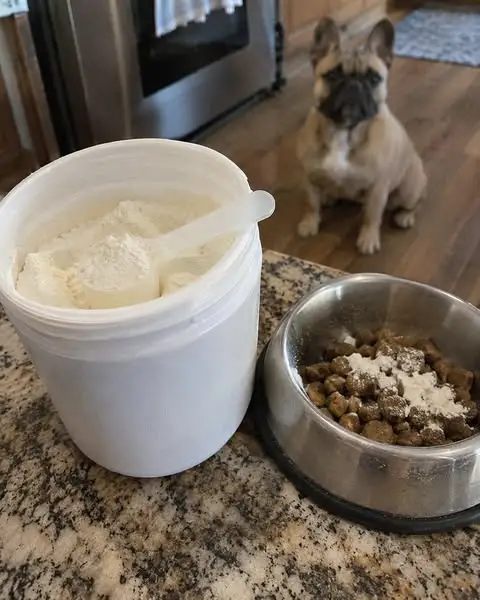
Claire Mitchell — For Frenchie Owners Only
Promising

Showing 22 of 28 · all in Meta's Ad Library

From the ads Sniped has collected from this page (28 so far, first seen Nov 2026). Reach is what Meta reports; no spend or sales estimates.