Advertiser

Sara Jones

Meta Ad Library

5
Running ads
4 new in 30 days
Oct 2026
Advertising since
longest ad 1 month
—
Reach
running ads, summed
0% video
Formats
0 video · 0 image
1
Products advertised

Why the men in my family died young

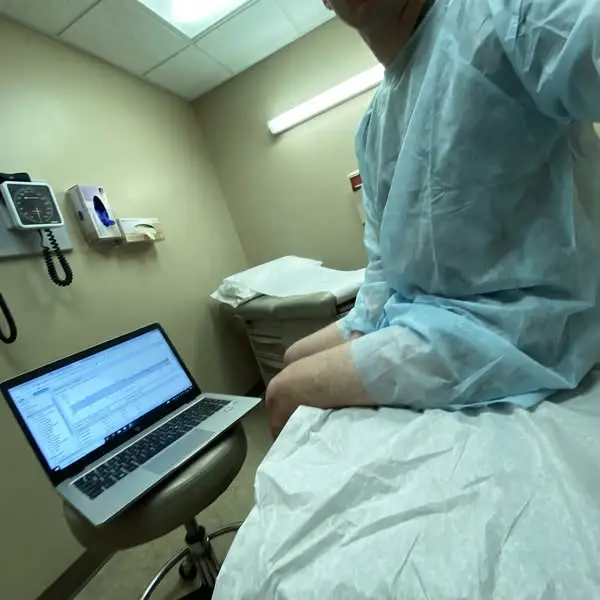
The woman who cut me out of her will saved my life. It took me 25 years and an LDL of 168 to find out how. I took care of my 85-year-old neighbor for her inheritance, but she left me nothing — the next morning, her lawyer knocked and said, "Actually, she left you ONE THING." Her name was Dorothy Rhode. Everyone on the block called her Mrs. Rhode and nobody called her Dorothy except the mailman, and she didn't like the mailman. I was nineteen. Just aged out of foster care. No family. No one. I'd been renting the basement apartment in the duplex next to her house for two months when she knocked on my door on a Saturday morning and said: "You. The tall one. My rain gutters are full of leaves and I'm not climbing a ladder at my age. I'll pay you forty dollars." That was the beginning. She didn't need a caretaker. She needed someone to do the things her body wouldn't let her do anymore — gutters, storm windows, the heavy bags of salt for the water softener. She was sharp. Funny in a way that took you off guard because she'd say something devastating with a completely straight face and then go back to watering her tomatoes like nothing happened. One afternoon she watched me reset a sticking hinge on her back door and said: "You've got a craftsman's hands. Somebody should've put you in a trade." Nobody had ever said a thing like that to me. Nobody had ever looked at the one thing I was good at and given it a name. She insisted on cooking me dinner every Tuesday and Thursday. I told her she didn't have to do that. She told me she wasn't asking. "You eat like a boy who raised himself," she said once, watching me microwave a gas station burrito through her kitchen window. "Come over at six. Bring nothing. Don't be late." I came over at six. I brought nothing. I wasn't late. For four years. Every Tuesday and Thursday. Pot roast. Chicken and dumplings. A meatloaf she said was Harold's recipe but she'd changed so many things about it that Harold wouldn't recognize it anymore. She talked about Harold sometimes — her husband. Dead eleven years by the time I met her. Heart attack at seventy-one. She kept his photo on the mantle and his work boots by the back door and his reading glasses on the side table next to his chair and she never moved any of them in the four years I knew her. I sorted her pills every Sunday night. The plastic Monday-through-Sunday organizer, the six prescriptions, the calcium supplement she took with dinner. I'd sit at her kitchen table on Sunday evenings and fill the little compartments while she told me stories about the neighborhood, about Harold, about the world. She watched me. I didn't know how carefully. I thought the arrangement was simple. She needed help. I needed something I couldn't name. She gave me forty dollars for the gutters and what she really gave me was a kitchen table to sit at and a person who expected me to show up. In four years in the foster system nobody ever expected me to show up. Mrs. Rhode expected it. And not showing up was not an option. "James. You're three minutes late." "I was —" "You were across the street. I watched you sit in your car for four minutes looking at your phone. Come in. The chicken is getting dry." It was on one of those Sunday evenings that I told her the one thing I knew about the family that gave me up. That the men in it had heart problems — arteries that shut down and killed them young. My father. His father before him. I didn't know much else about them — not a face, not a town, not a reason. But I knew that. She didn't say anything for a long moment. Just set down the pill she was holding and looked at me. "Harold's doctor told him his cholesterol was perfect," she said. "Right up until a heart attack took his life." She picked the pill back up. Put it in the compartment. Didn't say another word about it that night. I didn't think anything of it. I didn't know she was already turning it over. She was the closest thing to a mother I'd ever had. I didn't say that to her. I think she knew. She got sick fast. The kind of fast that doesn't give you time to prepare. Three weeks from normal to gone. I drove her to the hospital. I sat in the waiting room. I went home and sorted her pills into the organizer even though she wasn't there to take them because I didn't know what else to do with my hands. She died on a Thursday. One of our dinner nights. I found out about the will from her lawyer. He called me and said there'd be a reading. That I was invited. He said it in a way that made me think being invited meant something. The lawyer's office was small. Wood paneling. A conference table that seated eight. I sat at the end. There were four of us. Me. A woman from the church — Mrs. Rhode had been a member for forty years. A representative from a children's charity. And a woman I'd never seen before, mid-forties, wearing a gray blazer and checking her phone. The lawyer opened the folder. The house — a three-bedroom colonial Mrs. Rhode and Harold had owned since 1971 — went to the children's charity. To be sold, proceeds to the organization. The savings account went to the church. All of it. Building fund. The jewelry — Harold's mother's ring, a pearl necklace Mrs. Rhode wore to church every Sunday, two bracelets I'd seen in the velvet box on her dresser — went to the woman in the gray blazer. A great-niece. I learned later she'd visited twice in four years. Once at Christmas. Once when Mrs. Rhode was already in the hospital. That was it. The lawyer closed the folder. The church woman shook his hand. The great-niece signed something and left without looking at me. I sat there. Four years. Every gutter. Every storm window. Every bag of salt. Every Tuesday and Thursday. Every Sunday evening sorting pills at her kitchen table while she told me about Harold. Nothing. Not a sentence. Not a mention. Not my name anywhere in the document. I drove home with my hands tight on the wheel and my jaw clenched and I told myself I didn't do it for the money. I told myself it wasn't about that. And it wasn't about the money — it was about the fact that she didn't think of me at all. Four years of showing up and she walked out of this life without putting my name on a single piece of paper. I sat in my apartment that night and I was twenty-three years old and I had no one again. The knock came at 8:15 the next morning. Her lawyer. Standing on my doorstep in a coat and tie, holding something under his arm. A dented metal lunchbox. Green. The paint chipped at the corners. The kind of lunchbox a man would carry to a factory in 1965. "Mrs. Rhode left specific instructions," he said. "This was to be delivered to you separately. Not at the reading. The morning after." He held it out. "She was very clear about the timing." I took it. It was heavier than it looked. "There's a letter inside," he said. "And a key. She asked that I tell you the key opens a safe deposit box at First National on Carroll Street. Box 7414. She added your name to the access list six months ago." He paused. "She also asked me to tell you — and these are her words — 'He's going to be angry. Tell him to read the letter before he does anything stupid with the key.'" That sounded exactly like her. I closed the door. Set the lunchbox on my kitchen table. Sat down and stared at it. I didn't open it. I was too angry. Too raw. I'd spent the night convincing myself I meant nothing to her, and now here was this object — Harold's lunchbox, I recognized it from a photo on her mantle — with a letter inside that I didn't want to read because what if it made it worse? What if it was an apology? What if it was an explanation that didn't explain anything? I picked it up. Carried it to the closet in my hallway. Set it on the top shelf behind a box of winter clothes. Closed the door. I was twenty-three. I was grieving. I was angry at a dead woman for not loving me the way I thought she did. I didn't open that lunchbox for twenty-five years. I'm forty-eight now. Sitting in a paper gown on an exam table. The paper crinkles every time I shift my weight. Dr. Adler pulls up my bloodwork on his laptop. Turns the screen toward me. "James, your LDL is 168. Your total cholesterol is 252. That's well into the range where we need to act." "What does that mean?" "It means we need to have a conversation about medication. I'd like to start you on atorvastatin. Ten milligrams daily. It's the gold standard for —" "No." The word came out before I'd thought about it. He looked at me. "James, this is a straightforward —" "I said no. Not yet. Give me time." He leaned back. Put his hands on his knees. "I can give you ninety days. But if these numbers don't improve, we're having this conversation again. And next time I'm going to be less flexible." I drove home. Sat on the edge of my bed. My hands were shaking and I didn't know why. I knew the signs, even if I hadn't named them yet. The breathlessness that hit after climbing a single flight of stairs — I'd started taking the elevator at work just so nobody would see me pause at the top, gripping the railing. The heaviness in my chest after my morning walks, a tightness I could only notice when I stopped and stood still. The fog that settled behind my eyes by mid-afternoon, thick enough to make me lose my train of thought mid-sentence. The cold hands. The tingling in my fingers when the weather turned. The slow-healing cut on my thumb from a hand plane that took three weeks to close. My body was working harder than it should have been to move blood through pipes that were narrowing, and I could feel it even if I couldn't prove it. Something about the word — atorvastatin. Something about the way he'd said it. Gold standard. Take this. Trust me. And then it hit me. Harold. Harold Rhode. The photo on the mantle. The work boots by the back door. A heart attack took him at seventy-one. Perfect numbers every checkup, Mrs. Rhode had said. Never missed a dose. The pill bottles I'd seen on her kitchen counter. Harold's bottles. She'd kept some of them even after he died. A brown prescription bottle with Harold's name on it. I couldn't remember the drug name then. But sitting on the edge of my bed at forty-eight, with atorvastatin ringing in my ears, I could see the bottle. Atorvastatin. Harold had been on atorvastatin. I got up. Walked to the hallway closet. Reached past the winter coats, past the boxes I'd never unpacked from my last move. Back behind everything. Top shelf. The lunchbox was still there. Dusty. The green paint still chipped. Twenty-five years in a closet. I carried it to the kitchen table. Sat down the same way I used to sit when I sorted her pills. The latch was stiff. I had to work it with my thumbnail. It opened with a click that echoed off the walls. Inside: a sealed envelope, yellowed at the edges. My name on the front in her handwriting. Steady. Precise. The handwriting of a woman who'd learned penmanship when penmanship still mattered. And a key. Small. Brass. Taped to an index card that read: First National. Carroll Street. Box 7414. I picked up the envelope. Slid my finger under the seal. The paper was dry and it tore unevenly. A stack of pages. Her handwriting filling every line. James, If you're reading this, I'm gone. And if you're reading this the morning after the will reading, you're angry. I know you. You're sitting at your kitchen table with your jaw tight and you're thinking I forgot you. I didn't forget you. I could never forget you. You were the best thing that walked into my life after Harold died and I need you to understand that what I left you is worth more than the house or the savings or Margaret's ring. I left you Harold. Not his things. His story. The one his doctors never told him. The one I spent the last four months of my life figuring out because it was too late for Harold but it is NOT too late for you. Harold took a pill for his cholesterol for twelve years. Every morning. Never missed a dose. His doctor checked his numbers every six months and every six months the number was beautiful. The doctor would smile. Harold would smile. They'd shake hands. See you in six months. He had his first heart attack at sixty-seven. His number was still beautiful the week it happened. They put in two stents that time and told us he was lucky. Said they caught it early. Said the medication was "doing its job" — even though his arteries were closed enough to nearly kill him. Then a second heart attack hit — this one worse. The damage to his heart muscle was too severe. It never fully recovered. And a few winters later he was gone before the spring. Seventy-one years old. Twelve years of medication. Twelve years of perfect numbers. And my husband died of the very thing those pills were supposed to prevent. But the heart attacks weren't the only thing the pill did to him, James. I want you to understand that. The heart attacks were the ending. The medication wrote a different story first. Year three, Harold started getting tired. Not normal tired. Bone tired. The man who built our back deck with his own hands couldn't mow the lawn without sitting on the porch steps for twenty minutes afterward. I told his doctor. His doctor said it was age. Year five, the muscle pain started. His legs ached so bad some mornings he'd grip the armrests of his chair just to stand up. He'd get out of bed and his calves would cramp and burn before his feet touched the cold floor. Then his hands — the hands that built everything in this house. He couldn't grip a jar lid anymore. Couldn't hold a screwdriver tight enough to turn it. Year eight, I noticed the fog. Harold would start a sentence and lose the end of it. He'd walk into a room and stand there. He forgot our neighbor's name — a man he'd known for thirty years. I thought it was dementia. I was terrified. His doctor said it was "age-related cognitive changes." Not the medication. Never the drug. Always age. I watched my husband disappear in pieces, James. First his energy. Then his legs. Then his hands. Then his mind — even though the number on the chart said his cholesterol was "managed." Then a second blockage they couldn't fix. Then his life. And the whole time, the number was perfect. For years after he died, I accepted it. Bad luck. Genetics. These things happen. That's what the doctor said. That's what the church said. That's what the world says when a man dies of a heart attack the medication was supposed to prevent. Then I got angry. And when I get angry, I don't yell. I read. I spent four months at the library. At the computer. Printing articles. Talking to a pharmacist at the Walgreens on Fifth Street who was patient enough to explain things to an old woman who wouldn't stop asking questions. Here's what I found, James. And I'm going to say it plain because I'm not a scientist and I'm not going to pretend to be: Harold's medication lowered a number. That's what it does. It goes to the liver and blocks the enzyme that makes cholesterol, so the reading drops and the chart looks clean. The doctor is happy. But the number wasn't the problem. The problem was what was HAPPENING to Harold's pipes while the number sat there looking beautiful. His arteries were closing. A second number — one his doctor never once tested — was jamming the crew that keeps the pipes clean, year after year. The pharmacist had a word for it — Lp(a). Lipoprotein little a. Think of an old pipe. When it's healthy, it has a crew. A little crew that clears out the sticky stuff when there's buildup. Rests when there isn't. The pipe stays clean. The sticky stuff is fibrin — the mesh your blood makes every day to patch itself. The crew is called plasmin. Now think about that same pipe after somebody jams the lock on the crew's door. The crew stops clearing. The fibrin hardens. It narrows. Plaque builds up on the inside because the crew isn't working the way it used to. That's what Lp(a) does. It's a counterfeit copy of the crew's key. It slides into the lock and never turns. And you don't catch it. You're born with it. It comes down from your father, and his father before him. That's what was happening to Harold. Twelve years the pill managed his number while the crew in his arteries stayed locked out. Every year the pipes got a little stiffer. A little narrower. A little more clogged. The pharmacist told me the medication never touched Lp(a). It was never designed to. It lowered the amount of cholesterol in the blood and it stopped there. It did nothing — nothing — about the jammed lock in the pipes that were slowly closing. Some of the papers she showed me said statins can even push Lp(a) higher. And the big arteries weren't the only pipes filling up. The smallest vessels in Harold's body — the ones feeding his muscles, his brain, his hands, his heart — were clogging with the same fibrin at the same time. That's the muscle pain. That's the exhaustion. That's the fog that crept in year after year until Harold couldn't follow a book or remember a name. Every part of him that depended on the smallest vessels was slowly being starved of blood while the medication watched a number. The pharmacist put it this way: "The medication kept the score. But the pipes were closing." Here is the part that made me sit down in the pharmacy aisle, James. The pill managed Harold's cholesterol from the outside. But nobody — not his doctor, not the pharmacist who filled the prescription, not one person in twelve years — ever gave Harold anything to clear the fibrin the locked-out crew was leaving behind. Because the crew has a replacement. It has a thing that does the crew's job without the key. Nobody ever mentioned it to my husband. Natto. The enzyme inside fermented soybeans. The Japanese have eaten it for a thousand years. The pharmacist told me it's one of the only things in nature that dissolves fibrin all by itself, without the key Lp(a) jams. Not forcing the number down. Clearing the pipe. The fibrin starts breaking down again. The pipe opens. The blood that was struggling to reach the muscles and the brain and the hands and the heart finally reaches them again. And the smallest vessels — the ones the medication couldn't reach in twelve years — the ones that were slowly starving my husband — start clearing too. Where you get it, and how you have to get it, is in the box. I couldn't fit it all in a lunchbox, and I know you, James. If I handed you a folder full of medical studies at twenty-three, you'd throw it in the same closet you're about to throw this lunchbox in. I also put a checklist in the box. The pharmacist helped me write it. Five things to look for when you find the treatment. Five things that matter. Follow it exactly. Don't skip steps. Don't buy the cheap one. Promise me, James. You'll need all of this someday. You told me what the men in your family died of. The pharmacist says Lp(a) is handed from father to son, a coin flip for every child, and it doesn't care how you eat. And I know because I watched you, James. When you weren't looking, I saw how winded you were after carrying the salt bags up the steps. I saw you grip the porch railing after the gutters, breathing hard, face flushed. I saw you rub your hands together in my kitchen in January like you couldn't get the blood back into them at twenty-two years old. I noticed the things you didn't want me to notice because that's what I do. That's what I did with Harold for thirty-eight years and I wasn't fast enough. I won't make that mistake twice. When your doctor says the word "statins" — and he will, someday — open the box. Read what I found. And then decide for yourself. Harold trusted his doctor. I trusted his doctor. We were all trusting the wrong thing. Don't trust the number, James. Ask for the other one. The one they never test. That's the question that would have saved Harold's life. I won't let it go unasked for yours. I love you like you were my own. Dorothy She signed it Dorothy. Four years of Tuesdays and Thursdays and I never once called her that. Nobody did. And here it was at the bottom of the page, in that steady hand, like she was giving me something she'd never given the mailman. I read it three times. Then I put my head on the kitchen table and I cried. Not the angry crying from the night before. A different kind. The kind that comes when you realize someone saw you — really saw you — and you didn't know it. The kind that comes twenty-five years too late. She hadn't forgotten me. She'd been watching me the entire time. She saw a pattern she recognized because she'd watched it destroy her husband, and she spent her last months alive trying to make sure it didn't destroy me. And she was right. Twenty-five years later, sitting at my own kitchen table with an LDL of 168 and a doctor pushing the same pill that failed Harold — she was right about all of it. I drove to First National the next morning. Hadn't been inside a bank in years. Showed my ID. They looked up the box. My name was there, just like the lawyer said. Added six months before she died. The safe deposit box was small. Inside it was a manila folder, thick, held shut with a rubber band that snapped when I tried to slide it off. Studies. Printed from medical journals. Some highlighted in yellow, some in pink. Margin notes in her handwriting — the same steady hand as the letter, but smaller, more cramped, as if she was running out of time and trying to fit more on each page. And paper-clipped to the inside of the folder, a single index card. Her handwriting. Block letters. Underlined twice at the top: JAMES — FOLLOW THIS. DO NOT SKIP STEPS. 1. Must be REAL NATTOKINASE from fermented natto. Not a "blend." Not "natto complex." Blend means whatever they want it to mean. 2. Must say FU on the label. Not "milligrams." Not "mg." FU means somebody measured whether the enzyme still dissolves fibrin. 3. Must be fermented at LOW TEMPERATURE. Nattokinase is an enzyme. Heat kills it. A cooked capsule is worse than useless. 4. Must be a REAL DOSE, printed plain. 10,000 FU. Not 2,000. Not hidden in a "proprietary blend." If they won't print the number, they're hiding it. 5. Must be LAB TESTED. Trust the lab, not the reviews. That was Mrs. Rhode. Even from the grave, she was handing me a grocery list and telling me not to come back with the wrong thing. I set the checklist on the passenger seat and started reading the studies. The first printout had a section highlighted in yellow and a note next to it in her hand: "THIS. This is what happened to Harold." I had to put the folder down before I finished the first page. The studies described what the letter only hinted at. The fibrin piling up year after year. Plaque building up inside pipes nobody was cleaning. Blood struggling to reach the muscles, the brain, the hands, the heart. And when a piece of plaque ruptures — that's the heart attack. That's the thing that kills you at seventy-one on a Tuesday morning when your chart says you're perfectly safe. Harold's arteries were full of this. Twelve years of perfect numbers. Plaque building the entire time because nobody was looking at Lp(a) — they were only looking at the count. And the medication — atorvastatin, rosuvastatin, all of them — aimed at the amount of cholesterol in the blood. Not one of them designed to touch Lp(a). Not one of them within a mile of the pipes doing the actual killing. Harold's atorvastatin never touched the jammed lock. Twelve years. The number looked clean. The pipes kept closing. I sat in my car in the bank parking lot and stared at the page. Mrs. Rhode had written in the margin: "The number was the cover of the book. Nobody ever read what was inside." She'd read past the pills, too. There were pages on the things people reach for when they want to manage cholesterol naturally — oat fiber, fish oil capsules, plant sterols, the red yeast rice supplements off the pharmacy shelf. A line drawn through every one, with a note on why. Every single one was chasing the same thing the pill chased: the number. Not one of them went anywhere near Lp(a). Diet doesn't move it. Exercise doesn't move it. It's in the genes. I kept reading. The next section of the folder was about natto. Mrs. Rhode had printed studies from research institutions in Japan, the United States, and Europe. Dozens of publications. One went back to 1980 — a Japanese researcher named Hiroyuki Sumi tested 173 foods against a blood clot, and natto dissolved it in about eighteen hours. She'd highlighted the key finding in three different studies with the same yellow marker: Nattokinase dissolves fibrin directly, without the key Lp(a) jams. The crew's job gets done anyway. The plaque stops building. The blood reaches the muscles and the brain and the hands and the heart the way it's supposed to. She'd written in the margin: "Most cholesterol solutions are like painting a rusty pipe. This one sends in a new crew." That was the difference. Every other approach — statins, diet changes, fiber supplements — focused on the number in the blood. Nattokinase doesn't chase the number. It does the crew's job. And when the crew's job gets done, the plaque stops building. But the next page was the one that stopped me. I read it twice. The studies showed that nattokinase doesn't just clear the fibrin in the big arteries. It also supports the smallest vessels feeding the muscles, the brain, and the heart. The same vessels that had been shutting down in Harold — the vessels the medication had never once reached. Not forcing the number down harder. Clearing the pipes so the blood reaches the tissue. I found one more margin note, near the back. She'd written "too late for Harold" and then crossed it out. Pressed so hard with the pen that the cross-out tore the paper slightly. Underneath it, the one she let stand: "In time for James." She'd assembled all of this in four months. Dying. Printing studies at the library. For me. I closed the folder. Pressed it against my chest. And I sat in that bank parking lot and let twenty-five years of anger dissolve into something I didn't have a word for. She didn't leave me nothing. She left me everything. I went home and did what any man in my position would do. I ignored the checklist. Not completely. I read it. I understood it. I set it on my kitchen table next to the folder and I told myself I'd follow it. But I also found a bottle of nattokinase capsules on Amazon for $19 with four and a half stars and three thousand reviews, and I ordered it because I'm the kind of person who buys the first thing he finds even when a dead woman specifically told him not to. Mrs. Rhode knew me better than I knew myself. The capsules arrived in three days. Small. White. I swallowed one with water. Felt nothing. Took it the next morning. Nothing. Third morning. Nothing. I took those capsules for two and a half weeks. Every morning. Waiting for the shift Mrs. Rhode's studies had described. It never came. On a Wednesday night I was sitting at the kitchen table staring at the bottle and Mrs. Rhode's checklist was right there. Right next to it. Where it had been the entire time. I picked it up. Step one: Must be REAL NATTOKINASE. Not a "blend." I turned the bottle over. Ingredients: nattokinase blend. Failed. Step two: Must say FU on the label. Nothing. Just "1,000mg natto blend." Milligrams. No FU. Blend. A word that means whatever they need it to mean. Failed. Step three: Must be fermented at LOW TEMPERATURE. Heat-dried powder. Not one word about temperature. Failed. Step five: Must be LAB TESTED. Nothing. No lab results. No third-party testing. Failed. Four out of five criteria. Failed. Failed. Failed. Failed. I'd spent two and a half weeks taking a product that Mrs. Rhode had already told me wouldn't work. She'd written the checklist. She'd underlined it twice. She'd said DON'T BUY THE CHEAP ONE. And I did it anyway because I was forty-eight years old and still the same kid who tries to fix a gutter with the wrong screws. I threw the Amazon bottle in the trash. And then I did what I should have done from the start. I sat down with Mrs. Rhode's checklist and I went through every nattokinase product I could find online, checking each against her five criteria. Natto powder drinks. A blend, heat-dried. Failed step one and step three. Store-brand nattokinase capsules. Milligrams again. No FU anywhere. Failed step two. The few that were real nattokinase — heat-processed. Or FU printed, but only 2,000. Or a "proprietary blend" hiding the number. Failed step three or step four. I was crossing off everything. Then I found one that passed all five. Noverly Nattokinase. Real nattokinase from fermented natto — step one. 10,000 FU right across the front of the bottle — step two. Fermented at low temperature, so the enzyme comes out of the vat still alive — step three. Clinical dose printed plain on the label — step four. Lab tested — step five. And K2, CoQ10 and aged garlic in the same capsule, three things she'd circled in the folder. Every line on her checklist. Check. Check. Check. Check. Check. I could almost hear her: "See? Was that so hard?" I ordered it. More expensive than the Amazon brand. Mrs. Rhode didn't send me to a safe deposit box to save fourteen dollars. When it arrived, I could tell the difference before I opened the bottle. 10,000 FU printed on the front, the whole stack on the back. Nothing like the "blend" on the Amazon bottle. I took two with dinner and sat down at the kitchen table. The same table where I'd read her letter. Five days. That's when I felt it. A warmth. That's the only word I have for it. Warmth spreading down into my hands and up into my head at the same time. My fingers, which had been cold since October, went warm. The fog that usually settled over my brain by late afternoon — it wasn't there. My head was clear. That could be placebo, I told myself. But I'd taken the Amazon capsules for seventeen days and felt nothing. Not once. This was different. This was real. End of week one: the afternoon fog that had been my constant companion for three years was gone. Not reduced. Gone. I went for a blood test. LDL: 159. Down from 168. Small. But something was moving. Week two: I climbed the stairs at work without gripping the railing. Walked the dog without the tightness settling across my chest. My hands stayed warm all day. Week three: I was in my shop — I'd gone into furniture-building, the slow kind, hand-cut joinery, the craft Mrs. Rhode had told me to make a life out of when I was nineteen. I spent four hours on a dovetail joint without sitting down once. Didn't even notice I'd done it until I straightened up and realized the light had changed outside. No fog. No fade. No heaviness in my chest. I stood there for a long time. A month ago, I'd been taking the elevator. Pausing at the top of stairs. Losing words by three o'clock. Week four: I got my blood drawn again. LDL: 138. Down from 168. Total cholesterol: 208. Down from 252. I stared at the number. Took a photo. Stared at it again. Week eight: went back for a full panel. Asked them to add the test Harold's doctor never ran — the Lp(a). And fibrinogen, the clotting marker. LDL: 134. Holding steady. Fibrinogen: normal. Lp(a): 186. High. The number I was born with. The number my father died with. Nothing on a shelf lowers it, and nothing in my bottle claims to. But for the first time in my family, somebody knew it was there and was clearing up what it leaves behind. And then the test the cardiologist ordered because he wanted to see what my arteries were actually doing — not just the count. My arterial function came back in the healthy range. First time in my life anyone had measured it. First time anyone had cared what my blood was doing. I sat in my car outside the lab and I called no one. Because I had no one to call. Mrs. Rhode was dead. Harold was dead. So I drove to the cemetery. But that's not where the story ends. The story ends in Dr. Adler's office. Dr. Adler pulled up my chart at the ninety-day appointment. Looked at the screen. Looked at me. Back at the screen. "James." A pause. "What did you do?" "Changed some things." He scrolled. His eyebrows pulled together. "Your LDL dropped from 168 to 134. Your total cholesterol is 208. Your arterial function is —" He shook his head. "These are excellent numbers." He closed the laptop halfway. Leaned forward. "Whatever you're doing, don't stop." "No statin?" "No statin. Not with these numbers." He opened the laptop again. "I'm ordering another panel in six months. But James — this is remarkable progress." He didn't ask what I was taking. Didn't endorse it. Didn't say the word "supplement." Just shook his head the way a mechanic shakes his head when you bring in a car he expected to be totaled and it runs clean. I'll be straight about one thing, because Mrs. Rhode would reach out of the ground and correct me if I wasn't. The capsule wasn't the only thing that changed. Those ninety days, I ate like a man who'd read Harold's story. I walked in the mornings. I cut the fried food. One thing feeds the next. But I'd been foggy for three years and careful for none of them, and the careful alone had never touched the way I felt by four o'clock. Something else turned. I know which chair I was sitting in when it did. I drove to the cemetery that afternoon. Her headstone is small. Gray granite. Next to Harold's. Dorothy Mae Rhode. Beloved wife of Harold. I stood there with the folder in my hands. The one she'd assembled. The studies. The margin notes. The checklist on the index card. "You left me everything," I said. The wind moved through the trees. "I thought you forgot me. For twenty-five years I thought you forgot me. And you were the only person who ever really saw me." I set my hand on the stone. Cold granite. The October sun low behind me. "Harold would be proud of you. You figured out what his doctor couldn't. And you left it for a kid who wasn't smart enough to open it. Or follow the checklist." A long pause. "Thank you, Dorothy." First time I ever said it. Twenty-five years of Mrs. Rhode, and the one time it finally came out of me, she wasn't there to hear it. Or maybe she was. She always did notice the things I didn't want her to notice. I drove home. Set the folder on my kitchen table. Took my Noverly Nattokinase with a glass of water. And I sat in the same chair where I used to sort her pills and I swallowed it. That was seven months ago. My last blood panel: LDL 129. Total cholesterol 194. Arterial function normal. No medication. No atorvastatin. No side effects. No four-o'clock fog. No breathlessness on the stairs. No cold hands. No version of Harold's twelve years playing out in my body. Not forcing lower. Clearing the pipes. That's the line Mrs. Rhode would have used if she'd lived long enough to see it work. I'm forty-eight years old. I grew up with no one. But I had Mrs. Rhode. And Mrs. Rhode left me the one thing that mattered more than a house or a savings account or a ring. She left me the truth about what took her husband. And it saved my life. I'm writing this because Mrs. Rhode can't. She spent four months assembling research for one person — me. If she'd had more time, she would have told everyone. I know that because I knew her. She would have knocked on every door on the block. So I'm knocking for her. You're standing where I stood seven months ago. Where Harold stood for twelve years. Your doctor is saying the same words — the number, the medication, the gold standard. One path leads where Harold's led. Fill the prescription. Start the atorvastatin. Watch the number drop and trust that the number means you're safe. Hope the fog is just aging. Hope the muscle pain is just getting older. Hope the memory doesn't slip. Hope the plaque isn't building. Hope your kids didn't get your number. Hope the next checkup doesn't end with a surgeon drawing a line down the center of your chest. Harold walked that path for twelve years. Perfect numbers. Perfect compliance. Then a heart attack took him. There's another path. The one Mrs. Rhode spent her last four months building. Ask for the Lp(a) test. Find out whether you were born with the number Harold's doctor never checked, not just what the count is. Send in the crew your genes locked out. Track your numbers. Verify the results with your own bloodwork. That's what I did. That's what Mrs. Rhode wanted me to do. She ran out of time for Harold. She didn't run out of time for me. And you're reading this now. Which means she didn't run out of time for you, either. 👉 https://noverly.shop/products/nattokinase-10-000-fu-clinical-strength-heart-circulation-complex P.S. — The product Mrs. Rhode's research led me to is called Noverly Nattokinase. Real nattokinase from fermented natto. Low-temperature ferment. 10,000 FU, the clinical dose, printed plain on the label. Lab tested. 90-day money-back guarantee. If Noverly doesn't work for you, you get every penny back. No questions asked. In twelve years, nobody ever offered Harold a refund when the medication failed to prevent the heart attack that killed him. P.P.S. — Here's what I'd tell you to do, because it's what I did: take two capsules a day with food. Circle the date on a calendar. Somewhere in the first week you're going to feel warmth spreading down into your hands and up into your head — that's blood reaching places it hasn't reached in a while. That's not placebo. I took the Amazon capsules for seventeen days and felt nothing. On Noverly I felt it on day five. Mrs. Rhode's checklist had a note at the bottom: "If you feel it, it's real. If you don't feel anything at all, you bought the wrong one." P.P.P.S. — Noverly is a small company. They sell out. If your next blood panel is in 30 to 60 days, check availability now. If the link's still there, it's still in stock. Mrs. Rhode ran out of time. Harold ran out of time. You still have yours. 👉 https://noverly.shop/products/nattokinase-10-000-fu-clinical-strength-heart-circulation-complex

Loading the ad's image
Sara Jones — Why the men in my family died young
Promising

Support stamina and heart health every day

I spent 27 years in prison for a shooting I didn't do. The night before my cellmate made parole, he told me the first thing I had to do if I ever got out was go see my mother's grave. Then he walked out that gate and never wrote me once. Not one letter in 9 years. Last June a DNA test set me free, and I took a bus straight to that cemetery. The groundskeeper was waiting for me. The officer at the property window didn't look up. "Hatch. 614429." "Yes sir." He slid a paper bag across the counter. My name on it in black marker, and a date. 1999. Everything I had on me the night they arrested me. A brown wallet with eleven dollars in it, a pack of gum gone hard, and a key to an apartment other people had been living in for twenty-seven years. And my watch. It had stopped at 4:10. Some afternoon back then the battery quit, and nobody was around to notice. I put it on anyway. "Sign here." I signed. My hand wouldn't sit still. Twenty-seven years, and the last thing they needed from me was my name on a line. They counted forty dollars into my hand. Gate money, they call it. Then the doors. The first one buzzed. The second one buzzed. Then there wasn't a third. Nobody shook my hand. Just a parking lot, and more sky than I'd seen in twenty-seven years. There was one person standing in it. Ellen Brandt. My lawyer. Six years she worked my case for nothing. She's the one who got a lab to test the hair again — the one hair a man in a white coat swore was mine at my trial. It wasn't. It never was. "Leon," she said. Nobody had called me by my first name in a long time. Inside you're a last name and a number. I didn't know what to do with my hands. She didn't either. So she hugged me, kind of stiff, and I stood there and let her. "Where do you want to go?" she said. "Anywhere. I'll drive you." I'd had the answer to that for nine years. "Mount Olive. The cemetery." She knew about my mother. She'd read every page of my file. "Okay. Get in." "No," I said. "I want to take the bus." "Leon, it's three hours." "I know." She looked at me a long second. She didn't argue. She drove me as far as the station, and I bought my own ticket with the state's forty dollars. For twenty-seven years, somebody else decided where I went. That ticket was the first thing I'd decided for myself since 1999. Three hours is a long time to look out a window. I spent most of it thinking about how I ended up in there. I was thirty-seven. I fixed small engines out of a rented garage on the edge of town. Lawn mowers, chainsaws, outboard motors. Whatever people brought me. One night in March, a man in a ski mask walked into a gas station out on Route 9 with a pistol. He took what was in the register. On his way out the door he shot the kid behind the counter. The kid lived. He never walked right again. Two weeks later the police came to my garage. That night I'd been home asleep. Alone. Nobody could say so but me. A woman who'd been at the pumps said she saw the man's face when he pulled his mask up in the parking lot. It was dark. She saw him for maybe three seconds. She picked me out of a lineup anyway. And there was a hair on the counter. At my trial a man from the state crime lab got up in a white coat and said he'd looked at that hair under a microscope next to mine, and they matched. I didn't know what that meant. I don't think the jury did either. But they knew what a white coat meant. Guilty. The judge gave me forty years. I was thirty-seven years old. My mother sat in the second row every day of that trial. She didn't cry when the verdict came. She held on until they put the cuffs on me. Then she couldn't stop. My fourth year inside, they moved Gus Bell into my cell. He was eight years older than me. Quiet. Big hands. He'd already done twelve years by then, and he worked the infirmary. Up at five every morning, pushing a cart down the rows of beds, sitting with the old men nobody came to see. He never talked about what put him there, and I never asked. Inside, that's manners. The first night, I told him I didn't do it. He just nodded. "Okay." Nobody in that place had ever said that to me. My mother wrote me every week. Every Sunday night I'd sit on my bunk and read her letter out loud. Who was sick at church, what the tomatoes were doing, which neighbor had a new dog. Gus never got mail. Not once in fourteen years. The first few weeks he pretended he wasn't listening. By the second month he was asking if she'd written yet. By the second year she was signing off with "Tell Gus hello." By the fifth year she was writing him a paragraph of his own. She never met him. She worried about him anyway. Was he eating. Was he warm enough. Did he have anybody. "Tell her I'm fine," he'd say. Then he'd turn over and face the wall, and I'd read that part again, slower. There was a man on our block named Wendell. He'd been in thirty years and he cut hair for the whole tier. Clippers and a comb. He could line up the back of your neck so straight you'd swear somebody drew it with a ruler. Steadiest hands in the place. Everybody said so. Gus and I sat in Wendell's chair every other Saturday for fourteen years. Same table at chow, same laps around the yard. I knew how he breathed when he was asleep, and he knew which nights I didn't sleep at all. You don't pick your family in there. But sometimes you get one anyway. My seventeenth year, the letters stopped. One Sunday there was nothing. The next Sunday, nothing again. Gus asked me if she'd written. I said the mail must be slow. By the third Sunday neither of us asked. That Thursday the chaplain came to our cell door. A chaplain doesn't walk all the way down your tier with good news. She'd gone in her sleep. Eighty-one years old. I asked to go to the funeral. Sometimes they let you, with two guards and chains on your ankles. I didn't care about the chains. I'd have crawled there. The answer came the day before. Denied. Violent offense. For a shooting I didn't do. They buried my mother on a Saturday at eleven o'clock, three hours away. At eleven o'clock I was sitting in the chow hall with a tray in front of me. Gus was across the table. He didn't say anything. When the clock on the wall hit eleven, he just set his fork down. So did I. Neither one of us picked it back up. She had nobody else. No brothers, no sisters. My father had been gone since I was a boy. It was just her and me. And I was in there. The next spring, Gus made parole. Fourteen years in the same cell, and they gave him one week's notice. He was sixty-three. The night before he left, neither of us slept. He was on the bottom bunk, I was on top, and we lay there in the dark not saying much. Around two in the morning he spoke up. "Leon. You awake?" "Yeah." "First thing you do when you get out, you go see your mother." I almost laughed. I still had twenty-two years left. "I'll be seventy-seven, Gus." "I didn't ask how old you'll be. I said when." It was quiet for a long time. "I'll make sure she isn't alone till then." I didn't know what he meant. I didn't ask. "And I'll write you," he said. "Every week. Same as she did." In the morning they called his name. Everything he owned fit in one paper bag. At the door he turned around and looked at me. "Every week," he said. Then he was gone. The first week, no letter came. I figured he was getting settled. After my mother died I'd stopped listening at mail call. Now I listened again. Every evening the officer walked the tier calling out names, and every evening I waited for mine. A month. Nothing. Six months. Nothing. A year. I worked it out the way you work everything out in there, lying on your bunk at night with nothing else to do. He was out. He had a life now. I was a cell he used to live in. I stopped listening for my name. Not one letter. Not one in nine years. My twenty-first year, a letter did come. It wasn't from Gus. It was from a woman at a law school clinic who'd read my file. Ellen. She wanted to test the hair again. With DNA this time, the kind of test nobody did back when they convicted me. It took her six years. Two labs. Four hearings. A prosecutor who fought her on every page. Last June I sat in the same kind of courtroom I'd been sentenced in, and a judge read a lab report out loud. Then he took off his glasses and looked at me. "Vacated." A lab report put me in there. A lab report got me out. Out the bus window, a green sign went by. Mount Olive, 12 miles. The bus let me off on Main Street a little after two. The cemetery was a mile out of town. I walked it. I'd never seen her grave. Not once. The whole way there I tried to get ready for it. She'd been in the ground ten years. I figured I'd find the stone sunk and crooked, grass grown up over her name, the way they look when there's no one left to come. There was a shed by the gate. An old man was out front with a rake. "I'm looking for Ida Hatch," I said. He stopped raking. He looked at me for a long time. Longer than a stranger should. "You're Leon," he said. I didn't know what to say to that. "Come on." His name was Ortiz. He'd kept those grounds for thirty years. He walked me up the hill without another word, past rows and rows of stones, and stopped near the end of a row. I'd been ready for weeds. The grass around her was cut short and edged clean, like somebody had done it with scissors. The stone had been washed. You could read every letter. And in the little vase by her name there were flowers. Pink carnations. Fresh. I stood there and couldn't make my mouth work. "Who did this?" "Fella comes every May," Ortiz said. "Mother's Day. Nine years now, never missed one. Pays me to keep fresh flowers on her the rest of the year." My knees went. I sat down in the grass right there in front of her. "Big man?" I said. "Big hands?" "Biggest hands I ever shook." Nine years I lay on a bunk thinking he forgot me. He never forgot her once. Ortiz cleared his throat. "He left something for you," he said. "Every May he asks me if you've come yet. Said you'd be along eventually." He walked back down to the shed. When he came back up the hill he was carrying a green metal tackle box with the latch taped shut. He set it in the grass next to me. "He said you'd know what to do with it." I peeled the tape off the latch and opened it. On top was an envelope with my name on it, in handwriting I hadn't seen in nine years. Under it, a roll of bills with a rubber band around it. And under that, a second envelope. Sealed. Two words across the front in capital letters. NOT YET. I opened the first one. Leon, If Ortiz gave you this, you got out. I knew you would. I'm sorry about the letters. I meant every word that night. Then my first morning out I sat down with my parole officer, and the first rule he read me was no contact with anybody inside. No letters. No phone calls. Not even through somebody else. Break it and I go back. So I did the only thing I could do. Your mother wrote me a paragraph every week for twelve years. The least I could do was keep her company till you got there. I'm on a lake in Missouri now. Cedar Hollow. I run a little bait shop and rent out a few boats. Bell's Bait & Boat. Anybody in town can point you. There's no phone out at the dock worth calling. Don't call. Come. The money's for the bus. The other envelope is for later. Don't open it yet. You'll know when. Your friend, Gus I read it sitting in the grass. Then I read it again. I picked up the sealed envelope and turned it over in my hands. It was thick. Several pages, at least. I didn't open it. Gus had been sure I'd get out when nobody else was. I figured he was right about this too. I put it back in the box. I sat with her until the sun went down and Ortiz came up the hill to tell me he had to lock the gate. Twenty-seven years, I'd had nowhere to go. Now I had somewhere. It took six days to get ready to go. Ellen found me a room at a halfway house, drove me to get a state ID, and bought me a cheap phone with one number in it. Hers. I bought a ticket to Missouri with Gus's money. Nine hours, two transfers. The bus left Monday at 7:40 in the morning. I was at the station by six. The platform there is up a flight of concrete stairs. I had the tackle box in one hand and a bag of clothes Ellen bought me in the other. I was halfway up when my chest locked. It wasn't pain. It was pressure. Like somebody had set a cinder block on my chest and leaned on it. The edges of everything went gray. I grabbed the rail. I couldn't go up and I couldn't go down. A man behind me said, "You okay, buddy?" and stepped around me. I sat down right there on the step. I don't know how long I sat. Long enough to hear the doors hiss shut up top. Then the engine. Then the bus pulling out without me. I looked down at my wrist out of habit. 4:10. Six days out. My time hadn't even started yet, and it was already running out. When the gray finally pulled back, I took out the phone. There was only one number in it. She got there in twenty minutes. I was still on the step. She didn't say anything at first. She just sat down next to me in her good suit, right there on the dirty concrete. "Did the bus leave?" "Yeah." "What happened?" I told her. The stairs. The weight on my chest. The gray. "When's the last time you saw a doctor?" "Inside they'd take blood every couple of years. Nobody ever told me what it said." "So never." "I feel fine now." "Leon." "There's another bus Thursday." She looked at me. She was holding her car keys so tight her knuckles had gone white. "I didn't spend six years getting you out of there to watch you die on the steps of a bus station." Her voice didn't shake. Her hand did. I could hear the keys rattling. Nobody had been scared for me since my mother. "Okay," I said. She called a free clinic from the car and got me in the next morning. The ticket to Missouri was still in my shirt pocket. I left it there. The clinic was in an old storefront on Fourth Street. Thirty folding chairs and one doctor. Dr. Kowalski. Young. Tired. She'd probably seen forty people before me that morning. A nurse took my blood pressure, wrote something down, and circled it. They drew blood and sent me home. Two days later they called me back in. Dr. Kowalski had my results on a laptop. She turned the screen toward me like I'd know what I was looking at. "Mr. Hatch, your LDL cholesterol is 198. Your total cholesterol is 274. Your blood pressure is high, and so are your triglycerides." I didn't say anything. "Given what happened on those stairs, I want to start you on a statin. Atorvastatin. Ten milligrams, once a day." Statin. I knew that word. Gus used to hand it out every morning in the prison infirmary, off his cart. "No," I said. She blinked. "Mr. Hatch —" "No statins." She kept going about risk and plaque and my age. I'd stopped hearing her. In my head I was back on the block, sitting in Wendell's chair. A couple of years before Gus made parole, the prison doctor put Wendell on a statin. Simvastatin. The cheapest one they stocked. Inside a year his hands started to shake. The clippers would jump. He nicked a man's neck. Then another. A barber who'd lined up necks for forty years without a mark, and now men were walking out of his chair bleeding. They took the clippers away from him. After that the fog came. He'd call men by the wrong name. Men he'd cut every other Saturday for twenty years. Then his legs went. By the end he was in the infirmary, and Gus was the one holding the cup to his mouth so he could drink. I remember the night Gus came back to the cell and sat on his bunk without taking his shoes off. "His chart says his numbers are fine," he said. Wendell died two weeks later. The steadiest hands in that whole place. I watched that pill take them one Saturday at a time. So when a doctor said statin, all I could see was Wendell's clippers shaking. "No," I said again. She didn't give up easy, I'll give her that. Then she wrote the prescription anyway and put it in my hand. "Think about it," she said. "Please." I folded it up and put it in my shirt pocket. Right next to a bus ticket to Missouri. I couldn't sit in that room all day waiting on my own heart. Ellen knew a man named Ray who ran a small-engine shop out by the interstate. He needed somebody who could still fix a carburetor without a computer telling him how. My first week, he rolled in a riding mower that hadn't run since fall. I had the carburetor apart on the bench. I picked up the smallest screwdriver he had to set the idle screw. A job I'd done a thousand times before they locked me up. My hand shook. Once. Just enough to slip off the screw. I set the screwdriver down and looked at my hand like it belonged to somebody else. It was nothing. A bad night's sleep. The second time it held fine. But for a second there, I wasn't looking at my hand. I was looking at Wendell's. That night I sat on the bed at the halfway house and took everything out of my shirt pocket. The prescription. The bus ticket. I laid them side by side on the blanket. If I took the pill, I'd end up like Wendell. A man who fixes engines for a living, who can't hold a screwdriver. If I didn't, my heart might quit on the next flight of stairs. And Gus would be out on a dock in Missouri, waiting on a bus I was never going to be on. Either way, I wasn't getting to that lake. And I wasn't going to show up after nine years just to fall down in front of him. Gus had already held one man's cup at the end. He wasn't going to hold mine. So I decided to fix it myself first. I stayed away from the vending machine at the halfway house. I ate the salads Ellen kept bringing by. I walked the two miles to Ray's shop every morning and the two miles back every night. Eight weeks of that. The prescription stayed folded in my shirt pocket the whole time. Then I went back to the clinic. LDL: 192. Eight weeks of trying, and it moved six points. Dr. Kowalski looked at the screen for a while before she looked at me. "Mr. Hatch, you've done everything right. I can see that. But this isn't going to come down on its own. You need the medication." "I'm not taking it." She closed the laptop. "Then I honestly don't know what else to tell you." I walked out of that clinic with nothing left to try. I sat in the bus shelter out front for a long time, staring at the street. Then I thought about the tackle box under my bed. "The other envelope is for later. Don't open it yet. You'll know when." I knew. I opened it at the little table in my room that night. Four pages, both sides. His handwriting got smaller toward the end, like he was running out of paper. "Leon, if you're reading this, a doctor has told you that you need a pill for your heart, and you've run out of ways to say no." "I'm sorry I made you wait. I didn't want this to be the first thing you read when you got out. You'd been through enough." "But I saw your chart in there. They drew your blood every couple of years and filed it, and nobody ever sat you down. I knew your numbers before you did." "Inside I didn't understand what I was looking at. I just handed out what the doctor wrote. It took me getting out to learn what I'm about to tell you. So here it is, plain." "All those years I pushed that cart. You know what most of the men we carried out of there had in common?" "Their numbers were fine." "Not high. Fine. On the pill, every morning, and the chart said fine. Wendell's chart said fine." I put the letter down and looked at the wall for a while. Then I picked it back up. "Here's what nobody told us, Leon." "Cholesterol isn't the enemy. Your body makes it on purpose. It needs it." "The trouble starts when something attacks it. Free radicals. When they get hold of your cholesterol, it rusts." "Same word as the rust on an old fender. Same thing that happens to an apple you cut in the morning. By lunch it's gone brown." "Nobody added anything to that apple. The air did it." "That rusted cholesterol turns sticky. It works its way into the walls of your arteries and packs in, year after year, and hardens. Then one day a piece of it tears loose and jams the pipe shut." "That's what kills a man. Not the cholesterol you've got. The cholesterol that's gone bad. The rust." "And the number your doctor watches doesn't measure any of it. It counts how much cholesterol you have. It says nothing about how much of it has already gone brown." "You can have a beautiful number and rusting arteries in the same body." "Wendell did." "The number was the cover of the book. Nobody ever read what was inside." I read that line three times. "It gets worse. When your cholesterol rusts, your body takes it as damage. So it makes more cholesterol to patch it. Which gives the rust more to work on. Which the body takes as more damage. So it makes more." "It's a wheel. Round and round." "And the pill can't stop it. All it does is chop the number down. It bails water as fast as it can and never once finds the hole the water's coming in through." At the bottom of the page he'd drawn a circle with an arrow chasing its own tail. I knew rust. I'd fought it on every engine I ever touched. You can paint over it, and the fender looks brand new. Underneath, it keeps eating. I turned to the next page. "Now I have to tell you something about me, Leon. Something I never told you inside." "The same year they put Wendell on it, the prison doctor put me on it too. Same cart. I was handing myself the same little paper cup I handed everybody else." "By the time I got out, I was dropping those cups. Holding one steady to Wendell's mouth at the end took both my hands." "My grip was going. My legs felt like somebody poured concrete in them. I told the doctor inside. He said it was my age." I remembered him working his hands open and shut at night on the bottom bunk. I'd figured it was the cold. "The first doctor I saw outside looked at my hands and asked me how long I'd been on it. Then he took me off it, slow, and watched my blood the whole way down." "That's when I started reading. Every night, at the library in town, till they turned the lights off." "Here's what I found, Leon. Here's what happened to Wendell." "That pill works by shutting down a production line in your liver, so you make less cholesterol and the number drops." "But that same line makes something else. CoQ10. It's the spark every muscle in your body runs on. Your heart. Your legs. Your hands." "Shut the line down to force the number lower, and you shut down the spark with it. Same switch. You can't have one without the other." "The tiredness that sleep doesn't fix. The grip going soft. The fog that takes the back half of your sentences. High cholesterol doesn't do that. High cholesterol doesn't do anything you can feel." "That's the pill. Draining the spark out of every muscle a man has got." "They call it a side effect. It isn't. It's the pill doing exactly what it was built to do." I thought about Wendell's clippers jumping in his hand. About Gus holding that cup with both hands. "So the pill fails twice, Leon. It never stops the rust that's killing you. And it drains the spark that keeps you standing." "What a man needs is the opposite. Something that stops the rust and leaves the spark alone." "I found it. And it wasn't a drug." "You know natto? The fermented soybeans the Japanese eat, sticky and stringy? The enzyme in them has a name. Nattokinase." I almost laughed. Soybeans. Nine years without a word, and Gus Bell was writing me about soybeans. But I kept reading. "Most things they sell to fight free radicals are a carpet bomb. They knock out all of them, even the ones your body needs to fight off a cold." "Nattokinase is a smart missile. It goes after the one thing the rusted cholesterol sticks to and builds on, fibrin, the sticky mesh, and it leaves the rest alone." "And it gets in. It rides in your blood and digests the fibrin, the sticky mesh the rusted cholesterol packs into, right where the plaque starts." "The pill can't reach in there. Fish oil can't. The nattokinase breaks the sticky down before it ever packs in." "And it never touches that production line in your liver. It doesn't lay a finger on your spark." "Stop the rust. Leave the spark." "There's a study. A whole year. Over a thousand people taking real nattokinase dropped their cholesterol, and the plaque, the kind that kills you, came down at 10,800 FU a day. At 3,600, it didn't." "I've been off the pill eight years. My last number was 131. And my hands are steady enough to tie a hook on a fishing line in the dark." "One more thing, before you go running to a store. Almost none of the nattokinase you can buy will do a thing for you." "The natto in the grocery store is sold for one thing. Food. Nobody ever counted the enzyme in it, so you never know if there's any medicine left. You'd be eating weak beans by the pound to get at the medicine." "There's natto the way the Japanese have made it for a thousand years. Fermented soybeans. Nattokinase. Nobody ever guessed at it. It carries 10,000 FU, counted and printed on the label." "And heat kills nattokinase. Most of what's on the shelf never prints how much of the enzyme is still alive. What's left could be dust. It looks like medicine and does nothing." "Weak or dust. That's most of what's out there. So I wrote down what to look for." I put the pages down on the table and looked at my own hands for a long time. Clipped to the last page was an index card. His printing, block letters, pressed hard into the paper. DON'T BUY THE FIRST ONE YOU SEE. 1. Real natto. Nattokinase. Not the grocery tub. 2. The FU counted, never guessed. Heat kills it. 3. 10,000 FU a capsule. The study that worked used 10,800. 4. Lab tested, with the number on the label. Trust the lab, not the reviews. Set the bottle on a white saucer and turn it over. A number is alive. No number is dead. If a cheap one makes you feel a little something, don't let it fool you. Even a weak natto moves your blood some. The feeling isn't the proof. The lab is. And at the bottom, smaller: When your number comes down, get on the bus. I put the card in my shirt pocket, next to the ticket and the prescription. I should have done exactly what it said. There was a drugstore two blocks from the halfway house. That Saturday I walked in and found a bottle of nattokinase capsules on the bottom shelf. Fourteen dollars. I didn't read the label. I wasn't going to spend weeks hunting for the right one when there was a bottle right in front of me. Every day I waited was another day Gus was out on that dock. I took two every morning for two weeks. Around day four, I thought I felt something. A little more left in me at the end of a day at Ray's. I figured it was working. At the end of the two weeks I paid for a cholesterol test at one of those walk-in labs. LDL: 194. Higher than before I started. That night I sat at the little table and finally did what the card said. I set the bottle on a white saucer and turned it over under the light. No number. Not anywhere on it. Then I read the rest of the label. "Nattokinase." No FU. 500 milligrams, inside something called a proprietary blend. No lab report anywhere. Four rules. It failed every one. I read the card again. "The feeling isn't the proof." I'd read that line two weeks before and walked right past it. Fourteen years in a cell with me. He knew I'd buy the first one I saw. I threw the bottle in the trash. Then I did it the way Gus did. At the library. The woman at the desk showed me how to work the mouse. I hadn't touched a computer since 1999. I started with the studies Gus wrote about. He wasn't making any of it up. Real studies, from universities in Japan and China. Nattokinase digesting the exact sticky mesh the rusted cholesterol packs into, and leaving everything else alone. Two evenings, I sat there till they turned the lights off. Every nattokinase I could find, against his four rules, one at a time. The grocery store tubs and the cheap powders were food, not a dose. Weak. Most of the capsules never printed an FU number. Dust. The few that claimed the right dose hid it inside a "proprietary blend," and not one of those had a lab report anywhere. I crossed them off on the back of a library slip, one after another. One was left. Noverly. Real nattokinase, from natto, the fermented soybeans the Japanese have eaten for a thousand years. Fermented slow, the only way the enzyme ever gets made. The FU counted and printed on the label, so you know it makes it into the capsule alive. 10,000 FU a capsule. Lab tested, with the number right there on the bottle, for anybody to read. Four for four. It cost more than the drugstore bottle. I paid for it out of my checks from Ray's without thinking twice. When the box came, I didn't swallow a thing. First I set the bottle on the same white saucer and turned it over. 10,000 FU. Printed right on the label. Nothing like the dust I'd been taking. I tipped it toward the light and read it out loud twice, like a test score. The real thing. I took two with a slice of toast and a tall glass of water and sat down on the edge of the bed. I wasn't expecting anything. Twenty-seven years teaches you not to. Seventeen minutes by the clock on the wall. The one on my wrist still said 4:10. Then something changed. Warmth, moving down my arms and out into my hands. The heaviness I carried behind my eyes all day, the kind I'd stopped noticing years ago, thinned out. Like somebody turned the lights up in a room I didn't know had gone dim. It wasn't the cholesterol. Gus's card had told me that much. Nattokinase thins out the sticky in your blood. That's all this was. My blood, moving easier than it had in a long time. The cholesterol would take weeks. It would show up on a lab sheet, not on the edge of a bed. But it wasn't the little something the drugstore bottle gave me, either. This was a whole different thing. Day five, I walked the two miles to Ray's and never stopped once to catch my breath. Day ten, I did something I didn't tell anybody about. I took the city bus to the station and stood at the bottom of those concrete stairs for a long minute. Then I climbed them. All the way to the top, without touching the rail. The bus to Missouri was sitting right there with its doors open. I didn't get on. "When your number comes down, get on the bus." I wanted the number first. Week two, Ray rolled in an old outboard motor nobody else in the shop wanted to touch. I had the carburetor apart by lunch and set every screw on it. My hand didn't move once. I won't tell you the capsules did all of it. I'd been walking four miles a day all summer. But all that walking never got me up those stairs. Something had turned. That night I sat at the little table and looked at my hands for a long time, the way I had the night I read Gus's letter. This time they were steady. Week four, I went back to the walk-in lab. LDL: 156. I read it twice. Down from 194 on the drugstore bottle. Down from 198, where I started. I didn't tell anybody yet. I wanted it from the doctor. Week six, I went back to Dr. Kowalski. Same folding chairs. Same laptop. She pulled up my blood and didn't say anything. Then she pulled up the old results next to it and looked from one to the other. "Mr. Hatch. Your LDL is 143." "Okay." "Your total cholesterol is 211. Your triglycerides are way down. Your blood pressure is better than it's been since you walked in here." She sat back. "Last time you were in here you were at 192, and you told me you'd done everything you could. What changed?" "I found something that worked." "What?" "A supplement." I expected the look doctors give you when you say that word. She gave me a different one. Like she was doing math in her head and it kept coming out the same. "Whatever it is," she said, "keep doing it. These numbers don't need medication." I reached into my shirt pocket and took out the prescription she'd written me in June. Still folded. I set it on her desk. She looked at it a second. Then she dropped it in the wastebasket. I walked outside and called Ellen. She was the only one I'd ever told about the tackle box. She picked up on the first ring. "143," I said. "What?" "My cholesterol. 143. No pills." She didn't say anything for a while. I could hear her breathing. "Leon," she said. "Now go see him." There was a little watch repair counter in the back of a pawn shop on Main Street. I'd walked past it every day for months. That afternoon I went in and set my watch on the glass. The old man behind the counter turned it over in his hand. "Nobody's opened this in a long time." "Not since 1999." He popped the back off, put in a new battery, set it to the time, and slid it back across the glass to me. The second hand was moving. I stood there and watched it go all the way around once. It had said 4:10 for twenty-seven years. The next morning I was at the station by six. I went up those concrete stairs with the tackle box in my hand. I didn't touch the rail. I got on the bus. Nine hours. Two transfers. I didn't sleep for any of it. I just watched the country go by, and every so often I'd look down at my wrist and watch the second hand move. Cedar Hollow is a gas station, a church, and a lake. The man at the gas station pointed down a gravel road without asking who I was looking for. Bell's Bait & Boat was a little shed with a hand-painted sign. Nobody inside. A piece of cardboard taped to the register said BACK AT THE DOCK. The dock ran a long way out over the water. Gray boards, a rail on one side. At the very end, a big man sat on an overturned bucket with a line in the water and his back to me. I knew those shoulders. I'd slept three feet above them for fourteen years. I started walking. That summer, I couldn't make it up a flight of stairs to a bus. Now I walked the whole length of that dock, every board of it, and my chest never once got tight. He heard me coming about halfway. He didn't turn around. "Shop's closed, friend. Be back in an hour." I stopped a few feet behind him. "I went to see my mother, Gus." He didn't move for a long time. Then he set the rod down on the boards, real careful, and stood up off that bucket and turned around. He was older. Whiter. Thinner in the face. He looked at me like I might not be real. Then he looked at my hands. I knew why. I held one out to him. It didn't shake. He took it. His didn't shake either. He didn't say anything about nine years. He didn't say anything about the letters, or the envelope, or the pill. He just nodded, the same way he did my first night in that cell. "Okay," he said. And then two old men stood at the end of a dock in Missouri and held on to each other, and neither one of us was ashamed of it. When he finally let go, he wiped his face with the back of his hand and looked down at the tackle box. "You brought my box back." "I figured you'd want it." "Keep it," he said. He picked the rod back up and held it out to me. "You're going to need it out here." I sat down on the edge of that dock next to him and put a line in the water. I didn't look at my watch once the rest of the day. I'm writing this because I almost never made it to that dock. Not because of a judge this time. Because of my own heart, and a number nobody ever bothered to explain to me. Twelve people once believed a piece of paper over the man sitting right in front of them. It took me twenty-seven years to prove them wrong. Then, two weeks out, a doctor handed me another piece of paper. A prescription for the same kind of pill that took Wendell's hands. I'm not a doctor. I'm a mechanic. But I know this much now. Wendell's chart said fine, while every man on our block watched his hands go. Gus's doctor called it his age while he was dropping paper cups. The chart tells you how much. It never tells you what's going on underneath. The doctor watches the chart. The people who love you watch the man. Kowalski saw a number. Ellen saw me sitting on a bus station step. Gus saw my chart once, and wrote me four pages. Trust the ones watching the man. So look. At yourself, or at the man across the table from you. The stairs that take your breath halfway up. The grip going soft on jobs one hand used to do. The fog that rolls in by afternoon and eats the back half of your sentences. The tank that's empty by four o'clock. And a lab report in a drawer somewhere that says everything is fine. If a doctor is pushing a pill, and something in you says no because you've watched what it did to somebody, you're not crazy. You're not being stubborn. You're seeing something the number can't. Don't let a piece of paper take your years. I already gave one twenty-seven of mine. There's another way. It worked for Gus. It worked for me. It might work for you, or for the man you've been thinking about this whole time. Noverly. Two capsules. With food. The nattokinase goes after the sticky fibrin the rust packs in with, the part the pill was never built to touch, and the CoQ10, pine bark and grape seed in the same capsule go after the rust itself. And none of it lays a finger on the spark. No production line shut down. No hands going soft. It's real natto, the fermented soybeans the Japanese have eaten for a thousand years. Fermented slow, with the FU counted so you know the enzyme gets to you alive. 10,000 FU a capsule, lab tested, with the number printed where anybody can read it. Not weak. Not dust. Do what Gus told me to do. When the bottle comes, set it on a white saucer and turn it over. If it says 10,000 FU, you've got the real thing. Then take two, and give it about twenty minutes. You'll feel your blood moving. The rust work takes weeks, and it shows up on paper. The proof you got the right one shows up the first day. — Leon Hatch P.S. — If you read all the way down here, I think I know why. Somebody's face kept coming up while you read. Maybe your own, in the mirror, slower on the stairs than last year. Maybe your husband's, calling it his age. Maybe a friend who hasn't been the same since he went on the pill. You're not imagining what you've seen. You're paying attention. Paying attention is the only reason I made it to that dock. P.P.S. — That first night at the lake, Gus and I sat out on the end of that dock till way past dark. At some point he said, "You spent twenty-seven years fighting a piece of paper, Leon. Don't spend the rest of them fighting the wrong number." The wrong fight is arguing with a cholesterol number on a chart. The right fight is stopping the rust that number can't even see. That's what Noverly does. And they give you 90 days to find out for yourself, money back if it doesn't work for you, even if the bottle's empty. Twenty-seven years, and the state never once gave me back a thing. Noverly will give you back every penny. P.P.P.S. — You'll feel it in about twenty minutes. Not a jolt. Not a coffee buzz. Just warmth moving down your arms and into your hands, and the lights coming up in a room you didn't know had gone dim. That's not the cholesterol. That part takes weeks and shows up on your bloodwork. What you feel that fast is simpler. Your blood, moving easier. I took the cheap drugstore bottle for two weeks and felt a little something. The first night on the real thing was a whole different animal. Turn the bottle over on a white saucer before you take it. No number is dust. 10,000 FU is the real thing. P.P.P.P.S. — I want to be careful how I say this, because it matters. Gus didn't throw his pill in the trash because he read something at a library. A doctor outside looked at his hands, took him off it slow, and watched his blood the whole way down. Coming off one of these pills on your own can be dangerous. If you're on one now, don't do it alone. Take the bottle and the research to your doctor and make the call together, with somebody watching your numbers. I never started the pill, so I never had to come off it. But if I had, I'd have done it the way Gus did. The nattokinase doesn't ask you to choose. It goes after the rust either way. P.P.P.P.P.S. — For the women reading this. If there's a man in your life who won't see a doctor, who says he feels fine, who gets winded on the stairs and calls it his age, I want you to know something. I'm alive because a woman in a good suit sat down next to me on a dirty bus station step and wouldn't let me get up until I said okay. She didn't ask. She told me. You might be the one who gets him to that doctor. You might be the one who hands him the glass. And the rust works the same in women as it does in men. Noverly isn't a men's product. If your own numbers are climbing, it's for you too. But if you're reading this for him, do what Ellen did. Don't ask. Tell him. P.P.P.P.P.P.S. — Noverly is a small company, and they sell out. It's real natto, fermented slow, the way the Japanese have made it for a thousand years, with the FU counted before it goes in the bottle. You can't rush any of that, and you can't rush a fermentation the way you rush a factory powder. When a batch is gone, it's gone until the next one is ready. The second time I ordered, I waited eleven days. Gus keeps a few bottles behind the register at the bait shop now, for whoever walks in looking the way I did. They've got a buy 3 get 3 free deal going right now. Three for you, and three for the person you've been thinking about this whole time. If your bloodwork is coming up in the next month or two, check now. Every week you wait is another week of rust. And don't forget the 90-day money-back guarantee.

Loading the ad's image
Sara Jones — Support stamina and heart health every day
Testing

Does jerking off really kill your dick?

I've jerked off pretty much every fucking day since I was fourteen. So when my dick quit on my girlfriend at 45, every fucking guy with ED on Reddit told me exactly whose fault it was. Mine. Mine and my right hand's. So I quit. Ninety days, cold turkey. And it didn't fix a damn thing. Name's Wes. I'm 47, and I've been the pit master at a barbecue joint in Memphis for fifteen years. I can tell when a brisket's done just by how it jiggles on the cutting board. High cholesterol since 41. Toni and I have been together nine years. Never got married. Her first marriage went so bad she says a piece of paper is how you ruin a good thing. She runs the front desk at a tire shop, she cusses worse than I do, and she's still the best-looking woman in any room she walks into. But about two years ago, things with my dick started going to sh*t. First it took forever to get hard. Then I'd lose it halfway through, usually right when Toni was finally getting into it. Then one night I couldn't get it up at all, and she lay there and said, "Babe, it's fine," in the voice that means it is f*cking not fine. After that she'd get up and go run the water in the bathroom for a long time. I knew what that meant. I'm six-two and two-forty. I can carry a whole hog across the parking lot by myself. And I couldn't do the one thing a man's supposed to be able to do for his woman. I didn't need a doctor. I already knew what it was. I'd been jerking off since the Clinton administration. Most days, some days twice. And I'd heard enough over the years about what that does to a man. So I started reading up on it. Late at night on my phone, every article and Reddit thread I could find from guys with the same problem. Everywhere I looked, somebody had the same explanation. Jerk off too much and you fry your dopamine. You get what they call a death grip, where you get so used to your own hand that being with a woman doesn't do it anymore. Thirty years of p*rn, and I'd done it to myself. One guy swore he fixed it by sleeping in oven mitts so he couldn't touch himself at night. I'm not saying I tried it. I'm saying I own oven mitts. And everybody online had the same cure. NoFap. That's what they call it when you quit jerking off completely, sometimes for months, to reset your body. It's the same crowd that does No Nut November, except these guys keep going after November ends. There are whole apps for it. So I deleted every bookmark on my phone and downloaded one. It had a streak counter. Every morning it told me how many days clean I was, like I was in a program. Day one was fine, but by day four I was mean as a snake. Day nine I nearly put my fist through a pellet smoker because a brisket stalled. Day twenty-three I scrubbed the whole smoker shed at two in the morning, because what else was I going to do with my hands. The app sent me a motivational quote every morning. Marcus Aurelius. I'm a pit master in Memphis. I don't know who the hell Marcus Aurelius is, but he had a lot of opinions about my willpower. Somewhere around day forty, Toni picked up my phone to check the weather and saw the app. "What the hell is this?" "It's NoFap." She read the screen. Forty-one days. Then she looked at me. "Is this a church thing?" "No. It's supposed to help with the problem we've been having." "By not touching yourself?" "That's the idea." "Well, you haven't been touching me either." She tried to laugh when she said it, but her eyes were wet. She thought I didn't want her anymore. I tried to explain. Dopamine, rewiring, all of it. She just shook her head, put the phone down and went to bed. That was the most we'd talked about it in a year. The next week she started sleeping with a pillow between us, like a fence. I made it to ninety days. The app gave me a little gold badge. I took a screenshot, which I'm not proud of. On day ninety-one I lit candles. Actual candles, from the Dollar General. I figured three months of saving it up, I was going to be a damn freight train. I was not a freight train. I got about halfway there and lost it, same as before. Maybe worse. Toni rolled over, patted my arm twice, and said, "Well. At least we tried, I guess." Ninety days of white-knuckling it through every shower, and that's what I got. A gold badge and a pat on the arm. The next morning she left for the tire shop forty minutes early without saying a word. I went out on the back porch and sat there with my coffee till it went cold. I'd gone three months without jerking off because I thought it would fix this. And nothing had changed. Maybe I'd just ruined myself for good. That's what I thought, anyway. After that I tried everything else. The blue pill gave me a headache like somebody hit me with a cast iron skillet, and about as much action as a wet noodle. I got my heart tested because I figured it had to be my cholesterol. It came back "normal," and the nurse handed me a pamphlet about stress. I bought some horny goat weed at a truck stop that did absolutely nothing except make me sweat. I bought a pump off Amazon. I'm not going to talk about the pump. By then I'd thrown about four hundred bucks at stuff that didn't work. And I still couldn't shake the thought that I'd done this to myself. Thirty years of bad habits, and now I was paying for it. I finally went to a urologist. Dr. Holt, out in Germantown, about my age, with a voice like a weatherman. The waiting room was all guys over fifty pretending to read Field & Stream. I was so embarrassed I just dumped it all on him at once. The jerking off, the p*rn, the ninety days. Even the candles and the gold badge. Then I asked him the thing I'd been scared to ask anybody. "Did I wear it out?" He didn't look shocked. More like he'd heard it a thousand times. "Wes, jerking off for thirty years doesn't mean you've worn it out." I just sat there. I'd spent months convinced that was exactly what I'd done. "How long has your cholesterol been high?" he asked. "Since I was forty-one." "Then we need to talk about what that can do to your blood flow." He explained it simple, and I appreciated that. Years of high cholesterol can clog the small blood vessels that get you hard. Those vessels have to open up so enough blood can get in. When that stops happening properly, you can want her as much as ever and still lose it halfway through. That was the part I'd been trying to explain to Toni for two years. Then he explained something I hadn't understood about fibrin. A sticky mesh of it can build up in the one-to-two-millimeter arteries in your dick years before the bigger ones in your heart. It still doesn't show up on a heart test, so a "normal" result doesn't necessarily tell the whole story. "So quitting jerking off wasn't going to fix that?" "It wasn't going to repair your blood vessels," he said. "And the blue pill?" "It can help blood flow for a few hours. That's different from dealing with the underlying problem." He pointed back to the two things he'd just explained. "The blood flow and the fibrin. Those are the two things we need to work on." Ninety days, a gold badge, and I hadn't done a thing about either one. I'd been blaming a habit I'd had since I was fourteen for a problem that didn't show up until I was forty-five. Not once had I thought about the cholesterol. I wanted to go home and throw my phone in the smoker. Instead, I started reading about blood flow and fibrin. Most of what I found was garbage. Fifty bottles on Amazon with a lion on the label and no doses anywhere. A guy on YouTube selling a three-hundred-dollar "protocol." Something called Rhino 9000 that I wasn't about to gamble on. Then I found Noverly Nattokinase. What caught my eye was that it covered both things Dr. Holt had explained, and I could actually see how much of each ingredient I was getting. Aged garlic extract and pine bark, for blood flow. Grape seed and CoQ10, for circulation too. That was the blood-flow side. Nattokinase was the other part: 10,000 FU of a fermented natto extract to help break down the fibrin your body's been laying down in those pipes. Vitamin K2, to help keep calcium out of the artery walls. And bromelain and turmeric, to help with the inflammation around all of it. I read the label twice. After the truck-stop stuff, I wanted to know what I was paying for. Two capsules with breakfast. No prescription, no counter, no badges. I ordered the buy three get three free that night, half expecting to get burned again. Week one, nothing. I figured that was one more chunk of my money in somebody else's pocket. I kept taking it anyway, mostly out of spite. Week two, I woke up at 4:50, ten minutes before my alarm, hard for the first time in two years. I didn't wake Toni. After the candles, I wasn't ready to get her hopes up over one morning. Week three, Toni and I didn't plan anything. No candles. It just happened, on a Tuesday, after she got home from the shop. And it didn't quit on me halfway. It didn't quit at all. Afterward she was laughing. Not at me. The good kind, the kind I hadn't heard out of her in two years. Then she propped herself up on one elbow and looked at me for a long time. "Okay," she said. "What the hell happened to you?" I showed her the bottle. Then I told her what Dr. Holt said. All of it, including how long I'd spent blaming myself. And that it had never been about not wanting her. She was quiet for a minute. Then she picked up my phone, opened the NoFap app, and deleted it. "You're done with that," she said. Then she deleted the screenshot of the gold badge too, put my phone down, and pulled me back to her. By week six, she was the one starting it. Most nights. One morning she followed me into the shower before work and made me twenty minutes late. My boss asked what happened. I told him traffic. So listen. If you're a guy with high cholesterol and you've got one of those day counters on your phone right now, here's what I wish somebody had told me before I wasted ninety days. Don't assume you've worn yourself out. I'd spent months blaming my right hand while ignoring the blood-flow problem that high cholesterol can cause. And when my heart test came back normal, I thought that settled that too. Talk to her, too. Toni had spent all that time thinking I didn't want her, while I was on my phone trying to work out how to get things working again. Neither of us knew what the other one was thinking. I still have high cholesterol. I still have to manage it. But counting days without jerking off wasn't doing anything for the problems Dr. Holt explained to me. Two capsules with breakfast was a routine I could actually stick to. The buy three get three free gave me ninety days' worth. There's a ninety-day money-back guarantee, so I wasn't taking another four-hundred-dollar gamble. I linked it below. It's what I found when I stopped blaming myself and started looking for what was actually wrong. https://noverly.shop/products/nattokinase-10-000-fu-clinical-strength-heart-circulation-complex P.S. I still have a backup of the gold badge screenshot. Toni says it's the dumbest thing I've ever been proud of. She's right. P.P.S. Week one felt like nothing to me. I'm glad I didn't decide that was the whole result.

Loading the ad's image
Sara Jones — Does jerking off really kill your dick?
Testing

Does jerking off really kill your dick?

I've jerked off about eleven thousand fucking times since I was fourteen. I did the math one night. So when ED hit me at 45 and I couldn't get hard for my girlfriend, I knew exactly whose fault it was. Mine. Mine and my right hand's. So I quit. Ninety days, cold turkey. And it didn't fix a damn thing. Name's Wes. I'm 47, and I've been the pit master at a barbecue joint in Memphis for fifteen years. I can tell when a brisket's done just by how it jiggles on the cutting board. High cholesterol since 41. Toni and I have been together nine years. Never got married. Her first marriage went so bad she says a piece of paper is how you ruin a good thing. She runs the front desk at a tire shop, she cusses worse than I do, and she's still the best-looking woman in any room she walks into. But about two years ago, things with my dick started going to sh*t. First it took forever to get hard. Then I'd lose it halfway through, usually right when Toni was finally getting into it. Then one night I couldn't get it up at all, and she lay there and said, "Babe, it's fine," in the voice that means it is f*cking not fine. After that she'd get up and go run the water in the bathroom for a long time. I knew what that meant. I'm six-two and two-forty. I can carry a whole hog across the parking lot by myself. And I couldn't do the one thing a man's supposed to be able to do for his woman. I didn't need a doctor. I already knew what it was. I'd been jerking off since the Clinton administration. Most days, some days twice. And I'd heard enough over the years about what that does to a man. So I started reading up on it. Late at night on my phone, every article and Reddit thread I could find from guys with the same problem. Everywhere I looked, somebody had the same explanation. Jerk off too much and you fry your dopamine. You get what they call a death grip, where you get so used to your own hand that being with a woman doesn't do it anymore. Thirty years of p*rn, and I'd done it to myself. One guy swore he fixed it by sleeping in oven mitts so he couldn't touch himself at night. I'm not saying I tried it. I'm saying I own oven mitts. And everybody online had the same cure. NoFap. That's what they call it when you quit jerking off completely, sometimes for months, to reset your body. It's the same crowd that does No Nut November, except these guys keep going after November ends. There are whole apps for it. So I deleted every bookmark on my phone and downloaded one. It had a streak counter. Every morning it told me how many days clean I was, like I was in a program. Day one was fine, but by day four I was mean as a snake. Day nine I nearly put my fist through a pellet smoker because a brisket stalled. Day twenty-three I scrubbed the whole smoker shed at two in the morning, because what else was I going to do with my hands. The app sent me a motivational quote every morning. Marcus Aurelius. I'm a pit master in Memphis. I don't know who the hell Marcus Aurelius is, but he had a lot of opinions about my willpower. Somewhere around day forty, Toni picked up my phone to check the weather and saw the app. "What the hell is this?" "It's NoFap." She read the screen. Forty-one days. Then she looked at me. "Is this a church thing?" "No. It's supposed to help with the problem we've been having." "By not touching yourself?" "That's the idea." "Well, you haven't been touching me either." She tried to laugh when she said it, but her eyes were wet. She thought I didn't want her anymore. I tried to explain. Dopamine, rewiring, all of it. She just shook her head, put the phone down and went to bed. That was the most we'd talked about it in a year. The next week she started sleeping with a pillow between us, like a fence. I made it to ninety days. The app gave me a little gold badge. I took a screenshot, which I'm not proud of. On day ninety-one I lit candles. Actual candles, from the Dollar General. I figured three months of saving it up, I was going to be a damn freight train. I was not a freight train. I got about halfway there and lost it, same as before. Maybe worse. Toni rolled over, patted my arm twice, and said, "Well. At least we tried, I guess." Ninety days of white-knuckling it through every shower, and that's what I got. A gold badge and a pat on the arm. The next morning she left for the tire shop forty minutes early without saying a word. I went out on the back porch and sat there with my coffee till it went cold. I'd gone three months without jerking off because I thought it would fix this. And nothing had changed. Maybe I'd just ruined myself for good. That's what I thought, anyway. After that I tried everything else. The blue pill gave me a headache like somebody hit me with a cast iron skillet, and about as much action as a wet noodle. I got my heart tested because I figured it had to be my cholesterol. It came back "normal," and the nurse handed me a pamphlet about stress. I bought some horny goat weed at a truck stop that did absolutely nothing except make me sweat. I bought a pump off Amazon. I'm not going to talk about the pump. By then I'd thrown about four hundred bucks at stuff that didn't work. And I still couldn't shake the thought that I'd done this to myself. Thirty years of bad habits, and now I was paying for it. I finally went to a urologist. Dr. Holt, out in Germantown, about my age, with a voice like a weatherman. The waiting room was all guys over fifty pretending to read Field & Stream. I was so embarrassed I just dumped it all on him at once. The jerking off, the p*rn, the ninety days. Even the candles and the gold badge. Then I asked him the thing I'd been scared to ask anybody. "Did I wear it out?" He didn't look shocked. More like he'd heard it a thousand times. "Wes, jerking off for thirty years doesn't mean you've worn it out." I just sat there. I'd spent months convinced that was exactly what I'd done. "How long has your cholesterol been high?" he asked. "Since I was forty-one." "Then we need to talk about what that can do to your blood flow." He explained it simple, and I appreciated that. Years of high cholesterol can clog the small blood vessels that get you hard. Those vessels have to open up so enough blood can get in. When that stops happening properly, you can want her as much as ever and still lose it halfway through. That was the part I'd been trying to explain to Toni for two years. Then he explained something I hadn't understood about fibrin. A sticky mesh of it can build up in the one-to-two-millimeter arteries in your dick years before the bigger ones in your heart. It still doesn't show up on a heart test, so a "normal" result doesn't necessarily tell the whole story. "So quitting jerking off wasn't going to fix that?" "It wasn't going to repair your blood vessels," he said. "And the blue pill?" "It can help blood flow for a few hours. That's different from dealing with the underlying problem." He pointed back to the two things he'd just explained. "The blood flow and the fibrin. Those are the two things we need to work on." Ninety days, a gold badge, and I hadn't done a thing about either one. I'd been blaming a habit I'd had since I was fourteen for a problem that didn't show up until I was forty-five. Not once had I thought about the cholesterol. I wanted to go home and throw my phone in the smoker. Instead, I started reading about blood flow and fibrin. Most of what I found was garbage. Fifty bottles on Amazon with a lion on the label and no doses anywhere. A guy on YouTube selling a three-hundred-dollar "protocol." Something called Rhino 9000 that I wasn't about to gamble on. Then I found Noverly Nattokinase. What caught my eye was that it covered both things Dr. Holt had explained, and I could actually see how much of each ingredient I was getting. Aged garlic extract and pine bark, for blood flow. Grape seed and CoQ10, for circulation too. That was the blood-flow side. Nattokinase was the other part: 10,000 FU of a fermented natto extract to help break down the fibrin your body's been laying down in those pipes. Vitamin K2, to help keep calcium out of the artery walls. And bromelain and turmeric, to help with the inflammation around all of it. I read the label twice. After the truck-stop stuff, I wanted to know what I was paying for. Two capsules with breakfast. No prescription, no counter, no badges. I ordered the buy three get three free that night, half expecting to get burned again. Week one, nothing. I figured that was one more chunk of my money in somebody else's pocket. I kept taking it anyway, mostly out of spite. Week two, I woke up at 4:50, ten minutes before my alarm, hard for the first time in two years. I didn't wake Toni. After the candles, I wasn't ready to get her hopes up over one morning. Week three, Toni and I didn't plan anything. No candles. It just happened, on a Tuesday, after she got home from the shop. And it didn't quit on me halfway. It didn't quit at all. Afterward she was laughing. Not at me. The good kind, the kind I hadn't heard out of her in two years. Then she propped herself up on one elbow and looked at me for a long time. "Okay," she said. "What the hell happened to you?" I showed her the bottle. Then I told her what Dr. Holt said. All of it, including how long I'd spent blaming myself. And that it had never been about not wanting her. She was quiet for a minute. Then she picked up my phone, opened the NoFap app, and deleted it. "You're done with that," she said. Then she deleted the screenshot of the gold badge too, put my phone down, and pulled me back to her. By week six, she was the one starting it. Most nights. One morning she followed me into the shower before work and made me twenty minutes late. My boss asked what happened. I told him traffic. So listen. If you're a guy with high cholesterol and you've got one of those day counters on your phone right now, here's what I wish somebody had told me before I wasted ninety days. Don't assume you've worn yourself out. I'd spent months blaming my right hand while ignoring the blood-flow problem that high cholesterol can cause. And when my heart test came back normal, I thought that settled that too. Talk to her, too. Toni had spent all that time thinking I didn't want her, while I was on my phone trying to work out how to get things working again. Neither of us knew what the other one was thinking. I still have high cholesterol. I still have to manage it. But counting days without jerking off wasn't doing anything for the problems Dr. Holt explained to me. Two capsules with breakfast was a routine I could actually stick to. The buy three get three free gave me ninety days' worth. There's a ninety-day money-back guarantee, so I wasn't taking another four-hundred-dollar gamble. I linked it below. It's what I found when I stopped blaming myself and started looking for what was actually wrong. https://noverly.shop/products/nattokinase-10-000-fu-clinical-strength-heart-circulation-complex P.S. I still have a backup of the gold badge screenshot. Toni says it's the dumbest thing I've ever been proud of. She's right. P.P.S. Week one felt like nothing to me. I'm glad I didn't decide that was the whole result.

Loading the ad's image
Sara Jones — Does jerking off really kill your dick?
Testing

Gave him aged garlic for 10 months, he almost died anyways 💔

If one more person posts "I put my husband on aged garlic for his heart!" like they just saved his life, I am going to scream. YOU DIDN'T. I gave my husband both. The aged garlic for four months. The fermented black garlic + CoQ10 softgel for six months. Ten months of daily heart supplementation. He collapsed in the kitchen from a heart attack anyway. Calcium score 480. LDL 245. His cardiologist said we were minutes away from losing him. Why? Because the garlic brand everyone on Facebook raves about is aged garlic in a bottle. That's it. It doesn't touch the calcium cementing your arteries shut, it doesn't digest the fibrin thickening your blood, and it does nothing for the inflammation destroying your vessel walls. And the black garlic softgel — almost five stars, thousands of reviews, "clinically formulated" — is fermented garlic with CoQ10 added. It didn't stop Mark's LDL from climbing. It didn't touch his calcium score. And I paid $89 a bottle for six months while his arteries kept cementing shut. The ads look legitimate. The labels look legitimate. And your husband pays the price. My name is Emily. I live in Denver with my husband Mark. Mark is 58. Active. Lifted weights three times a week. Walked the dog every night. The cardiologist called him "borderline" — slightly elevated BP, slightly elevated LDL. "Watch and wait." Nothing urgent. About ten months ago, Mark started declining. Not dramatically at first. Just more tired at the end of the day. Getting winded on stairs he used to run. Less himself. I took him to the cardiologist. Bloodwork showed his LDL had climbed from 165 to 190. "Keep an eye on it," the cardiologist said. "This is common for men over 55." I started researching. Found studies connecting fibrin buildup to cardiac disease in aging men. Found that after 40, the blood turns thicker and stickier with fibrin every year. Found that vessels calcify from decades of stress and inflammation. Found that the cardiovascular supplement industry is almost entirely unregulated. It all made sense. So I started looking for a supplement. I kept seeing one aged garlic brand show up everywhere on Facebook. The ads were beautiful. Testimonials. Doctor endorsements. "Aged garlic — the ancient Japanese secret to heart health." I ordered it. Four months. Every morning. Mixed with Mark's breakfast. Nothing improved. His energy stayed low. His LDL kept climbing. I took Mark back to the cardiologist. The results made me sick. Coronary calcium score: 380. Concerning above 100. Mark had progressive arterial calcification. The aged garlic hadn't touched it. "Aged garlic doesn't address calcium plaque," the cardiologist said. "That's a completely different mechanism." Four months of aged garlic. It didn't touch what was actually killing him. I was furious. So I switched. I'd been seeing a fermented black garlic + CoQ10 softgel all over Facebook for months. Polished ads. Professional branding. Thousands of reviews. Almost five stars. "Clinically formulated fermented black garlic + CoQ10 Ubiquinol." 91% report improved cardiovascular wellness. Something with that many reviews and that well-marketed had to be legitimate. Started giving Mark the black garlic softgels. Every single day. 6,000mg fermented garlic + 200mg CoQ10. Month three: BP still 138/88. LDL still climbing. Energy still low. Month four: stopped taking the dog on evening walks. Fell asleep on the couch after dinner every night. Month five: short of breath climbing the stairs to bed. I took him back to the cardiologist. LDL: 235. BP: 152/94. Cardiologist wanted to double his medication. "But he's been on cardiovascular supplements for ten months," I said. "Every single day. Isn't that supposed to support his heart?" "Fermented garlic can help, but once cardiac disease progresses to this stage it becomes very difficult to reverse." More medications. More tests. Mark kept declining. Month six: complaining of pressure in his chest. Waking up short of breath at night. I watched him constantly. Month seven: I found him on the kitchen floor, gray, unable to breathe. Emergency room. LDL 245. BP 210/125. Coronary calcium score 480. Angioplasty required immediately. They got him stabilized. Mark survived. Barely. The cardiologist told me we were minutes from losing him. I sat next to his hospital bed for four days. Told him I was sorry. That I'd tried. That I'd given him aged garlic and fermented garlic every single day for ten months. The bill was $47,000. I came home and sat in the kitchen staring at those two bottles. The aged garlic one. The black garlic one. Ten months. Every single day. And he still ended up on an operating table with the worst cardiovascular numbers of his life. I couldn't understand it. Then about a week later I saw a post in a cardiovascular health Facebook group. Someone had been using aged garlic for months with no improvement. Someone replied: "Aged garlic doesn't touch calcium plaque. Fermented garlic doesn't touch it either. CoQ10 doesn't touch it. That's what's actually killing men after 50 — arteries slowly cementing shut. And 99% of cardiovascular supplements don't contain a single ingredient that addresses it." I didn't know any of that when I ordered. I started digging. And my stomach dropped. The cardiovascular supplement industry has almost no regulation. Companies can print "clinically formulated," "advanced cardiovascular support" on any label without proving a single thing. The big garlic brands build entire products around aged garlic because it's cheap. The compounds that actually clear arterial plaque cost 10x more. So they leave them out and hope you don't notice. The black garlic brand adds CoQ10 to the formula and charges you $89 a bottle. Neither ingredient touches the calcium cementing your arteries. Neither digests the fibrin thickening your blood. Neither quiets the inflammation destroying your vessels. On their own, all they do is let you feel like you're doing something while the actual damage keeps happening. I looked at both bottles again. Ten months. Nothing that actually stopped what was killing him. I felt sick. A few days later, still in that same group, I saw a different post. Someone shared a link with a note: "This is the only cardiovascular formula I found that actually routes calcium into bone instead of the artery wall and digests the fibrin that thickens blood. My husband's calcium score dropped 8% in six months on it. Nothing else ever moved his numbers." The link was to a brand called Noverly. I went to their website. A 7-in-1 formula, every ingredient on the label. Each with a distinct cardiovascular job. Third-party tested. 120-day money-back guarantee. After watching Mark almost die on aged garlic and fermented garlic, seeing a formula that actually addressed calcium plaque and fibrin felt like a completely different world. And then I saw a phone number. I called. A woman answered. Her name was Olivia. I told her everything. About Mark. About the ten months of cardiovascular supplements. About the aged garlic first, then the black garlic softgels. About how he ended up on an operating table anyway with calcium score 480. I was crying before I finished. "I don't understand," I said. "I gave him cardiovascular supplements every single day for ten months. How did his calcium score keep climbing?" Olivia was quiet for a moment. "I'm so sorry. That must have been terrifying." She paused. "Can I ask — you mentioned two garlic brands. What ingredients?" "Aged garlic in the first one. Fermented garlic and CoQ10 in the second." "Okay. I need to tell you something. Neither product contains a single ingredient that clears arterial calcium. Do you know what arterial calcification is?" "His calcium score was 480 at the end." "That means calcium had been cementing itself into his arterial walls for years. There's only ONE compound proven in clinical research to steer calcium out of arterial walls and into bone: Vitamin K2. Neither bottle contains a single milligram of K2. That's why his calcium score kept climbing no matter what you gave him." I couldn't breathe. "So even though I gave him aged garlic and fermented garlic every single day for ten months—" "His arteries kept calcifying. And the more they calcified, the more his BP climbed, the more his heart had to strain, and eventually the plaque ruptured. That's what a heart attack is. No amount of aged garlic could have stopped it." We talked for almost thirty minutes. She explained what actually causes cardiac decline after 50 and what actually reverses it. Calcium plaque cementing your arteries shut. Only Vitamin K2 steers the calcium into your bones instead. Fibrin thickening your blood and building the scaffold plaque grows on. Nattokinase, the enzyme from fermented soybeans, digests it. Chronic inflammation destroying your vessel walls. Only curcumin puts out the fire. CoQ10, pine bark and grape seed protect your vessels against oxidation. Aged garlic, bromelain and dandelion root round out the formula. "That's Noverly. A 7-in-1 formula that hits every mechanism killing men after 50. Aged garlic alone doesn't do any of it. Fermented garlic alone doesn't do any of it. CoQ10 alone doesn't do any of it. That's why Mark ended up in the ER." After we hung up, I sat there for a long time. Mark had been on cardiovascular supplements for ten months. Ten months of aged garlic and fermented garlic while calcium cemented his arteries shut. Ten months of me thinking I was protecting his heart. Ten months of his arteries calcifying while I thought I was clearing them. If I'd known what actually clears calcium plaque — if I'd known which compounds actually addressed the mechanisms killing him — would he have ended up on that operating table? I don't know. But I think about it every single day. I'm writing this because I see so many of you doing what I did. Ordering aged garlic because the Facebook ads are polished and the testimonials look real. Ordering the black garlic softgels because the thousands of reviews at almost five stars feel like undeniable proof. Looking at the labels. Reading the reviews. Thinking you've handled it. Please stop giving your husband cardiovascular supplements that don't contain what actually reverses cardiac decline. If it doesn't contain K2 — it can't clear the calcium plaque. Period. If it doesn't contain nattokinase — it can't digest the fibrin. Period. What you don't know is calcifying his arteries right now. The clock doesn't pause while you decide. Before Mark almost died, I didn't know to ask any of this. Now I do. Mark has been on Noverly for six months since the surgery. His BP dropped from 152/94 to 128/82 without a medication increase. Six months in, we ran the calcium scan again. His score dropped from 480 to 442 — the first time in a decade it went DOWN instead of up. His cardiologist called it "unusual but very positive." I called it the reason my husband is still here. That's the only reason I'm sharing it. Because Mark deserved a formula that actually reversed what was killing him. And so does yours. I still think about the drive to the emergency room. I'm sharing this because I don't want you to know what that drive feels like.

Loading the ad's image
Testing

From the ads Sniped has collected from this page (10 so far, first seen Nov 2026). Reach is what Meta reports; no spend or sales estimates.