Advertiser

Emma Wilson

primedrum.comMeta Ad Library

27
Running ads
27 new in 30 days
Nov 2026
Advertising since
longest ad under a month
—
Reach
running ads, summed
0% video
Formats
0 video · 12 image
6
Products advertised
1 shop

I formulated commercial dishwasher detergents for 14 years. Here is the cancer-linked shortcut hiding behind the green leaves on supermarket shelves.

I spent 14 years formulating dishwasher detergents for some of the largest contract manufacturers in Europe. If you have a box of "eco-friendly" or "plant-based" pods sitting under your sink right now, there is a very good chance I helped put a probable human carcinogen on your dinner plates. I am not proud of that. In 2022, I was looking at a mass-spectrometer readout for a batch of "green" tablets heading to a major supermarket chain. The box had cute kraft-paper styling and little green leaves printed on the front. It said "naturally derived." The batch tested at 3.6 parts per million of 1,4-dioxane. For context, New York State had just passed a law banning cleaning products with more than 1 ppm of 1,4-dioxane. They banned it because it is an EPA-classified probable human carcinogen linked to liver and nasal tumors in animal studies. I printed out the sheet, walked into our technical director's office, and put it on his desk. He didn't even look up from his sandwich. "Julian, it's an impurity," he said. "It's an unintentional byproduct of the ethoxylation process. We don't have to list impurities on European labels. Run the batch." He was legally right. And that was the day I realized the entire "green cleaning" aisle is an absolute scam. Dishwashers are brutal machines to formulate for. They don't have agitators like washing machines. They just blast hot water in circles. To strip burnt grease and dried egg off ceramic plates without scrubbing, you need ridiculously aggressive surfactants. The cheapest, dirtiest shortcut in the business is a group of chemicals called alcohol ethoxylates. Big manufacturers take a cheap vegetable oil, like palm or coconut, and react it with ethylene oxide gas. That is why they can legally slap "plant-derived" on the front of the box. What they don't print on the box is that ethylene oxide is a known human carcinogen. When you blast plant oil with ethylene oxide, the reaction creates an unavoidable contaminant: 1,4-dioxane. It cannot be filtered out cheaply. And under UK and EU labeling loopholes, brands only have to list ingredients they intentionally added. Impurities created during chemical processing require zero disclosure. They sell you the illusion of clean living for £15 a box, while hiding a petrochemical byproduct right behind the green leaf logo. Whenever I explain this to people, they always say the exact same thing: "Julian, the machine rinses the dishes. It all goes down the drain." No, it doesn't. Modern dishwashers run on strict eco-efficiency cycles to get their green energy ratings. They use barely 10 litres of water for an entire two-hour run. During the final rinse, hot water sprays over your plates, your glasses, and your kids' cutlery. That rinse water is not pure mountain spring water. It has dissolved surfactants circulating through it. Surfactants are engineered to stick to surfaces. That is literally their physical job. When the drying element kicks on, the water evaporates. The surfactant does not. It bakes right onto the surface of your ceramic plates and drinking glasses as an invisible dried chemical film. In 2023, European researchers tested plates straight out of domestic dishwashers. They found that even after standard rinsing, surfactant residues remained stuck to the surface. When they applied those residue dilutions to human gut epithelial cells in the lab, the surfactants tore through the cell membranes and destroyed the gut barrier. Think about what that means in your home. Your family eats breakfast, lunch, and dinner off those dishes. Every time hot soup, warm porridge, warm milk, or greasy pasta touches that plate, the heat re-hydrates the chemical film. It dissolves straight into your food. Independent estimates show an average household eats between 0.5 and 2 milligrams of dried surfactant film per person, every single day. Over a year, your kids are ingesting hundreds of milligrams of an industrial chemical cocktail directly into their digestive tracts. When I ran the numbers, I brought swab test kits home from the lab. I tested my own kitchen. I tested my wife's favorite pasta bowls and our kids' water glasses. Every single item came back positive for ethoxylated surfactant residue. I walked straight out to our back garden and dumped our £16 box of pods directly into the wheelie bin. Then I ran into the real problem: what do you actually use instead? I tried the DIY internet tricks. Washing soda left our glasses cloudy and etched. Vinegar in the rinse aid compartment eats away the rubber gaskets on your dishwasher pump. Unformulated eco-powders left greasy film on baking dishes. For almost two years, I couldn't find a single commercial product in the UK that actually solved the chemistry without taking toxic shortcuts. Until I found PrimeDrum. PrimeDrum is made by an independent British team that actually understood the biochemistry. Instead of using ethoxylated shortcuts to create fake foam, they formulated their Pure Clean tablets with radical simplicity. They use just 10 clean, disclosed ingredients and three targeted bio-enzymes: protease to break down dried proteins like egg, amylase for starches like pasta and oatmeal, and lipase for stubborn grease. Zero ethoxylated alcohols, so zero risk of 1,4-dioxane. No chlorine bleach, no artificial perfumes, and no plastic PVA wrap melting into your machine. I ran PrimeDrum through swab tests in my own kitchen. The plates came out spotless. Crisp. Bare. No synthetic perfume stench. No slick chemical slip when you run your thumb across a warm bowl. Just raw, clean ceramic. Most people spend a small fortune on organic groceries, pasture-raised eggs, and fancy water filters. You do everything you can to keep garbage out of your family's bodies. And then you serve that clean food on plates seasoned with an industrial surfactant bath containing a probable human carcinogen that New York State already outlawed. It makes zero sense. PrimeDrum costs as little as £0.47 per wash on their 4-pack bundle. That is cheaper than the toxic pods sitting in Tesco right now. And they back it with a 60-day money-back guarantee with free UK delivery. If your dishes don't come out sparkling clean without a trace of chemical film, you get every penny back. Once you know how the industry works, you cannot un-know it. Stop feeding your family chemical residues three times a day. Grab a trial box, throw the toxic pods in the trash, and never look back. Order PrimeDrum Pure Clean Dishwasher Tablets - 100% Free of Ethoxylated Alcohols & Lab-Tested in the UK

Loading the ad's image
Emma Wilson — I formulated commercial dishwasher detergents for 14 years. Here is the cancer-linked shortcut hiding behind the green leaves on supermarket shelves.
TestingImage

I found this behind the rubber seal of our washer..

I ordered the PrimeDrum cleaner on a Sunday night, and then I panicked. Did I just spend good money on a box of tablets? What if the smell comes back, like it always does? What if I just bought another thing that sits under the sink? If you have just ordered, or you are about to, let me tell you exactly what happened. Day by day. So you know what to expect. It Arrived On Wednesday Afternoon The box was smaller than I expected. Inside, a pack of tablets and a single sheet of instructions. I read them twice. “Empty machine. One tablet in the drum. Hot or clean-washer cycle. Wipe the seal afterwards.” Okay. I went straight to the machine in the utility room, the one that had smelled of wet dog since the summer, no matter what I did to it. I had run it at ninety. I had poured vinegar in. I had left the door open every single day, just like everybody tells you to. I dropped the tablet in the drum, shut the door and pressed start. I went to bed half sure it had been a waste of money, and that I would be sniffing my towels again by the weekend. Same as always. Thursday, Day 1 Woke up. Opened the machine door. Smelled. Nothing much. But then it was always quiet on the first day anyway, so it meant very little. Then I watched my dog. She wandered in, put her nose to the open door, sniffed, tilted her head and walked away. She did not stay. Probably nothing, I told myself. Friday, Day 2 This was the day. By Day 2 it always came roaring back, usually when I took the washing out and the towels were still warm. So at four o’clock I pulled out a load of towels and braced myself. Nothing. My dog walked past the laundry basket twice and ignored it both times. Okay. Maybe. Saturday, Day 3 The real test came early. It rained all morning and the house went thick and damp, the exact weather that always woke the smell up. I walked into the utility room and braced for that sour, wet-dog note. The room smelled like a room. I actually stood there, confused. Sunday, Day 4 My sister came round for coffee. The one who, last time, had politely held a towel at arm’s length and said nothing. I did not hide anything. I did not spray anything. I made myself hand her the bath towel like it was nothing. No face. No comment. Nothing. Halfway through her coffee she said, “Have you changed your washing powder? Everything smells really clean.” I went into the kitchen and got a little emotional. Over a towel. I did not expect that. Week 1, The Full Picture Before: I was washing the dog’s blankets and the towels twice a week, every week, for months. I added a second rinse. I bought a new bottle of something every time the smell crept back. I quietly stopped handing out towels when people stayed over. With the tablet, week one: I ran it once. That was it. No relapse. No second rinse. No dread before the door opened. The smell that always came back did not come back. And my dog had completely stopped sniffing at the washing basket like she was suspicious of it. Weeks 2 to 4, It Just Held Week 2: still nothing, even after two more damp, grey days that would have set it off before. Week 3: I realised I had not bought a single bottle of anything for the machine in a month. The cupboard under the sink had a graveyard of half-used bottles that I did not need any more. Then Week 5 Almost Tripped Me Up Here is where I nearly undid the whole thing. My dog had a very muddy week. Blankets, towels, the lot, three loads in four days. And I went to do my fortnightly tablet and realised I had used the last one and never reordered. So I thought, it is only one fortnight, I will skip it and pour a bit of vinegar in for now. Ten days later the smell was creeping back. Faint, but I knew it at once. The same old note, on the same old towels. And, exactly like before, my dog started giving the basket that look. That is when it really clicked. The towels had not been staying clean by luck. It was the tablet. The weeks I had run it, the machine stayed quiet. The weeks I had not, it did exactly what it used to do. I reordered that night. I ran a tablet the day the box arrived. The next load came out clean. And the dog went back to ignoring the basket. So I Keep A Spare Pack Now I keep a spare in the cupboard now, because muddy weeks happen. That is just life with a dog. Not because the machine goes back on its own. It does not. But because I never again want to be caught without one when the damp weather arrives and the clock is ticking. What To Expect If You Just Ordered Day 1 to 2: Empty the machine. Drop in a tablet. Run the hot or clean-washer cycle. You may see brown water. That is normal, and honestly it is the satisfying part. Do not expect a perfumed smell afterwards. There is no perfume in it, and that is the whole point. Day 2 to 3: This is when the smell used to come back. Pull out a warm towel and smell it. If it is quiet, that is your first real sign. The first damp day: the true test. This is the weather that always woke it up. If the towels stay quiet through that, you have reached the cause. Day 7: A clear difference. The towels stay quiet, and you will probably notice the dog has stopped giving the basket that look. Weeks 2 to 4: You stop checking. You stop holding towels at arm’s length before guests. You stop buying bottles. Then simply run one tablet every two weeks. It is septic tank safe, and it goes straight in the drum, not the drawer. What If The Smell Is Still There After 10 Days? Two possibilities. One, there is something else going on. Towels left damp in a basket will sour in a day, and a wet dog blanket on a radiator will do the same. Wash and dry things properly, and give the cycle another go before you decide. Two, if the machine itself is old, with a seal that is split or a drain that is blocked, that may not be a cleaning problem at all. Have an engineer look at it. A tablet cannot fix a broken part, but at least you will know. And if it is simply not for you, there is a 60 day money back guarantee. Send it back, get your money back. You are not stuck with it. If You Just Ordered Take a breath. You made the right call. In a few days, empty the machine, drop in a tablet, and wait for the first damp day. You are not dirty. Your dog is not the problem. The smell simply lived deeper than anything you had used could reach. If You Have Not Ordered Yet PrimeDrum's Black Friday deals are live right now, with unmissable savings waiting inside: 👉 https://primedrum.com/products/primedrum-washing-machine-deep-clean-tablets-2 Run it once. Wait for the first damp day. See what happens. I promise you, if it works, you will wish you had done it months ago. I did.

Loading the ad's image
Emma Wilson — I found this behind the rubber seal of our washer..
Testing

⚠️ If your towels smell sour after just one use... this germ is why ☝️

If your towels smell damp and sour the moment they come out of the wash, read this. 👇 That smell has a name. It comes from a bacteria called Moraxella. Scientists found it on every smelly hand towel they tested, and on 87% of laundry that still smelled after washing. Moraxella lives on human skin. It gets into your machine on your clothes and settles into a slimy layer inside, a bit like plaque on your teeth. You can’t see it, and it won’t rinse away. It feeds on what every load leaves behind: body oils, sweat, dead skin and the film of detergent that builds up wash after wash. The more you wash, the more food it gets. Tumble drying won't help. Moraxella goes dormant when it dries out, then wakes up as soon as your towel gets damp again. That's why a towel that seemed fine yesterday smells sour after one use. Fabric conditioner and vinegar go after the smell, and extra detergent just adds to the film the germ feeds on. None of them reach the layer it's living in. The PrimeDrum Tablet breaks that layer apart in one empty hot wash. Protease and lipase strip out the body oils and residue Moraxella feeds on, and tea polyphenols neutralise the smell. It all gets flushed down the drain, and the germ goes with it, starved. What's left is washing that smells of nothing. One tablet every fortnight keeps it that way: ✅ Drop it in the empty drum and walk away ✅ Safe for every machine, HE and septic tanks included ✅ Towels and gym kit come out smelling of nothing Try it for 60 days. If your washing still smells, you get every penny back. Join over 10K households who've stopped rewashing the same load. Tap below and find out what's been living in your machine. ➡️ https://primedrum.com/pages/moraxella-article-n-p

Loading the ad's image
Emma Wilson — ⚠️ If your towels smell sour after just one use... this germ is why ☝️
Testing

Dog hair feeds the biofilm in every washing machine

For three Christmas Eves, my husband drove right past a lay-by where a village church serves free soup and tea to travellers. He wasn’t about to drink tea out of a paper cup in a lay-by on the A38. Last year I finally got him to pull over, and what happened at the end of that long trestle table is the reason there are now three boxes in our family, in three different towns. Dennis and I live in Ripon, North Yorkshire. Our daughter Sarah lives in Exeter with her husband, their Labrador and our two grandkids, and for eleven years we’ve driven down to her house for Christmas. Sarah does the dinner. My job is the table linen. It’s my mother’s Christmas linen, a tablecloth and napkins in her stitching that have gone soft as butter. Mum laid that table every Christmas of my life until she passed, and nobody in our family has had it smell the way it did since. Not for lack of trying. My sister Maggie in Leeds washes hers every December from the same routine in Mum’s handwriting. Every year we compare notes, and every year we admit the same thing. Close. Not Mum’s. So last year, like every year, I washed the linen on Tuesday on a sixty, the way Mum did. On Wednesday night I ironed it and folded it in tissue paper. The linen rode in a suitcase on the back seat. Sarah lays the table when we arrive. We left Ripon at six on Christmas Eve morning. Bright, but bitterly cold, with a north wind shoving the car around all the way down past Birmingham, Biscuit snoring in the footwell. Somewhere south of Bristol, the signs started, the same as every year. CHRISTMAS EVE SOUP AND TEA IN THE LAY-BY. ALL TRAVELLERS WELCOME. The first year we saw them, Dennis laughed and said it had to be somebody’s idea of a joke. Every year since, I’ve asked him to stop, and every year he’s given me the same answer. “We’ve got the linen in the back and a turkey waiting in Exeter. I am not drinking tea out of a paper cup in a lay-by.” Last year, the flask settled it. Dennis had finished a whole one by Bristol, and that lay-by was the only stop for miles. “Fine,” he said, and put his indicator on. “While we’re stopped,” I said, “we’re having a cuppa.” The lay-by was packed. Lorries, a police car, a minibus, cars from Wales and Kent and a camper van with Dutch plates. Under a big white gazebo, trestle tables ran end to end, with cloths clipped down against the wind. Behind them, women in pinnies tended steel urns, and on the tables sat flasks and trays and biscuit tins, dozens of them, steam blowing sideways. Tied between two posts above it all was a banner. NO ONE TRAVELS ALONE ON CHRISTMAS EVE. KETTLE’S ON. A girl of about ten handed us each a paper cup. A man in a flat cap told us the church had done this every Christmas Eve for years. Their members baked and brewed at home in the dark that morning and brought it all out to keep warm on the tables. “No charge,” he said. “We’re not allowed to take a penny out here, and we wouldn’t anyway.” Dennis had his wallet half out of his pocket. He put it back. We went down the line. Tea. Soup. Sausage rolls. Mince pies and shortbread. And at the very end, a wicker basket of folded linen napkins. Behind it stood a tiny woman in a quilted gilet and a church apron, handing them out herself. I knew it before I lifted one to my face. Mum’s linen was always crisp at the folds and smelled of nothing at all, just clean cotton and a little warmth from the iron. This was exactly that. I sat down on a bench in the wind and held the napkin to my face. I’m sixty-nine years old. I put my mince pie down and cried in a lay-by. It was Mum’s. Not close. Not almost. The cold clean cotton, the faint warmth of the iron, nothing sour underneath. I was eleven years old again, standing on a stool in her kitchen in Whitby. Dennis reached over and took the napkin off my knee. He sat at Mum’s table every Christmas for twenty-six years before she passed. He held it up. He looked over at the woman behind the basket. Then he got up, went back down the line past the soup and everything else, and came back with another napkin, and then another. This was the man who wasn’t drinking tea out of a paper cup. I went back up to the basket. “Excuse me, I have to ask how you wash these.” Her badge said JEAN. She was seventy-six, and she had washed the napkins for that lay-by every Christmas for twelve years. “Oh, love, nothing special,” she said, and counted it off on her fingers. “Sixty degrees. Ordinary powder. On the line if it’s fine, the airer if it’s not. A good press with the iron. Hair out of the filter on a Sunday. That’s all there is.” I knew every word before she said it. It was Mum’s routine, down to the airer. “That’s my mother’s routine,” I said. “That’s exactly what I do in my machine at home. I even use the same powder.” “Well then,” Jean said, “you don’t need anything from me.” “But mine doesn’t smell like this. It never has. My sister’s doesn’t either.” Jean tilted her head at me. Then she took the top napkin off the pile and shook it out between her hands. It was linen. Old, creamy, with a drawn-thread border, worn soft and thin along the fold where hands had gone. It looked older than both of us. I looked back down the tables. The soup lady had one. The sausage roll lady had one. Nearly every tray from the older women had a faded linen cloth folded under it, brought from home with whatever it carried. And under nearly every table, a dog, dozing on a coat. Same powder, same sixty, same iron, even. The only thing at that table that wasn’t in Mum’s routine was whatever those cloths had been through before they got here. “Jean,” I said, “could I buy that napkin from you? I mean it.” She smiled. “That was my mother’s. She had it from hers.” Then she held it to her face, breathed in, and held it out across the table. “Here. Smell it.” I took it and put my face in it. Nothing. Not powder, not softener, not a trace of damp. Just clean cotton and cold air, like the whole thing had been hung out in a frost. I handed it back, and she folded it onto the pile. “Sorry, love. Not that one.” I figured that was just Jean. So I went down the tables. The woman with the soup had a cloth nearly as old as Jean’s. “My gran’s,” she said. “Sorry, duck.” The woman with the mince pies laughed out loud. “My husband would sooner sell the car.” The woman cutting cake at the end didn’t even look up. “Those don’t get sold out here. They get handed down.” A church giving four hundred strangers free soup on Christmas Eve, and not one woman in it would sell me the cloth she served it on. Dennis had followed me down the line with his second cup. He’d watched the whole thing. “Emma,” he said, “they’ll give you Christmas Eve tea for nothing, and they won’t sell you a napkin for any money. Something’s going on with those napkins.” At the end of the last table, beside the visitors’ book, a woman sat in a folding chair with a blanket over her knees and a church badge on her coat. Nan Hartley, ninety-four. She was one of the women who started this tea, back when it was a card table and a hand-painted sign. She was too old to pour now. She still came every year to greet the travellers and make sure every one of them signed her book. A grey lurcher slept across her feet. She had been watching me go from table to table. “You’ve asked every one of my girls for her linen,” she said. “Did any of them tell you why they said no?” “No, Mrs Hartley.” “Pull that stool over and sit. Jean can’t stop pouring long enough to tell you, so I will.” I sat. “You smelled Jean’s napkin and told her it was your mum’s,” she said. “Half this lay-by saw you cry over it. Then you asked how she washes it, and it’s the same as what you do. So what’s left?” “The machine,” I said. “The machine,” she said. “Look down these tables. Every one of my girls has a dog, and every one has a washing machine with that dog’s hair going through it every week, and every one has linen that smells of nothing. That’s why people drive this road on purpose to sit with us.” She folded her hands on the blanket. “Now. What do you wash the dog’s things in at home?” “The same machine. Dog blanket in with the towels.” “And the filter? What do you do with that?” “Hair out on a Sunday.” “What does it smell like?” “I never put my nose to it,” I said. I couldn’t see what that had to do with anything. “Ever pulled it out and had a sniff?” “Why would I?” “Do it tonight,” Nan Hartley said. “That’s hair. A dog sheds into every wash, and it doesn’t all come out. A good bit stays behind the drum and in the pipes. You don’t see it go, but it sits in the damp, with the grease and the soap, and it feeds a slime called biofilm. Your nose will show you how much.” “Then put a clean towel in a freezer bag overnight. It’ll look perfect. Open it in the morning. That flat, sour, damp smell comes from a bacterium called Moraxella, and it lives in that slime. The hair is its supper. Your towels have been through the germ’s front room every week of your life.” “Softener’s no better. That’s perfume on top of it.” “My mother wouldn’t let a dog’s blanket near the towels. She used to say, if it’s been on the floor, it has no business near your face. I didn’t understand her till I was older than you.” “Mrs Hartley,” I said, “I’ve washed Mum’s linen in that machine for twenty years. My whole family is fine.” She didn’t argue. She just patted my hand. “I didn’t say anybody was ill. I said it doesn’t smell like your mother’s. You told Jean that yourself.” “Tonight, put a clean towel in a freezer bag and leave it till morning. If the machine’s clean, it’ll smell of nothing. Then pull the filter and look at what’s in it. After that you won’t need an old woman to tell you anything.” “Then why won’t anybody sell me a napkin?” I asked. “I’d pay whatever they want.” “Because it’s only a napkin,” she said. “It isn’t what you smelled, it’s what it went through. They’d give you the whole pile, and it would smell like yours by February.” “And look around you. There’s thirty of us, and four hundred of you came through here today. We couldn’t wash for all of you if we wanted to.” “Then what does somebody like me do?” “You find what we’ve got,” Nan Hartley said. “Something that goes after the hair and the grease behind the drum, not just the glass in the door. Nothing in it to cover the smell. And if a seller won’t tell you what’s in it, you don’t buy it.” Back at the table, the queue had backed up nearly to the road. Jean poured for a lorry driver, and the next one, and the one after that. She had been up since half past four that morning, and she would be standing there until the last car pulled out. Dennis came up beside me with his empty cup. “Is there more?” Before we left, we signed Nan Hartley’s visitors’ book. People had written from everywhere: Cardiff, Dublin, Kent, a line in a language I couldn’t read. I wrote, “Emma and Dennis, Ripon. Smelled like Mum’s. Thank you, Jean and Mrs Hartley.” We got to Sarah’s a little before two. She laid my linen on the table, and it was what it always is. Good. Close. Not Mum’s. Dennis didn’t say a word. He didn’t have to. He’d had a napkin of the real thing three hours earlier. That night, after the dishes, I took a clean towel out of Sarah’s airing cupboard. Same kind as mine at home. I held it to my nose under the light over her sink, and there it was. That flat, sour, damp note under the lavender, exactly where Nan Hartley said it would be. I put it in a freezer bag, sealed it, and left it on the counter. Sarah asked what on earth I was doing, so I told her about Jean and Nan Hartley. Then I opened her machine. I pulled the filter. A clump of grey hair and fluff, slick and black at the edges. Monty the Labrador came over to look. The smell came up like a wet dog in a warm car, and he was bone dry. Sarah took it out of my hand and looked for herself. She’d had that machine four years. She had never once opened the filter. Our grandson is nine. Our granddaughter is six. They dry their faces on those towels every day. Nobody said much after that. In the morning I came into Sarah’s kitchen before anyone was up. The bag on the counter had gone damp inside, and when I opened it the smell hit me. Not faint. Sour, all the way through. One night, in a bag. And I’d been drying my face on towels just like it every Christmas for years. Sarah came in behind me in her dressing gown. She looked at the bag for a long moment. Then she pulled the basket out from the airing cupboard, and we stripped the shelves together. When we got home to Ripon, my own airing cupboard went the same way. Then I put on my reading glasses and went through what Nan Hartley had told me, one thing at a time. She was right about the hair. A dog sheds into every wash, hair is protein, and a damp machine holds on to it. Behind the drum it builds up with grease and soap into a slime that feeds the germ. Warm and wet is all it asks. She was right about the smell too. The researchers who studied laundry that smells found the same germ again and again, Moraxella, and it makes that sour wet-cloth smell as it feeds. Drying doesn’t finish it off. It goes dormant and wakes up the moment things turn damp again. Which is why my towels smelled lovely from the airing cupboard and went off after one wet use. Then I went looking for the kind of tablet those women use. Most of what’s in the aisle is built for limescale. A tablet made for limescale is not a tablet made for a dog house. The kind that kept coming up, for a machine with a dog in the house, was an enzyme tablet. Enzymes take other things apart. One called protease breaks down protein, which is what hair is made of. Another, lipase, breaks down grease. That’s the slime’s home and its food, and a normal wash never reaches either. Most of us have never used one. Plenty of tablets online say “enzymes.” When I looked closer, most wouldn’t say which enzymes, or whether they were made for a house with pets. One company would. PrimeDrum. Protease, lipase and tea polyphenols, all named on the box. No perfume anywhere. Made in the UK. The Sunday after we got home, I told the ladies at church coffee morning about the lay-by. The oldest of them, eighty-one and a spaniel woman all her life, put her cup down without a word and said it out loud. “The nose gives up first,” she said. “You live with a dog long enough, you stop smelling your own house. Everybody else still can.” “When a thing has to stay clean,” she said, “you can’t go by your own nose.” I hadn’t got there through a clever test. I’d got there by following a ninety-four-year-old woman’s list and a napkin I wasn’t allowed to buy. I ordered a box for our machine in Ripon. I ordered one for Sarah in Exeter, because two little people dry their faces on those towels every day. Then I rang Maggie in Leeds and told her everything. The lay-by, the freezer bag, the filter, the grey clump. She was quiet for a long time. Then she said, “Order me one before Christmas.” That’s the three boxes. Ripon, Exeter and Leeds. Ours came in about a week. I put a tablet in the empty drum, ran it hot, and watched the water through the door. By the end of the cycle it was properly brown. At Easter, I laid Mum’s linen. Same powder, same sixty, same iron. Only what sat behind the drum had changed, and a towel in a freezer bag overnight to check. Dennis took one sniff at the table and put his napkin down. “Whitby,” he said. That was all. Mum’s town. Maggie called from Leeds that same afternoon. She didn’t say hello. She said, “Emma. It’s Mum’s.” In May, Sarah texted me a picture: our grandson asleep on the settee with Monty, both under one blanket, and her message, “Nothing. No smell at all.” Christmas is five weeks away now. We’ll leave Ripon at six. Somewhere south of Bristol, we’ll see the signs, and this year Dennis will have his indicator on before I say a word. There will be two things on the back seat. Mum’s linen for Sarah’s table. And a clean towel folded in tissue for a tiny woman in a quilted gilet at the end of the line, so she can smell what she gave back to us. I’m going to find our line in that visitors’ book. And right under it, I’m going to write, “Mrs Hartley, you were right.” For years I blamed my powder, my iron, my airing cupboard and my own two hands. It took a stranger in a lay-by to show me the one thing that was never in Mum’s routine: what was living behind the drum. If you wash the way your mum did, with the same good powder, and the towels still come out close but never quite hers, look behind the drum before you blame your washing. Mine came from PrimeDrum. Protease, lipase and tea polyphenols, named on the box. If it doesn’t do for you what it did for me, there’s a 60 day money back guarantee. I was suspicious at first, because every tablet in the aisle had let me down. So I asked what was different. The answer put me right back at that lay-by, where nobody uses anything secret. Only the right enzymes for the job, in an empty drum, on a hot wash, every couple of weeks. The one thing to know is how to use it. Empty drum, one tablet straight in, and a hot cycle. Then give the door a wipe when it’s done. This is where I got mine: https://primedrum.com/products/primedrum-washing-machine-deep-clean-tablets-2 Emma P.S. If you’ve got a dog, pull the filter out tonight and smell it. Then put a clean towel in a freezer bag until morning. Nan Hartley’s test only takes one night. If the towel smells of nothing, ignore all of this.

Loading the ad's image
Emma Wilson — Dog hair feeds the biofilm in every washing machine
Testing

What an 81-Year-Old Elder Taught My Students

Three weeks ago, 38 Year 11 pupils brought "clean" glasses straight from their families' dishwashers into my classroom and filled them with steaming hot water. Twenty-six glasses on my windowsill showed milky film or soapy bubbles. One was mine. I have taught history at the same small secondary school in Derbyshire for 27 years. Every autumn, I take Year 11 on the same local history trip, and every year I think I know exactly how the day will go. This year, I didn't. On a Friday three weeks ago, I loaded 38 teenagers and four parent helpers onto a coach and drove two hours to a heritage farm we've visited every autumn for a decade. The mill, the cottages, a walk with a local historian. Then lunch in the village hall, cooked by volunteers. The head cook is always Mrs Clarke. She's 81. She has fed our school every autumn for fifteen years, and she runs that kitchen like a sergeant major who loves you. Thirty-eight teenagers on a wet November morning aren't easy to impress, especially arriving starving at midday. Yet Mrs Clarke fed forty-three strangers that afternoon like we were her own family. Root vegetable and barley broth, steaming hot, in a stockpot the size of a washtub. After lunch, a lovely dad helping chaperone went to clear up. He opened the hall sink cupboard, full of half-used boxes left by weekend bookings, grabbed a colourful pod, and opened the dishwasher. Mrs Clarke caught his wrist before he dropped it. "Not on my bowls." The whole hall went quiet. Thirty-eight teenagers, and not one of them was looking at a phone. She took the pod from his hand, held it up so the pupils could see it, and said, "You came here to learn something. I'll teach you what textbooks don't." Then she pulled three other half-used packets from under that sink, one at a time. The colourful plastic pod: "That's dyed gel wrapped in sticky plastic. Put it in a hot wash and half that plastic skin stays behind. On the plates. You just can't see it." A blue bottle of rinse aid: "Liquid chemicals designed to cling to glass so water slides off. No colour, no warning, so nobody questions it." A green box of eco pods: "Cardboard box, same sticky plastic wrapper inside, packed with weak fillers. Clogs filters and leaves every plate greasy." And a tub of lemon powder: "Chlorine bleach and fake lemon perfume. Bleaches tea stains white, leaves grit, and coats every mug." Then she turned back to her deep stainless sink, washing soup bowls by hand in hot soapy water. Clean linen tea towels beside her, rubbing her sore wrists between racks. "Here's your homework," she said. "Monday morning, bring one clean glass straight from your mum's dishwasher. Hold it to the window, then pour hot water in. Cloudy glass tells on itself. Clear glass that bubbles or smells is worse." Liam, who sits in the back row of my Tuesday class and has barely asked a question all term, slowly raised his hand. "Do you wash everything by hand?" She laughed. "Here, yes. At home, my wrists gave up." Then she said, "My dishwasher at home sat empty until my granddaughter found a small British company making plain pressed enzyme tablets. No plastic skin around them, no dyes, no perfume. Just three food enzymes that break down egg, starch and grease so water rinses the lot clean away." She tapped a dry glass on the drainer. "Nothing left on the glass. Nothing in your food. And it passes my hot water test." Sophie, front row, raised her hand. "Protease, amylase and lipase?" Mrs Clarke looked at me over her glasses. "What are you teaching this lot?" "History," I said. Sophie recited it from memory, because Year 11 had Biology mocks next week: "Protease breaks down proteins, amylase breaks down starch, and lipase breaks down fats." Mrs Clarke nodded. "Then you already know how they clean." I assumed the homework would be forgotten on the coach home. On Monday morning, over forty household glasses sat lined up along my classroom windowsill. Every single pupil remembered. Several brought two glasses wrapped in tea towels. One girl brought four, because her mum kept switching brands and she wanted a proper fair trial. Nineteen glasses looked milky in the morning sun, and once I poured hot water from our staffroom urn, it wasn't limescale: soapy streaks and film appeared. Even seven "clear" glasses foamed round the rim and smelled soapy. "No colour, no warning, so nobody questions it." Mr Hollis, our chemistry teacher, wandered in at break to see why forty glasses were steaming on my windowsill and stayed two lessons. By Wednesday he'd made it a practical. The pupils looked up the papers themselves. Laboratory studies on commercial dishwasher detergents and rinse aids, including a peer-reviewed Swiss paper in the Journal of Allergy and Clinical Immunology, found chemical residue stays dried on plates and glasses after the cycle and can irritate the gut lining. Mr Hollis made a point of telling the class one school practical doesn't diagnose anyone's stomach. Still, hot tea or hot dinner melting dried detergent off crockery isn't up for debate. Those "dissolvable" plastic wrappers clog filters and spray sticky film back onto dishes during quick cycles. Eco pods use that same wrapper. And rinse aid is built to stay. At the end of the lesson, Liam said, "So she was right about all four." I'll tell you which glass embarrassed me the most. Mine. I did the homework too. That hazy, foaming glass at the end of my windowsill came from the dishwasher where I wash every morning tea mug and every plate for Sunday roast. Sixteen family members round my table, plus my bloated evenings. That evening, I rang Mrs Clarke for the brand's name. PrimeDrum Enzyme Dishwasher Tablets, from a small UK company. Pressed tablets with the three enzymes Year 11 knew from Biology: protease, amylase and lipase. No plastic skin, no chlorine bleach, no perfume. Independently lab tested, septic safe, with a 60-day money-back guarantee. They were running an early Black Friday offer, up to 62% off. I ordered that evening. When my pouch arrived, I washed dried egg plates and our cloudiest glasses with zero pre-rinse, then brought my glass back to the windowsill and poured hot water right in. Crystal clear, zero bubbles, smelling of nothing. Three pupils came in before registration just to check it. By Friday I had emails from nine parents. One mum wrote, "My son made me bin a full tub of pods under the sink. I'm not sure whether to thank you." Another sent a photo of spotless wine glasses saying simply: "Thank Mrs Clarke from us." My mother-in-law asked why I'd binned "perfectly good supermarket pods." I poured hot water into one of her clean cupboard glasses. She hasn't asked again. She took a spare pouch. So did my sister. And so did two teachers in our staffroom after trying a few tablets. Next month at Christmas, sixteen of my family will sit down at my table. My dad will raise his wine glass for the same toast he gives every year, thanking everyone for making the drive up. And for the first time in twenty years, every plate, glass and gravy boat will smell of nothing. Here's why I'm posting this now, and not in December. PrimeDrum's Black Friday bundle offer is still live, working out at £11.23 a pack with free UK delivery. Because they're a small UK company, stock moves fast. When I went back this morning to replace the pouches I gave away, stock was low. And the bundle discount is ending soon. Once the Black Friday offer closes, packs go back up. With Christmas hosting right behind it, I doubt it drops again. If you're hosting family this year, switch before the big roast. Even better, grab the bundle so you don't run short, because everybody runs their dishwasher daily, nobody checks their glasses in the light, and you'll use one every night. And if your morning tea ever tastes faintly of soap, or dinner leaves you bloated, I'm not saying. Just check. P.S. Here's the exact bundle page I used. The Black Friday discount was still active today. https://primedrum.com/products/dishwasher-pods-gut-health?bundle=1 P.P.S. Mrs Clarke's homework is still the best assignment I've ever seen. Hold one "clean" glass from your cupboard to the light tonight and pour hot water in. The glass tells on itself.

Loading the ad's image
Testing

I need to tell you something that will make you f*cking furious about your gastroenterologist.

I need to tell you something that will make you f*cking furious about your gastroenterologist. My name is Caroline. I am fifty-eight years old. I am a retired secondary school maths teacher, a grandmother of three, and for nine years, my own digestive tract was slowly tearing my life apart. Starting in my late forties, every meal I ate turned into an agonizing physical crisis. Within thirty minutes of finishing dinner, my abdomen would swell up so hard and distended that the skin across my stomach felt like it was going to split open. Then came the burning, churning cramps that made my hands shake, followed by frantic dashes to the bathroom four or five times a night. I stopped going out to restaurants with my husband. I stopped taking weekend trips to see my sisters because I had to know where every single motorway service station was along the M1 and the M6. I stopped going to my granddaughter's school assemblies because sitting on hard wooden chairs with a gut that felt like hot coals was pure torture. And when I say I tried everything, I mean every single damn thing the medical system sells. My NHS GP gave me seven minutes. She prescribed Mebeverine and Buscopan for intestinal cramps. It dried my mouth out so badly my tongue cracked, and my stomach still felt like a balloon. I took Rifaximin antibiotics, twice. Over £600 on private prescription. Nothing. I drank slippery elm tea. I bought seventy-pound jars of medical-grade bovine colostrum. I took mega-dose L-glutamine powder to "heal the gut barrier." I spent eight months on a strict autoimmune elimination diet: no gluten, no dairy, no nightshades, no grains, no sugar, eating plain turkey breast and boiled courgettes until I wanted to cry at the kitchen table. My stomach still blew up every single night like an overfilled football. You know what my consultant told me after my third private colonoscopy? "Caroline, you have refractory irritable bowel syndrome with autoimmune features. Your body's immune cells are attacking your own intestinal mucosal lining. There is no cure. We need to look at starting you on regular biologic immunosuppressant injections and keep you on daily prednisolone steroids." I sat in that consulting room and felt cold from head to toe. Because my older sister, Rebecca, walked that exact same road. Rebecca was diagnosed with "unexplained gut inflammation" at forty-nine. She took the steroids. She took the biologic injections. I watched what happened to her anyway. First, the inflammation ate through her intestinal lining until she developed severe ulcerations. Then at fifty-six, she had two feet of her bowel surgically removed. By sixty, she had a stoma bag and was living in chronic, exhausting pain. She died of sepsis following an obstruction at sixty-three, two months before my daughter's wedding. I think about Rebecca every single day of my life. I am fifty-eight. Rebecca started losing her gut barrier at forty-nine. By fifty-six, she was under a surgeon's scalpel. I knew the road I was walking. Last Christmas, I sat at my dining room table while my entire family was over. My grandchildren were running around the living room. My son was carving the roast. My husband was pouring wine. And I was sitting there with an empty plate, terrified to eat three bites of food in front of my own family because I knew what the next twelve hours would look like. I was not living. I was just surviving the room. And here is what makes me so angry I can barely type these words: There are three things happening in millions of British homes right now: One: Your body is screaming at you with chronic bloating, severe gas, and digestive pain that something is destroying your gut lining. Two: The medical system is telling you it is an "incurable mystery" or "just aging," handing you steroid prescriptions and immune-suppressing drugs that leave your body vulnerable to infections. Three: There is a multi-billion-pound cleaning conglomerate profiting every single day you stay sick, hiding a chemical secret that is poisoning your family off your own dinner plates. Four months ago, at 2:30 in the morning, I was sitting on my bathroom floor with an electric heating pad pressed against my ribs, scrolling through medical research archives on my iPad, desperate for any shred of truth. I came across a landmark clinical study published in February 2023 in the Journal of Allergy and Clinical Immunology, the premier clinical immunology journal in the world. The research was conducted by Dr. Cezmi Akdis and a team of medical researchers at the Swiss Institute of Allergy and Asthma Research at the University of Zurich. The title was plain as day: "Gut epithelial barrier damage caused by dishwasher detergents and rinse aids." I read that study three times through tears of absolute shock. Here is the dirty secret that appliance manufacturers and detergent giants have kept hidden from the public: To comply with energy and water mandates, modern dishwashers in the UK use barely ten litres of water per cycle. They wash in lukewarm water and rinse for just a few minutes. Because they use so little water, commercial supermarket pods (Fairy Platinum Plus, Finish Quantum) rely on massive concentrations of petroleum-based chemicals called alcohol ethoxylates (ethoxylated alcohols). Ethoxylated alcohols are aggressive industrial surfactants. Detergent companies use them because they break surface tension, making water sheet off dishes so you don't get white limescale spots on your glassware. Because the rinse cycle is so short and uses so little water, it physically cannot wash those concentrated surfactants away. Then the machine turns on its heated drying cycle, baking an invisible, microscopic chemical film of ethoxylated alcohols directly onto your ceramic plates, wine glasses, tea mugs, and children's bowls. Now think about what happens when you sit down for dinner. You serve warm soup, hot pasta, roast chicken, or steaming tea on that plate. The heat and the natural dietary fats immediately melt that dried chemical surfactant into your food. You swallow it with every single mouthful. And here is what the University of Zurich researchers proved in their laboratory: At dilutions as low as one part in twenty thousand, ethoxylated alcohols completely destroy the intestinal epithelial cell layer. They dissolve the protective mucosal barrier that shields your gut. They disintegrate the tight junction proteins (occludin and claudin) that act as the mortar between your intestinal cells. They trigger rapid cellular apoptosis: your gut lining cells literally die and peel off within twenty-four hours of exposure. That is why your abdomen blows up rock-hard within thirty minutes of eating. That is why you have agonizing cramps and sulfur gas. Your gut lining is not "attacking itself." Your gut lining is suffering from a direct, repeated chemical burn from an industrial surfactant baked onto your dishes. And here is why your biologic injections, your steroids, your probiotics, and your elimination diets never cured a damn thing: They are trying to treat the symptom while you are swallowing the poison off your ceramic plates twice a day, three hundred and sixty-five days a year. It is like pouring soothing cream on a third-degree chemical burn while holding your arm over the fire. And the blue pods make it even worse: they are encased in polyvinyl alcohol (PVA) plastic film that turns into gummy micro-plastic residue in eco-cycles, and loaded with synthetic dyes that inflame the digestive tract. I sat on that bathroom floor at 3 AM and felt a wave of rage so intense my hands shook. Rebecca didn't have an incurable autoimmune defect. Rebecca was eating dinner off plates washed with supermarket pods for twenty years. I went looking for an answer. Hand-washing everything wasn't realistic, and conventional "eco" pods at the health food shop still used chemical surfactants that left cloudy films. Then I found an interview with an industrial biomedical chemist who pointed to a breakthrough tablet formulated in the UK: PrimeDrum Pure Clean Dishwasher Tablets. Ten simple, transparent ingredients. Zero ethoxylated alcohols. Zero chlorine bleach. Zero artificial dyes. Zero synthetic perfumes. Zero plastic film wrap. Instead of burning food off with petroleum surfactants, PrimeDrum uses an advanced Triple-Enzyme Biological Engine: 1. Protease: Enzymatically digests baked-on proteins (egg yolks, dairy, meat grease) down to harmless amino acids. 2. Alpha-Amylase: Breaks down complex starches (pasta, rice, potatoes) so they liquefy in water. 3. Lipase: Hydrolyzes fatty acid ester bonds, dissolving cooking oils and grease so they rinse away freely in cold or eco cycles. The enzymes turn food waste into water-soluble molecules that wash away completely in standard rinse water. The tablet dissolves completely naked in the dispenser, leaving zero chemical residue, zero micro-plastic film, and zero surfactants behind. Nothing left on the plate except the plate. I went to their official UK page that exact night: https://primedrum.com/products/dishwasher-pods-gut-health. I ordered the three-pack bundle. It was on promotion for £17.98 a pack, which worked out to barely seventy-five pence a wash, cheaper than what I was paying for the toxic blue pods at the supermarket, and it included free UK delivery. When the box arrived, I threw away my supermarket pods. I ran every dish, bowl, mug, and fork in my kitchen through PrimeDrum on a hot cycle. When I opened the door, there was no chemical perfume stench. The glasses were sparkling, and the ceramic felt completely different: smooth and squeaky clean, with zero greasy drag. Here is what happened next: Day 3: I ate a bowl of hot chicken and vegetable soup off a PrimeDrum-washed bowl. Thirty minutes later, I stood up from the table. My stomach was flat. No pressure. No burning cramps. Day 7: I slept five hours straight through the night without waking up with intestinal spasms. Five hours. I hadn't done that since my sister was alive. Day 14: The rock-hard distension in my lower abdomen was completely gone. My digestion normalized for the first time in nine years. I threw away my electric heating pad. Day 30: I went out to lunch with my daughter and had a full sandwich and a bowl of potato soup. We walked around the shops for two hours afterward, and I didn't look for a toilet once. Two months in, I went back to my private consultant for my annual checkup. He ran my inflammatory blood markers, checked my abdominal palpation, and looked at my lab results. My high-sensitivity C-reactive protein (hs-CRP), which had been elevated at 8.4 for six years, had dropped to 1.1. Normal range. He sat back in his leather chair, looked at the computer screen, and looked at me. "Caroline, whatever regimen you're on right now, it has put your intestinal inflammation into complete clinical remission." I looked him dead in the eye and said: "I threw away my supermarket dishwasher pods and switched to pure enzymes." He didn't know what to say. He just wrote it down in my notes. I am telling you this because I was exactly where you are right now: curled in a ball on the bathroom floor, terrified of where this road leads, watching the same nightmare that took my sister come for me, and trusting doctors who never spent five minutes asking what was drying on my dinner plates. Your gut is not broken. You are eating ethoxylated alcohols off your dishes every single day. PrimeDrum is made with just ten clean ingredients and three targeted enzymes. No ethoxylated alcohols. No plastic film. No artificial perfumes. Right now on their official UK page, they are offering their Black Friday promotion with up to 55% off plus a free mystery gift worth £10: https://primedrum.com/products/dishwasher-pods-gut-health And they give you a full 60-day, zero-risk money-back guarantee. If you don't feel the burning lift from your gut and taste the clean difference in your drinking water on your very first box, you get every single pound back. Do not wait until your specialist mentions bowel resections or biologic injections. My sister Rebecca waited. I almost waited too. Order the three-pack today, wash your plates with pure enzymes, and give your gut a chance to heal.

Loading the ad's image
Testing

I spent 18 years as an NHS mortuary technician. When I ran these tests I was shocked.

I spent eighteen years as a senior pathology technician for an NHS trust and Home Office forensic facility. When my husband packed his Range Rover and left me for our twenty-seven-year-old dental hygienist because my stomach stayed rock-hard and bloated like a five-month pregnancy, I took six of our white ceramic dinner plates into the toxicology lab. Two weeks ago he texted asking if he could come over for dinner. I am forty-nine years old, and for four years, my own body was a humiliating cage. It started right around my forty-fifth birthday. Every single time I ate a meal, whether it was a bowl of warm chicken broth, a plate of steamed vegetables, or a slice of sourdough toast, my stomach would swell up within twenty minutes. Not soft fat. It was hard as a cricket ball. It felt like someone had shoved a bicycle pump into my navel and pumped thirty pounds of pressure into my intestines until the skin across my ribs was tight enough to bruise. I couldn't wear trousers with buttons after 11 AM. I bought oversized tunic jumpers and elastic linen trousers, typing up post-mortem intake reports with my desk chair rolled three notches back from the console because my stomach rested against the steel edge of the bench. And my husband, Brad, could barely stand to look at me. Brad is fifty-one, a commercial property director who spends three mornings a week in a high-end gym with men twenty years younger than him. At first, he made little jokes about my "food baby." Then the jokes stopped. He moved his clothes into the spare bedroom across the landing, claiming my restless turning kept him awake before big client presentations in the City. When we had sex, which was maybe once every four months, he would reach over and click the bedside lamp off before his shirt even came over his head. One hand on my shoulder, never once on my waist. And the worst part is what happened at dinner parties with our friends in Surrey. Brad would watch me take three bites of salmon, watch my stomach push out against my dress, and lean over to his business partners with a smirk. "Don't worry about dessert for Ellen," he'd say loud enough for the whole table to hear. "The Barrel's already full." I smiled and laughed like it was affectionate banter, while my throat burned with stomach acid. Don't tell me I didn't try to fix it, because I have the bank statements. £2,400 over three years. My NHS GP gave me seven minutes of her time. "Ellen, you're forty-nine. Hormonal shifts during perimenopause slow down gut motility. It's just visceral hypersensitivity and normal IBS. Take two sachets of Fybrogel every morning, try peppermint tea, and avoid sparkling water." When that did nothing, I went private. I paid £350 for a private consultation at a Nuffield hospital. I paid £420 out of pocket for a hydrogen SIBO breath test that came back borderline. I spent £80 a month on specialized gut-health meal deliveries that tasted like cardboard. I bought £75 bottles of Symprove probiotics, digestive enzymes, activated charcoal, and a course of Rifaximin antibiotics that made me so nauseous I had to sit on the floor of the mortuary cooler between cases. Nothing moved the needle. I sat in my car in the hospital car park with the engine off, took a sip of water from my stainless steel flask, and tasted that weird, faint, metallic soap flavour that had been lingering in my mouth for months. I honestly thought I was losing my mind. Last October, Brad loaded two wardrobe boxes into the boot of his Range Rover. He didn't even come inside to say goodbye. He sent a text from the gravel driveway: "I can't live with a flatmate who smells like sulfur and looks like she gave up on herself five years ago. Kylie's flat in town is ready at the end of the month." Kylie was the twenty-seven-year-old hygienist at the private dental practice where he got his teeth whitened every six weeks. I stood in my kitchen in my oversized jumper and didn't cry. When you spend eighteen years cataloging post-mortem evidence and processing forensic intake, your tear ducts dry up. You learn to look for physical facts. Three weeks later, on a night shift at 2:30 in the morning, I was sitting on a metal stool in the pathology lab with an electric heating pad pressed against my scrubs. Dr. Walter came out of his office with a mug of black tea. Dr. Walter is seventy-one years old. He has thick white eyebrows, half-moon spectacles, and spent twenty-five years as a senior toxicologist at the Swiss Federal Institute of Technology in Zurich before coming to the UK to advise the forensic pathology service. He has testified in sixty-two murder trials and does not care about feelings. "Ellen," he said, setting his tea on the stainless bench. "You look like a patient with end-stage ascites, but your liver panels on your annual occupational health check were completely pristine. Why are you clutching your abdomen like a trauma victim?" I looked down at the lino floor and told him everything. The bloating twenty minutes after meals, the £2,400 in failed tests, the Fybrogel, the SIBO kits, and what Brad had called me before he packed his car. Dr. Walter listened without interrupting. Then he asked me a question that sounded completely unhinged. "Ellen, what kind of dishwasher detergent do you use at home?" I blinked at him. "What?" "Do you use those little multi-chamber plastic pods with the blue and green liquid chambers and the red ball in the centre? The ones from the supermarket?" "Yes," I said. "Fairy Platinum Plus. The expensive ones from Sainsbury's." Dr. Walter reached into his white lab coat pocket, pulled out his tablet, and tapped the screen. He turned it toward me. On the screen was a paper published in February 2023 in the Journal of Allergy and Clinical Immunology, the highest-ranking clinical immunology journal in the world. The title was: "Gut epithelial barrier damage caused by dishwasher detergents and rinse aids." It was conducted by Dr. Cezmi Akdis and his research team at the Swiss Institute of Allergy and Asthma Research at the University of Zurich. "Read the conclusion, Ellen," Dr. Walter said quietly. I leaned over the screen. The Swiss researchers had tested commercial and residential dishwasher detergents on human intestinal organoids: three-dimensional cellular models of the human gut lining. What they discovered made my blood run ice-cold. Modern dishwashers in the UK are engineered under strict energy and water-saving mandates to use almost no water, often barely ten to twelve litres for an entire cycle. Because they use so little water, standard supermarket pods rely on heavy concentrations of an industrial surfactant called alcohol ethoxylates (ethoxylated alcohols) to sheet water off glass so you don't get white limescale spots. The rinse cycle is too short to wash these chemicals away. Then the machine runs its heated drying cycle, baking an invisible, microscopic chemical film of ethoxylated alcohols directly onto the ceramic glaze of your plates, bowls, and drinking glasses. "Now think about what happens next, Ellen," Dr. Walter said, tapping the glass. "You serve warm soup, hot pasta, or Sunday roast gravy on that plate. The heat and dietary fats instantly liquefy that dried chemical film. You eat it with every single mouthful of food." "What does it do inside the gut?" I whispered. "The Zurich researchers found that at dilutions as weak as one part in twenty thousand, ethoxylated alcohols literally dissolve the epithelial barrier of the intestine. They destroy the tight junction proteins holding your gut cells together. They induce rapid cell death within hours." He looked at me over his glasses. "Your gut cells are being chemically stripped by an industrial detergent every single night. The tight junctions open. Undigested food proteins and bacterial endotoxins leak directly into your bloodstream. Your immune system floods your gut with localized inflammatory cytokines to stop the breach. That is why your abdomen swells rock-hard within twenty minutes of eating. You don't have IBS, Ellen. You are ingesting an industrial chemical surfactant off your own wedding china." I sat on that metal stool and couldn't breathe. "Bring me six of your clean dinner plates tomorrow night," Dr. Walter said. "And bring two of your wine glasses." The next evening at 11 PM, I brought a padded tote bag into the toxicology basement. Six pristine white Denby ceramic plates, washed the night before on the normal cycle with Fairy Platinum Plus. Dr. Walter took an aerosol spray bottle of a fluorometric protein-surfactant reagent and misted the surface of the top plate. He turned off the overhead strip lights. He clicked on a high-intensity ultraviolet blacklight. My stomach dropped into my shoes. Under standard light, that plate looked immaculate. Under the UV light, the entire surface of the plate was covered in a thick, fluorescent, greenish-yellow spiderweb film of dried chemical residue. He sprayed a wine glass. The bottom third of the bowl glowed like a radioactive glow-stick. "That is what you've been eating off for four years," Dr. Walter said, clicking the room lights back on. "No probiotic on earth can heal an epithelial barrier when you are dissolving it with dish soap twice a day." "How do I get rid of it?" I asked. "Do I wash up by hand in the sink?" "Washing by hand uses five times more water and leaves grease. You don't need to wash by hand. You need a tablet that cleans with biology instead of petroleum surfactants." Dr. Walter took an intake tag from his desk and scribbled a name on the back: PrimeDrum Pure Clean Dishwasher Tablets. "A biomedical group formulated these," he said. "Just ten clean ingredients. Zero ethoxylated alcohols. Zero chlorine bleach. Zero artificial dyes. Zero plastic film wrapping. They use three specific enzymes: protease to digest meat and egg proteins, alpha-amylase to dissolve starches like pasta and potatoes, and lipase to cleave grease and cooking oils. The enzymes break food down into water-soluble peptides, and it rinses completely clean. Nothing left on the plate except the plate." I went to the official UK site that night while sitting at my workstation: https://primedrum.com/products/dishwasher-pods-gut-health. I ordered the three-pack bundle. It was on promotion for £17.98 a pack, which worked out to barely seventy-five pence a wash, cheaper than what I was paying for the supermarket pods at Sainsbury's, and it came with free UK delivery. When the box arrived, there was no plastic film to peel off. Just twenty-four solid, clean white tablets. I put one tablet into the dispenser, took every plate, bowl, fork, mug, and wine glass in my kitchen, loaded the machine, and ran it on the regular cycle. When the cycle finished, I took that same white ceramic plate into my bathroom, shut the door, and turned on my handheld UV light. The plate was completely dark. Not a single glowing streak. The surface felt different under my fingers: smooth and squeaky clean, with zero greasy drag. The next morning, I poured a glass of cold tap water into one of my crystal glasses. I took a sip. For the first time in five years, the water tasted like fresh water. Zero metallic sting. Zero soapy aftertaste. Here is what happened to my body over the next thirty days: Day 3: I ate a full bowl of warm chicken and vegetable soup for lunch. Twenty minutes later, I stood up from my desk. My stomach was flat. No tight pressure. No gas pain shooting under my ribs. Day 7: The rock-hard cricket ball sensation had completely vanished. I looked in the mirror before my shower and could actually see the curve of my waist again. Day 14: The chronic acid reflux that kept me awake at 3 AM was gone. My morning digestion normalized for the first time since my forty-fifth birthday. Day 30: I put on a pair of tailored trousers that had been sitting in the back of my wardrobe with the tags on since 2021. They zipped without me having to lie down on the bed. I had lost four and a half inches off my midsection without cutting a single calorie. My stomach wasn't fat. It had been swollen from a four-year chemical burn caused by my dishwasher detergent. Three weeks ago was my niece's wedding at a barn venue in the Cotswolds. I wore a fitted emerald-green cocktail dress with a thin gold belt around my waist. No tunic. No oversized jumper. Brad was there with Kylie. Kylie was in high heels, but she spent half the drinks reception sitting down by the bar. Brad looked exhausted. His face was puffy, his shirt collar looked tight, and while we were waiting near the buffet, I watched him discreetly chew three Rennie tablets and wash them down with soda water. Kylie's flat had the exact same Bosch dishwasher as our house, and she was buying the exact same blue supermarket pods. Brad looked at my waist in that green dress, and his eyes nearly popped out of his head. He came over to my table while Kylie was in the cloakroom. "Ellen," he said, clearing his throat. "You look... incredible. Did you get on that new private injection?" I smiled, took a sip of champagne from my glass, and set it down. "No, Brad. I just stopped poisoning my gut." Then, two weeks ago, on a rainy Tuesday evening at 7:30 PM, my phone buzzed on the kitchen island. It was Brad: "Ellen, I've had terrible gastritis for three months and the private consultant says it's unexplained mucosal inflammation. The food at the flat makes me ill every night. Can I come over this Thursday and have dinner with you? I really miss your cooking." I let it sit for two hours while I finished loading my dishwasher with PrimeDrum. Then I typed back: "County mortuary. Which case are you inquiring about?" If you are reading this right now while sitting on your sofa with your trousers unbuttoned, feeling like your stomach is going to split open from a meal that shouldn't have hurt you, listen to me: You are not broken. You don't have "incurable IBS." You are not just getting old. Walk into your kitchen right now. Take a drinking glass that just came out of your dishwasher, hold it up to a bright light, and look at the rim. If there is a faint cloudy film, or if you can smell a trace of chemical fragrance when you open the dishwasher door, you are ingesting ethoxylated alcohols every single day. You are swallowing an industrial surfactant that is dissolving your intestinal tight junctions from the inside out. Standard supermarket pods will keep poisoning your gut lining. Vinegar and hot water cannot strip the baked-on surfactant film. You need a tablet built on pure enzymatic biology: Protease, Alpha-Amylase, and Lipase, with zero ethoxylated alcohols, zero chlorine bleach, zero dyes, and zero plastic wrapping. Right now on their official UK page, PrimeDrum is running their Black Friday promotion with up to 55% off plus a free mystery gift worth £10. The 3-pack bundle brings the price down to just seventy-five pence a load: https://primedrum.com/products/dishwasher-pods-gut-health And they give you a full 60-day money-back guarantee. If you don't notice the soapy taste vanish from your water and the pressure lift from your gut, you get every single penny back. Brad is still living on Rennie tablets at the flat. My dishes are surgically clean, my gut is flat, and the green dress is hanging in the front of my wardrobe. Order the three-pack before your next meal.

Loading the ad's image
Testing

⚠️ If your towels smell sour after just one use... this germ is why ☝️

If your towels smell damp and sour the moment they come out of the wash, read this. 👇 That smell has a name. It comes from a bacteria called Moraxella. Scientists found it on every smelly hand towel they tested, and on 87% of laundry that still smelled after washing. Moraxella lives on human skin. It gets into your machine on your clothes and settles into a slimy layer inside, a bit like plaque on your teeth. You can't see it, it won't rinse away, and it only dies at 60 degrees. Almost nobody washes that hot anymore. Most of us wash at 30 or 40. It feeds on what every load leaves behind: body oils, sweat, dead skin and the film of detergent that builds up wash after wash. The more you wash, the more food it gets. Tumble drying won't help. Moraxella goes dormant when it dries out, then wakes up as soon as your towel gets damp again. That's why a towel that seemed fine yesterday smells sour after one use. Fabric conditioner and vinegar go after the smell, and extra detergent just adds to the film the germ feeds on. None of them reach the layer it's living in. The PrimeDrum Tablet breaks that layer apart in one empty hot wash. Protease and lipase strip out the body oils and residue Moraxella feeds on, and tea polyphenols neutralise the smell. It all gets flushed down the drain, and the germ goes with it, starved. What's left is washing that smells of nothing. One tablet every fortnight keeps it that way: ✅ Drop it in the empty drum and walk away ✅ Safe for every machine, HE and septic tanks included ✅ Towels and gym kit come out smelling of nothing Try it for 60 days. If your washing still smells, you get every penny back. Join over 10K households who've stopped rewashing the same load. Tap below and find out what's been living in your machine. ➡️ https://primedrum.com/pages/moraxella-article-n-p

Loading the ad's image
Testing

All it takes is seven seconds with an empty water goblet.

If you want to know whether a high-end restaurant is genuinely world-class or just an overpriced circus trading on celebrity endorsements and clever lighting, ignore the menu. Ignore the heavy Irish linen tablecloths. Ignore the French maître d' performing solemn pirouettes by the entrance, and ignore the £400 Japanese copper saucepans hanging above the open kitchen. Instead, the moment you sit down, pick up the empty water goblet in front of you. Turn it upside down. Hold the rim up to the candle on your table, or switch your mobile phone torch on and shine the beam straight through the side of the glass bowl. Look closely at the surface of the crystal. If the glass is truly clean, the light will pass straight through it without scattering. The crystal will be invisible. If the restaurant is taking dangerous operational shortcuts behind the kitchen swing doors, you will see it immediately. You will see a faint, milky, web-like haze clinging to the inner wall. You will see microscopic, dried droplet rings. And if you hold the rim half an inch from your nose and take a gentle breath in, you will not smell polished crystal. You will smell a sickening, synthetic chemical cocktail of artificial lemon perfume and petroleum drying agents. I know this because for fourteen years, I worked as a senior sommelier and beverage director in some of the most expensive dining rooms in central London. I have decanted £2,000 bottles of 1982 Château Lafite Rothschild for private equity partners in private dining rooms behind Berkeley Square. I have curated wine pairings for heads of state, Hollywood actors, and Michelin inspectors who arrived alone with little black notebooks tucked into their suit jackets. In that world, the kitchen is only half the battle. A chef can spend forty-eight hours reducing veal stock to an unctuous, glossy glace. A pastry chef can spend three hours sugar-spinning a single pear. None of that matters if the glass on the table is contaminated. A single speck of dried fat will kill the delicate bouquet of an aged Burgundy. But something far worse than fat is happening in dining rooms and home kitchens across the country right now. Something invisible. Something that destroys fine wine within twenty seconds, ruins the flavour of home-cooked food, and leaves diners wondering why their stomachs feel distended, sour, and crampy before the bill even lands on the table. Most people never notice it until it is pointed out to them. I didn't notice it in my own home for nearly five years. And when I finally discovered what had been sitting on my own dinner plates and in my own wine glasses, it was the single most humiliating moment of my entire professional career. It all started on a wet Thursday evening last November. My wife, Sophie, and I were celebrating our tenth wedding anniversary. Because I spend my life working evenings in restaurant dining rooms, we rarely eat out at high-end places on our days off. We usually prefer a simple curry in Tooting or a bowl of pasta at our kitchen table in Richmond. But for our tenth anniversary, Sophie had spent three months on a cancellation waiting list to secure an 8:00 PM table at a newly opened, furiously hyped modern British restaurant just off Berkeley Square. The head chef was a television regular. The tasting menu was £185 per person before drinks, service, or water. The dining room was undeniably seductive: oxblood leather banquettes, dim brass lighting, exposed brick walls, and acoustic panels that kept the ambient hum at a discreet murmur. We sat down in a corner booth. The commis waiter, a young lad in a starched linen apron, immediately stepped forward with a heavy silver tray, set down two water goblets, and poured chilled water from a glass carafe. Before I took a sip, instinct took over. Fourteen years of cellar work hardwires your hands. You do not think about it. I lifted the empty goblet, turned it slightly toward the small wax candle on our table, and angled the glass rim toward the light. Sophie watched me and sighed. "Julian, please," she laughed quietly under her breath. "Just for tonight, can we not do the restaurant autopsy? You're not on duty." "I know, darling," I smiled. "I am just looking." I wasn't just looking. My stomach dropped. The glass wasn't crystal clear. Under the direct yellow flicker of the candle flame, the inner bowl of the goblet had a faint, iridescent, petrol-coloured swirl. It was subtle, invisible to anyone engrossed in a menu, but to a trained eye, it was glaring. I brought the goblet to my nose and took a breath. The unmistakable scent hit me: synthetic limonene. The exact artificial citrus fragrance used in commercial floor detergents and mass-market cleaning supplies. I told myself I was being paranoid. Perhaps a polishing cloth had been dropped. Perhaps a junior commis had wiped the rim with a damp rag. Then the sommelier arrived. He was a polished young man, probably twenty-six or twenty-seven, sporting a neat copper lapel pin and carrying the leather-bound wine list like a liturgical text. To celebrate, I ordered a bottle of artisanal grower Champagne: a premier cru Blanc de Blancs from a boutique estate in Avize. It was £165 on the list. A magnificent, laser-focused wine with razor-sharp acidity, chalky minerality, and a fine, creamy mousse that should have danced on the tongue for ten minutes. The sommelier returned with the chilled bottle, presented the label with immaculate posture, uncorked it with a silent, well-practised sigh of gas, and poured two measures into two bespoke, ultra-thin Austrian crystal flutes. I watched the pour. And that was when I knew something was horribly wrong. When high-quality Champagne hits pristine crystal, the effervescence should rise in tight, continuous, perfectly formed beads from the punt at the base of the flute to the surface, forming a persistent, creamy ring of froth known in the trade as the collar. In our flutes, the bubbles died. Not over five minutes. In eighteen seconds flat. The foam collapsed like dishwater. The rising beads stopped dead. The wine sat completely still in the glass, looking like flat tap cider. Sophie picked up her flute and took a sip. Her forehead wrinkled immediately. She set the glass down with a gentle click against the marble tabletop. "Julian... that tastes bizarre," she whispered, leaning across the table. "It feels harsh on the back of my throat. It tastes like... like somebody sprayed hairspray or air freshener into the bottle." I lifted my glass. I swirled it once and took a sip. The wine was completely dead. The delicate toasted brioche and white peach notes had been entirely stripped away. In their place was an astringent, tongue-puckering, chemical bitterness that coated my gums like chalk. The finish didn't taste of French chalk soil. It tasted of synthetic industrial surfactants. I did not make a scene. I waved my hand gently to catch the sommelier's eye. He hurried over, smiling smoothly. "Is the vintage pleasing you, sir?" "Could you bring me an empty crystal flute from the station, please?" I asked quietly. "And a small jug of boiling water from the tea service?" The young man blinked. He looked confused, but nodded and disappeared behind the heavy velvet curtain leading to the dispense bar. Two minutes later, he returned with a fresh, dry flute and a small silver jug of steaming water. "Allow me to show you something," I said softly. I placed the fresh, unused flute in the middle of our table. I picked up the silver jug and poured boiling water straight into the dry glass, right up to the rim. The young sommelier leaned in. Sophie leaned in. Within four seconds, the boiling water turned noticeably milky. And then, as the heat activated the dried chemical compounds on the crystal wall, a thick, persistent ring of white soap bubbles frotted up around the rim, releasing a warm, pungent cloud of fake lemon perfume directly between us. The young sommelier's face turned completely white. The polished, professional façade vanished in an instant. He looked like he was about to pass out on the parquet floor. "Sir... I... I am so sorry," he stammered, his voice dropping an octave as he glanced nervously toward the open kitchen pass. "You don't need to apologize to me," I said gently. "Just tell me what happened to your glasswasher." The young man swallowed hard, leaned down, and spoke in a frantic whisper. "Our Winterhalter commercial reverse-osmosis machine blew an internal pump on Tuesday evening," he confessed, staring at the foamy water in the flute. "The replacement part has to come from Frankfurt. The general manager refused to shut down or hire an emergency hand-polishing team. He sent a kitchen porter to the cash-and-carry on Wednesday morning to buy eight tubs of supermarket 3-in-1 dishwasher pods, and they've been running all the restaurant crystal through the kitchen's main Hobart pot-washer on a sixty-second express cycle." I looked at the young sommelier, then down at the foaming crystal flute. "Your general manager has just ruined every single bottle of wine in this building," I said quietly. He didn't argue. He knew. In high-end gastronomy, commercial glasswashers do not use supermarket soap. They use multi-stage reverse-osmosis filtration and pure enzymatic, zero-surfactant detergents. They do this because crystal is not inert plastic. Fine crystal contains microscopic surface pores. When you run crystal through a machine using mass-market 3-in-1 pods, two catastrophic things happen. First, the polyvinyl alcohol (PVA) plastic wrapper around the pod fails to dissolve completely in short cycles. It turns into a microscopic, aerosolized polymer glue that sprays across every surface in the cabinet. Second, the rinse aid chamber in that pod releases non-ionic surfactants. These chemicals are hydrophobic, meaning they hate water. Their entire chemical purpose is to chemically adhere to the crystal surface, creating a permanent, waxy barrier so water sheets off during the drying cycle without leaving droplet marks. That waxy chemical barrier does not wash away. It stays on the glass. And when you pour Champagne onto that chemical barrier, the surfactants violently destroy the liquid's surface tension. The carbon dioxide cannot form stable bubbles. The effervescence collapses instantly. When you pour fine wine onto that barrier, the alcohol strips the dried surfactant and synthetic limonene fragrance straight off the crystal and dissolves it into the wine. You are no longer tasting terroir or aged fruit. You are drinking melted petrochemical drying agents. The general manager came over three minutes later, white-faced and sweating through his bespoke collar. He cancelled our bill, comped the Champagne, and practically begged us not to mention the incident on social media or to our industry colleagues. Sophie and I left the restaurant and caught an Uber back to our house in Richmond. The entire ride home across the river, I was insufferable. I sat in the back of that electric taxi lecturing Sophie about the decline of professional culinary standards, the laziness of modern management, and how corporate hospitality had lost its soul to convenience culture. "People pay nearly two hundred pounds a head, and they're drinking melted supermarket detergent," I sneered, shaking my head. "It's pure negligence. Any proper restaurant professional should know better." Sophie sat quietly beside me, looking out of the window at the wet London streetlights. We arrived home just after 10:30 PM. Sophie kicked off her heels in the hallway and walked into our kitchen to make a mug of peppermint tea before bed. I hung my coat on the banister and followed her in, leaning smugly against our central quartz island. Above the island hung my pride and joy: a custom-built, solid walnut hanging glass rack. Suspended from that rack were twenty-eight pieces of ultra-premium, hand-blown Austrian crystal. Sixteen Zalto Denk'Art Burgundy and Bordeaux glasses, which cost sixty-five pounds a stem, and twelve Riedel Vinum tasting glasses. I had collected them painstakingly over eight years. I guarded them with my life. When guests came over for Sunday roast, I practically hovered behind them to ensure nobody knocked one over. Sophie stood by the kettle, watching me look at my glasses. A faint, dangerous smile appeared at the corner of her mouth. "Julian," she said slowly. "Yes, darling?" "If those supermarket pods leave that terrible film on restaurant glasses... what do we wash our own dishes with?" I waved my hand dismissively. "We don't use toxic supermarket pods, Sophie. We buy those eco-friendly plant pods from Waitrose. The ones in the recycled green cardboard box." "Right," Sophie said, crossing her arms. "And what cycle do you run on our Miele dishwasher every single night?" My jaw tightened. To save on our electricity bills after the energy price cap jumped, I had set our Miele dishwasher to the 30-minute "QuickPowerWash" on 40 degrees. I had been running that exact button every evening for nearly three years. Sophie pointed her finger at the walnut rack. "Have you ever actually tested your own Zaltos, Julian?" "Of course I haven't," I scoffed, feeling a sudden, irritating prickle of defensiveness. "Our glasses are spotless. Look at them. They look like diamonds." "Go on then, Mr. Master Sommelier," she whispered, turning the electric kettle on. "Boil the kettle. Prove me wrong." The kettle began to rumble on the quartz worktop. I laughed, trying to sound relaxed. "This is completely ridiculous, Sophie. I know how to look after glassware." I reached up to the walnut rack and slid out my favourite Zalto Burgundy glass. It was a masterpiece of European craftsmanship: feather-light, razor-thin, with a massive balloon bowl designed to concentrate the ethereal floral aromas of Pinot Noir. The kettle clicked off. I picked it up, tilted the spout over the Zalto, and poured boiling water straight into the empty bowl until it reached three-quarters full. I set the kettle down. I leaned over the glass, waiting for the water to sit perfectly clear so I could smile at my wife and put an end to this nonsense. Three seconds passed. Then five. My heart felt like it had been dropped into a bucket of ice water. Right before my eyes, an unmistakable, shimmering, iridescent rainbow oil slick spread across the surface of the clear boiling water. And then the bubbles came. Not air bubbles. Tight, frothy, persistent white soap suds began clustering along the inside rim of my sixty-five-pound hand-blown Austrian crystal. Within ten seconds, a distinct head of chemical foam sat floating on top of the water. And then the vapor hit my nose. A warm, sickening, unmistakable waft of synthetic floral perfume and chemical drying solvent rose directly from my own glass. I stood there in absolute, paralyzed silence. Sophie didn't laugh. She didn't say "I told you so." She just looked at me with wide, horrified eyes. "Julian... it smells like a car wash," she said quietly. I couldn't speak. My mouth had gone completely dry. I grabbed a second Zalto: identical oily slick, identical soapy foam. I grabbed a Riedel Bordeaux glass: milky cloudiness and a persistent chemical froth. I pulled down two of our everyday white porcelain dinner plates from the cupboard. I placed them flat in our stainless steel sink and poured boiling water over the face of both plates. The boiling water hit the glaze and immediately turned cloudy. A greasy, waxy film floated to the surface, accompanied by the overwhelming stench of artificial citrus detergent. Fourteen years of professional wine expertise. Fourteen years of lecturing cellar hands, writing tasting notes, and critiquing London restaurants for improper hygiene. And in my own kitchen, in my own home, on my own dining table, I had been serving vintage wine and home-cooked meals off tableware coated in a baked-on laminate of synthetic plastic resin and toxic drying chemicals. I sat on our kitchen barstool at midnight, staring at the foamy film inside my sixty-five-pound crystal glass. And suddenly, ten years of unexplained personal health misery clicked into place with terrifying clarity. For nearly a decade, I had lived with a nagging, burning sensation in my upper stomach. Every evening after dinner, within twenty minutes of finishing a meal or having a single glass of wine at home, my belly would feel distended, sour, and tight. I had spent thousands of pounds consulting private gastroenterologists. I had undergone two endoscopies. I had cut out high-tannin reds, convinced that cabernet sauvignon was triggering histamine intolerance. I had switched to low-acid whites. I had taken antacids like sweets. And Sophie had suffered even worse. Almost every single night after dinner, her abdomen would swell so severely that she had to change into loose drawstring trousers. She had tried strict gluten-free diets, dairy-free diets, low-FODMAP meal plans, and daily probiotic supplements. Nothing made a difference. Yet whenever we went on holiday to a remote stone gîte in Provence or an agriturismo in Tuscany, where there was no dishwasher and every plate was washed in an old ceramic sink with warm water and basic olive-oil soap, our symptoms vanished. We had always laughed and assumed it was the relaxed holiday lifestyle, the clean mountain air, or the lack of London work stress. It wasn't stress. It was the fact that in France and Italy, we weren't eating our dinner off plates glazed in melted industrial detergent. The next morning, I phoned a regular client of mine: Dr. Alistair Ross. Alistair is a senior consultant gastroenterologist at a major London teaching hospital and one of the most respected gut specialists in the UK. He is also a passionate Burgundy collector who has bought wine through my cellar for years. I told him what happened with the Champagne flute at the restaurant, and what I had found on my own Zalto glasses and dinner plates at home. I expected him to laugh. I expected him to tell me I had spent too much time reading internet conspiracies. Instead, Alistair went completely quiet. "Julian," he said solemnly. "You have just stumbled onto the single biggest environmental blind spot in modern domestic medicine." "What do you mean?" I asked, gripping the phone. "Have you read the Swiss paper from the Journal of Allergy and Clinical Immunology?" "No. I'm a sommelier, Alistair, not a physician." "Listen to me," Alistair said. "A team of researchers at the Swiss Institute of Allergy and Asthma Research conducted a rigorous, peer-reviewed laboratory study on commercial and domestic dishwasher detergents and rinse aids. They were investigating why inflammatory gut diseases, food sensitivities, and unexplained digestive disorders have skyrocketed over the last twenty years across the Western world. What they discovered was chilling. Commercial dishwasher detergents and chemical rinse aids are packed with synthetic alcohol ethoxylates and non-ionic surfactants. These compounds are engineered to survive multiple high-temperature wash cycles and chemically adhere to glass and ceramic. The researchers tested what happened when human intestinal cells were exposed to the exact dilution levels of detergent residue left behind on plates after standard wash cycles. Even at dilutions of one in twenty thousand, these surfactants literally destroy the tight junction proteins in the intestinal epithelial barrier. In plain English, Julian: the soap residue dissolves the protective mucosal lining of your gut. It causes the cells of your intestinal wall to pull apart. Toxins, undigested proteins, and chemical residues leak directly into your bloodstream, triggering systemic micro-inflammation, agonizing bloating, gut permeability, and severe acid reflux. Every time you pour hot coffee into a mug, or hot soup into a bowl, or hot gravy onto a dinner plate, the heat melts that dried surfactant film off the ceramic and incorporates it directly into your meal. You are micro-dosing your family with industrial drying agents twice a day, every day of the week." I sat in my office in Mayfair, chilled to the bone. "Alistair, what on earth are we supposed to wash our dishes with?" I asked. "You need to eliminate two specific toxins from your kitchen immediately," he replied. "First, the polyvinyl alcohol plastic wrapper. And second, the synthetic petroleum surfactants and artificial fragrances. You need pure biological enzymatic tablets. That is what medical laboratories use when they need glassware to be chemically inert and optically pure." That afternoon, I began researching detergent formulations. The deeper I looked, the angrier I became. The supermarket brands were playing a dangerous confidence trick. They wrapped their pods in polyvinyl alcohol (PVA) film, claiming it was dissolvable. But PVA requires sixty-five degrees of heat and forty minutes of violent agitation to break down. In quick or eco washes, it simply turns into liquid plastic glue that coats dishes and clogs internal filters. And the so-called eco brands on supermarket shelves were almost as bad. They used green cardboard packaging to look virtuous, but inside, every single tablet was still wrapped in that exact same sticky PVA plastic casing. On top of that, because their cleaning formulas lacked effective active ingredients, they relied on heavy chalk fillers that left glasses greasy and cloudy unless you poured their separate bottle of chemical rinse aid into the machine. Then, through an online professional hospitality forum, I found a small British company called PrimeDrum. They manufacture something called PrimeDrum Pure Clean Dishwasher Tablets (PD PODS). I inspected their ingredient list with a magnifying glass. Only ten total ingredients. Zero polyvinyl alcohol plastic skins. None. The tablets are solid pressed blocks of pure, dry mineral and enzyme powder. You pick one up, drop it directly into the dishwasher compartment, and close the lid. There is no plastic wrapper to dissolve, no plastic casing to melt into glue, and no synthetic polymer film to spray over your tableware. Zero chlorine bleach. Zero synthetic perfumes. Zero artificial dyes. Zero ethoxylated alcohol surfactants. Instead, they rely on a triple-enzyme biological cleaning mechanism. The exact same enzymes that human biology uses to break down food: • Protease: an enzyme that naturally digests stubborn protein bonds, dissolving dried egg yolk, baked cheese, roasted meats, and milk proteins into water-soluble peptides. • Alpha-Amylase: an enzyme that attacks complex starches, breaking down dried pasta, rice residue, and baked potato crusts at a molecular level. • Lipase: an enzyme that specifically breaks down cooking oils, butter, and animal fats. Because enzymes break down food biologically rather than relying on caustic chemical solvents, they do not need plastic capsules or synthetic drying agents. They do their work, break the food down into soluble compounds, and then pure water flushes the entire formula away. Nothing stays behind. Nothing coats the glass. Nothing enters your digestive tract. They are independently UK laboratory tested, completely septic safe, and formulated to clean effectively in every dishwasher model and on every cycle, including rapid eco washes. I ordered four packs that afternoon. They were running a direct bundle offer working out at around eleven pounds a pack with free UK delivery, backed by a complete 60-day money-back guarantee. When the box arrived at our house in Richmond on Friday morning, I did not hesitate. I stripped our walnut rack bare. I loaded all sixteen of my Zalto Burgundy glasses, our Riedel tasting stems, and every dinner plate and bowl in the kitchen into our Miele dishwasher. I placed a single pressed PrimeDrum tablet into the dry dispenser, clicked it shut, and pressed the exact same 30-minute quick cycle at 40 degrees. Thirty minutes later, the machine chimed. I pulled open the door. There was no chemical vapor. No fake citrus cloud. The air smelled of clean, neutral steam. I lifted my favourite Zalto glass out of the rack. The crystal was bone-dry and completely smooth under my fingertips. It felt like bare, polished crystal, with zero waxy drag. I boiled the kettle, walked over to the quartz island, and poured boiling water straight into the dry Zalto bowl right to the rim. Sophie stood beside me, watching intently. One minute passed. Two minutes. The water sat like liquid diamond. Zero oily rainbow film. Zero persistent white soap suds. Zero chemical foam rings. I leaned over and inhaled deeply. The steam smelled of pure, clean, filtered water. Not a single trace of artificial citrus. I poured a measure of vintage Champagne into a second restored flute. The bubbles didn't die. A gorgeous, tight, continuous bead of effervescence streamed from the base of the glass, creating a rich, creamy collar that held for twenty-five minutes. When I tasted it, the wine exploded across my palate with pristine fruit, fresh brioche, and laser-sharp minerality. It tasted exactly as the winemaker in France intended. And the real transformation happened over the following week. Within five days of re-washing our kitchen inventory with PrimeDrum, Sophie walked into the living room on a Tuesday evening after a rich dinner of beef ragù and pasta. She looked down at her stomach. For the first time in four years, her stomach was completely flat. No swelling. No painful distension. No tight waistband. And my own digestion? That burning, sour, gnawing acid reflux that had tormented me every evening for nearly a decade? Completely gone. I haven't taken a single antacid in six months. We hadn't been suffering from mysterious food intolerances. We hadn't needed expensive probiotics or endless elimination diets. We had simply needed to stop eating and drinking melted dishwasher detergent off our dishes every day. I am sharing this story today for two simple reasons. First, because nobody ever thinks to question their glassware or their dinner plates. We pull a plate out of the dishwasher, see that it looks shiny, and assume it is clean. We never realize that the brilliant shine is actually an invisible chemical glaze of plastic resin and drying surfactants, or that every hot meal melts that chemical glaze straight into our gut. And second, because PrimeDrum's direct multi-pack bundle discount is still active online right now. Because they are an independent British business that manufactures in small batches, stock moves rapidly whenever word spreads through hospitality and health circles, and once their current run sells out, packs go back up to standard pricing. If you own a dishwasher, switch before you run your next load of family dishes. Or don't. Keep using your supermarket gel pods. But do me one small favour tonight. Before you go to bed, walk into your kitchen. Take your favourite wine glass, coffee mug, or porcelain dinner plate from your cupboard. Pour fresh boiling water straight from the kettle into it. Don't add wine. Don't add coffee. Just look closely at the surface of the water in the light, and take one breath through your nose. If you see an oily rainbow sheen, if you see tight white soap bubbles frothing along the edge, or if you smell even the faintest whiff of synthetic lemon perfume... Remember the young sommelier in Mayfair. Your tableware is telling on itself. P.S. Here is the link to the bundle page I used to order our tablets. The multi-pack discount with free UK delivery and the 60-day money-back guarantee was still active this morning: https://primedrum.com/products/dishwasher-pods-gut-health P.P.S. If you love fine wine, good food, or simply want to wake up without a distended, sour stomach, do the boiling water test on your glassware tonight. Once you see the chemical film with your own eyes, you will never put another supermarket pod in your machine again.

Loading the ad's image
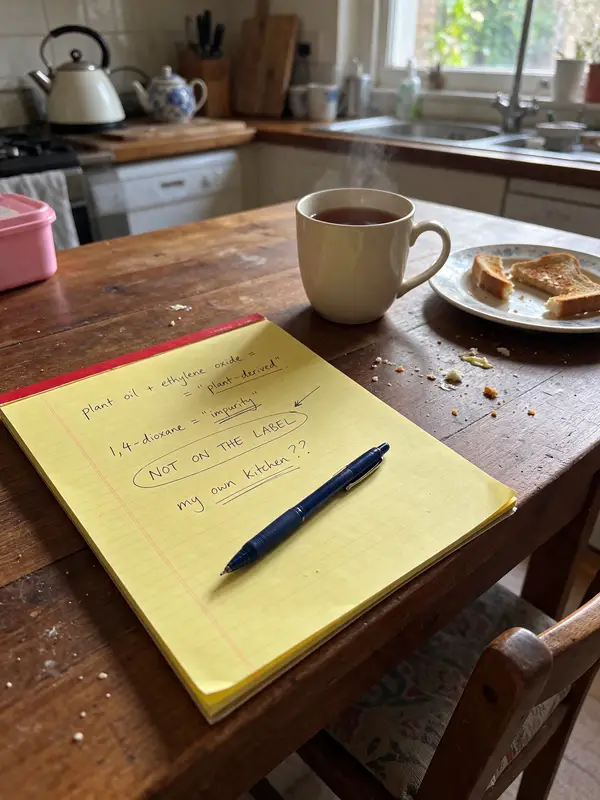
Testing

Showing 9 of 27 · all in Meta's Ad Library

From the ads Sniped has collected from this page (28 so far, first seen Nov 2026). Reach is what Meta reports; no spend or sales estimates.