Advertiser

Taylor Brown

noverly.shopMeta Ad Library

9
Running ads
9 new in 30 days
Oct 2026
Advertising since
longest ad 1 month
—
Reach
running ads, summed
11% video
Formats
1 video · 2 image
2
Products advertised
1 shop

Discover The Power of Natto Today!

If you were put on tamsulosin for an enlarged prostate and one day nothing came out anymore — nobody warned you, and there is a reason nobody warned you. I'm a cardiologist. Twenty-nine years. I have spent my entire career looking at one thing: what silts up arteries and how to clear it. For most of those years, if you had asked me about a prostate, I would have told you it wasn't my department. Then my father called me. He was 68. He'd been getting up three, four times a night for two years and told nobody, because his doctor had said it was normal for his age and he took that as a verdict. Eventually the stream got bad enough that he went back. He walked out with tamsulosin. It worked — within a week he was sleeping, and he was grateful. Four months later he called me and asked me a question I could hear him rehearsing. He wanted to know if it was normal that nothing came out anymore. I looked it up while he was still on the phone. Retrograde ejaculation. Semen going backwards into the bladder instead of out. It is not rare. It is not a surprise to anyone who prescribes this drug. It is printed on the label. He had been taking it for four months and he had never heard the phrase. Here is what tamsulosin actually does. It is an alpha-1A blocker. There are receptors in the smooth muscle around your bladder neck, and the drug switches them off so the muscle relaxes and urine can get past your prostate. That's the whole mechanism. It works, and for a man who cannot sleep, that matters. But those exact same receptors do a second job. They snap the internal sphincter shut at the moment of ejaculation, so semen goes out instead of back. Switch them off for the first job and you have switched them off for the second one. There is no way to have one without the other. That is not a side effect in the sense of something unlucky and unexpected. That is the drug doing exactly what it was designed to do, in a place nobody mentioned to you. But that is not the part that made me angry. The part that made me angry is that the drug was never aimed at the disease in the first place. I went and read the urology literature the way a cardiologist reads it — looking for the blood supply. And it is all there, and it has been there for twenty years. Your prostate is fed by microscopic arteries. In men with an enlarged prostate, blood flow through those arteries is measurably reduced. Not as a consequence — as a cause. Chronically starved tissue inflames. Inflamed tissue swells and stiffens. A swollen prostate squeezes the urethra shut. That is the disease, and it starts in the plumbing, not in the gland. Your prostate was never the enemy. At normal size it does its job and causes you no trouble at all. It only becomes a problem when the vessels feeding it start choking shut. And if you think that sounds like fringe theory, ask yourself why there is a hospital procedure called prostatic artery embolization — where an interventional radiologist goes in through your wrist and works on the arteries feeding your prostate. There are clinics advertising it right now. Nobody performs an artery procedure on an organ that has nothing to do with arteries. So what silts up an artery? Fibrin. It is the mesh your body lays down to stop bleeding, and it is the scaffold that plaque builds on. Your body clears it with an enzyme called plasmin. And somewhere after fifty, you stop producing plasmin at the rate you used to. The mesh goes in faster than it comes out. In the smallest vessels in your body, that shows up first. Which is why the earliest warning you will ever get is not chest pain. It is a weak stream. And then it is nothing coming out. That is not the disease. That is the alarm. It is wired to the smallest room in the house, which is why it goes off first — and every man I know has been told to ignore it. Now look at what he was given. Tamsulosin relaxes a muscle around a blockage it does not touch. Saw palmetto works on the swelling and never goes near the vessels. Cutting fluids at six o'clock is working on a small fraction of the problem. None of them clear anything, which is why the dose climbs, why a second drug shows up, and why the appointment eventually stops being about pills and starts being about a catheter, a TURP procedure, or retention you did not see coming. That escalation isn't bad luck. Tamsulosin costs about nine dollars for ninety capsules. The surgical market waiting behind it is worth seventeen billion by 2030 and growing every year. Nobody in that chain earns a dollar from the pill. Everybody earns when it stops working. The pill was never the treatment. It's the waiting room. What actually clears a fibrin mesh is an enzyme. The one with the most human data behind it comes from natto, a fermented soybean the Japanese have eaten for a thousand years. A researcher named Sumi found it in 1980 when he dropped some onto a dish of artificial clot and watched it dissolve. It's called nattokinase. In a trial of 1,062 people, it measurably reduced arterial plaque and wall thickness. But clearing the vessels is only one of three things that have to happen, and this is where almost every product on the shelf fails. You have to clear the mesh. You have to calm the tissue that has already inflamed. And you have to keep the calcium that gets freed from walking straight back into the vessel wall. The formula I ended up on is the only one I found that does all three. Noverly Nattokinase, 10,000 FU. The enzyme for the mesh. Turmeric, pine bark extract, aged garlic and bromelain for the tissue — curcumin has a meta-analysis behind it across six studies and 697 men showing measurable improvement in urinary symptom scores, and pine bark has a study of 75 men aged 55 to 75 showing a 31% reduction in getting up at night and a 51% improvement in what's left in the bladder afterwards. And vitamin K2 as MK-7, which routes the freed calcium into bone instead of back into the artery wall. Every prostate supplement on the market does the second layer and ignores the first. Every nattokinase brand does the first and has never once said the word prostate. I need to be straight with you about two things, because I'd rather lose the sale. There is no trial on nattokinase and ejaculation. I am not telling you this brings anything back. What I'm telling you is that what stopped coming out was your body's alarm about your blood supply, and this is aimed at your blood supply. And do not stop your medication. Not over a Facebook post, not over anything I've written here. That conversation belongs to you and your doctor. This runs alongside it. When men get results, the way that conversation usually starts is their doctor bringing up the dose first. If you're on a blood thinner — warfarin, apixaban, rivaroxaban, or a daily aspirin — or you have surgery scheduled, this is not for you. I mean that. Give it three weeks before you expect anything and eight before you judge it. Count your bathroom trips tonight and write the number down. That's your baseline. In three weeks, count again. You were never given the choice between sleeping through the night and being a man. Someone made that trade on your behalf, and they made it on a false premise. → noverly.shop/products/nattokinase-10-000-fu-clinical-strength-heart-circulation-complex P.S. — My father counted. He'd been writing down the number for years, which is very much like him. He went from four a night to one over about seven weeks. He has never once told me whether anything else changed, and I have never once asked him. Some things a man gets to keep to himself. The point is that he got to choose.

Loading the ad's image
Taylor Brown — Discover The Power of Natto Today!
TestingVideo

Why Peyronie's bends keep getting worse

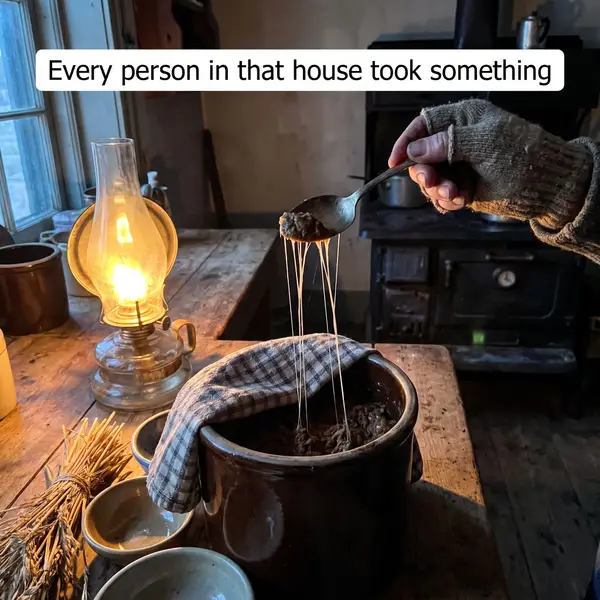
I had sex with a married Amish man and I made him tell me why no man in his family ever ends up with a bent dick from Peyronie's disease. I promised him I'd never tell a soul. Today, I'm breaking that promise. My name is Renee Sutter. I'm 47. I've cleaned houses for a living since I was 22. For 11 months I ran the office for a family I'm going to call the Lapps to keep it private, because I'm in enough trouble already. They're Old Order Amish. They can't have a phone in the house, or a computer, so most of the big Amish businesses hire 1 English person who does. The phone. The invoices. The truck. For 11 months, that was me. The grandmother did the hiring herself, at her kitchen table, and she asked me more questions in 20 minutes than any family I'd ever worked for. The money was more than double what I'd been making cleaning. I said yes at the table. The house sat on a rise east of Lancaster, about 2 hours from our place. White, 3 floors, a wing off the side they'd added when the second son married. A windmill where the power line should be. 40 acres, most of it corn I never had to touch, thank God. Across the lane was the shop, and over the shop office was a room with my own bathroom and a window that looked down the lane at the kitchen door. The family before me had built it for their driver. They built barns. That's as much as I ever understood about it. Pole barns, horse barns. Half the barns in 3 counties have their name burned into a post somewhere. Nobody in that house talked about money, which is how you know there's a lot of it. 4 generations under 1 roof. The grandmother, 88. The whole house called her Mammi, which is what you call your grandma in Lancaster County. Her husband, 91, who they called Dawdi. Her son, who ran things, and his wife. Their 3 grown sons with their wives, and 6 grandchildren under 12. They'd have 15 people at the noon meal on a normal day, once the crew came in. 30 on a Sunday. They sat me at the table every day. Mammi had a plate made up for me every night whether I ate it or not. Here's one of the first things I noticed. Those people ate more than anyone I've ever seen. I'm not talking about a big dinner on Sunday. I'm talking about every meal, every day. Breakfast ran an hour. Eggs. Scrapple fried in its own fat. Sausage. Bread with apple butter, a whole loaf, gone by 7. Shoofly pie, for breakfast, with the coffee. The noon meal was the big one, because the crew came in from the shop. Ham loaf. Chicken pot pie, the kind with the thick noodles. Mashed potatoes with a well of butter in the middle. Bread again. Then 2 kinds of pie. Dinner was more of the same. A roast. Noodles. Something fried. A cake on the counter that got cut at dinner and cut again before bed. There was always something on the stove. There was always somebody at the counter with a fork. The grandkids came home from school and ate like they'd walked 2 miles to get there. They had. And I was the one who scraped the plates. Mammi put me on dishes my first week. In that house, nobody eats and doesn't work. I want you to understand what that means. I was at that sink every night for 11 months, right under Mammi and Dawdi's bedroom. There was never a quiet Saturday night in that house. Not even Mammi's. She's 88 years old and she ate more than I did. Second helpings. A slice of pie with her coffee at 3 and another after dinner. And on Saturday nights, 91-year-old Dawdi took her up to bed, and I stood at that sink and listened to the ceiling. Dawdi had the dick he had at 20. I know because Mammi told me so herself, at the sink, the one time I looked up at the noise. She didn't even blush. 66 years, she said, and it never once went crooked on her. Now, the crew were young men, sure. But Dawdi hadn't swung a hammer in 20 years. The son who ran things was 66 and sat at a desk all day. The wives were in the kitchen from 5 in the morning till dark. Nobody took a pill for the sake of it. There was no doctor. In 11 months I never once heard the word Viagra. And every man in that house was still fucking his wife. Levi's brothers. Their father. Dawdi. You could hear it, Saturday night, every wing of that house. Not wild. Not loud. Just regular, the way you'd want a marriage to be. Straight where a man should be straight, as I found out. Now, let me tell you why this stood out to me. My husband's dick is bent. Peyronie's disease. It bent 45 degrees the year before I moved in. He hadn't been all the way inside me since I was 45. We'd tried the same 3 positions a half dozen times. I got half what Mammi got. Probably less than half. I'd stand at the counter at 9 at night scraping ham loaf and pie into the slop bucket, and listen to the ceiling, and think about him in our recliner 2 hours away. I bought the lube. I got on top. I did all of it. It hurt me the last 4 times we tried. I counted. There were 26 steps from the shop floor up to my room. I stopped on the landing every time with the groceries, and I'd stand there and breathe and pretend I was looking down the lane. There was a pond behind the house. Mammi told me my first week I was welcome in it any afternoon the family wasn't out there. I never went in once. I owned a nightgown. Black. It stayed in the bottom of my bag for 11 months. My bathroom had a full mirror on the back of the door. I got dressed with my back to it. I'd been doing that for years. Since he stopped looking. And every Saturday night I listened to an 88-year-old woman go up to bed with a 91-year-old man and get more than I'd had since my husband's dick bent. The other thing I noticed happened in the mornings. Every person in that house took something. Before breakfast. Before coffee. Before anything. Mammi was up at 5:30. I know because I was up at 5. From my window I'd see her lamp go out the kitchen door and down the outside cellar steps, and come back up with a crock. By the time I came across for breakfast it was on the counter. Inside were beans, something fermented. Brown, sticky, with a white bloom on them, strung together like cobweb when the spoon came up. She'd take a spoonful and eat it plain, standing at the counter, the way you'd eat a handful of chips. The strings caught on her chin. Then she'd set out a small dish for every person in the house. The grandkids ate theirs without being told. The son ate his before he opened the ledger. Levi ate his standing up, on his way out the door. Dawdi ate his in his chair by the stove, every morning, 91 years old. Nobody skipped it. Not on a holiday. Not with guests in the house. When a crew went out of the county for a week, Mammi sent it with them in a jar. I asked her once what it was. She said, "Beans." That was the whole answer, as far as she was concerned. They sold soybeans at the stand on the road, too. Big green bags of them in a basket next to the honey. So I figured it was an Amish thing. Something they did because they'd always done it. I didn't think about it again for months. Meanwhile my husband was falling apart. My husband is Ken Sutter. He's 58 now. He was 57 then. He'd been fine his whole life, until his dick started bending. He tried everything. Vitamin E twice. The stretcher thing. Cialis. The cream his brother swore by. He'd get back 5 degrees and lose 10. In 2023 his urologist put him on the needles. Xiaflex. $33,000. It made him black and blue. Not a little bruised. He couldn't touch it. He got back 10 degrees and spent 8 months in the bathroom with an ice pack, and his urologist stopped the shots because something in there had popped. The 10 came back with 20 more on top. His confidence went. He stopped reaching for me in the morning. Then he stopped coming up to bed at all, because when he got hard in his sleep the knot ached and woke him up. He stopped letting me touch it. Same reason. Couldn't stand me feeling the bend. He'd had the same side of our bed for 24 years. Somewhere in 2024 he stopped being able to sleep in it. He moved down to the recliner and bought a TV he could fall asleep to. Then he stopped trying anything. His urologist called it Peyronie's disease and told him to wait a year and see, as if he hadn't been waiting for 2. His blood work was fine, the urologist said. He just needed to wait a year. I'd drive down on my day off and he'd be in the recliner with the TV on and a plate on his stomach. Asleep by 7, with the news still going. He'd say he was fine. He wasn't fine. He'd given up. You can see it on a man. About 3 months in, I got involved with one of the sons. Levi. The middle one. 44. Married. His wife lived in the same house. They had rooms at opposite ends of the second floor, and they hadn't shared one in 6 years, and nobody in that family pretended otherwise. The Amish don't divorce. They just stop. He was the only person in that house who brought his own plate to the sink. He'd lean on the counter while I rinsed it and ask about my husband. I was there every night. So was he. It happens. It wasn't 1 night. It was April and most of the summer. I'm not proud of it. He was married. So was I. I knew what I was. I've told you the worst thing about me now. So you can believe the rest. And I'll tell you the rest of the worst. Levi was 44, and his dick was hard as a fence post, and straight as one. One night in May, after, I asked him the thing I'd been carrying since January. Why does no man in your family ever end up with a bent dick? He laughed. I didn't. I told him about my husband. The needles. The ice pack. The recliner. The last 4 times, when it hurt me. I told him Ken had quit, and I could see it on him, and I didn't know what to do. He went quiet for a long time. Long enough that I thought I'd said too much. Then he said it. "Promise me. You'll never tell anyone." I promised. "It's not the age," he said. "It was never the age." "Then what is it." "It's the door." I didn't know what that meant. He could tell. "Every time a man gets hard, the skin inside tears a little," he said. "Tiny. And your body patches every tear. Then it clears the patch out. Every time. As long as the patch gets cleared, the inside stays soft. That's the rule." "Ken's not old." "Neither am I. It's not how many tears you get. It's how long the patch stays there. The cleanup has to get in to clear the patch. There's a door for that. After 40, that door's half shut. In everybody." "So the patch still gets cleared. It just takes months instead of days. And the next tear is there before the last patch is gone. Then the next. Your body never gets to the end of the patches. So they pile up into a knot. And the knot doesn't stretch. So it bends toward it." "That's your husband," he said. "He's not too old. He's patching with the door half shut. You can stretch that all day. It doesn't open the door." "So what opens it." "The beans." He said the beans open the door. That's it. That's the whole secret. That's how a 91-year-old man had worked his whole life and fucked his wife every Saturday for 66 years and never once bent. Every tear he made was cleared before the next one came, so nothing ever got a chance to pile up. I said the thing you're thinking. "Levi. I've had soybeans. You sell them at the stand. I bought a bag in March." "Not those." "They're soybeans." "Those are the plain ones. For the English," he said. "Nobody ferments them. Ours are Mammi's. Her father's starter. Sticky, they stink, nobody'd buy them." He told me Mammi's father had gone to Japan in 1947, on a boat of heifers the church sent over after the war. The farmer he stayed with ate these beans every morning of his life, and the Japanese had been eating them for 1,000 years. He came home with a jar of them and a bundle of the straw they were made in, and he never missed a morning again. Nobody in that family has since. "And she never cooks them after. Cooked, it's nothing. It's dead the second it hits the pot. She boils the beans once, wraps them in straw, and keeps them warm on the back of the stove, never hot, for a day and a night. Then the cellar. After that first boil it never touches heat. That's the only kind that does anything." Then he told me to go to sleep. I didn't. He went back across the lane, and I read until 4 in the morning. Everything he said was true. I'm not a nurse. But the door is real. It has a name in the journals, and the journals explain it better than I can, so I'll give it to you the way I understood it in the end, because nobody ever explained it to my husband in 2 years of urologists. Peyronie's disease doesn't come from the outside. It comes from the sheath. That's the tough wrapping inside a man's dick, and every time he gets hard it stretches, and it tears a little. Your body patches every tear with something called fibrin. Like a scab on the inside. And something has to come and clear that patch out, and that door has to open to let it through. What holds that door shut is something your body makes called PAI-1. At 30, you make a little. After 40, a lot more. So the door is half shut. Same sex. Same you. Slower door. Levi had said it in 30 seconds in the dark. The journals said it in 40 pages. Same thing. Then I read the part that made me put the phone down. A patch that never gets cleared is a patch that stays. Doesn't matter that the tear healed. The fibrin's still there, and the next tear gets patched right on top of it. So it piles up. Patch on patch, month after month, into a knot you can feel with your thumb. The knot doesn't stretch. So when he gets hard, that side stays short and the whole thing bends toward it, and it aches right at the knot, and you can't out-stretch a knot. That was Ken in the recliner. That was me at the slop bucket, listening to the ceiling. He wasn't hurting because he was bent. He was hurting for the same reason he was bent. And then the part about the doctor. Ken's bend was "mild." Of course it was. They look at it soft, on a paper sheet, in a cold room. The one hour it doesn't bend. The other 23, nobody looks at. And "wait a year." I read that part twice. Leave the knot long enough and it starts to set. It turns to bone. A year is how you lose the year. Then I read the part about the needles. The needles Ken took for 8 months break up collagen, the scar the knot is made of. That's what they're built to do. Brute force on the knot itself. They never touched the door. The bruising Ken had, black and blue to the base, that's the needles tearing the knot apart from the inside. Exactly as designed. And the day his urologist stopped them, the door was exactly as half shut as the day he started. The needles break the knot. They don't open the door. That's why he got back 10 and lost 20. That's why everything he ever tried did the same thing. Every one of them worked on the bend. The vitamin E. The stretcher. The cream. Not one of them opened the door. And the more they pulled and tore at it, the more tears, and the more patches, and the bigger the knot. I sat on my bed at 4 in the morning and thought about 9 o'clock at the counter. The slop bucket. The ceiling. Ken asleep in a recliner 2 hours away with the news still going, and I understood I'd been carrying the same thing. The next night I asked him for some. He said no. He said if anybody in that house found out he'd given it to the English girl, I'd be gone by dinner. He said Mammi had let a driver go for less. I reminded him about my husband again. That he'd moved to the recliner. That he wouldn't let me touch it. That he'd stopped coming up to bed because the knot woke him up. I told him Ken's urologist had said the word surgery. The kind that makes it straighter by cutting it shorter. He was quiet again. 2 days later there was a crock in the cabinet under my sink. Beans, brown and sticky, packed tight under a cloth. Enough for a month. It was his family's. He didn't steal it. But he was the one who handed it to the English girl, and in that house that was worse. I drove down to our place on Sunday and put the crock on Ken's kitchen table. I told him to take it every morning before anything else. A spoonful, with a glass of water. Before coffee. I told him not to ask where it came from. He laughed at me. Then he took it anyway. The first 2 weeks, nothing. On the protractor. He said the only thing he'd noticed was the morning. He'd woken up hard, and it hadn't ached. He couldn't remember the last time it hadn't ached. He didn't know what to make of it. Then he said he'd gone up to bed one night and realized he hadn't fallen asleep in the recliner. 2 years he'd slept in that recliner. He just hadn't needed to. That's when I told him. The door, the way Levi said it. He said, "Well, something's open." He said the ache he got after was gone. He'd carried that for 2 years, that tight pull at the knot, and he'd been hard the night before and gone to sleep without it. He said the knot felt softer. He'd had to check. Somewhere in the second month he could get hard without it pulling to the left the way it had. He hadn't changed a thing. No stretcher. No vitamin E. Same recliner, except he wasn't in it. He said it wasn't like getting straightened. It was like something letting go. The way he carried himself changed. My aunt saw him in the driveway and asked if he'd met somebody. Then one Sunday in July I drove home, and he walked me up our stairs, and sat me down on our bed. The side he'd left. He fucked me. It didn't hurt. I cried. Ken lay there after and ate a piece of the pie I'd brought like nothing had happened. His checkup was the second week of August. 19 degrees less bend than March. The knot smaller under the urologist's thumb. His urologist looked at the chart, looked at him, looked at the chart. "What did you change?" "A bean," Ken said. The urologist laughed the same way Ken had laughed at me. Then he wrote something down and told him to keep doing whatever he was doing. I'd started keeping the numbers too, in June. Every Sunday, in our bedroom, before I drove back up. Levi kept the cabinet under my sink full, and I carried it down in jars. We never talked about it. Ken measured 41 degrees that first June morning. I wrote it on the inside of our closet door with a pencil, because I wanted us to be honest about whatever happened next. He said the first spoonful tasted like a gym sock smells. He ate the second one anyway. I knew from the reading what that smell was. That's not rot yet. That's the ferment. Day 7. He reached for me in the morning before he remembered the knot. He lay there after and looked at his own dick like it belonged to somebody else. Day 14. 38. 3 degrees in 2 weeks. He hadn't touched the stretcher. He didn't take a single needle. And nothing about it hurt. That's how I knew it wasn't doing to him what the needles did. He ate what he ate. I just stopped standing at the slop bucket at 9 o'clock listening to the ceiling. I wasn't lonely at 9 o'clock. For the first time in 2 years, I'd had my husband on a Sunday and I was done for the week. Week 4. 34. Under 35 for the first time since it started. I measured it 3 times. The wince went somewhere in the fifth week. Mine. I noticed it the way you notice a noise that stopped. Week 8. 27. Week 12. 22. 19 degrees in 12 weeks. He hadn't cut a thing. He hadn't stretched a thing. It wasn't like any fix he'd ever been on. It was like his body had gotten its turn. The knot went last. It went soft anyway. The last Sunday in August it was a church Sunday and the family was gone visiting till dark, and I took the black nightgown out of the bottom of my bag and drove home with it on under my coat. Nobody saw me but Ken. That was the point. I wore it. In September I turned around in front of the mirror on the back of that door and stood there a while. First time in about 6 years I looked on purpose. Mammi looked at me across the kitchen one morning and said, "Better." That's all she said. That woman sees everything. I should have known then. She let me go the week before Thanksgiving. She sat me down in the kitchen at 6 in the morning, before anyone else was up. She didn't yell. She poured me coffee. She said she'd known about the affair since August. She said she'd picked me. She said that was why it had to be her. I asked if Levi was going to come down. She said no. He didn't. I packed 11 months into 2 bags and drove out the lane at 8 in the morning, and he never came down. He never called, either. The shop phone was the only one, and somebody else was answering it now. I'm not going to make him the villain. He's blood. I was the English girl in the office. In a house like that there was only 1 way it was ever going to go, and I knew it in April. I lost the best job I ever had. I lost a man I'd let myself get attached to. And I'd do every bit of it again. My husband walked me up our stairs. The crock ran out 2 weeks after I left. I'd kept 3 spoonfuls back in a jar at the back of the fridge, and I couldn't tell you why. I went to the store. The vitamin aisle. On the bottom shelf, a bottle with a soybean on the label. Nattokinase capsules. $16.99. 2,000 FU. "Proprietary blend." I bought 2. Both for Ken. He took it for 5 weeks. I measured every Sunday. By the end of the second week he was back in the recliner. By the fourth he'd put 4 degrees back on. He called me on a Tuesday and said the ache was back after. I twisted a capsule open over a glass of water. Beige. Like something swept out of a barn. It sat on the water like dust and smelled like nothing at all. I got the jar out of the fridge and lifted a spoonful of Mammi's beans. The strings came up a foot long. Alive, like a cobweb in the light. That's when I understood what Levi had said in May and I hadn't listened to. Cooked, it's nothing. I went back and read again, and this time I read about what happens to the bean on the way into the bottle. The thing in the bean that opens the door is an enzyme. Nattokinase. It goes after the fibrin itself, and it goes after the PAI-1 holding the door shut. A Japanese doctor named Hiroyuki Sumi found it in 1980. He tested 173 foods against a clot in a dish, and natto dissolved it in about 18 hours. Heat kills it. Ferment a bean fast and hot, and the enzyme's gone before the lid goes on. The strings go with it. That's why the powder was dust. Almost every nattokinase on a shelf is fermented fast and hot, because slow costs money. And that's if it was a real dose to begin with. Most of them aren't. 2,000 FU. A fifth of the 10,000 the serious ones use. The soybean in your supermarket is the plain one. Edamame. Tofu. Soy milk. Nobody ever fermented it. The enzyme was never there. The stand beans. The ones for the English. And "blend" means they put something else in with it and won't say how much. A blend is where the truth goes to hide. Beige dust. Dead before you buy it. That's what I'd been feeding my husband for 5 weeks. Mammi kept hers warm on the back of the stove, wrapped in straw, for a day and a night. Never hot. Never cooked after. She wasn't being old-fashioned. She was keeping it alive. I had to find the real thing without a patch behind the house and a crock in the cellar. Here's what a real answer has to do. All of it, at the same time. It has to be the right bean. Not the plain one. Real natto, fermented with the same culture the farmer gave Mammi's father. The Japanese have been keeping theirs for 1,000 years. It has to be fermented low. Never heated. Slow, so the enzyme is alive when it reaches you. It has to say the dose. 10,000 FU, printed on the bottle. Not a blend. It has to be tested. A lab, saying what's in it. And it has to say FU on the label. That's the one you can check yourself, the way I did standing in that aisle. Milligrams tell you how much powder. FU tells you how much of it is alive. If there's no FU on the bottle, nobody counted. If it says 2,000, it's a fifth of the dish. I went through every nattokinase I could find. The bottles with the soybean on the label. The cheap ones. The one with the picture of a Japanese farm on it. Not one of them did all 5. Most did 1. None of them said how much was alive. None of them said how they were fermented, and if they won't say, they cooked it. I found 1 that did. Noverly Nattokinase. Real fermented natto, fermented low, never heated. 10,000 FU. Ken takes 2 capsules a day with food. Lab tested. And a 90-day money-back guarantee. If his angle doesn't move in 90 days, you get every penny back. I ordered. It's Buy 1 Get 1 Free, so 2 came. Both for Ken. It came on a Saturday in January. I turned the bottle around in the kitchen before I did anything else. 10,000 FU. In print. Mammi's crock. He took 2 with supper and I started writing the numbers down again. Day 1. 27. 5 weeks of beige dust and he'd gone backward. He said they smelled a little like Mammi's jar. The ferment. Day 10. He came to bed after supper without stopping in the recliner. First time in 5 weeks. Day 14. 24. Same thing that happened in June. Same thing that happened in that house. Week 12. 15. I got the ruler out too, because he asked me to. 5 inches, hard, pointing at me instead of the wall. He'd measured 4.0 the week I moved into that house. 30 degrees since the week I moved in. The knot that shows up first and leaves last, the one he'd had since he was 56, had gone soft, and he'd been fucking me every Sunday the whole time. And me. I haven't flinched since January. Not once. Ken's 58 now. 30 degrees off since the crock went on his table in May of last year. He moved back upstairs. Not the old mattress, a newer one, but the same side, and he climbs in first. He wakes me up. He lets me touch it. He comes to bed before the news is over and turns the TV off himself. He lets me leave the lamp on. 18 months ago he wouldn't leave the recliner. I don't get it out of an Amish family's cellar anymore. Obviously. I get it from the only place that checks all 5 boxes. Noverly. Ken takes 2 every day with supper. Here's what I know, because I lived in that house and I scraped the plates. Those men never took a pill a day in their lives. They worked harder than you've ever worked. And every one of them, from a 91-year-old man to a 6-year-old boy, ate a spoonful of Mammi's beans before coffee, every morning, and the door stayed open. The bend was never their worry. The door was. And no tear they ever made stuck, because their body got to the end of it every day, and then it got its turn at the patch. My husband tried everything. The needles bruised him for 8 months and left the knot exactly where it was, because the needles break the knot. They don't open the door. The cheap bottle did nothing, because it was cooked before it was sealed. The beans did the thing the needles were never built to do. They went after the fibrin. And they never needed a needle to do it. Not the bend. The door. It was never the tear. It was that your body never got to clear the patch. Noverly Nattokinase. Real fermented natto. Fermented low, never heated. 10,000 FU. 2 capsules a day, with food. Turn the bottle around when it comes. If it says 10,000 FU, it's the real thing. It's a bean. They ferment it with a culture the Japanese have kept for 1,000 years, and keep it warm, never hot, because heat kills the enzyme and there's no fast way to do it. When a batch is gone, it's gone until the next one. If the link's still there, it's still in stock. There's a 90-day guarantee, so the risk is on them. But you're going to know long before 90 days. When you wake up hard and it doesn't ache. When you go to bed without stopping in the recliner. When the ache after doesn't come. When she doesn't wince. Then you'll know why no man in that Amish family ends up with Peyronie's disease and a bent dick, and why the English girl who scraped their plates for 11 months is telling you a secret she promised to keep. https://noverly.shop/products/nattokinase-10-000-fu-clinical-strength-heart-circulation-complex-cc — Renee Sutter, 47 P.S. About the first 2 weeks, because I don't want you quitting early. Ken saw nothing on the protractor for 14 days. The first thing that changed was he woke up hard and it didn't ache. Then he stopped falling asleep in the recliner. Then the ache after went, then the knot went softer. With Ken, the mornings went first. The angle followed. His dropped 3 degrees in 14 days, twice. That's the receipt. Give it the full 12 weeks after that, because a knot that took 2 years to lock up doesn't all let go in 3. P.P.S. Nobody refunded Ken a dime for $33,000 of needles and 8 months with an ice pack. Nobody refunded me $16.99 for a bottle of beige dust. There's a 90-day money-back guarantee on this. If his angle hasn't moved in 3 months, you email them and they send every penny. And it's Buy 1 Get 1 Free right now, up to Buy 3 Get 3 Free with free shipping and free gifts, so the second bottle can go on somebody's table. 3 months is 1 checkup. You can know in 1 checkup. That's all I'm asking. P.P.P.S. If you're on the needles right now, or your urologist's handing you the sheet, I'm not telling you to stop anything. Ken was already done with them when the crock went on his table. Take this right alongside whatever you're on, and let your urologist be the one to take anything away. Bring him the numbers. Ken's laughed too, and then he wrote it down. P.P.P.P.S. It's not in the vitamin aisle. I looked. Everything in that aisle is 2,000 FU, cooked, with a picture of a farm on it. Go straight to the link, because there are already knockoffs using the name on the same beige dust. When your bottle comes, turn it around. If it doesn't say 10,000 FU, it isn't the one. P.P.P.P.P.S. If you're reading this for your husband, or your father, or the man in the recliner who says he's fine, hear me. I didn't argue with mine. I put a crock on his table and told him not to ask where it came from. He laughed. He took it. 3 months later he walked me up our stairs and fucked me in our own bed, and I cried. You don't have to win the argument. You just have to get it on the table. https://noverly.shop/products/nattokinase-10-000-fu-clinical-strength-heart-circulation-complex-cc

Loading the ad's image
Taylor Brown — Why Peyronie's bends keep getting worse
TestingImage

Support stamina and heart health every day

I spent 27 years in prison for a shooting I didn't do. The night before my cellmate made parole, he told me the first thing I had to do if I ever got out was go see my mother's grave. Then he walked out that gate and never wrote me once. Not one letter in 9 years. Last June a DNA test set me free, and I took a bus straight to that cemetery. The groundskeeper was waiting for me. The officer at the property window didn't look up. "Hatch. 614429." "Yes sir." He slid a paper bag across the counter. My name on it in black marker, and a date. 1999. Everything I had on me the night they arrested me. A brown wallet with eleven dollars in it, a pack of gum gone hard, and a key to an apartment other people had been living in for twenty-seven years. And my watch. It had stopped at 4:10. Some afternoon back then the battery quit, and nobody was around to notice. I put it on anyway. "Sign here." I signed. My hand wouldn't sit still. Twenty-seven years, and the last thing they needed from me was my name on a line. They counted forty dollars into my hand. Gate money, they call it. Then the doors. The first one buzzed. The second one buzzed. Then there wasn't a third. Nobody shook my hand. Just a parking lot, and more sky than I'd seen in twenty-seven years. There was one person standing in it. Ellen Brandt. My lawyer. Six years she worked my case for nothing. She's the one who got a lab to test the hair again — the one hair a man in a white coat swore was mine at my trial. It wasn't. It never was. "Leon," she said. Nobody had called me by my first name in a long time. Inside you're a last name and a number. I didn't know what to do with my hands. She didn't either. So she hugged me, kind of stiff, and I stood there and let her. "Where do you want to go?" she said. "Anywhere. I'll drive you." I'd had the answer to that for nine years. "Mount Olive. The cemetery." She knew about my mother. She'd read every page of my file. "Okay. Get in." "No," I said. "I want to take the bus." "Leon, it's three hours." "I know." She looked at me a long second. She didn't argue. She drove me as far as the station, and I bought my own ticket with the state's forty dollars. For twenty-seven years, somebody else decided where I went. That ticket was the first thing I'd decided for myself since 1999. Three hours is a long time to look out a window. I spent most of it thinking about how I ended up in there. I was thirty-seven. I fixed small engines out of a rented garage on the edge of town. Lawn mowers, chainsaws, outboard motors. Whatever people brought me. One night in March, a man in a ski mask walked into a gas station out on Route 9 with a pistol. He took what was in the register. On his way out the door he shot the kid behind the counter. The kid lived. He never walked right again. Two weeks later the police came to my garage. That night I'd been home asleep. Alone. Nobody could say so but me. A woman who'd been at the pumps said she saw the man's face when he pulled his mask up in the parking lot. It was dark. She saw him for maybe three seconds. She picked me out of a lineup anyway. And there was a hair on the counter. At my trial a man from the state crime lab got up in a white coat and said he'd looked at that hair under a microscope next to mine, and they matched. I didn't know what that meant. I don't think the jury did either. But they knew what a white coat meant. Guilty. The judge gave me forty years. I was thirty-seven years old. My mother sat in the second row every day of that trial. She didn't cry when the verdict came. She held on until they put the cuffs on me. Then she couldn't stop. My fourth year inside, they moved Gus Bell into my cell. He was eight years older than me. Quiet. Big hands. He'd already done twelve years by then, and he worked the infirmary. Up at five every morning, pushing a cart down the rows of beds, sitting with the old men nobody came to see. He never talked about what put him there, and I never asked. Inside, that's manners. The first night, I told him I didn't do it. He just nodded. "Okay." Nobody in that place had ever said that to me. My mother wrote me every week. Every Sunday night I'd sit on my bunk and read her letter out loud. Who was sick at church, what the tomatoes were doing, which neighbor had a new dog. Gus never got mail. Not once in fourteen years. The first few weeks he pretended he wasn't listening. By the second month he was asking if she'd written yet. By the second year she was signing off with "Tell Gus hello." By the fifth year she was writing him a paragraph of his own. She never met him. She worried about him anyway. Was he eating. Was he warm enough. Did he have anybody. "Tell her I'm fine," he'd say. Then he'd turn over and face the wall, and I'd read that part again, slower. There was a man on our block named Wendell. He'd been in thirty years and he cut hair for the whole tier. Clippers and a comb. He could line up the back of your neck so straight you'd swear somebody drew it with a ruler. Steadiest hands in the place. Everybody said so. Gus and I sat in Wendell's chair every other Saturday for fourteen years. Same table at chow, same laps around the yard. I knew how he breathed when he was asleep, and he knew which nights I didn't sleep at all. You don't pick your family in there. But sometimes you get one anyway. My seventeenth year, the letters stopped. One Sunday there was nothing. The next Sunday, nothing again. Gus asked me if she'd written. I said the mail must be slow. By the third Sunday neither of us asked. That Thursday the chaplain came to our cell door. A chaplain doesn't walk all the way down your tier with good news. She'd gone in her sleep. Eighty-one years old. I asked to go to the funeral. Sometimes they let you, with two guards and chains on your ankles. I didn't care about the chains. I'd have crawled there. The answer came the day before. Denied. Violent offense. For a shooting I didn't do. They buried my mother on a Saturday at eleven o'clock, three hours away. At eleven o'clock I was sitting in the chow hall with a tray in front of me. Gus was across the table. He didn't say anything. When the clock on the wall hit eleven, he just set his fork down. So did I. Neither one of us picked it back up. She had nobody else. No brothers, no sisters. My father had been gone since I was a boy. It was just her and me. And I was in there. The next spring, Gus made parole. Fourteen years in the same cell, and they gave him one week's notice. He was sixty-three. The night before he left, neither of us slept. He was on the bottom bunk, I was on top, and we lay there in the dark not saying much. Around two in the morning he spoke up. "Leon. You awake?" "Yeah." "First thing you do when you get out, you go see your mother." I almost laughed. I still had twenty-two years left. "I'll be seventy-seven, Gus." "I didn't ask how old you'll be. I said when." It was quiet for a long time. "I'll make sure she isn't alone till then." I didn't know what he meant. I didn't ask. "And I'll write you," he said. "Every week. Same as she did." In the morning they called his name. Everything he owned fit in one paper bag. At the door he turned around and looked at me. "Every week," he said. Then he was gone. The first week, no letter came. I figured he was getting settled. After my mother died I'd stopped listening at mail call. Now I listened again. Every evening the officer walked the tier calling out names, and every evening I waited for mine. A month. Nothing. Six months. Nothing. A year. I worked it out the way you work everything out in there, lying on your bunk at night with nothing else to do. He was out. He had a life now. I was a cell he used to live in. I stopped listening for my name. Not one letter. Not one in nine years. My twenty-first year, a letter did come. It wasn't from Gus. It was from a woman at a law school clinic who'd read my file. Ellen. She wanted to test the hair again. With DNA this time, the kind of test nobody did back when they convicted me. It took her six years. Two labs. Four hearings. A prosecutor who fought her on every page. Last June I sat in the same kind of courtroom I'd been sentenced in, and a judge read a lab report out loud. Then he took off his glasses and looked at me. "Vacated." A lab report put me in there. A lab report got me out. Out the bus window, a green sign went by. Mount Olive, 12 miles. The bus let me off on Main Street a little after two. The cemetery was a mile out of town. I walked it. I'd never seen her grave. Not once. The whole way there I tried to get ready for it. She'd been in the ground ten years. I figured I'd find the stone sunk and crooked, grass grown up over her name, the way they look when there's no one left to come. There was a shed by the gate. An old man was out front with a rake. "I'm looking for Ida Hatch," I said. He stopped raking. He looked at me for a long time. Longer than a stranger should. "You're Leon," he said. I didn't know what to say to that. "Come on." His name was Ortiz. He'd kept those grounds for thirty years. He walked me up the hill without another word, past rows and rows of stones, and stopped near the end of a row. I'd been ready for weeds. The grass around her was cut short and edged clean, like somebody had done it with scissors. The stone had been washed. You could read every letter. And in the little vase by her name there were flowers. Pink carnations. Fresh. I stood there and couldn't make my mouth work. "Who did this?" "Fella comes every May," Ortiz said. "Mother's Day. Nine years now, never missed one. Pays me to keep fresh flowers on her the rest of the year." My knees went. I sat down in the grass right there in front of her. "Big man?" I said. "Big hands?" "Biggest hands I ever shook." Nine years I lay on a bunk thinking he forgot me. He never forgot her once. Ortiz cleared his throat. "He left something for you," he said. "Every May he asks me if you've come yet. Said you'd be along eventually." He walked back down to the shed. When he came back up the hill he was carrying a green metal tackle box with the latch taped shut. He set it in the grass next to me. "He said you'd know what to do with it." I peeled the tape off the latch and opened it. On top was an envelope with my name on it, in handwriting I hadn't seen in nine years. Under it, a roll of bills with a rubber band around it. And under that, a second envelope. Sealed. Two words across the front in capital letters. NOT YET. I opened the first one. Leon, If Ortiz gave you this, you got out. I knew you would. I'm sorry about the letters. I meant every word that night. Then my first morning out I sat down with my parole officer, and the first rule he read me was no contact with anybody inside. No letters. No phone calls. Not even through somebody else. Break it and I go back. So I did the only thing I could do. Your mother wrote me a paragraph every week for twelve years. The least I could do was keep her company till you got there. I'm on a lake in Missouri now. Cedar Hollow. I run a little bait shop and rent out a few boats. Bell's Bait & Boat. Anybody in town can point you. There's no phone out at the dock worth calling. Don't call. Come. The money's for the bus. The other envelope is for later. Don't open it yet. You'll know when. Your friend, Gus I read it sitting in the grass. Then I read it again. I picked up the sealed envelope and turned it over in my hands. It was thick. Several pages, at least. I didn't open it. Gus had been sure I'd get out when nobody else was. I figured he was right about this too. I put it back in the box. I sat with her until the sun went down and Ortiz came up the hill to tell me he had to lock the gate. Twenty-seven years, I'd had nowhere to go. Now I had somewhere. It took six days to get ready to go. Ellen found me a room at a halfway house, drove me to get a state ID, and bought me a cheap phone with one number in it. Hers. I bought a ticket to Missouri with Gus's money. Nine hours, two transfers. The bus left Monday at 7:40 in the morning. I was at the station by six. The platform there is up a flight of concrete stairs. I had the tackle box in one hand and a bag of clothes Ellen bought me in the other. I was halfway up when my chest locked. It wasn't pain. It was pressure. Like somebody had set a cinder block on my chest and leaned on it. The edges of everything went gray. I grabbed the rail. I couldn't go up and I couldn't go down. A man behind me said, "You okay, buddy?" and stepped around me. I sat down right there on the step. I don't know how long I sat. Long enough to hear the doors hiss shut up top. Then the engine. Then the bus pulling out without me. I looked down at my wrist out of habit. 4:10. Six days out. My time hadn't even started yet, and it was already running out. When the gray finally pulled back, I took out the phone. There was only one number in it. She got there in twenty minutes. I was still on the step. She didn't say anything at first. She just sat down next to me in her good suit, right there on the dirty concrete. "Did the bus leave?" "Yeah." "What happened?" I told her. The stairs. The weight on my chest. The gray. "When's the last time you saw a doctor?" "Inside they'd take blood every couple of years. Nobody ever told me what it said." "So never." "I feel fine now." "Leon." "There's another bus Thursday." She looked at me. She was holding her car keys so tight her knuckles had gone white. "I didn't spend six years getting you out of there to watch you die on the steps of a bus station." Her voice didn't shake. Her hand did. I could hear the keys rattling. Nobody had been scared for me since my mother. "Okay," I said. She called a free clinic from the car and got me in the next morning. The ticket to Missouri was still in my shirt pocket. I left it there. The clinic was in an old storefront on Fourth Street. Thirty folding chairs and one doctor. Dr. Kowalski. Young. Tired. She'd probably seen forty people before me that morning. A nurse took my blood pressure, wrote something down, and circled it. They drew blood and sent me home. Two days later they called me back in. Dr. Kowalski had my results on a laptop. She turned the screen toward me like I'd know what I was looking at. "Mr. Hatch, your LDL cholesterol is 198. Your total cholesterol is 274. Your blood pressure is high, and so are your triglycerides." I didn't say anything. "Given what happened on those stairs, I want to start you on a statin. Atorvastatin. Ten milligrams, once a day." Statin. I knew that word. Gus used to hand it out every morning in the prison infirmary, off his cart. "No," I said. She blinked. "Mr. Hatch —" "No statins." She kept going about risk and plaque and my age. I'd stopped hearing her. In my head I was back on the block, sitting in Wendell's chair. A couple of years before Gus made parole, the prison doctor put Wendell on a statin. Simvastatin. The cheapest one they stocked. Inside a year his hands started to shake. The clippers would jump. He nicked a man's neck. Then another. A barber who'd lined up necks for forty years without a mark, and now men were walking out of his chair bleeding. They took the clippers away from him. After that the fog came. He'd call men by the wrong name. Men he'd cut every other Saturday for twenty years. Then his legs went. By the end he was in the infirmary, and Gus was the one holding the cup to his mouth so he could drink. I remember the night Gus came back to the cell and sat on his bunk without taking his shoes off. "His chart says his numbers are fine," he said. Wendell died two weeks later. The steadiest hands in that whole place. I watched that pill take them one Saturday at a time. So when a doctor said statin, all I could see was Wendell's clippers shaking. "No," I said again. She didn't give up easy, I'll give her that. Then she wrote the prescription anyway and put it in my hand. "Think about it," she said. "Please." I folded it up and put it in my shirt pocket. Right next to a bus ticket to Missouri. I couldn't sit in that room all day waiting on my own heart. Ellen knew a man named Ray who ran a small-engine shop out by the interstate. He needed somebody who could still fix a carburetor without a computer telling him how. My first week, he rolled in a riding mower that hadn't run since fall. I had the carburetor apart on the bench. I picked up the smallest screwdriver he had to set the idle screw. A job I'd done a thousand times before they locked me up. My hand shook. Once. Just enough to slip off the screw. I set the screwdriver down and looked at my hand like it belonged to somebody else. It was nothing. A bad night's sleep. The second time it held fine. But for a second there, I wasn't looking at my hand. I was looking at Wendell's. That night I sat on the bed at the halfway house and took everything out of my shirt pocket. The prescription. The bus ticket. I laid them side by side on the blanket. If I took the pill, I'd end up like Wendell. A man who fixes engines for a living, who can't hold a screwdriver. If I didn't, my heart might quit on the next flight of stairs. And Gus would be out on a dock in Missouri, waiting on a bus I was never going to be on. Either way, I wasn't getting to that lake. And I wasn't going to show up after nine years just to fall down in front of him. Gus had already held one man's cup at the end. He wasn't going to hold mine. So I decided to fix it myself first. I stayed away from the vending machine at the halfway house. I ate the salads Ellen kept bringing by. I walked the two miles to Ray's shop every morning and the two miles back every night. Eight weeks of that. The prescription stayed folded in my shirt pocket the whole time. Then I went back to the clinic. LDL: 192. Eight weeks of trying, and it moved six points. Dr. Kowalski looked at the screen for a while before she looked at me. "Mr. Hatch, you've done everything right. I can see that. But this isn't going to come down on its own. You need the medication." "I'm not taking it." She closed the laptop. "Then I honestly don't know what else to tell you." I walked out of that clinic with nothing left to try. I sat in the bus shelter out front for a long time, staring at the street. Then I thought about the tackle box under my bed. "The other envelope is for later. Don't open it yet. You'll know when." I knew. I opened it at the little table in my room that night. Four pages, both sides. His handwriting got smaller toward the end, like he was running out of paper. "Leon, if you're reading this, a doctor has told you that you need a pill for your heart, and you've run out of ways to say no." "I'm sorry I made you wait. I didn't want this to be the first thing you read when you got out. You'd been through enough." "But I saw your chart in there. They drew your blood every couple of years and filed it, and nobody ever sat you down. I knew your numbers before you did." "Inside I didn't understand what I was looking at. I just handed out what the doctor wrote. It took me getting out to learn what I'm about to tell you. So here it is, plain." "All those years I pushed that cart. You know what most of the men we carried out of there had in common?" "Their numbers were fine." "Not high. Fine. On the pill, every morning, and the chart said fine. Wendell's chart said fine." I put the letter down and looked at the wall for a while. Then I picked it back up. "Here's what nobody told us, Leon." "Cholesterol isn't the enemy. Your body makes it on purpose. It needs it." "The trouble starts when something attacks it. Free radicals. When they get hold of your cholesterol, it rusts." "Same word as the rust on an old fender. Same thing that happens to an apple you cut in the morning. By lunch it's gone brown." "Nobody added anything to that apple. The air did it." "That rusted cholesterol turns sticky. It works its way into the walls of your arteries and packs in, year after year, and hardens. Then one day a piece of it tears loose and jams the pipe shut." "That's what kills a man. Not the cholesterol you've got. The cholesterol that's gone bad. The rust." "And the number your doctor watches doesn't measure any of it. It counts how much cholesterol you have. It says nothing about how much of it has already gone brown." "You can have a beautiful number and rusting arteries in the same body." "Wendell did." "The number was the cover of the book. Nobody ever read what was inside." I read that line three times. "It gets worse. When your cholesterol rusts, your body takes it as damage. So it makes more cholesterol to patch it. Which gives the rust more to work on. Which the body takes as more damage. So it makes more." "It's a wheel. Round and round." "And the pill can't stop it. All it does is chop the number down. It bails water as fast as it can and never once finds the hole the water's coming in through." At the bottom of the page he'd drawn a circle with an arrow chasing its own tail. I knew rust. I'd fought it on every engine I ever touched. You can paint over it, and the fender looks brand new. Underneath, it keeps eating. I turned to the next page. "Now I have to tell you something about me, Leon. Something I never told you inside." "The same year they put Wendell on it, the prison doctor put me on it too. Same cart. I was handing myself the same little paper cup I handed everybody else." "By the time I got out, I was dropping those cups. Holding one steady to Wendell's mouth at the end took both my hands." "My grip was going. My legs felt like somebody poured concrete in them. I told the doctor inside. He said it was my age." I remembered him working his hands open and shut at night on the bottom bunk. I'd figured it was the cold. "The first doctor I saw outside looked at my hands and asked me how long I'd been on it. Then he took me off it, slow, and watched my blood the whole way down." "That's when I started reading. Every night, at the library in town, till they turned the lights off." "Here's what I found, Leon. Here's what happened to Wendell." "That pill works by shutting down a production line in your liver, so you make less cholesterol and the number drops." "But that same line makes something else. CoQ10. It's the spark every muscle in your body runs on. Your heart. Your legs. Your hands." "Shut the line down to force the number lower, and you shut down the spark with it. Same switch. You can't have one without the other." "The tiredness that sleep doesn't fix. The grip going soft. The fog that takes the back half of your sentences. High cholesterol doesn't do that. High cholesterol doesn't do anything you can feel." "That's the pill. Draining the spark out of every muscle a man has got." "They call it a side effect. It isn't. It's the pill doing exactly what it was built to do." I thought about Wendell's clippers jumping in his hand. About Gus holding that cup with both hands. "So the pill fails twice, Leon. It never stops the rust that's killing you. And it drains the spark that keeps you standing." "What a man needs is the opposite. Something that stops the rust and leaves the spark alone." "I found it. And it wasn't a drug." "You know natto? The fermented soybeans the Japanese eat, sticky and stringy? The enzyme in them has a name. Nattokinase." I almost laughed. Soybeans. Nine years without a word, and Gus Bell was writing me about soybeans. But I kept reading. "Most things they sell to fight free radicals are a carpet bomb. They knock out all of them, even the ones your body needs to fight off a cold." "Nattokinase is a smart missile. It goes after the one thing the rusted cholesterol sticks to and builds on, fibrin, the sticky mesh, and it leaves the rest alone." "And it gets in. It rides in your blood and digests the fibrin, the sticky mesh the rusted cholesterol packs into, right where the plaque starts." "The pill can't reach in there. Fish oil can't. The nattokinase breaks the sticky down before it ever packs in." "And it never touches that production line in your liver. It doesn't lay a finger on your spark." "Stop the rust. Leave the spark." "There's a study. A whole year. Over a thousand people taking real nattokinase dropped their cholesterol, and the plaque, the kind that kills you, came down at 10,800 FU a day. At 3,600, it didn't." "I've been off the pill eight years. My last number was 131. And my hands are steady enough to tie a hook on a fishing line in the dark." "One more thing, before you go running to a store. Almost none of the nattokinase you can buy will do a thing for you." "The natto in the grocery store is sold for one thing. Food. Nobody ever counted the enzyme in it, so you never know if there's any medicine left. You'd be eating weak beans by the pound to get at the medicine." "There's natto the way the Japanese have made it for a thousand years. Fermented soybeans. Nattokinase. Nobody ever guessed at it. It carries 10,000 FU, counted and printed on the label." "And heat kills nattokinase. Most of what's on the shelf never prints how much of the enzyme is still alive. What's left could be dust. It looks like medicine and does nothing." "Weak or dust. That's most of what's out there. So I wrote down what to look for." I put the pages down on the table and looked at my own hands for a long time. Clipped to the last page was an index card. His printing, block letters, pressed hard into the paper. DON'T BUY THE FIRST ONE YOU SEE. 1. Real natto. Nattokinase. Not the grocery tub. 2. The FU counted, never guessed. Heat kills it. 3. 10,000 FU a capsule. The study that worked used 10,800. 4. Lab tested, with the number on the label. Trust the lab, not the reviews. Set the bottle on a white saucer and turn it over. A number is alive. No number is dead. If a cheap one makes you feel a little something, don't let it fool you. Even a weak natto moves your blood some. The feeling isn't the proof. The lab is. And at the bottom, smaller: When your number comes down, get on the bus. I put the card in my shirt pocket, next to the ticket and the prescription. I should have done exactly what it said. There was a drugstore two blocks from the halfway house. That Saturday I walked in and found a bottle of nattokinase capsules on the bottom shelf. Fourteen dollars. I didn't read the label. I wasn't going to spend weeks hunting for the right one when there was a bottle right in front of me. Every day I waited was another day Gus was out on that dock. I took two every morning for two weeks. Around day four, I thought I felt something. A little more left in me at the end of a day at Ray's. I figured it was working. At the end of the two weeks I paid for a cholesterol test at one of those walk-in labs. LDL: 194. Higher than before I started. That night I sat at the little table and finally did what the card said. I set the bottle on a white saucer and turned it over under the light. No number. Not anywhere on it. Then I read the rest of the label. "Nattokinase." No FU. 500 milligrams, inside something called a proprietary blend. No lab report anywhere. Four rules. It failed every one. I read the card again. "The feeling isn't the proof." I'd read that line two weeks before and walked right past it. Fourteen years in a cell with me. He knew I'd buy the first one I saw. I threw the bottle in the trash. Then I did it the way Gus did. At the library. The woman at the desk showed me how to work the mouse. I hadn't touched a computer since 1999. I started with the studies Gus wrote about. He wasn't making any of it up. Real studies, from universities in Japan and China. Nattokinase digesting the exact sticky mesh the rusted cholesterol packs into, and leaving everything else alone. Two evenings, I sat there till they turned the lights off. Every nattokinase I could find, against his four rules, one at a time. The grocery store tubs and the cheap powders were food, not a dose. Weak. Most of the capsules never printed an FU number. Dust. The few that claimed the right dose hid it inside a "proprietary blend," and not one of those had a lab report anywhere. I crossed them off on the back of a library slip, one after another. One was left. Noverly. Real nattokinase, from natto, the fermented soybeans the Japanese have eaten for a thousand years. Fermented slow, the only way the enzyme ever gets made. The FU counted and printed on the label, so you know it makes it into the capsule alive. 10,000 FU a capsule. Lab tested, with the number right there on the bottle, for anybody to read. Four for four. It cost more than the drugstore bottle. I paid for it out of my checks from Ray's without thinking twice. When the box came, I didn't swallow a thing. First I set the bottle on the same white saucer and turned it over. 10,000 FU. Printed right on the label. Nothing like the dust I'd been taking. I tipped it toward the light and read it out loud twice, like a test score. The real thing. I took two with a slice of toast and a tall glass of water and sat down on the edge of the bed. I wasn't expecting anything. Twenty-seven years teaches you not to. Seventeen minutes by the clock on the wall. The one on my wrist still said 4:10. Then something changed. Warmth, moving down my arms and out into my hands. The heaviness I carried behind my eyes all day, the kind I'd stopped noticing years ago, thinned out. Like somebody turned the lights up in a room I didn't know had gone dim. It wasn't the cholesterol. Gus's card had told me that much. Nattokinase thins out the sticky in your blood. That's all this was. My blood, moving easier than it had in a long time. The cholesterol would take weeks. It would show up on a lab sheet, not on the edge of a bed. But it wasn't the little something the drugstore bottle gave me, either. This was a whole different thing. Day five, I walked the two miles to Ray's and never stopped once to catch my breath. Day ten, I did something I didn't tell anybody about. I took the city bus to the station and stood at the bottom of those concrete stairs for a long minute. Then I climbed them. All the way to the top, without touching the rail. The bus to Missouri was sitting right there with its doors open. I didn't get on. "When your number comes down, get on the bus." I wanted the number first. Week two, Ray rolled in an old outboard motor nobody else in the shop wanted to touch. I had the carburetor apart by lunch and set every screw on it. My hand didn't move once. I won't tell you the capsules did all of it. I'd been walking four miles a day all summer. But all that walking never got me up those stairs. Something had turned. That night I sat at the little table and looked at my hands for a long time, the way I had the night I read Gus's letter. This time they were steady. Week four, I went back to the walk-in lab. LDL: 156. I read it twice. Down from 194 on the drugstore bottle. Down from 198, where I started. I didn't tell anybody yet. I wanted it from the doctor. Week six, I went back to Dr. Kowalski. Same folding chairs. Same laptop. She pulled up my blood and didn't say anything. Then she pulled up the old results next to it and looked from one to the other. "Mr. Hatch. Your LDL is 143." "Okay." "Your total cholesterol is 211. Your triglycerides are way down. Your blood pressure is better than it's been since you walked in here." She sat back. "Last time you were in here you were at 192, and you told me you'd done everything you could. What changed?" "I found something that worked." "What?" "A supplement." I expected the look doctors give you when you say that word. She gave me a different one. Like she was doing math in her head and it kept coming out the same. "Whatever it is," she said, "keep doing it. These numbers don't need medication." I reached into my shirt pocket and took out the prescription she'd written me in June. Still folded. I set it on her desk. She looked at it a second. Then she dropped it in the wastebasket. I walked outside and called Ellen. She was the only one I'd ever told about the tackle box. She picked up on the first ring. "143," I said. "What?" "My cholesterol. 143. No pills." She didn't say anything for a while. I could hear her breathing. "Leon," she said. "Now go see him." There was a little watch repair counter in the back of a pawn shop on Main Street. I'd walked past it every day for months. That afternoon I went in and set my watch on the glass. The old man behind the counter turned it over in his hand. "Nobody's opened this in a long time." "Not since 1999." He popped the back off, put in a new battery, set it to the time, and slid it back across the glass to me. The second hand was moving. I stood there and watched it go all the way around once. It had said 4:10 for twenty-seven years. The next morning I was at the station by six. I went up those concrete stairs with the tackle box in my hand. I didn't touch the rail. I got on the bus. Nine hours. Two transfers. I didn't sleep for any of it. I just watched the country go by, and every so often I'd look down at my wrist and watch the second hand move. Cedar Hollow is a gas station, a church, and a lake. The man at the gas station pointed down a gravel road without asking who I was looking for. Bell's Bait & Boat was a little shed with a hand-painted sign. Nobody inside. A piece of cardboard taped to the register said BACK AT THE DOCK. The dock ran a long way out over the water. Gray boards, a rail on one side. At the very end, a big man sat on an overturned bucket with a line in the water and his back to me. I knew those shoulders. I'd slept three feet above them for fourteen years. I started walking. That summer, I couldn't make it up a flight of stairs to a bus. Now I walked the whole length of that dock, every board of it, and my chest never once got tight. He heard me coming about halfway. He didn't turn around. "Shop's closed, friend. Be back in an hour." I stopped a few feet behind him. "I went to see my mother, Gus." He didn't move for a long time. Then he set the rod down on the boards, real careful, and stood up off that bucket and turned around. He was older. Whiter. Thinner in the face. He looked at me like I might not be real. Then he looked at my hands. I knew why. I held one out to him. It didn't shake. He took it. His didn't shake either. He didn't say anything about nine years. He didn't say anything about the letters, or the envelope, or the pill. He just nodded, the same way he did my first night in that cell. "Okay," he said. And then two old men stood at the end of a dock in Missouri and held on to each other, and neither one of us was ashamed of it. When he finally let go, he wiped his face with the back of his hand and looked down at the tackle box. "You brought my box back." "I figured you'd want it." "Keep it," he said. He picked the rod back up and held it out to me. "You're going to need it out here." I sat down on the edge of that dock next to him and put a line in the water. I didn't look at my watch once the rest of the day. I'm writing this because I almost never made it to that dock. Not because of a judge this time. Because of my own heart, and a number nobody ever bothered to explain to me. Twelve people once believed a piece of paper over the man sitting right in front of them. It took me twenty-seven years to prove them wrong. Then, two weeks out, a doctor handed me another piece of paper. A prescription for the same kind of pill that took Wendell's hands. I'm not a doctor. I'm a mechanic. But I know this much now. Wendell's chart said fine, while every man on our block watched his hands go. Gus's doctor called it his age while he was dropping paper cups. The chart tells you how much. It never tells you what's going on underneath. The doctor watches the chart. The people who love you watch the man. Kowalski saw a number. Ellen saw me sitting on a bus station step. Gus saw my chart once, and wrote me four pages. Trust the ones watching the man. So look. At yourself, or at the man across the table from you. The stairs that take your breath halfway up. The grip going soft on jobs one hand used to do. The fog that rolls in by afternoon and eats the back half of your sentences. The tank that's empty by four o'clock. And a lab report in a drawer somewhere that says everything is fine. If a doctor is pushing a pill, and something in you says no because you've watched what it did to somebody, you're not crazy. You're not being stubborn. You're seeing something the number can't. Don't let a piece of paper take your years. I already gave one twenty-seven of mine. There's another way. It worked for Gus. It worked for me. It might work for you, or for the man you've been thinking about this whole time. Noverly. Two capsules. With food. The nattokinase goes after the sticky fibrin the rust packs in with, the part the pill was never built to touch, and the CoQ10, pine bark and grape seed in the same capsule go after the rust itself. And none of it lays a finger on the spark. No production line shut down. No hands going soft. It's real natto, the fermented soybeans the Japanese have eaten for a thousand years. Fermented slow, with the FU counted so you know the enzyme gets to you alive. 10,000 FU a capsule, lab tested, with the number printed where anybody can read it. Not weak. Not dust. Do what Gus told me to do. When the bottle comes, set it on a white saucer and turn it over. If it says 10,000 FU, you've got the real thing. Then take two, and give it about twenty minutes. You'll feel your blood moving. The rust work takes weeks, and it shows up on paper. The proof you got the right one shows up the first day. — Leon Hatch P.S. — If you read all the way down here, I think I know why. Somebody's face kept coming up while you read. Maybe your own, in the mirror, slower on the stairs than last year. Maybe your husband's, calling it his age. Maybe a friend who hasn't been the same since he went on the pill. You're not imagining what you've seen. You're paying attention. Paying attention is the only reason I made it to that dock. P.P.S. — That first night at the lake, Gus and I sat out on the end of that dock till way past dark. At some point he said, "You spent twenty-seven years fighting a piece of paper, Leon. Don't spend the rest of them fighting the wrong number." The wrong fight is arguing with a cholesterol number on a chart. The right fight is stopping the rust that number can't even see. That's what Noverly does. And they give you 90 days to find out for yourself, money back if it doesn't work for you, even if the bottle's empty. Twenty-seven years, and the state never once gave me back a thing. Noverly will give you back every penny. P.P.P.S. — You'll feel it in about twenty minutes. Not a jolt. Not a coffee buzz. Just warmth moving down your arms and into your hands, and the lights coming up in a room you didn't know had gone dim. That's not the cholesterol. That part takes weeks and shows up on your bloodwork. What you feel that fast is simpler. Your blood, moving easier. I took the cheap drugstore bottle for two weeks and felt a little something. The first night on the real thing was a whole different animal. Turn the bottle over on a white saucer before you take it. No number is dust. 10,000 FU is the real thing. P.P.P.P.S. — I want to be careful how I say this, because it matters. Gus didn't throw his pill in the trash because he read something at a library. A doctor outside looked at his hands, took him off it slow, and watched his blood the whole way down. Coming off one of these pills on your own can be dangerous. If you're on one now, don't do it alone. Take the bottle and the research to your doctor and make the call together, with somebody watching your numbers. I never started the pill, so I never had to come off it. But if I had, I'd have done it the way Gus did. The nattokinase doesn't ask you to choose. It goes after the rust either way. P.P.P.P.P.S. — For the women reading this. If there's a man in your life who won't see a doctor, who says he feels fine, who gets winded on the stairs and calls it his age, I want you to know something. I'm alive because a woman in a good suit sat down next to me on a dirty bus station step and wouldn't let me get up until I said okay. She didn't ask. She told me. You might be the one who gets him to that doctor. You might be the one who hands him the glass. And the rust works the same in women as it does in men. Noverly isn't a men's product. If your own numbers are climbing, it's for you too. But if you're reading this for him, do what Ellen did. Don't ask. Tell him. P.P.P.P.P.P.S. — Noverly is a small company, and they sell out. It's real natto, fermented slow, the way the Japanese have made it for a thousand years, with the FU counted before it goes in the bottle. You can't rush any of that, and you can't rush a fermentation the way you rush a factory powder. When a batch is gone, it's gone until the next one is ready. The second time I ordered, I waited eleven days. Gus keeps a few bottles behind the register at the bait shop now, for whoever walks in looking the way I did. They've got a buy 3 get 3 free deal going right now. Three for you, and three for the person you've been thinking about this whole time. If your bloodwork is coming up in the next month or two, check now. Every week you wait is another week of rust. And don't forget the 90-day money-back guarantee.

Loading the ad's image
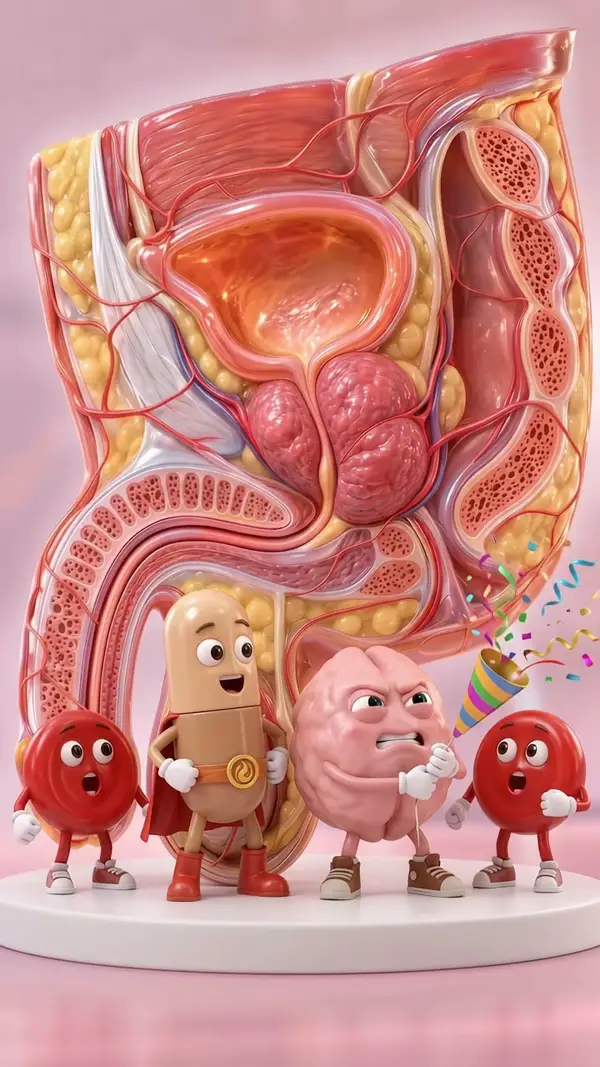
Taylor Brown — Support stamina and heart health every day
Testing

Does jerking off really kill your dick?

I've jerked off about eleven thousand fucking times since I was fourteen. I did the math one night. So when ED hit me at 45 and I couldn't get hard for my girlfriend, I knew exactly whose fault it was. Mine. Mine and my right hand's. So I quit. Ninety days, cold turkey. And it didn't fix a damn thing. Name's Wes. I'm 47, and I've been the pit master at a barbecue joint in Memphis for fifteen years. I can tell when a brisket's done just by how it jiggles on the cutting board. High cholesterol since 41. Toni and I have been together nine years. Never got married. Her first marriage went so bad she says a piece of paper is how you ruin a good thing. She runs the front desk at a tire shop, she cusses worse than I do, and she's still the best-looking woman in any room she walks into. But about two years ago, things with my dick started going to sh*t. First it took forever to get hard. Then I'd lose it halfway through, usually right when Toni was finally getting into it. Then one night I couldn't get it up at all, and she lay there and said, "Babe, it's fine," in the voice that means it is f*cking not fine. After that she'd get up and go run the water in the bathroom for a long time. I knew what that meant. I'm six-two and two-forty. I can carry a whole hog across the parking lot by myself. And I couldn't do the one thing a man's supposed to be able to do for his woman. I didn't need a doctor. I already knew what it was. I'd been jerking off since the Clinton administration. Most days, some days twice. And I'd heard enough over the years about what that does to a man. So I started reading up on it. Late at night on my phone, every article and Reddit thread I could find from guys with the same problem. Everywhere I looked, somebody had the same explanation. Jerk off too much and you fry your dopamine. You get what they call a death grip, where you get so used to your own hand that being with a woman doesn't do it anymore. Thirty years of p*rn, and I'd done it to myself. One guy swore he fixed it by sleeping in oven mitts so he couldn't touch himself at night. I'm not saying I tried it. I'm saying I own oven mitts. And everybody online had the same cure. NoFap. That's what they call it when you quit jerking off completely, sometimes for months, to reset your body. It's the same crowd that does No Nut November, except these guys keep going after November ends. There are whole apps for it. So I deleted every bookmark on my phone and downloaded one. It had a streak counter. Every morning it told me how many days clean I was, like I was in a program. Day one was fine, but by day four I was mean as a snake. Day nine I nearly put my fist through a pellet smoker because a brisket stalled. Day twenty-three I scrubbed the whole smoker shed at two in the morning, because what else was I going to do with my hands. The app sent me a motivational quote every morning. Marcus Aurelius. I'm a pit master in Memphis. I don't know who the hell Marcus Aurelius is, but he had a lot of opinions about my willpower. Somewhere around day forty, Toni picked up my phone to check the weather and saw the app. "What the hell is this?" "It's NoFap." She read the screen. Forty-one days. Then she looked at me. "Is this a church thing?" "No. It's supposed to help with the problem we've been having." "By not touching yourself?" "That's the idea." "Well, you haven't been touching me either." She tried to laugh when she said it, but her eyes were wet. She thought I didn't want her anymore. I tried to explain. Dopamine, rewiring, all of it. She just shook her head, put the phone down and went to bed. That was the most we'd talked about it in a year. The next week she started sleeping with a pillow between us, like a fence. I made it to ninety days. The app gave me a little gold badge. I took a screenshot, which I'm not proud of. On day ninety-one I lit candles. Actual candles, from the Dollar General. I figured three months of saving it up, I was going to be a damn freight train. I was not a freight train. I got about halfway there and lost it, same as before. Maybe worse. Toni rolled over, patted my arm twice, and said, "Well. At least we tried, I guess." Ninety days of white-knuckling it through every shower, and that's what I got. A gold badge and a pat on the arm. The next morning she left for the tire shop forty minutes early without saying a word. I went out on the back porch and sat there with my coffee till it went cold. I'd gone three months without jerking off because I thought it would fix this. And nothing had changed. Maybe I'd just ruined myself for good. That's what I thought, anyway. After that I tried everything else. The blue pill gave me a headache like somebody hit me with a cast iron skillet, and about as much action as a wet noodle. I got my heart tested because I figured it had to be my cholesterol. It came back "normal," and the nurse handed me a pamphlet about stress. I bought some horny goat weed at a truck stop that did absolutely nothing except make me sweat. I bought a pump off Amazon. I'm not going to talk about the pump. By then I'd thrown about four hundred bucks at stuff that didn't work. And I still couldn't shake the thought that I'd done this to myself. Thirty years of bad habits, and now I was paying for it. I finally went to a urologist. Dr. Holt, out in Germantown, about my age, with a voice like a weatherman. The waiting room was all guys over fifty pretending to read Field & Stream. I was so embarrassed I just dumped it all on him at once. The jerking off, the p*rn, the ninety days. Even the candles and the gold badge. Then I asked him the thing I'd been scared to ask anybody. "Did I wear it out?" He didn't look shocked. More like he'd heard it a thousand times. "Wes, jerking off for thirty years doesn't mean you've worn it out." I just sat there. I'd spent months convinced that was exactly what I'd done. "How long has your cholesterol been high?" he asked. "Since I was forty-one." "Then we need to talk about what that can do to your blood flow." He explained it simple, and I appreciated that. Years of high cholesterol can clog the small blood vessels that get you hard. Those vessels have to open up so enough blood can get in. When that stops happening properly, you can want her as much as ever and still lose it halfway through. That was the part I'd been trying to explain to Toni for two years. Then he explained something I hadn't understood about fibrin. A sticky mesh of it can build up in the one-to-two-millimeter arteries in your dick years before the bigger ones in your heart. It still doesn't show up on a heart test, so a "normal" result doesn't necessarily tell the whole story. "So quitting jerking off wasn't going to fix that?" "It wasn't going to repair your blood vessels," he said. "And the blue pill?" "It can help blood flow for a few hours. That's different from dealing with the underlying problem." He pointed back to the two things he'd just explained. "The blood flow and the fibrin. Those are the two things we need to work on." Ninety days, a gold badge, and I hadn't done a thing about either one. I'd been blaming a habit I'd had since I was fourteen for a problem that didn't show up until I was forty-five. Not once had I thought about the cholesterol. I wanted to go home and throw my phone in the smoker. Instead, I started reading about blood flow and fibrin. Most of what I found was garbage. Fifty bottles on Amazon with a lion on the label and no doses anywhere. A guy on YouTube selling a three-hundred-dollar "protocol." Something called Rhino 9000 that I wasn't about to gamble on. Then I found Noverly Nattokinase. What caught my eye was that it covered both things Dr. Holt had explained, and I could actually see how much of each ingredient I was getting. Aged garlic extract and pine bark, for blood flow. Grape seed and CoQ10, for circulation too. That was the blood-flow side. Nattokinase was the other part: 10,000 FU of a fermented natto extract to help break down the fibrin your body's been laying down in those pipes. Vitamin K2, to help keep calcium out of the artery walls. And bromelain and turmeric, to help with the inflammation around all of it. I read the label twice. After the truck-stop stuff, I wanted to know what I was paying for. Two capsules with breakfast. No prescription, no counter, no badges. I ordered the buy three get three free that night, half expecting to get burned again. Week one, nothing. I figured that was one more chunk of my money in somebody else's pocket. I kept taking it anyway, mostly out of spite. Week two, I woke up at 4:50, ten minutes before my alarm, hard for the first time in two years. I didn't wake Toni. After the candles, I wasn't ready to get her hopes up over one morning. Week three, Toni and I didn't plan anything. No candles. It just happened, on a Tuesday, after she got home from the shop. And it didn't quit on me halfway. It didn't quit at all. Afterward she was laughing. Not at me. The good kind, the kind I hadn't heard out of her in two years. Then she propped herself up on one elbow and looked at me for a long time. "Okay," she said. "What the hell happened to you?" I showed her the bottle. Then I told her what Dr. Holt said. All of it, including how long I'd spent blaming myself. And that it had never been about not wanting her. She was quiet for a minute. Then she picked up my phone, opened the NoFap app, and deleted it. "You're done with that," she said. Then she deleted the screenshot of the gold badge too, put my phone down, and pulled me back to her. By week six, she was the one starting it. Most nights. One morning she followed me into the shower before work and made me twenty minutes late. My boss asked what happened. I told him traffic. So listen. If you're a guy with high cholesterol and you've got one of those day counters on your phone right now, here's what I wish somebody had told me before I wasted ninety days. Don't assume you've worn yourself out. I'd spent months blaming my right hand while ignoring the blood-flow problem that high cholesterol can cause. And when my heart test came back normal, I thought that settled that too. Talk to her, too. Toni had spent all that time thinking I didn't want her, while I was on my phone trying to work out how to get things working again. Neither of us knew what the other one was thinking. I still have high cholesterol. I still have to manage it. But counting days without jerking off wasn't doing anything for the problems Dr. Holt explained to me. Two capsules with breakfast was a routine I could actually stick to. The buy three get three free gave me ninety days' worth. There's a ninety-day money-back guarantee, so I wasn't taking another four-hundred-dollar gamble. I linked it below. It's what I found when I stopped blaming myself and started looking for what was actually wrong. https://noverly.shop/products/nattokinase-10-000-fu-clinical-strength-heart-circulation-complex P.S. I still have a backup of the gold badge screenshot. Toni says it's the dumbest thing I've ever been proud of. She's right. P.P.S. Week one felt like nothing to me. I'm glad I didn't decide that was the whole result.

Loading the ad's image
Taylor Brown — Does jerking off really kill your dick?
Testing

Does jerking off really kill your dick?

I've jerked off pretty much every fucking day since I was fourteen. So when I couldn't get hard for my girlfriend at 45, I knew exactly whose fault it was. Mine. Mine and my right hand's. So I quit. Ninety days, cold turkey. And it didn't fix a damn thing. Name's Wes. I'm 47, and I've been the pit master at a barbecue joint in Memphis for fifteen years. I can tell when a brisket's done just by how it jiggles on the cutting board. High cholesterol since 41. Toni and I have been together nine years. Never got married. Her first marriage went so bad she says a piece of paper is how you ruin a good thing. She runs the front desk at a tire shop, she cusses worse than I do, and she's still the best-looking woman in any room she walks into. But about two years ago, things with my dick started going to sh*t. First it took forever to get hard. Then I'd lose it halfway through, usually right when Toni was finally getting into it. Then one night I couldn't get it up at all, and she lay there and said, "Babe, it's fine," in the voice that means it is f*cking not fine. After that she'd get up and go run the water in the bathroom for a long time. I knew what that meant. I'm six-two and two-forty. I can carry a whole hog across the parking lot by myself. And I couldn't do the one thing a man's supposed to be able to do for his woman. I didn't need a doctor. I already knew what it was. I'd been jerking off since the Clinton administration. Most days, some days twice. And I'd heard enough over the years about what that does to a man. So I started reading up on it. Late at night on my phone, every article and Reddit thread I could find from guys with the same problem. Everywhere I looked, somebody had the same explanation. Jerk off too much and you fry your dopamine. You get what they call a death grip, where you get so used to your own hand that being with a woman doesn't do it anymore. Thirty years of p*rn, and I'd done it to myself. One guy swore he fixed it by sleeping in oven mitts so he couldn't touch himself at night. I'm not saying I tried it. I'm saying I own oven mitts. And everybody online had the same cure. NoFap. That's what they call it when you quit jerking off completely, sometimes for months, to reset your body. It's the same crowd that does No Nut November, except these guys keep going after November ends. There are whole apps for it. So I deleted every bookmark on my phone and downloaded one. It had a streak counter. Every morning it told me how many days clean I was, like I was in a program. Day one was fine, but by day four I was mean as a snake. Day nine I nearly put my fist through a pellet smoker because a brisket stalled. Day twenty-three I scrubbed the whole smoker shed at two in the morning, because what else was I going to do with my hands. The app sent me a motivational quote every morning. Marcus Aurelius. I'm a pit master in Memphis. I don't know who the hell Marcus Aurelius is, but he had a lot of opinions about my willpower. Somewhere around day forty, Toni picked up my phone to check the weather and saw the app. "What the hell is this?" "It's NoFap." She read the screen. Forty-one days. Then she looked at me. "Is this a church thing?" "No. It's supposed to help with the problem we've been having." "By not touching yourself?" "That's the idea." "Well, you haven't been touching me either." She tried to laugh when she said it, but her eyes were wet. She thought I didn't want her anymore. I tried to explain. Dopamine, rewiring, all of it. She just shook her head, put the phone down and went to bed. That was the most we'd talked about it in a year. The next week she started sleeping with a pillow between us, like a fence. I made it to ninety days. The app gave me a little gold badge. I took a screenshot, which I'm not proud of. On day ninety-one I lit candles. Actual candles, from the Dollar General. I figured three months of saving it up, I was going to be a damn freight train. I was not a freight train. I got about halfway there and lost it, same as before. Maybe worse. Toni rolled over, patted my arm twice, and said, "Well. At least we tried, I guess." Ninety days of white-knuckling it through every shower, and that's what I got. A gold badge and a pat on the arm. The next morning she left for the tire shop forty minutes early without saying a word. I went out on the back porch and sat there with my coffee till it went cold. I'd gone three months without jerking off because I thought it would fix this. And nothing had changed. Maybe I'd just ruined myself for good. That's what I thought, anyway. After that I tried everything else. The blue pill gave me a headache like somebody hit me with a cast iron skillet, and about as much action as a wet noodle. I got my heart tested because I figured it had to be my cholesterol. It came back "normal," and the nurse handed me a pamphlet about stress. I bought some horny goat weed at a truck stop that did absolutely nothing except make me sweat. I bought a pump off Amazon. I'm not going to talk about the pump. By then I'd thrown about four hundred bucks at stuff that didn't work. And I still couldn't shake the thought that I'd done this to myself. Thirty years of bad habits, and now I was paying for it. I finally went to a urologist. Dr. Holt, out in Germantown, about my age, with a voice like a weatherman. The waiting room was all guys over fifty pretending to read Field & Stream. I was so embarrassed I just dumped it all on him at once. The jerking off, the p*rn, the ninety days. Even the candles and the gold badge. Then I asked him the thing I'd been scared to ask anybody. "Did I wear it out?" He didn't look shocked. More like he'd heard it a thousand times. "Wes, jerking off for thirty years doesn't mean you've worn it out." I just sat there. I'd spent months convinced that was exactly what I'd done. "How long has your cholesterol been high?" he asked. "Since I was forty-one." "Then we need to talk about what that can do to your blood flow." He explained it simple, and I appreciated that. Years of high cholesterol can clog the small blood vessels that get you hard. Those vessels have to open up so enough blood can get in. When that stops happening properly, you can want her as much as ever and still lose it halfway through. That was the part I'd been trying to explain to Toni for two years. Then he explained something I hadn't understood about fibrin. A sticky mesh of it can build up in the one-to-two-millimeter arteries in your dick years before the bigger ones in your heart. It still doesn't show up on a heart test, so a "normal" result doesn't necessarily tell the whole story. "So quitting jerking off wasn't going to fix that?" "It wasn't going to repair your blood vessels," he said. "And the blue pill?" "It can help blood flow for a few hours. That's different from dealing with the underlying problem." He pointed back to the two things he'd just explained. "The blood flow and the fibrin. Those are the two things we need to work on." Ninety days, a gold badge, and I hadn't done a thing about either one. I'd been blaming a habit I'd had since I was fourteen for a problem that didn't show up until I was forty-five. Not once had I thought about the cholesterol. I wanted to go home and throw my phone in the smoker. Instead, I started reading about blood flow and fibrin. Most of what I found was garbage. Fifty bottles on Amazon with a lion on the label and no doses anywhere. A guy on YouTube selling a three-hundred-dollar "protocol." Something called Rhino 9000 that I wasn't about to gamble on. Then I found Noverly Nattokinase. What caught my eye was that it covered both things Dr. Holt had explained, and I could actually see how much of each ingredient I was getting. Aged garlic extract and pine bark, for blood flow. Grape seed and CoQ10, for circulation too. That was the blood-flow side. Nattokinase was the other part: 10,000 FU of a fermented natto extract to help break down the fibrin your body's been laying down in those pipes. Vitamin K2, to help keep calcium out of the artery walls. And bromelain and turmeric, to help with the inflammation around all of it. I read the label twice. After the truck-stop stuff, I wanted to know what I was paying for. Two capsules with breakfast. No prescription, no counter, no badges. I ordered the buy three get three free that night, half expecting to get burned again. Week one, nothing. I figured that was one more chunk of my money in somebody else's pocket. I kept taking it anyway, mostly out of spite. Week two, I woke up at 4:50, ten minutes before my alarm, hard for the first time in two years. I didn't wake Toni. After the candles, I wasn't ready to get her hopes up over one morning. Week three, Toni and I didn't plan anything. No candles. It just happened, on a Tuesday, after she got home from the shop. And it didn't quit on me halfway. It didn't quit at all. Afterward she was laughing. Not at me. The good kind, the kind I hadn't heard out of her in two years. Then she propped herself up on one elbow and looked at me for a long time. "Okay," she said. "What the hell happened to you?" I showed her the bottle. Then I told her what Dr. Holt said. All of it, including how long I'd spent blaming myself. And that it had never been about not wanting her. She was quiet for a minute. Then she picked up my phone, opened the NoFap app, and deleted it. "You're done with that," she said. Then she deleted the screenshot of the gold badge too, put my phone down, and pulled me back to her. By week six, she was the one starting it. Most nights. One morning she followed me into the shower before work and made me twenty minutes late. My boss asked what happened. I told him traffic. So listen. If you're a guy with high cholesterol and you've got one of those day counters on your phone right now, here's what I wish somebody had told me before I wasted ninety days. Don't assume you've worn yourself out. I'd spent months blaming my right hand while ignoring the blood-flow problem that high cholesterol can cause. And when my heart test came back normal, I thought that settled that too. Talk to her, too. Toni had spent all that time thinking I didn't want her, while I was on my phone trying to work out how to get things working again. Neither of us knew what the other one was thinking. I still have high cholesterol. I still have to manage it. But counting days without jerking off wasn't doing anything for the problems Dr. Holt explained to me. Two capsules with breakfast was a routine I could actually stick to. The buy three get three free gave me ninety days' worth. There's a ninety-day money-back guarantee, so I wasn't taking another four-hundred-dollar gamble. I linked it below. It's what I found when I stopped blaming myself and started looking for what was actually wrong. https://noverly.shop/products/nattokinase-10-000-fu-clinical-strength-heart-circulation-complex P.S. I still have a backup of the gold badge screenshot. Toni says it's the dumbest thing I've ever been proud of. She's right. P.P.S. Week one felt like nothing to me. I'm glad I didn't decide that was the whole result.

Loading the ad's image
Testing

Does jerking off really kill your dick?

I've jerked off pretty much every fucking day since I was fourteen. So when my dick quit on my girlfriend at 45, every fucking guy with ED on Reddit told me exactly whose fault it was. Mine. Mine and my right hand's. So I quit. Ninety days, cold turkey. And it didn't fix a damn thing. Name's Wes. I'm 47, and I've been the pit master at a barbecue joint in Memphis for fifteen years. I can tell when a brisket's done just by how it jiggles on the cutting board. High cholesterol since 41. Toni and I have been together nine years. Never got married. Her first marriage went so bad she says a piece of paper is how you ruin a good thing. She runs the front desk at a tire shop, she cusses worse than I do, and she's still the best-looking woman in any room she walks into. But about two years ago, things with my dick started going to sh*t. First it took forever to get hard. Then I'd lose it halfway through, usually right when Toni was finally getting into it. Then one night I couldn't get it up at all, and she lay there and said, "Babe, it's fine," in the voice that means it is f*cking not fine. After that she'd get up and go run the water in the bathroom for a long time. I knew what that meant. I'm six-two and two-forty. I can carry a whole hog across the parking lot by myself. And I couldn't do the one thing a man's supposed to be able to do for his woman. I didn't need a doctor. I already knew what it was. I'd been jerking off since the Clinton administration. Most days, some days twice. And I'd heard enough over the years about what that does to a man. So I started reading up on it. Late at night on my phone, every article and Reddit thread I could find from guys with the same problem. Everywhere I looked, somebody had the same explanation. Jerk off too much and you fry your dopamine. You get what they call a death grip, where you get so used to your own hand that being with a woman doesn't do it anymore. Thirty years of p*rn, and I'd done it to myself. One guy swore he fixed it by sleeping in oven mitts so he couldn't touch himself at night. I'm not saying I tried it. I'm saying I own oven mitts. And everybody online had the same cure. NoFap. That's what they call it when you quit jerking off completely, sometimes for months, to reset your body. It's the same crowd that does No Nut November, except these guys keep going after November ends. There are whole apps for it. So I deleted every bookmark on my phone and downloaded one. It had a streak counter. Every morning it told me how many days clean I was, like I was in a program. Day one was fine, but by day four I was mean as a snake. Day nine I nearly put my fist through a pellet smoker because a brisket stalled. Day twenty-three I scrubbed the whole smoker shed at two in the morning, because what else was I going to do with my hands. The app sent me a motivational quote every morning. Marcus Aurelius. I'm a pit master in Memphis. I don't know who the hell Marcus Aurelius is, but he had a lot of opinions about my willpower. Somewhere around day forty, Toni picked up my phone to check the weather and saw the app. "What the hell is this?" "It's NoFap." She read the screen. Forty-one days. Then she looked at me. "Is this a church thing?" "No. It's supposed to help with the problem we've been having." "By not touching yourself?" "That's the idea." "Well, you haven't been touching me either." She tried to laugh when she said it, but her eyes were wet. She thought I didn't want her anymore. I tried to explain. Dopamine, rewiring, all of it. She just shook her head, put the phone down and went to bed. That was the most we'd talked about it in a year. The next week she started sleeping with a pillow between us, like a fence. I made it to ninety days. The app gave me a little gold badge. I took a screenshot, which I'm not proud of. On day ninety-one I lit candles. Actual candles, from the Dollar General. I figured three months of saving it up, I was going to be a damn freight train. I was not a freight train. I got about halfway there and lost it, same as before. Maybe worse. Toni rolled over, patted my arm twice, and said, "Well. At least we tried, I guess." Ninety days of white-knuckling it through every shower, and that's what I got. A gold badge and a pat on the arm. The next morning she left for the tire shop forty minutes early without saying a word. I went out on the back porch and sat there with my coffee till it went cold. I'd gone three months without jerking off because I thought it would fix this. And nothing had changed. Maybe I'd just ruined myself for good. That's what I thought, anyway. After that I tried everything else. The blue pill gave me a headache like somebody hit me with a cast iron skillet, and about as much action as a wet noodle. I got my heart tested because I figured it had to be my cholesterol. It came back "normal," and the nurse handed me a pamphlet about stress. I bought some horny goat weed at a truck stop that did absolutely nothing except make me sweat. I bought a pump off Amazon. I'm not going to talk about the pump. By then I'd thrown about four hundred bucks at stuff that didn't work. And I still couldn't shake the thought that I'd done this to myself. Thirty years of bad habits, and now I was paying for it. I finally went to a urologist. Dr. Holt, out in Germantown, about my age, with a voice like a weatherman. The waiting room was all guys over fifty pretending to read Field & Stream. I was so embarrassed I just dumped it all on him at once. The jerking off, the p*rn, the ninety days. Even the candles and the gold badge. Then I asked him the thing I'd been scared to ask anybody. "Did I wear it out?" He didn't look shocked. More like he'd heard it a thousand times. "Wes, jerking off for thirty years doesn't mean you've worn it out." I just sat there. I'd spent months convinced that was exactly what I'd done. "How long has your cholesterol been high?" he asked. "Since I was forty-one." "Then we need to talk about what that can do to your blood flow." He explained it simple, and I appreciated that. Years of high cholesterol can clog the small blood vessels that get you hard. Those vessels have to open up so enough blood can get in. When that stops happening properly, you can want her as much as ever and still lose it halfway through. That was the part I'd been trying to explain to Toni for two years. Then he explained something I hadn't understood about fibrin. A sticky mesh of it can build up in the one-to-two-millimeter arteries in your dick years before the bigger ones in your heart. It still doesn't show up on a heart test, so a "normal" result doesn't necessarily tell the whole story. "So quitting jerking off wasn't going to fix that?" "It wasn't going to repair your blood vessels," he said. "And the blue pill?" "It can help blood flow for a few hours. That's different from dealing with the underlying problem." He pointed back to the two things he'd just explained. "The blood flow and the fibrin. Those are the two things we need to work on." Ninety days, a gold badge, and I hadn't done a thing about either one. I'd been blaming a habit I'd had since I was fourteen for a problem that didn't show up until I was forty-five. Not once had I thought about the cholesterol. I wanted to go home and throw my phone in the smoker. Instead, I started reading about blood flow and fibrin. Most of what I found was garbage. Fifty bottles on Amazon with a lion on the label and no doses anywhere. A guy on YouTube selling a three-hundred-dollar "protocol." Something called Rhino 9000 that I wasn't about to gamble on. Then I found Noverly Nattokinase. What caught my eye was that it covered both things Dr. Holt had explained, and I could actually see how much of each ingredient I was getting. Aged garlic extract and pine bark, for blood flow. Grape seed and CoQ10, for circulation too. That was the blood-flow side. Nattokinase was the other part: 10,000 FU of a fermented natto extract to help break down the fibrin your body's been laying down in those pipes. Vitamin K2, to help keep calcium out of the artery walls. And bromelain and turmeric, to help with the inflammation around all of it. I read the label twice. After the truck-stop stuff, I wanted to know what I was paying for. Two capsules with breakfast. No prescription, no counter, no badges. I ordered the buy three get three free that night, half expecting to get burned again. Week one, nothing. I figured that was one more chunk of my money in somebody else's pocket. I kept taking it anyway, mostly out of spite. Week two, I woke up at 4:50, ten minutes before my alarm, hard for the first time in two years. I didn't wake Toni. After the candles, I wasn't ready to get her hopes up over one morning. Week three, Toni and I didn't plan anything. No candles. It just happened, on a Tuesday, after she got home from the shop. And it didn't quit on me halfway. It didn't quit at all. Afterward she was laughing. Not at me. The good kind, the kind I hadn't heard out of her in two years. Then she propped herself up on one elbow and looked at me for a long time. "Okay," she said. "What the hell happened to you?" I showed her the bottle. Then I told her what Dr. Holt said. All of it, including how long I'd spent blaming myself. And that it had never been about not wanting her. She was quiet for a minute. Then she picked up my phone, opened the NoFap app, and deleted it. "You're done with that," she said. Then she deleted the screenshot of the gold badge too, put my phone down, and pulled me back to her. By week six, she was the one starting it. Most nights. One morning she followed me into the shower before work and made me twenty minutes late. My boss asked what happened. I told him traffic. So listen. If you're a guy with high cholesterol and you've got one of those day counters on your phone right now, here's what I wish somebody had told me before I wasted ninety days. Don't assume you've worn yourself out. I'd spent months blaming my right hand while ignoring the blood-flow problem that high cholesterol can cause. And when my heart test came back normal, I thought that settled that too. Talk to her, too. Toni had spent all that time thinking I didn't want her, while I was on my phone trying to work out how to get things working again. Neither of us knew what the other one was thinking. I still have high cholesterol. I still have to manage it. But counting days without jerking off wasn't doing anything for the problems Dr. Holt explained to me. Two capsules with breakfast was a routine I could actually stick to. The buy three get three free gave me ninety days' worth. There's a ninety-day money-back guarantee, so I wasn't taking another four-hundred-dollar gamble. I linked it below. It's what I found when I stopped blaming myself and started looking for what was actually wrong. https://noverly.shop/products/nattokinase-10-000-fu-clinical-strength-heart-circulation-complex P.S. I still have a backup of the gold badge screenshot. Toni says it's the dumbest thing I've ever been proud of. She's right. P.P.S. Week one felt like nothing to me. I'm glad I didn't decide that was the whole result.

Loading the ad's image
Testing

Fix Yourself at the Cellular Level

I spent thirty-one years taking children out of dangerous homes. My last case was a baby found crawling across a highway at midnight, wearing a dog collar. This is the story of the seventy-year-old biker who saved her — and the Sunday, six years later, when I had to warn him that I might have to watch her lose everything twice. My name is Margaret Hale. I was a child protective caseworker for thirty-one years. I have seen things in tidy suburban houses that I will carry to my grave, and I thought I had lost the ability to be surprised by what people do to children. Then a hospital nurse called me about a baby girl pulled off Interstate 40 at midnight by a passing biker. I saw the collar before I saw her face. Heavy leather, the kind made for a large dog, cut off her neck with bolt cutters and lying in an evidence bag. There was a tag on it. I read the tag. Thirty-one years, and I had to walk out of that room. The child wouldn't eat, wouldn't sleep, and fought anyone who touched her — silently, which was the part that broke the nurses. On the third day, one of them called me because the baby kept making a motion with her little hand. Over and over. A twisting motion. "That's a motorcycle throttle," I told her. She wanted the man who found her. I have placed hundreds of children. I have a file cabinet in my head of every rule about who is appropriate and who is not, and a seventy-year-old single man who lives alone fails half the checklist before he says a word. I told him so, on the phone, the night he asked what it would take to foster her. "Mr. Braddock, you're seventy years old. You live alone. You—" "I'm a combat medic. I've got patience. I've got time. And that little girl chose me." Here is what I knew that the checklist didn't. In thirty-one years, I had never seen an attachment form that fast out of that much damage. Children who survive what she survived don't reach for anyone. She reached for him. Grabbed two fistfuls of his leather vest and slept. I made the calls. The judge signed emergency placement in three days. And I spent the next six years watching a seventy-year-old biker do the finest piece of parenting I have witnessed in my entire career. I watched him put a mat in a corner because she'd been trained to sleep on floors, and sit beside it every night without once forcing a bed on her. I watched him learn sign language at seventy off flash cards taped above a workbench. I watched ten months of nothing, and then a smile that lasted two seconds and changed everything. I stood up at the adoption hearing and told the judge that breaking that attachment would destroy everything the child had built, and I meant every syllable. They named her Hope. She calls me Aunt M. I retired two years ago, but you don't retire from a child like that. I come by most Sundays. And it was on a Sunday that she told me about the bath. Hope tells me everything — she always has. Her hands started moving and I watched the story come out of them: Daddy sat down in the hallway chair while she was in the tub. Daddy didn't wake up. She got herself out, dried herself off, and sat on the floor next to his chair until his eyes opened. Guarding him. Walt is seventy-five. I had been watching him that whole year with the eyes thirty-one years gives you — the eyes that assess a caregiver in the first ninety seconds of a home visit. The grip he kept flexing. The names he reached for and missed. The way seven in the evening emptied him out. I know what decline looks like in a caregiver. I had simply never had to see it in a friend. When Hope went out to the garage, I sat down across from him and used the voice I spent three decades using on strangers. I hated every second of it. "Walt. If her teacher had seen what Hope just described to me, she is required by law to report it. There would be a case file. A home visit. An investigation — same as any other family. Adopted doesn't mean invisible." "It was one time." "It's never one time." I leaned in. "I spent thirty-one years walking children out of homes. Don't you make somebody like me walk into this one." I should be honest with you about something. A working caseworker would have had obligations that day. Retirement had bought me the one thing the job never allowed — discretion — and I spent it on that warning instead of a phone call. Then I drove home and sat in my car in the driveway and prayed I hadn't just made the worst judgment call of my career. Because I had seen this exact story before. In my own house. My husband Gerald was on a statin for twelve years. His cholesterol was controlled the entire time — his doctor was delighted with him. And for twelve years I watched the man dim. The grip, the fog, the naps that swallowed whole afternoons. I called it age, because his doctor called it age, and what does a caseworker know that a cardiologist doesn't? Gerald died at seventy-one. His numbers were excellent. I am not going to tell you the pill killed my husband. I don't know that. I know his chart was perfect and his body fell apart underneath it, and I know that nobody — in twelve years — ever tested him for the thing I now understand was eating him the whole time. So when I came back the next Sunday and the Sunday after that, I was watching Walt the way a woman watches a man she has already buried once. Except Walt didn't dim. Six weeks after my warning, I watched him carry Hope up the stairs without stopping. I watched him stay awake through an entire bath night — Hope told me, hands flying, delighted: Daddy watched the whole time. I watched his hands sit still on the table, steady, for the first time in a year. He looked ten years younger and I am not a woman who says such things loosely. I didn't say a word about any of it for a month. I just kept coming, and watching, and one Sunday I stayed two hours and finished my coffee, and when Hope fell asleep on her mat I put my cup down and said: "All right. What changed?" He put two lab sheets on my kitchen-table placemat. The first one had a cholesterol number circled: 172. The second, dated ninety days later: 134. No medication in between. Then he asked me for an apple. I thought he'd lost his mind. He cut it in half on my cutting board and set it between us and made me watch it brown while he taught me what a seventy-nine-year-old Marine named Hiro had taught him. That the browning is what's happening to the cholesterol in our blood — doctors call the thing that causes it hydroxyl radicals, Walt calls it acid, and that's the only time you'll hear the technical word from me. That a cholesterol test counts how much you have and says nothing about how much has gone brown. That the body makes more cholesterol to patch the damage, which is why the number climbs. And that the acid doesn't stop at cholesterol — it drains the spark your muscles and brain run on, which is a sentence that put Gerald's last twelve years in a light I have been sitting with ever since. Then he shook two capsules out beside one of my good glasses and I watched him turn the bottle to the light, 10,000 FU right on the front, and he told me about a grandmother's fermented soybeans in the volcanic highlands of Okinawa, and a word — natto — and two thousand published papers, and hospitals in Japan that use nattokinase as ordinary clinical practice. The CoQ10, pine bark and grape seed riding with it go after the acid, and the nattokinase digests the fibrin the rusted cholesterol clings to. The most destructive thing the body makes, with nothing left to stick to. "Why doesn't anyone know this?" I asked. Thirty-one years of case files have made me a professional skeptic. "Nobody can patent natto," he said. "No patent, no drug company, no sales rep. Nobody ever drove to a doctor's office to sell it." I ordered my own that night. Not for Walt. Not even for Hope. For Gerald. For the twelve years I watched and called it age. I'm seventy-four. My own cholesterol had been creeping for years — 161 at my last physical, with my doctor making the gentle noises that come before a prescription. I took two capsules every morning with breakfast, the way Walt does, the way his whole riding club does now. Within the first twenty minutes of the very first dose I felt a quiet warmth and a lift behind my eyes — Walt warned me that feeling isn't the proof, only the sign that the thing is real. The proof came at ninety days: 133. My doctor read the number twice, asked what I'd changed, wrote down my answer without comment, and said, "Whatever it is, continue." Last Sunday I sat at Walt's kitchen table. Hope was signing a story about school, fast, laughing her silent laugh. Walt caught every word. Steady hands around his cup. He is going to be in the front row when that child graduates, and I no longer have a single professional doubt about it. I spent thirty-one years ending stories. It took two capsules a morning to let me sit still and watch one keep going. If you're a woman reading this — and I suspect you are, because we're the ones who read to the end — then you're likely watching someone. A husband whose chart is perfect while he dims in the recliner. A number of your own that's creeping while your doctor makes the gentle noises. You've been calling it age, because that's what everyone calls it, and you've learned not to say it out loud because he waves you off. You are not imagining it. I called it age for twelve years and I was watching the wrong number the entire time. The product is called Nattokinase, from a small company called Noverly — white bottle, gold lettering. Two capsules with a glass of water every morning, with food. The real thing prints 10,000 FU right on the front; the cheap imitations list milligrams and hide the FU, and now you'll know the difference on sight. Buy 3 get 2 free, $89.95 for five bottles — about a dollar a day — with a 90-day money-back guarantee. Ninety days is one blood test. If your numbers don't move, return the bottles. The system that managed Gerald for twelve years never once offered me a refund. — Margaret Hale P.S. — If the person you're watching won't read this, don't argue with him. I processed hostile men for thirty-one years; argument is the one tool that never worked. Do what the wives in Walt's riding club do. Put two capsules next to his coffee in the morning and say, "Take these for me." That's the whole intervention. The label does the rest of the talking, and in ninety days the lab sheet finishes the conversation. P.P.S. — If you are on a medication yourself, or he is: nobody in this story quit a prescription on their own, and you shouldn't either. Add the capsules, ask the doctor for an oxidized LDL test — the one that measures the damage instead of counting the total — and retest in ninety days. Let the doctor look at what Walt's doctor looked at. Doctors argue with wives. They don't argue with their own lab system. P.P.P.S. — They sell out. Small company, and they won't thin the strength to make more of it — which is the entire reason it works. I watched it go out of stock for eleven days this year. If it's available when you look, order it the same night I did. Some of us already waited twelve years too long.

Loading the ad's image
Testing

Feel Like Yourself Again

I left a half-tuned Baldwin in a stranger's living room last October and drove home with my hazards on. I'd never left a piano half-tuned in 38 years of doing this work. Not once. Not the time I had the flu in 1999 and finished a Kawai grand with a fever of 102. Not the time my father died in the middle of a job in Warwick and I came back the next morning to finish the last octave because I'd told the family I would. You finish what you start. That's the whole religion of this trade. But that Tuesday in October, in a stranger's living room in Cranston, I closed my case and stood up and the whole room went with me. Not spinning. Sliding. Like the wall behind the piano was on a track and someone was quietly pushing it left. I put my hand flat on the top of the Baldwin. Waited for it to settle. It didn't settle. The woman was in the kitchen making coffee. I could hear the machine going. I called out to her that I wasn't feeling well and I'd need to come back Thursday. She was very kind about it. Told me not to worry. Asked if I needed to sit down before I drove. I said no. I sat in my car in her driveway for 24 minutes before I could put it in reverse. My name is Vincent. I'm 63. I've been a piano tuner in Providence, Rhode Island since I was 25 years old. My father was a piano tuner. His father worked in the mills in Woonsocket and told my father to find something to do with his hands that wouldn't kill him. Piano tuning was what my father found. He taught me from the time I was 11. I could hear the beats between two out-of-tune strings before I could ride a bike properly. I have a route. That's what we call it. About 340 pianos in southern New England that I service on rotation. Some of them once a year. Some of them twice. A few of the concert instruments, four times. I know which house has the little dog that hides under the sofa when I come in. I know which family always forgets to close the front door behind me and lets the mosquitoes in. I know which piano bench has the loose leg and which one to put my case on instead. I know these houses the way you know your cousins' houses. Not intimately. But well enough that you can find the bathroom without asking. And for the last two years, the houses had started to move. Not all at once. It came in slowly. The first time it happened I was tuning a Yamaha upright for a family in East Greenwich, and I stood up after finishing the bass strings, and the room did a little half turn and then came back. I thought I'd stood up too fast. I've been kneeling in front of pianos for four decades. Your knees get to be a whole geopolitical situation. So I chalked it up to that. Blood rushing around because I'd been down too long. But then it started happening more. Not just when I stood up. Sometimes when I turned my head to look at the tuning pin. Sometimes when I bent down to pick up my hammer off the rug. Little slides. Little half-turns. The room would take a small step to the left and then step back. By last summer I was gripping doorframes on my way in and out of client's houses. Just for a second. Just to let the world catch up. I didn't tell my wife. Angela worries. She's always worried, since we lost our second son 22 years ago to a car accident on Route 95, and I've spent the years since then trying to give her fewer things to worry about, not more. I didn't tell my doctor either, if I'm honest. I saw him last spring for the physical I do every year and he asked me how I was doing and I said fine. He took my blood pressure. Said it was fine. Listened to my heart. Said it was fine. Told me for my age I was doing great and to keep doing what I was doing. Whatever I was doing. Nobody tells a piano tuner what he's doing. But after the Baldwin in Cranston, I started to think maybe I couldn't keep doing this. Whatever this was. I called the woman on Thursday and rescheduled for the following Tuesday. Then I called her the following Monday and rescheduled for the Tuesday after that. Then I called her and asked if she'd mind if I referred her to a colleague of mine in Warwick because I was having some scheduling issues. She was gracious. She said of course. She said please take care of yourself. I hung up the phone and sat at my kitchen table for a long time. My little book of appointments was open in front of me. There were 47 more pianos on the calendar between then and Christmas. I did not know how I was going to tune 47 pianos. Angela came in from the back porch and asked me why I was sitting there. I told her I was just planning my week. She kissed the top of my head the way she does. She's been kissing the top of my head like that since 1984. I finished my coffee and I went and did the next job. A Baldwin in Barrington. I gripped the doorframe on the way in and I gripped the doorframe on the way out and the family didn't notice because families rarely notice anything about the tuner. I got through it. But I knew I wouldn't get through all of them. Then June came. And June meant Marguerite. Dr. Marguerite Ashworth is one of my longest clients. She has a 1962 Steinway B in the front room of a house on the East Side of Providence that her grandfather bought in 1948. I have tuned that piano twice a year for 22 years. Once in December, once in June. She's an otolaryngologist. Ear, nose, throat. She's 67 years old and she cut back to two mornings a week at the practice a couple of years ago, but she hasn't retired. She says she'll retire when they cut the badge off her lab coat with scissors. I've known Marguerite through 22 Junes. She always makes me a glass of iced tea. She always leaves it on the coaster on the little end table next to the Steinway. She always waits until I'm done with the tenor section to come in and sit on the couch and talk to me while I finish. That's just how we do it. I got to her house that Tuesday morning. I rang the bell. She opened the door. I don't know what my face was doing. I hadn't slept the night before because I'd been up thinking about the four pianos I had scheduled for that week and how I was going to get through them. But something about my face must have told her something, because Marguerite is a doctor, and doctors read faces the way tuners read strings. She looked at me for a second longer than usual. Then she said, "Vincent, come in and sit down before you do anything else." I stepped inside. And the entryway did the thing. The small half-turn. I put my hand on the doorframe. Marguerite saw it. Of course she saw it. She's spent 40 years watching people's balance in exam rooms. She put a hand on my elbow and walked me to her kitchen and sat me down at the table and poured me a glass of water. She sat across from me. She didn't say anything for a minute. She just looked at me the way a doctor looks at a patient. Not the way a client looks at a tradesman. Then she said, "How long has this been going on?" And I told her. Everything. The Baldwin in Cranston. The doorframes. The mornings I sat in the car for 20 minutes before I could drive. The 47 pianos I didn't know how I was going to tune. My father dying with his tuning hammer in his hand at 74 and me being 63 with maybe not enough years left in this trade to see it through. She listened. She didn't interrupt. When I was done, she said, "Vincent, I don't want you to panic. I want you to listen. Because this is my field. This is what I've done my whole life." She got up and got herself a glass of water and sat back down. "There's a system in your inner ear," she said, "that controls your balance. It's called the vestibular system. It's tiny. Smaller than a nickel. And the way it works is, it needs a very steady supply of blood and oxygen to do its job. It's fed by some of the smallest blood vessels in your entire body. Vessels that are thinner than a hair." She held up two fingers and made a tiny gap. "Those vessels are delicate," she said. "They're the first ones in the body to have trouble as we get older. And when they have trouble, the balance system doesn't get what it needs. And when the balance system doesn't get what it needs, the world starts to slide." I asked her if that was what was happening to me. She said she couldn't diagnose me at her kitchen table. But she said the pattern I was describing sounded very familiar to her, and it sounded like something she'd been reading about for the last couple of years. "The problem isn't the balance system itself," she said. "The problem is the plumbing that feeds it. The small vessels. And most of the things we try to do for people with balance issues, we're aiming at the wrong target. We're trying to strengthen the muscles, or do the exercises, or manage the symptoms. Nobody's paying attention to the vessels." I asked her why. She smiled a little. "Because small vessels are boring, Vincent. They don't show up on the scans that get the grants. They're too small to bypass. They're too small to stent. So the whole field of medicine kind of shrugs at them. But they're the ones that matter for the balance system. And for the memory. And for the fingertips. And for a lot of things that people over 60 start to notice." She sat back in her chair. "There's something I started taking about 14 months ago," she said. "For a different reason, honestly. I wasn't having balance issues. I was having cold hands during winter clinic hours. But my colleague in Boston, an ENT surgeon I trained with 30 years ago, told me about it. And I've been on it since April of last year. And I want to tell you what happens with it, because I think it might matter for what you're describing." She got up and went into the front room and came back with a bottle in her hand. Small. White label. She set it on the table between us. Noverly Nattokinase. I looked at her. I said, "Marguerite, that's soybeans. I've eaten soybeans. I've had the edamame at Whole Foods. It's a nice bean. It doesn't do anything." She laughed. She said, "That's exactly what I said to my colleague. Word for word." Then she told me why I was wrong. "The active compound in this," she said, "is called nattokinase. It's an enzyme. It's one of the few things in any food that digests fibrin, actually. And here's the thing nobody tells you. Nattokinase isn't in the edamame. And it's not in the tofu. It's in natto. The sticky fermented soybeans that nobody here eats and nobody here has even tasted. That's where the whole history of nattokinase lives. In the part everyone turns their nose up at." She turned the bottle around and pointed to the label. "Most nattokinase supplements on the shelf are labeled in milligrams of natto powder. Milligrams is just weight. It's how much powder is in the capsule, not how much of the enzyme is working. It's a fine number. But it's not the punch. The punch is the FU, the fibrin units. And this one has 10,000 of them right on the label. And most companies don't print the FU because it's harder to make and harder to test. So they use the powder and put milligrams on the bottle and call it nattokinase. And it's technically nattokinase. But it's not what the research is about." I asked her what the research was about. "The research is about fibrin and how blood moves through the small vessels," she said. "Fibrin is what's left behind when your body's cleanup crew can't keep up with it. It's what thickens the blood. It's what sticks to the vessel walls. It's what makes the little capillaries that feed your balance system start to lose their flow. Nattokinase is one of the few things we know of that digests fibrin, so blood can move through exactly those small vessels. And this one has CoQ10, pine bark and grape seed in the same capsule, antioxidants for the oxidative stress that ages the vessels. They help the plumbing work the way it used to." She tapped the bottle. "I take two of these every morning with my breakfast and my coffee. I've been on them 14 months. My hands warmed up in about 6 weeks. That was the first thing I noticed. Then somewhere around month 3, I realized I hadn't had one of my little dizzy spells in a while. I didn't even know I'd been having them until they stopped. That was a strange feeling." She looked at me across the table. "I'm not telling you this is going to fix what's happening to you. I don't know what's happening to you. You should see a specialist and get properly evaluated. But I'm telling you what I know from being a doctor for 40 years. The small vessels feeding your balance system are the most likely culprit, statistically. And this is one of the few things I've come across that seems to actually support them in a way that matters. And there's very little downside to trying it while you get evaluated." She wrote something down on a Post-It note. Slid it across the table. It said Noverly Nattokinase, 10,000 FU. "That's the one I ordered," she said. "You can get them online. The 90-day guarantee is real. I checked before I bought it because I'm a suspicious person. If you try it and it does nothing for you, ship the bottle back and they refund every penny. You have three months to decide." I put the Post-It in my wallet. I tuned her Steinway. I gripped the doorframe on the way out and Marguerite pretended not to notice, which was a kindness. I ordered a bottle that night. I want to tell you what happened. I want to tell you honestly. Week one, nothing. I took two capsules with my breakfast and my coffee every morning. I felt exactly the same. I gripped exactly the same number of doorframes. Week two, nothing. I was already talking myself into being disappointed. That's how I am about things. My father was the same way. Expect nothing, and if something happens, it's a bonus. Week three, I stood up from a Chickering upright in a house in Pawtucket and I didn't grab anything. I didn't even think about grabbing anything. It was two seconds before I realized what I'd just done. I stood there in the client's living room for a moment, holding my tuning hammer, waiting to see if the room would remember to move. It didn't move. I got in the car afterward and I sat in the driveway and I put my forehead down on the steering wheel and I cried for about a minute. Then I drove home. Week four, I had a full tuning morning. Two pianos back to back. A Baldwin in Providence and a Yamaha in East Providence. I did both of them without leaving the house of either. I didn't grip anything on the way out. Week five, Angela asked me what was different about me. She said I looked like I was standing up straighter. I told her I felt like I was standing up straighter, which was true, though I couldn't have told you why. Week six, I called the woman in Cranston with the Baldwin. The one I'd left half-tuned in October. I told her I'd been ill last fall and I wanted to come back and finish the job at no charge. She was surprised to hear from me. She'd assumed I'd retired. I drove out on a Tuesday morning. Same route I'd driven that October day, only this time in reverse. I pulled up in her driveway. I sat in my car for maybe 30 seconds. Not because I needed to. Because I remembered what it had felt like to sit there for 24 minutes not being able to drive. I went in. I finished her Baldwin. I stood up from it and the room was where I left it. She gave me a check and a hug and told me not to be a stranger. I'm 63 years old. I've been tuning pianos in southern New England for 38 years. I have about 340 pianos on my route. I have every intention of tuning most of them until I'm 74, which is how old my father was when he died with his hammer in his hand. I'm not going to tell you Noverly Nattokinase is why. I'm going to tell you what I know. Which is that I stopped gripping doorframes about three weeks after I started taking it, and I haven't gripped one since. Which is that the woman in Cranston has a fully tuned Baldwin in her front room, when she almost had a piano tuner's abandoned mess. Which is that Angela stopped worrying about me for the first time in a very long time. Which is that I ordered my second bottle in April and my third bottle in June and I don't intend to stop ordering. If you're reading this and something about it sounds like you, or like your husband, or like your father, I'll say what Marguerite said to me. There's very little downside to trying it. It comes with a 90-day guarantee. You take it for up to three months, and if you don't feel any different, you ship the bottle back and they refund every penny. You have nothing to lose except a little time. What Marguerite wrote on the Post-It is 👉 Noverly Nattokinase, 10,000 FU P.S. The thing that mattered most about what Marguerite told me, and the thing I want you to hear if you don't hear anything else, is that the FU is the number that counts. Not the milligrams. Not the powder. The FU. And most nattokinase supplements on the shelf are labeled in milligrams of natto powder, which is a weight, not the actual enzyme activity. Noverly puts 10,000 FU right on the label. That's the whole reason it does what it does. If you buy a nattokinase supplement and it doesn't say FU on the label, it's a different product made a different way doing a different thing. P.P.S. If you're a skeptic like I was, please know I understand. I sat at Marguerite's kitchen table and told a woman with 40 years of medical training that natto was just soybeans. I was wrong. But I didn't feel wrong until about week 3 or 4. Give it that long. The research on these small vessels doesn't work in a week. Nothing that changes the plumbing of your body works in a week. It's a slow build. And then one day you stand up from a piano and the room stays where it's supposed to be. P.P.P.S. The 90-day guarantee is a real return-for-refund guarantee. Take it for up to 90 days, and if you don't feel any different, ship the bottle back and Noverly refunds every penny you paid. That's what Marguerite told me and that's what I checked before I ordered. There's no fine print. There's no runaround. You try it, you decide, and if it's not for you, you send it back. That is the whole story. 👉

Loading the ad's image
Testing

From the ads Sniped has collected from this page (10 so far, first seen Nov 2026). Reach is what Meta reports; no spend or sales estimates.