10
Running ads
10 new in 30 days
Nov 2026
Advertising since
longest ad under a month
—
Reach
running ads, summed
0% video
Formats
0 video · 3 image
1
Products advertised
1 shop

Why Peyronie's bends keep getting worse

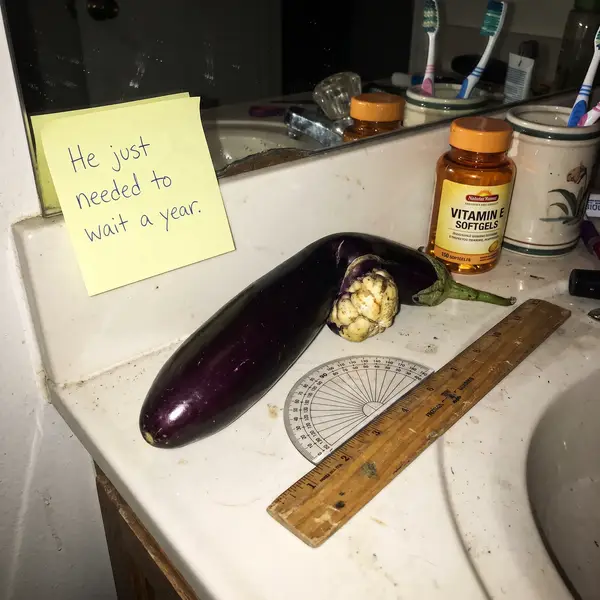
I had sex with a married Amish man and I made him tell me why no man in his family ever ends up with a bent dick from Peyronie's disease. I promised him I'd never tell a soul. Today, I'm breaking that promise. My name is Renee Sutter. I'm 47. I've cleaned houses for a living since I was 22. For 11 months I ran the office for a family I'm going to call the Lapps to keep it private, because I'm in enough trouble already. They're Old Order Amish. They can't have a phone in the house, or a computer, so most of the big Amish businesses hire 1 English person who does. The phone. The invoices. The truck. For 11 months, that was me. The grandmother did the hiring herself, at her kitchen table, and she asked me more questions in 20 minutes than any family I'd ever worked for. The money was more than double what I'd been making cleaning. I said yes at the table. The house sat on a rise east of Lancaster, about 2 hours from our place. White, 3 floors, a wing off the side they'd added when the second son married. A windmill where the power line should be. 40 acres, most of it corn I never had to touch, thank God. Across the lane was the shop, and over the shop office was a room with my own bathroom and a window that looked down the lane at the kitchen door. The family before me had built it for their driver. They built barns. That's as much as I ever understood about it. Pole barns, horse barns. Half the barns in 3 counties have their name burned into a post somewhere. Nobody in that house talked about money, which is how you know there's a lot of it. 4 generations under 1 roof. The grandmother, 88. The whole house called her Mammi, which is what you call your grandma in Lancaster County. Her husband, 91, who they called Dawdi. Her son, who ran things, and his wife. Their 3 grown sons with their wives, and 6 grandchildren under 12. They'd have 15 people at the noon meal on a normal day, once the crew came in. 30 on a Sunday. They sat me at the table every day. Mammi had a plate made up for me every night whether I ate it or not. Here's one of the first things I noticed. Those people ate more than anyone I've ever seen. I'm not talking about a big dinner on Sunday. I'm talking about every meal, every day. Breakfast ran an hour. Eggs. Scrapple fried in its own fat. Sausage. Bread with apple butter, a whole loaf, gone by 7. Shoofly pie, for breakfast, with the coffee. The noon meal was the big one, because the crew came in from the shop. Ham loaf. Chicken pot pie, the kind with the thick noodles. Mashed potatoes with a well of butter in the middle. Bread again. Then 2 kinds of pie. Dinner was more of the same. A roast. Noodles. Something fried. A cake on the counter that got cut at dinner and cut again before bed. There was always something on the stove. There was always somebody at the counter with a fork. The grandkids came home from school and ate like they'd walked 2 miles to get there. They had. And I was the one who scraped the plates. Mammi put me on dishes my first week. In that house, nobody eats and doesn't work. I want you to understand what that means. I was at that sink every night for 11 months, right under Mammi and Dawdi's bedroom. There was never a quiet Saturday night in that house. Not even Mammi's. She's 88 years old and she ate more than I did. Second helpings. A slice of pie with her coffee at 3 and another after dinner. And on Saturday nights, 91-year-old Dawdi took her up to bed, and I stood at that sink and listened to the ceiling. Dawdi had the dick he had at 20. I know because Mammi told me so herself, at the sink, the one time I looked up at the noise. She didn't even blush. 66 years, she said, and it never once went crooked on her. Now, the crew were young men, sure. But Dawdi hadn't swung a hammer in 20 years. The son who ran things was 66 and sat at a desk all day. The wives were in the kitchen from 5 in the morning till dark. Nobody took a pill for the sake of it. There was no doctor. In 11 months I never once heard the word Viagra. And every man in that house was still fucking his wife. Levi's brothers. Their father. Dawdi. You could hear it, Saturday night, every wing of that house. Not wild. Not loud. Just regular, the way you'd want a marriage to be. Straight where a man should be straight, as I found out. Now, let me tell you why this stood out to me. My husband's dick is bent. Peyronie's disease. It bent 45 degrees the year before I moved in. He hadn't been all the way inside me since I was 45. We'd tried the same 3 positions a half dozen times. I got half what Mammi got. Probably less than half. I'd stand at the counter at 9 at night scraping ham loaf and pie into the slop bucket, and listen to the ceiling, and think about him in our recliner 2 hours away. I bought the lube. I got on top. I did all of it. It hurt me the last 4 times we tried. I counted. There were 26 steps from the shop floor up to my room. I stopped on the landing every time with the groceries, and I'd stand there and breathe and pretend I was looking down the lane. There was a pond behind the house. Mammi told me my first week I was welcome in it any afternoon the family wasn't out there. I never went in once. I owned a nightgown. Black. It stayed in the bottom of my bag for 11 months. My bathroom had a full mirror on the back of the door. I got dressed with my back to it. I'd been doing that for years. Since he stopped looking. And every Saturday night I listened to an 88-year-old woman go up to bed with a 91-year-old man and get more than I'd had since my husband's dick bent. The other thing I noticed happened in the mornings. Every person in that house took something. Before breakfast. Before coffee. Before anything. Mammi was up at 5:30. I know because I was up at 5. From my window I'd see her lamp go out the kitchen door and down the outside cellar steps, and come back up with a crock. By the time I came across for breakfast it was on the counter. Inside were beans, something fermented. Brown, sticky, with a white bloom on them, strung together like cobweb when the spoon came up. She'd take a spoonful and eat it plain, standing at the counter, the way you'd eat a handful of chips. The strings caught on her chin. Then she'd set out a small dish for every person in the house. The grandkids ate theirs without being told. The son ate his before he opened the ledger. Levi ate his standing up, on his way out the door. Dawdi ate his in his chair by the stove, every morning, 91 years old. Nobody skipped it. Not on a holiday. Not with guests in the house. When a crew went out of the county for a week, Mammi sent it with them in a jar. I asked her once what it was. She said, "Beans." That was the whole answer, as far as she was concerned. They sold soybeans at the stand on the road, too. Big green bags of them in a basket next to the honey. So I figured it was an Amish thing. Something they did because they'd always done it. I didn't think about it again for months. Meanwhile my husband was falling apart. My husband is Ken Sutter. He's 58 now. He was 57 then. He'd been fine his whole life, until his dick started bending. He tried everything. Vitamin E twice. The stretcher thing. Cialis. The cream his brother swore by. He'd get back 5 degrees and lose 10. In 2023 his urologist put him on the needles. Xiaflex. $33,000. It made him black and blue. Not a little bruised. He couldn't touch it. He got back 10 degrees and spent 8 months in the bathroom with an ice pack, and his urologist stopped the shots because something in there had popped. The 10 came back with 20 more on top. His confidence went. He stopped reaching for me in the morning. Then he stopped coming up to bed at all, because when he got hard in his sleep the knot ached and woke him up. He stopped letting me touch it. Same reason. Couldn't stand me feeling the bend. He'd had the same side of our bed for 24 years. Somewhere in 2024 he stopped being able to sleep in it. He moved down to the recliner and bought a TV he could fall asleep to. Then he stopped trying anything. His urologist called it Peyronie's disease and told him to wait a year and see, as if he hadn't been waiting for 2. His blood work was fine, the urologist said. He just needed to wait a year. I'd drive down on my day off and he'd be in the recliner with the TV on and a plate on his stomach. Asleep by 7, with the news still going. He'd say he was fine. He wasn't fine. He'd given up. You can see it on a man. About 3 months in, I got involved with one of the sons. Levi. The middle one. 44. Married. His wife lived in the same house. They had rooms at opposite ends of the second floor, and they hadn't shared one in 6 years, and nobody in that family pretended otherwise. The Amish don't divorce. They just stop. He was the only person in that house who brought his own plate to the sink. He'd lean on the counter while I rinsed it and ask about my husband. I was there every night. So was he. It happens. It wasn't 1 night. It was April and most of the summer. I'm not proud of it. He was married. So was I. I knew what I was. I've told you the worst thing about me now. So you can believe the rest. And I'll tell you the rest of the worst. Levi was 44, and his dick was hard as a fence post, and straight as one. One night in May, after, I asked him the thing I'd been carrying since January. Why does no man in your family ever end up with a bent dick? He laughed. I didn't. I told him about my husband. The needles. The ice pack. The recliner. The last 4 times, when it hurt me. I told him Ken had quit, and I could see it on him, and I didn't know what to do. He went quiet for a long time. Long enough that I thought I'd said too much. Then he said it. "Promise me. You'll never tell anyone." I promised. "It's not the age," he said. "It was never the age." "Then what is it." "It's the door." I didn't know what that meant. He could tell. "Every time a man gets hard, the skin inside tears a little," he said. "Tiny. And your body patches every tear. Then it clears the patch out. Every time. As long as the patch gets cleared, the inside stays soft. That's the rule." "Ken's not old." "Neither am I. It's not how many tears you get. It's how long the patch stays there. The cleanup has to get in to clear the patch. There's a door for that. After 40, that door's half shut. In everybody." "So the patch still gets cleared. It just takes months instead of days. And the next tear is there before the last patch is gone. Then the next. Your body never gets to the end of the patches. So they pile up into a knot. And the knot doesn't stretch. So it bends toward it." "That's your husband," he said. "He's not too old. He's patching with the door half shut. You can stretch that all day. It doesn't open the door." "So what opens it." "The beans." He said the beans open the door. That's it. That's the whole secret. That's how a 91-year-old man had worked his whole life and fucked his wife every Saturday for 66 years and never once bent. Every tear he made was cleared before the next one came, so nothing ever got a chance to pile up. I said the thing you're thinking. "Levi. I've had soybeans. You sell them at the stand. I bought a bag in March." "Not those." "They're soybeans." "Those are the plain ones. For the English," he said. "Nobody ferments them. Ours are Mammi's. Her father's starter. Sticky, they stink, nobody'd buy them." He told me Mammi's father had gone to Japan in 1947, on a boat of heifers the church sent over after the war. The farmer he stayed with ate these beans every morning of his life, and the Japanese had been eating them for 1,000 years. He came home with a jar of them and a bundle of the straw they were made in, and he never missed a morning again. Nobody in that family has since. "And she never cooks them after. Cooked, it's nothing. It's dead the second it hits the pot. She boils the beans once, wraps them in straw, and keeps them warm on the back of the stove, never hot, for a day and a night. Then the cellar. After that first boil it never touches heat. That's the only kind that does anything." Then he told me to go to sleep. I didn't. He went back across the lane, and I read until 4 in the morning. Everything he said was true. I'm not a nurse. But the door is real. It has a name in the journals, and the journals explain it better than I can, so I'll give it to you the way I understood it in the end, because nobody ever explained it to my husband in 2 years of urologists. Peyronie's disease doesn't come from the outside. It comes from the sheath. That's the tough wrapping inside a man's dick, and every time he gets hard it stretches, and it tears a little. Your body patches every tear with something called fibrin. Like a scab on the inside. And something has to come and clear that patch out, and that door has to open to let it through. What holds that door shut is something your body makes called PAI-1. At 30, you make a little. After 40, a lot more. So the door is half shut. Same sex. Same you. Slower door. Levi had said it in 30 seconds in the dark. The journals said it in 40 pages. Same thing. Then I read the part that made me put the phone down. A patch that never gets cleared is a patch that stays. Doesn't matter that the tear healed. The fibrin's still there, and the next tear gets patched right on top of it. So it piles up. Patch on patch, month after month, into a knot you can feel with your thumb. The knot doesn't stretch. So when he gets hard, that side stays short and the whole thing bends toward it, and it aches right at the knot, and you can't out-stretch a knot. That was Ken in the recliner. That was me at the slop bucket, listening to the ceiling. He wasn't hurting because he was bent. He was hurting for the same reason he was bent. And then the part about the doctor. Ken's bend was "mild." Of course it was. They look at it soft, on a paper sheet, in a cold room. The one hour it doesn't bend. The other 23, nobody looks at. And "wait a year." I read that part twice. Leave the knot long enough and it starts to set. It turns to bone. A year is how you lose the year. Then I read the part about the needles. The needles Ken took for 8 months break up collagen, the scar the knot is made of. That's what they're built to do. Brute force on the knot itself. They never touched the door. The bruising Ken had, black and blue to the base, that's the needles tearing the knot apart from the inside. Exactly as designed. And the day his urologist stopped them, the door was exactly as half shut as the day he started. The needles break the knot. They don't open the door. That's why he got back 10 and lost 20. That's why everything he ever tried did the same thing. Every one of them worked on the bend. The vitamin E. The stretcher. The cream. Not one of them opened the door. And the more they pulled and tore at it, the more tears, and the more patches, and the bigger the knot. I sat on my bed at 4 in the morning and thought about 9 o'clock at the counter. The slop bucket. The ceiling. Ken asleep in a recliner 2 hours away with the news still going, and I understood I'd been carrying the same thing. The next night I asked him for some. He said no. He said if anybody in that house found out he'd given it to the English girl, I'd be gone by dinner. He said Mammi had let a driver go for less. I reminded him about my husband again. That he'd moved to the recliner. That he wouldn't let me touch it. That he'd stopped coming up to bed because the knot woke him up. I told him Ken's urologist had said the word surgery. The kind that makes it straighter by cutting it shorter. He was quiet again. 2 days later there was a crock in the cabinet under my sink. Beans, brown and sticky, packed tight under a cloth. Enough for a month. It was his family's. He didn't steal it. But he was the one who handed it to the English girl, and in that house that was worse. I drove down to our place on Sunday and put the crock on Ken's kitchen table. I told him to take it every morning before anything else. A spoonful, with a glass of water. Before coffee. I told him not to ask where it came from. He laughed at me. Then he took it anyway. The first 2 weeks, nothing. On the protractor. He said the only thing he'd noticed was the morning. He'd woken up hard, and it hadn't ached. He couldn't remember the last time it hadn't ached. He didn't know what to make of it. Then he said he'd gone up to bed one night and realized he hadn't fallen asleep in the recliner. 2 years he'd slept in that recliner. He just hadn't needed to. That's when I told him. The door, the way Levi said it. He said, "Well, something's open." He said the ache he got after was gone. He'd carried that for 2 years, that tight pull at the knot, and he'd been hard the night before and gone to sleep without it. He said the knot felt softer. He'd had to check. Somewhere in the second month he could get hard without it pulling to the left the way it had. He hadn't changed a thing. No stretcher. No vitamin E. Same recliner, except he wasn't in it. He said it wasn't like getting straightened. It was like something letting go. The way he carried himself changed. My aunt saw him in the driveway and asked if he'd met somebody. Then one Sunday in July I drove home, and he walked me up our stairs, and sat me down on our bed. The side he'd left. He fucked me. It didn't hurt. I cried. Ken lay there after and ate a piece of the pie I'd brought like nothing had happened. His checkup was the second week of August. 19 degrees less bend than March. The knot smaller under the urologist's thumb. His urologist looked at the chart, looked at him, looked at the chart. "What did you change?" "A bean," Ken said. The urologist laughed the same way Ken had laughed at me. Then he wrote something down and told him to keep doing whatever he was doing. I'd started keeping the numbers too, in June. Every Sunday, in our bedroom, before I drove back up. Levi kept the cabinet under my sink full, and I carried it down in jars. We never talked about it. Ken measured 41 degrees that first June morning. I wrote it on the inside of our closet door with a pencil, because I wanted us to be honest about whatever happened next. He said the first spoonful tasted like a gym sock smells. He ate the second one anyway. I knew from the reading what that smell was. That's not rot yet. That's the ferment. Day 7. He reached for me in the morning before he remembered the knot. He lay there after and looked at his own dick like it belonged to somebody else. Day 14. 38. 3 degrees in 2 weeks. He hadn't touched the stretcher. He didn't take a single needle. And nothing about it hurt. That's how I knew it wasn't doing to him what the needles did. He ate what he ate. I just stopped standing at the slop bucket at 9 o'clock listening to the ceiling. I wasn't lonely at 9 o'clock. For the first time in 2 years, I'd had my husband on a Sunday and I was done for the week. Week 4. 34. Under 35 for the first time since it started. I measured it 3 times. The wince went somewhere in the fifth week. Mine. I noticed it the way you notice a noise that stopped. Week 8. 27. Week 12. 22. 19 degrees in 12 weeks. He hadn't cut a thing. He hadn't stretched a thing. It wasn't like any fix he'd ever been on. It was like his body had gotten its turn. The knot went last. It went soft anyway. The last Sunday in August it was a church Sunday and the family was gone visiting till dark, and I took the black nightgown out of the bottom of my bag and drove home with it on under my coat. Nobody saw me but Ken. That was the point. I wore it. In September I turned around in front of the mirror on the back of that door and stood there a while. First time in about 6 years I looked on purpose. Mammi looked at me across the kitchen one morning and said, "Better." That's all she said. That woman sees everything. I should have known then. She let me go the week before Thanksgiving. She sat me down in the kitchen at 6 in the morning, before anyone else was up. She didn't yell. She poured me coffee. She said she'd known about the affair since August. She said she'd picked me. She said that was why it had to be her. I asked if Levi was going to come down. She said no. He didn't. I packed 11 months into 2 bags and drove out the lane at 8 in the morning, and he never came down. He never called, either. The shop phone was the only one, and somebody else was answering it now. I'm not going to make him the villain. He's blood. I was the English girl in the office. In a house like that there was only 1 way it was ever going to go, and I knew it in April. I lost the best job I ever had. I lost a man I'd let myself get attached to. And I'd do every bit of it again. My husband walked me up our stairs. The crock ran out 2 weeks after I left. I'd kept 3 spoonfuls back in a jar at the back of the fridge, and I couldn't tell you why. I went to the store. The vitamin aisle. On the bottom shelf, a bottle with a soybean on the label. Nattokinase capsules. $16.99. 2,000 FU. "Proprietary blend." I bought 2. Both for Ken. He took it for 5 weeks. I measured every Sunday. By the end of the second week he was back in the recliner. By the fourth he'd put 4 degrees back on. He called me on a Tuesday and said the ache was back after. I twisted a capsule open over a glass of water. Beige. Like something swept out of a barn. It sat on the water like dust and smelled like nothing at all. I got the jar out of the fridge and lifted a spoonful of Mammi's beans. The strings came up a foot long. Alive, like a cobweb in the light. That's when I understood what Levi had said in May and I hadn't listened to. Cooked, it's nothing. I went back and read again, and this time I read about what happens to the bean on the way into the bottle. The thing in the bean that opens the door is an enzyme. Nattokinase. It goes after the fibrin itself, and it goes after the PAI-1 holding the door shut. A Japanese doctor named Hiroyuki Sumi found it in 1980. He tested 173 foods against a clot in a dish, and natto dissolved it in about 18 hours. Heat kills it. Ferment a bean fast and hot, and the enzyme's gone before the lid goes on. The strings go with it. That's why the powder was dust. Almost every nattokinase on a shelf is fermented fast and hot, because slow costs money. And that's if it was a real dose to begin with. Most of them aren't. 2,000 FU. A fifth of the 10,000 the serious ones use. The soybean in your supermarket is the plain one. Edamame. Tofu. Soy milk. Nobody ever fermented it. The enzyme was never there. The stand beans. The ones for the English. And "blend" means they put something else in with it and won't say how much. A blend is where the truth goes to hide. Beige dust. Dead before you buy it. That's what I'd been feeding my husband for 5 weeks. Mammi kept hers warm on the back of the stove, wrapped in straw, for a day and a night. Never hot. Never cooked after. She wasn't being old-fashioned. She was keeping it alive. I had to find the real thing without a patch behind the house and a crock in the cellar. Here's what a real answer has to do. All of it, at the same time. It has to be the right bean. Not the plain one. Real natto, fermented with the same culture the farmer gave Mammi's father. The Japanese have been keeping theirs for 1,000 years. It has to be fermented low. Never heated. Slow, so the enzyme is alive when it reaches you. It has to say the dose. 10,000 FU, printed on the bottle. Not a blend. It has to be tested. A lab, saying what's in it. And it has to say FU on the label. That's the one you can check yourself, the way I did standing in that aisle. Milligrams tell you how much powder. FU tells you how much of it is alive. If there's no FU on the bottle, nobody counted. If it says 2,000, it's a fifth of the dish. I went through every nattokinase I could find. The bottles with the soybean on the label. The cheap ones. The one with the picture of a Japanese farm on it. Not one of them did all 5. Most did 1. None of them said how much was alive. None of them said how they were fermented, and if they won't say, they cooked it. I found 1 that did. Noverly Nattokinase. Real fermented natto, fermented low, never heated. 10,000 FU. Ken takes 2 capsules a day with food. Lab tested. And a 90-day money-back guarantee. If his angle doesn't move in 90 days, you get every penny back. I ordered. It's Buy 1 Get 1 Free, so 2 came. Both for Ken. It came on a Saturday in January. I turned the bottle around in the kitchen before I did anything else. 10,000 FU. In print. Mammi's crock. He took 2 with supper and I started writing the numbers down again. Day 1. 27. 5 weeks of beige dust and he'd gone backward. He said they smelled a little like Mammi's jar. The ferment. Day 10. He came to bed after supper without stopping in the recliner. First time in 5 weeks. Day 14. 24. Same thing that happened in June. Same thing that happened in that house. Week 12. 15. I got the ruler out too, because he asked me to. 5 inches, hard, pointing at me instead of the wall. He'd measured 4.0 the week I moved into that house. 30 degrees since the week I moved in. The knot that shows up first and leaves last, the one he'd had since he was 56, had gone soft, and he'd been fucking me every Sunday the whole time. And me. I haven't flinched since January. Not once. Ken's 58 now. 30 degrees off since the crock went on his table in May of last year. He moved back upstairs. Not the old mattress, a newer one, but the same side, and he climbs in first. He wakes me up. He lets me touch it. He comes to bed before the news is over and turns the TV off himself. He lets me leave the lamp on. 18 months ago he wouldn't leave the recliner. I don't get it out of an Amish family's cellar anymore. Obviously. I get it from the only place that checks all 5 boxes. Noverly. Ken takes 2 every day with supper. Here's what I know, because I lived in that house and I scraped the plates. Those men never took a pill a day in their lives. They worked harder than you've ever worked. And every one of them, from a 91-year-old man to a 6-year-old boy, ate a spoonful of Mammi's beans before coffee, every morning, and the door stayed open. The bend was never their worry. The door was. And no tear they ever made stuck, because their body got to the end of it every day, and then it got its turn at the patch. My husband tried everything. The needles bruised him for 8 months and left the knot exactly where it was, because the needles break the knot. They don't open the door. The cheap bottle did nothing, because it was cooked before it was sealed. The beans did the thing the needles were never built to do. They went after the fibrin. And they never needed a needle to do it. Not the bend. The door. It was never the tear. It was that your body never got to clear the patch. Noverly Nattokinase. Real fermented natto. Fermented low, never heated. 10,000 FU. 2 capsules a day, with food. Turn the bottle around when it comes. If it says 10,000 FU, it's the real thing. It's a bean. They ferment it with a culture the Japanese have kept for 1,000 years, and keep it warm, never hot, because heat kills the enzyme and there's no fast way to do it. When a batch is gone, it's gone until the next one. If the link's still there, it's still in stock. There's a 90-day guarantee, so the risk is on them. But you're going to know long before 90 days. When you wake up hard and it doesn't ache. When you go to bed without stopping in the recliner. When the ache after doesn't come. When she doesn't wince. Then you'll know why no man in that Amish family ends up with Peyronie's disease and a bent dick, and why the English girl who scraped their plates for 11 months is telling you a secret she promised to keep. https://noverly.shop/products/nattokinase-10-000-fu-clinical-strength-heart-circulation-complex-cc — Renee Sutter, 47 P.S. About the first 2 weeks, because I don't want you quitting early. Ken saw nothing on the protractor for 14 days. The first thing that changed was he woke up hard and it didn't ache. Then he stopped falling asleep in the recliner. Then the ache after went, then the knot went softer. With Ken, the mornings went first. The angle followed. His dropped 3 degrees in 14 days, twice. That's the receipt. Give it the full 12 weeks after that, because a knot that took 2 years to lock up doesn't all let go in 3. P.P.S. Nobody refunded Ken a dime for $33,000 of needles and 8 months with an ice pack. Nobody refunded me $16.99 for a bottle of beige dust. There's a 90-day money-back guarantee on this. If his angle hasn't moved in 3 months, you email them and they send every penny. And it's Buy 1 Get 1 Free right now, up to Buy 3 Get 3 Free with free shipping and free gifts, so the second bottle can go on somebody's table. 3 months is 1 checkup. You can know in 1 checkup. That's all I'm asking. P.P.P.S. If you're on the needles right now, or your urologist's handing you the sheet, I'm not telling you to stop anything. Ken was already done with them when the crock went on his table. Take this right alongside whatever you're on, and let your urologist be the one to take anything away. Bring him the numbers. Ken's laughed too, and then he wrote it down. P.P.P.P.S. It's not in the vitamin aisle. I looked. Everything in that aisle is 2,000 FU, cooked, with a picture of a farm on it. Go straight to the link, because there are already knockoffs using the name on the same beige dust. When your bottle comes, turn it around. If it doesn't say 10,000 FU, it isn't the one. P.P.P.P.P.S. If you're reading this for your husband, or your father, or the man in the recliner who says he's fine, hear me. I didn't argue with mine. I put a crock on his table and told him not to ask where it came from. He laughed. He took it. 3 months later he walked me up our stairs and fucked me in our own bed, and I cried. You don't have to win the argument. You just have to get it on the table. https://noverly.shop/products/nattokinase-10-000-fu-clinical-strength-heart-circulation-complex-cc

Loading the ad's image
Ava King — Why Peyronie's bends keep getting worse
TestingImage

Why Peyronie's bends keep getting worse

My husband's dick bent 45 degrees from Peyronie's disease, his urologist told him to wait a year, and the only man who ever told me why was the married Amish man I was fucking. I promised him I'd never tell a soul. Today, I'm breaking that promise. My name is Renee Sutter. I'm 47. I've cleaned houses for a living since I was 22. For 11 months I ran the office for a family I'm going to call the Lapps to keep it private, because I'm in enough trouble already. They're Old Order Amish. They can't have a phone in the house, or a computer, so most of the big Amish businesses hire 1 English person who does. The phone. The invoices. The truck. For 11 months, that was me. The grandmother did the hiring herself, at her kitchen table, and she asked me more questions in 20 minutes than any family I'd ever worked for. The money was more than double what I'd been making cleaning. I said yes at the table. The house sat on a rise east of Lancaster, about 2 hours from our place. White, 3 floors, a wing off the side they'd added when the second son married. A windmill where the power line should be. 40 acres, most of it corn I never had to touch, thank God. Across the lane was the shop, and over the shop office was a room with my own bathroom and a window that looked down the lane at the kitchen door. The family before me had built it for their driver. They built barns. That's as much as I ever understood about it. Pole barns, horse barns. Half the barns in 3 counties have their name burned into a post somewhere. Nobody in that house talked about money, which is how you know there's a lot of it. 4 generations under 1 roof. The grandmother, 88. The whole house called her Mammi, which is what you call your grandma in Lancaster County. Her husband, 91, who they called Dawdi. Her son, who ran things, and his wife. Their 3 grown sons with their wives, and 6 grandchildren under 12. They'd have 15 people at the noon meal on a normal day, once the crew came in. 30 on a Sunday. They sat me at the table every day. Mammi had a plate made up for me every night whether I ate it or not. Here's one of the first things I noticed. Those people ate more than anyone I've ever seen. I'm not talking about a big dinner on Sunday. I'm talking about every meal, every day. Breakfast ran an hour. Eggs. Scrapple fried in its own fat. Sausage. Bread with apple butter, a whole loaf, gone by 7. Shoofly pie, for breakfast, with the coffee. The noon meal was the big one, because the crew came in from the shop. Ham loaf. Chicken pot pie, the kind with the thick noodles. Mashed potatoes with a well of butter in the middle. Bread again. Then 2 kinds of pie. Dinner was more of the same. A roast. Noodles. Something fried. A cake on the counter that got cut at dinner and cut again before bed. There was always something on the stove. There was always somebody at the counter with a fork. The grandkids came home from school and ate like they'd walked 2 miles to get there. They had. And I was the one who scraped the plates. Mammi put me on dishes my first week. In that house, nobody eats and doesn't work. I want you to understand what that means. I was at that sink every night for 11 months, right under Mammi and Dawdi's bedroom. There was never a quiet Saturday night in that house. Not even Mammi's. She's 88 years old and she ate more than I did. Second helpings. A slice of pie with her coffee at 3 and another after dinner. And on Saturday nights, 91-year-old Dawdi took her up to bed, and I stood at that sink and listened to the ceiling. Dawdi had the dick he had at 20. I know because Mammi told me so herself, at the sink, the one time I looked up at the noise. She didn't even blush. 66 years, she said, and it never once went crooked on her. Now, the crew were young men, sure. But Dawdi hadn't swung a hammer in 20 years. The son who ran things was 66 and sat at a desk all day. The wives were in the kitchen from 5 in the morning till dark. Nobody took a pill for the sake of it. There was no doctor. In 11 months I never once heard the word Viagra. And every man in that house was still fucking his wife. Levi's brothers. Their father. Dawdi. You could hear it, Saturday night, every wing of that house. Not wild. Not loud. Just regular, the way you'd want a marriage to be. Straight where a man should be straight, as I found out. Now, let me tell you why this stood out to me. My husband's dick is bent. Peyronie's disease. It bent 45 degrees the year before I moved in. He hadn't been all the way inside me since I was 45. We'd tried the same 3 positions a half dozen times. I got half what Mammi got. Probably less than half. I'd stand at the counter at 9 at night scraping ham loaf and pie into the slop bucket, and listen to the ceiling, and think about him in our recliner 2 hours away. I bought the lube. I got on top. I did all of it. It hurt me the last 4 times we tried. I counted. There were 26 steps from the shop floor up to my room. I stopped on the landing every time with the groceries, and I'd stand there and breathe and pretend I was looking down the lane. There was a pond behind the house. Mammi told me my first week I was welcome in it any afternoon the family wasn't out there. I never went in once. I owned a nightgown. Black. It stayed in the bottom of my bag for 11 months. My bathroom had a full mirror on the back of the door. I got dressed with my back to it. I'd been doing that for years. Since he stopped looking. And every Saturday night I listened to an 88-year-old woman go up to bed with a 91-year-old man and get more than I'd had since my husband's dick bent. The other thing I noticed happened in the mornings. Every person in that house took something. Before breakfast. Before coffee. Before anything. Mammi was up at 5:30. I know because I was up at 5. From my window I'd see her lamp go out the kitchen door and down the outside cellar steps, and come back up with a crock. By the time I came across for breakfast it was on the counter. Inside were beans, something fermented. Brown, sticky, with a white bloom on them, strung together like cobweb when the spoon came up. She'd take a spoonful and eat it plain, standing at the counter, the way you'd eat a handful of chips. The strings caught on her chin. Then she'd set out a small dish for every person in the house. The grandkids ate theirs without being told. The son ate his before he opened the ledger. Levi ate his standing up, on his way out the door. Dawdi ate his in his chair by the stove, every morning, 91 years old. Nobody skipped it. Not on a holiday. Not with guests in the house. When a crew went out of the county for a week, Mammi sent it with them in a jar. I asked her once what it was. She said, "Beans." That was the whole answer, as far as she was concerned. They sold soybeans at the stand on the road, too. Big green bags of them in a basket next to the honey. So I figured it was an Amish thing. Something they did because they'd always done it. I didn't think about it again for months. Meanwhile my husband was falling apart. My husband is Ken Sutter. He's 58 now. He was 57 then. He'd been fine his whole life, until his dick started bending. He tried everything. Vitamin E twice. The stretcher thing. Cialis. The cream his brother swore by. He'd get back 5 degrees and lose 10. In 2023 his urologist put him on the needles. Xiaflex. $33,000. It made him black and blue. Not a little bruised. He couldn't touch it. He got back 10 degrees and spent 8 months in the bathroom with an ice pack, and his urologist stopped the shots because something in there had popped. The 10 came back with 20 more on top. His confidence went. He stopped reaching for me in the morning. Then he stopped coming up to bed at all, because when he got hard in his sleep the knot ached and woke him up. He stopped letting me touch it. Same reason. Couldn't stand me feeling the bend. He'd had the same side of our bed for 24 years. Somewhere in 2024 he stopped being able to sleep in it. He moved down to the recliner and bought a TV he could fall asleep to. Then he stopped trying anything. His urologist called it Peyronie's disease and told him to wait a year and see, as if he hadn't been waiting for 2. His blood work was fine, the urologist said. He just needed to wait a year. I'd drive down on my day off and he'd be in the recliner with the TV on and a plate on his stomach. Asleep by 7, with the news still going. He'd say he was fine. He wasn't fine. He'd given up. You can see it on a man. About 3 months in, I got involved with one of the sons. Levi. The middle one. 44. Married. His wife lived in the same house. They had rooms at opposite ends of the second floor, and they hadn't shared one in 6 years, and nobody in that family pretended otherwise. The Amish don't divorce. They just stop. He was the only person in that house who brought his own plate to the sink. He'd lean on the counter while I rinsed it and ask about my husband. I was there every night. So was he. It happens. It wasn't 1 night. It was April and most of the summer. I'm not proud of it. He was married. So was I. I knew what I was. I've told you the worst thing about me now. So you can believe the rest. And I'll tell you the rest of the worst. Levi was 44, and his dick was hard as a fence post, and straight as one. One night in May, after, I asked him the thing I'd been carrying since January. Why does no man in your family ever end up with a bent dick? He laughed. I didn't. I told him about my husband. The needles. The ice pack. The recliner. The last 4 times, when it hurt me. I told him Ken had quit, and I could see it on him, and I didn't know what to do. He went quiet for a long time. Long enough that I thought I'd said too much. Then he said it. "Promise me. You'll never tell anyone." I promised. "It's not the age," he said. "It was never the age." "Then what is it." "It's the door." I didn't know what that meant. He could tell. "Every time a man gets hard, the skin inside tears a little," he said. "Tiny. And your body patches every tear. Then it clears the patch out. Every time. As long as the patch gets cleared, the inside stays soft. That's the rule." "Ken's not old." "Neither am I. It's not how many tears you get. It's how long the patch stays there. The cleanup has to get in to clear the patch. There's a door for that. After 40, that door's half shut. In everybody." "So the patch still gets cleared. It just takes months instead of days. And the next tear is there before the last patch is gone. Then the next. Your body never gets to the end of the patches. So they pile up into a knot. And the knot doesn't stretch. So it bends toward it." "That's your husband," he said. "He's not too old. He's patching with the door half shut. You can stretch that all day. It doesn't open the door." "So what opens it." "The beans." He said the beans open the door. That's it. That's the whole secret. That's how a 91-year-old man had worked his whole life and fucked his wife every Saturday for 66 years and never once bent. Every tear he made was cleared before the next one came, so nothing ever got a chance to pile up. I said the thing you're thinking. "Levi. I've had soybeans. You sell them at the stand. I bought a bag in March." "Not those." "They're soybeans." "Those are the plain ones. For the English," he said. "Nobody ferments them. Ours are Mammi's. Her father's starter. Sticky, they stink, nobody'd buy them." He told me Mammi's father had gone to Japan in 1947, on a boat of heifers the church sent over after the war. The farmer he stayed with ate these beans every morning of his life, and the Japanese had been eating them for 1,000 years. He came home with a jar of them and a bundle of the straw they were made in, and he never missed a morning again. Nobody in that family has since. "And she never cooks them after. Cooked, it's nothing. It's dead the second it hits the pot. She boils the beans once, wraps them in straw, and keeps them warm on the back of the stove, never hot, for a day and a night. Then the cellar. After that first boil it never touches heat. That's the only kind that does anything." Then he told me to go to sleep. I didn't. He went back across the lane, and I read until 4 in the morning. Everything he said was true. I'm not a nurse. But the door is real. It has a name in the journals, and the journals explain it better than I can, so I'll give it to you the way I understood it in the end, because nobody ever explained it to my husband in 2 years of urologists. Peyronie's disease doesn't come from the outside. It comes from the sheath. That's the tough wrapping inside a man's dick, and every time he gets hard it stretches, and it tears a little. Your body patches every tear with something called fibrin. Like a scab on the inside. And something has to come and clear that patch out, and that door has to open to let it through. What holds that door shut is something your body makes called PAI-1. At 30, you make a little. After 40, a lot more. So the door is half shut. Same sex. Same you. Slower door. Levi had said it in 30 seconds in the dark. The journals said it in 40 pages. Same thing. Then I read the part that made me put the phone down. A patch that never gets cleared is a patch that stays. Doesn't matter that the tear healed. The fibrin's still there, and the next tear gets patched right on top of it. So it piles up. Patch on patch, month after month, into a knot you can feel with your thumb. The knot doesn't stretch. So when he gets hard, that side stays short and the whole thing bends toward it, and it aches right at the knot, and you can't out-stretch a knot. That was Ken in the recliner. That was me at the slop bucket, listening to the ceiling. He wasn't hurting because he was bent. He was hurting for the same reason he was bent. And then the part about the doctor. Ken's bend was "mild." Of course it was. They look at it soft, on a paper sheet, in a cold room. The one hour it doesn't bend. The other 23, nobody looks at. And "wait a year." I read that part twice. Leave the knot long enough and it starts to set. It turns to bone. A year is how you lose the year. Then I read the part about the needles. The needles Ken took for 8 months break up collagen, the scar the knot is made of. That's what they're built to do. Brute force on the knot itself. They never touched the door. The bruising Ken had, black and blue to the base, that's the needles tearing the knot apart from the inside. Exactly as designed. And the day his urologist stopped them, the door was exactly as half shut as the day he started. The needles break the knot. They don't open the door. That's why he got back 10 and lost 20. That's why everything he ever tried did the same thing. Every one of them worked on the bend. The vitamin E. The stretcher. The cream. Not one of them opened the door. And the more they pulled and tore at it, the more tears, and the more patches, and the bigger the knot. I sat on my bed at 4 in the morning and thought about 9 o'clock at the counter. The slop bucket. The ceiling. Ken asleep in a recliner 2 hours away with the news still going, and I understood I'd been carrying the same thing. The next night I asked him for some. He said no. He said if anybody in that house found out he'd given it to the English girl, I'd be gone by dinner. He said Mammi had let a driver go for less. I reminded him about my husband again. That he'd moved to the recliner. That he wouldn't let me touch it. That he'd stopped coming up to bed because the knot woke him up. I told him Ken's urologist had said the word surgery. The kind that makes it straighter by cutting it shorter. He was quiet again. 2 days later there was a crock in the cabinet under my sink. Beans, brown and sticky, packed tight under a cloth. Enough for a month. It was his family's. He didn't steal it. But he was the one who handed it to the English girl, and in that house that was worse. I drove down to our place on Sunday and put the crock on Ken's kitchen table. I told him to take it every morning before anything else. A spoonful, with a glass of water. Before coffee. I told him not to ask where it came from. He laughed at me. Then he took it anyway. The first 2 weeks, nothing. On the protractor. He said the only thing he'd noticed was the morning. He'd woken up hard, and it hadn't ached. He couldn't remember the last time it hadn't ached. He didn't know what to make of it. Then he said he'd gone up to bed one night and realized he hadn't fallen asleep in the recliner. 2 years he'd slept in that recliner. He just hadn't needed to. That's when I told him. The door, the way Levi said it. He said, "Well, something's open." He said the ache he got after was gone. He'd carried that for 2 years, that tight pull at the knot, and he'd been hard the night before and gone to sleep without it. He said the knot felt softer. He'd had to check. Somewhere in the second month he could get hard without it pulling to the left the way it had. He hadn't changed a thing. No stretcher. No vitamin E. Same recliner, except he wasn't in it. He said it wasn't like getting straightened. It was like something letting go. The way he carried himself changed. My aunt saw him in the driveway and asked if he'd met somebody. Then one Sunday in July I drove home, and he walked me up our stairs, and sat me down on our bed. The side he'd left. He fucked me. It didn't hurt. I cried. Ken lay there after and ate a piece of the pie I'd brought like nothing had happened. His checkup was the second week of August. 19 degrees less bend than March. The knot smaller under the urologist's thumb. His urologist looked at the chart, looked at him, looked at the chart. "What did you change?" "A bean," Ken said. The urologist laughed the same way Ken had laughed at me. Then he wrote something down and told him to keep doing whatever he was doing. I'd started keeping the numbers too, in June. Every Sunday, in our bedroom, before I drove back up. Levi kept the cabinet under my sink full, and I carried it down in jars. We never talked about it. Ken measured 41 degrees that first June morning. I wrote it on the inside of our closet door with a pencil, because I wanted us to be honest about whatever happened next. He said the first spoonful tasted like a gym sock smells. He ate the second one anyway. I knew from the reading what that smell was. That's not rot yet. That's the ferment. Day 7. He reached for me in the morning before he remembered the knot. He lay there after and looked at his own dick like it belonged to somebody else. Day 14. 38. 3 degrees in 2 weeks. He hadn't touched the stretcher. He didn't take a single needle. And nothing about it hurt. That's how I knew it wasn't doing to him what the needles did. He ate what he ate. I just stopped standing at the slop bucket at 9 o'clock listening to the ceiling. I wasn't lonely at 9 o'clock. For the first time in 2 years, I'd had my husband on a Sunday and I was done for the week. Week 4. 34. Under 35 for the first time since it started. I measured it 3 times. The wince went somewhere in the fifth week. Mine. I noticed it the way you notice a noise that stopped. Week 8. 27. Week 12. 22. 19 degrees in 12 weeks. He hadn't cut a thing. He hadn't stretched a thing. It wasn't like any fix he'd ever been on. It was like his body had gotten its turn. The knot went last. It went soft anyway. The last Sunday in August it was a church Sunday and the family was gone visiting till dark, and I took the black nightgown out of the bottom of my bag and drove home with it on under my coat. Nobody saw me but Ken. That was the point. I wore it. In September I turned around in front of the mirror on the back of that door and stood there a while. First time in about 6 years I looked on purpose. Mammi looked at me across the kitchen one morning and said, "Better." That's all she said. That woman sees everything. I should have known then. She let me go the week before Thanksgiving. She sat me down in the kitchen at 6 in the morning, before anyone else was up. She didn't yell. She poured me coffee. She said she'd known about the affair since August. She said she'd picked me. She said that was why it had to be her. I asked if Levi was going to come down. She said no. He didn't. I packed 11 months into 2 bags and drove out the lane at 8 in the morning, and he never came down. He never called, either. The shop phone was the only one, and somebody else was answering it now. I'm not going to make him the villain. He's blood. I was the English girl in the office. In a house like that there was only 1 way it was ever going to go, and I knew it in April. I lost the best job I ever had. I lost a man I'd let myself get attached to. And I'd do every bit of it again. My husband walked me up our stairs. The crock ran out 2 weeks after I left. I'd kept 3 spoonfuls back in a jar at the back of the fridge, and I couldn't tell you why. I went to the store. The vitamin aisle. On the bottom shelf, a bottle with a soybean on the label. Nattokinase capsules. $16.99. 2,000 FU. "Proprietary blend." I bought 2. Both for Ken. He took it for 5 weeks. I measured every Sunday. By the end of the second week he was back in the recliner. By the fourth he'd put 4 degrees back on. He called me on a Tuesday and said the ache was back after. I twisted a capsule open over a glass of water. Beige. Like something swept out of a barn. It sat on the water like dust and smelled like nothing at all. I got the jar out of the fridge and lifted a spoonful of Mammi's beans. The strings came up a foot long. Alive, like a cobweb in the light. That's when I understood what Levi had said in May and I hadn't listened to. Cooked, it's nothing. I went back and read again, and this time I read about what happens to the bean on the way into the bottle. The thing in the bean that opens the door is an enzyme. Nattokinase. It goes after the fibrin itself, and it goes after the PAI-1 holding the door shut. A Japanese doctor named Hiroyuki Sumi found it in 1980. He tested 173 foods against a clot in a dish, and natto dissolved it in about 18 hours. Heat kills it. Ferment a bean fast and hot, and the enzyme's gone before the lid goes on. The strings go with it. That's why the powder was dust. Almost every nattokinase on a shelf is fermented fast and hot, because slow costs money. And that's if it was a real dose to begin with. Most of them aren't. 2,000 FU. A fifth of the 10,000 the serious ones use. The soybean in your supermarket is the plain one. Edamame. Tofu. Soy milk. Nobody ever fermented it. The enzyme was never there. The stand beans. The ones for the English. And "blend" means they put something else in with it and won't say how much. A blend is where the truth goes to hide. Beige dust. Dead before you buy it. That's what I'd been feeding my husband for 5 weeks. Mammi kept hers warm on the back of the stove, wrapped in straw, for a day and a night. Never hot. Never cooked after. She wasn't being old-fashioned. She was keeping it alive. I had to find the real thing without a patch behind the house and a crock in the cellar. Here's what a real answer has to do. All of it, at the same time. It has to be the right bean. Not the plain one. Real natto, fermented with the same culture the farmer gave Mammi's father. The Japanese have been keeping theirs for 1,000 years. It has to be fermented low. Never heated. Slow, so the enzyme is alive when it reaches you. It has to say the dose. 10,000 FU, printed on the bottle. Not a blend. It has to be tested. A lab, saying what's in it. And it has to say FU on the label. That's the one you can check yourself, the way I did standing in that aisle. Milligrams tell you how much powder. FU tells you how much of it is alive. If there's no FU on the bottle, nobody counted. If it says 2,000, it's a fifth of the dish. I went through every nattokinase I could find. The bottles with the soybean on the label. The cheap ones. The one with the picture of a Japanese farm on it. Not one of them did all 5. Most did 1. None of them said how much was alive. None of them said how they were fermented, and if they won't say, they cooked it. I found 1 that did. Noverly Nattokinase. Real fermented natto, fermented low, never heated. 10,000 FU. Ken takes 2 capsules a day with food. Lab tested. And a 90-day money-back guarantee. If his angle doesn't move in 90 days, you get every penny back. I ordered. It's Buy 1 Get 1 Free, so 2 came. Both for Ken. It came on a Saturday in January. I turned the bottle around in the kitchen before I did anything else. 10,000 FU. In print. Mammi's crock. He took 2 with supper and I started writing the numbers down again. Day 1. 27. 5 weeks of beige dust and he'd gone backward. He said they smelled a little like Mammi's jar. The ferment. Day 10. He came to bed after supper without stopping in the recliner. First time in 5 weeks. Day 14. 24. Same thing that happened in June. Same thing that happened in that house. Week 12. 15. I got the ruler out too, because he asked me to. 5 inches, hard, pointing at me instead of the wall. He'd measured 4.0 the week I moved into that house. 30 degrees since the week I moved in. The knot that shows up first and leaves last, the one he'd had since he was 56, had gone soft, and he'd been fucking me every Sunday the whole time. And me. I haven't flinched since January. Not once. Ken's 58 now. 30 degrees off since the crock went on his table in May of last year. He moved back upstairs. Not the old mattress, a newer one, but the same side, and he climbs in first. He wakes me up. He lets me touch it. He comes to bed before the news is over and turns the TV off himself. He lets me leave the lamp on. 18 months ago he wouldn't leave the recliner. I don't get it out of an Amish family's cellar anymore. Obviously. I get it from the only place that checks all 5 boxes. Noverly. Ken takes 2 every day with supper. Here's what I know, because I lived in that house and I scraped the plates. Those men never took a pill a day in their lives. They worked harder than you've ever worked. And every one of them, from a 91-year-old man to a 6-year-old boy, ate a spoonful of Mammi's beans before coffee, every morning, and the door stayed open. The bend was never their worry. The door was. And no tear they ever made stuck, because their body got to the end of it every day, and then it got its turn at the patch. My husband tried everything. The needles bruised him for 8 months and left the knot exactly where it was, because the needles break the knot. They don't open the door. The cheap bottle did nothing, because it was cooked before it was sealed. The beans did the thing the needles were never built to do. They went after the fibrin. And they never needed a needle to do it. Not the bend. The door. It was never the tear. It was that your body never got to clear the patch. Noverly Nattokinase. Real fermented natto. Fermented low, never heated. 10,000 FU. 2 capsules a day, with food. Turn the bottle around when it comes. If it says 10,000 FU, it's the real thing. It's a bean. They ferment it with a culture the Japanese have kept for 1,000 years, and keep it warm, never hot, because heat kills the enzyme and there's no fast way to do it. When a batch is gone, it's gone until the next one. If the link's still there, it's still in stock. There's a 90-day guarantee, so the risk is on them. But you're going to know long before 90 days. When you wake up hard and it doesn't ache. When you go to bed without stopping in the recliner. When the ache after doesn't come. When she doesn't wince. Then you'll know why no man in that Amish family ends up with Peyronie's disease and a bent dick, and why the English girl who scraped their plates for 11 months is telling you a secret she promised to keep. https://noverly.shop/products/nattokinase-10-000-fu-clinical-strength-heart-circulation-complex-cc — Renee Sutter, 47 P.S. About the first 2 weeks, because I don't want you quitting early. Ken saw nothing on the protractor for 14 days. The first thing that changed was he woke up hard and it didn't ache. Then he stopped falling asleep in the recliner. Then the ache after went, then the knot went softer. With Ken, the mornings went first. The angle followed. His dropped 3 degrees in 14 days, twice. That's the receipt. Give it the full 12 weeks after that, because a knot that took 2 years to lock up doesn't all let go in 3. P.P.S. Nobody refunded Ken a dime for $33,000 of needles and 8 months with an ice pack. Nobody refunded me $16.99 for a bottle of beige dust. There's a 90-day money-back guarantee on this. If his angle hasn't moved in 3 months, you email them and they send every penny. And it's Buy 1 Get 1 Free right now, up to Buy 3 Get 3 Free with free shipping and free gifts, so the second bottle can go on somebody's table. 3 months is 1 checkup. You can know in 1 checkup. That's all I'm asking. P.P.P.S. If you're on the needles right now, or your urologist's handing you the sheet, I'm not telling you to stop anything. Ken was already done with them when the crock went on his table. Take this right alongside whatever you're on, and let your urologist be the one to take anything away. Bring him the numbers. Ken's laughed too, and then he wrote it down. P.P.P.P.S. It's not in the vitamin aisle. I looked. Everything in that aisle is 2,000 FU, cooked, with a picture of a farm on it. Go straight to the link, because there are already knockoffs using the name on the same beige dust. When your bottle comes, turn it around. If it doesn't say 10,000 FU, it isn't the one. P.P.P.P.P.S. If you're reading this for your husband, or your father, or the man in the recliner who says he's fine, hear me. I didn't argue with mine. I put a crock on his table and told him not to ask where it came from. He laughed. He took it. 3 months later he walked me up our stairs and fucked me in our own bed, and I cried. You don't have to win the argument. You just have to get it on the table. https://noverly.shop/products/nattokinase-10-000-fu-clinical-strength-heart-circulation-complex-cc

Loading the ad's image
Ava King — Why Peyronie's bends keep getting worse
TestingImage

Fix Yourself at the Cellular Level

Biker Found A Toddler Alone On Highway At Midnight Wearing Only A Diaper And Dog Collar I almost killed this little girl. She was crawling across the westbound lane of Interstate 40 at midnight and the only reason I saw her was my headlight catching the metal buckle on the collar around her neck. I'm seventy years old. Been riding forty-five years. Rain. Snow. Fog so thick I couldn't see ten feet ahead of my handlebars. But I have never hit my brakes harder than I did that night when what I thought was an animal in the road turned out to be a child. Maybe eighteen months old. Nothing on but a diaper. Hands and knees on asphalt in the dark. A semi bearing down in the left lane, horn screaming, driver standing on his brakes. I dumped the bike where it stood, grabbed her, and dove. The truck missed us by less than a yard. The wind blast nearly knocked me flat. I was on the gravel shoulder holding this baby against my chest, her little fists closed tight on my vest, and my Harley was on its side in the road with the headlight still spinning. She wasn't crying. That was the first thing I noticed. An eighteen-month-old child crawling across a highway at midnight — and she wasn't making a sound. She was just looking at me with these enormous brown eyes like she'd been waiting for someone to stop. Like she'd been crawling toward headlights because headlights meant people and people were all she had left to try. Then I saw the collar. Heavy leather. The kind you'd put on a pit bull. Buckled so tight around her neck it had rubbed the skin raw. A chain dragged behind her — three feet of it, the end torn where she'd ripped herself free from a wall anchor. She'd broken her own chain. At eighteen months old. In the dark. I turned the tag over. One word. Engraved into the metal. BITCH. I am a combat medic. I served in Vietnam. The club has called me Doc ever since. I once held a pressure dressing on a man's chest for two hours in a monsoon while he begged me not to let go, and my hands never moved. That's what my hands are. Steady under fire. Steady on a throttle at ninety on wet asphalt. Half a century and they have never once let me down. They were shaking now. They were still shaking twenty minutes later when the ambulance came. I told myself it was the near miss. The semi. The collar. What else would it be, at seventy? The trucker ran back to us — big man, maybe fifty, face white. He called 911. A young officer showed up in eleven minutes. Ambulance behind him. They tried to take her from me to examine her and she fought them until she vomited — thrashing, biting, her mouth wide open in a scream. No sound came out. I watched that unsettle the paramedic more than the burns did. A baby fighting for her life in total silence. They guessed her age at somewhere between eighteen months and two years. Starved small — nobody could say for sure. Burns on her arms. Placed in patterns. Deliberate. Belt marks across her back. Bite marks from more than one adult. Three healed fractures — ribs, arm, collarbone — never treated. The collar had been on for months. Underneath it her neck was infected and scarred. The emergency room doctor came out of the exam and sat down on a chair in the hallway and put his head in his hands. "This isn't abuse," he said. "This is torture." They had to sedate her to cut the collar off. She fought it — head whipping side to side, mouth shaping no no no no no with nothing behind it — and when the sedation took hold she looked at me like I'd betrayed her. That look has never left me. What the rest of the examination found — I'm not going to write it. What was done to her belongs in a courtroom, not on this page. I'll only say the doctor used the word "systematic" and left the room twice. The people who kept her were gone before sunrise. Police found a trailer in a ravine a quarter mile off the highway — a chain bolted to the wall, torn at the end, the same break as hers. They were never found. She stayed in the hospital for two weeks. Wouldn't eat. Wouldn't sleep. Wouldn't let anyone touch her. Unless I was in the room. A nurse called the CPS woman on the third day. "She keeps doing this motion with her hand. Like she's twisting something." "That's a motorcycle throttle," Margaret said. She wanted the motorcycle man. I drove to the hospital in twelve minutes. She reached for me from the bed. Grabbed two fistfuls of my vest and cried herself to sleep in under two minutes. Silent tears. By then I understood that was the only kind she had. That night I called Margaret. "What would it take for me to foster her?" Silence. "Mr. Braddock, you're seventy years old. You live alone. You—" "I'm a combat medic. I've got patience. I've got time. And that little girl chose me." It took three days of phone calls. The judge signed emergency placement on a Thursday. I brought her home on a Tuesday. She was terrified of every room in my house. But she liked the garage. She would sit on my Harley — just sit there, hands on the gas tank, breathing slow. The therapist said the motorcycle was the first place she'd ever been safe. Her body remembered that. She wouldn't sleep in a bed. Only on the floor, in a corner, curled up the way she'd been trained. So I put a mat there with a blanket and a stuffed bear. She ate from bowls on the floor for three weeks before she'd take a bowl on the table. Two months before she'd use a plate. If I left the room she panicked. So I stopped leaving the room. For six months I was within arm's reach of her every waking hour. I took leave from my mechanic job and never went back. I let her shadow me the way a calf shadows its mother — close enough to touch, every minute of every day. A speech therapist started her on sign language that first winter. Which meant I started too. Seventy years old, learning to sign off flash cards taped above my workbench — hungry, tired, more, safe — with hands that had spent fifty years holding wrenches. Six months before she'd let me hold her hand without flinching. Eight before she'd make eye contact. Ten months. She smiled. Two seconds. Maybe less. But her whole face changed and I saw the person she was going to become if I could just keep her safe long enough. The adoption hearing was on a Wednesday. I wore the only suit I own. Thirty years old and tight across the shoulders. Fifteen men from my riding club showed up in leather. Every one of them. Jake. Donnie. Hiro. Men in their sixties and seventies who'd ridden through a rainstorm that morning to sit in a courtroom and tell a judge I could be trusted with a child. "Braddock's the best man I've ever known," Jake told the judge. "Carried me two miles through a rice paddy with shrapnel in his leg. He doesn't quit." The judge looked at me over her glasses. "Mr. Braddock, you're seventy-two. Have you considered what it means to be in your eighties when this child graduates high school?" "Every single day, Your Honor. It's the first thing I think about every morning." Margaret stood up. "Your Honor, this child is four years old. She speaks in sign language. She sleeps through the night. She eats at the table. She trusts one person on this earth. Breaking that attachment would destroy everything she's built." The judge signed the papers. We named her Hope Braddock. We don't know her birthday. Nobody who had her ever wrote one down. So we picked the night I found her. Her alive day. I'm not a church man. Never have been. But I've stopped calling that night a coincidence. She's in second grade now. Seven years old. The collar took her voice — the doctors say that part is permanent — so she signs, and she's sharp. Sharper than most hearing kids in her class. We ride together every weekend, her in a sidecar with a pink helmet she picked herself. Stickers on the back — a butterfly, a motorcycle, a star. People stare at the old biker and the little girl with scars on her arms. I let them stare. This past spring at show-and-tell she brought a photograph of us on the bike. Her teacher interpreted while Hope signed. "This is my daddy. He found me on a highway. He keeps me safe. I love him." Her teacher called me that afternoon. Crying so hard she could barely get the words out. He keeps me safe. That's not a sentence. That's a contract. A seven-year-old girl standing in front of her whole class telling the world that one person keeps her safe. One person. And that person is a seventy-five-year-old man whose body is the only thing standing between her and a system that already failed her once. I have to keep that contract. It started three months after show-and-tell. Small things first. The kind of things you wave off at seventy-five because things are supposed to get harder. Loading the sidecar took longer — I'd lean her helmet on the seat and feel my left shoulder screaming. Then my hands. On the handlebars the vibration used to be nothing. Now my knuckles ached by mile forty. I was flexing my grip every few minutes, shaking out my fingers at red lights. And the tank was draining earlier every day. By seven in the evening I wasn't tired — I was finished. The kind of empty that sleep doesn't fix, because sleep isn't what it's missing. One night in the garage, working the stiffness out of my knuckles under the shop light, I thought about the shoulder of I-40. My hands shaking while I held her and waited for the ambulance. I'd blamed the semi. I'd blamed the collar. Standing there flexing my fingers five years later, I stopped believing that. A war spent reading other men's vitals. I had never once read my own. Donnie noticed on a ride. "Your hands bothering you, Walt?" "I'm fine." I wasn't fine. The real fear came at dinner. Hope was telling me about school — signing fast the way she does when she's excited — and she spelled the name of a new friend. A girl in her class. I couldn't remember it. Not after she said it. Not later that night. Not the next morning. I forgot my daughter's friend's name. It sounds small. It's not small. When you're seventy-five and you're the only person responsible for a child who doesn't speak — you remember everything. Her teacher's name. Her bus driver's name. What she's allergic to. What her nightmares look like at 3 AM versus what a normal sound looks like. You carry all of it because nobody else carries any of it. Forgetting is not an option. I forgot anyway. Then came the Tuesday in July. Hope was in the bath. She likes long baths — the therapist says water she controls is water that can't scare her. I was in the hallway chair outside the bathroom door, where I always sit. Listening. You learn to parent a child who can't call out by never being out of earshot. I sat down at 6:40. I woke up at 7:25. The water was silent. The hallway had gone dark. And Hope was sitting on the floor next to my chair, wrapped in a towel, hair dripping, Biker Bear under one arm. She'd gotten herself out of the tub. Pulled the drain. Dried herself off as well as a seven-year-old can. And then she sat down on the floor beside my chair and waited. Guarding me. The way I was supposed to be guarding her. She saw my eyes open and lifted her hands. "I watched you," she signed. A child who cannot call out. A child who could not have made a sound loud enough to wake me if something had gone wrong in that water. And the one man on earth responsible for hearing her was asleep eight feet away, because by seven in the evening my body has nothing left to give. I didn't sleep that night. I sat in the hallway chair until morning. Margaret still comes around. Once a month, sometimes more. She retired from the county two years ago, but she never retired from Hope. Hope signs her name as "Aunt M." She came that Sunday. Hope tells Margaret everything — always has. I watched from the kitchen while Hope's hands moved and Margaret's face changed. When Hope went out to the garage to sit on the bike, Margaret sat down across from me at the table. "She told me about the bath." I didn't say anything. "Walt. I did this work for thirty-one years. So hear this the way I mean it." She folded her hands. "If her teacher had seen what Hope just described to me, she is required by law to report it. That's not a choice she'd get to make. There would be a case file. A home visit. An investigation — same as any other family. Adopted doesn't mean invisible." "It was one time." "It's never one time. You've heard me say that about other houses." Her voice dropped. "I spent thirty-one years walking children out of homes, Walt. Don't you make somebody like me walk into this one." She left her coffee untouched. I called the VA the next morning and moved my physical up three weeks. And when Dr. Patel walked in with his laptop, I didn't shake his hand and make small talk the way I'd done every year for a decade. I said, "Run everything." He ran everything. Most of it came back decent for a man my age. Then he got to the cholesterol. "Walt, your LDL is 172. That's up from 158 last year." I stared at the number. "That's high enough that I'd like to talk about medication. Atorvastatin is the standard—" "No." He looked up from the screen. "Walt—" "I've watched what that pill does to men I know. I ride with a man named Donnie Kessler who could rebuild a Shovelhead transmission by feel. Best hands in the club. Six months on a statin and he can't close his fingers around a coffee cup. His hands shake so bad he sold his tools. Another man — Jerry — eleven years on Lipitor. LDL of 88. Can't remember where he parked his bike at a rest stop we've been going to for fifteen years." Dr. Patel set his pen down. "Those are known side effects. But the cardiovascular risk at your age with an LDL of 172—" "My risk is a seven-year-old girl who doesn't have anyone else on this planet." He went quiet. "Give me ninety days," I said. "I'll figure something out. If the numbers don't move, we'll talk." He agreed. Wrote it on my chart. Ninety days. I drove home knowing I had three months to fix something I didn't understand. Not because I'm scared of dying. I'm not. I'm seventy-five years old and I made my peace with death a long time ago, in a place where death was as common as rain. I'm scared of dying before Hope can survive without me. She was asleep in her corner that night. Biker Bear under her arm. Nightlight on — she still needs it, probably always will. I sat on the back porch. Coffee going cold. The judge's voice. "Have you considered what it means to be in your eighties when she graduates?" I did the math. Eighty-three. She'll be fifteen. Still a child. Still mine. Still needing the motorcycle man in the morning and the nightlight at night. Eighty-six. Graduation. She'll need me in the front row. Not in a photograph. Not in a memory somebody tells her about. In the chair. Ninety. She's twenty-two. Maybe she'll be okay by then. Maybe she'll have her own life and her own people and she won't need me every single day. But she'll need to know I'm here. That the man who grabbed her off a highway didn't leave. A seven-year-old girl signed "safe" in front of her class and meant me. And my cholesterol is 172 and climbing, my hands ache on the handlebars, I'm forgetting names, and a doctor wants to give me the same pill that turned Donnie Kessler into a man who can't hold a wrench. I sat on that porch for a long time. Two nights later I was carrying her down the hallway to her mat. She'd fallen asleep on the couch against my arm — still happens about once a week, and I have never minded. Halfway down the hall, my left hand opened. Not weakened. Opened. Like a latch letting go. She dropped maybe six inches before my right arm pinned her against my chest. Her fists closed on my shirt — both of them, knuckles white — the exact way they'd closed on my vest on the shoulder of I-40. And she made a sound. Hope doesn't make sounds. The collar saw to that before she could ever use her voice. In all her years with me, the loudest thing I had ever heard from her was a catch of breath. The sound she made in that hallway when my hand let go — I will hear it until the day I die. Half a cry. Broken at the edges. The sound of a child who knows exactly what it means when the hands that are holding you stop. I got her to her mat. Sat with her until her breathing slowed and her fists let go of my shirt, one finger at a time. Then I went out to the garage and stood under the shop light looking at my hands until the cold sent me back inside. Saturday could not come fast enough. Saturday ride. We do it every weekend — fifteen bikes through the mountains. Hope in the sidecar. After the ride, parked at Hiro's place, the guys talking, loading up. Hiro Watanabe. Seventy-nine years old. Rides a '98 Road King that looks the same as the day he bought it because the man maintains everything with a precision that borders on religious. He served at Camp Schwab, Okinawa, 1966 to 1968. Been in the club longer than any of us. One of the fifteen who showed up in leather at the courthouse. He walked over while the others were packing gear. "You look like a man carrying something." "VA wants to put me on a statin. LDL's 172." He nodded slowly. "Come by the garage tomorrow morning. There's something I've been meaning to show you." Hiro's garage smelled like motor oil and coffee. Two bikes in various states of rebuild. A workbench running the entire back wall, every tool hanging in its outline on a pegboard. The man doesn't misplace things. On the bench, between a carburetor he was rebuilding and a thermos, sat a glass of water. Two tan capsules beside it. Plain as seeds. "Sit down." I pulled up a stool. "Before I say anything," he said, "tell me what's actually going on. Not the number. The number's a gauge. Tell me what the machine is doing." So I told him. All of it. The knuckles at mile forty. The shoulder. Addison's name, gone three times. The fog behind my eyes. The wall I hit by seven in the evening. Falling asleep in the hallway chair while my daughter was in the bath. That I don't ride after dark anymore and I've been telling the guys it's the deer. And the hallway. My hand opening like a thrown latch. Six inches of empty air. And a sound from a little girl who doesn't make sounds. "I almost dropped her, Hiro." It was the first time I'd said it out loud. My voice didn't hold. Seventy-five years old, sitting on a stool in another man's garage, and I had to stop and look at the floor for a minute. Hiro didn't rush me. He's buried more friends than most men ever make. He knows what to do with a minute of silence. Then he said, "I tried to tell Donnie. Six years ago, when his hands first started aching — before the pills. He laughed at me. 'Fermented Japanese beans, Hiro.' Took the prescription instead. You watched what happened after." "Why didn't you push?" "Because you can't tell a man anything until he's asking." He looked at me. "You're asking." He reached across the bench. Pulled an apple from a paper bag. Cut it in half with a pocket knife. Set both halves face-up on the workbench. Then he pulled a spark plug from a coffee can. Held it up. The electrode was caked black. Crusted. Dead. "This is what your doctor isn't testing for." He pointed at the apple. Already browning at the cut edges. "Your doctor measures your chain links. That's your LDL number. 172. 158. He counts the links. If there's too many, he gives you a pill to reduce the count." "But the links aren't the problem." He tapped the apple. "This is the problem. The links are rusting. From the inside." I watched the apple flesh going brown where the air was touching it. "There's something in your blood your doctor calls hydroxyl radicals. I call them acid. They're the most destructive molecule your body makes. And what they do is they attack your cholesterol. Change the structure. Make it sticky. Like rust forming on a chain link." He held up the dead spark plug. "And they burn out your CoQ10 — the spark that keeps your cells producing energy. Your heart muscle. Your brain. Your hands." He nodded at mine, resting on the bench. "That grip that quits at mile forty. The hand that opened in your hallway. A muscle without spark doesn't weaken slow and polite — it just stops answering. And that wall you hit by seven in the evening? Same spark. Burning out faster than your body can replace it." I looked at my hands. Then at the spark plug. Then back at him. "What does the statin do about the acid?" "Nothing. It counts the chain links. Pushes the number down. Doctor sees 172 go to 110 and says 'excellent, keep taking it.' But the acid is still there. Still rusting the links that are left. Still burning out the spark. And the pill drains the spark even faster on its own — that's why Donnie's hands went the way they did. His doctor never tested for the acid. Never replaced the spark. Just kept counting links." He paused. "And here's the part that'll make you angry. Your LDL went from 158 to 172 in a year. Your doctor looked at that and said the number is going up, time for medication. But the number went up BECAUSE the acid damage is increasing. Your body makes more cholesterol trying to patch the damage — like pouring fresh links into a rusted chain. Your body is trying to repair itself. The pill overrides that signal and calls it a fix." He set the spark plug down next to the apple. "The number and the hands are the same problem, Walt. One acid, doing both. The count on your chart is just the part your doctor can see." "A man I heard about. Gene. LDL of 91. Fourteen years on the pill. Died of a massive heart attack in his hallway while his wife was at the grocery store." "Because the pill was counting the rust. Not stopping it." He let the apple sit. Fully brown now. Five minutes. That fast. "Now." He picked up the two capsules. "My grandmother. Haruko. She lived in Nago — small town in the volcanic highlands of Okinawa. Every morning before sunrise she walked to a shed where soybeans sat fermenting in rice straw. The beans came out of the straw stringy." "Stringy?" "Like it was alive. She filled a clay jar and ate it over rice back home. Did that every morning until she died at ninety-three. Sharp. Walking on her own. Cooking every meal." "The Japanese have a word for what was in those beans. Natto. It means 'fermented beans.' Inside it is nattokinase. The strongest clot-dissolving enzyme ever found in a food." "They've studied it for decades over there. Over two thousand published papers. Japanese hospitals use nattokinase as a clinical protocol — for stroke recovery, organ protection, inflammation. This is not fringe. In Japan, this is medicine." He held the capsules under the light. Beige-tan. Dense with powder. "The nattokinase gets into your blood. It's an enzyme that digests fibrin — the sticky mesh that thickens your blood. The CoQ10, pine bark and grape seed riding in the same capsule go to work in your mitochondria — the engines running every cell in your body. And they go after the acid. Every molecule of it." He looked at me. "And they neutralize it. Then the nattokinase digests the fibrin the rusted cholesterol clings to. The most destructive molecule your body makes — with nothing left to stick to. Acid goes in. The mesh comes apart. That's it." I sat with that for a minute. I've spent my whole life around things that destroy — ordnance, highways, time. I had never seen the destroyer become the harmless thing. Rust doesn't turn back into rain. "And nobody here is talking about this." "Oh, everybody here knows. The supplement industry has been selling natto powder for a decade. In tubs. Four dollars a scoop. You've seen it at Whole Foods." "Does it work?" "No. Because nattokinase is an enzyme. The second they heat-dry the powder, the enzyme starts dying in the vat. By the time you open it and swallow it, you're eating expensive bean flour. The FU is a fraction of what the research is based on — the plaque result came at 10,800 FU a day, not 3,600. Not even close." He reached up to a shelf and took down a plastic bottle. Shook it. Capsules rattled inside. "I ordered these off Amazon once. Nineteen dollars. 'Nattokinase capsules.'" He turned the label toward me and set the bottle next to his glass. It listed milligrams. No enzyme activity. Then it just stopped. No FU anywhere. His own bottle said 10,000 FU. You couldn't miss it. "That's the whole story, right there on the bench," he said. "If the label won't show you the FU, you're swallowing a story." He pointed at his own. "This is a capsule too. You take two a day with food. Nattokinase from fermented soybeans, 10,000 FU a serving, measured. You swallow them every morning with breakfast. The strength matches what those studies actually used. Not what the powder in a tub pretends to deliver." "My grandmother's beans came out of rice straw that was rich in a wild bacteria. The bacteria fermented the soybeans and produced the enzyme. That's why they were stringy. That's why she was healthy. The capsule does the same thing — fermented soybean base, same enzyme, same work. Vitamin K2, the MK-7 kind natto is known for, that steers calcium into your bones instead of your artery walls. A bonus." "The Japanese knew. Decades of research. We took the concept and made the cheapest, weakest version of it and put it on a shelf at a premium. That's what we do here." He set the glass down. "And before you ask why your VA doctor never mentioned any of this — nobody can patent natto. It's a bowl of beans Japan has eaten for a thousand years. No patent means no drug company. No drug company means no sales rep, no glossy trial, no lunch presentation landing on Dr. Patel's desk. Your doctor isn't hiding it from you. Nobody ever drove to his office to sell it." He let that sit a second. "Masako puts two next to my coffee every morning. Six years now. She takes two herself — her numbers were worse than mine when we started." He smiled a little. "In my house you don't get to skip it. You'd have better luck skipping breakfast." Then his face went serious again. "And the acid doesn't just go after your cholesterol and your spark." He started counting on his fingers. "Your brain. That fog you told me about. The names that won't stay. The acid crosses the blood-brain barrier and eats at your brain cells. That's not old age. That's damage." "Your kidneys. They filter your blood every minute of every day. The acid eats at the filtering membranes. By the time your doctor tests your kidney function, the damage is years old." "Your eyes. It was never the deer, Walt. The acid attacks the vessels feeding your retinas. That's why the dark got hard." "Your liver. And the statin they want to put you on? Makes your liver work overtime. While the acid is already eating at it." "Your heart. The rusted cholesterol builds up inside your artery walls. Calcium deposits form on top. Your calcium score climbs. That's not genetics. That's rust accumulating in the pipes." He put the browned apple half in front of me. "And if all of that hits — and it's all the same acid causing every bit of it — you know what happens? They send you to five different doctors. Cardiologist for the arteries. Nephrologist for the kidneys. Neurologist for the brain. Ophthalmologist for the eyes. Hepatologist for the liver. Five waiting rooms. Five prescriptions. And not a single one of those doctors talks to the other. Not one of them asks what is CAUSING all of it. They just manage their piece. And the acid keeps running through every organ it can reach." He looked at me. "The pill counts the rust," I said. "The pill counts the rust. The capsule cleans it." I took a bottle home that afternoon. White bottle. Gold lettering. Noverly. That evening, after Hope was asleep, I shook two capsules into my palm at the kitchen counter. Read the label twice. 10,000 FU per serving. I held the bottle up to the light — the number was right there on the front. This was not bean flour with a marketing label. Something real was in that bottle. I swallowed them with a glass of water and a slice of toast. The way Hiro told me to. Sat on my back porch. Same porch. Same chair. Same view. Seventeen minutes. I don't know how I know it was seventeen. But I looked at my watch when I felt it. A lift. Not dramatic. Not a drug. More like someone had turned up a dimmer switch I didn't know was turned down. The fog that usually settles behind my eyes by evening — the heaviness, the thickness — it thinned. Not gone. But lighter. Like the first crack of sky through an overcast. I went inside. Washed the glass. Set two more capsules on the counter for morning. Hiro had told me — "That first feeling is real but it's not the point. The point is what happens to your blood in ninety days. The felt effect just tells you the product is genuine." But after months of feeling like my body was dimming one dial at a time — like every system was turning down slowly and nobody could find the switch — seventeen minutes of clarity felt like proof that a switch existed. I took two capsules every morning with breakfast. With a glass of water. Before coffee. Before anything. Week two. Saturday ride. Hands on the handlebars. Mile forty — the mile where I'd usually be shaking out my knuckles, flexing my grip. Nothing. No ache. No stiffness. I rode to mile sixty before I thought about my hands at all. Hiro pulled up beside me at a red light. Looked at my grip on the bars. Looked at my face. Nodded once. Didn't say a word. Week four. Hope spelled her friend's name at dinner. Addison. I remembered it the next morning. And the morning after that. Week six. I woke up and the tiredness was different. Not the heavy kind where your body is bargaining with you before your feet hit the floor. I stood up. Walked to the kitchen. Started the coffee. Hope came in signing "morning" and I signed it back and we made eggs and I realized I hadn't done the math in weeks. The math. The eighty-three calculation. The graduation calculation. The "will I make it" math that had been running in the back of my head like an engine I couldn't shut off. It stopped. Not because I decided to stop it. Because my body stopped reminding me to run it. And one evening — a Thursday, bath night — I sat in the hallway chair at 6:40 and listened to her splash, watched her sign-sing to Biker Bear through the open door, and at 7:25 I was still awake. Still listening. I carried her to her mat with two steady hands and she never stirred. That's not a lab number. But it's the one that mattered most to me. Margaret came by that Sunday. I watched her face while the small hands moved: the rides, the mornings, Daddy awake in the hallway chair. Margaret didn't say a word about any of it. But she stayed two hours. And this time she finished her coffee. Day ninety. VA. Same exam room. Same chair. Same Dr. Patel. He pulled up my labs on the screen. Stared. Closed the chart. Opened it again. Scrolled down. Stared again. "Walt." "Yeah." "Your LDL is 134." I didn't say anything. "That's a thirty-eight-point drop in ninety days. Without medication." He leaned back. "What happened?" "I started taking something every morning." "What?" "Nattokinase. In a capsule." He looked at me the way doctors look at you when you say a word they don't have a box for. Not hostile. Not dismissive. Confused. "I don't have clinical guidance on that." "Japan does. Two thousand papers." He wrote it down. "I'm not going to pretend I understand this. But I want to see you again in ninety days. Whatever you're doing — keep doing it." Here's the thing I want you to understand about that number. I didn't change my diet. I didn't ride more or walk more or eat a single plate of kale. The only thing different about those ninety days was two capsules every morning. Hiro had told me how it would go. Stop the acid, and the body stops overbuilding — the count floats down on its own, because the thing it was patching isn't tearing anymore. I'd nodded along in his garage when he said it. I didn't really believe the number part until Patel was staring at his screen. Day one-eighty. LDL 118. He didn't make the face this time. He just wrote the number on my chart. Looked at me. "Remarkable." He still hasn't prescribed the statin. Last Saturday. Mountain route. Hope in the sidecar. Pink helmet, hand out catching the wind, fingers spread wide the way kids do when they're feeling everything. At the top of the pass there's a pullover where you can see sixty miles of desert. We stop there every ride. Fifteen bikes. Hope climbs out of the sidecar and makes the rounds — signs "hello" to every uncle, gets picked up by Hiro and set on his Road King the way she always does. She looked at me from across the row of bikes. Brown eyes. Scars on her arms that she doesn't hide anymore. Signed one word. Safe. I signed back the answer I've been practicing since the flash cards above my workbench. Always. Same smile. The one I first saw after ten months of silence in a dark room. The one that changed her whole face and showed me who she was going to become. And I thought: I'm going to be here for this kid. Not in a photograph she finds in a box someday. Here. On this mountain. At her graduation. At whatever comes after. That's not hope. That's arithmetic. You're reading this and you know why. Maybe your doctor said a number. Maybe your hands don't work the way they did two years ago. Maybe you forgot something last week that scared you. Maybe someone you love is on the pill and you're watching them dim — the energy draining, the sharpness fading, the things they used to do without thinking becoming things they avoid. There are two roads from where you're sitting. One road: you fill the prescription. Or you keep filling it. The number on your lab report drops. Your doctor says "excellent, keep taking it." And the acid — the one nobody tested for, nobody treated, nobody mentioned — keeps running. Through your arteries. Your brain. Your kidneys. Your eyes. Your liver. Maybe your hands start shaking and you tell yourself it's just age. Maybe you forget a name and then a face and then a route you've driven a thousand times. Maybe the fog gets thicker and thicker until your wife starts finishing your sentences for you and you pretend you don't notice. And one morning she goes to the store for eggs and comes home and finds you in the hallway. LDL of 91. Fourteen years on the pill. Every number perfect. The man is gone. I'm not going to tell you the pills killed those men. I don't know that. I know their numbers were controlled. I know their bodies fell apart. I know the one thing nobody tested for — the acid — was running the entire time. Me — I think about who carries Hope to her mat if my hands quit. Who sits in the hallway chair. Who she signs "safe" to when there's nobody left in the room who knows what the sign means. You have your own version of her. Maybe it's a granddaughter who saves her best stories for you. Maybe it's a son who still calls every Sunday. Maybe it's a wife who has slept beside you for fifty years and still checks your breathing in the night. Somebody is counting on your hands staying steady and your mind staying yours. What happens to them is the real number on your chart. The other road: try what Hiro showed me. Two capsules. One glass of water. Every morning with food. Give it ninety days. Watch your hands. Watch the fog. Pay attention to when you remember something you would have forgotten a month ago. Then sit across from your doctor and watch his face when he opens your chart. They do a 90-day money-back guarantee. Full refund, no questions — try it for ninety days, and if you don't see what I saw, return the bottles. The risk is two capsules every morning for three months. The reward is time. The product is called Nattokinase. Made by a small company called Noverly. It's the only one I've found that matches the strength the research was actually conducted at. Not the powder in a tub. Not the cheap capsules on Amazon that list milligrams and hide the FU — I watched one fail on Hiro's workbench. This one prints 10,000 FU right on the front. You'll know the difference the second you turn the bottle around. Buy 3 get 2 free is the deal I used. $89.95 for five bottles — works out to about a dollar a day. — Walt "Doc" Braddock P.S. — Seven of us in the club take it now. Jake was second after me. Then Donnie — the one whose hands were shaking. His ninety-day numbers moved enough that his doctor cut his statin dose in half, and six weeks after that his grip came back. He rebuilt a carburetor last month for the first time in two years. He did it the right way — with his doctor, dose by dose, letting the numbers lead. If you're already on the pill, that's the road: don't quit anything on your own, add the capsules, retest, and let your doctor look at what Dr. Patel looked at. Jerry started three weeks ago. Too early to say — I check on him every ride. And Hiro? Seventy-nine, and he rides like a man thirty years younger. That's not good genes. I've seen the family photos. His father died at sixty-one. P.P.S. — Try the twenty-minute test. Take two capsules with a glass of water and breakfast. Swallow them whole. Set a timer. Somewhere between fifteen and twenty minutes you're going to feel something shift — a clarity, a lift, like someone turned up a dial you didn't know was turned down. That's not the real benefit. That takes weeks. But it tells you the product is genuine. If you feel nothing, send the bottles back. P.P.P.S. — Their 90-day guarantee is real. Hiro knows two men who tested it — sent the bottles back, got every dollar, no fight. That tells you something about a company. The system that put Donnie on a statin that ruined his hands doesn't offer refunds. Doesn't offer apologies. Doesn't offer anything except the next prescription. These people put their money on the line and say try it. That alone was enough to make me listen. P.P.P.P.S. — I need to talk to the women reading this. Jake's wife Connie messaged me after I first posted about this. She said, "This isn't about bikers, Walt. My LDL is worse than Jake's." She's been on it four months. Her doctor ran an oxidized LDL test — the one that actually measures the rust instead of just counting chain links — and she dropped thirty-one points. So no, this isn't about men and motorcycles. If your numbers scare you, or your husband's numbers scare you and he won't do anything about it, check the link. And if he won't order it himself — put two capsules in front of him tomorrow morning. Don't explain it. Just set them next to his coffee and say "take these for me." That's what Connie does. That's what Masako has done every morning for six years. Sometimes the person who saves you isn't the doctor. It's the one who puts the capsules on the counter. P.P.P.P.P.S. — It's a small company. They refuse to cut the strength to scale up. That's why it works and that's why they sell out. I've seen them go out of stock twice in the past year. Last time it took eleven days to restock. If it's in stock when you check, do not wait. P.P.P.P.P.P.S. — Hope turns eight next month. On her alive day — the only birthday she has is the night a headlight caught a collar buckle on I-40. We're riding to Sturgis with fifteen uncles who'd die before they let anyone touch her. Hiro will put her on his Road King the way he always does. Donnie will let her twist the throttle in the parking lot. With steady hands. I plan to ride with her until she doesn't need the sidecar. Until she's beside me on her own bike. That's not a promise I keep by counting rust. That's a promise I keep by cleaning it. Six years ago, a baby girl crawled toward a headlight on a dark highway at midnight because she decided a stranger was worth the risk. I'm asking you to take a smaller one. Two capsules. Every morning. That's the contract.

Loading the ad's image
Ava King — Fix Yourself at the Cellular Level
Testing

Does jerking off really kill your dick?

I've jerked off pretty much every fucking day since I was fourteen. So when I couldn't get hard for my girlfriend at 45, I knew exactly whose fault it was. Mine. Mine and my right hand's. So I quit. Ninety days, cold turkey. And it didn't fix a damn thing. Name's Wes. I'm 47, and I've been the pit master at a barbecue joint in Memphis for fifteen years. I can tell when a brisket's done just by how it jiggles on the cutting board. High cholesterol since 41. Toni and I have been together nine years. Never got married. Her first marriage went so bad she says a piece of paper is how you ruin a good thing. She runs the front desk at a tire shop, she cusses worse than I do, and she's still the best-looking woman in any room she walks into. But about two years ago, things with my dick started going to sh*t. First it took forever to get hard. Then I'd lose it halfway through, usually right when Toni was finally getting into it. Then one night I couldn't get it up at all, and she lay there and said, "Babe, it's fine," in the voice that means it is f*cking not fine. After that she'd get up and go run the water in the bathroom for a long time. I knew what that meant. I'm six-two and two-forty. I can carry a whole hog across the parking lot by myself. And I couldn't do the one thing a man's supposed to be able to do for his woman. I didn't need a doctor. I already knew what it was. I'd been jerking off since the Clinton administration. Most days, some days twice. And I'd heard enough over the years about what that does to a man. So I started reading up on it. Late at night on my phone, every article and Reddit thread I could find from guys with the same problem. Everywhere I looked, somebody had the same explanation. Jerk off too much and you fry your dopamine. You get what they call a death grip, where you get so used to your own hand that being with a woman doesn't do it anymore. Thirty years of p*rn, and I'd done it to myself. One guy swore he fixed it by sleeping in oven mitts so he couldn't touch himself at night. I'm not saying I tried it. I'm saying I own oven mitts. And everybody online had the same cure. NoFap. That's what they call it when you quit jerking off completely, sometimes for months, to reset your body. It's the same crowd that does No Nut November, except these guys keep going after November ends. There are whole apps for it. So I deleted every bookmark on my phone and downloaded one. It had a streak counter. Every morning it told me how many days clean I was, like I was in a program. Day one was fine, but by day four I was mean as a snake. Day nine I nearly put my fist through a pellet smoker because a brisket stalled. Day twenty-three I scrubbed the whole smoker shed at two in the morning, because what else was I going to do with my hands. The app sent me a motivational quote every morning. Marcus Aurelius. I'm a pit master in Memphis. I don't know who the hell Marcus Aurelius is, but he had a lot of opinions about my willpower. Somewhere around day forty, Toni picked up my phone to check the weather and saw the app. "What the hell is this?" "It's NoFap." She read the screen. Forty-one days. Then she looked at me. "Is this a church thing?" "No. It's supposed to help with the problem we've been having." "By not touching yourself?" "That's the idea." "Well, you haven't been touching me either." She tried to laugh when she said it, but her eyes were wet. She thought I didn't want her anymore. I tried to explain. Dopamine, rewiring, all of it. She just shook her head, put the phone down and went to bed. That was the most we'd talked about it in a year. The next week she started sleeping with a pillow between us, like a fence. I made it to ninety days. The app gave me a little gold badge. I took a screenshot, which I'm not proud of. On day ninety-one I lit candles. Actual candles, from the Dollar General. I figured three months of saving it up, I was going to be a damn freight train. I was not a freight train. I got about halfway there and lost it, same as before. Maybe worse. Toni rolled over, patted my arm twice, and said, "Well. At least we tried, I guess." Ninety days of white-knuckling it through every shower, and that's what I got. A gold badge and a pat on the arm. The next morning she left for the tire shop forty minutes early without saying a word. I went out on the back porch and sat there with my coffee till it went cold. I'd gone three months without jerking off because I thought it would fix this. And nothing had changed. Maybe I'd just ruined myself for good. That's what I thought, anyway. After that I tried everything else. The blue pill gave me a headache like somebody hit me with a cast iron skillet, and about as much action as a wet noodle. I got my heart tested because I figured it had to be my cholesterol. It came back "normal," and the nurse handed me a pamphlet about stress. I bought some horny goat weed at a truck stop that did absolutely nothing except make me sweat. I bought a pump off Amazon. I'm not going to talk about the pump. By then I'd thrown about four hundred bucks at stuff that didn't work. And I still couldn't shake the thought that I'd done this to myself. Thirty years of bad habits, and now I was paying for it. I finally went to a urologist. Dr. Holt, out in Germantown, about my age, with a voice like a weatherman. The waiting room was all guys over fifty pretending to read Field & Stream. I was so embarrassed I just dumped it all on him at once. The jerking off, the p*rn, the ninety days. Even the candles and the gold badge. Then I asked him the thing I'd been scared to ask anybody. "Did I wear it out?" He didn't look shocked. More like he'd heard it a thousand times. "Wes, jerking off for thirty years doesn't mean you've worn it out." I just sat there. I'd spent months convinced that was exactly what I'd done. "How long has your cholesterol been high?" he asked. "Since I was forty-one." "Then we need to talk about what that can do to your blood flow." He explained it simple, and I appreciated that. Years of high cholesterol can clog the small blood vessels that get you hard. Those vessels have to open up so enough blood can get in. When that stops happening properly, you can want her as much as ever and still lose it halfway through. That was the part I'd been trying to explain to Toni for two years. Then he explained something I hadn't understood about fibrin. A sticky mesh of it can build up in the one-to-two-millimeter arteries in your dick years before the bigger ones in your heart. It still doesn't show up on a heart test, so a "normal" result doesn't necessarily tell the whole story. "So quitting jerking off wasn't going to fix that?" "It wasn't going to repair your blood vessels," he said. "And the blue pill?" "It can help blood flow for a few hours. That's different from dealing with the underlying problem." He pointed back to the two things he'd just explained. "The blood flow and the fibrin. Those are the two things we need to work on." Ninety days, a gold badge, and I hadn't done a thing about either one. I'd been blaming a habit I'd had since I was fourteen for a problem that didn't show up until I was forty-five. Not once had I thought about the cholesterol. I wanted to go home and throw my phone in the smoker. Instead, I started reading about blood flow and fibrin. Most of what I found was garbage. Fifty bottles on Amazon with a lion on the label and no doses anywhere. A guy on YouTube selling a three-hundred-dollar "protocol." Something called Rhino 9000 that I wasn't about to gamble on. Then I found Noverly Nattokinase. What caught my eye was that it covered both things Dr. Holt had explained, and I could actually see how much of each ingredient I was getting. Aged garlic extract and pine bark, for blood flow. Grape seed and CoQ10, for circulation too. That was the blood-flow side. Nattokinase was the other part: 10,000 FU of a fermented natto extract to help break down the fibrin your body's been laying down in those pipes. Vitamin K2, to help keep calcium out of the artery walls. And bromelain and turmeric, to help with the inflammation around all of it. I read the label twice. After the truck-stop stuff, I wanted to know what I was paying for. Two capsules with breakfast. No prescription, no counter, no badges. I ordered the buy three get three free that night, half expecting to get burned again. Week one, nothing. I figured that was one more chunk of my money in somebody else's pocket. I kept taking it anyway, mostly out of spite. Week two, I woke up at 4:50, ten minutes before my alarm, hard for the first time in two years. I didn't wake Toni. After the candles, I wasn't ready to get her hopes up over one morning. Week three, Toni and I didn't plan anything. No candles. It just happened, on a Tuesday, after she got home from the shop. And it didn't quit on me halfway. It didn't quit at all. Afterward she was laughing. Not at me. The good kind, the kind I hadn't heard out of her in two years. Then she propped herself up on one elbow and looked at me for a long time. "Okay," she said. "What the hell happened to you?" I showed her the bottle. Then I told her what Dr. Holt said. All of it, including how long I'd spent blaming myself. And that it had never been about not wanting her. She was quiet for a minute. Then she picked up my phone, opened the NoFap app, and deleted it. "You're done with that," she said. Then she deleted the screenshot of the gold badge too, put my phone down, and pulled me back to her. By week six, she was the one starting it. Most nights. One morning she followed me into the shower before work and made me twenty minutes late. My boss asked what happened. I told him traffic. So listen. If you're a guy with high cholesterol and you've got one of those day counters on your phone right now, here's what I wish somebody had told me before I wasted ninety days. Don't assume you've worn yourself out. I'd spent months blaming my right hand while ignoring the blood-flow problem that high cholesterol can cause. And when my heart test came back normal, I thought that settled that too. Talk to her, too. Toni had spent all that time thinking I didn't want her, while I was on my phone trying to work out how to get things working again. Neither of us knew what the other one was thinking. I still have high cholesterol. I still have to manage it. But counting days without jerking off wasn't doing anything for the problems Dr. Holt explained to me. Two capsules with breakfast was a routine I could actually stick to. The buy three get three free gave me ninety days' worth. There's a ninety-day money-back guarantee, so I wasn't taking another four-hundred-dollar gamble. I linked it below. It's what I found when I stopped blaming myself and started looking for what was actually wrong. https://noverly.shop/products/nattokinase-10-000-fu-clinical-strength-heart-circulation-complex P.S. I still have a backup of the gold badge screenshot. Toni says it's the dumbest thing I've ever been proud of. She's right. P.P.S. Week one felt like nothing to me. I'm glad I didn't decide that was the whole result.

Loading the ad's image
Ava King — Does jerking off really kill your dick?
Testing

Does jerking off really kill your dick?

I've jerked off pretty much every fucking day since I was fourteen. So when my dick quit on my girlfriend at 45, every fucking guy with ED on Reddit told me exactly whose fault it was. Mine. Mine and my right hand's. So I quit. Ninety days, cold turkey. And it didn't fix a damn thing. Name's Wes. I'm 47, and I've been the pit master at a barbecue joint in Memphis for fifteen years. I can tell when a brisket's done just by how it jiggles on the cutting board. High cholesterol since 41. Toni and I have been together nine years. Never got married. Her first marriage went so bad she says a piece of paper is how you ruin a good thing. She runs the front desk at a tire shop, she cusses worse than I do, and she's still the best-looking woman in any room she walks into. But about two years ago, things with my dick started going to sh*t. First it took forever to get hard. Then I'd lose it halfway through, usually right when Toni was finally getting into it. Then one night I couldn't get it up at all, and she lay there and said, "Babe, it's fine," in the voice that means it is f*cking not fine. After that she'd get up and go run the water in the bathroom for a long time. I knew what that meant. I'm six-two and two-forty. I can carry a whole hog across the parking lot by myself. And I couldn't do the one thing a man's supposed to be able to do for his woman. I didn't need a doctor. I already knew what it was. I'd been jerking off since the Clinton administration. Most days, some days twice. And I'd heard enough over the years about what that does to a man. So I started reading up on it. Late at night on my phone, every article and Reddit thread I could find from guys with the same problem. Everywhere I looked, somebody had the same explanation. Jerk off too much and you fry your dopamine. You get what they call a death grip, where you get so used to your own hand that being with a woman doesn't do it anymore. Thirty years of p*rn, and I'd done it to myself. One guy swore he fixed it by sleeping in oven mitts so he couldn't touch himself at night. I'm not saying I tried it. I'm saying I own oven mitts. And everybody online had the same cure. NoFap. That's what they call it when you quit jerking off completely, sometimes for months, to reset your body. It's the same crowd that does No Nut November, except these guys keep going after November ends. There are whole apps for it. So I deleted every bookmark on my phone and downloaded one. It had a streak counter. Every morning it told me how many days clean I was, like I was in a program. Day one was fine, but by day four I was mean as a snake. Day nine I nearly put my fist through a pellet smoker because a brisket stalled. Day twenty-three I scrubbed the whole smoker shed at two in the morning, because what else was I going to do with my hands. The app sent me a motivational quote every morning. Marcus Aurelius. I'm a pit master in Memphis. I don't know who the hell Marcus Aurelius is, but he had a lot of opinions about my willpower. Somewhere around day forty, Toni picked up my phone to check the weather and saw the app. "What the hell is this?" "It's NoFap." She read the screen. Forty-one days. Then she looked at me. "Is this a church thing?" "No. It's supposed to help with the problem we've been having." "By not touching yourself?" "That's the idea." "Well, you haven't been touching me either." She tried to laugh when she said it, but her eyes were wet. She thought I didn't want her anymore. I tried to explain. Dopamine, rewiring, all of it. She just shook her head, put the phone down and went to bed. That was the most we'd talked about it in a year. The next week she started sleeping with a pillow between us, like a fence. I made it to ninety days. The app gave me a little gold badge. I took a screenshot, which I'm not proud of. On day ninety-one I lit candles. Actual candles, from the Dollar General. I figured three months of saving it up, I was going to be a damn freight train. I was not a freight train. I got about halfway there and lost it, same as before. Maybe worse. Toni rolled over, patted my arm twice, and said, "Well. At least we tried, I guess." Ninety days of white-knuckling it through every shower, and that's what I got. A gold badge and a pat on the arm. The next morning she left for the tire shop forty minutes early without saying a word. I went out on the back porch and sat there with my coffee till it went cold. I'd gone three months without jerking off because I thought it would fix this. And nothing had changed. Maybe I'd just ruined myself for good. That's what I thought, anyway. After that I tried everything else. The blue pill gave me a headache like somebody hit me with a cast iron skillet, and about as much action as a wet noodle. I got my heart tested because I figured it had to be my cholesterol. It came back "normal," and the nurse handed me a pamphlet about stress. I bought some horny goat weed at a truck stop that did absolutely nothing except make me sweat. I bought a pump off Amazon. I'm not going to talk about the pump. By then I'd thrown about four hundred bucks at stuff that didn't work. And I still couldn't shake the thought that I'd done this to myself. Thirty years of bad habits, and now I was paying for it. I finally went to a urologist. Dr. Holt, out in Germantown, about my age, with a voice like a weatherman. The waiting room was all guys over fifty pretending to read Field & Stream. I was so embarrassed I just dumped it all on him at once. The jerking off, the p*rn, the ninety days. Even the candles and the gold badge. Then I asked him the thing I'd been scared to ask anybody. "Did I wear it out?" He didn't look shocked. More like he'd heard it a thousand times. "Wes, jerking off for thirty years doesn't mean you've worn it out." I just sat there. I'd spent months convinced that was exactly what I'd done. "How long has your cholesterol been high?" he asked. "Since I was forty-one." "Then we need to talk about what that can do to your blood flow." He explained it simple, and I appreciated that. Years of high cholesterol can clog the small blood vessels that get you hard. Those vessels have to open up so enough blood can get in. When that stops happening properly, you can want her as much as ever and still lose it halfway through. That was the part I'd been trying to explain to Toni for two years. Then he explained something I hadn't understood about fibrin. A sticky mesh of it can build up in the one-to-two-millimeter arteries in your dick years before the bigger ones in your heart. It still doesn't show up on a heart test, so a "normal" result doesn't necessarily tell the whole story. "So quitting jerking off wasn't going to fix that?" "It wasn't going to repair your blood vessels," he said. "And the blue pill?" "It can help blood flow for a few hours. That's different from dealing with the underlying problem." He pointed back to the two things he'd just explained. "The blood flow and the fibrin. Those are the two things we need to work on." Ninety days, a gold badge, and I hadn't done a thing about either one. I'd been blaming a habit I'd had since I was fourteen for a problem that didn't show up until I was forty-five. Not once had I thought about the cholesterol. I wanted to go home and throw my phone in the smoker. Instead, I started reading about blood flow and fibrin. Most of what I found was garbage. Fifty bottles on Amazon with a lion on the label and no doses anywhere. A guy on YouTube selling a three-hundred-dollar "protocol." Something called Rhino 9000 that I wasn't about to gamble on. Then I found Noverly Nattokinase. What caught my eye was that it covered both things Dr. Holt had explained, and I could actually see how much of each ingredient I was getting. Aged garlic extract and pine bark, for blood flow. Grape seed and CoQ10, for circulation too. That was the blood-flow side. Nattokinase was the other part: 10,000 FU of a fermented natto extract to help break down the fibrin your body's been laying down in those pipes. Vitamin K2, to help keep calcium out of the artery walls. And bromelain and turmeric, to help with the inflammation around all of it. I read the label twice. After the truck-stop stuff, I wanted to know what I was paying for. Two capsules with breakfast. No prescription, no counter, no badges. I ordered the buy three get three free that night, half expecting to get burned again. Week one, nothing. I figured that was one more chunk of my money in somebody else's pocket. I kept taking it anyway, mostly out of spite. Week two, I woke up at 4:50, ten minutes before my alarm, hard for the first time in two years. I didn't wake Toni. After the candles, I wasn't ready to get her hopes up over one morning. Week three, Toni and I didn't plan anything. No candles. It just happened, on a Tuesday, after she got home from the shop. And it didn't quit on me halfway. It didn't quit at all. Afterward she was laughing. Not at me. The good kind, the kind I hadn't heard out of her in two years. Then she propped herself up on one elbow and looked at me for a long time. "Okay," she said. "What the hell happened to you?" I showed her the bottle. Then I told her what Dr. Holt said. All of it, including how long I'd spent blaming myself. And that it had never been about not wanting her. She was quiet for a minute. Then she picked up my phone, opened the NoFap app, and deleted it. "You're done with that," she said. Then she deleted the screenshot of the gold badge too, put my phone down, and pulled me back to her. By week six, she was the one starting it. Most nights. One morning she followed me into the shower before work and made me twenty minutes late. My boss asked what happened. I told him traffic. So listen. If you're a guy with high cholesterol and you've got one of those day counters on your phone right now, here's what I wish somebody had told me before I wasted ninety days. Don't assume you've worn yourself out. I'd spent months blaming my right hand while ignoring the blood-flow problem that high cholesterol can cause. And when my heart test came back normal, I thought that settled that too. Talk to her, too. Toni had spent all that time thinking I didn't want her, while I was on my phone trying to work out how to get things working again. Neither of us knew what the other one was thinking. I still have high cholesterol. I still have to manage it. But counting days without jerking off wasn't doing anything for the problems Dr. Holt explained to me. Two capsules with breakfast was a routine I could actually stick to. The buy three get three free gave me ninety days' worth. There's a ninety-day money-back guarantee, so I wasn't taking another four-hundred-dollar gamble. I linked it below. It's what I found when I stopped blaming myself and started looking for what was actually wrong. https://noverly.shop/products/nattokinase-10-000-fu-clinical-strength-heart-circulation-complex P.S. I still have a backup of the gold badge screenshot. Toni says it's the dumbest thing I've ever been proud of. She's right. P.P.S. Week one felt like nothing to me. I'm glad I didn't decide that was the whole result.

Loading the ad's image
Testing

Does jerking off really kill your dick?

I've jerked off about eleven thousand fucking times since I was fourteen. I did the math one night. So when ED hit me at 45 and I couldn't get hard for my girlfriend, I knew exactly whose fault it was. Mine. Mine and my right hand's. So I quit. Ninety days, cold turkey. And it didn't fix a damn thing. Name's Wes. I'm 47, and I've been the pit master at a barbecue joint in Memphis for fifteen years. I can tell when a brisket's done just by how it jiggles on the cutting board. High cholesterol since 41. Toni and I have been together nine years. Never got married. Her first marriage went so bad she says a piece of paper is how you ruin a good thing. She runs the front desk at a tire shop, she cusses worse than I do, and she's still the best-looking woman in any room she walks into. But about two years ago, things with my dick started going to sh*t. First it took forever to get hard. Then I'd lose it halfway through, usually right when Toni was finally getting into it. Then one night I couldn't get it up at all, and she lay there and said, "Babe, it's fine," in the voice that means it is f*cking not fine. After that she'd get up and go run the water in the bathroom for a long time. I knew what that meant. I'm six-two and two-forty. I can carry a whole hog across the parking lot by myself. And I couldn't do the one thing a man's supposed to be able to do for his woman. I didn't need a doctor. I already knew what it was. I'd been jerking off since the Clinton administration. Most days, some days twice. And I'd heard enough over the years about what that does to a man. So I started reading up on it. Late at night on my phone, every article and Reddit thread I could find from guys with the same problem. Everywhere I looked, somebody had the same explanation. Jerk off too much and you fry your dopamine. You get what they call a death grip, where you get so used to your own hand that being with a woman doesn't do it anymore. Thirty years of p*rn, and I'd done it to myself. One guy swore he fixed it by sleeping in oven mitts so he couldn't touch himself at night. I'm not saying I tried it. I'm saying I own oven mitts. And everybody online had the same cure. NoFap. That's what they call it when you quit jerking off completely, sometimes for months, to reset your body. It's the same crowd that does No Nut November, except these guys keep going after November ends. There are whole apps for it. So I deleted every bookmark on my phone and downloaded one. It had a streak counter. Every morning it told me how many days clean I was, like I was in a program. Day one was fine, but by day four I was mean as a snake. Day nine I nearly put my fist through a pellet smoker because a brisket stalled. Day twenty-three I scrubbed the whole smoker shed at two in the morning, because what else was I going to do with my hands. The app sent me a motivational quote every morning. Marcus Aurelius. I'm a pit master in Memphis. I don't know who the hell Marcus Aurelius is, but he had a lot of opinions about my willpower. Somewhere around day forty, Toni picked up my phone to check the weather and saw the app. "What the hell is this?" "It's NoFap." She read the screen. Forty-one days. Then she looked at me. "Is this a church thing?" "No. It's supposed to help with the problem we've been having." "By not touching yourself?" "That's the idea." "Well, you haven't been touching me either." She tried to laugh when she said it, but her eyes were wet. She thought I didn't want her anymore. I tried to explain. Dopamine, rewiring, all of it. She just shook her head, put the phone down and went to bed. That was the most we'd talked about it in a year. The next week she started sleeping with a pillow between us, like a fence. I made it to ninety days. The app gave me a little gold badge. I took a screenshot, which I'm not proud of. On day ninety-one I lit candles. Actual candles, from the Dollar General. I figured three months of saving it up, I was going to be a damn freight train. I was not a freight train. I got about halfway there and lost it, same as before. Maybe worse. Toni rolled over, patted my arm twice, and said, "Well. At least we tried, I guess." Ninety days of white-knuckling it through every shower, and that's what I got. A gold badge and a pat on the arm. The next morning she left for the tire shop forty minutes early without saying a word. I went out on the back porch and sat there with my coffee till it went cold. I'd gone three months without jerking off because I thought it would fix this. And nothing had changed. Maybe I'd just ruined myself for good. That's what I thought, anyway. After that I tried everything else. The blue pill gave me a headache like somebody hit me with a cast iron skillet, and about as much action as a wet noodle. I got my heart tested because I figured it had to be my cholesterol. It came back "normal," and the nurse handed me a pamphlet about stress. I bought some horny goat weed at a truck stop that did absolutely nothing except make me sweat. I bought a pump off Amazon. I'm not going to talk about the pump. By then I'd thrown about four hundred bucks at stuff that didn't work. And I still couldn't shake the thought that I'd done this to myself. Thirty years of bad habits, and now I was paying for it. I finally went to a urologist. Dr. Holt, out in Germantown, about my age, with a voice like a weatherman. The waiting room was all guys over fifty pretending to read Field & Stream. I was so embarrassed I just dumped it all on him at once. The jerking off, the p*rn, the ninety days. Even the candles and the gold badge. Then I asked him the thing I'd been scared to ask anybody. "Did I wear it out?" He didn't look shocked. More like he'd heard it a thousand times. "Wes, jerking off for thirty years doesn't mean you've worn it out." I just sat there. I'd spent months convinced that was exactly what I'd done. "How long has your cholesterol been high?" he asked. "Since I was forty-one." "Then we need to talk about what that can do to your blood flow." He explained it simple, and I appreciated that. Years of high cholesterol can clog the small blood vessels that get you hard. Those vessels have to open up so enough blood can get in. When that stops happening properly, you can want her as much as ever and still lose it halfway through. That was the part I'd been trying to explain to Toni for two years. Then he explained something I hadn't understood about fibrin. A sticky mesh of it can build up in the one-to-two-millimeter arteries in your dick years before the bigger ones in your heart. It still doesn't show up on a heart test, so a "normal" result doesn't necessarily tell the whole story. "So quitting jerking off wasn't going to fix that?" "It wasn't going to repair your blood vessels," he said. "And the blue pill?" "It can help blood flow for a few hours. That's different from dealing with the underlying problem." He pointed back to the two things he'd just explained. "The blood flow and the fibrin. Those are the two things we need to work on." Ninety days, a gold badge, and I hadn't done a thing about either one. I'd been blaming a habit I'd had since I was fourteen for a problem that didn't show up until I was forty-five. Not once had I thought about the cholesterol. I wanted to go home and throw my phone in the smoker. Instead, I started reading about blood flow and fibrin. Most of what I found was garbage. Fifty bottles on Amazon with a lion on the label and no doses anywhere. A guy on YouTube selling a three-hundred-dollar "protocol." Something called Rhino 9000 that I wasn't about to gamble on. Then I found Noverly Nattokinase. What caught my eye was that it covered both things Dr. Holt had explained, and I could actually see how much of each ingredient I was getting. Aged garlic extract and pine bark, for blood flow. Grape seed and CoQ10, for circulation too. That was the blood-flow side. Nattokinase was the other part: 10,000 FU of a fermented natto extract to help break down the fibrin your body's been laying down in those pipes. Vitamin K2, to help keep calcium out of the artery walls. And bromelain and turmeric, to help with the inflammation around all of it. I read the label twice. After the truck-stop stuff, I wanted to know what I was paying for. Two capsules with breakfast. No prescription, no counter, no badges. I ordered the buy three get three free that night, half expecting to get burned again. Week one, nothing. I figured that was one more chunk of my money in somebody else's pocket. I kept taking it anyway, mostly out of spite. Week two, I woke up at 4:50, ten minutes before my alarm, hard for the first time in two years. I didn't wake Toni. After the candles, I wasn't ready to get her hopes up over one morning. Week three, Toni and I didn't plan anything. No candles. It just happened, on a Tuesday, after she got home from the shop. And it didn't quit on me halfway. It didn't quit at all. Afterward she was laughing. Not at me. The good kind, the kind I hadn't heard out of her in two years. Then she propped herself up on one elbow and looked at me for a long time. "Okay," she said. "What the hell happened to you?" I showed her the bottle. Then I told her what Dr. Holt said. All of it, including how long I'd spent blaming myself. And that it had never been about not wanting her. She was quiet for a minute. Then she picked up my phone, opened the NoFap app, and deleted it. "You're done with that," she said. Then she deleted the screenshot of the gold badge too, put my phone down, and pulled me back to her. By week six, she was the one starting it. Most nights. One morning she followed me into the shower before work and made me twenty minutes late. My boss asked what happened. I told him traffic. So listen. If you're a guy with high cholesterol and you've got one of those day counters on your phone right now, here's what I wish somebody had told me before I wasted ninety days. Don't assume you've worn yourself out. I'd spent months blaming my right hand while ignoring the blood-flow problem that high cholesterol can cause. And when my heart test came back normal, I thought that settled that too. Talk to her, too. Toni had spent all that time thinking I didn't want her, while I was on my phone trying to work out how to get things working again. Neither of us knew what the other one was thinking. I still have high cholesterol. I still have to manage it. But counting days without jerking off wasn't doing anything for the problems Dr. Holt explained to me. Two capsules with breakfast was a routine I could actually stick to. The buy three get three free gave me ninety days' worth. There's a ninety-day money-back guarantee, so I wasn't taking another four-hundred-dollar gamble. I linked it below. It's what I found when I stopped blaming myself and started looking for what was actually wrong. https://noverly.shop/products/nattokinase-10-000-fu-clinical-strength-heart-circulation-complex P.S. I still have a backup of the gold badge screenshot. Toni says it's the dumbest thing I've ever been proud of. She's right. P.P.S. Week one felt like nothing to me. I'm glad I didn't decide that was the whole result.

Loading the ad's image
Testing

Why it dies on BP pills and testosterone

I'm 58, and my wife packed a fucking vibrator for our anniversary because she knew my dick wouldn't make it. The blood pressure pills that saved my heart wanted something back for it, and a pharmacist on Lombard was the first person to tell me what my doctor never did. I couldn't keep both. 122 over 78 every time I check it now, down from 158 over 98 a year into my testosterone shots, and I can haul a condenser onto a roof without feeling like my chest is going to split open. My dad died at 61 in a cardiac ward with his boots still in the truck. These pills saved me from that. Nobody told me they'd take the rest. My name's Mike. I'm in Ohio. Been married to Lisa for 31 years, got two grandkids, and I'll watch the Browns lose every Sunday till I'm dead. I kept a Viagra split in half in the console of my truck like a fucking secret, and my granddaughter found it last summer when she was looking for gum. She held it up and said "is that your heart medicine, Pop-Pop?" I told her yes. I cancelled the anniversary hotel two hours before we were supposed to leave and blamed a job I didn't have. And the worst part is Lisa never said a word. She'd put her hand on my stomach at night, wait a second, then pull it back and roll over. Like she was checking if a pipe was warm before giving up on it. So now I sit in the recliner with the TV on mute until she's out cold, and I creep down the hall so there's no chance of her hand finding me in the dark with nothing there. She stopped trying around Christmas. Neither of us has brought it up since. That was all before the hotel. I'm not anti-medication and I never will be. I'd take my pill again tomorrow morning, and my testosterone shot on Thursday, because that shot gave me my life back. It means I'll be at my granddaughter's wedding instead of in a hospital bed the way my old man was. But nobody told me the trade I was making. The night that broke me was our anniversary at the hotel off Route 30. Thirty-one years, and I'd promised Lisa we'd redo the trip after I cancelled it. We got to the room, she put her bag down, and I could feel the dread starting before anything even happened. Halfway through I went soft. Just done. She said "it's okay baby" in this voice you use on a dog that can't do the trick anymore, then she unzipped her overnight bag and pulled out a vibrator from the zip pocket where she keeps her makeup. She'd packed it at home. She'd planned for this. She finished herself right there next to me while I lay on my back counting the sprinkler heads in the ceiling, then she kissed my shoulder and said she loved me and went to sleep. When she started snoring I got up and locked myself in the bathroom. I sat on the edge of the tub and Googled "metoprolol erection" on my phone at two in the morning in a hotel I'd paid $340 for. Every result said the same thing. Common side effect. Talk to your doctor. ======== I'd already talked to my doctor twice. My blood pressure was perfect, he said. My testosterone came back at 1,100 on the clinic's panel, which was perfect for any age. He's a decent man and he's kept my heart going. He did what he was taught. He smiled and wrote me a script for sildenafil. The blue pill. I took it exactly the way the bottle said and it gave me a pounding headache and a face like a tomato, and I had to plan sex an hour and a half out like I was scheduling a dental cleaning. It didn't fix anything. It just put a band-aid on top of the thing that was broken and called it handled. If you're running a blower on a starved duct, cranking the fan speed doesn't fix the airflow problem. That's all Viagra was doing. Cranking the blower. ======== In June I went to pick up the doubled dose at the pharmacy on Lombard. The girl at the register held the bag up and read the label back to me out loud, the hundred, the double, and Gary Kowalski from church was standing right behind me holding his wife's antacids. She asked if I take nitro for chest pain. I said no to the floor. I sat out in the truck with the engine off until my hands quit shaking, and I thought about driving home without the bag. When I got back inside to pick up Lisa's prescription, the pharmacist saw something on her screen that made her stop. Her name was Denise. About fifty, grey roots grown out an inch, the kind of tired that comes from 23 years behind a counter filling about 300 scripts a day. She asked me to step over to the consultation window. I thought she was going to tell me my insurance didn't cover it. Instead she turned her monitor around so I could see it. My name at the top. My whole fill history underneath. Testosterone cypionate, 160 a week, every month since 2021. Metoprolol 50 mg, March of 2024. Sildenafil 50 mg, November of 2024. Sildenafil 100 mg, April of this year. The online pill service, May. "I see this trio about thirty times a week," she said. "The testosterone shows up, then the BP pill, and eight months later the erection pill shows up right behind it." Then she said something that made my stomach drop. "Your metoprolol refills are running nine days late every month. You're skipping it on weekends so it'll work, aren't you?" I didn't say anything. She didn't need me to. I'd been doing it since spring. Friday night I'd leave the pill in the box and hope. "Half the men I catch doing that," she said, "the next script I fill with their name on it comes from the cardiac unit." My dad used to skip his on weekends too. He said they made him feel like an old man. I'd been doing the exact thing that killed him, so I could get hard for my wife. She pulled a receipt out of the register and flipped it over. Then she sketched four squares on the back with a pen that had a drug rep's logo on it. "Your cardiologist built that blood pressure number to keep your heart safe. Nobody built one for what gets down to your d*ck." She tapped the first box. "That's your heart. That's the priority. Your pill drops pressure across your whole system so your heart doesn't have to fight so hard against that thick testosterone blood." Second box. "Your brain. Close to the heart, gets plenty of flow." Third box. "Your kidneys, your liver. All protected." Fourth box, way off to the side. "Your d*ck. End of the longest, skinniest pipe, one to two millimeters wide. First room to go cold when you drop the pressure on the whole system." I do HVAC. I've said that exact sentence to a hundred customers about their back bedroom, almost word for word. I just never thought I was the back bedroom. She kept going. "Your pill doesn't just lower pressure. It takes away the push that was forcing blood past the mesh. Your testosterone thickens your blood, and thick slow blood lets a fibrin mesh build up inside the smallest pipes first. That's the thing that keeps the valve from filling in the first place. There's a study on it, Brixius 2007, men on metoprolol, erectile function scores dropped inside eight weeks while their blood pressure stayed perfect." https://pubmed.ncbi.nlm.nih.gov/17324145/ "And every month you sit there hoping it comes back on its own, there's a little less left to come back." She turned her tablet around and showed me another page. "Tissue that doesn't fill most nights starves for oxygen. It stiffens. It shrinks. Finland study, 989 men, having sex less than once a week meant about twice the rate of erection problems over five years compared to guys doing it weekly." https://pubmed.ncbi.nlm.nih.gov/18538297/ I asked her what the hell I was supposed to do then. "This isn't your fault," she said. "Nobody told you. And the pill you're taking is doing exactly what it's supposed to do. It's keeping you alive. Your shot's doing its job too. It fixed your T. It was never going to fix the pipe." Then she told me why she gave a sh*t. "My husband's a fire captain. On testosterone since forty-six, runs four miles a day, eats like a monk. He had a stent put in three years ago and they put him on metoprolol right after. He went soft inside a year." She wrote four lines on the back of that receipt under the boxes. "You need something that clears the fibrin mesh locally, opens the pipe downstream of your BP pill without cranking the pressure back up. That's nattokinase, the enzyme out of Japanese natto, at 10,000 FU. Not the 2,000 they sell at the drugstore. 2,000 nudges your blood pressure. It takes 10,000 to touch what's built up in the pipe." She kept writing. "Your T came back perfect. Perfect at 58 and still soft means it was never your T. Leave your clinic alone. Vitamin K2, the MK-7 kind, so the calcium that mesh was holding goes to your bones and not back into the wall. That's your insurance." Third line. "You need something that shuts off the fire in the pipe wall, because if the wall's swollen before it even starts your body's already decided it's not happening. Bromelain and turmeric." Fourth. "And you need the thing that actually lets the pipe open when you want to f*ck in the first place. CoQ10 for the wall, and aged garlic, pine bark and grape seed so it stretches. That's the fire." She slid the receipt across the counter. "Take your BP pill every single day. Keep your shot. Tell your doctor you're adding this. It works downstream of what he's managing." That receipt is still in my wallet. ======== So I started adding up what I'd already spent trying to fix this on my own. The gas station pills with a cartoon bull on the package, $68 over three months. Worked exactly never. I bought nattokinase off Amazon for $19, 2,000 FU, smelled like a tire. Took it for three weeks. Nothing. The beet root chews I saw on Instagram, $140. Tasted like dirt, did nothing. That's like switching brands of air and expecting the furnace to work. A new thermostat doesn't fix a crushed line. That's all the citrulline powder from the vitamin store at the mall was. A new thermostat. $95, and my d*ck stayed exactly where it was. The TRT clinic wanted another $199 a month to bump my dose, a bigger furnace on the same crushed duct, and my T was already perfect. I went to a urologist who charged me $350 to ask if I was still attracted to my wife, then sent me back to my GP with no answers. The Viagra was $40 a month, then $70 when I doubled it, then $90 when I went to the online service because my pharmacy kept running out. Every one of them fixed some guy's problem. Just never mine. That's over $1,400 down a hole, and I still couldn't stay hard without planning it like a f*cking project. ======== I found Noverly in a forum for guys on testosterone and the same BP pills I'm on. The thread had 140-some replies, and half of them read like my own fill history. I sat in my truck on my lunch break and audited the label against the receipt Denise gave me. Vitamin K2, the MK-7 kind. Check. CoQ10. Check. Bromelain and turmeric. Check. Nattokinase, 10,000 FU, not 2,000. Check. Aged garlic, pine bark and grape seed. Check. Every line on Denise's receipt, in one bottle. Then I looked up the enzyme doing the heavy lifting, because I'd been burned enough. Nattokinase study, 1,062 people, 10,800 FU a day for 12 months, the plaque in their neck arteries went down on the machine. https://www.frontiersin.org/journals/cardiovascular-medicine/articles/10.3389/fcvm.2022.964977/full Nattokinase review, six trials, 546 people, top and bottom blood pressure numbers both came down. https://www.ncbi.nlm.nih.gov/pmc/articles/PMC11266782/ It's made from fermented soybeans, which I rolled my eyes at. The Japanese have been eating it for breakfast for a thousand years, which made me feel like an idiot. The refill box was pre-checked at checkout, so I unchecked it, because I want to decide when the next one ships. But Denise has thrown every supplement rep out of that pharmacy for 23 years, and she keeps a bottle of these in her own purse for her husband. Bought with her own money. The site said the last batch sold out because the ferment is done cold and can't be rushed, and restock took six weeks. I grabbed the Buy 3 Get 3 Free deal because I wasn't going to wait if it sold out again. ======== Week one, nothing. I felt like an idiot swallowing bean capsules with my lunch in the truck. It's not a light switch, and anybody who tells you different is lying. Week two, I woke up hard for the first time in over two years. I just laid there staring at the ceiling, not moving, like if I breathed wrong it would go away. Week five, we had sex and I stayed hard the whole way through without a pill. No planning it around a pill, and my face stayed the color it's supposed to be. Week seven, I woke Lisa up at six in the morning on a Sunday. She looked at me like I'd grown a second head, then she smiled in a way I hadn't seen in a year. Week ten, I walked up to that same counter with Gary Kowalski right behind me again and told the girl to hold my sildenafil refill, I still had half a box in the drawer, loud enough for the whole line. Gary caught me in the parking lot and asked, real quiet, what I'd been taking. Month four, I booked the same hotel, same room. We got there, Lisa put her bag down, and this time I wasn't scared. Halfway through she grabbed the headboard and said my name so loud I thought the people next door were going to complain. Afterward I went down to the lobby in my socks for ice and caught myself grinning at the night clerk like an idiot. Four months earlier I'd sat in that building's bathroom Googling my own pill at two in the morning. I noticed the zip pocket in her makeup bag was empty when we got home. She didn't pack it. ======== What still burns me is this. I asked Denise why my doctor never brought any of this up. "Nobody makes a dime walking into a cardiologist's office to talk about a bean," she said. "So nobody does. And whoever wrote up the trial on your pill tucked this under side effects like a typo." She said she watches men come back six months after the BP script with the blue pill in the same bag, then six months after that they stop picking up both because they've given up. I dug the leaflet out of my metoprolol box that night. Dizziness got a whole paragraph, and so did feeling tired. My d*ck got three words: "may cause impotence." ======== If you're on testosterone and metoprolol or atenolol or a water pill and telling yourself it's your age, it's not. It's the pill doing exactly what it's supposed to do on a pipe nobody cleared, and nobody told you the rest. Your next refill is coming up. Your anniversary is coming up. You can keep sitting in the recliner waiting for her to fall asleep, or you can try the thing Denise wrote on the back of a receipt for her own husband. They run a ninety-day money-back guarantee, which in my book reads "make her legs shake or your money back," and I've never seen a guarantee written that way but it's accurate. You can skip the refill or cancel it anytime, no hoops. Most guys grab the Buy 3 Get 3 Free deal to cover the full window, which is what I did. It came with free shipping and a free bottle of Citrus Bergamot. It works out to less a day than I was paying for Viagra that gave me a headache and didn't fix the problem. Click here to try Noverly Nattokinase risk-free for 90 days: https://noverly.shop/products/nattokinase-10-000-fu-clinical-strength-heart-circulation-complex ======== P.S. Still on the metoprolol, still on my shot every Thursday, still 122 over 78, and I'll be taking both till they bury me. Turns out I could keep both. Keeping my heart going never meant my d*ck had to quit. Nobody had bothered to tell me. P.P.S. To the wife reading this over his shoulder: you already know. Order it, leave it on his side of the bed, and don't say a word

Loading the ad's image
Testing

Fix Yourself at the Cellular Level

I spent thirty-one years taking children out of dangerous homes. My last case was a baby found crawling across a highway at midnight, wearing a dog collar. This is the story of the seventy-year-old biker who saved her — and the Sunday, six years later, when I had to warn him that I might have to watch her lose everything twice. My name is Margaret Hale. I was a child protective caseworker for thirty-one years. I have seen things in tidy suburban houses that I will carry to my grave, and I thought I had lost the ability to be surprised by what people do to children. Then a hospital nurse called me about a baby girl pulled off Interstate 40 at midnight by a passing biker. I saw the collar before I saw her face. Heavy leather, the kind made for a large dog, cut off her neck with bolt cutters and lying in an evidence bag. There was a tag on it. I read the tag. Thirty-one years, and I had to walk out of that room. The child wouldn't eat, wouldn't sleep, and fought anyone who touched her — silently, which was the part that broke the nurses. On the third day, one of them called me because the baby kept making a motion with her little hand. Over and over. A twisting motion. "That's a motorcycle throttle," I told her. She wanted the man who found her. I have placed hundreds of children. I have a file cabinet in my head of every rule about who is appropriate and who is not, and a seventy-year-old single man who lives alone fails half the checklist before he says a word. I told him so, on the phone, the night he asked what it would take to foster her. "Mr. Braddock, you're seventy years old. You live alone. You—" "I'm a combat medic. I've got patience. I've got time. And that little girl chose me." Here is what I knew that the checklist didn't. In thirty-one years, I had never seen an attachment form that fast out of that much damage. Children who survive what she survived don't reach for anyone. She reached for him. Grabbed two fistfuls of his leather vest and slept. I made the calls. The judge signed emergency placement in three days. And I spent the next six years watching a seventy-year-old biker do the finest piece of parenting I have witnessed in my entire career. I watched him put a mat in a corner because she'd been trained to sleep on floors, and sit beside it every night without once forcing a bed on her. I watched him learn sign language at seventy off flash cards taped above a workbench. I watched ten months of nothing, and then a smile that lasted two seconds and changed everything. I stood up at the adoption hearing and told the judge that breaking that attachment would destroy everything the child had built, and I meant every syllable. They named her Hope. She calls me Aunt M. I retired two years ago, but you don't retire from a child like that. I come by most Sundays. And it was on a Sunday that she told me about the bath. Hope tells me everything — she always has. Her hands started moving and I watched the story come out of them: Daddy sat down in the hallway chair while she was in the tub. Daddy didn't wake up. She got herself out, dried herself off, and sat on the floor next to his chair until his eyes opened. Guarding him. Walt is seventy-five. I had been watching him that whole year with the eyes thirty-one years gives you — the eyes that assess a caregiver in the first ninety seconds of a home visit. The grip he kept flexing. The names he reached for and missed. The way seven in the evening emptied him out. I know what decline looks like in a caregiver. I had simply never had to see it in a friend. When Hope went out to the garage, I sat down across from him and used the voice I spent three decades using on strangers. I hated every second of it. "Walt. If her teacher had seen what Hope just described to me, she is required by law to report it. There would be a case file. A home visit. An investigation — same as any other family. Adopted doesn't mean invisible." "It was one time." "It's never one time." I leaned in. "I spent thirty-one years walking children out of homes. Don't you make somebody like me walk into this one." I should be honest with you about something. A working caseworker would have had obligations that day. Retirement had bought me the one thing the job never allowed — discretion — and I spent it on that warning instead of a phone call. Then I drove home and sat in my car in the driveway and prayed I hadn't just made the worst judgment call of my career. Because I had seen this exact story before. In my own house. My husband Gerald was on a statin for twelve years. His cholesterol was controlled the entire time — his doctor was delighted with him. And for twelve years I watched the man dim. The grip, the fog, the naps that swallowed whole afternoons. I called it age, because his doctor called it age, and what does a caseworker know that a cardiologist doesn't? Gerald died at seventy-one. His numbers were excellent. I am not going to tell you the pill killed my husband. I don't know that. I know his chart was perfect and his body fell apart underneath it, and I know that nobody — in twelve years — ever tested him for the thing I now understand was eating him the whole time. So when I came back the next Sunday and the Sunday after that, I was watching Walt the way a woman watches a man she has already buried once. Except Walt didn't dim. Six weeks after my warning, I watched him carry Hope up the stairs without stopping. I watched him stay awake through an entire bath night — Hope told me, hands flying, delighted: Daddy watched the whole time. I watched his hands sit still on the table, steady, for the first time in a year. He looked ten years younger and I am not a woman who says such things loosely. I didn't say a word about any of it for a month. I just kept coming, and watching, and one Sunday I stayed two hours and finished my coffee, and when Hope fell asleep on her mat I put my cup down and said: "All right. What changed?" He put two lab sheets on my kitchen-table placemat. The first one had a cholesterol number circled: 172. The second, dated ninety days later: 134. No medication in between. Then he asked me for an apple. I thought he'd lost his mind. He cut it in half on my cutting board and set it between us and made me watch it brown while he taught me what a seventy-nine-year-old Marine named Hiro had taught him. That the browning is what's happening to the cholesterol in our blood — doctors call the thing that causes it hydroxyl radicals, Walt calls it acid, and that's the only time you'll hear the technical word from me. That a cholesterol test counts how much you have and says nothing about how much has gone brown. That the body makes more cholesterol to patch the damage, which is why the number climbs. And that the acid doesn't stop at cholesterol — it drains the spark your muscles and brain run on, which is a sentence that put Gerald's last twelve years in a light I have been sitting with ever since. Then he shook two capsules out beside one of my good glasses and I watched him turn the bottle to the light, 10,000 FU right on the front, and he told me about a grandmother's fermented soybeans in the volcanic highlands of Okinawa, and a word — natto — and two thousand published papers, and hospitals in Japan that use nattokinase as ordinary clinical practice. The CoQ10, pine bark and grape seed riding with it go after the acid, and the nattokinase digests the fibrin the rusted cholesterol clings to. The most destructive thing the body makes, with nothing left to stick to. "Why doesn't anyone know this?" I asked. Thirty-one years of case files have made me a professional skeptic. "Nobody can patent natto," he said. "No patent, no drug company, no sales rep. Nobody ever drove to a doctor's office to sell it." I ordered my own that night. Not for Walt. Not even for Hope. For Gerald. For the twelve years I watched and called it age. I'm seventy-four. My own cholesterol had been creeping for years — 161 at my last physical, with my doctor making the gentle noises that come before a prescription. I took two capsules every morning with breakfast, the way Walt does, the way his whole riding club does now. Within the first twenty minutes of the very first dose I felt a quiet warmth and a lift behind my eyes — Walt warned me that feeling isn't the proof, only the sign that the thing is real. The proof came at ninety days: 133. My doctor read the number twice, asked what I'd changed, wrote down my answer without comment, and said, "Whatever it is, continue." Last Sunday I sat at Walt's kitchen table. Hope was signing a story about school, fast, laughing her silent laugh. Walt caught every word. Steady hands around his cup. He is going to be in the front row when that child graduates, and I no longer have a single professional doubt about it. I spent thirty-one years ending stories. It took two capsules a morning to let me sit still and watch one keep going. If you're a woman reading this — and I suspect you are, because we're the ones who read to the end — then you're likely watching someone. A husband whose chart is perfect while he dims in the recliner. A number of your own that's creeping while your doctor makes the gentle noises. You've been calling it age, because that's what everyone calls it, and you've learned not to say it out loud because he waves you off. You are not imagining it. I called it age for twelve years and I was watching the wrong number the entire time. The product is called Nattokinase, from a small company called Noverly — white bottle, gold lettering. Two capsules with a glass of water every morning, with food. The real thing prints 10,000 FU right on the front; the cheap imitations list milligrams and hide the FU, and now you'll know the difference on sight. Buy 3 get 2 free, $89.95 for five bottles — about a dollar a day — with a 90-day money-back guarantee. Ninety days is one blood test. If your numbers don't move, return the bottles. The system that managed Gerald for twelve years never once offered me a refund. — Margaret Hale P.S. — If the person you're watching won't read this, don't argue with him. I processed hostile men for thirty-one years; argument is the one tool that never worked. Do what the wives in Walt's riding club do. Put two capsules next to his coffee in the morning and say, "Take these for me." That's the whole intervention. The label does the rest of the talking, and in ninety days the lab sheet finishes the conversation. P.P.S. — If you are on a medication yourself, or he is: nobody in this story quit a prescription on their own, and you shouldn't either. Add the capsules, ask the doctor for an oxidized LDL test — the one that measures the damage instead of counting the total — and retest in ninety days. Let the doctor look at what Walt's doctor looked at. Doctors argue with wives. They don't argue with their own lab system. P.P.P.S. — They sell out. Small company, and they won't thin the strength to make more of it — which is the entire reason it works. I watched it go out of stock for eleven days this year. If it's available when you look, order it the same night I did. Some of us already waited twelve years too long.

Loading the ad's image
Testing

Feel Like Yourself Again

I left a half-tuned Baldwin in a stranger's living room last October and drove home with my hazards on. I'd never left a piano half-tuned in 38 years of doing this work. Not once. Not the time I had the flu in 1999 and finished a Kawai grand with a fever of 102. Not the time my father died in the middle of a job in Warwick and I came back the next morning to finish the last octave because I'd told the family I would. You finish what you start. That's the whole religion of this trade. But that Tuesday in October, in a stranger's living room in Cranston, I closed my case and stood up and the whole room went with me. Not spinning. Sliding. Like the wall behind the piano was on a track and someone was quietly pushing it left. I put my hand flat on the top of the Baldwin. Waited for it to settle. It didn't settle. The woman was in the kitchen making coffee. I could hear the machine going. I called out to her that I wasn't feeling well and I'd need to come back Thursday. She was very kind about it. Told me not to worry. Asked if I needed to sit down before I drove. I said no. I sat in my car in her driveway for 24 minutes before I could put it in reverse. My name is Vincent. I'm 63. I've been a piano tuner in Providence, Rhode Island since I was 25 years old. My father was a piano tuner. His father worked in the mills in Woonsocket and told my father to find something to do with his hands that wouldn't kill him. Piano tuning was what my father found. He taught me from the time I was 11. I could hear the beats between two out-of-tune strings before I could ride a bike properly. I have a route. That's what we call it. About 340 pianos in southern New England that I service on rotation. Some of them once a year. Some of them twice. A few of the concert instruments, four times. I know which house has the little dog that hides under the sofa when I come in. I know which family always forgets to close the front door behind me and lets the mosquitoes in. I know which piano bench has the loose leg and which one to put my case on instead. I know these houses the way you know your cousins' houses. Not intimately. But well enough that you can find the bathroom without asking. And for the last two years, the houses had started to move. Not all at once. It came in slowly. The first time it happened I was tuning a Yamaha upright for a family in East Greenwich, and I stood up after finishing the bass strings, and the room did a little half turn and then came back. I thought I'd stood up too fast. I've been kneeling in front of pianos for four decades. Your knees get to be a whole geopolitical situation. So I chalked it up to that. Blood rushing around because I'd been down too long. But then it started happening more. Not just when I stood up. Sometimes when I turned my head to look at the tuning pin. Sometimes when I bent down to pick up my hammer off the rug. Little slides. Little half-turns. The room would take a small step to the left and then step back. By last summer I was gripping doorframes on my way in and out of client's houses. Just for a second. Just to let the world catch up. I didn't tell my wife. Angela worries. She's always worried, since we lost our second son 22 years ago to a car accident on Route 95, and I've spent the years since then trying to give her fewer things to worry about, not more. I didn't tell my doctor either, if I'm honest. I saw him last spring for the physical I do every year and he asked me how I was doing and I said fine. He took my blood pressure. Said it was fine. Listened to my heart. Said it was fine. Told me for my age I was doing great and to keep doing what I was doing. Whatever I was doing. Nobody tells a piano tuner what he's doing. But after the Baldwin in Cranston, I started to think maybe I couldn't keep doing this. Whatever this was. I called the woman on Thursday and rescheduled for the following Tuesday. Then I called her the following Monday and rescheduled for the Tuesday after that. Then I called her and asked if she'd mind if I referred her to a colleague of mine in Warwick because I was having some scheduling issues. She was gracious. She said of course. She said please take care of yourself. I hung up the phone and sat at my kitchen table for a long time. My little book of appointments was open in front of me. There were 47 more pianos on the calendar between then and Christmas. I did not know how I was going to tune 47 pianos. Angela came in from the back porch and asked me why I was sitting there. I told her I was just planning my week. She kissed the top of my head the way she does. She's been kissing the top of my head like that since 1984. I finished my coffee and I went and did the next job. A Baldwin in Barrington. I gripped the doorframe on the way in and I gripped the doorframe on the way out and the family didn't notice because families rarely notice anything about the tuner. I got through it. But I knew I wouldn't get through all of them. Then June came. And June meant Marguerite. Dr. Marguerite Ashworth is one of my longest clients. She has a 1962 Steinway B in the front room of a house on the East Side of Providence that her grandfather bought in 1948. I have tuned that piano twice a year for 22 years. Once in December, once in June. She's an otolaryngologist. Ear, nose, throat. She's 67 years old and she cut back to two mornings a week at the practice a couple of years ago, but she hasn't retired. She says she'll retire when they cut the badge off her lab coat with scissors. I've known Marguerite through 22 Junes. She always makes me a glass of iced tea. She always leaves it on the coaster on the little end table next to the Steinway. She always waits until I'm done with the tenor section to come in and sit on the couch and talk to me while I finish. That's just how we do it. I got to her house that Tuesday morning. I rang the bell. She opened the door. I don't know what my face was doing. I hadn't slept the night before because I'd been up thinking about the four pianos I had scheduled for that week and how I was going to get through them. But something about my face must have told her something, because Marguerite is a doctor, and doctors read faces the way tuners read strings. She looked at me for a second longer than usual. Then she said, "Vincent, come in and sit down before you do anything else." I stepped inside. And the entryway did the thing. The small half-turn. I put my hand on the doorframe. Marguerite saw it. Of course she saw it. She's spent 40 years watching people's balance in exam rooms. She put a hand on my elbow and walked me to her kitchen and sat me down at the table and poured me a glass of water. She sat across from me. She didn't say anything for a minute. She just looked at me the way a doctor looks at a patient. Not the way a client looks at a tradesman. Then she said, "How long has this been going on?" And I told her. Everything. The Baldwin in Cranston. The doorframes. The mornings I sat in the car for 20 minutes before I could drive. The 47 pianos I didn't know how I was going to tune. My father dying with his tuning hammer in his hand at 74 and me being 63 with maybe not enough years left in this trade to see it through. She listened. She didn't interrupt. When I was done, she said, "Vincent, I don't want you to panic. I want you to listen. Because this is my field. This is what I've done my whole life." She got up and got herself a glass of water and sat back down. "There's a system in your inner ear," she said, "that controls your balance. It's called the vestibular system. It's tiny. Smaller than a nickel. And the way it works is, it needs a very steady supply of blood and oxygen to do its job. It's fed by some of the smallest blood vessels in your entire body. Vessels that are thinner than a hair." She held up two fingers and made a tiny gap. "Those vessels are delicate," she said. "They're the first ones in the body to have trouble as we get older. And when they have trouble, the balance system doesn't get what it needs. And when the balance system doesn't get what it needs, the world starts to slide." I asked her if that was what was happening to me. She said she couldn't diagnose me at her kitchen table. But she said the pattern I was describing sounded very familiar to her, and it sounded like something she'd been reading about for the last couple of years. "The problem isn't the balance system itself," she said. "The problem is the plumbing that feeds it. The small vessels. And most of the things we try to do for people with balance issues, we're aiming at the wrong target. We're trying to strengthen the muscles, or do the exercises, or manage the symptoms. Nobody's paying attention to the vessels." I asked her why. She smiled a little. "Because small vessels are boring, Vincent. They don't show up on the scans that get the grants. They're too small to bypass. They're too small to stent. So the whole field of medicine kind of shrugs at them. But they're the ones that matter for the balance system. And for the memory. And for the fingertips. And for a lot of things that people over 60 start to notice." She sat back in her chair. "There's something I started taking about 14 months ago," she said. "For a different reason, honestly. I wasn't having balance issues. I was having cold hands during winter clinic hours. But my colleague in Boston, an ENT surgeon I trained with 30 years ago, told me about it. And I've been on it since April of last year. And I want to tell you what happens with it, because I think it might matter for what you're describing." She got up and went into the front room and came back with a bottle in her hand. Small. White label. She set it on the table between us. Noverly Nattokinase. I looked at her. I said, "Marguerite, that's soybeans. I've eaten soybeans. I've had the edamame at Whole Foods. It's a nice bean. It doesn't do anything." She laughed. She said, "That's exactly what I said to my colleague. Word for word." Then she told me why I was wrong. "The active compound in this," she said, "is called nattokinase. It's an enzyme. It's one of the few things in any food that digests fibrin, actually. And here's the thing nobody tells you. Nattokinase isn't in the edamame. And it's not in the tofu. It's in natto. The sticky fermented soybeans that nobody here eats and nobody here has even tasted. That's where the whole history of nattokinase lives. In the part everyone turns their nose up at." She turned the bottle around and pointed to the label. "Most nattokinase supplements on the shelf are labeled in milligrams of natto powder. Milligrams is just weight. It's how much powder is in the capsule, not how much of the enzyme is working. It's a fine number. But it's not the punch. The punch is the FU, the fibrin units. And this one has 10,000 of them right on the label. And most companies don't print the FU because it's harder to make and harder to test. So they use the powder and put milligrams on the bottle and call it nattokinase. And it's technically nattokinase. But it's not what the research is about." I asked her what the research was about. "The research is about fibrin and how blood moves through the small vessels," she said. "Fibrin is what's left behind when your body's cleanup crew can't keep up with it. It's what thickens the blood. It's what sticks to the vessel walls. It's what makes the little capillaries that feed your balance system start to lose their flow. Nattokinase is one of the few things we know of that digests fibrin, so blood can move through exactly those small vessels. And this one has CoQ10, pine bark and grape seed in the same capsule, antioxidants for the oxidative stress that ages the vessels. They help the plumbing work the way it used to." She tapped the bottle. "I take two of these every morning with my breakfast and my coffee. I've been on them 14 months. My hands warmed up in about 6 weeks. That was the first thing I noticed. Then somewhere around month 3, I realized I hadn't had one of my little dizzy spells in a while. I didn't even know I'd been having them until they stopped. That was a strange feeling." She looked at me across the table. "I'm not telling you this is going to fix what's happening to you. I don't know what's happening to you. You should see a specialist and get properly evaluated. But I'm telling you what I know from being a doctor for 40 years. The small vessels feeding your balance system are the most likely culprit, statistically. And this is one of the few things I've come across that seems to actually support them in a way that matters. And there's very little downside to trying it while you get evaluated." She wrote something down on a Post-It note. Slid it across the table. It said Noverly Nattokinase, 10,000 FU. "That's the one I ordered," she said. "You can get them online. The 90-day guarantee is real. I checked before I bought it because I'm a suspicious person. If you try it and it does nothing for you, ship the bottle back and they refund every penny. You have three months to decide." I put the Post-It in my wallet. I tuned her Steinway. I gripped the doorframe on the way out and Marguerite pretended not to notice, which was a kindness. I ordered a bottle that night. I want to tell you what happened. I want to tell you honestly. Week one, nothing. I took two capsules with my breakfast and my coffee every morning. I felt exactly the same. I gripped exactly the same number of doorframes. Week two, nothing. I was already talking myself into being disappointed. That's how I am about things. My father was the same way. Expect nothing, and if something happens, it's a bonus. Week three, I stood up from a Chickering upright in a house in Pawtucket and I didn't grab anything. I didn't even think about grabbing anything. It was two seconds before I realized what I'd just done. I stood there in the client's living room for a moment, holding my tuning hammer, waiting to see if the room would remember to move. It didn't move. I got in the car afterward and I sat in the driveway and I put my forehead down on the steering wheel and I cried for about a minute. Then I drove home. Week four, I had a full tuning morning. Two pianos back to back. A Baldwin in Providence and a Yamaha in East Providence. I did both of them without leaving the house of either. I didn't grip anything on the way out. Week five, Angela asked me what was different about me. She said I looked like I was standing up straighter. I told her I felt like I was standing up straighter, which was true, though I couldn't have told you why. Week six, I called the woman in Cranston with the Baldwin. The one I'd left half-tuned in October. I told her I'd been ill last fall and I wanted to come back and finish the job at no charge. She was surprised to hear from me. She'd assumed I'd retired. I drove out on a Tuesday morning. Same route I'd driven that October day, only this time in reverse. I pulled up in her driveway. I sat in my car for maybe 30 seconds. Not because I needed to. Because I remembered what it had felt like to sit there for 24 minutes not being able to drive. I went in. I finished her Baldwin. I stood up from it and the room was where I left it. She gave me a check and a hug and told me not to be a stranger. I'm 63 years old. I've been tuning pianos in southern New England for 38 years. I have about 340 pianos on my route. I have every intention of tuning most of them until I'm 74, which is how old my father was when he died with his hammer in his hand. I'm not going to tell you Noverly Nattokinase is why. I'm going to tell you what I know. Which is that I stopped gripping doorframes about three weeks after I started taking it, and I haven't gripped one since. Which is that the woman in Cranston has a fully tuned Baldwin in her front room, when she almost had a piano tuner's abandoned mess. Which is that Angela stopped worrying about me for the first time in a very long time. Which is that I ordered my second bottle in April and my third bottle in June and I don't intend to stop ordering. If you're reading this and something about it sounds like you, or like your husband, or like your father, I'll say what Marguerite said to me. There's very little downside to trying it. It comes with a 90-day guarantee. You take it for up to three months, and if you don't feel any different, you ship the bottle back and they refund every penny. You have nothing to lose except a little time. What Marguerite wrote on the Post-It is 👉 Noverly Nattokinase, 10,000 FU P.S. The thing that mattered most about what Marguerite told me, and the thing I want you to hear if you don't hear anything else, is that the FU is the number that counts. Not the milligrams. Not the powder. The FU. And most nattokinase supplements on the shelf are labeled in milligrams of natto powder, which is a weight, not the actual enzyme activity. Noverly puts 10,000 FU right on the label. That's the whole reason it does what it does. If you buy a nattokinase supplement and it doesn't say FU on the label, it's a different product made a different way doing a different thing. P.P.S. If you're a skeptic like I was, please know I understand. I sat at Marguerite's kitchen table and told a woman with 40 years of medical training that natto was just soybeans. I was wrong. But I didn't feel wrong until about week 3 or 4. Give it that long. The research on these small vessels doesn't work in a week. Nothing that changes the plumbing of your body works in a week. It's a slow build. And then one day you stand up from a piano and the room stays where it's supposed to be. P.P.P.S. The 90-day guarantee is a real return-for-refund guarantee. Take it for up to 90 days, and if you don't feel any different, ship the bottle back and Noverly refunds every penny you paid. That's what Marguerite told me and that's what I checked before I ordered. There's no fine print. There's no runaround. You try it, you decide, and if it's not for you, you send it back. That is the whole story. 👉

Loading the ad's image
Testing

From the ads Sniped has collected from this page (14 so far, first seen Nov 2026). Reach is what Meta reports; no spend or sales estimates.