2
Running ads
none new in 30 days
Feb 2026
Advertising since
longest ad 9 months
—
Reach
running ads, summed
0% video
Formats
0 video · 0 image
0
Products advertised
1 shop

👆 Pet Pharma doesn't want you to know this

Please STOP switching dog foods trying to find what they're "not allergic to"—it's not the food. I know you just spent $110 on grain-free salmon formula. I know chicken made it worse, then beef, then turkey seemed okay for a while but now that's not working either. But every time you eliminate another protein and buy another expensive bag of food, hoping THIS will be the one, you're spending money on the wrong problem. Let me explain. Eighteen months ago, Max started scratching. Not constantly—just here and there. His ears smelled funny. He'd chew his paws after walks. "Probably food allergies," my vet said. "Very common. Let's try an elimination diet." Week 1: Switched from chicken-based kibble to limited ingredient lamb. $92 for a 25lb bag. He seemed better for about 10 days. Week 3: Scratching came back. Vet said "okay, he's allergic to lamb too. Let's try salmon." Week 5: $98 salmon formula. Better for maybe 2 weeks this time. Week 8: Scratching worse than ever. "Try turkey," the vet said. Week 10: $105 novel protein turkey formula. Worked for a week. Week 12: Back to scratching. Hot spots on his belly. Ears are a mess. "Let's try venison," the vet suggested. "Or kangaroo. Or we can do a prescription hydrolyzed protein diet." I remember standing in the pet store, staring at a $135 bag of prescription food, and thinking: "How can he suddenly be allergic to EVERYTHING? He ate chicken for 5 years with no problems." I'd already spent over $600 on food in 12 weeks. Max was eating food he barely tolerated. And he was scratching just as much as when we started. That's when I refused to buy another bag. I went home and started researching. That's when I found an article written by a veterinary dermatologist that completely changed how I understood what was happening to Max. The article explained something that made me furious no vet had mentioned: It's not that dogs become allergic to more foods. It's that their protective skin barrier breaks down as they age—7-10% every year after age 2. When that barrier is intact, food proteins stay in the digestive system where they belong. But when it breaks down, microscopic gaps form in the skin. Now those same proteins that Max ate for 5 years without problems are penetrating through the damaged barrier and triggering massive immune responses. It's not the chicken. It's not the beef. It's not the salmon. It's the broken barrier letting them through. And here's what really got me: The article mentioned that pet food companies LOVE elimination diets. Because you keep buying expensive specialty formulas forever, trying to find the "right" one. But there is no "right" one when the barrier is broken. Every protein will eventually trigger reactions because they're all getting through the gaps. The article explained what's depleting and how to rebuild the barrier instead of endlessly switching proteins. I stopped the food trial immediately. Put Max back on his original chicken formula—the $52 bag he ate happily for years. I ordered what the article recommended. Week 2: Less scratching. Still eating regular food. Week 4: Ears cleared up. No more chewing paws after walks. Week 6: His belly was pink and healthy. No hot spots. Week 10: Vet appointment. She looked at him, then at her notes showing all the food trials. "What food did you finally find that works?" "His original food," I said. "I rebuilt the barrier instead." She looked confused. "And his skin cleared up on the food he was 'allergic' to?" I told her about the article. About the barrier breakdown. About how food wasn't the problem. She was quiet for a moment. Then: "That actually makes perfect sense. We're never taught about structural repair in school." That was 14 months ago. Max eats regular $52 kibble. The same food he ate before all this started. No scratching. No ear infections. No food restrictions. And I'm saving $780 a year by not buying specialty formulas. If you're reading this and you're on your third or fourth food trial: You're not failing your dog. Your vet isn't wrong about food sensitivities. You just need to fix what's actually broken instead of eliminating triggers forever. This is the article that explained why food trials fail and what actually needs to be rebuilt: 👉 shophealthypetz.com/pages/allergies Read this if you've tried every protein and nothing works long-term. — Susan H.

Loading the ad's image
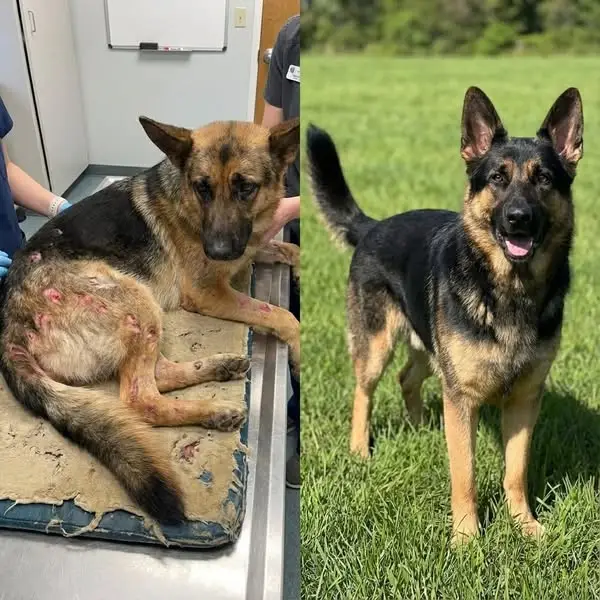

Susan Harper — 👆 Pet Pharma doesn't want you to know this
Winning

👆 Read this if the allergies won't go away

Fifth vet visit in four months. She looked at Daisy and said: "It's just allergies. Some dogs are like this." Just allergies. Like it wasn't serious. Like my dog wasn't scratching herself bloody every night. I wanted to scream. But I smiled. Nodded. Took the new prescription. Drove home in silence while Daisy scratched in the back seat. It started six months ago with paw licking. I took her to the vet immediately. I'm not someone who waits. "Probably environmental allergies. Try these antihistamines." I gave them to her every day for three weeks. They helped for maybe ten days. Then the scratching started. Hot spots appeared on her belly. Back to the vet. "Let's try a food change. Sometimes it's dietary." $95 for a bag of hypoallergenic kibble. Better for two weeks. Then worse than before. Third visit. "We can try Apoquel. It's very effective." $140 a month. It worked. For about three weeks. Then the scratching came back. Fourth visit. "Let's add Cytopoint injections." $180 every two weeks. Same pattern. Relief for a little while. Then right back to scratching. By the fifth visit, I was desperate. "There has to be something else we can do." She looked at me with that sympathetic smile. "Some dogs just have difficult allergies. This is something you'll probably be managing for the rest of her life." Managing. Forever. Like this was normal. Like I should just accept watching my dog suffer. I paid the $340 bill. Got in my car. And cried. Not because of the money. Because I felt completely unheard. Every visit, I'd explained the pattern: temporary relief, then regression. Every visit, she'd prescribe something new to manage symptoms. Never once did she say: "Let's figure out why this keeps happening." That night, I couldn't sleep. Daisy was in her bed, scratching. I could hear her collar jingling with every movement. I grabbed my phone and searched something I'd never searched before. Not "dog allergy treatments." But "why do vets only prescribe symptom management for allergies." I found an article written by a veterinary dermatologist. It wasn't about treatment. It was about veterinary training. One paragraph stopped me: "Most general practice vets receive minimal education on chronic skin barrier dysfunction. Standard protocols focus on immune suppression and dietary elimination because those are what we're taught. Structural repair through collagen supplementation is rarely discussed in vet school curriculum." I read it three times. They're not taught about it. My vet wasn't withholding information or dismissing me. She genuinely didn't know there was another approach. I kept reading. The article explained something I'd never heard in five vet visits: Dogs have a skin barrier made of collagen—Types I and III. This barrier keeps allergens on the surface where they cause minor irritation. But dogs lose collagen every year after age two. By age seven or eight, they've lost over half. As it depletes, the barrier weakens. Gaps form. Allergens that used to stay outside now penetrate deep. The immune system goes into overdrive. That's the chronic itching. The hot spots. The inflammation that never fully goes away. Apoquel suppresses the immune response. Cytopoint blocks the itch protein. But neither rebuilds the barrier. So they work temporarily—until the barrier gets even weaker. Then you need higher doses. More frequent treatments. It's not "managing allergies." It's managing the symptoms of a structure that's breaking down. And vets aren't trained to fix structure. They're trained to manage symptoms. I sat there at 2 AM feeling a mix of anger and relief. Anger because I'd spent four months and over $1,200 on treatments that could never actually fix the problem. Relief because finally—finally—something made sense. I searched for collagen supplements for dogs. Found one that was liquid. Pre-broken down into peptides for absorption. All three types dogs need. Plus anti-inflammatories to calm the damage while the barrier rebuilt. When it arrived, I didn't tell anyone. Not even my husband. I was so tired of hope followed by disappointment. I just gave it to Daisy every morning. One pump in her food. Week one: Still scratching. But I reminded myself: repair takes time. Week two: Less paw licking. First small sign. Week three: Hot spots stopped spreading. Started healing. Week four: She slept through the night without scratching. First time in months. By week six, she was comfortable. Not "managed." Comfortable. The scratching didn't come back after two weeks. Because I wasn't suppressing her immune system anymore. I was rebuilding what had been depleting for years. Three weeks ago, I took Daisy for her regular checkup. Different vet this time. My usual one was out. She looked at Daisy's chart. Then at Daisy. "Her skin looks incredible. What changed?" I hesitated. Then told her about the collagen. She nodded slowly. "That makes sense. Barrier repair. We don't learn much about that in school, but the research is solid." She wasn't defensive. Just... unaware. And that's what made me want to share this. If you've been to multiple vet visits and nothing works long-term... If you keep hearing "it's just allergies" or "some dogs are like this"... If you're spending hundreds on medications that provide temporary relief then stop working... Your vet isn't dismissing you. They're doing what they were trained to do. But they were trained to manage symptoms. Not rebuild structure. Dogs lose collagen every year. The barrier weakens. Allergens penetrate deeper. Medications suppress the response. But they don't repair the barrier. You need to give back what's depleting. The collagen I give Daisy is Healthy Petz Collagen. You can learn more here: 👉 shophealthypetz.com/pages/collagen-2 Because the best time to start was yesterday. The next best time is today.

Loading the ad's image
Susan Harper — 👆 Read this if the allergies won't go away
Winning

From the ads Sniped has collected from this page (2 so far, first seen Nov 2026). Reach is what Meta reports; no spend or sales estimates.