72% of Your Dog's Cells are Destroyed Before Bloodwork Shows it..
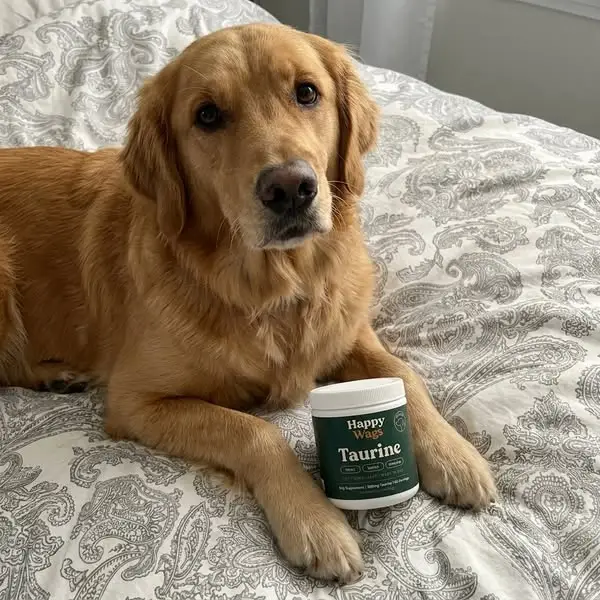
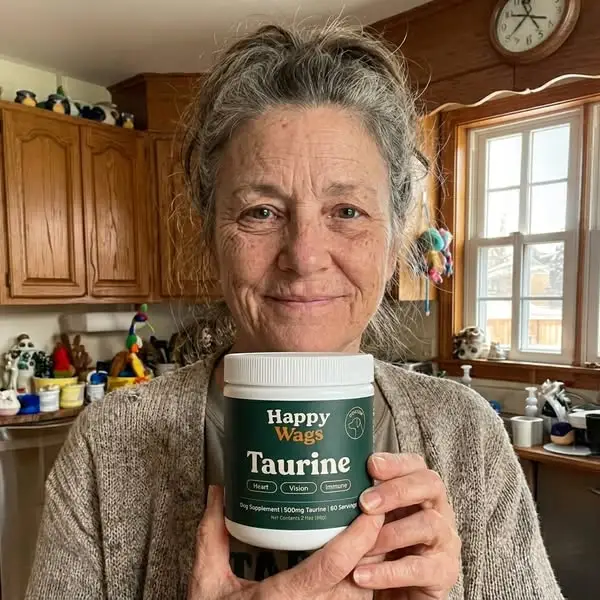
I spent 18 months treating what I thought were four separate problems in my dog — her joints, her eyes, her coat, her energy — before a shelter vet told me they were all the same problem, and I'd never once addressed the actual cause. Everything I bought for Luna's joints, eyes, coat, and energy for 18 months was treating the symptoms of one problem nobody ever tested her for. I gave my 8-year-old dog fish oil for four months. Nothing. Switched to premium joint chews — the $65-a-month kind with glucosamine and chondroitin. Eight weeks. Still getting worse. Bought an $800 red light therapy device because the Facebook groups swore by it. Six weeks. Her eyes kept clouding and her energy kept dropping. Tried "pharmaceutical-grade" taurine from Amazon for six weeks. Still declining. Then a shelter vet tested that taurine: 198mg actual content. Label claimed 500mg. Contaminated with fillers that blocked what little was there. I'd spent over $1,100 treating the symptoms of something I'd never actually addressed. My name is Debra. Luna is my 8-year-old Golden mix. And I need to tell you what vets aren't saying about aging dogs — and why the solutions you're spending money on right now are probably treating the wrong problem. It started when Luna was 7. She'd look up at the car — her spot for eight years, the first place she'd run when she heard the keys — and pause. Just a beat. A calculation. Then she'd haul herself up instead of jumping. I told my husband she was being dramatic. Six months later, the pause got longer. She stopped running to the car at all. She'd walk to it, stop at the edge of the seat, and wait for me to lift her. I posted in my dog group: "Is this normal? She used to launch herself in. Now she just stands there." Everyone said the same thing: "She's getting older. Eight is basically middle-aged for a big dog. It's normal." So I accepted it and bought fish oil. Three months later, I noticed her coat. It had always been the thing people commented on — thick, warm, that specific shine that Labs and Goldens have when they're healthy. Now it was dull. Thinner than it used to be. Like something had left it. I thought it was seasonal. I upped her fish oil to double the dose. Then her eyes. A grayish haze, starting at the edges. The kind of haziness that makes it look like there's a film over the lens. She'd track movement a beat too slow. Squint in bright light when she never had before. My vet said "nuclear sclerosis — completely normal in senior dogs, just the lens hardening with age. No treatment needed." I went home less reassured than I wanted to be. Around that same time, she started sleeping more. Eighteen hours some days. Would lift her head when I walked in, tail moving, but stay on her bed instead of coming to greet me. Like the want was there but the energy wasn't. The fish oil clearly wasn't enough. I started researching. I found joint chews everywhere. Cosequin. Dasuquin. Zesty Paws. Every brand promising to "support mobility and flexibility." The premium ones had glucosamine, chondroitin, MSM. $65 a month for the good stuff. I ordered them. Eight weeks in, I couldn't see a difference. She still paused at the car. Still walked instead of trotted. Coat still dull. Eyes still hazy. I mentioned it to a dog owner at the park whose Shepherd looked remarkable for 11 years old — moving easily, coat thick, eyes clear. I asked what she did. "Red light therapy," she said. "We've seen good results with it for mobility and inflammation." I'd already been researching it. Facebook groups full of testimonials. YouTube demos. Home devices ranging from $600 to $2,500. I bought one. $800. The mid-range option with the best reviews. Six weeks of twice-daily sessions. Luna seemed relaxed under the warm glow. I thought that was a good sign. But her joints weren't improving. Her eyes kept clouding. Her energy kept dropping. She'd stopped going upstairs to sleep near us. The stairs had become a project. I sat in the parking lot after one session and calculated what I'd spent. Fish oil. Joint chews. $800 device. Prescription pain management the vet had now added. Over $1,100. None of it was fixing anything. I was buying her comfort while whatever was actually causing all of this kept progressing. I started researching again. Not "best joint supplements for dogs." I went deeper. I found studies connecting taurine deficiency to oxidative stress in joint tissue. Found research on taurine's role in retinal cell health — the retina holds more taurine than almost any other tissue in the body, and when it depletes, the photoreceptors that let dogs see in low light and track movement begin to quietly break down. Found the AAFCO connection — the legal requirement for dogs is zero — and that as dogs age their bodies produce meaningfully less taurine every year with nothing in the food designed to replace it. Everything I was treating separately had the same root cause. I ordered taurine from Amazon immediately. PawBoost Taurine — Decent reviews. $54 Six weeks of daily supplementation. Every morning, mixed into her food. Nothing changed. Her eyes still clouded. Still pausing at the car. Still thin in the back legs. Still not coming up the stairs. I felt my hope die. Taurine doesn't work, I told myself. Or it doesn't work for Luna. Or I'd waited too long. I was at PetSmart buying more joint chews — old habit at this point — when I ran into Sarah, a woman I recognized from the local rescue where I'd adopted Luna six years ago. She was behind me in line. Saw the joint chews and the senior vitamins in my cart and the look on my face. "Is Luna having trouble?" I told her everything. The 18 months of supplements. The four different products. The vet visits. The taurine that didn't work. The $900 I'd spent while she kept declining. Sarah looked at me for a long moment. "Nancy, can I ask you something? The taurine you bought — where did you get it?" "Amazon." She closed her eyes briefly. "That's the problem. Not the taurine. The product." She explained it right there in the checkout line. "Joint degeneration isn't just mechanical wear. It's a chemical process. When joints inflame, they release free radicals — unstable molecules that attack and destroy cartilage. The more inflammation, the more free radicals. The more free radicals, the more destruction. It feeds itself. Glucosamine tries to rebuild cartilage while the fire is still burning. It can't keep up. Fish oil reduces inflammation temporarily. The fire restarts. Taurine neutralizes the free radicals at the source. Stops the destruction before it happens. But only if it actually reaches the cells." She kept going. "The same depletion that drives joint destruction affects the retina — the cloudiness you're seeing in her eyes isn't just 'lens hardening.' Retinal cells depend on taurine to maintain the photoreceptors that keep vision sharp. When taurine depletes, they begin to break down. Slowly. Quietly. The lens changes are the visible sign of something that's been happening at the cellular level for longer than you can see. And the energy, the coat, the muscle wasting — same root cause. Taurine is critical for mitochondrial function in every cell. When it depletes, cells produce less energy, repair more slowly, and age faster than they should. The coat changes. The muscle changes. The dog that bloodwork says is fine but isn't the same dog anymore." I interrupted her. "But Sarah — I gave her taurine. Six weeks. Nothing happened." Her expression didn't change. "Where exactly did you buy it?" "Amazon. Great reviews—" "I know. That's the problem. I've seen it tested. The product you bought is almost certainly not what the label says." She gave me the name of the vet at her rescue — Dr. Lisa Miller. Head veterinarian at Maplewood Animal Rescue. "Bring the bottle. She'll show you what's actually in it." I called Dr. Miller the next morning. She saw Luna and me that afternoon. She took the Amazon bottle I handed her, looked at it, set it to the side. She examined Luna's eyes carefully. Felt her hips. Looked at her muscle mass. Then she opened a folder on her desk. Seven lab reports. Seven taurine supplements. "When Sarah texted me your brand name last night, I already knew what I'd find. Because I've tested it." She spread the reports across the table. PawVita: Contained only 100mg of actual taurine per scoop. And had contaminated fillers. K9Essentials Taurine, sold at major pet store chains: Heavy metal contamination. Lead levels 3 times the safe limit for dogs. DoggySupps: Their taurine was cut with 48% cheap filler that competes with absorption. Sourced from unverified overseas facilities with zero quality control documentation. These brands were selling random powder in a tub. Parents had been buying supplements on their own — that were either contaminated, mislabeled, or completely ineffective. She pointed to the last report. HappyWags. Label claims 500mg. Actual content: 503mg. 99.8% pharmaceutical-grade purity. Zero contamination. Zero fillers. Over-delivered. "Out of every taurine supplement we tested, only one had what it claimed on the label. That's what we use at Maplewood for every dog in our facility." I stared at the reports. I'd given Luna contaminated garbage for six weeks while her joints, her retina, her cells kept deteriorating. The product I'd trusted — with thousands of five-star reviews — was 60% under-dosed and cut with a filler that blocked whatever taurine was actually in it. Dr. Miller leaned back. "Last month, 89 dogs came through our facility showing signs of accelerated aging — joint issues, coat changes, low energy, vision changes. We tested all of them for taurine. 81 were significantly deficient. 81 out of 89. These weren't dogs eating cheap food. Most were on premium food. Some on prescription diets. Because the food doesn't matter. AAFCO requires zero taurine in dog food. Every bag that says 'complete and balanced' is complete by a standard that never included taurine. And as dogs age, their body makes less of it every year. The food fills none of the gap. So every system that depends on taurine — the joints, the retina, the immune cells, the mitochondria inside every cell — starts losing ground. Silently." She handed me a bottle of HappyWags. "Start Luna on 500mg daily. Mixed into her food. She won't notice it." "Will the eyes improve?" "If the retinal cells haven't been damaged beyond recovery — yes, you can see improvement. The clouding you're describing sounds like early taurine-related retinal stress on top of the nuclear sclerosis. One comes back. One doesn't. But we catch it now." "The joints?" "Stop the inflammatory fire and the destruction slows. The glucosamine can actually work once the oxidative damage isn't constantly outpacing it." I started Luna on HappyWags that same afternoon. Day 4: She walked to the back door without prompting. Small thing. I noticed it. Day 9: I opened the car door. She paused — then jumped. Not her old launch, but a jump. I stood there with my hand still on the door. Day 14: Her eyes. The grayish haze at the edges had visibly softened. Not gone. But different. My husband noticed before I said anything. Day 19: She came up the stairs. Day 23: She ran to greet me. Week 6: I took her back to Dr. Miller. Taurine: 54 nmol/mL. Up from 22. Inflammatory markers down. Muscle tone returning. Dr. Miller looked at Luna moving around the exam room and then looked at me. "She's getting it now." That was seven months ago. Luna runs to the car. Comes upstairs every night. Her coat is back — that specific shine. Her eyes are clearer than they've been in two years. She initiates play again. The fish oil, the joint chews, the senior vitamins — they weren't wrong. They were just downstream. Treating the output of a depletion none of them were designed to address. If your dog is hesitating before jumps, their coat has changed, their eyes look hazier than they used to, their energy has dropped and everyone tells you it's just age — those aren't separate problems. They're the same depletion showing up in every system that depends on taurine simultaneously. Don't waste money working downstream: Fish oil reduces inflammation temporarily. The depletion restarts it. Glucosamine rebuilds cartilage while oxidative stress keeps destroying it faster. Red light therapy calms inflammation during the session. The fire restarts when it ends. $800 for temporary relief while the root cause keeps compounding. Pharmaceutical-grade taurine addresses the root. One ingredient. Less than a dollar a day. But don't buy whatever you find on Amazon. Dr. Miller tested seven brands. Six were contaminated, under-dosed, or degraded. One had bacterial contamination. One had lead. The product I gave Luna for six weeks was 60% under-dosed and cut with a filler that blocked absorption. The only brand that passed every test: HappyWags. 500mg actual taurine per scoop. Zero contamination. Zero fillers. https://happywags.co/products/taurine I'm comfortable sharing this because I got it tested by my vet and it came back clean. P.S. Luna's eyes, joints, coat, and energy all improved on the same supplement. Because they all had the same cause. If your dog is showing signs across multiple systems — not just joints, not just energy, but several things changing at once — that's the pattern. That's what taurine depletion looks like from the outside. I spent $900 treating symptoms for 18 months. HappyWags is less than $40 a month. https://happywags.co/products/taurine
Loading the ad's image