Advertiser

Susan Henderson

neckline-us.comMeta Ad Library

5
Running ads
none new in 30 days
Jul 2026
Advertising since
longest ad 4 months
—
Reach
running ads, summed
40% video
Formats
2 video · 3 image
3
Products advertised
1 shop

Read This If You Have Unexplained Dizziness

If you feel dizzy when you're walking through the grocery store… that's your brain begging for oxygen. If you get that floating, on-a-boat feeling out of nowhere… that's your brain begging for oxygen. If you're holding the walls in the shower just to stay upright… that's also your brain begging for oxygen. If the room tilts when you turn your head too fast, or bend down to grab something off the floor, or look up at a high shelf… that too is your brain begging for oxygen. And if any of this gets noticeably worse the longer you've been sitting hunched at a desk, or after a bad night's sleep with your neck at a weird angle — that's almost certainly your brain being starved of oxygen, every day, while you have no idea why. So here's what I learned after 14 months of going to 5 different doctors and 3 specialists for my dizziness, and getting 2 MRIs that all came back "perfectly normal" while I felt like I was slowly losing my mind… Dizziness is almost always an oxygen problem. Not an inner ear problem… Not an "ear crystals" problem… Not an anxiety problem… An oxygen problem. But not the kind you'd think. Here's why… Your brain is the most oxygen-hungry organ in your body. It uses about 20% of all the oxygen you take in, despite being only about 2% of your weight. And inside your brain, the vestibular system — the part of you that keeps you balanced — is one of the most oxygen-sensitive systems you have. Drop the oxygen reaching it even slightly, and it loses its calibration. That's the boat feeling you get… That's the room tilting. It's your brain, quietly starved of the oxygen it needs, unable to tell up from down. Now, what's actually cutting off that oxygen? For most people it isn't your lungs. It isn't your heart. Your bloodwork came back fine, remember? The oxygen is getting into your blood just fine. The problem is it's not getting up to your brain. And the reason is something almost nobody — including 6 doctors — ever thinks to check. The deep muscles at the very base of your skull. The C1-C2 area, right where your spine meets your head. When those muscles get chronically tight — from years of hunching over phones, sleeping wrong, stress, or just aging — they clamp down on the vertebral arteries. Those are the arteries that run up through your neck and feed blood, and oxygen, directly to your brainstem and your vestibular system. Squeeze those arteries even slightly, and you throttle the oxygen supply to the exact part of your brain that keeps you balanced. Your blood is still pumping. Your lungs are still working. But the oxygen your brain depends on is getting choked off at the neck, before it ever arrives. And the organ that suffers first is always the one with the highest oxygen demand. Your brain. Your balance. Your sense of which way is up. That's the floating feeling. That's the tilting floor. That's the walls closing in. Not crystals knocked loose in some canal. Not your inner ear failing. Your neck, quietly strangling the blood flow to your own brain. Now here's the part that made me furious… I spent fourteen months and $5,800 chasing this through ENTs, neurologists, vestibular specialists, an SSRI, six rounds of the Epley maneuver, vestibular therapy, and an acupuncturist. Every single one of them told me I had stubborn ear crystals while I gripped my kitchen counter every time I tried to cook dinner. I'm 49. I used to be the steady one. And I was disappearing. And the thing that finally cracked it open for me wasn't a doctor. It was a forum thread I stumbled onto a few weeks ago at 1 AM, after another afternoon of barely being able to walk down my own hallway without holding the wall. Real people. Describing exactly what I'd been feeling. And they were all talking about the same thing. Not ear crystals… Cervicogenic dizziness. Dizziness caused by deep neck-muscle tension choking off blood flow to the brain. And I want to stop you for a second… Because when most people hear "neck tension," they picture a stiff neck. Something you stretch out. Something a massage fixes. That's NOT this. The muscles causing this are deep. They sit underneath the surface muscles, wrapped around the top of your spine like a fist. A regular massage never touches them. A chiropractor cracking your neck doesn't reach them. Basic stretching doesn't budge them. They just sit there, clenched, quietly squeezing your arteries every single hour of every single day. And there's a reason nobody catches it… One: Your doctor is trained to check your brain, your heart, and your blood — not the deep muscles at the base of your skull. Two: Those muscles don't show up on an MRI. There's nothing "broken" to see. Three: Standard vestibular testing shows your inner ear is perfectly fine — because it is fine. The problem was never your ear. So your brain MRI comes back clean… Your vestibular tests come back normal… Your blood panel looks perfect… Because there's nothing wrong with your brain, or your ear, or your blood. There's something wrong with your neck. And no part of standard medicine ever looks there. Now here's the next thing I asked when I started reading all of this… "Okay, but if it's my neck, why doesn't my neck even hurt that much?" That was my exact thought. But that's the trap. These deep muscles don't scream. They don't give you a sharp, obvious pain that points right at the problem. They give you a dull ache at the base of your skull you've learned to ignore. Fullness in your ears. And dizziness that seems to come from everywhere and nowhere. The tension is doing its damage silently — the same way a garden hose kinks and you don't notice until the water stops coming out the other end. And this isn't some niche internet theory. The vertebral arteries running through your neck supply the entire back of your brain — including your brainstem and vestibular system. Any restriction there directly reduces oxygen to the systems that keep you upright. It's basic anatomy. It's just anatomy nobody bothered to check on you. Here's what that lack of oxygen actually does across your whole body… Because that same choked-off blood supply doesn't only hit your balance. It's why so many people with "ear crystals" also have… That bone-deep exhaustion no amount of sleep can fix… The brain fog that makes you lose your train of thought halfway through a sentence… The racing heart that wakes you at 3 AM for no reason at all… Anxiety that creeps in when nothing is actually wrong… Tingling or numbness in the hands when you turn your head a certain way… Headaches at the base of your skull that come and go without a trigger… If even two of those sound familiar… It probably isn't a coincidence. It's very likely all one thing — restricted blood flow from that clenched knot at the top of your neck, cascading out across your whole body. Now here's what finally gave me an answer. Someone on the forum mentioned a device I'd never heard of. Not a massager. Not a heating pad. A different category entirely. It's built to reach those exact deep muscles at C1-C2 — the ones the Epley can't touch because they're not in your inner ear at all. It uses heat to relax the surface muscles first. Then EMS technology — targeted electrical stimulation — to reach the deep muscles underneath and force them to contract and release, over and over, breaking up years of chronic tension that no massage could ever reach. And it's positioned at a specific 26-degree angle, sitting exactly where those deep cervical muscles live at the base of the skull. The idea is simple: release the clenched muscles, and the compressed arteries open back up. Blood flows. Oxygen reaches your brain again. Your vestibular system recalibrates. Yes, I did my research 😊 And reading what other people on the forum said after they tried it is what got me to order one that same night. One woman wrote: "I had 'ear crystals' for two years. Did the Epley twelve times. Used this for three weeks and got my life back." I read that comment three times. Then I opened a new tab, ordered it, and went to bed at 2:08 AM with the kind of hope I genuinely hadn't let myself feel in over a year. It's called Neckline. The package arrived on a Thursday. I tore it open at the kitchen counter, read the instructions, and used it that same night. Fifteen minutes at the base of my skull. Heat on low, EMS on level 3. I almost didn't expect anything. Fourteen months of this had taught me not to hope. But within a few days, things started shifting… Day 3: the pressure behind my eyes lifted. I noticed it because I bent down to grab something off the floor and didn't have to brace against the counter. Day 5: I stood at the stove cooking dinner without gripping the counter once. First time in over a year. Day 7: the "ears feeling full" sensation stopped. Day 12: I bent over to load the dishwasher. The room didn't move. I cried. Over being able to load the dishwasher. Week 3: I could turn my head fully. Look up at a cabinet. Walk down the hall like a normal person. The boat-feeling was gone. Not 80% better. Not "manageable." Like the version of myself I'd been losing pieces of for over a year had quietly walked back into my body without me noticing. I cried a few times during those three weeks. That's how slowly this thing had taken me. I hadn't even registered how much I'd lost until I started getting it back. Week 4, I was making dinner when my husband walked into the kitchen. He stopped in the doorway for a second. Just watching me move around the stove. Then he said it… "You seem like yourself again." I didn't say anything back. I just nodded and kept stirring, because if I'd opened my mouth in that second I would have started crying. He hadn't said a word for fourteen months about how different I'd become. Not because he hadn't noticed. Because he didn't want to make me feel worse than I already did. He'd just been quietly watching me disappear. And now he was watching me come back. A few weeks later I went back to the ENT who'd done the Epley on me six times. "I treated my neck," I told him. "The thing you never examined." He looked confused. "But we determined it was BPPV. Ear crystals." "It wasn't ear crystals. It was my neck the whole time." Of course he was confused. They're trained to check the ear, the brain, the blood. Not the deep muscles wrapped around the top of the spine like a vice. Then my best friend Karen called. She'd had the same dizziness for almost two years. Same medical runaround. Same answers. I told her, "It's not your inner ear. It's your neck." She ordered a Neckline that night. Eleven days later she texted me: "The constant swaying is GONE." That's when I really understood… We were never broken. We were not BPPV patients with stubborn ear crystals. We were people whose deep neck muscles had been quietly choking off the blood — and the oxygen — to our own brains. For months. For years. While every doctor kept doing the Epley and wondering why it didn't work. And once you release those muscles… It's fixable. If you're reading this — and you've spent any amount of time chasing the same dizziness through doctor after doctor with no real answer… You're not a difficult case. Your doctor isn't wrong that your inner ear looks fine on the tests. They're just not looking in the right place. The right place is the base of your skull. The deep muscles nobody ever checked. The arteries they've been quietly squeezing this entire time. So here's what I'd do if I were you… Don't wait for Epley session number twenty. It won't work. Because you don't have crystals to reposition. The device is called Neckline. Fifteen minutes. Every evening. At the base of your skull. That's what six ENTs and fifteen Epley sessions couldn't fix. You can spend another year going to specialists. Another few thousand dollars on tests, medications, supplements, and treatments. You can keep being told everything looks normal while you feel like you're disappearing. Or you can spend less than the cost of one specialist appointment to actually release the thing that's been strangling the oxygen to your brain this whole time. That's what changed everything for me. Not hoping. Not guessing. Fifteen minutes a night. I lost fourteen months of my life to the wrong diagnosis. I don't want that to be you. Neckline is what gave me my life back. 49 years old. Zero ear crystals. Zero dizziness. Just me. Steady. Believed. Alive again. Try Neckline risk-free for 30 days here: https://neckline-us.com/neckline-usa/landing-2 P.S. — If you've been dealing with chronic dizziness, unexplained fatigue, brain fog, a racing heart at night, or that "off" feeling that no test can explain… and every doctor keeps telling you your inner ear is fine… Please just try your neck. Fifteen minutes a night for a few weeks is nothing compared to another year lost to the wrong answer. If it's not your neck, you've lost almost nothing. But if it is… You'll finally have the thing everyone else has been missing.

Loading the ad's image

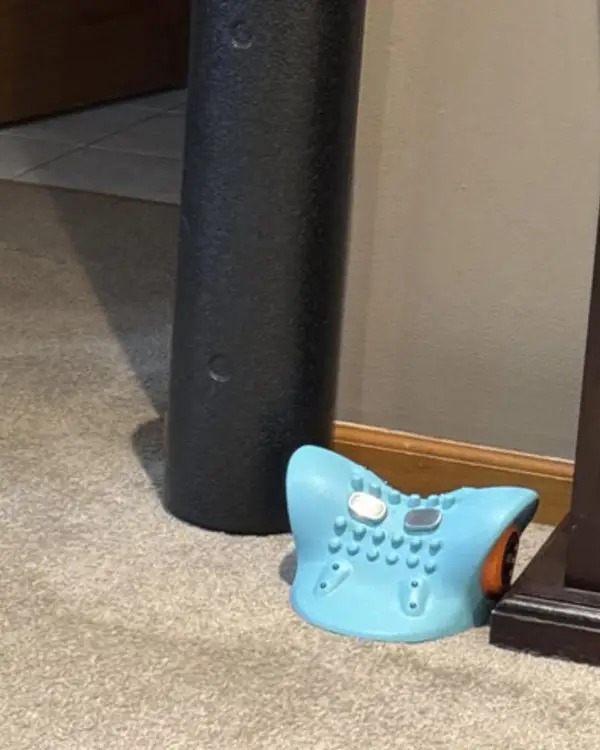
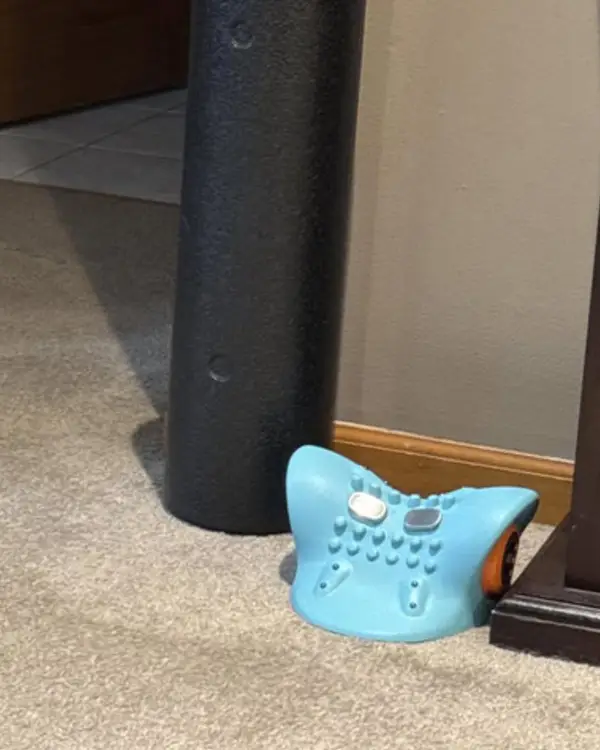
Susan Henderson — Read This If You Have Unexplained Dizziness
WinningImage

Don't Buy From Amazon

★☆☆☆☆ "No relief. No change in my dizziness. Nothing. Constant vertigo and that floating feeling and pressure at the base of my skull. Bought this hoping it would finally help after the Epley maneuver did nothing. Felt absolutely nothing. Don't waste your money." I wrote that review. About a product I thought was Neckline. If you have chronic dizziness and have written off cervical traction based on something you bought on Amazon — you may have made the same mistake I made. I've had dizziness for fourteen years. Diagnosed as "BPPV" — ear crystals — by two different ENTs. But the floating sensation always started at the base of my skull and that tight band of tension at the back of my neck never went away. And I felt unsteady every single morning. My ENT said it was loose crystals in my inner ear and the neck tension was just me bracing against the vertigo. He did the Epley maneuver. Again and again. Left me so dizzy afterward I couldn't drive, but never touched the floating. Then a coworker mentioned something about neck compression causing dizziness. Something about her seemed different. More steady. She wasn't gripping counters when she walked anymore. I didn't ask directly but I understood something had changed. She told me she'd been using a cervical traction device. Fifteen minutes a day. Her dizziness — the debilitating floating sensation she'd had for six years — was almost completely gone. I ordered it that night. From Amazon. Same blue device. Same cervical collar design. Cheaper than the official website. Four stars. I used it for fifteen minutes before bed as directed. Nothing. No warmth. No muscle release. Nothing suggesting the device had reached the tight muscles at the base of my skull where the floating sensation originated. Week two. Nothing. Week four. Nothing. Week six. Done. I examined the device more carefully one evening. The heating elements barely got warm. I held a thermometer against the pads. 92°F. Room temperature coffee. I looked up therapeutic heat penetration requirements. For heat to reach the suboccipital muscles — the deep muscles that sit directly on the arteries supplying blood to your brain's balance centers — you need sustained temperatures above 110°F. Anything less only warms the skin surface. The compression at C1-C2 sits deep beneath multiple muscle layers. Surface warmth doesn't reach it. Not only was the heat inadequate. The traction angle was completely wrong. I measured it against a protractor. 15 degrees. Maybe. The clinical research on cervical decompression for vestibular symptoms consistently requires 26-degree traction to create space between C1 and C2 — the exact vertebrae where compressed arteries restrict blood flow to your balance centers. 15 degrees doesn't generate enough space to release that compression. I left the one-star review. Warned others with dizziness. Moved on. Four months later my coworker asked how my dizziness was doing. I told her what had happened. She went quiet. Then — "Did you buy it from their actual website?" She held her device next to mine. Hers had thick, medical-grade heating pads that covered the entire occipital ridge. Mine had thin foam pads with barely visible heating wires. She turned hers on. Within two minutes the heat was unmistakable — deep, penetrating warmth. Mine stayed lukewarm even after ten minutes. She showed me the traction angle. Hers locked precisely at 26 degrees with a rigid support structure. Mine flexed and collapsed under even slight pressure. She sent me the official website link that evening. The specifications were clear. 120°F therapeutic heat penetration — clinically proven to reach the suboccipital muscles that sit directly on the vertebral arteries. Even legitimate cheap Amazon devices typically max out at 95-100°F — well below the penetration threshold needed to release the compression restricting blood flow to your brain's balance centers. And the construction. Medical-grade rigid traction that locks at the precise angle needed for decompression. Counterfeit devices use flexible foam that collapses under pressure — meaning no decompression, no matter how long you use it. Wrong heat. Wrong construction. For six weeks. It was not a fair test of the mechanism. I ordered from the official website that night. The device was noticeably heavier. Medical-grade construction. I positioned it at the base of my skull and turned it on. Within five minutes there was distinct, deep warmth spreading through the muscles at the back of my neck. Not surface heat. Penetrating warmth. And the traction — I could feel the gentle pull creating space where my skull met my spine. Completely different from six weeks of nothing. Within ten minutes that constant background floating sensation started to quiet. Not gone. Just... lighter. Like something that had been running at full volume for fourteen years was finally turning down. Week two the random dizzy spells had stopped completely. No more grabbing the wall when I stood up. No more room tilting for no reason. Week four I went to the grocery store. Bright fluorescent lights. People moving everywhere. Visual chaos. I walked through the entire store without that overwhelming feeling of visual overload. No clutching the cart for something solid to focus on. No grabbing the shelf when the dizziness spiked. Just walking. Week six the constant floating sensation — the feeling like I was living on a boat that never stopped rocking — was gone. I could stand up without bracing for the tilt. I could turn my head without triggering that spinning disorientation. Week eight I met my sister for lunch at a busy restaurant. Noise. Visual motion. All the triggers that used to send my head spinning. I stayed for an hour and a half. No escape plan. No overwhelming need to leave. I had not told my sister I was trying anything new. I had told her too many times about too many treatments that had not worked. Week ten she said something seemed different. She could not identify what. But she noticed. "You seem steadier. Present. Like you're actually here." Week twelve I went back to my ENT for a routine follow-up. My dizzy episodes: down from 15-20 a month to zero. Lowest count in fourteen years. "What changed?" I told him about Neckline. He looked at the research on cervical compression and vestibular symptoms. He called back two days later. "Your symptoms were never BPPV. They were mechanical. The compression at C1-C2 was restricting blood flow to your brain's balance centers and pressing on your vagus nerve. The Epley was repositioning crystals that were never out of place. You've decompressed the actual structures. This is exactly what we want to see." It was never my inner ear. It was mechanical. The dizziness came from my neck. At the base of my skull. I updated my Amazon review. The deep warmth within five minutes is the confirmation. Medical-grade heating pads. 120°F penetration. Rigid 26-degree traction. Warmth that reaches the suboccipital muscles sitting on your vertebral arteries and vagus nerve. If you have those four things — you have the real product. If you're reading this in the cereal aisle holding onto the cart, floating, waiting for the room to stop moving — it's probably not your ear crystals. Your ENT isn't wrong about your MRI and vestibular tests being normal. They're just not looking in the right place. I lost fourteen years to the wrong diagnosis. To the Epley maneuver. To repositioning crystals that were never out of place. It was my neck. At the base of my skull. 👉 https://neckline-us.com/9rynjlist-opt 30 days. Money back. No questions.

Loading the ad's image
Susan Henderson — Don't Buy From Amazon
WinningImage

Don't Buy From Amazon

★☆☆☆☆ "No relief. No change in my dizziness. Nothing. Constant vertigo and that floating feeling and pressure at the base of my skull. Bought this hoping it would finally help after the Epley maneuver did nothing. Felt absolutely nothing. Don't waste your money." I wrote that review. About a product I thought was Neckline. If you have chronic dizziness and have written off cervical traction based on something you bought on Amazon — you may have made the same mistake I made. I've had dizziness for fourteen years. Diagnosed as "BPPV" — ear crystals — by two different ENTs. But the floating sensation always started at the base of my skull and that tight band of tension at the back of my neck never went away. And I felt unsteady every single morning. My ENT said it was loose crystals in my inner ear and the neck tension was just me bracing against the vertigo. He did the Epley maneuver. Again and again. Left me so dizzy afterward I couldn't drive, but never touched the floating. Then a coworker mentioned something about neck compression causing dizziness. Something about her seemed different. More steady. She wasn't gripping counters when she walked anymore. I didn't ask directly but I understood something had changed. She told me she'd been using a cervical traction device. Fifteen minutes a day. Her dizziness — the debilitating floating sensation she'd had for six years — was almost completely gone. I ordered it that night. From Amazon. Same blue device. Same cervical collar design. Cheaper than the official website. Four stars. I used it for fifteen minutes before bed as directed. Nothing. No warmth. No muscle release. Nothing suggesting the device had reached the tight muscles at the base of my skull where the floating sensation originated. Week two. Nothing. Week four. Nothing. Week six. Done. I examined the device more carefully one evening. The heating elements barely got warm. I held a thermometer against the pads. 92°F. Room temperature coffee. I looked up therapeutic heat penetration requirements. For heat to reach the suboccipital muscles — the deep muscles that sit directly on the arteries supplying blood to your brain's balance centers — you need sustained temperatures above 110°F. Anything less only warms the skin surface. The compression at C1-C2 sits deep beneath multiple muscle layers. Surface warmth doesn't reach it. Not only was the heat inadequate. The traction angle was completely wrong. I measured it against a protractor. 15 degrees. Maybe. The clinical research on cervical decompression for vestibular symptoms consistently requires 26-degree traction to create space between C1 and C2 — the exact vertebrae where compressed arteries restrict blood flow to your balance centers. 15 degrees doesn't generate enough space to release that compression. I left the one-star review. Warned others with dizziness. Moved on. Four months later my coworker asked how my dizziness was doing. I told her what had happened. She went quiet. Then — "Did you buy it from their actual website?" She held her device next to mine. Hers had thick, medical-grade heating pads that covered the entire occipital ridge. Mine had thin foam pads with barely visible heating wires. She turned hers on. Within two minutes the heat was unmistakable — deep, penetrating warmth. Mine stayed lukewarm even after ten minutes. She showed me the traction angle. Hers locked precisely at 26 degrees with a rigid support structure. Mine flexed and collapsed under even slight pressure. She sent me the official website link that evening. The specifications were clear. 120°F therapeutic heat penetration — clinically proven to reach the suboccipital muscles that sit directly on the vertebral arteries. Even legitimate cheap Amazon devices typically max out at 95-100°F — well below the penetration threshold needed to release the compression restricting blood flow to your brain's balance centers. And the construction. Medical-grade rigid traction that locks at the precise angle needed for decompression. Counterfeit devices use flexible foam that collapses under pressure — meaning no decompression, no matter how long you use it. Wrong heat. Wrong construction. For six weeks. It was not a fair test of the mechanism. I ordered from the official website that night. The device was noticeably heavier. Medical-grade construction. I positioned it at the base of my skull and turned it on. Within five minutes there was distinct, deep warmth spreading through the muscles at the back of my neck. Not surface heat. Penetrating warmth. And the traction — I could feel the gentle pull creating space where my skull met my spine. Completely different from six weeks of nothing. Within ten minutes that constant background floating sensation started to quiet. Not gone. Just... lighter. Like something that had been running at full volume for fourteen years was finally turning down. Week two the random dizzy spells had stopped completely. No more grabbing the wall when I stood up. No more room tilting for no reason. Week four I went to the grocery store. Bright fluorescent lights. People moving everywhere. Visual chaos. I walked through the entire store without that overwhelming feeling of visual overload. No clutching the cart for something solid to focus on. No grabbing the shelf when the dizziness spiked. Just walking. Week six the constant floating sensation — the feeling like I was living on a boat that never stopped rocking — was gone. I could stand up without bracing for the tilt. I could turn my head without triggering that spinning disorientation. Week eight I met my sister for lunch at a busy restaurant. Noise. Visual motion. All the triggers that used to send my head spinning. I stayed for an hour and a half. No escape plan. No overwhelming need to leave. I had not told my sister I was trying anything new. I had told her too many times about too many treatments that had not worked. Week ten she said something seemed different. She could not identify what. But she noticed. "You seem steadier. Present. Like you're actually here." Week twelve I went back to my ENT for a routine follow-up. My dizzy episodes: down from 15-20 a month to zero. Lowest count in fourteen years. "What changed?" I told him about Neckline. He looked at the research on cervical compression and vestibular symptoms. He called back two days later. "Your symptoms were never BPPV. They were mechanical. The compression at C1-C2 was restricting blood flow to your brain's balance centers and pressing on your vagus nerve. The Epley was repositioning crystals that were never out of place. You've decompressed the actual structures. This is exactly what we want to see." It was never my inner ear. It was mechanical. The dizziness came from my neck. At the base of my skull. I updated my Amazon review. The deep warmth within five minutes is the confirmation. Medical-grade heating pads. 120°F penetration. Rigid 26-degree traction. Warmth that reaches the suboccipital muscles sitting on your vertebral arteries and vagus nerve. If you have those four things — you have the real product. If you're reading this in the cereal aisle holding onto the cart, floating, waiting for the room to stop moving — it's probably not your ear crystals. Your ENT isn't wrong about your MRI and vestibular tests being normal. They're just not looking in the right place. I lost fourteen years to the wrong diagnosis. To the Epley maneuver. To repositioning crystals that were never out of place. It was my neck. At the base of my skull. 👉 https://neckline-us.com/neckline-usa/landing-2 30 days. Money back. No questions.

Loading the ad's image
Susan Henderson — Don't Buy From Amazon
WinningImage

It Might Not Be Migraines

I was diagnosed with chronic migraines at 45. I'm 51 now. Turns out I never had migraines at all. For six years, I "managed" a condition without understanding what was actually driving it. But every year, I felt myself disappearing a little more. Six years of Sumatriptan that only worked half the time. Six years of Topamax that made me so foggy I couldn't finish a sentence at work. Six years of Aimovig injections that constipated me for days. Six years of Botox—31 injections across my forehead—that worked for eight weeks and then stopped. Six years of being told "you have chronic migraines, this is long-term management." I did everything they asked. When that didn't work, they sent me for more tests. Brain MRI. Normal. Blood panels. Normal. CT scan. Normal. Everything normal except the debilitating headaches. "Classic chronic migraines," they said. "Some people are just predisposed." I felt broken. Like my body had turned against me. Some days the pain was so bad I couldn't get out of bed. That familiar pressure building behind my eye. The fluorescent lights suddenly unbearable. Any noise too loud. I'd pull the curtains, turn off all the lights, and wait in the dark. Fifteen days a month. Half my life spent waiting for the pain to pass. I stopped going to my daughter's school events because the auditorium lights triggered me within minutes. She looked for me in the audience during her play. I wasn't there. I was in the hallway with my back against the wall, one hand over my eye. I stopped making plans with friends because I never knew if I'd be able to show up. My husband stopped including me in family outings. Not out of anger. Just adjustment. He'd accepted that the woman he married was only sometimes available. And every doctor just nodded sympathetically. "That's chronic migraines. They're unpredictable. We'll rotate through preventives and see what helps." I tried everything—trigger diaries, elimination diets, supplements, acupuncture, specialists with three-month waiting lists. Nothing worked long term. The headaches never went away. And the pressure at the base of my skull kept building. I started to believe this was just my life now. Then my massage therapist said something no neurologist ever had. She was precise. Methodical. Mid-forties. I'd been seeing her for a few weeks trying to manage the constant tension in my neck and shoulders. We were working through my upper back when she paused. Her hands moved to the base of my skull and pressed gently into the muscles just below the occipital ridge. The second she touched that spot, I felt the exact pressure that preceded every single one of my "migraines." "Does that feel familiar?" she asked. I nodded. "I see myself in you. The constant headaches. The pressure. The medications that don't work. I had it. I was 42 when they told me I had chronic migraines." She didn't move like someone who had constant headaches. "I tried everything. Sumatriptan. Topamax. Botox. Nothing worked long-term. Then a colleague told me something that changed everything." She pressed gently again at the base of my skull. "Has anyone ever really looked at what's happening right here? Not just given you medication. But actually examined what these specific muscles are doing?" I thought about it. Seven doctors. Five specialists. Three neurologists. "They've done brain scans," I said. "I don't mean scans. I mean really understood what happens when these muscles get chronically tight." She pressed into the small muscles right where my skull met my spine. "These muscles sit directly on nerves that refer pain to your head—your temples, behind your eyes, across your forehead. When they get locked up from years of tension, they send constant pain signals that feel exactly like migraines. Throbbing. Light sensitivity. Nausea. Everything." "Your headaches aren't coming from your brain. They're coming from compressed nerves in your neck. That's why the medications don't work. They're treating migraine pathways when the real source is muscular compression right here." "It's not neurological. It's mechanical." I went home that night and couldn't stop thinking about it. Could six years of debilitating headaches, dark rooms, and failed medications all have been caused by tight muscles in my neck? I started researching. The information was there—scattered across medical journals nobody had ever mentioned to me. Studies showing that chronic tension in the upper cervical muscles—specifically at C1 and C2—could cause referred pain that mimics migraines perfectly. When those muscles get locked up, they press on the occipital nerves. Those nerves refer pain directly to your temples, behind your eyes, and across your forehead. Your brain interprets it as a headache. But the source is your neck. The pressure. The throbbing. The light sensitivity. All of it coming from compressed nerves at the base of your skull. I called my massage therapist the next day. "You said you don't get headaches anymore. What did you do?" "I released the compression," she said. "But not with massage. Not with stretching. Those only give temporary relief because they can't reach deep enough. You need three things together. Heat that penetrates to the deep tissue. Electrical stimulation that forces the muscles to release. And traction at the exact angle that decompresses C1 and C2." She told me about Neckline. Heat. EMS. Cervical traction at 26 degrees. Fifteen minutes a day. After six years of treatments that didn't work, what was one more try? I ordered it that afternoon. I positioned it at the base of my skull. Turned on the heat and EMS. Within five minutes, I felt something I hadn't felt in years. That constant pressure at the back of my head—the pressure that always preceded a headache—started to soften. Not gone. But softer. Like something that had been clenched for six years was finally letting go. The next morning, I woke up without a headache. That might not sound remarkable. But I hadn't woken up without at least low-grade head pressure in months. By the end of day three, the constant tightness at the base of my skull felt different. Quieter. Day five, I walked through Target without needing sunglasses. First time in years. Day seven, the pressure that always built behind my eye by afternoon—wasn't there. By the end of week two, I'd gone eleven days without a single headache. My record that year was four. I went to the grocery store. Stood in line under fluorescent lights. Full cart. No headache. I sat in the parking lot and cried. Over being able to grocery shop. By week three, my daughter's school had another performance. I sat in the auditorium. Stage lights. A full crowd. Two hours of noise. I was there. Fully there. She found me in the audience during her scene. I waved. She smiled. Because I wasn't broken. I didn't have chronic migraines that required a lifetime of medication rotation. I had severe muscle tension at C1-C2 pressing on the occipital nerves and referring pain to my head. Creating real headaches. With real symptoms. While every neurologist kept looking at my brain and wondering why nothing worked. My headache specialist ran a follow-up at my next appointment. "Your headache frequency has decreased significantly." "They've basically stopped," I said. She looked at her notes. Then at me. "What changed?" I told her about the compression. The cervical muscles. The device. She looked at the Neckline for a long moment. "Whatever you're doing, keep doing it," she said. For the first time in six years, I left her office without a new prescription. My brain wasn't broken. My migraine pathways weren't overactive. Chronically tight muscles at the very top of my neck—muscles nobody ever examined—were pressing on nerves that refer pain directly to my head. The Sumatriptan tried to block the pain signal. The Botox tried to numb the surface. The preventives tried to quiet my nervous system. But none of it addressed the actual problem. I use Neckline for fifteen minutes every morning. That's it. If you've been diagnosed with chronic migraines... If you've tried multiple medications and nothing works long-term... If you feel constant pressure at the base of your skull before your headaches start... If your brain scans come back normal but the headaches keep coming... If you've been told "it's chronic migraines, this is long-term management" and nobody has examined what's happening at the base of your skull... I'm not saying you definitely have cervicogenic headaches. But I spent six years treating the wrong thing. The real cause—tight muscles pressing on nerves at the top of my spine—went completely unexamined. Neckline delivers deep heat, electrical muscle stimulation, and 26-degree cervical traction. Together. That's the difference between temporary relief and releasing the deep compression where the pain is actually coming from. There's a 30-day money-back guarantee. If nothing changes—full refund. But if it works? If you wake up on day three and the constant pressure at the base of your skull is softer than it's been in years? If by week one you're walking through stores without sunglasses? If a month from now you're sitting in a bright auditorium watching your daughter's play—and you're actually there, fully there? You'll wish you'd known about this years ago. I know I do. 👉 https://neckline-us.com/neckline-usa/adv-mig-2h3 Six years is a long time to treat the wrong problem. Don't let it be yours.

Loading the ad's image
Susan Henderson — It Might Not Be Migraines
PromisingVideo

From the ads Sniped has collected from this page (5 so far, first seen Nov 2026). Reach is what Meta reports; no spend or sales estimates.