Vinegar, Bleach, Hot Water: Why Every Laundry Hack On The Internet Fails Against This One Bacteria
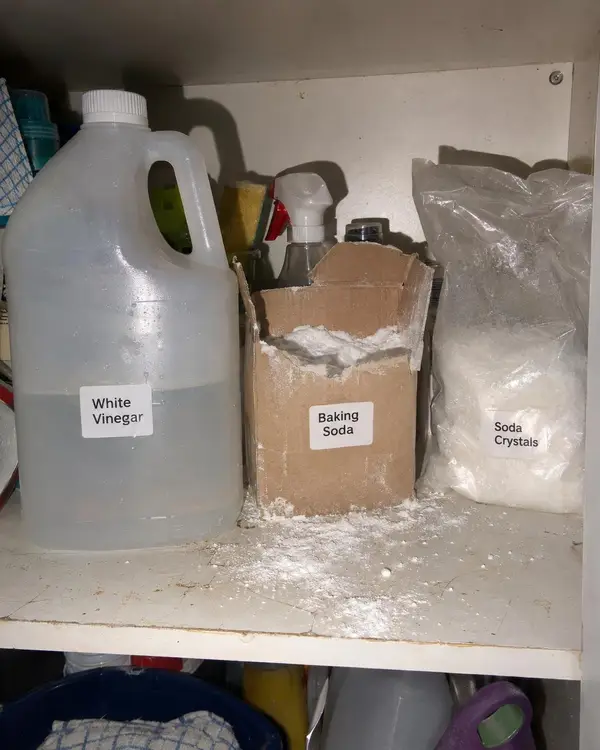
My mother-in-law walked out of our downstairs guest bathroom, dried her hands on her trousers, and looked around the kitchen for a roll of paper towels. "There's a clean hand towel hanging right next to the sink, Claire," I said, pointing toward the open bathroom door. She gave me that tight, polite smile mothers-in-law give when they are trying very hard not to offend you. "Oh, I saw it, love," she said quietly. "It just felt a bit damp. And to be honest, it smelled a bit like an old dishcloth. I didn't want to dry my clean hands on it." That sentence felt like a hot needle through my chest. I stood frozen by the kettle, my face burning. I am the person in our family who obsesses over cleaning. My utility room has aesthetic amber glass spray bottles with typed minimalist labels. I wipe down our skirting boards every other weekend. And that hand towel was not damp. It had come off the heated radiator rack three hours earlier. It was bone-dry. The second she went into the garden with my husband, I marched into the guest bathroom, pulled the grey towel off the ring, and buried my face directly into the cotton. Dry, it smelled faintly of detergent. But the moment the warm air from my breath hit the fabric, that sour, swampy undertone rolled out. Like a wet dog that had slept on a pile of damp gym socks. I was furious. But worse than that, I was humiliated. For seven months, I had turned myself into an amateur chemical laboratory trying to get rid of that exact smell: I had fallen down the deepest, darkest rabbit hole of CleanTok and Reddit cleaning forums. I had saved dozens of videos swearing by "natural laundry stripping" and "miracle drum resets." In my utility room cupboard, I had amassed a ridiculous, expensive graveyard: - A five-litre plastic jug of distilled white vinegar I bought in bulk on Amazon. - A five-kilo tub of bicarbonate of soda. - Three different boxes of soda crystals. - A £9 imported bottle of enzyme pet-odor spray. - A bottle of thick bleach I had used to run empty boiling-hot 90-degree cycles until the rubber seal smelled like burning tires. I had followed every internet recipe down to the milligram: I poured 500ml of white vinegar into the fabric conditioner compartment. The entire ground floor of our house smelled like a seaside fish-and-chip shop for twenty-four hours. Two washes later, the sour damp smell walked straight back into our bath towels. I dumped a full cup of bicarb into the drum and followed it with vinegar, watching it foam and fizz like an erupting science-fair volcano. It looked incredibly satisfying on TikTok. But chemically, it did nothing. I even tried that desperate viral hack where someone told me to throw two dishwasher tablets into the empty drum and run an intensive boil wash. The machine foamed violently, and my plumber later warned me I had come inches away from dissolving the silicone seals around the pump. Over £120 spent on specialized cleaners, powders, and vinegar jugs, and my own mother-in-law would rather dry her hands on her trousers than touch my "clean" towels. That evening, after our guests left, I sat at the kitchen table and typed a furious question into Google: "Why does laundry smell musty after washing with vinegar and bicarb?" I didn't click on cleaning blogs or lifestyle influencer posts. I scrolled past the sponsored results and opened a scientific paper from the journal Applied and Environmental Microbiology. That was the night I found out why every single hack in my cupboard was scientifically doomed to fail. If you have been beating yourself up over musty laundry, I need you to understand what microbiologists know that TikTok influencers do not: The smell haunting your towels is not dirt, and it is not damp weather. It is an infection caused by a hardy, armored bacterium called Moraxella osloensis. Moraxella is nothing exotic. It lives naturally on human skin. Every time you wipe your hands on a towel or wear a t-shirt, invisible skin oils, dead cells, and body sebum rub off into the cotton weave. When you wash those towels at 30 or 40 degrees, cold water cannot melt human body grease. Instead, that grease washes off the clothes and coats the sealed plastic outer tub behind the metal drum. Over months of low-temperature eco-washes, that congealed grease and detergent sludge form an impenetrable biological fortress called biofilm. Moraxella moves into that fortress. It feeds on the trapped skin grease, multiplies, and builds what researchers call an "extracellular polysaccharide matrix." In plain English: it weaves a microscopic armored dome made of structural proteins and greasy sugars that repels water like plastic wrap. And here is the fatal flaw with every single hack under your sink: 1. White Vinegar: Vinegar is only 5% acetic acid. The moment you pour a cup into your washing machine, it gets diluted across 35 to 45 litres of wash water. At that dilution, it is chemically powerless against an established protein matrix. It rinses right over the biofilm dome without making a scratch. 2. Bicarbonate of Soda: Bicarb is a mild alkaline salt. It softens hard water and temporarily absorbs airborne acidic odors. But it has zero biological capacity to break down structural proteins or liquefy animal fats. 3. Mixing Vinegar and Bicarb: This is the most popular hack on the internet, and chemically, it is the most useless. Acid plus base equals salt water and carbon dioxide. The foaming bubbles look dramatic, but they neutralize each other instantly, leaving you with lukewarm, useless salt water. 4. Bleach and 90-Degree Washes: Bleach kills free-floating surface germs on the shiny drum you can see. But it cannot penetrate the lipid-rich biofilm shell. In fact, laboratory studies show that extreme heat and bleach cause the outer layer of the biofilm to harden, sealing the bacteria safely inside. Every time you wash a load of clean towels, water passes through that armored colony, picking up bacteria and redepositing them into your clean laundry. When the towels dry, Moraxella forms an armored spore and goes dormant. But the second someone wipes wet hands on the towel, or your warm, damp face touches the cotton, the bacteria wakes up and pumps out sour sulfur malodor in seconds. You cannot bleach an organism hiding inside a protein-polysaccharide fortress. You cannot dissolve it with salad dressing. You have to digest the fortress using biological enzymes. That research led me to PrimeDrum Washing Machine Cleaner Pro, a specialized maintenance tablet developed by a biochemical team in London. PrimeDrum was formulated specifically to break the molecular bonds of washing machine biofilm: - High-potency Protease enzymes that specifically target and digest the structural protein scaffolding holding the bacterial fortress together, collapsing the dome. - Concentrated Lipase enzymes that liquefy the congealed skin grease and detergent fats, cutting off the bacteria's food supply. - Active Tea Polyphenols that permanently neutralize lingering sulfur malodor molecules at the molecular level without artificial perfumes. The protocol takes zero effort: you drop one tablet into the empty drum and run a normal hot cycle. A surfactant blend creates a deep-soaking foam that forces the enzymes into the inaccessible gap between the drum and the outer tub. Forty minutes into my first cycle, I walked into the utility room and checked the waste pipe. The water draining into the outlet was thick, murky brown, with dark rubbery flakes floating on top. It looked like someone had emptied a muddy gutter into my machine. That was seven months of congealed body grease and bacterial biofilm finally tearing free and flushing down the sewer pipe. The next morning, I gathered every bath sheet, hand towel, and washcloth in the house and ran them through a normal wash. I hung them up. That afternoon, I walked into the downstairs bathroom, pulled the grey hand towel off the ring, and took a deep breath. There was no vinegar stench. There was no chemical citrus cover-up. It smelled like pure, spotless, completely neutral cotton. Two weeks later, Claire came over for Sunday lunch. She went into the guest bathroom to wash her hands before sitting down. When she walked out, she was drying her hands on the grey towel. "Whatever fabric conditioner you switched to, love, it smells lovely," she said. "The bathroom smells so clean." I smiled, poured her a glass of wine, and didn't correct her. If you have spent months pouring vinegar into your drawer, buying boxes of bicarb, and feeling embarrassed by your own laundry, stop blaming your cleaning routine. Your house is not dirty. You were just throwing household ingredients at an armored biological colony. PrimeDrum is made in London and backed by an unconditional 60-day money-back guarantee. If you do not see dark sludge flushing out of your waste pipe on cycle one, and if your towels do not stay completely neutral-smelling, they refund every single penny with zero questions asked. Stop pouring salad dressing into your washing machine. Tap the link below to read the published microbiology studies on Moraxella and claim up to 42% off your starter pack today.
Loading the ad's image