It Might Not Be Tinnitus
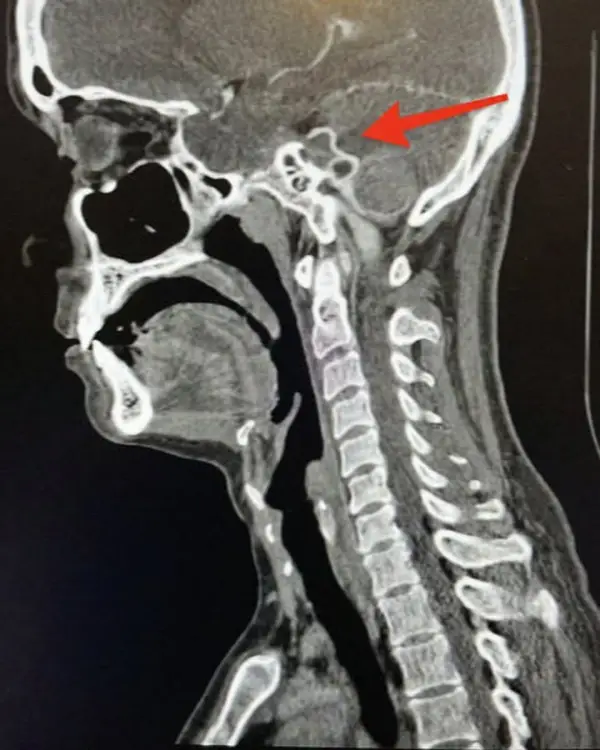
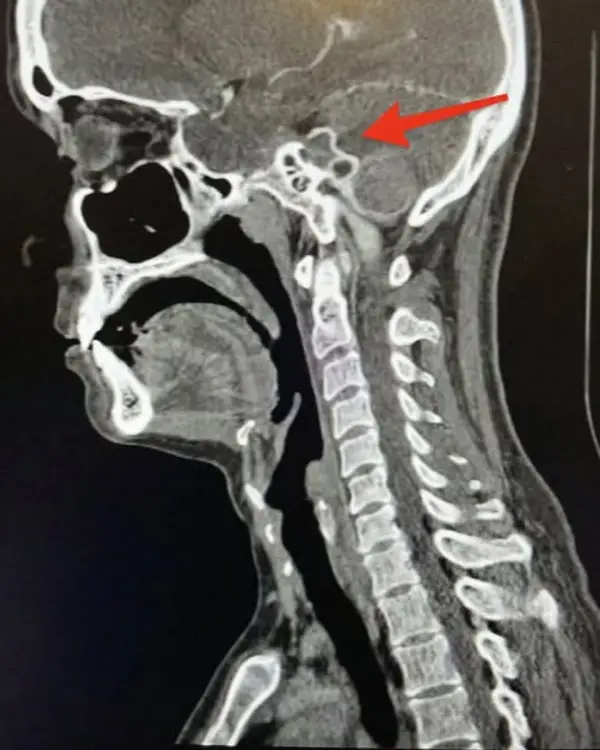
I've been a board-certified physical therapist for 19 years. And if your ears are ringing day and night, you haven't slept properly in months, and your ENT keeps telling you to "just learn to live with it"… I'm about to tell you exactly what they're hiding from you and why they'll NEVER tell you the truth. And by the end of this, you're going to be angry. My name is Chris Walters. Board-certified physical therapist specializing in cervical spine disorders. Nineteen years treating chronic neck pain and its hidden consequences. Published in the Journal of Manual & Manipulative Therapy. Over 2,800 patients. And I'm breaking ranks with my own profession to tell you this. Because there are three things happening right now: One — Your body is screaming at you that something is wrong. Two — The medical system is gaslighting you into thinking it's an ear problem. And three — There's a multi-billion dollar industry that profits every single day you stay sick. So let me tell you what happened with one of my patients. Because her story is going to open your eyes to how broken this really is. Her name was Janet. She was 61. For YEARS — and I mean seven straight years — she lived with this. A constant buzzing in both ears. Louder than her television. Louder than her husband's voice across the dinner table. The moment the house went quiet at night, it was like a swarm of bees living inside her skull. By bedtime, the buzzing was so loud she'd lie there staring at the ceiling until 3 in the morning. Some nights she cried. Some nights she just prayed for five minutes of silence. She stopped going to restaurants. Stopped attending her book club meetings. Started making excuses whenever anyone invited her anywhere she'd have to strain to hear. And the exhaustion? She'd wake up feeling like she'd been hit by a truck. Couldn't focus long enough to finish a conversation without asking people to repeat themselves. Her coworkers thought she was just "getting older" — but this woman was genuinely suffering. Forgetting what she walked into rooms for. Snapping at her grandkids. Losing herself a little more every week. And here's what makes me sick to my stomach: I was one of the therapists she came to see. Multiple specialists. Her GP. An ENT. An audiologist. Me — the physical therapist treating her chronic neck pain. We're talking thousands of dollars in appointments, hearing tests, MRIs, custom hearing aids… the whole nine yards. And you know what every single one of us told her? "Your hearing looks fine." "There's no damage we can see." "It's just age-related. Normal." "Try a white noise machine." "Learn to live with it." LEARN TO LIVE WITH IT. This woman hadn't slept more than four hours in a row in seven years and we were telling her to download a rain app. But here's where it gets worse — and this is the part that haunts me now. She spent over $5,000 on treatments. Custom hearing aids that amplified everything including the ringing. Supplements that promised to "support ear health." Sound therapy apps. Even anti-anxiety medication because one doctor told her stress was making it worse. You know what happened? She swallowed pills every morning. Wore expensive hearing aids that made the buzzing LOUDER. Fell asleep to white noise and woke up to the same screaming in her head. And the ringing? Still there. Every single day. The treatments went into her body — but the noise didn't go down at all. I watched this woman — who did everything the medical system told her, spent over $5,000, tried every recommendation — get worse. Not better. Worse. And I didn't understand why. Until a 68-year-old neurologist from Melbourne taught me more about tinnitus in twenty minutes than I'd learned in two decades of physical therapy training. March 2024. Denver. North American Spine Society Conference. I was standing alone during a lunch break, absently rubbing the base of my skull because my own neck had been killing me all morning — and the high-pitched ringing in my left ear that had started eight months earlier was spiking from the tension. Because at 47, my own tinnitus had appeared out of nowhere. And nothing I'd been recommending to patients for 19 years was working on me either. That's when I saw him. Dr. Michael Chen. 68 years old. A neurologist who had spent forty years hunched over surgical microscopes and patient charts. Every postural risk factor for cervical nerve compression you could name. And yet there he was — relaxed, calm, no hearing aids, no constant neck rubbing, no hint of the tense, hollow-eyed look I saw in the mirror every morning. I walked over. "Excuse me — I'm a physical therapist. At your age, with your posture history… how are your ears not ringing?" He smiled. The kind of smile that knows something you don't. Then he asked me a question I wasn't expecting. "When did yours start?" I hesitated. And I — a physical therapist who couldn't fix her own problem — admitted it out loud for the first time. "About eight months ago." His face changed. And what he said next made my stomach drop. "Chris, there is a window. Approximately 18 to 24 months from onset. In that window the cervical nerve compression can still be reversed before central sensitization locks in. After that, the phantom signal becomes hard-coded in the auditory cortex. The neurologists call it maladaptive neuroplasticity. The problem stops being a neck issue and becomes a brain memory." He looked at me seriously. "You are at month 8. You have perhaps twelve to sixteen months of real opportunity left. After that, outcomes drop sharply." I felt sick. Then he said: "Something is wrong with you. But not with your ears. With your neck." He gestured to an empty table. "May I show you something? Twenty minutes. It will change how you understand this completely." What he taught me in twenty minutes changed everything. He pulled out a napkin and drew a simple diagram. "Your profession treats cervical pain. Audiologists treat tinnitus as an ear problem. So you stretch the neck. They check the cochlea. They mask the sound with noise. They prescribe supplements that pass through the stomach. That is like trying to stop a car alarm by changing the radio station." He tapped the napkin. "But this is not an ear problem. It is a nerve compression problem. Your suboccipital muscles have compressed the C1-C2 nerve roots." Now pause for a second. You know what's insane? We learned about cervical anatomy in school. The vertebrae. The muscles. The disc spaces. But nobody — and I mean nobody — ever taught us that chronic suboccipital tension could cause auditory phantom perception. Not even in my doctorate program. And that's not an accident. Because once you understand what suboccipital compression does, you realize why Janet's hearing aids didn't work. Why MY neck stretches didn't work. Here's what suboccipital compression actually is. It's a cluster of four tiny muscles at the base of your skull — right where your neck meets your head. When you spend years hunched over a desk, looking down at a phone, or sleeping with your head in the wrong position, these muscles get chronically shortened and rock-hard. When that happens, they compress the C1 and C2 nerve roots that exit right next to them. Those nerves communicate directly with the trigeminal nerve and the vestibulocochlear nerve — the pathways to your ears. When those nerves get irritated? The brain receives scrambled signals. And the brain interprets those scrambled signals as sound. A sound that doesn't exist. Coming from inside your own head. When the muscles are working properly? The nerves fire cleanly. The brain stays quiet. The ears stay silent. But when those muscles stay locked in chronic contraction — especially after years of poor posture or stress? That's when everything falls apart. The compression continues. The nerves misfire constantly. And the brain starts generating a phantom sound where none exists. And here's the key thing I learned: Supplements don't work for nerve compression. Oral tinnitus pills are designed to "support ear health" or "improve circulation." But your ears aren't the problem. The compressed nerves at the base of your skull are. A pill can't release muscle tension. A pill can't decompress a nerve root. Sixty to ninety percent of the active compound gets destroyed in your stomach anyway. Of what's left, none of it reaches the four tiny muscles crushing your cervical nerves. So the pills made Janet's wallet lighter — but the nerve compression in her neck? It wasn't going anywhere. Because it's not an ear problem. It's a structural neck problem. And here's the part that made my blood boil: The medical system KNOWS about this. Neurologists talk about cervicogenic tinnitus in research papers. Physical therapists see the muscle knots every single day. Manual therapists can feel the suboccipital tension with their hands. But unless you specifically ask about the connection between your neck and your ears, nobody in mainstream medicine is going to connect the dots for you. Why? Because there's no pharmaceutical pill that can release suboccipital tension. You can't patent a muscle release. There's no money in telling you to fix your neck. There IS money in keeping you on supplements, sound therapy subscriptions, $6,000 hearing aids, and anxiety medication for the rest of your life. See how that works? Dr. Chen showed me the actual protocol for releasing chronic suboccipital compression. He looked at me. "Chris, think about what's needed. You cannot reach these muscles with a pill. You cannot reach them with a hearing aid. You cannot reach them with stretching alone — the tension is too deep. The only way is through targeted heat, electrical muscle stimulation, and sustained traction at the exact spot where C1 and C2 exit the spine." He tapped the back of his own neck, right at the base of his skull. "Here. Right at
Loading the ad's image