Support healthy hair and bladder control every day
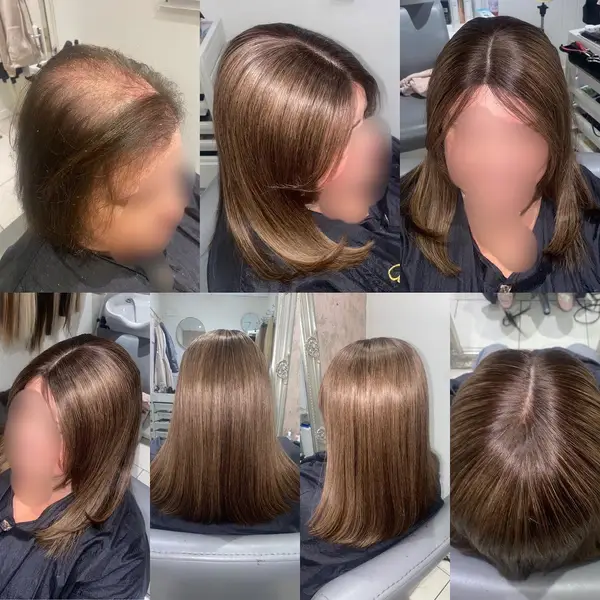
I told my dermatologist she had wasted fourteen months of my life and four hundred dollars a month of my money. Then I cancelled my next appointment from the parking lot and never went back. Last Thursday my hairstylist ran her fingers through my hair, stopped, looked at me in the mirror, and said: "Linda. What did you do. You have baby hairs everywhere. Everywhere. What changed?" I am fifty-two years old. I have been losing my hair for three years. And I have more new growth right now than I have had since before any of this started. Let me tell you how I got here. My name is Linda. I live in Naperville, Illinois, about forty minutes west of Chicago when the traffic cooperates, which it never does. I have worked as the office manager at Willowbrook Family Dental for eighteen years. I open the office at 7:15 every morning. I close it at 5. I manage the schedule for four dentists, two hygienists, and a front desk staff of three. If you have ever called a dental office and the woman who answered knew your name, your insurance, your last appointment, and that your son needed his wisdom teeth out before he left for college — that woman is me. That is what I do. I have been married to my husband Brian for twenty-four years. We have a seventeen-year-old son named Cole and a twenty-one-year-old daughter named Megan who is in her junior year at Illinois State. I tell you this because I want you to understand who I am before I tell you what happened to me. I am not a woman who yells at doctors. I am not a woman who quits treatments. I am not a woman who sits on her bathroom floor at midnight with her phone in one hand and a clump of hair in the other, crying so quietly her husband does not hear her from the bedroom. Or I was not. Until the morning I looked in the bathroom mirror and could see my scalp through the front of my hair for the first time in my life. And something in me cracked open. And what came through that crack is the reason I am writing this. It started three years ago. I was forty-nine. I noticed it in the shower first. The drain. More hair than usual. Not alarming — just more. I told myself it was seasonal. I told myself it was stress. I told myself it was nothing. Then it was not nothing. Within two months I was pulling clumps out of my brush. Not strands. Clumps. Fifteen, twenty hairs at a time wrapped around the bristles. I would clean my brush and by the next morning it looked the same. My ponytail went from the thickness of my thumb to the thickness of my ring finger. I noticed because I had to wrap the elastic one extra time. Then two extra times. Then I stopped wearing ponytails. The part down the center of my head widened. Slowly. Like a road crew was out there at night paving it wider while I slept. First it was a line. Then it was a stripe. Then it was something I could not look at without my stomach turning. I found hair on my pillow. On the back of my office chair. On the headrest of my car. On my black winter coat. Everywhere I sat, everywhere I leaned, I left hair behind like a trail. I want you to understand what hair loss does to a woman in a way that no one talks about. It does not just thin your hair. It thins your confidence. It thins the way you hold your head when you walk into a room. It thins the way you look at yourself. It thins the space between "I feel fine" and "I cannot leave the house without a headband and dry shampoo and twenty minutes of arranging what is left to cover what is gone." There is a moment — and if you are reading this you may already know it — when you stop looking at yourself in mirrors. Not because you choose to. Because your eyes slide away. They flinch. You glance and then you look down and you keep walking. I stopped going to the salon for eight months. Eight months. Because the last time I went, my stylist — not my current one, the one before — separated my hair into sections to color it and I saw her face in the mirror. She did not say anything. She did not have to. I saw it. The thin spot at the crown. The scalp showing through the part. She saw it too. And she was kind enough not to say a word and I was humiliated enough to never go back. I started coloring my own hair in my bathroom. Alone. With the door locked. I told myself it was perimenopause. My gynecologist confirmed it. She said hormone shifts cause hair thinning. She said it is common. She said it happens to most women. She said it as if being common made it less devastating. As if being told "this happens to everyone" changes the fact that you can see your scalp through your hair when you did not used to be able to see your scalp through your hair. She referred me to a dermatologist. The dermatologist confirmed androgenetic alopecia — female pattern hair loss. She said my follicles were miniaturizing. Getting smaller. Producing thinner and thinner strands until they stopped producing anything at all. She prescribed minoxidil. The foam. Applied to the scalp twice a day. I started it that night. Let me tell you about minoxidil. It made my scalp itch so badly I wanted to claw my head open in the middle of a staff meeting. It left a greasy film on my pillowcase that I had to wash every two days. It dried my hair into a stiff, crunchy texture that felt like straw. My hair looked worse while I was supposed to be treating it. And the shedding. They tell you there is an "initial shedding phase." What they do not tell you is that for the first six weeks, your hair falls out faster than before you started. I stood in the shower watching more hair go down the drain than ever and I was told this was the treatment working. I lasted four months. The itching never stopped. The greasiness never stopped. The shedding slowed down to roughly where it was before I started. No new growth. Four months. $45 a month. Nothing. I went back to the dermatologist. She said minoxidil takes time. She said six to twelve months for visible results. She said some patients do not respond to topical and need oral minoxidil — a blood pressure medication repurposed for hair loss. A pill. For my hair. With side effects including dizziness, water retention, and unwanted facial hair growth. I told her I would think about it. Instead I went to the supplement aisle. Biotin. 10,000 mcg. Because every blog, every forum, every influencer said biotin was the answer to hair loss. I took it religiously for three months. My nails got stronger. My hair did not change. Not one strand. Collagen peptides. Two scoops in my coffee every morning. For four months. My skin felt slightly better. My joints felt slightly better. My hair continued to thin. The drain continued to collect it. Then I found Nutrafol. $100 a month. One hundred dollars. For a bottle of pills marketed as "clinician-recommended" with clinical studies printed on the box and before-and-after photos on the website. I took Nutrafol for four months. Four hundred dollars. The first two months — nothing. The third month I thought maybe, possibly, the shedding was slightly less. The fourth month I looked at the bottle and I looked at my hair and I could not see a single measurable difference from where I had started. Four hundred dollars. Four months. And my ponytail was still the thickness of my ring finger and my part was still a highway and I still locked the bathroom door when I colored my hair. I tried rosemary oil because I read a study that said it was as effective as minoxidil. I mixed it with a carrier oil and massaged it into my scalp three nights a week. My pillow smelled like a pizzeria. Brian asked me if I was cooking herbs in the bedroom. I lasted six weeks. I tried Mary Ruth's liquid hair growth vitamins. Three months. Nothing. I tried a scalp serum from a brand I found on TikTok. $65 a bottle. Applied with a dropper. Two bottles. Nothing. I tried a red LED light cap. I sat in my living room wearing it like a bicycle helmet for twenty minutes every other night. Brian took a photo of me wearing it and sent it to Megan. She called me and said "Mom. Please." I returned the cap. Let me add up what I spent. Minoxidil — four months at $45. $180. Biotin — three months. About $40. Collagen — four months. About $120. Nutrafol — four months at $100. $400. Rosemary oil and carrier oils. About $35. Mary Ruth's — three months. About $75. TikTok scalp serum — two bottles at $65. $130. LED cap — $200. Returned, but I ate the shipping. Total: over $1,100. Over fourteen months. And my hair was worse than when I started. Worse. Not the same. Worse. Because hair loss does not pause while you throw money at it. It continues. It does not care how many supplements are in your cabinet. It does not care how much you spent. It does not care how desperately you want it to stop. And while my hair was thinning, other things were happening that I told myself were separate. The bladder. It started small. A leak when I sneezed. A small one. Barely noticeable. I told myself it was normal. I told myself it happens after you have had two children. I told myself every woman my age deals with it. Then it got worse. A leak when I laughed too hard. A leak when I coughed. A leak when I stood up too quickly from my desk. A leak when I bent down to pick something up off the floor. I started wearing panty liners every day. Every single day. To work. To the grocery store. To church. To Cole's basketball games. I could not leave the house without one. Then the panty liners were not enough. I switched to light pads. The kind you see in the aisle next to the tampons and you think: those are for older women. I am not an older woman. I am fifty-two years old and I am wearing pads every day because I cannot trust my own body to hold what is inside of it. One afternoon at work I laughed at something Dr. Paulsen said and I felt it go. Not a leak. A release. I stood up from my chair and I felt it on the inside of my thigh. I walked to the bathroom with my legs pressed together and my face burning and I stood in the stall and I changed the pad and I put my hand on the wall and I breathed. I was fifty-one years old. I was in a bathroom stall at my workplace changing a pad because I laughed. I did not tell Brian. I did not tell Megan. I did not tell my gynecologist. I told no one. Because no one tells anyone about this. You just manage it. You carry pads in your purse and extra underwear in your car and you cross your legs before you sneeze and you stop laughing with your whole body because your whole body cannot be trusted anymore. The hot flashes. Rolling through me at 2 AM like someone opened an oven door inside my chest. I would throw the covers off. Pull them back on. Throw them off again. Brian would roll over and murmur something and fall back to sleep. I would lie there soaked in sweat staring at the ceiling. The sleep. Or the absence of it. I had not slept through the night in over a year. Hot flash at 1 AM. Bathroom at 3 AM. Wide awake at 4:30 AM. Up at 5:45 to get ready for work. Five hours of broken sleep if I was lucky. Every day for over a year. The brain fog. The afternoons at my desk when I would stare at the schedule and the names would blur and I would forget which hygienist was in which operatory even though I had made the schedule myself that morning. The time I called a patient by the wrong name. The time I walked into the supply closet and stood there for thirty seconds because I could not remember what I came in for. The weight. Fourteen pounds in two years despite eating less than I had in my thirties. The thickening around my midsection that no amount of walking or skipping dessert would touch. My jeans stopped fitting. Then my work pants stopped fitting. I bought new ones two sizes up and cut the tags out so I would not have to see the number. I treated each of these things as separate. Hair loss — dermatologist. Bladder — pads and silence. Hot flashes — gynecologist said it would pass. Sleep — melatonin that stopped working after two weeks. Fog — more coffee. Weight — less food, more frustration. Six symptoms. All managed separately. All getting worse together. Not once — not in three years — did any doctor connect them. Not once did anyone look at the whole picture and say: Linda, these are not six separate problems. This is one problem expressing itself six ways. The night everything changed was a Wednesday. I had found another clump in the shower that morning. A big one. I held it in my palm under the water and I stared at it and I did not cry because I had run out of crying about it. I just stood there holding my own hair in my hand thinking: what is left. That night after Brian and Cole went to bed I sat down at the kitchen table with my laptop and I did something I had been doing off and on for two years — reading about hair loss. But this time I went deeper. I stopped reading the wellness blogs and the supplement company websites. I started reading research papers. Actual published studies. I did not understand all of the language. But I understood enough. At 11:40 PM I found a lecture transcript from a dermatological researcher at a university medical center — I will not name him because I do not want this to sound like an ad for a person, this is about what I learned — and he said something that stopped me. He said: "The American approach to female hair loss is almost entirely cosmetic. Feed the follicle. Stimulate blood flow to the scalp. Apply a growth factor. Swallow a multivitamin. And none of it asks the more fundamental question: why is the follicle dying in the first place?" I read that sentence three times. He continued: "In androgenetic alopecia — the most common form of hair loss in both men and women — the follicle does not die from starvation. It dies from strangulation. There is a hormone called DHT — dihydrotestosterone — and it is the single most destructive force acting on your hair follicles." He explained it. "Your body produces testosterone. In women, the ovaries and adrenal glands produce it in small amounts. It serves essential functions. But your body also produces an enzyme called 5-alpha-reductase. And that enzyme converts testosterone into DHT. And DHT does something that no amount of biotin or collagen or scalp serum can undo." "DHT binds to the receptor on the hair follicle. And when it binds, it sends a signal. Not a signal to grow. A signal to shrink. The follicle contracts. The blood supply narrows. The hair shaft gets thinner. The growth cycle shortens. What used to be a thick strand growing for four years becomes a wispy strand growing for four months. And eventually the follicle miniaturizes so completely that it produces nothing at all." I thought about a tourniquet. Imagine your hair follicle is a finger. And someone wraps a rubber band around the base of it. Not tight enough to cut it off immediately. Just tight enough to restrict the blood flow. The finger does not die right away. It gets thinner. Paler. Weaker. It loses sensation. And if you leave the tourniquet on long enough, the finger dies. That is what DHT does to every hair follicle it touches. It wraps a tourniquet around the base and it tightens it. Slowly. Over months and years. One follicle at a time. And every supplement I had taken for fourteen months — every biotin capsule, every collagen scoop, every $100 bottle of Nutrafol, every drop of rosemary oil — had been aimed at feeding the finger. Sending nutrients to a finger that was being strangled at the base. Not one of them removed the tourniquet. The minoxidil? It forces more blood to the scalp — more blood to a follicle that is being squeezed shut. Pressure against a tourniquet. It does not remove it. That is why it stops working the moment you stop applying it. The tourniquet is still there. Biotin? A B vitamin. Gives the follicle building materials. Building materials delivered to a construction site where the supply road has been blockaded. The materials sit in the truck. The follicle cannot use them. Because it is being strangled. Collagen? Protein for the hair shaft. Protein for a shaft that has already been miniaturized to a fraction of its original size. You are putting a coat of paint on a house that is being demolished from the foundation. Nutrafol? A blend of ashwagandha, marine collagen, and saw palmetto — and saw palmetto is actually a weak DHT blocker, which is why some women see marginal results. But at the dose and form in that capsule, it is a squirt gun aimed at a house fire. A hundred dollars a month for a squirt gun. Every supplement I tried was aimed at the hair. Not one was aimed at the thing killing the hair. I sat at my kitchen table at midnight and I thought about fourteen months and $1,100 and every morning I had swallowed something that was not pointed at the problem. The researcher continued. "There is one compound that has been studied specifically for its ability to inhibit 5-alpha-reductase — the enzyme that creates DHT. Not marginally. Not theoretically. Measured in controlled trials with before-and-after follicle counts and hair thickness measurements." "It is pumpkin seed oil." He referenced a 2014 randomized, double-blind, placebo-controlled trial — the gold standard of clinical research. Twenty-four weeks. Seventy-six men with androgenetic alopecia. The group taking 400 milligrams of pumpkin seed oil daily saw a 40% increase in hair count. Forty percent. The placebo group saw a 10% increase — the expected fluctuation from doing nothing. And the mechanism was clear. Pumpkin seed oil inhibits 5-alpha-reductase. It blocks the enzyme that converts testosterone to DHT. It does not feed the follicle from the outside. It removes the tourniquet at the base. The hair does not grow back because you gave it biotin. The hair grows back because the thing that was killing it has been stopped. The blood supply returns. The follicle reinflates. The growth cycle lengthens. And the hair comes back. Not forcing thicker. Removing what was making it thin. I sat there for a long time. Then he said something else. "Pumpkin seed oil is one of the richest plant sources of phytoestrogens — plant compounds that bind to estrogen receptors and partially restore hormonal signaling that declines in perimenopause and menopause." He listed what the research showed. Pelvic floor muscle tone improvement — the phytoestrogens support the tissue that controls bladder function. Published in the Journal of Traditional and Complementary Medicine. Hot flash reduction — the estrogenic activity helps modulate the thermoregulatory disruption that causes hot flashes. Sleep quality improvement — through tryptophan receptor upregulation and hormone rebalancing. Inflammatory marker reduction — the omega-3 and omega-6 fatty acid profile in pumpkin seed oil shows measurable anti-inflammatory effects. I sat at my kitchen table at 1 AM and I understood for the first time that my hair loss, my bladder leaks, my hot flashes, my ruined sleep, my brain fog, and my weight gain were not six separate problems. They were one hormonal collapse expressing itself six ways. And a single compound addressed the root of all of them. Not six supplements. Not six prescriptions. Not six co-pays and six bottles cluttering my bathroom counter and six alarms on my phone and $400 a month spread across products that each chased a symptom while the root cause went untouched. One thing. Aimed at the root. Pumpkin seed oil. I ordered a bottle of pumpkin seed oil capsules from Amazon that night at 1:20 AM. Some brand I had never heard of. 1000 mg. $12. Three capsules a day. I started taking them the next morning. One week. Nothing. No change in shedding. No change in anything. Two weeks. Nothing. Three weeks. I threw the bottle in the drawer under my bathroom sink and I told myself I was an idiot for believing anything I read at 1 AM on a Wednesday night. But the research was real. Published. Peer-reviewed. The 2014 trial was real. Forty percent increase in hair count was real. Something was wrong with what I was taking, not with what I had read. So I went back. And this time I read the part I had skipped. Not all pumpkin seed oil is the same. And most of what you find is useless. The Amazon capsule I bought used pumpkin seed powder. Not oil. Powder. Ground-up seeds stuffed into a capsule. The active compounds — the delta-7-sterols that block 5-alpha-reductase, the phytoestrogens, the fatty acid matrix — are in the oil. The expressed, concentrated oil. Not the dry fiber of the ground seed. Powder is cheap to produce. You take pumpkin seeds, you grind them up, you put the dust in a capsule. You put "Pumpkin Seed" on the label. Technically accurate. Therapeutically worthless. The clinical trial used cold-pressed pumpkin seed oil. Concentrated. The active compounds preserved through cold extraction — never exposed to the heat that destroys them. And the dose matters. The study used 400 mg of concentrated pumpkin seed oil daily and saw the 40% hair count increase. Most cheap capsules on Amazon contain powder — not oil — at doses that have nothing to do with what was studied. They put a number on the label that looks impressive — 1000 mg, 3000 mg — but it is 1000 mg of ground seed dust. Not the same compound. Not the same dose. Not the same result. I opened the Amazon bottle and twisted a capsule apart over my bathroom sink. Brown. Dry. Powdery. It looked like dirt. It smelled faintly like stale pumpkin bread. This was not what the study used. I went through every pumpkin seed oil product I could find. Methodically. One by one. Pumpkin seed powder capsules — dust, not oil. Failed. Heat-processed oil capsules — compounds degraded before the bottle was sealed. Failed. Capsules that mixed pumpkin seed oil with saw palmetto and six other ingredients in a "proprietary blend" where you could not tell how much of anything was in it. Failed. Brands with no third-party testing. No Certificate of Analysis. No proof that what was on the label was in the bottle. Failed. I crossed off everything. Then I found Everly. Cold-pressed pumpkin seed oil. Not powder. Not a blend. Not cut with filler ingredients to pad the capsule count. Concentrated pumpkin seed oil in a softgel. The dose aligned with the clinical research. Not an arbitrary number on a label. The amount that was studied. The amount that produced the 40% increase in hair count in a double-blind, placebo-controlled trial. Third-party tested. Published. You can look at it yourself. What is on the label is in the capsule. Verified by someone who did not make the product. I ordered it that night. When it arrived two days later, I twisted open a softgel over the same bathroom sink where I had opened the Amazon capsule. Dark golden-green. Rich. Liquid. Oil — not dust. It smelled like fresh pumpkin seeds, not stale bread. A completely different substance from what I had been swallowing for three weeks. I took one softgel with dinner and I sat down on the couch and I waited. Not because I expected miracles. Because I had spent fourteen months expecting miracles from things that were never aimed at the problem. This time I was not expecting anything. Week one. On the fourth night I slept five hours straight. I had not slept five hours straight in over a year. Hot flashes were still there but I only woke up once. I lay in bed at 5:45 AM and I felt something I had not felt in so long I did not immediately recognize it. Rested. I told myself it was coincidence. You learn to tell yourself that when you have spent fourteen months being disappointed by bottles. Week two. I was in the shower on a Saturday morning and I looked at the drain. I looked at it the way I always looked at it — the flinch, the quick glance, the assessment of how much hair was sitting there. There was less. Not dramatically. Not miraculously. But less. Noticeably less. Where I usually saw a clump the size of a quarter, I saw maybe a dime. Maybe less. I stood there with the water running and I stared at the drain and I was afraid to believe it. I cleaned my brush that night. Fewer hairs in the bristles than I had seen in two years. I told myself it was coincidence. Because the last time I let myself hope, I spent $400 on Nutrafol and cried in the bathroom. Week three. I sneezed at my desk on a Tuesday afternoon. Hard. The kind of sneeze that makes you brace. Nothing happened. I sat there for a moment. I sneezed again — on purpose — just to check. Nothing. I had been wearing a pad every single day for over a year. I had changed pads at work. I had leaked at Cole's basketball games. I had stopped laughing with my whole body because I could not trust my body to hold. And I sneezed twice at my desk and nothing happened. I went to the bathroom and I checked. Dry. The pad was dry. That was the moment I stopped telling myself it was coincidence. Week four. The shedding continued to slow. I was losing maybe a third of what I had been losing a month earlier. The drain. The brush. The pillow. All better. Not gone — better. Measurably, visibly better. The hot flashes dropped from every night to maybe twice a week. The brain fog — the afternoon blur where names and schedules went soft — had lifted. I could hold the whole day in my head again. I felt sharp for the first time in over a year. I stopped wearing a pad to work. I did not announce this to anyone. I just stopped carrying them. I sneezed. I coughed. I laughed at Dr. Paulsen's terrible jokes. And my body held. I want you to understand what that felt like. For over a year I had accepted — quietly, privately, without telling a soul — that my body could not be trusted. That I was a woman who wore pads. That I was a woman who crossed her legs before she sneezed. That this was just what getting older looked like. And it stopped. In four weeks. Week five. I was blow-drying my hair on a Sunday morning before church and I saw something in the mirror that made me turn the dryer off and lean in. Baby hairs. Along my hairline. Tiny, fine, new strands standing straight up, maybe half an inch long, catching the light from the bathroom window. I had not seen new growth in three years. Three years of loss. Three years of thinning. Three years of watching hair leave and never seeing it come back. And there it was. At the temples. Along the part. At the crown — the spot I had stopped looking at because it made me feel sick. New hair. I put my hands on the bathroom counter and I cried. Not the quiet crying I did at midnight when Brian could not hear me. Loud. Messy. The kind of crying you do when something you had accepted as permanent turns out to be reversible. Brian came to the door. "Linda? Are you okay?" I opened the door and I pulled my hair back and I showed him my hairline and I said: "Look. Look at them. Do you see them?" He squinted. He leaned in. He saw them. And he smiled at me the way he used to smile at me before all of this started. "I see them," he said. "I see them." Week six. I stopped coloring my hair alone in the bathroom with the door locked. I went to a new salon. A new stylist. Angela. I sat in her chair and I told her everything — the thinning, the treatments, the supplements, all of it. She separated my hair into sections the way stylists do and instead of the face I had seen on my old stylist, the face that made me stop going — Angela said: "Girl. You have baby hairs everywhere. Whatever you are doing, do not stop." That was the appointment I referenced at the beginning. That was the moment that made me decide to write this. Week eight. I bought a scrunchie. A simple, velvet scrunchie. The kind I used to wear when my ponytail was thick enough to fill one. I had not worn a ponytail in over two years because it was too thin and I could not stand the way it looked. I pulled my hair up. It filled the scrunchie. Not all the way — not yet. But enough. Enough to pull it back and look in the mirror and see something that looked like me. I wore it to the grocery store. And to Cole's basketball game. And to work the next day. I wore a ponytail to work for the first time in two years and not a single person said anything about it and that was exactly the point. It was not remarkable. It was normal. I had a ponytail and it was normal and I had forgotten what normal felt like. Week ten. I went to my gynecologist for a routine visit. She asked how the perimenopause symptoms were. I told her the hot flashes had nearly stopped. The sleep had normalized. The bladder leaks had stopped entirely. The brain fog had cleared. She looked at my chart. She looked at me. "Linda. What changed?" I told her about pumpkin seed oil. About the DHT mechanism. About the 5-alpha-reductase enzyme. About the phytoestrogens. About the clinical research. She listened. She did not interrupt. Then she said: "I have patients who spend hundreds a month on hair supplements and hormone creams and bladder medications. And you are telling me a pumpkin seed oil softgel addressed all of it." I told her it did. She said she wanted me to keep going. She said she wanted to see me again in three months. She said she was going to look into the research herself. That is the best response I have ever gotten from a doctor. It has been twelve weeks now. My hair is thicker than it has been in three years. The baby hairs at my temples and crown are now over an inch long. The wide part — the highway — is narrowing. My stylist Angela measured it at my last appointment and said the density has visibly increased. I have not worn a pad in eight weeks. I sneeze. I cough. I laugh at Dr. Paulsen's terrible jokes with my whole body. Nothing. Not a drop. The pelvic floor came back. I sleep through the night. Six and a half, sometimes seven hours straight. I cannot remember the last hot flash. The brain fog is gone. I manage the schedule for four dentists and three front desk staff and I hold every name and every appointment in my head the way I used to. The weight has shifted. Not dramatically — but the midsection that would not respond to anything has softened. Seven pounds. Without changing what I eat. Without adding exercise. Just seven pounds that came off when the hormonal disruption stopped driving them. And one more thing. I cancelled my Nutrafol subscription. I threw away the leftover minoxidil. I recycled the biotin bottle and the collagen tub and the Mary Ruth's and the scalp serum. I cleared out fifteen months of bottles and tubes and droppers that had been piling up in the cabinet under my bathroom sink. I replaced all of it with one thing. One softgel. Every morning. With my coffee. That is the whole protocol. I am writing this for one reason. If you are sitting where I was sitting three years ago — or one year ago — or this morning — watching your hair collect in the drain and on the brush and on the pillow — I need you to hear what took me fourteen months and $1,100 to learn. There is something strangling your hair follicles. It is called DHT. It wraps around the follicle like a tourniquet and it squeezes and the follicle shrinks and the hair thins and if no one stops it, the follicle dies. Every biotin capsule you have swallowed, every collagen powder you have stirred into your coffee, every $100 bottle of Nutrafol you have finished — all of it was feeding a follicle that was being strangled. Not one of those things removes the tourniquet. Not one. Minoxidil forces blood to the scalp — more pressure against a tourniquet that is still there. That is why your hair falls out again the moment you stop applying it. You did not fix anything. You pressurized a blockade. There is a compound that removes the tourniquet. It blocks the enzyme that creates DHT. The follicle opens. The blood returns. The hair comes back. Not because you forced it. Because you stopped what was killing it. Pumpkin seed oil. Cold-pressed. Concentrated. At the dose that was studied. Everly Pumpkin Seed Oil Softgels. Cold-pressed. Third-party tested. Not powder. Not a blend. Not a proprietary formula hiding behind a label. The compound that was studied, in the form that was studied, at the dose that works. One softgel. Every morning. That is all I am asking you to try. https://get.shopeverly.shop/pumpkin-seed-oil/subtxt/mm-sht-ps ~ Linda P.S. — The hair is the reason I started. But it is not the reason I kept going. It is the bladder. It is the sleep. It is the hot flashes stopping. It is the fog clearing. It is the feeling of being in my own body again after three years of watching it malfunction one system at a time. The hair is what you see. Everything else is what you feel. And you will feel it before you see it. Within the first two weeks, if your bladder has been giving you trouble — if you have been wearing pads, if you cross your legs before you sneeze, if you have a change of underwear in your car and you have never told anyone why — you will notice it. The trips to the bathroom will slow. The leaks will quiet. You will sneeze and nothing will happen. And you will stand there and you will feel your body holding the way it used to hold. That was week three for me. The hair took longer. But the bladder was the sign that something real was reaching the root. https://get.shopeverly.shop/pumpkin-seed-oil/subtxt/mm-sht-ps P.P.S. — I need to say this directly to any woman who is spending $100 a month on Nutrafol or any high-priced hair supplement. I was you. Four months. Four hundred dollars. And when I understood the mechanism — when I understood that DHT was the tourniquet and nothing in that bottle was aimed at removing it — I felt something between anger and grief. Anger because the marketing was so good. Grief because I had believed it for so long. Pumpkin seed oil blocks the enzyme that creates DHT. That is the mechanism. That is what the research shows. And it does not cost $100 a month. Not even close. Please stop paying for a squirt gun and start removing the tourniquet. https://get.shopeverly.shop/pumpkin-seed-oil/subtxt/mm-sht-ps P.P.P.S. — If your hair loss started after going on a GLP-1 medication — Ozempic, Mounjaro, Wegovy, Zepbound — I see you. The rapid weight loss disrupts your hormones. The caloric deficit triggers telogen effluvium. And the hormonal shift increases DHT activity. You are being hit from two directions and nobody warned you. The pumpkin seed oil addresses the DHT side directly. Women on GLP-1s are some of the most desperate messages in every hair loss forum I have read. You are not imagining it. Your hair is falling out because your hormones shifted. Block the DHT. Let the follicles breathe again. Do not wait. https://get.shopeverly.shop/pumpkin-seed-oil/subtxt/mm-sht-ps P.P.P.P.S. — If you are in perimenopause or menopause and you feel like your body is falling apart in slow motion — the hair, the bladder, the sleep, the sweats, the fog, the weight, the feeling that you are disappearing into a version of yourself you do not recognize — I was there. I sat at my kitchen table at midnight and I thought: this is just what happens now. This is just getting older. This is just what it is. It is not just what it is. It is hormonal. It is measurable. And it is addressable. One softgel. Every morning. I got my hair back. I got my sleep back. I got my bladder back. I got myself back. You deserve to stop managing and start fixing. https://get.shopeverly.shop/pumpkin-seed-oil/subtxt/mm-sht-ps P.P.P.P.P.S. — Megan came home from school last weekend. She hugged me in the kitchen and then she pulled back and looked at me. "Mom. Your hair looks thicker. Like, noticeably." I have not heard my daughter say anything about my hair in three years. Because for three years there was nothing good to say. She noticed. She noticed and she said it out loud. If you are a mother who is losing her hair and pretending she is fine — if you are the woman at the table who is holding it together for everyone else while pieces of her are falling out in the shower every morning — you do not have to pretend anymore. One softgel. Every morning. Let your daughter notice. https://get.shopeverly.shop/pumpkin-seed-oil/subtxt/mm-sht-ps
Loading the ad's image