Advertiser

Cholesterol Relief Community

shop.pipitea.comMeta Ad Library

46
Running ads
none new in 30 days
May 2026
Advertising since
longest ad 6 months
34.5K
Reach
running ads, summed
0% video
Formats
0 video · 45 image
10
Products advertised
1 shop

Natural Relief in Weeks

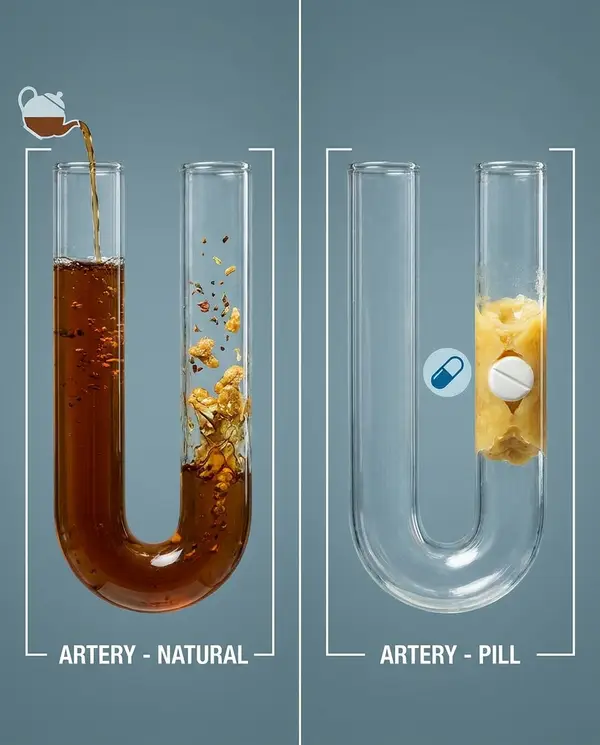
I found a wallet in a shopping cart at Walmart last Tuesday. Brown leather. Worn soft at the edges. Tucked under one of those reusable bags someone had left behind. I almost didn't see it. I was returning my cart because that's what I do — I'm the person who walks it back to the corral instead of leaving it in the middle of the parking lot like an animal. My husband makes fun of me for it. Says I'm the last honest person in America. I tell him somebody has to be. The wallet was light. No credit cards. No debit card. Just a driver's license and $400 in cash. Twenty-dollar bills, folded tight, held together with a rubber band. The kind of cash someone counted carefully before they left the house. The license showed a woman's face. Small. White hair. Born 1947. The photo was old — she looked younger in it than the birth date suggested. The address was on Route 4, a town I'd heard of but never been to. I pulled it up on my phone. Thirty-one minutes away. I stood there in the Walmart parking lot holding this woman's wallet and I had a conversation with myself that I'm not proud of. Thirty-one minutes is a long drive. I could turn it in to customer service. They'd probably call her. She'd probably come back and get it. Probably. But $400 in cash with no cards means this woman doesn't have a bank account. Or doesn't trust them. Or can't get one. And if she comes back to Walmart looking for this wallet and it's gone — even if it's sitting behind the customer service desk — she's going to spend the whole drive home believing she'll never see that money again. I know what that feels like. Not the money part — the part where you lose something and the not-knowing eats you alive. The hours between losing it and finding out if it's okay. I wouldn't want someone to put me through that if they could prevent it. Plus I had nothing else to do. It was Tuesday. My day off. I'd come to Walmart for laundry detergent and garbage bags. Not exactly a packed schedule. I got in my car and drove. The GPS took me off the highway after twenty minutes onto a two-lane road that got narrower the farther I went. Past a dollar store. Past a church with a gravel parking lot. Past a farm stand that was closed for the season. The house was small. White. Set back from the road with a chain-link fence and a yard that was neat but tired — the kind of yard someone used to take care of and still tries to but can't quite keep up with anymore. There was a garden bed along the front with stakes in it but nothing growing. A birdbath that was dry. A truck in the driveway that hadn't moved in a while — you could tell because the leaves had settled around the tires and nobody had swept them. I sat in my car for a minute. Looked at the house. Looked at the wallet. If I'd known what was waiting on the other side of that door — not just a woman, but a story that would change my life — I'd have sat there a little longer. Gathered myself. But I didn't know. So I just walked up and knocked. It took a while. I heard movement inside — slow, careful steps. A chain lock sliding. The door opened about four inches and a face appeared in the gap. Small. White hair, just like the license. But older now. Thinner. Eyes that were sharp but tired. "Can I help you?" "Ma'am, my name is Janet. I found this in a shopping cart at Walmart." I held up the wallet. "I think it's yours." She looked at it. Then at me. Then back at the wallet. She opened the door all the way. Her hands were shaking when she took it. She opened it immediately — didn't check the license, didn't check anything else — went straight for the cash. Counted it. All twenties. All there. Then she pressed the wallet against her chest with both hands and closed her eyes. "Oh thank God." "Is it all there?" "Every penny." Her voice broke on the second word. "Every penny." She looked at me. Her eyes were wet. "This is for my husband's headstone. Eight months he's been in the ground without a name on it. I've been paying it off forty, sixty dollars at a time. Cash. I drive to the monument company on Route 11 every month and hand them whatever I can. This was the last payment. Four hundred dollars. I took it out of my savings jar this morning and put it in my wallet and drove to Walmart to get a few things before I went to make the final payment." Her voice steadied, then broke again. "His grave has been unmarked for eight months. Every time I go visit him I'm standing in front of a flat patch of grass that could be anyone. There's no name. No dates. Nothing that says he was here. That he was real. That he mattered." "This money was going to fix that. Today. And then I got home and the wallet was gone and I thought — I thought he was going to stay invisible." She tried to hand me a twenty. "No ma'am. I don't want your money." "Please. You drove all the way out here." "I'll tell you what. If you've got coffee, I'll take a cup. It's a long drive back." She smiled. First time. And it changed her whole face — you could see who she used to be in that smile. Someone warm. Someone who had people over. Someone whose house used to be full. "I've got coffee. Come in." Her name was Ruth. She was 78. The kitchen was small and clean the way a kitchen is clean when only one person uses it. One mug on the drying rack. One plate. One set of silverware. The table had two chairs but you could tell only one had been sat in recently — the other one had a stack of mail on it. Envelopes. Medical bills. A lot of them. She made coffee in a percolator on the stove. Not a Keurig. Not a drip machine. A percolator. The kind that takes ten minutes and fills the whole house with the smell. While it brewed she talked. She didn't start with the sad part. She started with the good part. That's how you know someone really loved somebody — they don't begin with the loss. They begin with what was there before the loss. "Gene was a plumber. Forty-one years. The kind of plumber people called at 2 AM on Christmas morning because a pipe burst and they knew he'd come. And he always came. Didn't matter what time. Didn't matter what day. He'd put his boots on and go." She poured the coffee. Set the mug in front of me. Sat down across the table. "He was strong. That's what I always noticed about him — even when we were young. He had these hands..." She held up her own, small and thin. "His hands were twice the size of mine. He could hold a pipe wrench like it weighed nothing. He could carry a water heater up a flight of stairs by himself. That man could FIX anything." She said "fix" the way you say a word that means more than what it means. "We were married 52 years. Fifty-two. People say that like it's a number. It's not a number. It's every single Tuesday morning for 52 years where he made coffee before I woke up. Every one. It's a man who put snow tires on my car every November without being asked. It's someone who knew how I take my coffee and never once forgot. Two sugars. Splash of cream. Every time." She looked at the chair across from her. The one with the mail on it. "That was his chair." I didn't say anything. You don't say anything in that moment. You just let someone sit with it. "His doctor put him on Lipitor when he was 61. Cholesterol was high — 258, I remember the number because Gene wrote it on the back of a business card and stuck it on the refrigerator. He did that with everything. Numbers. Appointments. Reminders. The fridge was covered in his handwriting." She smiled again, but this time it was the kind that hurts. "The doctor said take this pill every night, come back in three months. Gene took it every night. He was like that — if a doctor told him to do something, he did it. Didn't question it. Trusted the system. Trusted the man in the white coat." "Three months later his cholesterol was 201. LDL dropped to 121. The doctor was happy. Gene was happy. I was happy. We thought we'd solved it." She wrapped both hands around her mug. "He was on it for 14 years. Never missed a dose. Every time he went in for bloodwork, the doctor would smile and say the same thing: 'Numbers look great, Gene. Keep doing what you're doing.'" "And for 14 years, Gene kept doing what he was doing. Taking the pill. Going to the appointments. Getting the pat on the back." She set the mug down. "But he wasn't great. And I watched it happen so slowly I didn't realize what I was watching until it was too late." "The first thing was his energy. Gene was a 5 AM man. Up before the sun. Coffee on. Boots on. Out the door. Forty-one years he was like that. By year three on that medication, I was the one making coffee. He'd lie in bed until 6. Then 6:30. Then some mornings I'd be dressed and ready and he'd still be under the covers. Not sleeping. Just... not getting up." "I thought he was getting older. That's what I told myself. He's 64. He's 65. Men slow down." "Then his hands." She looked down at her own hands when she said it. "Gene could hold a pipe wrench for eight hours. Could solder a joint in a space so tight you couldn't fit your head in there. His hands were his whole career. His whole identity." "By year five, he was dropping tools. Wrenches slipping out of his grip. He'd be under a sink and you'd hear the clang of something hitting the floor and then a word my mother would have slapped him for." "He started coming home with his hands in fists. Not angry fists — stuck fists. His fingers would lock up and he couldn't open them. He'd hold them under hot water at the kitchen sink, right here, right where I'm sitting, and work them open one finger at a time. I'd watch him from the doorway and he'd say 'Don't worry about it, Ruthie. Just stiff.'" "'Just stiff.' He said that for three years." "By year eight he'd cut his crew down from four jobs a day to two. Told me business was slow. Business wasn't slow. His hands were slow. His legs were slow. Everything was slow. The man who carried water heaters up stairs couldn't climb our front porch steps without gripping the railing with both hands." "I told him to talk to the doctor. He did. You know what the doctor said?" I knew. But I let her say it. "'Your numbers look great, Gene. LDL is 94. Whatever you're doing, keep doing it.'" She said it like she'd replayed it in her head a thousand times. Like it was the sentence she couldn't forgive. "Gene's numbers were GREAT. Gene could barely get out of bed. Gene's hands — the hands that fixed everything, that held mine every night for 52 years, that could solder a copper joint in a space the size of a shoe box — those hands couldn't open a jar of peanut butter. But his NUMBERS were great." "The brain fog came around year nine or ten. He'd be telling me something and stop mid-sentence. Just... stop. Look at me like he was trying to remember not just the word but the whole thought. Like someone pulled the plug for a second and he had to reboot." "One night he looked at me at dinner and said 'Ruthie, what did I do today?' It was 6 PM. He'd worked a full day. He couldn't remember any of it." "I begged him to talk to the doctor again. He did. Doctor ran bloodwork. LDL was 91." "'Outstanding numbers, Gene. Some cognitive changes are normal at your age.'" "Normal at his age. He was 71. My sister is 74 and she does the New York Times crossword in pen every morning. Seventy-one is not the age you lose your mind. Not if something isn't taking it from you." She was quiet for a minute. Drank her coffee. Set it down carefully. "His last year was hard. He stopped taking plumbing jobs entirely. Told people he was retired. He wasn't retired — he was used up. He'd sit in that chair —" she nodded at the mail-covered chair "— and stare out the window. Sometimes he'd talk about wanting to fix the fence in the back. Or replace the faucet in the bathroom. Things he could have done in an hour ten years earlier. He'd talk about them like they were expeditions. Like they required planning and courage just to attempt." "I'd say 'Gene, let me call someone to do it.' And he'd say 'I'll get to it, Ruthie. Just give me a day or two.'" "He never got to it. Not the fence. Not the faucet. Not any of it." "The plumber who could fix anything couldn't fix anything anymore. Including himself." She looked at the window. The one Gene used to stare out of. "February 12th. A Tuesday. I was at the grocery store. Gone maybe 45 minutes. Came home and the front door was open. Not wide open — cracked. Like he'd gone out to get the mail and didn't make it back inside." "He was in the hallway. On the floor. Face down. His hand was on the wall — like he'd reached out to steady himself and couldn't hold on." "I called 911. I already knew. You don't live with a man for 52 years and not know. But I called anyway because that's what you do. You call. You wait. You hope you're wrong." "I wasn't wrong." "Massive heart attack. The left anterior descending artery. They call it the widowmaker. I learned that word that day. I wish I didn't know it." She traced the rim of her coffee cup with her finger. Slowly. Around and around. "LDL of 91. Fourteen years on Lipitor. Every blood test perfect. Every appointment a gold star. And his heart stopped in the hallway on a Tuesday morning while I was buying eggs." "The cardiologist at the hospital said it was a plaque rupture. I asked him how that was possible when Gene's cholesterol had been controlled for 14 years. You know what he said?" "He said: 'Cholesterol management reduces risk. It doesn't eliminate it.'" "Reduces risk. Fourteen years. Thousands of dollars. A body that fell apart. A brain that faded. Hands that couldn't hold tools. And it REDUCED RISK." "It didn't ELIMINATE anything except my husband." Ruth looked at me across her kitchen table. A woman I'd known for twenty minutes. A stranger who'd driven thirty-one minutes to return a wallet. And she said something I carry with me every day: "They told us the numbers were the whole story. They weren't. The numbers were the cover of the book. Nobody ever read what was inside." I drove home in silence. No radio. No phone calls. Just me and the road and Ruth's voice in my head. Gene's LDL was 91. Gene is dead. Gene took his Lipitor every night for 14 years. Gene is dead. Gene's doctor said "outstanding numbers" while Gene forgot what he did that morning and couldn't open a jar of peanut butter and stopped working and stopped moving and stopped being the man who put snow tires on his wife's car every November. And Gene is dead. I pulled into my driveway at 4:15 PM. The lights were on inside. Through the kitchen window I could see my husband, Ray, sitting at the table. He was watching something on his iPad. His reading glasses were on the tip of his nose. He had a glass of water next to him that he'd probably been nursing for an hour because that's what he does — he pours a glass and then forgets about it. He looked tired. He always looks tired lately. Ray is 61. He's been on Atorvastatin for seven years. His doctor put him on it when his total cholesterol hit 247 and his LDL was 166. The drug brought the numbers down. LDL sits around 112 now. Doctor's happy. Ray's... compliant. That's the word for it. Not happy. Not relieved. Compliant. I walked inside and he looked up. "Where've you been?" "Long story. I'll tell you over dinner." I kissed the top of his head the way I always do and went upstairs to change. And I stood in our bedroom and I saw what I hadn't let myself see for years. Ray's Atorvastatin on the nightstand. Same drug. Different name than Gene's — Gene's was Lipitor, Ray's is the generic — but the same drug. Same mechanism. Same pill taken every night by a man whose wife watches and hopes. Ray used to coach our son's baseball team. Used to be the dad who sprinted to first base during the parent-kid games. Used to build things in the garage — shelving, planters, a pergola over the back patio that the neighbors still compliment. He hasn't built anything in three years. The garage has sawdust on the workbench from the last project he finished and nothing's been touched since. I used to ask him when he was going to start the next one. I stopped asking two years ago because the answer was always the same: "One of these days, Jan. I'm just tired." He's always tired. That's the thing. Not sick-tired. Not flu-tired. Just... dimmed. Like someone turned his brightness down to 60% and left it there. He gets home from work and sits. He wakes up on Saturday and sits. The man who built a pergola with his own hands now sits in a chair under it and watches the yard get overgrown because pushing the mower for an hour leaves him sore for two days. His hands. I've noticed his hands. The grip he used to have — the grip that could tighten a bolt or squeeze my hand hard enough to say "I love you" without words — it's weaker. He uses both hands to open jars now. He thinks I don't notice. I notice everything. The morning stiffness. He thinks I'm asleep when he sits on the edge of the bed at 5:30 and flexes his fingers. I'm not asleep. I've been watching him do that for two years. Open. Close. Open. Close. Like he's negotiating with his own hands to work for one more day. The brain fog. He missed our nephew's birthday party last month. Not because he didn't want to go — because he forgot. It was on the calendar. We talked about it that morning. By 4 PM he was on the couch and when I said "we need to leave in an hour" he looked at me like I was speaking a language he didn't recognize. "Leave for what?" He's 61. He's not old. He's not sick. He's on a drug that his doctor says is keeping him safe. And he's becoming someone I don't fully recognize. I stood in our bedroom that Tuesday evening and I saw Gene. I saw the hands that couldn't hold tools. The brain that went blank. The energy that evaporated. The chair that became a life sentence. The doctor who watched a number while the man attached to it disappeared. And I saw the hallway. Gene on the floor. Hand on the wall. Reaching for something to hold onto. LDL of 91. I went downstairs, made dinner, told Ray about the wallet and the drive and the woman at the door. I told him about the headstone. He said "that was a good thing you did, Jan." He meant it. Then he went back to his iPad. I told him about Gene. About the Lipitor. About the 14 years. About the hallway. About how Ruth's husband had an LDL of 91 the day he died of a massive heart attack. Ray looked at me for a long time. Then he said: "Jan, I'm fine. My doctor says my numbers are good. That's a terrible story, but I'm fine." He said "I'm fine" the way he always says it. Not like a man who believes it. Like a man who needs it to be true. I didn't argue. You don't argue with a man who's already decided the doctor is right and his wife is worried over nothing. I just sat there looking at the pill bottle on the counter and thinking about Ruth sitting alone in that kitchen with one mug on the drying rack. That night, after Ray went to bed, I sat at the kitchen table with my laptop. I didn't sit down to browse. I sat down because my husband had just told me he was fine, and his doctor had been telling him he was fine, and a man named Gene had been told he was fine for 14 years and then he was dead on the floor of his own hallway. If Ray wasn't going to fight for himself, and his doctor wasn't going to look past a number, then I was going to find the answer myself. I typed: "Why do people on statins still have heart attacks." I expected nothing. I expected medical disclaimers. I expected to be told that statins are effective and my concern was overblown. What I found over the next four nights — sitting at this table, drinking the coffee Ray made for me that morning that I'd reheated three times, reading until my eyes burned — changed everything. Here's what seven years of Ray's doctor visits never explained to either of us — and what 14 years of Gene's Lipitor never addressed: Statins — Atorvastatin, Lipitor, Crestor, all of them — lower your cholesterol number by forcing your liver to produce less of it. Across the board. The harmful kind and the useful kind. The kind your brain needs to function. The kind your cells need to repair themselves. The number on the blood test drops. The doctor says "great." The chart looks clean. But the drug doesn't do anything about WHY the cholesterol was high in the first place. That's the part that stopped me cold. I read it three times. Your body doesn't just randomly overproduce cholesterol. It does it for a reason. When your cells are under stress — from inflammation, from poor diet, from aging, from years of oxidative damage — your liver produces MORE cholesterol as a defense mechanism. It's trying to patch damaged cell membranes. It's trying to protect you. The statin shuts that process down. It doesn't fix the damage. It just stops your body from responding to it. Like unplugging a smoke alarm instead of putting out the fire. For 14 years, Gene's Lipitor unplugged the smoke alarm. The fire kept burning. And I found out what was feeding that fire — what was causing the damage that made Gene's body overproduce cholesterol in the first place. Antioxidant deficiency. Your body needs specific antioxidants — EGCG, polyphenols, catechins, theaflavins — to neutralize the free radicals that damage your cells and oxidize your cholesterol. Without them, your liver stays in a constant state of metabolic stress. It keeps pumping out cholesterol to repair the damage. The statin keeps blocking the cholesterol. But the DAMAGE never stops. And here's what made me want to throw my laptop across the kitchen table: this isn't some hidden secret. This is basic nutritional science. Any doctor could find this in ten minutes if they spent ten minutes looking past the prescription pad. But they don't look. They see a number, they write a prescription, and they say "your numbers look great" while your body burns from the inside. Gene's doctor didn't look. For 14 years. Ray's doctor hasn't looked. For seven. And there was something else — something that explained every single symptom I'd been watching in Gene and Ray. The statin blocks the same pathway your body uses to produce a hormone called adiponectin. Adiponectin is the metabolic hormone that tells your liver how to process fats correctly. It regulates cholesterol metabolism. It controls how your body uses energy. It determines whether fat is burned or stored. When you suppress adiponectin production for years — which is exactly what a statin does as a side effect nobody talks about — your metabolism breaks. Not dramatically. Slowly. The kind of slow that looks like aging. The kind of slow that makes a 5 AM man into a man who can't get out of bed. The kind of slow that makes a plumber's hands stop working. Gene's energy that disappeared by year three. That was adiponectin. Gene's hands that couldn't hold a wrench. That was adiponectin. Gene's brain that went blank at dinner. That was adiponectin. Ray's fingers flexing at 5:30 AM. Ray's fog that made him forget his nephew's birthday. Ray's tiredness that turned him from a man who built a pergola to a man who sits under it. Same drug. Same suppressed hormone. Same slow erasure of everything that makes a man functional. That's not aging. That's what happens when you block your body's ability to regulate its own metabolism for seven years. And sixty percent of people who quit statins do it because of these symptoms. SIXTY PERCENT. The majority. Not a rare side effect. The defining experience of long-term statin use. And doctors keep writing "benefits outweigh the risks" in the chart while their patients can't open jars and can't remember appointments and can't mow their own lawns. Ruth's husband paid the final price for that equation. And Ruth was alone in a kitchen with one coffee mug on the drying rack and $400 in a wallet for a headstone. The second night I found something that made me sit up straight in my chair. And when I understood it — really understood what it was and what it meant — I felt something I haven't felt in years. Not hope exactly. Sharper than hope. Clarity. Researchers have known for decades that specific compounds found in tea — particularly oolong tea — can restore the antioxidant pathways that statins suppress. Oolong sits between green tea and black tea in oxidation, which means it retains a unique combination of compounds that neither green nor black tea has on its own. One compound in particular — EGCG — has been studied extensively for its effect on cholesterol metabolism. But it's not just EGCG. Oolong tea contains 24 of the 31 essential antioxidants your body needs to regulate cholesterol naturally. Polyphenols. Catechins. Theaflavins. The exact compounds your liver needs to restore adiponectin production and break the cycle of metabolic dysfunction that the statin ignores. When your body gets these compounds back — when the antioxidant deficiency is corrected — something changes at the cellular level. The oxidative stress drops. The liver stops overproducing cholesterol as a defense mechanism. Adiponectin comes back online. Your body starts regulating cholesterol the way it was designed to — not by blocking production, but by processing it correctly. Not a drug. Not a supplement. A cup of tea. And because it's addressing the ROOT CAUSE — the antioxidant deficiency driving the metabolic dysfunction — instead of just forcing a number down, the side effects aren't muscle wasting and brain fog and fatigue. The side effects are energy coming back. Clarity returning. Hands that work again. I stared at my laptop screen for a long time. Read it again. Read it again. Then I looked up from the screen, across the kitchen, at the counter where Ray's Atorvastatin bottle sat next to the coffee maker. And I thought about Ruth. About Gene. About 14 years of a pill that forced a number down while the man attached to it disappeared. I didn't sleep well that night. But for the first time in seven years, I knew why Ray was disappearing. And I knew there might be a way to bring him back. But before you go buy any oolong tea off the shelf — I need to tell you what I learned next. Because I almost made a mistake that would have wasted months. Most oolong teas are worthless for this. I'm serious. I spent the third night reading about quality differences and it made me furious. Most of what's sold as "oolong tea" in this country is tea dust — broken bits and scraps left over from processing that don't contain the therapeutic compounds. They're grown at low elevation where the polyphenol content is a fraction of what it needs to be. They're sprayed with pesticides. They're over-processed until the antioxidants that matter are destroyed. I tried two brands from Amazon before I found this out. Neither one did anything. I could have stopped there. I could have said "tea doesn't work" and gone back to watching Ray flex his fingers every morning. That's what most people do. They try one cheap version of something, it doesn't work, and they give up. I didn't give up. Because Gene's widow was counting $400 in cash for a headstone, and I was not going to let my husband become that story. To actually restore adiponectin and deliver the antioxidants your cholesterol metabolism needs, the oolong has to be grown above 4,500 feet — that's where the stress of high altitude forces the tea plant to produce maximum polyphenol and catechin content. It has to be whole leaf, not dust. Hand-picked at optimal harvest time. Processed using traditional methods that preserve the therapeutic compounds instead of destroying them. The only brand I found that meets every one of those requirements is a small company called PiPi Tea. Their oolong is sourced from Pu'er, Yunnan Province — which is the gold standard growing region for cholesterol research on tea. 100% organic. Whole leaf. No fillers, no dust, no artificial anything. Grown above 4,500 feet. Hand-picked. Traditional processing. I ordered it that Thursday night. Four days after sitting at Ruth's kitchen table. Four nights of research. Four nights of understanding what happened to Gene — and what was happening to Ray. I didn't tell Ray. Not because I was hiding anything. Because Ray had already told me he was fine. He'd already echoed his doctor. He'd already dismissed the one thing that might save him with the same words the system had been using to dismiss Gene for 14 years. I couldn't wait for Ray to save himself. Ruth waited for Gene to save himself. Gene took the pill. Gene trusted the system. Gene is in a grave that didn't have a headstone until last Tuesday. So I did what Ruth couldn't do. What she didn't know to do. What nobody told her was possible. Friday morning. Ray was in the kitchen. Coffee. iPad. Reading glasses on his nose. Normal morning. I set a mug of tea next to his coffee. "What's this?" "Something new. Just try it." "What is it?" "Ray. Just try it. For me." He looked at me. Looked at the mug. Picked it up, took a sip. Set it down. Went back to his iPad. Saturday morning I made him another cup. Didn't explain. Just set it next to his coffee. Sunday he drank the tea first. Day five — a Wednesday — Ray got out of bed without sitting on the edge first. I know because I was watching. I'm always watching. For seven years I've been watching the way you watch someone when you're afraid of what you'll see. He swung his legs over, stood up, and walked to the bathroom. No pause. No finger-flexing. No negotiation. I stared at the empty bed for a long time. By week two the tiredness was different. Not gone — shifted. He was staying up until 9:30. Then 10. The iPad was being replaced by actual conversation. One night he looked up at me during dinner and said — out of nowhere — "We should have the Johnsons over this weekend." We haven't had anyone over in two years. I said yes so fast I almost knocked over my water glass. Week three. A Saturday morning. I was drinking my own cup in the kitchen — I'd started drinking it too by then — and I heard a sound I hadn't heard in three years. The garage door opening. I walked to the window. Ray was standing at his workbench. Moving things around. Picking up tools. Setting them down. Not building anything — just... reacquainting. The way you visit a room you used to live in. He came back inside an hour later. "The miter saw needs a new blade," he said. I said "I'll pick one up." He didn't say he was going to build something. He didn't make a plan. But he went to the workbench. He picked up tools. He held them. His hands held them. Week four. Ray mowed the lawn. The whole thing. Didn't stop. Didn't come inside for a break. Didn't spend two days recovering on the couch. Just mowed the lawn the way he used to mow the lawn — like it was a chore, not an expedition. His son called that weekend. I heard Ray on the phone laughing about something — a real laugh, the kind that comes from deep in the chest, the kind I hadn't heard in so long I'd forgotten what it sounded like. I went to the bedroom and closed the door. Not because I was sad. Because I was feeling something so big it needed a room to itself. My husband was coming back. We ran bloodwork at ten weeks. I'd talked to Ray about tapering the Atorvastatin by then — told him everything. Gene. Ruth. The antioxidant research. The adiponectin suppression. All of it. He listened. Really listened. For the first time in seven years, he didn't say "I'm fine." He said "I don't feel fine. I haven't felt fine in a long time." That was the first time he admitted it. To me or to himself. The man who told me he was fine — the man who echoed his doctor and dismissed my concern like it was an overreaction — sat at our kitchen table and said what Ruth never got to hear Gene say. He tapered the Atorvastatin over six weeks with his doctor's reluctant agreement. Fully off for the last four weeks before the blood draw. The results: Total cholesterol: 198. On Atorvastatin it had been 211. OFF the drug, with just the tea, his number was lower. LDL: 114. On Atorvastatin it had been 112. Two points higher — but still well within range. And without the drug that was suppressing his adiponectin, draining his energy, fogging his brain, and weakening the hands that used to build things. HDL: 58. On Atorvastatin it had been 39. A 19-point increase in the PROTECTIVE cholesterol — the one that actually guards your arteries, the one that seven years of Atorvastatin never moved a single point. Nineteen points. In ten weeks. From a cup of tea. Triglycerides: 118. Down from 198. Ray's doctor studied the results for a long time. "You stopped the Atorvastatin." "Six weeks ago." "What are you taking instead?" "Tea," Ray said. And then he told him. About oolong. About antioxidant deficiency. About adiponectin. About Gene — about a man on Lipitor for 14 years with an LDL of 91 who died of a widowmaker in his own hallway. The doctor was quiet. Then he said: "I'm not familiar enough with this research to comment. But your lipid panel is excellent. And you look better than you have in years." He didn't tell Ray to go back on Atorvastatin. First time in seven years. I went back to see Ruth three weeks later. Brought flowers for Gene's grave and banana bread because I didn't know what else to bring and my mother always said banana bread was the right thing to bring when you didn't know what to bring. The headstone was there. Gray granite. Simple. EUGENE THOMAS HARTWELL 1946 – 2025 Beloved husband. Beloved plumber. He fixed everything. I stood there for a while. Read it twice. Thought about a man I never met whose wife's wallet I found in a shopping cart on a Tuesday. Then I went inside. Ruth had coffee ready. The percolator. We sat at the same table. Same chairs. But something was different — she'd moved the mail off Gene's chair. It was empty now. Clean. Like she was making room for company. I told her everything. What I'd found in the research. Antioxidant deficiency. Adiponectin suppression. The metabolic cycle. What it meant about Gene — about what the Lipitor was doing and what it WASN'T doing. About oolong tea. About Ray's bloodwork. About the mornings without stiff fingers. About the garage door opening for the first time in three years. Ruth listened. She didn't interrupt. She didn't ask questions. She just held her coffee and listened. When I finished she was quiet for a long time. Then she said: "Gene would still be sitting in that chair if someone had told us this three years ago." She looked at the empty chair. "He might still be sitting in that chair." I reached across the table and held her hand. The small, thin hand that used to be held by a plumber's hand twice its size every night for 52 years. "I can't change what happened to Gene," I said. "But I can tell you it doesn't have to happen to anyone else." She squeezed my hand. Harder than you'd expect from a 78-year-old woman. "Then tell them." I'm telling you. If your husband is on a statin — Atorvastatin, Lipitor, Crestor, any of them — and his energy is fading, his hands are stiff, his brain is foggy, and his doctor keeps saying "your numbers look great" — the numbers might not be the whole story. They weren't Gene's whole story. They weren't Ray's. If you've been watching someone you love slow down, sit more, do less, and accept it as "just getting older" — maybe it's not aging. Maybe it's the drug. Maybe it's adiponectin being suppressed and antioxidants being depleted while a number on a chart stays excellent. If you're on a statin yourself and something in you knows this isn't right — that the aches shouldn't be this bad, the tiredness shouldn't be this deep, the fog shouldn't be this thick — trust that feeling. I sat across from a woman who watched her husband trust the system for 14 years. The system watched his number and missed his heart. PiPi Tea. One cup. Every morning. The oolong delivers 24 essential antioxidants that restore adiponectin production and support natural cholesterol metabolism — addressing the root cause the statin ignores. No adiponectin suppression. No muscle wasting. No brain fog. No man on the floor of a hallway with perfect numbers and a heart that couldn't hold on. Ruth's husband didn't have this option. Nobody told them. Nobody told them about antioxidant deficiency. Nobody explained what the drug was doing — and what it wasn't doing. Nobody gave them an alternative. I can't go back and set a cup of tea on Gene's kitchen table. But I can set one on yours. https://shop.pipitea.com/ppch/sp P.S. — Ray has been off Atorvastatin for three months now. He's in the garage most weekends. He built a new shelf for the mudroom last Saturday — nothing fancy, but he was out there for four hours with sawdust on his shirt and a look on his face I haven't seen in years. The kind of look a man has when his hands are doing what they were made to do. His grip is back. His mornings are different — he's up at 5:45 without an alarm, no stiff fingers, no sitting on the edge of the bed negotiating with his own body. Last week he asked our son if he wanted to go fishing. Our son called me afterward and said "What happened to Dad?" I said "I'll tell you about it this weekend." I bought him a bag of PiPi Tea instead. He started Tuesday. P.P.S. — You'll know it's working before the bloodwork confirms it. Ray felt it by day five. The mornings get easier first. Then the energy. Then the fog clears — not all at once, but like someone slowly wiping a windshield you didn't know was dirty. If you've been watching your husband or your father or yourself decline on a statin for years, you've gotten used to it. You've adjusted your life around it. When it starts reversing — even slightly — you'll notice. Because you'll remember who they were before. And you'll realize they're still in there. The statin didn't kill them. It buried them. This digs them out. P.P.P.S. — PiPi Tea has a 90-day money-back guarantee. If the numbers don't improve, every penny back. No questions asked. In all the years Gene was on Lipitor, nobody ever offered Ruth her money back when the drug failed. Nobody offered to refund the 14 years it took from him. The system doesn't do refunds. PiPi Tea does. Think about what that tells you about who's confident in their product and who's just confident in their subscription model. P.P.P.P.S. — PiPi Tea is a small company. They sell out. I learned this the hard way when I tried to reorder Ray's second bag and had to wait 11 days. I keep two bags in the house now — one open, one sealed. Because after what I learned about antioxidant deficiency, I started drinking it too. I'm not waiting to be Ruth. If your husband's next bloodwork is in 30 to 60 days and you want him to walk into that appointment with real numbers instead of the same "everything looks fine" he's been hearing while his body tells a different story — check if they have stock now. They're currently running a promotion with significant savings, but I don't know how long it lasts. Not next week. Now. Every day on the statin is another day of adiponectin suppression. Every day without addressing the antioxidant deficiency is another day the cycle spins. Gene waited 14 years. Don't let your husband wait another month. P.P.P.P.P.S. — Do not forget about their 90-day money-back guarantee. https://shop.pipitea.com/ppch/sp

Loading the ad's image
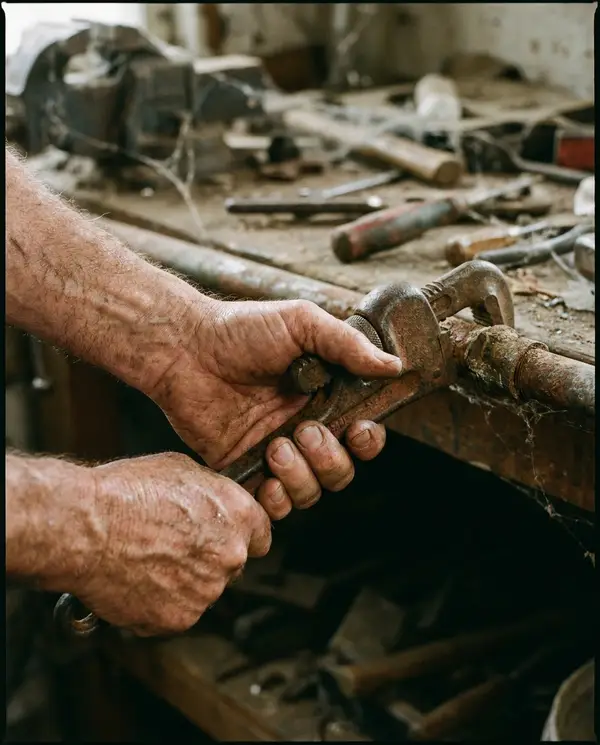

Cholesterol Relief Community — Natural Relief in Weeks
WinningImage

Natural Relief in Weeks

I have been cutting the same man's hair every three weeks for twenty-six years, and last March he sat down in my chair and asked me, very politely, what my name was. I have known his wife's birthday since 2003. I cut his son's hair before that boy's voice changed. I gave him a Christmas card every year with my own handwriting on it. He has sat in the same chair, the second one from the door, twelve hundred times, give or take. Last March, on a Tuesday morning around ten, he came in wearing his usual brown coat and his glasses pushed up on his forehead, and he eased himself down into that chair like he always did. I draped the cape over his shoulders and pumped the foot pedal twice to get him up to my working height. I picked up the comb. He looked at me in the mirror, and his eyes were friendly the way a stranger's eyes are friendly at a gas station when you're both buying coffee. He said, "I'm sorry, I'm having one of those mornings. What's your name again?" I told him my name was Ray. He said, "Ray. Right. Ray. I'm Bill." I had been cutting his hair for twenty-six years, and he was introducing himself to me. I finished the cut. I did not say anything about it. I walked him to the register and rang him up for twenty-two dollars, which is what I have charged him for a haircut for the last seven years, and he paid me in cash like he always did, and he tipped me three dollars like he always did, and he said, "Thanks, Ray," and he walked out the door and got in his Buick and drove the three blocks home. I stood in the front window of my shop and watched his taillights go up Main Street. Then I walked back to my station, opened the drawer under my clippers, took out a small green notebook I had bought that weekend at the Dollar Tree because some feeling in the back of my head had told me I might need it, and I wrote down the date and what had just happened. That was the first entry. I have been writing in that notebook for fourteen months now. I want to tell you about a man named Bill Hennessey, and what happens when a doctor watches a number and a barber watches a person, and the number says everything is fine and the person is disappearing in front of you. I want to tell you what I figured out, because I figured it out, eventually. I'm not a doctor. I'm a barber. I am fifty-eight years old and I have been cutting hair in a two-chair shop on Main Street in Greenville, South Carolina, since 1998. I cut my first head of hair when I was nineteen, in my uncle's shop in Spartanburg, and I have been doing it ever since. I have watched this town's necks since the Clinton administration. I know who's eating and who's not. I know who's drinking too much and who quit. I know whose marriage is failing because of how they hold their shoulders. I know who's about to have a baby before the wife does, sometimes, because the husband gets a particular kind of quiet. A barber knows. People don't think we know, because we're just the guy with the scissors, but we know. And what I am telling you is that I watched Bill Hennessey go away over the course of about seven years, and his doctor told him his cholesterol was perfect the whole time, and the day Bill came into my shop with no pants on, I decided I was going to figure out what nobody else was going to figure out, because nobody else was going to. That's what this is about. Stay with me. Bill Hennessey is seventy-one years old. He was born in Greer, South Carolina, in 1953. His daddy worked at the textile mill and his mama taught Sunday school at the Baptist church on Hampton Avenue. He went to Greer High School, then he went into the Army for four years, then he came home and married a woman named Janet who he had known since the eighth grade. He worked at the post office for thirty-eight years. He retired in 2016 as postmaster. He has one daughter, Marie, who is forty-four and lives over in Travelers Rest with her husband and two boys. Bill walked into my shop for the first time in the fall of 1999. He had just moved to Greenville from Greer because Janet got a job at the hospital here. He was forty-six years old. He had a full head of brown hair with a little gray coming in at the temples, and he asked me for a regular short back and sides. He told me he was the new postmaster down at the Augusta Road branch. We talked about the Clemson game while I cut his hair, because it was a Saturday and they had played Florida State the night before, and Clemson had lost by twenty-one. When I finished, he looked in the mirror, and he said, "Ray, you and me are gonna be friends." He was right. Every three weeks for twenty-six years. Twelve hundred haircuts. You can do the math. Here is what I knew about Bill Hennessey before March of last year. He drank his coffee black. He took his eggs over medium with bacon, never sausage. He liked the Steelers because his uncle had played for them in the fifties for one season before he blew out his knee. He read three books a week, mostly history, mostly about the Civil War, and he was full of facts about every battle in Virginia. He could tell you the exact regimental movements at Chancellorsville. He had a way of leaning forward in the chair when he was about to make a point, and his eyes would get small and bright, and he would say, "Now, here's what most people don't understand about Stonewall Jackson..." and you knew you were in for ten minutes. His wife Janet was a nurse. Pediatrics. He was proud of her in the way that only men of his generation are proud of their wives — quietly, devotedly, never bragging but never missing a chance to mention her either. Janet's birthday is February 18. I have known that since he told me in 2003, when he came in three days before and asked me what I thought he should get her, and I told him he should get her a weekend in Asheville at a bed and breakfast, and he did, and she loved it, and he told me about it for two months afterward. His daughter Marie was thirty-one when I met her. She came into the shop one Saturday in 2002 to drop off something for him on her way through town, and Bill introduced us, and he said, "This is my Marie. She is the best thing I ever did." Marie had brown hair like his and she had her mother's eyes, and she shook my hand and called me Mr. Ray and I told her just Ray was fine. She would stop in to say hello once or twice a year after that, if she was passing through. Bill was the kind of man who would tell you what his wife made for dinner. Every visit. Every haircut. He'd sit down in the chair and within about thirty seconds he'd say, "Janet made pork chops last night, Ray, the kind with the apples. I tell you what." Or, "Janet's got a chicken in the oven for tonight, and she's making her cornbread, and I'm gonna die a happy man." He told me about his meals for twenty years. I knew Janet's recipes by reputation. I never ate any of them, but I knew them. The pork chops with apples. The chicken and dumplings she made on Sundays in winter. The peach cobbler she made every Fourth of July with peaches from the orchard out on Highway 14. He told me about books he was reading. He told me about the Steelers. He told me about a feud he had with his neighbor over a fence line for about eight months in 2009, and he told me about every step of it, and I had opinions about the fence line by the end of it, and we resolved that fence line together over the course of those eight months, both of us, while I cut his hair. That was Bill Hennessey. The man who sat in my chair last March and asked me my name was not that man. He had been not-that-man for a long time, and I had been watching it happen, and I will tell you exactly how it happened. The first thing I noticed was in the spring of 2018. Bill had just turned sixty-five. He came in for his regular cut, and he sat down, and there was a pause before he started talking about Janet's meals, and I noticed the pause. It was maybe four seconds longer than usual. Four seconds is not much, but I had been listening to this man talk for nineteen years at that point, and I knew his rhythms. He eventually said, "Janet made spaghetti last night." That was it. No story about the sauce. No mention of whether she had used Italian sausage or ground beef. Just spaghetti. I asked him what kind. He said, "Just spaghetti, Ray. With the sauce." He waved his hand, like the details didn't matter, which was not a thing Bill Hennessey ever did. The details always mattered. About a month after that he told me his doctor had put him on a cholesterol pill. He said it like it was nothing. He said, "Doc said my numbers were a little high, so he wrote me up for the Crestor. Janet's been after me about my eating, so I guess this'll keep her quiet." I said, "You feel okay on it?" He said, "Sure. Don't feel a thing." That was 2018. In 2019, the thing I noticed was the armrests. Bill had a habit, ever since I'd known him, of resting his hands loosely on the armrests of my chair. Loose hands. Open. The hands of a man who is comfortable. Sometime in the spring of 2019 — I want to say it was April — he started gripping them. Not tight, but tight enough that I noticed. His thumbs would press down on the wood. When he got out of the chair he would push himself up with his arms instead of just standing. I asked him once, that summer, if his hip was bothering him. He said, "Oh, you know, it's just getting old. Everything starts to hurt a little." That was the first time I ever heard Bill Hennessey use the phrase "getting old." Bill was sixty-six. He told me he'd been to the doctor for his physical. He said the doctor had looked at his bloodwork and said his cholesterol was, in his own words, "perfect." LDL was down to one-twenty-something from the one-eighty it had been before the Crestor. Triglycerides were down. The doctor had given him a thumbs up and told him to keep doing what he was doing. Bill was pleased about it. I didn't say anything. I was a barber. The doctor said his numbers were perfect. Who was I. In 2020, with the pandemic and all, I didn't see Bill for a couple of months because we were shut down. When we opened back up in May, he came in, and I noticed two things. The first was that he had lost about fifteen pounds, and not in a good way. His shirt collar was loose on him. His face had gone a little hollow around the cheekbones. The second was that he didn't ask me how I was doing. Bill always asked me how I was doing. It was the second thing out of his mouth after he sat down. "How you been, Ray?" Every time. For twenty-one years. That day he just sat down and put his head back against the rest and closed his eyes, and we did the whole cut in silence except for me asking him questions and him answering them in two or three words. When he was paying me at the register, he forgot his wallet. He had to drive home and come back. He apologized about six times. He said, "I don't know what's wrong with me today, Ray. I had it in my hand." That summer he told me Janet had taken him to a different doctor, a specialist, because she was worried about him. The specialist had run a full panel. The specialist had looked at his bloodwork and told him his cholesterol was "exactly where we want it." LDL was at one-eighteen. The specialist had told Janet not to worry. Bill quoted the specialist to me. He said, "He told Janet, 'Mrs. Hennessey, your husband's numbers look like a healthy fifty-year-old's. He's doing great.'" Janet had asked the specialist about the weight loss, the tiredness, the forgetting things. The specialist had said, and I am quoting Bill quoting the specialist, "That's just aging, Mrs. Hennessey. Some of this is normal at his age." Bill was sixty-seven that summer. He had run a post office. He had been at his daughter's wedding three years before and given a toast that made everybody cry laughing. He was not a man whose mind was supposed to be aging. But the numbers were perfect, so what could anybody say. In 2021, the thing I noticed was that he stopped talking about the Steelers. The Steelers played that fall, and I asked him what he thought of their quarterback situation, and he looked at me for a second like I was speaking French. Then he said, "Oh, the Steelers. Yeah. Yeah, they're doing okay, I think." That was it. No analysis. No opinion about the receivers. Bill had once explained the Cover 2 defense to me for the better part of a haircut. That fall he could not have told you who the Steelers were playing on Sunday. He also stopped reading. He used to bring books with him sometimes. Just to flip through while he waited if I was running a few minutes behind on the previous customer. That stopped. He started just sitting in one of the waiting chairs with his hands in his lap, looking at nothing. He went to his regular checkup in November of 2021. Janet went with him. She told me about it the next time she came in to pick him up from his haircut, because she had started driving him by then. She said the doctor had spent ten minutes looking at his bloodwork and three minutes looking at Bill. The doctor had said his cholesterol was excellent, his triglycerides were excellent, his blood sugar was a little high but nothing to worry about, and that the Crestor was, and this is the phrase she used because the doctor had used it, "doing exactly what it's supposed to do." Janet had said to the doctor, "He doesn't seem like himself." The doctor had said, "Some cognitive changes are normal at his age." Janet had said, "He's sixty-eight. He was sharper than me a year ago." The doctor had said, "Have you considered that you might be noticing things now because you're around him more, since he retired?" Janet told me this in my shop, while Bill was sitting in the waiting chair looking at his hands, and I watched her face while she told me, and I saw her decide right there that she was never going to bring it up with that doctor again. Not because she was satisfied with the answer. Because she was tired. That was the doctor's job, I started to realize. The doctor's job was to tell you the numbers were fine. If you came in with a person who was not fine, but the numbers were fine, you went home. That was how the system worked. In 2022, Bill stopped telling me what Janet had made for dinner. I want you to understand what that meant. For twenty-three years, the man had told me about every meal his wife had cooked the night before, sometimes about the meal she was planning for that night, sometimes about a meal she had made the week before that he was still thinking about. He had told me about pot roasts and meatloaves and chicken and dumplings and pork chops with apples and cornbread and peach cobbler and biscuits and gravy and ham steaks with red eye and shrimp boils on the porch and oyster stew at Christmas. Twenty-three years. In 2022, he stopped. I noticed it after three or four visits. I started asking. I would say, "What's Janet cooking these days, Bill?" And he would say, "Oh, you know. Same old stuff." And he would not name a single thing. Marie called me on the phone in the summer of 2022. I had never given her my phone number, but she had looked the shop up. She said, "Mr. Ray, this is Marie, Bill Hennessey's daughter." I said, "Hi, Marie. Just Ray. Everything okay?" She said, "I wanted to ask you. You see my dad every three weeks. Is he okay?" I sat down in my own chair. I said, "Marie, I don't know what you're hearing, but no. He is not okay." She told me she had been worried for a while. She told me Janet had stopped saying anything because Janet was scared. She told me she had taken him to a different doctor, a third one, in Asheville, because Janet had asked her to. The doctor in Asheville had run the same bloodwork. The doctor in Asheville had said his cholesterol was excellent. The doctor in Asheville had said, "Mr. Hennessey, you're doing great for a man your age. Keep doing what you're doing." Marie had asked, "But Doctor, he doesn't remember what he had for breakfast. He stopped reading. He forgot my mom's birthday this year, and he has never forgotten her birthday in fifty-one years." The doctor had said, "Mrs. Brennan, your father is sixty-nine. Some memory loss is normal at his age. His numbers are pristine. The Crestor is working perfectly. I would not change anything." Marie said to me on the phone, "Ray, what is happening to my dad?" I said, "Marie. I don't know. But I'll tell you this. I have been cutting hair in this town since 1998, and your dad is the third or fourth person I've watched go like this in the last few years, and every one of them had a doctor telling them their numbers were perfect." There was a long silence on the line. Then she said, "Thank you, Ray." She said, "Thank you for telling me the truth." In 2023, Bill stopped pushing himself up out of the chair. He needed a hand. I gave it to him without making a thing of it. I would just stick my hand down and he would take it and I would help him up like he was an old friend, which he was, and he would say, "Thank you, Ray," and that would be the most words he would say to me that visit, sometimes. His hair started thinning out, but not the regular kind of thinning. It was patchy. Some weeks I would cut him and there would be a spot above his right ear that was thinner than it had been three weeks before. I would just blend it. I never mentioned it. His skin changed. He got these little brownish spots on his temples that hadn't been there before. His ears looked bigger because his face had gotten thinner. The skin on his neck had gone soft, like it had given up holding itself in place. I knew the difference between a man aging and a man being eaten from the inside. I had watched both. Bill was not aging. Bill was being eaten. His doctor told him, in March of 2023, that his bloodwork was "honestly enviable for a man of seventy." The doctor told him he was a model patient. The doctor told him to keep taking his Crestor and not to change anything. Janet stopped coming to the shop with Bill. Marie started driving him. She would drop him off, sit in the parking lot for forty-five minutes, and pick him up. She would walk him in and walk him out. She would not stay in the shop because she could not bear to watch. I would sometimes look out the front window during his haircut and see her in the driver's seat of her Honda, looking at the steering wheel. That was 2023. In 2024, the year of the pants, I started noticing that he didn't remember which chair was mine. He would come in the door and stop and look at both chairs like he didn't know which one he was supposed to sit in. Tony, who had the other chair — Tony has been with me since 2008 — would say, "Bill, your boy Ray is over there." And Bill would look at me and his eyes would clear for a second and he'd smile and say, "Oh, Ray. Right." And he'd come over and sit down. He stopped tipping me. Not on purpose. He just forgot. I never said anything about it, because the man had tipped me three dollars a haircut for twenty-five years, and that meant he had given me a tip on roughly twelve hundred haircuts, which is over three thousand six hundred dollars in tips, and if a man forgets to tip you for a few months after twenty-five years of tipping you, you do not say a word about it. You let it go. That is what you do. In February of 2024, he came in for his cut and the conversation went like this. He sat down. I said, "How you doing, Bill?" He said, "Pretty good, Ray, pretty good." I said, "Janet okay?" He said, "Oh, Janet. Yeah." There was a long pause. I said, "Anything new?" He said, "Not really. Not really." That was the entire conversation in the chair that day. About forty seconds of talking spread over a thirty-minute haircut. His Crestor was, his doctor had said two months before, "still doing exactly what it should do." In March of 2024, on a Friday morning around nine, Bill came in for his haircut. And what happened that morning is what made me start the notebook. I want to tell you about that Friday in detail, because that Friday is when I stopped being the guy who watches and started being the guy who figures it out. Every word of what I am about to tell you is exactly what happened. It was March 22, 2024. It was a Friday. The weather was cool but it was supposed to warm up later. There had been rain the night before, and the gutters out on Main Street were full of leaves and water. Marie dropped Bill off at the shop at 8:55. I saw her car pull up. I watched her get out of the driver's seat and walk around to the passenger side and open the door for him and offer him her hand. He took it and stepped out. He was wearing his brown coat, the same one he had been wearing all winter, and his black dress shoes that he had owned since 2014, and he had on a button-down dress shirt that I recognized because he had worn it three weeks before to his previous haircut. He had not changed his shirt in three weeks. That was the first thing I noticed, looking through the front window. But I had noticed things like that before with Bill in the last year. I figured Janet was wearing out and not catching everything. I did not yet realize what I was looking at. Marie walked him to the door. She caught my eye through the glass and gave me a tight little smile that meant something I couldn't fully read yet. Then she went back to her car and got in and sat there. Bill came in. He stopped just inside the door and looked at the two chairs. Tony was in his chair finishing up a young guy who works at the auto parts store, and I was empty. Tony said, "Hey, Bill, your boy's over there." Bill turned and looked at me. He smiled. He walked over. He sat down in my chair. He sat down differently than usual. He sat down without taking off his coat. I usually had him take off the coat first because the cape doesn't hang right over a winter coat. I said, "Bill, let me take that coat for you." He stood up halfway and let me slide the coat off his shoulders. That is when I saw that Bill Hennessey was not wearing pants. He was wearing boxer shorts. White boxer shorts with little blue diamonds on them. He had on his black dress shoes and his dress socks, pulled up to mid-calf, and his shirt was tucked into the waistband of the boxer shorts, and he had been walking around outside in the cold March air and sitting in his daughter's car and walking into my barber shop, and he was not wearing pants. I will tell you what happened in my head in the half second after I saw this. I felt my face go hot. I felt my stomach drop. I felt a kind of grief I had not felt since my own daddy died in 2009, which is a particular kind of grief that has nothing to do with the moment you're in. I felt rage at his doctor. I felt rage at the second doctor. I felt rage at the doctor in Asheville. I felt rage at the post office for letting him retire without anyone noticing what was already starting in 2016. I felt a kind of love for Bill Hennessey that was so big it scared me, because I am not a man who feels love for his customers in a way that scares him. I felt all of that in about half a second. And then I did what I was going to do, which was finish the haircut. I draped the cape over him. I made sure the cape covered him all the way down to his knees, where it normally fell. I tightened it at the neck. I tilted his head down a little, the way you do, and I said, "All right, Bill. Same as always?" And he said, "Same as always, Ray." And I started cutting his hair. I cut his hair carefully. I did the back first. I did the sides. I did the top last, the way I always did. I was talking to him about nothing the whole time. I was telling him about the weather. I was telling him a story about my nephew who had just bought a truck. I was telling him whatever came out of my mouth. He was nodding along and saying, "Mhm. Mhm." His eyes in the mirror were calm. He had no idea he was not wearing pants. I made the cut take longer than it needed to. I wanted to give myself time to think. I cleaned up the back of his neck with the straight razor twice when I usually only do it once. I trimmed the eyebrows even though they didn't need it. I asked him if he wanted the ear hair done and he said, "If you think so, Ray," and I said, "I think so," and I did it. While I was doing all of that, I was figuring out how to get Bill out of my shop without anybody seeing he was not wearing pants. Tony was at his chair. Tony's customer was still in the chair, with about ten more minutes to go on a beard trim. The front window of my shop faces Main Street, which has people walking past it all morning. The front door is right at the front of the shop. If I walked Bill out the front door, somebody on the sidewalk was going to see him walking to his daughter's car with no pants on, and Bill Hennessey, postmaster of Greer for the better part of forty years, the man who carried himself with the dignity of a small-town federal employee for his entire adult life, was going to be the guy in Greenville who walked down Main Street in his underwear. And that was going to be his thing for the rest of his life and after he died. And I was not going to let that happen. The back of my shop has a door that goes out into a little alley between my building and the one next door, where I keep my trash cans. The alley comes out onto a side street. I finished the cut. I took my time brushing the loose hair off his neck. I held up the hand mirror and showed him the back, the way I always did, and he nodded the way he always did and said, "Looks good, Ray." I undid the cape, slowly, and gathered it carefully so I held it in front of him as he stood up, blocking the view. I said, "Bill, let me grab your coat for you, buddy." I went over and got his coat. I held it open and I held it low so it would cover him as he put it on. He shrugged it on. I buttoned the top two buttons myself. The coat came down to about mid-thigh on him. I said, "Bill, you know what, I left something out back. Come on out with me for a second." He said, "Okay, Ray." I walked him to the back of the shop, my hand on his elbow, like we were old friends taking a walk together, which we were. We went through the little hallway past the bathroom and out the back door into the alley. The alley smelled like the dumpster from the Chinese place on the corner. There were puddles on the ground from the rain. I closed the back door behind us. I leaned against the brick wall. I pulled out my phone. I said, "Bill, you wait right here for me one second, okay? I'm gonna call Marie real quick." He said, "Okay, Ray." He stood in the alley in his coat and his boxer shorts and his dress shoes. He looked perfectly content. He was looking up at a piece of fluff caught in the gutter. He was not cold. I called Marie. She picked up on the first ring. She said, "Ray?" I said, "Marie, honey, I need you to drive around to the back of the building. He's not wearing pants." There was a long, long silence. Then she said, "Oh my god." Then she said, "Oh my god, Ray, I'm so sorry. I didn't even — he came down the stairs ready to go. He had his coat on. He always — I just —" I said, "Marie. Marie. It's okay. I got him. He's standing here with me. He's fine. He's calm. He just needs to come home. I want you to drive around to the back. Take the alley off of Pendleton. You'll see us standing here. Pull right up to the door. We'll get him in the car." She said, "Okay. Okay. I'm coming. I'm coming right now." I hung up. I put the phone in my pocket. I leaned against the brick wall. I looked at Bill Hennessey standing in the alley in his boxer shorts looking up at the gutter. I said, "Bill, you doing okay?" He said, "I'm good, Ray. Real good." I said, "Marie's coming around to pick you up here in just a minute. Easier than walking around the front. Okay?" He said, "Sounds good, Ray." I waited. I felt my eyes go hot. I did not cry. I have not cried since 2009. But I felt my eyes go hot and I felt something break in me, in the alley behind my shop, and I made a decision that I want you to understand. I decided that I was going to figure out what was wrong with Bill Hennessey. I was not going to trust a doctor to do it. The doctors had told him for six years his numbers were perfect. The numbers were perfect and the man was standing in an alley in his underwear with no idea he was not wearing pants. I was going to figure out the gap between the numbers and the man, and I was going to do it because I owed it to him, because I had been cutting his hair for twenty-six years and he had told me about his wife's pork chops and his Civil War books and his Steelers and his fence line, and now he could not remember my name, and the doctors said his cholesterol was perfect. Marie pulled up. She got out of the car. She was crying. She had a pair of his sweatpants over her arm. She had grabbed them on the way out the door. She helped him into the back seat. She got the sweatpants on him in the car, sitting beside him in the back seat, while I held the door open from the alley. She looked at me. Her face was wet. She said, "Ray, what do I do?" I said, "Marie. You drive him home. You sit with your mama. You give yourself a day. And then you call me. Because I am going to look into something. I have an idea. I'm not promising anything. But I'm going to look. And when I know something, I will call you." She nodded. She closed the door. She walked around to the driver's side. She got in. She drove away. I stood in the alley for about five minutes after she left. Then I went back inside. Tony was finishing up his customer. He looked at me when I came in. He said, "Bill okay?" I said, "Bill is not okay. Bill is in trouble. But he's gonna be okay because I'm gonna figure it out." Tony said, "Ray, what are you gonna figure out? You're a barber." I said, "Tony, I am the only one looking. So I'm the only one who's gonna find it." That night I went home and I sat at my kitchen table with my notebook open in front of me, and I started a list of everything I knew about Bill, every change I had watched over six years, and I wrote down a question at the top of the page. I wrote, "If his numbers are perfect, why is he dying?" That was my question. And the next morning I started looking for the answer. I want to tell you about Mr. Thuan and Mr. Linh, because they are the first reason I started looking in the direction I started looking. Mr. Thuan and Mr. Linh own the nail salon two doors down from my shop. They have owned it since 2004. Mr. Thuan is seventy-eight. Mr. Linh is seventy-five. They are brothers. They came over from Vietnam in the seventies, after the war, and they ran a couple of restaurants up in Charlotte before they moved down here and opened the salon. They cut my hair sometimes when their wives need them out of the house, which is a joke I have made many times and they always laugh at, and I cut theirs, and we have known each other for twenty-one years. I want you to understand who Mr. Thuan is at seventy-eight. He runs a nail salon. He still works behind the desk five days a week. He does the books. He drives himself to work in a 2019 Toyota. He plays in a poker game on Thursday nights with three other Vietnamese men at the Buddhist temple on Wade Hampton Boulevard. He reads two newspapers every morning, one in English and one in Vietnamese. He goes fishing every Saturday morning with his grandson out at Lake Hartwell. He remembers everyone's name who walks into his salon. He remembers the names of their kids. Mr. Linh is seventy-five. He runs the front desk on weekends when Mr. Thuan takes off. He is a little quieter than his brother, but he is just as sharp. He won a chess tournament at the Asian American Cultural Society last year. He won it. At seventy-five. The morning after Bill came into my shop without pants on, I went next door to the salon. I stopped in before I opened up. Mr. Thuan was sitting at the front desk with his English newspaper in his hands and a cup of tea steaming on the desk in front of him. He always had a cup of tea in front of him. Always. Twenty-one years, and there had always been a cup of tea on the desk. I sat down across from him. I said, "Mr. Thuan, I want to ask you a question." He folded his paper. He smiled. He said, "Mr. Ray. Of course." I said, "Mr. Thuan, you are seventy-eight years old. You work five days a week. You read the paper. You remember everyone. You go fishing. You drive yourself." He said, "Yes." I said, "How many people you know your age that are like you?" He thought about it. He said, "Many. Many people my age. My friends. My brother. The men I play cards with on Thursday. All sharp. All working still, most of us. My friend Mr. Phan still runs his restaurant. He is eighty-three." I said, "Mr. Thuan, in this town, the white men your age, I am watching them go away. I cut their hair. I have known them for twenty, twenty-five years. They are all on cholesterol pills. Their doctors all tell them they are doing great. And every single one of them is fading. Their wives drive them to the shop. They don't remember my name. They don't remember what they had for breakfast." He listened to me. He nodded slowly. He picked up his tea and sipped it. I said, "Mr. Thuan, what do you do that they don't do?" He looked at me for a long time. Then he tapped the side of his teacup with his finger. He said, "Mr. Ray. We drink tea." I said, "Tea." He said, "Tea. All my life. From a little boy. My mother gave me tea. My grandfather. Every day. All my life. Oolong tea. The men in my country who live to be very old, they all drink the oolong. Always. It is what we do." I said, "Tea." He said, "Yes, Mr. Ray. Tea." I sat there for a minute. I thought about it. I thought about all the cups of tea I had seen on his desk for twenty-one years. I thought about how every time I had ever stopped in the salon, Mr. Linh or Mr. Thuan had offered me a cup of tea, and I had always said no thank you because I was a coffee drinker, and now I was sitting there at fifty-eight years old wondering if maybe coffee was the wrong choice. I said, "Mr. Thuan. Could I have a cup of that tea?" He laughed. He got up. He poured me a cup from his pot. He handed it to me. It was warm and the steam came up off it and it smelled like nothing I had ever smelled before. A little earthy. A little sweet. A little something else I couldn't place. I drank it. It was good. I said, "Mr. Thuan, where do you get this?" He said, "We get from a Vietnamese family in California who has been in the tea business many generations. But you can also get good oolong online now. Many places. The good ones are good." I said, "Thank you, Mr. Thuan." I went back to my shop. I opened up. I cut hair all day. But I was thinking the whole time. That night I went home and I sat at my kitchen table again with my notebook. I wrote at the top of a new page, "Mr. Thuan = sharp at 78 = drinks oolong tea all his life." I wrote underneath, "Bill = falling apart at 71 = drinks coffee, takes Crestor, sees doctor every 6 months." Then I got out my laptop and I started reading. I want to tell you what I read, because I am going to lay this out the way I figured it out, step by step, because I think you need to understand it the way I understood it, because once I understood it everything made sense and I had been confused for six years. The first thing I learned is that cholesterol — the thing the doctor tests, the LDL number, the thing the Crestor brings down — is not what kills you. I want to repeat that because I had to read it three times before I believed it. Cholesterol itself is not what kills you. Cholesterol is just a fat molecule that is supposed to be floating around in your blood. It is part of how your body works. Every cell in your body needs cholesterol. You need it. Your brain is mostly cholesterol. Your hormones are made from cholesterol. Without cholesterol, you die. So why does the doctor want to lower it? Because of a thing called plaque. Plaque is what clogs your arteries. Plaque is what causes heart attacks. Plaque has cholesterol in it. The doctors decided, decades ago, that if cholesterol is in plaque, then lowering cholesterol must lower plaque. So they invented a drug — the statin, like Crestor — that lowers the cholesterol number. The number goes down. The doctor is happy. The patient gets a thumbs up. But here is what they were missing. Here is the thing I read at 11:30 at night in my kitchen in March of last year that made me sit back in my chair and go, "Oh." It is not the cholesterol that goes into the plaque. It is the OXIDIZED cholesterol that goes into the plaque. Regular LDL cholesterol — the kind your body makes on its own, the kind that is supposed to be in your blood — does not stick to your artery walls. It floats by. It does its job. It goes home. It does not cause heart attacks. It is only when LDL gets damaged — oxidized — that it becomes sticky. It is only when free radicals attack the LDL particles and oxidize them that they start clinging to the walls of your arteries and forming plaque. So the real enemy is not cholesterol. The real enemy is OXIDATION. And here is the part that broke my heart. The statin lowers your cholesterol number. It does not stop the oxidation. The free radicals are still there. They are still attacking. Whatever LDL you have left — and you have to have some, because your body needs it — is still getting oxidized. The plaque is still forming. The damage is still happening. The doctor watches the number go down. The doctor is happy. The doctor tells you everything is perfect. Meanwhile, behind the number, the actual process that destroys your arteries is going on unchecked. It is like — and this is the comparison I came up with at my kitchen table, and I am going to use it the rest of my life — it is like unplugging the smoke alarm instead of putting out the fire. The alarm stops going off. You think the problem is solved. The house keeps burning. That is what the Crestor was doing for Bill. It was unplugging his smoke alarm. The number looked great. The fire was still burning. He was burning. From the inside. For six years. I read more. I read about what damages your arteries when the oxidation is unchecked. I read about how it affects the small blood vessels first — the tiny ones — and how the smallest blood vessels in your body, the ones that show damage first, are the ones in your brain. The microvasculature. That is the word. The tiny vessels that feed your memory, your reasoning, your sense of who you are. They go first. I sat back. I thought about Bill forgetting my name. I thought about Bill standing in an alley in his underwear. I thought, This is what they have been doing to him. The doctors have been watching his cholesterol number and telling him he was fine while the actual mechanism that was destroying his brain went on unaddressed. Then I read about how to fight oxidation. You fight oxidation with antioxidants. Antioxidants are molecules that neutralize free radicals. They donate an electron to the free radical so it doesn't go around stealing electrons from your LDL particles. Antioxidants stop the oxidation. The problem is that not all antioxidants are useful. Most of the ones people take in pills — Vitamin C, Vitamin E — get used up too quickly. Or they work in the wrong place. Or they are not selective enough. They neutralize the bad free radicals but also neutralize the good ones your body needs. The really good antioxidants — the ones that work in the cardiovascular system, the ones that protect LDL specifically from getting oxidized — are a class of molecules called polyphenols. Polyphenols are found in plants. They are what gives plants their color and their bitterness. The richest source of cardiovascular-protective polyphenols, I read that night, is the oolong tea plant. The Camellia sinensis leaf, processed in the half-fermented way that produces oolong specifically, contains a particular combination of polyphenols — including EGCG and theaflavins — that have been studied extensively for cardiovascular support. The polyphenols in oolong tea act as what they call selective antioxidants. They specifically target the destructive free radicals — the hydroxyl radicals, the peroxynitrite — that oxidize LDL. They leave the helpful free radicals alone. They are smart missiles where Vitamin C is a carpet bomb. The polyphenols in oolong tea have been studied for cardiovascular support for decades. There are over a thousand papers on it. The populations in the world that drink the most oolong tea — southern China, parts of Vietnam, parts of Japan — have, every study confirms, lower rates of cardiovascular disease, lower rates of cognitive decline in old age, and longer lifespans than populations that don't. I sat back in my kitchen chair. I thought, This is Mr. Thuan. This is Mr. Linh. This is Mr. Phan who is eighty-three and still runs a restaurant. They have been drinking the antioxidant for their cardiovascular system for their entire lives. The polyphenols have been protecting their LDL from oxidation for seventy-eight years. The smoke alarm has not been unplugged. The fire has not been burning. This is why they are sharp at seventy-eight. This is why their hair is full. This is why they still drive themselves. This is why they remember everyone's names. This is what Bill never had. Then I went looking for a brand. I am not going to make you sit through the two weeks it took me to find one I trusted. I read a lot of websites. I bought a few different ones. I made tea every morning before work. I tasted them. I read the labels. I read about how they processed the leaves. I read reviews from real people. The one I settled on is called PiPi Tea. PiPi Tea is whole-leaf oolong. They do not powder the leaf. They do not use the dust at the bottom of the bag. They do not use stems. They use the whole leaf, processed in the traditional way, so the polyphenols are preserved. Most teas you buy at the grocery store have been so heavily processed that the polyphenol content is a fraction of what it should be. The leaves are broken. The compounds are oxidized in the bag before you ever drink them. PiPi Tea is processed the way the Vietnamese family that supplies Mr. Thuan processes their tea. Whole leaf. Minimum processing. Maximum polyphenol preservation. I called Marie. I told her I had figured something out. I told her to come by the shop on her way home from work. I told her everything I just told you. The oxidation. The smoke alarm. The polyphenols. Mr. Thuan. The oolong. PiPi Tea. I gave her my own bag, the one I had ordered the previous week and just opened. I told her, "Marie, this is not a miracle. This is not going to fix everything overnight. I am not telling you to take him off his Crestor. That is between you all and his doctor. What I am telling you is that the Crestor is treating the wrong thing. It is watching the cholesterol number, and the real problem is the oxidation, and the oxidation has not been treated. The polyphenols in this tea are what treats it. The men I know in this town who are seventy-five and eighty and sharp as anything have been drinking this their whole lives. Let your dad start drinking it. Two or three cups a day. See what happens." She took the bag. She held it in her hands. She said, "Ray, do you really think this could help him?" I said, "Marie, I have watched this town's necks for twenty-six years. I am telling you what I see. The men who drink this don't end up like your dad. Get him drinking it. Order more for him. Try it for ninety days. PiPi Tea comes with a ninety-day money-back guarantee. If nothing changes in ninety days, you send the rest of it back and you get your money back. You are not risking anything except the time it takes to make a cup of tea." I wrote the URL down for her on a piece of paper. I wrote https://shop.pipitea.com/ppch/sp. I told her she could get more from there. She put the bag in her purse. She hugged me. She left. That was March 28, 2024. I am going to tell you what happened over the next twelve weeks, because I want you to understand that this is not something I am making up. This is what I watched, from my chair, every three weeks, as Bill Hennessey came in for his haircuts. I have all of it in my notebook. I am reading from the notebook as I write this. The first visit after Marie started him on PiPi Tea was April 12, 2024. Three weeks after the pants. Marie dropped him off and walked him in. She caught my eye from the door and gave me a little look that I read as, "Maybe." Bill sat down in my chair. I draped the cape. I said, "How you doing, Bill?" And he said, "Pretty good, Ray." And then he said something I had not heard him say in over a year. He said, "How you been?" That was it. Three words. "How you been." But I wrote it down in the notebook that night. Because Bill had not asked me how I was doing in fourteen months. He didn't have much else to say in the chair that day. But he had asked me how I was doing. That was something. I cut his hair. When I was done, I helped him up out of the chair, and as I helped him up he said, "Thanks, Ray." Two words. But the "thanks" had a little weight in it. A little of the old Bill. The Bill who looked you in the eye when he thanked you. The second visit was May 3, 2024. Six weeks in. Marie dropped him off and this time she came in with him and stayed in the waiting chair. I noticed her sitting there. I had not seen her sit in the shop in over a year. She was watching him. Bill sat down. I said, "How you doing, Bill?" He said, "Doing all right, Ray." Then he said — and I have this written down — "Janet made meatloaf last night. The kind with the brown sugar on top. It was real good." He had not told me what Janet had made for dinner in more than two years. I almost dropped my comb. I looked at Marie in the mirror. She was looking at me. She had her hand over her mouth. Her eyes were wet. I said, "That sounds real good, Bill." He said, "Yeah. She put a little Worcestershire in the brown sugar. First time she's done that. Real good." I cut his hair. He told me a few more things. He told me his grandsons had come over Sunday. He told me one of them had lost a tooth. He told me that his neighbor — the one he had had the fence line fight with in 2009 — had moved away last fall, and there was a new family in the house now, and he didn't know them yet but they had a yellow Lab puppy. He had not given me that kind of information in over two years. Marie walked him out. As they were leaving she squeezed my arm and didn't say anything because if she had tried to say anything she would have cried, and Bill was right there. I just nodded at her. That night I wrote in the notebook, "Six weeks. Meatloaf. The grandsons. The puppy. Something is happening." The third visit was May 24, 2024. Nine weeks in. Bill walked in by himself. I want you to read that again. Bill walked into my shop by himself. Marie was not with him. He had driven himself. He walked in the door and he saw me and he said, "Hey, Ray," and he came right over to my chair without looking at Tony's chair or hesitating about which one was mine. He sat down. He took off his coat himself before I had to ask. He folded it over his lap. He looked at me in the mirror and he smiled, and his eyes were the eyes of Bill Hennessey. He said, "How you been, Ray? How's the shop?" I said, "Shop is good, Bill. How you been?" He said, "I've been better than I've been in a while. You know what, I don't know what it is. I've just been feeling better. I'm sleeping better. I've been reading again. I finished a book about Lee at Gettysburg last week, and I have to tell you about it because there's a part about the second day that I had never read about before." He talked for the entire haircut. He talked about Lee at Gettysburg. He talked about Janet's cooking. He talked about the new family next door with the yellow Lab and how he had introduced himself and the husband worked at the Michelin plant and they had three kids. He talked about the Steelers and how their new quarterback was promising. He talked about a fishing trip he wanted to take with his grandsons this summer. He talked for the entire haircut. When I was done I held up the hand mirror. He looked at the back. He said, "Looks great, Ray. Same as always. Thanks, buddy." He stood up out of the chair by himself. He paid me at the register. He counted out the cash himself. He tipped me four dollars instead of three. He walked out the door. He got into his Buick. He drove away. I stood at my register for about a minute and did not move. Tony, in the next chair, said, "Ray. What just happened." I said, "Tony. I just got my friend back." That night I called Marie. I said, "Marie. He drove himself today. He talked the whole time. He told me about Lee at Gettysburg for ten minutes." She was quiet for a second. Then she said, "Ray, he went to the doctor yesterday." I said, "And." She said, "Ray, the doctor pulled up his bloodwork. His cholesterol was still great. The Crestor is doing its thing. But the doctor said — Ray, the doctor said, 'I'm not sure how to explain it, but his other markers are different. His inflammation markers are way down. His glucose is more stable. He looks ten years younger than he did six months ago. What have you been doing?'" I said, "What did you tell him." She said, "I told him my dad started drinking oolong tea." I said, "What did he say." She said, "Ray, he said, 'Well. Whatever you're doing, keep doing it.'" I laughed. I laughed in my kitchen. I had not laughed like that in a long time. I said, "Marie. Did you tell him about the polyphenols and the oxidation." She said, "I tried, Ray. I tried. He kind of nodded politely and changed the subject. But he wrote down 'oolong tea' on the chart. He wrote it down." We hung up. I wrote in the notebook, "Doctor doesn't know what happened. Inflammation markers down. Glucose more stable. Bill talked the whole haircut. He drove himself. He drove himself. He drove himself." The fourth visit was June 14, 2024. Twelve weeks in. Bill came in by himself. He was carrying a book — a Civil War book about the cavalry at Brandy Station — and he showed it to me before he sat down. He said, "Ray, I'm halfway through this and I have to tell you about it." And he did. He told me Janet had been crying a lot lately, and at first he was worried, but it turned out she had been crying because she said she had her husband back. He said it like he didn't fully understand what she meant. He said, "I don't know what she means by that, Ray. I was right here the whole time. But she keeps saying that, so I guess that's a good thing." I said, "Bill, that's a real good thing." I cut his hair. I trimmed his eyebrows. I shaved the back of his neck with the straight razor. He told me about Brandy Station for most of the haircut. He paid me. He tipped me four dollars. He drove himself home. That visit, when he left, I went into the back of the shop and I leaned against the wall and I closed my eyes for about five minutes. I had been doing this for twenty-six years. I had never had a customer come back like that. It is the most important haircut I have ever given. I want to talk to you directly now, because the rest of what I am writing is for you. If you are reading this and you have a husband or a wife or a parent or a friend who is on a statin and who is fading — fading the way Bill faded, slow, year by year, while the doctor tells you the numbers are perfect — I am asking you to do one thing. I am asking you to look at the gap between the numbers and the person. I am asking you to trust your eyes. I am a barber. I am not a doctor. I cannot give you medical advice. I cannot tell you to stop taking a drug your doctor prescribed. I am not going to do that. What I am telling you is what I figured out, on my own, at my kitchen table, with my green notebook, after I watched Bill Hennessey stand in an alley in his underwear. The cholesterol number is not the whole story. The Crestor lowers the number. It does not stop the oxidation. The oxidation is what is destroying the small blood vessels in the brain. The polyphenols in oolong tea, specifically the kind in whole-leaf, properly processed oolong tea, are what stop the oxidation. PiPi Tea is what I gave Bill's daughter. PiPi Tea is what Bill drinks now, two cups in the morning and one in the afternoon. PiPi Tea is what I drink now, two cups in the morning, while I read the paper at my own kitchen table. PiPi Tea is what Mr. Thuan drinks at seventy-eight while he runs a nail salon and drives himself and plays in his poker game and remembers everyone's names. If you want to try it, this is where you get it: https://shop.pipitea.com/ppch/sp It comes with a 90-day money-back guarantee. That is ninety days of trying it, and if nothing changes in ninety days, you mail it back and you get your money back. The Crestor never gave anybody a guarantee. The doctor never gave anybody a guarantee. PiPi Tea gives you a guarantee, because they know what is in the bag, and they know what it does. I am not asking you to take my word for it. I am asking you to try it for ninety days and see for yourself. P.S. 1 I am a barber. I want you to remember that. I am not selling anything. I do not work for PiPi Tea. I have never met anyone who works there. I am a fifty-eight-year-old man who has been cutting hair on Main Street in Greenville, South Carolina, since 1998, and I am telling you what I figured out because I watched Bill Hennessey go away over six years and nobody else was looking. I have a green notebook full of his haircuts. I have his daughter's phone number in my phone. I see him every three weeks and I watch him get better. That is what I am telling you. If that means something to you, you will know it means something. If it doesn't, you will scroll past. Either way, I have done my part. I have told you what I saw and what I figured out. The rest is up to you. If somebody you love is fading, and the doctor keeps telling you their numbers are perfect, please look at the gap. Please trust your eyes. Please do not wait six years like Bill did. The damage is reversible. I have seen it. P.S. 2 If you want to know whether something is working, try this. For the first week of drinking the tea, pay attention to one thing only. Your morning energy. The first hour you are awake. How does your head feel. How does your body feel. How clear are you. Don't write anything down. Just notice. I am not making a medical claim. I am not telling you the tea will fix your energy. I am telling you that the people I know who drink this — Mr. Thuan, Mr. Linh, Mr. Phan, Bill Hennessey, and now me — wake up clearer than they used to. The first hour of the day is different. You will notice it or you won't. If you do, you will know. Try it for a week. Just notice. P.S. 3 The reason I told Bill's daughter Marie to try this — the reason I felt okay handing her my own bag and writing the website down on a piece of paper at my register — is the 90-day money-back guarantee. PiPi Tea offers it. Ninety days is a long time. It is long enough to actually see if something is doing what it is supposed to do. If you try it for ninety days and you do not see any change, you mail it back, and they refund you. You are not out anything except a little time and the cost of a stamp. That is the only reason I had the courage to put it in Marie's hands when she was already heartbroken. I knew she could not lose anything by trying it. Neither can you. Here is where you go: https://shop.pipitea.com/ppch/sp P.S. 4 I will tell you the one thing I am worried about. PiPi Tea goes out of stock. I have ordered it three times now and twice it was in stock and once I had to wait two weeks because they were sold out. The Vietnamese family that supplies the leaf only harvests it certain times of the year, and the company only sells what they can guarantee is fresh and properly processed. They will not sell you old tea. When they are out, they are out, and you have to wait. As of right now, they are in stock. I checked this morning. If you are going to try it, do it now while you can get it. Here: https://shop.pipitea.com/ppch/sp P.S. 5 I have been cutting Bill Hennessey's hair for twenty-six years. Last March he sat down in my chair and asked me my name. Last week he sat down in my chair and told me about Lee at Gettysburg for ten minutes. The man came back. Please do not wait six years like we did. Your person is still in there. — Ray

Loading the ad's image
Cholesterol Relief Community — Natural Relief in Weeks
WinningImage

Natural Relief in Weeks

I watched a man in a Carhartt jacket put back a gallon of milk at the gas station because the total at the pump had already eaten what he came in with. He didn't argue. He just nodded at the clerk like they'd already had the conversation a hundred times. I was standing two people behind him, holding a bag of dog food and a quart of motor oil for our Buick, and I watched him slide that milk back into the cooler with the kind of care a man uses when he's pretending nothing is wrong. He set it in the same spot. He turned the label so it faced out, the way you'd put a book back on a library shelf. Then he walked out into the lot. He sat in his truck for a long minute before he started the engine. The truck was clean. Older, but clean. A man who took care of his things. I knew that man. I didn't know his name. But I knew him. I'd been married to a version of him for forty-one years. My name is Maggie. I'm sixty-four. I drove a school bus in our county for twenty-six years and I retired last spring because my back finally said enough. My husband is Frank. He's sixty-seven. He spent his whole working life as a union electrician, climbing into the rafters of grain elevators in February and pulling new wire through finished homes in July. He has hands the size of dinner plates and a laugh that used to fill the kitchen. I'm not a doctor. I'm not anything fancy. I'm just a wife who has sat across from the same man at the same kitchen table every morning for four decades and I notice things. I notice when his eggs get cold because he's too tired to lift the fork. I notice when his thumb shakes for half a second before it stops. I notice when he holds the coffee mug differently than he used to. I noticed the day his hands stopped wrapping all the way around the mug. It was a Tuesday in March, three years ago. He didn't say anything. I didn't say anything. But I saw it. The mug was the same mug. His hands were not the same hands. You don't get to be married to a man for forty-one years and miss something like that. I'm going to tell you a story. I'm going to tell you about Frank and what I watched happen to him, and what I finally figured out after I stopped trusting people in white coats more than my own eyes. I'm telling you because the man in the Carhartt jacket at the gas station could have been Frank. It could have been your husband. It could have been you. And I don't want you to wait as long as we did. Frank and I met at a wedding in 1983. Mutual cousins. He had a mustache then. I had a perm. We danced one slow song and he stepped on my foot and apologized seven times and I knew before the song was over. We were married eight months later in a Lutheran church in our hometown and he was wearing the same suit his father wore in 1958. He went straight from high school into the apprentice program at the local union hall. By the time he was thirty he was the man they sent up on the worst calls. Frozen substations. Lightning damage at three in the morning. The bad jobs. He could read a wiring diagram the way some people read the newspaper. He came home from work every night smelling like burned dust and coffee, and he'd kiss me on the cheek before he washed his hands, and he'd ask what I'd put in the slow cooker. That was our life. We raised two kids in a house he wired himself. Our son David is a county sheriff's deputy two towns over. Our daughter Karen teaches third grade and has two boys of her own. The youngest, our grandson Toby, just turned two. Toby is the whole reason I'm writing this. I have to start before the trouble started, because if I don't, you won't understand what I mean when I say my husband used to be a different man. When Frank turned fifty-five, he could still throw a fifty pound bag of feed onto the back of the truck without making a sound. He could shovel the driveway after a foot of snow and come in pink-cheeked and ready for breakfast. He worked through the day, came home, ate, watched a few innings of the Cardinals game, and walked the dog before bed. He never sat still. He fixed our neighbor's broken porch light for free. He drove our nephew to baseball practice when our brother-in-law was working nights. He kept a list of widows in town and once a week he'd swing by one of their houses and ask if they needed anything moved, lifted, or fixed. That's who he was. I am telling you all this not because I want you to be impressed by my husband. I want you to picture him clearly. Because the man I just described is not the man who set our grandson back down on the floor at Easter. The slide started slow. It always does. That's part of why I missed it for so long. If a man falls off a cliff, you see it. If a man walks down a long, slow hill for nine years, you don't notice he's at the bottom until you turn around and look up. I'm going to walk you through those nine years. I'm going to tell you what I saw every year. Some of it is small. Some of it is the kind of thing a person might dismiss. But put together, it's a map. And I want you to have the map, in case you're standing on one of the steps right now and don't know it. Year one was 2016. Frank was fifty-eight. He had his yearly physical in February. Our family doctor at the time was a man named Dr. Henley. Older, kind, talked slow. He told Frank his numbers were "the best in the county." Said it twice. Said Frank could be a poster on the wall. Frank's only complaint that year was that his left calf cramped at night. Not bad. Just enough to wake him up some nights. Dr. Henley said to drink more water. Eat a banana before bed. The pills can do that sometimes, he said. Nothing to worry about. Frank had been on Lipitor for two years at that point. He started taking it after a routine check turned up a borderline reading. His own father had died of a heart attack at sixty-six. So Frank took the pill. He was disciplined about it. He took it with breakfast. Every morning. Forty milligrams. That was year one. Just a little cramp. Just a banana before bed. Year two was 2017. Frank started skipping his second cup of coffee. For thirty-five years, Frank drank three cups of coffee in the morning. Black. No sugar. He poured the second one before he'd finished the first. It was a rhythm, like a metronome. In the summer of 2017, he started leaving the second cup half-finished. I asked him about it. He said his stomach felt off. He said maybe he'd been pushing himself too hard. He had not been pushing himself too hard. He had been pulling fewer overtime shifts that year because he said he was tired by Wednesday. He'd never been tired by Wednesday in his life. Dr. Henley's appointment that year went the same as the year before. "Your numbers are wonderful, Frank. Whatever you're doing, keep doing it." I sat in the corner of the exam room. I always went with Frank. He said he liked the company. The truth was, I'd started going because I wanted to hear what the doctor said with my own ears. I asked Dr. Henley about the cramps and the tiredness. He said, "Some of that's just being fifty-nine. Some of that is muscles. We can switch to a different statin if it gets bad, but the numbers are too good to fuss with right now." The numbers were too good to fuss with right now. I wrote that down in a little notebook I started keeping. I have the notebook in front of me as I write this. Year three was 2018. Frank turned sixty. We threw him a party in the backyard. Our daughter Karen brought a sheet cake from the grocery store. Our son David grilled brats. Frank stood in the corner of the yard with our brother-in-law Dale and talked about nothing for an hour. After everyone left, Frank sat down in his recliner. He didn't get up for two hours. He fell asleep with his shoes on. That was new. Frank had never been a man who napped. He used to make fun of his own father for napping. That fall, he stopped going up on the roof to clean the gutters. He hired a kid from down the street to do it. Twenty dollars. Frank said it was time to start letting younger men do that kind of work. I think now that he stopped going up on the roof because he didn't trust his legs. He never told me that. He wouldn't have. Year four was 2019. Frank started forgetting things. Little things at first. Where he set his keys. The name of an actor in an old western. Whether he'd already taken his pill that morning. He started leaving notes for himself on the counter. "Took Lipitor 6:40 AM." "Trash out Tuesday." "Karen called." He'd never needed notes before. I bought him a pill organizer. The kind with seven little compartments. He used it without comment. In June of 2019 he forgot our anniversary. We'd been married thirty-six years. I came down the stairs that morning and the kitchen was empty. No card on the table. No flowers. No nothing. Frank was on the porch reading the paper. I didn't say anything. I made coffee. Around lunchtime he looked up from the paper and his face went pale. "Maggie. Oh, Maggie. I'm so sorry." He drove to the grocery store and came back with flowers and a card and the look on his face was not the look of a man who forgot an anniversary. It was the look of a man who didn't know how he could have forgotten an anniversary. It was scared. I told him it was fine. I told him I was tired anyway and it didn't matter. That night I sat in the bathroom and cried for ten minutes with the fan on so he wouldn't hear. Not because he forgot. Because I had started to suspect, in some small back room of my mind, that something was wrong with my husband that nobody was naming. The appointment with Dr. Henley that year was different. Dr. Henley was retiring at the end of the summer. His replacement was a younger doctor named Dr. Maren. She was maybe forty. Sharp glasses. Soft voice. Smart. She read Frank's chart in front of us. She looked at the lipid panel. "Mr. Hofstetter, these are some of the best numbers I've seen this month. Whatever you're doing, you should bottle it." I leaned forward in my chair. "He's tired all the time. He forgot our anniversary. He can't remember the names of people he's known for thirty years." Dr. Maren looked at me with a kind of soft patience that I now understand was the most dangerous look in medicine. "That's pretty normal at sixty, Mrs. Hofstetter. Especially in men. We all slow down. Have you thought about whether there might be some depression here? Some grief about retirement coming? Frank, are you sleeping well?" Frank said he was. Dr. Maren said if the brain fog kept up, Frank might want to see a therapist. That was the first time someone suggested a therapist. I will tell you it was not the last. Year five was 2020. Everyone remembers 2020 for the same reason. I remember it for that reason too. But I also remember it because that was the year Frank stopped carrying our grandson. Our grandson Toby wasn't born yet that year. I'm talking about our older grandson Ethan, who was four. Ethan would run at Frank with his arms in the air. Grandpa, up. Up, up. Frank used to scoop Ethan up like he weighed nothing. One Sunday at our daughter's house, Ethan ran at Frank, and Frank knelt down instead of lifting him. Hugged him at eye level. Made it look like a choice. I watched. Karen watched. Karen didn't say anything to me until we were doing dishes after dinner. She said, quiet, "Mom, is Dad okay?" I told her he was fine. I lied to my own daughter. That spring his hands started to ache. Not pain like a hammer hit them. Pain like the inside of the muscle had a low-grade fever. He'd flex his fingers all day long, opening and closing them like he was trying to wake them up. He stopped fixing things around the house. That was a big one. For forty years, when something broke, Frank fixed it. The garbage disposal. The screen door. The starter on the lawnmower. He didn't call repairmen. He was the repairman. In May of 2020 the garbage disposal stopped working. Frank looked at it for about three minutes, said his hands weren't up to it that day, and went and got the phone book. I stood in the kitchen and watched him pay a man a hundred and ten dollars to fix a thing my husband used to fix in his sleep. I didn't say a word. You don't say a word at moments like that. You file them away. You add them to the notebook. Year six was 2021. Frank lost weight. Not a lot. About fifteen pounds across the year. Enough that his belts had to go in a notch. Enough that I noticed his cheekbones in the bathroom mirror in a way I hadn't before. He wasn't trying to lose weight. He just didn't seem to want food the way he used to. He'd push half his dinner around the plate. He'd say it was good. He'd put the leftovers in the fridge and they'd still be there four days later. His skin got thinner. The veins on the backs of his hands stood up like ropes. In August of 2021 he had his annual physical with Dr. Maren. She measured him. Weighed him. Drew his blood. Listened to his heart. She came in with the results and her face was warm and reassuring. "Frank, your numbers are excellent. Your LDL is at one twelve. Total cholesterol is one ninety-one. Triglycerides are great. The Lipitor is doing exactly what it's supposed to do. We won't change a thing." I asked her, "Why is he losing weight?" She said, "Some men just shrink a little in their sixties. As long as he's eating and the blood work is clean, I wouldn't be alarmed. We can talk about a dietitian if you want." I asked her, "Why are his hands hurting?" She said, "There can be some muscle ache with statins, but at his dose, and looking at his numbers, the risk isn't worth changing course. Maybe a heating pad. Maybe some gentle stretching." I asked her, "Why is he forgetting things?" She said, "Mrs. Hofstetter, has he considered therapy? Or even just journaling? A lot of men have a hard time with this phase of life. He may need someone to talk to." I sat in the chair. I felt my face get hot. I said, "He has me to talk to." She smiled at me the way doctors smile at people who don't know better. "Sometimes a professional can help with what a spouse can't." I'm going to be honest with you. I almost said something I would have regretted. Frank put his hand on my knee. He has always known how to settle me down with a single touch. We walked out of that office and he didn't say anything in the car. We drove the twenty-three minutes home in silence and when we pulled into the driveway he just sat there in the passenger seat looking at his hands. He said, "Maggie. I don't feel like myself." I said, "I know." He said, "But the numbers." I said, "I know." We sat in the driveway for a long time. Year seven was 2022. This is the year I started losing him a little. His personality changed. Not all at once. In drips. He was always a funny man. Dry. Iowa dry. He could deliver a punchline so flat you wouldn't know it was a joke until five seconds after. He'd been like that since I met him. The jokes stopped. He'd sit in the recliner and watch the news and not say anything. He'd answer questions when I asked them. But he wouldn't start conversations. He used to call me from his truck on his way home from work, just to say he was thinking of me. Just to ask what I was making. Those calls stopped years before, when he retired. But the impulse stayed. He used to text me from the grocery store. Pictures of weird products. A bag of Halloween candy in July. A bird that had landed on a shopping cart. He stopped texting that year. He just shopped and came home. In October of 2022 our grandson Toby was born. Frank cried when he held him. Real crying. Shoulders shaking. He hadn't cried like that since his mother died. When he handed Toby back, his arms were trembling. He had to set the baby down on the couch instead of handing him to Karen. He laughed about it. Said his arms were rusty. Karen laughed too. I didn't laugh. I went home that night and I added one more line to the notebook. Year eight was 2023. Frank slept fourteen hours a day for most of February. He'd go to bed at nine. He'd sleep until eight. He'd come downstairs, eat a half a slice of toast, and fall asleep in the recliner by ten thirty. He'd wake up around three in the afternoon, eat soup, and be ready to go back to bed by seven. I asked him if he was depressed. He said he didn't think so. He said he just felt like his body was running on a battery that wouldn't hold a charge. That's how he put it. A battery that wouldn't hold a charge. I made another appointment with Dr. Maren. She listened. She nodded. She took notes. She drew his blood. She came back with the results. "Frank, I have to tell you, your numbers look great. Your cholesterol management is honestly textbook. I wish all my patients were as compliant as you are." I said, "Dr. Maren. I am not asking about his cholesterol. I am asking about the fact that my husband is sleeping fourteen hours a day." She said, "I hear you. I do. But I can only treat what the labs tell me to treat. The labs tell me Frank is doing well. If there were something serious going on, we'd see it in the bloodwork." I said, "Maybe you're looking at the wrong bloodwork." She got quiet. Then she said, very gently, "Mrs. Hofstetter, I think both of you might benefit from talking to someone. We have a referral list for behavioral health services. There's no shame in it." That was the third time I'd been told to send my husband to a therapist. The third time someone in a white coat had looked at him fading in front of their eyes and suggested I'd been imagining it. I took the referral list. I folded it. I put it in my purse. I never looked at it again. We left. I drove home with my hands tight on the wheel. Frank dozed in the passenger seat. I remember thinking, very clearly: nobody is going to help him. Nobody who is paid to look at his chart is going to look at him. I didn't know yet what I was going to do about that. But something in me had changed. Year nine was last year. 2024. Easter weekend. Karen and her husband Mark and their two boys came up for the holiday. We dyed eggs at the kitchen table. Ethan, now eight, was the master of the wax crayon. Toby, just under two, mostly ate the wax crayons. We had ham. We had scalloped potatoes. Karen brought a cherry pie. After lunch the whole family went out into the yard for pictures. Karen wanted a picture of Frank and Toby. Just the two of them. Grandfather and grandson. Frank crouched down and held his arms out. Toby toddled over and grinned that big two-year-old grin. Frank reached down to pick him up. I want you to picture this carefully, because I will see it for the rest of my life. Frank got his hands under Toby's arms. He bent his knees. He started to lift. He got Toby maybe a foot off the ground. And then his arms gave out. I don't mean he set Toby down. I don't mean he hesitated. I mean his arms shook and his shoulders dropped and he had to set Toby back down on the grass before he dropped him. Toby's face crumpled. He thought he'd done something wrong. He thought Grandpa didn't want to pick him up. He cried. Hard. The way only a two-year-old can. He toddled away to find his mother. Frank stayed crouched in the grass. He didn't get up. He stayed there for what must have been a full minute, staring at his own hands like they belonged to a stranger. Then he stood up slowly and said he needed the bathroom. I watched him walk across the yard. His shoulders were rounded forward. His feet didn't lift the way they used to. He looked twenty years older than he was. He went inside. He went into the downstairs bathroom and shut the door. I sat in the kitchen at the table where I sat every morning of our marriage and I started a stopwatch on my phone. I don't know why I did that. I just felt I needed to count something. He was in there twenty-two minutes. When he came out his eyes were red. He didn't look at anyone. He went into the living room and sat in his recliner and pretended to watch a basketball game even though it was Easter and there was no basketball on. I went over and sat on the arm of his chair and put my hand on his shoulder. He didn't speak. He covered my hand with his. His hand was so light. I wanted to tell you that we sat there for a while and then I figured everything out and saved him. That is not how it happened. What happened is that I went to bed that night and I lay in the dark and I made a decision. I decided that no matter how many doctors told me his numbers were good, I was going to find out what was wrong with my husband. I didn't know where to start. I'm not a doctor. I drove a school bus. I read paperback mysteries and the newspaper and that was about it. But I knew people. I'd lived in this county for sixty years. And I knew that somewhere in this world, there had to be someone who would look at Frank instead of at his chart. So that's what I did. I'm going to tell you what I found. Some of it I learned in a library. Some of it I learned on a borrowed laptop with my reading glasses pushed up on my forehead at one in the morning. Some of it I learned from a woman at our church who used to work in a hospital pharmacy in Chicago. I'm going to tell it to you in plain words. Because I am not a doctor. And I want you to understand it the same way I understood it. Not from a textbook. From a kitchen table. The first thing I learned is that your body does not just make cholesterol because it's lazy. Your body makes cholesterol because cholesterol is one of the most important things in your body. Every cell wall uses it. Every hormone needs it. Your brain is loaded with it. When your body makes cholesterol, it's doing a job. The body uses a path to make cholesterol. Think of it like a kitchen with a long counter. The body puts a few ingredients on one end of the counter and slides them down. As it slides, the ingredients change. By the time the dough gets to the other end, it has turned into cholesterol. That counter has a name. The science books call it the mevalonate pathway. Most people will never hear that word in their life. I hadn't. Here's the part that stopped my heart. The body uses that same counter to make something else. It makes CoQ10. CoQ10 is not a vitamin in a pill bottle. It is a real thing your body makes on its own. It is the spark plug for every cell in your body. Especially your muscles. Especially your heart muscle. Especially your brain. Your cells have little engines inside them called mitochondria. They are the power plants. They are what turn food into energy. They are what let you stand up, walk, think, lift a grandson. The mitochondria run on CoQ10. No CoQ10, no energy. No energy, no strength. No strength, no lifting a two-year-old at Easter. Now here's what statins do. Statins shut down that counter. They were designed to. That's the whole point. They block the mevalonate pathway so the body makes less cholesterol. But they don't shut down just the cholesterol end of the counter. They shut down the whole counter. When the counter is shut down, the body can't make CoQ10 either. That's not a side effect that the statin labels make a big deal about. It is also not new information. There are studies on it going back over thirty years. There are mainstream cardiology papers that talk about it. You can find it in the regular medical literature if you go looking. I went looking. I read until my eyes burned. I went to the library and printed papers and read them at the kitchen table with a highlighter. The story was the same in every paper. When CoQ10 gets low, muscles ache. Not always sharp pain. Sometimes a deep tired ache that doesn't go away. When CoQ10 gets low, energy drops. Not regular tired. The kind of tired where you sleep fourteen hours and still feel empty. When CoQ10 gets low, the brain fogs over. The right word stops coming. The names of people you've known forever go missing. When CoQ10 gets low, grip strength drops. Hands stop wrapping around the coffee mug the way they used to. When CoQ10 gets low, weight comes off because the muscle is being slowly starved. Every single symptom I had been writing in that little notebook for nine years. Every single one. And not one of them would ever show up on a lipid panel. The doctor was reading the wrong test. She wasn't lying to me. She wasn't being cruel. She was reading the test she was trained to read. The test does not measure what was happening to my husband. It was like trying to find out if a house has termites by checking the temperature of the kitchen. I sat at the kitchen table the night I figured it out and I cried so hard the dog came over and put his head on my foot. I cried because for nine years I had been right. I cried because for nine years I had been told I was wrong. I cried because we had wasted nine years. I want to be clear about something here. Frank's doctors were not bad people. They were trained the way they were trained. The system rewards them for getting the lipid panel to look a certain way. The system does not reward them for asking why their patient can no longer lift a two-year-old. The lipid panel is the report card. The patient is the kid. The system has been grading the report card and ignoring the kid. I had spent nine years assuming that if something serious were wrong, the report card would show it. The report card never showed it. The report card was never going to show it. The report card was not built to. The patient was telling me. With his hands. With his sleep. With his weight. With his silence at the dinner table. I had been reading the wrong page. Then I got up. I wiped my face. I poured a glass of water. And I started looking for what to do about it. I want to be careful here. I am not telling you to stop your medicine. I am not a doctor. Frank's eventual decisions about his medication were made between him and a new doctor we eventually found three counties over, a man near retirement who actually listens. What I am telling you is what I learned about supporting the body when the body has been running on empty for years. The first thing I learned is that your body needs help putting CoQ10 back. Some people use a CoQ10 supplement. Frank tried that. It helped a little. But the help that surprised me most came from a different place. It came from tea. Specifically, from a kind of tea I had only ever heard of in passing. Oolong. Now, listen. I am from Iowa. I drink coffee. I have never been a tea person. The closest thing to tea in my house growing up was the bag of Lipton my mother kept for when somebody had a fever. But I kept reading. And what I learned about oolong tea is not what you'd expect. The leaves of the oolong plant are loaded with things called polyphenols. Think of polyphenols as quiet little workers that go through your body and put out the small fires that the bigger systems can't see. There are things in your body called free radicals. They are the trash that gets produced when your cells burn fuel. A few free radicals are normal. Too many free radicals damage the inside of your blood vessels. They damage your muscles. They damage your mitochondria. Polyphenols are like cleanup crews for free radicals. But not all polyphenols are the same. The polyphenols in oolong tea, and especially in the whole-leaf kind, are what the research calls selective. That means they go after the bad free radicals without messing up the good signaling molecules the body needs. They don't carpet-bomb. They aim. That mattered to me. Because Frank's body had been carpet-bombed for nine years. The oolong leaf also has two specific compounds in it that kept showing up in the papers I read. They are called EGCG and theaflavins. The studies on them are not folk wisdom. They are real studies in real journals on cardiovascular and metabolic health. There are over two thousand peer-reviewed papers on these compounds across green and oolong teas. I am not going to ask you to take my word. You can look. I did. The third thing I learned was about a hormone called adiponectin. Adiponectin is what your fat cells send out into the bloodstream to keep the rest of your body humming. Healthy adiponectin levels are linked to healthy cholesterol behavior, healthy blood sugar behavior, and healthy inflammation levels. The oolong tea polyphenols help support healthy adiponectin levels naturally. It was starting to add up. I was looking for something that could help Frank's body do what the medication had been keeping it from doing. Something that worked with the body, not against it. Something that could deliver the polyphenols and the EGCG and the theaflavins consistently. Here's what I found out next. Most tea you buy at the grocery store is junk. I don't mean that to be rude. I mean it factually. The tea bags at most stores are made from broken leaves and tea dust, what the industry calls fannings. Those fannings get crushed and exposed to air for so long that most of the polyphenols are gone before the box even hits the shelf. The active compounds in tea are alive when they're whole. When you grind them up and stuff them in a paper bag, they lose their punch. To get the real medicine of the leaf, you need whole-leaf tea. Carefully processed. Carefully dried. Carefully packed. That kind of tea is hard to find. And I'll tell you, when I first started looking, I almost gave up. Most of what's marketed as oolong is the same fannings just labeled fancier. I also learned something interesting along the way that I want to share with you. In countries where oolong tea is the daily drink — parts of southern China, parts of Taiwan, parts of Japan — heart disease rates are noticeably lower than they are here. The researchers who study this argue about why. Some say it's diet. Some say it's lifestyle. Some say it's the tea itself. I don't have to win that argument to notice that the same populations drinking real, whole-leaf oolong every day are also the populations not filling the cardiology waiting rooms. That was not nothing. That was actually a piece of common sense I had been missing. Then I found PiPi Tea. A friend from church sent me a link. Her brother in California had been drinking it for two years for blood pressure and he swore by it. He said it was the only oolong he'd ever had that smelled like a real plant instead of a paper bag. I went to their website. It's right here: https://shop.pipitea.com/ppch/sp I read every word on that page. I'm a slow reader. I take my time. I had been burned by too many promises in my life to just click and buy. What I read was that PiPi Tea is whole-leaf oolong. Not fannings. Not dust. Whole leaves, hand-rolled, slow-processed, packed in a way that keeps the polyphenols active. They explained it the way I needed it explained. The polyphenols are selective antioxidants. They neutralize the free radicals that hurt the body without interfering with the ones the body uses for normal signaling. They are loaded with EGCG and theaflavins. They support healthy adiponectin levels. In other words, they go after the actual problem. Not the number on the chart. The thing under the number. They had a guarantee on the page that I read three times to make sure I wasn't misreading it. 90-day money-back guarantee. Ninety days. I want you to think about that. Lipitor has never come with a money-back guarantee. No medication my husband has ever taken has come with a money-back guarantee. Yet here was a tea company saying if it doesn't work for you in ninety days, you get your money back. That's a company that's confident in what they're selling. I'm a careful person about money. I will tell you we live on a fixed income. I drove a school bus. Frank was a union electrician. We did fine. But we are not in a position to throw money at promises. The guarantee made me say yes. I ordered. The tea came in a sealed pouch. The leaves were dark and curled up like little snail shells. They smelled like rain and dried grass and something warm. Nothing like Lipton. I made the first cup that Tuesday morning at the kitchen table where I'd watched Frank's hands stop wrapping around the mug. Frank drank it. He said it tasted like the woods. He drank another cup that afternoon. That was week one. I'm going to tell you what happened over the next two months. I'm not going to embellish. I am going to tell you what I saw with my own eyes. Week two was small. Frank slept normally on Sunday night. Eight hours instead of fourteen. He came down to the kitchen on Monday morning and made his own coffee. Two cups. He drank both of them. I sat across from him and watched him drink the second cup the way he used to. I did not say anything to him about it. I did not want to put a spotlight on something so small. But I held my breath and waited. By Wednesday of that week, the deep ache in his hands had eased. He told me without me asking. He said, "Mag, my fingers feel like fingers again." He flexed them open and closed in front of me at the breakfast table like a man trying out a new pair of gloves. I had to look down at my plate so I wouldn't cry into my eggs. Week three he started taking the trash out without being asked. He had stopped doing that two years ago. I'd take it out on Tuesday mornings before the truck came. That week, I came down on Tuesday and the cans were already at the curb. Frank was at the kitchen table with the paper and a cup of tea. He didn't make a big deal of it. He just said, "I got it this morning." I sat down across from him. He poured me a cup from the kettle. We drank it together without speaking. There was nothing to say. There was something to feel. Week four. He went out to the garage on a Saturday morning and came back inside an hour later with the lawn mower fixed. He had not fixed the lawn mower in three years. He stood in the kitchen and held up the wrench like it was a trophy. He said, "I think I remember how to do this." I had to leave the kitchen because I did not want him to see me cry. Week five he started reading books again. He has a stack of paperback Westerns from a thrift store in town and they had been sitting on his nightstand untouched for two years. I came up the stairs that Wednesday night and he was sitting up in bed with his reading lamp on and a Louis L'Amour open on his chest. I leaned in the doorway. I said, "What chapter?" He said, "Three. The horse just got loose." I went and brushed my teeth and when I came back he was still reading. He read for forty more minutes before he turned out the light. He had not been able to focus that long in three years. The fog used to swallow the words on the page within five minutes. Week six. He picked up our grandson. Toby ran at him in the front yard with his arms up. Up. Up. Frank scooped him under his arms and lifted him over his head and Toby squealed. Frank held him there for maybe ten seconds. Then he set him back down and crouched and kissed his forehead. I was sitting on the front steps with a glass of iced tea in my hand and I think I cried so hard the neighbors thought somebody had died. I'd been waiting for that moment for nine years and I almost didn't believe it when it happened. By week seven the brain fog had lifted enough that Frank started doing the crossword again. He used to do the Sunday paper crossword every week of our marriage. He'd stopped doing it in 2021 because the words wouldn't come. I came down to the kitchen one Sunday morning and he was sitting at the table with his reading glasses on and a pencil in his hand. He looked up at me and he said, "What's a six letter word for stubborn?" I said, "Maggie." He laughed. A real laugh. The kind that comes from the belly. The kind I hadn't heard in three years. Then he wrote "Maggie" in the squares as a joke and erased it and went back to working. I stood there at the counter making my own coffee and I felt my whole chest unclench for the first time in maybe a decade. That was the moment I knew. Not at the doctor's office. Not at the lab. At the kitchen table with my husband doing a crossword. Week eight. We went back to the doctor. Not Dr. Maren. The new doctor we'd found three counties over. The one who listens. Frank had his blood drawn at the start of the visit. We waited in the exam room for forty minutes for the results. The doctor came in with a single sheet of paper. He sat down on the rolling stool and he looked at Frank. He said, "I have to tell you, Mr. Hofstetter. Your numbers look very good. Your LDL is down. Your triglycerides are down. Your inflammation markers are down. This is a better picture than I'd expect from any of my patients in your situation." I sat in the corner chair. I asked, very politely, "What about his weight? His sleep? His memory?" The doctor looked at Frank. "How are you doing in those areas?" Frank said, "I feel like myself." The doctor smiled. Not a salesman smile. A doctor who has been doing this for forty years and has seen something that surprises him, smile. He said, "Whatever you're doing, keep doing it." I almost laughed out loud. I had heard that line every year for nine years. This time, for the first time, it was true. We left the office and I called Karen from the car. I said, "Your father is back." She was quiet for a long time. Then she said, "I knew something was wrong, Mom. I knew it for years." We had a long cry on the phone, both of us, the kind of cry that finally lets out something you've been carrying for a long time. I want to tell you that the rest of our story has been easy. It hasn't been. Frank still has bad days. He still has days where his hand shakes a little before it stops. But the slow walk down the hill has stopped, and on most days, he is climbing. He carries Toby on his shoulders now. He fixed the fence on the south side of the property last weekend. He laughs at the news again. Dry. Iowa dry. The way he used to. I drink PiPi Tea every morning with him at the kitchen table. He's drinking the third cup of his life by 8 AM most days. If any of this sounds familiar, I want to ask you to do one thing. I want you to go look at the page where I bought what I bought. It's here: https://shop.pipitea.com/ppch/sp I am not asking you to commit to anything. I am asking you to read the page the way I read it. Take your time. Read it twice if you have to. If you don't feel right about it, walk away. The guarantee is ninety days. Ninety-day money-back guarantee. If it doesn't do anything for the person you love, you get your money back. That is more than the pill bottle on your kitchen counter has ever offered. The cost of that order was less than what we spent at the gas station the day I saw the man in the Carhartt jacket put back the milk. That is the truth. It is the truth that nobody talks about. Things keep getting more expensive and what we can do for the people we love keeps getting smaller, and the doctors keep telling us our numbers are great, and the people we love keep fading. This was one thing that gave my husband back to me. I am not promising it will give your husband back to you. I am promising you that, with the guarantee, you cannot lose money trying. If you want to read more, the page is https://shop.pipitea.com/ppch/sp I'll put it again at the bottom in case you scroll past. P.S. 1 I want you to know this because I wish someone had told us sooner. I wasted nine years of my husband's life being polite in doctor's offices. Nine years of nodding when I should have been asking. Nine years of writing in a notebook when I should have been pounding the table. I am not pounding the table now. I am sitting at my kitchen table writing this to you on a Tuesday afternoon while my husband mows the back lot. I can hear the mower from the open window. Three years ago I could not have heard that sound. He could not have started the engine. I want you to know that the person you love is still in there. The numbers might be hiding them from you. The doctor might be hiding them from you. Your own polite training to defer to white coats might be hiding them from you. But they are still there. And there is a real, ordinary, observable thing you can try. P.S. 2 Here's a small thing I want you to try in the first week. Watch the morning. Pick the person you love. Watch them get up tomorrow. Watch them sit at the table. Watch their hands as they hold the cup. Watch their eyes when they look at the paper. Watch how long it takes them to start a sentence. Then do it again in a week, after they've had this tea every day for seven days. Don't write it down. Don't make a chart. Just notice. You will know if anything is different. You know that person better than any doctor will ever know them. You have been watching them for years. You are the expert on them. Trust your own eyes the way I should have trusted mine sooner. P.S. 3 The reason I finally agreed to try it was the 90-day money-back guarantee. PiPi Tea offers it. The statin never did. I have spent thousands of dollars in my life on medicine, on doctor visits, on co-pays, on prescription bottles that ran out before the month did. Not a single one of them came with a money-back guarantee. Not one. The pharmacy will not give you your money back if your husband stops being able to lift your grandson. Ninety days. 90-day money-back guarantee. If you try this and it does nothing for the person you love, you get your money back. That is the deal. The page is https://shop.pipitea.com/ppch/sp P.S. 4 They go out of stock. I've seen it happen. I tried to order a second tin in February and had to wait two weeks because they were sold out. They told me the whole-leaf processing takes time and they don't cut corners just because demand goes up. They are available right now. If you wait, you may end up where I was in February, watching the shelf and counting days. The page is https://shop.pipitea.com/ppch/sp P.S. 5 I want you to have what I almost lost. I want you to lift the grandchild. I want you to drink the second cup of coffee. I want your husband to laugh at his own jokes again. Please don't wait the nine years I waited. https://shop.pipitea.com/ppch/sp Maggie

Loading the ad's image
Cholesterol Relief Community — Natural Relief in Weeks
WinningImage

Natural Relief in Weeks

Total Cholesterol 267 at Age 59. My Father Hit 264 at Age 57. His Doctor Started Atorvastatin. He Died at 68 With Liver Damage and Memory Loss. Yesterday My Doctor Pulled Out Her Prescription Pad. My father died at 68. I'm 59. Three weeks ago, my doctor closed the exam room door. The click echoed. She sat down. Pulled up my chart without looking at me. "James. We can't wait anymore. I'm prescribing Atorvastatin. 20 milligrams daily. You'll start today." I sat there. Let her finish. Then I said what I'd been holding in since I walked through that door. "My father was on Atorvastatin for eleven years. He developed muscle pain, memory loss, liver damage. He died at sixty-eight. Heart failure. The medication controlled his cholesterol. It didn't save him." She barely looked up from her screen. "James, your father's case was different. He had other comorbidities. Atorvastatin is the standard of care for your numbers. The benefits significantly outweigh the risks." Different. Eleven years of watching my father's body break down. Muscle cramping so bad he slept in his recliner. Names of grandchildren forgotten by month eight. The afternoon he stood up from the couch — dizzy — and his legs just buckled. Face-first into the coffee table. Blood streaming from where his forehead split open. Six stitches. The liver function tests that got worse. And worse. And worse. ALT climbing. AST rising. Year 8: Fatty liver disease. Year 10: Liver inflammation. Year 11: Constant fatigue. His skin yellow-tinged. Swollen. Painful. A man who used to run marathons couldn't walk to the mailbox without gasping for breath. My mother's words at the funeral, barely audible over my own sobs: "The pills didn't save him. They just made him suffer longer." Eleven years of medication. Eleven years of side effects. My father died anyway. Heart failure. In his sleep. The Atorvastatin controlled his cholesterol. Didn't save his liver. Didn't prevent his death. And my doctor called it "different." I sat in my car in the parking lot for twenty minutes. Couldn't turn the key. Just gripped the steering wheel and stared at the dashboard. Twenty years I'd been going to that office. Twenty years of appointments. And her response to everything I watched my father go through was "your father's case was different." Like I hadn't been there. Like I hadn't watched it happen. Like eleven years of decline was a footnote in someone else's chart. The prescription crinkled in my jacket pocket. I pulled it out. Stared at it. Atorvastatin 20mg. Take one tablet daily. My hands shook. My wife was unloading groceries when I walked through the door. "Hey. How was your checkup?" The words stuck. I handed her the prescription without speaking. Total cholesterol 267. LDL 189. The grocery bag hit the floor. Eggs shattered. Milk carton split. She didn't notice. Both hands covered her mouth. Tears streaming down her face. "No." Her voice broke. "James, I watched what that medication did to your father. I can't. I can't watch you go through that. I can't —" She couldn't finish. Turned away. Shoulders shaking. That night I lay awake. The ceiling fan rotated. Over. And over. And over. Red numbers glowed on the clock: 11:52 PM. Rolled over. 12:41 AM. Again. 1:38 AM. At 2:23 AM I gave up. Went downstairs. Sat at the kitchen table. Opened my laptop. The screen's blue glow hurt my eyes. I typed: atorvastatin side effects The search results loaded. My chest tightened. "Statin-induced cognitive impairment affects 15-30% of patients. Memory loss is progressive, debilitating. Resolves only after discontinuation." Thirty percent. I kept reading. Liver damage. Rhabdomyolysis — muscle breakdown so severe it can destroy your kidneys. A forum post from a woman whose husband died at 41. No warning. Just gone. My father's face flashed in my mind. The yellowed skin. The constant fatigue. The swollen abdomen. I closed the laptop. Rubbed my face with both hands. What do I do? The prescription sat on the counter. Five feet away. Mocking me. I didn't fill it. Three days passed. The doctor's office called. "Mr. Mitchell, you haven't picked up your prescription. Dr. Chen needs confirmation you're taking the medication." "I need more time." "Sir, your cholesterol is dangerously high. This is urgent. Dr. Chen was very clear —" "I said I need more time." I hung up. Five days. Seven. My brother called on day eight. My wife had told him about the prescription. "Jimmy. Come on. Just take the medication. You're scaring everyone." "Did you forget what it did to Dad?" "Dad had other issues. The doctor said —" "The doctor said his case was 'different.' That's what my doctor said too. Word for word. Like they're reading from the same script." Silence. "Jimmy, you're turning into one of those people. You know that, right? The ones who think they know more than their doctors. Just take the damn pill." One of those people. My own brother. Who stood next to me at Dad's funeral. Who watched the same man I watched waste away for eleven years. And his advice was the same as the doctor's. Just take the pill. Easy for him to say. His numbers were fine last year. My wife found me in the garage that evening. "James. What are you doing out here?" "Thinking." "About?" "Options." "The doctor said you need medication." "The doctor said my father needed medication too. Didn't save him. Just made his last eleven years unbearable." Her chin trembled. "But what if she's right? What if you have a heart attack? What if I lose you?" "What if the medication destroys my liver like it did his? What if I end up with muscle breakdown? What if I die anyway but only after years of suffering?" She had no answer. That weekend I sat back down at the kitchen table. Opened the laptop. And this time I wasn't looking up what could go wrong. I was looking for what else existed. Because clearly nobody else was going to figure this out for me. Not my doctor, who looked at eleven years of my father's decline and called it "different." Not my brother, who watched the same thing I watched and still told me to just take the pill. If there was something out there that could actually move my numbers without destroying my body, I was going to find it myself. Oolong tea appeared everywhere. Polyphenols. Adiponectin production. Studies from Duke, Stanford, Johns Hopkins showing 30-50 point cholesterol reductions. Real universities. Real science. Not fringe pseudoscience. Monday morning I ordered generic oolong tea. Highest rated on Amazon. 4.2 stars. Over 6,000 reviews. Seven weeks later: Still 264 total cholesterol. I tried Twinings oolong next. The one from the grocery store. Nine weeks. Never missed a day. 261 total cholesterol. Still dangerously high. My follow-up appointment was in three weeks. Then two. Then one. Every time my chest tightened — reaching for something overhead, climbing stairs — I saw my father. The yellowed skin. The memory loss. The muscle pain that never stopped. Ten days before my appointment, I stood in Whole Foods. Tea aisle. Thirty different oolong products. All useless. Two men talking one aisle over. "—problem isn't oolong tea. Most brands destroy the polyphenols with over-processing. You need high-altitude, hand-picked leaves." I walked over. "What did you say about processing destroying polyphenols?" The older man turned. Name badge: "Clinical Nutritionist." "Machine harvesting and high-heat drying — cheap and fast. Destroys 90% of the EGCG and catechins that actually lower cholesterol." My chest tightened. "I've been drinking oolong for four months. Numbers haven't moved." "The clinical studies used high-altitude, hand-picked oolong with verified polyphenol content. Most store brands contain less than 10% of the therapeutic compounds." "The label doesn't say that." "They don't have to disclose polyphenol content. Just 'oolong tea.'" He pulled out his phone. "Only one brand I recommend — PiPi Tea. High-altitude grown. Hand-picked at peak potency. Published test results. Made in the USA." Certificate of Analysis. Lab testing. Exact EGCG and catechin content verified. "How do I know it works? I'm out of time." "Within 15-20 minutes you'll feel an energy lift. Proof it's hitting your bloodstream. Then over 3-4 weeks, cholesterol drops. You'll know immediately." The science actually made sense. And it made me angry. Because this information isn't hard to find. Polyphenols. Adiponectin. EGCG. It's in the research. It's in the clinical studies. My doctor never once mentioned that antioxidant compounds in tea could affect cholesterol metabolism. Not once in twenty years of appointments. She had time to write a prescription in under a minute but not thirty seconds to mention that the compounds I was missing had been studied at Duke and Stanford. The entire system would rather put you on a pill and monitor your liver function for a decade than tell you about a category of compounds that's been in the research literature for years. I pulled out my phone. Ordered PiPi Tea standing there. The bag arrived two days later. I took my first cup that evening. Sat on the deck. Waited. Seventeen minutes. Then — A lift. Like someone turned up the oxygen in my blood. The fog in my head... cleared. The exhaustion that hit me every evening around 6 PM... didn't come. I walked inside. Made a note to get cholesterol tested in two weeks. Called my doctor's office the next morning. Scheduled lab work. Two weeks later: Total cholesterol 247. LDL 168. I stared. Asked them to check again. 247 total cholesterol. LDL 168. Down from 267 total, 189 LDL. It's working. One week later: 241 total, 162 LDL. I checked labs every two weeks. Numbers kept dropping consistently. My wife noticed I stopped falling asleep in my chair after dinner. Didn't comment. Just watched me move around with energy I hadn't had in months. Four weeks: 228 total, 151 LDL. Six weeks: 214 total, 138 LDL. The morning of my follow-up, I got fresh labs: 209 total, 132 LDL. At the doctor's office, the nurse pulled up my results. Stared at the screen. Frowned. Checked the patient ID twice. Pulled up my previous results for comparison. "Total cholesterol 209. LDL 132." Silence. Dr. Chen pulled up my history. Same doctor who sat across from me three months ago and told me my father's case was "different." Who wrote a prescription in under a minute and didn't look up when I told her about eleven years of watching my father die. She stared at the numbers. Looked at me. "James. What happened?" I told her. High-altitude oolong tea. Hand-picked at peak potency. Verified polyphenol content. Published test results. Made in the USA. She typed notes. Nodding. "Well." She closed the laptop. "Whatever you're doing, continue. These numbers are excellent. No Atorvastatin necessary at this time." No Atorvastatin necessary. I just sat there for a second. Didn't say anything. I didn't need her to apologize. I didn't need her to admit she should have mentioned alternatives. I just needed to hear her say what I already knew — that I was right to keep looking. I walked to my car. Got in. Sat there. Then called my wife. "209 total, 132 LDL." I heard her breath catch. Then a sob. "Thank God. Thank God, James." And my brother — the one who told me I was "turning into one of those people"? He called me last week. Said I sounded different on the phone. More energy. More like myself. "What are you doing?" he asked. I told him about PiPi Tea. The altitude. The hand-picking. The polyphenol content. Why the garbage he could buy at the grocery store wouldn't do anything. He was quiet for a long time. "Jimmy... your numbers were 251 last month." "I know." "Send me a bag." He ordered his own that same night. That was nine weeks ago. My cholesterol this morning? 198 total, 124 LDL. Normal. Healthy. No medication. No muscle pain. No memory loss. No liver function decline. No rhabdomyolysis risk. No years of suffering while slowly dying anyway. I'm not following my father's path. And neither is anyone who told me to stop looking for an answer. Yesterday I played basketball with my son for an hour. Full court. Running. Jumping. Sweating. Not even winded afterward. He grabbed me in a hug when we finished. "Dad! That was awesome! Can we do this every weekend?" My throat tightened. My eyes burned. Because the answer was yes. If you're reading this, you see yourself in my story. Your cholesterol's in the danger zone. Your father or mother suffered from medication side effects — or died from them. Your doctor's prescribed Atorvastatin or another statin. Maybe they told you your concerns were overblown. Maybe they said your parent's case was "different." You've Googled the side effects at 3 AM. Seen the liver damage studies. Read about muscle breakdown. Felt paralyzed between two horrible choices. Maybe someone in your family — your spouse, your sibling, your own child — told you to just listen to your doctor. Told you that you were being difficult. That you were "one of those people." You've tried other oolong teas. Nothing worked. Here's what I want you to know: If I hadn't overheard that conversation in Whole Foods, I'd be on Atorvastatin right now. For life. Living with the same side effects that tortured my father for eleven years. The muscle pain. The memory loss. Watching my liver function decline year after year. The constant fatigue. All while knowing the medication couldn't actually prevent the heart failure that would kill me anyway. But I had a choice I didn't know existed. I chose to try one more thing. To find a tea actually grown and processed correctly — not just labeled correctly. That choice changed everything. If you're where I was nine weeks ago — terrified of medication, desperate for an alternative that actually works, sick of being told to just take the pill — try PiPi Tea. Track your numbers. Give it an honest trial. Your future self will thank you. I tried two other oolong teas before PiPi Tea. None worked. Here's why PiPi Tea did: High-Altitude Grown (Not Low-Quality Commercial) Standard oolong uses low-altitude, machine-harvested leaves. Cheap and fast. But altitude affects polyphenol concentration — the compounds that restore adiponectin and lower cholesterol. PiPi Tea uses high-altitude grown leaves above 4,500 feet that concentrate EGCG and catechins. They reach your bloodstream. They work. I felt the difference within 17 minutes. Hand-Picked at Peak Potency (The Therapeutic Dose) Research studies used tea with verified high polyphenol content. Most commercial teas contain less than 10% of therapeutic compounds. PiPi Tea delivers 24 out of 31 essential antioxidants per serving. The compounds that work. Third-Party Tested (With Published Results) Most companies hide test results. Or don't test at all. PiPi Tea publishes everything: Certificate of Analysis. Exact polyphenol content. Heavy metal screening. All test results. Made in the USA. I could see exactly what I was getting. No guessing. Just data. Dual-Phase Proof System Within 15-20 minutes: Energy and mental clarity. Proof it's working. Over 3-4 weeks: Cholesterol drops consistently. I didn't have to wonder. I could measure it. Feel it. Track it. Try PiPi Tea for up to 90 days. Track your cholesterol weekly. If you're not satisfied for ANY reason — if you don't see improvement in your numbers — if you don't feel the energy boost — if you don't believe this is the breakthrough you've been searching for — contact customer service for a full refund. No questions asked. You risk absolutely nothing. You're at a crossroads right now. One path: Fill the prescription. Start Atorvastatin. Hope you're one of the lucky ones who doesn't get the muscle pain. Or the memory loss. Or the liver damage. Or the muscle breakdown. Accept side effects. Watch your quality of life decline. Another path: Do what I did. Try an oolong tea that's actually grown and processed correctly. Track your numbers. Give it an honest trial with zero financial risk. I chose the second path. It saved me from medication. From side effects. From following my father's path. From years of suffering that wouldn't even prevent the death it was supposed to. It gave me my life back. Nine weeks ago, I was paralyzed. My cholesterol was 267 total, 189 LDL. My doctor prescribed Atorvastatin. I was nine years younger than my father was when that same medication gave him liver damage and memory loss that never stopped. I sat at my kitchen table at 4 AM reading about muscle breakdown, liver damage, memory loss, cognitive impairment. Reading forum posts from people whose family members died from the "safe" medication their doctors prescribed. My doctor said my father's case was "different." My brother said I was "one of those people." They both wanted me to just take the pill and stop asking questions. I felt trapped. Like there was no good choice. Just two different ways to suffer. But I was wrong. There was a third option I didn't know existed. If you're where I was — terrified of medication, desperate for something that actually works, dismissed by the people who should have had your back — try PiPi Tea. Track your cholesterol. Give it an honest 90-day trial. Your future self will thank you. — James Mitchell https://shop.pipitea.com/ppch/sp P.S. — I felt the energy effects within 17 minutes. Saw measurable cholesterol improvement by week 2. Reached healthy range by week 6. Avoided Atorvastatin entirely. My doctor didn't believe I could do it. My brother didn't believe it. But my cholesterol doesn't lie. Your timeline might be different. But you won't know unless you try. P.P.S. — Every day you wait is another day of elevated cholesterol. Every day the risk grows. Every day closer to starting medication you might never be able to stop. Don't wait until it's too late. Order now. https://shop.pipitea.com/ppch/sp

Loading the ad's image

Cholesterol Relief Community — Natural Relief in Weeks
WinningImage

Natural Relief in Weeks

A 58 year old woman died in my ICU last night. She'd been on atorvastatin for 9 years. Her cholesterol was "controlled." LDL 108. Numbers any doctor would be satisfied with. She did everything right. I've been an ICU nurse for 24 years and I've watched this happen hundreds of times. Patients come into my unit on statins with "controlled" LDL and still end up on a ventilator after a massive heart attack or a stroke. I've read their charts. I've seen the numbers. LDL right around 100. Total cholesterol under 200. Textbook management. And I've sat beside the bed at 2 AM watching the monitor alarm while their family falls apart in the hallway. For years I kept my mouth shut. I'm a nurse, not a doctor. It's not my place to question the protocol. But when MY LDL hit 174 and MY doctor handed me a prescription for the same class of drug I'd watched fail hundreds of times, I couldn't keep quiet anymore. I refused the prescription. My coworkers thought I'd lost my mind. "You're a NURSE and you won't take a statin?" 12 weeks later my LDL dropped from 174 to 118. Total cholesterol from 261 to 194. Without atorvastatin. Without any prescription. Without a single pharmaceutical side effect. And what I found instead is something I wish I'd known 20 years ago. Because for 20 years I watched patients do everything right and still end up in my unit, and I never had an answer for why. Now I do. If your doctor is pushing Lipitor, Crestor, or Zocor and you're looking for a reason to say no, keep reading. If you're already on a statin and the muscle pain, the brain fog, the memory slips, and the exhaustion are making you miserable, keep reading. If your LDL keeps climbing no matter what you eat, what supplements you take, or how hard you try, keep reading. Because after 24 years and thousands of patients, I finally understand why cholesterol medications fail the people who need them most. And what I found instead has more clinical proof behind it than most of the supplements sitting in your medicine cabinet right now. In the ICU, we see the worst outcomes. The codes at midnight. The husband sitting alone in a plastic chair at 3 AM staring at the floor. The daughter asking me the same question three times because her brain won't accept the answer. But the cases that haunted me, the ones I'd think about on the drive home, were the cholesterol patients. Not the ones you'd expect. Not the overweight smoker who never saw a doctor. Those are tragic, but they're not surprising. The ones that haunted me were the GOOD patients. The 58 year old elementary school principal who'd been on atorvastatin for 9 years. LDL 108 at her last panel. Numbers any doctor would be proud of. Collapsed in the school hallway during morning announcements. Her students watched. She never spoke again. The 55 year old firefighter. Rosuvastatin for 6 years. LDL 92. A man in better shape than most 30 year olds. Came in at 2 AM with a massive heart attack. His wife was still in her pajamas when she got to the hospital. The 66 year old grandmother. Simvastatin for 12 years. Never missed a dose. LDL always in range. Found by her 10 year old grandson slumped over the kitchen table on a Sunday morning. He called 911 himself. She didn't make it. I started keeping a mental count. Not officially, just in my head. Every time a cardiac or stroke patient came into my unit who was already on a statin with controlled numbers. After 5 years I stopped counting. There were too many. And every single time, the attending physician would look at the chart, see the lipid panel, and say some version of the same thing: "I don't understand. The LDL was right where we wanted it." After the 50th time I heard "I don't understand," I realized something that changed everything for me. High cholesterol is dangerous. Nobody in medicine disputes that. The higher your oxidized LDL, the more at risk you are for heart attack, stroke, and vascular disease. That's real. But if the drug that's supposed to lower it is doing its job, and patients are still ending up in my ICU with heart attacks and failing arteries, then lowering the LDL number alone isn't enough. Something else is happening that nobody is addressing. I carried that question with me for years. But I never acted on it. I'm a nurse. I follow protocol. I chart. I administer. I don't question the cardiologist. Then last March, I was between patients during a slow shift when the hospital ran its annual wellness screening for staff. Quick blood draw. Lipid panel. I almost skipped it. Busy night. But the tech caught me in the hallway and I figured why not. She drew the sample. Sent it down. The results came back the next afternoon. I pulled them up on my own chart between patients. LDL 174. Total cholesterol 261. Triglycerides 218. I ran the panel again that night using a fresh draw. To be sure. LDL 172. Total 258. I was sitting at the nurses' station in my scrubs, surrounded by patients I was supposed to be helping. And my own numbers were telling me I was becoming one of them. The doctor on duty that night, Dr. Reeves, a man I respected but barely knew outside of shift handoffs, pulled me aside after he saw the results in the system. "Allison, you know the protocol. I'm recommending Lipitor. 20mg. We'll recheck in 90 days." He wrote the prescription. Handed it to me. I folded it. Put it in my scrub pocket. And never filled it. Because I knew something he didn't. I knew that prescription was the same class of drug sitting in the medical history of every heart attack patient I'd watched code in my ICU with "controlled" numbers. Their LDL was brought down. And they still ended up in my unit. That told me something important: the drug was doing part of the job. But it was leaving the most dangerous part completely untouched. I wasn't going to become one of my own patients. Instead, I did what I should have done years ago. I stopped following protocol and started following the research. What I found in 3 weeks of reading made 24 years of ICU shifts suddenly make sense. And it made me furious. Because the research wasn't hidden. It wasn't classified. It was sitting right there in medical journals, published and peer reviewed, and not a single protocol in my hospital reflected any of it. Here's what they taught us in nursing school: High cholesterol is dangerous. It leads to heart attacks and strokes. Statins lower the LDL number. Lower number means lower risk. Simple. And that first part is true. Oxidized LDL is dangerous. Your numbers matter. But here's what they DIDN'T teach us about why your cholesterol is high in the first place, and it changes everything. Your liver isn't just a filter. It's a living signaling organ. And it controls everything about how your body processes fats. When your liver is healthy, it does something your body depends on every hour of every day. It produces a hormone called adiponectin. Adiponectin is your body's natural signal that tells your liver how to break down LDL, clear excess cholesterol, and keep inflammation in check. When adiponectin is abundant and the liver is healthy, cholesterol gets processed correctly. LDL stays where it should. Triglycerides stay in balance. You don't think about it. It just works. Your body has been doing this on its own your entire life. You don't need a pill for it. You don't need a supplement for it. The system works perfectly, as long as the liver is intact. But your liver is directly exposed to everything you put in your body. Every processed meal. Every blood sugar spike. Every stress hormone. Every seed oil, every preservative, every year of inflammation. It all passes through the liver, hour after hour, day after day, year after year. And over time, it wears the liver's signaling down. Roughens it. Damages it. Think of a machine that's been running on dirty fuel for decades. The moving parts that used to work smoothly are now gummed up, failing, breaking down. That's what's happening inside your liver right now. Once the liver is damaged, it stops producing adiponectin. The hormone your body depends on to keep cholesterol processing correctly, the supply gets cut off at the source. Without adiponectin, the liver can't clear LDL properly. It backs up in your bloodstream. And when LDL sits in your blood instead of getting cleared, it oxidizes. Turns from neutral cholesterol into damaged, sticky particles that lodge in your arteries. Your immune system attacks those particles. Inflammation goes up. Arteries start to stiffen. That's high cholesterol. Not a mystery. Not genetics you can't control. A damaged liver that stopped producing the one hormone your body needs to process fats correctly. But here's the part that explains why it keeps getting worse and never gets better on its own. The more oxidized LDL circulates, the more inflammation it creates. The more inflammation, the more damage to the liver. Every day your immune system is attacking oxidized particles, your liver is taking collateral damage. More damage means less adiponectin. Less adiponectin means more LDL backs up. More backup means more oxidization. Even more inflammation. Even more damage. Even less adiponectin. It's a cycle that feeds itself. And it's been running inside you for years. That's why your LDL was "a little high" five years ago, higher last year, and higher again at your last panel. That's not aging. That's a cycle accelerating. Every year the liver gets worse, produces less adiponectin, more LDL oxidizes, and your numbers climb another notch. And if that cycle keeps running, if the liver keeps getting destroyed and nothing repairs it, the damage doesn't stay contained. It reaches your heart. Your arteries. Your brain. That oxidized LDL is the starting point for the heart attack. The stroke. The blocked artery. The stent. The bypass table. The slow, terrifying decline that everyone in your family prays they won't have to watch you go through. This isn't something that might happen someday. The cycle is running right now. Every day it goes unrepaired, the liver gets worse and the risk gets higher. Now here's why nothing you've tried has stopped it. Your statin forces your liver to stop making cholesterol. It blocks an enzyme called HMG-CoA reductase, chemically overriding your liver's own production. And yes, the LDL number on the panel goes down. Your doctor sees 108 and says "great, the medication is working." But that liver? Still damaged. Still not producing adiponectin. Still creating oxidized particles from whatever cholesterol is left. Still inflamed. The drug didn't fix the liver. It didn't restore adiponectin. It just forced a factory to stop producing while the rest of the factory keeps falling apart. That's why you need the statin forever. That's why the dose goes up. That's why your doctor adds a second medication. Then a fibrate. Then maybe a PCSK9 inhibitor. And that's why you get the side effects. The muscle pain that turns stairs into an obstacle. The memory slips that make you forget a name mid-sentence. The exhaustion that hits by 2 PM and never lifts. The blood-sugar creep your doctor blames on "getting older." The dead libido. Those aren't random. That's the price your body pays when a drug forces a system that was designed to regulate itself. You're overriding your body's controls, and everything else connected to those controls breaks down as collateral damage. The medication is managing the LDL number. It was never fixing the liver. And it's not just prescription drugs. I looked into everything else patients try. Red yeast rice is essentially a weak, unregulated statin. It blocks the same enzyme. Same mechanism, less predictable dose. The number might drop a little. But the liver? Still not producing adiponectin. Still not being repaired. You're using a softer version of the same override. Berberine lowers LDL through the gut and insulin pathways. Helpful. But it doesn't reach the liver's adiponectin signaling. Doesn't repair it. Plant sterols block a small fraction of cholesterol absorption in the intestine. They can nudge the number down. But they don't touch the liver. The oxidative cycle keeps running. Fish oil reduces triglycerides and calms some inflammation floating in your blood. But it can't repair the signaling damage already done to the liver itself. It's cleaning the water while the machine keeps breaking down. Every single thing you've tried has either forced the liver to stop producing, blocked a little absorption, or worked on the blood itself. Nothing has restored adiponectin. Nothing has repaired the liver signaling that controls whether your body processes fats correctly, the signaling that decides everything. That's why nothing has worked long-term. You've been treating everything around the liver. Nobody fixed the liver. That's the gap. That's the blind spot. That's what I watched hurt people for 24 years. The answer came from a cardiologist I've worked with for years. Dr. Pham. Interventional cardiologist. Not the kind who writes prescriptions from behind a desk. The kind who physically opens clogged arteries for a living. He places stents, performs catheterizations, and sees firsthand what damaged blood vessels look like when they fail. He's held a human heart in his hands. He knows what arterial damage looks like up close, in real time, in ways most doctors never will. After I got my numbers, I mentioned to him casually during a slow shift that I'd refused the Lipitor. He didn't lecture me. He didn't tell me I was being irresponsible. He was quiet for a second. Then he said: "Do you know why patients with controlled LDL still end up in your unit?" I looked at him. "I've been wondering that for years." "Because the LDL number on the panel isn't the only number that matters. There's something happening to the liver itself. Adiponectin deficiency. Oxidized LDL. Nobody tests for it. Nobody addresses it." He paused. "Look into oolong. The clinical data on what it does to the liver is real. I drink it myself." Let me say that again so it lands. An interventional cardiologist. A man who opens clogged arteries with his own hands. Who has spent his career seeing what damaged blood vessels actually do to the human heart and brain. Telling me, quietly, between cases, that he drinks oolong tea himself. I'd never paid attention to it. I went home that night and typed "oolong" into my laptop. The first results told me it was a traditional Chinese tea. Used for thousands of years. My first reaction was skepticism. I'm a nurse. I've watched patients waste money on every superfood trend that comes along. Acai. Turmeric lattes. Pomegranate juice. I wasn't about to fall for another one just because a colleague mentioned it between cases. But I kept reading. Because Dr. Pham doesn't say things casually. If he told me the clinical data was real, there was clinical data. The first thing I found was the history. Healers in the mountains of Fujian and Yunnan used this tea for thousands of years. They called it "the caretaker," the one brew they reached for during long bedside vigils when someone's body was breaking down from the inside. When their circulation was failing. When their liver was buckling. When nothing else was working. That detail stuck with me. They named it for the work I'd been doing for 24 years. They gave this tea my job title. But ancient history doesn't move my needle. I needed studies. I needed data. So I went to PubMed. Started pulling actual clinical research. And that's where everything changed. Oolong contains specific compounds called theaflavins, polyphenols, and catechins. A concentration of plant antioxidants found almost nowhere else. When researchers cataloged the compounds most powerful at restoring adiponectin and supporting liver metabolic function, oolong's polyphenols ranked at the very top. Not green tea. Not matcha. Not red yeast rice. Oolong. Here's what those compounds do. They restore the liver's adiponectin production. Remember the oxidative damage? The inflammation that's been running inside your liver for years, the damage created by stress, processed food, sugar, and just getting older? Theaflavins and polyphenols find those inflammatory markers and neutralize them. Not in your gut like berberine. Not in your intestine like plant sterols. Not floating loosely in your blood like fish oil. Directly at the liver signaling itself. Where the actual damage is happening. When the assault stops, the liver starts to heal. The signaling that hadn't been working in years begins to rebuild. The same way a cut on your skin heals once you stop picking at it, liver function repairs itself once the thing destroying it is neutralized. And when the liver heals, something happens that no statin and no supplement has ever been able to do. It starts producing adiponectin again. On its own. The way it did when you were younger. The way it did before the damage shut it down. Your body's own natural signal that tells your liver how to process fats correctly, the same hormone that every other supplement tried to work around from the outside, your liver starts making it again from the inside. You didn't need another downstream blocker. You needed to fix the liver that produces the upstream signal. When adiponectin comes back, your liver processes LDL on its own. Not because a drug is blocking production. Not because a supplement is nudging absorption. Your LDL comes down because the liver is working again and clearing cholesterol the way it was designed to. The way the system was designed. When LDL processes correctly, oxidized particles stop accumulating in your arteries. Inflammation calms. The cycle that's been running for years — damage, less adiponectin, more oxidized LDL, more inflammation, more damage — finally breaks. Numbers come down. Not because something overrode your body. Because your body is doing what it already knows how to do. It always knew. You just had to fix the liver first. I found a clinical study. Researchers compared standardized oolong polyphenol intake against one of the most widely prescribed cholesterol drugs in a controlled trial. The oolong matched it on LDL reduction. Triglycerides came down. Inflammation markers declined. Adiponectin rose where the drug didn't touch it. Without the muscle pain. Without the memory slips. Without the blood sugar creep. Without your liver paying the price for a chemical override it was never designed to sustain. A cup of tea. Going head to head with a pharmaceutical drug. In a controlled clinical setting. And matching it on LDL while improving inflammation, adiponectin, and liver function across the board. I sat at my kitchen table staring at my screen thinking about every patient who came through my ICU on a statin that lowered their LDL while their liver kept failing underneath. There was something that lowered the number AND fixed the liver this entire time. And nobody told them. Nobody. Dr. Pham told me the specific brand he drinks. PiPi Tea. Organic whole-leaf oolong, sourced from Pu'er in Yunnan Province. But before I ordered it, I did what any nurse would do. I looked into the product. Not all oolong teas are the same. Most of what you'll find on supermarket shelves is low quality tea dust — broken bits and scraps left over from processing, parts that don't actually have any meaningful antioxidants. Some are grown at low elevation where the polyphenol concentration is weak. Some are sprayed with pesticides and cheap chemicals. Most use over-processing methods that destroy the very theaflavins that make oolong work in the first place. The difference between a cheap supermarket oolong bag and a properly-sourced whole-leaf oolong is like the difference between chewing on willow bark and taking an aspirin. One is a downgraded version of the plant. The other is the precise, concentrated compound profile that actually produces results. PiPi Tea checked every box I needed. 100% organic, whole-leaf. Grown above 4,500 feet in Pu'er, Yunnan — the gold standard region for cholesterol research. Hand-picked at peak harvest. Traditionally processed to preserve the theaflavins and polyphenols intact. No tea dust. No fillers. They source from a single origin in small batches to preserve potency, which means they run out of stock regularly and you have to wait until the next harvest is ready. I was lucky to get mine before they sold out. I ordered it that night. I didn't tell anyone at work. Didn't tell my doctor. Just added it to my morning routine with hot water before my shift. I want to be honest about what the first few days felt like. It wasn't a caffeine jolt. It wasn't some dramatic shift 20 minutes after the first cup. Oolong isn't a stimulant. It doesn't give you a buzz and call it progress. What it does is restore your liver's signaling at the cellular level, and that kind of change takes time to show up on a lab panel. But what I noticed was quieter than that. And more real. Within the first week, my head was clearer. Sharper. I'd been blaming the fog on 12 hour shifts and age. It wasn't age. It was years of oxidative damage, the same liver dysfunction I'd just spent three weeks reading about. And it was lifting. By week 2 my energy was different. Not jittery. Not caffeine energy. Just stable. Like my body was finally getting proper metabolic function back instead of running on a damaged system every hour of every shift. By week 3 I was sleeping through the night for the first time in years. I hadn't even realized how many nights I'd been waking around 3 AM with a tight feeling in my chest. It stopped. Nurses know that feeling, the bone deep fatigue that never fully goes away no matter how much you sleep. It went away. If you've taken supplements before and felt nothing for months, this is different. You'll notice something is changing. Not a fireworks show. Just your body working the way it's supposed to again. I got my lab results at 12 weeks. Drew my own blood during a quiet moment in the unit. Walked the sample down myself. The next morning I pulled my chart. LDL 118. Total cholesterol 194. Triglycerides 142. I stared at that panel for a full minute. Down from LDL 174. Total from 261. Without a single milligram of atorvastatin. I ran the panel again a week later. LDL 116. Total 191. I sat there in the nurses' station looking at numbers I hadn't seen since my 30s. I printed the lab reports. Took them to Dr. Reeves, the same hospitalist who'd written my Lipitor prescription 12 weeks earlier. Caught him between rounds. I put the printouts in front of him. He looked at the numbers. Looked at me. Looked at the numbers again. "You never filled the prescription, did you." "No." "What did you do?" I told him everything. The adiponectin research. The theaflavins. The clinical study. The liver signaling mechanism. I talked for 20 minutes. He listened. When I finished, he was quiet for a long time. Then he said: "I need to read these studies. But Allison, don't stop what you're doing." I'm not stopping. I told 3 nurses on my floor. Quietly. Privately. Just showed them my numbers and explained the research. Within 2 months, 6 nurses in my department were drinking PiPi Tea every morning. I'm not telling anyone to stop their medications. That's not my place and that's not my advice. I'm telling you what I saw. What I experienced. What the research supports. And I'm telling you what I wish someone had told me, and every patient who ended up in my ICU, 20 years ago. That 66 year old grandmother had an LDL of 102 for 12 years. Her grandson still had to call 911 on a Sunday morning. He was 10. Her statin lowered the LDL. Nothing fixed the liver. If you're on a statin right now and you're wondering whether it's actually giving you the full protection you need, I hear you. I've spent 24 years watching the answer to that question play out in real time. If your LDL is climbing and your doctor is reaching for the prescription pad, I hear you. I was standing at that same nurses' station 12 weeks ago staring at my own panel. If you've tried everything, red yeast rice, berberine, plant sterols, fish oil, diet changes, exercise, and nothing is moving your numbers, I hear you. Because nothing you tried was fixing the liver that controls your cholesterol from the inside. PiPi Tea. One cup every morning. Restores the adiponectin your statin ignores and breaks the vicious cycle nothing else can reach. I'm a nurse. I don't sell supplements. I don't get paid for this. I'm writing this because after 24 years of watching the same blind spot hurt the same people, I can't stay quiet anymore. PiPi Tea has a 90 day money back guarantee. If your numbers don't improve, you get a full refund. No questions asked. In 24 years of nursing I've never seen a pharmaceutical company offer to give your money back if their drug doesn't work. Think about that. PiPi Tea is a small company and they sell out regularly. If you've got a lipid panel coming up in the next 30 to 60 days and you want to give your body a real shot at better numbers before that blood draw, check availability now. Don't wait. Every day the liver stays damaged is another day the vicious cycle keeps running, and another day closer to the prescription your doctor is already planning to write, or the dose increase they're already considering. https://shop.pipitea.com/ppch/sp You still have time. Don't wait until someone you love has to make the call that 10 year old boy had to make on a Sunday morning. ~ Allison M. Blake, RN, ICU 24 years

Loading the ad's image
Cholesterol Relief Community — Natural Relief in Weeks
WinningImage

Natural Relief in Weeks

Three women brought the exact same Jell-O salad to the same church potluck last Easter, and none of them remembered they had brought it the year before, or the year before that, or the year before that. It was the orange kind, the one with the can of mandarin oranges drained and folded in and the little marshmallows on top. June Henson made hers in a bundt mold. Carolyn Pickett made hers in a glass casserole dish. Annette Wadsworth made hers in a tupperware that used to be a different color before the dishwasher got to it. They set them down on the long folding table in the fellowship hall and stepped back and looked at each other and didn't laugh the way they would have ten years ago. They just looked. And then they looked away. I sat at the second table from the door with a green bean casserole in front of me and a paper plate I hadn't touched and watched the three of them not look at each other. I watched June straighten her napkin and Carolyn cross her arms and Annette pick a piece of lint off her sleeve that wasn't there. And I thought about the year before, when there had been two identical Jell-O salads and the women had laughed about it and decided it was a sign that they had been friends too long. And the year before that, when there had been one. And the year before that, when there had been one. And the year before that, when there had been one. The same recipe, the same dish, the same little can of mandarin oranges on top. Set down on the same table in the same fellowship hall by women who had forgotten they had ever set it down before. I am going to tell you why I went home from that potluck and threw my husband Henry's prescription bottles into the kitchen trash, the small one under the sink, not the big one in the garage, because I wanted to be sure I had meant to do it. I am going to tell you what I learned in the eight months after that Easter Sunday. I am going to tell you what I saw in my own husband, and in the husbands of seven of my closest friends, and what one of those husbands said to his wife at his own granddaughter's birthday party that I will not write down here because it isn't mine to write down, but which is the reason I started looking for an answer instead of waiting for one. I am Beverly. I am sixty-nine years old. I have been married to Henry for forty-seven years. We live in Macon, Georgia, in a brick ranch house on a street where most of the women on the block have outlived their husbands by ten or twelve years. We have been members of Wesley Memorial Methodist Church since 1981. I taught third-grade Sunday school for twenty-two of those years. Henry was a retired insurance adjuster who used to put together the church newsletter on his own initiative because nobody else would do it, and he did the bulletin board in the fellowship hall every season, the construction-paper letters and the borders and the little inspirational quotes he found in a book his mother gave him in 1962. Used to. That is the word I want you to notice. Used to. The Henry who put together the newsletter is the Henry who took atorvastatin every morning with a glass of water for ten years and got his bloodwork done every six months and was told by every cardiologist and every primary care physician and every nurse practitioner he ever saw that his numbers looked excellent. His LDL was down to 74. His total cholesterol was 162. His HDL was respectable. Everybody was pleased. Everybody clapped him on the back. Everybody said keep doing what you're doing, Henry, you're a model patient. The Henry who sits in the second pew on the left side of the sanctuary now and stares at his hands during the offertory is also the Henry who took atorvastatin every morning for ten years. They are the same man. Nobody told us they could be the same man. Nobody warned us that one could become the other while the numbers stayed beautiful on the paper. I am not a doctor. I am a Methodist church lady from Macon, Georgia, who taught third grade Sunday school for twenty-two years and noticed things. That is all the authority I have, and that is what I am going to use, because I am the woman in the second pew on the left who has been watching Henry for forty-seven years, and I am also the woman who has been sitting next to June Henson and Carolyn Pickett and Annette Wadsworth and Mary Lou Tomlinson and Susan Brittain and Frances Ledbetter and Eileen Carmichael at the Tuesday morning Bible study for thirty-one years, and I have watched their husbands too. Seven husbands. Seven of them on the same family of drugs. Seven of them on the same slow walk down the same hallway. And I will not let it happen to mine without saying something. I have been writing this letter in my head since the day after that Easter potluck. I am writing it down now because if you are sitting where I was sitting — at a potluck table, or in a pew, or across from your husband at the kitchen table while he tries to remember the name of the boy who delivered your paper for six years — you may not have a lot of time, and the women I love took too long to say it out loud, and I am not going to. You have to understand what Henry was before I can tell you what he became, because the slowness of the change is the whole story. If he had gone to sleep on Tuesday night the way he had always been and woken up on Wednesday morning the way he is now, we would have called every hospital in middle Georgia. But it did not happen that way. It happened the way a creek dries up. You drive past it every day. The water is lower. The water is lower. The water is lower. And then one morning the creek bed is dry and you think to yourself I cannot remember the last time I saw water in there, and you cannot, because there was never a day. There were only a thousand days. Henry Lewis Pickering was born in Forsyth, Georgia, in 1953, the oldest of four. His father ran a feed store. His mother taught piano. Henry was the boy who organized the other boys at recess into baseball teams and wrote down the batting orders on the back of a Big Chief tablet. He went to Mercer University and studied business and came home and married me in 1979 and went to work for Allstate as an adjuster, which is the job he held for thirty-six years until he retired in 2014 with a gold watch he keeps in a drawer because he doesn't like to wear it. Henry was the man who balanced the checkbook the same day the statement came in the mail. Henry was the man who knew the name of every neighbor on our street and the names of their children and the names of their dogs. Henry was the man who would stop at a stranger's car if they were on the shoulder of the road and ask if they needed help and sit with them for an hour if they did. Henry was the man who could tell you the score of every Georgia Bulldogs game from 1972 to 2012, who won, who lost, what the weather was, what we ate while we watched it. Henry was the man who, when our daughter Margaret was born and we were terrified, sat in the rocking chair at three in the morning and read her the entire book of Genesis out loud because he could not think of anything else to do and he wanted her to hear his voice. He read it through twice. Margaret is forty-three now and lives in Charlotte and she still has that copy of Genesis on her bookshelf. Henry was the man who put together the church newsletter every single month for nineteen years, the four-page newsletter with the announcements and the prayer list and the little column on the back called Henry's Corner that he started without asking anybody if they wanted it and that nobody ever told him to stop. He wrote about the seasons and the hymns and the little stories from his own life that he thought might bear on a passage from scripture, and the older members of the congregation told me they read his column before they read anything else. Henry was the man who recited the Apostles' Creed from memory every Sunday for sixty-one years, because we are Methodists and we say it together, and he had been saying it since he was twelve years old, and he could say it in his sleep, and he had said it in his sleep, because I had heard him do it during a nap on the back porch in 1987 when he was dreaming about something I never did learn what. That is the Henry you have to know before I tell you about the Henry who could not remember the words that morning. I am going to tell you what I noticed, and I am going to tell it in order, the way I wrote it down in the green spiral notebook I keep in the drawer next to the refrigerator. I started writing it down in 2017, three years after Henry's first prescription, because I had already begun to notice things and I did not trust my memory to hold them. I did not yet know I was building a case. I thought I was just being careful. I want to be honest about the years before I started writing, too, because I was already watching even when I did not know I was watching. A wife watches. A wife of forty-seven years watches the way you watch the weather out of a window you have been looking out of for half a century. You don't have to try. You see it. 2014. Henry retires from Allstate in March. The party at the office is in the conference room and they have a cake that says Henry Pickering Thirty-Six Years in blue icing. He gives a little speech and he is fine. He is more than fine. He is funny. He tells the story about the claim he handled in 1989 where the man swore his car had been hit by a deer and the deer turned out to be his neighbor's mailbox, and everybody laughs, and they always laugh at that story because it is a good story and Henry tells it well. In September of 2014 he goes for his physical and his cholesterol comes back at 247. The doctor, Dr. Mahmoud, who has been Henry's doctor since 2008, says it is time to start atorvastatin. Henry says all right. Henry has never been the kind of man who fights the doctor. Henry takes the prescription and he fills it at the CVS on Vineville Avenue and he starts taking it the next morning with his coffee. Nothing changes that I can see. He is the same Henry. He puts up the bulletin board for the fall, which is the one with the construction-paper cornstalks and the pumpkins. He writes Henry's Corner for the October newsletter, about a hymn called In the Garden, which his mother used to sing while she was peeling apples. 2015. His cholesterol comes back at 184. Dr. Mahmoud is pleased. Henry is pleased. We go to lunch at the Cracker Barrel on Eisenhower Parkway after the appointment and Henry orders the meatloaf and tells me his numbers are looking good. I will tell you what I noticed in 2015. It was small. I noticed that Henry started reading the newspaper later in the morning. He had always read it with his coffee before I came down. Starting in maybe May or June of that year I would come down and the paper would still be on the front step and Henry would be sitting at the kitchen table looking at the wall. He would go get the paper when I asked him to, and he would read it then, but he was not getting up and getting it the way he had for forty years. I did not say anything. I thought he was enjoying his retirement. I thought he had earned a slower morning. 2016. His cholesterol comes back at 156. Dr. Mahmoud says excellent. Henry comes home and tells me his numbers are excellent. In 2016, Henry forgot Margaret's birthday. Margaret's birthday is October the eleventh. It has been October the eleventh for forty-three years. Henry has never forgotten it. He has always called her at seven in the morning her time, which is six our time, and sung her the first verse of Happy Birthday and then said something like there's more where that came from but I'll spare you. On October the eleventh, 2016, he came down to breakfast at eight thirty and ate his oatmeal and I said Henry did you call Margaret and he looked at me. He looked at me for a long moment and then he said Margaret. And then he said oh my God, and he got up and called her, and he was on the phone with her for forty-five minutes apologizing. He came back into the kitchen and he was upset and he said Beverly I don't know what is wrong with me. I said it is just one birthday Henry. He said no I have been forgetting things. I said what kind of things. He could not tell me what kind of things. He just sat at the table and looked at his hands. I want you to remember that — Henry sitting at the table and looking at his hands. You will see him sitting at the table and looking at his hands a lot in this letter. It became the posture of him in those years. A man looking down at his own hands as if they belonged to somebody else and he was trying to figure out what they were doing on the end of his arms. 2017. This is the year I started writing things down. I bought the green spiral notebook at the Walmart on Zebulon Road, the kind with the perforated edges. I put it in the drawer next to the refrigerator under the takeout menus we never used. I started writing the date and one or two lines and not much more. The first entry is March 14, 2017. It says: Henry could not remember Pastor Roy's name today at the church anniversary luncheon. I had to lean over and say it. He was embarrassed. He said the medication makes me foggy. He said it as if he had read it somewhere. His cholesterol that year is 142. Dr. Mahmoud is so pleased he writes it down on a little post-it note and gives it to Henry. In 2017 we go to Hilton Head for our anniversary, the way we go every year, and Henry forgets where he parked the rental car at the grocery store. We are in the parking lot for forty minutes. He blames the parking lot. He says these new parking lots all look the same. The parking lot is the same parking lot we have been going to every July for nine years. I do not say that. In 2017, June Henson tells me at Tuesday Bible study that her husband Doug has started getting up in the middle of the night and standing in the kitchen and not knowing why he got up. She tells it like it's funny. We laugh because that is what you do. Doug is sixty-eight. Doug has been on simvastatin since 2010. 2018. This is the year Henry stops doing the church newsletter. He does not announce it. He does not say I am stepping down. He just does not produce the May newsletter. Pastor Connie calls and asks if everything is all right and Henry says oh I just thought it was time to let somebody else have a turn. Pastor Connie says that is fine, and Henry sits in his recliner for the rest of the afternoon and stares at the television, which is showing a golf tournament he is not watching. I sit at the kitchen table and I write in the green notebook: Henry has given up the newsletter. He did not give it up. It gave him up. His bloodwork that year is the best it has ever been. His LDL is 89. His total cholesterol is 148. Dr. Mahmoud says he has never seen a better response to atorvastatin. He says Henry could be in a brochure. Henry tells the story at supper and we both laugh and I write down the word brochure in the green notebook and underline it twice because I cannot say why. In 2018, Carolyn Pickett's husband Earl falls in the bathroom and breaks his hip. Earl is seventy-one. Earl has been on atorvastatin since 2009. The orthopedic surgeon tells Carolyn it was a clean break, that he will be back on his feet in eight weeks, and Carolyn nods and says thank you and writes the discharge instructions down in her own little notebook because Earl can no longer be trusted to remember a discharge instruction. I notice. I write it down. I do not yet know what I am noticing. I just know that I am writing down the same kinds of things about Henry that Carolyn is telling me about Earl, and that we are not the only ones. 2019. Henry forgets which Sunday the potluck is. The potluck is the second Sunday of every month. It has been the second Sunday of every month since I joined Wesley Memorial in 1981. Henry has been making his three-bean salad for the potluck for thirty-seven years. On the second Sunday of February 2019 we come home from church and Henry says are we going back tonight for the potluck and I say Henry the potluck was today. We had it. We just came from it. You brought your three-bean salad. He looks at me and he says oh. He looks at me for a long moment. He says oh I must have been confused. He goes into the bedroom and closes the door and does not come out for two hours. His cholesterol in 2019 is 138. Dr. Mahmoud is pleased. This is also the year Henry sits in the wrong pew. We have sat in the second pew on the left for thirty-eight years. On a Sunday in August he walks past it and sits down in the fourth pew on the right next to the Vinings, who are nice but who are not us. I sit down beside him. I do not say anything. He stays there for the whole service. Afterward in the parking lot he says I don't know why I did that. I say it is fine. I say nobody noticed. They had noticed. In 2019, Annette Wadsworth's husband Earl — there are two Earls in our circle, I should have mentioned that, Carolyn's Earl and Annette's Earl, Annette's Earl is also seventy-something and also on a statin — sets the microwave to forty minutes instead of four to reheat his coffee. Annette finds him standing in the kitchen looking at the microwave while smoke comes out of it. Annette tells me at Bible study on Tuesday. She is laughing about it. I am laughing about it. We are all laughing about it because it is funny in a way and because if we did not laugh we would have to admit what was happening. I write in the green notebook: Two Earls, one Henry, one Doug. All four on a statin. All four something is wrong. 2020. The world shuts down. Church goes online. Henry watches the service on the iPad and then forgets we watched it and asks me on Sunday afternoon when church is. I have to tell him three times some Sundays. We do not see the friends from Bible study in person for fourteen months. The decline I would have watched in real time at Tuesday morning Bible study, I watch by phone instead. June Henson calls me in May to tell me Doug has stopped reading. Doug had read three books a week his entire life. He had been a high school history teacher for thirty years. Doug had not opened a book since March, June tells me. June is crying on the phone. She says I asked him about it and he said the words don't stay together anymore. He said it just like that. The words don't stay together anymore. I write that in the green notebook. The words don't stay together anymore. I underline it. Henry's cholesterol in 2020 is 131. Dr. Mahmoud sends a portal message that says wonderful work Henry keep it up. 2021. This is the year I start to be afraid. Not of one thing. Not of a heart attack. Not of a stroke. I am afraid in a way I have never been afraid before because what I am watching does not have a name. It does not have a name in the doctor's office. It does not have a name on the bloodwork. It does not have a name on the prescription bottle. It has only a shape, and the shape is Henry sitting at the kitchen table looking at his hands, and Doug Henson standing in the kitchen in the middle of the night, and Earl Pickett tipping over in the bathroom, and Earl Wadsworth setting the microwave to forty minutes. The shape has no name and it is in eight houses I can name without thinking. In June of 2021 I go with Henry to his appointment. I have not gone with him before. Henry has always gone alone because he is a grown man and he can talk to his own doctor. I go because I have decided I need to say something. I sit in the chair next to Henry's chair and I wait until Dr. Mahmoud is done congratulating Henry on his cholesterol numbers and I clear my throat. I say, Dr. Mahmoud, can I ask you something. He says of course Mrs. Pickering. I say, Henry has not been himself for several years. He forgets things. He forgets where he parks the car. He forgot our daughter's birthday. He forgot which Sunday the potluck is. He sat in the wrong pew at church. He used to do the newsletter and now he won't go near it. He sits at the table and looks at his hands for hours. Is there anything that could be causing this. Is there something we should be looking at. Dr. Mahmoud looks at me. He looks at Henry. He looks at the screen with Henry's bloodwork on it. He says, Mrs. Pickering, your husband is seventy years old. He says, your husband's numbers are some of the best I see in my whole practice. He says, some of what you are describing is completely normal. He says, normal aging. He says, my own father is the same way. He says, I understand it is hard to watch, and we can talk about whether a cognitive evaluation would be useful at some point, but I would not be worried about anything related to his cardiovascular health. He says, the medication is doing exactly what we want it to do. I say thank you. I do not say anything else. Henry says thank you. We go home. I sit at the kitchen table and I do not write anything in the green notebook for a week because I am too angry. I am not angry at Dr. Mahmoud, exactly. I am angry that I sat there and said what I came to say and was told it was normal aging. Doug Henson saying the words don't stay together anymore is not normal aging. Earl Wadsworth setting the microwave to forty minutes is not normal aging. Henry sitting in the wrong pew is not normal aging. Eight men in one congregation on the same family of drugs all walking down the same hallway at the same pace is not normal aging. It is a pattern. A pattern has a cause. I did not yet know the cause but I knew it had one. Henry's cholesterol in 2021 is 128. He is the model patient. 2022. Mary Lou Tomlinson's husband Bob — I have not mentioned Bob until now because Bob was always the quiet one, but Bob is on a statin too, Bob has been on a statin since 2011 — Mary Lou tells me at Bible study in March that Bob has started asking her the same question every fifteen minutes. The question is always different. The same question gets asked the same number of times. Mary Lou says it is like a clock. She says it is like a clock that resets and starts the same hour over and over. Mary Lou is crying. We are sitting in the Bible study room at the church and we are supposed to be discussing the book of Ruth and Mary Lou is crying about Bob. I look around the table. Six of us are at Bible study that morning. Five of us have a husband. Five of us have a husband on a statin. Five of us have a husband who is not the man we married. I do not yet have the words. I have the shape. Henry sits in the kitchen and stares at the toaster in 2022 for what I time to be eleven minutes. He is not waiting for the toast. He has not put toast in the toaster. He is just looking at it. When I ask him what he is doing he says oh I was just thinking. He says it the way a child says it. I do not press. I do not ever press. I write it in the green notebook and I close the notebook and I go and start the dishes. His cholesterol in 2022 is 124. Dr. Mahmoud is delighted. 2023. Henry loses his place in the hymnal. He has lost his place in the hymnal before — everybody loses their place in the hymnal sometimes, that is what the hymnal is for — but in 2023 he begins to lose his place every Sunday, and not just once a Sunday, four and five times. He turns to the wrong page. He stares at the page. He looks at me. I lean over and I find the right page for him. He nods and looks at the page and then he looks away from it. In 2023, Frances Ledbetter's husband Tom — Tom has been on rosuvastatin since 2012 — wanders out of the house in his pajamas at four in the morning and walks to the convenience store on Pio Nono Avenue and the clerk calls Frances because Tom does not know how to get home. Tom had been a Delta pilot. Tom had landed planes in fog and wind and over and over and over again for thirty-five years. Tom could not find his way home from the convenience store seven blocks away. I write in the green notebook: They are not aging. They are being taken from us. His cholesterol in 2023 is 119. Dr. Mahmoud says Henry is a textbook case. In November of 2023, Eileen Carmichael's husband Walter — Walter has been on simvastatin for twelve years — passes away in his sleep. Walter was seventy-four. The death certificate says natural causes. Eileen says to me at the visitation that Walter had not known her name for the last two months. She says it standing next to the casket and her hand is on the casket and she is not looking at me. She says he kept calling me Ma'am, Beverly. He kept calling me Ma'am. I write in the green notebook: Walter. Then I close it. I do not write anything else for the rest of November. 2024. Easter Sunday. Easter is on March the thirty-first that year. We go to the early service because Henry sleeps better if we go early. The fellowship hall is set up for the potluck. The long folding tables are lined up against the wall and the women have already started bringing in the dishes. Annette walks in with her tupperware. Carolyn walks in with her casserole dish. June walks in with her bundt mold. They set them down in a row and they look at each other and they don't laugh. I sit at the second table from the door with my green bean casserole and Henry sits next to me and Henry is looking at his hands. I am looking at the Jell-O salads. I am looking at the Jell-O salads and I am thinking about the year before, when there had been two of them and we had laughed, and the year before that, when there had been one of them and June had been so proud, and I am thinking about how many Easters I have sat at this table watching the women who I have known longer than I have known my own daughter and how many of those Easters I have watched their husbands not be there or be there but not be there, and I am thinking about my own husband next to me looking at his hands, and I am thinking about Dr. Mahmoud saying normal aging, and I am thinking about Eileen Carmichael with her hand on Walter's casket saying he kept calling me Ma'am, and I am thinking about the pattern, the shape with no name, and the eight families in eight houses in middle Georgia all walking down the same hallway, and I do not eat the green bean casserole and I do not eat the Jell-O salad and I get up and I tell Henry I am going home early and I get the keys and I drive home. When I get home I open the medicine cabinet and I take out Henry's bottle of atorvastatin and I look at it for a long time and I do not throw it out. I am not yet ready to throw it out. But I sit at the kitchen table with the bottle in front of me and I get out the green notebook and I write on a fresh page: I am going to find out what this is. I owe it to him. I owe it to all of them. That is where this letter actually begins. I want to tell you about the Sunday that came two weeks after the Easter potluck, because that is the Sunday I stopped looking for a reason and started looking for an answer. It was the second Sunday of April. The sanctuary at Wesley Memorial seats about three hundred people and there are usually two hundred and twenty there on a Sunday morning, give or take depending on the weather and the football schedule. The service order is the same every week. We sing two hymns. We hear the announcements. We have the children's moment. We say the Apostles' Creed. We have the scripture reading. We have the sermon. We have the offering. We have the communion if it is communion Sunday. We have the closing hymn. We have the benediction. Henry has been doing this exact order of service for sixty-one years. The Apostles' Creed comes after the second hymn. We stand. The congregation says it together. The pastor leads us off and we say the words. I believe in God, the Father almighty, creator of heaven and earth. I believe in Jesus Christ, his only Son, our Lord, who was conceived by the Holy Spirit, born of the Virgin Mary. Suffered under Pontius Pilate, was crucified, died, and was buried. He descended into hell. The third day he rose again from the dead. He ascended into heaven and sits at the right hand of God the Father almighty. From thence he shall come to judge the living and the dead. I believe in the Holy Spirit, the holy catholic church, the communion of saints, the forgiveness of sins, the resurrection of the body, and the life everlasting. Amen. That is the Apostles' Creed. There are a hundred and ten words in it. Henry has known those words since he was twelve years old. Henry has said those words something like three thousand times in his life. Henry can say those words the way you can say your own name. On the second Sunday of April, 2024, Henry stood up next to me in the second pew on the left and opened his hymnal because we keep the words of the creed on the inside cover of the hymnal even though nobody needs them, and he looked at the page, and the congregation started to say the words, and Henry did not say them. He opened his mouth. He did not say anything. The congregation said I believe in God the Father almighty and Henry did not say anything. The congregation said creator of heaven and earth and Henry did not say anything. I looked at Henry from the side of my eye, the way you do in church when you are not supposed to be looking at anyone, and Henry was standing there with his hymnal open and his mouth open and his eyes on the page and nothing was coming out. The congregation kept going. The congregation said I believe in Jesus Christ his only Son our Lord and Henry did not say anything. The congregation said suffered under Pontius Pilate was crucified died and was buried and Henry did not say anything. I want you to understand what I did, because I am ashamed of it and I am not ashamed of it at the same time. I did not turn to him. I did not whisper the words to him. I did not put my hand on his arm. I did what a Methodist church lady from Macon, Georgia, does in church when her husband is standing next to her unable to speak: I kept my face perfectly still and I said the words myself in my normal voice at my normal volume so that the people in the pew behind us would think Henry was saying them too. I said the entire Apostles' Creed in Henry's voice and my voice at the same time and I did not look at him until we said amen. When I looked at him after amen, he was still standing. He was looking at the hymnal. He had not closed it. The rest of the congregation had sat down. He was the only person in the sanctuary still standing and I had to put my hand on his elbow and guide him down to the pew. He sat down. He looked at the hymnal in his hands. He looked at me. He looked at the hymnal again. He did not say anything for the rest of the service. After the benediction we filed out the back of the sanctuary the way we always do. Henry shook the pastor's hand. He said good sermon, Pastor Connie. He always said that. He said it even when the sermon had been about something he did not particularly agree with. He said it as if his mouth had a small drawer in it where the words good sermon Pastor Connie were kept and the drawer opened automatically when he saw the pastor's hand. We walked out to the parking lot. Our car was in the same spot it had been in for forty-three years. Henry walked toward it and I walked beside him and I did not say anything because I did not know what to say. When we got to the car, Henry stopped. He turned to me. He said, Beverly, are we going to lunch with Pastor Roy. Pastor Roy died in 2009. I want to tell you what I did. I said, no honey, not today. I said it in the same voice I would have used to tell him that the cleaners had not finished his suit. I opened the car door and I helped him in and I closed the door and I walked around to the driver's side and I got in and I put the key in the ignition and I did not start the car for a minute. I just sat there with my hands on the steering wheel. Then I drove us home. Henry looked out the window. I did not say anything. He did not say anything. When we got home I made him a sandwich and I gave him a glass of iced tea and I told him he should take a nap. He took the nap. He slept for two hours. While he was sleeping I sat at the kitchen table and I took out the green notebook and I did not write anything for a long time. Then I wrote: He could not say the creed today. He asked about lunch with Pastor Roy in the parking lot. I am going to find out what this is. I am going to find it this week. I do not care what I have to do. I closed the notebook. I did not cry. I am not a woman who cries. I have cried twice in my adult life, once at my mother's funeral and once when Margaret was born, and I would not cry a third time over something I could do something about. That afternoon, while Henry was still sleeping, I got out my laptop and I started looking. You have to understand that I am not a researcher. I am a Methodist church lady from Macon, Georgia, who used the internet for emails to my daughter and Facebook posts about the grandchildren and looking up recipes for the church cookbook. I had not before that afternoon ever tried to find out anything serious on the internet. I did not know how to do it. I knew that there was a search box and I knew that you put things in it and pressed enter. I sat at the kitchen table with the laptop and I put in the search box: husband on cholesterol medicine forgetting things. I will not bore you with everything I read. I will tell you what I found that mattered, in the order I found it. The first thing I found was a forum. It was called something like Statin Side Effects Survivor Forum, I do not remember exactly. It was the kind of forum where people post about their experiences and other people post back. I read for three hours. I read posts from women who sounded exactly like me. Women whose husbands had been on statins for ten or fifteen years. Women whose husbands' numbers were excellent. Women whose husbands could no longer remember the names of their own grandchildren. Women whose husbands had stopped reading, stopped driving, stopped recognizing the rooms of their own houses. Women who had been told by every doctor they had ever seen that this was normal aging, that the medication was working, that the numbers proved it. I read until the laptop's battery ran down. I plugged it in. I kept reading. I found my way to a Facebook group. It was a private group, you had to ask to join, I asked to join and they let me in twenty minutes later. The group was called something with the word adiponectin in it, which is a word I had never heard before in my life. I will tell you about adiponectin in a minute. I found a book. The book was written by a doctor who had retired from a cardiology practice in Boston and who had spent the last fifteen years of his career trying to understand why patients with excellent numbers were getting worse. I bought the book on Amazon and it arrived on Wednesday. I read it in two days. I made notes in the margins with a pencil. I underlined things. I will tell you the part I underlined the most because it is what I want to tell you. There is a hormone in the human body called adiponectin. It is made by your fat cells. It does a lot of things but the thing that matters for this story is that it controls how your body handles fats. It tells the fats where to go. It tells the fats not to stick to the inside of your arteries. It tells your liver how to break the fats down. It tells your muscles how to use the fats for energy. When adiponectin is at a healthy level, your arteries can handle a lot of fat without the fat sticking to them. When adiponectin is low, even a small amount of fat can stick to the inside of your arteries and build up there, slowly, over years. Statins lower your LDL number. That is the number the doctor is looking at. That is the number the doctor congratulates you on. But statins, in some people — not in everybody, but in some people, and this is where it gets important — statins also suppress the production of adiponectin. That means that the LDL number on the page can be beautiful. It can be 74. It can be 128. It can be anything. And meanwhile the adiponectin in your body has been suppressed for ten years and the small amounts of fat in your bloodstream have been sticking to your artery walls anyway, because the hormone that was supposed to tell them not to has been turned down. And the fat has been building up in the arteries that feed your brain. And the brain has been getting less and less blood. And the man you have been married to for forty-seven years has been slowly losing the ability to recite the Apostles' Creed. The number the doctor has been so proud of, as I put it later when I tried to explain this to my friends, is the wrong thing to be measuring. I want to give you the analogy I came up with, because I am a woman who has cooked supper every night for forty-seven years and I think in terms of pots and pans. Imagine you have a pot on the stove. You are cooking something in it. The doctor has been polishing the outside of the pot for ten years. The outside of the pot is gleaming. It looks beautiful. The doctor takes a picture of the outside of the pot every six months and shows you the picture and says look how clean this pot is. Meanwhile, inside the pot, the food has been burning for ten years. The bottom of the pot is black. The food is ruined. The doctor has never looked inside the pot. The doctor has been measuring the wrong thing. That is what I learned in that first week of reading. The doctor had been measuring the wrong thing for ten years on Henry, and on Doug, and on both Earls, and on Bob Tomlinson, and on Tom Ledbetter, and on Walter Carmichael, who was dead now and had been calling Eileen Ma'am at the end. I want to be careful here. I am not telling you the statin is wrong. I am not telling you to throw out your husband's medicine, even though I threw out Henry's, and I will tell you about that in a minute. I am telling you that the number on the paper is not the whole story. I am telling you that there is a hormone in your husband's body that nobody is measuring and that may be the thing that is taking him from you. I am telling you what I read and what I came to believe and what changed everything for our family. I read more. I read about populations in Okinawa, in Japan, where the men live to be ninety and a hundred and they still know who their wives are and they still recognize their own children. I read that those men drink oolong tea every day of their lives, two and three cups, starting in their twenties and going until the day they die. I read that the polyphenols in oolong tea — there is a polyphenol called EGCG, and there are polyphenols called theaflavins, and there is a whole family of them — that the polyphenols in oolong tea have been studied for their ability to support healthy levels of that hormone, adiponectin, that nobody had ever measured in Henry. I read about a tea called PiPi Tea. I had never heard of it. It was an oolong tea from China, processed in the whole-leaf way, which the doctor's book said preserved the active compounds — the EGCG, the theaflavins, the catechins, the whole family — in a way that mass-produced tea did not. The book said that most teas lose their potency in processing. The book said this one didn't. PiPi Tea was studied. There was research. There were people taking it and seeing changes in their bloodwork and in their lives. There was a website. There was an order page. There was a ninety-day money-back guarantee, which I want you to remember because we will come back to it. The website was https://shop.pipitea.com/ppch/sp and I want you to write it down somewhere because if you are anything like me you will want to find it again later. I sat at the kitchen table with the green notebook open in front of me and the book open beside it and the laptop screen showing the order page for PiPi Tea, and I thought about Henry asleep in the bedroom, and I thought about the Apostles' Creed, and I thought about Walter Carmichael in his casket, and I thought about the three identical Jell-O salads, and I thought about Eileen Carmichael saying he kept calling me Ma'am, Beverly, and I picked up the laptop and I ordered the tea. I want to tell you something about that moment. I am a careful woman with money. I am the daughter of a Depression-era family. I do not buy things I do not understand and I do not order things from the internet without thinking about it for a week. I had never in my life ordered a supplement or a vitamin or a health product from a website. I would not have done it then for a vitamin or a supplement. I did it because what I had found was not a supplement. It was tea. I understood tea. My mother had made tea. My grandmother had made tea. I had been pouring tea for the church coffee hour for forty years. It was tea. That was the thing that let me click the button. It was a tea that for some reason nobody had ever told us about, that the populations who drank it for a hundred years had been living long lives without losing their minds, that the doctor in Boston who had spent his retirement studying why patients with good numbers were getting bad lives had written about in his book, and that had a ninety-day money-back guarantee from a company that I could send it back to if it did not do anything. I ordered enough for six months. It came on Friday. That weekend, while Henry was sleeping on Saturday afternoon, I took the bottle of atorvastatin out of the medicine cabinet and I put it in the small trash can under the kitchen sink. I want to be honest. I did not throw it out. I put it in the trash. I left it in the trash for two hours while I sat at the kitchen table and looked at the trash can. Then I took it out of the trash and I put it back in the medicine cabinet. Then I sat at the table for another hour. Then I took it out of the medicine cabinet and I put it in the trash can in the garage, the big one, where I could not see it. Then I went back inside. I did not stop Henry's medication that day. I did not stop it that month. I want to be clear about that, because I do not want any wife reading this letter to take her husband off his medication because of me. That is between her and her husband and her doctor. What I did was start the tea. I brewed Henry a cup the next morning. I gave it to him with his breakfast. He drank it. He said it was good. I gave him another cup that afternoon. He drank that one too. He did not ask what it was. He has trusted me on what he ate and drank for forty-seven years. I started giving him two cups a day. Every day. Without fail. I made it the way the directions on the bag said to make it. I did not tell him why. I did not tell anyone why. I just gave him the tea. The website is https://shop.pipitea.com/ppch/sp if you have not written it down yet. The guarantee is 90-day money-back. I will keep telling you because I told myself. Week one. Nothing. He drank the tea. I watched him. I wrote in the green notebook every day. Nothing was different. I had not expected anything to be different in the first week but I had hoped a little bit, the way you do, and there was nothing. He still looked at his hands at the kitchen table. He still asked me three times when church was. He still lost his place in the hymnal at the Wednesday night Bible study. Week two. Something. I will tell you exactly what. We were eating supper on a Thursday night and Henry had his fork in his hand and he stopped eating and he looked at me and he said, Beverly, what did the Hancocks name their new dog. The Hancocks live across the street. They had gotten a new dog three weeks before. The dog's name was Cooper. Henry had asked me the dog's name maybe twenty times in the three weeks since the Hancocks got the dog. He had never remembered it. On that Thursday night in the second week of the tea, he asked me what the dog was named, and I said Cooper, and he said Cooper, that's right, Cooper. And then he said the funny thing about that name is that the Hancocks had a Cooper twelve years ago, didn't they. They had. The Hancocks had had a beagle named Cooper from about 2010 to 2017 when it died. Henry had not mentioned the first Cooper since about 2018. He had not mentioned anything from twelve years ago in I cannot tell you how long. I wrote in the green notebook: He remembered the first Cooper. He remembered both the first Cooper and the second Cooper. He told me about it without my asking. I did not say anything to him about it. I did not want him to know I had noticed. Week three. He read the newspaper before I came down. He had not done that since 2015. He had gone out and gotten the paper off the front step and brought it in and made his coffee and was reading the front page when I came down the stairs. He looked up and he said Beverly the Bulldogs lost. I said when. He said yesterday. He said the score and the name of the quarterback who had thrown the interception. He said it the way he would have said it in 2008. I sat down across from him and I drank my coffee and I did not say anything. Week four. He started writing again. I do not mean he wrote a newsletter. I mean he sat at the kitchen table with a yellow legal pad and a pen and he wrote things. He wrote lists. He wrote names. He wrote a paragraph about something he had remembered about his mother. He left the yellow legal pad on the kitchen counter and I read it when he was not in the room. The paragraph about his mother was three sentences long and it was about the way she sang In the Garden while she was peeling apples. It was the same hymn he had written about in the October newsletter in 2014, the last full newsletter he ever did. He did not know he had written about it before. But he had remembered her, and he had remembered the hymn, and he had written it down. I closed the legal pad and I went into the bathroom and I sat on the edge of the bathtub and I put my face in my hands for a long time. Week five. Carolyn Pickett called me on a Tuesday afternoon. She said Beverly what is going on with you. I said what do you mean. She said you have been quiet at Bible study. You have been smiling. You are up to something. I said I am not up to anything. She said Beverly Pickering I have known you since 1981 and you are up to something. I told her about the tea. I told her about the book. I told her about the adiponectin. I told her about the website. I gave her the address: https://shop.pipitea.com/ppch/sp. I told her the guarantee was ninety days. I told her she should think about it. She ordered it that night. She started giving it to Earl on Saturday morning. I called June Henson the next day and I told her the same thing. I told her about Doug. I told her about the tea. June ordered it that afternoon. Week six. Henry stood up in church on Sunday and recited the Apostles' Creed. I want to tell you what that was like. We had gone to the early service. The fellowship hall was set up for coffee afterward. We stood for the creed. The congregation began. Henry opened his hymnal but he did not look at it. He started saying the words. I heard him. I heard his voice next to me in the pew, the same voice that had said those words a thousand Sundays, the same voice that had sung Margaret to sleep with Genesis at three in the morning in 1982, the same voice that had told the story about the deer and the mailbox at his retirement party in 2014. He said the words. All of them. He said I believe in God the Father almighty creator of heaven and earth, and he said I believe in Jesus Christ his only Son our Lord, and he kept going. He said amen at the end with the rest of the congregation. He sat down. He did not say anything to me about it. I do not think he knew that anything had happened. I held my face still the way I had held it still on the morning he could not say the words. I did not cry. I do not cry. I told you that. After the service I went to the bathroom and I stood in the stall and I held my hand over my mouth for two minutes because I did not trust myself to be quiet. Week seven. Earl Pickett walked down to the mailbox by himself for the first time in nine months. Carolyn called me. She was crying. She said Beverly he just got up and put on his shoes and walked to the mailbox and came back in and asked me if there was any mail. He had not done that since the winter. He had been having Carolyn bring the mail in. Just like that, Carolyn said. Just like the old Earl. Week eight. Doug Henson read a book. The whole book. It was a paperback mystery. He read it in three days. June called me on a Sunday afternoon and said he is reading. He is reading the second one already. He told me the words are staying together again. He told me that, Beverly. He said the words are staying together. I sat at the kitchen table with the phone to my ear and I wrote in the green notebook: The words are staying together. I underlined it twice. Week ten. Henry's bloodwork. We went to Dr. Mahmoud. Henry had been off the atorvastatin for about six weeks at this point. I want to tell you that I had talked to Henry about it in week four, after the legal pad. I had told him what I had read. I had told him what I thought. I had told him I wanted to try it. Henry, who had trusted me on what he ate and drank for forty-seven years, said all right Beverly. He stopped the medication on a Tuesday. We had not yet told the doctor. When the bloodwork came back, Dr. Mahmoud sat in the chair across from us with the screen in his hand and he read the numbers and he stopped. He said well. He said hmm. He said let me look at this. He said Mr. Pickering your numbers are different. I want you to know that this is the first time I have ever seen this. He said your LDL is one fifty-two. He said your total cholesterol is one ninety-eight. He said this is higher than where we want it to be but it is also not as high as I would expect given that you have been off the medication. He said your HDL is forty-seven, which is good. He said your triglycerides are down. He said how do you feel. Henry said I feel better than I have felt in ten years. Dr. Mahmoud looked at Henry. He looked at the screen. He looked at me. He did not say anything for a moment. Then he said well, Mr. Pickering, I will not lie to you, I do not understand what is going on. He said your numbers are not where we like them, but the other things you are telling me — the cognition, the energy, the memory, your wife's report of you — those are also not what I would expect. He said let's monitor it. He said come back in three months. He said keep doing whatever you are doing. We came back in three months. The LDL was 148. The total cholesterol was 192. Dr. Mahmoud said it again — he said I do not understand. He said but I cannot argue with how you are doing. He said keep doing what you are doing. We did. We are still doing it. Henry drinks two cups a day. I drink one. The bottles are on the counter next to the coffee. We have not run out and we will not run out because I order them in advance now, because they have gone out of stock twice since I started telling the women in my circle and I will not be without them. The website is https://shop.pipitea.com/ppch/sp. The guarantee is 90-day money-back. I will keep saying it. If you are sitting in a pew or at a kitchen table watching the same thing I was watching, I want to talk to you for a minute. I want to tell you that I am not anyone special. I am not a researcher. I am not a doctor. I am not a journalist. I am a woman in Macon, Georgia, who taught Sunday school for twenty-two years and noticed things and finally wrote them down. I am a woman who watched eight families walk down the same hallway and who did not have the words for what she was seeing for a very long time. I am a woman whose husband could not say the Apostles' Creed on the second Sunday of April, 2024, and who eight weeks later said it in his old voice, and who has said it every Sunday since. I am telling you this because I owe it. I owe it to Eileen Carmichael, who held my hand at Walter's visitation and who started the tea last month and who told me on Tuesday that she wishes she had known about it three years ago. I owe it to Mary Lou Tomlinson, who started giving it to Bob in week two of this story and whose Bob no longer asks the same question every fifteen minutes. I owe it to Frances Ledbetter and to Annette Wadsworth and to both Earls and to Doug Henson and to my own Henry. I owe it to the woman reading this letter who is sitting at her kitchen table with a cup of coffee and a husband in the recliner in the next room who is staring at the television without seeing it. The website is https://shop.pipitea.com/ppch/sp. The guarantee is 90-day money-back. You can try it for ninety days and if nothing happens you can send it back and you have not lost anything. That is more than the prescription ever offered. I want you to do one thing for me. I want you to write down today's date. I want you to start the tea — two cups a day, in the morning, with breakfast, the way the directions say — and I want you to write down the date and then I want you to wait. I want you to watch the way I watched. I want you to keep a green notebook of your own if you are a notebook kind of person, or just keep it in your head if you are not. I want you to notice. Notice the small things. Notice the names that come back. Notice the questions he does not ask three times. Notice the way he picks up the newspaper. Notice the way he laughs at a joke he would not have laughed at last month. Notice what happens. If nothing happens in ninety days, send it back. You will not have lost anything but a little time. If something happens — and I think something will — write me a letter. Not to me. I do not need it. Write the letter to the next woman, the woman three pews behind you who is watching the same thing you are watching, and tell her what you noticed. That is the whole point of this. That is why I am writing it. We watched it happen for too many years and we did not say anything to each other because we did not have the words and because we thought it was just our husbands and not a pattern. But it was a pattern. It was a pattern across eight families in one congregation in middle Georgia, and I am sure it is a pattern across a thousand other congregations in a thousand other towns. The women see it. The women say nothing. The men decline. The doctors celebrate the numbers. The men decline some more. I am not going to be silent anymore. I am not asking you to be silent either. I am not a doctor. I am not anyone important. I am a woman who watched eight families and finally found the pattern, and the pattern had a name, and the name was not a name I had ever heard before in my life. I had to spell it three times to remember it. Adiponectin. It is a hormone. It is in your husband's body and yours and mine, and what we eat and drink can change how much of it our bodies make, and that has consequences for what happens inside our arteries that nobody is measuring at the doctor's office. I learned that in eight weeks of reading at the kitchen table after the morning my husband could not say the words he had been saying for sixty-one years. I am only one woman in one Methodist church in one small Southern city, but the women in my circle are no longer watching what we were watching, and that is more than I knew how to ask for a year ago. I want you to try one thing in the first week. Not bloodwork. Not the doctor. Just one thing. I want you to ask your husband a question about something he used to know — the name of an old neighbor's dog, the score of a game from twenty years ago, the words to a song his mother sang to him — and I want you to see if the answer comes a little easier than it did last month. I want you to notice if a conversation at supper one night runs three minutes longer than the conversations have been running. I want you to notice if he picks up a book or a paper or a magazine and reads more than one paragraph at a sitting. Notice one small thing. Just one. Write it down. You will not need a green notebook for the first one. You will know it when you see it. What finally convinced me to click the button on the order page that Friday afternoon at the kitchen table was the 90-day money-back guarantee. PiPi Tea offers it. The prescription never did. The prescription cost us about forty dollars a month for ten years and gave us back nothing if it did not work, and it took us ten years to figure out it was not working in the way that mattered. PiPi Tea will give us our money back in ninety days if it does not work. That is the kind of company I want to do business with. The website is https://shop.pipitea.com/ppch/sp. They go out of stock. I have seen it happen twice since I started telling the women in my circle. The first time it went out of stock I had not yet ordered the second supply and I had four days when I had to make Henry's cups out of the dregs of what I had left, and I was scared, because I had watched what eight weeks of it had done and I did not want him to go back. They are available right now. I checked this morning. If you are thinking about it, do not think about it for a week. Order it while you can. The website is https://shop.pipitea.com/ppch/sp. I want your husband to come back to you. I want him to say the words at church and remember the dog's name and read the paper in the morning and laugh at the joke he used to laugh at. I want you to write the letter to the woman three pews behind you. Please do not wait as long as I did. — Beverly Pickering Wesley Memorial Methodist Church Macon, Georgia

Loading the ad's image
Cholesterol Relief Community — Natural Relief in Weeks
WinningImage

Natural Relief in Weeks

I Held My Father's Hand While the Dialysis Machine Beeped. Now My Doctor Wants Me on the Same Pills That Put Him There. At 3:47 AM I Sat at My Kitchen Table Googling "Metformin Side Effects Lactic Acidosis" While My Unfilled Prescription Mocked Me From the Counter. My father died at 68. I'm 59. Three weeks ago, my doctor closed the exam room door. The click echoed. She sat down. Pulled up my chart without looking at me. "Sandra. We can't wait anymore. I'm prescribing Metformin. 500 milligrams twice daily. You'll start today." My throat constricted. The walls tilted. Metformin. The same medication they gave my father. Eleven years of it. His stomach first - cramping so bad he'd double over in the grocery store, sweating through his shirt. Then the diarrhea. Accidents in public. Adult diapers by month eight. Just staying home. Every day. Afraid to leave the house. The afternoon my father stood up from the dinner table - dizzy - and his legs just buckled. Face-first into the coffee table. Blood streaming from where his forehead split open. Six stitches. The kidney function tests that got worse. And worse. And worse. Creatinine climbing. GFR dropping. Year 8: Stage 3 kidney disease. Year 10: Stage 4. Year 11: Dialysis three times a week. His arm with the fistula. Swollen. Purple. Painful. A man who used to run marathons couldn't walk to the mailbox without gasping for breath. My mother's words at the funeral, barely audible over my own sobs: "The pills didn't save him. They just made him suffer longer." Eleven years of medication. Eleven years of side effects. My father died anyway. Heart failure. In his sleep. The Metformin controlled his blood sugar. Didn't save his kidneys. Didn't prevent his death. I sat in my car in the parking lot. Couldn't turn the key. Just gripped the steering wheel. The prescription crinkled in my jacket pocket. I pulled it out. Stared at it. Metformin 500mg. Take one tablet twice daily. My hands shook. My husband was unloading groceries when I walked through the door. "Hey. How was your checkup?" The words stuck. I handed him the prescription without speaking. A1C 8.2. The grocery bag hit the floor. Eggs shattered. Milk carton split. He didn't notice. Both hands covered his mouth. Tears streaming down his face. "No." His voice broke. "Sandra, I watched what that medication did to your father. I can't. I can't watch you go through that. I can't—" He couldn't finish. Turned away. Shoulders shaking. That night I lay awake. The ceiling fan rotated. Over. And over. And over. Red numbers glowed on the clock: 11:52 PM. Rolled over. 12:41 AM. Again. 1:38 AM. At 2:23 AM I gave up. Went downstairs. Sat at the kitchen table. Opened my laptop. The screen's blue glow hurt my eyes. I typed: metformin side effects The search results loaded. My chest tightened. Common side effects: Diarrhea. Nausea. Stomach cramping. Serious side effects: Lactic acidosis. Kidney problems. Vitamin B12 deficiency. I clicked the first result. Medical journal. Clinical study. "Metformin-induced diarrhea affects 20-30% of patients. Typically develops within 1-2 weeks of initiating therapy. Diarrhea is chronic, persistent, debilitating. May require discontinuation." Thirty percent. I searched again: metformin kidney damage Article after article. "Long-term metformin use associated with progressive decline in renal function in susceptible patients..." "Metformin-induced kidney injury can occur months to years after initiation..." "Monitor creatinine and B12 levels regularly..." My father's face flashed in my mind. The dialysis center. Three times a week. Four hours per session. For two years before his heart gave out. I searched: metformin lactic acidosis Images loaded. Hospital beds. Ventilators. Emergency rooms. One caption: "62-year-old female. Metformin-induced lactic acidosis after 3 years of therapy. Required emergency intubation." Another: "Metformin lactic acidosis can occur at any time during therapy - even after years of use without incident." A forum post: "My wife died from Metformin. Lactic acidosis. At the hospital. Age 54. No warning. Just... gone." My heart hammered against my ribs. I closed the laptop. Rubbed my face with both hands. What do I do? The prescription sat on the counter. Five feet away. Mocking me. I didn't fill it. Three days passed. The doctor's office called. "Ms. Mitchell, you haven't picked up your prescription. Dr. Chen needs confirmation you're taking the medication." "I need more time." "Ma'am, your A1C is 8.2. This is urgent. Dr. Chen was very clear - " "I said I need more time." I hung up. Five days. Seven. My husband found me in the garage one evening. "Sandra. What are you doing out here?" "Thinking." "About?" "Options." "The doctor said you need medication." "The doctor said my father needed medication too. Didn't save him. Just made his last eleven years unbearable." His chin trembled. "But what if she's right? What if your blood sugar gets worse? What if I lose you?" "What if the medication destroys my kidneys like it did his? What if I end up on dialysis? What if I die anyway but only after years of suffering?" He had no answer. That weekend I searched everything. Natural alternatives. Clinical studies. Research papers. Oolong tea appeared everywhere. Natural antioxidants. EGCG and polyphenols. Studies from Duke, Stanford, Johns Hopkins showing blood sugar reductions. Real universities. Real science. Not fringe pseudoscience. Monday morning I ordered some oolong tea. Highest rated on Amazon. 4.3 stars. Over 8,000 reviews. Seven weeks later: A1C still 8.1. I tried another brand next. The one from the TV commercials. Nine weeks. Never missed a day. A1C 7.9. Still diabetic range. My follow-up appointment was in three weeks. Then two. Then one. Every time I felt dizzy - reaching for something overhead, climbing stairs - I saw my father. The dialysis chair. The diarrhea that never stopped. The stomach cramps that one terrifying night at the hospital. Ten days before my appointment, I stood in Whole Foods. Supplement aisle. Thirty different tea products. All useless. Two women talking one aisle over. "-problem isn't oolong tea. Most brands destroy the antioxidants with heat processing. You need cold-extraction." I walked over. "What did you say about heat destroying antioxidants?" The older woman turned. Name badge: "Clinical Nutritionist." "High-heat spray drying - cheap and fast. Destroys 90% of the EGCG and polyphenols that actually lower blood sugar." My chest tightened. "I've been drinking oolong for four months. Numbers haven't moved." "The clinical studies used whole leaf, high-altitude oolong. Most brands contain tea dust and fillers." "The label doesn't say that." "They don't have to disclose processing methods. Just 'oolong tea.'" She pulled out her phone. "Only one brand I recommend. PiPi Tea. Cold-extracted. High-altitude. Whole leaf. Published test results. Made in the USA." Certificate of Analysis. Lab testing. Exact antioxidant content verified. "How do I know it works? I'm out of time." "Within 15-20 minutes you'll feel an energy lift. Proof it's hitting your bloodstream. Then over 2-4 weeks, blood sugar drops. You'll know immediately." I pulled out my phone. Ordered it standing there. The package arrived two days later. I made the first cup that evening. Sat on the deck. Waited. Seventeen minutes. Then - A lift. Like someone turned up the oxygen in my blood. The fog in my head... cleared. The exhaustion that hit me every afternoon around 3 PM... didn't come. I walked inside. Grabbed the glucose meter from the bathroom. Sat at the kitchen table. Pricked my finger. Checked the reading. 180. I stared. Checked again. 180. Down from 240. It's working. One week: 165. I checked it morning, afternoon, evening. Numbers stayed consistent. My husband noticed I stopped crashing after meals. Didn't comment. Just watched me move around with energy I hadn't had in months. Two weeks: 155. Three weeks: 145. I called my sister one evening. Her blood sugar had been creeping up too. "150 in the morning," I told her. Silence on the other end. "Sandra... how?" I explained everything. The cold extraction. The whole leaf processing. The Certificate of Analysis. The published test results. The difference between processed garbage and the real thing. "I'm sending you some," I said. "Your numbers were 220 last month. Try it." Her voice cracked. "If this works - if you don't have to go through what Dad went through - " "It's working. I promise." The morning of my follow-up, I checked one last time: 142. At the doctor's office, the nurse drew blood. Sent it to the lab. We waited. She frowned at the results. Drew blood again. Sent it to a different lab. "A1C 6.8." Silence. Dr. Chen pulled up my history. Stared at the numbers. Looked at me. "Sandra. What happened?" I told her. Cold-extracted oolong tea. Whole leaf. High-altitude. Third-party verified. Published test results. Made in the USA. She typed notes. Nodding. "Well." She closed the laptop. "Whatever you're doing, continue. These numbers are excellent. No Metformin necessary at this time." No Metformin necessary. I walked to my car. Got in. Sat there. Then called my husband. "A1C 6.8." I heard his breath catch. Then a sob. "Thank God. Thank God, Sandra." That was nine weeks ago. My A1C this morning? 6.2. Normal. Healthy. No medication. No diarrhea. No nausea. No kidney function decline. No lactic acidosis risk. No dialysis. No years of suffering while slowly dying anyway. I'm not following my father's path. Yesterday I hiked with my grandson for two hours. Full trail. Climbing. Walking. Not even winded afterward. He grabbed me in a hug when we finished. "Grandma! That was awesome! Can we do this every weekend?" My throat tightened. My eyes burned. Because the answer was yes. If you're reading this, you see yourself in my story. Your blood sugar's in the danger zone. Your father or mother suffered from medication side effects - or died from them. Your doctor's prescribed Metformin or another diabetes medication. You've Googled the side effects at 3 AM. Seen the kidney damage studies. Read about lactic acidosis. Felt paralyzed between two horrible choices. You've tried other natural solutions. Nothing worked. Here's what I want you to know: If I hadn't overheard that conversation in Whole Foods, I'd be on Metformin right now. For life. Living with the same side effects that tortured my father for eleven years. The chronic diarrhea. The nausea. Watching my kidney function decline year after year. Dialysis. All while knowing the medication couldn't actually prevent the heart failure that would kill me anyway. But I had a choice I didn't know existed. I chose to try one more thing. To find a tea actually formulated correctly - not just labeled correctly. That choice changed everything. If you're where I was nine weeks ago - terrified of medication, desperate for an alternative that actually works - try PiPi Tea. Track your numbers. Give it an honest trial. Your future self will thank you. I tried two other oolong teas before PiPi Tea. None worked. Here's why PiPi Tea did: Cold-Extracted (Not Heat-Destroyed) Standard manufacturing uses high-heat spray drying. Cheap and fast. But heat destroys EGCG and polyphenols - the compounds that lower blood sugar. PiPi Tea uses cold-extraction that preserves antioxidants. They reach your bloodstream. They work. I felt the difference within 17 minutes. Whole Leaf, High-Altitude (The Clinical Grade) Research studies used whole leaf oolong from high-altitude farms. Most brands contain tea dust and low-altitude scraps. PiPi Tea delivers whole leaf from above 4,500 feet. The grade that works. Third-Party Tested (With Published Results) Most companies hide test results. Or don't test at all. PiPi Tea publishes everything: Certificate of Analysis. Exact antioxidant content. Heavy metal screening. All test results. Made in the USA. I could see exactly what I was getting. No guessing. Just data. Dual-Phase Proof System Within 15-20 minutes: Energy and mental clarity. Proof it's working. Over 2-4 weeks: Blood sugar drops consistently. I didn't have to wonder. I could measure it. Feel it. Track it. Try PiPi Tea for up to 90 days. Track your blood sugar weekly. If you're not satisfied for ANY reason - if you don't see improvement in your readings - if you don't feel the energy boost - if you don't believe this is the breakthrough you've been searching for - contact customer service for a full refund. No questions asked. You risk absolutely nothing. You're at a crossroads right now. One path: Fill the prescription. Start Metformin. Hope you're one of the lucky ones who doesn't get the chronic diarrhea. Or the nausea. Or the kidney damage. Or the lactic acidosis. Accept side effects. Watch your quality of life decline. Another path: Do what I did. Try an oolong tea that's actually formulated correctly. Track your numbers. Give it an honest trial with zero financial risk. I chose the second path. It saved me from medication. From side effects. From following my father's path. From years of suffering that wouldn't even prevent the death it was supposed to. It gave me my life back. Nine weeks ago, I was paralyzed. My A1C was 8.2. My doctor prescribed Metformin. I was nine years younger than my father was when that same medication gave him kidney failure and diarrhea that never stopped. I sat at my kitchen table at 4 AM reading about lactic acidosis, kidney damage, chronic diarrhea, nausea. Reading forum posts from people whose family members died from the "safe" medication their doctors prescribed. I felt trapped. Like there was no good choice. Just two different ways to suffer. But I was wrong. There was a third option I didn't know existed. If you're where I was - terrified of medication, desperate for something that actually works - try PiPi Tea. Track your blood sugar. Give it an honest 90-day trial. Your future self will thank you. - Sandra Mitchell https://shop.pipitea.com/ppbs/7-benefits P.S. - I felt the energy effects within 17 minutes. Saw measurable blood sugar improvement by week 2. Reached healthy range by week 4. Avoided Metformin entirely. Your timeline might be different. But you won't know unless you try. P.P.S. - Every day you wait is another day of elevated blood sugar. Every day the risk grows. Every day closer to starting medication you might never be able to stop. Don't wait until it's too late. Order now at https://shop.pipitea.com/ppbs/7-benefits.

Loading the ad's image
Cholesterol Relief Community — Natural Relief in Weeks
WinningImage

Natural Relief in Weeks

I refused Metformin for 3 years. Here's what happened to my blood sugar. And by the end of this, you're gonna be pissed. Because there are three things happening right now: One - Your blood sugar is giving you a countdown to medication that you don't want Two - The medical system is pushing you toward pills for life instead of fixing the root cause And three - There's a multi-billion-dollar pharmaceutical industry that profits every single day you stay on blood sugar medication So let me tell you what happened with my father, because his story is gonna open your eyes to how messed up this really is. For YEARS, and I mean a decade and a half straight, my father was trapped on blood sugar medication. Started with Metformin. His doctor said it was "the gold standard" for pre-diabetes. Said he'd be on it for life but it was "safe and effective." Within three months, the stomach issues started. Not like normal digestive problems. I'm talking constant diarrhea and cramping that hit him without warning. That made him afraid to leave the house. That made him sound sick even though it was just the medication. His energy? Completely gone. He'd come home from work at 6 PM and be asleep on the couch by 7:30. Man used to coach my Little League team. Now he could barely stay awake through dinner. The muscle aches got so bad he could barely get out of bed. His legs would cramp up at night. Another time he'd get dizzy standing up from his chair. My mom found him gripping the kitchen counter, pale as a sheet. And you know what the doctors said when we told them about the side effects? "That's normal. His body will adjust." "We can try a different medication if it bothers him." "The benefits outweigh the risks." So they switched him to Glipizide. The stomach issues got better. Great, right? Wrong. Now his blood sugar would crash without warning. Every single day. He couldn't predict when it would happen. Had to carry glucose tablets everywhere because his sugar would plummet and he'd get shaky and confused. And the exhaustion got WORSE. Not better. Worse. He'd sleep 10 hours a night and still wake up tired. Couldn't focus at work. Lost interest in things he used to enjoy. Just... existing. Going through the motions. My mom said it was like watching the person she married slowly disappear. And here's the part that made me sick to my stomach years later when I figured this out. They had him on those medications for YEARS. Years of side effects. Years of feeling like garbage. Years of doctor appointments where they'd adjust the dose or switch the medication but never once, not ONE TIME, did anyone say "Hey, maybe we should look at what's CAUSING your high blood sugar instead of just medicating it forever." So fast forward to three years ago. I'm 52 years old. I go to my annual physical. Doctor takes my fasting blood sugar. 118 mg/dL. She frowns. Orders an A1C test. 6.1. And she says those words I'd been dreading my entire adult life: "Your blood sugar's elevated. You're pre-diabetic. Let's monitor it. If it's still high at your next appointment in three months, we'll need to talk about starting you on medication." I asked her if there was anything else we could try. Anything besides just monitoring and waiting for it to get bad enough for pills. She gave me this look. Like I'd asked her something she didn't have time for. "Focus on diet and exercise. Cut back on carbs. We'll see where things stand in three months." That was it. That was her whole plan. Fifteen years of watching my father's life get taken apart by blood sugar medication and her advice was cut back on carbs. I sat in the parking lot for twenty minutes after that appointment. Just sitting there, staring at the steering wheel. Because it hit me right then — she wasn't going to help me find an answer. She was going to monitor me until I was sick enough to medicate. That was the plan. That was the WHOLE plan. And I made a decision right there in that parking lot. I am NOT going on pills for the rest of my life. I'm not following my father's path. There has to be another way. So I did what they told me to do, right? I cut back on carbs. Started eating more vegetables. Bought a gym membership. Started walking 30 minutes every day. Three months later, I go back for my follow-up appointment. A1C? 5.9. Barely moved. My doctor pulls out her prescription pad. "I think it's time we start you on Metformin. Low dose to begin with. We'll monitor how you respond." I looked at that prescription pad and I felt rage building in my chest. Because I'd DONE everything she told me to do. Everything the medical establishment says you're supposed to do. And it wasn't enough. And now the only solution they have is the exact same medication that destroyed my father's quality of life for years? My wife thought I was being unreasonable. She said I was scaring her by refusing the medication. She said her mother went on Metformin and was "totally fine." She said I was "turning into one of those people" — obsessing over natural remedies instead of listening to my doctor. That one stung. Because she'd been there for all of it. She'd watched my father deteriorate for years right alongside me. But somehow now that it was MY turn, I was supposed to just take the pills and shut up about it? Easy for her to say. She wasn't the one lying awake at night with a fasting glucose of 118 wondering if she was going to spend the next twenty years feeling like garbage. So at this point, I'm furious. At my doctor. At my wife. At all of it. And I started asking questions that nobody wants you to ask: Why are doctors so quick to prescribe medications that you'll need for life but never fix the root cause? Why do they act like high blood sugar is just something you manage with drugs forever instead of something you can actually heal? And why does nobody ever talk about PREVENTION or actually fixing your insulin sensitivity? I told my doctor I wanted three more months. She wasn't happy about it. Gave me this whole speech about "the risks of uncontrolled diabetes" and "we need to be aggressive about this." But I stood my ground. Three more months. So I pulled out my laptop and started digging. Because clearly nobody else was going to figure this out for me. Not my doctor with her "let's just monitor it." Not my wife who thought I should just take the pills and stop making waves. I mean a DEEP rabbit hole. I started researching everything about blood sugar. What causes it. Why some people respond to lifestyle changes and others don't. What actually regulates blood sugar in the body at a cellular level. And every mainstream medical site was giving me the same answers: "Reduce carbs. Exercise more. Lose weight. Take medication if that doesn't work." But then I stumbled across this research paper from an endocrinologist who was studying natural insulin sensitivity. And he mentioned something I had literally never heard anyone talk about in the context of blood sugar. Antioxidants. Now pause for a second. You know what's insane? We learned about blood sugar in health class. Insulin. Glucose. Carbs. But nobody, and I mean NOBODY, ever taught us that your cells need antioxidants to actually respond to insulin and absorb glucose properly. And that's not an accident. Because once you understand what antioxidants do in your cellular system, you realize that the reason your blood sugar isn't responding to diet and exercise alone is because you're missing the one thing your cells actually NEED to function properly. Here's what antioxidants actually do: They protect your cells from oxidative stress and literally help them respond to insulin and absorb glucose. When your antioxidant levels are normal? Your cells respond to insulin efficiently. Your glucose gets absorbed. Your blood sugar stays in the healthy range naturally. But when you're depleted? That's when everything goes wrong. Your cells can't respond to insulin properly. Your blood sugar stays elevated. And no amount of cutting carbs or doing cardio is gonna fix the underlying problem. So you get: Blood sugar creeping into the pre-diabetic range even though you're "doing everything right" Doctor visits that feel like countdowns to medication That sinking feeling when you see the glucose meter Lying awake at night wondering if you're gonna end up diabetic like your parents Watching the calendar knowing your next A1C test is coming That heavy dread every time you think about starting medication for life The fear of side effects you've watched other people suffer through Feeling trapped between high blood sugar and medications you don't want to take And the science actually made sense. It explained everything — why my diet changes barely moved the needle, why the exercise wasn't enough, why my body felt like it was fighting me no matter what I did. And it made me angry. Because this information isn't hard to find. Doctors just don't look for it. My doctor had fifteen years of watching patients like my father get worse on medication, and she never once thought to look at what was happening at the cellular level. She just kept reaching for the prescription pad. And here's the part that made my blood boil: The medical system KNOWS about antioxidants. They know antioxidants are essential for cellular insulin response. But unless you specifically ask about it, they don't give a single damn about whether you're getting enough in your diet. Why? Because there's no patented pharmaceutical drug they can prescribe for antioxidants. You can't patent natural compounds. There's no money in telling you to fix your antioxidant levels naturally. There IS money in putting you on Metformin, Glipizide, Januvia, and every other blood sugar medication for the REST OF YOUR LIFE while your blood sugar never actually gets better, just controlled with drugs. See how that works? So I kept digging. Reading clinical studies. Research papers. Talking to people in online forums who'd managed to avoid medication... And I found out there's actual RESEARCH on this. Real clinical trials. Oolong tea is one of the richest natural sources of antioxidants that your cells actually need for proper insulin response. Study after study was showing that oolong supplementation was supporting healthy blood sugar naturally. Not by 2 or 3 points. I'm talking meaningful, noticeable differences. But you'll never hear your doctor mention it. So I started looking for oolong tea. And here's where I hit a wall. Most oolong teas are garbage. They're tea dust and broken stems - you're basically paying for leftover scraps from processing real tea with barely any therapeutic antioxidants sprinkled in. You're drinking it and hoping it works, but you have no idea what you're actually getting. Some products look impressive on the label, but when you dig into the ingredients, it's mostly garbage filler ingredients that dilute whatever antioxidants are actually in there. I tried three different brands from Amazon and Whole Foods. Took them religiously for six weeks. My A1C? Still 5.8. I was about to give up and just take the damn Metformin. But then I found this forum thread where someone mentioned they'd actually gotten their A1C down from 6.3 to 5.2 using a specific oolong tea that was actually pure - no fillers, no additives, just real antioxidants. The brand was called PiPi Tea. The product was PiPi Tea Oolong Tea. So I went to their website, ready to be disappointed like I had been with every other tea I'd tried. And I almost fell out of my chair. They had premium organic antioxidant compounds per serving. Not some watered-down formula stuffed with fillers and additives. Pure antioxidants. The way they've been used for generations. Grown organically at high elevation. No fillers. No additives. Just simple ingredients - antioxidants - naturally supporting what your cells actually need. But that's not even the part that sold me. When I dug into the company? They weren't trying to reinvent the wheel with some fancy proprietary blend. They understood something simple: antioxidants have been valued for generations for metabolic support. So they focused on delivering them in the purest, most potent form possible. Premium organic antioxidant compounds. No fillers. No additives. No garbage. Just the real thing. And here's what really got me: they offer a 90-day money back guarantee. If you don't notice a difference within 90 days, just reach out and they'll refund you. No questions asked. That's how confident they are in what they're selling. So I ordered it. And I'm not gonna lie, I was skeptical as hell. I'd been burned so many times before. But I figured one more month before I'd have to go back to my doctor anyway. And with the 90-day guarantee, what did I have to lose? I started drinking it every morning. Week one? Nothing. Blood sugar still hovering around 115 fasting. Week two? I checked one morning and it was 108. Not terrible, but I'd seen fluctuations before. Week three? 102. Now I'm paying attention. Week four? I check it three mornings in a row. 98. 95. 97. I couldn't believe what I was seeing. Eight weeks in? Consistently in the mid-90s. I go back to my doctor at the three-month mark. She takes my A1C. 5.3. She looks at the reading. Looks at me. Looks back at the reading. "Well," she says, "whatever you're doing, keep doing it." No mention of medication. No prescription pad. Just "keep doing it." I went back to the same doctor last month. Fourteen months in now. She pulled up my chart, looked at my numbers — A1C steady at 5.2, fasting glucose averaging 91 — and she actually paused. Took her glasses off and set them on the desk. "I have to be honest with you," she said. "When you refused the Metformin, I didn't think this was going to go well. These numbers are better than most of my patients on medication." I just sat there for a second. Because this was the same woman who gave me that look when I asked about alternatives. The same woman whose whole plan was to monitor me until I was sick enough to medicate. And now she was telling me my numbers were better than her medicated patients. I didn't say I told you so. I didn't need to. I just needed to hear her say what I already knew — that I was right to keep looking. My A1C? Stays consistently in the 5.1-5.3 range. I have energy I haven't had in years. My brain fog is gone. I don't get those afternoon crashes anymore. And most importantly? I'm NOT on Metformin. I'm NOT dealing with the constant stomach problems my father had. I'm NOT having blood sugar crashes or feeling exhausted all the time. I broke the pattern. And my wife — the one who said I was "turning into one of those people"? She called me into the kitchen a few weeks ago. Said she could tell something was different about me. Not just the numbers. The energy. The mood. The fact that I wasn't dreading every doctor's appointment anymore. She asked me what exactly I'd been taking. I told her about PiPi Tea. Showed her the research I'd found. She didn't say much. But I saw her on her phone that night, and the next morning there was an order confirmation in our shared email. She ordered a bag for her mother. This is the protocol they don't want you to know about. Because the second you restore your body's antioxidant levels and support your cellular insulin response naturally, you don't need their blood sugar medications anymore. You don't need their side-effect-riddled prescriptions. Your cells start FUNCTIONING the way they're supposed to. Now here's the thing I need you to understand: The longer you wait, the more damage high blood sugar does to your cellular system. And insulin resistance from chronic elevated glucose becomes HARDER TO REVERSE the longer it's active. Right now, if you're dealing with blood sugar in the pre-diabetic range, and your doctor's talking about medication, you can still reverse this naturally. But if you wait six months? A year? The cellular damage gets more ingrained. Your insulin sensitivity gets worse. And then it takes longer to recover. Every month that goes by, people dealing with high blood sugar they can't fix realize they should have tried this earlier. They've been put on medications they don't want, and suddenly everyone's scrambling to find natural solutions that actually work. So if you're dealing with ANY of this: blood sugar creeping into the pre-diabetic range, doctor threatening medication in the next few months, desperately trying to avoid pills for life, watching your numbers barely budge despite eating better and exercising, terrified of following your parents' path onto blood sugar medication with all those horrible side effects — and maybe someone in your life is telling you to just listen to your doctor and stop looking — this is literally the time. Not in three months when you're sitting in your doctor's office with a prescription for Metformin in your hand. Right now. I put the link below. And honestly? Even if you're skeptical like I was, grab one bottle. Try it for 90 days - and if you don't see results, they'll give you a full refund. Check your blood sugar weekly and see if your numbers respond the way mine did. Because the medical system isn't coming to save you. They profit too much from keeping you on medication for life. You have to save yourself. And so does everyone who told you to stop looking for an answer. Go get it. And use the healthy blood sugar you get back to finally stop worrying and start living again. My doctor didn't believe it would work. My wife didn't believe it would work. But my blood sugar doesn't lie. 👉 https://shop.pipitea.com/ppbs/7-benefits PS - If your doctor has told you to "just monitor" your blood sugar, or if someone in your life thinks you're overreacting by looking for alternatives — I was you. I sat in that parking lot after my appointment and I almost gave up. But I didn't. And fourteen months later, my doctor is asking ME what I'm doing differently. Try one bag. 90 days. See what your numbers say. That's all I'm asking. 👉 https://shop.pipitea.com/ppbs/7-benefits

Loading the ad's image
Cholesterol Relief Community — Natural Relief in Weeks
WinningImage

Natural Relief in Weeks

My husband started taking a statin in June of last year. Took his 40mg Lipitor every morning at 7 sharp. Took the fish oil pills he ordered off the internet. Cancelled his Friday night steak at the place we'd gone to for thirty years. Quit eggs entirely. Went on the Mediterranean diet. Walked three miles a day. Started eating oatmeal every morning, of all things. He did everything the doctor told him. He died of a massive heart attack on October 25th at 5:23 in the morning. He was 61 years old. His cast-iron skillet is still hanging above the stove. I can't take it down. If I take it down, he's really gone. His pill organizer is still on the windowsill above the sink. I can't empty it. The Sunday slot is empty. He took that Sunday pill at 7, the way he always did. He never made it to the Monday slot. Monday through Saturday are still full. Six doses of the Lipitor that was supposed to save him. If I empty it, he's really gone. I need to tell you what happened to Roy. Because I keep seeing the same posts I was making a few months before he died. "My husband's doctor just put him on a statin, any tips to bring his cholesterol down naturally?" And it makes me physically ill. If you're over 50 and your cholesterol is high, or someone you love's is, please read this whole thing. I know it's long. I know you're scrolling. I know you have things to do. A year ago I would have given anything, everything, for someone to sit me down and tell me what I'm about to tell you. Roy went in for routine bloodwork last June. He felt fine. Better than fine. He was sixty. He still hunted every November. He still rebuilt the engine in his old truck on Saturdays. He thought he was indestructible, and honestly, so did I. Two days later the doctor called. LDL of 187. Total cholesterol of 264. "Your LDL is very high, Roy. We need to talk about your diet. And I'm putting you on a statin today." Roy was quiet on the call. I was in the kitchen pretending not to listen. "How much red meat do you eat?" "Steak a couple nights a week. Bacon and eggs on Sundays. Maybe a ribeye when we go out." "That's enough to do this. You need to cut out the red meat and the eggs, completely, no exceptions. I'm putting you on 40 milligrams of atorvastatin. One pill every morning. We'll retest in three months." Roy hung up and sat at the kitchen table for forty minutes without saying a word. Then he stood up, walked out to the garage, and emptied the chest freezer. I watched him bag up a ninety-dollar ribeye he'd been saving for our anniversary. A tomahawk from the butcher. A New York strip. Two coolers of venison from his November hunt. The whole freezer, loaded into the bed of his truck and driven down to the food bank, gone in under an hour. "That's it," he said. "I'm done." And he was. He picked up the Lipitor from the pharmacy that afternoon. Took the first pill at 7 the next morning with a glass of water. Set the bottle on the windowsill where he'd see it every day. I bought him a Sunday-through-Saturday organizer and started filling it every weekend. Two weeks in, our neighbor told him over the fence that his own cardiologist had him on fish oil for his cholesterol. Roy ordered a bottle off Amazon that night and added it to the organizer the next Sunday. For a hundred and three days, he didn't touch a bite of red meat. He didn't miss a single pill. No steak. No bacon. No eggs. Not at his nephew's wedding in August. Not at the football game in September. Not at his own 61st birthday dinner in October, where his brother ordered the porterhouse right in front of him and Roy ate the grilled chicken breast. I threw out thirty-eight years of recipes. I learned to cook things I'd never made in my life. Lentil stew. Baked fish. Bowls of grain and kale I couldn't have named a year before. I'd stand at the stove at six watching him push the food around his plate, and I'd pretend it was fine. I ate the same dinners he did. If he had to give up everything he loved, I wasn't going to sit across from him with a ribeye on my plate. He stopped going to the neighbor's Wednesday cookouts because he couldn't sit there with a side salad while everyone else ate steak. I stopped going too. His oldest friend told him he was no fun anymore and stopped calling. He skipped the deer trip to the cabin with his brother for the first time in thirty years. He gave up a piece of himself he'd been carrying his whole life. And he did it anyway. Because the doctor said to. Then his legs started aching at night. A deep, bone-tired ache that wouldn't go no matter how he stretched. I'd lie next to him listening to him shift from one side to the other, trying to find a position that didn't hurt. He was tired, and sleep never touched it. Asleep in his chair before the news was over. Taking the stairs one at a time, gripping the banister and pulling himself up, and I'd remember the man who used to take them two at a time. His hands started to feel different too. He'd pick up his coffee cup and his grip would slip, just for a second. Twice he dropped his keys in the driveway and stood there looking at them like he wasn't sure how they'd gotten there. I picked them up both times and pretended I hadn't noticed. The doctor said it was probably just from the walking. From getting older. From the changes catching up with him. The follow-up labs came back on October 9th. LDL: 178. Total cholesterol: 251. I was the one who opened the patient portal, and I read the numbers three times because I thought I was misreading them. He'd been on the statin and off red meat for three months, and the numbers had barely moved. The doctor said, "Some patients don't respond well at this dose. We'll double you to 80 milligrams and retest in six months. Keep doing what you're doing." Roy came home that night and sat at the same table he'd sat at after the first call. He didn't say anything for a long time. Then he said, "I gave up the steak. I'm taking the pills. The numbers won't budge." I told him to give it time. I told him the doctor said six months. I told him to trust the process. He nodded. He kept walking. He kept eating the salads. He kept taking the Lipitor. Five days later, five days, he woke up at 2 in the morning with chest pain that dropped him to the kitchen floor. I drove him to the ER doing 80 in a 35, with my hand on his chest the whole way to make sure he was still breathing. By the time they admitted him his lips were gray. Not a little pale. Gray, like wet cement, like the blood had stopped reaching them. I sat in the waiting room for an hour and forty minutes. I called our daughter at 4 in the morning and couldn't get the words out, I just kept saying something's wrong, something's wrong. The vinyl chair stuck to the backs of my legs. The ER cardiologist, a young guy who couldn't have been 35, looked at Roy's bloodwork and his face did this thing. "Mr. Bell, your troponin is 47. That means a chunk of your heart muscle is dying right now. Your LDL is 178, exactly where it was five days ago, even on the doubled Lipitor. But it's almost entirely oxidized. Your arteries have been filling with plaque for years, and one of them just ruptured. We're taking you up to cardiac ICU now." "But I've been doing everything," Roy said. The cardiologist just looked at him. "I know, Mr. Bell. I'm sorry." Roy spent eleven days in the cardiac ICU. I learned things about the heart I never wanted to know. I learned that when a heart attack hits the way Roy's did, the oxygen stops reaching the brain for whole minutes at a time. They call it hypoxic encephalopathy. It means your husband stops being your husband. He looks at you like he's trying to remember who you are. On the sixth day, Roy asked me three times in twenty minutes whether he was going to be late for his shift at the plant. He retired from that plant six years ago. By the fourth day they had to put soft white mitts on his hands. He kept reaching for the tube in his sleep, pulling at it, fighting it, unconscious but determined to get it out. The nurses tied the mitts to the bed rails with cloth straps. I sat next to him for hours watching his fingers work inside them, trying to grip something that wasn't there. Those hands had rebuilt a truck engine from nothing. Now they were tied to a hospital bed. I learned they were pumping him full of CoQ10, around the clock, through the IV. The nurse told me CoQ10 is what every muscle in your body uses to fire. The heart most of all. Without it, the muscle can't pump properly. She said the statin Roy had been taking for the last four months had been draining it out of him the whole time. She said by the time you have a heart attack on a statin, the tank is empty. It bought him eleven days. On the eighth day his heart wasn't pumping hard enough to keep the rest of him alive. They talked about a machine that could do the pumping for him. Then they talked about him not being a candidate because of how fast he was going down. Then they stopped talking about machines at all. On the tenth day his lungs filled with fluid and they drained two liters out of his chest with a needle. Two liters. By then I hadn't slept in my own bed in eight nights. I was eating crackers from the vending machine and drinking coffee from the urn in the family room that tasted like it had been sitting since the day before. I stopped looking at myself in the bathroom mirror. I'd lost eleven pounds in nine days. My sister flew in and tried to make me go home for an hour, and I wouldn't go, because if I left and something happened I'd never forgive myself. On the eleventh morning, October 25th, they asked me to step out while they worked on him. The chair I'd been sleeping in was still warm. There was a cardigan I'd left over the arm of it, and I remember thinking I should fold it. At 5:14 I heard the long beep. I didn't move. I sat there listening to it not stop. Nine minutes. I counted them on the wall clock. I knew before anyone came. At 5:23, a doctor I'd never seen walked into the family room. "I'm so sorry. We did everything we could." I drove home at 7. The air fryer was still on the counter. His walking shoes were by the back door. The pill bottles were lined up on the windowsill, the Lipitor, the fish oil, the multivitamin. His skillet was still hanging above the stove. I sat in his recliner and I didn't move for six hours. The house was so quiet I could hear the refrigerator hum. Thirty-eight years, and now the only sound in my house was the refrigerator. The funeral was the following week. Roy's brother flew in from Phoenix. Our daughter drove up from Columbus. The grandkids wore suits that were too big for them. My five-year-old granddaughter asked me, "Grammy, when is Pop-Pop coming home?" I told her Pop-Pop was in heaven now. She said, "Can we call him there?" I had to walk out of the room. After the funeral, I tried to go back to normal. I couldn't. Because every time I opened my phone I saw people my age, men Roy's age, posting the exact thing I used to post. "Doctor put my husband on Lipitor, anyone tried bringing it down naturally?" "Annual checkup, slightly high LDL, no big deal." And I knew. I KNEW. Some of them were doing exactly what Roy did. Taking the statin. Quitting the red meat. Walking. Eating the salads. Taking the fish oil. And dying anyway. I couldn't just sit there and watch it happen. So I started reading. Not because I wanted to. Because I had to. Because if Roy gave up everything he loved for nothing, and I can't save even one person from what happened to him, then I don't know how to live with that. And the same thing kept coming up, over and over, that no doctor ever tells you. Everybody watches one number. Your LDL. The doctor watches it, you watch it, the whole plan is built around driving it down. Get it low enough and they tell you you're protected. But that number was never the thing that hurts you. Cholesterol isn't poison. Your body makes it on purpose. You'd die without it. It only turns dangerous when it gets damaged. Oxidized. You ever cut an apple and leave it on the counter? Comes back brown. That's the air getting at it. That's oxidation. The same thing happens to the cholesterol in your blood. It goes rancid. And the rancid kind turns sticky. It works its way into the wall of the artery and packs in, year after year, into hard little deposits they call plaque. Then one day a piece of it tears open and the artery jams shut. That's the heart attack. Not the amount floating around in your blood. The oxidized kind, embedding in the wall. The damage. I read it three times. I sat at the kitchen table with the laptop open at 2 in the morning and read it three times. Here's the part that made me sit up straight. The pill he took every morning lowered the number on the chart. It did exactly what it was built to do. What it did not do, what nothing the doctor handed him could do, was stop the oxidation. The damage was going the whole time, right where nobody was looking. His heart wasn't killed by his LDL. His LDL was sitting in the range his doctor called fine the very day his heart stopped. The number was never the threat. The damage was. Read that again. His heart attack wasn't caused by the cholesterol floating in his blood. It was caused by the rancid, sticky, oxidized version of it that had been packing into the artery wall for years. The statin never touched that. It couldn't. And then I read the part that broke me. The way the statin drives that number down is it shuts off a switch in your body. That switch doesn't only make cholesterol. It also makes something called CoQ10. CoQ10 is the spark. It's what every muscle in your body uses to turn fuel into motion. The hands. The legs. The heart, most of all. You can have a full tank of fuel, and if there's no spark, nothing fires. Like a mower with a dead plug. It just sits there. The aching legs at night. The tiredness that sleep never fixed. The fingers that stopped gripping the way they used to. Everyone calls that aging. Everyone says it's probably from the walking. That was the pill draining the spark out of every muscle it touched. The heart most of all. They call it a side effect. That word is far too soft for what it is. That is the pill doing exactly what it was built to do. Here's why none of it saved him. The statin lowered the number it was built to lower. It did nothing about the oxidation that was actually doing the damage. And it drained the one thing his heart needed to fight back. He gave up everything he loved to chase a number that was never the threat, while the medicine that was supposed to protect him burned through what was left of his heart. I sat with that for three days. I didn't know what to do with what I'd read. So I did the only thing I could think of. I bought a bottle of the fish oil everyone swears by, because I was scared, and I'm not young, and after everything I'd seen I finally went and had my own blood drawn. It came back borderline too. I took it for three weeks. My friend Ellen, a cardiologist I'd known since college, the one person I trusted to tell me the truth, laughed when I told her. "Fish oil thins your blood a little," she said. "That's about it. It does nothing about the oxidation. Nothing about the plaque. It sits on the surface. It never reaches the wall of the artery where the real damage is." Then she said the thing I'll never forget. "If he'd been on something that actually stopped the oxidation without draining what was left of his heart, this could have gone a very different way." I stopped breathing for a second. "Then why didn't his doctor give him that?" She was quiet for a long time. "Because we don't prescribe supplements. We're trained to manage the number, not what's underneath it. Lower the LDL, check the box, see them again in six months. The thing that actually works isn't a prescription. And nobody in my profession is going to be the one to tell you." I went looking the next day. I stood in the tea and supplement aisle for forty minutes. Red yeast rice. Plant sterols. Fish oil. CoQ10. Niacin. "Cholesterol support" 30-day kits. And down on the bottom shelf, the boxes of cheap green tea and "heart health" tea, $12 for a hundred bags. I'd read somewhere that green tea and oolong had something in them for cholesterol, so I bought the cheap boxes and drank it for two weeks. Nothing moved. That night I went down a hole reading about what's actually in a grocery-store tea bag. What I found made me throw the box in the trash. The tea in those bags is the dust. The fannings, the broken bits and stems swept up after the good whole leaves are sorted out and sold to somebody else. It's grown fast and low and cheap, bred for volume the way a tomato gets bred for shipping instead of taste. And the polyphenols, the compounds that do the actual work in your blood, are mostly cooked out by the high-heat processing before the bag is ever sealed. A cup of that supermarket dust carries around 12 milligrams of polyphenols. The studies that show anything for cholesterol used a real dose, hundreds of milligrams, from whole leaf. I had been doing the right thing in the wrong form. Worse than the wrong form. The wrong everything. I was furious. I'm still furious. About a week later I was in an online group for people whose husbands are on statins, or who are on them themselves. The "just got the bad labs" people. The "doctor wants to put me on Lipitor" people. The "has anyone brought it down without the drug" people. A woman posted something that stopped me cold. Her husband had been on Lipitor for two years. His LDL came down on the chart, but the leg pain got so bad he couldn't sleep, his energy was gone, and his cardiologist still wanted to double the dose. Sound familiar. Then she got him onto a real whole-leaf oolong. Not the grocery bag. A high-altitude, semi-oxidized leaf that still had both families of polyphenols in it, the catechins and the theaflavins, at the dose the research actually used. She had him keep drinking it, two cups a day. Ten weeks later his cardiologist ran the oxidized-LDL test. His oxidized fraction had dropped from 71 down to 34. His total LDL had barely moved, still sitting right where his doctor had always called it fine. But the rancid half of it, the part that was actually tearing up his arteries, had been cut in half. His leg pain was gone inside three weeks. His energy came back. His cardiologist told him he could come off the Lipitor and just stay on the leaf. I read that post six times. I started looking into what she was drinking, and I learned there are five things a real cholesterol tea has to do at the same time, or you're wasting your money. It has to stop the oxidation. The catechins in real oolong keep the LDL from going rancid in the first place, so it never turns into the sticky kind that packs into the wall. It has to work on the cause, not just the number. Real oolong helps block cholesterol from being absorbed in the gut and helps the liver pull more of it out of your blood, so you're going after what's actually there instead of just the reading on a chart. It has to leave the CoQ10 alone. This is the one the statin can never do. Oolong doesn't touch the switch the statin shuts off, so it stops the oxidation and leaves the spark exactly where it is. It has to be the real leaf, not the dust. Whole leaf, grown high, over 4,500 feet, where the plant makes more of the compounds to protect itself from the cold and the sun. Semi-oxidized, so it keeps both families of polyphenols instead of just one. And it has to be processed to keep those compounds alive. Not the high-heat blast that turns the good leaf into cheap dust and cooks the polyphenols out before it's ever bagged. Five things. All five. At the same time. I went through every product I'd looked at. The green tea did part of one. The cheap oolong was dust. Not a single grocery box was whole-leaf, or high-altitude, or semi-oxidized, or anywhere near the real dose. Every one of them was the same commodity dust in a different color box. So I went back to the woman in the group and asked her what she'd found. She sent me the name. That's when I found PiPi. It was the only one I could find that did all five. Whole-leaf oolong, grown over 4,500 feet, semi-oxidized so it carries both the catechins and the theaflavins. Third-party lab tested, with the certificate right there to read. A cup carries 187 milligrams of the polyphenols, more than 15 times what's in the supermarket dust. Two cups a day, morning and night. And a 90-day money-back guarantee tied to your actual bloodwork, so if your numbers don't move you send it back and get every penny back, no questions and no fine print. I almost didn't order it. After the tea aisle. After the fish oil. After everything. But here's what took the last of my doubt away. There was a man in that same group, stubborn as they come, who tried it and refused to change one other thing. Kept eating his steak. Kept his eggs. Didn't start walking, didn't touch a diet, didn't go near a statin. The only thing he changed was the two cups of oolong a day. Ten weeks later his oxidized LDL had gone from 68 down to 31. He hadn't quit red meat. He hadn't changed a single other thing. He posted his labs in the group and said he almost cried in the parking lot of the lab. That's the one that isolated it for me. Because he removed every other explanation. There was a younger guy in the group too, forties, borderline at his physical, who started it and said the afternoon crash he'd been fighting for years was just gone, and the breath he'd lost climbing the stairs at work had come back. And a widow who'd lost her husband the same way, who wrote that starting it was the first thing since the funeral that made her feel like she wasn't just waiting for the phone to ring. I'm not a doctor. I'm not a scientist. I don't work for PiPi and I don't get a penny from any of this. I'm just someone who watched the whole system chase a number while the real thing went untouched, and I can't keep quiet about it. Here's what I know because I lived it. The statin lowered the number on the chart and never touched the oxidation that was actually doing the damage, and it burned through the spark the heart needed to fight back. Cutting out the food slowed things down a little going forward. It didn't undo the years of rust already sitting inside him. Fish oil thins the blood a touch and sits on the surface, nowhere near the wall of the artery. And most tea on the shelf is the wrong tea, cheap dust with the good part cooked out before it's sealed. The real whole leaf does the thing none of them could. It goes after the oxidation, it works on the cause, and it leaves the spark alone. Here's what I want you to do, and it costs you nothing to be sure. Ask your doctor for the oxidized-LDL test. Not the standard panel. The oxidized-LDL test, the one they don't run unless you ask for it, the one that shows how much of your cholesterol has already gone rancid. That's the number that actually tells you whether you're protected. On a total LDL around 130, you want that oxidized number well under 60. Most people who've been eating like the rest of us and doing nothing about it are sitting up around 70 or 80 without ever knowing it. Drink the real whole leaf, two cups a day, for one round of labs. Then have them run that same test again and check it yourself. Your next bloodwork is already on the calendar. Three months is one round of labs. You can know, in one round, whether this is real for you the way it was real for that man in the group. That's all I'm asking. One round. Here's where I got it. 👉 https://shop.pipitea.com/ppch/sp-nm Not the number. The damage. That's the line that finally made it click for me. Roy's skillet is still hanging above the stove. His pill organizer is still on the windowsill, the Sunday slot empty and the rest of the week still full. I can't bring myself to move either one. I can't go back. Roy can't come back. But you can still go forward. Your husband can. You can. Ask for the oxidized test. Drink the real leaf. Check it in one round of labs. Not for me. For whoever you'd have to leave behind. Carol, 60, Marion, Ohio P.S. The organizer is still on the windowsill. Every morning I walk past it and for one second I forget. For that one second I think he's about to head out to the garage. He's not. A hundred days of him giving up everything he loved. For nothing. Because nobody told us what was actually broken. A cup of the real tea costs less than the steak he used to order on Fridays. Please. Don't end up here. Don't let someone you love end up here. P.P.S. I don't work for PiPi and I don't get a penny from this. I'm writing this because I know what it is to watch someone chase a number while the real thing goes untouched. Share it with anyone you love whose cholesterol is up. Even a little. Even if the doctor says "borderline." Even if they're already on a statin. Please. P.P.P.S. If the person you're worried about is already on a statin and the numbers look fine, don't close this page. A total LDL can read perfectly fine on the medication while almost all of it has already gone rancid. His doctor would call that number "well managed." The number was never the threat. The damage was. The whole leaf works on the damage. It works alongside the statin, and it works after it. The first thing people tend to notice is the leg heaviness easing within a couple of weeks, even years into the drug. You haven't missed the window. The window opens the day you start. P.P.P.P.S. If you're reading this thinking "they'd never go for it," hear me. You don't have to win the argument. It's tea. You put it in the house and you pour a cup. Nobody has to believe a word of it on day one. They'll believe it ten weeks later when the oxidized number comes back cut in half. P.P.P.P.P.S. There's a 90-day money-back guarantee tied to actual bloodwork. If the oxidized number hasn't moved in three months, you send it back and get every penny back, no questions, no fight, no fine print. Three months is one round of labs. You can know in one round whether it's real for you. Don't let three months go by without it in the house. 👉 https://shop.pipitea.com/ppch/sp-nm P.P.P.P.P.P.S. One more thing. Get the real whole leaf, not the supermarket dust that started this whole mess for me. There are already cheap knockoffs trading on the name. If it's grown low and cheap and ground into fannings, it's the red-dust aisle all over again, and it won't do a thing for the oxidation.

Loading the ad's image
Cholesterol Relief Community — Natural Relief in Weeks
WinningImage

Natural Relief in Weeks

The delivery driver left it on my porch by mistake. A brown-paper package, hand-addressed in careful blue pen, the corners taped down the way people used to wrap things before everything came in a plastic bag with a barcode. The name on it wasn't mine. The street wasn't mine either. Three roads over from ours, one of those little lanes that dead-ends at the creek. I could have set it back out for the driver to sort out the next day. But it was going to rain that afternoon, the kind that comes in sideways off the fields and doesn't let up till dark. And the handwriting on it was the careful kind, the kind somebody sat down and took their time over. So I walked it over before the weather turned. A woman about my age answered the door with a dish towel over her shoulder, and her whole face changed the second she saw the writing. "That's from our daughter in Oregon," she said. "She still wraps them the way her grandmother used to. Nobody wraps a thing anymore." She held it against her chest for a moment like it was the girl herself standing on the porch. Then she wouldn't hear of me leaving without a cup of coffee. That's how it works out here, or how it used to, before everybody quit answering their doors. Her kitchen smelled like coffee and something baking, and there were grandkids' drawings taped to the refrigerator, going yellow and curling at the corners. Her husband was at the table with the newspaper folded to the crossword, and he started to get up to shake my hand, and I watched his grip give out. Just for a second. His fingers closed around my hand and then let go before he wanted them to, and he set his coffee down harder than he meant to, some of it going over the rim onto the saucer. He laughed it off. "Getting old," he said. "Can't hold onto anything anymore. Used to be able to crack a walnut in this hand." His name was Walter. He'd been a machinist for thirty-nine years, he told me, proud of it, made parts you could measure to the width of a hair. Half the porch rails and mailbox posts on that street he'd set himself, and he could still tell you which ones and what year. He told me about the parts he used to turn on the lathe, pieces that went into engines and machines all over the county, cut to a tolerance you measured with a gauge that cost more than his first car. He was proud of it, and he had every right to be. His wife stood at the counter refilling my cup and watching him the way you watch someone when you're frightened for them and working hard not to let it show. He reached for the sugar and knocked the spoon clean off the saucer, and he laughed, and she laughed with him, and neither laugh got anywhere near their eyes. I didn't understand yet what I was looking at. I only knew the kitchen was warm and the coffee was good and something underneath all of it was badly wrong. Hands like a vise his whole life. And now he couldn't keep hold of a coffee mug. His wife walked me back out to the porch when I left, and she stood there a minute in the doorway the way people do when they've been carrying something alone and a stranger feels safer to hand it to than family. She told me she was worried about him. His legs ached at night so badly he couldn't lie still. She'd hear him get up and move to the recliner, and still not settle, and be back up an hour later. He was tired, and no amount of sleep seemed to touch it. He fell asleep in his chair before the evening news was half over now, a man who used to be up before the birds and out in the shop by six. One morning she'd found him sitting at the bottom of the porch steps, just resting, because his legs wouldn't carry him back up and he didn't want to call out for her and worry her. He'd stopped going out to the shop entirely, she said, the shop that had been the center of his whole life. He'd quit driving to the diner for his Saturday breakfast because his hands shook too much for him to trust himself with the wheel. The dog walks had gotten shorter and shorter until some days he only made the end of the driveway and turned back. She kept finding him sitting down in the middle of things. On the edge of the bed. On the bottom porch step. On the bench out in the garden, just gathering himself to stand back up. He was 64. Her own father had still been splitting firewood at 80. The doctor had looked him over and said it was his age. Said it was probably the blood pressure, or all the walking, or just the years arriving all at once the way they do. The only thing the doctor had ever changed, she said, was to start him on a pill for his cholesterol that spring. I stood on that porch with the first drops of rain starting on the roof, and I felt something cold go straight through me. Because my own husband is 63. And six weeks earlier his doctor had put him on the exact same pill Walter was taking. A statin. I hadn't thought a single thing of it. The doctor said his cholesterol had crept up, wrote out the prescription, told him to go easy on the red meat, and honestly we'd both been relieved there was a pill that handled it. One less thing to worry about, we'd said. And here was Walter, a stranger at a kitchen table three roads from mine, the most careful man his wife could describe. She'd shown me his organizer sitting on their windowsill above the sink, filled out for the whole week in her handwriting. He hadn't touched red meat in a year. He walked their old dog twice a day, up to the creek and back, rain or shine. He'd given up the eggs, the bacon, the Saturday breakfasts at the diner he'd been going to since he was a boy. He did every last thing the doctor asked of him. And he was coming apart at his own kitchen table while everyone around him, his doctor included, called it age. I drove the three roads home and I couldn't get any of it out of my head. I walked in and there was my husband, asleep in his chair before the news was over, and there on our own windowsill above the sink was the same brown bottle. And for the first time in my life I was afraid of the thing that was supposed to be keeping him safe. I stood in my own kitchen that night and watched my husband sleep in his chair, and I did the arithmetic I didn't want to do. Walter, as careful a man as ever lived, on the pill half a year longer than my husband. Walter's grip, going. Walter's legs, going. And a doctor with a clipboard calling every bit of it his age. I picked the brown bottle up off our windowsill and read the label like it might have changed since the pharmacy handed it over. It hadn't. I set it back down exactly where it had been so my husband wouldn't know I'd touched it. I told myself I was making far too much of it. A coincidence. An old man with bad legs and a bad heart, and those things happen, and it had nothing to do with a pill half the men our age are on. That's all it was. I almost convinced myself. Two weeks later I saw Walter's wife at the pharmacy counter, and I nearly walked right past her because I didn't know her. She'd gone gray in the face, hollowed out, ten years older than the woman who'd handed me coffee. Walter had collapsed in the driveway on a Tuesday morning, on his way down to get the paper. A heart attack. He was gone before the ambulance reached the end of their lane. His numbers, she told me, had looked fine. His doctor had called his cholesterol "well managed" at his last visit and told him to keep doing exactly what he was doing. He had taken that pill every single morning without fail. He had given up everything they told him to give up. And his heart stopped anyway, on an ordinary Tuesday, reaching down for a newspaper, and no one in a white coat could tell her why. She'd found him already gone when she came out with his coffee, the newspaper still in its plastic sleeve a few feet from where his hand had come to rest. The paramedics were kind about it. It didn't matter, because there was nothing left for them to do by the time they turned into the lane. She'd buried him on a Saturday, and the whole street had come. And the thing she could not get past, the thing she kept turning over and over at that counter, was that he had done every single thing they told him to do. She kept saying it, right there at the counter, like she was still trying to make it fit. "They told us his numbers were fine. They told us he was doing everything right." I drove home and I sat in my own car in the driveway for a long time and couldn't make myself go inside. Because my husband was in there, in his chair, on the very same drug, being told the very same thing. His numbers look fine. Keep taking it. And all I could see was Walter's grip giving out on that coffee mug. His legs on the porch steps he couldn't climb. Every single person in his life calling it aging, right up until the Tuesday morning it turned out to be the thing that killed him. I thought about my husband's own next appointment, a few weeks out, and the pat on the shoulder he'd get, and the keep-it-up he'd hear on his way out the door. I thought about how easy it would be to say nothing. To trust the white coat the way we had always trusted it. To find out the way Walter's wife had found out, on a Tuesday, in a driveway. And I knew I couldn't do that. I couldn't just sit there and wait for it to be my husband in the driveway. So I started reading. Not because I understood any of it at first. Because I was scared out of my mind, and I had to know whether the bottle on our windowsill was protecting my husband or doing to him the exact thing it had done to Walter. And the same thing kept coming up, over and over, that no doctor ever tells you. Everybody watches one number. Your LDL. The doctor watches it, you watch it, the whole plan is built around driving it down. Get it low enough and they tell you you're protected. But that number was never the thing that hurts you. Cholesterol isn't poison. Your body makes it on purpose. You'd die without it. It only turns dangerous when it gets damaged. Oxidized. You ever cut an apple and leave it on the counter? Comes back brown. That's the air getting at it. That's oxidation. The same thing happens to the cholesterol in your blood. It goes rancid. And the rancid kind turns sticky. It works its way into the wall of the artery and packs in, year after year, into hard little deposits they call plaque. Then one day a piece of it tears open and the artery jams shut. That's the heart attack. Not the amount floating around in your blood. The oxidized kind, embedding in the wall. The damage. I read it three times. I sat at the kitchen table with the laptop open at 2 in the morning and read it three times. Here's the part that made me sit up straight. The pill he took every morning lowered the number on the chart. It did exactly what it was built to do. What it did not do, what nothing the doctor handed him could do, was stop the oxidation. The damage was going the whole time, right where nobody was looking. His heart wasn't killed by his LDL. His LDL was sitting in the range his doctor called fine the very day his heart stopped. The number was never the threat. The damage was. Read that again. His heart attack wasn't caused by the cholesterol floating in his blood. It was caused by the rancid, sticky, oxidized version of it that had been packing into the artery wall for years. The statin never touched that. It couldn't. And then I read the part that broke me. The way the statin drives that number down is it shuts off a switch in your body. That switch doesn't only make cholesterol. It also makes something called CoQ10. CoQ10 is the spark. It's what every muscle in your body uses to turn fuel into motion. The hands. The legs. The heart, most of all. You can have a full tank of fuel, and if there's no spark, nothing fires. Like a mower with a dead plug. It just sits there. The aching legs at night. The tiredness that sleep never fixed. The fingers that stopped gripping the way they used to. Everyone calls that aging. Everyone says it's probably from the walking. That was the pill draining the spark out of every muscle it touched. The heart most of all. They call it a side effect. That word is far too soft for what it is. That is the pill doing exactly what it was built to do. Here's why none of it saved him. The statin lowered the number it was built to lower. It did nothing about the oxidation that was actually doing the damage. And it drained the one thing his heart needed to fight back. He gave up everything he loved to chase a number that was never the threat, while the medicine that was supposed to protect him burned through what was left of his heart. I sat with that for three days. I didn't know what to do with what I'd read. So I did the only thing I could think of. I bought a bottle of the fish oil everyone swears by, because I was scared, and I'm not young, and after everything I'd seen I finally went and had my own blood drawn. It came back borderline too. I took it for three weeks. My friend Ellen, a cardiologist I'd known since college, the one person I trusted to tell me the truth, laughed when I told her. "Fish oil thins your blood a little," she said. "That's about it. It does nothing about the oxidation. Nothing about the plaque. It sits on the surface. It never reaches the wall of the artery where the real damage is." Then she said the thing I'll never forget. "If he'd been on something that actually stopped the oxidation without draining what was left of his heart, this could have gone a very different way." I stopped breathing for a second. "Then why didn't his doctor give him that?" She was quiet for a long time. "Because we don't prescribe supplements. We're trained to manage the number, not what's underneath it. Lower the LDL, check the box, see them again in six months. The thing that actually works isn't a prescription. And nobody in my profession is going to be the one to tell you." I went looking the next day. I stood in the tea and supplement aisle for forty minutes. Red yeast rice. Plant sterols. Fish oil. CoQ10. Niacin. "Cholesterol support" 30-day kits. And down on the bottom shelf, the boxes of cheap green tea and "heart health" tea, $12 for a hundred bags. I'd read somewhere that green tea and oolong had something in them for cholesterol, so I bought the cheap boxes and drank it for two weeks. Nothing moved. That night I went down a hole reading about what's actually in a grocery-store tea bag. What I found made me throw the box in the trash. The tea in those bags is the dust. The fannings, the broken bits and stems swept up after the good whole leaves are sorted out and sold to somebody else. It's grown fast and low and cheap, bred for volume the way a tomato gets bred for shipping instead of taste. And the polyphenols, the compounds that do the actual work in your blood, are mostly cooked out by the high-heat processing before the bag is ever sealed. A cup of that supermarket dust carries around 12 milligrams of polyphenols. The studies that show anything for cholesterol used a real dose, hundreds of milligrams, from whole leaf. I had been doing the right thing in the wrong form. Worse than the wrong form. The wrong everything. I was furious. I'm still furious. About a week later I was in an online group for people whose husbands are on statins, or who are on them themselves. The "just got the bad labs" people. The "doctor wants to put me on Lipitor" people. The "has anyone brought it down without the drug" people. A woman posted something that stopped me cold. Her husband had been on Lipitor for two years. His LDL came down on the chart, but the leg pain got so bad he couldn't sleep, his energy was gone, and his cardiologist still wanted to double the dose. Sound familiar. Then she got him onto a real whole-leaf oolong. Not the grocery bag. A high-altitude, semi-oxidized leaf that still had both families of polyphenols in it, the catechins and the theaflavins, at the dose the research actually used. She had him keep drinking it, two cups a day. Ten weeks later his cardiologist ran the oxidized-LDL test. His oxidized fraction had dropped from 71 down to 34. His total LDL had barely moved, still sitting right where his doctor had always called it fine. But the rancid half of it, the part that was actually tearing up his arteries, had been cut in half. His leg pain was gone inside three weeks. His energy came back. His cardiologist told him he could come off the Lipitor and just stay on the leaf. I read that post six times. I started looking into what she was drinking, and I learned there are five things a real cholesterol tea has to do at the same time, or you're wasting your money. It has to stop the oxidation. The catechins in real oolong keep the LDL from going rancid in the first place, so it never turns into the sticky kind that packs into the wall. It has to work on the cause, not just the number. Real oolong helps block cholesterol from being absorbed in the gut and helps the liver pull more of it out of your blood, so you're going after what's actually there instead of just the reading on a chart. It has to leave the CoQ10 alone. This is the one the statin can never do. Oolong doesn't touch the switch the statin shuts off, so it stops the oxidation and leaves the spark exactly where it is. It has to be the real leaf, not the dust. Whole leaf, grown high, over 4,500 feet, where the plant makes more of the compounds to protect itself from the cold and the sun. Semi-oxidized, so it keeps both families of polyphenols instead of just one. And it has to be processed to keep those compounds alive. Not the high-heat blast that turns the good leaf into cheap dust and cooks the polyphenols out before it's ever bagged. Five things. All five. At the same time. I went through every product I'd looked at. The green tea did part of one. The cheap oolong was dust. Not a single grocery box was whole-leaf, or high-altitude, or semi-oxidized, or anywhere near the real dose. Every one of them was the same commodity dust in a different color box. So I went back to the woman in the group and asked her what she'd found. She sent me the name. That's when I found PiPi. It was the only one I could find that did all five. Whole-leaf oolong, grown over 4,500 feet, semi-oxidized so it carries both the catechins and the theaflavins. Third-party lab tested, with the certificate right there to read. A cup carries 187 milligrams of the polyphenols, more than 15 times what's in the supermarket dust. Two cups a day, morning and night. And a 90-day money-back guarantee tied to your actual bloodwork, so if your numbers don't move you send it back and get every penny back, no questions and no fine print. I almost didn't order it. After the tea aisle. After the fish oil. After everything. But here's what took the last of my doubt away. There was a man in that same group, stubborn as they come, who tried it and refused to change one other thing. Kept eating his steak. Kept his eggs. Didn't start walking, didn't touch a diet, didn't go near a statin. The only thing he changed was the two cups of oolong a day. Ten weeks later his oxidized LDL had gone from 68 down to 31. He hadn't quit red meat. He hadn't changed a single other thing. He posted his labs in the group and said he almost cried in the parking lot of the lab. That's the one that isolated it for me. Because he removed every other explanation. There was a younger guy in the group too, forties, borderline at his physical, who started it and said the afternoon crash he'd been fighting for years was just gone, and the breath he'd lost climbing the stairs at work had come back. And a widow who'd lost her husband the same way, who wrote that starting it was the first thing since the funeral that made her feel like she wasn't just waiting for the phone to ring. I'm not a doctor. I'm not a scientist. I don't work for PiPi and I don't get a penny from any of this. I'm just someone who watched the whole system chase a number while the real thing went untouched, and I can't keep quiet about it. Here's what I know because I lived it. The statin lowered the number on the chart and never touched the oxidation that was actually doing the damage, and it burned through the spark the heart needed to fight back. Cutting out the food slowed things down a little going forward. It didn't undo the years of rust already sitting inside him. Fish oil thins the blood a touch and sits on the surface, nowhere near the wall of the artery. And most tea on the shelf is the wrong tea, cheap dust with the good part cooked out before it's sealed. The real whole leaf does the thing none of them could. It goes after the oxidation, it works on the cause, and it leaves the spark alone. Here's what I want you to do, and it costs you nothing to be sure. Ask your doctor for the oxidized-LDL test. Not the standard panel. The oxidized-LDL test, the one they don't run unless you ask for it, the one that shows how much of your cholesterol has already gone rancid. That's the number that actually tells you whether you're protected. On a total LDL around 130, you want that oxidized number well under 60. Most people who've been eating like the rest of us and doing nothing about it are sitting up around 70 or 80 without ever knowing it. Drink the real whole leaf, two cups a day, for one round of labs. Then have them run that same test again and check it yourself. Your next bloodwork is already on the calendar. Three months is one round of labs. You can know, in one round, whether this is real for you the way it was real for that man in the group. That's all I'm asking. One round. Here's where I got it. 👉 https://shop.pipitea.com/ppch/sp-nm Not the number. The damage. That's the line that finally made it click for me. I never did learn what was in that package. I think about Walter every time the delivery truck comes down our road. His grip giving out on that coffee mug. His wife's handwriting filling out the organizer on the windowsill. A careful man who did everything right. Gone in a driveway three streets from mine. Everyone calling it age, right up until the morning it wasn't. My husband is still in his chair. Still on the same drug. But now we know what to ask for. Ask your doctor for the oxidized test. Drink the real leaf. Check it in one round of labs. Do it before it's your driveway. Nora, 61, Chillicothe, Ohio P.S. I walked a package three streets over on a rainy afternoon, and it changed everything I thought I knew about the bottle on our own windowsill. Walter did everything his doctor asked. His numbers looked fine the whole time. If the person you love is on this drug and being told the same thing, please don't wait for the driveway. Ask for the one test they don't run. You can know in one round of labs. P.P.S. I don't work for PiPi and I don't get a penny from this. I'm writing this because I know what it is to watch someone chase a number while the real thing goes untouched. Share it with anyone you love whose cholesterol is up. Even a little. Even if the doctor says "borderline." Even if they're already on a statin. Please. P.P.P.S. If the person you're worried about is already on a statin and the numbers look fine, don't close this page. A total LDL can read perfectly fine on the medication while almost all of it has already gone rancid. His doctor would call that number "well managed." The number was never the threat. The damage was. The whole leaf works on the damage. It works alongside the statin, and it works after it. The first thing people tend to notice is the leg heaviness easing within a couple of weeks, even years into the drug. You haven't missed the window. The window opens the day you start. P.P.P.P.S. If you're reading this thinking "they'd never go for it," hear me. You don't have to win the argument. It's tea. You put it in the house and you pour a cup. Nobody has to believe a word of it on day one. They'll believe it ten weeks later when the oxidized number comes back cut in half. P.P.P.P.P.S. There's a 90-day money-back guarantee tied to actual bloodwork. If the oxidized number hasn't moved in three months, you send it back and get every penny back, no questions, no fight, no fine print. Three months is one round of labs. You can know in one round whether it's real for you. Don't let three months go by without it in the house. 👉 https://shop.pipitea.com/ppch/sp-nm P.P.P.P.P.P.S. One more thing. Get the real whole leaf, not the supermarket dust that started this whole mess for me. There are already cheap knockoffs trading on the name. If it's grown low and cheap and ground into fannings, it's the red-dust aisle all over again, and it won't do a thing for the oxidation.

Loading the ad's image
Cholesterol Relief Community — Natural Relief in Weeks
WinningImage

Natural Relief in Weeks

I'm a Nurse. My Own Hands Were Ice for 30 Years. My hands have been cold for as long as I can remember. Not cool-to-the-touch cold. Cold like I'd just come in from a January parking lot, in the middle of August. I'd hold a hot mug with both hands at the nurses' station just to feel my fingers. I did that every morning for years. I wore socks to bed in July. My husband noticed and made a face the first few summers. After that he stopped saying anything. I told myself it was the job. Long shifts on cold floors will do that to you. When that stopped making sense, I told myself it was my age. Every doctor I ever mentioned it to said the same thing. "That's just your circulation, Diane. It happens to a lot of women your age." Not one of them told me what to do about it. I'd stand at the kitchen sink before bed and run warm water over my hands, standing there like I had nowhere else to be. I did what I'd always told my own patients not to do. I lived with it. I had almost 38 years of nursing behind me, and I figured if there were a real answer, I'd have found it by now. So I stopped looking. Then a few months ago, one of my regular patients came in for her checkup. Lovely woman, mid-sixties, hands and feet cold the whole time I'd known her. She'd sit in the waiting room with her gloves still on. But this time, when I went to take her pulse, her hands were warm. Actually warm. I asked her about it, half expecting her to say she'd just come in from a hot car. Instead she told me she'd started drinking a tea every morning. Some kind of oolong tea, she said. Said her hands and feet hadn't felt like a stranger's in weeks. For the first time in years she wasn't sleeping in socks. I'll be honest, I was very skeptical. After all these years I've heard every miracle cure story there is. But she wasn't selling me anything. She just seemed relieved, like someone had finally handed her a thing that actually worked. That same night, my own feet were ice under the blanket, the way they always were. And I kept thinking about what she'd said. So I looked it up. Turns out, the reason wasn't my age. It was blood flow, out at the very ends of me. Your body is supposed to keep the tiny vessels in your hands and feet relaxed and open, so warm blood can actually reach them. Get older, get cold, get stressed, and those little vessels tighten up and stay tight. The warm blood never makes it all the way out. That's why your middle feels fine but your fingers and toes feel like they belong to somebody else. Then I found the part no doctor had ever told me. There's a compound in whole-leaf oolong called epicatechin. It's the same flavanol they study in dark chocolate and cocoa, the one they put in those expensive heart-health cocoa capsules your cardiologist probably has a brochure for somewhere. Epicatechin tells the lining of your blood vessels to make more of a signal called nitric oxide. Nitric oxide is the thing that tells those tiny vessels to relax and open back up. The discovery of what nitric oxide does to your blood vessels won the Nobel Prize in Medicine back in 1998. When the little vessels at the ends of you open up, the ones at the tips of your fingers and the bottoms of your feet, the warm blood finally gets all the way out there. And this isn't something somebody dreamed up in a lab and called promising. Researchers pulled together the studies of people drinking tea and measured the blood vessels themselves. They didn't use a questionnaire or a survey. They measured the vessels, and how wide they opened. They opened almost forty percent better. Forty percent, measured, in real people. And it's the flavanols in the leaf, epicatechin the main one, that do it. That was the whole answer, sitting there the entire time. It doesn't force anything the way a drug would. It helps your own vessels open up and do what they were built to do, from the inside. The science actually made sense. And it explained why nothing I'd tried had ever held. The heated socks. The foot soaks. The circulation pills off the pharmacy shelf. Every one of them was aimed at the cold feeling. Not one of them was doing a thing for the blood flow that causes it. I'd been warming my feet from the outside while the real thing, the circulation, never got touched. So I ordered some. Figured I had nothing to lose, worst case I'd be out a few dollars. The first bag I tried was cheap, bagged stuff off Amazon. After a couple weeks, almost nothing. I was ready to write the whole idea off. Here is the part that changed everything, and it's the part nobody trying to sell you tea wants you to understand. Epicatechin only helps if you actually get enough of it. In the studies where the blood flow genuinely opened up, where the numbers moved, people were getting a real dose of these flavanols. The kind of amount you'd get from a whole square of good dark chocolate. Not a trace, a real dose. Most tea on the shelf has almost none of it left. The good part gets cooked right out, processed down into cheap dust, and whatever was worth having in the leaf is gone before it ever reaches your cup. That is exactly what happened to the bagged tea I'd spent two weeks on. Two weeks. Nothing. I wasn't drinking tea. I was drinking tea-colored water and waiting for a miracle. So I went back and read more carefully about which oolong the people actually getting warm were drinking. Turns out most oolong on the shelf is: - Over-processed, which cooks the epicatechin right out - Grown at low elevations, so there's less of it in the leaf to begin with - Cut with tea dust and fillers - Sprayed with pesticides - Machine-harvested, which tears up the leaves The oolong that actually helped people with cold hands and feet had to be: - Whole leaf, not dust or broken pieces - Grown above 4,500 feet, where the leaves build up more of the compound - Hand-picked at peak harvest, which protects the flavanols - Traditionally processed, which keeps the epicatechin intact - Organic, so nothing gets in the way of how your body takes it in Whole leaf, grown high, processed gently. That's where you actually get a real dose instead of tea-colored water. One brand kept coming up over and over in the reviews. PiPi Tea. It's whole leaf, grown high, over 4,500 feet, where the plant builds up the most of the flavanol. Every batch is lab-tested, three hundred and forty milligrams of polyphenols in a cup, the catechin family that epicatechin comes from. That's the flavanol still in the leaf, not cooked out into dust the way the cheap bags are. The real thing, instead of the tea-colored water I'd been drinking. It cost more than the cheap bags I'd already wasted money on. At that point I didn't care. When it arrived I could tell the difference before I even brewed it. The leaves were whole, dark, tightly rolled. The smell was richer, almost sweet. I made a cup that first morning and just made it part of waking up. Same as brushing my teeth. Now, here is something I want you to do, because I'm a nurse and it's one of the first things they teach you to check on a patient. Press your thumbnail until it goes white. Let go, and count how many seconds until the color floods back. We call it capillary refill. It's your blood flow, right there in your own hand, and you don't need a doctor to read it. When my hands were at their worst it took four, even five seconds for the color to crawl back. That first week on the real tea, I noticed my hands came back faster after the morning cup. I pressed the nail and counted. Three seconds. Like the warmth held into the morning instead of draining out by the time I clocked in. Week three, I got into bed one night and realized I hadn't reached for the socks. I checked the nail again. Two seconds. I lay there kind of stunned. Week six, my husband's foot touched mine under the covers and he didn't pull away. He'd been flinching at my cold feet for years. The color came back almost the second I let go. I didn't say anything. I just smiled at the ceiling. It's been a couple of months now. My hands and feet aren't a stranger's anymore. They're warm like the rest of me. Evenings don't end with that heavy, aching cold sitting in my legs. Sometimes after a really long shift my feet still get a little cool, but it's nothing. Nothing compared to what it was. I saw that patient again last week and thanked her. She just smiled and said she was glad it helped. After almost four decades as a nurse, I thought I knew every option there was. Turns out my patient knew something I didn't. I've told a handful of my patients with cold hands and feet about PiPi Tea specifically. Every one of them has come back and said the same thing. Their hands and feet finally feel like their own again. For years I told myself cold hands were the cost of the job, then the cost of getting older. Both stories were wrong. If that patient hadn't walked in with warm hands that morning, I'd still be standing at the sink running the water warm, calling it my age. I'm sharing this because I hope it helps someone the way it helped me. And you can check it yourself, the way I did. Press the nail, count the seconds, write the number down. Then do it again in three weeks. Here's where I got mine: https://shop.pipitea.com/p/sp (They're running a sale right now, real savings. I just ordered three bags.) ~ Diane R. P.S. A few things I wish I'd known before I ordered. When I first ordered PiPi Tea, I didn't know they had a 90-day money-back guarantee. If your hands are still cold in three months, you send it back and get your money, no questions asked. I wish I'd known that before I wasted weeks on the cheap bagged stuff that never had the dose in it to begin with. Most people pay full price, but right now they're running a promotion where you can get it at a real discount. That's how I was able to stock up on three bags. The one catch is that PiPi Tea is a small, family-run company. They're getting popular, probably because nurses like me keep recommending it, and they can't always keep up. So I want to warn you in advance, when you click the link you might see they're sold out. I've had patients wait weeks for it to come back in. I'd still click and check while it's there. If your hands and feet are always cold, if you wear socks to bed, if your legs feel heavy and aching by the end of the day, and you've been told it's just your age and just your circulation and there's nothing to do about it, I'd grab some before they're gone again. There's a reason your fingers and toes feel like a stranger's, and it isn't that you're stuck with it. Do the thumbnail test the day it arrives, so you've got your starting number. If there's even a chance this could warm you back up, it's worth the try.

Loading the ad's image
Cholesterol Relief Community — Natural Relief in Weeks
WinningImage

Natural Relief in Weeks

My husband slid a jar of pickles across the kitchen table one Thursday morning last spring. He set it down by my coffee, lid pointed up at me. Then he went back to his eggs. And he didn't say a word about it. For 41 years, opening jars was his job. I never asked him to make it his. It was just the way our kitchen ran. The garbage was his, the folding was mine. So I looked at the jar a second. Then I gave the lid a twist, and it went. I set a pickle on his plate like it was nothing at all. Neither of us mentioned it. But I'd been married too long for a thing like that not to snag on me. Dale had opened every jar in that house for 41 years. He wouldn't just slide one across the table for me to do unless he'd already tried it out in the pantry, where I couldn't see, and it wouldn't give. He'd sooner pass it over than say so. I washed up the breakfast dishes and couldn't get that jar out of my head. Because Dale had opened that exact brand a thousand times. And that morning he decided, before he ever pulled out his chair, that he wasn't even going to try. Let me back up and tell you about Dale. We've been married 41 years. He's 68, and he retired 3 years ago from the county water department. Now he's a gardener, and I mean serious about it. Tomatoes, pole beans, three kinds of peppers, and a compost pile he guards like the family silver. I raised our three kids and worked the front desk of a dentist's office for 22 years. So I've spent my life watching people across a counter, keeping track of what's off about them. Remember that about me. That kitchen table has been ours for most of our marriage. We've eaten most every breakfast of our lives at it, the two of us across from each other. I came to know that man at a table like that. We each took up the little jobs over the years, without either of us ever deciding who got what. He salts his eggs before he's tasted them. Opening the jars was his, for as long as we've had that table. It was one of the ways he loved me, though neither of us would ever have put it that way. A jar I couldn't budge would come to him at the counter, and he'd plant his feet and work it till it gave. Then he'd hand it back open and never look up from what he was doing. A whole marriage of that. So small neither of us ever gave it a thought, till the morning it stopped. I came by the noticing honestly, years before that jar. The front desk of a dentist's office taught me to read people. I sat there year after year and learned to size a person up while they were still filling out the clipboard. The man cracking jokes about the drill is the one scared half to death. More than once I watched a woman swear she felt fine while she held her jaw so it wouldn't shake. So I trust that part of me, the part that catches what's off. It's almost never wrong. And that spring, something about Dale had started to bother me. The jar made three. There'd been two other things that spring, and I'd talked myself out of both of them. The first was the garden, back in May. Dale's usually out there by 7 on a Saturday, and he won't come in till he's good and hungry, well past noon. But one cool Saturday in May, he came in at 9:30. He was gray in the face. He sat down hard at the table, his hand shaking a little around a glass of water. "You alright?" "Just hot out there." It was 64 degrees. I looked past him out the window, at the gray sky and the maple not even stirring. I got him a second glass of water and said nothing about the thermometer. I decided he'd overdone it, that maybe he was coming down with something. His cholesterol was perfect and the doctor was happy, so what on earth was there to worry about? I wiped down the counter and told myself I'd keep half an eye on him. That's the small lie you tell so you can get on with your day. I saw that man every morning, and after a while I'd stopped really seeing him. The second was him dozing off during random timings. Dale had never been a napper a day in his life, and he thinks naps are for people who've quit on the afternoon. But that spring he started dropping off in his chair at 3, right in the middle of talking. He'd be halfway through a story about some fellow he used to work with, and his head would go down. The sentence would just stop. And I'd be left holding up my end of a conversation that had quit on me. Our son saw it once that spring, when he came by for supper on his way through town. Dale started in on a story about a truck he used to drive for the county, and partway through, his chin dropped to his chest right there at the table. The two of them had been mid-sentence. Our son looked over at me and stayed quiet, but I knew the look. He caught me alone by the sink while Dale slept. "Is Dad alright, Mom?" "He's just been working too hard." His numbers were perfect, I told him, and the doctor was thrilled. He let it go, because I was his mother and I'd said so. And I told myself the same thing I'd told myself about the garden. He's 68, men slow down, his numbers were perfect. And then, that Thursday, the jar. Standing at the sink afterward, I finally understood why it hit so hard. Any other morning, Dale would have tried the lid first. He'd have gripped it and grunted and run it under hot water. He'd have made a whole show of it before he passed it over. He had too much pride not to. But this time he didn't even try. He handed it across before he'd sat down. And that was the morning the two things I'd been waving off stopped looking small next to the third. I stood there with my hands in the dishwater and let myself think the thought I'd been ducking for weeks. I'd trusted the paper. Every lab, every number, came back good. His doctor read those numbers and told us to keep right on going, so I did too. And the better that number looked, the less anybody looked at the man holding it. That's how I'd ended up believing a tired man in a chair was only tired. Right up until the morning he slides you a jar. Before I understood a word of what I'm about to tell you, I did a small foolish thing I'm not proud of. By then the slipping had spread past pickle jars, to the ring on a jam lid, the cap on the milk. So I drove down to the drugstore and bought one of those rubber grips, the kind meant to help you twist a stubborn lid. I set it out on the counter, right by the jars. I told myself it was for my own hands, which have their share of arthritis, and maybe it was, a little. But I knew exactly who I'd bought it for. He never touched it. For a day or two I even let myself believe I'd solved something. His pride wouldn't have it. It was the same pride that had slid the jar across the table in the first place. That rubber ring sat out on my counter for weeks and did nothing at all. Every time I wiped the counter I had to move it, and every time I moved it, it told me the same thing. I'd bought a fix for the wrong part of him. One evening I picked it up and dropped it in the junk drawer with the twist ties and the dead batteries. A rubber ring only reaches as far as the wrist. And whatever was wrong with Dale was deeper than that. Now I need to show you the drawer. Every Sunday night for 5 years, I've filled Dale's pill organizer at this same table. It's one of the big ones. 14 little compartments with snap lids, two rows, morning and night, all 7 days. His name's on it, DALE, on a strip of masking tape I lettered myself when the print wore off the plastic. The doctor put him on Lipitor 5 years back, for his cholesterol. Atorvastatin, 20 milligrams, one tablet after dinner. And in 5 years, that man never missed a dose. Not on the trip out to see the kids in Oregon, where I counted his pills into a sandwich bag for the plane. Not the week we both had the flu so bad we couldn't keep water down. Not the morning we buried his brother. I put the little white pill in his hand in the funeral home parking lot, and he swallowed it without even looking. Keep that one. He did every single thing they asked of him. He took the medicine, on time, every day, for 5 years. And I've got the proof in a kitchen drawer, 5 years of empty compartments. That's the part I keep circling back to. He held up his whole end of the deal. The trouble was on the paper he kept handing me, and I hadn't learned yet how to read it. His next checkup was that June, and I went along, which I don't usually do. I sat in the corner chair with my purse in my lap and I paid attention. The nurse had drawn his blood the week before, so the doctor had the paper in front of him when he walked in. He read it off happy. "Total cholesterol, 176." "LDL, 96." He smiled. "That's better than mine, Dale." And Dale sat up a little, proud, like a boy who'd had a star pinned on his shirt. Then I said the thing which was the reason for the trip. "Doctor, he's tired all the time, he fell asleep in his chair yesterday at 3 in the afternoon, his hands aren't right, and this morning he couldn't open a jar he's opened his whole life." The doctor looked at me, then back down at the paper. He was kind about it. "Well, he's not a young man anymore." "Some of that's just the years." Then he tapped the number with his pen. "But these are exactly where we want them." And that was that. 15 minutes, a waiting room full of people behind us. A good man read one line off one page and told me the one line looked fine. He wasn't cruel and he wasn't lazy. He just never looked up off the number long enough to look at my husband. We drove home. Dale was pleased, because he'd gotten his gold star. I rode in the passenger seat with a feeling I couldn't name yet. Like somebody had handed me a receipt for something I never bought. The number said one thing, and the man who'd come in gray from the garden at 9:30 said another. They couldn't both be true. That feeling wouldn't let me be. I'd lie in bed with Dale's breathing gone slow beside me, and every time I shut my eyes I'd see him again. Gray, coming across the grass at the wrong hour. Then I'd hear the doctor. Better than mine, Dale. And the two of them wouldn't line up no matter how I turned them. So I got up. I didn't switch on the hall light. I sat down at the kitchen table with my reading glasses and the laptop, and the clock on the stove said a little after 2. I typed in the plainest question I had. Why is my husband so tired if his cholesterol is good. I went down a hole for about three hours. And I came out of it knowing a thing about Dale's blood that nobody at any checkup had ever said to us. Here's how I finally got it straight, standing at my own kitchen counter. When the doctor measures your LDL, that number is a headcount. It counts how many cholesterol particles are floating around in there. That's all it does. It counts them. It doesn't say one word about the shape those particles are in. And the shape turns out to be the whole ballgame. Here, I'll show you. You ever cut an apple and leave it out on the counter? Give it a few hours and it's gone brown. Nobody added a thing to it. The air did that. The apple rusted. Same as a nail you leave out in the rain, goes orange and rough. And the same thing happens to a cholesterol particle in your blood. The doctors have a word for it. Oxidized. A fresh one is smooth. It floats along minding its own business, bothering nobody. A rusted one goes sticky. It catches on the wall of the artery the way a burr catches on your sock. The body sees it stuck there and swells up around it, trying to deal with it. And that swelling, year on year, is the thing that actually closes an artery down. The rust does that, slow, over a lot of years. So here's where it landed on me, sitting there in the dark. The statin, the Lipitor Dale takes every night after dinner, does one job. It brings the headcount down. That's a real job and it does it well, and his count came down and stayed down for 5 years. But it does nothing about the rust. It was never built to. It counts the crowd. It never asks which ones have already gone bad. So a man can have a low, gorgeous, better-than-the-doctor's count. And be rusting on the inside the whole time. Nobody would ever catch it, because the only number anybody looks at is the headcount. Think what that meant for Dale. For 5 years, every appointment, they drew his blood and counted his particles and the count looked wonderful. And in all 5 of those years, nobody ever checked whether those particles were fresh or gone to rust. They watched the one number that couldn't tell them the one thing that was happening inside him. His perfect number was the whole reason nobody ever looked any closer at him. I didn't take any of this on faith, mind you. I've filled out enough insurance forms in 22 years to know a real medical word from one somebody made up to sell you a jar. So I didn't stop at the first website that told me what I wanted to hear. I read the actual studies, the ones with the tiny print and the charts I had to squint at. I read the ones that argued with each other. And the rust held up, no matter which door I came at it from. Then I found the thing that made me set my coffee down. There's a test for the rust. It has its own name and its own number, kept separate from the regular one. Oxidized LDL, ox-LDL for short. It measures the exact thing I'd just spent three hours learning about, how much of his cholesterol has already gone bad. And almost nobody runs it. It isn't on the standard panel, and it wasn't the number the doctor read us off the paper. But it's a real test, and anybody can walk into their next blood draw and ask for it by name. The nurse won't blink. It's a normal enough test to run. It's only a strange one to think of, and nobody had ever given us a reason to think of it. I'd been married to that man for 41 years, filling his pill box every Sunday, and I'd never heard those two words. I sat with all of it for the better part of a week before I did a single thing. Those were the worst days, the ones I spent just turning it over at the sink. Part of me wanted to march back into that office and make him look up off that number for one minute. But I'd already tried talking in that room, and I'd watched him tap the good number and hand my worry right back to me. Part of me wanted to sit Dale down and tell him every word I'd read. But I know my husband. Dale hears his own wife say the word rust about his own body one time, and he's up from the table and done listening. And part of me, the tired part, just wanted the paper to be right so I could stop. It would have been so much easier. It would have let me sleep. A woman my age, chasing a scare off a laptop in the middle of the night. Some part of me was sure that's all it was. But then I'd picture him coming in gray at the wrong hour, and our son by the sink who couldn't quite meet my eye, and I'd know better. And I decided I'd rather be the foolish woman who was wrong than the one proved right too late. I know how the next part sounds. I'd have rolled my eyes at it a year ago too. The more I read about the rust, the more one word kept turning up. Antioxidant. I'm 66 years old, and the second I see that word on a bottle, my hand goes to my purse to guard it. The year before, on a neighbor's say-so, I'd bought a bottle of fish oil and swallowed it every morning like it was doing something. All it ever did was empty out and cost me more than the pickles it sat next to on the shelf. So if you just felt yourself go suspicious, good. Stay that way. That suspicion is what saved me money in the end. But the reading kept pointing at one plain thing. A tea. Oolong tea, in particular. The compounds in it are the kind that go to work on the rust. So I did the cheap and obvious thing first. I drove to the grocery store and bought a box of oolong bags, the kind sitting right there by the regular tea. And I started making Dale a cup after dinner. I did it for weeks. Every night after I cleared the supper dishes, I'd set the cup by his elbow, and every night he drank it down without a single question. The box on the shelf got lower and lower. Nothing happened. Nothing at all. He was every bit as tired as before. I nearly quit right there and filed oolong away with everything else that had ever let me down. But something nagged at me, so I went back and dug out the study those articles kept pointing to. And there was my whole mistake, sitting in a number. The amount they used to get a real result was around 640 milligrams of the tea compounds a day, taken for 3 months. Then I looked up what was actually in my grocery bag. About 12 milligrams a cup of the compound that does the work, the one they call EGCG. Twelve. I sat at the kitchen table and did the arithmetic twice, because I couldn't believe it the first time. A so-called premium bag runs about 25 of it, a good loose-leaf maybe 44 on a fine day. I'd been giving my husband 12 and hoping for the results of 640. I'd been dosing him by the thimbleful and calling it a fair trial. The leaf never had a chance. I'd starved it from the very first cup. So I went looking for real tea, at a real dose. That's how I found PiPi. It's a whole-leaf oolong, grown up high, over 4,500 feet, and picked by hand. The thing that sold me was the number printed right on the page. 187 milligrams of EGCG in a single cup. More than 15 times what had been in my grocery bag. At 2 or 3 cups a day, that finally came out to the kind of dose the study was talking about. An honest amount, and not a thimbleful. So I ordered some and got it into the house. And here's the part I'm almost proud of. I never sat Dale down and lectured him about oxidized cholesterol. I never showed him a thing I'd read at 2 in the morning. I just set a warm cup by him after supper, the same easy way I'd set down a slice of pie. Dale will drink a cup of tea I hand him without a word. That same man will get up and leave the room if I try to lecture him about his own body starting to give out. I know my husband. So I pour, and I don't preach. The Lipitor still goes in the organizer every Sunday, all 7 nights, right where it's sat for 5 years. He still takes his 20 milligrams after dinner. That pill holds the count down, and it does that job well. The tea works on the rust, the job the pill was never built for. I set the cup down beside the pill and let each of them carry its own half. Now, I'm a front-desk person by training, so I wanted it down on paper. Before I let the tea take one bit of credit, I had him get the rust number measured, so we'd have a true starting line. At his next blood draw, I had him ask for it by name. Oxidized LDL. The lab ran it. His ox-LDL came back at 63 U/L, and the lab had printed the word HIGH right next to it in bold. 63, flagged high. That same morning, out of the same arm, his regular LDL was 96 and his total was 176. The good numbers the doctor loved, sitting right next to a rust number nobody had ever checked, flagged in bold. So the tea started. 2 to 3 cups a day, every day, on top of the pill he never skipped. I didn't tell the lab why we were checking, and I didn't tell Dale to expect a thing. I just wanted that number to tell the truth without anybody leaning on it. The grocery box was weeks behind us by then, so nothing but the pill was in him when they drew it. 3 months later, same lab, same test. Ox-LDL, 46. His LDL that morning was 97, his total 174, both right about where they'd always sat. 3 more months. 6 months of the tea in all. Ox-LDL, 39. His LDL was 95, his total 175, flat as this kitchen table the whole way through. So look hard at what moved and what didn't. The count the drug controls never budged. 96, then 97, then 95. And the rust number, the one nobody had ever been watching, went from 63 down to 39. That's a drop of better than a third, in the exact number that turned out to be the dangerous one. I keep all 3 lab sheets in the kitchen drawer, right next to the pill box. 63. 46. 39. And here's the strange part. By the time that second sheet came back at 46, I already knew what it was going to say. Because I'd been watching him at this table for weeks. The jar issue got resolved first. One evening I was coming down the hall, and I saw him in the kitchen from the doorway, where he couldn't see me. He picked up a jar of applesauce, turned the lid clean off in one motion, and spooned it into a bowl. He didn't even notice he'd done it. I stood in that doorway with my hand over my mouth. Then, over the months that followed, the garden came back. By the next June he was out there 4 hours at a stretch. He'd come in sunburned across the back of the neck and tired. But it was the good kind of tired, the hard-earned kind. Not the gray kind that had scared me back in May. Then the dozing let go of him. One night during the 10 o'clock news I glanced over. He was wide awake, with a cup of tea gone stone cold in his hand, because he'd gotten too caught up in the program to drink it. Our granddaughter was the one who put it into words, at supper. She'd climbed up in the chair beside her grandpa, and partway through the meal she looked over at me. "Grandpa finishes his stories now." I asked her what she meant. She shrugged. "He used to stop right in the middle, and now he doesn't." I'd never told that child a single thing about it. She'd just watched him over a plate of supper and named it before any doctor ever had. Our daughter called me that same week. "Mom, what in the world is going on with Dad?" "I called just to check in and he talked my ear off 20 minutes about his beans." I stood in the kitchen holding the phone, and I didn't trust my voice enough to answer right away. I finally told her the truth, that her father was drinking a cup of tea after supper and getting his old self back one evening at a time. She was quiet a second. "I thought we were starting to lose him, Mom." And I'll tell you what put the real fear in me, what has me sitting here writing all this down for a stranger. A man two doors down from us went the very same slow gray way Dale was going. He got tired. He started nodding off in the afternoons. And every checkup, they told him his numbers were fine. His numbers were fine right up until the morning I was standing at my own sink with a coffee cup in my hand and a red light started swinging across my kitchen wall. I went to the window. There was the ambulance in his driveway two doors down, and I watched them bring him out on the stretcher in the gray early light. That could have been my house. His wife is a lovely woman, and she did everything the doctors told her, same as me. The only thing between her morning and mine is that I got curious at 2 in the morning and went looking for a number nobody had ever shown me. I came within an inch of being the wife who saw every single warning and did nothing about a single one of them. Because a piece of paper had told me not to worry. So here's what I'd have you do, if you're the one who fills the pill box in your house and something about your husband has been nagging at you. First, the night the tea arrives, you can see this rust thing with your own two eyes for the price of one apple. Cut an apple in half. Brush one cut face with a little of the cooled PiPi, and leave the other one plain. Set them both on the counter and go to bed. By morning, really by about two hours, the plain half will have gone brown and the brushed half will still be a pale gold. It will not turn bright white, and anybody who tells you it turns white is lying to your face. Pale gold sitting next to brown. That's all it is, and that's plenty. And don't bother trying it with a grocery bag, because I did. That half browns almost as fast as the plain one. A thimbleful can't hold back the browning on an apple, same as it couldn't hold back the rust in my husband. It takes the real dose to keep that slice pale gold. You won't need a doctor or a lab or my word for it. Just an apple, a splash of the real tea, and two hours. Now, an apple isn't an artery, so this proves nothing about what's going on inside your husband. All it shows you is that the thing is real. This tea, at this dose, slows the browning right there on your counter, where you can watch it. The proof about your husband is the other test. At his next bloodwork, whenever it falls, have him ask for oxidized LDL by name. Get his number, and write it down. That number is the truth the regular panel has never shown you. If you want to do exactly what I did, the tea is PiPi, 187 milligrams of EGCG in a cup, the real dose and not the thimbleful. And here's the only kind of guarantee I'd ever trust, the kind tied to the one number that matters. Have his ox-LDL measured before he ever starts. Then have him drink it for 90 days and measure that number again. If it didn't come down, send the tea back and get every dollar returned. Nobody ever offered to refund us the Lipitor if his rust number stayed high, because nobody was ever measuring his rust number at all. You can order it right here. https://shop.pipitea.com/ppch/sp-nm It's a test you run on your own husband, on his own timeline. I ran it. His went from 63 to 39. Dale's out in the garden right now, as I sit here writing this to you. And last night at supper, he reached across the table, opened a jar of my bread-and-butter pickles, and set it down by my plate. Then he picked his fork back up and went on with his supper, easy as anything. I didn't say a word. But I sat there and watched his hands work that lid, and I have not stopped being grateful since. P.S. If you're the one who fills the box in your house, hear me on this. You don't have to win the argument first. I never argued Dale into a thing, never sat him down and made my case. I just became the one who set the cup down after supper, every night, and let it go at that. Be the one who gets the tea into the cupboard. The rest of it he'll do himself, one cup at a time, and never know he's doing it. P.P.S. Here's the part a person skimming might fly right past. The guarantee is tied to his own bloodwork, not to my say-so. Get his oxidized LDL measured before he starts. Have him drink it 90 days. Then measure again, and if that number didn't move, you send the tea back and they hand back every dollar. That's one round of labs to know for certain. Try getting that deal out of the drug company that sells the statin. P.P.P.S. Don't make my mistake with the cheap tea. A grocery bag is about 12 milligrams of EGCG a cup. A premium one about 25. A good loose-leaf maybe 44. The PiPi is 187. Buy a cheap box to save the price of a sandwich, and all you'll do is waste a whole month the way I wasted mine. And then you'll decide tea doesn't work, when the truth is you never gave it a real dose. P.P.P.P.S. This past Sunday my granddaughter sat with me while I filled the box. She saw the three papers folded in the drawer. "What are those, Grandma?" I told her they were her grandpa's report cards. 63, then 46, then 39. I told her he'd been bringing his grade up. "Good," she said, and turned back to her crayons. She has no idea what those numbers are, only that they matter, and that they're headed the right way. P.P.P.P.P.S. One last thing. It's a little outfit, and they do run out. The last time I reordered, I had to wait on it, and I don't like Dale's cupboard sitting empty of the stuff, now that I know what I know. If you're going to do this, get it into the cupboard while they still have it. https://shop.pipitea.com/ppch/sp-nm

Loading the ad's image
Cholesterol Relief Community — Natural Relief in Weeks
WinningImage

Natural Relief in Weeks

For 5 Years I Kept The Same 7:15 Appointment, And Then A 6 Year Old Ruined It. The appointment was at Mount Alder Cemetery, up the hill past the water tower, on the north side of Kerrick. I never wrote it down anywhere. The gate man pulled the chain off at 7:15, and I liked being first through it. On the way I stopped at Fairlane Market and bought daisies out of the cooler by the register, the cheap ones in the wet plastic sleeve. My wife June liked flowers she could see from the sink. She never used the word arrangement in her whole life. So I brought her grocery store daisies, and I brought them dripping, and I put them in the little iron ring set into the base of the stone. Then I talked. I told her what the weather was doing, which she could see fine without me. I told her what I'd had for breakfast, which was coffee. I told her the Ferguson kid finally came and dragged his truck off my lot after 14 months. I told her the drip in the shop sink was back and that I'd get to it. Then I wiped the bird mess off the top of the stone with my thumb, the same corner every time. In 5 years it never occurred to me to bring a rag. That's a lot of nothing, said out loud, at 7:15 in the morning, to a piece of granite. I knew exactly what it was. I just don't stop doing it. She's been gone 6 years. I've been going for 5. In the missing year I wasn't somebody you'd hand anything to. I've got a 2 bay garage on Delmore Street with my name painted on the glass, and most days I don't open it. There's a lift in the second bay with nothing on it. There's a work order clipped to the board that was written before she died and never finished. I'll take a job if a man drives up and knocks. I stopped chasing them a long time ago. My bike sat in the corner under a cover so long the cover went stiff and cracked when I finally moved it. I drive a truck now. Bench seat, a lot of miles. That was the whole deal. 20 minutes on the hill, then a day I had to get through to earn the next 20. If you'd asked me what I was doing with the rest of it, I'd have said I was fine, and I'd have meant it. The first Tuesday in October the fog came off the reservoir and sat on that hill so heavy the water tower wasn't there anymore. I almost drove past the gate. I came up the row with the daisies and I heard a sound I'd never heard in that place. A little grinding noise. Plastic dragging on gravel. There was a boy sitting in the dirt at the foot of June's stone. He had a yellow toy excavator and he was working the boom back and forth, digging a hole about the size of a coffee cup. Blue coat, hood down, hair sticking straight up in the back. I said, "Son, you can't dig there." He didn't look up. He said, "It's okay." He said, "She's my mom." I want to tell you I said something. I stood in the fog holding wet daisies and I didn't say one word. Behind him a woman came up the row in a tan coat, walking fast, and she stopped dead when she saw who was standing there. Vivian. June's mother. I hadn't been within 20 feet of that woman since the funeral. She looked at me a long time. Then she said, "Well." Then she said, "I picked a bad morning." His name is Micah. He was 6 in August. He was born 40 minutes after his mother died, in a room I wasn't in, in a building I couldn't make myself walk into. June was 2 weeks from her due date the morning she went off Barrow Road. The baby lived. The boy with the toy excavator digging at his mother's stone was my son. You're going to ask how I didn't know that for 6 years. I asked, once. I asked Vivian in the parking lot that night and she said, "There's nothing in there for you, Gil, go home." And I went home. I never made myself find out whether the baby had lived, and after the first year not finding out was something I was doing on purpose. And by the time I was in any shape to ask a second question, she'd taken him to her sister's place over in Delford for a while, 2 hours off. I had a suspended license and a court date and no ground under me anywhere. She never said the words. She just let a night go by, and then a week, and then it got too big to say. I asked her about it later in her own kitchen, once we were speaking again. She said, "I told myself I'd tell you when you were fit to hear it." She said, "Then I got used to not telling you." That's the answer I got and I've decided it's the true one. There's one more thing about that morning, and it's mine, not hers. That morning June said, "Drive me to my appointment." I said, "The lift's full." She said, "It's always full." I said, "Go on then, I'm not chasing you." She went out the door at 7:15 and she never came back through it. That's why 7:15. Love was maybe half of what took me up that hill. The rest was clocking in. Vivian set the terms that same week and she set them cold. She said, "Saturdays." She said, "My house." She said, "I stay in the room." She said, "Nobody tells the boy anything until I say so." I said yes to every one of them before she finished the list, and I'd have said yes to worse. She never apologized and I never asked her to. She wasn't wrong about the man she was looking at. She was just wrong about how long he was going to stay that man. I think about this at 3 in the morning. Vivian brought him up that hill that Tuesday because the fog meant nobody would be there. If she'd picked any other Tuesday in October, I'd still be a man with 20 good minutes and nothing on the other end of them. I had a perfect attendance record with a piece of granite and not one appointment with anybody who might've looked at me. Nobody had asked me a question about myself in 5 years, because I hadn't given anybody a reason to ask one. The rest of this started with a boy digging a hole in the fog with a toy excavator. The third Saturday I carried him in. We'd been to the park and he fell asleep in the truck on the way back with the excavator in his lap. Vivian's drive is flat gravel and then a concrete walk, maybe 60 feet of it, straight to the door. I got about half of it done. Something came down across my chest like a hand pressing flat and my arms went to water. I had to set him down in the grass, on his feet, and hold him up by the shoulders while he swayed there half awake. He said, "Mister Gil," and went back under. I stood in Vivian's yard breathing like I'd run somewhere and I picked him back up and finished the 30 feet and put him on the couch, and I was fine. Vivian was in the doorway the entire time. She didn't say anything until I was walking back out to the truck. Then she said, "Gil." She said, "I buried my daughter." She said, "I am not doing that to him." And then she shut the door on it. I got in with Dr. Ambrose at Kerrick Family Medicine the last week of October. He's a brisk man. He's not unkind, he's just working a list, and I was 66 and hadn't been in the building since before the funeral so I was a whole afternoon of catching up in a 12 minute slot. I didn't mention the yard. They took blood. A week later a woman called and read me a number off a screen. LDL, 194. I said, "Okay." She said, "The doctor would like to see you." Dr. Ambrose put the paper on the desk between us and turned it around so it faced me. He said, "194 is high." He said, "We'll start with food, cut the obvious things, come back in 3 months, and if it hasn't moved we'll talk about a pill." I asked him what the number meant. He said, "It means there's too much of it." I said, "Too much of what?" He looked at the clock over my shoulder and said, "Cholesterol, Gil." That was the conversation and I don't hold it against him. I went home and threw out the bacon. Then I put it up on the shop board, the same as any job that's going to run longer than a day. Oatmeal every morning, in a cylinder like my mother used to buy. Fish twice a week that I didn't want. The block after supper, most nights, in the dark, past houses with people in them. A tally mark for every day I held all 3, chalked in the corner under the work order that never got finished. 3 months of marks and no gaps in them. The bench at Mount Alder sits in section C between 2 rows, and I'd been sitting on it 5 years, and there'd been a man on the other end of it for probably 4 of those years. Hollis. He's 69, retired, taught history at the middle school for 34 years and still says things like now hold on there when you get ahead of him. He comes for his brother. Wade's stone is 2 rows over from June's, close enough that when the grass is cut you can read it from the bench. Hollis always had a dented green thermos with him. He'd set it on the bench between us like a third person sitting down. For 4 years we'd traded maybe 300 words total. Then one morning in November I sat down with Dr. Ambrose's paper folded in my shirt pocket and he watched me take it out and put it back twice. He said, "Is that a lab slip?" I said it was. He said, "What'd they hit you with?" I said, "194." He was quiet for a second. Then he said, "Wade's was better than that." I said, "What?" He said, "My brother's number was better than yours and better than most people's, and his doctor wrote the word excellent on it, and Wade told everybody at Thanksgiving." I asked what happened to him. Hollis said he was 61. He said Wade went out for his morning walk and a neighbor found him on the sidewalk about an hour later. He said, "The paperwork afterward used a lot of words and none of them explained how a man with a sheet like that doesn't come back from a walk." He said, "Wade walked that same route every morning for 11 years, and Wade was the one who used to get on me about my eating." I said I was sorry. He said, "Everybody is." Then he unscrewed the lid of that thermos and poured some into it and said, so I went and found out. He'd never brought it up in 4 years of sitting there. He spent about 2 years on it. He said, "I did it because the alternative was sitting in the house." He said, "I'm going to tell you what I found, and you're going to argue with me, and that's fine." In January I went back to Dr. Ambrose and they took blood again. 3 months. Every morning, oatmeal. The number came back 188. 6 points. I worked the arithmetic out on the shop board that afternoon and came out with about 10 more of these 3-month waits in front of me. I said that out loud to Dr. Ambrose and he didn't laugh. He said, "6 is 6, and it's going the right way, and we can talk about the pill now if you want." I said, "Give me until the next one." He shrugged. I drove up the hill the next morning with that paper in my pocket and put it on the bench and said, all right, tell me the thing. Hollis picked it up, read it, handed it back. He said, "You know what 188 actually is?" I said, "Bad, less than before." He said, "It's a count." I said, "A count of what?" He said, "How many." He held up his hand and made a little box with his fingers. He said, "You've got millions of tiny packages floating around in there hauling fat from one place to another." He said, "That number is how many of them the machine counted in a drop of you." I said, "So it's a traffic counter." He said, "Go on." I said, "There's one out on Route 9 by the tire place, that rubber hose laying across the road." He said, "That's it exactly." He said, "It counts how many cars went over it." He said, "It has no idea whose brakes are shot." I said, "So what's wrong with mine?" He said, "Maybe nothing, maybe a lot, depends what shape they're in." I said, "What do you mean shape?" He said, "Every one of those packages is fat on the inside with one big protein wrapped all the way around the outside holding the whole thing together." He said, "The wrapper's got a name, ApoB-100, and it's the same one on every single package." He said, "Now." He said, "There are things floating around in your blood looking for something to react with, and when they find one of these packages they go after the fat inside and they go after the wrapper." I said, "So this is antioxidants." I said, "June's sister used to talk about antioxidants until you wanted to leave the room." Hollis made a face. He said, "That word's a mood." He said, "Nobody who uses it ever has to say what got damaged or how anybody knows." He said, "That's why it means nothing, and it's why I nearly quit reading twice." Down at the entrance the gate man dropped his chain against the post and neither of us looked up. Then he said, "Here's what got me off the couch." He said, "The damage leaves marks." I said, "Marks." He said, "They can measure the burnt fat." He said, "And they can look at that wrapper protein directly." I said, "So you'd see pieces broken off of it." He said, "That's one." I said, "And scoring on it where something got at it." He said, "Scarred is the word they use, and that's two." He said, "And the third is bits of it tagged, like you'd tag a part in a bin so you know later which one it was." I said, "Tagged how?" He said, "The chemistry changes and they can name the change and count it." He said, "That's the whole thing, Gil." The green cart came down the row about then with its bad wheel, and the caretaker raised one hand off the handle, and we both raised one back. Then Hollis said, "Come back tomorrow, I'll do the next part." The next morning he was already on the bench when I came up the row. I'd been clearing out the kitchen cupboard the night before and found June's green tea behind the baking soda. She bought it one time and neither of us ever got through it, and it had been sitting back there since. He said, "You drink any of that?" I said, "Some, 8 years ago." I said, "It tasted like a lawn." He laughed at that, which he doesn't do much. He said, "Green tea's got one they all talk about." He said, "EGCG." He said, "That's the famous one, it's on the front of every box in America." He said, "Oolong is the same plant." I said, "The same plant." He said, "The same leaf off the same bush." He said, "The difference is what a person does to it after it's picked." He said, "With green tea they stop it fast." He said, "With oolong they let it sit and oxidize on purpose, out in the air, and somebody stands there and decides when it's had enough, and then they dry it." I said, "Hold on there." I said, "You spent 2 mornings telling me the whole problem is things getting oxidized inside me." I said, "Now you're telling me the good stuff is the leaf they oxidized on purpose." He said, "That's the right question and it cost me about a month." He said, "When they oxidize that leaf, the EGCG doesn't just sit there and wait." He said, "Two of them get welded into one bigger molecule." He said, "Green tea doesn't have it, because green tea never gets oxidized, so it never gets built." He said, "And that bigger one is the one they tested against the wrecking." I said, "What's it called?" He said a word I made him repeat 3 times and then spell. Oolonghomobisflavan A. I copied it onto the back of a receipt in the truck. Hollis said, "I'll tell you why I trust that name." He said, "You cannot make a word like that up." He said, "You'd get caught inside a day." He said, "So the joke of the whole business is this." He said, "Oxidizing the leaf on purpose is what builds the thing that stands up to oxidizing in you." He said, "Same word, opposite ends of it." He poured out of that thermos into the lid and drank it and I didn't ask him one thing about it. The third morning he didn't wait for me to sit all the way down. He had every bit of it by heart. I said, "Who says any of this?" He said, "A lab in Japan wrote it up in 2017." I said, "And?" He said, "They took human LDL." He said, "Actual human, out of people, into a dish." He said, "Then they attacked it on purpose 3 separate ways." I said, "Why 3?" He said, "So nobody could turn around and say they picked a friendly one." He said, "Peroxyl radicals was the first." He said, "Then peroxynitrite, which is a mouthful for something your own body makes when it's inflamed." He said, "And then plain copper, which is the standard way you rust a sample in a dish when you want it rusted." I said, "Then what?" He said, "Then they put the oolong molecule in and went looking for those marks I told you about." He said, "Less burnt fat." He said, "And the wrapper protein held together." He said, "Every one of the 3 ways, same answer." He stopped there and let it sit. Then he said, "A dish is not a body." I waited him out. He didn't add anything to it. He handed me the argument against his own case without me asking for it, and then poured more out of the thermos. That's when I started actually listening. I said, "So it's a lab trick." He said, "It's a floor." He said, "You can't build anything without one, and most of what's on television never had one to begin with." My phone went off on the bench between us. Vivian, sending the spring rec schedule, and a picture of Micah in a jersey down past his knees with the excavator held up in one hand. I showed Hollis. He looked at it for a while. He said, "Well, there you go." Somewhere in the middle of all that I did a stupid thing. In early February I got impatient with all of this and I went into the drugstore on Route 9 and stood in the aisle where they keep the bottles with hearts on the label and I bought the one that said it was for cholesterol. I took it every day for 5 weeks. I felt nothing. No difference in the morning, no difference in the yard, nothing. In March I went back to Dr. Ambrose and they took blood and the number came back 191. Up 3 from January. I paid for that bottle with money I have and 5 weeks I don't. Hollis, when I told him, didn't say I told you so. He said, "What was in it?" I said, "I don't know, a list." He said, "That's the whole industry." Then he said, "All right, last part, and this is the one that took me longest." I said, "Go." He said, "Has anybody put it in a person?" I said, "I was about to ask you that." He said, "They did." He said, "60 adults, 12 weeks." He said, "Half of them got the real thing and half got something that looked and tasted the same, and nobody in the room knew which was which until the end." I said, "And?" He said, "The damage measures moved the right way." He said, "The same ones we've been sitting here talking about." Then he put his hand up like he was stopping traffic. He said, "They didn't hand those people a teabag out of a supermarket box." He said, "They used a drink they'd loaded up on purpose so they could actually get the dose into somebody." I said, "So it's rigged." He said, "It means a regular cup of the wrong tea won't get you anywhere near there." He said, "And that's a different problem and it's the one that matters to you standing in a store." Then he said, "And here's the last hole." He said, "None of that proves the bag in your cupboard has any of it in it." I said, "Why not?" He said, "Because the molecule doesn't grow on the plant." He said, "It gets made." He said, "Air and time and a person standing there deciding when to stop." He said, "Do it wrong or do it cheap and you've got a bag of leaves that makes brown water and nothing else." That one I understood before he finished saying it. I've had my hands inside more engines than I could count and most of my working life has been explaining to a man in my doorway why the cheap part is cheap. Same box, same picture on it. Different thing entirely inside. I said, "All right." I said, "Then how would I ever know?" And that's when he told me about the test. He said, "There's a test for the damage." He said, "You don't need Dr. Ambrose to order it." I said, "Since when?" He said, "Since always, it's a walk in." He said, "Vantage, out on Route 9 past the tire place." He said, "You sit down, they take your blood, they mail you a number." I said, "What number?" He said, "Oxidized LDL." He said, "That's the wrecked ones specifically." He said, "It's a different question than how many, and you have never been asked it." I said, "Dr. Ambrose has never." He said, "Dr. Ambrose has never." Nobody has to authorize a man to get the hood up on his own engine and look at what's in there. I drove out there on a Thursday in March and sat in a plastic chair with 2 other people and a woman took blood out of my arm in about 90 seconds and told me it'd come in the mail. It took 9 days. Oxidized LDL, 74. Reference range on the sheet, under 60. I took it up the hill unopened and read it on the bench in section C with a fresh sleeve of daisies across my lap. For 5 months I had been arguing with a number that counted how many. Here was one that had gone and looked at them. The next morning I put that sheet on the bench between us. Hollis read it and handed it back and didn't say a word for a good while. Then he unscrewed the lid off that thermos and poured, and I finally asked the question I should have asked him in November. I said, "What is that?" He said, "Tea." I said, "Since when do you drink tea?" He said, "Since about a year after Wade." I said, "You have been sitting on this bench for 5 months teaching me chemistry and you never once mentioned you drink the stuff." He said, "If I'd led with that, you'd have heard a salesman." He said the name and I got a receipt out and put it down myself. PiPi Tea. Then he did the teacher thing where he makes you say it back. He said, "Whole leaf, in a bag, 4 grams of actual leaf in there." He said, "One cup, every morning, before anything else." He said, "Hot water, not boiling." I said, "Hot water." He said, "Not boiling." He said, "3 to 5 minutes and then get the bag out." He said, "Now the numbers." He said, "They get it tested by an outside outfit." He said, "187 milligrams of EGCG in a cup." He said, "340 milligrams of polyphenols total." He said, "The amount they were working with in the research is somewhere around 150 milligrams a day." He said, "You can't weld what isn't in the bag." I said, "And what's in the box in my cupboard." He said, "About 12." He said, "A supermarket bag, roughly 12 milligrams, which is under 8 percent of what you'd need." He said, "The one with the gold writing that calls itself premium, about 25." He said, "A decent whole leaf one, about 44, and that's a real bag doing a real job and it's still less than a third of the way there." He said, "And none of that's a scandal, it's just dust." He said, "The good leaf gets graded out and sold, and the dust left on the floor gets swept into a bag with a string on it, and it makes brown water and everybody's happy." He said, "You can't oxidize dust on purpose in any careful way." He said, "That molecule is made by the handling, so the handling is the entire thing you're paying for." He said, "It's grown high up where the leaf takes its time." Then he screwed the lid back on and said, that's everything I know, I've got nothing else, don't ask me again. I ordered it that night on the phone sitting in the truck outside my own house. I started the last week of March. Kettle on before I open the bay. Water hot, not roaring. Bag in, and I stand there and watch the clock on the microwave for 4 minutes. I drink it standing up, looking at that empty lift and that work order I still haven't done. Then I go up the hill. Somewhere around the third week I started waking up before the alarm went off. I'm not going to make anything out of that and neither should you. I've felt fine on days I was doing myself harm and rotten on days I was doing everything right. I'd already decided months earlier that the only thing I was going to believe was a piece of paper with a number on it. The second Saturday in May I took him to the park and he fell asleep in the truck on the way back, same as always, excavator in his lap. Flat gravel, then the concrete walk, then the door. I carried him the whole way. I didn't notice I'd done it until I was standing at the door with him on my shoulder and Vivian was already holding it open. 60 feet of it, and I never set him down. She moved back out of the way and neither of us said a word about it. After 3 months on the tea I went and got both. Dr. Ambrose first, because I was due anyway. The oatmeal never stopped, and neither did the walking. LDL, 166. Down 25 from March, down 28 from where I started in October. Then out to Vantage on Route 9, plastic chair, 90 seconds, mail. Oxidized LDL, 56. Under the 60 line on their own sheet for the first time. Those came out of 2 different buildings on 2 different days, and they answer questions that have nothing to do with each other. The 166 is a count of how many. The 56 is a report on what shape they're in. There's no arithmetic that gets you one from the other. Dr. Ambrose looked at the 166 for a while. He said, "Well." He said, "Something's working." I said, "You want to know what?" He glanced at the clock over my shoulder. I said, "Tea." Then he went on to the next thing on his list. He didn't write it down. That's fine. I needed him to run the test, and he ran the test, and the test said what it said. The last Saturday in July I carried him in again and he was heavier than he was in May. He was about half awake at the door with his face in my collar. He said, "Bye, Grandpa Gil." He'd been calling me Mister Gil since October, because that's what Vivian told him to call me, and I never asked her to change it. Grandpa was the wrong word by a whole generation, and I'd have answered to anything he called me. She was standing right there holding the door. She heard it the same time I did. She didn't correct him. She looked at the doorframe for a second and then she took him off my shoulder and carried him inside and shut the door normal. Through the door I heard her say something to him in a voice I hadn't heard her use since June was alive. I sat in her driveway a while before I started the truck. I've got a boy who went ahead and named me without asking anybody. And I've got a piece of paper that says the ones in me are in better shape now than they were in March. I know I wouldn't have gotten either one of them if Vivian had picked a different Tuesday in October to walk up that hill. I still go. I go on Sundays now, and I still bring the cheap daisies, and I still tell her about the drip in the sink. Saturdays at 7:15 I'm out on Route 9 headed the other direction with a booster seat belted into a truck that never had one in it. She'd have plenty to say about that booster seat. Somebody has already decided you're going to be there. They probably haven't told you. It might be a woman who quit saying so a long time ago and just watches you now. It might be somebody who hasn't been born yet. You don't get to pick who it is, and nobody tells you what day it started. You only get to decide whether they were right about you. I kept every appointment with a piece of granite for 5 years and not one with anybody who could have told me what was going on inside me. The only reason that changed is a 6 year old with a toy excavator got to that stone before I did. You can't count on that. Mine showed up in a blue coat with a hole to dig. Yours is probably somebody already standing in a doorway, watching you walk across a yard, deciding whether to say anything. If you want the one I drink, it's here. https://shop.pipitea.com/ppch/sp-nm Order it, put it where your coffee is, and drink a cup every morning before you do anything else. Then in about 3 months walk into a lab and get the oxidized number. That order matters. The tea first, the paper after. You have to ask for that number by name. P.S. They give you 90 days to get your money back if you want it. I have priced parts my whole life, so let me price this one the same way. Finding out runs you 3 months and nothing else, because if the number sits where it is you ask for the money back. Not finding out runs you another 3-month wait, and I did 2 of those before anybody told me there was a second question. Drink it every morning, go get the number, and then decide with a piece of paper in your hand instead of a feeling. https://shop.pipitea.com/ppch/sp-nm P.P.S. Here's something you can do today for free. Go dig out your last lab sheet, the one in the drawer with the insurance junk. Run your finger down the list and look for anything with the word oxidized on it. It isn't on there. It's never been on there, on yours or on anybody's. Every line on that page is a count, and how many is the only question that building has ever asked about you. P.P.P.S. Dr. Ambrose offered me a pill in January and I asked him for one more draw before we did that, and he gave it to me. Whatever you and your own doctor have worked out between you, that's yours to keep working out, and I'm not going to tell you how. A pill brings the count down and it does that job. It was never built to answer the other question, which is the one I finally went out and got a number for. P.P.P.P.S. You already know if this one is yours. The man in your house won't. Hollis found out every single thing in this letter, and all of it showed up after they'd already put his brother in the ground. Wade was 61 and his doctor used the word excellent and he went down on an ordinary morning walk. Order it yourself and set it next to the coffee maker where he'll find it. P.P.P.P.P.S. They run a buy 2, get 1 on it, and if you're going to test this on yourself you want the third box anyway. 3 weeks of anything proves nothing. You want the whole 3 months sitting there before you start, same as parts on the bench before I start a job. https://shop.pipitea.com/ppch/sp-nm

Loading the ad's image
Cholesterol Relief Community — Natural Relief in Weeks
PromisingImage

Showing 13 of 46 · all in Meta's Ad Library

From the ads Sniped has collected from this page (46 so far, first seen Nov 2026). Reach is what Meta reports; no spend or sales estimates.