Advertiser

SafeRoad Magazine USA

try-clearvision.comMeta Ad Library

11
Running ads
11 new in 30 days
Nov 2026
Advertising since
longest ad under a month
—
Reach
running ads, summed
0% video
Formats
0 video · 11 image
5
Products advertised
1 shop

Halos Worse Every Winter? Read This First

"Let me drive, Bob." My wife, Linda, said it with her hand on my arm. We were on the shoulder of the expressway with the hazards blinking, on the way home from our granddaughter's Christmas concert. She was in the back seat. The glare had been so bad I couldn't read the exit sign, and I drove right past it. Nobody said a word the rest of the way home. I'm 68. For three winters I thought I was going blind. A halo around every streetlight. White starbursts off every set of headlights. I couldn't read a street sign until I was right under it, and by the time I got home my hands ached from holding the wheel. The oculist found nothing wrong. So why did it get worse every year? After that night I stopped driving after dark. I gave up my Thursday night card game. My son drove me to evening appointments. I ran my errands before three in the afternoon so I'd be home before the sun went down. I felt like an old man for the first time in my life. I even picked up a brochure for an assisted living place. Just to see. I'm a retired accountant, so I can tell you exactly what I tried. New glasses with an anti-glare coating, $389. The halos stayed. Yellow night-driving glasses from a TV ad, $40. The road got darker and the halos turned yellow. A cataract screening. Clear. New wiper blades. The car wash. I cleaned that windshield inside and out every Saturday. It looked clean in the driveway. At night, nothing changed. Everyone kept telling me it was my age. After a while I believed them. In February, Linda and I flew to Phoenix to see her sister. I rented a car at the airport and, without thinking about it, drove to the hotel after dark. Halfway there I noticed I was sitting back in my seat. Three winters of dreading every night drive, and in this rental car I could see fine. Same eyes. Same glasses. No halos. That's when I knew the problem wasn't my eyes. When we got home I drove to an auto glass shop to price a new windshield. The installer, Dale, has been replacing windshields for 31 years. He didn't write up a quote. He took a flashlight, held it flat against my glass and told me to look. The windshield lit up with thousands of fine lines. Curved arcs, all running the same way across the driver's side. "That's your ice scraper," Dale said. "Every winter, every morning. Your eyes are fine. You've been sanding this glass for years." Under the frost sits a film of road salt, sand, exhaust and grime. When you scrape, the blade drags that grit across the glass like sandpaper. Each stroke leaves scratches too small to see. In daylight you hardly notice. At night every one of them bends the headlights into a halo, and the film packed into those scratches makes it worse. Then he said something I didn't expect. "Don't let me sell you an $1,100 windshield. Keep scraping the way you do, and in three winters the new one will look just like this." So I asked him the obvious question. If a new windshield won't fix it, what will? He told me what he puts on his own truck every fall: a two-step treatment called ClearVision. Step one takes off the road film baked onto the glass. Step two bonds a smooth, water-repellent coating to the bare glass, fills in those fine scratches and seals the surface, so light goes straight through again. I'd already spent $389 on glasses and $40 on yellow lenses. What was one more thing? I did it on the first mild Saturday in March, in the driveway. Wet the glass, small circles with the pad, rinse. About three minutes. That night I drove out to the expressway after dark, on purpose. For the first time in three years, no halos. No squinting. The exit signs were just signs again. It wasn't perfect. A pickup with those new bright white headlights still made me blink. But the starbursts were gone, and I could see the lane lines the whole way. The next Thursday I drove myself to the card game. The brochure went in the trash. Linda noticed the change before I did. "It's like I got my husband back," she says. This December I'm driving Linda and our granddaughter to the Christmas concert myself. It still frosts over, I won't lie to you. But it comes off with a couple of easy passes. I'm not out there grinding at it for ten minutes anymore. Before you accept that your eyes are going, do what I tell everyone at the card table. Look at a streetlight through your windshield tonight. Then look at the same light through your side window. If there's a difference, it's not your eyes. 👉 Tap "Learn More" to read the whole story and take the test yourself. (One thing to know: ClearVision is not sold on Amazon. Anything there that looks like it is a copy. The original is only available directly from the company.)

Loading the ad's image
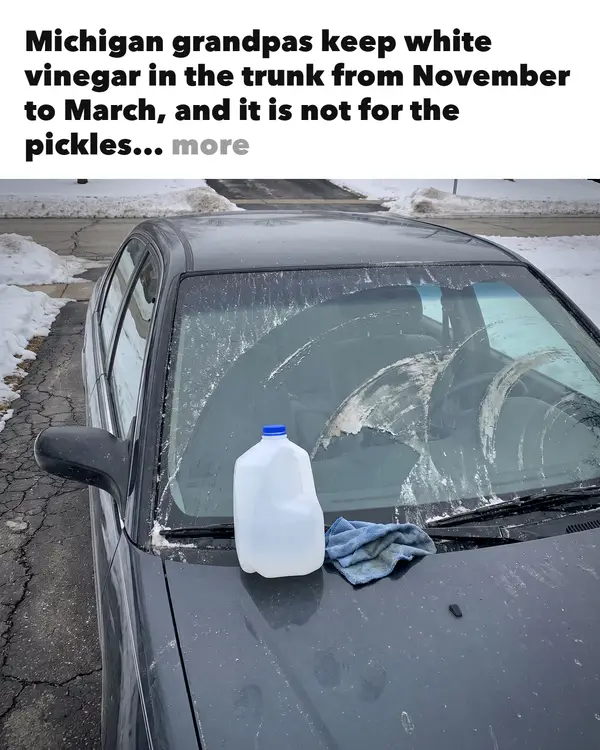
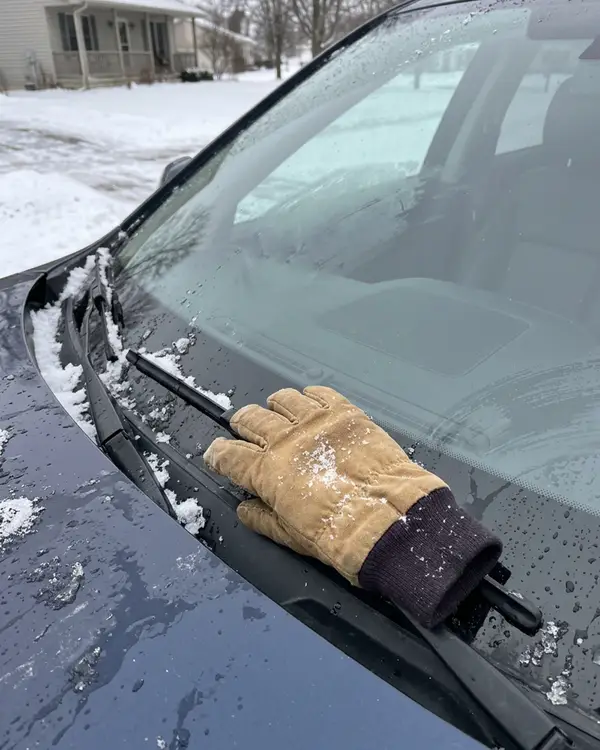
SafeRoad Magazine USA — Halos Worse Every Winter? Read This First
TestingImage

He Stopped Driving His Granddaughter to School

I hung my work glove on the nail by the garage door and told my daughter I couldn’t do the school run anymore. She didn’t push back, just nodded like she’d been expecting it. “It’s okay, Dad. Winter mornings are hard.” Winter mornings are hard. Like it was just something winter did to a man my age. Like I’d crossed some line and nobody had the heart to say so. But I had my reasons. Every cold morning, my windshield turned gray from the bottom up. I’d wipe it with my glove, and all I did was smear it into long, cloudy streaks. Three mornings in two weeks, I sat in the drop-off line and couldn’t read the brake lights in front of me. Once, the low sun came over the rooftops and the whole windshield went white. I didn’t see the crossing guard until she stepped out with her sign up. I stopped dead in the road. My granddaughter Ava was in the back seat. She didn’t say a word. That’s when I knew I wasn’t doing her any favors. So I gave the school run to my daughter and told myself it was the right thing to do. For five weeks, Ava rode with her mom. I stood at the kitchen window and watched them back out of the driveway at 7:20 every morning. I carried mail for thirty-four years. Never missed a delivery. Now I couldn’t even deliver my own granddaughter to school. I felt like a retired man with nothing left to carry. Then Ava’s school sent home a flyer. Grandparents’ Breakfast. Friday, two weeks out, 7:15 AM. Sign up by next week. She ran in with it. “Grandpa! Will you come? Please?” I looked at the date. December. Nineteen degrees in the forecast. Dark when we’d have to leave. “I don’t think so, sweetheart. Maybe your mom can take you.” Her face fell. “Mom has a meeting. It’s just for grandparents. Please?” My daughter pulled me aside later. “Dad, she really wants you there. Can’t you just drive slowly?” “I can’t see, Karen. In the cold, the glass goes gray before I’m out of the driveway. When the sun hits it, it goes white.” She was quiet for a moment. “Maybe the dealership missed something.” But I’d already been. Twice. The service manager ran the defroster, checked the heater, and told me everything was working fine. “It’s just winter, Walt.” My neighbor Ed swore by a sock of cat litter on the dashboard. A buddy from the post office said shaving cream. I’d tried the glass cleaner. The anti-fog wipes from the gas station. Two moisture bags from the hardware store. Every one of them held until about Wednesday. Then the gray came back. That night I lay awake thinking about Ava’s face. About the breakfast I was about to miss. About everything else I’d been quietly handing over. On Tuesday, I took the car to a glass shop to look at a chip in the corner of the windshield. While I waited, I did what I always do. I wiped the inside of the glass with my glove. A glass installer named Ray watched me do it. “Mind if I try something?” He pulled a clean white cloth from his pocket and wiped one small spot on the inside of my windshield. Then he held it up. Gray. Oily. I could feel it between my fingers. “That’s been on your glass the whole time,” he said. “Your dashboard gives off vapor, especially when it’s warm. When the glass gets cold, that vapor can settle on it as a thin film. Every time you wipe with a glove, you spread it around. It doesn’t come off. It just moves.” I stared at the cloth. “And in low sun, or in headlights,” he said, “that film lights up. The glass looks like it’s turning white. It’s the film catching the light.” Thirty winters. Hundreds of wipes a season. Every one of them just moving it around. “Glass cleaner works on the outside,” Ray said. “The defroster dries the air. Nothing like that is made to take a film off the inside.” Here’s what made me angry. Nothing I’d tried could have worked. Because nothing I’d tried was built for the actual problem. It wasn’t the cold. It wasn’t my car. It wasn’t me. It was a film on the inside of my windshield, and nobody had told me. That night, at 2:09 AM, I grabbed my phone and typed: “how to get the film off the inside of a windshield.” I found people describing the exact same thing. “It’s the inside of my windshield that is always streaky and causing glare.” “Can’t get the inside clean, then it streaks and fogs up.” Then I found ClearVision. A handheld applicator that holds the solution inside and releases it when you press it to the glass. An acetic acid solution dissolves mineral buildup. A surfactant lifts the oil. Then a thin hydrophobic layer bonds to the clean glass, and the company says it lasts up to three months per application. Their page showed how to treat the inside of the glass too. About ten minutes. There was a 90-day money-back guarantee, free US shipping, and up to 60% off. After everything I’d wasted, that guarantee is what made me click. I ordered it at 2:31 AM, straight from their website. It arrived four days later. That Sunday, I did the inside in the garage. I pressed the applicator to the glass, worked it across in every direction, and wiped it off with a damp microfiber cloth. Ten minutes. Then I took a clean white cloth and wiped the same spot Ray had. White. Clean white. I held it up to the garage light and turned it over. Nothing came off. Monday morning, I woke at 6:15. Twenty-four degrees. I scraped the frost off the outside, because frost still forms, that’s winter. Then I sat down behind the wheel. I waited for the gray. It didn’t come. My daughter came out in her coat. “Dad? It’s 6:40. Where are you going?” “I’m testing something.” I drove to the school. The sun came up over the Hendersons’ roof dead ahead, exactly where the glass used to turn white. It didn’t. I could see the whole street. The crossing guard. The line of cars. The edge of the lane. I drove the route twice. Both times, I never touched the glass. I never reached for the glove. When I got home, my daughter was waiting in the driveway. “You drove the whole school route. In the cold.” I told her about Ray’s white cloth, and the gray that came off it. “It wasn’t the cold, Karen. It wasn’t me. It was my windshield.” She looked at the glass. Then she looked at me, with tears in her eyes. “Everyone kept telling you it was just winter.” “They did.” “When it was the glass all along.” “Yes. It was.” Friday morning, Ava climbed into the back seat before I’d even turned the key. Backpack on, coat zipped, ready for twenty minutes. “Grandpa, are we going to be late?” “Not a chance, kiddo.” Seven miles. Dark and cold, the first light just showing over the fields. I saw every car, every stop sign, every kid waiting on a corner. Ava picked the radio station. “Mom never lets me.” At the breakfast, she walked me to a table full of grandparents and told the whole room: “This is my grandpa. He carried the mail for thirty-four years.” My throat got so tight I couldn’t answer. On the drive back, she said, “Can you drive me every day again?” “Every single day.” When my daughter picked her up that afternoon, she hugged me. “She hasn’t stopped talking about it. I’m just glad you’re back on the school run.” “I’m just glad I got my route back.” She laughed. “I’m sorry I said it was just winter.” If you dread cold mornings, if you wipe the glass with a glove, a sleeve or a paper towel and it only gets worse, please know it might not be the weather. There can be a thin film on the inside of your windshield, coming off your dashboard, that turns the glass gray in the cold and white in low sun. Glass cleaner doesn’t take it off. The defroster only dries the air. Wiping just moves it around. ClearVision removes that film from the inside in about ten minutes, then leaves a clear layer that lasts up to three months per application. It’s up to 60% off right now, with free US shipping and a 90-day money-back guarantee. If it doesn’t work on your glass, you get your money back. It isn’t winter. It isn’t your car. It’s the inside of your glass. And there’s finally a fix. I got my route back. My mornings back. You can too.

Loading the ad's image
SafeRoad Magazine USA — He Stopped Driving His Granddaughter to School
TestingImage

From the ads Sniped has collected from this page (11 so far, first seen Nov 2026). Reach is what Meta reports; no spend or sales estimates.