Advertiser

Barbara Jameson

kaizencookware.comMeta Ad Library

3
Running ads
none new in 30 days
Sep 2026
Advertising since
longest ad 2 months
85
Reach
running ads, summed
0% video
Formats
0 video · 1 image
2
Products advertised
1 shop

Sale Ends Tonight

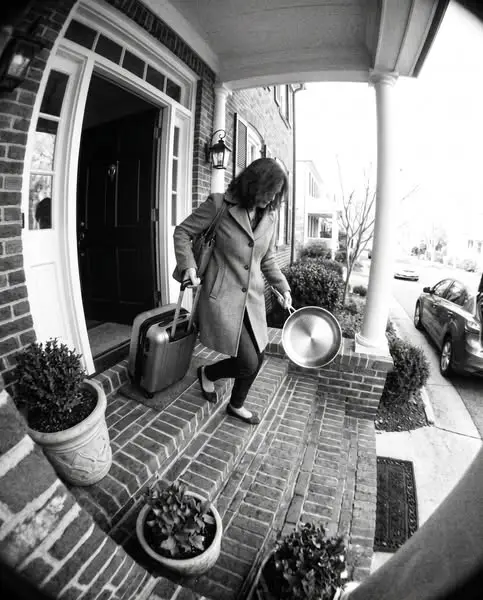
Am I the a**hole for stealing a titanium frying pan from an Airbnb and not feeling bad about it until the host messaged me three days later? Before you judge me, hear me out. Because I think half of you have done something like this or thought about it, and the other half are lying. My husband booked us a weekend in Charleston for our anniversary. Not a hotel. One of those restored carriage houses you rent, the kind with the good linens and a real kitchen and a little card on the counter that says "make yourself at home." We found out later the woman who owns it runs a restaurant downtown. That detail is going to matter. We checked in Friday night. Long drive. I was tired. We ate out, came back, slept. Saturday morning I got up first and decided to make us breakfast. Just eggs. The most boring thing on earth. I've made eggs ten thousand times in my life. I opened the drawer under the stove and pulled out a pan. And I just stood there. I don't know how to describe what happened without sounding like I need medication. But the second I picked that pan up, something shifted. It was heavy. Dense. Solid in a way that felt expensive in my hand before I'd even put it on the burner. And it wasn't black inside. No dark coating, no scratched-out ring in the middle, no flaking at the edges. Just bare, pale silver metal, smooth all the way across, like the cooking surface and the pan itself were one single piece of the same thing. I didn't know it yet. But I was holding titanium. I'd never held a titanium pan in my life. I didn't know they existed. I put butter in it. Cracked two eggs. Low heat. And they just moved. Slid around like they were on ice. No sticking, no dragging, no grabbing at the bottom. No brown crust forming on one side while the middle stayed raw, because there was no hot spot. The whole pan was the same temperature the whole way across. And when I tipped it over the plate, the eggs left in one piece. It didn't need help. It didn't need a spatula wedged under it. It just went. I stood in a stranger's kitchen at eight in the morning holding a frying pan with two hands like I was reading it, and I thought: why doesn't my kitchen work like this? I'm 46. I have been cooking on cheap coated nonstick my entire adult life. The kind that works beautifully for two months and then starts grabbing everything. The kind where the black coating scratches down to grey in the middle and starts peeling at the edge where the spatula hits it. The kind where you use twice the butter the recipe says and it still sticks. The kind my husband buys because he says a pan is a pan. A pan is not a pan. I know that now. I knew it the second those eggs slid. My husband ate them and said, "What did you do to these?" I said, "Nothing. I made eggs." He said, "That's the best egg I've ever eaten," and I sat there thinking, those are the same eggs I buy at home. The exact same eggs, the same butter, the same person cooking them. The only thing in that entire kitchen that was different from mine was the pan. Saturday night I cooked again just to feel it. Fish. The thing I never make at home because it welds itself to the bottom and comes off in shreds. On the titanium it came out whole. In one piece. Like a photograph. Sunday morning. Checkout day. I was packing our bags. My husband was outside loading the car. And I looked at the drawer under the stove. And I looked at my suitcase. And I thought about going home. About my kitchen. About the warped, scratched, flaking pan on my stove that I've been meaning to replace for three years but never do, because something else always comes first. The kids need shoes. The car needs tires. The dishwasher is making that noise again. The pan can wait. The pan can always wait. I looked at the drawer one more time. And I took it. I want you to picture this. A 46-year-old woman with a mortgage and a 401k and a clean driving record, rolling a titanium frying pan up in a dirty sweatshirt and burying it at the bottom of a suitcase under a week of laundry. Zipping it shut. Walking outside with her face perfectly arranged like nothing happened. My husband picked up the bag to put it in the trunk and said, "Jesus, what's in here?" I said, "Shoes." We drove home. I didn't say anything. I put it in the back of the cabinet like contraband, behind the crockpot and the waffle iron we've used once. For three days, I cooked with it. Every meal. I'd reach past my own pan on the stove and pull the stolen one out of the cabinet and make dinner and stand there watching things not stick. My little secret. My twenty minutes of feeling like a person who matters. Tuesday afternoon. My phone buzzes. Airbnb message. "Hi! Hope you both had a lovely anniversary. Quick awkward one. My cleaner flagged that the skillet is missing from the kitchen drawer." My stomach dropped through the floor. I started typing too fast. "I am so sorry. I don't know what came over me. I have never done anything like this in my life. I'll ship it back today. I'll pay for it. Whatever you want. I'm so sorry." Three dots. Then nothing. Then three dots again. Then: "Ha. Relax. You're the third person this year." Third person this year. "I stopped charging people for it," she wrote. "Now I just tell them where to buy their own. It's cheaper for everyone and honestly I'd rather have the good karma." "What?" "They're Kaizen Cookware. Premium titanium. It's what we cook on in the restaurant. You can just buy them off the website. Same pans, nothing special about mine." I was standing in my kitchen holding my phone, my face burning red, being given a shopping recommendation by a woman I had actively stolen from, who was being nicer to me than I deserved. "Here's the whole thing," she wrote. "Your pan at home is a cheap piece of metal with a black chemical coating sprayed on top and baked on. Three facts follow from that. One, a coating sits on the surface, so it scratches. Two, it wears through, which is why every nonstick you've ever owned was great for two months and useless by month eight. Three, it has to go somewhere when it comes off, and where it goes is your food." "Titanium isn't a layer," she wrote. "It's the pan. Premium titanium bonded straight into the metal, so there's nothing sitting on top to scratch, nothing to wear through, nothing to flake into anything. That's not a better version of your pan. It's a different object. It doesn't have a lifespan the way a coated pan does, because there's nothing on it that can die." "And it doesn't get worse," she wrote. "It gets better. Mine's four years old and it's slicker now than the day I unboxed it." "Also they're running a sale right now. Up to 60% off. Just order a set and mail mine back whenever." I ordered the titanium set before I put the phone down. I shipped her pan back the next morning. Priority. With a note that said: "I'm sorry. And thank you. For everything." Mine arrived three days later. I put them on the stove. Put the old scratched-up nonstick in the garage. Made eggs. Reached for the new one. Same weight. Same density. That same pale titanium surface with nothing on it to peel. And the eggs slid onto the plate in one piece exactly like they did in Charleston. But I'm standing in my own kitchen. In my own house. On a random Thursday. And I didn't steal them. My husband came in and looked at the stove. "Did you get a new pan?" "Yeah." "Is that the Charleston one?" "Same thing. Titanium. I bought it." "Why didn't we have these before?" Because you said a pan is a pan. Because the kids needed shoes. Because the car needed tires. Because the dishwasher was making that noise. Because I was never on my own list. Because I spent three years meaning to replace the scratched-up one and never did because something else always came first. "I don't know," I said. "But we have them now." First week. Nothing stuck. Not once. Not eggs, not fish, not rice, not the cheese that always welds itself to the bottom of everything. And I stopped reaching for the oil. That's the one I didn't expect. I'd been adding more butter and more spray every year without ever noticing I was doing it, quietly compensating for a pan that was dying under me. That just stopped. And the black flecks stopped. I used to find them in scrambled eggs sometimes and tell myself it was pepper. It was not pepper. It was my pan coming apart and going into my family. Titanium doesn't do that. There is nothing on top of it to come off. Second week. My sister came over for dinner. Watched me cook. Picked the pan up off the stove and just held it, the way you hold something when the weight surprises you. "Where did you get this." Not a question. A demand. I sent her the link. She ordered a set from her car before she got out of my driveway. Third week. I'd used it maybe forty times. It was slicker than the day it arrived. I stood in my kitchen holding it thinking: every pan I have ever owned in my life got worse the more I used it. This one got better. How is that even possible. And then I remembered. Of course it did. There's no coating on it wearing away. It's titanium all the way down. There's nothing on this pan that can get worse. Fourth week. My daughter. She's 17, she doesn't compliment anything, she communicates exclusively through eye rolls and one-word answers. Made herself eggs. On purpose. Unprompted. Came into the living room and said, "Mom, that pan is actually really good." I almost called an ambulance. So. AITA? For stealing a titanium frying pan from an Airbnb on my wedding anniversary? For rolling it up in dirty laundry like a criminal? For lying to my husband's face about what was in the suitcase? For cooking with it in secret for three days like it was contraband? Half of you are going to say I stole property and should be ashamed. The other half of you have felt that feeling. You've cooked in a rental kitchen or somebody else's house and had something come out right for once and thought: why doesn't my kitchen work like this? And then you've gone home to the scratched flaking pan on your own stove and told yourself it's fine and kept on surviving dinner every night instead of enjoying it. I was that woman for 46 years. Pans that grabbed everything. Pans that peeled into my food. Pans I kept meaning to replace but never did, because I was never important enough to make the list. Then I stood in a kitchen in Charleston and remembered what it feels like when the thing you use every single day actually works. I didn't need to steal it. I just didn't know I could buy it. I didn't even know titanium pans were a thing that existed. Now I do. Kaizen Cookware. Premium titanium bonded into the pan itself. Not a chemical coating sprayed on top of cheap metal. Nothing to scratch through. Nothing to wear out. Nothing to flake into your food. It doesn't stick, it heats evenly the whole way across, and it gets better the longer you own it. The same premium titanium restaurant kitchens cook on. Now on my stove. Legally. They're running up to 60% off right now with free shipping. 30-day money-back guarantee. You don't have to steal a titanium frying pan from an Airbnb. You don't have to bury it in your suitcase under dirty laundry. You don't have to lie to your husband about why the bag weighs forty pounds. You don't have to get a message three days later that makes your stomach drop through the floor. You just have to know where to buy it. Now you know. P.S. I left her a five-star review. It said: "Beautiful place. The most gracious host in South Carolina. Your skillet changed my life. I'm sorry about the skillet. I mailed it back." She responded: "We know. You're the third." P.P.S. My husband cooks now. Fourteen years of marriage and the man has made dinner four times this month. I asked him why. He said, "It's not annoying anymore." Fourteen years, and it turns out the problem was never that he didn't want to cook. P.P.P.S. The old nonstick is in the garage for camping. My 17-year-old used it once at the lake and came back and said, "Mom, that pan is a violation of my human rights." I have never been prouder. Your move.

Loading the ad's image
Barbara Jameson — Sale Ends Tonight
Promising

My granddaughter asked for the one thing I swore I would never give away.

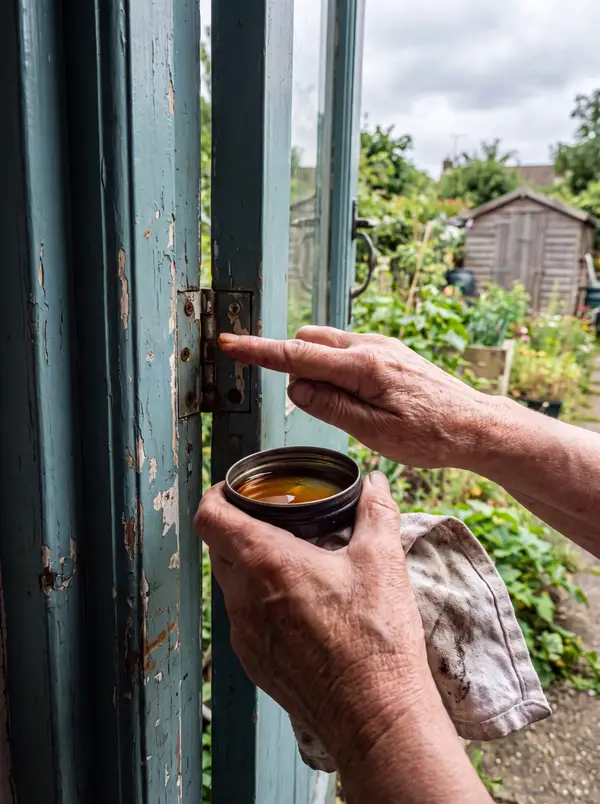
My husband died on a Tuesday, and by the Saturday my sister June was on my doorstep with a holdall, two oranges and her own pillow. She stayed six weeks. She never said anything wise about grief. She is not wise in that way. She put the bins out. She answered the door. She made tea nobody drank, poured it away, and made more. On her last day she oiled the hinge on my back door, because the squeak had been annoying her for six weeks. That is June. She does not talk about things. She fixes them, or she replaces them once, properly, and never thinks about them again. I am telling you this so you understand why I listen when my sister says a thing. June is seventy-one. She has never had a job you would read about. Twenty years on the till at the garden centre. Two boys raised. That is the whole of it. But June has a record. She bought her washing machine the year my eldest was born, and everyone laughed at her for paying double, and it is still going. It has buried two of mine. She planted her hedge as twigs when the rest of the street bought grown ones. Hers is the only hedge on the road that looks like something. She told me not to throw out Ray's watch when it stopped. It did not need replacing. It needed cleaning. It is on my windowsill right now, ticking. She does not chase things. She finds the good one, pays once, and keeps it forever. My sister buys things once. It took me forty years to understand that this is a skill, and not a small one. Her house is not grand. It is kept. The clock in her hall was our uncle's. The table still has the ring where our father put his tea down every night for thirty years. She could sand it out. She never will. Her coat comes from a shop that closed twenty years ago, and it looks better than anything I own. Everything in that house works, and everything means something. Those are June's two rules. It has to last, and it has to carry a person with it. I used to think that was a sad way to live, holding onto things. Then Ray died, and I finally saw it. She is not holding onto things at all. She is holding onto people. I am sixty-eight. Ray has been gone three years. I have three grandchildren, and every Sunday I cook for whoever turns up. Some Sundays that is nine people round the table. Some Sundays it is June and me and too many potatoes. Here is the thing I do not say at those dinners. Everything I have ever given those children has broken, worn out, or been outgrown. The scooters. The tablets. The robot dog that sang. The coat Nell had to have, which fit her for exactly one winter. I do not blame them. That is what things are now. They are made to be replaced, and children are made to grow, and nobody is at fault. But I am sixty-eight, and lately I think about what stays after me. Not money. There is not enough of that to matter. I mean a thing. One object. Something still being used in thirty years, in a kitchen I will never see, by somebody who says my name while they use it. I do not say this out loud. They would think I was being morbid. I am not morbid. I am a grandmother. Thinking ahead is the job. June comes early on Sundays. She says it is to help. It is to eat the bacon while we cook. Last month she found me at the bottom of the stairs with the photo album, doing that breathing that is not quite crying. She knows which album without asking. She knows which photo. She was at that wedding, eight years old, with a ribbon she hated. "Right," she said. "Tea." "I am fine." "I did not say you were not. Tea." She sat me down with the album open at Mum's wedding photo, and she said the thing nobody else has ever said to me. "You are allowed to miss her and Ray at the same time. Grief is not a queue. You do not have to wait your turn to love people." Then she ate the last piece of shortbread and told me my cardigan was on inside out. It was. We laughed until the kettle boiled. That is what sixty-eight years of sister sounds like. It is not deep every day. It is just there every day, like the clock in her hall. Then Nell announced she was leaving. My eldest grandchild, twenty-two. She has found a flat with a friend across the city, a glass hob and a sticking window, and she is happier than I have ever seen her. On her last Sunday she helped me dry up, which she has never once done, and I should have known something was coming. "Gran. Can I ask you something?" "You are going to anyway." "Can I take the old pan? The big one. Nana's one." My mother's pan. The one thing of hers I still use every day of my life. I said I would think about it. That is what I say when my heart has already answered and my head has not caught up. That night I got it out of the drawer and sat it on the table. It is the heaviest thing I own. My mother cooked on it for fifty years, and I have cooked on it for the twenty since, and I have never once thought of it as mine. It is hers. I am just the current hands. How do you give away your mother's hands? I washed it and dried it and put it back, and I still did not know. So I did what I always do. I took it to June on the Tuesday. I expected her to tell me to keep it. She is the keeper of things, after all. She did not. "I think you should let it go, love. It wants a young kitchen. Mum would laugh herself sick at it wrapped in a drawer." Then, buttering a scone like it was nothing, she said the sentence that changed the next thirty years of my family. "If you want to give that girl something, a pan that will still be working when she is your age is the thing. You can have the same one as me." I said her pans looked the same as everybody's. June put the scone down. "Mine is not the same as everybody's. Mine is the last pan I am ever buying. You had better sit down for this." She took it off a hook by the stove. Not out of a cupboard. Off a hook, like a tool. It was lighter than I was braced for. I had expected Mum's iron weight and got something I could hold one-handed, bad wrist and all. Two years she has cooked on that thing. Every day, she says, and I believe her, because June does not lie about objects. There are fork marks all over it, and every mark is the same silver as the rest of the pan. Nothing flaking. Nothing grey underneath. "That is because there is nothing on it," she said. "99% pure titanium, one solid piece with no coating. You cannot peel metal off metal." "They are all the same trick, your ones. Metal underneath, a layer sprayed on top, and the layer is the bit that dies." I did the maths standing in her kitchen. My first nonstick lasted three years. The next one, two. The one after that was sticking by its first Easter. The one in my drawer now spins on the hob like a record. Four pans, and every one of them in the ground. I had blamed myself for all of them. Too hot, wrong soap, cheap shop. I thought I was hard on pans. It was never me. It was the layer. Nell's last Sunday, I did the eggs. Same as every Sunday since she was four and stood on the step stool to watch. I cracked the second egg and something small and dark came away with it, and I picked it out with the shell, quick, the way you do, so the child does not see. Except the child is twenty-two, and she saw. "What was that?" "Shell." It was not shell. After lunch, while she packed her car, I held that pan up to the window light. The dark surface I had scrubbed for years was not the pan. Underneath, the pan was a different colour, and had been for some time. I do not know what the dark stuff was. Nobody ever told me. But I knew where the missing part of it had gone. Into eggs. Into potatoes. Into Nell on her step stool, and Ray in his last year, and everyone I have ever fed, a little at a time. Nobody was ever ill from my cooking. I am not saying that. I am saying the floor moved a little, at my own window, on a Sunday. And I dried up, and I waved her off, and I said nothing to anyone. That night I made two decisions, and they were principles, not purchases. Nell would take her great-grandmother's pan, because it had earned a young kitchen. And Nell would start her own life with something that was not already dying. One object, given once, that she could still be cooking on when she is my age. I do not have thirty more years of trial and error in me. That is the plain truth of it. So it had to be right the first time. That is not shopping. That is the whole job of a grandmother, finished in a single thing. I let it sit for a week. June does not get excited about things, and I wanted to see whether the feeling wore off. It did not. It got worse. I kept picturing Nell at sixty-eight, still cooking on the thing I chose for her at twenty-two. On the Monday I rang her. "All right," I said. "What is it called, this pan of yours?" "Kaizen," she said, like I should have heard of it. The whole idea is one sentence. The cooking surface is the metal itself, all the way down, so there is nothing on it to come off into food. "No PFAS, nothing to peel or flake into food," she said. "It does not rust and it does not need seasoning. It goes in the dishwasher, and you can use metal spoons, steel wool, whatever you like." "Flat base, will not warp," she said. "It will not spin on that girl's glass hob. Induction ready." "And they are independently SGS lab tested, with the paper in the box. That is how you know it is real and not one of the pretend ones." I wrote the name on the back of a seed envelope, which is where all important things get written in this house. Then she gave me the lecture, and I am grateful for it, because it saved my pride exactly once. "This is not one of your slippery Teflon pans," she said. "You heat it first, thirty seconds to a minute. Then a little oil. Then the food. That is the whole of it." "Thirty seconds," I said, as if that were a hardship. "You will forget once. Everyone forgets once. I just hope it is on your own eggs and not mine." I ordered two. One f

Loading the ad's image
Barbara Jameson — My granddaughter asked for the one thing I swore I would never give away.
PromisingImage

My oldest friend opened the wrong cupboard, found what I was hiding, and said nothing.

I locked my keys in the car once, with the engine running, in a supermarket car park in the rain. It was nearly midnight. Everyone else I rang would have been lovely about it, and useless. I rang Jo, because Jo always comes. She drove forty minutes in her dressing gown, with a coat over the top. She got the door open with a bit of wire from her shed. Then she called me an idiot all the way home. We have been best friends since we were nineteen. She is forty-five now. She cuts her own hair, keeps chickens, and has never once told me a comforting lie. Everyone needs one person who says the true thing no matter what. Mine is Jo. The thing about Jo is she is right early, and quiet about it after. When the whole school gate bought those toning trainers, she said they were just trainers with a bigger price. She said the smoothie maker would end up in the loft. Mine ended up in the loft. She said the posh face cream was the cheap cream in a heavier jar. She said the hot tub on the corner would be a frog hotel by June. It was a frog hotel by June. She kept her brick of a phone for years while the rest of us upgraded every autumn. When the cheap airline with the funny name folded, it took our holiday deposits with it. She had booked the boring one. I had teased her for months. She has never once said I told you so. Not once in more than twenty years. Which is almost worse, if I am honest. She reads the small print. She keeps her receipts in a biscuit tin. She buys the boring thing, and the boring thing outlives the exciting thing, every time. I used to think it was a talent. Now I think she just never wants anything badly enough to lie to herself about it. Her house is small and warm, and nothing in it is new. A dog with one ear up. A radio that gets one station. Mugs with chips in them that she will not bin, because they hold the right amount of tea. A sofa older than my marriage, with a blanket over the bad spring. Her kettle is older than my children. It has outlived three of mine. When something breaks, she takes it apart on the table, swears at it softly, and puts it back together. Her garden is mostly potatoes and a bench her dad made thirty years ago. There is a drawer of zips and buttons and fuses, all labelled in pencil. She has a torch that works, and spare batteries, and candles that are not just for show. When the power went out for a whole day last winter, half the street ended up in her kitchen. Everything she owns has a story and a scar, and she can tell you both. Nothing in her house was bought to impress anyone. Somehow the whole room impresses you anyway. Now the thing I have never told Jo, or anyone. I am the careful one. I book the dentist. I do the birthday lists. I read the school emails to the bottom. I read reviews for a week before I buy anything. I follow the care cards. I wash things on the setting the label says. And still I keep getting taken. There is a drawer in my house that I cannot open in front of people. The hair thing that promised a salon blow dry. The ice roller. The posture corrector that nearly stopped the blood to my arms. The jeans that were going to change my life. I cannot throw them out, because of what they cost. I cannot look at them, because of what they cost. Every single time, I had done everything right. That is the part that stings. Not the money. The being careful, and still being fooled. You start to think there is something about you. Some smell the adverts can sense. My husband thinks I am good with money, and I let him think it. Shame needs silence. I gave it plenty. That was me, until a Thursday last month. Every second Thursday, Jo comes round with the same bottle of red. The eight pound one. We have done it for years, through babies and funerals and one divorce. Hers. We sit at my table and solve nothing, and it fixes everything. When I got my fringe cut in, she looked at me for a long moment. "You hate it," I said. "No," she said. "I am deciding how long I have to like it before I am allowed to hate it." "Twenty minutes," I said. "Then for nineteen more minutes it is beautiful," she said. That is us. She will tell me my fringe is a crime, then stay until midnight doing my ironing. When my dad died, she took my kids for the whole weekend and brought them back with my laundry done. She knew my husband was a good one before I did. At the reception she leaned over and said, "This one is a keeper." Then she went back to criticising the DJ. She was right about both. I trust her more than I trust most of my own thoughts. So when Jo goes quiet, the quiet is loud. Last month, on a Thursday, I was up to my elbows in a chicken. Jo offered to do the mushrooms, and went looking for something to do them in. She opened the wrong cupboard. The end one. The one nobody opens. I knew it by the quiet. Jo does not do quiet. I turned round, and she was standing there holding it. The ceramic pan. The expensive one. The one from the back, behind the cake tins. She looked at it. She looked at me. Then she put it back, shut the cupboard, and cooked the mushrooms in a saucepan. She said nothing. Not one word. And that was worse than anything she could have said. We ate. She admired a school drawing. She did baths. Nothing. So when the kids were down, I got the pan out myself and put it on the table between us. She turned it over. She ran a thumb across the middle. She read the writing on the bottom. "How long did it last?" she said. "It started grabbing at three weeks," I said. "By eleven months it was done." She nodded like a nurse reading a chart. "You told me," I said. "When I bought it. You said it was still a coating, whatever they called it." "And you bought it anyway," she said. "So I shut up. What was I going to say?" "I am asking you now," I said. "They did not sell you a pan," she said. "They sold you a coating with a handle on it." The middle had gone dull, where the heat lives. There was a brown ring where the eggs welded on. A grey patch that no amount of soaking would shift. One scratch, from the one time somebody reached for a metal spoon. Probably me. I blamed my son anyway. The outside still looked brand new. That was the insult of it. It looked like a good pan. It photographed like a good pan. She had me run a nail across it. Where the shine had gone, it felt like paper. "You nursed it," Jo said. I did. I did everything on the card. Low heat. Soft sponge. Wooden tools. I hand washed that thing for eleven months like it was a newborn. First the eggs. Then the pancakes. Then everything. More oil. Then more oil. Then so much oil I was shallow frying out of spite. Then the soaking. The bicarbonate of soda. The special cream cleaner for eleven pounds. Then the back of the cupboard. And somewhere in there, I decided it was me. One hot ring. One wrong spoon. One time I answered the door with it still on. I found a way to make it my fault. I am good at that. Jo sat back and asked the question nobody asks. "Why did you buy it?" she said. And I told her the true thing, out loud, for the first time. When my daughter was four, we made pancakes on Sundays. She stood on a chair with the whisk, in the apron with the ducks on it. One Sunday I saw a fleck missing from the coating of the old pan. The size of a fingernail clipping. A little black crater in the grey. I never found it. I looked while I flipped. Not on the spoon. Not on the side. Not on the plate. She ate her pancakes with syrup, and she was four, and she was happy, and I watched every bite. I binned the pan that week. I told nobody why. And I bought the ceramic set. The good one. The heavy box. The box said it was the safe one. The adverts said it was the safe one. I needed somebody to say it. That was my research. A missing flake and a promise printed on cardboard. Jo was quiet for a while. Then she said the thing I had been waiting a year to hear, without knowing I was waiting. "None of that was your fault," she said. "Not the flake. Not the sticking. Not the money. A layer is a countdown. You were just holding it when it hit zero." I made my rule that night, at my own table. I said it out loud, so I could not take it back. I am never paying for a layer again. Not the old stuff. Not ceramic. Not the fancy hybrids with the metal dots. "Different chemistry," Jo said. "Same arrangement. The layer is the product, and the product is the part that wears out." Once you see it, you cannot unsee it. The whole shelf is the same pan in different costumes. "What do you cook on, then?" I said. "Kaizen," she said. "It is one solid piece, 99% pure titanium. The surface you cook on is the metal itself, all the way down. There is nothing on it. That is the whole trick." "Nothing sprayed. Nothing glued. Nothing painted. So nothing to wear out." "Metal spatula. Steel wool. The dishwasher. It does not rust, and you never have to season it." "Mine is older than your fridge, and it cooks better now than the day it came." "The base stays flat, it works on induction, and they give you a 100 day trial and a lifetime warranty. Nobody offers that on a thing they expect back." I wrote the name on the back of my hand, because that is where we are now. "There is a catch," she said, and I braced. "You give it a minute on the heat before the food goes in. Then a little oil. Then the food." "It is not Teflon. A cold egg in a cold pan will stick, and you will be furious, and it will be your own fault." I said I thought I could manage sixty seconds. Jo looked at my fringe and said nothing. First morning, I did it my way. Cold pan. Egg straight from the fridge. A toddler on my leg and eleven years of old habits in my wrist. It stuck like it had been welded. I stood there scraping my first egg out of the pan that was supposed to change everything. I nearly put it straight in the end cupboard, next to its friend. Instead I sent Jo a photo of the wreckage. "Did you heat it first?" she wrote. I looked at the message for a long time. "No," I said. "Warm pan, little oil, then the egg," she said. "You gave it no chance at all, you plank." Next morning I gave it a minute. A swirl of oil. The egg slid round the pan like it was on ice, and out onto the plate in one piece. I laughed out loud, alone, at eight in the morning, at a frying pan. Here is the part I did not expect. I told my sister. It just fell out of me one Sunday. I spent a fortune on a ceramic pan, I said. Followed every rule. Killed it in eleven months. Hid it in a cupboard for a year. She went quiet. "Mine died in nine months," she said. "I thought it was me." So we put it in the group chat. The school mums. The old work lot. Four of us had the same story. Four dead pans in four cupboards, and every one of us had privately decided she was the idiot. None of us were. I want to say that twice. None of us were. My sister bought one that week. My mum has put it on her birthday list, which is the most Mum sentence ever written. There is no countdown here. No code, no timer, no breathless bit at the end. The pan is called Kaizen, and you now know everything I know. I checked the small print myself, twice, because of course I did. I do not know if you need a new pan. Maybe yours is fine. Maybe you already have a Jo. But if there is a cupboard at the end of your kitchen with something in it you cannot use and cannot throw out, then this is me, opening it. It was not you. It was never you. It was the layer. I am off to do the school run. There is an egg with my daughter's name on it when she gets in, and I am not thinking about the pan at all. Jo drove forty minutes in her dressing gown to tell me I was an idiot. This is the return trip.

Loading the ad's image
Barbara Jameson — My oldest friend opened the wrong cupboard, found what I was hiding, and said nothing.
Promising

From the ads Sniped has collected from this page (4 so far, first seen Nov 2026). Reach is what Meta reports; no spend or sales estimates.