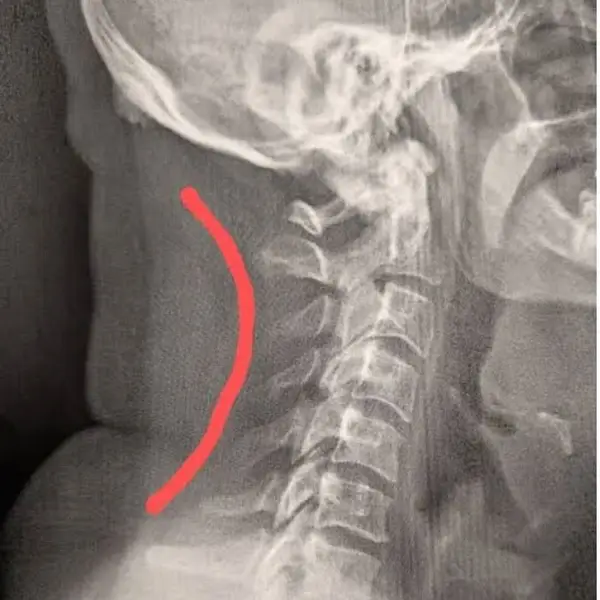
Read This If Your Neck Pain Keeps Coming Back 👆
I Ordered the KyroLabs CerviFlex on a Tuesday Night... And then I panicked. Did I really just spend that much on a neck traction device? What if it hurts? What if it doesn't fit my neck? What if it's just another posture gadget that feels good for a few days and then ends up in the closet beside the massage gun and posture corrector I stopped using? If you just ordered... Or you're about to order... Let me tell you exactly what happened. Day by day. So you know what to expect. IT ARRIVED FRIDAY AFTERNOON After a few business days. The box was heavier than I expected. The CerviFlex looked way more substantial in person than it did online. Not like one of those inflatable neck pillows. Not a foam block you lie on and hope for the best. It actually felt like a real traction device. I picked it up and immediately noticed the difference. The whole design was built around positioning the head and neck, not just pulling my shoulders backward. That had been my problem with everything else. I had already tried a shoulder posture corrector. All it did was yank my shoulders back. My head was still sitting forward. I tried massage devices. They loosened the muscles for maybe twenty minutes. Then the tightness came right back. I tried chin tucks. Wall exercises. YouTube stretches. All of it. So I was skeptical. I adjusted the CerviFlex, sat down, positioned my neck, and started slowly. I did not crank it as far as possible. I just used enough traction to feel a gentle stretch. About ten minutes. Then I stopped. That was Friday evening. And my first thought was: Okay... that feels different. SATURDAY, DAY 1 Woke up. Already expecting my neck to feel sore from trying something new. It didn't. The usual stiffness was still there, but that compressed feeling at the base of my neck wasn't as noticeable. You know that feeling after sitting at a computer too long where your head feels like it's getting heavier as the day goes on? That. It felt slightly easier. Nothing dramatic. I wasn't suddenly standing perfectly straight. I wasn't going to convince myself one session had fixed anything. So I did another ten-minute session that morning. Slow. Comfortable. Done. The biggest surprise was how easy it was to work into my routine. I wasn't lying on the floor doing fifteen different stretches. I wasn't trying to remember whether my chin was tucked at the right angle. I sat down. Adjusted it. Let it do the stretching. SUNDAY, DAY 2 Woke up. Used the CerviFlex again. That afternoon I noticed something. Normally, after an hour or two on my laptop, I would catch myself doing the same thing. Head forward. Shoulders rounded. Chin sticking out. Then I'd force myself upright. Five minutes later... Right back into the same position. That day I wasn't fighting myself as much. My neck felt less tight when I turned my head. And when I tried to sit more upright, it didn't feel like I was forcing my head backward against a rubber band. Could have been coincidence. So I kept going. MONDAY, DAY 3 This was the day I was waiting for. Day three or four is when almost every neck gadget I'd bought before stopped feeling impressive. The massage gun felt amazing the first night. By the end of the week I barely noticed it. The posture brace felt like it was doing something because my shoulders were pulled back. Then I realized my neck was still hanging forward. The cheap neck stretcher lasted three uses before it went into the closet. So I did another CerviFlex session. About fifteen minutes this time. And afterward I stood up and immediately noticed something. My neck felt less compressed. That's the only way I know how to explain it. Not numb. Not loose like after a massage. Just like somebody had created a little more room where everything usually felt jammed together. That was the first time I thought: Okay... maybe this is actually doing something different. WEEK 1, THE FULL PICTURE Before CerviFlex: Woke up stiff. Head drifted forward whenever I stopped thinking about posture. By mid-afternoon the muscles at the base of my neck felt exhausted. Turning my head after sitting for a long time felt tight. Massage helped temporarily. Stretching helped temporarily. The shoulder posture corrector pulled my shoulders back but did almost nothing for the position of my head and neck. I spent the entire day reminding myself to "sit up straight." After CerviFlex: I was using it around 10 to 15 minutes a day. My neck felt less compressed after sessions. Turning my head felt easier. That end-of-day tightness wasn't hitting me as hard. And maintaining a more natural head position started feeling less like something I had to consciously force every thirty seconds. Was my posture suddenly perfect? No. But for the first time, I felt like I was working on the actual area that bothered me instead of everything around it. WEEKS 2 TO 4: WHAT I NOTICED Week 2: Still using it. Every day. About 10 to 20 minutes. I could work at my desk longer before that familiar neck fatigue started creeping in. I still took breaks. Still adjusted my monitor. Still tried not to sit like a shrimp for six hours. But my neck wasn't getting angry as quickly. And I stopped reaching for the massage gun every night. Week 3: My wife noticed before I did. We were eating dinner and she said: "Your head doesn't look as far forward." I thought she was joking. She wasn't. I took a side photo and compared it to one from a few weeks earlier. I wasn't magically transformed. But I could see what she meant. My head looked like it was sitting more naturally over my shoulders instead of constantly drifting out in front of me. That got my attention. Week 4: By then CerviFlex had become part of my morning routine. Coffee. 10 to 20 minutes of traction. Then work. I didn't have to talk myself into doing it. And that mattered more than I expected. Because every other "solution" I'd tried required me to constantly do something. Pull my shoulders back. Remember the stretch. Hold a chin tuck. Roll a massage ball against the wall. With CerviFlex, I adjusted it, relaxed, and let the traction do the work. THEN I TESTED IT I got curious. So I skipped it for several days. Not intentionally at first. I was traveling and didn't bring it. By the third day I noticed the old compressed feeling starting to creep back in. That heavy feeling at the base of my neck. The urge to constantly roll my shoulders. The stiffness after looking down at my phone. I came home. Used CerviFlex again. And that was when I stopped thinking of it as another gadget I'd bought online. It had become something I actually missed when I didn't use it. WHY I'LL NEVER GO BACK TO JUST A POSTURE BRACE OR MASSAGE DEVICE Here's what I didn't understand before. My shoulder posture corrector was working on my shoulders. My massage gun was working on tight muscles. Neither one was actually giving my cervical spine traction. That's why everything felt temporary. I could pull my shoulders backward all day long, but that didn't necessarily change the compressed, forward-head position I was constantly falling back into. And massage could make tight muscles feel better. But it didn't create traction. CerviFlex is different because it is designed around cervical traction. The device supports the head and gradually applies traction through the neck at a 26° angle, helping create a controlled stretch through the cervical area rather than simply pulling the shoulders backward. That's what felt different to me. Instead of constantly trying to force myself into "good posture," my neck finally had a chance to relax out of the position I had spent years putting it in. No aggressive stretching. No hanging weights from my head. No complicated routine. Just controlled cervical traction for around 10 to 20 minutes a day. You buy it once. Use it at home. And it comes with a 30-day trial and a 1-year warranty. WHAT YOU SHOULD EXPECT IF YOU JUST ORDERED Day 1: Take your time setting it up. Don't crank the traction as far as it goes because you think more pressure means better results. Start gentle. Get comfortable. Let your neck adjust. Day 2 to 3: This is where you start paying attention to the little things. How compressed your neck feels after working. How easily you can turn your head. How much you find yourself rolling your shoulders. Whether sitting upright feels forced or more natural. Day 5 to 7: The routine starts becoming automatic. 10 to 20 minutes. Same time each day. You're not trying to crack your neck or chase some dramatic sensation. You're just letting the traction do its job. Week 2 to 4: This is where I started noticing the bigger picture. Less neck tension. Less of that compressed feeling. Easier head movement. Less dependence on massage. And maintaining a more natural head and neck position started feeling easier instead of something I had to constantly force. WHAT IF IT FEELS WEIRD THE FIRST TIME? Give it a little time. Start with less traction. Make sure your head and chin are positioned correctly. Do shorter sessions first. Then gradually adjust based on comfort. This should not feel like you're trying to survive some medieval stretching machine. Gentle traction. Relax. Let the device do the work. If you have a recent neck injury, previous cervical surgery or fusion, severe symptoms, weakness, numbness, dizziness, or a diagnosed spinal condition, check with your healthcare professional before using cervical traction. But for most people? Start gently. Stay consistent. Then pay attention to how your neck actually feels. IF YOU JUST ORDERED... Take a breath. When it arrives, set it up. Start gently. Use it for 10 to 20 minutes. Stay consistent. Then watch what happens to the neck tension, the constant stretching, the shoulder rolling, the feeling that your head is always being pulled forward. Your shoulders might not be the real problem. Your neck may have been asking for something completely different. Controlled traction gives it that. IF YOU HAVEN'T ORDERED YET... Right now you can try the KyroLabs CerviFlex with a 30-day trial. Every CerviFlex is also backed by a 1-year warranty. If you've already spent money on massage devices, posture correctors, pillows, and stretches that only give temporary relief, this is designed to address the cervical area itself. 26° cervical traction. 10 to 20 minutes a day. Use it at home. No complicated exercise routine. No constantly reminding yourself to pull your shoulders back. 👇 Tap below to try KyroLabs CerviFlex. https://www.kyrolabs.co/products/kyro-labs-cervical-traction-device
Loading the ad's image