He knelt in an Amish shed
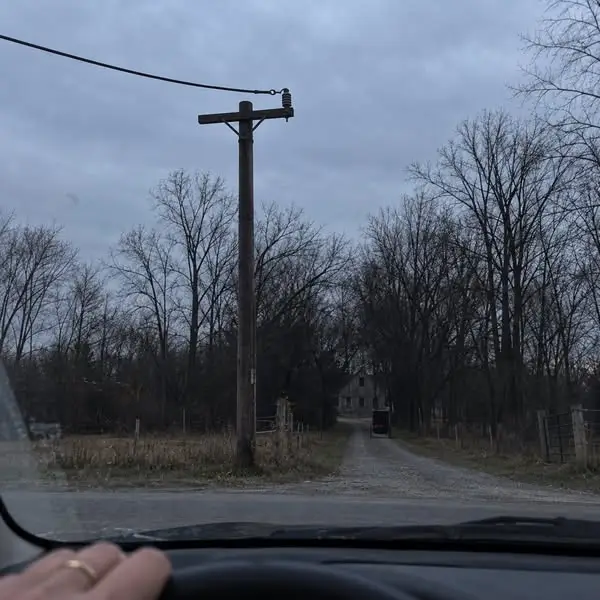
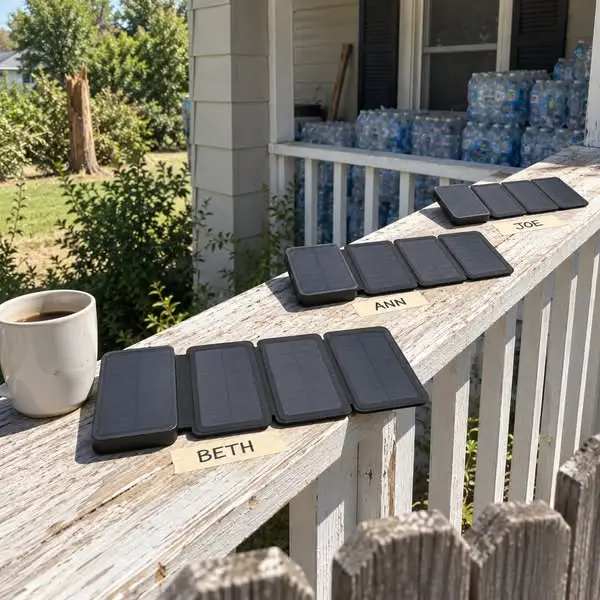
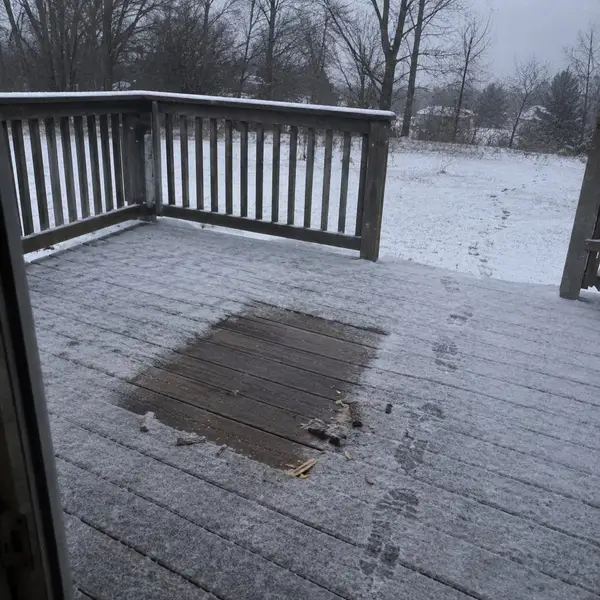
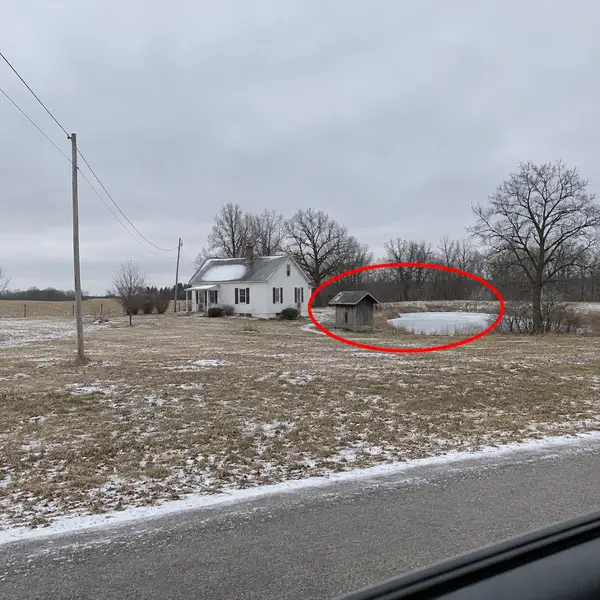
I went for eggs and found my neighbor's son on his knees in an Amish shed, in uniform. Danny had a notebook on one knee, and he was copying down how one small panel was wired while the old farmer stood over him. I asked him why. He never stopped his pencil. He said they have told his base to make its own power, if an enemy takes the grid down, and nobody has told his mother. I'm sixty-six and I've kept my house going alone since my husband died. I drove home with the eggs on the seat and went straight to my kitchen drawer of batteries, the one I'd been so proud of. Straw, pressed into the knees of a clean uniform. That's what I saw first. I stood in the door of the Yoders' shed, my empty egg carton in my hand. The Yoders are the Amish family down the road, and I go there every week. The boy in the uniform was Danny, my neighbor Joanne's son. I've known him since he was stealing my tomatoes. He was due back at his base by dark, which explained the clothes... ...but it didn't explain the notebook on his knee. Or old Eli Yoder standing over him, while he drew the wires coming down from one small panel. "Danny, what on earth?" I said. He answered the notebook, and the pencil kept moving. "They've told my base to make its own power, if an enemy takes the grid down. "And nobody's told my mother." He meant to rig the same at Joanne's before he left. This was one he could see working, so he was copying it wire by wire. I took one picture from the doorway to show her. I don't know why... I think I wanted somebody else to have seen it. By dark he was gone. Eli went back to his cows, in no hurry. He's past seventy. His wife Ruth counted eggs into my carton, one at a time. As if nothing had been said in her shed. For years I'd paid that woman and privately called her people backward. Kindly, of course. Many Amish homes like theirs keep going on very little. The power line stops at the last pole before their lane, and every week I drove past that pole thinking, those poor people. That day I stopped there with my hands on the wheel. A buggy was going up the lane like any other evening. But behind me, everything I count on hung off that wire. I couldn't have said it then. I can now: no power, no outlet, no light or phone. I drove home, left the eggs on the seat and went straight to my kitchen drawer. I'm sixty-six. Harold's been gone two years, and I've kept this house going by myself ever since. I mean to stay in it on my own. I won't be the one somebody has to come check on. That drawer is how I know I'm managing. Batteries sorted by size, and on every row a strip of masking tape in Harold's handwriting: GOOD. I'd never checked ONE. I was always comfy and safe knowing he was taking care of everything. So I kept his drawer neat and called that taking over. A few months back we had one dull little outage. I stood at my window with a flashlight going yellow, shaking it to keep it lit. The drawer was right there. I never went to it, because if those were no good either, I didn't want to know. Every house between me and the Yoders was black. Across the field one window had a small flame in it, same as any night. My sister Carol phoned from two hours away. "It was nothing," I told her, with my other hand still shaking that flashlight. The truth would have had her in my driveway by morning, packing a suitcase for me. In bed I thought, they would not have noticed. So I did something about it. I'd bought a little one-panel solar charger at the pharmacy after that outage. The morning after the shed I set it on my kitchen sill. On the outside, in full sun, so the glass could never be the excuse. I phoned Carol to feel better. "You've got a whole drawer of batteries," she said. "You're fine." I said I knew. That made two lies. I held on to Danny's picture for a week, because showing Joanne meant admitting I had no answer of my own. Joanne is about seventy, and she came through a long outage years back. When she came over for coffee I finally slid the phone across the table. She looked at her boy on his knees, handed it back and stirred her coffee. "He told me himself before he left. "Told me not to wait, with everything going on." I kept waiting for her to be frightened. Instead she looked around my kitchen and asked me one thing. "Could you keep doing this if the power never came back?" I went through it out loud, slowly. Food, for a while: the fridge would spoil and I'd haul it out, but there's a shelf of cans. Past that it gets ugly. A night in the car to charge a phone. The medicines I couldn't check, with my list dark on the tablet. Heat... No. That was the first honest word I'd said about any of this. That's what Carol's spare room is for. It's made up whenever I want it, and I'd go. But a room at Carol's is a place to go. It doesn't keep the light and the phones going in my own home. My own home was what she'd asked about. "Batteries," I said, and I carried the drawer to the table like the good silver. On a normal night that drawer is all anybody needs. I checked them for the first time, with Joanne watching. Under Harold's GOOD, some had gone furred and white. The rest were fine, and they'd stay fine until they weren't. Every battery in that drawer is a countdown. "He wrote GOOD for the kind of night he knew about," I said, and I left the tape on. The car will charge a phone with the engine running, and the tank only goes down. "You can always bring yours to my generator," Joanne said, "as long as I've got gas. "But that's me handling it, not you." That left the light and the phones. "No power, no outlet, no light or phone," I said. Saying it to somebody was worse. That farm across the field would not have noticed. I'd be back at my window shaking a flashlight. I went out and got the charger off the sill. Days in full sun, I told her. But it had barely moved. Two more like it sat at the back of the drawer, from before. My eyes went to them. I carried it to the kitchen trash and dropped it in. I stood there... and I lifted it back out. "It isn't even broken," I said. That's what got me. What I finally understood at that table has nothing to do with religion. I can't tell you why the Yoders live as they do. I can tell you my house hangs on the outlet. If someone switches the grid off on purpose and keeps it off, every comfort in it goes too. Once the outlet's dead, all I've got is what I've stored. The batteries and the gas in the tank each go down in their own way. "That drawer's a pantry," Joanne said. "You eat out of it, and one day it's empty." "I can see that," I said. "But a garden comes back." She was looking past me at the sill, with the sun on it. That's why a house full of backups can still end up sitting in the dark. It's just how a house got built. But that charger was supposed to be my garden. It had sat in that same sun for days, and I still didn't know why it had done so little. "That's a lot from one boy in a shed," I said. "Look it up." So I did, on my phone, at my own table. What I found was the head of the FBI. Telling the Senate our enemies are getting into America's power and water "for use in a future crisis or conflict." I read it out loud. Future. I read that word twice. It's still an if, same as Danny's. But his base isn't counting on the outlet. "I'd need something that fills back up with no outlet," I said, mostly to myself. "That really keeps up with the sun. "That I can run with nobody to ask." "My boy ran out of leave before he ran out of wiring," Joanne said. "He sent me this instead." She opened her purse. From between her glasses case and her keys she set a thin black folded thing on my table, about the size of a large phone. "It's called TerraCell." All that wiring he never finished, and here was his mother with this little solar battery called TerraCell in her handbag. I held up my pharmacy charger. "I already have a solar one." "That's one panel," she said. "This charges 4x faster from the sun than a one-panel solar charger, because it has four." She carried it out to the same sill, in the same morning sun, and opened it. Three more panels folded out beside the first like a book. All that black next to my one small square. So my charger hadn't lied to me. It was one panel trying to do this job. "Mine sat out in that sun for days," I said. "How do I know this one comes back?" "Every sunny day puts its power back," Joanne said. "Every one. "Last night this lit my hall and did my phone. "This morning it sat on my porch rail. "Now watch it do yours." She brought it in and asked me again. This time about what had come out of her purse. "Could you keep doing this if the power never came back?" She ran a cable to my low phone and one to my tablet with the medicine list. Her own phone made three at once, and she poured more coffee. One full charge holds up to five full phone charges, she said. And it charges them fast. Its own light is another job altogether. She turned it on and pointed it down my hallway. I could see all the way to the bathroom door. It needs no fuel and no outlet. It folds thin and goes with you. Mornings, it opens in the sun. In her long outage she'd sat in her car with the engine running, just to charge a phone. She quit when the gas gauge scared her. Now hers goes out on the porch rail when the sun's up and back in her purse after. For the light and the phones, that was a yes. It was the first yes I'd gotten all morning, and this one didn't need Joanne's generator or anybody's gas. If I ever take Carol's room, mine rides along in my purse. Hers stays with Joanne, so I ordered my own that day. You can't get it at the pharmacy. It's sold only through the link further down. When it came I did what she told me, one thing at a time. Open it in the sun. Plug in what you need, or turn on its light. Fold it and keep it close. Mine goes on the outside sill in the morning sun. The power was fine that night. I shut off every lamp in the house anyway, because I wanted to know. I went down the hall to the bathroom by its light, with my phone going by the bed. In the morning I opened it on that same sill, in the same sun that charger had sat in for days. That night its light came on again and my phone filled again, with nobody to ask. Next morning, same sill. Next night, the same. Not one battery in my drawer ever did that. For a few mornings I went to look at it, the way I'd looked at that charger. One morning I was halfway through my toast before I noticed I hadn't gone. Carol heard it first. "You sound different," she said on the phone. So I told her the truth about that outage. The flashlight I kept shaking, and "it was nothing." "I know," she said. "You've been saying it's nothing since Harold." When she visited, she stood at my kitchen window. This same woman who'd told me I had a whole drawer pointed through the glass at the sill. "What is that?" Before she left she asked where to get one. The spare room's still made up, and on a cold night with no power I'd be in it. I can say that now, and it costs me nothing. Nothing has happened here, I should say. The lights are on. Last week I pulled the same drawer and asked it the same question, out loud, by myself. Harold's GOOD is still on the tape, and the good batteries still do their job, so they stay. But the light and the phones got a yes this time. On the other side of the glass, TerraCell was open on the sill in the morning sun. I can answer for my own house. Whatever I'd been carrying since he died came off me right there, with a drawer open. I didn't make a speech, I'm not built for it. It was egg day, so I got my keys. Nobody was kneeling in the Yoders' shed. Just a flattened patch of straw, and that small panel. I looked at it longer than a woman buying eggs has any reason to. Eli nodded the way he always has. Ruth counted my eggs into the same carton. That farm hasn't changed one bit. There I was with TerraCell folded in my bag on the seat, catching up. So who was backward? I can't tell you what's coming. Danny couldn't either. He could only tell me what they'd told his base, if an enemy takes the grid down. The hours he had, he spent on his mother. With everything going on, I'd rather know where my house stands. No power, no outlet, no light or phone. Yours may be built the same way mine was. So tonight, pull your drawer. Ask it Joanne's question: could you keep doing this if the power never came back? And look up what the head of the FBI told the Senate. Keep what's in the drawer. I kept mine. Then put a TerraCell in every house and every car you worry about. Your own, your daughter's, your mother's apartment. Each of them has its own light and power that comes back with the sun. It has to be in the house before the grid goes dark. You won't be ordering one then. You'll have what's in the house. It doesn't take being brave. I did mine between my coffee and the dishes. More than 10,000 families have bought TerraCell. It's sold only here, never in stores. Not on Amazon or eBay either. What you keep is your family's light and power coming back. On your own, however long the grid stays down. You get a 120-Day Money-Back Guarantee: 120 days, any reason, every penny back. There's a 1-Year Warranty too. Set it in the sun the week it comes. Judge it with your own eyes. https://terracell.quietprotector.com/story P.S. Danny's picture is still on my phone, him on his knees in that straw. His mother's answer is in her purse, and mine's in my bag. P.P.S. If you've got a sun charger or two at the back of a drawer, so do I. I won't ask you to take my word for this one. You have 120 days, any reason, every penny back. P.P.P.S. It's up to 70% off right now, our lowest price ever. Free gifts come with every order. One more thing. When it comes, take it straight to the sunniest sill you have, outside the glass. Nothing in your drawer ever gets back what it's used. But that sill gets the sun every morning. This story is dramatized, and the people in it are fictional. https://terracell.quietprotector.com/story
Loading the ad's image