“My colleague's daughter married a dog trainer. At the reception, the trainer's father stood up and said something none of us have forgiven him for. He was right about everything.
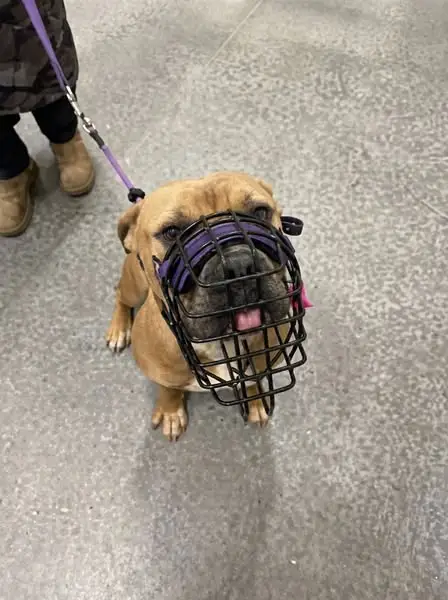
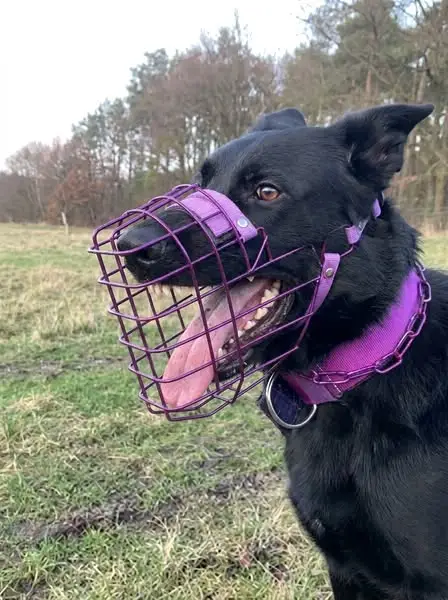
My colleague's daughter married a dog trainer last fall. At the reception dinner, the trainer's father stood up during the toasts and looked at our side of the table — four veterinarians and two veterinary behaviorists — and said something none of us have forgiven him for. He was right about everything. My name is Dr. Karen Patel, DVM. I've been treating dogs with behavioral conditions, leash reactivity, and fear-based aggression for thirteen years at Maplewood Animal Clinic. Before last October, I would have told you that what I'm about to share wasn't possible without medication and behavioral intervention. Here's what happened. Dr. Sarah Mitchell is my colleague. Her daughter Emma is a veterinary behaviorist — board-certified, top of her residency class, the kind of specialist other specialists referred their difficult cases to. Emma spent four years studying canine anxiety disorders. She was supposed to join a behavioral practice in Chicago. That was the plan. The plan changed because of a research project. Emma had been studying behavioral outcomes in working dog populations — specifically, why dogs bred and trained in certain traditional environments showed significantly lower rates of chronic reactivity despite no pharmaceutical intervention, no behavioral medication, no formal desensitization protocol. The data had puzzled researchers for years. Emma wanted to understand why. Her fieldwork connected her with the Calloway family — three generations of working dog trainers operating on a 200-acre property outside of Lancaster. No pharmaceutical management. No prescription behavioral medications. Dogs trained and managed entirely through environmental modification and what the family called "gut work." She came back from her first visit talking about behavioral baselines and stress response patterns and a man named Thomas who had walked her through forty years of canine rehabilitation cases from memory. No charts. No electronic records. Just a man who knew every dog he'd ever worked with and exactly what had fixed them. By Christmas she told us it was serious. By spring she told us she was leaving the practice to work with him. My colleague Sarah sat at my kitchen table and said nothing for a very long time. Then she said: "She went to veterinary school for eight years." That was her way of saying everything she couldn't say. That her daughter, who was board-certified in veterinary behavioral medicine, who had research published in three journals, who had a practice offer from one of the best facilities in the country, was going to live on a farm and train dogs without medication. Nobody in our professional circle understood it. I didn't understand it either. But I watched Emma's face when she talked about Thomas and I saw something I recognized. Someone who had found an answer the system hadn't given her. We met the Calloways in August. Sarah and I drove out on a Saturday morning. The farm was extraordinary. Eighty acres. A working kennel facility that looked like it had been there for a century and would stand for another. Outdoor runs. Training fields. A barn converted into a rehabilitation space. And dogs. Not barking. Not lunging at fence lines. Not pacing the perimeter in that frantic, repetitive way we see in our clinics every week. Just dogs. Moving calmly through the space. Thomas Calloway met us at the gate. Sixty-seven years old. Built like someone who had worked outdoors every day of his life. He shook my hand and I noticed the grip. Not because it was aggressive. Because it was the grip of a man whose body was still completely his. He introduced us to his father, Walter. Eighty-six years old. Walter was crossing the yard carrying a wooden training post. I want you to understand how he walked, because it matters for everything that comes later. He didn't shuffle. He didn't hold onto anything. He walked the way a man walks when his body still listens to him. Straight back. Steady stride. A man who had somewhere to be and was going there. He set down the post, looked at us, and said: "You're the vets Emma works with." Not a question. "Yes," Sarah said. "She talks about you. Come see what we do." Walter walked us through the facility. Forty-three dogs on site. All of them surrendered for behavioral reasons. Bite histories. Failed training programs. Multiple placement failures. Dogs that practices like ours had classified as poor candidates for rehabilitation. Walter walked us to the first kennel. A 5-year-old German Shepherd named Duke. There was an intake photo taped to the kennel door. A dog in a basket muzzle, body rigid, behavioral assessment notes reading "extreme aggression, four handlers required, bite history with injury." The photo was dated six months ago. Walter opened the kennel door. Duke walked out on a loose leash. Another dog passed in the corridor beside the run. Duke looked at it. Kept walking. My hands started shaking. We checked four more kennels. Same story. Intake photos that looked like the files we sign euthanasia forms for. Dogs now walking calmly, taking treats, some already matched with adoption prospects. "How," I said. Not a question. Just a word. Walter looked at me the way a man looks at someone who has spent years looking at the wrong thing. "Gut," he said. We sat on the porch. Emma brought coffee. Walter talked for two hours. Not about training protocols. About the gut. About what he'd observed over forty years of working with reactive dogs that no behavioral textbook had ever explained to him. "Every dog that comes here with reactivity," he said, "every single one, I run a gut panel first. Before I do anything else. Before I introduce any management protocol. Before I put them in a training environment." "Why?" Sarah asked. "Because I figured out thirty years ago that the training doesn't stick until the gut works. I didn't know why. I just knew it from watching. The dogs that responded fast all had gut issues that resolved fast. The dogs that plateaued all had gut issues that didn't resolve." "I didn't have a name for it until Emma came here with her research." Emma pulled a folder from her bag. Seventeen peer-reviewed papers published since 2019. Canine gut-brain axis. Postbiotic metabolites. Serotonin synthesis through the enteric nervous system. "95% of serotonin is produced in the gut," Emma said. "I know that," Sarah said. "We know that." "Do you test it in reactive dogs?" Silence. Neither of us had an answer. Because neither of us did. In thirteen years of treating reactive dogs — prescribing Trazodone, prescribing Prozac, referring to behaviorists, recommending training protocols — I had never once ordered a gut microbiome analysis. We test thyroid. Blood chemistry. Pain screening. Hormone panels. We do not test the gut. And the gut is where 95% of the serotonin is made that the brain needs to regulate threat response. Emma kept going. "Reactive dogs live in chronic stress. Chronic stress floods cortisol into the system. Chronic cortisol damages the intestinal lining. A damaged lining produces fewer beneficial bacteria. Fewer bacteria means less postbiotic metabolite production. Less postbiotic production means less serotonin. Less serotonin means a more reactive dog. A more reactive dog produces more cortisol." "The training works at the behavioral level. But the gut is failing underneath it. The brain never has what it needs to hold the training when a real trigger appears." "Walter figured this out empirically over forty years. The research confirmed it. And neither of you — in thirteen years and however many reactive dogs — ever tested the one system driving the whole cycle." She wasn't angry when she said it. That was the worst part. She was just accurate. The Reception Emma and Thomas were married in October. The ceremony was in the barn. Simple. No elaborate decor. Sunlight through the loft windows. Emma looked more herself than I'd ever seen her — stripped of everything professional, down to just who she was. The reception was in the farmhouse. Long tables. Food from the surrounding community. No alcohol. Just people and food and the particular warmth of a room full of people who meant it. The toasts came after dinner. Walter stood up last. The room quieted the way it quiets for someone who doesn't speak often. He looked at our side of the table. Four veterinarians. Two behaviorists. All of us well-credentialed. All of us responsible for the reactive dogs in our area. He looked at us with the look of a man who is about to say something difficult with care. "I want to welcome Emma's colleagues into our family," he said. "You trained my daughter-in-law. She's the finest behavioral scientist I've ever worked with. That means something about the people who taught her." He paused. "But I'm 86 years old and I don't have time to be polite when I should be honest. So I'm going to say something to you because Emma is mine now and I don't let family walk around blind when I can see." The room was still. "I've been rehabilitating reactive dogs for forty years. In that time, I've never lost a dog to euthanasia for behavioral reasons that I believed was actually necessary. Not one." He let that land. "I've taken in 847 dogs classified as dangerous or unadoptable by the professional behavioral system. Dogs with bite histories. Dogs on multiple medications. Dogs whose veterinarians and trainers had concluded there was no path forward." "623 of those dogs were successfully rehabilitated and placed. The remaining 224 either died of age or health conditions unrelated to behavior." "Zero euthanized for reactivity. In forty years." He looked at us. "Your clinics sign euthanasia forms for behavioral reasons every month. Emma tells me what she sees when she comes to visit you. She doesn't say it to be unkind. She says it because she loves you and it breaks her heart." Sarah's coffee cup was on the table in front of her. She wasn't touching it. "Every dog that failed your protocols and succeeded here had one thing in common. Not one. I checked. I have records going back to 1984." "Every single one had a gut that wasn't working. And every single one got better when the gut got fixed. Before the training. Before the environment modification. Before anything else." "You're treating the behavior. The behavior is coming from the brain. The brain is coming from the gut. And you've never checked the gut." He sat down. Nobody spoke. For a long time, nobody spoke. The Night I Became a Scientist I drove home that evening thinking about the dogs I'd signed forms for. Dogs whose owners had done everything right. Dogs who'd been on Prozac for months with partial improvement and then regression. Dogs I'd told trainers to "continue with the protocol" for when I had no better answer. I pulled their files the following week. Twenty-three reactive dogs I'd managed over the previous two years. Not one had received a gut microbiome analysis. Not one. I ordered one on every active reactive dog case in my practice that month. Of the first 31 dogs tested: 25 had severely compromised gut microbiomes. 81%. Dogs on premium food. Dogs with dedicated owners. Dogs in active training programs. 81% with gut dysfunction nobody had ever looked for. I called Emma. I told her what I'd found. She was quiet for a moment. Then she said: "Walter knew. He just didn't have the language for it. Now you have both." I spent the following months doing what I should have done years earlier. Testing supplements. Ordering twelve of the most widely recommended calming and gut health products for dogs. Sending them to an independent laboratory. The results were what I expected after seeing what Emma had found in her own research: Ten out of twelve products were contaminated, under-dosed, or missing the active compounds entirely. PawCalm (Amazon Bestseller): 76% below advertised potency. VetriScience Composure: 40% undisclosed rice flour filler. Zero measurable postbiotic content. Zesty Paws Calming Bites: Dead bacteria confirmed by independent testing. Two products had undisclosed fillers that physically blocked absorption. The only brand that passed every test: CalmAxis. Third-party tested every batch. Pharmaceutical-grade purity. Postbiotics — not just probiotics — the actual beneficial metabolites delivered directly to the gut lining, bypassing the colonization problem that makes standard probiotics ineffective in a chronically stressed gut. I introduced it into my protocol. Alongside behavioral management. Not replacing it. But now addressing the system the behavioral management had always needed to work. Here's what changed. Sarah's dog Pepper — 4-year-old Shepherd mix, two years of behavioral management, hard plateau that no trainer could explain: Week 4 on CalmAxis alongside her existing protocol. Her trainer called me specifically. "I don't know what you added but something fundamental shifted. She's available in a way she hasn't been in eight months of working with her." Month 3: First walks without the basket muzzle in two years. James's dog Rex — 5-year-old Malinois, bite history, recommended for euthanasia by two previous clinics: Month 3 on CalmAxis: reclassified from "dangerous, euthanasia recommended" to "manageable with appropriate environment." Month 5: In an active adoption program. Walter has zero euthanasias for behavioral reasons in forty years. Because Walter checks the gut first. Before he does anything else. If your dog's reactivity keeps hitting a ceiling despite training — if the progress plateaus, if some days make no sense, if the medication helped for a while and then stopped — the gut is almost certainly where the answer is. And nobody in the system that's been treating your dog has looked for it. Not because they don't care. Because the system doesn't teach it. Walter figured it out empirically over four decades. Emma confirmed it with peer-reviewed research. I confirmed it with lab testing and 31 gut panels. Don't buy from Amazon — counterfeits confirmed. Only order directly: 👉 trycanislabs.com/products/calmaxis-chews P.S. I went back to visit Emma and Thomas last month. Walter was in the training field working with a 3-year-old Pit Bull — bite history, failed two placements, classified unadoptable by the shelter system. Loose leash. Taking treats. Walter was 86 years old and he was in the field at 7 AM. He saw me watching and said: "Gut panel came back clean on day 14. Training started day 15. They always come right when the gut is right." I've been practicing for thirteen years. An 86-year-old farmer who never went to veterinary school just explained in one sentence what I spent a decade missing. P.P.S. None of us at Maplewood Animal Clinic receive compensation from CalmAxis. I recommend it because it's the only product that passed every independent laboratory test I required — and because Walter Calloway has zero behavioral euthanasias in forty years and his entire protocol starts with the gut. That's the evidence I needed. Your dog deserves that same starting point.
Loading the ad's image