Advertiser

John Tucker

metabolae.comMeta Ad Library

11
Running ads
7 new in 30 days
Oct 2026
Advertising since
longest ad 1 month
—
Reach
running ads, summed
0% video
Formats
0 video · 7 image
4
Products advertised
1 shop

Ceylon Cinnamon 7200mg Equivalent with MCT Oil

I’m not really a big fan of doctors. I think they prescribe medication that treats the symptoms and never really try to fix the problem. My brother did everything his doctor told him for 103 days. Then I paid $11,200 to bury him. Seven months ago, a doctor handed me the exact same speech. I decided I wasn’t going to die the same way. My name is John Tucker. I’m 58 years old. My brother Danny and I were drinkers. I’m not going to dress it up. Thirty-five years of beer after work and whiskey on the weekends. The Tucker boys could close down any bar in the county, and we were proud of it. Our dad drank the same way. So did his. On July 8th, 2024, Danny quit. Poured every drop of whiskey in his house down the kitchen sink. Cut out the fried food and the red meat. Took his cholesterol pill every morning. Walked three miles a day. Started drinking green smoothies, of all things. He did everything his doctor told him to do. He had a heart attack on October 19th at 2 AM. He did not come home. He was 61 years old. Danny’s ball cap is still sitting on the dashboard of my truck. The faded one from the bait shop we went to every spring since we were kids. I can’t take it down. If I take it down, he’s really gone. I need to tell you what happened to Danny, and then what happened to me. Because I see the same posts on Facebook every day. Doctor says my cholesterol is high and I have a fatty liver, any advice? Guys my age. Guys who drank like we did. Guys with the same belly hanging over their belt that I had. If you’re over 50, if your cholesterol is up, if you’ve got a gut you can’t lose and a liver your doctor is worried about, please read this whole thing. I know it’s long. I know you’re scrolling. I’m a plain-talking guy and I don’t write letters. But I would have given anything for someone to tell Danny what I’m about to tell you. Danny went in for a physical on June 28th, 2024, because his wife made him. He felt fine. He still ran his body shop six days a week. He still went fishing with me every Sunday morning. He thought he was made of iron, and honestly, so did I. Ten days later the doctor’s office called. LDL cholesterol 182. Triglycerides 310. Liver enzymes elevated. And an ultrasound that showed fat in his liver. “Your numbers are high, Danny, and your liver is in trouble. We need to talk about your drinking.” Danny told me later he was quiet on the phone for a long time. “How much do you drink?” “A few beers after work. More on the weekend. Whiskey when my brother comes over.” “That is enough to do this. Stop completely. Cut the fried food and the red meat. I am starting you on a statin for the cholesterol. We will retest in three months.” That night Danny called me. He said, “Johnny, I’m done.” I drove over. I watched him pour out a full shelf of whiskey and two cases of beer from the garage fridge. He threw out the bacon, the bratwurst, the bag of pork rinds he kept in the truck. I stood in his kitchen with a beer in my hand. I’m ashamed to say that now. For 103 days, Danny didn’t touch a drop. Not at his son’s wedding in August, where I made the toast and everybody raised a glass and Danny raised a water. Not at the Labor Day fish fry, where the beer was free and he stood by the grill drinking iced tea. Not at Hank’s 60th at the bar where we had spent half our lives, where Danny sat in our old booth with a club soda and watched me drink for both of us. He stopped coming to Friday nights at the bar. He lost guys he’d known for thirty years, who told him, “You’re no fun anymore, Danny,” and stopped calling. I’m not proud of it, but I was one of them for a while. He did it anyway. Because the doctor told him to. He lost twenty-two pounds. He bought a blender. Danny, with a blender, I still can’t picture it. He walked three miles every morning before he opened the shop. He took fish oil. He took a cinnamon capsule from Amazon because a guy at church swore by it. He ate salad every day, the man who used to call it rabbit food. He did everything right. The follow-up labs came back on October 7th. LDL: 161. Triglycerides: 284. Liver enzymes: barely moved. He had quit drinking, quit the fried food, walked every day and taken every pill for 90 days, and the numbers had barely moved. The doctor said, “Give it more time. We’ll raise your statin. Retest in six months. Keep doing what you’re doing.” Danny called me that night. “Johnny, I gave up everything. Everything. And it didn’t work.” I told him to give it time. I told him the doctor knew what he was doing. Twelve days later, at 2 AM, his wife called me screaming. He had woken up with a pain in his chest like someone was standing on it. His left arm was dead. He was soaked in sweat. By the time I got to the hospital they had already taken him to the cath lab. A young doctor came out to the waiting room. She couldn’t have been 35. She looked at Danny’s wife and her face did this thing. “He’s having a major heart attack. The main artery on the front of his heart is almost completely blocked. We’re doing everything we can.” “But he quit drinking,” his wife said. “He takes his pills. His doctor said his numbers were coming down.” The doctor just looked at her. “I know. I’m sorry.” At twenty past four in the morning, a cardiologist I’d never seen walked into the waiting room. We knew. “I’m so sorry. We did everything we could.” I drove Danny’s wife home at six. His blender was still on the counter. His walking shoes were by the back door. The fish oil and the cinnamon capsules were on the windowsill above the sink, next to his statin. His ball cap was on the hook by the door. I took it. It has been on my dashboard ever since. I paid for the funeral. $11,200. It was the least I could do for my big brother. At the funeral, Danny’s granddaughter, five years old, asked me, “Uncle John, can we call Grandpa in heaven?” I had to walk outside. And I did what Tucker men do. I went home and I drank. For months. I told myself Danny proved it didn’t matter. He quit and it killed him anyway. That’s what I told myself, sitting in my recliner with a beer every night. Seven months ago, my wife Carol made me go to the doctor. Same way Danny’s wife made him. LDL 176. Triglycerides 290. Liver enzymes elevated. An ultrasound that showed a fatty liver. A1C 6.1. My waist was 44 inches. I had a belly I’d been carrying for fifteen years and called it a beer gut, like it was a joke. And the doctor gave me the speech. Word for word. The same speech Danny got. “You need to stop drinking. Completely. Cut the fried food. I’m starting you on a statin. We’ll retest in three months.” I sat in my truck in the parking lot with Danny’s ball cap on the dashboard, and I thought, I know how this ends. Here’s the thing. I’m not really a big fan of doctors. I never have been. They see a number, they write a prescription, they tell you to come back in three months. Nobody ever asks why the number is high in the first place. Danny did exactly what they told him. He died anyway. So I made two decisions in that truck. The first one was easy. I quit drinking that night. I poured it all out, the same way Danny did. I haven’t had a drop since. If you drink like we did, do that first. It’s the right thing, and you don’t need me to tell you. The second decision was that I wasn’t going to stop there. Danny stopped there. Quitting wasn’t enough for him, and I wasn’t going to bet my life that it would be enough for me. I was going to find out what was actually broken. I filled the statin. I take it. I’m stubborn, not stupid. Then I started trying things. First I tried berberine, because a buddy said it worked like a natural diabetes pill. It tore my stomach up so bad I couldn’t get through a workday. I gave it three weeks and quit. Then red yeast rice, because I read it was a natural way to bring cholesterol down. My doctor pulled me off it at my next visit. She said with a fatty liver, she didn’t want it on top of the statin. So that was out. Then I did what Danny did. I bought a cinnamon supplement off Amazon. Took it every morning for a month. Nothing changed. Not my belly. Not my energy. Nothing. I was about to give up and just take the pill and hope. Then one night at 2 AM, I couldn’t sleep. I pulled out every lab sheet Danny’s wife had given me after the funeral, and my own, and laid them across the kitchen table. That’s when I saw it. On every one of Danny’s sheets, in small print, under the cholesterol nobody ever stopped talking about, was his A1C. 5.9. Then 6.0. Then 6.2. Prediabetes, it said. Keep an eye on it. Mine was 6.1. Nobody ever said a word about it to Danny. Not once. They talked about his cholesterol. They talked about his drinking. Nobody ever talked about his sugar. I didn’t know what it meant. But I couldn’t stop looking at it. So I started searching. And I found a thread on a forum with thousands of comments. The title was, “Why does my Sri Lankan grandmother have perfect cholesterol at 84 when she eats rice and coconut every day?” The woman’s grandmother was 84. Ate rice with every meal. Cooked everything in coconut. Never been on a statin in her life. Her doctor called her a medical mystery. Comment after comment, one thing kept coming up. Cinnamon. True Ceylon cinnamon. And one name. Kumari. An older woman in a small Sri Lankan community in central New Jersey. People said she had helped their families when nothing else had. I looked at the clock. 2:41 AM. By 6 I was in the truck with Danny’s cap on the dashboard. Carol thought I’d lost my mind. Maybe I had. By early afternoon I was in New Jersey. No address. Just the name of a town and a street. I drove until I saw a small house with a garden full of plants I didn’t recognize. There was a woman on the porch. Small. Thin. Gray streaks in her dark hair. Sorting something in a wooden bowl on her lap, her fingers moving fast and sure. “Excuse me, ma’am,” I said

Loading the ad's image
John Tucker — Ceylon Cinnamon 7200mg Equivalent with MCT Oil
PromisingImage

Natural Relief in Weeks

I took care of my 85-year-old neighbor for her inheritance, but she left me nothing — the next morning, her lawyer knocked and said, "Actually, she left you ONE THING." Her name was Winifred Hale. Everyone on the block called her Mrs. Hale and nobody called her Winifred except the mailman, and she did not like the mailman. I was 19. Just aged out of foster care. No family. No one. I had been renting the basement apartment in the duplex next to her house for two months when she knocked on my door on a Saturday morning and said: "You. The tall one. My rain gutters are full of leaves and I am not climbing a ladder at my age. I will pay you forty dollars." That was the beginning. She did not need a caretaker. She needed someone to do the things her body would not let her do anymore. Gutters, storm windows, the heavy bags of salt for the water softener. She was sharp. Funny in a way that took you off guard because she would say something devastating with a completely straight face and then go back to watering her tomatoes like nothing happened. One afternoon she watched me reset a sticking hinge on her back door and said: "You have got a craftsman's hands. Somebody should have put you in a trade." Nobody had ever said a thing like that to me. Nobody had ever looked at the one thing I was good at and given it a name. She insisted on cooking me dinner every Tuesday and Thursday. I told her she did not have to do that. She told me she was not asking. "You eat like a boy who raised himself," she said once, watching me microwave a gas station burrito through her kitchen window. "Come over at six. Bring nothing. Do not be late." I came over at six. I brought nothing. I was not late. For four years. Every Tuesday and Thursday. Pot roast. Chicken and dumplings. A meatloaf she said was Leonard's recipe but she had changed so many things about it that Leonard would not recognize it anymore. She talked about Leonard sometimes. Her husband. Dead eleven years by the time I met her. The sugar took him at seventy-one. She kept his photo on the mantle and his work boots by the back door and his reading glasses on the side table next to his chair and she never moved any of them in the four years I knew her. I sorted her pills every Sunday night. The plastic Monday-through-Sunday organizer, the six prescriptions, the calcium supplement she took with dinner. I would sit at her kitchen table on Sunday evenings and fill the little compartments while she told me stories about the neighborhood, about Leonard, about the world. She watched me. I did not know how carefully. I thought the arrangement was simple. She needed help. I needed something I could not name. She gave me forty dollars for the gutters and what she really gave me was a kitchen table to sit at and a person who expected me to show up. In four years in the foster system nobody ever expected me to show up. Mrs. Hale expected it. And not showing up was not an option. "John. You are three minutes late." "I was..." "You were across the street. I watched you sit in your car for four minutes looking at your phone. Come in. The chicken is getting dry." It was on one of those Sunday evenings that I told her the one thing I knew about the family that gave me up. That the men in it had the sugar, and it took them young. My father. His father before him. I did not know much else about them. Not a face, not a town, not a reason. But I knew that. She did not say anything for a long moment. Just set down the pill she was holding and looked at me. "Leonard's doctor told him his numbers were perfect," she said. "Right up until his liver gave out." She picked the pill back up. Put it in the compartment. Did not say another word about it that night. I did not think anything of it. I did not know she was already turning it over. She was the closest thing to a mother I had ever had. I did not say that to her. I think she knew. She got sick fast. The kind of fast that does not give you time to prepare. Three weeks from normal to gone. I drove her to the hospital. I sat in the waiting room. I went home and sorted her pills into the organizer even though she was not there to take them because I did not know what else to do with my hands. She died on a Thursday. One of our dinner nights. I found out about the will from her lawyer. He called me and said there would be a reading. That I was invited. He said it in a way that made me think being invited meant something. The lawyer's office was small. Wood paneling. A conference table that seated eight. I sat at the end. There were four of us. Me. A woman from the church. A representative from a children's charity. And a woman I had never seen before, mid-forties, wearing a gray blazer and checking her phone. The lawyer opened the folder. The house went to the children's charity. The savings account went to the church. The jewelry went to the woman in the gray blazer. A great-niece. She had visited twice in four years. Once at Christmas. Once when Mrs. Hale was already in the hospital. That was it. The lawyer closed the folder. The church woman shook his hand. The great-niece signed something and left without looking at me. I sat there. Four years. Every gutter. Every storm window. Every bag of salt. Tuesday and Thursday dinners. Sunday evenings sorting pills at her kitchen table while she told me about Leonard. Nothing. Not a sentence. Not my name anywhere in the document. I drove home with my hands tight on the wheel and my jaw clenched and I told myself I did not do it for the money. I told myself it was not about that. And it was not about the money. It was about the fact that she did not think of me at all. Four years of showing up and she walked out of this life without putting my name on a single piece of paper. I sat in my apartment that night and I was twenty-three years old and I had no one again. The knock came at 8:15 the next morning. Her lawyer. Standing on my doorstep in a coat and tie, holding something under his arm. A dented metal lunchbox. Green. The paint chipped at the corners. The kind of lunchbox a man would carry to a factory in 1965. "Mrs. Hale left specific instructions," he said. "This was to be delivered to you separately. Not at the reading. The morning after." He held it out. "She was very clear about the timing." I took it. It was heavier than it looked. "There is a letter inside," he said. "And a key. She asked that I tell you the key opens a safe deposit box at First National on Carroll Street. Box 7414. She added your name to the access list six months ago." He paused. "She also asked me to tell you, and these are her words: 'He is going to be angry. Tell him to read the letter before he does anything stupid with the key.'" That sounded exactly like her. I closed the door. Set the lunchbox on my kitchen table. Sat down and stared at it. I did not open it. I was too angry. Too raw. I had spent the night convincing myself I meant nothing to her, and now here was this object, Leonard's lunchbox, I recognized it from a photo on her mantle, with a letter inside that I did not want to read because what if it made it worse? What if it was an apology? What if it was an explanation that did not explain anything? I picked it up. Carried it to the closet in my hallway. Set it on the top shelf behind a box of winter clothes. Closed the door. I was twenty-three. I was grieving. I was angry at a dead woman for not loving me the way I thought she did. I did not open that lunchbox for twenty-five years. I am forty-eight now. Sitting in a paper gown on an exam table. The paper crinkles every time I shift my weight. Dr. Brand pulls up my bloodwork on his laptop. Turns the screen toward me. "John, your A1C is 6.8. Your fasting glucose is 141. Your ALT is 58. Your ultrasound is showing early fatty liver." He pauses. "That means we need to have a conversation about medication. I would like to start you on Metformin. Five hundred milligrams twice daily." "No." The word came out before I had thought about it. He looked at me. "John, this is a straightforward..." "I said no. Not yet. Give me time." He leaned back. Put his hands on his knees. "I can give you ninety days. But if these numbers do not improve, we are having this conversation again. And next time I am going to be less flexible." I drove home. Sat on the edge of my bed. My hands were shaking and I did not know why. I knew the signs, even if I had not named them yet. The heavy crash after lunch that hit like someone had unplugged me. I had started eating at my desk just so nobody would see me fade. The pressure under my right ribs that I kept pressing on with my palm, a dull ache I could not explain. The mornings my hands trembled before breakfast. The fog that settled over my brain by mid-afternoon until I could not finish a sentence without losing the end of it. Something about the word. Metformin. Something about the way he had said it. Gold standard. Take this. Trust me. And then it hit me. Leonard. Leonard Hale. The photo on the mantle. The work boots by the back door. The sugar took him at seventy-one. Perfect numbers every checkup, Mrs. Hale had said. Never missed a dose. The pill bottles I had seen on her kitchen counter. Leonard's bottles. She had kept some of them even after he died. I remembered now. A brown prescription bottle with Leonard's name on it. I could not remember the drug name then. But sitting on the edge of my bed at forty-eight, with Metformin ringing in my ears, I could see the bottle. Metformin. Leonard had been on Metformin. I got up. Walked to the hallway closet. Reached past the winter coats, past the boxes I had never unpacked from my last move. Back behind everything. Top shelf. The lunchbox was still there. Dusty. The green paint still chipped. Twenty-five years in a closet. I carried it to the kitchen table. Sat down the same way I used to sit when I sorted her pills. The latch was stiff. I had to work it with my thumbnail. It opened with a click that echoed off the walls. Inside: a sealed envelope, yellowed at the edges. My name on the front in her handwriting, the same handwriting I had seen on grocery lists and recipe cards for four years. Steady. Precise. The handwriting of a woman who had learned penmanship when penmanship still mattered. And a key. Small. Brass. Taped to an index card that read: First National. Carroll Street. Box 7414. I picked up the envelope. Slid my finger under the seal. The paper was dry and it tore unevenly. A stack of pages. Her handwriting filling every line. John, If you are reading this, I am gone. And if you are reading this the morning after the will reading, you are angry. I know you. You are sitting at your kitchen table with your jaw tight and you are thinking I forgot you. I did not forget you. I could never forget you. You were the best thing that walked into my life after Leonard died and I need you to understand that what I left you is worth more than the house or the savings or that ring. I left you Leonard. Not his things. His story. The one his doctors never told him. The one I spent the last four months of my life figuring out because it was too late for Leonard but it is NOT too late for you. Leonard took a pill for his sugar for twelve years. Every morning. Never missed a dose. His doctor checked his numbers every six months and every six months the number was beautiful. The doctor would smile. Leonard would smile. They would shake hands. See you in six months. But the number was not the disease, John. The number was the cover of the book. Nobody ever read what was inside. Here is what was inside. And I am going to say it plain because I am not a scientist and I am not going to pretend to be. Leonard's medication told his liver to release less sugar into the blood so the reading drops and the chart looks clean. The doctor is happy. But here is what nobody told Leonard. Here is what I spent four months in the library figuring out with a pharmacist at the Walgreens on Fifth Street who was patient enough to explain it to an old woman who would not stop asking questions. Every cell in your body has tiny doors on the outside. When you eat, your pancreas sends out insulin. Insulin knocks on those doors and says let the sugar in. Sugar moves into the cell, gets burned for energy. That is how it is supposed to work. After years of our modern diet, those doors stop responding. Insulin knocks, but nothing opens. The sugar has nowhere to go. It stays trapped in your blood. That is what the doctors call insulin resistance. Leonard heard that term a hundred times. Nobody ever drew him the picture. Here is the part that matters for you, John. Here is the part the pharmacist had to explain to me three times before I understood it. When those doors close and the sugar stays trapped, your pancreas does not give up. It panics. It floods your blood with more and more insulin, trying to force those doors open. But they are stuck. So now you have high sugar AND high insulin at the same time. And your liver has a design flaw. When all that insulin hits the liver, it gives two instructions. First: stop producing glucose. Second: build fat. In a healthy person, the liver follows both. But when you are insulin resistant, the liver stops listening to instruction number one. It keeps making glucose. But it keeps obeying instruction number two perfectly. Build fat. Out of sugar. Continuously. Day and night. The pharmacist showed me a study. In people with fatty liver, thirty-eight percent of the fat in their liver was never eaten. Their liver built it. On site. Out of sugar. Thirty-eight percent. That is what was happening to Leonard for twelve years while his number sat there looking beautiful. His liver was building fat out of the sugar the medication was not clearing, because the cellular doors were still closed and the excess insulin was still hitting the fat-building pathway. His Metformin told the liver to release less new sugar. It never opened the doors. The fat kept building. His liver filled up. And the liver is the organ that runs everything, John. When it fills with fat, everything downstream breaks. Leonard's doctor called it aging. The pharmacist called it what it was: a liver drowning in fat it was forced to manufacture. That is a faucet running, John. Every medication Leonard took was mopping the floor. None of them turned off the faucet. I looked at every supplement people take for their liver. Milk thistle. NAC. TUDCA. The pharmacist was honest with me. Every one of them protects the liver cells while they are under attack. Stabilizes the membranes. Replenishes antioxidants. Good intention. And none of them stop the fat from arriving. More mopping. So I kept looking. And the pharmacist showed me something I had never heard of. A plant. True Ceylon cinnamon. Not the cassia in the spice cabinet. Real Ceylon. Cinnamomum verum. From Sri Lanka. It contains two compounds. MHCP and cinnamaldehyde. MHCP signals those cellular doors to start responding to insulin again. The same doors that have been ignoring insulin for years. Once they open, the sugar moves out of the blood and into the cells. The pancreas calms down. Less insulin means the fat-building instruction in the liver quiets down. The faucet slows to a drip. And the liver can finally start clearing the fat it has been forced to build. Cinnamaldehyde works on the liver cells directly. Reduces the inflammation. Helps the scarring stop progressing. While MHCP turns off the faucet, cinnamaldehyde helps the organ heal. Two compounds. Two jobs. One stops the fat from arriving. The other helps the damage already done start to repair. That is why nothing else worked for Leonard. Everything he took was doing one job or the other. Nothing was doing both. And nothing was opening those doors. I put a checklist in the safe deposit box. Five things to look for when you find the right one. Follow it exactly. Do not skip steps. Do not buy the cheap one. Promise me, John. I read the letter three times. Then I put my head on the kitchen table and I cried. Not the angry crying from the night before. A different kind. The kind that comes when you realize someone saw you, really saw you, and you did not know it. The kind that comes twenty-five years too late. She had not forgotten me. She had been watching me the entire time. The way she watched Leonard. The way she watched everything. Quiet, careful, noticing the things no one else noticed. She saw how tired I was. She saw me sit on her porch steps and not get up. She saw a pattern she recognized because she had watched it destroy her husband, and she spent her last months alive trying to make sure it did not destroy me. And she was right. Twenty-five years later, sitting at my own kitchen table with an A1C of 6.8 and an ALT of 58 and a doctor pushing the same pill that failed Leonard, she was right about all of it. I drove to First National the next morning. Showed my ID. My name was there, just like the lawyer said. Added six months before she died. The safe deposit box was small. Inside it was a manila folder, thick, held shut with a rubber band that snapped when I tried to slide it off. Studies. Printed from medical journals. Some highlighted in yellow, some in pink. Margin notes in her handwriting. Smaller, more cramped, as if she was running out of time and trying to fit more on each page. And paper-clipped to the inside of the folder, a single index card. Her handwriting. Block letters. Underlined twice at the top. JOHN. FOLLOW THIS. DO NOT SKIP STEPS. One. It has to be true Ceylon cinnamon. Cinnamomum verum. DNA-verified. Not cassia. Most cinnamon on the market is cassia mislabeled as Ceylon. Cassia contains coumarin, which damages the liver at daily doses. For someone with a fatty liver, taking daily cassia is the worst thing you could do. The pharmacist said that twice. Two. It has to be a concentrated extract. Not ground bark powder. The clinical research uses concentrated extracts at 12 to 1 or higher. Ground powder passes through you. Three. It has to be suspended in MCT oil. The active compounds are fat-soluble. Without a fat carrier, they do not cross your gut lining. Dry capsules are a decoration. And the MCT oil gets absorbed into the hepatic portal vein, which goes straight to the liver. First stop. Before any other organ sees it. The carrier and the target are the same place. Four. Third-party tested. A Certificate of Analysis per batch. If they will not show you what is in it, do not buy it. Five. Do not trust the reviews. Trust the lab results. That was Mrs. Hale. Even from the grave, she was handing me a grocery list and telling me not to come back with the wrong thing. And I came back with the wrong thing anyway. I went home and ordered a bottle of milk thistle capsules on Amazon for $22 with four and a half stars and two thousand reviews. Because I am the kind of person who buys the first thing he finds even when a dead woman specifically told him not to. Mrs. Hale knew me better than I knew myself. The capsules arrived in three days. Small. Cheap. I swallowed one the next morning and waited. Felt nothing. Took it the next morning. Nothing. Third morning. Nothing. No lift. No clarity. No change in energy. Nothing that felt any different from the cheap multivitamins I had started and quit a dozen times before. I took those capsules for two and a half weeks. Every morning. Waiting for the shift Mrs. Hale's letter described. It never came. On a Wednesday night I was sitting at the kitchen table staring at the bottle and Mrs. Hale's checklist was right there. Right next to it. Where it had been the entire time. I picked it up. Checked the Amazon bottle against it. Milk thistle. Not Ceylon cinnamon. Failed before I reached step one. The wrong ingredient entirely. A mopper, not a faucet-turner. Mrs. Hale had written in the margin of one of her studies: "Milk thistle protects. It does not stop the fat. WRONG JOB." I threw the Amazon bottle in the trash. And then I did what I should have done from the start. I sat down with Mrs. Hale's checklist and went through every Ceylon cinnamon product I could find. One by one. Cassia mislabeled as Ceylon. Failed step one. No DNA verification. Could be any species. Failed step one. Ground bark powder in a capsule. No concentration. Failed step two. Dry capsule, no MCT oil. The compounds could not cross the gut lining. Failed step three. No Certificate of Analysis. No way to verify what was actually inside. Failed step four. I was crossing off everything. Then I found one that passed all five. Metabolae. True Ceylon cinnamon. Cinnamomum verum, sourced directly from Sri Lanka's Central Province. DNA-verified at the species level. A 12 to 1 concentrated extract dosed to match the range used in the published clinical research. Suspended in organic MCT oil so the fat-soluble compounds actually cross into the bloodstream. Third-party tested per batch. Made in the USA. Every line on her checklist. Every requirement the pharmacist taught her. Every standard the Amazon bottle failed. And the MCT oil. Mrs. Hale had underlined this on her checklist twice. The MCT gets absorbed into the hepatic portal vein. Straight to the liver. First stop. Before any other organ in your body sees it, your liver does. The carrier and the target are the same place. I could almost hear her: "See? Was that so hard?" I ordered it. When it arrived, I checked the label against the checklist one more time. Line by line. A completely different thing, in every way that mattered. I shook a softgel into my palm, took it with a glass of water, and sat down at the kitchen table. The same table where I had read her letter. Where I had ignored her checklist. Where I had wasted two and a half weeks on a product she had already told me would not work. One softgel every morning with breakfast. That was the whole protocol. I did not feel anything in the first few days. I told myself I expected as much. Day six was rough. Woke up feeling the same as before. Heavy. The fog thick. I almost threw the bag in the drawer next to the Amazon bottle I had already trashed. But Mrs. Hale's letter was sitting on the table and I could hear her voice: "Do not skip steps." So I took the softgel and went to work. By day eight, something turned. A lift. Like someone had adjusted the brightness on a screen I did not know was dim. The fog that usually settled over my brain by late afternoon was not there. My head was clear. Sharp. Present. End of week one: the afternoon crash that had been my constant companion for three years was gone. Not reduced. Gone. Week two: I noticed it in the mornings. The pressure under my right ribs, that dull ache I had been pressing on with my palm for months, started easing. I kept reaching for it and finding less. By day ten it was barely there. Like the organ itself had exhaled. And the swinging stopped. That was the thing I did not expect. The heavy crash after meals, the shaking hands before breakfast, the feeling of never knowing which direction my body was going to go. It leveled out. For the first time in years, my body was clearing the sugar the way it was supposed to. Steadily. The way Mrs. Hale's studies said it would when the cellular doors were finally open and the liver could stop building fat and start clearing it. Week three: I was in my shop. I had gone into furniture-building, the slow kind, hand-cut joinery, the craft Mrs. Hale had told me to make a life out of when I was nineteen. I reached into the hardware tray for a screw and my fingers found it by feel, in the dark, the way they used to. I did not notice I had done it until it was already in my hand. My hand just knew what it was touching again. I stood there for a long time. Because a month ago, I had been dropping screws. Fumbling them. And I had been calling it age, the same way Leonard's doctor had called everything age. Week four: I got my blood drawn. Sat in the lab waiting room and thought about Leonard sitting in his own waiting room. Thought about Mrs. Hale sitting at the library, printing one more study, writing one more margin note, trying to finish before her body finished first. The results came back. A1C: 6.1. Down from 6.8. ALT: 38. Down from 58. I stared at the numbers. Took a photo. Stared at them again. Week eight: went back for a full panel. Asked them to add a FibroScan and inflammation markers. The tests Mrs. Hale spent her last months learning about. A1C: 5.7. Normal range. Fasting glucose: 98. Down from 141. ALT: 24. Normal range. FibroScan stiffness: 5.1 kPa. Healthy. Inflammation markers: normal. Without medication. Without Metformin. The liver that had been filling with fat for years was clearing. The cellular doors were open. The faucet Mrs. Hale wrote about in her letter, the one that had been running inside Leonard for twelve years while his doctor shook his hand, had slowed to a drip. I sat in my car outside the lab and I called no one. Because I had no one to call. Mrs. Hale was dead. Leonard was dead. I had no wife, no family, no one to read the numbers to. So I drove to the cemetery. Her headstone is small. Gray granite. Next to Leonard's. Winifred Hale. Beloved wife of Leonard. I stood there with the folder in my hands. The one she had assembled. The studies. The margin notes. The checklist on the index card. The note that said the number was the cover of the book. "You left me everything," I said. The wind moved through the trees. "I thought you forgot me. For twenty-five years I thought you forgot me. And you were the only person who ever really saw me." I set my hand on the stone. Cold granite. The October sun low behind me. "Leonard would be proud of you. You figured out what his doctor could not. And you left it for a kid who was not smart enough to open it. Or follow the checklist." A long pause. "Thank you, Mrs. Hale." I drove home. Set the folder on my kitchen table. Shook a Metabolae softgel into my palm. And I sat in the same chair where I used to sort her pills and I took it with a glass of water. That was seven months ago. My last blood panel: A1C 5.5. Fasting glucose 94. ALT 22. FibroScan 4.8 kPa. Inflammation markers normal. I take one softgel with breakfast and nothing else. The four o'clock collapse is gone. The fog is gone. The pressure under the ribs is gone. Leonard's twelve years are not playing out in my body. Or in my liver. Not forcing lower. Clearing better. That is the line Mrs. Hale would have used if she had lived long enough to see it work. Dr. Brand pulled up my chart at the ninety-day appointment. Looked at the screen. Looked at me. Back at the screen. "John." A pause. "What did you do?" "Changed some things." He scrolled. Read the numbers again. His eyebrows pulled together. "Your A1C dropped from 6.8 to 5.7. Your ALT normalized. Your FibroScan is clean." He shook his head. "These are excellent numbers." He closed the laptop halfway. Leaned forward. "Whatever you are doing, do not stop." "No Metformin?" "No Metformin. Not with these numbers. Not even close." He did not ask what I was taking. Did not endorse it. Did not say the word "supplement." Just shook his head the way a mechanic shakes his head when you bring in a car he expected to be totaled and it runs clean. I am forty-eight years old. I grew up with no one. But I had Mrs. Hale. And Mrs. Hale left me the one thing that mattered more than a house or a savings account or a ring. She left me the truth about what was filling her husband's liver with fat for twelve years while the medication watched a number. And it saved my life. I am writing this because Mrs. Hale cannot. She spent four months assembling research for one person. Me. She did not have Facebook. She did not have a platform. She had a library card and a pharmacist and a lunchbox and not enough time. If she had had more time, she would have told everyone. I know that because I knew her. She would have knocked on every door on the block. So I am knocking for her. You are standing where I stood seven months ago. Where Leonard stood for twelve years. Your doctor is saying the same words. The number, the medication, lose more weight. One path leads where Leonard's led. Fill the prescription. Start the Metformin. Watch the number drop and trust that the number means your liver is safe. Hope the ALT keeps climbing slowly enough that your hepatologist says "we will keep an eye on it" instead of "we need to talk about fibrosis." Hope the FibroScan does not get worse. Hope the fatigue is just aging. Hope the fog lifts on its own. Hope the pressure under your ribs does not mean what you think it means. And every six months, sit in that exam room and hear "we will reassess" while your liver builds fat out of sugar one meal at a time and nobody follows the trapped sugar from the closed doors to the insulin surge to the fat accumulating in the organ that runs everything. Leonard walked that path for twelve years. Perfect numbers. Perfect compliance. His liver filled with fat the entire time and nobody followed the sugar past the chart. There is another path. The one Mrs. Hale spent her last four months building. The one I was too angry and too young to walk for twenty-five years. Ask for the tests that actually measure what is happening in your liver. ALT and AST. A FibroScan. Inflammation markers. Find out whether the sugar is doing damage, not just sitting at a number. Address the cellular doors that your Metformin was never designed to open. Give your liver back the compound that slows the fat-building faucet and the compound that helps the organ heal. Track your numbers. Verify the results with your own blood work. Walk into your next appointment with a lab report your doctor cannot argue with. That is what I did. That is what Mrs. Hale wanted me to do. It is what she would have wanted for Leonard if she had found it in time. She ran out of time for Leonard. She did not run out of time for me. And you are reading this now. Which means she did not run out of time for you, either. ~ John Tucker ~ Reviewed by Dr. Benjamin Harrington, MD, Hepatology, 18 years P.S. The formula Mrs. Hale's research led me to is called Metabolae. True Ceylon cinnamon, DNA-verified, 12 to 1 concentrated extract, suspended in MCT oil that reaches the liver through the hepatic portal vein before any other organ. One softgel daily. 90-day money-back guarantee. If your ALT does not come down, if your A1C does not move at your next quarterly draw, send it back. Even if the bag is empty. Full refund. No questions asked. In twelve years, nobody ever offered Leonard a refund when the disease took him. The system does not do refunds. Metabolae does. Mrs. Hale would have appreciated that. P.P.S. There are knockoffs of Metabolae flooding Amazon and lookalike sites. Same bag. Same softgels. Cassia and seed oils inside instead of real Ceylon and MCT. The knockoffs do nothing for your liver and the coumarin in the cassia damages your liver at daily doses. For someone with fatty liver, that is the worst possible outcome from something that was supposed to help. The only place to get the real one is the official page. P.P.P.S. Once your numbers come down, do not stop taking Metabolae. I have read enough to know the cellular doors can close again if you remove the signal. The sweet spot from what the research suggests is six to eight months of daily use. That is when the body fully adapts, the doors stay open on their own more consistently, and the results become long-lasting. P.P.P.P.S. Do not stop your Metformin, Ozempic, or any other prescription the day Metabolae arrives. Add it to your routine. Track your numbers. Let your doctor adjust your medications when the numbers come down. That is the safe way to do this. Mrs. Hale was careful. Be careful like her.

Loading the ad's image
John Tucker — Natural Relief in Weeks
PromisingImage

Ceylon Cinnamon 7200mg Equivalent with MCT Oil

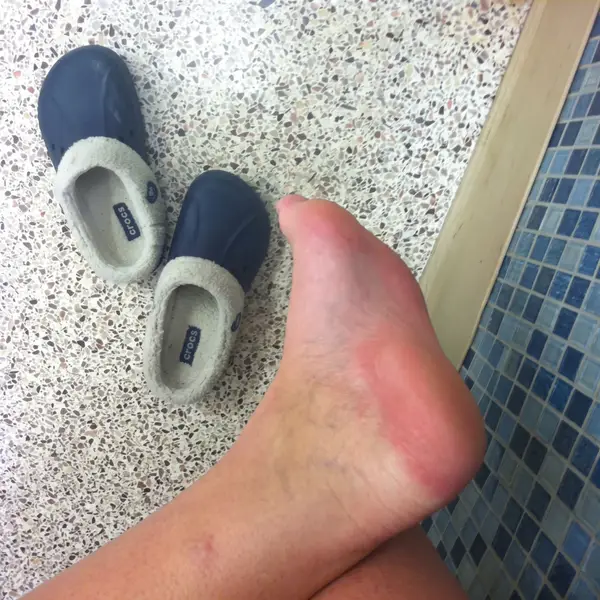
I Stirred Ceylon Cinnamon Into My Coffee Every Single Morning For 11 Weeks. My Fasting Glucose Didn't Drop A Single Point. The Burning In My Feet Never Stopped. Then A Lab Technician Showed Me Why. My name is John Tucker. I'm 62 years old. Every morning for eleven weeks, the first thing I did after the coffee pot beeped was reach for the jar of Ceylon cinnamon on the counter next to the sugar bowl. One heaping teaspoon. Stirred into black coffee. Watched the brown powder swirl, darken the cup, and slowly sink to the bottom. I drank it the way you drink medicine. Not for the taste. For what I believed it was doing inside my body. I believed in Ceylon cinnamon the way some people believe in prayer. Not casually. Not as a maybe this will help afterthought. I believed because I'd read the studies. Real ones. Published in the Journal of Medicinal Food and Diabetes Care. Researchers giving subjects Ceylon cinnamon extract and watching fasting glucose drop measurably within weeks. I'd read the GLUT4 research. The insulin sensitivity data from peer-reviewed journals. I understood the pathway. Ceylon cinnamon activates the transporters on cell surfaces that pull glucose out of the bloodstream. Glucose clears. Blood sugar drops. The delicate microvessels stop choking starved nerve endings hour after hour. My fasting glucose at my last panel: 144. My sensory score had gone from 92 to 74 in two years. My monofilament touch response was failing every quarter. My toes went completely numb by evening. I was up two, three times a night kicking off the bedsheets because the bottom of my feet felt like they were resting on hot coals. And one morning I stepped out of bed onto the bare hardwood floor and felt nothing. No cold wood. No texture. Just dead, rubbery cardboard. My father spent the last four years of his life in a wheelchair after a blister he couldn't feel turned into an emergency foot amputation. The science was clear. Ceylon cinnamon was my answer. I was sure of it. My wife Linda read the same articles I did. She bought the powder. Organic Ceylon from a five-star brand on Amazon. Twenty-six dollars for a ten-ounce jar. She set it on the counter next to the coffee maker so I couldn't miss it. Every single morning. Seven days a week. I stirred a heaping teaspoon into my first cup of coffee and drank it down. The powder never fully dissolved. No matter how long I stirred. There was always sediment at the bottom. Gritty, chalky residue that coated the bottom of the mug and the back of my throat with every last sip. The taste wasn't bad at first. Warm. Familiar. Like holiday baking. But by week three, the sweetness had turned stale. The smell of cinnamon as the coffee brewed made my stomach tighten before I even picked up the mug. Every. Single. Morning. Linda started having my coffee ready some mornings when I left early for work. Teaspoon already stirred in. A little heart emoji drawn on a napkin next to the mug. We were in this together. I bought a home glucose meter. Contour Next One. The same one my endocrinologist recommended. Week 1: Fasting glucose 144. Burning still flared every midnight. No change. Give it time, Linda said. The studies said it takes a few weeks. Week 2: 143. Within the margin of error. Numbness unchanged. Week 3: 144. Back up. Burning sensation keeping me awake past 2 AM every single night. Week 4: 145. Higher. I stared at the meter. Checked the strip. Pricked my finger again. I sat at the kitchen table. The coffee mug still had a ring of brown residue at the bottom. Cinnamon sediment caked in the base. I pushed it away. It takes longer, Linda said from the doorway. She didn't sound convinced. Week 6: 143. Week 8: 144. Week 11: 144. Eleven weeks. Seventy-seven consecutive mornings. A jar and a half of organic Ceylon cinnamon. Mugs stained brown inside no matter how many times I washed them. The exact same number I'd started with. And the electric tingling in my toes was still there every single morning. My next neurology follow-up was in ten weeks. Dr. Victoria Caldwell had been clear at the last visit: If your sensory scores keep dropping, we're adding high-dose gabapentin. And honestly, John, if you lose sensation above your ankles, we need to start having a very different conversation about your mobility. I knew what conversation she meant. That night I didn't sleep. I lay in the dark rubbing my fiery soles together and thought about my father. The heavy wheelchair. The wound care specialists. The look on his face when he told me he couldn't walk his daughter down the aisle because his balance was gone. The way he stopped being himself at the end. Linda rolled over. You're awake again. I don't understand. The studies, the research is real. It works. Why doesn't it stop the burning in my feet? Her hand found mine in the dark. She squeezed it. Didn't answer. Because she didn't know. Neither did I. The next morning was a Saturday. I drove to the farmers market. Not to buy cinnamon. I couldn't even think about cinnamon without my stomach tightening. I went for Linda. She wanted heirloom tomatoes. I was standing near a spice vendor's booth when I overheard two women talking. Yeah, I actually work at a supplement testing lab. We run species verification and potency assays on commercial cinnamon products. You'd be amazed at what we find. My ears locked in. The woman was in her forties. Glasses. Matter-of-fact voice. Like what? the other woman asked. Most products labeled Ceylon cinnamon? They're not Ceylon at all. They're Cassia. Completely different species. Different chemical profile. Almost none of the active compounds that the clinical research is based on. And Cassia contains up to 250 times more coumarin than real Ceylon. That's a compound that stresses your liver at daily supplement doses without doing a single thing for nerve repair. My stomach dropped. I stepped closer. Excuse me. Did you say most Ceylon cinnamon products are actually Cassia? The woman with glasses turned. Oh, yes. We test for species authenticity in our lab. Over 70 percent of products labeled Ceylon are partially or fully Cassia. The suppliers substitute because Cassia costs a fraction of the price. Most companies never verify because species testing costs money. My jaw tightened. What about the powder? If I buy organic Ceylon cinnamon powder and stir it into my coffee myself? She tilted her head. Even if the species is right, you've got two more problems. First, dose. The clinical research showing measurable results uses doses equivalent to 6,000 to 7,200 milligrams of raw Ceylon bark daily. Most people take a teaspoon or two, maybe 2,500 milligrams. That's not a small gap. That's the difference between a therapeutic dose and a decorative one. And the second problem? Delivery. Ceylon's active compounds are fat-soluble. The protective myelin sheath insulating your nerves is made of lipids. Bioactives need a lipid carrier to cross the intestinal wall and enter the bloodstream. A dry powder, whether it's in a capsule or stirred into coffee, has no fat carrier. The compounds reach your gut, find nothing to carry them across, and pass through without absorbing. You could take the right species at the right dose in powder form and your starved nerve endings would never see a single milligram. So when the studies show Ceylon cinnamon lowering blood sugar and waking up dormant nerves... Those studies use standardized extracts. Controlled species. Verified dose. Proper delivery vehicle. Every subject gets the exact same thing. That's why the studies work. It's not the cinnamon that doesn't work. It's the form. Powder can't guarantee species, dose, or absorption. I stood there. The farmers market noise, the chatter, the kids running between booths, it all sounded like it was underwater. Eleven weeks. Seventy-seven mornings. And every one of those mornings, I might have been stirring the wrong species at the wrong dose that couldn't reach my dying nerves anyway. Is there, I cleared my throat, is there any way to actually get all three right? A softgel with a built-in fat carrier. That solves the absorption problem. If the species is verified Sri Lankan Ceylon, that solves the species problem. If it's concentrated to the clinical dose, that solves the dose problem. But all three have to be right at once. Does something like that exist? She pulled out her phone. We actually tested one recently that surprised me. Metabolae. Softgels with a built-in fat carrier. Verified Sri Lankan Ceylon. Concentrated to a 7,200 milligram raw bark equivalent per serving. And they publish their Certificate of Analysis. Every batch. Full transparency. You tested it in your lab? We did. Species matched. Dose matched. Active compound concentration matched the label. Which almost never happens in this category. Most products we test come in at a fraction of what they claim, when they're even the right species at all. I ordered it on my phone before I left the farmers market. Didn't even walk back to the tomato stand. Texted Linda: Found something. Coming home. The bag arrived Monday. I took the first softgel that evening with dinner. No powder. No stirring. No sediment. No gritty last sip. I sat on the back porch. Skeptical. Eleven weeks of cinnamon coffee had beaten the hope out of me. By the third morning, something shifted. The low-grade fatigue that had been dragging me down every afternoon was lighter. The sharp electric buzzing in my toes that kept me tossing and turning settled down before midnight. For the first time in months, I didn't wake up reaching for ice packs or kicking off the sheets. I went to the kitchen. Pulled out the Contour Next. I blinked. Checked the strip. Pricked my finger again. Down from 144. In three days. I sat there staring at the number. Please let this be real. I didn't tell Linda. Not yet. Didn't want to get her hopes up. Not again. I took it ever

Loading the ad's image
John Tucker — Ceylon Cinnamon 7200mg Equivalent with MCT Oil
PromisingImage

Ceylon Cinnamon 7200mg Equivalent with MCT Oil

I don't give a f*ck if this upsets you. I am going to say something that no woman who's 60+ with Type 2 diabetes wants to hear. ⠀ I cut out carbs and sweets on July 8th, 2024. Threw out every loaf of bread, every snack, every box of pasta in the house. Went full keto. Walked three miles a day. Started juicing kale, of all things. I did everything I would have told any of my patients to do. I had a massive heart attack on October 19th at 2 AM. ⠀ I was 61 years old. ⠀ I've been a Certified Diabetes Educator for 24 years. ⠀ I taught this protocol to over four thousand patients across two decades. I ran group classes at the hospital every Tuesday and Thursday evening. I sat across from newly diagnosed Type 2 patients and their spouses and told them exactly what to do. Cut the bread. Cut the rice. Cut the pasta. Take the M*tformin. Walk every day. Retest in three months. ⠀ I told them this would work. ⠀ I taught them the same protocol I ended up doing myself. ⠀ And it almost killed me. ⠀ The paramedics got me back. The cardiologist put in two stents. But I nearly didn't come home. ⠀ Three minutes later to the hospital and I would have been gone. My heart stopped on the table for thirty seconds before they brought me back. ⠀ Thank God I survived. ⠀ The hospital bill was $63,000. The cardiac rehab was another $8,400. ⠀ My favorite coffee mug is on the counter this morning. My hand is around it right now. Fifteen months ago I thought I was going to lose everything. My kids. My grandkids. My husband. All of it. ⠀ I need to tell you what happened to me. Because I'm seeing the same posts on Facebook that I was making just months before my heart attack — my A1C is a little high, any tips — and it makes me physically ill. Because I was the woman answering those posts. I was the one giving the tips. ⠀ If you are a woman over 50 and you have Type 2 diabetes, or someone you love does, please read this entire thing. ⠀ I know it's long. I know you're scrolling. I know you have things to do. ⠀ Fifteen months ago I would have given anything, everything, for someone to tell me what I'm about to tell you. ⠀ And I was the diabetes educator. ⠀ I went in for a routine physical on June 28th, 2024. ⠀ I felt fine. Better than fine. I had just turned 61. I still walked five miles every Saturday morning with my sisters. I still gardened in the yard for hours on weekends. I thought I had this thing handled, because I taught it for a living, and honestly so did Frank. ⠀ Two days later my doctor called. ⠀ A1C of 10.3. Fasting glucose of 232. ⠀ Now, I had been diagnosed with Type 2 six years earlier. I had been on M*tformin for four years. My A1C had sat between 6.9 and 7.4 the whole time. My doctor and I both considered it controlled. I taught patients that this range was acceptable. ⠀ Then it jumped. ⠀ Your blood sugar is unmanaged, Caroline. We need to talk about your diet. ⠀ I was quiet on the call. I was in my kitchen, holding a slice of toast in one hand and the phone in the other. ⠀ What does breakfast usually look like for you? ⠀ Toast and eggs on weekdays. Pancakes with the grandkids on Saturdays. Cereal if I'm running late. ⠀ And dinner? ⠀ Chicken or fish with rice or pasta most nights. My mother's meatballs on Sundays. On the weekends Frank and I usually eat out. ⠀ And in between? ⠀ Sandwich for lunch. Slice of pie if I baked one. ⠀ That's enough to do this. You need to cut all of it. The bread. The rice. The pasta. The potatoes. The pancakes. Everything with carbs. Completely. No exceptions. We are doubling your M*tformin today. We will retest in three months. ⠀ I hung up the phone and sat at the kitchen table for forty minutes without saying anything. ⠀ Because I already knew all of it. ⠀ I had been teaching this exact instruction set for 24 years. I had it printed on a handout that I gave to every newly diagnosed patient in the hospital. Cut the carbs. Take the meds. Retest in three months. ⠀ I stood up, walked to the pantry, and took everything out. ⠀ I threw out three loaves of bread. Two boxes of my mother's favorite pasta that I had been saving for Sunday dinners. A five-pound bag of jasmine rice. Four boxes of cereal. The English muffins in the freezer. The tortillas we used for taco Tuesdays. The bag of potatoes on the counter. The pecan pie I had made the day before for my daughter's visit. All of it went in the trash. The whole pantry, gone in under an hour. ⠀ Frank asked me what I was doing. ⠀ That's it, I said. I'm done. ⠀ And I was. ⠀ For 103 days, I didn't touch a bite of it. ⠀ No bread. No rice. No pasta. No pancakes. Not at my niece's wedding in August where the dinner was pasta primavera and I asked the waiter for grilled chicken and vegetables. Not at book club in September where my friend Denise served her homemade banana bread and I ate almonds out of my purse. Not at my own 61st birthday dinner in October where my daughter made her honey-baked ham from scratch, with the sweet potato casserole and cornbread I had asked for on every birthday for 30 years, and I had a plate of ham with just the coleslaw and a pile of greens on the side. ⠀ I stopped going to Wednesday ladies' lunch at the country club because I could not sit there while every other woman ate the chicken salad on croissants and the fresh biscuits that came in the basket. I lost my friend Denise, who told me I was no fun anymore since I stopped drinking the wine and eating the bread, and stopped inviting me. I lost the Sunday brunch group with my sisters, where the standing order was a spinach quiche with a basket of pastries in the middle of the table. I lost a piece of myself I had been carrying for 40 years. ⠀ And I did it anyway. ⠀ Because I was the person who was supposed to know how to fix this. And that's what I would have told anyone else to do. ⠀ I was miserable the whole time. I want to be honest about that. The cravings never went away. I would stand in the kitchen at 9 PM looking at the empty bread drawer like it had personally wronged me. I opened the pantry 3-4 times a night to see if something had magically spawned. ⠀ I was agitated in the afternoons, so I would snap at Frank. He didn't deserve it. I don't blame him for not knowing what to say to me. I could not have said what I was doing to a friend. I could not picture myself eating no bread, no pasta, no dessert for that long. Not for one week. Let alone 103 days. ⠀ But I kept going. ⠀ I lost 22 pounds in those three months. I bought a juicer. Me, with the juicer, my daughter still can't picture it. I added a second daily walk in the evenings. I doubled my M*tformin per doctor's orders. I added a blood sugar complex I found on Amazon that I had been recommending to patients for years. I ate a salad every day. I learned to eat cauliflower rice instead of jasmine rice. I learned to eat zucchini noodles instead of my mother's spaghetti. I learned to say no to desserts. ⠀ I did everything right. ⠀ I did everything I had been teaching for 24 years. ⠀ The follow-up labs came back on October 7th. ⠀ A1C: 9.6. ⠀ Fasting glucose: 198. ⠀ I had quit carbs entirely for 90 days and the numbers had barely moved. ⠀ The doctor said give it more time. Diabetes management is slow. We will retest in 6 months. Keep doing what you are doing. If nothing changes we will add Oz*mpic at the next visit. ⠀ I came home that night and sat at the kitchen table again. The same table I had sat at after the first call. ⠀ I didn't say anything for a long time. ⠀ Then I said to Frank — I gave up everything. Everything. And it didn't work. And I've been telling other women to do the same thing for 24 years. ⠀ He told me to give it time. He told me the doctor said six months. He told me to trust the process. ⠀ I nodded. ⠀ I kept walking. I kept juicing. I kept taking the M*tformin. ⠀ Five days later, five days, I woke up at 2 AM with a pain I had never felt in 61 years. ⠀ It started in my back. Between my shoulder blades. Then it moved into my jaw. Then my chest. Then my left arm. ⠀ I want you to hear that. Because if you are a woman with Type 2 diabetes and you're reading this, you need to know how a heart attack shows up in a woman's body. Not the way they show it on television. Not the way it shows up in a man's body. In a woman it is often the back first. The jaw. The nausea. The exhaustion so deep you cannot lift your arms. I know this because I taught the warning signs of cardiovascular events to patients for 24 years. And when it hit me, in my own body, I still almost missed it. I lay there for eight minutes thinking it was a bad reaction to dinner. ⠀ Then the pressure moved. ⠀ I woke Frank. ⠀ Something is wrong. I need to go to the hospital. ⠀ He did not ask questions. He grabbed his keys and drove me to the ER. ⠀ By the time they admitted me at 2:47 AM, I was gray. Not a little pale. Gray. Like the color had drained out of my face. Like the light behind my eyes had gone dim. ⠀ The ER doctor, a young woman, could not have been 35, looked at my EKG and her face did this thing. ⠀ Mrs. Moore. You are having a massive heart attack. Your left anterior descending artery is 95 percent blocked. We are taking you to the cath lab. Now. ⠀ The doctor just looked at Frank. ⠀ I know, Mr. Moore. I'm sorry. ⠀ They rolled me down the hallway. Frank ran alongside the gurney holding my hand until the doors of the cath lab closed and a nurse gently pulled him back into the waiting room. ⠀ He sat in that plastic chair for three hours and forty minutes. ⠀ He called our daughter. He called my sister. He called my brother in Arizona. He could not stop shaking. ⠀ At 6:42 AM the cardiologist walked into the waiting room. ⠀ Frank stood up so fast he nearly fell over. ⠀ She's stable. We placed two stents in the LAD. She coded once on the table but we got her back within thirty seconds. She's in the ICU now. You can see her in about an hour. ⠀ Thirty seconds. ⠀ Thirty seconds is what stood between me and being gone. ⠀ I spent four days in the ICU. Another five days on the cardiac step-down floor. I came home on October 28th with two stents, a walker, and a shopping bag full of prescriptions. ⠀ That was the day the second nightmare started. ⠀ Because the cardiologist did not just want to see me back in her office for cardiac follow-up. She wanted a full body diabetic workup done, because in her words, when a Type 2 diabetic has a cardiac event this severe, the disease is almost never confined to the heart. We need to know what else is going on. ⠀ Over the next three weeks, I had: ⠀ A kidney panel with a nephrologist. ⠀ A dilated eye exam with an ophthalmologist. ⠀ A liver ultrasound and hepatology consult. ⠀ A nerve conduction study on my feet with a neurologist. ⠀ And every single one of them came back with a problem. ⠀ The nephrologist showed me that my creatinine had been climbing quietly on my last three panels. My kidney function was already declining. She called it early stage 3 diabetic nephropathy. Nobody had told me. I had been reading my own labs for years. I did not catch it. ⠀ The ophthalmologist noted small hemorrhages in both retinas. Early diabetic retinopathy, she said, consistent with several years of elevated blood sugar. I had been complaining about blurry vision that came and went. I told Frank I was tired. I was not tired. My retinas were bleeding. ⠀ The liver ultrasound showed moderate fatty liver disease. My enzymes had been elevated for two years. My previous doctor had said we will keep an eye on it. I had taught patients that phrase meant nothing was wrong. I was wrong. ⠀ The nerve conduction study showed measurable peripheral neuropathy in both feet. The tingling I had been complaining about for six months, the tingling I blamed on my shoes, was diabetic neuropathy. And it had already been damaging my nerves for years. ⠀ Same disease. Same trapped sugar. Damage in my feet. Damage in my kidneys. Damage in my eyes. Damage in my liver. And finally, damage in my heart. ⠀ The cardiologist called it a massive heart attack in a Type 2 diabetic with previously managed A1C. ⠀ Managed A1C. ⠀ That word again. The word I had used in patient charts. The word I had used in group class every Tuesday and Thursday for 24 years. Managed. ⠀ I sat on the edge of my bed that night, thirty-nine days after my heart attack, holding the folders of specialists' reports in my lap, and I said the words that broke something inside me. ⠀ My body was falling apart for years and nobody was watching for it. Not me. Not my doctor. Nobody. ⠀ My A1C was managed. ⠀ That's when I stopped waiting for my doctors to save me. ⠀ I started researching. ⠀ Not because I wanted to. Because I had to. Because I had survived by thirty seconds and I was not going to sit and wait for the next one. ⠀ I started reading everything I could find on Type 2 diabetes at 2 AM when I could not sleep. Medical journals I had subscribed to for 24 years. Endocrinology forums. Studies out of Japan and Germany that had not made it into the CDE curriculum. And one thing kept coming up, over and over, that none of my training had ever taught me. ⠀ The reason my numbers didn't come down when I cut carbs is that cutting the carbs only stops the incoming sugar. It doesn't move the sugar already trapped in the bloodstream. ⠀ But I couldn't understand the mechanism from the papers alone. It was too clinical. Too abstract. And I had spent 24 years reading clinical papers. If I could not put this into words a patient could understand, it did not matter what the paper said. ⠀ Then I found a thread on a diabetes forum with over 4,000 comments. The title. Why does my Sri Lankan grandmother not have diabetes despite eating rice every day? ⠀ I almost scrolled past. Something made me click. I had been dismissing folk medicine testimonials for 24 years. This time I read. ⠀ The post was from a woman whose grandmother had immigrated from Sri Lanka in the 60s. She was 84, ate rice with every meal, drank tea with sugar, had never been on Metformin, had never had elevated blood sugar. The post asked why Sri Lankan women in her grandmother's village rarely developed Type 2 diabetes despite their carb-heavy diet. ⠀ Comment after comment. Stories. Studies. Cinnamon. True Ceylon cinnamon. The kind that grows wild in Sri Lanka. The kind that has been used in their traditional medicine for over a thousand years. ⠀ Someone posted a name. Kumari. A grandmother who lived in a small Sri Lankan community in central New Jersey. People in the thread said she had helped their family members reverse their A1Cs. ⠀ I looked at the clock. 2:39 AM. ⠀ By 5:30 AM I was in my car. My cardiologist had cleared me to drive the week before. Frank tried to come with me. I told him no. I needed to do this by myself. By noon I was in New Jersey. ⠀ I didn't have an address. Just a town name and a description of the street. I drove until I saw a small house with a garden of unusual plants. Bushes I didn't recognize. A small tree by the front door I'd never seen before. ⠀ There was an older woman on the porch. Had to be pushing 80. Small. Thin. Dark hair pulled back with gray streaks running through it. She was sorting through something in a large wooden bowl on her lap, her fingers moving so fast they blurred. ⠀ No swollen knuckles. No brace. Just easy, steady work. ⠀ I parked and walked up to the porch. ⠀ Excuse me, I said. I don't want to bother you. But how old are you? ⠀ She looked up with sharp, clear eyes. Seventy-nine. ⠀ I stood there staring at her. Seventy-nine. I was 61 and had just come home from a nine-day hospital stay with two stents in my heart. ⠀ My name is Caroline. I've been a Certified Diabetes Educator for 24 years. I had a massive heart attack six weeks ago. I almost died. I have Type 2 diabetes. Managed A1C. My body was falling apart underneath the number for years and none of my training or my doctors caught it. I read a thread online. Your name was in it. I drove eight hours to find you. ⠀ She set down the bowl. Looked at me for a long moment. ⠀ You came here for a reason, she said. Come inside. ⠀ Her kitchen smelled like cardamom and cinnamon and rising bread. She poured me a cup of tea without asking. Pulled out a chair. ⠀ Tell me what happened to you. ⠀ I told her everything. The heart attack. The stents. The 103 days of no bread that did not save me. The follow-up labs that barely moved. The five specialists I had seen since I came home from the hospital. The kidneys. The eyes. The liver. The feet. The heart. And that I had been teaching this exact protocol for 24 years and it had almost killed me. ⠀ She nodded through every complication like she was checking items off a list she already had in her head. ⠀ When I finished, she was quiet for a moment. ⠀ Then she said — your medication is fighting the wrong battle. ⠀ I blinked. Not what I expected her to say. ⠀ M*tformin quiets the number on your chart enough that your doctor stays calm. That is all it does. The reason your numbers keep climbing. The reason your feet burn. The reason your blood pressure creeps. The reason your heart almost stopped six weeks ago. Nobody is touching that. ⠀ I know it is blood sugar, I said. I have taught blood sugar for 24 years. I cut the bread. I cut the sugar. I tried berberine. I tried apple cider vinegar. That is not new to me. ⠀ She smiled. Then you know more than most. But you do not know what that sugar is actually doing. Because nobody teaches it. Not even the educators. That is why you almost died in your own body while teaching the same protocol you followed. Without that, none of the rest matters. ⠀ She folded her hands on the table. ⠀ There are two things happening in your diabetes. The number on your chart. And the damage underneath it. They are NOT the same thing. ⠀ She held up two fingers, separated. ⠀ The pill works on the first one. The number. The damage, it never touches. The number is just the reading. Underneath it, the sugar from every meal you eat is trapped in your blood. It cannot get into your cells anymore. The doors are closed. So the sugar stays in your blood. And every heartbeat, it moves. Every meal, more piles on. The pill silences the number on the chart. But it never opens the doors. The sugar keeps grinding. ⠀ I stared at her. ⠀ You do not feel the grinding. You only see the number. So when the pill quiets the number, the doctor thinks you are managed. You were not. The sugar was grinding through your vessels every day for years. Whether you felt it or not. Whether you taught your patients that word or not. ⠀ She leaned forward. ⠀ And here is the part no one has told you. Not even in your own training. That trapped sugar is not only damaging one part of the body. It moves through every blood vessel you have. The smallest ones go first. The vessels feeding the nerves in your feet. That is the tingling. The vessels filtering your kidneys. That is the creatinine climbing. The vessels in the back of your eyes. That is the retinopathy. The vessels feeding your liver. That is the fatty liver. And then. The arteries feeding your heart. ⠀ She picked up two small pieces of cinnamon bark from her bowl. Then a third. Then a fourth. Then a fifth. ⠀ This one is your feet. This one is your kidneys. This one is your eyes. This one is your liver. This one is your heart. Same trapped sugar grinding through all five. Your specialists have been treating five different problems. It was always one. ⠀ My chest tightened. ⠀ That is why your A1C would not come down when you cut the bread. That is why your blood pressure was climbing. That is why the heart attack came anyway. The M*tformin did nothing for any of it. The Oz*mpic they wanted to add would do nothing for it. The carb cutting. They just lower the supply of new sugar. They do nothing about the sugar already trapped in your blood. They never open a single door. ⠀ She looked me straight in the eye. ⠀ Your A1C measures what is in your blood right now. It cannot measure what the trapped sugar has been doing to the vessels feeding your heart for years. Those are two different things. And the one that matters, the grinding in your blood vessels, your doctor was not measuring at all. Neither were you. ⠀ She reached across the table. ⠀ Now here is what Type 2 diabetes really is. It was never just a sugar number. Years of trapped sugar that started moving through your blood the day the doors first closed. Like a fire moving through a house one room at a time. Every meal. Every day. The same trapped sugar working on your feet and your kidneys and your eyes and your liver and your heart at the same time. Your A1C looked managed. Your body was falling apart underneath it. And you kept teaching your patients the same word. ⠀ She tapped the table once. ⠀ And here is the piece that will make you angry. Every part of you has been feeling this damage. But one place paid the highest price. Your heart. The same trapped sugar damaging the smallest vessels has been stiffening the arteries feeding your heart muscle. Year after year. That is where your blood pressure came from. That is where the heart attack came from. The numbers your doctor wanted to medicate one at a time. Never once asking what was causing all of them. And you were the woman on the other side of the desk telling your patients the same thing. ⠀ My eyes started to water. ⠀ That is what almost killed you. Not your diabetes. Not your A1C. The trapped sugar nobody addressed. A heart that took that grinding every single day for years while your doctor read your A1C and told you it was managed. And you told yourself the same thing. ⠀ I couldn't speak. ⠀ Now hear me clearly, she said. I am not telling you to throw the M*tformin in the trash. A blood sugar number is a blood sugar number, and that is between you and your doctor. M*tformin can help. But understand what the medication is. It quiets the number on the chart. It never opens the doors. It never moves the trapped sugar. And taken every morning, year after year, it lowers your B12 and adds its own strain to a body that is already damaged underneath. ⠀ I asked her what does open the doors. I already knew before she answered that whatever it was would depend on the delivery. In 24 years of teaching I had learned that everything depends on the delivery. ⠀ She smiled. A small smile. ⠀ The doors have a key. For over a thousand years the people in Sri Lanka have used one thing for them. My grandmother grew it. Her grandmother before her. Generations of Sri Lankan women living into their eighties without diabetes despite eating rice with every meal. ⠀ She stood. Walked to a shelf along the wall. Pulled down a dark glass jar. Inside were curled pieces of bark, deep red-brown, layered like rolled paper. ⠀ True Ceylon cinnamon, she said. ⠀ I told her I had recommended cinnamon supplements from Amazon to patients for years and had tried them myself. I said none of them did anything for me or for the patients I sent them to. ⠀ She must have read my face. That is not what you think it is, she said. What is in the drugstore and on Amazon is not even cinnamon. It is cassia. A cheaper plant from China. It does nothing for blood sugar. And it contains a compound called coumarin that puts strain on your liver in daily doses. You were sending your patients cassia and calling it cinnamon. That is what the whole American supplement industry is doing. And no one at any of your CDE conferences ever told you the difference. ⠀ She held up the jar. ⠀ Real Ceylon cinnamon is a completely different tree. Cinnamomum verum. It has two compounds your body needs. The first is called MHCP. MHCP is what opens the cellular doors back up. The doors that stopped responding to insulin years ago. Once those doors open, the trapped sugar finally moves out of your blood and into your cells where it gets used as energy. The grinding through your vessels stops. ⠀ She set the jar down. ⠀ And the second compound is called cinnamaldehyde. The one that gives cinnamon its smell. Cinnamaldehyde repairs the lining of the blood vessels that the trapped sugar has been damaging for years. The vessels feeding your feet. Your kidneys. Your eyes. Your liver. The arteries feeding your heart. The ones your cardiologist put stents in. All of them. ⠀ She looked at me. ⠀ Two compounds. From one plant. One opens the doors. The other heals what the trapped sugar damaged while the doors were closed. That is why the people in my grandmother's village do not have heart attacks like you almost had. ⠀ I asked her if it had to be a special form. ⠀ She nodded. It has to be real Ceylon at the right dose, suspended in the right oil. The cinnamon in capsules at the drugstore is mostly cassia. And even the real Ceylon at the drugstore is in dry capsule form. The compounds are fat-soluble. Without an oil to carry them, they pass straight through the body and never reach the bloodstream. This is why we eat coconut with cinnamon in Sri Lanka. The coconut oil carries the cinnamon into the blood. My grandmother did not know the science. She just knew that in our kitchen, coconut and cinnamon go together in every dish. That is why our women live into their nineties without heart disease. ⠀ She paused. ⠀ There is a company my niece in Boston told me about. They source the real species, DNA-verified. They concentrate it twelve to one to match the dose in the published research. They suspend it in MCT oil, which comes from coconut. The same oil my grandmother used. Just concentrated into a small softgel so it actually absorbs. Third-party tested. Made in the USA. ⠀ She wrote the name on a piece of paper and handed it to me. ⠀ Metabolae. ⠀ I ordered three bags from her kitchen table before I left New Jersey. ⠀ I drove eight hours home. Got in at midnight. Frank was asleep in the recliner. I sat on the couch across from him and watched him breathe for two hours before I went to bed. Because he had almost lost me. ⠀ The bags arrived seven days later. ⠀ I took the first softgel with my breakfast the next morning. Sat at our kitchen table with the coffee Frank made me. Looked at the softgel in my palm. ⠀ You believe her, don't you? he said. ⠀ I do. ⠀ I looked up at him. ⠀ Because I have taught the other version for 24 years and it almost killed me. ⠀ Then I swallowed it. ⠀ Week one. ⠀ My afternoon energy came back first. I had been napping every afternoon since the heart attack, exhausted after dinner. On day five of Metabolae, I sat at the kitchen table at 3 PM and read the paper cover to cover without dozing off. I looked at Frank and said I have not felt this awake in the afternoon in months. ⠀ Week two. ⠀ The tingling in my feet started to quiet. I had been sleeping with my feet outside the covers for over a year because the burning would wake me up at 3 AM. That week I pulled the covers up over my feet for the first time. ⠀ Week three. ⠀ The 22 pounds I had lost during my 103 days of misery had been muscle as much as fat. My color was back. My face looked like myself again. My daughter came for dinner and I saw her face when she walked in. She had been watching her mother look sick for months. That night she pulled Frank aside and said, Dad, Mom looks like Mom again. ⠀ Week four. ⠀ I was reading the paper at the kitchen table one morning and looked up at Frank with a strange expression. I held the paper out at arm's length. Then brought it closer. Then closer still. ⠀ Frank. I can read the small print. ⠀ I had been holding the paper at arm's length for over a year. My ophthalmologist had noted the retinopathy at my workup. My vision had been slowly getting blurrier for months and I had blamed my glasses. Now I was reading the sports section without squinting. ⠀ Week six. ⠀ I bought a home glucose meter and started tracking my fasting numbers. 138 on day one. 124 by the end of the week. 108 the week after. I was cheating on my diet occasionally now, a piece of bread here, a little slice of pie there, and my numbers kept coming down. ⠀ Week twelve. ⠀ Full lab panel. A1C: 5.9. ⠀ Down from 9.6 twelve weeks earlier. ⠀ Fasting glucose: 96. Down from 198. ⠀ Triglycerides: down 78 points. ⠀ Blood pressure: 118 over 74. Down from 148 over 92 the week I came home from the ICU. ⠀ Kidney creatinine back in normal range. ⠀ Liver enzymes back in normal range. ⠀ My cardiologist called me in for a special appointment to review the numbers. She looked at me. Looked at Frank. Looked at the chart. Looked at me again. ⠀ Caroline. What did you do? ⠀ I told her. ⠀ The Sri Lankan woman. The kitchen table. The two compounds. The trapped sugar. All of it. And that I was a diabetes educator who had been teaching the wrong thing for 24 years and had almost died learning what I should have known. ⠀ She listened for twenty minutes without interrupting. When I finished, she was quiet for a long time. ⠀ Then she said, I have not been trained on this. But your numbers have improved more than I have ever seen in a patient at your stage. Your cardiac risk markers are dropping. Your kidney and liver function is recovering. Your neuropathy is reversing. Whatever you are doing, keep doing it. ⠀ She cut my M*tformin in half at that appointment. ⠀ I am still on the two stents. Still on my blood pressure medication. Still walking three miles every morning. But I eat bread now. Occasionally. I had pancakes with the grandkids last Saturday for the first time in fifteen months. ⠀ My A1C at my last panel four weeks ago was 5.7. ⠀ I came within thirty seconds of Frank writing you a very different letter. ⠀ I am writing this because I am still here. And I have watched every symptom in my body reverse. And I have watched my cardiologist, a woman who has been practicing for twenty-two years, look at my labs and say the word I had been chasing for a year and a half. ⠀ Improving. ⠀ Not managed. ⠀ Improving. ⠀ If you are a woman over 60 with Type 2 diabetes, or you have a sister, a mother, a friend who is, and you have been told your A1C is managed while your body is quietly falling apart, please listen to what I am telling you. ⠀ The trapped sugar is what is killing us. Not the number on the chart. ⠀ The M*tformin lowers the number. It does not open the doors. It does not move the trapped sugar. It does not repair the damage the trapped sugar has already done to your feet, your kidneys, your eyes, your liver, and your heart. ⠀ Cutting the bread does not save you. I did that for 103 days and it did not stop what was coming. ⠀ Oz*mpic does not save you. Same idea, different lever. Neither one opens the doors. ⠀ There is one thing I know of that opens the doors and heals the damage. The two compounds in real Ceylon cinnamon. MHCP opens the doors. Cinnamaldehyde repairs the vessels. Together, at the right dose, in the right delivery form, they address what my medications never touched. And what I had never been taught to address in 24 years of teaching this disease. ⠀ Metabolae. ⠀ DNA-verified true Ceylon from Sri Lanka. Concentrated 12 to 1 to match the dose in the clinical research. Suspended in organic MCT oil so the active compounds actually absorb. Third-party tested. Made in the USA. ⠀ One softgel every morning with breakfast. That is the whole protocol. ⠀ 90-day money-back guarantee. If the numbers do not move, you pay nothing. ⠀ I almost died on October 19th, 2024, at 2 AM in the back of an ambulance. My father died at 71 of a heart attack. My mother died at 68 of complications from the same Type 2 diabetes I was diagnosed with at 55. I am 61 today. My grandkids call me almost every day. ⠀ I am still here because a Sri Lankan woman I found in a Facebook group brought me to her kitchen table for two hours and told me what my own training never had. What my doctors never told me. What I had never told a single one of my patients in 24 years of teaching them. ⠀ I want that for you. ⠀ I want your sister, your mother, your best friend, or yourself, to still be here five years from now. ⠀ Please do not wait for the ambulance ride to figure this out. ⠀ ~ Caroline Moore, age 61, Certified Diabetes Educator, Springfield, IL ⠀ P.S. My cardiologist told me at my last appointment that if I had come in that October morning even fifteen minutes later, I would not have survived. Fifteen minutes. That is the margin the trapped sugar left me with after six years of doctors — and me — calling me managed. Please do not let your margin be shorter than mine was. ⠀ P.P.S. I don't work for Metabolae. I don't get a penny from this. I'm writing this at 2:14 AM because I woke up in a panic and had to remind myself I was still breathing. That does not go away. Fifteen months later and I still check. Share this with any woman you love who is Type 2 diabetic. Even a little. Even borderline. Even if she already cut carbs. Please. Especially if she's a nurse, or a doctor, or a diabetes educator like me. Because we think we know. And we don't.

Loading the ad's image
John Tucker — Ceylon Cinnamon 7200mg Equivalent with MCT Oil
Testing

Ceylon Cinnamon 7200mg Equivalent with MCT Oil

I don't give a f*ck if this reaches my hepatologist. I was diagnosed with fatty liver and told to quit drinking completely. ⠀ I did everything my doctor told me. ⠀ I wish I hadn't. ⠀ I went in for a routine physical on March 14th, 2024. ⠀ I felt fine. Better than fine, honestly. I had just turned 54. Still played poker every Thursday with the same four guys I had known since my twenties. Still sat at the bar after work on Fridays. Still poured two fingers of bourbon on Saturday afternoons and watched whatever game was on. Still grilled on Sunday evenings. Still drove the same twelve miles to the same diner on Tuesday mornings for breakfast with my brother-in-law. That was my life. A life I had built over thirty years. A life that worked. ⠀ The call came three days later. ⠀ ALT of 174. AST elevated. Fasting glucose of 187. And my A1C. 6.9. ⠀ Now, I had been told before that my blood sugar was running a little high. 6.5 at one panel, 6.7 at another. My doctor had used the word borderline. We had agreed to watch it. I had watched it. The number had sat between 6.5 and 7.0 for three years, sitting there like a warning light on a dashboard I had decided not to look at too hard. My doctor called it controlled. He said it at every appointment. I wrote it in my head next to the word fine and moved on. ⠀ Then the liver numbers landed. ⠀ Your liver enzymes are significantly elevated, John. We need to talk about your drinking. ⠀ I told him it was not that much. Weekend bourbon. A few beers with the guys on Thursdays. The bar on Fridays, sure, but nothing dramatic. ⠀ He was quiet for a moment. ⠀ It is enough to contribute to this. And with your blood sugar already running elevated the way it has been, the liver is already under stress. The drinking adds to it. You need to stop completely. Mediterranean diet starting now. No exceptions. I want you walking thirty minutes every morning. Take a milk thistle supplement daily. I know you have been taking a cinnamon supplement for the blood sugar numbers, that is fine, keep going with that. We will retest in three months. ⠀ He said it without pausing. He had no reason to pause. And neither did I. Back then. ⠀ I hung up and sat at the kitchen table for forty minutes without saying anything. ⠀ My wife Karen came in and saw my face. ⠀ I told her. ⠀ She looked at me for a moment. Then she set her coffee down. ⠀ You are going to do exactly what he says, aren't you. ⠀ Yes, I said. ⠀ I stood up, walked to the refrigerator, and started pulling things out. ⠀ I went through every cabinet. Every shelf. I threw out four bottles of bourbon, two cases of beer I had been storing for the summer, and a bottle of Scotch I had been saving for my brother-in-law's retirement in September. I threw out the pasta, the white rice, the bread. I went to the grocery store that same afternoon and bought olive oil, wild salmon, kale, and three different kinds of fish Karen had to help me identify at the counter. I ordered a milk thistle supplement on my phone in the parking lot before I pulled out of the space. ⠀ I did not make a speech about it. I just started. ⠀ For ninety days straight I did not touch a drop. ⠀ No bourbon. Not on a Thursday. Not on a Friday. Not on a Saturday afternoon. Not at my firm's annual barbecue in May where every partner had a beer in their hand and the senior partner poured me a glass before I could stop him, and I handed it back and said I was not drinking right now, and he looked at me for a moment like he was reclassifying me. Not at my brother-in-law's birthday in early June where the whole evening was built around a whiskey tasting he had been planning for two months, and I sat there with sparkling water and a fixed smile while he poured flights I had been looking forward to since January. Not at poker night every Thursday where the bottles come out at nine and the whole back half of the evening runs on the comfort of that routine, and I sat there with my Diet Coke while the guys gave me a hard time that stopped feeling like joking around week three. By week five I stopped going to poker night. Too hard to sit there with soda water while the conversation ran the way it always ran and I was present in body and somewhere else in everything else. ⠀ I stopped going to the bar on Fridays. I told myself it was temporary. ⠀ I went to the diner on Tuesday mornings but I stopped ordering our usual. My brother-in-law always gets the Belgian waffle and I always got the same, and the first Tuesday after the diagnosis I ordered black coffee and two eggs, and he looked at my plate and then at me and said, what happened to you. Not in a mean way. The way you say it when you notice something has changed in someone you have known a long time. ⠀ I told him. Diet. He nodded and ate his waffle and did not say anything else about it. The next Tuesday I ordered the same thing. And the Tuesday after that. By the fifth Tuesday I think he stopped noticing, which was somehow worse than the question. ⠀ Karen made pasta on Thursday evenings the way she always had. She asked me the first week if she should make something different for dinner. I said no, do not change anything. So she made pasta and I had grilled fish, and we sat at the same table we have eaten at for twenty-three years, and she ate pasta and I ate fish, and there was nothing wrong with it and nothing right about it either. ⠀ I did the Mediterranean diet completely. I ate enough salmon to change my relationship with fish permanently. I walked every morning before work without missing a single day, even the morning in late April when it rained so hard I could not see the end of the driveway. I took the milk thistle every morning alongside the generic cinnamon supplement I had been taking for two and a half years to try to keep the blood sugar number from climbing. ⠀ I did every single thing on the list. ⠀ Mark had done the same thing eighteen months before me. ⠀ Mark is my closest friend of thirty-one years. His doctor had told him the same thing mine told me, almost word for word. Elevated liver enzymes. Blood sugar running high. Stop drinking completely. Mediterranean diet. Walk every day. We will monitor it. Mark quit cold. Did the full protocol without deviation. His enzymes came down somewhat. His doctor called it progress. And eighteen months later Mark has no poker night anymore, because he was the one who organized it and once he stopped coming it eventually fell apart. He has no bar on Fridays. He has no Sunday bourbon. His daughter asked him recently what he does for fun and he told me he could not answer her. ⠀ I ran into Mark at the diner in June. He came in while I was sitting with my brother-in-law. He ordered a salad and black coffee and talked about his numbers improving and his doctor being pleased, and when he left my brother-in-law watched him walk out and said, he doesn't look happy for a guy whose numbers are improving. I did not say anything back. I did not need to. ⠀ His follow-up numbers were better on paper. But Mark told me one night that he did not recognize the second half of his life anymore. That the protocol had cost him every anchor point he had. That he had handed over everything and gotten managed in return. ⠀ Then my ninety days ended and the follow-up labs came back. ⠀ ALT: 162. ⠀ Down twelve points. Twelve. From 174 to 162. ⠀ Fasting glucose: 176. Down from 187. ⠀ A1C: 6.8. Down from 6.9. ⠀ My doctor looked at the results on his screen for a long moment. ⠀ It is an improvement, John. The liver heals slowly. Slower than people expect. Keep doing what you are doing. We will retest in six months. If the numbers are still elevated at that point, we will need to look at medication. ⠀ Six months. More of the same. And then medication on top of it. ⠀ I sat in the parking lot of that clinic for thirty minutes before I could drive home. ⠀ The doctor said give it more time. Keep doing what you are doing. So I kept doing it. Even on the Fourth of July, two weeks later, when the whole neighborhood set up coolers in Gary's driveway the way they did every year and I was the one man on the whole block with a club soda in his hand. Gary asked if I was sick. I said no. He said you sure. I said yes. We stood there watching everyone else drink and did not say anything else about it. ⠀ A week after that I stopped being able to sleep past 3 AM. ⠀ I gave up trying one night and sat at the kitchen table with the laptop open. ⠀ Every mainstream website said the same thing. Reduce alcohol. Eat better. Exercise more. Take milk thistle. Be patient. The liver heals slowly. I had done all of it. ⠀ I found nothing I had not already tried. ⠀ Then I found a thread in a private Facebook group for men dealing with elevated liver enzymes and blood sugar issues who felt like the standard protocol had let them down. The original post had over three hundred replies. A man had asked why his ALT kept running elevated even though he had quit drinking, done the diet, and taken every supplement on the recommended list. And buried in the replies, one name kept appearing. Daniel. Fourteen different comments pointing to the same person, some of them from men who had been following this thread for months. Someone posted a city in Tennessee. A specific bar he was known to frequent on Tuesday evenings. ⠀ I read those comments carefully. These were not men who had just found something. These were men who had watched their own numbers move in a direction the protocol had never moved them. One had attached six months of labs. Another said his hepatologist had called him in for a special appointment to ask what had changed. None of them were selling anything. They were pointing to Daniel. Tennessee. Tuesday evenings. ⠀ I looked at the clock. 2:47 AM. ⠀ By 5:30 I was dressed. By 6 I was in the car. ⠀ Karen was awake by then. She stood in the doorway of the kitchen watching me put on my jacket. ⠀ Where are you going at this hour? ⠀ I told her. Tennessee. A bar. A man named Daniel who the people on the forum said had figured out something the protocol was missing. ⠀ She looked at me for a long moment. ⠀ Let me know when you get there. ⠀ I drove five hours. No address, just a city name and the name of a bar. ⠀ I found the place without much trouble. Walked in around noon. A Tuesday. The room was quiet. Afternoon light coming through the front windows. A bartender wiping down the far end of the bar. And at the near end, a man who looked to be in his late fifties. Easy posture. Something in a glass in front of him. Looking at his phone without urgency, like a man who had nowhere he needed to be. ⠀ I walked over. ⠀ He looked up before I got halfway across the room. ⠀ "You drove here," he said. Not a question. ⠀ "Five hours," I said. ⠀ He nodded at the stool next to him without looking up from his phone. ⠀ "Sit down." ⠀ His name was Daniel. He was fifty-eight. He had been diagnosed with elevated liver enzymes and metabolic liver disease four years earlier. His doctor had told him to stop drinking completely, change his diet, take milk thistle, and come back in three months. He had done it. And then done it again. For the better part of a year. His numbers had improved somewhat and then stopped moving. His doctor called it progress. ⠀ So he had started reading. Not just the mainstream health sites. Medical journals. Research out of Europe and Asia that had not made it into the standard clinical handout. He had spent months going through studies on what actually drives metabolic liver inflammation before he found an explanation that made sense of what had been happening in his own body. He had walked back into his doctor's office with a printed stack of research and spent an entire appointment going through it. ⠀ His doctor had been skeptical at first. He said his doctor looked at the first paper and said this is not in our protocol. And Daniel said I know. That is why I am here. By the end of that appointment his doctor had read three of the papers, said the mechanism was sound, and said he wanted to see Daniel's labs in three months. That was how Daniel knew what he had found was not invented. ⠀ He turned his phone face up on the bar and slid it toward me. ⠀ Six months of blood work. His starting ALT at the beginning of the year had been 174. ⠀ Current ALT: 26. ⠀ Bourbon on a Tuesday afternoon. ALT of 26. ⠀ I read the number three times without speaking. ⠀ "What are you doing?" I asked. ⠀ He turned to look at me directly. ⠀ "Your doctor told you the right thing to watch," he said. "He told you the numbers to care about. He just never told you why they went wrong in the first place. So everything you did treated the surface and left the root completely alone. And the number barely moved." ⠀ I told him everything. The ninety days. The Mediterranean diet. The milk thistle. The walking every morning in the rain. The generic cinnamon supplement for the blood sugar. The poker night I stopped going to. The bar on Fridays I gave up. The bourbon I had not poured in months. Down twelve points. A1C from 6.9 to 6.8. ⠀ He nodded slowly when I mentioned the cinnamon supplement. ⠀ "The cinnamon," he said. "What kind?" ⠀ I told him. The kind from the big box store. The cheap capsules. The ones on the shelf next to the fish oil and the vitamins. ⠀ He looked at me like a man who had already lived this part of the conversation. ⠀ "I want to tell you something about that supplement first," he said. "Because it is the most important thing I may say to you today. And it is something your doctor almost certainly does not know. Not because he is wrong about anything. Because it is not part of what most doctors are trained to screen for." ⠀ He set down his glass. ⠀ "What is in almost every cinnamon supplement sold in the United States is not Ceylon cinnamon. It is a completely different plant called Cassia. It comes from China. It is cheaper to grow, cheaper to process, and it fills ninety percent of the supplement market because nobody is required to tell you which species is in the capsule. The label says cinnamon extract. Your doctor told you to keep taking it because, as far as standard training goes, cinnamon is cinnamon. It has never been part of a clinical handout to ask which species." ⠀ He looked at me steadily. ⠀ "But Cassia contains a compound called coumarin. Coumarin is hepatotoxic at daily doses. That means it places a burden on the liver. The European Union has set strict daily intake limits on coumarin specifically because of that liver burden. At the dose in a standard daily Cassia supplement capsule, a person taking it every morning can exceed those limits. My doctor, when I brought this research to him, confirmed he had seen elevated liver enzyme patterns in patients who took daily generic cinnamon supplements and had never known to look at the species as a factor." ⠀ Two and a half years. Every morning. Right next to the milk thistle I was also taking for my liver. ⠀ He gave me a moment with that. Then he continued. ⠀ "Now let me tell you what your doctor's protocol was not addressing," he said. "Because this is the part that explains why the ninety days barely moved the number. And once you hear it, everything else will make sense." ⠀ He folded his hands on the bar. ⠀ "Your blood sugar and your liver are not two separate problems. They never were. They are the same problem working through two different sets of numbers on your panel. And the protocol your doctor gave you addressed both of them at the surface and never once touched what was driving both of them at the root." ⠀ He held up two fingers and pressed them together. ⠀ "Your body uses a hormone called insulin to move sugar out of your blood and into your cells. Think of it as a signal. A message your body sends after every meal that says, open up, let the sugar in, put it to work. When insulin is working properly, the cells hear that message, they open, the sugar moves in, and your blood sugar comes back down." ⠀ He paused. ⠀ "But when insulin resistance sets in, the cells stop hearing the message clearly. The signal goes out. The response gets weaker. So the sugar stays in the blood instead of moving into the cells where it belongs. It sits there. That is what your blood sugar number is measuring. That is what your A1C of 6.9 was telling you every single year. That much your doctor knows. That much is in every patient handout." ⠀ He leaned forward. ⠀ "Here is what is not in the handout." ⠀ "Your liver has its own version of that same insulin signal. And the liver's signal is a stop signal. The liver makes glucose on its own, every day, all day. It is the body's fuel factory. And insulin is supposed to send a message to that factory that says slow down. There is already enough glucose in the blood. Stop producing more. We call it the brake signal." ⠀ He stopped. ⠀ "When insulin resistance sets in, the liver stops hearing that brake signal clearly too. The factory keeps running. The liver keeps producing glucose even when your blood sugar is already elevated. It has not received the message to stop. It cannot stop. And a liver running like that, day after day, with no off-switch, with no brake signal getting through, starts to show the strain. Fat begins to accumulate in the liver cells. Inflammation builds up. The ALT climbs. The imaging shows fatty changes." ⠀ He looked at me. ⠀ "That is what your doctor saw on your panel. The result of years of that liver running with a broken brake. The alcohol added pressure to a liver that was already under this kind of metabolic stress. But when you quit, you removed the alcohol and left the broken brake completely in place. The liver still could not stop. The inflammation was still building from the same root it had been building from for years. That is why the number only moved twelve points. You addressed one source of pressure. You never touched the signal failure underneath it." ⠀ He reached into the front pocket of his jacket and set a small white bag on the bar between us. Inside were softgels the color of dark amber honey, clean and round. ⠀ "True Ceylon cinnamon," he said. "Cinnamomum verum. The specific tree native to Sri Lanka. Not Cassia from China. A completely different species, with a completely different compound profile. And two specific compounds your body needs that the generic cinnamon you were taking never contained in any amount that could reach your bloodstream and do what needs to be done." ⠀ He held the bag up between us. ⠀ "The first compound is called MHCP. MHCP works by helping restore your body's response to insulin's signal at the cellular level. The cells start hearing the message again. They begin to open. Sugar moves out of the blood and into the cells where it belongs. Blood sugar starts to come down. That part you can track on your meter." ⠀ He set the bag on the bar. ⠀ "But here is what happens in the liver at the same time. As insulin sensitivity begins to improve throughout the body, the liver starts receiving that brake signal again. The same brake that insulin resistance had been blocking for years. The liver's factory, the one that had been running with no off-switch, begins to slow its overproduction of glucose. And a liver that is no longer constantly overworking, no longer ignoring the signal to stop, begins to quiet its inflammation. The ALT starts to move in a direction that ninety days of doing everything the protocol said could not move it. Not because you drank less. Because the signal failure at the root of the problem is finally being addressed." ⠀ He let that sit. ⠀ "The second compound is cinnamaldehyde. The compound that gives real cinnamon its smell. Cinnamaldehyde works directly inside the liver cells. It helps reduce the inflammation that has been building in the liver's own tissue while the brake signal was broken. It supports the health of the small vessels feeding the liver, the ones that have been carrying the burden of that metabolic stress year after year. Two compounds. One plant. One restores the signal. The other helps the liver heal what the broken signal left behind." ⠀ I asked him why the delivery mattered if the species was correct. ⠀ He turned the bag over in his hand. ⠀ "The active compounds in real Ceylon cinnamon are fat-soluble. That means they dissolve in fat, not in water. And a dry powder capsule is exactly that. Dry. With nothing to carry those compounds through your digestive system and into your bloodstream. Most of what is in a standard dry capsule passes through the body before it ever reaches the liver or the cells it needs to reach. The science on fat-soluble absorption has been in the research literature for years. The supplement industry ignores it because dry capsules cost less to produce." ⠀ He tapped the bag. ⠀ "MCT oil changes that completely. It is a fat. The compounds dissolve into it and absorb into the bloodstream the way fat-soluble compounds are designed to absorb, efficiently and directly, instead of passing through unused. That is why the formula is a softgel suspended in MCT oil from coconut. Not a capsule. Not a powder. The delivery is part of what makes it work where everything you tried before did not." ⠀ He wrote a name on a cocktail napkin and slid it across the bar. ⠀ Metabolae. ⠀ "DNA-verified true Ceylon from Sri Lanka," he said. "Not Cassia. Not sourced from China. The real species, confirmed at the laboratory level before a single softgel is produced. 12 to 1 concentrated extract. One softgel is equivalent to 7,200 milligrams of raw Ceylon cinnamon bark. Suspended in organic MCT oil. Third-party tested. Made in the USA." ⠀ He looked at me. ⠀ "They do not sell it on Amazon. They do not sell it at Walmart or through any third-party marketplace. That is not an inconvenience. That is how you know what you are actually getting. Because what failed for you, what failed for Mark, what fails for every man who takes the cinnamon capsule from the shelf and waits for the number to move, is the wrong species in a dry capsule with nothing to carry it. The only way to get the authentic formula, the correct species, the stated concentration, and the MCT oil delivery is through the official Metabolae website directly." ⠀ I pulled out my phone and ordered three bags through the Metabolae website before I drove home. ⠀ I paid, shook Daniel's hand, and walked out into the late afternoon. The drive home took five and a half hours. I got in after midnight. Karen was asleep. I sat in the kitchen with the bag in my hands for a while, turning the softgels over in the light. ⠀ The bags had arrived six days after I ordered them. ⠀ I took the first softgel with my coffee the next morning at the kitchen table. Karen was across from me. She watched me open the bag and hold the softgel in my palm. ⠀ "You believe him," she said. ⠀ I thought about Daniel's lab results on his phone. The months he had spent researching before he found the answer. The appointment where his doctor had read the papers and said the mechanism was sound. I thought about ALT 26, bourbon on a Tuesday. ⠀ "Yes," I said. ⠀ Then I swallowed it. ⠀ Week one. ⠀ I did not expect anything dramatic. What I noticed first was sleep. I had been waking up between 3 and 4 AM for months, mind already running before I was fully conscious. By day four I stayed down past 5. By day six I slept until 6:15 and lay there for a moment before I realized what had not happened. I had not looked at the clock at 3 AM. I noticed it and kept going. ⠀ Week two. ⠀ The 2 PM wall I had been managing with coffee for over a year started to give. I had been pushing through every afternoon on a second cup, sometimes a third, hitting a wall that made the second half of every workday a grinding exercise in managing myself toward 5 o'clock. By the second week I got to 4 PM without the coffee two days in a row. Then four days. Then every day that week. Karen asked what had changed. I told her I did not know yet. But something had. ⠀ Week three. ⠀ I bought a home glucose meter. I had stopped following the Mediterranean diet within the first week. I had gone back to eating the way I normally eat. I had poured the Saturday bourbon the weekend before. I wanted to see what the numbers were doing without the protocol propping them up. ⠀ Fasting glucose on day one of tracking: 171. By the end of week three: 148. Down 23 points. ⠀ I read that number three times. Then I set the meter on the counter and looked out the kitchen window for a moment. ⠀ Week four. ⠀ I went to poker night for the first time in four months. ⠀ I poured myself a bourbon and sat down with the guys. Nobody said anything for a while. They did not need to. Frank looked at me from across the table about an hour in, while he was shuffling, and said, "You look like you did five years ago." He said it like a compliment. I took it as a data point. I won three hands that night, which is not unusual, but I stayed until midnight, which I had not done in months, because I had not felt worth staying for in months. ⠀ Week six. ⠀ Fasting glucose sitting at 129. Down from 171 at the start of tracking. I estimated my A1C based on the home test strip reading at around 6.3, down from 6.8 at my last official panel. I had not changed my diet. I had not quit drinking. ⠀ I told Karen the number while she was making coffee. She stopped and turned around and looked at the meter in my hand. Then she looked at me. Neither of us said anything for a moment. ⠀ In those twelve weeks, the one thing I had added was Metabolae. ⠀ Week eight. ⠀ I noticed something I had been living around for so long I had stopped naming it. A dull heaviness on my right side that I had chalked up to the way I slept, the way I sat at my desk, getting older. It had been there for months. I noticed one evening that it was not there. I pressed on the spot the way you do when something has been sore. Nothing. I told Karen. She asked how long it had been gone. I could not tell her exactly. I had not noticed the going. Only the absence. ⠀ Week twelve. ⠀ Full lab panel. I went in on a Tuesday morning. Same waiting room. Same fluorescent lights. Same chair in the corner where I had sat four months earlier with labs that moved twelve points. ⠀ The results came back three days later. ⠀ ALT: 41. Down from 162 at my last panel. Down from 174 when this started. ⠀ Fasting glucose: 94. Down from 176. ⠀ A1C: 5.8. Down from 6.8. ⠀ I read the numbers three times. ⠀ Then I walked into the kitchen and showed Karen the screen without saying anything. ⠀ She looked at the numbers. Looked at me. Looked at the numbers again. She put her hand over her mouth. ⠀ I sat down at the kitchen table and did not move for a few minutes. ⠀ My hepatologist called me in for a consultation to review the results directly. He had reviewed the panel before I came in and had questions. ⠀ He looked at the chart. Set down his pen. ⠀ "John, I need to understand what changed between your last panel and this one. Because what I am looking at does not follow the trajectory I would expect from the interventions on your chart." ⠀ I told him everything. The forum at 2 AM. The five-hour drive. Daniel at the bar. The months Daniel had spent researching before he found the answer. The conversation about insulin resistance and the liver's brake signal. The coumarin in the generic cinnamon supplement I had been taking for two and a half years, and why my previous doctor had no reason to know to look for it. MHCP and cinnamaldehyde. The MCT oil delivery. All of it. ⠀ He listened for fifteen minutes without interrupting. When I finished, he was quiet for a long time. ⠀ "I am not familiar with this specific formulation in the clinical training I received," he said. "But I cannot argue with what I am looking at. Your liver enzymes have normalized. Your fasting glucose and A1C have improved in a way that the interventions on your chart do not fully explain. If you continue seeing results like this at your next panel, I want to understand more about what you are doing." ⠀ He did not reduce any of my current medications that appointment. He said let us see another panel in three months. Then he wrote one word in the notes section of my chart where the word managed had been living for three years. ⠀ Improving. ⠀ I am writing this at 2:19 AM because I woke up and could not get back to sleep. I do not know that this will reach Mark. But if it reaches a man who is sitting where I was sitting, staring at a number that barely moved after everything he gave up, I want him to know what I know now. ⠀ Your blood sugar and your liver are not two separate problems. They are the same problem. And the protocol your doctor gave you for both of them never touched the root. ⠀ The alcohol adds pressure to a liver that is already under metabolic stress from a broken brake signal. Quitting removes that pressure. It does not fix the brake. That is why the number moved twelve points. That is why Mark's number moved and his life did not come back. The protocol addresses the input. The signal failure underneath it, the one that was inflaming the liver from the inside every single day regardless of how much you drank, that never gets touched. ⠀ Milk thistle does not address it. The Mediterranean diet does not address it. And the generic cinnamon supplement sitting in your cabinet from whatever big box store or online marketplace you found it on is almost certainly Cassia cinnamon, sourced from China, containing daily coumarin levels that the EU has restricted because of liver burden risk. You may have been adding to the problem every morning while believing you were helping. I did that for two and a half years. My doctor had no reason to tell me otherwise. And the system does not screen for it. ⠀ There are two compounds in real Ceylon cinnamon that address the mechanism directly. MHCP helps restore the insulin signal at the cellular level, so cells begin absorbing glucose again, and as that signal improves throughout the body, the liver's brake signal starts working again too. Cinnamaldehyde helps reduce the inflammation that has been building in the liver cells while the brake was broken, and supports the liver's vascular health from the inside. Together, at the right dose and in a form your body can actually absorb, they address what every protocol I had tried never touched. ⠀ Metabolae. ⠀ DNA-verified true Ceylon from Sri Lanka. Not Cassia. Not the cheap substitute sourced from China that fills ninety percent of the supplement market. 12 to 1 concentrated extract equivalent to 7,200 milligrams of raw Ceylon per softgel. Suspended in organic MCT oil from coconut so the fat-soluble compounds actually reach your bloodstream instead of passing through unused. Third-party tested per batch. Made in the USA. Not sold on Amazon, not sold at Walmart, not sold through any third-party marketplace. The only source for the authentic formula, the correct species, the stated concentration, and the MCT oil delivery is the official Metabolae website. That matters. Because when what failed your previous supplement was the wrong species in a dry capsule with nothing to carry it, where you buy it from is part of what you are buying. ⠀ One softgel every morning with breakfast. That is the whole protocol. ⠀ 90-day money-back guarantee. Open the bag. Take it for 90 days. If your numbers do not move, send back what you have left and get every dollar back. No conditions. No restocking fee. No questions. ⠀ This is what happened to me. My results are my own. What you experience may be different. I am still on my current medications. Still seeing my hepatologist. Still getting labs every three months. This is not a replacement for your doctor's care. It is what I added to it. ⠀ I have my Saturday afternoons back. I have poker night back. I have the bar on Fridays back. And I have a word in my chart that was not there before. ⠀ Not managed. ⠀ Improving. ⠀ If you have a man in your life who has been told his liver enzymes are elevated and his blood sugar is a little high and he needs to give up everything he enjoys and come back in three months, please share this with him. ⠀ Please do not wait until the protocol has taken everything he values before realizing it was never going to fix the root. ⠀ ~John Tucker, age 54 ⠀ P.S. Daniel told me that day at the bar that the reason he researched as hard as he did, for as long as he did, was that his own doctor, in an unusually candid moment during their research conversation, told him something he had never said in a routine appointment. He said that standard protocol was built to treat the most common presentation. That a liver under metabolic pressure from insulin resistance, in a man who also drinks socially, gets treated the same way as every other presentation because the system is not set up to distinguish the root driver. That if Daniel wanted to address the root, he was going to have to bring the question himself. If you are waiting for someone to hand you that conversation at a routine follow-up, you may be waiting for something that is not in the standard visit. ⠀ P.P.S. I do not work for Metabolae. I do not earn anything from sharing this. I am writing it at 2 AM in my kitchen because I woke up and could not get back to sleep. If this reaches one man before he spends ninety days handing over everything he loves to a protocol that does not address what is actually causing the problem, then it was worth writing.

Loading the ad's image
Testing

Save your kidneys before it's too late

If you're over 45 and your A1C is sitting between 6.5 and 7.2 and your doctor calls it managed, but you've tried cutting carbs, avoiding sugar, and every blood sugar support supplement on Amazon with 10,000 reviews... I'm about to tell you exactly what nobody in the medical system wants you to understand. And by the end of this, you're going to be furious. Because there are three things happening right now: One. Your kidneys aren't fine. Something specific is happening at the cellular level that is allowing glucose to silently destroy the tiny blood vessels inside your kidney tissue. And it has NOTHING to do with what your A1C says. Two. Your doctor is treating the number on the chart instead of investigating WHY the sugar in your blood stopped entering your cells in the first place. And three. There is a multi-billion-dollar diabetes management industry that sells you medications, glucose monitors, specialist visits, and eventually dialysis referrals... that PROFITS every single day the actual cause stays hidden. So let me tell you what happened to me, because my story is going to open your eyes to how broken this really is. For SIX YEARS I was slowly losing my kidneys. And I don't mean that in some vague way. I mean the tiny filters inside my kidneys were being worn down, month after month, by sugar my cells had stopped pulling in years ago. And nobody in a white coat thought to look at why. It started at 49. A routine blood panel. Fasting glucose came back at 126. My doctor circled the number, looked at me over his glasses, and said we'd keep an eye on it. He said it the way you'd mention a slow leak in a garden hose. No urgency. No explanation. Just... we'll watch. By 51, I was on metformin. A1C at 7.0. My endocrinologist adjusted the dose twice, nodded at my chart, and said we were managing it well. I left the office feeling like a good patient. By 53, my feet started tingling. A low hum at the bottom of my feet when I got into bed at night. Like the soles were vibrating against the sheets. I mentioned it at my next appointment. He looked at my A1C of 6.8 and said, That's in a good range. Let me know if it gets worse. He didn't examine my feet. Didn't order a nerve conduction test. He looked at the chart number. The chart number was fine. So I was fine. By 54, the tingling had turned into burning. I'd lie there on my back, feet outside the covers because the weight of the blanket made it worse, staring at the ceiling at 1am wondering when let me know if it gets worse became the only medical advice I was going to get. My wife stopped reaching for my hand at night. Not because she didn't want to. Because she could feel me shifting. Tensing. Pulling my feet away from the sheets. She knew I wasn't sleeping. She just didn't know what to say about it. Neither did I. So we lay there in the dark together, three inches apart, not talking about the thing that was taking up the whole room. By 55, I started seeing foam in the toilet. Thick. Bubbly. Persistent. Sat there after flushing like a film on the surface of the water. Every single morning. I ignored it for weeks. Told myself it was soap residue. Told myself it was dehydration. Then one night at 11:30pm, while my wife slept and my feet burned, I typed foamy urine diabetes into my phone. The word that came back was proteinuria. Protein in the urine. The tiny filters inside your kidneys, structures called glomeruli, have been worn down to the point where they can't hold protein in your blood anymore. It leaks through. Into the toilet. Where it sits on the surface of the water every morning like a message your body has been trying to send you that nobody bothered to translate. I sat on the edge of the bathtub reading that at midnight and I felt something shift in my chest. Not fear. Something past fear. The slow, cold understanding that the thing I'd been told was managed had been quietly dismantling something inside me for years. My kidneys weren't just showing stress. They were already leaking. And my A1C was 6.9. Managed. I went to my next appointment with the printout in my hand. My endocrinologist said my A1C was in a reasonable range. I said I know what my A1C is. I want to know why there's protein in my urine. He referred me to a nephrologist. Four-week wait. $250 for the consult. The nephrologist ran labs. GFR at 54. He said the words I'd been hearing for six years, just from a different specialist in a different office. We'll keep an eye on it. So here's what I tried over six years. I need you to see this list because I guarantee you've done at least half of it. And I need you to see the total at the bottom. Metformin. Twice daily for five years. $45 a month after insurance. Brought my A1C down from 7.4 to the high 6s. Also gave me stomach cramps so bad I couldn't eat breakfast. Also depleted my B12 so severely that by year three my wife gently suggested I might be depressed. I wasn't depressed. I was malnourished by my own medication. Total metformin cost over five years: $2,700 for the drug. $1,080 for the B12 to fix what the drug broke. Low-carb diet. Fourteen months strict. Lost twelve pounds. Fasting glucose dropped from 145 to 128. Then stalled. Then crept back up. And my kidney markers kept declining the entire fourteen months. The diet was reducing the input. Nothing was fixing the drain. Cinnamon capsules from Amazon. Three different brands over two years. The bestseller with 15,000 reviews, four months. A health food store brand, six months. A naturopath's clinical strength formula at $55 a month, eight months. Total spent on cinnamon that didn't work: roughly $840. Berberine. Six months. $35 a month. GI distress so bad I quit twice. A small dip in fasting glucose that disappeared the week I stopped. $210 for nothing lasting. Apple cider vinegar. Eight months. Burned my throat. Maybe shaved 10 points off post-meal spikes. My endocrinologist said it wasn't doing anything meaningful. A glucose monitor I checked four times a day for six years. Every number a small verdict. Test strips at $40 a month. Lancets at $12. Total: $3,744 for the privilege of watching my numbers refuse to move. A statin. A blood pressure pill. Fish oil. Vitamin D. Alpha-lipoic acid for neuropathy that three doctors acknowledged but none explained. Between everything, I spent over $9,400 in six years. Still foaming. Still burning. Still watching my GFR drop. Still hearing the same five words at every appointment from every specialist behind every desk. We'll keep an eye on it. At this point I'm not discouraged anymore. I'm angry. Because I did everything right. I took every pill. Tracked every number. Cut the carbs. Drank the vinegar. Choked down the berberine. Sat in every waiting room. Paid every co-pay. Rolled up my sleeve for every blood draw. And my reward for six years of perfect compliance was watching my kidneys fail behind a number my doctor called managed. While three different specialists billed me to observe the decline and not one of them asked the question that would have changed everything. Why are the cells not taking the sugar in? Not how do we lower the sugar in the blood. Not how do we manage the reading on the chart. Why are the cells not opening? Because that is the question. That has always been the question. And nobody in six years of appointments and $9,400 in bills ever asked it. They were managing every stage of the damage. Five different specialists billing for five different consequences of one problem that nobody was treating at its source. So I started asking the questions nobody wants you to ask. Why are doctors so quick to prescribe metformin to reduce glucose output from the liver but never investigate WHY the cells stopped accepting glucose in the first place? Why do they act like kidney decline in type 2 is just inevitable? Like it's something you should monitor until it's time to discuss dialysis? Why does every blood sugar supplement contain the same chromium and bitter melon and berberine that clearly isn't moving the needle? And why does NOBODY ever talk about what's happening at the cellular level when the doors that are supposed to pull sugar out of your blood stop coming to the surface? So I went down a rabbit hole. A deep one. Not WebMD. Not health blogs. Actual journal articles. Clinical trials. Cellular biology papers on glucose transport. And then I found something in the research literature that nobody was talking about in the supplement world or the doctor's office. The GLUT4 transporter pathway and its role in cellular glucose uptake. Every blood sugar supplement on the market focuses on supporting healthy blood sugar levels. Every doctor talks about managing the number on the chart. Every protocol is about controlling the READING. But nobody talks about what's happening at the CELLULAR LEVEL that's causing glucose to stay trapped in the blood instead of entering the cells that need it. And that's not an accident. Here's what I learned. Every cell in your body has tiny doors on its surface called GLUT4 transporters. These doors rise to the surface, open up, grab glucose from the blood, and pull it inside where it gets burned as fuel. In a healthy body, insulin arrives, gives the signal, the doors open, sugar moves from blood into cell. In insulin resistance, the thing underneath type 2, those doors stop showing up. They're still inside the cell. They just stopped responding. Insulin knocks. Nothing. Your pancreas sends more insulin. Louder knocking. Still nothing. The sugar has nowhere to go, so it stays in the blood. Now. Your medications. Metformin tells your liver to produce less glucose. It turns down the flood coming in. That's a real, useful intervention. But metformin does not touch the doors. The cells are still not answering. The sugar that's still in the blood, even managed, even reduced, keeps circulating. Through the tiny capillaries in your kidney tissue. Through the small vessels feeding the nerves in your feet. Imagine running slightly dirty water through a coffee filter. Every single day. For six years. The filter doesn't tear. It doesn't blow out. It just slowly loses its ability to do the job it was built for. Things start passing through that shouldn't. That's what protein in your toilet is. The filter is failing. Not because the water pressure was too high. But because the water was never clean enough. And nobody cleaned it at the source. Your A1C is measuring the water pressure. It's not measuring the filter. And the SAME glucose destroying your kidney filters is simultaneously attacking the small vessels feeding the nerves in your feet. Same cause. Same mechanism. Two symptoms that doctors treat as completely separate problems, referring you to a nephrologist for one and a neurologist for the other, billing separate visits, when they're BOTH driven by the same cellular failure. I was taking metformin for the blood sugar AND alpha-lipoic acid for the neuropathy. Two separate products for two symptoms of one problem. Neither addressed the actual mechanism. And here's the part that made my blood boil. The research on this is published. Peer-reviewed. Cited in journals the American Diabetes Association itself publishes. A study in the Journal of the American College of Nutrition identified a specific plant compound that triggers the exact same signaling cascade inside the cell that insulin is supposed to trigger. They found it was twenty times more effective at waking up this pathway than any other natural compound tested. Twenty times. A second study confirmed this compound physically increases the number of GLUT4 transporters at the cell surface. The doors don't just crack open. They multiply. And in Diabetes Care, the ADA's own flagship journal, they documented an 18 to 29 percent reduction in fasting blood glucose in diabetic patients using this compound at clinical doses. Six years of appointments. Six years of your A1C is managed. Not one person mentioned it. You want to know why? Because you can't patent it. It's a bark compound. From a tree that grows in Sri Lanka. No drug company funds the kind of trial that would put it on a prescribing guideline. No sales rep walks it into your doctor's office. The studies sit in journals that a 15-minute appointment leaves no time to read. And the CME courses your doctor takes on weekends are sponsored by companies that make metformin and statins. Not by a tree. The gap isn't malice. It's economics. The system funds what it can sell at a markup. And the result is that the second half of the equation never made it into the exam room. That is not your fault. You were following a protocol that only addressed half the problem. And nobody told you the other half existed. But you know now. Let me tell you what opens the doors. The compound is found in Ceylon cinnamon. Not cassia, the species that fills 90% of every supplement shelf in America. True Ceylon, Cinnamomum verum, contains two specific compounds called Type-A Polymers and MHCP. They go directly to the cell and trigger the GLUT4 doors to come back to the surface. Not by pushing more insulin in. By going around the broken signal entirely and speaking directly to the transport machinery inside the cell. The doors open. Glucose enters. Sugar clears from the blood. The wash running through your kidneys gets cleaner. The capillaries feeding your nerves get relief. Your medications manage the flood. This opens the drain. Both running together is the full answer. Most people have only ever had half of it. Now. You've probably tried cinnamon before. And I need you to understand exactly why it didn't work. First: You were almost certainly using the wrong plant. The cinnamon in your spice cabinet and in most supplements is cassia. Completely different species. And at the doses needed to move blood sugar, cassia is quietly poisoning your liver. The European Food Safety Authority documented that as little as a quarter teaspoon per day pushes you over safe coumarin toxicity limits. You weren't taking the wrong amount. You were taking the wrong plant. Ceylon contains 250 times less coumarin. It's the only species used in clinical research showing real GLUT4 activation. Second: Even real Ceylon in a dry powder capsule will likely do nothing. The active compounds that wake up the GLUT4 doors are fat-soluble. Your cell walls are made of fat. A double layer of fat molecules called a lipid bilayer. Fat-soluble compounds need fat to cross it. A dry powder capsule contains no fat. The compounds hit your gut, find no fat to carry them through, and pass right through your body without ever reaching the cells that need them. My cinnamon didn't fail because cinnamon doesn't work. It failed because it was never delivered. I went back to the research. Read the methodology sections. I pulled out every supplement I'd tried. The Amazon bestseller: Cinnamon bark, 500mg. No species identified. Almost certainly cassia. Dry capsule. No fat carrier. $19.99 and four months. The health food store brand: Ceylon cinnamon powder, 1,200mg. A dusting. Clinical trials used multi-gram equivalent doses. No fat. $28 and six months. The naturopath's formula: Ceylon listed fourth in a proprietary blend behind chromium and fenugreek. No standardization. No carrier oil. $440 over eight months. $840 total on cinnamon that never reached my cells. And I'm sitting up at midnight one night because my nephrologist had just used the phrase we should start discussing your options if your GFR drops below 45, and I come across a study that used a concentrated Ceylon extract at a 12:1 ratio suspended in MCT oil. Not dry powder. Oil. I read the methodology three times. 12:1 concentration. Twelve pounds of raw Ceylon bark reduced to one pound of extract. Delivering the equivalent of 7,200mg of raw cinnamon per serving. Inside the dosing range where clinical trials measured real GLUT4 activation. And MCT oil. A fat carrier that crosses the intestinal wall rapidly and carries fat-soluble compounds directly into the cells. The bridge every dry capsule I'd taken for two years was missing. The product was called Metabolae. The Ceylon is DNA-verified. Third-party lab tested for species, purity, heavy metals, and coumarin. Sourced from certified organic farms in Sri Lanka. USDA certified organic. Non-GMO. Made in a GMP-certified, FDA-registered facility. No cassia. No coumarin load. No fillers. No proprietary blends. Every amount listed on the label. One softgel. Once a day. With your morning coffee. Ten seconds. You don't build a new routine. You add ten seconds to the morning you're already having. I started taking Metabolae. After one week? Subtle. I felt steadier through the afternoon. The 2pm crash softened. Nothing dramatic on the meter. I almost stopped. But the research said tissue-level changes take time. The GLUT4 machinery needs to physically rebuild and re-emerge at the cell surface. This isn't a drug that overrides a signal in 24 hours. This is a building block that has to reconstruct a transport system that's been dormant for years. So I kept going. After two weeks? My fasting glucose came in at 119. I stared at the meter. Checked again. 118. I hadn't seen a number below 125 in over three years. I sat at the kitchen table looking at that number and didn't say anything to my wife. Not yet. I needed to see if it held. After three weeks? It held. The same breakfast that used to spike me to 160 at two hours was putting me at 128. Then 118. Then 112. The spikes weren't just lower. They were resolving faster. The glucose was being pulled somewhere. For the first time in years, my cells were answering the door. After four weeks? I checked the toilet one morning out of habit. Not hope. Dread. The foam was thinner. Less. It flushed away clean on the first try instead of sitting there clinging to the surface. I stood in my bathroom staring at the bowl. My wife knocked and asked if I was okay. I said I was fine. I wasn't fine. I was holding my breath because I was afraid to believe what I was seeing. After six weeks? The burning in my feet softened. Like someone slowly turned down a dial that had been stuck at seven for two years. I could keep my feet under the covers. I could fall asleep without waiting for the static to settle. My wife noticed before I said anything. She rolled toward me one night and said, You're not shifting around. I told her my feet were better. She didn't ask what I'd changed. She just reached for my hand. That was the first night in over a year we fell asleep that way. After ten weeks, I went in for labs. Protein spillage: down from 540mg to 305mg. First meaningful drop in three years. GFR: 52. Up from 49. Three points in the direction that means things are getting better, not worse. My nephrologist pulled up the chart. Looked at two years of numbers declining. Looked at this one. Looked at me. What changed? I told him. He didn't dismiss it. He pulled up something on his computer. Read for a moment. Then he said the six words I'd been waiting six years to hear. Keep doing it. Let's see three months. Three-month labs came back. Protein spillage: 190mg. Approaching normal for the first time since the foam started. GFR: holding at 53. Fasting glucose: averaging in the low 100s. A1C: 6.4. My nephrologist used a word I had not heard in six years of appointments across five specialists. Improving. Not managed. Not stable. Not we'll keep an eye on it. Improving. I sat in the parking lot for fifteen minutes before I started the car. Then I called my wife and told her everything. She was quiet for a moment. Then she said, You sound different. I was different. I'd been carrying a countdown in my chest for two years. And for the first time, the direction changed. I'm not the only one. In a recent survey of 2,660 verified Metabolae customers: 78% saw more consistent blood sugar readings within the first 30 days. 67%, two out of three, had their doctor comment on improvements in their bloodwork. 69% reported a noticeable improvement in burning or tingling in their feet. Less than 1% of customers have ever asked for a refund. That last number is the one to sit with. When something works, people don't send it back. Now here's what I need you to understand. Every month the doors stay shut is another month of glucose washing through vessels that were never built to handle it. Another month of kidney filters degrading. Another month of nerve endings losing supply. And every month, your doctor gets one step closer to the conversation you do not want to have. Metabolae doesn't sell through Amazon or stores. Only through this page. The reason is traceability. Every batch is DNA-verified and third-party tested. The moment it passes through a third-party warehouse, the chain of custody breaks. So they've kept it direct. Source to you, verified the whole way. Right now they're working through a limited run from the current Sri Lanka harvest cycle. Certified organic farms don't produce on a factory schedule. When this batch is gone, it waits on the next harvest. The people seeing real movement in their kidney markers committed to at least three months. That's how long it takes to give your GFR a real chance to stabilize. That's how long it takes to move A1C meaningfully. That's how long it takes for the GLUT4 doors to physically rebuild. The 90-day guarantee means those three months cost you nothing if the numbers don't move. Here's how it works. You take it every day for 90 days. You track your numbers. Fasting glucose. Energy. Whatever your next labs show. Protein spillage, GFR, A1C, whichever markers matter most to you. If your numbers haven't moved, contact them within 90 days. Full refund. Send back what's left of the bag and get every dollar back. Your medications don't come with that offer. The $250 specialist visit doesn't come with that offer. The $9,400 I spent over six years didn't come with that offer. This does. And fewer than one percent of customers use it. Because the numbers move. So if you're dealing with ANY of this. The foam in the toilet. The tingling in your feet. The A1C stuck in the high 6s. The fasting glucose that won't break below 130. The kidney numbers sliding in the wrong direction while everyone calls it managed. The exhaustion of being a full-time patient in a system that manages your decline and bills you for the privilege. This is the time. Not next month when the GFR drops again. Not six months from now when your nephrologist starts the dialysis conversation. Not when you're sitting in a consultation wondering how six years of perfect compliance led here. Right now. Metabolae Ceylon Cinnamon Softgels. 12:1 concentrated extract. 7,200mg equivalent per serving. Suspended in organic MCT oil. DNA-verified Ceylon from certified organic farms in Sri Lanka. Third-party tested every batch. GMP-certified, FDA-registered facility. No cassia. No coumarin. No fillers. No proprietary blends. 90-day money-back guarantee. Open the bag. Take it for 90 days. If your numbers don't move, you get every dollar back. Because your endocrinologist isn't coming to investigate your GLUT4 transporters. Your nephrologist isn't coming to ask why your cells stopped opening. Five specialists are billing you to observe five symptoms of one cellular failure that none of them are treating at its source. You have to open the doors yourself. You've been doing everything right. You took the pills. Tracked the numbers. Kept the appointments. And the foam has still been there. The burning has still been there. The kidney markers have still been sliding. That is the system's problem. Not yours. And right now, you're at a crossroads. The first road is the one you're already on. You keep taking the medications, go to the next appointment where your endocrinologist looks at a managed A1C and calls it a win. The foam is still there the next morning. The burning is still there when you get into bed. The kidney markers drop another point, and your nephrologist says the five words you've heard more times than you can count. We'll keep an eye on it. The second road starts with one softgel three days from now. You take Metabolae with your morning coffee, stay consistent for 90 days, and sit in your doctor's office with labs that make him stop scrolling. Protein spillage down. GFR holding. Fasting glucose finally breaking below the number it's been stuck above for years. He looks at the chart. Looks at you. Uses a word you haven't heard in six years of appointments. Improving. Both roads are available right now. One of them has a 90-day money-back guarantee. The doors have been shut for years. You now know what opens them. Take the smart option.

Loading the ad's image
Testing

Ceylon Cinnamon 7200mg Equivalent with MCT Oil

I've been driving trucks for 26 years. My feet have been going numb for five of those years because I have diabetic neuropathy. Last fall, a kid I got teamed with pulled something out of his bag and told me his grandfather took it for the exact same thing. I'm not exaggerating. I almost laughed him out of the truck the first time he told me what it was. Now I won't run a single load without it. Let me back up. I run long haul. 11 hour days that stretch to 14 with dock time. Nights in the sleeper with a reefer unit screaming in the next lane. 3am delivery windows because that's when the warehouse wants you. Seen those semi trucks parked in the Walmart lot at 1am? That's me sleeping. Two weeks out, three days home. You sign up for the job. What you don't sign up for is what it does to your body after two decades. Funny how no one ever mentions that. I'm 58. My back is wrecked from the seat. My knees crack like a graham cracker every time I climb down. And my feet have been going dark on me for five years. It started the way these things always start. A buzzing at night when I finally got horizontal in the sleeper. Low. Easy to explain away. I figured it was the seat. Vibration from 26 years of highway. The kind of thing you notice, chalk up to the job, and stop thinking about by morning. By the second year the buzzing had become a burning. The bottoms of my feet, mostly. Some nights the tops too. I'd lie in the bunk and my feet would feel like they were pressed against a radiator. The berth was cold. The feet burned anyway. By the third year, numbness. Patches of it. The right heel first, then the ball of the left foot. Some mornings I'd climb down from the cab and not feel the ground properly until I'd walked it off. I started doing a mental check every time I stepped down. Can you feel that. Can you feel that. Like I was testing ice. I'd tried everything. Gabapentin that left me foggy past Little Rock. Alpha lipoic acid from the truck stop rack in Amarillo. Three different brands over two years. B12 injections my GP suggested. Full course. Twice. Cutting sugar entirely. Cutting the beer I used to have after a long run. That's no way to live. Something would take the edge off for a week. Then I'd be right back in the bunk at 3am, feet burning and numb at the same time, which sounds impossible until it happens to you. The nerve signals misfiring and the ones that aren't misfiring gone dark, and you feel both things at once. And what you feel mostly is that something is breaking and it is not going to stop. I figured that was just the job now. Five years in, you stop being angry about it. You just accept it. And that acceptance is the worst part. Because it means you've given up on ever getting your feet back. Then I had a Sunday morning in a rest area outside Nashville where I sat in the cab for forty five minutes before I could make myself start the engine. I thought about my CDL. I thought about what happens to a driver who can no longer trust his feet on the pedals. I thought about twenty six years and what comes after them if you can't drive anymore. Drivers are the closest thing I've got to family outside my actual family. And I know what happens to us when the body goes. I've watched it happen to good men. Men who ran the same lanes I run, same hours, same docks. Men who managed it on pills and willpower until the morning they couldn't anymore. That was the morning I stopped telling myself I was managing. Then the company put me on a team run with a new driver. Kid named Marcus. Quiet, sharp, 29. His grandfather had been a driver for 28 years before he retired, so he came in knowing the life. But here's the thing. Marcus was always sharp. We had a stretch in October. Memphis to Sacramento through rain on the passes, then a 4am unload where the receiver kept us three hours on the door, then dispatch flipped us straight onto a hot load going back east. I came off my shift and could barely get my boots off. My feet were burning. My hands were still buzzing from the wheel. Marcus ran his ten hours clean and asked if I wanted a real breakfast at the next stop. I figured it was age. 29 versus 58. Of course he bounces back faster. But I kept noticing it, run after run. He'd sleep five hours in a moving truck and come out of that bunk like he'd had eight at home. Then I found out what his grandfather had been doing, and my first reaction was to laugh in his face. Parked at a Pilot in Cookeville, Tennessee, I watched him pull a bag out of his cooler and take something with his water. What the hell is that, vitamins? He looked almost embarrassed. Cinnamon extract. My grandfather got me on it. He had the same thing you've got. The neuropathy. Had it in both feet for seven years. His doctor told him to manage it. He took this for four months and most of the feeling came back. His blood sugar came down. His doctor reduced one of his medications and wanted to know what he was taking. I told him I'd been on gabapentin for eighteen months and my feet were still going numb. He just nodded. Yeah. The gabapentin takes the edge off the pain. It doesn't do anything about why the nerves are dying. My grandfather's doctor said the same thing after he saw the numbers. I laughed at him. I'm being honest. Told two other drivers over the CB the next day. The rookie and his grandfather's cinnamon. We gave the kid grief for a week. But it nagged at me. Because something was helping that grandfather recover that wasn't helping me. And all the things I'd tried for five years hadn't moved the needle. Not the gabapentin. Not the B12. Not the alpha lipoic acid. Not the sugar I'd cut out of my diet. The feet kept going darker, the A1C kept sitting at 7.9, the blood pressure kept climbing, and the number on my kidney filtration test kept dropping year on year. I didn't find out what was actually happening until that Sunday morning in Nashville. A week later I'm in the bunk at a rest area in Wyoming, feet doing what they do at 3am. And three feet below me Marcus is sound asleep. Recovering. While I lie up there watching the feeling leave my feet by degrees, doing the exact same thing I'd been doing for five years with nothing to show for it. And I kept coming back to the same question. What does a grandfather with seven years of neuropathy have that I don't? It wasn't willpower. I'd given this everything I had. It wasn't the schedule. Marcus ran the same lanes I do, same hours, same docks. Something was working in that man's body that wasn't working in mine. So I grabbed my phone and typed in the only thing I could think of. Why do my feet keep going numb even when my blood sugar is managed. I read for over an hour in that bunk. And it kept coming back to one thing that nobody in a white coat had ever explained to me in five years of appointments. The nerves in your feet are fed by tiny blood vessels. The thinnest ones in your body. And when blood sugar is elevated, those vessels don't just sit there. They grind. Hour by hour, meal by meal, the trapped glucose wears at them. The nerve tissue starts to starve. The signals get corrupted. The burning starts. Then the numbness. Because the nerves aren't misfiring for no reason. They're dying slowly from the outside in, starved of blood supply. The gabapentin catches some of the bad signals. That's why the burning quieted. But it doesn't restore blood flow. It doesn't stop the grinding. So the nerve damage kept running at whatever rate my blood sugar allowed, and the medication kept me functional enough to stay on the road while the cause kept doing what it was always doing. That was why my feet were still going numb after eighteen months on the drug. But the trapped glucose in the blood isn't the disease either. Every cell in your body has a door. When you eat, your body breaks food down into sugar. Insulin is the key that knocks on those doors and tells them to open. When the doors open, the sugar moves out of your blood and into your cells where it gets burned for energy. But in Type 2 diabetes, after years of carbohydrate exposure, those doors stop responding. Insulin knocks. The doors stay shut. The sugar has nowhere to go. It stays trapped in the blood. That's what was grinding through the vessels in my feet. Metformin tells the liver to produce less new sugar. It doesn't open the doors. Gabapentin catches some of the pain signals from the damaged nerves. It doesn't open the doors. The B12. The alpha lipoic acid. The sugar I cut from my diet. None of it opened the doors. Five years. And not one thing I'd been given was aimed at the one thing that needed to be done. I read about one compound that had been studied for over 20 years for exactly this mechanism. MHCP, from true Ceylon cinnamon. Not the powder in my spice cabinet. Not the cassia that fills every supplement shelf in every truck stop in America. Ceylon. Cinnamomum verum. Grown in Sri Lanka. MHCP signals the cellular doors to start responding to insulin again. When the doors open, the trapped sugar finally moves out of the blood and into the cells where it gets burned as energy. The grinding slows. The vessels feeding the nerve tissue get the relief they've been starved of. There was a second compound in the same plant. Cinnamaldehyde. It supports the lining of the blood vessels that had been taking the daily punishment of elevated glucose. The same vessels feeding my feet. The same ones feeding my kidneys. The ones holding my blood pressure up. It sounded too simple. But I'd tried everything else. And every man I knew who had managed this the standard way was still managing it. Still watching the numbers drift. Still doing the mental check every time he stepped down from the cab. Next morning I asked Marcus straight. He pulled out the bag and set it on the diner counter. DNA-verified Ceylon cinnamon. The real species, not cassia. Concentrated 12 to 1 to match the dose from the studies. Suspended in MCT oil so it actually absorbs. His doctor said the cheap capsules wouldn't have done anything. The form matters. He turned the label toward me. I ordered it right there off my phone before my eggs came. Brand's called Metabolae. Cost me less than I'd spent on gabapentin refills in the last month. I felt stupid doing it. 26 years and three million miles, and here I am buying cinnamon extract because a rookie told me his grandfather swore by it. Took my Metabolae when I got to the next stop and didn't tell anyone. The guys at the terminal would've roasted me for a month. First night, the burning was quieter than any night I'd logged in two years. I lay in the bunk and ran the check on my feet the way I always do. Still there. Still dark in places. But the burning that usually ran underneath it had come down. I figured it was a fluke. Lucky night. By week two the 3am burning had basically stopped even in the sleeper. By week three something happened that I still don't know how to explain to someone who hasn't lost sensation in their feet and then felt it start to come back. The right heel. Which had gone almost fully dark over the previous year. Started registering again when I pressed it on the floorboard. I pressed it about a hundred times that day just to make sure I wasn't imagining it. By week four I stepped down from the cab after a full shift and felt the asphalt through my boots the way I hadn't felt it in three years. I stood there in the yard and pressed both feet flat on the ground. Left foot first. Right. Both. Stood there longer than I needed to. By week five I walked from the truck to the diner and back and hadn't done the mental check once. The can-you-feel-that assessment I'd been running automatically on every step down from the cab for two years, without even noticing I was doing it anymore. One full run. Didn't do it once. Then my DOT physical. The examiner looked at my blood pressure. Looked again. 128 over 81. My last physical it had been 142 over 91. He asked if I'd started blood pressure medication. I told him I'd declined it twice. He wrote something down. My A1C, which the lab had run two days before the physical, was 6.8. Down from 7.9 six months earlier. My eGFR had moved from 63 to 68. My LDL had dropped seventeen points. He asked what I'd changed. I told him about the Metabolae. About the MHCP. About the doors. About the five years of medication aimed at the numbers while the root kept running. He wrote it all down. Said he had four other long-haul drivers in his rotation with the same combination of numbers I'd been carrying. Asked me to spell the name. I spelled it for him. He gave me my medical cert. Full two-year clearance. I sat in my truck in the parking lot of that clinic and didn't start the engine for a while. Then I called Marcus. He picked up on the second ring. I told him his grandfather's information had saved my CDL. He laughed. Then he said his grandfather had called him the week before and said the exact same thing about whoever had pointed him to it first. That's when I started telling guys. First was my buddy Earl. 23 years in, back worse than mine, feet starting to go the same direction mine went. He laughed at me. A week later he texted me from a truck stop in Tennessee asking what the name of it was again. Then a tanker driver at our terminal. Then two more. Within two months, six drivers out of our yard were on it every day. Big rough guys who make fun of anything that isn't a prescription. All of them telling me their feet were coming back. Sleeping better. Sharper on the back half of long runs. My back, Earl's knee, another guy's blood pressure. All noticeably better. The docks still run late. The schedule is still brutal. But the recovery is different. I'm telling you this because we lose too many of us early. Heart attacks at 55. Guys whose feet went dark and nobody told them in time that the feet weren't the disease. That the feet were what happens when you manage the number on the chart for five years and nobody touches the root. I'm 58 and I should be counting down loads, beat up and done. Instead I feel better than I did at 48. The feet came back. The numbers turned. The mental check I ran on every step for two years stopped without me even noticing it was gone until it was already gone. Three bags running right now. One in the cab, one on my nightstand, one backup in the kit. I don't run a load without it. You don't have to drive a truck for this to be your problem. If you're a pilot. A first responder. A shift worker. Anyone whose feet are burning at night while the doctors tell you to manage it. Metabolae. DNA-verified true Ceylon cinnamon from Sri Lanka. Concentrated 12 to 1. Suspended in organic MCT oil so it actually absorbs. Third-party tested per batch. Made in the USA. Non-GMO, gluten-free, vegan. One softgel every morning with breakfast. One bag holds 30 softgels. 90-day money-back guarantee. If your numbers don't move, send back what is left of the bags and get every dollar returned. That's the whole thing. ~ John Tucker Long-Haul Truck Driver, 26 Years Memphis, Tennessee Make sure it's the real one. The cassia knockoffs don't work and the coumarin in them damages your liver at daily doses. What I take is DNA-verified at the source. That's what makes the difference. P.S. My A1C at the follow-up lab four weeks ago was 6.6. My eGFR is holding at 68 and my doctor says it has stabilized. Blood pressure at the last check was 126 over 79. LDL down 22 points from a year ago. All four of those numbers were moving in the wrong direction for three years. All four of them turned in twelve weeks. The feet were the reason I started. But it was never just the feet. P.P.S. If you're the wife, the daughter, or the dispatcher who watches a driver manage this in silence, leave this where he will find it. On the seat of the truck. On the counter at the terminal next to the coffee maker. He will not ask for help. He will not say he is scared. But if it is in front of him, he will read it. That is how I read it. And that is what saved my CDL.

Loading the ad's image
Testing

From the ads Sniped has collected from this page (11 so far, first seen Nov 2026). Reach is what Meta reports; no spend or sales estimates.