Advertiser

Sarah Mitchell

trycanislabs.comMeta Ad Library

8
Running ads
none new in 30 days
Jan 2026
Advertising since
longest ad 10 months
648
Reach
running ads, summed
0% video
Formats
0 video · 0 image
3
Products advertised
1 shop

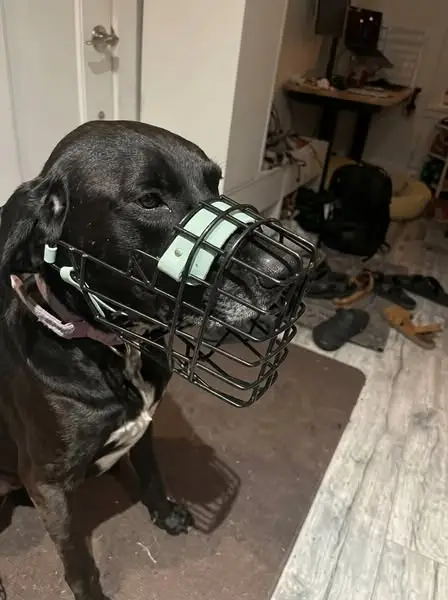
I loved Cooper. He was euthanized because of my mistake. 😢

I'm going to kill myself if I have to write another post about this, but if sharing my story saves even one dog from what happened to mine, it's worth it. My dog Cooper was euthanized three months ago at 2:34 PM. Not because he was sick. Because he bit someone. My neighbor. She was checking on him while I was at work. Animal control labeled him dangerous. The county said he had to be put down. I held him while they did it. The bill was $1,245.99. For a dead dog. I have two other dogs. Finn and Ruby. And right now, they're doing the exact same thing Cooper did before he bit my neighbor. And I'm terrified. I'm not a vet. I'm just a regular person who thought I was doing everything right. And I want to tell you what happened because I see so many of you posting the same exact things I posted six months ago, and it makes me sick to my stomach. If your dog destroys things when you leave—like way more than normal—please, PLEASE read this whole thing. I know it's long. I know you're busy. But three months ago I would have given anything for someone to tell me what I'm about to tell you. Here's what happened. Six months before Cooper was put down, I got three dogs. Cooper was the sweetest one. Quiet. Gentle. A little nervous, but I figured that was just his personality. The first week home, he was fine when I was there. But when I left for work, he'd panic. I installed a camera to check on him. He'd start whining the second I closed the door. Then pacing. Then scratching at the door. I posted in my Facebook group: "Is this normal? My dog destroys things when I leave." Everyone said yes. Someone said some dogs just have separation anxiety at first. Someone else said their dog did this for a month after getting him. So I kept waiting. But it didn't stop. Week 2, still happening. Every single day. I'd come home to scratches on the door. Couch cushions torn up. One time he'd knocked over a lamp. By month 2, Cooper was getting worse. I'd leave for 4 hours. Come home to complete destruction. He'd shredded an entire couch cushion. Scratched the doorframe so badly the paint was gone. Knocked over a bookshelf trying to get to the window. Finn and Ruby were doing it too, but not as bad. Maybe some scratching at the door. But Cooper? Total destruction. I took Cooper to the vet. The vet said: "Some dogs just have anxiety. Try crate training." So I did. I bought a crate. $180. He broke out of it. Bent the metal bars. Cut his mouth trying to escape. There was blood on the crate door. I felt like the worst dog owner in the world. Month 3, I tried everything. Anxiety medication. Trazodone. $95 a month. Calming treats. CBD oil. Thunder Shirt. Pheromone diffusers all over the house. Nothing worked. Cooper would still destroy everything the second I left. And now I was noticing something else. Even when I was home, Cooper couldn't relax. He'd follow me everywhere. Bathroom. Kitchen. Bedroom. If I closed a door, he'd scratch at it immediately. If I went outside to check the mail, he'd start whining. His eyes looked different. Wide. Alert. Like he was waiting for me to disappear. Finn and Ruby started doing it too. I posted about it again. "My dogs follow me everywhere. They panic when I leave a room. Is this connected to separation anxiety?" Someone said it's normal for anxious dogs. Another person said I should hire a behaviorist. I hired one. $150 per session. She said Cooper was "hyper-attached" and needed gradual desensitization training. We did 8 sessions. It didn't help. By month 5, I couldn't leave the house for more than 30 minutes without coming home to destruction. I'd tried everything. Crate training. Medication. Desensitization. Puzzle toys. Calming music. Nothing worked. And Cooper looked TERRIBLE. His coat was dull. He'd lost weight. Not from not eating—he was eating fine. But his body looked... worn down. Like he was in constant stress mode and never recovering. I took him back to the vet. Demanded bloodwork. Everything came back normal. The vet said: "Maybe he just has severe separation anxiety. Some dogs are like that. You might need to consider rehoming to someone who's home all day." I felt sick. I wasn't going to rehome him. He was MY dog. Month 6, I made a decision. I asked my neighbor—sweet older lady, loves dogs—if she could check on Cooper during the day while I was at work. Just pop in for 10 minutes. Give him some attention. She said yes. The first few days, it seemed fine. She'd text me: "Cooper's doing great! He's so sweet." Then one afternoon, I got a call. It was my neighbor. She was crying. "Cooper bit me." My heart stopped. "What? Are you okay? What happened?" "I came in like always. He was pacing. I reached down to pet him and he just... snapped. Bit my hand. It's bleeding." I left work immediately. Drove home. My neighbor was sitting in her driveway with a towel wrapped around her hand. There was blood. She said she was going to urgent care. She said she had to report it. "I'm so sorry. I know you love him. But it broke the skin. I have to." I dragged Cooper inside while he pulled and whined the whole way. When we got in, he collapsed on the floor, shaking. And I sat there on the kitchen floor and sobbed. Because I knew what was coming. Two days later, animal control showed up at my door. They had a report. A bite. An adult. Documented. They said Cooper was now labeled as a dangerous dog. They said I had two options: surrender him for euthanasia, or go through a lengthy legal process that would cost thousands and likely end the same way. I called three lawyers. All of them said the same thing: "In bite cases with documented injuries, the dog almost always gets put down. Save your money." I tried everything. I begged. I offered to rehome him out of state. I offered to keep him muzzled and never leave him alone again. They said no. The county ordered euthanasia. I had 10 days. Those 10 days were the worst of my life. I couldn't eat. I couldn't sleep. I just sat with Cooper and cried. And the whole time, I kept thinking: how did this happen? He was the sweetest dog. He'd never shown aggression before that day. What changed? On the last day, I took him to the vet at 2 PM. They brought us into a small room. Cooper didn't know what was happening. He was wagging his tail. I held him while they gave him the injection. He looked at me. Then his eyes went soft. And he was gone. I walked out to the front desk to pay. The receptionist handed me the bill. $1,245.99. For a dead dog. Euthanasia. Disposal. Administrative fees. I paid it with my credit card because what else was I going to do. I drove home in silence. And I couldn't stop thinking: I saw it. I SAW IT. For six months I watched him struggle. The destruction. The panic. The inability to be alone. And everyone told me it was normal. But here's what made everything worse. When I got home, I watched Finn and Ruby. And they were doing the exact same thing. Scratching at doors when I left. Following me everywhere. Panicking when I closed a door. Just like Cooper had been doing. I started sobbing. Because I knew what was coming. Finn and Ruby were going to end up the same way Cooper did. And I was going to watch it happen all over again. I couldn't sleep that night. I couldn't sleep for weeks. I kept thinking: there has to be something. There has to be SOMETHING that could save Finn and Ruby. I wasn't going to let them die like Cooper did. So I started researching. And I mean OBSESSIVELY researching. I joined every dog health Facebook group. I read every Reddit thread about separation anxiety and panic. I watched YouTube videos from vets and behaviorists. I read medical journals that I barely understood. And I started seeing a pattern. SO MANY people with the exact same story as mine. "My dog has severe separation anxiety." "Everyone said it was normal stress." "Then the behavioral problems escalated." "Dog bit someone during a panic episode. Had to be put down." Over and over and over. I found a thread on Reddit from two years ago. A woman whose dog had the exact same timeline. Separation anxiety for months. Then panic escalation. Dog was eventually euthanized after biting a dog walker during a panic episode. Someone in the comments said: "Dogs with severe separation anxiety often have gut dysfunction. Their brain is stuck in survival mode because their gut-brain axis is broken." That destroyed me. Because Cooper had been in survival mode for SIX MONTHS. And I'd been treating symptoms instead of the cause. The more I researched, the angrier I got. Because here's what I found out: The gut and the brain are directly connected in dogs. 95% of serotonin—the hormone that regulates mood, calm, and stress—is produced IN THE GUT. When a dog's gut is damaged or inflamed, it can't produce serotonin properly. And when serotonin is low, the dog's brain stays stuck in fight-or-flight mode. That's why Cooper was panicking. That's why he couldn't be alone. That's why he destroyed everything. His gut was sending constant danger signals to his brain. And the separation anxiety was the WARNING SIGN. A healthy dog should be able to handle being alone for a few hours. Maybe some mild whining at first. A dog with gut dysfunction panics the second you leave. Destroys things trying to escape. Can't settle even when you're home. That's the body stuck in constant danger mode because the gut isn't producing the serotonin needed to feel safe. But instead of recognizing it as a warning sign, everyone told me it was "normal for anxious dogs." I was so angry I wanted to scream. Why didn't my vet tell me this? Why didn't the behaviorist know this? Why is NOBODY talking about this? I spent hours reading about gut health. About what causes inflammation. About whether it can be healed. And that's when I found something that changed everything. A study about postbiotics and gut-brain health in dogs. Dogs with chronic stress, inconsistent nutrition, or trauma often have damaged gut linings. This inflammation disrupts the gut-brain axis—the pathway that tells the brain whether the body is safe or in danger. When the gut is inflamed, it sends constant "danger" signals. The brain responds by keeping the dog in hypervigilant, panic mode. And the behavioral problems start. But here's the thing that made me want to punch a wall: Most probiotics don't work. Because probiotics are live bacteria that have to survive stomach acid, colonize the gut, and then produce beneficial compounds. Most of them die before they even reach the intestines. Postbiotics are different. They're the beneficial compounds that probiotics produce—but delivered directly, without needing live bacteria. They support gut lining repair, reduce inflammation, and help restore the gut-brain connection. I couldn't stop crying when I read this. Because Cooper had been on calming supplements. CBD oil. $75 a bottle. Trazodone. $95 a month. And he'd been slowly falling apart for MONTHS while I thought I was giving him everything he needed. After reading everything I could find, I made a decision. I was NOT going to let Finn and Ruby get put down like Cooper did. I immediately went on Amazon and bought a postbiotic supplement. $34. Good reviews. "Supports gut health and calm behavior." Started giving it to both of them every day mixed in their food. I watched them obsessively. Watching for panic signs. Watching for destruction. Two months went by. And it got WORSE. Finn went from scratching at doors to completely destroying them. Ruby started having panic attacks when I left. I freaked out. I took both of them to a different vet. Demanded bloodwork. Everything. Finn: Mild intestinal inflammation. Vet said it was "common in anxious dogs" and to just monitor it. Ruby: Same thing. The vet said it wasn't serious enough to treat. I wanted to scream. "They're on a postbiotic supplement! Why is this happening? If the problem is gut dysfunction, the supplement should be FIXING IT!" The vet just shrugged. "Sometimes these things take time." I went home and felt completely hopeless. Then I got MAD. I wasn't going to accept this. I wasn't going to watch Finn and Ruby get euthanized. Two weeks later, I was at the pet store picking up food. I saw a woman with a calm, settled dog waiting in line. I asked her what she did—her dog looked so relaxed. She smiled. "Oh, I give him a postbiotic supplement. Changed everything." My heart started racing. "Which one? I've been trying one from Amazon but it's not working." She pulled out her phone and showed me a picture. "This one. CalmAxis. My behaviorist recommended it after my dog had severe separation anxiety. Within a few weeks, he could finally be alone without panicking." I could barely breathe. "Can I... can I ask you more about this? Please?" She looked at me funny. "Um, sure. Is everything okay?" "My dog was just put down for biting someone during a panic episode and my other two dogs are showing the same signs and I've been giving them postbiotics but it's not working and I don't know what to do." Her face changed. "Oh my god. I'm so sorry. Here, let me give you my behaviorist's contact info." The next day I called the behaviorist. Told her everything. About Cooper's separation anxiety. About the destruction. About the bite. About the euthanasia. About the Amazon postbiotic I'd been giving Finn and Ruby that wasn't working. I sent her a picture of the bottle. She looked at it and her face changed. "This is garbage." I blinked. "What?" "This supplement. It's contaminated. Under-dosed. Probably degraded from sitting in a warehouse for months. Your dogs are getting maybe 20-30% of what the label claims, if that." I felt sick. "But the reviews were good. It said—" "Doesn't matter. Most postbiotic supplements on the market are worthless. They either don't have enough active compounds, or they're contaminated with fillers, or they've degraded from poor storage." "So the supplement I've been giving them for two months has been doing NOTHING?" She nodded. "Probably making things worse, actually. Because you thought you were fixing the problem, but the gut inflammation was still progressing." I put my head in my hands. "What do I do? How do I save them?" She pulled up her phone. "This one from CalmAxis is what I recommend to all my clients. I've seen dogs with severe separation anxiety completely resolve within weeks." I looked at the screen. Simple packaging. "How do I know this one actually works?" "They have third-party lab testing on their website. But honestly, I didn't just trust that. I sent it to a lab myself to verify. It passed. Clean postbiotic complex, properly dosed, no fillers. That's why I recommend it." I stared at her. "Why haven't I heard of this? Why isn't this what vets recommend?" She leaned back in her chair. "Because most vets make more money treating chronic issues than preventing them. I couldn't keep watching dogs get put down for panic disorders that could have been prevented with proper gut support." I felt like I was going to be sick. "Where can I get this?" She wrote down the website. "Order it today. Start them immediately." I thanked her and went straight home. Ordered CalmAxis that same day. Started giving Finn and Ruby the CalmAxis postbiotic as soon as it arrived. For the first 5-7 days, nothing changed. Finn was still destroying things when I left. Ruby was still panicking. I was terrified it wasn't going to work. But then, around day 10, I noticed something. I left for 30 minutes. Came home. No destruction. Finn was lying on the couch. Calm. I told myself not to get my hopes up. But by week 3, I could leave for 2 hours. No scratching. No destruction. No panic. Finn and Ruby would just... rest. By week 4, I left for a full workday. 8 hours. I came home expecting the worst. Nothing. They greeted me at the door, tails wagging. The house was fine. No destruction. No panic signs. I sat on the floor and cried. And then, week 6, I tested it. I closed my bedroom door while they were in the living room. Usually they'd start scratching immediately. Nothing. I waited 10 minutes. Opened the door. They were both lying on the couch. Calm. Settled. Like it was no big deal. I took them both back to the vet eight weeks later. Finn: No intestinal inflammation. Ruby: Same. Clear. The vet looked confused. "Huh. That's unusual. What did you do?" "I switched to a different postbiotic supplement." She didn't say anything. But I knew. The CalmAxis postbiotic was actually WORKING. That was 4 months ago. Finn and Ruby just had their latest checkup last week. Guts are healthy. Separation anxiety is gone. I can leave for 8+ hours with no issues. And I think about Cooper every single day. Because if I'd known about real postbiotics six months earlier, he'd still be alive. His gut would be producing serotonin. His brain would feel safe. He wouldn't have panicked and bitten my neighbor. He'd still be here. I'm writing this because I see so many of you posting the same things I posted. "My dog destroys everything when I leave! The vet says it's separation anxiety!" "We've tried medication, crate training, everything. Nothing works." "My dog is getting worse. I don't know what to do." Because you're watching your dog spiral toward euthanasia and you don't even know it. The separation anxiety is SHOWING you that something is wrong. But everyone is telling you it's normal. It's not normal. Cooper tried to tell me he was struggling. For SIX MONTHS he tried. He destroyed things every day. He panicked every time I left. He couldn't relax even when I was home. He gave me every warning he could. And I ignored it because I didn't know what it meant. Don't be me. If your dog destroys things when you leave, something is wrong. If they panic the second you walk out the door, their gut isn't producing enough serotonin. If they can't settle even when you're home, their brain is stuck in survival mode because their gut is sending danger signals. Don't wait. Don't ask Facebook groups. Don't trust your vet to catch it. And for the love of god, don't waste your money on Amazon supplements that don't work. I wasted two months giving Finn and Ruby garbage while their guts got worse. Two months I'll never get back. Two months closer to losing them the way I lost Cooper. If your dog has severe separation anxiety—if they destroy things, hurt themselves trying to escape, panic when you leave—your dog is trying to tell you something. Don't ignore it like I did. And even if they aren't showing panic yet—if your dog seems a little anxious when you leave but it's "manageable"—start the postbiotic today anyway. Dogs don't show you something is wrong until the damage is already severe. Start the support NOW so you don't end up like me, holding your dog while they put him down for a bite that happened during a panic episode. Get REAL postbiotics. Not the contaminated crap on Amazon. I only use CalmAxis now. Because my behaviorist tested it herself and it actually passed. Because I've seen what happens when you use the cheap stuff—it doesn't work. Because it actually WORKED for Finn and Ruby. I know how this sounds. I know it sounds like I'm selling something. I'm not. I don't work for them. I don't get paid by them. I'm just a person who held my dog while they euthanized him for a panic-induced bite that started with separation anxiety no one took seriously. And I have two other dogs who were heading down the exact same path until I found something that actually worked. Don't waste time on supplements that don't work. Get them on real postbiotics TODAY. Because once the panic escalates to a bite, it's too late. Cooper can't come back. But Finn and Ruby are still here because I found CalmAxis in time. If you're in the same situation I was, just try it. That's all I'm asking. Try CalmAxis. Give it a few weeks. Watch the panic. Watch the destruction. If it works like it worked for Finn and Ruby, you'll know. And if it saves your dog, it'll be worth it. Here's where I get Finn and Ruby's postbiotic—the only brand that actually worked when the Amazon one failed: https://trycanislabs.com/products/calmaxis-chews I wish someone had told me about this before Cooper was put down. I'm telling you now. Please don't ignore it. P.S. Dogs hide gut dysfunction until panic escalates. Separation anxiety is their only warning. Don't wait for a bite incident like I did. P.P.S. Vets make more from treating chronic anxiety than preventing it. Take control. Real postbiotics saved Finn and Ruby.

Loading the ad's image

Sarah Mitchell — I loved Cooper. He was euthanized because of my mistake. 😢
Winning

I loved Atlas. He died from a heart attack during a thunderstorm. 😢

I'm going to kill myself if I have to write another post about this, but if sharing my story saves even one dog from what happened to mine, it's worth it. My dog Atlas died three months ago during a thunderstorm at 11:34 PM. Heart attack. He was 2 years old. The emergency vet bill was $3,847. For a dead dog. I have two other dogs. Harley and Moose. And right now, they're doing the exact same thing Atlas did before he died. And I'm terrified. I'm not a vet. I'm just a regular person who thought I was doing everything right. And I want to tell you what happened because I see so many of you posting the same exact things I posted six months ago, and it makes me sick to my stomach. If your dog freaks out at EVERY sound—barking at cars, doorbells, sirens, fireworks—please, PLEASE read this whole thing. I know it's long. I know you're busy. But three months ago I would have given anything for someone to tell me what I'm about to tell you. Here's what happened. Six months before Atlas died, I got three dogs. Atlas was the sweetest one. Calm. Gentle. A little jumpy, but I figured that was just his personality. The first week home, Atlas would startle at sounds. A car door closing outside. The microwave beeping. My phone ringing. He'd jump. Look around. Then settle. I figured he was just adjusting to the new environment. "Give it time," I thought. So I didn't think anything of it. But it didn't stop. Week 2, Atlas was reacting to MORE sounds. Not just startling. Full reactions. Someone knocked on the door. Atlas started barking. Wouldn't stop for 5 minutes. A siren went by outside. Atlas ran to the window, barking, pacing. The garbage truck came. Atlas freaked out. Barking, whining, couldn't calm down. I posted in my Facebook group: "Is this normal? My dog barks at every sound." Everyone said yes. Someone said some dogs are just sensitive. Someone else said their dog took months to adjust to household noise. So I kept waiting. By month 2, Atlas was reacting to EVERYTHING. Doorbell. Barking for 10 minutes. Car door. Barking. Someone walking by outside. Barking. Thunder in the distance. Total meltdown. And it wasn't just barking. Atlas would HIDE. Under the bed. In the closet. Behind the couch. Shaking. Panting. Sometimes for hours. Harley and Moose were sensitive too, but not like Atlas. Maybe some barking at the doorbell. But Atlas? Complete panic at every sound. I took Atlas to the vet. The vet said: "Some dogs are just noise-sensitive. Try desensitization training." So I did. I played sounds at low volume while giving treats. Car sounds. Doorbell sounds. Thunder sounds. It didn't help. Month 3, Atlas was getting WORSE. A car backfired two blocks away. Atlas had a panic attack. Shaking. Panting. Wouldn't come out from under the bed for 3 hours. The neighbors set off fireworks one night. Atlas completely lost it. Pacing. Panting. Drooling. Eyes wide. I couldn't calm him down. He wouldn't eat. Wouldn't drink. Just paced and panted all night. By morning, he was exhausted but still on high alert. And now I was noticing something else. Even when there WEREN'T loud sounds, Atlas was jumpy. Like he was WAITING for the next noise. His ears constantly swiveling. Eyes darting around. Body tense. He couldn't relax anymore. I posted about it again. "My dog is constantly on edge. Reacts to every sound. Getting worse. Is this connected?" Someone said it's normal for anxious dogs. Another person said I should try a Thunder Shirt. I bought three Thunder Shirts. $89. They didn't work. Month 4, Atlas stopped eating properly. He'd eat a few bites, then stop. Look around. Like he was listening for something. He lost 6 pounds. I took him back to the vet. "He's lost 6 pounds. He's constantly on edge. He freaks out at every sound. This has been going on for 4 months." She looked concerned. Ran bloodwork. Everything came back "normal." She said: "Maybe try anxiety medication. Trazodone might help." She gave me a prescription. I gave it to him every day. It made him drowsy, but he STILL freaked out at sounds. Just slower reactions. He'd still hide. Still shake. Still panic. The medication just made him too tired to run away as fast. It was horrible to watch. By month 5, Atlas was a shell of himself. He'd lost 10 pounds total. His coat was dull. His eyes looked haunted. And he couldn't eat anymore because he was in constant panic mode. Every sound sent him into hiding. Harley and Moose were getting worse too. Barking at everything. Hiding during storms. I increased Atlas's Trazodone dose. Vet said we could try a higher amount. It didn't help. And then one night, there was a thunderstorm. It started around 10 PM. First crack of thunder, Atlas bolted. Under the bed. Shaking. Panting. I tried to get him out. Tried to comfort him. He wouldn't come. The storm got worse. Thunder every few minutes. Atlas was panting so hard I could hear him from across the room. I lay on the floor next to the bed, reaching under, trying to touch him. "It's okay, buddy. You're safe. It's just thunder." But he couldn't hear me. He was in full panic mode. Around 11:30 PM, I heard a weird sound. Like a gasp. I shined my phone light under the bed. Atlas's eyes were rolled back. His body was seizing. I screamed. Dragged him out from under the bed. His body was rigid. He wasn't breathing. I grabbed him and ran to the car. Drove to the emergency vet. It was 11:20 PM. I ran in screaming for help. They took him back immediately. Ran bloodwork. EKG. Everything. The vet came out 15 minutes later. "I'm so sorry. Your dog had a heart attack. His body went into cardiac arrest from extreme stress. We couldn't revive him." I couldn't breathe. "What? He's 2 years old. How does a 2-year-old dog have a heart attack?" The vet looked at me. "Chronic stress can cause cardiac events in dogs. If his body has been in fight-or-flight mode for an extended period, the heart can give out. It's like his nervous system was stuck in panic mode and his body couldn't handle it anymore." I felt like the world was ending. "Can I see him?" They brought me into a room. Atlas was lying on a table. His eyes were closed. I held him and sobbed. He was still warm. Then the receptionist came in and handed me the bill. $3,847. For a dead dog. Emergency visit. Attempted resuscitation. EKG. Bloodwork. Disposal. I paid it with my credit card because what else was I going to do. They put Atlas's body in a cardboard box. I drove home with him in my passenger seat. And I couldn't stop thinking: I saw it. I SAW IT. For five months I watched him spiral. The noise sensitivity. The constant fear. The weight loss. I kept trying to help him. And everyone told me some dogs are just sensitive. But here's what made everything worse. When I got home, I watched Harley and Moose. And they were doing the exact same thing. Barking at every sound. Hiding during storms. Getting more sensitive every week. Just like Atlas had been doing. I started sobbing. Because I knew what was coming. Harley and Moose were going to die the same way Atlas did. Their nervous systems were going to give out from being stuck in constant panic mode. And I was going to watch it happen all over again. I couldn't sleep that night. I couldn't sleep for weeks. Every time there was a loud noise, I'd panic. I kept thinking: there has to be something. There has to be SOMETHING that could save Harley and Moose. I wasn't going to let them die like Atlas did. So I started researching. And I mean OBSESSIVELY researching. I joined every dog health Facebook group. I read every Reddit thread about noise sensitivity and panic. I watched YouTube videos from vets and behaviorists. I read medical journals that I barely understood. And I started seeing a pattern. SO MANY people with the exact same story as mine. "My dog is terrified of every sound." "Everyone said it's normal sensitivity." "Dog kept getting worse." "Eventually had a panic-induced medical crisis." Over and over and over. I found a thread on Reddit from two years ago. A woman whose dog had the exact same timeline. Extreme noise sensitivity for months. Getting worse and worse. Dog had a seizure during a thunderstorm. Didn't survive. Someone in the comments said: "Extreme noise sensitivity means the nervous system is stuck in hypervigilance. That's a gut-brain issue, not just anxiety." That destroyed me. Because Atlas's nervous system had been stuck in panic mode for FIVE MONTHS. And I'd been treating it like it was just sensitivity. The more I researched, the angrier I got. Because here's what I found out: The gut and the brain are directly connected in dogs. 95% of serotonin—the hormone that regulates mood, calm, and stress—is produced IN THE GUT. When a dog's gut is damaged or inflamed, it can't produce serotonin properly. And when serotonin is low, the dog's brain stays stuck in hypervigilance mode. That's why Atlas was so noise-sensitive. That's why he couldn't relax. That's why every sound sent him into panic. His gut was sending constant danger signals to his brain. And the noise sensitivity was the WARNING SIGN. A healthy dog might startle at a loud noise, then recover quickly. A dog with gut dysfunction goes into full panic mode at EVERY noise. Because their nervous system doesn't have the serotonin needed to regulate the stress response. But instead of recognizing it as a warning sign, everyone told me it was "normal for sensitive dogs." I was so angry I wanted to scream. Why didn't my vet tell me this? Why didn't the Trazodone work? Why is NOBODY talking about this? I spent hours reading about gut health and the nervous system. About what causes inflammation. About whether it can be healed. And that's when I found something that changed everything. A study about postbiotics and gut-brain health in dogs. Dogs with chronic stress or genetic predisposition often have damaged gut linings. This inflammation disrupts the gut-brain axis—the pathway that tells the brain whether the body is safe or in danger. When the gut is inflamed, it sends constant "danger" signals. The brain responds by keeping the dog in hypervigilant mode. And every sound becomes a threat. But here's the thing that made me want to punch a wall: Most probiotics don't work. Because probiotics are live bacteria that have to survive stomach acid, colonize the gut, and then produce beneficial compounds. Most of them die before they even reach the intestines. Postbiotics are different. They're the beneficial compounds that probiotics produce—but delivered directly, without needing live bacteria. They support gut lining repair, reduce inflammation, and help restore the gut-brain connection. I couldn't stop crying when I read this. Because Atlas had been on anxiety medication. Trazodone. $95 a month. It made him drowsy but didn't stop the panic. Because medication treats the brain. But 95% of serotonin is produced in the GUT, not the brain. We were treating the wrong system. After reading everything I could find, I made a decision. I was NOT going to let Harley and Moose die like Atlas did. I immediately went on Amazon and bought a postbiotic supplement. $36. Good reviews. "Supports gut health and calm behavior." Started giving it to both of them every day mixed in their food. I watched them obsessively. Watching their reactions to sounds. Watching for signs of panic. Two months went by. And it got WORSE. Harley went from barking at sounds to full panic attacks. Moose started hiding like Atlas had. I freaked out. I took both of them to a different vet. Demanded bloodwork. Everything. Harley: Mild intestinal inflammation. Vet said it was "common in anxious dogs" and to just monitor it. Moose: Same thing. The vet said it wasn't serious enough to treat. I wanted to scream. "They're on a postbiotic supplement! Why is this getting WORSE? If the problem is gut dysfunction, the supplement should be FIXING IT!" The vet just shrugged. "Sometimes these things take time." I went home and felt completely hopeless. Then I got MAD. I wasn't going to accept this. I wasn't going to watch Harley and Moose have heart attacks. Two weeks later, I was at a dog training class. I saw a woman whose dog was lying calmly while fireworks went off in the distance from a nearby stadium. MY dog would have been freaking out. When the class ended, I approached her. "How do you get your dog so calm during loud noises? Mine panics at everything." She smiled. "Oh, I give him a postbiotic supplement. He used to have severe noise sensitivity. This changed everything." My heart started racing. "Which one? I've been trying one from Amazon but it's not working." She pulled out her phone and showed me. "This one. CalmAxis. My vet recommended it after my dog had a panic attack during a thunderstorm. Within a few weeks, he stopped freaking out at sounds." I could barely breathe. "Can I ask you more?" "Sure. What's going on?" "My dog just died from a heart attack during a thunderstorm and my other two dogs are showing the same noise sensitivity. I've been giving them postbiotics but it's not working." Her face changed. "Oh my god. I'm so sorry. Here, let me give you my vet's number." The next day I called the vet. Told her everything. About Atlas's noise sensitivity. About the panic attacks. About the heart attack during the thunderstorm. About the Amazon postbiotic I'd been giving Harley and Moose that wasn't working. I sent her a picture of the bottle. She looked at it and shook her head. "This is garbage." I blinked. "What?" "This supplement. It's contaminated. Under-dosed. Probably degraded from sitting in a warehouse for months. Your dogs are getting maybe 20-30% of what the label claims, if that." I felt sick. "But the reviews were good. It said—" "Doesn't matter. Most postbiotic supplements on the market are worthless. They either don't have enough active compounds, or they're contaminated with fillers, or they've degraded from poor storage. And most of them don't contain the specific compounds that support serotonin production in the gut—which is what your dogs need to regulate their stress response." "So the supplement I've been giving them for two months has been doing NOTHING?" She nodded. "Probably making things worse, actually. Because you thought you were fixing the problem, but their gut health was still deteriorating." I put my head in my hands. "What do I do? How do I save them?" She pulled up her computer. "This one from CalmAxis is what I recommend. I've seen dogs' noise sensitivity completely resolve." I looked at the screen. Simple packaging. "How do I know this one actually works?" "They have third-party lab testing on their website. I've sent samples to labs myself. It passes. Clean postbiotic complex with the specific compounds that support serotonin production in the gut. Properly dosed, no fillers." I stared at her. "Why haven't I heard of this? Why isn't this what all vets recommend?" She leaned back in her chair. "Because most vets make more money treating chronic anxiety than preventing it. I couldn't keep watching dogs have panic-induced medical crises that could have been prevented with proper gut support." I felt like I was going to be sick. "Where can I get this?" She wrote down the website. "Order it today." I thanked her and went straight home. Ordered CalmAxis that same day. Started giving Harley and Moose the CalmAxis postbiotic as soon as it arrived. For the first 5-7 days, nothing changed. Harley was still barking at every sound. Moose was still hiding. I was terrified it wasn't going to work. But then, around day 10, I noticed something. The doorbell rang. Harley barked once. Then stopped. Just... looked at the door and walked away. No 10-minute barking session. I told myself not to get my hopes up. But by week 3, Harley barely reacted to sounds anymore. Maybe a quick look. Then back to what he was doing. Moose took a little longer. By week 4, a car backfired outside. He flinched. Then settled. Didn't hide. Didn't panic. Just... acknowledged it and moved on. I could BREATHE again. And then, week 6, there was a thunderstorm. I braced myself. Waited for them to freak out. Thunder cracked. Harley looked up. Then laid back down. Moose's ears twitched. He kept sleeping. No hiding. No panting. No panic. I sat on the couch and cried. Because Atlas would still be alive if I'd known about this. I took them both back to the vet eight weeks later. Harley: No intestinal inflammation. Moose: Same. Clear. The vet looked impressed. "Wow. Significant improvement. What did you do?" "I switched to a different postbiotic supplement." She nodded. "Keep it up." That was 4 months ago. Harley and Moose just had their latest checkup last week. Gut health is strong. Serotonin production restored. They barely react to sounds anymore. No more panic attacks. And I think about Atlas every single day. Because if I'd known about real postbiotics six months earlier, he'd still be alive. His gut would be producing serotonin. His nervous system wouldn't have been stuck in hypervigilance. He wouldn't have had a heart attack at 2 years old. He'd still be here. I'm writing this because I see so many of you posting the same things I posted. "My dog freaks out at every sound! The vet says he's just sensitive!" "Tried medication, desensitization, everything. Nothing works." "My dog is getting worse. I don't know what to do." Because you're watching your dog's nervous system collapse and you don't even know it. The noise sensitivity is SHOWING you that something is wrong. But everyone is telling you it's normal. It's not normal. Atlas tried to tell me his gut wasn't producing enough serotonin. For FIVE MONTHS he tried. He panicked at every sound. He couldn't relax. He couldn't eat. He gave me every warning he could. And I ignored it because I didn't know what it meant. Don't be me. If your dog panics at every sound, something is wrong. If they hide for hours after loud noises, their gut isn't producing enough serotonin. If they're losing weight from constant stress, their nervous system is stuck in danger mode. Don't wait. Don't ask Facebook groups. Don't trust your vet to catch it. And for the love of god, don't waste your money on Amazon supplements that don't work. I wasted two months giving Harley and Moose garbage while their gut health got worse. Two months I'll never get back. Two months closer to losing them the way I lost Atlas. If your dog has extreme noise sensitivity—if they panic at every sound, hide for hours, can't calm down—your dog is trying to tell you something. Don't ignore it like I did. And even if they aren't showing panic yet—if your dog seems a little noise-sensitive but it's "manageable"—start the postbiotic today anyway. Dogs don't show you something is wrong until the damage is already severe. Start the support NOW so you don't end up like me, watching your dog have a heart attack because their nervous system couldn't handle being stuck in panic mode anymore. Get REAL postbiotics. Not the contaminated crap on Amazon. I only use CalmAxis now. Because vets have tested it and it passes. Because it contains the specific compounds that support serotonin production in the gut—which is what regulates the stress response. Because it actually WORKED for Harley and Moose. I know how this sounds. I know it sounds like I'm selling something. I'm not. I don't work for them. I don't get paid by them. I'm just a person who watched my 2-year-old dog have a heart attack during a thunderstorm because his gut couldn't produce enough serotonin for five months. And I have two other dogs who were heading down the exact same path until I found something that actually worked. Don't waste time on supplements that don't work. Get them on real postbiotics TODAY. Because once the nervous system can't handle the stress anymore, it's too late. Atlas can't come back. But Harley and Moose are still here because I found CalmAxis in time. If you're in the same situation I was, just try it. That's all I'm asking. Try CalmAxis. Give it a few weeks. Watch their reactions to sound. Watch the panic. If it works like it worked for Harley and Moose, you'll know. And if it saves your dog, it'll be worth it. Here's where I get Harley and Moose's postbiotic—the only brand that actually worked when the Amazon one failed: https://trycanislabs.com/products/calmaxis-chews I wish someone had told me about this before Atlas died. I'm telling you now. Please don't ignore it. P.S. Dogs hide gut dysfunction until their nervous systems collapse. Extreme noise sensitivity is their only warning. Don't wait for a medical crisis like I did. P.P.S. Vets make more from treating chronic anxiety than preventing it. Take control. Real postbiotics saved Harley and Moose.

Loading the ad's image
Sarah Mitchell — I loved Atlas. He died from a heart attack during a thunderstorm. 😢
Winning

I overheard my dog trainer say something she wasn't supposed to say. About what she uses on HER dogs.

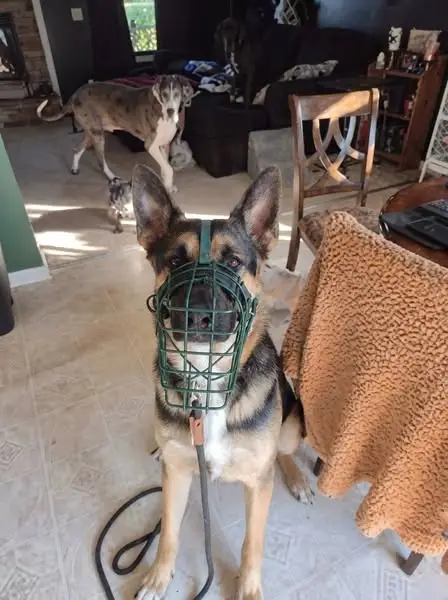
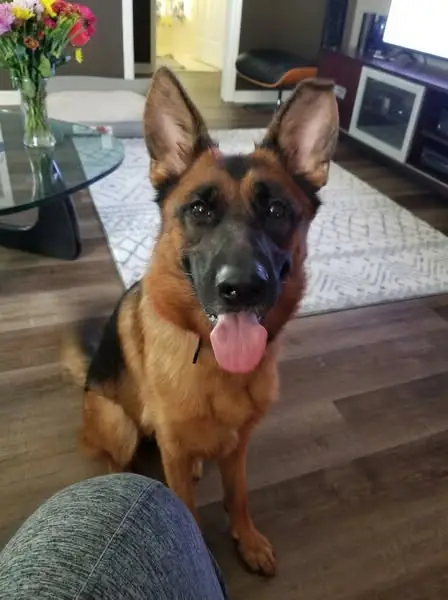
My trainer scheduled Luna for a $2,800 board-and-train program. "Intensive reactivity protocol," she called it. I was about to sign the contract. Then I heard her say something she wasn't supposed to say. I was fifteen minutes early for our consultation. The training facility waiting room was empty. That's when I heard voices from the back office. The door was cracked open. I shouldn't have heard it… Rachel's voice. My trainer. Clear as day. "Did you give Diesel the postbiotic this morning?" A younger voice. Had to be Emma, the assistant trainer. "Yeah. His reactivity is already way down. It's been like six days?" Rachel laughed. "Told you. I've been using CalmAxis on my personal dogs for two years. None of them are reactive anymore." My stomach dropped. Luna is four. She's been reactive since I adopted her at 18 months. Lunges at every dog. Barks at every person. Can't take her anywhere. Rachel said "severe barrier frustration and poor socialization" at our first session six months ago. "Do you ever tell clients about it?" Emma asked. I stopped breathing. Long pause. "No. We can't really do that." "Why not? It obviously works on your dogs." "Think about the revenue we'd lose. Board-and-train programs are our biggest income. If everyone just gave their dog a supplement at home..." She didn't finish. Didn't need to. "What about Mrs. Anderson's dog? The German Shepherd coming in next week? She's paying $2,800." Mrs. Anderson. That's me. They were talking about Luna. My face went hot. "She'll be fine," Rachel said. "The board-and-train is still valuable. Luna needs the structured protocol first." I wanted to throw up. Rachel has been Luna's trainer since I adopted her. Eighteen months of weekly sessions at $120 each. Every single session she'd say the same thing: "She's making progress. We just need more consistency." Four months ago it became urgent. "If we don't do intensive intervention now, the reactivity will escalate into aggression. I've seen it happen." I didn't have $2,800. I work two jobs to afford the weekly sessions. She offered a payment plan. $350 a month for eight months. I was going to sign it next week because Luna's reactivity was getting worse and I was terrified she'd bite someone. And now I'm finding out Rachel's been using a gut health supplement on her own dogs for two years. While mine suffered. I heard footsteps. Grabbed my phone. Pretended to scroll. Rachel walked out smiling. "Mrs. Anderson! Luna ready for next week?" I nodded. Felt like an idiot. "You're doing the right thing. This program will change everything for her." I sat in my car for twenty minutes just staring. Then I texted my friend Jenna. Her rescue pit bull had the same reactivity issues last year. "Did Rachel ever mention gut health supplements or anything besides training?" My phone rang immediately. "Why are you asking that?" "Just tell me." "Okay so... my coworker's sister is a vet tech. She mentioned something last year." "What?" "A lot of trainers in our area use postbiotic supplements on their own reactive dogs. Like, all of them." My heart pounded. "Do they tell clients?" "Never. My coworker felt horrible because I couldn't afford the $2,200 board-and-train Rachel quoted me." "Did you try the supplement?" "Yeah. Three weeks later, Rocco walked past another dog without lunging. First time in eight months." "Did you do the board-and-train?" "No. Cancelled it. Rocco's not reactive anymore." I hung up. Luna was panting in the backseat. She'd already started whining at a dog three cars away in the parking lot. I thought about Rachel's dogs. Perfect recall. Calm around other dogs. Walk off-leash at the park. Mine is four years old and can't pass another dog on the sidewalk. That night I couldn't sleep. "I've been using it on my personal dogs for two years." Two years. How many sessions was that? Thirty? Forty? She watched Luna's reactivity get worse every week and said nothing. Just waited until it was "urgent." Until it was worth $2,800. At 3:22 AM I searched "CalmAxis postbiotic supplement dogs." Their website explained the gut-brain connection. 95% of serotonin produced in the gut. How chronic stress damages gut bacteria. How postbiotics restore the beneficial compounds that calm the nervous system. It was $67 for a month's supply. I'd spent $8,640 on training sessions over 18 months. Was going to spend $2,800 more. For something Rachel's dogs didn't need because she'd been giving them a $67 supplement. I ordered it Thursday night. It arrived Saturday. I stared at the jar in my kitchen. What if this doesn't work? What if Luna stays reactive? But the board-and-train was in five days. This wouldn't work in five days. Sunday morning I gave Luna the first dose mixed into her breakfast. Monday evening walk: She lunged at two dogs. Same as always. Tuesday: Lunged at one dog, but the intensity was slightly less. I told myself I was imagining it. Thursday evening: We passed a dog on the other side of the street. Luna looked. Started to pull. Then... stopped. Looked at me. Kept walking. I almost cried. Friday—the day before board-and-train was supposed to start: We saw a dog on our same sidewalk. Maybe 20 feet away. Luna's entire body tensed. But she didn't lunge. She looked at the dog. Looked at me. Whined softly. Then kept walking when I said "let's go." I called Rachel's facility. "I need to talk to Rachel before we start tomorrow." "She's with a client—" "I'll wait." Ten minutes later, Rachel picked up. "Cold feet about the program?" "Look at Luna." We were on video call. I walked Luna past another dog in the park. Luna watched them. Didn't lunge. Rachel went quiet. "What have you been doing differently?" My voice shook—but not from fear. "I'm using what you use on your own dogs." She froze. Went pale. "I heard you and Emma talking. The door was open." Her eyes dropped. "How long have you been using it?" "...Two years. On my personal dogs." "Luna has been your client for eighteen months." Silence. "You watched her reactivity get worse every session. You never said a word." "The board-and-train is still the most—" "Your dogs aren't reactive. Mine is. Because you gave yours a supplement and charged me $120 a week instead." She shut her mouth. "Cancel the program." I left shaking. I used CalmAxis every day for the next eight weeks. Week 2: Lunged at 1 out of 4 dogs Week 3: Could walk past dogs across the street with no reaction Week 4: Walked past a dog on the same sidewalk—looked, but didn't pull Week 6: Passed another dog within 10 feet. Luna looked at me for guidance instead of lunging. By week eight, I took her to the dog park for the first time ever. She played. Calmly. No barrier frustration. No lunging. The trainer there said: "When did you do her reactivity training?" "I didn't." I showed her photos from two months earlier. She nearly fell over. Yesterday my sister called crying. "They want $3,200 for an eight-week reactivity program for Cooper. I can't afford it." "Don't do it." I told her everything. Long silence. "That should be illegal." It's not illegal. It's just business. Board-and-train programs make trainers thousands. This supplement makes them nothing. So they use it on their own dogs... And sell you protocols instead. Luna just turned five. She walks through the farmer's market every Saturday with me now. Off-leash at the park. Calm around other dogs. And every morning takes me five seconds to mix one scoop into her food. Most people will never know their trainers use postbiotic supplements on their own dogs. But you do now. Your trainer probably uses CalmAxis on their reactive dogs right now— while booking you for a $2,800 program. You can keep trusting that. Or you can do what they do. Luna does. And the thing they hide? The thing that saved her from a board-and-train I couldn't afford? CalmAxis postbiotics. I don't work for them. I'm just someone who was days away from a $2,800 program I was terrified to afford, and now I'm not. Maybe it helps you avoid what I almost couldn't. 👉 https://trycanislabs.com/products/calmaxis-chews P.S. If your trainer recommended a $2,000+ board-and-train program but never mentioned gut health, ask them this exact question: "Do you use any gut health supplements on your own dogs for reactivity?" Don't let them deflect. If they say yes, ask what they use. If they say no, ask why they think their dogs don't need it but yours does. Their answer will tell you everything. P.P.S. I spent $8,640 on training sessions over 18 months. Luna was still reactive. $67 on postbiotics fixed what $8,640 in training couldn't. I'm not saying training doesn't work. I'm saying trainers use this on their own dogs for a reason. Maybe yours should too. Before you drop thousands on a program.

Loading the ad's image
Sarah Mitchell — I overheard my dog trainer say something she wasn't supposed to say. About what she uses on HER dogs.
Winning

Every dog owner in my neighborhood walks their dog normally. I take a different route at 5:30 AM so Stella doesn't see anyone.

I walk my dog at 5:30 in the morning. Not because I like mornings. Because that's the only time the neighborhood is empty enough that I don't have to brace myself. No kids on bikes. No dogs being walked. No joggers coming around corners. Just me, Stella, and forty-five minutes of actually breathing normally. Then I get home, and I watch my neighbor Sarah leave with her Labrador at 8 AM. They walk straight through the park. Stop to talk to people. Let other dogs say hello. Come back forty minutes later. And I don't say anything. I just close the blinds. Because I know what that walk would look like with Stella. The second she sees another dog — 50 feet, 80 feet, doesn't matter — her whole body changes. She locks on. She pulls toward them or pulls away from them. She barks and lunges so hard the leash cuts into my hand. I've been knocked down twice. Once on the sidewalk. Once on a trail when she saw a dog come around a bend. I just got up, grabbed her, and walked the other way. Didn't even look to see if anyone saw. I've spent $3,800 trying to fix this. Three trainers. Twelve weeks of group reactivity classes where we had to stand at the back, behind a barrier, while the "more stable" dogs worked closer to the trigger. Private sessions at $120 each. A basket muzzle. Two different harnesses. CBD oil for four months. Every trainer said progress was happening. "You just need to be more consistent." I was walking her twice a day, every day, doing every protocol they gave me. Two years of consistent. Stella was still lunging at every dog she saw. The worst part wasn't the lunging. The worst part was watching everyone else just... live normally. Sarah's dog meets every dog on the block. My other neighbor walks three dogs at once through the farmers market on Saturday morning. I can't walk through my own neighborhood in daylight without a plan. Which side of the street has fewer dogs. Where to cross early. Which driveways to avoid because someone lets their dog out unleashed. I know every danger zone within a mile of my house. I stopped going to the dog park a year and a half ago. I stopped taking Stella anywhere I couldn't control the environment completely. She's a great dog. She's funny and loyal and sleeps on my feet every night. But outside, she's a different animal. And I was running out of ideas. My vet ran bloodwork. Normal. "Some dogs are just reactive. Keep up with the training." I went home and cried in my car in the driveway. I started reading everything I could find. Reddit threads at midnight. Research papers. Anything. That's when I found something that finally explained what was actually happening. Here's what nobody told me — not my vet, not any of the three trainers: Over 79% of reactive dogs have severely compromised gut health. It doesn't show on bloodwork. It doesn't cause obvious digestive symptoms. But it silently breaks down the gut-brain connection that keeps a dog calm. Because 95% of serotonin — the neurotransmitter that regulates stress and keeps the brain out of survival mode — is produced in the gut. Not the brain. When the gut microbiome is damaged, serotonin production drops. The brain loses its ability to regulate threat responses. Every dog, every bicycle, every stranger becomes a crisis. Stella wasn't undertrained. Her gut couldn't produce what her brain needed to stay calm. And here's why nothing was working: Training works on behavior. It doesn't fix the broken neurological signal coming from the gut. You can counter-condition all day — but if the gut-brain connection is broken, the calm response was never available to reinforce in the first place. Medication suppresses symptoms. Prozac and CBD quiet the brain short-term. But they don't heal the gut. The moment they wear off, the same broken system is still there. I'd spent two years and $3,800 treating a gut problem like a behavior problem. I ordered a postbiotic supplement that week. The first one I tried was from Amazon. I gave it to her for two months. Nothing changed. I found out why when I posted in a reactive dog group and someone with a background in veterinary nutrition explained it to me. Most pet supplements don't contain what the label claims. The probiotic strains are often inactive by the time you open the bottle. The CFU count is a fraction of what's advertised. You're giving your dog something that looks right on paper and does nothing in practice. I found CalmAxis after more research. They use postbiotics — not just probiotics. The difference matters. Probiotics are live bacteria that need to colonize the gut. In a dog with a damaged gut microbiome, they can't survive long enough to do that. Postbiotics deliver the beneficial compounds directly — the actual metabolites that a healthy gut produces. The gut gets what it needs even when it's already damaged. I ordered it without telling anyone. I was tired of updating people on things that didn't work. Week 1: Nothing obvious. Stella still reactive. Week 2: She spotted a dog across the street on our morning walk. Barked twice. Then stopped and kept walking. I stopped and looked at her. That had never happened before. She had never stopped on her own. Week 3: We passed a dog on the other side of the road. She looked at it. Kept walking. I didn't realize I was holding my breath until I exhaled. Week 4: I walked her at 7 AM for the first time in a year. Saw two dogs. She glanced at both. Kept moving. Week 6: I walked through the neighborhood park on a Saturday morning. Stella saw a dog twenty feet away on the path. She looked at it. Looked at me. Kept walking. I sat on a bench in that park and watched other people walk their dogs for twenty minutes. And for the first time in two years, I wasn't planning an escape route. I'm not writing this because everything is perfect. Stella still has harder days. But the 5:30 AM walks are a choice now, not a requirement. I walked her at 8 AM last Tuesday and we passed four dogs. She's not a different dog. She's the dog she was always supposed to be. Her gut just couldn't support it before. If you've been changing your walking schedule around your dog's reactivity — if you know every quiet street in a two-mile radius — if you've watched other owners walk normally and wondered why you can't: It's not your training. It's not your dog's personality. It's likely a gut that can't produce what the brain needs to stay calm. You don't need another trainer. You need to fix the system that training can't reach. The only supplement that actually changed things for us: CalmAxis. 👉 https://trycanislabs.com/products/calmaxis-chews --- P.S. Something my trainer said in our last session has stayed with me. She said reactive dogs that don't improve eventually escalate. Lunging turns into snapping. Snapping turns into contact. Contact means animal control. And once a dog bites someone with injury, most states mandate euthanasia regardless of history. I didn't think Stella would ever get there. But I'd watched her getting worse over two years, not better. That scared me more than I admitted at the time. If your dog's reactivity is escalating — even slowly — please don't wait. P.P.S. I don't work for CalmAxis. I'm a 34-year-old marketing coordinator who just wanted to walk her dog at a normal hour. I found this after two years of trying everything else. Sharing it in case it helps someone who's been doing the same exhausted 5 AM walks I was doing.

Loading the ad's image
Sarah Mitchell — Every dog owner in my neighborhood walks their dog normally. I take a different route at 5:30 AM so Stella doesn't see anyone.
Winning

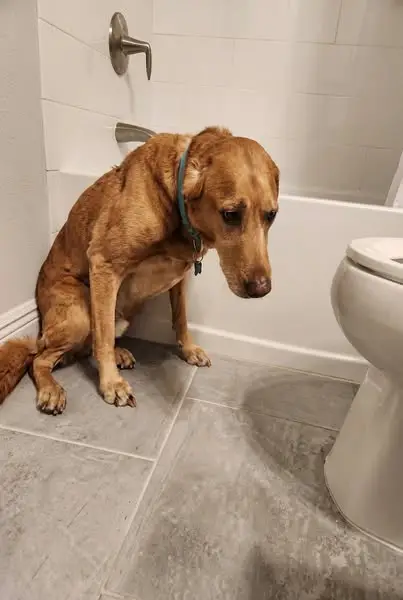
I have a scar on my forearm from my own dog. I told everyone I got it from a bramble on a hike. 😢

I have a scar on my forearm from my own dog. For four months I told everyone I got it from a bramble on a hike. My coworkers. My mom. My best friend. Nobody knew. Because how do you tell someone that the dog you love — the dog you've had for three years, the dog who sleeps on your bed every night — turned around on a walk and bit you? Not a stranger. Not a child. Not someone who provoked him. Me. The person who feeds him every morning. Who scratches his ears. Who spent $4,600 trying to fix his reactivity so he could have a better life. It happened on a Tuesday afternoon in October. We were on our usual route. Diesel spotted a dog about 40 feet ahead. He went into full reaction — lunging, barking, spinning. I tried to redirect him the way the trainer taught me. Stepped in front of him. Said his name firmly. He turned and bit my forearm. One second. Clean puncture. Blood immediately. I stood on that sidewalk holding my arm and I didn't cry. I just stared at him. He was already calm again. Tail low. Looking at me like nothing had happened. I walked home in silence. Cleaned the wound in the bathroom with the door locked. Put a bandage on. Went and sat on the couch. Diesel came and put his head in my lap. And I sat there thinking: what is happening to us? I'd had Diesel since he was 14 months old. Adopted him from a rescue. He was nervous at first — that's normal, they said. Give him time. The reactivity started around month three. Lunging at dogs on walks. Then at cyclists. Then at joggers. I hired a trainer immediately. Positive reinforcement, counter-conditioning, all of it. It helped. For about six weeks. Then it stopped helping. Second trainer. $140 per session. Eight sessions. Better for a while. Then the same plateau. By year two, Diesel was on Prozac. It took the edge off. Some days. Other days he was just as explosive as before the medication. My vet said: "Some dogs need a higher dose. Some dogs just have a reactivity ceiling." I didn't know what a reactivity ceiling was. But it didn't sound like something with a solution. I kept going. Kept training. Kept medicating. Kept managing every single walk like a military operation. Different side of the street. Treats ready. Eyes scanning ahead constantly. And then October happened. After he bit me, I didn't tell the trainer. I didn't tell the vet. I was ashamed. And I was scared of what they might say. That he was dangerous. That we'd reached the end of what was manageable. I kept the bandage on for two weeks. Wore long sleeves until the scar faded enough that nobody would ask. But I couldn't stop thinking about it. He bit me. And the worst part — the part I couldn't say out loud to anyone — was that I understood why. He wasn't trying to hurt me. He was in a state of complete panic. His nervous system had completely overridden everything. He didn't see me in that moment. He was just trying to escape something his brain told him was a threat. And I had stepped into the middle of that. But understanding it didn't make it less frightening. Because if his brain could override his bond with me — what happened the next time a child ran up to him? What happened the next time someone reached out to pet him without asking? I started researching obsessively. Not training techniques. Not medication dosages. Why. Why does a dog's brain override everything — even their attachment to the person they love most — in a reactive episode? That's when I found something that finally made sense of three years of plateau. Here's what nobody told me — not the trainers, not the vet: Over 79% of chronically reactive dogs have severely compromised gut health. Not digestive problems. Not anything that shows on bloodwork. But damaged enough to break the one system that determines whether a dog's brain can regulate itself under stress. 95% of serotonin — the neurotransmitter that keeps the nervous system calm — is produced in the gut, not the brain. When the gut microbiome is damaged, serotonin production drops. The brain loses its ability to regulate threat responses. Fight-or-flight becomes the default state. That's why training kept plateauing. You can't train a brain out of survival mode when the system producing the calming signal is broken. That's why the Prozac helped some days and not others. It was trying to regulate a brain that had no gut-produced serotonin to work with. That's why he bit me. His nervous system hit a wall. His gut couldn't produce what his brain needed to stay regulated. And in that moment, I was just another obstacle between him and escape. It wasn't about me. It was about a broken biological system that nobody had ever checked. I felt sick reading this. Not because it was scary. Because it was the first thing in three years that actually explained what I was seeing. I found CalmAxis — a postbiotic supplement specifically formulated for gut-brain support. Different from probiotics. Instead of live bacteria that need to survive and colonize a damaged gut, postbiotics deliver the beneficial compounds directly. The gut gets what it needs even when the microbiome is already compromised. I ordered it without telling anyone. I was done making announcements about things that might not work. I want to be honest about the first two weeks: nothing changed. Diesel still lunged. Still reacted. I kept my distance, kept watching his body language, kept my arm between us on the walks. Then, around day 12, something small happened. We passed a dog on the opposite side of the street. Diesel tensed. Started to pull. Then stopped. Looked at the dog. Looked at me. Kept walking. I stopped breathing for a second. That had never happened before. Not once in three years. Week 3: He saw a cyclist coming and didn't lunge. Slowed slightly. Kept moving. Week 4: We walked past the spot where he bit me. He didn't react to anything on that block. I stood there for a moment after we passed it. Week 6: I let him off leash in the backyard while my neighbor was in her yard next door with her dog. He looked at the dog through the fence. Whined once. Walked away. I sat down on the grass and just stayed there. Eight weeks in, I told my best friend what really happened in October. She was quiet for a long time. "Why didn't you tell me?" "I was ashamed." "Of him or of yourself?" I thought about it. "Both." Diesel has never bitten me again. He's not a different dog. He still has moments. But his brain has a buffer now. His gut can produce what it was always supposed to produce. The walks aren't military operations anymore. And the thing I was most scared of — that his brain could completely override his bond with me — hasn't happened since. If your dog has ever redirected onto you during a reactive episode — if you've been scratched, pulled down, or bitten and told someone a different story about where it came from — you're not alone. And it's not because your dog doesn't love you. It's because their gut can't produce what their brain needs to stay connected to you when panic hits. Training can't fix that. Medication manages it but doesn't fix it. Only repairing the gut can fix it. The only supplement I trust now: CalmAxis. 👉 https://trycanislabs.com/products/calmaxis-chews --- P.S. After Diesel bit me, I looked up what happens when a dog bites their owner and gets reported. In most states, a documented bite — even to a family member — can result in a dangerous dog classification. Once that classification exists, a second incident almost always means mandatory euthanasia. I never reported it. I was scared of what would happen to him. But I also knew I couldn't keep pretending the problem wasn't escalating. If your dog has redirected onto you — even once — please take it seriously. It's not a one-time thing. It's a warning from a broken system that's getting worse. P.P.S. I'm not paid by CalmAxis. I'm just someone who wore long sleeves for four months because I was ashamed of a scar I didn't know how to explain. If this helps even one person avoid what I went through — or avoid losing their dog to something that had a biological cause all along — it's worth writing.

Loading the ad's image
Sarah Mitchell — I have a scar on my forearm from my own dog. I told everyone I got it from a bramble on a hike. 😢
Winning

Nobody told me his gut was the reason the training and medication kept failing

Fifth trainer in fourteen months. She watched Bruno lunge at a jogger across the street, full force, all four paws off the ground, and said: "Some dogs are just wired this way. We focus on management, not cure." I drove home in silence. Bruno was panting in the backseat. He always pants after an incident. Like his nervous system doesn't know how to come back down. I looked at him in the rearview mirror and thought: I don't know how much longer I can do this. Bruno was four years old. He was not sick. He was not in pain. He was reactive. And I had run out of answers. --- I want to be specific about what I tried. Because I need you to understand this was not a lack of effort. First trainer: counter-conditioning. High-value treats, threshold management, positive association. $65 a session, eight sessions over three months. Bruno improved. For about two weeks. Then regressed. Second trainer: structure and leadership. Place command, prong collar, clear boundaries. "He needs to know you're the calm one." $550 for the six-week program. Bruno improved. For about two weeks. Then regressed. Third trainer referred me to my vet. "This is anxiety, not just behavior. Training can only do so much at this level." My vet prescribed Trazodone. $85 a month. Bruno improved. For about three weeks. Then the lunging came back. "Let's add Prozac. Together they're significantly more effective." $140 a month on top of the Trazodone. Bruno improved. For about three weeks. Then the lunging came back worse than before. My vet referred me to a veterinary behaviorist. $380 for the consultation. Added Clomicalm. $220 more a month. Now spending $445 every single month on medication. Bruno improved. For about two weeks. Then he bit a jogger who came around a corner too fast. The jogger was okay. Bruno was not. And neither was I. I sat in a parking lot after filing the incident report and didn't move for twenty minutes. $9,400 spent. Three years gone. On three medications that were failing. And a dog who had just hurt someone despite all of it. That night I didn't sleep. Not because I was devastated — I was past devastated. Because I could not understand a single thing about what was happening. Trazodone is supposed to work. Prozac is supposed to work. Clomicalm is supposed to work. Together they are supposed to be more effective than any one alone. So why was Bruno still explosive on all three? --- I started searching things I had never searched before. "Why does behavioral medication stop working in dogs." "Dog still reactive on Prozac and Trazodone." "Behavioral meds failing completely." Thousands of results. Thousands of people asking the exact same question. Same story over and over — medication worked at first, wore off, added another drug, that wore off, now nothing works and the dog is worse than before. Some people had been doing this for four, five years. Still reactive. Still on medication. Thousands of dollars gone. No closer to an answer. Then I found something different. A forum thread where someone asked a question I had never seen asked before: "Why does the medication stop working? Not what do we try next. Why is this happening mechanically?" One reply stood out. A woman who had been through the exact same spiral — five medications over three years, all failing. She had found an explanation written by a veterinary researcher. Not a blog. Not a supplement ad. An actual mechanistic explanation of what happens underneath reactivity. She said it changed everything. I clicked the link. I read it at 1 AM on my kitchen floor. By the time I finished I was shaking. --- Here is what it said. 95% of serotonin — the chemical that controls your dog's ability to stay calm, regulate the threat response, choose not to react — is produced in the gut. Not in the brain. In the gut. When the gut microbiome is disrupted — by stress, processed food, antibiotics, chronic inflammation — postbiotic metabolite production collapses. The gut-brain axis breaks down. The nervous system shifts into permanent threat detection mode. Every trigger floods the brain with danger signals it no longer has the capacity to process calmly. That is not a behavioral problem. That is a gut problem that looks exactly like a behavioral problem. And here is the part that made me feel physically ill: Trazodone suppresses the anxiety signal. Prozac tries to stretch the serotonin that exists by blocking reuptake. Clomicalm attempts to regulate the serotonin pathway from the brain end. But none of them fix production. You are turning off the smoke alarm while the gut keeps starving the brain of what it needs. That is why they work at first. That is why they stop working. That is why every few weeks you are back at the vet asking why it is getting worse again. The medication was never going to fix him. Because no one was looking at his gut. I sat on that kitchen floor for a long time. I thought about the $9,400. The three years. The three trainers. The three medications. I thought about the jogger. About the incident report. About the parking lot. I thought about every morning I had mixed medication into Bruno's food believing I was doing something. Believing I was helping. They were not lying to me. Not one trainer, not one vet, not the behaviorist. They were doing exactly what they had been trained to do. They just had never been taught to look at the gut. --- The article explained what actually addresses the root cause. Postbiotic metabolites — the compounds a healthy gut produces to communicate with the brain through the gut-brain axis. You do not need to rebuild the entire microbiome. You deliver the end-products directly. Serotonin production stabilizes. The nervous system gets what it needs. The threat response comes down. I went to Amazon that night and bought the top-rated postbiotic supplement I could find. $34. Thousands of reviews. "Supports gut-brain balance and calm behavior." I gave it to Bruno every morning for ten weeks. Nothing changed. Not one walk improved. Not one trigger response reduced. I went back to the forum and posted: "Tried a postbiotic supplement for ten weeks. No change at all. Am I doing something wrong?" The same woman sent me a direct message. "Which one did you buy?" I told her. She sent me a lab report. --- It was a third-party analysis of nine of the top-rated behavioral and gut supplements sold online. Bestsellers. "Vet formulated." "Amazon's Choice." Products with thousands of five-star reviews. Seven of the nine were underdosed — delivering 30% to 70% less active compound than the label claimed. Two had heavy metal contamination. Lead. Above safe limits. One contained Brewer's Yeast — one of the most common gut irritants in dogs — as the second ingredient. An allergen actively inflaming the gut in a supplement marketed to calm the gut. The product I had been giving Bruno for ten weeks: on the list. Underdosed by 68%. I had been giving him less than a third of what I thought I was giving him, every single morning, for two and a half months. I felt sick. She told me there was one product on the list that had passed. Full dose. No contamination. No Brewer's Yeast. No fillers. Third-party verified, batch by batch. CalmAxis. She said: "I know this sounds like I'm just telling you to buy something. Before you order, ask them for their Certificate of Analysis and their batch testing records. If they don't send them immediately and completely, don't buy it." I went to the website. Found the testing documentation before I looked at anything else. Accredited third-party lab. Six months of batch reports. Pharmaceutical-grade sourcing. GMP-certified facility. I called them. Someone answered on the first ring. I asked every question I could think of. They answered all of them, completely, without hesitation. I ordered that night. --- I am going to be honest about what happened because I do not want to oversell this. I had been burned twice. I was not going to tell you it was a miracle. Week one: nothing visible. Bruno was still Bruno. I kept doing the 5 AM walks, the crossed street when I saw another dog coming, the constant scanning. Same as always. Week two: we were walking the back route I always take to avoid the dog park. A woman came around the corner with a Labrador on a flexi-lead. Too close to avoid. Bruno tensed. I braced. He made a low sound in his throat. Started to pull. And then stopped. He stood there, looked at the other dog, looked back at me, and started walking again. I did not react. I was afraid if I acknowledged it something would break. We got home. I sat on the front step for a long time. Week three: I took the longer route. The one I had not walked in over a year because of the house with the three dogs behind a fence that had triggered Bruno's worst incident ever. We walked past. He looked. Kept moving. Week five: I went to PetSmart for the first time in two years. I stayed at the back, away from the main aisle. Bruno sniffed the shelves. His tail was up. Not tucked. Not flagging. Up. I stood in the middle of a pet store with tears running down my face while a stranger asked if I was okay. Week seven: I began tapering Trazodone. Slowly, with my vet monitoring. Week nine: Trazodone gone. Clomicalm being tapered. Now: half the medication he was on. Better behavior than he ever had on all three. --- I have told five people about this. Four of them had reactive dogs. All four have seen the same shift. My neighbor David had a six-year-old rescue Malinois named Tank. Labeled dangerous by two shelters. Failed four behavioral programs. David had been told by three separate professionals that Tank was not a dog that could be rehabilitated. He was one incident away from a mandated euthanasia order. Eight weeks: "He walked through the neighborhood yesterday without reacting to a single dog. I've never seen that in two years. I don't know how to explain it." My coworker Sarah had a three-year-old Shepherd mix named Nova. On Prozac for eighteen months. "She's manageable," Sarah used to say. I recognized that word. It means you've accepted this is how it is. Six weeks in: "Nova met my parents' dog last weekend. They were in the yard together for an hour. I've never been able to do that. I cried in the car on the way home." My sister had been considering returning her dog. A two-year-old Husky named Storm. Had bitten her partner once and shown aggression toward her other dog. She was out of options. She did not return him. My friend James had an eleven-year-old Shepherd named Duke. Reactive his entire life. "It's just how he is." James had said that for nine years. Duke had been on Trazodone for three of them. Seven weeks: "Duke let my brother's dog into the house last week. Sat in the same room. That has never happened in eleven years. I don't know what to tell you." --- I am not telling you this because I want you to feel hopeful. I am telling you because I spent three years accepting a lie. The lie that some dogs are just wired this way. The lie that management is the goal. The lie that when the medication stops working you just add another one. Nobody told me to look at the gut. Not one trainer. Not one vet. Not the behaviorist I paid $380 for a consultation. Not one person I gave money to in three years of trying. They were not wrong. They were not withholding information. They were doing what they had been trained to do. They had just never been trained to look at what was happening inside the dog. But Bruno came within one incident of being a dog I could not keep. I will think about that for the rest of his life. If you are where I was — stacking medications that are slowly failing, dreading every walk, quietly building your entire life around a problem instead of solving it — please read what I found. Not a sales page. The actual mechanism. And do not buy from Amazon. I wasted ten weeks and two and a half months of trust on a contaminated product that did nothing. CalmAxis is the only brand I have found that publishes real third-party lab verification for every batch. 👉 https://trycanislabs.com/products/calmaxis-chews Your trainer isn't wrong. Your vet isn't wrong. They just weren't taught this. But now you know. Bruno is asleep on the couch next to me right now. Heavy. Still. The way he could never settle before. That is what is possible when you stop suppressing and start rebuilding. I hope your dog gets there too. P.S. — The medication does not fix postbiotic production. It suppresses the signal. Every week you stay on the treadmill, the gut dysfunction deepens and the threshold gets lower. By the time the medication stops working entirely, you are not managing reactivity. You are managing a dog one incident away from a decision you are not ready to make. P.P.S. — Do not waste months on underdosed or contaminated supplements like I did. Ask the brand for a current Certificate of Analysis before you buy. If they cannot produce one within the hour, do not buy it. CalmAxis sent theirs before I even had to ask twice.

Loading the ad's image
Sarah Mitchell — Nobody told me his gut was the reason the training and medication kept failing
Winning

Every reactive dog I've had has ended up euthanized or surrendered. I refused to let it happen again.

Every reactive dog I've had has ended up euthanized or surrendered. I refused to let it happen a third time. The first was Beau. He was a 4-year-old rescue Shepherd mix. Reactive from the day I got him. I hired a trainer within the first month. We worked for a year. He improved, then plateaued, then started getting worse. He bit a neighbor's kid. Not badly — she needed a bandage, not stitches. But the law didn't distinguish. I signed the euthanasia form. Three years later, I adopted Sadie. A Labrador with a documented reactivity history that I thought I could fix with everything I'd learned from Beau. I tried even harder with Sadie. Two certified trainers. A board-and-train program. Prescription Prozac. For a while she was doing really well. Then she bit a jogger on the trail. I signed the surrender form. For almost five years I told myself it was bad luck. Wrong dogs. Wrong timing. "These things happen with rescues." Then I adopted Luna. Luna was a 3-year-old Pit Bull mix. The rescue told me upfront she had leash reactivity. I told them I had experience. From the first walk, I could see the same signs. The stiffening. The stare. The way her whole body would lock onto a trigger from 40 meters away. I couldn't sleep that night. What I found is the reason Beau and Sadie didn't have to end the way they did. And the reason no trainer, no vet, no behaviorist ever told me. Here's what happened. Luna's reactivity was worse than Beau's or Sadie's had ever been at this stage. Last month a dog appeared around a corner on our usual walk route and Luna exploded before I had time to react. She pulled so hard she broke the clip on her lead. She didn't make contact — thank God — but she got within a meter of the other dog before I caught her. I stood on that path shaking. I'd seen how this story ended. Twice. Every time a trainer mentioned that Luna was making progress, all I could see was Beau getting worse again after months of seeming better. Sadie's trainer saying the same things, right up until she bit. I couldn't go through that again. I tried everything the training world recommends. I worked with a certified reactivity specialist. Two sessions a week for four months. Counter-conditioning. BAT protocol. Threshold management on every single walk. Never putting Luna in situations she couldn't handle. She improved. Then she plateaued. I started a second trainer. Different approach. More progress. Then another plateau. I tried prescription Trazodone. The vet said it might take the edge off enough for the training to stick better. It helped slightly. Made her slightly slower, slightly less explosive. Her threshold was still breaking. Just a little less dramatically. I joined every reactive dog group I could find. Read every post. Tried every recommendation. Calming treats. CBD oil. Adaptil diffuser. Thunder shirt. L-theanine supplements. The trainers and the vets and the groups were all saying the same things. The same things they'd said about Beau. The same things they'd said about Sadie. I was watching the same cycle start again. And nobody could tell me why the training kept hitting a ceiling. Why some days Luna was almost normal, and other days — same route, same weather, same everything — she was worse than she'd ever been. No pattern I could see. Just inconsistency that made no sense. Three months into working with my second trainer, I asked her directly. "Why does the progress keep plateauing? Why does she regress on some days for no reason I can identify?" The trainer paused. "Honestly? Some dogs just have a higher baseline anxiety. You keep working. You manage it. It's a long process." That was the answer I'd heard before Beau was euthanized. The same answer I'd heard before Sadie bit the jogger. I drove home and sat in the car for twenty minutes. I needed to know if there was something everyone was missing. So I started looking. Hours on Reddit. Forum posts from owners who'd been through three, four, five years of training with reactive dogs who never fully resolved. Comments from people who'd lost dogs despite doing everything right. And the more I read, the more one question kept coming up over and over. Why does the progress always hit a wall? Owner after owner describing the same pattern. Dog improves. Plateaus. Regresses under pressure. Improves again. Plateaus. One incident. Then the form. I kept reading until I found an answer I hadn't seen before. A comment in a reactive dog forum from someone who'd had the same experience with three reactive dogs. She wrote: "Every training protocol assumes the dog's brain can regulate itself if you give it the right tools. The problem is, some dogs' brains literally can't regulate — not because of training or socialization or breed or history. Because 95% of serotonin is made in the gut, not the brain. And if the gut is compromised, the brain never has what it needs to hold the training when it counts." I read it four times. The calming treats. The CBD. The Trazodone. The counter-conditioning. The two years of work with Beau. The two years of work with Sadie. They were all trying to regulate a brain that didn't have the biological foundation for regulation. Nobody had ever touched the gut. I didn't fully understand it yet. But I understood enough to know that in five years of working with reactive dogs, no trainer, no vet, no behaviorist had ever mentioned this. I started looking for something that addressed the gut specifically. Not probiotics. Postbiotics. The comment explained the difference: probiotics are live bacteria that have to colonize the gut to work. In a dog that's been under chronic stress — and reactive dogs are always under chronic stress — the gut lining is damaged and can't support colonization. The bacteria pass through without taking hold. Postbiotics are the actual metabolites and compounds that healthy gut bacteria produce. Delivered directly. No colonization needed. That's why the supplements I'd tried had never worked. They were sending bacteria into a gut that couldn't use them. I found a product people in that forum kept mentioning. CalmAxis. I was skeptical. I'd been skeptical of everything for five years. I'd spent hundreds on supplements that did nothing. But I did one thing I hadn't done before. I called the company directly. I asked for their Certificate of Analysis — independent third-party lab results showing what's actually in the product. They emailed it within the hour. Every other supplement I'd tried? I couldn't get a straight answer from any of them. I also asked specifically: "Does this work in dogs who've been under chronic stress? Whose gut might already be compromised?" They walked me through it. Postbiotics bypass the colonization problem. The therapeutic compounds go directly to where they're needed. They explained the serotonin mechanism — the gut producing what the brain needs to regulate. They explained why chronically stressed dogs have the worst gut health, which is why they're the hardest to train: the stress damages the gut, the gut produces less serotonin, the brain becomes less able to regulate, which creates more stress, which damages the gut further. The cycle I'd been watching for five years finally had a name. I ordered it directly from their website. Not Amazon — the person in the forum had specifically warned about counterfeits. I kept everything else exactly the same. Same trainer, same sessions, same management on walks. Just added CalmAxis. Here's what happened over the next eight weeks. WEEK ONE Nothing noticeable. Luna still reacted on most walks. I told myself I was testing a hypothesis, not hoping for a miracle. WEEK TWO Something I hadn't expected. Luna was recovering from triggers faster. She'd react, and then come back to me quicker than she had before. Her trainer noticed it before I mentioned anything. WEEK THREE My husband came on our usual evening walk for the first time in months. A dog appeared across the road. Luna stiffened — and then didn't lunge. Stood stiff for a few seconds, then looked back at me. My husband didn't say anything. He'd never seen her do that before. Neither had I. WEEK FOUR I lifted her lip the way I used to when I'd check her gums. Luna tensed up. She was expecting a correction. But I was looking at her, not correcting. Something was different. Her whole body was less coiled. Less anticipatory. Her trainer pulled me aside after the session. "Whatever you changed — don't change it back. I don't know what it is, but something is different about her baseline. She's available in a way she wasn't before." WEEK FIVE Luna stopped scanning on walks. Not completely. But the constant hyper-vigilant scanning she'd had since day one — head swiveling, ears rotating, body never fully relaxed — was less constant. There were moments where she just walked. Head forward. Loose leash. I hadn't seen that once in months. WEEK SIX We walked the route where she'd broken her clip and charged a dog. Same corner. Same blind bend. A dog appeared. Luna stiffened. I held my breath. She looked at the dog. Looked at me. Took a treat. I stood on that path and didn't move for a long time. WEEK EIGHT I took Luna to a local park. The park I'd avoided for three months because it was too unpredictable. Three dogs passed us in forty-five minutes. She looked at each one. She didn't lunge at any of them. I sat on a bench and watched her sniff the grass and couldn't remember the last time a walk had felt like this. I posted her progress in the reactive dog forum where I'd first found the information. Got messages that week. Helen's 5-year-old Staffy. Two years of reactivity training with partial results. Six weeks on CalmAxis, her trainer extended their sessions and noted the first consistent above-threshold encounters she'd handled successfully. Robert's German Shepherd. Two bite incidents in eighteen months. Starting CalmAxis alongside his existing protocol. Three months later, reclassified by his behaviorist from high-risk to manageable. I'd been the person reading other people's stories. Now I was one of them. Luna is still reactive. She still needs management, still needs her training, still needs a handler who knows what they're doing. What changed is that the training is sticking. The ceiling I kept hitting with Beau, with Sadie — I'd been building on a biological foundation that couldn't hold the weight. The gut wasn't producing what the brain needed to implement what the training was teaching. Now it is. And two years of training that had been working against that deficit is finally holding when it counts. If your dog is where Luna was. Improving, then plateauing. Inconsistent in ways that don't make sense. Training hitting a ceiling it can't break through. The answer might not be more training. It might be the biological foundation the training is supposed to be built on. Every day you don't check it, the gut damage from chronic stress accumulates. The threshold gets lower. The ceiling stays where it is. And the next incident gets closer. Don't buy from Amazon — counterfeits have been reported. Only order directly: 👉 trycanislabs.com/products/calmaxis-chews P.S. I still give Luna her CalmAxis every morning. One scoop in her food. She doesn't even notice it. Eight seconds. After five years of wrestling dogs into muzzles and clinging to leashes and signing forms I never wanted to sign — eight seconds. P.P.S. Beau tried to tell me. The inconsistency. The days where nothing made sense and he was worse than ever for no reason. That was his gut. I just didn't know what it meant. Now you do. EDIT: Sorry, I keep getting DMs asking what the product is specifically. It's CalmAxis — order directly from trycanislabs.com, not Amazon. The third-party lab results are real and they'll send them if you ask.

Loading the ad's image
Sarah Mitchell — Every reactive dog I've had has ended up euthanized or surrendered. I refused to let it happen again.
Winning

I gave my reactive dog a calming supplement for 5 months. The lab said it was 38% of what the label claimed. My vet said we were running out of options. I had no idea the supplement I trusted wasn't even real.

Before you spend another month on a calming supplement for your reactive dog, I need to tell you what I found out the hard way. I wasted eight months giving my dog a supplement that was doing nothing. Worse than nothing. My dog Bruno is a 5-year-old German Shepherd. Reactive since he was 18 months old. Lunging at other dogs on walks. Fixating on cyclists. Barking at anything that moved too fast near him. I tried everything. Two different trainers. Hundreds spent on sessions. Counter-conditioning, threshold management, BAT protocol. They told me he needed "more structure" and "consistent boundaries." I gave him both. It helped a little. Not enough. My vet put him on a short-term anxiety medication. It made him so sedated he could barely walk straight. I stopped it after three weeks. Then I found postbiotic supplements. I read everything I could. The gut-brain axis. How 95% of serotonin is produced in the gut. How gut dysfunction keeps dogs stuck in permanent fight-or-flight mode. It made complete sense to me. So I bought one of the top-rated postbiotic supplements. £38 a month. Hundreds of five-star reviews. Veterinarian recommended on the label. Started giving it to Bruno every single day mixed into his food. Two months went by. Nothing changed. I kept going. Three months. Four months. The reviews said "give it time." So I did. Month five, Bruno bit a dog at the park. Not badly. But it happened. The other owner threatened to report it. My vet used words I wasn't ready to hear. Something about "options" and "quality of life decisions." I went home and cried for two hours. I had been giving him this supplement every single day for five months. I'd done everything right. And he was still getting worse. I was ready to give up. Then someone in a reactive dog Facebook group mentioned getting their supplements tested. I didn't even know that was something you could do. She'd sent hers to an independent lab and found it had less than half the postbiotic content stated on the label. So I did the same thing. I sent Bruno's supplement — the one I'd been giving him for five months — to an independent lab. The results came back twelve days later. Postbiotic content: 38% of what the label claimed. 38%. The rest was maltodextrin, tapioca starch, and silica fillers. The lab notes specifically flagged the silica as an absorption inhibitor — it was physically blocking what little postbiotic content was actually present from being absorbed through the gut lining. For five months, I thought I was healing Bruno's gut. I was giving him fillers. I wanted to scream. I went back and looked at the reviews for that supplement. All five stars. People talking about how calm their dogs had become. And I realised — they had no idea either. They were just assuming that if it was sold with that many reviews, it had to be real. I spent two weeks researching every postbiotic supplement I could find. Forums. Lab testing communities. Independent review threads. Veterinary nutrition discussions. One brand kept coming up as the only one people had actually independently verified: CalmAxis. I found a veterinary behaviourist who had independently lab-tested nine brands and published her findings. CalmAxis was the only one that came back at full potency. Over-delivered on label claims. Zero fillers. Zero contamination. I ordered it the same day. 2 chews every morning. Nothing else changed. Week one: still reactive on walks. I told myself I wasn't going to get hopeful. Week two: Bruno spotted a dog coming around a corner. He stiffened. Started the low growl that always comes before the lunge. And then stopped. Looked at the dog. Looked at me. Kept walking. I stood on the pavement for a moment. That had never happened. Not once in four years. Week three: our morning walks looked different. He still noticed other dogs. But the lunge — the full explosion, the tunnel vision, the four paws leaving the ground — wasn't the same. Week six: we walked past another dog at maybe five meters distance. He looked. Glanced at me. Kept walking. I stopped moving. That had never happened before. Not once. His gut-brain axis was finally getting real support. Not fillers pretending to be postbiotics. Not dead bacteria dissolving before they arrived. The actual postbiotic compounds a healthy gut produces — delivered directly. Bruno is not a cured dog. We still train. We still manage his environment. He still has moments. But he is a different dog than he was eight months ago. And I spent eight months wondering why nothing was working — when the answer was that what I was giving him wasn't real. If your dog is reactive and the supplement you're using isn't doing anything: get it tested. Or just switch to something that's already been independently verified. Don't waste eight months like I did. The supplement industry is largely unregulated. Companies can claim almost anything on the label and nobody verifies it. Most pet owners have no idea the product they're buying every month contains 38% of what it says — or less. Here's how to check before you buy: Ask the company for their Certificate of Analysis. Not a general quality statement. A batch-specific Certificate of Analysis from an accredited independent laboratory. If they can't send it within the hour, don't buy it. CalmAxis sent theirs before I even asked twice. Don't buy from Amazon — counterfeits and diluted versions have been widely reported. Order directly: 👉 trycanislabs.com/products/calmaxis-chews Bruno wishes I'd found it sooner. So do I. P.S. After I got the lab results back showing 38% content, I went back to the supplement company and asked for their testing documentation. They sent me a generic quality certificate from 18 months prior. No batch-specific data. No independent lab. Just a piece of paper designed to look official. The supplement industry is built on the assumption that nobody checks. Check. P.P.S. I don't work for CalmAxis. I'm someone who spent £304 over eight months on a product that contained mostly fillers — while my dog's reactivity escalated to a bite incident. The only reason I found CalmAxis is because another dog owner in a Facebook group told me to get my current supplement tested. Now I'm telling you. Get it tested. Or switch to the one that's already been independently verified.

Loading the ad's image
Sarah Mitchell — I gave my reactive dog a calming supplement for 5 months. The lab said it was 38% of what the label claimed. My vet said we were running out of options. I had no idea the supplement I trusted wasn't even real.
Winning

From the ads Sniped has collected from this page (8 so far, first seen Nov 2026). Reach is what Meta reports; no spend or sales estimates.