Advertiser

The Blood Pressure Journal

auniva.coMeta Ad Library

6
Running ads
none new in 30 days
Sep 2026
Advertising since
longest ad 2 months
—
Reach
running ads, summed
0% video
Formats
0 video · 6 image
2
Products advertised
1 shop

Feel Like Yourself Again

I had a stretch of three good days in a row last spring and I almost forgot what was wrong with me. That's the part nobody warns you about. Not the bad days. The good ones. Because the good ones lie to you. They tell you maybe it's gone. Maybe you imagined it. Maybe you're fine. And then a labradoodle pulls you down a sidewalk in Fairfield, Connecticut and you sit on a stranger's stone wall for 22 minutes trying not to die, and you remember. My name is Maureen. I'm 58. I live alone in a two bedroom on Beach Road, about a mile from the Sound, with a back porch that needs repainting and a kitchen window that looks out at a hydrangea I've been trying to kill for six years that refuses to die. My husband Pete passed in 2019. Heart. Sudden. He was eating a turkey sandwich at the kitchen counter and just sat down on the floor. The paramedics said he was gone before he hit the linoleum. I keep the spot where he sat covered with a small braided rug now because I couldn't stand looking at it bare. I work part time at the library on Old Post Road. I do programming for the kids. Story hour on Tuesdays. I run the summer reading club. I knit. I garden when my back lets me. I have one sister, Donna, who lives in Westport with her husband Glenn, and I have her dog Charlie about four times a year when they fly down to see Glenn's mother in Naples. Charlie is a labradoodle. Cream colored, 62 pounds, four years old, the absolute sweetest animal you've ever met and dumb as a bag of doorknobs. This story is about Charlie. And it's about a stone wall I sat on for 22 minutes in front of a house I'd never been to before. And it's about what I learned in those 22 minutes that I think saved my life. But I'm getting ahead of myself. Let me back up. I started feeling weird about three years ago. Nothing dramatic. Just little things. I'd stand up too fast and the room would tilt for a second. I'd carry groceries in from the car and have to lean against the fridge before putting them away. I'd be at the library shelving picture books and feel my heart kind of flutter and pause, like a moth bumping into a window. I went to my doctor. Dr. Halpern. He's been my doctor since Pete and I moved up here from Stamford in 2008. Nice man. Nearing retirement. Reads the chart, listens, runs the labs, sends you home. He took my pressure at that first visit. 142 over 88. He said, "Well, that's a little elevated. Could be the visit. White coat thing. Let's check it again in three months." I said okay. Three months later it was 146 over 90. He said, "Stage 1. Nothing to panic about. A lot of women your age. Let's watch it." I said okay. Three months after that, 148 over 92. He said, "Are you exercising? Cutting salt?" I said yes to both. He said, "Stress?" I said, "I'm a 56 year old widow who works at a library. My biggest stressor this week was a six year old who threw up on a copy of The Very Hungry Caterpillar." He laughed. He didn't put me on anything. He said let's keep watching. Watching. That's what they do. They watch. While the number creeps up half a point at a time and you start feeling like a kettle that's been left on the back burner too long. I want to tell you what was happening to my body during those years of "watching," because nobody at the doctor's office ever asked me. They asked about the number. They never asked what it felt like to be the person attached to the number. It felt like I was running on a treadmill that nobody else could see. I'd wake up tired. Not regular tired, the kind of tired where you open your eyes at 6:30 in the morning and your chest is already working too hard. I'd put on the coffee and feel my heart catch, just for a second, like it forgot the rhythm. I'd take the trash out to the curb on Tuesday morning and have to stop at the mailbox and pretend to look at something so the neighbor across the street wouldn't see me catching my breath. I started avoiding the stairs at the library. We have an elevator for the kids' wing and I started taking it. I told myself it was because of my knee. It wasn't. I stopped meeting Donna at the diner on Saturdays for breakfast because the parking lot was a hill and walking up it made my temples pound. I stopped doing the garden in front of the porch. Just let it go. Weeds came in. Hydrangea took over. I told myself I'd get to it next year. I gained nine pounds without changing a thing about how I ate. And the whole time, every three months, I'd sit in Dr. Halpern's office and he'd take the cuff off and write something down and say, "Still elevated. Let's keep watching." I started to think maybe I was crazy. Maybe this was what 56 felt like. Maybe everybody felt this way and nobody talked about it. Maybe Donna felt this way. Maybe the woman ahead of me at Stop and Shop felt this way. Maybe we were all just walking around like overheated kettles, smiling at each other, pretending the steam wasn't there. I want to tell you about the day with Charlie now. Because it's important. Donna called me on a Sunday in late April last year. She and Glenn were flying to Florida that Friday. Glenn's mother had a cataract surgery and they were going to be down there for nine days. Could I take Charlie? I said yes. Of course. I always said yes. I drove up to Westport on the Friday morning, picked up Charlie and his bed and his food bag and his ridiculous little raincoat, and I brought him home. Charlie is the sweetest dog on earth and also a complete idiot. He pulls on the leash like he's being chased. He barks at squirrels he can't see. He once ate a whole sleeve of saltines off my counter and looked at me afterward like he didn't know how it happened. The first three days went fine. I walked him in the morning around the neighborhood, did a short loop, came home, sat on the porch with my coffee. He was happy. I was happy. Day four was a Tuesday. April 23rd. I remember the date because it was supposed to be the day I went back to Dr. Halpern for my three month check. I'd canceled it because of the dog. It was warmer than it should have been for April. Maybe 74 degrees. Sticky. The kind of day that feels like the air has weight. I clipped Charlie's leash on around 10:30 in the morning. We started up Beach Road like we always did. He did his usual sniffing routine for the first quarter mile. Then he saw the cat. I don't know whose cat it was. Orange tabby. Sitting on a porch railing about 60 feet up the road on the left. Charlie went from a walk to a full sprint in a half second. He's 62 pounds. I'm 137. The leash was wrapped around my left wrist twice because I'd been switching hands. I went with him. I didn't fall, exactly. But my body did something I can only describe as launching. My arm yanked forward, my chest jolted, my feet stumbled, and I half ran half stumbled about 30 feet up the sidewalk before I managed to plant myself and yank him back. I got him stopped. He was still barking. The cat was unbothered. And then I felt it. It started in my temples. A pressure. Like somebody had wrapped a wet towel around my head and was tightening it slow. Then my chest got heavy. Not sharp. Heavy. Like something was sitting on it. Then my vision went funny. Not black. Spotty. Little gray dots floating across whatever I was looking at, and the edges of everything got soft. And then my legs. My legs went rubber. I didn't fall. I made it about ten more feet to a stone wall in front of a white colonial with green shutters and a hand painted address sign that said 47. I sat down on it. Hard. Charlie sat down next to me on the sidewalk and looked at me like he couldn't figure out why we'd stopped. I sat on that wall for 22 minutes. I know it was 22 minutes because I kept checking my phone, hoping every time I looked that more time had passed. The first ten minutes I was scared. I thought I was having a stroke. My chest hurt. My head was pounding. My ears were ringing. I tried to take deep breaths. I tried to count to ten. I tried to remember the symptoms of a stroke from the poster at the library, the FAST one, face arm speech time, and I couldn't remember which letters meant what. The next ten minutes I started crying. Not sobbing. Just leaking. The kind of crying where you don't make any noise and you don't realize it until something drips onto your shirt. The last two minutes I just sat there with Charlie's head on my knee, looking at a hydrangea on the other side of the street, thinking about Pete. About how Pete just sat down on the kitchen floor. About how he didn't know it was coming. About how I'd been telling myself my body was fine for three years while it had been screaming at me the whole time. A woman came out of the white colonial at some point. I don't know exactly when. I remember her standing at the screen door first, watching. Then she came down the steps with a glass of water. She was maybe 65. White hair pulled back. Glasses. Soft pink cardigan. She handed me the water without saying anything and sat down on the wall next to me. We sat there for a few minutes. Charlie put his head in her lap. She finally said, "How long have you been having those?" I said, "Having what?" She said, "Whatever just happened to you. I watched you walking up the road. I saw your color change before you sat down." I started crying again. I told her everything. I don't know why. I'd never met her. Her name was Elaine. She'd lived in that house since 1987. Her husband Bob had passed four years before from a heart attack at 64. She was retired from teaching middle school science. I told her about Pete. About Dr. Halpern. About the watching. About the kettle on the back burner. About how I'd been pretending for three years that this wasn't happening. She listened to all of it. She didn't say anything for a long time after I finished. Then she said, "Can I tell you something? And you don't have to take it as advice. You can take it as a story." I said okay. She said, "After Bob died, I went into a tailspin. My pressure was bad. I knew it was bad. The doctor knew it was bad. He gave me a pill. The pill made me dizzy and tired and I felt like I was walking through wet sand. So I stopped taking it, which I shouldn't have done, but I did. And for about a year I just sat in this house feeling my heart bang around in my chest and waiting for whatever happened to Bob to happen to me." She looked at Charlie. "Then my niece, who lives in Pittsburgh, sent me a bottle of something in the mail. She'd read about it somewhere. She'd started taking it after her own scare. She didn't even tell me what it was supposed to do. She just said, 'Aunt El, I want you to try this for two months. If you hate it, throw it out.'" I said, "What was it?" She said, "Amla." I'd never heard the word. She spelled it out for me on her phone. A M L A. She showed me a picture of the fruit. A small pale green berry, kind of translucent, growing on a tree. She said it was Indian gooseberry. She said her niece called it the most studied fruit in the world that nobody in America has ever heard of. She told me she'd been taking it for 14 months when I met her on her wall. I asked her how she felt. She thought for a minute. Then she said, "Like I'm not waiting for the other shoe to drop anymore." That sentence went into me like a hook. Because that's what I'd been doing for three years. Waiting for the other shoe to drop. Waiting to be the next Pete. Waiting to sit down on the kitchen floor at 60 years old. I went home that afternoon. I put Charlie in his crate. I sat down at my laptop and I went down a rabbit hole. I'm going to tell you what I learned, because nobody at Dr. Halpern's office ever told me any of this and I think it matters. The thing they don't tell you about blood pressure is that the number is a symptom. It's not the disease. It's the smoke. The fire is somewhere else. The fire is mostly in two places. Your blood vessels and the cells that line them. The vessels are supposed to be soft and stretchy. Like a fresh garden hose. They're supposed to widen when your blood needs to move faster, and narrow when it needs to slow. They're supposed to flex with every beat. That flexing is part of how the pressure stays in a healthy range, even when you're sprinting after a labradoodle who saw a cat. The lining of those vessels, called the endothelium, makes a tiny molecule called nitric oxide. Nitric oxide is what tells the vessel to relax. To soften. To open up. It's the thing that takes the pressure off. When you're young, your body makes plenty of it. The vessels relax on demand. The pressure stays where it should be. As you age, two things happen. First, your body starts making less nitric oxide. Second, the inside of your vessels takes a beating. From sugar in your diet. From inflammation. From oxidative stress, which is just a fancy way of saying your cells are getting rusted on the inside, like a wheel well in a Connecticut winter. That oxidation damages the lining. Damaged lining can't make nitric oxide properly. Damaged lining gets stiff. Stiff vessels can't flex. And when vessels can't flex, the pressure has nowhere to go. It just keeps climbing. You can take a pill that forces the vessels open. That's what most blood pressure medication does. It works. Sort of. But it doesn't fix the rust. It doesn't fix the inflammation. It doesn't help your endothelium make more nitric oxide. It just papers over the symptom while the underlying damage keeps happening underneath. Amla, the little green berry Elaine was taking, does something very different. It's been studied for a long time, mostly in India, where it's been used in traditional medicine for thousands of years. The research suggests it has one of the highest natural antioxidant loads of any fruit on earth. It's loaded with vitamin C, polyphenols, and a group of compounds called tannins that are particularly good at quieting oxidative stress in the cardiovascular system. What that means in plain English is that Amla has been linked to supporting the lining of your blood vessels. The endothelium. The very part that makes nitric oxide. The very part that lets your vessels flex. The part that's been getting rusted while you've been told to keep watching. Amla has been associated with helping support healthy blood pressure already in the normal range. Not by forcing anything. By supporting the system that's supposed to do the job naturally. It's also been linked to supporting healthy cholesterol levels, healthy blood sugar, and healthy inflammatory response. All of which are tied to vascular health. All of which feed into what your blood pressure is doing. I read for hours that afternoon. Charlie slept on my feet. I want to be clear about something. I'm not a doctor. I'm a librarian who reads too much. But the thing that struck me was that none of this was hidden. None of it was a secret. There were dozens of studies. Mainstream medical journals. Real research. The information was just sitting there, and nobody had ever told me about it. Not Dr. Halpern. Not the cardiologist he sent me to once for a stress test. Not the pharmacist. Nobody. Three days after I met Elaine, I ordered a bottle of Auniva Amla. I picked Auniva because the bottle I read about online was sourced and tested in the U.S., and because the company offered a 90 day money back guarantee. I figured if it didn't do anything, I'd send it back. I didn't have to. Two capsules a day. With breakfast. That was it. The first week, nothing dramatic. I felt a little less foggy in the afternoons. That was about it. I almost talked myself out of taking it. The second week, something shifted. I noticed it on a Wednesday, walking from my car to the library entrance. There's a small slope from the parking lot up to the front doors. Maybe 30 feet. I'd been avoiding the front doors for almost a year and using the side entrance instead, because the slope made my chest tight. That Wednesday I walked up the slope without thinking about it. I got to the doors and stopped. Turned around. Looked at the slope. Walked back down. Walked back up. Then I stood there in the foyer with my keys in my hand and I started laughing. Out loud. By myself. Like a crazy woman. Three weeks in, I started taking the stairs at the library again. Five weeks in, I started gardening in front of the porch. Pulled out the dead branches. Cut the hydrangea back. My back didn't quit on me halfway through. Seven weeks in, I drove up to Donna's house and we walked from her driveway down to the beach. Half a mile. Mostly downhill but uphill on the way back. I made it both ways without stopping. Donna noticed. She didn't say anything for the first two visits. The third time we walked down to the beach together, she stopped on the sidewalk and looked at me and said, "What are you doing different?" I told her about Amla. About Elaine. About the wall. She said, "Send me the link." She's been on it for four months now. Her pressure was 138 over 86 in March. She had it checked at the pharmacy last week. 122 over 78. She cried in the car when she told me. I went back to Dr. Halpern in August. He took my pressure twice. The first time he frowned at the cuff like it was broken. He took it again on the other arm. 124 over 80. He said, "What did you do?" I told him. He didn't write anything down. He didn't say anything for a minute. Then he said, "Well. Whatever it is. Keep doing it." I keep doing it. I want to tell you the thing about Pete I haven't told you. The day he died, the day he sat down on the kitchen floor with the turkey sandwich, he'd been at the doctor three weeks before. His pressure was 138 over 88. The doctor said, "A little high. Let's keep watching." We were watching. Watching is what they call it when nobody does anything. I think about Pete all the time. I think about him sitting at that counter. I think about whether his vessels were rusted on the inside. Whether his endothelium had been begging for help for years and nobody listened. Whether something as simple as a small green berry could have given him another decade. I'll never know. But I know this. I sat on a stone wall in front of 47 Beach Road with a labradoodle's head on my knee and I thought I was going to die. And a stranger came out of her house with a glass of water and told me about a fruit her niece sent her in the mail. And eight months later I walked from the parking lot to the library doors without thinking about it. If you've been watching your number creep up half a point at a time for years, and your doctor keeps telling you to keep watching, and you're tired of feeling like a kettle on the back burner, I want you to know there's another way to think about this. Your blood pressure is not the disease. It's the smoke. The fire is in the lining of your vessels and the cells that have been getting rusted for years while nobody mentioned it. Auniva Amla supports the lining. Supports the system that's supposed to take care of itself. Supports the body's own ability to keep pressure where it should be. It's two capsules a day. 90 day money back guarantee. If it doesn't do anything for you, you send it back and you don't pay for it. That's it. I'm not a doctor. I'm a 58 year old widow who got pulled down a sidewalk by a labradoodle and ended up sitting next to a science teacher named Elaine on a stone wall. I'm telling you the same thing she told me. You don't have to wait for the other shoe to drop. 👉 auniva.co/amla/33 P.S. Elaine still lives at 47 Beach Road. I walk Charlie past her house every time Donna goes to Florida. We sit on her wall and have iced tea. Last time I was there she told me her pressure had been steady at 118 over 76 for over a year. She's 67. She's planning a trip to Ireland in the spring with her sister. She told me the trip is the first thing she's planned for herself since Bob died. She didn't think she'd live to take it. She's taking it. P.P.S. The 90 day money back guarantee is the part I want you to think about. When Pete went on his pressure medication for the six weeks before he died, nobody offered him a refund. When my doctor told me to keep watching for three years, nobody offered to refund the years I lost feeling like a kettle. The guarantee is Auniva's way of saying they'll stand behind what they sell. Try it for two months. If your body doesn't tell you something is different, send the bottle back. You're risking nothing. I risked three years of my life pretending the number on the cuff didn't matter. Don't do what I did. P.P.P.S. If your husband is in the recliner more than he used to be, if your sister is canceling plans, if your mother is taking the elevator she used to skip, if you yourself have been quietly avoiding hills, slopes, stairs, sidewalks, and you've been telling yourself this is what 50 something feels like, this is not what it feels like. This is what oxidative damage to your vessels feels like. This is what a body running out of nitric oxide feels like. This is what a kettle on the back burner feels like. There is another way. Two capsules. 90 days. A glass of water. A stone wall. A stranger named Elaine. A small green berry from a tree on the other side of the world. 👉 auniva.co/amla/33

Loading the ad's image
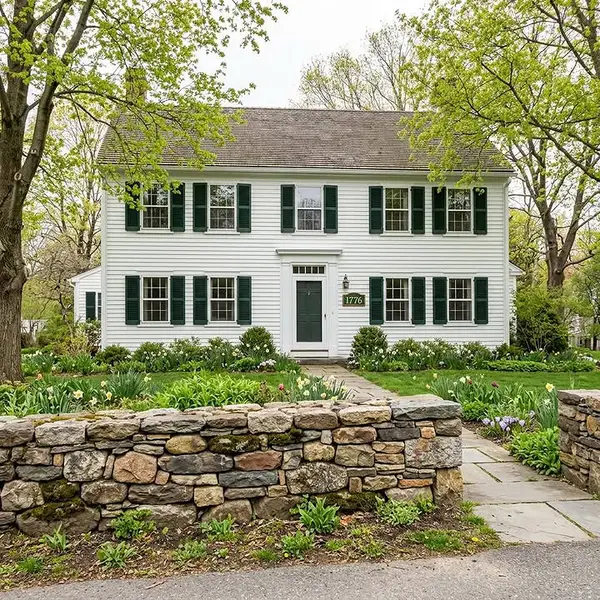
The Blood Pressure Journal — Feel Like Yourself Again
PromisingImage

Feel Like Yourself Again

I got a postcard from Florida last October that just said "I'm sorry I haven't called. I've been scared." That was the whole message. Six words. Signed with a single curly K. K is my older sister Karen. She lives in Sarasota with her second husband Bill, who used to sell boats and now mostly fishes off a pier and complains about the snowbirds even though they are themselves snowbirds. Karen and I have not gotten along since 1987 over something I don't even remember anymore. We send Christmas cards. We call on birthdays. That's the whole relationship. So a postcard out of season, with that message on it, in her handwriting that wasn't her handwriting because it was shakier than I'd ever seen it, sat me down at my kitchen table for 40 minutes. I'm Diane. I'm 61. I live in Erie, Pennsylvania, in the same brick two-bedroom my husband Dennis and I bought in 1992. Dennis passed in 2021. Pancreatic. Six weeks from diagnosis to the funeral. I haven't moved his recliner. I haven't moved his coffee mug from the shelf above the sink. Some women clear things out. Some women don't. I'm a don't. I read the postcard three times. Then I read it a fourth time. Then I went and got my reading glasses and read it a fifth time even though I'd had them on for the first four. I'm sorry I haven't called. I've been scared. Karen doesn't say things like that. Karen is the older sister. Karen is the one who, when our father died in 1998, called all 14 of his cousins herself instead of letting our mother do it. Karen is the one who got divorced at 41 and threw a divorce party. Karen does not write postcards that say I've been scared. I called her that night. It rang 8 times and went to voicemail. I called her the next morning. Same thing. I called Bill's cell phone, which I'd had for an emergency years ago. He picked up on the second ring and his voice was the kind of tired that doesn't come from a bad night's sleep, it comes from a bad year. He said, "Diane. I was wondering when you'd call." I said, "Bill, what is going on with my sister." He was quiet for a long time. Then he said, "I think you better come down." I told him I'd be there Friday. He said, "Diane, don't tell her you're coming." I'm going to back up here because I want you to understand what kind of person my sister Karen is. Karen was the kind of girl who, at 12 years old, taught herself to play the piano because our parents wouldn't pay for lessons. She taught herself by ear. She got good enough that by 16 she was playing weddings for $40 a wedding, which in 1979 was real money. She put herself through Penn State on piano money and a partial scholarship and a job at a diner in State College that she worked 5 nights a week for 4 years. She married her first husband Joel at 24 and had two kids by 28. Joel was a contractor who drank. Karen left him on a Tuesday in 1995 with two kids in the back of a Honda Accord and $1,400 in a savings account and she did not look back. She raised those kids alone for 11 years before she met Bill at a church fish fry in 2006. They got married 14 months later. Bill is a good man. He's not Joel. Karen was the strong one. Karen was always the strong one. So when Bill told me on the phone not to tell her I was coming, I understood what he was telling me. He was telling me she would say no. He was telling me she would say she was fine. He was telling me she would put on a voice and tell me I didn't need to make the trip. And he was telling me to come anyway. I drove down on a Friday in late October. 22 hours from Erie to Sarasota with one night in a Hampton Inn outside of Knoxville. I packed a small suitcase. I left a note for my neighbor to get the mail. I want to tell you what I saw when I walked through their front door. Bill answered. He looked thinner than the last time I'd seen him. He held the door open and just nodded at me like he'd been waiting for a long time. The house was the same. The same beige carpet, the same little tiled entry, the same kitchen with the pass-through to the dining room. Karen had decorated this house herself in 2009 and it had looked the same for 15 years. She was at the kitchen table. She was wearing a robe at 2:30 in the afternoon. Her hair, which Karen has dyed every 5 weeks for 30 years to keep the grey out, had grey roots an inch and a half deep. There was a blood pressure cuff on the table next to a glass of water and a notepad. The cuff was plugged in. She'd been using it. She looked up when I walked in. She looked at me for a long second and her face did the thing faces do when they can't decide whether to be angry or to cry. Then she said, very quietly, "You weren't supposed to come." Bill said, "Karen." She said, "Bill." Then she put her face in her hands and started crying. Not loud. Just shoulders. The kind of crying where the person doesn't make any noise because they've been doing it for so long they've learned how not to. I sat down across from her. I picked up the notepad. It had her blood pressure readings written down in her handwriting. Three a day. Sometimes four. Going back, I flipped through the pages, going back to early 2023. The numbers on the most recent pages were 198 over 112. 204 over 115. 196 over 109. 211 over 118. I'm not a nurse. But I'd watched my mother spend her last 8 years on blood pressure medication and I knew what those numbers meant. Those numbers meant stroke. Those numbers meant heart attack. Those numbers meant my sister had been sitting at this kitchen table for 2 years watching the cuff inflate and deflate, writing the readings down in a notepad, telling no one. I said, "Karen. Honey. Why are you not in a hospital." She didn't look up. She said, "Diane. I've been to 7 doctors." That sentence cracked open the whole story. She told me everything over the next 4 hours. We moved from the kitchen to the screened porch. Bill made coffee. The Florida light went from sharp afternoon to soft gold to something pink and slow over the canal behind their house. Her blood pressure had started creeping up in 2018. She'd been on her first medication by 2019. It hadn't worked, so they'd added a second. By 2020 she was on three. By 2022 she was on four. By 2023, none of them were working. Her readings were climbing into territory the doctors couldn't explain. She'd seen a cardiologist in Sarasota. He'd added a fifth pill. It made her cough so badly she couldn't sleep. He took it off and added a different one. That one made her ankles swell to the size of small grapefruits. He told her she had "treatment-resistant hypertension," which is doctor-speak for we don't know what to do with you, and that she should just keep trying combinations. She'd flown to Tampa to see a specialist. He'd ordered three rounds of bloodwork, an MRI of her adrenal glands, a 24-hour urine collection, and a sleep study. Everything came back normal. He told her some people are just like this. He told her to come back in 6 months. She'd flown to Atlanta to see a doctor a friend had recommended. He'd put her on a 7th medication. It dropped her pressure to 90 over 60 for 4 days and then it climbed back up to 195 over 110 and stayed there. By the spring of 2024 she'd stopped going to the doctor. She told me she'd stopped going because she couldn't stand the conversation anymore. Walk in. Get the cuff put on. Watch the nurse's face change. Watch the doctor come in with a clipboard. Watch them shake their head. Watch them add a pill. Watch the pill not work. Drive home. She said, "Diane, I started thinking about it as a death sentence." She said it just like that. She said she'd started writing letters. To Bill. To her kids. To me. She had a folder in her dresser drawer with 9 letters in it. She hadn't told anyone because she didn't want anyone to talk her out of being afraid. She wanted to be afraid. She wanted to be ready. Because she knew, in the way the body knows, that one of these mornings the cuff was going to read something that wasn't going to be a number anymore, it was going to be the end. I cried with her on that porch. I had not cried like that since Dennis. After she went to bed I sat with Bill in the kitchen. I asked him what he'd done. He said, "Diane. I have begged her. I have driven her to 7 doctors. I have gone with her into the appointments. I have done everything a man can do for his wife when the medical system has thrown its hands up." He said, "I have been losing her in slow motion for two years. And I didn't know who else to tell." I stayed in Sarasota for 11 days. The first 4 days I just watched. I watched Karen take her cuff out three times a day. I watched her write the numbers down. I watched her face when the numbers were bad, which they were every time. I watched Bill's face when he saw her face. I watched the way they moved around each other like two people trying not to wake up a baby that was already awake. On day 5 I called my niece Sarah, Karen's daughter, who lives in Chicago and is a physical therapist. I told her everything. She cried. Then she said something that stopped me cold. She said, "Aunt Diane. There's something I want to tell you. I've been treating an older man at the clinic for 9 months for hip pain. He's 64. He came in two weeks ago and his physical therapist, that's me, told him his blood pressure looked better than it had since he started coming. He told me he hadn't done anything different except start taking some berry from India that his daughter in law had pushed him to try." I said, what's it called. She said, "Aunt Diane. I wrote it down because I was curious. Hold on." She put me on hold. She came back. She said, "It's called Amla. A-M-L-A. The brand he was taking was Auniva. Auniva Amla." I want to slow down here because the next part of the story is the part where I'd usually feel skeptical. If somebody told me on the phone that a berry from India had brought down a 64-year-old man's blood pressure when 7 medications hadn't, I would not believe them. I would think they were trying to sell me something. I would think the patient was confused. But I was sitting in my sister's guest bedroom in Sarasota, Florida, with a notepad full of readings in my hand, after I'd watched her cry on a screened porch and tell me she'd written 9 letters to her family because she thought she was about to die. When you are at that point, you do not have the luxury of skepticism. You have research. I spent the next two nights on my laptop in that guest bedroom. Here's what I learned, in the plainest language I can put it. The inside of your blood vessels has a living inner wall. It's called the endothelium. It's one cell thick. It is the most important layer of your vascular system and most people, including me, have never heard of it. That wall has a job. Its job is to tell your blood vessels when to relax and open up so blood can flow through easily. It does that job by producing a tiny molecule called nitric oxide. When the wall makes plenty of nitric oxide, your vessels relax, your blood flows freely, and your pressure stays normal. When the wall is worn down, it can't make enough nitric oxide. The vessels stay tight. Blood has to force its way through. The harder it forces, the more it stresses the already-worn wall. The wall gets worse. The pressure goes up. The cycle feeds itself. That is what high blood pressure actually is, at the level where it lives. Now here is the part that sat me down on the bed and made me say a word my mother would not approve of out loud. The pills my sister was on, all 7 of them she'd tried over 6 years, do not touch the wall. They force the vessels open from the outside. They are doing the wall's job for it. Which means while the pill is working, the wall is still worn down. The wall is still not making nitric oxide. The wall keeps deteriorating. And eventually you reach a point where the pills can't force enough opening to overcome the deterioration. That's the moment doctors call "treatment-resistant." Karen wasn't unusual. Karen wasn't a freak case. Karen was a woman whose wall had been deteriorating for 20 years and nothing in her medical chart had ever once been aimed at the wall. Amla, I read, contains compounds called emblicanins. Emblicanins have been studied for what they do to that inner wall. When the wall is supported, it can start producing more of its own nitric oxide, the way it did when she was younger. The vessels can relax more naturally. The pressure on the wall eases. When the pressure eases, the wall isn't getting beaten up anymore. The cycle that has been feeding itself can start to slow down. Pressure can come down. Not because something forced it. Because the wall has been given a chance to do its own job again. I read that and I closed the laptop and I sat on the edge of the guest bed and I thought, dear Lord. She has been treated for the symptom for 6 years. Nobody ever treated the wall. The next morning I came out to the kitchen and Karen was at the table with the cuff. I sat down. I said, "Karen. I want you to try one thing. One. If it doesn't help, I will fly down here every two weeks and sit with you until I die too. I will not leave you alone in this. But I want you to try one thing." She looked at me. I told her about Sarah's patient. I told her about the wall. I told her about the nitric oxide. I told her what I'd read. She didn't say anything for a long time. Then she said, "Diane. I have tried 7 medications. I have flown to Tampa and Atlanta. I have spent $4,400 out of pocket on specialists. Why on God's green earth would I think a berry is going to do anything." I said, "Because nobody has touched the wall yet." She looked at me. Then she looked at Bill. Bill nodded. We ordered it that afternoon from her kitchen table. I want to tell you what happened over the next 11 weeks, because I went home to Erie after day 11 and I called Karen every single morning at 9:15, and I want to tell you what she told me on those calls. Week 1, nothing. The numbers were still 198 over 110, 201 over 112. She was discouraged. I told her to stay on it. Week 2, the morning readings started coming down first. 184 over 105. 179 over 102. Still high. But moving. Week 3, she slept through the night for the first time in 18 months. Bill told me that on the phone. He said, "Diane. She slept until 6:40 in the morning. She used to wake up at 2 with her heart pounding and stay up. She slept." Week 5, her morning reading hit 152 over 89. We both cried on the phone. Week 7, she went to her cardiologist for a routine appointment. She did not tell him she was taking anything. He took her reading himself. 148 over 86. He looked at the chart. He looked at her. He looked at the chart again. He said, "Karen. What did you change?" She told him. He wrote it down. Not the brand. Just the word Amla. He said, "I'm going to look into this." Week 9, her cardiologist took her off two of her medications because her pressure was steady in the 140s over 80s and he didn't want her dropping too low. Two pills. Off. After 6 years of only adding. Week 11, I flew down to Sarasota again. I walked in the front door. Karen met me at it. She was wearing real clothes. Her hair was dyed. She had on lipstick. She hugged me and she said, "Diane. I dyed my hair. I went to the salon. I sat in the chair for 90 minutes. I read a magazine. I drank a coffee. And I did not think about my blood pressure once." She said, "I didn't realize how much of my brain it had been taking until it gave it back." We went to dinner that night at a restaurant on the water. She ordered fish. She ate it. She had a glass of wine. She laughed at something Bill said and she put her hand on his hand and she left it there for the rest of dinner. I watched my sister come back to life over plates of grouper. The letters in her dresser drawer are gone now. I asked her what she did with them. She said she'd shredded them in May. She said she didn't want them sitting there anymore because they were a version of her she was no longer planning to be. I started taking Auniva Amla too, about 4 months ago. My pressure has never been bad, but I'm 61 and I watched my husband die in six weeks and I figured if there's something that supports the wall, I'd rather support it now than treat it later. I am not a doctor. I have already told you everything I know. But if you are a woman sitting somewhere in America with a notepad and a cuff and a husband who doesn't know what to do anymore, or you are a husband with a wife whose readings have gotten quietly worse for years while the medications added up to nothing, or you are anyone in that house where the conversation has gotten too tired to have, I want you to know what my sister knows now. Your medications are doing one job. They are forcing your vessels open. They are not touching the wall. The wall is what's worn out. The wall is why nothing has worked. And the wall has not, in 6 years and 7 medications and $4,400 in specialists, been the target of a single thing my sister was given. Auniva Amla supports the wall. That is the whole sentence. The wall is what's been worn down. Support the wall, and your body can do what it already knows how to do, which is run your blood pressure the way it ran it when you were younger. Auniva is a small company. They ship out of the United States. The capsules are made here too. You take two a day with breakfast. There's no powder, no tea, no protocol. Two capsules. A glass of water. That's it. It comes with a 90-day money-back guarantee. You send the bottle back, full refund, no paperwork, no arguing. You have 3 months to find out whether your wall can come back online. If it can't, you've lost nothing but the postage. My sister wrote me a postcard last October that said I'm sorry I haven't called, I've been scared. I am writing this in February, 4 months later, because she is not scared anymore. She has not been scared since week 5. If somebody in your life has gone quiet on you the way my sister went quiet on me, please don't wait for the next postcard. Please don't wait for the next reading. Please don't wait for the cardiologist to throw up his hands. The wall is the thing. Nobody told us. Now you know. 👉 auniva.co/amla/33 P.S. I want to say one more thing about Karen. The night before I flew home from my second trip, she said something I have not been able to stop thinking about. She said, "Diane. The worst part wasn't the numbers. The worst part was being treated like a difficult patient. Every doctor's office in 6 years. Every cardiologist. Every specialist. I started feeling like the problem was me. Like there was something wrong with me as a person, not just as a body. Like I was a failure at being a patient." She said, "I didn't even know how much I was carrying that until it lifted." If you are a person who has been told you are treatment-resistant, please understand that you are not the problem. The pills were not aimed at the right thing. That's not your fault. P.P.S. You'll know it's working before your cuff confirms it. The sleep changes first. Then the mornings. Then the headache that has been there for so long you forgot it was there starts to go. Then the cuff confirms what your body already told you. Don't quit at week 2. Week 2 is the wall starting to come back online. Weeks 3 through 6 are when the pressure starts to follow. P.P.P.S. Auniva Amla has that 90-day money-back guarantee I mentioned. Just send the bottle back. Full refund. No arguing. Think about what that tells you about a company. Seven medications did not come with a money-back guarantee for my sister. Seven specialists did not refund her for the appointments that didn't help. The pharmaceutical industry doesn't do refunds. Auniva does. That tells you who's confident in what they sell. P.P.P.P.S. Auniva is small. They run out. I learned that last month when I tried to order Karen's third bottle and they were 6 days behind shipping. I keep two bottles in the kitchen drawer now, one open and one waiting. If this story has felt like somebody finally describing what's been going on in your house, please do not put off ordering for another month. Karen lost 6 years to specialists who couldn't help her. She wrote 9 letters to her family from her dresser drawer. She drove herself to a place where she was preparing to die. You can save the months she lost by ordering a bottle tonight and taking two with your coffee tomorrow. P.P.P.P.P.S. Don't forget about the 90-day money-back guarantee. You are risking nothing. Karen was risking everything. 👉 auniva.co/amla/33

Loading the ad's image
The Blood Pressure Journal — Feel Like Yourself Again
PromisingImage

Feel Like Yourself Again

I drove past my ex-husband's house last Tuesday on the way home from my own cardiologist appointment, and what I saw through his living room window stopped me in the middle of the street. I want to be clear about something before I go any further. I have not been the kind of woman who drives past her ex-husband's house. Our divorce was finalized 4 years ago and it was not a clean one, and the way I have survived these last 4 years is by not doing the things that make divorce harder. I do not check his Facebook. I do not ask our daughter for updates on his life. I do not drive past his house. Except that one Tuesday I did. It was an accident, sort of. The cardiologist's office is in the medical complex off Wake Forest Road. My old life with David, our marriage, our split-level brick house with the wisteria along the side, all of that was in the Five Points area, which sits just east of the medical complex if you take the surface streets instead of the highway. I always take the highway. That day I took the surface streets because I was already late getting out of the appointment and my GPS told me there was a wreck on the 440 and the surface streets would save me 14 minutes. So I ended up on Glenwood Avenue. So I ended up turning right onto Whitaker Mill. So I ended up driving past the corner of Whitaker Mill and Devereux Street, where David and I bought a house in 1998 and lived in for 22 years, and where he is still living because part of the divorce was that he kept the house and I moved into an apartment off Falls of Neuse. I slowed down without meaning to. It was 4:30 in the afternoon. The light through the front window was on. And David was in the front room doing something I had not seen him do in probably 10 years. He was on the floor. Not collapsed on the floor. Not hurt. On the floor on his hands and knees, with a yardstick or a level or something long and straight in his hand, doing what looked like measuring the baseboards along the front wall. His tool belt was hanging off a chair. There was a pencil behind his ear. He was wearing the navy blue T-shirt he used to wear when he did projects on the weekends, the one with the small hole at the collar that I used to tell him to throw out. He was on his hands and knees on the floor of the living room measuring baseboards at 4:30 on a Tuesday afternoon. I have to tell you what this means. My name is Diane. I am 56 years old. I am a regional sales manager for a commercial flooring company and I have lived in Raleigh, North Carolina for 31 years. David and I were married for 27 of those years. I am divorced now and I am, on balance, fine about it. But here is the thing about David. When I left him, in the fall of 2021, the man I left had not been on his hands and knees on the floor for any reason in 9 years. He had not measured a baseboard. He had not built a shelf. He had not pressure-washed the back patio. He had not done the small Saturday projects that had been the soundtrack of our entire marriage for the first 18 years of it. He had not done any of it for almost a decade. What he had done, for the last 9 years of our marriage, was sit. He sat in the recliner. He watched a lot of college football. He fell asleep at 8:30 on the couch with his mouth open. He gained 31 pounds. He stopped going to his sister's pig pickings because the drive felt long. He stopped offering to help my brother with anything. He stopped, slowly, all of the small things that men do that don't have a name until they stop doing them, and you find yourself married to a stranger who looks like your husband. The doctors said he was fine. His cholesterol was a little elevated. His blood pressure was managed. His blood sugar was in the normal range. He was "in the range for a man his age" and the doctors all said some version of "this is what happens, slow down a little, watch the salt, get more sleep." I watched him slow down and slow down and slow down for 9 years. And then I left. Not because of any of that. Because of other reasons that aren't the point of this story. The reasons for our divorce were complicated and I'm not going to put them on Facebook 4 years later. What I will say is that by the end of it, I had stopped being able to look at him without feeling angry about something I didn't have a word for, and the something I didn't have a word for was: I had married a man who could do things, and I was living with a man who couldn't, and nobody could tell me why. I drove past his house last Tuesday. He was on the floor measuring baseboards. I drove home. I poured a glass of wine even though I was not supposed to have wine because of my own cholesterol, which my cardiologist had spent 27 minutes that afternoon explaining to me. I sat at my little kitchen table in my apartment off Falls of Neuse and I called my sister. My sister Carol lives in Greensboro. She is 4 years older than me and she has been the person I call about everything since 1971, when I was 2 years old and she was the one who got me out of the crib in the mornings because our mother slept late. I told her what I'd seen. I expected her to laugh at me for driving past. I expected her to make a joke about David's baseboards. I expected this to be a 10-minute call. Instead she got quiet for a second and she said, "Diane, do you think something changed for him?" I said I didn't know. She said, "Have you talked to Amber?" Amber is our daughter. She is 29. She lives in Charlotte and she has stayed in touch with both of us through the divorce in the careful way grown daughters do, sharing what feels safe to share and keeping the rest to herself. I called Amber the next morning. I asked her how her dad was doing. Casual. Not in a way that suggested I'd been driving past his house. She said, "He's actually doing really good lately, Mom." I asked her what she meant by that. And here is what my daughter told me. She told me that her father had spent the last year and a half doing something nobody in our family had been talking about because we'd all sort of stopped expecting him to do anything that surprised us. She said he'd started walking. Then he'd started walking longer. Then he'd lost 23 pounds without dieting in any way that he or she could identify. Then he'd started actually getting up off the couch to do things around the house. He'd built a small bookshelf for her last Christmas. He'd resealed the back deck in March. He'd been talking about taking a long fishing trip in the fall. I sat at my kitchen counter holding my coffee with both hands. I said, "Amber, what changed?" She paused for a second. Then she said, "Mom, I don't know if you want to hear this." I told her I did. She said, "Dad started taking a supplement called Auniva Amla about 18 months ago. He bought it because Uncle Ron told him about it. He took it every morning. Sometime around month 3 or 4 he just started feeling different. He told me on the phone once that it was like waking up. I asked him what he meant and he said his energy came back in a way he'd forgotten he was even missing it. Then everything else followed." I want to tell you that I rolled my eyes at this. The truth is I didn't. I sat there on a Wednesday morning at 7:48 AM with my coffee getting cold and I thought about a man on his hands and knees measuring baseboards through a window, and I thought about my own cardiologist appointment the day before. Because here is the thing. The day before, my cardiologist had told me my cholesterol was elevated. My blood pressure had crept up. My fatigue, which I had explained to him in some detail, was something he was sympathetic about but didn't really have an answer for. He had recommended I start a statin. He had recommended I think about a beta-blocker. He had said the word "preventative" a lot. He had used the phrase "for a woman your age" exactly twice and I had counted both of them. I had walked out of that appointment 24 hours earlier feeling exactly the way David must have felt for 9 years. That this is what happens. That you slow down. That the numbers manage you, and the prescriptions follow, and the slowing continues, and you accept it because what else is there to do. And then I drove past my ex-husband's house and saw him doing something I had stopped believing was possible for him, and my sister asked me if something had changed, and my daughter told me what had changed. I asked Amber what amla was. She told me what she knew. That it was a fruit from India. That her dad had read about it being used for thousands of years in Ayurvedic medicine. That the modern research was specifically about its effect on cholesterol, but that what he'd felt in his own body was much bigger than just a cholesterol effect. He'd said that to her once, that he didn't know exactly what was happening but the cholesterol was almost beside the point because his energy and his focus and his weight had all shifted around the same time. She told me to look it up. I looked it up. I want to tell you what I found because it's the part of this story that matters now, not the part about David and not the part about driving past his house. The part about David is just how I got to the door. What I found behind the door is what I want you to know. Here is what I learned in the next 3 hours of reading at my kitchen counter that morning. Cholesterol is not the simple story we've been told. I had thought, the way most of us think, that cholesterol is a number. Too much of it bad. Too little of it bad. The pill brings the number down. End of story. That is the conversation my cardiologist had had with me 24 hours earlier. But cholesterol is not just a quantity in your blood. It is a substance that travels through your bloodstream, and what happens to it on that journey matters more than how much of it there is. When cholesterol particles get exposed to inflammation and oxidative stress, which most of us have plenty of from modern life, they become oxidized. Oxidized cholesterol is a different thing than ordinary cholesterol. It is the form that sticks to artery walls. It is the form that causes the buildup we are all afraid of. And the more of it that ends up oxidized and stuck, the more your body keeps producing to replace what got lost in the wall, which is part of why the numbers keep climbing year over year for so many people no matter what they try. Amla, the fruit my daughter had just told me about, contains specific compounds called emblicanins that have been studied for their ability to help protect cholesterol from this oxidation process. When cholesterol is better protected, less of it ends up in the form that sticks. When less is getting stuck, the body's replacement cycle can start to ease. The number can come down, not because something forced it, but because the underlying problem that was driving it is starting to be addressed. I sat there reading this and I thought: this is a question my doctor has never once asked me. He has asked me my number. He has not asked me what was happening to my cholesterol on its way through my body. The other thing I read about, which started to explain everything else my daughter had told me, was that amla appears to do more than just affect cholesterol. The same antioxidant capacity that helps protect cholesterol particles also helps support cellular function more broadly. Your mitochondria, the part of every cell that produces the energy the cell uses to function, are vulnerable to the same oxidative stress that damages cholesterol particles. When you protect them, when you support what they need, your cells can produce energy more efficiently. And that shows up in ways you feel. The energy that comes back. The weight that starts to respond. The motivation to do things you'd stopped doing. The fog that clears. David, on his hands and knees with a yardstick at 4:30 on a Tuesday. Me, sitting at my kitchen counter at 8:30 on a Wednesday, finally understanding what I had been watching from across the dinner table for 9 years. I want to be honest about something. I did not order it that morning. I sat with it for 3 days. I did not want to do something my ex-husband had done. I did not want to take advice from a marriage I had walked away from. I did not want to admit, to myself or to my sister or to my daughter, that the man I had divorced had figured something out before me. But on Saturday morning I sat at the same counter with the same coffee and I thought about my own cardiologist appointment, and the prescription bottle that was sitting in my purse waiting for me to fill it, and I thought about how I was going to feel at 60 if I just did what my cardiologist said and accepted the slow-down the way David had accepted his for 9 years. I did not want to be that woman. I ordered Auniva Amla on Saturday morning at 9:42 AM. It came on Monday. I have been taking it for 8 weeks now. I want to tell you what 8 weeks looks like, because I think the honest version of this matters more than the dramatic one. Weeks 1 and 2 I felt nothing in particular. I took it with my morning coffee. I waited. Week 3 I noticed I was getting through the afternoon without the slump I had been having for about a year. The 2:30 wall, the one that used to send me to the vending machine on the way back from my last meeting of the day, I just walked right past it on a Thursday and didn't think about it until I was in my car at 5:15 and realized I hadn't bought anything from the vending machine in days. Week 5 I went for a walk after dinner. I had not gone for a walk after dinner in maybe 3 years. I walked around my neighborhood loop, which is about a mile and a quarter, and I came back not winded. I sat on my little balcony and watched the sun go down and I thought: oh. Week 7 my work pants were loose. I had not lost weight on purpose. I had not been counting anything. They were just loose. I weighed myself for the first time in months and I had dropped 6 pounds. Week 8 my cardiologist's office called to schedule my follow-up. I have it next week. I will tell you what the numbers say after that. What I can tell you now is that I do not feel like the woman who walked out of his office 2 months ago feeling like the only option was to start managing my decline. I feel like someone who has time. I called Amber last weekend to tell her I had started taking it. She was quiet for a second and then she said, "Mom, I'm glad." I asked her, carefully, if her dad knew. She said, "He doesn't know. But Mom, I think he'd be glad too." I haven't decided yet what to do with that. The marriage was complicated and it ended for reasons that haven't gone away just because we're both walking around feeling more like ourselves. But the thing I keep coming back to is the moment through the window, on a Tuesday afternoon, when I realized that whatever else had been wrong, the slow erasure had been a separate problem that had a separate answer. The numbers were never the whole story. They never have been. If you are watching someone you love slow down, or if you are slowing down yourself, and the doctors keep telling you that this is what happens at your age, I want you to know that this is what I would have wanted somebody to tell me at 53. There is something worth knowing about. There is a different question worth asking. Auniva Amla has a 90-day money-back guarantee. You try it for 3 months and if it doesn't do anything for you, you send it back and you get every dollar back. That is the whole offer. The risk is small. The thing you might find on the other side is not small. I drove past my ex-husband's house and saw a man I thought was gone. I sat at my kitchen counter and figured out where he came back from. I bought a bottle. I am 8 weeks in. I am writing this to you because what I learned should not require driving past somebody's house on a Tuesday afternoon to find. Go look it up. 👉 https://auniva.co/amla/33 P.S. I called my sister last night and told her about the weight and the walking and the way I'm sleeping. She had been on me for years about my fatigue and my numbers and she's tried about 4 different things she'd read about. She's ordering it today. She said the thing that got her was the 90-day guarantee. She said you don't see that kind of confidence from people who aren't actually confident, and she's right about that. I don't know what's going to happen for her. I'll let you know. P.P.S. I want to say something about doctors. My cardiologist is a good doctor. He has been kind to me. He is not the villain here. What he is, is a man trained in a system that asks one set of questions and offers one set of answers, and the question of what's happening to your cholesterol on its way through your bloodstream is not in his protocol. That doesn't make him bad. It makes him incomplete. You can use a good doctor for what they're good for, and you can also look at the things they don't have time to look at. Both can be true. P.P.P.S. The 90-day money-back guarantee is real. I checked. You return the product, you get refunded. That's the offer. I am not someone who buys things off the internet without thinking, and I sat with this for 3 days before I clicked. What I will tell you is that 8 weeks in, I am not sending it back. I am buying another bottle in 2 weeks because I do not want to run out. P.P.P.P.S. If you happen to drive past somebody's house this week and see them doing something you didn't think they were going to do again, slow down a little. Look at it. Let yourself be surprised. Then go home and ask what changed. Sometimes the answer to a question you'd given up on is a 5-minute conversation with your daughter and a $50 bottle that arrives on a Monday. 👉 https://auniva.co/amla/33

Loading the ad's image
The Blood Pressure Journal — Feel Like Yourself Again
PromisingImage

Feel Like Yourself Again

I found a man slumped over the steering wheel of an idling Buick at the end of my driveway last Tuesday morning, and I almost called the coroner before I called 911. I want to tell you that whole story. Because what I learned from it ended up being the most important thing anyone's said to me about my own husband in 14 years of marriage, and I'd be a coward if I kept it to myself. My name is Loretta. I'm 58 years old, I live on a dead end street in Erie, Pennsylvania, and I drove a city bus for 31 years before my back finally told me it was done. I retired in March. My husband Dale retired the year before. We thought we were going to have these long slow mornings together with coffee and the crossword and maybe a dog finally. Instead I spent that first summer watching him sit in his recliner with the blinds half closed, and I started to understand that retirement wasn't the gift everybody told us it would be. Dale is 61. He worked at the GE plant in Erie for 38 years, the locomotive division, the one they kept saying was going to close any minute and then somehow never did. He came home every night smelling like metal and diesel and that particular kind of factory sweat that doesn't wash out of a t shirt no matter what you do. He was strong his whole life. The kind of strong where he could carry both grandkids on his shoulders at the same time and not break stride. But somewhere around 56, something started to slip. It wasn't dramatic. It was the kind of slow that you don't notice until you're already on the other side of it. He stopped wanting to go fishing on Saturdays. He stopped going down to the basement to work on his model trains, and he had hundreds of dollars worth of unpainted boxcars sitting on that workbench gathering dust. His doctor told him his blood pressure was creeping up. Then it wasn't creeping anymore, it was just up. They put him on one pill. Then a second pill. Then they added a third one for water retention, and his ankles still puffed up by 4 PM every day like little loaves of bread. I'd watch him sit on the edge of the bed in the morning trying to find the energy to put his socks on, and I'd pretend I wasn't watching. That's the part that nobody tells you about long marriages. You learn to look away from the things that scare you, because looking at them too directly makes them real. Anyway. Last Tuesday morning I was making coffee and I looked out the kitchen window and I saw a car at the end of our driveway. Just sitting there. Engine running. Exhaust coming out the back in those little gray puffs because the morning was cold. It was a maroon Buick LeSabre, the kind my dad used to drive, and I knew it belonged to Walter from two doors down. Walter is 67. He's a retired electrician. His wife Diane passed two years ago from pancreatic, and ever since then he's been one of those men who waves but doesn't really stop walking. I figured he'd pulled in to drop off a card or a casserole dish or something. So I waited. I made my coffee. I sliced a banana for Dale. Five minutes went by. Walter didn't come up. I went out on the porch in my robe and slippers, and I called his name, and he didn't move. I walked down the driveway and I saw him through the windshield, slumped sideways against the door, his face this awful gray color I had only ever seen on one other person in my entire life and that was my mother in her hospital bed the morning she died. I started screaming his name and pounding on the window. He didn't open his eyes. But his hand twitched. I ran back to the house, I called 911, I told the dispatcher I had a neighbor having a stroke or a heart attack in his car and I couldn't get the door open because he had locked it from the inside. Dale came out in his socks. We both stood there banging on that window while the dispatcher talked in my ear. The ambulance got there in 11 minutes. The fire department got there first and they used some kind of tool to pop the lock, and they pulled Walter out and laid him on the asphalt of my driveway and worked on him for what felt like an hour but was probably 4 minutes. They got him stable. They loaded him in the ambulance. One of the paramedics, a young guy with a red beard, told me his pressure had been so high they were honestly surprised he was still talking. He said, ma'am, this happens way more than you'd think with men this age. They feel it coming on, they get in the car to drive themselves to the hospital because they don't want to make a fuss, and they don't make it. He said it real plain, like he'd said it a hundred times before. Like it was just a fact about the world. Walter is okay. He's home now. They kept him for 4 days and they sent him home with two new prescriptions and a sheet of paper about salt. But I haven't slept right since that morning. Because I know my husband. And I know that if Dale felt his heart pounding through his chest at 6 in the morning, he wouldn't wake me up. He wouldn't call 911. He would put his pants on and get in his truck and try to drive himself to the hospital because he wouldn't want to be a burden. And if I'd been in the shower that morning, or out walking, or asleep, I might have lost Walter. I might lose Dale the same way. That's the thought that's been sitting in my chest for the last 9 days like a stone I can't swallow. So I started reading. I'm not a researcher. I drove a bus. But I know how to use a library card and I know how to ask my niece, who is a nurse practitioner in Pittsburgh, the questions I should be asking. I called her that Wednesday morning. I told her about Walter. I told her about Dale's three pills and his puffy ankles and the way he sits on the edge of the bed in the morning like he's bracing for something. She was quiet for a long time on the phone. Then she said something that knocked the wind out of me. She said, Aunt Loretta, those pills don't fix anything. They just push the numbers down. The thing that's actually broken is the wall inside his blood vessels, and nobody is doing anything about that wall. I said what wall. She said the lining. The inner wall of every blood vessel in his body. It's a living tissue. It's supposed to make a molecule called nitric oxide that tells the vessels to relax, the way a tense shoulder finally drops when you take a hot shower. When that wall is healthy, it makes plenty of that molecule, and the vessels stay loose, and the blood flows easy. She said when you're in your 30s and 40s, the wall is mostly fine. But years of stress and processed food and the kind of slow inflammation everybody has and nobody talks about, all of that wears the wall down. Year by year. Layer by layer. And once the wall can't make enough of that relaxing molecule, the vessels stay tight. The blood has to push harder to get through. The heart has to work harder. And every beat puts more pressure on the wall, which wears it down faster. She said that's the cycle. That's why blood pressure tends to get worse and worse no matter how many pills they pile on. I asked her, well what do you do for the wall. And she said, that's the thing nobody talks about, Aunt Loretta. The pills don't go anywhere near the wall. Beetroot helps a little because it adds some nitric oxide from the outside, but the body already knows how to make its own. The issue isn't supply. It's that the factory is rundown. Then she said, there is something I've been telling some of my older patients about. It's not a drug. It's a fruit from India. It's been used for thousands of years over there. There's research now that it supports the inner wall of the blood vessels in a way nothing else really does. She said the name. Amla. I wrote it down on the back of an envelope. A M L A. I asked her to spell it again. She told me there are compounds in it called emblicanins. They aren't fancy. They've been in this fruit forever. But what the research is starting to show is that they support the cells in that inner vessel wall, and when those cells are functioning better, they can start making more of their own nitric oxide again. The way they did when you were younger. She said it's not a magic bullet. It's not a replacement for his medication. But it's the only thing she's seen that works on the wall itself instead of just pushing the numbers down from the outside. And she said something that I've been thinking about every day since. She said, Aunt Loretta, the pills are like putting a clamp on a leaky pipe. Amla is more like fixing the pipe. I sat there at my kitchen table holding that envelope and I started crying. Because for 9 years I've watched Dale shrink. I've watched him stop fishing and stop painting his train cars and stop going to his nephew's birthday parties because the drive felt like too much. I've watched the doctor add pill after pill and never once tell us about any wall. I felt like somebody had finally given me a map. She told me about a brand called Auniva. She said it's the one she trusts because it's a clean amla extract, no fillers, third party tested, and she said she'd been telling her own father in law about it. I ordered a bottle of Auniva Amla that same afternoon. It came in 4 days. A little blue bottle. Nothing flashy. Two capsules in the morning with breakfast. I didn't tell Dale at first. I just put it on the counter next to the coffee maker and I said babe, my niece told me to start taking these, my pressure has been creeping up too, want to take them with me. He said sure. He's a sweet man. He said sure. The first week, nothing happened that I could put a finger on. The second week, he started waking up before me. That hadn't happened in maybe 4 years. I'd come downstairs and the coffee would already be made and he'd be standing at the kitchen window looking at the bird feeder. I didn't say anything. I didn't want to jinx it. The third week, he went down to the basement on a Saturday. He was down there for 3 hours. I crept halfway down the stairs and I saw him sitting at his workbench with a tiny paintbrush, painting a black stripe on a little orange boxcar. He looked up at me and he kind of smiled, and he said, I forgot how much I liked this. I had to go back upstairs because I was about to lose it. By the end of the second month, the puffiness in his ankles had eased up. Not gone, but eased. His doctor saw him for a regular check and said his numbers had moved in the right direction and asked what he was doing different. Dale said, my wife's making me take some kind of berry. The doctor laughed. Then he wrote it down. I'm not going to tell you Auniva Amla is a miracle and I'm not going to tell you it cured anything, because it isn't and it didn't. What I'm going to tell you is what I see with my own eyes. I see my husband putting his socks on without sitting down halfway through. I see him walking out to the mailbox without that little hitch in his stride. I see him answering the phone when his brother calls instead of letting it go to voicemail. I see a man who is starting to come back from somewhere far away. And every time I look out the kitchen window at the end of my driveway, I think about Walter slumped against that door, and I thank God it wasn't Dale, and I thank my niece for telling me about the wall. I want to say a few things directly, in case you're still reading. If your husband is on three blood pressure pills and his ankles still swell, the pills aren't fixing the wall. If you've been told this is just aging, ask yourself why some 70 year olds run marathons and some 55 year olds can't carry the groceries. If you've tried beetroot and garlic and magnesium and fish oil and you're still where you started, it's because none of those things support the inner wall directly. They're working on the wrong layer. Amla works on the layer everything else misses. Auniva is the company my niece pointed me to. They make a clean amla extract. One bottle is a month. They have a 90 day money back guarantee, which means if you take it for 3 months and you don't notice anything, you can send the empty bottle back and they refund you. No paperwork. No phone tree. I'm not affiliated with them. I'm a retired bus driver in Erie. I'm just a woman who almost lost her neighbor and is trying not to lose her husband. If you want to look at it, the link is below. Take it for 90 days. That's what my niece told me. Give the wall time to do what it's supposed to do. P.S. Walter came over yesterday with a tin of cookies his daughter made. He sat at our kitchen table for an hour. He's started taking Auniva Amla too. His daughter asked me where I got the name from. P.P.S. I keep that envelope with A M L A written on the back of it in the kitchen drawer with the coupons. Some days when Dale is down in the basement painting his train cars I take it out and I look at it. It's just a word on an envelope. But it's the word that gave me my husband back. P.P.P.S. The 90 day guarantee is the only reason I tried it. If I'd been asked to risk $50 with no way out, I wouldn't have. The fact that you can return it if it doesn't do anything for you is what made me say yes. It's also what made me feel okay telling you about it. 👉 https://auniva.co/amla/33

Loading the ad's image
The Blood Pressure Journal — Feel Like Yourself Again
PromisingImage

Feel Like Yourself Again

My husband crawled out of a customer's house on his hands and knees last March. He thought I didn't know. He pulled into the driveway, sat in his truck for 11 minutes, then came inside and told me he was tired and going to lay down. He didn't eat dinner. He didn't take his boots off. He just walked past me in the kitchen and went straight to the bedroom. The customer called me the next morning. A woman named Diane on the east side of Toledo. She found my number on the business card he'd left on her kitchen counter. She didn't want to make trouble. She just wanted to make sure he was okay. She said he'd gone under her sink to fix a leaking trap and when he tried to stand back up he couldn't. His legs gave out. His face went white. He sat on her kitchen floor for 20 minutes before he could get himself up, and then he braced against the counter and walked out to his truck like a man who'd been shot. She watched him from the front window. He sat in his truck for a long time before he drove away. She said she'd never been so worried about a stranger in her life. I thanked her for calling. I hung up the phone. I stood in our kitchen and stared at the coffee maker for I don't know how long. Then I walked down the hall and I sat on the edge of our bed and I looked at my husband sleeping with his work clothes still on, and I started planning what I was going to do. I'm 57 years old. My name is Cheryl. I live in Toledo, Ohio with my husband, Rick, who is 61. We've been married 34 years this October. We met at a Bob Evans on Reynolds Road in 1989 when I was waiting tables and he came in with two of his buddies after a job. He had grease under his fingernails and he asked for extra ketchup and he tipped me 4 dollars on a 7 dollar check, which in 1989 was a fortune. Rick has been a plumber since he was 19. His dad was a plumber. His granddad was a plumber. He started his own company in 1998 and named it after our daughter, Hailey, who is 32 now and lives in Cincinnati with her two boys. The truck still says Hailey's Plumbing on the side, even though the logo is faded and the H is starting to peel. He works alone. He's always worked alone. He had a guy work with him for a couple of years back in 2011 but it didn't take, and after that he said he'd rather just do it himself. He likes the quiet. He likes being his own boss. He likes that when a customer asks him a question, he's the one who knows the answer. He is the most stubborn man God ever made. And his blood pressure had been climbing for 4 years. The first time the doctor mentioned it was 2021. Rick had gone in for a physical because I made him. His pressure was 148 over 94. The doctor said it was elevated and he wanted to see it again in 3 months. Rick didn't go back in 3 months. He went back the next year. It was 152 over 96. The doctor put him on a low dose lisinopril. Rick took it for about 6 weeks and then quit because he said it made him cough. I begged him to call the doctor and get a different one. He said he'd think about it. He didn't think about it. The next year his pressure was 159 over 98. The doctor sat him down and told him in plain language that if he didn't get this under control he was going to have a stroke. Rick is a man who only respects plain language. He took the prescription. This time it was a different medication. He took it for 2 months. Then he forgot one day. Then he forgot two days. Then he forgot a week. Then the bottle sat in our medicine cabinet and I'd see it every time I brushed my teeth. He won't talk about it. I have tried. I have tried in the kitchen. I have tried in the car. I have tried in bed at night with the lights off. I have tried writing it in a card on his birthday. I have tried bringing it up casually while we're watching the Tigers play. He always says the same thing. "I'm fine, Cheryl. I'll go in when I need to." Last winter I started noticing things. He'd sit at the kitchen table after work and put his head in his hands for a long minute before he got up to take his boots off. He'd come out of the bathroom in the morning and grip the doorframe before he started walking. He'd be carrying a tool box to the truck and he'd set it down on the porch step and just stand there. I started watching him without him knowing I was watching him. His face was a color I didn't have a word for. Not red. Not flushed. Something deeper. Like the blood was sitting under his skin in a place it wasn't supposed to be. In February I went into his truck while he was in the shower one morning. I was looking for a Costco card I thought he'd left in the console. I opened the glove box and I found a blood pressure cuff. The kind you get at CVS. It was still in its box, but the box was open and the cuff had been used. I took the cuff out. I looked at the digital screen. The last reading still on it was from 4 days earlier. 171 over 103. I sat in that truck in our driveway in my bathrobe and I cried. Big silent crying. Don't want to wake the neighbors crying. 171 over 103 is the number where doctors stop being patient with you. 171 over 103 is the number where you sit in a hospital waiting room. 171 over 103 is the number where your wife gets a phone call she can't unhear. He was checking it. He knew. He knew the whole time. He just wasn't telling me. I put the cuff back in the glove box. I closed the door quietly. I walked back inside and I made him eggs. That was 4 weeks before Diane called me about the kitchen floor. When I got off that call with Diane I knew I couldn't keep doing what I'd been doing. I'd been begging. I'd been hinting. I'd been leaving articles printed off the internet on his side of the bed. He'd been laughing at me and saying I worried too much. I needed something different. I called my sister Patty. Patty is 3 years younger than me. She lives in Sylvania. She's a retired school nurse from Sylvania Northview. She's the kind of person who knows things. Not because she's a doctor, but because she has spent 30 years dealing with parents who didn't know what to do with their kids' problems and she figured out, somewhere along the way, that most of the answers are not where most people are looking. I told her everything. Diane. The truck. The cuff. The number. The bottles in the medicine cabinet that he wasn't taking. She was quiet for a long time. Then she said, "Cheryl. I want to tell you about something I've been doing. I wasn't going to bring it up because I didn't know if it was for you. But I think you need to hear about it now." She told me about a thing called amla. I'd never heard the word. I asked her to spell it. A. M. L. A. She said it's a kind of berry. From India. The Indian gooseberry. People have been using it over there for thousands of years. She started taking it about a year and a half ago because her own pressure was creeping up after her hysterectomy. Her doctor wanted to put her on medication. She wanted to see if she could try something else first. She did her research. She talked to her son in law's mother, who is from Mumbai. She landed on amla. She'd been taking it for 18 months. Her pressure had come down on its own. Her last reading was 124 over 78. Her doctor was confused. She didn't care. I said, "Patty. Rick is not going to take a berry from India because his sister in law told him to." She laughed. She said, "I know. I am not asking you to ask him. I am asking you to learn about it. Learn about it. Then decide what to do." I spent the next 2 weeks on my laptop at the kitchen table after Rick fell asleep at night. I read until 1 in the morning some nights. I had a notebook. I had pages and pages of notes. I made Patty answer the phone twice a day because I had more questions every time. What I started to understand was that blood pressure isn't just about the number. The number is the smoke. The fire is somewhere else. The fire is in the blood vessels themselves. The lining of them. There's this thin layer on the inside of every artery in your body called the endothelium. When that lining is healthy, it's smooth and flexible and it tells your blood vessels when to relax and when to contract. When it's damaged, the whole system gets stiff. The vessels don't open the way they should. The heart has to push harder to move the same amount of blood. The pressure goes up. What damages the endothelium? Oxidative stress. Inflammation. The slow erosion that happens to all of us over the years, but happens faster in some people than in others. Specifically the kind of people who are stubborn 61 year old plumbers who eat at gas stations 4 days a week and crawl under sinks all day and don't slow down when their bodies tell them to. The medication Rick had been refusing to take works by forcing the system. It's like a man pushing on the gas pedal of a car with a stuck brake. It works, but it doesn't fix the brake. Amla, what I learned, works at the source. It's one of the most antioxidant rich foods in the world. It contains compounds that have been associated with supporting healthy nitric oxide production, which is what tells your blood vessels to relax. It's been linked to helping maintain healthy endothelial function and supporting the body's natural ability to manage oxidative stress. In plain language, the kind of language Rick would respect, it gives the body the materials it needs to do its own job. It doesn't override the system. It supports the system. Like sending a guy a better wrench instead of yelling at him for being slow. I read about a specific brand called Auniva. Their product is just called Auniva Amla. Small dark glass bottle. Two capsules a day. They source their amla from a specific traditional growing region in India and they don't cut it with fillers or fake stuff like a lot of supplement brands do. They have a 90 day money back guarantee, which mattered to me because I knew if I bought it and it didn't work for him I'd have to eat the cost without telling him. I ordered a bottle. I had it shipped to Patty's house because Rick checks the mail. When it came in I drove to Sylvania and picked it up and I drove home and I sat with it on the kitchen table for an hour trying to figure out how I was going to do this. I decided I wasn't going to ask. I wasn't going to explain. I was going to put it next to his coffee mug in the morning with a glass of water, and I was going to tell him my sister Patty had given it to me and she'd asked me to try it for my own circulation, and I'd been taking it and feeling better, and I'd put one out for him just in case. I laid it like a trap. A loving trap. He came downstairs at 6:15 in the morning. Sat at the table. Picked up the capsules. Turned them over. Looked at me. He said, "What is this?" I said, "Patty's been on it. She says it's good for circulation. I started taking it last week. I put one out for you in case you wanted to try it." He said, "Cheryl." I said, "Rick." He looked at me for a long minute. Then he picked them up and he swallowed them with his coffee. He didn't say anything else about it. He just took them. He took them the next morning too. And the morning after that. Within 2 weeks I noticed something. He was getting out of bed in the morning and not gripping the doorframe. I didn't say anything. I just noticed. Week 3, he came home from work and instead of putting his head in his hands at the kitchen table he sat down and asked me how my day was. Week 4, he brought up the cuff. Out of nowhere. We were eating dinner. He said, "I checked my pressure this morning." I tried to keep my face still. I said, "Oh yeah?" He said, "It was 142 over 89." I said, "Rick. That's lower than the doctor's number from last year." He said, "I know." He didn't say anything else for a few minutes. Then he said, "I'm going to keep checking it." That was the first time he'd ever told me his number on his own. In 4 years of refusing to talk about it, he had just volunteered the information. Week 6, he came home from work with a brown paper bag. He set it on the kitchen counter. He pulled out a head of cauliflower and some bell peppers and some chicken breasts. I said, "What's this?" He said, "Diane told me to start eating better." I said, "Diane?" He said, "The lady on the east side. With the leaking trap. I went back today to fix the second valve. She made me sit down and have a glass of water before I started. She said her husband died of a stroke when he was 64 and she didn't want to read about another plumber in the obituaries." I started crying at the counter and he pretended not to notice while he put the chicken in the fridge. Week 8, he was sleeping better. He hadn't snored that loud, gasping kind of snore in over a month. He was waking up before the alarm. He was making me coffee instead of the other way around. Week 10, he went to his doctor. I drove him because I wanted to be there. I sat in the waiting room. He came out with a piece of paper. 136 over 84. His doctor said it was the best reading he'd had in 5 years and he didn't know what Rick was doing different but he should keep doing it. Rick told the doctor he was eating cauliflower. He didn't mention the amla. I almost laughed in the waiting room. We sat in the truck in the parking lot after. He looked at the paper for a long time. He said, "Cheryl. I almost died on that kitchen floor in March." I said, "I know." He said, "How did you know?" I said, "Diane called me." He didn't say anything for a long time. Then he said, "I owe that woman a lot more than a fixed valve." We drove home in silence. He held my hand across the truck console. He hadn't done that since we were dating. It's been 11 months now. His pressure is steady in the low 130s over high 70s. He still works full time. He still crawls under sinks. But he stands up slowly. He drinks more water than he used to. He brings me a glass of water without me asking. He takes the amla every morning. He doesn't make a big deal out of it. He just takes it. About 3 months ago he told one of his buddies about it. The guy is another plumber named Gary who's about Rick's age and has been on blood pressure medication for 9 years. Rick told him about the amla. Just casually. Like he was recommending a tool. Gary ordered some. Now Gary's wife calls me once a week to tell me Gary is doing better than he has in years. I'm telling you this story because I know what it's like to watch a man you love refuse to take care of himself. I know what it's like to find a blood pressure cuff hidden in a truck. I know what it's like to get a phone call from a stranger telling you your husband couldn't stand up. I know how alone you feel when you're the only one in the house who's worried. If you're reading this and any part of it sounds familiar, I want you to look into Auniva Amla. Not as a replacement for what your doctor is telling you to do. Just as something that supports the body the way the body was supposed to be supported all along. The 90 day money back guarantee is what got me to try it. I bought it knowing if it didn't work I could send it back and I wouldn't have lost anything but the gas money to Patty's house. They mean the guarantee. I've never had to use it but a friend of Patty's did and she got her money back without an argument. The bottle is small. Two capsules a day. It comes in the mail and you take it with your coffee. That's the whole thing. I almost lost the man I met at Bob Evans in 1989. I came so close I can still feel it in my chest. If your husband, or your father, or your brother, or you, is being stubborn about this, please. Please. Do what I did. Stop begging. Start learning. And then figure out the loving trap that gets the people you love to do the thing they won't do for themselves. Diane is coming over for dinner next month. Rick invited her himself. He said he wanted me to meet the woman who saved his life. I told him she didn't save his life. I did. He laughed and said we'd just have to agree to disagree. I think we're both right. P.S. The bottle really is small. Don't let that throw you. When mine first came in the mail Rick lifted it and said, "This is the whole thing?" That's amla. It's potent. You don't need a tub of powder. You need two capsules. P.P.S. The 90 day guarantee is the only reason I had the nerve to try this. I was 4 years deep into worrying about my husband and I couldn't afford another disappointment. Knowing I could send it back if it didn't work was the only thing that let me click order. They keep their word. If you try it and it doesn't help, you send it back. That's the deal. P.P.P.S. If you're the one with the high pressure and you're reading this thinking your wife or your husband is overreacting, I want you to know what you look like from the outside. You look like a person they love who they're watching disappear in slow motion. They are not nagging you. They are scared. Let them love you. Take the capsule. It's two capsules. It's not a betrayal of your stubbornness. It's a gift to the person who has to watch you. 👉 auniva.co/amla/33

Loading the ad's image
The Blood Pressure Journal — Feel Like Yourself Again
PromisingImage

Feel Like Yourself Again

I was making my Christmas card list at the kitchen table in October when I realized I'd crossed off 4 names this year. Three from heart attacks. One from a stroke. All men. All my husband's age. All gone within the same calendar year. I sat there with my pen hovering over the list and I looked across the kitchen at Earl eating Cheerios in his pajamas and I felt something cold move through my chest. Earl had no idea I was watching him. He was reading the back of the cereal box like he does every morning. Same chair. Same bowl. Same blue plaid pajamas Holly bought him for Christmas in 2021. And I sat there and I thought, you're going to be next. I thought it just like that. You are going to be next and there is nothing I am doing to stop it. My name is Patricia. Most people call me Patty. I'm 62 years old. I worked for the United States Postal Service for 34 years, the last 18 of those out of the Erie, Pennsylvania main office on Peach Street, and I retired in May of 2023 with a pension and a bad back and a lot of free time I didn't quite know what to do with. Earl and I have been married for 38 years. We have one daughter, Holly, who lives in Pittsburgh and is a paralegal, and one son, Brendan, who lives 20 minutes from us and runs a small landscaping business he started after high school. Earl is 64. He drove a delivery truck for Pepsi for 30 years and his back is worse than mine. He retired in 2022. We live in the same 3 bedroom house off East 38th Street that we bought in 1991 for 68,000 dollars and that's worth God knows what now and we don't care because we're not selling it. This is where we live and this is where we'll die, and that's where the story really starts. Because in 2024, in the span of 11 months, I started crossing names off my Christmas card list at a pace I have never seen in my life. January, Dale Hochberg. Heart attack. 67. He was Earl's bowling buddy from the Tuesday night league at Eastland Bowl. They'd bowled together since 1998. Dale slumped over at the lane between frames and was gone before the ambulance got there. Earl was standing right next to him. April, Tom Wisniewski. Heart attack. 63. Tom was Earl's neighbor growing up. They'd reconnected at a high school reunion in 2009 and stayed in touch ever since. Tom went out to shovel his driveway after a late spring snow and his wife Linda found him face down in the snowbank at the end of the driveway. July, Greg Marchetti. Stroke. 65. Greg ran the body shop where Earl took his Silverado. He'd been complaining about headaches for a week and his wife kept telling him to go to the doctor and he kept telling her he was fine. He wasn't fine. September, Jim Bonifacio. Heart attack. 62. Jim was my cousin Linda's husband. He was the youngest of the 4. He went to bed on a Sunday night after dinner and didn't wake up Monday morning. By October, when I sat down to make my Christmas card list, all 4 of those names were already crossed off in the address book. And I realized something that made me put my pen down. Every single one of those men had been on blood pressure medication. Every. Single. One. Dale was on something I can't pronounce. Tom was on lisinopril. Greg was on something his wife called "the water pill plus another one." Jim was on amlodipine and his cardiologist had just bumped up his dose 6 months before he died. All of them were being "managed." All of them had numbers their doctors were tracking. All of them were doing what they were told. And all of them were dead before 68. I sat at that kitchen table for a long time. Earl finished his cereal and put the bowl in the sink without rinsing it the way he always does and went into the living room to watch the Today show. And I picked up my pen and I started writing the Christmas cards. But I couldn't focus. Because Earl is on the same blood pressure medicine Dale was on. Earl's last numbers, from his physical in August, were 152 over 94. His doctor had said, "Earl, we need to get you under 140 over 90. I'm going to add a second medication. Let's recheck in 90 days." Earl had nodded. Earl always nods. Earl trusts his doctor the same way he trusts his mechanic, which is to say completely and without question. We picked up the new prescription at the Rite Aid on Buffalo Road the next week. Earl takes 2 pills now. Morning and night. And in October, sitting at that kitchen table, watching him watch the Today show in the next room, I realized something. Those 4 men I'd just crossed off my Christmas card list had all been on 2 pills too. Some of them on 3. I want to back up here for a second because I'm not a person who panics. I worked in a federal job for 34 years. I've seen ice storms shut down half of Erie in February and I've kept the mail moving. I am not a person who jumps to conclusions. But I'm also not a person who ignores patterns. And the pattern in front of me was getting hard to ignore. I went into the bedroom and got my laptop and I sat back down at the kitchen table and I started reading. I read about blood pressure. I read about what high blood pressure actually does to your body over time. I read about the medications that are prescribed for it. I want to tell you what I learned, but I want to tell you slowly, because I think this is the part most women don't get told, and it took me weeks to really understand it. Here's what I figured out. Blood pressure medication does one thing. It lowers the number on the cuff. That's it. It doesn't fix the reason the number is high in the first place. It manages the symptom. The underlying issue, the thing that actually makes your blood pressure climb in the first place, is something happening at the level of your blood vessels themselves. The inner lining of your arteries, called the endothelium, is supposed to be smooth and flexible. When you're 25, it's like the inside of a brand new garden hose. When you're 62, after decades of stress and processed food and oxidative damage, that lining gets stiff and inflamed. Stiff arteries don't expand and contract the way they should. So your heart has to push harder. So the pressure goes up. So the doctor puts you on a pill that forces the number down. But the artery is still stiff. The lining is still damaged. The underlying terrain is still rotting underneath, and meanwhile the cuff says 132 over 84 and everyone says "great, you're doing great." This is why men on blood pressure medication still have heart attacks. This is why men on 2 pills, 3 pills, the whole regimen, still die at 63. The medication is managing the number. It's not managing the problem. I read this and I closed my laptop and I went and sat on the bed for a while. Because I realized that Earl's doctor, who I like, who is a perfectly nice man, had never once mentioned the lining of Earl's arteries. He'd mentioned numbers. He'd mentioned medication. He'd mentioned "managing the condition." Nobody had said anything about what was actually happening inside Earl's chest. I called my sister Marjorie that night. Marjorie lives in Buffalo. She's 5 years older than me, 67, and she's the smartest person I know. She used to teach high school chemistry. She reads research papers for fun. I told her about the Christmas card list. I told her about Earl's numbers. I told her about what I'd read. She was quiet for a long time. Then she said, "Patty, do you remember Aunt Esther?" Aunt Esther was our mother's older sister. She lived in Cleveland. She died in 2018 at 91 years old. She never had a heart attack. She never had a stroke. She lived alone until she was 89 and only moved into assisted living because she fell off a step stool changing a light bulb. I said yeah, of course I remember Aunt Esther. Marjorie said, "Esther used to take this thing. From India. Mom used to send it to her. They both took it for years." I said I had no idea what she was talking about. Marjorie said our grandmother, who came over from Slovenia in 1922, had picked up the habit somewhere in the 1950s when she lived in Pittsburgh and worked at a hospital cafeteria. There was an Indian family who ran a market on the corner and the grandmother in that family had told my grandmother about a fruit they used back home. For everything. For energy, for digestion, for the heart. It was called Amla. My grandmother had started taking it. She'd lived to 94 and died in her sleep with her teeth still in her mouth. My mother took it. She'd lived to 88 and died of cancer, not anything cardiac. Aunt Esther took it. 91. Marjorie said, "I've been taking it for about 6 years." I almost dropped the phone. I said, "What?" She said, "Yeah. I started after Bob died." Bob was Marjorie's husband. He died of a heart attack in 2018. He was 64. "I went down a rabbit hole after the funeral and I remembered what Mom used to take, and I looked into it, and I've been taking it ever since." I said why didn't you tell me? She said, "Patty, I tell you everything. You don't listen to half of it." She wasn't wrong. I asked her to tell me everything about it. She did. She spent 2 hours on the phone with me that night walking me through what she'd learned over 6 years of reading about it. Amla, also called Indian gooseberry, is a small green fruit that grows in India. It's been used in their traditional medicine, called Ayurveda, for over 2,000 years. Specifically for what they call the heart channel and for circulation and for what they describe as "youth of the blood vessels." Modern research, Marjorie said, has started catching up with what they've known for centuries. What Amla appears to do, based on what's been studied, is support the inner lining of the blood vessels. The endothelium. The thing nobody's doctor talks about. It's loaded with polyphenols and a particular form of vitamin C that the body actually uses, plus a class of compounds called tannins, that work together to support what researchers call vascular health. The flexibility of the arteries. The smoothness of the inner lining. The body's natural ability to manage oxidative stress in the cardiovascular system. When the lining of your arteries is healthier, the arteries themselves work better. They expand and contract the way they're supposed to. The heart doesn't have to push as hard. And the number on the cuff, the one everyone is so focused on, often starts to reflect that underlying improvement. It's not a drug. It's not a replacement for whatever your doctor has you on. It's something different. It works on the terrain. Marjorie said something that stuck with me. She said, "Patty, the medication is mopping up the water on the floor. Amla is fixing the leak." I sat on that for a week. I didn't tell Earl. I didn't tell anybody. I just kept thinking about Dale and Tom and Greg and Jim. I kept thinking about how all 4 of them had been mopping the floor. In late October I ordered a bottle of Auniva Amla. Marjorie had told me that was the brand she'd settled on after trying a few different ones, because of how concentrated their extract is and because of how cleanly they source it. A lot of supplements that say Amla on the bottle have barely any actual extract in them. Auniva uses a proper concentration. The kind that matches what the research is actually talking about. It came on a Friday. I sat with the bottle in my hand at the kitchen table and I tried to figure out how to tell Earl. Earl is not a supplement person. Earl is a "if my doctor didn't prescribe it, I'm not taking it" person. So I didn't tell him. I started taking it myself first. Just to see. I'd had my own blood pressure issues for years. Nothing dramatic, but it had been creeping up. My last reading was 138 over 86. The nurse at my doctor's office had said, "We'll keep an eye on it." I took it every morning with my coffee starting November 1st. After 3 weeks I started feeling different. I don't know how else to describe it. I felt warmer. Like my hands and feet had blood in them again. I hadn't realized how cold I'd been until I wasn't. I was sleeping better. Not falling asleep faster, but staying asleep. I'd been waking up at 3 in the morning for years and I wasn't anymore. I was less puffy in the mornings. My ankles. My fingers. My face. The puffiness I'd just accepted as part of being 62 was gone. In late November I went to my doctor for an unrelated thing and the nurse took my blood pressure as part of the standard check-in. 124 over 78. She did it twice because she thought she'd made a mistake. I sat in that exam room in a paper gown and I almost cried. I went home that night and I told Earl. I told him everything. The Christmas card list. The 4 men. The 4 a.m. panic at the kitchen table. Marjorie. Aunt Esther. My grandmother. The bottle. Earl listened the whole time without saying anything. Then he said, "Why didn't you tell me before?" I said because I was scared he wouldn't take it seriously. He said, "Patty. I lost Dale. I'm not stupid." He started taking it the next morning. It's been 5 months. Earl's last reading at the doctor was 134 over 82. Down from 152 over 94. His doctor wanted to know what he was doing differently. Earl told him. The doctor said, "Well, whatever you're doing, keep doing it." Earl bowls on Tuesdays again. He took a break for a while after Dale died, and now he's back. He says he can feel the difference when he's standing at the lane. He doesn't feel as tired in his chest, is how he put it. I'm going to say something here that I've thought a lot about. I'm not a doctor. I'm not telling you to stop your medication. I'm not telling you this is going to work the same way for you. I'm not promising anything. What I'm telling you is what I learned, sitting at my kitchen table in October, looking at 4 names crossed off a Christmas card list. The number on the cuff is not the whole story. The medication is mopping the floor. There is something else you can do that works on the leak. That something has been used for 2,000 years by people who lived long lives without dying of heart attacks at 63. And it's not expensive, and it's not complicated, and it doesn't replace what your doctor has you on, it works alongside it. Auniva Amla is the brand I take, and the brand Earl takes, and the brand Marjorie takes. I'm not going to tell you it's the only brand that exists. I'm going to tell you it's the one that's been studied, sourced cleanly, concentrated properly, and backed by a 90 day money back guarantee that I asked about specifically because I am a former federal employee and I trust nothing. The guarantee is real. You take it for 90 days. If nothing changes, you send it back, you get every dollar of your money back. No arguments. That was the part that made me try it in the first place. Because at 62 years old, I am not throwing money at things that don't work. I've already thrown enough money at fish oil and turmeric and CoQ10 and magnesium and a dozen other things my friends swore by. I needed something that would either work or give me my money back. It worked. I'm sending out Christmas cards this year and I'm going to send one to Marjorie and I'm going to write inside it, "Thank you for saving my husband's life." Because I really do believe that's what she did. I want you to think about your Christmas card list this year. I want you to think about how many names you've crossed off in the last 2 years. I want you to think about who's still on it. And I want you to think about whether the floor is wet because the floor is wet, or because there's a leak. P.S. I'm sitting at my kitchen table writing this. Earl is in the next room watching the Today show in his blue plaid pajamas. He just finished his Cheerios. He's 64 and he's not going to be next. P.P.S. The 90 day guarantee is the only reason I tried it. I want you to know that's not a marketing line. I called and asked. They confirmed it. You take it for 90 days, you don't notice anything, you send the bottle back, you get refunded. Every cent. P.P.P.S. If Earl can take it, you can give it to your husband. Just put the bottle on the counter next to his coffee mug and don't say anything. He'll figure it out. P.P.P.P.S. Dale, Tom, Greg, Jim. I think about you every day. I'm sorry I didn't know sooner. 👉 https://auniva.co/amla/33

Loading the ad's image
PromisingImage

From the ads Sniped has collected from this page (6 so far, first seen Nov 2026). Reach is what Meta reports; no spend or sales estimates.