Advertiser

Nerve Support Community

auniva.coMeta Ad Library

18
Running ads
4 new in 30 days
Sep 2026
Advertising since
longest ad 2 months
—
Reach
running ads, summed
0% video
Formats
0 video · 16 image
10
Products advertised
1 shop

Feel Like Yourself Again

My granddaughter asked me last summer why I don't take her to the park anymore. I was sitting in the kitchen with my feet up on the other chair because I'd been on them for maybe 11 minutes putting away groceries and they were already doing the thing. The hot gravel thing. The wet sponge thing. Like someone had poured boiling sand into one shoe and dunked the other one in a swamp. She climbed up in my lap. She was 6. She smelled like the cherry chapstick her mom lets her wear because it keeps her from biting her lip when she gets nervous. She said, "Grandpa, are your feet sick?" I didn't answer her. I couldn't. Because the honest answer was I don't know, baby, and the doctors don't know, and your grandma cries about it in the bathroom when she thinks I'm watching the game, and I haven't walked you to the duck pond in 14 months and I'm not sure I'm ever going to again. So I just kissed the top of her head and said Grandpa's feet are taking a nap. She accepted that. Kids do. They accept the strangest things if you say them with enough certainty. Then she climbed down and went to find her grandmother and I sat there with my hands on my knees and I thought, well. That's it then. That's the day my granddaughter figured out something is wrong with me. I'm Walter. I'm 56. I live in Bangor, Maine, in the same gray ranch house my wife Linda and I bought in 1994 when our oldest was still in diapers. I delivered mail in this town for 32 years. 32 years. I walked routes through ice storms that closed the schools. I walked through blackfly season in the woods off Stillwater Ave when the bugs got in your ears and you just kept walking because the next mailbox isn't going to wait for you. I walked the day after my father's funeral because I'd already taken my bereavement and the route still had to go out. My feet were the most reliable thing about me for three decades. And now they hurt to put on the floor in the morning. I want to back up and tell you how it started, because if you're reading this and your feet are starting to do something weird, I want you to know what I wish I'd known. It didn't start with pain. It started with the carpet feeling funny. That's the only way I can describe it. I'd be standing in the kitchen in my socks and the carpet would feel like it had pebbles under it. I'd lift my foot and look and there'd be nothing. Just carpet. Same carpet that had been there since the Bush administration. Then it was the buzzing. My right big toe would buzz. Not all the time. Just sometimes, mostly at night, mostly when I was trying to fall asleep. Linda thought I was kicking her. I wasn't. I was just lying there feeling my own toe buzz like there was a phone vibrating inside it. Then it was the burning. The burning started in 2022. After I retired. You'd think retirement would be when your feet got a break. You'd think after 32 years of pounding pavement, taking them out of work boots for good would feel like a vacation. That's what I told everyone at my party. "Finally getting my feet back." What actually happened was the opposite. The minute I stopped walking 14 miles a day, my feet got worse. I don't pretend to understand it. The first doctor told me it was deconditioning. He said muscles that have been working for 30 years don't know what to do with rest. He told me to walk more. So I walked more. It got worse. The second doctor said it was probably my shoes. He told me to get fitted at the orthopedic place in Brewer. I got fitted. Spent $340 on inserts. It got worse. The third doctor said it was probably my age. He used the words "wear and tear." He said he saw it all the time in retired tradesmen, retired cops, retired anyone who'd been on their feet. He told me to take Tylenol. I took Tylenol. For 8 months. It got worse. By the fall of 2023 I was sleeping with my feet outside the covers because the weight of the comforter on them felt like fire ants. My wife asked me one night if I was okay and I said I was fine and then I went into the bathroom and stood in the dark and I cried like a kid. Quietly. Because I didn't want her to hear. I'm not telling you this for sympathy. I'm telling you this because I know somebody reading this has stood in a dark bathroom too. You know who you are. Linda figured it out eventually. Wives do. She started leaving little things around the house. A foot pillow from Bed Bath & Beyond. A book about nerves from the library. A printout from a website about something called peripheral neuropathy that I'd never heard of and didn't want to read. I didn't read it. I put it under the mail on the counter and let it get buried. Because here's the thing nobody tells you about getting older. You don't want to know what it's called. If your feet hurt and it doesn't have a name, it's still just your feet hurting. You can pretend it's a phase. You can pretend the next doctor will fix it. You can pretend it'll go away. The minute it has a name, it has a story. And the story isn't a good one. The story is the kind your mother had at the end. The story is the kind that ends with a walker, a wheelchair, a stair lift on the back of a UPS truck. So I didn't read the printout. I just lived with it. And I stopped taking my granddaughter to the park. The thing that finally broke me wasn't a doctor. It wasn't Linda. It wasn't even my granddaughter, although she was the wound underneath everything. It was Ray Donnelly. Ray was my supervisor for the last 17 years I was at the post office. He retired 3 years before I did. He'd had bad knees from his Marine years and a back that gave him trouble and the man limped like a sailor on a bad boat the whole time I knew him. The day he retired we threw him a party at the union hall and I remember thinking, that man is going to be in a recliner inside of two years. My retirement party was in October 2022. Ray came. He shook my hand at the door, hugged Linda, and made his way to the buffet. He walked across that hall without limping. I noticed it because you notice things like that when you've watched a man limp for 17 years. He moved like a different person. He looked like a different person. He'd dropped maybe 18 pounds. His color was better. He was telling a story to my brother-in-law and using his hands the way people use their hands when they're awake inside themselves. I didn't say anything that night. I was busy. People were giving toasts. Linda was crying. My granddaughter was running around in a dress Linda had bought her for the occasion and I was on my feet for 4 hours and they hurt so bad I was sweating into my dress shirt and trying not to show it. But I thought about Ray all winter. Then this past April I ran into him at the True Value on Hammond Street. He was buying paint. He was wearing jeans and work boots and standing on the concrete floor without shifting his weight every few seconds the way men with bad legs do. I said, "Ray. You look 10 years younger than the last time I saw you." He said, "Walt. I feel 10 years younger." I said, "What's the trick?" He laughed. He said, "There's no trick. There's just one thing I started doing about 15 months ago and everything changed." I stood there with him in the paint aisle of the True Value for 26 minutes. A guy needed to get past us to the rollers and I just sidestepped him without breaking eye contact with Ray because I needed to hear what he was about to tell me. He told me his daughter, who lives in Portland and works at a hospital, had been after him about something for years. Some little berry from India. He'd ignored her because, in his words, "I don't take vitamins. I'm not a vitamin guy." Then his wife had a small health scare in early 2024 and his daughter came up for a week to help and she sat them both down at the kitchen table and said, "I'm not asking anymore. You're trying this." He'd been on it 15 months at that point. He told me his feet had stopped buzzing inside the first month. He told me he'd lost the 18 pounds because he could finally walk again. He told me his wife sleeps through the night now because she's not waking up to him kicking the sheets off his feet. I asked him what it was called. He said, "Walter, just take a picture of the bottle. I keep one in my truck." We walked out to the parking lot. He opened the back of his Silverado. There was a small green bottle in the cup holder up front. He brought it back to me. It said Auniva Amla. I'd never heard of it. That's the bridge moment. That's the point in the story where I want to slow down, because I spent the next 11 days reading everything I could find about this thing and I want to tell you what I learned in plain English. The same way Ray told me. No jargon. No selling. Just what makes sense once somebody explains it to you. Here's what I didn't understand about my feet until I read about Amla. My nerves are some of the most energy-hungry cells in my body. They're tiny little wires that run from the base of my spine all the way down to the tip of my big toe. They have to keep that whole wire coated, alive, and firing signals correctly, every second of every day, for as long as I'm alive. That takes power. A lot of power. More than almost any other tissue I've got. That power gets made in the mitochondria. Those are the little engines inside every cell. They're the reason you can think, breathe, walk, lift, feel. When you're 24, those engines are humming. When you're 56, after decades of stress and walking 14 miles a day in cheap boots and eating gas station sandwiches on your lunch break and not sleeping enough and dealing with whatever life threw at you, those engines start to wear down. They don't break. They just get tired. And the cells that feel it first are the ones that need the most energy. For some people that's the heart. For some people that's the brain. For some people, it's the feet. Because those poor nerves down there are the farthest from the heart, the farthest from the brain, the hardest to supply, and the most exposed to damage. When the mitochondria slow down, the nerves don't get enough power to keep their protective coating intact. The signals start coming through scrambled. A signal that should say "the floor is here" comes through as "the floor is on fire." A signal that should say "your toe is touching the sheet" comes through as "a bee is in your sock." That's what my feet were doing. They were misfiring because the engines that powered them were running on fumes. Every doctor I saw was treating the symptom. The Tylenol. The inserts. The walking advice. None of it touched the engine room. Amla works on the engine room. That little berry from India, which has been used in traditional medicine for I don't even know how many centuries, has been shown to support something called AMPK. AMPK is basically the switch your body uses to tell the mitochondria to wake up and work harder. When AMPK is active, the mitochondria can start producing cellular energy more efficiently, more like they did when you were younger. That cellular energy can flow back to where it's needed most. And because the nerves in your feet are among the hungriest cells you have, they're often among the first to respond. Amla also has one of the highest antioxidant profiles ever measured in a food. The same oxidative damage that wore down the mitochondria in the first place, the everyday stuff from food, stress, environment, age, gets cooled off. The engines stop getting beaten up and start getting protected. That was the part that hit me hardest, reading it on my laptop at the kitchen table. Nobody had ever told me my feet hurt because my engines were tired. Every doctor had treated my feet like the problem. The feet weren't the problem. The feet were the messenger. The feet were standing there waving a flag saying THE POWER PLANT IS DOWN and three different doctors had handed me Tylenol and told me to walk it off. I ordered a bottle that night. April 22nd. I remember the date because Linda came in while I was on the website and she looked at the screen and said, "What is that?" and I said, "Ray's thing." She didn't ask another question. She just kissed the top of my head and went to bed. The bottle came 4 days later in a small brown box from a U.S. address. I opened it at the kitchen table. 30 servings. Two capsules a day. The label was clean and unfussy and the bottle itself was a darker green than I expected. I took two with my coffee on a Tuesday morning. I'm going to be honest with you about what happened next because the temptation in this kind of story is to say "and the next morning I was a new man" and I don't want to do that to you. The first week, nothing. The second week, the buzzing got quieter. Not gone. Quieter. Like somebody had turned the volume on the radio down two notches. I noticed it on a Thursday night because I was sitting in my recliner watching the Red Sox and I realized I wasn't shifting my feet around the way I usually did. They were just sitting there. Quiet. Linda saw me notice it. She didn't say anything. She just kept knitting. The third week, the hot gravel feeling started to go. Not all the way. Just enough that I could walk to the mailbox and back without grimacing. The fourth week, I walked my granddaughter to the duck pond. I want to tell you about that walk because it's the walk I didn't think I was ever going to take again. The duck pond is 0.4 miles from my house. We used to do it every Sunday when my kids were little. It's down a side street, through a stand of pines, and across a wooden footbridge that the city put in maybe 15 years ago. There's a bench at the end where you can sit and watch the ducks fight over Wonder Bread crumbs. I picked her up at 9:15 in the morning. Her name is Hazel and she's now 7. She had on a yellow raincoat even though it wasn't raining because she'd just gotten it for her birthday and she wanted to wear it everywhere. She didn't ask if my feet were sick this time. She just took my hand and said, "Grandpa, can we go to the ducks?" I said yes. I said it without thinking. I said it the way I used to say it. We walked the 0.4 miles. We stopped on the footbridge so she could throw bread to a mallard with a busted wing she'd named Henry on a previous visit two summers ago. She remembered which duck was Henry. I didn't, but I pretended I did. I sat on the bench. My feet didn't hurt. I'm not going to lie and say they felt 20 years old. They felt 56. They felt tired in the way feet that have walked 32 years of mail routes are allowed to feel tired. But they didn't burn. They didn't buzz. They didn't feel like hot gravel and wet sponges. They felt like feet. Hazel sat next to me on the bench and threw the last of the bread and said, "Grandpa, your feet woke up." I have no idea where she got that. I never told her I'd said her feet were taking a nap. Maybe Linda told her. Maybe she remembered. Kids remember things. I said yes baby, Grandpa's feet woke up. She nodded like that was a perfectly normal thing for feet to do. That was a year ago. I'm still on Auniva Amla. I take it every morning with my coffee. The bottle lasts a month. Linda started taking it too about 6 months ago because her hands had been doing a stiff thing in the mornings she'd never told me about and she figured if the berry was good enough for Ray it was good enough for her. I'm not going to make you a list of promises. I don't know your feet. I don't know your story. I don't know how long it's been buzzing or burning or feeling like hot gravel or whatever your particular version of it is. But I know what it's like to stand in a dark bathroom at 2 in the morning crying about your own toes. And I know what it's like to walk your granddaughter to the duck pond a year later. If you're somewhere in between those two things, I want to tell you that there is a way the body can wake back up. Not because of a miracle. Not because of a guru. Not because of anything special about me. Because the engines down there can be supported. Because the nerves that have been waving the white flag can be fed. Because what's been worn down for years doesn't have to stay worn down. Auniva Amla is a small company. They ship out of the United States. The capsules are made here too with ingredients sourced from where amla actually grows, which is mostly India and parts of southeast Asia where they've been eating this berry for a couple thousand years and figuring out what it does. You take two a day. That's it. There's no powder you have to mix. No regimen. No protocol. You take them with your coffee or your eggs or your toast and you go about your day and you wait. And it comes with a 90-day money-back guarantee. Just the product back, full refund. No arguing. No paperwork. Try it for 3 months. If your feet still feel like hot gravel and wet sponges at the end of those 3 months, you send the bottle back and you get your money back and you've lost nothing but the time. That's not nothing, by the way. The time. I get that. I lost a year of duck pond walks before Ray ran into me at the True Value. A year of my granddaughter thinking Grandpa's feet were sick. A year of my wife crying in the bathroom when she thought I wasn't watching. If I could have that year back, I'd pay a lot more than what a bottle of Auniva Amla costs. But I can't have that year back. What I can have is the year ahead. And so can you. 👉 auniva.co/amla/33 P.S. The thing nobody tells you about nerve issues is they don't stay still. They either get supported or they keep getting worse. Every month you spend trying to ignore the buzzing is a month the engines keep running down. I waited 8 months on Tylenol before anyone gave me a real answer. That's 8 months I'll never get back. If the burning has shown up, if the buzzing has shown up, if you're sleeping with your feet outside the covers like I was, please don't wait 8 months to do something about it. P.P.S. Ray told me one thing at the True Value that I want to repeat for you. He said, "Walter, you'll know it's working before your feet do." What he meant was your sleep changes first. Your mood changes second. Your feet change third. Because when the engines come back on, the cells that have been struggling the longest get fed last. You'll feel it in your energy first, then your head, then your soles. Don't quit at week 2 because your feet still hurt. Week 2 is the engines warming up. Weeks 3 and 4 are when the feet start hearing the signal. P.P.P.S. Auniva Amla has that 90-day money-back guarantee I mentioned. Just send the bottle back, you get your refund. No hoops. Think about what that tells you about a company. The Tylenol bottle in my medicine cabinet didn't come with a money-back guarantee. The $340 orthopedic inserts in my closet didn't come with one either. Nobody offered me my money back for the year I lost. Auniva offers you 3 months to find out, with nothing on the line but the postage. That's a different kind of company. P.P.P.P.S. Auniva is small. They sell out. I learned that the hard way in November when I tried to reorder and they were 11 days behind. I keep two bottles in the kitchen drawer now, one for me and one for Linda, and I order the next one when the current one is half gone. If your feet have been waving the flag for a while and you've finally decided to do something about it, don't wait until you've decided three more times. Decide once. Order once. Take them with your coffee tomorrow. Walk your granddaughter to the duck pond next month. 👉 auniva.co/amla/33

Loading the ad's image
Nerve Support Community — Feel Like Yourself Again
PromisingImage

Feel Like Yourself Again

My mechanic dropped a 10mm socket on his own foot two Tuesdays ago and laughed about it. I wasn't supposed to be at the shop that day. I'd come in to pick up my F-150 after a brake job and I was standing in the doorway between the customer waiting area and the bay because I've known Lupe for almost 20 years and we always talk for a few minutes before I leave. He was under a Tacoma on the lift, on the creeper, and he was tightening something on the exhaust, and the socket just slipped out of his hand and bounced off his boot and rolled under the next bay. He laughed. "Third one today, mija," he said. "Pretty soon I'm gonna start charging the shop floor for storage." He laughed but his eyes didn't. I drove home that afternoon thinking about Lupe's eyes. My name is Marisol. I'm 52 years old. I live in Bakersfield, California with my husband Hector and a 13 year old beagle named Frijol who has more health problems than the rest of us combined. We've been in the same little stucco house off Niles Street since 1998. My oldest son lives in Fresno and my youngest is in his last year at Cal State. I work part time at a dental office on Coffee Road, and I've been doing that for 11 years. Lupe Mendoza has been my mechanic since 2006. He owns a 3 bay shop on Edison Highway called Mendoza Auto, and his apprentice is his 27 year old nephew Danny who has a sleeve tattoo of the Virgin Mary and a baby on the way. Lupe is 63. He has been a mechanic since he was 18. He used to be the kind of man who could find a stripped bolt by feel, in the dark, with one hand. I want to tell you what was happening at that shop, because it's where this whole thing started, and because it's why I'm sitting here writing this on a Wednesday morning when I should be folding laundry. I'd noticed something at Mendoza Auto a few months before the socket fell. Little things at first. I'd come in to drop off the truck and Danny would be the one writing up the work order, not Lupe. Lupe would be in the back, on his stool, drinking from a thermos and watching. The first time I noticed it, in February, I figured he was just letting the kid learn. The second time, in March, I thought he might have hurt his back. The third time, in May, I asked him about it. "Tio," I said. We all call him Tio. "You okay? You haven't been doing the write ups." He shrugged. He smiled. He waved me off. "My hands aren't doing what I tell them, Marisol. The pen is too small. The numbers come out like a kid wrote them. Danny does the paperwork now. I do the wrenching." I thought about that for a second. "Okay but Tio, the wrenching needs your hands too." He looked at me for a long beat. Then he shrugged again and walked over to the coffee maker. "The wrenching, the hands know what to do. The pen, the hands argue with me." I didn't push it. But after that, I started watching. I couldn't help it. Every time I came in I'd watch him work, and the man I had known for nearly 20 years was moving differently. He used to glide. He used to walk under a car and have it diagnosed before he'd even finished his coffee. He had hands like a sculptor's, big and dark and strong, with knuckles that looked like he could break a hammer in half. Now he was setting things down too carefully. He was picking up wrenches with his whole fist instead of his fingers. He was using his palm to brace against the fender when he stood up. And he was dropping things. A 10mm socket. A flashlight. A small ratchet. A spark plug. A foam coffee cup that splattered all over the concrete one morning while I was waiting on an oil change. He'd laugh every time. But the laugh was a little smaller every time. And his eyes weren't laughing. The day of the 10mm on the boot was the day I went home and didn't fold any laundry. I sat at my kitchen table and I cried. I want to tell you why I cried, because it wasn't just for Lupe. My father was a mechanic. Antonio Castillo. He worked in a garage in Delano for 41 years, on tractors and pickup trucks and once, famously in our family, on a 1962 Impala that belonged to the man who owned the grapes. My father retired in 2003. Within 18 months of retiring, his hands started doing the same thing Lupe's were doing. Not pain, exactly. Numbness. A loss of fine control. He'd reach for the salt and his fingers wouldn't quite close. He spent the last 6 years of his life with hands that couldn't button his own shirt. My mother buttoned it for him every morning until the morning she didn't have to anymore. His doctor said it was the years on the tools. He said it was just what happens. He said it was the price of a working life. I have hated that explanation for 11 years. So when I sat at my kitchen table that Tuesday and thought about Lupe's eyes and Lupe's laugh and the socket on his boot, I was also thinking about my father in the dining room in Delano with my mother bent over his collar, working a button through a buttonhole, and I was thinking about her hands shaking, and I was thinking about the way my father would look out the window the entire time so he didn't have to look at her, and I was crying in my kitchen with a dish towel pressed against my mouth. I texted Lupe the next morning. I just said, "Tio, can we get coffee. Not at the shop. Somewhere quiet." He texted back, "Saturday. Dewar's. 9 AM." Dewar's is a candy shop on Eye Street that's been there since the 1930s and they make breakfast on weekends. It's not really a candy shop on Saturday mornings, it's a diner with too many old men in too many baseball caps eating eggs. I got there at 8:50. He was already in a booth in the back, with two cups of coffee, sitting with his hands flat on the table like he was bracing for something. I sat down. I didn't even take my purse off my shoulder. "Tio," I said. "What's going on with your hands." He looked at me for a long time. Long enough that I almost apologized and changed the subject. Then he said, "Marisol, I've been a mechanic for 45 years. I've turned a wrench every day of my adult life. I've had cuts and burns and a busted thumb in 1991 from a jack handle that snapped back. None of that ever scared me. This scares me." He picked up his coffee. His hand shook. He set it back down. "It's not the pain," he said. "It's the feeling. The feeling is going. I can't feel a bolt the way I used to. I pick up a 10mm and I have to look at it to know I'm holding it. My fingertips, it's like somebody put a glove over them. A glove I can't take off." He went quiet for a minute. "And it's moving up. It used to just be my fingertips. Now it's most of my fingers. My feet too. I stepped on a wrench last week, a half inch box end, just sitting on the floor of the bay, and I didn't feel it through my boot until I looked down." He looked at me with the saddest eyes I have ever seen on a grown man. "I have a baby coming in October. Danny's baby. My great nephew. I'm supposed to teach him to ride a bike one day. I'm supposed to teach him to fix the chain." I reached across the table and I put my hand on his hand. His skin was warm and thick and the calluses were as hard as they'd ever been. But underneath them I could feel that something was wrong. I don't know how to describe it. It was like holding a hand that didn't quite know I was holding it. "What did the doctor say," I asked. "He said it's diabetic neuropathy. He said my A1C has been creeping up for years and now the nerves are paying for it. He gave me a pill. The pill makes me sleepy and dizzy and I can't drive home from the shop. So I stopped taking the pill." "And then what." "And then nothing, mija. He shrugged. He said this is what happens. He said it'll get worse. He told me to lose weight, eat better, watch my sugar, and try to come to terms with it." He looked out the window. There were two old men outside the diner, both in straw cowboy hats, both leaning on the same pickup truck. "Come to terms with it," he said, very quietly. "That's what he told me." I didn't go home and fold laundry that afternoon either. I went home and I sat at my computer for 6 hours. I made coffee twice. I forgot to eat lunch. Hector came home from work and asked me what I was doing and I told him I was helping Lupe and he kissed the top of my head and let me alone. I read about neuropathy until my eyes burned. I read about what was actually happening inside Lupe's hands and feet. Not the surface explanation, not "your nerves are damaged from sugar." The deeper one. The one his doctor didn't have time to explain in a 9 minute appointment. What I learned, in plain language, was this. There's a thing your nerves do all day, every day, that nobody thinks about. They send signals. Touch. Pressure. Temperature. The feeling of a bolt in your fingertips. The feeling of a wrench through a boot. All of it. And to do that, the nerves themselves need to be in good shape. They need their protective coating intact. They need to be supplied with steady fuel. They need the tissue around them to be calm and well kept. When blood sugar runs high for a long time, even just a little high for a lot of years, a few things start happening underneath the surface. The small blood vessels that feed your nerves start to get stiff and inflamed. The sugar in the blood reacts with proteins in a process called glycation, which is basically the same thing that happens to a steak when you sear it. The reactions kick off a kind of slow, oxidative damage. The nerves stop getting the supply they need. The protective coating starts to break down. The signals start to misfire. And the part that nobody talks about, the part that made me sit up in my chair, is that this is a smoldering process. It's not one big event. It's a slow fire of oxidation and inflammation, burning quietly inside the smallest vessels of your hands and feet, year after year, eating at the nerves from the outside in. That's why it starts in the fingertips and toes. Those are the longest, thinnest nerve endings, fed by the smallest vessels, the furthest away from the heart. They're the first to lose supply when the fire starts. Like the last houses on a power line in a brownout. The pills Lupe's doctor gave him, the ones that made him too dizzy to drive, those pills do nothing about the fire. They just dampen the signal of the pain that the dying nerves are sending up the line. They don't help the nerves. They don't help the vessels. They don't touch the slow oxidation underneath. I'm not a doctor. I work at a dental office. But after 6 hours of reading I understood the shape of what was happening better than I had ever understood it for my own father. And the next thing I read about, late that night, around 10 PM, when Hector was already asleep on the couch with Frijol on his chest, was something called amla. I had never heard the word. I almost scrolled past it. What stopped me was a paragraph that said researchers had been looking at amla, which is a fruit from India, also called Indian gooseberry, for its role in supporting healthy blood sugar response, supporting healthy inflammation levels, and supporting the small vessels and tissues that get hit hardest by long term metabolic stress. The same vessels and tissues that feed the nerves. The compounds in amla, particularly a family of polyphenols and tannins and a marker compound that's apparently a big deal in the research world, have been studied for their connection to oxidative stress reduction. The slow fire. They've been associated with healthier markers of inflammation. They've been linked, in studies, to the kind of pathways that help the body handle the byproducts of high blood sugar more gracefully. Including the byproducts that quietly cook the nerves. I want to be clear about something. I'm not telling you amla is a cure for nerve damage. The research brief I read was very honest about what the studies actually show and what they don't. What I am telling you is that for the first time in 11 years, I read something that made sense of what had happened to my father, and what was happening to Lupe, at the level of the actual mechanism. Not a shrug. Not "this is what happens." Not "come to terms with it." A real explanation. A slow fire fed by metabolic stress, eating at the smallest vessels, starving the longest nerves, and a fruit from the other side of the world that has been used for 2,000 years and is now being studied for the way it supports the body's own ability to handle that fire. I sat there in my kitchen at 10:47 PM and I had what I can only describe as a feeling of being talked to like an adult. I want to tell you what happened next, but first I want to say one more thing about Lupe, because it matters. Lupe is the kind of man who has never asked anybody for anything in his whole life. His father came up from Sonora in 1959 with $40 and a wooden suitcase. His mother cleaned houses in Beverly Hills for 30 years. Lupe paid for community college himself by working at a tire shop on Brundage Lane. He bought Mendoza Auto in 1992 with money he saved one tire rotation at a time. He has never accepted a free meal or a free oil filter or a free piece of advice in his life. So I didn't tell him I'd been researching. I didn't show up at the shop with a printout. I knew how he would react. He would smile, and he would thank me, and he would walk away from the conversation and never come back to it. What I did was, I bought a bottle of Auniva Amla for myself. The brand is Auniva. The product is Auniva Amla. I bought it on a Tuesday night, sitting in bed in my reading glasses, while Hector watched a Dodgers game in the living room. The bottle is small and dark and the label is clean and it has 60 capsules in it. 2 a day. The instructions said to take it with food in the morning. There was a 90 day money back guarantee, which meant I could try the whole bottle, and if I didn't notice anything different, I could send it back and get my money refunded. I'm 52. I don't have neuropathy. But I have my father's history and my own creeping numbers and I have been tired for the last 4 years in a way that feels different from regular tired, and my hands have started to feel a little less reliable when I'm doing crowns at work, and I have been quietly worried about it for longer than I have admitted to anyone, including Hector. So I started taking it. 2 capsules with my morning coffee. I did not feel anything for the first 12 days. I almost forgot about it. I'd put the bottle next to my multivitamin and I'd take both at the same time and I'd go to work. Around day 16, I noticed that I'd stopped reaching for my afternoon Coca Cola at work. I'd been drinking one every day at 2 PM for 6 years. I just hadn't been wanting it. I didn't connect it to the amla at first. I just thought I was breaking a habit. Around day 22, I noticed that I'd been sleeping straight through the night. I hadn't been getting up at 3 AM to pee. I have been getting up at 3 AM to pee since 2016. I almost cried in the bathroom that morning, brushing my teeth, because I had slept 7 hours in a row. Around day 30, Hector said to me at dinner, "Marisol, you've got color in your face. What are you doing different." I told him about the amla. He raised one eyebrow and said, "Huh." And around day 38, I decided it was time to talk to Lupe. I went to the shop on a Friday afternoon, right before closing. Danny was out on a parts run. Lupe was alone, sitting on his stool, wiping his hands on a shop rag. I sat down on the other stool. I didn't say hello. "Tio," I said. "I'm going to talk and you're going to listen. And then you're going to let me give you something." He looked at me. I told him about my father. I told him I'd been thinking about my father for 11 years and that I'd never forgiven the doctor in Delano for shrugging. I told him I'd watched him drop the 10mm and I'd gone home and cried because his eyes looked like my father's eyes had looked in 2004. I told him I'd spent 6 hours reading about what was actually happening inside his hands and his feet. I told him about the slow fire. I told him about the small vessels. I told him about the nerves at the end of the line, starving, year after year. And I told him about Auniva Amla. I told him I'd been taking it for 38 days. I told him it didn't fix me, because I wasn't broken in the way he was, but I told him about the Coca Cola I'd stopped wanting and the night I slept all the way through and the way my face looked in the mirror at the dental office last Tuesday morning. I pulled the bottle out of my purse and I set it on the workbench between us. "I'm not asking you to believe me," I said. "I'm asking you to try one bottle. 30 days. If it does nothing, you send it back and you get every dollar refunded. 90 day guarantee. You don't even have to be nice about it on the phone." He looked at the bottle for a long time. He picked it up. He turned it over slowly. He put it back down. He didn't say anything. I almost left. Then he said, "Mija, what's the fruit again." "Amla," I said. "Indian gooseberry. They've used it over there for thousands of years. Researchers have been looking at it for what it does for the kind of slow tissue damage that comes with high sugar." He nodded slowly. "My grandmother used to talk about a fruit. Not amla. Something from back home. She said her mother gave it to her father when his feet went numb. She said it was an old village thing." He picked up the bottle again. "Every culture has one," he said. "Maybe it's the same fruit. Maybe it's a different one. But every culture, mija. The old ones knew." He took it home that night. It has been 11 weeks since Lupe took that bottle home. I want to tell you what changed for him, and I want to tell you carefully, because I don't want to be the woman who oversells a thing to people who are reading on their phone. In the first 3 weeks, he said he didn't feel much. He kept taking it. I checked in with him every Sunday by text. He'd say "still here, still wrenching." I left him alone. In week 4, he texted me at 6:42 in the morning. The text said, "I felt the bolt today." That was it. That was the whole text. I called him on my lunch break. He told me he'd been changing out a starter on a Honda Civic and he'd reached down to feel a 13mm without looking at it, the way he used to, and his fingertips had told him what size it was. He said he'd sat on the creeper underneath that Civic for almost 5 minutes just holding the bolt. He said the glove was lifting. Not gone. He was very specific. He said it wasn't gone. He said his pinky and his ring finger still felt thicker than they should. But the index finger and the middle finger and the thumb, on both hands, were starting to feel more like themselves. In week 7, he stopped dropping the 10mm. He stopped dropping anything. In week 9, he told me his feet had started feeling the floor of the shop again. He'd gone home one night and walked from his car into his house with no shoes on the front walk, in the gravel, and he'd felt every stone. He cried when he told me that. On the phone. A 63 year old Mexican mechanic who hasn't cried in front of me in 20 years. Last Tuesday, I went into the shop to get my F-150 inspected. Lupe was on his feet. He was writing up the work order himself. The handwriting was steady. The numbers were the size they were supposed to be. He looked up at me when I walked in and he winked. I want to say something to you, whoever you are reading this. Because I know the kind of person who reads a story like this. You're somebody who has watched somebody you love start to lose pieces of themselves quietly, the way my father did, the way Lupe almost did. Or you're somebody who has started to notice it in yourself. The fork that doesn't sit right in your hand. The feet that feel like they're wrapped in something. The button that takes too long. The grip that isn't there. And somebody has told you it's just what happens. I am telling you that there is more going on underneath the surface than your doctor in a 9 minute appointment is going to explain to you. There is a slow fire, fed by years of metabolic stress, burning quietly in the smallest vessels of your body, eating at the nerves at the end of the line. The pills don't put out the fire. They just turn down the volume of the alarm. And there is a fruit from the other side of the world, used for thousands of years, that researchers are looking at for the way it supports the body's own ability to handle that fire. Not as a cure. Not as a miracle. As a daily, quiet, supportive thing that gives your body what it needs to do what it's been trying to do for itself the whole time. Auniva Amla. One bottle. 60 capsules. 2 a day with food. Made in the USA. 90 day money back guarantee. If you take it for the bottle and you feel nothing, you send it back, and they give you your money back, no fight. You can find it here: 👉 auniva.co/amla/33 P.S. Lupe is teaching Danny how to use a torque wrench on the engine mounts of a Tacoma this Saturday. He's standing up to do it. He's holding the wrench in his right hand. His grandbaby is going to be born in 6 weeks. He said the first thing he wants to do after holding her is feel the back of her head with his fingertips, the way he felt his own kids' heads when they were born. He said for a year he was afraid he wasn't going to feel anything when he did. P.P.S. I started Hector on Auniva Amla last month. He works construction and his numbers have been creeping up the same way Lupe's were and he is the most stubborn man I have ever met and he agreed to try it because he could see what it had done for me. He's been on it for 5 weeks and he came in from work last Friday and he told me he hadn't needed his afternoon Mountain Dew all week. He didn't connect the two things. I didn't say anything. Some men have to find their own way. P.P.P.S. If you have a Lupe in your life, or a father in your life, or a husband in your life, or if you are the Lupe in somebody else's life, I am asking you to read about what is actually happening at the level of the mechanism, and then decide for yourself. You have 90 days to send it back. You have nothing to lose except, maybe, the feeling of a 10mm in your fingertips at 7 in the morning under a Toyota. 👉 auniva.co/amla/33

Loading the ad's image
Nerve Support Community — Feel Like Yourself Again
PromisingImage

Feel Like Yourself Again

I was sorting through a shoebox of birthday cards last Sunday afternoon. Not a metaphor. An actual Buster Brown shoebox that used to hold a pair of my daughter's Mary Janes in 1988, that I've been putting my birthday cards in for 35 years. Every year on September 14th my husband Cletus goes to the Hallmark on Cherry Road and picks me out a card, and every year he writes something on the inside of it in his own handwriting, and every year I put it in the shoebox. 35 cards. One shoebox. Held together by a rubber band that snapped when I picked it up. I was going to put them in a scrapbook. That was the plan on Sunday afternoon. I laid them out on the dining room table in the order the years were on the postmarks. And I sat there with my reading glasses on for about an hour just reading what he'd written to me. Some of them made me laugh. He always signed our anniversary cards "your Cletus" but he signed the birthday cards "Clete" like we were dating in 1979. Some of them made me cry a little. There was one from 1999 when I turned 37 that just said, "I would marry you again in the morning." And then, somewhere around the middle of the pile, I noticed something. The handwriting changed. Not the ink. Not the paper. The handwriting itself. The letters got smaller. And they started slanting. And the lines of writing that used to run straight across the card started drifting down toward the bottom right corner like they were being pulled by gravity. I put the cards back in order by year. I laid them out chronologically on the dining room table. And I could pinpoint it. Before 2019, big loopy handwriting. After 2019, the letters shrank like they were trying to hide. I looked up from the dining room table through the sliding glass door onto our back porch. Cletus was sitting out there in his rocker trying to button the top button of the flannel shirt he'd just put on for supper. He'd been at it for what looked like 4 minutes. Both hands. Fumbling. And I understood what I'd been watching for six years. My name is Deloris. I'm 63 years old. I live in Rock Hill, South Carolina, off Ebenezer Road, about a mile from the Winthrop campus. I worked as a unit secretary at Piedmont Medical Center for 26 years and I retired in 2021 with a small pension and a cake with my name misspelled on it. My husband Cletus is 65. He's a retired letter carrier. He walked a route out of the Rock Hill main branch on Chatham Avenue for 38 years, in the heat and the ice and the days when it rained sideways off Highway 21. He knew every dog on his route by name. He knew which mailboxes stuck and which porches had a rotten step to avoid. He retired the same year I did. We had it all planned. We were going to drive to Myrtle Beach for a long weekend that fall. We didn't go. Cletus said his feet hurt too bad to walk the boardwalk. I didn't understand it. I thought his feet hurt because he'd walked a mail route for 38 years and now his body was catching up with him. That's what his doctor said too. That's what the neighbor who used to be a paramedic said. That's what every article in the AARP magazine said. Old man feet. But it wasn't old man feet. I want to walk you through what changed and when, because I only saw it clearly on Sunday afternoon at the dining room table. Cletus started dropping things in 2018. Coffee mugs. A pair of tongs off the grill. My mother's crystal candy dish, which he stared at on the kitchen floor like he was looking at a photograph of somebody he used to know. In 2019 he stopped playing guitar. He played guitar in the same church band at Bethel Baptist for 22 years. Rhythm guitar. He wasn't good enough to solo and he knew it, but he could hold down a chord progression on "Just As I Am" that made the whole choir feel steady. He put the Takamine in its case in the spare bedroom sometime that fall and told me his fingers weren't cooperating anymore. I thought he meant arthritis. He didn't say the word tingling. He didn't have the words. In 2020 he stopped tying his own dress shoes. He wore loafers to church every Sunday from then on. I didn't notice for a long time because loafers on a 60-something Southern man aren't strange. But he used to wear his black leather Florsheims with laces every Sunday for 30 years, and one Sunday he stopped and it was because his fingers couldn't do the loops. In 2022 he stopped writing checks. He didn't announce it. He just started asking me to write them for the water bill, then the gas bill, then the check for the pest control man who comes on the last Wednesday of every month. When our granddaughter had a piano recital and he wanted to give her a $20 bill inside a card, he asked me to write "For a great performance, love Papa Clete" on the card and he'd sign his name at the bottom. His signature was a wobble. In 2023 he stopped driving after dark. In 2024 he stopped driving on the highway. This year, 2026, he almost didn't come to the dinner table on my birthday because he couldn't get his belt through the loops of his slacks. His doctor at Family Practice on Herlong Avenue has known him for 30 years. Kind man. Went to church with us. Every time Cletus went in for his physical, the doctor would ask about the foot burning and the finger fumbling and the balance thing and he'd say some version of the same sentence. "Clete, you walked a mail route for 38 years. Your feet earned every ache they've got. Take the ibuprofen. Stretch in the mornings. And come see me next year." Cletus tried the ibuprofen. He tried the stretches. He tried a foot bath with Epsom salts every night for a summer. He tried alpha lipoic acid because a man at the barbershop off Cherry Road told him about it. He tried some kind of magnesium spray that his sister sent from Florida. He tried B12 shots. Nothing. And every year the handwriting got smaller. I did not put this together in real time. That's what I want you to understand. I was not sitting on our couch every night watching my husband deteriorate. I was living my life. I was working my job until 2021 and then I was helping with the grandkids and I was doing the laundry and I was fixing suppers and I was going to Zumba on Tuesday nights at the Y. Cletus was next to me the whole time. Just quieter. A little slower. A little more careful about which chair he sat in. I did not put it together until I laid out 35 birthday cards on a dining room table on a Sunday afternoon. And I saw a decline written in ink. I sat there for a long time on Sunday. I let the pot roast in the crockpot burn a little on the bottom. Cletus came in from the porch at 5:20 asking why the house smelled like burnt onions and I said, "Give me a minute, hon," and he walked back to the porch without arguing. I stared at those cards. And I felt something I want to name for you because I think a lot of women feel this and don't have a word for it. It wasn't grief. Grief comes when somebody dies. It was preemptive grief. The grief you feel while somebody is still sitting on your back porch trying to button a flannel shirt. The grief of watching somebody disappear one card at a time. I called Rennie on Monday morning. Rennie is Renata. She was my best friend at Piedmont Medical Center for 22 of my 26 years there. She was in labor and delivery, I was on the medical-surgical floor. We took our lunch breaks together in the cafeteria almost every day. She retired 3 years before I did and moved down to Fort Mill with her husband Curtis, who's about 70 now. Curtis had foot burning too. Rennie had told me about it years ago and I'd nodded and forgotten because it wasn't my problem yet. I called her Monday and I told her about the birthday cards. Rennie was quiet on the phone for a while. Then she said, "Delly, when can I come see you? I want to bring you something and I want to tell you a story and I don't want to do it on the phone." She drove up on Wednesday. She brought two bottles of what looked like a supplement, and she brought a photocopied stack of research articles that she'd printed at the library, and she brought a coconut cream pie from the Piggly Wiggly because she knows me. We sat at the same dining room table where I'd laid out the cards on Sunday. Cletus was on the porch. Rennie put her hand on my arm and told me about her husband Curtis. Curtis is a retired heating and air man. His feet started burning in 2016. His hands started tingling in 2018. He dropped his cordless drill on a job site in Chester in 2020 and that was the day he told Rennie he thought he was done. Rennie went through everything I went through. The doctor said age. Curtis tried alpha lipoic acid, magnesium, B12, all of it. Nothing. Then Rennie's niece, who is a doctor of pharmacy in Charlotte, sent Rennie an article about a fruit called amla. She said, "Aunt Rennie, this isn't a cure. But this is the mechanism piece I've been looking for you." Rennie read the article three times. Then she started reading the actual research. I want to try to tell you what Rennie told me the way she told me, because she talked to me for close to two hours at that dining room table. She said we've been thinking about nerves wrong. We've been thinking about nerves like they're wires. Wires wear out. When wires wear out you have to accept that they're worn out. But nerves aren't wires. Nerves are cells. Living cells. And every living cell in your body runs on cellular energy. That energy is made inside the cell by tiny little structures called mitochondria. You may remember that word from high school biology. Powerhouse of the cell. Here's the thing Rennie said that I did not know. Nerve cells are among the hungriest cells in your entire body. They eat more cellular energy than almost any other kind of cell you've got. They have to maintain a coating around themselves called myelin, they have to transmit signals up and down their length constantly, and they have to keep themselves alive despite being some of the longest cells in the body. Your longest nerve runs from your lower back all the way to your big toe. That cell needs a lot of fuel to keep the far end functioning. When your mitochondria start to slow down, and they do slow down as we age, and they especially slow down after 38 years of walking a mail route in the summer heat and the winter ice and the days when it rained sideways off Highway 21, the nerve cells are the first to feel it. Because they were the hungriest to begin with. That's why the fingers were the first to fumble. That's why the feet were the first to burn. That's why the handwriting shrank first, and the guitar chords stopped working first, and the shoe laces became too much first. The mail route didn't damage his nerves. The mail route wore out the batteries that were powering his nerves. And every supplement Cletus had tried, and every stretch he had done, and every ibuprofen he had swallowed, was doing what Rennie called "delivering lumber to a construction site with no power." His nerves had the raw materials. What they didn't have was the electricity to do anything with the raw materials. Amla, Rennie said, works differently. There's a pathway in the body called AMPK. AMPK is a switch inside your cells that tells the mitochondria to work harder. When AMPK is on, mitochondria produce more cellular energy. When AMPK is off, or working poorly, they produce less. Amla contains compounds called emblicanins that help support that pathway. And emblicanins also happen to be some of the most concentrated antioxidants ever measured in a fruit, which helps protect the mitochondria from the day-to-day oxidative wear that slowed them down in the first place. Both ends of the problem. The mitochondria getting supported, and the wear on them getting slowed. Rennie said it took Curtis about 5 weeks to feel a difference. And then it took him about 12 weeks to feel a real difference. And that at 6 months he was back doing small handyman jobs for neighbors in Fort Mill, and he'd repaired the swing chain on their back porch himself, and he'd started writing checks again. She pulled out one of the bottles she'd brought. The bottle said Auniva. The website printed on the side was auniva.co/amla/33 Two capsules a day. 30 servings per bottle. Made in the United States. Free shipping. And most importantly to me, sitting at that dining room table looking at bottles I'd never heard of from a company I didn't know, a 90-day money back guarantee. Rennie said, "Delly, I'm not a salesperson. I'm not affiliated with these people. I bought these two bottles for you at my own cost because I love you and I want you to try them for Cletus. If they don't do a thing, you send them back and Auniva will refund every penny. That's the deal they run. That's the reason I even tried it for Curtis to begin with. I don't trust anything I can't return." She left the bottles on the table. She hugged me. She said, "Delly, this is not a cure and it's not a promise. It's a nutritional support. But if what's happening to Cletus is what happened to Curtis, this could be the piece that's missing." She went home. I sat with those two bottles for the rest of the afternoon. I want to be honest about the next part. I did not put the bottle on the counter that night. I did not tell Cletus about it that night. I put both bottles in my top dresser drawer under a nightgown I don't wear anymore, and I let them sit there for 5 days while I thought about it. Cletus is a stubborn man. If I'd walked out to the porch on Wednesday night and said, "I bought you a supplement," he would have said "No, ma'am," the way he does when I try to change his laundry detergent. He would have shut it down before he understood what it was. So I read the research papers Rennie left. I went on the Auniva website and I read the ingredient sourcing page. I read the guarantee terms all the way through. I called Rennie on Friday morning and asked her three follow up questions. And Saturday morning I made bacon and eggs and I put one of the capsule bottles next to Cletus's coffee mug at the breakfast table. He looked at it. He picked it up. He turned it around and read the label. He said, "What is this." I said, "It's something Rennie brought me on Wednesday. Her husband Curtis has been taking it for a year. She says it helped him." He said, "Curtis the HVAC man?" I said, "That Curtis." He was quiet for a while. Then he said, "He walk again?" I said, "He never stopped walking. But he says his feet don't burn like they used to." Cletus opened the bottle. He took two capsules with his coffee. He did not say anything else about it. The first thing I noticed was not something Cletus said. He wouldn't have said anything if his hair was on fire. The first thing I noticed was at week 4. He was buttering his toast on a Tuesday morning and he buttered all the way to the corners. I don't know if you know what I mean by that. If you've watched a man with tingling fingers butter a piece of toast, he butters the middle. He can't manage the corners because the knife shakes when he tries to get to the edges. Cletus had been buttering the middle of his toast for probably 4 years. That Tuesday he buttered corner to corner. I didn't say anything. I ate my grits. Week 6 he took the trash out to the curb without me asking. He hadn't done that in about 2 years because the bag had gotten too hard for him to hold. Week 8 he put the Takamine on his lap on the couch on a Thursday night. He didn't play it. He just held it. He rested his fingers on the fretboard for about 20 minutes while a football game played with the sound off. I stayed in the kitchen and washed the dishes so I wouldn't stare. Week 11 I heard three chords come from the living room. Not a song. Not even a progression. Three chords. G. C. D. In slow motion. Held for a long time each. But three chords in a row. I put my hand on the kitchen counter and cried into the sponge. Cletus came into the kitchen a little later. He stood in the doorway. He said, "My fingers are cooperating a little." I said, "I noticed, hon." He said, "That thing you gave me. That supplement." I said, "Yes." He said, "I don't want to say anything for sure. But it's not nothing." That was three months ago. Two Sundays ago my birthday came around. I turned 63. Cletus went to the Hallmark on Cherry Road by himself, which he hadn't done in three years, and he picked out a card. He wrote on the inside. I opened it at the dinner table with the whole family there. The letters were still not as big as they used to be. He is 65 years old and 38 years of walking a mail route can't be undone. I'm not going to sit here and tell you a fable. But the letters didn't slant down toward the corner. The lines ran straight across the card. And what he wrote was, "Delly. I would marry you again in the morning." The same thing he wrote in 1999. He didn't remember writing it before. I checked. I'm sitting at my kitchen table typing this on a laptop my son set up for me because there are a lot of women out there sorting through their own shoeboxes right now. Women whose husbands used to write big loopy handwriting and now scribble. Women whose husbands used to play guitar and now don't touch it. Women whose husbands used to tie their own shoes and now wear loafers to church. You have been told it's age. You have been told there's nothing to do. You have been told to accept it as part of getting older. I'm not qualified to argue with a doctor. I'm a retired unit secretary from Rock Hill. But I know what I watched happen at my own dining room table over 6 years, and I know what I've watched happen at my breakfast table over the last 3 months, and the two don't add up if the only answer is age. Auniva's Amla comes in a bottle of 60 capsules. 30 servings. Two capsules a day with breakfast. Made in the USA. Free shipping. And a 90-day money-back guarantee that Rennie said was the reason she even tried it for Curtis to begin with. If it doesn't do a thing for your husband, you send it back and you get every penny. The website is: 👉 auniva.co/amla/33 P.S. I want to say something about the guarantee because it's the part that made me finally act. Every specialist Cletus saw over the last 6 years charged us a copay and a bill and a lab fee, and not one of them ever offered our money back when Cletus walked out of the appointment feeling no better than he walked in. The B12 shots didn't come with a refund. The alpha lipoic acid didn't come with a refund. Even the magnesium spray his sister sent from Florida didn't come with a refund. Auniva is the only thing in this whole 6 year search that said "if it doesn't work for you, send it back." That kind of confidence in a product tells you something. Nobody offers a guarantee on something they don't think is going to help. Nobody in medicine offers one at all. P.P.S. Rennie called me two weeks ago and said Auniva had been out of stock when she tried to reorder Curtis's bottles. She said it happens more than it used to because word is spreading in the neuropathy world. I keep three bottles at the house now, one open and two sealed in the pantry, because Cletus does not miss a day and I do not intend for him to. If your husband's fingers have been fumbling with buttons for a while, or if you've been quietly writing his checks for him without saying anything about it, I would not wait. Every week that goes by is another week the mitochondria aren't getting the support they need. Cletus lost 6 years to "it's just aging." You don't have to lose 6 more. P.P.P.S. Do not forget about the 90 day money back guarantee. That is the piece I want you to hear one more time. 90 days is 3 full bottles. That is enough time to see if it does anything for your husband. It's enough time for the mitochondria to start responding. It's enough time to see him butter his toast to the corners again. And if it doesn't happen, you send it back and Auniva refunds every dollar. There is no risk here except the risk of not trying. 👉 auniva.co/amla/33

Loading the ad's image
Nerve Support Community — Feel Like Yourself Again
PromisingImage

Feel Like Yourself Again

A woman dropped a bottle of dish soap at the Dollar General on Plank Road last Thursday afternoon and couldn't pick it back up, and I haven't been able to stop thinking about her since. It wasn't dramatic. She didn't fall. She didn't make a scene. She was just standing there in the checkout line in front of me, holding a small basket with the dish soap and a 4-pack of toilet paper and a can of cat food, and as she was setting the basket up on the counter the dish soap slipped out and hit the floor. It didn't break. It just rolled a few inches and stopped. She bent down to get it. And her fingers wouldn't close. I watched her try 3 times. Her hand went to the bottle. Her fingers tried to grip. They didn't. She tried again and they sort of brushed past the side of it. Then she just stayed bent over with her hand on the floor next to the soap, and I could see her cheeks going red, and the cashier said "ma'am do you need some help" in that voice cashiers use when they're trying to be kind but it makes everything worse. I picked it up for her. Set it on the counter. Smiled at her. Said, "These bottles are slippery." She didn't say anything for a second. Then she said, "Thank you, baby." Quiet. Like she was hoping nobody else had heard the whole thing. I paid for my own things. A package of dryer sheets and a Coke. And when I walked out into the parking lot, she was standing next to a beige Buick LeSabre with her bags at her feet, just looking at the keys in her hand like she was trying to figure out how to use them. I almost walked past her. I want to be honest with you. I almost did. Because I am 58 years old and I work 50 hours a week as a home health aide and the last thing I wanted on a Thursday at 4:30 in the afternoon was somebody else's problem. I'd been on my feet since 6 in the morning. I had to go home and put dinner on for my husband. I had a 5:15 client to call back. But something stopped me. I think it was the way she was looking at the keys. I walked over and I said, "Honey, can I help you with anything else?" And she looked up at me, this tiny white-haired woman in a cardigan that was 2 sizes too big for her, and her eyes filled up with tears so fast I wasn't even ready for it. She said, "I don't know what's wrong with me." We ended up sitting on a bench by the Coinstar machine for 45 minutes. Her name was Maureen. She was 64 years old. She lived alone in a little house off Florida Boulevard. Her husband had passed in 2019. She had a daughter in Texas she saw twice a year and a son in Atlanta she saw maybe once. She had a tabby cat named Beau. And for the last 3 years, something had been happening to her hands and her feet that nobody had been able to explain. It started in her toes. A tingling, she said. Like they were waking up after sitting wrong. Except they weren't waking up. They were just tingling. All the time. At first she thought it was her shoes. She bought new shoes. It didn't go away. Then it became a burning. Especially at night. Especially after she got in bed. She'd lie there and her feet would burn and she'd kick the covers off and then she'd be cold and put them back on and then they'd burn again. She'd been doing that for about 2 years. Then it moved to her hands. Not all at once. Just slowly. A weird numbness in her fingertips at first. Then the same tingling. Then the same burning. Then a kind of clumsy feeling that she hadn't really registered as a problem until she started noticing little things, like dropping silverware, like missing the button on her cardigan, like grabbing the dish soap and watching her fingers refuse to close around it. She'd been to her doctor 4 times in 2 years. He'd checked her thyroid. He'd checked her B12. He'd checked her diabetes numbers, which were fine. He'd checked her circulation. He'd sent her to a specialist in Metairie who ran more tests and told her it was "idiopathic peripheral neuropathy." That's a medical term that means: your nerves are doing something, and we don't know why. The specialist gave her gabapentin. It made her dizzy and didn't help the burning. She tried a topical cream. It didn't do anything. She tried compression socks. She tried magnesium. She tried walking more. She tried walking less. She tried a vitamin B complex from CVS that she took every morning for 6 months. Nothing. "I've made peace with most of it," she told me on that bench. "The feet I can live with. The burning at night, you get used to it. But the hands, baby. The hands." She held them up. They didn't look like anything. They looked like the hands of a 64-year-old woman. "I can't button my own buttons some mornings. I can't open my pill bottle without using my teeth. I dropped a coffee cup last week and it shattered all over the kitchen floor and I sat down on a chair and just cried because I didn't know how I was going to pick the pieces up. My daughter doesn't know. I haven't told her how bad it's gotten because I don't want her to think I can't live alone anymore. I am not ready to not live alone." I sat there with her on that bench by the Coinstar machine and I watched her not be ready, and I thought about Mr. Boudreaux. You should know who I am before I tell you about him. My name is Vernita. I've lived in Baton Rouge my whole life. I'm 58 years old. I've been a home health aide for 22 years, mostly working the north side and out toward Zachary. I take care of people in their houses. I help them get dressed in the morning. I cook their meals. I check their medication. I take them to appointments. Some of them I see for a few weeks. Some of them I see for years. Mr. Boudreaux I had for 4 years. Tall man. 76 when I started with him, 80 when I finished. Lived out in Central in a little brick ranch house with a screened-in porch and a backyard that ran down to a stand of pines. Used to be a millwright at the ExxonMobil refinery for 38 years. Quiet man. Cajun on his daddy's side. Made the best gumbo I have ever put in my mouth in my entire life and that includes my own grandmother's, which I will deny saying if anybody asks. Mr. Boudreaux had diabetic neuropathy. Bad. He'd had it for about 7 years when I started with him. It started in his feet, the same way Maureen's did, but it had gotten so bad over the years that by the time I came on, he couldn't really feel the bottoms of his feet at all. He had to look down to know where they were. He'd lost his balance 3 times in the year before they hired me, and the last fall had cracked his wrist. The neuropathy had moved up by then. His calves felt like they were on fire most nights. His hands tingled. He couldn't fasten his own buttons. He couldn't grip a kitchen knife well enough to chop the trinity for his own gumbo anymore, which was the thing that bothered him more than any of the rest of it. He used to make that gumbo from scratch every Sunday. He'd stopped because he couldn't hold the knife. His doctors did what doctors do. They adjusted his medications. They told him this was a complication of his diabetes. They told him to control his blood sugar more tightly and to keep his feet protected and to come back if it got worse. It kept getting worse. They kept telling him the same things. Then his daughter Renee showed up. Renee lived in Houston and came home about once every couple of months. She was a nurse at one of the big hospitals out there. She was 42 when I met her, maybe 43. Smart woman. Sharp. The kind of person who couldn't watch her father decline without doing something about it. She'd been doing her own research. The kind nurses do when they're not satisfied with the answers their parents are getting. She'd been reading, talking to colleagues, looking at things her father's doctors hadn't brought up because they weren't the kinds of things that were going to come up in a 15-minute appointment. I'd been working with Mr. Boudreaux for about 3 years by the time Renee came home for what I now know was the visit that changed everything. She brought a small bottle with her. She set it on his kitchen counter on a Saturday afternoon. I was there because I was always there on Saturdays. She'd told him about it on the phone the week before but he hadn't paid much attention. He didn't pay attention to most things Renee tried to get him to do. I remember she sat him down at the kitchen table and she said, "Daddy, I want you to take this for 90 days. Just 90. If you don't feel any different I'll stop bothering you about it." He looked at the bottle. He looked at her. He said, "What is it?" She said, "Amla." I had never heard of it. She explained it to him the way you explain something to a stubborn father. Slow. Direct. No room for him to wave her off. She told him that what was happening to his nerves wasn't really about the diabetes by itself. It was about something deeper that the diabetes had accelerated. She told him that the nerve cells in your feet and hands are some of the most energy-hungry cells in your entire body. They have to maintain a protective coating around themselves and they have to transmit signals constantly and that work takes a tremendous amount of cellular energy. That energy, she said, comes from something inside every cell called mitochondria. The mitochondria are the little power plants inside the cell. They take what you eat and what you breathe and they convert it into the actual usable energy the cell needs to function. She told him that mitochondria wear down over time. From stress. From inflammation. From medication side effects. From elevated blood sugar. From the ordinary accumulated toll of decades of modern life. They become less efficient. They produce less cellular energy. And the cells that depend on them, especially the nerve cells, because they need so much energy to do their job, are often the first to feel the deficit. When your nerve cells don't have the cellular energy they need, they can't maintain that protective coating properly. The signals they're supposed to transmit get scrambled. The nerve fibers themselves start to deteriorate. And what you feel is the tingling. The burning. The numbness. The clumsiness. The grip that won't close around a bottle of dish soap. Mr. Boudreaux had been hearing about his nerves for 7 years and nobody had ever talked to him about his mitochondria. Renee told him about a pathway in the body called AMPK. AMPK is a kind of signal your body uses to tell your mitochondria to become more efficient. When AMPK is active, your mitochondria respond. They produce cellular energy more effectively. The cells downstream, including your nerve cells, get more of what they need to do their job. And the natural substance that had been studied for activating AMPK in a meaningful way, she told him, was amla. Indian gooseberry. A small green fruit that had been used in Ayurvedic medicine for thousands of years and called "the nurse" because of the way it tends to and supports the body's own systems. Amla, she said, supports AMPK activation. When AMPK is supported, your mitochondria can start producing cellular energy the way they did when you were younger. The cellular energy can flow back to the nerve cells that have been running on too little for too long. Because the nerve cells are the most energy-hungry, they can be among the first to respond. When they're better supported, they can start working on maintaining that protective coating and supporting healthy signal transmission, and the burning sensations that come from struggling, depleted nerve cells can start to calm. She said one more thing. She said amla also carries one of the highest antioxidant profiles ever measured in any food on the planet. Which mattered because the same oxidative stress that wore down the mitochondria in the first place is still there, wearing them down further every day, and you have to address both sides at once. You can't just turn the lights back on if the wiring is still smoking. The antioxidant load in amla helps protect what you're trying to support. Mr. Boudreaux listened to all of this with the same look he gave everything he was about to dismiss. But he took the bottle. He said, "90 days. Then you stop bothering me." She said, "Deal." I was there for it. All of it. I saw him take the first dose. I checked it every morning when I came to make his breakfast for the next 90 days. The first 2 weeks I didn't see anything. He grumbled about it being one more thing in the morning. Week 3 he told me his feet felt different in bed. Not better, he said. Just different. Less like coals. More like a low hum. Week 5 he was walking around the kitchen barefoot. I hadn't seen him barefoot in 3 years. He'd been wearing thick socks even in August because the burning was worse on bare skin. He stood there at the stove that morning with no socks and a coffee cup in his hand and said, "Vernita, look at this," and lifted one foot off the floor like he was showing off a new car. Week 8 he picked up a paring knife and chopped 2 stalks of celery for me. He looked down at the cutting board when he was done and he didn't say anything for a minute. Then he said, "Renee needs to know about this." She did know. She'd been calling him every week. She'd been waiting for him to say something exactly like that. By the end of the 90 days he was making his own gumbo on Sundays again. Not every Sunday. But more Sundays than not. He'd lost the deepest part of the burning. The tingling in his hands had eased. His grip was still not what it had been in his 40s, but his grip was usable. He could button his own shirt. He could open his own pill bottle. He could chop his own trinity. I'm not telling you he was cured. He wasn't. He still had neuropathy. He still had diabetes. He still had to look down sometimes to know exactly where his feet were on the floor. But the difference between where he had been at the start of those 90 days and where he was at the end was the difference between a man who was disappearing and a man who was still here. He kept taking it. I worked with him for another year after that. He was the one who told me what the product was called. Auniva Amla. Standardized amla extract in capsule form. Made and shipped in the USA. He kept a bottle on his kitchen counter next to the salt shaker because he said it had earned a permanent spot. I sat on that bench at the Dollar General with Maureen, and I told her this whole story. She listened to all of it. She didn't interrupt me once. When I was done, she said, "Why didn't my doctor tell me about this?" I told her I didn't have a good answer for that. I told her I think doctors are trained to look at certain things and prescribe certain things and that nobody has trained them to think about the cellular energy supply that the nerves depend on. The damage they're treating is downstream. They're looking at the leak. Nobody's looking at the pipe. I told her about the 90-day money-back guarantee. That if she tried it and nothing changed she could send it back and get every penny. That the risk was about as small as it gets. I told her I had no skin in the game. I wasn't selling anything. I was just a woman in a Dollar General parking lot who'd watched a man at her kitchen table do something nobody else had been able to help him do, and that man was a man I loved like family, and if it could be that for him maybe it could be that for somebody else. She wrote the name down on the back of her grocery receipt. Auniva Amla. With my pen, because her fingers couldn't grip her own pen. That was 3 weeks ago. She called me on Tuesday. I had given her my number before I let her drive home that day, because she'd asked for it and I wasn't going to say no to a 64-year-old woman who'd just told me about lying awake at night with her feet on fire. She said her hands felt different. Not fixed. Not dramatically different. But different. The tingling in her fingertips had eased. She'd buttoned her cardigan that morning without using her teeth. She said her feet were still the harder ones, the longer road, but the burning at night had quieted. She'd slept 7 hours straight on Sunday night for the first time she could remember. She said, "Vernita, I almost didn't pick up the phone to thank you because I didn't want to jinx it." I told her she wasn't going to jinx it. I told her to keep going. I told her I was glad she called. I'm telling you this because I think you might be somebody who knows what Maureen knew on that bench. The tingling. The burning. The grip that won't close around what it's supposed to close around. The doctor visits that don't lead anywhere. The compression socks and the gabapentin and the topical creams and the vitamin B complex and the long, quiet list of things that didn't work. If that's you, or if it's somebody you love, I want you to know that there is something out there that nobody mentioned to Maureen and nobody mentioned to Mr. Boudreaux until his daughter put a bottle on his kitchen counter and refused to let him wave her off. Auniva Amla. 90 days. Money back if it doesn't do anything for you. That's the offer. That's the whole offer. I'm not promising you what happened for Mr. Boudreaux or what's starting to happen for Maureen. I'm telling you it exists. I'm telling you the mechanism makes sense in a way the things they sell you at CVS for $14 a bottle don't make sense. I'm telling you to look it up before you spend another year doing what you've been doing. That's all. 👉 https://auniva.co/amla/33 P.S. Maureen called me again last night. She told me she went to bed with no socks on for the first time in almost 2 years. She said her feet didn't burn. She said she just lay there for a minute realizing she wasn't doing the thing she'd been doing every night for so long that she didn't even register it as a thing anymore, which is bracing herself against the burning before it started. She said she didn't have to brace. I'm putting that in here because I want you to understand what we're really talking about when we talk about felt experience. We're talking about a woman taking her socks off at night. We're talking about a man chopping his own celery on a Saturday morning. The big things are made of small things. P.P.S. I want to say something about the 90-day guarantee. I keep coming back to it because it's the part that should make this an easy decision and I think people sometimes still hesitate. 90 days is enough time to know. If you take it for 90 days and your hands and your feet are exactly the same as they are right now, you send it back and you get your money back. You haven't lost anything except the time it took to find out. Compare that to another year of doing what hasn't been working. The cost of not trying is bigger than the cost of trying. That's the honest math of it. P.P.P.S. I don't know if you've been embarrassed in a checkout line lately. I don't know if you've stopped doing things you used to do because your fingers don't work the way they used to or your feet feel like they're walking on hot pavement. I don't know what your specific version of this is. What I know is that what's happening inside the cells of your nerves is happening to a lot of people and nobody is talking about it the way they should. Mr. Boudreaux died last year, peacefully, at 81. Renee called me to let me know. She also told me he made gumbo the Sunday before he passed. She wanted me to have that. I want you to have it too. 👉 https://auniva.co/amla/33

Loading the ad's image
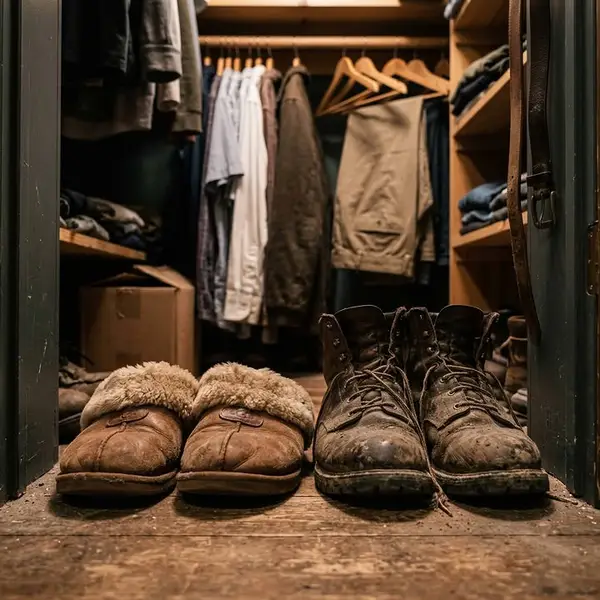
Nerve Support Community — Feel Like Yourself Again
PromisingImage

Feel Like Yourself Again

My husband Dale stopped walking barefoot in our own kitchen 14 months ago. He won't say why. Not out loud. Not to me, not to our daughter, not to the cardiologist who sees him twice a year and asks about his feet like he already knows the answer. But I know why. I've known for a while. He told me one night last summer, the only time he ever said it plain, that walking on the tile feels like he's stepping on aluminum foil. Like crinkled tin. Like he can't tell if the floor is cold or hot or there. He said it once and then he laughed it off and changed the subject and we ate our spaghetti and watched the news and he never said it again. But he started wearing socks to bed. He started keeping a pair of slip-ons next to the bathroom at 3am. He started getting up slower in the mornings, putting his feet down one at a time on the bath mat I bought from Target, easing his weight onto them like he was testing whether the floor would hold him. My husband retired from UPS in 2022 after 31 years on a delivery route. He drove the same loop in Greensboro for almost two decades. He knew every dog on Pisgah Church Road by name. He knew which porches had the wobbly second step and which mailboxes leaned. He was on his feet eight to ten hours a day for three decades and his feet were the most reliable part of his body. And now they aren't his anymore. That's the thing nobody warns you about when your husband's body starts to go. He doesn't lose his feet all at once. He loses them quietly, in pieces, in moments small enough that nobody else would notice. The way he hesitates at the top of the basement stairs. The way he stopped going outside to get the paper barefoot the way he did for 20 years. The way he sits on the edge of the bed for an extra 30 seconds before standing up. I'm Marlene. I'm 58 years old. We've been married 34 years this June. We live in a one-story brick ranch off Lawndale Drive on the north side of Greensboro, North Carolina, the kind of neighborhood where the houses were built in the 60s and the trees are now so big they meet over the street in the summer. Dale is 61. He's a big man. Six foot two, broad through the shoulders, hands the size of dinner plates. He used to be able to pick our daughter Whitney up off the floor with one arm when she was little. Now he holds onto the back of the couch when he walks from the living room to the kitchen and he thinks I don't see him do it. I want to back up and tell you how this all started, because if I don't, the rest of this won't make sense. Dale was diagnosed with Type 2 about 11 years ago. He was 50 then. He took it seriously. He cut soda. He lost 22 pounds. He went on metformin and he stayed on metformin and his numbers settled into a range his doctor called "managed." But "managed" is not the same as "fine." About four years in, he started complaining that his feet felt funny at night. Not painful. Funny. Tingly. Sometimes a little burning. His doctor told him it was probably mild neuropathy, that it's common, that he should keep his blood sugar in range and wear good shoes and watch for any open sores. So he did. He bought the special diabetic socks from the Walgreens on Battleground. He kept the soft slippers by the door. He checked his feet every night before bed, sitting on the side of the tub with his reading glasses on, inspecting the soles like a mechanic checking tires. For a few years, it held steady. Funny but not worse. Then about two and a half years ago, it changed. It wasn't tingly anymore. It was numb. He'd put his foot in the bathwater and not know it was too hot until his calf was already red. He'd step on Whitney's dog Biscuit's tail and not realize until Biscuit yelped. He'd drop a fork on his bare foot and feel nothing. He went back to the doctor. The doctor doubled down on the same advice. Keep your sugar in range. Wear shoes. Check your feet. The doctor wrote something on a pad about a cream. Capsaicin. Some kind of pepper extract. Said it might help with the burning sensation. The cream did nothing. We bought another one. Some kind of menthol thing from the pharmacy on Wendover. Did nothing. We bought a third one. A foot lotion specifically marketed for diabetic feet, $32 a tube at the CVS on Cone, with a label that said "soothes nerve discomfort." Did nothing. For two years I watched my husband sit on the edge of our bed every night and rub a cream into the bottoms of his feet that did absolutely nothing. He'd done it 700 nights in a row. He didn't even open the tube anymore with hope. He opened it the way you do a chore. Brush your teeth. Lock the door. Rub the cream in. He kept buying it. Last December, I found four nearly-full tubes of foot cream in the bottom drawer of his nightstand. Stacked. Like a little library of disappointment. I want to tell you about the shoes too. Because if you have someone in your life who's dealing with this, you'll recognize this part. Dale used to walk barefoot everywhere. Out to the mailbox. Across the wet grass after a thunderstorm. He'd come in from cutting the lawn and kick his sneakers off in the laundry room and pad through the house in his socks. On Sunday mornings he'd make coffee in his boxers and a t-shirt, no socks, no slippers, hair sticking up in every direction. That was Dale. About a year and a half ago, the slippers started. Then the slippers in bed. Then the socks at the dinner table. I bought him a new pair of slippers from L.L. Bean last winter as a Christmas present. Soft sheepskin, $89, the kind with the rubber sole so you can wear them outside to take the trash to the curb. I gave them to him on Christmas morning while Whitney and her husband were over and he opened them and his eyes got wet for half a second and then he laughed and put them on. He wore them for one day. They sit in his closet now next to a row of work boots he'll never wear again. The slippers I bought aren't soft enough. Nothing is soft enough. Because the problem isn't the slipper. The problem is the floor underneath the slipper that he can't feel. Whitney came home for the weekend at the end of October. She's our only kid. She's 28. She's in her second year of nursing school at UNC Greensboro, studying to be a nurse practitioner eventually. She works part-time at a pediatric office out near Friendly Center and lives in an apartment about 20 minutes from us. She comes home maybe once a month for a weekend, usually with her laundry in a duffel bag and a stack of textbooks. That weekend, she walked in on a Saturday morning and Dale was sitting at the kitchen table in his slippers reading the News and Record. She came over and hugged him from behind and he reached up and patted her hand without looking up. She watched him stand up from the chair to refill his coffee. She watched him put his hand on the back of the chair to steady himself. She watched him take three slow steps across the kitchen tile. Then she looked at me with her eyebrows pulled together and tilted her head toward the back porch. We went outside. It was cold. Mid 50s, gray, the leaves all down in the backyard from the dogwood. She stood with her arms crossed against the chill in her UNC Greensboro hoodie. "Mom. How long has Dad been walking like that?" "Like what." "Mom. He's walking like a 75 year old man. He's holding onto furniture. He's wincing every time his foot hits the floor. How long?" I told her. I told her the whole thing. The aluminum foil. The creams. The hot bathwater. The slippers. The L.L. Bean shoes still in the closet. Two years of slow loss. Doctors who shrugged. She didn't say anything for a minute. She just stood there with her arms crossed, looking out at the dogwood. Then she said, "Mom. I think I might know something that could help. I'm not promising anything. But I want you to listen to me." She told me about a guest lecturer who had come to one of her pharmacology classes the previous week. A clinical pharmacist who'd been in practice for 30 years and now consulted on integrative medicine cases at hospitals around the Triangle. He'd spent part of his lecture on what he called the "cellular energy" angle of diabetic complications. The way Whitney explained it, the prevailing way most doctors think about diabetic nerve issues is that high blood sugar damages the nerve fibers over time. Which is true. That's part of it. But it's not the whole story. The other half of the story, the part most doctors don't get into during a 12 minute office visit, is what's happening at the cellular level inside the nerves themselves. The nerves in your feet are the longest nerves in your body. They have to be fed energy from one end to the other. And the way nerves get energy is through tiny structures inside the cells called mitochondria. Mitochondria are the engines. They take the food you eat and turn it into the energy your cells use to function. In someone with long-standing blood sugar issues, two things are happening at the same time. One, the nerves themselves are getting some direct damage. Two, and this is the part that gets ignored, the mitochondria inside the nerve cells are getting worn down. They're producing less and less energy. The nerves at the far ends of your feet, the longest nerves in the body, are the first to run out of fuel. So when Dale steps on the tile in the morning and it feels like aluminum foil, it's not just that the nerves are damaged. It's that the nerves don't have enough power to send a clear signal back to his brain. The signal is getting garbled because the engines that power the signal are running on fumes. Whitney told me the guest lecturer had spent about 20 minutes on this. He said the way to think about it is like trying to deliver lumber to a job site with no power. You can have all the lumber in the world, but if there's no power on site, no saws run, no nail guns work. The framer just stands there. The work doesn't happen. In Dale's feet, the lumber is the nerves. The framer is his body trying to maintain them. And the power is gone. The guest lecturer had then said something that made Whitney write it down in her notebook. He said there was an old fruit from Ayurvedic medicine, called amla, that had been studied for its effect on something called AMPK. AMPK is the master switch for cellular energy. When AMPK is active, your mitochondria work harder and cleaner. They produce more energy. And in cells that have been struggling, like the nerve cells in someone with long-standing diabetes, that extra energy can show up as the body finally being able to do its maintenance work again. Whitney looked at me on the back porch with her arms still crossed and she said, "Mom. He said this stuff has been studied for a while. He said there's good research on its effect on inflammation and on oxidative stress, both of which are the main things wearing down the cells in nerve tissue. He said if he had a family member with what Dad has, he'd at least try it. He said the body in some cases will start to recover function once the cellular energy is back." She pulled out her phone. She'd written down a brand. Her instructor had specifically mentioned one that her own father had been taking. Auniva Amla. She'd looked it up. Two capsules a day. Made in the USA. Free shipping. A 90-day money-back guarantee, which she pointed out twice, because Whitney is methodical. She said, "Mom, if it doesn't do anything, we send it back. We're out nothing." I want to tell you something about my daughter. Whitney has been right about my body and her father's body more times than her own father has. She caught my pre-diabetic numbers two years before my GP did, just from watching me get up off the couch. She told her father to get the chest pain checked in 2019 and it turned out to be his gallbladder, not nothing. When Whitney tells me to try something, I try it. I ordered the bottle that night on my phone, sitting on the edge of the bed while Dale watched football in the living room. Arrived three days later in a brown padded envelope I picked up off the porch. I did the same thing my friend Janet did with her husband. I didn't make a big thing of it. I put the bottle in the kitchen next to my multivitamin and I started taking two capsules every morning with breakfast. Dale watched me do it for about four days before he said anything. On the fifth morning he was buttering toast at the counter and he said, "What's that orange one you're taking now." "Something Whitney told me about. Two a day. I figured I'd try it." "What's it for." "General stuff. Cellular energy. Whitney said her pharmacology lecturer had it on his short list." He kept buttering his toast. Didn't say anything for a minute. Then he said, "Set me out two." That was it. No long conversation. No "Dale you should try this." He decided on his own. Which is the only way Dale Holcomb does anything. I want to be careful here, because I don't want to oversell this. He didn't wake up the next morning with feeling in his feet. He didn't take it for a week and dance across the kitchen tile. The first thing that happened, after about 10 days, was that he slept through the night. For about two years, Dale had been waking up at least once a night because his feet were buzzing or burning enough to pull him out of sleep. Not every night. But probably four nights a week. He'd get up, walk to the bathroom in his slippers, sit on the edge of the tub for a few minutes, and come back to bed. On the eleventh day after he started taking it, he slept from 10:45pm to 6:20am without getting up. He didn't mention it. I noticed because I'm a light sleeper and I always heard him get up. I lay there in bed that morning realizing he hadn't moved all night and I almost cried into the pillow. Then it kept happening. Three nights that week. Five the next. Three weeks in, he told me one morning that the bathroom tile didn't feel quite as crinkled as it had been. "Crinkled. Aluminum foil crinkled?" "Yeah. Less today." That was the second thing. Five weeks in, he walked from the bedroom to the kitchen one Saturday morning without putting his slippers on. I was at the kitchen island making coffee. I heard his feet on the hallway carpet. Then on the kitchen tile. Then he was standing next to me in his pajama pants and a t-shirt and bare feet, scratching the back of his head, asking me where the cream was for his coffee. I didn't say anything about his feet. He stood barefoot on the tile and drank a cup of coffee with me at the kitchen island for the first time in a year and a half. He didn't acknowledge it. I didn't either. We talked about whether to put the storm windows up that weekend. Eight weeks in, he took the trash out to the curb at the end of the driveway in his bare feet. Ten weeks in, he wore the L.L. Bean slippers I'd bought him for Christmas. He took them out of the closet on a Sunday morning and put them on without saying anything and shuffled around in them all day. Three months in, we went to Whitney's birthday dinner at her boyfriend's parents' house out by Lake Brandt. There's a long flagstone walkway from the driveway to the front door. Dale walked it without holding my arm. He stepped up onto the porch without holding the railing. He stood at the door in his church shoes and his pleated khakis and he looked like my husband from 10 years ago. Whitney met us at the door. She hugged him. She looked at me over his shoulder and her eyes filled up. That night, on the drive home up Battleground Avenue, Dale said, "Tell Whitney thank you for me." "Tell her yourself." "I will. But tell her again." I'm not a doctor and I'm not a pharmacist and I'm not going to tell you Auniva Amla cured my husband's neuropathy. Nothing cures neuropathy. Whitney told me that the first time we talked about it. What I am telling you is that a man who hadn't walked barefoot in his own kitchen in 14 months walked across the tile this morning to refill his coffee while I was writing this post. If you have someone in your life whose feet have been leaving them, the way Dale's feet were leaving him, here's what I'd tell you. It's two capsules a day. It comes in a brown bottle. It's made in the USA. Shipping is free. They back it with a 90-day money-back guarantee, which means you get three full months to see if your body responds, and if it doesn't, you send back what's left and they refund the whole purchase. Whitney made me promise I'd write this. She said too many people have a Dale in their life and they don't know there's anything else to try after the creams stop working. So here it is. 👉 auniva.co/amla/33 P.S. Last Sunday morning Dale came in from getting the paper at the end of the driveway. He was wearing his bathrobe and nothing on his feet. He'd walked down the driveway in November on cold concrete and walked back up with the News and Record under his arm. He set the paper on the kitchen table and he looked at me and he said, "Marlene, my feet were cold." That's the most beautiful sentence anyone has ever said to me. My feet were cold. He could feel that the concrete was cold. P.P.S. About the guarantee. I want to make sure you heard this because it matters. 90 days. Three full months. That's the window. Whitney's pharmacology instructor said it took most of his patients about eight to ten weeks to really notice. So you have the time you need. If your body doesn't respond, you send back what's left of the bottle and they refund you. I don't know how to be clearer than that. You're not risking money. You're either getting feeling back or getting your money back. P.P.P.S. When I went back to the Auniva website yesterday to grab the link for this post, there was a note about a limited November supply. I don't know if that's a sales thing or if it's real. I'm just telling you what I saw. If you've been sitting on this kind of thing for a while, don't sit on it another month. Put the bottle on the counter next to your vitamins. See what happens. The worst case is you mail it back and you're out 10 minutes of your life. 👉 auniva.co/amla/33

Loading the ad's image
Nerve Support Community — Feel Like Yourself Again
PromisingImage

Feel Like Yourself Again

I found my husband sitting on the edge of the bed at 4:12 in the morning rubbing his feet. He did not know I was awake. The bedroom light was off. There was just the blue glow from the alarm clock on the nightstand and the sound of his hands moving over his own feet like he was trying to warm them up. I laid there and watched him for a full minute. He was leaning forward with his elbows on his knees and his palms wrapped around the tops of his feet, working his thumbs into the arches. His mouth was set in that hard line he gets when he does not want to make a sound. I finally said, "Ronnie." He jumped. Actually jumped. Like he was a kid caught eating cookies. He said, "Go back to sleep, Wanda. I'm fine." I said, "You are not fine. It is 4 in the morning and you are rubbing your feet like they are on fire." He was quiet for a long time. Then he said, "They kind of are." We have been married 38 years. Ronnie Caudill has never once used the word "kind of" about pain. That man broke his collarbone in 1994 loading a pallet of Doritos and drove himself home to Pikeville from Lexington on Route 23 in a Frito-Lay truck with his arm hanging off his shoulder. He does not do "kind of." Which is how I knew. Let me back up. My name is Wanda. I'm 61 years old. I live in a double wide on 3 acres off Route 194 outside Pikeville, Kentucky, about 4 miles up from where the Big Sandy River comes through. My husband Ronnie is 63. I retired 2 years ago from cooking in the cafeteria at Bob Amos Elementary, where I worked for 22 years. I fed most of the second grade class in Pike County chicken nuggets and green beans, and I know that half of them are now grown men working the mines or the pipeline or driving trucks. I still get hugs at the Food City from boys who are 6 feet tall and remember me by name. Ronnie drove a Frito-Lay route out of the Prestonsburg warehouse for 32 years. His route ran up through Martin and Betsy Layne and out to Wheelwright and back. Same route, same stores, same order every week for three decades. He knew the name of every stock boy and every store manager and every dog behind every counter. He worked the route in snow, in floods, in the 2015 ice storm that had power out for 8 days. He never called in sick. Not one time. He retired 3 years ago. The plan was he was going to spend more time at Fishtrap Lake with his grandson Bryson. He was going to fix up the little aluminum john boat that had been sitting behind our shed since 2019. He was going to teach Bryson to run trot lines the way his own daddy taught him on the Levisa Fork in 1972. That was the plan. That was not what happened. The trouble started about a year before he retired. Just a tingling in his toes at night. He told me it was because he stood on the truck floor all day and his boots were too tight. He bought new boots. It kept happening. Then it was a burning. Down deep, he said. Like his feet were sunburned on the inside. It would wake him up at 2 or 3 in the morning and he would go sit on the couch and put his feet on the coffee table and just stare at them. Then it was the numbness during the day. He told me one Sunday after church, over a plate of beans and cornbread, that he had not been able to feel the gas pedal in the truck for almost a week. He had to look down to make sure his foot was in the right spot. He was on Route 23 doing 65 miles an hour with a full load of chips behind him and he could not feel his own foot on the pedal. That was 2021. He drove that route for another 6 months. He would not tell his boss. He would not tell his doctor. He would not tell me the truth about how bad it was getting. I finally made him go to the clinic. The doctor there tested his sugar. His sugar was fine. His A1C was normal. The doctor said, "Well, it looks like some kind of neuropathy. We usually see this in diabetics, but you're not diabetic. Sometimes it just happens with age. There's a pill I can put you on for the nerve pain. It might help. It might not. It might make you sleepy." That was the whole conversation. Ronnie took the pill for 4 months. It made him sleepy. It did not make his feet stop burning. It did not make his feet come back during the day. The doctor doubled it. Then he added a second pill. Then he added a cream. None of it did anything. Ronnie retired on schedule in March 2022. He came home from the last day at the Prestonsburg warehouse with a plaque and a $50 Cracker Barrel gift card and a look on his face I had never seen before. He said, "Wanda, I don't know what I'm going to do." I thought he meant he did not know what to do with his time. That is what men say when they retire. I was wrong. He meant he did not know what to do with his feet. He tried to work on the boat. He would go out to the shed after breakfast and I would hear the compressor kick on. 20 minutes later I would look out the kitchen window and he would be sitting on an overturned bucket next to the boat with his boots off, working his toes. He tried to fish. Bryson would come over on Saturdays and Ronnie would drive them out to Fishtrap Lake. Bryson would fish. Ronnie would sit in the folding chair with his feet in the water. He told me the cold water was the only thing that helped. He would sit there for 3 hours and drive home and be so tired from just sitting that he would fall asleep in his recliner before dinner. He tried to walk. Our next door neighbor Judy said walking was supposed to help nerve issues. Ronnie tried to walk our driveway. It is a quarter mile long. He would get halfway down and have to turn around. By the summer of 2023 he had stopped going to church. Not because he did not want to go. Because sitting on the pew for 45 minutes made his feet burn so bad he could not concentrate on the sermon and he was embarrassed to be shifting around. Our pastor Brother Wells came by the house 3 times to check on him. Ronnie told him he was fine. Ronnie is a proud man. He stopped picking up Bryson from the bus stop on Wednesdays. Bryson is 9. Ronnie had been picking him up every Wednesday since kindergarten. He told Bryson's mama Kaycee it was because his back was bothering him. That was a lie. It was his feet. He could not trust his feet on the gravel by the bus stop. The Wednesday he stopped picking up Bryson was the day I knew we were losing him. Not losing him in a dramatic way. Losing him the way you lose someone who is still sitting right next to you on the couch. He was still there. He was just quieter. He was still Ronnie. He was just less of him every month. I want to say something about that, because I think there are women reading this who know what I'm talking about. When your husband stops being the man he was, it does not happen all at once. It happens the way water leaves a bathtub. Slow. Quiet. You do not notice the level dropping until one day you look down and there is barely anything left. Ronnie was 195 pounds of Eastern Kentucky truck driver who could sling 40 pound cases of Fritos onto a two wheeler for 32 years without breaking a sweat. He built the deck on our double wide with his own hands in 2003. He killed a copperhead in our yard in 2018 with a garden hoe and did not even mention it until dinner. That is who he was. By last October, he was a man who sat in a recliner at 4 in the afternoon with his feet in a bucket of ice water. The night I found him at 4:12 was 2 weeks after the porch step. Let me tell you about the porch step. We have 4 steps up to the front deck of our double wide. Ronnie built them. They are pressure treated 2 by 6 with a decent handrail. On a Tuesday afternoon in October he was carrying a load of groceries in from the truck and his right foot did not land where he thought it did. His foot rolled and he went down on his knee and dropped a plastic bag of eggs and a gallon of milk on the concrete pad in front of the steps. I heard the noise from inside. I came out on the porch and Ronnie was sitting on the steps with his elbow bleeding through his flannel shirt and the milk pouring out sideways across the concrete and 6 broken eggs at his feet. He looked up at me and he said, "I could not feel where the step was." That was the whole sentence. I sat down on the step next to him and I put my hand on his back and I did not say anything for a long time. He did not want me to say anything. He wanted me to just sit there. So I sat there. That was a Tuesday. The next Tuesday I drove into Pikeville to the Food City on North Mayo Trail because I needed to pick up a prescription for my thyroid medicine. Our daughter in law Kaycee works the pharmacy counter there. She married our son Dustin in 2014. She is 34 years old and she is one of those young women who has more sense than most people twice her age. She rang up my prescription and she said, "Wanda, you look tired." I said, "Ronnie fell off the porch." She stopped moving. She said, "Is he okay?" I said, "Yeah. Skinned his elbow. But Kaycee, he could not feel the step. He said it out loud. He could not feel where his foot was going." Kaycee did not say anything for a second. She just looked at me. Then she said, "Wanda, come back here for a minute." She walked me around behind the pharmacy counter to a little back corner where they have a table and a coffee maker for the pharmacy techs on break. She had me sit down. She said, "You know my mom's cousin Ellis, up in Louisa? He drove coal trucks for 30 years. Same problem. Feet burning at night, going numb during the day, no diabetes, no answers from any of the doctors he saw. He fell off his back porch in July of last year. Broke his wrist." I said I did not know. She said, "Aunt Sherry started him on something in August. He is walking his dog every morning again. He came to my mom's Christmas in December and he was standing up telling stories in the kitchen the whole night. He had not stood up at Christmas in 4 years." I said, "What is it?" She reached into her purse under the table and pulled out a small brown bottle. She said, "I keep one in my purse because I was going to bring it by the house next week. I have been meaning to talk to you about it for a month, Wanda, but I did not want to be pushy." She set the bottle in front of me on the break table. It said Auniva on the top. Underneath that it said Amla. I said, "Amla." She said, "It's a berry. From India. I know. I said the same thing to Aunt Sherry. But hear me out." Kaycee has a bachelor's in pharmacy tech and 11 years working behind a pharmacy counter. She is not the type of woman who sells you a berry from India. So I heard her out. She said, "Everything the clinic gave Ronnie works on the pain signal. The nerve is screaming. The pill tries to quiet the nerve down. It does not do anything about why the nerve is screaming. The nerve is screaming because it does not have enough energy to work right." I said, "Energy." She said, "Nerve cells are some of the most energy hungry cells in your whole body. They need more fuel than almost any other cell you have. And that fuel is made by little parts inside the cells called mitochondria. Think of them as tiny power plants. As we age, and with everything modern life throws at us, those little power plants start running down. And the nerve cells are usually the first ones to feel it, because they need so much." I said, "Okay." She said, "When the nerve cells do not have enough energy, they cannot keep up with the maintenance work they need to do. The little coating around the nerve, called the myelin sheath, that's what protects the signal. When the cell does not have enough energy to keep the coating in good shape, the signal gets scrambled. That is the burning at night. That is the numbness during the day. That is why Ronnie could not feel where the step was." I sat there with the bottle in my hand. Kaycee said, "This berry helps activate a pathway called AMPK. It is a switch your body already has. It is what helps those little power plants start working better again. When AMPK is active, the mitochondria can make more energy, the way they used to when he was 30. That energy can flow back to the nerve cells. And because the nerve cells are the hungriest, they can be some of the first ones to feel a difference." I said, "How do you know this?" She said, "Aunt Sherry sent me an article. I read it 3 times. Then I called the pharmacist here, Mr. Damron, and asked him. He said the science on Amla is real. He said he has been reading about it for about 5 years. He said if his own daddy would take it he would put him on it. His daddy will not take anything. But mine will, and I already talked to Uncle Ellis about how he takes it and he told me the whole story. That's how I know." She flipped the bottle over. She said, "Look. 90 day money back guarantee. Made in USA. 60 capsules. 2 a day. If it doesn't help, you send it back. You do not lose a thing." I said, "How much." She said, "$49." I put the bottle in my purse. I told her I was going to talk to Ronnie about it that night. That night at dinner I set the bottle on the kitchen table next to the sweet tea. Ronnie looked at it and looked at me and said, "Wanda, what is that." I told him. He said, "A berry." I said, "Yes." He said, "From India." I said, "Yes." He said, "You know I do not go in for that kind of thing." I said, "Ronnie. You have been sitting on the edge of the bed at 4 in the morning rubbing your feet for 2 years. You could not feel the porch step. You have not put a line in Fishtrap Lake since May. Bryson has not been in this house on a Wednesday afternoon in 6 months. What do you have to lose. If it does not work you send it back." He was quiet for a long time. He looked at his plate. He looked at the bottle. He looked out the kitchen window at the shed where the boat was sitting. He said, "Alright, Wanda." I ordered it that night from the same address Kaycee had written down. 2 days later a small box came in the mail. Ronnie opened it at the kitchen table. He held the bottle up to the light like he was looking for something suspicious. Then he opened the seal and took 2 capsules with his coffee. The first 2 weeks, nothing. He was patient about it. Ronnie has patience the way some men have humor. He would take his 2 pills every morning and go about his day and not say a word. Week 3 was the first thing. He came in from the porch at about 6 in the morning. I was making biscuits. He stood in the kitchen doorway and said, "Wanda, I want to tell you something and I want you to not make a big deal out of it." I said okay. He said, "The steps did not feel like nothing this morning. I felt the wood under my foot. Both feet." I stopped rolling out biscuits. I said, "Ronnie." He said, "I said don't make a big deal out of it. It might be nothing. I just wanted to tell somebody." He turned around and walked back out onto the porch and sat in his rocker and drank his coffee. I made biscuits and I did not say a word and I did not cry over the flour. I got in the shower and I cried in there. Week 4, he woke up at 6 AM instead of getting up at 4. He did not know he had done it until I told him. He said, "I did not feel my feet last night." Not with sadness. With surprise. Like a man realizing he had gotten a full night's sleep for the first time in 3 years. Week 5, he went into the shed. He was in there for 2 hours. When he came in he said, "That boat is going to need more work than I remembered." He said it the way a man says something he is looking forward to. Week 6, he picked Bryson up from the bus stop. Bryson was so surprised he could not say anything. He got in the truck and Ronnie drove him home to Kaycee and Dustin's house and Kaycee texted me a photo of the two of them coming up her front walk. Bryson was holding Ronnie's hand. She wrote under the photo, "He said he could feel Bryson's hand today, Wanda. He told me before he even said hello." I have looked at that photo maybe 400 times. Week 8, he took Bryson to Fishtrap Lake. Standing in the boat. Not sitting in a folding chair with his feet in the water. Standing. In his old fishing boots that had been on a shelf in the shed for a year and a half. Week 12, he built a birdhouse for our back yard. From scratch. His own design. He measured with the tape measure between his teeth the way he used to. He cut the pieces on the miter saw. He nailed it together in the shed and hung it on the maple tree by the kitchen window. There is a pair of chickadees in it right now. We are 5 months in. Ronnie is not the man he was at 30. Nobody is at 63. He still takes his time on stairs. He still stretches his feet in the morning before he stands up. But he stands up and he walks. And he feels the floor. And he feels the gas pedal. And he feels Bryson's hand. Here is what Kaycee wrote out for me on a piece of pharmacy paper, because I made her write it down so I could read it back to Ronnie and to my sister Marlene and to Judy next door. The cells in your nerves need energy to keep their protective coating in good shape, to send signals right, and to stay healthy. Nerve cells need more energy than almost any other cell in your body. That energy is made by tiny power plants inside every cell called mitochondria. As you get older, and with everything modern life piles onto your body, those power plants start to wear down. They do not make as much energy as they used to. The nerve cells feel it first, because they are the hungriest. When they do not have enough energy, the coating around them starts to slip. The signal gets scrambled. That is the burning. That is the tingling. That is the numbness. That is why you cannot feel the porch step. Amla helps activate a pathway called AMPK. AMPK is one of the switches your body uses to help those little power plants start running better. When AMPK is switched on, the mitochondria can make more energy again. That energy flows back to the nerve cells. And because the nerve cells are the hungriest, they can be some of the first ones to feel the difference. Amla is also one of the highest antioxidant foods that has ever been measured. It helps protect the mitochondria from the wear and tear that ran them down in the first place. Modern life is hard on those little power plants. Amla is like shade for them. That is why the nerve pill did not work. The nerve pill was trying to quiet down a signal. The signal was screaming because the nerve did not have any fuel. Amla goes further back in the line. It works on the fuel. I did not understand any of that when Kaycee first told me. I understand it now, because I watched my husband stand up in a boat at Fishtrap Lake in April and reel in a 4 pound bass and net it himself. I am writing this on my own because Ronnie is not the kind of man who tells his business to strangers. But I am writing it because I know how many women in this part of the country are watching their husbands or their brothers or their fathers slowly go quiet. Coal miners. Truck drivers. Linemen. Farmers. Men whose bodies did too much for too long and are now being told by clinic doctors that this is just aging and here is a pill to quiet down the noise. It is not just aging. It is cells running out of fuel. And there is something you can do about the fuel. Auniva's Amla is $49 for a 30 day bottle. 2 capsules a day. Made in USA. Free shipping. And they give you 90 days to try it. If it does not do what it did for Ronnie, you send the bottle back and you get every dollar back. Nobody at the clinic in Pikeville ever offered us our money back on the nerve pill. Or the second nerve pill. Or the cream. Or the sleep pill they gave him when the burning was keeping him up. Nobody in that whole system has ever offered us a refund. Auniva does. If you want to try it, this is where I ordered ours. 👉 https://auniva.co/amla/33 P.S. Ronnie went to church last Sunday. Sat through the whole service. Sang 4 hymns. Shook Brother Wells's hand at the door. Brother Wells looked at him for a long minute and then just said, "Welcome home, Ronnie." I do not think Brother Wells knew what he was really saying. But I did. Ronnie has not been home for a long time. He is home now. P.P.S. About that 90 day guarantee. I want you to really hear this. You buy the bottle. You take 2 capsules a day. If in 90 days you are not feeling a difference, you send it back and you get your money back. Every dollar. That is the whole deal. Compare that to any prescription in your medicine cabinet. Compare it to the copay on the last clinic visit that told you nothing. Compare it to the nerve cream you tried last summer that did not work. Nobody offers you your money back on something they know does not work. And nobody offers you your money back on something they are unsure about. The people at Auniva have that guarantee for one reason. Because they have seen what this does for people. And they know what happens when you give it 90 days. P.P.P.S. I want to say something to the women watching a husband disappear the way I was watching mine. I know how alone that gets. He is right there and he is a thousand miles away at the same time. He is quiet. He is tired. He is embarrassed. He is not fishing. He is not going to church. He is not picking up the grandkids. And every doctor you take him to shrugs their shoulders and gives him another pill that does not do anything. You start to think maybe this is just how it ends. Maybe you are just going to watch him fade for the next 20 years. Please do not accept that. That is not a life sentence. His cells are hungry. That is all a lot of this is. Feed the cells and see what comes back. It cost me $49 and 3 weeks of patience to get my husband back. I would have paid $500 and waited a year. Try it. If I am wrong, you get your money back. P.P.P.P.S. Kaycee told me Auniva is a small company and they run out sometimes. There was a wait when Aunt Sherry went to reorder for Uncle Ellis in February. I keep 2 bottles in the medicine cabinet now. One Ronnie is on and one waiting behind it. He is not going back to 4:12 in the morning on the edge of the bed. Not on my watch. If you are ready to try it for the man in your life, or for yourself, do it today. Not next Wednesday. Bryson is going to be at our house this Wednesday afternoon and his Papaw is going to be in the driveway waiting for him. That is worth $49. That is worth everything. 👉 https://auniva.co/amla/33

Loading the ad's image
Nerve Support Community — Feel Like Yourself Again
PromisingImage

Feel Like Yourself Again

I nicked a woman's ear with my shears on a Tuesday in July and I still can't look at her Christmas card without feeling sick. Her name is Loretta. She's been coming to me for 14 years. She has a granddaughter who calls me "the hair lady" and she always brings me a little jar of her fig preserves in the fall. She sat down in my chair that morning the way she'd sat down a hundred times before, and I picked up my shears the way I'd picked them up a hundred thousand times before, and I didn't feel the metal in my hand. I mean I could see it. I could see my fingers curled around the handle. But I couldn't feel it. I made one cut behind her ear and the blade slid. Just slid. And there was blood in her white hair. She was so kind about it. That's what made it worse. She patted my hand and said, "Honey, that's alright, it's just a nick." And I stood behind her chair with a paper towel pressed to the side of her head and I could not stop shaking. I went home that night, and I sat on the edge of my bathtub, and I cried into a hand towel so my husband wouldn't hear me. I'd been cutting hair for 38 years. And I couldn't feel my own scissors anymore. Let me back up. My name is Denise. I'm 57. I've lived in Bowling Green, Kentucky my whole life except for one bad year in Nashville when I was 22 that I don't talk about. My salon is a little two-chair place on Fairview Avenue that I opened in 1999 with a small business loan and my mother's blessing. She'd been a hairdresser too. So had her mother. Three generations of us with a comb in one hand and a can of hairspray in the other. I named the shop "The Fairview." Nothing fancy. Just the street. For 24 years, that little room was the best place I knew. Two chairs. Two mirrors. A coffee pot in the corner that never got cleaned. A shelf of magazines older than most of my clients. And a stream of women coming through the door who told me things they didn't tell their husbands. Loretta was one of them. So was Bev, who taught 3rd grade at Potter Gray. So was Peggy, whose son was killed in a car accident on 31W in 2012 and who still comes in every 6 weeks even though she stopped caring about her hair a long time ago. She just wants to sit in my chair for an hour and be somewhere. And Ruth. Ruth was the one. But I'll get to Ruth. The trouble started in my hands about 2 years ago. Slow at first. I'd be washing dishes at night and my fingers would go pins-and-needles like they'd fallen asleep. I'd shake them out and it would pass. I didn't think anything of it. I was 55. I'd been on my feet 9 hours a day for most of my life. My mother's hands used to swell up too. That's just what happened to us. But then it started happening at work. I'd be sectioning off hair with my fingers and I'd lose my place because I couldn't feel where I was. I'd be holding a bottle of color and it would slip. I'd be threading foils and the tingling would come up my wrist like an electric fence. I went to Dr. Halloran that spring. He's been my doctor for probably 20 years. He took my blood pressure, listened to my heart, tapped my knees, all that. He looked at my hands and told me it was probably just neuropathy from age and being on my feet. He said, "Denise, you've been working with your hands since you were a teenager. This happens. I can write you a prescription for gabapentin. It'll take the edge off." I asked him if I was going to lose feeling completely. He said, "Well, we can't reverse aging, but we can manage the symptoms." I remember driving home from that appointment on 31W and thinking, "Manage the symptoms." Like my hands were a leaky faucet. I filled the prescription. I took it for about 5 weeks. It made me feel like I was walking through fog. I'd forget the names of my regulars. I'd stand at the shampoo bowl and not remember whether I'd rinsed or not. One afternoon I had to sit down in my own chair because the room felt like it was tilting. I flushed the rest of them down the toilet. Then I started trying everything else. And I mean everything. I ordered those magnetic bracelets that were supposed to help circulation. I bought a $60 heating pad shaped like mittens off some Facebook ad. I took a B12 supplement, then a different B12 supplement when the first one didn't do anything, then a B-complex, then alpha-lipoic acid because a woman in a Facebook group swore by it. I tried acupuncture in Franklin. I tried a foot bath machine that promised to pull toxins out through my soles. I paid $340 for a red light therapy device that I used every night for 3 months. Nothing. Meanwhile, my hands kept getting worse. I started turning appointments away. Just a few at first. I told Peggy I couldn't do her color that month because I was "backed up." I told a new client who'd found me on Google that I wasn't taking anybody new. I stopped doing men's clippers because I was scared I'd hit a scalp. I stopped doing perms because I couldn't trust my fingers around a rod. My income dropped by almost a third in a year. My husband Dwayne noticed. Of course he noticed. He works at the Corvette plant out on Louisville Road and he doesn't miss much. He'd come home and see me sitting at the kitchen table with my hands in a bowl of warm water and Epsom salt and he'd say, "Neesie, what are we going to do about this?" And I'd say, "I don't know," and he'd say, "Well we better figure it out," and then we'd sit there in the quiet. I was scared. I don't mind telling you that. I was scared I was going to have to close the shop. I was scared I was going to be one of those women who sold her business at 58 and spent the rest of her life saying "I used to." I used to cut hair. I used to have a shop. I used to be somebody people counted on. Then Loretta. Then the nick on her ear. Then two nights of not sleeping. Then I called every client on my books that Wednesday morning and cancelled the whole week. I told them I had a family thing. I sat in my kitchen with the phone in my lap and I didn't know what I was going to do. And that's when Ruth called. Ruth is 71. Her husband Earl had a dairy operation off Nashville Road for close to 50 years before they sold the cows in 2018. She's been coming to me for probably 12 years. She's got that thick white hair that dairy wives always seem to have, the kind that never really thins, and she wears it in a low bun during the week and lets it down for church on Sunday. Ruth heard from Bev that my shop was closed for the week. Bev heard from Loretta. Loretta didn't say anything about the nick, God bless her. She just said Denise wasn't feeling like herself. Ruth called me Wednesday afternoon. She said, "Denise, honey, come out to the house. I made a coconut cake and Earl's gone to Owensboro until Saturday. Come sit with me." I almost said no. I almost lied and said I had somewhere to be. But something in her voice, I don't know. It reminded me of my mother. I drove out to Ruth's place Thursday morning. Her house sits back off a gravel road with a big walnut tree in the front yard and a screened-in porch on the side. She had the coffee on and the coconut cake on a milk-glass stand on the kitchen table, and she took one look at me when I walked in and said, "Sit down before you fall down." I sat. And I told her everything. The shears. The pills. The fog. Loretta's ear. Dr. Halloran. The Epsom salt. All of it. Ruth listened without saying a word. Then she got up and walked over to a cabinet next to the fridge and pulled down a small dark green bottle and set it on the table in front of me. She said, "Honey, Earl's been taking this for close to a year." I looked at the bottle. It said Auniva across the front. Amla underneath. I said, "What is it?" She said, "It's a berry. From India. Earl calls it his little green miracle." Now, I want to tell you something. If you'd told me 6 months earlier that the answer to my hands was going to be a berry from India that a 74-year-old dairy farmer was taking, I would have laughed. I would have polite-smiled and finished my coffee and gone home and never thought about it again. I'd tried a hundred supplements. Every single one had been a waste of money. My skepticism about anything in a bottle was industrial-grade at that point. But this was Ruth. And Ruth doesn't lie. Ruth has never once in 12 years told me anything she didn't fully believe was true. She said, "Earl's hands were like yours. Worse, maybe. He couldn't hold a coffee cup last spring without shaking. He couldn't feel the tractor pedals. He was talking about not driving anymore." I hadn't seen Earl since Christmas. I hadn't known. She said, "Our daughter Karen, she's a nurse over in Nashville, she's the one who brought it home. She'd been reading about it for people whose nerves are struggling. Something to do with the cells that power the nerves. Something about mitochondria. She explained it to Earl at the dinner table, and Earl said if it didn't work he was going to buy her dinner at the Cracker Barrel, and if it did work she owed him dinner. He owes her dinner." I laughed. First time I'd laughed in a week. Then Ruth explained what Karen had told her. And this is where I have to slow down, because this is the part that finally made something click. Ruth said your nerves are among the hungriest cells in your body. They need enormous amounts of cellular energy to stay working right. To maintain that little protective coating on the outside, to fire signals properly, to keep the pathway between your brain and your fingertips open. And that cellular energy comes from tiny little power plants inside your cells called mitochondria. She said, "Karen told me to think of it like this. Your nerves are the building. Your mitochondria are the power lines. If the power lines are worn down, the building doesn't have lights. It doesn't matter how many light bulbs you screw in, if the electricity's not coming through, the building's dark." Then she said something I've thought about probably 300 times since. She said, "Karen said, 'Mom, everything Dad's tried has been like delivering lumber to a job site with no power. The materials are there. The workers are there. But nothing can get built because the power's off.'" I sat with that for a minute. Every single thing I'd tried, every single one, had been trying to fix the symptom. The pills numbed the signal. The bracelets, the red light, the acupuncture, all of it was aimed at the surface. Not one thing I'd bought or paid for had done anything to help the actual cells that were struggling. Ruth said Amla, the berry, has been shown to help support the AMPK pathway. She said AMPK is basically your body's switch for telling your mitochondria to work harder and produce more cellular energy. When AMPK is active, your mitochondria can do their job better, and cellular energy can flow back to the places that need it most. Which, in a lot of people, is the nerves. Because the nerves are the most energy-hungry cells and they're often the first ones to feel the shortage. She said Amla also has one of the highest antioxidant loads ever measured in a food. Which matters, she said, because a lot of what wears mitochondria down in the first place is oxidative stress. So it's not just turning the power back on. It's helping protect the power plant from what wore it down. I said, "Ruth, why haven't I ever heard of this?" She said, "Denise, honey, it's a berry. Nobody's making 4 billion dollars off a berry." She reached across the table and put her hand on top of mine. Her skin was thin and warm. She said, "Earl's driving to Owensboro this weekend to buy a piece of equipment. He hasn't driven that far by himself in 2 years. He held our new grandson last month for 40 minutes and didn't drop him. I'm telling you what I saw." She wrote the website down on the back of a grocery receipt for me. auniva.co/amla/33. I drove home with the receipt on my dash. I sat in my driveway for probably 20 minutes before I went inside. I don't know what I was working out in my head. I think I was working out whether I was allowed to hope again. I ordered a bottle that night at 9:47 PM sitting at the kitchen table on my laptop. Two capsules a day. 30 days in a bottle. The bottle showed up on my porch 4 days later. I started that Sunday. I want to tell you exactly what happened, week by week, because I know how these stories go. I know you've read them. I know you've been burned. I know you've watched other women on Facebook rave about something and then you spend $80 and it does nothing and you feel like an idiot. I've been that woman. So I'm going to tell you the truth. The first week, I didn't feel much of anything. I was checking my hands every morning like a fool, and mostly they felt the same. But I did sleep better that first week. That was the only thing I noticed. Dwayne even commented on it. He said, "You didn't wake up at 3." The second week, something started to shift. It was little. I was washing dishes on a Tuesday night and I realized my fingers weren't going numb. I stood there at the sink with the water running and I just kept washing the same plate over and over waiting for the pins and needles. They didn't come. I didn't tell Dwayne. I didn't want to jinx it. I didn't want to be the woman who got excited and then had it all come crashing back. The third week, I picked up my shears again. I'd been keeping the shop closed for 3 weeks by then. I called Bev first. I told her I wanted to try. I said, "Bev, I'm not going to charge you. I just need to see if I can still do it." She came in that Thursday afternoon at 2:15 and sat in my chair. I held my shears. And I felt them. I felt the weight of the metal. I felt the little pivot in the joint. I felt where my thumb hooked in. I sectioned her hair with my fingers and I knew where I was. I made the first cut and my hand didn't slide. I made the second cut. Then the third. By the time I was doing the layers at the back, I was crying. Just quietly, standing behind her chair, tears running down my face while I trimmed. Bev looked up and saw me in the mirror and she didn't say anything. She just reached back and squeezed my wrist. She knew. She'd known me since we were 30. I finished her hair. It was a good cut. Clean lines. Even layers. The kind of cut I used to do without even thinking about it, back when my hands were mine. I called Ruth that night. She answered on the second ring. I told her what happened. She said, "Denise, I'm going to eat a piece of coconut cake in your honor." Week 4, I opened the shop back up. Slow at first. I only booked 4 clients that first week back. But every one of them, I did the whole cut. Every one. No dropped shears. No slipping. My hands were mine again. Week 6, I did a perm on Peggy. First perm I'd done in almost a year. It came out beautiful. I've been on Auniva's Amla for going on 5 months now. I take 2 capsules every morning with my coffee. It costs less per day than my old B12 supplement did. Dwayne started taking it too, about a month ago, because his back had been giving him trouble and he watched what happened with me and he said he wanted in. Loretta came in last week for a color. I told her, when she sat down, that I owed her an apology I'd been carrying for 5 months. She said, "Denise, honey, I forgave you the second it happened. I've been waiting on you to forgive yourself." She brought me fig preserves. I put them in the cabinet next to the coffee pot. I want to say something to you if you're still reading. If your hands don't feel like yours anymore. If your feet burn at night. If you've been told it's just aging and there's nothing to do but manage the symptoms. If you've tried every bracelet and supplement and cream and pill and you're starting to think about giving up on the parts of your life that require you to feel things. I'm not a doctor. I'm just a hairdresser from Bowling Green who almost lost her shop. But I'll tell you what Ruth told me. What you've been trying hasn't worked because it's been aimed at the wrong place. You can't fix a signal problem when the power is out. You've got to help the power come back on first. Auniva's Amla is the only thing I've ever taken that seemed to be working on the actual problem instead of the symptoms. It's a small green bottle. It's 2 capsules a day. It's made right here in the USA and it ships free. They also have a 90-day money-back guarantee. 90 days. That's 3 full months to try it and see if it does for you what it did for me. If it doesn't, you send it back and they refund every penny. My gabapentin sure didn't come with a money-back guarantee. Neither did the $340 red light. Neither did the acupuncture. Nothing I ever spent money on for my hands came with a promise like that. You can find them here. 👉 auniva.co/amla/33 P.S. Ruth called me on a Wednesday and told me to come sit at her table and I almost said no. If I'd said no, I don't know where I'd be right now. I probably would've closed the shop by August. I probably would've spent the rest of my life saying "I used to cut hair." Some of you have a Ruth in your life who told you about something and you brushed it off because you're tired of being disappointed. I understand that. I was that. But my Ruth was right. And I hope somebody in your life has been trying to tell you about something and this letter is what finally makes you listen. Even if that somebody is a stranger on Facebook you've never met. P.P.S. About the guarantee. Think about this for a second. Dr. Halloran's prescription didn't come with a refund. The 6 bottles of B12 I bought didn't come with a refund. The mitten heating pad didn't come with a refund. The bracelets didn't come with a refund. Not one thing I bought for my hands, for close to 2 years, offered me my money back if it didn't work. Only Auniva did. Ask yourself who has to make that offer, and who doesn't. Companies that know their product works can afford to stand behind it. Companies that don't, can't. That's it. That's the whole tell. P.P.P.S. Auniva is a small company. Ruth said Karen had to wait almost 2 weeks for her last reorder because they'd sold out. I keep a spare bottle in my cabinet at the shop now, just in case. If your hands or feet have been getting worse and you've been putting off doing anything about it because you don't want to be disappointed again, I'd tell you not to wait on this. Every week without support is another week your nerves are trying to run on empty. I waited close to 2 years and I almost lost my career. Don't be me. Go check if they've got stock right now. It takes 60 seconds. 👉 auniva.co/amla/33

Loading the ad's image

Nerve Support Community — Feel Like Yourself Again
PromisingImage

Feel Like Yourself Again

My brother Dale drove 4 hours through a January blizzard to ask me a question I didn't want to answer. He pulled into my driveway in Bemidji at 9:47 PM on a Wednesday. The temperature was 11 below. He had ice in his beard. He didn't knock. He used the spare key under the planter and walked into my kitchen and stood there in his Carhartt with the snow melting off his boots onto my linoleum and he looked at me sitting at the table and he said one thing. He said "why didn't you come." That's the whole hook of this story. That one question. But the answer to it is what kept me up that whole night and the next 23 nights after it, and the answer is the reason I'm sitting here typing this on a Saturday morning in May with the windows open and the coffee on and my fingers actually feeling the heat coming off this mug. My name is Earl. I'm 63 years old. I'm the second of 4 brothers. Our dad worked in the iron mines up in Hibbing for 36 years before they shut down the seam he was on, and he raised us to do 2 things. Work hard. And go fishing. Specifically, ice fishing. Every year since 1994, the 4 of us Brennan boys have driven up to Lake of the Woods the second week of January and rented the same set of cabins at the same outfit, Sportsman's Lodge, and spent 4 days drilling holes through 22 inches of ice and pulling walleye out of water so cold it makes your teeth ache. 31 years. I missed the 32nd. I told them I had the flu. I didn't have the flu. I'm going to back up because the why matters more than the what. Let me tell you about my feet. Around 4 years ago, I started getting a little tingling in my toes at night. The kind of pins and needles you get when your foot falls asleep. Except mine didn't go away when I moved them. I'd lie in bed next to my wife Janet and I'd flex my feet under the covers, and the tingle would just stay there, this low buzz under the skin like someone had left a phone on vibrate inside my shoes. I didn't tell Janet. I figured it was the boots. I drive a Peterbilt for a regional outfit out of Grand Rapids hauling pulpwood, and I'd been doing it for 28 years at that point, and my feet had taken a beating. Steel toes 11 hours a day for 28 years will do something to a man's feet. Then about 6 months later, the tingle turned into something else. The bottoms of my feet started going numb. Not all the way. Just patches. Like there was a piece of cardboard taped to the bottom of my foot in some places and bare skin in others. I'd be in the cab of the truck pressing on the brake and I'd realize I didn't know how hard I was pressing. That scared me a little. I didn't tell anybody. I started watching the gauge. Watching the speed. Watching the load behind me in the mirror. Compensating. You can compensate for a lot of years before anybody notices. I went to see Dr. Schaefer in Bemidji about a year after the tingle started. He's the only doctor in the area I'd ever been to. He's been my doctor since I was 41. He's a good man. He smokes Marlboro Reds on his lunch break behind the clinic. He checked my feet. Used one of those little wheel things with the spikes. Asked me to tell him when I felt the prick. I felt some of them. I didn't feel a lot of them. He said "Earl, you got some neuropathy starting. Most likely from your sugar. Your A1C's been creeping up for years. We've talked about this." We had talked about it. He'd been on me about it for a decade. I said "is there anything you can do." He said "I can put you on a med. Gabapentin. It might help with the pain. Doesn't really fix the underlying issue. The underlying issue is the sugar. You gotta get serious about the sugar." He prescribed me 300 milligrams of gabapentin and he wrote me a referral to a diabetes nurse educator and he told me to lose 30 pounds. I took the gabapentin for about 9 weeks. It made me foggy. It made me feel like there was a piece of saran wrap stretched across my brain. I'd be backing my rig into a yard and I'd lose track of which mirror I was looking in. I told Janet I'd rather feel my feet hurting than feel my brain not working. I quit the gabapentin without telling Dr. Schaefer. I tried the diabetes nurse for about a month. Lost 8 pounds. Then I had to do an overnight haul to Duluth and I missed an appointment and I never went back. I just lived with it. That was 3 years ago. Here's how a thing like this gets worse without you noticing. You stop walking the dog as far as you used to. Just to the end of the cul de sac instead of around the block. The dog doesn't complain. The dog is 11 and arthritic. You tell yourself it's for the dog. You stop standing at the kitchen counter when you're talking to Janet while she cooks. You sit at the table now. You tell yourself the chair is just more comfortable. You stop wearing your slippers because you can't always tell when you've stepped on something. Janet stepped on a Lego barefoot in 2007 and never forgot it. You don't want to be the man who stepped on a tack and didn't notice until it was infected. You start watching the gas pedal more than you watch the road. You start letting your brothers buy the bait when you all go out for an evening drink because reaching into your pocket for your wallet is a series of small movements that you're not sure your hand is going to perform reliably anymore. You start doing 100 small calculations a day that you used to never have to do. You don't tell anybody. Then comes November. Every year in November, our brother Lloyd starts the group text. Lloyd is the youngest. He's 56. He runs the cabin booking. He sent it on November 18th of last year. "Boys. Second week of January. Sportsman's. Cabin 4 and Cabin 7 again. Confirm by Thanksgiving." Mike confirmed first. Mike is the oldest. He's 65 and he just retired from the post office. Then Dale confirmed. Dale is 58. He drives a beer truck out of Brainerd. I didn't confirm. Lloyd texted me individually 3 days later. Just me. "Earl. You in or what." I stared at my phone for a long time. I want to tell you exactly why I didn't answer that text. It wasn't because I didn't want to go. It was because of the auger pedal. The auger pedal is the foot pedal on the gas powered auger we use to drill through the ice. You press it down to engage the drill. It takes a steady, even pressure. Too much and the bit catches and binds. Too little and you don't get through the ice. You have to feel it. I couldn't feel it. I'd realized that the spring before, when Lloyd and I were out walleye fishing on Cass Lake in May and he asked me to drill a couple of pilot holes for a stringer setup we were trying to rig up. I stepped on the auger pedal and I didn't know how hard I was pressing. I burned out the clutch on his auger. Brand new auger. $349 at Fleet Farm. He laughed it off. He said "Earl, you got the touch of a moose." He didn't know. I knew. I sat in my truck in his driveway after we packed up that day and I put my forehead on the steering wheel and I let myself feel something I'd been pushing down for a year and a half. This wasn't the boots. This wasn't the sugar. This wasn't aging. Something was wrong with me and it was getting worse. So when Lloyd texted me in November about the January trip, I knew I couldn't go. I couldn't drive 4 hours on icy roads with a brake pedal I couldn't fully feel. I couldn't pull a 6 pound walleye through an ice hole when my hands had started doing the same thing my feet were doing. I couldn't be the brother who burned out the auger and couldn't grip the rod and asked his little brother to tie his hook for him. I wrote Lloyd back. "Coming down with something. Don't think I'll make it. You boys catch one for me." He wrote back immediately. "Earl. Don't bs me." I didn't answer. That was November 21st. Mike called me on December 4th. I let it go to voicemail. Dale called me on December 11th. I let it go to voicemail. Lloyd showed up at my house on December 18th with a styrofoam container of his wife's chicken and wild rice soup. He stayed 22 minutes. He didn't ask about the trip. He just sat at the kitchen table and ate soup with me and talked about his daughter's high school basketball team. When he left, he hugged me at the door. He held the hug a little too long. He said "you'd tell me, right?" I said "tell you what." He said "if something was wrong. You'd tell me." I said "Lloyd, I'm fine. I'm just tired. It's been a long year." He nodded. He left. I closed the door and stood with my back against it and I cried for the first time since my father died in 2011. The trip happened January 9 through January 12. I watched the Vikings game on the 12th by myself because Janet had gone to her sister's in Fargo. The boys would have been driving home from Lake of the Woods that afternoon. I imagined them in Mike's pickup, the 3 of them, talking about whatever they were talking about, the empty space in the back seat where I'd sat for 31 years. Dale showed up 3 days later. He came on a Wednesday. The 15th. 9:47 PM. The storm had been on the radar all day. He drove through it anyway, from Brainerd to Bemidji, in his beer truck because his pickup was in the shop, white knuckling 4 hours of black ice in a vehicle that wasn't supposed to be on those roads. He walked into my kitchen and didn't take his coat off and he said "why didn't you come." I tried the flu line. He cut me off. He said "Earl. I have known you for 58 years. I knew you didn't have the flu the day Lloyd told me you canceled. I waited 5 weeks to come over here because I wanted you to come to me. You didn't. So I'm here. What is going on." I sat there at the kitchen table and I didn't say anything for a long time. Then I told him. I told him about the tingle. About the cardboard feeling on the bottoms of my feet. About the auger pedal. About the brake pedal. About not feeling the change in my pocket. About not being able to tell whether I'd dropped a screw I was holding. About Lloyd's $349 auger. About the gabapentin and the saran wrap brain. About the chair instead of standing at the counter. I told him I was scared. I told him I was scared in a way I hadn't been scared since the night our dad called us all to come home from the hospital, and I didn't think I was going to come back from it this time. Dale sat there and listened to the whole thing. Didn't interrupt. Didn't fix. When I finished, he said "okay. Tomorrow morning we're going to the library." I said "the library." He said "the library." Dale's wife Cathy is a school librarian in Brainerd. He grew up with me, but he married into book people, and he treats research the way Cathy taught him to treat research. Slow. Source by source. No internet rabbit holes. No Facebook. No anecdotes. He stayed in my guest room that night. The next morning we went to the Bemidji Public Library at 10 AM and we sat at one of those big oak tables by the window and we started typing into the medical databases the library has access to. He typed neuropathy. He typed peripheral nerves. He typed mitochondrial function nerve cells. That's when we found something neither one of us had ever heard of. I want to tell you what I learned that day because it changed my life and I'm not being dramatic about that. Your nerves are some of the most demanding cells in your body. They need an enormous amount of cellular energy to do their job. They have to keep up the protective coating around themselves, called the myelin sheath. They have to transmit signals down their length, sometimes a meter or more if it's a nerve running from your spine to your foot. They have to constantly maintain themselves. All of that takes energy. That energy comes from your mitochondria. Your mitochondria are the little engines inside every cell of your body. They make the cellular energy. They're real. They're in there. Right now. Working. Or sometimes, not working. Because here's what nobody had told me in 4 years of trying to figure this out. Mitochondria wear down. Aging wears them down. Stress wears them down. Toxins wear them down. Processed food wears them down. Years of inflammation, like the kind that comes with elevated blood sugar, wear them down hard. Certain medications wear them down. And when your mitochondria wear down, every cell that depends on them starts running on fumes. The cells that feel it first are the cells that need the most energy. Your nerves. Especially the long nerves. The ones in your feet, your legs, your hands. The peripheral ones. The ones at the far end of the line, where the energy has to travel the furthest to reach them. That's why the tingling starts in your toes and not your tongue. That's why the numbness starts in the bottoms of your feet and not your face. That's why the burning shows up at the end of the line first. It's not random. It's not "just aging." It's not "just diabetes." It's that the cells with the highest energy demand are the first to feel a shortage when the power plant starts to fail. I sat there at that oak table next to my brother and I felt something settle inside me that hadn't settled in a long time. It wasn't relief exactly. It was bigger than relief. It was the feeling of finally seeing the shape of the thing. For 4 years I'd been told my feet were the problem. Or my sugar was the problem. Or my boots were the problem. Or my age was the problem. The problem wasn't my feet. My feet were the messenger. The problem was further upstream. We kept reading. Dale was scrolling through a database that linked into Pubmed, the big medical research one. He typed in something the previous article had referenced. AMPK. AMPK is a pathway. Think of it like the master power switch on the wall of a factory. When AMPK is active, your mitochondria are getting the signal to fire up, get to work, produce energy efficiently. When AMPK is sluggish, the factory floor is dim. The crew is half asleep at their stations. Researchers had been looking at things that help activate AMPK. That's when we found amla. Amla is a fruit. Indian gooseberry. Phyllanthus emblica. Neither one of us had ever heard of it. In Ayurvedic medicine in India they've used it for thousands of years and they call it "the nurse." The nurse. The one who quietly takes care of the body's other systems so they can do their work. Researchers have studied amla and what they found is that it appears to help activate AMPK. It helps turn that master switch back on. When AMPK is more active, mitochondria can start producing cellular energy more efficiently. The way they did when they were younger. And here was the part that almost made me reach across the table and grab Dale's arm. When mitochondrial function is supported, the cells that depend on the most energy are often among the first to respond. The nerves. When nerve cells finally get the energy they need, they can start doing their maintenance work again. Maintaining the myelin sheath. Supporting signal transmission. Calming the inflammatory signaling that contributes to the burning and the tingling. The feeling can start to come back. Not because anything was "cured." Because the power plant came back online and the messenger at the end of the line finally got the signal that the lights were back on. Amla also has one of the highest antioxidant profiles ever measured in any food. So while it's helping wake up the power plant, it's also helping protect the mitochondria from the oxidative stress that wore them down in the first place. The lumber I'd been delivering to the construction site for 4 years finally had a crew with the lights on. Dale and I stayed at that library until 4 PM. They closed at 5. The librarian came over twice to ask if we needed anything. We were both wearing our coats inside because that library is freezing in January. When we left, we went straight to the Pamida drugstore on Paul Bunyan Drive. Not because we knew they'd have it. Just because Dale wanted to look. They didn't carry a standardized amla extract. They had a vitamin C with amla in it, but the dosage was a fraction of what the research used and there was no standardization on the label. I ordered a bottle that night from a company called Auniva. I picked them because their bottle was a standardized extract, not just powdered fruit. The label mentioned the specific compounds the research had been looking at. 30 servings per bottle. Made in the US. They had a 90 day money back guarantee. Dale watched me check out on my laptop at my kitchen table. He said "send me one too. I'm 58 and my hands have been worse than I've been telling Cathy." We laughed about that for the first time in 6 weeks. The bottle came on Tuesday. I started taking 2 capsules with my morning coffee. I want to tell you what happened over the next 11 weeks. I'm going to tell you the truth about it because I owe you that. The first 2 weeks I didn't feel anything different. I kept taking the capsules. I kept driving my route. I kept watching the gas pedal. I kept doing my 100 small calculations a day. Week 3 I noticed I was sleeping different. I'd been waking up at 2:30 AM every night for 2 years with that low electric buzz in my feet. Some nights it was bad enough that I'd go sleep on the couch so I wouldn't keep Janet up. Week 3 I started sleeping through. I'd wake up at 5:45 AM when the alarm went off and realize I hadn't moved. Janet said "you didn't toss last night." I said "I know." Week 4 I was in the cab of my truck pressing the brake at a 4 way stop on Highway 71 and I realized something. I knew how hard I was pressing. I didn't have to look at the speedometer. I didn't have to calculate. My foot just knew. The way a foot is supposed to know. I almost cried at the stop sign. The guy behind me honked. Week 5 I stood at the kitchen counter while Janet was making meatloaf. I stood for the whole 22 minutes she was working. I didn't think about my feet once. I was telling her a story about a guy at the truck stop in Park Rapids who hit a deer with a tow truck. When she put the loaf in the oven I realized I'd been standing the whole time. Week 7 Lloyd called me. He doesn't usually call. He texts. He said "Earl, you been holding out on me." I said "what." He said "Dale told me everything. He told me you were scared. He told me what you found. He told me he's been on it too and his grip strength is coming back." I said "Lloyd. I'm sorry. I should have told you." Lloyd said something I'll never forget. He said "Earl. You're my brother. You don't get to disappear. Not on me." He said it like our mother used to say it. He said it like he'd been practicing it. Then he said "next year, Sportsman's. Cabin 4 and Cabin 7. You're in." I said "Lloyd, I'm in." Week 9 I helped Janet move our deck furniture out of the garage onto the back deck for the spring. Picked up the chairs one at a time and carried them across the lawn. The grass was still wet from a thaw. I could feel it through my work boots. The cold and the damp of it. Week 11 was last Tuesday. I drove down to Brainerd to drop off a tackle box for Dale that I'd been meaning to give him since Christmas. We sat in his kitchen and his wife Cathy made coffee and we talked for 2 hours. I told him about the deck furniture. About the brake pedal. About sleeping through. About standing at the counter. Dale put his hand on the table flat and he closed it into a fist and he opened it again. He said "I can do that without thinking about it for the first time in 6 years." Cathy was standing at the sink with her back to us when he said it. She turned around and she had tears on her face. She said "I didn't know it was that bad." Dale said "I didn't tell you. I'm sorry." She came over and put her arms around his shoulders from behind and put her cheek on the top of his head. I left them in the kitchen and I drove home with the radio off. I want to tell you something before I close this out. I am not 41 again. I'm 63. I still have miles on me. I still have to think about my sugar. I still have to walk every day. I still have to be careful with what I eat. Dr. Schaefer didn't fix me with one phone call and I'm not going to pretend that something I take with my coffee is doing what 40 years of habits couldn't do alone. But I can feel my feet. I can feel the gas pedal. I can grip a fishing rod. I can drill a hole in 22 inches of ice without burning out my brother's auger. And on the second week of January, in 8 months, I'm going to be in Cabin 4 at Sportsman's Lodge with my 3 brothers for the 32nd time in 32 years, minus the one I missed. Lloyd already made the reservation. He called me last week to confirm it. He said "Earl. Cabin 4. You're in 4 with me. Mike and Dale are in 7." I said "I'm in." He said "I love you, brother." He hadn't said that to me out loud since our dad's funeral. If you're reading this and your feet have been buzzing at night, or your hands have stopped doing what hands are supposed to do, or you've been quietly lying to people you love about why you can't make it to the things you used to never miss, I'm not telling you what to do. I'm not your doctor. I'm a guy who drives a truck in Bemidji, Minnesota. I'm telling you what I did. Auniva's Amla is a standardized extract of Indian gooseberry. 2 capsules a day. 30 servings per bottle. Made in the US. 90 day money back guarantee. You take it for 3 months, and if your body doesn't respond, you mail it back and you get a refund. No phone tree. No customer service negotiation. No proving anything. 3 months is a longer trial than the gabapentin gave me before it stole 9 weeks of my brain. P.S. The auger pedal. Last weekend I helped Janet's nephew drill a fence post hole in our back yard. He has one of those gas powered post hole augers. I ran it for him. I felt the bit catch the dirt. I felt when to ease off. I felt when to push. I haven't run an auger in 18 months. I sat on the back step afterward and I didn't say anything. Janet brought me a glass of water and she sat next to me and she said "you alright?" I said "Janet, I haven't been better in years." She put her head on my shoulder. P.P.S. If your husband has been getting quieter, if he's been sitting more, if he's been letting you do things he used to do without saying why, he might not have the words for it yet. We don't always have the words. My brother had to drive 4 hours through a blizzard to make me find the words. Don't wait for the blizzard. Sit at the table with him. Ask him about his feet. Ask him about his hands. Ask him what he's been hiding. He might not tell you the first time. Keep asking. He'll get there. P.P.P.S. Auniva's Amla has a 90 day money back guarantee. 3 full months. The gabapentin I took for 9 weeks cost me a $35 copay a month and the only thing it came with was a warning sticker about driving heavy machinery. The diabetes nurse cost me a $40 copay per visit. Neither one came with a refund when they didn't work for me. Auniva stands behind their bottle for 90 days. Think about who's confident in their product and who's just confident in their billing cycle. P.P.P.P.S. I'm not telling you to quit your meds. I'm not your doctor. Talk to your doctor. Ask about mitochondrial function. Ask about AMPK. Ask about why your nerves feel the way they do. Then make whatever decision you make. But make it before you cancel a trip you've been on for 31 years. Make it before your brother has to drive 4 hours through a storm to ask you a question you don't want to answer. Make it before you start lying to people you love about why you can't show up. P.P.P.P.P.S. Lloyd has already confirmed the cabin. January 8 through 11, 2026. Sportsman's Lodge. Lake of the Woods. Mike, Dale, Lloyd, Earl. The 4 Brennan boys. Year 32. I'm going to be the one who drives the truck up. 👉 https://auniva.co/amla/33

Loading the ad's image
Nerve Support Community — Feel Like Yourself Again
PromisingImage

Feel Like Yourself Again

My father wrote his chili recipe on an index card in 1981 and I found him crying over it last fall. He wasn't crying about the recipe. He was crying because he couldn't open the cumin jar. My name is Linda. I'm 56. I live in a yellow farmhouse outside Lancaster, Pennsylvania with my husband Ron and a beagle named Ozzie who is too old and too fat and too loved for anyone to do anything about it. My dad's name is Walter. Everyone calls him Walt. He's 81 years old and until last September, he was the kind of 81 year old you forgot was 81. He still drove. He still fixed his own gutters. He still went to the diner on Lincoln Highway every Tuesday for the Reuben and a black coffee. And he still made his chili. That chili was his thing. The recipe lives on a yellowed index card in a wooden recipe box my mother gave him for their fifth anniversary in 1979. His handwriting on that card is neat block print, the way they taught penmanship at the public school in Reading where he grew up. Two pounds ground chuck. One can crushed tomato. One can kidney beans. One can pinto beans. Two yellow onions, diced fine. Four cloves garlic, minced. One green bell pepper. Two tablespoons chili powder. One tablespoon cumin. A pinch of cinnamon. Salt and pepper. There's a brown smudge on the card from 1987 that's a single drop of his chili that he caught with his thumb and never wiped off because, in his words, "the card is the recipe and the recipe is the card." He made that chili for every family gathering for 44 years. Super Bowl Sunday. New Year's Day. The Saturday after Thanksgiving when leftovers got tired and people wanted something with heat. Birthdays. Funerals. The Tuesday I came home from the hospital with my daughter Hannah in 1994. When my mother died in 2011, my dad made chili for the wake and served it in styrofoam bowls to 60 people in the basement of First Lutheran on Orange Street. He didn't say much that day. He just kept ladling. People came back for seconds and thirds and he kept ladling. The chili was how he showed up. The chili was how he said the things he couldn't say. Last August, I noticed his hands shaking when he poured my coffee. It was a small shake. A tremor. The mug had maybe a quarter inch of coffee tremble in it before he set it down on the table. I didn't say anything. He didn't either. But a week later I watched him struggle to button the cuff of his Sunday shirt before church and I knew. His hands. The hands that had held my mother's hand through cancer. The hands that had taught me to bait a hook on the dock at Conestoga Lake when I was 7. The hands that had built the railing on his porch with a hand saw and a level and a stubborn kind of patience. Those hands weren't working right anymore. I asked him about it on a Sunday after church. We were in his kitchen and I was washing the cups from coffee hour, which he'd brought home in a Tupperware because he hated wasting good ceramic. I said, "Dad, your hands." He didn't look at me. He just kept drying a fork. "They're fine." "Dad." He put the fork down. "Linda, they're not fine. But there's no point making a thing of it." He told me he'd been to the doctor. Twice. The first doctor said it was probably essential tremor and gave him a pill that made him feel like he was underwater. The second doctor said it was probably peripheral neuropathy from a long career running a hardware store on his feet, and gave him a different pill that made his stomach hurt. He stopped taking both. He said his fingers were tingling. Sometimes burning. Sometimes numb in patches. He'd dropped a coffee mug in June and it had shattered on the kitchen floor and he'd stood there for a full minute looking at the pieces because he hadn't felt the handle slip out of his fingers. He'd just watched it fall. "My hands feel like they belong to somebody else," he said. "And the somebody else isn't taking very good care of them." I drove home that day in a kind of fog. Ron was in the garage when I pulled in. He took one look at my face and he didn't ask. He just hugged me by the bumper of my Honda for a long time, the way Ron hugs me when there isn't anything to say, just standing. I cried into his denim jacket and Ozzie sat on the driveway watching us like he was supposed to be in charge of the situation. That was August. September was the cumin jar. It was the Saturday after Labor Day. I'd driven over to my dad's house because he'd called me Friday night and said he was going to make a small batch of chili for the two of us and would I come over and bring some cornbread. I knew what that meant. He hadn't made chili in a year. The shaking had gotten worse. For him to call me and say he was making chili was him trying to tell me something without saying it. I brought cornbread. I let myself in the front door with my key. I called out, "Dad?" He didn't answer. I walked into the kitchen and the chili meat was in a stainless steel pan on the stove, half browned, the burner still on low. The onion was diced on the cutting board. The cans of beans and tomatoes were lined up next to the can opener. The recipe card was propped against the napkin holder where he always propped it, even though he hadn't actually looked at the card in 30 years. He was standing at the counter with both hands wrapped around the cumin jar. He was crying. Not loud crying. The kind of crying men of his generation do when they think no one is watching. Tight jaw. Wet eyes. Shoulders pulled in. The lid wouldn't come off the cumin jar. I stood in the doorway and I watched him for maybe 4 seconds before he saw me, and in those 4 seconds I saw my whole childhood. The man who used to open every jar in the house. The man who'd lift me onto his shoulders to reach the cookies my mother hid on top of the refrigerator. The man whose hands had been my hands. The first hands I trusted. Those hands couldn't open a spice jar. I crossed the kitchen and I took the cumin out of his hands and I twisted the lid off with one easy turn and I set it on the counter without looking at him. I said, "Walt. Sit down. I'll finish this." He sat. He cried. I finished the chili. We ate it in the dining room with the cornbread, with the same blue and white speckled bowls my mother had bought at a craft fair in 1989, and he didn't say much. But at the end, he reached across the table and he covered my hand with his and he said, "Linny, I don't want to be the kind of grandfather who can't make chili." He hadn't called me Linny since I was 12. I went home that night and I did what I always do when I'm scared. I started reading. I sat at my kitchen table with my laptop and Ozzie snoring at my feet and I went down a rabbit hole that lasted four nights. I read about peripheral neuropathy. I read about diabetic neuropathy even though my dad isn't diabetic. I read about idiopathic neuropathy, which means doctors don't know what's causing it but here's a name for it anyway. I read about B12 and alpha lipoic acid and benfotiamine and capsaicin cream and gabapentin and amitriptyline and every other prescription the message boards were arguing about. Most of it was the same conversation in different costumes. The pills numbed the pain but didn't address why the nerves were misfiring in the first place. They blunted the signal without doing anything about the source. That bothered me. Not because I'm anti medication, but because Ron's mother was on gabapentin for 12 years and at the end of those 12 years her hands worked worse than at the start, and the only thing the gabapentin had reliably done was make her sleep through her own birthday party. I kept reading. I wanted to know what was happening inside a nerve cell when it stopped working right. Not the diagnosis. The mechanism. Because I figured if I could understand what was actually breaking, I could think about what might actually help. What I found was simpler than I expected, and harder to believe. Nerve cells, especially the ones way out at the ends of your fingers and toes, are some of the most energy hungry cells in the entire body. They have to maintain a protective coating called myelin, which is what lets them transmit signals fast and clean. They have to fire and reset and fire again, thousands of times a minute, every time you touch something or move a finger or feel a temperature change on your skin. To do all of that, they need an enormous amount of cellular energy. Cellular energy comes from tiny structures inside every cell called mitochondria. You learned about them in 7th grade biology and forgot about them five minutes later. The textbook called them the powerhouse of the cell. That's not just a slogan. That's the literal job. Your mitochondria make the energy your cells use to function. And mitochondria can get worn down. By aging. By processed food. By stress. By environmental toxins. By the medications people end up on for decades. By a lifetime of just being a person in a modern world. When mitochondria wear down, every cell in your body gets less energy. But the cells that get hit hardest, that show it first, are the ones that need the most energy to do their job. Nerve cells. Specifically, the nerve cells in your hands and feet, the ones farthest from your spine, the ones that have to send signals the longest distance. When those cells start running on a depleted battery, the protective coating starts to thin. Signals get noisy. The nerve fires when it shouldn't. Doesn't fire when it should. You get tingling. Burning. Numbness. Pins and needles. Patches of skin that feel like they belong to somebody else. Sound familiar? It sounded like my father. I went deeper. I started reading about something called AMPK. It's an enzyme, a kind of switch, that sits inside your cells. When AMPK is active, your mitochondria work better. They produce more energy. The cells around them get more of what they need to do their jobs. When AMPK gets quiet, mitochondria get sluggish, and the cells that depend on them, especially the energy hungry ones, suffer first. So the question became, what supports AMPK? That's where I came across amla. I'd never heard the word. I had to look up how to pronounce it. Am-luh. Indian gooseberry. A small green fruit that grows on a tree native to India and has been used in traditional Ayurvedic medicine for over a thousand years. Researchers have looked at amla extract closely over the last 15 years. What they keep finding, in study after study, is that amla appears to influence AMPK activity. Which means it supports the pathway your body already uses to keep mitochondria running. And on top of that, amla has one of the highest measured antioxidant profiles of any food on the planet. Antioxidants matter here because mitochondria are also damaged by something called oxidative stress. Free radicals. The chemical exhaust of being alive. When your antioxidant defenses are overwhelmed, mitochondria take the hit. The more oxidative damage piles up on a mitochondrion, the worse it gets at making energy. So you have a fruit that helps activate the pathway that supports mitochondria, AND helps protect those mitochondria from the damage that wears them down. That was the first thing in four nights of reading that made me sit back in my chair and put my hands flat on the table. Because if mitochondria were the problem, then supporting them might actually help. Not numb the symptom. Support the underlying machinery. It wasn't a cure. I'm not saying that. I'm telling you what made me hopeful for the first time since the cumin jar. I want to stop and talk to you the way I'd talk to my sister, because I know what you might be thinking. "I've tried supplements before. They don't work." I know. I had a whole shelf of fish oil and turmeric in my pantry that hadn't done a thing for my own knees. I was skeptical going in. But amla isn't fish oil. It's not trying to do the same job as fish oil. It's working on a totally different mechanism, the energy production pathway your cells use to keep nerves alive. It's not the same conversation. "If this worked, my doctor would have told me." Maybe. But my dad's two doctors gave him two different pills and one diagnosis they admitted was a guess. The first doctor had 11 minutes. The second had 14. Neither of them sat down with him and explained mitochondrial function because that's not what the 11 minute appointment is for. That's what your kid with a laptop and four nights of insomnia is for. "A berry? How could a berry do anything?" I asked myself the same thing. Until I remembered that aspirin came from willow bark and metformin came from a flower called French lilac and digitalis, the heart medication, came from foxglove. The most powerful pharmaceuticals in history started as plants. Just because a thing grows on a tree doesn't mean it isn't doing something real. "My dad is 81. Isn't it too late?" That's the one that broke my heart the most. Because the unspoken assumption is, once you're old, you're done. You take your meds. You sit in your chair. You wait. That's the script. I wasn't ready to give my dad to that script. I ordered him a bottle of Auniva Amla on a Thursday night in October. I picked Auniva because I went down another rabbit hole about how amla supplements vary wildly in quality. Cheap powders versus standardized extracts. Auniva uses a concentrated standardized extract, made in the USA, two capsules a day, 30 servings a bottle. And they have a 90 day money back guarantee, which mattered to me, because I wanted to be able to send it back if my dad hated it or if it did nothing. The bottle arrived on a Monday. I drove over after work and put it on his counter next to his blood pressure cuff and his vitamin D. He looked at the bottle. He looked at me. He said, "Linny, what is this?" I told him. I didn't oversell it. I didn't promise anything. I told him what I'd read about mitochondria and energy and the fact that the nerve cells in his fingers and toes were screaming for support and that this might help and might not. I told him about the money back guarantee. I told him if 90 days went by and he didn't notice a single thing, I'd send it back myself. He picked up the bottle and turned it over in his hands like he was reading a paint can. He said, "Two pills a day." I said, "Two pills a day." He said, "I'll take 'em." Week 1, nothing. He told me he felt the same. Week 2, also nothing, but he said he'd slept through the night three times that week without getting up, which had not happened for him in two years. Week 4, he texted me a photo. It was a button on his shirt cuff. The text said "got it on the first try." I sat at my desk at work and I cried for the second time in two months. Week 6, the tingling in his left hand was less. Not gone. Less. Week 8, he made eggs for himself for the first time in 8 months. Cracked them one handed into a hot pan. Didn't drop the shell. Didn't burn himself. Week 11, Ron drove over on a Saturday afternoon and the two of them rebuilt the gate on the back fence that had been hanging on one hinge for two years. My dad held the screwdriver. His hand didn't shake. Week 12 was the Saturday before Christmas. I drove over with cornbread. My dad was at the kitchen counter. The meat was browned. The onions were diced fine, the way he likes them, not chunky. The cans of tomatoes and beans were open on the counter. The recipe card was propped against the napkin holder where it always is. He held up the cumin jar and looked at me and grinned. He twisted the lid off with one hand. He said, "Linny. I made you chili." We ate it at the dining room table with my mother's blue and white speckled bowls, with the cornbread I'd brought, with Ron and Hannah and my brother Tom who'd driven down from Allentown. It was the best chili of his life. Better than 1989. Better than the wake. Better than every Super Bowl Sunday I can remember. I think I knew it was the best because he made it. He's been on Auniva Amla for 7 months now. He's on his sixth bottle. He keeps two in his cabinet because, in his words, "I'm not running out of this stuff." His hands aren't perfect. They tremble a little when he's tired. He still drops things sometimes. But the burning is mostly gone. The patches of numbness are smaller. He sleeps through the night four or five times a week. He's making chili once a month. He's fixing things again. He's holding Hannah's baby, my grandson, who was born in February, with both hands and a steadiness I wasn't sure he'd ever have back. If you're reading this and you know a Walt, somebody whose hands have been letting them down, somebody who's been told it's just neuropathy and here's a pill, somebody whose tingling or burning or numbness is quietly shrinking their life into a smaller version of itself, here's what I'd say. Look up Auniva Amla. Read about it. Read about what it does and what it doesn't do. Read the research on amla and nerve cell function. Read the research on mitochondria and AMPK and oxidative stress. You don't have to take my word for it. The 90 day money back guarantee means you don't have to take anybody's word for it. You try it for 3 months and if nothing changes, you send the bottle back and you get every penny refunded. What's 3 months when the alternative is watching the person you love quietly disappear? The cumin jar is on my dad's counter right now. His hands are working. I want that for somebody else's father. Somebody else's husband. Somebody else's grandmother. Somebody else's Walt. 👉 https://auniva.co/amla/33 P.S. My dad keeps the bottle of Auniva next to his recipe card now. He calls it his "second recipe." He said one keeps the chili alive and the other keeps the hands alive that make it. He's not a sentimental man. That's the most sentimental thing I've heard him say since my mother died. P.P.S. The 90 day money back guarantee is the whole reason I let myself order it for him in the first place. I'd watched my mother in law throw money at supplements for a decade with no recourse. Auniva is different. If it doesn't do what they say it does, you send the bottle back and they refund you. The system that put my dad on two prescriptions with two different side effect profiles never offered him a refund when those pills failed. Auniva does. That tells you everything about who actually stands behind what they make. P.P.P.S. They're a small operation and they go in and out of stock. I keep two bottles in my own house now because I'm 56 and Ron is 58 and I have no interest in waiting until something cracks. If you have someone in your life whose hands or feet are quietly betraying them, get on it. Not next month. Now. Every Saturday my dad couldn't open the cumin jar was a Saturday he didn't get back. Don't wait for your own cumin jar moment to tell you what you already know. P.P.P.P.S. Don't forget about the 90 day money back guarantee. 👉 https://auniva.co/amla/33

Loading the ad's image
Nerve Support Community — Feel Like Yourself Again
PromisingImage

Feel Like Yourself Again

I walked into a transmission shop in Maumee, Ohio, last spring and watched a 54-year-old man cry next to a Buick. He didn't know I saw him. He had his back to the showroom window. His shoulders were shaking and he was wiping his face with a shop rag that left a black streak across his cheek. I'd gone in to ask about a noise my Honda was making. I left without asking. Let me back up. My name is Diane. I'm 57. I live in a brick ranch off Glanzman Road on the south end of Toledo. Been there since 1998. My husband Ron died of a stroke in 2016 and I've been on my own ever since, except for a beagle named Petey who thinks he runs the house and is mostly right about that. I work part-time at the front desk of a dental office on Heatherdowns. I've known the dentist, Dr. Marvin Kowalski, since our kids were in the same class at Glendale-Feilbach Elementary in the late 1990s. He kept me on after Ron died because he knew I needed the routine. I love him for that. The man crying at the transmission shop was named Dale. I didn't know that yet. I only learned his name three weeks later, in a parking lot, in a conversation I will remember for the rest of my life. Here is what happened. My Honda was making a clunking noise when I shifted into reverse. The kind of noise that sounds expensive. I'd been putting off taking it in for almost two months because I knew what taking it in meant. Sitting in a waiting room with stale coffee and a TV playing local news while a man in a polo shirt explained to me, slowly, what a transmission was. I'd finally worked up to it on a Wednesday morning in April. Drove up Reynolds Road to a shop someone at church had recommended. Pulled into the lot. Walked in. The bell on the door dinged. Nobody at the counter. I waited. I looked at the rack of fan belts on the wall. I looked at a framed photo of a man holding a walleye next to a sign that said NO PERSONAL CHECKS. Then I noticed movement through the doorway that led to the shop floor. A man in a faded blue work shirt standing next to a brown Buick. His back to me. Shoulders moving. I almost called out. Then I realized he was crying. I don't mean tearing up. I mean the kind of crying a grown man does when he thinks nobody can see him. Quiet. Heavy. The kind that comes from somewhere a man doesn't usually let himself go. I stepped back from the doorway. Turned around. Walked out to my car. Sat in the driver's seat for a minute. I didn't go back in. I felt like I'd seen something I wasn't supposed to see. I drove to the Speedway down the road. Got a cup of coffee I didn't want. Sat in the parking lot. I thought about Ron. About how toward the end he started crying in places he never used to cry. The garage. The grocery store parking lot. Once in the cereal aisle at Kroger. He'd been a man who didn't cry. And then suddenly he was a man who did. I always wondered if his body knew something before the rest of him did. I drove home with the clunking still happening and put the Honda back in the driveway and went inside and made a tuna sandwich. I told myself I'd find a different shop. Three weeks went by. The clunk got worse. On a Saturday morning in early May I was at the Kroger on Glendale, picking up cat food for my neighbor and dish soap for myself. I was at the deli counter waiting for half a pound of honey ham when I noticed a man at the other end of the counter. Faded blue work shirt. Maumee Transmission embroidered over the chest pocket. Hair that needed a trim. Big hands. It was him. He didn't see me. He was looking at the salami like the salami had done him personally wrong. His face was tired. The kind of tired that doesn't come from one bad night. The girl behind the counter handed him a number. He took it. He looked at it like he wasn't sure what to do with it. Then he stuffed it in his jeans pocket and walked off without ordering anything. I followed him. I don't know why. I just did. He was standing in the cereal aisle, looking at a box of Cheerios, holding it with both hands. He looked up when I stopped near him. I said, "I'm sorry. I don't mean to bother you. But I came into your shop a few weeks ago and I left without saying anything because you looked like you were having a hard moment, and I've been thinking about it ever since." He looked at me for a long time. Then he said, "You were the one at the door. With the Honda." I said, "How did you know I had a Honda?" He almost smiled. "I heard the engine pull in. And then I heard it pull out again. I figured I'd scared somebody off." We stood there in the cereal aisle. Cheerios in his hands. My cart between us. He set the Cheerios back on the shelf. "My name's Dale," he said. "Diane," I said. He looked down at his own hands. Turned them over. Held them up. "I dropped a 10mm socket three times that morning before you walked in," he said. "Three times. On the same bolt. I haven't been able to feel my fingertips on a ratchet in about eight months. It's been getting worse. That morning was the morning I knew I had to tell my apprentice the truth and that's what you walked in on. Me figuring out how to tell a 23-year-old that the guy who's been teaching him for two years can't feel a wrench in his own hand anymore." He said it the way you say something you've been holding in for a long time. I didn't know what to say. I just listened. "I've been a transmission guy for 34 years," he said. "I opened that shop in 2003. My dad helped me put the roof on. He's gone now. The shop has my name on the side of the building. Everybody in Maumee knows me. I'm the guy you take your car to. Now I can't even hold a socket. What kind of transmission guy can't hold a socket." He stopped. Took a breath. "I'm sorry. I don't know why I'm telling you this in a Kroger." I told him it was okay. I told him sometimes that's the only place that feels safe to say a thing. He laughed a little. A real laugh. The kind you don't expect from a man you just watched almost break in a cereal aisle. We talked for almost 30 minutes. Right there between the Cheerios and the granola bars. About his hands. About the burning in his feet that had started two years ago. About how he couldn't sleep through the night anymore because of the tingling. About how his doctor had told him it was probably just nerve damage from decades of standing on a concrete floor and that maybe he should "look into orthotics." About how his wife was scared. About how his apprentice was a good kid but wasn't ready to take over a shop yet. About how Dale had started thinking about selling the building, and then thinking that nobody was going to buy a transmission shop from a guy whose hands didn't work. I asked him if he'd tried anything for the nerves. He had. Gabapentin. The cream. The alpha lipoic acid. The B12 shots his doctor had given him for six months that didn't do anything. A topical lidocaine that helped his feet for about 40 minutes at a time. Nothing had touched the hands. I said, "Dale. My old hairdresser Cheryl, she works out of her basement in Perrysburg, she told me about something her uncle had been on. He's a retired engineer, lives over in Sylvania. He'd been describing the exact thing you're describing. His daughter is in nursing school at UT and she found him something. He's been on it about ten months. Cheryl says he's been different ever since." Dale looked at me. "Different how?" I told him I didn't know exactly. I just remembered Cheryl mentioning it the last time she did my color, in February. Her uncle could feel the keys on his keyboard again. He'd taken up woodworking again because he could hold the chisels without dropping them. He was sleeping through the night. I said, "Let me call Cheryl this afternoon. I'll find out what it was. If you want." Dale stood there in the cereal aisle for a second. Looking at the floor. He said, "Yes please." That was the whole conversation. We exchanged numbers. We didn't even get our groceries. I drove home. I called Cheryl from my kitchen table at 12:18 PM. She was between clients and she picked up on the second ring. I asked her about her uncle. About the thing. Cheryl said, "Oh, it's Amla. He gets it from a company called Auniva. He swears by it. He sent me a bottle in March and told me I was 53 and shouldn't wait until I was 70 to start feeling like myself. I've been on it about six weeks. I sleep different now. I don't know how else to describe it." I asked her what it was supposed to do. She said, "It's a berry. It's from India. But the thing my niece Megan, the one in nursing school, said is that it's not really about the nerves. It's about what's powering the nerves. She tried to explain it to me three different times before I got it." I asked her to try to explain it to me. She did. And I sat at my kitchen table for a long time after I hung up the phone, looking out at my backyard, thinking about Dale, thinking about my husband Ron, thinking about my own hands which had been a little stiffer in the morning lately too, although I'd been ignoring it. Here's what Cheryl explained, as best as I understood it. The cells in your nerves are the most energy-hungry cells in your body. They need more cellular energy than almost anything else, because their job is to maintain a protective coating, keep transmitting signals up and down the line, and stay healthy under constant use. That cellular energy is generated by your mitochondria. The little power plants inside every cell. The problem is, as you get older, and as you live in the modern world with the processed food and the stress and the medications, your mitochondria start to wear down. They produce less cellular energy than they used to. And the cells that need the most energy are the first ones to feel it. The nerve cells. When the nerve cells aren't getting enough cellular energy, their protective coating starts thinning. Their signals start misfiring. The transmissions get noisy. That's what shows up as the burning. The tingling. The numbness. The dropped sockets. The keys you can't feel on a keyboard. It's not really a nerve damage problem. It's a power problem inside the nerve cells. That was the thing that hit me hardest. The way Cheryl explained it. She said her niece Megan told her to imagine it like delivering lumber to a construction site that doesn't have any power. You can show up with all the materials in the world. The site can't use them. The crew is sitting in the dark. That's what every nerve cream, every B12 shot, every gabapentin was doing. Delivering lumber to a site with no power. What Amla does, Cheryl said, is different. It works upstream of the symptom. Amla helps activate something called AMPK. AMPK is one of the main pathways your body uses to support mitochondrial function. When AMPK is active, your mitochondria can start producing cellular energy more efficiently, the way they did when you were younger. And when the mitochondria start producing more cellular energy, that energy flows back to the cells that have been starving for it. The nerve cells, because they're the most energy-hungry, can be among the first to respond. When nerve cells are better supported, they can work on maintaining the myelin sheath, supporting signal transmission, and calming the burning sensations. Cheryl also said her niece had told her that Amla has one of the highest antioxidant profiles ever measured in a food. Which matters, because the same oxidative stress that wore the mitochondria down in the first place is still happening every day. The antioxidants help protect what's left from continuing to take damage. Amla is what they call "the nurse" in the Ayurvedic tradition. The one that takes care of the rest of the body. I sat there for a while after that call. I'd watched my husband fall apart in the last two years of his life. I'd watched his hands shake when he tried to button a shirt. I'd watched him cry in a cereal aisle in 2015 and tell me he didn't know what was wrong with him and that the doctors couldn't tell him either. I'd just watched another man cry in a cereal aisle. Different aisle. Same story. I called Dale that evening. I told him everything Cheryl had told me. I gave him the name. Auniva. Amla. I told him where to find it. He said, "Diane. Thank you." He said it the way a man says it when he means it. I ordered a bottle for myself the same night. I'm 57. I didn't have neuropathy. But I had stiff hands in the morning and a foot that fell asleep when I sat too long, and I had a husband who'd died at 60 of something that nobody saw coming, and I wasn't going to wait to be the one crying in a Kroger. I didn't hear from Dale for almost six weeks. Then on a Friday afternoon in mid-June, he texted me. The text said: "Diane. Could you come by the shop?" I drove up Reynolds Road. Pulled into the lot. Walked in. The bell on the door dinged. Dale came out from the shop floor wiping his hands on a clean rag. He looked different. Not transformed. Different. The tired around his eyes had eased. He stood a little taller. He looked me in the face when he said hello, which he hadn't really done before. He held up his right hand. "Hold this," he said. He handed me a 10mm socket. I took it. He said, "Now give it back." I handed it back. He took it. Held it between his thumb and his index finger. "I can feel this," he said. "I haven't felt the edges of one of these in over a year. I've been feeling it for about three weeks now. It came back in pieces. The fingertips first. Then the palms. Then the back of my hands. I was scared to tell anybody in case it went away. But it hasn't gone away. It's gotten better." He set the socket on the counter. He said, "I slept through the night last Tuesday for the first time since I don't even remember when. My wife heard me snoring and woke me up at 5 AM to make sure I was still alive." He laughed. He actually laughed. "I owe you a transmission rebuild, Diane. On the house. For the rest of your life." I told him I didn't need a transmission rebuild. I just needed the Honda's clunk fixed. He fixed the clunk that afternoon. Wouldn't take my money. Said the only payment he would accept was that I let him tell his apprentice the story of the woman at the Kroger. I let him. I've been on Auniva's Amla for almost five months now. I'm 57 and my hands don't ache in the morning. My foot doesn't go to sleep when I sit at my desk at the dental office. I sleep through the night, and when I wake up I get out of bed without that strange dragging feeling I'd been having for the last two years. I take 2 capsules with my coffee. Every morning. That's it. That's the whole thing. The bottle is 30 servings. One month. It ships from the USA. Free shipping. The company is Auniva. They make one product. This one. Dale and I have coffee at the Tim Hortons on Reynolds Road once a month now. He brings his apprentice sometimes. The kid is going to take over the shop in three years. Dale isn't selling the building. He's training the next guy. With hands that work. He told me last month that his wife had started taking it too. So had his apprentice's mother. So had the older lady who runs the front desk at the shop. Word gets around. If you're 55 or 60 or 65 and you've got burning in your feet, tingling in your hands, numbness that's been creeping up on you for months or years, I want you to hear me when I say this. It might not be nerve damage in the way you've been told. It might be that the cells in your nerves are running out of the cellular energy they need to do their job. And there might be something out there that helps support those cells from the inside. It's not a cure. It's not a fix. It's a small green berry that helps activate the pathway your body already uses to keep itself running. Dale picks up sockets now. I sleep through the night. Make of that what you will. 👉 auniva.co/amla/33 P.S. Auniva has a 90-day money-back guarantee. You try it. You take it for two months. If you don't feel any difference, you send the bottles back and you get your money back. No phone tag with a sales rep. No restocking fee. The gabapentin prescription Dale's doctor wrote him for two years didn't come with a money-back guarantee. Neither did the B12 shots. Neither did the orthotics. You're not risking anything except being the person who waited. P.P.S. You'll feel it before anyone else sees it. It starts small. The keyboard you can suddenly feel under your fingers. The morning your feet don't burn when you first stand up. The night you stay asleep all the way through to your alarm. You'll notice these things before your spouse does, before your kids do. And then one day, like Dale, you'll be holding something small in your fingertips and you'll realize you've been feeling it for a while without thinking about it. That's how it comes back. Not all at once. In pieces. P.P.P.S. Auniva is a small operation. They aren't on the shelf at CVS. They ship from the USA and they do sell out, especially as more people find their way to them. I keep two bottles on the shelf above my coffee maker now because I don't ever want to be without one. If you've been quietly losing things, the grip on a wrench, the feel of a guitar string, the steadiness of your own hands, I'd rather you have the bottle now than wish you'd ordered it a month ago. The 90-day guarantee means the only thing you're really committing to is finding out what your hands and feet remember how to do. 👉 auniva.co/amla/33

Loading the ad's image
Nerve Support Community — Feel Like Yourself Again
PromisingImage

Feel Like Yourself Again

I cut a woman's hair on a Thursday afternoon last March and I couldn't feel the comb in my left hand. I want you to picture this with me. I was standing behind my chair at the salon, the one I've owned for 19 years, working on a regular client named Pam who's been coming to me since 2008. Pam talks about her sister's dog the whole time I cut her hair. The dog's name is Biscuit and Biscuit has been on a special diet for kidney stones for going on 4 years now. I was halfway through her layers, scissors in my right hand, comb in my left, and I suddenly realized I couldn't tell if I was holding the comb or not. I looked down to check. The comb was there. My fingers were wrapped around it. But the part of my brain that's supposed to feel that, the part that tells you yes, you are holding a thing, you have not dropped it, you can keep cutting, that part wasn't sending any signal at all. I just kept cutting. I didn't tell Pam. I didn't even change my expression. I finished her cut, I blew it out, I rang her up, she tipped me $8 on a $52 cut like she always does, and she walked out the door talking on her phone about Biscuit's vet appointment. The second she left, I locked the front door. I flipped the sign to "closed" 90 minutes before my last appointment of the day. I went into the back room. I sat down on the little stool where I sit to fold towels. And I cried for almost an hour. My name is Marlene. I'm 56 years old. I live in Fort Wayne, Indiana, in the same house my husband Ron and I bought in 1997, a brick ranch with a basketball hoop in the driveway that none of our kids have used in 14 years and that Ron still won't take down. I've been a hairdresser for 34 years. My salon is called Marlene's. I'm not creative. It's the same name I put on the door when I bought the place from the woman who owned it before me, and I never changed it. The sign is the same sign. The chairs are the same chairs. I've reupholstered the cushions twice and I had to replace one of the hydraulic pumps in 2014 but other than that, it's the salon I started with. I have 3 other women who rent chairs from me. Tasha, who's been with me for 11 years. Donna, who's been with me for 6. And Kayleigh, who's 28 and rents the chair in the corner and listens to TikTok audio out loud while she works, which I have made my peace with. I cut hair Tuesday through Saturday. I have a regular client list that goes 4 weeks deep most of the year and 6 weeks deep in October when everybody wants to look nice for the holidays. And the night I sat on that towel stool in the back room, I was looking down the barrel of losing all of it. Because here's the thing nobody tells you about being a hairdresser. Your hands are the whole job. The hands are the work. The hands are the income. The hands are the reason a woman drives 32 minutes from Auburn every 5 weeks to sit in your chair instead of going to the place down the street from her house. She doesn't come for the conversation. She comes because your hands know what to do with her cowlick and the place down the street's hands don't. If my hands went, I went. And my hands had been going for about 14 months. It started slow. Of course it did. These things always do. The first thing I noticed was a tingling in the tips of my fingers at night. Like I'd been holding a vibrating phone for too long. I'd wake up at 2 in the morning and shake my hand out and roll over and go back to sleep and not really think about it. Then it was the cold mornings. I'd walk into the salon at 8:15, turn the heat on, and for the first hour I couldn't feel my fingertips at all. They were just gone. Like someone else's fingers attached to my hands. I'd run warm water over them in the back sink to wake them up, and around 9:30 they'd come back online and I'd start my first appointment. Then the buttons. This is the one that scared me first. I was getting dressed for church one Sunday and I couldn't button the top button on my blouse. I tried for almost 4 minutes. My fingers wouldn't pinch tight enough to hold the button steady. I ended up wearing a different shirt, a pullover, and I told Ron my blouse didn't fit right anymore. That was 8 months before the Pam haircut. I knew something was wrong. I knew it the way you know it when your dog stops eating. You don't have a diagnosis. You just know. But I didn't go to the doctor. I'm gonna be honest with you. I didn't go because I was scared of what they were going to say. I was scared they were going to tell me I had nerve damage. I was scared they were going to put a name on it that meant my career was over. I was scared of words like "permanent" and "progressive" and "you need to consider a different line of work." So I just kept cutting hair. I started doing little tricks. I started warming my hands up under the dryer between clients. I started writing my appointment notes in big block letters because my regular handwriting had gone shaky. I started having Kayleigh do the foils on my high maintenance color clients because foils require pinching and I couldn't pinch the way I used to. I told Tasha I was "having a flare up of something." She didn't push. We don't push each other in this salon. We just work next to each other and trust that everyone's got their own stuff. After the Pam haircut, sitting on that stool, I called Ron from the back room. He picked up on the first ring. He always does. He's been a parts manager at a Ford dealership for 31 years and his desk phone is always in front of him. I told him what had happened. He was quiet for a second. Then he said "Marlene, you're going to the doctor on Monday." I said okay. I didn't fight him. Which is how he knew it was bad. I usually fight him on stuff like that. The doctor sent me to a neurologist. The neurologist sent me to get bloodwork and a nerve test where they zap your arms with electrodes and watch what happens. I sat in a paper gown in a cold office while a woman named Brittany attached wires to my forearms and made my fingers twitch involuntarily. The neurologist called me back in to go over the results. He said the nerves in my hands were showing reduced conduction. He used those exact words. Reduced conduction. He said it was consistent with the symptoms I was describing. He said it was something that often shows up in people my age, especially women, and that there were a few different possible underlying causes. I asked him what we did about it. He sort of half shrugged. He said there were some prescription options that might help with the symptoms. He said I should be careful with my hands. He said sometimes these things stabilize on their own and sometimes they progress, and there wasn't always a great way to predict which. I left his office and sat in my car in the parking lot for 25 minutes. I called my sister Carolyn. Carolyn is 4 years older than me. She lives in Bloomington and she's a retired elementary school librarian and she is the person I call when I don't know what to do with my life. I told her everything. She said "Marlene, listen. I know this is going to sound out of nowhere. But you remember Linda Voss? From Springwood Elementary? She had something similar in her hands. About 5 years ago." I vaguely remembered Linda. Carolyn and her had been close. I'd met her at a Christmas party once. Carolyn said Linda had gone through her own version of the same thing. Doctors, tests, prescriptions that didn't really do much. And then Linda had gotten obsessed, the way Linda always gets obsessed, and had gone deep into the research on what was actually going on inside the nerves themselves. Not the symptoms. The underlying biology. And Linda had ended up taking something called Amla. Carolyn said "I'm not telling you this is a magic bullet, Mar. I'm just telling you Linda's been taking it for almost 4 years and she's playing the piano again, which she hadn't done in a decade." I asked her to spell it. A-M-L-A. Indian gooseberry. She said Linda had explained it to her at length and Carolyn had only half retained it but it had something to do with how the nerves stay healthy as we get older. I drove home that night and I told Ron I was going to do some research before I made any decisions about what the neurologist had said. Then I spent the next 11 days reading. I sat at my kitchen table after dinner every night with my laptop and a yellow legal pad and a cup of decaf, and I read. I read articles. I read studies. I read forum posts from people who'd been in the same boat as me. I read Reddit threads from medical professionals talking about peripheral nerve health and what supports it and what doesn't. Here's what I learned. I'm going to try to put it in regular words. Your nerves are like wires that run from your brain down through your spinal cord and out into every corner of your body. Hands. Feet. Face. Everywhere. Those wires have a coating around them, like the rubber coating around an electrical cord. That coating helps the signal travel fast and clean. When the coating is healthy, your fingers feel things instantly. The brush. The button. The comb in your left hand while you're cutting Pam's layers. But as we get older, especially in our 50s and 60s, that coating can start to get patchy. The nerve itself can get a little sluggish. The signal that used to fly down the wire starts hitting bumps and slowdowns. And the parts of your body that depend the most on fast, clean signals, your fingertips, your feet, the small precise movements, those are the parts where you feel it first. The medical name for that whole category of issue is neuropathy. But the underlying problem is that your nerves and the tissues around them are stressed. They're running hot. They're not getting the support they need to stay healthy and conduct properly. A lot of what stresses those nerves is something called oxidative stress. It's like rust, basically. Internal rust. It happens at the cellular level and it builds up over decades and it's one of the main reasons our bodies start losing function as we age. Amla, from what I read, is one of the most concentrated natural sources of compounds that support the body's defense against that kind of cellular stress. Polyphenols. Vitamin C. A whole stack of antioxidants that the research has linked to healthier nerve function and better circulation in the small blood vessels that feed those nerves. When the cellular environment around your nerves is healthier, the nerves themselves have a better shot at doing their job. It's not a numbing agent. It's not a painkiller. It's working on the underlying conditions that determine whether your nerves can do what they're supposed to do. I read that and I sat at my kitchen table and I thought about Linda Voss playing the piano. I ordered a bottle of Auniva Amla that night. Ron came in while I was checking out and he looked at the screen and said "How much?" and I told him. He nodded. He said "Get two." I got one. I wasn't ready to commit to two. The bottle came in 4 days. I started taking it the next morning. With my coffee, before I left for the salon. Now, I want to tell you what happened, but I want to tell it right. Because I think a lot of these stories make it sound like you take the pill and the next morning you're a brand new person. That is not how it happened for me. For the first 2 weeks, nothing changed. I kept doing my routine. I kept warming my hands under the dryer. I kept having Kayleigh do the foils. I kept dropping the comb every couple days and pretending I hadn't. Around the start of week 3, I noticed I wasn't waking up at night to shake out my hands. I didn't think much of it at first. I just noticed it had been a few nights in a row. Week 4, I buttoned my blouse on Sunday morning. The same blouse I'd given up on 6 months earlier. I buttoned the top button on the first try. I stood in front of my closet mirror staring at my own collarbone for about 30 seconds. Then I called Ron in from the bathroom and showed him. He didn't say anything. He just kind of grunted, which is Ron's highest form of emotional expression. Then he kissed me on the forehead and went downstairs to make coffee. Week 6, I did a full color and cut on a woman named Robin who has hair down to her waist. That's a 3 hour appointment. Foils and a trim. I did the entire thing myself. I didn't ask Kayleigh for help. I didn't drop the foils. I didn't have to warm my hands up between the foil placement and the haircut. I sat down in my chair after Robin left and I just stared at my own hands in the mirror. Week 8, I caught myself drumming my fingers on the counter while I waited for my next client. I have not drummed my fingers on a counter in maybe 3 years. The fingers wouldn't do it. They couldn't tap in sequence anymore. And there I was on a Tuesday afternoon, drumming my left hand on the counter without even thinking about it. Tasha noticed before I did. She looked over at me and said "Marlene, what are you doing?" And I looked down and I realized. I started laughing. And then I started crying. And Tasha came over and hugged me and asked me what was wrong, and I told her the whole story right there, leaning on the front counter with a 2 o'clock client coming in 6 minutes. That was a year ago. I'm still taking Auniva Amla every morning. With my coffee. Before I leave for the salon. My hands are not 30 years old. I'm not going to lie to you. I'm 56 and I've been gripping scissors for 34 years and there's wear and tear that no berry is going to undo. But I can feel the comb. I can button my blouse. I can do a 3 hour color appointment without my hand giving out halfway through. I can drum my fingers on the counter. And I have not had to turn away a single client in 14 months. That salon is mine. Those chairs are mine. That sign on the door has my name on it. And for a few months last spring, I really thought I was going to have to take it down. I didn't. If you've made it this far down this story, I'm guessing it's because something in it sounded familiar. Maybe it's your hands. Maybe it's your feet. Maybe it's a husband whose grip isn't what it used to be, or a mom who's stopped doing her crossword because she can't hold the pen the right way, or maybe it's just you, lying in bed at 2 in the morning shaking out your fingers and telling yourself it's nothing. I want to tell you it might not be nothing. But I also want to tell you it might not be permanent either. Not the way I was scared it would be. Auniva Amla is what I take. It's a clean formula, made in the United States, third party tested. The company stands behind it with a 90 day money back guarantee. Which means if you take it for 3 months and you feel exactly the same and nothing's changed, you send the bottle back and they refund you. Just like that. No phone tree. No making you justify yourself. They just refund it. That guarantee is the reason I felt okay clicking the button the first time. The worst case was I lost a few minutes of my time. If you want to try it, the link is below. P.S. I called Carolyn after my appointment with Robin to tell her what had happened. She started crying on the phone, and then she called Linda Voss right after we hung up, and Linda apparently called me 20 minutes later and we talked for an hour about nerves and pianos and what it feels like to get a part of yourself back. Linda told me she still keeps her bottle on her kitchen windowsill so she sees it every morning and remembers. I do the same thing now. P.P.S. The 90 day guarantee is the thing I really want you to hear. It took me 3 weeks to notice anything. It took 4 weeks for the button. It took 8 weeks for me to drum my fingers on the counter. Everybody's different. 90 days is long enough to actually know. P.P.P.S. The day I drummed my fingers on the counter, I went home and took the bottle of statins my doctor had prescribed me 3 years ago and put it in a drawer in the bathroom that I don't open. I'm not telling anyone what to do with their prescriptions. I'm just saying that when something starts working, you find yourself reconsidering a lot of the things you thought you had to do. That's all. 👉 https://auniva.co/amla/33

Loading the ad's image
Nerve Support Community — Feel Like Yourself Again
PromisingImage

Feel Like Yourself Again

I've been walleye fishing with my brothers every opening day of the season for 23 years straight. This year I stayed home. The truck was packed. My tackle box was by the back door. Kevin and Denny were already up at Turtle Flambeau Flowage in the cabin we've rented from the same guy since 2003. His name is Ray. He's 78 now. He lets us stay for what he charged us the first year because he says we're the only ones who ever call him when it isn't fishing season just to check in. Kevin called me at 4:47 in the afternoon on the day I was supposed to drive up. He said, "Ronnie. Where are you." I said, "Kev. I can't make it this year." He said, "The hell do you mean you can't make it. You okay?" I said, "Yeah. I'm okay. Something came up." There was a long silence on the line. My oldest brother is not a man who fills a silence. He waits it out. I said, "Barb's not feeling great. I gotta stay close." Which was a lie. Barb was standing 4 feet from me in the kitchen when I said it. She looked at me over her reading glasses. She didn't say anything either. She just kept peeling potatoes. Kevin said, "Alright, Ronnie. You take care of Barb. We'll drink one for you." He hung up. I stood at the sink for a minute. Then I walked out to the garage where my truck was still packed. I stood there in the doorway. I looked at the tackle box on the passenger seat. The green Coleman cooler in the bed. The rain jacket folded on top of the cooler. Boots wedged behind the driver's seat. And I felt my feet. Or, more accurate, I felt what my feet felt like now. Which is nothing. Which is cotton. Which is like walking on a mattress covered in a wool blanket that someone else is wearing. Which is like every step lands about 3 inches farther down than it should. Which is what I've been feeling for going on 14 months. And getting worse. I couldn't tell my brothers I was skipping the trip because I was scared of losing my footing on the boat ramp at Turtle Flambeau and going into the water at 6 in the morning in 42 degree air with a boat backing down the ramp behind me. I couldn't tell my wife of 33 years I was skipping the trip because I couldn't feel my own feet. I hadn't told anybody the truth about this for over a year. That night, I sat in my recliner in my little brick house on Terrace Avenue in Marinette, Wisconsin, with the TV on to a Brewers game I wasn't watching, and I thought, this is how it starts. This is how a man ends up sitting in a chair for the rest of his life. You give up one thing. Then another. Then the chair is the only thing left. My name is Ron. I'm 57 years old. I was a union electrician for 34 years out of the local here in Marinette. I did the work at the shipyard for about 12 of those years. Big commercial jobs. I retired 2 years ago on a full pension. Not because I wanted to. Because I couldn't grip a wire nut anymore without watching my own thumb to make sure it was turning. My wife Barb is 55. She works part time at the clinic on Cleveland Avenue doing billing. We have one son, Tyler, 29, who lives outside of Green Bay with his wife and our little grandbaby Jack. I have two brothers. Kevin is 61, oldest, retired auto glass installer, lives in De Pere. Denny is 52, the baby, does hospital maintenance for one of the big hospital systems in Milwaukee. We've all lived in Wisconsin our whole lives. We were raised by my dad, who was also a union electrician, and my mom, who cleaned houses for the doctors on the north side of Marinette until she got sick in 2004. The walleye trip is the one thing the three of us have always done. Ice out. Opening weekend. Same lake. Same cabin. Same brand of coffee. We eat brats for supper on Friday, walleye we caught for supper on Saturday, and pancakes on Sunday morning cooked by whoever was the worst fisherman that weekend. That's the rule. It's usually Kevin. Missing it wasn't just missing a fishing trip. It was crossing a line. It was admitting that something was different now. Something was really different. The feet thing started in the spring of last year. I remember because I was still doing the odd job for cash after my retirement, and I was up on a scissor lift running conduit in the ceiling of a warehouse over in Menominee, Michigan. I was standing on the platform and I couldn't figure out why my balance felt off. Kept swaying a little. Grabbed the rail. I thought maybe the lift was moving. It wasn't. It was me. I was moving. I got off the lift that day and I didn't get back on it. I never told the guy I was working for why. Over the next few months, the pins and needles started. Just at night at first. Laying in bed, both feet buzzing like there was a low current running through them. Then it started in the daytime. Then it moved from buzzing to burning. Some nights it was so bad Barb would find me at 2 in the morning sitting at the kitchen table with my feet in a pan of cold water. Then the numbness started. That was worse than the burning in some ways. Because burning tells you something. Numbness tells you nothing. You just stop feeling parts of your body. And your body starts making mistakes because it can't tell you what it's doing. I went to Dr. Meinhardt at the clinic. He ran the tests. Blood work. Nerve conduction study up at Bellin. He said it was peripheral neuropathy. He said, "Ron, we're not sure exactly what's causing it in your case. It could be a lot of things. Age. Genetics. All those years around industrial chemicals in the shipyard. Sometimes we just don't know." He put me on gabapentin. The gabapentin made my head feel like it was full of wet cardboard and did approximately nothing for my feet. I went back. He upped the dose. Same story. He said, "Ron, we can try Cymbalta. Some folks get relief from that." I told him I didn't want another pill. He said, "Ron, at this stage, that's kind of what we have." I want to tell you something about Dr. Meinhardt. He is a good man. He is not the villain here. He does the best he can with what he was taught. But when your feet feel like cotton and the medicine they give you doesn't work and they don't have a better answer, you eventually stop going in. Because what's the point. So I stopped going in. I stopped telling Barb the truth about how bad it was getting. I stopped taking the walk we used to take in the evenings down by the marina. I stopped going bowling on Thursday nights with the guys from the hall. I stopped a lot of things. And I would have stopped the walleye trip and never told anybody why, if my brother Denny hadn't driven 4 hours to my house on a Sunday afternoon. I want to tell you about that Sunday. It was 6 days after I'd told Kevin I couldn't make the trip. I was on my porch. It was one of those late April afternoons in Wisconsin that finally feels like spring. Maybe 58 degrees. The redbud in the front yard was starting to come in. I was drinking a black coffee even though it was 3 in the afternoon because I don't know what else to do with my hands anymore. I saw a red Ram 1500 pull up at the curb. Denny got out. He didn't wave. He didn't holler. He just walked up my walkway, climbed my three porch steps, sat down in the empty rocker next to mine, and set a paper Culver's bag on the little table between us. He said, "I got you a butterburger. And a chocolate malt. Because Barb texted me you haven't been eating." I did not know Barb had texted my brother anything. I said, "Denny. What are you doing here." He said, "I'm sitting on your porch." I said, "You drove 4 hours to sit on my porch." He said, "Yeah." We sat there for a while. He ate his burger. I picked at mine. He drank his malt. I let mine melt. After maybe 15 minutes of nothing, Denny said, "Kev told me you bailed on the trip. And Barb told me you've been sitting in the recliner every night not moving. And Diane told me she wanted to talk to you and would I please drive up here and sit with you until you called her." Diane is Denny's wife. She's 51. She's been a home health aide in Milwaukee for 22 years. She goes into people's homes and helps them get out of bed and shower and eat and take their pills. Most of her patients are between 70 and 90. She has been doing this long enough that when she talks about somebody, she talks about them like she knew them her whole life. She's soft, but she's not stupid. And she has seen every kind of thing a body can do. I said, "Diane wants to talk to me." Denny said, "Ronnie. What's going on with your feet." I looked at my brother. He looked at me. And I don't know why, but I told him. Everything. The lift in Menominee. The pan of cold water at 2 AM. The gabapentin that didn't work. The walk I stopped taking. The bowling I stopped. The stuff I hadn't told Barb. The reason I hadn't gone up to Turtle Flambeau. The boat ramp thing. The thing about how you give up one thing and then another and the chair is the only thing left. I told my little brother the whole story I'd been carrying by myself for 14 months. When I was done, he was quiet for a while. Then he said, "Alright. Call Diane." He handed me his phone. He'd already dialed her. It was ringing. Diane picked up on the second ring. She said, "Hi Ronnie." I said, "Hi Diane." She said, "Your brother tell you why he came up there." I said, "He said you wanted to talk to me." She said, "I do. I've got 3 patients right now with what you're describing. And I've had probably 40 or 50 more over the last 22 years. I know what it looks like, Ronnie. And I want to tell you something." I said, "Okay." She said, "The reason nothing your doctor has given you is working is because none of it is doing anything for what's actually going on." She said, "The cells in your nerves need a lot of energy. More than most cells in your body. They're the most energy hungry cells you've got, because they've got to maintain that protective coating around them and they've got to fire those signals all day long." She said, "That energy comes from little tiny power plants in every cell called mitochondria. Everybody's got them. When you're young they're running strong. As you get older, and especially if you've spent your whole working life around industrial stuff the way you have, they start to slow down. And when the mitochondria slow down, the cells in your nerves are usually the first to feel it. Because they need the most fuel. And they're the first to run out of it." She said, "When your nerve cells don't have the energy they need, they can't maintain themselves. They can't manage the burning. They can't keep the signals clean. And you start feeling exactly what you've been feeling. Cotton feet. Pins and needles. Burning at night. Missing steps because the signal isn't getting through." She said, "The gabapentin they gave you tries to quiet the pain signal. It doesn't do a thing for the cells. Your cells are still starving. That's why it stops working after a while, or barely works at all." I sat there on my porch holding my brother's phone and I did not say anything. Because for the first time in 14 months, somebody had told me what was going on. Not what to take. What was going on. Diane said, "Ronnie. Are you still there." I said, "Yeah. I'm here." She said, "I want to tell you what I've been giving to my mama for the last 11 months. She's 79. She was where you are 2 years ago. She stopped going to the senior center. She stopped going to bingo on Wednesdays. She was sitting in her recliner in Green Bay just like you're sitting on your porch. Then I found something and I did the reading and I called my sister who's a nurse in Madison and she looked at it too, and we started my mama on it. And Ronnie, my mama is back at bingo. She's not the woman she was at 60. She's the woman she was at 74. And that's the woman I thought I'd lost." She said, "It's a fruit. From India. It's called amla. Some people call it Indian gooseberry. They've used it over there for 5,000 years. What it does, based on what the research is showing, is help support your mitochondria. Not force anything. Support them. There's a pathway in your body called AMPK. Amla helps activate it, and when AMPK is more active, the mitochondria can start producing energy the way they used to. And when the mitochondria are supported, your nerve cells are usually the first ones to feel it. Because they're the ones that were starving the worst." She said, "It also has one of the highest antioxidant profiles of any food they've ever measured. Which matters because a lot of what wears the mitochondria down in the first place is oxidative stress." I said, "Where do you get it." She said, "There's one company I trust. Auniva. Made right here in the States. 30 servings a bottle. Two capsules with breakfast. Free shipping. And here's what convinced me the first time. 90 day money back guarantee. If you take it for 90 days and you don't feel a lick of difference, you send back what you have and they refund your money. No questions. No arguing." She said, "I want you to try it, Ronnie. My mama is the reason I'm still standing. You're the reason my Denny is still standing. And I don't want to lose you to a chair." I did not say anything for a while. Denny was looking down at his boots on the porch floor. I said, "Send me the website, Diane." She said, "Already texted it to Denny. He'll show you." Denny showed me his phone. auniva.co/amla/33 I ordered 3 bottles that afternoon at the kitchen table with Denny standing behind me watching me do it because he said, and I quote, "I'm not leaving until I see you put in the credit card number." He stayed the night. Slept on our couch. Left the next morning. Kissed Barb on the cheek. Told me to keep him posted. The box came on a Wednesday. 4 days later. Free shipping like Diane said. I opened my first bottle on a Thursday morning with my breakfast. Now let me tell you what happened. Because I know how this reads. And I want to be honest with you the way Denny made me be honest with him. Week 1. Nothing. My feet still felt like cotton. I called Diane on Sunday night. She said, "Ronnie, this is your body. It's been doing what it's been doing for a year and a half. It's not going to fix in a week. Give it the time." Week 2. Nothing I could point to. But I slept a little better. That's it. That's all I got that week. Week 3. Something small. I was sitting on the porch at 8 in the evening. I had my socks off because the burning has always been worse in socks. I looked down at my feet and I noticed my right foot was tapping. Just a little. Little rhythm. I don't remember when my feet ever tapped last. Because you can't tap a foot you can't feel. Week 4. I was in the kitchen. I dropped a spoon on the floor. I bent down to pick it up. I felt the linoleum through my sock. Actually felt it. Cool linoleum. That was the first time I'd felt the floor through my foot in maybe 8 months. I stood there in the kitchen holding a spoon and I did not tell Barb what had just happened. Because I didn't want to jinx it. Week 6. This was Diane's week. She had told me on the phone that her mama noticed the real change around week 6. And she was right. Week 6, I woke up on a Tuesday morning and I did not have to sit on the edge of the bed for 3 minutes waiting for my feet to know they were feet before I stood up. I just stood up. And walked to the bathroom. And walked back. Barb was still asleep. I sat down on the edge of the bed and I looked at my feet on the floor. I said, quiet, to nobody, "There you are." Week 8. I walked down to the marina. All the way down. Two blocks. Came all the way back. Didn't stop once. Barb walked with me. She was talking about our grandbaby the whole time and I don't think she realized what was happening until we were back at the porch and I sat down and she said, "Ron. You just walked down and back." I said, "I know." Week 10. I called Kevin. I said, "Kev. I owe you an apology." He said, "For what." I said, "For lying to you the day I bailed on the trip. Barb wasn't sick. I was." Kevin was quiet for a while. Then he said, "Ronnie. I knew Barb wasn't sick. I've known you were something for a while. I was waiting for you to say something." I told him. Everything. Diane. Denny. The porch. The amla. The feet. He said, "Ronnie. Next year we're going back up to Ray's cabin. All three of us." I said, "Yeah, Kev. We are." Week 12. Barb and I drove up to Green Bay to see Tyler and our grandbaby Jack. Jack is 2. He wanted to walk around their backyard with his little wagon. I walked around that whole backyard behind that little boy for 45 minutes. On grass. Uneven ground. Over a garden hose. Up onto a little concrete patio. Back off. Around a tree. Every step, I felt where my foot was landing. At one point Jack turned around and hollered, "Papa! Come on!" I said, "I'm coming, buddy." And I was. I was coming. Tyler was watching from the back door. He came out to the yard afterward. He said, "Dad. You're moving good today." I said, "Yeah. I've been feeling a little better lately." He didn't push it. But I could tell he'd noticed. Now. Here's what I want to say to whoever's reading this. I'm not a doctor. I'm a retired union electrician who spent 14 months hiding from his own wife and brothers because he couldn't feel his feet and didn't want to talk about it. What I can tell you is what Diane told me and what I've lived over 12 weeks. Auniva's Amla isn't a cure for anything. Diane was clear about that. What it does is support what your body was built to do. When your nerve cells are supported, they can go back to doing their job. And when they can do their job, feeling can start coming back. Little bit at a time. If you're reading this on your porch on a Sunday afternoon and your feet feel like cotton, or your hands are tingling, or there's a burning at night nobody can explain to you, or if you're a wife whose husband stopped going bowling last year and won't say why, I want you to check into Auniva's Amla. That's all I'm asking. Check it out. You don't have anything to lose because they stand behind the 90 day money back guarantee. You take it for 90 days. If you don't feel a bit different, you send back what's left and they return your money. No questions. That's the deal Diane told me about and that's the deal I'm passing along. Auniva's Amla is made in the USA. 30 servings a bottle. 2 capsules with breakfast. Free shipping. You can go check for yourself right here. 👉 auniva.co/amla/33 P.S. Diane wanted me to make sure I said this. She said the number one reason people give up on it is they quit at 2 weeks. Your body has been running on empty for a long time. You have to give it long enough to actually respond. If 90 days come and go and you feel nothing, send it back. Auniva has stood behind that guarantee for our whole family and they'll stand behind it for you. P.P.S. This isn't at the Meijer over in Menominee. It's not at the Walgreens on Roosevelt. Only through the website. Denny made me watch him type it in the first time, so I'll do the same for you here. P.P.P.S. Kevin, Denny, and I have already booked the cabin at Ray's for next opening weekend. Ray answered the phone and I told him it was Ron Kowalski and he said, "Ronnie. Kev told me you were sick this year. You feeling better?" I said, "Yeah, Ray. I'm feeling better." He said, "Good. See you in April." I'm going to be walking down that boat ramp with my brothers next spring. First one on. Coffee in one hand. Tackle box in the other. Feet on the concrete like feet are supposed to be. If your Ron is out there somewhere, sitting in a recliner not telling anybody why, this is what he needs. Or you do. Whichever one of you is reading this. 👉 auniva.co/amla/33

Loading the ad's image
PromisingImage

Feel Like Yourself Again

My son Dale repaved my driveway for Mother's Day this year, and I stood barefoot on the wet concrete to leave a handprint like I did when he was 4, and that's when I realized I couldn't feel the warmth. The concrete was 78 degrees. The sun had been on it for almost two hours. Dale had finished the pour just before lunch and he'd called me out to the front porch with that big stupid grin of his and said, "Mama, get out here, you gotta put your hand in it." I walked down the front steps barefoot because that's how I did it the first time, in 1991, when he was a little boy with his cheeks still round. I knelt down at the edge of the slab. I put my hands flat on the surface. And I felt nothing. Not heat. Not cold. Not the rough wet grit of the concrete. Just pressure, the dull pressure of pushing something with the bottom of my palm. Like wearing a thick winter glove and trying to feel a doorknob through it. I pressed harder. Tried to make my hands work. Nothing. Dale was crouching next to me with his phone out trying to take a picture and he didn't see my face, and I'm grateful for that, because if he had seen my face right then he would have known. I made my hands smile. That's the only way I can describe it. I made my hands do the thing they were supposed to do. Pressed them down. Held them. Counted to three. Lifted them up. Looked at the prints in the wet concrete. Then I stood up and I told him it was perfect, baby, just perfect, and I went inside and I sat on the closed lid of the toilet in my downstairs bathroom and I cried so quietly that even Dale, who was 25 feet away on my porch, couldn't hear me. I'm 63 years old. My name is Patrice. I've lived in the same house off Chapman Highway in Knoxville for 38 years. And the moment I knelt on that concrete and couldn't feel the warm slab my son had poured for me, I knew I was losing pieces of myself I hadn't even noticed leaving. Let me back up. Dale is my middle child. He's 38. He owns a small concrete company that does residential pours all over east Tennessee. Driveways. Patios. Pool decks. The kind of guy with permanently grey hands and a sun-bleached company hat and a Ford F-250 that smells like coffee and silica dust. He's a good son. Calls me every Sunday. Brings his two girls over once a month so they can wreck my couch cushions and eat the cinnamon rolls I keep in the freezer just in case. My driveway had been cracking for about six years. Big spiderwebs at the top by the garage. A whole section near the mailbox that had heaved up about an inch and a half. Every time Dale came over he'd shake his head at it and say, "Mama, I'm gonna do this for you one of these springs." This was the spring. He showed up on the Saturday before Mother's Day with three guys and a Bobcat and a delivery truck, and they tore the old driveway out by 11 AM, prepped the base, laid the rebar, and poured a fresh slab by lunchtime. It was the nicest thing anybody had done for me in years. And I couldn't feel it. I want to tell you when this thing started, but I have to be honest. I don't know. That's the worst part. It snuck up on me so slowly that I can't point to a Tuesday in March of some particular year and say, "There. That's where it started." It just got worse one piece at a time. I'd been having trouble with my feet for maybe four years. The first thing I noticed was that I'd stub my toe on the corner of my bed frame at night and not really feel it. I'd hear it, that little wood thunk. I'd see the toe later, sometimes a little purple. But the moment of stubbing didn't hurt the way stubbing your toe is supposed to hurt. I told my doctor about it at my annual physical maybe three years ago. She's a nice young woman, Dr. Hayes. She asked me to walk a line, heel to toe. I did fine. She tapped my knees with the little hammer. They reacted. She poked the bottom of my foot with a thing that looked like a fishing line. I felt some of it, missed some of it. She said the words I hate now, looking back. "Patrice, some of this is just aging." Aging. She said it kindly. She didn't mean any harm by it. But that word, "aging," has been used against women in my body for 200 years to explain away every single thing that goes wrong with us, and I want you to remember that as you read the rest of this story. She said it could be a touch of neuropathy. Said to watch my blood sugar, even though my blood sugar has always been fine. Said to wear good shoes. Said to come back if it got worse. It got worse. Of course it got worse. The next year I started having trouble at night when I'd get up to use the bathroom. The carpet in my hallway felt strange under my feet. Not painful. Not really anything. Like walking on cold sand through socks. I'd touch the wall to keep my balance even though I wasn't actually unsteady. I just couldn't quite tell where the floor was. Then it started in my hands. This one I noticed at my church. I sing alto in the choir at Mount Olive Baptist on Western Avenue. Have for 22 years. We hold hymnals. Two hundred Sundays a year, I've held a hymnal in my left hand and turned pages with my right hand and sung "Blessed Assurance" and "How Great Thou Art" and "I'll Fly Away." Last summer I dropped the hymnal three times in one service. Just slipped right out of my fingers. The first time, our director Earlene gave me a look from the front row. The second time, my friend Beverly next to me leaned over and whispered, "You alright, baby?" The third time, I just held the book in both hands the rest of the service and pretended I'd been doing that all along. I went home that Sunday afternoon and I sat at my kitchen table and I tried to pick up a dime off the placemat. I could see the dime. I could put my fingertips on the dime. I could not feel the dime well enough to pick it up. It just slid around under my fingers like it was greased. That was the day I started hiding things. I want you to hear that, because I think a lot of women my age are doing it and not telling anybody. I started hiding it. I stopped wearing earrings because I couldn't feel the backs to put them on right. I stopped buttoning the small buttons on my church blouses and started wearing zip-up sweaters instead. I stopped picking up the change at the grocery store and just left it on the counter for the cashier to push back at me. I stopped going to the nail place because I couldn't tell whether the technician was hurting me or not, and she'd look up sometimes and ask if I was okay, and I'd nod because I didn't know what else to do. I stopped walking barefoot in my own house, because my feet would step on a balled-up sock or a hair tie my granddaughter Aniyah had left on the floor and I wouldn't know until I looked down and saw it. I stopped reaching into the back of the dryer to grab the last sock, because once I burned the inside of my wrist on the metal drum and didn't feel it until I saw the red mark. I stopped a lot of things. And the whole time, Dr. Hayes was telling me my A1C was fine and my B12 was fine and there was nothing wrong, and that some of this was just aging, and that I should wear good shoes. I knew it wasn't just aging. A 63 year old woman can stub her toe in the dark and feel it. A 63 year old woman can pick up a dime. A 63 year old woman who has been a soprano then an alto in a Baptist choir for 22 years does not drop the hymnal three times in one service. Something was happening to my nerves. And nobody had any idea what to do about it. So I sat on the lid of the toilet on Mother's Day, after pretending to my son that his driveway felt perfect under my hands, and I cried, and I made a decision. I was going to find out what was happening to me. Even if my doctor wouldn't. That night I sat up in bed with my laptop and I typed in "loss of feeling in hands and feet aging not diabetes" and I went down a rabbit hole that ended at 2:47 in the morning with me having a different understanding of my body than I'd had at 9 PM. Here's what I learned. The cells in your nerves are some of the hungriest cells in your entire body. They need more cellular energy, what scientists call ATP, than almost any other cell type. Because nerves are doing a lot of work. They're maintaining their protective coating, called the myelin sheath. They're sending and receiving electrical signals all day long. They're keeping themselves alive and functional through a constant process of cellular maintenance. All of that work requires cellular energy. Cellular energy comes from the little power plants inside your cells called mitochondria. When you're young, your mitochondria work great. They produce all the cellular energy your nerves need to do their job. Sensation is sharp. Feedback is fast. Your fingers feel a dime. Your feet feel a warm slab of concrete. Your body is operating on full power. But over decades, mitochondria get worn down. Processed food wears them down. Stress wears them down. Toxins wear them down. Pollution wears them down. Certain medications wear them down. The plain old accumulation of oxidative damage that comes with being alive a long time wears them down. And when mitochondria start running on a deficit, who feels it first? The hungriest cells. Your nerve cells. Because they need the most cellular energy. So when the supply starts dropping, the nerves are first in line to feel the shortage. They can't quite keep up with maintaining the myelin sheath the way they used to. The electrical signals don't fire as cleanly. The feedback loops between your brain and your fingertips and your feet start dropping packets, like a bad phone connection. That's when feeling starts going. The tingling. The numbness. The "asleep" sensation that won't go away. The dropped hymnal. The dime that won't pick up. The warm concrete you can't feel. It's not aging. It's an energy problem. And here is the part that hit me so hard I had to close the laptop and put it on the nightstand and sit there in the dark. Every single thing I'd been told to try, every cream, every vitamin, every "just wear good shoes," none of it was addressing my mitochondria. I was being told to put thicker shoes on a house that had no electricity. I read for two more nights after that. Sleep was not happening. I was 63 years old and I had finally found a language for what was happening to me, and I was not going to let go of it. And on the third night, I found something called amla. It's a fruit. The Indian gooseberry. They've been using it in Ayurvedic medicine in India for thousands of years. They call it "the nurse," because of the way it supports the body. The research on amla is interesting. It contains compounds that have been studied for their ability to activate something called AMPK. AMPK is one of the master pathways your body uses to support mitochondrial function. When AMPK is active, mitochondria can produce cellular energy more efficiently. The way they did when you were younger. And amla also happens to have one of the highest natural antioxidant profiles ever measured in any food. Which matters, because the oxidative stress that wore your mitochondria down in the first place is still there, still working against you. Amla helps protect mitochondria from that damage while AMPK is helping them function better. It's a one two. Protection plus activation. And the cells that are most likely to start feeling the difference? The hungriest ones. The nerve cells. The ones in your fingertips and the soles of your feet. I sat there at 2:47 in the morning and I thought, my God. My God. I have been blaming my body for failing when my body has been running on a deficit nobody told me about. I want to be clear about something, because I'm a serious woman and I don't believe in fairy tales. Amla is not a cure. It's not a fix. It's not a magic berry. I don't want you reading this thinking that. What it does is support a pathway your body already has. Your body already knows how to support its mitochondria. Your body already knows how to send cellular energy to your nerves. It just needs the right input to do what it knows how to do. That's the part nobody had ever explained to me before. I ordered Auniva's Amla the next night. I went to auniva.co/amla/33 and I bought two bottles, because my niece Tasha who works in nutrition over at UT had told me on the phone the day before that small companies sell out, and to always order a backup. The bottles came on a Thursday. I started taking them Friday morning with my coffee. Two capsules. That's it. I want to tell you what happened, and I want to be honest about it, because there is too much lying about supplements in this country and I refuse to add to it. Week one, I didn't notice anything. That's normal. You don't repower a body in five days. Week two, I picked up a quarter out of the bottom of my purse without thinking about it. I want you to read that sentence again. I picked up a quarter out of the bottom of my purse without thinking about it. I'd been thinking about every single small object for two years. Every pen. Every key. Every grandkid's hair tie. I'd been bracing for the embarrassment, the dropped thing, the awkward second try. And one Wednesday afternoon at the Kroger checkout, I dug into the bottom of my purse, pinched a quarter between my thumb and finger, and put it on the counter, and only realized after I was back in the car that I had done it the old way. I sat in the parking lot and I cried. Week three, I noticed the carpet in my hallway felt like carpet again. Not cold sand through socks. Carpet. With texture and give and the warm familiar nap of a rug my late mother had picked out at a JCPenney in 1996. Week four, I held a hymnal in one hand for a full service at Mount Olive and turned the pages with my right hand the way I'd been doing it for 22 years, and Beverly didn't have to lean over once. I wept through "Blessed Assurance" that morning and Beverly thought it was just the spirit moving. It was the spirit moving. Just not the way she thought. Week seven was Aniyah's 7th birthday. She was running around my backyard barefoot, the way kids do, and she stopped on the patio and said, "Grandma, the bricks are HOT!" and she looked up at me with that question in her face that 7 year olds get when they realize the world is bigger than they thought. And I knelt down on those same bricks, on that same patio, and I put both my hands flat on them. And I felt them. Warm. Rough. Sun-baked. The little ridges where the mortar lined the seams. The slight grit of dust. The way the heat radiated up through my palms into my wrists. I felt my granddaughter's patio. I sat down right there on the bricks and I pulled her into my lap and I held her and I said, "Yes, baby. Yes they are. They are so hot." I'm 14 weeks in now. I called Dale last Sunday and I asked him if he could come over sometime and break up the corner of the driveway where my handprints are. I told him I wanted to do it again. Properly this time. He laughed at me. Said, "Mama, you can't break up a slab to redo a handprint, that's crazy." I told him I'd pay him. He's coming over next Saturday. Bringing a small sledgehammer. We're going to break up the corner with my old prints, and he's going to mix up a little patch of concrete, and I'm going to put my hands in it again. And this time I'll feel the warm wet of it. The grit. The cold of the cement before it cures. I'm getting it back. Piece by piece. The pieces I didn't know I was losing. If you've been hiding things, if you've stopped wearing earrings or buttoning small buttons or walking barefoot in your own house, if you've been told by a doctor that this is just aging and you've been believing it because what else can you do, I want you to hear me. It is not just aging. Your nerves are some of the hungriest cells in your body, and somewhere along the way the power got turned down. Not off. Down. And every cream and stocking and "good shoe" in the world isn't going to fix a power problem on the cellular level. What you need is to support the mitochondria that feed the nerves. That's what Auniva's Amla does. It supports AMPK. AMPK supports mitochondria. Mitochondria support your nerve cells. Your nerve cells start being able to do what they've always known how to do. And the world starts coming back to you. It comes back piece by piece. A quarter at the bottom of a purse. The carpet under your feet at night. A hymnal in one hand. A warm brick under your palm. Your son's driveway on a Mother's Day morning. Auniva's Amla has a 90 day money-back guarantee. Three full months. If you don't feel something coming back, you send the bottles back and you get every penny back. No questions. Nobody offered me a refund for the four years I spent thinking I was just getting old. Nobody offered me a refund for the hymnals I dropped. Nobody offered me a refund for the Mother's Day morning I knelt on my son's driveway and lied to his face because I couldn't feel his gift. Auniva gives refunds. That tells you who's confident in their product and who's just confident in the fact that you're stuck. 👉 auniva.co/amla/33 P.S. With me, it was small things first. The quarter. The carpet. The hymnal. Then bigger things. The patio. Aniyah in my lap. Walking barefoot through my own kitchen at 6 in the morning and feeling the kitchen tile cool under my feet for the first time in two years. You won't notice everything at once. You'll notice it the way you notice spring coming. Not the day it arrives. The week you realize it's already been here for a while. If you've stopped feeling things, you've adjusted. You've made the world smaller to fit. When the feeling starts coming back, the world starts getting bigger again. You'll remember what bigger feels like. P.P.S. Auniva's Amla has a 90 day money-back guarantee. 90 days. Three months. Longer than any cortisone shot lasted. Longer than any specialist appointment I waited six months to get into and got 11 minutes of conversation out of. If your nerves haven't started coming online in 90 days, every penny back. The specialist didn't offer me a guarantee. The vitamins from CVS didn't offer me a guarantee. The "just wear good shoes" advice didn't offer me a guarantee. Auniva does. Confidence lives in policy. P.P.P.S. Auniva is a small American company. They've sold out before. My niece warned me and I ordered two bottles anyway because I wasn't going to wait two weeks for the next batch. I keep one open, one waiting. Because I'm not going back to hiding the change at the grocery store. I'm not going back to dropping the hymnal. I'm not going back to lying to my son about a driveway. If you've been on the fence about this, go now. They currently have a buy 3 get 2 free deal that I used to stock up. Your nerves have been running on a deficit for years. Every week you wait, the deficit gets deeper. I waited four years. Don't wait four more. P.P.P.P.S. Do not forget about the 90 day money-back guarantee. You're risking nothing. I was risking the rest of my life with my granddaughter's hand in mine. 👉 auniva.co/amla/33

Loading the ad's image
Testing

From the ads Sniped has collected from this page (18 so far, first seen Nov 2026). Reach is what Meta reports; no spend or sales estimates.