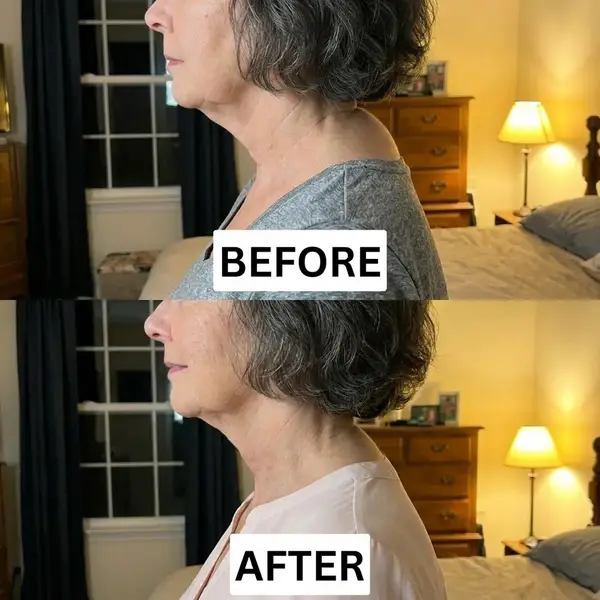
Advertiser

Dorothy Callahan

trycevera.comMeta Ad Library

3
Running ads
none new in 30 days
May 2026
Advertising since
longest ad 6 months
—
Reach
running ads, summed
0% video
Formats
0 video · 3 image
1
Products advertised
1 shop

This helped me a LOT

I saw a statistic that made me sick. Women who accept their neck hump as permanent lose an average of 73% of the necklines they used to wear within three years. Not 20%. Not 40%. 73%. I didn't believe it when I read it. I'd had my neck hump for almost three years and not one practitioner had ever explained what was actually driving it. But here's the truth. Your chiropractor adjusts your joints. Your posture specialist recommends exercises. The problem sits between them — at the exact suboccipital pressure points where the neurological lock lives — and nobody is paid to reach there. That's why most of us never heard this. That's why my mother never heard it either. My mother was part of that pattern. Four years of twice-weekly chiropractic. The tissue kept building anyway. I watched her quietly reorganize her entire visible life around a problem nobody ever directly addressed. I'm 61. Last month my specialist told me to increase my session frequency and add a brace protocol. I refused. And what I found instead… at a manual therapy conference three hours from home… took me from stepping back from every family photo to standing in the middle of my granddaughter's birthday party without a single calculation. No escalated protocol. No ongoing schedule. But to understand why I was desperate enough to drive three hours to a conference at 7 AM, you have to know what I watched that treatment do to my mother. And what I didn't know it was quietly doing to me too. For 4 YEARS… over a full thousand days… my mother was trapped on the adjustment protocol. Started with twice-weekly chiropractic. Her practitioner called it "the standard approach." Said she'd need to continue, but her measurements would stay managed. Her measurements did stay managed. Everything else kept building. Within the first six months she'd rebuilt her wardrobe entirely. Five blouses. All high-collared. Doctor said it was just adaptation to her changing posture. By year two she was stepping back from every photo without deciding to. Her presence at family events? Quietly reduced. This was a woman who had been in every family photo for thirty years. By year three she was always the one offering to take the pictures. Her silhouette changed. Her neckline changed. Her confidence changed. Everything we associated with how she moved through the world shifted to accommodate the same problem that never moved. And every time we brought it up, her practitioner said the same thing. "Her measurements are stable, Margaret. The tissue is a normal compensation. She needs to keep attending and doing her exercises." She was attending twice a week. Doing her exercises every morning. More wasn't the problem. My dad said it was like watching her disappear one neckline at a time. They had her on that protocol for FOUR YEARS. Four years of the tissue building. Four years of the wardrobe shrinking. Four years of appointments where they'd adjust the frequency or add a tool… but never once, not ONE TIME, did anyone say "Maybe something is wrong that this protocol isn't fixing." And the progression continued anyway. Four years of it. At a family reunion my dad grabbed my hand and said something I'll never forget. "For four years they told her her compliance was excellent, Linda. It was. But nothing changed. They were treating the wrong thing the whole time." So fast forward to three months ago. I'm 61. First noticed the rounding at 58. I've been a good patient. Attend every appointment. Wear the brace every day. Do my exercises before coffee. I've tried foam rollers. Cervical wedges. A $150 specialist. AIP posture protocols for nine months. Specific pillow for three years. I'm still progressing. I go to my quarterly assessment. My specialist pulls up my chart. Looks at me. "Linda, your attendance is excellent. But your forward head translation is up again. We should increase your session frequency. And I'd like to add a cervical traction protocol." My chest tightened. More sessions. Four years of watching my mother shuffle through family events in the same five blouses because she was managing a problem that never reversed. Four years of her stepping to the side in every photo. And the progression continued anyway. "No," I said. She blinked. "Excuse me?" "I'm not doing it. My mother was on this protocol for four years. I watched what it did to her. And I watched the progression continue anyway." She gave me that look. "Linda, we need to keep managing this. The escalation…" "What's the point of more appointments if they didn't reverse it for her?" She didn't have an answer. I told her to give me three months. She wasn't happy. Wrote something in my chart. I didn't care. For three months I did everything right. Cut all forward screen time in half. Added a different exercise program. Changed my workstation three times. Three months later I went back. Forward head translation up another 2mm. Tissue the same. Specialist pulled out her protocol pad again. "Linda, it's time." "Give me three more months." "Linda—" "Three more months." She sighed. I didn't care what she wrote. That night I couldn't sleep. I kept thinking about my mother. Same symptoms. Same compliance. Same measurements climbing despite faithful attendance. At 2 AM I gave up. Went downstairs. Opened my laptop. I started searching. What actually causes the suboccipital contracture to keep pulling. Why the adjustment never touches it. Why some women keep progressing even when their attendance is perfect. Every site said the same thing. Keep attending. Do your exercises. Stay consistent. I'd done all of it. So I kept digging. Looking for people who'd actually solved this. Not managed it. Solved it. That's when I found the thread. A manual therapy forum post with over 2,000 comments. The title: "Why don't German women accept neck humps?" I almost scrolled past. But something made me click. Bavaria, Southern Germany. Cervical hyperkyphosis rates 61% lower than comparable European populations. Not a little lower. Sixty-one percent. Person after person in the comments. Stories. Studies. Descriptions of elderly German women in their 70s and 80s maintaining natural head position while their American counterparts were in management protocols. Someone posted a link to a manual therapy conference being held that weekend. Three hours from me. I looked at the clock. 2:32 AM. By 7 AM I was in my car. By 10 AM I was there. I didn't know who to look for. Just walked through the conference until I found someone who looked like they'd been practicing for fifty years. First session I attended, there was a woman presenting at the front. Had to be past 70. Small. Precise. Silver hair pulled back neatly. She was demonstrating a manual technique and her hands moved like she'd been doing it for decades. No reading glasses. No hesitation. Just easy, deliberate work. I waited until her session ended. Walked up. "Excuse me," I said. "I don't want to bother you. But I've been managing a neck hump for three years. My mother managed one for four years. Nothing reversed it. My specialist wants me to escalate. I don't know what else to try." She stopped organizing her materials. Looked at me for a long moment. "You drove here for a reason," she said. "Sit down. I want to show you something." Her demonstration table was still set up. She gestured for me to lie back. "Your adjustment," she said. "It's mobilizing the wrong structure." I didn't fully understand. "There are two things happening in your neck. The joint. And above the joint, the suboccipital contracture at C1 and C2. Your adjustment addresses the joint." She placed two fingers at the exact base of my skull. "But the contracture that's been pulling your head forward and building tissue at C7 lives here. At these exact pressure points. Not at the joint. Here." "Your adjustment never reaches this location. It mobilizes what's above the contracture. Within 48 hours the contracted muscles re-tighten. The head drifts forward again. The tissue keeps building." I stared at the ceiling. "But the contracture… the lock… it needs a completely different input. Direct sustained compression at this exact location. Held for at least 8 to 10 minutes. With your own head weight providing the sustained downward force." She tapped the pressure points again. "That's the threshold at which the proprioceptive receptors activate. The neurological release signal fires. The muscles finally receive what they've been waiting for. And they let go." She leaned back. "That's why your compliance is perfect and your measurements keep climbing. You've been mobilizing the joint above the lock for three years. The lock has never been touched." My eyes started to burn. "That's why the brace doesn't hold. It supports the posture around the contracture. The moment you take it off the lock re-engages. That's why the foam roller doesn't work. It targets the thoracic spine. It never reaches C1-C2." She folded her hands. "None of those things touch the contracture. And the contracture is the only thing that matters." I asked her how she knew. She smiled. "I've been practicing manual therapy for 42 years. The first 30 in Munich. When the Heidelberg research came out documenting the suboccipital contracture mechanism, we changed everything. Every approach. Every protocol. We stopped managing around the lock and started releasing it directly." She looked at me. "American chiropractic training didn't cover this research. Most American practitioners still don't know it exists. So they keep mobilizing the joint above the contracture and charging for sessions that can't release what they're trying to address." I asked her what I should actually do. She walked to her bag. Pulled out a small tool. Two foam nodes. "This delivers what I just described. Exact C1-C2 placement. Gravity-assisted through your own head weight. Ten minutes before bed. Every evenin

Loading the ad's image
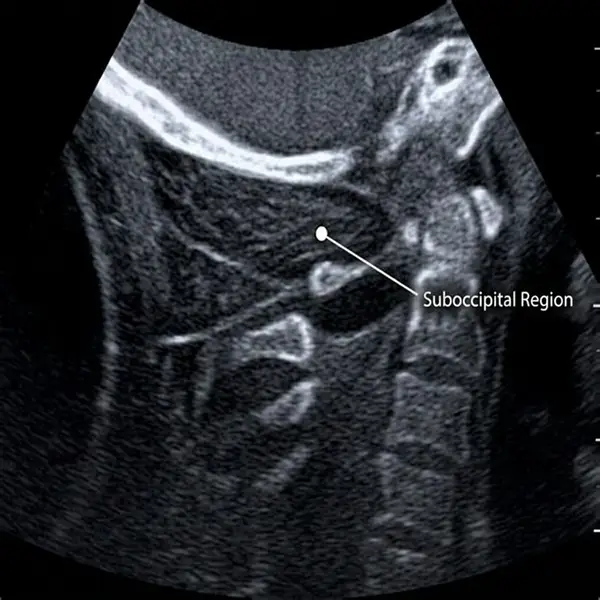
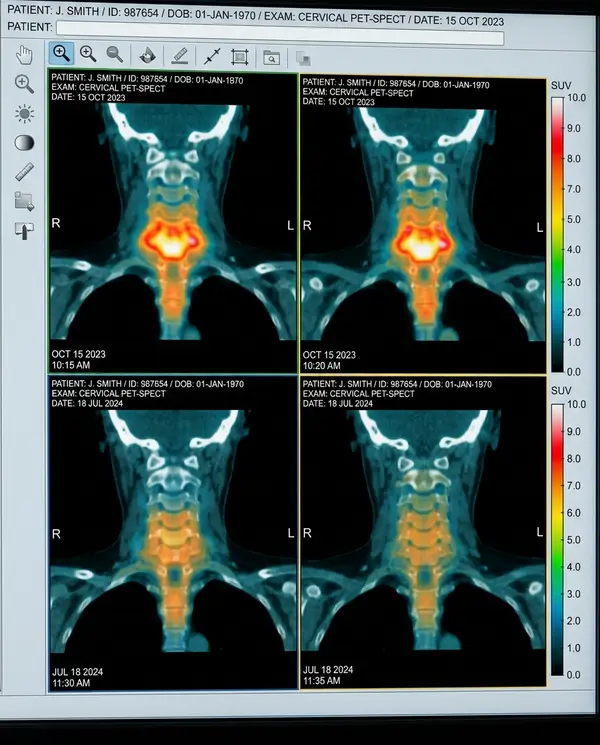
Dorothy Callahan — This helped me a LOT
WinningImage

How I discovered my "permanent" neck hump wasn't permanent...

If your chiropractor told you that you have a neck hump and all she said was "keep up the adjustments," I'm writing this for you specifically. Because I was you three years ago and nobody told me what was actually happening inside my cervical structure. My name is Maria. I'm 56. Found out I had a progressing neck hump at a routine posture assessment when I was 53. My forward head translation was 2.8cm. My chiropractor said "you have some forward head positioning, let's start twice-weekly adjustments and we'll recheck in six months." That was the whole appointment. So for two years that's all I did. I changed my posture habits. I cut out all unnecessary screen time. I started doing posture exercises four days a week. I lost some weight that wasn't helping matters. Went back for my recheck expecting good news. Forward head translation was 2.7cm. I'd spent two years doing everything right and my number barely moved. My chiropractor looked at the chart and said "well, keep doing what you're doing. These things take time." But here's what she didn't tell me. While I was focused on adjustments and exercises, something else was happening inside my cervical structure. Something that posture habits alone can't fix. I didn't find out until much later. And when I did, I was furious. About six months after that appointment, the coverage planning started taking over my mornings. Not dramatic at first. Just a slight hesitation before reaching into my wardrobe. I'd stand there for a few minutes trying to figure out what worked. I'd put something on, turn sideways, take it off. I'd find myself always choosing the same few things. I told my chiropractor. She said it was probably anxiety about the hump. Maybe focus on acceptance alongside the management. Then the wardrobe reorganization. Not overnight. Gradual. The kind where you don't notice until you realize you haven't worn an open neckline in eight months. The kind where your husband asks if you want to take a photo at your granddaughter's birthday and you feel something tighten in your chest before the camera comes out. The kind where you start positioning yourself in group photos without consciously deciding to. I went back again. More assessment. Forward head translation was now 2.9cm. Going up, not down. She said "your measurements are slightly elevated but nothing alarming. Let's keep monitoring." Monitoring. That word should have made me angry. It didn't at the time. But it does now. Because here's what monitoring means: we're going to watch this consolidate and do nothing until the tissue is too established to reverse. I started researching on my own. Late at night. Googling things I didn't want to Google. Neck hump stages. Cervical kyphosis progression. Tissue consolidation. What happens when it's permanent. And I thought about my aunt. She was told she had a progressing neck hump in her late 40s. Same thing I heard. Keep up the adjustments. Watch your posture. Come back next year. She came back every year. She watched her posture. She wore her brace. Year 3: measurements crept up. Chiropractor said keep monitoring. Year 6: an assessment showed the tissue had consolidated significantly. They called it established cervical kyphosis. She was scared but they said it was "manageable." Year 9: the tissue had consolidated further. They used the word "permanent structural change" for the first time. Year 12: she had reorganized her entire life around the hump. She stopped going to events. She stopped appearing in family photos. She wore the same five outfits every week because everything else showed it. She never got her wardrobe back. She is 67 years old and she has not worn an open neckline in nine years. Her forward head translation when she was first assessed? 2.6cm. Almost exactly what mine was. I was not going to be my aunt. I refused. I read that millions of women over 50 have progressive neck hump tissue buildup. That most don't fully understand what's driving it. That practitioners call it "age-related postural change" when the real cause has a specific name and a specific address. I read that neck hump tissue builds in a progression. Early forward pull becomes visible tissue. Visible tissue becomes consolidated tissue. Consolidated tissue becomes permanent structural change. And then I read something that changed everything. The real problem isn't the posture. The posture is the visible result of a chain reaction. The head drifts forward. That forward load stresses the suboccipital muscles at C1 and C2 — right where your skull meets your spine. Over time those muscles stop releasing after every forward movement. They lock. And once they're locked, your head gets pulled forward continuously. Your body builds tissue at the cervical base to absorb the constant stress. The suboccipital contracture is the driver. Without releasing it, everything else is just managing the symptom. And here's the part that made me furious. In people with progressing neck humps, the suboccipital contracture is chronically locked. The accumulated forward load keeps it in a neurological holding pattern faster than the body can compensate. The more the tissue builds, the harder the contracture pulls. The harder the contracture pulls, the more tissue builds. It's a cycle. And nothing my chiropractor told me to do breaks that cycle. Adjustments help. Exercises help. Posture habits help slow the forward load. But none of those things directly release the suboccipital contracture. That's why my forward head translation didn't move in two years. I was reducing the load but the lock was already running. And my cervical structure had nothing to release it with. I felt like I'd been painting over a wall that was still getting wet from behind. I called my chiropractor. I said what about the suboccipital contracture? Why aren't we addressing the neurological lock directly? Why are we only talking about adjustment? She said she was "aware of" direct suboccipital compression approaches but there was no standard protocol for it in her practice. I said what about home tools? She said she couldn't recommend anything she hadn't assessed. So I went looking myself. First thing I tried was a foam roller. Because that's what everyone uses for neck and upper back. Amazon, $22. Used it faithfully for five months. Got my assessment done. Forward head translation 2.7cm. Five months. No change. Turns out foam rollers target the thoracic spine — nowhere near the C1-C2 suboccipital zone where the contracture lives. It's like trying to open a lock by polishing the door handle. The handle looks better. The lock stays locked. Then I tried a cervical contour pillow. Then a traction device. Then one of those multi-function cervical posture tools with six different settings. Forward head translation stayed between 2.7cm and 2.9cm the entire time. Bouncing around. Never coming down. I was spending money every month on tools that weren't doing a single thing. That's when I found direct suboccipital compression. I'd never heard it called that before. But what I read stopped me cold. The suboccipital contracture releases on three specific inputs that all have to fire simultaneously. Exact C1-C2 anatomical placement — the two precise pressure points where the contracture lives, not the upper back, not the general cervical spine, not "around" the area. Gravity-assisted sustained delivery — your own head weight providing the consistent downward force. And minimum hold duration — eight to ten minutes, long enough for the proprioceptive receptors to activate and the neurological release signal to actually fire. Below threshold on any one of those inputs — the signal doesn't fire. The contracture doesn't release. The tissue keeps building. And that's why the foam roller wasn't working. Wrong address. That's why the cervical pillow wasn't working. No suboccipital compression. That's why the traction device wasn't working. Decompresses the joint above the contracture while the lock below keeps pulling. Same principle. Same problem: contracture that never gets the three simultaneous inputs it requires to release. I ordered Cevera that week. Two foam nodes engineered for exact C1-C2 placement. Gravity-assisted delivery through my own head weight. Ten-minute protocol before sleep. The clinical input standard, not the broad cervical tool I'd been telling myself was enough. I took it for more expensive than the Amazon stuff. But at this point I'd spent over $400 on tools that hadn't done anything. I figured one more try. Week 1: I slept better. Not dramatically. Just deeper. Less waking up with the automatic neck position awareness. Week 2: I noticed I wasn't doing the full coverage calculation at 7am. The morning decision was still there but shorter. Week 3: my husband said something I wasn't expecting. He said "you seem more like yourself lately." I hadn't even told him I was trying something new. Week 4: the wardrobe planning wasn't gone completely but I could feel it thinning. Like a calculation that had been running every morning for years was starting to run quieter. Week 8: I had my assessment scheduled anyway. Almost didn't want to look. Forward head translation: 1.9cm. I read it three times. Then I read it again. 1.9cm. Down from 2.8cm. First time under 2.0cm since my diagnosis. I sat in my car in the parking lot and cried. Not because of the number. Because of the three years I wasted not knowing this existed. My chiropractor pulled up the trend line at my next appointment. She looked at the screen for a long time. "What changed?" she asked. I told her everything. The suboccipital contracture. The three simultaneous inputs. The C1-C2 placement. The gravity-assisted delivery. The ten-minute protocol. She listened. She wrote it down. She didn't say "you should have told me you were trying something new." She didn't dismiss it. She looked at the numbe

Loading the ad's image
Dorothy Callahan — How I discovered my "permanent" neck hump wasn't permanent...
WinningImage

Everyone Told Me The Neck Hump Was Just Something I'd Have To Live With

I'm 63 years old... and everyone told me the neck hump was just something I'd have to live with. They said nothing would change it. Too structural. "That's just what happens when you get older." "You can manage it but you can't reverse it," they said. That was 3 months ago. Zero turtlenecks in the rotation. Zero planning my outfit around my neckline. More ease in photos than I've had in two years. And what changed it took zero ongoing appointments, zero braces... and exactly 10 minutes a day. --- My Daughter Grabbed My Arm... "Mom. Please. Think about what you're spending on this." I was standing in my bathroom, looking at the shelf. The posture brace. The foam roller. The traction device. The contour pillow. My chiropractor's appointment card. "You've tried everything," she said. "Multiple chiropractors. Eight months of exercises. That brace you wore every single day." "But NOTHING?" She lowered her voice. "You're avoiding every photo. The hump keeps growing. Chiropractic is the only thing keeping it from getting worse faster." "Do you know what happens when women like you stop treatment?" I shook my head. "It progresses faster. The tissue sets harder. You lose your window." "And at the end? You'll still have the hump. Because your spine is just CHANGING." My husband nodded from the doorway. "She's right. You've tried everything. Why would you stop the one thing that's at least keeping it stable?" But I looked at that shelf full of devices and appointment cards... And I realized something. The treatment wasn't actually working anymore. --- I Knew That Feeling... Doing something just to feel like I was doing SOMETHING. Not improving. Not reversing. Just... stable enough to not feel like I'd given up entirely. "I'm done with this approach," I said. My daughter's eyes went wide. "Mom..." My husband looked concerned. "You've tried other things before. Remember the online program last year? Three months and you stopped because nothing was changing." Long pause. "I just don't want to watch you spend more money on something that won't work." What he really meant was: You'll be back at the chiropractor by next month. I canceled the standing appointments anyway. "We'll see about that." --- I Made It Through Week One... Barely confident. The guilt started on day three. By the end of the week, I was checking my neck in every mirror. By day ten, I was lying in bed wondering if I'd made a mistake. My daughter texted that weekend. "How's it going without the appointments?" But it wasn't just the absence of appointments. The tightness at the base of my skull that I'd stopped noticing because it was always there was starting to ease. Something was happening. Something that hadn't happened in eight months of twice-weekly adjustments. --- Week Three Was Different... I woke up on a Tuesday. Started getting dressed. Reached for a blouse I hadn't worn in over a year. A scoop neck. Put it on. Stood in front of the mirror. Didn't reach back for the turtleneck. Just stood there for a moment. My daughter called that afternoon. "How's day whatever going?" "I wore the blue blouse today," I said. Pause. "The scoop neck one?" "Yes." Long silence. "Mom... what did you do?" --- "What's That?" I explained. "Remember how I said I was done with the same approach? I found something different." "The suboccipital muscles. Right at the base of the skull at C1 and C2." "Apparently that's what's actually driving the hump." "Not the joint. Not muscle weakness. A contracture that locks in a shortened state and never releases." "And everything I'd been doing — the adjustments, the brace, the exercises — was aimed at everything except that structure." "So what did you do?" "I found a tool that targets the exact pressure points. You lie back on it for ten minutes. Your own head weight applies the sustained compression. It triggers the neurological release." "Sounds too simple," she said. "That's what I thought. But the tightness I'd had at the base of my skull for two years is gone. And now I'm wearing the blue blouse." --- I Had Gone Looking Three Weeks Earlier... First, I searched "suboccipital contracture cervical hyperkyphosis treatment." Dozens of clinical papers. Manual therapy literature I'd never seen referenced in any of my appointments. Most home tools were aimed at the thoracic spine. Wrong location. Then I found a forum where women were talking about suboccipital release. One name kept coming up. Cevera. "Only tool I found at the right anatomical location." "Two weeks in and the tightness I'd had for years is gone." "My chiropractor measured me and asked what I'd changed." I clicked through to their page. --- I Placed The Order Right There... $44.95. It arrived two days later. Two foam nodes. Precisely spaced. Ten minutes lying back. Head weight doing the work. That's it. --- Three Weeks Later... I woke up on a Tuesday. Getting dressed. Normally? I'd scan the closet for high necklines and plan around the hump before anything else. This time? I just reached for what I wanted to wear. No calculation. No turtleneck as backup. I walked downstairs and made breakfast. No brace to put on. No appointment to schedule. Around 10 AM I realized something. I hadn't thought about my neck once. Not the hump. Not the angle. Not the camera. I couldn't believe it. --- My Daughter Called That Night... "How are you doing without the appointments?" Translation: She was waiting for me to say I'd gone back. "I wore the blue blouse today," I said. "And I stood in the group photo at Linda's lunch." Long silence. "Wait... what? You just stood there?" "In the middle." "What did you do?" --- Here's What I Told Her... "I didn't force myself through more of the same." "I didn't go back to twice-weekly appointments that faded by Friday." "I found the tool that released the actual contracture." "Cevera. Two nodes at C1-C2. Ten minutes a night." "It fixed the actual problem." My body wasn't changing irreversibly. The suboccipital muscles were just locked. Locked in a shortened state they'd never been given the signal to release. The adjustment was a band-aid. A way to mobilize the joint while the contracted muscles re-tightened behind it. But you can't adjust your way out of a neurological lock. Eventually it sets. That's what was happening to me. --- How Cevera Works... Two precisely engineered foam nodes positioned to sit at the exact C1-C2 suboccipital pressure points. Not the upper back. Not the general base of the neck. The exact anatomical location where the contracture lives. You lie back and let your own head weight apply the sustained downward compression. The force never lets up for the full ten minutes. Long enough for the neurological release signal to fire. Long enough for the muscles to actually let go. Not a broad foam roller your body doesn't respond to. Not an adjustment that lasts seconds. Real contact at the real location. You lie back for ten minutes. The contracture releases. The forward pull eases. The body stops building compensatory tissue. The hump reduces. My daughter used to set her own reminder to check whether I'd moved to the edge of every group photo. Complete shift. It's the right structure finally being addressed. --- Three Months Later... That "permanent aging" everyone said I'd just have to accept? I haven't worn a turtleneck in 11 weeks. Zero turtlenecks. Zero outfit planning around my neckline. Zero stepping back from the camera. I have ease in every room from the moment I get dressed to the moment I go to bed. My husband was shocked. He looked at me one morning getting ready. "You look different. Like you did a few years ago." "What happened?" Now he tells everyone. --- Here's What Most People Don't Understand... If the hump keeps growing through treatment... If nothing holds longer than a few days... If you're avoiding photos more every season... If you feel like you've run out of options... It's probably not a consistency issue. It's a contracture that's never been released. And you can't adjust or brace your way out of a neurological lock. You have to fix it at the source. --- Where to Get Cevera... Only order from their official page: 👉 https://trycevera.com/pages/adv-womens-wellness-report That's where you get: ✅ 90-day money-back guarantee ✅ Free shipping ✅ The only home tool engineered for the exact C1-C2 suboccipital pressure points Right now it's $44.95. I always recommend giving it at least six weeks. Enough time for the contracture to fully release. Enough time to see real, lasting postural change. Stock has sold out before. If it's available, don't wait. --- They Also Guarantee It... Try it for 90 days. If the tightness doesn't ease... If the rounding doesn't soften... If you still feel like nothing has changed... You get your money back. No questions asked. Zero risk. That's how confident they are it works. --- One Last Thing... That "permanent" verdict everyone said I'd just have to accept? I haven't worn a turtleneck in 11 weeks. Not because I have unusual discipline. Because I don't need to manage around it anymore. I wasn't aging irreversibly. I was just locked in a contracture that had never been released. And I wasn't broken. I just needed the right pressure points finally addressed. If the hump keeps growing through everything you try... If everyone says "that's just aging after 60"... Don't give up yet. Try the one tool aimed at the right structure. 👉 https://trycevera.com/pages/adv-womens-wellness-report You deserve to wear what you want. Your suboccipitals deserve the release they've been waiting for. Age is just a number when you've finally released the right lock.

Loading the ad's image
Dorothy Callahan — Everyone Told Me The Neck Hump Was Just Something I'd Have To Live With
WinningImage

From the ads Sniped has collected from this page (3 so far, first seen Nov 2026). Reach is what Meta reports; no spend or sales estimates.