Ceylon Cinnamon 7200mg Equivalent with MCT Oil
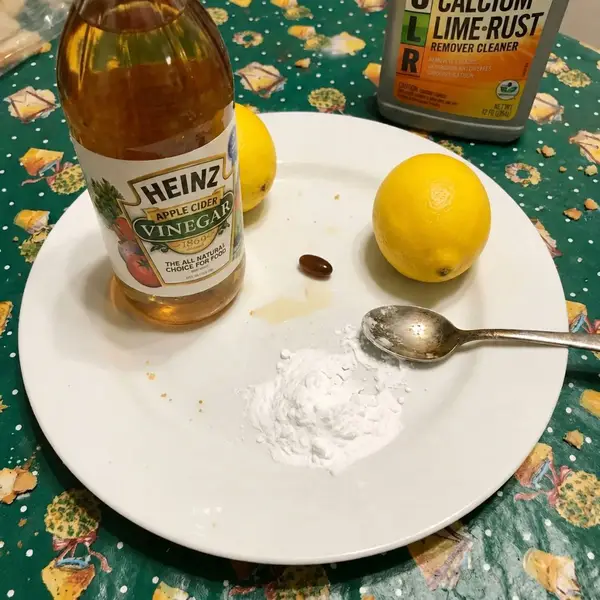
My daughter dissolved calcium faster than bathroom cleaner. She is 11. It was a science fair project. She tested five things. Vinegar. Lemon juice. Baking soda. CLR. And something she grabbed from my medicine cabinet without asking. She set up her phone, hit record, went to bed. Next morning, four cups still had calcium sitting in them. Cup five was completely clear. Dissolved overnight. CLR, the industrial product engineered to destroy calcium, barely got 30 percent. Whatever she pulled from my cabinet erased it all in 14 hours. She won first place. But here is where this stops being a school project. The head judge was a retired pharmacist. When my daughter told him what was in cup five, he pulled me into the hallway. His hands were shaking. Here is what was in cup five. My name is Charlotte Morren. I am 63 years old. I had been on three prescriptions for two years when I started taking it. Lisinopril for blood pressure. Atorvastatin for cholesterol. Metformin for blood sugar. My cardiologist called the combination managed. That word sat in my chest every time he used it. Managed. My blood pressure at my last physical: 152/94. My LDL: 147. My fasting glucose: 116. All three on the wrong side of where the chart said they needed to be. All three being slowed by medication. None of them reaching target. My mother was on blood pressure medication for sixteen years. She added a statin at 68. Her numbers were always called managed. She had a heart attack at 71. I had been thinking about that word, managed, for two years before I decided to do something about it beyond the prescriptions I was already filling. The research I kept returning to pointed to the same place. When insulin resistance develops, the body's glucose transporters, GLUT4, stop responding properly. Glucose stays in the bloodstream longer after every meal than it should. Over time, that prolonged elevation contributes to oxidative stress and low-grade chronic inflammation inside the blood vessel walls. Arteries stiffen. Circulation becomes harder. Blood pressure climbs. The liver, reading the inflammation as a repair signal, increases cholesterol production. And the fasting glucose stays elevated because the cells have stopped pulling it in the way they used to. Three separate numbers on three separate prescriptions. One upstream dysfunction that none of them addressed. I found Ceylon cinnamon in the published research, not on a wellness blog. Studies on Cinnamomum verum, the true species from Sri Lanka, showed compounds that may support insulin sensitivity and GLUT4 transporter function. Research suggesting that supporting GLUT4 responsiveness upstream could, over time, reduce the oxidative burden on arterial walls, ease the liver's inflammatory cholesterol response, and bring fasting glucose down toward normal range. Three numbers. One upstream target. I bought Ceylon cinnamon sticks by the pound. The true kind, not the cheap Cassia that fills most grocery store shelves. My husband David found a preparation method: two cinnamon sticks, near-boiling water, fifteen minutes of steeping, a squeeze of lemon. Every single morning. Seven days a week. I set my alarm six minutes earlier to account for the kettle. I tracked all three numbers. Blood pressure on the home monitor each morning, same time, same cuff position. Fasting glucose on the glucometer before breakfast. Cholesterol only at the lab, every eight weeks. Week one: blood pressure 151/95. Fasting glucose 114. Unchanged. Week two: 152/94. Glucose 115. Week three: 150/93. Glucose 116. One point, within margin of error. Week four: 153/95. Higher than I started. I stared at the monitor. Checked the cuff placement. Took it again. 153/95. David was in the doorway. He had been drinking the tea too, in solidarity, even though his own numbers were fine. He had not said anything for a few minutes. 'Maybe it takes longer,' he offered. I did not answer because I no longer believed that. Week six: 152/94. Week eight: 151/94. Week ten: 152/95. Ten weeks. Seventy consecutive mornings. A kettle running before the sun was up. Cinnamon sticks reordered twice. Not one point of sustained movement across any of the three numbers. I sat at the kitchen table one morning in week ten with the tracking log open in front of me. Seventy entries. Three columns showing almost exactly the same numbers at day seventy as they had shown at day one. I closed the log. My next cardiologist appointment was in six weeks. The last one had ended with a specific statement. If the LDL does not come down and the blood pressure does not reach target, we are going to talk about increasing your doses and discussing a fourth prescription. I had spent ten weeks trying to make that conversation unnecessary. It had not worked. That night I lay awake listening to my own heartbeat. Thinking about my mother. About what managed had eventually meant for her. About whether I was simply going to follow the same progression she followed, one prescription added to another, until the numbers were managed right up until they were not. David put his hand on mine in the dark. 'You are awake again.' 'Ten weeks,' I said. 'Nothing moved.' He held my hand. He did not have an answer. Neither did I. A free community health screening was happening the following Saturday at the community center across town. Blood pressure, glucose, a cholesterol panel. I had seen it on a neighborhood post. David had circled it on the paper calendar on the refrigerator without saying anything. I went. I had six weeks before my appointment and nothing left to lose. I was waiting at one of the folding tables for my cholesterol results when I heard the woman across from me asking the lab technician a question about her statin prescription. My attention sharpened. The technician was in her forties. Glasses. The kind of methodical, unhurried voice that comes from spending a lot of time explaining numbers to people who have only ever been handed a printout and told whether the number was good or not. 'What most patients are not told,' she said, not looking up from her clipboard, 'is that blood pressure, cholesterol, and blood sugar are often not three separate problems. For a significant portion of people, all three trace back to the same upstream dysfunction.' She set the clipboard down. When insulin resistance develops, GLUT4 transporters lose their responsiveness. Glucose stays elevated after meals longer than it should. That prolonged elevation causes oxidative stress and chronic inflammation inside the blood vessel walls. Arteries stiffen. Circulation becomes harder. Blood pressure climbs. The liver reads the arterial inflammation as a repair signal and increases cholesterol output. Fasting glucose stays elevated because the cells are not pulling it in efficiently. 'Blood pressure medication works on the vessels,' she said. 'Statins work on the liver's cholesterol production. Blood sugar medication works on the liver's glucose output. They each address one downstream number. They do not touch the upstream GLUT4 dysfunction generating all three.' I leaned forward. 'What about Ceylon cinnamon? I have been drinking it as tea every morning for ten weeks.' She looked up. Considered the question for a moment. 'The research on Ceylon cinnamon is real. Peer-reviewed studies, published mechanisms, documented in reputable journals. But here is what I see consistently when I look at the testing data. When people steep cinnamon sticks in hot water, there is no reliable consistency in what they are actually absorbing. The active compounds in Ceylon cinnamon are fat-soluble. Hot water is not an efficient carrier for fat-soluble compounds. How much releases from the sticks depends on the specific sticks, the exact water temperature, the steeping time, how recently the cinnamon was harvested. One morning you might absorb a meaningful amount. The next morning, almost nothing. There is no way to know which morning is which.' Seventy mornings. Some of them, I may have been drinking nothing but warm water with a faint cinnamon scent that settled at the back of my throat and did nothing else. 'The studies that demonstrate results use standardized concentrated extracts,' she continued. 'Every subject in those trials receives the same verified amount per dose. That is what makes the results reproducible. Steeping loose cinnamon sticks in hot water is not the product those studies tested. You were doing the right thing in the wrong form.' She mentioned one product she had reviewed with solid batch documentation. Metabolae Ceylon Cinnamon. A twelve-to-one concentrated extract suspended in MCT oil, the fat-soluble carrier that matches the chemistry of the active compounds. Third-party tested every batch. Certificate of Analysis published so you can read the lab results yourself. 'I have looked at the testing documentation on this one,' she said. 'The content matched what was on the label. Species confirmed as Cinnamomum verum, sourced from Sri Lanka. That does not happen as consistently as it should in this supplement category.' I searched for it before I left the parking lot. I placed the order from the front seat of my car. The bag arrived two days later. One softgel with breakfast. No kettle. No steeping. No fifteen-minute wait. No careful temperature, no cinnamon sediment at the bottom of the cup, no cleanup. Thirty seconds. Done. I sat at the kitchen table with my coffee and looked at the softgel for a moment. Then I took it. Day three, something shifted. Not dramatic. A lightness in the afternoons. The low-grade heaviness that had been settling behind my eyes by two every day was slightly different. Not gone. Easier than it had been. Day seven: blood pressure 147/91. Fasting glucose 109. I checked the cuff. Took it again. 147/91. Down from 152/94. I did not tell David. Not yet. I had learned from ten weeks of tea. One reading was not a pattern. Day ten: 144/89. Glucose 106. Day fourteen: 141/88. Glucose 103. David noticed before I showed him the numbers. I was making coffee on a Tuesday morning and humming something I could not name. He was in the doorway watching me. 'You seem different,' he said carefully. 'I feel different.' Day twenty-one: 136/84. Fasting glucose 98. Under 100 for the first time in longer than I could remember. I sat with that number for a full minute. Day twenty-eight: 132/82. Fasting glucose 94. I turned the tracking log toward David at the kitchen table. He looked at all three columns. All twenty-eight entries. The slow, clear movement down the page. He looked up at me. 'Charlotte.' 'I know.' 'But ten weeks of tea. We did everything the preparation guide said.' 'It was never the Ceylon cinnamon,' I said. 'The active compounds are fat-soluble. Hot water cannot carry them reliably. Some mornings I may have gotten a real dose. Some mornings almost nothing. The studies that show results used a standardized extract in a fat-soluble carrier. That is not what was in the kettle.' He sat with that. Then: 'What about cholesterol? The panel?' 'The next appointment will tell us.' Week six: 129/80. Fasting glucose 91. My cardiologist appointment was at week twelve. The nurse wrapped the cuff around my arm. Pumped it. Looked at the screen. Took it again. Then a third time. She typed the number into the system and went to get the doctor. He walked in. Pulled up my chart. Looked at the screen. Then at me. '127 over 81.' 'Yes.' 'Your last reading in this office was 152 over 94.' 'Yes.' 'What changed?' I told him. The tea and why it failed, and what the lab technician had explained about fat-soluble compounds and inconsistent delivery. The GLUT4 connection between all three of my numbers. The standardized concentrated extract in MCT oil. The verified consistent dose every morning versus the unpredictable steeping. He listened without interrupting. He took notes on a yellow legal pad. Then he pulled up my blood panel. LDL: 114. Down from 147. 'That is meaningful movement for twelve weeks on a statin that had not been producing results,' he said. Fasting glucose in the chart: 91. He set the legal pad down. Closed the laptop. 'The research on GLUT4 pathways and their relationship to insulin sensitivity, blood pressure, and lipid metabolism is growing. If you are getting a verified, standardized dose in a form with appropriate bioavailability, the mechanism is sound.' He looked at all three numbers together. 'I am not adding a fourth prescription today. I want you to continue exactly what you are doing. Come back in twelve weeks and we will look at all three again.' I sat in my car in the parking lot for a long time before I could start the engine. No fourth prescription. Three numbers, all of them finally moving. I called David. '127 over 81,' I said. 'LDL 114. Glucose 91. No new prescriptions.' Silence on his end. Then a breath I recognized. The kind he takes when he does not trust himself to speak immediately. 'You did it,' he said. 'We just needed the right form.' That was five months ago. My blood pressure this morning: 124/78. Fasting glucose: 89. My cardiologist has not mentioned escalation since the day he sat back and looked at those three numbers together. And last month, my daughter set up her science fair experiment, grabbed the softgel from my bathroom counter because she needed a fifth liquid, cracked it open, squeezed it into the cup, dissolved calcium faster than an industrial cleaner, and won first place. Which brings me back to the pharmacist in the hallway. His hands were shaking. When my daughter stepped away to speak with another judge, he turned to me. He said: 'I spent 34 years filling prescriptions for blood pressure, cholesterol, and blood sugar. Three separate medications for three separate numbers. Not one of them addresses what I just watched your daughter film. The research on this compound has been building for years. I have read it. But I had never once watched it demonstrated until an eleven-year-old filmed it on a phone in a school gymnasium.' His voice dropped. 'I kept thinking about the patients I have seen over three decades. How many of them were on the same three prescriptions your daughter put in cup one, cup two, and cup three. How many of them I told the research was promising but I had nothing to show them. And here is their biology in a plastic cup. Cup four barely touched the calcium. Cup five dissolved it overnight.' He shook my hand. Then he went back to the gymnasium and finished judging the rest of the projects. She won first place. If you are reading this, something in this story is yours. You have a number that will not move. Or two. Or three. You have been filling the prescriptions and taking them as directed and the chart says managed and something about that word has never fully settled in your chest. You may have tried cinnamon capsules from the pharmacy shelf. Or the tea. Or the powder stirred into your morning coffee. And nothing moved the way you expected, or what moved came back. You are not wrong to believe the research. You have been using the wrong form. I spent ten weeks with a kettle running before sunrise. Two cinnamon sticks. Fifteen minutes of steeping. A cup that left a ring if you set it down. And all three of my numbers sat exactly where they had been at the start. Three days into one softgel each morning, something shifted. Four weeks in, all three numbers were moving. Twelve weeks in, my cardiologist put the pen down and kept monitoring instead of prescribing. Here is why the form was the variable that mattered. The active compounds in Ceylon cinnamon, the ones the published research links to GLUT4 support, insulin sensitivity, and downstream improvements in blood pressure, cholesterol, and fasting glucose, are fat-soluble. Hot water does not carry fat-soluble compounds efficiently. The amount that releases from loose cinnamon sticks changes with every cup, depending on the sticks, the temperature, how old the cinnamon is, how long you steep. Some mornings you absorb something real. Some mornings almost nothing. There is no way to know which morning is which, and there is no way to know how much your numbers are actually responding to. Metabolae delivers a twelve-to-one concentrated extract, the equivalent of 7,200 milligrams of raw Ceylon cinnamon bark, in every softgel. Suspended in MCT oil, which is the correct carrier for fat-soluble compounds. The same verified amount every single morning. Not a guess. A consistent, documented dose that matches what the published studies used to produce the results you have read about. The species is confirmed as Cinnamomum verum, sourced from Sri Lanka. Not Cassia. Not generic cinnamon. The true species with the verified research record. Third-party tested every batch. The Certificate of Analysis is published so you can read the lab documentation yourself. Not a label claim. Not a marketing assertion. Actual numbers from an independent certifying lab. One softgel. With your first meal of the day. Thirty seconds. Done. Try Metabolae for 90 days. Track your numbers the same way every morning. If they do not move, send back what is left in the bag and get every dollar back. The full 90 days. No questions, no conditions, no restocking fee, opened bags accepted. You have three months to let your own data answer the question your prescriptions have been managing around. You are at a fork right now. One path: keep steeping. Keep guessing at the dose. Keep watching managed become a word you stop questioning. Keep waiting to hear what the fourth prescription will be. Another path: give the right form an honest 90-day trial. Track all three numbers. Stop guessing and start measuring. For me, all three numbers moved. My cardiologist cancelled the escalation conversation. My daughter won a science fair. And a retired pharmacist with shaking hands confirmed what my own tracking log had already shown me for five months. The science was never wrong. The delivery was. Charlotte Morren P.S. Something felt different within the first three days. My blood pressure started moving by day seven. Fasting glucose dropped under 100 by week three. LDL came down meaningfully at the twelve-week panel. My cardiologist decided to keep monitoring rather than prescribe. Your timeline will differ because every metabolism is different. But you will not know unless you give the right form an honest run.
Loading the ad's image