The Hormone Behind Stubborn Belly Fat
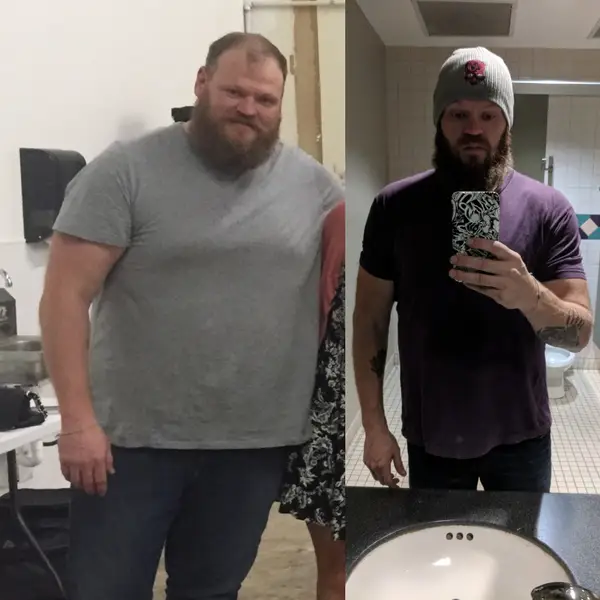
I'm going to say something that nobody walking around with a f**king beer gut wants to hear and I don't give a sh*t if it pisses you off. Cutting calories isn't going to shrink that belly. Not even f**king close. Not the keto. Not the intermittent fasting. Not the testosterone boosters. Not the fat burners. Not the bulls**t your buddy swears worked for him. NONE OF IT IS GOING TO FIX WHAT'S ACTUALLY HAPPENING TO YOUR BODY. I know because I watched my father live it. Every single thing they told him to do. Eight straight years. Did every diet. Tried every supplement. Chased every new workout program. And his gut kept growing anyway. Fifty-five years old. Couldn't button his dress pants at my sister's wedding. Had to buy new ones the morning of because nothing fit. Never got that gut under control after that. And the worst part. Years later my own belly started pushing out and my chest went soft. Right around the age he was when his started. Same kind of gut. Same doctor telling me to eat less and move more. And I almost let it happen to me, because I was still listening to the same advice that did nothing for him. I'm done being polite about this. If your gut is hanging over your belt and you're sitting there watching it grow while your doctor tells you the diet has it handled, you're wasting time your body doesn't have. Read this entire post. Every word. Because the answer is in here, and it isn't another eight years of doing everything right while the belly gets bigger anyway. My name is Dan M. I'm 49. I live in Phoenix with my wife Sarah and our two grown kids. I'm not a lazy man. I lift. I walk every morning. I eat better than most guys my age. I read the labels before I buy anything. That's what made the gut so hard to accept. My father Tom was 49 when his belly started pushing out. The doctor took his bloodwork, told him his testosterone was "normal for his age," and gave him his first diet plan that day. No real conversation. Metabolism slowing down. Family history. The doctor called the plan "sensible eating." Said it was "the evidence-based approach." Said it would get him back in shape. Dad did exactly what they told him. Cut the carbs to the letter. Tracked the macros. Tried the testosterone boosters. Went back every few months for another check-in. Took every supplement they gave him. For EIGHT YEARS. After the first month, he dropped a few pounds. The doctor said they were winning. Said it was being managed. Handed him a printout. But Dad didn't feel like he was winning. The gut was still there in the morning. The softness in his chest wouldn't go away. He told the doctor. "That's normal," they said. "We just keep monitoring. We can adjust the macros when you plateau." So he kept following the plan. And the diets did less every year. By year three, the man who used to take his shirt off at the pool hadn't gone swimming in his own backyard. He started saying he couldn't focus in the mornings. Couldn't stay awake past 8pm. Couldn't get through a meeting without losing his train of thought. He was exhausted all the time. That bone deep tiredness sleep never touched. The doctor said it was just his age. "That isn't the belly," they told him. "We see this in men your age. A lot of it is just getting older." You know what they said when he asked if there was another way? "This is about as good as it gets. Keep doing what you're doing. Eventually we look at medication." So he stayed compliant. Year after year. A belly the doctor called manageable. A man slowly losing himself in the mirror across from me at every holiday. Then the gut pushed out to the point he couldn't tie his own shoes. Then the diets stopped working at all. Then the exhaustion became permanent. And then it happened anyway. My sister's wedding. His own living room getting ready. His pants wouldn't button because his gut had gotten that big, went out that morning and never really got control of his body after that. His chart still said his weight was being monitored. His belly had been growing out of control on the inside the whole time. His body gave out with symptoms his doctor called stable. At the reception, my wife took my hand and said something I will never forget. "They spent eight years managing his diet. And the thing that was actually making him store fat, nobody ever touched it." Three months ago, I stepped on the scale after my annual physical. The doctor read my numbers. "Dan, you've got metabolic syndrome developing and your cortisol is elevated. We're going to start you on a stricter diet and get you tracking everything." She started writing the order. "Some of this is just getting older too, it's normal at your age. This is the safest approach for the weight." My chest went tight. I saw Dad running through diet after diet every year. Saw him unable to button his own pants. Saw him at that wedding with a belly the doctor called monitored. "No," I said. She blinked at me. "I watched my father do exactly that for eight years. His belly looked managed on paper. His body gave out anyway. So I'm not signing up for eight years of masking a symptom that didn't even save him." She gave me the look they save for difficult patients. "Give me ninety days," I said. She wasn't happy. I didn't care. For three months I did everything else right. Took the testosterone boosters. The fat burners. The thermogenics. The pre-workouts everybody swears by. Cut out the carbs every night. Even started a strict calorie deficit. Three months later I checked in. Barely a difference. The gut still pushed over my belt the second I woke up. The softness in my chest still there every time I looked in the mirror. After ninety days of testosterone boosters and fat burners and calorie cutting. Barely. Any. Better. The doctor set up the next round of monitoring. "Dan, let's just do the medication and keep watching it." I drove home and felt something snap. I had taken the supplements. Done the diet. Followed everything everyone recommends. And the only plan left was to keep chasing the exact belly that swallowed the man who raised me, all the way to a wedding that the diet didn't even keep him out of. That night I couldn't sleep. I lay there with my gut pressing against the mattress. Dad lost his body at 55. I was 49 with a growing gut and a chest that wouldn't firm up no matter what I did. At 2am I gave up trying to sleep. Went downstairs. Opened my laptop. I started researching everything. What actually makes the body store fat around the belly and chest. Not the weight on the chart. The actual mechanism. Why some men keep lean, hard midsections for decades and others balloon straight into dad bod territory. What's actually happening inside the body when the fat accumulates there. Every mainstream site said the same four things. Cut your calories. Try testosterone boosters. Track your macros. Monitor and wait. I had done three of those four. I refused to spend eight years chasing symptoms that broke the man before me. So I kept digging. Looking for men who had actually gotten rid of the stubborn gut and gotten their body back without spending years just masking symptoms. That's when I found the thread. A long discussion of men who had lost their belly fat and gotten their energy back without spending years just managing the scale. And in the comments, one name kept coming up. A retired trainer named Frank. People kept saying, "Ask Frank what he takes. Frank was a strength coach for thirty years. He knows the body." Fifteen comments. Twenty. All pointing to the same man. Someone mentioned the town he lived in. A gym he still trained at every morning. I looked at the clock. 2:47am. By 8am I was in my car. By 1pm I was three hours away, walking into that gym. I didn't have an address. Just a town and the name of a gym. I asked the guy at the front desk if a regular named Frank came in. He pointed to the free weights by the window. A man about ten years older than me. Grey hair cut short. Working through a set of deadlifts. Looked solid. Looked fit. I walked over. He looked up. "You drove a long way," he said. Not a question. "Three hours," I said. He nodded at the bench across from him. "Sit down." I told him about Dad. About my gut. About the softness in my chest. About three months of testosterone boosters and fat burners that barely did a thing. He listened without saying a word. Then he lifted his shirt and showed me his midsection, flat and lean. "Look at that," he said. "At fifty-five I had a gut bigger than yours. Couldn't see my belt. Doctor was already talking about what comes next. Diabetes medication." He patted his stomach. "This is me now. Lean and fit. No pills. Never took one." I stared at him. "Mine started three months ago," I said. "Just about the same as where I started," he said. I looked at him. Sharp as a tack, clear eyes, color in his face, midsection flat as a board. "What are you taking," I asked. He racked his weights. "Finish your water first," he said. "Then I will explain it properly, because if I just hand you a name you won't believe it and you won't stick with it." The next thing he said changed everything. "Your belly isn't growing because you're just getting old or because it's just your metabolism," he said. "It's growing because your body has been stuck in stress mode for years. And managing the diet does nothing to address that. That's why he ballooned all the way to that wedding while his chart said monitored." I said, "What does that mean." He broke it down. "Your body is constantly deciding whether to burn fat or store it. And that decision isn't made by calories — it's made by a hormone called cortisol. When cortisol is low, your body gets the signal that it's safe to burn fat, build muscle, and recover. When you were younger, cortisol came down naturally. That's why you could eat whatever you wanted and stay lean. That's why your belly never crossed your mind. The stress response was doing exactly what it's built to do." "Here's the part nobody explains to you." He let that sit. "Your body can only bring cortisol down when it has enough magnesium. Just like a fire can't go out without water, your stress response can't shut off without a steady supply of this one mineral." "And magnesium is controlled by your nervous system. That's your body's master switch for stress. Think of it like the thermostat for your whole body. When it's working right, cortisol goes up when needed and comes back down after. Your belly stays flat because the body isn't being told to store fat. Everything works because the switch is functioning." "And here's the part that explains why nothing you tried worked. As you age, your body burns through magnesium faster. And modern life makes it dramatically worse. Processed foods, chronic stress, caffeine, alcohol, plus years of poor sleep. All of it drains your magnesium stores far faster than aging alone ever could." He looked at me. "And your belly pays the price. As the magnesium depletes, your stress response gets stuck in the on position. Your body can't bring cortisol down because it doesn't have the raw material. It can't get the signal to burn fat. And it can't stop storing fat around your midsection, because stuck cortisol is telling it there's a crisis. So the belly grows. The chest softens. The exhaustion never lifts. That isn't a mystery. That isn't just aging. That's your body stuck in survival mode while nobody addresses the switch." "Now you understand why nothing you tried worked." "Your testosterone booster forces the hormones around for a few weeks. You feel a little different. Your doctor says great. But your nervous system is still stuck. The cortisol is still high. The fat storage signal is still on. The booster masked the symptom. It never addressed the switch. And every booster after that does a little less, because the fire underneath was never touched. That wasn't your father getting old. That was the treatment aimed at the wrong target." "Your fat burner speeds up metabolism from the outside. But it doesn't restore your magnesium. It was gasoline thrown on a car with no engine." "Your calorie deficit cuts the intake. Helpful. But it doesn't restore your magnesium either. Less fuel. Still no engine." He tapped the bench. "Testosterone boosters. Fat burners. The diets. They all work on the surface or try to force the hormones. Not one of them turns the switch off that's keeping your body in fat storage mode. Every single thing you've tried was cutting fuel to a factory that was already broken. Your father spent eight years cutting fuel. Nobody ever fixed the switch. So the belly kept growing while his chart said monitored." I sat there with my water going warm. "So what fixes the switch," I said. He smiled for the first time. "A mineral," he said. "And I know how that sounds." He told me about a form of magnesium that actually gets absorbed by your body. Magnesium bisglycinate. It's the only form that crosses the blood-brain barrier and reaches your nervous system where cortisol is actually controlled. Most magnesium supplements people buy are magnesium oxide — a cheap form your body absorbs at about 4%. You'd have to take handfuls of it to get what one proper dose of bisglycinate delivers. He shook his head at that. "Thirty years training athletes, and the thing that finally fixed my own gut was named after an amino acid," he said. "The research has been there for years," he went on. "Bisglycinate is bound to two glycine molecules that protect it through your digestive system. And when scientists tested absorption rates across all forms of magnesium, bisglycinate ranked near the top. Not oxide. Not citrate. Not the cheap stuff at CVS. Bisglycinate. And it wasn't close." "Here's what it does. Bisglycinate crosses the blood-brain barrier and reaches your nervous system. That's where it tells your body to bring cortisol down. It gets your stress response functioning again the way it did when you were younger. And that signal starts reaching your fat cells. Not on the surface like a fat burner. Not just restricting calories. Real communication, restored, deep inside the body where the problem actually is." "And when the switch gets fixed, everything downstream of it changes. Your body finally gets the signal that it's safe to burn fat instead of store it. It starts releasing the fat it's been hoarding around your belly. And that cortisol that's been stuck in overdrive for years, because your body never had the magnesium to bring it down, finally normalizes on its own. The gut shrinks. The chest firms up. The exhaustion starts to lift." "Not because a pill forced it. Because your body is finally able to do what it's always known how to do. You just had to fix the switch first." He leaned in. "And here's the other thing. Bisglycinate doesn't just restore the mineral. It protects it. Modern life floods you with the same stress that depleted your magnesium in the first place. Basically chronic inflammation, the same damage that keeps your belly growing over time. Bisglycinate, with its superior absorption and nervous system delivery, breaks that cycle. So you're not just fixing the switch. You're protecting it so it stays fixed. Diets force your body. They override it and restrict it, and that's where the rebound comes from. Bisglycinate doesn't force anything. It restores. It refills what was drained and lets your body do the rest. Your body isn't being overridden. It's being repaired." Then he said the thing that made me trust him. "But here's what you need to know, because it's where most men waste their money. Not all magnesium is the same. The stuff on the shelf at your drugstore, even the premium one at GNC, is cheap oxide powder. Mass produced. Poorly absorbed. Your body might use 4% of it. By the time it reaches your nervous system, it's a fraction of what it was meant to be." "The generic capsules on Amazon are cheap commercial oxide with no verification of what's inside. The label says magnesium. What's inside is a faded copy of a faded copy. You'd have to take an unrealistic amount of that powder to get what a proper bisglycinate delivers in a single dose." "The magnesium that gets results is a clinically dosed, high potency bisglycinate. Properly formulated, third party tested, delivered in a form your body actually recognizes as food. Same potency every time. That's the difference between something that works and something that sits in your cabinet collecting dust." He told me the trainers and coaches in his network knew about the research. Most of them do. "But there's no big marketing budget behind a mineral," he said. "No flashy ads. No celebrity endorsements. So the ones who care quietly point the men who ask the right questions in the right direction, and let the results do the talking." Then he wrote a name on the corner of his workout log and slid it across the bench. SPNutrition. The one he trusted. Third party tested. Pure bisglycinate, not oxide. Made in gummy form so your body absorbs it like food. "This doesn't mask your belly," he said. "It fixes the switch so your body can finally stop hoarding fat in the first place." He patted his flat stomach one more time and grinned. "You don't have to spend the next eight years chasing symptoms down toward diabetes medication. You just have to fix the switch." I ordered my first bag that day. Two gummies every night. I didn't white knuckle anything. I didn't start a punishing new diet. I kept lifting, kept eating within reason. I just took it. Every night. Week one. The bone deep exhaustion I had been writing off as just getting old. Lifting. Steady energy through the evening for the first time in a long while. And a morning or two where my gut felt less bloated than it had in years. Week three. The puffiness in my midsection I'd stopped even mentioning. Easing off. Week six. I buckled my belt one morning and realized I had to tighten it a notch. I stood there because I didn't believe it. Week ten. I took my shirt off at the pool without even thinking about it. Just walked out there and jumped in. For the first time in three years. For the first time in three years my body had actually started responding, and responding for real. The morning it clicked, I called the doctor and told her twice. She went quiet for a moment. Then, "What are you doing differently?" Then, "Whatever you're doing, keep doing it." That was four months ago. And look, I'm not a doctor, so don't come off anything or change your medication on your own. Talk to yours first. I never went on the diabetes medication. I spent a whole weekend at the beach in June, took my shirt off the entire time, ate within reason, and the belly stayed flat. My wife noticed before I even said anything. Said I've got my energy back. Said I'm sharper. Said I'm more confident. I think about Dad almost every day. Because now I understand what happened to him. For eight years his belly looked monitored on a chart. But the problem never stopped. His cortisol stayed stuck. His nervous system kept the fat storage signal on. The gut kept growing. And the diets and supplements that managed his symptoms never once fixed the switch that was actually keeping his body in survival mode. He didn't balloon at that wedding because his diet was bad. He ballooned because everyone spent eight years managing symptoms and nobody ever fixed the switch underneath it. His doctor told him the plan was the standard of care. It wasn't. It was the only tool the doctor had. And it was aimed at the wrong target. I'm writing this because I see the same thing playing out for thousands of men my age. Bloodwork. Growing gut. Cut calories and wait. And half the time they tell you it's just getting older on top of it. Some comply and lose their energy and their confidence and their body while the belly grows anyway. Some refuse and just gamble they'll be the lucky one. Both groups are losing. Because both groups are chasing the belly. The belly was never the problem. The stuck switch underneath is. And every day the switch stays broken, whether your chart looks monitored or not, your gut is getting closer to that wedding. You don't have to spend the next eight years chasing belly fat while you lose your energy and your confidence and your body one bad morning at a time. You don't have to gamble with the medication and the diabetes while you wait and hope. You need to start fixing the switch that's keeping your body in fat storage mode, before it decides your future for you. Because I almost spent eight years chasing the symptoms that swallowed the man who raised me, all the way to a wedding that the diet didn't even keep him out of. And Dad never got the chance to know there was another way. Don't let that be your story. Don't spend eight years chasing symptoms and feeling worse for a standard of care that didn't save the man before you. Don't wait until your belly decides it for you. Start fixing the switch while you still have the window. 👉 https://spnutrition-us.com/pages/consumer-tested-men-listicle P.S. A lot of guys messaged me asking where to get it. I always order straight from the official site. There are cheap counterfeits floating around that are just the worthless oxide powder. P.P.S. The exhaustion lifted by week three. The bloating in my midsection was easing by week six. I tightened my belt a notch by week ten. No medication. No losing my confidence. No giving up the body I wanted back. A gut for three years, then finally shrinking for real. It's hard to describe until it happens to you. P.P.P.S. Dad followed his plan perfectly for EIGHT YEARS. His belly looked monitored the entire time. And his body gave out anyway, because managing the diet never fixed the switch that was keeping his body in fat storage mode. He couldn't button his pants at his own daughter's wedding with a chart his doctor called stable. If your gut is growing and your doctor just told you to cut calories and wait, you have a window right now. Don't waste it chasing symptoms while the real problem keeps getting worse. 👉 https://spnutrition-us.com/pages/consumer-tested-men-listicle
Loading the ad's image