QuizPhotographed Nov 25 at phone size

Avalis Ethiopian Black Seed Oil

tryavalis.com/products/bso-s-l
17Ads sending people here
Nov 2026Oldest running ad started
ShopifyPlatform
Nov 2026In Sniped since

Why “Quiz”

Read from the page, by rules
Quiz or survey address or titleSix or more answer choices

Ads sending people here

Search these ads

Feel Like You Again

At 2:10 AM I Was Up at the Kitchen Table Googling "Why Does Mucus Keep Coming Back on Two Inhalers" for My Father-in-Law and Found Out Why My Own Lungs Quit Halfway Up His Driveway at 52, While the Spiriva Box From the Pharmacy (The Same Daily Inhaler He Started at 63) Sat Next to My Keys... I'm 52. My father-in-law Harold started stopping on his driveway with the groceries at 56. He's 72 now. Some days he doesn't have the breath for a conversation. I started stopping on that same driveway last spring. I'm four years ahead of him. The cough started five winters ago. Wasn't bad at first. Just a rattle in the morning that took a couple of hard coughs to clear. I called it a smoker's cough. Which is funny, because I've never smoked a day in my life. It just sounded like one. I'd hawk up a mouthful of thick yellow phlegm in the shower and get on with my day. I've been service manager at a car dealership for 26 years. Desk job, mostly. Nobody at work noticed a damn thing. Stairs were the first giveaway. Two flights up to the break room, and I'd stand at the top reading the same bulletin board notice for a full minute. My wife Denise would ask about the cough. I'd tell her it was a cold that never cleared. Didn't want her worried. Then last spring, Saturdays started going bad. My father-in-law Harold is 72. For 50 years he did everything for my mother-in-law Ruth. Shoveled, hauled, fixed the roof himself at 65. Wouldn't let anybody carry so much as a bag of potatoes for him. Now some days he doesn't have the breath for a conversation. So I do the carrying. Groceries every Saturday. The 40-pound bags of softener salt. Storm windows in October. They live ten minutes from us. Their driveway is maybe 60 feet from where I park to the porch. Slight hill. Nothing. Halfway up, with a bag of salt on each shoulder, my lungs quit. I stop. Set one bag on my knee. Pull out my phone and stare at it like somebody important just texted. Nobody texted. I'm a grown man catching his breath next to a basketball hoop so his mother-in-law can't see him from the kitchen window. The first Saturday it happened, Ruth called through the screen door before I even got to the porch. "Harold had a bad night, honey. Don't get him talking, okay? He'll try." She's already carrying one man's breathing around in her head all day. She doesn't need a second. And I had no idea what took Harold's breath had already started on me. I figured I was just out of shape. 52, with a gut I'd been ignoring since the kids left. Bought a treadmill off Facebook Marketplace for $200 and dragged it into the basement. Walked every night after dinner. Cut out the beer during the week. Week three, I felt... something. Legs stronger maybe. Still stopped in the driveway. Month four, down 15. New hole in the belt. Still stopped in the driveway. Same spot. Right by the hoop Harold put up for Denise in 1981. Everybody online had one answer. It's the mucus. Thin it out. So I started Mucinex. Twice a day, like the box says. It worked, sort of. The mucus came up easier in the afternoon. Next morning, right back. Same rattle at the sink. Denise's cousin swore by mullein tea. I drank a mug every night for six weeks. Tasted like somebody boiled a hay bale. Same deal. Looser till lunch. Back by morning. By summer our bathroom cabinet had Mucinex, mullein, and a jar of local honey. Denise ordered a humidifier. There was a bottle of pineapple juice in the fridge because a guy on Facebook said it "cuts the phlegm." At the time I figured that cabinet was only going to get fuller, until I had a windowsill of inhaler boxes like Harold's. Month six, I finally went to my family doctor. Told her everything. The stairs, the driveway, the cough that had been hanging around for five years. She had me blow into a tube hooked to a computer. Three times, as hard as I could. By the third one I was seeing spots. She looked at the screen for a while. "Breathing test looks fine," she said. "Your numbers are in range for your age." "Honestly? More cardio. Lose a little weight. You'll be surprised." I told her I'd already lost 15 pounds. She nodded and typed. Then she sent me home with a rescue inhaler. "Two puffs when you need it. Come back if it gets worse." More cardio. I wanted to tell her I'd done more fucking cardio in four months than I'd done since high school football. The inhaler worked. I'll give it that. Two puffs in the truck before I pulled into Ruth's driveway and I'd make it further. Sometimes all the way to the porch. A few hours later it wore off. And the mucus was still there every morning, same as before. By fall it wasn't just the driveway. Bending over to lace my boots, I'd hold my breath and come up dizzy. Denise started hearing me at night. The coughing, then the long quiet while I tried not to cough again. She asked me straight out one night if I was all right. I said I'd had a long day at the shop. I've said that to her about 40 times this year. And here's the part I'm not proud of. Some Saturdays, sitting in Harold's driveway with the engine running, I resented him. For needing me. For getting old in a way that meant I had to carry his share and mine. Then I'd hate myself for it. The man drove four hours in a snowstorm in 1999 to pull my car out of a ditch and never once brought it up. One Saturday in October I didn't get my phone out in time. Made it to the porch with two bags of groceries and started coughing so hard I had to set them down on the step. Bent over with my hands on my knees. The screen door opened. Ruth stood there in her apron, looking at me. It was the same look she gives Harold when he starts a sentence and can't finish it. Like she was already counting what she'd have to do next. I stood there on the step and couldn't look back at her. Because I'd promised myself I'd never be the second man she had to worry about. And there I was, turning into him. Harold started coughing in the mornings in his 50s. He worked 41 years at the grain elevator outside town. Came home grey with dust every night of my wife's childhood. He was 56 when he started stopping on that same driveway with the groceries. Told everybody it was his knees. By 63, he was on a daily inhaler. By 66, a second one. Prednisone every winter when a cold went to his chest. Antibiotics. Then more prednisone. By 68, he gave up driving. Ruth drives now. I've taken him to enough lung appointments to know the name on every box on his kitchen windowsill. By 70, he needed a chair in the shower. Two years ago they had their 50th anniversary dinner at the VFW hall. A sheet cake with a picture of their wedding on it. Harold stood up to give a toast. He had it written on a napkin. "Fifty years ago... I married... the best..." Then he just stood there. Mouth open. Pulling for air. Nothing coming. Ruth got up next to him, took the napkin out of his hand, and read the rest. Didn't make a thing of it. Just finished it for him, like she'd done it a hundred times before. Denise squeezed my knee so hard under the table it left a bruise. Driving home, Denise finally said one thing. "He used to carry me on his shoulders at the county fair. The whole day." Month eight, back to my family doctor. Told her it was worse. The treadmill wasn't helping. I couldn't get up my in-laws' driveway. She brought up my breathing test on the screen. She put the old one up right next to it. Just scrolled. "Your numbers are basically the same as last time," she said. "That's good news. Keep up the walking." She never took her eyes off the screen. I kept thinking about Harold's breathing tests. Years of them. Every one came back "basically the same." Meanwhile he lost the driveway, then the car, then the toast. Then, first time all visit, she actually looked at me. "Let's add a daily inhaler. Spiriva. Once a day. It'll help keep the airways open." Spiriva. The first daily inhaler they ever put Harold on. The one that's been on his windowsill since he was 63. I picked it up that afternoon and sat in the truck outside the pharmacy with the bag on my lap. Read the leaflet. "Use once every day." Every day. For the rest of my life, I figured. I took it, the way she said. It does what it says. Some mornings the stairs at work felt a little easier. And every morning at the bathroom sink, the mucus was still there. One night, I couldn't sleep. The cough had nothing to do with it. I was pissed off. Nine months. A treadmill. 15 pounds. A cabinet of Mucinex and boiled hay. Two inhalers. And everybody's answer was the same one Harold has been getting for 20 years. More walking. Here's an inhaler. Come back if it gets worse. Around 1:40 AM I took Denise's iPad off the charger and sat at the kitchen table. I didn't look up my lungs. I looked up Harold's. Typed: "why does mucus keep coming back on two inhalers" Ended up on a forum for people with lung problems and the people who drive them to appointments. One post was from a guy in Ohio. 58. "I park at the far end of the lot at work so nobody sees me stop on the walk in. I tell my wife I like the exercise." Read that one three times. I'd never told a single person about the driveway. Further down, somebody had pasted in a long write-up from a respiratory therapist. No name on it. Looked old. But what it said... One paragraph made me put the iPad down. "Your airways are lined with millions of tiny hairs that sweep mucus up and out all day long. Smoke, fumes, dust, polluted air, or one bad chest infection can knock those hairs out. When that happens the mucus stays put. It sticks to the walls and hardens, and the opening gets a little smaller every year. Inhalers open the airways for a while, but the buildup stays. And a regular breathing test only measures how much air gets through, so it can look fine for years while the buildup grows." I read it twice. Then I went and got my glasses and read it again. The hairs get knocked out. The mucus hardens. It can look fine for years. No wonder nothing worked. I've been around engines my whole life. This was an old radiator. Coolant leaves gunk on the inside of the tubes, it bakes on, and every year a little less gets through. You can run fresh coolant through it all day. The gunk stays where it is. The Mucinex and the mullein were loosening the stuff on top. Whatever had hardened underneath, they couldn't touch. The inhalers were opening the pipe a little wider until they wore off. Nothing was clearing the pipe. And the breathing test was measuring how much air squeezed past the gunk. Not the gunk. Then I thought about Harold. 41 years breathing grain dust. Those little hairs in his airways got knocked out long before anybody was paying attention. That stuff has been hardening in there for 20 years. Every new inhaler bought him a few more hours. And me? 26 years walking a shop floor with the bay doors shut every January. Exhaust. Brake dust. The pneumonia I had in 2011 that put me flat on my back for three weeks. Same buildup. 20 years behind his. I'd lost 15 pounds trying to fix a clogged radiator by driving faster. It was 2:20 in the morning when it hit me. Harold never knew any of this. Nobody ever told him. I've sat in on maybe 30 of his appointments. All of us, me included, were watching that breathing test number. Not one person asked why the mucus keeps coming back. He didn't have to get this far. And I'm not following him there. So I started looking for what actually gets down into the airways and breaks the buildup down. Most of what you breathe in lands on top of the gunk. Whatever was going to work had to come at it from the inside. The same thing kept coming up on the forum and in the research people were linking. Black seed oil. Honestly, I figured it was something my grandmother would have rubbed on a burn. The active part of black seed oil gets carried in with fat, from what I read. You swallow it, your body takes it in, and your heart pumps it through your lungs with every beat. Nothing to breathe in. In those studies it made those tiny hairs beat faster, so the stuck mucus actually moved. It cut how much mucus the airways make about as well as a steroid. And it worked alongside the usual lung meds, which mattered to me, because I wasn't about to throw out anything a doctor gave Harold or me. Then the catch. The oils on store shelves are all over the place. Some have about 27 times more of that active part than others, and most of the cheap ones have 1% or less. Too weak to get anywhere near the lungs. So it had to be the strong stuff, at the amount they tested. One name kept coming up on the forum from guys who'd checked. Avalis. Found their site. (Here's the link: https://tryavalis.com/products/bso-s-l) Ethiopian black seed oil. Cold-pressed. Every seed from farms in the Ethiopian highlands, 8,000 feet up. 5% thymoquinone, which is that active part. Two softgels a day, same amount as the research. Third-party tested, made in an FDA-registered facility. Started reading the reviews. Guy after guy describing my last five years. "Thought I was just out of shape. Turned out I'd been carrying around 10 years of gunk." "I still use my inhaler. But the stuff that's been stuck in my chest for years finally started coming up." Then this one: "My dad needs help getting out of the house now. I'm 55 and I started stopping halfway down the drive to the mailbox, holding onto the fence to get my breath. Week two on this, I coughed up more junk than I thought a man could hold, and there was less every morning after that. Last week I carried the feed bags from the truck to the barn in one trip. I'm not going where my dad went." By then it was 3:05. Denise's iPad on the table. Two inhalers on the counter. A treadmill in the basement. Harold ten minutes away, probably up coughing too. This is one more bottle, I thought. You've got a whole cabinet of those. Ordered it anyway. It came five days later. Black softgels. No smell, which after six weeks of boiled hay I appreciated. Label said two before bed. I took them that night and lay there thinking, this one'll quit too. Night one, nothing. Night two, same. Around night five, the cough woke me at 2 AM like always. I coughed, rolled over, and the next thing I knew it was morning. Night eight, I didn't wake up at all. Day twelve, I stood over the bathroom sink and coughed, and it just came up. A lot of it. More than I want to describe. Easy, like it had all come loose overnight. I stood there looking at it thinking, where the hell was all that hiding? Every morning after that, there was a little less of it. Week three, I caught a cold from one of the techs at the shop. Throat got raw, the cough got loud, and I figured it had stopped working. Kept taking it out of pure stubbornness. The cold never went to my chest. Gone in five days. First winter cold in years that didn't turn into three weeks of hacking. Week four, Denise was making coffee when I came downstairs. She turned around with the pot still in her hand. "I didn't hear you this morning," she said. "I kept waiting for it." I didn't know what to say to that. I'd been lying to her for so long about the cough that I'd forgotten she was listening the whole time. Week five, I carried a bag in each hand up Ruth's porch steps. Stopped at the top, but only because that screen door sticks. Somewhere in there I noticed the rescue inhaler had been sitting in the same cup holder for nine days. Still keep it there. Just haven't reached for it much. Week seven was the salt. Saturday morning. Four bags of softener salt in the bed of the truck. I grabbed two, threw them on my shoulders, and walked them up. Got to the kitchen. Dropped them by the basement door. Went back for the other two. I was standing at Ruth's counter with my keys in my hand before I realized I'd never stopped. Never pulled out my phone. Never even looked at the kitchen window. Ruth was at the stove asking if I wanted eggs. Harold was in his chair by the front window, the one that looks right down the driveway. He looked at me a long time. "You... didn't..." Breath. "...stop." He'd been watching from that window the whole time. Every Saturday. I went back out to the truck for nothing, just so nobody saw my face. About two months in, I had the lung doctor appointment Denise made me book back in the fall. Took five months to get in. She listened to my chest a long time. Back, front, back again. "Huh," she said. "No rattle. Chest's clear." "How's the morning cough?" I told her it was almost gone. She put the pen down. "What changed?" I walked her through the tiny hairs, the buildup, and the black seed oil. She nodded slowly and wrote something down. "Keep doing it," she said. "And keep your inhalers." The next Saturday I brought a bottle over for Harold. Ruth called his lung doctor before she let him take one. He's been on it with his inhalers a few weeks. Ruth says he's sleeping better. That's as far as I'll go on that one. Harold spent 20 years being told this is just what happens to a man. I'm 52. And Ruth is never going to stand in that screen door looking at me the way she looks at him. Saturdays now, I park, grab the bags, and walk them in. Ruth asks about eggs. Harold watches from the window. I don't stop anywhere. Denise is sleeping through the night again too. If you're the guy who stops halfway up somebody's driveway, you know exactly what I'm talking about. You've got a cough you've been calling something else for years. A cold that never cleared. Allergies. Getting older. Somebody told you the breathing test looks fine and to do more cardio. Maybe you did it. Maybe you lost the weight and it didn't change a damn thing on the stairs. There's an inhaler in your cup holder. It helps till it wears off. And there's somebody older in your family who's further down this road than you are. Every time they stop in the middle of a sentence to breathe, you do the math. So hear me on this: If I hadn't gone looking for Harold's answer at 2 in the morning, I'd still be on the treadmill. Still checking my phone in the driveway. Waiting for the second daily inhaler, then the prednisone every winter, then the chair in the shower. The buildup doesn't wait for you to get around to it. Every year it hardens a little more, and the opening gets a little smaller. But that buildup can be broken down. Nobody told me that. Nobody told Harold. Try Avalis for 30 days. Count the coughs at the sink in the morning. Count the stops on the stairs. Notice whether you still need that one spot in the driveway. If you're unhappy for ANY reason, if the morning cough doesn't shrink, if you're still stopping in the same spot, ask them for every dollar back. No questions asked. You're out nothing if it doesn't work. You're standing at a fork right now. One road: keep calling it being out of shape. Keep the treadmill going and the phone in your hand in the driveway. Take whatever they hand you next while the buildup keeps hardening. Follow the man ahead of you. The other road: quit patching it. Go after the buildup itself. Take two softgels before bed for 30 days with nothing to lose, and see if you're still stopping. I took the second one. I got my Saturdays back. My mornings. The whole carry, truck to kitchen. And I'm still the one they lean on, which was the thing I was most scared of losing. Which road are you taking? P.S. Night eight, I slept straight through. The mucus came up easy on day twelve. Porch steps with a bag in each hand by week five. The whole carry without stopping by week seven. Yours could run faster or slower. You won't find out on a treadmill. P.P.S. Ruth and Harold's 52nd anniversary is in May. Denise asked me to give the toast this year. I'm going to stand up and get all the way to the end of it. Then I'm going to carry the cake out to the car, all in one trip. You can too. https://tryavalis.com/products/bso-s-l

Loading the ad's image
The Daily Health Project — Feel Like You Again
Testing

Feel Like You Again

My dad asked me to help him write a resume for a dishwashing job, and I acted like it was no big deal. He made me take every title off it. Plant manager. Operations director. "Just put that I show up." He's 61. He's been the boss of something most of my life, and now he was asking me if "sanitation" counts as a skill. He read the finished page three times. His finger kept stopping on the word dishwasher. He saw me looking, laughed, and said at least he'd never wear a tie again. I pretended to fix the margins, and something in my chest just gave way. That page wasn't the hard part. Not even close. He started on a Monday. The dish pit at a steakhouse across town that does about 300 dinners on a Saturday night. His car went back to the bank in the winter, so I drive him. He picked me up from every practice and every bad party for 16 years, so I figure I owe him a few. The first week he got in my car every night soaked from the chest down and smiling. Actually smiling. He'd tell me how many racks they ran, and how the manager, a girl named Tasha who's maybe 26, already let him close the pit by himself. "She says I'm the only one who doesn't leave the sprayer on the floor." He said it like he'd made vice president. He was winded too. Every night. Coughing into his elbow at the red lights, catching his breath between sentences. "It's the steam in there, Freya. It's a sauna. Gets everybody." For two weeks I believed him, and I'm not proud of that. Some part of me already knew. I just wanted it to be the steam. Then on the second Friday I got there about 10 minutes early. I parked out back by the dumpsters so I could text him, and that's when I saw him. He was sitting on the back step of the kitchen. Bent forward with his elbows on his knees and both hands hanging between them, pulling at the air like he'd just run up something. Through the screen door I could see two of the younger dishwashers hauling the full racks out to the line. His racks. One of them, a tall kid with a man bun named Devin, leaned his head out the door. "You good, boss? I got it. Take five." He said it so kindly. That was the worst part. And my dad said "Thanks, kid," and didn't get up. On the other end of the step was Lou, one of the prep cooks, 60-something, drinking a coffee. He gave me a little wave. He didn't look surprised at all, and that's how I knew it wasn't the first time. Then my dad saw my car. He was up so fast. Wiped his face with his apron, gave me a thumbs up, and went back inside. When he got in the car 10 minutes later he didn't even wait for me to ask. "Getting old, kid. That's all that is." I'm Freya. I'm 29. Payroll for a flooring company, about as far from a health person as you get. And I helped write the resume that got him into that kitchen, so in a weird way that job felt half mine. All I could think about was what happens next. Kitchens don't keep a guy who sits on the step. Or worse, they do. They keep him because they like him, and the young guys carry his racks and call him boss in that nice voice, and he knows. My dad has always known when somebody's carrying him. I didn't want him let go. I didn't want him kept on out of pity either, and honestly I couldn't tell you which one scared me more. So that night I sat on my couch with my laptop and a bowl of cereal I never ate, my cat asleep on my feet, and typed into the search bar: "Why does my dad have to sit down to catch his breath at work. He's only 61." Let me go back a bit. Because what I dug up that night won't mean much until you know who my dad was before the step. For 22 years my dad ran a packaging plant. 300 people over three shifts. He walked the whole floor every morning at 6 AM before he even took his coat off, and he could tell you which line was down from the parking lot just by the sound. When a sensor went out up on the catwalks, he climbed the ladder himself. "I'm not sending a 20 year old up there to do something I won't do," he used to say. He once carried a forklift driver with a snapped ankle down three flights of stairs on his back because the freight elevator was out. That was 10 years ago. Then the plant got sold. He went out on his own as a consultant, did fine for a while, then lost his two biggest clients in the same year and the work dried up. The other stuff crept in slowly. First he stopped walking the floor at his last contract job and started riding a golf cart around. Said it was the dust in that place. Then he stopped mowing his own lawn and paid the neighbor's kid. Said the heat. Then three winters ago he got a chest cold he never really shook. Said it was going around. Now it was the dish job. The steam. The chemical spray that smells like a public pool. And the mornings had been bad for a long time before that. My mom says he spends 10 minutes in the bathroom every morning clearing his chest. The worst noise you ever heard. He runs the faucet so she won't hear it, which doesn't work. Most nights now he sleeps sitting up in the recliner because lying flat sets him off. She sent me a voice memo once at 3 AM. No words. Just 40 seconds of him coughing in the dark living room. At my apartment he takes the stairs one landing at a time and stops to read the recycling notice on the wall. Every single time. My mom finally made him go see his doctor last fall. His doctor's a kind woman. He's been seeing her for years. She had him blow into the machine for the breathing test, and the result came back mild. Mild narrowing, she said. Very common at his age. She gave him a rescue inhaler. "Use it when you need it," she told him. "Come back if it gets worse." He keeps it in his apron pocket now. I only know because it fell out once in my car, and he grabbed it off the floor mat so fast you'd think he'd stolen it. There's a box of Mucinex in my glovebox too, because he asked me to keep one there. And somebody from my mom's church dropped off mullein tea that he drinks every morning like it's a punishment. Each of them helped a little, for a little while. Then he was right back out on the step. I never put any of it together. I chalked it up to age. Everybody did. "I'm 61, kid. This is what 61 looks like," he'd say, with this little smile, and go put the kettle on. Mild, the test said. And my dad was sitting on a step behind a steakhouse while a 22 year old hauled his racks. But what I saw on that step is not what 61 looks like. My mom's brother Ron is 66 and he still lays tile on his knees all day. My dad's old shift supervisor Benny is 63 and plays basketball at the community center on Thursday nights against guys half his age. My dad got about 15 years older in 5. Something was wrong. So I sat on that couch until almost 3 in the morning. Half of what I read went over my head, honestly. I'm no doctor. But payroll is basically finding the one number that doesn't match and refusing to go to bed until you know why. And what I kept digging up was something his doctor never mentioned to him, and nobody ever mentioned to me. I'd bet plenty of guys his age haven't heard it either. Here's what I found. Your airways make mucus on purpose. It's a thin, sticky layer that catches dust and fumes and germs before they get deep into your lungs. And the inside of your airways is lined with tiny hairs, millions of them, that sweep that layer up and out all day long. That's when everything's working. The trouble starts when those tiny hairs in your airways get knocked out. Years of dust and fumes will do it. So will one bad chest infection that hangs on. My dad spent 22 years breathing cardboard dust and machine fumes on plant floors, and then he had that cold three winters ago that he never shook. Once the hairs slow down, the mucus stops moving. It just sits there. And the airways get irritated and make even more of it, which sits there too. Mucus that sits doesn't stay soft. It hardens. A thin layer on the walls of your airways, then another one on top of that, a little more every year. Every layer makes the opening a little smaller. I knew exactly what that looked like, because I'd seen it in that kitchen. The drain line in the dish pit clogs every few months, and Tasha has a guy come out to snake it. I watched him do it once while I was waiting on my dad. What came out of that pipe was gray grease that had been coating the inside for years, layer on layer, until it was hard as candle wax and the pipe was maybe half as wide as it should be. Water still went down. Just slower. Dump a full rack's worth in and it backed right up. That's my dad's chest. On a slow afternoon, enough air gets through. Put him in the steam with a full rack and it backs up. And this next bit is what got me. The breathing test measures how much air you can blow out and how fast. That's basically it. It counts the air that makes it through. It doesn't look at what's stuck to the walls. So a man can have years of hardened buildup in there and still come back mild. It's like checking that drain by pouring in one glass of water and calling it fine. One study I read said something like 1 in 7 adults over 40 have narrowed airways, and most of them have no idea. Then there's the inhaler. It opens the airways up. It really does, and he still needs it. But it works for a few hours and doesn't touch the buildup. It's like propping that pipe a little wider for the afternoon while the grease stays exactly where it is. The Mucinex and the mullein tea loosen what's on top, the newer stuff. That's why his mornings got a tiny bit easier for a day or two. The old layer that's hardened underneath, they can't get to. And with the tiny hairs still knocked out, it all piles right back up. I sat on that couch and remembered the step. I remembered Devin saying "I got it, boss." I remembered the bathroom faucet running every morning. I remembered the recycling notice. I thought, holy shit. I'm not his doctor, and I'm not telling anybody to change how they use their inhaler. But sitting there at 2 AM, I finally had a picture of what was going on with my dad, the first one since that step. And him being 61 had nothing to do with it. I kept seeing a pipe closing a little every year while everybody checked whether water still went down. So I kept going. And one really simple question wouldn't leave me alone. If it's really the buildup, and the hairs that quit sweeping it, what gets those hairs moving again? What actually gets to the buildup itself, and not just the air going past it? Around 2:30 I ended up in a forum thread with 400 replies, where some guy's wife kept posting the same study links for anybody who asked. I clicked them mostly to see if she was full of it. It was black seed oil. Black seed. The only black seed I'd ever heard of was the little black dots on an everything bagel. I honestly almost closed the tab. People have been using it forever, which means nothing to me. My grandma used to put a raw onion in her sock for a fever. What made me sit up was that it had been tested on the exact thing I'd just spent two hours reading about. My first thought was, okay, but he'd be swallowing it. A pill goes to your stomach. His problem is in his chest. Turns out the active part of black seed dissolves in fat, so the oil carries it into your blood. And every drop of blood your heart pumps goes through your lungs on its way out. Every single beat. So swallowing it gets it there. Nothing to breathe in, nothing to puff. In the research, it cut how much mucus the airways were making, about as well as a steroid did. It made those tiny hairs that sweep the airways beat faster, so the stuck mucus actually started moving out again. That was the one that got me, a little before 3 in the morning. Everything in my glovebox and his apron pocket worked on the mess. This was the first thing I'd read that went after the broom. And when people added it to the lung meds they were already on, their airways opened up more than they did on the meds alone. Within a couple of months the wheeze and the tight chest had eased, and it beat a dummy pill doing it. I almost screwed it up anyway. Store-bought black seed oils are all over the place in strength. I read the strong ones can be 20-something times stronger than the weak ones, and most of the cheap ones have about 1% of the active part or less, way too weak to reach the lungs. So I did what I do at work all day. Read labels for the one number that matters. The one I ended up with is Avalis Ethiopian Black Seed Oil. It's pressed from black seeds grown 8,000 feet up in the Ethiopian highlands, and it's cold-pressed so the oil keeps the seed's natural fats. It has 5% of the active part, which has a name I still can't say right, thymoquinone. It's third-party tested. And 2 softgels a day is the same amount they used in the research. That Sunday I went over to my parents' place. He was parked in his chair with a cooking competition on, which he says is research for work. I sat on the arm of the couch and walked him through all of it. I never said a word about quitting the inhaler. I'm not nuts. What I asked was for him to check with his doctor about taking something on top of it. Then I went through the tiny hairs. The buildup. The drain line at his own job. He listened with his arms crossed, the way that used to scare the hell out of his new hires. After I finished, he stared at the TV for a long time. "I don't want them carrying me, Freya." He didn't say anything else. He called his doctor that Monday. She had no problem with it. She said he could take it alongside the inhaler, and to keep using the inhaler like normal. So that week my dad started on Avalis black seed oil. Two softgels before bed. He keeps the bottle next to his reading glasses, label turned toward the wall. I'm going to go easy here, because overselling this is the last thing I want. I'm not about to be the girl on Facebook promising you a miracle. My family doesn't do miracles. We do coupons. But I can tell you what I've seen these past 3 months, mostly from the front seat of my car. About 10 days in, my mom phoned me early on a Thursday. "Your father slept in the bed last night." I said okay. "Freya. In the bed. Lying down. He didn't cough me awake once." The rest of that first month, honestly, I couldn't see much. He still sat on the step a couple of nights. I almost didn't order the second bottle. My mom told me to give it one more month. Around week 6, I noticed the car was quiet. No chest-clearing at the red lights. No window rolled down to spit. He told me the stuff in the mornings was coming up easy now, all at once, instead of the 10 minute fight. A couple of weeks after that, he said there wasn't much left to come up. The inhaler's still in his apron pocket. He still needs it some days. He just isn't reaching for it on shift the way he was. Lou asked him one night what his daughter had him on. A month later Lou leaned out the screen door while I was waiting and told me his own mornings were "a lot less noisy." That's the most Lou has ever said to me. Sometime in month two, I pulled up early again, on purpose this time. The step was empty. Partway into the third bottle, on a Saturday, Devin called out. His girlfriend went into labor halfway through setup. So my dad ran the whole dish line by himself through a full Saturday rush. 300 dinners. I didn't know until I picked him up. Tasha walked him out to my car, which she has never once done. "Racks were up and out all night," she told me. "Not one late." Then she turned to my dad. "Would you train the new guy when he starts Monday? I want him learning from you." My dad said yes like it was nothing. He got in the car soaked from the chest down and smiling, telling me how many racks he ran. And I just sat with both hands on the wheel a good 5 minutes until I trusted myself to drive. One more thing, from last week. Devin's baby had her first checkup on a Tuesday, and Devin was on the schedule. I was there at drop-off when he asked my dad, not Tasha, to cover. My dad didn't even think about it. "I got it, kid. Go." Then he went inside and started hauling the racks out to the line. So this part is for the man on the step. If you're the one who sits down out back where nobody can see, and you've been told your test was mild and it's just your age, remember what I dug up on my couch that night. The breathing test counts the air that makes it through. It doesn't count what's stuck to the walls. What's stuck to the walls has been hardening a little every year since the tiny hairs quit sweeping it. And the inhaler opens things up for a few hours while all of that stays right where it is. Don't quit your inhaler over this. I'm nobody's doctor, so ask yours. Bring this along if it helps. What I wish somebody had told my dad three winters ago, when he first blamed a cold going around, is that sometimes "getting old" is just what everybody calls it when the real problem has another name. Avalis Ethiopian Black Seed Oil is what my dad takes. Two softgels before bed, no smell, easy to swallow. If you don't feel a difference in 30 days, ship it back and you get a full refund. That's their guarantee. I ordered his fourth bottle on my lunch break today. My dad ran 300 dinners by himself on a Saturday. At 61. And I nearly missed all of it, because part of me wanted so badly for it to be the steam. You already swallowed your pride once to get where you are. You shouldn't have to keep swallowing it on a back step while some kid hauls your racks. Want to see it for yourself? It's right here. P.S. The 30 day guarantee is what got my dad to say yes. He said if it was garbage he'd send it back himself with a strongly worded letter. That letter never got written. P.P.S. He still watches the cooking show. He says he's studying. P.P.P.S. If you're the one keeping an inhaler in your apron and calling it the steam, you don't have to tell anybody. Just don't sit on that step as long as my dad did. 👉 https://tryavalis.com/products/bso-s-l

Loading the ad's image
Freya Walsh — Feel Like You Again
Testing

Feel Like You Again

I'm a pharmacist and I handed inhalers across the counter for 36 years, but this spring my own lungs got bad enough that my specialist wanted me on a stronger one, and I told him to wait. Here's why. There's one sentence I was never allowed to say behind that counter. For 36 years, I swallowed it every single day. I'm done swallowing it. My name is Chad. I ran the pharmacy counter in a small town I'll leave out of this. 36 years behind the same counter. I retired two years ago. I handed more inhalers across that counter than I could ever count, and I counted most things, because that's the job. Most of the men I handed them to were still coughing when they came back for the next one. That part caught up with me in the end, once I was the one coughing. There's one sentence I wasn't allowed to say at that counter for 36 years. I'm going to say it in this post. Here's what the counter looks like. A regular comes in for his refill. Same day every month, you could set your watch by some of them. Spiriva, or Advair, or Trelegy, plus the albuterol for when it gets bad. I ring it up. He's been on it four, six, nine years. He takes it right. He rinses after the steroid one like I showed him. And he's still coughing at my register. And while I'm bagging it, he tells me the rest. The phlegm that comes up every morning before the coffee's even made. The rescue inhaler he used to need once a day and now needs before he walks out to get the mail. The nights he sleeps in the recliner because lying flat makes him rattle. The chest cold every winter that turns into prednisone and antibiotics and a week of not sleeping. The end of the aisle, where he stops with one hand on the shelf and pretends he's reading the cough drops until he gets his air back. And each of those men was doing exactly what his doctor told him to do. Early on you chalk it up to age. Or figure he's still sneaking a cigarette out by the garage. Ten years in, you quit making excuses for it. You start counting. I never wrote it down. Never needed to. The refills that went up a strength. The rescue inhalers that came in twice as often as the year before. The wives who started picking up the bag because he couldn't make it in from the parking lot anymore. Every man on the inhalers. Every man taking them right. Every man a little more out of breath every year I knew him. And then the handful who just stopped coming in. The last flare-up put them in the hospital, they came home on oxygen, and somebody else picked up the bag from then on. And I never once opened my mouth. I'll own that. Maybe you've got me pegged as some hero who finally blew the whistle. I'm not. I was a pharmacist with a license, a mortgage and a kid in braces, and the rule behind the counter was simple. You don't second-guess the doctor with the customer standing right there. You do that enough, you're done. That's not me being dramatic. That's how it works. The doctor writes the script, and I fill it and show you how to use it. Shake it. Breathe out all the way. Lips tight around it. Press, slow breath in, hold for ten. If you ask me, Chad, is this going to help my cough, there's one answer I can give. The doctor knows best. What I can't tell you is what I've watched happen to the man ahead of you in line, who's been on that same inhaler since before your grandkids were born. So I nodded. Smiled. Showed you the puffs. Went home and watched the news. Came back the next morning and did it all again. That's the deal I lived by for 36 years. Then retirement came, and the deal caught up with me. I quit smoking when I was 26. One bad pneumonia in my forties put me in the hospital for 5 days, and I've coughed something up every morning since. I figured that was just my lungs being my lungs. I had the albuterol. Then the doctor added Spiriva. I took both right on time, the way I'd told ten thousand people to. Here's what retirement looks like for me. I have a small yard. Real small. My son says he could cut it with the weed whacker on his way to something important. I've bossed every job in that yard since he was the boy I yelled at for not holding the flashlight still. Last spring I couldn't get the mower across it without stopping. So now my son Kevin drives 90 miles every other Saturday with his own mower on a trailer and cuts it for me. He won't touch mine. Says it's older than he is. And I follow him around. Because I can't push the thing anymore, but I can still point. You missed a spot. It's not even. You're too low by the fence. That's about all I have breath for. Half a sentence at a time, then I wait for my air to catch up with me. One Saturday he shut the engine off, looked at me and said, Dad, you're not paying me enough to have a supervisor. He was laughing. I wasn't. I went inside and stood at the kitchen sink and coughed until I gagged, and spat it into a paper towel so he wouldn't see what came up. I'll say it plain. I've been an insufferable prick to my son about that yard. Barking is all I have breath for, so that's what he gets. There's a coffee can next to my recliner. I won't say what it's for. If you've got lungs like mine, you already know. Then I had my six-month visit with the lung doctor. Breathing test, the whole thing. Blowing into that machine until you see little stars. He looked at the screen for maybe ten seconds. Chad, your numbers have slipped a little. I want to step you up to Trelegy. It's a stronger inhaler, it's got a steroid in it. I'll send it over to the pharmacy today. He wasn't asking. He was telling. He's not a bad doctor. He's got a waiting room full of men just like me and about twelve minutes for each of us. Stepping you up is the move the whole system hands him. It's the only next box on the shelf. 36 years of nodding along came apart right there in the exam room. I sat out in my truck in the lot and didn't turn the key for the longest time. I'd rung up a thousand of those stronger inhalers, and what scared me was knowing where the next step goes. I'd watched it go there for every regular I ever had. The stronger one. Then the prednisone every winter. Then the oxygen. And the wife picking up the bag. I'd just become one of my own regulars. I went back inside. I asked him for six weeks before we changed anything. He looked at me for a second and said, Okay, Chad. Six weeks. Keep taking what you're on. Those six weeks are the reason my son doesn't mow my yard anymore. So I did the one thing I'd always kept myself from doing behind the counter. I sat down and read. I skipped right past the folded-up inserts I'd read ten thousand times and the drug company handouts, and went digging for the studies themselves. The ones tucked away at the back of the journals, that nobody has time to bring up at a pharmacy counter with a line out the door. And I found out something I'm still embarrassed I didn't know. So here it is. The sentence I wasn't allowed to say for 36 years. Nothing in that bag touches the mucus that's clogging you. I'll say it twice. It took me most of a week to believe it. Nothing in that bag touches the mucus that's clogging you. Not one box I ever handed across that counter. Here's what's actually going on in there. Your airways are lined with a thin coat of mucus. That's normal. It catches the dust and the smoke and all the junk you breathe in all day long. And underneath it there are millions of tiny hairs, all beating the same direction, sweeping that mucus up and out, day and night. It rides up to your throat and you swallow it without ever knowing it was there. That's how it's supposed to work. But a lifetime of smoke, or fumes at work, or one bad chest infection knocks those tiny hairs out. Mine went with that pneumonia. I'd bet my pension on it. And once they stop sweeping, the mucus just sits. The airways stay irritated, so they make more of it. And the old stuff underneath thickens and dries out and hardens onto the walls. The drain under my kitchen sink went a couple of years back. From the outside the pipe looked fine. The plumber cut it open and the inside was closed down to about the size of a pencil. Old grease, layer on layer, hard as candle wax. The water still went down. Slow. That's what your airways look like. And pharmacy school never once spelled this next part out for me plain. That breathing test you blow into measures how fast you can push the air out. It doesn't see the buildup sitting on the walls. Plenty of my regulars had a number that looked okay on a day they couldn't make it to the end of the aisle. Now look at everything that buildup does. The morning cough. That's your body trying to do by force what those tiny hairs used to do for free. It's why the first hour of your day gets spent hacking over the sink. The stops in the yard. The air has to squeeze past the buildup to get in and out, so with every step your lungs fall a little further behind your legs. The recliner. Lie flat and it all settles and you rattle, so you sleep sitting up like a man waiting on a bus. The chest cold every winter. Germs love mucus that stays put. Same as the standing water in a ditch, that's where the mosquitoes go. The rescue inhaler twice as often. Because the pipe keeps getting narrower and you keep forcing it back open. Five different complaints I heard at my counter every single week, and I'd bet you've got most of them. One buildup behind all five of them. Sitting there in your airways the whole time the inhalers were doing their job. And this next bit really got me, sitting in the kitchen with my reading glasses on. I know exactly what every one of those inhalers does. I could tell you in my sleep. Albuterol relaxes the muscle wrapped around the outside of the airway. Opens the pipe up for four to six hours. Then it wears off and you're reaching for it again. Spiriva does a similar job, slower, all day long. Most of my regulars told me they couldn't feel it working. I couldn't either. The steroid in the stronger ones, Trelegy, Advair, Symbicort, calms the swelling wherever the powder happens to land. I rang up a lot of those right next to the rinse for the thrush they leave behind. White patches on the tongue. Same customer, same bag, every month. Those inhalers do what they're built to do. I'm not telling you they don't. I still take mine. They open the airway around the clog. But the buildup itself? Still sitting there. Still hardening. The tiny hairs still lying flat. Nothing in that bag was ever built to break it down or get them sweeping again. Opening the pipe wider around the clog doesn't clear the clog. It just lets you put up with it a little longer. That's why my regulars kept coming back for the next strength. The inhaler did just what it was made for. The buildup was just never on the list. And every winter it gets worse. When the cold goes to the chest, you get prednisone and antibiotics. I filled those by the stack. Prednisone shoves your blood sugar up, keeps you awake all night and makes you hungry and mean, and when you come off it, you crash. The flare-up calms down. The buildup is still there when the bottle's empty. Next winter you do it all again, with a stronger antibiotic, because the old one quit working as well. I watched men do that ten, twelve winters in a row. Nobody was lying to them. The whole system is just set up to hand you the next box. That week I went over everything else on the shelf too. I knew it well. I stocked it. Mucinex, which I sold by the case, loosens what's on top for a few hours. It can't touch what's hardened underneath. Mullein tea. NAC. They thin it out, it comes up a little easier for a while, and then it piles right back up, because the tiny hairs still aren't sweeping. Kevin read about pineapple juice somewhere and showed up with a whole case of it. God love him. My throat felt great. My yard was still exactly the same size. They all stop at the top layer. None of them gets the buildup breaking down and moving out. I'd almost talked myself into calling the doctor and telling him fine, send the Trelegy over, and then I ran across a study I didn't believe. It said something had calmed a cough as well as codeine. I filled codeine cough syrup for over 30 years. I know exactly what codeine does to a cough. Nothing you can buy off the shelf comes close to it. So I read the thing again, looking for the catch. Then I found more. The same thing cut how much mucus the airways make about as well as a steroid did. It made those tiny hairs beat faster, so the stuck mucus started moving out. And in people already taking their usual lung meds, adding it opened the airways up more than the meds did on their own. I'll be honest. When I saw what it was, I almost shut the laptop. It was black seed oil. I figured it was those little black seeds they sprinkle on bagels, pressed into a bottle and sold to people who don't read labels. But I read labels for a living. So I kept going. The active part of black seed has a mouthful of a name, thymoquinone. The more I dug, the clearer it got. It was doing two jobs at once. The first job is the inflammation. The irritated airways that keep pumping out more and more mucus every day. Thymoquinone calms that down. Less new mucus piling on top of the old. The second job is the buildup itself. It got those tiny hairs beating faster again. And once they start sweeping, the hardened stuff starts breaking down and moving up and out, the way it was always supposed to. Back to my kitchen drain. One turns the faucet down. The other gets the drain moving again. And here's what made the pharmacist in me sit up straight. You swallow it. Thymoquinone dissolves in fat, so the oil carries it into your blood. And every drop of blood you have gets pumped through your lungs on every single lap your heart sends it around. It gets in from the inside, deep, where an inhaler's powder never lands. I've watched enough men use an inhaler in the middle of a coughing fit to know most of that puff ends up on their tongue. I sat there with the laptop open and thought about every regular I ever had. The man at the end of the cough drop aisle. The wives picking up the bag. The ones who came home on oxygen. Something that goes after the part their inhaler never reached had been sitting out there the whole time. And not a soul told them. Nobody. I sure didn't. That was the day I quit being a polite pharmacist. I did what I'd do with anything that came across my counter. I looked hard at the product. Because black seed oil is all over the map. When they tested store-bought oils, the strength swung 27-fold from one bottle to the next. Most of the cheap stuff has 1% thymoquinone or less. That's too weak to do anything in your lungs. You'd be swallowing salad dressing. And the research showed the oils with the most thymoquinone calmed the airways the most. So strength is the whole ballgame. I went with Avalis. Ethiopian black seed, grown up in the highlands at 8,000 feet, every seed from that one place. Cold-pressed, so the oil keeps the natural fats that carry the thymoquinone in. 5% thymoquinone, which is at least five times what most of the cheap bottles have. Third-party tested. Made in an FDA-registered facility. Two softgels a day is the same amount they used in the research. Two black softgels before bed. No smell. Easy to swallow, which matters more than you'd think when your throat's raw from coughing all morning. I kept taking my inhalers exactly the way the doctor had them. I just never called him back about the Trelegy. Truth is, those first several days gave me nothing. No rush of air. No big breath. Black seed oil doesn't work like albuterol. It builds up in you over time. If you're waiting for it to hit like a puff, you'll be disappointed for about a week. So I took my 2 softgels before bed. Did my puffs in the morning. Coughed at the sink. Took them again the next night. Then little things started showing up. End of the first week. I woke up at 4am coughing, like I always do. Except this time it settled down after a minute and I went back to sleep. In my bed. Lying down. I didn't haul myself out to the recliner. I hadn't slept a whole night in my own bed in over a year. Week two. Kevin called on a Tuesday, the way he does. About ten minutes in he stopped and said, Dad, are you outside? You sound different. You're not stopping in the middle of your sentences. I was walking to the mailbox. I hadn't noticed either. That's phase one. The inflammation calming down. Fewer coughing fits waking you up at night. You can't feel the oil doing anything. You just notice the nights getting quieter. Week three. One morning at the sink, the stuff that had been stuck down there for years just came up. Easy. Plenty of it. I'll spare you what it looked like, but I stood there and said holy shit out loud to an empty kitchen. Week four. Less of it every morning. The first hour of my day wasn't spent hacking anymore. And when I did run short, coming up the back steps with the groceries, I didn't get that panic in my chest. The one where you think, this is the time it doesn't come back. And the coffee can by the recliner. I put it out in the garage. Kevin came up to mow that Saturday, looked at the spot next to my chair and said, Where'd your can go? I said I don't need it. He didn't say anything. He just stood there a second and then went out to the trailer. That's phase two. The tiny hairs sweeping again. The buildup breaking down and coming up. The pipe opening up from the inside, without anybody forcing it. Week five I counted my stops across the yard. Back step to the shed and back. Pharmacist, I count everything. Three stops when I started. Week five, one. And I reached for the albuterol twice that whole week. I used to go through it like breath mints. Week six I went back to the lung doctor. Breathing test again. My number moved a little. Not a lot. I'll be straight with you about that. Then he put the stethoscope on my back and listened longer than usual. Moved it. Listened again. Chad, your chest is a lot quieter than last time. What have you been doing? So I laid it out. The studies. The codeine. The tiny hairs. The buildup the breathing test can't see. How it goes in through the blood and reaches the lungs from the inside. I went on for a good 20 minutes. He never cut in. He didn't say anything for a bit. Finally he said, Black seed oil isn't something I know much about. But I'm hearing what I'm hearing. Let's leave you where you are and take another listen in three months. No Trelegy. No step up. 36 years of holding my tongue at that counter. And my own lung doctor just told me to keep doing what I was doing. I kept it together all the way out to the truck. And then, in that same parking lot, I bawled like a kid. Six weeks earlier I'd sat in that same lot and couldn't turn the key. Second time I'd come apart out there, if you're counting. I was. That's phase three. Fewer coughing fits. Less mucus every day. The stairs and the yard in fewer stops, and then in none. Two Saturdays later Kevin pulled in with his mower on the trailer, and the yard was already cut. I did it that morning. My own old mower, out of the shed. Front and back. One go. Not one stop. Lines so straight you could check them with a ruler. Then I sat on the back step with a glass of water and waited for him. He got out of the truck and just looked at it. Then he walked the whole thing, slow, the way I used to walk behind him. Got all the way to the fence and turned around. You missed a spot, he said. Where? Nowhere, Dad. I just always wanted to say it. Then he sat down on the step next to me, and we didn't do a damn thing all afternoon. First Saturday in over a year he didn't spend working for his old man. Phase four is the long haul. You keep taking it and it keeps working. The mornings stay quiet. The yard stays yours. And you're not standing at the counter every year, waiting to hear about the next stronger one. And that's the reason for this post. I can't nod and smile anymore. I can't keep picturing the man at the end of the aisle with his hand on the shelf, knowing what I know now, and tell him his doctor knows best. If your lungs fill up every morning and the lung doctor keeps talking about stepping you up, read this one twice. The airway was never the whole problem. The buildup sitting in it is what's stealing your breath. The morning cough. The stops. The recliner. The chest cold every winter. If Trelegy or Spiriva or Breztri is already in your cabinet and you still stop halfway up the stairs, you're not doing it wrong. And it isn't only your age. The inhaler is doing its job on the airway. Nobody ever gave you anything for what's sitting inside it. If Mucinex and mullein and NAC buy you a few easy hours and then it all piles back up, that's because they work on the top layer. None of them was ever made to get the buildup moving. Avalis Ethiopian Black Seed Oil. Two softgels before bed. 5% thymoquinone. Cold-pressed. The same amount they used in the research. It's what I take, and it's what got me across my own yard without stopping. Avalis gives you 30 days to try it. If you don't notice a difference, they refund the full amount. No questions asked. 36 years behind a pharmacy counter, and I never once rang up an inhaler that came with a refund. Sit with that a second. One more thing from a man who read labels for a living. Black seed oil on store shelves swings 27-fold in strength, and most cheap bottles have 1% or less. Look for the 5% on the label before you put your money down. If you've got a lung doctor visit coming up in a month or two, and you'd rather walk in with a quieter chest than walk out with a stronger inhaler, start now. It takes time to kick in, and it was about six weeks before my doctor heard the change through his stethoscope. There's still time. Nobody says you have to become one of my regulars. Chad Thompson, retired pharmacist, 36 years P.S. One thing, plain as I can say it. Don't quit your inhaler on your own. Settle that with your doctor. I still take mine. My point is the inhaler works on the airway. It doesn't break down the buildup or get those tiny hairs sweeping again. To give your lungs a real shot, you need something going after the part the inhaler can't reach. That's the piece I added. My mornings changed because of it. And it's why I'm putting this in writing when 36 years behind the counter trained me to keep quiet. P.P.S. That 30-day guarantee keeps nagging at me. I handed out more inhalers than anybody could tally. None of them ever came with a promise that if it didn't help, you'd get a refund. Not a single one. Whichever way you go, that's worth chewing on.

Loading the ad's image
Chad Thompson — Feel Like You Again
Testing

Feel Like You Again

The night Mark told me a memory from the war, he stopped halfway through, and I acted like I didn't notice. He told it at his dining table, both hands flat on the wood, like he was holding it down. He did two tours. In the year I've known him, I've never once heard him complain about anything. One night this summer I woke around 3 and watched him try to lie back down three times. Every time, he was right back up off the pillow. He saw me looking, laughed, said "Bad dream," and went out to the living room. I lay there pretending to sleep and felt my chest split open. It still won't close. I'm Freya. I'm 45, I'm divorced, and I do the books at a body shop. Mark is my boyfriend. He's 52, a combat vet, six years on his own when I met him at a barbecue last year. I stay at his place three or four nights a week now. And about five months ago, I started waking up around 3 in the morning to his side of the bed gone cold. The first time, I thought he'd gone to the bathroom. Then I heard it. A thin whistling sound, like somebody blowing through a coffee stirrer, coming from the foot of the bed. Mark was sitting on the edge of the mattress with his back to me. Bent forward. Hands flat on his knees. His shoulders were heaving, and every few breaths a low rattle rose in his chest that he'd swallow back down. He was trying to keep it quiet for me. I said his name. He said, "I'm fine. Go back to sleep." Same words, same flat voice he uses after the bad dreams. So I figured that's what it was. The war, coming back for him at night. And because I'd already screwed up once by going quiet on him, I lay back down and let him be fine. I let him be fine for almost six weeks. Then one night it went on for over an hour. He got up and went to the kitchen and I heard the inhaler. Two puffs. Then a chair scraping on the tile. Then nothing for a long time. I shut myself in his bathroom, sat on the edge of the tub with my phone, and typed the only thing I could think of: "Why does my boyfriend wake up wheezing at night and say he's fine." Let me rewind. Because what turned up on the edge of that tub won't make sense unless you know who Mark was when I met him. Mark's the guy who shows up to help you move with his own dolly. When I moved into my apartment last fall, he carried my grandmother's oak dresser up three flights by himself while my brother-in-law and I were still arguing about which way to tilt it. He mowed the lawn for the old lady next door every Saturday and never once let her pay him. Not even in pie. That was a year ago. It crept in. First he stopped coming up the big hill with me on our Sunday walk around the reservoir. Said his knee. Then he stopped doing the old lady's lawn and paid a teenager to do it. Said the pollen. Then he started clearing his throat all through dinner, this little hunh, hunh, like something was stuck. Said it was the dust in his garage. Then the pillows showed up. One extra. Two. Before long he was sleeping almost straight up, propped against the headboard like a man waiting for a bus. On the nights I stayed over, he started "falling asleep" on the couch. He said he didn't want his snoring keeping me up. I'd find him there at sunrise with the TV still on and the blanket half on the floor. Here's the part I'm not proud of. I figured it was me. When Mark told me that one memory from the war, I didn't text him for three days. I told myself I was giving him space. That's what I learned in my divorce. When a man shuts down, you back off and you wait. It's a habit. It's a shitty habit. And it taught Mark the exact thing he'd been scared of his whole life. That if he let somebody see the heavy stuff, they'd go. I didn't find out he thought that until weeks later, when he said it like a joke. "Figured you'd seen enough of me." He laughed. I didn't. He did see his doctor, back in the spring, after I nagged him for a month. His doctor's a decent guy who's known Mark for years. He listened to his chest, had him blow into the tube for the breathing test, and said the numbers were "on the mild side." Then he said, "Your lungs sound clear." He gave Mark a rescue inhaler and told him to come back if it got worse. Mark came home and put the inhaler on his nightstand and said, "See? Fine." The inhaler did open him up. That part was real. Two puffs and the whistling would ease off and he could lie back down. And a few hours later, he'd be sitting up again. He bought Mucinex at the gas station. It loosened something at the top of his throat for a few hours, and then he'd be back on the edge of the bed. When I pushed, he got short with me. Which he never does. "Freya. Dale's been sleeping in a chair for ten years and he doesn't whine. Guys I served with came home with a lot worse. I'm not gonna cry about a cough." Dale was in his unit. I'd met him once at a fish fry, and he spent half the night outside clearing his throat. I figured it was the war. Mark put it down to age. His doctor said his lungs sounded clear. Everybody had an answer. But here's what I kept seeing from my side of the bed. After the bad dreams, Mark wakes up soaked in sweat, walks it off, and he's back in bed in 20 minutes. These nights weren't like that. He wasn't sweating. He wasn't scared of anything in his head. He was leaning forward with his hands on his knees, pulling for air, with that rattle sitting low in his chest that he kept swallowing down. And on the nights he stayed propped up straight, he slept. On the nights he slid down flat, he was up by 3. The dreams don't care how many pillows you have. Something was wrong. So I sat on the edge of that tub until almost 5 in the morning, reading. I'm no doctor. I do the books at a body shop. But I've spent 19 years reading invoices and parts orders and catching the one line that doesn't add up. I can spot a pattern. And the thing I found was something Mark's doctor never mentioned. Something I don't think anybody tells men like Mark. I went through article after article. Most of it was junk. Then I ended up on a forum for vets, reading post after post from guys who sleep in chairs. And one comment, from a man who drove fuel trucks over there, said, "Nobody ever asked me about the smoke. Ask about the smoke, and the gunk that never clears." Here's what I pieced together. The airways that carry air down into your lungs are lined with millions of tiny hairs. They're called cilia. All day long, a thin layer of mucus catches the dirt and smoke in the air you breathe, and those little hairs sweep it up and out, like a crowd at a ballgame passing a beach ball up the stands. You cough it up or swallow it and never even notice. But breathe enough smoke and fumes and dust, and those hairs get knocked out. That stopped me, because I thought about where Mark had been. The burn pits over there, where they burned the base's trash every day and the smoke just sat over everything. The diesel. The dust he says he could feel in his teeth. He didn't choose any of it. He breathed what was in the air where they sent him. When the hairs stop sweeping, the mucus doesn't leave. It sits. It gets thick. Over the years it hardens onto the walls of the airways, and the opening for the air gets a little smaller every year. We've got a paint booth at the shop with a big exhaust filter. When nobody changes it, the paint mist cakes on, layer after layer, until the fan is roaring and barely pulling anything through. That was Mark's airways. When you lie down flat, all of it settles and the airways get narrower still. So your body sits you up, because it can't get enough air through what's left. That's what had been sitting Mark up at 3 in the morning. I sat there on the edge of the tub and thought about the pillows. The couch. The Mucinex. Him swallowing that rattle in the dark so I wouldn't hear it. All those weeks I'd lain there blaming the dreams. Holy shit. But this next part made me want to throw my phone. The breathing test Mark's doctor gave him only measures how much air he can blow out and how fast. It doesn't look at what's stuck to the walls. The buildup never shows up on it. So a man can blow a number that's "on the mild side" and go home and sit up fighting for air every night for months. That test was never built to see it. "Your lungs sound clear," his doctor said. I said fuck out loud on the edge of that tub and then slapped my hand over my mouth, because the walls in Mark's house are thin. And the inhaler. To be fair to the inhaler, it does what it's supposed to do. It opens the airways for a few hours, which is why he could lie back down after two puffs. But holding a pipe open doesn't clean it. The buildup is still sitting there when the inhaler wears off. And the Mucinex from the gas station only loosens what's on top. It can't touch what's hardened underneath. And every month nobody dealt with it, it got a little thicker in Mark's chest. The narrower his airways got, the harder it was to cough up, so it built up faster. That's why the nights kept getting worse. I'm still no doctor. But at 4 in the morning on the edge of that tub, after months of guessing, I had a name for it. A buildup. Something real, that got there for a reason that had nothing to do with him being weak. So I read on, and one question kept nagging at me. If the problem is mucus hardening down there where the hairs stopped sweeping, what breaks it down? And how do you even get something down that deep, when the inhaler only holds the pipe open for a few hours? That's how, half an hour later, still sitting in that bathroom, I ended up reading about black seed oil. I almost laughed. I knew black seeds as the little specks on the naan at the Indian place by my work. People have been eating them and pressing them for oil for thousands of years. My first thought was, great, a seed. Mark's going to love that. But what I was reading were studies, and they kept pointing at the same thing. The active part of black seed has some long name I can't even say, thymo-something. It dissolves in fat. So when you swallow the oil, your body takes it in, and your heart pumps it through your lungs with every single beat. Nothing to breathe in. And once it's there, it calms the inflammation that keeps the airways pumping out more mucus, and it helps break down the buildup, so those tiny hairs can start sweeping again. Mark already had a cough he couldn't shake and an inhaler that wore off in a few hours. I figured anything from a seed would be weaker than both. But in the research, black seed oil calmed a cough about as well as codeine. It cut how much mucus the airways make about as well as a steroid did. And it made those tiny hairs beat faster, so the old stuff actually moves up and out. The thing I was most scared of was that he'd have to pick, the seed or the inhaler. He wouldn't. In the studies I read, people took it alongside their usual lung meds, and they did better than the people on the meds alone. Within about 2 months, their wheeze and tight chest had eased more than the people taking their meds with a dummy pill. That's the difference. The inhaler buys him a few hours with the pipe open. What I'd found works on the gunk stuck in the pipe, every night while he sleeps, and keeps working. Then I almost screwed it up by grabbing whatever black seed oil was on the shelf at the grocery store. Turns out store oils vary something like 27 times in strength, and most of the cheap ones have 1% or less of the active part. Too weak to get anywhere near the lungs. Basically salad dressing. The one I found is pressed from seeds grown in the Ethiopian highlands, 8,000 feet up. Cold-pressed. It has 5% of the active part, and two softgels give the same amount they used in the research. Third-party tested. I don't have a medical degree. I'm a woman who does the books at a body shop. But once I'd seen it, there was no going back. I went back to bed a little before 5. Mark had fallen asleep in a kitchen chair with the inhaler in his hand. I put a blanket over him and lay there wide awake. That Saturday, two days later, I sat down next to him on the couch. The same couch he'd been "falling asleep" on so I wouldn't hear him. He had a fishing show on with the sound way down. And I didn't give him space. I laid out everything I'd been hearing from my side of the bed. The whole list. The whistling, the rattle he swallows, the chair in the kitchen. Then I went through the tiny hairs and the smoke over there and the buildup the test can't see, and the black seed oil. I never said quit the inhaler. I'm not nuts. I just asked whether he'd run it by his doctor, on top of what he already uses. He didn't say anything for a long time. Mark listens like he's on guard duty. Completely still. Then he said, "You didn't go quiet this time." Not another word. He called his doctor that Monday. His doctor had no problem with it and said it was fine alongside the inhaler. What sold Mark, I think, was the 30 days, because if it didn't work he'd get his money back. Mark reads the warranty on a toaster. So he started taking Avalis Ethiopian Black Seed Oil. Two black softgels with a glass of water, right before bed. Easy to swallow, no smell, which mattered, because Mark gags on fish oil. I'll go easy here, because the last thing I want is to oversell this. I've been married once. I don't believe in miracles. I believe in receipts. But this is what I've heard from my side of the bed over the last 3 months. The first week, nothing I could swear to. Honestly. He was still up at 3. I started to think I'd talked a proud man into swallowing little black pills for nothing. The second week, I woke up at 3 to the whistling and lay there waiting for him to get up and go to the kitchen. He didn't. He sat up for maybe ten minutes, and then he lay back down. He was asleep again before I was. Somewhere in there I noticed he hadn't "fallen asleep" on the couch in over a week. Weeks three and four scared me. He started coughing in the mornings. A lot. In the bathroom with the fan on, big heavy coughs, and what was coming up was thick and gray and old looking, like it had been down there a long time. I was sure it was getting worse. I almost called his doctor. Then I remembered what I'd read about the hairs sweeping again. The old stuff has to go somewhere. It was finally coming up. After about ten days of that, the mornings got quieter. Somewhere around week six, I realized I couldn't hear the rattle anymore. I'd lie there and listen for it out of habit, the way you keep listening for a dripping tap after somebody fixes it, and there was nothing there. The whistling was gone most nights. He went from grabbing the rescue inhaler almost every night to maybe once a week. He stopped sleeping with it in his hand. It went back on the nightstand. Sometime in month two, he did the big hill at the reservoir with me. He was winded at the top and said something rude about my pace and kept going. And he mailed Dale a bottle without saying a word to me. I only know because Dale texted me a thumbs up and a picture of the box sitting on his truck seat. Then the third month. Let me tell you about one morning two weeks ago. I woke up at 6. It was just getting light, and the room was so quiet it scared me. Mark was lying flat on his back next to me. One pillow. He'd been there all night. I knew because I'd been there all night too, and it was the first night in months I hadn't woken up once to listen for him. It was so quiet that I put my hand on his chest just to feel it going up and down. He didn't wake up. He grunted and dropped his arm over my hand and kept on sleeping. I want to talk straight to you for a minute. If you're the one who wakes up at 3 in the morning needing to sit up to get air, with a stack of pillows or a couch you "fall asleep" on or an inhaler you sleep holding, and somebody asks if you're alright and you tell them you're fine, the same way you say it about everything else, I'm asking you to sit with what I found out on the edge of that tub. The thing sitting you up has a name. It's a buildup of hardened mucus your airways lost the power to sweep out, most likely from smoke and fumes and dust you breathed somewhere along the way. You didn't do this to yourself. The breathing test that says you're fine was never built to see it. And it can be broken down. I'm not saying drop your inhaler. I'm not your doctor, so talk to yours. Show them this if you like. Avalis Ethiopian Black Seed Oil is the one that worked for Mark. Pure black seed oil from the Ethiopian highlands, cold-pressed, 5% of the active part, two softgels before bed. If it hasn't helped you in 30 days, you return it and get your money back. Full refund, no questions asked. I bought Mark his fourth bottle this morning. He said next time, grab two. And to you, the one sitting up in the dark, here's something from the other side of the bed. They already hear you. Saying you're fine just leaves them lying there in the dark, listening, guessing at what it is, and maybe guessing it's them. Mark was sure I'd go if I saw too much. I saw every bit of it. I'm still here. He sleeps lying down now, right next to me, the whole night. You could too. If you'd like to see it for yourself, it's right here. P.S. The 30 days is what got Mark to try it. He figured if it was a dud, he'd mail it back and that would be the end of my nagging. He never mailed it back. Now he's the one telling me when the bottle's getting low. P.P.S. He still says "I'm fine" about everything. The difference is, most nights now, I believe him. P.P.P.S. If you're the one sitting up at night and telling everybody you're fine, don't wait for someone to lock themselves in your bathroom at 4 in the morning to figure it out. Mark waited months. You don't have to. 👉 https://tryavalis.com/products/bso-s-l

Loading the ad's image
Freya Walsh — Feel Like You Again
Testing

Feel Like You Again

Before it was light on a Monday, the woman I loved before they took me called and told me the prison had turned away every box she ever sent me. 9 years of boxes, 1 every month. I'd spent all 9 of those years sure she'd forgotten me. She found me. Every Friday since, a bag of groceries from her comes to my door. 8 times she asked to fly here and see me. 8 times I said not yet, and I kept the reason to myself. Last month, she flew here anyway. Her plane was due at 11:40 on a Sunday. I was in the arrivals hall by 8. I sat on a metal bench facing the sliding doors. The board said delayed. Fog, somewhere over the mountains. A young man holding a bunch of yellow tulips took the seat beside me and wanted to know who I was there for. So I started him in 2015, in a freezing cell with a sheet of plastic over the window, and I talked. People kept stopping. Every few minutes, another one. When her plane finally landed, 14 of them were gathered round us. I had never told this story to anybody before that day. Now I'm telling you. My name is Chad Thompson. I'm 55. I come from a city back home I won't name, and I ran a printing press in a basement for 20 years, wedding cards and menus mostly. In 2015, I started printing other things. Leaflets. The kind with dates and a square on them. They came for 30 of us on 1 night in March. I was 44. Daria and I had been together 3 years. The last I saw of her, she was in the street in her slippers, screaming my name at the back of the van. They gave me 9 years. Lesson one in there was sleeping with my coat on. Lesson two was the man on the bunk across from mine. A man named Tomas. Tomas had been there 2 weeks before me. Bus mechanic. Big shoulders, hands black in the cracks no matter how much he washed. Within a minute of meeting you, he'd tell you his mother was the best cook in the country. We shared a cell the size of a parking space for 5 years. 7 days in, I could tell you his mother's name, what his dog was called, and what went in her Sunday soup. By October I found out what kind of man he was. That autumn they had us carrying coal. Sacks off a truck in the yard, down 31 stone steps to the boiler under the kitchen. The Professor was in our block. He taught history at the university for 30 years, and he was the one who stood on the fountain in the square and read the names. 61 years old. The guards had him hauling coal with the young men because they knew it would hurt him more. One morning it had rained, and the steps were wet, and he went down them on his back with a sack on his chest. I heard his hip go. No man I'd ever known made a sound like that. The guard said he could lie there or he could be carried. So 2 of us had to get him up 31 steps and across the yard to the infirmary. Tomas took his shoulders. I took his legs. 31 steps. Wet stone. A grown man. Tomas never stopped. He never shifted his grip. Not once. I stopped twice. On my 2nd stop, the Professor came to, fixed his eyes on me from between my own arms, and told me, "You're all right, Thompson. Keep going." Then he went limp, out cold. We got him to the infirmary. Not one of us believed he'd ever walk again. That night in the cell, Tomas dug a little brown bottle out of the box his mother had sent and poured something onto a tin spoon. Black. Thick as motor oil. It smelled like burnt pepper and a tractor shed. "My mother's. I've had a spoon a day since I was 5. Want some?" "No, thank you." "You carried the Professor up 31 steps today. You can swallow 1 spoon." "I would sooner drink from the bucket." There was a bucket in the corner. You can work out what it was for. He laughed so loud the guard banged on the door with his stick. His mother's box came once a month from then on. The guard on the gate read the names off a list. Tomas, almost every month. And every morning, Tomas poured his spoon and held it out to me. Every morning I said I'd sooner drink the bucket. It became our joke. When you live in a room with a bucket for 5 years, you take your laughs where they are. My name never came off that list. Not once. By Christmas I'd decided Daria had forgotten me, and God, I hated her for it. I'd lie on that bunk at night and make up the man she was with. Then January came. The plastic on our window tore in a storm and nobody fixed it for 6 weeks. Water ran down the wall behind our heads and froze there at night. That's when the cold went through the block. Tomas got it first. Then me. Fever, sweat on the blanket, both of us hacking in the dark like 2 old dogs. 3 weeks later Tomas was doing push-ups on the floor. I was still sitting up at night against the wet wall, because lying down was worse. Spring would finish it, I figured. In May of 2019 Tomas's mother's box arrived like it always did, only this time a letter for all of us was folded under the lid. Tomas sat on his bunk and read it to us. The Professor was out. They'd let him go for his age and his hip. He'd ended up in a city abroad, walking with a stick, teaching history to children in a church basement on Saturdays. Nothing that good ever came through that gate again. 2020, Tomas's time was up. Mine had 4 years to go. His last night in there, the 2 of us sat side by side on his bunk, barely talking. Then, out of nowhere: "When you get out, you're taking the spoon." I said I'd sooner drink the bucket. He left it alone for a minute. What he said next was the last thing either of us said in that cell. "When you get out, you find Daria. And you walk her home. The long way." "She forgot me, Tomas." "Find her anyway." "Okay." That was us. I got out in 2024. 53 years old. They didn't let me go home. They flew me out with 1 bag and a paper that said I was not welcome back. I came here, to the same city the Professor had come to, because I didn't know anywhere else. I got work in a warehouse, loading trucks. I rent 1 room on the 4th floor, up a hill, 600 meters from the tram stop. Tomas went to his sister's, in a city 5 hours away by train, and got a job fixing buses at a depot. A phone call once a month. A card at Christmas with a drawing of a bucket on it. And every Sunday, the hall under the old church where the people from back home drink tea and argue about politics like no time has passed. The Professor came every Sunday. He walked in on his stick, with his hip held together by screws, and he sat at the head of the long table like he was still standing on that fountain. I should tell you, I'd come out of that cell with the cough still in me. Every morning I stood over the sink for 20 minutes bringing up whatever had settled in the night. Every evening, on the hill from the tram, there was a bus shelter halfway up where I'd stop, hold the pole, and pretend to read the timetable until I could get my breath back. It was the cold, I figured, still finishing. 9 years late. Then I watched what happened to the Professor, 1 Sunday at a time. April, my first Sunday, an inhaler in his jacket pocket. He joked about it. Most of the table had something in their pocket. June, a round of steroids. His face went round as a dinner plate. He laughed that off too. September, he stopped twice on the 9 steps down into the hall, and came in pretending he'd been reading the notice board. "It's mild," he said. "My papers say mild. Stable." December, the antibiotics, and more steroids. The 3rd round that year. March, a tank on wheels next to his chair and a thin tube under his nose. Last summer, his last Sundays, he sat in his wheelchair at the foot of the long table, the tank beside him, telling his old fountain stories 1 more time, and his papers still said stable. In January of this year, my phone rang at 5:30 in the morning. Tomas. No hello. "He's gone, Chad." It still eats at me. They held that man 4 years in a cell for reading names off a fountain, and they couldn't make him stop talking. Then a cold he caught in that place did what they couldn't. They buried him that Saturday, from the old church above the hall. On the Wednesday his wife phoned. She was asking 6 men who'd been inside with him to carry him in. Tomas was 1 of them, coming on the train. "Will you make 6?" Since they took me, I haven't wanted anything the way I wanted to tell her yes. But I knew that church. 22 stone steps up from the street, in January, wet. A coffin on my shoulder, 5 other men needing me to hold my end. I'd stopped twice on 31 steps with that man once. His wife wasn't going to watch me do it again. "It would be an honor," I told her. "Only I can't." She never asked why, and I never said. So that Saturday I was the man up on the church landing, holding the heavy door, while the 6 of them brought him up. Tomas was at the front, on the right. 49 years old, black coat too small in the shoulders, holding on the way he held the Professor in 2015. 22 wet steps, and he took them like a flat road. Not one look at his feet. Same cell. Same window. Same goddamn winter. And Tomas carried the coffin, and I kept a door open with my other hand in my pocket. After the service, downstairs in the hall, he came over to where I stood by the tea urn. "You all right?" "I'm fine." He watched my face a while. He let it be. "Daria's looking for you." I put my cup down. "My mother saw her at the market back home before Christmas. She's been asking about you for years. Nobody knew where they'd sent you." "She forgot me 9 years ago, Tomas." He pulled the funeral program from his coat, wrote a number across the back, and stuffed it inside my shirt pocket. "Call her." "Maybe," I said. I carried it home in my pocket. Halfway up I stopped at the bus shelter like I always did, and I held the pole and read the timetable I'd read 1,000 times. I didn't call her. I broke off there and lifted my eyes from my hands. The arrivals hall came back around me. Past 11 now. The young man with the tulips hadn't made a sound for 40 minutes. A cleaner in an orange vest had parked her cart behind us at some point around the coal. 2 girls with backpacks were perched on their suitcases, listening. "You've been sitting here since early, sir," the cleaner said. "Somebody's coming." I looked up at the board. Delayed. 14:10 now. No plane yet. So I picked it back up from the weeks after the funeral. 3 weeks later, before it was light on a Monday, she called me. Tomas had given her my number too. He knew I'd never use the one in my pocket. I've told you what she said. I sat on the edge of my bed and listened to 9 years of boxes I never got, 1 month at a time, and the whole time I said maybe 10 words. After that, a delivery came every Friday. Bread. Oranges. Cheese from home I'd never seen in any shop here. And always, tucked in the side of the bag, a little packet of tea. Honey and ginger. Mullein. She'd read somewhere it was good for a chest. And every night, after work, I'd call her. That was the trouble. She wanted me to call the minute I got in, and the minute I got in was the minute after the hill. "You sound like you ran here," she'd say. "The stairs." "You still have that cough?" "It's the cold. It's almost gone." I said that to her every night for 2 months. Remember that. Every night, the same lie, to a woman who'd spent 9 years trying to get socks to me through a wall. She asked to come. Could she fly here in the spring? Not yet. In April? Not yet. 8 times she asked. 8 times I said not yet, and I always had a reason, and none of them was the reason. Late in March, a printed paper came in the Friday bag, folded around the cheese. A plane ticket. October 18. Arriving 11:40. And under it, in her handwriting: "I'm not asking this time." And then there was the night no excuse would cover. A little after 8, early April. I got in from the hill and called her before I'd even sat down, because she worried if I was late. She was telling me about her sister's kitchen, and it came up from the bottom of me like a wave. I couldn't stop it. I put the phone down on the counter, then it slid off, and I was on my knees by the fridge, coughing up something grey and thick as glue into my own hands. 4 minutes. I know because the call timer was still running when I picked the phone back up. For a while she was quiet. I could hear her spoon rattling in her cup. "Chad. How long?" "It's the cold. It's almost gone, I swear." "Don't." I didn't. "I packed a box for you every month for 9 years, and they threw all of them back at me. I will not lose you twice because you're too stubborn to show a doctor that cough." Her voice was steady. The spoon wasn't. The last time I'd heard her sound like that, she was in the street in her slippers. "Okay," I said. She didn't hang up. She stayed on the line all night. I fell asleep sitting up against the wall with the phone on my chest, and when I woke at 7 she was still there. At 8 she listened while I called the clinic, and she stayed on until I had a date. The clinic is in a big grey building up the hill from the river. A long hallway, 40 plastic chairs, and a machine that gives you a number like at the post office. The doctor's name was Brandt. Young. Tired. Kind eyes. I was maybe her 30th of the day, and it wasn't noon. A nurse had me blow into a tube until I saw little lights, 3 times. The doctor listened to my back with the cold metal and moved it 6 places. "Your lungs sound clear," she said. That Thursday they had me come back. She had my test on a screen. She swung it around to face me, as if it would mean something to me. "Mr. Thompson, your breathing test is 71% of what we'd expect for a man your age. That's mild. Mild COPD." I kept quiet. "The cough every morning, and stopping on the hill, that's this. It doesn't come back on its own." "I'm giving you a rescue inhaler. 2 puffs before the hill, and whenever you need it." Then she surprised me. "You should know you didn't cause this. A bad chest infection can start it, especially in cold and damp. Somewhere you couldn't get warm. It happens to people who never did anything wrong." The plastic on the window came back to me, and the water freezing on the wall behind our heads. "If it was the cell," I said, "how is Tomas fine?" "Who's Tomas?" "Same cell. Same wall. Same cold, the same week. He doesn't cough. He carried a coffin up 22 steps in January." Her eyes stayed on me a second. Then they dropped to the screen again. "Honestly, I can't tell you, Mr. Thompson. Everybody's different." It answered nothing. I didn't push it. "And if your number is lower when we test you again, we talk about oxygen at home." Oxygen. That word I'd seen up close. It was the Professor stopping twice on the 9 steps. It was a round face at the Sunday table. It was a tank on wheels, then a wheelchair, and papers that said mild and stable right to the end. She went on about flare-ups and pneumonia and men my age. I wasn't listening anymore. She filled in a small white card and pressed it into my hand. Breathing test. October 14. "It's my earliest slot. If the number's dropped, you leave that day with a concentrator." Then, more quietly. "Please. Come back with a better number." I folded the card and slid it down inside my shirt pocket. It sat against a plane ticket that said October 18. The next evening, I got off the tram and started up the hill, the way I've done every night since I came here. At the bus shelter, I grabbed the pole like always. This time I couldn't let go of it. I couldn't get the next breath to go anywhere. I dropped onto the plastic seat in the shelter, and my legs wouldn't lift me again. The woman from the kiosk over the road crossed with a bottle of water and held it out. Not a word from her. Not one from me. After 15 minutes, I walked home. That night I emptied my shirt pocket onto the kitchen table. The clinic card. The plane ticket. The funeral program with her number written across it. I put them in a row. If that number dropped by October 14, I'd be standing in an airport 4 days later with a tank on wheels and a tube under my nose. A woman who waited 9 years for a man would get off a plane and find a man she'd have to push up a hill. She had already carried 9 years of me. She wasn't going to carry the rest. So I was going to fix it on my own first. I drank every packet of tea she sent. Honey and ginger in the morning, mullein at night, 2 cups. I bought Mucinex from the pharmacy on the corner and took it the way the box said. I took the inhaler like the doctor said. 2 puffs at the bottom of the hill, every night. I walked the long way to the tram every morning, along the river, to build myself up. And Daria had a little plastic tube delivered with the groceries. A peak flow meter. You blow into it as hard as you can, and a red arrow slides up and tells you a number. Every morning, before coffee, I blew into it at my table and marked what it said on the wall calendar. 11 weeks I kept that up, with the card riding in the same shirt pocket every day. The tea cleared my throat for an hour. The Mucinex loosened things for an afternoon. The inhaler opened me up enough to get past the shelter, and the next night it was the same shelter, the same pole. And the red arrow went down. A little lower every week. Late in June I needed my inhaler filled, so I was at the clinic again. While I was there, the doctor had me blow into the tube. 69. 11 weeks of every single thing they told me, and it went the wrong fucking way. She studied my calendar of numbers a good while before her eyes came up to mine. "Mr. Thompson, nobody could have worked harder at this. That's clear. But this won't turn around by itself. October stays." "No tank. Not me." She closed the screen. "Then I'm out of things to tell you." I left that clinic with my list used up. I went down the hill and sat on a bench by the river until the light changed. Then I pulled the funeral program from my pocket, turned it over, and called Tomas instead. He answered on the 2nd ring. He was at the depot. I could hear an engine running. "I can't do October," I said. "Okay." "She's coming, and I can't walk her up my own hill, Tomas. My chest won't let me." Nobody had ever heard me say it out loud before. He went silent. So long I checked the screen in case I'd lost him. "Okay," he said, 1 more time. That was all. That was us. I walked home. I stopped at the shelter. 8 days later a fat envelope arrived from his city. 4 pages, front and back, all Tomas's handwriting. I paused again and checked the faces round me. Somewhere around the kitchen floor, a woman of maybe 55 had taken the bench's other end. She was holding a paper sign with a boy's name on it in red marker. Her grandson, from a different flight. When I reached the envelope, she finally spoke. "My father has an inhaler," she told me. "Mild, he calls it." I stayed quiet. "He stayed home today. He says he doesn't do airports anymore." The young man with the tulips glanced from her to me. "So what did the envelope say?" he asked. I gave them the letter, the way I remember it. That night I tore it open at the table, under the 1 light. By the last page his writing had shrunk, like the paper was running out on him. Chad, Not a word from you. 10 years, and not one time did you say your chest was bad. I heard it every night in that cell, and I kept calling it the cold finishing. In January you stood holding the church door, hand in your pocket, while the 6 of us brought him up, and right then I knew. After that you rang me from a bench and said your chest wouldn't let you, and I'd never once heard you say it yourself. So here's something I owed you 2 years back, when I found it out. I had no idea you needed it. I should have asked. You'll laugh when you hear what it is. Before that, you need to know what that cold did to you, because nobody at that clinic sat you down and told you, and no one ever told the Professor either. I'll keep it simple. Remember what his papers said, right up to the tank? Mild. Stable. The inhaler kept his test number where they wanted it, and the papers said stable. And you watched him stop twice on the steps down into that hall anyway. And then the tank. And then him. This is the part nobody gave us, Chad. The pipes in your chest are lined with tiny hairs. Millions of them. All day long they beat together like the oars on a rowboat, sweeping the mucus up and out. You swallow it and never know. A bad cold knocks those hairs flat. Most times they stand back up in a few weeks. Mine did. In a cell with the wall frozen behind your head, yours never got the chance. Why mine did in that same cell, I'll get to. So the mucus stays. A little more every day. And mucus that sits gets thick, then sticky, then hard. You know the drain under a kitchen sink. Grease goes down a little every day. Hot water runs over it and the top looks clean. Underneath, it sets hard, like candle wax, and the pipe gets narrower every year. That's your chest, Chad. Since January of 2016. That cough you've had every morning for 10 years is your body trying to sweep with the broom knocked out of its hands. And it doesn't just sit there quiet. Under all that old stuff, the pipe wall swells up and gets angry. And an angry wall makes more mucus. More mucus, more of it sitting. More sitting, more swelling. More swelling, the pipe gets narrower. It's a loop that feeds itself, and every winter it goes round a little worse. And this is why the Professor's papers kept saying mild. That breathing test only measures how hard you can push air through the pipe on your best blow, sitting down, in a quiet room. It never once looks at what's stuck to the walls. It's like checking that sink drain right after you poured a kettle of hot water through it. Fast today. Still clogged. The number can say mild while the walls get thicker every winter. Now look at what they gave you. Every tea Daria sends you thins what's sitting on top. The Mucinex loosens the top layer for a few hours. The inhaler relaxes the walls of the pipe so the air can squeeze past the buildup for an afternoon. That's what they're made to do, and you keep taking that inhaler, you hear me. But none of them was ever made to break down what's gone hard underneath. So the men who do everything right still slide. You drink the tea. You walk the river. You take your puffs at the bottom of the hill. And the red arrow goes down anyway, because the top gets rinsed and the wax underneath keeps growing. Now the part you won't hear from any doctor. Same cell. Same plastic on the window. Same water on the wall. Same cold, the same week. By that clinic's thinking, my chest and yours should both have ended up like the Professor's. Mine didn't. I'm 49. I haven't coughed since that February. The depot makes us all do a breathing test every year because of the diesel, and each year the nurse has me blow again, sure the machine's broken. So I sat and went through every difference between the 2 of us. There's only 1. My mother's spoon. You never took it. Not 1 morning in 5 years. I never missed 1, from the time I was 5, because she'd hit me with the wooden spoon if I did. Black seed oil. Pressed from black seed, the way her own mother did it, from seed she bought from the same trader at the market for 50 years. From the Ethiopian highlands, he always told her. Up in the mountains, he said. The seed from up high is stronger. I had no idea why that spoon mattered. I hated the taste as much as you did. Then 2 years ago her hands got too bad to press it, and I started hunting for oil like hers. Her trader's son runs the stall at the market now. I called him, and when I told him why, he told me what's in it. There's an active part in the seed. It has a name. Thymoquinone. I still can't say it right the first time. It dissolves in fat, so it rides inside the oil. You swallow it, and it goes into your blood. And every drop of your blood goes through your lungs. Every minute. Every heartbeat. So it reaches the walls of those pipes from the inside, where the puff from an inhaler never gets to. An inhaler is like washing a window from the street when the dirt is on the inside of the glass. In there, it calms the angry wall down, so it stops making so much mucus. It helps break up the old hardened layer. And it wakes those tiny hairs back up so they start sweeping again, and the old stuff finally starts coming up and out. Forcing the pipe open for a few hours is one thing. This goes after why it got narrow. Calm that wall down, and it makes less mucus. Less mucus, the hairs can catch up. The hairs catch up, the wax comes up. The whole loop starts running backwards. I didn't take the trader's son's word for it. I had my niece find the studies. They're real, in real journals. In 1 study, it cut how much mucus the airways made. In another, it made those tiny hairs beat faster. Another one eased a cough. And the people who took it on top of their usual inhalers opened up more than the inhalers got them on their own. 5 years, Chad. Every morning I held the answer under your nose on a tin spoon, in a cell with a bucket in the corner, and we were both too dumb to see it. Before you rush out to a shop, hear this. Most of the black seed oil you can buy won't do much for you. The trader's son said the strength is all over the place from one bottle to the next. Most cheap oil has hardly any of the active part in it. Too weak to ever reach your lungs. A lot of it gets pressed hot, because hot is fast and you get more oil out. Heat cooks the good part out of it. Some of it is just seed ground up into a capsule, mostly husk. And some of it is a "blend," with a picture of a seed on the front and no number anywhere telling you how much of the active part is inside. Weak, cooked, or hiding. That covers most bottles. So I put the rules on a card. Tomas An index card was clipped behind the last page. Block capitals, his printing, the pen pushed through the card in 2 places. NOT THE FIRST BOTTLE YOU FIND. 1. Oil pressed from the whole black seed. Not ground seed in a capsule. 2. Cold-pressed. Never heated. 3. Thymoquinone printed on the label. 5%. Not a "blend." 4. A lab test you can read, from a lab that isn't the one selling it. The lab counts. The reviews don't. It builds up. Take it before bed. Weeks, not days. If a cheap bottle does nothing in 2 weeks, don't decide the seed doesn't work. A weak oil is a weak oil. The label is the proof. Then, squeezed in at the bottom: When you can walk her up your hill, tell her yes. Tomas's card joined the plane ticket and the doctor's card, all of them in the one shirt pocket. I should've followed it to the letter. There's a pharmacy on the corner by the tram. That Saturday I went in, and down on the lowest shelf was a bottle with a black seed drawn on the front. "Chest Comfort Blend." $12. I never turned it over. Why spend weeks searching for the right bottle when 1 was already in my hand? October was 14 weeks away, and each week gone put me closer to a tank on wheels. 2 with breakfast, 14 days straight. Around day 4 my throat felt cooler. Must be working, I thought. Each morning, like always, I blew into Daria's tube at the table. When the 2 weeks were up, the red arrow stopped at 290. Exactly where it sat before that bottle. And every night of those 2 weeks, I'd told Daria on the phone that it was the cold, almost gone. That night, at last, I followed the card and read the label under the light. Seed powder. Garlic. Peppermint oil. Honey powder. All of it lumped into a "blend," with no number for any of it. No thymoquinone anywhere on the bottle. No lab test. 4 rules, and it missed all 4. The peppermint. That was the cool in my throat. I picked up the card once more. "Not the first bottle you find." I'd read that 2 weeks earlier and gone straight past it. 5 years sharing a cell. He knew I'd grab the first bottle I found. The bottle went in the bin. So I copied Tomas. Sat down and read. There's a library by the warehouse. The girl at the desk made the letters bigger on the computer for me. First the studies from Tomas's letter. Every one was there, just like he said. Real studies. The oil calming the swelling in the airways. The mucus going down. Those tiny hairs moving faster. 2 nights in a row I stayed till the girl came and switched my lamp off. I held every black seed oil I could find up to his 4 rules, each in turn. Most were weak, or pressed hot, or ground seed, or a "blend" with no number and no lab test. One by one I struck them out on the blank side of Tomas's envelope. One was left. Avalis. Ethiopian black seed oil. From farms in the Ethiopian highlands, 8,000 feet up. Single origin, every seed from Ethiopia. Cold-pressed, so the oil keeps what's in the seed. 5% thymoquinone, printed right on the label. Third-party tested. 4 for 4. Then I checked the source again. The Ethiopian highlands. The same mountains Tomas's mother's trader had talked about for 50 years. The same seed Tomas held out on a tin spoon in a cell in 2015, that I'd have sooner drunk the bucket than touch. It was more money than the pharmacy bottle. I took it from my wages and never thought about it. The box arrived, and I swallowed nothing yet. Label first, under the kitchen light, the way the card said. 5%. Then I slit 1 open with a knife over a clean plate. Dark gold oil, thick, running slow. Nothing like the dusty powder in the pharmacy capsules. The real thing. I swallowed 2 before bed with some water and lay down. Propped up on 3 pillows, like every night since the cell. I expected nothing. At 55 you learn not to. No smell. No taste. 5 years I'd told that man I'd sooner drink the bucket, and these went down like nothing at all. The 1st night, nothing. The 2nd night, nothing. The 5th night, nothing. Tomas's card said it would go like that. I didn't call Tomas. "When you can walk her up your hill, tell her yes." I wanted the hill first. Night 9, the alarm went off at 6. I lay there trying to work out what was wrong. Nothing was wrong. The cough that woke me at 3 every night since 2016 hadn't come. Week 2, I took 2 of the pillows off the bed. I slept flat on my back, first time since that plastic tore. Week 3, the mornings changed, and I'll tell you plainly, it was disgusting. I'd stand at the sink and up it came. Thick. Grey. Old. Like something that had been stuck down there since that first winter and finally let go of the wall. 20 minutes, some mornings. Then every week after that, a little less of it. And something else I didn't expect. When the breath did run short on the stairs, I didn't panic anymore. I'd stand there, and wait, and it came back, and my hands didn't shake on the rail. "You didn't cough," Daria said one night, in the middle of telling me about her sister's new kitchen. "You've been talking 10 minutes, and you didn't cough once." "It's the cold," I said. "It's going." For once, it wasn't a lie. The oil didn't do all of it, and I won't pretend so. All summer I'd walked the river every morning. I'd taken the inhaler like the doctor said. And none of it ever carried me past the bus shelter. Week 6, I was walking up from the tram thinking about what to cook, and at my front door I realized I'd gone past the shelter. I hadn't stopped. I hadn't even held the pole. I went back down the hill to look at it. Then I walked up again. Week 8, the red arrow on Daria's little tube went to 410. I blew 3 more times to make sure it wasn't broken. October 14 came. Before a breathing test, the clinic gives everybody the same rules. No rescue inhaler for 6 hours. Sit and rest for 15 minutes before they call you. Don't come in out of breath. I was up early. And truth be told, in a mood to pick a fight with somebody. That clinic is up a hill too, 1 kilometer from the river, steeper than mine. Since April I'd taken a taxi up it every time. That morning I got off the tram at the bottom and called Daria. "Stay on the line," I said. "Why? What are you doing?" "11 weeks of being good, and the number dropped. Today I'm doing 1 thing wrong to see what it does." I dropped the phone in my top pocket, line still open, no inhaler since the night before, and I walked up that hill fast. I didn't stop. I could hear her small voice in my pocket the whole way, saying my name, saying "you're not stopping." The nurse who'd done my first test in April looked up from her desk when I came in. "Mr. Thompson. Did you just walk up here?" "Fast." She gave me a look like I'd gone crazy. "You're supposed to rest 15 minutes first." "I know." "Should we put you on another day?" "No. Test it. Trust me." She held my eye a long moment. Then she marked my form, put a question mark beside it, and handed me the tube. 40 minutes on, the doctor called me in. That hallway again. That screen again. Her eyes went to the screen. To me. Back to the screen. She didn't buy it. Out I went to the nurse to blow again. Same number. She sent me out a 3rd time, and went and stood next to the nurse herself to watch the machine. It wasn't broken. Same number. She swung the screen around to face me again. This time it meant something. "Mr. Thompson. Your breathing test is 79%." "Okay." "It was 71 in April. It was 69 in June. And you just walked up my hill without resting, without your inhaler." She put the cold metal on my back and moved it 6 places. "The rattle's gone," she said. "I can't hear it." She sat back. "In June I was out of things to tell you. What's different?" "Something finally worked." "What?" "A supplement." I waited for the face doctors pull at that word. Hers did something else. Like she was adding up a bill and getting the same total every time. "Whatever it is," she said, "don't stop. And keep the inhaler in your pocket. We don't need to talk about oxygen." From my shirt pocket I took the card from April. Breathing test. October 14. I laid it on her desk. She glanced at it. Then it went in the bin. Daria was still on the line in my other pocket. I'd forgotten. "Chad?" she said. "Chad, what did she say?" "79," I said. "No tank." No words from her. I could hear her crying, the good kind, and the spoon rattling in her cup again. "Don't change the ticket," I said. "Never crossed my mind." I sat on the same bench by the river where I'd called Tomas in June. He was at the depot. I could hear an engine. "What's the long way look like in October?" I said. A long silence on his end. "Cold," he said. "Take her a coat." That was us. That was the end of it. I lifted my head. The woman at the other end had her grandson's sign crushed into a little square in her fist. The young man with the tulips had ended up on the floor, back against the pillar. 14 people. I'd counted. The board said landed. It was after 2. The woman got to her feet and touched my shoulder. "Write it down," she said. "All of it. For my father. Write it so he reads it." "Yes, ma'am." I pulled the plane ticket from my shirt pocket so she could see the date. The clinic card was gone from that pocket. And as I raised my eyes, the doors slid open and she was coming through them. Grey in her hair now. Same quick walk she always had, like she was late for a bus. A cardboard box under her arm with the tape gone yellow. She stopped a step away from me. Not a word about 8 times not yet. Nothing about the lie, or the kitchen floor, or the tank. She put her head against my chest and kept it there. I knew what she was listening for. I stood still, and let her listen. "Okay," she said. And then a 55-year-old man and a 53-year-old woman held each other in front of 14 strangers in an airport, and we didn't care who saw. The box was the first one she ever sent. December 2015. It had come back to her with a stamp on it that said "Refused by addressee." She'd never opened it again. She'd carried it on her lap for 3 hours over the mountains so it would finally get to me. Inside was a wool scarf she'd knitted that first autumn, for the cold, and a jar of honey gone hard as a stone. We took the tram to my stop. Then I took her home the long way. Down along the river. Over the footbridge. Back up my hill, with her bag over my shoulder and her scarf around my neck, 9 years late. Then the 4 floors. 3 kilometers, in the October cold, and we talked the whole way. At my door, I realized I'd never once looked for the bus shelter. In my kitchen, she took a little brown bottle out of her coat. Tomas's mother had given it to her at the market back home, the week before her flight, with a tin spoon wrapped in a napkin. She poured the spoon full and held it out to me. "Go on." I drank it. It tasted like the inside of a tractor engine. She laughed till her legs gave out and she was sitting on my kitchen floor. I'm putting this down because I came close to never going to that airport. The 9 years didn't stop me. My own chest nearly did, and a number no one ever took the time to explain. No doctor here. I printed wedding cards, and then leaflets, and now I load trucks. Still, I've learned this much. The Professor's papers said mild and stable, while every one of us at that Sunday table watched him stop twice on the 9 steps down into the hall. When I asked why Tomas was fine, my doctor told me "everybody's different." The breathing test measures how much air gets through. What's stuck to the walls, it can't show you. The clinic listens to your chest for 1 minute. The ones who love you hear it every night. The doctor saw a number. Daria heard me on the kitchen floor. Tomas watched me prop a door open with 1 hand in my pocket, and sent me 4 pages. Trust the ones who are listening. So listen. To yourself, or to the man on the other end of the phone. A cough every morning over the sink. A spot on the walk home where you stop and pretend to read something. Sleeping propped up on pillows. Every trip out short so nobody sees. And a paper tucked in a drawer with the word mild on it. If a doctor has given you a date and the word oxygen, and a part of you pushes back because you've seen where that road took somebody, that isn't madness. It isn't stubbornness. You're hearing what the number can't. Don't give your years to a paper. I already handed 9 of mine to people with papers. 10 years I sat on this. Not anymore. There is something else. Tomas had it working for 44 years and never knew why. I had it working in 8 weeks. Maybe it can help you too, or whoever came to mind while you read. Avalis. 2 softgels before bed, with water. The thymoquinone rides in with the oil, through your blood, to the walls your inhaler can't reach. It calms them down so they make less mucus, and it helps break up the old hardened layer so those tiny hairs can sweep it out again. It's black seed oil from the Ethiopian highlands, 8,000 feet up, every seed from 1 place. Cold-pressed, never heated. 5% thymoquinone, printed right on the label. Third-party tested. I held it up against the 4 rules on Tomas's card, and it passed every one. Do it Tomas's way. Before you swallow anything, read the label. 5%. That's how you know it's the real thing. Then take 2 before bed and give it time. The first nights you won't feel a thing. Then the nights get quieter. Then the old stuff starts coming loose in the mornings. Then 1 evening you're at your front door and you can't remember the walk. https://tryavalis.com/products/bso-s-l — Chad Thompson P.S. — If you're still reading this far down, I can guess the reason. A face kept showing up in your head the whole way. Maybe it's you, standing at your own bus shelter, pretending to read the timetable. Maybe it's your husband, coughing in the bathroom with the tap running so you won't hear. Maybe your father, who doesn't do airports anymore. What you've heard is real. You're listening, and listening is what finally got me to call Tomas from that river bench. P.P.S. — On the phone that night, after Daria fell asleep on my couch, Tomas told me something that hasn't left me since. "9 years you were sure she forgot you, Chad. Don't waste what's left hiding from her." Chasing a number on a breathing test is fighting the wrong thing. What matters is the old stuff stuck to the walls, the stuff that test never sees. Avalis goes after that. And you get 30 days to see for yourself, your money back in full, no questions. It took a government 9 years to decide I could go. Avalis gives you 30 days and every cent back. P.P.P.S. — Don't expect to feel it the first night. I didn't. It isn't a jolt and it isn't a puff from an inhaler. It builds up. For me, sleep came first, around the 2nd week. Then the mornings at the sink. Then the hill. 2 weeks on the cheap pharmacy blend, and all it gave me was peppermint. Read the label before you swallow anything. If it doesn't say 5% thymoquinone, it isn't what Tomas wrote about. P.P.P.P.S. — This part matters, so I'll say it carefully. Keep your inhaler. Don't shove it in a drawer when the bottle shows up. Mine never left my pocket. My doctor kept me on it even after 3 tests she couldn't argue with. If you're already on oxygen, this is still for you. The walls clog either way. Take Avalis on top of what you already use. Get a little peak flow tube for a few dollars at any pharmacy and write your number on the calendar every morning. The numbers and the hill can argue for you, and the oxygen is your doctor's decision. Not one person in this story quit anything without their doctor. P.P.P.P.P.S. — This one is for the lady on the bench's other end, and anyone like her. Maybe the man in your house has an inhaler and calls it mild, doesn't do airports anymore, keeps every trip short and says the cough is a cold that's almost gone. Listen. I'm climbing that hill today because a woman refused to hang up. She stayed on the line all night and listened while I called the clinic. She never asked. She just decided. It might be you who walks him through that door. It might be you who sets the bottle by his bed. And a woman's chest clogs the same as a man's. Avalis isn't only for men. If the cough is yours, take it yourself. And if you're reading for him, be Daria. Don't ask him. Tell him. P.P.P.P.P.P.S. — Right now, when you buy 3 bottles of Avalis, you get 2 more free. That's 5 bottles, under $1 a day, and shipping is free on any order of more than 1 bottle. Keep 3, and give 2 to the one who came to mind while you read. It takes weeks to build up, so if your breathing test or your doctor's date lands within 2 months, start today. It took me 6 weeks to walk past that bus shelter, so give it those weeks before your date comes. Each week you put it off, the old stuff sets harder on the walls. And remember, you've got 30 days to get your money back. https://tryavalis.com/products/bso-s-l

Loading the ad's image

Chad Thompson — Feel Like You Again
Testing

Feel Like You Again

At 2 AM I Was Hunched Over My Phone in the Dark Kitchen Typing "Why Does the Mucus Come Back After Mucinex" So My Cough Wouldn't Wake My Wife (The Same Cough My Dad Hid From My Mom for 20 Years)... I was 64. My dad's cough started in his 50s. By 70, he couldn't make it up the stairs to his own bedroom. That winter I'd started stopping halfway up my own basement stairs. I was 6 years ahead of him. The cough started about three winters ago. Wasn't much at first. A little rattle in the mornings. Something to clear before coffee. I'd stand at the bathroom sink, cough up a mouthful of thick yellow stuff, spit, run the water so it went down, and that was that for the day. Figured it was the old smoker's cough coming back. I quit at 31, the week our daughter Carrie was born. Or it was 34 years of breathing in fumes at the paper mill. Or just being 62. Linda would call from the kitchen. "You all right in there, hon?" "Tickle," I'd say. "Fine." Second winter, it got worse. The mornings went from a minute at the sink to 20 minutes. Cough, spit, cough. Some days I'd gag on it. Some days it wouldn't come up at all. Just sat there behind my ribs like a wad of wet pulp off the line. Then the stairs. Our basement's got thirteen steps. My workbench is down there. 30 years of tools on a pegboard I built myself. One Saturday I stopped on step seven. Hand on the rail. Pretending to look at the water heater. Step seven turned into step five. Then into not going down unless I had to. And at night, I started doing the thing I'm most ashamed of. I'd lie down next to Linda and feel the cough coming up, and instead of coughing, I'd swallow it. Turn it into a little throat-clear. Soft. Hm-hm. Like a man about to say something and changing his mind. Then another one. Then another. Some nights for an hour. Kept a box of Mucinex in my nightstand drawer, behind the reading glasses, where she wouldn't see it. Over a year I did that. Lied to my wife of 40 years every single night, 2 feet away from her, in the dark. One night she rolled over. "I hear you, Chad," she said. "Every night." She didn't say anything else. Just lay there awake. I could tell by her breathing. And I lay there awake too, swallowing. That spring I finally dragged myself in to see our family doctor. Told him I had a little tickle. That's the word I used. I didn't say COPD. Didn't say a thing about my dad. I knew what that word had done to my father, and I wasn't about to hand it to anybody. He listened to my chest for maybe ten seconds. "Chest cold that never quite cleared," he said. "Very common this time of year. Keep taking the Mucinex. Plenty of fluids, honey in hot water. Give it a few weeks." So I did. First few days, I felt... something. The stuff came up a little easier in the morning. For a couple hours. Then it was back, same rattle by supper. Like bailing out a boat with a coffee cup. Week three. Same. Week five. Nothing. Carrie showed up with a bag of mullein tea. "Everybody in my moms' group swears by it, Dad." Drank it every night for a month. It thinned things out some. Made the coughing easier. Didn't make it any less. Linda read somewhere about honey and pineapple juice. Started leaving a glass of it on the counter for me every morning like I was nine years old and home sick from school. Drank that too. Every one of them did the same thing. The stuff loosened up for a couple hours. Then right back. By that fall our kitchen cabinet looked like a drugstore shelf. Two kinds of Mucinex. Mullein tea, loose and in bags. A squeeze bear of honey. Four cans of pineapple juice. Cough drops in every jacket I own. And the cough got worse. Mornings turned into the worst part of my day. I'd wake up already feeling the weight of it down there. 20 minutes at the sink. Ribs sore from it. Some mornings I'd cough so hard I'd throw up a little, then stand there with the water running so Linda wouldn't hear. Gave up the yard. Paid the neighbor's kid to mow and told Linda my knee was acting up. Stopped going to the hardware store on Saturdays, because the walk in from the far end of the lot had me breathing like I'd run it. And I got short with people. With Linda, when she asked if I'd called the doctor back. With Carrie, when she asked if the tea was helping. Then at Christmas, our grandson Owen was sitting on my lap while we watched the game. He's seven. He tipped his head back and did it. Hm-hm. Hm-hm. A perfect copy. "That's your throat thing, Grandpa," he said. "You do it all the time." Everybody laughed. I didn't. Because I knew exactly where I'd heard that noise before. Through the guest room wall at my folks' place. Every holiday we stayed over. My dad worked the same mill I did. 38 years on the paper machines. His cough started in his 50s. "It's the mill," he'd say. "Everybody's got it." And he wasn't wrong. Half the guys on his shift hacked like that. Mom made him go in around 1990. The doctor had him blow into a tube, said it looked mild, gave him an inhaler and told him to come back if it got worse. He didn't go back for six years. By 70 he couldn't get up the stairs to his own bedroom. They moved the bed into the dining room. By 80 he was on oxygen for when he needs it. There's a machine humming in their living room right now, and a tank on wheels that follows him out to the car. I remember the Christmas he came to our place and couldn't make it up our four porch steps. He sat in the car with the heater running and the tank on the seat beside him. Mom carried a plate of ham out to him. He ate it in our driveway while his grandkids opened presents inside. Waved at us through the windshield like it was fine. He never came to our house for Christmas again. He's 89 now. Mom's 86, and she still does his shopping, his cleaning, and helps him in and out of the shower. After Owen did my noise, I called her. Asked her when Dad's cough first got bad. She was quiet for a second. "Chad, that man cleared his throat in bed every night for 20 years," she said. "I thought it was just a habit. I didn't know he was hiding anything until he couldn't anymore." I hung up and sat in the truck in my own driveway for a long time. Linda has never lived one day on her own. Went from her folks' house to ours at 22. Never had to shovel the walk. Never needed to. And there I was, lying next to her every night doing my father's noise. Walking her right down the same road my mom's been walking for 20 years. Right after New Year's, I was back in the doctor's office. This time I didn't say tickle. I told him about the stairs. About the sink. About the mornings. He sent me down the hall for a breathing test. Blow into the tube. Blow harder. Keep going. Then he came back in looking at the printout, not at me. "Looks mild," he said. "Probably early COPD. Here's an inhaler for when you get winded. Come back if it gets worse." Those were the same words my dad got in 1990. Near enough word for word. He was already typing the next thing on his screen. Twelve minutes, start to finish. I don't blame him for that. The waiting room was full. And nobody built that place to sit a man down and ask why his mucus keeps coming back. Picked up the inhaler that afternoon. And here's the thing. It helped. Two puffs and I could get down the basement stairs. For an afternoon. Next morning I was back at the sink, same as ever. The inhaler opened things up, but whatever was down there was still down there. That was my road. Mucinex, tea, juice, an inhaler, and come back if it gets worse. Same road Dad walked, 30-some years ahead of me. I was up all that night. Wasn't the cough this time. I was too damn angry. Three winters. A cabinet full of stuff. And the plan was to wait until I got bad enough to be worth something more. Around 2 AM I got up so the coughing wouldn't wake Linda. Went and sat at the kitchen table in the dark with my phone. I didn't type "best cough remedy." Didn't type "COPD inhaler" either. I typed: "why does the mucus come back after Mucinex" Ended up in a Facebook group for people with COPD. Scrolled for 20 minutes. Same story, over and over. "Mucinex worked for a day, then it was right back." "My inhaler gets me up the stairs and the gunk's still there every morning." "Doc says my numbers are fine. Then why can't I walk to the mailbox?" It wasn't just me. Then I found one post. Long. From a guy named Walt, retired out of a foundry, whose dad ended up on oxygen too. You could tell he'd typed it with one finger. No paragraphs. Spelling all over the place. But what it said... "everybody in here keeps asking why the mucus comes back no matter what we take. heres what my lung doctor finally told me after 6 years. your airways are lined with millions of tiny hairs that sweep the mucus up and out all day long. years of smoke and fumes and dust knock them out. then the mucus just sits there. it dries out and hardens on the walls a little more every night and the airway gets narrower so the next batch is even harder to get up. mucinex loosens whats on top. the inhaler opens the pipe for a couple hours. nothing touches whats hardened underneath. the breathing test only measures air going through, it cant see any of it. thats how my dad went from a smokers cough to a tank in 15 years and nobody ever told him why" I read it again. And again. Hardens on the walls a little more every night. Nothing touches what's hardened underneath. All those nights I lay there swallowing it, thinking I was keeping it small, it was setting up in there the whole time. That's why none of it ever stuck. The Mucinex in my nightstand drawer was only ever loosening the top layer. Good till about supper. The inhaler was opening the pipe wider for a while, so I could get air past it. But the gunk stuck to the walls? Still there. Getting thicker. The opening a little smaller every winter. It's like the old cast iron drainpipe under my mom's kitchen sink. 50 years of bacon grease. The water still goes down, sort of, so you figure it's fine. Then one day you take it apart and there's a hole about the size of a pencil left in the middle. And the breathing test? It only measures how much air gets through the hole. It can't see the grease. That's why it kept saying mild. And in a few more years, when the hole got small enough, my doctor would do what Dad's doctors did. A stronger inhaler. Steroids every time a cold went to my chest. Then the tank. I sat at that kitchen table at 2:40 in the morning and thought about my father eating Christmas ham in a driveway. He never knew one bit of this. Nobody ever told him why. They just kept handing him the next thing. And all those years he spent clearing his throat in the dark so my mom wouldn't worry, it was hardening in him the same way. At least I knew now. I scrolled back up to Walt's post. Somebody down in the comments had already asked the question I was about to ask. "So what are you doing about it?" He'd answered. And what he named was about the last thing I expected. Sounded like something out of a bin at the health food store. I almost put the phone down right there. I dug into it instead, because I'm stubborn. Turns out there's real research behind it. A lot more than I figured. In one study it calmed a cough as well as codeine did. It cut how much mucus the airways make about as well as a steroid. And here's the part that got me. It made those tiny hairs beat faster again, moving the stuck mucus up and out. You don't breathe it in, either. You swallow it, and it still gets carried to the lungs. It works right alongside the inhaler, so nobody's asking you to quit anything. What Walt was taking was black seed oil. I'd heard of it. Thought it was something they sprinkle on bread. Then I read the part that explained a lot. Black seed oil isn't all the same. The strongest stuff on the shelf has 27 times more of the active part than the weakest. Most of the cheap bottles have 1% or less. Too weak to make it all the way to the lungs. So it wasn't any bottle off any shelf. It had to be one strong enough to match the research. The one Walt took was called Avalis. Somebody else in the comments mentioned the same name, so I searched it. (Link is here: https://tryavalis.com/products/bso-s-l ) Pure black seed oil, cold-pressed from seeds grown in the Ethiopian highlands, 8,000 feet up. All of it from one place. 5% thymoquinone. That's the active part of the oil, the part the research was about. Five times what most of the cheap stuff has. Third-party tested. Two softgels before bed, the same amount they used in the studies. Started reading the reviews. "Three years of Mucinex. My husband says I finally don't rattle at night." "I was skeptical. Took about three weeks before the morning cough got shorter." One of them stopped me: "I'm 70. Worked a grain elevator 31 years. I still have COPD, nothing's going to change that. But month two I cleaned out my own gutters and my wife didn't stand at the bottom of the ladder with her phone ready to call somebody." It was 3:05 in the morning. Phone in my hand. A cabinet full of stuff that worked till supper. An inhaler in my coat pocket. And my dad's noise coming out of me every night. One more bottle to take money off people who can't breathe, I thought. Hit the order button anyway. It came 5 days later. Small bottle. Black softgels, smaller than I expected, and no smell at all. I took two that night and lay down next to Linda. Did the throat thing, same as always. Night one, nothing. Night two, same. Week one, something was... different. Nothing big. I just slept. Got up once a night instead of three times. Thursday I didn't get up at all. Slept till 6. Week two, the morning stuff started coming up easier. Not less at first. Just easier. Like it had finally come loose from wherever it was stuck. 10 minutes at the sink instead of 20. Then 7. Then a bad one. Day seventeen, a cold front came through, and I was back at the sink for half an hour thinking, well, there it is. One more bottle for the cabinet. Next morning, 5 minutes. Week three, I wasn't stopping in the middle of sentences to cough anymore. Carrie caught it first, on the phone. "Dad, you just talked for like 5 minutes straight. Are you okay?" Week four, the coughing fits came less often. Shorter. Some nights none. Week five, Linda needed her canning jars from the basement. Thirteen steps down. I came back up all thirteen carrying the box. At the top I stood there and waited to be winded. It didn't happen. Week six, I was back at the workbench on a Saturday, fixing the runner on Owen's sled. Somewhere in month two I found the inhaler still in my coat pocket from the week before. Hadn't needed it on the stairs. I still keep it on me. I'm just reaching for it a lot less. Then one morning Linda was making coffee and said something without turning around. "You just went to sleep last night." I didn't know what she meant. "You lay down and you went to sleep. No throat thing. Nothing. I lay there waiting for it." I stood there in the kitchen in my socks. She was right. I hadn't done it. Hadn't even thought about it. There wasn't anything there to cover. I had to go out to the garage for a minute. About two months after that, I had my follow-up with the doctor. Same doctor. Same twelve minutes, I figured. He listened to my chest. Then he moved the stethoscope and listened again. Then again. "Huh," he said. "That's a lot clearer than last time. What have you been doing?" I told him about the tiny hairs. About the buildup. About Walt's post and the black seed oil. He nodded slowly. Wrote something down. "Well, whatever it is, don't stop," he said. "And keep that inhaler handy." I sat in the truck afterward and thought about the last three years. Three winters at the sink with the water running. Lying to Linda in the dark. A cabinet full of stuff that only ever touched the top layer. All because I thought keeping it quiet kept it small. And the whole time, it was hardening in there. Dad never knew. He spent 20 years clearing his throat in the dark, and every year since getting handed the next thing. I'm 65, and I won't be the guy eating Christmas dinner in the driveway with a tank on the seat next to him. Not if I can help it. Nights are quiet in our house now. Linda sleeps. So do I. I go down to the basement when I feel like it and come back up when I'm done, not when I run out of air. Linda doesn't lie awake listening anymore. And I've got nothing to hide from her on my side of the bed. If any of this hit home, you probably did the throat thing last night. Maybe there's a box of Mucinex in your nightstand where your wife won't look. Or your breathing test said mild, and you went home with an inhaler and a "come back if it gets worse." You might have a dad, or an uncle, or a mom, who went down this road ahead of you. And you've already done the math on how far behind them you are. So here's what I'd tell you: If I hadn't read Walt's post at 2 in the morning, I'd still be loosening the top layer. Waiting to get bad enough to come back. And the buildup would still be hardening underneath, one more night at a time, the same way it did in my father. What nobody told me is that the stuff hardening in there can be broken down. The tiny hairs can get back to sweeping. Wish somebody'd told my dad that 30 years ago. Try Avalis for 30 days. Pay attention to your mornings. To the stairs. To what your wife hears at night. If you're not happy for ANY reason, if the morning cough doesn't start shrinking, if the stairs don't get easier, if you're still lying there swallowing it, get your money back. No questions asked. You risk nothing. You're standing at a fork right now. First path: keep on the way you're going. Mucinex in the drawer, an inhaler in your coat, a little throat-clear in the dark so nobody worries. Wait for the next visit to tell you it got worse, and follow the road my dad's still on. Second path: try what I tried after that night at the kitchen table. Go after the buildup itself. Give it a fair 30 days with nothing to lose, and find out what your mornings sound like without it. I took the second one. Got my stairs back. My Saturdays at the bench. And Linda sleeps all night again. Which one are you taking? P.S. I was sleeping longer by week one. The morning stuff was coming up easy by week two. Basement stairs in one go by week five. And the night with no throat-clear came somewhere in month two. Yours might come faster or slower. Only way to find out is to try it. P.P.S. In June, Linda and I hit 41 years. We're going back to the lake where we spent our honeymoon, and there's a hill from the parking lot up to the cabins I couldn't have done last year. I'm carrying both bags up it. She's going to argue with me the whole way, and I'm going to let her. https://tryavalis.com/products/bso-s-l

Loading the ad's image

Chad Thompson — Feel Like You Again
Testing

Feel Like You Again

A young woman knocked on my door one Tuesday night last October and told me she was my granddaughter. My son Danny walked out of my paint shop at 25. I hadn't heard his voice in 20 years, and I didn't know he'd ever had a kid. After that she came every Sunday, and we walked the block her dad grew up on, up the hill where his old street tops out. 34 Sundays in a row, I got halfway up that hill and told her to go on ahead. I never once told her why. Then I called her dad and asked him to meet me at the top. Last Sunday I sat on the bench where Coulter Street tops out, waiting for my son. I hadn't laid eyes on him in 20 years. He'd said 10 o'clock. A man walking a beagle parked himself at the other end and wanted to know who I was there for. "My boy," I said. "First time since he was 25." He asked what happened. So I started with my paint booth in 2005, and gave him all of it. The longer it went, the more folks stopped on the sidewalk. When my son finally came up over the top of that hill, 9 of them were standing around that bench. Nobody had ever heard all of it before that day. You're the second to hear it. My name is Chad Thompson. I'm 64 years old. I did auto body and paint on the east side of town for 40 years, and I learned the trade from a man named Ray Sobczak, who hired me at 17 because I was the only kid who showed up to sweep on a Saturday. Ray did everything by hand. Bondo, block sanding, lacquer out of a gun he'd had since the 60s. The first thing he taught me was how to sand. The second thing he taught me was that the dust never really comes out of your clothes. He was right about that. He was right about most things. He never wore a mask in his life. Called them nose diapers. By the time I bought the shop off him in 1986, I wore a paper one, and I thought that made me careful. My son Danny started in the booth with me at 16. Summers first, then every day after school, then full time. He was good. Better than I was at his age, and I knew it, and I never once told him. I rode him instead. Every run in the clear, every speck of dirt in the paint, I was on him with the whole crew watching. I told myself that's how Ray made me. For 9 years we stood in that booth side by side, breathing the same primer and the same sanding dust and the same 2-part paint. Same hours. Same paper masks. Then one Thursday in 2005, he put a run in the clear coat on a customer's Mustang. A big one, right down the driver's door. I lost it. I said things in earshot of the crew I'd be ashamed to say to a dog. He took his mask off and set it on the workbench and said he was done. He'd met somebody. He wanted his own life. And then came the last words I ever said to my son. "Go on, then. You were never any good in here anyway." He went. He didn't call. He changed his number. His friends didn't know where he was, or said they didn't. My wife Linda wrote letters to every address we could dig up for 6 years, and each one came back. So I didn't move. Same house, same phone number, same porch light on every night, in case he ever wanted to find us. Linda's been gone 3 years now. We buried her in the spring, and he never knew. Then last October, on a Tuesday night, somebody knocked on the door. A young woman. 20, maybe. Dark curly hair pulled back, a bakery bag in one hand, and my son's eyebrows on her face. The left one that goes up when you're waiting for somebody to say something stupid. "Mr. Thompson? I'm Claire. I'm Danny's daughter." I stood there holding the door. "I think that makes you my grandpa," she said. She'd been born 5 months after he left. Her mother's name is Selam, and Selam's family came over from Ethiopia when she was a girl. Danny has his own body shop now, 2 states north. He didn't talk about me much growing up, Claire said. When he did, it wasn't good. "He said you were hard," she said. "He said you'd probably shut the door on me." Some of what he told her was true. I didn't shut the door. She came in and sat at Linda's kitchen table and opened the bakery bag. A round loaf her mother made, brown on the bottom, black seeds all over the top. "Mom sent it. She says you don't meet family empty-handed." I tore a piece off and picked the seeds off it with my fingernail, one by one, and lined them up on a napkin. She watched me do the whole thing. "You know those are the best part," she said. "They taste like somebody burned the pepper." She laughed so hard she had to put her forehead down on the table. Same laugh as her dad. Before she left she scribbled on a bakery receipt and slid it across to me. Sunday? 10am. Show me Dad's block. - C It went in the shirt pocket. So every Sunday after that she came, with a loaf of Selam's bread, and every Sunday she held a piece out to me and I picked the seeds off and lined them up on the napkin. That became our joke. You need one when you're starting 20 years late. And every Sunday we walked Danny's old block. Past the house, past the school where he played ball, past the corner where he wrecked his first bike, and up Coulter Street, the hill he used to race me up when he was 10. While Danny was gone, I watched Ray come apart, 1 Friday at a time. He retired in 2008, but every Friday he came by and sat in a lawn chair by the bay door with a coffee and told the new guys what they were doing wrong. 2009, an inhaler in his shirt pocket. He laughed it off. Said it was for the fumes coming off the new guys. 2012, a daily one on top of it, morning and night. He'd take it in his truck before he came in so nobody saw. "Test says it's mild, Chad," he'd say. "That's just the job. I'm fine." 2015, prednisone every winter. His face puffed up like a balloon and he quit sleeping. 2018, oxygen for walking. A little green tank on a cart that he parked next to the lawn chair. 2020, oxygen all day. He stopped coming on Fridays, so I went to him. He sat in a chair by his front window with the tube on his face, watching the street, and every time I asked him how he was doing he'd tap the tank and say, "Still mild." In February of 2022, his daughter called me before 6. She didn't say hello. "Dad's gone, Chad." 40 years of lacquer and primer, and he never smoked a day in his life. That's the part that still eats at me. And right to the last, the test said mild. We buried him that Saturday. The cemetery's on a slope at the north end of town. His daughter called back that Tuesday. She wanted 6 of the shop guys to carry him from the hearse up to the grave. "Would you be 1 of them, Chad?" There was nothing I wanted more than to say yes. But by then my own chest wasn't right. I'd had a cough every morning for a few years. I'd started stopping halfway up the stairs at the parts store. 3 years back, the family doctor gave me a rescue inhaler and told me to come back if it got worse. I pictured that slope in February. Mud on it. Ray's weight across my shoulder. 5 other guys depending on me. I'd watched Ray hang a car door by himself at 60. No way was I setting him down in the mud halfway up with his daughter watching. "It'd be an honor," I told her. "I can't." She never asked why, and I never said. So I stood by the cars, hands jammed in my pockets, while 6 other men hauled him up that slope. That's what I was carrying the first Sunday Claire said, "Show me the hill Dad used to race you up." Coulter goes up about 3 blocks. It's not a mountain. Kids ride their bikes up it. Halfway up, the Abernathy house has an old white fence out front. The first Sunday, I made it to that fence and felt it start. My chest went tight, like somebody cinched a ratchet strap across it, and the air just quit coming. I'd be damned if I'd stand there wheezing in front of Danny's daughter on our first walk. "Go on ahead, kid. I'll catch up. Let me look at this fence." She went. I heard myself say it, and I heard the last thing I ever said to her father. Go on, then. I held on to that fence post and pretended to study how Abernathy set his posts while my chest worked like a bad fuel pump. When I could, I walked the rest of it, slow. She was waiting up top on the bench, looking at her phone. "It's a good fence," I said. She gave me a funny look. That became the Sunday walk. Halfway up, "Go on ahead." Then the fence, and Claire up top on the bench, waiting on me. At the time, I figured that fence was as far as I was ever going to get up that hill again. Then one Sunday in March she didn't look at her phone. She turned around at the top and looked back down the hill, and she saw me. Bent over the fence post with both hands on it and my mouth hanging open like a fish. When I made the top, she kept quiet for a bit. "You can just tell me if you don't want to do this," she said. "You don't have to walk with me." She said it to the street, not to me. Her dad told her I didn't want people around. And here I was, sending her up that hill without me every Sunday like I couldn't wait to get rid of her. I wanted her with me every step of that hill. I just couldn't get up my own son's hill without stopping, and I couldn't stand his daughter watching me do it. "I just walk slow," I said. She nodded. She didn't believe me. I stopped there and lifted my head. There I sat, back on that bench up on Coulter, and it was 20 after 10. The man with the beagle hadn't made a sound in a quarter hour. A woman around my age with a bag of groceries had stopped somewhere around Ray and set the bag down on the sidewalk. A kid in a track sweatshirt had pulled his earbuds out. "You sure he's coming?" the beagle man said. "He said 10." I checked down the hill, past the Abernathy fence, all the way to the bottom. Still no Danny. So I picked it back up from the week after Claire said that. The hill wasn't the only thing. Every morning I coughed for 10 minutes in the shower, with the water running so the neighbors wouldn't hear it through the bathroom window. Thick stuff. It came up a little way and then it wouldn't. I'd been sleeping in my recliner for 2 winters. Lying flat in the bed started the cough, and once it started it wouldn't quit. Sundays, I'd sit in my truck in my own driveway before Claire's car pulled up and take 2 puffs of the rescue inhaler, so I'd be okay at the door. By the hill it had worn off. And I'd gotten good at fences. Mailboxes, parked cars, shop windows. Anything I could stop next to and look at like I was interested in it. I put it down to 64, and 40 years of paint. That's what 40 years of paint does to a man. And then there was the night I couldn't explain away. That Wednesday, around 3 a.m., I woke up in the recliner and couldn't get air. Like trying to breathe through a coffee stirrer. I got up and went to the kitchen and stood at the sink with the window open. 2 puffs. Then 2 more. My hands were shaking so bad I dropped the cap down the drain. I slid down onto Linda's kitchen floor with my back against the cabinet and waited for it to let go of me. It let go. I don't know how long it took, honestly. The stove clock said 3:40 when I could read it again. I sat there on that linoleum and thought about Ray in the chair by the window. Then I thought about Claire, on that bench up the hill every Sunday, deciding I didn't want her. Come 8 o'clock I called the family doctor and stayed on the line till they gave me somebody who'd actually look at my lungs. The lung clinic is at the hospital across the river, a 35-minute drive from the house. 3rd floor. A waiting room full of people with tanks on little carts. Halvorsen was the lung doctor. Early 30s. Dark circles. A good handshake. She'd probably seen 20 people ahead of me already. A nurse named Rosa had me blow into a machine till I saw stars, 3 times. Then she clipped a little thing on my finger and walked me up and down the hallway between 2 orange cones for 6 minutes. I made 5 laps. I stopped on the 3rd one, leaning on the wall. That Friday they had me come back. Halvorsen pulled my results up on a laptop. She swung the screen around to face me, like I'd understand any of it. "Mr. Thompson, it's COPD. Your breathing test puts it at mild." "Mild." "But your oxygen dropped to 87 on the walk. That's lower than I'd like." I kept my mouth shut. I was thinking about a 20-year-old girl walking up Coulter while she talked on her phone. "I'm adding a daily inhaler," Halvorsen said. "Morning and night. Keep the rescue one for when you need it." Then she said something that caught me off guard. "I need you to hear this. None of this is on you. You never smoked. 40 years of sanding dust and paint fumes, that's where this came from. It's the job." I thought about Ray in his lawn chair. That's just the job, Chad. "If it's the job," I said, "then you explain my son to me." "Your son?" "Same booth as me, 9 years, right next to me. Same dust. Same paint. He's 45, he's still in a booth every day, and my granddaughter tells me he takes the stairs at his shop 2 at a time." Halvorsen gave me a long look. Then back down at the screen. "Some lungs just handle it better than others, Mr. Thompson." That was no answer. I didn't push it. "We'll repeat the walk on September 12. If your oxygen drops under 88 again, you go home that day with oxygen for walking." Oxygen. That word I knew. It was Ray's little green tank on a cart by the bay door. It was a chair by the front window and a tube on his face. It was a test that said mild till the very end. She kept going about stages and flare-ups and keeping my shots up. I'd stopped hearing her. She filled out a little appointment card and handed it to me. Walk test. September 12. "That's my soonest slot." Then, quieter. "Please. Come back with a better walk." I folded it up and slid it in the shirt pocket with my pen. Beside a bakery receipt that said Sunday? 10am. Show me Dad's block. Next morning I walked up Coulter by myself. I made the fence. I didn't make it past. I stood there hanging on that post with my mouth open, and Mrs. Abernathy came out on her porch in her housecoat and brought me a glass of water. She never said a word. I didn't either. I walked home. That night, at Linda's kitchen table, I emptied my shirt pocket. Halvorsen's card. Claire's receipt. I set them down next to each other. If that walk didn't get better by September, I'd be Ray. A green tank on a cart, and a chair by the window. A man who straightened frames for 40 years, who couldn't make it to his own mailbox. And Claire would be up on that bench every Sunday, looking back down at a grandfather who didn't want her around. Until 1 Sunday she quit coming. I refused to have my granddaughter walk her dad's block next to a tank on a cart. I'd already lost her father. I wasn't losing her too. So I figured I'd handle it myself first. I cleaned out the garage. I'd still been doing side jobs out there, bumpers and touch-ups for the neighbors. The primer, the thinner, the sander, all of it went to a kid from church. I took Mucinex every morning. Linda's sister swore by mullein tea, so I drank a pot of it every night, and it tasted like boiled hay. I used the new inhaler just like Halvorsen said. Twice a day, no skipping. I walked Coulter every weekday, morning and evening. 2 puffs in the driveway first. And I bought one of those finger clips at the drugstore, $29, and every time I reached the fence I clipped it on and wrote the number in a little notebook from the shop. The Mucinex loosened things up for a couple of hours. I'd cough up a little more at breakfast. By lunch it was right back. 9 weeks of this, the card never leaving my shirt pocket. The number at the fence went down. 9 weeks of doing every single thing right, and it got worse. 89. 88. One morning in June it said 86, and I plopped down on Abernathy's curb like an old drunk. Always at that same post. In June they had me back for a check. Halvorsen walked me herself. I stopped on lap 3, same as April, same spot on the wall. She read through my little notebook a good while before she looked up. "Mr. Thompson, you've done all of it right. I can tell. But walking won't turn this around. September stays." "I'm not going home with a tank." She closed the laptop. "Then I've got nothing else for you." I left that clinic out of ideas. I stayed in the truck down in the parking garage a good while. I didn't call anybody. There wasn't anybody to call. That Sunday, Claire came with the bread, same as always. We walked the block. At the fence, I stopped. And instead of telling her to go on ahead, I said it. "Claire. It's my lungs." She stopped and turned around. "I've been sending you ahead because I can't get up this goddamn hill. I didn't want you to see. It was never you, kid." Nobody had ever heard me say it out loud. She came back down the hill and stood next to me at the fence a good long while. So long that Mrs. Abernathy came to her window. "Okay," Claire said. That was all. She set her hand on the fence beside mine, and we waited there till I could walk. The next week, a fat envelope showed up in the mail with a return address 2 states north. 3 pages, front and back. I knew the handwriting before I turned it over. It was the same hand that wrote up work orders in my shop for 9 years. I broke off again and checked the faces around me. The woman with the groceries had sat herself down on the bench beside me, right about when I hit the kitchen floor. She had a loaf of bread sticking out of her bag, and she kept her hand on it like somebody might take it. When the envelope came into it, she finally spoke. "My husband says his cough is the job," she said. "28 years at the foundry." I kept quiet. "He won't walk to the mailbox anymore. He says it's his knees." The beagle man glanced at her, then over at me. "What did your son write?" he said. So I gave them the letter. That night I tore it open at Linda's table, with the radio off. His writing shrank as it went, like the paper was running out on him. Dad, Claire told me about the fence. And that you finally said it. 20 years, and the first thing I'm writing you about is your chest. I'm not ready to write about the rest. Maybe I won't ever be. But I can't sit on this. She told me you've been sending her up that hill alone since October. She thought you were trying to get rid of her. I told her that sounded like you. That's on me, and I'm sorry for it. She told me about Ray too. The inhaler, the tank, the chair by the window. Mild the whole way. I remember Ray. He's the one who taught me how to feather an edge, back when you were too busy yelling. So here's something I owed you back in March, when Claire first said you kept stopping at a fence. I didn't know what it meant. That's on me too. You'll laugh when you hear what it is. First, though, you've got to understand what's going on in your chest, because nobody at that clinic walked you through it, and nobody ever walked Ray through it either. Here it is, the way I'd explain it to a customer. Your airways, the pipes that run the air down into your lungs, are lined with tiny hairs. Millions of them. There's a thin coat of mucus on top, like a tack cloth. It grabs the dust. And the hairs sweep it up and out, all day long, without you ever knowing. 40 years of sanding dust and primer and 2-part paint knocked those hairs flat. Like a scuff pad you've worn down to the backing. So the mucus doesn't get swept out anymore. It stays. It sticks to the walls. It dries hard, and the next layer goes on top of it. You remember the booth walls come December, before we'd peel the coating? Overspray on overspray, almost an inch thick, and the fans couldn't pull anymore? That's your airways, Dad. Every year the opening gets a little smaller. A smaller opening makes it harder to cough the stuff up, so more of it stays and dries. And the walls stay red and angry, so they make more mucus than you could ever clear. You think your lungs are shot. Ray thought his were too. What's in there is buildup, and buildup comes off. That's the hill. Halfway up, your body wants more air than that opening can pass. So you end up hanging on a fence. And here's how Ray's test said mild the whole way. That breathing test, where you blow into the tube till you see stars? It measures how much air comes out. Nothing else. It's like checking a spray gun by listening for the hiss. The air comes through, so it sounds fine. Nobody looks at what's dried hard in the passages until it starts to spit. The test never once sees the buildup. Now think about what they gave you. The inhaler opens the airways up for a few hours. That's blowing out the gun tip with the air hose. It sprays clean for 10 minutes, and then it starts spitting again, because what's dried in the passages is still sitting in there. The Mucinex and the mullein loosen what's on top. That's wiping the fresh overspray off the wall with a rag. The hard stuff underneath never moves. None of it ever touches what's built up on the walls. That's why careful guys slide anyway, Dad. You cleaned out the garage. You walk the hill every day. Claire says you keep a notebook. And the number at the fence goes down anyway, because you're wiping the top coat while the walls keep getting thicker. It's a wheel. Buildup narrows the pipe. A narrow pipe can't clear. Whatever can't clear builds up. Round and round, a little worse every winter, until you're Ray. Now for the part nobody at that clinic will ever tell you. Same booth. Same primer. Same sanding dust. Same lousy paper masks. 9 years I stood next to you in it, and 20 more in my own shop. By your clinic's math, my lungs should be right where yours are. They're not. I'm 45. I take the stairs at the shop 2 at a time. My doctor listens to my chest every year and asks me if I'm sure I spray paint for a living. So after Claire called, I sat and worked out what isn't the same between us. It comes down to 1 thing. Selam's mother's oil. She's taken a spoonful of black seed oil every morning since she was a girl in Ethiopia. Stirs it in her coffee. My first week on their couch, the week I quit your shop, she set a spoon of it down and stood over me, arms folded, till I swallowed it. I was 25 and broke and sleeping on her couch. I wasn't about to argue with her. I've taken it every morning since. 20 years. I never knew why it mattered. Mostly I did it because she'd have known if I skipped. Then Claire told me about the napkin. Every Sunday she brings you Selam's bread. Every Sunday you pick the black seeds off it with your fingernail and line them up in a row. That's it, Dad. That's the same seed. I went and looked it up after Claire called, because an old lady's word wasn't enough for me either. The part of the seed that does the work has a long name I still can't say right. Thymoquinone. It dissolves in fat, so when you swallow the oil, your body takes it in, and your heart pumps it through your lungs with every beat. You don't breathe anything in. It gets there from the inside. And when it gets there, it calms the walls down, and it breaks the buildup loose. The little hairs start sweeping again. The old stuff comes up. The inhaler is the air hose. This is dropping the whole gun in the thinner tank overnight. It gets into what's dried hard. Get the buildup out, and the pipe can clear itself again. A pipe that clears stops building up. The wheel starts running backward. There's real research on it, Dad. Studies where people swallowed it and it showed up in the lungs. Where it made those little hairs beat faster. Where it cut how much mucus the airways made. And where they added it to the regular lung meds, and the airways opened up more than they did on the meds alone. 20 years. Claire's been bringing it to your kitchen table on a loaf of bread every Sunday since October, and you've been picking it off with your fingernail. Before you head for the grocery store, one more thing. Most of the black seed oil on the shelf won't help your chest one bit. The strength is all over the map. One lab that tested a pile of them found 1 bottle was 27 times stronger than the next one, and you can't tell by looking. Most of the cheap ones they tested had 1% of the active part or less. That's too weak to ever get to your lungs. And most of them don't print the number at all. That should tell you plenty. So here's what to check for. Danny A paint mixing card from his shop was clipped to the back page. The same printing he used to write paint codes, pressed so hard it came through the back. DON'T GRAB THE CHEAP ONE. 1. The thymoquinone number on the label. Around 5%. No number, put it back. 2. Cold-pressed, so the oil keeps what's in the seed. 3. The same amount the research used. Not a spoon of whatever. 4. Tested by a lab that isn't the one selling it. It won't feel like anything the first week. It's not the inhaler. It builds. Sleep comes first. If you're not sleeping better once week 2 is done, you bought the wrong one. Down at the bottom, in smaller letters: When you make the top, call me. Danny's card went in the shirt pocket too, with Claire's receipt and Halvorsen's card. I should have followed it to the letter. There's a grocery store on Fifth. That Saturday I went in and grabbed a bottle of black seed oil off the low shelf, next to the fish oil. $12.99. I never looked at the label. Why spend weeks chasing the right one with a bottle sitting there in my hand? September was 10 weeks off, and each week I lost put me a week nearer Ray's chair. I took a spoon of it every morning in my coffee, the way Danny said Selam's mother did. It tasted exactly like those seeds. Burnt pepper. 2 weeks. I was still in the recliner every night. Still coughing in the shower with the water running. The number at the fence was 87. That night I took Danny's card out and read it again. "If you're not sleeping better once week 2 is done, you bought the wrong one." Then I finally read the label. "100% Pure Black Seed Oil." That was it. No number. Nothing about how it was pressed. No amount. No lab, anywhere on it. 4 rules. It broke all 4. 9 years in my booth. He knew I'd grab the cheap one. The damn bottle went in the trash. So I did it Danny's way. I pulled up a chair and read. Claire brought her old laptop over that Sunday and set it up on Linda's kitchen table. She taught me to blow the letters up bigger and wrote the password on a strip of masking tape stuck to the lid. First I went after the research Danny wrote about. Every bit of it checked out. Real studies. The oil getting into the lungs from the stomach. The little hairs sweeping faster. Less mucus. People on the regular inhalers doing better with it than without it. And 1 that stuck with me. The oils with the most of that active part in them were the ones that calmed the airways down the most. 2 nights I was up till 1 in the morning, digging up every black seed oil I could find and holding each one up against Danny's 4 rules. Most of them didn't print the number. A couple said "extra strength" and wouldn't say extra of what. A few had a number, and it was tiny, and they kept quiet on how it was pressed or who tested it. One by one I crossed them out on an old work order. One was left. Avalis. Ethiopian black seed oil. The seeds come from farms in the Ethiopian highlands, 8,000 feet up. Every seed from Ethiopia, nowhere else. Cold-pressed. 5% thymoquinone, printed right there. 2 softgels a day, the same amount used in the research. Tested by an outside lab. 4 for 4. Then I went back over where the seeds came from. Ethiopia. Selam's mother's country. The same seed that had been coming to my kitchen table on a loaf of bread every Sunday since October, and that I'd been picking off and lining up on a napkin like something the cat dragged in. I leaned back in Linda's chair and stayed quiet a while. It ran more than the grocery store bottle. What was left of the shop money covered it, and I didn't think twice. Once the box showed up, I opened a bottle at Linda's table. Little black softgels. I smelled them. Nothing. I'd half expected them to smell like the bread. That night I swallowed 2 with some water and settled into my recliner, like every night for 2 winters. I didn't expect a thing. 64 years will do that. And Danny's card said it builds. Nothing the first night. Nothing the second. Day 5, I got up out of the recliner around 11 and did something I hadn't done in 2 years. I went in and got into my own bed. Flat. On Linda's side, because that's the side by the window. I figured I'd be back in the chair inside an hour. I woke up at 6:40 with the sun on the wall. I hadn't moved. It wasn't the hill. Danny's card said it wouldn't be. 40 years of overspray doesn't come off in 5 days. But the cough hadn't woken me up. Not once. Week 2, something happened in the shower, and you're hearing about it even though it's disgusting. I coughed, same as every morning. Usually a little came up and stuck. This time the old stuff came up. Gray and yellow, thick and rubbery, like the skin that forms on a can of primer somebody left open over a long weekend. It came up easy. I didn't have to fight it. 4 mornings in a row I stood in that shower and brought up more than I had all year. I didn't run the water to cover it, either. Let the neighbors hear. That's the buildup coming loose, I figured. That's the gun in the thinner tank. Week 3, the cough started getting smaller. A few coughs at breakfast and done. Some mornings I forgot to cough at all, and it didn't hit me till lunch. Week 4, on a Tuesday, I walked up Coulter by myself, the way I'd been doing since April. At the fence I clipped the finger thing on out of habit. 93. I just stared at the number a good while. Then the clip went in my pocket and I kept walking. Past the fence. Past Abernathy's mailbox. All the way to the top. I dropped onto the bench and looked back down the hill, and I didn't know what to do with my hands. Mrs. Abernathy was out on her porch. She'd seen the whole thing. She lifted her coffee cup at me. I didn't call Danny. "When you make the top, call me." I wanted it on paper first. I wanted the test. And I didn't tell Claire. Since that day at the fence, she'd been walking up the hill behind me, slow, talking about her classes so I didn't have to talk. Why get her hopes up on a fluke? So on Sundays I still stopped at the fence. Just for a second. It's the only lie I told her that I'm not sorry for. Week 7, Claire's car pulled into the driveway on a Sunday, and I realized I was already standing on the porch. I'd skipped the truck. The rescue inhaler was in the glove box, and I hadn't touched it since Thursday. I'm not saying the oil did it alone. I'd walked that hill twice a day since April, and the garage was clean. But in all those months the walking never once took me past the fence. Something turned. September 12 came. Before a walk test, everybody gets the same speech. Take the elevator. Sit 10 minutes in the lobby first. Rest. Claire drove me. In the parking garage, I left the rescue inhaler in the glove box. Every walk test I'd ever done, I'd taken 2 puffs in the truck first. Then I walked right past the elevator and took the stairs. 3 floors. Claire came up behind me saying "Grandpa" the whole way like I'd gone nuts. Rosa was at the desk. "Mr. Thompson. Did you just come up the stairs?" "Yes ma'am." "You're supposed to rest before the walk." "I know." "Want to sit 20 minutes and we'll start over?" "No ma'am. Walk me now. Trust me." She studied me a long moment. Then she jotted a note on my sheet, put a question mark beside it, and clipped the thing on my finger. Halvorsen came out of her office to watch, which she'd never done. 6 minutes, between the 2 orange cones. I didn't touch the wall. At 6 minutes Rosa said stop, and I could have kept going. 8 laps. The clip never went under 93. Halvorsen didn't believe it. She took the clip off my finger and put it on her own to see if it was broken. Then she got a different one out of a drawer and had me sit 15 minutes and walk it again. 8 laps. She swung the laptop around to face me again, like I'd understand any of it. This time I could read it. "Mr. Thompson. In April you walked 5 laps and stopped on the 3rd. In June, the same. You just did 8, twice, after 3 flights of stairs, and your oxygen held the whole way." "Okay." She sat back. "In June you'd done everything right, and nothing was moving. What changed?" "Something finally worked." "What?" "Black seed oil. My son told me about it." I braced for the look you get when you say something like that. Hers was different. Like she was running numbers in her head and they kept adding up the same. "Whatever it is," she said, "stick with it. Keep your inhalers too. And we're not talking about oxygen today." I dug April's appointment card from my shirt pocket. Walk test. September 12. I laid it on her desk. She glanced at it. Then she tossed it straight into the wastebasket. Claire was out in the lobby. She jumped up the second she got a look at me. "8 laps," I said. "Twice. No stops." "No tank?" "No tank." Both her hands flew to her mouth, and she sank back into her chair, beside a man with a tank on a little cart, and he reached over and patted her knee like he knew. Then she looked right at me. "Grandpa. Call him." I made the call from the parking garage. Same truck. The very spot I'd sat in back in June. Danny's number was at the bottom of the letter. He answered on the 4th ring. There was a sander running somewhere behind him, and then it stopped. "It's your dad," I said. He was quiet so long I pulled the phone off my ear to make sure the call hadn't dropped. "You remember the hill on Coulter?" I said. "I used to beat you up it." "Sunday. 10. The bench up top." For a while he said nothing. "I'll be there," he said. That was the whole story. I looked around. The grocery woman beside me had both hands around the loaf of bread in her bag. The beagle was asleep on my foot. The kid in the track sweatshirt was down on the curb, chin in his hands. 9 of them in all. I'd counted. It was 10 to 11. He'd said 10. The grocery woman got up and laid a hand on my arm. "When your boy gets here," she said, "ask him to write my husband a letter." "Yes ma'am." I fished Claire's bakery receipt from my shirt pocket. Showed it to her. Sunday? 10am. Show me Dad's block. Halvorsen's card was gone from that pocket. And then I spotted him. A man in a work jacket with paint on the cuffs, coming up Coulter Street from the bottom, with Claire right next to him, walking the same walk he had at 16. Claire had walked up that hill beside me at 9 that morning. The whole way. Then she'd gone back down to the house to wait for his truck. He came past the Abernathy fence without slowing down and stopped at the bench. Not a word about 20 years. Not a word about the oil, the tank, or the letter. He looked back down the hill at the fence. Then he turned to me. I knew why. I stood up. Didn't touch the bench. He nodded, the way he used to when a panel came out right and he didn't want me to see he was proud of it. "Hey, Dad," he said. And then 2 grown men stood there up on Coulter Street with 9 strangers and a beagle watching and hugged each other hard, and neither of us cared who saw. We walked the block. Down past the house he grew up in. Past the school. Past the corner where he wrecked his first bike, and he showed Claire the chip in the curb. Past where my shop used to be. It's a tire place now. He stood on the sidewalk looking at the bay door for a long minute, quiet, and so was I. Then back around to the bottom of Coulter, and up. Claire on one side of me. Danny on the other. Nobody went on ahead. In March I couldn't get halfway up that hill without hanging on to a fence post while my granddaughter sat at the top, deciding I didn't want her. That Sunday I made it up twice, the second trip between my son and his daughter, and I never once stopped at the fence. At the top, Claire reached in her bag and pulled out a loaf of Selam's bread. I knew what she was doing before she tore it. She held a piece out to me. Black seeds all over the top. "Go on," Danny said. I ate it. Seeds and all. It tasted like somebody burned the pepper. Danny laughed till he folded onto the bench, and it was his mother's laugh, and I hadn't heard it in 20 years. I came that close to sending her ahead for good. And what almost did it was my own chest, and a test nobody ever took the time to explain. I'm no doctor. I fixed cars for 40 years. But here's what I know now. Ray's test said mild while I watched him go from an inhaler in his shirt pocket to a tank and a chair by the window. My own lung doctor said some lungs just handle it better, when I asked her why Danny was fine. That test measures how much air gets through. It can't see what's built up on the walls. The test watches the air. The ones who love you see you on the hill. Halvorsen's test only ever showed her a mild number. Claire saw me bent over a fence post. Danny heard the word fence on the phone and sat down and wrote me 3 pages. Trust the ones who see you on the hill. So look in the mirror. Then look across the supper table at the man sitting there. A cough every morning that you clear in the shower with the water running. 2 puffs in the car before the family gets there. Stopping at fences and mailboxes like they're interesting. Sleeping in the recliner because lying flat starts it up. A notebook of numbers that keep going the wrong way. And a breathing test stuffed in a drawer that says mild. If somebody's written a date on a card for the tank, and your gut says no because you saw where that road took somebody, listen to it. That gut's known you longer than any test has. You see something the test can't. Don't let a card in your shirt pocket take your years. I sat on this for 3 of mine. Not anymore. There's a different way. Danny had it working for 20 years without knowing why. It took me about 5 weeks. It could do the same for you, or the man who's been on your mind this whole time. Avalis Ethiopian Black Seed Oil. 2 softgels before bed, with water. The active part rides your bloodstream, and your heart pumps it through your lungs with every beat. It calms the walls down and breaks the buildup loose, so those little hairs can sweep again. Your inhaler was never built to do that part. Calm it down, break it loose, and the pipe clears itself. It's the seed Selam's mother grew up on, from farms in the Ethiopian highlands 8,000 feet up, every seed from Ethiopia. Cold-pressed. 5% thymoquinone, printed on the label, and 2 softgels give you the same amount the research used. Tested by an outside lab. No smell, and they go down easy. Do what Danny said. Don't grab the cheap one. Find the thymoquinone number on a label before you buy anything. And don't expect to feel it the first day. It builds. Sleep comes first, inside a week or so. Then the old stuff starts breaking loose in the shower. The hill comes after that. https://tryavalis.com/products/bso-s-l - Chad Thompson P.S. If you made it this far, I'd bet I know why. A face kept popping into your head the whole way through. Could be yours, stopping at a mailbox you never used to notice. Could be your husband's, blaming his cough on the job. Could be your dad's, sending you on ahead and telling you he just walks slow. You didn't make up what you've seen. You noticed. Noticing is why I'm not dragging a tank around that block. P.P.S. Coming back down Coulter that day, Danny told me something that's been in my head every morning since. "You spent 20 years too proud to say the right thing out loud, Dad. Quit wasting what's left blowing out the gun tip." Propping the airways open for a few hours, again and again, is the losing fight. Getting the buildup out is the one worth having. That's the job Avalis does. And you get 30 days to try it yourself, full refund, no questions asked. It took me 20 years and a granddaughter to get my son back. Finding out about your own chest takes 30 days. P.P.P.S. Don't expect a jolt. It's not the rescue inhaler, and nothing happens in 20 minutes. What happens is you wake up one morning in your own bed, lying flat, and realize the cough didn't wake you. Then a week or so later the shower gets disgusting for a few days, and that's the old buildup coming loose. Then one day you're past your fence and you didn't even notice it go by. P.P.P.P.S. This next part I need to say carefully, because it matters. Don't quit your inhalers when the bottle shows up. I kept mine. Halvorsen told me to keep them, and I still keep the rescue one in the glove box. I just reach for it a lot less. Danny was never on anything, so there was nothing for him to keep taking. If you're on a daily inhaler already, or even on oxygen, this can still be for you. The buildup sits in there either way. Take Avalis on top of whatever you're on now. Pick up a finger clip at any drugstore, find your own fence, and write the number down. Let the walk do the arguing, and leave the call to your doctor. Not one person in this story quit an inhaler on their own. P.P.P.P.P.S. This one's for the grocery woman on that bench, and any woman in her shoes. If you've got a man at home who calls his cough the job, who clears his chest in the shower so you won't hear, who sends you ahead on the stairs and says it's his knees, here's what you should know. I'm walking today because a 20-year-old girl stood next to me at a fence and waited, and then went home and picked up the phone. It could be you who gets him up his hill. And this isn't only a man's trouble. If you're the one stopping at the mailbox, it's yours too. But if he's the reason you're reading, do what Claire did. Don't wait for him to say it. Stand at the fence till he does. P.P.P.P.P.P.S. Danny's got a few bottles at his shop now, for the guys in his booth, and for a couple of old-timers who called him after Claire told this story to her whole class. Right now Avalis has Buy 3 Get 2 Free going. That's the best deal they have, and it's the 1 I'd get. 3 for you, 2 for the man you keep thinking about. There's also Buy 2 Get 1 Free if you'd rather start smaller, and shipping's free on either one. It works out to about $1 a day. If you've got a walk test or a breathing test on the calendar within a month or 2, it took me about 5 weeks to quit stopping on my walks, so count back from the date on your card. And remember, there's the 30-day money-back guarantee. https://tryavalis.com/products/bso-s-l

Loading the ad's image

Chad Thompson — Feel Like You Again
Testing

Feel Like You Again

Every man over 60 with a cough that won't quit is going to hate what I'm about to say, and frankly, f*ck it, somebody has to say it. My husband Ray quit smoking cold turkey in September of 2024. Walked two miles in the dark every morning. Started drinking mullein tea, of all things. He did everything the experts told him. On January 11th at 2 AM he sat bolt upright in our bed gasping and couldn't get a breath in. He was 63 years old. Another hour and it would've been a breathing tube. His tool belt went out the back door with him this morning. Ten months ago I'd have bet the house he'd never put it on again. You need to hear what happened to my husband, Ray. Because I've been married to that man for 40 years, and last spring I found the searches on our iPad from the months before the night of the ambulance. Is it normal to still cough up phlegm after you quit smoking. Does anyone else have to stop halfway up the stairs. Smoker's cough how long does it last. 1:12 AM. 1:40 AM. 2:05 AM. He'd been sitting in the dark living room typing those so I wouldn't hear him. And now I see men posting those exact same questions on Facebook, almost word for word, and my stomach turns every time. If you're a man past 60 and you cough up phlegm every morning, and somebody told you it's a smoker's cough, or your age, or mild, please read every word of this. I know it's long. I know you're scrolling. And you've got a job to get to. Ten months ago I'd have traded anything I own for one person to spell out what you're about to read. And I say that as a woman who spent nine years looking after my mother when her lungs went. I wrote down her pulse ox readings in a notebook by the toaster. Ran her nebulizer at 6 AM before my shift at the bakery. Knew every pharmacist in town by their first name. I was sure I knew exactly what bad lungs sounded like. And I lay next to Ray every night for two years and told myself it was the dust. Ray went in to see his family doctor on September 10th, 2024. He only went because I made the appointment and drove him there myself. He felt fine, he said. He was 61 then. Still running his own crew, four guys, Novak & Son, 31 years in business. Our son Mike had been on that crew since he was 19. To everybody else, Ray was the same Ray. The guy everybody wanted at the barbecue. He thought he was made of rebar, and if I'm honest, so did I. But there were things only I saw. The twenty minutes at the kitchen sink every morning, hacking up thick yellow phlegm before he could even get his coffee down. The way he'd stop on the seventh stair on the way up to bed with his hand on the railing, pretending to look at a scuff on the wall. The way he'd started sitting on the tailgate between loads. The man who used to carry two bags of cement up a ladder, one on each shoulder, sitting on the tailgate like a retiree waiting for a bus. The doctor ran a breathing test. Ray blew into the tube three times and had to sit doubled over in the chair for ten minutes afterward, coughing into his sleeve. Two days later she called. Ray put her on speaker on the kitchen table. — Mr. Novak, your breathing test shows some mild obstruction. Your lungs didn't sound too bad when I listened. Honestly, a lot of what you're describing sounds like a smoker's cough. How much are you smoking these days? — About a pack a day. Since I was 15. Bit less the last few years. — And at work? What are you breathing in on the job? — Sawdust. Cement dust. Drywall dust. Fumes off the sealer and the paint. Old insulation when we tear out a house. Forty-some years of it. — Any coughing at night? — Not really. I was standing at the stove with my back to him and I didn't say one word. I'd been listening to him cough half the night for more than a year. I'd spent nine years listening to that exact rattle in my mother's house. And I stood there stirring the chili and let him tell her not really. — Okay. You need to quit smoking. Completely. Today. Not cutting back, quitting. I'm sending a rescue inhaler to your pharmacy for when you get winded. Keep walking, stay active, stay out of the dust when you can. Come back if it gets worse. Ray hung up and just sat there at the table, staring at the phone, not saying a word. Then he got up, went out to the truck, and came back in with everything. I watched him empty the carton out of the glovebox, the packs in his work jacket, and the one hidden behind the paint cans in the shop that he thought I didn't know about. The coffee can on the porch rail he'd been using as an ashtray since we bought the house in 1989. He carried all of it out to the burn barrel behind the shop, lit it, and stood there in his socks watching it go. I asked him what he was doing. — That's it. I'm done. And he was. He never touched another cigarette. Not at our nephew's wedding in October, where half the groomsmen were out in the parking lot smoking between pictures and Ray stood inside by the cake table holding a ginger ale for three hours. He gave up the Friday nights at the Legion with the crew, because every one of those guys smoked out on the back patio and he didn't trust himself around it. Thirty years of Friday nights, gone. His oldest buddy Gary called him a wet blanket and quit calling. He handed the big roof jobs to Mike, because the ladder had started to scare him, though he'd never in his life say that out loud. And he did it anyway. Because the doctor told him to. He hated every minute of it. I won't pretend otherwise. He chewed through a bag of sunflower seeds a day. There were shells in the truck, in the couch, in the bottom of the washing machine. He snapped at me most evenings around supper. I don't blame him. I couldn't have done what he was doing. Not for a week. But he kept going. He started walking two miles every morning at 5:30 before work, in the dark, with a headlamp. Ray. The man who always said walking was for people who didn't own a truck. Mucinex every morning with his coffee. The mullein tea I brewed him, and he hated every cup. The NAC I bought off the pharmacy shelf. The rescue inhaler rode in his shirt pocket everywhere he went. He did everything right. And the cough didn't go anywhere. That December a cold went straight to his chest. Prednisone and antibiotics. On the prednisone he breathed easier for about ten days. Coming off it, he crashed. In February it happened again. Another round. The family doctor sent him to a lung doctor in March. Another breathing test. This time the word was moderate. COPD, she said. She put him on a daily inhaler, the expensive one, $187 a month even with our insurance, on top of the rescue inhaler. — Mr. Novak, I'll be straight with you. This kind of thing only goes one way. What we can do is slow it down. He took that daily inhaler every single morning. Never missed one. He'd rinse his mouth after like she said and he still got the white patches on his tongue, and his voice went raspy by quitting time so the guys on the crew started calling him Godfather. The follow-up was in October of 2025. Another breathing test. The number had barely moved. A hair worse, if anything. The lung doctor said give the inhaler time. These things are slow. We'll recheck in six months. Stick with what you're doing. If the flare-ups keep coming, we'll look at adding something else, and sooner or later oxygen comes into the picture. Oxygen. I heard that word in the car on the way home and I couldn't breathe myself for a minute. My mother's tank sat in the corner of her living room for nine years. I changed that tubing every week. I watched her world shrink down to the recliner and the 25 feet of tubing that reached the bathroom. That fall is when the cursing started. To everybody else, Ray kept the brave face. On the site, when a coughing fit hit him in front of the crew, he'd wave them off. — Just warming up the engine, boys. At home, at 3 AM, sitting on his side of the bed in the dark, he thought I was asleep. — Look at you. Useless old b*stard. Can't even get up your own goddamn stairs. I lay there with my eyes open and didn't say anything. Most nights I didn't know if he wanted me to. In November, Mike called me from the site. — Ma. Did you know Dad listed the Ford and his good nail guns on Marketplace? I didn't. When I asked Ray about it, he wouldn't look at me. — Mike can run the crew. I'm just slowing everybody down out there. He'd promised the Kowalskis down the road he'd redo their porch roof himself. He handed it to Mike. The week before Christmas, one night after supper, Ray pulled out his usual kitchen chair. The same chair he'd sat in after that first phone call. For a long while he didn't say a thing. Then he said it. — Bev. I quit. I walk every damn morning in the dark like an idiot. I take every puff of that stuff right on time. I did all of it. And none of it worked. I told him to give the inhaler time. I told him the lung doctor said these things are slow. Keep doing what they say, I said. Because that's what you say. I'd said it to my mother for nine years. I was reciting the same lines I'd heard in a hundred waiting rooms. He nodded. He kept walking. He kept taking it. Three weeks later, he picked up a cold from the guys on the crew. And on January 11th, 2026, at 2 AM, a sound woke me that I'd never once heard out of him in 40 years of marriage. He was perched at the edge of the mattress with both hands on his knees, leaning forward, his shoulders going up and down. His mouth was open. Nothing was going in. He couldn't say a word. I still had my mother's pulse ox in the nightstand drawer. I'd never been able to throw it out. I clipped it on his finger with my hands shaking so hard I dropped it twice. 79. I called the ambulance. I followed it in my car with the hazards on. When they finally got him into an ER bay at 2:35 AM, he was gray. His lips had gone the color of the dust on his work boots. The ER doctor was a kid with a buzz cut, younger than Mike. He took one look at the monitor and his jaw went tight. — Mrs. Novak, his oxygen is very low, and the CO2 is building up in his blood because he can't get the air back out. We're putting him on BiPAP. It's a mask that pushes air in and helps him breathe out. If it isn't working in the next hour, we'll have to put in a breathing tube. They strapped the mask over his face. It hissed every time he breathed. He looked at me over the top of it like a scared kid. I spent just over three hours in that hallway, on a bench bolted to the wall. I called Mike. He showed up at 3:30 in his work boots with no socks on. My hands wouldn't stop shaking. At 5:50 AM the ER doctor came back out. I came up off that bench so fast my knees nearly went. — He's responding. His CO2 is coming down. We're going to admit him. But I'll be honest with you. Another hour at home and we'd be talking about a breathing tube and the ICU. You got him here in time. Another hour. One hour was the difference between Ray coming home and Ray with a tube down his throat. The man who's slept next to me every night since I was 21. Ray spent six days in the hospital. He came home on January 17th with a nebulizer, a prednisone taper, and an appointment to be evaluated for home oxygen. The first night home he stopped twice on the stairs and sat down on the fourth step. He'd never sat down on the stairs before. That was the night the second nightmare began. Because I'd sat through my mother's oxygen evaluation. I knew exactly where it led. A tank in the corner and a recliner. I couldn't sleep. At 1 AM I took the folder from the hospital and a notepad to the kitchen table, and I wrote down everything they had given Ray in 16 months. Every single thing. Mucinex for the morning phlegm. A rescue inhaler for the stairs. Antibiotics for the chest colds, three rounds in two winters. Prednisone for the flare-ups, three rounds. A daily inhaler for the word moderate on his breathing test. A BiPAP mask for the night it all caught up with him. And every single thing on that list had been aimed at a different problem. The morning phlegm, I'd told him, was his lungs clearing out the old smoke. It had been 16 months, and the phlegm was thicker than ever. The stairs, I'd put down to his knees and the 14 pounds he'd put on since he quit. The chest colds, I blamed on the job sites and the guys coming to work sick. The coughing at night, I'd told myself was the dust. And I'm the woman who knew that sound better than anybody alive. Every one of those things had its own explanation, its own pill, its own appointment. And not one person, not one doctor and not me, had ever asked why the mucus kept coming back. I wanted to throw that f*cking notepad through the window. The discharge paper said COPD flare-up with low oxygen. Under his history it said mild to moderate, stable. Stable. In September of 2024 the family doctor had called it mild. That night Ray sat at the foot of the bed holding that folder in his lap. He lifted his head, and he said the thing I will hear for the rest of my life. — Bev. I've been filling up in there for years and everybody kept telling me it was mild. I quit for them. 488 days. And they still almost put a tube in me. That's the night I quit being the good wife who trusts the process. I turned into a scared woman who refused to lie there in the dark and listen to it happen to him, too. I started reading. I didn't want to. I needed to, because of that one hour. And because it hit me that I'd spent nine years doing everything for my mother's lungs except ask what was actually going on inside them. I read at 2 AM listening to him breathe beside me. Lung forums. COPD groups on Facebook with 40,000 people in them. Studies I could only half understand. And the same thing kept surfacing, again and again, in different words. Quitting stops new smoke from going in. It doesn't do anything about what's already in there. I read that line about fifty times. Ray had done the hardest thing in his life to stop the smoke going in. But I couldn't figure out what was actually sitting in there, or why it wouldn't come up. The papers talked about it like I was supposed to already know. Then, on the fourth night, I fell into a lung forum thread with over 2,600 comments. The title was, why does my grandfather from the Ethiopian highlands, who cooked over a wood fire inside his house every day of his life, still walk up the mountain at 91 without coughing? I nearly kept scrolling. Something made me tap on it. The post was from a young man whose grandfather still lived in a village up in the mountains. Eighty years of breathing smoke from the cooking fire, in a house with no chimney, and the old man had never touched an inhaler. Comment after comment. Some said it was the altitude. A few people said it was something the families up there had taken for the chest for as long as anyone could remember. One man wrote that his father, a welder for 38 years, had finally gone back to sleeping in his own bed instead of propped up in the recliner. I read that one three times. Then somebody dropped a name. Almaz. An older Ethiopian woman in a little town outside Columbus, Ohio. Three different people there wrote that she'd sat them down over coffee in her kitchen and explained what was going on in their husband's or their dad's lungs better than anyone in a white coat ever had. The clock on the microwave said 2:51 AM. By 6 I was in the car. Mike came over to sit with his dad. By 11 I was in Ohio. There was no address. Only the town and somebody's description of her street. I circled those blocks for an hour before I spotted a narrow brick house at the top of a hill, with a long, steep run of concrete steps going up to her door. I counted them later. 31. There was an old woman coming up those steps with a grocery bag in each hand and a cell phone tucked against her shoulder, talking the whole way. Didn't stop once. Never touched the railing, and she didn't even slow down at the top. Ray couldn't get up our fourteen stairs to bed without sitting down. I parked and went up after her. I had to stop halfway. — Excuse me. I'm so sorry to bother you. Can I ask how old you are? She peered at me over the top of her glasses. — Eighty-one. Who's asking? I just stood there. — My name is Bev. My husband Ray is 63. Ten days ago he was in a BiPAP mask in the ER at 2 AM. He quit smoking almost 500 days ago, he walks every morning, he takes every inhaler they give him, and every winter he gets worse. They keep telling us it's mild. A thread online had your name in it. I drove four and a half hours. She set the bags down on the top step. Took a long look at my face. — Four and a half hours, and you haven't slept. I can see it. Come inside. I'll make coffee. The whole kitchen smelled of roasting coffee and something peppery I couldn't place. She roasted the beans right there in a pan on the stove, poured me a tiny cup before I could say no, and pointed me to a chair. — Now. Your husband. Start at the beginning. So I did. The burn barrel. The walks in the dark. The Mucinex and the mullein and the NAC. The daily inhaler and the white patches on his tongue. The word mild. Him swearing at himself at 3 AM. The pulse ox in my nightstand drawer. The mask. The oxygen evaluation on our calendar. My mother. She nodded through all of it like I was reading her a grocery list she'd already written. After I ran out of words, she went quiet for a minute. Then she said it. — Your husband's inhaler is doing a different job than you think it's doing. I blinked. — The inhaler opens his airways. For a few hours. That's its job, and it does it. But why he coughs every morning. Why he stops on the stairs. Why every cold goes straight to his chest. Why he ended up in that mask. Not one thing they've given him goes near that. — I know what it is. He quit smoking. He tried Mucinex. He tried mullein, he tried NAC. I looked after my mother for nine years with this, Almaz. I know what COPD is. She smiled. — Then you're ahead of most people. But you don't know what's sitting in there. Nobody ever told your mother either, I think. She laced her fingers together on the tabletop. — Two things are going on in your husband's chest. The air getting through. And what's stuck in there. Those are NOT one and the same. She raised two fingers and held them apart. — The inhaler handles the first. The second, it never touches. Listen. The pipes that carry air down into his lungs are lined with tiny hairs. Millions of them. There's a thin layer of mucus over them that catches the dirt he breathes in, and the hairs sweep it up and out, all day long. Like the crew sweeping up the job site before they knock off. You never notice it. That's how it's supposed to work. — Forty years of sawdust and cement dust and cigarettes and paint fumes. It knocks those little hairs flat. And the airways stay angry, so they make more mucus than ever. Nobody's sweeping anymore. So the mucus just sits there. And it hardens. She leaned back. — Your husband builds houses. So he knows what an old drain pipe looks like inside. The gunk sticks to the walls of the pipe. It hardens. Every year the hole the water goes through gets a little smaller. And the smaller it gets, the faster the gunk builds, because nothing can push through hard enough to clear it. My mouth fell open. I've heard Ray explain that exact thing to customers standing in their own basements. — That's his mornings. Twenty minutes at the sink trying to bring up gunk that's hardened on the walls. That's his stairs. The opening's too small now to get air in and out fast enough when he climbs. That's every chest cold. Germs love old mucus sitting there. And that's what put him in the mask. A cold landed on top of pipes that were already half closed. She took five coffee beans off the tray and lined them up on the table between us. — This one is the cough in the morning. This one is the stairs. This one is the colds every winter. This one is him coughing at 3 AM. This one is the night in the mask. They gave him something different for every one of them. It was one thing all along. My chest went tight. — That's why quitting didn't fix it. Quitting stopped the new smoke going in. Good. It needed to stop. But it didn't touch one bit of what was already hardened on the walls. The walks make his legs strong. They don't clear the pipe. The Mucinex, the mullein, the NAC. They loosen what's sitting on top. The hard part underneath stays right where it is. — And the inhaler. It relaxes the muscle around the pipe so the opening gets wider for a few hours. Then it wears off. And the gunk stays stuck to the walls, getting a little thicker every month. She caught my eye and held it. — His breathing test. What does he do? He blows into a tube. It measures how much air comes through and how fast. That's all. It can't see what's on the walls. On a good day the number looks fine, and they write mild. And the buildup keeps growing where nobody is looking. His doctors weren't measuring it. She let that sit. — Neither were you. That one hit me right in the stomach. — They told him it only goes one way, yes? — Every single visit. — Some of it does. Old scarring, that stays. But part of what's closing his airways is still hardening right now. Today. Every morning he stands at that sink. And that part can be broken down. I put my coffee down. My hands were shaking again. — And this next part should make you angry. All those rounds of prednisone, the steroid in that daily inhaler. They calm the flare-up, and he needs that. But they also make it easier for a chest infection to take hold. Meanwhile the old mucus sits there feeding the next one. So every winter he comes out of it with less than he went in. My eyes filled up. — That's what put your husband in that mask. The buildup nobody ever looked for. Airways that took it every single morning for years while everybody read his breathing test and called it mild. And that man he swears at in the dark at 3 AM, Bev? He never went soft. I couldn't say anything. I sat there thinking about my mother's tank in the corner, and Ray on the fourth step. — Now listen close. I'm not saying he should throw out his inhaler. He keeps it. Every puff. That's between him and his lung doctor, and it opens his airways when he needs them open. But understand what it does. It opens the pipe for a few hours. It doesn't clear it. So what does clear it, I asked. She gave me a little smile. — Where my family comes from, up in the highlands, everybody cooks over a fire inside the house. Smoke all day. My grandmother, my mother, me until I was seventeen. You would think every one of us would be coughing. But the old men walk up that mountain with sacks of grain on their backs at eighty. For as long as anyone remembers, there's one thing we take for the chest. She got up and went to the cupboard and brought down a glass jar full of tiny black seeds. Then a small dark bottle. — Black seed. I almost laughed. I'd seen those seeds on bagels. I'd seen black seed oil at the health food store by our house for $12. It must have been all over my face. — Don't buy that one. Don't buy any of them off the shelf. The oils in the store, some have 27 times more of the good part than others. Most of the cheap ones have 1% or less. Too weak to do anything for his lungs. Old, or pressed with heat. You'd give it to him for a month, nothing would happen, and you'd decide black seed doesn't work. She set the bottle down by my cup. — The good part is called thymoquinone. Ti-mo-kwi-nown. Practice it on the drive home. — What does it do? — Three things his inhaler can't. It calms the angry airways so they stop making so much mucus. When they tested it, it cut the mucus as well as a steroid does. It wakes up the little hairs. Makes them sweep faster, so the stuck mucus starts moving out again. And it breaks down the buildup that's hardened on the walls, so the old mucus loosens and finally comes up. She rapped a knuckle on the table. — And the cough. They tested it against codeine, the strong cough medicine. It calmed the cough just as well. And when they gave it to people on top of their usual lung meds, their airways opened more than with the meds alone. — Does he have to breathe it in? Like the nebulizer? — No. He swallows it. The good part dissolves in fat. The oil carries it into his body, and his heart pumps that blood straight through his lungs with every beat. Every heartbeat, it goes through his chest. Nothing to breathe in. That's why it needs to be the oil, cold-pressed, with the seed's own fat still in it. She sat back down. — That's why the old men in my village breathe smoke every day of their lives and still climb the mountain. I asked whether any bottle would do. — No. The right seeds. Strong enough. Pressed cold. My granddaughter in Minneapolis found a company. They get their seeds from the highlands in Ethiopia, 8,000 feet up, all from the one place. Not far from where I was born. Cold-pressed. 5% thymoquinone, so two softgels gives you the same amount they used in the research. Tested by an outside lab. No smell. Easy to swallow, even for a stubborn man. She turned over a grocery receipt, jotted the name on the back, and slid it across the table. Avalis. Before I pulled away from her curb I'd ordered three bottles on my phone. Buy two, get the third free. I pulled into our driveway a little before 11 that night. Ray was asleep in his recliner with the nebulizer mask in his lap. I stood in the doorway in my coat and listened to him breathe until my feet hurt, and then I went up to bed. All I could think about was my mother's recliner. The bottles came five days later. That night before bed, Ray sat on his side of the mattress and looked at the two softgels in his palm. — You really believe this lady. — I do. — Forty years, you've never once talked me into something that didn't work. He thought about it. — Except the timeshare. — Except the timeshare. Then he swallowed them. Week one. The nights changed first. On the sixth night my eyes opened at 3:10 out of habit and lay there waiting. He coughed twice, rolled over, and inside a minute he was snoring again. I lay there in the dark waiting for the rest of it. The rest of it didn't come. Week two. The coughing fits stopped scaring him. Before, when one hit, he'd grab the headboard with his eyes wide open like a man going under. Now he'd sit up, cough it out, slower, and lie back down. And somewhere in that second week I realized I hadn't heard him swear at himself in the dark in eight nights. He was nicer at supper, too. Week three. One morning I heard him at the kitchen sink and then nothing, and then he called me in. — Bev. It's coming up. The stuff that's been stuck. It just comes up now. I'll spare you the details, but it was darker and older looking than anything he'd ever gotten out before. Twenty minutes at the sink turned into five. And honestly that's when I started to believe it. That was years of gunk finally leaving him. Week five. Less of it every morning. Some mornings, just a little clear, and he was done. Week seven. The stairs. One night he went up to bed talking to me over his shoulder about the Lions game, all fourteen stairs, and didn't stop on the seventh one. Didn't touch the railing. I stood at the bottom with a dish towel in my hand and didn't say a word, because I didn't want to jinx it. Week eight. Mike called me from the site at 4:30 in the afternoon. — Ma. Dad did the whole Kowalski roof today. Up the ladder all day. He didn't sit on the tailgate once. Ray had told Mike that morning he was taking the job back. He'd promised them. That night he took the Ford and the nail guns off Marketplace without a word to either of us. Week twelve. His three-month visit with the lung doctor. She asked about his rescue inhaler. He fished it out of his shirt pocket and passed it over. She looked at the counter on the side of it, then up at him. — Mr. Novak. Is this the same one you left the hospital with in January? — Yep. She listened to his chest. Then she listened again, longer, moving the stethoscope around his back. — What have you been doing? He told her. Almaz. The drain. The black seed oil. All of it. I thought he'd be embarrassed. He wasn't. She listened without interrupting. Then she said it. — I don't know much about that, and I'm not going to pretend I do. But your chest is the clearest I've heard it since I met you. You haven't had one flare-up since January. Whatever it is you're doing, don't stop. She told him we could talk about the oxygen evaluation again next year, if he needed it. I had to go sit in the car for a minute after that. He's still on his daily inhaler. Still walks his two miles. Still hasn't touched a cigarette. But he's back at the Legion on Friday nights with the crew, sitting inside where the air's clear, telling the same dirty jokes he's told since 1985. Last Friday he laughed so hard he choked on his beer. For once it was the beer. We came within an hour of the tube and the ICU. I still have him. I lie in bed at night now and hear him breathing slow and quiet. And after all those months of mild and moderate and stable, I was sitting right there in that office when his lung doctor said a word I'd never once heard about Ray's lungs. Clear. If you're a man past 60 and you cough up phlegm every morning, and you've been told it's a smoker's cough, or your age, or mild, please listen to me. I'm Ray's wife. And I'm a woman who looked after my mother's lungs for nine years and never once knew what was sitting inside them. The buildup caked on the walls of your airways is what's been taking your breath, even after you quit, and nobody's been looking for it. Your inhaler opens your airways for a few hours. Keep taking it. But it doesn't clear what's hardened on the walls, and it never will. Quitting doesn't clear it either. Ray went 488 days without a cigarette and it didn't stop what was headed for him. Mucinex and mullein don't clear it. They loosen the top layer. The hard stuff underneath stays put. I only know of one thing that gets down there and breaks it down. Thymoquinone, the active part of black seed. It calms your airways so they make less mucus. It gets those tiny hairs sweeping again. And it breaks down the buildup, so the old mucus finally comes up and out of you. Avalis Ethiopian Black Seed Oil. Pure cold-pressed black seed oil from the Ethiopian highlands, 8,000 feet up, all from one place. 5% thymoquinone. Two softgels give you the same amount used in the research. Checked by an outside lab. Made in an FDA-registered facility. No smell, easy to swallow. Two softgels before bed. That's all there is to it. Right alongside the inhaler you already take. It builds up. It's not instant. Ray's nights changed in the first week. The stairs took seven weeks. 30-day money-back guarantee. If your mornings don't change, you get every penny back. Ray was in a BiPAP mask on January 11th, at 2 AM. My mother spent nine years tied to a tank and a recliner. Ray is 63. This morning he walked out the door at 6:15 with his tool belt over his shoulder. I still have him on that ladder because of a woman whose name I dug out of a forum thread at 2:51 in the morning. She sat me down in her kitchen and explained what 16 months of waiting rooms never did. That's what I want for you. I want you going up your own stairs in one go by spring. I want you back on the job site instead of sitting on the tailgate. Please don't wait for a 2 AM ambulance to make you look into this. ~ Bev Novak, age 61, builder's wife, Saginaw, MI P.S. The ER doctor told us that if Ray had waited one more hour at home that night, it would have been a breathing tube and the ICU. One hour. That's the margin 16 months of "mild" left us with. Please don't let yours get that small. P.P.S. I don't work for Avalis. Nobody pays me a dime for this. It's 3:40 in the morning as I type this. I still wake up out of habit and lie there listening to him breathe. Two years of 3 AM coughing will do that to you. So if you're the one with the cough, and you think your wife is asleep when it starts, she isn't. She hears every bit of it. That man you swear at in the dark never went soft. He's been breathing through a pipe that's been closing up a little more every year, and nobody ever looked inside it. You can do something about that now.

Loading the ad's image
The Daily Health Project — Feel Like You Again
Testing

Feel Like You Again

My lungs scored "mild" on the breathing test the same spring they moved me off the loading dock and behind a desk. 31 years I emptied 53-foot trailers. Now I was scanning invoices at 58 while a 61 year old covered my work. The printout said I was doing fine for my age. The man reading it told me to keep using the inhaler and come back in 6 months. Then I'd go home to 14 stairs and crap out on the 7th, every single time. One of them was lying to me. It wasn't the stairs. Last winter I caught a chest cold that never let go. For 7 months now I've told my doctor the same thing. I can't get enough air. Every visit. Same BS. He has me blow into the tube. Looks at the printout. "Mild COPD. Honestly, Chad, that's not bad for 58." Listens to my back for 10 seconds, tops. "Little crackly. Nothing major." "You using the inhaler?" Yes. The rescue inhaler. One in my jacket, one in the truck, one on the nightstand. "Well, the test looks okay. Keep using it. Come back if it gets worse." And I'm sitting on that crinkly paper going WHAT ARE WE WAITING FOR. Because it IS getting worse. Every month. I worked the receiving dock at a grocery warehouse for 31 years. Pallet jack, trailers, 40-pound cases of canned tomatoes all day long. I could empty a 53-foot trailer before most guys finished their coffee. Now I have to sit down on the bed for a minute after I put my socks on. I stop to tie my boots. I can't walk across the parking lot at work and hold a conversation, so if somebody asks me something on the way in, I nod and pretend I didn't hear. And the stairs. We've got a 2-story house. 14 steps up to the bedroom. I used to take them 2 at a time with a laundry basket on my hip. Now I get to step 7 and my legs are fine and my lungs just quit on me. Halfway. Every time. They moved me to light duty in March. Scanning invoices in the little office by the dock doors. A desk at 58, because I couldn't keep up with my own crew. Light duty pays less, and they don't keep you on it forever. Everybody on that dock knows what comes after. Lonnie's been covering my trailers. Lonnie is 61 and he's had a cough on that dock for as long as I've known him. We all knew Lonnie's cough before we knew Lonnie. And Lonnie was out-working me. But the TEST says mild. So I'm fine. Right? 7 months of that and it starts to sink in. Maybe it's age. Maybe I got fat and lazy. Maybe that cold just hangs on longer in a guy my size. Maybe I need to quit whining and suck it up like my old man would have. That's how they get you. By the end I figured the problem was me. And all along something was building up in my lungs that nobody even went looking for. Here's the part I'm not proud of. I lied to my wife Donna. Every single time. "You okay?" "I'm fine." 30 years of marriage and I must have said it 10 times a day. I timed the stairs for when she was in the shower, so she wouldn't hear me stop. If she was home, I'd set the basket down on step 7 and mess with the handle like it was busted, so it looked like I'd stopped for a reason. When she did catch me rubbing my leg at the top, I let her think it was my knees. Easier to have bad knees than whatever this was. June 2nd. A Saturday. Donna said she was hopping in the shower. I heard the bathroom door shut. So I grabbed the laundry basket off the dryer and started up. What I didn't hear was the water never came on. She'd shut the door, remembered the dishes were half done, and slipped back out to the kitchen to finish them. I got to step 7 and it felt like somebody parked a forklift on my chest. Not tired. Not winded like after a trailer. I couldn't pull ANYTHING in. I set the basket down on the step. I sat. I grabbed the rail. The rescue inhaler was on the nightstand, 7 steps up. Might as well have been in the next town. Then I heard her. "Chad?" She was at the bottom of the stairs with a dish towel in her hand. I opened my mouth to say "I'm fine." Like always. And nothing came out. I got "I'm" out. That was it. My lungs wouldn't give me enough air to finish 2 words to my own wife. That's where she found me. Sitting on my own stairs, 58 years old, next to a basket of her towels, waving my hand at her like that was supposed to mean something. She went white. She thought it was my heart. Her dad had his at 61. She got me down those 7 steps 1 at a time with my arm over her shoulders, put me in her car, and ran the light on the corner doing 50. By the time we got there I could sort of breathe again. Just. Enough to be embarrassed. At the ER they ran everything. Heart tracing. Blood work. Chest X-ray. The works. And what did they tell us? "Heart looks good. Oxygen's 96. Your lungs match what your doctor's already got on file. Nothing acute. Follow up with him." I wanted to put my fist through the curtain. I'd just been stuck on my stairs not able to talk. My WIFE had to drag me to the car. And you're saying there's nothing wrong? On our way out, a nurse pulled Donna aside by the vending machines. Donna told me later what she said. "Don't let him wait on this. Men his age always wait." So my heart's fine, my oxygen's fine, my test says mild, and I can't climb my own stairs. And not one person in that building knew why. Donna was done. In the car she told me, "I'm not taking you back to that man so he can tell you to come back if it gets worse. You GOT worse. I watched you get worse on our stairs." She spent 2 nights on the computer and the phone. Found a lung doctor, a Dr. Sorensen, an hour and 40 minutes from our house. Didn't matter to her. She took a day off work and drove me there herself. Right away I noticed. No tube to blow into. No 10 seconds on my back and a nod. He pulled his chair around to our side of the desk, sat facing me, and said, "Start from the beginning. The cold. All of it." So I gave him the whole thing. The cold that never left. Light duty. The laundry basket. Donna at the bottom of the stairs. "I'm" and nothing after it. Nothing I said surprised him. Not one bit. "I get somebody like you every week. About 1 in 7 adults between 40 and 79 have narrowed airways, and most of them have never been told. Test says mild. Go home. Come back when it's worse. And they're at home wondering why they can't make it up their own stairs." I asked him how come. How come nobody catches it. He sat back and studied me a moment. "Because lungs like yours are worth more managed than cleared." My stomach dropped. "Inhalers every month. Steroids every winter. Antibiotics. Trips to the ER. A bed upstairs in the hospital. Oxygen down the road. That's billions, every year. A man who actually gets his airways cleared out stops buying all of it." Donna didn't say anything. She just put her hand on my knee. The "bad" one. "Your doctor's a decent guy. He's running the same 10-minute script they all run. Read the number. Hand you an inhaler. Come back if it gets worse. See you in 6 months." He leaned forward. "But that script never looks at what's actually sitting inside your lungs." He'd ordered a CT scan before the visit. Donna had called ahead, and they did it downstairs that morning. I'd never had one. All I'd ever had was the tube and an X-ray. He brought the pictures up and turned the screen around so we could both see. "See these? Your airways. They branch out like a tree. Big ones up top, smaller and smaller the further down they go." I saw it. Looked like the roots on a weed you yank out of the driveway. "Now look lower. The little ones." He ran his pen along the bottom of the screen. "See how some of them look thicker? Lighter? Some of these you can barely see an opening at all." There were smudges all through the bottom. Little blobs, one after another, like somebody flicked white paint in there. "That's mucus. Old mucus. Not the kind a cold gives you." He checked my face to see if I was keeping up. "Fresh mucus is runny and loose. You cough, it comes up, done. This stuff has sat in there for months. It's gone hard. It's stuck to the walls." I couldn't stop looking at the screen. That was my lungs. Right there. "Let me go back a step," he said. "I'd bet nobody's ever told you how your lungs keep themselves clean." Nobody had. "Your airways are lined with millions of tiny hairs. You'd need a microscope to see them. And they all sweep the same direction, day and night. Like a crew with push brooms on your dock floor, every one of them moving the dirt toward the door." "On top of those hairs there's a thin layer of mucus. That's supposed to be there. It's flypaper. Dust, smoke, a cold germ, it all sticks to the mucus, and the hairs sweep the whole mess up and out. You swallow it or cough it up and never think twice." Then he asked about the dock. How long. What was in the air. 31 years, I told him. Diesel off the trucks idling at the doors all winter. Cardboard dust. And I smoked, I told him. Quit at 44. He waved that off. "Doesn't matter what wore them down. The diesel, the cardboard, the cigarettes you quit 14 years ago. All of it beats up those little hairs over the years. I've got guys from docks and warehouses and mills who never smoked a day in their life sitting right where you are." "Then that cold came along last winter, piled on top of everything else, and knocked out a lot of what was left." "So now the brooms aren't sweeping. The mucus doesn't get moved out. It just stays." "And your airways are still irritated from all those years, so they keep making more of it. More than you can clear." Whatever doesn't come out stays put and dries and sticks to the walls. Another layer every week. "Think about the floor drain out on your dock," he said. "When it's new, the water goes right down. But every day a little gunk sticks to the inside of that pipe. It gets hard. The next layer sticks to that. Water still goes down. Just slower every month. Until 1 morning you're standing in a puddle." I knew that drain. We snaked it every spring and cussed it every time. "And here's the nasty part. The narrower your airways get, the harder it is to cough anything up. So it builds faster and faster. That's how you went from unloading trailers to a desk in a few months instead of 10 years." "So the test?" I asked. "If all that's in there, why does it keep saying mild?" "Because of what that test actually does. You blow into that tube with everything you've got, and it measures how much air comes out. It measures the air that makes it past the buildup. It never measures the buildup." He jabbed a finger my way. "Air DOES get through. Only now it's squeezing through a smaller opening than it used to. Sitting in a chair blowing into a tube, there's enough. That's mild." "Halfway up your stairs with a basket of towels, your body's asking for 3 or 4 times as much air. And the opening isn't big enough to give it to you." "Same with talking. Every word you say costs air. That's why you couldn't get 'I'm fine' out on the stairs. You didn't have any air left to spend on it." And right then it clicked. My whole body went tight, because it was so goddamn obvious. 7 months of "mild." And the whole time the answer was in a picture nobody bothered to take. "That's why the rescue inhaler helps for a little while," he said. "It relaxes the muscle wrapped around the outside of your airways. Opens the pipe up a bit for a few hours. That's real, keep using it. But the buildup is INSIDE the pipe. It's still sitting there when the inhaler wears off." "And the mullein tea?" Donna asked. She'd been making me a pot every night since January. "Same with the tea and the mucus pills from the drugstore. They loosen the wet stuff sitting on top. That's why you cough more for an hour and feel a little better after. But they can't break down what's hardened underneath. And they don't touch the irritation that's churning out more." I didn't cry. I'm not a crier. But I had to look at the floor for a while. For 7 months I'd been sure I'd just gone soft. That I was a 58 year old guy who let himself go and was too proud to say so. And here was this man, pointing at a screen that showed my lungs packed with old gunk nobody in 7 months had even looked for. All that time I figured it was in my head, and there it was in black and white. Donna squeezed my knee again. Harder this time. "So now what," I said. "There's got to be something." He took his time answering. "Before I moved my practice out here, I worked 11 years at a clinic in the city. A neighborhood with a lot of Ethiopian families. A lot of grandmothers who came over in their 60s and 70s to be near their kids." He let that hang for a second. "Most of those women grew up in the highlands cooking over an open fire. Inside. In a house with no chimney. 3 meals a day for 40 or 50 years. Smoke so thick you could lean on it." "By everything I learned in school, those women should have had lungs like yours. Worse than yours." "And I'd put the stethoscope on them and hear nothing. Clear. It drove me nuts. Mornings, I'd be telling a 55 year old man who quit smoking in the 90s his lungs were sliding. Afternoons, an 80 year old who'd cooked over a wood fire her whole life would sit down in front of me with a clear chest." "Finally I just asked them. What were they doing that nobody else I treated did?" "Getting a straight answer took years. They were polite, but they kept things close. But there was 1 thing. Every family I asked. Every kitchen. And not 1 person from the other side of town knew a thing about it." I'd leaned so far forward the chair creaked. "What is it?" Donna asked before I could. "Black seed." Donna looked at me. I looked at her. "Like on an everything bagel?" she said. He actually laughed. "Same seed. Most people here only know it off a bagel. Over there, the grandmothers have kept a jar of the oil next to the stove longer than anybody can remember. A spoonful a day. They give it to the kids for a cough." "A bagel seed," I said. I wasn't trying to be rude. I was just tired of bottles. We had a whole shelf of mullein tea and drugstore pills at home, and none of it had gotten me past step 7. "I said the same thing. I'm a lung doctor. I was trained on inhalers and steroids, not on what people keep in their kitchens." "So I went looking for the research. Expecting nothing. And I found a pile of it." He turned back to his screen. "The seed has an active part in it. It's called thymoquinone. And it handles the 1 job your inhalers and pills never even try. It goes straight at the buildup." "It dissolves in fat. So when you swallow the oil, your body takes it in along with the fat, and it ends up in your blood. And every drop of your blood goes through your lungs. Every single heartbeat. So it reaches all those little airways down at the bottom from the inside. The ones no inhaler mist ever makes it down to." "Once it's there, it does 2 things." "It calms the irritation, so your airways quit making so much new mucus. That's job 1." "Job 2, it helps break down the old hardened stuff and gets those tiny hairs moving again. In the research, it actually made them beat faster. The brooms start sweeping." I was nodding. Calm it down. Break it up. Get the brooms going. 1 seed doing all of it. "And they didn't just try it in a test tube," he said. "They tried it on people with lungs like yours. It calmed a cough about as well as codeine. It cut how much mucus the airways made about as well as a steroid. And when they added it on top of their regular lung meds, their airways opened up more than on the meds alone." "Swallowed?" Donna said. "Swallowed. Nothing to breathe in. It gets to the lungs that way." "And all that?" I tapped the white smudges on the screen. "Once the irritation comes down, you stop piling on new layers. The hard stuff starts to loosen. The hairs start moving it out. And that drain starts to open back up, first time since last winter." "So why don't I just grab a bottle at the grocery store on the way home?" "You could. Probably wouldn't do much." He said the store-bought oils are all over the map. Some bottles have 27 times more of the active part in them than others. And most of the cheap ones have 1% or less. That's too weak to make it to your lungs in any amount that matters. "Then where do I find the good stuff?" He looked around his desk for a notepad, didn't find one, tore a strip off the paper on the exam table, and wrote on it with the pen out of his shirt pocket. He scribbled a while. 4 lines. Then boxed off the last bit. He folded it over and handed it to Donna. Not me. Donna. Smart man. "Not every black seed oil is that oil. Whatever bottle you pick up, it needs to check off every line on there. All 4." Donna tucked it into the zipper pocket of her jacket. "First couple of weeks, most people sleep better before they breathe better," he said. "Then around week 3, it starts coming loose. You're going to cough up stuff that's sat down there since last winter. Thick. Ugly. You won't believe it was in you." "It's gonna get uglier before it gets better. Don't quit on it. That's it leaving." Donna had her jacket on and I was halfway out the door before I turned back. "Doc. Last thing. How come my own doctor never said a word about this?" He didn't get his back up. "Because nobody ever told him." "Nobody can own a seed. No drug company is sinking a billion dollars and a decade into trials on something an Ethiopian grandmother keeps next to her stove. So no drug rep ever walks into his office with it. No free samples to hand out. Nothing about it in the rulebook he works from." "Every inhaler on the market has a sales team behind it. Black seed has a bunch of grandmothers in the highlands who've never met a salesman." "He's not hiding anything from you. It just never landed on his desk." Donna drove us home. An hour and 40. I don't think I said 10 words the whole way. That night I was at our kitchen table, in that chair I'd sat in after the ER, staring at the stairs through the doorway. Donna unzipped her jacket pocket and slid the paper across to me. Dr. Sorensen's chicken scratch said 4 things. 1. Ethiopian highland seed, single origin. 2. Cold-pressed, no heat. 3. 5% thymoquinone, right on the label. And 4. Third-party test, posted. And in the box at the bottom: 5% = the real thing. 1% = SALAD DRESSING. I got up, got the everything bagel seasoning out of the cupboard, and read the label on the jar. It didn't say. Donna laughed so hard she had to sit back down. First time either of us had laughed in a month. So I went through his list one more time and dug into why each line mattered. The first is Ethiopian highland seed, single origin. That's the same seed those grandmothers grew up on. Single origin means every seed in the bottle came from there, not a mix from wherever was cheapest that month. The second is cold-pressed, no heat. Pressing it cold keeps the seed's natural fats in the oil. And the fat is the whole ballgame, because that's what carries the active part into your blood. The third is 5% thymoquinone, right there on the label. That's the active part. The cheap stuff is 1% or less, and the strength can be 27 times different from 1 bottle to the next. Number 4 is a third-party test, posted. An outside lab checks what's in it, so you're not just taking the company's word for it. I was up half the night looking for 1 that passed. I started with the grocery store website, because that's where I'd have grabbed it. Then the big online stores. Page after page of black seed oil, bottle by bottle, his paper flat on the table next to the laptop. Most of them didn't say where the seed came from. Half didn't list the active part at all. A couple said "extra strength" and "premium," which told me exactly zip. Not one had a test posted. Next came the health food websites. Fancier labels. Bigger prices. Same junk. Around midnight I'd about decided the doc's oil was something you needed an Ethiopian grandmother for. One last try, I punched the lines off his paper straight into a search. Ethiopian. Cold-pressed. 5% thymoquinone. 1 brand came up that had all of it. Avalis. I ran my finger down his paper, line by line. Seeds from farms up in the Ethiopian highlands, 8,000 feet up. Single origin, every seed from Ethiopia. Cold-pressed, so the oil keeps the seed's natural fats. 5% thymoquinone, printed right there. And third-party tested. All 4. And 2 softgels a day gives you the same amount they used in the research. Once a day, before bed. No spoon. No smell. And I nearly didn't order it. I'd drunk 5 months of mullein tea and swallowed a cabinet full of drugstore pills, and I was still sitting on step 7. Donna came in to fill a water glass, looked over my shoulder, and said, "Another bottle?" She didn't mean it ugly. She'd bought half of those bottles herself. She'd seen me on those stairs. The guarantee is what tipped it. 30 days. If nothing changed, I could ship it back for every dollar, no questions asked. No pharmacy refill ever came with that. I said to her, "Say it's salad dressing. Then the money comes back. If it isn't, my stairs do." She took the laptop off me and ordered it herself. Buy 2 Get 1 Free. "You're not quitting after 1 bottle," she said. When the box showed up, I tore it open on the kitchen table. Black softgels. No smell, which I checked, because I figured it'd smell like a bagel shop. 2 before bed with some water, Donna watching me like I was taking a dare. I didn't feel a thing. The doc said it would take a couple of weeks. It builds up. I won't tell you it happened overnight. It didn't. For 2 whole weeks I had no idea if it was working. I was waking up less with the cough. When I did wake up, I was back asleep faster. But I figured maybe that was just the summer air. Twice I almost didn't bother taking them. Then week 3 hit. Woke up hacking worse than I had in months. Deep. Wet. From way down at the bottom of my chest, someplace I'd never felt it before. What came up honestly scared me. Thick. Gray and yellow. Chunks of it, like the old caulk you scrape out around a bathtub. I almost stopped. I figured I'd done something to myself. I called Dr. Sorensen. His nurse put me right through. He said, "That's it loosening. That's exactly what we want. Don't stop." So I didn't. For close to 2 weeks, mornings were ugly. Standing over the bathroom sink for 20 minutes. More came up than I'd ever seen come out of a person. Donna started buying paper towels in the big packs. But each day there was a bit less of it. And a bit more room in there after. Like each morning I'd scraped another layer off the inside of that drain. Week 4 the rattle quit. I used to lie in bed and listen to my own chest, like a loose part rattling around in a truck engine. 1 night I noticed it just wasn't there anymore. Week 5 I made it past step 7 without stopping. I stood on step 10 for maybe 4 breaths and finished the climb. Week 6 I went up in one go. I didn't even notice until I was at the top dumping the basket on the bed, and realized I wasn't standing there sucking air like a fish on a dock. That same week I came in from the truck with a case of water on my shoulder, heard my phone ringing upstairs, and caught myself taking the stairs 2 at a time. Halfway up I thought, what the hell am I doing. And I kept going. Week 9 I went back on the dock. Full shift. First morning back, 2 trailers backed in at 5. I took the second one with Lonnie and the new kid. Floor-loaded cases, pallet jack, the whole thing, stacked and wrapped and staged by 9. I was sore as hell. I was breathing hard. But it was the kind of hard a guy breathes after he empties a trailer, and I still had enough air left over to give the new kid a hard time about his gloves. My supervisor came out of the office, looked in the empty trailer, looked at me, and went back inside. 2 days later light duty was over for good. The job I was about to lose, I kept. That same week Donna drove me the hour and 40 back to Dr. Sorensen. His office is on the second floor. The first visit, I'd taken the elevator and still needed the chair in the hallway. This time Donna pushed the elevator button and I walked right past her to the stairs. Talked to her the whole way up about the trailers. Didn't stop once. He listened to me breathe a long time. Front. Back. Front again. Then he pulled the stethoscope out of his ears. "Clear. Both sides." He put the old CT back on the screen and looked at it. Then at me. Then back at it. "You found the oil." "Checked all 4 lines," I said. Donna had brought the paper. It was as soft as an old dollar bill by then from being folded and unfolded. "9 years now I've written that list on exam table paper," he said. "Most folks I give it to never bother looking. The rest grab the first bottle at the grocery store, come back in 2 months, and tell me black seed doesn't work." He sat back and tapped his desk. "Whatever you're doing, don't change a thing. I'll see you in 6 months." 6 months. Not "come back if it gets worse." He kept me on the rescue inhaler, and that's fine by me. It lives in the glove box of my truck now. That glove box hasn't been opened in I don't know how long. Lonnie noticed before I said a word. My first week back, he caught up to me at the top of the dock ramp. He was bent over with his hands on his knees doing that cough of his, and I was standing there waiting on him. "What the hell, Chad. You were on a desk last week. Now you're waiting on ME?" So I laid it all out for him. Step 7. Donna at the bottom of the stairs. The CT. The floor drain. The salad dressing. All of it. He ordered his on his phone in the break room before lunch was over. Not even a month later he grabbed my arm by the time clock before shift. "It's coming up. The nasty stuff. You weren't lying." By week 7 Lonnie was finishing his trailers without stopping at the ramp. His wife Pat sits with Donna at every company barbecue, and she called Donna on a Sunday night. "I lay there at 2 in the morning waiting for him to start hacking. He never did. I almost woke him up to make sure he was okay." Now half the guys over 50 on that dock know what thymoquinone is. Which is the funniest sentence I've ever said out loud. Last Saturday Donna went to hop in the shower. I heard the water come on this time. I didn't wait for it. I didn't need to. I grabbed the basket off the dryer and went up. All 14. I was at the top putting towels on the bed when I heard her yell through the bathroom door. "You okay out there?" Habit. 30 years of it, and 7 months of me lying to her. "I'm fine," I yelled back. She didn't come out to check. She just went back to her shower and started humming. That woman shouldn't have to stand at the bottom of the stairs listening for her husband. I'm no doctor. I don't sell anything. I'm 58, and I spent 7 months being told "mild" while my lungs filled up with old gunk nobody bothered to look for. If the breathing test says you're fine but you KNOW something's off. You're not soft. You're not lazy. And it's not just age. There's buildup in your airways the test was never built to see. And there's a way to break it down. Here's the link. https://tryavalis.com/products/bso-s-l There's nothing in this for me. I just can't forget sitting on step 7, mouth hanging open and nothing coming out, while my wife stood at the bottom with a dish towel in her hand. Or all those appointments where I said I couldn't breathe and got told to come back worse. Add up what this is costing you right now. The rescue inhaler refills. The mullein tea. The drugstore mucus pills. The doctor visits to hear "mild" again. The sick days. The light-duty paycheck. Not one of those gives your money back. Not one person said I'd get better. All anybody said was they'd keep an eye on it. Avalis comes with a 30-day money-back guarantee. If mornings aren't easier, if you're still stopping on the stairs, send it back and they refund every penny. No questions. No fine print. 7 months of inhaler refills, and I never saw a dime of it again. At the moment there's a Buy 2 Get 1 Free, and Buy 3 Get 2 Free for anyone stocking up. Free shipping on either one. Works out to around $1 a day. Get the bigger one. It builds up over time, and you don't want to run out at week 3, right when it's starting to come loose. If this keeps just 1 guy from getting stuck on his own stairs, I'll sleep better than I did all last winter. So PLEASE. When your doctor has you blow in the tube and calls it mild. Stop taking that for an answer. Your breathing test can look fine while your airways close up a little more every month. I found that out sitting on my own stairs. Don't let it get to where your wife is the one standing at the bottom of them. https://tryavalis.com/products/bso-s-l P.S. People keep asking me whether it's okay with their inhalers. Yes. I started it on top of mine. I didn't drop anything on my own, and you shouldn't either. Don't stop any lung meds on your own. That's between you and your doctor. And keep your rescue inhaler on you, always. Mine's in the glove box as we speak, and that's where it stays. Take Avalis alongside whatever you're on, and let your doctor hear the difference for himself. https://tryavalis.com/products/bso-s-l P.P.S. About the ugly mornings. Lonnie got them and so did I. Plenty of people don't. They sleep better, then cough a little less each week, and nothing much ever comes up. Both ways, the buildup is breaking down. If you do get the ugly mornings, hang on past week 3, which is where I nearly quit. That's it leaving. Scared? Call your doctor, like I did. Just don't stop. P.P.P.S. You won't feel it the first night. Probably not the first week either. It's not an inhaler. It builds up. What most people notice first is waking up less with the cough and getting back to sleep faster. The stairs come after that. Give it the full 30 days before you decide anything. https://tryavalis.com/products/bso-s-l P.P.P.P.S. To the wives reading this. When your husband says he's "fine" and stops halfway up the stairs to fix a laundry basket that isn't broken, put the bottle on his nightstand. Don't argue with him. Don't send him studies. Don't hand him your phone with this post on it and wait for him to come around. He won't. Forget winning the argument. All you need is to get a bottle into the house. 2 before bed. Pat does it for Lonnie now. She sets them out next to his reading glasses every night, because Lonnie would forget his own head. P.P.P.P.P.S. Please don't grab the cheapest bottle on the shelf just because it says "black seed." That's what most people do, and that's why most people think it doesn't work. Take Dr. Sorensen's 4 lines with you. If the label doesn't tell you where the seed came from and how much of the active part is in it, you're paying for salad dressing. Avalis tells you both, right on the bottle. P.P.P.P.P.P.S. There's a scuff mark on the 7th step of our stairs. That's where I used to set the laundry basket down and pretend I was fixing it. Donna wants to paint over it. I told her to leave it. I walk past it every day now with the basket on my hip and don't even slow down. If the test calls you fine and your stairs tell you otherwise, please don't wait to find out on step 7. https://tryavalis.com/products/bso-s-l

Loading the ad's image

Chad Thompson — Feel Like You Again
Testing

Feel Like You Again

If your lungs have been "stable" on paper for years but your friends STILL go quiet every time you laugh. I NEED YOU TO HEAR THIS RIGHT F*CKING NOW. Because my chart said "mild and stable" the same month my best friend found me sitting on a staircase at her own 70th birthday party, pulling for air that wouldn't come. She ended up holding my inhaler to my mouth herself. I've had "mild COPD" for 7 years. For the last 3, I've told my doctor something is wrong. Every single visit. Same BS. He clips the thing on my finger and stares at the number. "96. Good." Listens to my back, 15 seconds, tops. "Little wheeze. Nothing new." "Still on the Trelegy?" Yes. Every morning. Plus the rescue inhaler I keep in my purse, the one I hold like a lipstick so nobody at the next table knows what it is. "Well your breathing test is still in the mild range. You're stable. Let's keep you right where you are." And every time a cold goes to my chest, it's the same phone call. "I'll call in a round." 5 days of prednisone, a week of antibiotics, come back in 3 months. 3 or 4 rounds a year. I could set my calendar by them. And I'm sitting on that crinkly paper in a gown, wondering WHAT ARE WE EVEN DOING HERE. Because none of it is working. On the prednisone I get a week of easier breathing. Then I come off it and crash. My blood sugar goes up, I'm wide awake at 2 in the morning eating saltines out of the sleeve, and I snap at my husband Frank for breathing too loud, which is rich coming from me. And when the round ends, I'm right back where I was. In between rounds I take Mucinex morning and night. My friend Bev swore by mullein tea, so I drank it by the gallon for an entire winter. It loosened things up for a few hours. By supper it had all settled back in. Here's what "stable" looks like from the inside. I stop halfway up the stairs at church and dig around in my purse like I'm looking for my keys. I'm not looking for anything. I'm catching my breath where nobody can tell. Every morning I'm bent over the bathroom sink for 20 minutes trying to bring up the same thick gray gunk, and it doesn't want to come. It just sits there in my chest like wet cement and I hack at it like a cat with a hairball. And even sitting still, there's a roughness to my breathing. A low scrape on every breath out, like somebody dragging a rake across a gravel driveway. Most of the time I can't hear it. Everybody else can. There are five of us. Joyce, Pat, Bev, Marlene and me. We all worked at the same elementary school. Joyce taught 3rd grade for 31 years and I ran the front office for 28, and we've had lunch every Thursday for 22 years. Through two retirements, a pile of grandbabies, Bev's divorce, and Frank's heart surgery. For 15 of those years we sat in the upstairs room at the Copper Kettle. Same corner table by the window. 3 years ago Joyce announced we were moving lunch to Hartley's out by the highway. "The parking is better." Hartley's is all on one floor. And somehow they always save me the seat closest to the door. Nobody said the word stairs. Nobody had to. And then there's the laugh. I've always been the loud one. The one who gets the whole table going. Now when I laugh it turns into a cough, the cough turns into that rattle, and the whole table goes quiet and waits for it to pass. Pat looks down at her fork. Bev slides her water glass over to me without a word. They're being kind. That's the worst part. I'm the friend they all sit and listen to breathe. Joyce brought her 6 year old grandson to lunch once. He watched me for a full minute and then asked, loud as anything, "Grandma, why does Miss Freya breathe like Darth Vader?" Joyce wanted the floor to open up. I laughed, and then I coughed for 2 straight minutes, which kind of proved his point. 7 years of "stable" and it sinks in. You figure maybe that's just how 65 sounds. Maybe it's time to quit griping and count yourself lucky you can still drive yourself to lunch. And I'll tell you the part I never said out loud to anybody. I smoked. From 16 until I was 41. Quit cold turkey the summer Frank bet me $100 I couldn't, and I haven't touched one in 24 years. But deep down I always figured the cough was the bill coming due. I did this to myself. So I stopped complaining and let them manage it. That's what "managed" does to you. It had me convinced the damn problem was me. And all along, something was building up in my lungs that nobody was even looking for. October 3rd. Joyce turned 70. Her daughter Kim threw her a party and, God love her, Kim booked the upstairs room at the Copper Kettle. Our old room. She didn't know. Why would she. A round of prednisone had ended the Sunday before, so I was feeling about as good as I ever do. I wore my green blouse. I'd made Joyce a scrapbook of 22 years of Thursdays. The stairs at the Copper Kettle are 19 steps. I used to take them two at a time carrying a tray of cupcakes. I got to about the 8th step and it felt like somebody had shoved a wet dish towel down my throat. Not just winded. EMPTY. I pulled and nothing came in. I grabbed the rail. Tried breathing out slow through my lips like they teach you. My chest felt like it was strapped shut with a belt two notches too tight. The rescue inhaler was right there in my purse. My purse was on my shoulder. My hands were shaking so bad I couldn't get the zipper open. So I sat down. Right there on the stairs. In my green blouse, with Joyce's scrapbook under my arm and half her birthday party stuck on the steps behind me, waiting to get past. And the sound. Everybody on those stairs could hear it. That rough wet scrape, louder than I've ever heard it, every time I tried to pull in air. That's where Joyce found me. She came back down from the top with her birthday sash still on. She didn't say a word. She sat down on the step next to me, got my purse open, found the inhaler and held it to my mouth like I was one of her 3rd graders. 70 years old. At her own party. Sitting on a staircase with me. Kim called the ambulance. By the time they came up the stairs I was getting some air again. Not much. They gave me oxygen and Joyce rode with me, still in the sash. At the ER they did the whole workup. Chest X-ray. Blood work. Oxygen. And what did they tell me? "Your oxygen's 94. X-ray's clear. Looks like a flare-up on top of your COPD. Nothing urgent." And they sent me home with another round. I wanted to stand up and scream at everybody in that room. I had just turned my best friend's 70th birthday into an ambulance ride. And now my X-ray is CLEAR? So my chest is clear and I couldn't make it up 19 steps. And not one person at that hospital had a clue why. Joyce was done. At 1 in the morning, parked outside my house, she turned the car off. "We are never setting foot in that office again, Freya." She'd already found someone. A Dr. Mercer. A lung doctor clear on the other side of the city, an hour and 20 minutes away. She didn't care how far it was. The next Tuesday she picked me up at 7 and did the driving herself, birthday leftovers still in the back seat. Right away I could tell he was different. Nothing got clipped to my finger. No 15 seconds of stethoscope and a nod. He pulled his chair around to face me and asked, "What do your friends hear?" Nobody had ever asked me that. Not once in 7 years. So I laid it all out. The rake on gravel, the laugh that turns into the rattle, the seat by the door at Hartley's, the 8th step at the Copper Kettle. None of it surprised him. You could tell. "I get someone like you in here every week. About 1 in 7 adults between 40 and 80 have narrowed airways, and most of them have never been told. And the ones who have been told, a lot of them sound exactly like you. The chart says mild. The chart says stable. And every friend at the table knows better." So why, I said. Why does nobody look? He sat back and folded his arms. "Because stable is a box you can tick in 10 minutes." My stomach turned over. "Your flare-up comes in. The steroid calms it down. The antibiotic kills whatever bug set it off. Your oxygen comes back up, your breathing test stays in the mild range, and on paper you're managed. Everybody goes home happy. Except you." "Your old doctor isn't a villain. He's running the same script as every one of them. Read the oxygen. Listen for 15 seconds. Call in the round. Come back in 3 months." He leaned forward. "But nothing in that script ever looks at what your friends are hearing." He sent me for a CT scan. I've had more chest X-rays than I can count. Never once a CT. The next week he had the pictures on his monitor and swung it around toward me. "You see these? These are your airways. The tubes the air travels down into your lungs." He traced one with the end of his pen. "Now see these little white spots? All along here. And here. And way down at the bottom?" They were everywhere. Little white clumps, like somebody had flicked wet paint inside a garden hose. Some of the smaller tubes were just white all the way across. "That's mucus. Old mucus. It's stuck to the walls, and in some of these little ones it's packed in so tight the air can barely get past." He checked my face to see if I was keeping up. "That roughness your friends hear? That's air scraping past all of this. Every breath." I couldn't take my eyes off the screen. 7 years. And there it was, the thing everybody at that table could hear, in black and white. "Let me start further back," he said. "I bet nobody ever explained how your lungs are supposed to keep themselves clean." He said the inside of every airway is lined with tiny hairs. Millions of them. They sweep all day and all night, like a crowd at a ballgame passing a beach ball over their heads, moving a thin layer of mucus up and out with whatever dirt you breathed in. You never think about it once. "That's how it's meant to work. And it worked that way in you, a long time ago." "Smoke knocks those hairs flat. So do fumes, and dust, and sometimes just one bad chest infection. Once they stop sweeping, the mucus stays where it is." And that's when I said the thing I'd never said to any doctor. "Well. I smoked for 25 years. So I guess I earned it." He shook his head before I even finished. "Smoke is something you breathed in. You didn't pick what it did to those hairs. And quitting was the best thing you ever did for your lungs. It stopped the smoke. It just didn't restart the sweepers." I can't tell you what that did to me. 24 years I'd been carrying that around like a past due bill in my purse. "Then there's the second problem," he said. "Your airways are inflamed. Irritated, all the time. And an irritated airway does what it's built to do. It makes more mucus. Way more than you can clear, even if every hair in there was working." "So it sticks. It dries out. It hardens. Another layer every winter. And the opening for the air gets a little smaller every year." "It's like the pipe under an old kitchen sink. Nobody pours anything terrible down it. It's just years of grease, a little at a time, until one day the water sits there." "And the narrower it gets, the harder it is to cough anything up, so it builds even faster. That's why every morning starts at the sink." How did he know about the sink? I hadn't told him about the sink. "Then why does my breathing test keep saying mild?" I asked. He nodded at the screen. "Because the breathing test only measures the air that still gets through. You blow, it counts what comes out. It can't see what's in the way. Plenty of air still gets past all this. It's just squeezing through a much tighter opening, and making a lot more noise." And it clicked. Every muscle in me went tight. It was the first thing in 7 years that made any goddamn sense. My mouth was hanging open. 7 years of mild. 3 years of begging somebody to listen. "And the rounds?" I asked. "All the prednisone? All those antibiotics?" "The steroid calms the flare-up. The antibiotic kills the infection. Both of those are real, and you need them when a cold goes to your chest. But look at this." He tapped the white spots with his pen. "Neither one of them sweeps. When the round ends, the mucus is right where it was. A little harder. Waiting on the next cold." "So every round, the chart says stable," I said. "And the buildup your friends can hear never got touched. That's how you end up managed on paper and getting worse at the table." "And my Trelegy?" "Works on the outside of the tube. It relaxes the muscle around your airways and keeps the swelling down some. That helps, and you keep taking it. But it doesn't clear what's sitting inside the tube. That's like widening the doorway when the whole hallway's full of boxes." "And the Mucinex? Bev's mullein tea?" "They thin out the top layer. The fresh loose stuff. For a few hours you cough easier. The hardened layers underneath, they can't break those down. And they do nothing about the irritated airways that keep making more." I started crying, which embarrassed me, because I do not cry in front of doctors. For 7 years I'd thought either I was crazy or I was being punished. And this man had just put the proof right up on a screen. Something real in there. With a reason. And nobody in 7 years of rounds had even looked. "So now what," I said. "Please. Is there anything that actually gets in there." He took his time answering. "My office is 3 blocks from a big Ethiopian church. A lot of the women I see go there. Women in their 70s and 80s who grew up cooking over a wood fire inside the house. No chimney. Smoke in the kitchen every day of their lives, from the time they were big enough to stir a pot." He waited a second to let that land. "By rights their lungs should look worse than yours. Some of them do. But a lot of them don't. Their chests are quieter than yours." "For years I couldn't figure it out. So I finally asked them what they were doing that nobody else was." "It was a while before anybody gave me a real answer. It's just something their mothers gave them. Each of those families keeps it in the house, and nobody else I see has even heard of it." By then I was perched on the very edge of my chair. "What?" I said. "What is it?" "A seed." I must have made a face, because he stopped. "A seed? Like the little black ones on a bagel?" He laughed. "Close. Black seed. They press it for the oil. Their families have been taking it longer than anybody's been writing things down." And all I could think was, how is a seed I swallow going to get into my lungs, when the inhaler I breathe straight in can't clear it? He clicked to a new page on the screen. "The active part of black seed is called thymoquinone. And the thing about it is, it dissolves in fat. So when you swallow the oil, your body takes it in, and it goes into your blood." "And every drop of your blood goes through your lungs. Every beat of your heart. So there's nothing to breathe in. Your heart pumps it through the lining of every airway you've got, all day long." "That's how it gets to where your inhaler can't." "Then it does two things when it gets there. First, it calms the inflammation. The irritation that's making all that extra mucus. In the research, it cut how much mucus the airways make about as well as a steroid did, and without what a steroid does to your blood sugar." "Second," and he tapped the white spots again, "it got those little hairs beating faster. Sweeping again." I was nodding. Calm the airways down. Get the sweepers going. One seed doing both. "And what about all that?" I said, pointing at the white spots. "Once the airways calm down, you stop making so much new mucus. Nothing new piling on top. And once those hairs are moving again, they start working on the stuff that's packed in. The old buildup loosens up and comes out." "So I just go buy black seed oil?" "Not just any." He held up a finger. "Store bottles of black seed oil can vary 27-fold in strength. Most of the cheap ones have 1% thymoquinone or less. That's too weak to do anything in your lungs. And most of the labels won't even tell you the number." "The women at the church get theirs from home. From farms way up in the highlands. You and I have to read labels." He dug a notepad out of his desk. "There's no script I can write for a seed. This, though, I can write." He scribbled for a minute. Four lines. He underlined the last bit twice. He tore the page off, folded it over, and pressed it into my hand. "Not every black seed oil is that oil. Whatever you buy has to check off everything on that page. All four." It went in my purse, next to the inhaler. "Most people I start on it sleep better first. Then in weeks 2 and 3, the old stuff starts coming up." "Coming up?" "When those hairs get going, they move the stuff that's sat in there for years. Some mornings you'll cough up more than you've seen in a long time. Thick. Ugly. Easy, though. It comes up easy." He looked right at me. "It's going to get uglier before it gets better. Don't let it scare you. That's it on its way out." I already had my coat on and the door half open when I turned back. "Wait. Why did my other doctor never say a word about any of this?" "Don't blame him. Nobody ever told him." "Nobody can put a patent on a seed. And no company's about to sink a billion dollars and 10 years testing something a farmer grows on a hillside in Ethiopia. So no drug rep ever walks it into his office. There's no free sample of it in his desk. It's nowhere in the guidelines they teach him." "Your Trelegy comes with a whole team of salespeople. Prednisone has 70 years of habit behind it. Black seed has a few hundred grandmothers on the east side of this city who figure everybody already knows." "He'd have told you in a heartbeat if he knew. Nobody ever handed it to him." Joyce drove me home. An hour and 20 minutes. She waited until we were on the highway to ask. "Well?" "He wanted to know what you all hear," I said. She didn't say anything for a while. Then she said, "Honey, we've been hearing it for 5 years. We just never knew what to say." And she had to pull off at the next exit for a minute. Later that night, at my kitchen table, I opened the paper back up. Dr. Mercer had written down four things. 1. Ethiopian highland seed, single origin. 2. Cold-pressed. 3. 5% thymoquinone on the label. And 4. Third-party tested. And under those, underlined twice: 5% = the real thing. NO NUMBER = 1% or less. Before I bought anything, I did what I did for 28 years at that school whenever a parent swore up and down about something. I checked. I sat at the computer with Frank snoring in the other room and read everything I could find. I figured a seed would do next to nothing compared to real cough medicine. But in the research it calmed a cough about as well as codeine. Codeine! I read that sentence 3 times. And I'd been scared I'd have to pick between Dr. Mercer's seed and my Trelegy. Then I read that when they added it to the usual lung meds, the airways opened up more than on the meds alone. So it went alongside. So I took his list one line at a time and figured out why each line was on there. The first is Ethiopian highland seed, single origin. That's what the women from that church by Dr. Mercer's office grew up on, seed from farms way up in the mountains, all from one place. Half the bottles I looked at didn't say where the seed came from at all. The second is cold-pressed. Heat gets more oil out faster, so plenty of companies use it. But the oil's natural fats are what carry the active part into your body, and cold-pressing keeps those fats the way the seed made them. The third is 5% thymoquinone on the label. That's the one he underlined twice. If a company won't print the number, you can pretty much guess why. The fourth is third-party tested. Somebody outside the company checked what's actually in the bottle. Thursday was coming, and I wanted to walk into Hartley's with something in my purse besides that inhaler. Tracking down one that passed ate up the rest of my night. Amazon first, since I buy everything there. Page after page of black seed oil, checking each bottle against his paper by the keyboard. Not one printed a thymoquinone number. A few said "extra strength," which means nothing, and one had a camel on the label. The health food websites were next. Prettier bottles. Bigger prices. Same thing. Not one said 5%. By 2 in the morning I figured you'd have to be an Ethiopian grandmother with a cousin back home. Then I typed in exactly what was on his paper. Ethiopian highland black seed oil, 5% thymoquinone. Just one company came up. Avalis. I ran my finger down his paper, line by line. Seed from farms in the Ethiopian highlands, 8,000 feet up. Single origin, every seed from Ethiopia. Cold-pressed. 5% thymoquinone, printed right there on the label. Third-party tested. And 2 softgels a day, which matched the amount used in the research I'd just spent all night reading. All four. And I nearly didn't order it. I'd taken enough Mucinex and mullein tea to float a boat. Frank came shuffling in for some water, looked over my shoulder at the screen and went, "Here we go again?" He wasn't being mean. He'd been up with me through every single round of prednisone, me wide awake at 2 in the morning and mad at the world. The guarantee is what tipped it. 30 days, and if it didn't do anything, I'd get a refund. Nothing my pharmacy ever handed me came with that. So I said to him, "If it's nothing, I'm out nothing. If it's something, I get my Thursdays back." I placed the order before bed. When the box showed up, I took it straight to the table and sat in the same chair as that night. Before anything else, I turned the bottle around and checked the label against his paper one more time. Ethiopia. Cold-pressed. 5%. Third-party tested. Little black softgels. No smell at all. 2 before bed, with water. And then nothing. Obviously. I won't lie to you and say it worked overnight. For 2 weeks I couldn't have told you whether it was doing a thing for my breathing. Same scrape. Same sink every morning. The only thing I noticed, and I didn't even put it together until Frank said it, was the nights. "You didn't sit up last night," he said at breakfast, like he was reporting the weather. "Usually you're sitting up coughing around 3. You slept right through." Then week 3 hit. I woke up and the cough was different. Deep and wet, from way down at the bottom of my chest, somewhere I hadn't felt in years. And for once in I don't know how long, it came UP. Loose. Easy. There was a lot of it. Thick and dark yellow, sometimes gray, sometimes with little hard bits in it like it had sat down there a long time. Because it had. I almost stopped. I figured another chest cold was coming on and I'd be on the phone for a round by Friday. I called Dr. Mercer's office. He called me back himself that afternoon. "Is it coming up easy, or are you fighting it?" Easy, I said. "Then that's the old stuff leaving. That's exactly what we want. Don't stop." So I didn't. The next 10 days or so, every morning was a project. Tissues everywhere. Frank started calling our bathroom "the excavation site." But each day there was less of it. And every morning I was at that sink a little shorter. 20 minutes. Then 10. Then I'd cough twice, spit, and be done before the coffee finished. By week 5 my mornings had gone quiet. Week 6 I carried a pan of lasagna up to Joyce's apartment. She's on the 2nd floor. 16 steps. I hadn't been up there in almost 2 years. Joyce always came to me, and we both pretended it was because her place was a mess. I knocked on her door and only then realized I hadn't stopped. I hadn't stopped on the landing or anywhere else. I didn't dig in my purse for anything. I just walked up. Joyce opened the door and her face went white. "YOU CAME UP!!!" She looked past me down the stairs like she expected Frank and two paramedics to be carrying me. That same week the lady who sits in front of me at church wore her perfume, the one that smells like a whole department store. I've been changing pews to get away from it for 4 years. I sat right behind her the whole service and didn't cough once. Week 8, Joyce drove me back to Dr. Mercer. He listened a long time. Front, back, both sides. He made me cough. He listened again. Then he took the stethoscope out of his ears. "That's quiet," he said. "No rattle. That's a quiet chest." He sat back. "You found the oil." "One that passed all four," I said. His paper was tucked in my purse. It had gone soft as cloth from being folded and unfolded. That's when I told him I had a cold. Had it 4 days. Joyce's grandson brought it to Hartley's. Normally by day 4 I'm already on the phone for a round. He put the stethoscope back in and listened one more time. Low, at the back. "It's staying in your head. It hasn't gone to your chest. Whatever you're doing, keep doing exactly that." And he didn't write a round. 7 years of rounds every winter. This was the first cold anybody ever sent me home with and no round. I'm still on my Trelegy. He wants me on it and so do I. My rescue inhaler still rides around in my purse, too. I just can't remember when I last needed it. Pat noticed before I said a word to anybody. Pat smoked longer than I did and has her own morning cough she likes to call allergies. She grabbed my arm in the Hartley's parking lot. "Okay. Spill. You laughed at Bev's story for a full minute and you didn't cough once." So I told them. All four of them, right there at the table. The stairs, Dr. Mercer, the sweepers, the white spots on the screen. Pat had her phone out before the check came. "What's it called. Spell it." She ordered it right there at the table. About 5 weeks later she called me at 7 in the morning. "Freya. I'm already done at the sink. It's 7 o'clock." Her husband had asked her that week if she'd quit something, because he didn't hear her hacking through the bathroom door anymore. That was when I stopped wondering if I'd just gotten lucky. In January it was Marlene's birthday. When the group text came through it just said "Copper Kettle, upstairs, Thursday 12:30." Nobody asked me first. Nobody added "if that's okay." Bev sent a thumbs up. I got there early and started up. Joyce came in right behind me, and about halfway up she passed me. She just went on ahead, talking over her shoulder about her granddaughter's piano recital. For 3 years she'd walked up every set of stairs behind me with her hand out. We got the corner table by the window. Same one. Bev told the story about her ex-husband and the rental car, which I've heard maybe forty times, and I laughed so hard I had to put my fork down. Nobody stopped. Pat talked right over me. Marlene was already starting in about her neighbor's goat. Marlene finally had to tell me to keep it down, because the table next to us kept looking over. I don't think anybody at that table even noticed I'd climbed 19 stairs to get there. I'm no doctor. I'm 65 years old, I ran an elementary school front office for 28 years, and I spent 7 years hearing I was stable while my friends sat there listening to something build up in my lungs that no one ever checked for. If your chart says mild, or stable, or managed, and your friends go quiet every time you laugh. You're not crazy. And you didn't earn this. There is mucus hardening in your airways that a round of steroids is never going to touch. And you can get it moving again. Here's the link. https://tryavalis.com/products/bso-s-l I'm not getting paid for this. I just can't forget sitting on those stairs in my green blouse, listening to a whole birthday party wait behind me. Or all those visits where I said something was wrong and walked out with another round. Add up what this is costing you now. The Trelegy copay every month. Your rescue inhaler. The Mucinex. The mullein tea. 3 or 4 rounds a year and a copay on every one of them. A doctor visit every 3 months where he listens 15 seconds and writes "stable." Not one bit of that came with any refund. Not one person promised I'd get better. All they ever promised was to manage it. Avalis gives you 30 days, money back. If your mornings at the sink don't get shorter, if your friends can still hear you from across the table, send it back for a full refund. No questions asked. In 7 years of rounds, I never saw a dime back. At the moment there's a Buy 3 Get 2 Free deal, and shipping is free on that. 5 bottles, around $1 a day. That's less than I was spending on Mucinex. That's the one I'd grab. It builds up over time, and you don't want to run out at week 3, right when the old stuff starts coming up. If this keeps even one woman from sitting down on a staircase in front of everybody she loves, it was worth typing out with two fingers. And PLEASE. If you're being told you're stable while your friends sit there listening to you breathe. Stop taking that for an answer. Your chart can say stable while the inside of your airways fills up. I found that out on a staircase. Don't wait for yours. https://tryavalis.com/products/bso-s-l P.S. People keep asking me whether it's okay with their inhalers. Yes. I've taken it alongside mine from day one. I didn't drop anything on my own. I'm still on my Trelegy every morning, and the rescue inhaler's in my purse as we speak and it isn't going anywhere. Do not stop your inhalers, your steroids, your antibiotics or any of your lung meds on your own, and if a cold goes to your chest, call your doctor like you always would. Take the softgels alongside whatever you're on, and let your doctor listen to your chest and make the call. https://tryavalis.com/products/bso-s-l P.P.S. About the mornings at the sink. Pat and I both had a couple of messy weeks with the old stuff coming up. Some people skip that part. They just sleep better and cough a little less each week and never see much of anything. If yours does start coming up loose in weeks 2 and 3, don't quit the way I nearly did. That's it on its way out. If it scares you, call your doctor, like I called Dr. Mercer. Just don't stop. P.P.P.S. Before you buy any black seed oil, turn the bottle around. If it doesn't print a thymoquinone number, assume it's the 1% kind. Store oils vary 27-fold, and you can't tell by looking. Avalis prints 5% right on the label. It's cold-pressed, every seed comes from the Ethiopian highlands, and it's third-party tested. Dr. Mercer's four lines. Check them yourself. https://tryavalis.com/products/bso-s-l P.P.P.P.S. And if you're the friend at the table reading this. If you're the one who slides the water glass over and goes quiet when she laughs. Don't make a speech. Don't email her articles. And don't hold out for her to bring it up, because she won't. Just get the bottle into her house. 2 before bed. Pat's husband ordered her second batch himself before she could run out, and last Thursday she ordered the fried fish at Hartley's and laughed through the whole thing. P.P.P.P.P.S. Order from the link. That's where I found Buy 3 Get 2 Free, the free shipping and the 30-day guarantee, and it's how I know I'm getting the bottle that passes his four lines. There's plenty of black seed oil out there. Most of it can't tell you what's in it. P.P.P.P.P.P.S. We still have lunch every Thursday. Hartley's most weeks, because the fish is good. But when it's somebody's birthday we go back up to the Copper Kettle, and nobody saves me the seat closest to the door anymore. That's the only thing I wanted back. So if your chart says stable and your friends can still hear you breathe, don't hold out for your own staircase. https://tryavalis.com/products/bso-s-l

Loading the ad's image
Freya Walsh — Feel Like You Again
Testing

Feel Like You Again

My mom turned back halfway down the path to the beach one Sunday back in June, and I played along like it was my idea. She's been walking down that path since 1971. It's a sandy track from the Shore Road lot down to Gull Cove, rope rail on the steep bit. At 40 she swam a mile across the cove on a bet with my father. That Sunday she didn't make it past the bench. She saw me looking, laughed, said the tide was wrong for it, and started back up to the car. I stood there holding both our towels, and something in me split open that took a long time to close. I'm Annie. I'm 50. I live six minutes from my mom's house, I do the books for my husband Rob's boat repair yard, and I've walked down to Gull Cove with my mother on Sunday mornings since I was small enough to ride on her shoulders. Her name is Maureen. She's 70. She's swum out to the yellow buoy and back every morning, May to October, since she was a teenager. I always had a deal with her, in my head. She was going to be the old lady still going in at 90, the one the summer people take pictures of, and I was going to be next to her in the water at 70, moaning about the cold. That was the deal. It's the one you make with a mother like mine. You just keep showing up on Sundays, and one day you're both old, and you're both still going in. I never thought the deal would end at a bench halfway down the path. And I wasn't ready to let it end there. So that night I did something I'd never once done. I got my laptop out on our kitchen table and went looking. Rob was already asleep. Our cat, Mackerel, was curled up on the bananas in the fruit bowl, which he's not allowed to do. My tea was going cold next to me, and I typed into the search bar: "Why does my mom have to stop on short walks" Let me go back a bit. Because none of what turned up that night means much unless you know who my mom was before. This is a woman who hauled two folding chairs, a cooler, a beach umbrella and me down that path in one trip. Who walked the cliff road to the lighthouse and back every winter morning, 4 miles, in sideways rain, in a coat older than I am. In the summer of 2009 a teenage boy got pulled out past the rocks on his boogie board, and my mother had him by the ankle and was towing him back in before the lifeguard had his boots off. She was 53. She went back out afterwards and finished her swim. Three summers ago she was still making the buoy every single morning. Now she can't get to the sand. It started small. She stopped doing the cliff road. Said the wind was wrong. Then she cut her swim short at the end of the rocks instead of the buoy. Said the water was colder than it used to be. Then she started stopping on the path to fix her sandal strap. Same sandal. Same strap. Every single time. Then she started stopping at the bench halfway down. She'd sit and say she was looking at the boats. My mom was married to a fisherman for 31 years and she couldn't tell you the name of one boat in that harbor. Then I noticed the mornings. When I drop her paper off, she's at the kitchen sink clearing her chest with the tap running. 10 minutes, sometimes more, before she can say good morning properly. She calls it getting the motor started. She stops dead mid sentence on the walk now. She'll be telling me something about the neighbors and she goes quiet and looks out at the water like she's thinking. I know she isn't thinking. She's waiting to get her breath back. And there's a little cough she covers with her hand and blames on the sea air. She's been breathing that sea air for 70 years. We took her to her doctor. Her doctor is a lovely woman named Ruth. She's looked after Mom for 15 years. She had Mom blow into a tube for the breathing test, and afterwards Mom sat there worn out like she'd swum the cove twice. Ruth looked at the printout and said, "For 70, Maureen, honestly, that's not bad. It's mild." She gave Mom a rescue inhaler and told her to come back if it got worse. The whole visit took about 12 minutes. Come back if it gets worse. I sat in the car outside the clinic afterwards and said out loud, to nobody, "Worse than what? Worse than not making it to the fucking water?" The inhaler helped. I'll say that. She'd take a puff before we set off, and for a few hours she was better. Then the next Sunday she was sitting on the same bench, at the same spot, looking at the same boats. So I started bringing things over. Mucinex. Honey and ginger tea in a flask every morning, like I was her nurse. It did loosen things up for a day or two. Then she was back at the sink with the tap running. "It's what happens, love," she'd tell me. "Everybody slows down." She'd shrug when she said it and go put the kettle on. And this next bit I'm not proud of. I started agreeing with her. I told her to take it easy. Said there was no shame in watching. A few weeks before that Sunday I bought a blue folding beach chair and started leaving it at the top of the path on Sundays, so she'd have somewhere nice to sit while I went in. I told myself I was being kind. Looking back, I was helping my mother give up the ocean, and I'd bought her a chair to do it in. Everybody called it age. Ruth called it mild. Mom called it slowing down. My aunt called it "a losing battle, and you just have to let her lose it gracefully." I'd started calling it that too. But the woman I walked back up that path with that Sunday is not what 70 looks like. Pat Hennessy is 72 and she's in that water every morning, out to the buoy and back, talking the whole way. Dot Ferris is 74 and she still does the cliff road to the lighthouse with her terrier. They're Mom's swim girls. The three of them have been going in together since the 1970s. My mom has aged 15 years in 3. Something's going on in her, and nobody's even looked for it. So I stayed at that table until past 2am. Medicine isn't my world. I do invoices and parts orders for a boat yard. But I've spent 20 years finding the one number on a page that doesn't add up, and I can tell when something's off. And what I kept coming across was something nobody had ever told my mom, not once in three years of checkups. Something I'd bet an awful lot of women Mom's age don't know either. This is what I found. The tubes that carry air down into your lungs, your airways, are lined with millions of tiny hairs. There's a thin layer of mucus on top of them that catches the dust and dirt in every breath you take, and those little hairs sweep it up and out, all day long. You never notice it. That's the whole point. It's like a conveyor belt running in the background that nobody thinks twice about. But those tiny hairs can get knocked out. Years of breathing in smoke will do it. So will one bad chest infection that hangs on too long. My dad smoked at our kitchen table every night of my childhood, with the windows shut all winter. Mom never touched a cigarette in her life. And in the winter of 2019 she had a chest cold that went on for two months, and if I'm honest, I don't think it ever really cleared. When the hairs get knocked out, the mucus stops getting swept away. It stays. And over the years it hardens onto the walls of the airways. Rob pulls old hoses out of boats every week at the yard. Some of them are 20 years old, and when he holds one up to the light you can barely see through it, the inside is crusted up so thick. There's no crack in it or anything. Just years of gunk nobody cleaned out, and the hole gets a little smaller every year until hardly any water gets through. That's what had been happening inside my mother. Every year the opening for the air got a little smaller. And the narrower it got, the harder the mucus was to bring up, so it built up faster and faster. That was the sink in the morning. That was the bench. And then came the bit that made me sit back in my chair. The breathing test Ruth gave her only measures how much air you can push out. It doesn't show the buildup at all. So you can be clogging up inside for years, and your number comes back "mild," and everybody goes home relieved. I read on one of the sites that something like 1 in 7 people in their 40s to their 70s have airways that are slowly closing up, and most of them have no idea. And I'd bet most of them are walking around thinking they're just getting old, same as my mom was. The things we'd tried made sense to me now too. The inhaler opens the airways for a few hours. It does what it's meant to do, and Mom still uses it. But the buildup is still sitting there when it wears off. The Mucinex and my ginger tea loosened up what was on top. They couldn't touch what had hardened underneath. I stayed there at our table and thought about the bench. I thought about her at the sink with the tap running so I wouldn't hear. I thought about her looking at boats she couldn't name. I thought about that blue chair in the trunk of my car. Oh God, Annie, I thought. What have you been doing. I won't pretend all of it made sense to me. I'm no nurse, and I'm not telling anybody to quit their inhaler. But sitting there at 1:20 that morning, three years in, I could finally picture what was going on inside my mom, and it was an old hose. And a hose can be cleaned out. So I kept going. And one plain question kept nagging at me. If it's a buildup, what breaks it down? And what could even get to it, all the way down there, past where the inhaler stops? The answer kept turning up in the research, and the first time I saw it I nearly laughed, because I've been picking it out of my teeth my whole life. It was black seed. The tiny black seeds on the bread rolls at the bakery on Front Street. That's all they'd ever been to me. But people have been using black seed for thousands of years, pressed into an oil. And the more I read, the less I was laughing. There's an active part in it with a long name I still can't say out loud. In the research, black seed oil made those tiny hairs in the airways beat faster. Faster sweeping. The trapped mucus finally moving up and out. It also cut how much mucus the airways were making, about as well as a steroid did. And in people already on their usual lung meds, adding black seed oil on top opened their airways up more than the meds did alone. The part that got me, at 1:52 with my tea stone cold, was how it gets down there, or at least how I understood it. You swallow it, same as any softgel. That part dissolves in fat, so your body takes it in with the oil, and from what I read, every beat of your heart carries it through your lungs. Every beat, all day and all night. It gets to the places the inhaler can't reach from the outside. Then I nearly gave up, because it turns out the black seed oil on most shop shelves is all over the place. Some store bought oils were something like 27 times stronger than others. I wrote that on the back of a parts invoice so I wouldn't lose it. Most of the cheap ones have 1% or less of that same part. Too weak to do anything down in the lungs. So I went looking for one that actually matched what the research used. The one I found is called Avalis. Their seeds come from farms in the Ethiopian highlands, 8,000 feet up, every seed from the one place. It's cold pressed. It has 5% of the active part, at least five times what the cheap ones have, and it's third party tested. Taking 2 softgels a day matches the amount used in the research. I'm no doctor, and I'll keep saying so. But once I'd pictured that old hose, I couldn't get it out of my head. It was 2:40 when I finally got into bed. Rob rolled over and asked if everything was okay, and I said I didn't know yet. That Monday I drove over to Mom's after work. She was at her kitchen table doing the crossword with the marine forecast on the radio. She's listened to it every night since back when my dad still had the boat. Wind, tides, swell. She hasn't needed it in 20 years. She says it settles her. I turned it down and I told her what I'd found. I didn't tell her to stop the inhaler. I'm not crazy. All I said was I wanted her to ask Ruth whether she could add something on top of it. Then I told her about the tiny hairs. About Rob's old hoses. About the buildup the test can't see. About the black seed. She listened. My mom listens with her pen still in her hand, tapping it on the paper. When I finished, she said, "Go on, then. You always were the one who read the instructions." That was all she said. She asked Ruth the next week. Ruth said she had no objection at all, keep using the inhaler, and let her know how it went. So Mom started taking Avalis black seed oil. She took 2 softgels before bed, with her cup of tea. No smell, which surprised her. Easy to get down. I'll go carefully here, because overselling this is the last thing I want. I'm not about to become the woman on Facebook selling you a miracle. My family doesn't do miracles. We're fishing people. We expect the weather to be bad. But this is what I've seen since the end of June. The first couple of weeks, I didn't see a thing. Honestly. I almost didn't order the second bottle. Rob said give it a proper go. Somewhere in the second week, Mom mentioned she'd slept right through. Hadn't got up in the night to cough. I said that's nice, Mom, and didn't think about it again. Around the fourth week I dropped her paper off and she wasn't at the sink. She got there later, but it was 2 minutes instead of 10. And what was coming up was old, thick stuff that looked like it had been in there for years. I'll spare you the rest. Mom said, "It's like clearing out the junk drawer." By the sixth week she was saying good morning before I'd got my coat off. Around week eight, Pat Hennessy rang me one Thursday. She said, "Annie, your mother walked past the bench today." I told her that was lovely. She said, "No, love. She walked past it. Didn't even look at it. She was talking the whole time." Then one Sunday in September, my mom walked all the way down to the water. I didn't say a word. I walked beside her with my mouth shut. Past the bench. Past the spot where she always used to fix her sandal. Down the last bit where the path turns to sand. She dropped her towel by the black rock where she's dropped it for 55 years. She took her glasses off and put them in her shoe. And she went in like it was any other morning, which I suppose to her it was. Pat and Dot were already out by the rocks. Dot shouted something rude about her being late. I made out I'd lost an earring in the sand so I could crouch down for a while with my back to everybody. The blue chair stayed folded in my trunk. It's still in there. I keep meaning to take it out. Let me tell you about last Sunday. We were walking back up after her swim, both of us dripping, and Mom was telling me the whole story of the boy on the boogie board in 2009. I've heard it a hundred times. She got in the bit about the lifeguard's boots, and the bit where the boy's mother cried all over her, and the bit where she went back out and finished her swim. She told the whole thing, from the sand to the car. She didn't stop for breath once. I was walking behind her pretending to check my phone. So now I want to talk to you. The one who stops. If you're the one sitting on the bench halfway there, saying you're just enjoying the view. If you stand at the sink every morning clearing your chest before you can talk to anybody. If you've had the breathing test and been told it's mild, or fine for your age, and been handed an inhaler and sent home, and you still can't get where you used to go, then listen to what I found out at my kitchen table. The breathing test measures the air. It doesn't see the buildup. That buildup can be broken down. And what everyone's been calling your age might be an old hose that's never been cleaned out. Keep using your inhaler. I'm nobody's doctor. Ask yours. Take this along and show them. What I wish my mom had known three years ago, the first time she sat down on that bench, is that "slowing down" is sometimes just a polite word for something with its own real name. Avalis black seed oil is the one that helped my mom. It's pure black seed oil from the Ethiopian highlands, cold pressed, 2 softgels before bed. If you don't see a change in 30 days, send it back for every penny. No questions. That's their guarantee. I ordered Mom another 3 bottles today. She's going in tomorrow, whether I'm there or not. And if you're the one who's started turning back, please, at least take a look at it. Because my mom walked into that water on a Sunday. She walked in like she was 50 again. And she almost didn't get to, because we both almost believed the story everybody told us. Don't believe it about yourself. Here's the one my mom takes. P.S. If you're worried about wasting money on one more thing, the 30 day guarantee is what made it easy for me. I bought Mom's first bottle fully expecting to return it. It never went back. I kept ordering more. P.P.S. Mom still sits on that bench sometimes. On the way back up, with Pat, for an hour, gossiping about everybody on the beach. That kind of stopping I don't mind. P.P.P.S. If you're the one making excuses to stop and sit down halfway, you've sat there long enough already. Your walk, your swim, whatever it is that's been taken from you, go and get it back. 👉 https://tryavalis.com/products/bso-s-l

Loading the ad's image
The Daily Health Project — Feel Like You Again
Testing

Feel Like You Again

I'm sick of every website my daughter finds for me saying mullein tea clears your lungs. It doesn't. Not for long. I've drunk gallons of it. Plus the drops, and the juice, and the salt room she found after that. Half this group has too. So has my buddy Dale from the grain elevator, who went from Symbicort to Breztri and now has 50 feet of oxygen tubing snaking across his living room carpet. So has the gal at the health food store in town who rang up my third box of mullein. She was hacking into her elbow the whole time she bagged it. So here's what 18 months of my daughter's research actually got me. Mullein tea first, because the first link she ever sent me said it "clears your lungs naturally." When the tea fell flat, the drops, because the next site said tea was too watered down to reach anything. $11 a box for the tea, 5 boxes. Then the drops at $14 a bottle, 3 bottles. I brought up a bit more in the mornings for maybe a week. After that it was the same old rattle again. I drank that tea every evening after the news like it was my job. My daughter Carrie would call while I was drinking it and ask how it was going. "Good," I'd tell her. "I think it's doing something." NAC, because some lady on a YouTube channel with a stethoscope around her neck swore by it. $24 a bottle. 6 bottles. It gave me heartburn so bad I was eating Tums like popcorn at 2 in the morning. Then Carrie found another site that said NAC does basically nothing for a man my age and I should save my money. She sent me that one too. With a sad face. Mucinex by the box. $21 a box, 9 boxes. It loosened things up for about 4 hours. Then by supper my chest felt like a sack of wet feed again. Pineapple juice by the case, after somebody in this group posted that it broke up mucus better than anything. 6 months of it at $30 a month. Carrie ordered the first case to my door. The kid at the grocery store started calling me the pineapple guy. A salt room, when every other post in here was about salt rooms. $30 a session. 9 sessions. Most of an hour in a plastic chair in a back room behind a massage place, with salt shoveled on the floor like a kid's sandbox, breathing air that tasted like a pretzel. I could breathe a little easier driving home. By the time I pulled in the driveway it was gone. Turmeric, vitamin C and quercetin, about $32 a month for 8 months, because one article blamed it all on inflammation and said the mucus would take care of itself. My knees felt a little better. My lungs didn't notice a thing. Then the free stuff. Carrie read that milk makes more mucus, so I quit milk. Gave up cereal, which at my age is about the only supper I know how to make. 2 weeks later she sent me an article that said the milk thing was a myth. Honey and thyme tea. Blowing bubbles through a straw into a water bottle 3 times a day, which I'll admit did help me bring a little up. It also made me a 67-year-old man blowing bubbles into a water bottle on his front porch. My neighbor saw me doing it once and never asked. That's how you know it was bad. Each of those came with a link. And every link said the last one was wrong. One night I sat down with a pencil and the back of a feed store calendar and did the math. 18 months of her tips. $1,136. A lot of it she paid for out of her own paycheck and had shipped to my door. Then my breathing test in March came in at 49%. Meaning I could push out less than half of what a healthy guy built like me should. The year before, it was 54%. It showed up at home too. The mailbox is 140 feet from my front door. I know because I paced it off one day when I had nothing better to do. A year ago I walked it without thinking. Then I was stopping once, at the big lilac. By spring I was stopping twice and pretending to look at the lilac. The rescue inhaler went from 2 puffs a day to 5 or 6. The pharmacist started giving me a look when I came in early for a refill. Here's what all of it had in common. Each of those tips helped a little, for a week, maybe 10 days. Enough to make you think maybe this is the one. Then your chest slides right back where it was. And you're standing at the bathroom sink at 6 AM hacking so hard your eyes water, and nothing comes up. Just that rattle down low that won't move. Then it's 2 puffs on the rescue inhaler, and the coffee's not even made. And you're wondering what your kid is going to find next. And how many more times you can look her in the eye and tell her it's helping. That was me this spring. My lung doctor kept me on Symbicort twice a day. 15 minutes a visit, every 3 months, with a waiting room full of guys just like me lined up behind the door. In March he said it was time to step up to Breztri. "And if that doesn't hold," he said, "we talk about oxygen for walking." He handed me a sample box and a "come back if it gets worse." I put the damn thing in the kitchen drawer with the takeout menus. For 2 months I opened that drawer, looked at it, and shut it again. I knew exactly where that road went. My buddy Dale, who I worked next to at the elevator for 22 years, went from Symbicort to Breztri to a concentrator in about 3 years. He hasn't been past his own porch since spring. Every time I go sit with him, I'm looking at my next 3 years. And I'd done everything right. I quit smoking at 56, cold, after 35 years of it. Wore a mask at the elevator for my last 10 years there. Took a walk after supper every night until walking got to be the problem. Slept sitting up on the couch so I wouldn't come awake choking. Nothing was working. And here's the part I haven't told anybody. I've been lying to my daughter for a year and a half. Carrie lives about 2 hours away and drives up every few weeks. Her mom and I split when she was 12, and I'm all she's got on my side. Every time she visits, I hold the cough in. I swallow it, I clear my throat, I tell her it's the dust off the gravel road. When she goes to bed in the spare room, I go in the bathroom, turn on the fan, and cough it out into a towel so she won't hear. One time we got back from the grocery store and a fit hit me in the truck. I told her to go on in and I'd grab the bags. Then I sat out there in the driveway with the engine off for 10 minutes until I could breathe, and walked in like nothing happened. She calls every night at 9 now. To make sure I got to bed okay. She doesn't say that's why. That's why. After Thanksgiving she bought me one of those medical alert pendants you wear around your neck, the kind with the button. I said thank you and put it back in the box it came in. Then in April, the hiding quit working. She came up for her cousin's kid's baptism. We parked at the far end of the church lot, maybe 200 feet from the door. Halfway there I stopped, one hand flat on somebody else's car, bent over, trying to pull in one decent breath while people walked around me in their good clothes. Carrie stood next to me and didn't say a word. She just took hold of my elbow and walked me in at her slow speed. Like I was the kid. I'd have rather she yelled at me. Hell, I'd have rather she slapped me. That night it hit me that all those websites, and all those 15-minute visits, had told me the same thing in different words. That this is just how your lungs are now. Half of them selling another bottle, the other half handing over a stronger inhaler, and nobody ever asking why the gunk in my chest kept coming back. I'm writing this in October. Carrie was up last weekend. I carried her bag out to her car, all the way down the drive, and I didn't stop once. And she didn't stand on the porch and watch me do it. My rescue inhaler refill is lasting me close to 2 months now. I'm still on my Symbicort twice a day, same as always. And my lung doctor didn't say the word oxygen once, when I saw him last. What changed had nothing to do with another tip off the internet, or mullein in a stronger dose, or some new juice. We finally found out what was actually sitting down in my lungs. Something not one of her tips ever reached. Something nobody brought up in 4 years of 15-minute visits. I'll walk you through how we found it. If your kid is sending you links, or you're the kid sending them, you ought to hear this first. Before another half a year and another $500 go on the next thing that's supposed to fix it. Back to the night after the baptism. Carrie didn't sleep. I could see the light from her phone under the spare room door at midnight. She'd joined a COPD group on Facebook about a year before, so she could learn what I wasn't telling her. I joined it after her, mostly to see what she was reading. That night she posted in it. "My dad is 67. COPD 4 years. Coughs every morning and couldn't make it across a church parking lot today without stopping. I've tried everything I can find online. What simple things have actually helped you?" By breakfast it had 212 comments. Honey. Never honey, it feeds the mucus. Mullein. Mullein did nothing for me. Get off dairy. Dairy's a myth, sweetie. Pray on it. One comment up top had 46 replies stacked under it. A woman whose husband got COPD from 30 years in a foundry. She said they'd driven an hour to see a naturopath after the lung doctor kept handing them stronger inhalers. She said he spent 2 full hours with them that first time. Her husband walked out of there finally understanding his own chest, for the first time in 9 years. Under hers, one reply after another. People from our part of the state. Same guy. He doesn't rush you. He explains it so it makes sense. He doesn't treat you like a smoker who had it coming. Carrie texted me a screenshot at 6:40 in the morning. I was in the bathroom with the fan on. An hour south. Out of network. $275 just to walk in the door, and insurance wouldn't touch it. I said no. $275 more, after the $1,136 already gone, felt like one more box showing up at my door. She didn't argue. 20 minutes later she walked out of the spare room. "I already booked it, Dad. Thursday at 10. I'm driving. Just come with me." So I went. Mostly so she'd stop worrying. That's the honest truth. His office was an old house on a side street with a porch and floors that creaked. No TV in the waiting room. He was a tall skinny guy about my age with a gray ponytail, which I held against him for about 5 minutes. Short version first. COPD. 4 years. Symbicort morning and night. Breathing test sliding the wrong direction. "Cough's not that bad," I said. "Mostly mornings." Carrie made a little noise next to me. He looked at her. "Is that right?" "I hear him through the bathroom wall at 2 in the morning," she said. "He runs the fan. He thinks I can't hear it over the fan. I lie there in the spare room and count how long it takes him to stop." I didn't have a thing to say to that. A whole year of that fan, and she'd heard every cough. He wrote something down. Then he wanted me to cough for him. "Not a polite one," he said. "Cough like you're trying to get something up." So I did. With my daughter sitting 2 feet away. I coughed until my face went hot and my eyes ran. That deep ugly bark from the bottom of the barrel. Nothing came up. Just the rattle, sitting right where it always sits. He waited until I got my breath back. "That cough isn't your problem," he said. "That cough is your lungs trying to fix your problem. Everything you two have tried, all of it went after the cough." I waited. "What'd you do for work?" "Grain elevator. 38 years." "Smoke?" "Quit 11 years ago." He nodded like that told him plenty. He didn't make a face about the smoking, which was a first for me in any office. "Your airways are lined with tiny hairs," he said. "Millions of them. They sweep all day long, in waves, pushing the mucus up and out with whatever it caught. Dust, smoke, a cold. You never notice them when they're working." "38 years of grain dust and the smoke on top of that knocks those hairs flat. A lot of them just quit sweeping. Dust and smoke do that to anybody's lungs, so don't go blaming yourself." "So the mucus doesn't get moved out like it's supposed to. It sits. It dries out some. Then more comes in on top of it. Year after year, it hardens on the walls of your airways." He leaned his elbows on the desk. "You ever pull the trap off under an old kitchen sink?" I said I had. Twice last winter. "That black crud stuck all the way around the inside of the pipe. Water still goes through. Just a bit less every year, and it backs up easier every time." I didn't need him to tell me the rest. I knew it from the elevator. You'd get corn crusted to the inside wall of a bin, wet and then dry, layer on layer. You could run air through that bin all day long and the crust stayed right where it was. Somebody had to go in with a bar and knock it loose. "That's what that cough is," he said. "It's your body's only way left to move that stuff, with the sweepers down. It's why it's worst first thing in the morning. It piled up all night while you were lying there." Then he looked at Carrie, and back at me. "And every cough you swallow when she's visiting, that stuff just sits there longer." I thought about a year of holding it in at the supper table. I'd honestly figured that if I could hold it in, it couldn't be that bad. "Now," he said, "show me what all you've been taking." Carrie pulled up her list on her phone and handed it over. 18 months of it. He scrolled through it with his thumb. "Mullein. The Mucinex. The pineapple juice, the honey, the salt room. Every one of these thins out the loose layer on top. That's why you'd get a good week. The hardened stuff underneath, none of it gets anywhere near it." "It's pouring hot water down that sink. The top clears. The crud on the pipe stays put." "The turmeric and the vitamins don't even touch the mucus at all. And cutting milk, some people do make a little less phlegm. It doesn't touch what's already stuck to the walls." "That's why the internet can't agree with itself. Every one of these works a little, on the top layer, for some people, for a few days. So half the comments say it's a miracle and the other half say it's useless. And they're both telling the truth." Carrie put her phone face down on her knee. 18 months and $1,136, and every damn bit of it pointed at the top of the pipe. I asked him about the Breztri in my kitchen drawer. "Keep taking your Symbicort," he said. "Take it like your lung doctor tells you. It calms the swelling and holds the airways open a little wider, and that matters. But it works for a few hours and then you take it again. The pipe's still lined." "Breztri is that same idea with one more thing added. It holds a lined pipe open a little wider. And once that quits holding, oxygen pushes more air down a pipe that's still lined." "None of that is wrong. You need it. It just isn't aimed at the buildup. And every visit you get told you're holding steady while your mornings get worse." So I put it to him. What actually breaks that stuff down? He leaned back in his chair and asked me something I didn't expect. He asked if I'd ever heard of black seed. I figured he meant the little seeds on top of a hamburger bun. "Different seed," he said. "Little black thing, smaller than a sesame seed. Farmers in Ethiopia have been growing it longer than anybody's kept track. People press the oil out of it." Seed is my whole working life. I've shoveled more of it than most people will ever lay eyes on, and I'd never once heard of it. It wasn't on one list Carrie had sent me in 18 months. Not in the group. And not one word about it out of my lung doctor. "There's a fair amount of research on it for the lungs," he said. "Here's the part that matters for you." "It made those tiny hairs beat faster. The sweepers. Faster sweeping, and the stuck stuff finally gets moved up and out." "It cut down how much mucus the airways make. About as well as a steroid did." "It calmed a cough about as well as codeine. And when they added it to the regular lung meds, the airways opened up more than with the meds by themselves." "And you swallow it. It gets to your lungs from the inside. Nothing to breathe in." I asked him the obvious thing. If it's been sitting there in the research all this time, why hasn't my lung doctor ever said one word about it? He shrugged. "He's got 15 minutes and a sheet that tells him what comes next. This isn't on the sheet. So somebody has to go looking." Carrie wrote "black seed" on the back of her hand with a pen from his desk. "Break down that buildup and get the sweepers going again," he said, "and that cough finally has something to bring up. Then less and less every day. Your cough's got less work to do." "Your nights come first. Then the old stuff starts coming up. Then the mornings and the walking. The breathing test, don't hold your breath on that one." "Don't go grab the first bottle you see," he said. "Listen to this part first. Most black seed oil on the shelf won't do a thing for you." "The part that does the work is called thymoquinone. And the amount swings all over the place. One brand can have 27 times what the next one has. Most of the cheap oil is 1% or less. That's too weak to get anywhere near your lungs." "So you can't go by the name on the front. You need to know where the seed came from, how the oil got pressed, and how much of the active part is in it. If the label won't tell you, put it back." "Get the wrong one, and you'll decide black seed is a dud, and it's right back to her links." He tore a page off his pad and wrote out a list. 4 things to look for. 1. Single origin. All the seed from one place, not a blend of whatever was cheapest. 2. Cold-pressed, so the oil keeps what was in the seed. 3. The thymoquinone % printed on the label itself. A real number. 4. Third-party tested, by somebody who isn't the company selling it. Across the bottom he printed NUMBER ON THE LABEL = REAL OIL. NO NUMBER = SALAD DRESSING. He circled it. He uses it himself, he said, every night. He doesn't sell any brand, and he won't push one on the people who come see him. But if we matched that page, we'd find one. He also laid out what to expect, since most people, he said, quit right when it starts working. The first 2 weeks, the nights. You sleep through more of it, and you get back to sleep faster after a coughing spell. Weeks 2 through 4, the old stuck stuff starts coming up. "It's going to be more for a while. Thicker and uglier than you're used to. That's years of it leaving. Don't panic and don't quit." Weeks 5 to 8, the morning cough gets smaller and the walking gets easier. You'll reach for the rescue inhaler less. Months 2 and 3, the rest of it. "Give it 3 months before you decide anything." The ones who give up, he said, do it in week 3, when it's all coming up and they think something's gone wrong. I drove us home so Carrie could look. She went through 20-some brands on her phone before we hit the county line. Most of them failed by number 3. No number on the label anywhere. A couple had a number but wouldn't say where the seed came from. One was a "premium blend" from 4 countries, and Carrie read that one out loud and snorted. Only one hit every line on his page. A company called Avalis. Single origin. Every seed from farms in the Ethiopian highlands, 8,000 feet up. Cold-pressed. 5% thymoquinone printed on the label in plain numbers. Third-party tested. All 4, checked off. Carrie ordered it from the passenger seat. Shipped to my door, like always. When it showed up, I'll admit I braced for something like the NAC. Black softgels. I held the open bottle up to my nose and got nothing. No smell at all. They went down easier than an aspirin. A few days later I was at the grocery store and found a bottle of black seed oil on the bottom shelf, down by the olive oil. I turned it over and read the whole label twice. No number anywhere on it. Salad dressing, like he wrote. 2 softgels each night before bed, with a glass of water. The first 2 weeks, the cough didn't change much. But I started sleeping through. The 3 AM spell still came some nights, and then I'd be back asleep in a few minutes instead of sitting up on the end of the couch till 4. And when a fit hit, I didn't go into that panic where you're sure this is the one that won't let up. I just rode it out. I hadn't known how much of every fit was the panic until it wasn't there. Then came week 3. One morning I came awake coughing worse than any time in the past year. A different cough. Wet and deep, from somewhere way down low I didn't know could cough. What I brought up scared me. Gray-brown and thick, chunks of it. Like the crust you'd knock off the inside of a bin. I was already holding my phone, ready to dial the lung doctor's office. That's when his words in that old house came back to me. That's years of it leaving. Don't panic and don't quit. So I stuck with it. For close to 2 weeks the mornings were rough. More stuff coming up than in years. Carrie called one night at 9 and heard me hacking and just said, "Dad?" I told her the truth for once. I think this junk is finally getting out of me. But there was a bit less of it each day, and every morning my chest had a little more room when it was over. Like each day another layer of that crud let go. Week 5, I walked to the mailbox and back without stopping at the lilac. I didn't even notice I'd done it until I was standing on the porch with the electric bill in my hand. Week 6, the morning cough was down to a couple of good ones at the sink. Bring it up, rinse, done. No more 20 minutes bent over the counter. Week 7, I went a whole day without the rescue inhaler. Then 2 days. I'd pat my shirt pocket to make sure it was there, and leave it there. The pharmacist asked me if I'd switched pharmacies. At my regular visit in June, my lung doctor listened to my chest longer than usual. Moved the stethoscope around my back, had me breathe, moved it again. Then he looked at his screen and saw my last rescue refill was 7 weeks back. He said, "I don't know what you're doing, but don't stop." We'd hold off on the Breztri and see where I was in 3 months. The word oxygen never came up. The Breztri box is still in the kitchen drawer with the takeout menus. I'm leaving it right there. The next week I drove over and sat with Dale on his porch. I told him the whole thing. The bathroom fan. The truck in the driveway. The sink trap and the bin. He was quiet for a while, with the concentrator humming behind the screen door. Then he said, "I thought I was the only one that ran the fan." He had me write the 4 things down on the back of an envelope before I left. Then the end of August, Carrie came up for the county fair. We used to go every year when she was little. I'd carry her on my shoulders down the whole midway. The last 2 years I'd told her I'd rather stay home. Too hot, too many people. That's what I said. This year we parked out in the grass lot past the horse barns and walked the whole thing. The 4-H barns, the whole midway, clear down to the far end where they do the tractor pull, and all the way back to the truck in the dark. She didn't slow down for me once. She didn't ask if I needed to sit. Somewhere around the cheese curd stand I noticed she'd quit watching my chest. She was just walking next to me, eating, telling me about some guy at her work. That night she drove back to the city. 9 o'clock came, and my phone didn't ring. First time in a year. I sat in my chair with it in my lap till about 9:30, just in case. The next morning she texted me a picture of a pig with a blue ribbon on it, and not one word about my breathing. The alert pendant is still in its box on the closet shelf. I'm keeping it there. I'm still on my Symbicort twice a day, and I'm staying on it. The rescue inhaler's in my shirt pocket right now. I just don't think about it much anymore. Here's what I'd tell you, especially if you're the one hiding it. Or the kid sending the links. If your kitchen cabinet looks like mine did, nobody failed here. Not you, and not whoever kept ordering it for you. Every bit of it was aimed at the cough. All those tips work on the loose stuff on top. The inhaler holds the airways open for a few hours. None of it ever went after the buildup underneath. The right black seed oil goes after the buildup. It gets the sweepers moving again and cuts down the mucus your airways keep making. That's the difference. Only the right one does it, though. Single origin. Cold-pressed. The thymoquinone % printed on the label. Third-party tested. Avalis was the only one we found that hit all 4. 2 softgels before bed. I've taken them every night since the end of April. No need to post in a group at midnight, drive an hour south and pay $275, or have your daughter check 20-some labels on the highway. We did all that already. Avalis has a 30-day money-back guarantee. Full refund, no questions asked. 30 days is long enough to see your nights change and the old stuff start coming up. If you don't see it by then, your money comes back. Try getting that deal from whoever makes your inhaler. I hope this reaches somebody who needs it. I really do. Because no one should spend 18 months and $1,136 going after a cough, while the thing that cough is trying to push out sits right where it's been for years. 👉 https://tryavalis.com/products/bso-s-l P.S. The buildup is what all those tips miss. Mullein, Mucinex, pineapple juice, the salt room: each one thins the loose stuff on top, and not one breaks down what's hardened underneath. The right black seed oil goes after that. Only the right one, though, with a real number on the label, or you're buying salad dressing in a softgel. P.P.S. The 30-day guarantee covers the part that tells you. 2 weeks for your nights. Weeks 2 through 4 for the old stuck stuff to start coming up. After $1,136 on stuff that never got near the problem, that was the first deal in a year and a half where I wasn't the one taking the risk. They've got Buy 3 Get 2 Free going right now, which works out to around $1 a day, and shipping is free on any multi-bottle order. 5 bottles gets you through the 3 months he told us to give it, with some left over. 👉 https://tryavalis.com/products/bso-s-l P.P.P.S. Every seed in Avalis comes from one place, farms in the Ethiopian highlands 8,000 feet up. That's the first line on his page, and a couple of the bottles Carrie checked wouldn't even say where their seed came from. If the Buy 3 Get 2 Free is still up when you click, take it. Every month you wait is another month of 6 AM rattles at the bathroom sink, and another visit you spend holding in a cough. 👉 https://tryavalis.com/products/bso-s-l P.P.P.P.S. Plenty of folks in here have asked whether it's okay alongside the inhalers. Yes. I did it that way from day one. I'm still on my Symbicort twice a day, and my rescue inhaler goes everywhere I go. Do not stop Symbicort, Breztri, Trelegy, or any of your lung meds on your own, and keep your rescue inhaler on you every time you walk out the door. Add it next to what you take now, and tell your lung doctor at your next visit.

Loading the ad's image
Chad Thompson — Feel Like You Again
Testing

Feel Like You Again

A calf with clogged lungs gets fixed by my own two hands before sunup. A cattleman with clogged lungs gets a puffer and a recheck six months out, scribbled on a little card. I've doctored cattle for 44 years. When a calf gets a rattle in her chest, the neighbors call me. And all along, I knew the gap between those two. Then I came home from town with the same puffer my brother Earl got 14 years ago. It's not my place to tell a man what's wrong with his lungs. That's the rule out here. You doctor the stock. Calves, heifers, the odd horse if somebody's desperate. People are the clinic's business, and you keep your mouth shut about them. Cross that line at the sale barn and you'll hear about it at the coffee counter for a year. So I held to it. 44 years. Through every man who propped himself on my pickup, coughing into his sleeve, passing along whatever his doctor said. Now I'm breaking it. Because of my wife, Patty. And because of my brother, Earl, who can't get from his recliner to his own mailbox anymore. Wes Hinkle's call woke me at 2:40, deep in January. He's the next place over. There was a tightness in his voice, the kind a man gets when he already knows. "Chad. That heifer calf I mentioned. She's breathing funny." Five minutes later I had the truck rolling. Nine below. His calf barn was shut up tight against the cold, and it hit me at the door. Ammonia. The kind that makes your eyes water before you're even inside. She was standing in the corner pen with her neck stretched straight out and her mouth open. Grunting on every breath out. Her sides going like a bellows. Wes said she'd kicked his boy that afternoon. Square in the shin. Laid her ears back and kicked him for no reason at all. That's how they start. A calf that can't get her air gets mean before she gets sick. She goes off by herself, head low, ears pinned, and anything that comes near her gets a hoof. Most cattlemen call it a bad-tempered calf right up until she goes down. I put my ear to her ribs. It sounded like somebody sucking the last of a milkshake through a straw, way down deep. I gave her everything I had in the kit. Then I sat with her in the straw, her head across my knee, close to two hours, and listened to her work for it. We lost her a little before five. Come daylight we cut her open out back of the shed. You always do, so a man can see what he's up against. The lungs came out heavy. Dark red going purple, liver-colored. Firm in my hands where they should've been soft as a sponge. When I cut in, thick yellow gunk came up out of the little tubes, packed in there like grease in a bearing. I cut out a chunk about as big as my palm and dropped it in a pail of water. It sank. A clear lung is full of air and bobs like a cork. A lung packed full of that gunk sinks like a rock, because there's no room left in it for air. I've dropped more than 500 of them in a pail. Wes stared into that pail for a good while. "She was fine on Sunday," he said. They're fine, every one. Right up to the pail. When we get to one in time, nobody hands her a puffer and sends her off. Nobody tells her it's mild, come back if it gets worse. She'd be gone by morning. We break up what's packed in there so she can get it up, and we bring the swelling down while she does. And we get her out of the bad air. I've pulled over 3,000 calves back from a clogged chest that way. Most are on the bunk eating again inside a week. Some in three days. But there's one barn up the road that does something more. It's why I'm putting any of this down. In 44 years, one place hasn't called me out a single time on a winter night about a calf. Tesfaye Alemu's. Tesfaye grew up on a cattle farm in the highlands of Ethiopia. He came over at 24 and married a local girl named Ruth. He's 78 now. Forty-some head of black baldies in a pole barn open on the south side. Every other place I go hits a rough patch in January. Calves start coughing in the closed-up barns, and my phone rings. Not at Tesfaye's. Years back, leaning on his gate, I asked him why. He shrugged. "They get the seed." His family back home put a handful of black seed in the calves' feed when the cold comes. Every calf, every winter. His dad did that, and his dad's dad. Tesfaye does it here with seed he orders by the sack. And Tesfaye himself? He still forks his own hay in a loft so dusty you can write your name on the air. I've never once heard him cough in the morning. I put it down to the open barn and old-country ways. It wasn't the barn. It took me 44 years, my brother, and the look on my own wife's face to see it. Every Tuesday is sale day in town. The men stand around the coffee counter at the sale barn in their caps and insulated bibs, and we talk. Most of them have been in barns full of hay dust and hog stink since before they could walk. I know those men better than any doctor in town does. Plenty of them cough in the morning. Not a little clearing of the throat. A real cough, the kind that brings up a mouthful you have to spit off the porch. Sooner or later, standing at that counter, it slips out sideways. "Doc says my breathing test came back a little low." "They gave me one of them puffers." They all got handed the same thing. It's mild. Very common at your age. Here's a rescue inhaler. Come back if it gets worse. And they all followed it. These men follow orders. They carry the puffer in the truck console. They drink the tea their wives make. And I'd be standing right there, a bottle of calf medicine in my coat pocket, on my way to break up that very same buildup in somebody's calf, and I'd nod. "Do what your doctor says." That's the rule, I said to myself. A man isn't a calf. They'd run a cow man right out of the sale barn. Every bit of that was true. But way down, I knew. A lung is a lung. I never once let that thought run to the end. My brother Earl used to stand at that counter too. Earl is five years older than me. We grew up in the same barns. Threw the same square bales into the same dusty mow every July, shoveled the same hog house every Saturday. Same hay dust. Same ammonia. Earl's always had a temper. That's what the family said. He'd come in from chores and bite Donna's head off over cold coffee. Throw a wrench across the shop because a bolt wouldn't turn. Earl said it himself. "That's just how I'm built." I said it too. For 20 years, every time Donna showed up to church with that tight look, I said, "Well, that's just how Earl is." Earl got his breathing test at 52. Mild. A puffer. Come back if it gets worse. It got worse. Then it was a daily inhaler. Two of them. Then a tank for walking, then a tank for sleeping. Now he's on oxygen full-time, 66 years old, in a recliner by the front window with a tube running across the carpet to a machine that hums all day and all night. Last spring they told him his airways were too far gone for the valves. The worse the breathing got, the meaner Earl got. Nobody in the family ever once put the two together. I ran Earl's cows for a few years after he couldn't. Every winter I broke up clogged chests in his calves, right there in his barn, while he watched from the truck with the window cracked, coughing into a hanky. Not once did I say a word to Earl about his chest. 34 years married now, Patty and me. I'm 61. I run about 120 cows on the place my dad left me, and when a calf gets a rattle, it's my number the neighbors dial. Never smoked. But I've breathed hay dust and moldy bales and barn air every day since I was six. That's the stuff that does it, it turns out. Patty's the kind of woman who has supper on at 6 whether you come in at 6 or at 9. About three years ago, I got mean. It came in little bits, the way the cold comes in under a door. She'd ask if I wanted more coffee, and I'd snap at her. She'd ask if I'd called about the baler part, and I'd snap at her. If she came out to the barn to tell me supper was ready, I'd tell her I could see what time it was, goddammit. Then I'd sit in the truck after and feel like something you'd scrape off a boot. Patty took it. She took it and took it. In that church 34 years ago she said she'd stay, and she's the kind that means it. She stayed. But she quit humming at the sink. I didn't notice when. I just noticed one night that the kitchen was quiet. She quit going anywhere overnight, too. Her sister Carol lives two hours away and has been asking her to come stay for years. Patty always had a reason. The calving. The fair. My back. I knew the real reason. She was scared to leave me alone overnight, and neither one of us would say out loud what she was scared of. The stairs were next. Our bedroom's upstairs, fourteen steps. I'd go up to wash before supper and have to stop on the landing. I'd pretend I was checking the window latch, like that latch was the most interesting thing in the county, breathing like I'd run up from the barn. Then the mornings. I'd stand on the back step and cough until something came up. Thick and gray. Some mornings it wouldn't come at all, and I'd stand out there hacking, bent double, palms on my knees, and that was worse. And at night, lying flat, I could hear it. A little rattle down deep when I breathed out. The same one I listen for in a calf's ribs. I heard it in my own chest for a year before I let myself know what it was. Last March, Patty made me go in. My doctor in town sent me to blow in the machine. Three tries, and I was worn out the rest of the day. He came back in with the paper. "It's mild, Chad," he said. "Very common at your age. Especially for a farmer." He wrote me a rescue inhaler. Two puffs when I needed it. "Come back if it gets worse." Patty pinned the paper to the fridge under the magnet shaped like a tractor. That night at supper she pushed it over to my side of the table. "Chad. You'd never wait on a calf like this." I'd been up the stairs twice that afternoon. I was tired and short of air and ashamed of that paper, and she was sitting right there. "I'm not a goddamn calf, Patty." She took her plate to the sink and stood there with her back to me. If I could unsay one thing in my life, it's that. So I followed the doctor's orders. All the way, the way I do everything. I carried the inhaler in my shirt pocket and used it exactly how the girl at the pharmacy counter showed me. Two puffs before the stairs. Two puffs before the hay mow. It opened me up for a couple hours. That's true. Then it'd wear off, and I'd be standing on that landing again with my hand on the latch. Patty bought the Mucinex. She bought mullein tea, and she made me a honey and thyme tea from her grandmother's recipe in a mug with a cartoon cow on it, every night, and I drank every drop. The mucus came up a little easier on top for a few hours. I'll give it that. But the rattle stayed. And the mornings on the back step stayed. By fall it was worse. I started waking up at 3 coughing. I'd sit on the edge of the bed in the dark, hacking into a towel so I wouldn't wake Patty. She was always awake anyway. She just pretended she wasn't. And the temper. I'd hear myself start, and I couldn't stop it. Like watching a calf kick, knowing it was going to kick. In September I saw the lung doctor in the city. Another machine. Another paper. He listened to my back for maybe ten seconds, with a waiting room full of wheezing farmers out front. "It's still mild," he said. "Your number dropped a little." He jotted March 18 on a little card. Under it, "daily inhaler if lower." "If it's dropped again by then, we'll put you on a daily inhaler." Then came the line. "At your age, the lungs only go one way, Chad. We just try to slow it down. Keep using the rescue inhaler." Patty put that card up on the fridge beside the paper. The lungs only go one way. I'd heard that one before, too. Farmers say it about a calf with a cough that won't quit. Most times, a week later they're calling me over to end it for her. Thanksgiving was at Earl's. Earl's boy Travis and his wife Michelle and their two little ones. Patty and me. Earl in the recliner by the window with the tube across the carpet and the machine humming in the corner. We were sitting down to eat when Earl's tubing caught under the leg of Donna's chair. "Goddammit, Donna. You're standing on my air." She wasn't. It was the chair leg. She got down on her knees on the carpet in her good slacks and worked it loose without a word, while everybody looked at their plates. I knew that voice. I'd been using it on Patty for three years. The coffee, the baler part, every goddamn time. That was Earl coming out of my mouth. After dinner, two big green oxygen tanks were sitting where the driver had left them, at the foot of Earl's porch steps. Donna can't lift them. Travis was out back with the kids. So I hoisted one and started up Earl's porch. Five steps. On the fourth one, I stopped. Just stopped. The tank slid down my chest and banged the rail. I stood there holding the post, breathing like I'd run up from the creek, and I couldn't get a word out. Earl was watching me through the front window. Not a word out of him. He just looked at me. Then at the tank. Then at me again. Patty came out and took the other end of it, and we got it up there together. Donna thought I'd tweaked my back. I knew. That rattle, I'd heard in a hundred calves. Back inside, Travis walked in off the yard and coughed into his fist. A deep one, wet, and he went to the bathroom and spat. When he came back, he caught me looking. "It's the hay," he said. "Dad was like this at my age." I noticed. And again I held my tongue. Patty drove us back after dark. About halfway, I told the windshield. "That's me in five years, isn't it." She didn't answer. She just drove. I've opened up 500 calves. I didn't need to see Earl's lungs to know them. Or to know where mine were headed. That night I lay there running the numbers. Earl got "mild" at 52. Full-time on the tank at 63. I got "mild" at 60. I would not end up in that recliner. And Patty would not end up on her knees on the carpet. The second week of January, I had to sit down halfway up my own stairs. Patty sat down next to me. "I did everything they said, Pat. Every damn thing." "I know, Chad." I looked down at my hands a long time. "That's what Earl used to say." Clearing calves' chests is my living. 3,000 of them pulled back. And for mine, I'd been drinking tea out of a mug with a cartoon cow on it and waiting on a date on the fridge. I had no idea the answer had been sitting on a shelf in my own feed room for six years. Two nights later, Wes Hinkle called at 2:40. The heifer calf with her neck stretched out. The piece that sank. No sleep after that. Tesfaye had asked me over at 9 to look at a lame cow. Tesfaye stood by the pole barn, cap pulled low, already done with his coffee. He's a man who says a thing once. After the cow's foot, we walked through his calves. Twenty-some of them, born in that cold. Every one bright-eyed, up at the bunk, nose down in feed flecked with little black seeds. Not one cough in the whole barn. I listened for it. When we finished, he walked along with me to where I'd parked. "I saw you at your brother's," he said. "Thanksgiving. On the porch." Tesfaye lives across the road from Earl. He misses nothing. And I spilled it. By my tailgate, snow coming down, I told a 78-year-old man the whole story. The paper. That card stuck to the fridge. Sitting on my own stairs. He took it all in, quiet. Then he tipped his head toward the Hinkle place down the road. "Wes's calf. Last night. You went. What did you give her?" "Broke up what was in there and took the swelling down," I told him. "Like I always do. We were too late." "Did you give her a puffer?" "No." "Did you send her off with a date half a year out?" "Tesfaye, she'd have been gone by morning." He kept his eyes on me a long while, the way he sizes up a heifer that's not right. "You won't give a calf a puffer and a date half a year out," he said. "So why let them hand it to you?" I eased down onto my own bumper. Snow on my boots. I had nothing to say back. "The seed I gave you," he said. "Six years ago. After the bad winter. You still have it?" I'd forgotten I had it. That winter, when I'd lost four calves in a week, Tesfaye had shown up at my place with a coffee can full of black seed. "For the calves," he'd said. I thanked him and set it on the shelf in my feed room behind the fly spray. I'd figured it was an old-country thing. It looked like the seeds off an everything bagel. Tesfaye just nodded when I told him where it was. "Behind the fly spray," he said. "Six years." And not once had I brought it inside to my own table. I drove home and headed right for the feed room. The can was there, dusty on the lid, full to the top. Wes's calf's lung was still in my truck cooler, a piece of it bagged for the vet lab. Same afternoon, a neighbor lost a steer to a broken leg in a cattle guard and had to shoot him. Nothing wrong with him but the leg. I cut some of his lung to bring home, too. At five, Patty walked in from the garden shed to find two pickle jars full of water sitting on the table, and a coffee can. She froze in the doorway. "Chad. What in the world is that?" "Sit down, Pat." She sat. I dropped the steer's piece in the first jar. Pink and light. It popped straight back up and floated there on top, like a fishing bobber. I dropped the calf's piece in the second jar. Dark. Heavy. It sank hard and sat on the glass bottom. Patty's eyes went from one jar to the other. Then to me. "Is that you in there?" I tapped the glass of the one that sank. "That's Earl." Neither one of us spoke for a while. The only sound was the fridge kicking on. "You've been right since March," I told her. "That night with the paper. Way down, I knew it." She held my eyes for a long while. "Then say it now," she said. "Just say it." So I did. "Your lungs aren't a bag you blow up," I said. "They're a whole barn full of pipes. Thousands of them, little and littler, branching down to where the air goes in." "And each of those pipes is lined with tiny hairs. Millions of them. Like the paddles on a barn cleaner chain." Patty grew up on a dairy. She knows a barn cleaner. The chain runs down the gutter behind the cows all day, and the paddles drag the muck out the door. "That's what those hairs do. There's a thin layer of mucus in there that catches the dust you breathe. The hairs sweep it up and out, all day long, so you never even know it's there." "And when the paddles break?" "The muck stays," I said. "And it builds." "Ammonia breaks them. Hay dust. Moldy bales. 50 years of barns, and there's hardly any left on the chain." "Then the mucus sits. Mucus that sits gets thick. Then it gets hard." "You know the waterer line out to the north lot," I said. She knew. Every few years we dig it up, and the inside is caked so thick with scale there's a hole about as big around as a pencil left for the water. The pipe's fine. It's what's built up on the walls. "That's what's in my chest. In Earl's. The buildup, packed on the walls of every little pipe, a little more every year. And the narrower the pipes get, the harder it is to cough the stuff up, so it builds faster." "That's why I stop on the landing." She looked at the sinking jar. "Then why does the inhaler help?" "Because it props the pipes open for a few hours. That's real." I tapped the jar. "But it doesn't do one thing about the scale on the walls. The buildup stays. And keeps growing." "And the tea? The Mucinex?" "Hot water over a crusted bucket. Takes the loose stuff off the top. The cake on the bottom stays right where it is." "Then why did the breathing test say mild?" "Because that machine measures how much air you can push out the end of the pipe. It doesn't measure what's built up on the walls. Nobody's measuring the buildup." Patty was quiet for a bit. "And the yelling..." I couldn't look at her. I kept my eyes on the jar. "A calf that can't get her air gets mean before she gets sick," I said. "She's short of air every minute of the day, and her whole body thinks she's in trouble, so she's wound up tight all the time. She kicks at whatever comes near." "I've been short of air every minute of the day for three years, Pat. And you're what comes near." Patty put her hand flat on the table, next to the jar. "So it was your lungs," she said. "All this time. Talking." That was all she said. I had to get up and go stand at the sink with my back to her for a little while. "Why didn't the lung doctor say any of this?" "He told me what they taught him in school. He's got fifteen minutes and a machine that measures air. Nobody in that office has ever dropped a lung in a pail." Then I put the coffee can down between the jars. "This is what Tesfaye gives his calves. For six years I had it behind the fly spray." She pried the lid off and looked in. "It's bagel seed." "That's what I said." Patty picked a pinch out and rolled it between her fingers. Then she looked at me. "Chad. You're not a calf." "No," I said. "Your lungs don't know that." I laughed. Hadn't done that since Thanksgiving. Short, but real. Then she nudged the jar with the sunk piece a little farther off. "So go ask him how a man takes it." Come morning, I pulled into Tesfaye's yard before he'd finished feeding. I had the coffee can under my arm. He eyed it and nodded. "For a calf, the seed is good," he said. "A calf chews all day. A calf has four stomachs." "For a man, the oil. Pressed out of the seed. Cold. The way my mother did." "The good part of the seed lives in the oil," he said. "It goes into your body with the fat. Into your blood. Every time your heart beats, it carries it through your lungs. All the little pipes. Even the ones you can't cough from." "You don't breathe it in. You swallow it, and your heart does the rest." "And it does what, when it gets there?" "It does what you do for the calf." Two fingers went up. "It takes the swelling down in the pipes, so they stop making so much of that mucus. And it breaks up what's packed on the walls, so the little hairs can sweep again." "Two jobs," he said. "One oil." "And the oil in the store?" He made a face like he'd smelled bad silage. "Most of it is weak," he said. "Two bottles on the same shelf, one is strong and the other is hardly anything. You can't tell by looking. You could drink the bottle and it would never reach your lungs." He took me inside the house. Ruth had a pot of coffee on, and on the windowsill over the sink was a little brown bottle. "My family's seed comes from the highlands," he said. "8,000 feet. The same seed my grandfather gave his calves." He ticked them off on his fingers, like counting heifers through a gate. "Four things to look for." "Ethiopian seed. From the highlands. Nothing else." "Pressed cold. Never heat." "The strength on the bottle, plain to see. 5% of the good part. If they won't print the number, they're hiding it." "And a lab outside the company tests it. Not the company saying so. Somebody else." He flipped my feed receipt over and wrote a single word with the stub of a pencil from his shirt pocket. Avalis. "Don't take my word," he said. "Hold them to the four." That night I sat down with Patty's tablet, the two jars still on the counter, and went through every bottle I could find. Nearly every one was weak or hiding it. Most of them didn't print the strength at all. Not one of the cheap ones mentioned a lab. Then I read the research, the way I'd read a feed tag. People taking black seed oil were making less mucus in their airways. As much less as people on a steroid. And those tiny hairs, the paddles, were beating faster, moving the stuck mucus up and out. It calmed a cough as well as codeine does. It worked right alongside the inhaler. Nobody had to quit anything. And there was one more thing I wasn't looking for. People taking it were less wound up. Less stress. Less panic when their breath ran short. I read that one to Patty. She didn't say anything. She just reached over and put her hand on my arm. The research also said what Tesfaye said, only with numbers. The oils in the store aren't close to the same. The strongest run something like 27 times stronger than the weakest. Most of the cheap ones have 1% or less of the good part. Too weak to do a thing. Avalis passed all four. Seed from the Ethiopian highlands, 8,000 feet up, one origin. Cold-pressed. 5% of the active part, printed right on the bottle. Tested by an outside lab. And the amount in two softgels was the same amount they used in the research. I had it ordered before the kitchen light went off. Four days after that, the box showed up. Little black softgels. No smell at all, which surprised me after Tesfaye's coffee can. Two before bed. I set the bottle on the windowsill over the sink, right where Ruth keeps hers. Patty moved the cartoon cow mug to the back of the cupboard. Two that night before bed, with a glass of water. Nothing happened. I didn't expect it to. Tesfaye had told me it builds up, like putting weight back on a calf. Patty turned off the lamp and looked over at me. "Well?" "I feel like a man who swallowed two olives," I said. She laughed in the dark. I hadn't heard that in a while. Next morning I checked the date stuck to the fridge. March 18. Eight weeks. Week 2, I woke up and the window was light. I'd slept through. No 3 o'clock coughing, no towel. I lay there trying to remember the last time I'd seen that window light from bed. Patty was already up. She looked like she'd slept the whole night through, too. Week 3 was the part I wasn't expecting. At supper, Patty was telling me about Carol's car breaking down on the highway. The whole long version, the tow truck, the mechanic who called her honey. Twenty minutes of it. Halfway through, I realized she hadn't told me a long story at supper in three years. She'd been keeping supper short. Pass the potatoes, get the dishes done before I could get going. I hadn't noticed her doing it until she stopped. That same week, Patty was humming at the sink. She didn't stop when I walked in. Week 4, the mornings started to change. I went out on the back step like always and coughed, and the stuff came up. Easy. Like it had somewhere to be. Thick dark plugs of it, some of it older than I want to think about. For a week, it was more, not less. Patty thought I was getting a cold. I knew what it was. I'd seen it in calves. When the buildup breaks loose, it's got to come out somewhere. Week 6, it was less. Then a lot less. Some mornings I'd stand out there and there wasn't anything to bring up. That same week I lay down flat in bed and listened. Breathed all the way out. No rattle. I listened again to be sure. Nothing down there but air. The rescue inhaler stayed in the truck console three days running. Week 7, the stairs. I didn't even think about it. I went up to wash before supper, and I was at the top with my hand on the bedroom door, and I hadn't stopped on the landing. So I went back down and did it again to make sure. Patty was standing at the bottom watching me do it the second time. She didn't say anything. She went back in the kitchen, and I heard her humming. Then the oxygen company dropped Earl's tanks by the foot of his porch steps again. Same two green tanks. Same five steps. I'd been thinking about that fourth step since Thanksgiving. Patty hung back by the truck. I don't think she breathed until I got to it. I didn't stop. The first tank made it up every step. Then I went back down and carried the second one up too. Earl was watching through the window. Not a word. Only one finger came up off the arm of the recliner, the way you'd wave at a man passing in a truck. Patty had to go sit in the cab for a minute. Week 8 was the recheck. March 18. I pulled the card from under its magnet and tucked it in my shirt pocket. Another machine. Another paper. Then the lung doctor put the stethoscope on my back, and this time he didn't take ten seconds. "Breathe in. Out. Again." He moved it. "Again." He listened longer than any doctor has ever listened to me. "No rattle," he said. He studied the paper a good while, then me. I fished that card from my pocket and laid it on his desk. He squinted at his own writing. Daily inhaler if lower. He put it aside. "We'll leave the daily inhaler on the shelf, Chad." "So what's different?" he asked. I told him. Black seed oil. Ethiopian. Two softgels before bed. A 78-year-old cattleman down the road who gives the seed to his calves. He jotted it in my file. Then I got the line a doctor uses when the numbers catch him off guard. "Keep at whatever you're doing." Out by the truck, I turned back toward the clinic. "Guess my lungs didn't know," I said. Patty waited. "That I'm no calf." Two weeks after that, Patty packed a bag. Carol called again, and this time Patty said yes. She left a casserole in the fridge, top shelf, and a note taped to the tinfoil that said 350, 45 minutes, don't you dare microwave it. I stood in the driveway and watched her pull out. Her first night away in three years. She didn't call at nine to check on me. She called at ten the next morning, to tell me about an antique store. In April I went over to Earl's to help Travis work calves. Every few minutes at the chute, Travis would turn and cough and spit in the dirt. "Hold still," I told him. I put my ear to his back, right there by the chute. The same way I'd put it to a thousand calves. I heard it. Down deep. The milkshake straw. He laughed. "It's the hay, Uncle Chad. Dad had it too." "I know," I told him. "That's the problem." I walked to the truck for the bottle I keep in the console now, beside the calf kit. I pressed it into his palm. And for once in 44 years, I said to a man what his dad should've heard from me 20 years back. Two months on, my phone rang. It wasn't about a calf. "Uncle Chad. Michelle says I quit coughing in the shower." Travis told his dad. There's a bottle on the table by his recliner now, too. I don't know what it'll do for him this far down the road. He takes it. I took my recheck paper over to Tesfaye. He held it way out from his face and went over every line. When he was done, he creased it once and gave it back. "Good. Now go tell the rest," he said. These days my truck console has bottles in it, next to the calf medicine. For the men at the sale barn counter. I'm no doctor. Just a cattleman. But my hands have been in more lungs than most doctors ever touch, so listen to what I know. No cattleman worth his salt would give a calf with a clogged chest a puffer and wait. None of us would tell her the lungs only go one way. She'd be gone before the recheck. We break up what's in there. But men? Men got the puffer. So these days I watch for it in men, not just calves. The cough on the back step every morning that brings up something thick. The stop on the landing, halfway up your own stairs, when you pretend you're looking at something. The rattle when you lie flat and breathe out. That cough at 3 o'clock. A puffer you've started carrying in your shirt pocket. That word "mild" on your breathing test. Earl's test said it too, once. And the temper. The way you bite her head off at supper over nothing, and feel like dirt by the time the dishes are done. Every one of those is the same warning. Try this today. Walk to the bottom of your stairs and go up them, counting out loud. Or watch him do it. If your voice goes thin, if you have to stop counting to get air, if you stop on the landing and look at the window latch, that's what a clogged pipe sounds like. Mucus packed on the walls of the little airways, a little thicker every year. Mine went thin at step eight. Earl can't do the five steps to his own porch. If yours goes thin too, here's the road ahead. You'll be told it's mild. You'll be told come back if it gets worse. And you'll carry the puffer and drink the tea and do it all by the book, like Earl. The breathing test measures air through the pipe. Not the buildup on the walls. No one's measuring the buildup. And nothing you've been handed breaks it up. The puffer opens the pipe for a few hours. Mucinex takes the top off. And the buildup stays. Don't quit a single thing your doctor has you on. That's your doctor's call, and yours. Here's what does break it up. The active part of black seed oil soaks in with the fat and rides in your blood, and every beat of your heart carries it through your lungs. It takes the swelling down in the little pipes so they quit making so much mucus. It breaks up the buildup, so those little hairs can start sweeping again. That's what Avalis makes. Black seed from the Ethiopian highlands, 8,000 feet up, one origin. Cold-pressed with no heat, so the oil keeps the seed's own fats, and those fats carry the good part in. 5% of the active part, right on the label. Tested by an outside lab. Two black softgels before bed. No smell. That's all I do. 30-day money-back guarantee. If the mornings stay the same and the stairs still stop you, return it and get every cent refunded. Most of the black seed oil you'll find is weak, and you've just seen why. One bottle can be 27 times stronger than the next, most of the cheap ones have 1% or less of the good part, and plenty won't print a number on the label at all. Check yours against Tesfaye's four. If it won't print the number, it's hiding it. https://tryavalis.com/products/bso-s-l For 44 years, I broke up clogged chests in calves. A truck's length from my brother. And I called what was happening to him a temper. I'm not keeping quiet anymore. You can't wait a clogged pipe clear. Somebody has to break it up. I found out in time. Just barely. You've still got time. Earl didn't. Chad Thompson, cattleman, Sumner County, 44 years with cattle P.S. I still carry my rescue inhaler. My lung doctor decided on his own to leave the daily inhaler on the shelf after he listened to my chest, so I never had to change a thing he gave me. If you're on an inhaler, oxygen, prednisone, or anything else from your doctor, don't drop it by yourself. Your doctor decides that with you. Take the black seed oil next to it, and leave every call to your doctor. Your doctor keeps the pipes propped open. The black seed oil goes after the buildup on the walls. P.P.S. Give it time. Week 1 is quiet. It builds up. For me, sleep returned first, about Week 2. The temper eased after that, and I only knew because Patty started humming again. Then the mucus came up, more for a week before it was less. The stairs came around Week 7. Stick with it 30 days at the very least. The guarantee is built for exactly that window. P.P.P.S. A company pressing seed from the Ethiopian highlands is putting its own money behind this. No change you can feel in 30 days, and they refund you in full. Earl followed every order he got for 14 years. Not one person ever offered to refund him for the puffer. P.P.P.P.S. If you're a woman reading this on behalf of your man: I know how supper's been going at your place. Patty kept hers short for three years. Forwarding him this won't be enough. Put the bottle by the sink and tell him, "Give me 30 days on this." And if it's your chest rattling at night, women's lungs work the same way. Patty takes it too. P.P.P.P.P.S. I buy it straight from their site. They run a buy 2, get 1 free, and a buy 3, get 2 free, with free shipping on the bigger orders. It comes to about a dollar a day. Earl's inhalers cost him hundreds a month. Get the five. Three for him. Two for the person you pictured when I got to Travis. P.P.P.P.P.P.S. Tesfaye has never been online. Ruth went through this with him over coffee first. He wanted his name changed, and it is. He wanted to know if the men at the sale barn would ride me for it. Probably, I said. He chewed on that and said, "Then don't dress it up." I didn't. He still forks his own hay, and his calves still haven't called me out on a January night. Avalis doesn't pay me, and I'm not making a dime off this. A cattleman's supposed to keep his mouth shut about all of it. Patty was worth breaking that. So is whoever you've got in mind. https://tryavalis.com/products/bso-s-l

Loading the ad's image
Chad Thompson — Feel Like You Again
Testing

Feel Like You Again

At 1:52 AM I Was Hunched Over the Kitchen Table Typing What's Wrong With My Lungs Into Google While the Overnight Oxygen Check My Doctor Ordered (The First Step Toward the Same Tank My Sister Is On) Sat Circled on the Calendar... I'm 65. My sister started calling it the heat at 60. By 66, she was on oxygen most of the day. I have one year. The cough started about five summers ago. Not bad at first. Mostly a lot of throat clearing in the morning. Some phlegm I'd spit in the sink and forget about. I quit smoking when I was 34. That's 31 years ago. I figured whatever it did to me was long gone. By the second summer, the phlegm was thick. Yellow-gray, like wallpaper paste, and it took a good 10 minutes of hacking over the bathroom sink to get any of it loose. My husband Dale would knock on the bathroom door. "You okay in there?" "Fine," I'd say. Then I'd cough for another 5 minutes, which sort of gave the game away. That same summer I started stopping on the basement stairs. Thirteen steps. I've carried laundry up them for 38 years. Now I was setting the basket down on step seven and standing there with my hand on the rail, waiting for my chest to quit heaving. Back then I'd have bet money step seven was where I'd be stopping for good. I told myself it was the heat. The upstairs gets stuffy in July, and I'm not 40 anymore. So I stayed inside. Ran the window unit all day. Did my errands at 7 in the morning before the sun got going. If you'd asked me, I'd have told you I just don't do well in the heat. Never have. Which is a lie, by the way. I used to hang wash on the line in August and think nothing of it. Year three, I finally went to my family doctor. Told him about the morning phlegm. The stairs. How I couldn't walk from the far end of the Walgreens lot without stopping to pretend I was digging for my keys. He listened to my chest. Had me blow into the tube for the breathing test. "It's mild," he said. "A little narrowing. Honestly, a lot of people your age feel it in the heat and humidity." He handed me a slip for a rescue inhaler. "Use this when you get short of breath. Stay cool. Come back if it gets worse." 11 minutes, start to finish. The inhaler helped. I want to be fair about that. Two puffs and the stairs got easier till about lunch. But by the next morning the rattle was right back, and I was over the sink again bringing up the same thick mess. Started buying Mucinex in the big box. It loosened things up a little. For an afternoon I could cough stuff up easier. Then by morning, same thing. My older sister Carol's Facebook group swore by mullein tea. Tasted like the inside of a hay barn. I drank two cups a day for a month. Week two, a little looser maybe. Week four, no different. Then it was pineapple juice and a spoon of honey every night, because a woman in the group said it "melted her mucus right out." It did not melt mine. Everything I tried went the same way. Half a day of it feeling looser on top. Then the rattle was back by breakfast. I couldn't figure out why it always came back overnight. What the hell was down there that kept winning? By last summer, my kitchen windowsill looked like the aisle at the health food store. Mucinex. Mullein bags. Two jugs of pineapple juice going warm. An inhaler in my purse, one in the car, one in the nightstand. And the stairs got worse. Then this August, the county fair came around. We've gone every year since my kids were little. Corn dogs, the 4-H barns, and the demolition derby Dale pretends he only goes to for the grandkids. The fairgrounds are all gravel and dust. You park in a hay field a good half mile from the gate. I knew I wouldn't make it from the car to the barns without stopping. Three or four times, probably. In front of everybody. So when my daughter Becky pulled into the driveway with the kids, I met them on the porch with my purse already open. Two twenties for Kaylee. Two twenties for Owen. Gas money for Becky. "It's just too hot and dusty for me this year, hon. You guys go have fun." Kaylee's nine. She took the money and looked right at me. "Grandma, you always say it's too hot." Becky shushed her. They all hugged me and piled back in the car. I stood on that porch and waved until they turned off our road. Then I went inside and sat down in front of the window unit, because just walking out to the porch had me winded. That's the part I'm most ashamed of. The coughing I can't do much about. But nobody makes me lie to a 9-year-old. I've told my grandkids it's too hot every summer for four years. And I knew exactly where that excuse goes, because I watched my sister use it first. Carol's four years older than me. She started saying it at 60. "It's too hot for me." "I'll sit this one out, it's so humid." She skipped the lake the first summer. Then her own grandson's ball games. Then the Fourth of July at our place, which she'd never missed in her life. Her family doctor told her the same thing mine told me. Mild. The heat. Here's an inhaler. Come back if it gets worse. She went back. It had gotten worse. By 66, she was on oxygen most of the day. Now there's a concentrator humming in the corner of her living room and 50 feet of clear tubing she drags from the kitchen to the bathroom. It catches on the fridge door. It catches on the dog. There's a little tank on a cart for the car. Two years ago her granddaughter graduated high school. Outside, on the football field, in June. Carol made it as far as the parking lot. She sat in her car with the AC running and the tank on the floorboard and watched the whole thing on a video call, with her daughter holding the phone up from the bleachers. Afterwards I walked out to sit with her. She had the oxygen in her nose and her eyes were all red. "I said the heat too, Jannie," she said. "Six years I said the heat." She hasn't been to a family thing outdoors since. That's the face I see every time I stop on step seven. Right after the fair, I was back in my doctor's office. Told him the inhaler helped till about lunch but the phlegm wasn't going anywhere. That the stairs were worse. That I'd quit going places. He brought my chart up on the screen and scrolled. Didn't really look at me. "Your breathing test is about where it was last time," he said. "That's good. Keep using the inhaler. Stay out of the heat." I didn't say a word. That's what they told Carol for six years. About where it was. Stay out of the heat. Then he turned his chair around, and what came out of his mouth made my stomach drop. "Since you're getting more winded, let's do an overnight oxygen check. Little clip on your finger while you sleep. If your levels dip at night, we'll talk about getting you some oxygen at home." He was already typing the order. Oxygen at home. The same humming box Carol's got in her living room. The tubing catching on everything. I drove home with the paper for the overnight check on the passenger seat. Pulled into my own driveway and sat there with the engine running and read it twice. "Wear the device overnight. Return the next morning." It's on the calendar for the first week of November. Earliest they had. I circled it like a court date. He's a good man, my doctor. But the way the whole thing is set up, nobody does much of anything until your number drops. Then they bring you the tank. I didn't sleep a wink that night. For once it wasn't the cough keeping me up. I was mad. Five summers. A windowsill full of stuff that helped for an afternoon. Lying to a 9-year-old with two twenties in her hand. And the plan was to wait until I qualified for my sister's tank. At 1:52 I gave up, went out to the kitchen table and opened the laptop Becky set up for me. Typed: "why do I still cough up phlegm every morning 30 years after quitting smoking" Got a lot of "me too" and "ask your doctor" at first. Then one comment on a COPD forum. A woman said her husband quit 25 years ago and still brought up "the same gunk every single morning." Somebody under her wrote back: "Look up what smoke does to the little hairs in your airways. They don't come back just because you quit." Little hairs? I'm 65 years old and I had never once heard about any little hairs. So I searched for it. Ended up in a study about it, the kind of thing I'd normally never get through. It had a summary at the top, and one part of it stopped me cold. "The airways are lined with tiny hairs that sweep mucus up and out all day long. Years of smoke, fumes, or one bad chest infection can knock them out, and quitting doesn't bring them back on its own. Without them, mucus stays on the airway walls, thickens and hardens, and the opening for air gets a little smaller every year. A breathing test measures how much air gets through. It doesn't show the buildup." I read it four times. Quitting doesn't bring them back. Thickens and hardens. It doesn't show the buildup. So that's why none of it worked. The Mucinex and the mullein and the pineapple juice were loosening the fresh stuff on top. Half a day of relief, tops. But the old mucus underneath, the stuff that had been stuck to the walls since God knows when, getting harder every year? Nothing I'd tried was even getting near it. The inhaler opens up the pipe so air can squeeze past. That's its job and it does it. But the buildup stays right where it was. Dale had to snake our kitchen drain last spring. 38 years of bacon grease in that pipe. Water still went down for years, just slower and slower, until one day it didn't. Pouring boiling water down it helped for an afternoon. That's my lungs. I'd been pouring boiling water down them for five damn years. And the heat? Hot, heavy summer air takes more pulling to get in. When the pipe's half full of gunk, there's no room left to pull with. The heat just made it obvious. That's why the hay field in August felt so much worse than the stairs at home. Carol and I both smoked in our twenties. Everybody did. Mom and Dad smoked in the Buick with the windows rolled up all the way to Grandma's. Carol worked at the plating plant for 11 years breathing whatever that was. It was in the air we breathed. Neither of us had any idea what it was doing. And for six years Carol called it the heat while the buildup kept getting thicker, and her doctor kept saying "about where it was," because the one test that's supposed to catch it can't see it. Nobody ever told her. I sat at that table at 2:31 in the morning and cried a little, honestly. I'm four years behind her on the same road. At least now I knew what was doing it. At the time I figured the best I could hope for was slowing it down. But if the buildup was the problem, then something had to actually get down there under the fresh stuff and break up that old hardened layer stuck to the walls. So I kept reading. Back on the forums, people kept mentioning an oil. Some swore it changed their mornings. Others said they took it for two months and got nothing. Same oil. So why did it do something for some people and nothing at all for others? The answer was in another study. I wrote it on the back of an envelope so I wouldn't lose it. Bottles of it off the store shelf can vary 27 times over in how much of the active part is in them. Most of the cheap ones have 1% or less. Too little in them to do much of anything. The oil was black seed oil. The active part is called thymoquinone. I had to say it out loud three times, and I still don't say it right. You swallow it. You don't breathe anything in. It soaks in with the oil, and your heart pumps it right through your lungs with every beat. In one study it calmed a cough as well as codeine. In another, it cut how much mucus the airways make about as well as a steroid. And it made those tiny hairs beat faster. Moving the stuck stuff up and out. It works alongside the inhaler, too. I didn't have to give anything up to try it. I found one that actually put the number right on it. Avalis Ethiopian Black Seed Oil. (Link is here: https://tryavalis.com/products/bso-s-l ) 5% thymoquinone. Cold-pressed, from seeds grown in the Ethiopian highlands, 8,000 feet up. All from one place. Third-party tested. Two black softgels before bed. No smell. The same amount they used in the research. Started reading reviews. "Quit 20 years ago and still hacked every morning. It's a lot less now." "My inhaler and this. That's my routine." "Third week the gunk finally started coming up. Gross but I was so happy." One review hit close to home: "I spent three summers telling everybody the humidity was getting to me. Truth is I couldn't walk my own driveway. About three weeks in my mornings got quieter. Less coughing, less of the thick stuff. Made it to my nephew's cookout in July and stayed till they turned the lights on." It was 2:58 in the morning. Laptop open. The overnight check circled on the calendar by the phone. Carol's concentrator humming away 20 minutes down the road. This is just one more bottle for the windowsill, I thought. I hit the order button anyway. Got the three-bottle deal, because if I was going to waste money I might as well waste it in bulk. It came five days later. I shook two out that night. Little black softgels, smaller than I expected. Here we go... another thing that works for an afternoon and quits. Took them anyway. Day one, nothing. Day two, same. Day four, I had a coughing spell at 2 in the morning. The kind that usually has me up for an hour sitting on the edge of the bed. I was back asleep in maybe 20 minutes. Didn't think much of it. Day seven, I noticed I wasn't lying there in the morning dreading the sink. That panic I used to wake up with, like I already knew I'd be short of breath before my feet hit the floor... it was just... quieter. Week two, nothing new. Same rattle. Same stop on step seven. Honestly, I figured that was it. I almost moved the bottle to the windowsill with the rest of them. Week three, it started coming up. I'm going to be gross for a second. What came up that week was old. Darker, thicker, in little plugs, like it had been stuck in there for years. Two coughs and it would just come loose. No 10 minutes over the sink. Then a little less every morning after that. Somewhere around day twenty-five, Dale was pouring his coffee when I came out of the bathroom. He looked at me funny. "Huh. I didn't hear you in there." "I was in there." "Yeah," he said. "That's what I mean." Week five, I carried the laundry basket up all thirteen basement stairs. One go. Didn't stop on step seven. I stood at the top kind of waiting for it to catch up with me. It never did. Week seven, I realized the inhaler in the car hadn't been touched in over a week. I still carry it. Still use the one in the nightstand some nights. Just a lot less than I used to. Middle of October I had my follow-up. My doctor listened to my chest. Moved the stethoscope. Listened again. "Huh," he said. "You sound a lot clearer than last time. I'm not hearing that rattle. What are you doing?" I told him about the tiny hairs and the buildup and the black seed oil. And that I'd kept using the inhaler the whole time. He kind of nodded. "Well, I don't know a lot about that one. But whatever you're doing, keep at it. And keep the inhaler handy." We're still doing the overnight check. I'm just not scared of that box anymore. First time since this whole thing started I walked out of that office with good news. I told Carol. She rolled her eyes at me. Carol has been rolling her eyes at me since 1966. But she started taking it. About a month in, she called me on a Tuesday morning. "My mornings are easier, Jannie," she said. "That's all I'm saying." That's a lot, coming from Carol. Two weekends ago, Becky texted about the harvest festival out at the orchard on Route 9. Hayrides, the pumpkin patch, a corn maze. You park in a field and walk uphill to the barn. Old me would've already been digging in my purse. I texted back "What time?" Didn't run the math on the walk up from the field. Never even looked at the weather. When they pulled in, Owen ran up to the porch and stuck his hand out. "Grandma, where's our money?" Becky laughed so hard she had to lean on the car. "Grandma's coming this time, bud," I said. I walked up that hill from the field with Kaylee pulling on my sleeve. Stopped once, at the top, because Owen wanted to show me a pumpkin the size of a tractor tire. The twenties stayed in my purse all day. I bought my own cider and stood in line for it like everybody else. On the way home I kept thinking about Carol in that parking lot, watching a graduation on a phone. I'm 65. And I'm done calling it the heat. No more handing my grandkids money to go have the day without me. Now the bathroom's quiet in the morning. The laundry comes up in one trip. Dale doesn't knock on the door anymore. And Owen has to ask his mom for corn dog money. If you've read this far, I think you know the excuse I'm talking about. Maybe yours is the heat too. Or the humidity. Or your age, or "I'm just out of shape." You bring up something thick every morning and you've quit mentioning it to anybody. You know exactly which step you stop on. Your doctor says it's mild, hands you an inhaler, and tells you to come back if it gets worse. And maybe there's somebody in your family who went this way first. A sister, your mom, an uncle. And lately you've caught yourself saying their words. So here's the part I need you to hear. If I hadn't sat up at that kitchen table, I'd still be standing on that porch handing out twenties. Waiting on the overnight check. Waiting on the tank. But there was something I could do that I didn't know about. Get at the buildup itself, instead of pouring boiling water on top of it. Try Avalis for 30 days. It builds up over time, so give it the whole month. Watch your mornings. Count your stairs. If you're not happy for ANY reason at all.. if your mornings aren't quieter.. if that thick stuff isn't finally coming up.. send it back and get every cent refunded. No questions asked. On a multi-bottle order it works out to about $1 a day. My three bottles came to $79.99. That's less than what I handed out on my porch this August, gas money included, so I wouldn't have to walk to the barns. You're standing at the same fork I was. One way: keep calling it the heat. Keep the inhaler in your purse and the Mucinex on the sill. Hand out the money, wave from the porch, and wait for the overnight check to tell you what you already know. Follow the same road as the person in your family who went first. The other way: try what I tried. Give the buildup something that actually gets down to it. 30 days, and your money back if it doesn't do a thing for you. Give yours a better ending than they got. I picked the second one. It got me up those stairs and out to that orchard with my grandkids. Which one are you picking? P.S. Back to sleep fast by day four. The old stuff finally coming up in week three. All thirteen stairs by week five. The twenties stayed in my purse by the second month. Yours might go faster or slower. You won't know till you try. P.P.S. Next August is the county fair again. I'm parking in the hay field with everybody else and walking to the barns. Owen already called dibs on me for the Ferris wheel. Kaylee says this year I have to buy my own corn dog. https://tryavalis.com/products/bso-s-l

Loading the ad's image
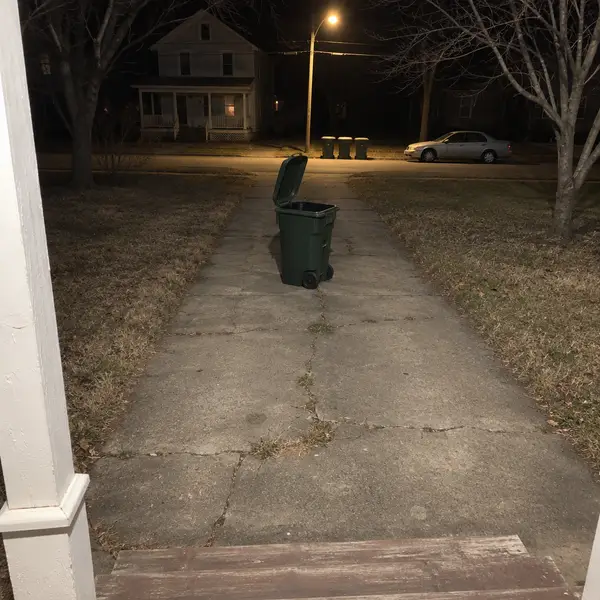
The Daily Health Project — Feel Like You Again
Testing

Feel Like You Again

My COPD breathing test came back "mild," and 12 weeks before my daughter's wedding my lungs feel so full of water I can hear them when I laugh. I'm 57. I never smoked a day in my life. Mild is supposed to be the good news. Mild is supposed to mean you can put it out of your mind and get on with planning a wedding. So why has the same chest infection been sitting in me since April, through every pill they've handed me? And why did nobody ever tell me what that one word was actually measuring? The "mild" part goes back four years. Bad winter. A chest cold that turned into bronchitis and hung on until almost March. I never smoked a day in my life. So when the cough stuck around, I figured it was that cold taking its sweet time. My family doctor sent me to blow into a tube until my face went red. Breathing test. She looked at the printout for maybe ten seconds. "It's COPD," she said. "But it's mild. Your numbers are actually pretty good." Then she handed me a rescue inhaler and said to come back if it got worse. I walked out almost relieved. Mild sounded like something you could ignore. So I ignored it. The morning cough I put down to age. Ten minutes over the bathroom sink every morning, bringing up thick, sticky stuff. The stairs I put down to the extra 15 pounds. Halfway up I'd stop on the landing and pretend to straighten the family pictures until my breath came back. Rick, my husband, would call up from the kitchen. "You okay up there?" "Just old," I'd say. Then in February our daughter called. Jenna. Our only one. She's 29. She was crying so hard I thought somebody had been in a car accident. "He asked, Mom. Marcus asked me." Late summer, a barn two hours north with string lights. And then she said the thing I've thought about every night since. "I'm not doing any of this without you. Not one fitting. Not one tasting. If you're not there, I'm not doing it." I laughed and said where else would I be. In April, a cold went around her office. She brought it to Sunday dinner. She was over it in five days. Mine went down into my chest and wouldn't leave. And nobody could tell me why. Week two, my lungs felt full. Heavy and wet, like a sponge down in there that never gets wrung out. Every breath had a rattle at the bottom of it. Rick could hear it from across the room. Lying flat was the worst. The second my head hit the pillow my chest would fill up and I'd be sitting bolt upright, coughing until I gagged. So I started sleeping propped up. Two pillows. Then three. Then four, plus the foam wedge Rick ordered at midnight without telling me. He didn't say a word about it. But some nights the room went so quiet I knew he was awake beside me. Ears open. Waiting to see if I'd start again. Week three, I was back in my doctor's office. Described the full feeling. The rattle. The four pillows. She listened to my chest. Typed some notes. "Your breathing test was fine," she said. "It's mild. This is a chest infection sitting on top of it. We'll knock it out." Ten days of antibiotics. A refill on the rescue inhaler. Come back if it gets worse. I picked everything up that afternoon. First few days, I felt... something. The feverish ache went away. But the heavy, wet feeling stayed put. Day ten, last pill. Still rattling. Week five. Same rattle. So I asked the internet. Bought the big box of Mucinex. It loosened things up till about lunchtime. By the next morning it was all back like I hadn't done a thing. Found a COPD group on Facebook. Women swearing by mullein tea. I drank a mug at breakfast, lunch and bedtime for three weeks. My throat felt clearer. My chest didn't. Somebody else said pineapple juice and honey. Same thing. The top of it thinned out. Underneath, still that weight. Tried NAC. Stopped after nine days because the heartburn had me up at night on top of the coughing. By the end of May the windowsill over my kitchen sink looked like a health food store. And the wedding kept getting closer. I started dreading mornings. I'd open my eyes at 5 already coughing, and it would be 7 before I could get a sentence out without stopping. When Jenna called about the seating chart, I'd hit mute, cough into a dish towel, unmute and say "sorry, the dog." We haven't had a dog since 2019. And I started lying. Jenna noticed the cough at the cake tasting. Asked if I was getting sick. "Allergies," I said. "Everything's blooming." She noticed again at the florist. "Mom, that sounds really wet." "It's that cold that's going around. Your dad has it too." Rick did not have it. Then came the first dress fitting. The bridal shop is on the second floor, above a jewelry store. Twenty-two steps. I counted them on the way up because counting kept me from stopping in front of her. Jenna came out in the dress. Ivory, long sleeves, about a hundred tiny buttons down the back. I was supposed to be the one crying for the right reasons. Instead I felt it coming up from the bottom of my chest. That tickle that turns into a fit. I said "bathroom" and walked out fast. Stood in that little bathroom with the fan on, coughing into a wad of paper towels until my eyes were streaming and my face was blotchy red. When I came back out, Jenna was standing on the little platform in her dress, staring at the door. "Are you okay?" she asked. "You've been weird for weeks." Her face had gone tight. Like she was scared of the answer. "I'm fine, honey. You look beautiful." That second part was true, anyway. That night I sat on the edge of the bed and did the math. Thirteen weeks until the wedding. Thirteen weeks, and I couldn't stand through a fitting without hiding in a bathroom. So I started planning around it, the way you'd plan around a bad knee. Bought cough drops in bulk and put a bag in every purse I own. Looked up whether the barn had chairs along the walls. Ordered one of those folding cane seats and sat on it in front of the mirror checking whether my dress would cover it. At the time, the best I was hoping for was to last until the vows were done before I had to go sit in the car. And I had a picture in my head I couldn't shake. The toast. Glasses up. Me coughing so hard I can't stop, Rick walking me out past 140 guests while Jenna watches in that dress. Or worse. The mom who wasn't there at all, because a cold the week before put her in the hospital. Every few days somebody in that group posted a family picture with oxygen tubing across their cheeks. I scrolled past fast. Week eight, I went back. Sat on the crinkly paper and told her it never cleared. That my daughter's wedding was 12 weeks out and I couldn't make it up a flight of stairs. She opened my file on the computer. Scrolled. "Your breathing test was fine," she said, sounding about as worn out as I was. "It's mild. Sometimes these take a while." Her eyes never left the screen. Then she typed some more. "Let's do another round of antibiotics. A stronger one, two weeks this time. And I'm adding prednisone for five days. That'll calm everything down." Another round. The same thing as last time, just bigger. Sat in the pharmacy parking lot with the pharmacy bag on my lap and read the label on the antibiotics. "Take until finished, even if you feel better." Even if you feel better. I laughed out loud in the car. By myself. Feeling better was never the problem. The bottle would run out and the mucus would be sitting right there like it never left. And nobody had ever asked why. The prednisone did what it does. I breathed easier for a few days, and I was up all night eating peanut butter out of the jar and snapping at Rick for loading the dishwasher wrong. He just stood there holding a plate. "I'm on your side here," he said. Real quiet. I went in the bathroom, turned the fan on and cried. Sitting on that bathroom floor, I figured out my doctor and I weren't even talking about the same thing. All she could see was a number on a printout from four years ago. Not the wet, heavy thing sitting in my chest. Not a mom trying to make it to her kid's wedding. And honestly the whole system is set up that way. Blow into the tube, get a score, get an inhaler, come back if it gets worse. Fifteen minutes. Nobody's job is to ask why the mucus keeps coming back. I was awake all that night. Not because of the cough, for once. Because I was so fucking angry. Two rounds of antibiotics. A steroid. Weeks of tea and juice and Mucinex. And the only word anybody had for me was mild. Mild my ass. Somewhere past 1:40, propped up on the wedge, I grabbed my iPad off the nightstand. Started searching again. Not the same searches, though. Not "home remedy chest congestion." Not "how to loosen mucus fast." I typed: "why won't a chest infection clear up if my COPD is only mild" Then I landed on a thread in a different COPD group. A woman had asked almost my exact question two years ago. Over 300 comments. Prayers. Pineapple juice. "Ask for a stronger inhaler." Then one from a woman named Darlene. Retired respiratory therapist, her profile said. 31 years in a hospital. Her comment stopped me cold. "Honey, mild only describes your breathing test. That test measures how much air you can push out. It doesn't show the mucus. One bad chest infection can knock out the tiny hairs that sweep your airways clean, and once they're down the mucus stays, gets thick and hardens on the walls. Then the next infection has somewhere to settle. That's why it never clears when the antibiotics run out. The antibiotics go after the germs. Nothing is going after the buildup." I must have read it five times. It doesn't show the mucus. The next infection has somewhere to settle. Nothing is going after the buildup. So that was why none of it worked. The Mucinex was loosening what was on top. Same with the mullein and the pineapple juice. Half a day of easier coughing, and the hardened stuff underneath never moved. The rescue inhaler was opening my airways. It does that, for an afternoon. But it can't do a thing about what's stuck to the walls inside them. And the antibiotics were doing their job exactly. Killing the germs. Then the bottle ran out and the buildup was still sitting there, waiting for the next cold to move in. I kept scrolling through Darlene's replies. Somebody had asked her to explain it like they were five. "Think of an old pipe under your sink," she wrote. "Gunk sticks to the walls and hardens, and the opening gets a little smaller every year. Water still gets through, so it looks fine from the top. That's your breathing test. But it drains slower and slower, and anything you pour down there catches on the gunk." By 2:20 I was still propped there with the iPad on my chest, thinking about that bronchitis four years ago. One bad chest infection. That's all it took. Then every cold since. Every single one went to my chest. And four years of coughing over the sink and calling it age. Nobody had once said the word buildup to me. Mild only ever meant the air was still getting through. Nobody ever said a word about what was stuck to the inside of the pipe. And if the buildup was the real problem, then maybe I wasn't stuck just waiting this out. Maybe 12 weeks was enough time to actually do something. Somebody under Darlene's comment had asked the obvious question. "So what actually goes after the buildup?" Darlene answered. "Keep your inhaler and finish your antibiotics, always. But there's real research on black seed oil for this. You swallow it and it gets to the lungs. It gets those little hairs beating faster again so the old mucus can come up. My sister has been on it two years." Black seed oil. I honestly thought she meant the little black seeds on an everything bagel. So I searched it, fully expecting to find nothing. There was a lot more than I thought. Swallowed, it actually reaches the lungs. In the research it made those tiny hairs beat faster, moving the stuck mucus out, and it cut how much mucus the airways make about as well as a steroid. People taking it had fewer flare-ups. It even fought the germs behind chest infections right alongside the antibiotics, and it worked alongside the inhaler too. That part mattered. I wasn't about to throw out anything my doctor gave me 12 weeks before the wedding. But there was a catch I almost missed. The part that does the work has a big name, thymoquinone, and Darlene had said in another reply to check the label for it. Store-bought oils are all over the place, and most of the cheap ones have 1% or less. Too weak to reach the lungs. So whatever cheap bottle was sitting on the bottom shelf at the grocery store wasn't going to cut it. I needed one that actually matched the research. Back in Darlene's thread, three different people had posted a picture of the same bottle. I found the website. (Here's the link: https://tryavalis.com/products/bso-s-l ) Avalis Ethiopian Black Seed Oil. Pure cold-pressed oil from seeds grown in the Ethiopian highlands, 8,000 feet up. Single origin. 5% thymoquinone, so about five times the cheap stuff. Two softgels before bed give you the same amount they used in the research. Third-party tested. Then I read the reviews. "My COPD is 'mild' and I've had mucus I couldn't bring up for three years. Week three, it finally started coming up." "Every cold used to go to my chest. This winter I had two colds and neither one did." One review got me right in the throat: "Last family wedding, they had to carry me out of dinner and back to the hotel. I almost didn't go to my granddaughter's. This time I stayed all night. I even danced with my son. Slow, but I danced." It was 2:55 in the morning by then. Four pillows. A windowsill full of stuff that hadn't worked. A pharmacy bag on the counter. Twelve weeks until my daughter's wedding. It's going to be one more thing that doesn't work, I thought. But doing nothing with 12 weeks left felt worse. So I ordered it. It came four days later. Black softgels, smaller than I expected. No smell at all. Two before bed, it said. I stood at the bathroom sink and stared at them. Here we go. A few good hours, then the rattle comes back. I swallowed them anyway. I was on day six of that second round of antibiotics, and I kept taking those too. Night one, nothing. Night two, same. Night three, I had a coughing spell around 1 and fell back asleep in maybe ten minutes. Usually I'd be up for an hour. Night five, I took one pillow out. Lay there waiting for my chest to fill up. It didn't. Not the way it had been. By the end of the first week, the 3 AM panic.. that feeling of not getting the next breath in.. was further away. Like it was going on in the next room. Day nine, I swallowed the last antibiotic. This was the part I was dreading. Every other time, this was where the infection calmed down and the mucus stayed. Day thirteen, I woke up and coughed over the sink like always. Except it came up. Easy. Like something down there had finally let go of the walls. Then again the next morning. And the next. Day eighteen, the morning cough took about 3 minutes. I timed it on my phone because I didn't believe it. Day twenty-two, Jenna called about the rehearsal dinner and I talked to her for 25 minutes without hitting mute once. Day twenty-nine, I carried a laundry basket up our stairs. Got to the top. Dumped it on the bed. Then it hit me. I hadn't stopped on the landing. I stood there and laughed. Then I went back down and did it again, just to make sure it wasn't a fluke. Rick was standing at the bottom. "What are you doing?" "Stairs." He stared at me for a second. "You didn't cough." Day thirty-four, I lay down and listened for the rattle. Nothing. Day thirty-eight was the last dress fitting. Twenty-two steps. I went up talking the whole way about whether her grandmother's pearl earrings would work with the neckline. Jenna stood on that little platform for almost an hour while the seamstress pinned the hem. I stood right next to her the whole time, holding the veil, fixing a curl that kept falling out. When the seamstress finally stepped back, Jenna looked at me in the mirror. "Mom. You haven't sat down once." I didn't know what to say, so I fussed with her veil. On the drive home I went back over it. I hadn't looked for a chair when I walked in. Hadn't put cough drops in my pocket. Hadn't once worked out how far it was to the bathroom. I'd just... been there. With her. That week the "are you okay" questions stopped. And when the venue called about a walk-through of the barn and the grounds, I said yes before Jenna could make an excuse for me. About six weeks in, I finally got in with a lung doctor. The referral had been sitting there since the first antibiotics. He listened to my chest front and back. Then he did it a second time. "Your chest sounds clear," he said. "Honestly, from these notes I expected a lot more going on in there. What changed?" I told him everything. The second round. Darlene's comment. The buildup the breathing test doesn't show. The black seed oil. He nodded slowly. "There's research on black seed oil and the airways," he said. "Stay on your inhaler. And don't stop whatever you've been doing." I sat in the car afterward and thought about four years of being told mild. Months of lying to my daughter. When I got home I took the bag of cough drops out of every purse. Folded the cane seat back into its box and shoved it in the hall closet behind the vacuum. I'm 57. I won't be the mom who gets walked out during the toast. I won't spend my daughter's wedding hunting for a chair. And I won't be coughing through her vows. Crying through them, probably. That's allowed. The wedding is five weeks from Saturday. I'll be the one doing her veil. Standing up. These days I'm down to one pillow. Rick sleeps through the night again. And Jenna has her mom there for all of it. Every fitting. Every tasting. Maybe some of this sounds a lot like you. Maybe yours was called mild too. And every cold goes straight to your chest and sits there long after the antibiotics run out. Your doctor says your breathing test is fine, because in a 15-minute visit that number is all anyone has time to look at. And maybe there's something coming. A wedding. A graduation. A new grandbaby. And you're already planning where you'll sit and how close the bathroom is. So let me tell you what I wish somebody had told me. Without Darlene's comment, I'd still be on that wedge with four pillows. Probably on a third round of antibiotics by now, loosening what was on top while the buildup underneath kept growing. But there was a way out nobody had ever mentioned. The buildup was the one thing nobody was going after. Once something went after it, the mucus finally started coming up. Try Avalis Ethiopian Black Seed Oil for 30 days. Keep your inhaler. Keep doing what your doctor tells you. Just pay attention to your mornings, your nights and your stairs. It works out to around $1 a day, less than I was spending on Mucinex and mullein tea. If you're not happy for ANY reason, if the morning cough isn't shrinking, if the stuck mucus isn't coming up, if you're still stopping on the landing, they'll refund every cent. No questions asked. You risk nothing. You've got two roads in front of you right now. One road: Keep waiting it out. Keep riding out every cold with another round, and hope you're well enough on the day. Watch your world get a little smaller every winter. The other road: Go after the buildup the breathing test can't see, the way I did. Give it 30 real days with nothing to lose. Walk in on your own breath. I took the second road. I've got my stairs back. And it means I'll be standing next to my daughter on the day, which is the only thing I really wanted. Which road are you taking? P.S. Back to sleep faster by night three. Down a pillow by night five. The mucus finally coming up after the antibiotics ended, day thirteen. Up my own stairs without stopping, day twenty-nine. Stood through the whole last fitting on day thirty-eight. Yours might go faster or slower. The only way to find out is to try it. P.P.S. Jenna's wedding is five weeks from Saturday. I'll be there. Doing her veil. Right there in the front row through the vows. Not in a bathroom with the fan on. Not getting walked out during the toast. You can be there for yours too. https://tryavalis.com/products/bso-s-l

Loading the ad's image
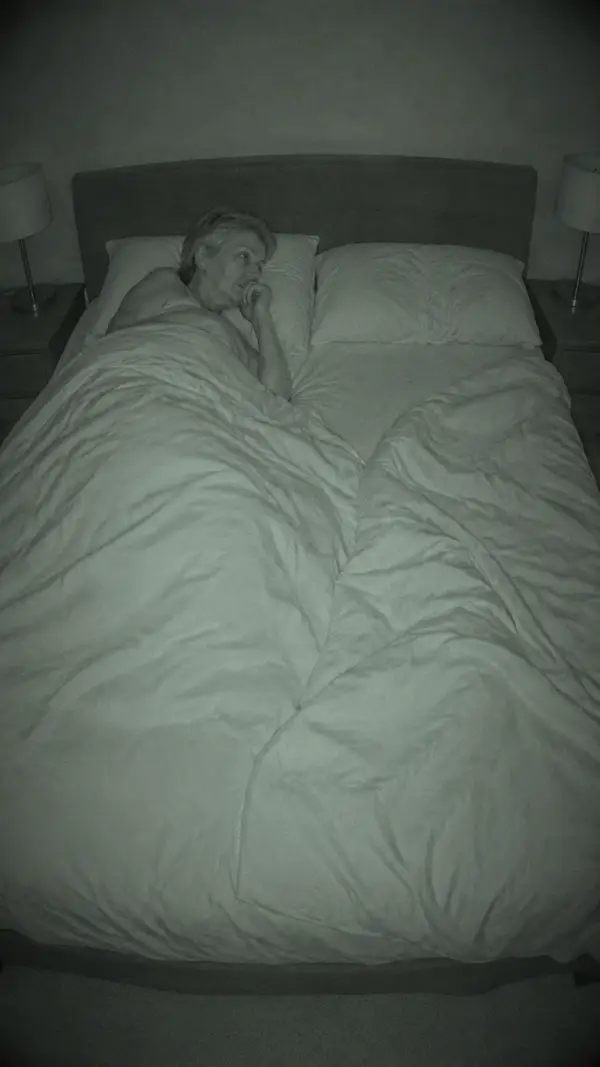
The Daily Health Project — Feel Like You Again
Testing

Other pages from this shop

Avalis Ethiopian Black Seed OilQuiz · 48 adsAvalis Ethiopian Black Seed OilQuiz · 21 ads

Public pages only. Pop-ups are hidden in the picture, never clicked.