Product pagePhotographed Nov 25 at phone size

3-in-1 Compact LED Lantern – Sacred Oak

sacredoak.store/products/3-1-compact-led-lantern
69Ads sending people here
Oct 2026Oldest running ad started
ShopifyPlatform
Nov 2026In Sniped since

Why “Product page”

Read from the page, by rules
Address under /products/Product data on the pageAdd to cart button

Ads sending people here

Search these ads

Her New Husband Brought Me Flashlights. Then The Grid Died.

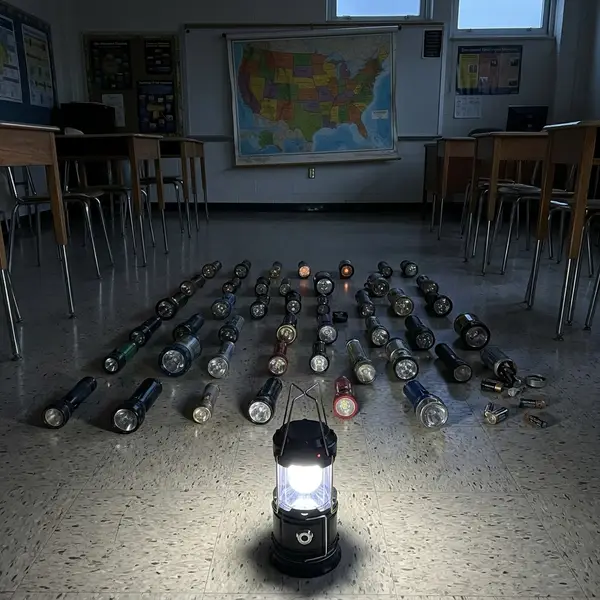
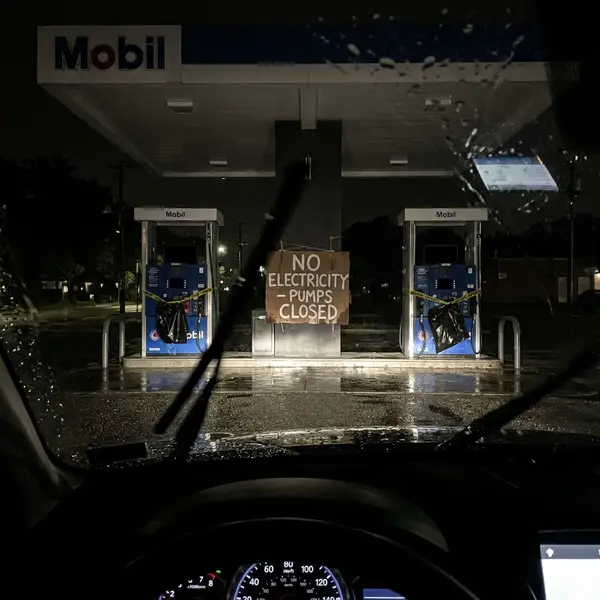
My ex wife brought her new husband into my driveway on my Thanksgiving week with our kids. My holiday. Her idea. "Do not make this weird," she said. I did not make it weird. I made sure my kids remembered exactly whose house never goes dark. Let me go back a bit. I am 54. I have spent twenty eight years working on my feet as a tool and die machinist. When Diane and I got divorced two years ago, she moved into a brand new four bedroom house in the Sycamore Ridge subdivision with her new husband, and I kept our little three bedroom brick ranch on Oak Street. It is not a fancy house. It does not have marble counters or a three car garage. But I built the cedar back deck on that house with my own two hands. I wired the garage shop, hung every solid core door down the hallway, and paid off the mortgage note three months ago. Right inside my back door, screwed into the oak studs beside the coat hooks, hangs a cedar key rack and birdhouse shelf my sixteen year old son Sam and my thirteen year old daughter Lily built with me in my garage shop when Sam was nine. Across the top board, in crooked letters burned with my soldering iron, it says Dad's Workshop. Under our court custody agreement, we alternate Thanksgiving week every year. This year was my turn. Sunday evening at five o'clock all the way through Saturday afternoon. My holiday. The one I had been counting down to on my machine shop calendar since August. I had ordered a twenty pound fresh turkey from Miller's butcher shop, stacked seasoned hickory cordwood for our Wednesday night backyard fire pit, bought the blueberry pancake mix Lily likes for Thursday morning, and got three tickets on the forty yard line for Sam's Friday night regional playoff game. On the Sunday afternoon before Thanksgiving, I was upstairs in Sam's bedroom putting clean flannel sheets on his mattress when Diane shouted up from the front driveway that she had a surprise. I walked down the stairs and looked through the front screen door. The surprise was standing on my front porch steps. Brad. Thirty six years old. Fresh razor fade haircut, spotless tan contractor jacket that had never seen a drop of machine oil, white teeth, an eighty thousand dollar lifted crew cab pickup truck idling in my driveway, and a yellow plastic hardware store tool tote slung over one shoulder as though he had come to inspect a rental unit. Sam and Lily were standing behind him on the front walk with their duffel bags, looking at the concrete. "Brad had to run out to the west side of town anyway, so he rode over with us to drop the kids off," Diane said brightly, stepping onto my porch without waiting to be invited. "I knew you would not mind. With the severe ice storm warnings on the news for Wednesday and Thursday, Brad brought his voltage tester to check your garage breaker panel and leave you two of his flashlights." She set two big plastic hardware store flashlights down on my porch railing. "And if the power grid goes down this week," Diane added smoothly, "we are bringing Sam and Lily straight back to our house in Sycamore Ridge, because Brad just put a twenty four hundred dollar commercial gas generator in our garage." He can check MY breaker panel and leave ME flashlights for MY holiday week. Our custody Thanksgiving week. In the house where I taught Sam how to read a steel micrometer and taught Lily how to ride a bicycle without training wheels. And she brought him onto my front porch in front of both of my children. I looked straight at Diane. "Diane," I said quietly, "this is my Thanksgiving week with Sam and Lily. And I built the electrical panel in that garage myself." "Mark, come on," Diane said, letting out a little sigh in front of the kids. "He is just trying to help out. Do not make this weird." Then she shifted into that voice. The one that sounds like motherly concern in front of the teenagers and lands like a verdict. "Mark, I am going to be honest with you because the kids' safety comes first," Diane said, folding her arms across her coat. "Do you remember the windstorm back in March when you had Sam and Lily for the weekend? And the October squall last month?" "What about March?" I asked. "In March, when the transformer blew on Oak Street, your heavy metal flashlight in the kitchen drawer died in fifteen minutes and leaked white battery acid all over your counter," Diane said clearly enough for Sam and Lily to hear every word on the walk. "Your rechargeable garage work lamp was sitting at zero percent because you forgot to check it, and Sam's cell phone dropped to three percent before you had to drive both kids back to our house at ten o'clock at night so they could do their schoolwork." She had dates. She had details. She had been keeping score on every outage on my street for two years. "Every house on Oak Street lost power in March, Diane," I said. "And batteries go bad in the drawer." "They do not go bad when somebody stays on top of the house, Mark," she said, softening her tone the way you talk to an old dog that cannot climb the porch steps anymore. "You are 54 now. You work ten hour shifts on your feet at the machine shop, and you live here by yourself. Things slip when you get tired. You forget to test the battery drawer. You forget to keep the garage lamps charged. With the news talking about multi day winter blackouts across the county this week, we are not having Sam and Lily sit in a cold dark house eating cold food." Brad smiled at me. That smile. The one thirty six year old men with eighty thousand dollar trucks give fifty four year old divorced fathers when they think they have already won your family. "It is really good of you to be alright with this, Mark," Brad said, tapping the two plastic flashlights he had left on my railing like he was leaving a twenty dollar tip for the lawn guy. "Diane talks about how hard you work down at the shop all the time. If the lines come down Wednesday night, do not try to tough it out in the dark. Just text me and I will bring the four wheel drive over and pick the kids up." I am sure she does. Sixteen year old Sam shifted his duffel bag on his shoulder and stared down at his sneakers so he would not have to watch his father take that on his own front porch. "Kids, bring your bags inside," I said evenly. "See you Saturday afternoon, Diane." After Brad's eighty thousand dollar truck backed out of my driveway and Sam and Lily went down the hall to unpack their clothes, I walked into my laundry room and stood in front of the utility shelf for ten minutes without moving. Two cheap plastic flashlights Brad had left on my porch sitting next to the washer. My own utility drawer pulled open beside the sink, full of four heavy black metal flashlights I hardly trusted anymore. Too dim. Corroded around the tail cap. Dead within twenty minutes. And my big yellow rechargeable work lamp plugged into the garage wall, which went stone cold dark ten minutes after you unplugged it. The things a fifty four year old father looks at when his ex wife brings a thirty six year old man onto his porch to tell his children their dad cannot keep the house running. And then I got angry. Not the loud kind. The quiet kind, where something clicks behind your eyes and you think clearly for the first time in two years. I picked up my phone and called my older sister Sandra. Sandra has been an emergency room charge nurse and triage coordinator at County General for twenty two years. She has worked through four ice storms, two tornadoes, and enough stories about ex wives and second husbands behaving badly to fill an encyclopedia. And her husband is Chief Miller. Chief Miller is 76. He spent twenty years in the United States military as a base power grid engineer keeping forward operating bases and field hospitals running through total grid blackouts before retiring to run our county emergency operations supply bay. I put the phone on speaker at my workbench in the garage and told Sandra and Chief Miller the whole lot. The eighty thousand dollar truck in my driveway. The voltage tester. The two plastic flashlights left on my railing. "He is just trying to help out. Do not make this weird." Sandra was dead quiet on the line for five full seconds. "She brought her thirty six year old husband onto your porch to leave you flashlights on YOUR Thanksgiving week with your kids?" Sandra asked. "Yes." Sandra laughed once. It was not a kind laugh. "Right, here is what happens, little brother," Sandra said. "Diane and that boy in the clean contractor jacket have built a whole story about you, and they are performing it right in front of Sam and Lily. Fifty four and working in a machine shop means outdated. One corroded flashlight in March means Dad is slipping and cannot protect us when a storm hits. When that ice storm blows the substation on Wednesday night, you are going to walk into your kitchen looking like the calmest, most capable father in this county. And little Brad with his voltage tester and his new truck is going to work out very quickly that he is not the main character in your kids' lives." "Sandra, every flashlight I buy at the hardware store rots in the drawer before the next storm even gets here," I said. Then Chief Miller's deep voice came over the speakerphone. "That is because you keep buying flashlights made to sit in a hardware store blister pack, Mark, not to survive a blackout," Chief Miller said. "Tell me again what Brad bragged about putting in his garage over in Sycamore Ridge." "A two thousand four hundred dollar commercial gas generator and half a dozen heavy duty warehouse flashlights," I said. Chief Miller chuckled softly. "Good," Chief Miller said. "Because when that freezing rain hits the transmission lines on Wednesday afternoon, Brad's house over in Sycamore Ridge is going to be cold, dark, and smelling like raw gasoline before eight o'clock at night." "How do you know that, Chief?" "Because three weeks ago," Chief Miller said, "a civics teacher from Sam's high school brought thirty eight juniors out to my county emergency supply bay. One of the fathers came along as a chaperone, a cocky young guy in a brand new pickup truck just like Brad, and he brought a duffel bag of emergency gear from his garage to show the kids. He pulled out a heavy aluminum flashlight and a giant brick of alkaline batteries and reached for my display table. I caught his wrist before it got there and told him three words. Not past Tuesday." Chief Miller paused for a beat. "Mark, Diane stood on your porch today and told your kids you were letting things slip because your metal flashlight leaked white acid in March and your rechargeable garage lamp was at zero percent," Chief Miller said. "Let me tell you what actually happened in your drawer. Standard alkaline batteries are filled with corrosive potassium hydroxide paste. When they sit in a dark kitchen drawer through summer humidity, the inner seal swells up, bleeds its charge, and pushes white acid crystals straight out across the springs. And when you do get a heavy flashlight to turn on, it eats fresh batteries in two to four hours flat. As for your yellow rechargeable garage lamp? Cheap hardware store lithium and lead acid lamps have a parasitic circuit drain in the switch that bleeds eighty percent of the battery into thin air within sixty days. That was not you getting old or tired after a ten hour shift, Mark. That is cheap battery chemistry." I let out a breath I did not realize I had been holding since five o'clock. "To prove it to those thirty eight high school kids," Chief Miller continued, "I gave them a weekend homework assignment that Friday night. I told every kid to go home, open their parents' kitchen drawer or garage shelf, pull out the primary emergency flashlight their father was counting on for a winter storm, turn all thirty eight of them on across the school gym floor at eight o'clock Friday night, and leave them until Monday morning." "What happened on Monday?" "Thirty four out of thirty eight were stone cold dead on the hardwood," Chief Miller said. "Eleven of them leaked white battery acid onto the floor without ever turning on once. Every plug in rechargeable work lamp was sitting at zero percent because the moment the substation blows, wall outlets are dead iron. And when the Pentagon and federal energy officials warn families to prepare for a ninety day grid collapse from aging transformer failures, they are talking about zero resupply." "What about Brad's two thousand four hundred dollar gas generator?" I asked. "A portable gas generator drinks two red five gallon gas cans dry in forty eight hours," Chief Miller said. "And nine out of ten guys in those new subdivisions leave untreated summer ethanol gas sitting in the carburetor bowl until the first November freeze. The ethanol separates, gums up the needle jet, floods the cylinder, and sets off the carbon monoxide detector inside the mudroom within an hour. And when Brad jumps in his eighty thousand dollar truck to drive down to the highway gas station for fresh fuel, he is going to find out that underground gas station pumps run on three phase municipal electricity too. When the grid is down, not a single drop of gas comes out of the ground." He let that sink in. "Mainland Americans buy four hours of battery life for a ninety day blackout," Chief Miller said. "Batteries are for tourists, Mark. And you never fight a blackout with something that runs out." "Then what do I put in my house before Wednesday?" I asked. "You put in what every seventy year old grandmother in Fajardo, Puerto Rico used after Hurricane Maria knocked out the island power grid for five straight months," Chief Miller said. "When my military engineering unit went house to house in Fajardo, the big houses with three thousand dollar gas generators were pitch black by Day Four. The houses still glowing warm and bright on Day Ninety belonged to grandmothers who kept three soup can sized matte black cylinders sitting on their kitchen windowsill behind the dish soap." "Sandra has three of them sitting on our kitchen windowsill right now, and half the nurses in her ER carry one in their car," Chief Miller said. "It is called the 3 in 1 Collapsible Solar LED Lantern. Now listen carefully, Mark, because if you buy a solar lantern at a big box store, you will get burned." "Why is that?" "Because nine out of ten solar camping lanterns use a tiny green decorative polycrystalline strip glued to the top cap," Chief Miller explained. "Polycrystalline glass needs blazing desert sunlight just to trickle charge, and behind a double pane house window in November it captures less than four percent of indoor window light. It dies in twenty minutes. The 3 in 1 Collapsible Solar LED Lantern is built with a high density flush monocrystalline solar panel bonded directly into the top casing. Monocrystalline silicon reads and absorbs up to ninety percent of ambient daylight straight through a double pane kitchen window, even on a grey, overcast November day. Twenty two times more charge. It tops itself back up to one hundred percent every single morning while sitting behind your dish soap." "And how long does it run at night?" I asked. "Twenty five hours straight on a single charge," Chief Miller said. "There is no button to fumble with in the dark. You grab the two stainless steel handles and pull the cylinder open, and 360 degrees of bright, warm white LED light floods a twenty foot room from corner to corner. It has a focused spotlight on the bottom if you need a beam out by the woodpile, folds down to the size of a soup can, and has a built in USB power bank port on the side so your phone and Sam's and Lily's phones stay at one hundred percent even if the county grid is dead for ninety days." "Trust us, Mark," Sandra jumped back in on the line. "Order two sets of their Buy 2, Get 1 Free blackout deal tonight. Put three on your kitchen windowsill and keep the extra box of three in your hall closet. It is backed by a 30 Day Money Back Guarantee, and our hospital staff has been buying them out before the Wednesday storm hits." I ordered two sets of the Buy 2, Get 1 Free deal that night from my workbench without blinking. Six lanterns total. By Tuesday morning at ten o'clock, the shipping box was sitting on my front porch. The universe occasionally cooperates. While Sam and Lily were at school Tuesday morning, I walked into my laundry room and did Chief Miller's Friday night test. I took my four old metal flashlights out of the drawer, unplugged my big yellow rechargeable garage work lamp, and brought in the two plastic flashlights Brad had left on my porch railing. I lined all seven of them up on the laundry room tile and switched them on. Two of my metal flashlights never even blinked. When I unscrewed the caps, the alkaline batteries were fused together with crusty white acid. My yellow garage work lamp died in eleven minutes flat. Within two hours, the remaining two metal flashlights were stone cold dead, and Brad's two plastic hardware store flashlights had faded to a pathetic orange dot that could not light a shoebox. I swept my four old metal flashlights and the dead garage lamp into a heavy trash bag and dropped them into the alley bin. Then I clicked Brad's two cheap plastic flashlights off, wiped them clean, and placed them neatly in a brown paper grocery sack beside my front door to hand back to him. Then I carried the first box of 3 in 1 Collapsible Solar LED Lanterns into my dark hallway and pulled the stainless steel handles up on the first cylinder. For half a second, nothing. Then 360 degrees of pure, daylight bright warm white light came up across the entire hallway, living room, and kitchen. Not yellow. Not flickering. Not the weak orange tunnel I had spent years shaking a metal tube to get. It lit my house the way a house is supposed to be lit. I smiled at my reflection in the hallway mirror. I did not look like a man whose ex wife needed to bring her thirty six year old husband over to check his breaker panel. I looked like a father who did not need help keeping his house running. I set three of the compact matte black cylinders in a neat row on the sunny windowsill above my kitchen sink, right behind the bottle of green dish soap, and put the second unopened box of three on the top shelf of the hall closet. When Sam and Lily walked in the back door after school at three thirty and hung their coats under the cedar Dad's Workshop sign, Sam spotted the three matte black cylinders sitting on the kitchen windowsill. He picked one up, turned it over in his hands, and pulled the steel handles open. The bright white glow washed right across the kitchen counters even with the afternoon sun outside. "Whoa," Sam said. "Dad, what kind of batteries are in this thing?" "It does not use disposable batteries, Sam," I said, pouring him a glass of milk. "Look at the top cap. That is a flush monocrystalline solar panel. It drinks the daylight straight through the kitchen window and runs for twenty five hours. And see that USB port on the side? If the ice storm takes the grid out tomorrow night, you and Lily can plug your phones right into the lantern." Sam looked at the flush black panel on top, then looked over toward the front door where Brad had stood on Sunday afternoon. A slow grin spread across my sixteen year old son's face. "So we do not have to go back to Mom and Brad's house if the power goes out," Sam said. "We are not going anywhere, bud," I said. "This is our Thanksgiving week." Wednesday morning. Day four of our week. Before the freezing rain moved in, I took Sam and Lily down to the local hardware store at eleven o'clock to pick up a bundle of fatwood kindling for our fireplace and a bag of birdseed. When we walked up to the front registers, Brad and Diane were standing at the service counter. Brad was arguing with the teenage clerk because they were sold out of thirty amp generator twist lock adapters, and Diane was crouched beside a shopping cart holding four plastic bricks of D batteries and two more cheap plastic camping lanterns because she could not remember which size batteries Brad's garage flashlights took. I walked right past the pair of them with a six dollar bundle of cedar kindling under my arm. Diane looked up and saw us. "Mark," she said, glancing down at my hands. "Are you not buying batteries or gas cans? The weather channel says the ice storm is going to knock the lines down by suppertime." "I am all set, Diane," I said. Brad looked at my bundle of kindling, then looked at Sam and Lily. "You sure you do not want to grab a couple packs of D cells, Mark?" Brad asked, with that little half smile again. "Those two flashlights I left on your porch go through batteries pretty quick if the grid stays down all night." "I put your two flashlights in a paper bag by the front door for you, Brad," I said pleasantly. "Sam can run them out to your truck on Saturday." Brad frowned as though I had answered the wrong question. Sam pulled out his phone and showed his mother a picture he had taken of the three compact matte black cylinders sitting on our kitchen windowsill behind the dish soap. "Dad got military spec solar lanterns from Uncle Chief Miller," Sam said proudly. "They charge right through the kitchen window glass without any batteries." Brad leaned in, squinted at Sam's screen, and scoffed slightly. "Aren't you worried about solar lights going dead inside a house on a cloudy day?" Brad asked me. "Not really," I said. We were through the register and sitting at the diner counter eating cheeseburgers and shakes before Brad had finished repacking his battery bricks at the service desk. Diane texted me twenty minutes later: "Where did you guys go?? Brad found two extra packs of AA batteries if you still need them." I texted back: "At the diner. We are good." Wednesday afternoon. Thanksgiving Eve. The freezing rain started hitting Oak Street at three o'clock. By five fifteen, the maple branches outside my living room window and the high voltage lines feeding both my neighborhood and Sycamore Ridge were encased in a solid inch of black ice. At 5:42 PM, the main transmission substation on the highway blew three times in a row. The sky flashed blue white behind the trees, the furnace fan spun down, and every house on Oak Street went pitch black. Sam and Lily looked at me from the living room couch. I did not hurry. I did not open a single drawer. I walked over to the kitchen sink, picked up the three matte black cylinders from behind the dish soap, and pulled the stainless steel handles up. One on the kitchen counter. One on the living room coffee table. One on the hallway bookshelf. In less than ten seconds, our entire house was flooded with warm, steady, 360 degree white light from corner to corner. Sam and Lily plugged their cell phone cords straight into the built in USB ports on the sides of the kitchen and coffee table lanterns, and both screens lit up at 100 percent charging. I lit the seasoned hickory logs in our brick fireplace, turned the gas oven on to bake our homemade pepperoni pizzas, and within twenty minutes the thermometer on the dining room wall was sitting at a cozy seventy two degrees. At 6:15 PM, Sam's phone buzzed on the coffee table. It was a text from Diane in the family chat: "Power just went out over here in Sycamore Ridge too. Brad is heading out to the garage to start the twenty four hundred dollar commercial generator now. Let me know when it gets dark and cold over there and Brad will come get you guys." Sam did not even ask me. He snapped a quick photo of Lily sitting by the roaring fireplace doing a crossword puzzle in a room lit up like noon day with hot pizza on the plate, and sent it back with the caption: "72 degrees in here and Dad's lanterns have the whole house lit up." Diane's typing bubbles appeared, stopped, appeared again, and disappeared. At 7:10 PM, Lily's phone chimed. It was Diane again: "Brad is having trouble getting the generator to stay running in the sleet. He says the summer gas gummed up the carburetor valve and the garage smells like gasoline." At 7:55 PM, Sam's phone rang. Diane had called him by mistake while her phone was in her coat pocket by the garage door, and before she hung up, all three of us heard Brad and Diane through the speaker: "Brad, why is that light flickering orange already? You just put those batteries in an hour ago." "It is fine, Diane, the cold drains them." "Fine is not an answer when it is fifty two degrees in this kitchen and the carbon monoxide alarm is chirping by the door." "Diane, I said I am working on the choke valve." "Mark's living room looked brighter than daylight in the picture Sam sent." Dead silence on their end before the line clicked off. Sam and Lily looked at each other across the coffee table and tried not to laugh out loud. I picked up another slice of pizza and turned the page of my magazine. At 8:20 PM, my cell phone rang. It was Diane. Her voice was completely stripped of the breezy confidence she had carried onto my porch on Sunday afternoon. "Mark?" she said over the sound of sleet pelting a windshield. "Brad's generator flooded completely and locked up, the gas stations on the highway have no electricity to run the pumps, four of our flashlights died or leaked in the box, and the carbon monoxide detector went off in the hallway so we had to open the garage. Our house is down to forty nine degrees and we have Sam's extra varsity jacket and asthma inhaler here anyway. Can we drive over there just until the utility crew gets our street back on?" I looked at Sam and Lily sitting warm and bright on the couch. "The back driveway is salted and the door is unlocked, Diane," I said calmly. "Come on over." At 8:45 PM, the headlights of Brad's eighty thousand dollar pickup truck turned into my driveway. When I opened the front door, Brad walked up the icy steps first. His spotless tan contractor jacket had a big dark stain of unburned gasoline down the front zipper and grease smudges across both cuffs from tearing into a frozen carburetor in the sleet. Under his arm he was carrying three dead heavy metal flashlights, and Diane was right behind him wrapped in a wool blanket, holding her dead cell phone in her gloved hand. They stepped into my seventy two degree living room and stopped dead on the doormat. Every corner of the living room, the kitchen, and the hallway was glowing with clear, warm, 360 degree white light from the three compact matte black cylinders. Brad stared up at the ceiling light fixture, then looked at the wall switch, then looked at me. "Your street got power back already?" Brad asked. "Nope," sixteen year old Sam said from the couch, where his phone was plugged into the side USB port of the coffee table lantern at one hundred percent. "The whole town is still blacked out. That is just Dad's three solar lanterns." Brad walked slowly over to the coffee table and stared down at the soup can sized matte black cylinder flooding the whole twenty foot room with light. "That little thing is running the whole room?" Brad asked. "Twenty five hours on a charge," I said, hanging Diane's wet coat on the rack. "And if you two need to charge your dead phones, there is an open USB port on the side of the kitchen counter lantern and another one on the hallway lantern." Diane walked into the kitchen, plugged her dead phone into the side of the matte black cylinder beside the dish soap, and watched the charging screen come to life immediately. She stood there warming her hands by the stove and looked around my kitchen, properly looked at it, for the first time in years. At 9:15 PM, while I was pouring hot coffee into four mugs, heavy boots stomped the sleet off on my front porch and knocked twice on the door. When I opened it, Captain Dan Brooks from the volunteer fire department and his young lieutenant were standing on the porch in their yellow turnout coats and helmets, doing door to door welfare checks down Oak Street. Captain Brooks looked past me into the warm, brightly lit living room, saw the matte black cylinder glowing on the coffee table and the one on the kitchen counter, and broke into a wide grin. "Evening, Mark," Captain Brooks said, tipping his helmet back. "I see Chief Miller and your sister Sandra put you onto the 3 in 1 flush panel solar lanterns." "They did, Captain," I said. "Put them on my windowsill behind the dish soap on Tuesday morning." Captain Brooks looked past me at Brad standing by the fireplace in his gas stained contractor jacket. "You folks picked the right house to ride out this ice storm," Captain Brooks said loud enough for everyone in the room to hear. "We just came over from the Sycamore Ridge subdivision. Half the guys over there have two thousand four hundred dollar gas generators sitting dead in their driveways with gummed up carburetors and carbon monoxide alarms going off in the mudrooms, and the rest are sitting in forty eight degree houses because their hardware store flashlights rotted in the drawer. Meanwhile Mark has this place lit up like a five star hotel." The young lieutenant on the porch steps leaned in and pointed at the lantern on the hallway shelf. "Sorry, I have to ask, Mark, is that the collapsible solar lantern with the flush monocrystalline top panel?" the lieutenant asked. "My mom and my wife over at County General have been going on about that lantern for two weeks. They ordered the Buy 2, Get 1 Free deal before the freeze and said it charges right through a double pane window without a single battery." "That is the one," I said. "Smartest setup in the county," Captain Brooks said, tapping the doorframe. "You clearly do not need a thing from us tonight, Mark. Enjoy your Thanksgiving with your kids." When I closed the front door, the living room was completely quiet except for the crackle of the hickory logs in the fireplace. Brad looked at the door where the fire captain had just stood. Then at the glowing matte black cylinder on the coffee table. Then over at the brown paper grocery bag beside the door where his two cheap plastic flashlights were sitting. Diane sat down at the kitchen table and wrapped both hands around her coffee mug without looking up. The county grid did not come back on that night. It stayed down all through Thursday afternoon. Diane took the spare guest room at the end of the hall, and Brad slept on the living room sofa. At seven o'clock on Thursday morning, Thanksgiving Day, while everyone else was still asleep, I walked through the house, pushed the stainless steel handles down on the three lanterns, and set them back in a neat row on the sunny kitchen windowsill behind the dish soap so the morning sun reflecting off the ice outside could top them right back up to one hundred percent. At eight thirty, I was standing out on my covered back deck by myself with a mug of black coffee, checking the hickory smoke on the twenty pound turkey in my outdoor smoker. The back door clicked open behind me. Brad stepped out onto the deck in his sweater. No Diane. No Sam and Lily. No audience. Just the two of us and the sound of ice dripping off the cedar roof. He walked over and stood beside me at the deck railing, looking in through the double pane kitchen window at the three matte black cylinders sitting behind the dish soap. "Mark, can I ask you something?" Brad said quietly. "Sure." He looked down at his hands on the cedar rail. He still had black carburetor grease around his thumbnails from the night before. "Those lanterns on your windowsill," he said. "Where did you get them?" There it was. The thirty six year old man who had walked onto my front porch on Sunday afternoon with a voltage tester and two cheap flashlights to show my kids he was taking over was asking me where I got my gear. "They are called the 3 in 1 Collapsible Solar LED Lantern," I said, taking a sip of coffee. "Do they really charge all the way back up through a kitchen window like that in the winter?" "Ninety percent high density flush monocrystalline panel bonded into the top cap," I said. "Not the cheap four percent green strip they put on hardware store lanterns. Runs twenty five hours a charge and keeps the kids' phones at one hundred percent." "Diane told me you always used to forget to check the flashlight drawer and let the batteries rot," Brad said quietly. "Diane says a lot of things about me that stopped being true years ago," I said. Brad went quiet for a long moment. Then he said, "I did not know she had not asked you before she brought me onto your porch on Sunday afternoon." "Maybe not," I said, looking him straight in the eye. "But you knew it was my Thanksgiving week with my kids before you got out of the truck with those two flashlights." He did not answer. He could not even hold my gaze. I turned around, walked inside to the hall closet, took down the second unopened box of three lanterns I had ordered on Sunday night, walked back out to the deck door, and set it on the table beside him. "Put those three on your kitchen windowsill behind your dish soap over in Sycamore Ridge," I said. "You do not have to remember to plug them in, and they do not take gas or batteries. That way the next time the grid goes down on Diane's week with Sam and Lily, I do not have to worry about my kids sitting in a forty nine degree house in the dark." I walked back inside to make Lily's blueberry pancakes and left him standing on the deck. When the utility crews finally got the Sycamore Ridge substation repaired on Thursday evening and Diane was loading her coat into Brad's truck in my driveway, she stopped by the front fender while Sam and Lily were inside by the fire. She looked at the house, then at me. "Mark," she said softly. "I messed up on Sunday. I should never have said those things in front of Sam and Lily." "I know," I said. "You kept all five of us warm and fed for two days when our whole street froze out," she said, looking back at the glowing kitchen window. "Sam has not stopped talking about how you had the whole house ready." "Have a safe drive home, Diane," I said. "I will bring the kids back Saturday afternoon at five, just like the paper says." Half an hour after they pulled out of the driveway, my phone buzzed with a text from Brad's number. "Mark, thanks again for the box. Is that Buy 2, Get 1 Free deal still running on their site? My dad lives out in the country and I want to order a set for his house." "It was when I ordered," I texted back. That night after Sam and Lily went to bed, I called my sister Sandra and Chief Miller from the kitchen table, because they had earned the whole story. I told them about running into Brad and Diane at the hardware store counter on Wednesday morning. I told them about the photo Sam texted his mother when the substation blew. I told them about the accidental pocket dial from their freezing garage. I told them about Captain Dan Brooks and his lieutenant praising our lanterns at the front door in front of Brad, and I told them about thirty six year old Brad standing on my back deck Thursday morning asking me where my lanterns came from. Sandra was quiet for two seconds on the phone. "What did you tell him?" she asked. "I gave him the extra box of three from the closet so Sam and Lily have light at their house too," I said. "You are a better man than he deserves, little brother," Sandra said. Here is what I learned this Thanksgiving. My ex wife brought her thirty six year old husband onto my porch on my holiday week with our kids, set two cheap flashlights on my railing, bragged about his twenty four hundred dollar generator, and told me not to make it weird. I did not. He arrived in an eighty thousand dollar pickup truck with a spotless contractor jacket, a voltage tester, and the confidence of a younger man who thought money and a new house made a father replaceable. I met the storm with three soup can sized solar lanterns sitting on my kitchen windowsill behind the dish soap. Those lanterns did not build the cedar Dad's Workshop rack by my back door or teach my kids who their father is. They just made the truth impossible to miss. For me. For my kids. For her. And for him. If someone in your family has ever talked down to you in your own driveway or acted like you cannot keep your house running when things get hard. If you are tired of opening the kitchen drawer during a storm only to find heavy flashlights with rotted alkaline batteries and white acid crust on the springs. If you never want to stand in freezing sleet yanking on a flooded generator cord while every gas station pump on the highway sits dead without electricity. You need three of these on your windowsill. Not because a lantern can fix how somebody else acts. But because standing in a seventy two degree living room lit up like noon day with your kids' phones at 100 percent, while the people who looked down on you walk up your steps carrying three dead flashlights in the freezing rain? That is not about proving a point. That is about being the rock of your house when the lights go out. Three compact matte black cylinders on the windowsill. One high density flush monocrystalline solar panel on top that captures ninety percent of cloudy daylight right through a double pane window. Twenty five hours of warm 360 degree room light per charge. Built in USB phone charger on the side. Zero batteries to buy. Zero gas cans to haul. Sandra and Chief Miller keep three on their windowsill. Captain Dan Brooks and the hospital nurses ordered theirs by the case. Brad just ordered a set for his father. And my kids already asked if we can do Christmas week at my house too. Right now they are running the Buy 2, Get 1 Free Blackout Deal on their official page, backed by a full 30 Day Money Back Guarantee. Put them on your windowsill, test them in your darkest room, and if they do not outperform every flashlight in your drawer, you get every penny back with no questions asked. Just make sure you order from the official page below so you get the real 3 in 1 Collapsible Solar LED Lantern with the ninety percent flush monocrystalline panel before this winter batch goes on four to six week backorder. Tap Learn More below to claim the Buy 2, Get 1 Free Blackout Deal with a 30 Day Money Back Guarantee while this batch is still in stock.

Loading the ad's image
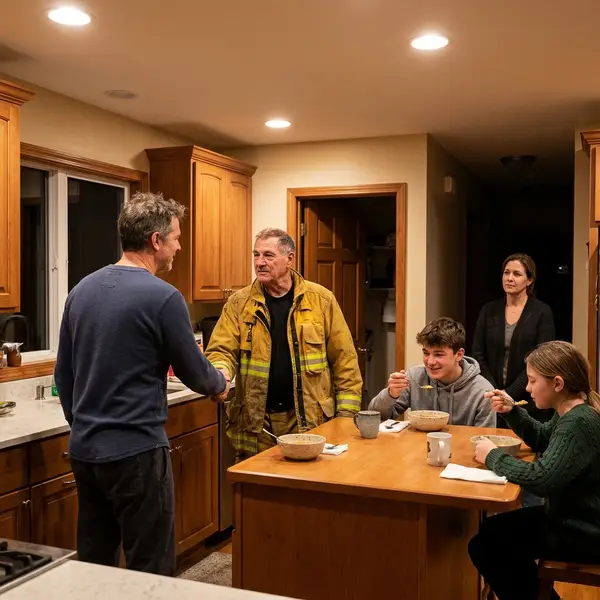
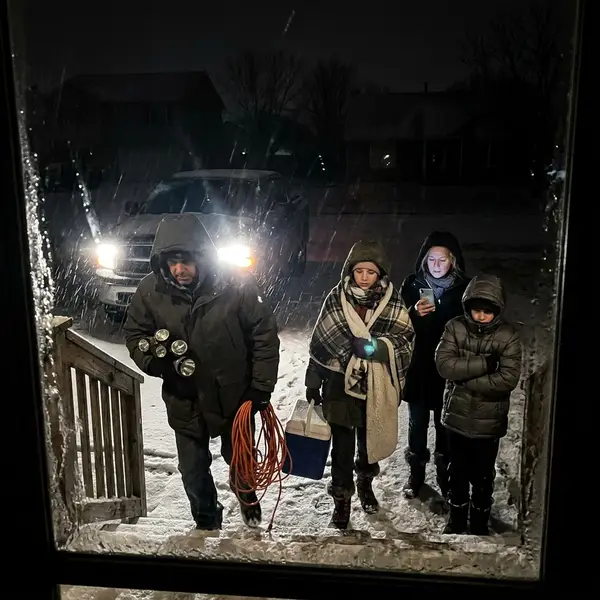
Michael L — Her New Husband Brought Me Flashlights. Then The Grid Died.
PromisingImage

My Son In Law Called Me a Liability in a Storm. Then the Grid Died for Four Days.

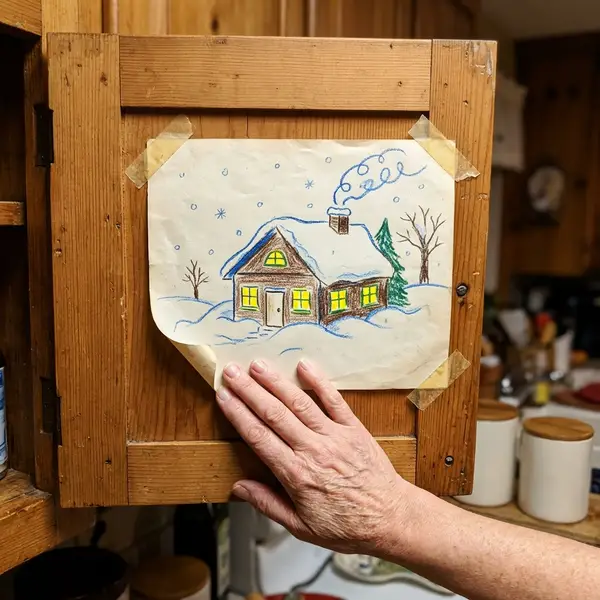
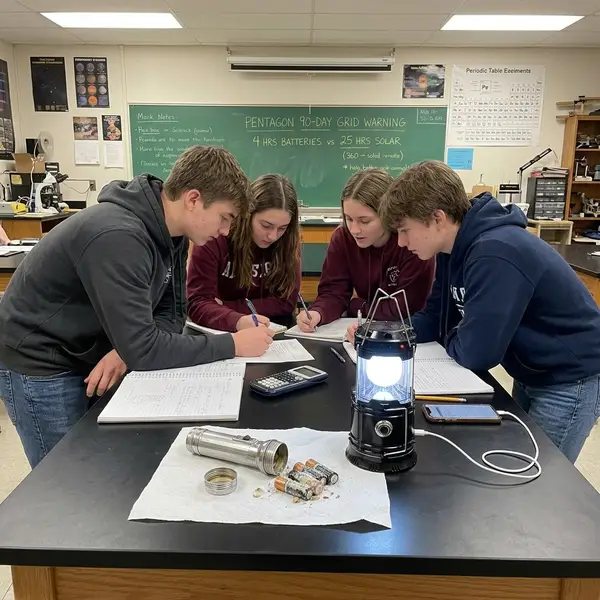
Three months after I retired, I was invited to a family dinner only to find out my son in law told my grandson they couldn't have Thanksgiving at my house anymore. "Grandpa's slipping now that he's out there alone. If a winter storm knocks the power out, he's a liability. You have to understand." I smiled. I understand. My grandson Jake turned eighteen in October. When Jake was six years old, he drew a crayon picture of my house on the county road during Thanksgiving snow. Big yellow windows. Smoke coming out of the chimney. All of us around the table. He wrote "Grandpa's House Forever" across the top in crooked green letters and taped it to the inside of my pantry door. He is a senior in high school now, six foot one, heading off to state college next fall. That drawing is still taped inside my pantry door, corners curled, right above the coffee canister. So when October came around, I didn't have to think about Thanksgiving week. I called him and said, "This year we are doing the whole week out here. Wednesday through Sunday. I already reserved the twenty two pound heritage turkey at Miller's Farm." He cheered so loud I had to hold the phone away from my ear. My daughter Megan and my son in law Kevin offered to coordinate the side dishes and the driving schedule. I let them. One phone call later, Kevin was in charge of everything. I would learn what that meant soon enough. Two weeks later was Jake's senior night football game. I was in the second row on the fifty yard line. I have been in the second row his whole life. After the game, we were standing outside the stadium fence under the lights. Jake had his arm around my shoulder in his jersey, showing me the photos on his phone. A text popped up at the top of his screen. From "Dad." The preview read: "Don't tell Grandpa yet, bud. But we're moving Thanksgiving to our house. He's gotten pretty forgetful since retiring and living out there alone. With the ice storm warnings next week, we can't deal with that liability if the power goes out." Jake grabbed the phone. But it was too late. He looked at me. His face went red under the stadium lights. "Grandpa. He didn't mean it like that." I looked at this boy I had held the day he was born. And I watched him try to protect his father and me at the exact same time. "Let's talk about it later," I said. Liability. I am 67. I raised two kids after my wife Helen passed. I taught high school shop and drafting for thirty four years and ran that house on three acres by myself. Every roof leak. Every well pump. Every winter freeze. Every holiday for three decades, planned and cooked and cleaned up by me. If something needed to be handled in our family, I was the one who handled it. Nobody ever called that a liability. They called it "Dad's got it." But I said none of that. Because whatever was going on, I wasn't going to have it out in a high school parking lot. I found out the next Saturday. Kevin and Megan invited me to dinner at their house in the subdivision. "Just family," Megan said. "Nothing fancy." I showed up at six. The good china was out. Candles lit. My daughter Megan was already seated. Kevin sat at the head of the table. Jake and his fifteen year old sister Emma were there too. Everyone was exchanging looks when I walked in. The kind where everyone in the room knows something you don't. Jake wouldn't meet my eyes. After dinner, Kevin cleared his throat. "Arthur, we need to talk about Thanksgiving week." My stomach dropped. "We have all been talking, and with the winter grid warnings on the news, we think it would be much safer if we hosted Thanksgiving here at our house, and you packed a bag and stayed in our downstairs guest room until the December freezes pass." I looked around the table. Megan was studying her fork. Emma was picking at her napkin. Jake opened his mouth. Kevin put his hand on his arm. "Bud, we discussed this." That is when I knew. He hadn't just texted him. He had been working on him for weeks. "Arthur, I am going to be straight with you, because we love you." That smooth corporate manager voice. The one that sounds like concern but lands like a verdict. "Do you remember the windstorm in March? And the freeze two winters ago?" "What about March?" "When the transformer blew on your road, your big metal flashlight died in twenty minutes and leaked white battery acid all over your workbench and counter. Jake had to drive out at eleven at night to bring you AA batteries because your cell phone dropped to three percent. And last fall, you left your reading glasses upstairs in the dark and tripped over the hall runner because your rechargeable garage lamp wouldn't turn on. Megan missed a whole morning of work driving out to check on you." He had dates. He had details. He had been keeping score. "Every house on my road lost power that night," I said. "And batteries die." "They didn't used to die on you." Kevin leaned in. Lowered his voice. "Arthur, you have been retired for three months. The mind needs structure to stay sharp. Without work, things slip. You forget to check the battery drawer. You forget to plug things in. That isn't an insult. That is just biology." Biology. "The news is talking about multi day blackouts this winter. I just spent 2,400 dollars on a commercial gas generator for our garage and six heavy duty metal flashlights from the warehouse club. Out at your house, someone would have to watch you and manage your lights the whole time. And this is Jake's last Thanksgiving before college. He shouldn't have to spend it worrying about his grandfather sitting in the dark." There it was. Jake pushed his chair back from the table. "Dad, I never said that." "Jake." One word. That is all it took. He looked at me for a long second. Then down at his plate. He is eighteen. Kevin is his father. He sat back down. Kevin gave me a sympathetic nod across the table and patted my forearm. "You understand, right? It is for your own good." Then he slid a folded piece of paper across the tablecloth. The receipt for the 180 dollar catering deposit and the farm turkey transfer he had already put on his card, with my half circled at the bottom. Right next to a printed brochure for a fifty five and older apartment complex by the highway. The holiday I was too far gone to host. I was still sharp enough to pay for. I looked at the receipt. Then at Kevin. I picked up my water glass. Took a sip. "I understand," I said. I drove home to my quiet house and sat at my kitchen table with the lights off for a long time. The next morning, I mailed Kevin a check for his deposit. Then I called Miller's Farm and told them I was still picking up my twenty two pound turkey on Tuesday morning. I told no one. That Sunday afternoon, I met my longtime teaching friend Ruth and her husband Chief Miller for coffee at the diner in town. Ruth and I taught in the same school district for thirty years. Chief Miller is 76. He spent twenty years in the US military keeping base grids and forward operating zones running in total blackouts before retiring to run our county emergency operations supply bay. He has kept field hospitals lit through hurricanes and ice storms that would make Kevin's subdivision disappear. And nobody has ever called either of them a liability. I told them the whole thing, start to finish. When I got to the part where Kevin slid the catering receipt and the senior apartment brochure across the tablecloth, Ruth put her coffee mug down so hard it clinked. She was quiet for a moment. Then she said, "Do you know what actually happened at that dinner?" "He moved Thanksgiving to his house." "No. That is the small thing." Ruth leaned forward. "Arthur, he has decided who you are now. Retired means declining. Declining means helpless. He has built a whole story about you, and he is telling it to your grandson." I didn't say anything. "That boy has spent every Thanksgiving of his life in your kitchen. And now every time the sky turns grey, Kevin's story is sitting in his head right next to yours." That one landed. "So where you eat turkey isn't really the question," Ruth said. "The question is whose story Jake believes when the next storm hits. His or yours." Then Chief Miller leaned his elbows on the table. "Tell me again what Kevin bought to keep his house running when the lines come down," he said. "A 2,400 dollar gas generator in the garage," I said. "And six heavy duty metal flashlights with a giant brick of alkaline batteries." Chief Miller smiled for the first time. "Good," he said. "Then listen carefully, Arthur, because when that ice storm hits on Wednesday night, Kevin and Megan's house is going to be pitch black before Thursday supper." "How do you know that?" "Because three weeks ago," Chief Miller said, "a civics teacher from the Christian prep school brought 38 high school juniors out to my county supply bay. One of the dads, a proud guy just like Kevin, brought a duffel bag of emergency gear from his garage to show the kids. He pulled out a heavy metal flashlight and a giant pack of AA batteries and reached for my display table. I caught his wrist before it got there and told him three words. Not past Tuesday." He tapped the table with one finger. "A standard flashlight eats fresh batteries in two to four hours. And half the alkaline batteries sitting in an American kitchen or workbench drawer right now have already lost their charge or swollen up from the humidity and leaked white acid across the springs, just like the one on your workbench last March. That wasn't your memory slipping, Arthur. That is chemistry." "To prove it to those 38 teenagers, I gave them a homework assignment that Friday night. I told them to go home, take every emergency flashlight their parents were counting on out of the hall closet, turn them all on at eight o'clock Friday night on the classroom floor, and leave them over the weekend." "What happened on Monday?" "Thirty four out of thirty eight were stone cold dead," Chief Miller said. "Eleven of them leaked white acid on the floor without even turning on. Every plug in rechargeable work lamp was sitting at zero percent because once the substation dies, the wall outlets are dead. And when the Pentagon and federal energy officials warn us to prepare for a 90 day grid collapse from transformer failures, they are talking about zero resupply. Kevin's 2,400 dollar generator is going to drink his gas cans dry in two days, and when he drives to the gas station on the highway, he is going to find out gas station pumps run on electricity too." He looked at me across the booth. "Mainland Americans buy four hours of battery life for a ninety day blackout. Batteries are for tourists, Arthur. And you never fight a blackout with something that runs out." "Then what do I put in my house?" "You do what every grandmother in Fajardo, Puerto Rico did after Hurricane Maria," Chief Miller said. "You keep three self replenishing lanterns on your kitchen windowsill. No gas cans. No disposable batteries. No extension cords." He pulled out his phone and showed me a photo of his own kitchen windowsill. Three compact matte black cylinders, each about the size of a soup can, sitting in a neat row behind Ruth's dish soap where the morning sun hit the glass. "It is the 3 in 1 Collapsible Solar LED Lantern," Chief Miller said. "Half the fire captains and linemen in our county keep them on their windowsills. Not the cheap green plastic solar camping lights from the hardware store. Those cheap ones use a tiny decorative polycrystalline strip that only captures four percent of indoor window light and dies in twenty minutes. This one has a high density flush monocrystalline solar panel bonded into the top casing that captures ninety percent of cloudy daylight right through a double pane kitchen window, twenty two times more charge." "That little cylinder lights up a whole room?" "For 25 hours straight on a single charge," he said. "There isn't even a switch to fumble for in the dark. You just pull the two steel handles up and 360 degrees of bright white LED light floods the entire room. It has a directional spotlight on the bottom, and a built in USB power bank port on the side so your cell phone stays at 100 percent even if the grid is dead for ninety days." I looked at the photo. "And here is what matters for you," Ruth said, putting her hand across the booth onto my sleeve. "When that ice storm hits this week, Kevin and Megan are going to be out in their driveway in the freezing rain fighting a noisy generator, smelling like gasoline, and rationing dying flashlights while their phones die. Every battery they burn tells Jake that an outage is a crisis. And you are going to walk over to your kitchen sink, pull three handles up in ten seconds, and light up your whole house like you have done it your whole life." "What if their power goes out in the subdivision?" Ruth didn't hesitate. "That is the point, Arthur." Chief Miller wrote the website down on a napkin before I left. "One more thing," he said. "Don't sit on it. Right now they have a Buy 2, Get 1 Free blackout deal on their page, so you get three lanterns for the price of two, backed by a 30 day money back guarantee. Because of the winter grid warnings, my county supply group chat has been ordering them by the case. Once this batch sells out, it is a four to six week wait for the next shipment." I ordered two sets of the Buy 2, Get 1 Free deal that night from my kitchen table. Six lanterns total. The box arrived on Tuesday morning, the day before Thanksgiving Eve. Before I even opened the shipping box, I walked over to my workbench and utility drawer and did Chief Miller's Friday night test. I took out all six of my old metal flashlights and my plug in garage lamp, lined them up on the laundry room tile, and flipped them on. Within three hours, five were stone cold dead and one was oozing white battery crust onto the tile. I swept the whole pile into a garbage bag and set it in the bin outside. Then I carried the new 3 in 1 Solar Lanterns into the kitchen. I set three of them in a neat row on the sunny windowsill above the sink, right behind my dish soap, and put the other box of three on the shelf in the hall closet. And one more thing. I opened the pantry door and looked at the crayon drawing I had kept for twelve years. Jake at six years old, yellow windows glowing in the snow, "Grandpa's House Forever" across the top. I smoothed the curled corner down with my thumb. Then I put the twenty two pound turkey in the refrigerator to brine. Wednesday afternoon. Thanksgiving Eve. The freezing rain started at three o'clock. By five o'clock, the oak branches along the highway were coated in an inch of solid ice. At 5:42 PM, the main transmission substation supplying both my road and Kevin's subdivision blew three times in a row. Every light on my road went black. I didn't rush. I didn't open a single drawer. I walked over to the kitchen sink, picked up the three lanterns off the windowsill, and pulled the steel handles up. My kitchen, my dining room, and my front living room lit up like noon day. I plugged my cell phone into the USB port on the side of the kitchen lantern. The green charging bolt came right on. I lit the gas burner under my kettle, built a fire in the wood stove, and sat down in my armchair with my book. At 6:15, the family group chat started dinging on my phone. Megan: "Power is out here too. Kevin is getting the generator out now." At 7:10, another text from Emma: "Dad can't get the generator to stay running. It smells like gas in the garage and it's freezing in here." At 8:05, a text from Jake: "Dad's Costco flashlights already died and the carbon monoxide alarm went off in the mudroom. Dad is mad." At 8:15, my phone rang. It was Jake. "Grandpa, are you okay out there? Mom's phone is on four percent and our house is down to fifty two degrees." "My phone is at a hundred percent, bud," I said. "The wood stove is at seventy two degrees, the whole house is lit up, and I have a pot of beef stew on the stove. Tell your father to pack everybody in the car and come out here." At 8:45 PM, headlights turned into my driveway through the sleet. I watched them from the porch window before they saw me. Kevin was carrying two dead heavy metal flashlights under his arm and dragging a frozen orange extension cord he hadn't been able to wind back up. Emma was wrapped in two blankets carrying a cooler of side dishes. Megan had two overnight bags over her shoulder and was holding her dying phone up like a candle to see the icy steps. Four people, shivering in the dark, evacuating the house with the 2,400 dollar generator. Jake came up the porch steps first and opened my front door. He stopped dead in the doorway. The entire living room, dining room, and kitchen were glowing with warm, bright white 360 degree light. "GRANDPA?" The whole family stepped into the foyer behind him. Kevin froze on the doormat, snow melting on his coat, holding a dead silver flashlight with a piece of masking tape on the barrel. "Arthur?" He looked up at the ceiling fixtures, then at the walls. "How is your electricity on? The county map says the whole grid is down." "My electricity isn't on," I said. "Same outage as yours." "Then how..." He looked at Megan. Megan looked at her wet boots. "You said he couldn't handle a blackout by himself," Emma said quietly. Nobody answered that. Kevin's eyes went to the compact black lantern sitting on the dining room table, lighting up the whole room from corner to corner. "Where is your generator?" "I don't have one," I said. "This is it." "That little soup can on the table? For the whole house?" He actually let out a short laugh, a little tight in his throat. "Arthur, those batteries will be dead before midnight." "There aren't any disposable batteries in it, Kevin. It drinks the daylight off my windowsill. Go plug your phone into the one on the kitchen counter so it doesn't die." Jake was grinning so hard he had to look down at the floor. "Well," Kevin cleared his throat and brushed the melted sleet off his sleeve. "We should probably bring the cooler in. Until our street comes back on." "Take your time," I said. "Beef stew is on the stove." They didn't go home that night. The county grid stayed down for seventy six hours, all the way through Saturday morning. Thursday morning. Thanksgiving Day. At seven o'clock, while everyone was still asleep upstairs, I clicked the three lanterns shut and set them back on the sunny windowsill behind my dish soap while I made coffee. At nine o'clock, Kevin drove back into town to try to buy carburetor cleaner and D batteries for his flashlights. He came back at ten thirty empty handed. The Marathon station had no electricity to pump gas, and the hardware store had sold out of every battery and lantern on the shelf within two hours of the substation blowing. Meanwhile, by two in the afternoon, my three lanterns had soaked up the bright November sun reflecting off the ice outside my window and were sitting at full twenty five hour capacity again. Zero noise. Zero gasoline. Zero dollars spent. I cooked the twenty two pound turkey in my propane oven while Jake sat on the stool at the kitchen island, his phone plugged into the side of the counter lantern, chopping celery for the stuffing. "Dad is still out in the driveway looking at the generator manual on his phone," Jake said. "He is still mad at the hardware store." I walked over to the pantry, opened the door, and pointed to the crayon drawing above the coffee canister. Jake at six years old. Big yellow windows in the snow. "Grandpa's House Forever." He looked at the drawing. Then at the bright kitchen around us. Then at me. He didn't say anything for a while. Then he put his arm around my shoulder, the exact same way he did outside the football stadium. "You kept that up there for twelve years?" "Forever means forever," I said. Kevin was standing in the dining room doorway ten feet away. He watched the whole thing. He didn't come over. Thursday afternoon. Four o'clock. Thanksgiving dinner. We had just sat down at the dining room table, with one lantern in the center of the table and one on the sideboard flooding the room with steady white light, when somebody knocked on the front porch door. It was Captain Dan Brooks from the county volunteer fire department, doing welfare checks down our road in his heavy yellow turnout coat. When I opened the door, he looked past me into the brightly lit dining room and took his helmet off. "Mr. Ward, I am sorry to interrupt your Thanksgiving," he said. "Are those the 3 in 1 flush panel solar lanterns from Chief Miller's supply bay?" "They are," I said. "Chief Miller and Ruth told me to put them on my windowsill last week." Captain Brooks shook his head and smiled at Kevin and Megan at the table. "You folks are the smartest house on this road. Every station in the county has been trying to get extra sets of these before they go on winter backorder. We have pulled eleven families out of forty degree houses today whose gas generators quit or whose flashlights rotted in the drawer, and Mr. Ward has this place lit up like a hotel." His young lieutenant standing on the porch steps leaned in to look at the lantern on the table. "Cap, is that the solar lantern my wife's hospital floor has been ordering? She said they're doing a Buy 2, Get 1 Free deal and her whole shift bought them before the storm." "That's the one," Captain Brooks said. "Hang on to those, Mr. Ward. You don't need a thing from us." Kevin watched all of it from his chair at the table. The fire captain. The lieutenant. His own cell phone sitting on my counter charged to 100 percent off a lantern the size of a soup can. He picked up his water glass, took a long sip, and looked straight ahead at his plate. He didn't say another word about senior apartments the rest of the weekend. Friday night. The last night of the outage. After everyone else went to bed, I was standing at the kitchen sink rinsing the pie plates under the white glow of the lantern. Kevin walked into the kitchen in his sweater. He leaned against the counter next to the refrigerator. For a minute, neither of us said anything. "I tried to start the generator again this afternoon when Megan and I went back to check the pipes," he said quietly. "The fuel bowl cracked in the freeze. And one of my heavy flashlights leaked white acid all over the hall table." "That is a shame," I said. "And the power company told our HOA the transformer parts are backordered until next month if another storm hits." "I heard that on the radio." He was quiet again. Then he said, "Jake showed me the drawing inside your pantry door. The one from when he was six." I didn't say anything. "Twelve years." He shook his head slowly. "I tried to move Thanksgiving to our house because I thought you couldn't handle a storm on your own, and you ended up keeping my whole family warm and lit for four days." He looked at the three black lanterns sitting by the windowsill. "Even the fire captain knew what they were," he said. "He did." Silence. "Where did you get them?" I dried my hands on the dish towel, walked out to the hall closet, took down the second unopened box of three lanterns I had ordered on Sunday night, and set it on the counter in front of him. "They are called the 3 in 1 Collapsible Solar LED Lantern," I said. "Put them on your kitchen windowsill behind your dish soap. You don't even have to remember to plug them in." He looked down at the box, swallowed once, and nodded. "Goodnight, Kevin," I said. I walked upstairs to my bedroom without looking back. Here is what I learned. Three months after I retired, my son in law decided I was slipping. He told my grandson I was a liability in a storm. He said someone would have to watch me if the grid went down. Then he slid me the receipt and a brochure for a senior apartment. He had dates. March. The leaky flashlight battery. "That is just biology." So when the worst November ice storm in ten years knocked out twenty two thousand homes on Thanksgiving Eve, I had two choices. Sit in a freezing dark house with a drawer full of rotted AA batteries, let my phone die at three percent, wait for my son in law to come rescue me, and prove him right. Or put three self replenishing solar lanterns on my windowsill and prove there was never anything wrong with me or my house. The lanterns didn't make me capable. They just proved I always was. Here is how the four days actually went. Kevin and Megan spent 2,400 dollars on a gas generator and six warehouse flashlights. I put three solar lanterns on my windowsill. They spent Wednesday night in the sleet yanking on a dead starter cord and listening to their carbon monoxide alarm. I spent it reading by the wood stove with hot beef stew on the burner. Their six flashlights burned out in three hours and leaked white acid. Mine ran for 25 hours a charge and filled themselves back up on the sunny windowsill every morning for free. Their phones died at four percent. Mine kept five phones at 100 percent for four straight days. They came out to manage the grandfather they called a liability. They ended up eating my turkey and sleeping under my roof until Saturday afternoon. And that was the real win. Not the 2,400 dollar generator. Not the fire captain at the door. Jake saw everything. The dark subdivision. The bright kitchen. The drawing I had kept on my pantry door for twelve years. He calls me every Sunday. He always has. But the first Sunday after the power came back on, he didn't just call. He drove his truck out to my house with his toolbox and asked me to show him how to rebuild the tractor carburetor and winterize the shop. Now, about the lanterns. When Chief Miller first wrote the link down for me, I almost waited. I already had a drawer full of flashlights I had paid good money for. Then I watched six of my own flashlights die on my laundry room tile in three hours, and I watched my son in law spend 2,400 dollars on an engine he couldn't even refuel when the gas station pumps lost power. The Buy 2, Get 1 Free set pays for itself the first night a transformer blows and you don't have to burn a twenty dollar pack of batteries or throw out a refrigerator full of food because you had to flee to a motel. Everything after that is free daylight off your windowsill. But here is the part I would take seriously. With the Pentagon and federal energy officials warning families to prepare for 90 day grid outages this winter, Chief Miller's supply group has been ordering these by the case. They make them with the real flush monocrystalline solar panels, not the cheap four percent camping strips, which means once this batch sells out, there is a four to six week wait for the next shipment. If someone in your family has decided you can't handle your own house anymore because you are retired or living alone. If you are tired of wondering whether the batteries in your kitchen or shop drawer have rotted since last winter. If you never want to depend on a heavy gas generator or a dead wall outlet when the grid goes down. You need three of these on your windowsill. Not because they are clever. Though they are. But because standing in a brightly lit doorway with your phone at 100 percent, while the people who called you a liability walk up your porch steps carrying dead flashlights in the freezing rain? That isn't petty. That is just prepared. Three lanterns on the windowsill. Twenty five hours of light per charge. Built in USB phone charger. Zero batteries to buy. Zero help from anyone. Tap Learn More below to claim the Buy 2, Get 1 Free Blackout Deal with a 30 Day Money Back Guarantee while this batch is still in stock.

Loading the ad's image
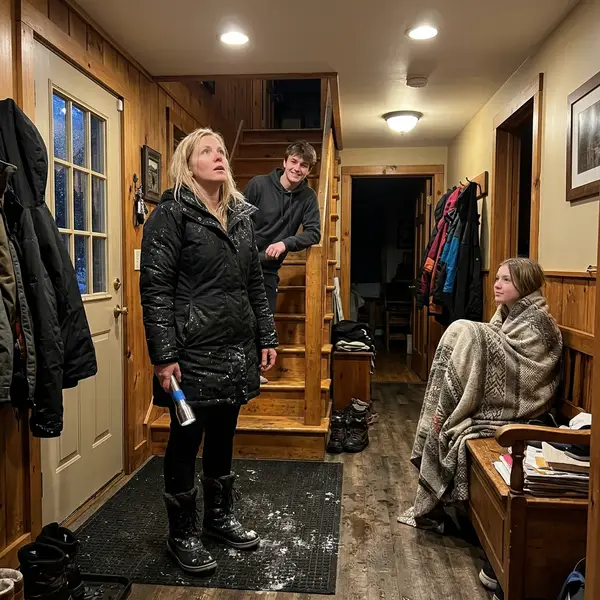
Michael L — My Son In Law Called Me a Liability in a Storm. Then the Grid Died for Four Days.
PromisingImage

Grandma's Basically Senile. She's A Burden In A Storm.

Three months after I retired, I was invited to a family dinner only to find out my daughter in law told my grandson they couldn't have Thanksgiving at my house anymore. "Grandma's basically senile now. If a winter storm knocks the power out, she's a burden. You have to understand." I smiled. I understand. My grandson Jake turned eighteen in October. When Jake was six years old, he drew a crayon picture of my house on the county road during Thanksgiving snow. Big yellow windows. Smoke coming out of the chimney. All of us around the table. He wrote "Grandma's House Forever" across the top in crooked green letters and taped it to the inside of my pantry door. He is a senior in high school now, six foot one, heading off to state college next fall. That drawing is still taped inside my pantry door, corners curled, right above the flour canister. So when October came around, I didn't have to think about Thanksgiving week. I called him and said, "This year we are doing the whole week out here. Wednesday through Sunday. I already reserved the twenty two pound heritage turkey at Miller's Farm." He cheered so loud I had to hold the phone away from my ear. His mom Sarah offered to coordinate the side dishes and the driving schedule. I let her. One phone call later, she was in charge of everything. I would learn what that meant soon enough. Two weeks later was Jake's senior night football game. I was in the second row on the fifty yard line. I have been in the second row his whole life. After the game, we were standing outside the stadium fence under the lights. Jake had his arm around my shoulder in his jersey, showing me the photos on his phone. A text popped up at the top of his screen. From "Mom." The preview read: "Don't tell Grandma yet, sweetie. But we're moving Thanksgiving to our house. She's gotten a bit senile since retiring and living out there alone. With the ice storm warnings next week, we can't deal with that burden if the power goes out." Jake grabbed the phone. But it was too late. He looked at me. His face went red under the stadium lights. "Grandma. She didn't mean it like that." I looked at this boy I had held the day he was born. And I watched him try to protect his mother and me at the exact same time. "Let's talk about it later," I said. Senile. I am 64. I raised two kids after my husband passed. I taught fifth grade for thirty two years and ran that house on three acres by myself. Every roof leak. Every winter freeze. Every holiday for three decades, planned and cooked and cleaned up by me. If something needed to be handled in our family, I was the one who handled it. Nobody ever called that senile. They called it "Mom's got it." But I said none of that. Because whatever was going on, I wasn't going to have it out in a high school parking lot. I found out the next Saturday. Sarah invited me to dinner at her house in the subdivision. "Just family," she said. "Nothing fancy." I showed up at six. The good china was out. Candles lit. My son Brian was already seated. Jake and his sister Emma too. Everyone was exchanging looks when I walked in. The kind where everyone in the room knows something you don't. Jake wouldn't meet my eyes. After dinner, Sarah cleared her throat. "Linda, we need to talk about Thanksgiving week." My stomach dropped. "We have all been talking, and with the winter grid warnings on the news, we think it would be much safer if we hosted Thanksgiving here at our house, and you packed a bag and stayed in our downstairs guest room until the December freezes pass." I looked around the table. Brian was studying his fork. Emma was picking at her napkin. Jake opened his mouth. Sarah put her hand on his arm. "Honey, we discussed this." That is when I knew. She hadn't just texted him. She had been working on him for weeks. "Linda, I am going to be honest with you, because I love you." That voice. The one that sounds like warmth but lands like a verdict. "Do you remember the windstorm in March? And the freeze two winters ago?" "What about March?" "When the transformer blew on your road, your big metal flashlight died in twenty minutes and leaked white battery acid all over your counter. Jake had to drive out at eleven at night to bring you AA batteries because your cell phone dropped to three percent. And last fall, you left your reading glasses upstairs in the dark and knocked over the hall table because your rechargeable garage lamp wouldn't turn on. Brian missed a whole morning of work driving out to check on you." She had dates. She had details. She had been keeping score. "Every house on my road lost power that night," I said. "And batteries die." "They didn't used to die on you." She leaned in. Softened her voice. "Linda, you have been retired for three months. The mind needs structure to stay sharp. Without work, things slip. You forget to check the battery drawer. You forget to plug things in. That isn't an insult. That is just biology." Biology. "The news is talking about multi day blackouts this winter. Brian just spent $2,400 on a commercial gas generator for our garage and six heavy duty metal flashlights from the warehouse club. Out at your house, someone would have to watch you and manage your lights the whole time. And this is Jake's last Thanksgiving before college. He shouldn't have to spend it worrying about his grandmother sitting in the dark." There it was. Jake pushed his chair back from the table. "Mom, I never said that." "Jake." One word. That is all it took. He looked at me for a long second. Then down at his plate. He is eighteen. She is his mother. He sat back down. Sarah smiled at me. Reached across the table and squeezed my hand. "You understand, right? It is for your own good." Then she slid a folded piece of paper across the tablecloth. The receipt for the $180 catering deposit and the farm turkey transfer she had already put on her card, with my half circled at the bottom. Right next to a printed brochure for a fifty five and older apartment complex by the highway. The holiday I was too senile to host. I was still sharp enough to pay for. I looked at the receipt. Then at Sarah. I picked up my water glass. Took a sip. "I understand," I said. I drove home to my quiet house and sat at my kitchen table with the lights off for a long time. The next morning, I mailed Sarah a check for her deposit. Then I called Miller's Farm and told them I was still picking up my twenty two pound turkey on Tuesday morning. I told no one. That Sunday afternoon, I met my friend Ruth and her husband Ray for coffee at the diner in town. Ruth and I taught at the same elementary school for thirty years. Ray is 67. He spent twenty eight years as a high voltage storm lineman climbing icy poles to replace blown substation transformers before moving up to run our regional utility storm yard. He has worked seventy two hour shifts restoring dead transmission lines through hurricanes and ice storms that would make Sarah's subdivision disappear. And nobody has ever called either of them senile. I told them the whole thing, start to finish. When I got to the part where Sarah slid the catering receipt and the senior apartment brochure across the tablecloth, Ruth put her coffee mug down so hard it clinked. She was quiet for a moment. Then she said, "Do you know what actually happened at that dinner?" "She moved Thanksgiving to her house." "No. That is the small thing." Ruth leaned forward. "Linda, she has decided who you are now. Retired means declining. Declining means helpless. She has built a whole story about you, and she is telling it to your grandson." I didn't say anything. "That boy has spent every Thanksgiving of his life in your kitchen. And now every time the sky turns grey, her story is sitting in his head right next to yours." That one landed. "So where you eat turkey isn't really the question," Ruth said. "The question is whose story Jake believes when the next storm hits. Hers or yours." Then Ray leaned his elbows on the table. "Tell me again what Brian bought to keep Sarah's house running when the lines come down," he said. "A $2,400 gas generator in the garage," I said. "And six heavy duty metal flashlights with a giant brick of alkaline batteries." Ray smiled for the first time. "Good," he said. "Then listen carefully, Linda, because when that ice storm hits on Wednesday night, Brian and Sarah's house is going to be pitch black before Thursday supper." "How do you know that?" "Because three weeks ago," Ray said, "a civics teacher from the Christian prep school brought 38 high school juniors out to my utility storm yard. One of the dads, a proud guy just like Brian, brought a duffel bag of emergency gear from his garage to show the kids. He pulled out a heavy metal flashlight and a giant pack of AA batteries and reached for my display table. I caught his wrist before it got there and told him three words. Not past Tuesday." He tapped the table with one finger. "A standard flashlight eats fresh batteries in two to four hours. And half the alkaline batteries sitting in an American kitchen drawer right now have already lost their charge or swollen up from the humidity and leaked white acid across the springs, just like the one in your drawer last March. That wasn't your memory slipping, Linda. That is chemistry." "To prove it to those 38 teenagers, I gave them a homework assignment that Friday night. I told them to go home, take every emergency flashlight their parents were counting on out of the hall closet, turn them all on at eight o'clock Friday night on the classroom floor, and leave them over the weekend." "What happened on Monday?" "Thirty four out of thirty eight were stone cold dead," Ray said. "Eleven of them leaked white acid on the floor without even turning on. Every plug in rechargeable work lamp was sitting at zero percent because once the substation dies, the wall outlets are dead. And when the Pentagon and federal energy officials warn us to prepare for a 90 day grid collapse from transformer failures, they are talking about zero resupply. Brian's $2,400 generator is going to drink his gas cans dry in two days, and when he drives to the gas station on the highway, he is going to find out gas station pumps run on electricity too." He looked at me across the booth. "Mainland Americans buy four hours of battery life for a ninety day blackout. Batteries are for tourists, Linda. And you never fight a blackout with something that runs out." "Then what do I put in my house?" "You do what every grandmother in Fajardo, Puerto Rico did after Hurricane Maria," Ray said. "You keep three self replenishing lanterns on your kitchen windowsill. No gas cans. No disposable batteries. No extension cords." He pulled out his phone and showed me a photo of his own kitchen windowsill. Three compact matte black cylinders, each about the size of a soup can, sitting in a neat row behind Ruth's dish soap where the morning sun hit the glass. "It is the 3 in 1 Collapsible Solar LED Lantern," Ray said. "Half the fire captains and linemen in our county keep them on their windowsills. Not the cheap green plastic solar camping lights from the hardware store. Those cheap ones use a tiny decorative polycrystalline strip that only captures four percent of indoor window light and dies in twenty minutes. This one has a high density flush monocrystalline solar panel bonded into the top casing that captures ninety percent of cloudy daylight right through a double pane kitchen window, twenty two times more charge." "That little cylinder lights up a whole room?" "For 25 hours straight on a single charge," he said. "There isn't even a switch to fumble for in the dark. You just pull the two steel handles up and 360 degrees of bright white LED light floods the entire room. It has a directional spotlight on the bottom, and a built in USB power bank port on the side so your cell phone stays at 100 percent even if the grid is dead for ninety days." I looked at the photo. "And here is what matters for you," Ruth said, putting her hand over mine. "When that ice storm hits this week, Sarah and Brian are going to be out in their driveway in the freezing rain fighting a noisy generator, smelling like gasoline, and rationing dying flashlights while their phones die. Every battery they burn tells Jake that an outage is a crisis. And you are going to walk over to your kitchen sink, pull three handles up in ten seconds, and light up your whole house like you have done it your whole life." "What if their power goes out in the subdivision?" Ruth didn't hesitate. "That is the point, Linda." Ray wrote the website down on a napkin before I left. "One more thing," he said. "Don't sit on it. Right now they have a Buy 2, Get 1 Free blackout deal on their page, so you get three lanterns for the price of two, backed by a 30 day money back guarantee. Because of the winter grid warnings, my storm lineman group chat has been ordering them by the case. Once this batch sells out, it is a four to six week wait for the next shipment." I ordered two sets of the Buy 2, Get 1 Free deal that night from my kitchen table. Six lanterns total. The box arrived on Tuesday morning, the day before Thanksgiving Eve. Before I even opened the shipping box, I walked over to my utility drawer and did Ray's Friday night test. I took out all six of my old metal flashlights and my plug in garage lamp, lined them up on the laundry room tile, and flipped them on. Within three hours, five were stone cold dead and one was oozing white battery crust onto the tile. I swept the whole pile into a garbage bag and set it in the bin outside. Then I carried the new 3 in 1 Solar Lanterns into the kitchen. I set three of them in a neat row on the sunny windowsill above the sink, right behind my dish soap, and put the other box of three on the shelf in the hall closet. And one more thing. I opened the pantry door and looked at the crayon drawing I had kept for twelve years. Jake at six years old, yellow windows glowing in the snow, "Grandma's House Forever" across the top. I smoothed the curled corner down with my thumb. Then I put the twenty two pound turkey in the refrigerator to brine. Wednesday afternoon. Thanksgiving Eve. The freezing rain started at three o'clock. By five o'clock, the oak branches along the highway were coated in an inch of solid ice. At 5:42 PM, the main transmission substation supplying both my road and Sarah's subdivision blew three times in a row. Every light on my road went black. I didn't rush. I didn't open a single drawer. I walked over to the kitchen sink, picked up the three lanterns off the windowsill, and pulled the steel handles up. My kitchen, my dining room, and my front living room lit up like noon day. I plugged my cell phone into the USB port on the side of the kitchen lantern. The green charging bolt came right on. I lit the gas burner under my kettle, built a fire in the wood stove, and sat down in my armchair with my book. At 6:15, the family group chat started dinging on my phone. Sarah: "Power is out here too. Brian is getting the generator out now." At 7:10, another text from Emma: "Dad can't get the generator to stay running. It smells like gas in the garage and it's freezing in here." At 8:05, a text from Jake: "Mom's Costco flashlights already died and the carbon monoxide alarm went off in the mudroom. Dad is mad." At 8:15, my phone rang. It was Jake. "Grandma, are you okay out there? Mom's phone is on four percent and our house is down to fifty two degrees." "My phone is at a hundred percent, sweetie," I said. "The wood stove is at seventy two degrees, the whole house is lit up, and I have a pot of chicken noodle soup on the stove. Tell your father to pack everybody in the car and come out here." At 8:45 PM, headlights turned into my driveway through the sleet. I watched them from the porch window before they saw me. Brian was carrying three dead heavy metal flashlights under his arm and dragging a frozen orange extension cord he hadn't been able to wind back up. Emma was wrapped in two blankets carrying a cooler of side dishes. Sarah had two overnight bags over her shoulder and was holding her dying phone up like a candle to see the icy steps. Four people, shivering in the dark, evacuating the house with the $2,400 generator. Jake came up the porch steps first and opened my front door. He stopped dead in the doorway. The entire living room, dining room, and kitchen were glowing with warm, bright white 360 degree light. "GRANDMA?" The whole family stepped into the foyer behind him. Sarah froze on the doormat, snow melting on her coat, holding a dead silver flashlight with a piece of masking tape on the barrel. "Linda?" She looked up at the ceiling fixtures, then at the walls. "How is your electricity on? The county map says the whole grid is down." "My electricity isn't on," I said. "Same outage as yours." "Then how..." She looked at Brian. Brian looked at his wet boots. "You said she couldn't handle a blackout by herself," Emma said quietly. Nobody answered that. Sarah's eyes went to the compact black lantern sitting on the dining room table, lighting up the whole room from corner to corner. "Where is your generator?" "I don't have one," I said. "This is it." "That little soup can on the table? For the whole house?" She actually laughed, a little high in her throat. "Linda, those batteries will be dead before midnight." "There aren't any disposable batteries in it, Sarah. It drinks the daylight off my windowsill. Go plug your phone into the one on the kitchen counter so it doesn't die." Jake was grinning so hard he had to look down at the floor. "Well," Sarah smoothed her wet hair back. "We should probably bring the cooler in. Until our street comes back on." "Take your time," I said. "Soup is on the stove." They didn't go home that night. The county grid stayed down for seventy six hours, all the way through Saturday morning. Thursday morning. Thanksgiving Day. At seven o'clock, while everyone was still asleep upstairs, I clicked the three lanterns shut and set them back on the sunny windowsill behind my dish soap while I made coffee. At nine o'clock, Brian drove back into town to try to buy carburetor cleaner and D batteries for his flashlights. He came back at ten thirty empty handed. The Marathon station had no electricity to pump gas, and the hardware store had sold out of every battery and lantern on the shelf within two hours of the substation blowing. Meanwhile, by two in the afternoon, my three lanterns had soaked up the bright November sun reflecting off the ice outside my window and were sitting at full twenty five hour capacity again. Zero noise. Zero gasoline. Zero dollars spent. I cooked the twenty two pound turkey in my propane oven while Jake sat on the stool at the kitchen island, his phone plugged into the side of the counter lantern, chopping celery for the stuffing. "Dad is still out in the driveway looking at the generator manual on his phone," Jake said. "Mom's mad at the hardware store." I walked over to the pantry, opened the door, and pointed to the crayon drawing above the flour canister. Jake at six years old. Big yellow windows in the snow. "Grandma's House Forever." He looked at the drawing. Then at the bright kitchen around us. Then at me. He didn't say anything for a while. Then he put his arm around my shoulder, the exact same way he did outside the football stadium. "You kept that up there for twelve years?" "Forever means forever," I said. Sarah was standing in the dining room doorway ten feet away. She watched the whole thing. She didn't come over. Thursday afternoon. Four o'clock. Thanksgiving dinner. We had just sat down at the dining room table, with one lantern in the center of the table and one on the buffet flooding the room with steady white light, when somebody knocked on the front porch door. It was Captain Dan Brooks from the county volunteer fire department, doing welfare checks down our road in his heavy yellow turnout coat. When I opened the door, he looked past me into the brightly lit dining room and took his helmet off. "Mrs. Miller, I am sorry to interrupt your Thanksgiving," he said. "Are those the 3 in 1 flush panel solar lanterns from Ray Carter's storm yard?" "They are," I said. "Ray and Ruth told me to put them on my windowsill last week." Captain Brooks shook his head and smiled at Brian and Sarah at the table. "You folks are the smartest house on this road. Every station in the county has been trying to get extra sets of these before they go on winter backorder. We have pulled eleven families out of forty degree houses today whose gas generators quit or whose flashlights rotted in the drawer, and Mrs. Miller has this place lit up like a hotel." His young lieutenant standing on the porch steps leaned in to look at the lantern on the table. "Cap, is that the solar lantern my wife's hospital floor has been ordering? She said they're doing a Buy 2, Get 1 Free deal and her whole shift bought them before the storm." "That's the one," Captain Brooks said. "Hang on to those, Mrs. Miller. You don't need a thing from us." Sarah watched all of it from her chair at the table. The fire captain. The lieutenant. Her own cell phone sitting on my counter charged to 100 percent off a lantern the size of a soup can. She picked up her water glass, took a long sip, and looked straight ahead at her plate. She didn't say another word about senior apartments the rest of the weekend. Friday night. The last night of the outage. After everyone else went to bed, I was standing at the kitchen sink rinsing the pie plates under the white glow of the lantern. Sarah walked into the kitchen in her sweater. She leaned against the counter next to the refrigerator. For a minute, neither of us said anything. "Brian tried to start the generator again this afternoon when we went back to check the pipes," she said quietly. "The fuel bowl cracked in the freeze. And one of his heavy flashlights leaked white acid all over the hall table." "That is a shame," I said. "And the power company told our HOA the transformer parts are backordered until next month if another storm hits." "I heard that on the radio." She was quiet again. Then she said, "Jake showed me the drawing inside your pantry door. The one from when he was six." I didn't say anything. "Twelve years." She shook her head slowly. "I tried to move Thanksgiving to our house because I thought you couldn't handle a storm, and you ended up keeping my whole family warm and lit for four days." She looked at the three black lanterns sitting by the windowsill. "Even the fire captain knew what they were," she said. "He did." Silence. "Where did you get them?" I dried my hands on the dish towel, walked out to the hall closet, took down the second unopened box of three lanterns I had ordered on Sunday night, and set it on the counter in front of her. "They are called the 3 in 1 Collapsible Solar LED Lantern," I said. "Put them on your kitchen windowsill behind your dish soap. You don't even have to remember to plug them in." She looked down at the box, then up at me, and her eyes got bright. "Goodnight, Sarah," I said. I walked upstairs to my bedroom without looking back. Here is what I learned. Three months after I retired, my daughter in law decided my mind was going. She told my grandson I was a burden in a storm. She said someone would have to watch me if the grid went down. Then she slid me the receipt and a brochure for a senior apartment. She had dates. March. The leaky flashlight battery. "That is just biology." So when the worst November ice storm in ten years knocked out twenty two thousand homes on Thanksgiving Eve, I had two choices. Sit in a freezing dark house with a drawer full of rotted AA batteries, let my phone die at three percent, wait for my son to come rescue me, and prove her right. Or put three self replenishing solar lanterns on my windowsill and prove there was never anything wrong with me or my house. The lanterns didn't make me capable. They just proved I always was. Here is how the four days actually went. Brian and Sarah spent $2,400 on a gas generator and six warehouse flashlights. I put three solar lanterns on my windowsill. They spent Wednesday night in the sleet yanking on a dead starter cord and listening to their carbon monoxide alarm. I spent it reading by the wood stove with hot soup on the burner. Their six flashlights burned out in three hours and leaked white acid. Mine ran for 25 hours a charge and filled themselves back up on the sunny windowsill every morning for free. Their phones died at four percent. Mine kept five phones at 100 percent for four straight days. They came out to manage the grandmother they called a burden. They ended up eating my turkey and sleeping under my roof until Saturday afternoon. And that was the real win. Not the $2,400 generator. Not the fire captain at the door. Jake saw everything. The dark subdivision. The bright kitchen. The drawing I had kept on my pantry door for twelve years. He calls me every Sunday. He always has. But the first Sunday after the power came back on, he didn't just call. He drove his truck out to my house with his toolbox and asked me to show him how to winterize the tractor. Now, about the lanterns. When Ray first wrote the link down for me, I almost waited. I already had a drawer full of flashlights I had paid good money for. Then I watched six of my own flashlights die on my laundry room tile in three hours, and I watched my son spend $2,400 on an engine he couldn't even refuel when the gas station pumps lost power. The Buy 2, Get 1 Free set pays for itself the first night a transformer blows and you don't have to burn a twenty dollar pack of batteries or throw out a refrigerator full of food because you had to flee to a motel. Everything after that is free daylight off your windowsill. But here is the part I would take seriously. With the Pentagon and federal energy officials warning families to prepare for 90 day grid outages this winter, Ray's storm line crews have been ordering these by the case. They make them with the real flush monocrystalline solar panels, not the cheap four percent camping strips, which means once this batch sells out, there is a four to six week wait for the next shipment. If someone in your family has decided you can't handle your own house anymore because you are retired or living alone. If you are tired of wondering whether the batteries in your kitchen drawer have rotted since last winter. If you never want to depend on a heavy gas generator or a dead wall outlet when the grid goes down. You need three of these on your windowsill. Not because they are clever. Though they are. But because standing in a brightly lit doorway with your phone at 100 percent, while the people who called you helpless walk up your porch steps carrying three dead flashlights in the freezing rain? That isn't petty. That is just prepared. Three lanterns on the windowsill. Twenty five hours of light per charge. Built in USB phone charger. Zero batteries to buy. Zero help from anyone. Tap Learn More below to claim the Buy 2, Get 1 Free Blackout Deal with a 30 Day Money Back Guarantee while this batch is still in stock.

Loading the ad's image
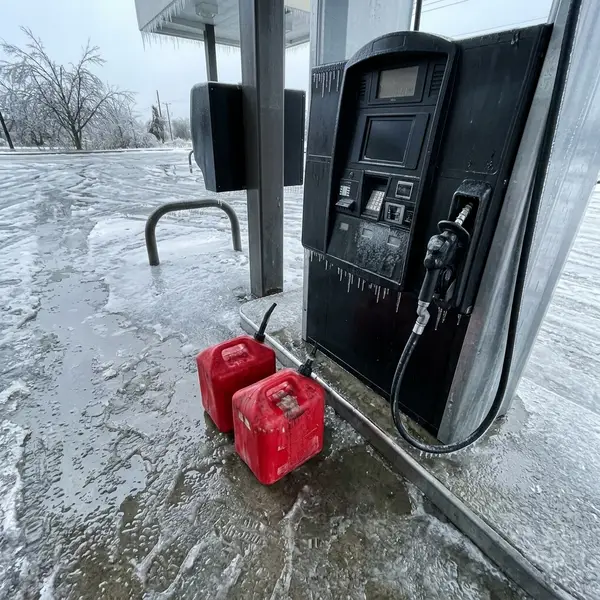
Michael L — Grandma's Basically Senile. She's A Burden In A Storm.
PromisingImage

Preparing For A 90-Day Grid Shutdown? Read This First.

A veteran grid engineer refused to approve a $6,800 backup generator for my house. Said it was "a three day trap." And it is the best thing that happened to my family this year. If you bought a portable gas generator or stocked your hall closet with heavy duty flashlights and the hardware store told you your house was ready for a blackout, but you still ended up sitting in the pitch dark during the last storm, please read this before you spend another dollar on emergency gear. I was days away from signing a $6,800 contract for a second backup generator setup. I told my husband Mark it was "just an estimate." We had already tried a $2,400 portable gas generator in the shed, then a $299 plug in lithium power station, then six heavy metal flashlights, then a kitchen drawer full of alkaline batteries and headlamps a preparedness group on Facebook swore by. Nothing lasted past the second night. By two winters after buying our first generator, I couldn't hear wind in the trees at night without my stomach knotting up, and I had stopped letting our grandkids sleep over whenever freezing rain was in the forecast. That is when a 76 year old retired military grid engineer put my $6,800 estimate folder down on my dining room table and told me he wouldn't sign off on installing it. What he said next, about why our house kept going pitch black after 48 hours, changed everything I thought I knew about preparing for a power outage. And it is the reason I am writing this tonight. Because if you did everything the emergency checklists told you to do, were told your home was prepared, and still ended up with dead flashlights and a dying cell phone when the transformer blew, please read this all the way through. What I am about to share is the same thing that gave us our peace of mind back in a few days, and it may save you from a $6,800 mistake you don't need. My name is Denise. I am 62. I live outside Columbus, Ohio, with my husband Mark. Four years ago, after an ice storm knocked our neighborhood out for three days, we bought a $2,400 portable gas generator. And for a while, I thought it was the smartest decision we had ever made. The salesman at the hardware store called it commercial grade. The engine started on the first pull in the driveway. Mark stacked two red five gallon gas cans in the shed, lined up four heavy aluminum flashlights in the hall closet, and for almost two years I felt like we had our home protected. I was proud of us for finally doing something about our aging power lines. Then, about two years in, a November windstorm took down the substation on Route 42. And everything we bought failed us at the exact same time, worse than before. So I did what all of us do. I asked. The hardware store manager told us stale fuel gums up carburetors if you don't drain the line every month, and charged Mark $410 for a carburetor rebuild and a fresh crate of batteries. It never fixed the problem. The next storm was worse. We did the whole maintenance program, three checks a month. Running the generator in the driveway every first Saturday. Pouring fuel stabilizer into the cans. Rotating giant plastic bricks of AA and D batteries in the pantry. Keeping a $149 rechargeable work lamp plugged into the garage wall. We did it religiously for eight months. We spent more money and the dread never let up. Not once. Then came the shopping list. A hand crank weather radio. Four headlamps. Emergency candles. Plug in phone battery banks. Two green plastic solar camping lights from a big box store. Close to $200 a month across a pile of things in the hall closet that never worked together when the grid actually went down. And in the meantime, every outage was getting worse. During the February freeze, the generator burned through both red gas cans in sixteen hours, and when Mark drove up to the Speedway station on the highway, the station had no electricity to run the gas pumps. I woke up at 3 AM with the house at forty six degrees, my cell phone dead at zero percent, and my heavy silver flashlight leaking crusty white battery acid onto my fingers in the dark. Mark had to hold a dying penlight in his teeth just to read the label on his blood pressure bottle. I had started keeping a packed overnight bag by the front door every time the sky turned grey. I had become a nervous stranger in my own house every time the lights flickered, and our garage shelf still "looked prepared." And then came the day I decided the only answer left was paying $6,800 to have a second heavy standby setup wired into our house. I asked Chief Miller to come look at the quote. He is 76. He spent twenty years in the US military keeping base grids and forward operating zones running in total blackouts before retiring to run our county emergency operations supply bay, and our church deacon told me never to sign a generator contract without letting Chief Miller read it first. I told Mark it was just a conversation. It wasn't. I had the checkbook in my purse. Chief Miller sat at our dining room table and listened to the whole thing without interrupting. The $2,400 generator in the shed. The two good years. The carburetor gumming up. The dead gas station pumps. The eight months of battery rotation. The pile of flashlights and plug in work lamps in the hall closet. Then he asked me one question nobody at a hardware store had asked me in four years. "Denise, has anyone ever tested what happens to your hall closet after the first four hours when there is zero resupply?" I didn't even know what he meant. He put my $6,800 estimate folder down on the table and told me he wasn't going to approve it. I was confused. I thought he was telling me to just give up and sit in the dark. Then he pulled his chair around to my side of the table. "Denise, before you write a check to an installer, I need you to understand something. Your electrical panel is solid. Your wiring is fine. If you bolt a $6,800 engine onto the side of this house, the day a real 90 day grid collapse hits and the municipal pressure drops or the fuel truck can't get down your road, in 72 hours you will be right back at this table in the pitch dark asking why it stopped working. There is a reason your backup plan failed you that nobody has explained to you, and buying a bigger engine won't fix it." For the first time in four years, someone was about to actually tell me what was wrong. He said most homeowners think blackout preparedness is just about the big generator in the shed and the boxes of batteries in the drawer. That is only half the story. Deep inside every real blackout, wrapped around every hour your family is inside the house, is one constant need: self replenishing room light and cell phone power. It is your home's internal brace. It keeps you from falling down the stairs in the dark and keeps your phones connected to your children and emergency broadcasts. "When the Pentagon and federal energy officials warn bases and counties to prepare for up to 90 straight days with zero electricity from transformer failures or substation attacks," he said, "they are talking about the no resupply problem. Within two to four hours of a blackout starting, a standard flashlight burns through 85 percent of its battery life. And half the alkaline batteries sitting in your drawer right now have already swollen up from summer humidity and leaked white acid across the springs. Once those batteries die on Night 1, your hall closet switches off. And once it is off, it does not turn itself back on. Not with checklists, not with plug in chargers when the wall outlets are dead, not with time." Then he gave me the picture I haven't stopped thinking about since. "Three weeks ago, a civics teacher from a Christian college prep school brought 38 high school juniors out to my county supply bay. One of the parent chaperones, a nice dad just like Mark, brought a canvas duffel bag of emergency gear from his garage to show the kids. He pulled out a heavy metal flashlight and a giant pack of AA batteries and reached for the display table. I caught his wrist before it got there and said three words: Not past Tuesday." "I made all 38 high school juniors go home that Friday night, take every emergency flashlight their parents were counting on out of the hall closet, turn them all on at eight o'clock on the classroom floor, and leave them over the weekend. By Monday morning, thirty four out of thirty eight were stone cold dead. Eleven of them didn't even turn on because the batteries had rotted in the drawer. Even the teacher's own heavy silver flashlight was dead on the floor." "Your $2,400 generator is a heavy piece of iron sitting in your shed, Denise. But an engine still needs live gas station pumps and constant resupply around it to carry the load. Yours runs out of fuel in two days, and your plug in rechargeable work lamp turns into a dead plastic brick the second the wall outlets die. Mainland Americans buy four hours of battery life for a ninety day blackout. Batteries are for tourists, and you never fight a blackout with something that runs out. That is why your house went dark. Not because you didn't spend enough money. Because everything in your closet depends on a resupply truck that isn't coming." That is exactly why our eight months of hardware store checklists did nothing. We weren't under preparing. We were buying four hour tourist gear while our real lifeline stayed dark. I asked him the obvious question. "So how do I fix it?" "You have to put self replenishing power on your windowsill," he said. "Not more disposable batteries on top of a drawer that already rotted. Not another $6,800 engine. You have to use a light and phone charger that wakes itself back up off the daylight every single morning without a plug, which is the one thing nobody at the hardware store has shown you since the day of your first storm." I told him I had already tried two green plastic solar camping lights from the big box store. He shook his head immediately. "Of course they didn't work. A cheap store solar light uses a tiny decorative polycrystalline strip that only captures 2 to 4 percent of indoor window light. It barely tickles the surface of the battery and dies in thirty minutes, and it has no USB port to charge a dead cell phone. Real cloudy daylight coming through a double pane Ohio kitchen window requires 20 times more solar capture density. Those cheap camping lights never came close." "The only thing that captures real indoor window light is a high density flush monocrystalline solar array built into a 3 in 1 collapsible emergency lantern. It bypasses the dead wall outlet entirely, drinks up to 90 percent of available daylight right through your kitchen window glass, floods a whole room with 25 hours of 360 degree bright white light when you pull the handles up, and pushes power straight into your dead cell phones through a built in USB port on the side. In South Africa, in Lebanon, and down in Fajardo, Puerto Rico after Hurricane Maria, every grandmother on the street kept three of them on her kitchen windowsill. At nine o'clock at night on Day 14, those grandmothers were reading in brightly lit living rooms with their phones charged at 100 percent. Relying on AA batteries in a real grid shutdown is like trying to flip a wall switch in a house where someone cut the wire at the street." I asked him where I get that exact military style lantern. "If you buy a custom solar battery bank from an installer, it runs $2,500 to $3,500 and weighs ninety pounds. Almost nobody your age can haul that up the basement stairs in an ice storm." Then he wrote a name on a pad and slid it across the dining room table. The 3 in 1 Collapsible Solar LED Lantern. "It delivers that same self replenishing 360 degree room light and USB phone charging right on your kitchen windowsill. Three lanterns behind the dish soap, no tiny switches to fumble for in the dark, just pull the two steel handles up and the whole room lights up for 25 hours. Right now they are running a Buy 2, Get 1 Free blackout deal on their page. I would rather you try three of those on your windowsill for 30 days than let anyone charge you $6,800 to bolt another engine to your house." He never charged me a dime for the inspection. I ordered two sets that night right there at my dining room table. Here is exactly what happened over the next several weeks. Week one. Before the box even arrived, Mark and I did Chief Miller's Friday 8:00 PM test on our kitchen linoleum with all eleven of our flashlights, headlamps, and the $149 rechargeable work lamp. By Saturday morning, nine were stone cold dead and two had leaked white battery acid onto the floor. When the box of 3 in 1 Solar Lanterns arrived on Thursday, we pulled the first one open in the dark hallway and felt a brightness we had never seen from any flashlight, not a narrow yellow tunnel of light, but clean white 360 degree light filling the whole room from corner to corner. Week two. A hard spring squall knocked out our road's transformer for seven hours during our grandson's ballgame dinner. Mark didn't even put his boots on to walk out to the shed. He pulled two lanterns off the kitchen windowsill, plugged my phone into the USB port on the side, and I sat through the entire evening without a single knot in my stomach and didn't even notice until Mark pointed it out. Week four. I unpacked the emergency evacuation bag by the front door and put the suitcases back in the attic. We swept the entire drawer of corroded alkaline batteries and the dead rechargeable work lamp into a trash bag and put our three solar lanterns in a neat row on the sunny windowsill behind my dish soap. Week six. A forty eight hour substation failure took down power across two counties on a Friday night. We walked through the whole house in bright white light without touching a flashlight, kept both our cell phones at 100 percent off the side of the kitchen lantern, set them back on the windowsill Saturday morning over coffee to drink the daylight back to full charge for free, and got out of bed Sunday morning without gripping a dying flashlight on the nightstand for the first time in four years. I drove out to Chief Miller's county supply bay for a follow up visit he hadn't even asked me to make. I just wanted him to see the photo of our kitchen windowsill and the bag of dead flashlights we had thrown out. He looked at the photo of Mark reading the paper at the kitchen table at ten o'clock on Night 2 of the blackout with his phone plugged into the side of the lantern, smiled, and said, "That is a house that doesn't need a resupply truck anymore. Keep doing exactly what you're doing." We never scheduled the $6,800 generator installation. Thousands of American families are putting the 3 in 1 Collapsible Solar LED Lantern on their windowsills right now, many of them homeowners who already spent thousands on gas generators and drawers full of flashlights that failed them before the first weekend was over. It is backed by a 30 day money back guarantee. If you don't see the difference the first night you pull those handles up in a dark room, you send them back and every dollar comes back to you. Right now the Buy 2, Get 1 Free Blackout Deal is live on their page, so you get three lanterns for the price of two. So please, don't wait. Don't wait until you are standing in a freezing kitchen at 3 AM shaking a metal flashlight crusted with white battery acid while your cell phone dies at zero percent. Don't spend another four hundred dollars rebuilding a generator carburetor when the gas station pumps have no electricity anyway. Don't spend one more storm believing a drawer of four hour batteries is going to carry your family through a multi week blackout. It won't. Your house never had self replenishing light and phone power on the windowsill, and you can fix that today. If your flashlights or generator let you down during the last outage, or if you want your home ready before the next substation goes dark, this is what finally worked for Mark and me. Tap Learn More below to claim the Buy 2, Get 1 Free Blackout Deal now. I am 62. We had a $2,400 generator and a closet full of flashlights that worked for one storm and then turned on us when the gas pumps went dark and the batteries rotted in the drawer. I was days away from signing a $6,800 contract that a 20 year military grid engineer himself told me not to sign, because the real problem was never the size of our generator. It was relying on gear that runs out in four hours when there is zero resupply. Three solar lanterns on my kitchen windowsill gave us our peace of mind back. Tap Learn More below to get your Buy 2, Get 1 Free set while they are still in stock. Denise

Loading the ad's image
Debra T — Preparing For A 90-Day Grid Shutdown? Read This First.
PromisingImage

Northern Virginia Driver Shares 76-Year-Old Grid Engineer's "Night 2" Warning!

A 76 year old man got in my Uber at Reagan last week, told me he was headed out to his farm past the Shenandoah line, and by the time I dropped him off he had said something about the emergency flashlight in my trunk that I haven't been able to shake since. I drive nights. Wife and two kids at home in Falls Church. I am 38. Been driving since the contracting company laid off our crew, premium tier on busy nights because the tips are better and God knows we need them. I work the airport runs out of Reagan three nights a week. You learn to read people fast. The lobbyists. The Hill staffers. The tired parents flying back from a funeral. You learn who wants to talk and who wants the radio and silence. Last Tuesday, my third ride of the night, he came out of arrivals slow, with a cane and a worn olive canvas bag, waving off a guy who tried to help him with it. Mid 70s. Lean. Sharp eyes. Flannel jacket that had been washed a thousand times. He got in the back like he had done it a hundred times before and gave me an address an hour and a half west, out past Front Royal. "I've got a farm out there," he said. "I only come into the city when my daughter makes me. I'm going home." I told him I would get him there. For the first stretch on I 66 the radio was on low. The news. Another substation transformer fire in Northern Virginia, the third that month. Arlington, then Loudoun, then twelve thousand homes dark in Fairfax after a wind squall. And a segment about how transformer wait times were up to three years and Pentagon officials were warning bases to prepare for a 90 day grid collapse. He made a sound in the back seat. Not quite a laugh. "They tell people to go buy flashlights and act surprised when every house is pitch black by Saturday," he said. "You know what they don't tell you on there." I looked at him in the rearview. "Tell me what kills a neighborhood when the grid goes down. Not the dark. Resupply. The kind of blind spot that sits in a man's garage for years while he tells his wife they are covered." I figured he meant a bad winter storm. Power goes out for a night, you grab a flashlight out of the drawer, then the utility trucks fix the pole and it is over. "Sometimes," he said. "And sometimes a substation blows and there isn't a spare transformer within four hundred miles. And ninety one percent of American families end up trapped in a pitch black house within 48 hours while every checklist tells them they did everything right." I didn't say anything. Mostly because when the ice storm knocked our street out in Falls Church for two days last winter, our house went freezing dark, my phone died by midnight, and I didn't want to think about how fast things went sideways. He was quiet a second. Then: "You've got an emergency kit in the trunk of this car. Not a real one. The hardware store kind." I told him I was fine. Heavy metal flashlight under the jumper cables, extra pack of AA batteries in the kitchen drawer at home, and a rechargeable work lamp on my garage shelf. "How long have those batteries been sitting in that kitchen drawer," he said. "A couple years, by the way you said it." I glanced at him again. He wasn't being unkind. He was just old enough not to bother with the polite version. "Something like that," I said. He nodded like that settled something. I asked him what he did. Farming his whole life? "Power grids," he said. "My name is Miller. Spent twenty years in the US military keeping base grids and forward operating zones running when the local power lines were rubble. Last fifteen years I've run the county emergency operations supply bay out in the valley. Fifty years I've been watching what keeps a family standing when the switches die and what gets people hurt." He looked out the window at the dark subdivisions going by along the highway. "And I've watched American families get more helpless every single year I've been alive. You want to know why." "Why." "Because you stopped keeping the one thing every place on earth with a broken grid keeps on the windowsill without thinking about it." "What thing." "Light and phone power that feeds itself off the sky. On a schedule. Every morning, every afternoon, whether the power company is alive or dead. In South Africa, where the grid cuts out twelve hours a day, every family does it. In Lebanon, where the electricity runs two hours a day, shopkeepers line them up in the front window every morning. Down in Fajardo, Puerto Rico after Hurricane Maria, every grandmother on the street kept three on her kitchen windowsill whether she liked it or not. It was as normal as keeping salt in the cupboard." He let that sit. "Mainland Americans are the first people in history who don't. You handed the whole business over to big box stores that make more money selling you twenty dollar packs of batteries that rot and $2,400 generators that run out of gas than selling you something that never needs a refill. And then everyone acts shocked that whole neighborhoods are sitting in the dark with dead cell phones on Night 2." I told him if flashlights and rechargeable lamps were that bad, every emergency checklist in the country wouldn't tell homeowners to buy them. "Would they," he said. "Three weeks ago a civics teacher from a Christian prep school brought 38 high school juniors out to my supply bay." "Yeah?" "One of the dads, a nice guy who prides himself on being ready, brought a canvas duffel bag of emergency gear from his own garage to show the kids. Pulled out a heavy metal flashlight and a giant pack of AA batteries and reached for my display table. I caught his wrist before it got there. Said three words. Not past Tuesday." He looked at me in the mirror. "A standard flashlight eats fresh batteries in two to four hours. And half the alkaline batteries sitting in your kitchen drawer right now have already lost their charge or swollen up from the summer humidity. They wrap their own springs in a crust of white potassium hydroxide acid, a shield, so the current can't even cross the metal and the flashlight is dead before you ever touch the switch." "You can't make repeat money selling a homeowner a light that drinks the sun for free for ten years. So the hardware store sells you four hours of battery life for a ninety day blackout. Batteries are for tourists, son. And you never fight a blackout with something that runs out." I asked him what happened with the high school kids. "I gave those 38 juniors a homework assignment that Friday night," he said. "Told them to go home, take every emergency flashlight their parents were counting on out of the hall closet, bring them into the classroom, and flip every switch on at eight o'clock Friday night on the floor." I kept driving. My hands felt tight on the wheel. "How many made it to Monday." "Four," he said. "Thirty four out of thirty eight were stone cold dead by Monday morning. Eleven of them didn't even turn on because the batteries had leaked white acid in the drawer. Even the teacher's own heavy silver flashlight was dead on the linoleum." "While the grid is down," he said, "that blind spot doesn't sit quiet. Your plug in rechargeable lamp on the garage shelf goes flat in forty minutes, and when you go to plug it in, the wall outlet is dead. A battery that needs a wall outlet is just a plastic brick once the substation dies. The guy across the street with the $2,400 gas generator burns through his red gas cans by Night 3, drives down to the highway, and finds out gas station pumps run on electricity too. Worse, every winter somebody brings a generator into an attached garage and puts their whole family in the hospital with carbon monoxide. And by Day 2, every cell phone in the house is dead, so you can't call your parents, you can't get emergency broadcasts, and the house goes quiet in the worst way." I thought about my wife, Sarah. Last winter during that forty hour freeze, walking our six year old daughter down the dark hallway with her phone screen at three percent. Standing at the kitchen sink at two in the morning in her coat because the furnace blower was dead, shaking a metal flashlight that wouldn't stay lit, and crying because she couldn't reach her mother in Manassas. I told the old man about her. I don't know why. Something about the way he talked. He listened to the whole thing without interrupting. "That's not you failing her, son," he said quietly. "That's the trap. Both of you trusted what the checklist told you to buy. That's usually how it goes in a good family." I asked him, if batteries rot in the drawer and generators run out of fuel, what do you even put in the house. "Here's where most people go wrong," he said. "Two mistakes, and I've watched smart homeowners make both for thirty years." He held up a weathered finger in the mirror. "One. They go online or to a big box store and buy a cheap plastic solar camping light with a tiny polycrystalline strip glued to the top. That cheap strip only takes in about four percent of indoor window light. Unless you leave it sitting in the Arizona desert for four days, the charge just bounces off the glass. You pull it out in a storm, it glows like a dim orange candle for twenty minutes, dies, and you decide solar is nonsense." Another finger. "Two, and this is the one that fools people. If a lantern only makes light and can't push power out into your phones, it only does half the job. When a grid goes down for a week or ninety days, a dark room is bad, but a dead cell phone when your kid has a fever or the roads are closed is what turns an outage into a crisis." He looked at me. "It has to do three things, in order. Pull in real charge through a regular cloudy kitchen window all day without a cord. Flood a whole room with 360 degrees of bright white light for 25 hours straight when you open it. And push power straight into your family's cell phones through a USB port on the side so you never hit zero. With zero disposable batteries inside to rot and leak white crust." I asked him what he uses. He reached into that worn olive canvas bag beside him and, after a minute of digging, pulled out a compact black cylinder. Matte body. Two steel handles folded flat against the sides. About the size of a soup can. He held it up so I could see it in the mirror, then pulled the top handle up half an inch. The entire back seat of my car lit up like daylight. He clicked it shut with one thumb and the highway dark came back. "This." "What is it." "It's what used to take a whole footlocker of field gear to do," he said, and he almost laughed at himself. "I'm 76. I can't haul hundred pound generators and crates of batteries out of my shed in the ice the way I did at 40. One of my retired military engineers brought this into the county bay two years ago and I opened the housing on my workbench and nearly fell over. It's every single military supply rule I taught for twenty years, done right, in one pound." "How is it built." "Three parts that do the real work. On top, a flush high efficiency monocrystalline solar panel that drinks regular indoor window light all day long, twenty two times more charge than those cheap camping strips, plus a backup wall cord if you ever want to top it off before a hurricane. Inside, a collapsible 360 degree LED array that floods a whole living room for 25 hours on a single charge, plus a directional spotlight built into the bottom. And on the side, a built in USB power bank port that keeps your phones alive when every outlet on the street is dead." "How do you use it." "You set three of them on your kitchen windowsill behind the dish soap. There's no switch to fumble for in the dark. You just pull the handles up and the room lights up. Next morning while you make coffee, you set them back by the window and the sun fills them back up for free. That's the whole thing. It's the 3 in 1 Collapsible Solar LED Lantern." He put the lantern back in his canvas bag. "We tested every batch in the supply bay. There's a thirty day money back promise on them too, though I'll tell you right now you won't use it. The first time you pull those handles up in a pitch black kitchen and watch your wife's phone start charging off the side, you're not sending anything back." We came off the highway onto a two lane road, stone fences and dark pastures on both sides now, the dash clock passing eleven. "You won't find them piled up in the front aisle at the hardware store," he said. "Good. A hardware store wants you coming back every storm for another pack of Duracells. The folks who make these built them for families who already figured out nobody is coming to resupply them on Night 3." He looked at me in the mirror, and his voice softened. "Everything else I've said tonight, you can argue with me. Maybe you think an old military grid engineer sees a 90 day blackout behind every tree the way a man with a hammer sees nails. Fine. But you told me your wife stood at the kitchen sink at two in the morning last winter crying with a dead flashlight and a phone at three percent. I've heard that exact story a thousand times in my supply bay, young man. And every single time, those three lanterns on the windowsill were the answer." We pulled up to his place. An old farmhouse under oak trees, three bright white lanterns glowing on the inside of the kitchen window, a barn behind it going dark. He didn't get out right away. He pulled a little pocket notepad from his flannel shirt, wrote something on it, and handed it forward between the seats. A website. Written in careful block letters. "That's where my supply bay orders them," he said. "Not a big box store. Just there. Right now they're running a Buy 2, Get 1 Free blackout deal on the page. Get a set of three for your wife. Get a set for her parents. When the substation goes, you'll all be on the same grid." "Why the rush," I said. "The weather is clear all week." "Because the transformer doesn't check the weather report before it blows," he said. "And because your wife already spent two nights in the dark wondering how she was going to keep those kids warm and reach her mother. One night like that is long enough for a good woman to lose her peace of mind. Don't make it two." I helped him up the porch steps. He patted my arm at the top. "You're a good boy. Go check your flashlight drawer." Then he went inside. I drove back to Falls Church the long way in the dark. Didn't turn the radio back on. Got in past one in the morning. Sarah asleep on the couch with a blanket over her legs, porch light flickering in the wind. Kids upstairs. I sat at the kitchen table with that little notepad page next to my keys and considered typing the website into my phone. Didn't. I told myself he was 76 and retired military guys think every storm is the end of the world. My uncle was the same way. I went to bed. Two days passed and I didn't order anything. Didn't tell Sarah. Didn't want to rattle her over what an old man said in the back of my car. Then Friday morning, walking the kids to the bus stop, my neighbor Dave across the cul de sac had the hood off his $2,400 generator in the driveway, cursing because the old gas had gummed up the fuel line again and the repair shop wanted three hundred bucks and a three week wait. I didn't say anything. Then Friday evening at eight o'clock, after the kids went to sleep, I kept thinking about those 38 high school juniors and the classroom floor. I walked over to our hall closet, the kitchen junk drawer, and the trunk of my car. I pulled out every emergency light we owned. Six flashlights, two kids' headlamps, and the $149 rechargeable work lamp from the garage shelf. I lined all nine of them up on the laundry room tile, flipped every switch on at eight o'clock, and shut the door. Saturday morning at six thirty I opened the laundry room door. Eight out of nine were stone cold dead. The rechargeable work lamp hadn't lasted forty minutes. And when I unscrewed the heavy silver flashlight from the kitchen drawer, the one Sarah had tried to use last winter, the two D batteries inside were covered in thick white acid crust that flaked off onto my thumb. I stood on the laundry room tile staring at that white powder, thinking about the old man saying "Not past Tuesday." That night I shook my wife awake and told her the whole thing. The substation fires. The 90 day Pentagon grid warning. The 38 high school kids and the 34 dead flashlights on the floor. Why batteries are for tourists. The cheap four percent solar strips versus the flush window panel. The grandmothers in Puerto Rico keeping three on the windowsill. And the eight dead flashlights sitting on our laundry room floor right downstairs. She listened to all of it without a word. When I finished she got out of bed, walked down to the laundry room, looked at the dead flashlights and the white battery crust on the tile, came back upstairs, and asked one question. "Where's the paper he gave you." I showed her. She ordered two of the Buy 2, Get 1 Free sets right there on her phone. Three for our house, three for her mom and dad in Manassas. They came four days later. We pulled them out of the box and set all three on the sunny windowsill above the kitchen sink, right behind the dish soap, like the old man said. Eight days later, on a Thursday night at 9:20, a transformer blew down by Route 7 during a freezing rainstorm. Every streetlight, every porch light, and every television on our block went black at the exact same second. I stood in the dark kitchen for two seconds, waiting for that familiar knot in my stomach. Then I reached over the sink, picked up the first lantern off the windowsill, and pulled the steel handles up. The whole kitchen lit up like noon. I set the second one on the living room coffee table and the third one in the upstairs hallway outside the kids' doors, and plugged Sarah's phone and my phone straight into the USB ports on the side. By midnight, while Dave across the street was out in the sleet with a flashlight in his teeth yanking on a dead generator cord and the neighborhood group chat was full of people begging for D batteries, both our phones were sitting at 100 percent and my kids were reading comic books on the living room rug. The power stayed off for thirty nine hours. Every morning while we drank coffee from the thermos, we set the three lanterns back on the windowsill, and the grey daylight through the glass filled them right back up for free. On the second night, after the kids were asleep, Sarah walked into the kitchen, looked at the green charging icon on her phone screen, and said, "I slept the whole night through the storm. When did that stop being normal for me." Then she asked me one more thing. "Did you put the other three on my parents' windowsill." I told her I had set them behind her mother's dish soap on Sunday afternoon. She just nodded. But I could see it on her face. She had been carrying that same quiet dread every time the wind hit the trees for two years, that feeling that we were one blown transformer away from sitting in the dark with scared kids and a dead phone. She just hadn't known what to replace the flashlight drawer with. Now she did. I don't know who is reading this. But if you have a drawer full of flashlights you haven't tested since last winter, a rechargeable lamp in the garage that needs a live wall outlet to work, or a gas generator sitting with stale fuel in the shed, then you already know the feeling when the lights start flickering. A 76 year old military grid engineer who spent fifty years keeping power running in blackout zones rode in the back of my car for ninety minutes and called out every single thing sitting in my hall closet without ever stepping foot in my house. He didn't have to say a thing. He could have looked out the window in silence. He told me because he has spent his whole life watching good families get caught in the dark on Night 2 when they didn't have to. I sat on his note for two days and told myself he was just a paranoid old soldier. Then I turned my flashlights on Friday night and watched eight out of nine die before breakfast. I was wrong. Tap Learn More below to go to the site he wrote on that notepad and claim the Buy 2, Get 1 Free Blackout Deal. Having a flashlight in the drawer isn't the same as being ready. Empty out the tourist gear before the next transformer blows and you find out the hard way what four hours of battery life looks like. P.S. The details, since people keep asking. It is the 3 in 1 Collapsible Solar LED Lantern. High density flush solar panel on top that charges in regular indoor window light (plus a backup wall cord), 25 hours of 360 degree bright white LED room light when you pull the handles up, a directional spotlight on the bottom, and a built in USB power bank port on the side to charge your cell phones during an outage. Zero disposable AA or D batteries inside to rot or leak white acid. Right now they have the Buy 2, Get 1 Free Blackout Deal live with a 30 day money back guarantee. Keep three on the kitchen windowsill and let the sun keep them full for free. P.P.S. If you are thinking you will just go buy a fresh brick of alkaline batteries at the hardware store instead, Chief Miller would tell you the same thing he told me. You cannot fight a multi week grid shutdown with something that burns out in four hours when the stores are dark and the gas pumps have no electricity. That is the trap. Go turn your hall closet flashlights on tonight at eight o'clock and see what is still lit tomorrow morning. The only thing you are risking is finding out while the lights are still on.

Loading the ad's image
Debra T — Northern Virginia Driver Shares 76-Year-Old Grid Engineer's "Night 2" Warning!
PromisingImage

If the GRID goes down. Are you prepared?

Three weeks ago, 38 high school juniors turned every emergency flashlight from their families' hall closets on at 8:00 PM and left them on my classroom floor over the weekend. By Monday morning, thirty four of them were stone cold dead. One of the dead ones was mine. I have taught American history and civics at the same small Christian college prep school for 27 years. Every fall, I take the junior class on the same civic preparedness field trip to our county emergency operations center, and every year I think I know exactly how it's going to go. This year, I didn't. Three weeks ago, I loaded 38 juniors and four parent chaperones onto a bus and drove two hours to the regional disaster training facility we've visited every fall for over a decade. We toured the dispatch floor, the radio room, and the backup bunker. Then we gathered in the supply bay, run by the retired high-voltage utility linemen who volunteer there. The director in charge is always Chief Miller. He is 76. He spent twenty eight years as a high-voltage substation foreman rebuilding blown transformers and downed grid lines after catastrophic ice storms and hurricanes before retiring to lead county disaster response, and he runs that bay like a line boss who loves you. I teach history, so I know infrastructure is more fragile than most families like to talk about at the dinner table. That afternoon, Chief Miller had forty teenagers sitting on supply crates while he talked about winter storm outages. One of our chaperones, a very nice dad who prides himself on being prepared, wanted to help demonstrate. He had brought a canvas duffel bag of emergency gear from his own garage to show the kids what a family blackout kit looks like. He reached into his bag, pulled out a heavy metal flashlight and a giant pack of AA batteries, and reached for the display table. Chief Miller caught his wrist before it got there. "Not past Tuesday." The whole room went quiet. Thirty eight teenagers, and not one of them was looking at a phone. He took the flashlight from the dad, held it up so the kids could see it, and said, "You came here to learn something. I'll teach you something the electric company and hardware stores won't." Then he took the rest of the gear out of the dad's emergency bag, one piece at a time. The heavy metal flashlight and pack of AA batteries: "Americans buy four hours of battery life for a multi week blackout, then wonder why their family ends up trapped in the dark. A standard flashlight eats fresh batteries in two to four hours, and half the batteries sitting in your kitchen drawer right now have already lost their charge or leaked acid from the humidity. Batteries are for tourists, and you never fight a blackout with something that runs out." A photo on the dad's phone of the brand new $2,400 gas generator in his garage: "Everyone thinks a generator in the shed is the secret. My younger brother down in Miami had that exact generator and two toolboxes of flashlights when a hurricane knocked out power. By Night 3, the generator ran out of gas, every Exxon station in the county had no electricity to run their pumps, and his family had to flee to a hotel two hours north just to have light and charge their phones." "Plus you can't bring a generator inside at night without killing your family with carbon monoxide." A fancy rechargeable lithium work lamp: "In a real blackout, there is no resupply. A battery that needs a wall outlet is just a plastic brick once the substation dies. After it runs out on Night 1, what exactly are you plugging that cord into?" And a standard plastic camping lantern: "That can't charge a cell phone. Once your phone hits zero percent on Day 1, you have no way to call family, check road closures, or get emergency broadcasts. You are completely cut off." Then Chief Miller walked over to his metal workbench and picked up his own light. It was a compact, heavy duty black lantern with folded metal handles on top and a solar panel built flush into the rugged casing, soaking up the afternoon sun right through the bay window glass. He set it on the table between us and pulled the metal handles up. Instantly, the entire supply bay flooded with crisp, 360 degree white LED light. "When I was running high-voltage line crews during three-week ice storm blackouts, our emergency restoration teams used this exact style of off grid solar lighting," Chief Miller said. "Every utility lineman knows a dirty secret the power company won't put on your bill: when a major grid failure hits, hospitals, police stations, and government buildings are Priority 1. Suburban neighborhoods and country roads are marked Priority 4 on the dispatch board—meaning your street gets left in the dark for weeks while we rebuild the main trunk lines first." "That's why my crew lived by three rules: never trust the power grid, never depend on fuel you have to line up to buy, and never use a light that eats batteries. Every morning, I set this on my windowsill so it drinks the sun for free all day. When the grid goes down at night, I pull the handles up and it floods the whole room with bright light for 25 hours straight while charging my phone off the side. I haven't bought a single AA battery or waited in a gas line in twelve years." Then he looked out at my students. "Here's your homework," Chief Miller said. "Tonight is Friday, so take every flashlight your parents are counting on in their kitchen drawer, bring them in, and turn them on until Monday. The disposable batteries will tell on themselves before Saturday morning, and the plug in rechargeables won't have a way to wake back up, which is worse." Caleb, who sits in the back row of my third period and has never once asked a question in my class, raised his hand. "Where do we get one like yours?" Chief Miller laughed. "You don't get it in the checkout aisle at Home Depot, I can tell you that." Then he said, "When I went down to help utility crews in places where the power grid collapses for weeks at a time, nobody panicked and nobody fought over D batteries in store aisles. In South Africa, where rolling blackouts cut power for twelve hours every day, families keep these collapsible solar lanterns on their kitchen counters so dinner and kids' homework never stop. In Lebanon, where the grid runs less than two hours a day, shopkeepers line them up in the front window every morning." "And when our line crews worked outside Fajardo, Puerto Rico, where US citizens live through two week blackouts without blinking, every grandmother on the street kept three of these on her windowsill. While mainland Americans panic after 24 hours, those families read in brightly lit living rooms at 9:00 PM on Day 14 with their phones plugged right into the side of the lantern. Because batteries are for tourists, and the sun is for surviving." Abigail, front row, raised her hand. "Wait, didn't the Pentagon just warn that the US mainland grid could go down like that too?" Chief Miller looked at me over his glasses. "What are you teaching these kids in current events?" "The Pentagon 90 day directive," I said. Abigail recited the numbers from memory, because we had just covered the defense and federal energy briefings in class that week. Pentagon officials have warned that our aging electrical grid is vulnerable to a 90 day collapse from severe winter weather, transformer failures, or grid attacks. And as Chief Miller leaned across the table, he dropped a number none of us forgot. "With the Pentagon now warning about a 90 day grid blackout on the US mainland, 91 percent of American families on Priority 4 residential streets are going to be sitting in complete darkness within 48 hours," Chief Miller said. "Because they think if a substation blows and there's an eighteen-month backlog on replacement transformers, they will just drive to the store for batteries or pump five gallons of gas." "How does a gas pump work when the grid is dead? It doesn't. And how long do store shelves stay full when a million people panic at once? About two hours." I assumed the homework assignment would last until the bus ride home. On Friday afternoon, there were 38 flashlights and camping lanterns lined up on my classroom floor. Every single kid did it. Some of them brought two. One girl brought five, because her dad had five different kinds of heavy metal flashlights in his garage and she wanted a fair trial, so we flipped every switch on, locked the classroom door for the weekend, and went home. On Monday morning, thirty four of the lights on my classroom floor were completely dead. Eleven of them hadn't even turned on because the batteries inside had corroded and leaked acid in storage. The rest burned out in less than four hours. And the expensive plug in rechargeable lanterns and phone power banks were sitting at zero percent. Every one. "Mainland Americans buy four hours of battery life for a ninety day blackout." Mr. Hollis, our physics teacher, wandered in to see what all the dead flashlights were about and stayed through two class periods. By Wednesday he had made it a lab. He had the kids break down the four fatal flaws built into what 91 percent of Americans keep in their garage. First, standard flashlights eat batteries alive in two to four hours, meaning a 90 day blackout would require hundreds of dollars in disposable batteries just to light one room. Second, alkaline batteries rot and leak acid in storage before a storm ever hits. Third, generators starve for fuel after 48 hours when gas station pumps lose power, and cannot be brought inside at night. Fourth, regular flashlights cannot charge a dead phone, leaving families completely cut off on Day 1. Meanwhile, every population on earth that actually lives through constant grid failures arrived at the exact same solution independently: 100 percent solar charging, 25 hours of 360 degree room light, a built in USB phone charger, and zero disposable batteries. At the end of the lab, Caleb said, "So Chief Miller was right about all four." I will tell you which dead flashlight I was most embarrassed by. Mine. I did the homework too. The acid crusted silver flashlight on the end of my desk was the exact one I have kept in my hall closet for ten years, thinking it would protect my family and my grandkids if the grid went down. That night, I looked up the exact 3 in 1 lineman-grade collapsible solar lantern Chief Miller had on his workbench. It bypasses all four fatal flaws at once. Because the solar panel is built directly into the top of the heavy duty casing, it charges itself 100 percent for free sitting on any sunny windowsill or porch. You never need an outlet, and you never buy a single battery. When you pull the metal handles up, the high efficiency LED array floods an entire room with 360 degrees of bright white light for 25 hours straight on a single charge. That is two full nights of room filling light from one afternoon in the sun. And built right into the side is an emergency USB power bank port so you can plug your phone cord straight into the lantern to keep your phone alive when every wall outlet in your neighborhood is dead. They were running a special Buy 2, Get 1 Free blackout deal on their official page. I ordered a set for my own house that night, plus an extra set for my parents. When they arrived, I set them right on my kitchen windowsill and forgot about them. Two weeks later, a severe windstorm knocked out three substations in our county. The power went out at 7:00 PM on a Thursday and didn't come back on until Sunday afternoon. Every house on my street went pitch black. By Friday night, my neighbor was out in his driveway in the rain cursing at a generator that wouldn't turn over, and our neighborhood group chat was full of people asking if any stores two towns over still had D batteries. Inside my house, it didn't even feel like an emergency. I pulled open one lantern on the kitchen island and another on the living room table, and both rooms flooded with bright white light. My husband and I plugged our phones into the USB ports on the sides, kept them charged the whole weekend, and set the lanterns out on the back patio and windowsill each morning while we drank coffee so the sun could top them right back up to 25 hours. We didn't spend a single dollar on batteries, we didn't smell gasoline, and we didn't sit in the dark for a single minute. For the first time in my life, a multi day blackout happened and we treated it like nothing happened at all. On Monday morning, three of my juniors came in before first period to tell me their houses were the only ones on their street with bright rooms and charged phones all weekend. By Friday I had emails from nine parents. One mom wrote, "My son made my husband throw out our whole drawer of corroded batteries. I'm not sure whether to thank you or not." Another sent a picture of three lanterns lined up on her kitchen windowsill with a single line: "Thank Chief Miller for us." My father in law asked why I had thrown out "perfectly good flashlights." I put my corroded silver flashlight on his kitchen counter and told him about my neighbor in the driveway in the rain. He hasn't asked again, and he's getting a set for Thanksgiving. So is my sister. And so are the two teachers in our lounge who keep borrowing mine. This Thanksgiving, twenty two people will sit down at my table. My husband will read the same verse he reads every year, Psalm 107:1: "O give thanks unto the LORD, for he is good: for his mercy endureth for ever." And for the first time in twenty years, I know that if the grid goes down for three days or ninety days, my family won't be trapped in the dark. Here is why I am writing this now, and not after Thanksgiving. Right now, the company that makes these heavy duty 3 in 1 solar lanterns is still running their special Buy 2, Get 1 Free blackout deal on the page below. That gives you three full lanterns for the price of two, so you can keep one in the kitchen, one in the living room, and one in your bedroom or car glovebox staying charged 24/7. Every order is also backed by a 30 day money back guarantee. Set them on your windowsill for an afternoon, turn off the lights in your kitchen, and pull the handles up. If you aren't amazed by how bright they light up the whole room and how easily they charge your phone, send them back for a full refund. But they sell out constantly whenever severe winter storms or grid warnings hit the news. When I went back this morning to order two more sets for Christmas, the page said most of this batch was already gone. If you live in an area where storms knock out the power lines, or if you have seen the recent Pentagon warnings about a 90 day grid blackout and realized that a drawer of old AA batteries and two cans of stale gas won't get your family past the first weekend, stop relying on backups that run out. And if you are a parent wondering what to get your kid's teacher or your own aging parents for Christmas, I'm not saying. I'm just saying. P.S. Here is the exact 3 in 1 solar lantern Chief Miller showed us. The Buy 2, Get 1 Free blackout deal was still active when I checked. P.P.S. Chief Miller's homework is still the best assignment I have ever seen. Take every flashlight out of your kitchen drawer tonight and turn them on over the weekend. They will tell on themselves by morning.

Loading the ad's image
Michael L — If the GRID goes down. Are you prepared?
PromisingImage

Grandma's Basically Senile. She's A Burden In A Storm.

Three months after I retired, I was invited to a family dinner only to find out my daughter in law told my grandson they couldn't have Thanksgiving at my house anymore. "Grandma's basically senile now. If a winter storm knocks the power out, she's a burden. You have to understand." I smiled. I understand. My grandson Jake turned eighteen in October. When Jake was six years old, he drew a crayon picture of my house on the county road during Thanksgiving snow. Big yellow windows. Smoke coming out of the chimney. All of us around the table. He wrote "Grandma's House Forever" across the top in crooked green letters and taped it to the inside of my pantry door. He is a senior in high school now, six foot one, heading off to state college next fall. That drawing is still taped inside my pantry door, corners curled, right above the flour canister. So when October came around, I didn't have to think about Thanksgiving week. I called him and said, "This year we are doing the whole week out here. Wednesday through Sunday. I already reserved the twenty two pound heritage turkey at Miller's Farm." He cheered so loud I had to hold the phone away from my ear. His mom Sarah offered to coordinate the side dishes and the driving schedule. I let her. One phone call later, she was in charge of everything. I would learn what that meant soon enough. Two weeks later was Jake's senior night football game. I was in the second row on the fifty yard line. I have been in the second row his whole life. After the game, we were standing outside the stadium fence under the lights. Jake had his arm around my shoulder in his jersey, showing me the photos on his phone. A text popped up at the top of his screen. From "Mom." The preview read: "Don't tell Grandma yet, sweetie. But we're moving Thanksgiving to our house. She's gotten a bit senile since retiring and living out there alone. With the ice storm warnings next week, we can't deal with that burden if the power goes out." Jake grabbed the phone. But it was too late. He looked at me. His face went red under the stadium lights. "Grandma. She didn't mean it like that." I looked at this boy I had held the day he was born. And I watched him try to protect his mother and me at the exact same time. "Let's talk about it later," I said. Senile. I am 64. I raised two kids after my husband passed. I taught fifth grade for thirty two years and ran that house on three acres by myself. Every roof leak. Every winter freeze. Every holiday for three decades, planned and cooked and cleaned up by me. If something needed to be handled in our family, I was the one who handled it. Nobody ever called that senile. They called it "Mom's got it." But I said none of that. Because whatever was going on, I wasn't going to have it out in a high school parking lot. I found out the next Saturday. Sarah invited me to dinner at her house in the subdivision. "Just family," she said. "Nothing fancy." I showed up at six. The good china was out. Candles lit. My son Brian was already seated. Jake and his sister Emma too. Everyone was exchanging looks when I walked in. The kind where everyone in the room knows something you don't. Jake wouldn't meet my eyes. After dinner, Sarah cleared her throat. "Linda, we need to talk about Thanksgiving week." My stomach dropped. "We have all been talking, and with the winter grid warnings on the news, we think it would be much safer if we hosted Thanksgiving here at our house, and you packed a bag and stayed in our downstairs guest room until the December freezes pass." I looked around the table. Brian was studying his fork. Emma was picking at her napkin. Jake opened his mouth. Sarah put her hand on his arm. "Honey, we discussed this." That is when I knew. She hadn't just texted him. She had been working on him for weeks. "Linda, I am going to be honest with you, because I love you." That voice. The one that sounds like warmth but lands like a verdict. "Do you remember the windstorm in March? And the freeze two winters ago?" "What about March?" "When the transformer blew on your road, your big metal flashlight died in twenty minutes and leaked white battery acid all over your counter. Jake had to drive out at eleven at night to bring you AA batteries because your cell phone dropped to three percent. And last fall, you left your reading glasses upstairs in the dark and tripped over the hall runner because your rechargeable garage lamp wouldn't turn on. Brian missed a whole morning of work driving out to check on you." She had dates. She had details. She had been keeping score. "Every house on my road lost power that night," I said. "And batteries die." "They didn't used to die on you." She leaned in. Softened her voice. "Linda, you have been retired for three months. The mind needs structure to stay sharp. Without work, things slip. You forget to check the battery drawer. You forget to plug things in. That isn't an insult. That is just biology." Biology. "The news is talking about multi day blackouts this winter. Brian just spent $2,400 on a commercial gas generator for our garage and six heavy duty metal flashlights from the warehouse club. Out at your house, someone would have to watch you and manage your lights the whole time. And this is Jake's last Thanksgiving before college. He shouldn't have to spend it worrying about his grandmother sitting in the dark." There it was. Jake pushed his chair back from the table. "Mom, I never said that." "Jake." One word. That is all it took. He looked at me for a long second. Then down at his plate. He is eighteen. She is his mother. He sat back down. Sarah smiled at me. Reached across the table and squeezed my hand. "You understand, right? It is for your own good." Then she slid a folded piece of paper across the tablecloth. The receipt for the $180 catering deposit and the farm turkey transfer she had already put on her card, with my half circled at the bottom. Right next to a printed brochure for a fifty five and older apartment complex by the highway. The holiday I was too senile to host. I was still sharp enough to pay for. I looked at the receipt. Then at Sarah. I picked up my water glass. Took a sip. "I understand," I said. I drove home to my quiet house and sat at my kitchen table with the lights off for a long time. The next morning, I mailed Sarah a check for her deposit. Then I called Miller's Farm and told them I was still picking up my twenty two pound turkey on Tuesday morning. I told no one. That Sunday afternoon, I met my friend Ruth and her husband Chief Miller for coffee at the diner in town. Ruth and I taught at the same elementary school for thirty years. Chief Miller is 76. He spent twenty years in the US military keeping base grids and forward operating zones running in total blackouts before retiring to run our county emergency operations supply bay. He has kept field hospitals lit through hurricanes and ice storms that would make Sarah's subdivision disappear. And nobody has ever called either of them senile. I told them the whole thing, start to finish. When I got to the part where Sarah slid the catering receipt and the senior apartment brochure across the tablecloth, Ruth put her coffee mug down so hard it clinked. She was quiet for a moment. Then she said, "Do you know what actually happened at that dinner?" "She moved Thanksgiving to her house." "No. That is the small thing." Ruth leaned forward. "Linda, she has decided who you are now. Retired means declining. Declining means helpless. She has built a whole story about you, and she is telling it to your grandson." I didn't say anything. "That boy has spent every Thanksgiving of his life in your kitchen. And now every time the sky turns grey, her story is sitting in his head right next to yours." That one landed. "So where you eat turkey isn't really the question," Ruth said. "The question is whose story Jake believes when the next storm hits. Hers or yours." Then Chief Miller leaned his elbows on the table. "Tell me again what Brian bought to keep Sarah's house running when the lines come down," he said. "A $2,400 gas generator in the garage," I said. "And six heavy duty metal flashlights with a giant brick of alkaline batteries." Chief Miller smiled for the first time. "Good," he said. "Then listen carefully, Linda, because when that ice storm hits on Wednesday night, Brian and Sarah's house is going to be pitch black before Thursday supper." "How do you know that?" "Because three weeks ago," Chief Miller said, "a civics teacher from the Christian prep school brought 38 high school juniors out to my county supply bay. One of the dads, a proud guy just like Brian, brought a duffel bag of emergency gear from his garage to show the kids. He pulled out a heavy metal flashlight and a giant pack of AA batteries and reached for my display table. I caught his wrist before it got there and told him three words. Not past Tuesday." He tapped the table with one finger. "A standard flashlight eats fresh batteries in two to four hours. And half the alkaline batteries sitting in an American kitchen drawer right now have already lost their charge or swollen up from the humidity and leaked white acid across the springs, just like the one in your drawer last March. That wasn't your memory slipping, Linda. That is chemistry." "To prove it to those 38 teenagers, I gave them a homework assignment that Friday night. I told them to go home, take every emergency flashlight their parents were counting on out of the hall closet, turn them all on at eight o'clock Friday night on the classroom floor, and leave them over the weekend." "What happened on Monday?" "Thirty four out of thirty eight were stone cold dead," Chief Miller said. "Eleven of them leaked white acid on the floor without even turning on. Every plug in rechargeable work lamp was sitting at zero percent because once the substation dies, the wall outlets are dead. And when the Pentagon and federal energy officials warn us to prepare for a 90 day grid collapse from transformer failures, they are talking about zero resupply. Brian's $2,400 generator is going to drink his gas cans dry in two days, and when he drives to the gas station on the highway, he is going to find out gas station pumps run on electricity too." He looked at me across the booth. "Mainland Americans buy four hours of battery life for a ninety day blackout. Batteries are for tourists, Linda. And you never fight a blackout with something that runs out." "Then what do I put in my house?" "You do what every grandmother in Fajardo, Puerto Rico did after Hurricane Maria," Chief Miller said. "You keep three self replenishing lanterns on your kitchen windowsill. No gas cans. No disposable batteries. No extension cords." He pulled out his phone and showed me a photo of his own kitchen windowsill. Three compact matte black cylinders, each about the size of a soup can, sitting in a neat row behind Ruth's dish soap where the morning sun hit the glass. "It is the 3 in 1 Collapsible Solar LED Lantern," Chief Miller said. "Half the fire captains and linemen in our county keep them on their windowsills. Not the cheap green plastic solar camping lights from the hardware store. Those cheap ones use a tiny decorative polycrystalline strip that only captures four percent of indoor window light and dies in twenty minutes. This one has a high density flush monocrystalline solar panel bonded into the top casing that captures ninety percent of cloudy daylight right through a double pane kitchen window, twenty two times more charge." "That little cylinder lights up a whole room?" "For 25 hours straight on a single charge," he said. "There isn't even a switch to fumble for in the dark. You just pull the two steel handles up and 360 degrees of bright white LED light floods the entire room. It has a directional spotlight on the bottom, and a built in USB power bank port on the side so your cell phone stays at 100 percent even if the grid is dead for ninety days." I looked at the photo. "And here is what matters for you," Ruth said, putting her hand over mine. "When that ice storm hits this week, Sarah and Brian are going to be out in their driveway in the freezing rain fighting a noisy generator, smelling like gasoline, and rationing dying flashlights while their phones die. Every battery they burn tells Jake that an outage is a crisis. And you are going to walk over to your kitchen sink, pull three handles up in ten seconds, and light up your whole house like you have done it your whole life." "What if their power goes out in the subdivision?" Ruth didn't hesitate. "That is the point, Linda." Chief Miller wrote the website down on a napkin before I left. "One more thing," he said. "Don't sit on it. Right now they have a Buy 2, Get 1 Free blackout deal on their page, so you get three lanterns for the price of two, backed by a 30 day money back guarantee. Because of the winter grid warnings, my county supply group chat has been ordering them by the case. Once this batch sells out, it is a four to six week wait for the next shipment." I ordered two sets of the Buy 2, Get 1 Free deal that night from my kitchen table. Six lanterns total. The box arrived on Tuesday morning, the day before Thanksgiving Eve. Before I even opened the shipping box, I walked over to my utility drawer and did Chief Miller's Friday night test. I took out all six of my old metal flashlights and my plug in garage lamp, lined them up on the laundry room tile, and flipped them on. Within three hours, five were stone cold dead and one was oozing white battery crust onto the tile. I swept the whole pile into a garbage bag and set it in the bin outside. Then I carried the new 3 in 1 Solar Lanterns into the kitchen. I set three of them in a neat row on the sunny windowsill above the sink, right behind my dish soap, and put the other box of three on the shelf in the hall closet. And one more thing. I opened the pantry door and looked at the crayon drawing I had kept for twelve years. Jake at six years old, yellow windows glowing in the snow, "Grandma's House Forever" across the top. I smoothed the curled corner down with my thumb. Then I put the twenty two pound turkey in the refrigerator to brine. Wednesday afternoon. Thanksgiving Eve. The freezing rain started at three o'clock. By five o'clock, the oak branches along the highway were coated in an inch of solid ice. At 5:42 PM, the main transmission substation supplying both my road and Sarah's subdivision blew three times in a row. Every light on my road went black. I didn't rush. I didn't open a single drawer. I walked over to the kitchen sink, picked up the three lanterns off the windowsill, and pulled the steel handles up. My kitchen, my dining room, and my front living room lit up like noon day. I plugged my cell phone into the USB port on the side of the kitchen lantern. The green charging bolt came right on. I lit the gas burner under my kettle, built a fire in the wood stove, and sat down in my armchair with my book. At 6:15, the family group chat started dinging on my phone. Sarah: "Power is out here too. Brian is getting the generator out now." At 7:10, another text from Emma: "Dad can't get the generator to stay running. It smells like gas in the garage and it's freezing in here." At 8:05, a text from Jake: "Mom's Costco flashlights already died and the carbon monoxide alarm went off in the mudroom. Dad is mad." At 8:15, my phone rang. It was Jake. "Grandma, are you okay out there? Mom's phone is on four percent and our house is down to fifty two degrees." "My phone is at a hundred percent, sweetie," I said. "The wood stove is at seventy two degrees, the whole house is lit up, and I have a pot of chicken noodle soup on the stove. Tell your father to pack everybody in the car and come out here." At 8:45 PM, headlights turned into my driveway through the sleet. I watched them from the porch window before they saw me. Brian was carrying three dead heavy metal flashlights under his arm and dragging a frozen orange extension cord he hadn't been able to wind back up. Emma was wrapped in two blankets carrying a cooler of side dishes. Sarah had two overnight bags over her shoulder and was holding her dying phone up like a candle to see the icy steps. Four people, shivering in the dark, evacuating the house with the $2,400 generator. Jake came up the porch steps first and opened my front door. He stopped dead in the doorway. The entire living room, dining room, and kitchen were glowing with warm, bright white 360 degree light. "GRANDMA?" The whole family stepped into the foyer behind him. Sarah froze on the doormat, snow melting on her coat, holding a dead silver flashlight with a piece of masking tape on the barrel. "Linda?" She looked up at the ceiling fixtures, then at the walls. "How is your electricity on? The county map says the whole grid is down." "My electricity isn't on," I said. "Same outage as yours." "Then how..." She looked at Brian. Brian looked at his wet boots. "You said she couldn't handle a blackout by herself," Emma said quietly. Nobody answered that. Sarah's eyes went to the compact black lantern sitting on the dining room table, lighting up the whole room from corner to corner. "Where is your generator?" "I don't have one," I said. "This is it." "That little soup can on the table? For the whole house?" She actually laughed, a little high in her throat. "Linda, those batteries will be dead before midnight." "There aren't any disposable batteries in it, Sarah. It drinks the daylight off my windowsill. Go plug your phone into the one on the kitchen counter so it doesn't die." Jake was grinning so hard he had to look down at the floor. "Well," Sarah smoothed her wet hair back. "We should probably bring the cooler in. Until our street comes back on." "Take your time," I said. "Soup is on the stove." They didn't go home that night. The county grid stayed down for seventy six hours, all the way through Saturday morning. Thursday morning. Thanksgiving Day. At seven o'clock, while everyone was still asleep upstairs, I clicked the three lanterns shut and set them back on the sunny windowsill behind my dish soap while I made coffee. At nine o'clock, Brian drove back into town to try to buy carburetor cleaner and D batteries for his flashlights. He came back at ten thirty empty handed. The Marathon station had no electricity to pump gas, and the hardware store had sold out of every battery and lantern on the shelf within two hours of the substation blowing. Meanwhile, by two in the afternoon, my three lanterns had soaked up the bright November sun reflecting off the ice outside my window and were sitting at full twenty five hour capacity again. Zero noise. Zero gasoline. Zero dollars spent. I cooked the twenty two pound turkey in my propane oven while Jake sat on the stool at the kitchen island, his phone plugged into the side of the counter lantern, chopping celery for the stuffing. "Dad is still out in the driveway looking at the generator manual on his phone," Jake said. "Mom's mad at the hardware store." I walked over to the pantry, opened the door, and pointed to the crayon drawing above the flour canister. Jake at six years old. Big yellow windows in the snow. "Grandma's House Forever." He looked at the drawing. Then at the bright kitchen around us. Then at me. He didn't say anything for a while. Then he put his arm around my shoulder, the exact same way he did outside the football stadium. "You kept that up there for twelve years?" "Forever means forever," I said. Sarah was standing in the dining room doorway ten feet away. She watched the whole thing. She didn't come over. Thursday afternoon. Four o'clock. Thanksgiving dinner. We had just sat down at the dining room table, with one lantern in the center of the table and one on the buffet flooding the room with steady white light, when somebody knocked on the front porch door. It was Captain Dan Brooks from the county volunteer fire department, doing welfare checks down our road in his heavy yellow turnout coat. When I opened the door, he looked past me into the brightly lit dining room and took his helmet off. "Mrs. Miller, I am sorry to interrupt your Thanksgiving," he said. "Are those the 3 in 1 flush panel solar lanterns from Chief Miller's supply bay?" "They are," I said. "Chief Miller and Ruth told me to put them on my windowsill last week." Captain Brooks shook his head and smiled at Brian and Sarah at the table. "You folks are the smartest house on this road. Every station in the county has been trying to get extra sets of these before they go on winter backorder. We have pulled eleven families out of forty degree houses today whose gas generators quit or whose flashlights rotted in the drawer, and Mrs. Miller has this place lit up like a hotel." His young lieutenant standing on the porch steps leaned in to look at the lantern on the table. "Cap, is that the solar lantern my wife's hospital floor has been ordering? She said they're doing a Buy 2, Get 1 Free deal and her whole shift bought them before the storm." "That's the one," Captain Brooks said. "Hang on to those, Mrs. Miller. You don't need a thing from us." Sarah watched all of it from her chair at the table. The fire captain. The lieutenant. Her own cell phone sitting on my counter charged to 100 percent off a lantern the size of a soup can. She picked up her water glass, took a long sip, and looked straight ahead at her plate. She didn't say another word about senior apartments the rest of the weekend. Friday night. The last night of the outage. After everyone else went to bed, I was standing at the kitchen sink rinsing the pie plates under the white glow of the lantern. Sarah walked into the kitchen in her sweater. She leaned against the counter next to the refrigerator. For a minute, neither of us said anything. "Brian tried to start the generator again this afternoon when we went back to check the pipes," she said quietly. "The fuel bowl cracked in the freeze. And one of his heavy flashlights leaked white acid all over the hall table." "That is a shame," I said. "And the power company told our HOA the transformer parts are backordered until next month if another storm hits." "I heard that on the radio." She was quiet again. Then she said, "Jake showed me the drawing inside your pantry door. The one from when he was six." I didn't say anything. "Twelve years." She shook her head slowly. "I tried to move Thanksgiving to our house because I thought you couldn't handle a storm, and you ended up keeping my whole family warm and lit for four days." She looked at the three black lanterns sitting by the windowsill. "Even the fire captain knew what they were," she said. "He did." Silence. "Where did you get them?" I dried my hands on the dish towel, walked out to the hall closet, took down the second unopened box of three lanterns I had ordered on Sunday night, and set it on the counter in front of her. "They are called the 3 in 1 Collapsible Solar LED Lantern," I said. "Put them on your kitchen windowsill behind your dish soap. You don't even have to remember to plug them in." She looked down at the box, then up at me, and her eyes got bright. "Goodnight, Sarah," I said. I walked upstairs to my bedroom without looking back. Here is what I learned. Three months after I retired, my daughter in law decided my mind was going. She told my grandson I was a burden in a storm. She said someone would have to watch me if the grid went down. Then she slid me the receipt and a brochure for a senior apartment. She had dates. March. The leaky flashlight battery. "That is just biology." So when the worst November ice storm in ten years knocked out twenty two thousand homes on Thanksgiving Eve, I had two choices. Sit in a freezing dark house with a drawer full of rotted AA batteries, let my phone die at three percent, wait for my son to come rescue me, and prove her right. Or put three self replenishing solar lanterns on my windowsill and prove there was never anything wrong with me or my house. The lanterns didn't make me capable. They just proved I always was. Here is how the four days actually went. Brian and Sarah spent $2,400 on a gas generator and six warehouse flashlights. I put three solar lanterns on my windowsill. They spent Wednesday night in the sleet yanking on a dead starter cord and listening to their carbon monoxide alarm. I spent it reading by the wood stove with hot soup on the burner. Their six flashlights burned out in three hours and leaked white acid. Mine ran for 25 hours a charge and filled themselves back up on the sunny windowsill every morning for free. Their phones died at four percent. Mine kept five phones at 100 percent for four straight days. They came out to manage the grandmother they called a burden. They ended up eating my turkey and sleeping under my roof until Saturday afternoon. And that was the real win. Not the $2,400 generator. Not the fire captain at the door. Jake saw everything. The dark subdivision. The bright kitchen. The drawing I had kept on my pantry door for twelve years. He calls me every Sunday. He always has. But the first Sunday after the power came back on, he didn't just call. He drove his truck out to my house with his toolbox and asked me to show him how to winterize the tractor. Now, about the lanterns. When Chief Miller first wrote the link down for me, I almost waited. I already had a drawer full of flashlights I had paid good money for. Then I watched six of my own flashlights die on my laundry room tile in three hours, and I watched my son spend $2,400 on an engine he couldn't even refuel when the gas station pumps lost power. The Buy 2, Get 1 Free set pays for itself the first night a transformer blows and you don't have to burn a twenty dollar pack of batteries or throw out a refrigerator full of food because you had to flee to a motel. Everything after that is free daylight off your windowsill. But here is the part I would take seriously. With the Pentagon and federal energy officials warning families to prepare for 90 day grid outages this winter, Chief Miller's supply group has been ordering these by the case. They make them with the real flush monocrystalline solar panels, not the cheap four percent camping strips, which means once this batch sells out, there is a four to six week wait for the next shipment. If someone in your family has decided you can't handle your own house anymore because you are retired or living alone. If you are tired of wondering whether the batteries in your kitchen drawer have rotted since last winter. If you never want to depend on a heavy gas generator or a dead wall outlet when the grid goes down. You need three of these on your windowsill. Not because they are clever. Though they are. But because standing in a brightly lit doorway with your phone at 100 percent, while the people who called you helpless walk up your porch steps carrying three dead flashlights in the freezing rain? That isn't petty. That is just prepared. Three lanterns on the windowsill. Twenty five hours of light per charge. Built in USB phone charger. Zero batteries to buy. Zero help from anyone. Tap Learn More below to claim the Buy 2, Get 1 Free Blackout Deal with a 30 Day Money Back Guarantee while this batch is still in stock.

Loading the ad's image
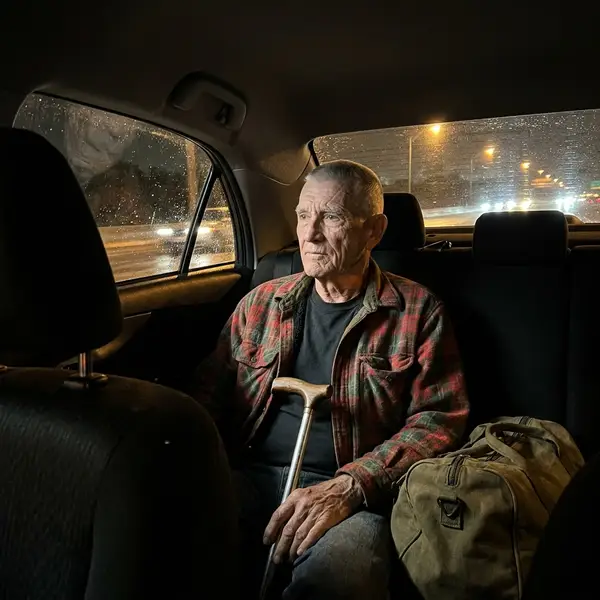
Debra T — Grandma's Basically Senile. She's A Burden In A Storm.
PromisingImage

If the GRID goes down. Are you prepared?

Three weeks ago, 38 high school juniors turned every emergency flashlight from their families' hall closets on at 8:00 PM and left them on my classroom floor over the weekend. By Monday morning, thirty four of them were stone cold dead. One of the dead ones was mine. I have taught American history and civics at the same small Christian college prep school for 27 years. Every fall, I take the junior class on the same civic preparedness field trip to our county emergency operations center, and every year I think I know exactly how it's going to go. This year, I didn't. Three weeks ago, I loaded 38 juniors and four parent chaperones onto a bus and drove two hours to the regional disaster training facility we've visited every fall for over a decade. We toured the dispatch floor, the radio room, and the backup bunker. Then we gathered in the supply bay, run by the retired military grid engineers who volunteer there. The director in charge is always Chief Miller. He is 76. He spent twenty years in the US military keeping base grids and forward operating zones running in total blackouts before retiring to lead county disaster response, and he runs that bay like a drill sergeant who loves you. I teach history, so I know infrastructure is more fragile than most families like to talk about at the dinner table. That afternoon, Chief Miller had forty teenagers sitting on supply crates while he talked about winter storm outages. One of our chaperones, a very nice dad who prides himself on being prepared, wanted to help demonstrate. He had brought a canvas duffel bag of emergency gear from his own garage to show the kids what a family blackout kit looks like. He reached into his bag, pulled out a heavy metal flashlight and a giant pack of AA batteries, and reached for the display table. Chief Miller caught his wrist before it got there. "Not past Tuesday." The whole room went quiet. Thirty eight teenagers, and not one of them was looking at a phone. He took the flashlight from the dad, held it up so the kids could see it, and said, "You came here to learn something. I'll teach you something the hardware stores and preparedness blogs won't." Then he took the rest of the gear out of the dad's emergency bag, one piece at a time. The heavy metal flashlight and pack of AA batteries: "Americans buy four hours of battery life for a multi week blackout, then wonder why their family ends up trapped in the dark. A standard flashlight eats fresh batteries in two to four hours, and half the batteries sitting in your kitchen drawer right now have already lost their charge or leaked acid from the humidity. Batteries are for tourists, and you never fight a blackout with something that runs out." A photo on the dad's phone of the brand new $2,400 gas generator in his garage: "Everyone thinks a generator in the shed is the secret. My younger brother down in Miami had that exact generator and two toolboxes of flashlights when a hurricane knocked out power. By Night 3, the generator ran out of gas, every Exxon station in the county had no electricity to run their pumps, and his family had to flee to a hotel two hours north just to have light and charge their phones." "Plus you can't bring a generator inside at night without killing your family with carbon monoxide." A fancy rechargeable lithium work lamp: "In a real blackout, there is no resupply. A battery that needs a wall outlet is just a plastic brick once the substation dies. After it runs out on Night 1, what exactly are you plugging that cord into?" And a standard plastic camping lantern: "That can't charge a cell phone. Once your phone hits zero percent on Day 1, you have no way to call family, check road closures, or get emergency broadcasts. You are completely cut off." Then Chief Miller walked over to his metal workbench and picked up his own light. It was a compact, heavy duty black lantern with folded metal handles on top and a solar panel built flush into the rugged casing, soaking up the afternoon sun right through the bay window glass. He set it on the table between us and pulled the metal handles up. Instantly, the entire supply bay flooded with crisp, 360 degree white LED light. "When I was still in the military, our field units used this exact style of off grid solar lighting when operating in total blackout zones," Chief Miller said. "A supply officer taught me three rules I never forgot: never trust the power grid, never depend on fuel you have to line up to buy, and never use a light that eats batteries." "Every morning, I set this on my windowsill so it drinks the sun for free all day. When the grid goes down at night, I pull the handles up and it floods the whole room with bright light for 25 hours straight while charging my phone off the side. I haven't bought a single AA battery or waited in a gas line in twelve years." Then he looked out at my students. "Here's your homework," Chief Miller said. "Tonight is Friday, so take every flashlight your parents are counting on in their kitchen drawer, bring them in, and turn them on until Monday. The disposable batteries will tell on themselves before Saturday morning, and the plug in rechargeables won't have a way to wake back up, which is worse." Caleb, who sits in the back row of my third period and has never once asked a question in my class, raised his hand. "Where do we get one like yours?" Chief Miller laughed. "You don't get it in the checkout aisle at Home Depot, I can tell you that." Then he said, "When I deployed to places where the power grid collapses every single week, nobody panicked and nobody fought over D batteries in store aisles. In South Africa, where rolling blackouts cut power for twelve hours every day, families keep these collapsible solar lanterns on their kitchen counters so dinner and kids' homework never stop. In Lebanon, where the grid runs less than two hours a day, shopkeepers line them up in the front window every morning." "And in coastal towns outside Fajardo, Puerto Rico, where US citizens live through two week blackouts without blinking, every grandmother on the street keeps three of these on her windowsill. While mainland Americans panic after 24 hours, those families read in brightly lit living rooms at 9:00 PM on Day 14 with their phones plugged right into the side of the lantern. Because batteries are for tourists, and the sun is for surviving." Abigail, front row, raised her hand. "Wait, didn't the Pentagon just warn that the US mainland grid could go down like that too?" Chief Miller looked at me over his glasses. "What are you teaching these kids in current events?" "The Pentagon 90 day directive," I said. Abigail recited the numbers from memory, because we had just covered the defense and federal energy briefings in class that week. Pentagon officials have warned that our aging electrical grid is vulnerable to a 90 day collapse from severe winter weather, transformer failures, or grid attacks. And as Chief Miller leaned across the table, he dropped a number none of us forgot. "With the Pentagon now warning about a 90 day grid blackout on the US mainland, 91 percent of American families are going to be sitting in complete darkness within 48 hours," Chief Miller said. "Because they think if the power goes out for 90 days, they will just drive to the store for batteries or pump five gallons of gas." "How does a gas pump work when the grid is dead? It doesn't. And how long do store shelves stay full when a million people panic at once? About two hours." I assumed the homework assignment would last until the bus ride home. On Friday afternoon, there were 38 flashlights and camping lanterns lined up on my classroom floor. Every single kid did it. Some of them brought two. One girl brought five, because her dad had five different kinds of heavy metal flashlights in his garage and she wanted a fair trial, so we flipped every switch on, locked the classroom door for the weekend, and went home. On Monday morning, thirty four of the lights on my classroom floor were completely dead. Eleven of them hadn't even turned on because the batteries inside had corroded and leaked acid in storage. The rest burned out in less than four hours. And the expensive plug in rechargeable lanterns and phone power banks were sitting at zero percent. Every one. "Mainland Americans buy four hours of battery life for a ninety day blackout." Mr. Hollis, our physics teacher, wandered in to see what all the dead flashlights were about and stayed through two class periods. By Wednesday he had made it a lab. He had the kids break down the four fatal flaws built into what 91 percent of Americans keep in their garage. First, standard flashlights eat batteries alive in two to four hours, meaning a 90 day blackout would require hundreds of dollars in disposable batteries just to light one room. Second, alkaline batteries rot and leak acid in storage before a storm ever hits. Third, generators starve for fuel after 48 hours when gas station pumps lose power, and cannot be brought inside at night. Fourth, regular flashlights cannot charge a dead phone, leaving families completely cut off on Day 1. Meanwhile, every population on earth that actually lives through constant grid failures arrived at the exact same solution independently: 100 percent solar charging, 25 hours of 360 degree room light, a built in USB phone charger, and zero disposable batteries. At the end of the lab, Caleb said, "So Chief Miller was right about all four." I will tell you which dead flashlight I was most embarrassed by. Mine. I did the homework too. The acid crusted silver flashlight on the end of my desk was the exact one I have kept in my hall closet for ten years, thinking it would protect my family and my grandkids if the grid went down. That night, I looked up the exact 3 in 1 military style collapsible solar lantern Chief Miller had on his workbench. It bypasses all four fatal flaws at once. Because the solar panel is built directly into the top of the heavy duty casing, it charges itself 100 percent for free sitting on any sunny windowsill or porch. You never need an outlet, and you never buy a single battery. When you pull the metal handles up, the high efficiency LED array floods an entire room with 360 degrees of bright white light for 25 hours straight on a single charge. That is two full nights of room filling light from one afternoon in the sun. And built right into the side is an emergency USB power bank port so you can plug your phone cord straight into the lantern to keep your phone alive when every wall outlet in your neighborhood is dead. They were running a special Buy 2, Get 1 Free blackout deal on their official page. I ordered a set for my own house that night, plus an extra set for my parents. When they arrived, I set them right on my kitchen windowsill and forgot about them. Two weeks later, a severe windstorm knocked out three substations in our county. The power went out at 7:00 PM on a Thursday and didn't come back on until Sunday afternoon. Every house on my street went pitch black. By Friday night, my neighbor was out in his driveway in the rain cursing at a generator that wouldn't turn over, and our neighborhood group chat was full of people asking if any stores two towns over still had D batteries. Inside my house, it didn't even feel like an emergency. I pulled open one lantern on the kitchen island and another on the living room table, and both rooms flooded with bright white light. My husband and I plugged our phones into the USB ports on the sides, kept them charged the whole weekend, and set the lanterns out on the back patio and windowsill each morning while we drank coffee so the sun could top them right back up to 25 hours. We didn't spend a single dollar on batteries, we didn't smell gasoline, and we didn't sit in the dark for a single minute. For the first time in my life, a multi day blackout happened and we treated it like nothing happened at all. On Monday morning, three of my juniors came in before first period to tell me their houses were the only ones on their street with bright rooms and charged phones all weekend. By Friday I had emails from nine parents. One mom wrote, "My son made my husband throw out our whole drawer of corroded batteries. I'm not sure whether to thank you or not." Another sent a picture of three lanterns lined up on her kitchen windowsill with a single line: "Thank Chief Miller for us." My father in law asked why I had thrown out "perfectly good flashlights." I put my corroded silver flashlight on his kitchen counter and told him about my neighbor in the driveway in the rain. He hasn't asked again, and he's getting a set for Thanksgiving. So is my sister. And so are the two teachers in our lounge who keep borrowing mine. This Thanksgiving, twenty two people will sit down at my table. My husband will read the same verse he reads every year, Psalm 107:1: "O give thanks unto the LORD, for he is good: for his mercy endureth for ever." And for the first time in twenty years, I know that if the grid goes down for three days or ninety days, my family won't be trapped in the dark. Here is why I am writing this now, and not after Thanksgiving. Right now, the company that makes these heavy duty 3 in 1 solar lanterns is still running their special Buy 2, Get 1 Free blackout deal on the page below. That gives you three full lanterns for the price of two, so you can keep one in the kitchen, one in the living room, and one in your bedroom or car glovebox staying charged 24/7. Every order is also backed by a 30 day money back guarantee. Set them on your windowsill for an afternoon, turn off the lights in your kitchen, and pull the handles up. If you aren't amazed by how bright they light up the whole room and how easily they charge your phone, send them back for a full refund. But they sell out constantly whenever severe winter storms or grid warnings hit the news. When I went back this morning to order two more sets for Christmas, the page said most of this batch was already gone. If you live in an area where storms knock out the power lines, or if you have seen the recent Pentagon warnings about a 90 day grid blackout and realized that a drawer of old AA batteries and two cans of stale gas won't get your family past the first weekend, stop relying on backups that run out. And if you are a parent wondering what to get your kid's teacher or your own aging parents for Christmas, I'm not saying. I'm just saying. P.S. Here is the exact 3 in 1 solar lantern Chief Miller showed us. The Buy 2, Get 1 Free blackout deal was still active when I checked. P.P.S. Chief Miller's homework is still the best assignment I have ever seen. Take every flashlight out of your kitchen drawer tonight and turn them on over the weekend. They will tell on themselves by morning.

Loading the ad's image
Michael L — If the GRID goes down. Are you prepared?
PromisingImage

If the GRID goes down. Are you prepared?

Three weeks ago, 38 high school juniors turned every emergency flashlight from their families' hall closets on at 8:00 PM and left them on my classroom floor over the weekend. By Monday morning, thirty four of them were stone cold dead. One of the dead ones was mine. I have taught American history and civics at the same small Christian college prep school for 27 years. Every fall, I take the junior class on the same civic preparedness field trip to our county emergency operations center, and every year I think I know exactly how it's going to go. This year, I didn't. Three weeks ago, I loaded 38 juniors and four parent chaperones onto a bus and drove two hours to the regional disaster training facility we've visited every fall for over a decade. We toured the dispatch floor, the radio room, and the backup bunker. Then we gathered in the supply bay, run by the retired military grid engineers who volunteer there. The director in charge is always Chief Miller. He is 76. He spent twenty years in the US military keeping base grids and forward operating zones running in total blackouts before retiring to lead county disaster response, and he runs that bay like a drill sergeant who loves you. I teach history, so I know infrastructure is more fragile than most families like to talk about at the dinner table. That afternoon, Chief Miller had forty teenagers sitting on supply crates while he talked about winter storm outages. One of our chaperones, a very nice dad who prides himself on being prepared, wanted to help demonstrate. He had brought a canvas duffel bag of emergency gear from his own garage to show the kids what a family blackout kit looks like. He reached into his bag, pulled out a heavy metal flashlight and a giant pack of AA batteries, and reached for the display table. Chief Miller caught his wrist before it got there. "Not past Tuesday." The whole room went quiet. Thirty eight teenagers, and not one of them was looking at a phone. He took the flashlight from the dad, held it up so the kids could see it, and said, "You came here to learn something. I'll teach you something the hardware stores and preparedness blogs won't." Then he took the rest of the gear out of the dad's emergency bag, one piece at a time. The heavy metal flashlight and pack of AA batteries: "Americans buy four hours of battery life for a multi week blackout, then wonder why their family ends up trapped in the dark. A standard flashlight eats fresh batteries in two to four hours, and half the batteries sitting in your kitchen drawer right now have already lost their charge or leaked acid from the humidity. Batteries are for tourists, and you never fight a blackout with something that runs out." A photo on the dad's phone of the brand new $2,400 gas generator in his garage: "Everyone thinks a generator in the shed is the secret. My younger brother down in Miami had that exact generator and two toolboxes of flashlights when a hurricane knocked out power. By Night 3, the generator ran out of gas, and every Exxon station in the county had no electricity to run their pumps." "Plus you can't bring a generator inside at night without killing your family with carbon monoxide." A fancy rechargeable lithium work lamp: "In a real blackout, there is no resupply. A battery that needs a wall outlet is just a plastic brick once the substation dies. After it runs out on Night 1, what exactly are you plugging that cord into?" And a standard plastic camping lantern: "That can't charge a cell phone. And in our dispatch room, a dead phone on Night 2 is what turns a power outage into a family tragedy. Cell towers have backup generators that stay live for days, so 911 and text messages still work—until your phone battery hits zero percent." "Last winter, my 79 year old sister lived twenty minutes across town when an ice storm snapped the lines," Chief Miller said quietly. "Her flashlight died on the second night, and her cell phone hit zero percent at 8:30 PM. With trees down across the roads, we went forty-eight hours not knowing if she was warm, if she had fallen down the stairs in the pitch dark, or if she needed an ambulance and had no way to dial 911. When your phone dies on Day 1, your kids and your aging parents are completely cut off when they need you most." Then Chief Miller walked over to his metal workbench and picked up his own light. It was a compact, heavy duty black lantern with folded metal handles on top and a solar panel built flush into the rugged casing, soaking up the afternoon sun right through the bay window glass. He set it on the table between us and pulled the metal handles up. Instantly, the entire supply bay flooded with crisp, 360 degree white LED light. "When I was still in the military, our field units used this exact style of off grid solar lighting when operating in total blackout zones," Chief Miller said. "A supply officer taught me three rules I never forgot: never trust the power grid, never depend on fuel you have to line up to buy, and never use a light that eats batteries." "Every morning, I set this on my windowsill so it drinks the sun for free all day. When the grid goes down at night, I pull the handles up and it floods the whole room with bright light for 25 hours straight while charging my phone right off the side. I haven't bought a single AA battery or worried about my sister's phone dying in twelve years." Then he looked out at my students. "Here's your homework," Chief Miller said. "Tonight is Friday, so take every flashlight your parents are counting on in their kitchen drawer, bring them in, and turn them on until Monday. The disposable batteries will tell on themselves before Saturday morning, and the plug in rechargeables won't have a way to wake back up, which is worse." Caleb, who sits in the back row of my third period and has never once asked a question in my class, raised his hand. "Where do we get one like yours?" Chief Miller laughed. "You don't get it in the checkout aisle at Home Depot, I can tell you that." Then he said, "When I deployed to places where the power grid collapses every single week, nobody panicked and nobody fought over D batteries in store aisles. In South Africa, where rolling blackouts cut power for twelve hours every day, families keep these collapsible solar lanterns on their kitchen counters so dinner and kids' homework never stop. In Lebanon, where the grid runs less than two hours a day, shopkeepers line them up in the front window every morning." "And in coastal towns outside Fajardo, Puerto Rico, where US citizens live through two week blackouts without blinking, every grandmother on the street keeps three of these on her windowsill. While mainland Americans panic after 24 hours, those families read in brightly lit living rooms at 9:00 PM on Day 14 with their phones plugged right into the side of the lantern so their kids can call them every night. Because batteries are for tourists, and the sun is for surviving." Abigail, front row, raised her hand. "Wait, didn't the Pentagon just warn that the US mainland grid could go down like that too?" Chief Miller looked at me over his glasses. "What are you teaching these kids in current events?" "The Pentagon 90 day directive," I said. Abigail recited the numbers from memory, because we had just covered the defense and federal energy briefings in class that week. Pentagon officials have warned that our aging electrical grid is vulnerable to a 90 day collapse from severe winter weather, transformer failures, or grid attacks. And as Chief Miller leaned across the table, he dropped a number none of us forgot. "With the Pentagon now warning about a 90 day grid blackout on the US mainland, 91 percent of American families are going to be sitting in complete darkness with dead phones within 48 hours," Chief Miller said. "Because they think if the power goes out for 90 days, they will just drive to the store for batteries or pump five gallons of gas." "How does a gas pump work when the grid is dead? It doesn't. And how long do store shelves stay full when a million people panic at once? About two hours." I assumed the homework assignment would last until the bus ride home. On Friday afternoon, there were 38 flashlights and camping lanterns lined up on my classroom floor. Every single kid did it. Some of them brought two. One girl brought five, because her dad had five different kinds of heavy metal flashlights in his garage and she wanted a fair trial, so we flipped every switch on, locked the classroom door for the weekend, and went home. On Monday morning, thirty four of the lights on my classroom floor were completely dead. Eleven of them hadn't even turned on because the batteries inside had corroded and leaked acid in storage. The rest burned out in less than four hours. And the expensive plug in rechargeable lanterns and phone power banks were sitting at zero percent. Every one. "Mainland Americans buy four hours of battery life for a ninety day blackout." Mr. Hollis, our physics teacher, wandered in to see what all the dead flashlights were about and stayed through two class periods. By Wednesday he had made it a lab. He had the kids break down the four fatal flaws built into what 91 percent of Americans keep in their garage. First, standard flashlights eat batteries alive in two to four hours, meaning a 90 day blackout would require hundreds of dollars in disposable batteries just to light one room so an older parent doesn't fall in the dark. Second, alkaline batteries rot and leak acid in storage before a storm ever hits. Third, generators starve for fuel after 48 hours when gas station pumps lose power, and cannot be brought inside at night. Fourth, regular flashlights cannot charge a dead phone, leaving parents and grandparents completely cut off from 911 and their families when their battery hits zero percent on Night 2. Meanwhile, every population on earth that actually lives through constant grid failures arrived at the exact same solution independently: 100 percent solar charging, 25 hours of 360 degree room light, a built in USB phone charger, and zero disposable batteries. At the end of the lab, Caleb said, "So Chief Miller was right about all four." I will tell you which dead flashlight I was most embarrassed by. Mine. I did the homework too. The acid crusted silver flashlight on the end of my desk was the exact one I have kept in my hall closet for ten years, thinking it would protect my family and my grandkids if the grid went down. That night, I looked up the exact 3 in 1 military style collapsible solar lantern Chief Miller had on his workbench. It bypasses all four fatal flaws at once. Because the solar panel is built directly into the top of the heavy duty casing, it charges itself 100 percent for free sitting on any sunny windowsill or porch. You never need an outlet, and you never buy a single battery. When you pull the metal handles up, the high efficiency LED array floods an entire room with 360 degrees of bright white light for 25 hours straight on a single charge. That is two full nights of room filling light from one afternoon in the sun. And built right into the side is an emergency USB power bank port so you can plug your phone cord straight into the lantern to keep your phone alive for 911 and family calls when every wall outlet in your neighborhood is dead. They were running a special Buy 2, Get 1 Free blackout deal on their official page. I ordered a set for my own house that night, plus an extra set for my 78 year old parents across town so their phones would never go dead in a storm. When they arrived, I set them right on my kitchen windowsill and forgot about them. Two weeks later, a severe windstorm knocked out three substations in our county. The power went out at 7:00 PM on a Thursday and didn't come back on until Sunday afternoon. Every house on my street went pitch black. By Friday night, my neighbor was out in his driveway in the rain cursing at a generator that wouldn't turn over, and our neighborhood group chat was full of people panicking because their phones were down to 4 percent and stores two towns over were out of D batteries. Inside my house, it didn't even feel like an emergency. I pulled open one lantern on the kitchen island and another on the living room table, and both rooms flooded with bright white light. My husband and I plugged our phones into the USB ports on the sides, called my parents across town—who were sitting in a brightly lit kitchen with their own phones at 90 percent plugged into the lantern I'd given them—and set the lanterns on the windowsill each morning while we drank coffee so the sun could top them right back up to 25 hours. We didn't spend a single dollar on batteries, we didn't smell gasoline, and we never lost contact with my parents for a single minute. For the first time in my life, a multi day blackout happened and we treated it like nothing happened at all. On Monday morning, three of my juniors came in before first period to tell me their houses were the only ones on their street with bright rooms and charged phones all weekend. By Friday I had emails from nine parents. One mom wrote, "My son made my husband throw out our whole drawer of corroded batteries. I'm not sure whether to thank you or not." Another sent a picture of three lanterns lined up on her kitchen windowsill with a single line: "Thank Chief Miller for us." My father in law asked why I had thrown out "perfectly good flashlights." I put my corroded silver flashlight on his kitchen counter and told him about my neighbor in the driveway in the rain. He hasn't asked again, and he's getting a set for Thanksgiving. So is my sister. And so are the two teachers in our lounge who keep borrowing mine. This Thanksgiving, twenty two people will sit down at my table. My husband will read the same verse he reads every year, Psalm 107:1: "O give thanks unto the LORD, for he is good: for his mercy endureth for ever." And for the first time in twenty years, I know that if the grid goes down for three days or ninety days, my family won't be trapped in the dark or cut off from each other with dead phones. Here is why I am writing this now, and not after Thanksgiving. Right now, the company that makes these heavy duty 3 in 1 solar lanterns is still running their special Buy 2, Get 1 Free blackout deal on the page below. That gives you three full lanterns for the price of two, so you can keep one in the kitchen, one in the living room, and one in your bedroom or at an aging parent's house staying charged 24/7. Every order is also backed by a 30 day money back guarantee. Set them on your windowsill for an afternoon, turn off the lights in your kitchen, and pull the handles up. If you aren't amazed by how bright they light up the whole room and how easily they charge your phone, send them back for a full refund. But they sell out constantly whenever severe winter storms or grid warnings hit the news. When I went back this morning to order two more sets for Christmas, the page said most of this batch was already gone. If you live in an area where storms knock out the power lines, or if you have seen the recent Pentagon warnings about a 90 day grid blackout and realized that a drawer of old AA batteries won't keep your family safe or your phones alive past the first weekend, stop relying on backups that run out. And if you are a parent wondering what to get your kid's teacher or your own aging parents for Christmas so their phone never hits zero percent in a blackout, I'm not saying. I'm just saying. P.S. Here is the exact 3 in 1 solar lantern Chief Miller showed us. The Buy 2, Get 1 Free blackout deal was still active when I checked. P.P.S. Chief Miller's homework is still the best assignment I have ever seen. Take every flashlight out of your kitchen drawer tonight and turn them on over the weekend. They will tell on themselves by morning.

Loading the ad's image
Michael L — If the GRID goes down. Are you prepared?
PromisingImage

Public pages only. Pop-ups are hidden in the picture, never clicked.